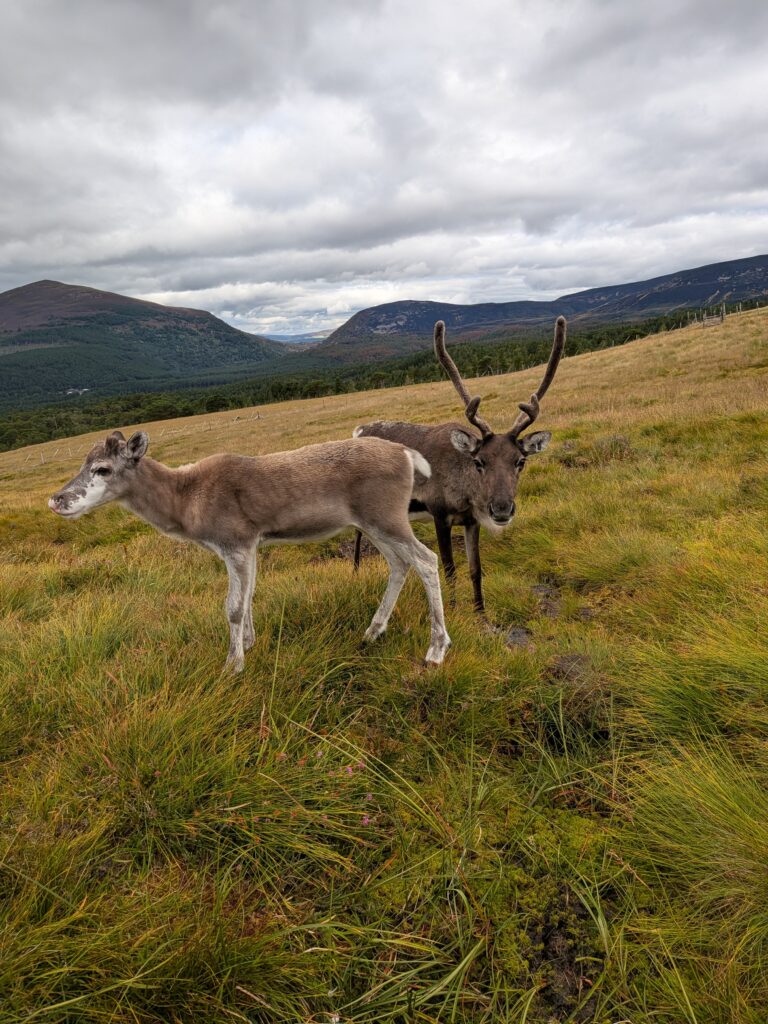
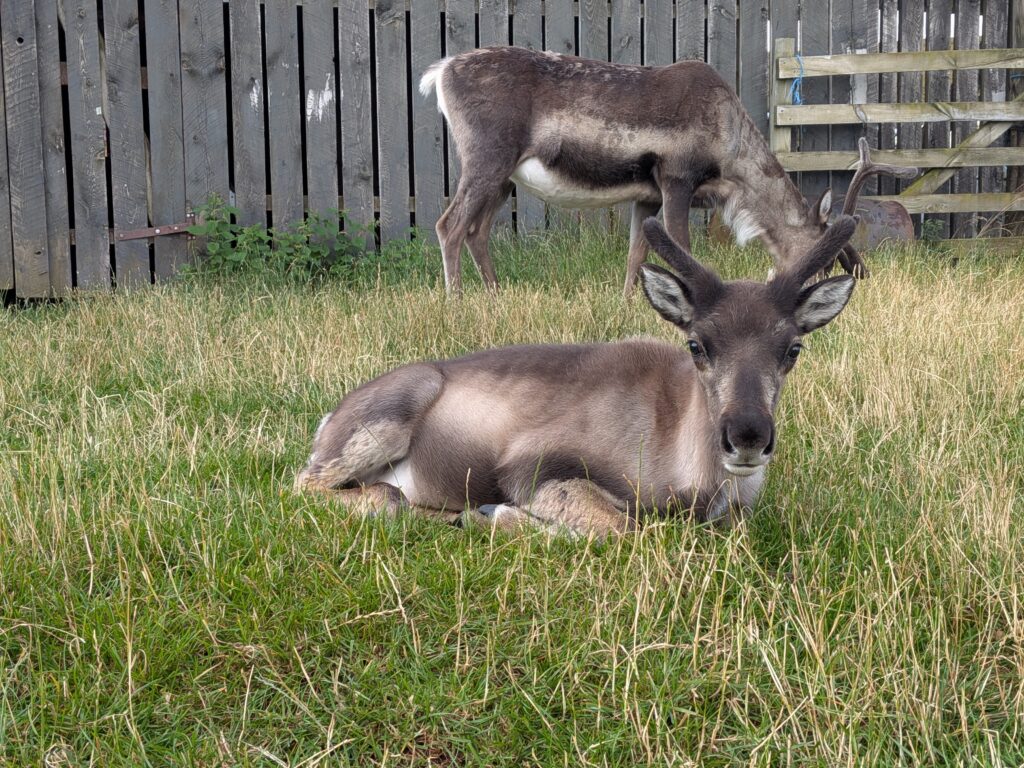
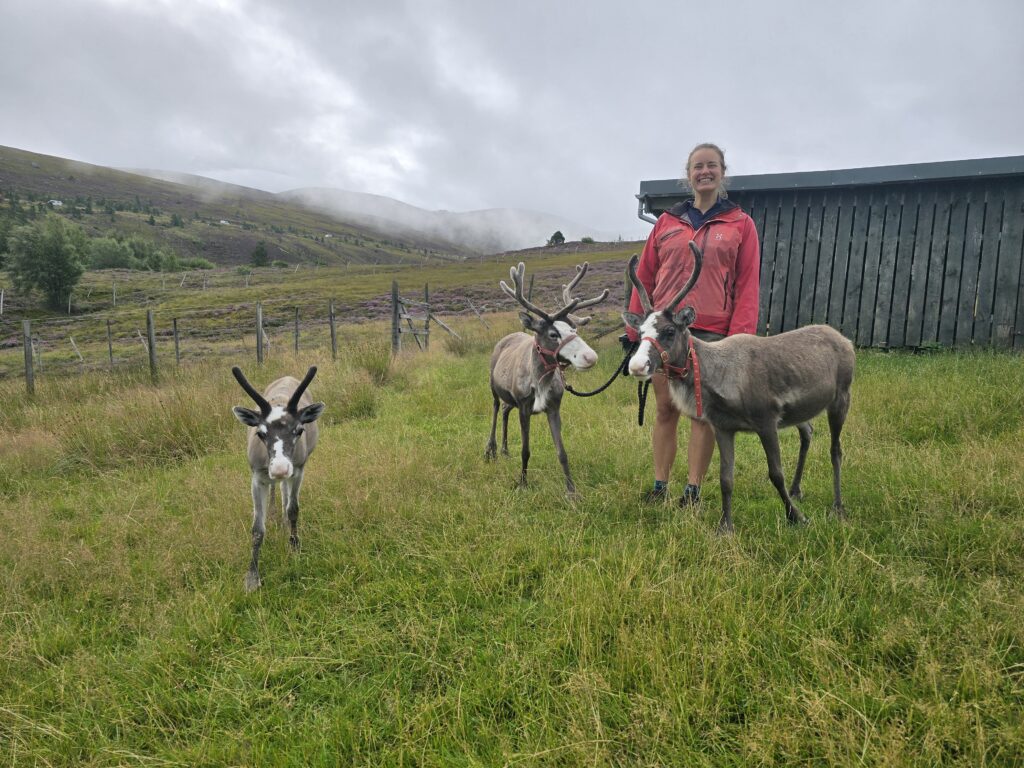
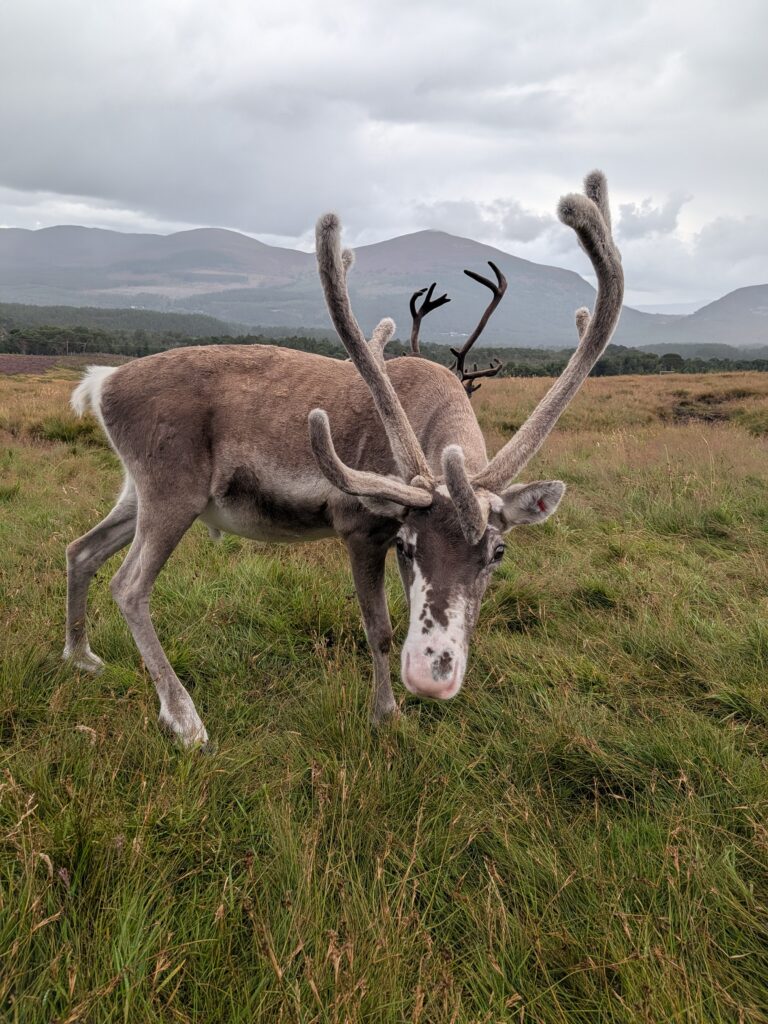
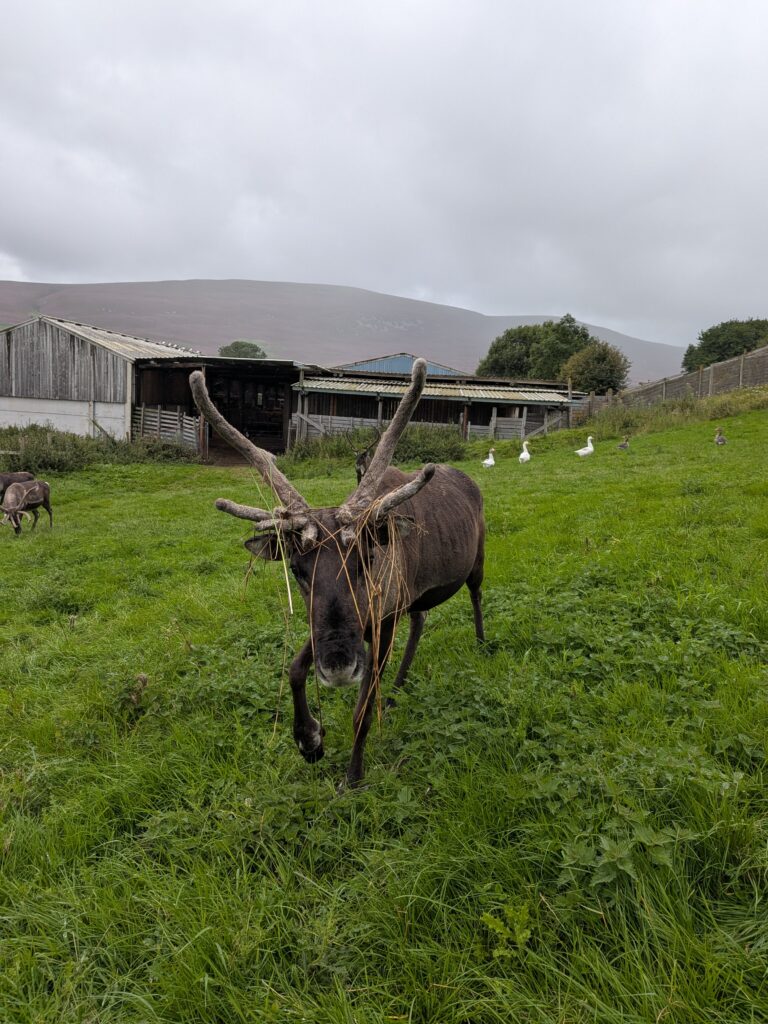
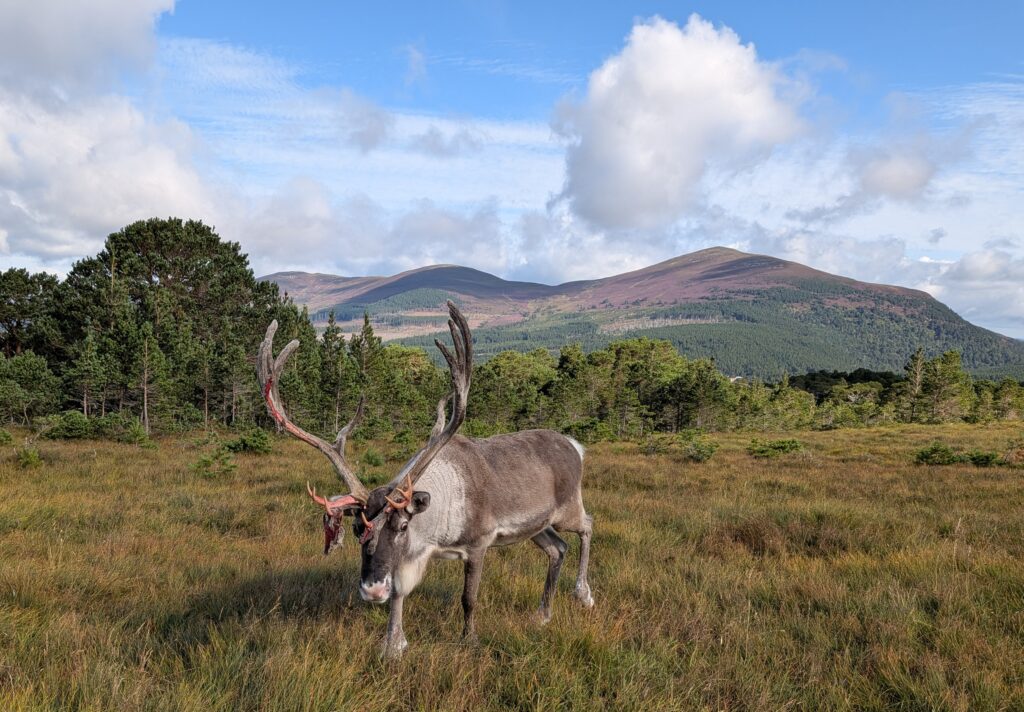
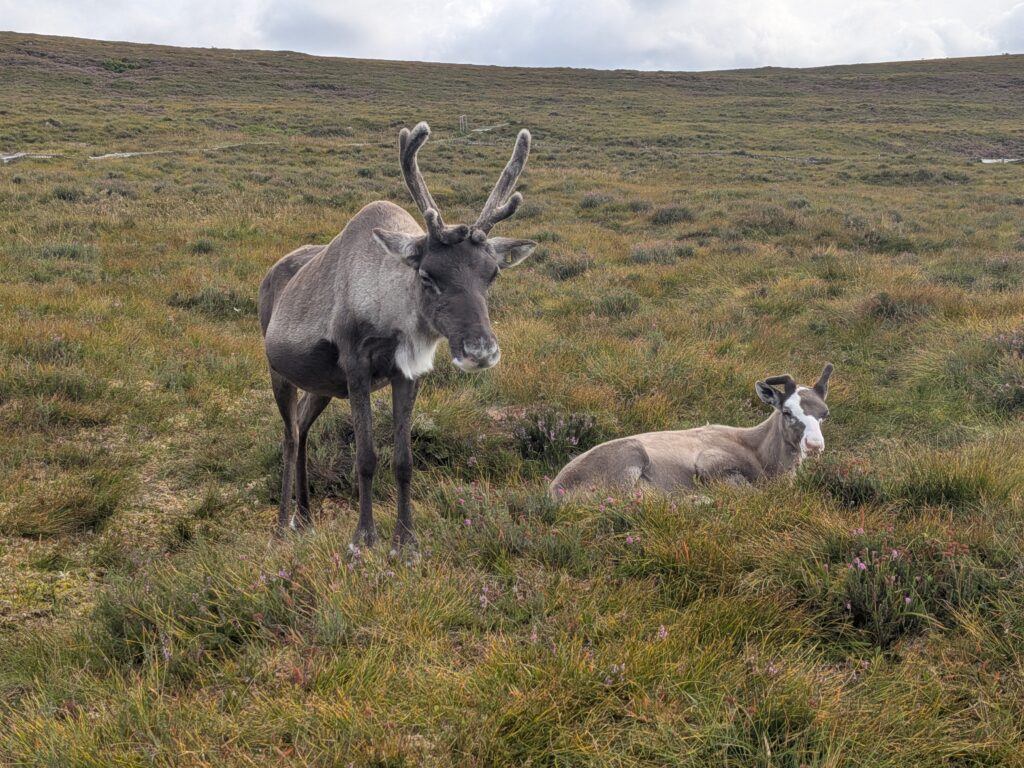
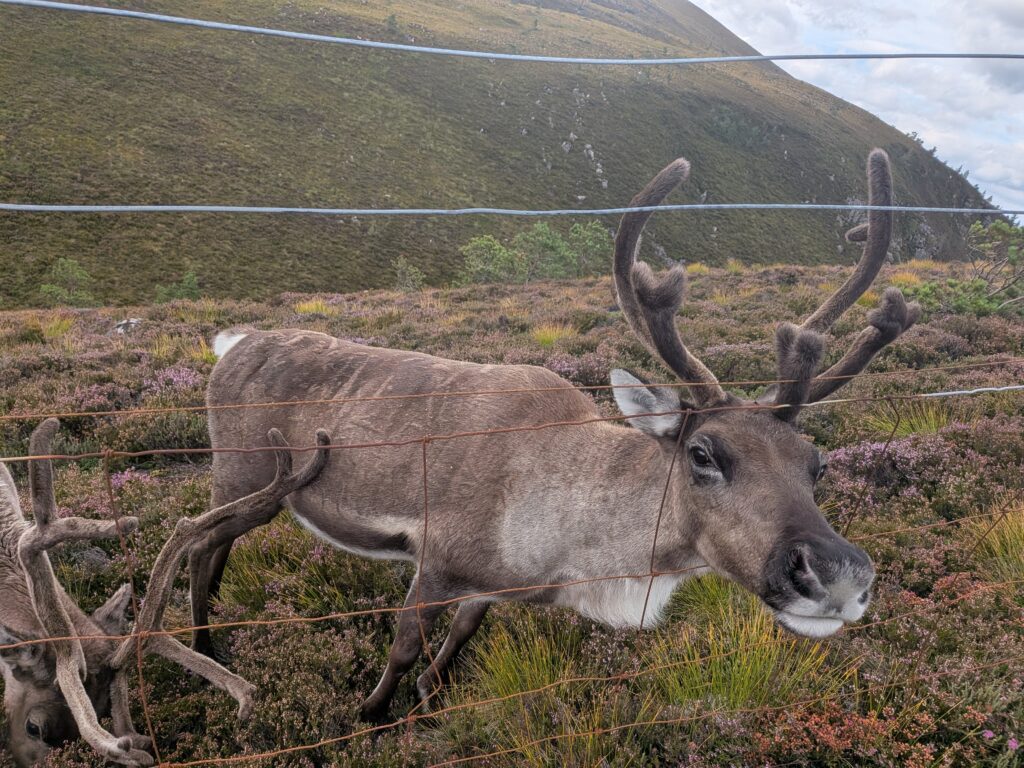
Normality has resumed and over the last month we have welcomed our lovely visitors to our site in Glenmore and have also caught up with a few of our cows and calves. They’re all looking well and have had a good summer out on the free range!
Amy

Roaming freely since 1952
Normality has resumed and over the last month we have welcomed our lovely visitors to our site in Glenmore and have also caught up with a few of our cows and calves. They’re all looking well and have had a good summer out on the free range!
Amy
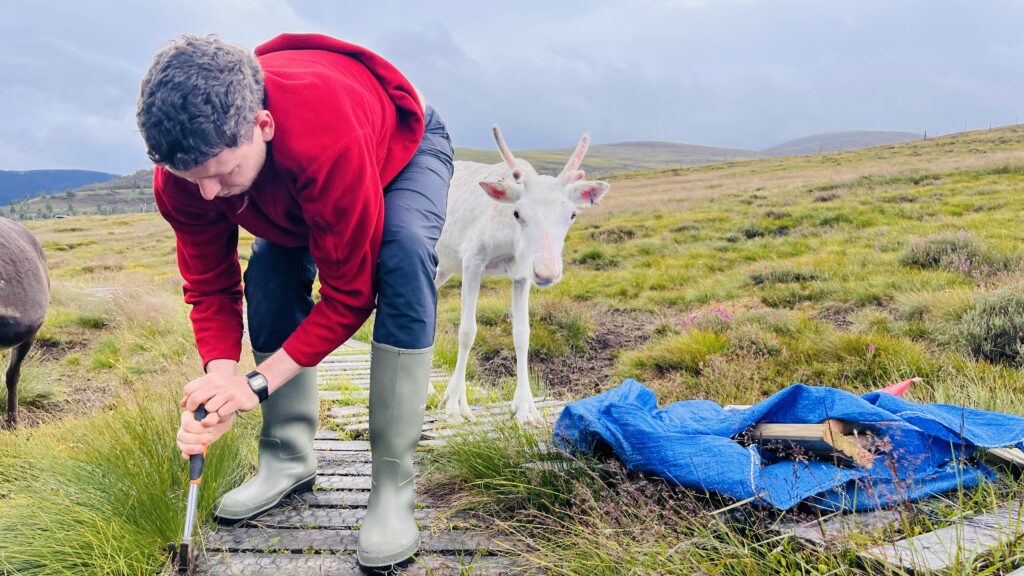
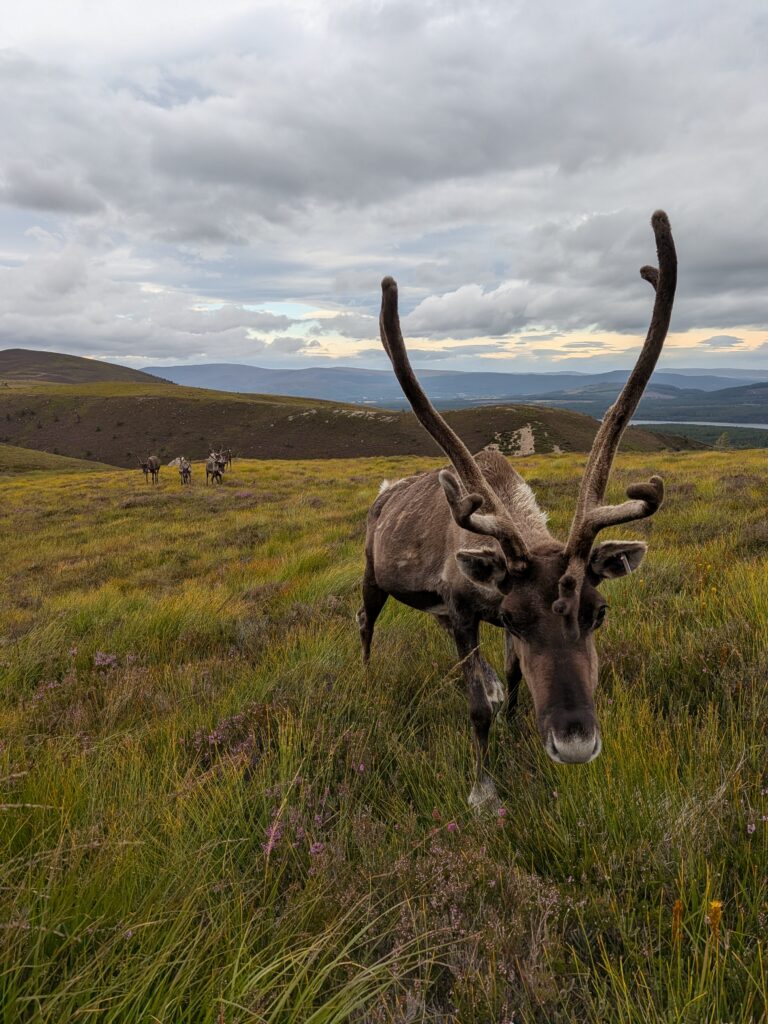
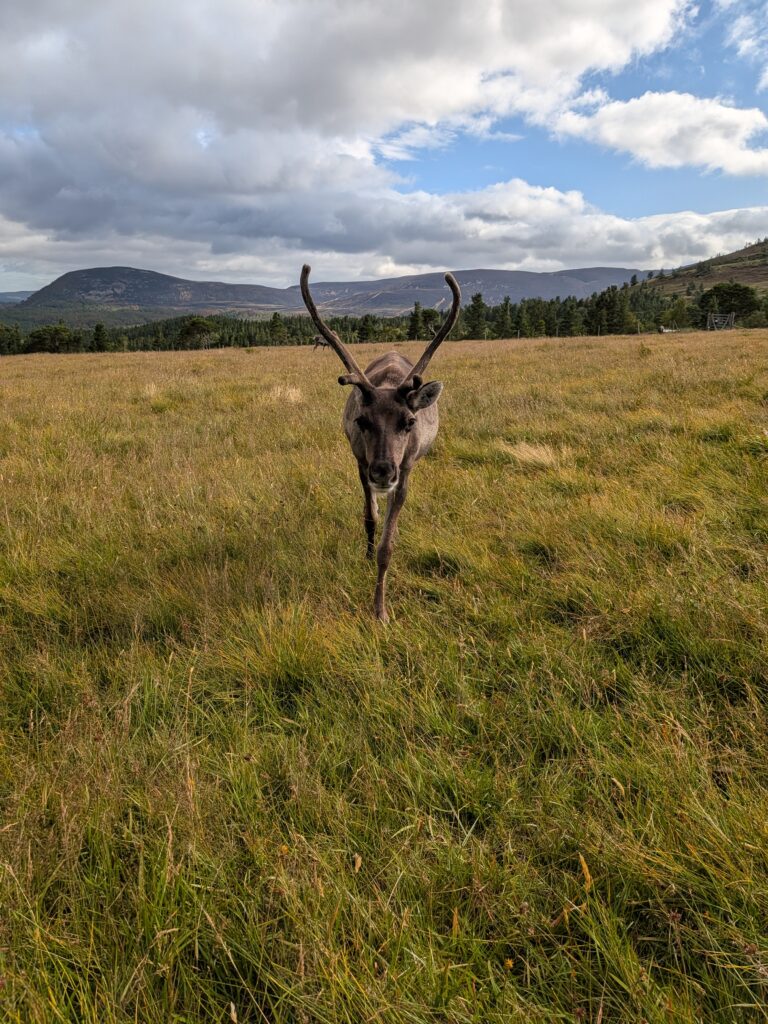
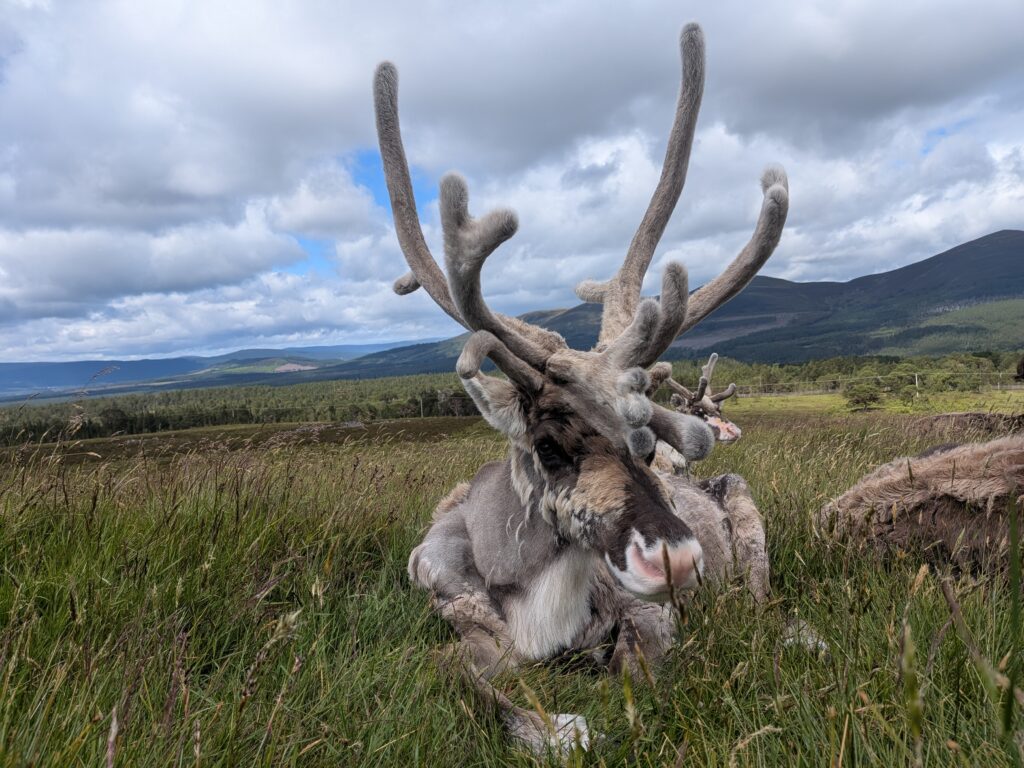
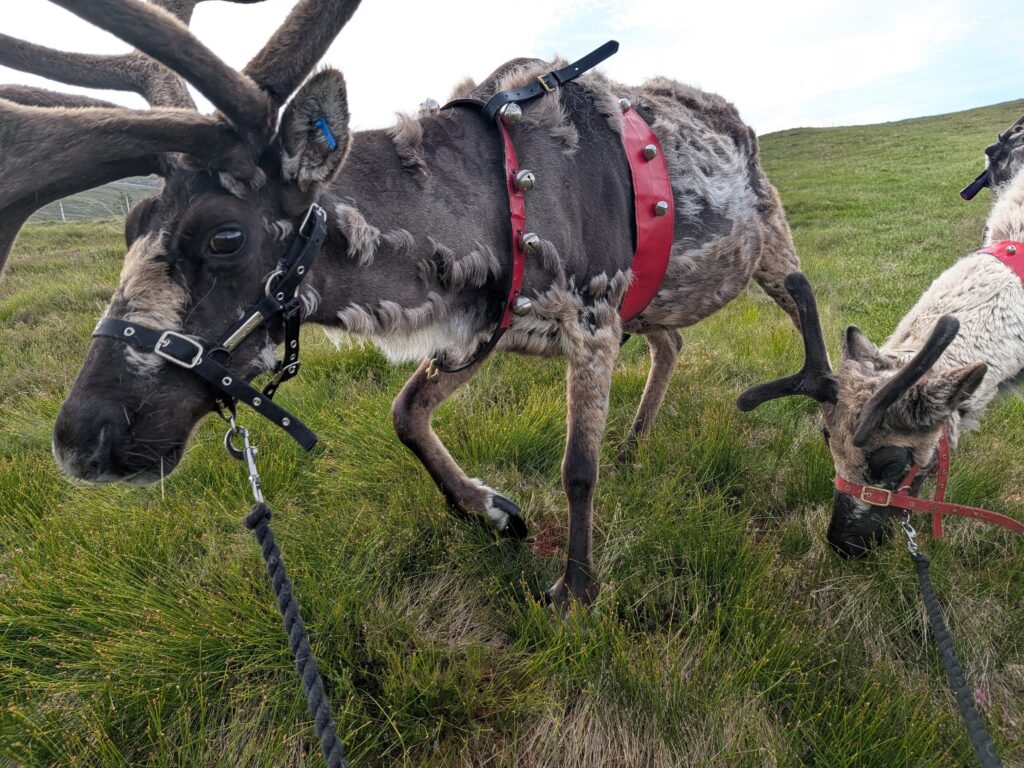
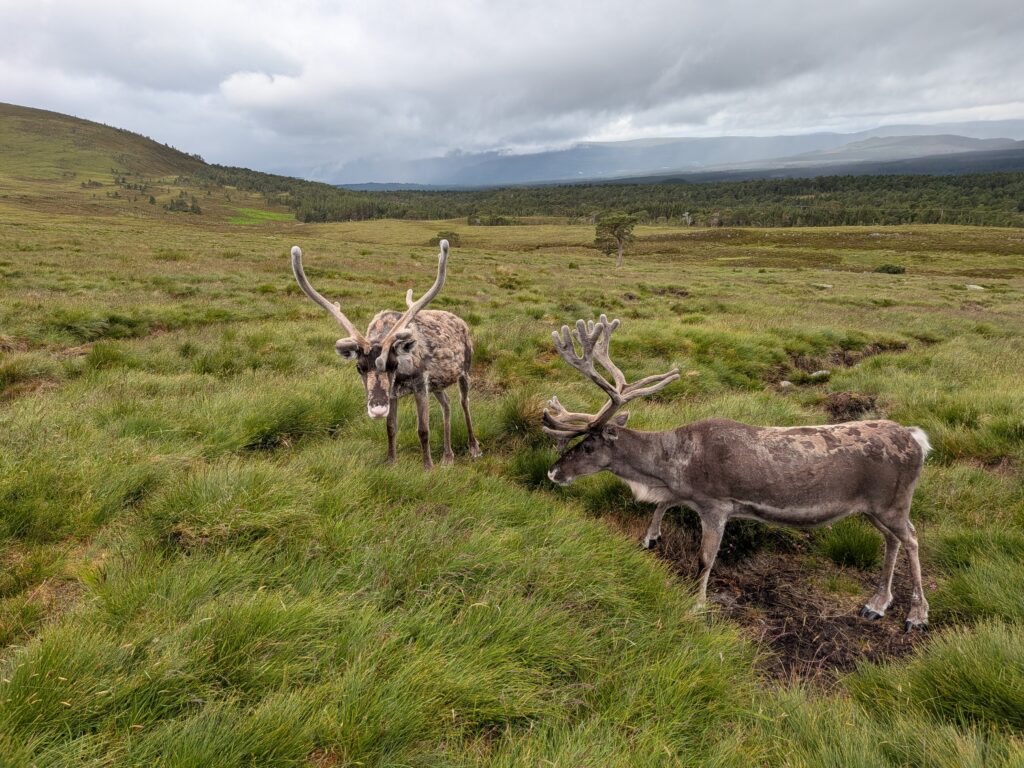
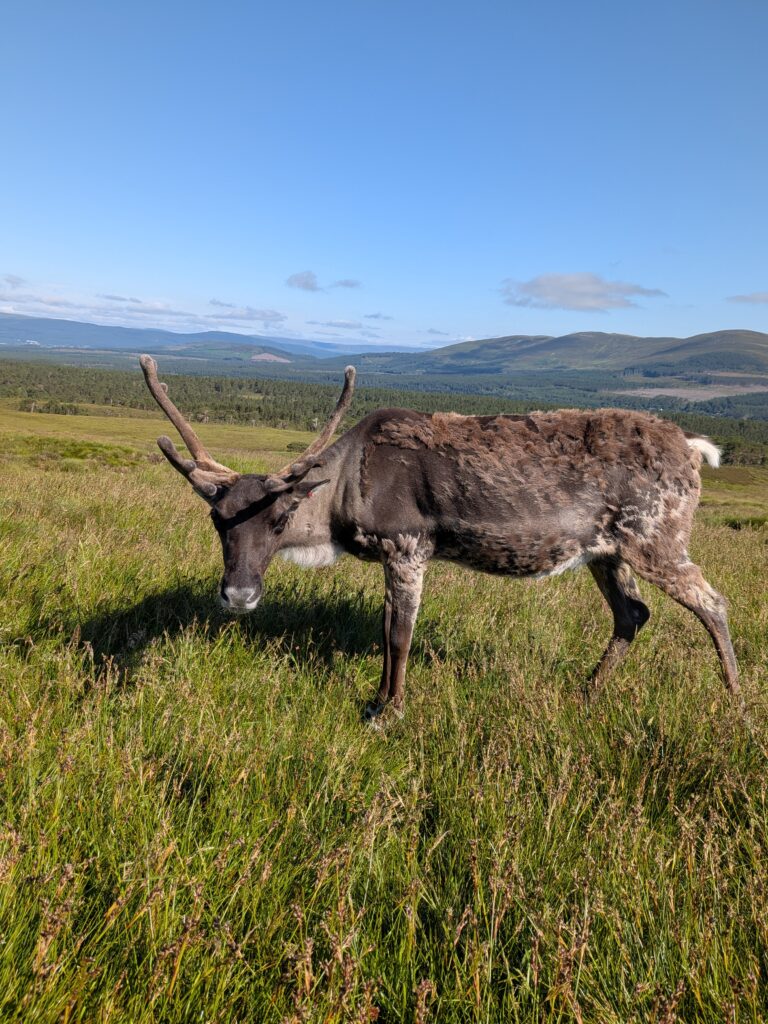
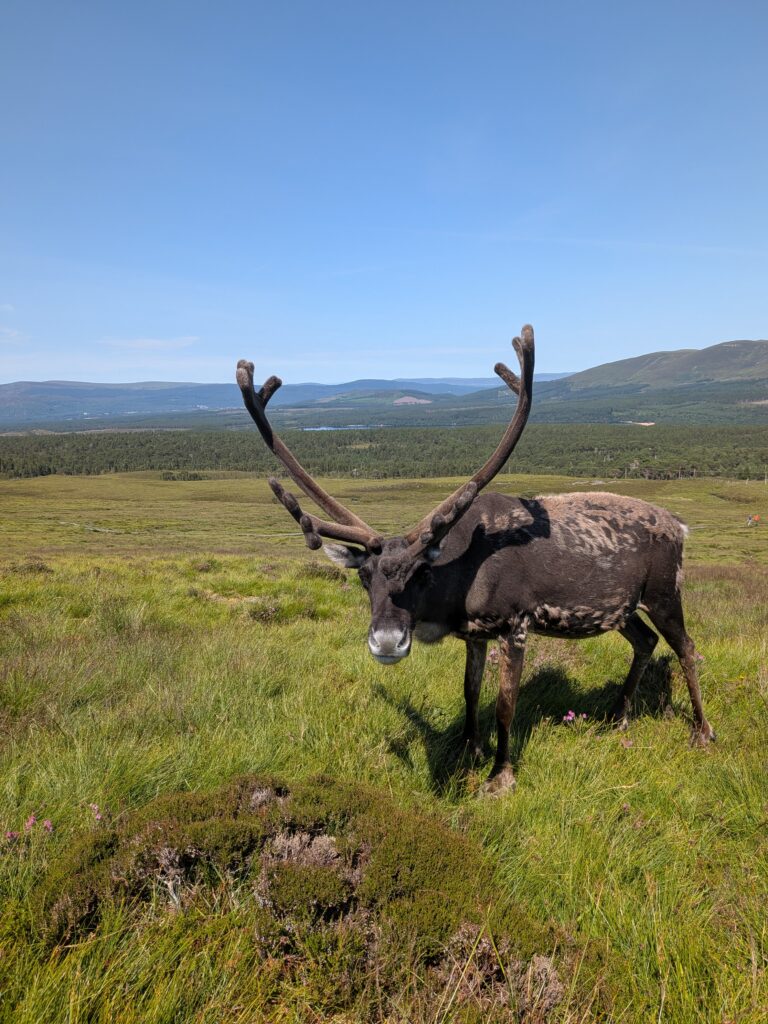
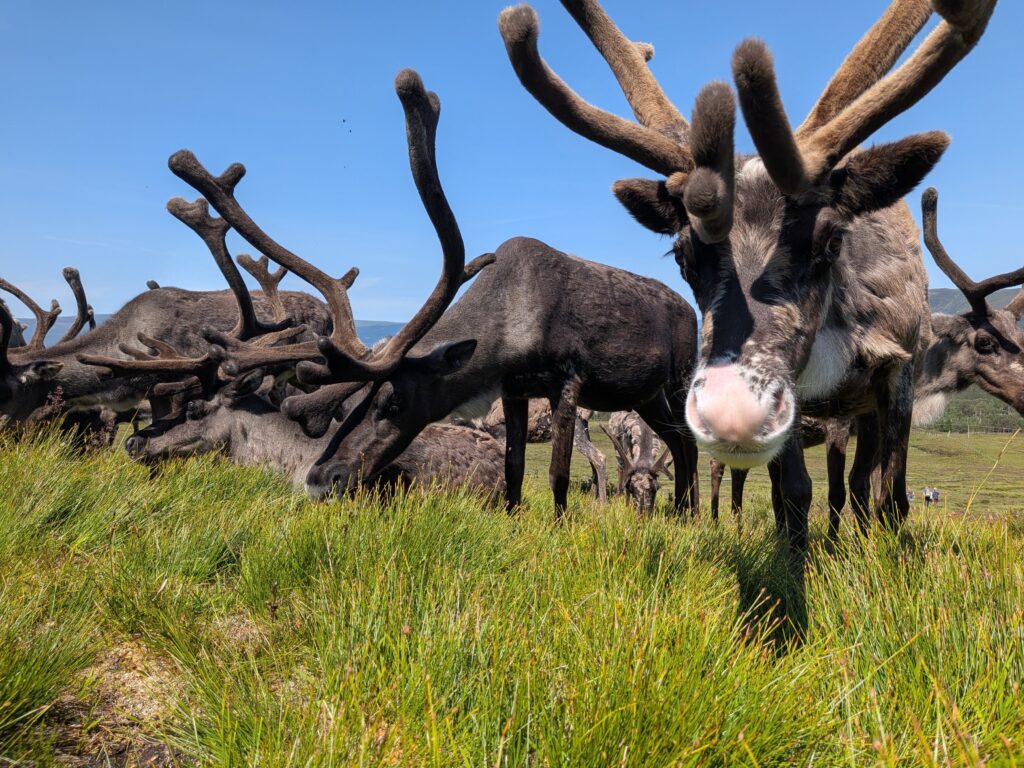
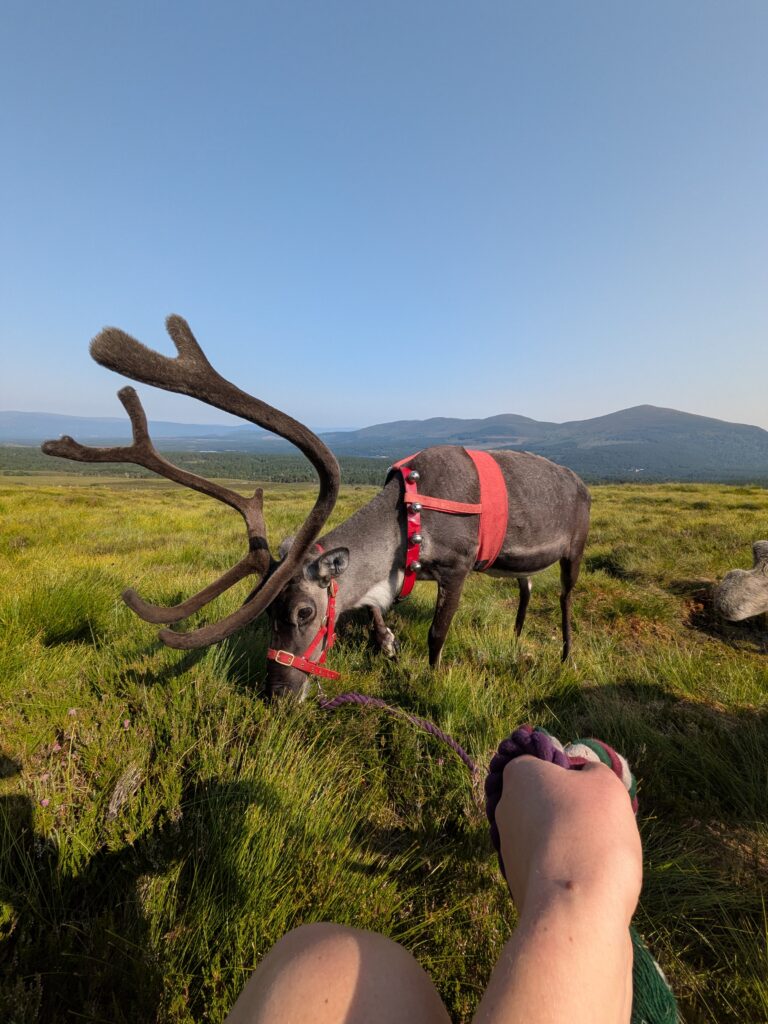
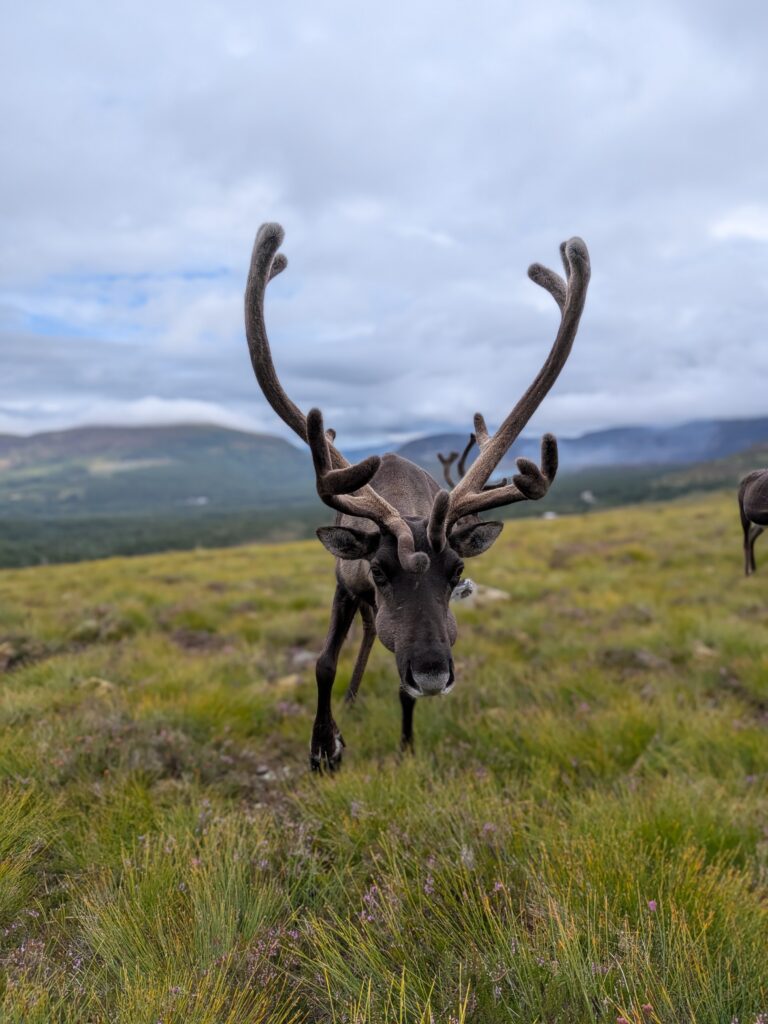
Well, July has been a MONTH! At the start of the month, harness training for our male reindeer was well under way and there was still some really scruffy males around. The antler growth that we have had over the last month has been phenomenal and our male reindeer look completely different to what they did a couple of weeks prior.
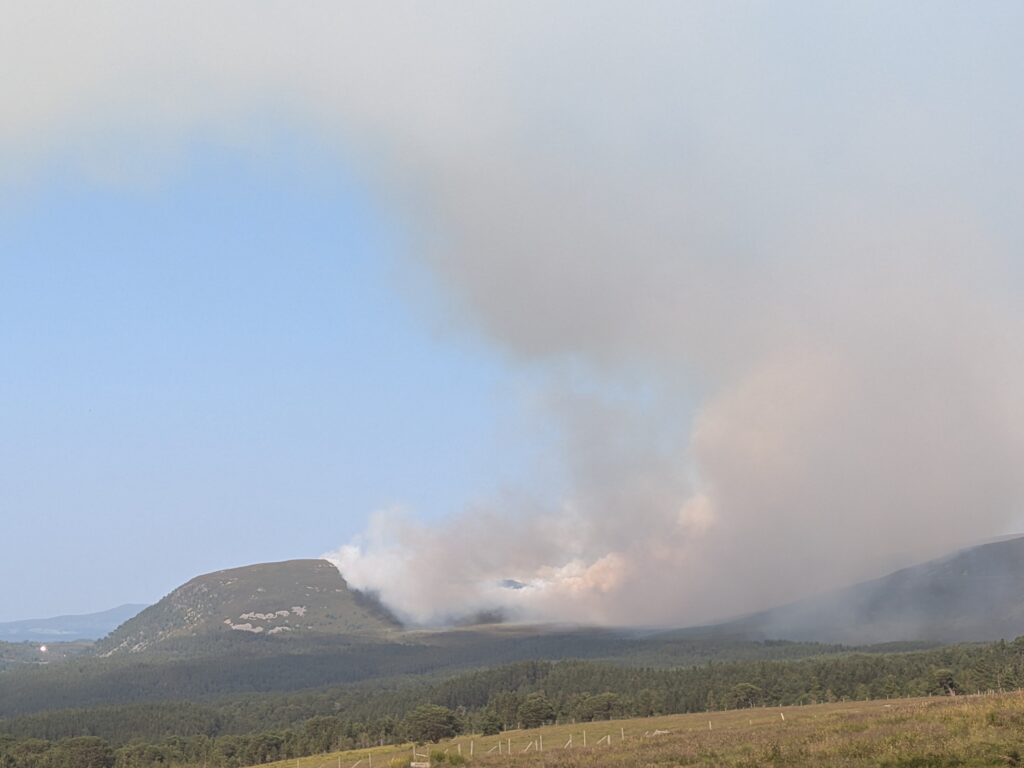
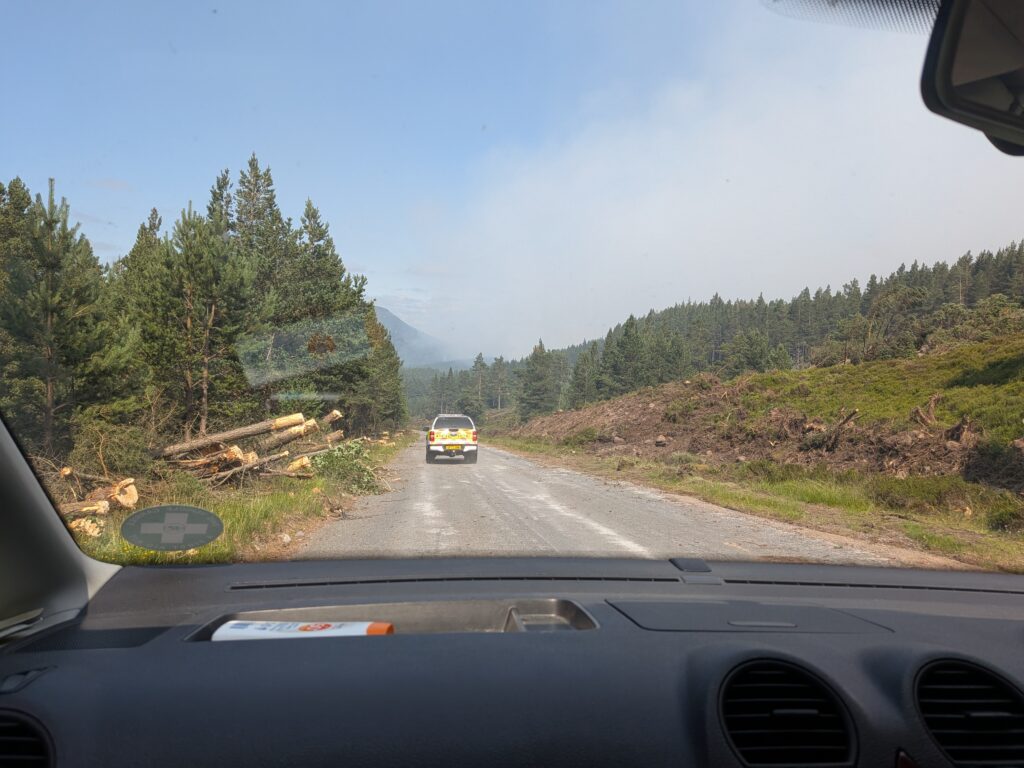
Our usual July routine was interupted about half way through by the threat from a local wild fire which was spreading quickly over the mountain side. You will be glad to know that the reindeer were never in any direct threat from the fire but it gave us all a bit of a fright and on the days that us herders couldn’t get up to see the reindeer we were all walking around a bit lost, unsure on what to do with ourselves! We are so lucky to have a great team of people working with us at the Centre, a lot of which were on hand at the drop of a hat to help move reindeer.
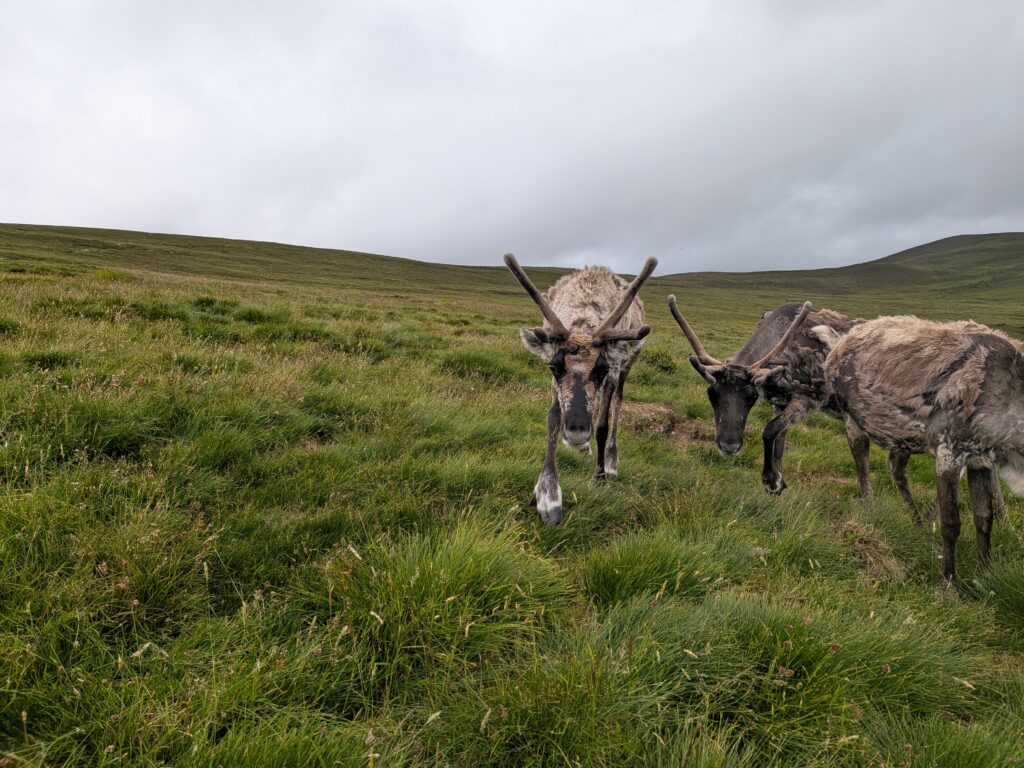
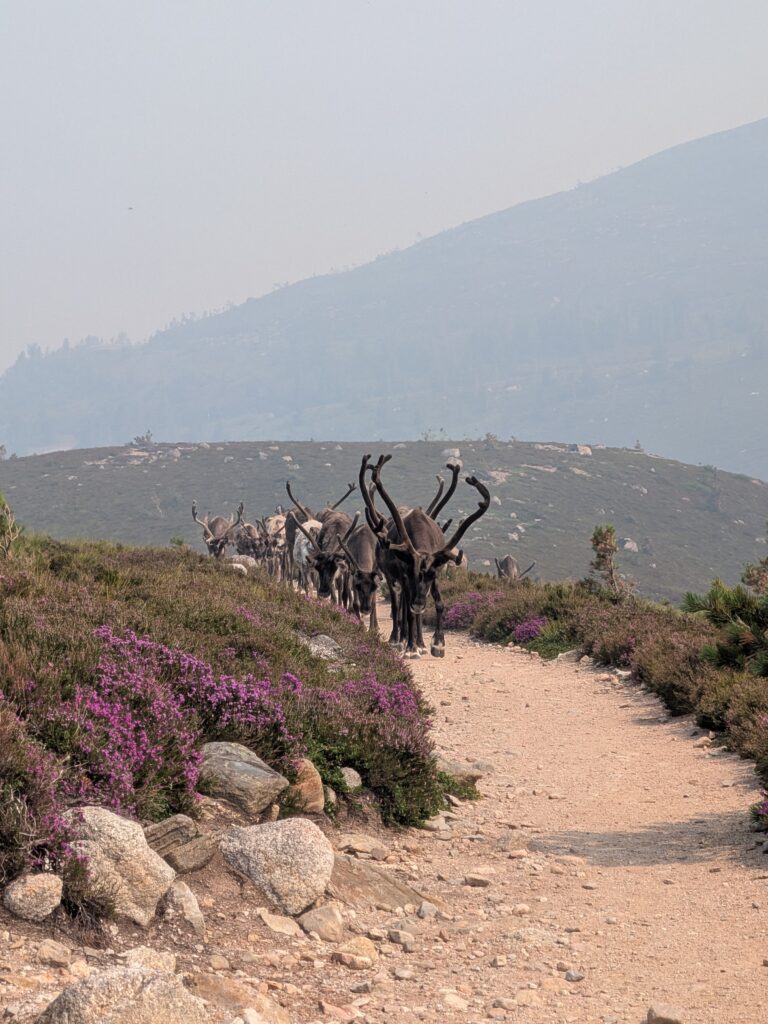
It has been two weeks since we’ve been able to open to the public here in Glenmore but we have been able to take Hill Trips at our secondary site and we have most of the male reindeer back from their little jaunt on to the free range here on Cairngorm with a small group of reindeer still out on the mountainside enjoying the peace and quiet.
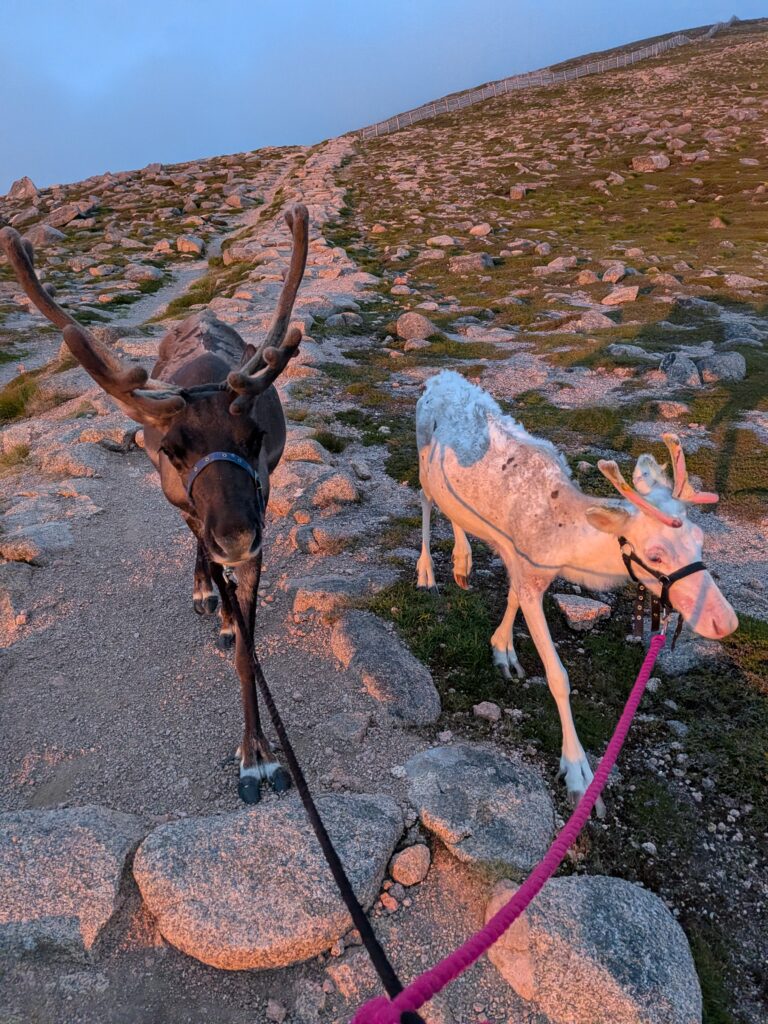
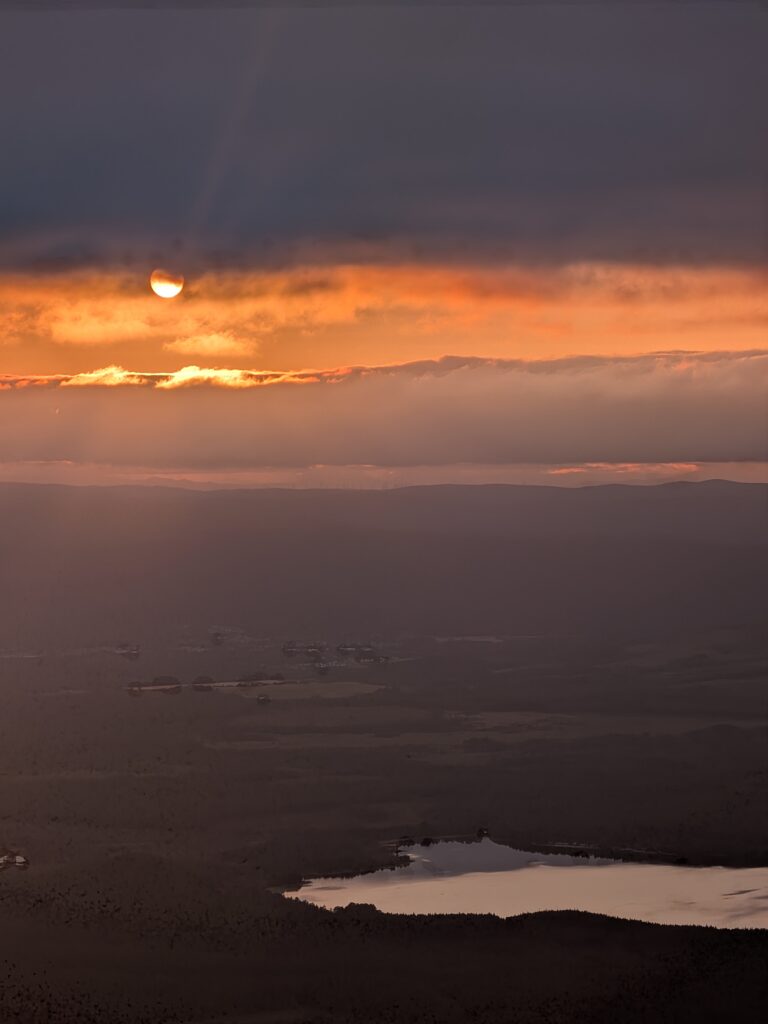
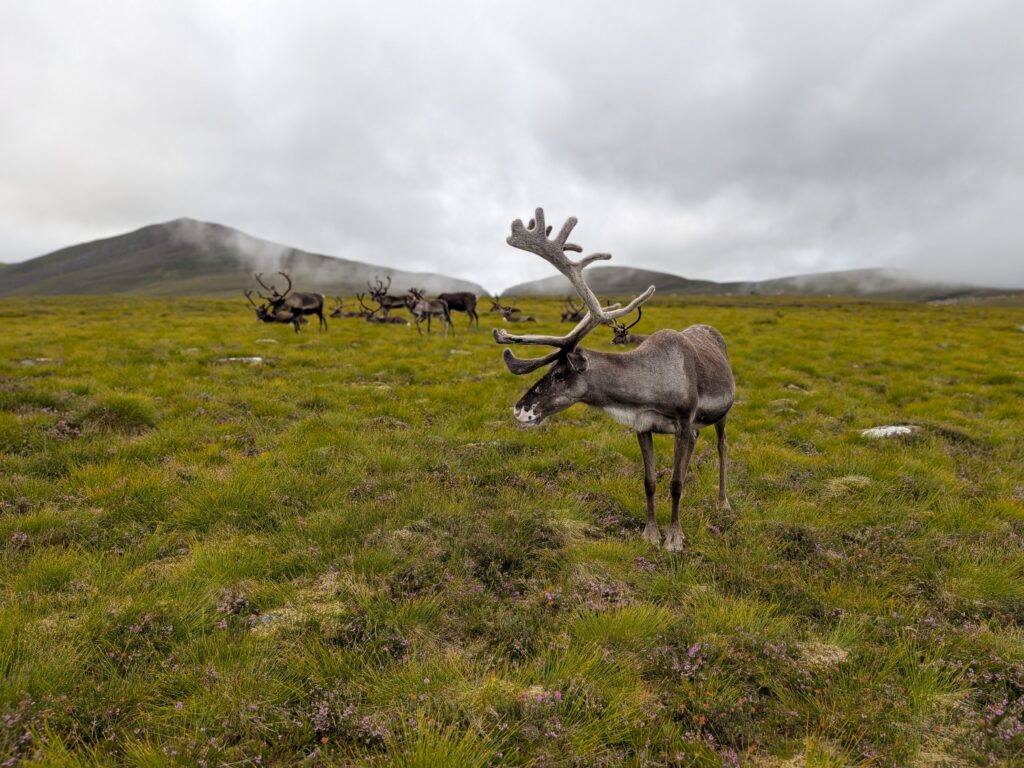
Amy
The bodies of reindeer go through many changes allowing them to cope with huge temperature difference throughout the seasons. In summer reindeer can cope with temperatures above 30 degrees and the lowest recorded temperature that reindeer have been know to survive is -72 degrees Celsius. Reindeer have two different coats, a thick white winter coat as well as a fine, dark summer coat. Their antlers grow in an annual cycle and the different times of growing and shedding them allows different animals to be dominant at different times of year. One of the most interesting, and important, changes to a reindeer though, you can’t see – their metabolism.
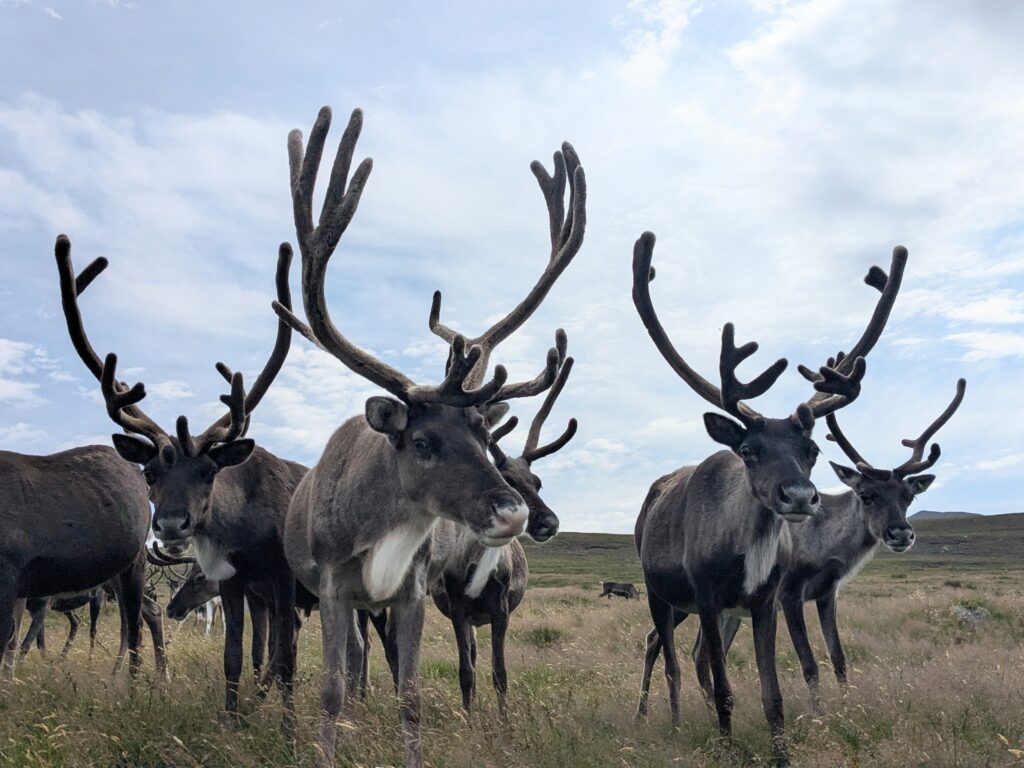
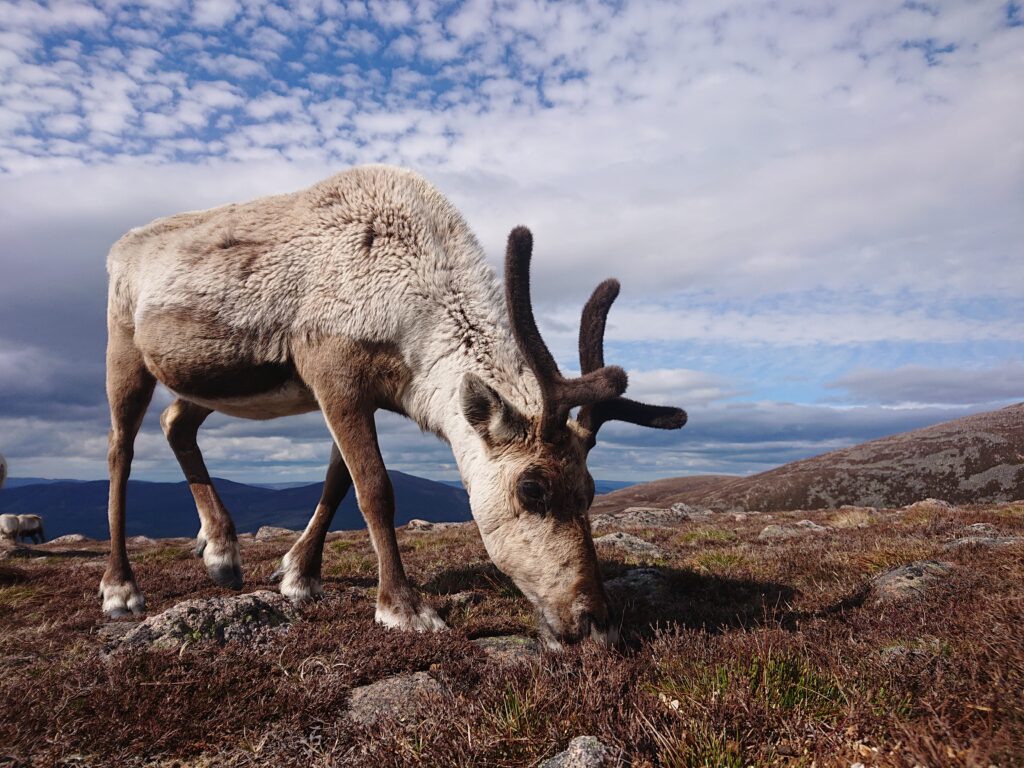
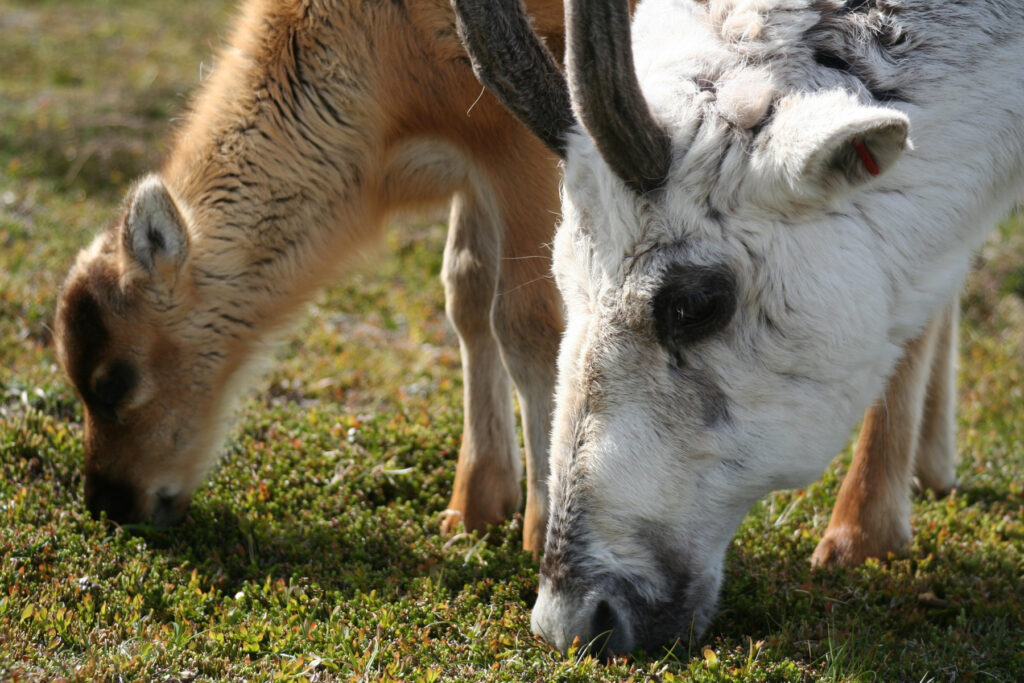
Reindeer have adapted to eat vast amounts of food throughout the spring, summer and autumn to gain enough weight to survive the winter, when food is scarce. To cope with these changes in food availability their metabolism changes too. In the summer reindeer will graze around the clock, eating a huge variety (between 200 and 300 different species) of plants which are high in nutrition. This allows each individual to grow a new set of antlers, they start to grow in the spring and are fully grown by the end of august and the heaviest set we have had in our herd, weighed a whopping 8.9 kgs. The summer is also the time that the young reindeer grow in body size. Finally, every reindeer will need to gain body fat which will act as reserves over the winter. All these things require their digestive system to work in overdrive converting the food they are eating into energy that can be used by their body to create protein, bone, fat, and whatever is needed.
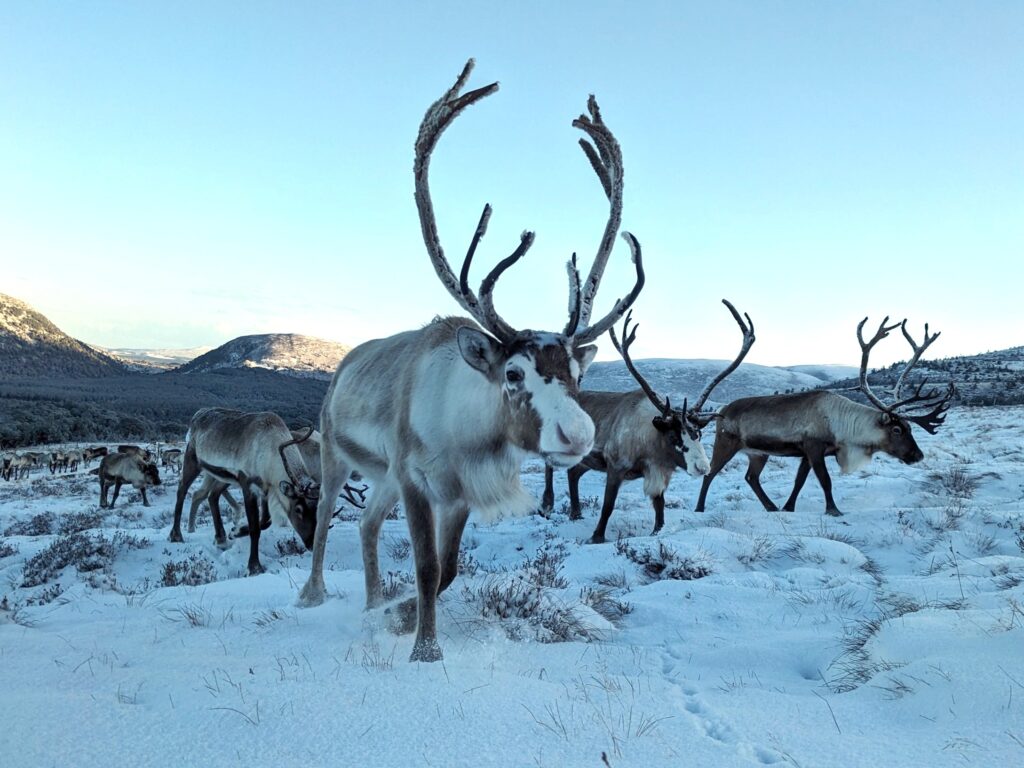
On the contrary, winter is all about survival. During the winter most of the plants will have died under the snow and 70% of a reindeer’s diet is made up of lichen. Lichen is a symbiosis of fungi and algae and is very resistant to extreme changes in temperature. Over the winter lichen won’t grow but it will stay dormant, preserved under the snow. Reindeer will then dig down through the snow to reach the lichen. But lichen is relatively low in nutrients, just enough to sustain the reindeer through the winter and their metabolism shifts in line with this. In fact, even if you gave a reindeer a big pile of food, during the winter, they just aren’t as hungry and wouldn’t eat it all.
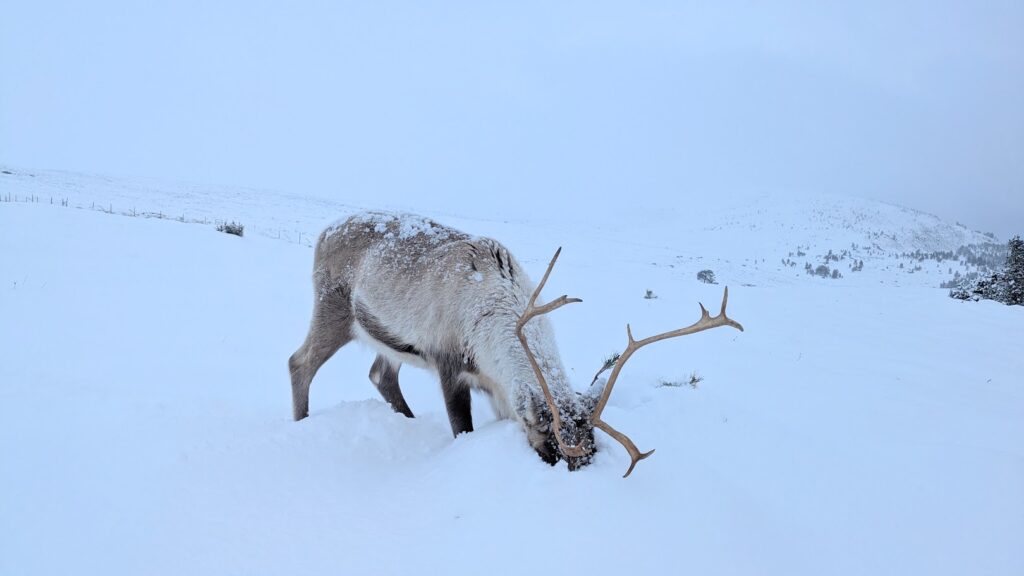
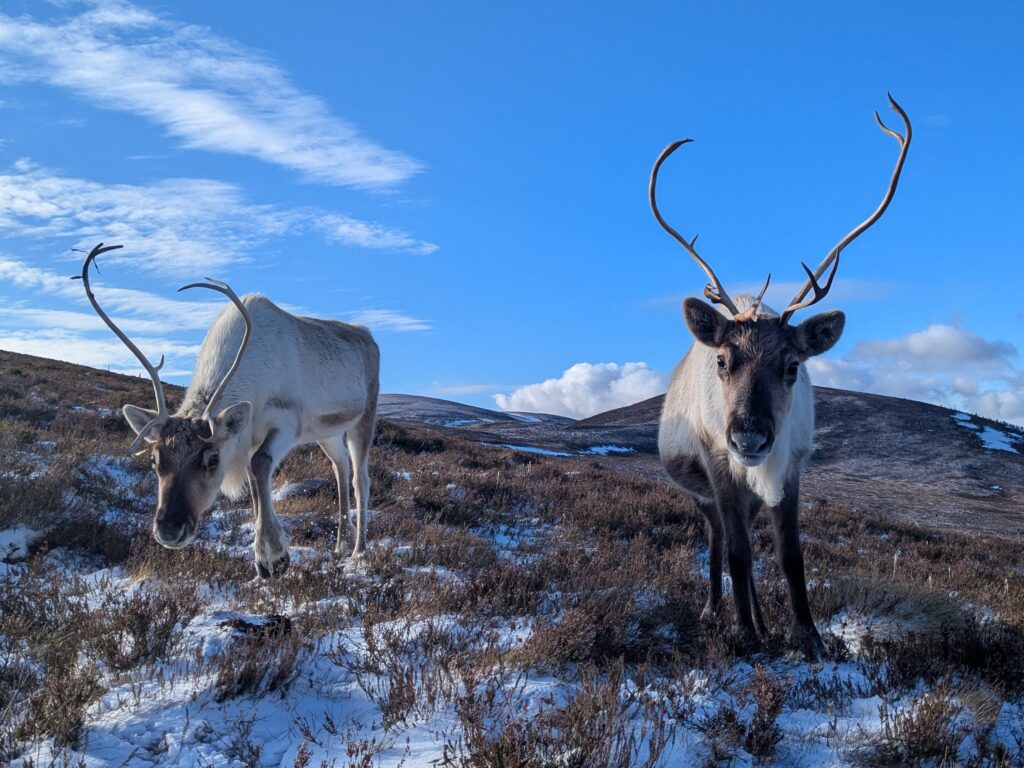
During the winter reindeer are no longer growing their antlers, they won’t increase their body size at all, a calf will grow lots in the first 6 months of their life and then stay the same size for the next 5 months, until the following spring. They will survive the winter by using their fat reserves. The one important growth that does happen in winter is that of a growing foetus. This is the reason that the females grow antlers and keep them after the males have shed them, as it gives them a physical advantage during the time that they are pregnant and therefore they get first dibs on the food.
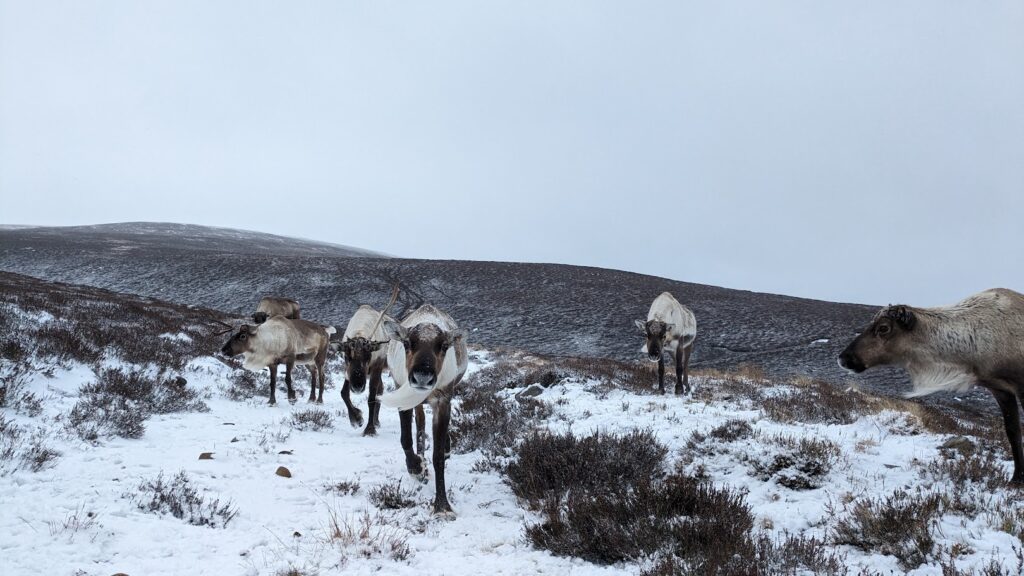
But how does a reindeer know that it’s time for spring? Rather than responding to food availability or temperature which may well change year by year, the changes in their metabolism are triggered by the changes in daylight. The increased daylight associated with spring is detected by specialised receptor cells in their eyes which then convert to a hormonal signal using melatonin. Melatonin is synthesised during the dark period each day and then synthesis stops during daylight. This means that the amount of melatonin varies based on the time of year. The concentration of melatonin has many effects. In terms of metabolism, in the spring as melatonin decreases, this increases the appetite of the reindeer. In the autumn, as melatonin increases, this decreases the appetite of the reindeer and increases the breakdown of fat stores. The changing melatonin levels also controls their antler growth and release of sex-hormones but that may be another blog in the future.
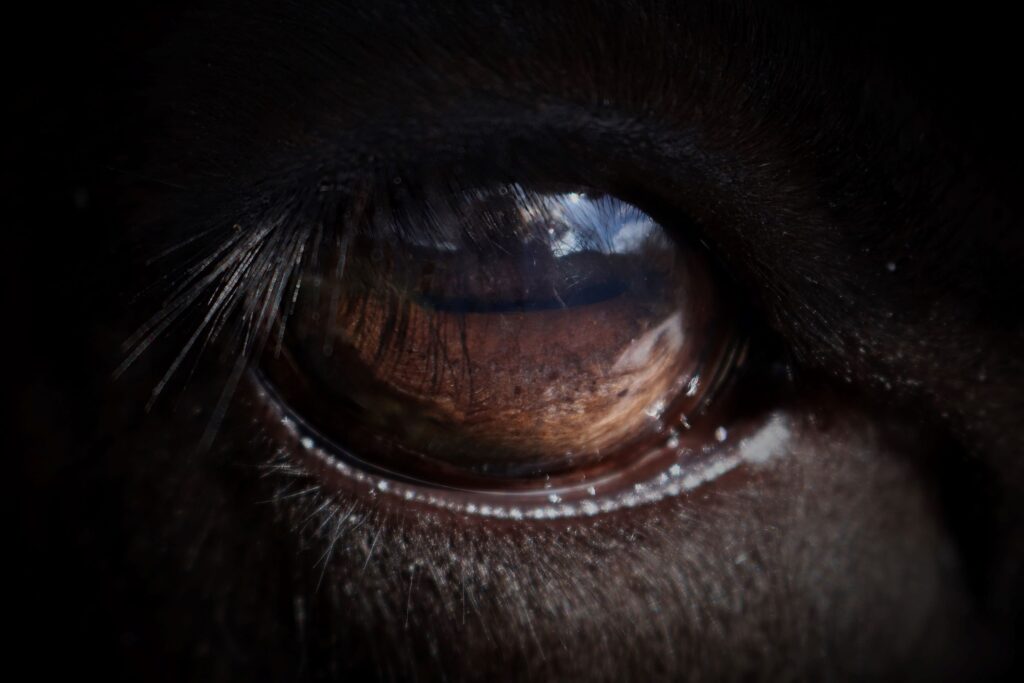
For anyone particularly interested in a much more in-depth description of the physiology behind these changes, I would highly recommend reading this article.
https://septentrio.uit.no/index.php/rangifer/article/download/335/327/1280
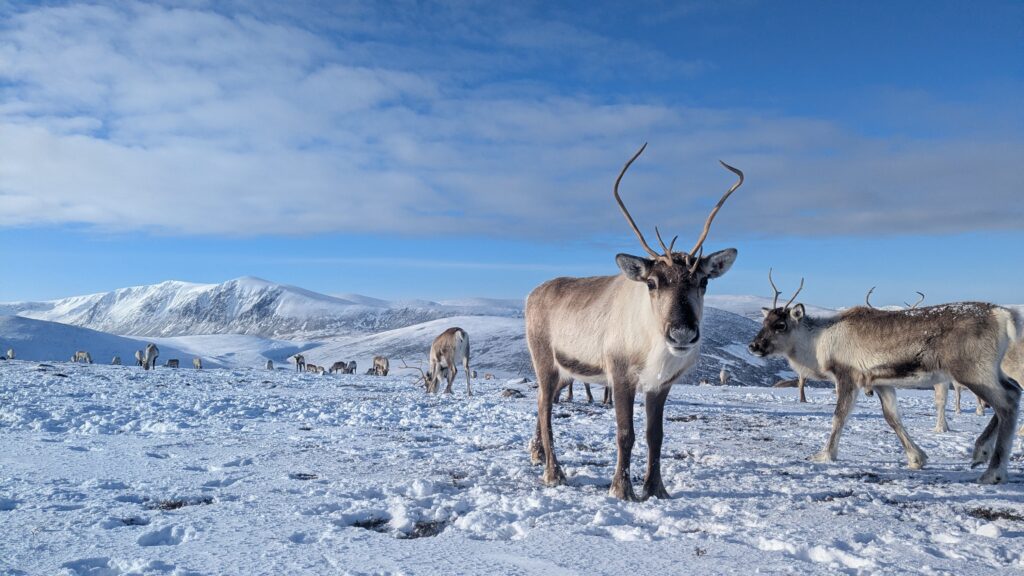
If you have made it this far, thanks for reading my very nerdy reindeer biology blog! Hopefully you have learnt something and enjoyed the pictures of the reindeer along the way.
Lotti
One of the trickiest things to learn when starting out as a herder is telling reindeer apart! With over 150 reindeer in the herd, all with their own name, it can seem a very daunting task. So how do you tell a reindeer apart from all the rest?
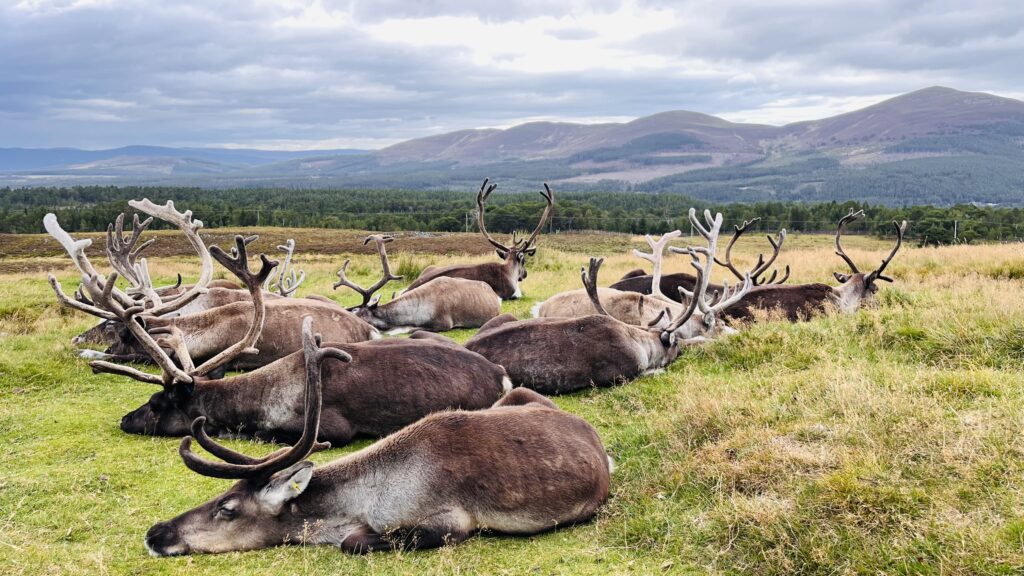
Every herder has their own method of identifying reindeer. Most can just take one glance, and due to having spent years with the same reindeer and learning to tell them apart – instantly know who it is. But if you haven’t spent years watching the reindeer grow and change with the seasons, there are a few techniques you can use. Be warned though, you’ll constantly feel like you’re back at square one should you visit us throughout the year and try to recognise your favourite.
I’ll start with the easiest way to tell the reindeer apart – their ear tags. Each of our reindeer are tagged with a group colour and a unique number. The colour changes each year, allowing us to quickly work out how old they are. For example, yellow ear tags are for this year’s yearlings, born in 2024 and all named after hot drinks. Silver ear tags belong to the peas, beans and seeds calves of 2020, making them all five this year, and so on. The number then allows you to straight away know exactly who the reindeer is (orange tag 201 for instance, being the lovely, and very well-known Sherlock). The downside to this method is, you have to memorise over 150 ear tag colours and corresponding numbers…
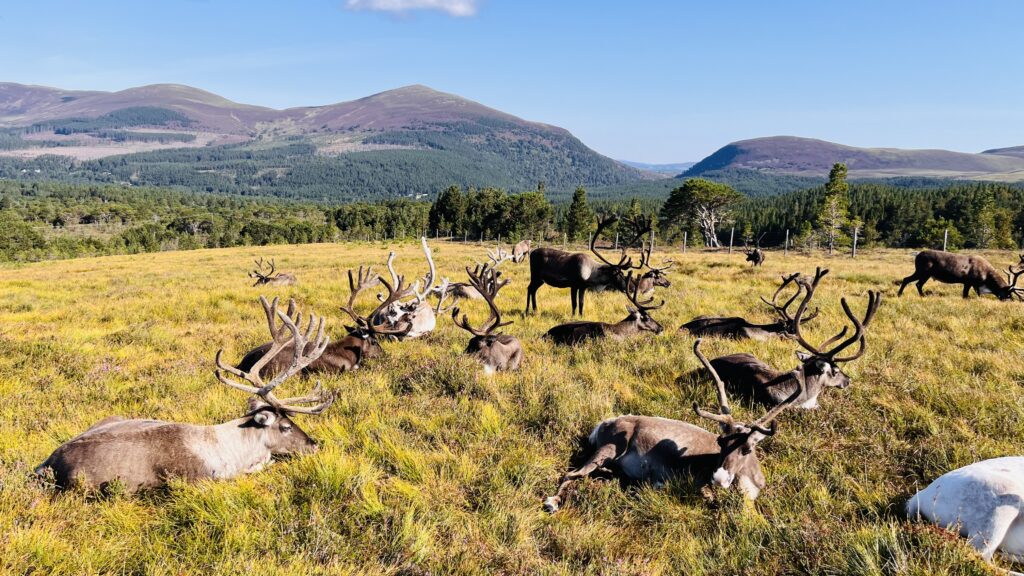
The more enjoyable method is personalities. All our wonderful reindeers have their own unique quirks and traits. Whether they’re extremely greedy and can always be counted on to be front and centre for our hill trips (I’m talking about you Nile!), or if they have a more reserved character and tend to be the shy contemplator at the end of the feed line. Their personalities shine through and can be a good way for us to tell who’s nearby.
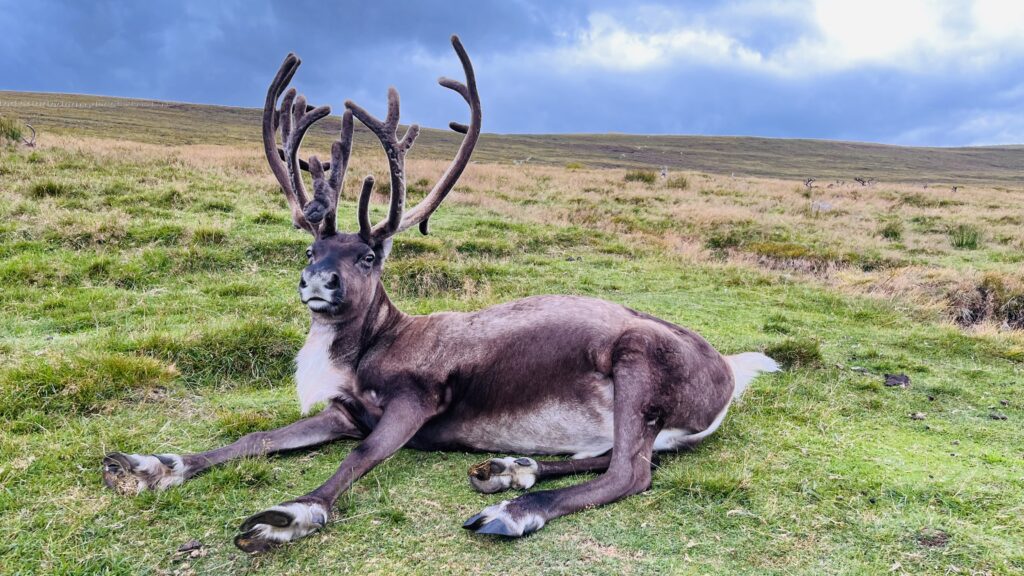
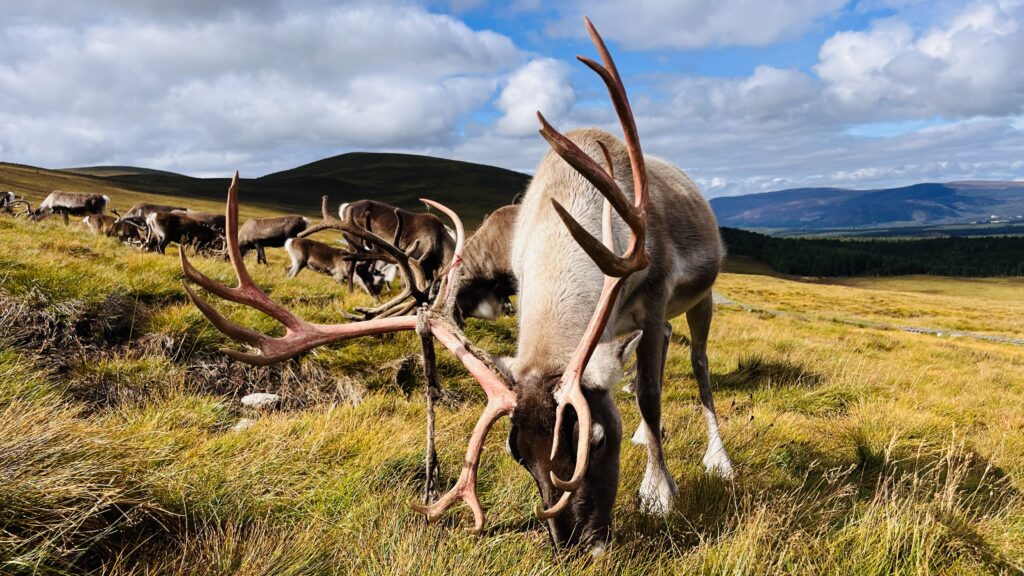
Now let’s talk about antlers! From little twigs on top of a calf, to magnificent displays fit for a castle fireplace once a bull has finished with them – antlers can be a great way to tell reindeer apart. After the age of three or four, when a reindeer is fully grown, you can usually count on a reindeer to grow the same set of antlers every year. The shape and size of a reindeer’s antlers is genetically inherited by their parents, and is unique to that reindeer, just like our thumb print (how cool is that?!). there are some factors that can influence this, such as the health of the reindeer, their age, if a male has been castrated or a female is caring for a calf. But generally, you can count on antlers being a very reliable way to identify a reindeer. Until they shed them of course!
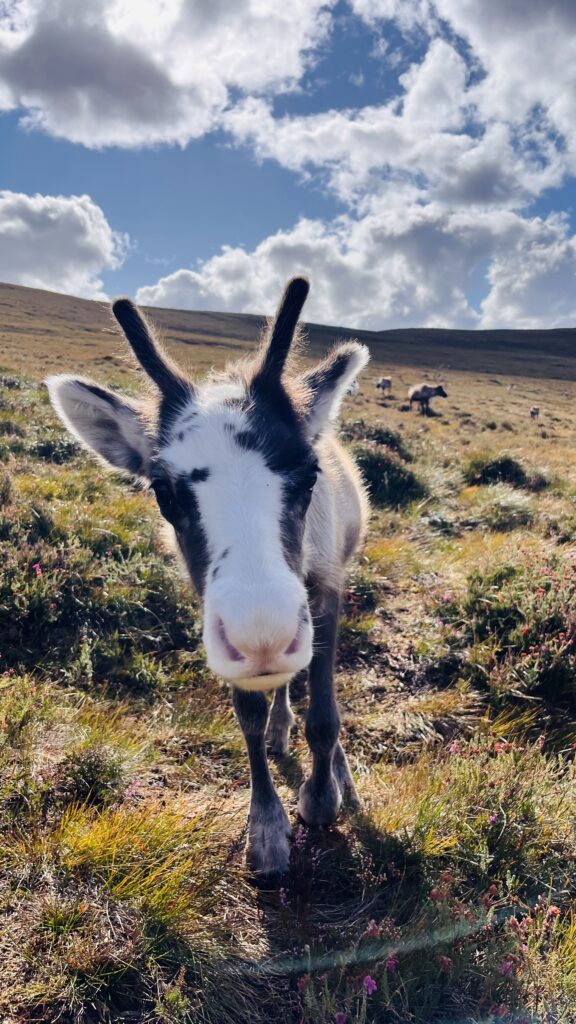
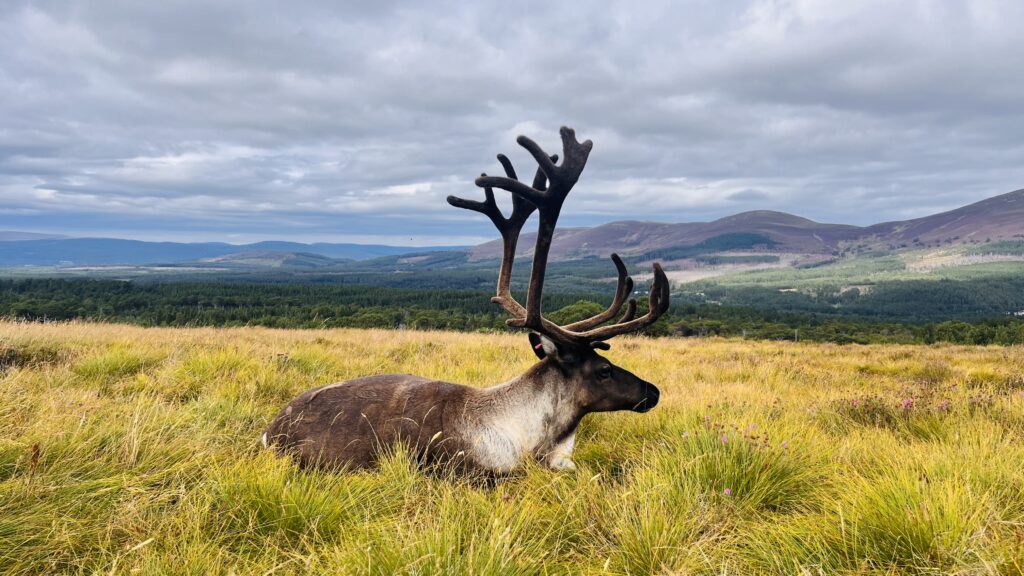
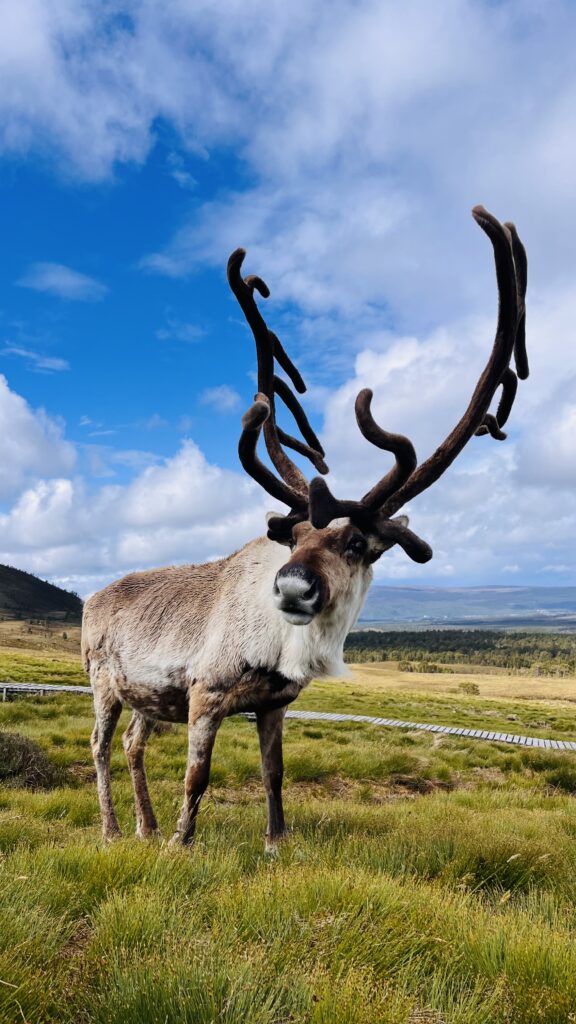
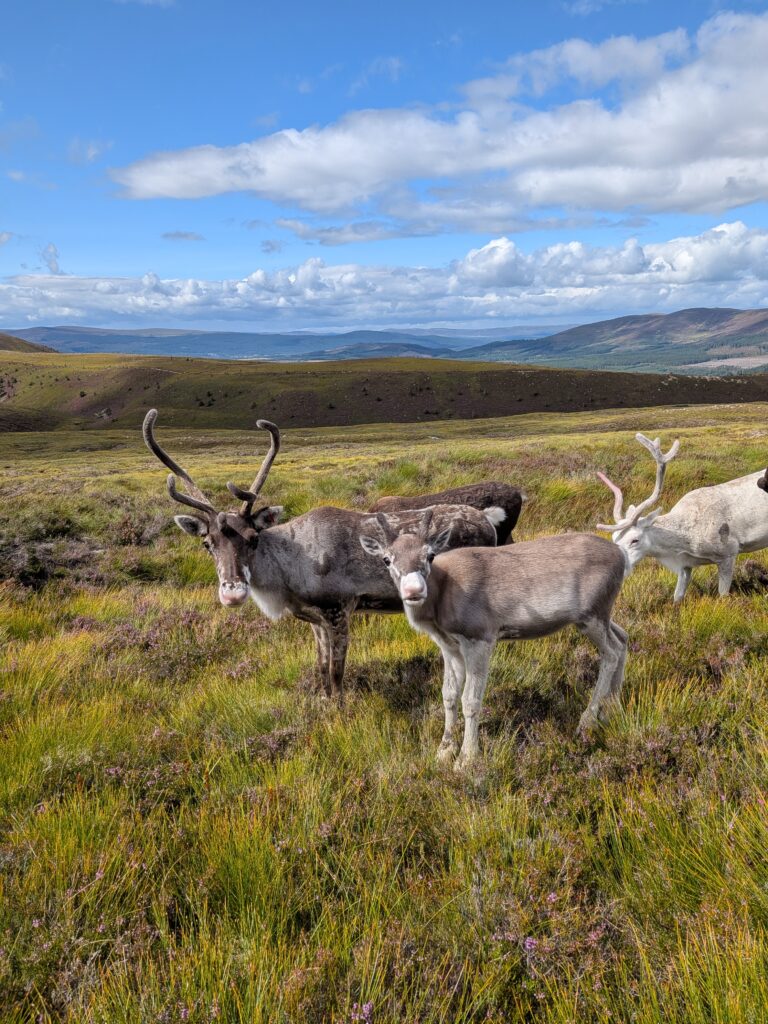
So, their antlers are gone, and you didn’t study your list of ear tag numbers – now what do you do? Well now you have the not so fun task that no body would possibly want to do… get up close and personal with 150 cute and fuzzy faces! The longer you look at the reindeer, the more obvious the differences in their coat and face markings and the shape of their bodies becomes. With an odd white reindeer here and a brown face with a white speckled nose there, you quickly begin to use markings and patterns to learn who’s who.
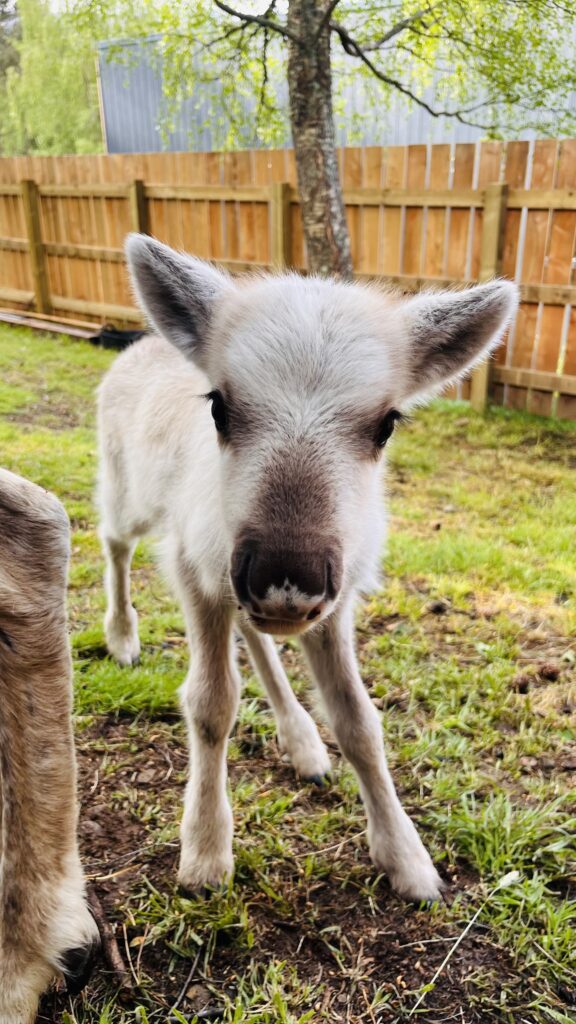
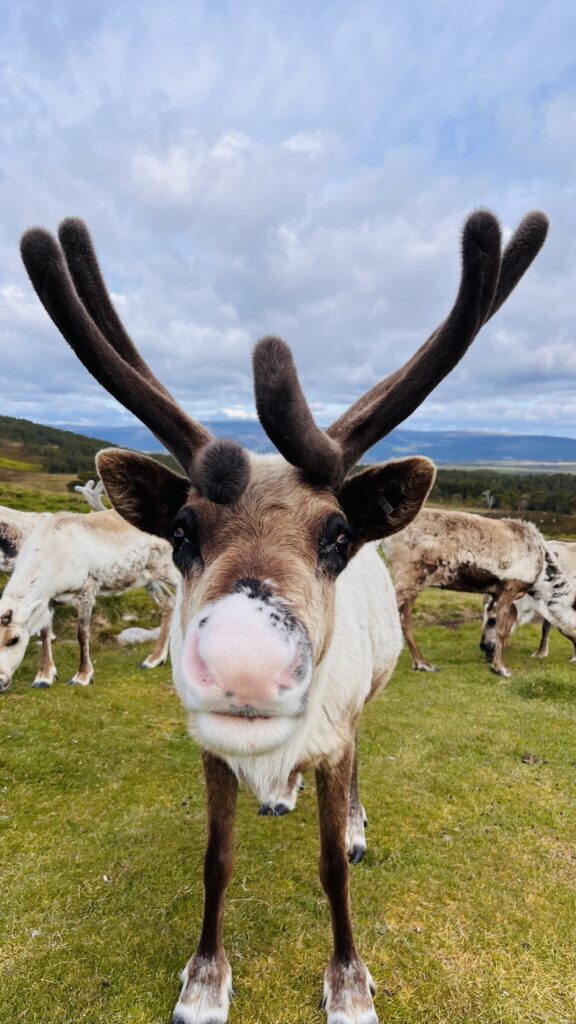
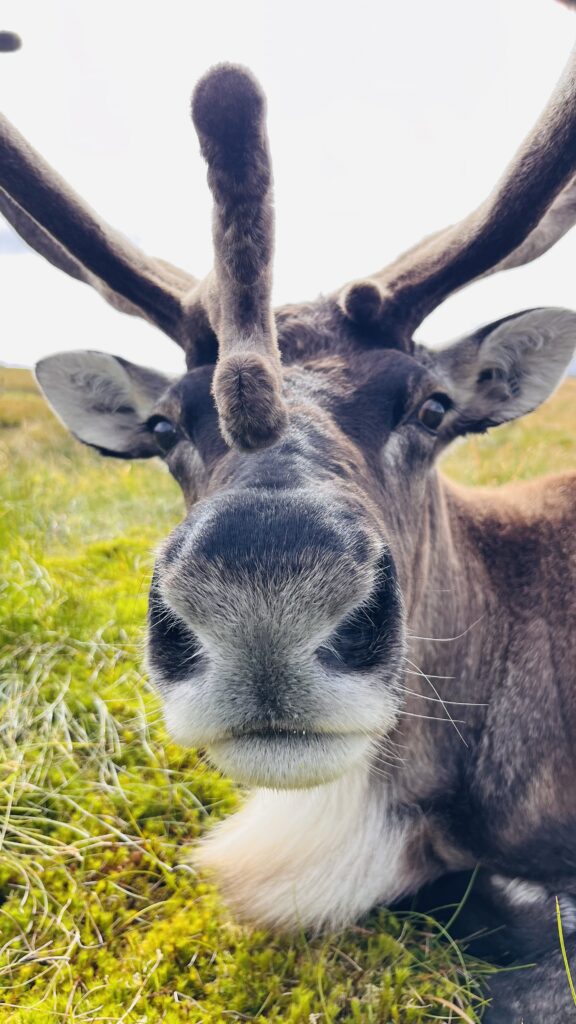
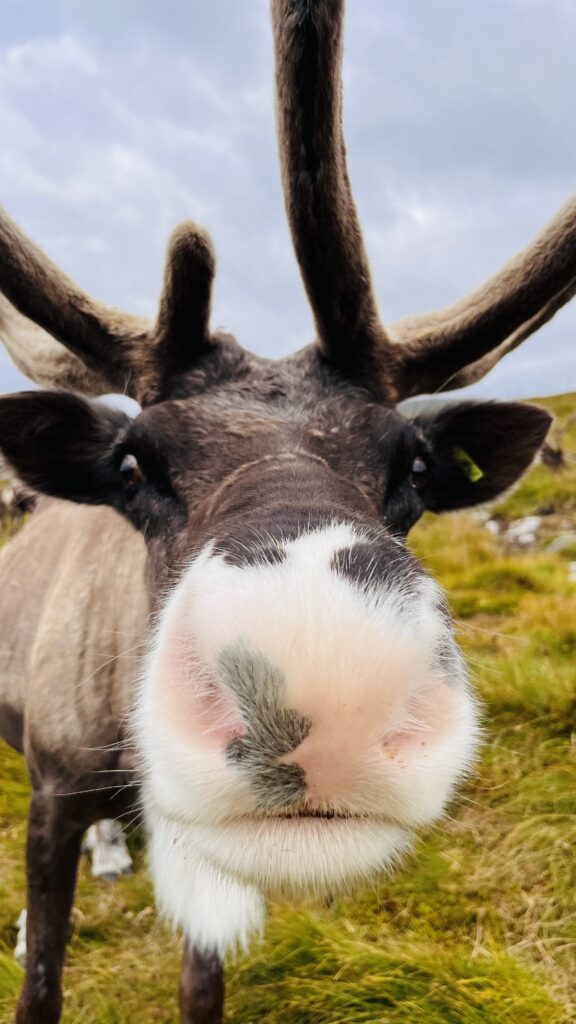
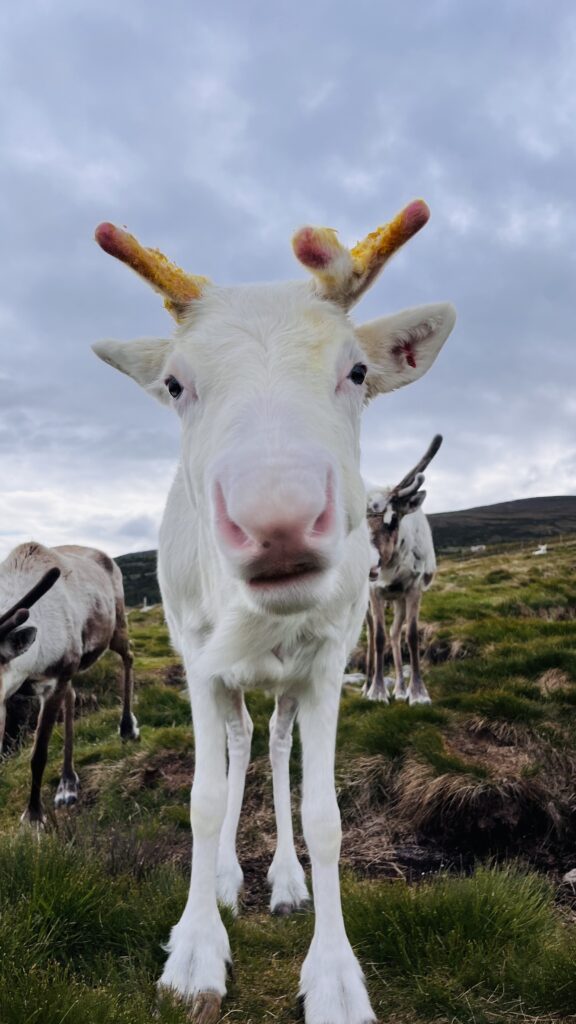
But don’t forget those changing seasons… The reindeer you think you learnt in winter are likely to be all brown by summer. So, maybe you should get memorising those ear tag numbers after all.
Daisy
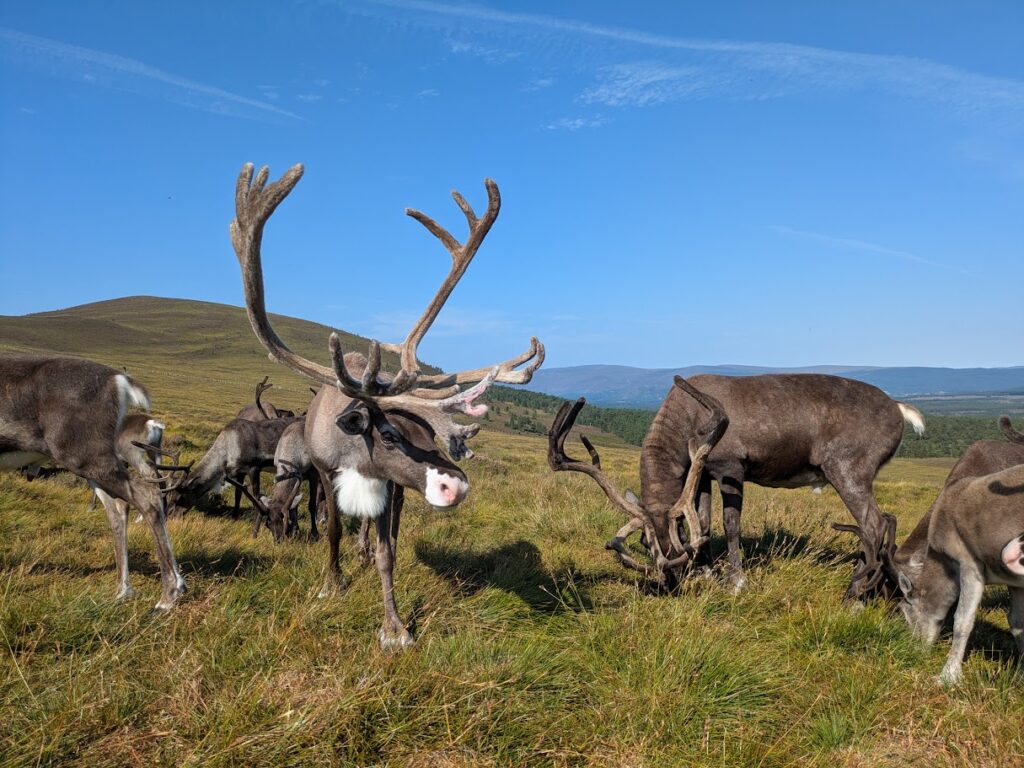
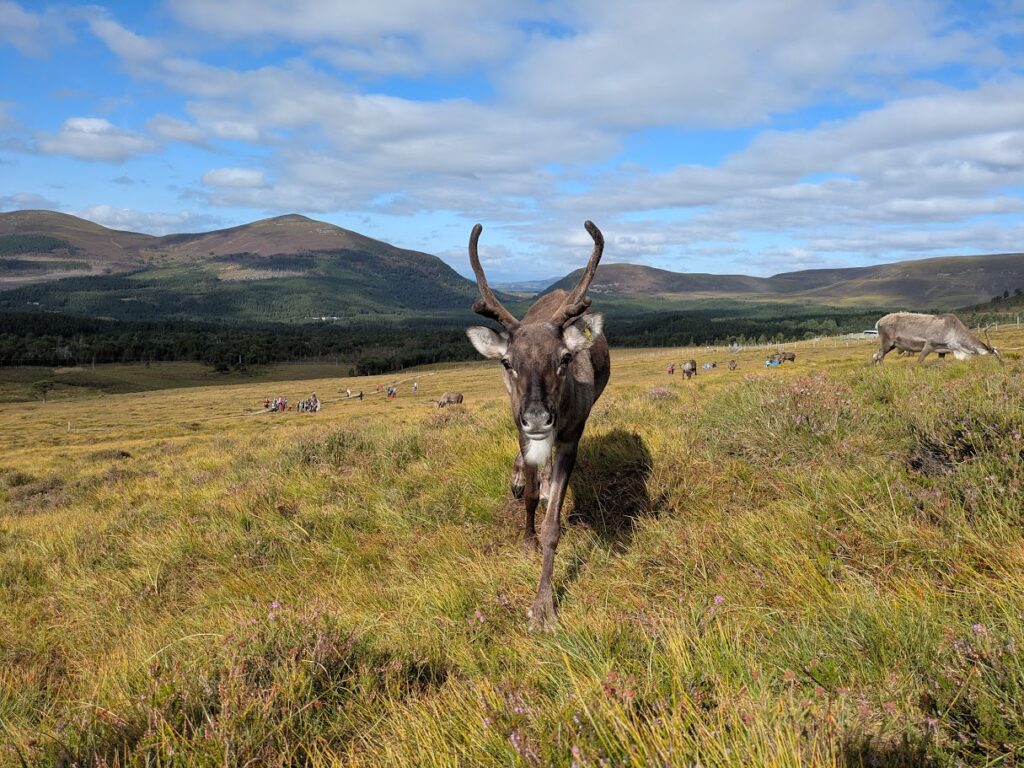
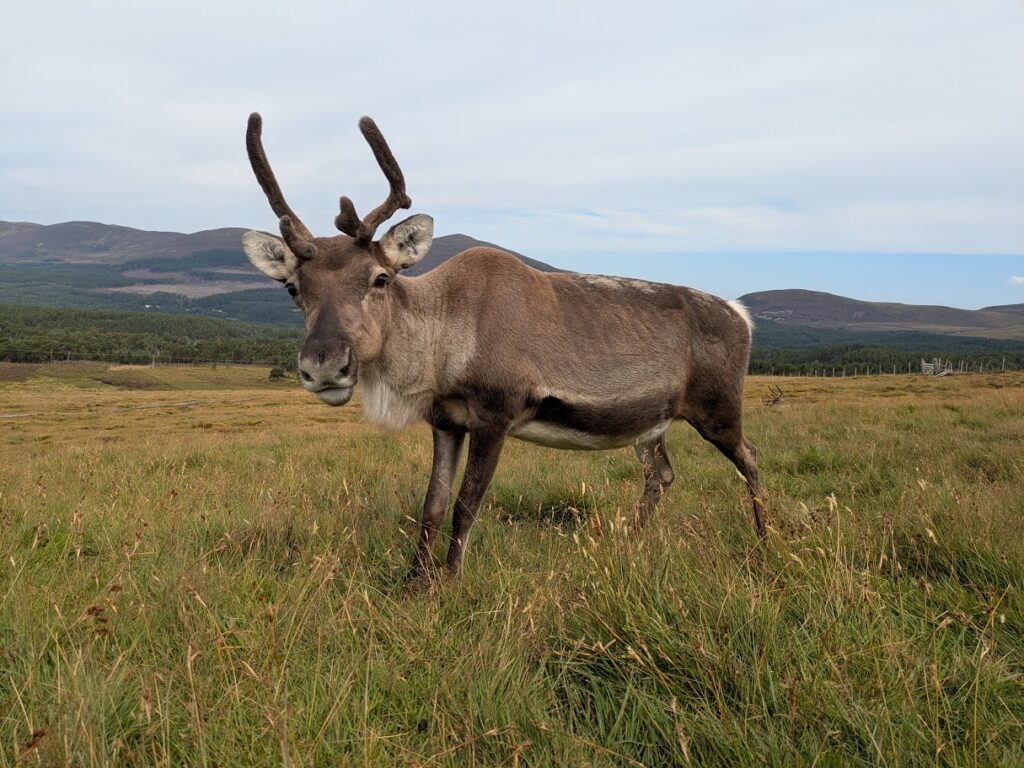
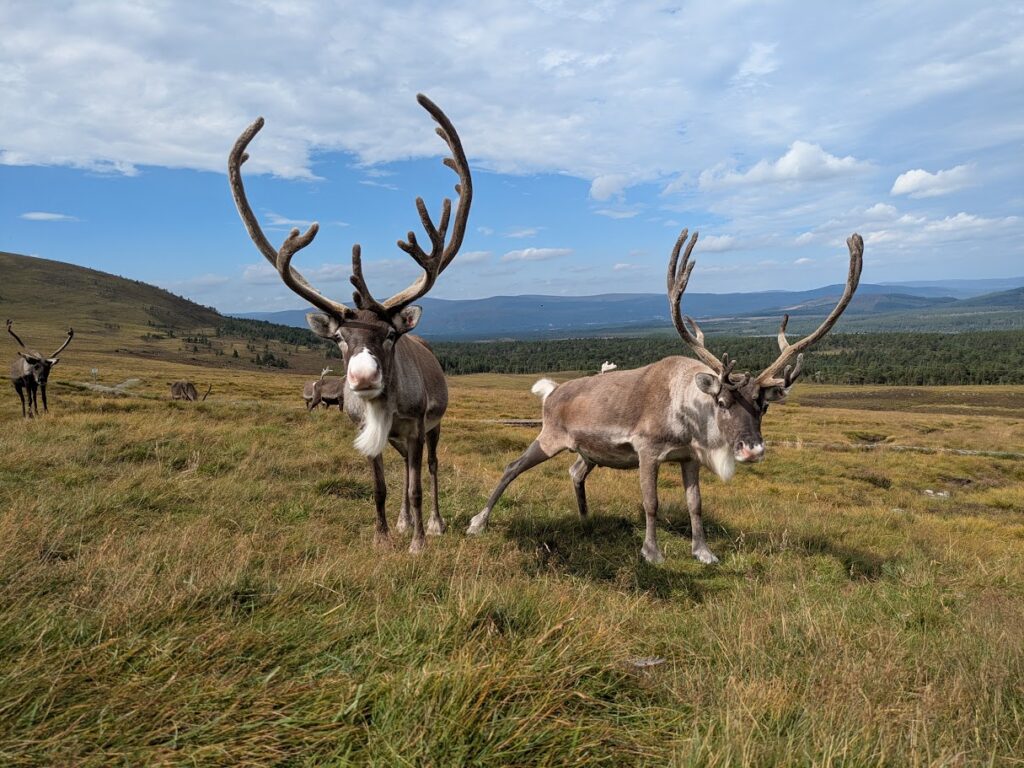
August has been a busy and fun month. We’ve had lots of visitors and three sold out Hill Trips almost everyday. Lots of people have also been coming into the Paddocks to see the reindeer on display there, and very excitingly the Exhibition is nearly ready. It’s looking super! You’ll definitely hear to social media and our website when we’re open.
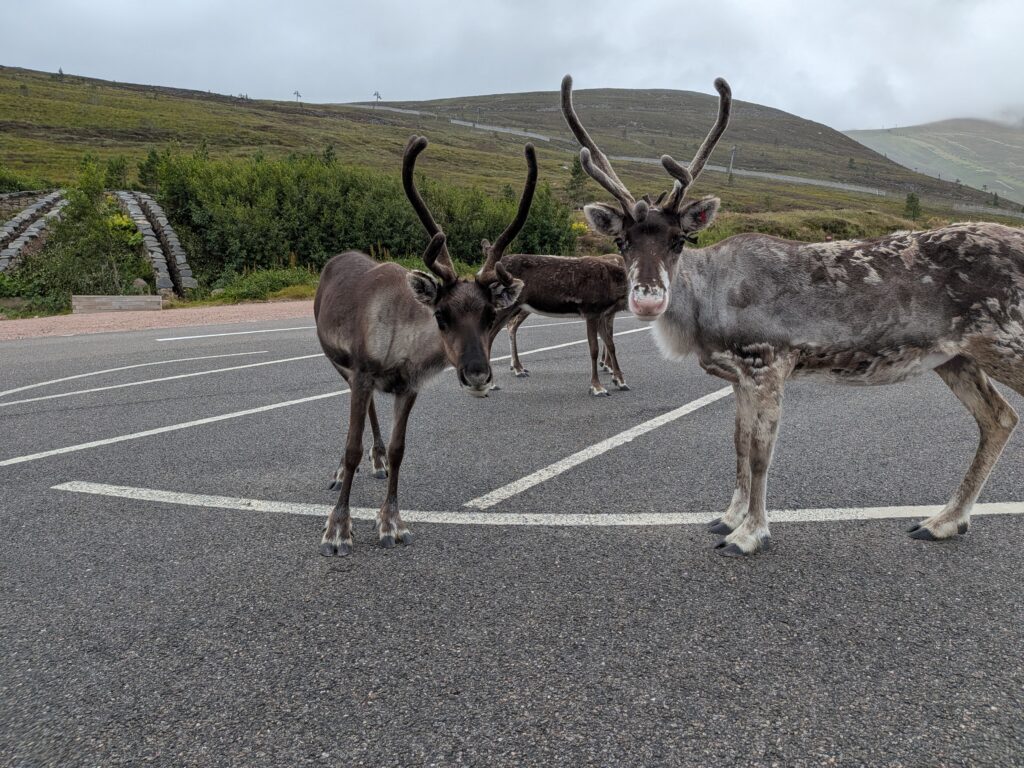
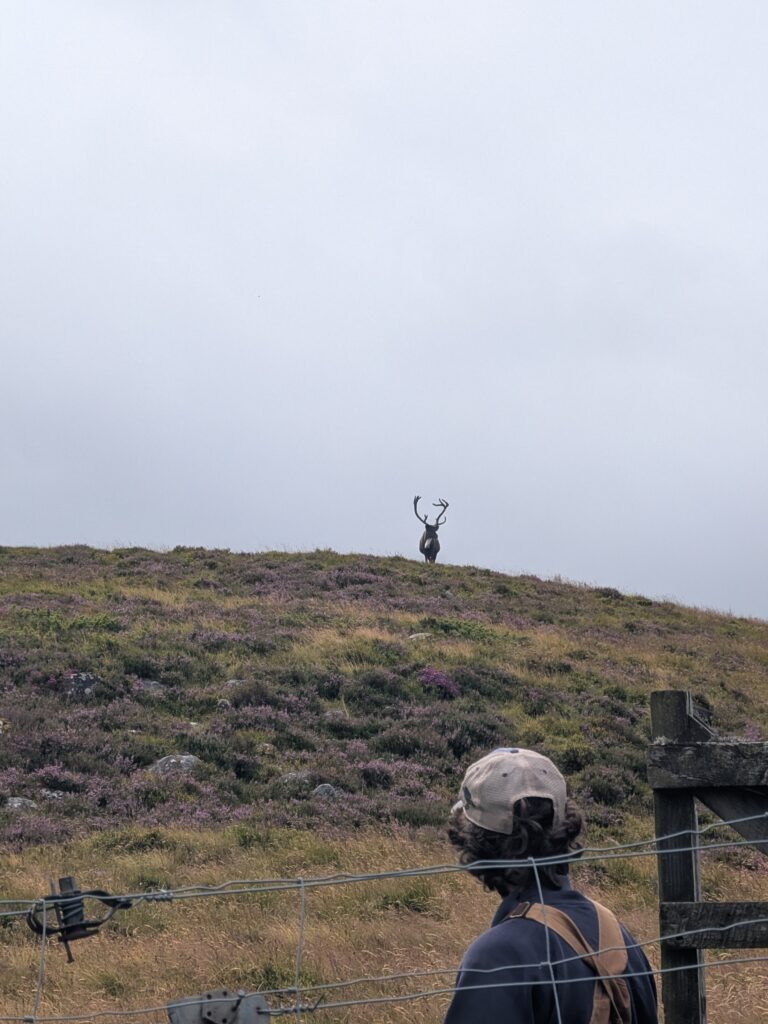
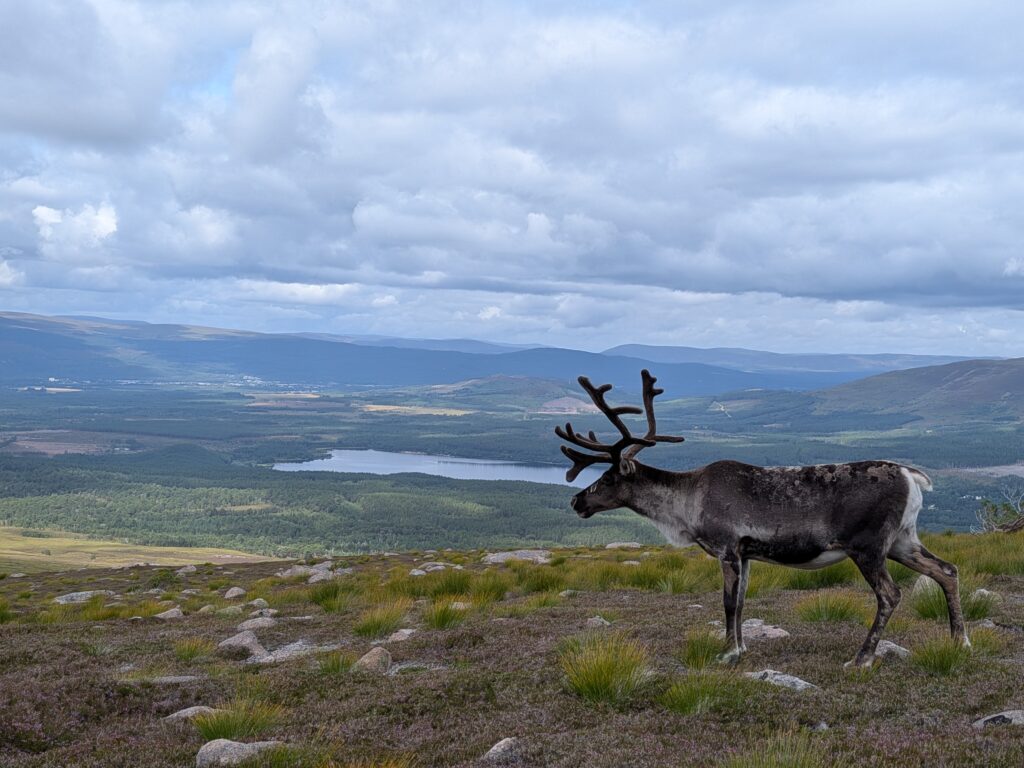
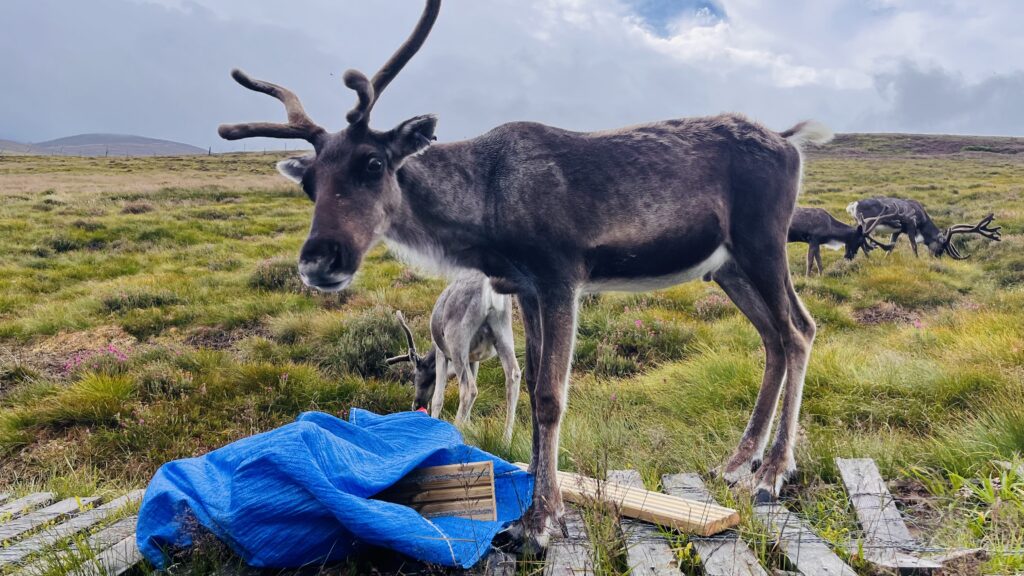
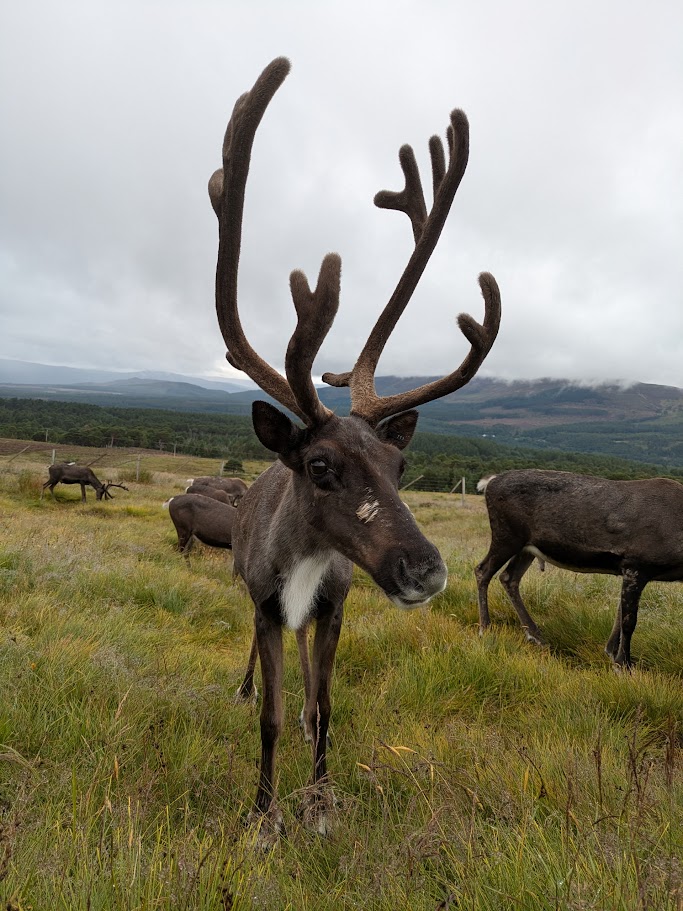
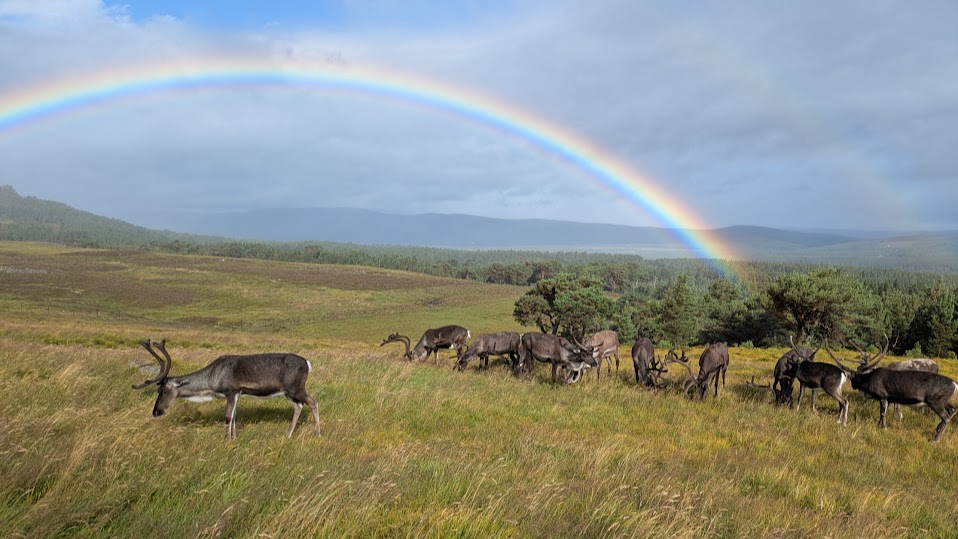
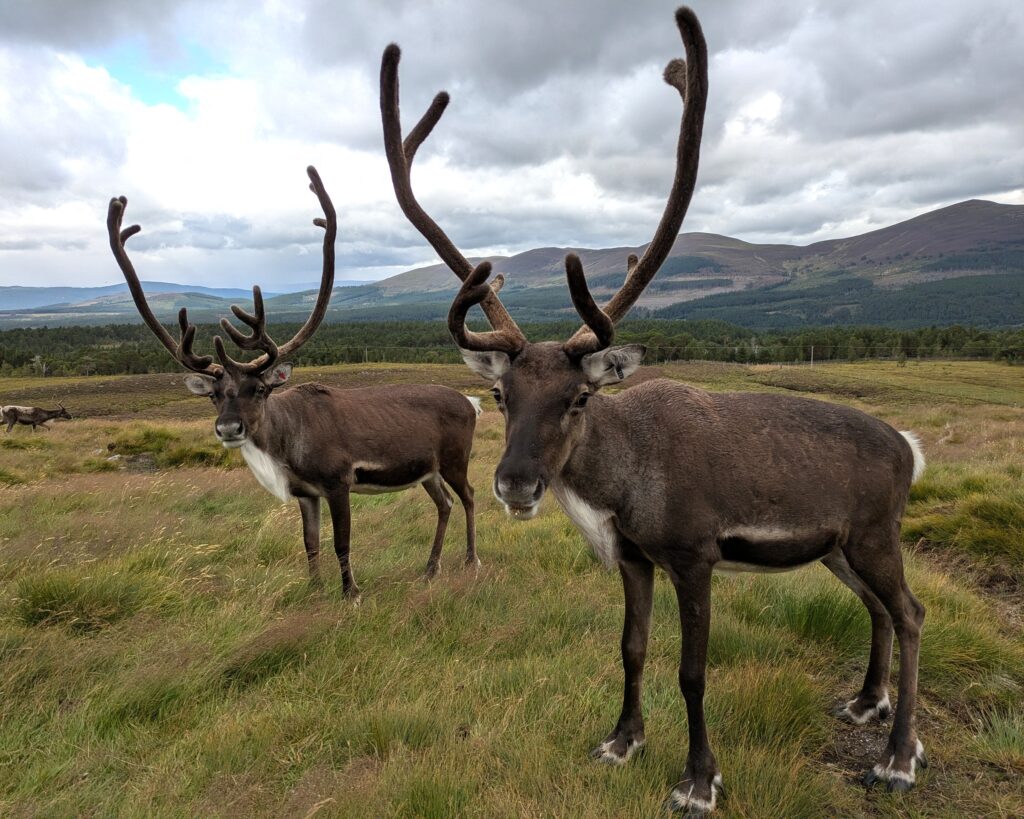
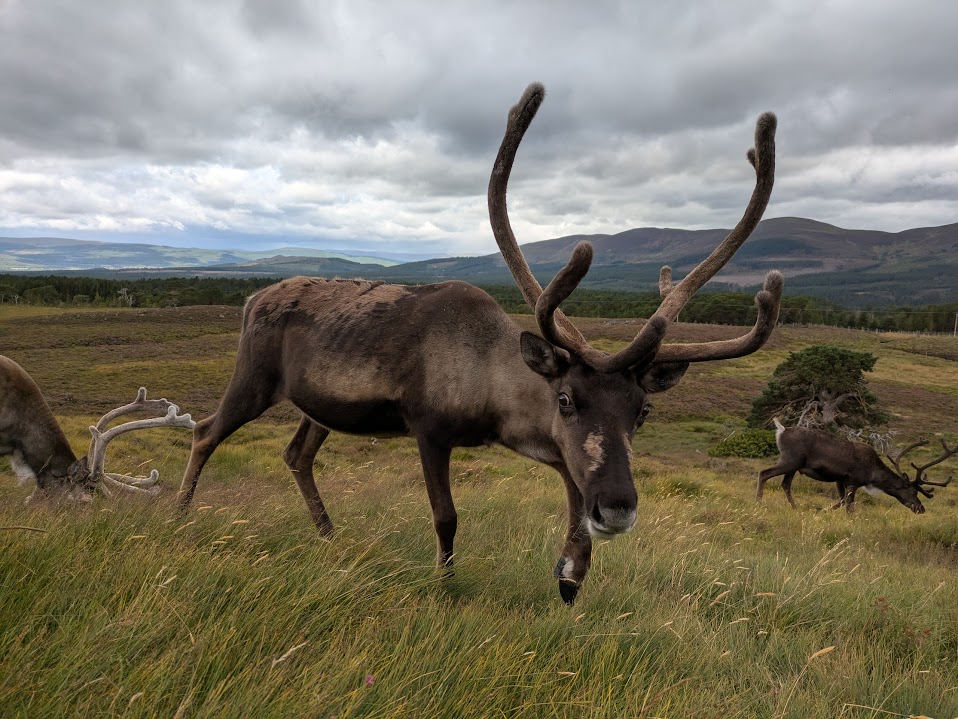
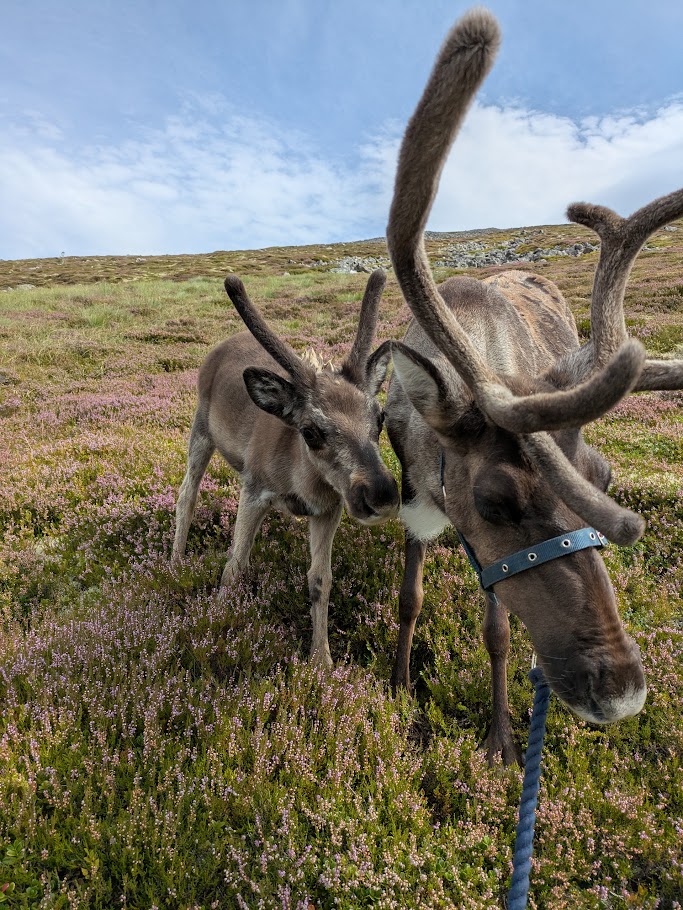
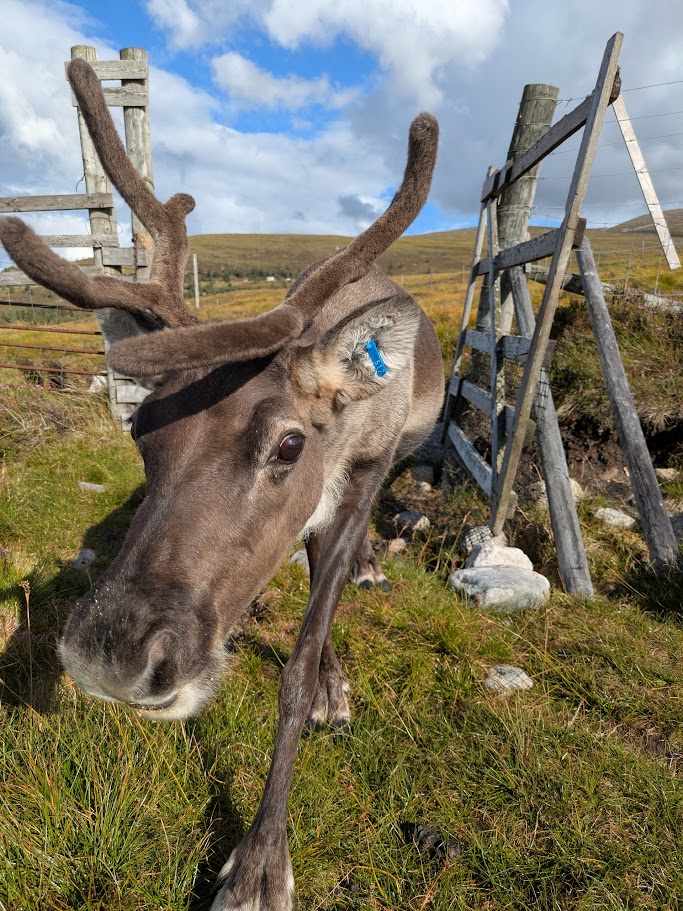
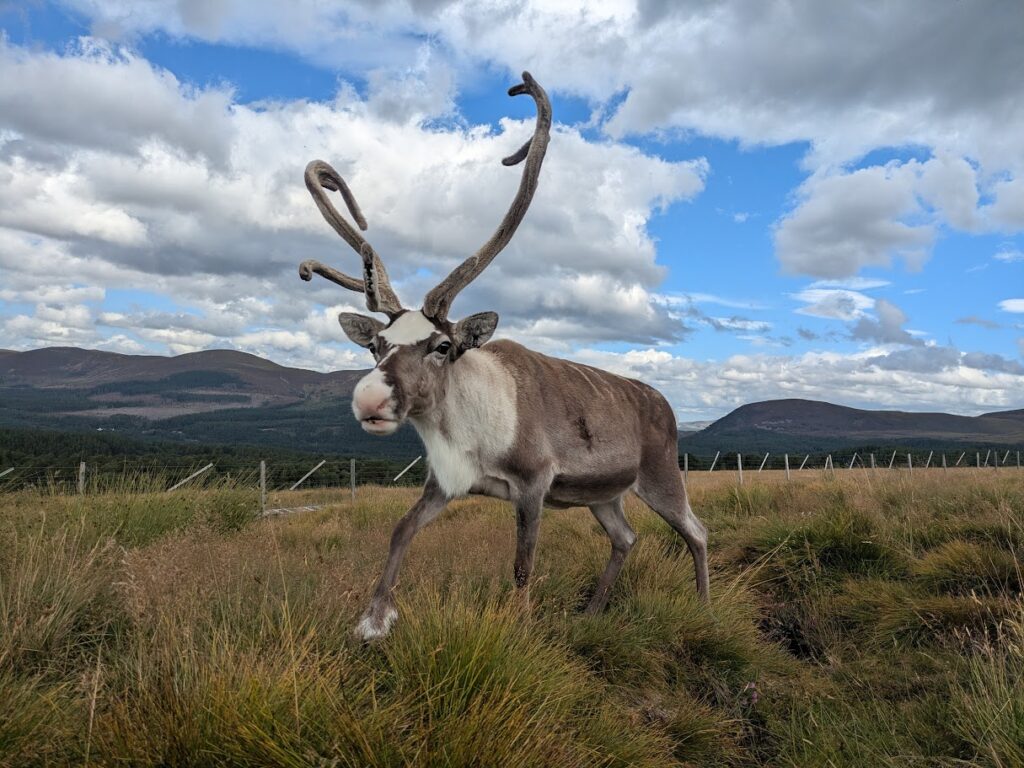
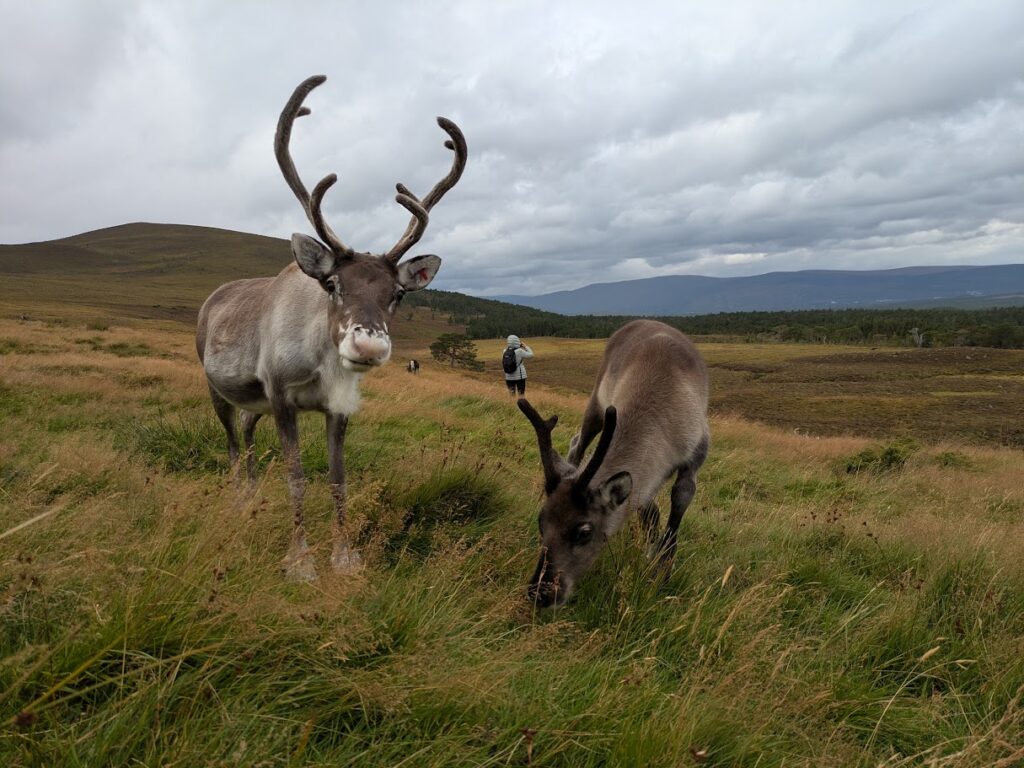
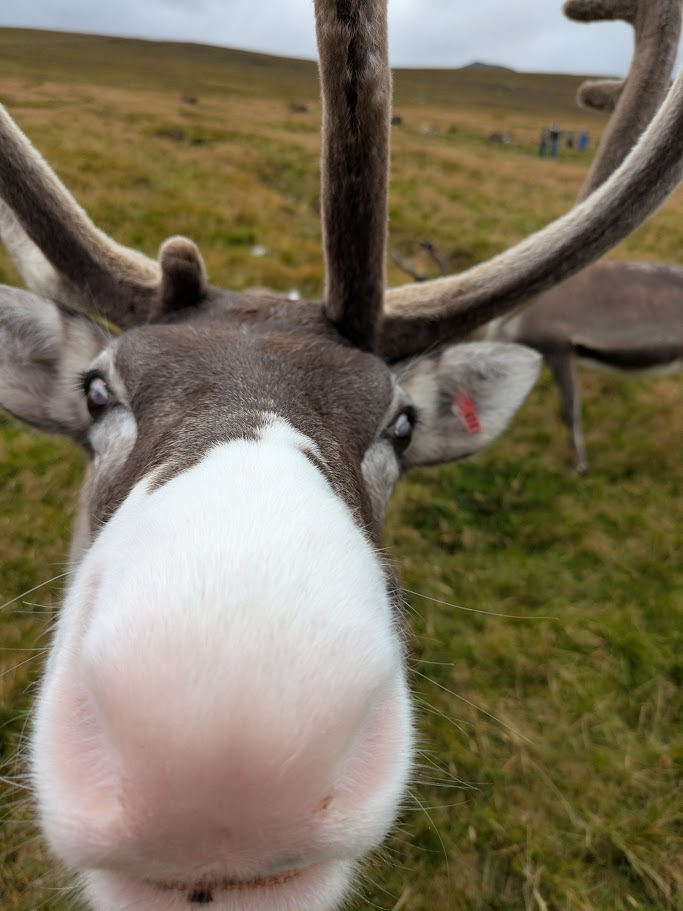
We’ve also been having lots of free range action which every herder loves! Generally we start to see the free ranging females more as they come down in altitude as the weather gets cooler and the mushrooms appear on the side of the hills. We start bringing in the mums and their calves back into the enclosure any time in August. They spend June through to August/early September out roaming the hills learning how to be little wild reindeer and enjoying all the best grazing, but when the autumn rolls around it’s time for them to learn what a feed bag is and in time, how to walk on a halter etc. The following photos are a small snapshot of what’s been occurring this month…
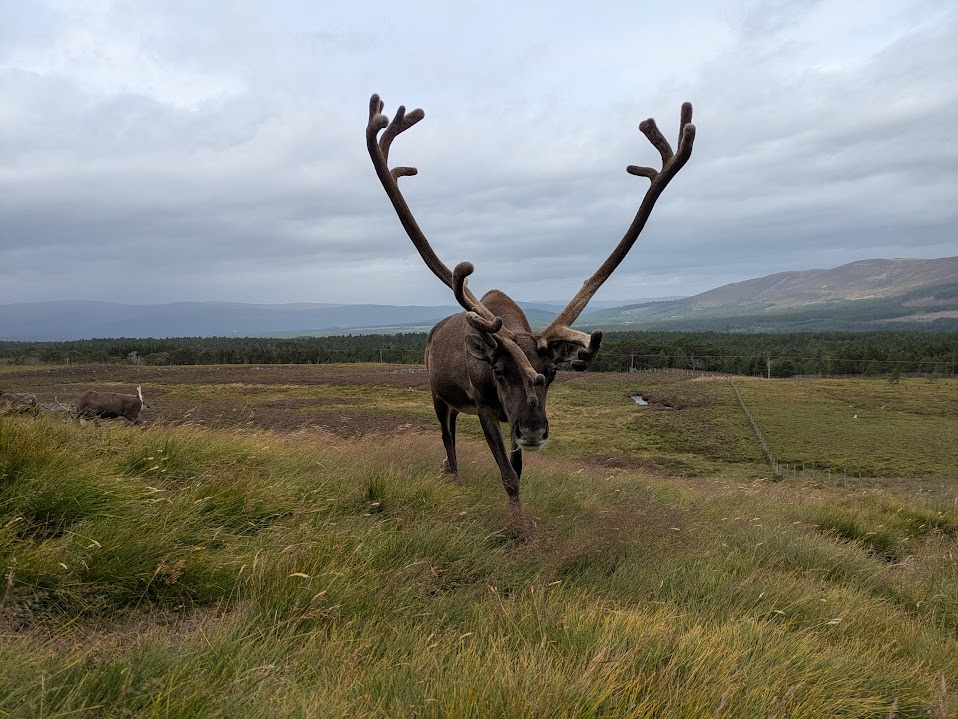
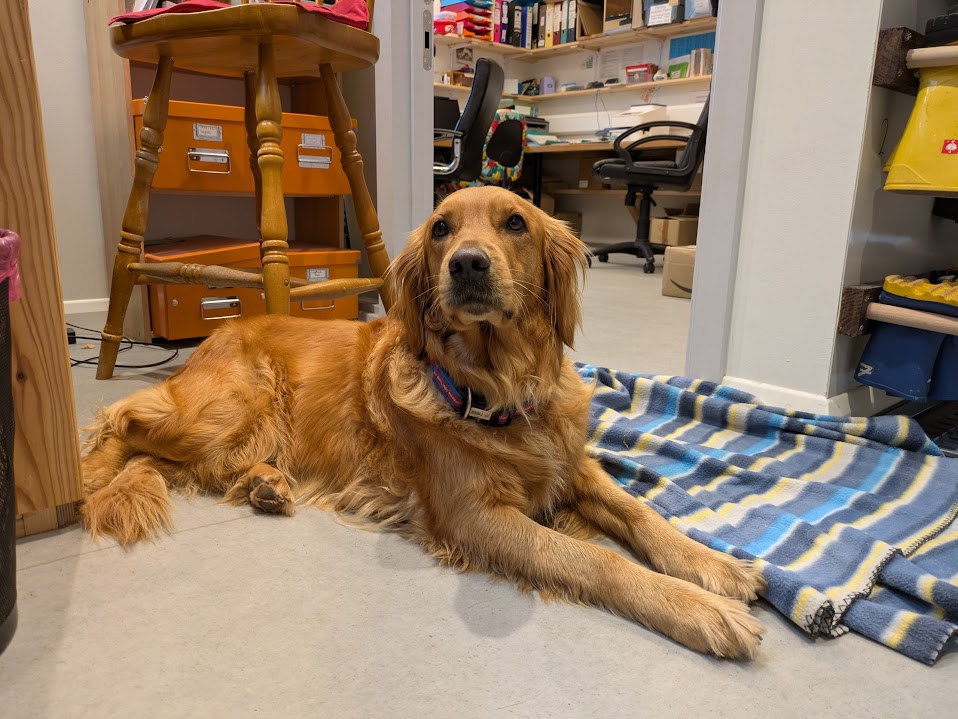
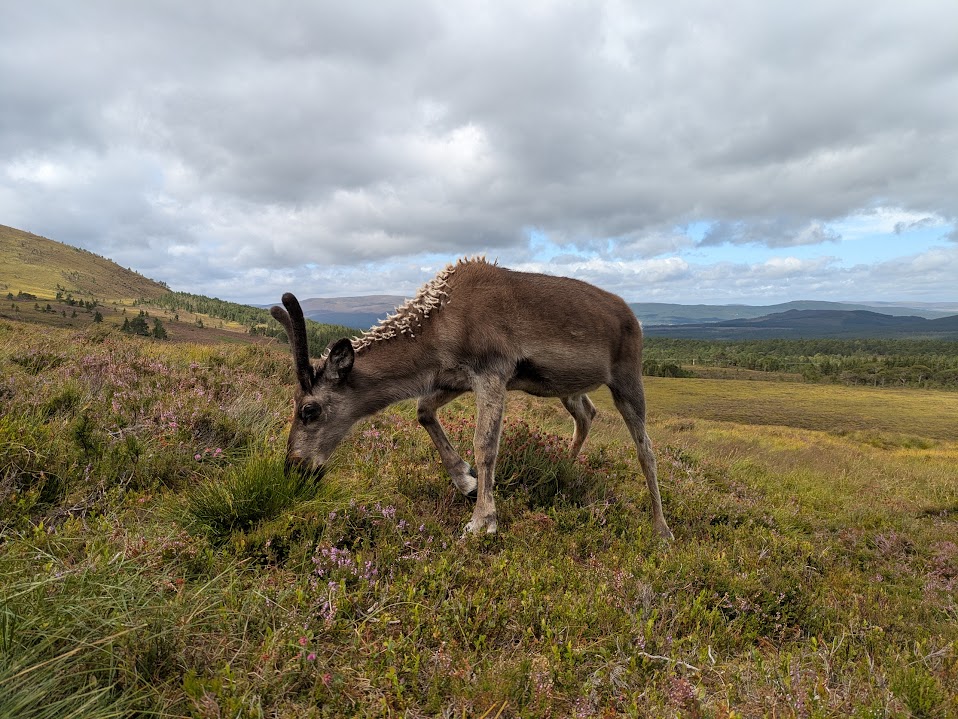
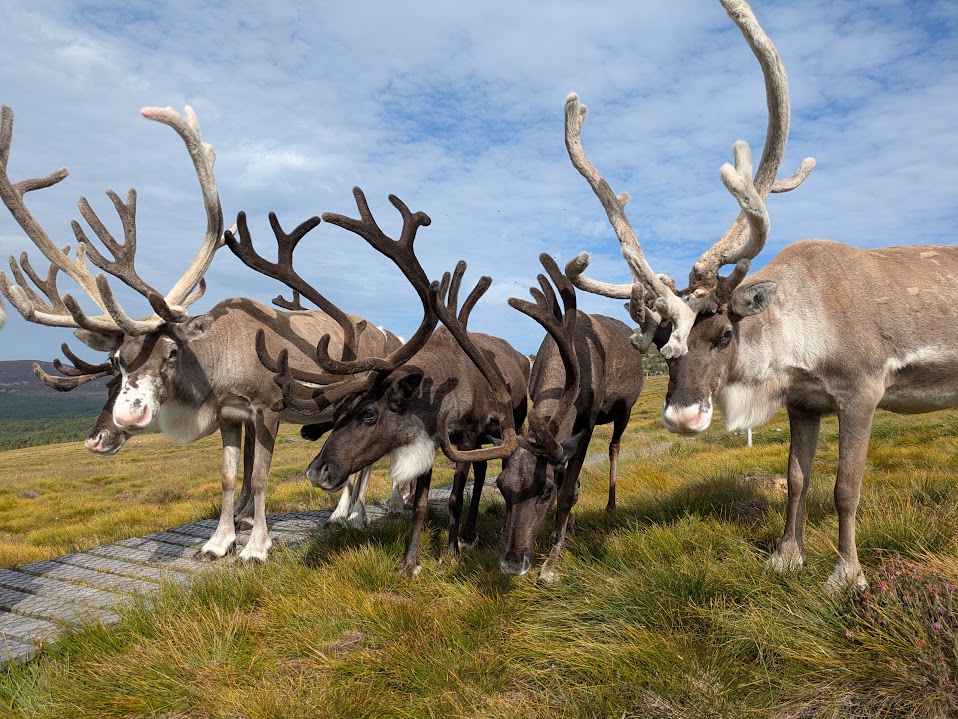
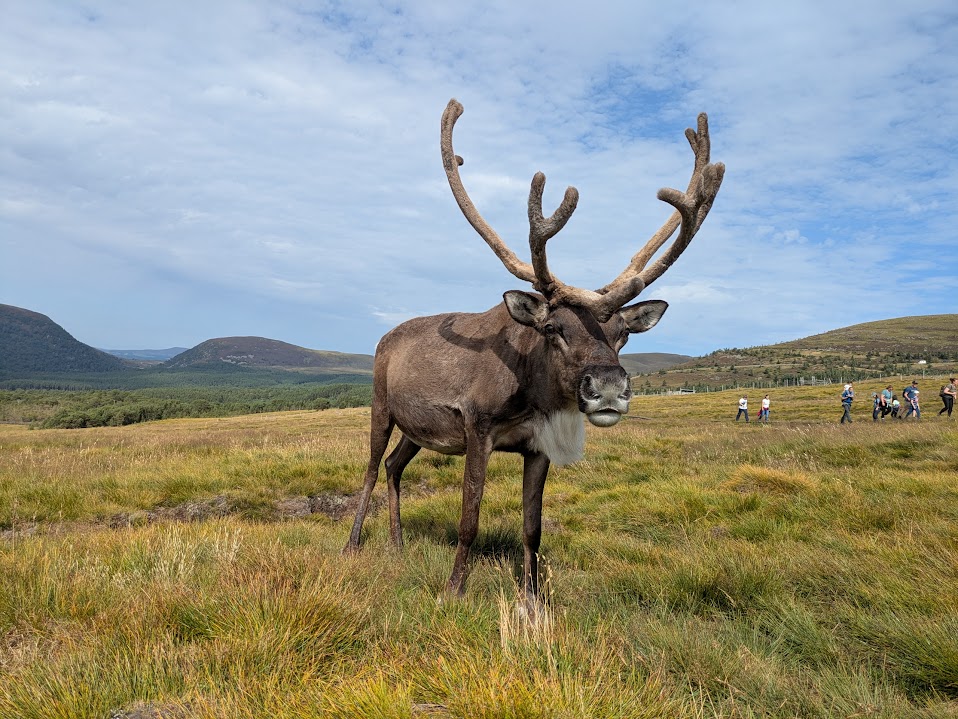
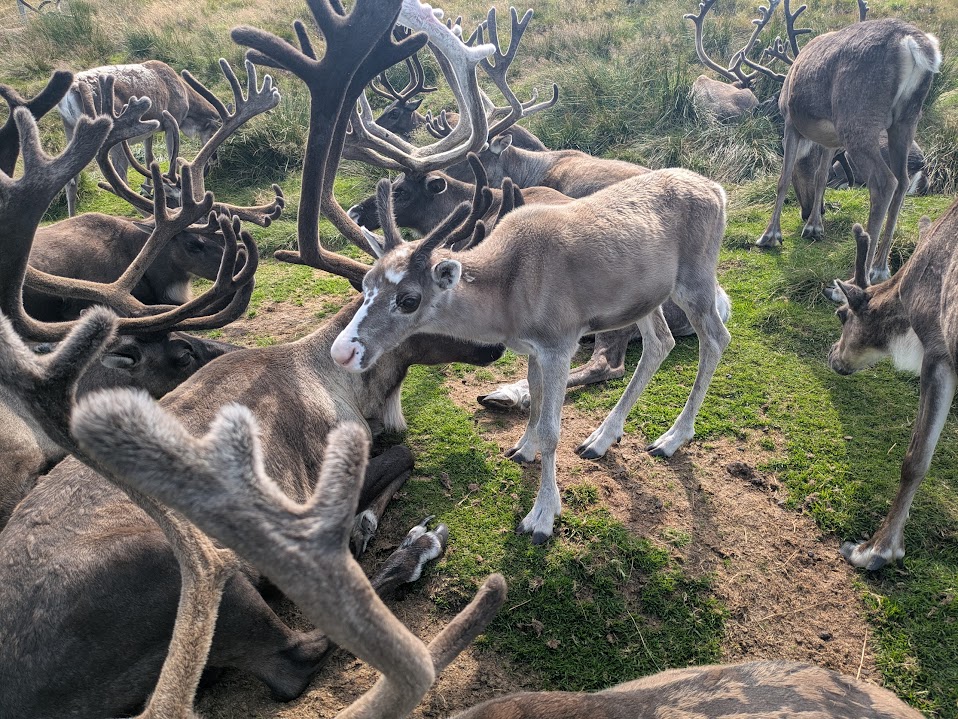
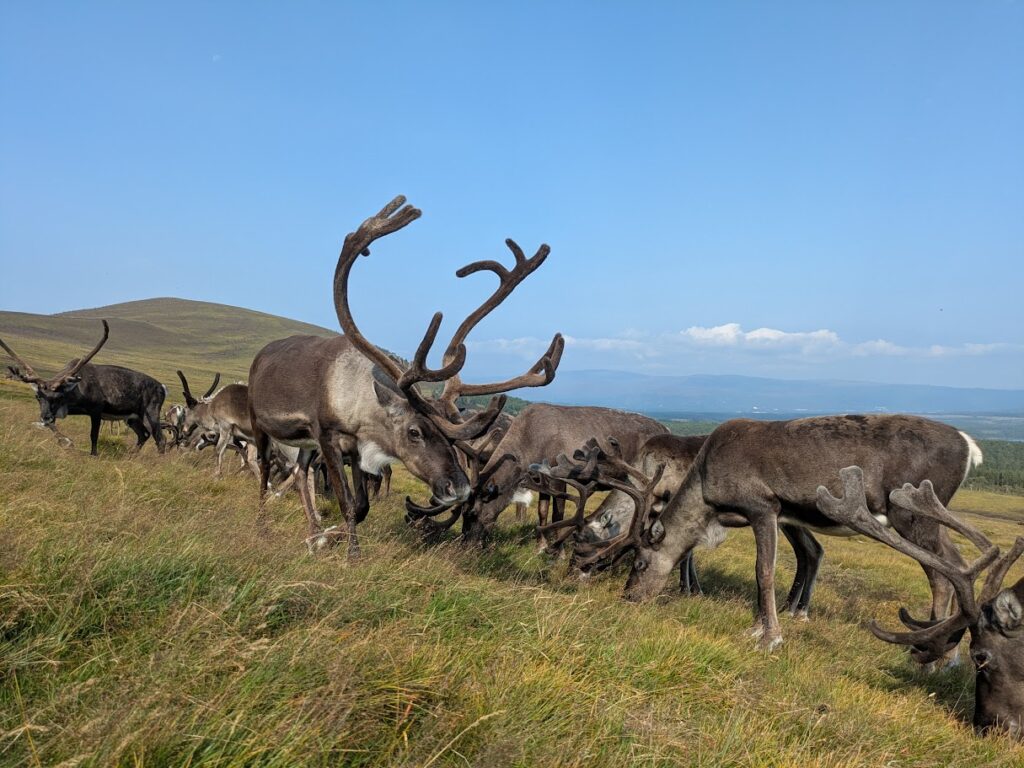
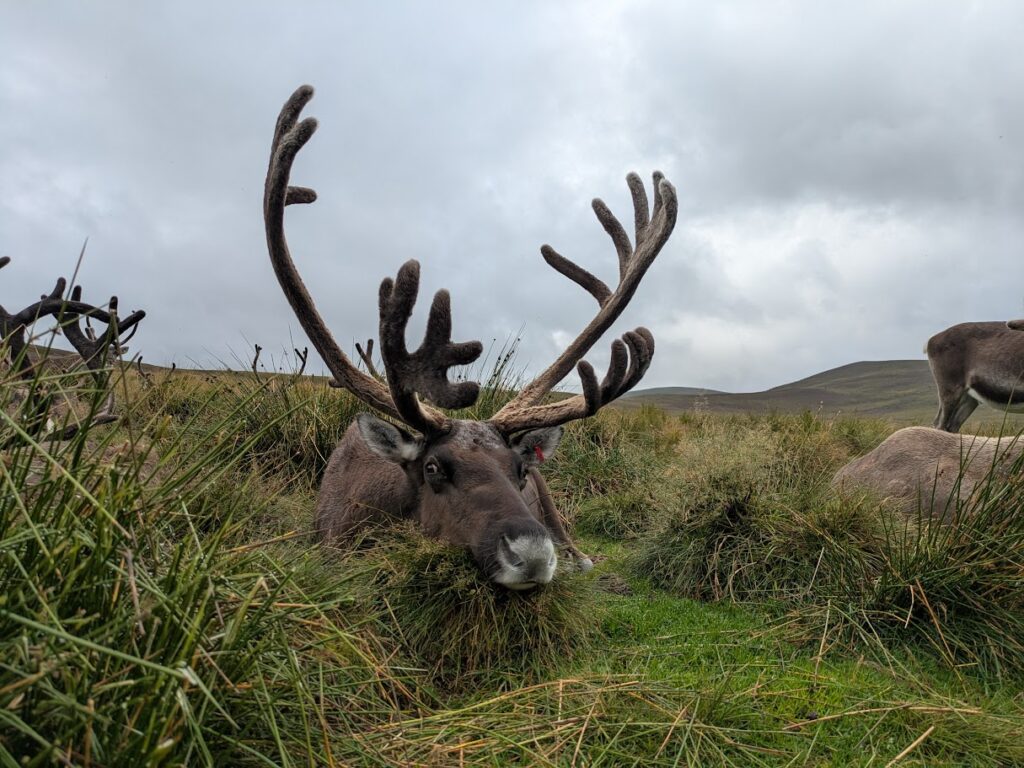
Ruth
As most readers know, we name reindeer on a theme each year. For example, in recent years we’ve had ‘Teas and Coffees’, ‘Rivers of the World’, and ‘Ice Creams and Lollies’ to name just a few. This old blog goes into the themes themselves a lot more.
The majority of the time the calves are given a name within the given theme more or less at random. There’s hundreds of examples of this but to give you one – in 2022 Caterpillar (‘Bugs and Beasties’) had a female calf that we called Popsicle (‘Ice Creams and Lollies’) for no reason other than it fitted the theme and we thought it a suitable name for a sweet female calf.
But sometimes we try to be a bit clever, linking names within the theme to their mother or other family member. This can help us remember who is related to who… or just confuse us completely!
Often, we use an alliteration, for example Brie (‘Cheeses’), had a calf who we named Beret (‘Hats’), who went on to have a calf called Brew (‘Teas and Coffees’). You’ll also notice a French link between Brie and Beret!


Gazelle (‘Horned and Antlered Animals’), now aged 17, is long retired from breeding. She has three surviving sons whose names all begin with an ‘A’ – Aztec (‘Ancient Civilisations’), Athens (‘European Places’), and Adzuki (‘Seeds, Peas, and Beans’).


Emmental (‘Cheeses’) has been a great breeding female over the years – all her offspring have names beginning with vowels just like her – for example Olmec (‘Ancient Civilisations’), Iskrem (‘Ice Creams and Lollies’), and Ob (‘Rivers of the World’).


Sadly, we lost old girl Ibex (‘Horned and Antlered Animals’) in the spring at a grand old age of nearly 17. She had a female calf in 2020 who we named Flax (‘Seeds, Peas, and Beans’) as both their names ended with the letter ‘x’.

Flax has gone on to have three calves so far, her first in 2023 we named Nile (‘Rivers of the World’), the second in 2024 we named Camomile (‘Teas and Coffees’) and the third was another male born this spring. All going well, he’ll get named in early September, so we’ll see if we select a name that rhymes with his older siblings!


Pagan (‘Ancient Civilisations’) was a notorious reindeer in our herd who sadly died very suddenly and unexpectedly in 2023. We were all incredibly fond of her despite her bossiness – she was a real character. We managed to name all of her offspring on a Halloween/witchy theme as best we could. Pumpkin (‘Seeds, Beans, and Peas’), Witch (‘Hats’), Zap (‘Ice Creams and Lollies’), and we named Pagan’s last calf who we hand-reared Winnie. Winnie’s name doesn’t fit the theme that year because she had to be named before the theme was even selected but we went for Winnie (or Winifred), after the witch.


Sometimes the link can be a little more intellectual, surprising I know! Suebi (‘Ancient Civilisations’) had twins in 2023. Her female twin was hand-reared from the age of just three days old (alongside Winnie) and therefore was given the name Alba long before the theme was even chosen. However, the male twin was named in the ‘River of the Worlds’ theme. The Suebi people were a large and powerful group in the Roman era. They originated on the river Elbe, in what is now north east Germany – so this was the perfect name for Suebi’s son. We think the names Alba and Elbe also go very well together.

And finally, sometimes the link is just a bit silly! Hobnob (‘Cakes, Biscuits, and Biscuits’) had a calf in 2020 when the theme was ‘Seeds, Peas, and Beans’. We named her female calf Mushy, after mushy peas. Why did we select the name Mushy for Hobnob’s calf you may ask? Simply because if you dunk a hobnob into a cup of tea, it goes mushy.

Ruth
At this time of year the entire herd is free ranging over two sites. Here on Cairngorm we have most of our adult females and calves and we keep an eye on them usually every second day. In the winter we also lease more winter grazing at our second site where all the adult males are, plus a few cows and some of our bigger male calves with their mums. Tilly monitors the goings on there every couple of days, but we go and give her a helping hand whenever she needs. It’s always a joy to catch up with the reindeer there, especially when the weather is this good! Andi went over to help check all the temperatures last weekend and she took some photos which I thought I’d stick in a blog! Otherwise our social media is mostly made up of the cows at this time of year… so here’s a good mix of the reindeer Tilly has this winter!


Ruth (but all Andi’s photos!)
In January 2023 I wrote a blog about reindeer looking like their close relatives: https://www.cairngormreindeer.co.uk/2023/01/20/mini-me-reindeer/
As we are now in calving season, I have recently heard myself saying “she looks just like her big sister when she was a calf” or fellow reindeer herder Lotti saying “she looks exactly like her mum as a newborn”.
So, it got me thinking, perhaps it’s time for another blog about family resemblances.
Emmental’s boys!

Emmental is a beautiful, mature breeding female, now aged 11 years old. She is rather pale in colour with a white muzzle. Over the years she has been a successful mother and has three surviving sons named Olmec, Iskrem and Ob. Yes, we chose names all beginning with vowels. But that’s not their only similarity. They also all have white noses, just like mum! Looking back through photos of them all as calves it’s easy to confuse who is who.


Pony’s girls!
Pony was a rather notorious reindeer in our herd with serious amounts of attitude! She was born in 2011 and sadly passed away a couple of years ago aged 11, which is a fair age for a reindeer. She left us with four surviving offspring – two males Poirot and Cowboy, and two females called Suebi and Turtle. It’s the girls who can sometimes make me confused! Their both normal-coloured, their antler shapes are similar, and they have also both inherited some of Pony’s attitude! We have nicknamed Turtle, “Snapping Turtle” as she often waves her head and smacks her lips at us if we can walk past her too closely.


Suebi and Turtle are both breeding females. Suebi has the lovely Scoop, a two year old male, and also is the mother of the twins Elbe and Alba. Turtle has Amur, who has just turned one and is proving to be a very sweet-natured lad. Time will tell whether they produce any lookalike females!
I’ll leave it there for now but who knows, perhaps I can write a third installment in the future as there are lots of other examples within the herd.
Ruth
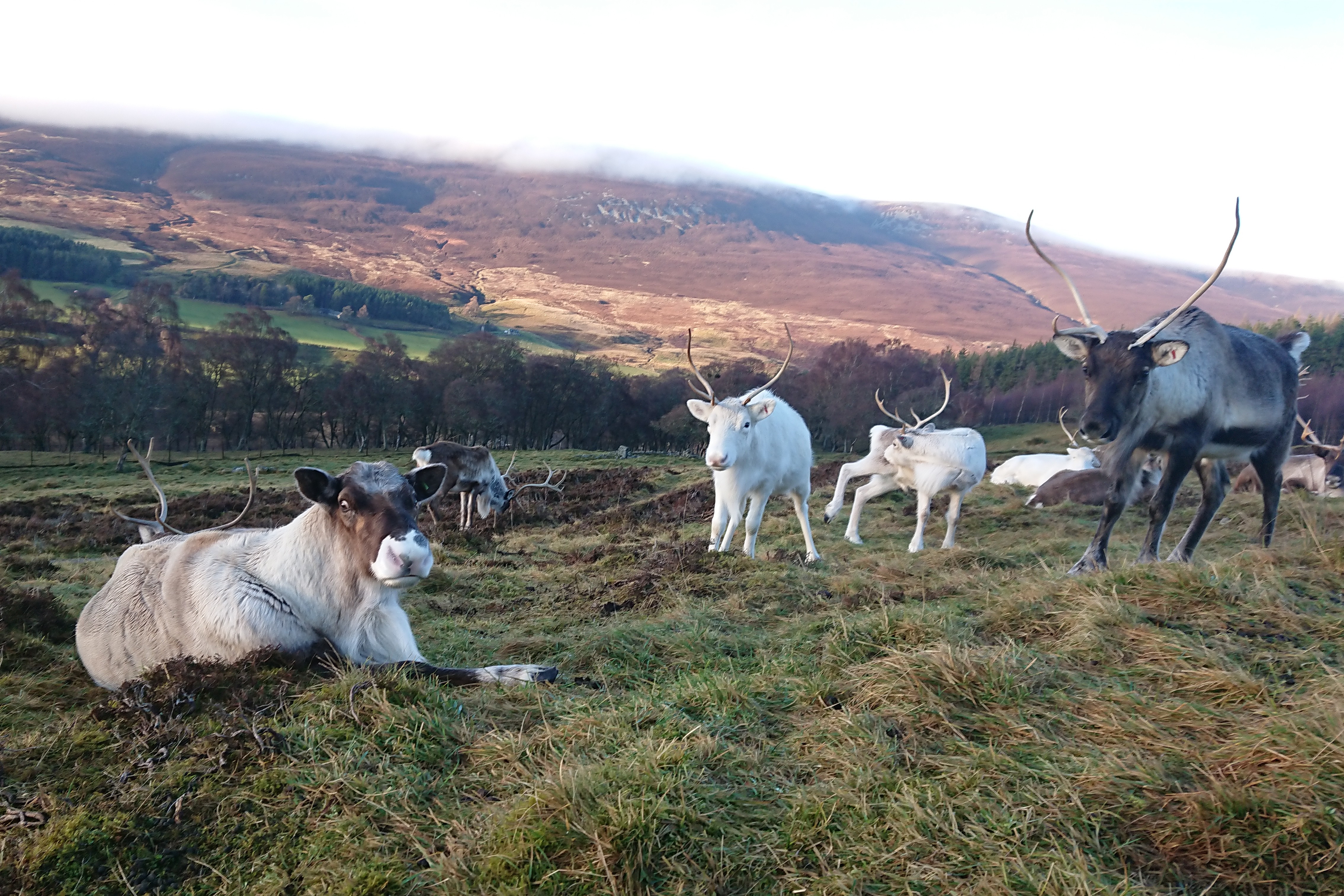
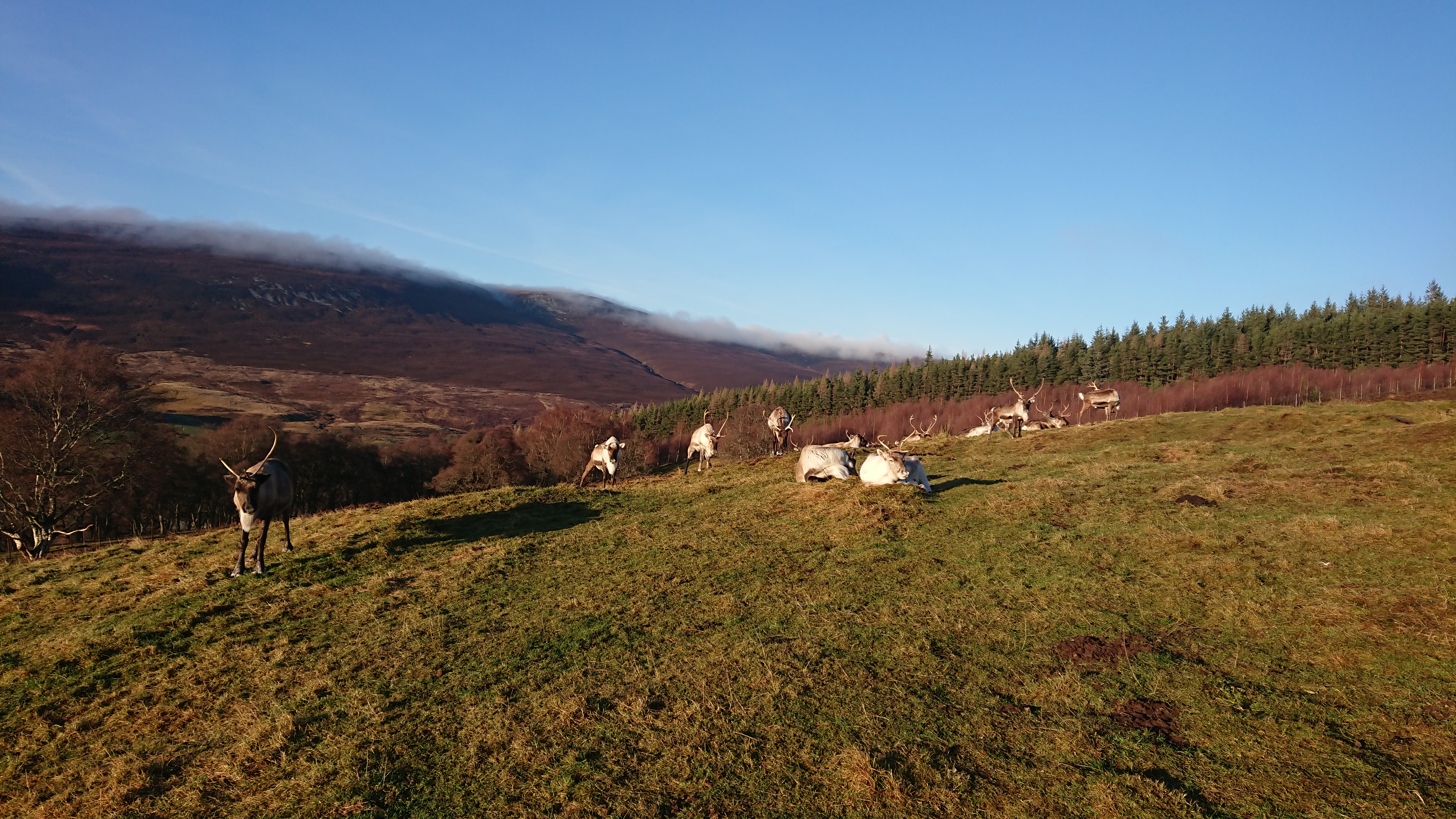
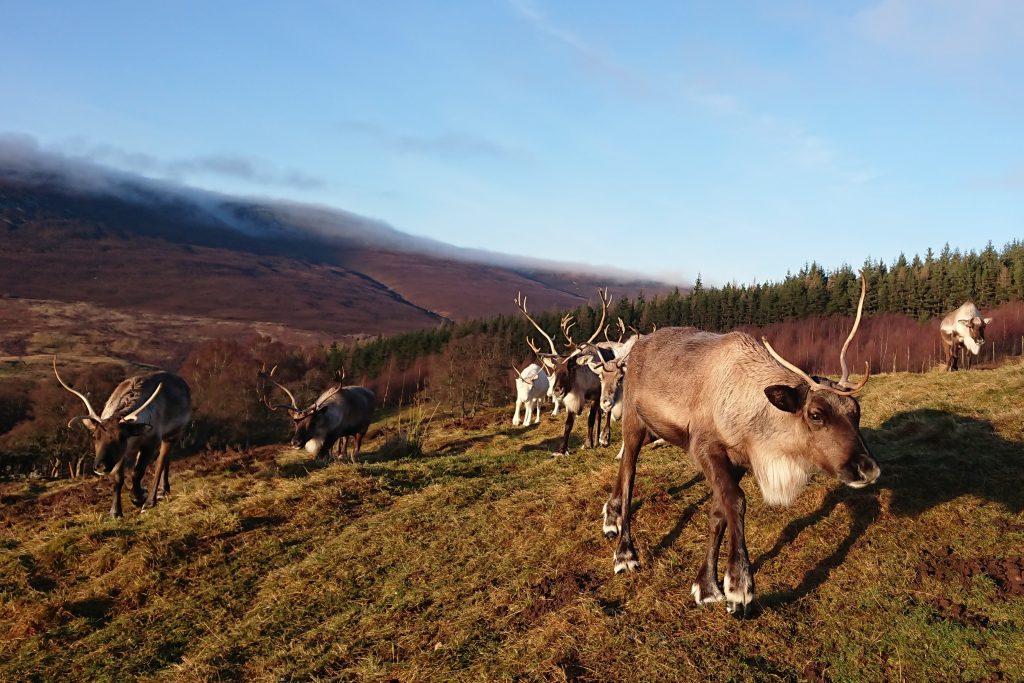
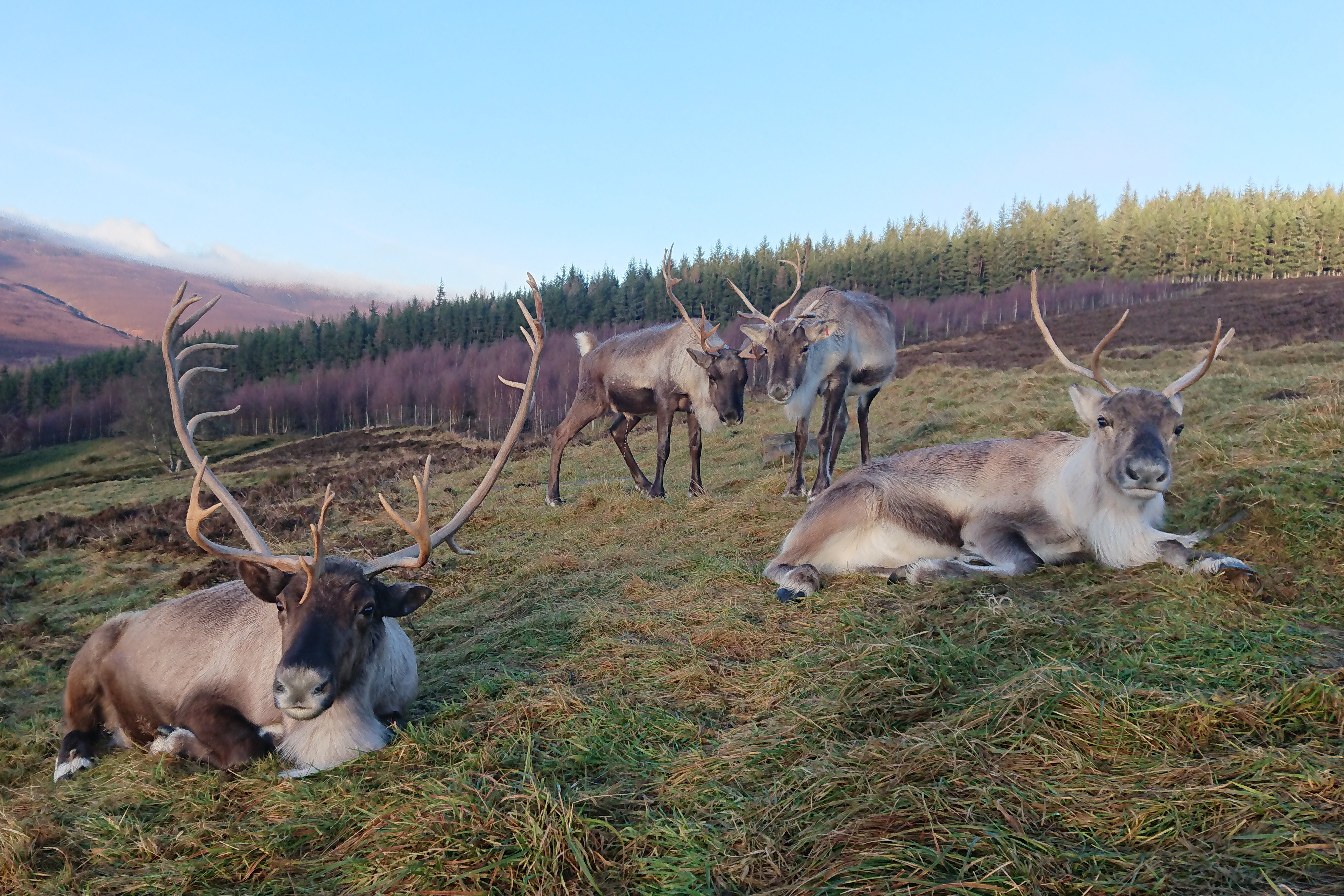
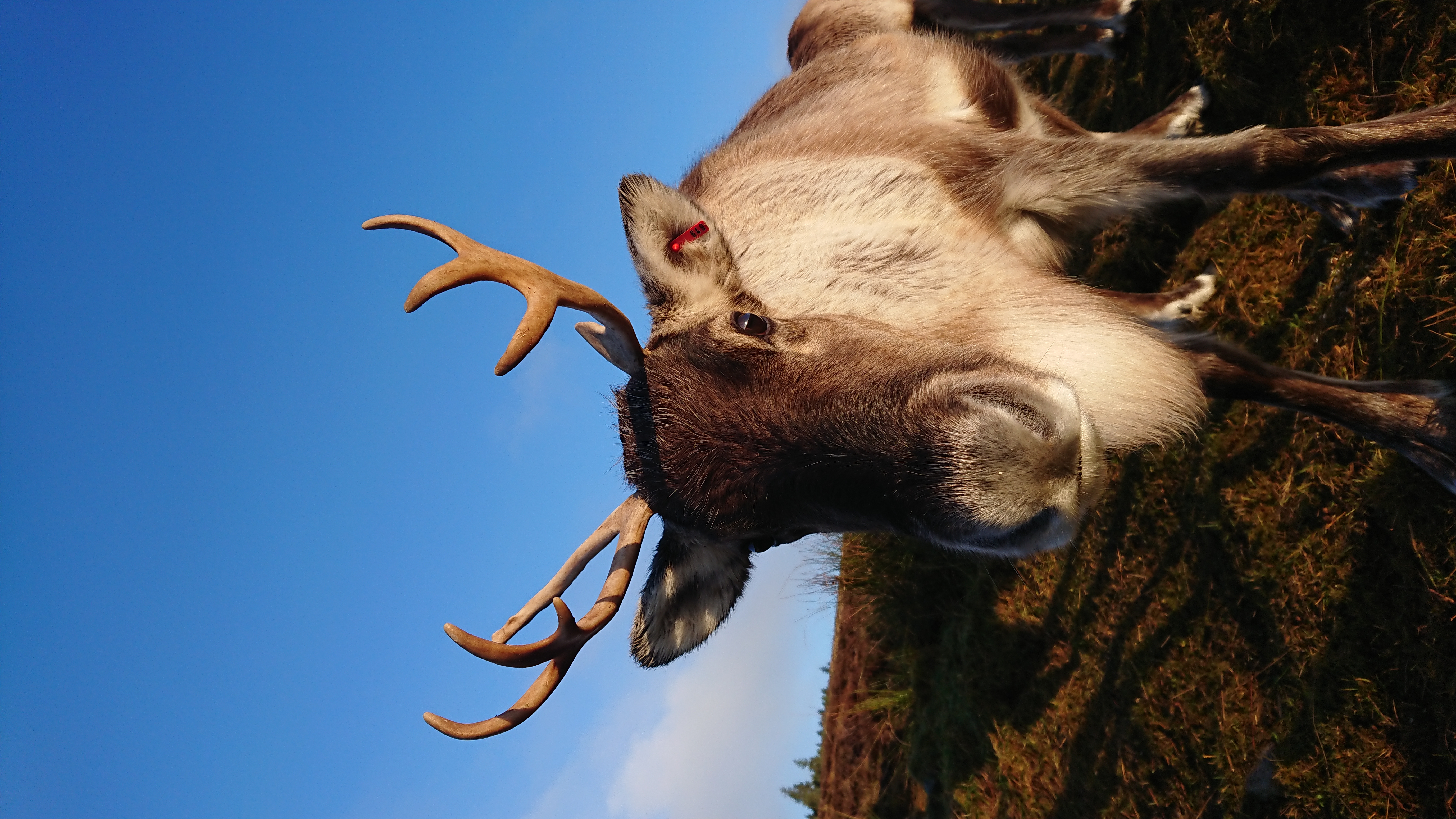
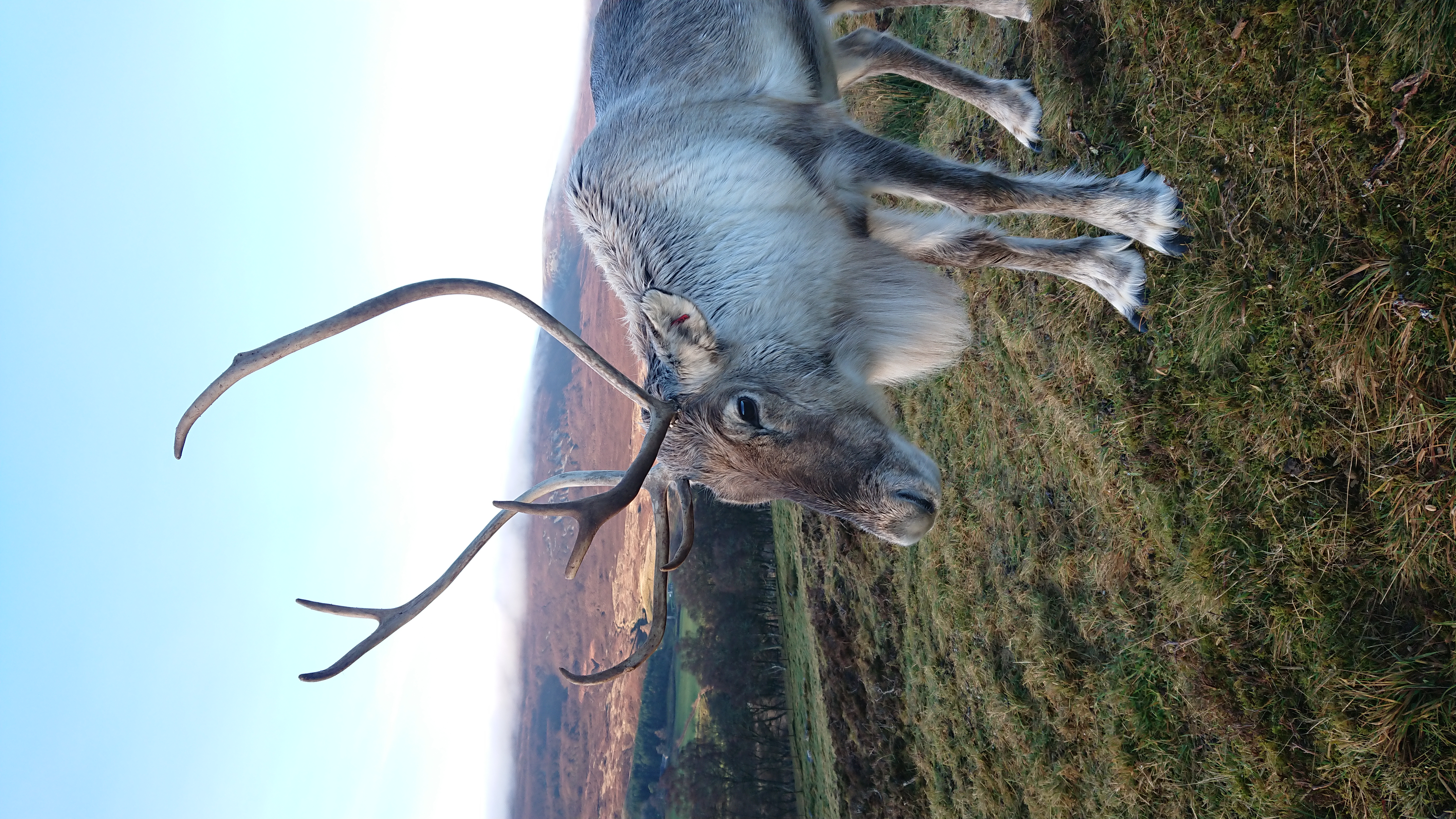
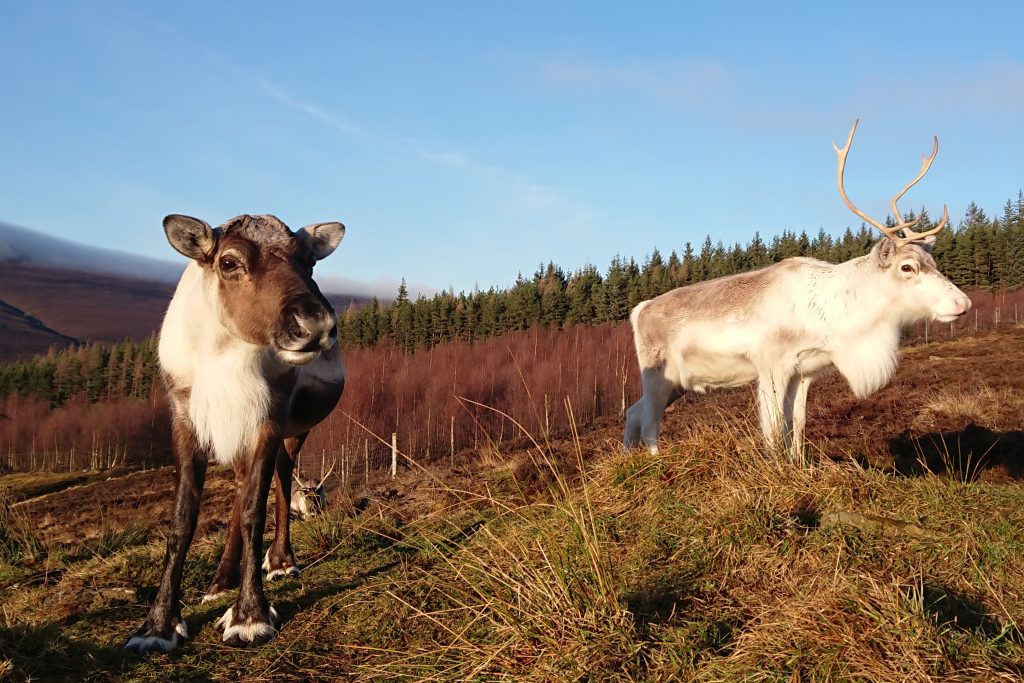
In the autumn, we move all of our entire males (apart from the 2 or 3 lucky chosen breeding bulls) over to our hill farm, away from the females and out of trouble for the duration of the breeding season. With no hint of love on the air, this keeps them calmer and easier to manage, though they still enjoy play-fighting. By December the rut is over and our breeding bulls have also joined them, so there is a slight vibe of an all-boys hangout. As Tilly is caring for these fellas every day, and she is less up on her social media, I thought I’d take the opportunity to grab some photos for you all this week when I was over at the hill farm.
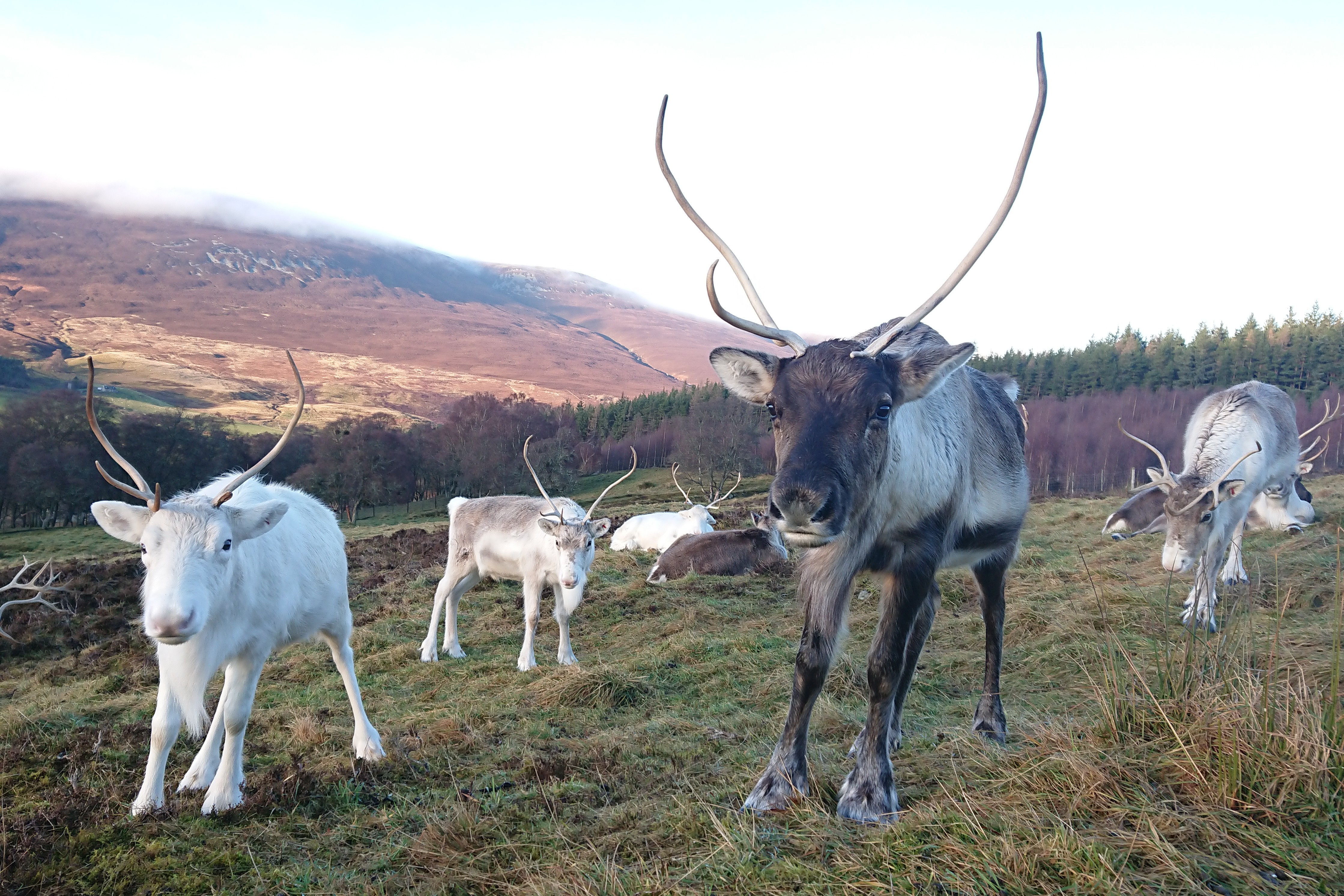
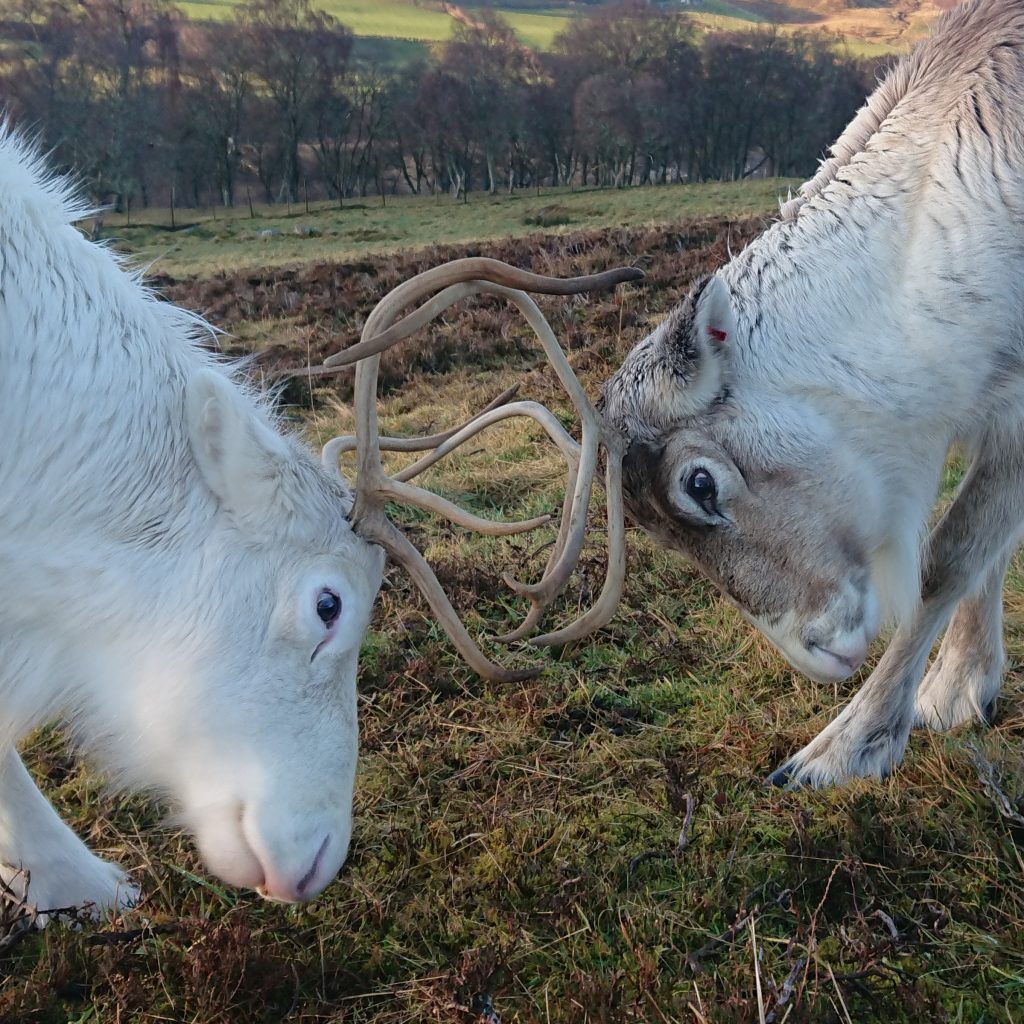
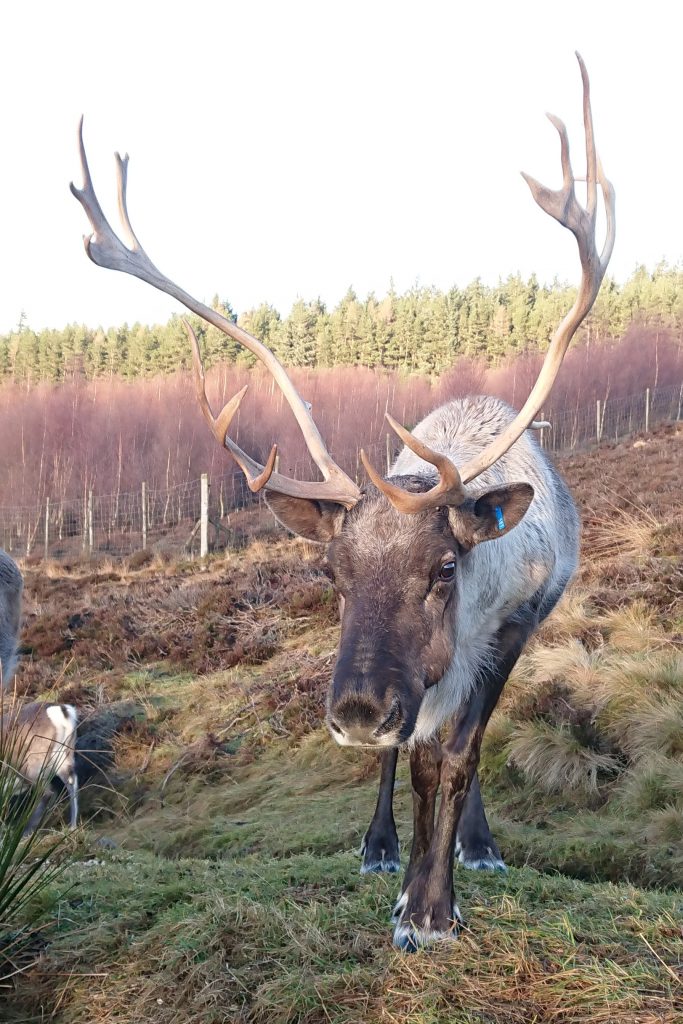
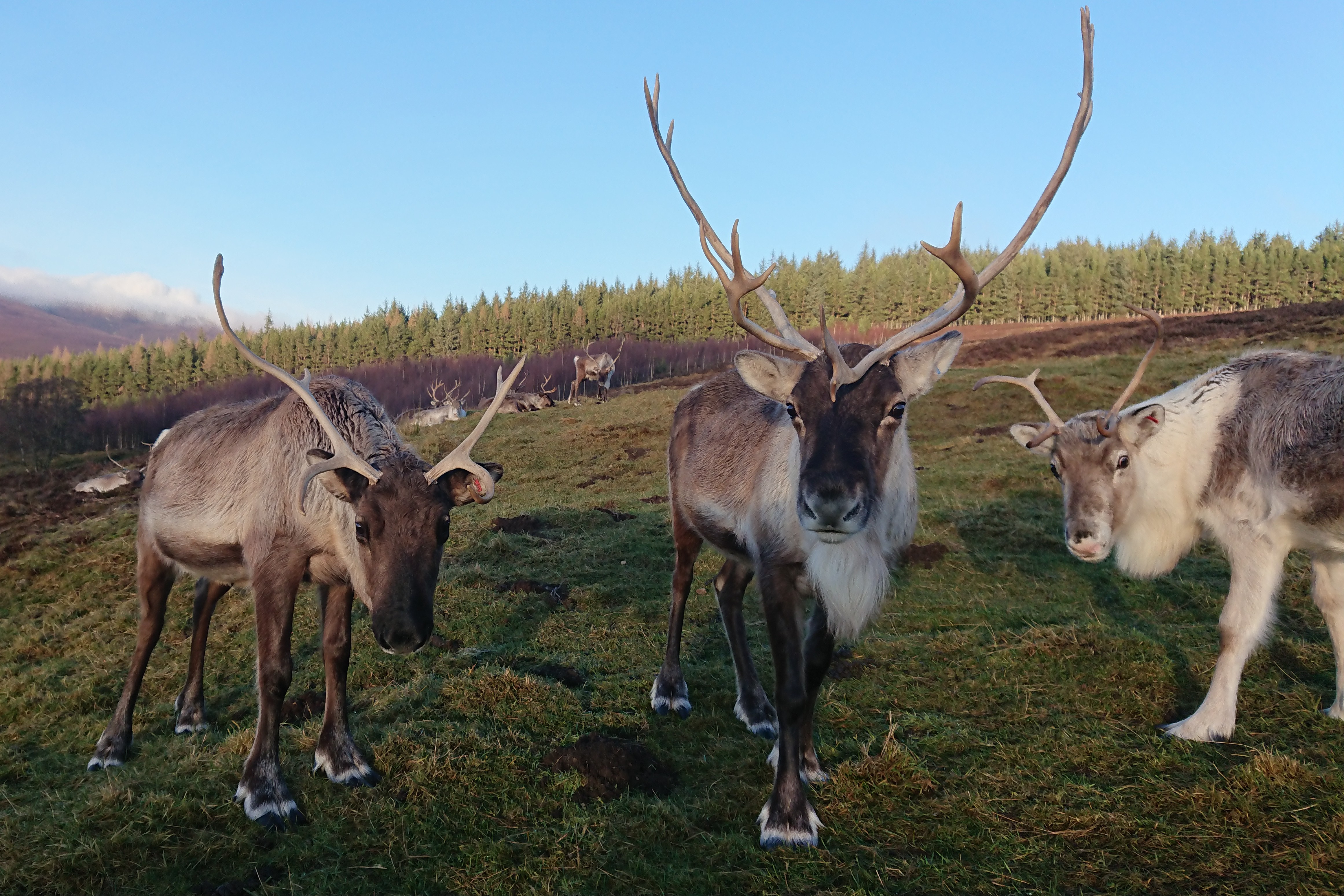
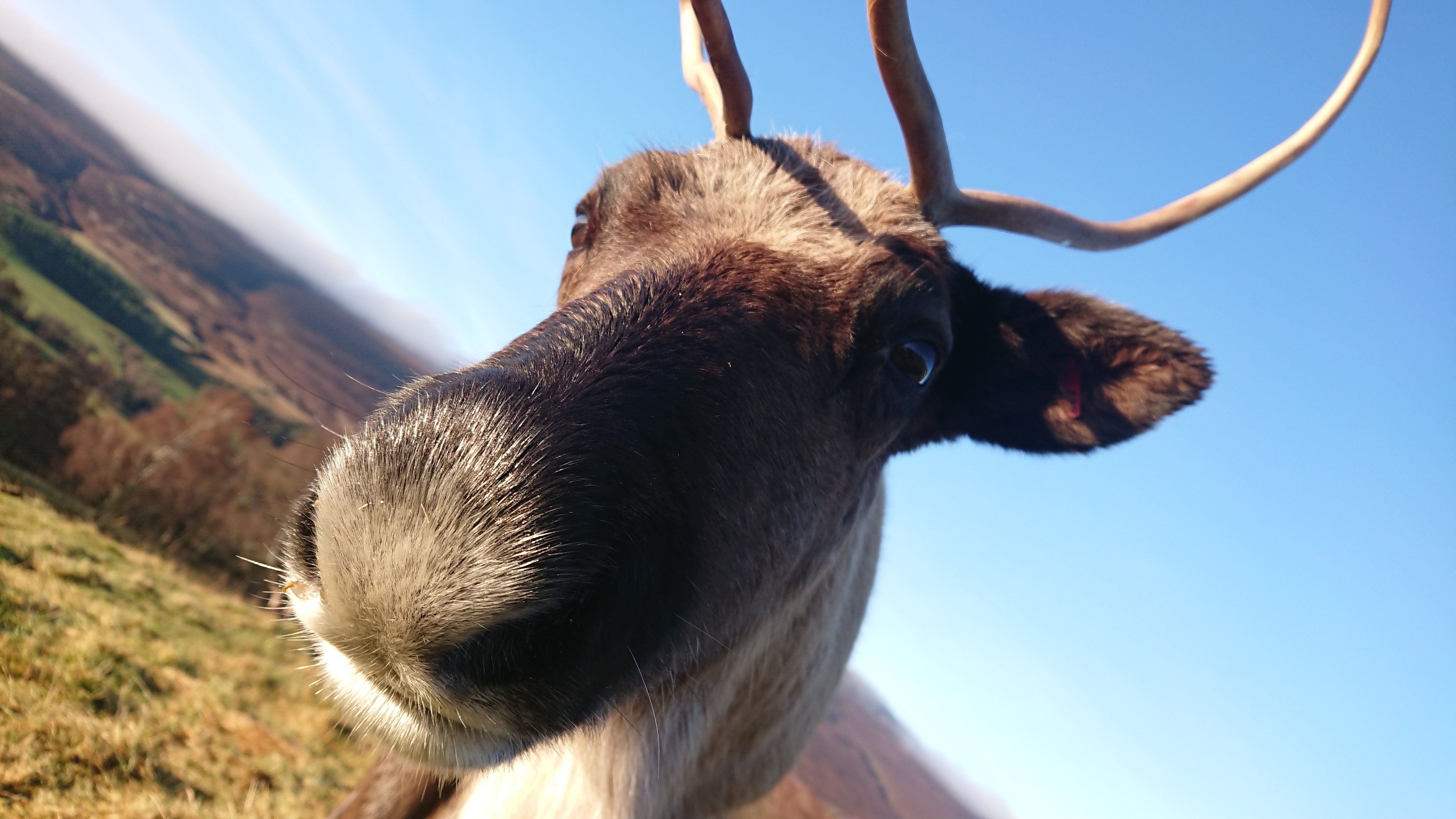
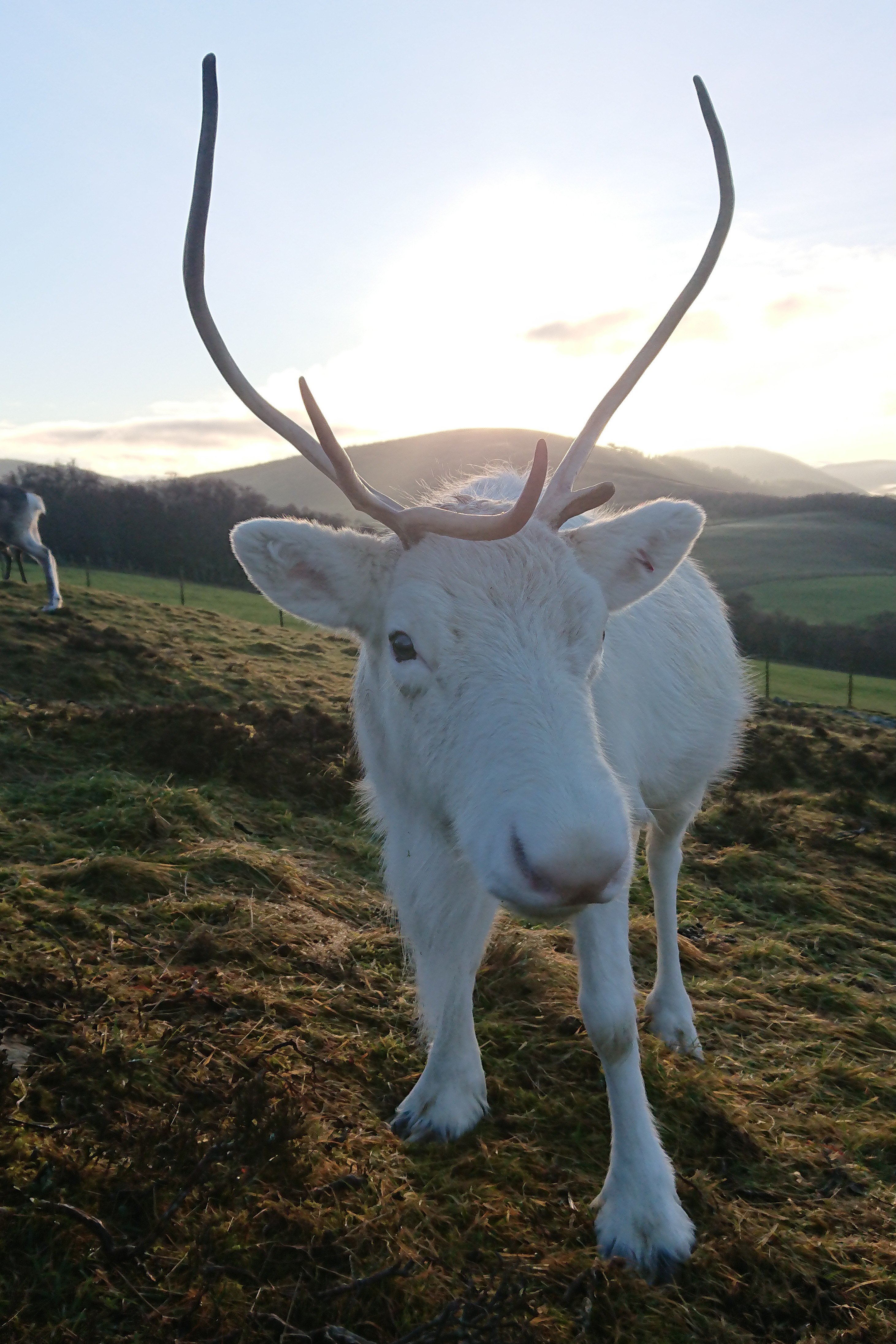

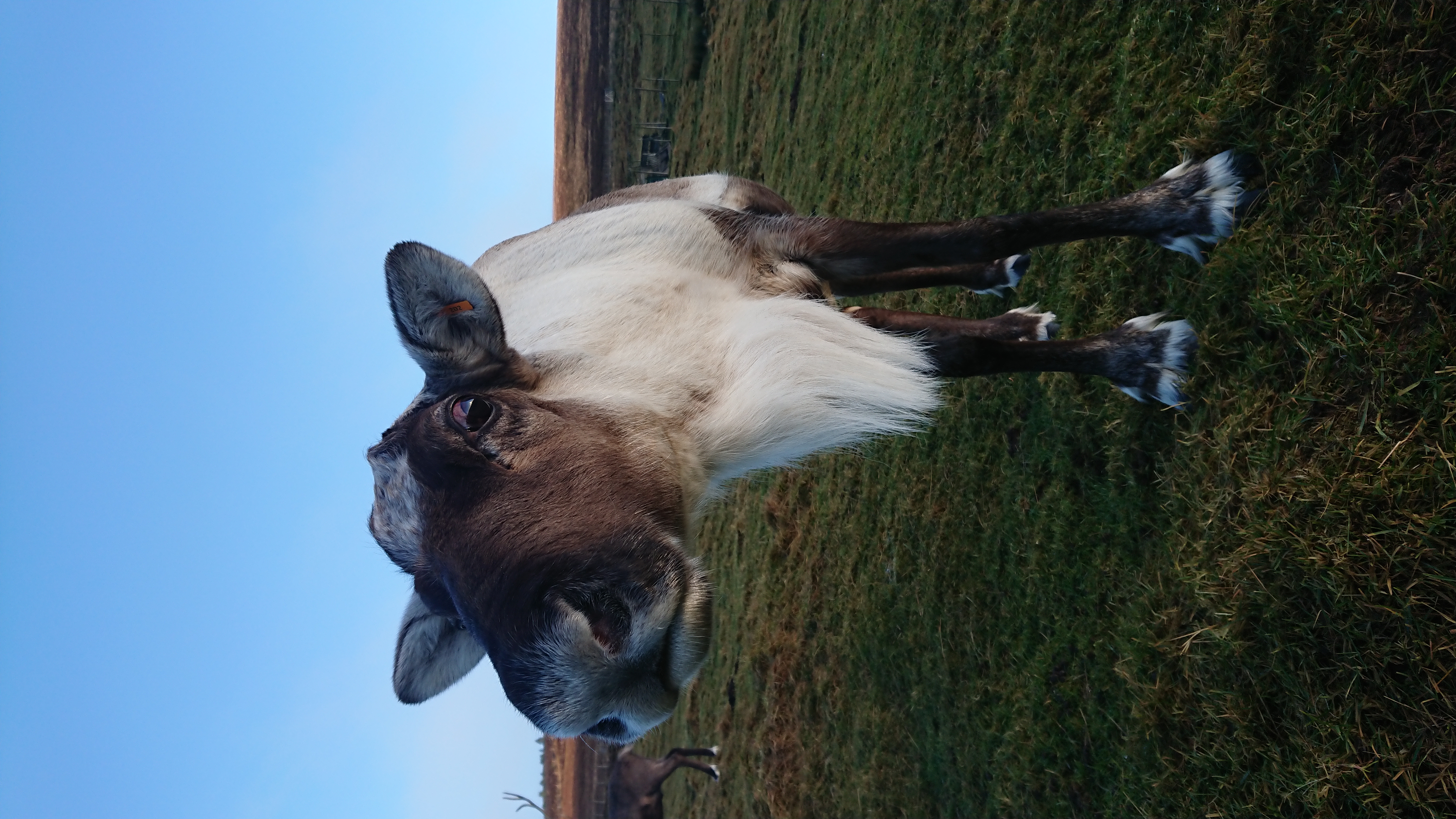
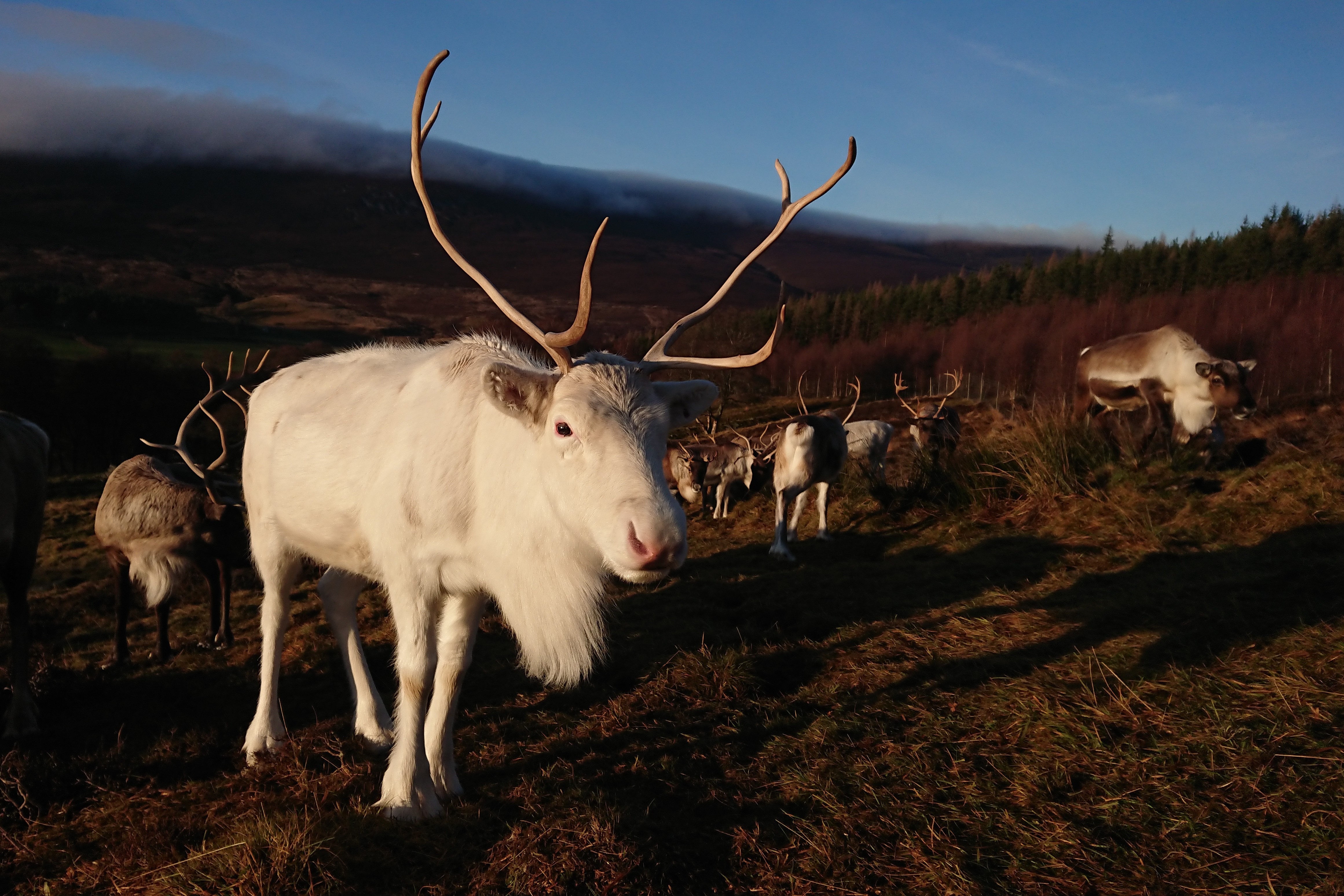
Andi
I was very lucky to be volunteering with the herd for 8 days in December last year over Christmas. Fiona had said I could help with the Christmas parades that they were due to do. It was my first Christmas working with the reindeer and it was really magical and special experience.
A Fantastic Surprise at the start.
Once we got to Scotland, I had a few days off before I started work with the reindeer. There was so much snow so I was very excited. One of the days we went to Landmark in Carrbridge and my Mum and Dad said it was one of my early Christmas Presents and that there was going to be a surprise.
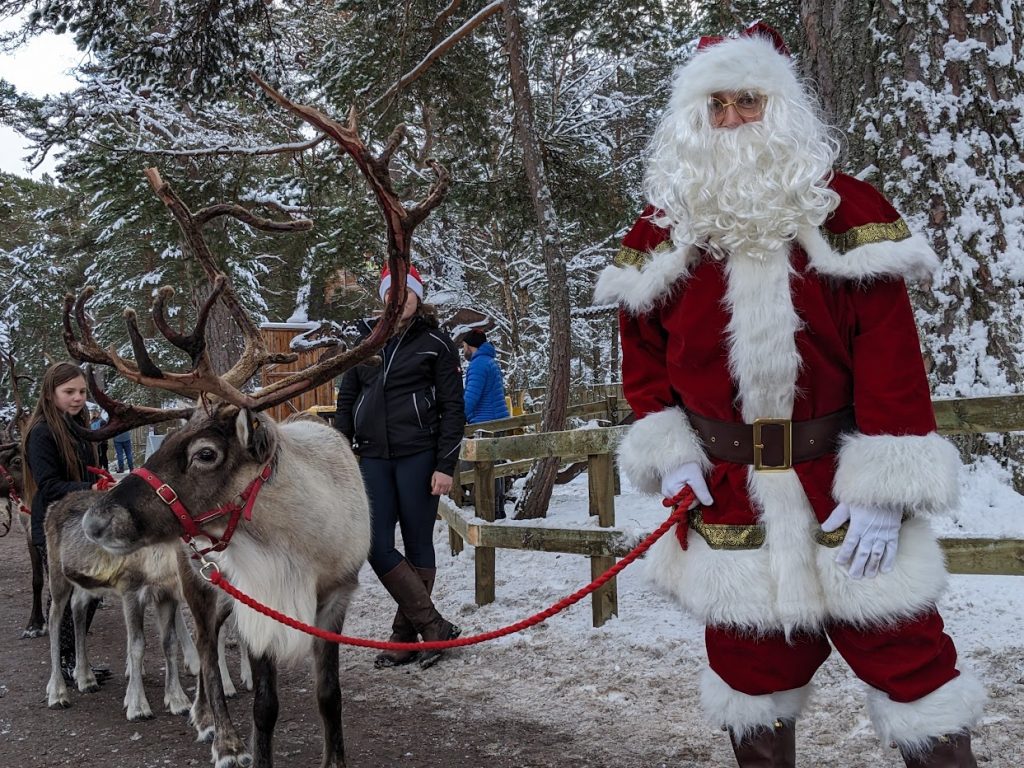
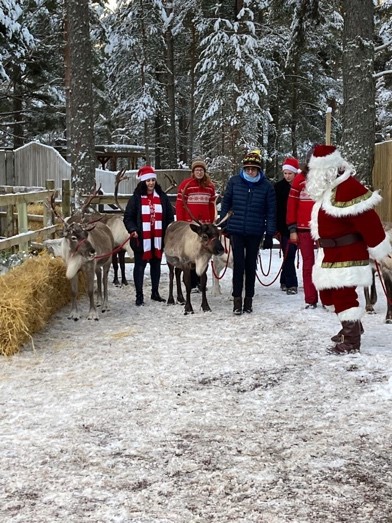
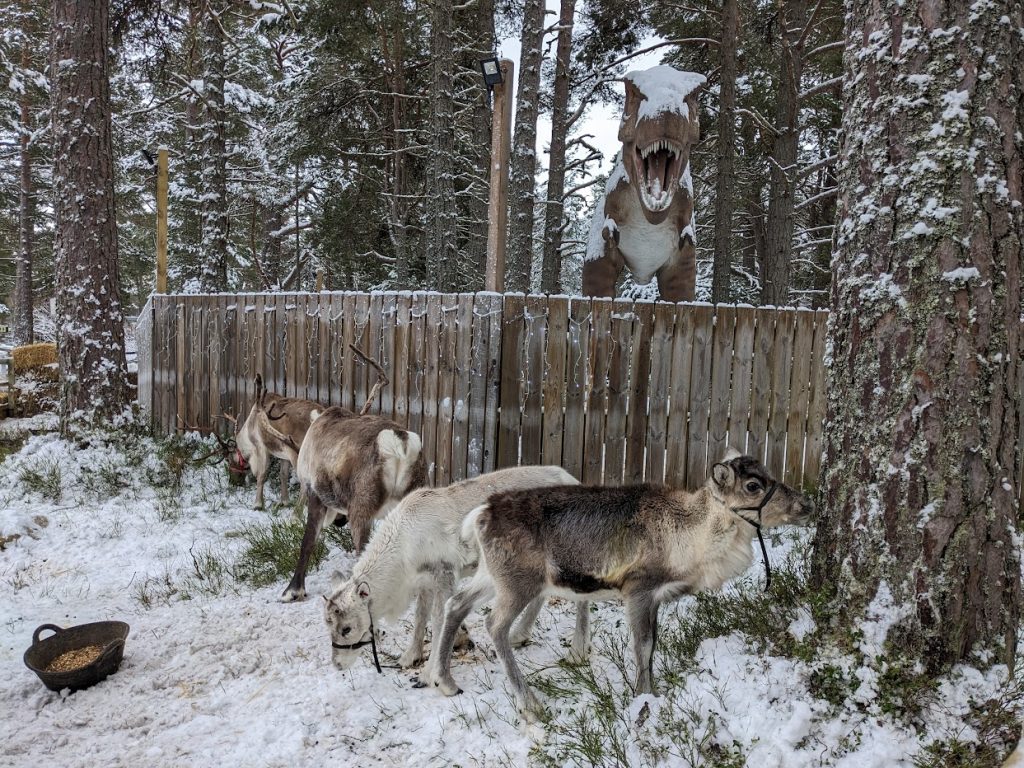
The surprise was that the reindeer were there!! I was so excited when we found the reindeer pen with Ruth and Mel the herders and the reindeer were Druid, Olmec, Poirot, Berlin and the 2 calves were Sorbet and Lolly. I think we also surprised Ruth and Mel with us turning up. Lol. It was funny to see the pen was next to dinosaur land and there was a gigantic T-Rex looking over the top but thankfully Fiona had made sure the noises were turned off otherwise the reindeer could have been very scared. We took all six reindeer for a walk around Landmark with Santa. I was allowed to help and led Druid whilst Santa led Poirot. It was amazing to see Poirot so calm as it was the first year Poirot was one of the Christmas Reindeer having been a breeding bull in October 2021. He used to charge at the fence protecting his girls and was very aggressive then. He was castrated in August 2022 and he became much calmer and became a Christmas Reindeer. I helped load the reindeer into the back of the lorry at the end and it was such a brilliant day and a fantastic surprise.
Snow, Ice and Tamer Calves
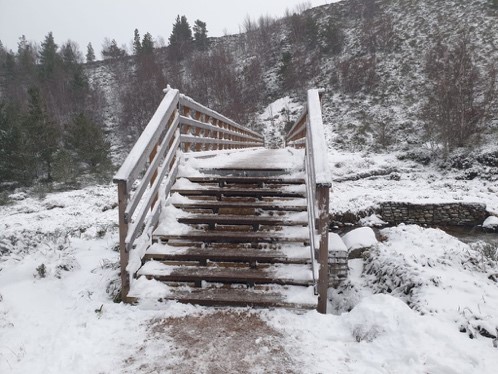
It was very snowy, cold and icy in the first few days once I started and on my first morning, we took reindeer who had come back from Christmas events up onto the hill from the paddocks. There were adult reindeer and calves. I led Poirot, my first time leading a reindeer in snowy and icy conditions. Andi had to dig a massive snow drift away from one of the gates in the hill enclosure as we couldn’t get through. When you walked on the snow, you didn’t know how deep it was so you had to be careful that you didn’t suddenly sink in! It was so icy Andi gritted some of the path for the Hill Trip visitors then I helped Andi worm the reindeer which was giving medicine to keep them healthy and clear of worm infection. I held onto the lead rope and put a few head collars on to the calves who were much tamer than when I was up last in October. They had grown lots too. Zoom the calf (the one who had been found on it’s own on the free-range) was so tame and would follow me and Andi around with the hand feed bribery bag whilst we were trying to catch the calves and put them on head collars. Zoom is best buddies with Sunny the hand reared reindeer calf.
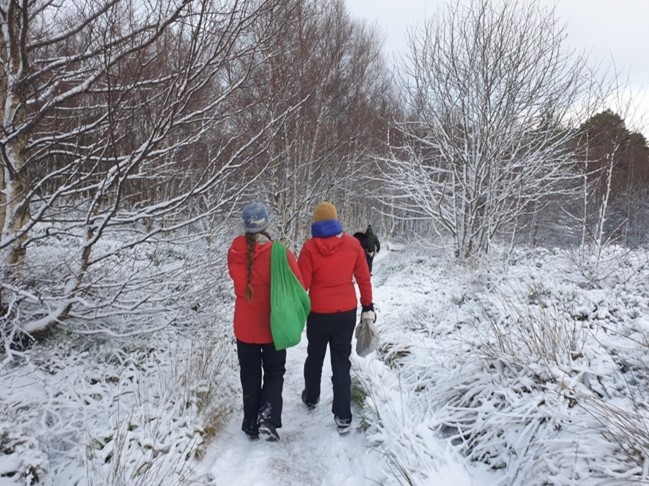
In the few days before the big Christmas parades I did lots of duties in the paddocks and Reindeer House, made up the first-year adoption packs, helped file adoption leaflets away and packed adoption gifts and made feed mix with Lisette. Poo picking in the ice and snow was a new experience (you had to make sure you didn’t slip over and fall in the poo!). One morning Tilly was on Zoe Ball breakfast show on Radio 2 and we all listened to it on the radio. She was talking about the reindeer and Zoe Ball was very interested. Tilly was very good giving lots of information. Another day Joe had an interview for a BBC radio show in the paddocks before we opened. It seemed everyone wanted to know about the reindeer this time of year and our Cairngorm Reindeer Herd were very famous. There were still Christmas events happening and I helped Cameron mix the food then bagged it up for one event that Ruth was doing in Gleneagles.
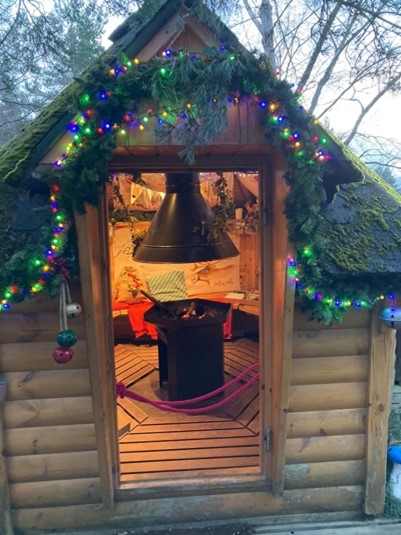
There were also things happening at Reindeer House with Christmas fun in the paddocks. I talked to people in the paddocks telling them all about the reindeer and also did meet and greet at times explaining what was happening during the Christmas fun. There was a Christmas quiz for people to do and all the herders wore their Christmas jumpers. Santa was in the BBQ hut where he could meet and talk to the children. There were herder talks and people could see the reindeer. The paddocks were decorated for Christmas and children were able to write letters to Santa and post them. Joe was making Christmas jokes all the time and advertising the Naked Herder’s Charity Calendar as well which went on to make a lot of money for the Cairngorm Mountain Rescue Team. When I restocked shop there was Christmas music playing in the office.
The hill trips were also really magical. On one trip Gloriana was cleaning her calf by licking it when lying on a snow patch which was really lovely to see. I was able to do the hand feed talk on a few occasions and it was so special that the herders trusted me to tell everyone the important information. Some hill enclosure gates had massive snow drifts so we had to use other gates and walking on snow drifts was difficult as you would sink in suddenly knee deep in snow. One day the snow gates were closed on the main road but we were allowed up to the Sugarbowl car park. This was the first time I had seen them closed. The snow gates opened an hour later. When we got up to the enclosure we moved the ice and snow cleared the path of ice and snow with shovels and our feet.
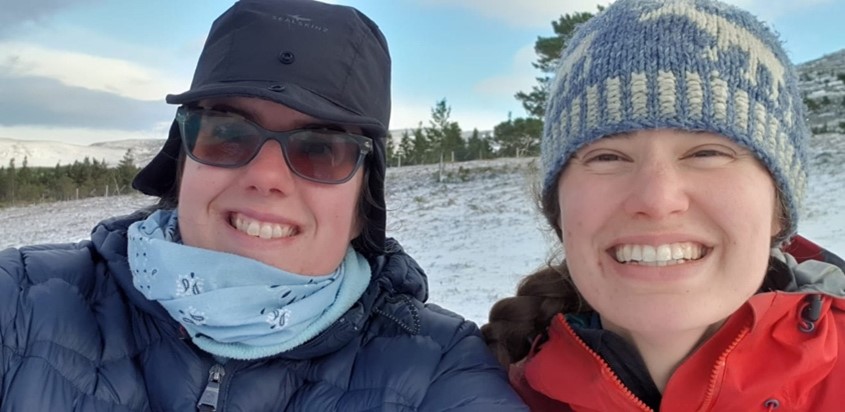
The reindeer on the free-range could come and go as they wanted. We left the gate to the top corridor open so most of the free-rangers could come in to feed and we could count and I.D them. I did this one day with Cameron and Lisette. We wrote their ear tag numbers down and checked herd list in the shed. It was lovely to see that the mum’s and calves stay together a lot of the time eating the same pile of food and lying down together. The mothers looking after their calves like Christie licking Gelato. Another day the free-rangers had moved to the top ski car park and I went with Sheena and Cameron to find them. One day Hen and Andi had to go to the top of Silvermount to get the reindeer as they were not coming down to the usual calls.
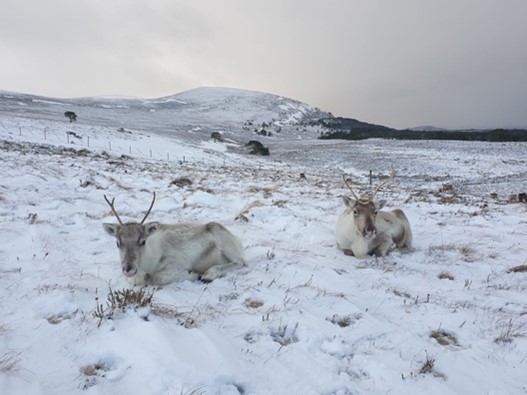
The other thing we had to do was split off the reindeer for the paddocks and Christmas events from the herd when they were needed and move them down from the hill enclosure and then bring them back up when they had finished so we were very busy. On one of the days I took Frost, Dr Seuss and Nuii up the hill with Andi. I was leading at the front with Dr Seuss and my job was to look out for dogs as the reindeer are very scared of dogs as they think they are wolves. I had to make sure the others stayed close behind me as they like to stick together in a group. When we were at the hill enclosure we let Nuii, the calf, off the head collar first before the adults so that they didn’t panic.
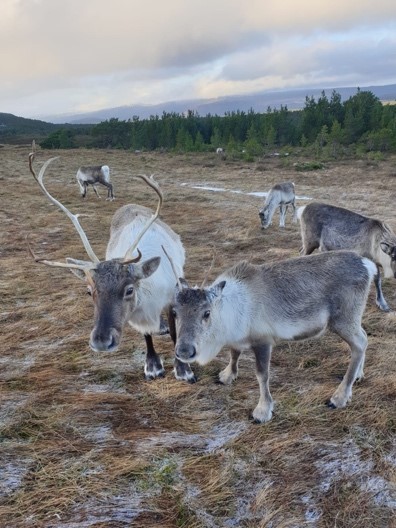
Stay tuned for Part 2 of Emm’s Christmas blog!
Emm