Glenlivet visitors

Spring and early summer is a wonderful time here at Glenlivet because the farm comes alive with very noisy breeding birds, in particular waders like Curlew, Oyster catchers and Lapwings.

Oystercatcher
Oystercatcher and chick © Mike Pennington and licensed for reuse under this Creative Commons Licence.

All three species are ground nesting so vulnerable to disturbance, intensive farming and predation.  Because of the remote nature of Glenlivet area, the traditional way farming is practiced and the fact that it is an active sporting estate all helps the plight of these birds and encourages good breeding populations of all three.

All migrants, they come to inland areas like Glenlivet to breed and the first to arrive are the lapwings which is a sure sign for us residents that spring is on the horizon. With their characteristic ‘peezie’ call, swooping flight and distinct head crest they are easily identified. The oystercatchers are close behind and their distinctive call, ‘cleep, cleep’ resonates around our farm from late February onwards.

IMG_0563
Lapwing, showing off its beautiful crest

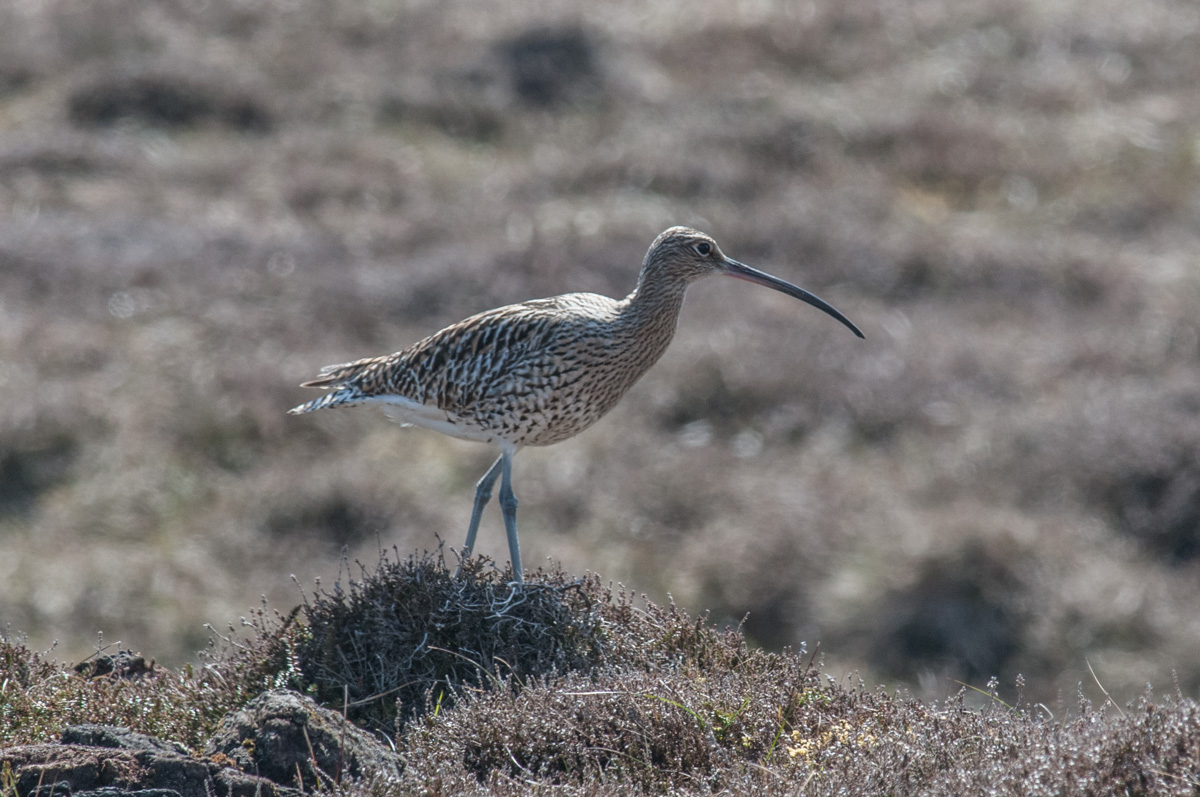
My favourite however is the Curlew, a beautiful mottled brown colour with long curving beak they are the biggest of the three species and have the most wonderful call that sounds like their name. Like our reindeer they frequent the higher ground, heather moorland where they circle endlessly seeking out a good place to nest and chasing away predators once they have laid eggs.

curlew.jpg
Curlew (photo courtesy of Austin Taylor, at austintaylorphotography.com)

It’s late June now, the eggs have hatched and some of the chicks are as good as fledged. Indeed today when I went up onto the hill to gather the reindeer a half-grown curlew rose from the ground to the frantic call of its parents, I suspect flying for the first time.

Now the longest day is past these chicks, like reindeer calves, need to grow quickly and be ready for the winter ahead. The Oystercatchers, Lapwings and Curlew will all leave us for the winter, many of them going out to coastal habitats and river estuaries until next spring when they will return to breed again.

Like these birds our life with the reindeer is ruled by the changing seasons, calving in spring, growing during the summer, rutting in the autumn and surviving in the winter. It is just amazing how quickly the days flash by, it just seems like yesterday that it was the New Year and now we are past the longest day. If I was a pessimist I would say its downhill from now on, but I’m not and I enjoy the changing seasons and look forward to what the next one brings.

Tilly

Cairngorms Nature Festival

Yo!

So this blog is a wee bit different, of course there’ll be a wee bit of reindeer chat – what’s a reindeer blog without the reindeer! However, this week we thought we’d plug some of the fab things going on in the Cairngorms next weekend for the Cairngorms Nature Festival – if you’re around get involved as there’s a plethora (a good word I know!) of ace things on offer to see and do for all ages!

Every May, the National Park has a weekend to celebrate all the amazing nature things in the area, and this year it will be running on Saturday 14th and Sunday 15th May. It’s a super way of seeing and learning a wee bit more about the environment here and what makes it special, be it if you’re local or on holiday, get out there and learn something cool!

CNF16POSTERA3

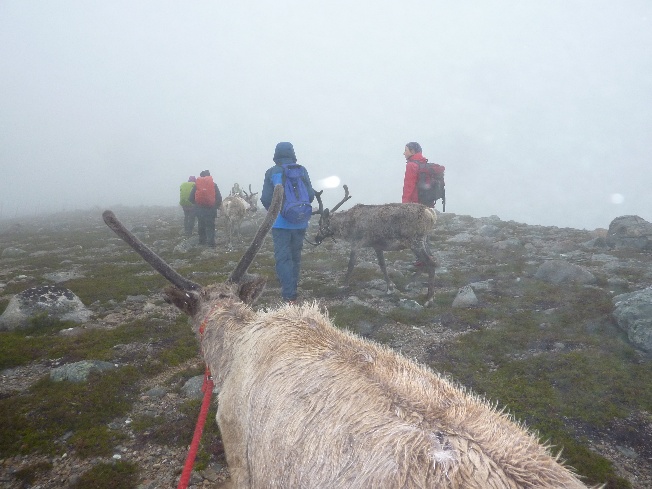
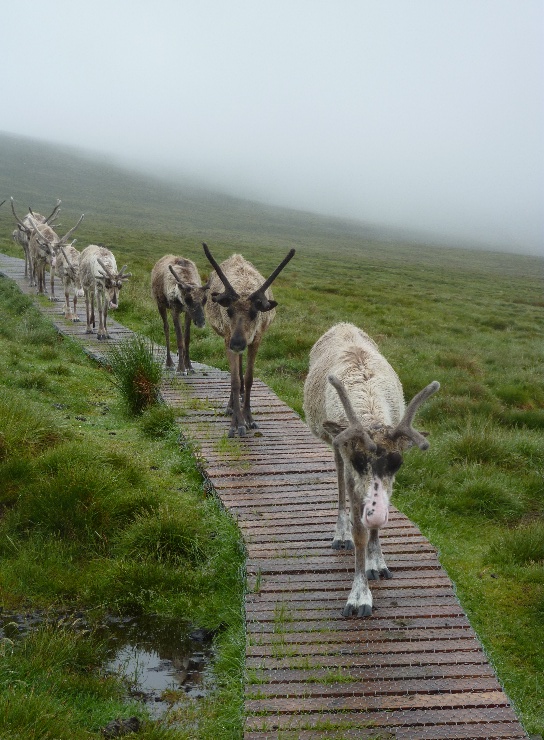
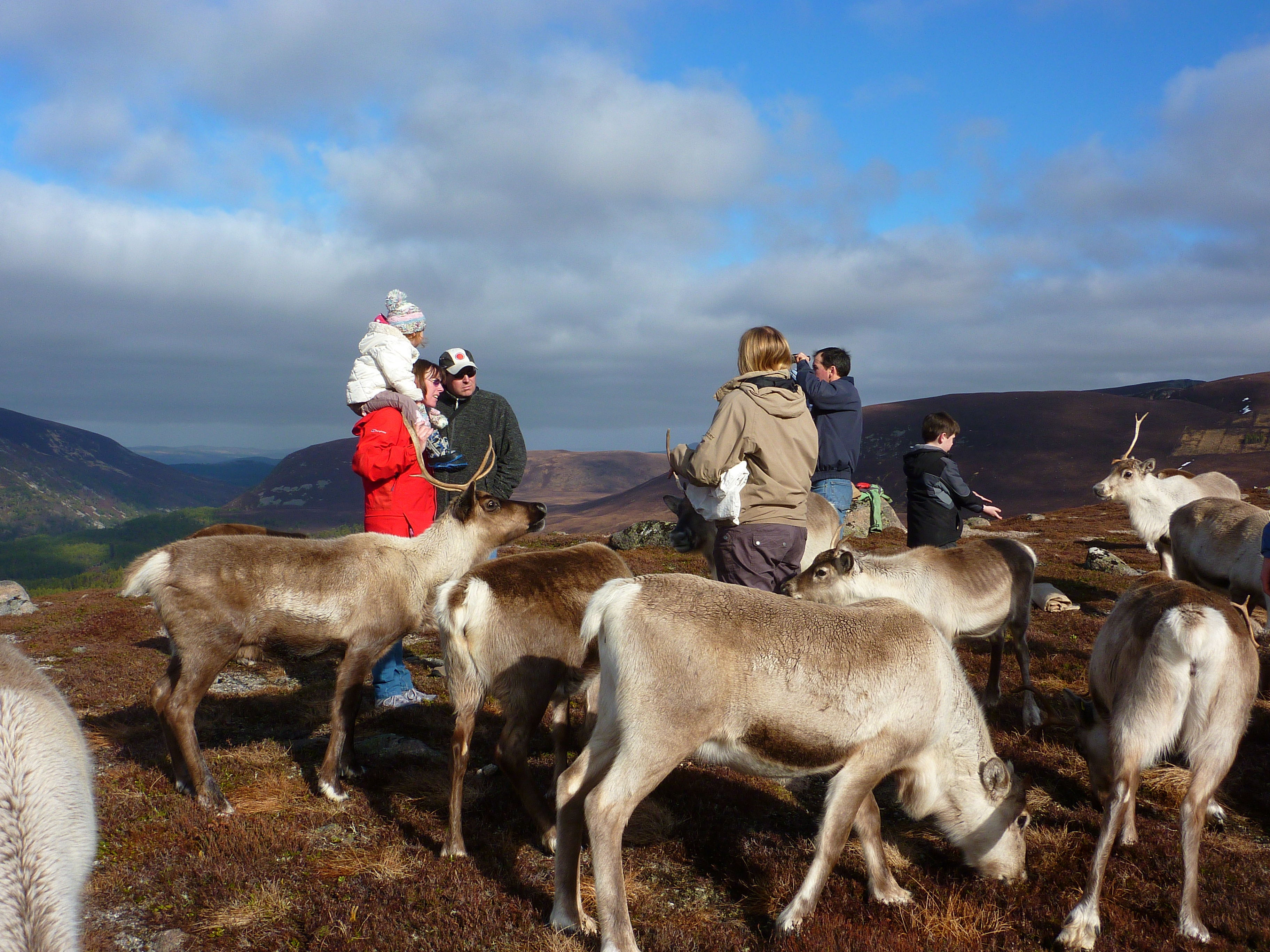
I guess we should get on to the reindeer bit… we’ll be business as usual with hill trips going twice a day at 11am and 2.30pm as well as the paddocks & exhibition being open and all tickets prices will have a 20% discount applied. Come and feed the reindeer up on the hill, but be prepared for all weathers!

Reindeer and Visitors
Hopefully the sun will be shining when you come to visit us!

There’ll also be tonnes of other things happening all over Badenoch and Strathspey, around Blair Atholl, Upper Deeside and Tomintoul. Some events that adults might enjoy include Green Woodworking Demos with Wooden Tom (he’s a really cool chap) at Feshiebridge Sculpture Trail on Saturday 14th. This is a ‘drop in anytime’ session running from 10am until 4pm (Here’s a handy link to his website). There is also the ‘Night Time on Nethy’ event on Saturday at 9pm. You’ll be on the river Nethy at night with the ranger, and booking is essential for that event. If you’d like to go on an all-day adventure, why not book into the ‘High Living in the Cairngorms’ event. This is a walk, starting at the Glenmore visitor centre and will involve some uphill. Booking is advisable and you will need to be dressed to be outside all day, in all weathers, and make sure you have a packed lunch too.

12998552_1184963421523654_2943601241422007354_n
Wooden Tom, who will be demonstrating Green Woodworking Skills

For families, there are lots of interesting things to do. You can help the Loch Garten forest elves and fairies, by helping to create a garden for their enchanted tree. This event takes place on Saturday 14th, from 10.30am until 3.30pm (drop in any time) and you will also make some little forest-folk to take home at the end as well! This is located just 5 minutes from the Osprey Centre, and you can ask for directions from the kiosk there. On Sunday the 15th, there’s a self-guided trail letting us know all about how trees grow. It starts from the Glenmore Visitor Centre and you can do it any time between 10am and 4pm. At Blair Atholl there’s a ‘Woolly Woods and Woolly Nature Trail’ on both Saturday and Sunday. You can drop in at any time and search for the knitted nature and other wildlife from the Blair Atholl Information Centre.

There are lots of other events going on all over the place, and you can get more information and book spaces by going to the Cairngorms Nature Festival page, where you can download a .pdf of all the events running throughout the weekend.

Hope you all enjoy some of the events being put on!

Abby and Imogen

An Unexpected Visitor

We’re lucky to see some pretty awesome wildlife whilst looking after the reindeer on the mountains, but its less usual to see wildlife in our back porch. We were taken by surprise last week when we glanced out the back door and saw a rather worked up male sparrowhawk, who had somehow flown in then lost the door out… thankfully we were able to sneak past and open up the door for him to “escape”.

Sparrowhawk
Photos by Imogen Taylor and Dave Curtis (used under CC 2.0)

We were pretty delighted to see a sparrowhawk close up, as the normal view of them is them dashing over at top speed, and even happier to see him fly safely away!

Imogen

Reindeer, Roe or Red: How to recognise your British deer

Although there are only seven species of deer living wild in the UK, there is often confusion as to which species people have seen, not helped by the fact that usually there is only a fleeting glimpse of a fast-moving rump disappearing into the trees! In this week’s blog, I hope to demystify the issue and perhaps raise your curiosity so you keep a closer look-out for your local deer. So from largest to smallest, here are the species to look out for…

Red deer (Cervus elaphus)
Height (shoulder): 110-150cm

Red deer
Red deer (Photo by Rexness used under CC 2.0)

Our largest species of deer, and in fact our largest land animal, is the red deer. Named for their beautiful reddish brown summer coats, red deer are native to the UK and are a herd animal preferring to live in woodland with open rides. However, as humans have altered the countryside over the centuries, they have adapted to living on moors and heaths, though the red deer of the Scottish highlands rarely grow as big as their cousins in the lowlands. Red deer are found across the UK, and are best recognised by the combination of their large size (they are big!), their buff rump and short tail. They’re also likely to be seen in herds rather than on their own.

Reindeer (Rangifer tarandus)
Height (shoulder): 100-140cm

Reindeer bull
Reindeer bull ‘Nulpu’ © Richard Cope

Reindeer are by far the most familiar deer species to me, because this is the species we care for here at the Centre. Reindeer were once found free-ranging across much of the UK, but died out due to the pressures of over-hunting and climate change at least 1000 years ago. Our small herd were reintroduced to the Cairngorms in Scotland in 1952, and around 150 reindeer now roam the mountains here. As the only British deer species to be adapted to Arctic conditions, they are comparatively stocky and dumpy, and tend to carry their heads below the horizontal. Their colour ranges from pure white to almost black – variation caused by thousands of years of domestication – and both males and females grow antlers. For most people, they are an easy candidate to rule out, as they are only found roaming in the Cairngorms in Scotland.

Sika deer (Cervus nippon)
Height (shoulder): 70-120cm

Sika deer
Sika deer (Photo by Arudhio used under CC 2.0)

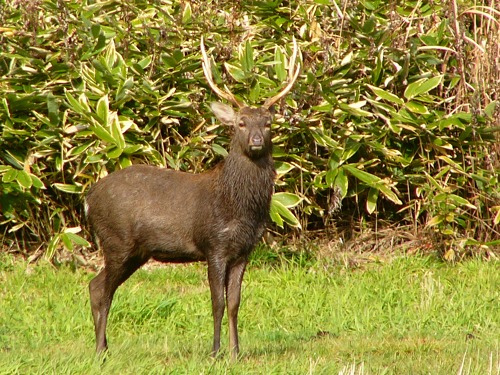
Originally Japanese in origin, Sika deer were introduced to the UK from 1860, and can now be found in patches right across the country, though their stronghold is in north-west Scotland. They are similar in appearance to a red deer at first glance, but are slightly smaller, have a dark dorsal stripe and a much darker brown winter coat. Their heart-shaped rump patch is bright white, compared to the buff colour of a red deer, and for much of the year they are solitary, though they will form small groups of 6-7 in the autumn and winter.

Fallow deer (Dama dama)
Height (shoulder): 70-100cm

Fallow
Fallow deer buck (Photo by Not From Utrecht used under CC 3.0)

The stereotypical “spotty” deer, fallow deer are a common sight grazing in the grounds of stately homes and parkland. There is evidence that fallow once roamed Britain around 400,000 years ago, but today’s population has resulted from escapees from parks. Fallow bucks grow lovely ‘palmate’ (flattened) antlers. The familiar tan “menil” form with white spots is just one of the colours that this variable deer comes in, whilst some individuals are white, some are dark brown with spots that disappear in winter, and some are completely black. The noticeable trait which is the same for all of these colourations is a light coloured rump patch edged with black, with their long tail appearing to split it into two.

Roe deer (Capreolus capreolus)
Height (shoulder): 65-75cm

Roe deer
Roe deer (Photo by JoJo used under CC 3.0)

The dainty roe deer is another of our native deer species, and perhaps the one you are most likely to spot in woodland and gardens right across the UK, with some individuals becoming incredibly tame due to living in close proximity to humans. The species was driven close to extinction in this country in the 1700s due to overhunting. Roe deer are usually seen alone or in small family groups, are a solid brown colour with a small rump patch and don’t have a noticeable tail. They will ‘bark’ if alarmed, which can be mistaken for the yap of a dog.

Chinese water deer (Hydropotes inermis)
Height (shoulder): 50-60cm

Chinese water deer
Chinese water deer (Photo by Nicholls of the Yard used under CC 2.0)

Chinese water deer are a primitive species – instead of growing antlers the males grow tusks which can be seen protruding from their mouths. They were introduced to the UK within the last 150 years and have since become established across the Midlands and East Anglia. As their name suggests, their preferred habitat is fens and wetlands, and they are usually seen alone or in small family groups as they are territorial. The most obvious differences setting Chinese water deer apart are the lack of antlers, large mobile ears and the absence of a rump patch.

Muntjac deer (Muntiacus reevesi)
Height (shoulder): 45-55cm

Muntjac
Muntjac deer (Photo by Nilfanion used under CC 3.0)

The smallest of our deer species was introduced around 1900, and is now well established across most of England. At first glance, it would be easy to mistake a Muntjac for a small dog, or perhaps a large hare, as they tend to have a peculiar hunched stance. Muntjac are usually seen alone or in small family groups, and the males are often heard rather than seen as they bark persistently when rutting. Along with the male’s small antlers, both sexes grow tusks, and as they aren’t seasonal breeders, does can be seen with a fawn at any point of the year. Their tiny stature (think collie-dog size) and hunched posture makes Muntjac easy to distinguish.

So there it is, from the largest to the smallest, the seven species of deer that you may encounter in the UK. Hopefully this has helped make the thought of working out who that disappearing rump belonged to a little less daunting! Keep your eyes open, even in parks and gardens in towns and cities, and perhaps you may be surprised by one of these beautiful animals.

Andi

Attack of the Flying Beasts

First off, I’m not talking about the reindeer in that heading. Reindeer only fly at Christmas time after Santa has given them the magic powder and our lovely reindeer don’t attack.

I am of course talking about the flying mini beasts – flies, bugs and, the worst of the worst, midges. Scotland wouldn’t be Scotland without those little terrors, and they are a sign that summer has finally arrived here in Cairngorm, but they aren’t my friends. We love this infomatic from Mackays Holidays:

Midges-Info-graphic-alt-2
Visit Mackays Holidays for more top tips!

No one here likes the midge, including the reindeer. With the heat rising above 20°C and them still having some of their winter coat, our boys are feeling the heat. In hot weather we often give them access to the shed to hide from the heat – you’d be amazed how many come running out at feeding time.

They are also bothered by the flies and midges, but there’s not much we can do there, apart from douse them with fly repellent. As much as I’d like to eradicate midge for both my own and the reindeer’s comfort, they are an important food source for birds, toads and frogs, and bats.

Our boys cope with the midges fairly well; in the paddocks they hide under our shelter shed and up on the hill avoid stagnant pools where midge breed and shake to get rid of the biting bullies. Sometimes it’s like watching a little reindeer dance: they stomp their back foot a few times, then the other, a little shake, a few more stomps, and then if the midges are really ferocious, they’ll burst off in a sprint, jumping and kicking the air. It’s quite funny to watch!

We also spotted Oryx doing something a bit odd. It was the end of a visit, and we were heading to the gate to leave the enclosure. A few boys followed us, no doubt thinking there’d be more food. There’s a large muddy patch just at the gate, which usually the reindeer don’t bother with, but this time Oryx got into the big puddle and just stood there. He seemed pretty content, so he was left to his own devices while Fran and I did some poo picking (the glamorous lives we lead). Eventually he decided his spa treatment was finished and got out of the mud bath. He looked ridiculous with mud socks up to his ankles, but he seemed pretty happy with himself.

Oryx enjoying the mud

It’s known that red deer wallow, or bathe in mud, but the cause for this is still unknown. Some think it may be to reduce ectoparasites, while others believe it is to cool down. I’m not sure it’s ever been recorded in reindeer before (a quick Google search didn’t come up with much) but I think Oryx may have been trying to avoid the midges biting at his legs. Either that or he fancied a quick mud treatment at the ‘Spa de le Cairngorm’.

Imogen

Antlers vs Horns – What is the difference?

Many people who come and visit the reindeer want to know the answer to this very question: What is the difference between antler and horn?

Antlers

First of all, just in case you are in any doubt, reindeer grow antlers, not horns! Many folk ask us what antlers are made of and ‘are they made of wood?’ is a surprisingly common question which always amuses us!

Antlers are an extension of the animals skull, found on members of the family Cervidae (i.e. deer). They are made of bone, are a single structure and are shed and regrown every year. Antlers grow from pedicles – bony supporting structures that develop on the skull. Sometimes, the pedicles get damaged and you get a lopsided set of antlers like one of our female reindeer, Hopscotch. Occasionally, they don’t develop on one side at all, for example Dixie who only ever grows one antler.

Dixie and Arnish
Dixie with her one antler, and antlerless Arnish

Generally they are only grown on males but, of course, reindeer are the exception to the rule. Male reindeer lose their antlers shortly after the rut, the breeding season, in autumn. Female reindeer hold on to their antlers over the winter because access to food is critical during winter pregnancy. Having antlers generally makes you more dominant so you can push the antler-less boys off the good food patches! However there are always exceptions… Arnish, who is no longer with us, was a ‘mega hard’ reindeer and never grew a single antler but she was as tough as old boots and just battered other reindeer with her front hooves when required!

Reindeer start to grow new antlers again in the spring and its incredibly fast growing, up to an inch in a week. On some of the big boys, like Crann, you have a few days off and return to see a massively noticeable difference in his antler size. While the antlers are growing, the bone is encased in super soft velvet, hair covered skin, which covers the nerves and the blood vessels feeding the antlers from the tip. Once the antlers are fully grown, end of August for reindeer, the blood supply cuts off and the velvet starts to dry and crack and come away from the bone. The reindeer help this process by rubbing their antlers against vegetation and what ever is about, like a fence post! They can look a bit gory at this stage as flaps of bloody velvet dangle off them like dread locks! Once its all peeled away they are left with solid bone antlers which the bulls now use during the rut to impress females and fight off other bulls.

Crann
Crann and his huge set of antlers

They lose them, as already mentioned, shortly after the rut or after winter for females and then the whole process restarts the following spring…pretty clever!

Horns

Horn structure

Found on sheep, bison, cows, pronghorn and antelopes, horns are made of two parts. They have an interior of bone (also an extension of the skull) covered by an outer keratinized sheath made of a very similar material to your fingernails.

Soay sheep at our farm, with their horns. Photo: Alex Smith

One pair of horns is typical but some species of sheep have two or more pairs, for example Jacobs sheep. Horns are usually spiral or curved in shape and often have ridges on them.

Impala
Male impala with impressive horns

Horns start to grow soon after birth and grow continually through the life of the animal and are never shed, with the exception of the Pronghorn which sheds and regrows its horny sheath every year, but retains its bony core. Unlike antlers, horns are never branched and although more commonly grown on males of the species, several females grow them too.

So hopefully that has shed (no pun intended!) some light on the subject. Come and visit the reindeer at different times of the year to see how the antlers change with the seasons. By the end of winter/start of spring, barely any will have antlers still attached and they do look a little strange compared to when they have the magnificent bony antlers of autumn. Just now the reindeer are all growing their new antlers so they are covered in lovely super soft velvet and are about half way to complete size.

Mel

The Return of the Natives

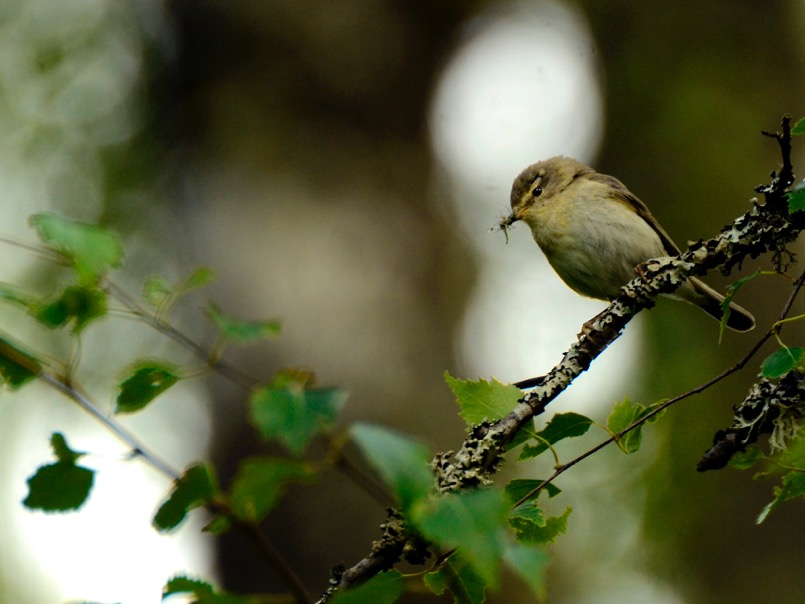
Willow Warbler
Willow Warbler – photo courtesy of Jack Ward of Alba Wildlife (much better photographer than me!)

While the other reindeer herders are spending the first part of the year watching the female reindeer gradually expand outwards and wondering who is going to calve first, I am often preoccupied with the return of the birds – the first fluting song of a Willow Warbler is one of my annual highlights, heralding the onset of summer. An ‘outdoor job’ in such a beautiful location as the Cairngorms means I’m in the right place at the right time to see, bit by bit, the changing of the seasons – and nothing makes me happier than to see winter finally receding! And added to that, I’m lucky enough to work in an area with outstanding birdlife, some of which is very rare elsewhere in the country.

Christmas Day 2010
Christmas Day 2010 (left to right Veikka, Fiona, Kermit, Bee, Eco, Tilly and Go)

The first sign I look out for is the birds starting to sing once again and I can remember, on Christmas Day in 2010 in Coylumbridge, taking photos (above) in the snow of Fiona, Tilly and our team of reindeer just before our first parade of the day (we do four parades at local hotels on the big day itself) and hearing a Coal Tit sing – the first of the new breeding season. A new season starting before the other had even finished. Ironically that is my most vivid memory of the whole day! That might just have been a particularly enthusiastic, or at least optimistic, bird however, as this year I think it was into February before I heard anything singing.

After that excitement there’s a long lull as winter drags on, seemingly never-endingly, but the days tick by as we retrieve the reindeer for the daily 11am visits each morning, one by one their antlers falling off as we get later into the winter. The Red Grouse get more and more noisy in March, often erupting out of the heather calling as we walk past and startling me, although the reindeer don’t appear to even notice them. Into April and spring is definitely starting to make an appearance, the weather milder (sometimes!), the plants starting to show fresh growth, while curlews, meadow pipits, pied wagtails and black-headed gulls move back into the area from their coastal wintering areas. Meanwhile the reindeer get wider and wider…

Ring ouzel
Ring ouzel on the hill enclosure fence – taken with my compact camera so not the best photo, sorry!

Then the migrants start to return, back from Africa. I usually see my first Wheatear up at one of the ski car parks on Cairngorm, the white flash of their rump unmistakable. Then there are the Ring Ouzels, basically looking like a blackbird with a white chest, but again they’ve come all the way from Africa; and the Cuckoos in the forest below the reindeer enclosure, their iconic call carrying miles across the hillside. The Swallows are back too, and as usual are in and out the reindeer shed up on the hill when they nest annually. In the summer, as we harness up reindeer in the shed to go trekking, I wonder how many visitors have noticed there is a swallow on her nest just feet from them, peering down at the daily proceedings. High up on the mountain plateau the Dotterels return in May, one of only two species in Britain where the male incubates the eggs so the female is the one with the brighter plumage.

Dotterel
Dotterel on the Cairngorm plateau – photo courtesy of Andi Probert

But it is the little, greenish Willow Warblers that are my absolute favourite, and I keep an ear on the grapevine in April, as news of them making their way north after their arrival at the south coast trickles in, and in mid-April they arrive on mass, the birch trees lining the Sugar Bowl path up to the enclosure suddenly dripping with them. And not long after their arrival, then the calving season kicks in and spring is well on its way, winter is behind us, and all is right with my world!

Hen

Book Now