A Reindeer’s Habitat: What flora can we find?

This weeks blog is time to talk about plants! We’re venturing out onto the flats and hills here in the Cairngorms to take at look at the sorts of plants the reindeer eat, and those they don’t.
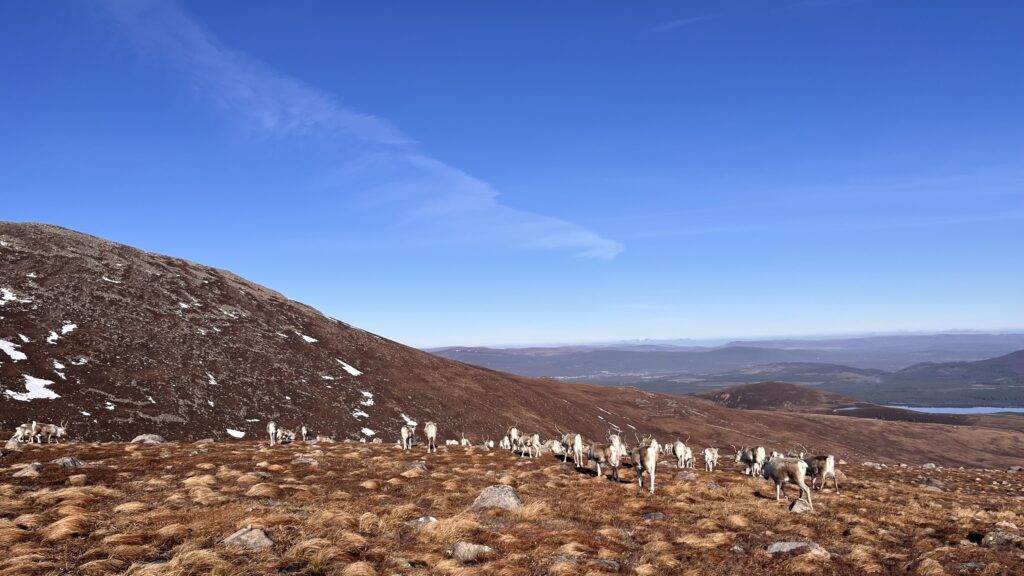
The herd travelling across the hills.

An ecosystem has many teeny, tiny moving parts. Every living thing has a role, providing something, maintaining something, preventing something, killing something. Every little cog is vital to keep the natural machine moving successfully. So, to begin let’s talk about what the reindeer’s role is in this machine to better understand their relationship with the plants growing under hoof.
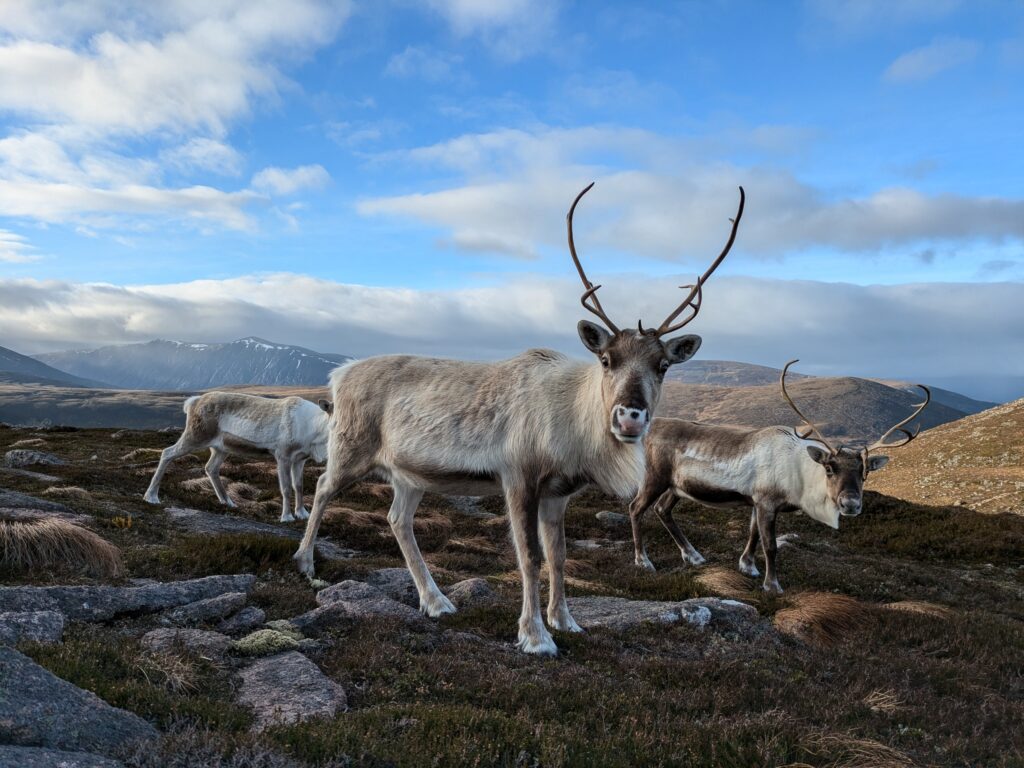
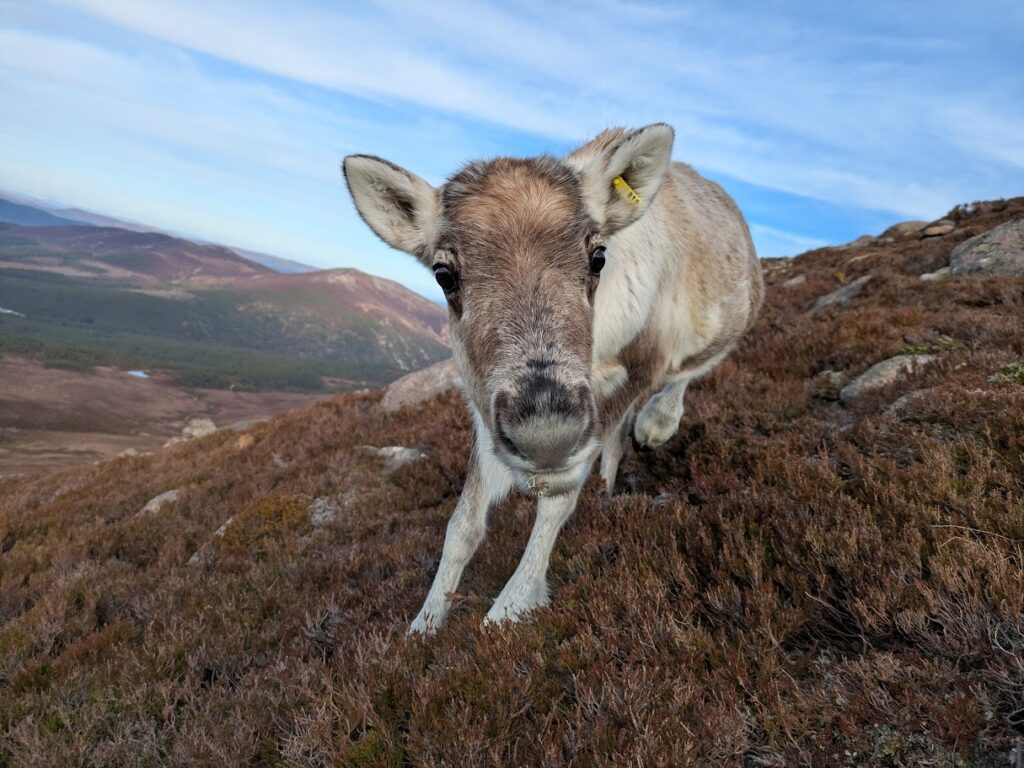
A rocky open landscape of low growing vegetation. Chickpea and Morven roaming the hills.

In the most basic terms, a reindeer is a gardener. They migrate vast distances on a daily and annual basis, trampling the ground as they go with their wide hooves, churning the vegetation and exposing spots of soil. Into which, their poop deposits! Reindeer, like many other animals that roam big distances, will not have a “toilet spot”. They’ll go as they move, effectively fertilising their own hoof prints!

This behaviour rejuvinates the ground with seed dispersal from their food, keeping the ground alive and replacing what’s been grazed at. They also help keep the ecosystem moving as a prey species, their numbers being controlled by predators – never growing too large that they begin to over graze and over trample areas (you can see how it all starts to come together).
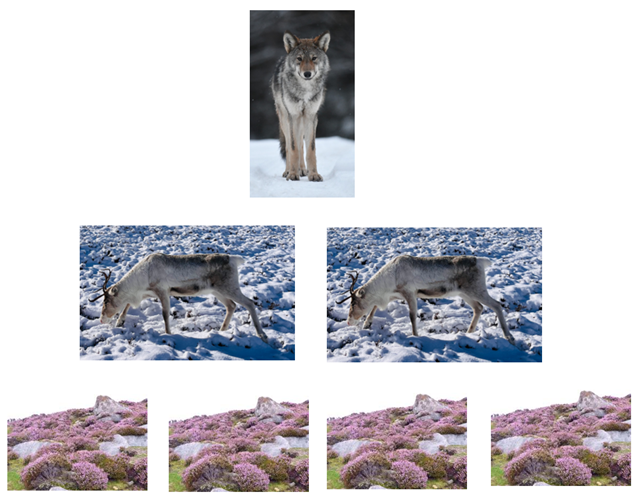
A balanced food chain is very important for making sure the ecosystem remains healthy, and not pressured at any level.

So now we know the reindeers’ job, lets see what keeps them fed and what they help to grow. Green thumbs at the ready!…
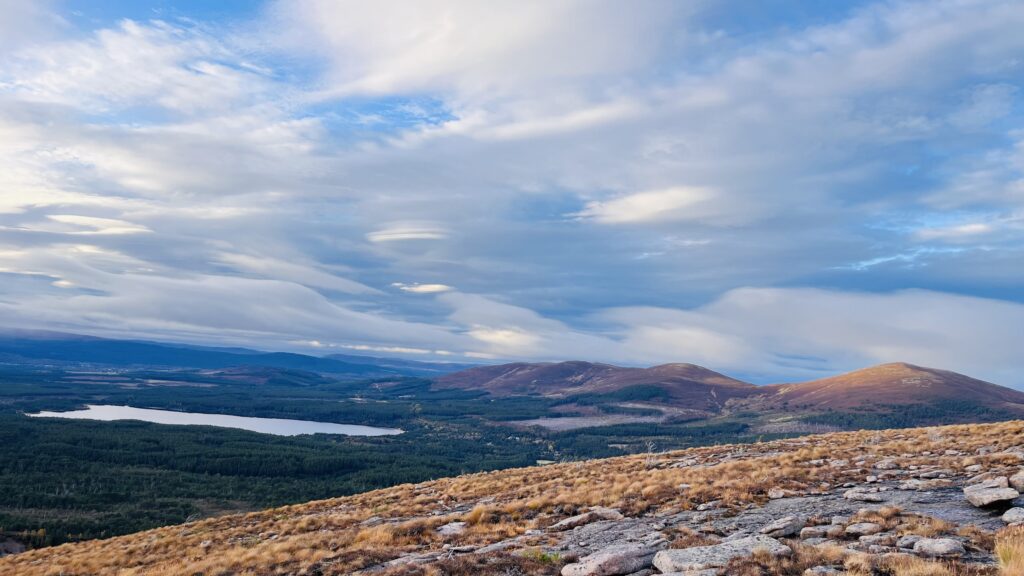
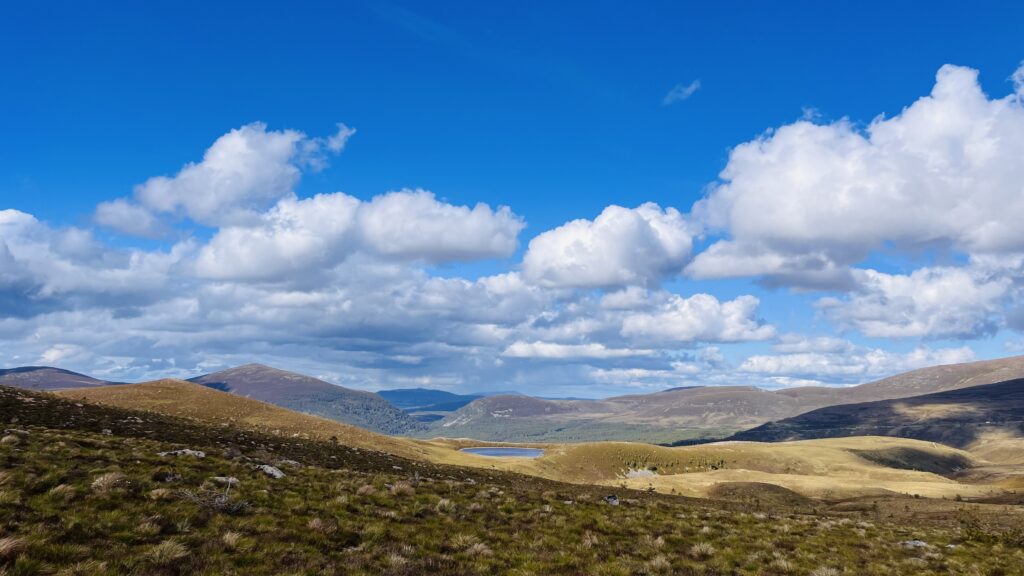
From Loch Morlich, through the forest and up out of the treeline. The reindeer home range is the expanse of higher hills.
As you look around their chosen landscape you’ll notice all the low growth of vegetation, skirting close to the rocky ground.

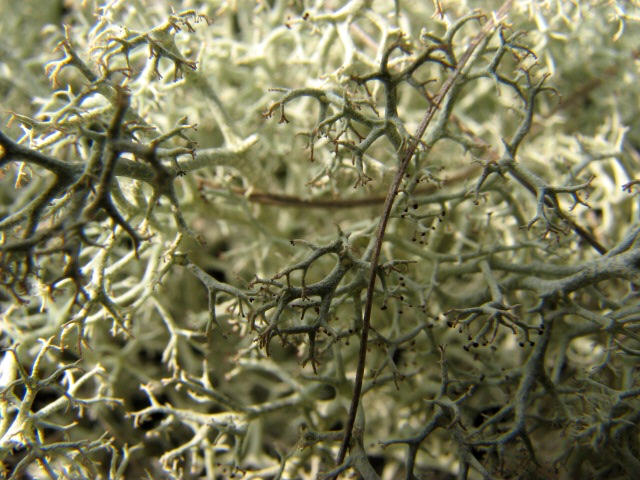
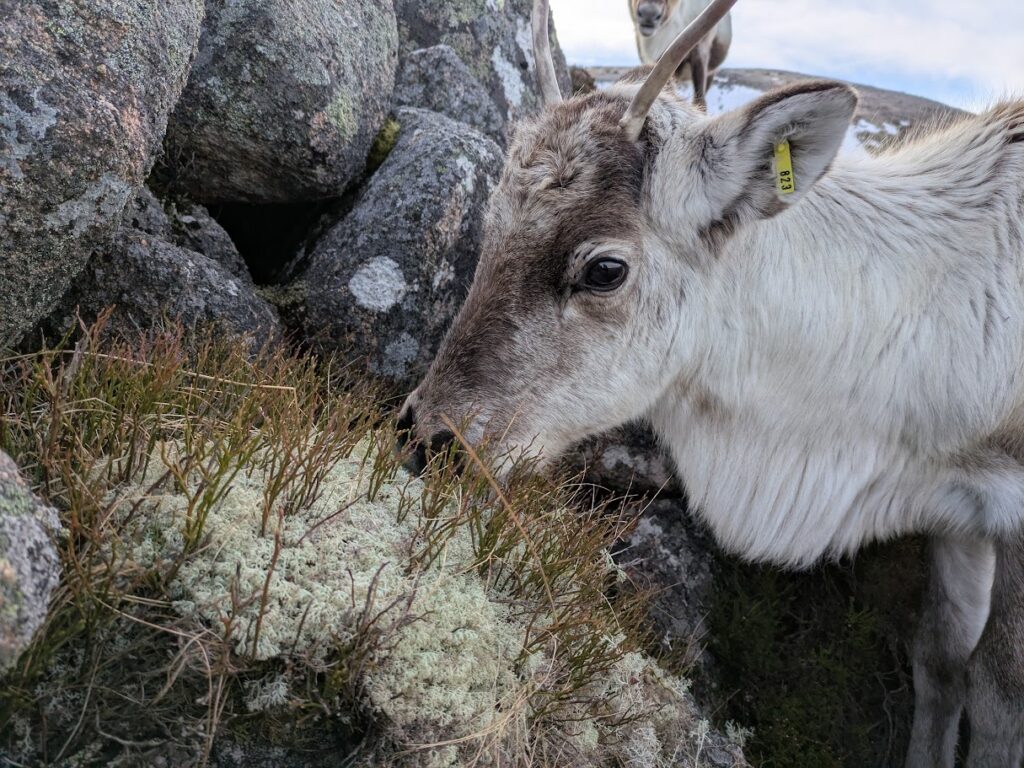
The ground is rocky, the temperature low, and high winds batter over the hills – what plant life is hardy enough to grow here? Let’s start with every reindeer’s faviourate snack, lichen. Easy to grow in many different conditions, the particular lichen (also known as reindeer moss) that is growing on the hills has no competition for light due to no trees or tall shrubs, can easily gorw in the rocky ground, and survives the intense winds, so is able to grow in large blankets. Like all the other plants we’re grateful for, carbon is a food source, so thank you lichen for your offsetting efforts! It makes up a very large portion of the reindeer diet, up to around 70% during winter months when most other plants lose a lot of their nutrition, or simply die back in the freezing conditions.
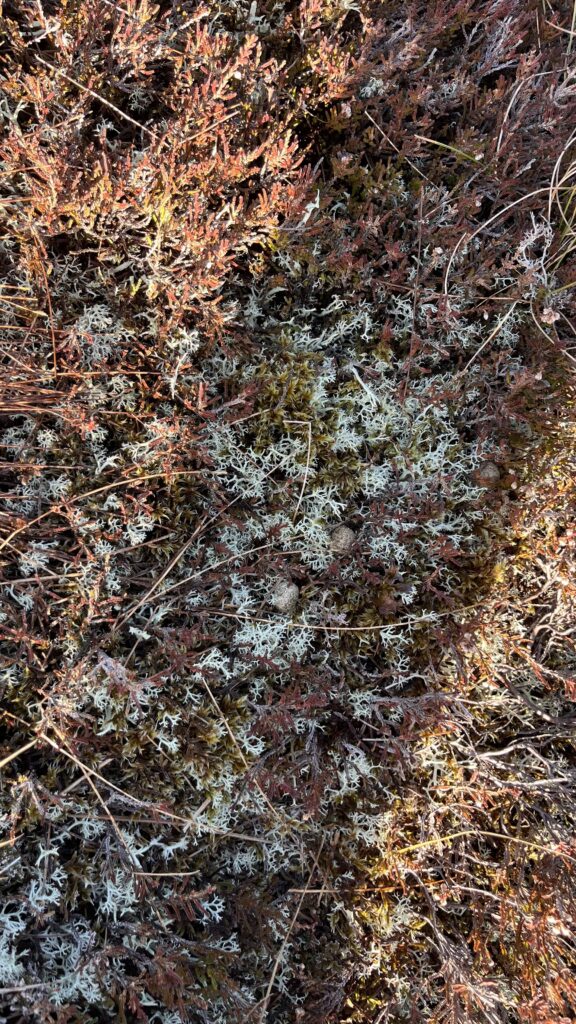
Pick out the lovely bright green sprigs of lichen here.

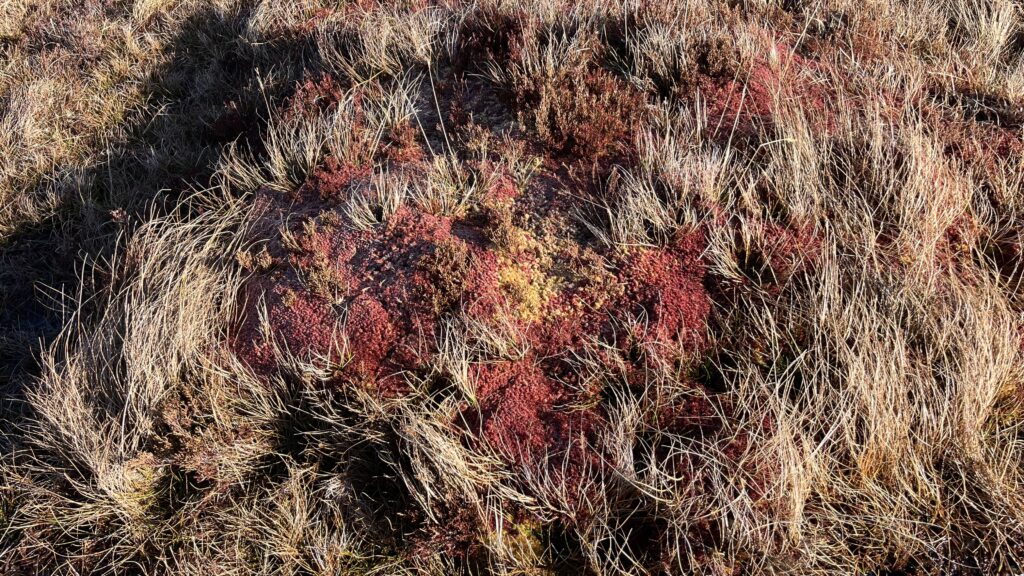
While we’re thanking the lichen for their carbon efforts, we have to talk about sphagnum moss. Jump off the squishy blankets of lichen and land yourself right into a peat bog! This amazing plant covers vast areas of the reindeer landscape we have in the Cairngorms. Growing up to 20 times its dry size when wet(!), sphagnum moss absorbs water and prevents plant matter from breaking down once in its water-logged form. This means that you can have layers and layers of boggy peat, all storing carbon. There are spots in Scotland where peat bog is as deep as 10m, holding thousands of years of carbon storage! Peatland is actually the largest terrestrial carbon sink on Earth, so an extremely important plant for all of us. Thank you peat bogs, we love you!
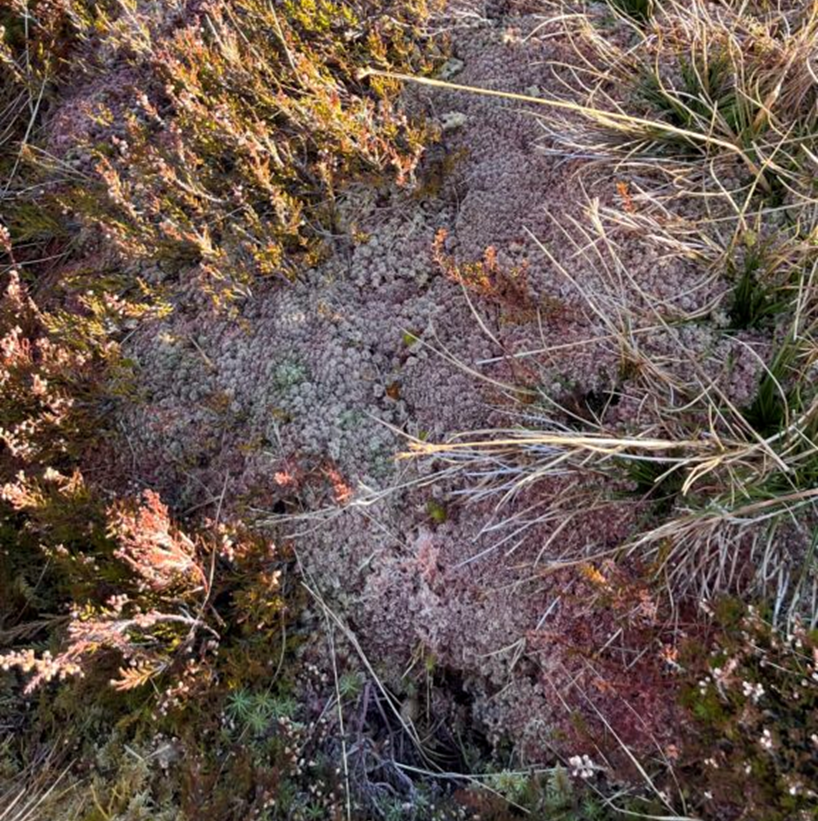
Swollen sphagnum moss holding a nice amount of water.
Squishy hummock of sphagnum moss in amoungst some longer grasses.

While we haven’t seen the reindeer ever nibbling away at the peat patches, they do sometimes squish their muzzles into them and drink the water the moss is retaining. During summer when the small and narrow streams begin to dry up, the sphagnum moss still retains a lot of water and can provide the reindeer with a good drink in the heat.
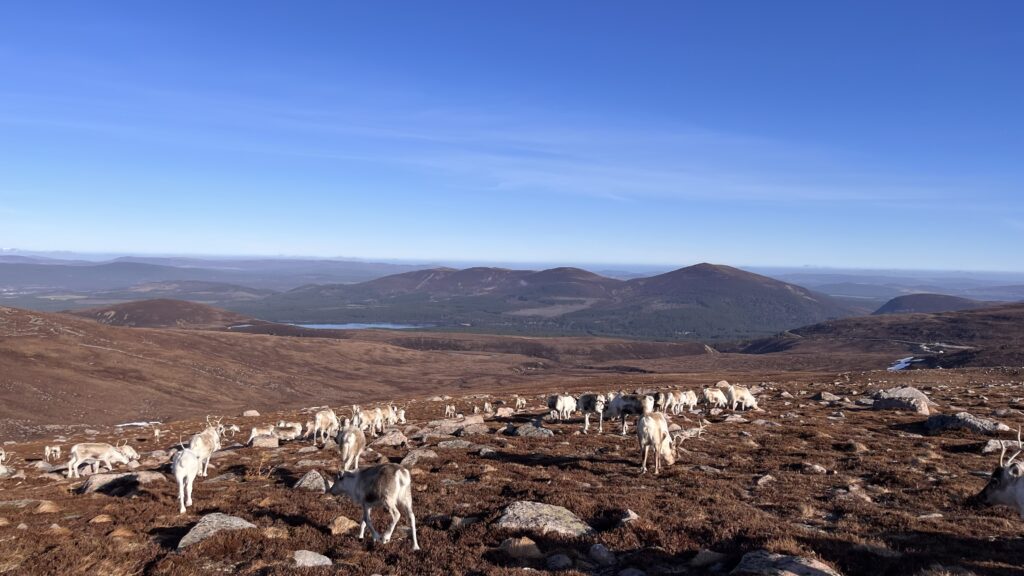
Lochs and burns lie along the flats, with water becoming less available as the reindeer travel along the much higher ground on the mountain tops.

You’ll have noticed some longer grasses in the above photos of the sphagnum moss. These are clumps of deer grass. Deer grass is a type of sedge, thick and long, it is able to grow in areas of high winds and heavy rains, prefering a peaty landscape to grow. Acting as a stabiliser for the soil, the highly fibrous root system prevents erosion, holding everything together. This is one of the grazing plants for the reindeer, growing along the tops of the hills and down to the tree line.
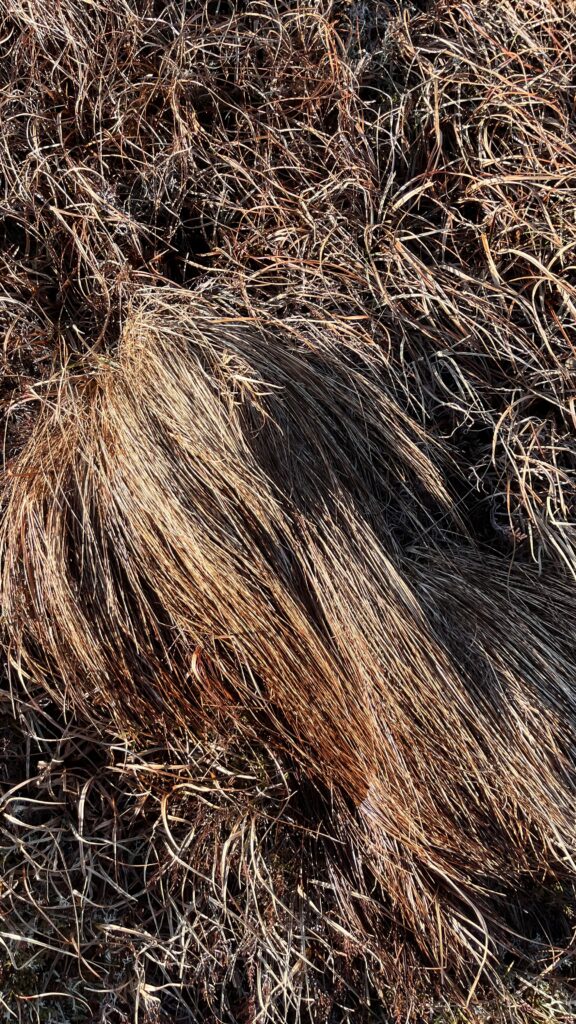
Long growing deer grass lying flat to the ground. Like the other food sources for the reindeer, it’s easily burried in deep snow.

As we move more into the leafy vegetation found in the hills, we can talk about the ever abundant heather, and not so abundant lingonberry. The heather shrubs cover almost the entirety of the reindeers’ landscape, the other plants growing in between. Heather is another plant frequently grazed on by the reindeer, but is extremely resilient to feeding wildlife. It is quick to replace grazed buds and each plant is capable of producing a maximum of 15,000 seeds per germination season! That’s a lot of dispersing for the reindeer to be getting on with! Between the two of them, they’re very good at keeping the landscape nice and heather-y.

The lingonberry plants, like the heather, are very good at growing in bogs, and can cope positively with harsh cold, windy conditions like those found on mountain plateaus. Like the blaeberry that grows further down the hills in the woods and up to the tree line, the berries produced by the plants can also be a tasty treat for the reindeer.
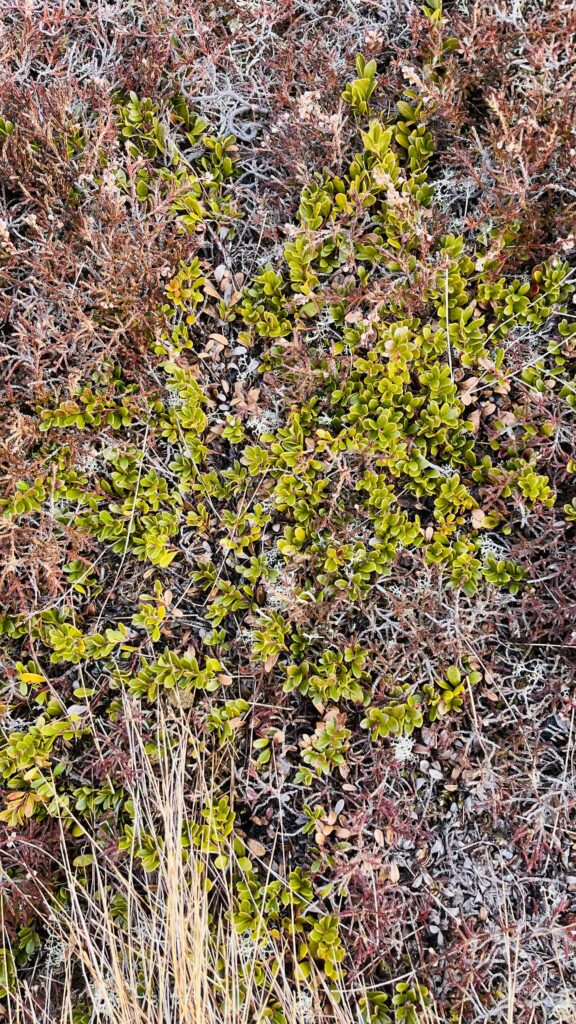
Bright green leaves of the lingonberry plant stand out beautifully amoungst the lovely purple of the heather.

I realise that is a lot of information about plants! So, if you’ve stuck with me till the end I’ve included a final very cute photo below of baby Quickstep out on the free range last summer as a reward! It’s nice to take the time to learn more about our surroundings and not just appreciate the reindeer, but also their home, and how important each and every bit of it is.
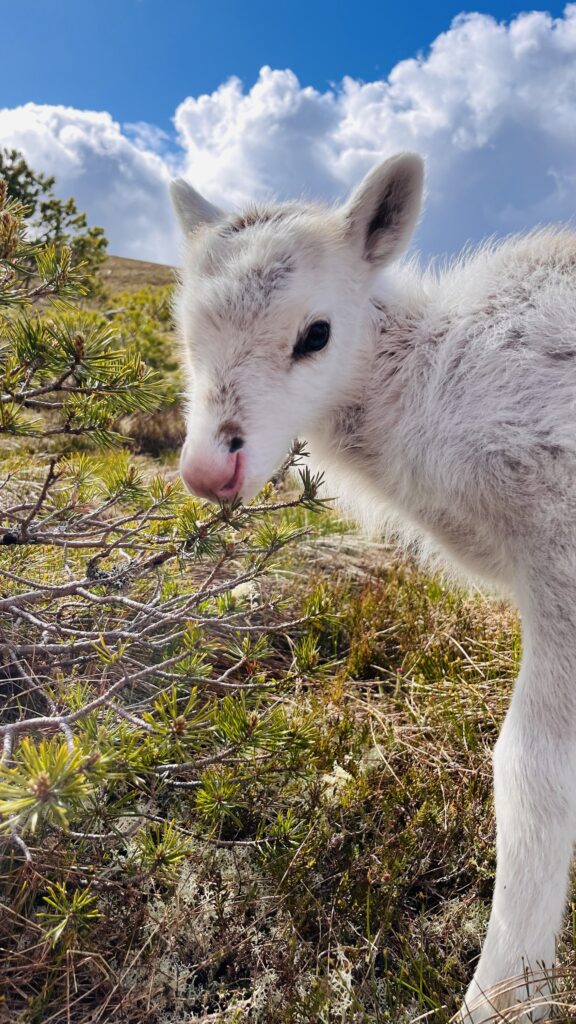
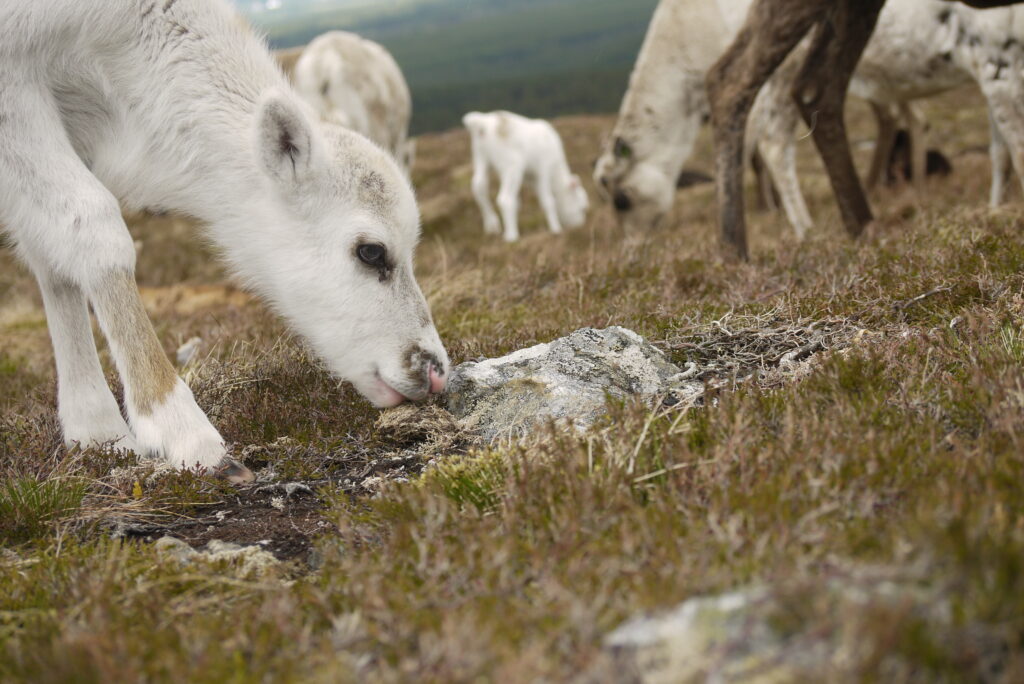
Quickstep munching on a Juniper shrub high in the hills.

Daisy

Further reading:

https://www.forestcarbon.co.uk/news/sphagnum-moss

https://greg.app/deergrass-overview/#:~:text=Top%205%20Benefits%20%F0%9F%8C%9F&text=Deergrass%20plays%20a%20crucial%20role,ensuring%20your%20garden%20remains%20intact.

https://electricscotland.com/gardening/heather.htm

Modelling and mapping the abundance of lingonberry (Vaccinium vitis-idaea L.) in Norway. Jari Miina et al. 2024.
Lichen – what is it and why does it taste good? If you’re a reindeer anyway…

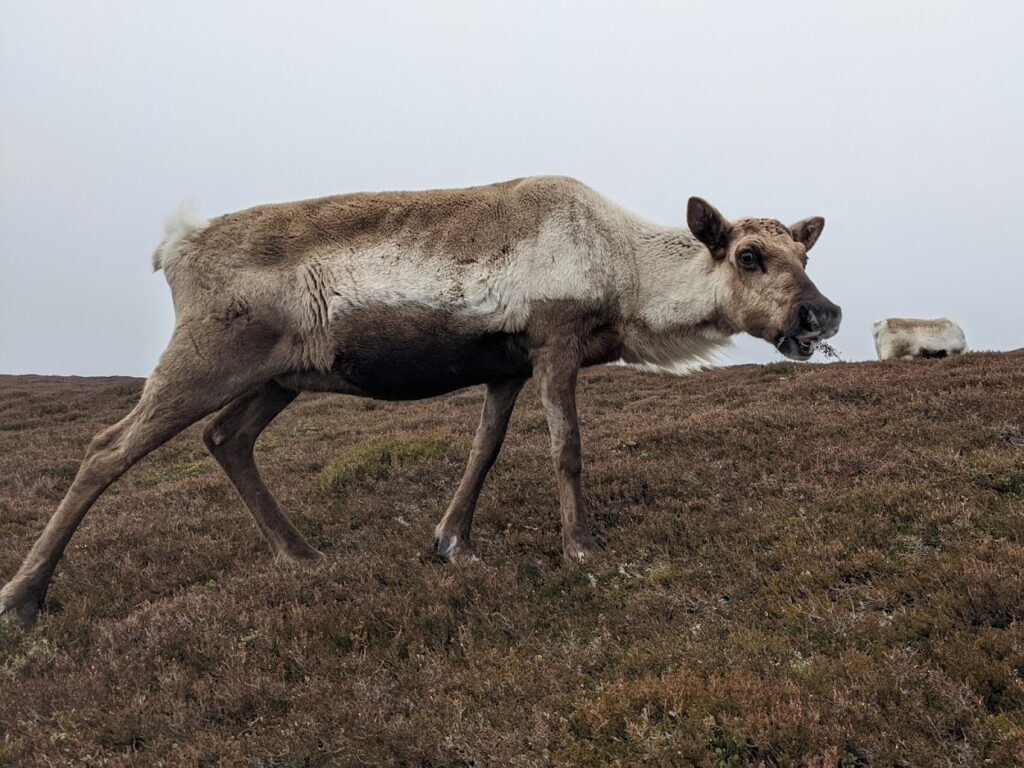
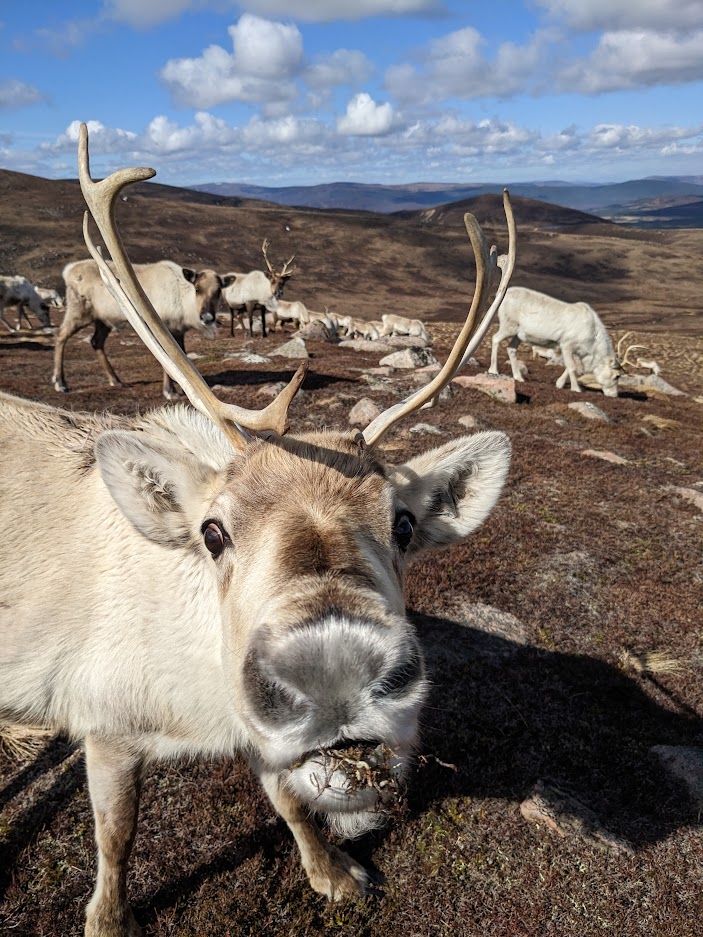
Mangetout with a mouthful of lichen.

“Lichen, any of about 15,000 species of plant-like organisms that consist of a symbiotic association of algae (usually green) or cyanobacteria and fungi (mostly ascomycetes and basidiomycetes)” (Britannica, 2025). Now that’s a lot of big words and what do they actually mean? What really is a ‘symbiotic association of algae’? And why is lichen so important for reindeer?

Lichen (AKA reindeer moss). Photo by Evelyn Simak

Let’s look at the bigger picture to start. Cast your minds to the vast open landscape that makes up a subarctic tundra ecosystem. Excitingly enough, we can talk about our very own Cairngorm mountains for this, as our reindeer live in the only ecosystem of its kind in the UK.

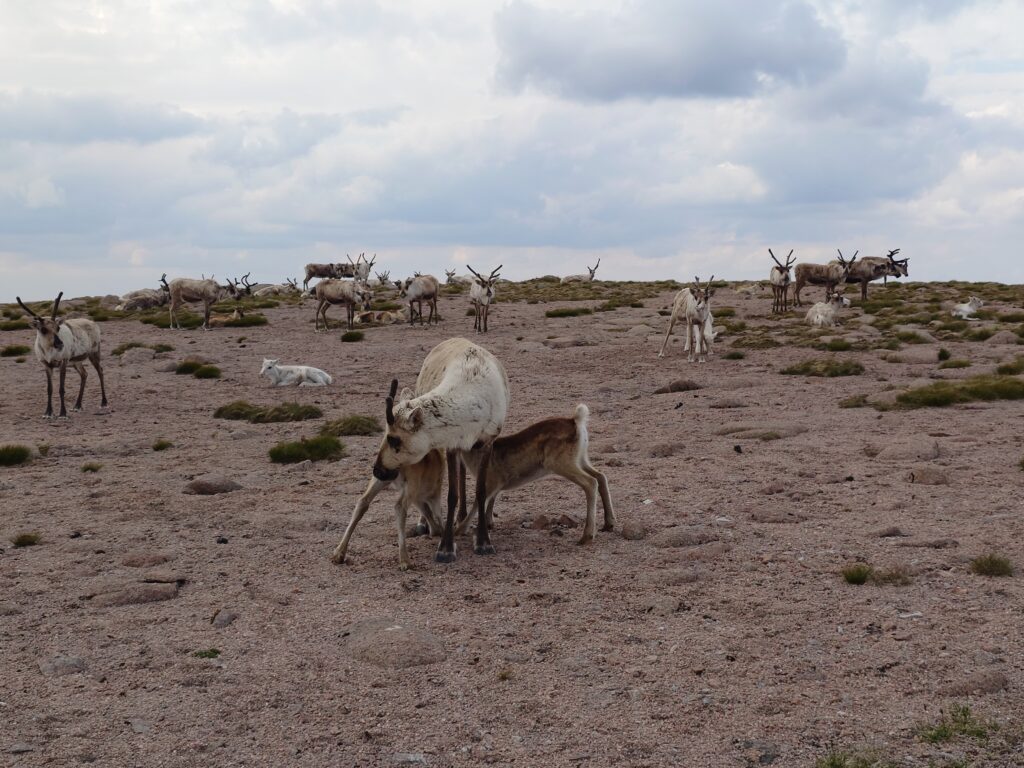
The Cairngorm reindeer free roaming in the mountains.

A subarctic tundra ecosystem falls south of the Arctic Circle line and includes treeless habitats of permafrost and generally short flora growing seasons due to harsh weather and low temperatures. It can include fragmented plant growth, like rocky mountainous peaks with scatterings of low growing vegetation including mosses, grasses, dwarfed shrubs, and lichens.

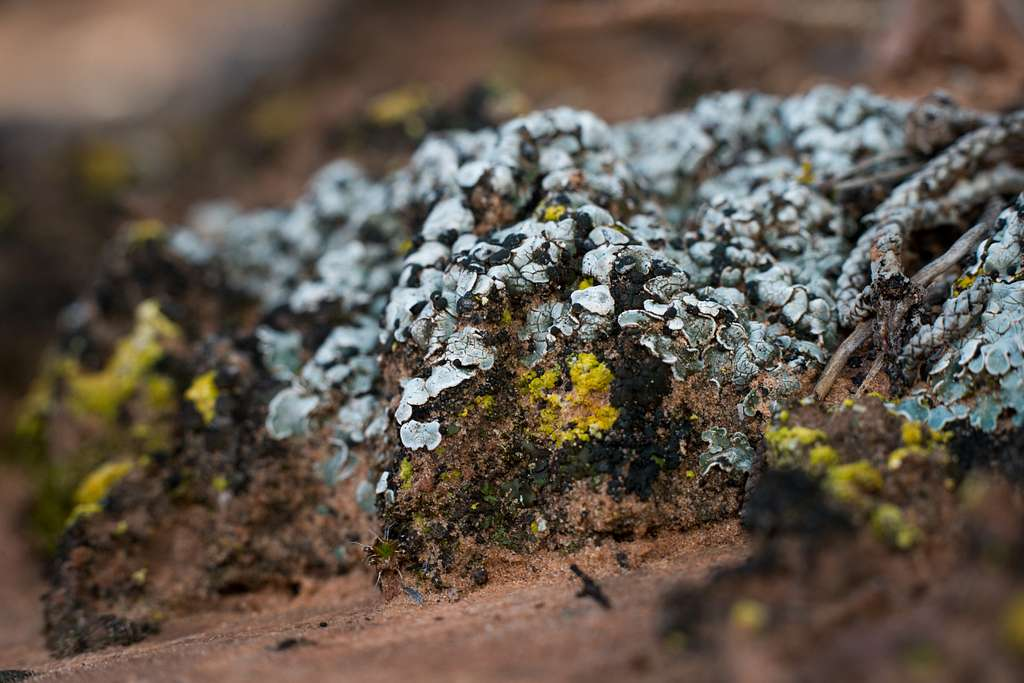
These harsh conditions mean that lichen do not have to compete for space or light with other forms of vegetation, enabling the lichen to grow in blankets across mountain plateaus. Due to their unique differences to other plant life, they are also able to grow on exposed rocks and as part of biological soil crusts. These soil crusts are found in cold and dry areas and make up the majority of all living ground cover in these almost uninhabitable places. The crusts are made of living material that sit on the top few millimetres of ground, meaning larger plants are unable to root and grow due to the ground conditions.

An example of biological soil crust.

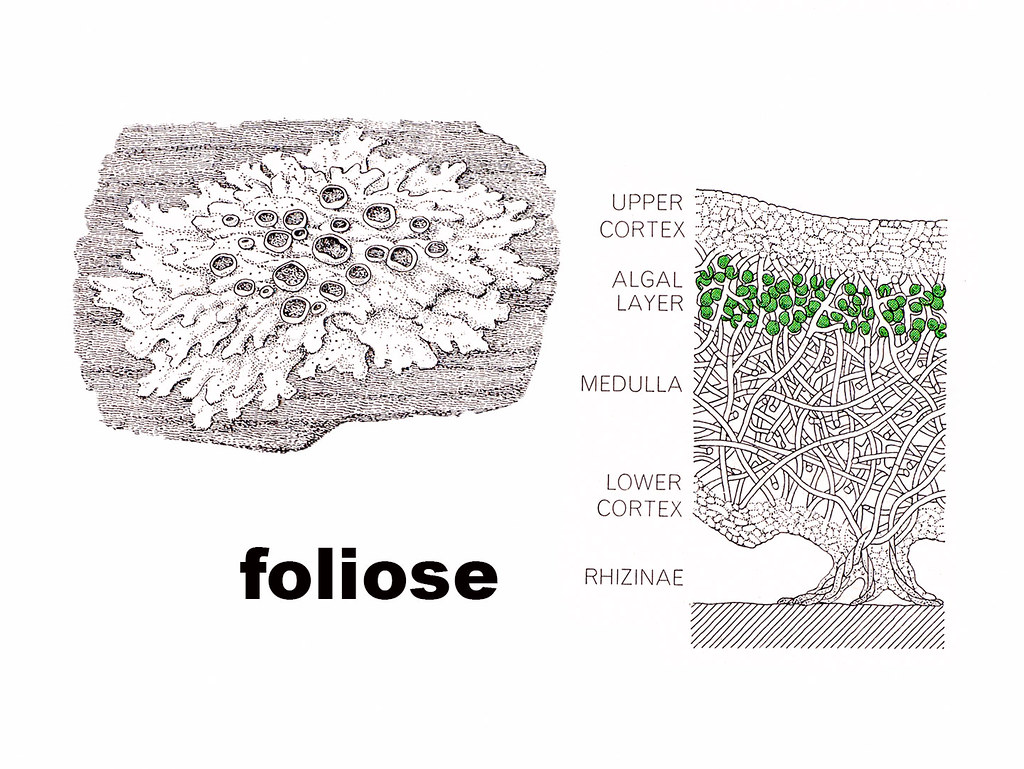
So that brings us back to our opening question, what is a symbiotic association of algae? What is lichen? From what we understand of lichen, it is a community of living organisms from both the fungi and the algae family. The fungi provide the water and minerals, as well as giving the lichen its structure, and the algae provides the food in the relationship, through photosynthesis. This happy partnership allows the lichen to grow and cope with harsh conditions that a normal single organism may not be able to thrive in.

The perfect partnership.

Now let’s add the reindeer into the mix! Reindeer rely heavily on lichen, consuming so much that it can make up to 70% of their annual food intake. This is because those harsh landscapes we spoke about earlier have very little choice available for the reindeer, but they can always rely on the lichen to grow all year round. Reindeer even have specialised gut floras to be able to properly digest the carbohydrates lichen contains.

Winter lichen for our free ranging reindeer.

Maybe it’s not that it tastes good then, maybe it’s because they have little other choice?…

But if you asked our reindeer, they would tell you it’s the best thing on the menu!

Delicious!
Dixie enjoying a mouthful of lichen.
Macchiato with a lovely big patch.
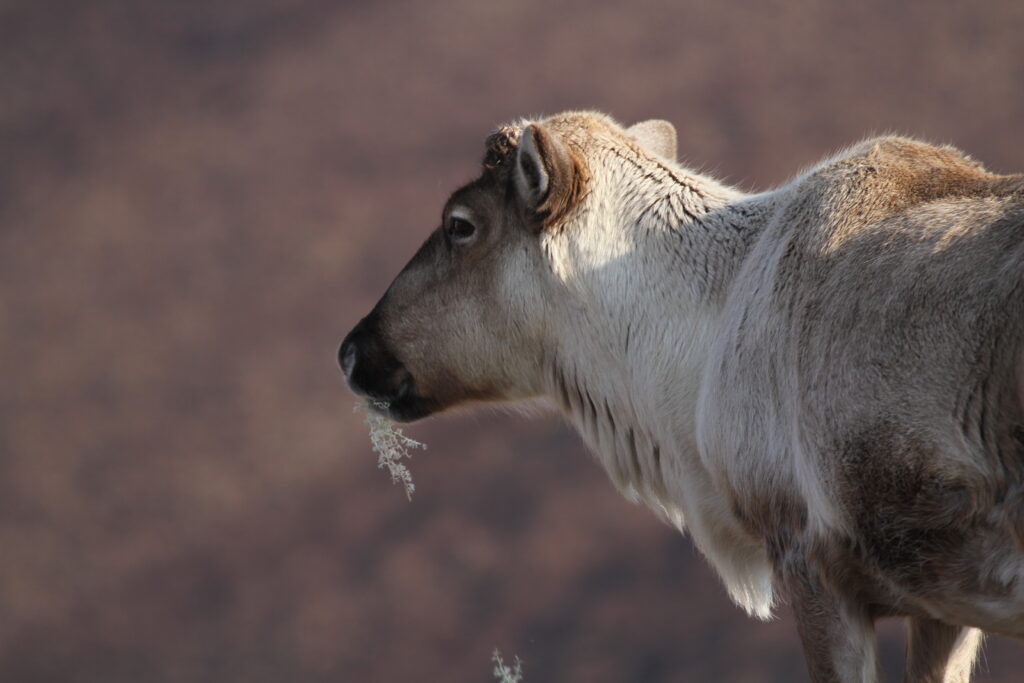
Mocha with a bit of lichen hanging from her bottom lip!

Daisy

Resources to learn more:

https://www.britannica.com/science/reindeer-lichen: Lichen – what is it and why does it taste good? If you’re a reindeer anyway… https://www.britannica.com/science/biological-soil-crust: Lichen – what is it and why does it taste good? If you’re a reindeer anyway… https://britishlichensociety.org.uk/learning/what-is-a-lichen: Lichen – what is it and why does it taste good? If you’re a reindeer anyway…

Adopter’s 65th Anniversary Weekend: Part 2

Open Day 2017 AP40
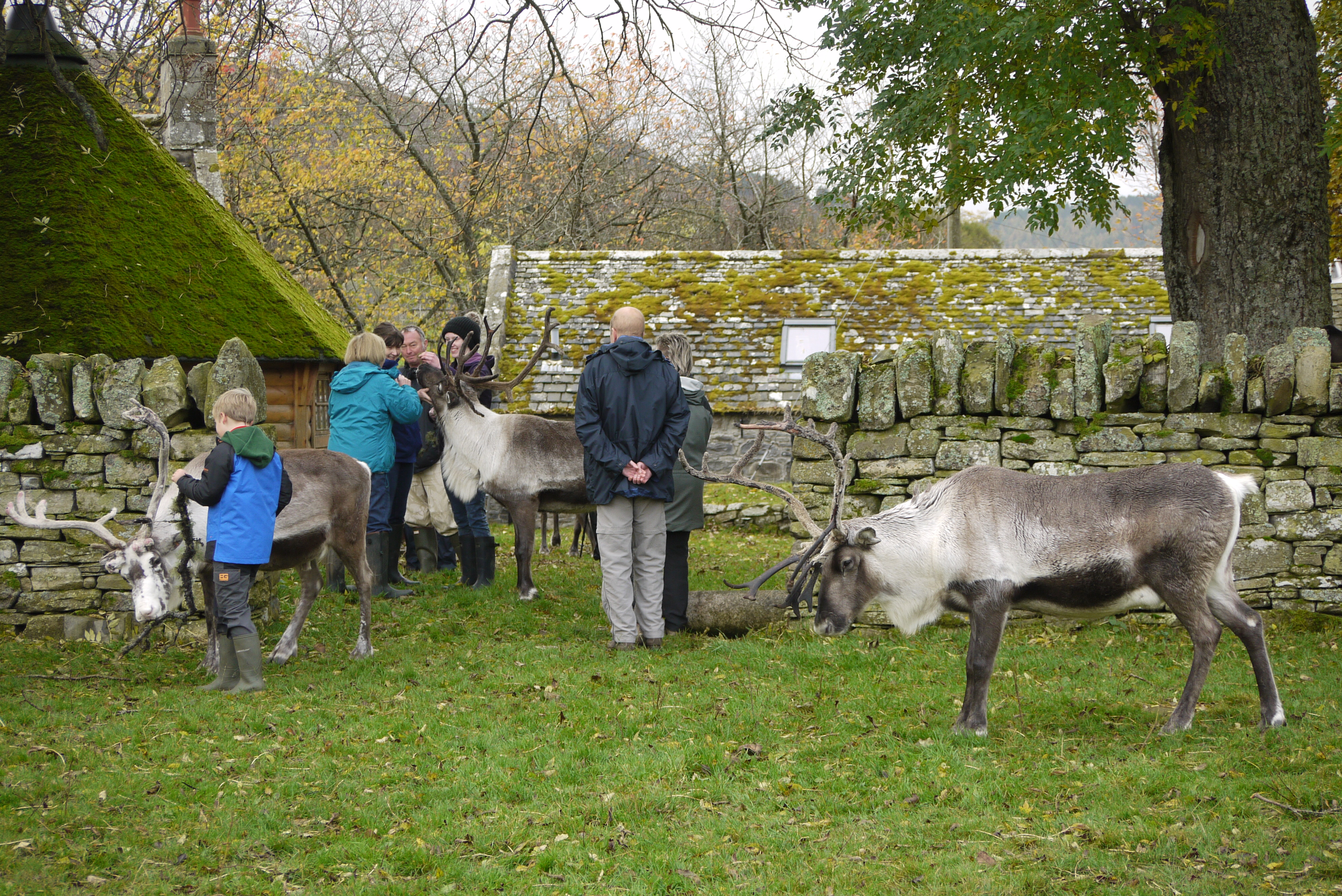
Adopters and reindeer relaxing in the garden (Photo by Andi Probert)

Here’s a wee round up of day two of our 65th Anniversary weekend…

After a good night’s kip we were all up bright and early (well, early at least, not sure about the bright!) for another day of fun, this time over at our Glenlivet hill farm. We have a second base there, about an hour’s drive from the Reindeer Centre, where some of our male reindeer spend the summer months, and which also gives us access to the Cromdale mountains for brilliant winter grazing.

Barbara Butters2
Hamish looking at the view (Photo by Barbara Butters)

Andrew Smith2
It’s a tough life! (Photo by Andrew Smith)

Hen and myself headed straight over to help Tilly set up at the farm, collecting some fallen branches covered with lichen for visitors to feed to our reindeer on the way. We arrived to find everything already looking quite organised, but the first big job was to move some of the reindeer from their normal daytime area – a sloping field with access to a large airy barn – down to the garden ready to meet their adopters. Hen was primed with a list of which reindeer had someone coming to see them, and we both made our way through the reindeer, who were munching away at their breakfast, popping head collars on the first 10, who we distributed between the various helpers we had, before we led them down the yard and let them loose in the fenced garden. The reindeer thought this was thoroughly exciting, and Blue in particular went leaping and bucking off down the hill! We went back for a second run, and a partial third run, before leaving the shier and older reindeer to relax in the peaceful barn for the day.

Yvonne Bannister2
Reindeer socialising in the garden (Photo by Yvonne Bannister)

Open Day 2017 AP33
Aye Coffee providing caffeine and sugar to keep everyone warm! (Photo by Andi Probert)

Open Day 2017 AP36
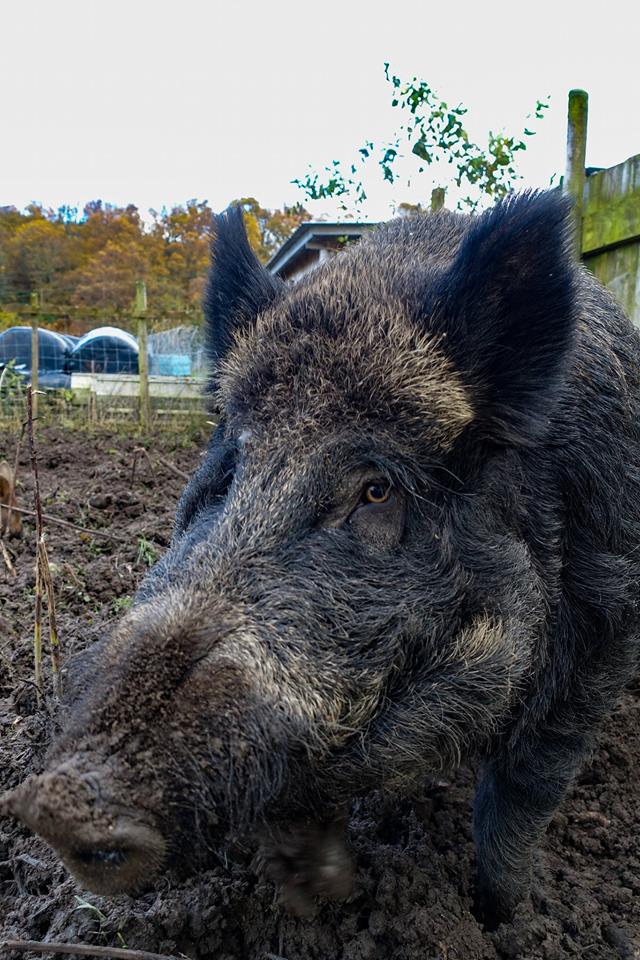
Happy iron age pigs delighted to have fresh ground to root around in

By now, much to my delight, Aye Coffee had arrived to provide me with my vital caffeine intake for the day and were setting up their van, Derek was prepping the meat for the BBQ (low food miles indeed!) and Alan had moved a group of the Iron Age pigs down to a pen near the garden for the day, which they were cheerfully rooting up. Alan then quickly made himself scarce, not to be seen for the rest of the day (probably busy running up a hill somewhere!). The first adopters were arriving and the drizzle was just starting to dry up. There was a roaring fire going in the BBQ hut, which was the perfect antidote to any chilly fingers.

Open Day 2017 AP52
Lovely toasty BBQ hut(/sauna!)

Open Day 2017 AP34
Derek (background) serving up burgers and sausages from the farm.

As adopters arrived, we tracked down reindeer for them and made introductions. October is peak rutting season, so all of our young bulls were in a separate pen, and we mostly headed in ourselves and brought adopted reindeer down to meet their adopters at the gate, to save anyone accidentally getting caught between teenage bulls who were full of hormones!

Open Day 2017 AP56
Young bulls tussling.

Open Day 2017 AP48
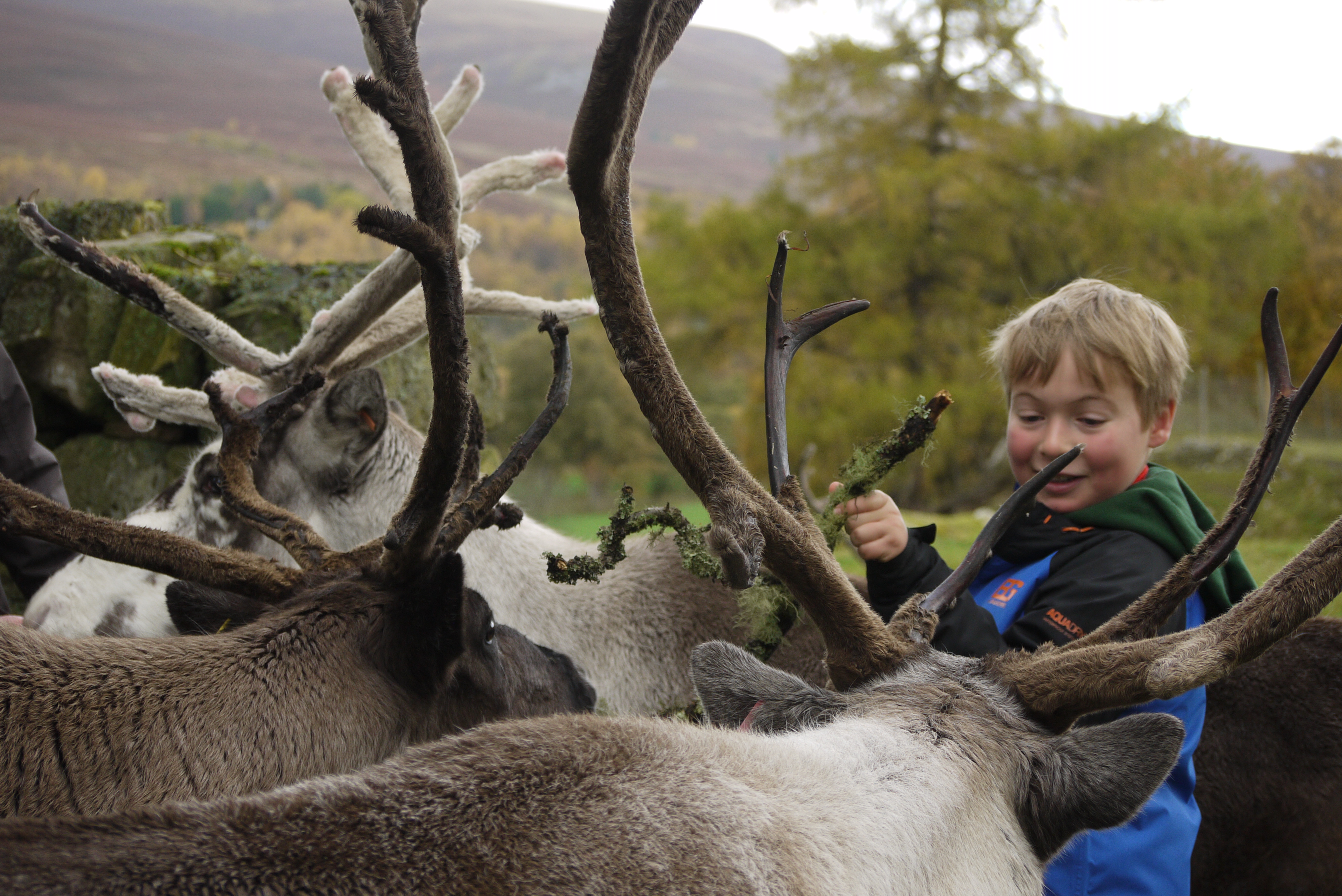
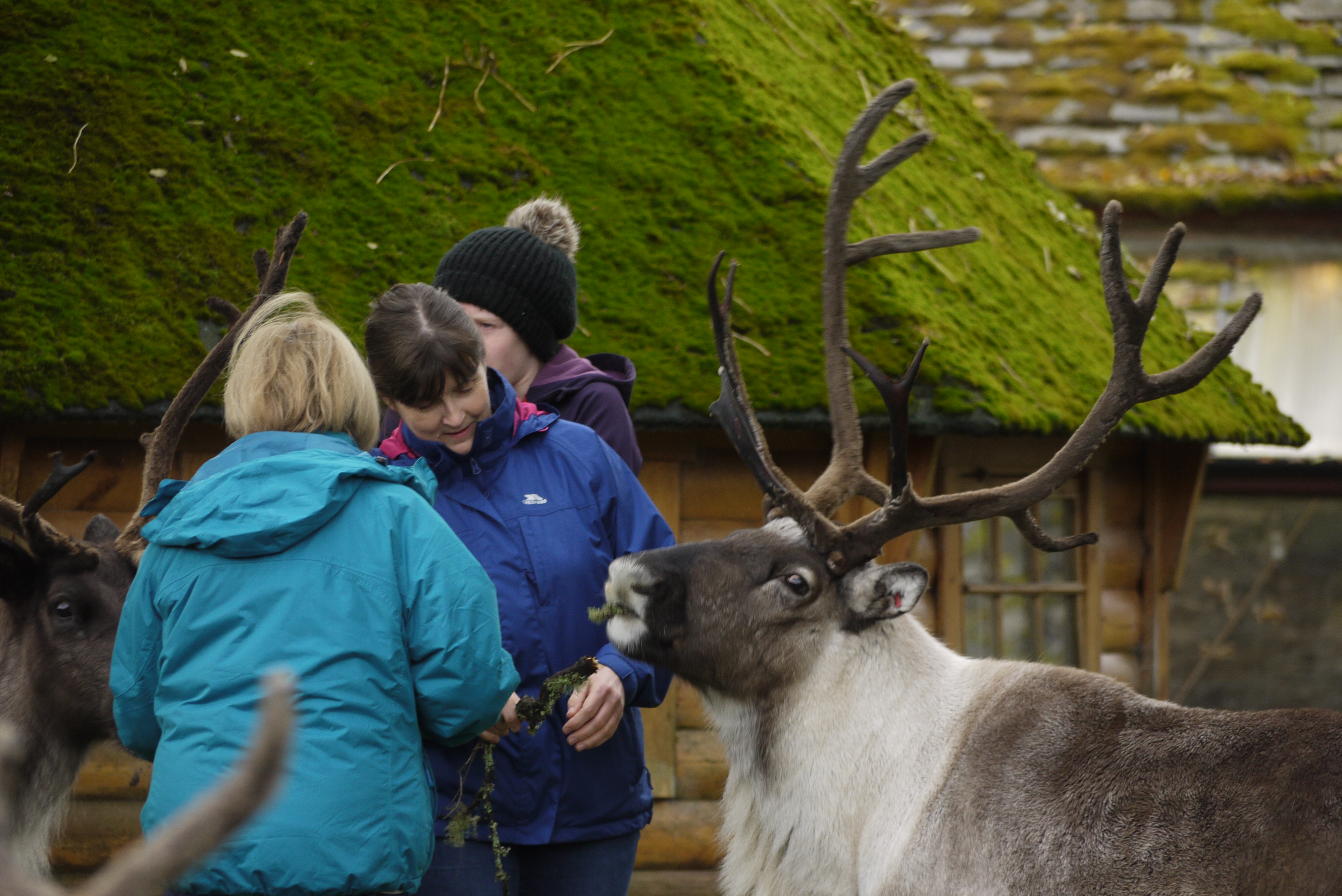
Feeding lichen lollipops to greedy reindeer! (Photo by Andi Probert)

Open Day 2017 AP44

Open Day 2017 AP42
“I’ll have that!” says Scrabble

Open Day 2017 AP43
Oryx meeting his adopters

Linda Hoejland
Spider delighted to meet adopters! (Photo by Linda Hoejland)

In the garden, everyone was handing out lichen lollipops, and the reindeer were very relaxed – by the afternoon most of them were lying down fast asleep between groups of visitors. Tilly had arranged tractor and trailer tours, but had underestimated their popularity, so the first tour was one tractor and trailer, but by the last tour there was a progression of tractor and trailer, landrover, and quad bike and trailer! Despite our slight lack of organisation with them, everyone seemed to have a blast and most people who wanted to go on it did (possibly with the exception of myself!).

Carola de Raaf2
One of the tractor and trailer tours setting off (Photo by Carola de Raaf)

Colin Brazier3
Inquisitive red deer hinds and calves (Photo by Colin Brazier)

Andrew Smith
Beautiful setting for our red deer herd (Photo by Andrew Smith)

Open Day 2017 AP53
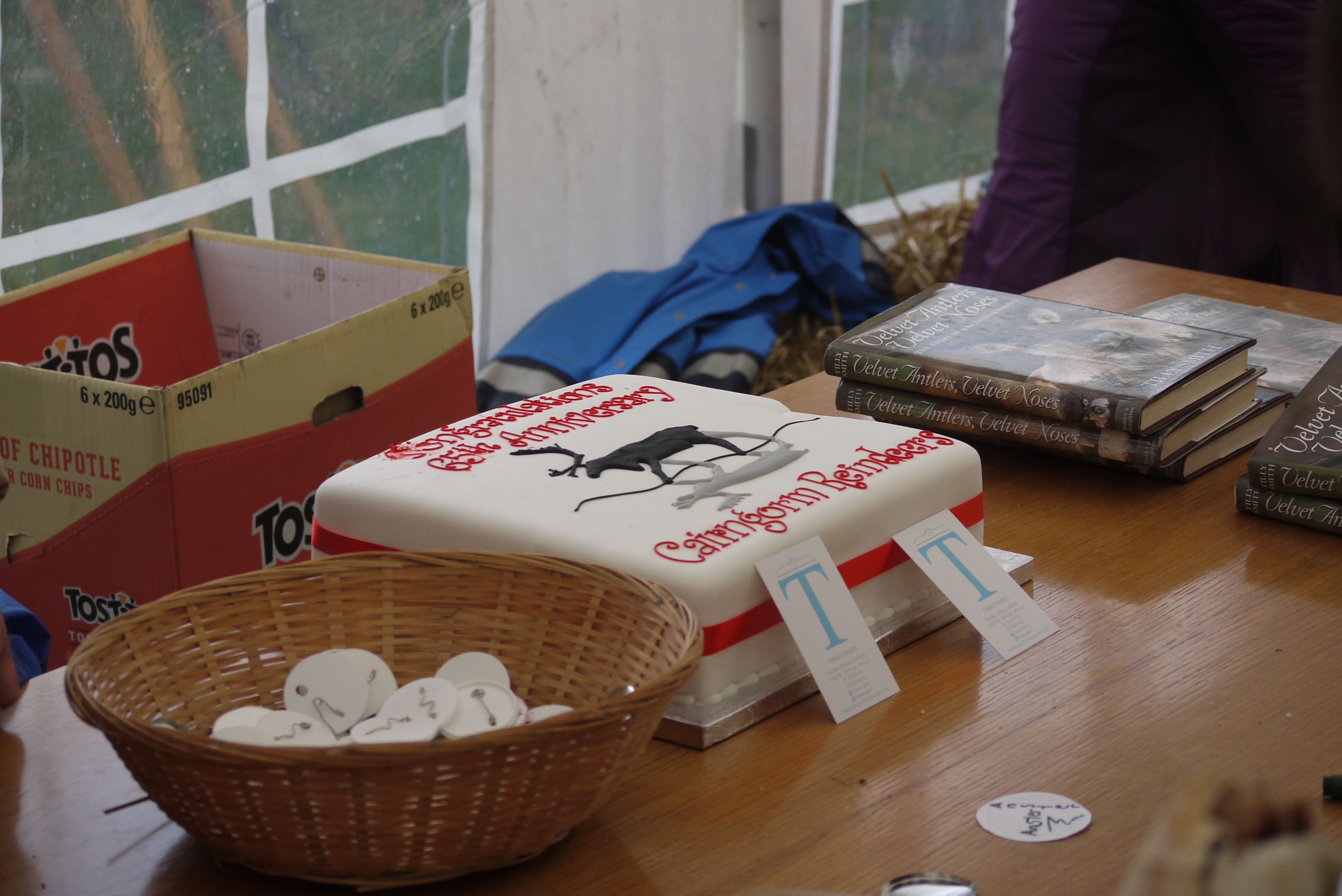
There was even cake!

Open Day 2017 AP54
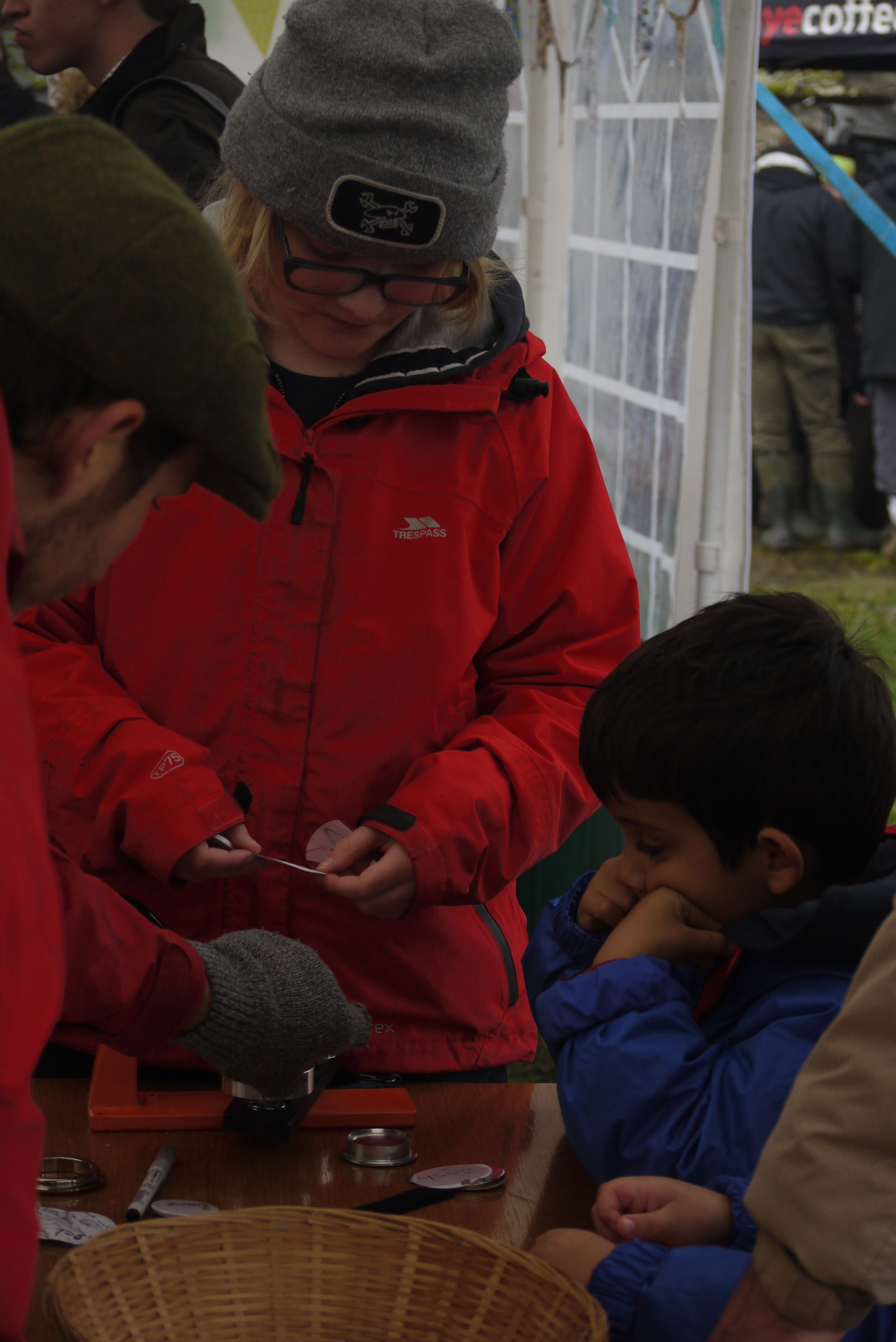
Busy making badges to show who their adopted reindeer is.

Yvonne Bannister3#
Highland cattle wondering what on earth is going on! (Photo by Yvonne Bannister)

By 4pm, the BBQ was finished, the coffee van packing away, and the last adopters were heading home. There wasn’t too much to do except pack away the information boards, run the reindeer from the garden back up to the hill, lead the herd up onto the open hill for the night, and feed the bulls. And then, most importantly, head out for a celebratory meal ourselves! (Thanks Tilly!)

Open Day 2017 AP67
Puddock bonding with herders Fiona and Morna (Fiona just may have been plaiting his beard…)

joanne-jewers.jpg
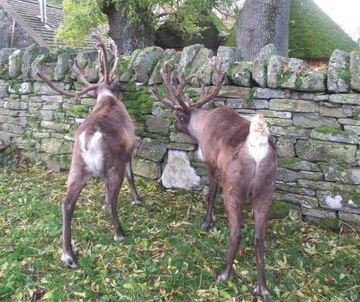
Reindeer licking lichen off the walls! (Photo by Joanne Jewers)

Open Day 2017 AP60
It’s all too much for Moose! He was mid-dream at this point!

Kirstin Kerr
One of this year’s hand-reared red deer calves (Photo by Kirstin Kerr)

Belinda Beattie5
Big pig! (Photo by Yvonne Bannister)

We certainly had a lovely weekend, and great to meet so many people (old friends and new). We hope you all enjoyed yourselves too. We’ll do it all again for our 70th (once we’ve forgotten how much organisation it all took…)

Andi

Dinner Date

So there is often great confusion over what reindeer like to nom on and if you ever find yourself in that special situation where your dinner date is a reindeer we would hate for you to be unprepared!

The key to any nice dinner is of course a nice accompanying beverage; reindeer love fresh water from a mountain burn or pool… or even an upland lochan – they turn up their noses at tap water so that’s a big no no, I’ve seen reindeer lap up rain droplets up instead of lowering themselves to drinking the tap water we provide them on Christmas events!

As you guys all know by now from reading all our previous reindeer centric blogs, reindeer themselves are an arctic animal so they like their salad with a northern twist! These guys need arctic/sub-arctic habitat and plants to have happy tummies (think actimel for reindeer!)

Reindeer LOVE lichen… I mean L.O.V.E lichen! Although partial to a bit of tree lichen (you could add it in for flair!) the mainstay for the reindeer are ground growing lichens, they are the only animal excepting gastropods (snails/slugs) to have evolved the digestive enzyme to break down lichen.

Lichen in the forest
Lichen covering the forest floor

Lichen is the main source of food for reindeer in the winter when the rest of the grazing has died back for the year and forms springy carpets at the bases of heathers and sedges up on the mountains here. However, interestingly enough lichen contains barely enough nutrients and energy to sustain a gnat let alone a reindeer. Thus in the winter the reindeer very cleverly slow their metabolism right down and the young stop growing – being a reindeer is very much a feast and famine business.

NB. It may be best to plan a summer dinner with your chosen reindeer.

The summer diet is much more varied, it’ll make for a multi-course experience! Once spring hits, the mountains turn green and all the lush grazing once again unfurls. Reindeer will eat almost anything montane, chewy and fibrous (reindeer have adapted to live off low nutrient arctic plants) – there is a common misconception that a lovely field of grass would float their boats but in actual fact it would be the equivalent of us living off a complete diet of clotted cream and would end in some unhappy digestive systems!

Hornet & Lilac LUSH GRAZING
Lilac and Hornet, roaming around in the lush grazing

Reindeer will graze on an array of montane sedges and heathers as well as leafier vegetation such as birch and blaeberry (wild blueberry) leaves in the summer months. In the autumn reindeer will do anything for a wild mushroom; their digestive system allows them to eat even the super poisonous Fly agaric mushroom, however mushrooms often  = drunk reindeer which is more than hilarious!

Reindeer will also eat some rather unusual things to gain nutrients if they are lacking, such as cast antler bone (full of great minerals!) as well as the velvet skin they shed from their antlers in the late summer – yum! We have ascertained that while they will eat their own velvet, they draw the line at anyone else’s!

Kate Velvet Shedding
Kate shedding the velvet from her antlers

Sambar Velvet Shedding
Sambar shedding velvet

Whilst this is the mainstay of a natural reindeer diet, if you’ve visited us here you may know we provide a supplementary feed for the reindeer for several reasons – reindeer are greedy and it ensures we have a lovely visit, we give them a wee bit of a helping hand at times of year when grazing is scarce and finally for half the year we use a 1200 acre enclosure and providing a supplement mix ensures all of our yummy natural grazing can re-grow.

First things first if you’re going to make a mix for your reindeer you’ll need to acquire a cement mixer. It is the sure fire way to make a yummy and well mixed batch, your dinner won’t go well if items are poorly distributed! We like to mix with a tonne of hay-mix (chopped up hay) which is covered in garlic molasses. The garlic is great for the digestive system but it does mean us herders have a garlicy scent most of the time. It can be a very lonely existence this reindeer herding! Next a splash of barley and sugar-beet alongside a general sheep feed full of good grains and our last ingredient is rather special. It’s called dark grains and looks pretty boring BUT is by far the coolest thing in the mix.

Dark Grains
Dark Grains

It’s a by-product of alcohol distilling (malt whisky production), obtained by drying solid residues of fermented grain to which certain solubles (pot ale syrup or evaporated spent wash) have been added. Unfortunately all the alcohol is all gone by this stage and the dark grains themselves are rather bitter so maybe mix them in well!

One final word of wisdom if you want to posh up your dinner is to sneak some seaweed in there – we discovered the reindeer loved the stuff after it was used to fertilize a patch of tree saplings and they ate it all. It’s now something we regularly provide for the reindeer in our paddocks and enclosure over the summer months.

We wish you the best of luck and hope if you ever have a reindeer date dilemma we’ve provided some key tips to a great evening or you!

IMG_1493.JPG
Gandi and Puddock with their main course of lichen!

Abby


Calf Training 101

October is a fun time of year as it’s when we train this year’s calves as well as harness training our young Christmas reindeer to pull Santa’s sleigh. Halter training and handling the calves makes them much tamer and easier to handle for the rest of their lives so even if they don’t end up pulling Santa’s sleigh at least we can catch them if we ever need to when they are out in the hills…well, most of the time anyway, some are always wild…it’s in the genetics!

Luckily reindeer are very food orientated, aren’t we all! So stage one is to get their heads in a bucket full of tasty lichen, chocolate for reindeer!

Calf training
Lotti luring the calf into the bucket of delights!

Once the head is ‘inserted’ a sneaky manoeuvre gets the halter on with them barely noticing what’s happened!

Calf training
Mel putting on the calf’s halter while Lotti holds the bucket

Once the wee ones are caught we get ourselves a couple of steady old boys to come alongside and ‘teach’ the calves…this day it was Puddock and Parfa’s turn to be the companions. We have found that they are better behaved without their mums, like some children! So mum’s go back up the hill once they have accompanied the calves down to the ‘training centre’ and the big boys take over.

Calf training
All haltered up, we are ready for a wee walk around Glenmore to see the new sights and sounds…….

Calf training
To try and make the walks a ‘fun’ thing we go off into the woods in search of yummy snacks!

Calf training
Enjoying some freshly picked tree lichen from Lotti.

Calf training
The boys enjoy the smorgasbord walks just as much as the calves! Puddock nibbling lichen from the trees.

Calf training
Fresh birch leaves are another favourite, Grunter snacking on leaves while Lotti feeds the wee calf, Ochil.

Calf training
Moose ready to grab a big mouthful of leaves, it’s interesting to watch the technique. They grab the twig some way toward to base and then pull it throw their teeth and hard pad to strip off all the leaves but leave the twig and tip intact so they don’t actually damage it, clever!

Calf training
The training/buffet walk finishes with a wee graze of the grass.

Lastly with heads snuggly back in buckets of lichen, halters are carefully removed! After 2 or 3 outings like this they will be pretty much halter trained. The key to winning them round is lots of tasty snacks and pockets full of lichen as you will have seen and a couple of old boys who can be a good influence!

Mel

Book Now