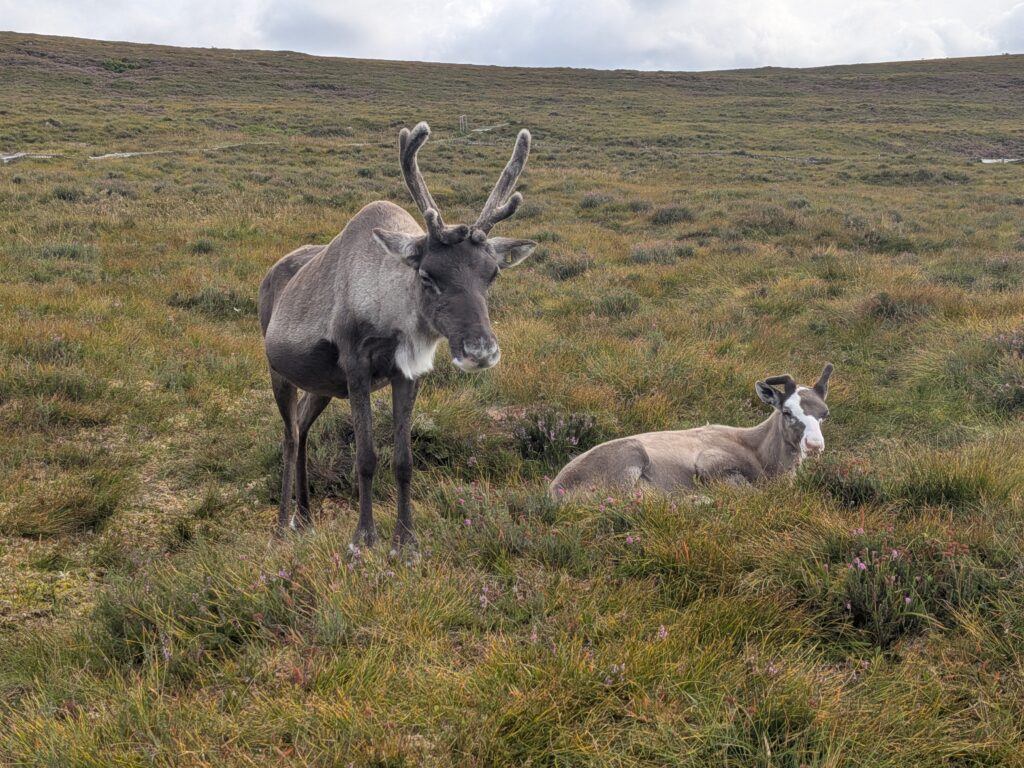
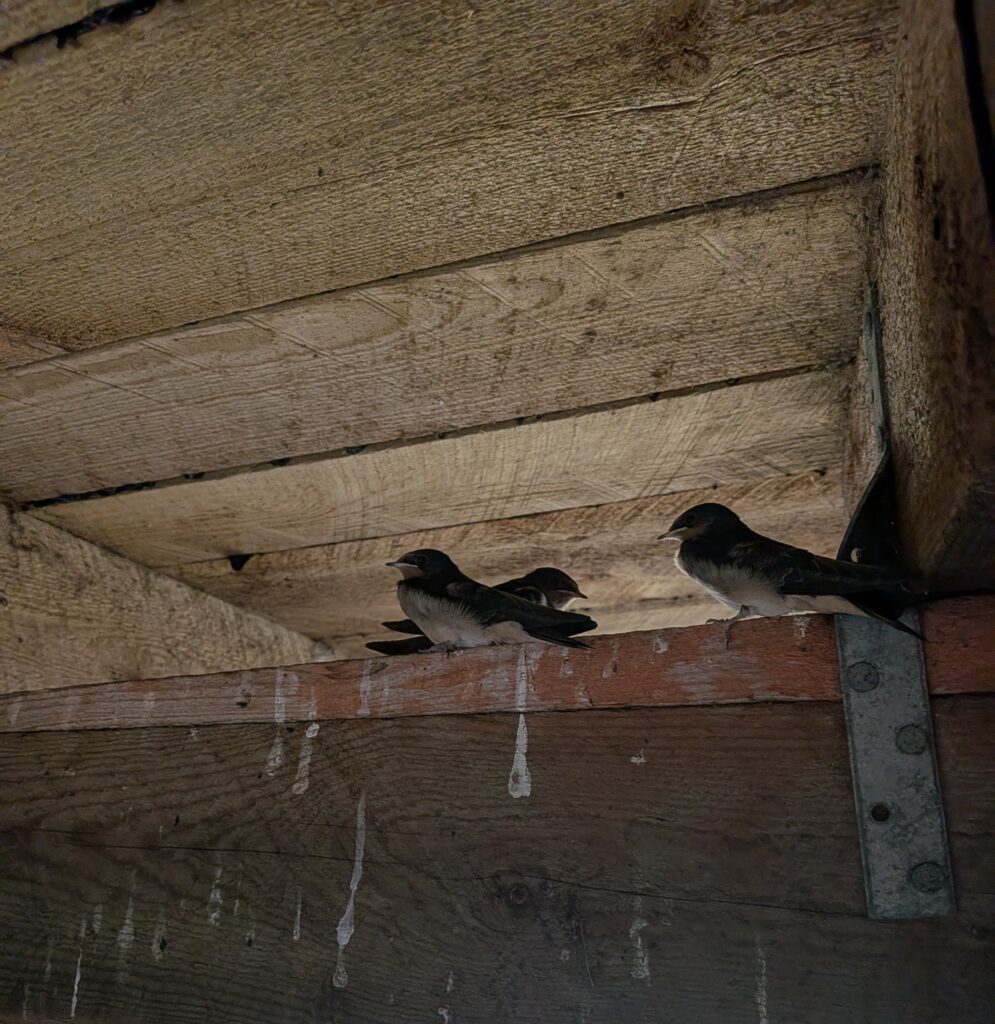
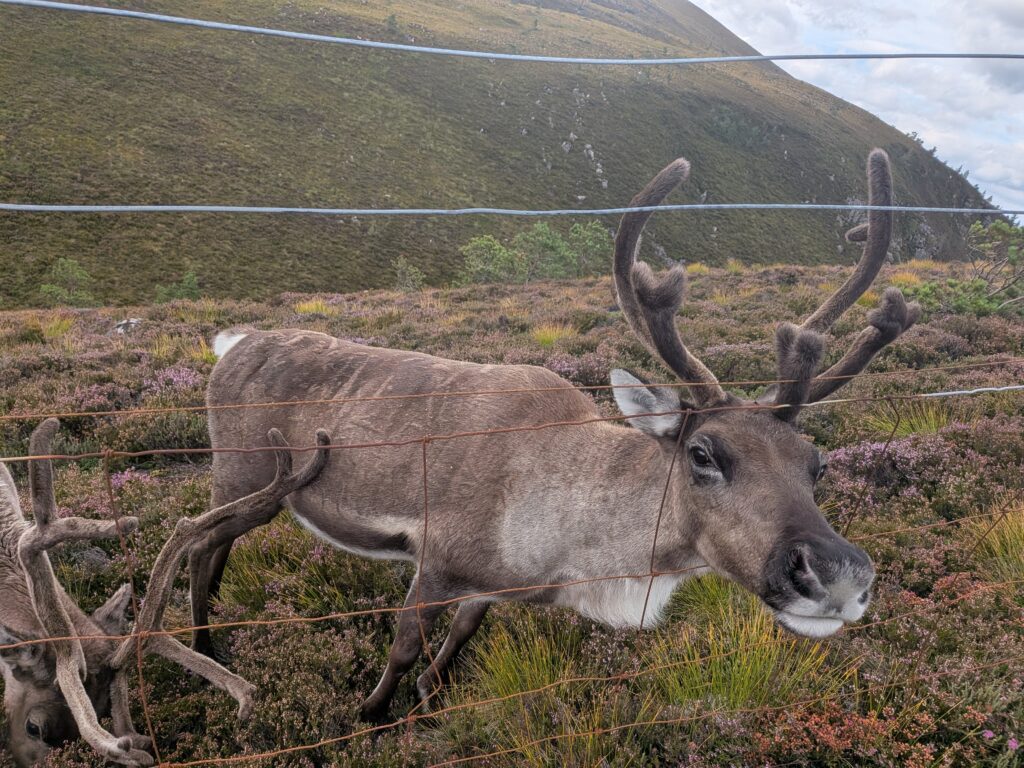
Normality has resumed and over the last month we have welcomed our lovely visitors to our site in Glenmore and have also caught up with a few of our cows and calves. They’re all looking well and have had a good summer out on the free range!
Amy

Roaming freely since 1952
Normality has resumed and over the last month we have welcomed our lovely visitors to our site in Glenmore and have also caught up with a few of our cows and calves. They’re all looking well and have had a good summer out on the free range!
Amy
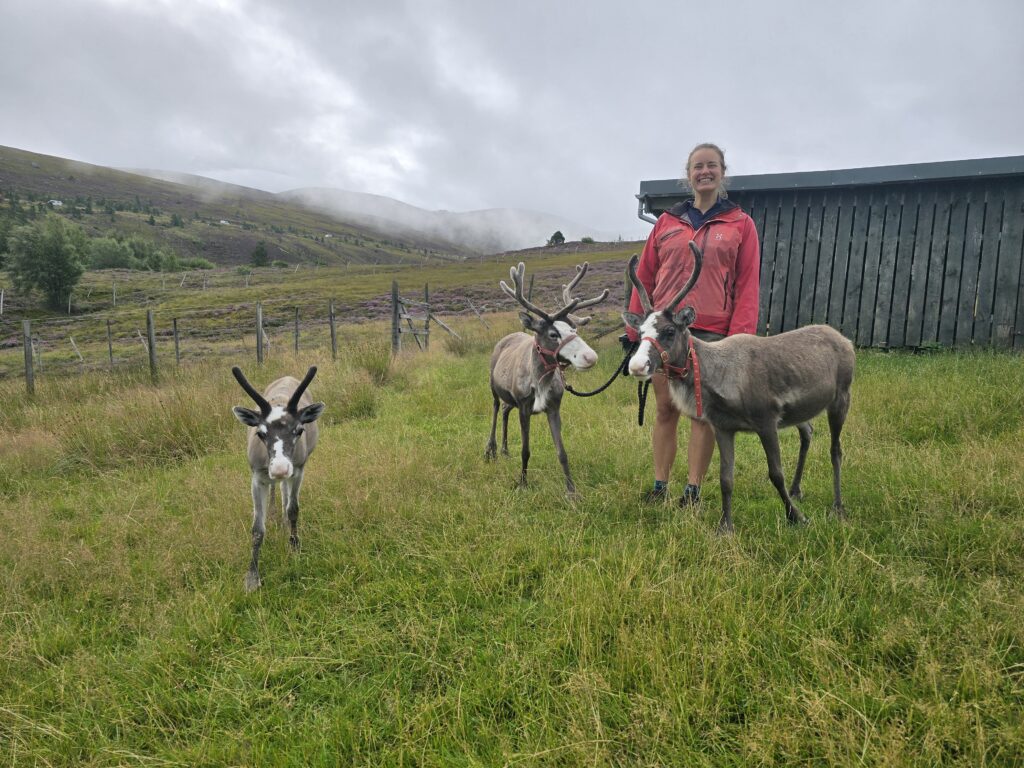
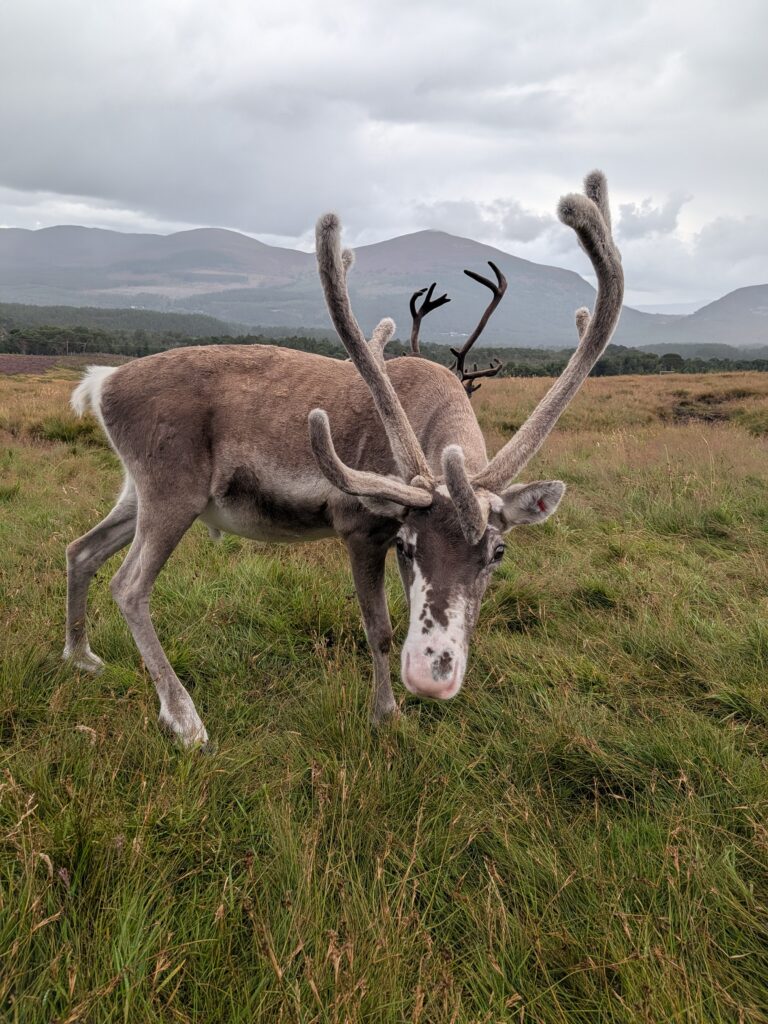
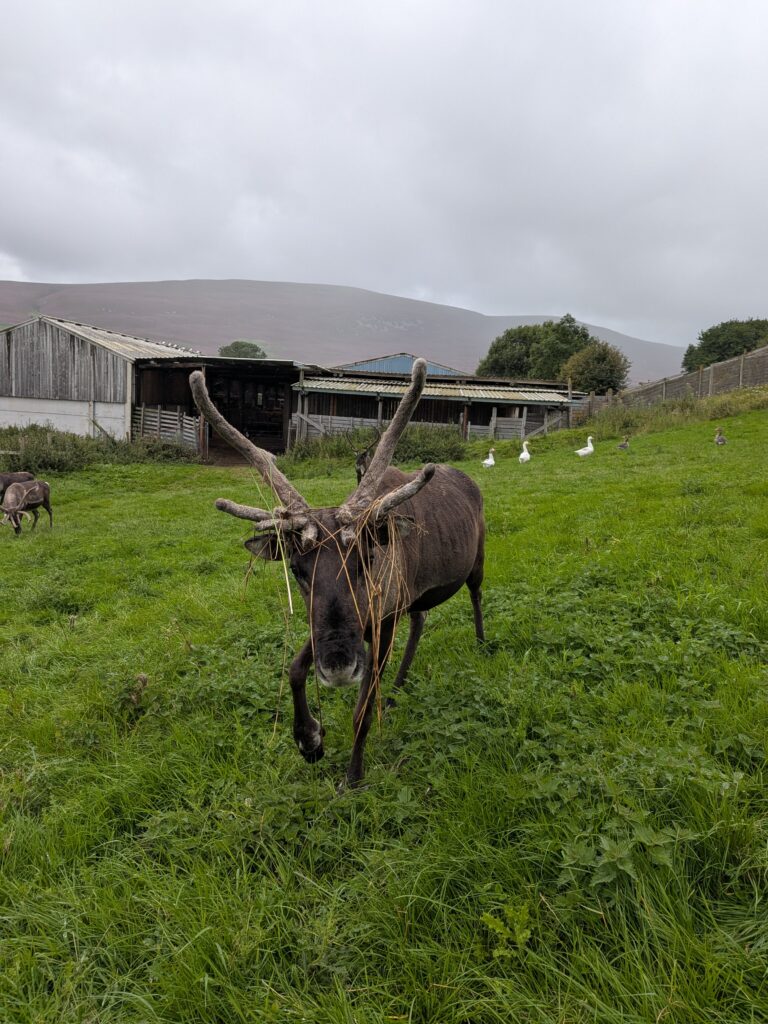
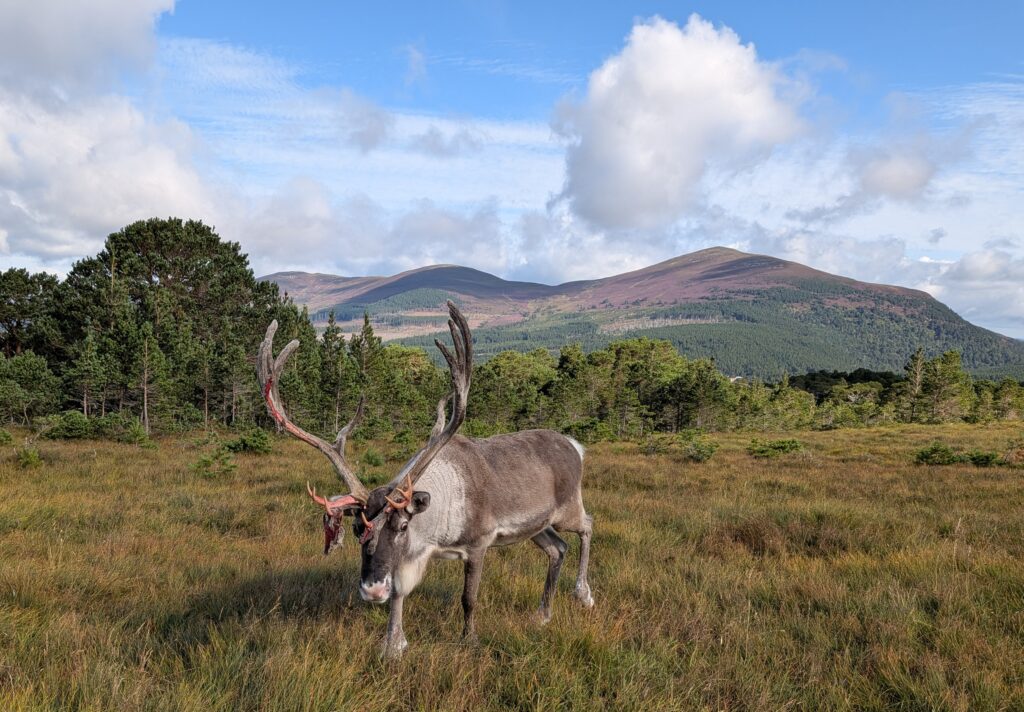
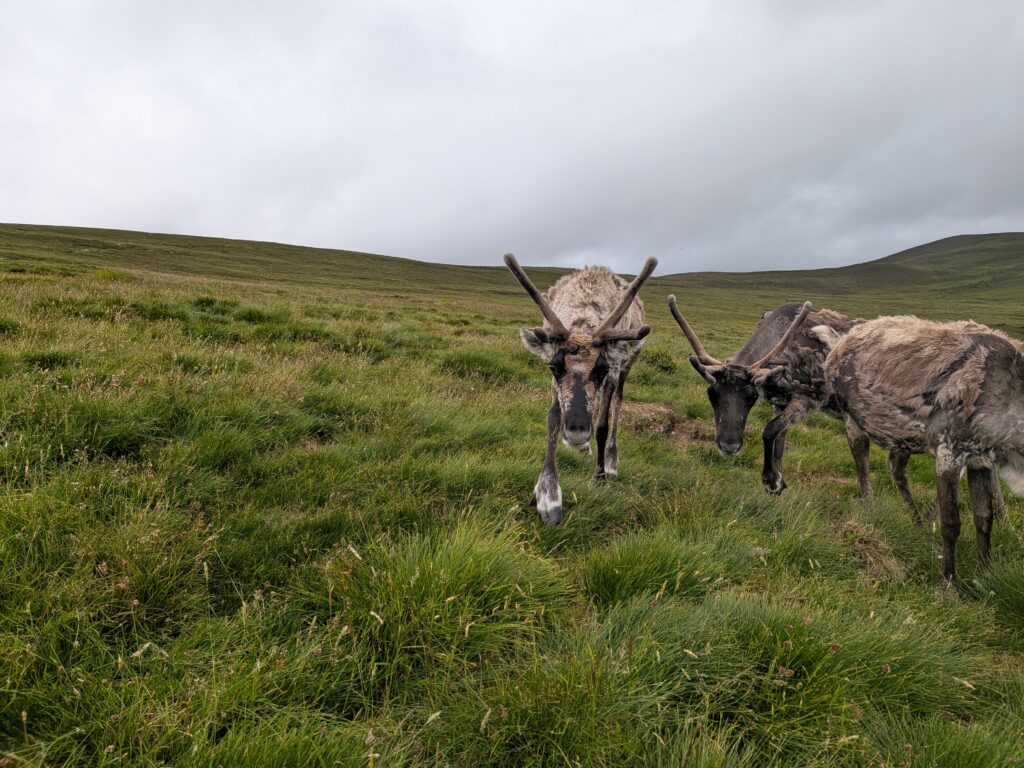
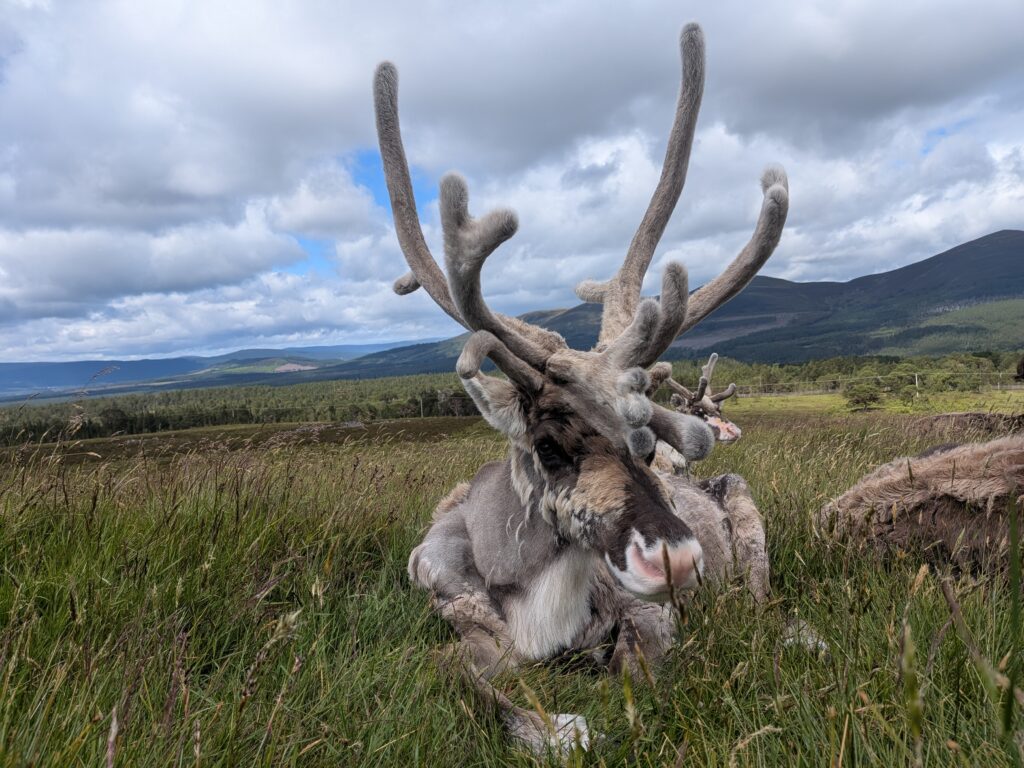
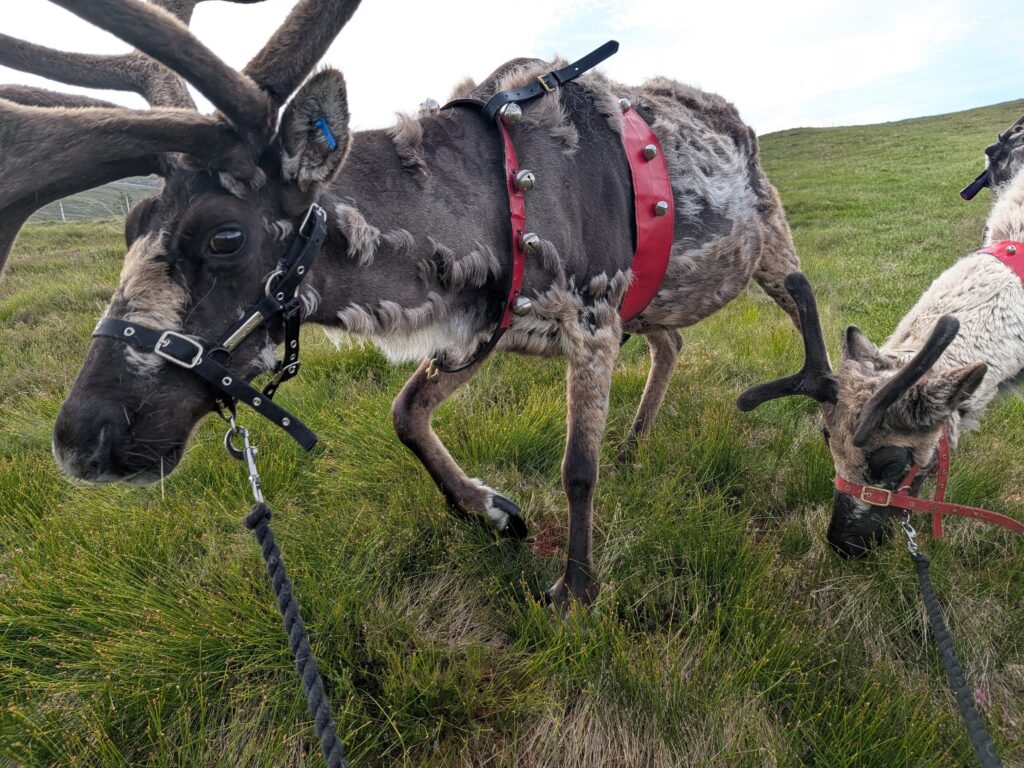
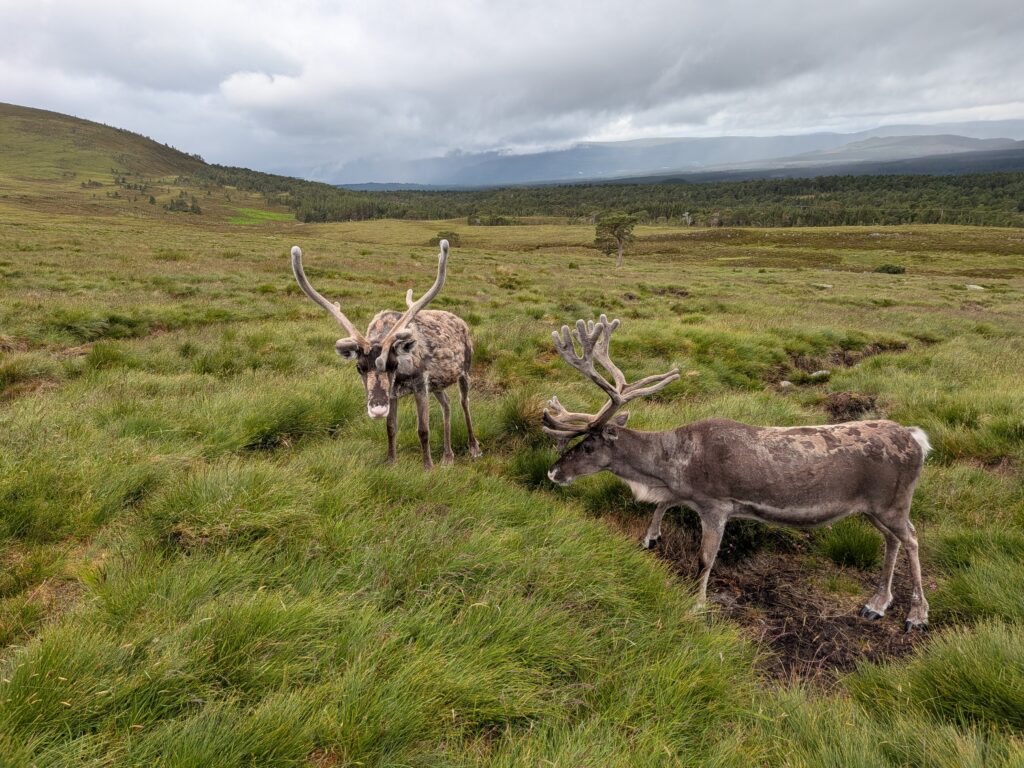
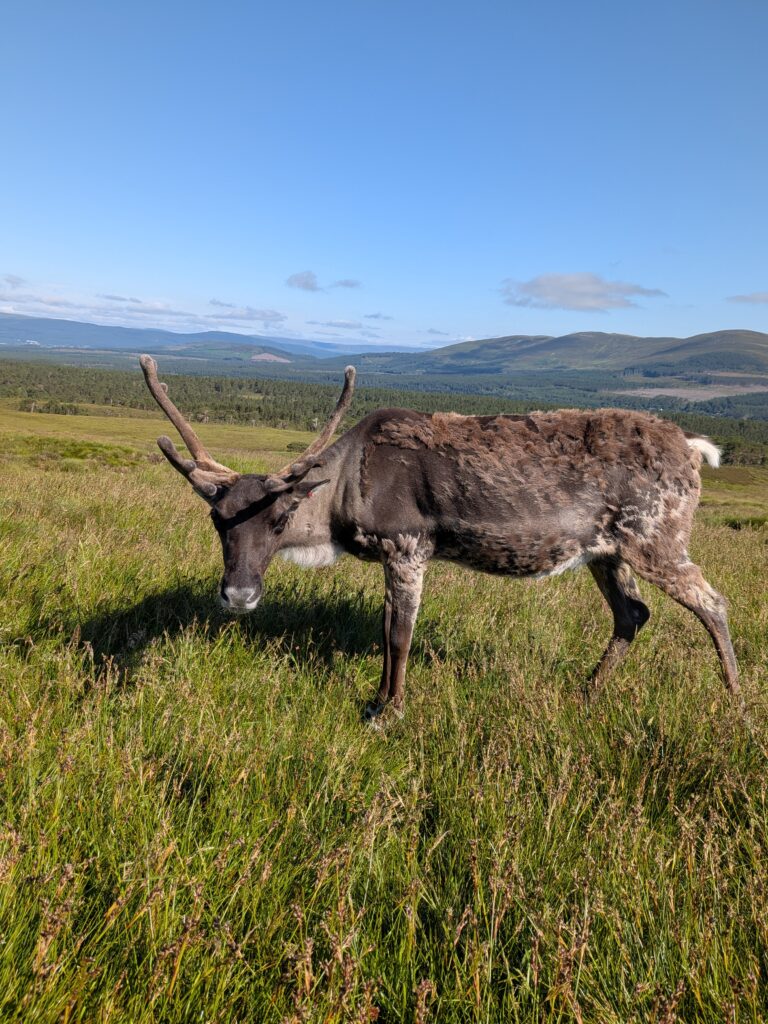
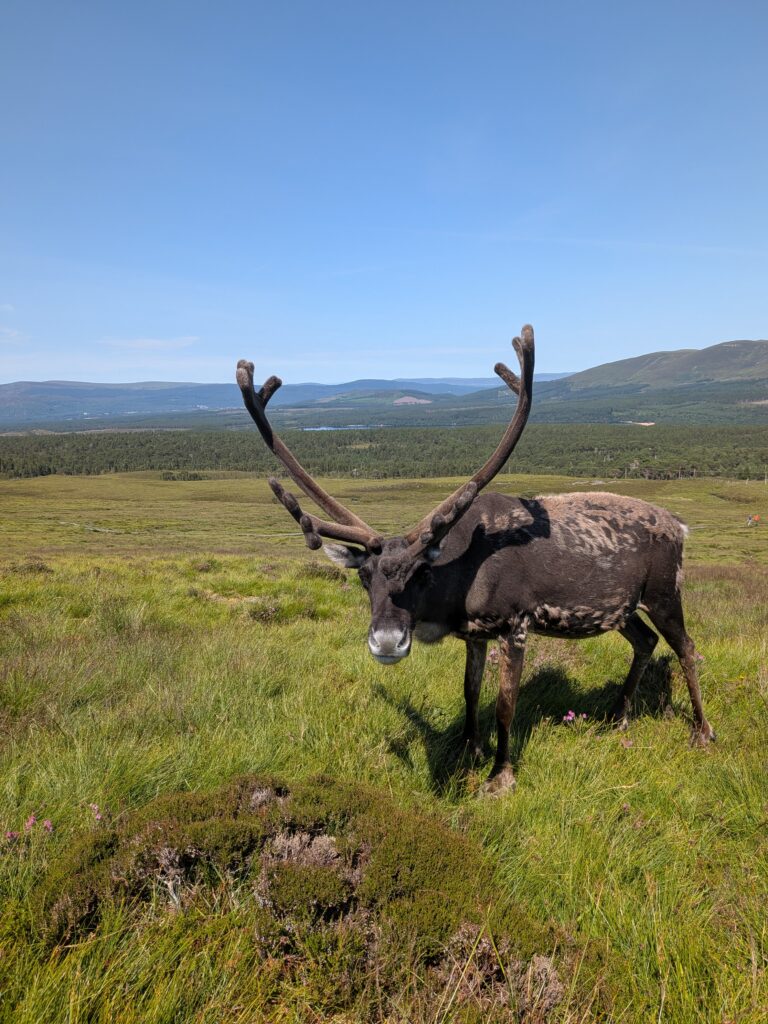
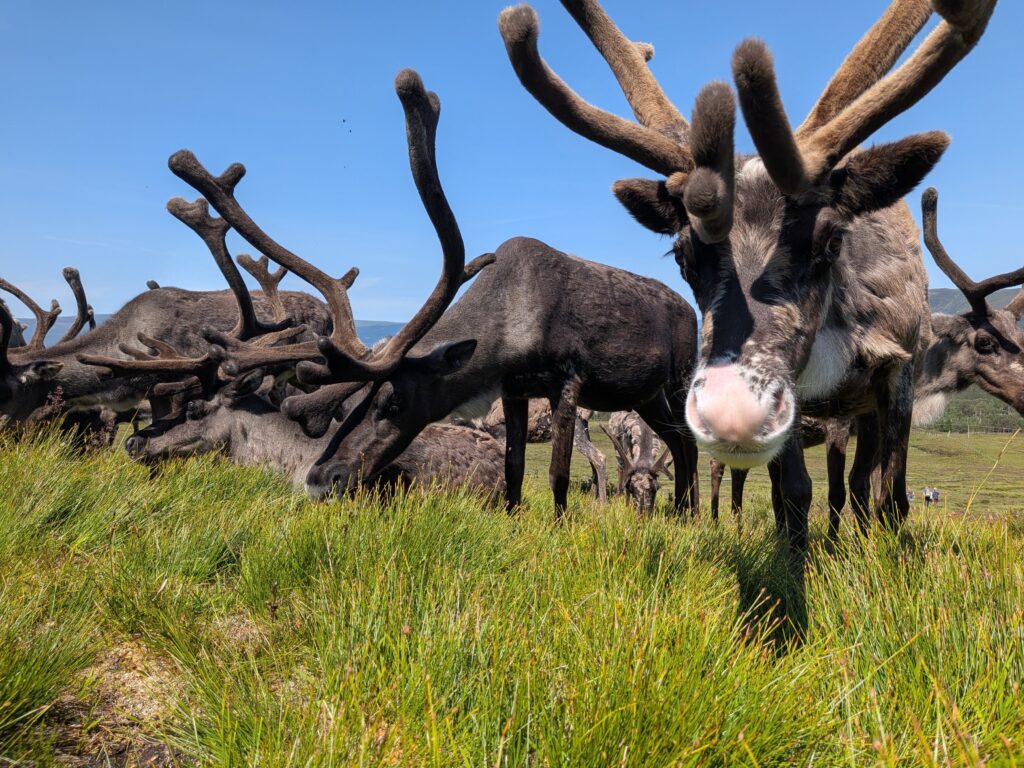
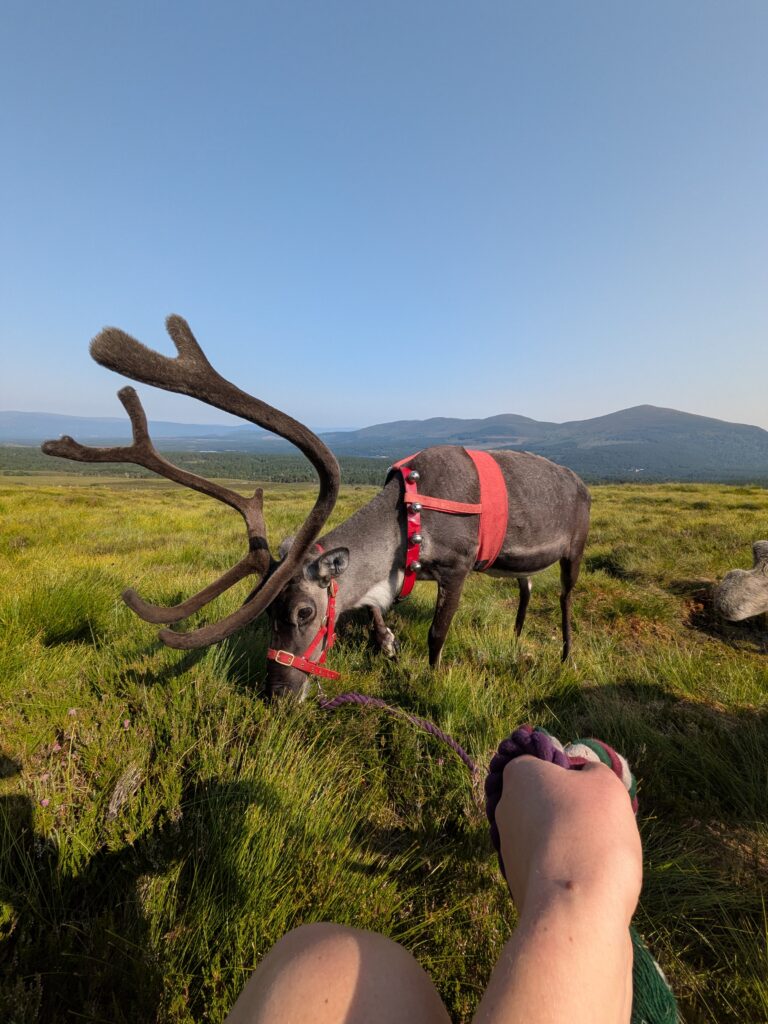
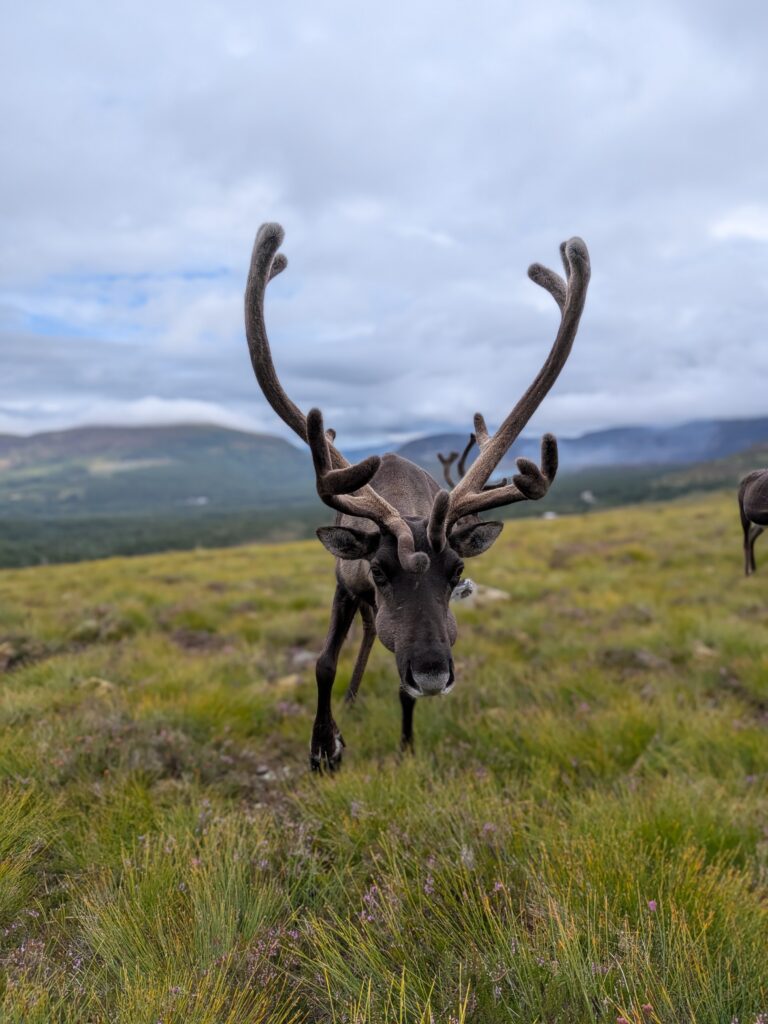
Well, July has been a MONTH! At the start of the month, harness training for our male reindeer was well under way and there was still some really scruffy males around. The antler growth that we have had over the last month has been phenomenal and our male reindeer look completely different to what they did a couple of weeks prior.
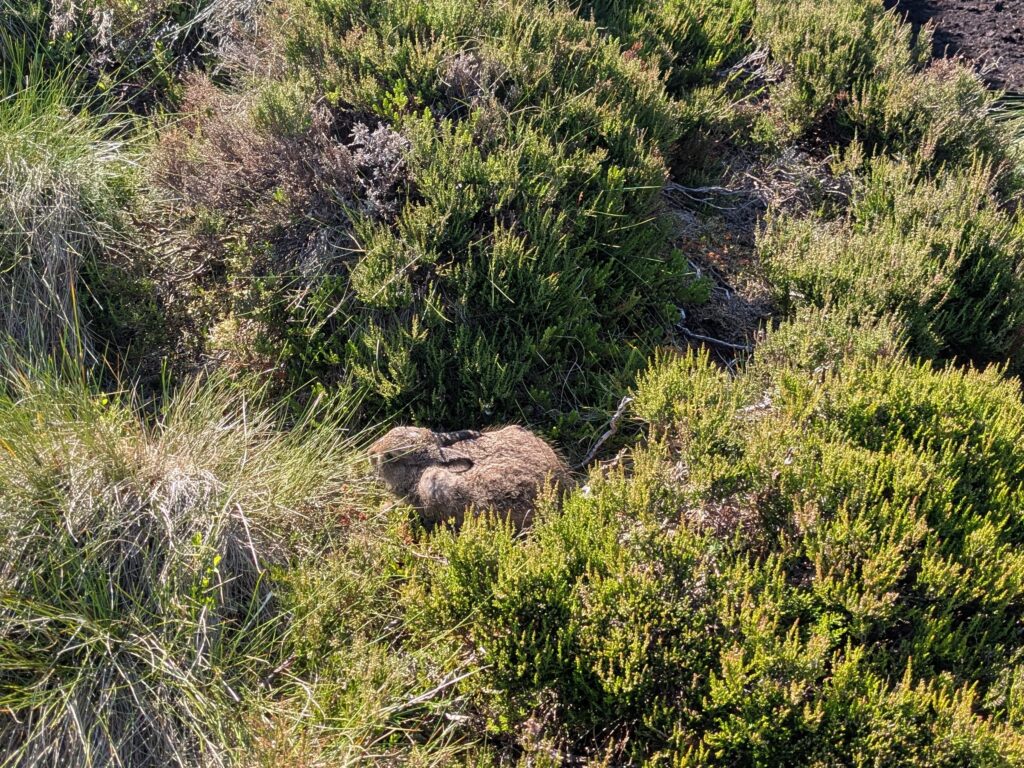
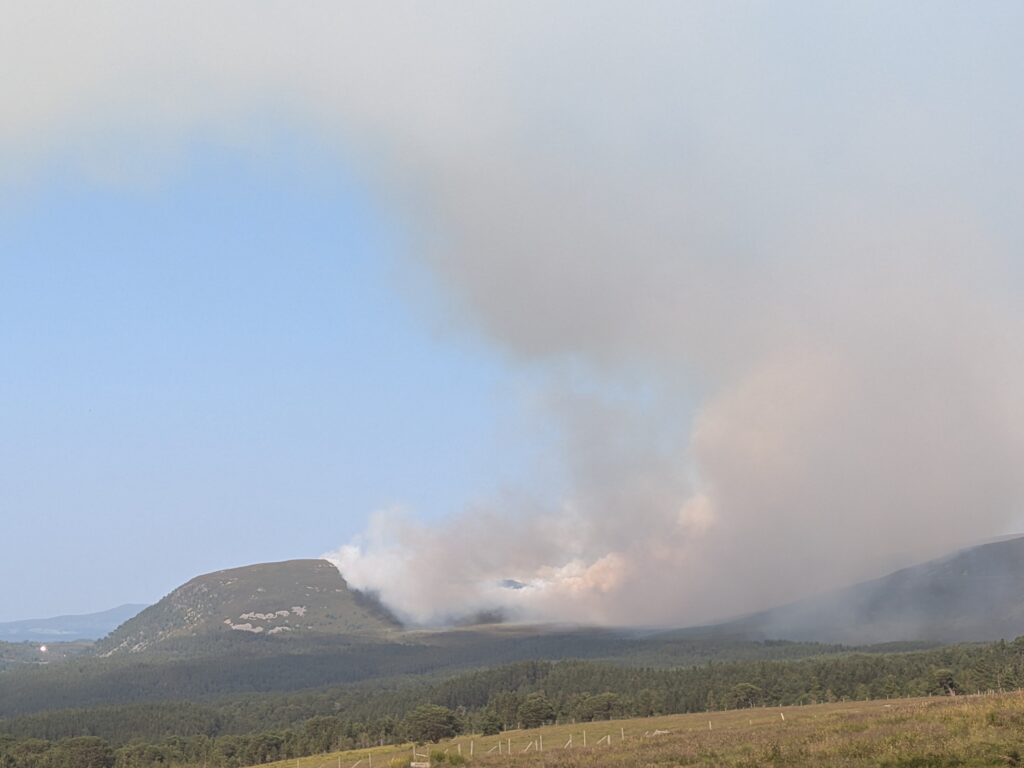
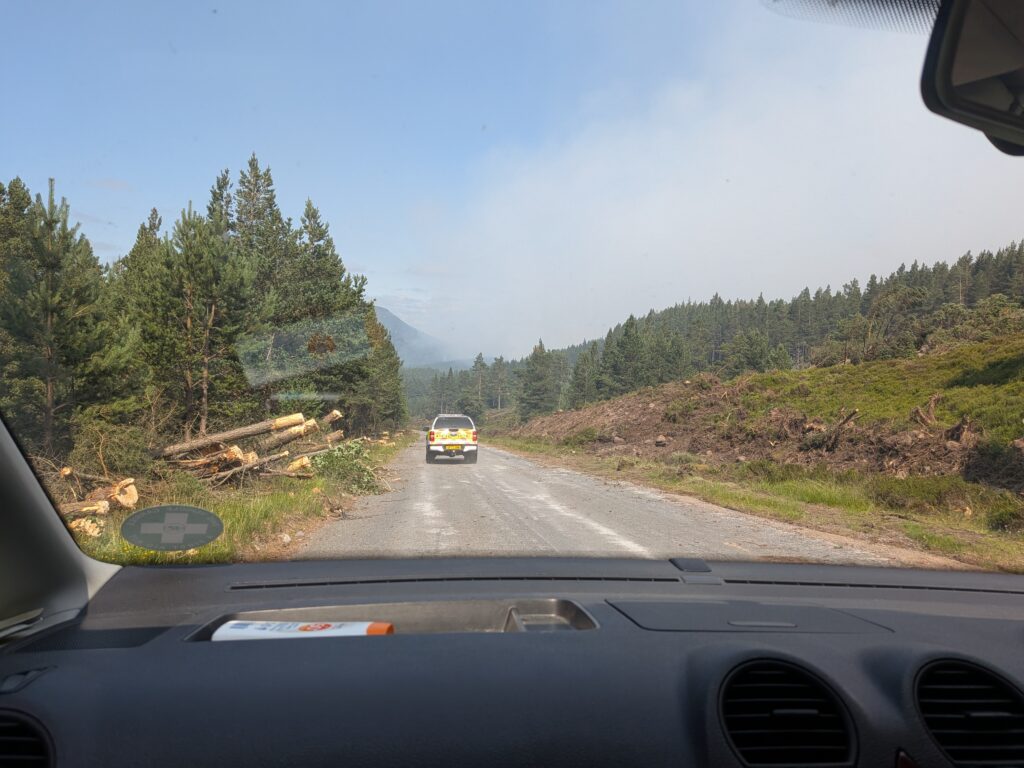
Our usual July routine was interupted about half way through by the threat from a local wild fire which was spreading quickly over the mountain side. You will be glad to know that the reindeer were never in any direct threat from the fire but it gave us all a bit of a fright and on the days that us herders couldn’t get up to see the reindeer we were all walking around a bit lost, unsure on what to do with ourselves! We are so lucky to have a great team of people working with us at the Centre, a lot of which were on hand at the drop of a hat to help move reindeer.
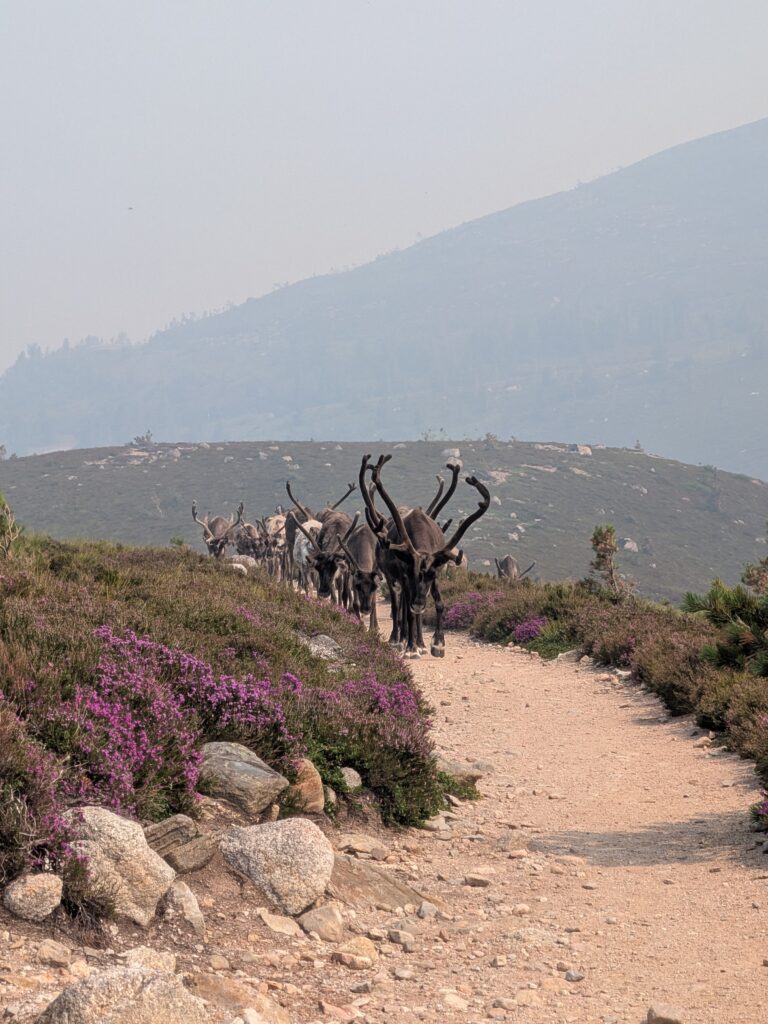
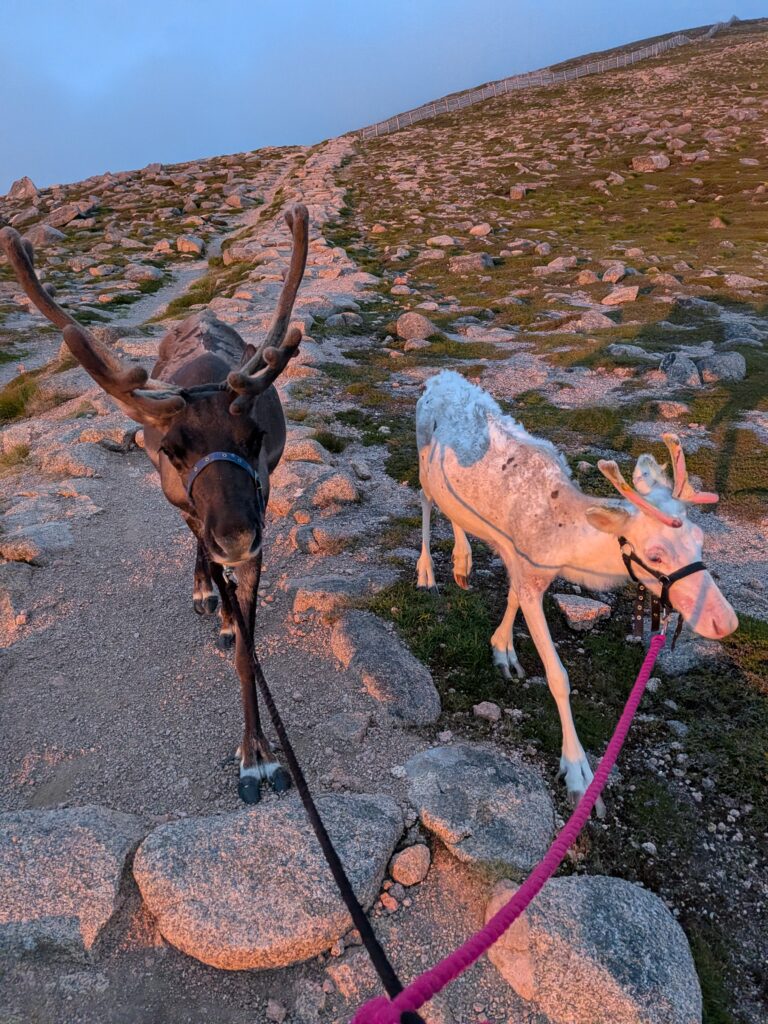
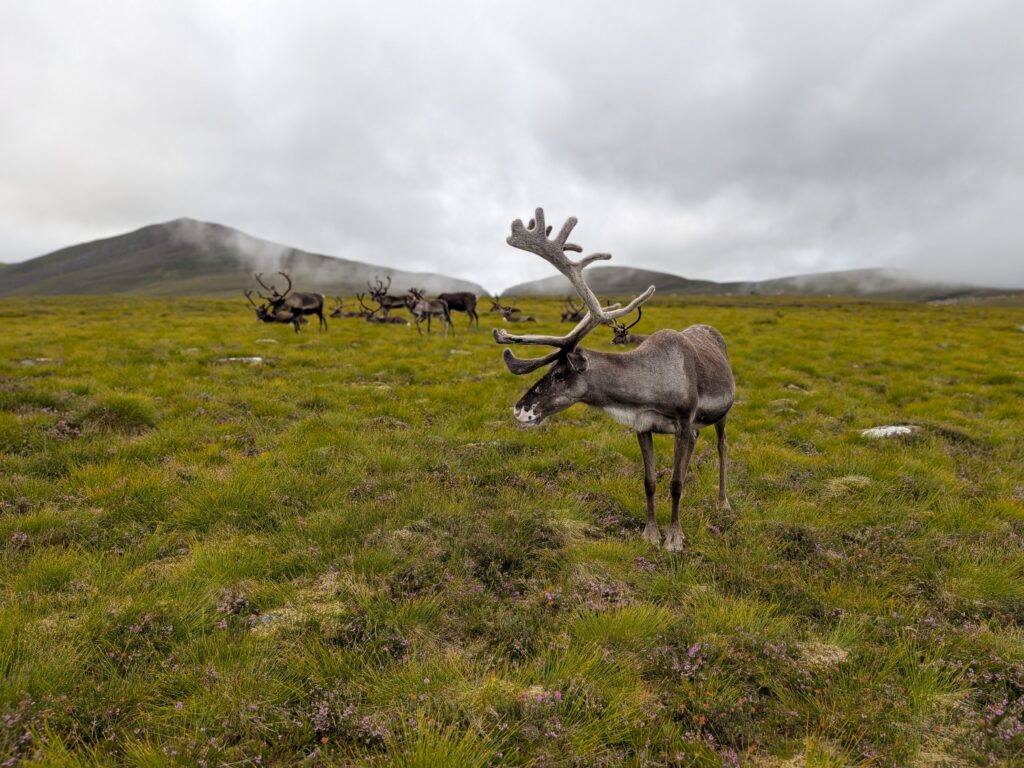
It has been two weeks since we’ve been able to open to the public here in Glenmore but we have been able to take Hill Trips at our secondary site and we have most of the male reindeer back from their little jaunt on to the free range here on Cairngorm with a small group of reindeer still out on the mountainside enjoying the peace and quiet.
Amy
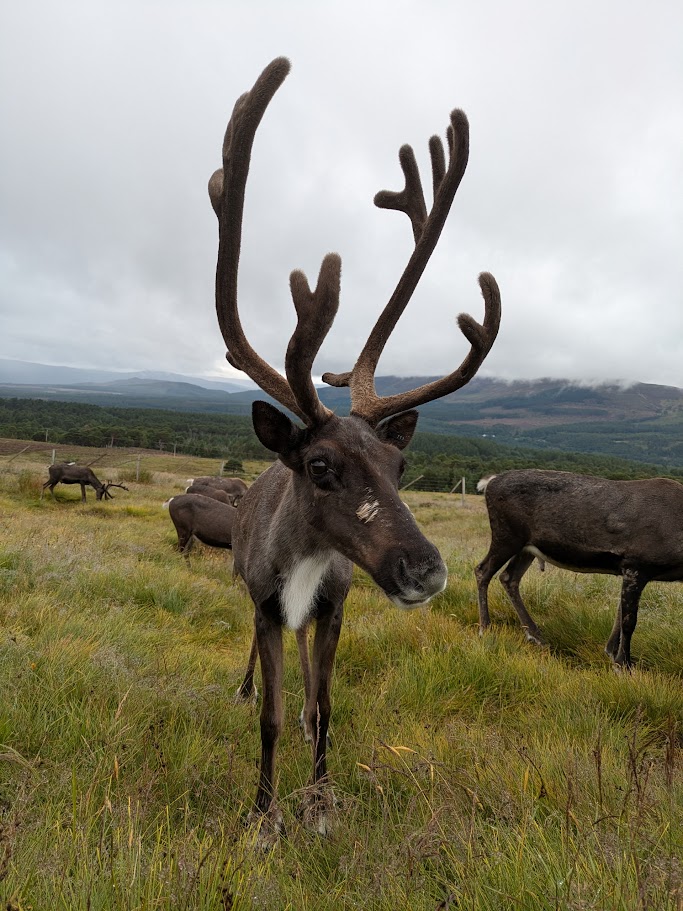
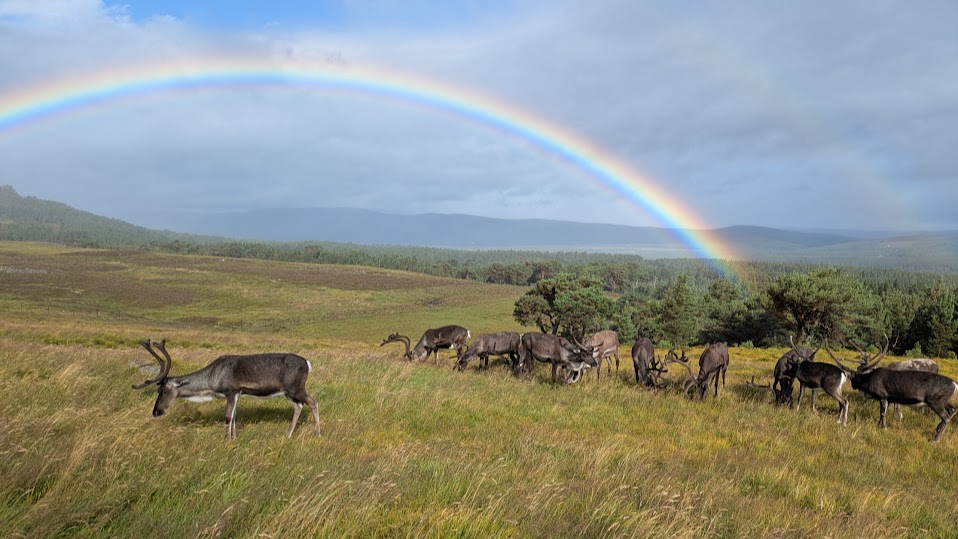
August has been a busy and fun month. We’ve had lots of visitors and three sold out Hill Trips almost everyday. Lots of people have also been coming into the Paddocks to see the reindeer on display there, and very excitingly the Exhibition is nearly ready. It’s looking super! You’ll definitely hear to social media and our website when we’re open.
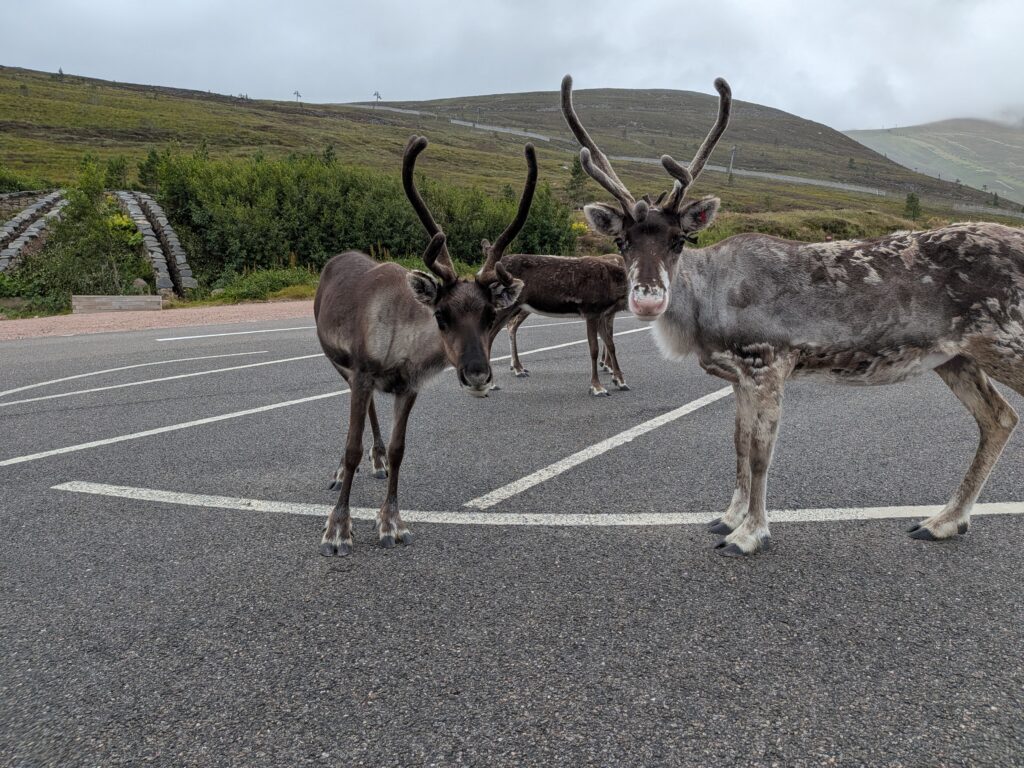
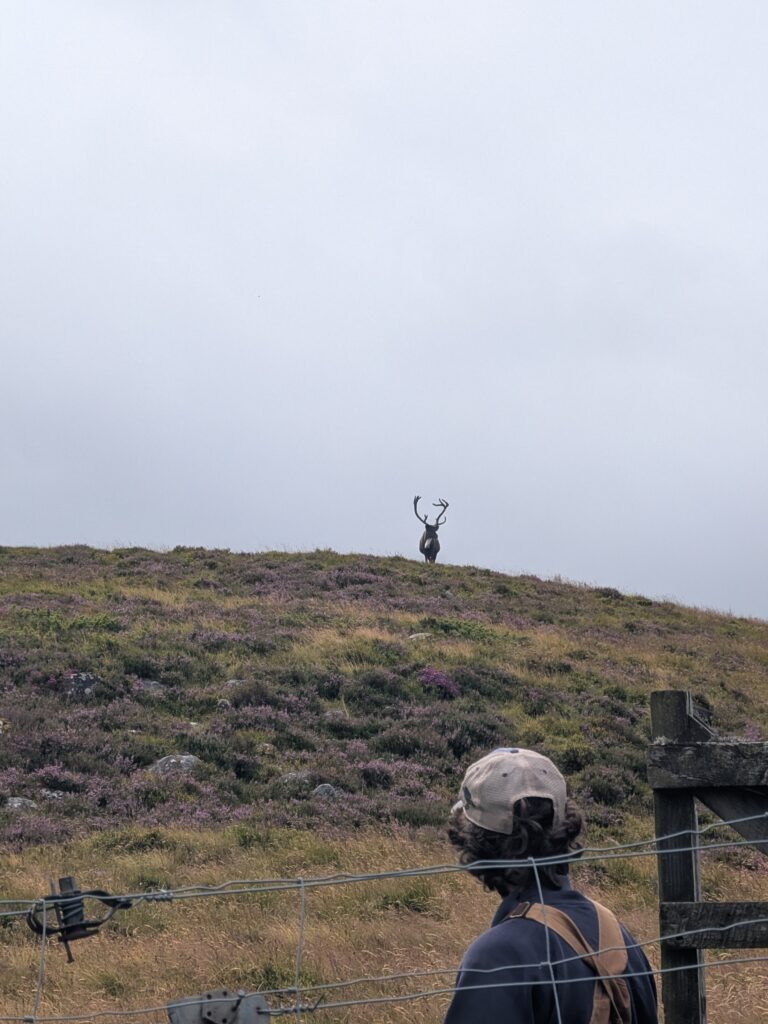
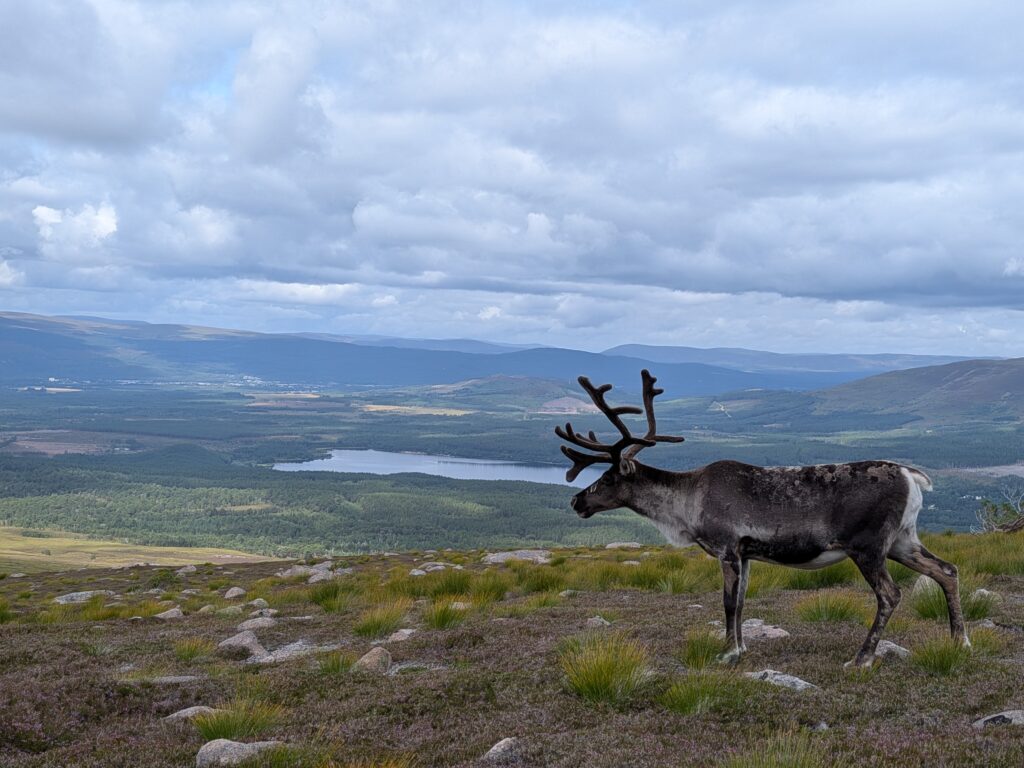
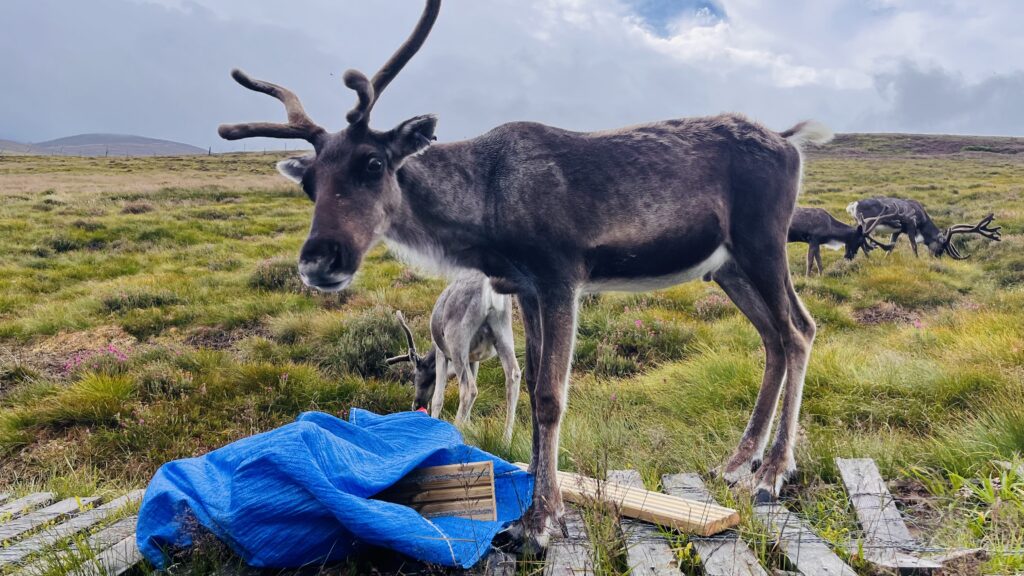
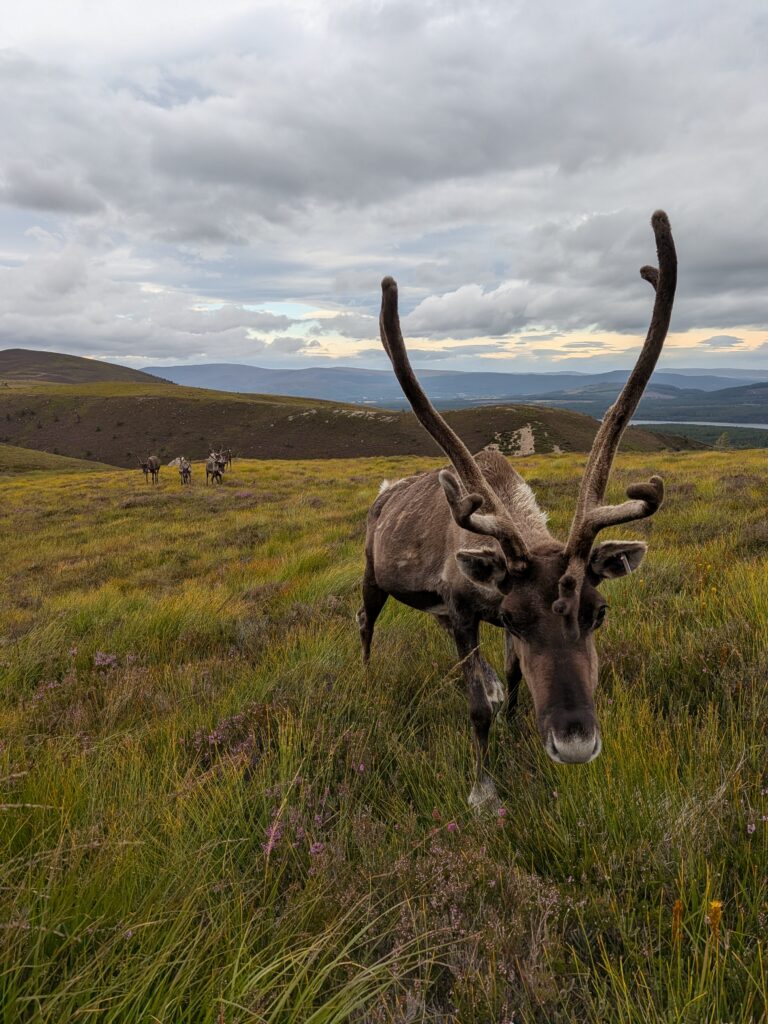
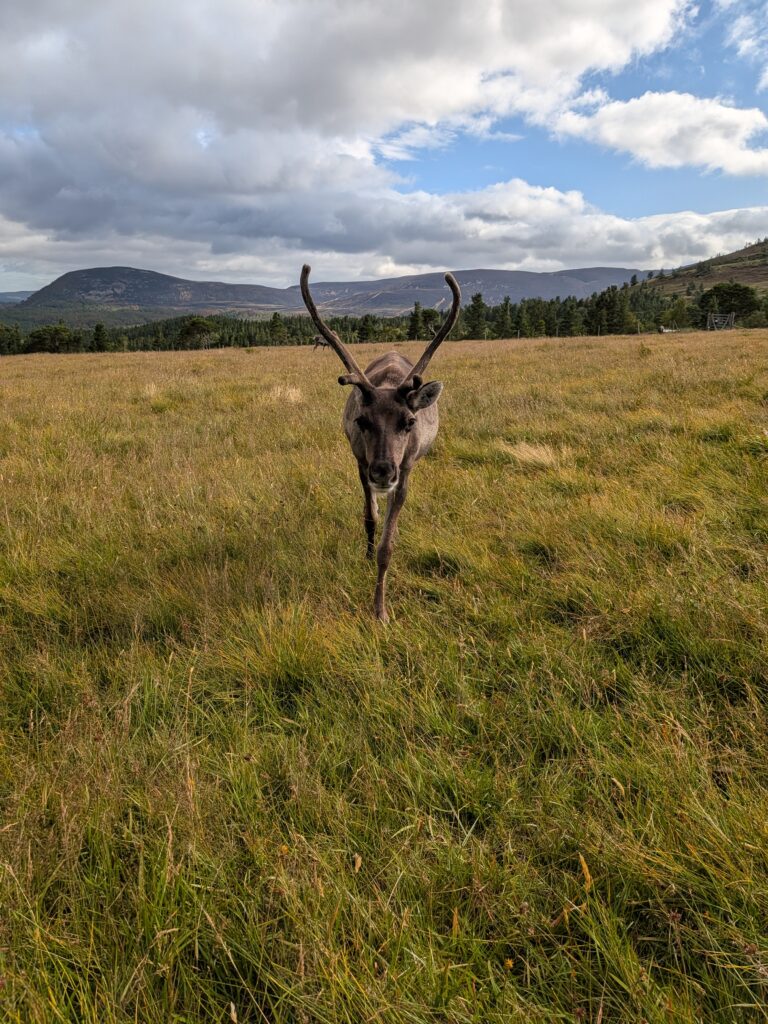
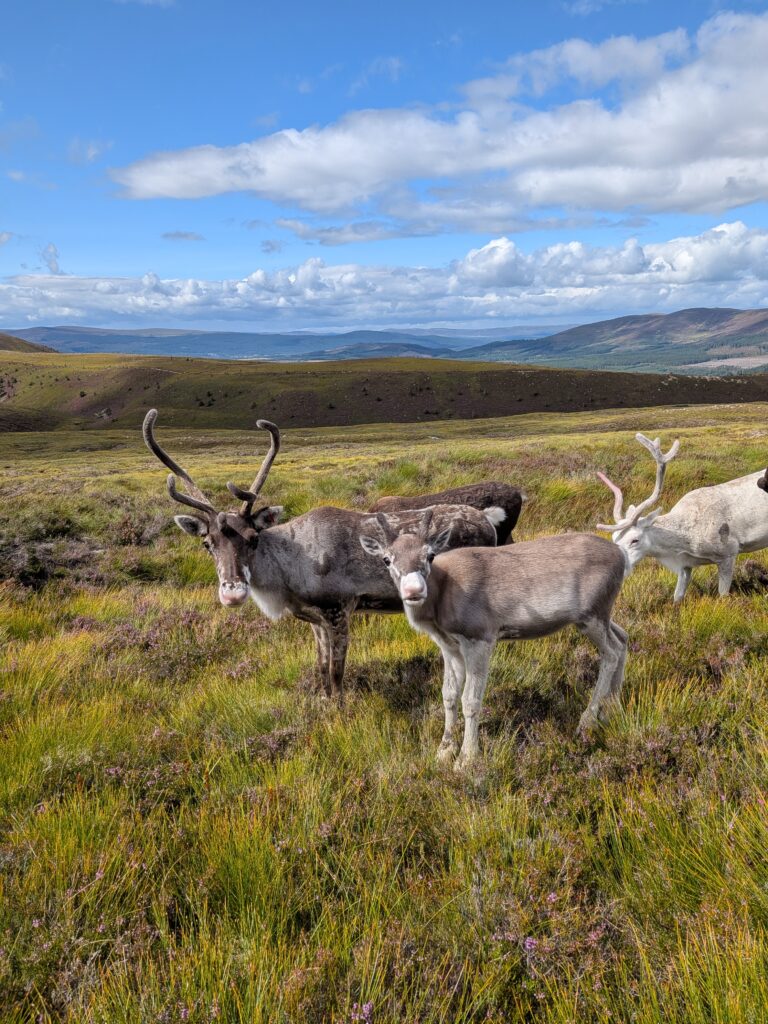
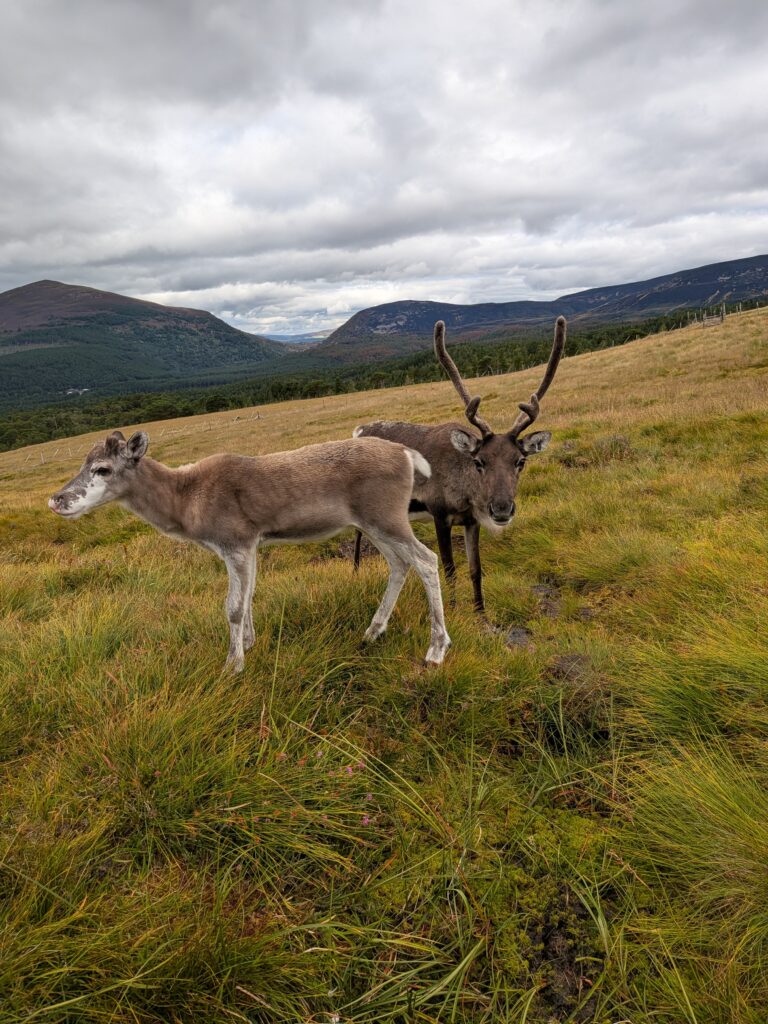
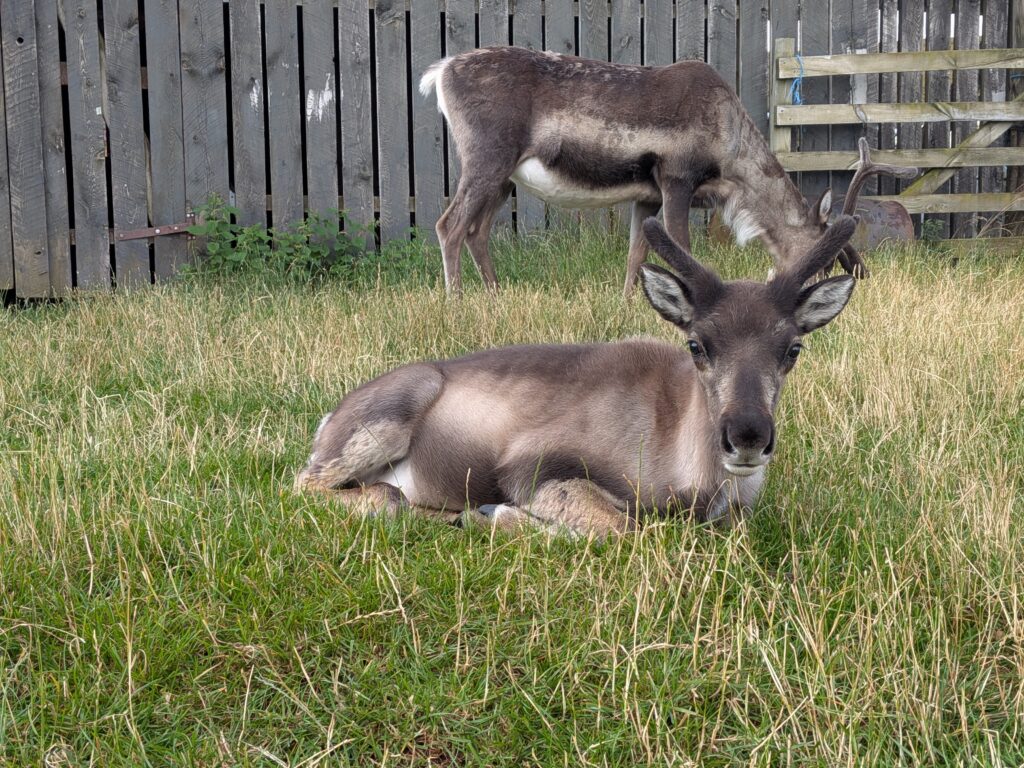
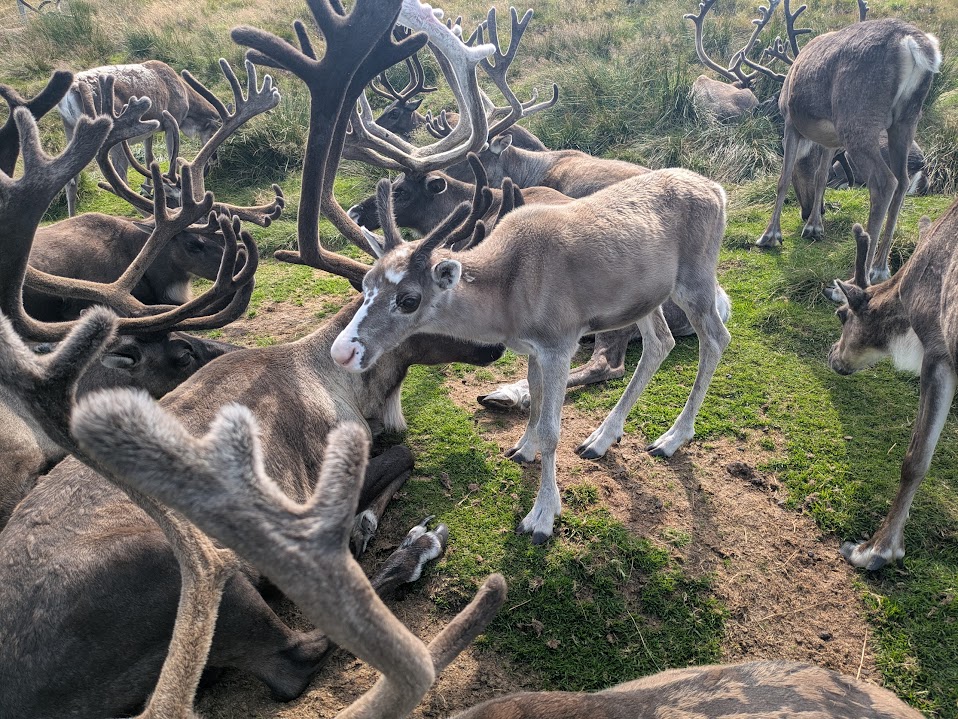
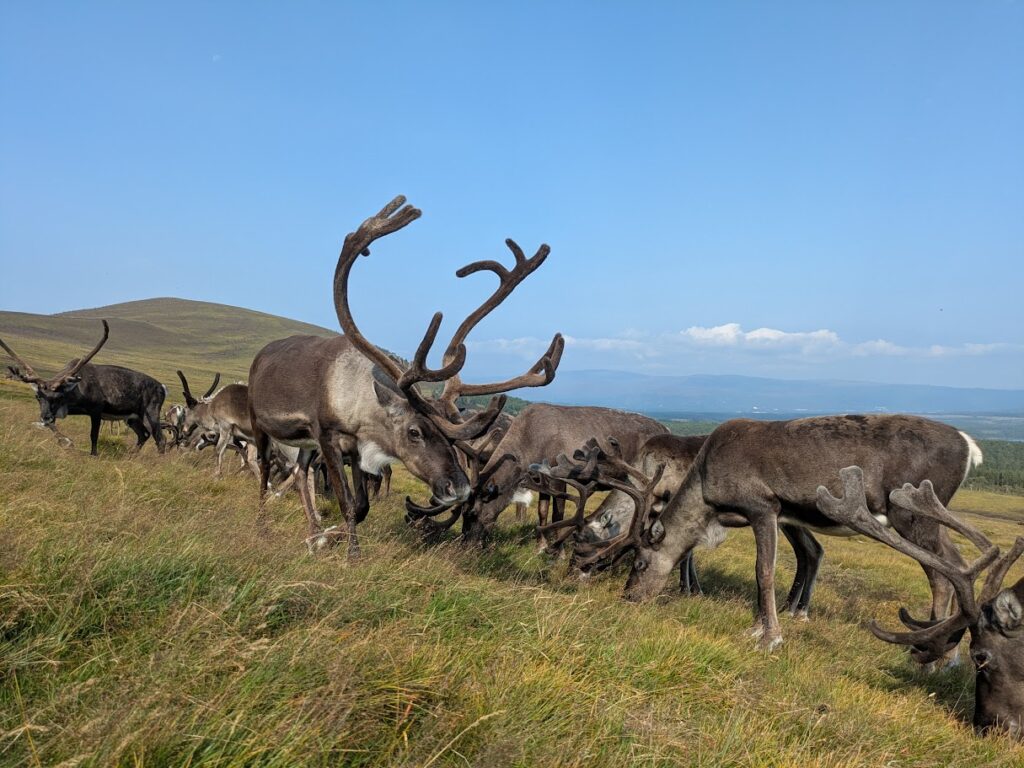
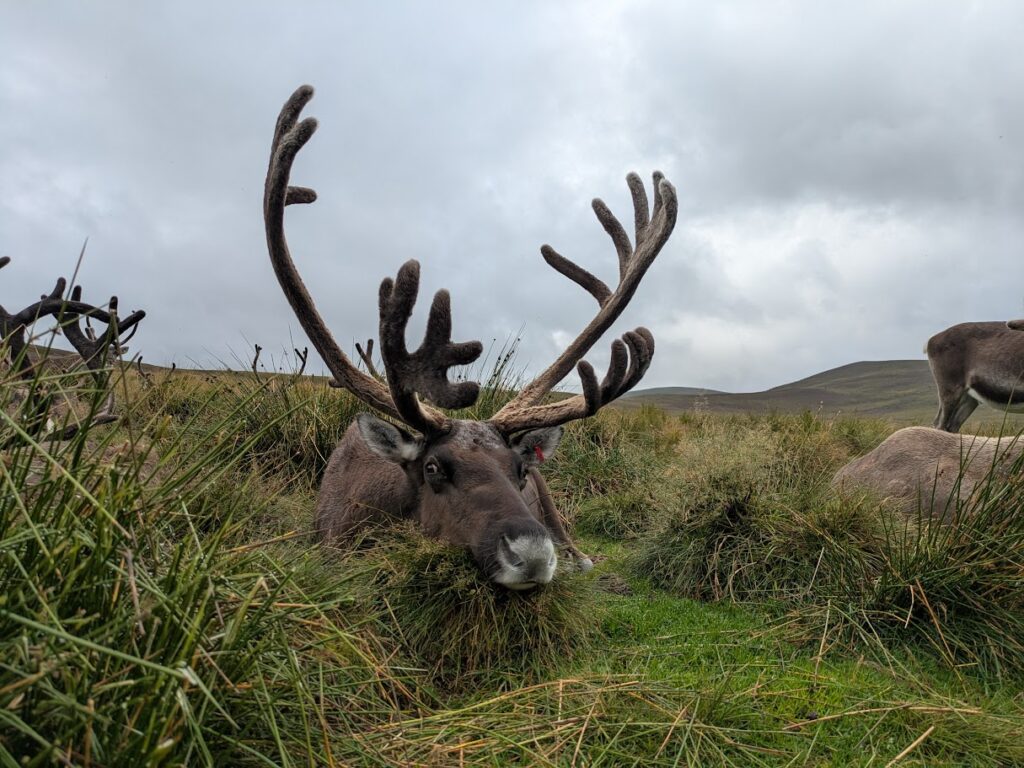
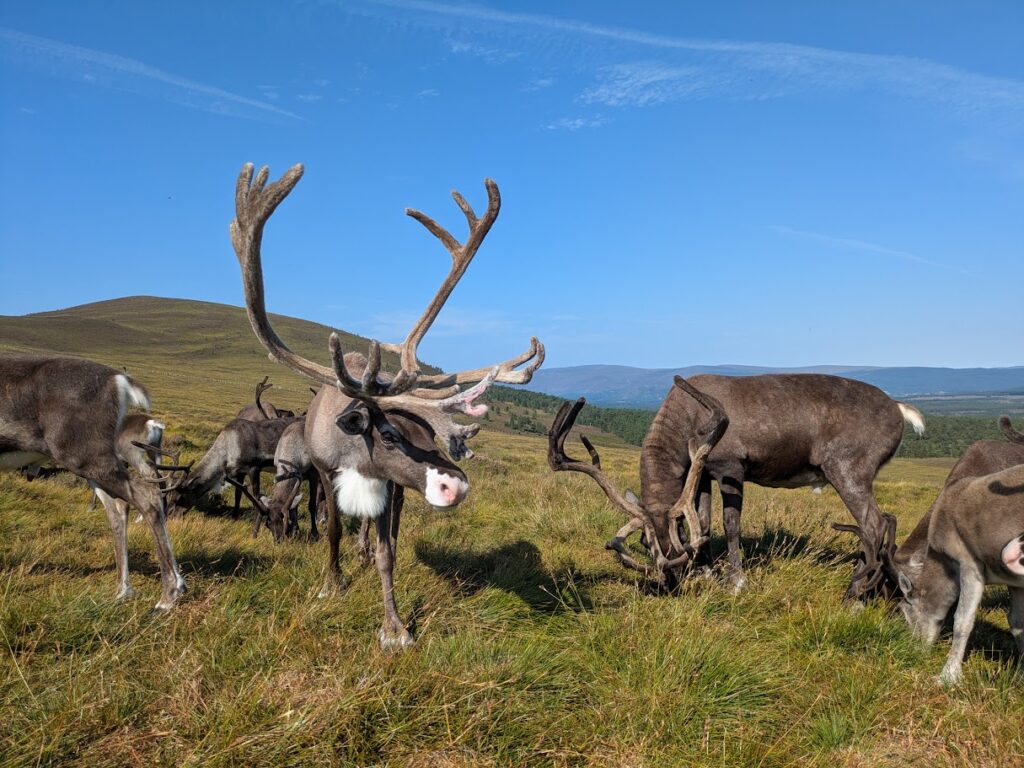
We’ve also been having lots of free range action which every herder loves! Generally we start to see the free ranging females more as they come down in altitude as the weather gets cooler and the mushrooms appear on the side of the hills. We start bringing in the mums and their calves back into the enclosure any time in August. They spend June through to August/early September out roaming the hills learning how to be little wild reindeer and enjoying all the best grazing, but when the autumn rolls around it’s time for them to learn what a feed bag is and in time, how to walk on a halter etc. The following photos are a small snapshot of what’s been occurring this month…
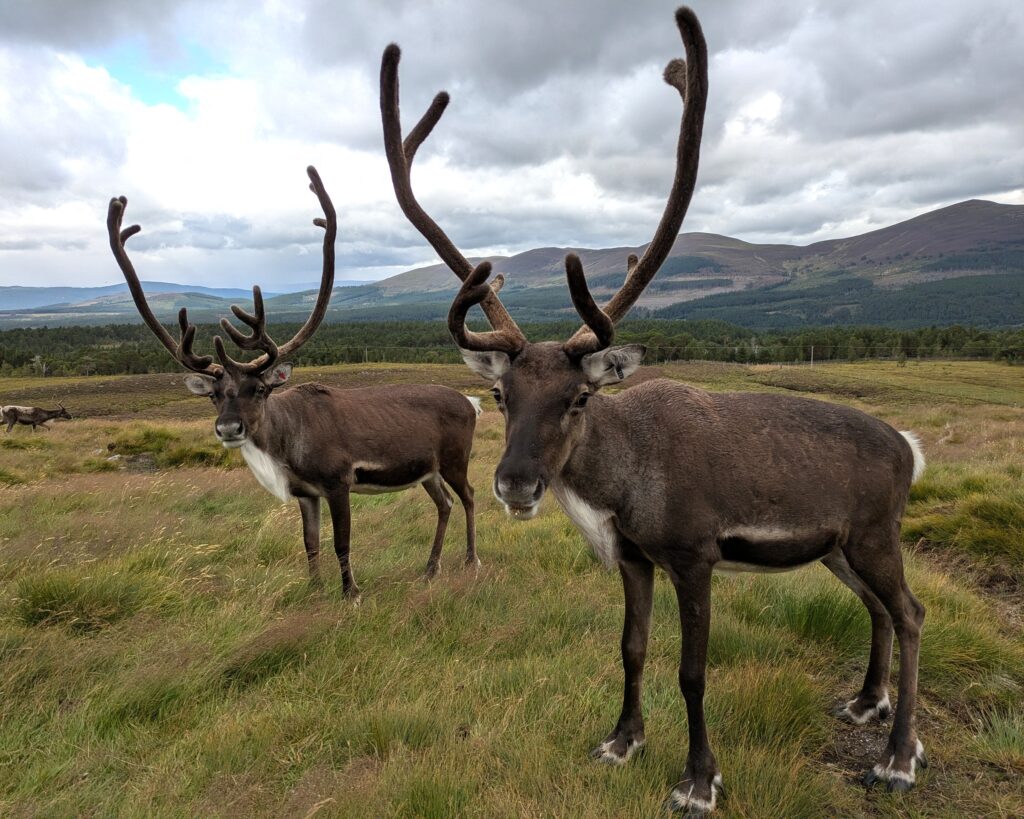
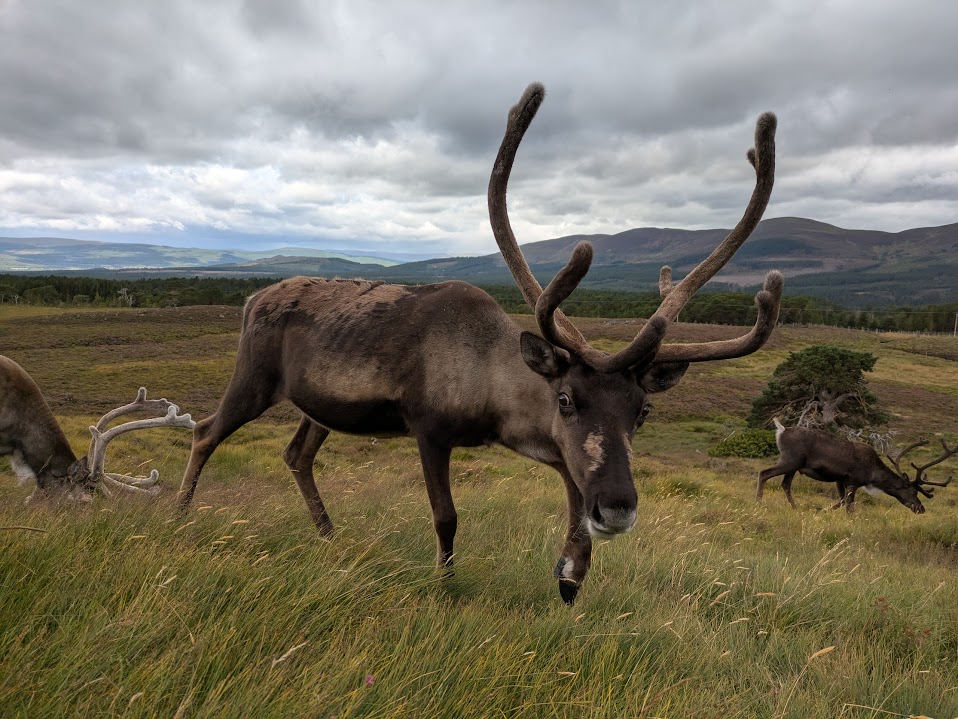
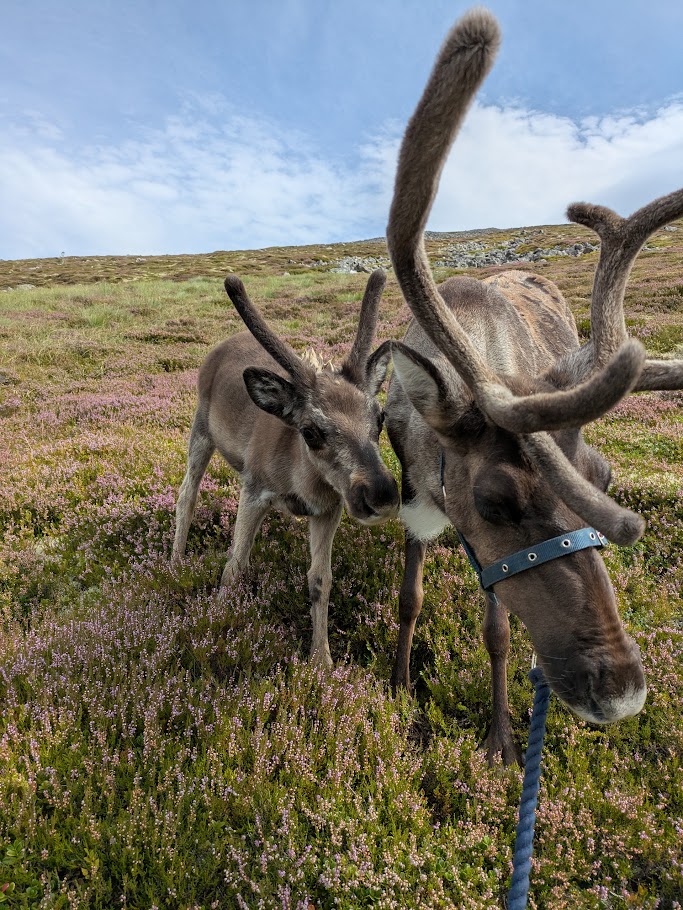
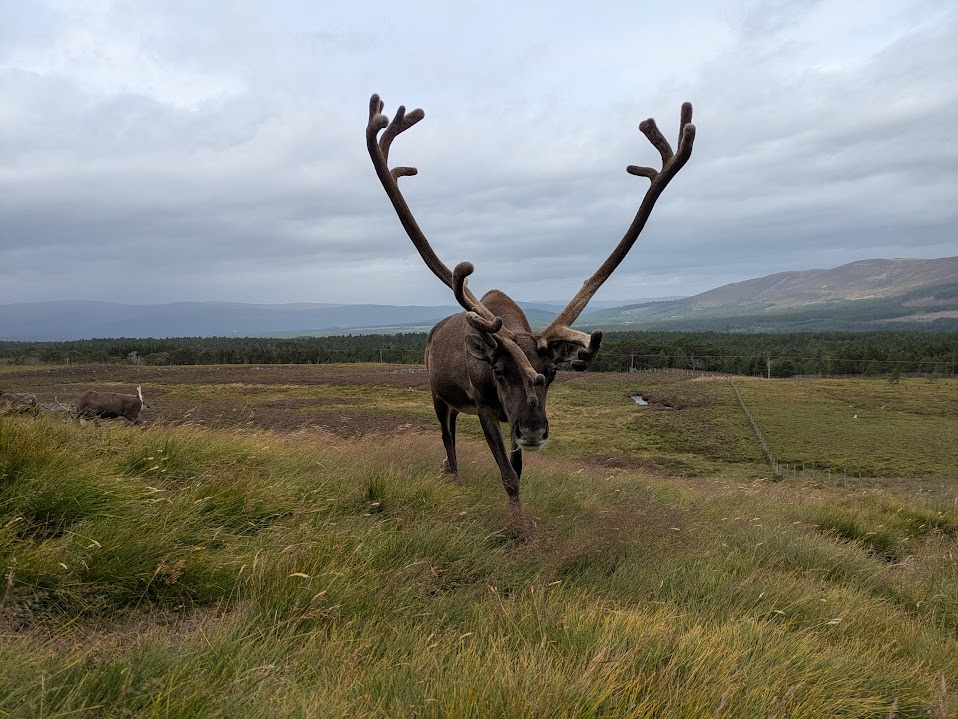
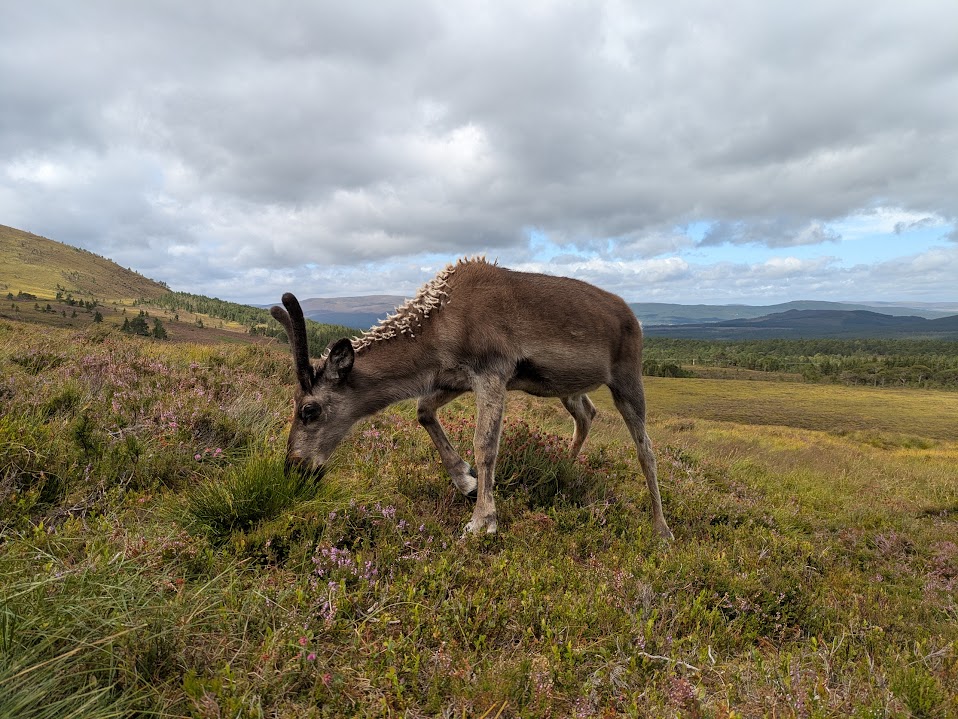
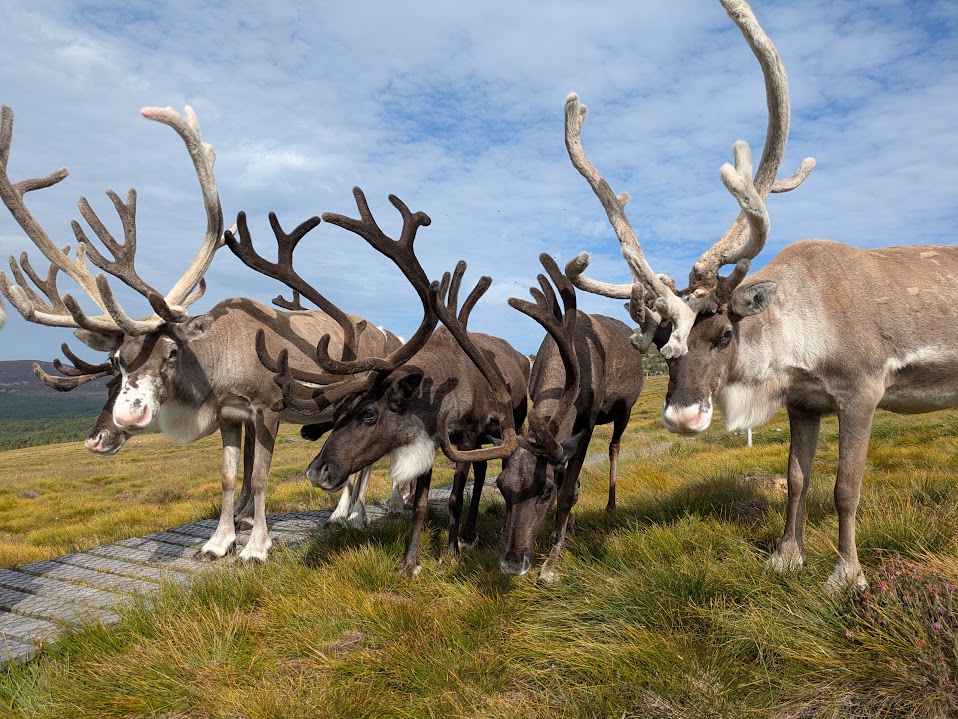
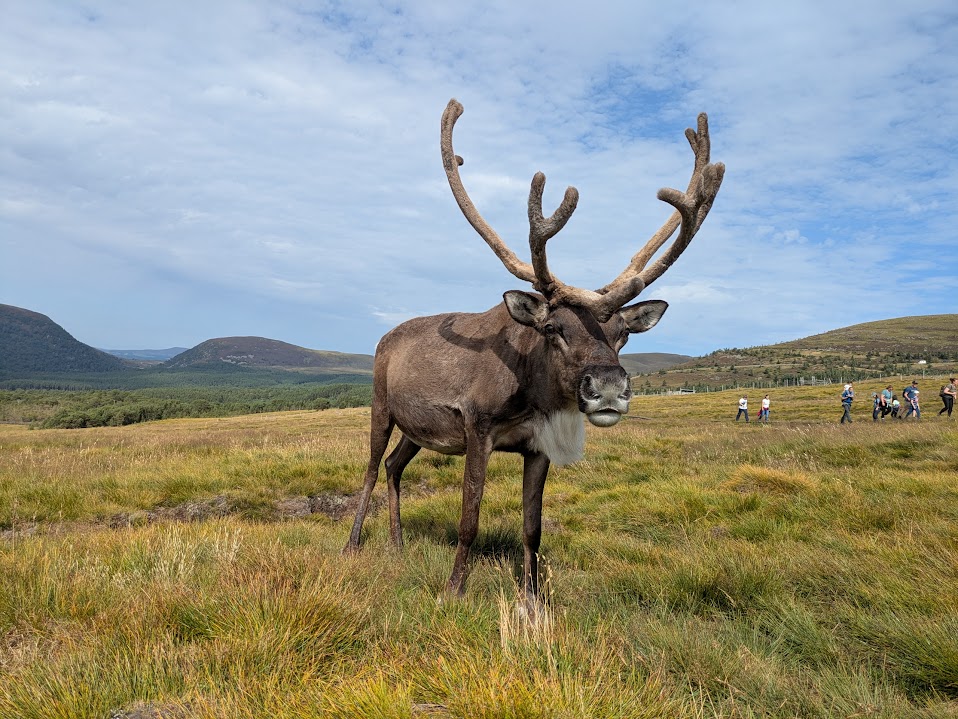
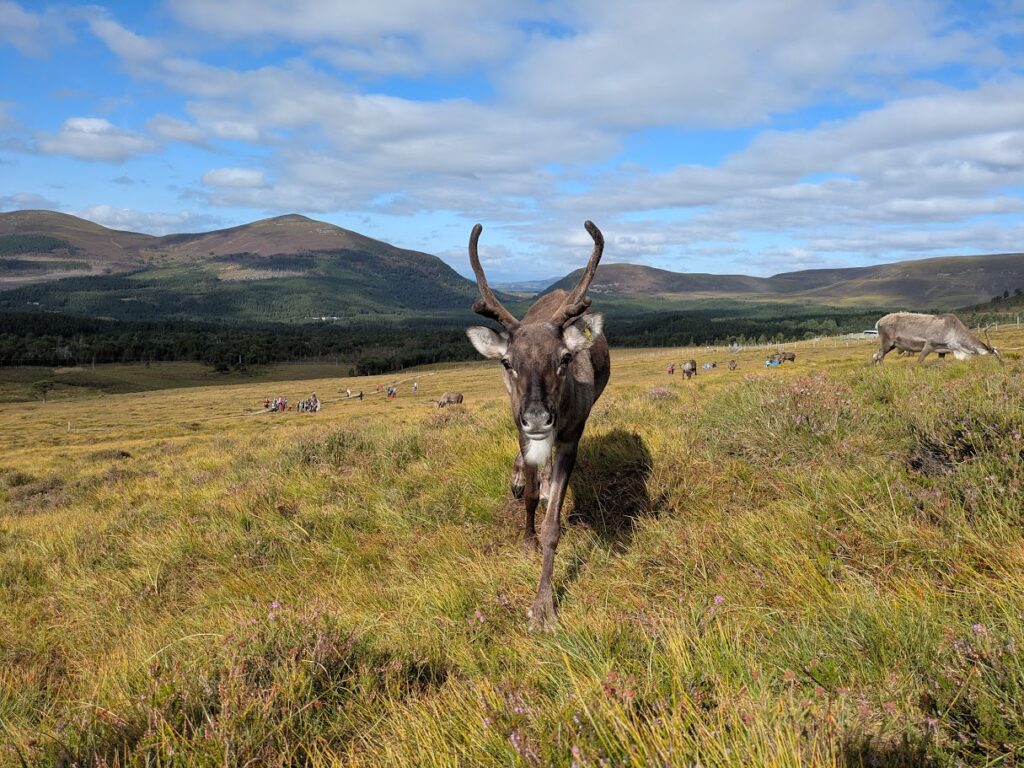
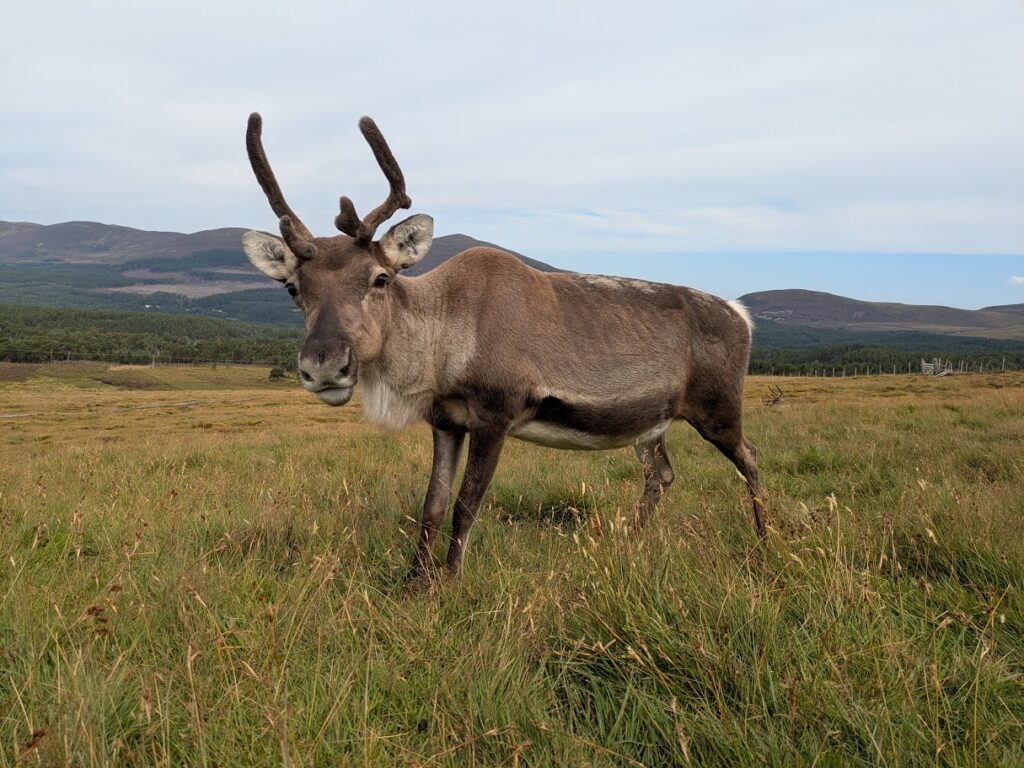
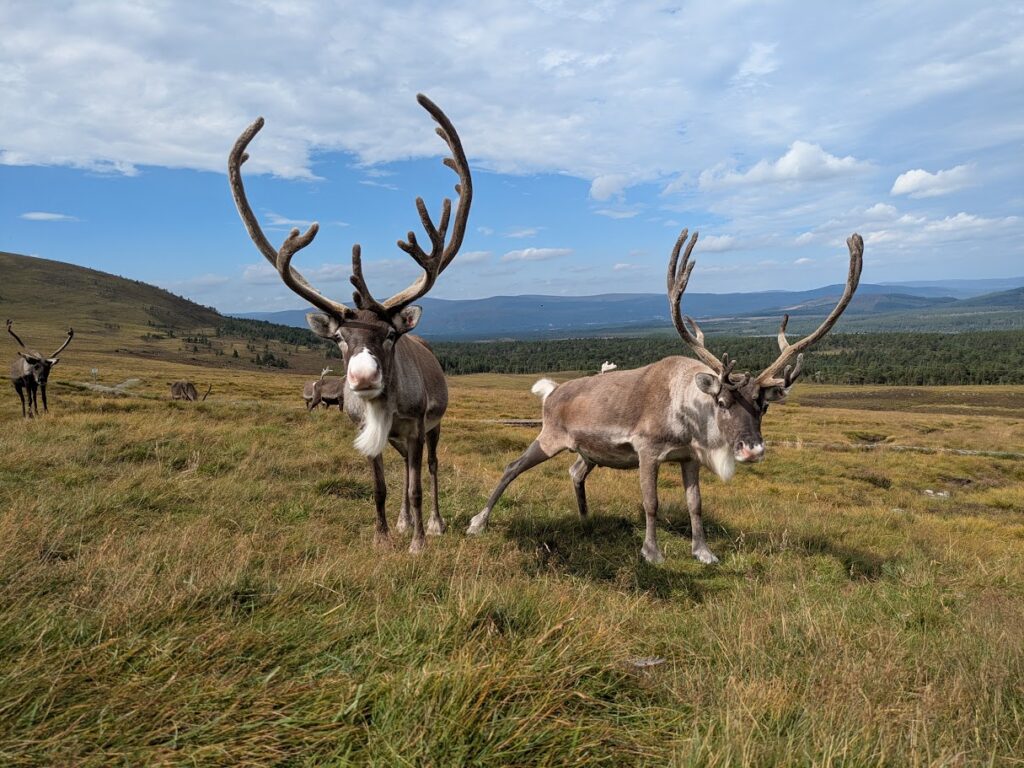
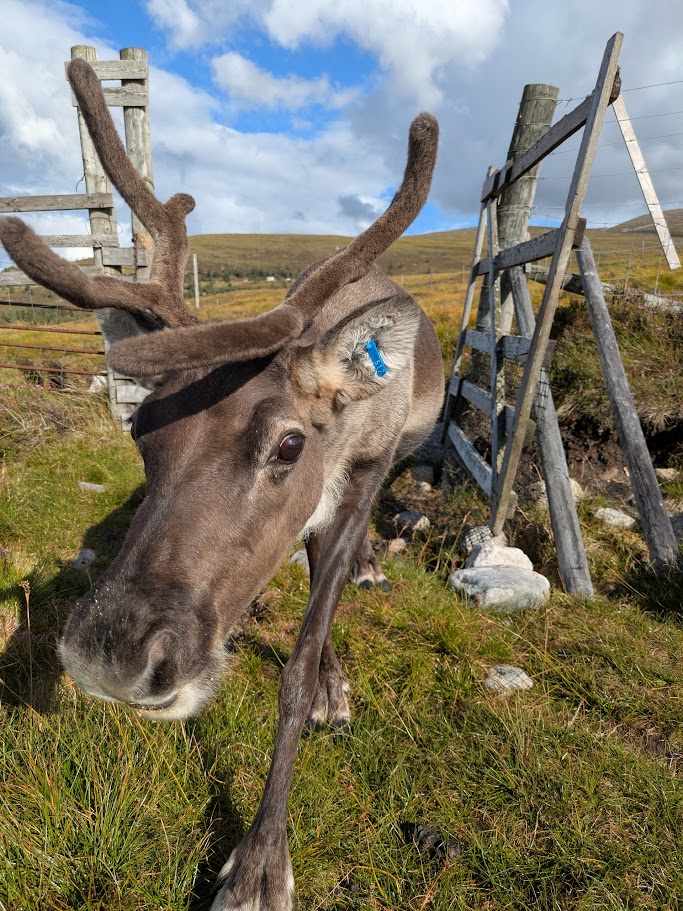
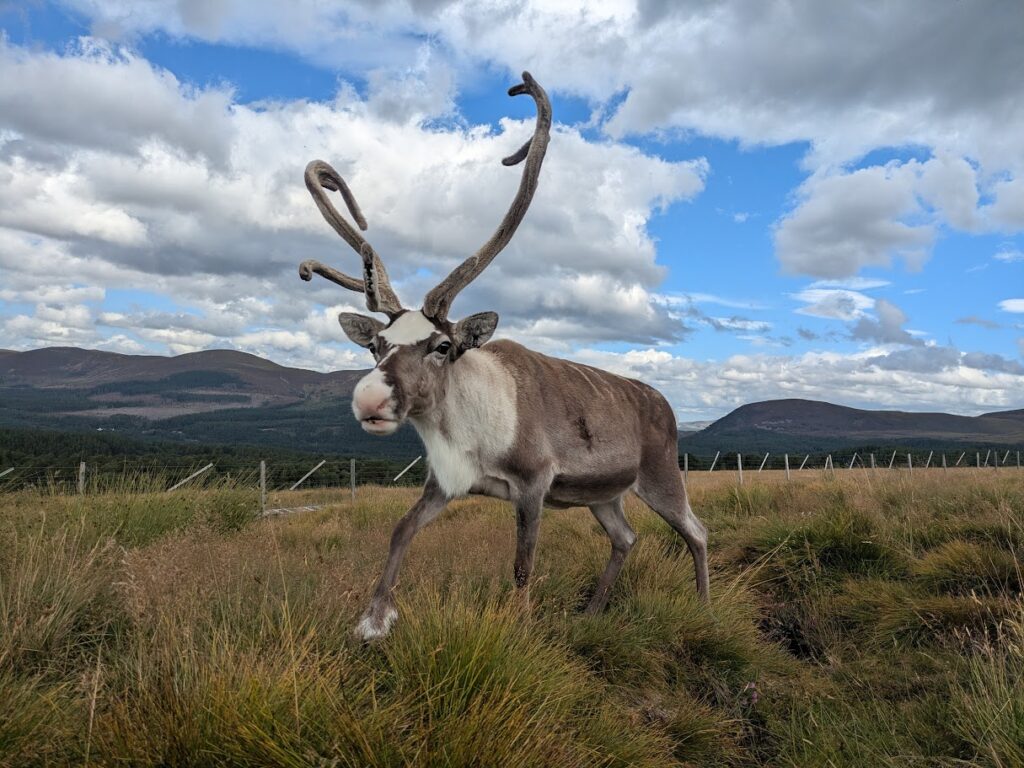
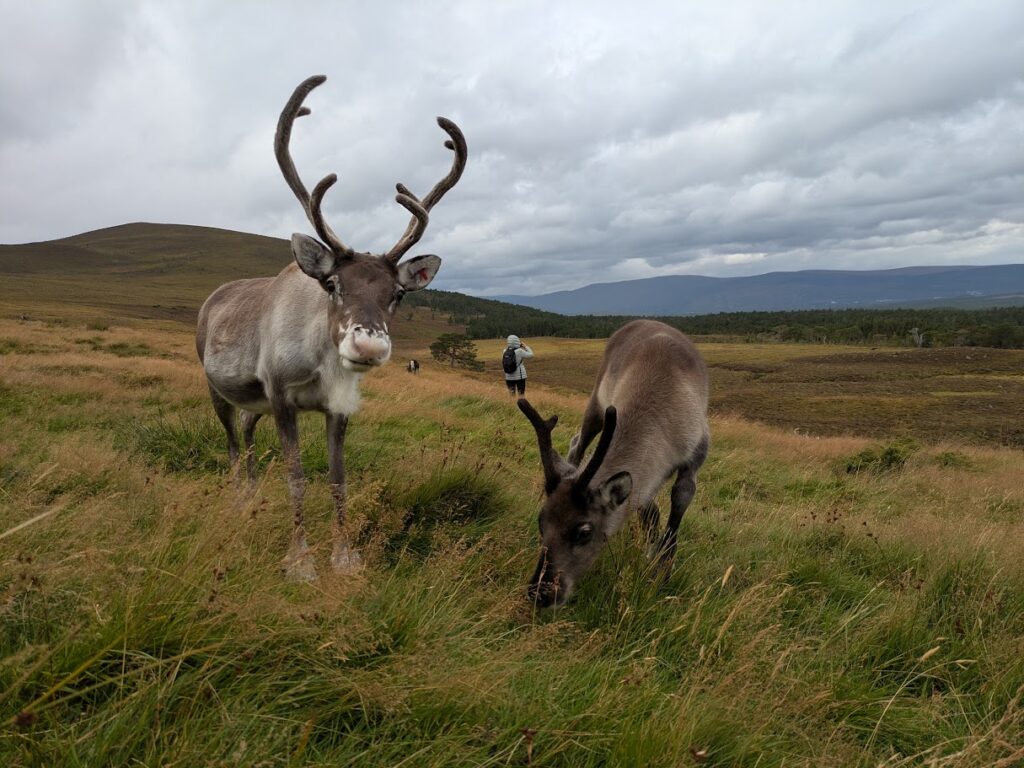
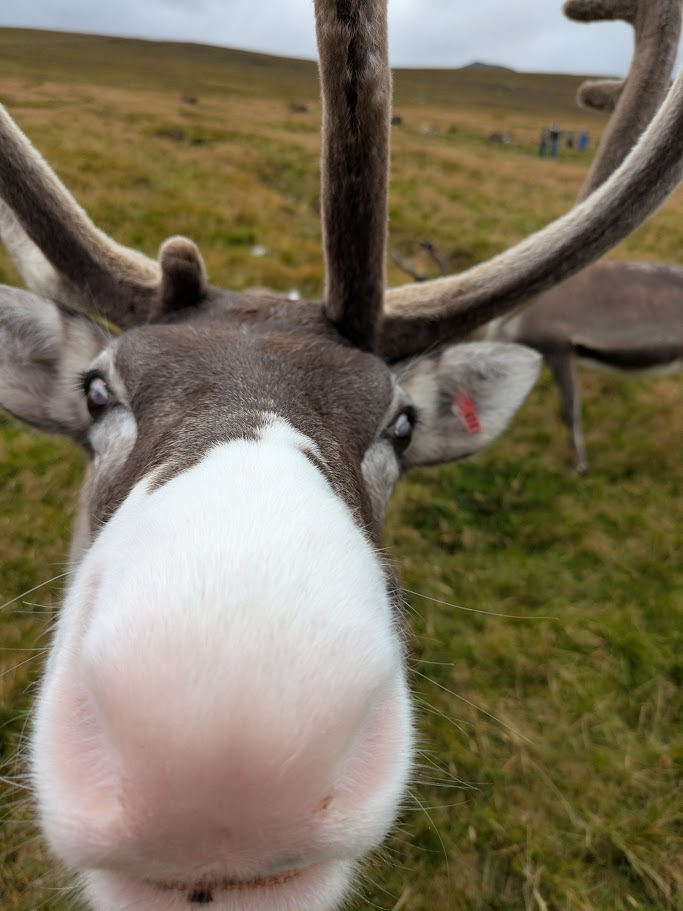
Ruth
June is the scruffy reindeer month! Perhaps, not their most photogenic season but still a wonderful time of year and I still managed to take lots of photos of course to fill the monthly photo blog . The cows and calves are all free ranging in the hills and we have around half our males in our hill enclosure here, growing lovely antlers and meeting our visitors.


Ruth
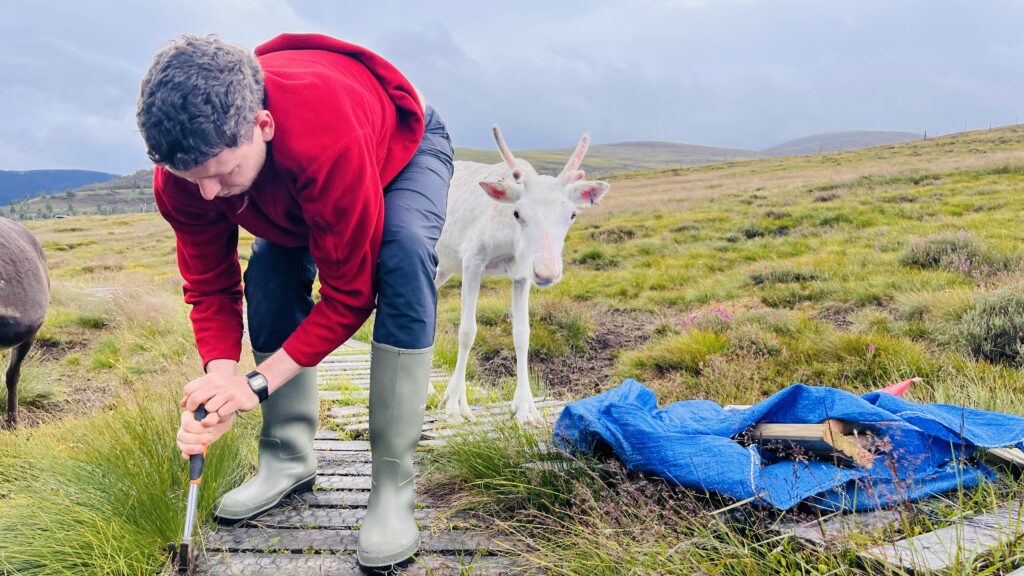
I was over at the hill farm recently helping to feed our bulls and was pleased to see how good yearling Zoom was looking. And that reminded me that I’d promised Ruth I would write a blog telling the story of when we found him last year.
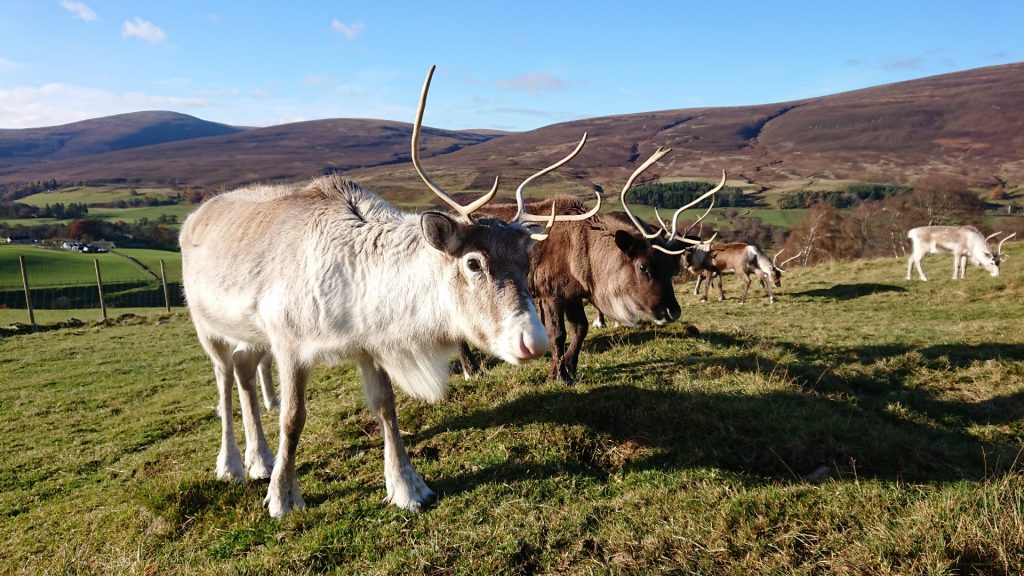
Zoom was born on the 8th May 2022 to mum Angua, one of the shier members of the herd. He had white face markings, like dad Spartan, and in fact was almost identical to full sister Chickpea. After a couple of weeks bonding with Angua in the enclosure, the pair of them headed to the high tops of the mountains for summer.
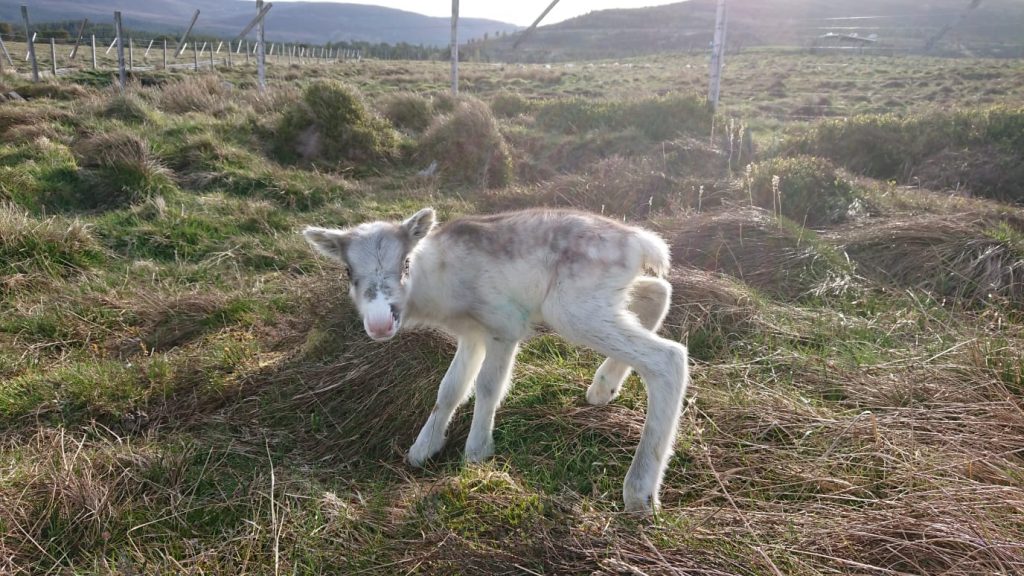
We get out as often as possible over the warmer months to check on the cows and calves, but inevitably the weather and other factors sometimes get in the way of this, and as the reindeer move around a lot too we can go for weeks or months without seeing a particular individual. I saw Angua and her calf high on the mountains in mid-July – both looking very scruffy as they were moulting out their winter coat, but otherwise looking grand.
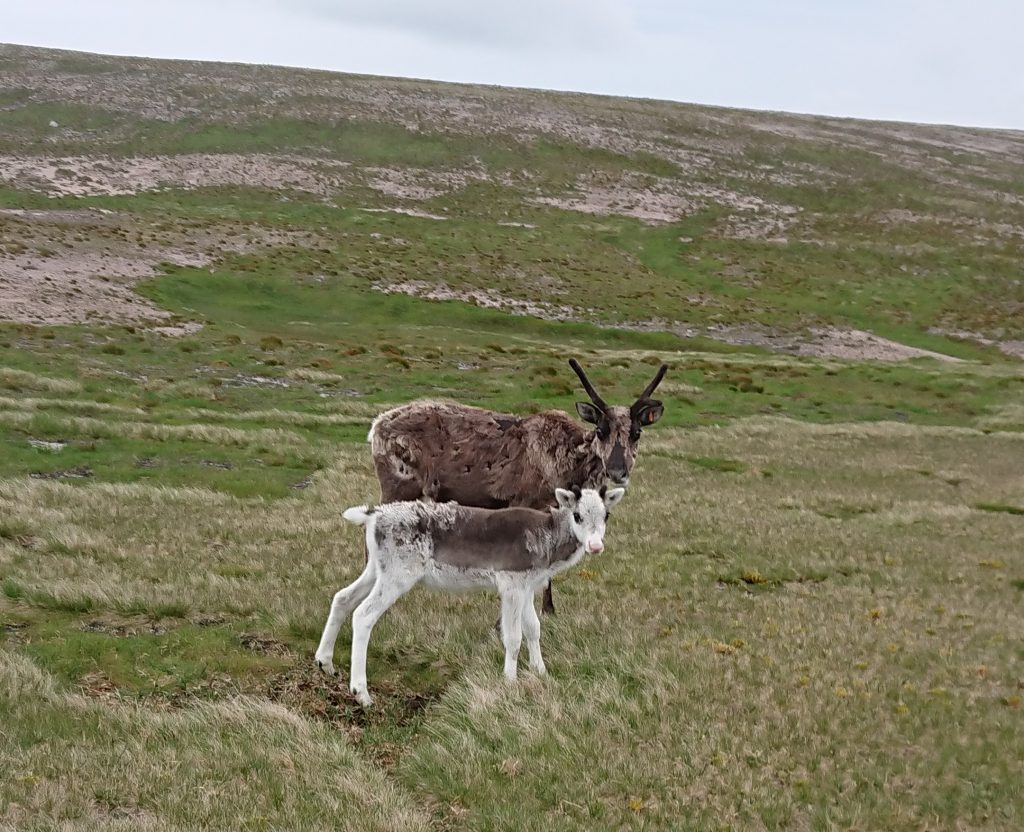
As the autumn came round, cows and calves started returning to the hill enclosure, and we went out to different areas too to fetch back some who had wandered too far. Whilst we don’t worry too much about not seeing a reindeer for a few months, by late September, the main stand out reindeer we hadn’t seen were Angua, her calf (now newly christened Zoom) and also her 2-year-old daughter Chickpea.
October rolled round and we were rushed off our feet preparing for the Adopter’s Weekend, celebrating our 70th anniversary. Typically, it was on the Friday, the day before the weekend, when we received a phone call from a hill walker, Richard, letting us know that his group had met a lone reindeer, and it had started following them. Reindeer are a herd animal so it is unusual to find one alone, and as we knew there were very few out on the mountains, Lotti and I scrambled to head out and try to catch them. We loaded up two of our steady Christmas reindeer, Olympic and Clouseau, from the Paddocks and drove the 35 minutes or so to the walkers’ car park nearest to Richard’s location. He called to update us that he had been up near the summit but had turned round to escort the reindeer back down to meet us – “Please hurry!”.
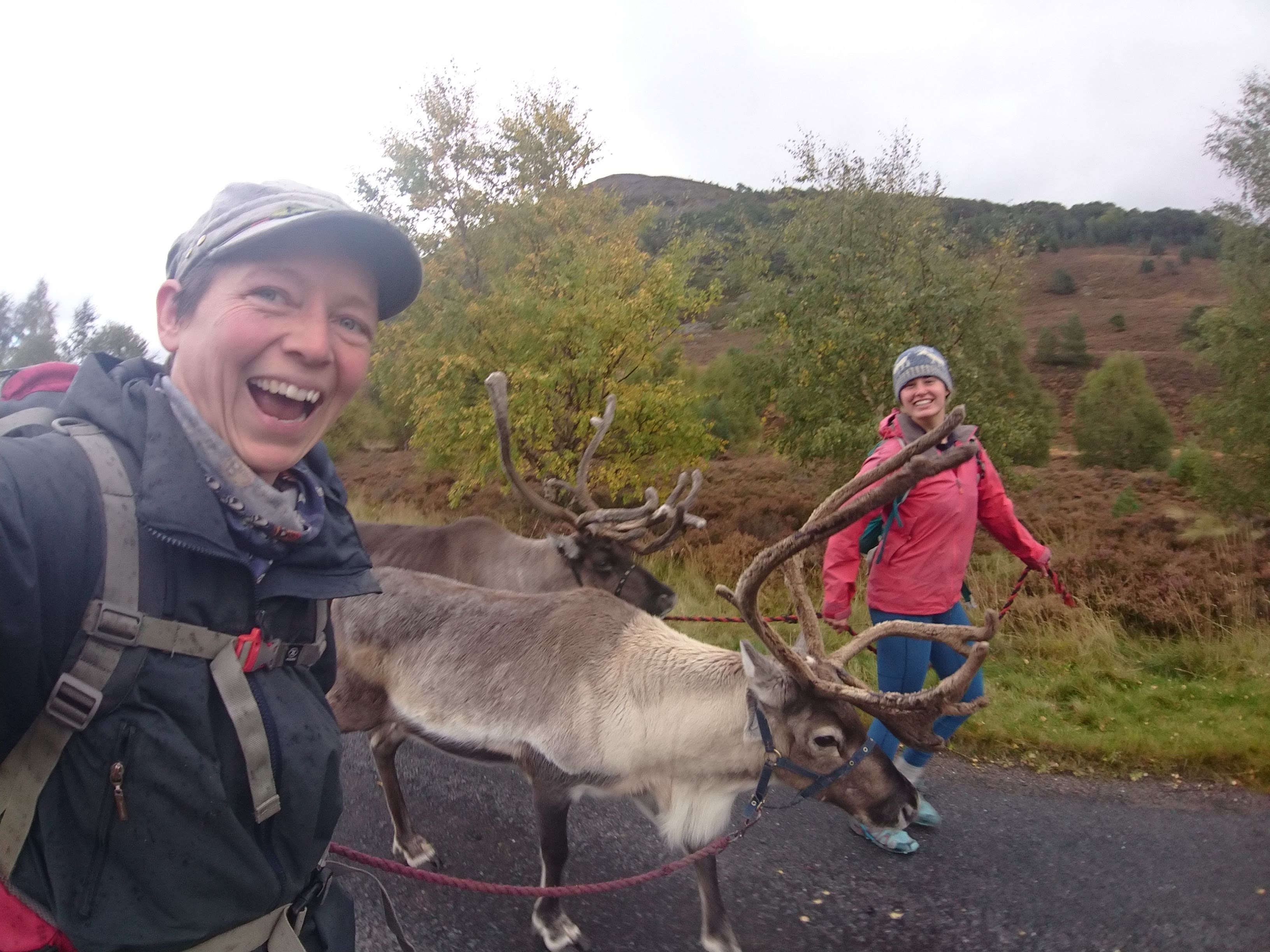
Olympic and Clouseau were delighted to be out on an adventure and we hurriedly popped their headcollars on, unloaded them and set off up the path through the forest. As we walked we debated which reindeer it could be. Richard hadn’t been able to spot an eartag, which suggested it may be a calf, but a calf was unlikely to have had enough exposure to humans to choose to follow one… We wondered how we would go about catching them too. The idea behind bringing along two tame lads was that even a shy reindeer was likely to want to come up and join other reindeer if alone, and this would hopefully give us a chance to get hold of them – sometimes this involves reaching beneath the tame reindeer’s belly to get hold of a leg, then holding on until your colleague can pop on a headcollar – not the way we’d prefer to do things but sometimes the only option. But if the lone reindeer was very wild it would be hard to get that close…
Much sooner than anticipated, we spied movement ahead, and all of our assumptions were blown out of the water. Not only was the lone reindeer in question indeed a calf, Richard was hurrying down the path literally with his arm over their neck, hand gently guiding on their shoulder. For a species that tends not to like contact, and for a calf that was basically unhandled, this was incredible! No need to worry about how we were going to catch them! We could immediately see from the white face markings and size that this was Angua’s calf, Zoom – rather scrawny and a little underweight, but otherwise looking healthy. It was a simple matter to pop a headcollar on Zoom (for the first time in his life) and after thanking Richard profusely, we headed our separate ways – us back down the track with our extra reindeer, and Richard back up the mountain.
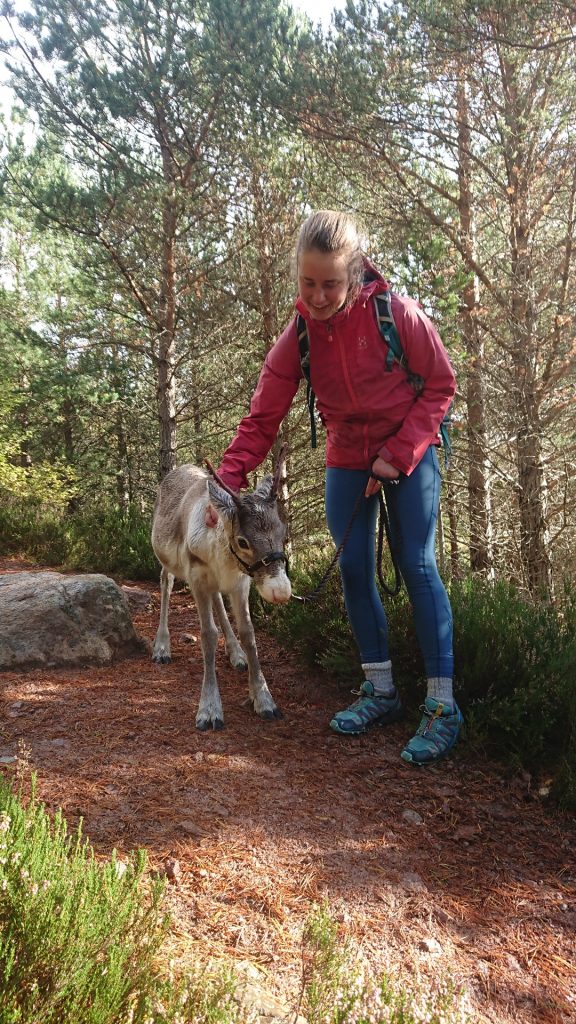
Reindeer usually protest a little the first time they are on a headcollar, but wee Zoom just seemed relieved to have found some friends, and Lotti & I had an easy walk back to the truck, still both astounded at the turn of circumstance. We arrived back at the Centre before the end of the day and Zoom quickly looked at home. Any adopters who visited us that weekend might have seen him, already friendly and confident. He buddied up with Sunny, who had been orphaned and hand-reared, and was often closely following Clouseau, latching onto him perhaps because he was the first reindeer he’d seen after being all alone. We joked about how Clouseau had got a calf of his own (despite being a castrate!).
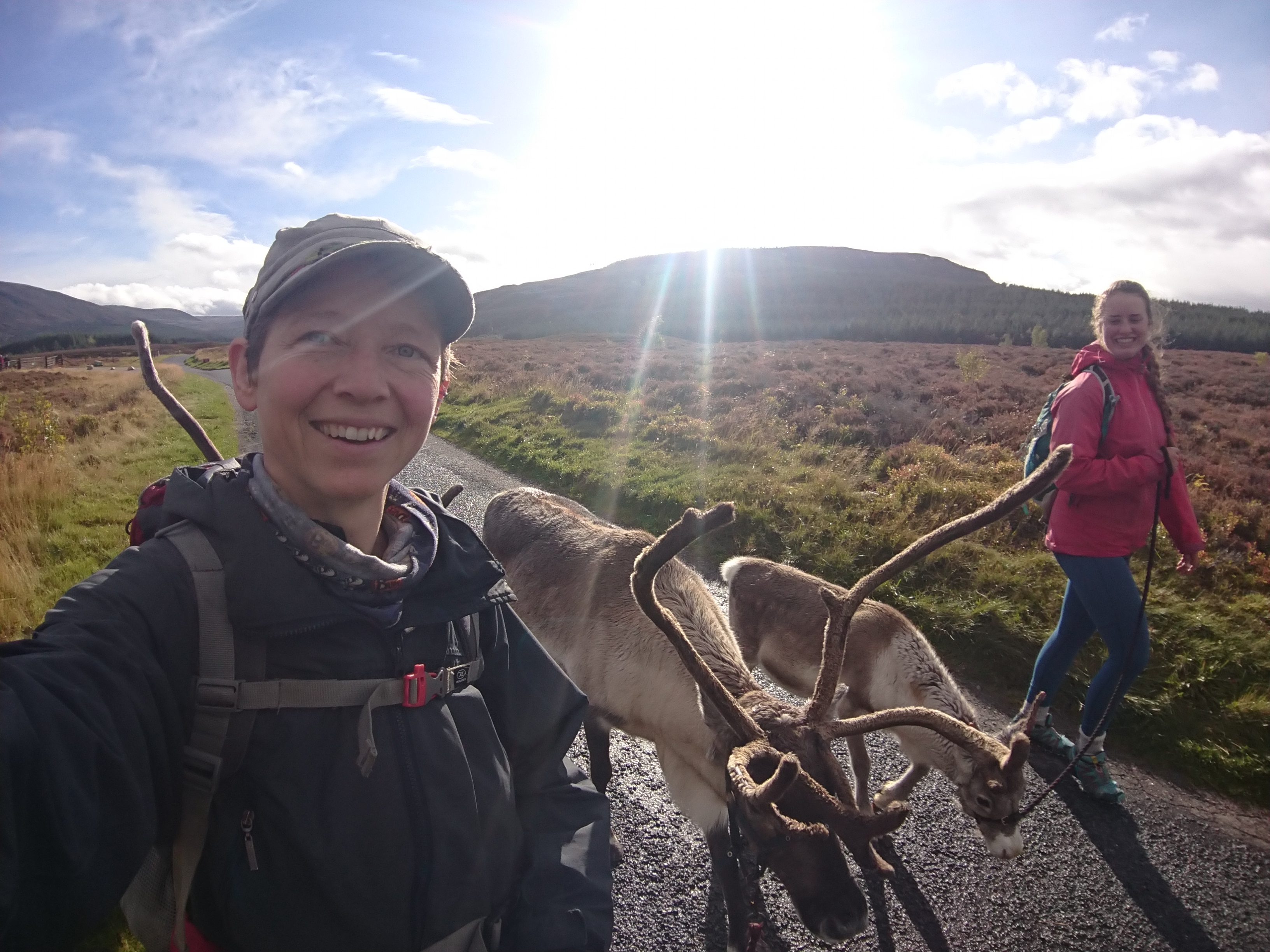
Sadly we never saw Angua again, and the probable explanation is that she must have died at some point in the autumn, leaving poor Zoom to wander on his own. But animals are resourceful and he did exactly the right thing – putting his trust in the right kind human – thankfully Richard was good enough to get in touch with us and go out of his way to get Zoom down – we still talk of the special “Richard Ruffle” that he used to guide Zoom at his side.
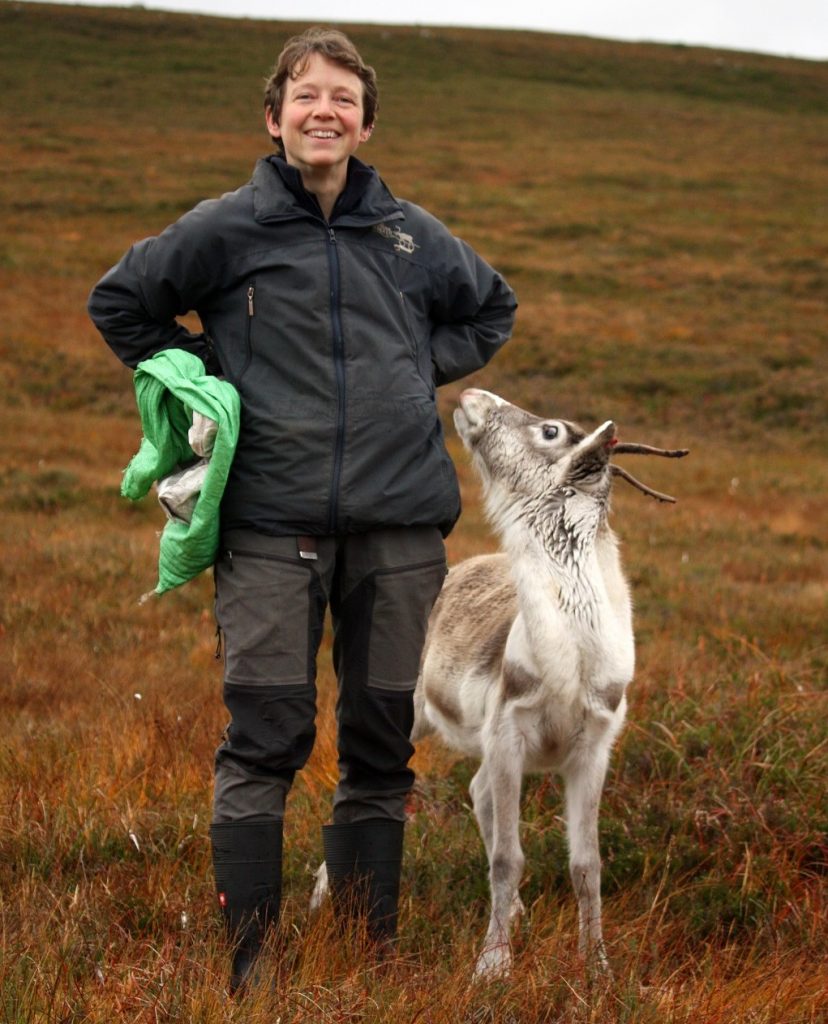
The other good news was that Zoom’s sister Chickpea made it home too, though it wasn’t for several months. There was the occasional report, and even a photo of her, at the far extent of the reindeer range, but every time we went out searching, there was no sign. Then in February, when we called in the free-ranging herd for breakfast, there she was – she’d found her own way back. She had clearly been unwell at some point – her coat was scruffy and she’d already cast her antlers – but she was otherwise her normal cheeky self.
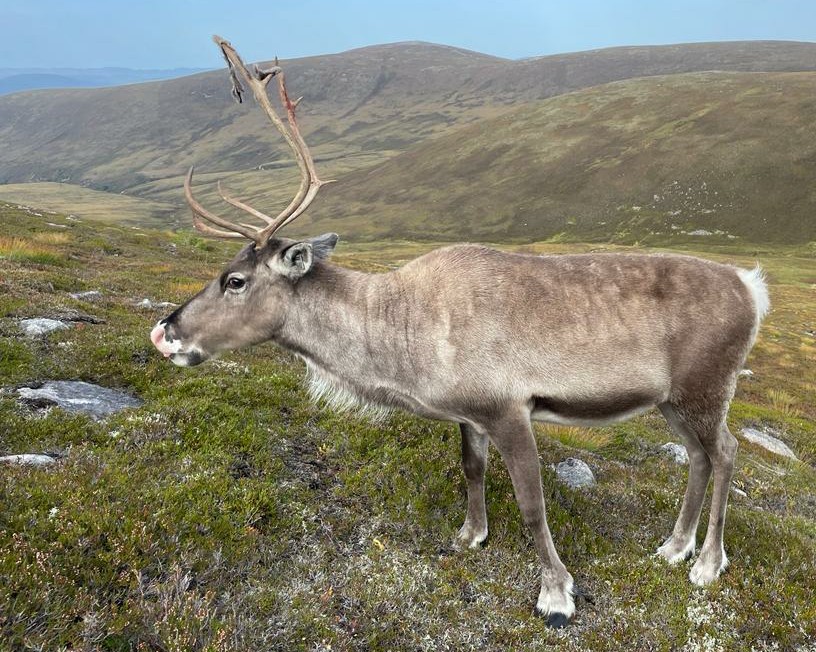
2023 has been a much better year for both of them, and Zoom and Chickpea are looking fantastic.
Andi
At the time, it really does seem like it will last forever. When you head to work and it’s dark, then the sun sets again at 3.30pm and you’re heading home in the dark. But it must be my favorite season, you experience such varying weather conditions, and it gives you such an appreciation of what the reindeer endure out on the free range. So, I thought I would do a blog of my favorite wintry pictures and tell some tales from the free range.
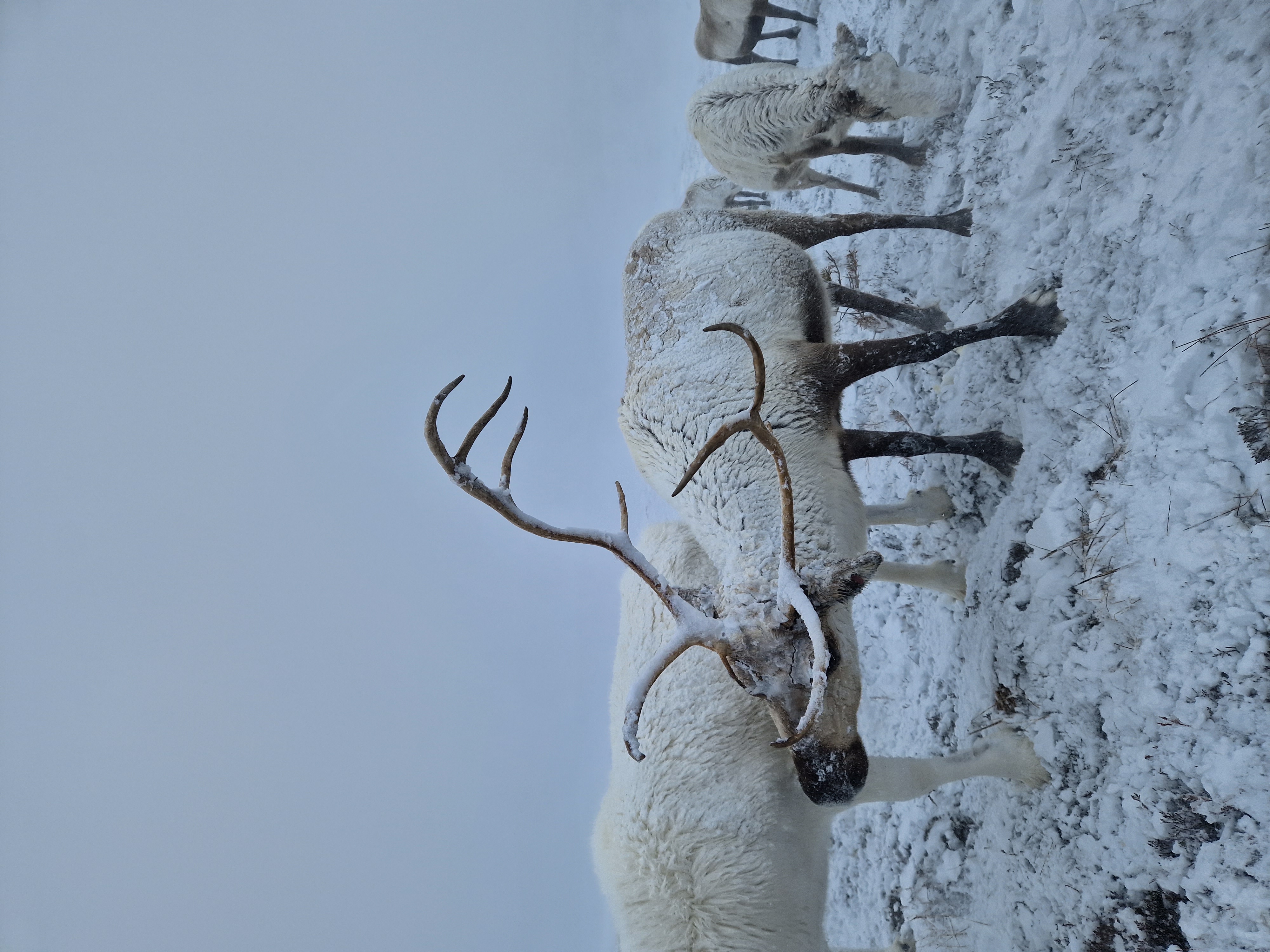
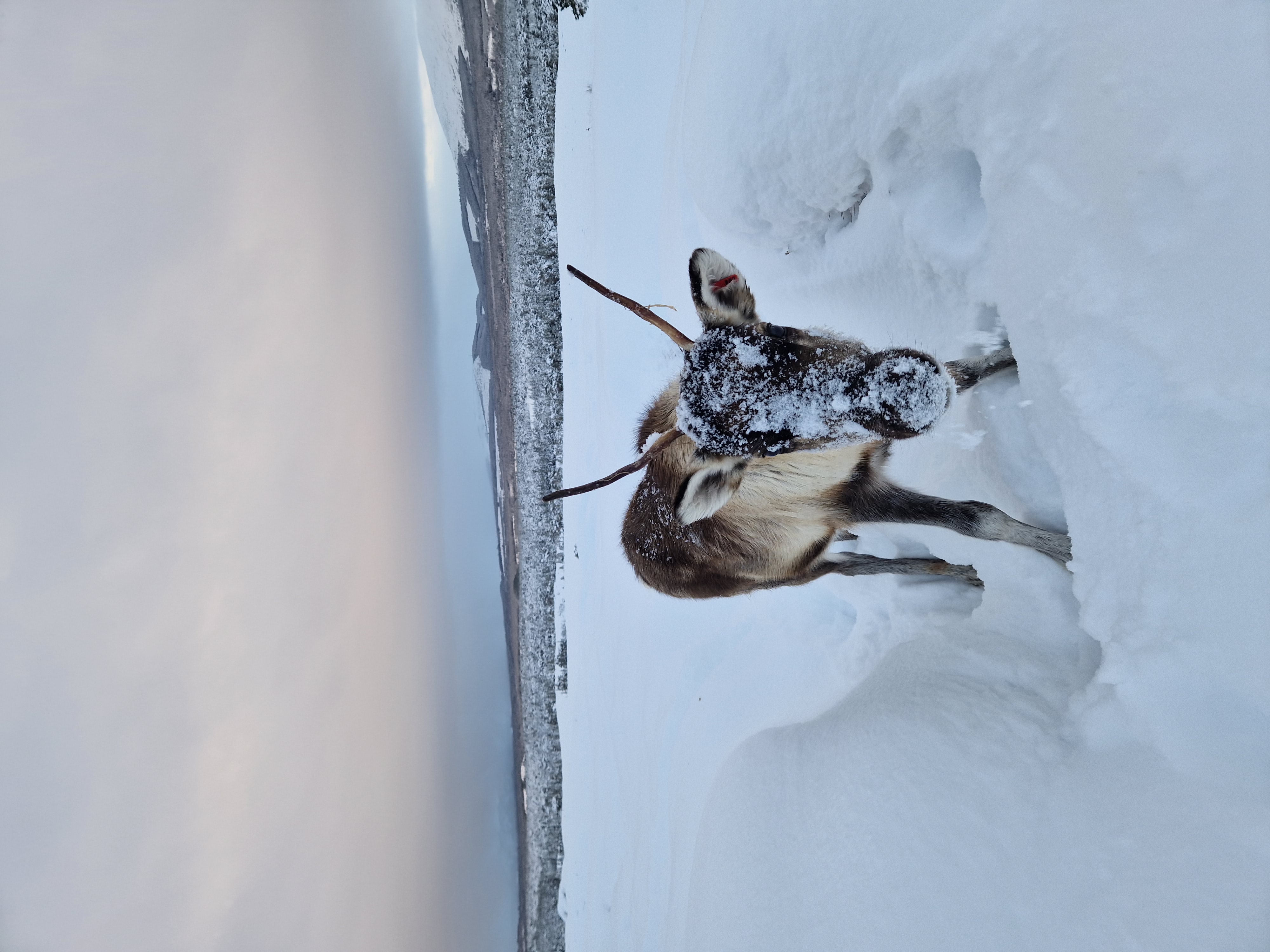
One trip that will forever stay in my memory was a morning in April when Ruth and I went out on to the free range to move the herd for the 11am Hill Trip. There had been snow the night before and it was so windy! Once on the hill we weren’t entirely sure whether it was still snowing, or whether the wind was whipping the snow up off the ground and into our eyes. Either way, we both were wishing that we had brought along goggles to wear. We trudged along, having a rough idea of where the reindeer were and finally stumbled across them. The amount of snow and lack of visibility meant that the reindeer were very well camouflaged, so it took me basically tripping over them to finally notice them. I wish I had noted down the wind speed for that day but to give you some insight, the day before had a mountain gust of 91mph.
On another trip to collect the herd for the 11am Hill Trip later in April that included myself and Ben Hester, we came across a stark contrast in the weather from the Ski Center car park and in the Northern Corries, where the herd were that morning. At the Ski Center we were eluded into the false belief that we wouldn’t need much in the way of layers as it was a beautiful sunny morning but due to the nature of the hills, we decided to take something waterproof just in case. As we continued up into the Corries, the weather began to take a turn. The cloud came in, the wind kicked up and we were pelted with icy rain. It was a good thing that we were only collecting the herd and moving them down to a lower spot as the weather would have made an uncomfortable Hill Trip!
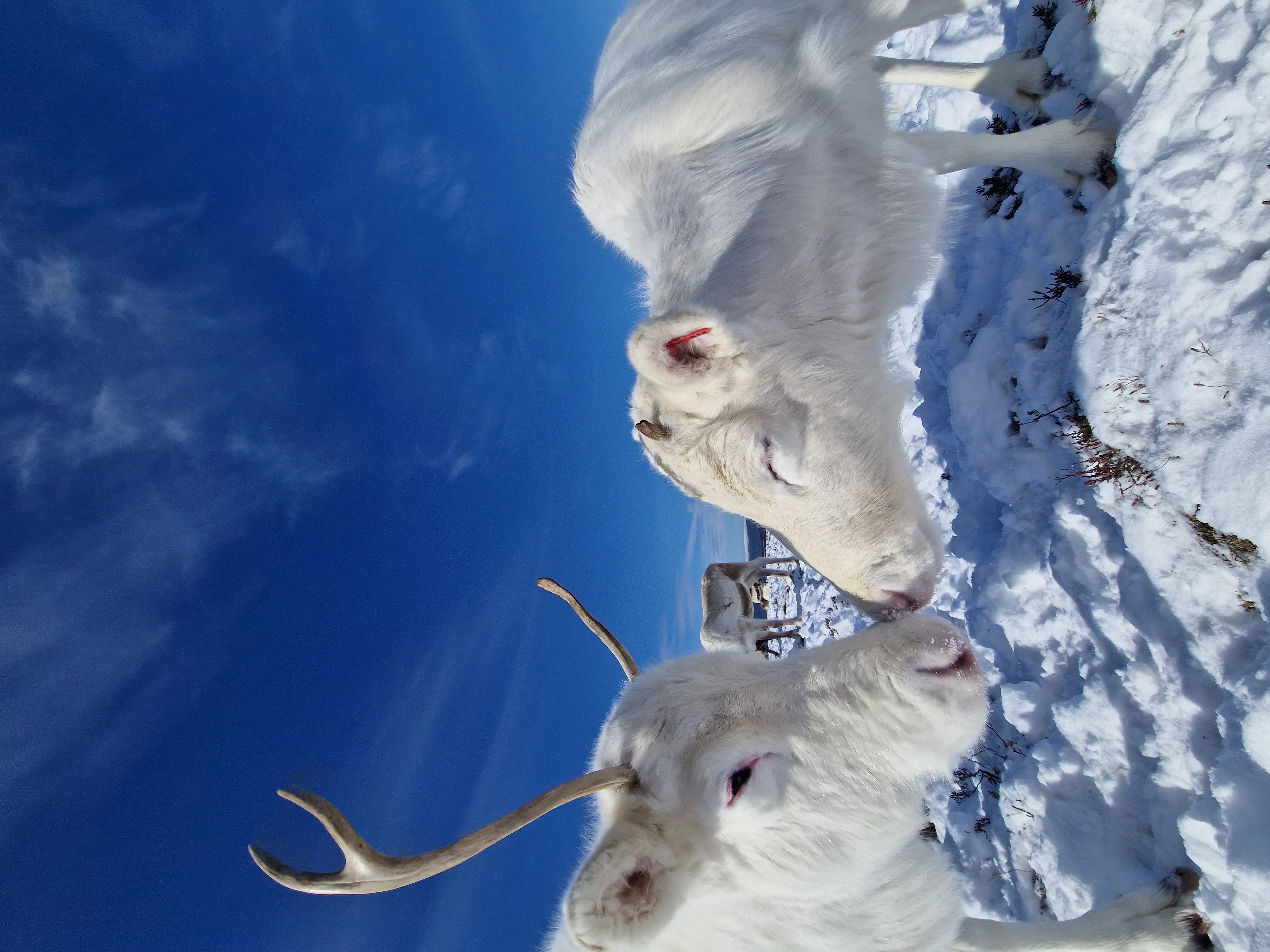
But for every couple of bad weather days, we get exceptionally beautiful days to make up for the lack of daylight hours and hard going weather…
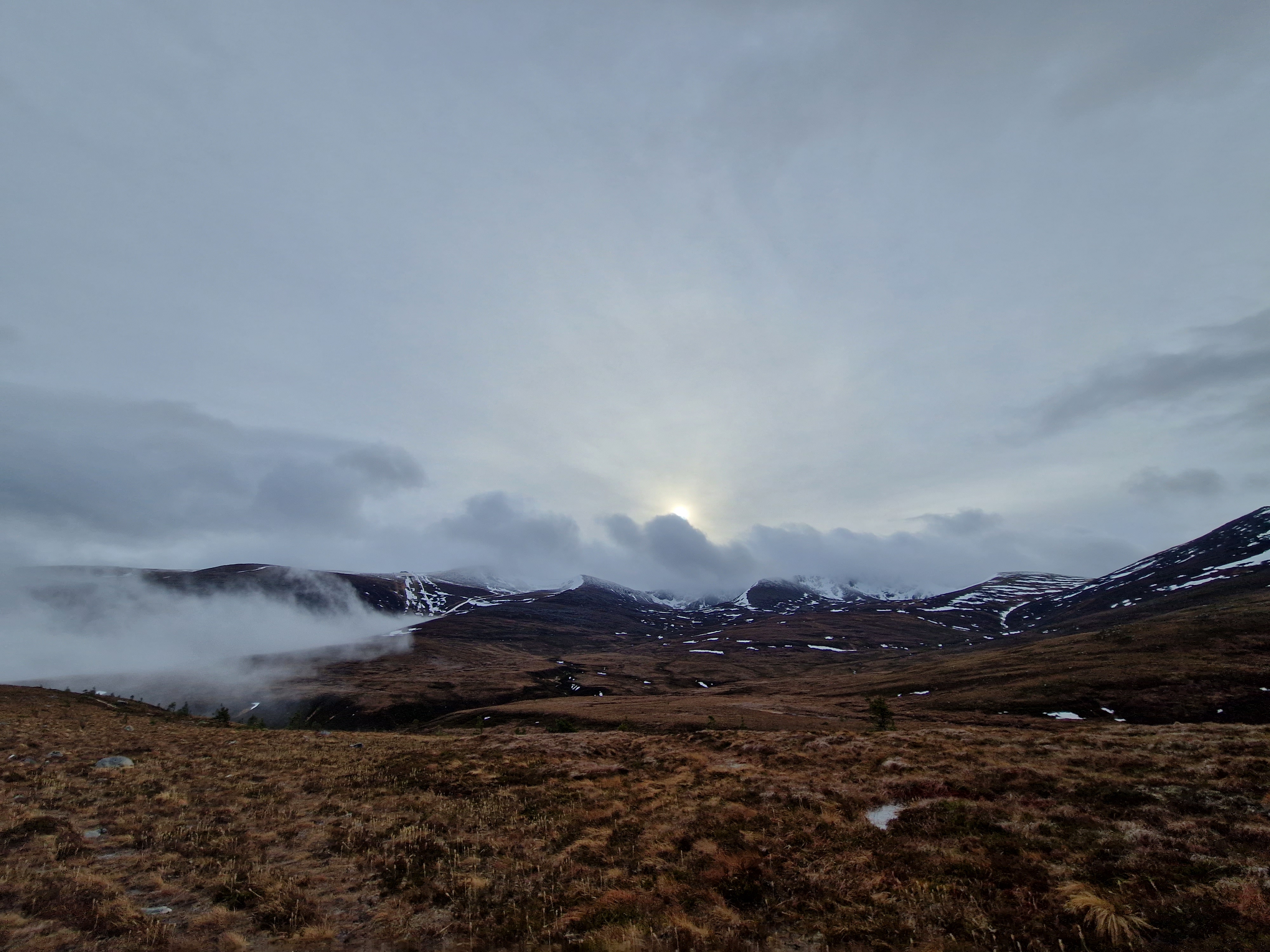
Other days we get great shows of the clouds through the mountains, I always love to see how clouds hug the landscape…
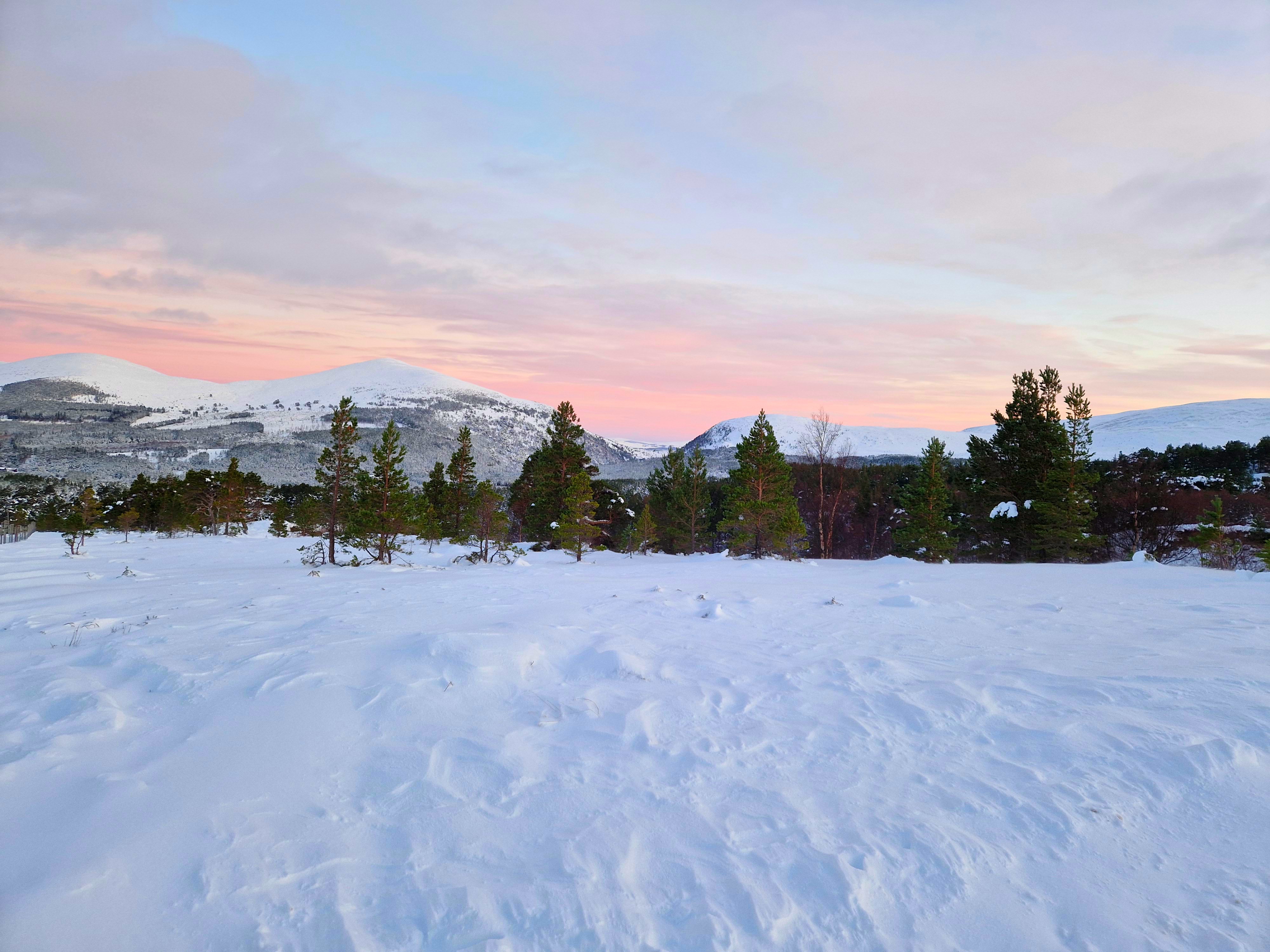
And to be honest, it’s not all doom and gloom when the sun sets early as we get to experience beautiful sunsets…
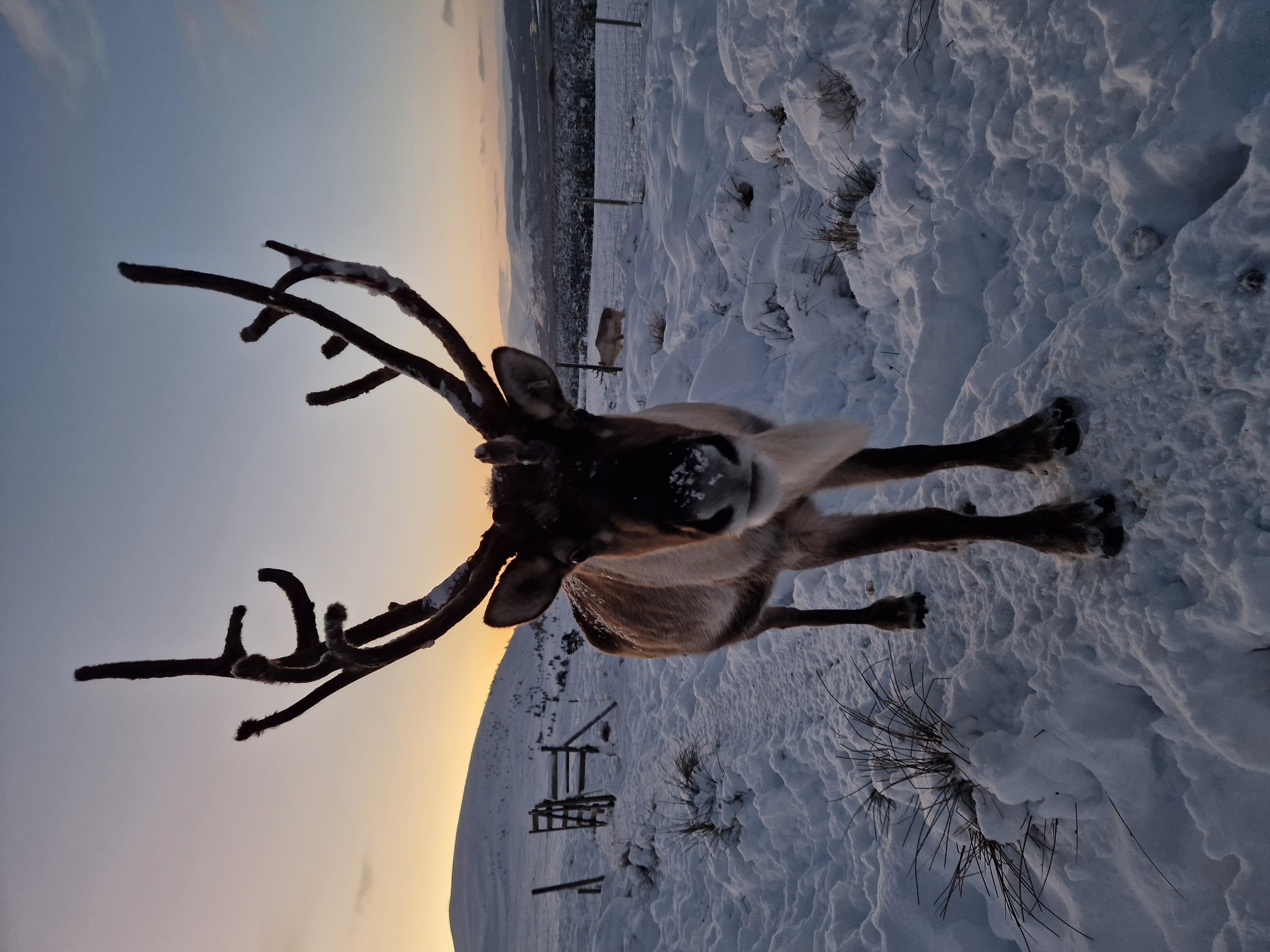
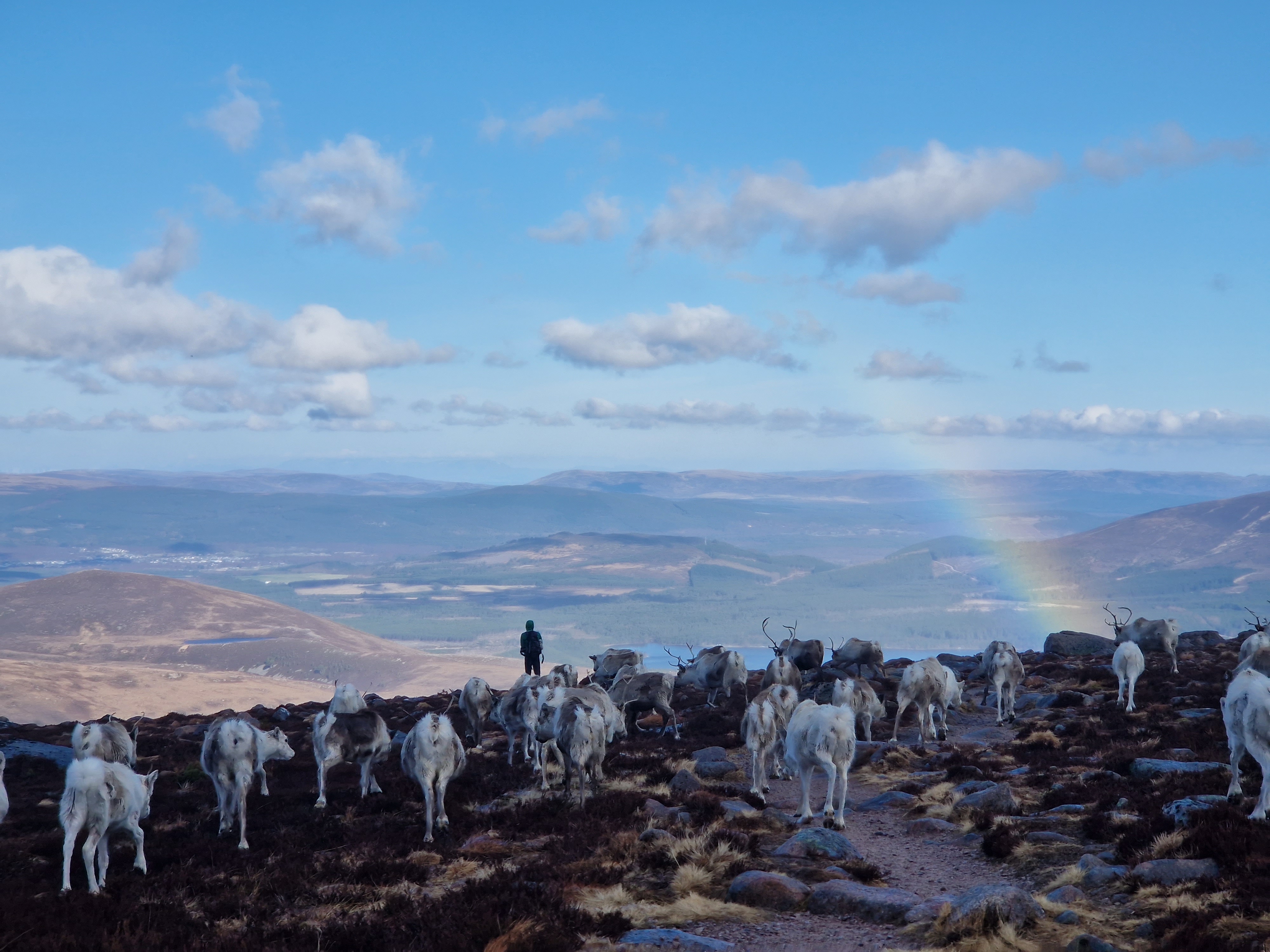
Sometimes you can head out in cloudy conditions and by the time you have found the herd the cloud has lifted, and you have the most fantastic view…
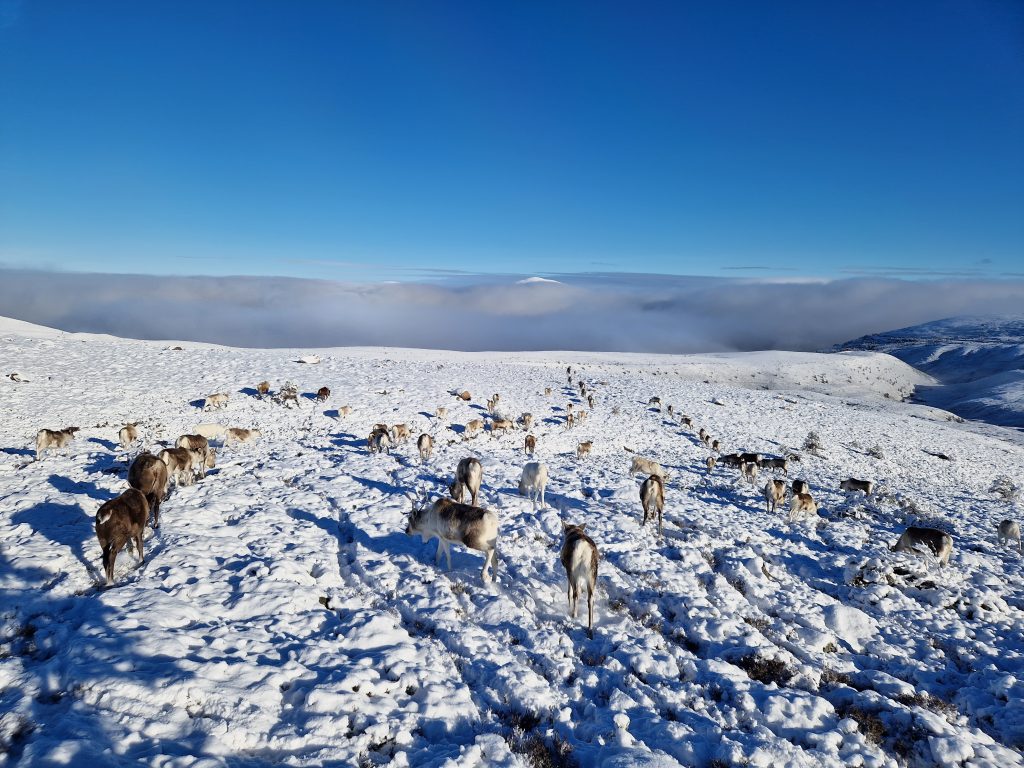
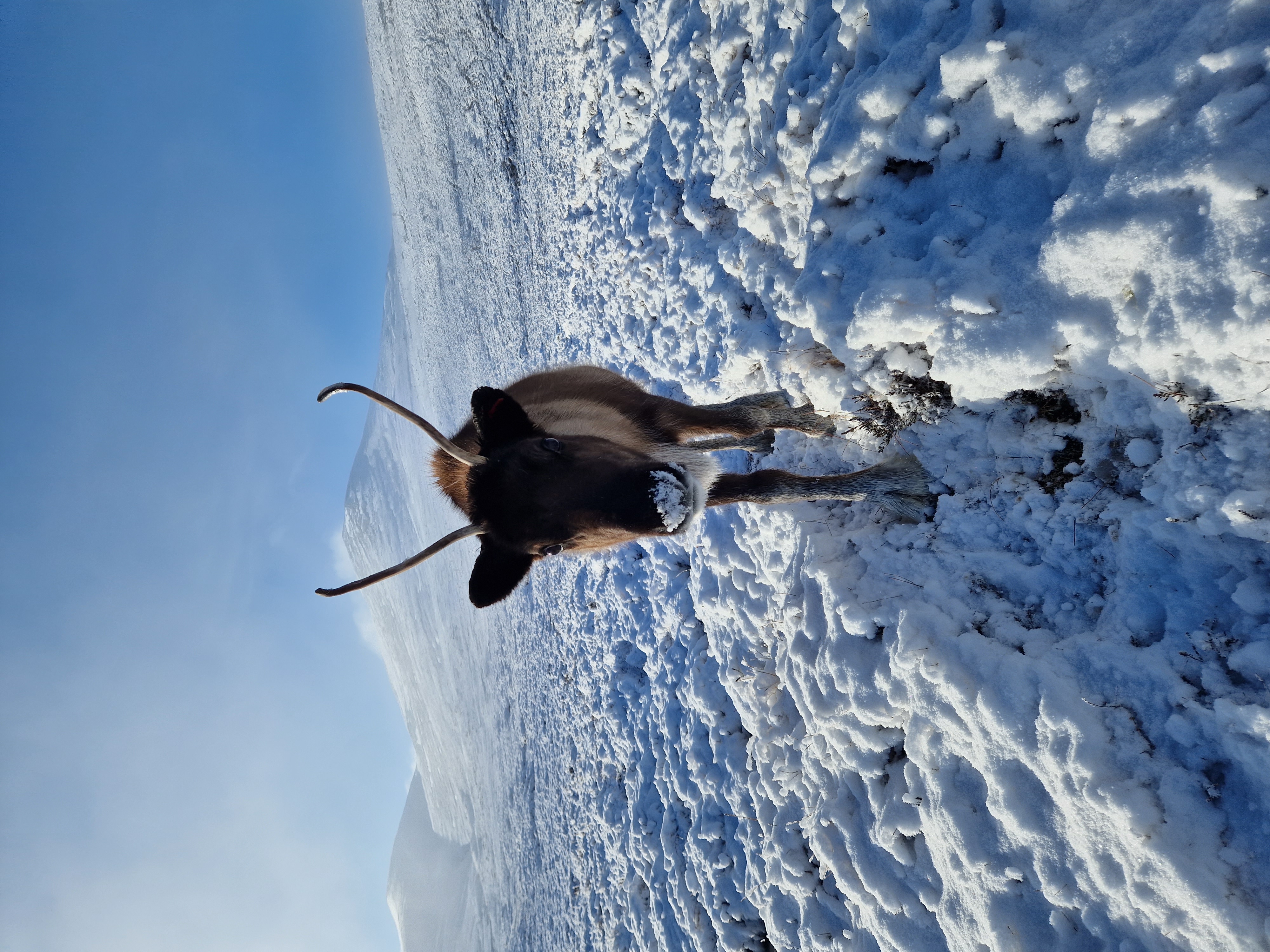
Overall, I love the winter seasons, you get to experience so many extremes when it comes to weather and even though most plants have died back, you still get such a variety of colour within the environment. More importantly, we (as herders) talk frequently about the adaptations that reindeer have to help them survive in a sub-artic environment, so it is thrilling to actually experience the elements like they do!
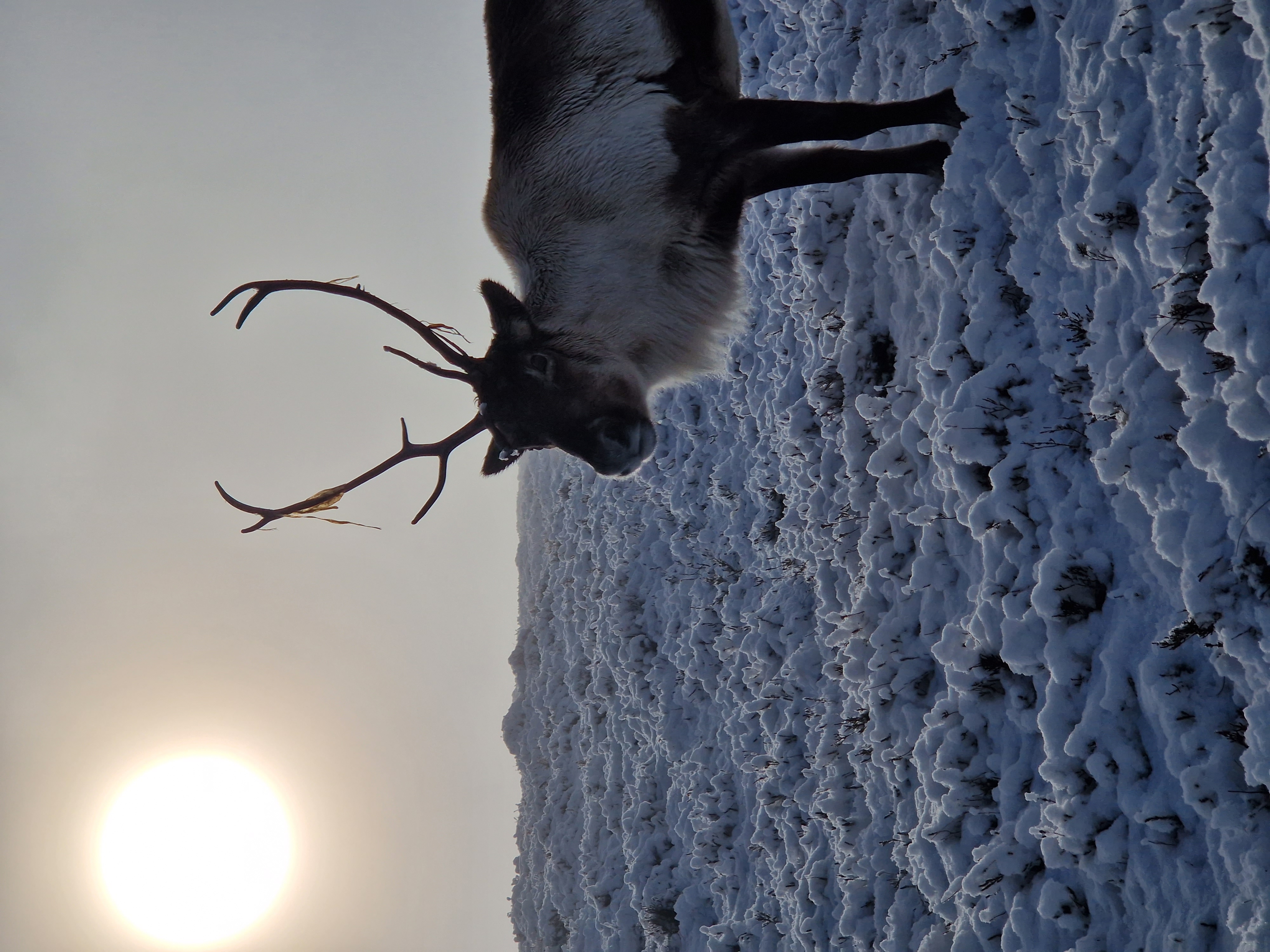
Amy
Every morning, as most of you know, two herders head out to gather the reindeer in and bring them closer for our Hill Trip at 11am. This requires dropping our bags of feed off on route somewhere closer to where we plan to end up with the herd then anything from a 10 minute walk to a 1.5 hour walk out, depending on where the herd are. Most often we have a section of uphill just to really make us work hard and get a sweat on. Most of it is pathless so winter time can be a time of year where reindeer herders can get quite fit! Or that’s what we tell ourselves…
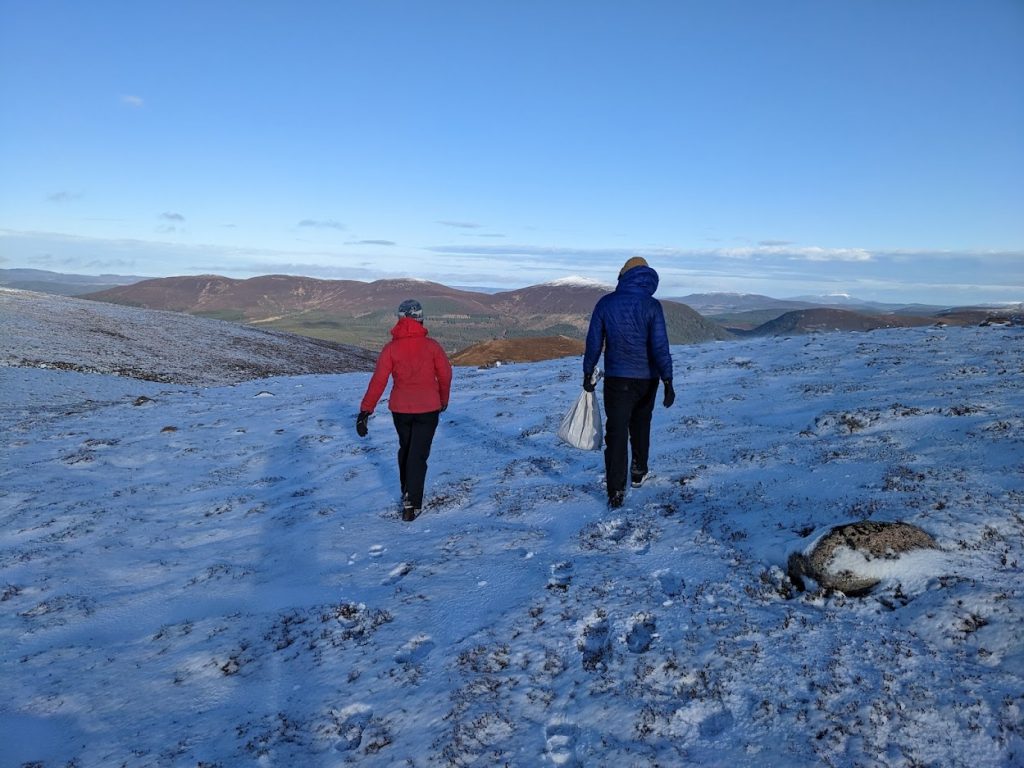
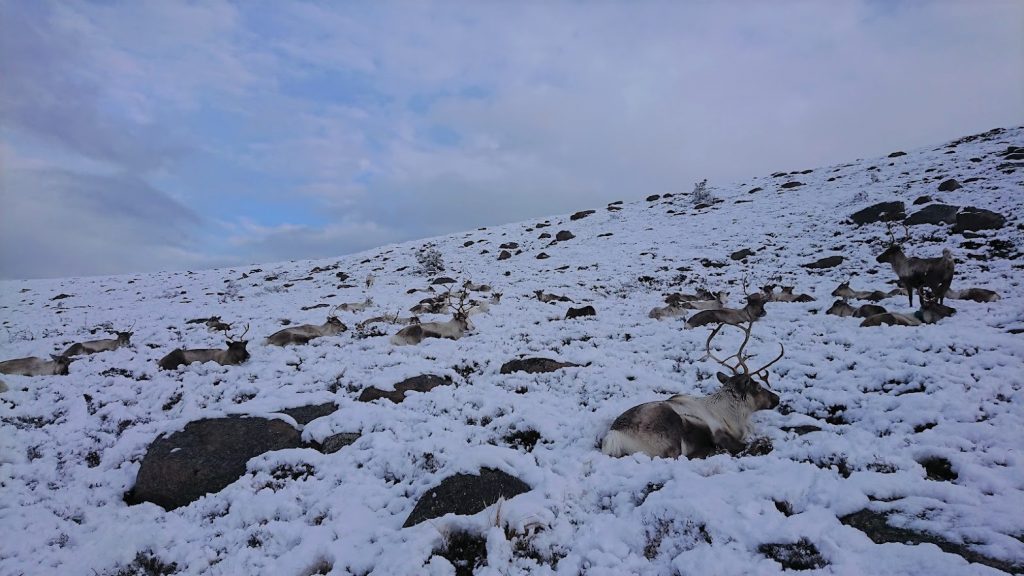
Once we’ve located the herd, usually far in the distance, first of all we will call them in the hope they will come running. However, this isn’t always the case so off we trot and we walk all the way out to them. When we reach them they are usually all lying down looking very relaxed. It almost feels a bit rude asking them to go to the effort to move location. However many people have bought their ticket and want to visit them. Plus they never really complain when they get a big bag of tasty food after their walk in. At this point there are two herders and two different jobs. One herder leads at the front and the other keep them moving from the back. So here is the role of each herder:
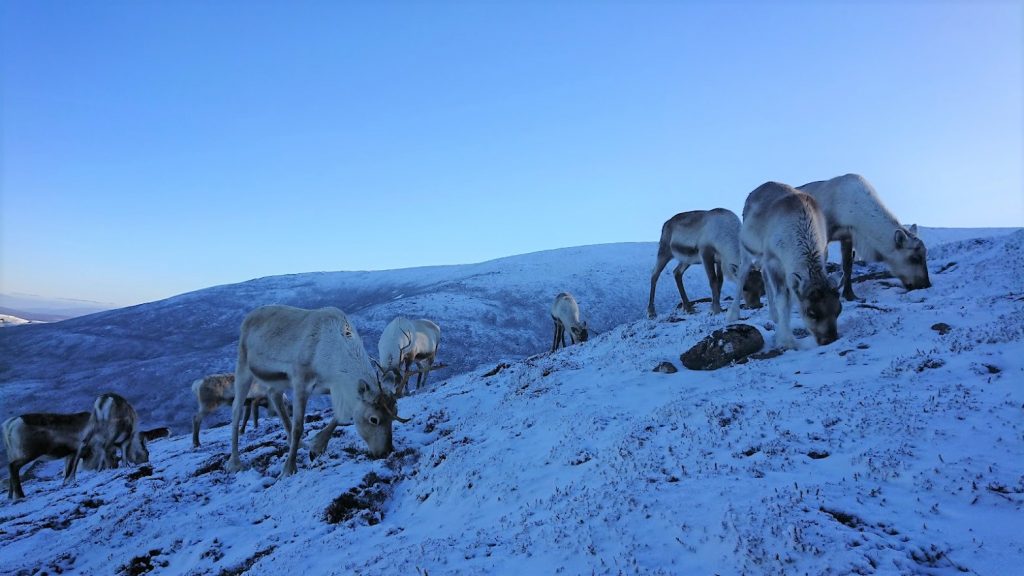
Front
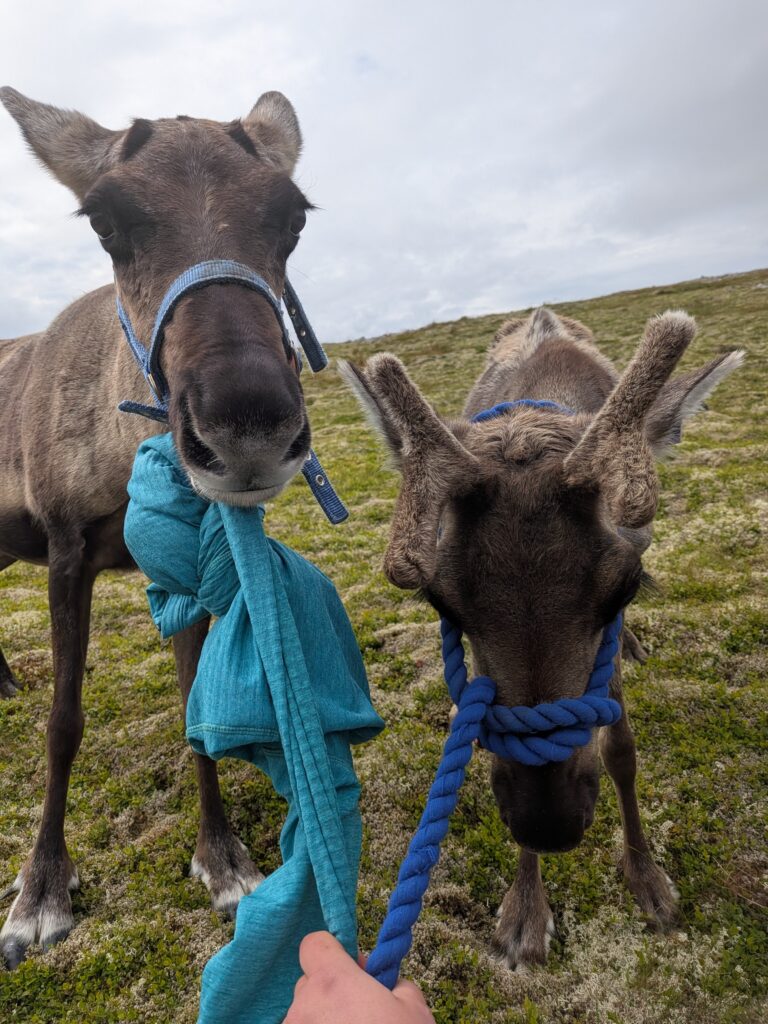
You set of with a small bag of feed slung over your shoulder and a halter, just in case you need extra bribery by putting one of the reindeer on a halter to lead as encouragement for the rest of the herd to follow. We don’t often have to put one on the halter, but we’ve got it just in case!
Some of the herd are always first to follow. Okapi, Lace and Sika are three older girls who accompany the front herder. On occasions while letting the rest of the herd catch up these front girls would get an extra handful of feed, much to their delight! Hopscotch and family (Kipling, Juniper, Tub and Fab) are also front runners… ruled by their stomachs.
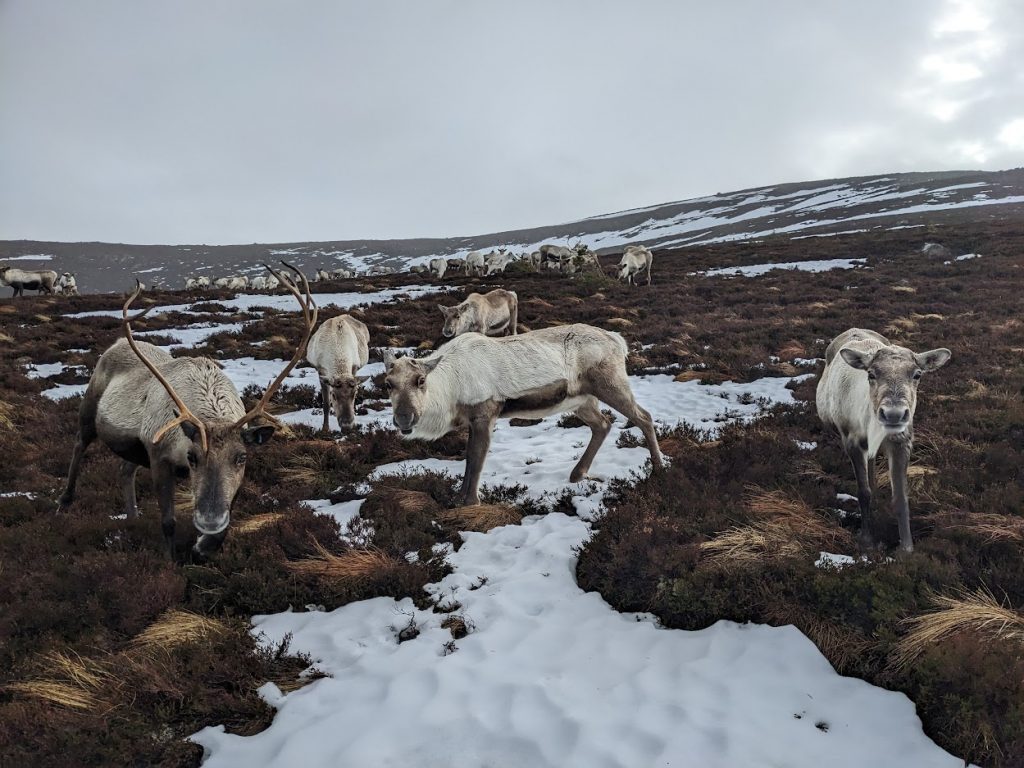
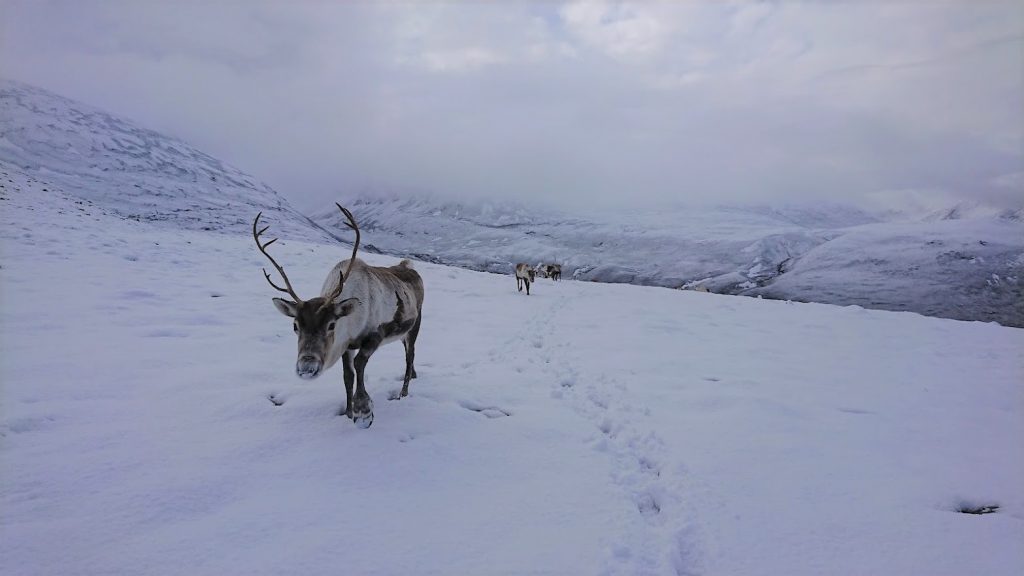
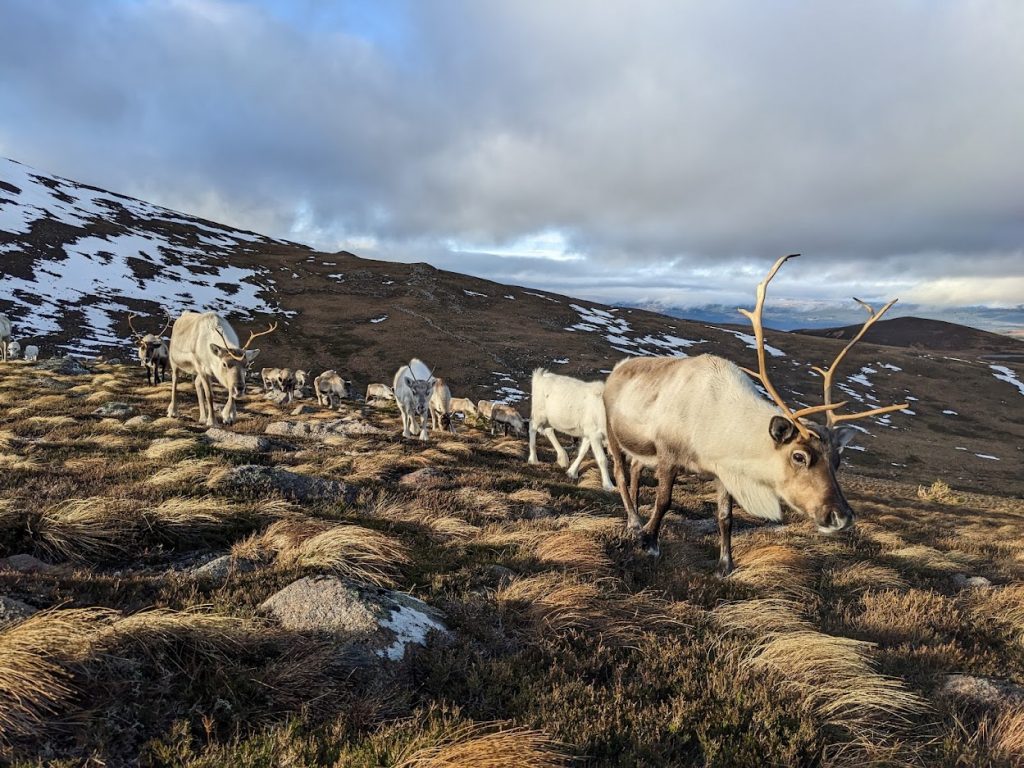
While leading the herd down inevitably you try to take the easiest route. Not too steep, not too rough but it doesn’t matter how much you think you’ve picked the best line, the reindeer always prove you wrong by taking a slightly different one. Lets face it, they do know the hills better than us. It’s always fairly amusing being the front person when it’s a foggy day. You have to pick the best line trying not to lose your herd or your colleague at the same time. There is lots of calling, or reindeer chat/encouragement which translates to ‘follow me girls’. Shaking the bag of feed, offering handfuls, zig zagging our way down the hill in front of the herd. You do get a good opportunity for photos but it’s a fine line to keep the herd moving and getting a good photo so we cant hang around too much.
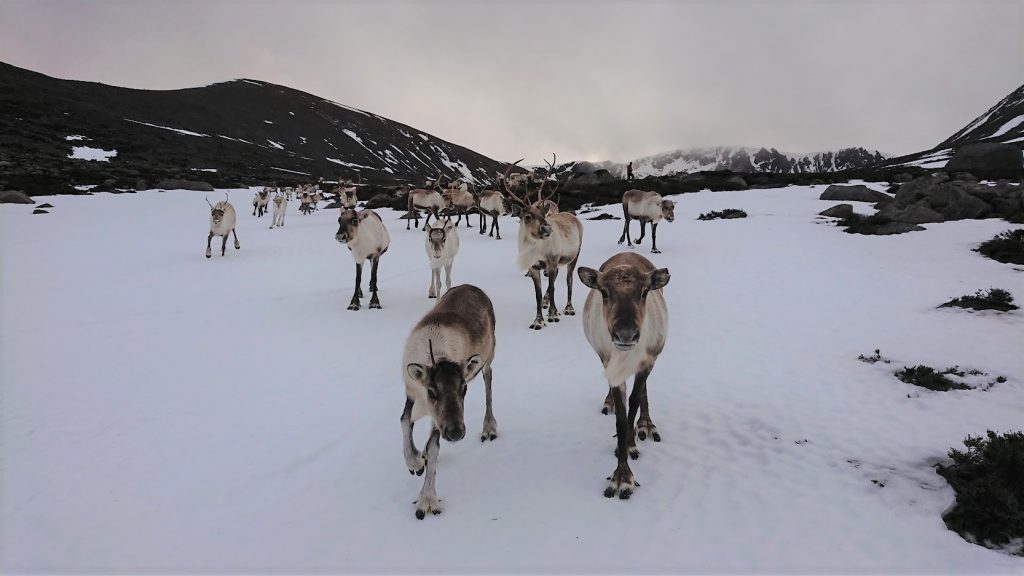
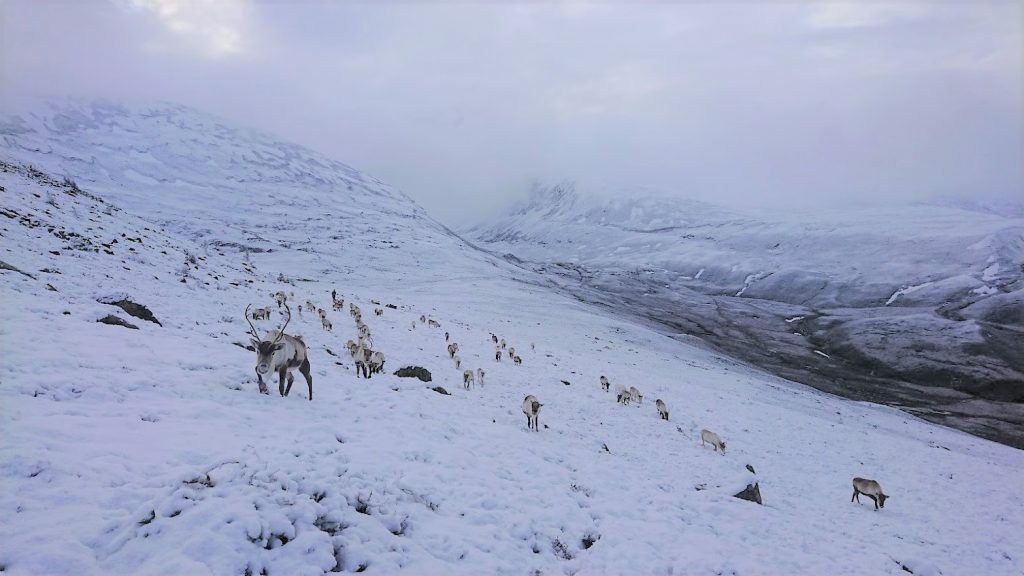
On the whole reindeer prefer to follow uphill as opposed to downhill so we are quite canny with our route choices but there are certain points of bringing them in which we know are pinch points so once we’ve got them past that we know they’ll come no bother. Then, once you’ve reached your destination there is a big bag of feed waiting for you which was left prior by us prior to walking out.
So that’s the front herder job, now for the herder following at the back.
Back
Once you’ve reach the herd and font herder starts with the encouragement and trying to get the herd to follow its now the job for the back herder to keep up the momentum from behind. To begin with the reindeer are feeling pretty relaxed and a bit lazy so a bit of clapping, woosh woosh noises and generally pushing those back few reindeer usually gets them going. We don’t need to push them hard, just keep them going so often you act like a sheepdog zig zagging left to right. Like the trend at the front, there are also reindeer who are always at the back of the herd. Gloriana with her 2022 calf Rocket as well as her 2021 calf Beanie are usually ones at the back for us to keep moving.
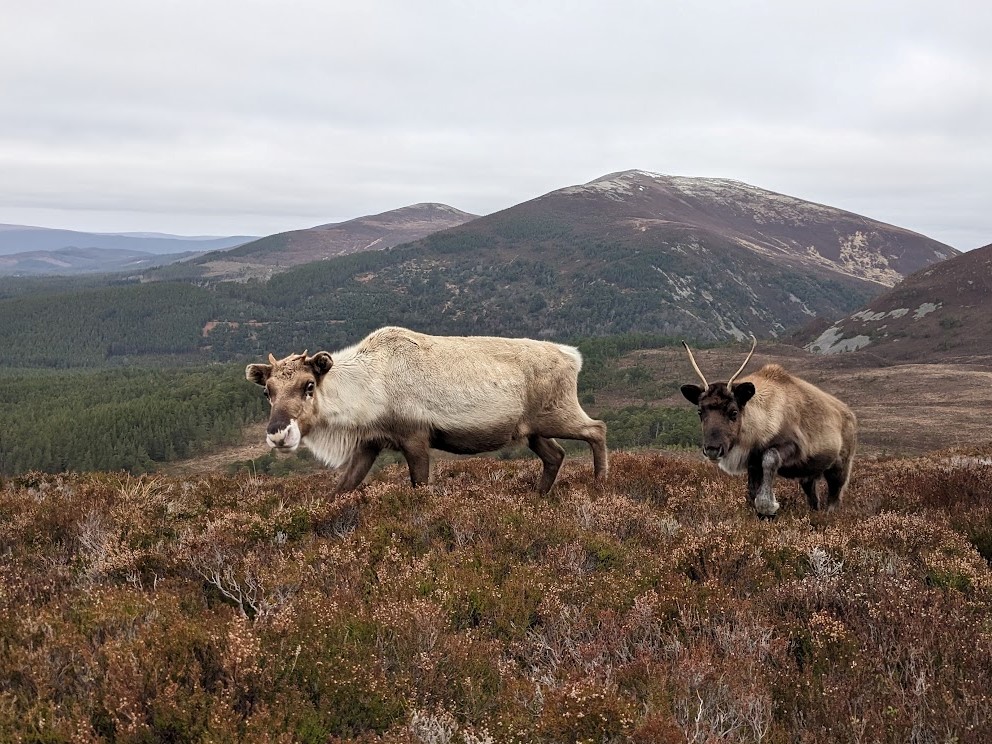
Once you’re 10-15 minutes into starting the reindeer tend to follow quite nicely then the back herder can just enjoy hanging out with them, pootling (technical term) in slowly behind. This is also a nice time to get photos but you are more likely to get photos of reindeer bottoms at this point, which isn’t all bad, they do have very beautiful bottoms!
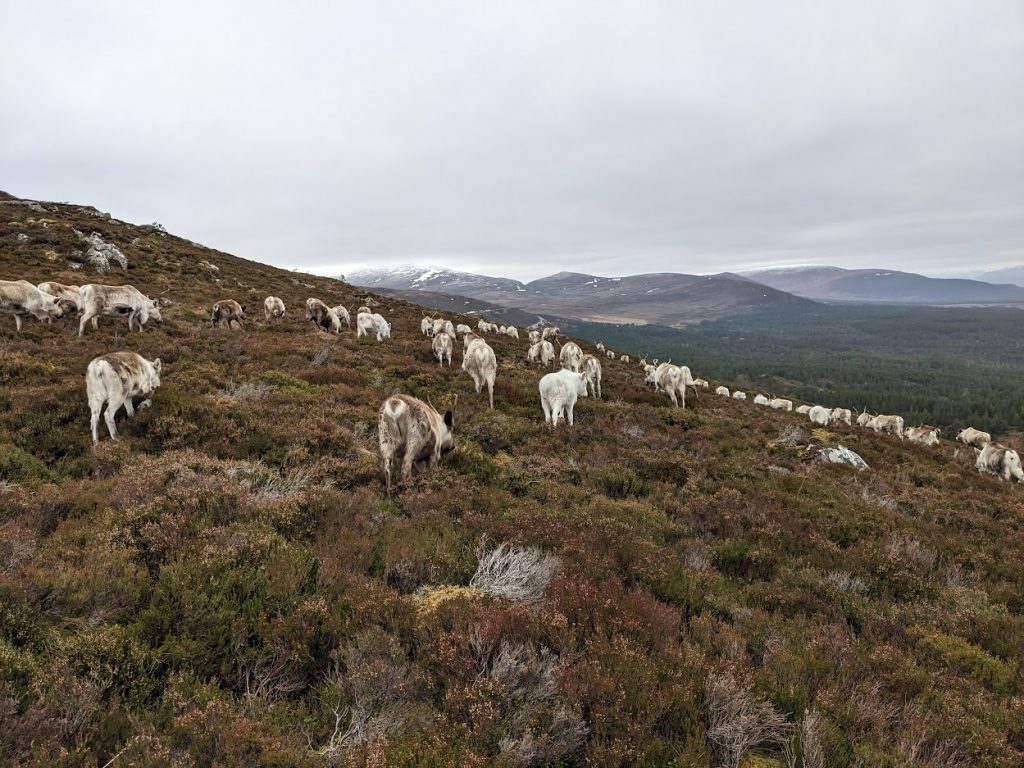
I think on the whole herders prefer being at the back. There is less pressure on route choice and you’re not spending your whole time trying to encourage the reindeer, instead you just get to walk alongside them as they follow. Inevitably some herders end up at the front more than others and this is usually down to experience and knowing the lie of the land, route choice the way the reindeer like to walk and the fine line between going too slowly so the reindeer just graze more and getting far enough ahead to keep up momentum. As a front herder you spend less time with the reindeer themselves so obviously we all like being at the back.
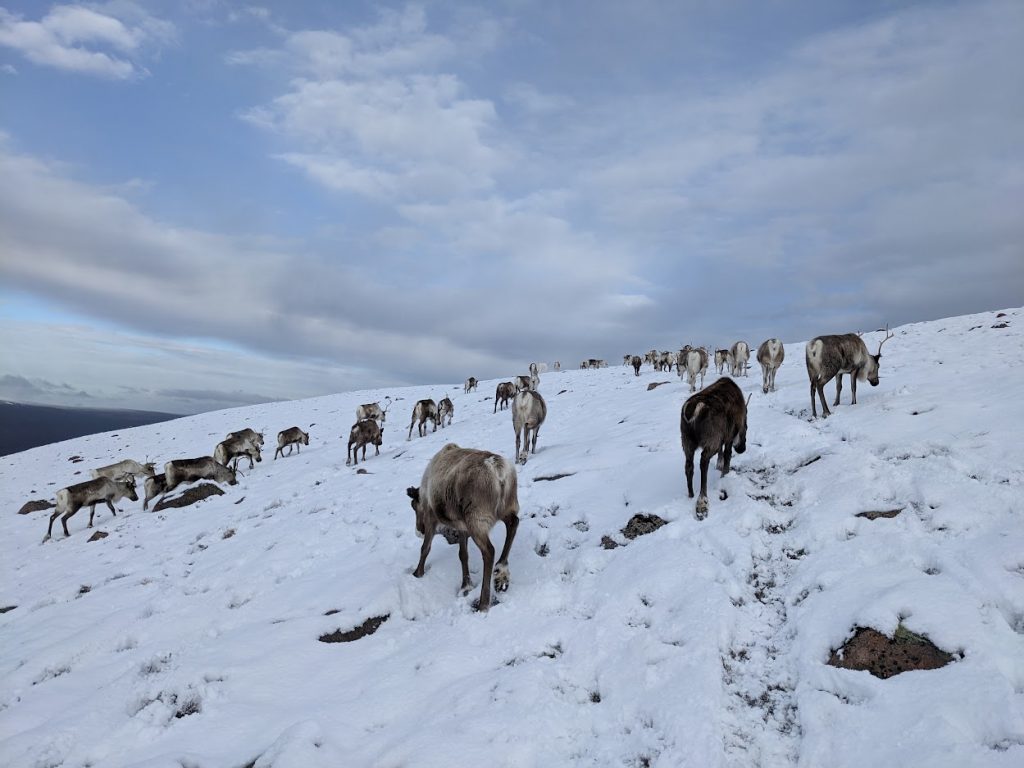
At the beginning of winter and bringing reindeer in for hill trips I’m happy to do the front as we’re all a bit rusty having not done it for a year and I’m pretty confident with route choices having done it for so long. Equally I’m happy for others to learn from me. But come March onwards we’ve all had plenty of opportunity to know which way to go and I like to take my turn at the back.
Fiona
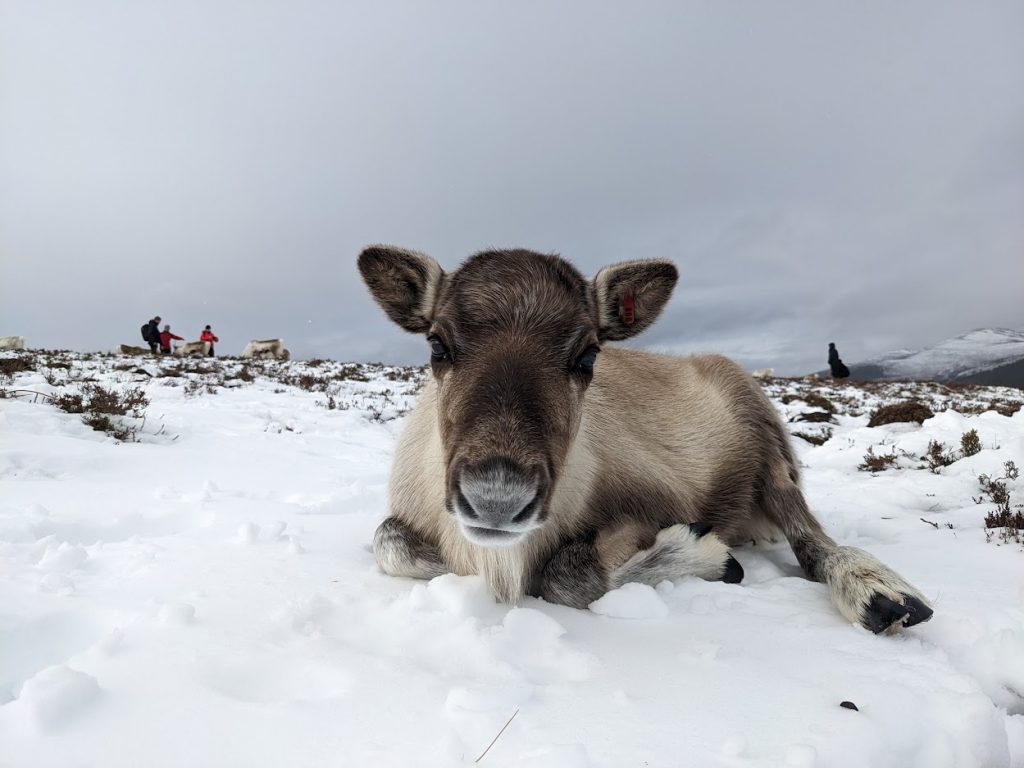
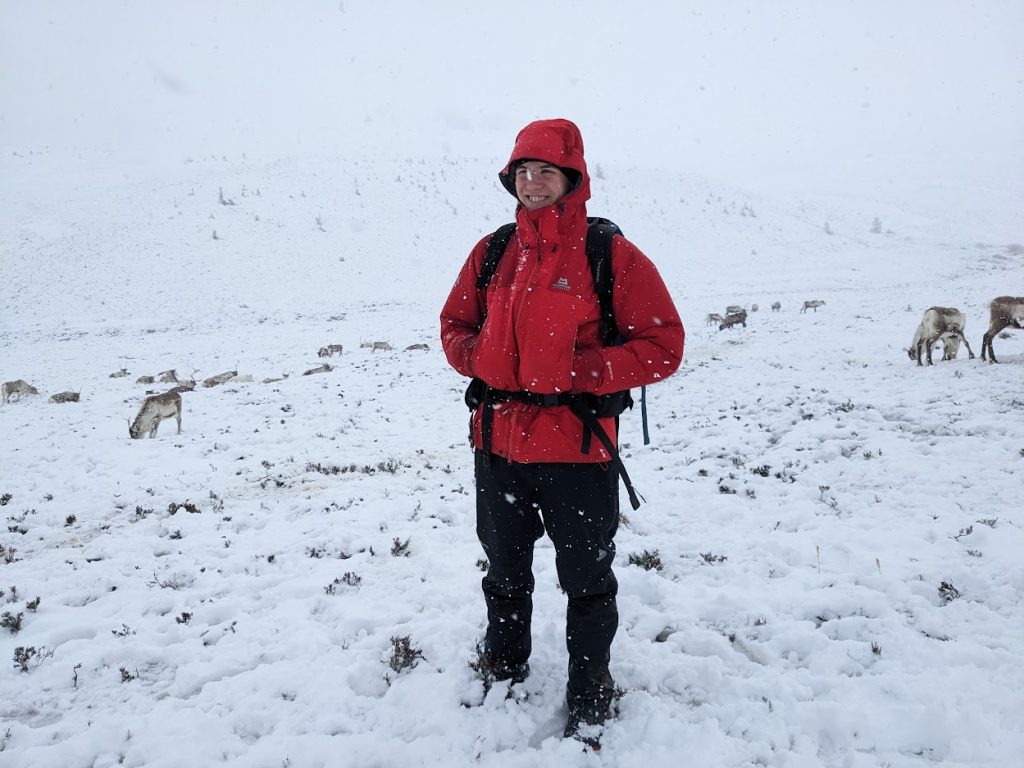
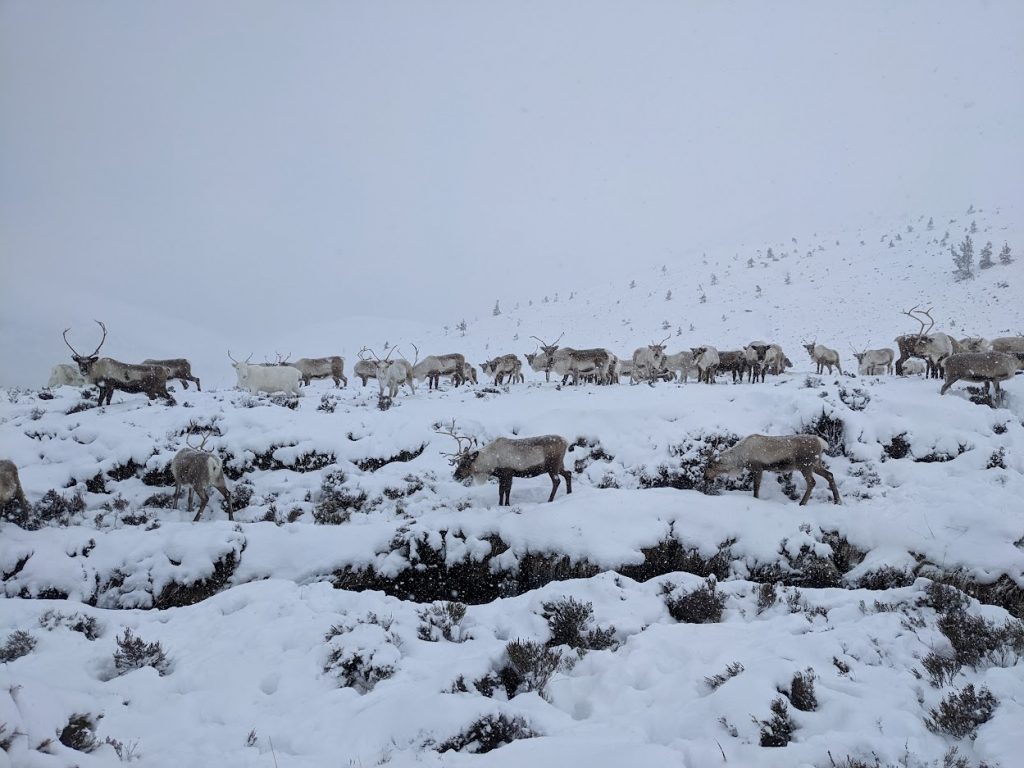
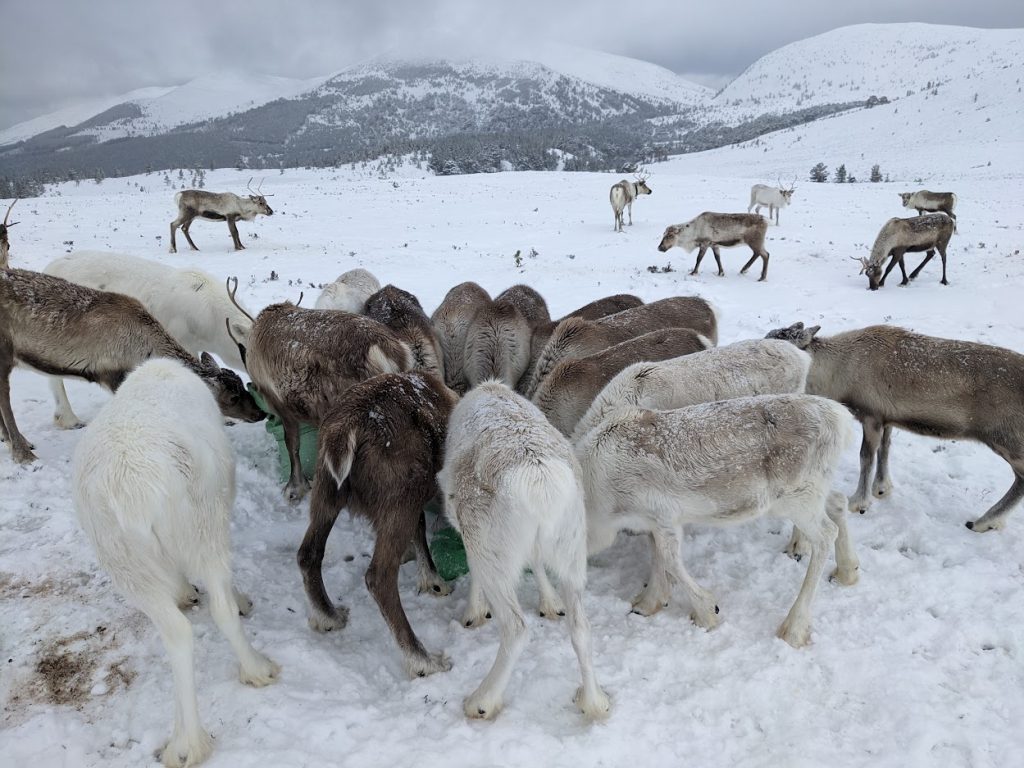
It’s the last blog of the month and so time for another photo dump! March has been a relatively quiet month, with the Paddocks shut and fewer visitors around, but it’s still felt very busy for us herders! Generally only four members of staff work each day throughout March. The mornings are taken up by two herders heading out to find and move the free ranging herd, and the other two herders lead the Hill Trip at 11am. So, by the time we’ve all had lunch the afternoons seem to totally fly by. We also had some very snowy and wintery weather in the middle of the month, making our lives a little more interesting and keeping us on our toes! Hopefully, we’ve managed to tick off all the important jobs in time for the Easter Holidays which kick off on the 1st of April.
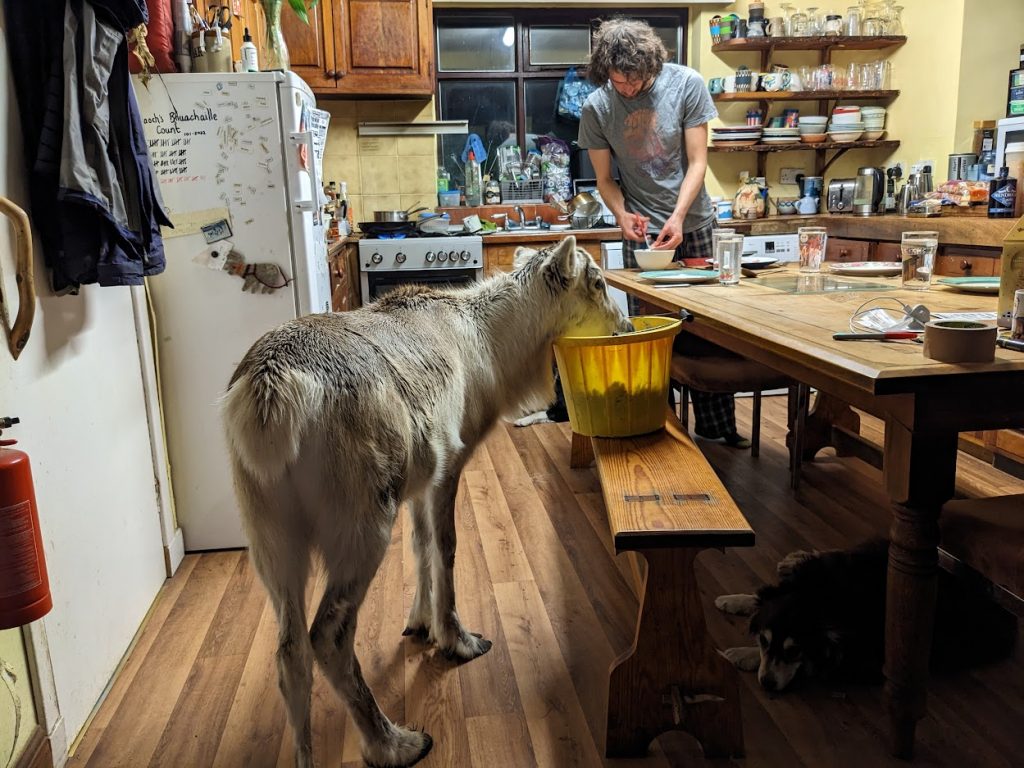
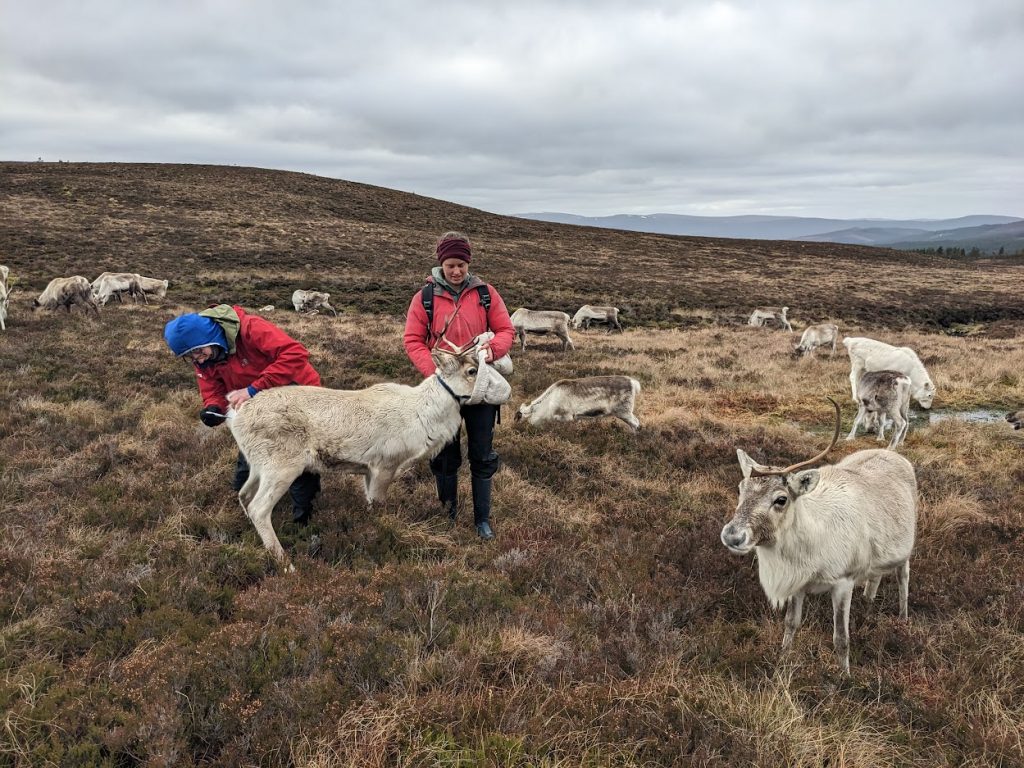
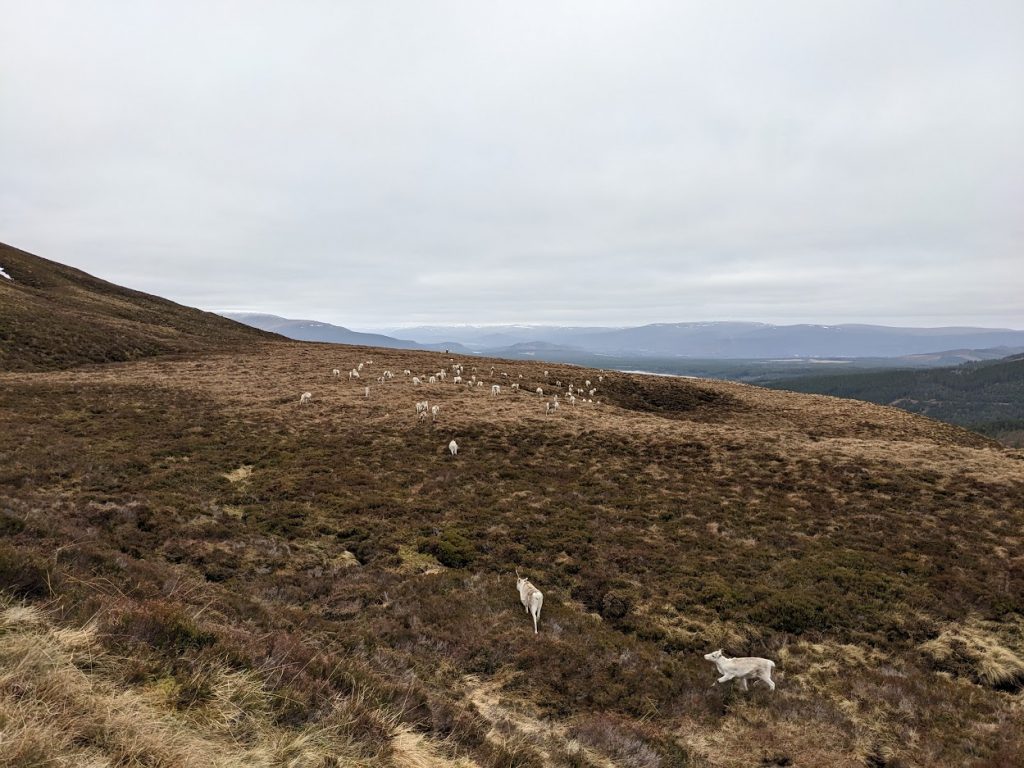
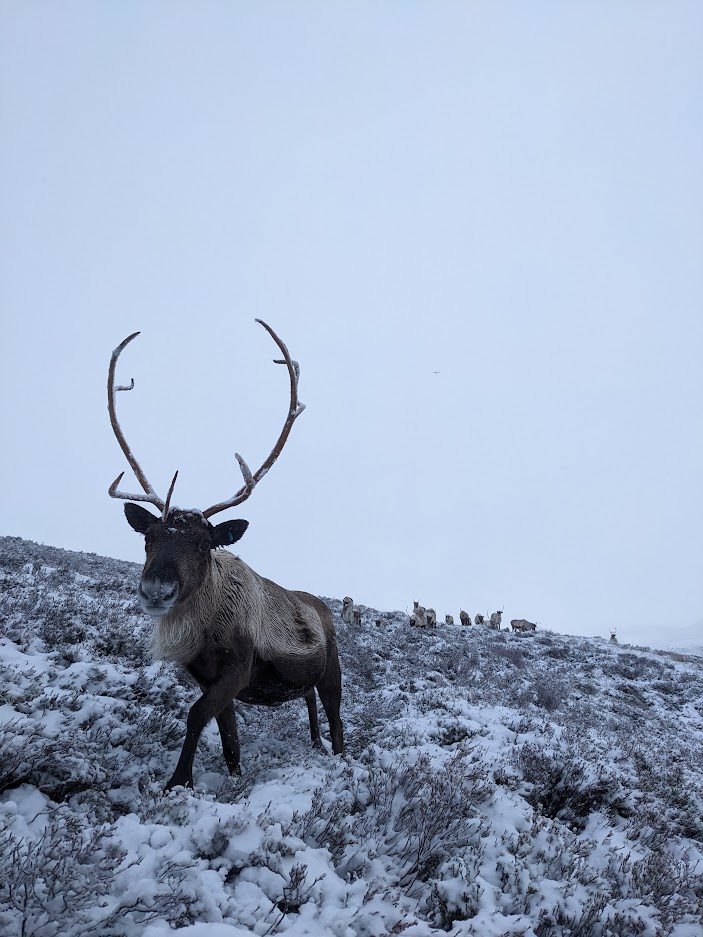
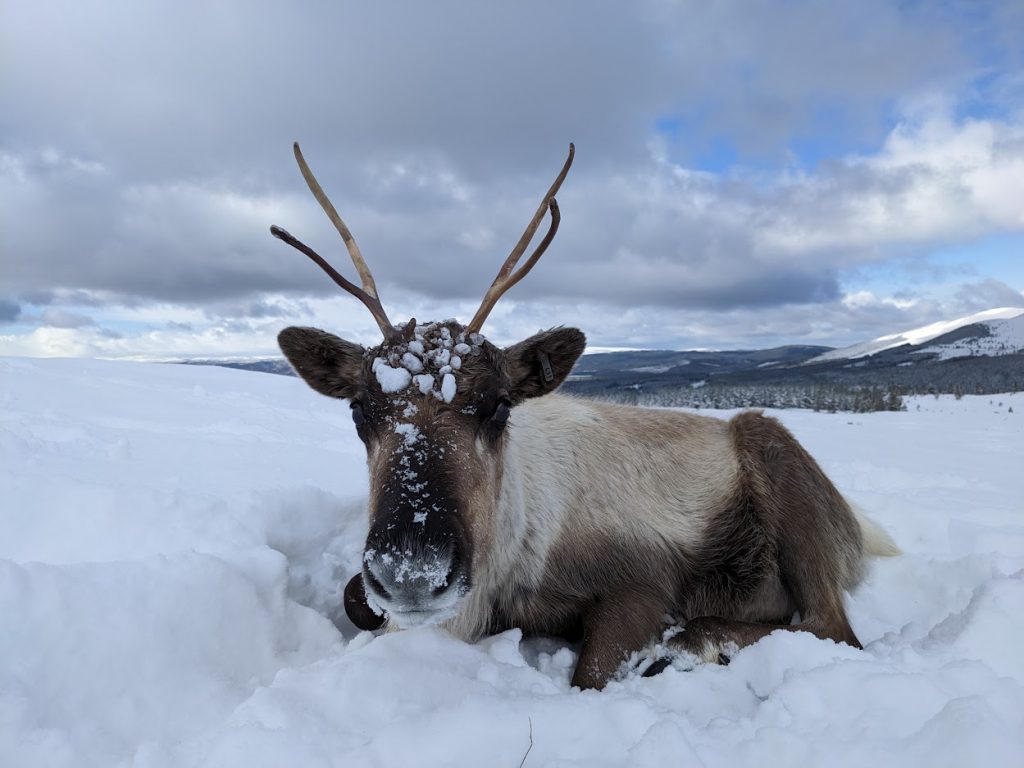
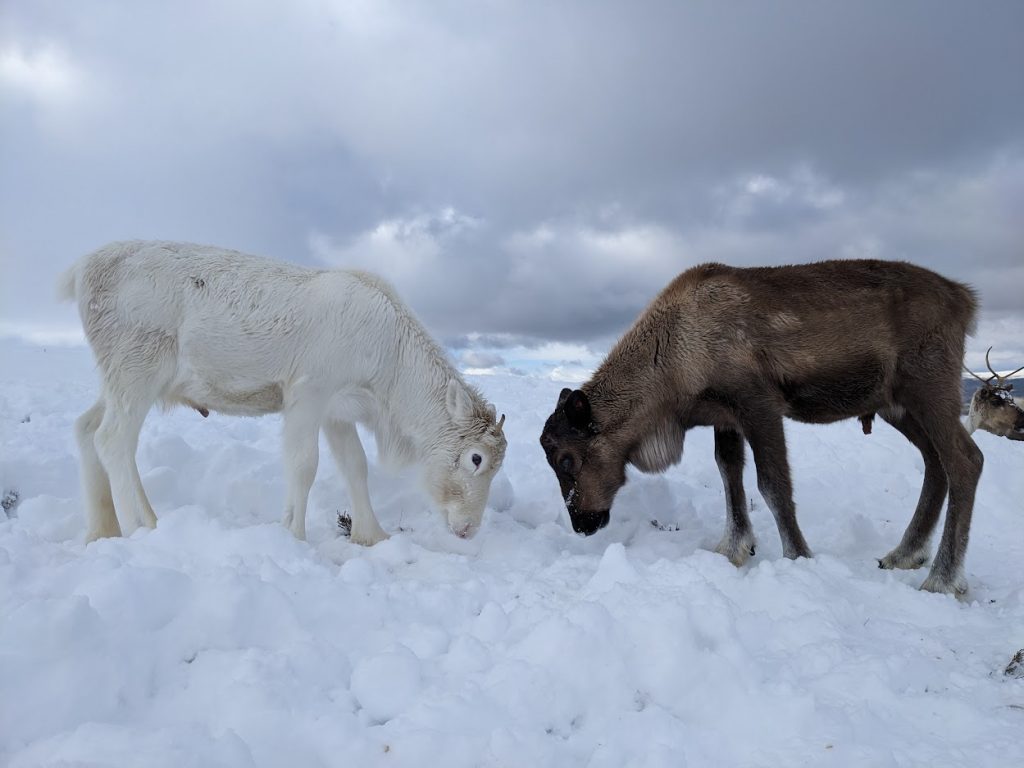
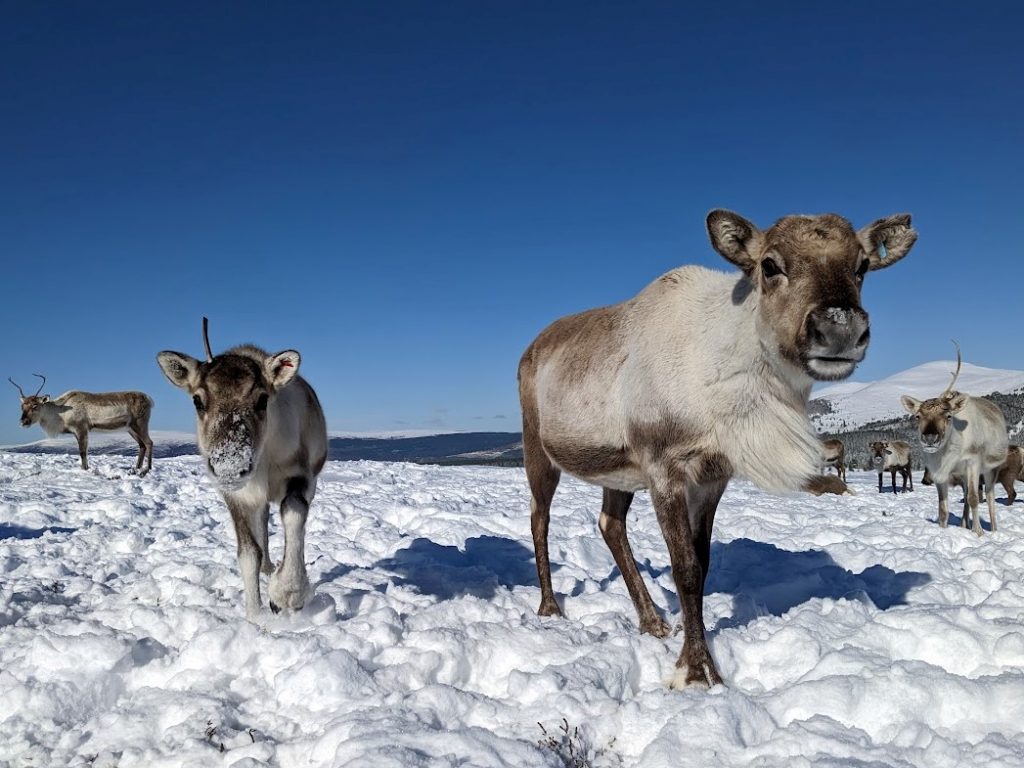
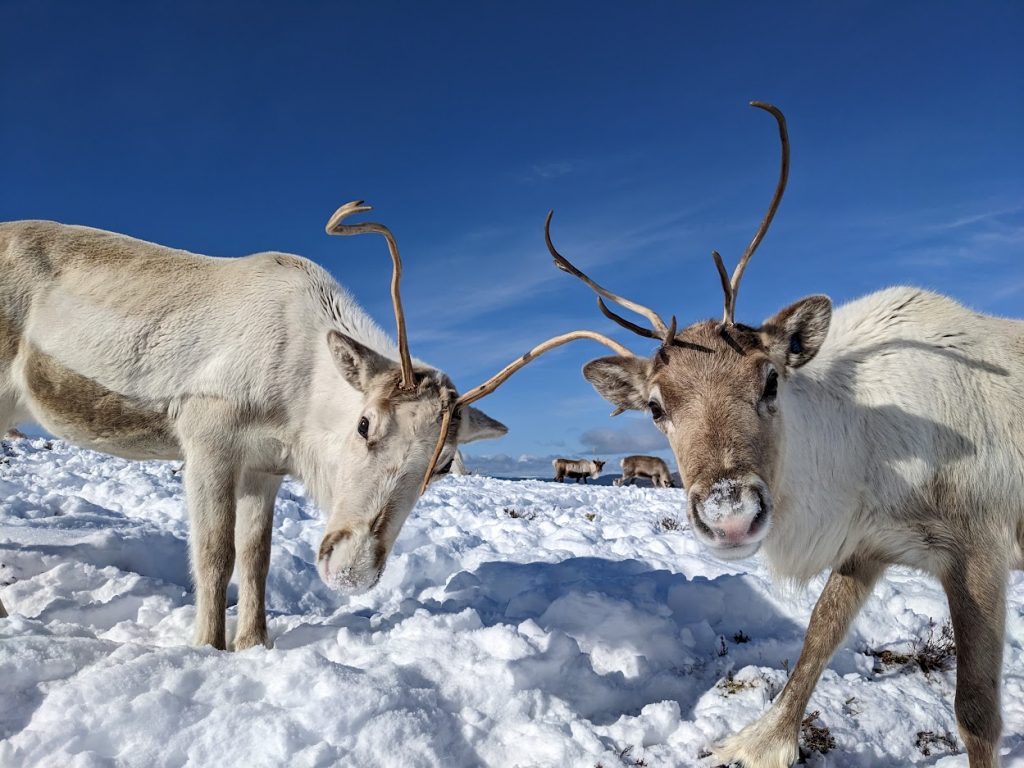
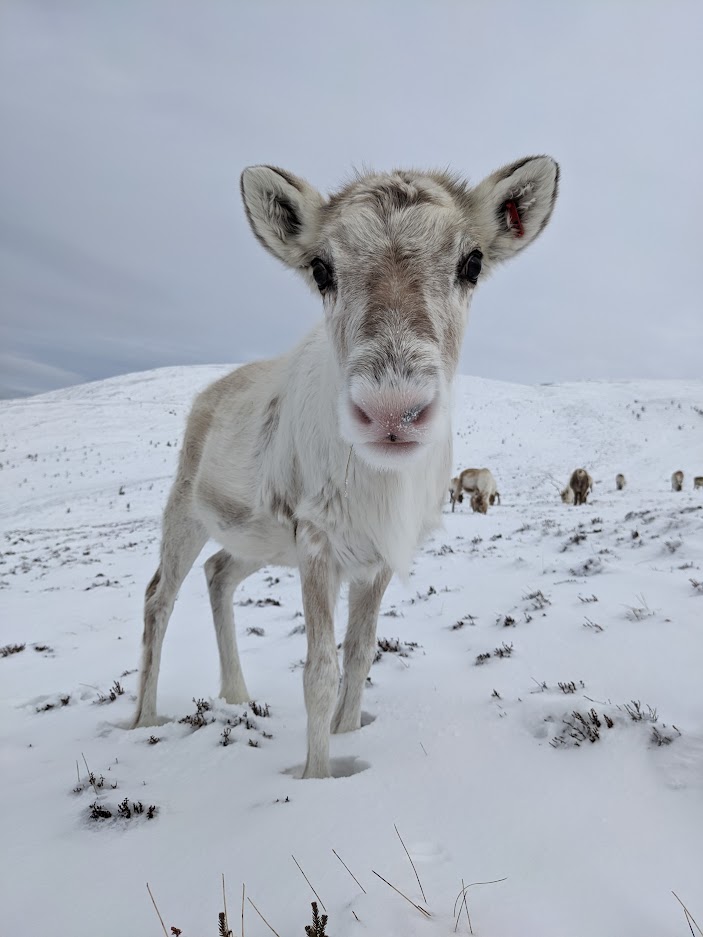
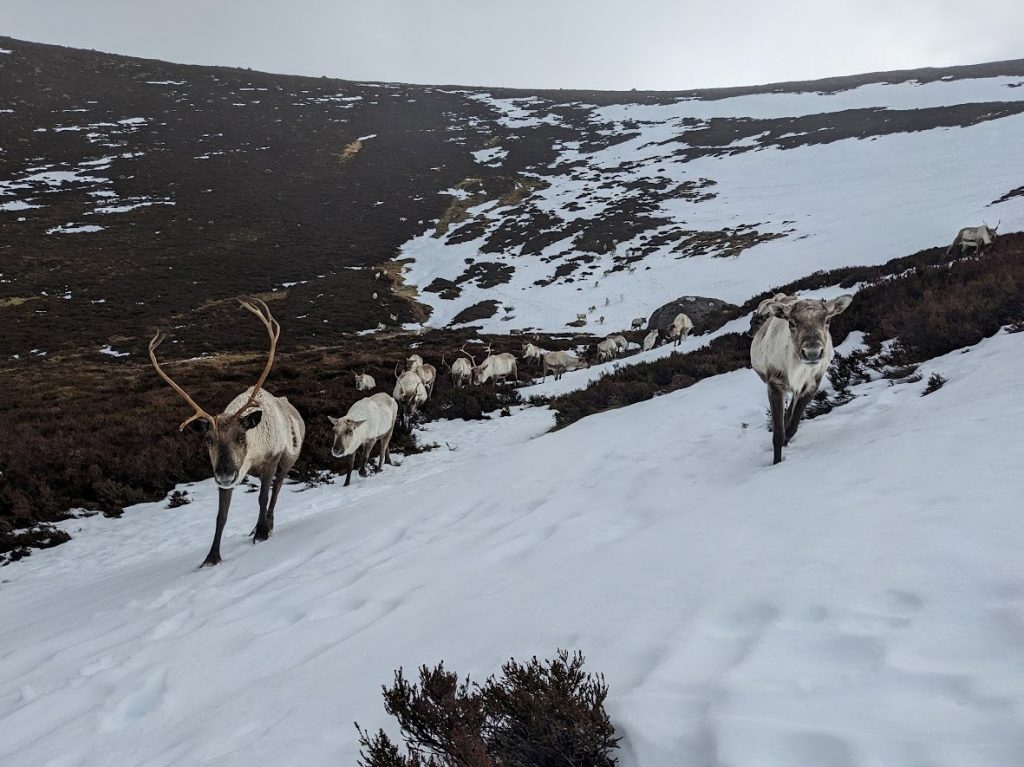
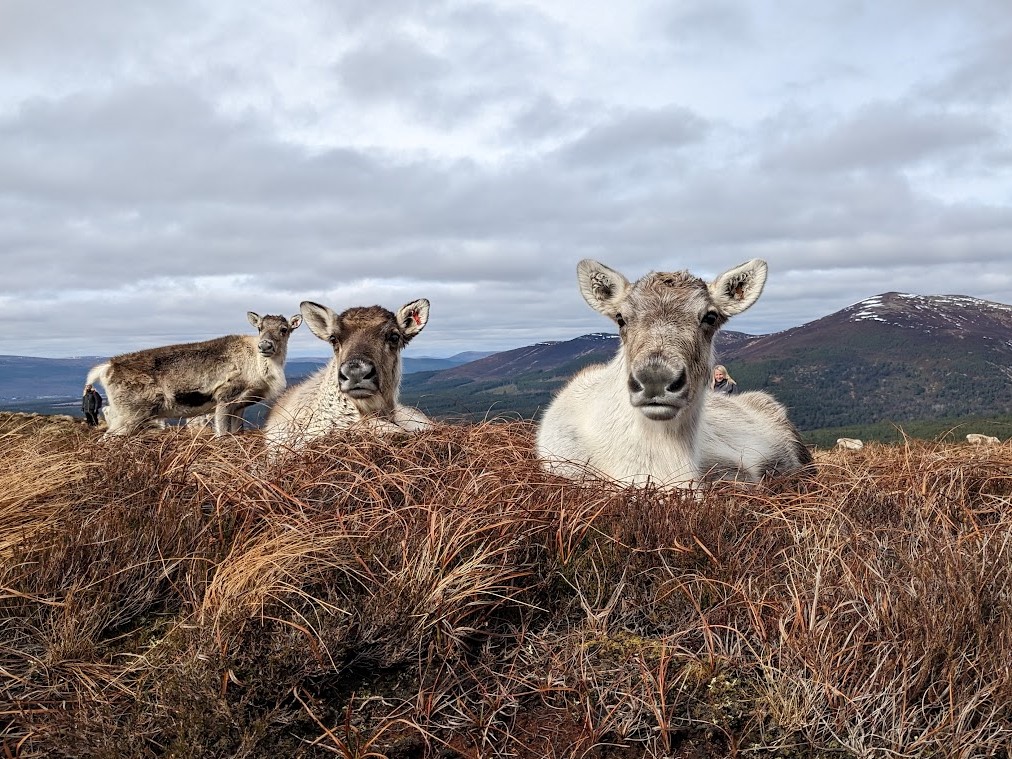
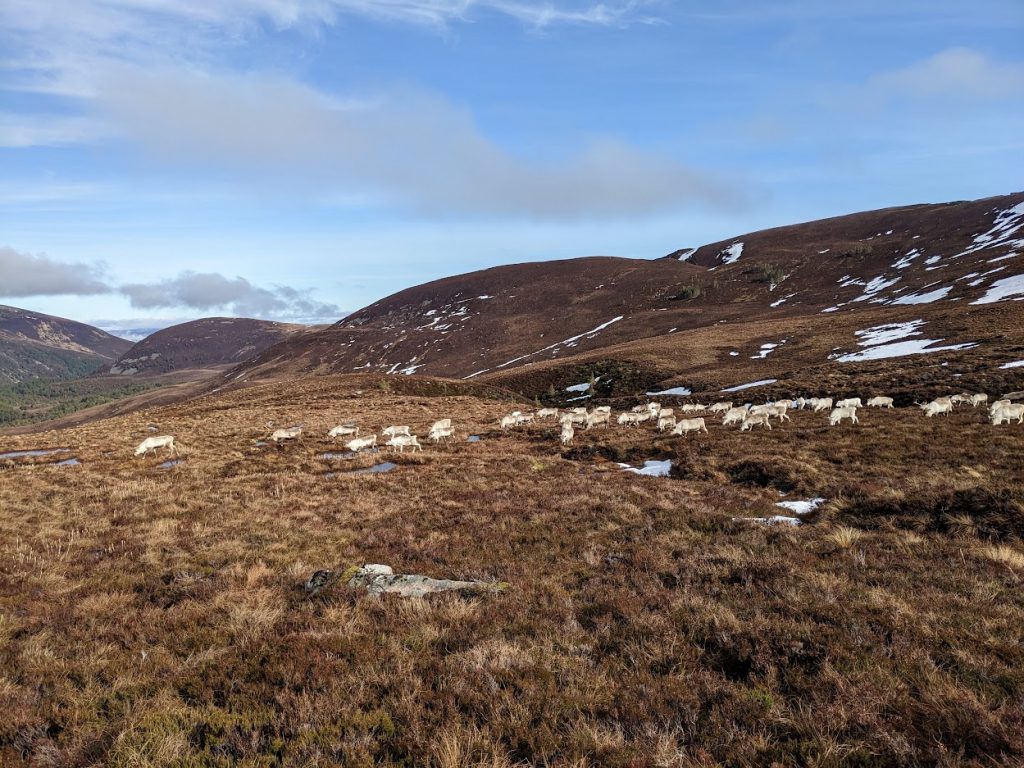
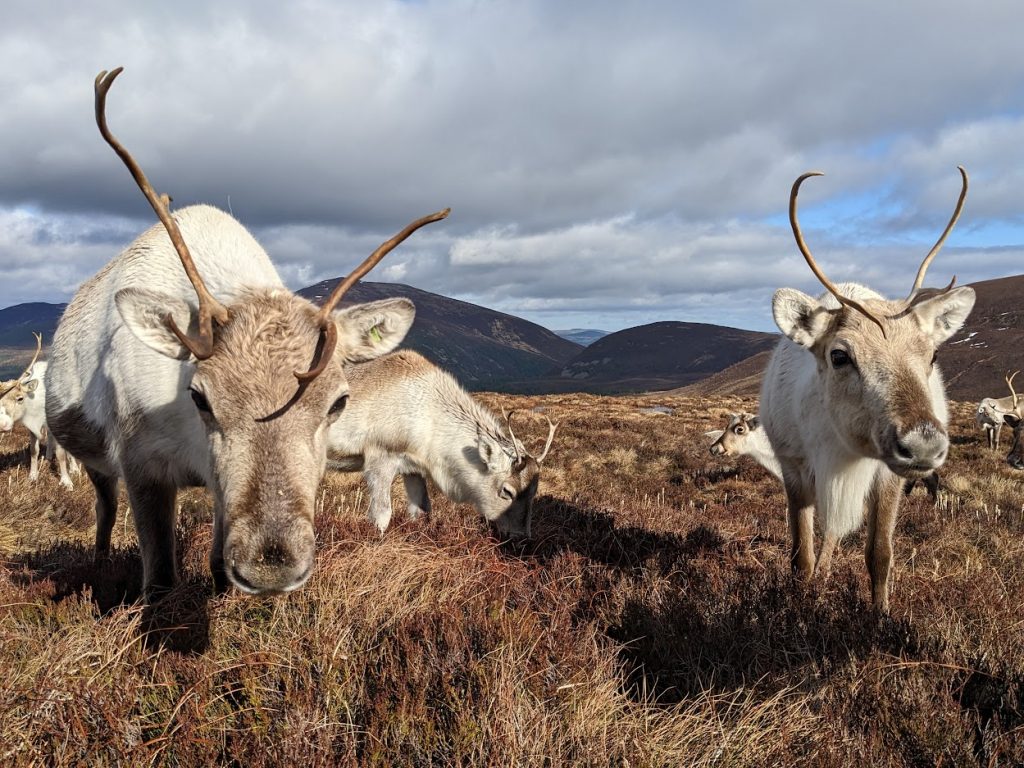
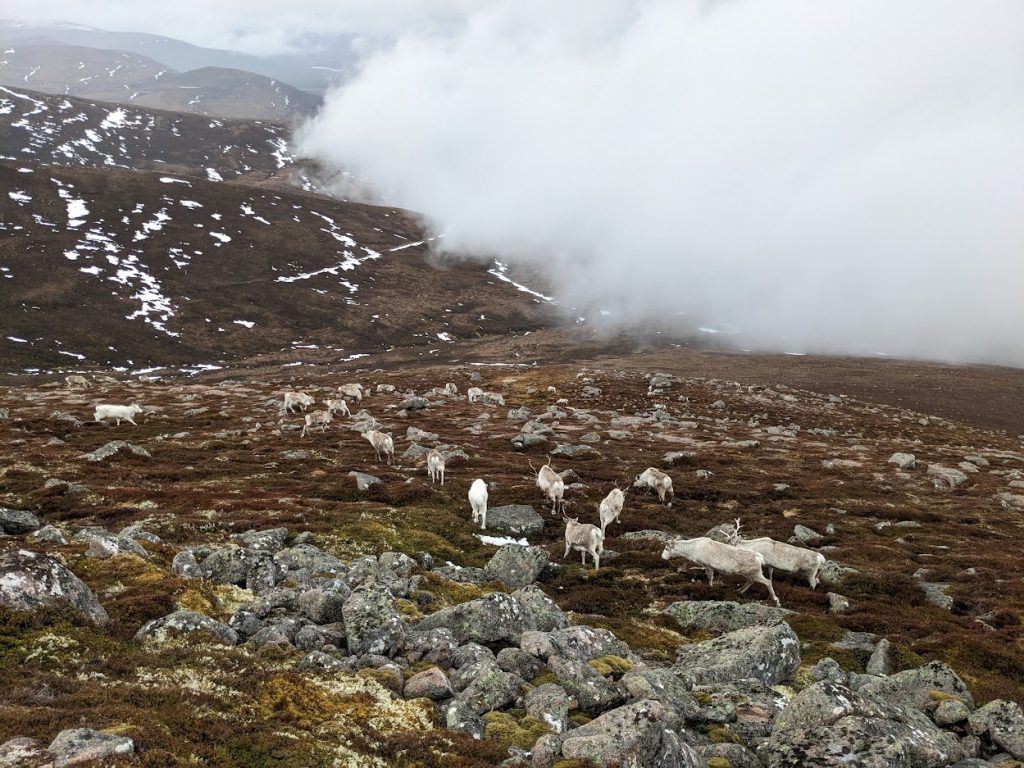
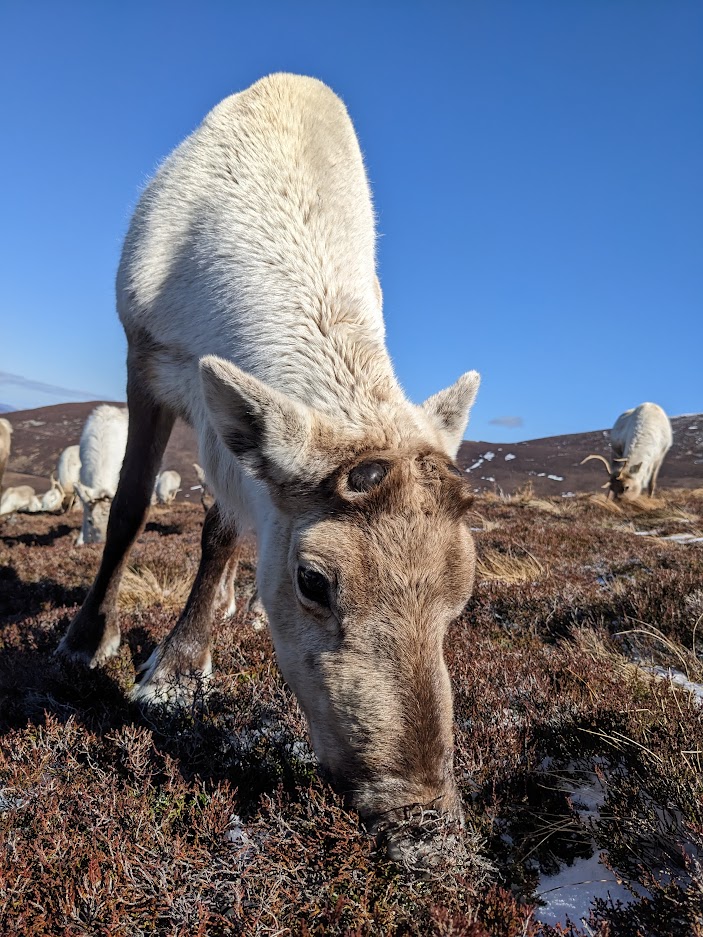
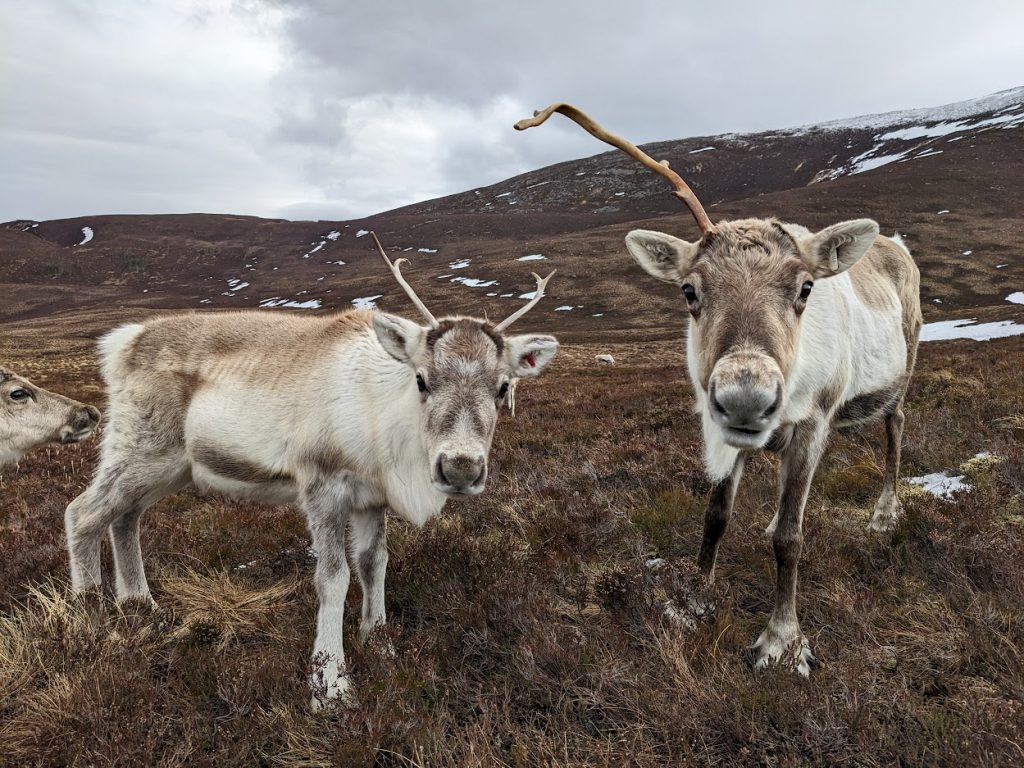
Ruth
It’s the last blog of the month, so here we have a selection of photos I’ve taken during February. The early part of the month was all about crossing jobs off the to-do list ready for us to re-open to the public on the 11th of February for the busy half-term holidays. The second part of the month has been all about locating the reindeer and moving the herd into a suitable position for our Hill Trips each morning, the Hill Trips themselves, and afternoon talks in the Paddocks. Plus all the usual shop and office work. As always, the holidays are over in a blur, but here are some photos of our beautiful reindeer, giving a small taster of February for you all.
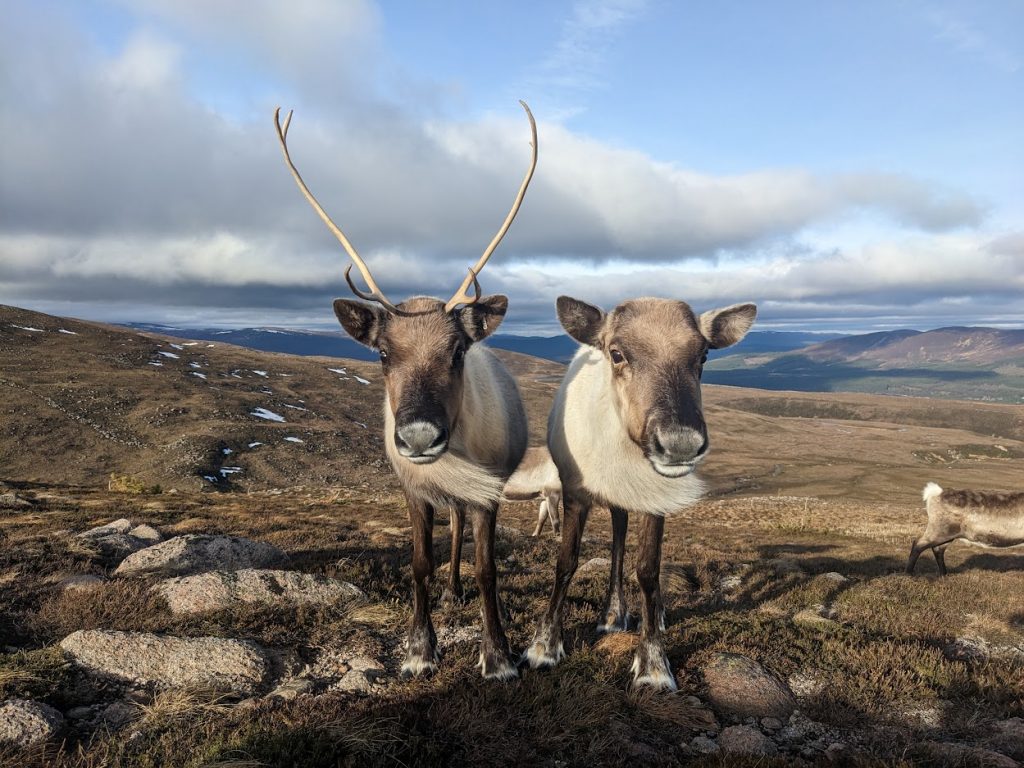
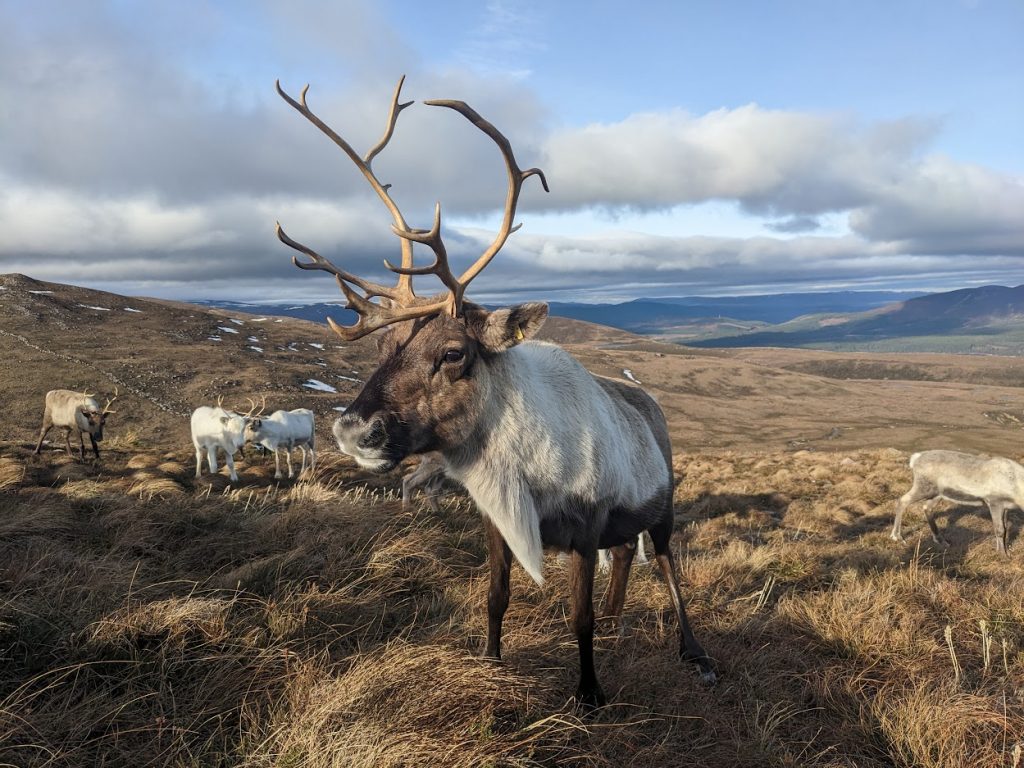
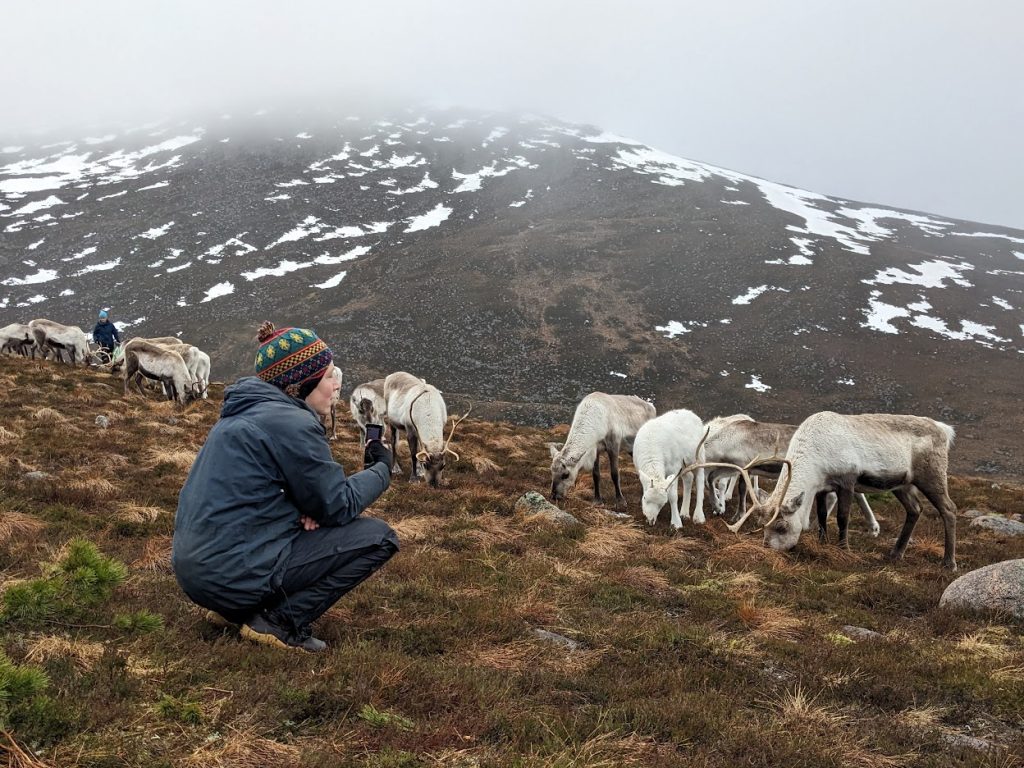
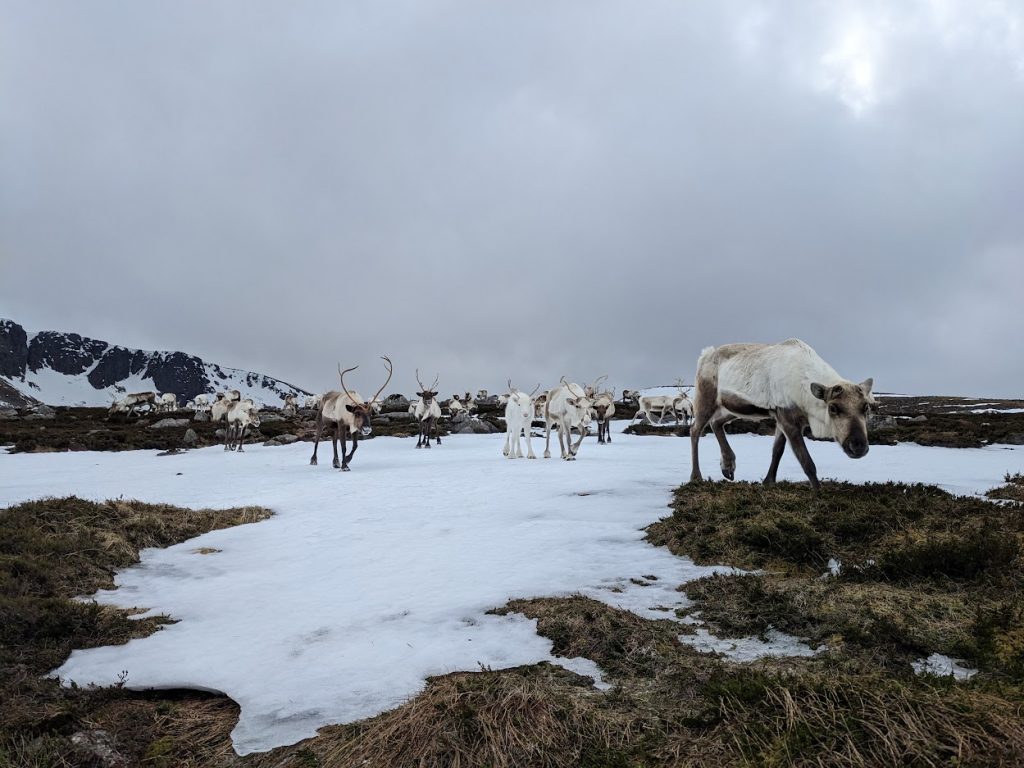
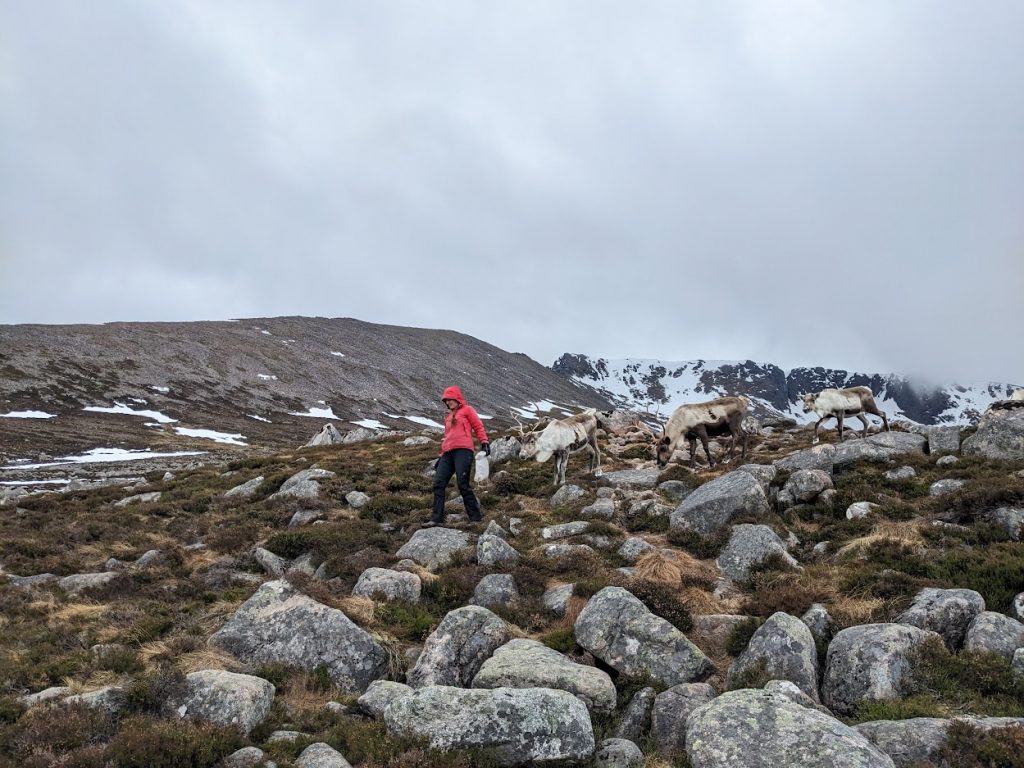
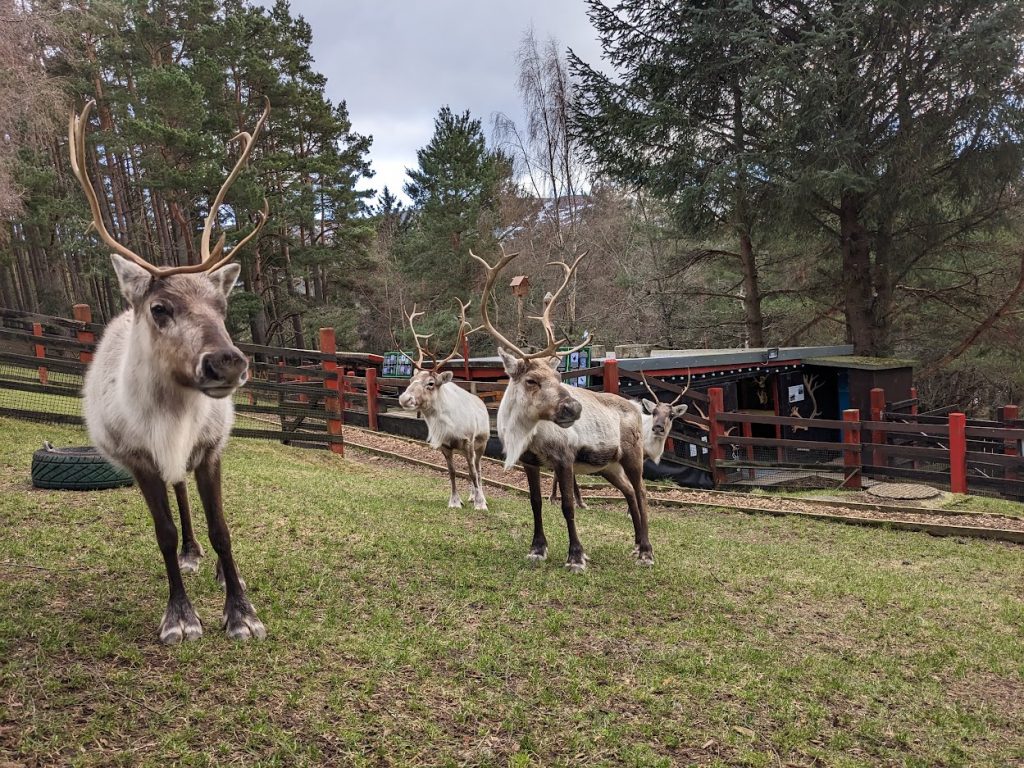
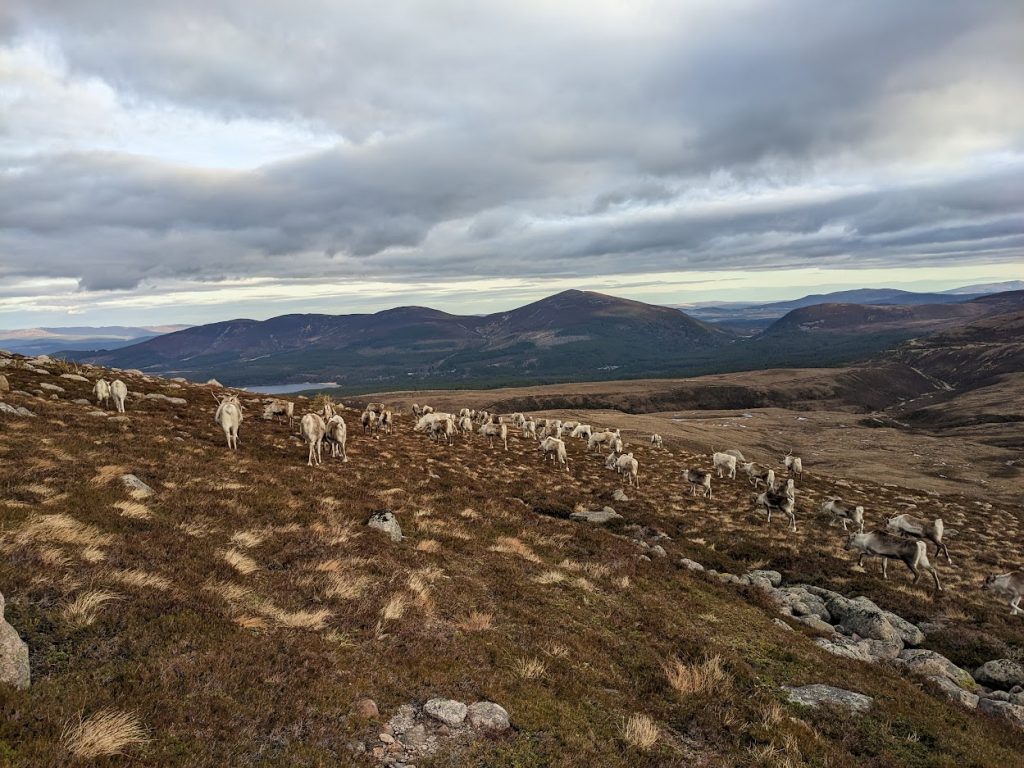
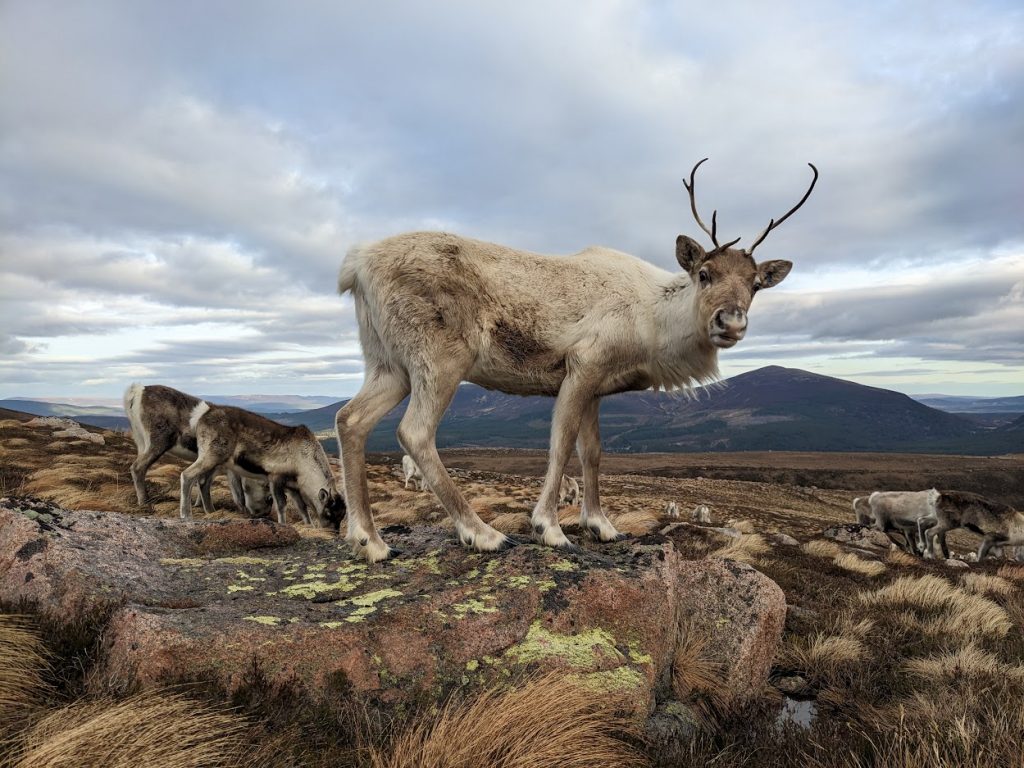
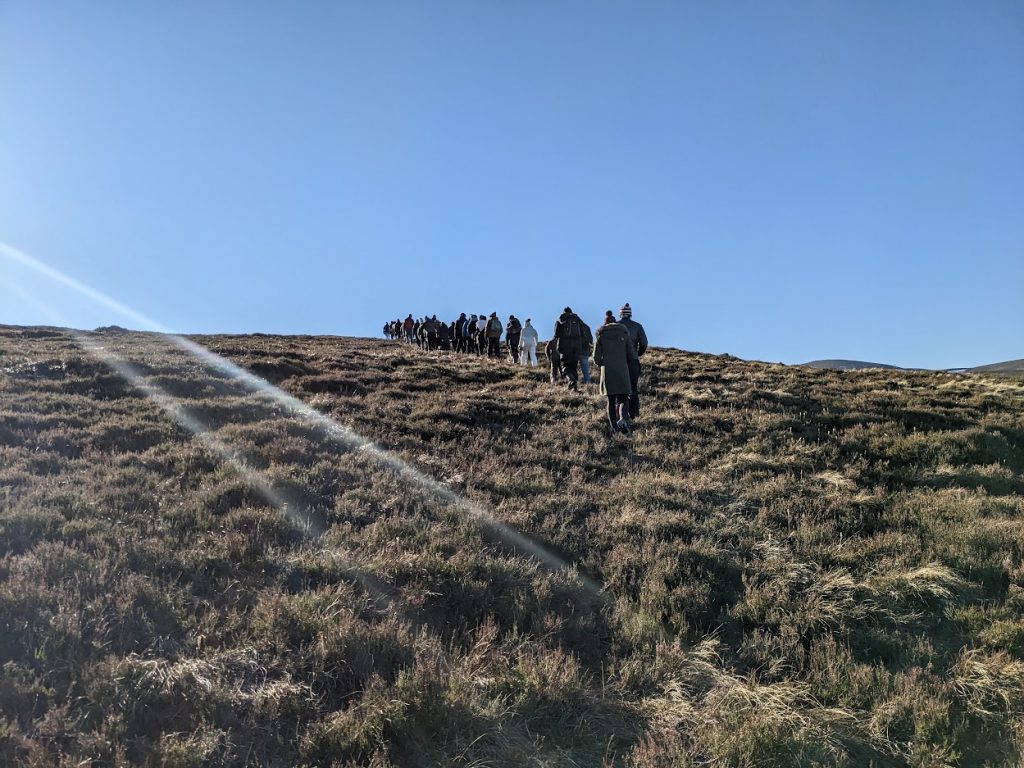
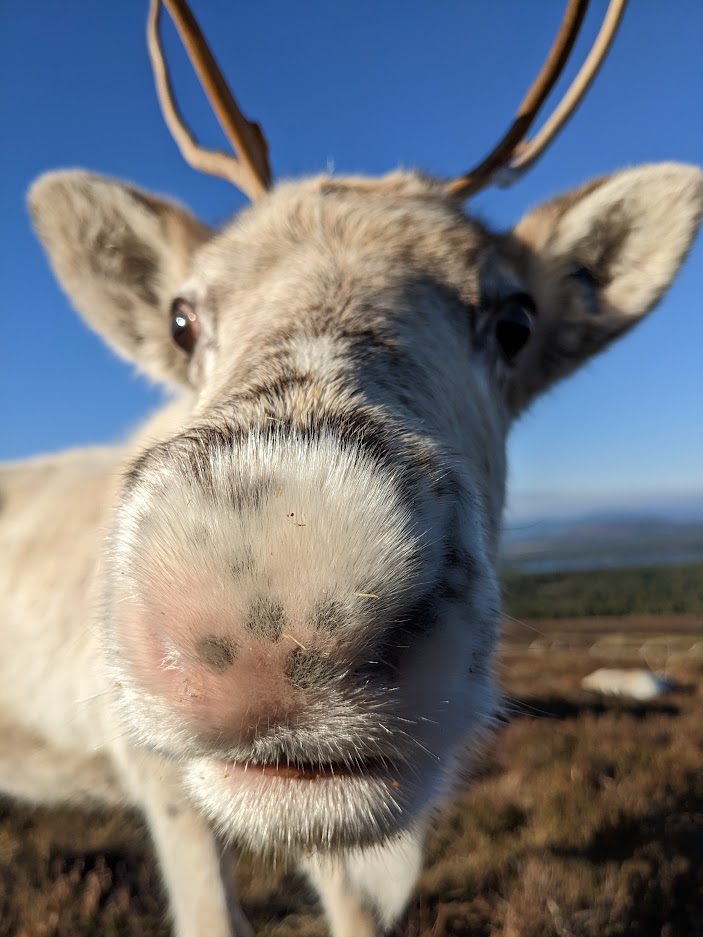
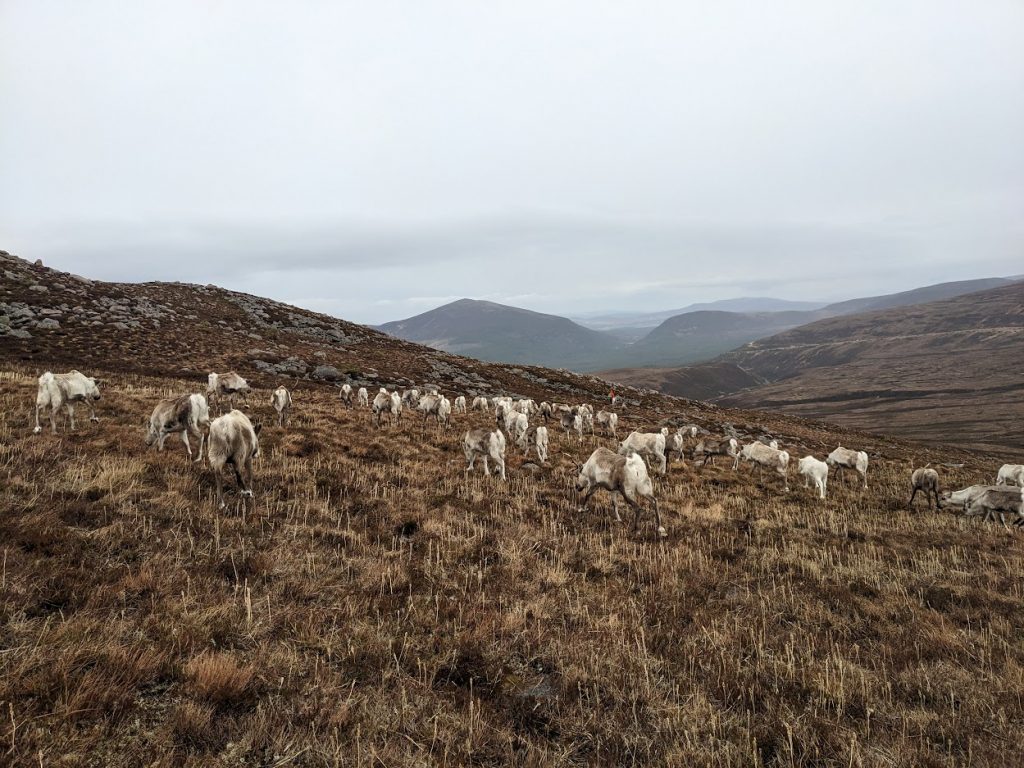
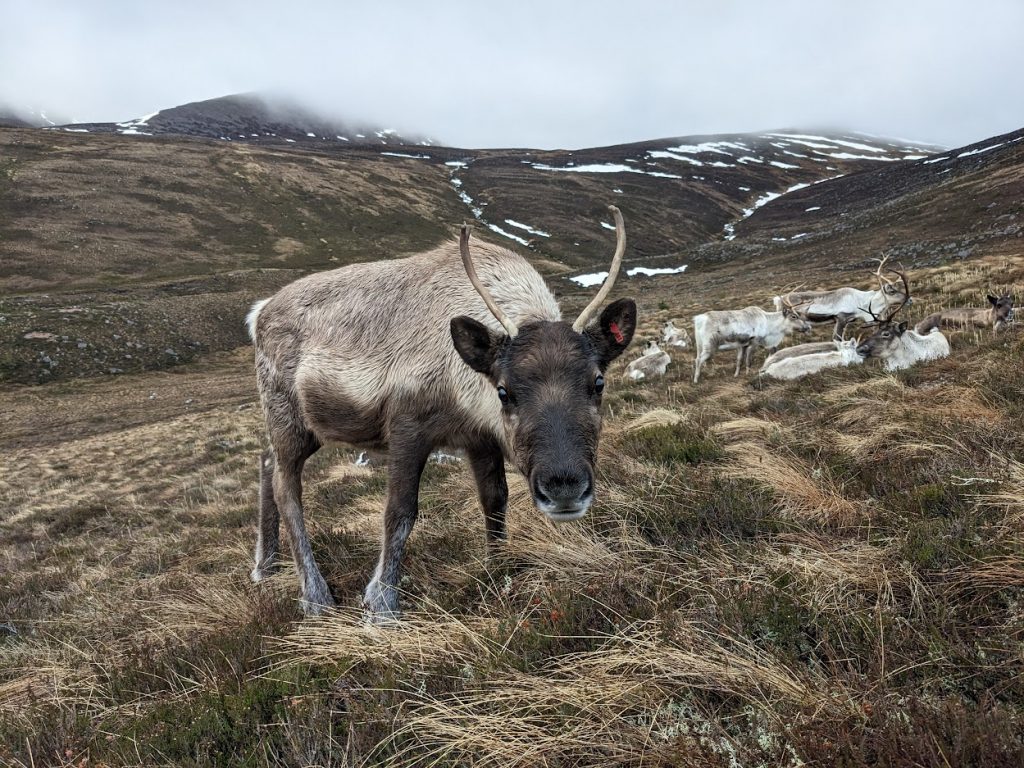
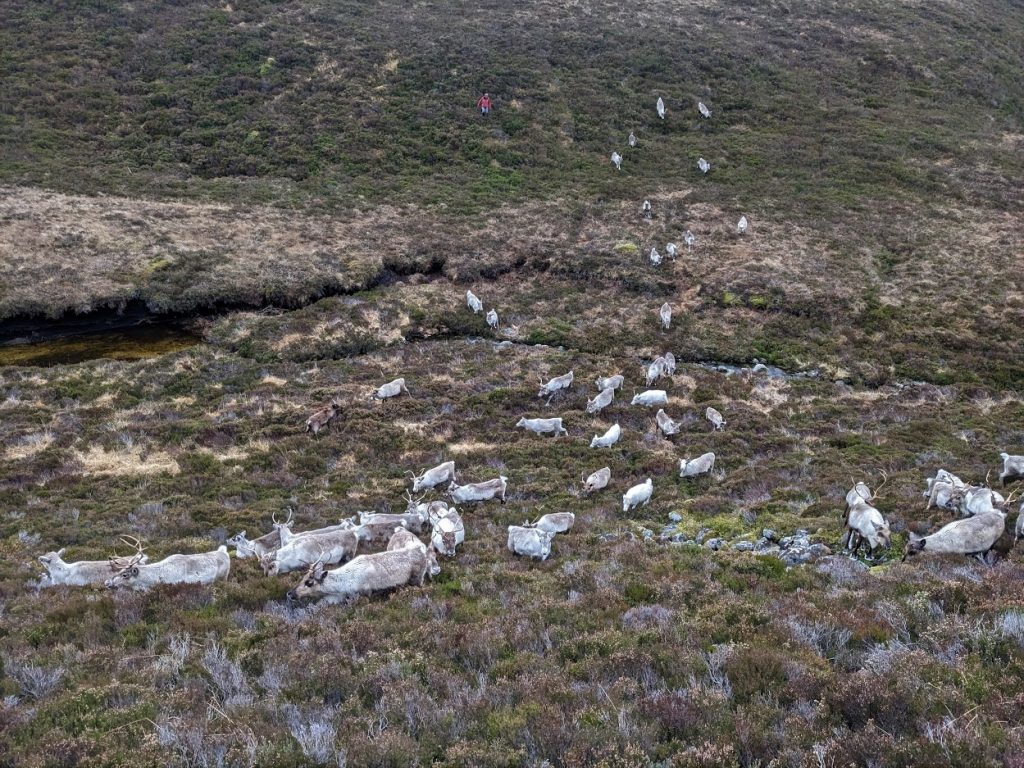
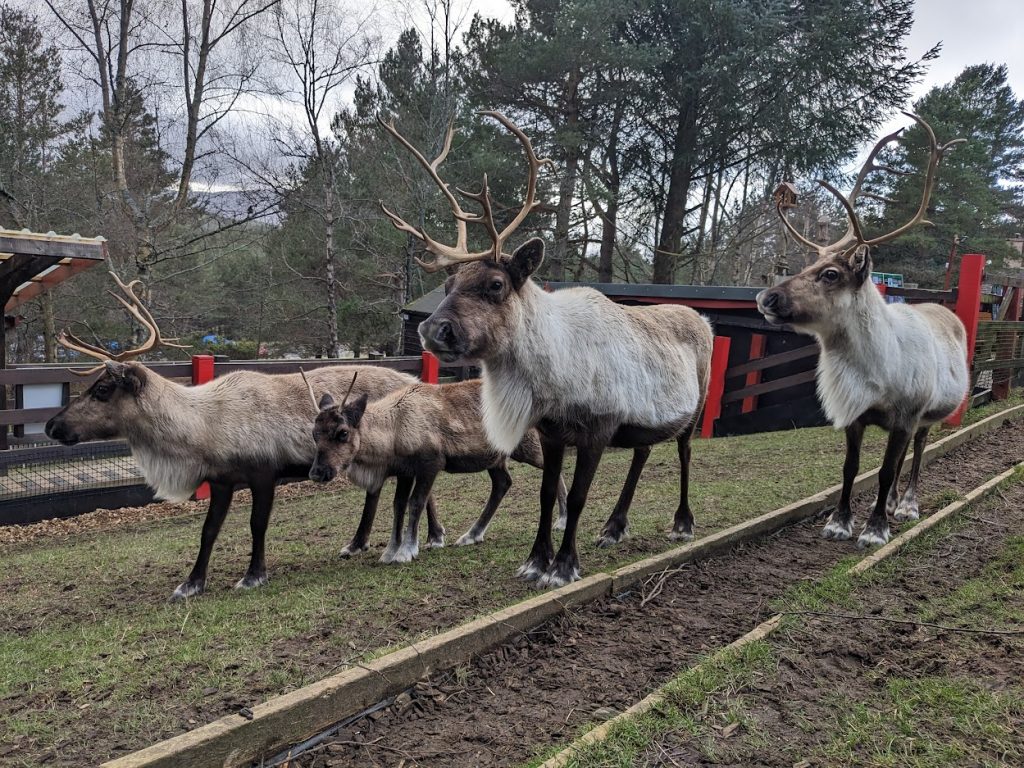
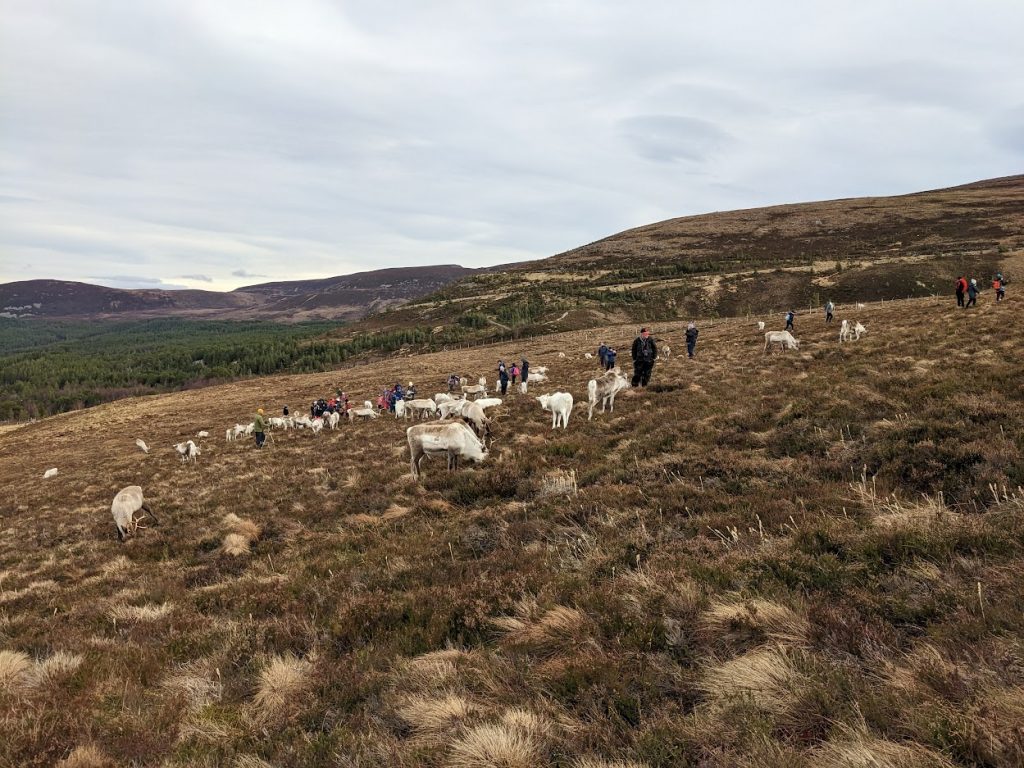
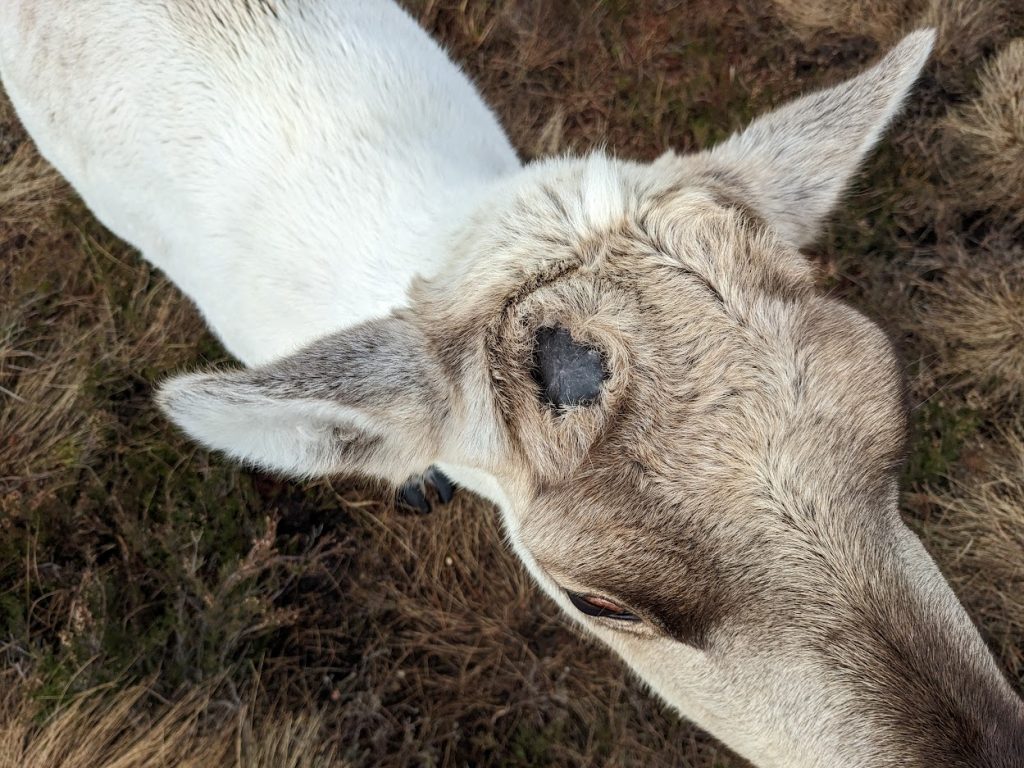
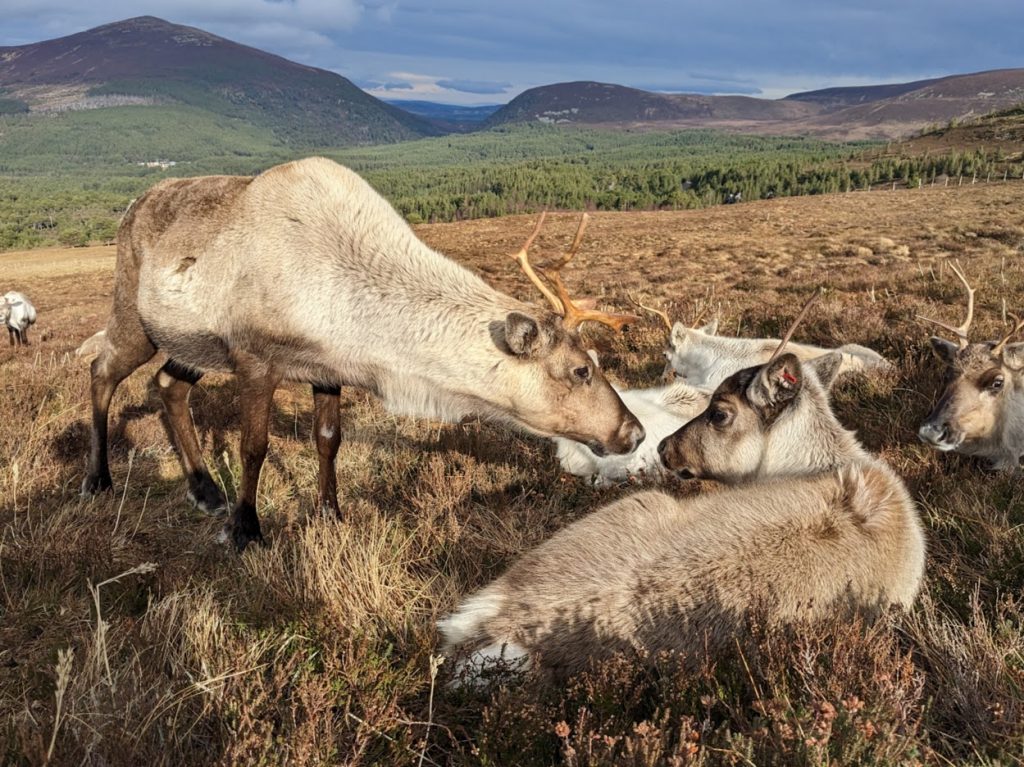
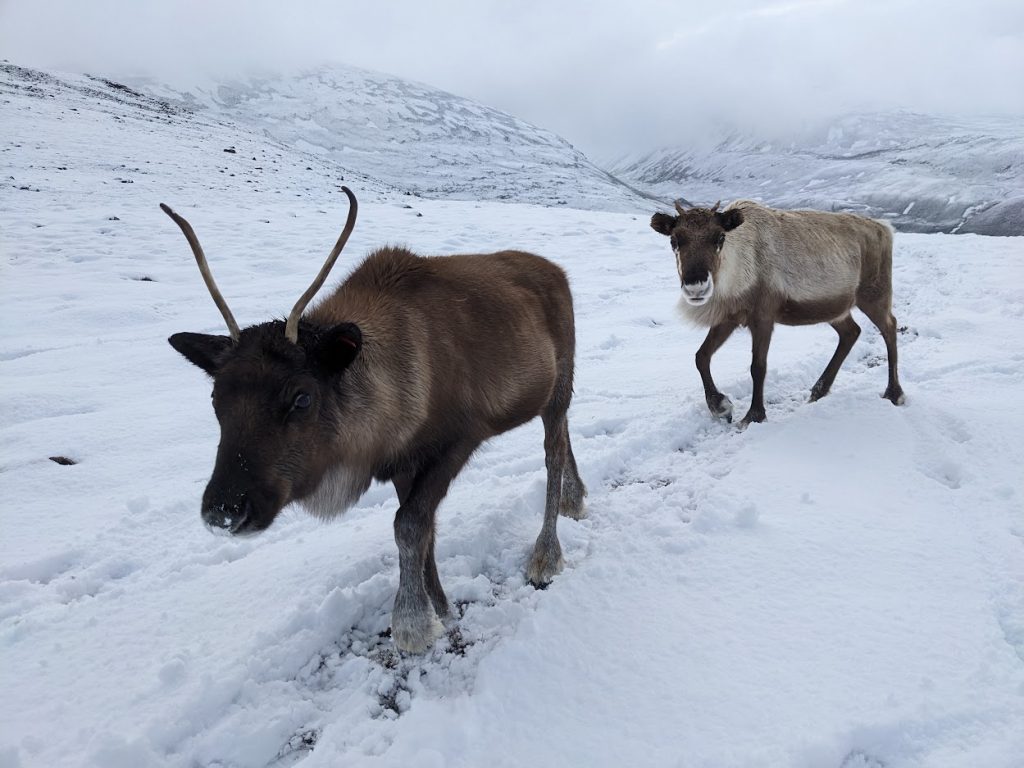
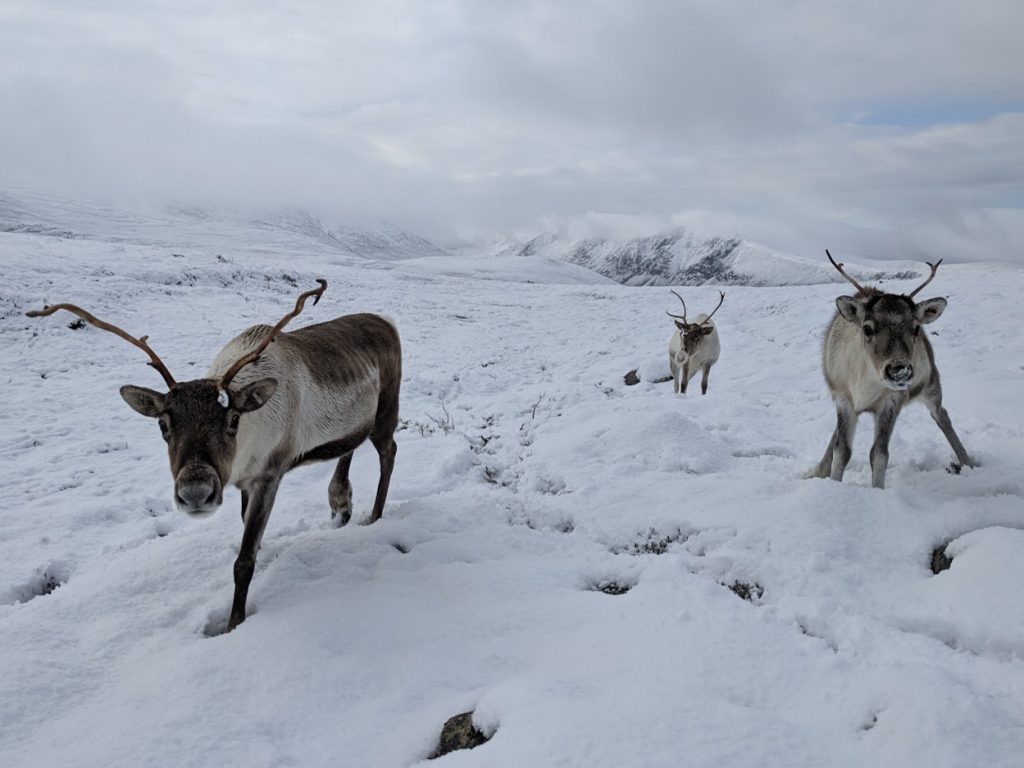
A final point – if you are wondering where all the young bulls and Christmas reindeer are in the photos, they spend the winter free ranging in a different herd that Tilly and other colleagues at the farm mostly look after. I’ve not been to visit them myself this month hence why it’s just photos of our beautiful girls and some male calves that you’ll find in this month’s blog.
Ruth