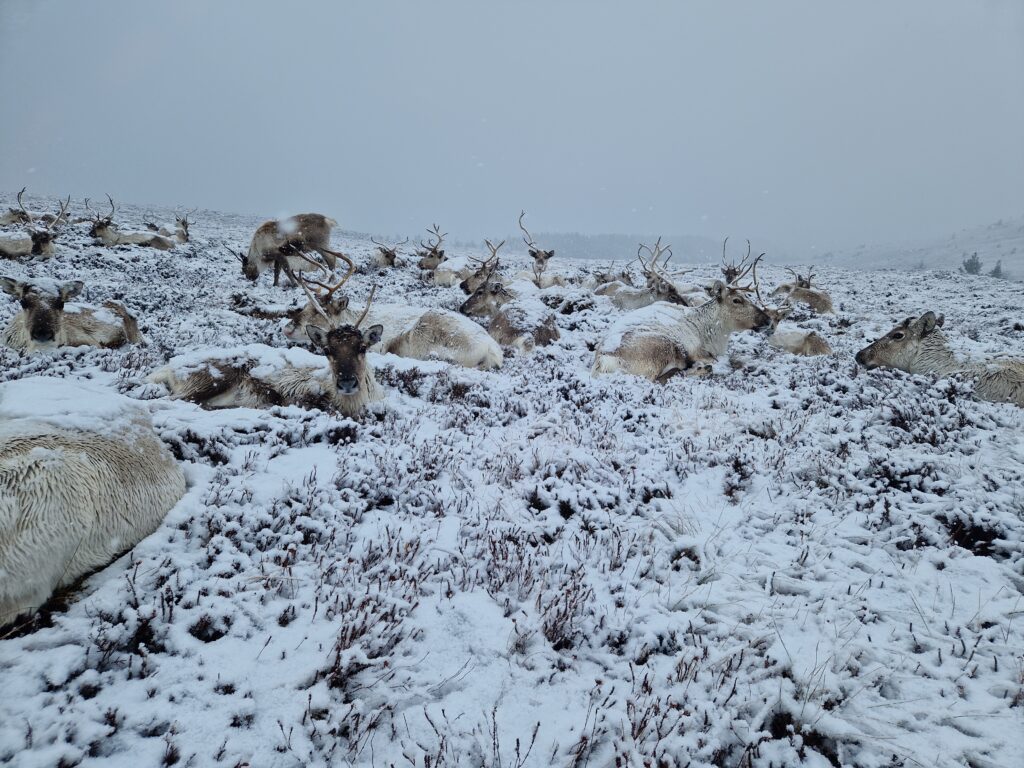
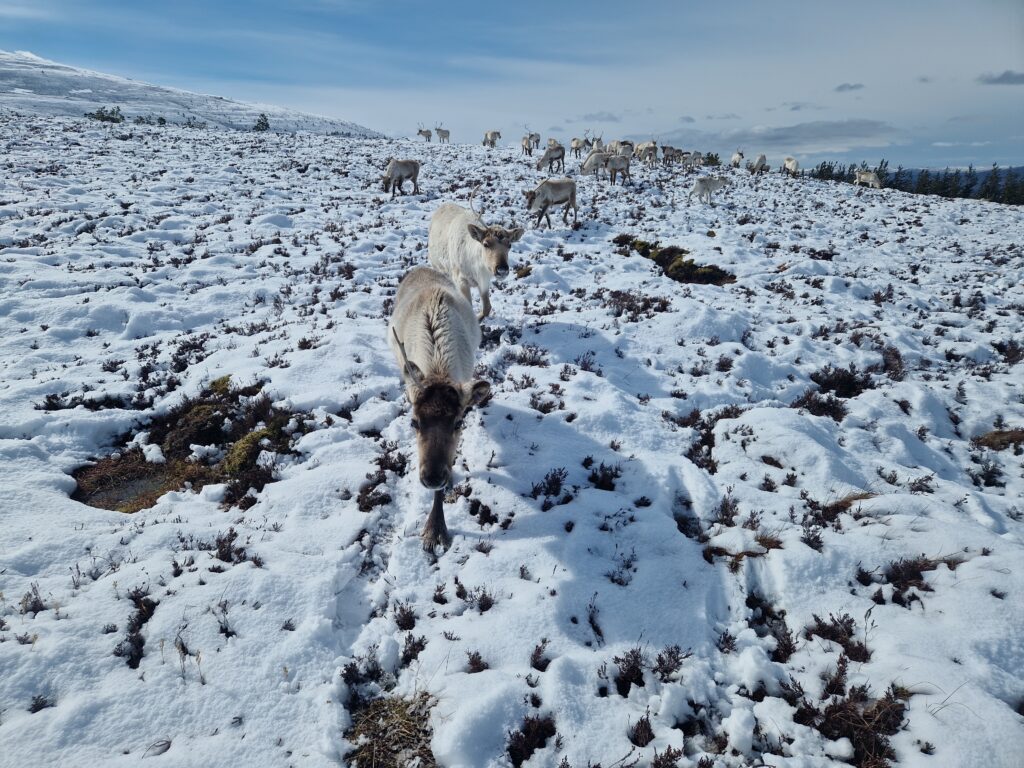
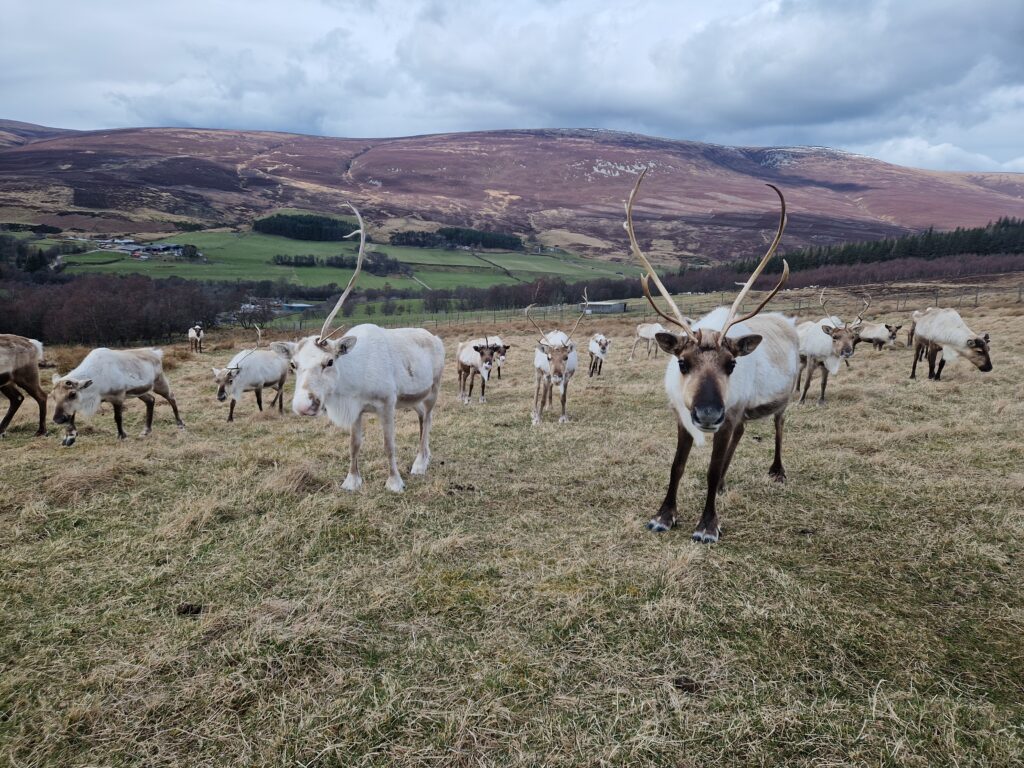
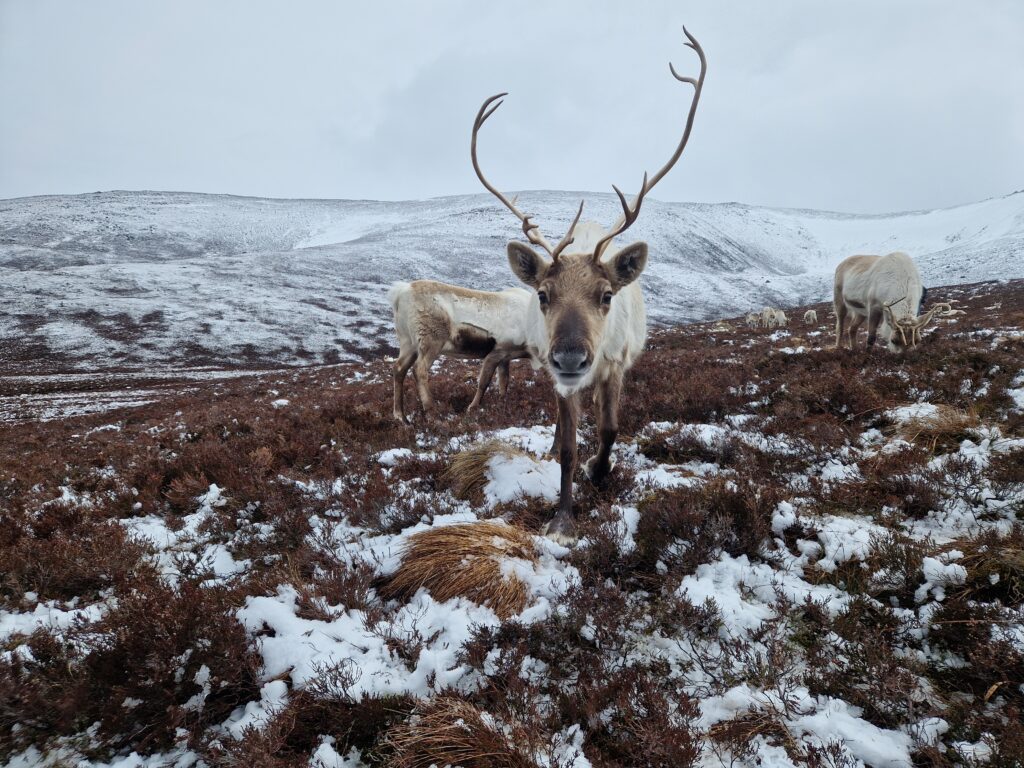
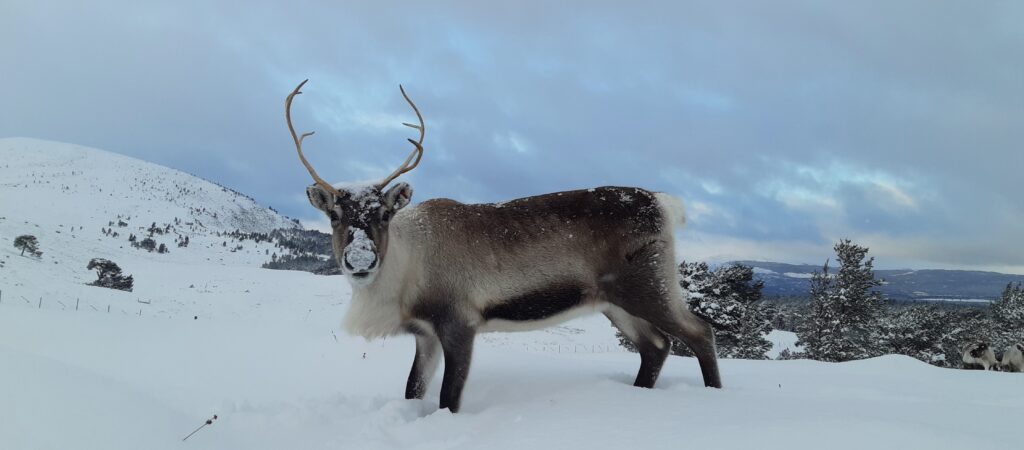
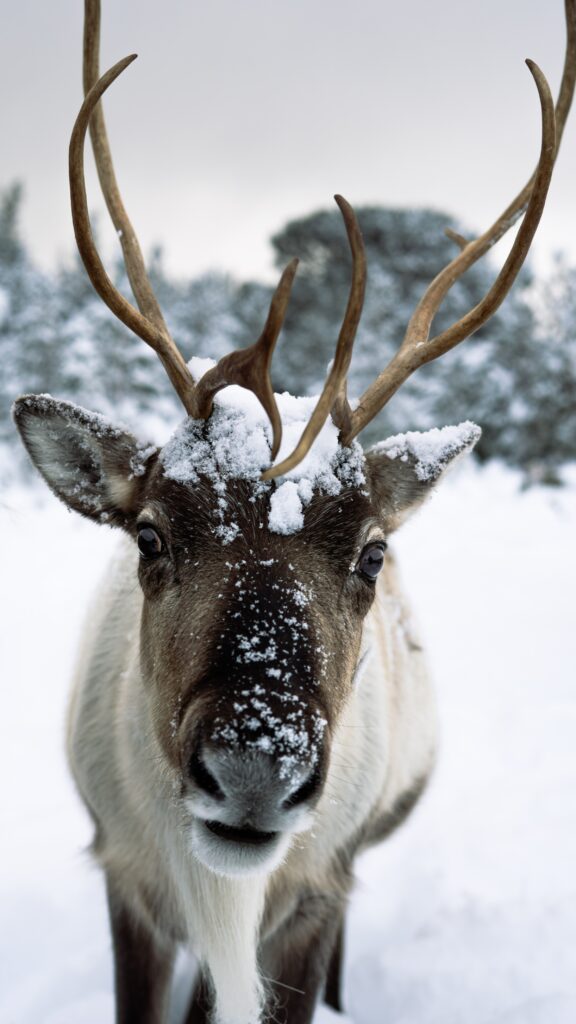
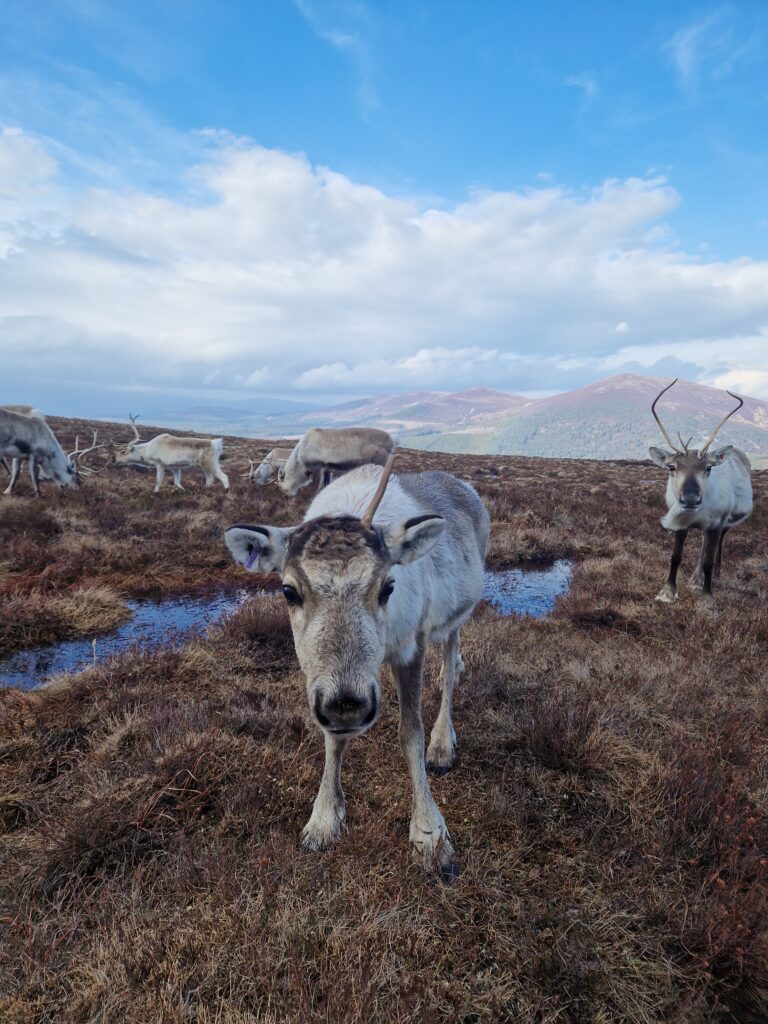
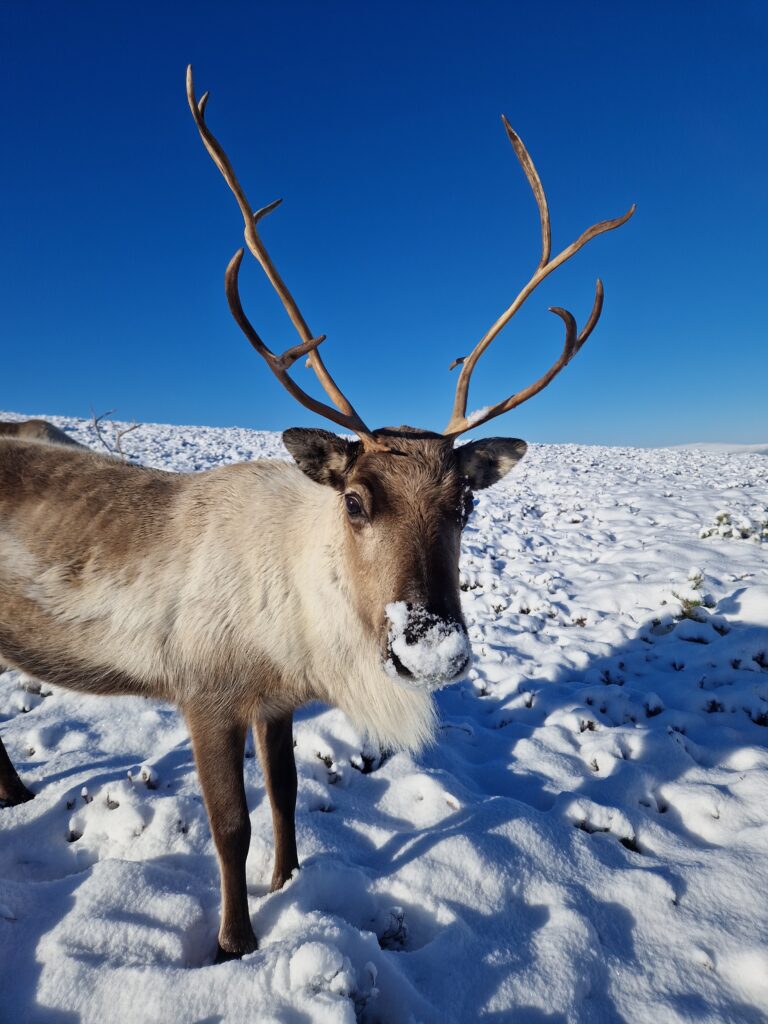
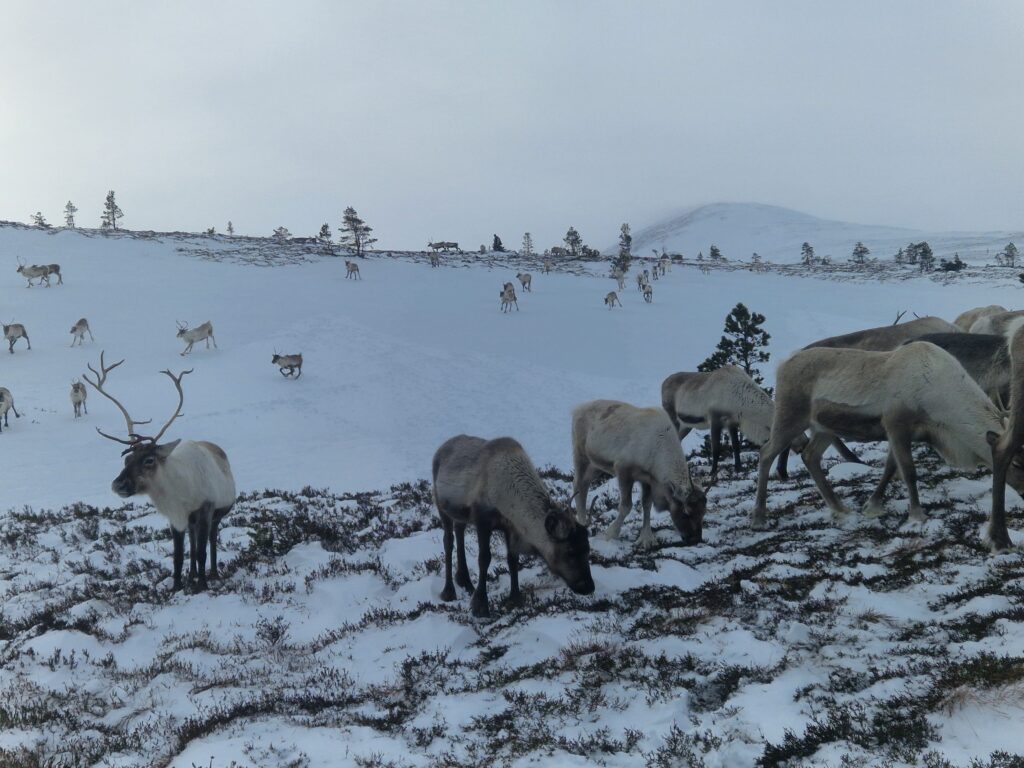
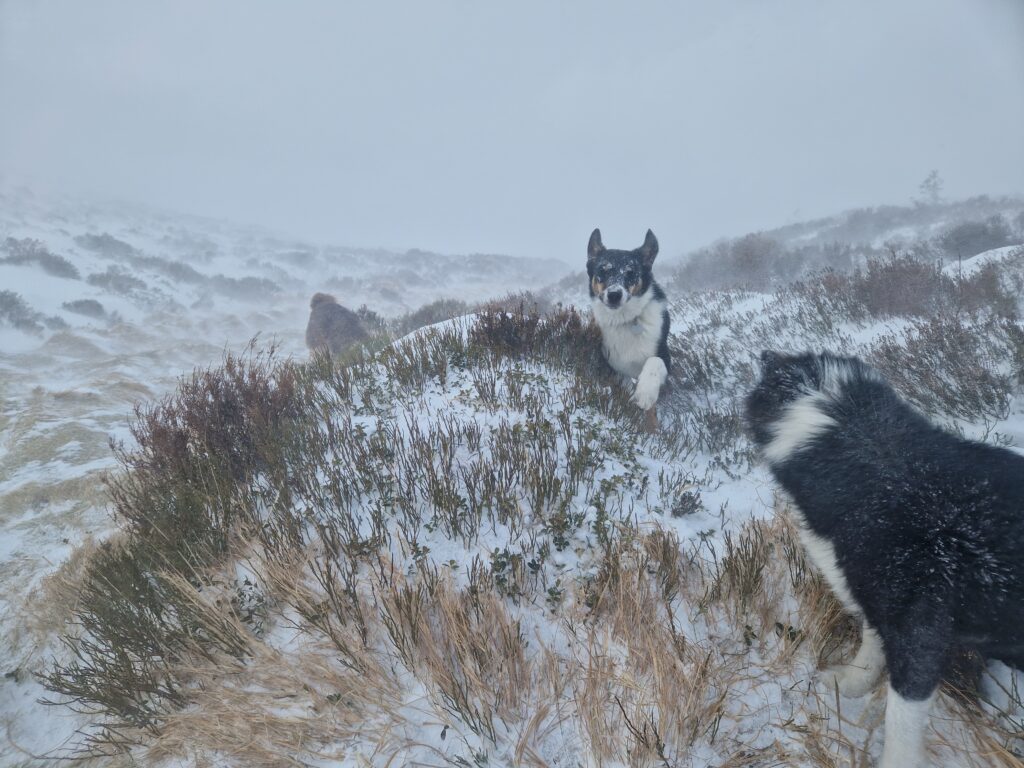
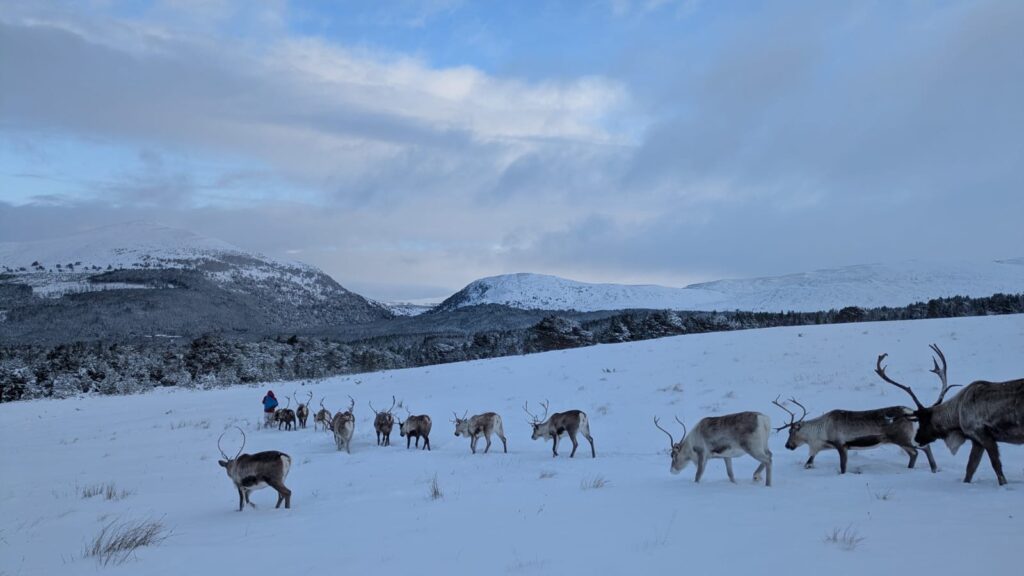
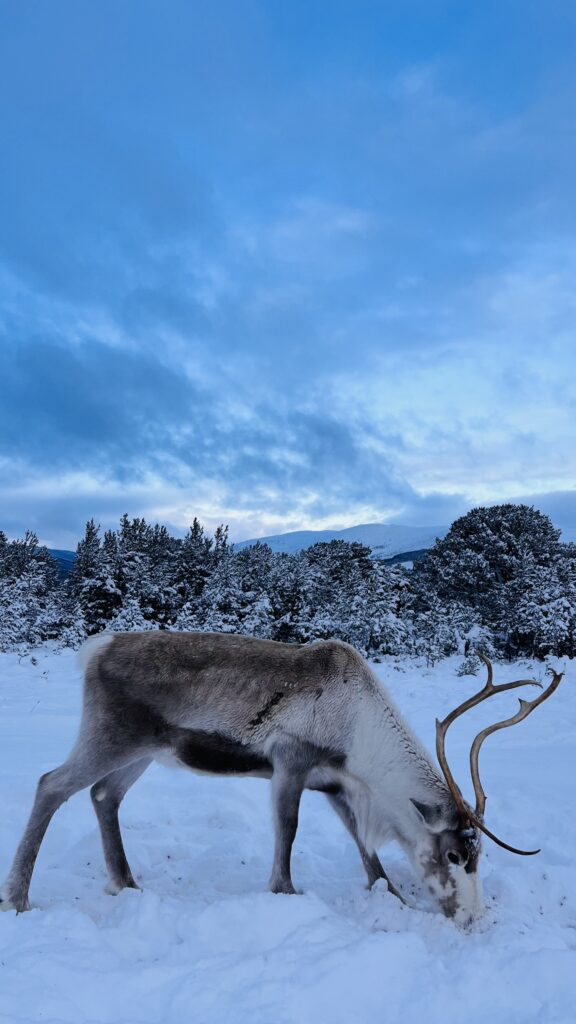
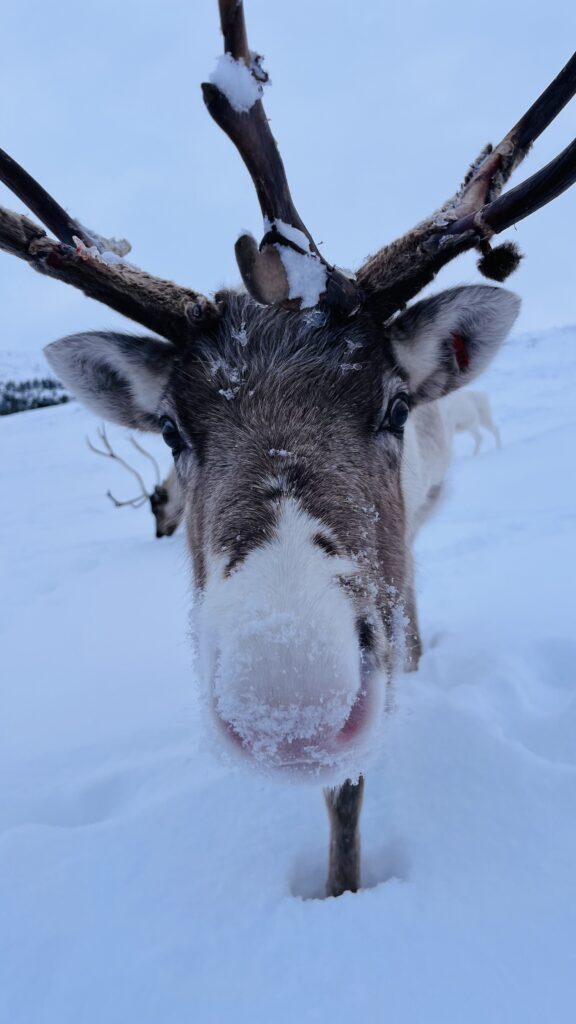
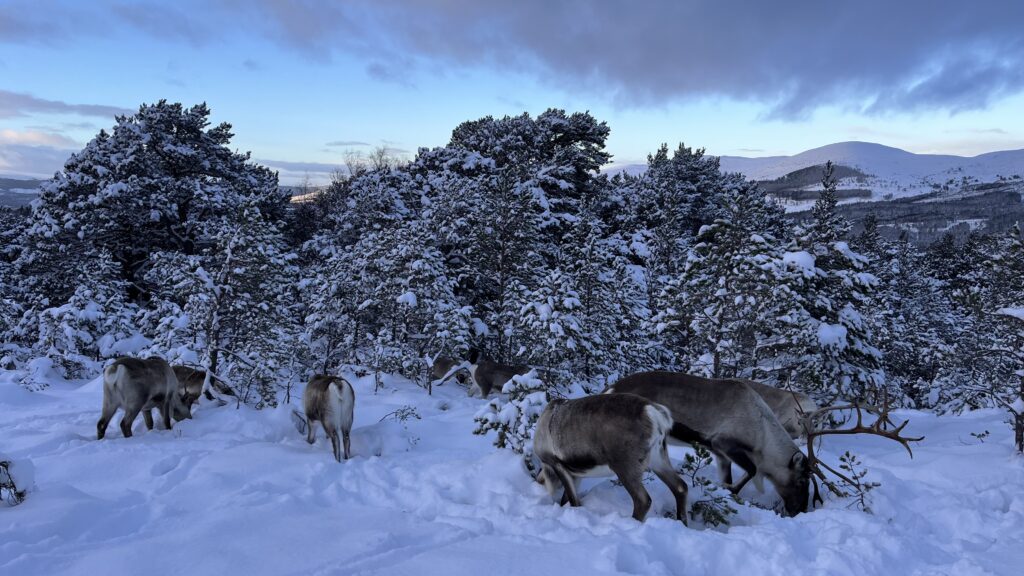
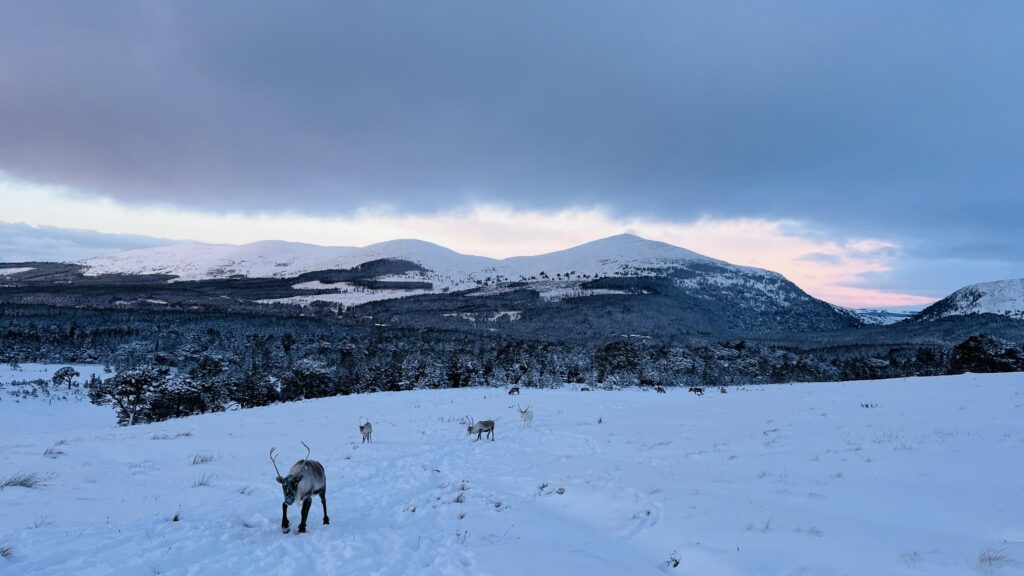
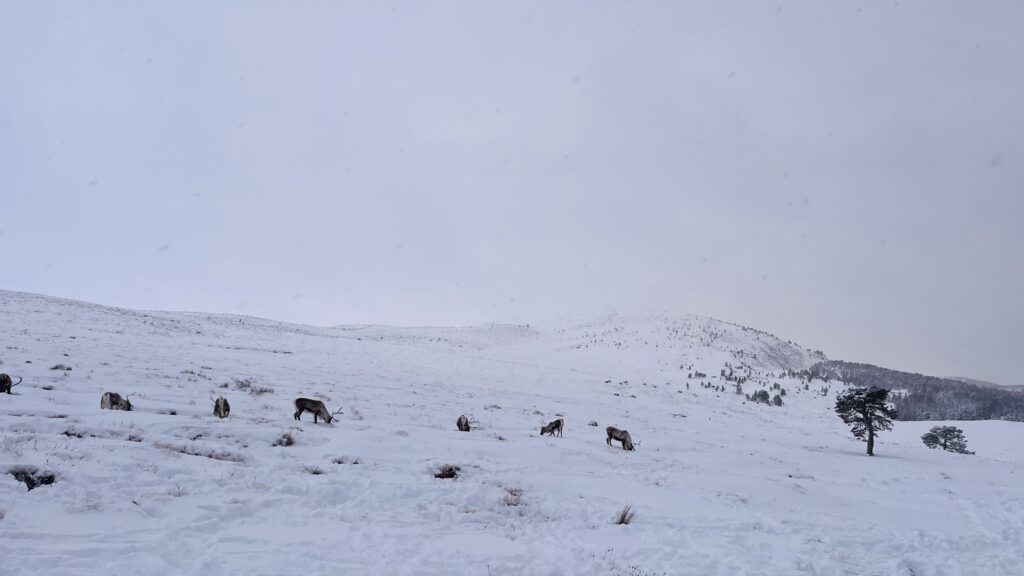
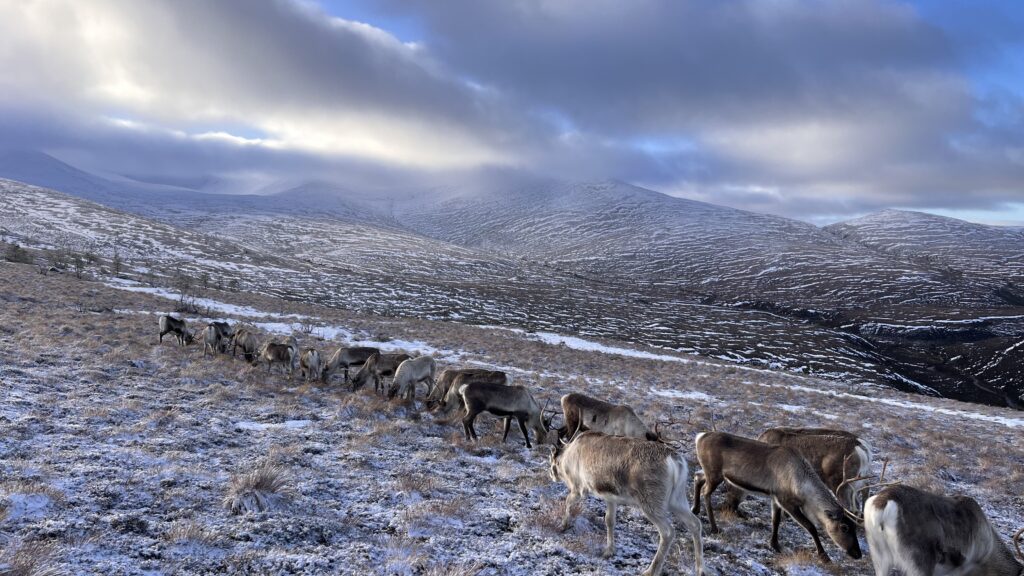
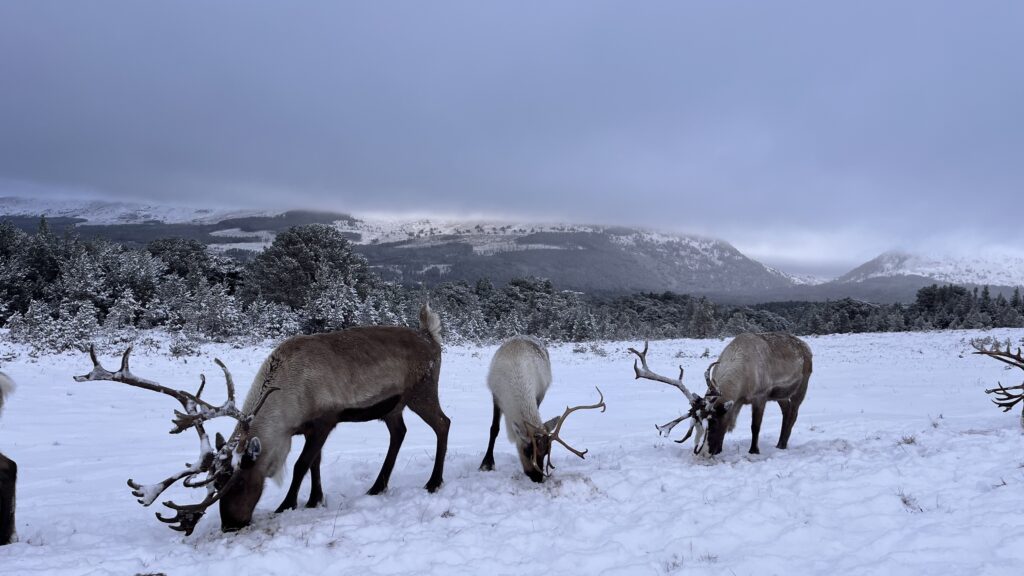
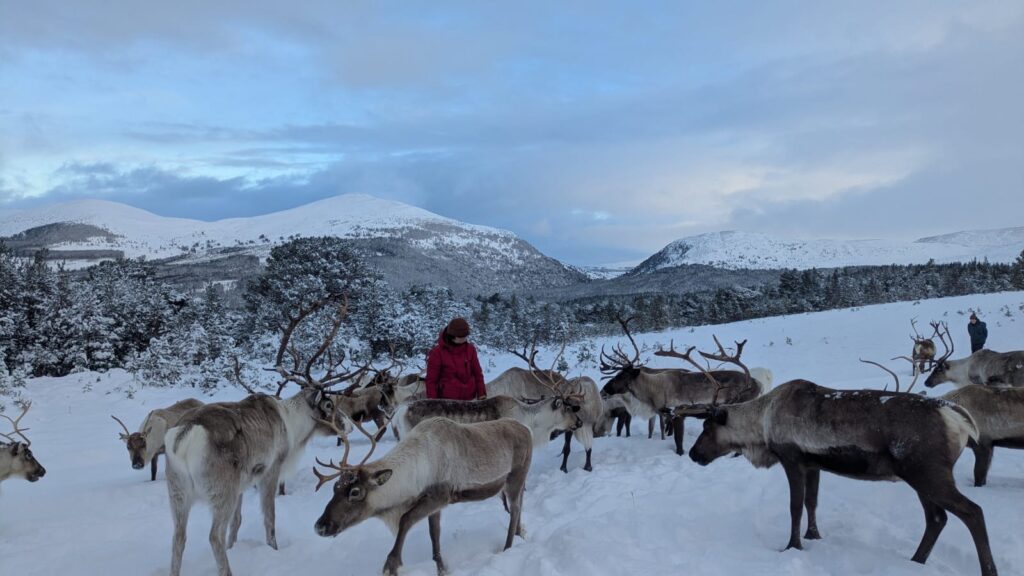
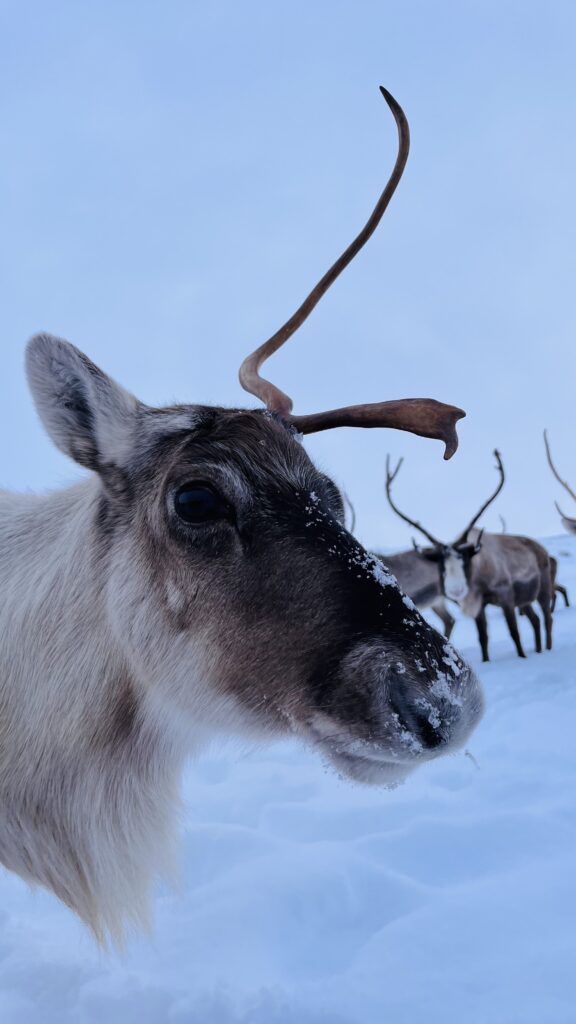
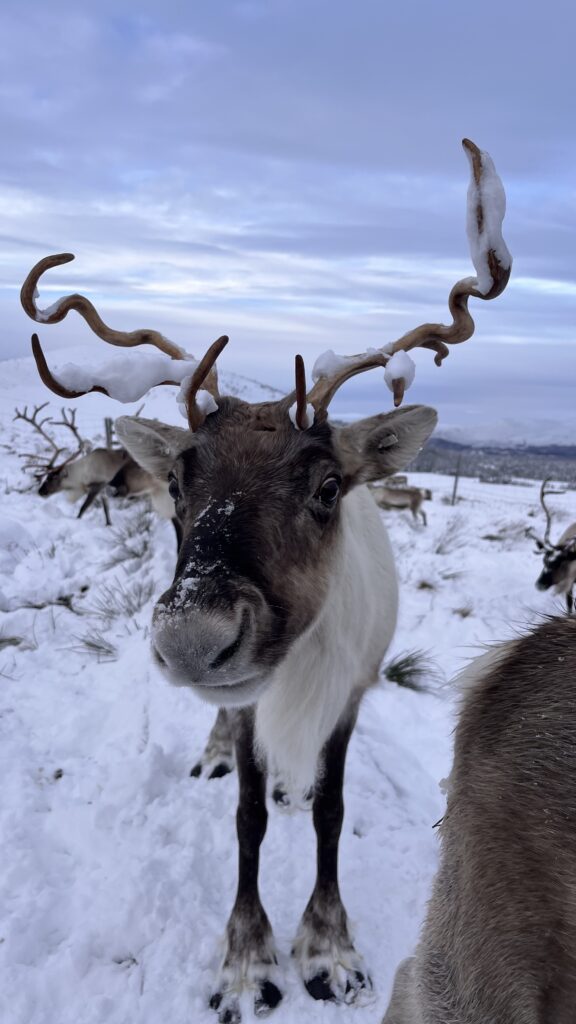
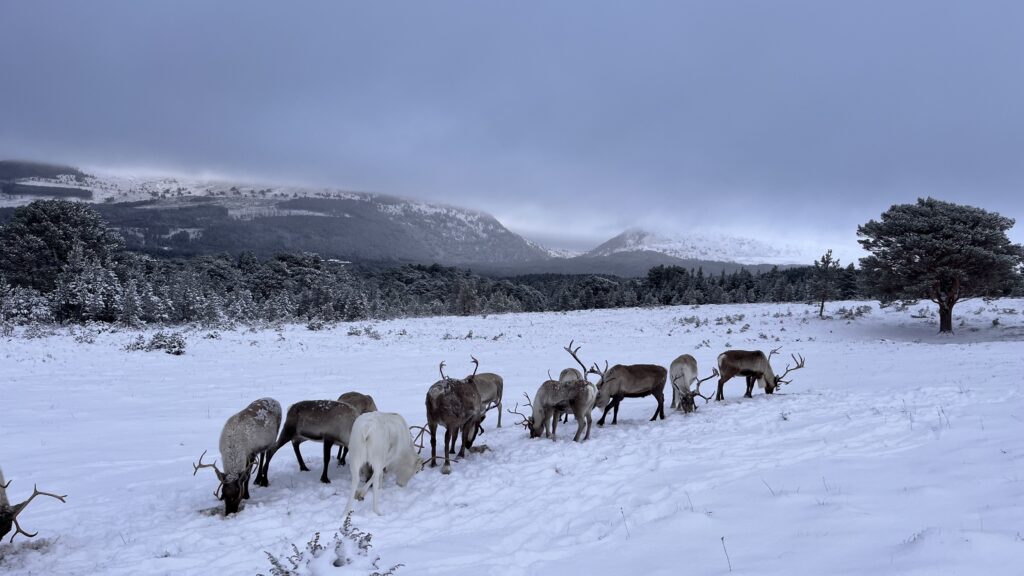
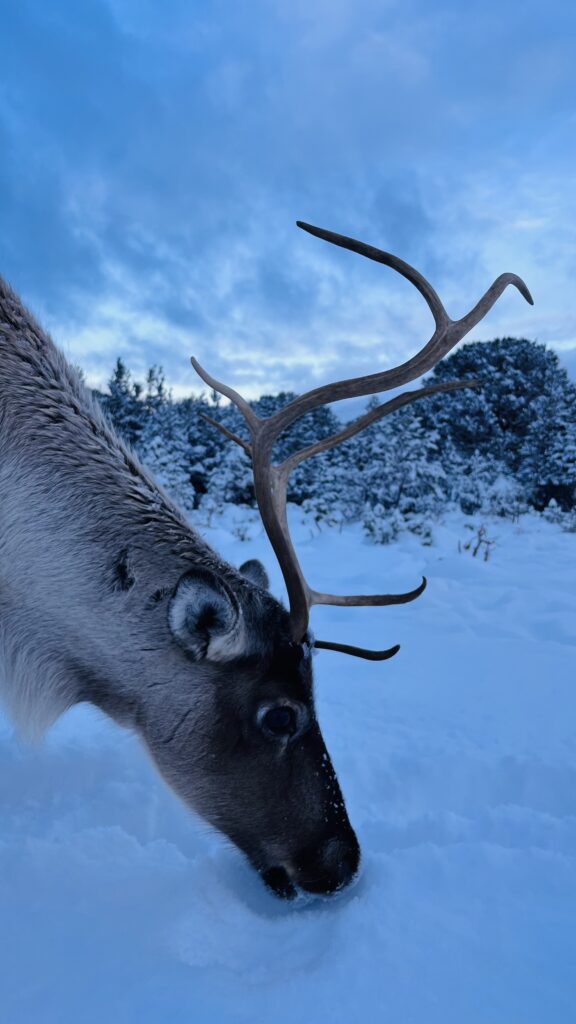
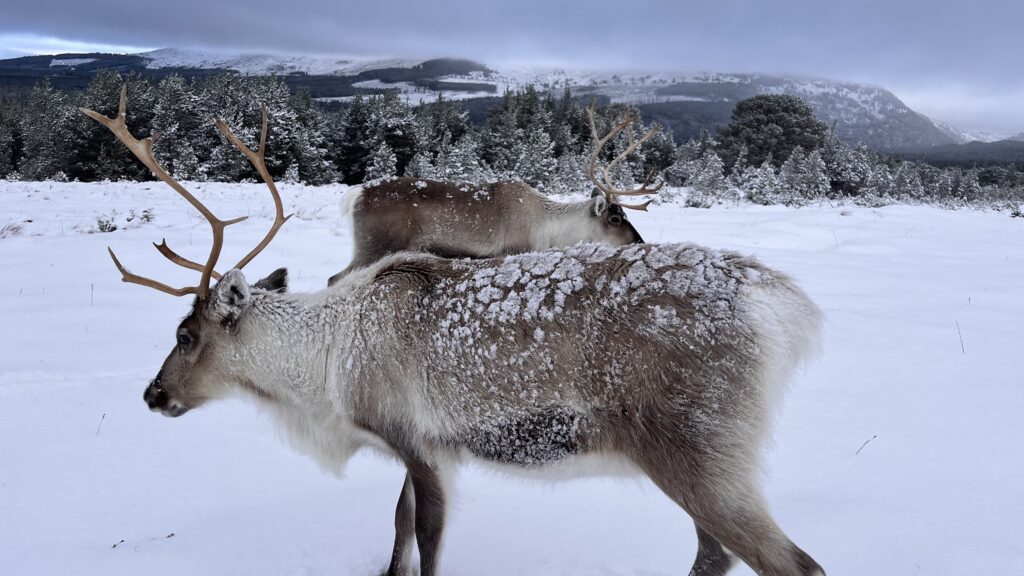
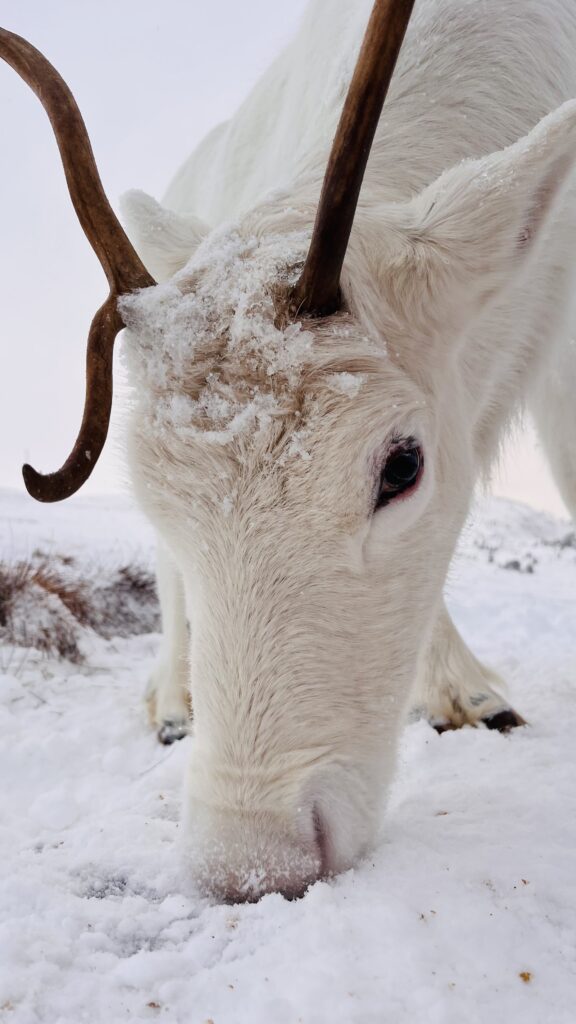
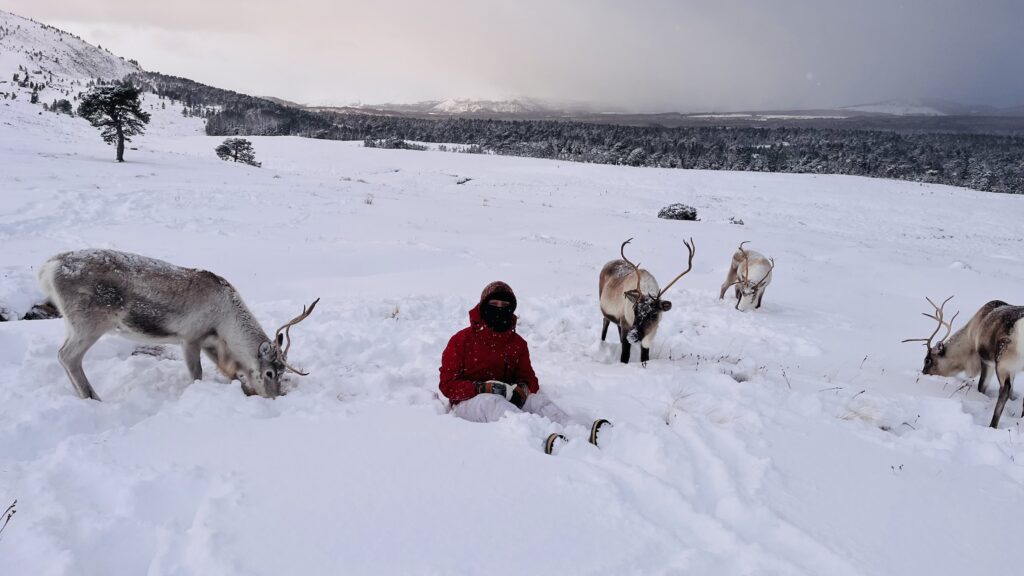
April started with snow showers and continued with frequent snowy showers higher in the hills nearly to the end of the month. Throughout the month we have definitely started to see the signs of spring lower down, with the Blaeberry beginning to flower and the mountain flora becoming greener!
Our female reindeer enjoyed a few more weeks out on the free range before we moved them into our hill enclosure in preparation for the Calving season; there are definitely a few big bellies and udders starting to form. Every year the reindeer herders partake in a calving bet which involves us choosing a reindeer and hoping that they are not the last to calve. If they do, we are required to bake a cake for us to enjoy when we name the calves in September; it isn’t the worst if you lose the calving bet. Some herders chose strategically and others chose their favourite reindeer, so by the end of April all the calving bets are in, and it has become a waiting game!
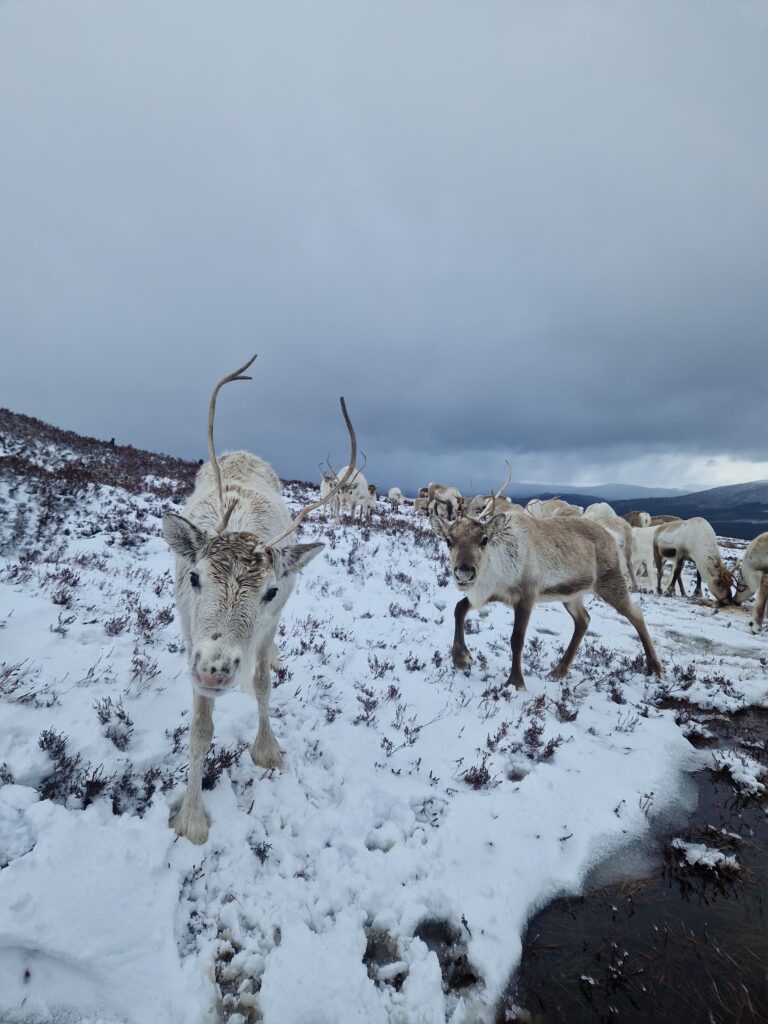
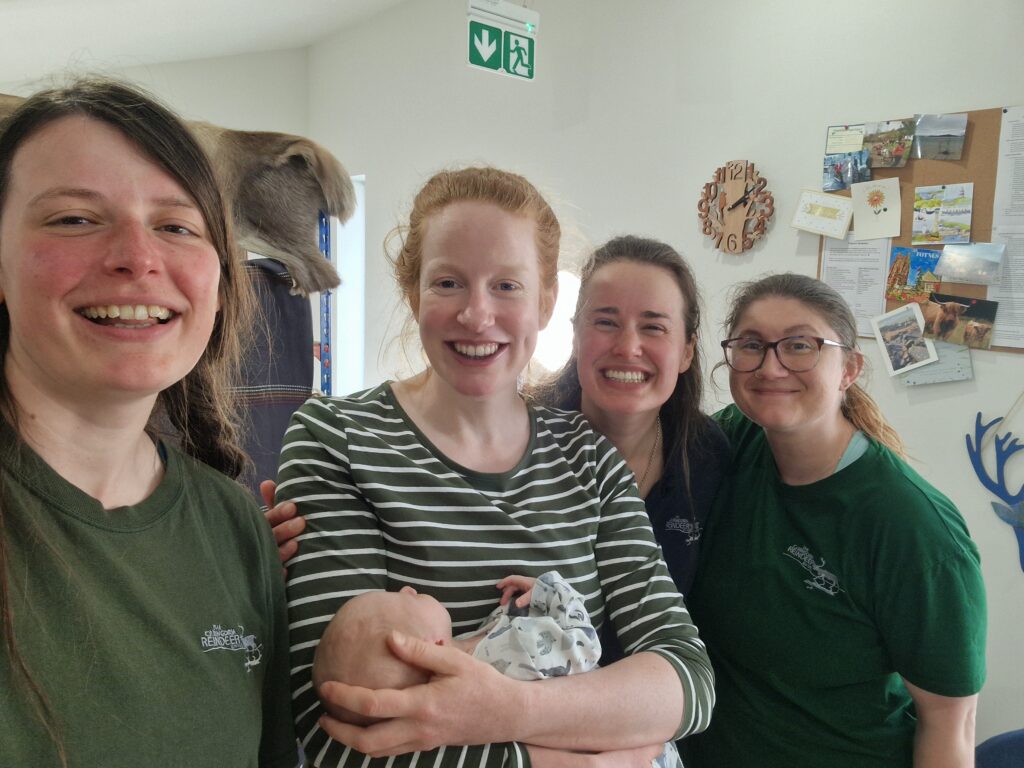
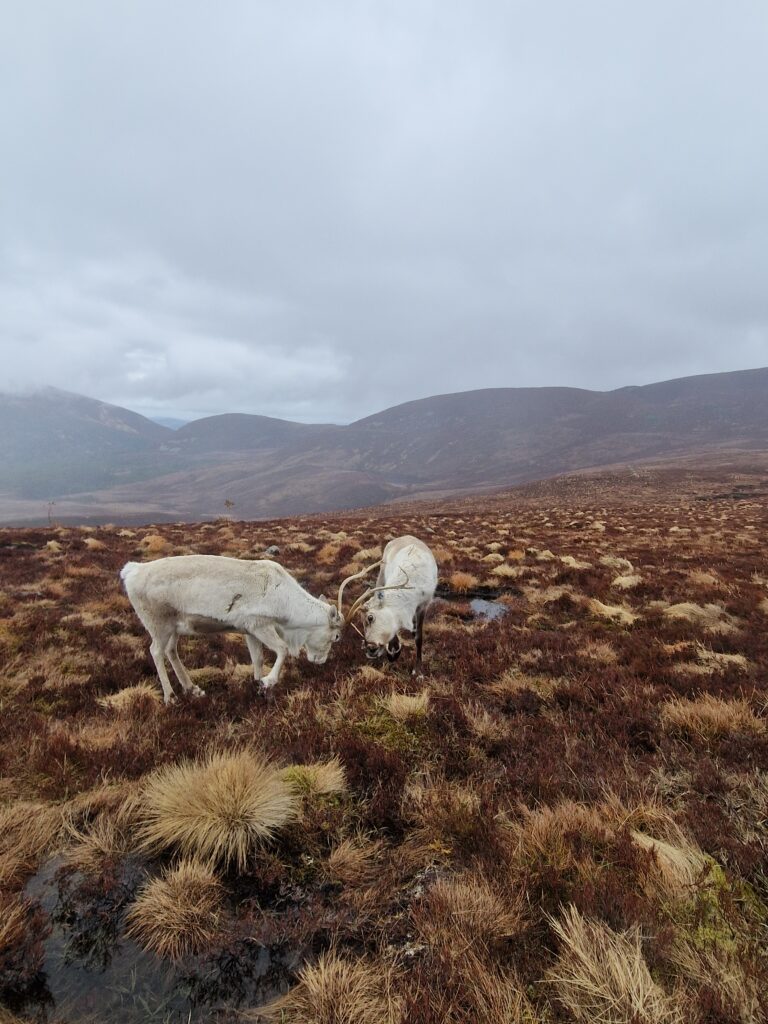
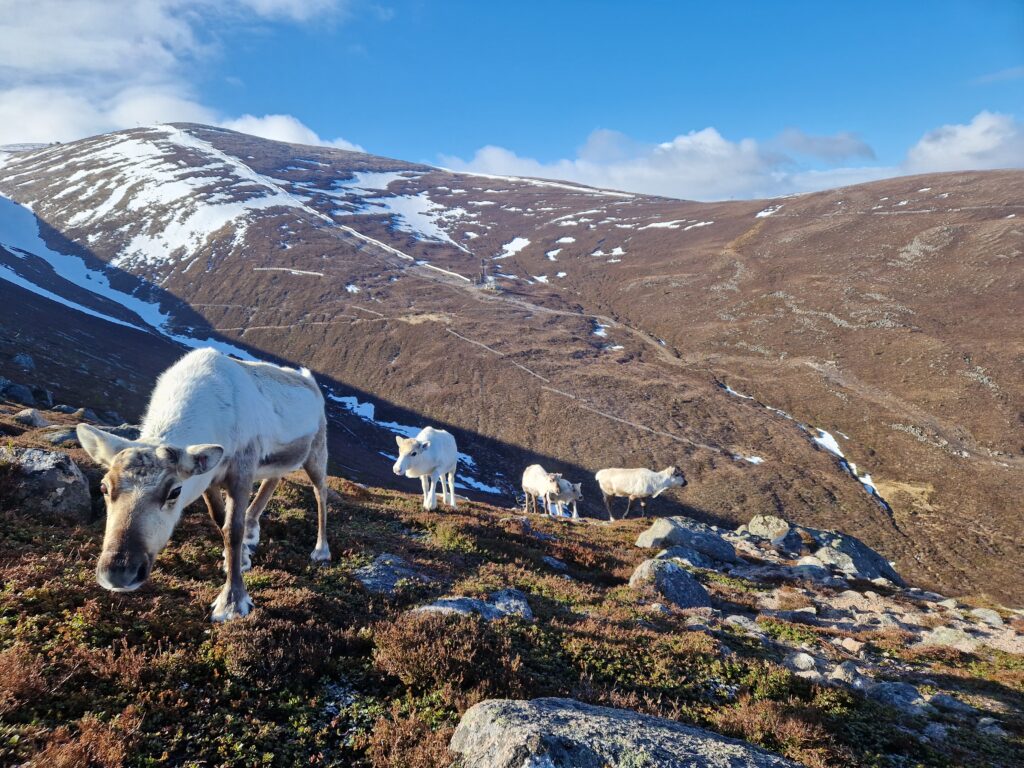
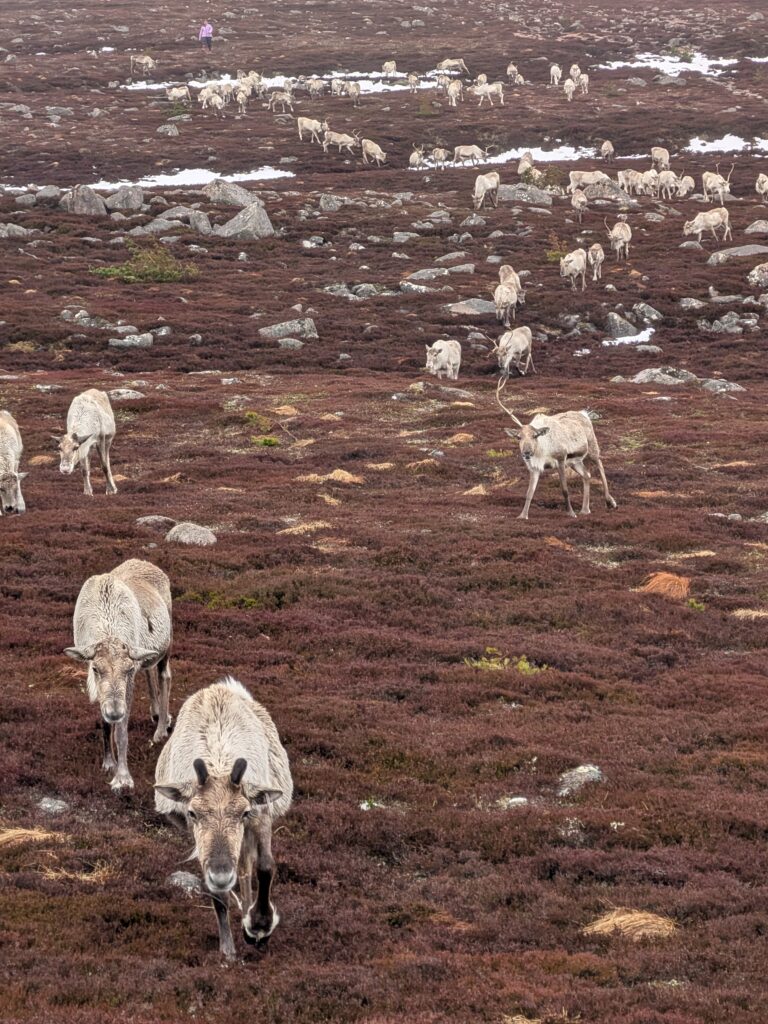
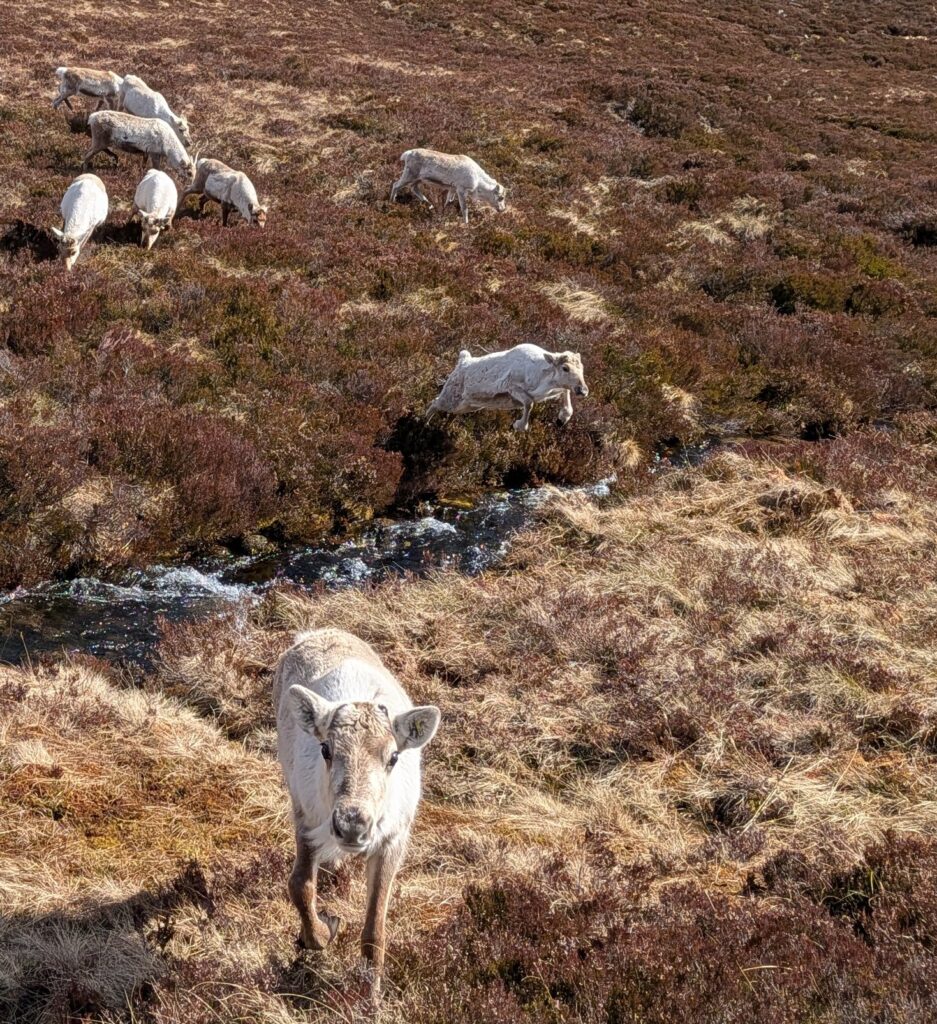
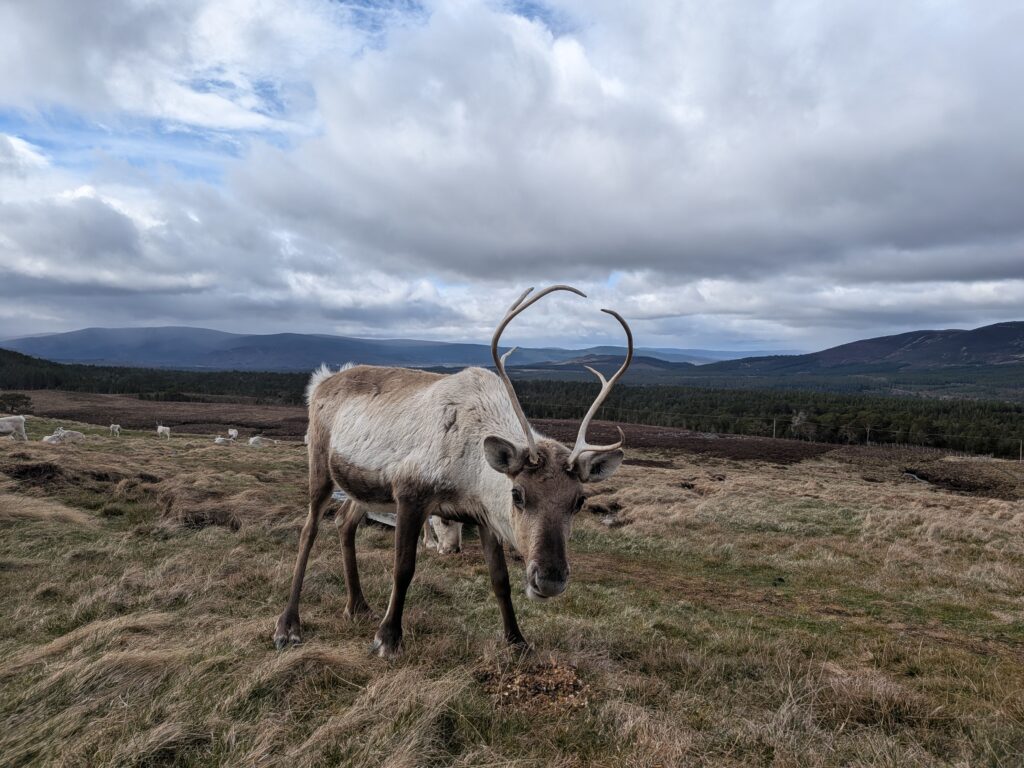
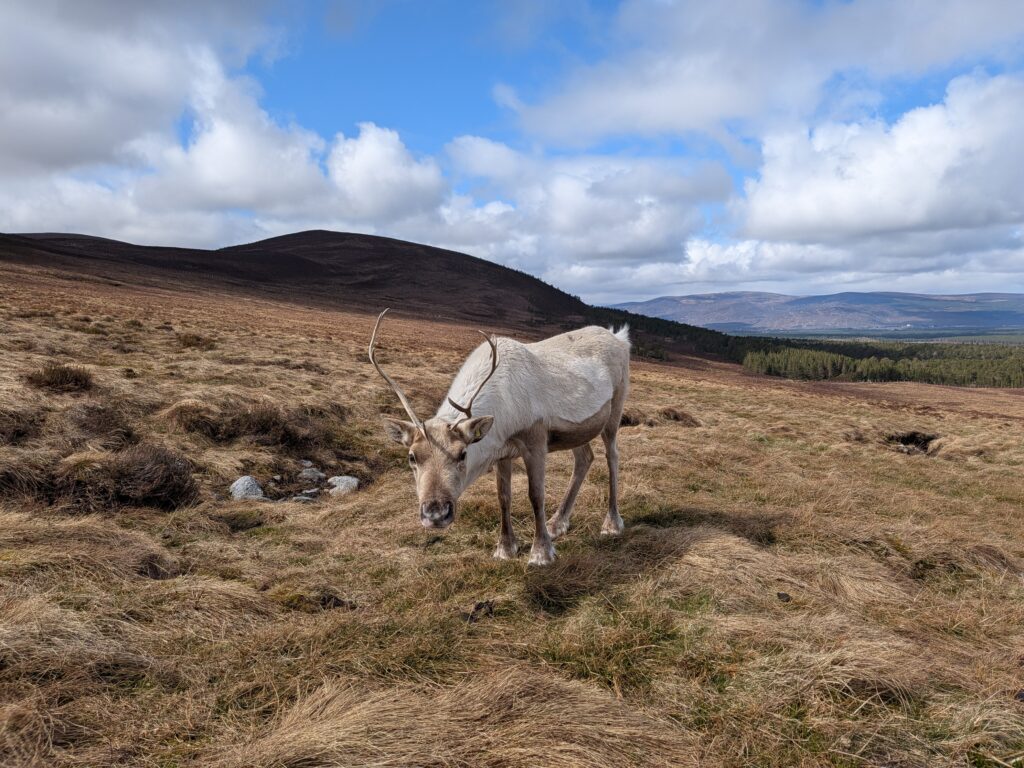
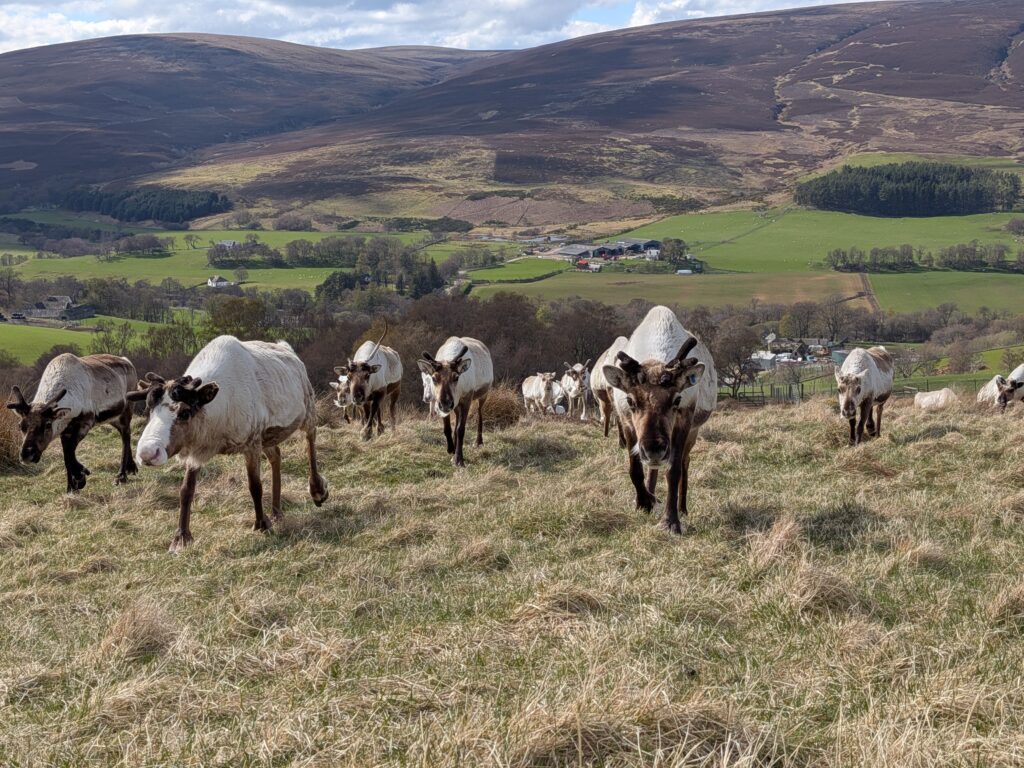
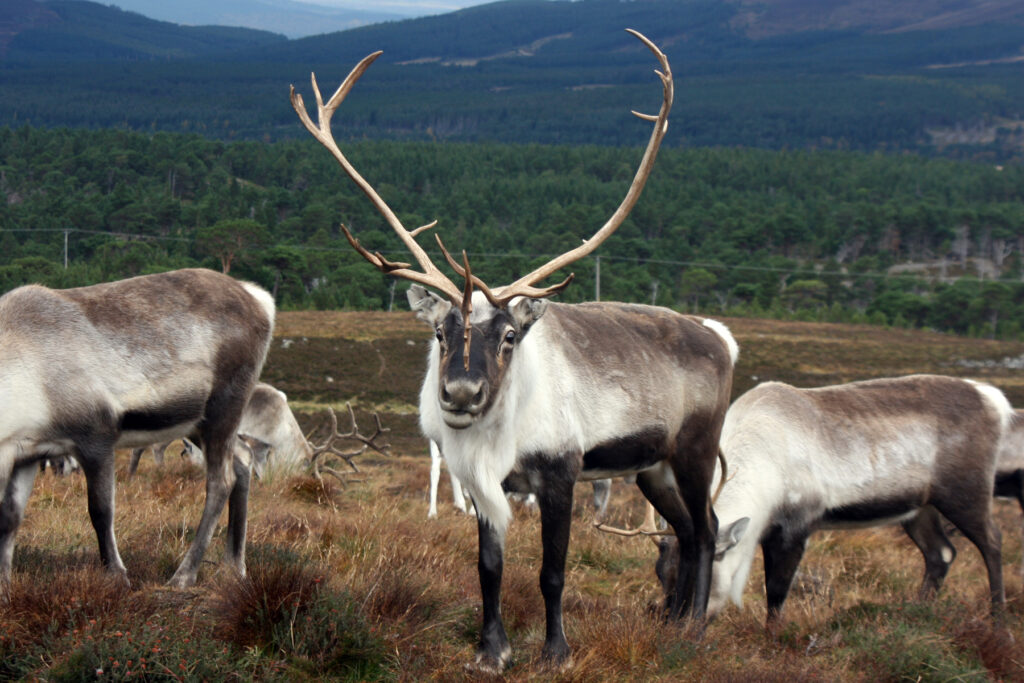
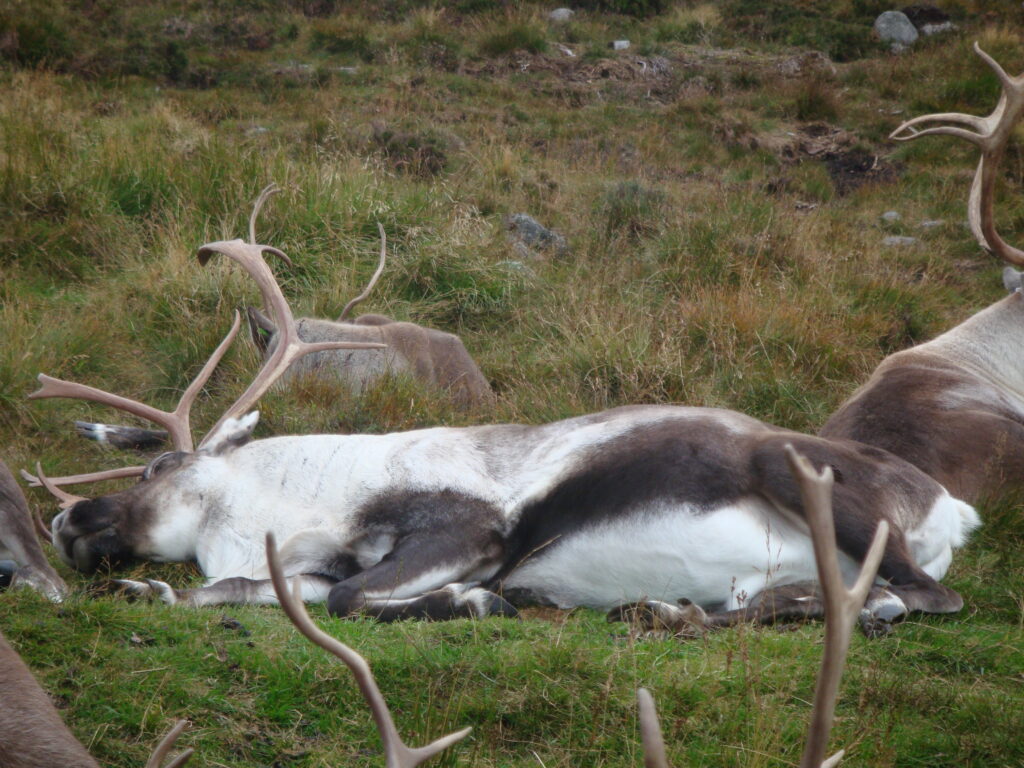
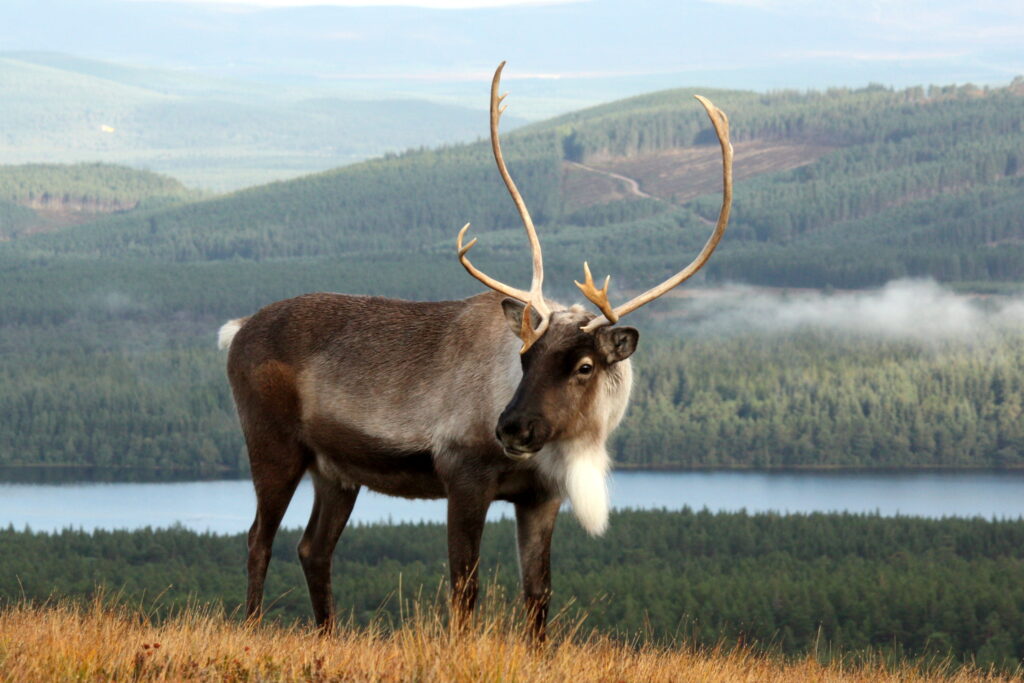
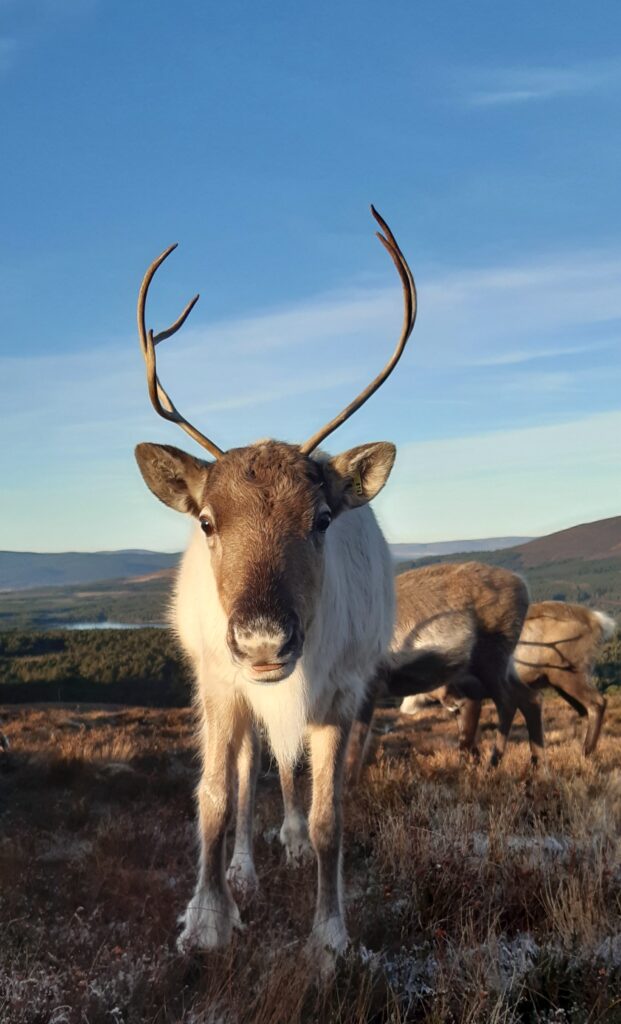
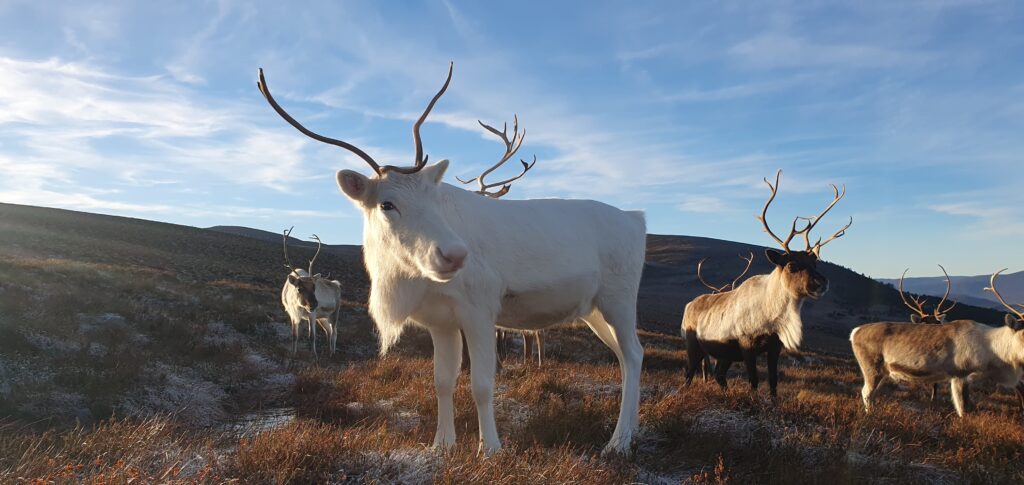
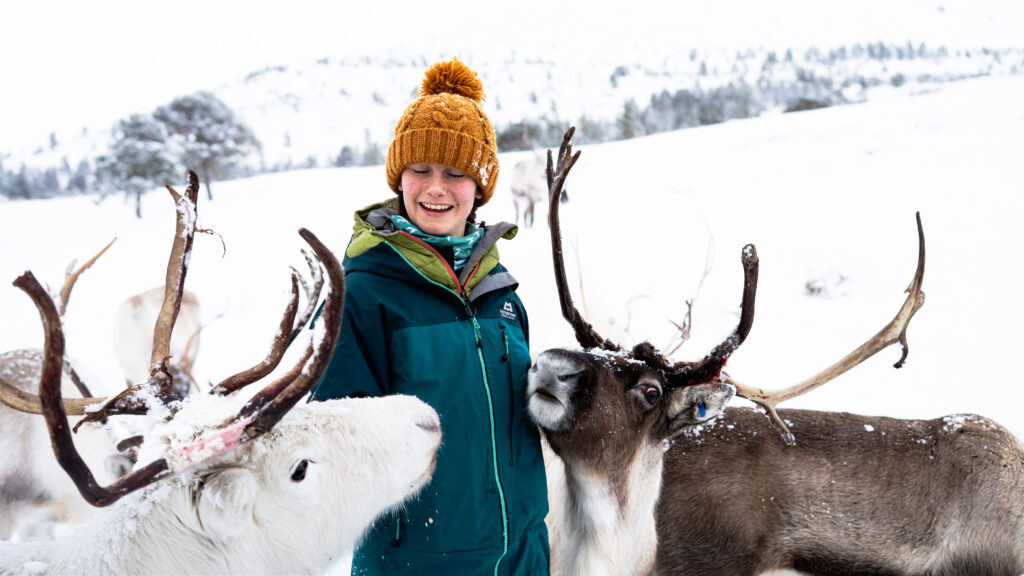
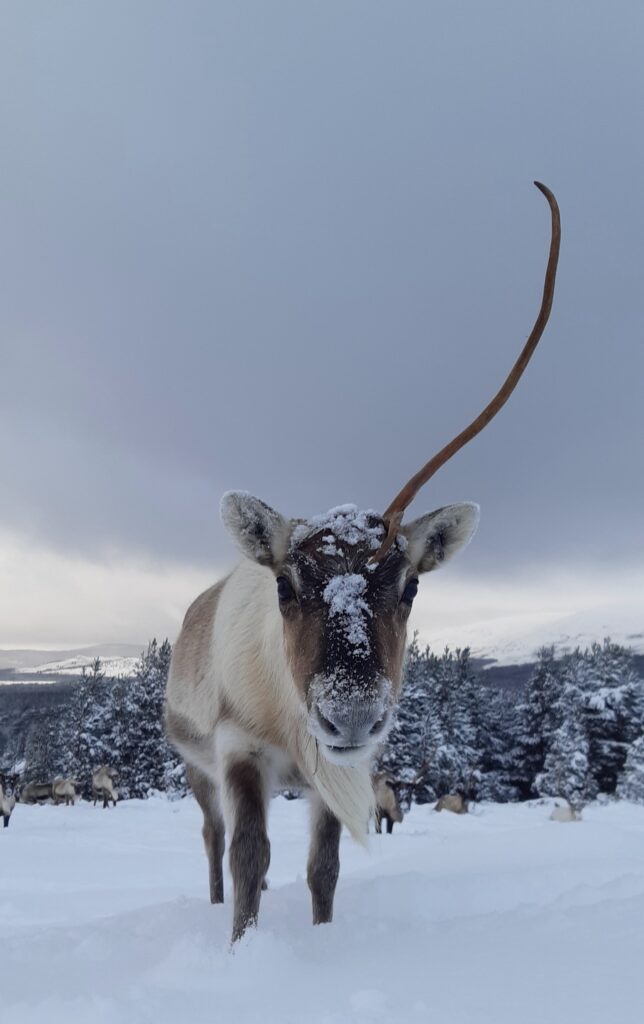
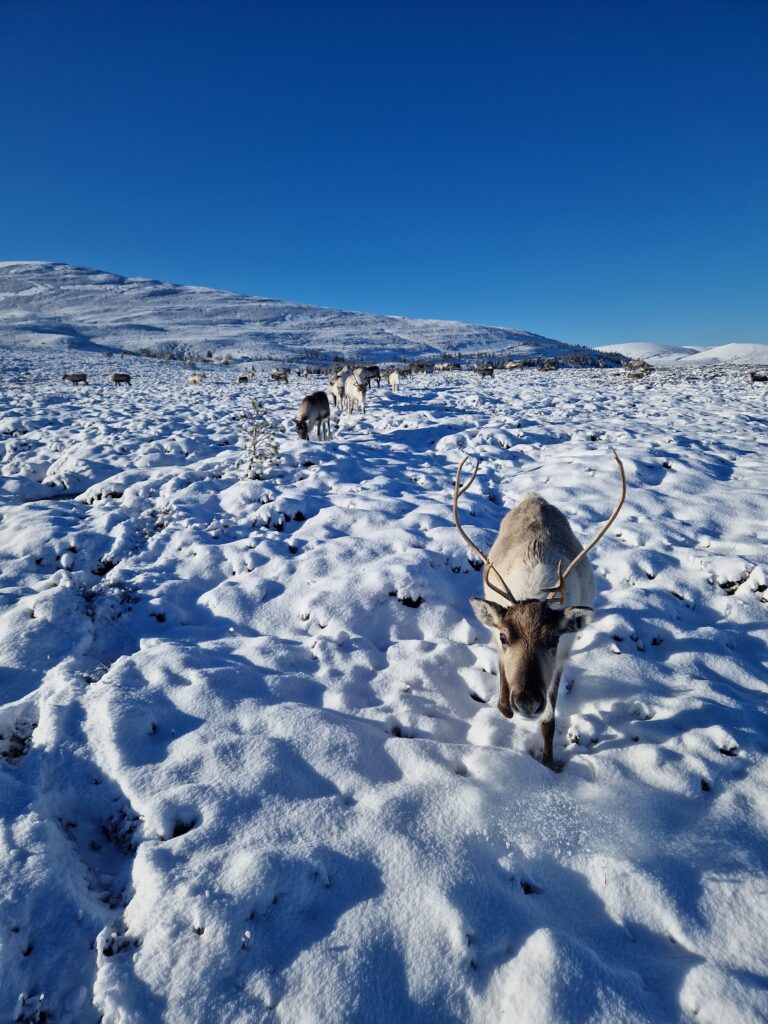
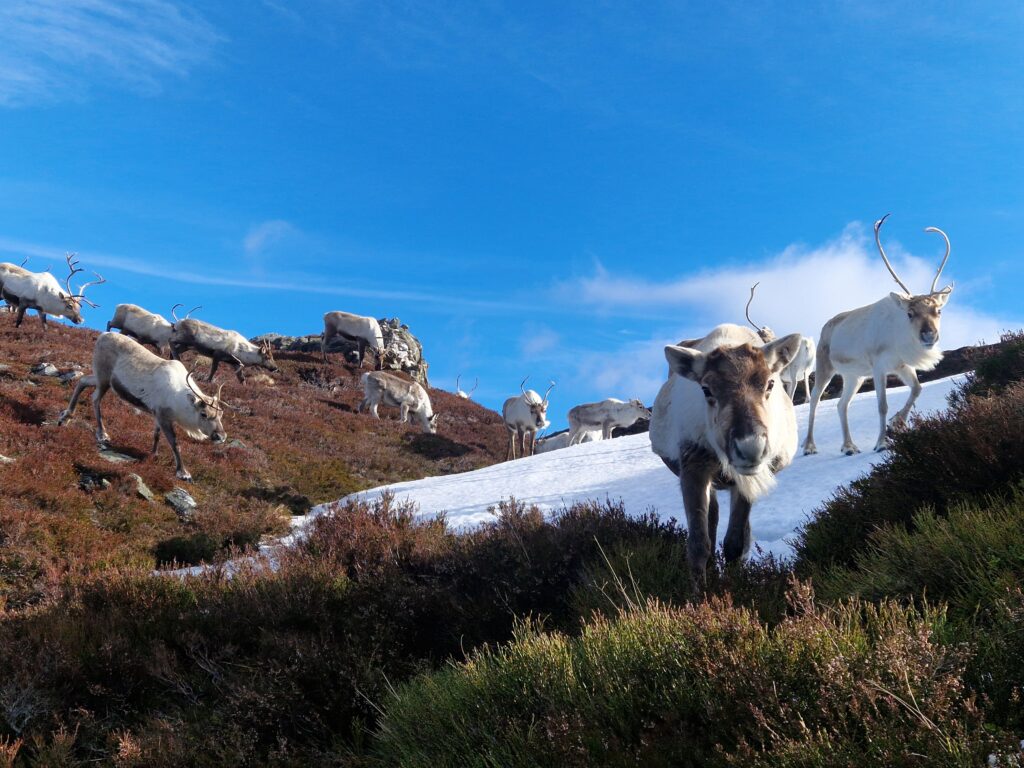
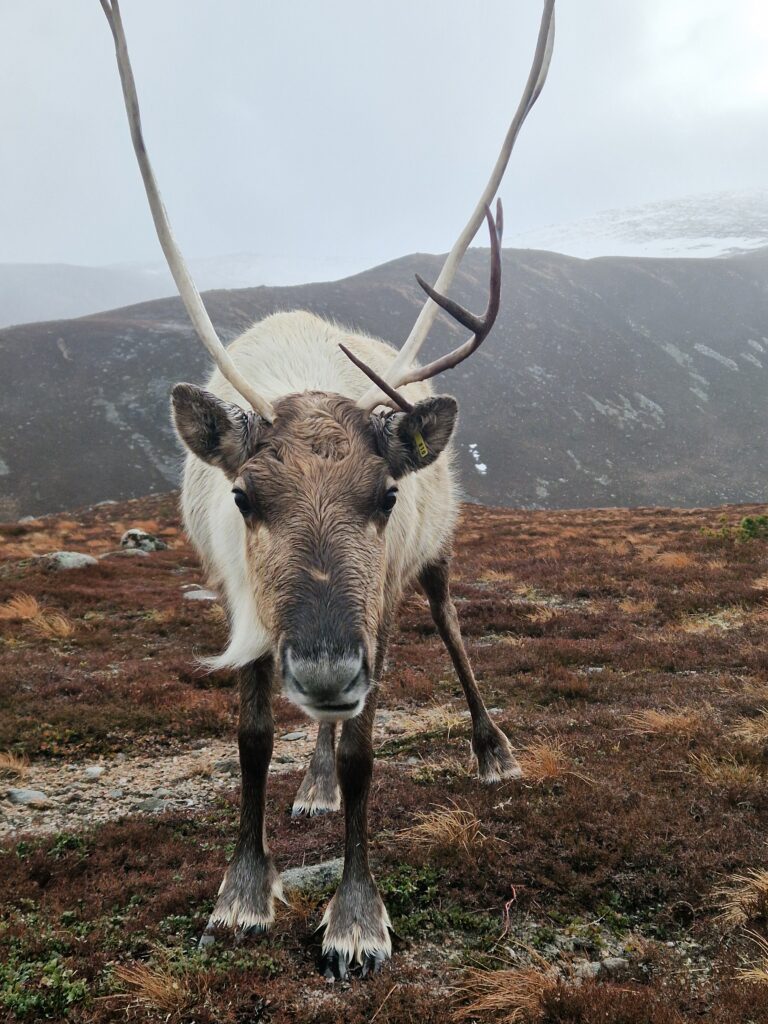
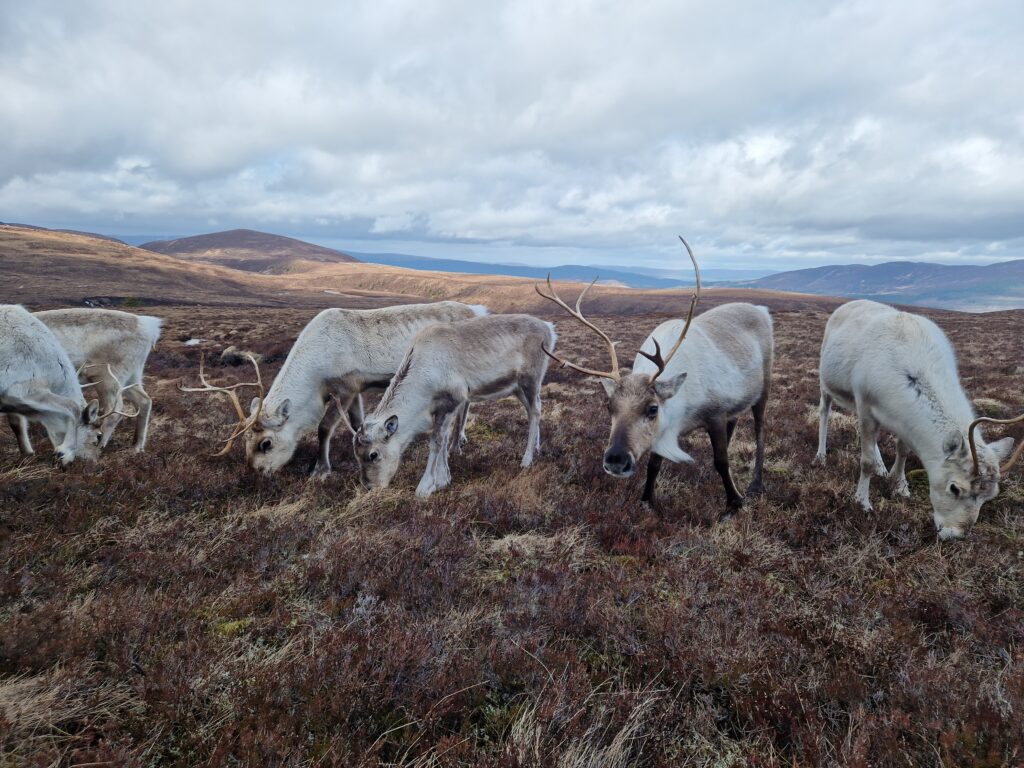
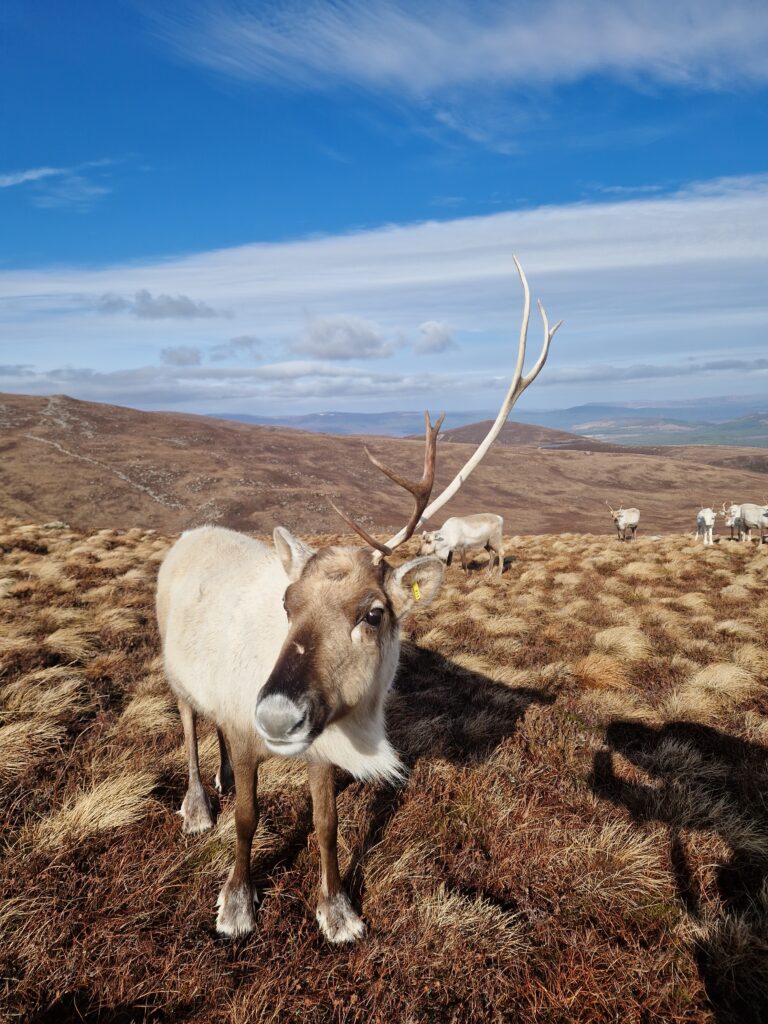
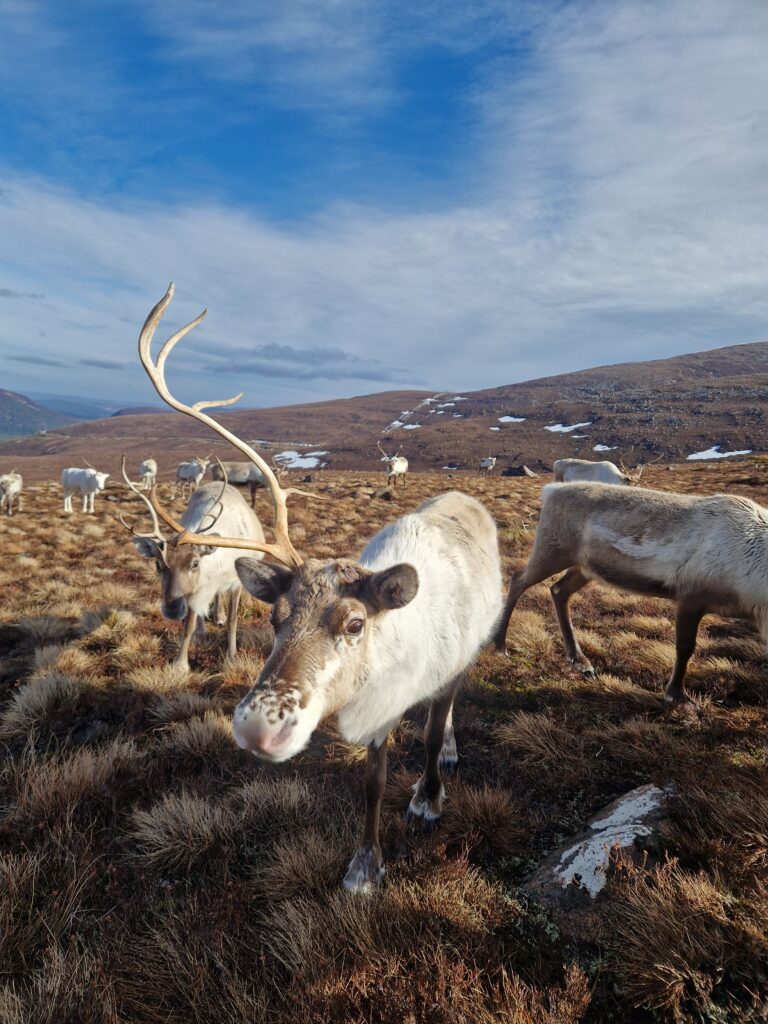
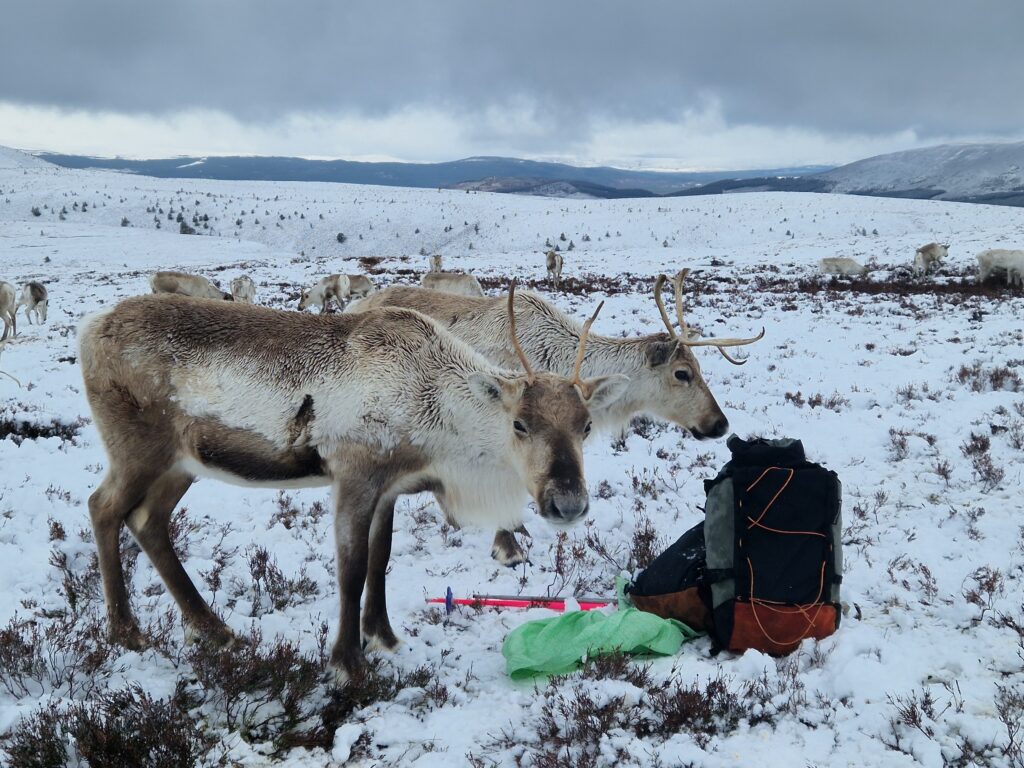
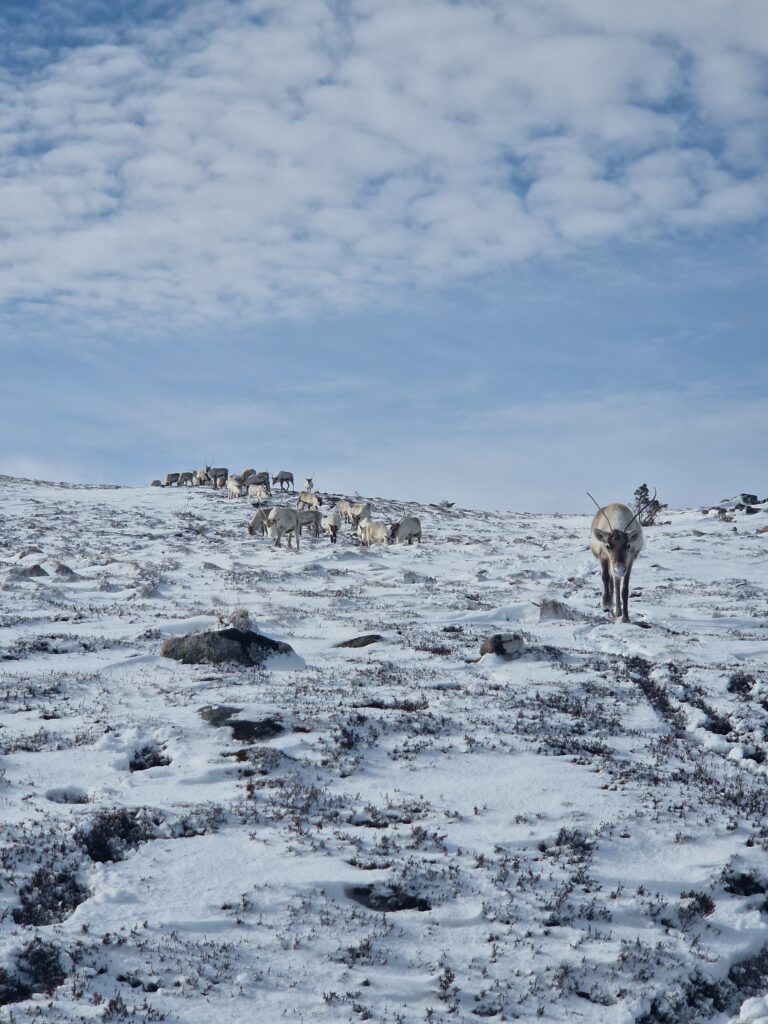
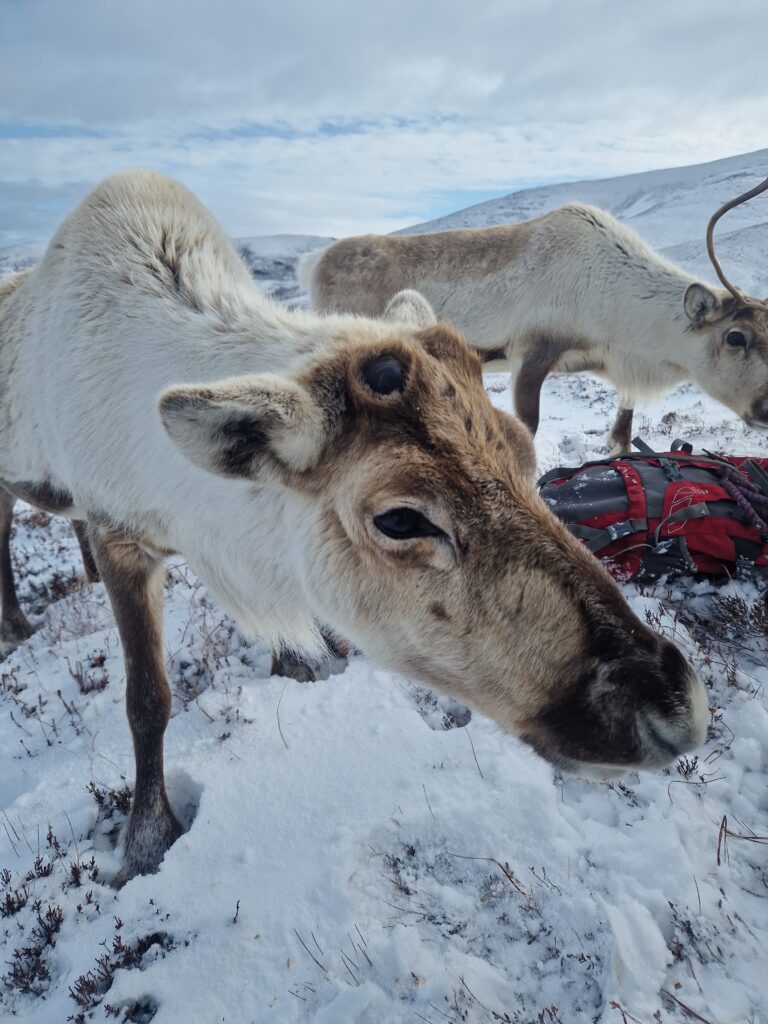
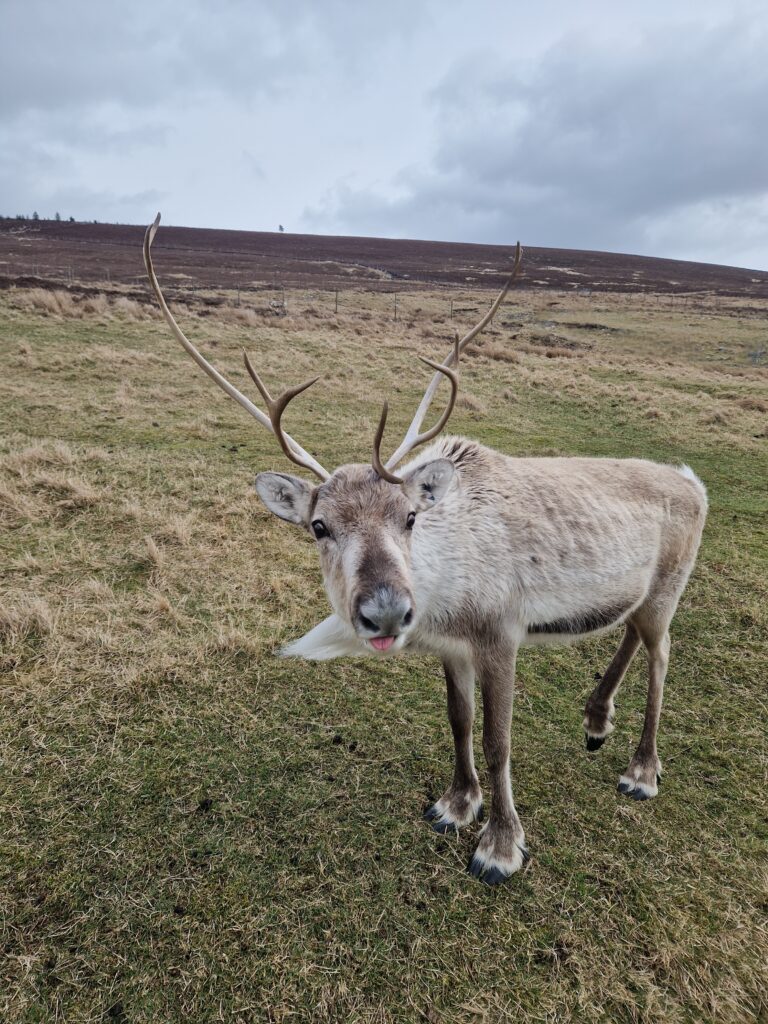
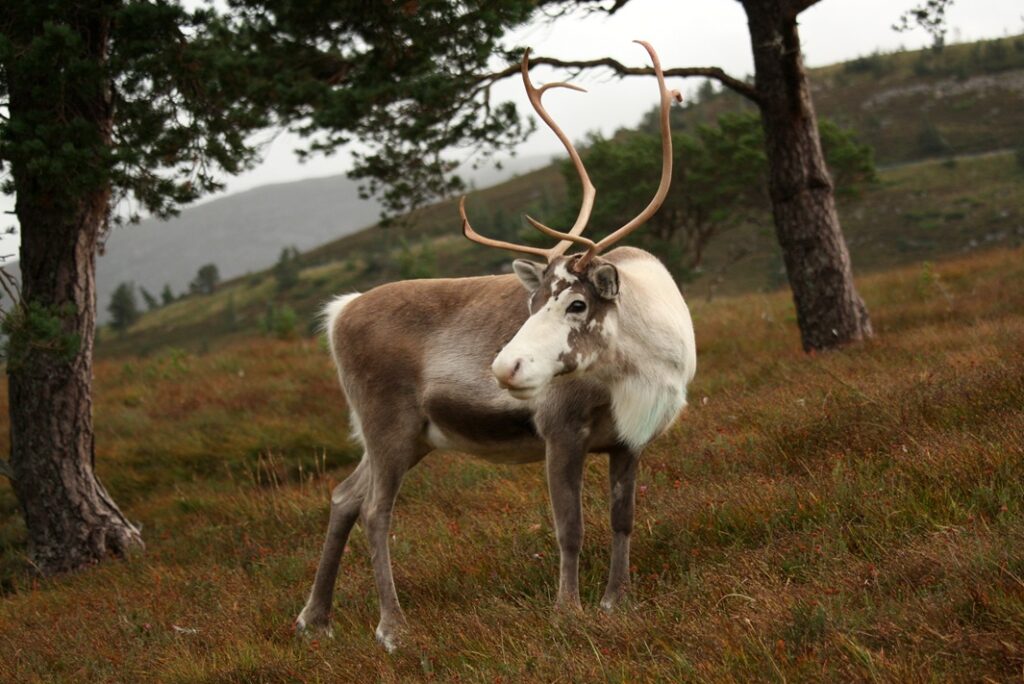
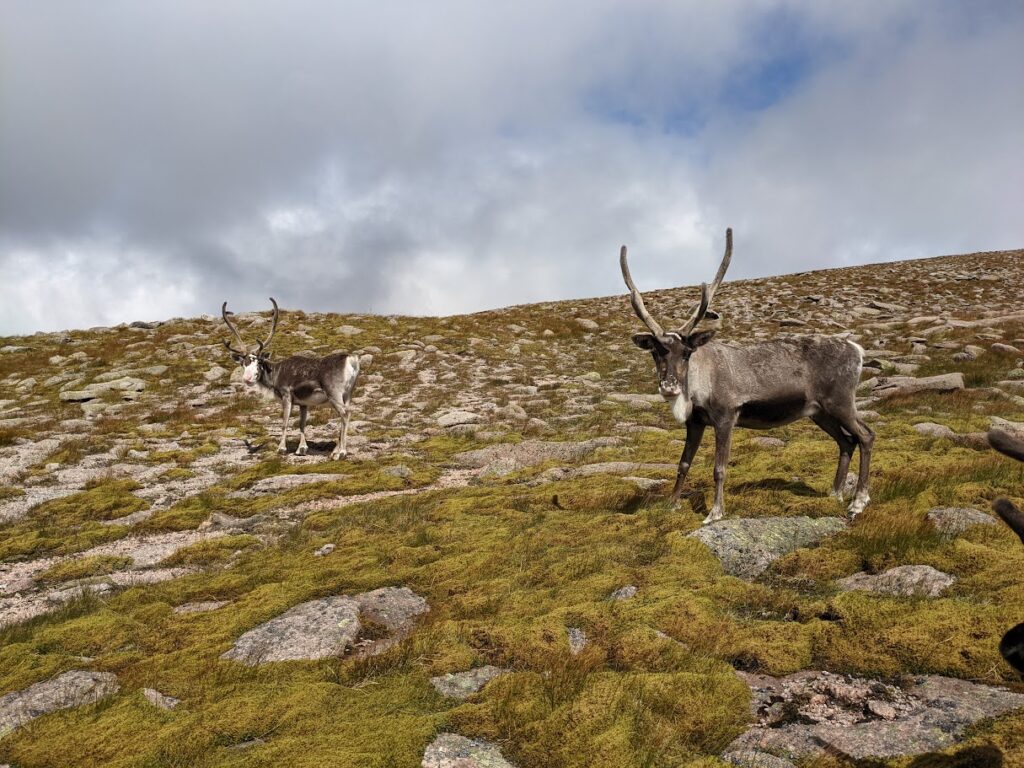
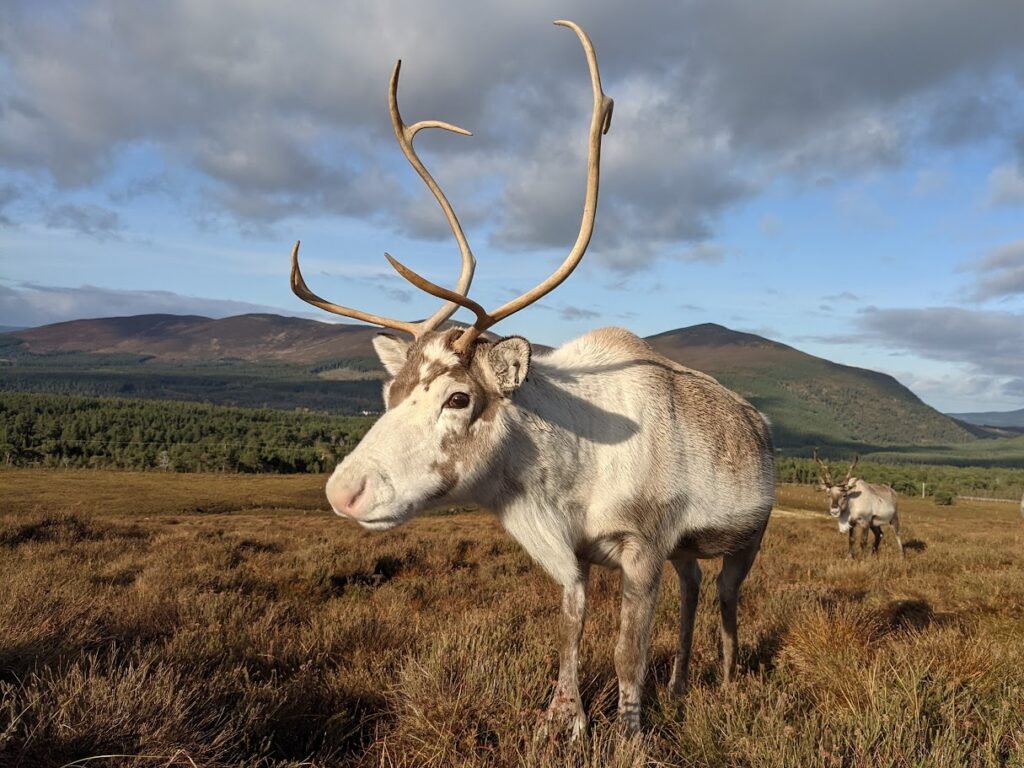
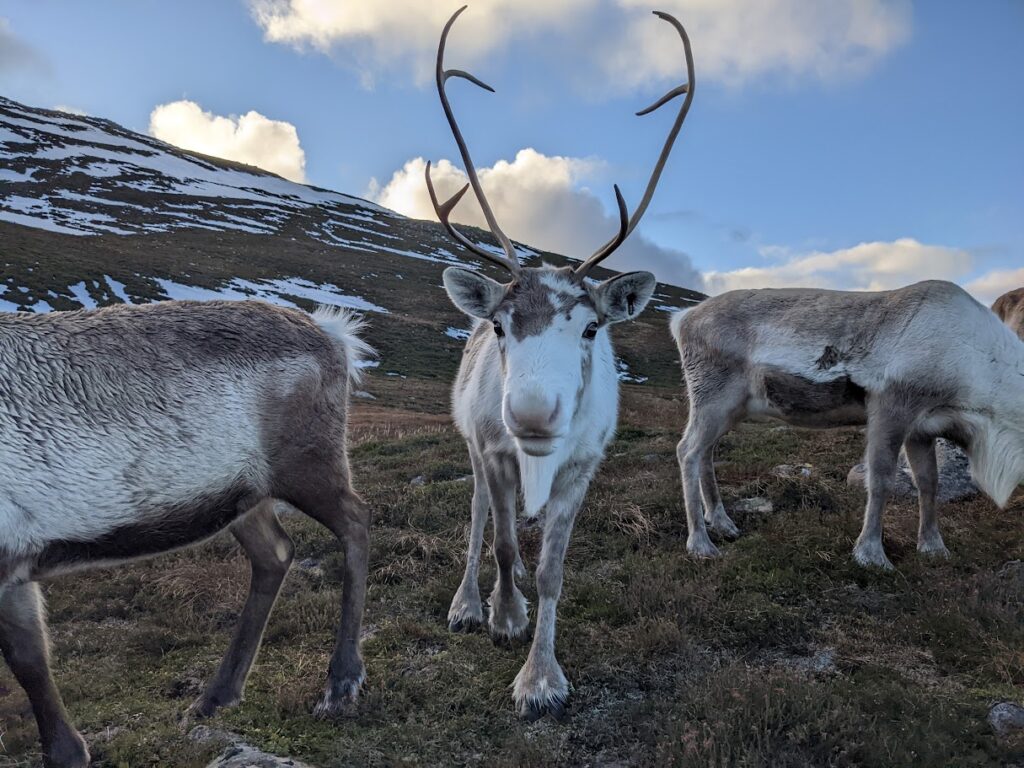
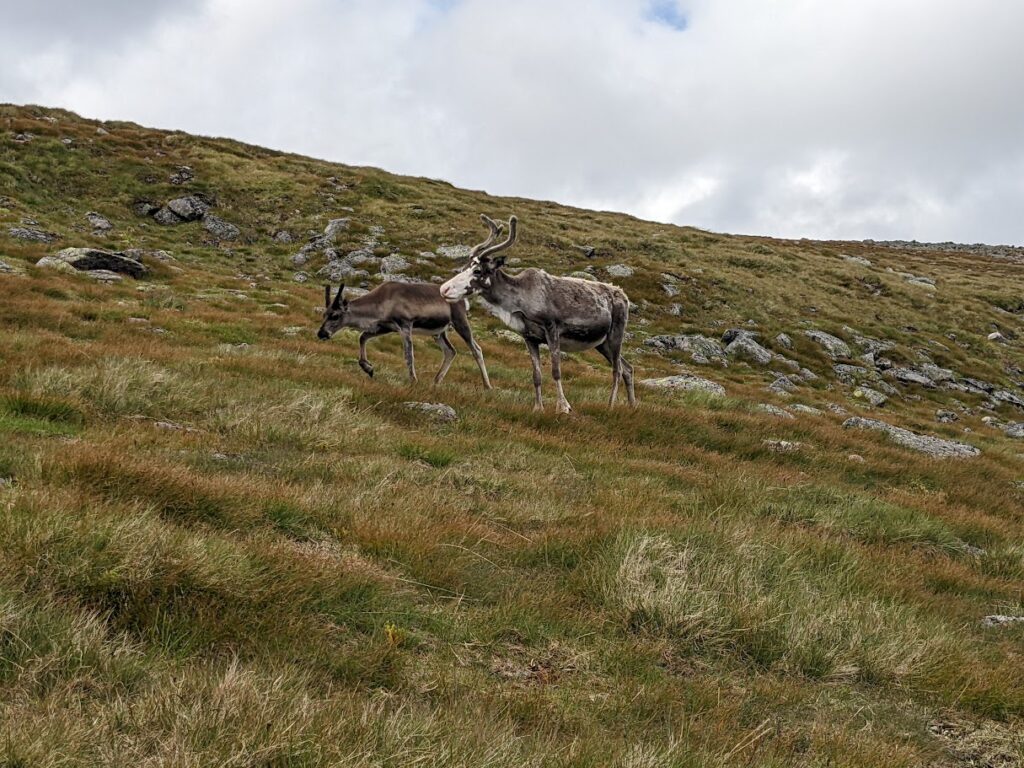
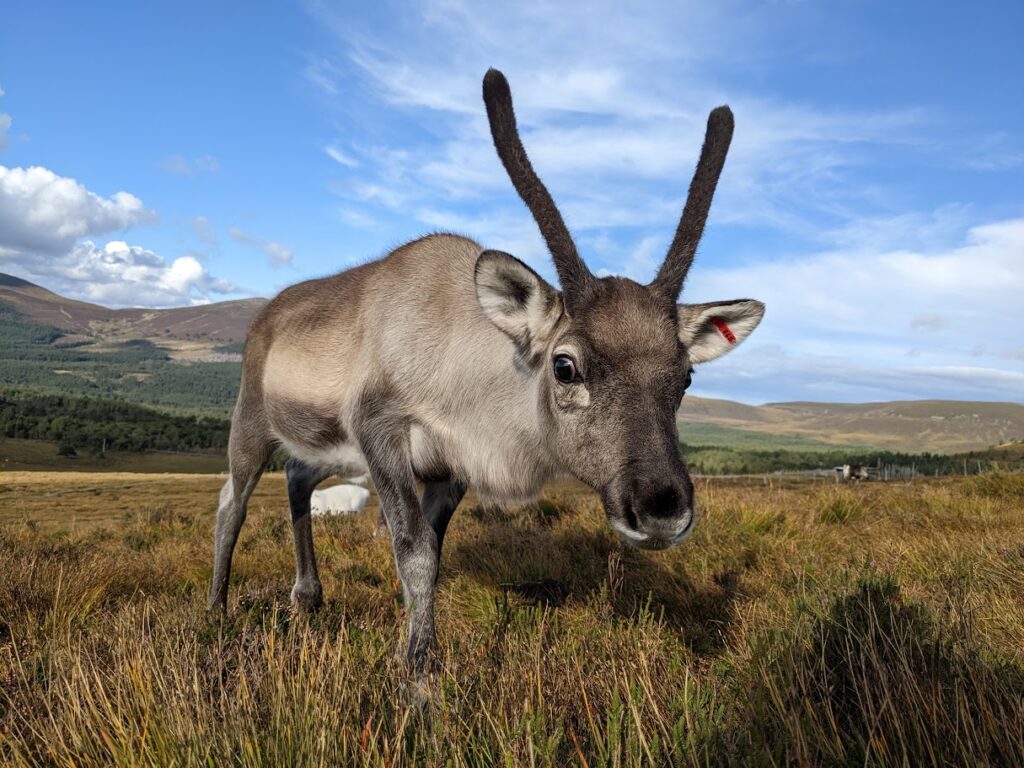
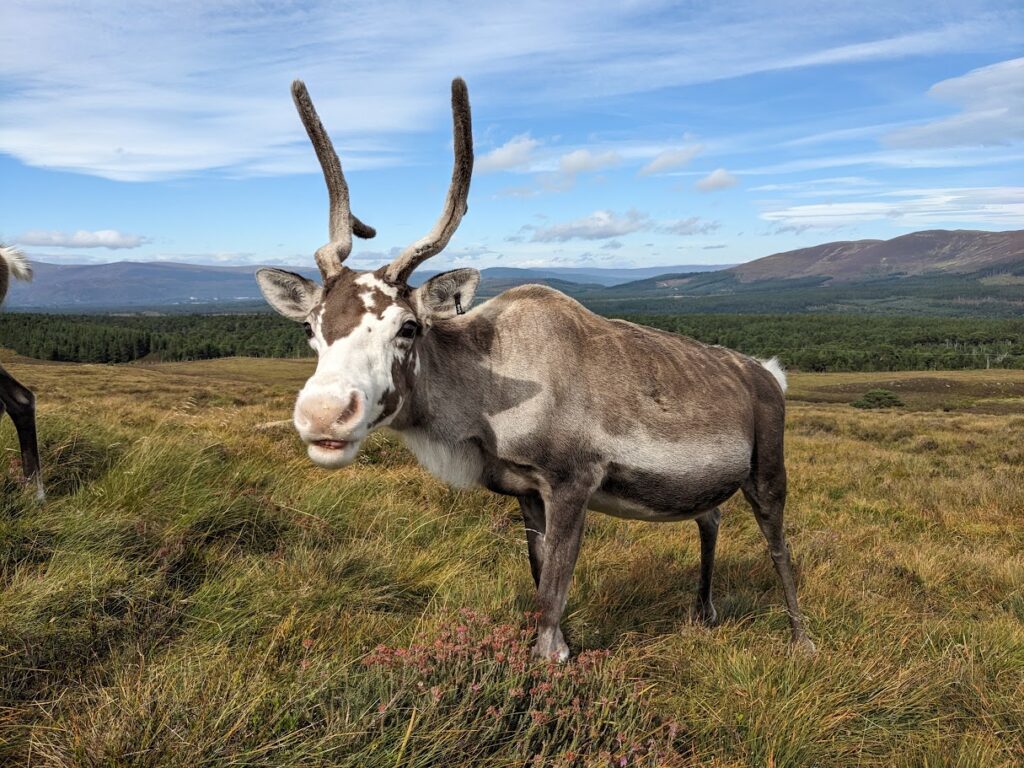
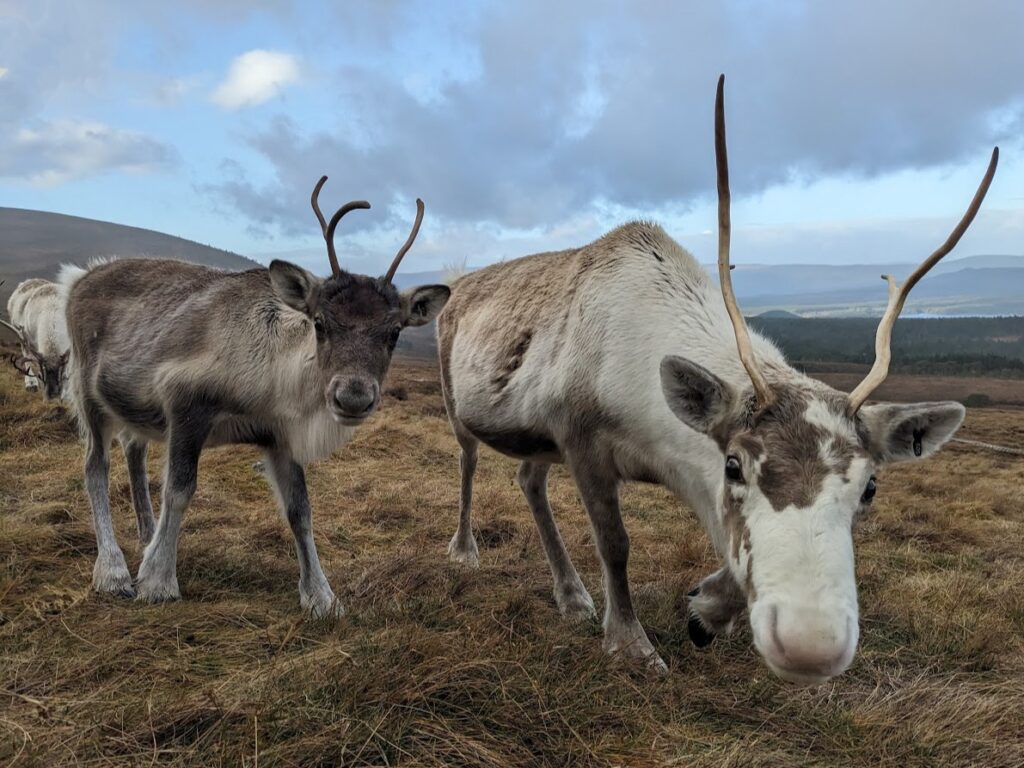
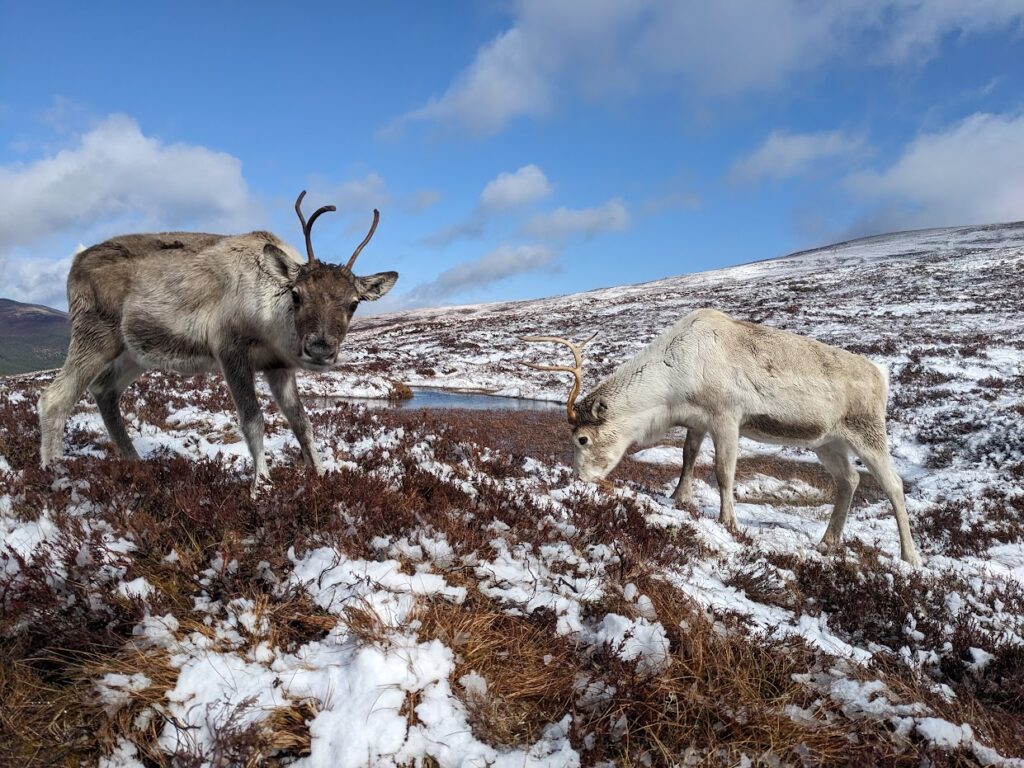
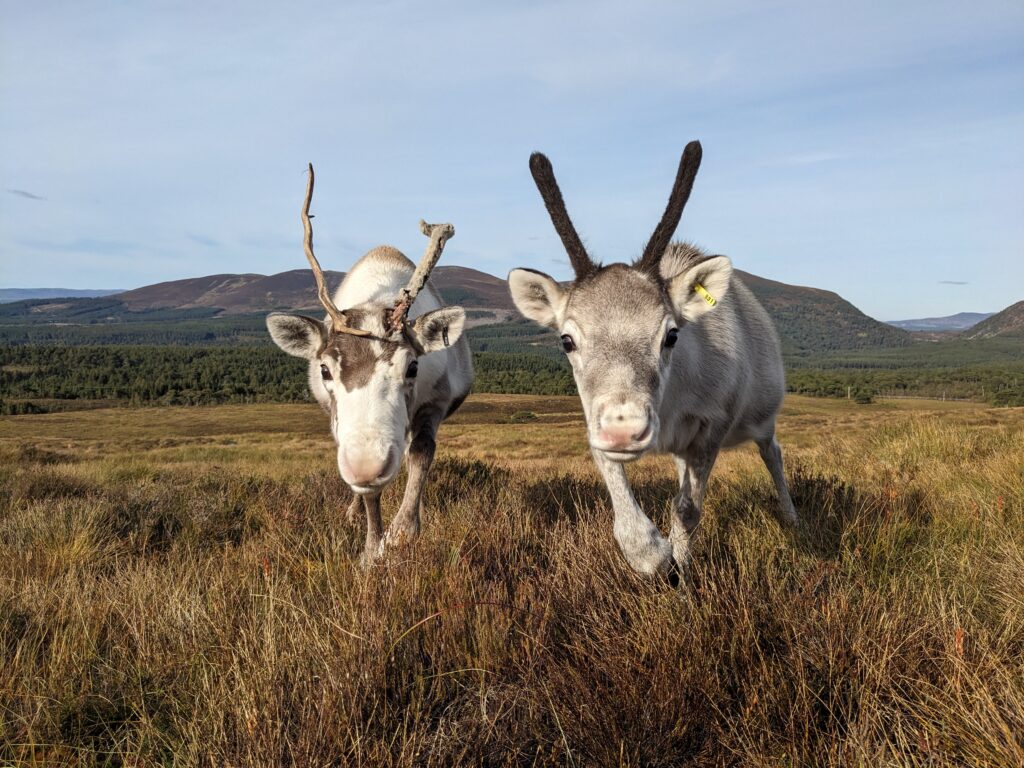
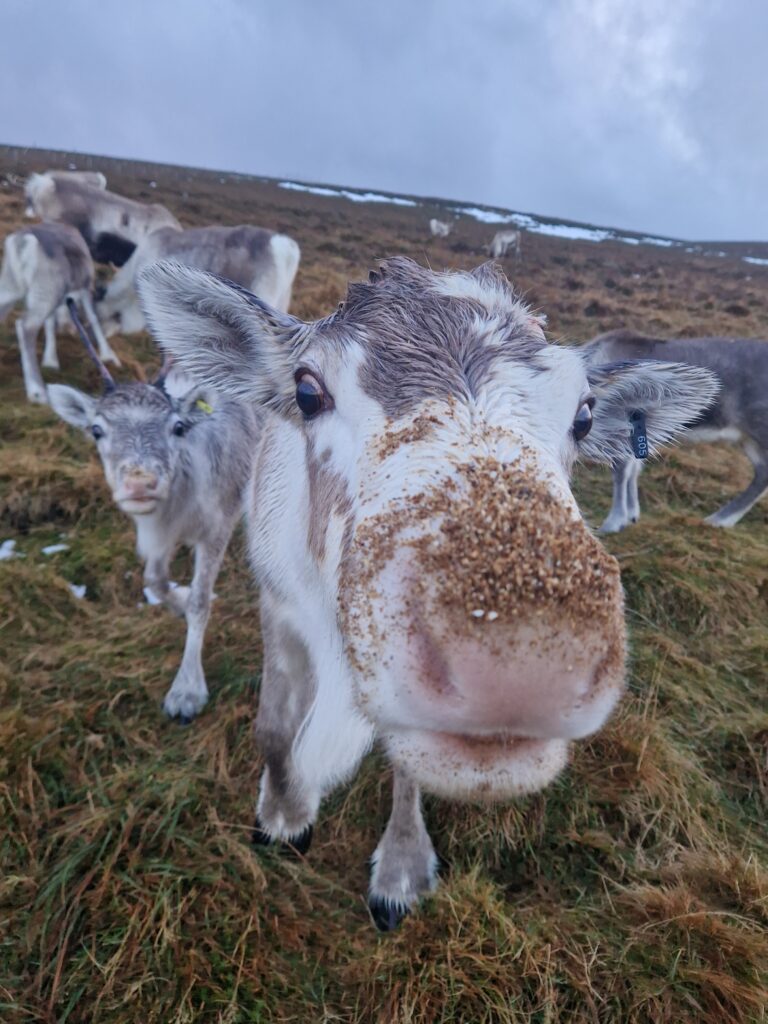
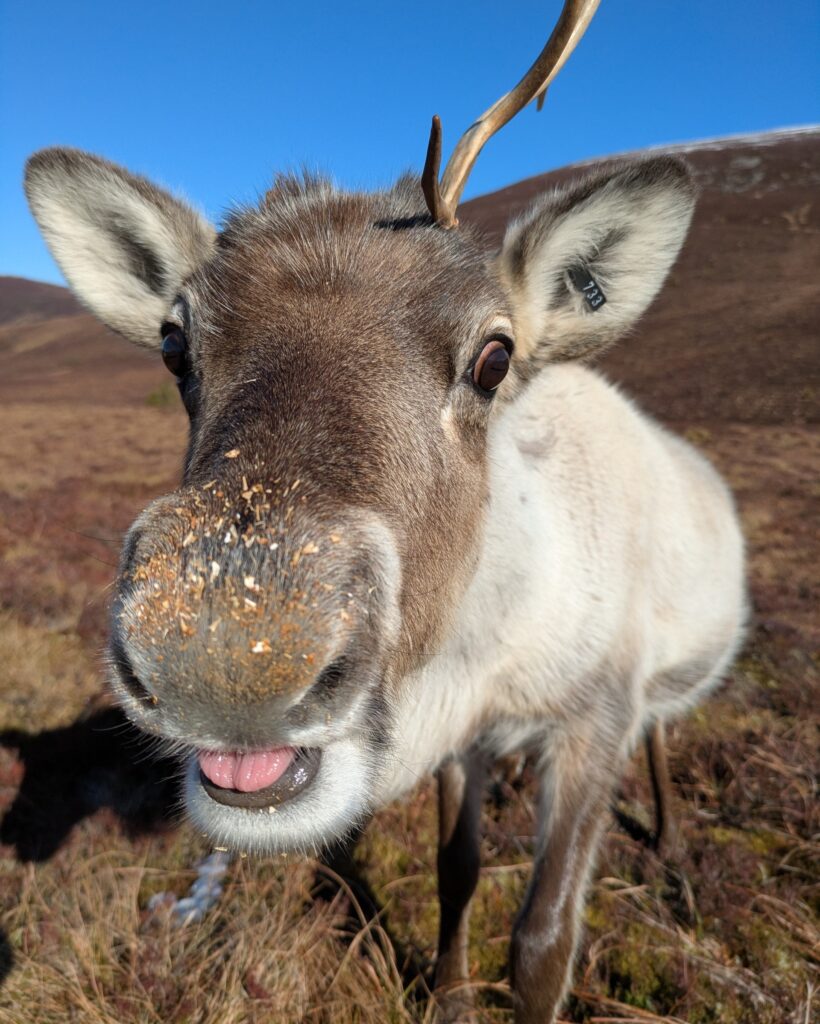
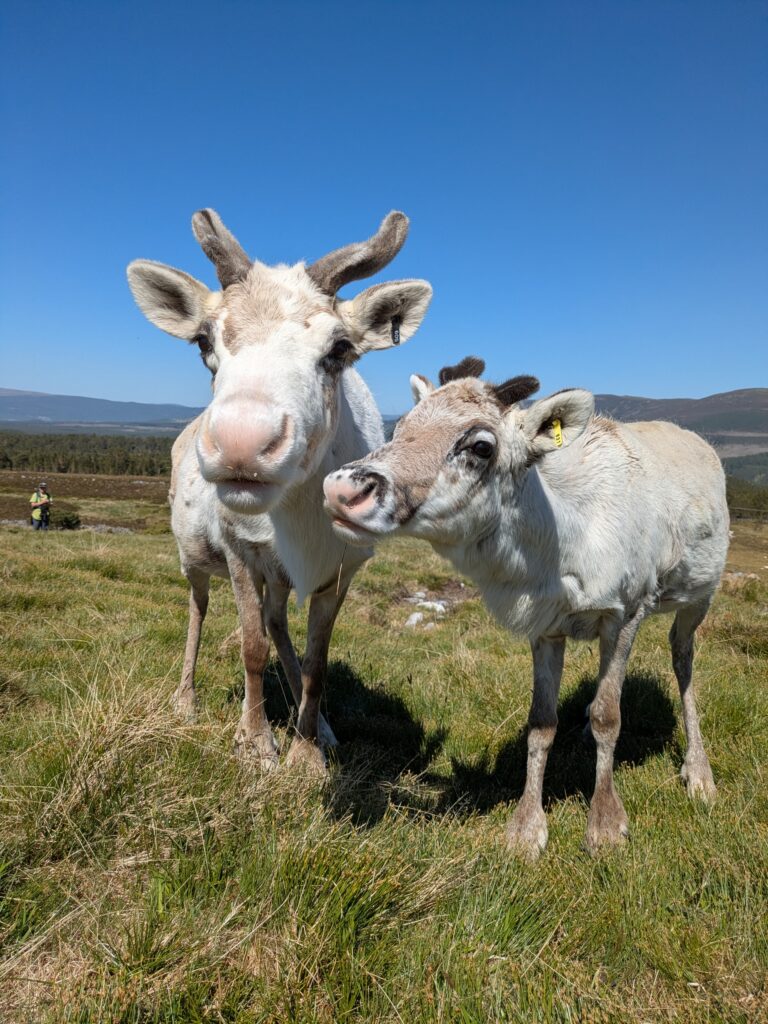
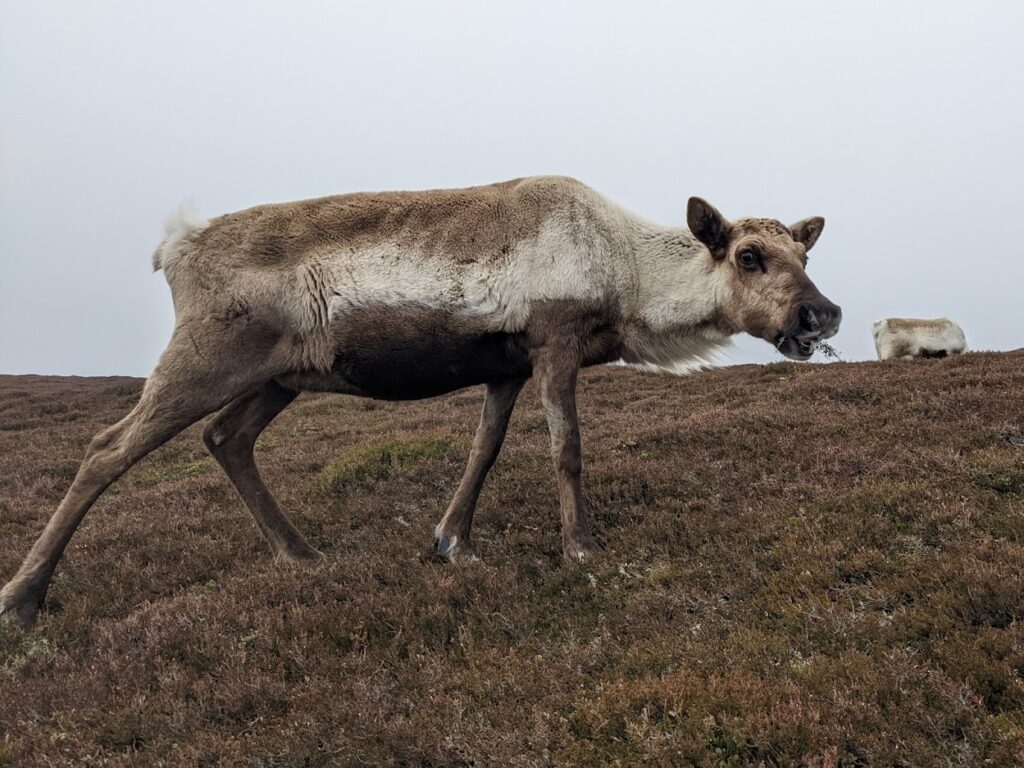
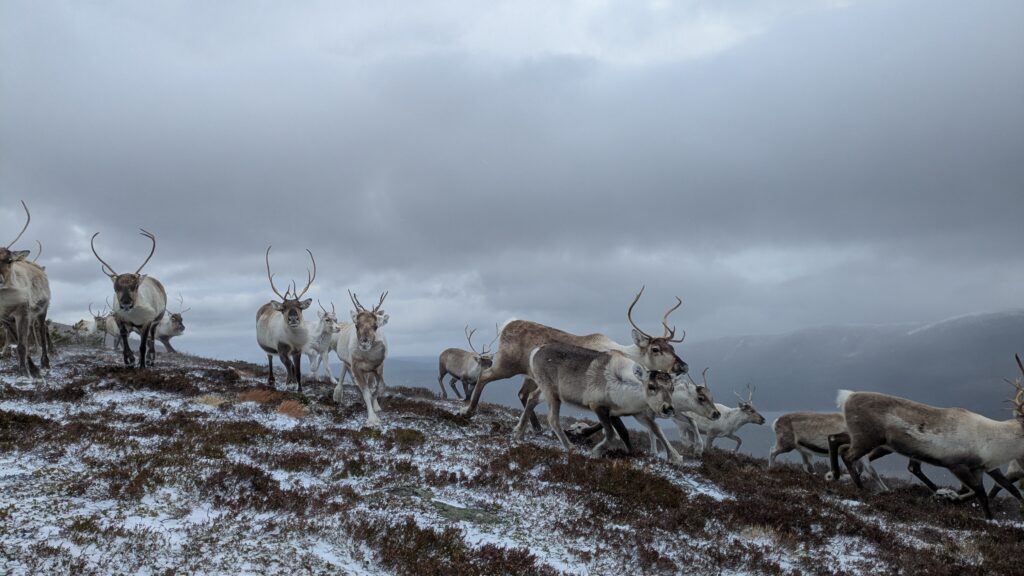
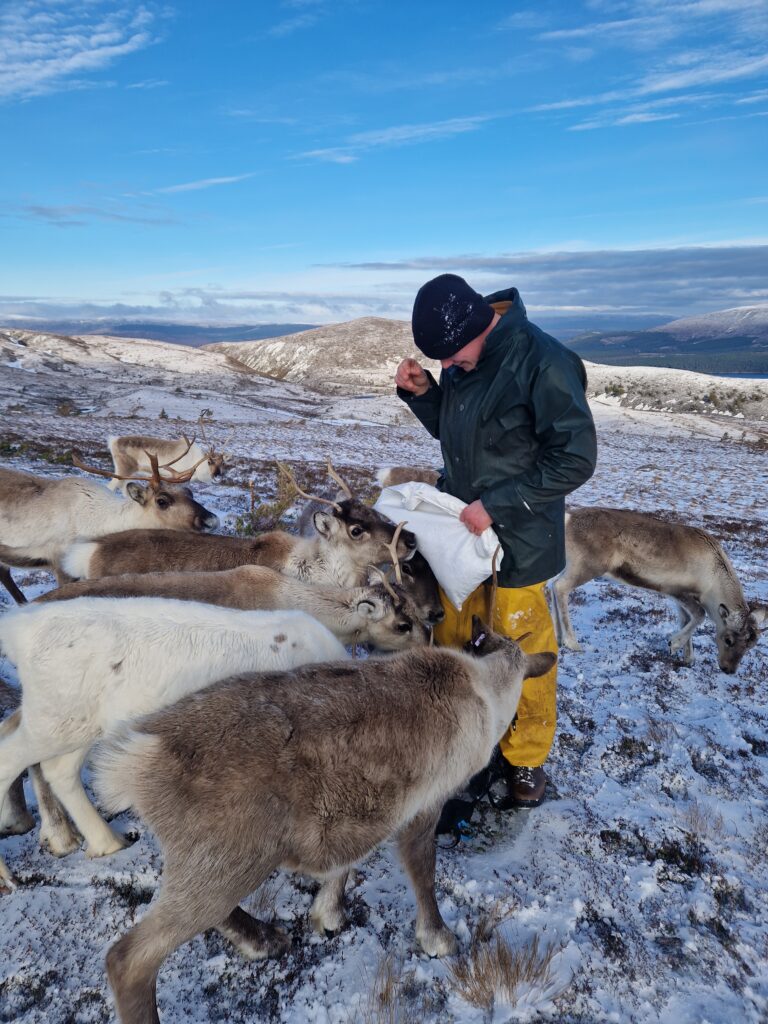
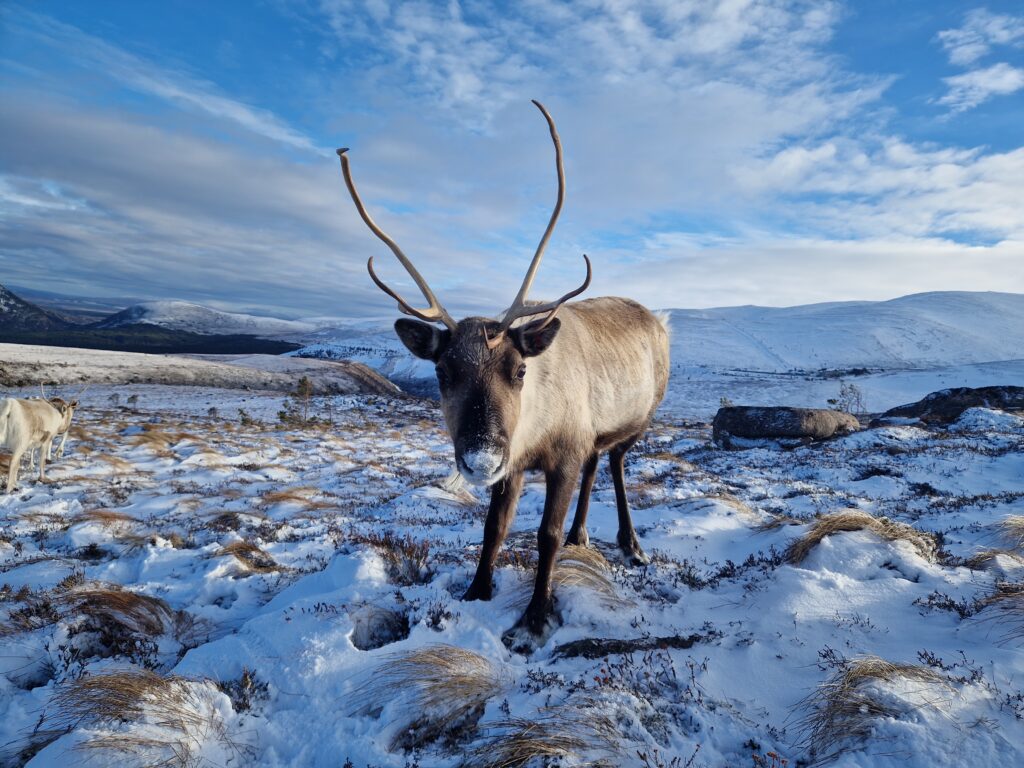
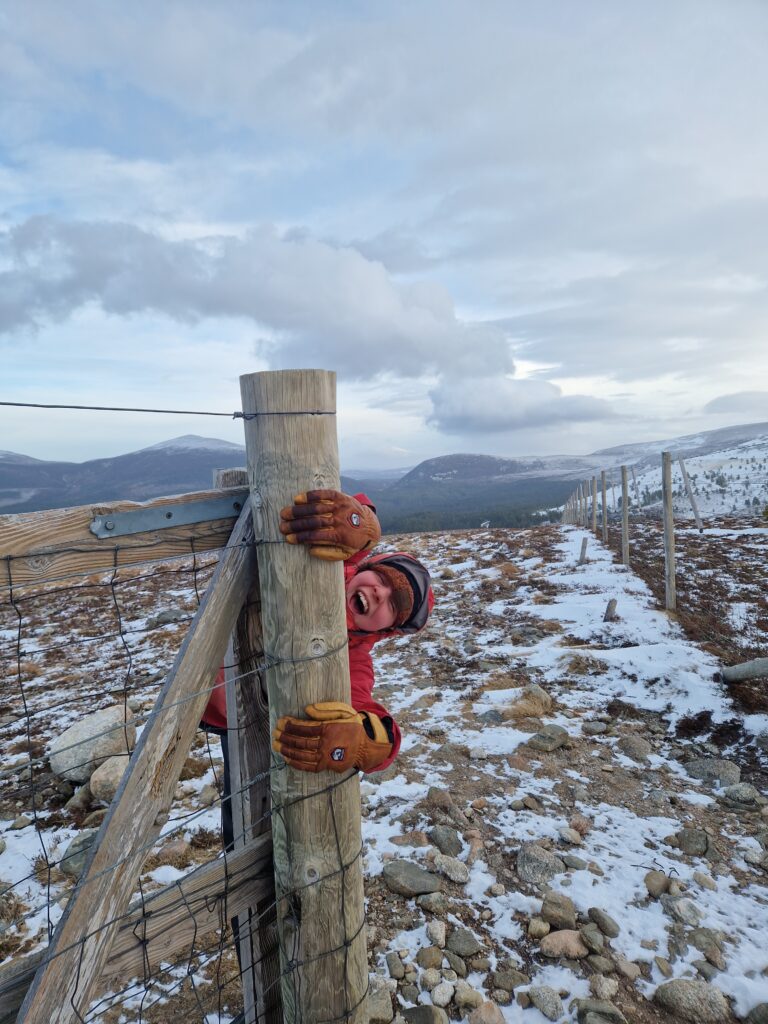
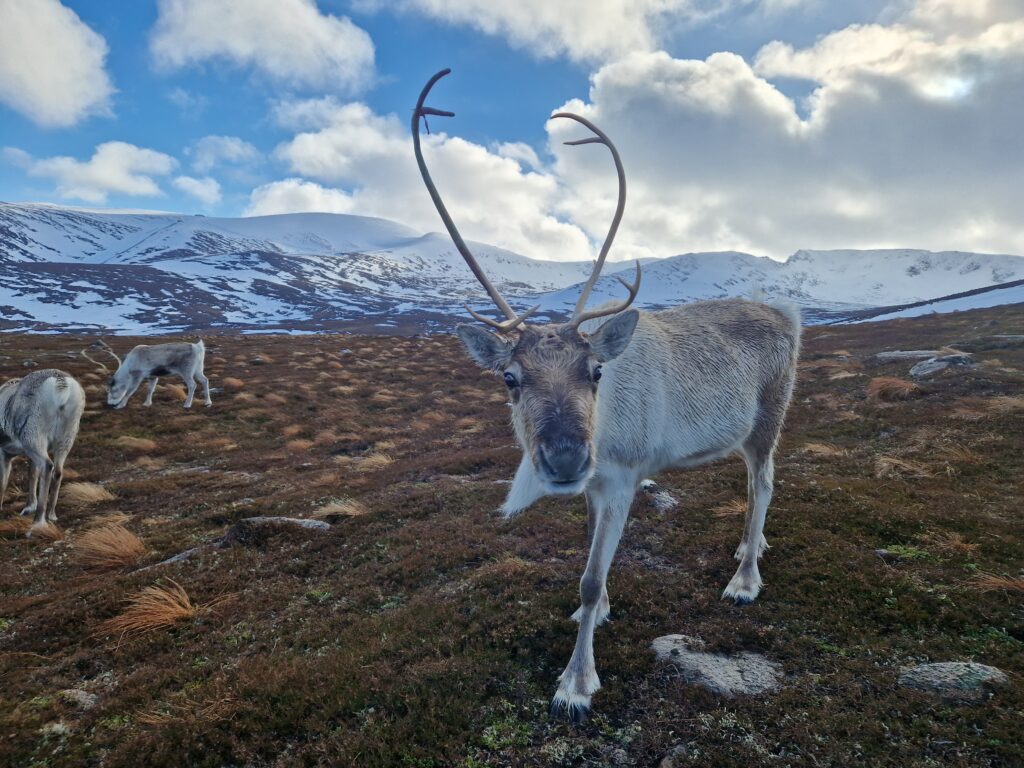
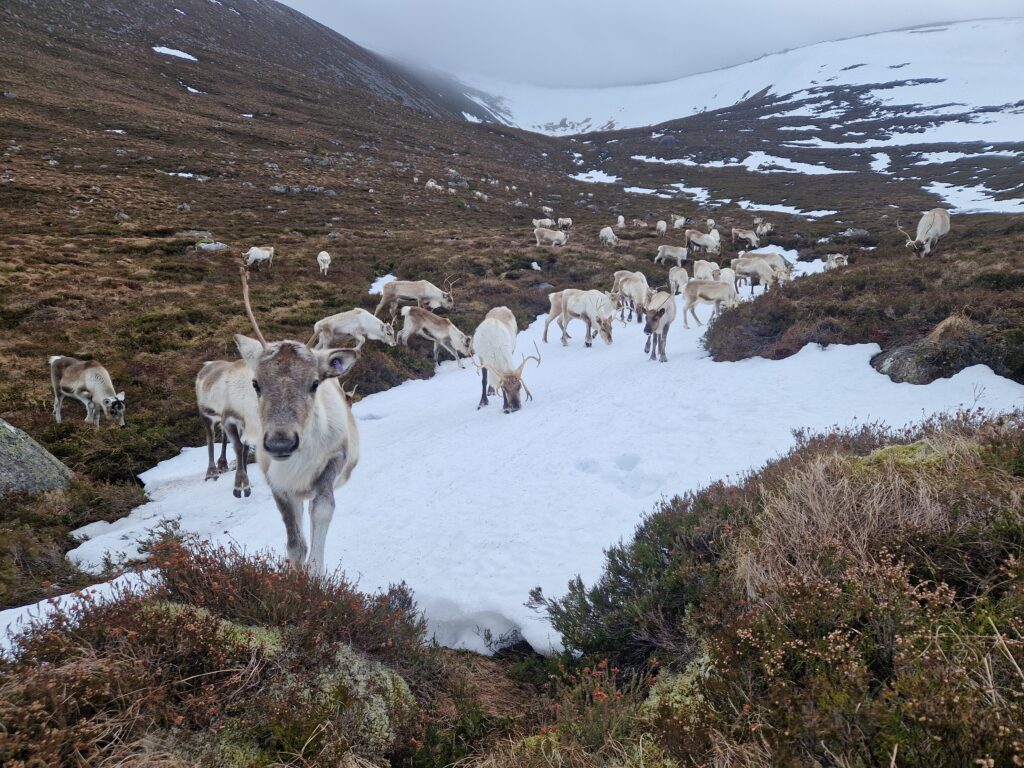
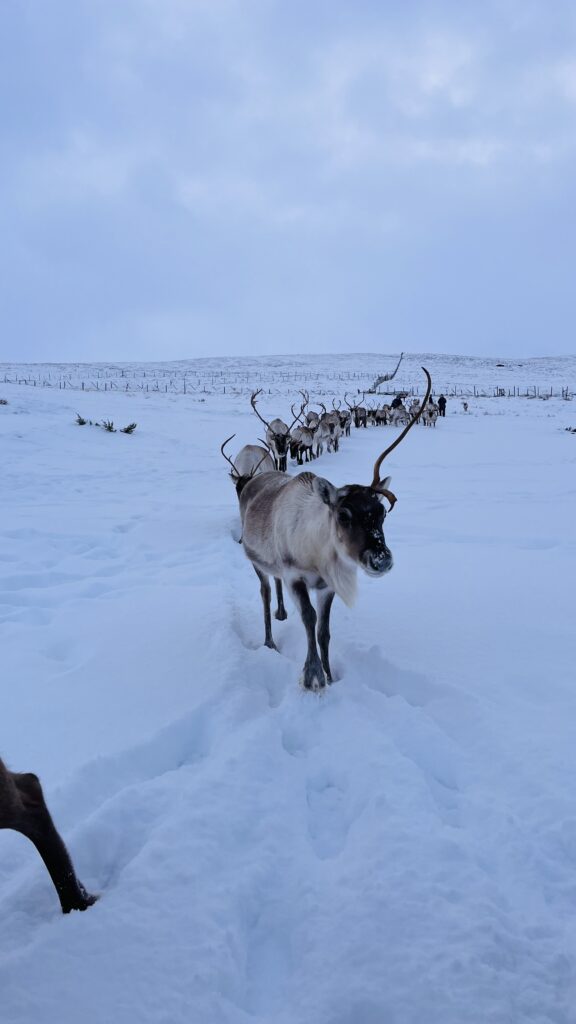
1st of April: After taking visitors out to see the reindeer in the morning, when there was no snow, this was an absolute treat to find them again in the afternoon! You can see Disco on the left, Sundae behind her, Turtle on the right and Tetley.2nd of April: Disco has lost one of her antlers over night. Here is Disco and Latte leading the herd over the the Hill Trip spot. 3rd of April: A trip to see the reindeer over on our Hill farm. From left to right we have Caterpillar, Mangetout, Merida, Spartan, Hemp, Oatcake, Spy, Pumpkin, Brie, Mushy and Busby 4th of April: Beautiful Amazon looking for extra food after the Hill Trip. Over the last year Amazon has grown in confidence and is very greedy.5th of April: As you can seen the snow hung around lower down for a few days. Here is Chai and Camomile scouting out whether i’ll offer more food.7th of April: A suprise visit from Ruth and Baby M9th of April: Despite Cheer having an epic set of antlers, this didn’t deter Trilby from a bit of antler sparring. At the time, Trilby only had half of one antler left. They will both soon lose these antlers in preperation for a new set to grow.10th of April: Hopscotch and Foxtrot leading the herd over a steep sided ridge, the herd didn’t bat an eyelid, and it often amazes me the places the herd chooses to rest. 15th of April: Ryvita, Sika, Christie and Winnie in the Mid ground. Ryvita has the start of her new antlers growing. I often find at this stage the reindeer often look a little like Giraffe. 16th of April: Tetley with Latte excelling at jumping the burn in the background. Turns out reindeer can be agile!18th of April: Our cows and calves are now in our hill enclosure before we split our pregnant females, who will stay in the hill enclosure for the calving season which will start in May. Here is lovely Shannon enjoying some feed after the Hill Trip.19th of April: Before coming over to our hill enclosure, Brie spent her time free ranging at our secondary site. 21st of April: Here come the boys! Dr Seuss (on the left) and Cowboy (on the right) leading the boys up for their feed.
Time for another installment of our – rather sporadic – memorable reindeer series. This time it is Porjus’ turn for stardom!
What a handsome chap!
Back in 2004, we imported a batch of male reindeer, mostly calves and yearlings, from Sweden in order to bring in new bloodlines, and one of these yearlings was Porjus. He was named after a settlement up inside the Arctic circle in northern Sweden just north of the town of Jokkmokk, where our founder Mikel Utsi was from. His name was pronounced ‘porr-e-us’, though we frequently referred to him as ‘Gorgeous Porjus’, sounding the ‘j’ so the words rhymed!
Porjus, at the farm not long after he arrived from Sweden. He’s around 1 and 3/4 years old here.
By the time I started here in late 2007, Porjus was an adult and had just been used as a breeding bull in his second rut, going on to breed during the next three ruts too, his last crop of calves born in 2011. His genetics remain in the herd today, most prominently through the descendants of his daughter Chelsea (who include the lovely Winnie, Zap, Diamond – and somewhat less lovely Pumpkin (a reindeer with a serious attitude issue!)) and daughter Jenga, whose son is Jelly. Whilst Porjus fathered lots of offspring over the years, not every calf survives long term, but some of his better known male offspring were Gnu, Topi, Horse, Origami and Svalbard, though these lads didn’t follow in dad’s hoofprints and breed themselves.
Strutting his stuff in the 2010 rut, with Joni and Fiddle behind.
Porjus was a big, bulky reindeer, the ‘normal’ (average) colour for a reindeer, but with a distinctive paler forehead. Throughout each summer he always got incredibly fat – there was never any issue with his appetite – so much so we once tried to put him on a diet briefly (with hopeless results), but it never really mattered as bulls lose a lot of weight during the rutting season. A fat bull at the start of the rut is one that will go into winter in at least ok condition, as opposed to being underweight by the time the rut is over and winter arrives.
Fast asleep – saving his energy for the upcoming rut. Look at that belly!
Looking at our database, Porjus’ entry includes notes saying ‘A friendly boy’ and ‘well behaved during the rut’, and I certainly never remember being particularly wary around him during the autumn, though obviously we always give any bull a lot of respect at this time. Grandson, Jelly, would have done well to have considered Grandpa Porjus’ gentlemanly tendencies though – we planned to breed from him (Jelly) in 2023 and by less than halfway through the rut had changed our minds and castrated him instead!
Porjus’ grandson Jelly, looking like butter wouldn’t melt…
It is pretty unusual for a mature breeding bull to die in early autumn as they are in robust health ahead of the rut. However, Porjus did just that, dying extremely suddenly in September 2011 from an unknown cause (most probably tick-related), much to our dismay. However, whilst he left his mark in the form of his genetics in the last 20 years’ worth of reindeer born into our herd, he’s left another legacy too.
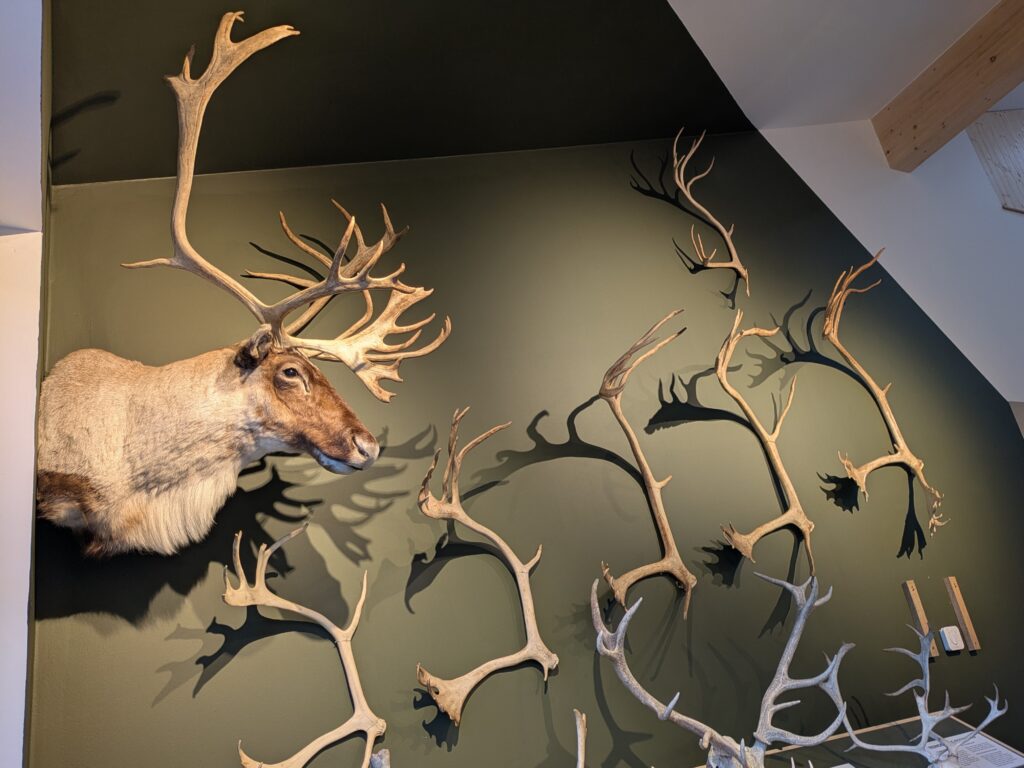
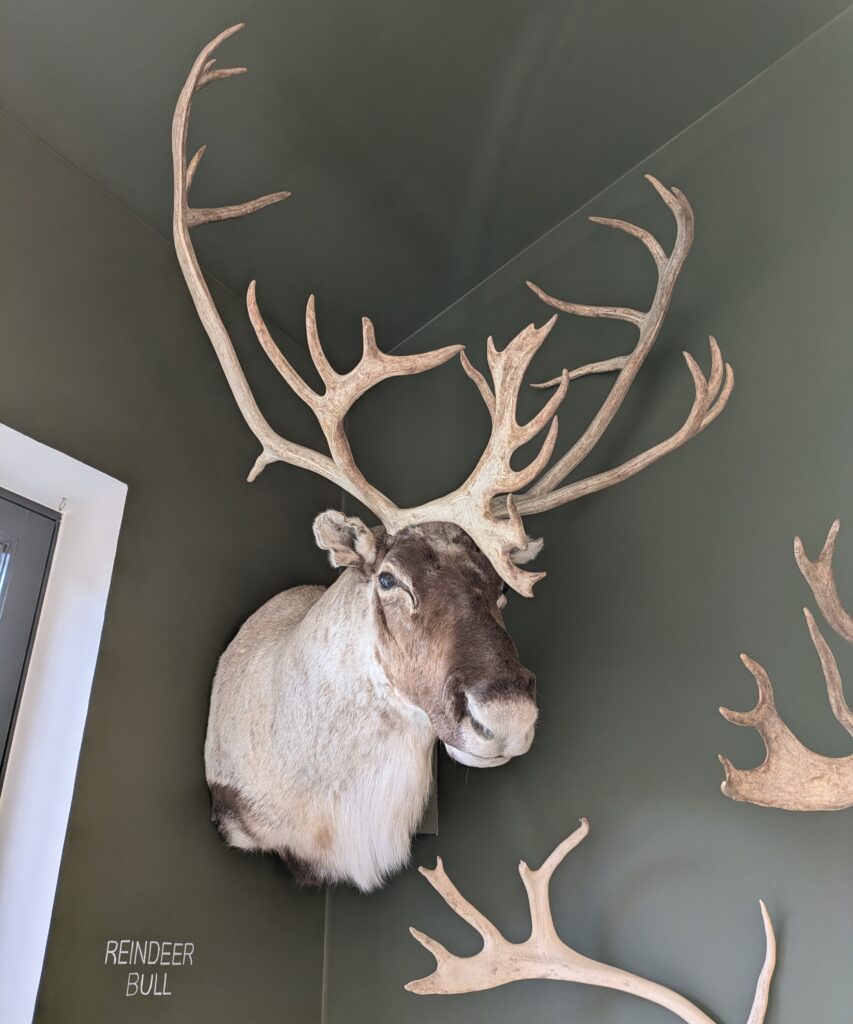
His is the incredible huge head in our Exhibition, gazing serenely over the thousands of people that come through our doors every year. Early autumn is the time of year reindeer look at their absolute best, with fresh thick winter coats and full grown antlers stripped of their velvet skin, so we therefore took the opportunity to have his head taxidermied. The only other taxidermied bull head we have hangs in Tilly’s house, having been brought from Sweden by Mr Utsi back in the 50s. For the last 14 years he and Porjus have gazed at each other across the room, but Porjus is so beautiful it would have been a waste for him to remain at the farm with hardly anyone seeing him.
So Porjus has found his rightful place back here at the Reindeer Centre – he was always a handsome lad during his lifetime, and now he is an awe-inspiring sight with his majestic look and his enormous antlers. I’m glad I knew him, and I’m glad to be able to admire him every time I come to work still.
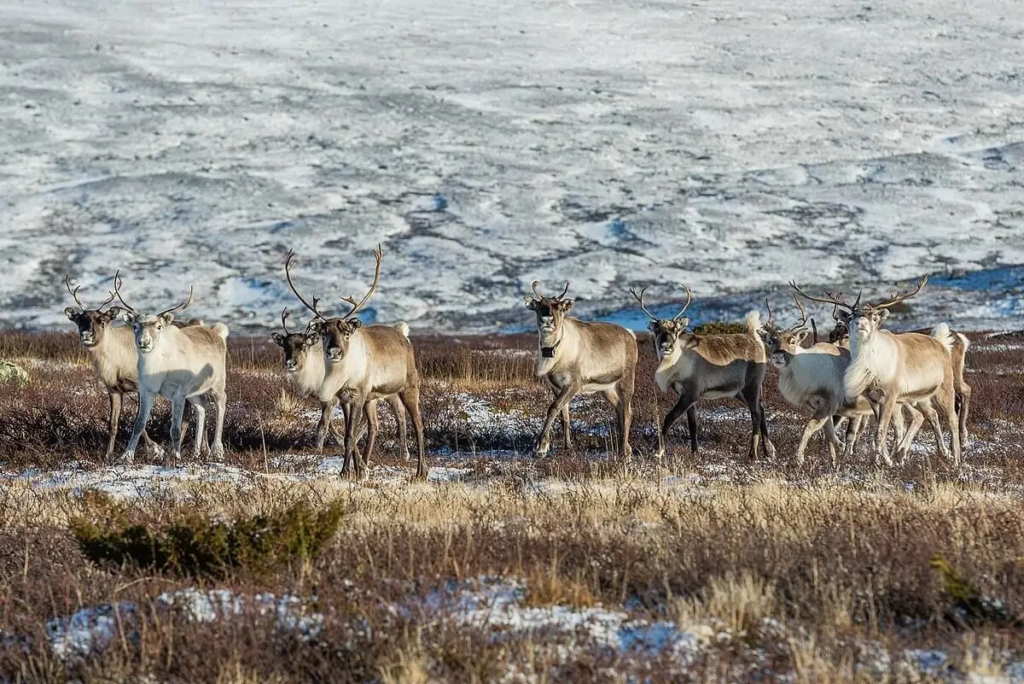
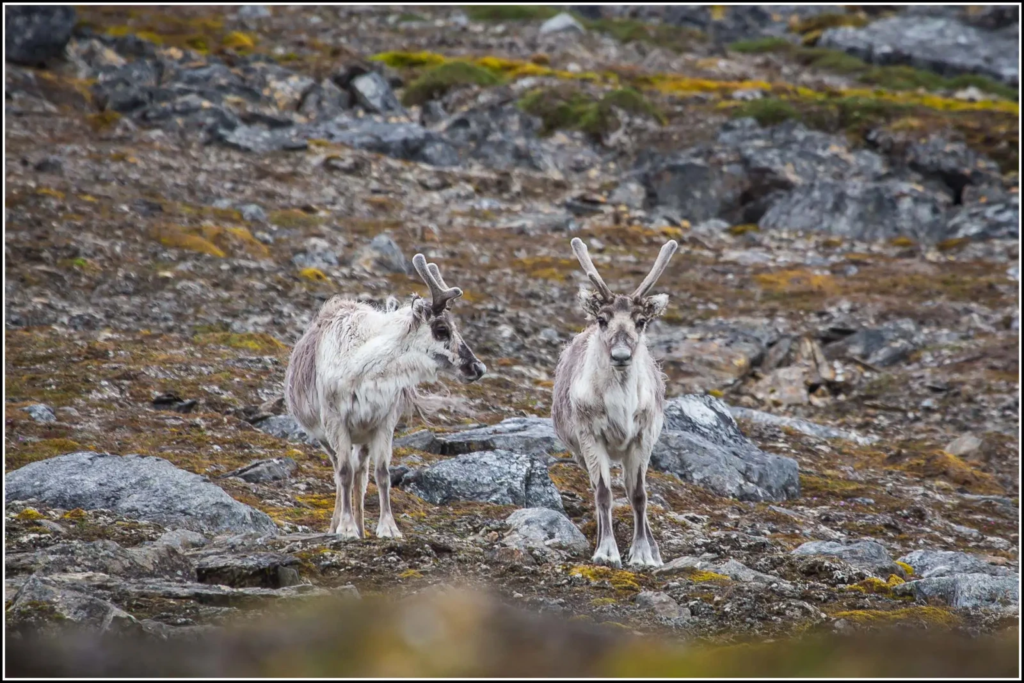
A wonderful past blog written by herder Hen detailing how the species Rangifer tarandus (more commonly known as reindeer) is broken down into seven different subspecies, got me thinking that I didn’t know too much about these differences. What adaptations did each subspecies have to equip them for their differing environments? I decided to start my research with the Svalbard reindeer – the smallest of all the reindeer and only found within the islands of Svalbard.
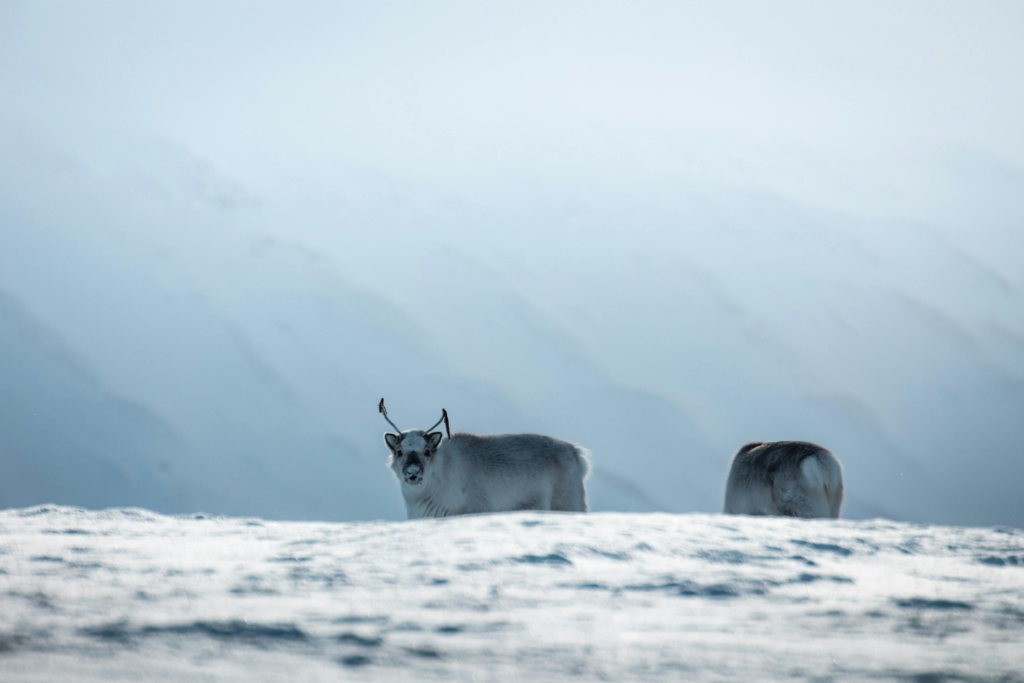
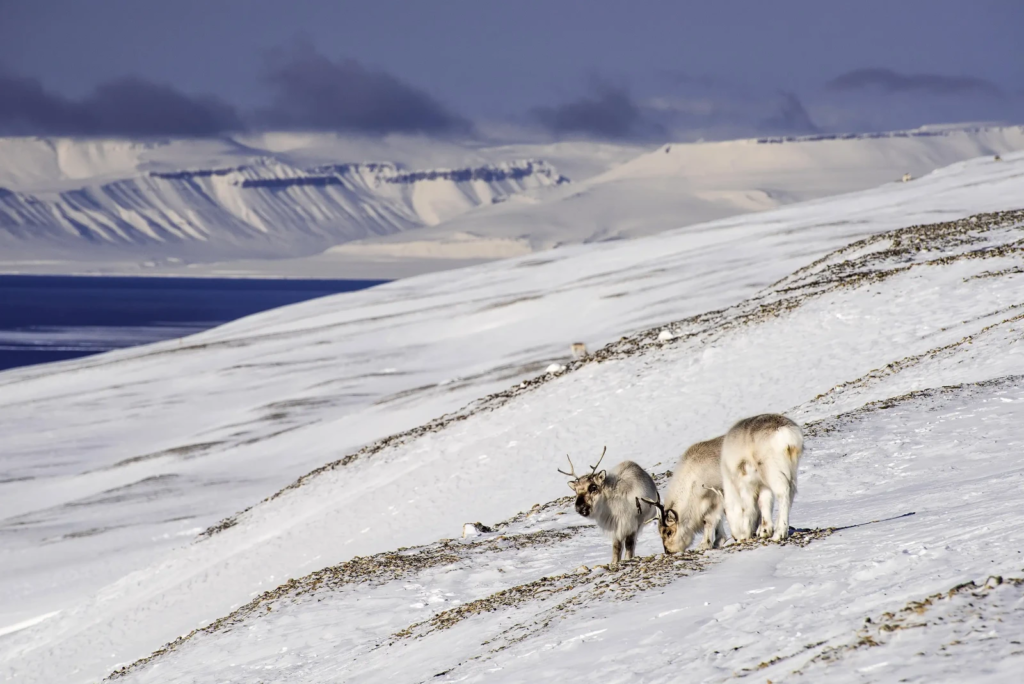
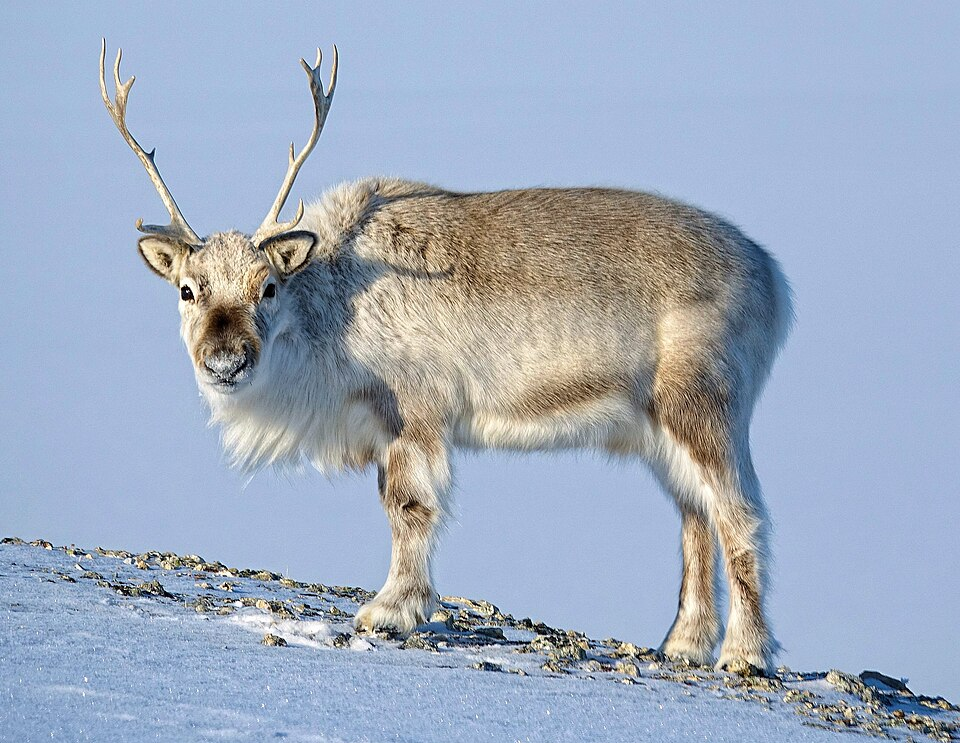
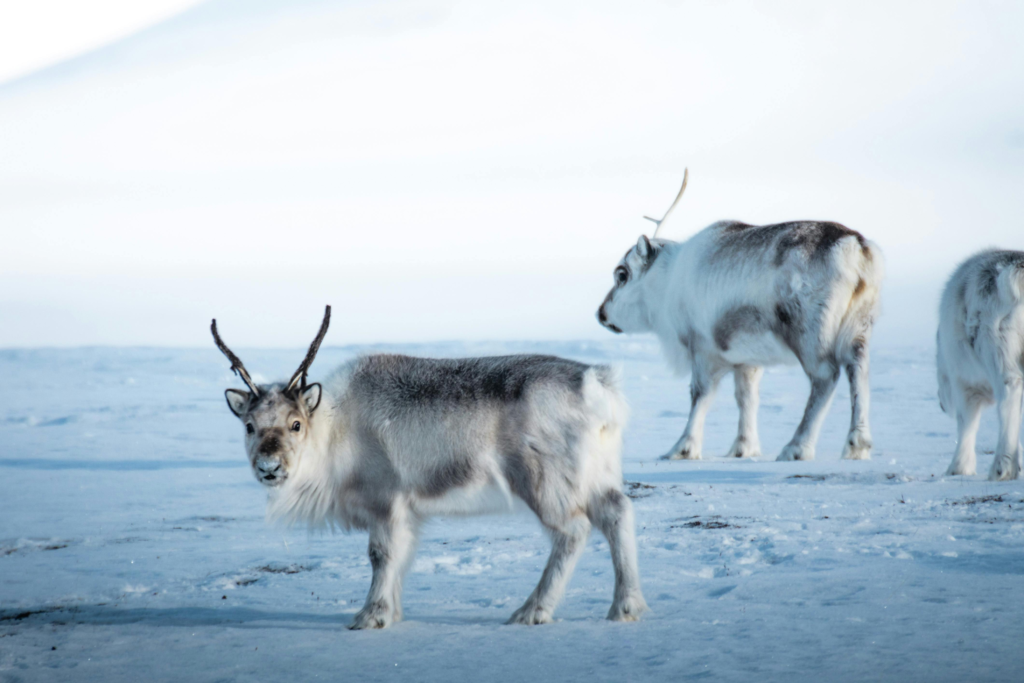
Svalbard reindeer.
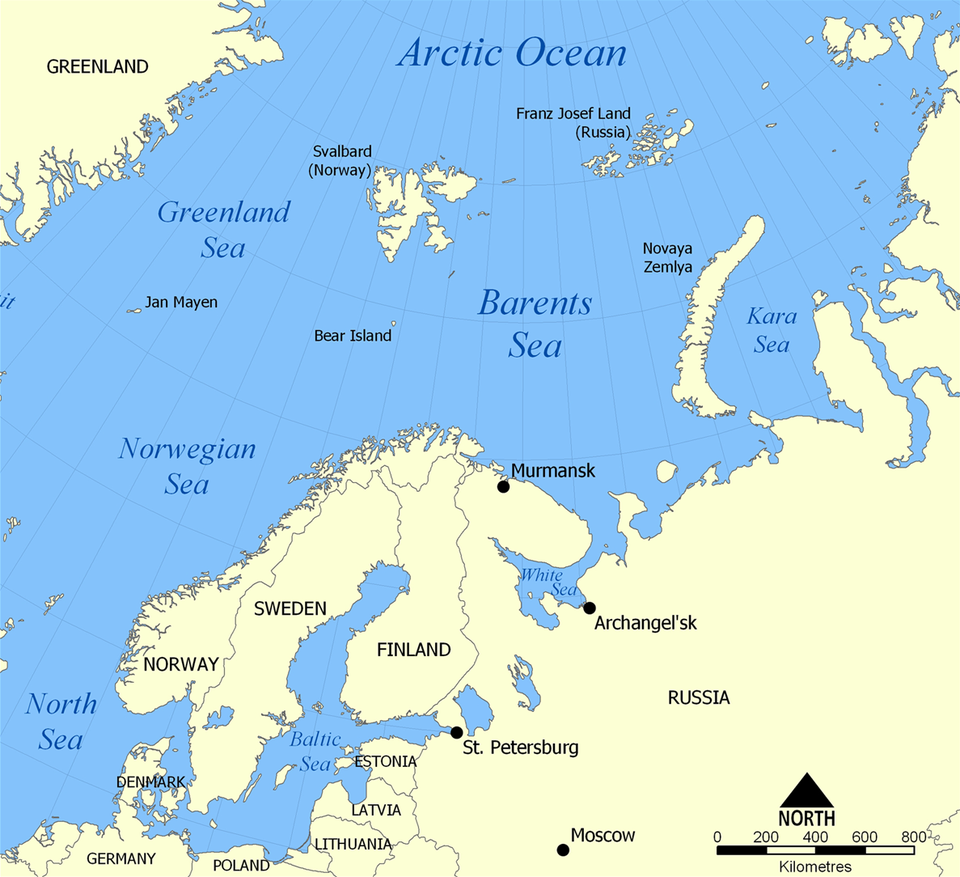
It is estimated that Svalbard reindeer became isolated from other populations of reindeer around 10,000 years ago when the vast ice sheet covering the Barents Sea melted as the earth warmed after the last ice age. Svalbard then became cut off from mainland Europe, effectively trapping any land mammals.
Map displaying the Barents Sea.
So, what happened to them 10,000 years ago to equip them with living on an open, isolated, arctic tundra landscape? Unlike other subspecies of reindeer, the Svalbard population dropped its need to migrate, only needing to cover short distances on a regular basis, remaining on mountain ridges and plateaus – continuously exposed to the elements. They also lacked forests for cover and fed primarily on short-growing lichens and vegetation.
The home of the Svalbard reindeer – open plains and Arctic mountains.
Apart from the occasional polar bear… the Svalbard reindeer also doesn’t have the worries that other subspecies have regarding predators. Due to these changes in their food chain and environment, the Svalbard reindeer evolved to have far shorter legs than the other subspecies. They could still reach a maximum speed of 60 to 80km/h but didn’t require the longer legs of other reindeer – so to conserve body heat, their legs became shorter.
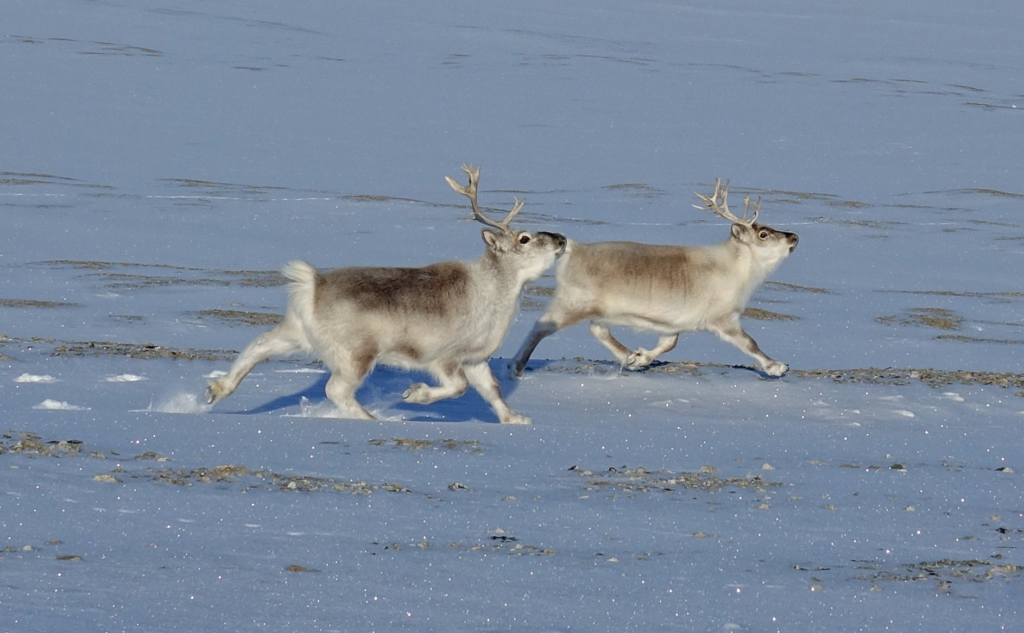
Body heat is lost through a reindeer’s legs due to less fat and blood vessels near to the surface of the skin, so if you don’t need to migrate – grow shorter legs and stay warm!Svalbard reindeer running, perfectly displaying how disproportionate their bodies are to their small heads and legs. Perfectly adapted to an environment that doesn’t require movement, but encourages good fat reserves. (Photo credit: Bjørn Christian Tørrissen)
Another unique adaptation to the Svalbard reindeer is their difference in circadian rhythm to other subspecies of reindeer. Svalbard has an extremely reduced day length in winter months. There are between 100 to 150 days per year during which there is no light and the sun does not rise above the horizon. Research has concluded that the Svalbard reindeer has a mutation in a gene associated with maintaining circadian rhythm, allowing their bodies to cope with lack of sunlight (vitamin D etc.). Another change in the genetic make up of this subspecies in comparison to the others, is a change in the genes associated with eye/ optic nerve development – allowing their eyes to adapt to winter conditions.
Svalbard reindeer have dark eyes, that like other subspecies are able to see into the shorter end of the light spectrum. This allows them to use UV light during twilight periods of the year to see their general surroundings – identifying food sources, other forms of life, etc.
Their diet is very similar to other subspecies of reindeer, feeding on low growing vegetation found along ridges, plateaus and mountain slopes. Feeding to excess on healthy vegetation during summer and then relying on fat reserves and limited grazing during winter when vegetation is limited, but lichen can be found in abundance. The Svalbard population is more of a solitary subspecies than the typical social herd structure of other populations of reindeer. They are often only found in groups of three to five and so over grazing is not as much of a concern in a smaller region, such as Svalbard. However, despite this, starvation is the most common cause of death due to worn teeth grazing on sparse vegetation growing amongst rocky landscapes, or from food frozen into ice pastures.
Svalbard reindeer grazing on vegetation with areas of ice pasture seen behind them.Pick out the areas of low quality grazing amongst the rocks.
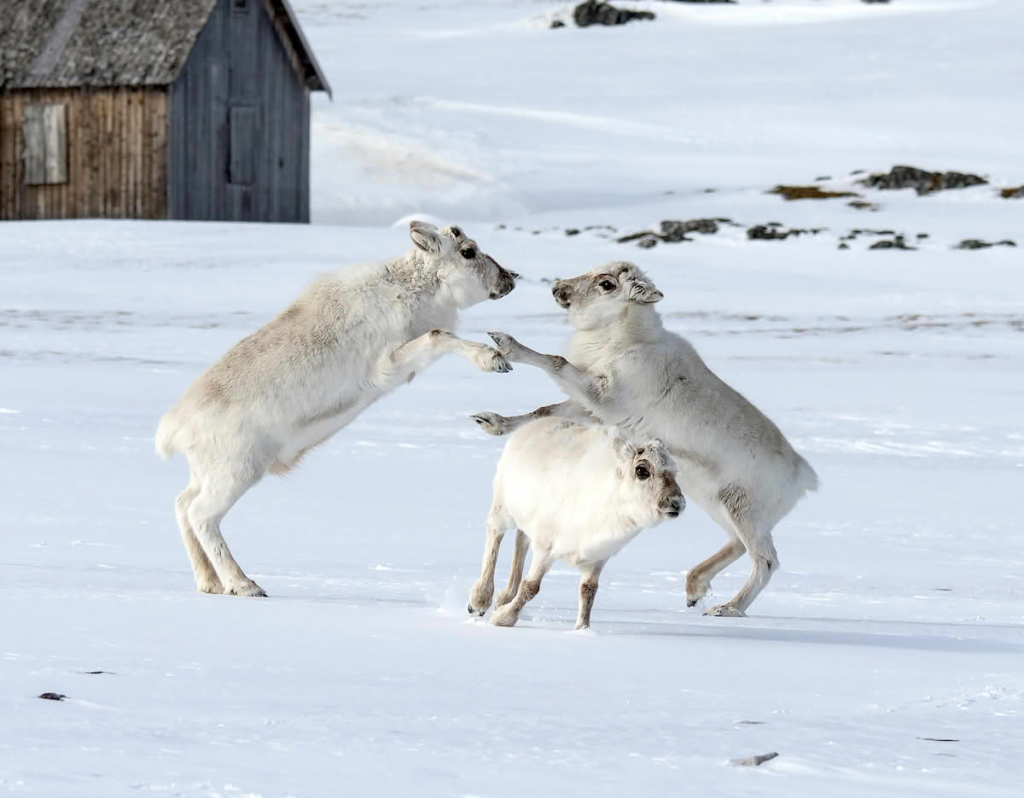
Despite their challenges and differences, one thing is for sure… the Svalbard reindeer are one darn cute animal!
Pocket-sized reindeer! Trying to think of something professional to say here, but all I can think is… STOP IT!
Okay, no more cute photos! I’ll leave it there until next time when we look at the cool adaptions of another subspecies of the Rangifer tarandus.
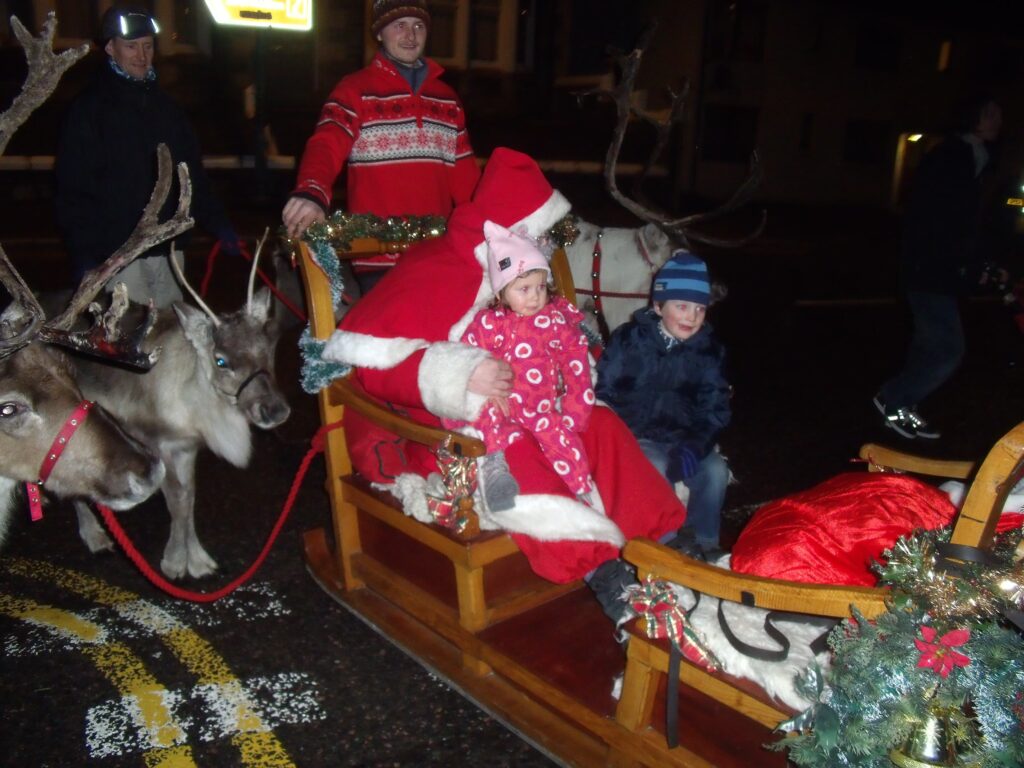
A Christmas Eve tradition of my family is to go see the reindeer parade in Kingussie. When I was younger I often got to go on the sleigh, of course to my delight. Last year Fiona surprised me and I got the chance to pull the front of the sleigh with Akubra and Poirot. This year I had a feeling it would happen again and it did! However, Fiona did give me a warning in the lorry this time. She is known to surprise you…
Maisy with Poirot and Akubra at the 2024 Christmas Eve parade in Kingussie.Maisy on the sleigh as a wee girl!
As a Christmas present to my family this year, I decided to take them up the hill to see the reindeer. The Centre is closed on Christmas Day but the reindeer in the enclosure still need to get their feed for the day. Fiona said if no one else said they’d do it; I could with my family. After a bit of persuading they agreed, and I took a couple from my family and a few friends up the hill. You can’t get a better Christmas than that! All photos here are taken by either myself, my dad or my brother.
When we got to the enclosure, we had all the reindeer on Cairngorm waiting for us. The girls who were on the free-range were asking for a wee bit of extra food too. We picked up the food for the reindeer in the enclosure and headed up the hill. It was a frosty morning and cold, but it was so beautiful. The sun even came out for a while which was lovely. We were all wrapped up but of course the reindeer were very well insulated with their winter coats. We usually feed the reindeer in the hill enclosure a couple of times a day depending on what time of the year but since we were only feeding them once we had a lot of food to take. Thankfully the team on Christmas Eve took it all up to the bins on the hill so we didn’t have to carry it all the way up.
My cousin Magnus leading the reindeer up the hill.
We wandered around the hill introducing the reindeer and answering questions all about how awesome they are. We also had our friends Lorriane and Massa too and they were just amazed. It’s so nice to show people that you know where you spend a lot of your time and where you just love to be. I’m sadly coming up to my exams so I will be cherishing my time with reindeer, Christmas definitely wrapped it up so nicely.
We then headed over to see the free ranging reindeer and I hadn’t seen any of those guys in such a long time, so it was so nice to see them. I was rusty at identifying them, so I had to get my trusty back up plan of a photo from the board in the office which keeps track of the whole herd.
The free ranging girls, left to right Nuii, Pumpkin, Brew, Alba, Camomile.
The girls on the free range haven’t had a chance of hand feeding for quite a while due to them being on the free range for the past year or so. Some exceptions for a couple of the breeding females. They can sometimes be quite wild and excited when they haven’t been around people for a wee while. I turned around to swap bags with my mum as I had an empty sack and she had a full bag of hand feed. As I turned, I saw my mum standing there whimpering. Ryvita, a 14-year-old female with no antlers, had her nose right up against her bag. I hadn’t laughed that hard in a long time. Sadly, no one was quick enough to get a photo or video of the moment of her being scared out of her mind.
Latte being a yearling is now getting to enjoy free ranging on the mountains.
For my Dad’s Christmas present, (which he didn’t know at the time as I’m a very last-minute person who left it too late,) was an adoption of Vanilla. You can find out what you get if you were to adopt a reindeer here. We’ve been in the hills together quite a few times and when we’ve come across a few reindeer, she’s usually always there. She’s such a beautiful girl and every time he always gets a good photo of her, so I thought they’d be a good match.
Vanilla posing on Christmas Day beautifully.
Sadly, not everyone was able to make it on the 25th so I promised to take them up another time. That just happened to be on the 3rd of January. I took my brother and his girlfriend up the hill on a very snowy day. It feels like magic when you’re with the reindeer in the snow, kicking the snow up to get the lichen and deer grass, or them walking in the snow easily while all the humans are falling in streams and falling down snowholes. Although in typical Maisy fashion, I faceplanted off the boardwalk in front of a whole group of visitors.
99 and Cowboy begging Maisy to give them more hand feed.
I sadly had not learnt my lesson and buried my hand feed bag underneath the snow because the reindeer kept pestering me when holding it. I’m not saying any names, but it wasn’t Dr Suess, Cowboy and Tub. I then had a hard time trying to get their big noses out of the bag within all the snow, if you know anything about trying to get a Christmas reindeer nose out of a white bag it’s hard considering their brain is controlled by their stomachs. Which is the same with me, I’ll be honest.
Holy Moley enjoying the winter which has finally arrived.
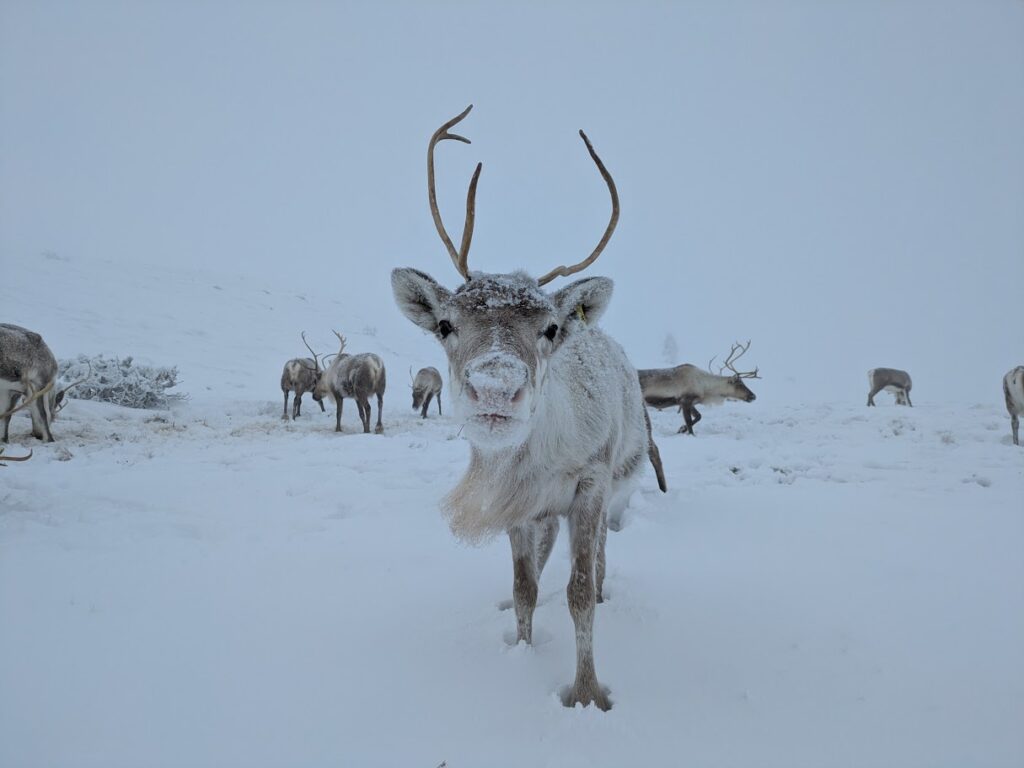
The reindeer look magnificent in the snow when it all just sits on their nose, and of course it doesn’t melt because they are so well insulated that they don’t let the heat out to melt the snow. However, all the humans do not look magnificent and are bumbling around in the snow trying not to fall in a snow-covered burn. Unfortunately, yes, three of us did fall in the same burn at the same time.
Popsicle dunked her nose into the snow.Orinoco in the snow.
They couldn’t get rid of me that quickly. As the next day I came back up to Glenmore the to go up a Meall a’ Bhuachaille with Sanna and Echo the dogs. The best hill in Scotland and some of the best snow I have ever seen up there. So much fun although, so much more energy goes into walking in deep snow especially at some points I was sinking above my hips and the dogs kept vanishing under all the powder.
Sanna and Echo between her ears near the summit of Meall a’ Bhuachaille.
So far during March we have encountered all manners of weather, thankfully though in comparison to January and February there has been an increase in good weather days. During the start of the month, we had beautiful blue skies and even a fresh dumping of snow. The reindeer have been amicable, meaning that our walks out to collect them in the morning have been a bit easier than the previous months; once they find a good patch to graze on it can be hard to move them again and as you can imagine there is fresh grazing begining to sprout on the mountain side.
It is usual in March for some of our younger reindeer to come down to lower ground at our secondary site and in return a handful of reindeer were returned to us here at Cairngorm. The most important being Winnie of course- she has been missed!
Over the last month our cows have began to lose their antlers and there are now a few of our girls walking around with no antlers on their head. By the end of the month, Ryvita, one of our 16 year old females has began to grow a new set!
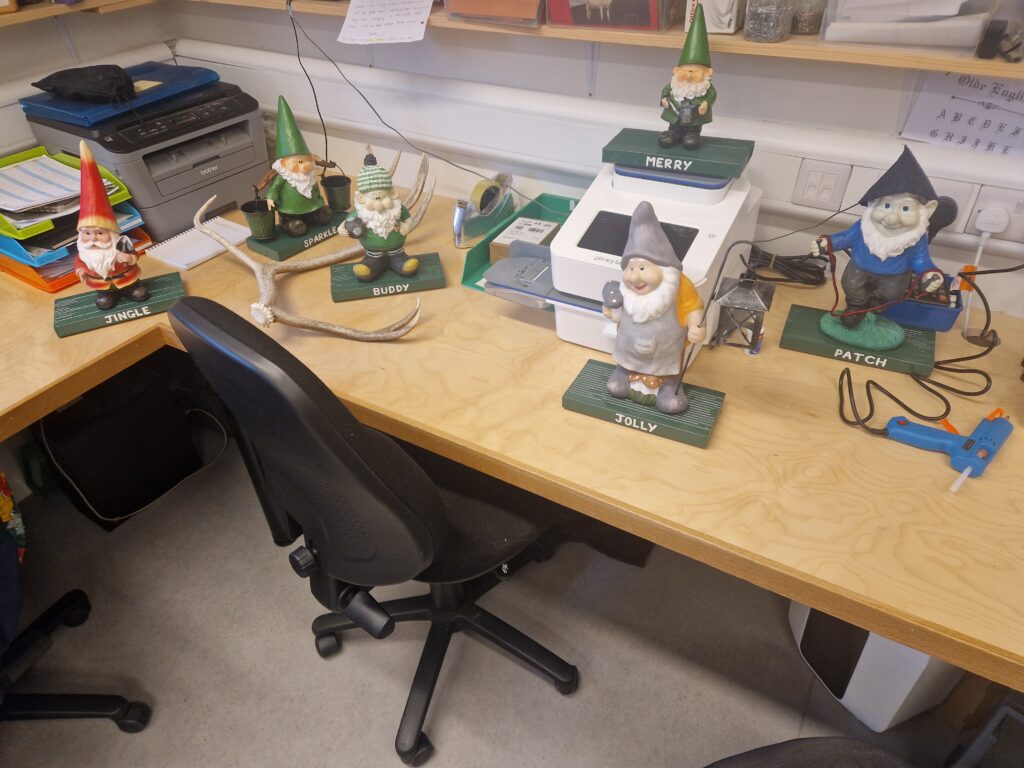
4th of March: Celidh with Mum Glacee on her right. These two are definitely continuing their families fiesty character.6th of March: Fresh snow fall means that most grazing is covered. Thankfully pip’s fluffy nose is protecting her from the effects of the cold.6th of March: Winnie is back!!8th of March: Ryvita and Vienna leading the herd on our way to the visit spot. In previous years, Vienna was often found at the back of the herd, not this year, she is pretty determined to make sure she is at the front of the group.15th of March: After almost a week a way from work it was a wet morning to collect reindeer. Here is a very soggy Lapsang.15th of March: Fox trot and Oro are questioning their choices at the back of the herd during the morning walk to the visit spot.17th of March: Moving left to right- Peanut, Polka, Pip and Lolly all eating off the feed line during todays Hill Trip – it was a blustery one!18th of March: We are hitting the time of the year were our female reindeer are begining to lose their antlers. Here is Lapsang again with only one antler.18th of March: Christie also sporting one antler with Mississippi behind.22nd of March: Our christmas elves are observing the office and making sure we are working hard!25th of March: Bordeaux and Zambezi waiting patiently for extra feed after the Hill Trip.26th of March: Fika (one of our young females, born in 2024) first in line for the morning feed! 26th of March: Ryvita showing off that her new antlers have begun to grow. 26th of March: Finishing up with a picture of Alba, who is currently at our secondary site, as we cannot mention Winnie without including Alba! As the girls have matured they have forged their own paths in the herd and it isn’t very often that we find them both together.
I thought I would write a blog to celebrate Cheer the reindeer.
She has a very distinctive white patchy face and often reindeer with white noses or faces stand out from the herd and get lots of attention. But in general I would say Cheer has avoided the spot-light for most of her life as naturally she is quite shy around people, preferring to keep her distance, and she’s not super dominant towards other reindeer either. On Hill Trips she’ll often be more in the distance and definitely not muscling her way in for the hand feed amongst the greediest of reindeer.
Cheer in September 2021 looking beautiful.
Cheer will turn 14 in the spring so definitely falls into the ‘old girl’ category and has been retired from breeding after her last calf was born in 2024. This means she now can spend the vast majority of her year out free ranging enjoying a peaceful life.
I don’t really remember encountering Cheer when I first came to be a herder for around 10 months in 2017 – 2018 (sorry, Cheer!). However, when I returned to reindeer herding in 2021 I got to know her much better. She had a calf in 2022 (Choc-ice), 2023 (Shannon) and 2024 (Chai) which meant Cheer spent a bit more time in our hill enclosure (as opposed to free ranging out in the mountains) during the calving season in the spring and again in the autumn so she was around more.
I’ve now got a real soft spot for her. She is greedy and does love feeding from the hand feed bag but only if there’s no pushy reindeer around and she’s confident that we herders don’t want to ‘do anything’ to her! Then her shy and suspicious nature kicks in.
So here’s just lots of photos of her, and her offspring, taken over the past few years. Enjoy.
2021
One of my first photos of Cheer, when I bumped into her on the free range in August 2021. She’s the one in the background looking a bit suspicious of me! Addax is closest to camera. Cheer back in the enclosure for the rut in October 2021. Still an uncertain look in her eye.December 2021 – Cheer is back out free ranging and curious to know what’s in the feed bag!
2022
Cheer and her calf Choc-ice out free ranging in August 2022. Unfortunately they didn’t want anything to do with me! Still nice to see them looking good and enjoying themselves in their mountain home. She grew small antlers over the summer as she diverted more energy into her son. As soon as we brought Choc-ice and Cheer back into the enclosure in September 2022 it became apparent Choc-ice had not inherited Cheer’s shy character! He has a naturally tame and bold personality.
2023
September 2023 – Cheer back in the enclosure and clearly has been in the feed bag looking at the crumbs on her nose!Shannon and mum Cheer in November 2023.
2024
March 2024 – Shannon and Cheer free ranging together. Cheer and daughter Chai – October 2024. Both are back in the hill enclosure after free ranging all summer. Cheer (and Chai just behind) in December 2024. Clearly not feeling shy today!
2025
Shannon in March 2025. It appears she has inherited Cheer’s shyer characteristics, but she’s also greedy so she’s becoming more and more confident the more we gently work with her. Cheer and Chai in May 2025, as Chai turned from calf to yearling. Chai and Cheer in August 2025 – the pair have remained bonded and are often seen together whilst out free ranging.I bumped into Chai and Cheer again in September 2025, free ranging together, but today Cheer was feeling suspicious of me! and perfectly happy to be left in peace. Choc-ice stripping the velvet from his antlers in September 2025. He was one of our main breeding bulls in the rut the following month, so fingers crossed he’ll have passed on his and Cheer’s genes to the next generation of reindeer calves, greatly expanding Cheer’s dynasty.Chai enjoying the snow in November 2025.
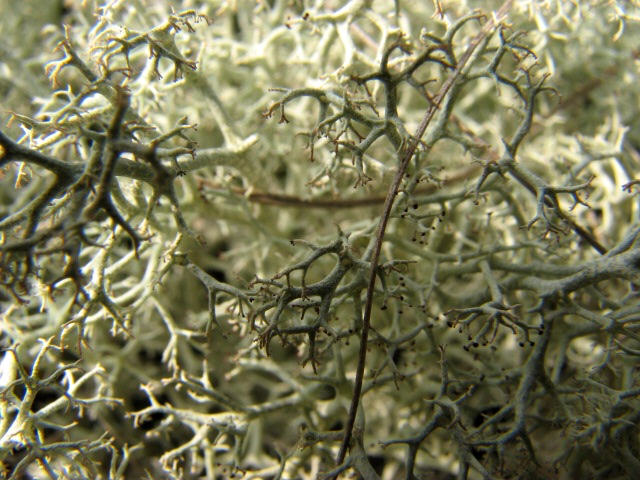
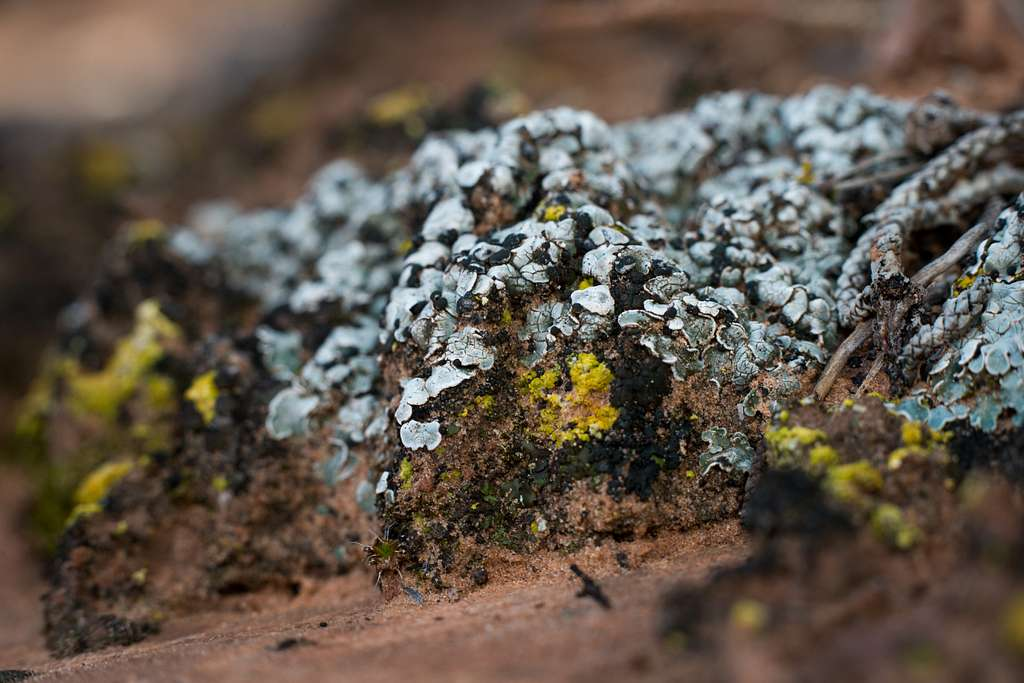
“Lichen, any of about 15,000 species of plant-like organisms that consist of a symbiotic association of algae (usually green) or cyanobacteria and fungi (mostly ascomycetes and basidiomycetes)” (Britannica, 2025). Now that’s a lot of big words and what do they actually mean? What really is a ‘symbiotic association of algae’? And why is lichen so important for reindeer?
Lichen (AKA reindeer moss). Photo by Evelyn Simak
Let’s look at the bigger picture to start. Cast your minds to the vast open landscape that makes up a subarctic tundra ecosystem. Excitingly enough, we can talk about our very own Cairngorm mountains for this, as our reindeer live in the only ecosystem of its kind in the UK.
The Cairngorm reindeer free roaming in the mountains.
A subarctic tundra ecosystem falls south of the Arctic Circle line and includes treeless habitats of permafrost and generally short flora growing seasons due to harsh weather and low temperatures. It can include fragmented plant growth, like rocky mountainous peaks with scatterings of low growing vegetation including mosses, grasses, dwarfed shrubs, and lichens.
These harsh conditions mean that lichen do not have to compete for space or light with other forms of vegetation, enabling the lichen to grow in blankets across mountain plateaus. Due to their unique differences to other plant life, they are also able to grow on exposed rocks and as part of biological soil crusts. These soil crusts are found in cold and dry areas and make up the majority of all living ground cover in these almost uninhabitable places. The crusts are made of living material that sit on the top few millimetres of ground, meaning larger plants are unable to root and grow due to the ground conditions.
An example of biological soil crust.
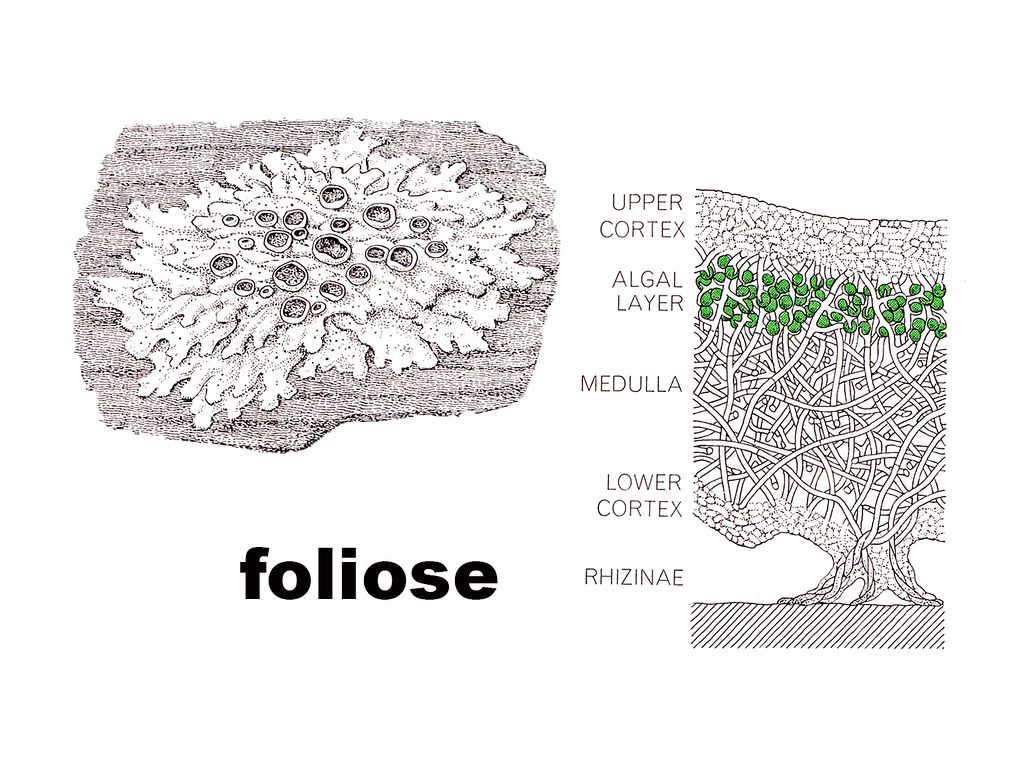
So that brings us back to our opening question, what is a symbiotic association of algae? What is lichen? From what we understand of lichen, it is a community of living organisms from both the fungi and the algae family. The fungi provide the water and minerals, as well as giving the lichen its structure, and the algae provides the food in the relationship, through photosynthesis. This happy partnership allows the lichen to grow and cope with harsh conditions that a normal single organism may not be able to thrive in.
The perfect partnership.
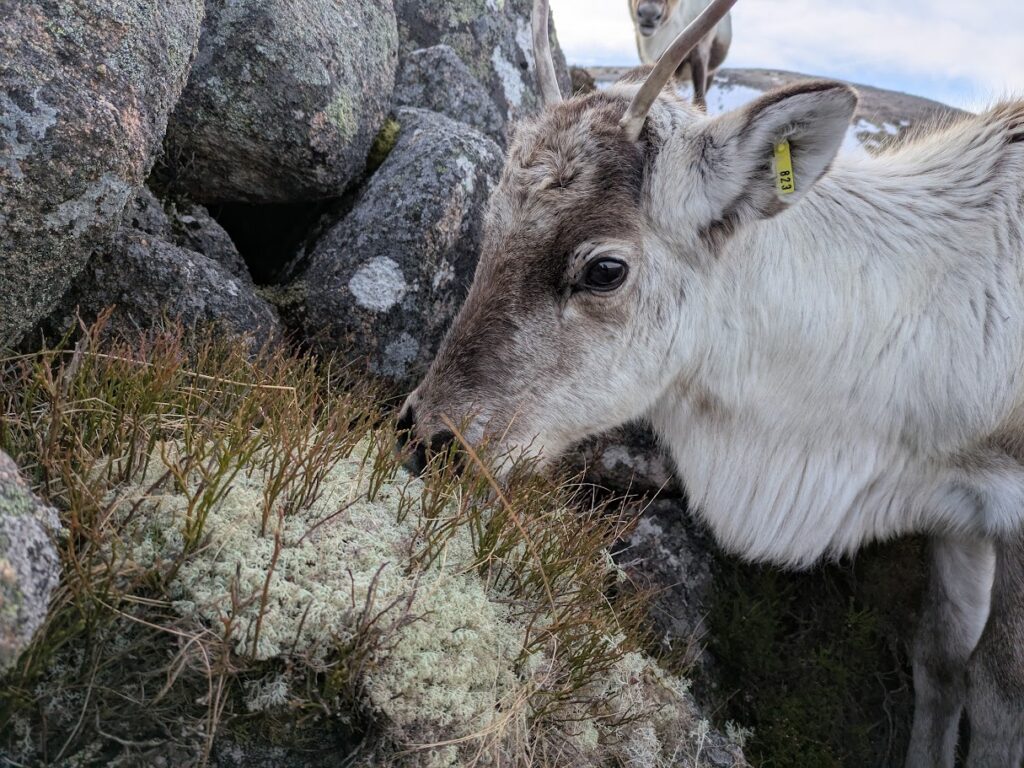
Now let’s add the reindeer into the mix! Reindeer rely heavily on lichen, consuming so much that it can make up to 70% of their annual food intake. This is because those harsh landscapes we spoke about earlier have very little choice available for the reindeer, but they can always rely on the lichen to grow all year round. Reindeer even have specialised gut floras to be able to properly digest the carbohydrates lichen contains.
Winter lichen for our free ranging reindeer.
Maybe it’s not that it tastes good then, maybe it’s because they have little other choice?…
But if you asked our reindeer, they would tell you it’s the best thing on the menu!
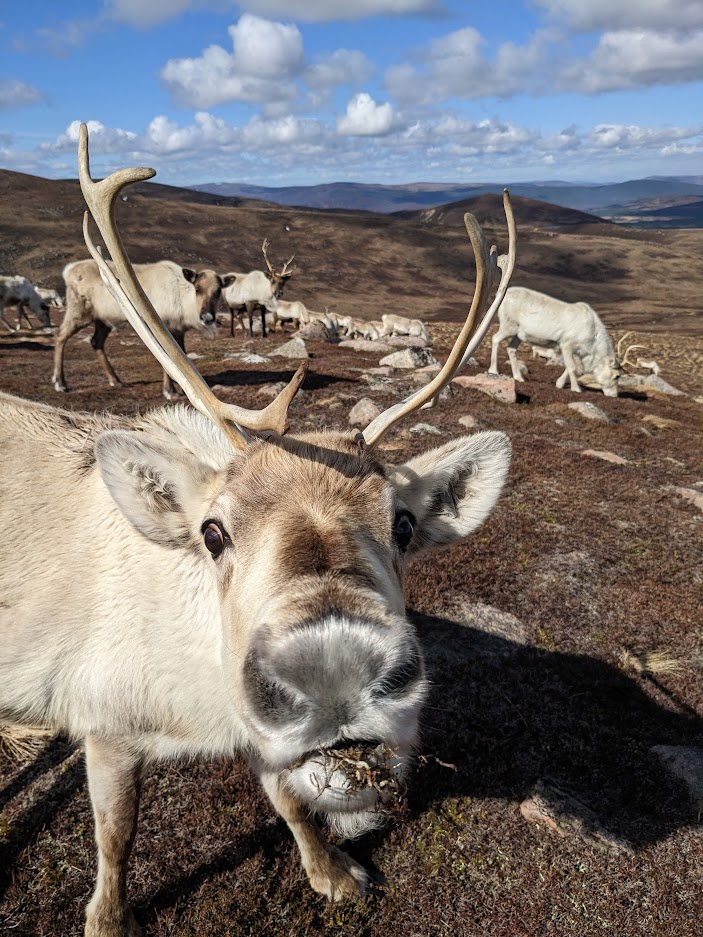
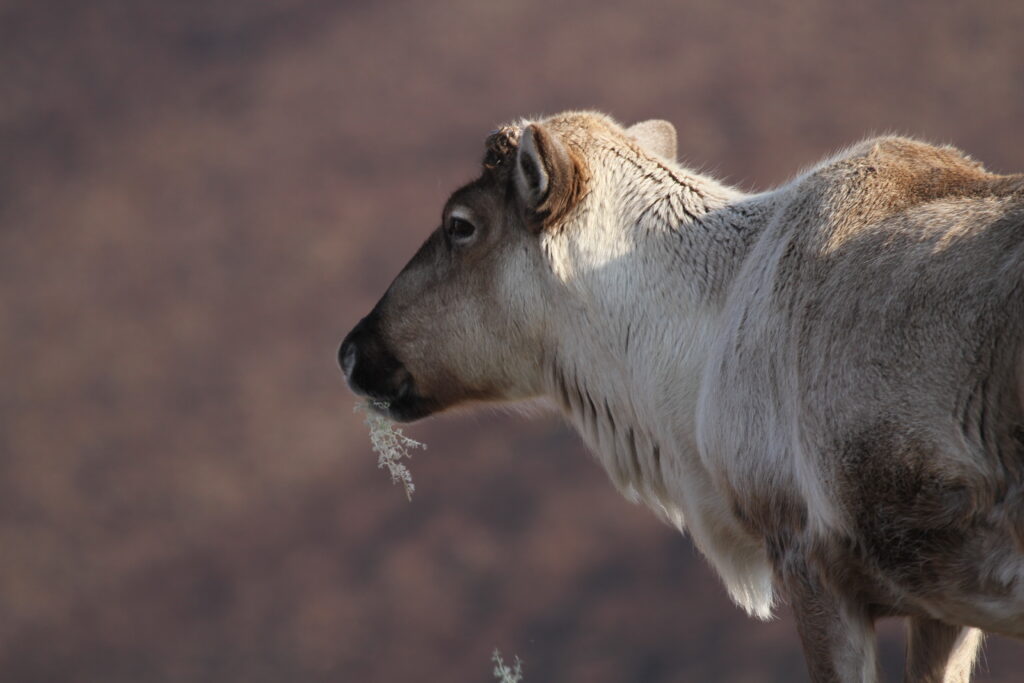
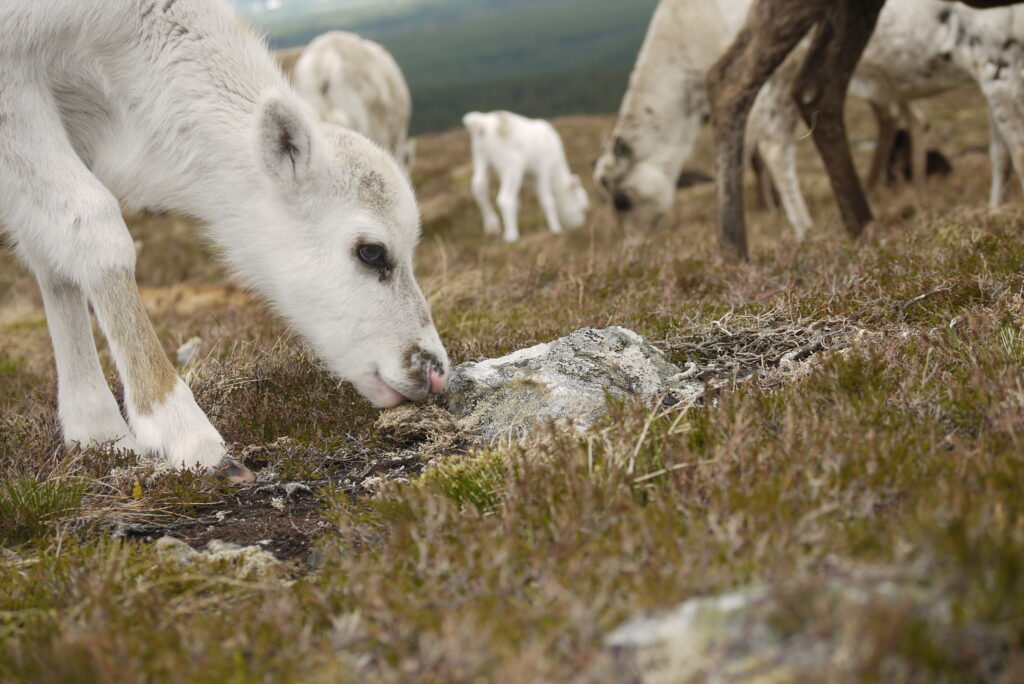
Delicious!Dixie enjoying a mouthful of lichen. Macchiato with a lovely big patch.Mocha with a bit of lichen hanging from her bottom lip!
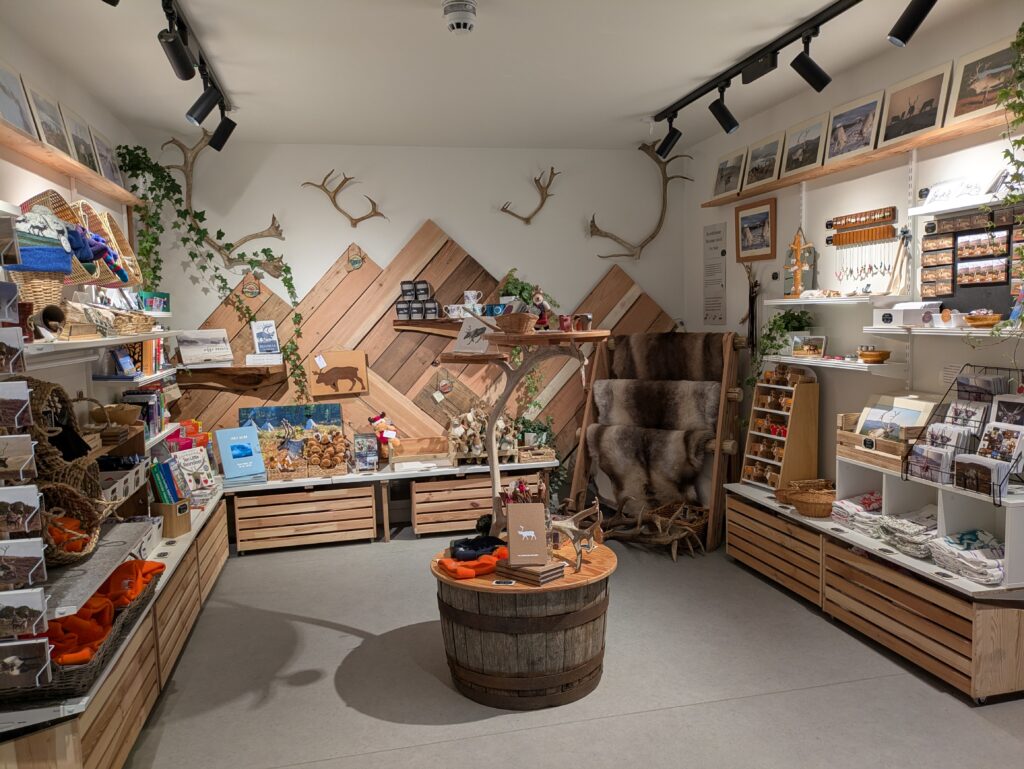
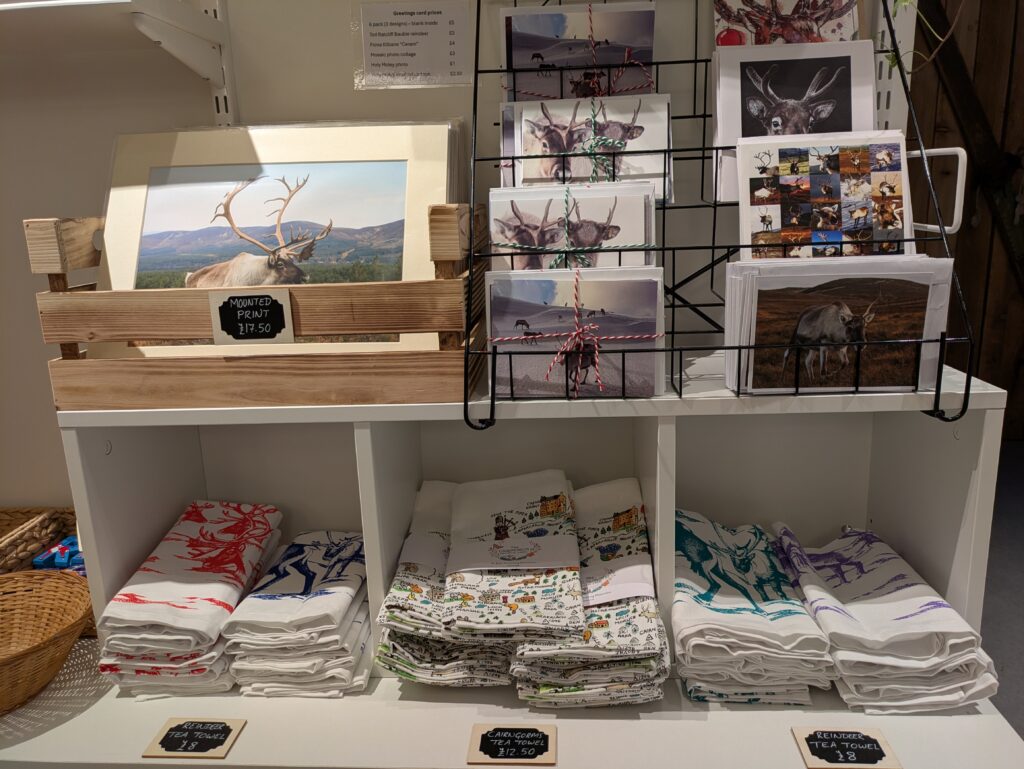
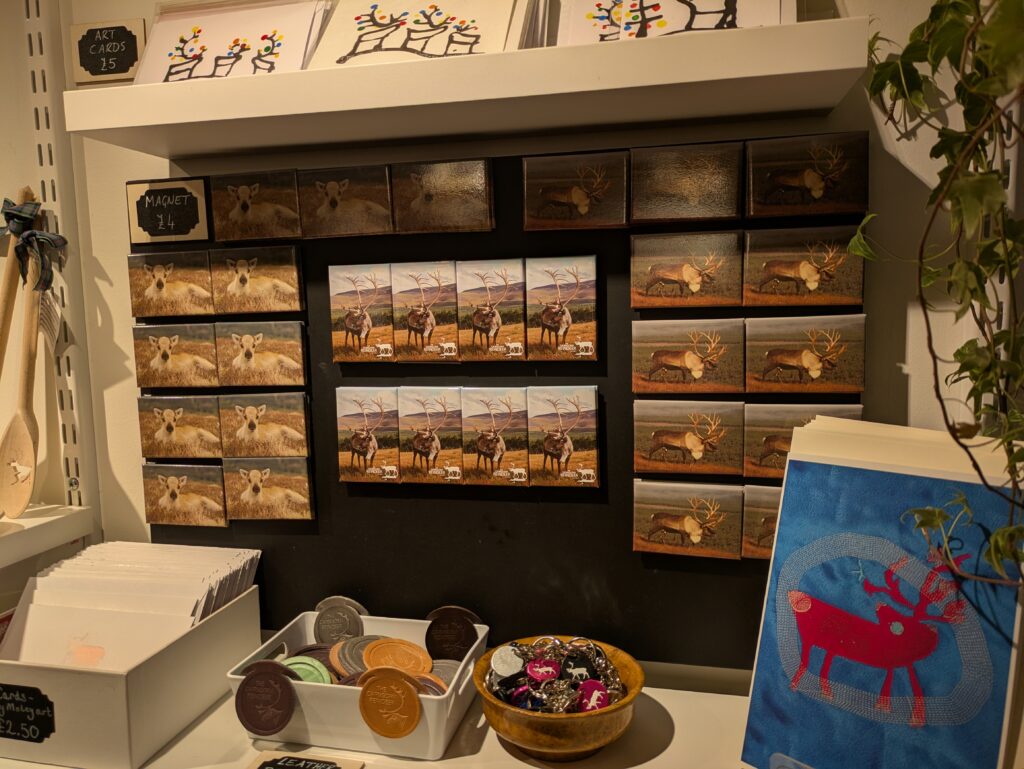
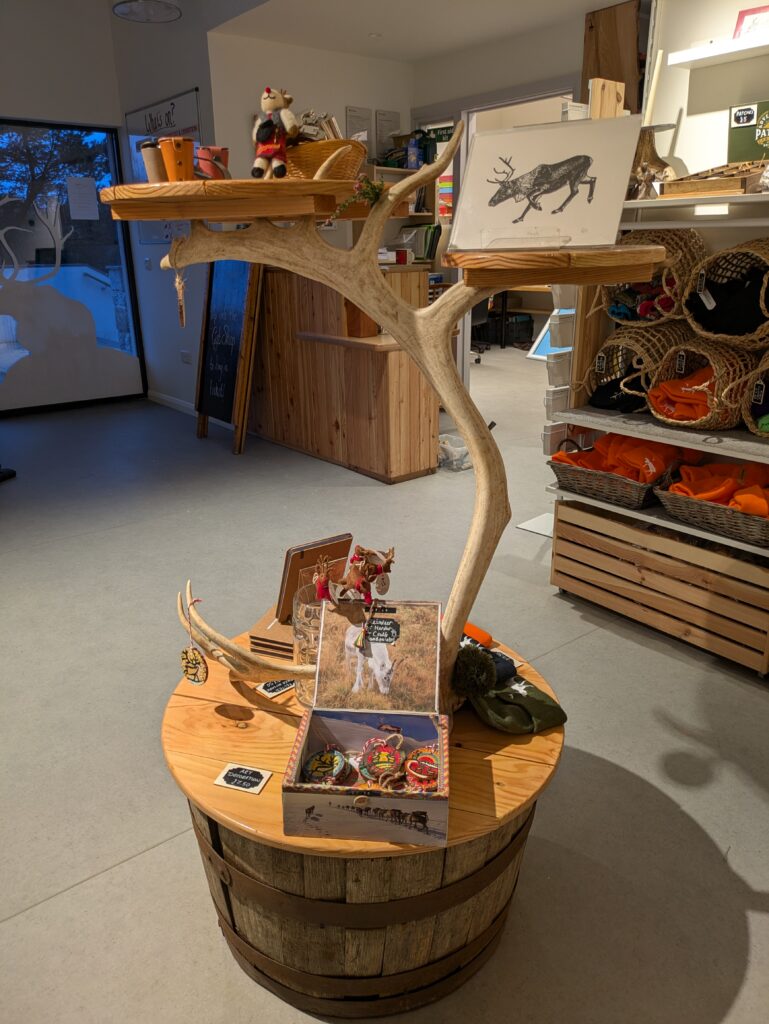
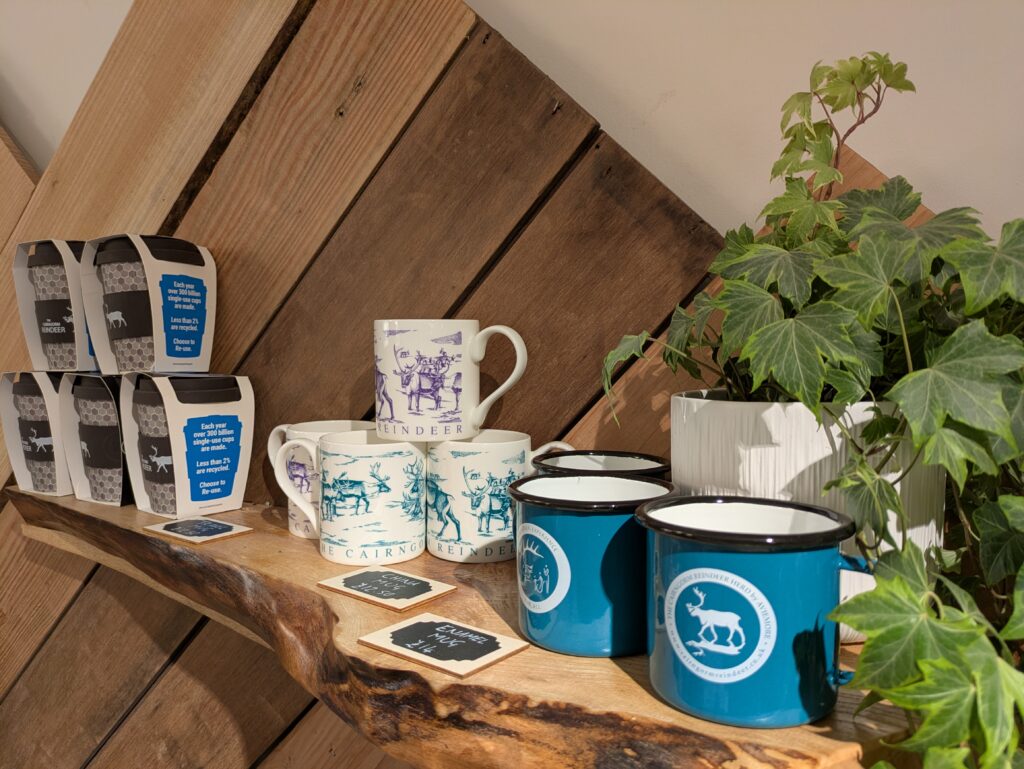
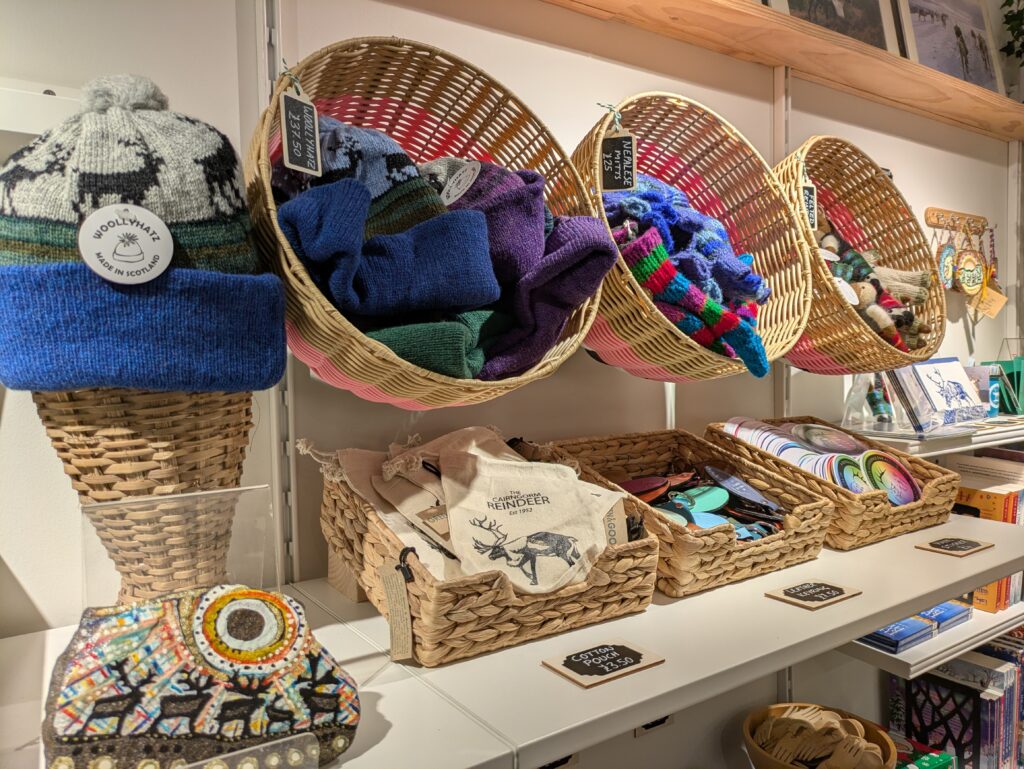
Our beautiful new shop – packed-full of lots of wonderful reindeer related goodies.
Since moving into our shiny new Centre, we’ve had a brand new shop space to play with. It may look a little different to our very rustic, wood clad shop of old, but we’ve kept a few nods to the old style.
Our rule-of-thumb with a pretty small space is that any product we sell has to feature reindeer (with the odd bending of the rule…) and we try to find as many unique/local products as possible.
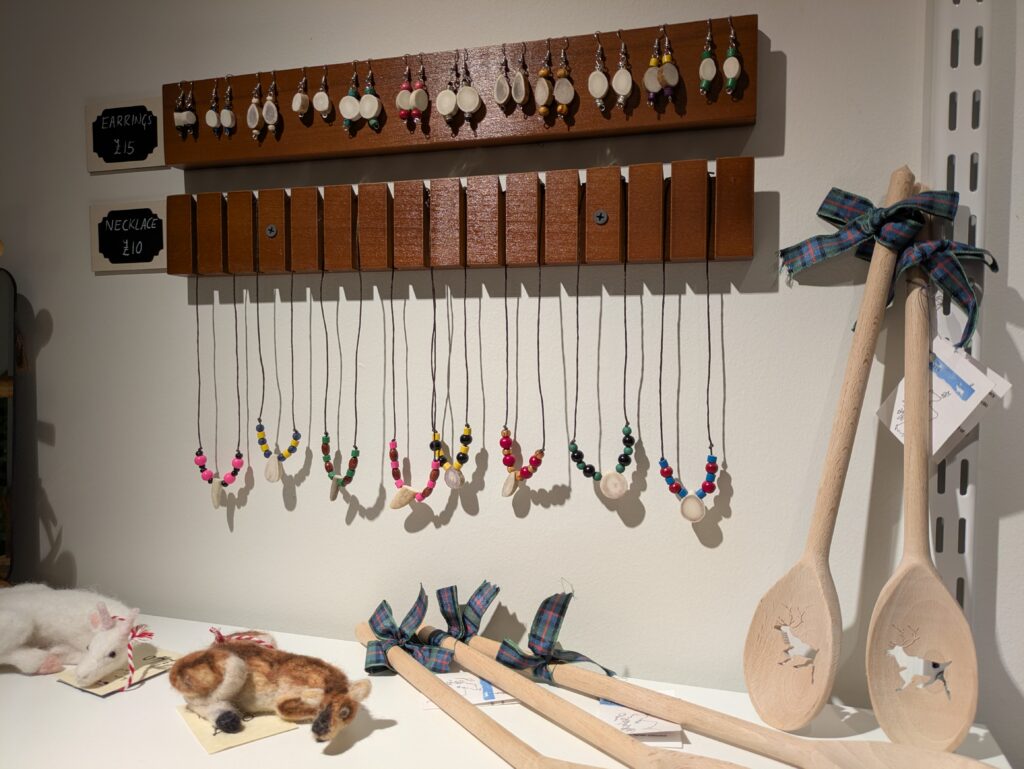
Herder Fiona crafts with naturally cast antler to make beautiful jewellery, and there is often bespoke artwork by herders Kate, Ruth and Sheena .
Some of Fiona’s jewellery, with sections of real antler, along with a few of Kate’s needle-felted reindeer.
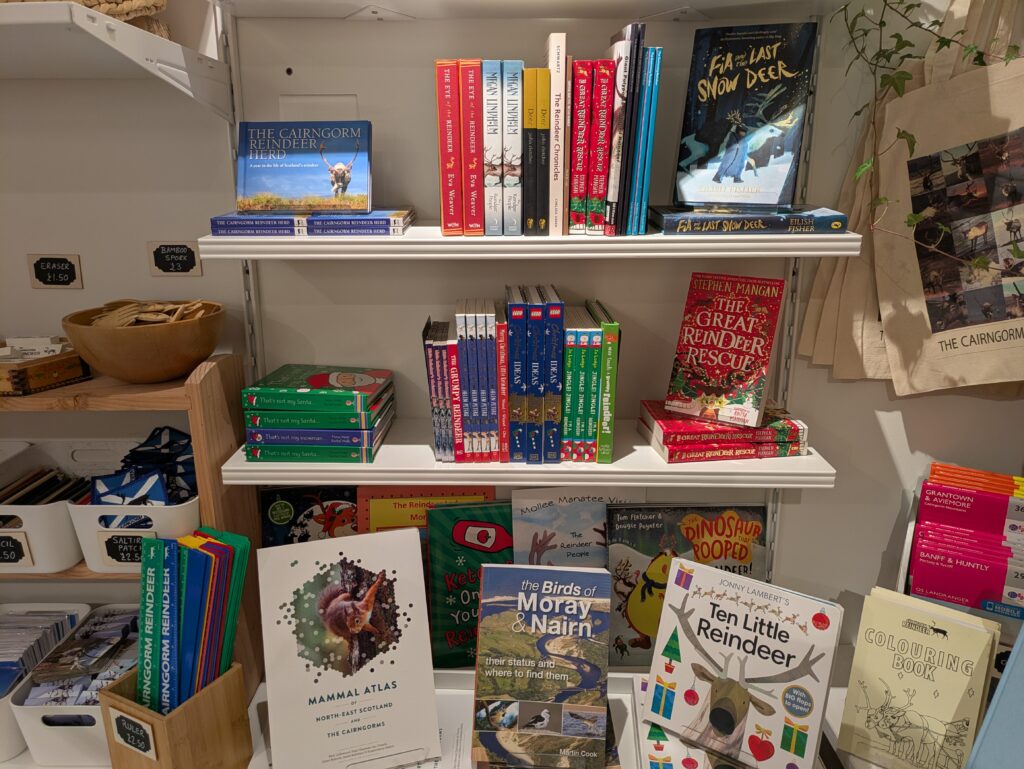
I’ve been particularly excited to find space to stock a much bigger range of books, the best antidote to too much screen time!
Our reindeer library – something for everyone – children and adults.
Look at this beautiful centrepiece, created from one of Sherlock’s antlers and an old whisky barrel!
One of Sherlock’s antlers is proudly displayed in the centre of the shop – adorned with lots of wonderful items.
If you aren’t planning a visit soon, you will find most of our products online on our shop at https://store.cairngormreindeer.co.uk/ We aren’t able to list more unique products like Ruth’s lino prints and Sheena’s art, so if there is something that you’d like that’s not on there then do drop us an email and we can show you what is currently available and send through a payment link.
If you live in the EU, unfortunately we can’t post to you due to legislation, but elsewhere in the world we can create a custom order if you email to let us know what you’d like and your address.
February is the month that we ease ourselves back into Hill Trips again after being closed for a month. From mid-January to mid-February, we are trying to catch up with general maintenance and into February prepare for being open to the public again. The start of the month consisted of feeding reindeer, ensuring we are prepared for opening and we also spared some time to visit one of the Lynx reintroductions drop in’s that have been happening in the area.
The 7th of February was our first day open to the public. It is always a bit of a daunting thought, and you’re left hoping that you remember how to talk about reindeer and that you have hopefully remembered everything that needs done first thing in the morning. But these anxious thoughts were soon squashed by our first Hill Trip of the season, the weather was good and how to be a public facing reindeer herder came flooding back!
The weather at this time of the year can be challenging and trying to take a picture that encompasses how brutal the weather is on a hill trip is hard. Daisy and I did a Hill Trip on the 11th, and the conditions were rather wintery. The met office report for the day told us that the max wind gust at Base Station was to be 26 MPH, our Hill Trip that day was lower than Base Station and the wind was enough to knock you off balance, so I feel it may have been a little stronger than that! I do love the variation that we get in weather as it makes the good weather days feel special.
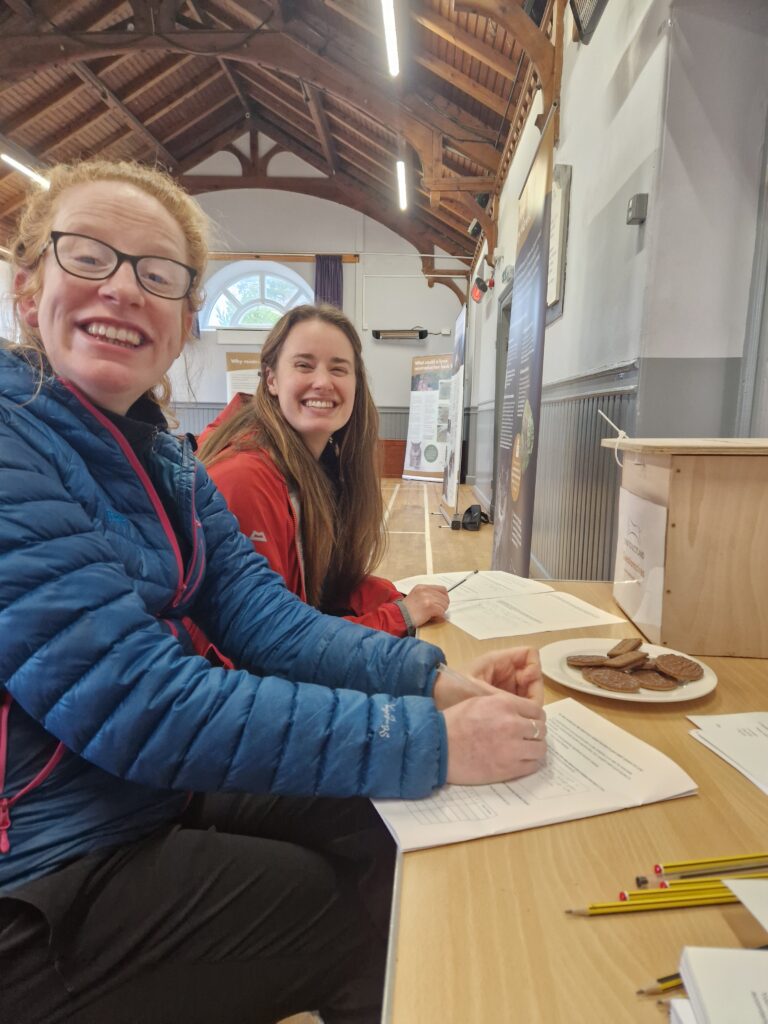
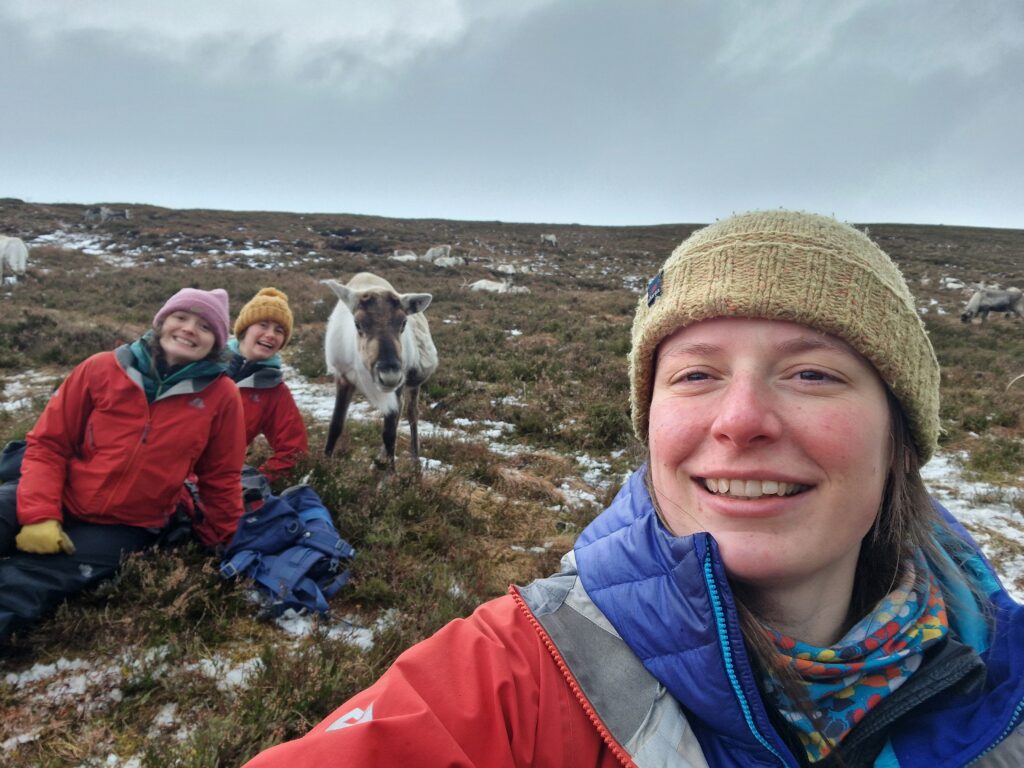
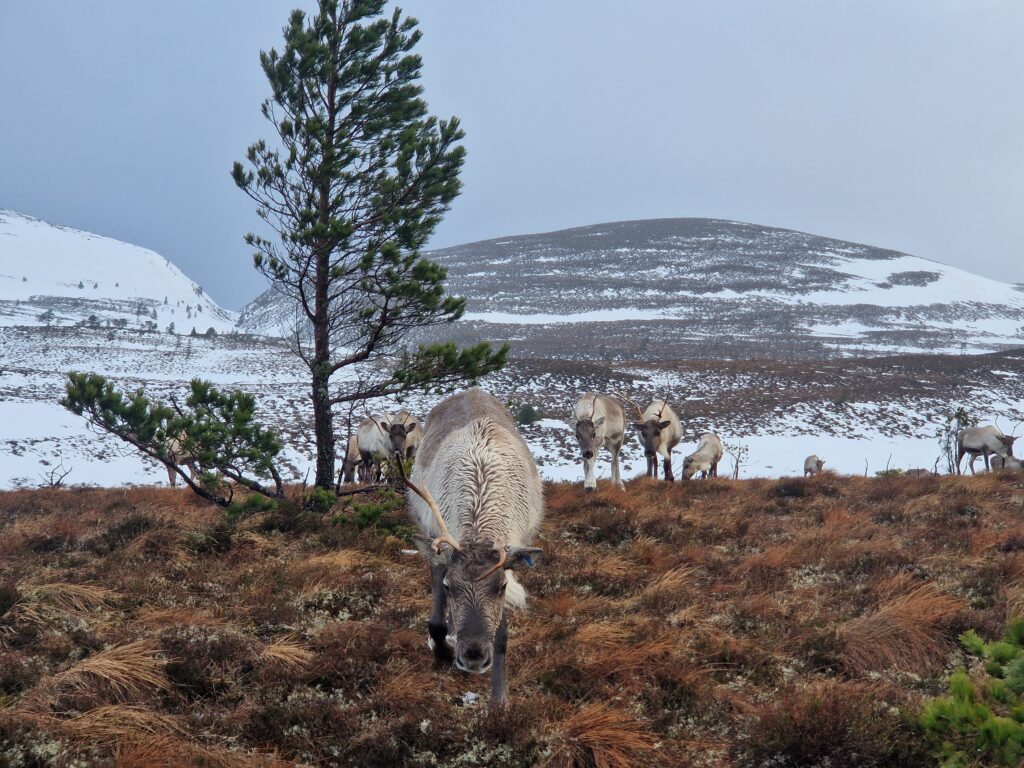
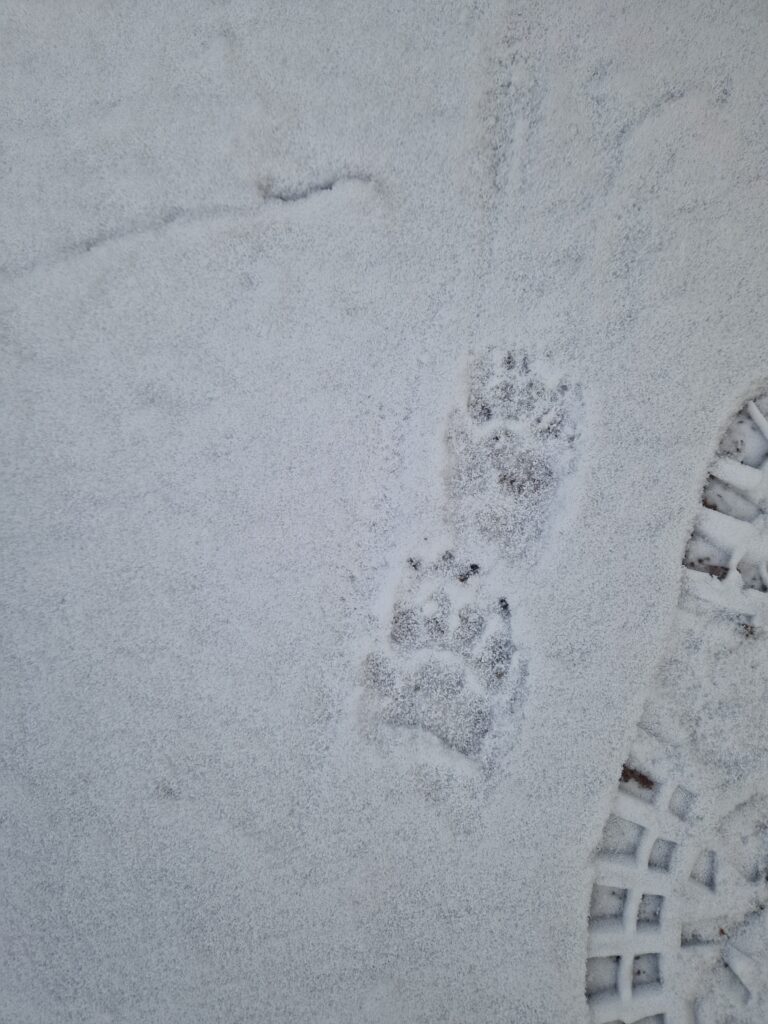
4th of February: Left to Right- Suebi, Orinocco, Bolero, Ceilidh and Glacée on a very blustery trip out to feed the herd before we begin Hill Trips again. 5th of February: Ruth and Lotti enjoying biscuits whilst completing their Lynx questionaires. 7th of February: Myself, Kate and Maisy with Ryvita after the first Hill Trip of the new season.8th of February: Trilby leading the herd in for our morning Hill Trip with Disco on her left, Tango and then Pip.11th of February: On the walk out to the reindeer myself and Cameron noticed some unusual prints in the snow… Possibly Badger prints?11th of February: Cameron teaching his merry band of calves bad habits 11th of February: Above is Beautiful Solero. This was the first day of good weather we had seen in a while, so plenty of pictures were taken!15th of February: Another mission to collect the reindeer before our 11 am Hill Trip. In the fore ground (left-right) we have Dante, Disco and Bolero.18th of February: The first day of the season where we had to cancel the Hill Trip due to the weather. Sanna, Fraoch and myself agree that it was the best call! 19th of February: Daisy clinging on for her life on a very windy walk out to collect the reindeer in the morning.22nd of February: Vienna, often found snooping around us herders looking for extra food. 25th of February: Polka leading the herd in before our Hill Trip.
Breaking trail and the herd following in my footsteps. Holy Moley right behind me. Breaking trail and the herd following in my footsteps.Cheer.Cold snow giving Zoom a red nose.Colder temperatures bringing them lower towards the tree line.Counting reindeer as they walk towards me.Counting reindeer on the line of feed.Feeding free rangers during the first snowfall.Fuzzy noses keeping them warm while they snuffle into the snow for low growing vegetation and feed from us herders.Hanging out with the herd.Holy Moley and her snowy nose.Morven’s antlers turning into icicles.Munching in the snow.Shannon.Winnie demonstrating how their thick coats allow the snow to settle, so well insulated it doesn’t melt.Vanilla blending in.Wrapped up warm with the reindeer.