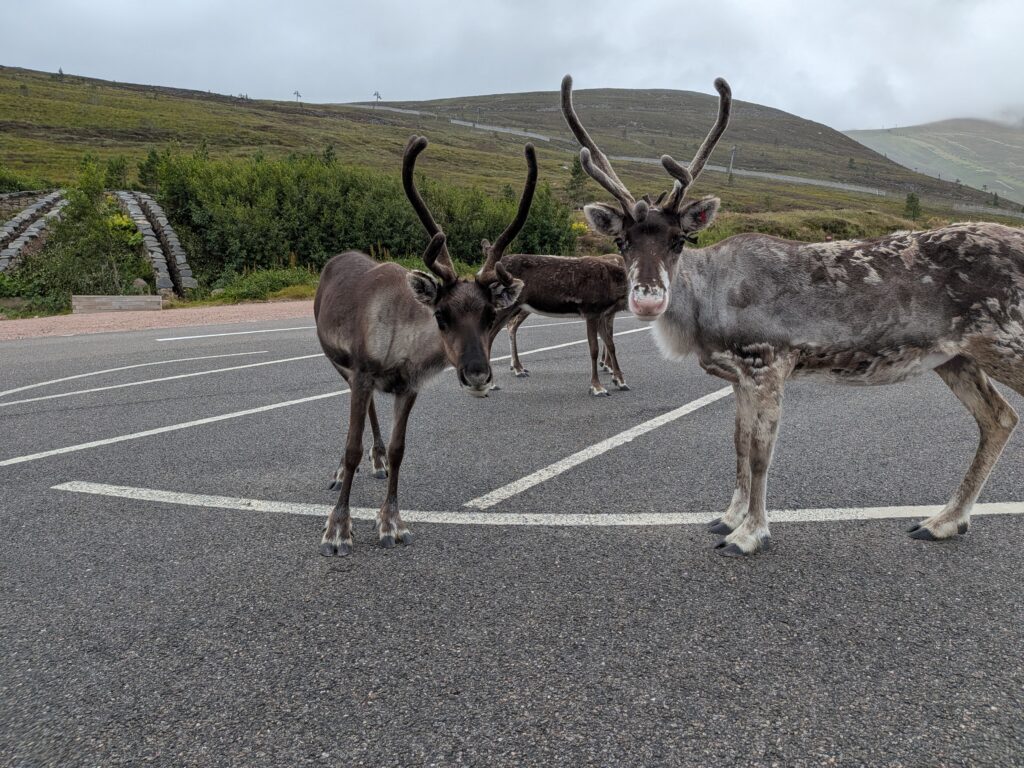
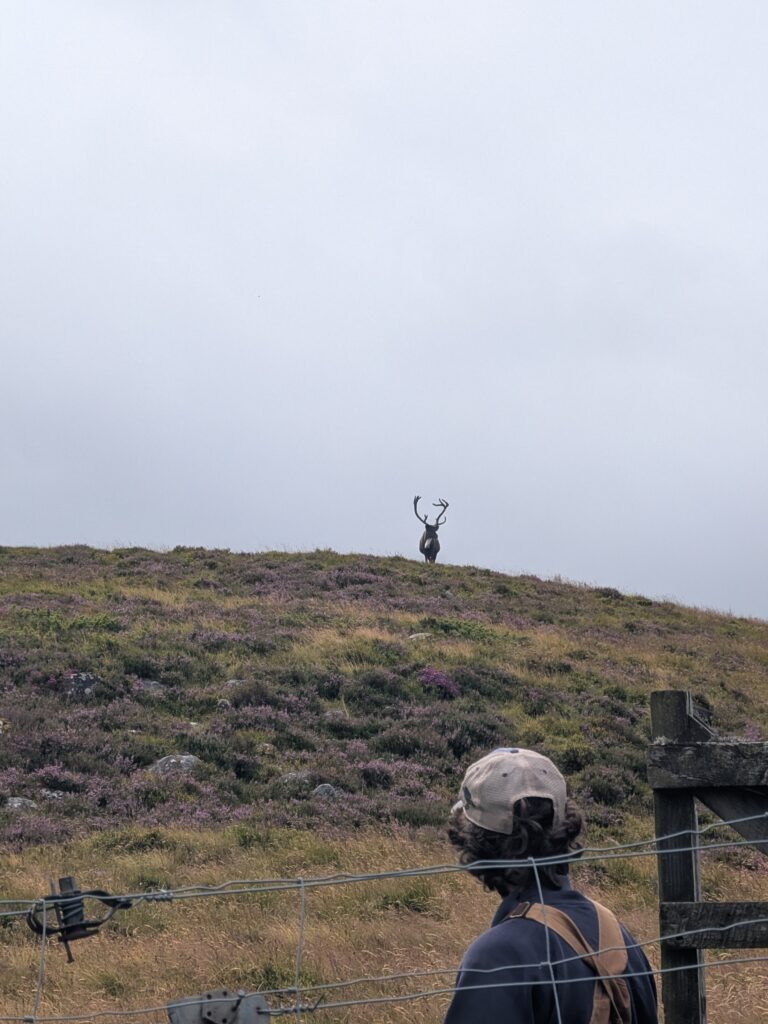
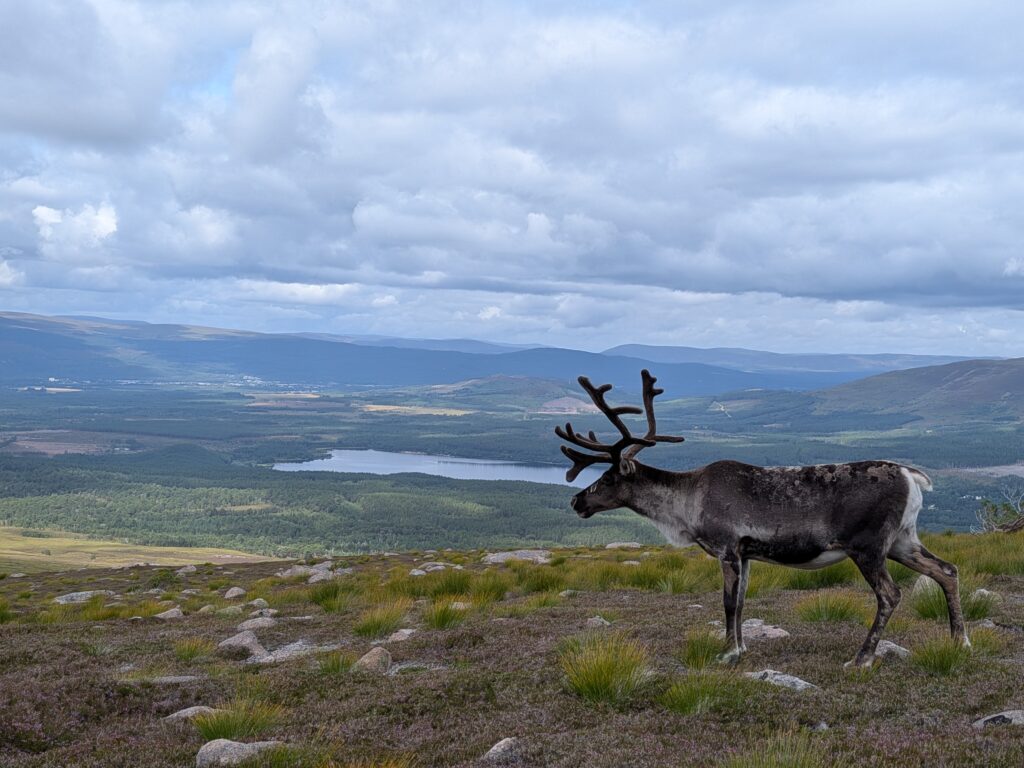
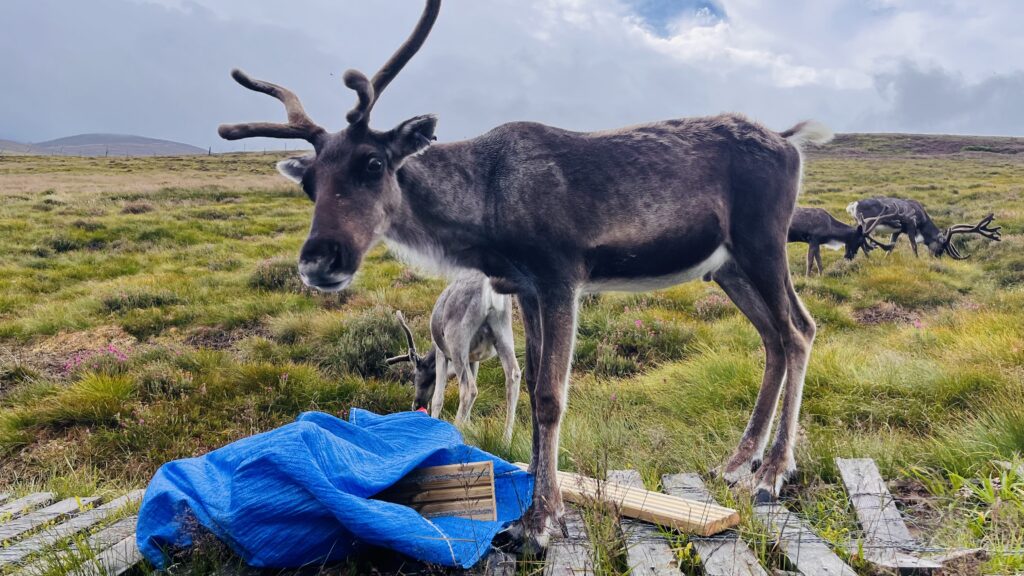
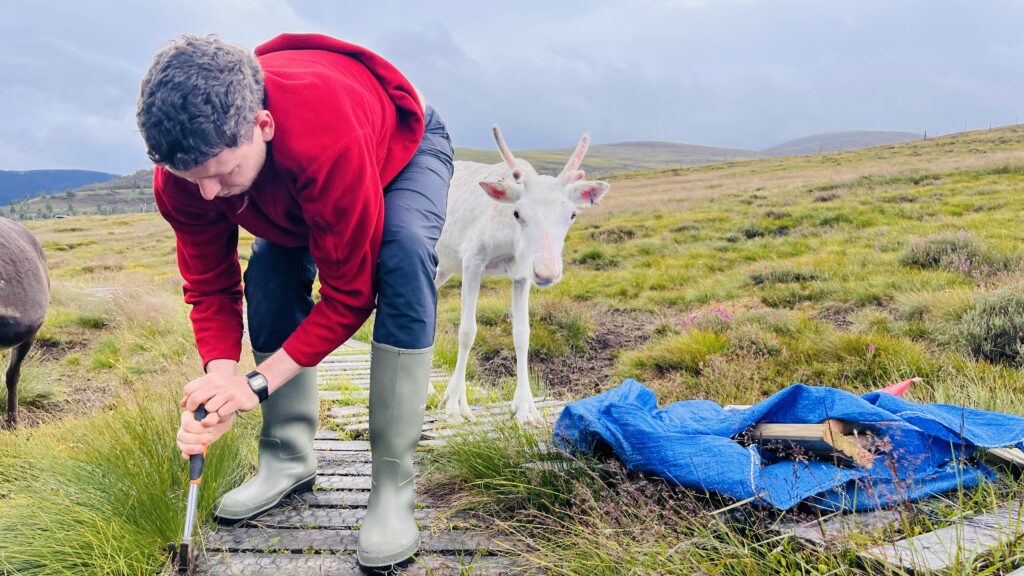
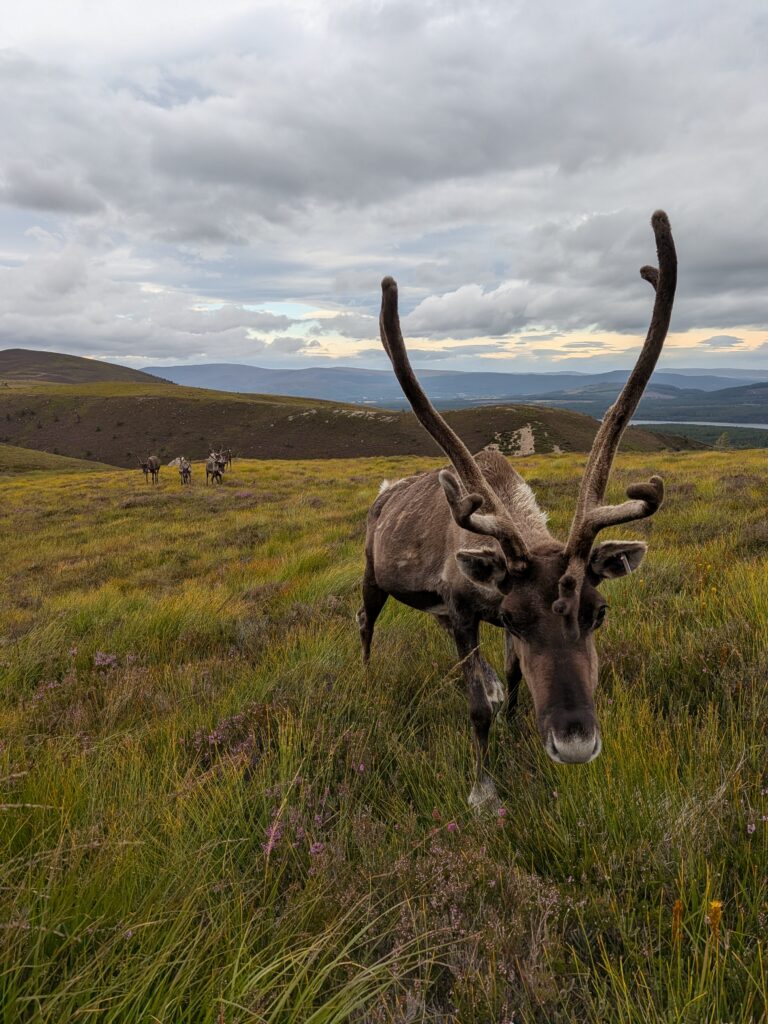
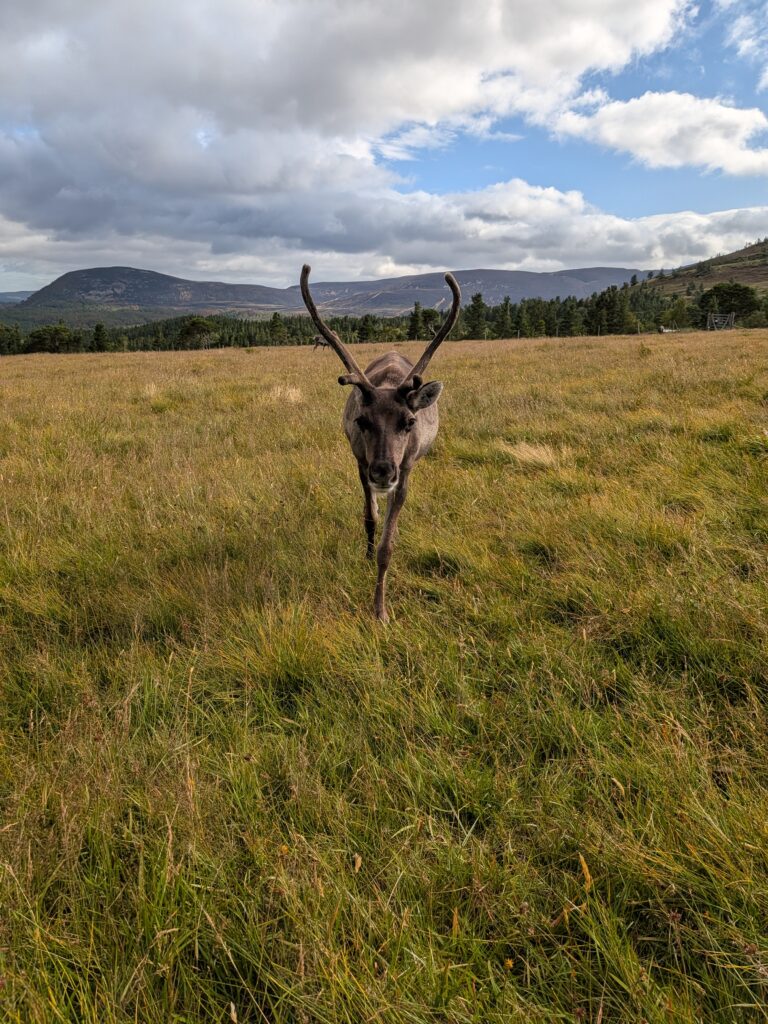
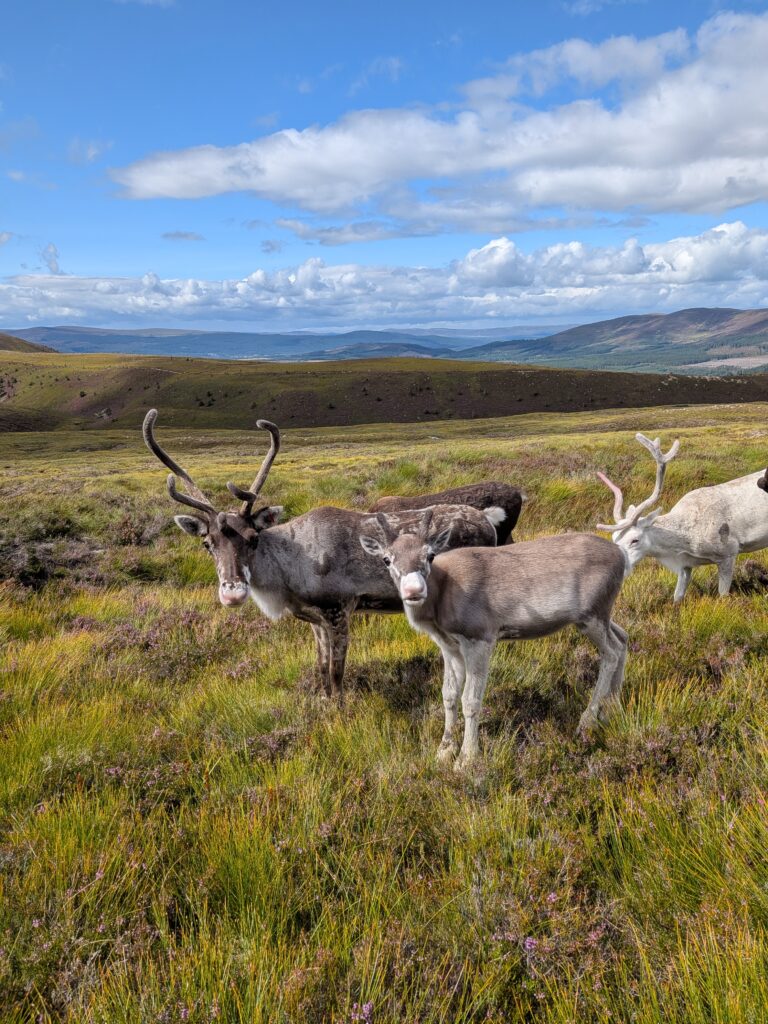
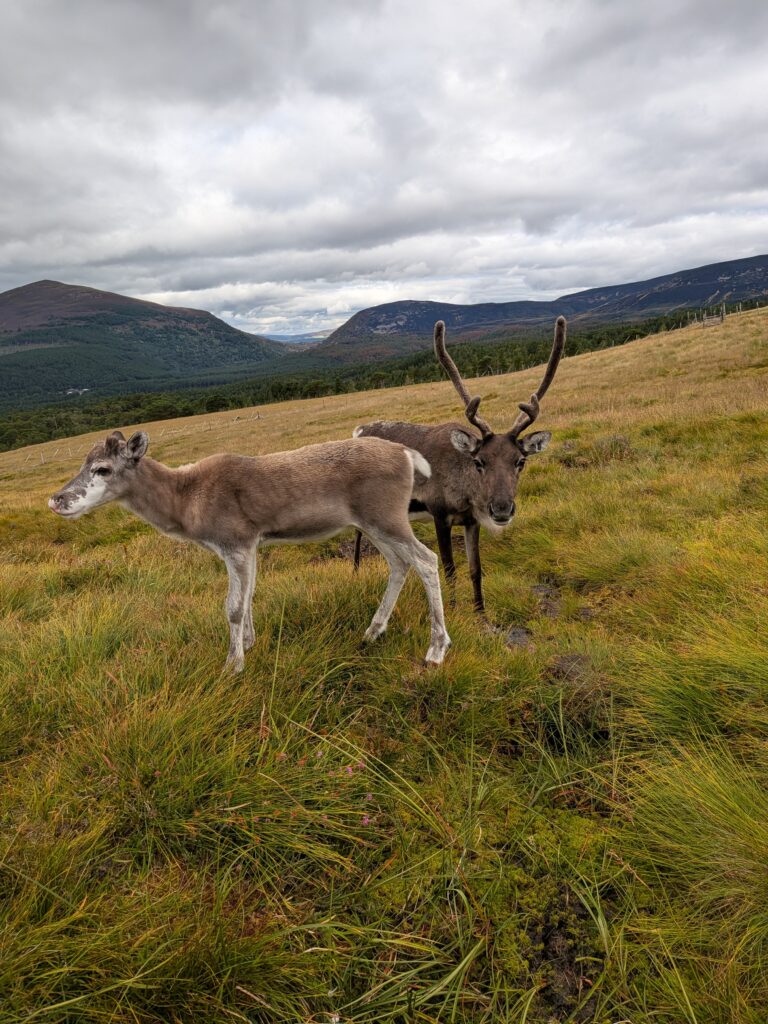
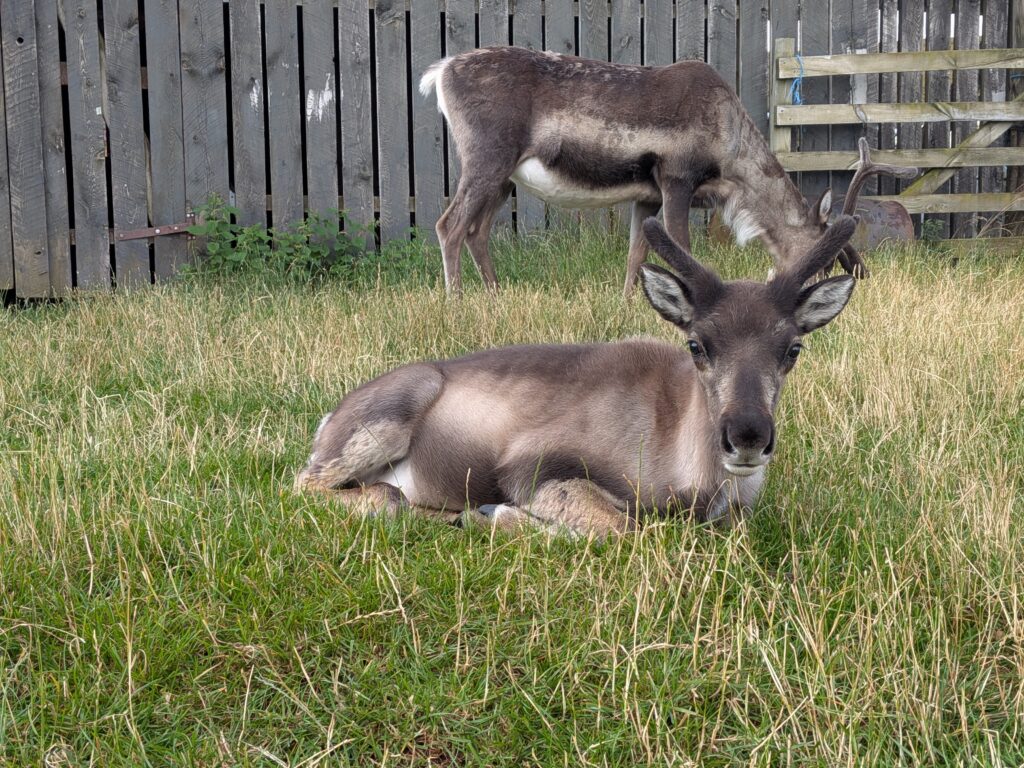
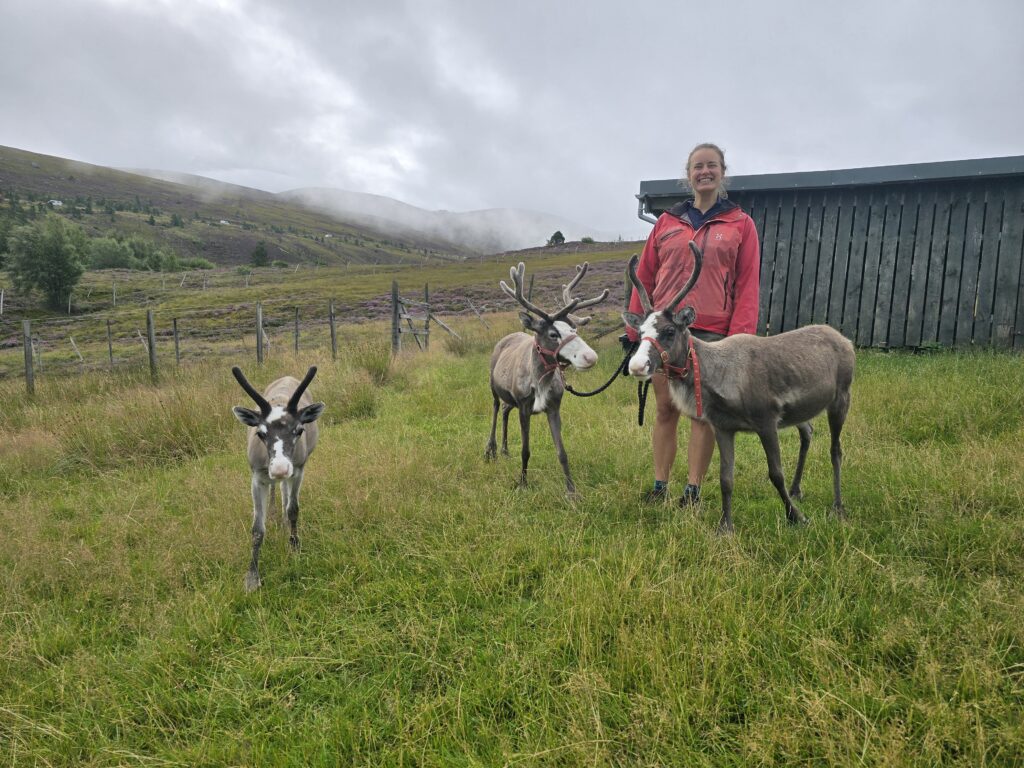
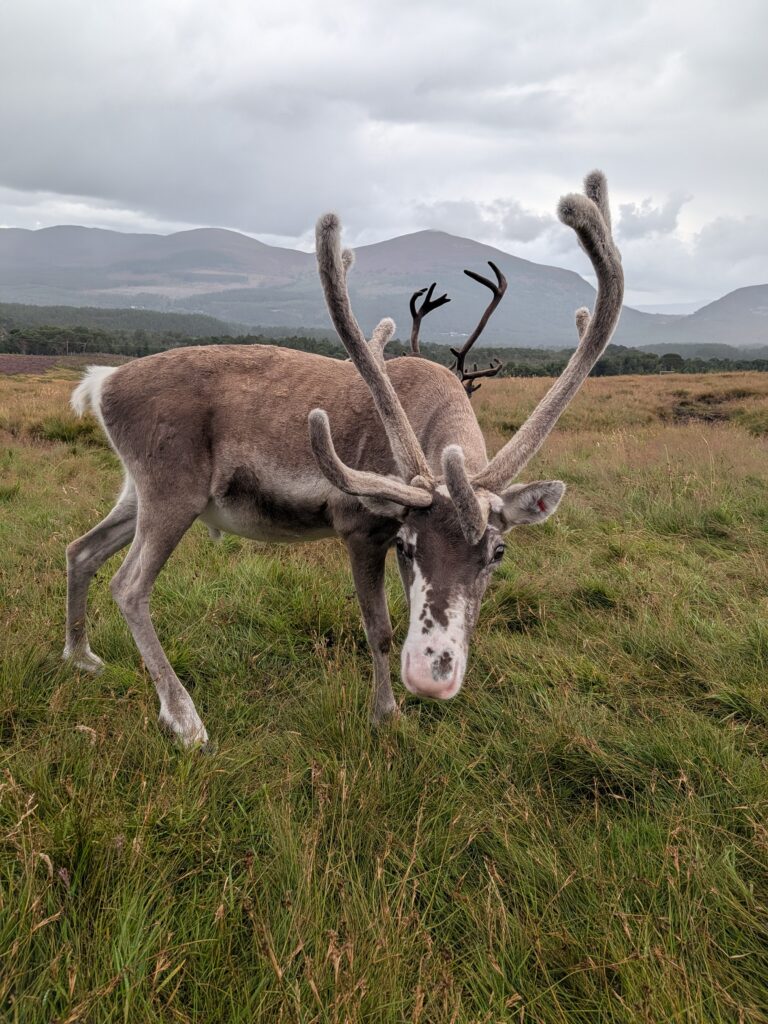
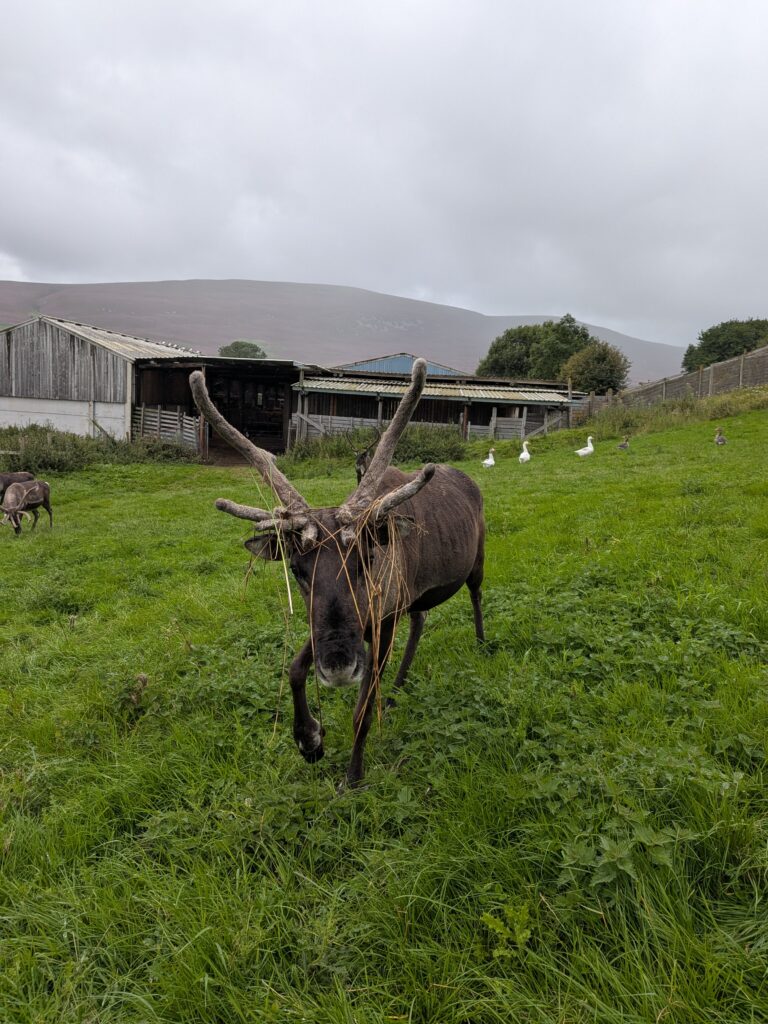
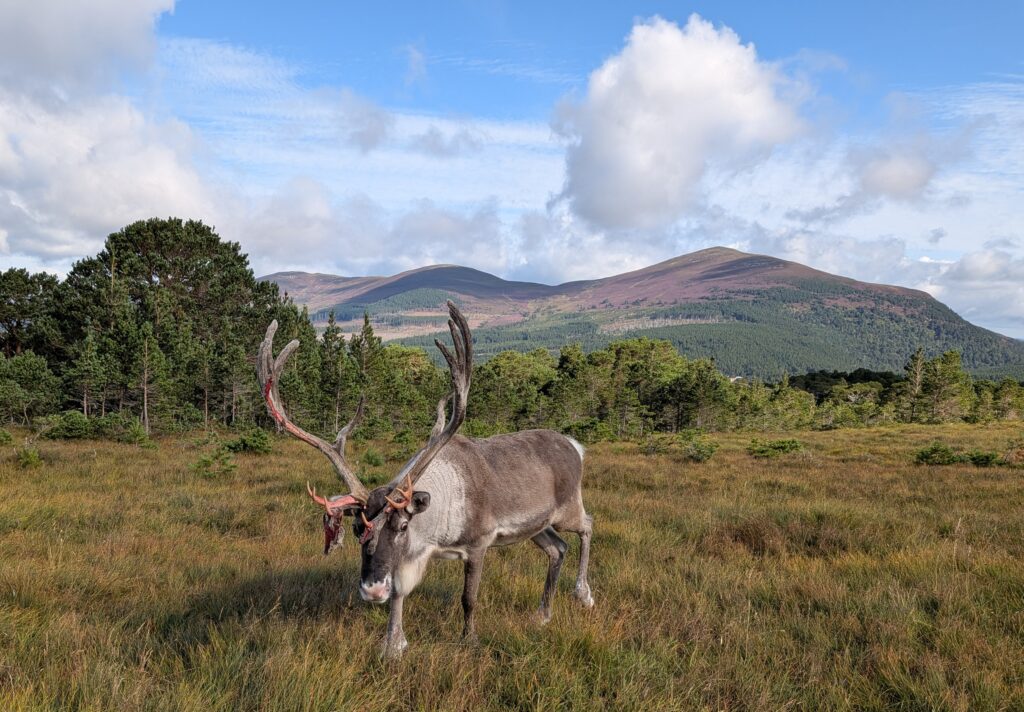
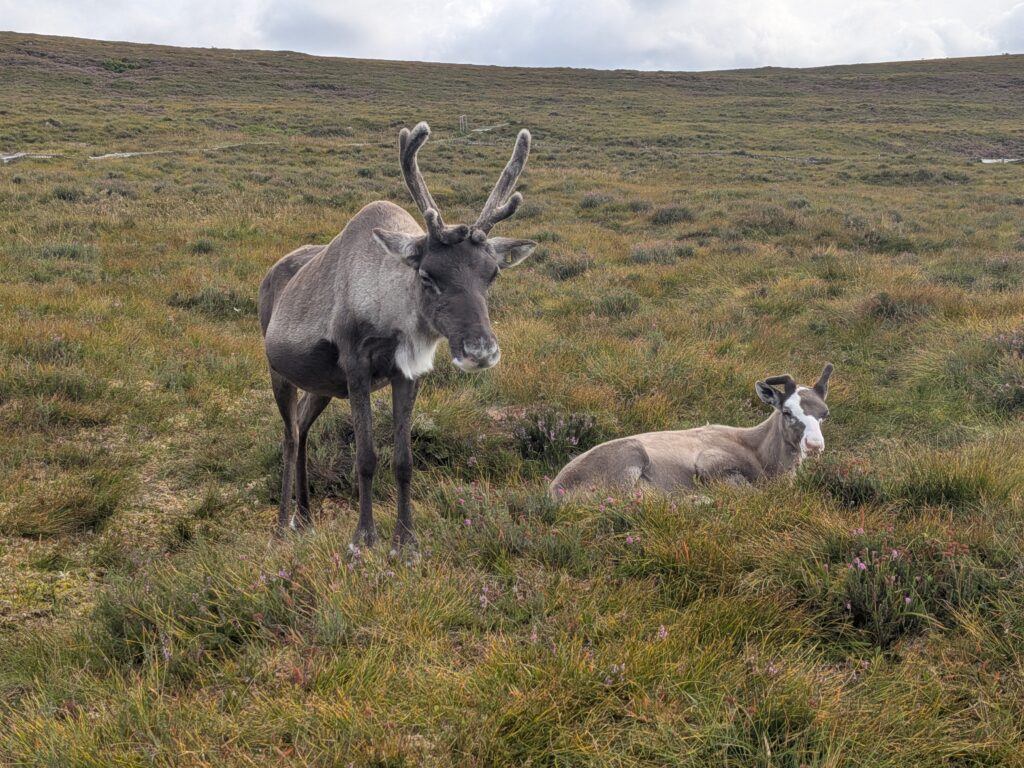
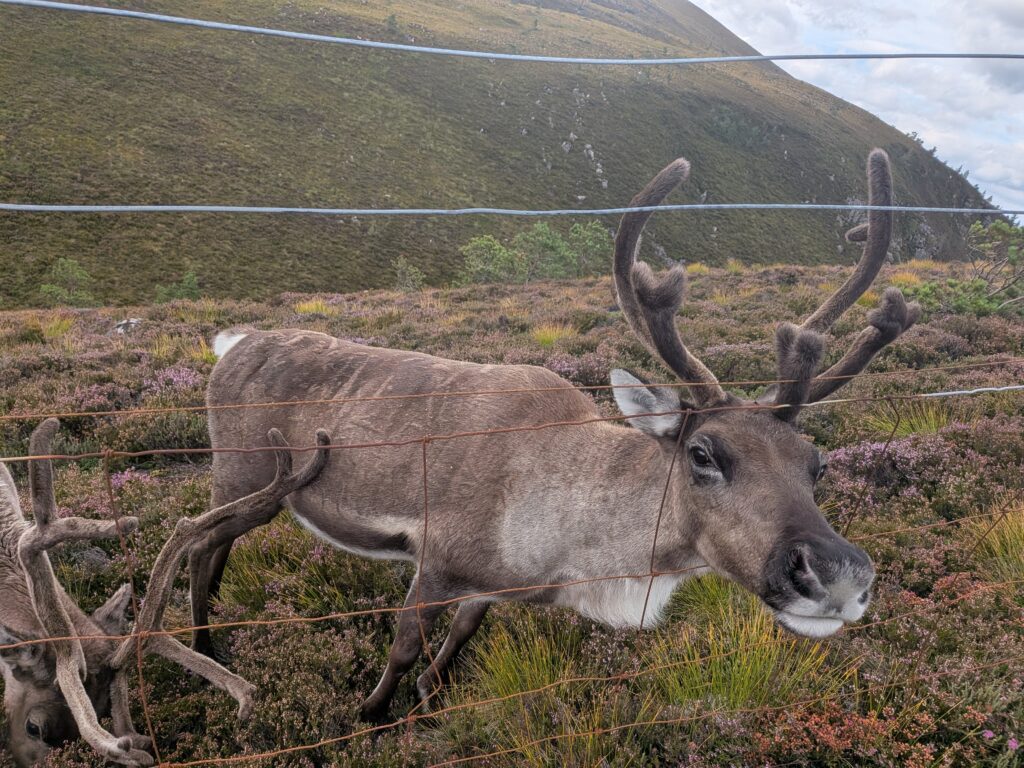
Normality has resumed and over the last month we have welcomed our lovely visitors to our site in Glenmore and have also caught up with a few of our cows and calves. They’re all looking well and have had a good summer out on the free range!
Amy

Roaming freely since 1952
Normality has resumed and over the last month we have welcomed our lovely visitors to our site in Glenmore and have also caught up with a few of our cows and calves. They’re all looking well and have had a good summer out on the free range!
Amy
I am the youngest Scottish reindeer herder. Although many people think I’m older than I really am and it happens on a regular basis. I’m either on a hill trip or doing a paddock talk and there is always someone asking me, “how did you end up being a reindeer herder?” When I give people my answer I often hear a gasp. “What, you’re still in school?!.” Yes I am, and only 2 years left then I’ll be free (Im counting down the days practically). Another question always follows this: what are you doing after school? I dunno, I’ll figure it out but I know one thing I ain’t sitting at a desk for ten hours a day. The reindeer herders have learnt that I ain’t sitting still.
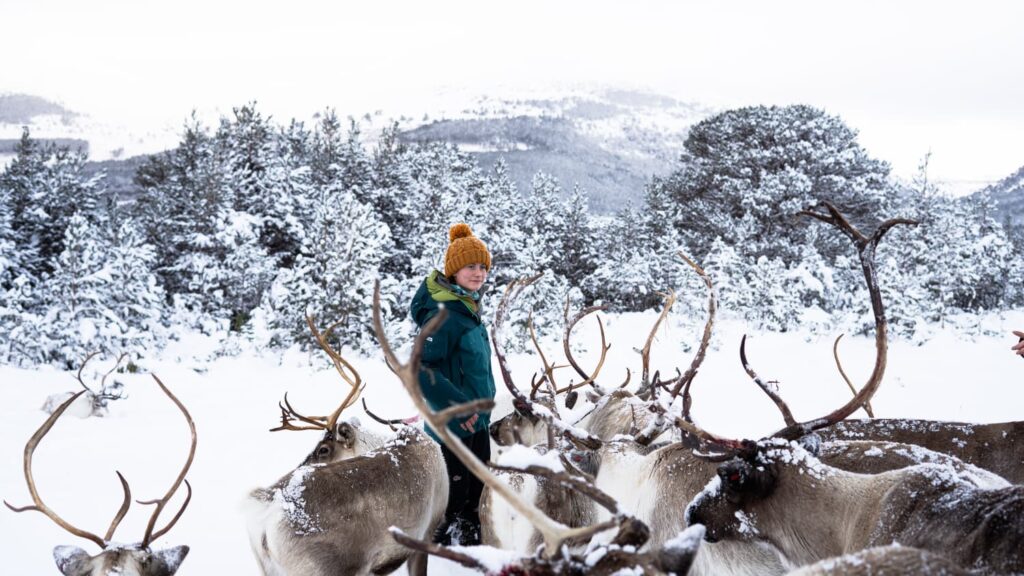
Although most people are surprised about my age of only being 16, and are really interested in how I have such an interest in reindeer and the hills, the majority of the people I meet are supportive. But you’re always going to have a couple of people who treat you differently when they find out I’m at school still. I get a bit disappointed when people treat me differently after I tell them because all of a sudden there is a switch, “oh you do something so cool, but I still know better than you”. I do sometimes find it can be a struggle being young in a professional environment – but I enjoy this. I get a chance to show poeple my knowledge and it helps me build confidence.
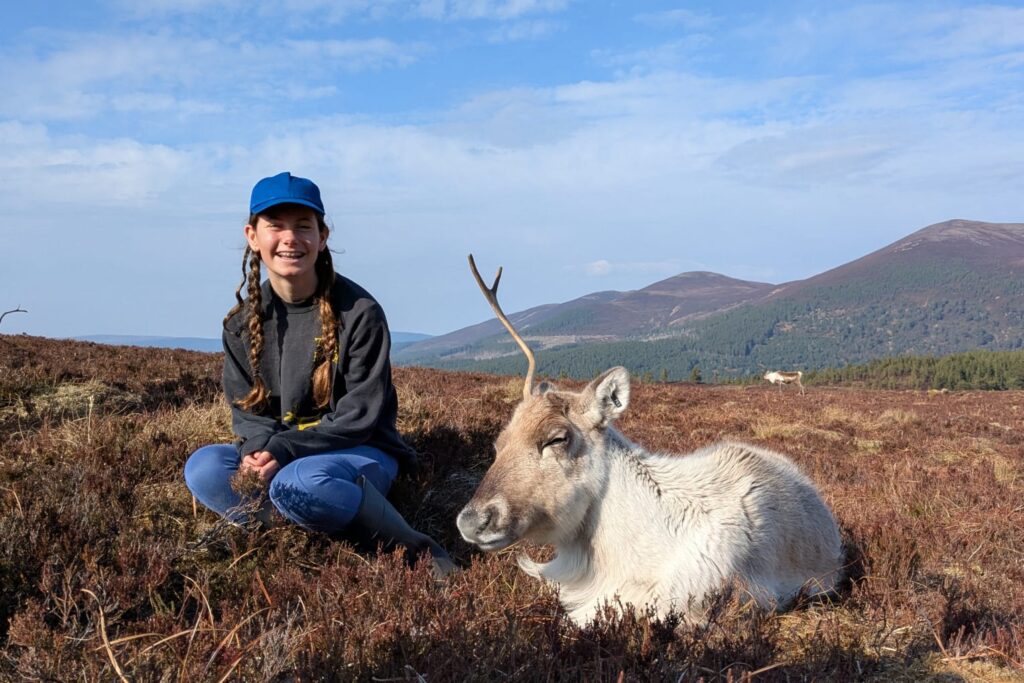
At first hanging out with the reindeer I was just an extra pair of hands carrying feed onto the hill and maybe chatting to a couple of visitors on the hill trips. I was nervous, only 13 and had no experience of talking to big groups of people with no knowledge of reindeer. Now I can easily chat to 50+ people because I now have a love for reindeer. I want to get everyone else to know all their fun facts to know why the herders are here and how important reindeer are to the Cairngorms ecosystem. However, saying this I still will not do a presentation in school! Reindeer I can talk all day about, but in other areas I’m still working on my confidence.
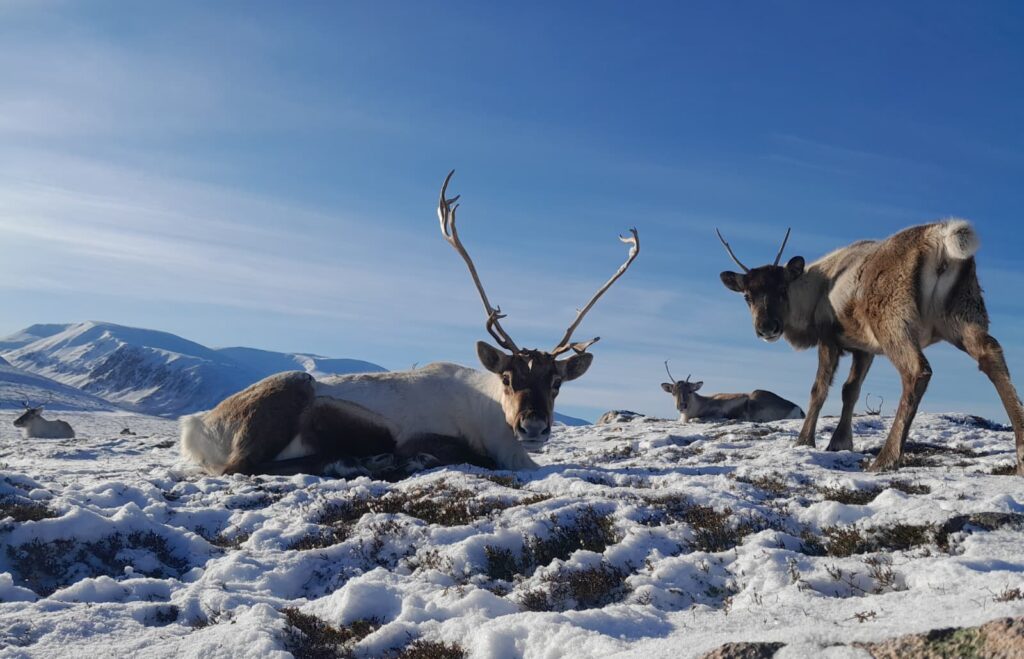
A strong memory I have of the first time I talked in front of 20 people was in horrible weather with Joe. Joe asked me to talk about handfeeding but I did it only because I wanted to get off the hill and back to the centre as soon as possible! I’m glad for it now – sometimes you just need a little push out your comfort zone to see what you can do.
Reindeer have grown my confidence from now being able to talk to lots of people, work in the shop, give paddock talks, and even answer the phone… The thing I really don’t like is answering the phone! Mainly because you never know what you’re going to be asked on the other side. If it’s anything to do with officey things or on the computers I have no answer. There is always me handing the phone across the room when it’s ringing. If someone is busy in the shop however and only me to answer I have the dreaded task of answering. Slowly getting there but I am still not a fan.
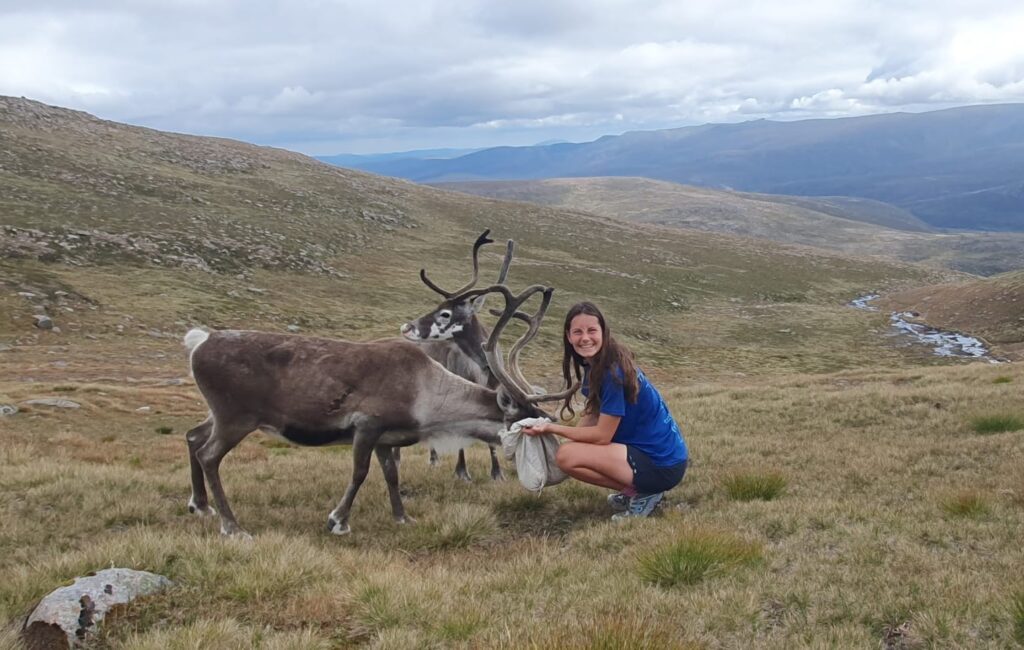
It is obvious that reindeer herding has boosted my confidence massively and I’m slowly gaining more responsibility and trust with the herders. At first I was just an extra person on a hill trip but now I get to help with the talks and help run them.
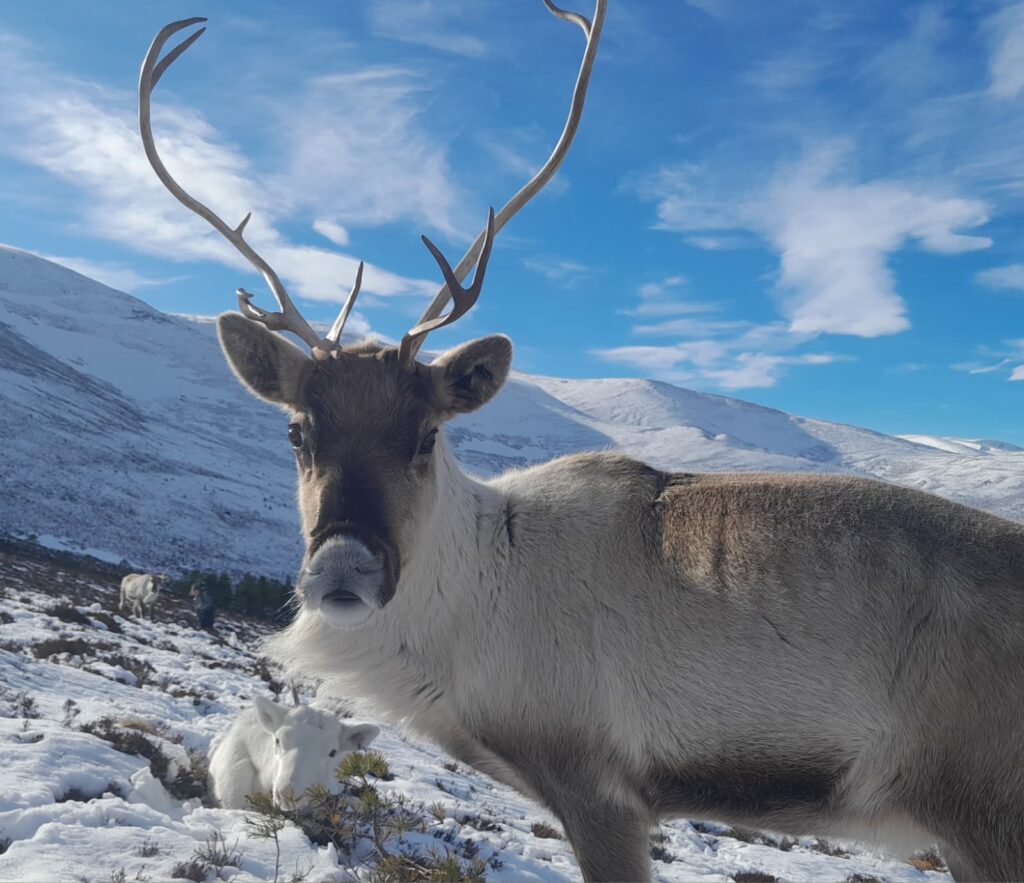
In school they know I hang out with reindeer. This year I had the delight of giving my English teacher a 15 minute talk about The Cairngorm Reindeer Herd. Fun fact, my English teacher even taught Fiona… For my national 5 geography assignment I looked at how reindeer affect the vegetation cover and the different species of vegetation where there is a change in population of riendeer. My results showed that reindeer are creating more diversity of plant species. (If you want the results email us and I can send them over.) By doing this project it also meant I spent a few hours roaming on the hills. However it was revolting weather with no visablity whatsoever but it was still fun!
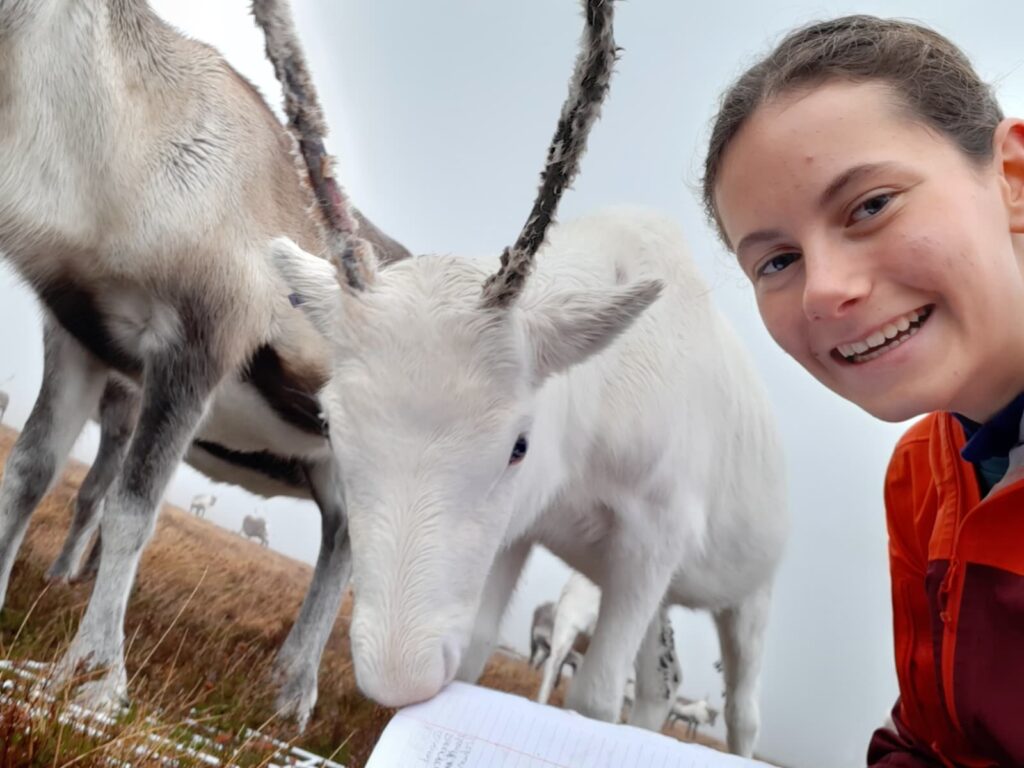
A favourite memory of mine… In the summer on a Friday afternoon off the school bus, I was tying my shoelaces about to go for a run up Meall a’ Bhuachaille with Froach when Hen answers the phone from Amy saying she’s found some reindeer in Glenfeshie. Hen looked at me, “Maisy, what are you up to this afternoon?” There I was forgetting about Fraoch and my run and off we went up Glenfeshie to go find some calves and Amy. Not a bad Friday afternoon!
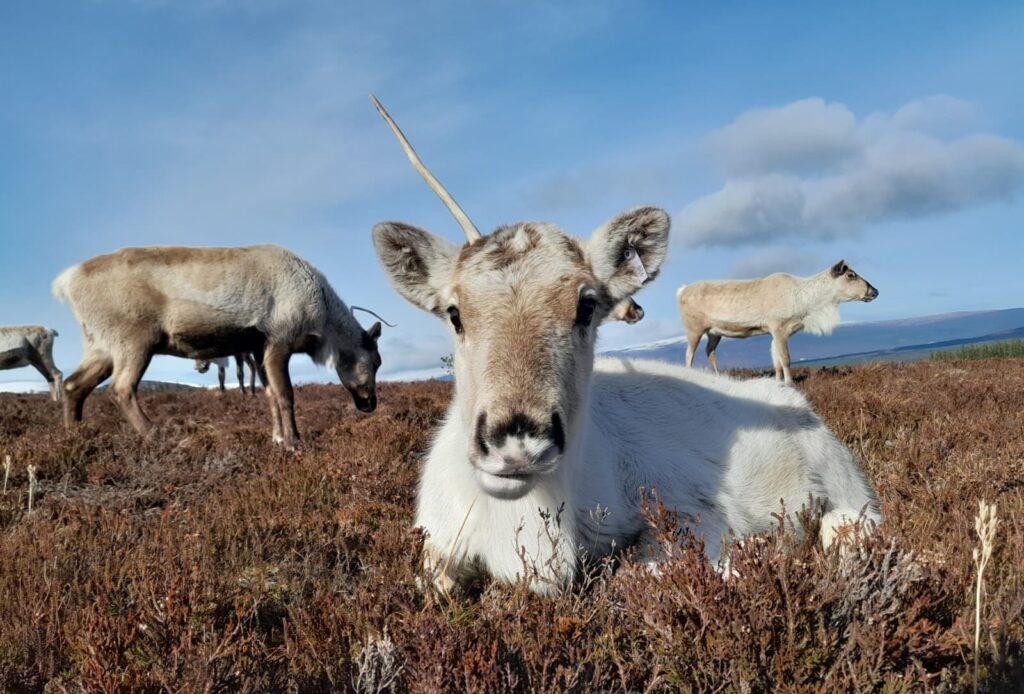
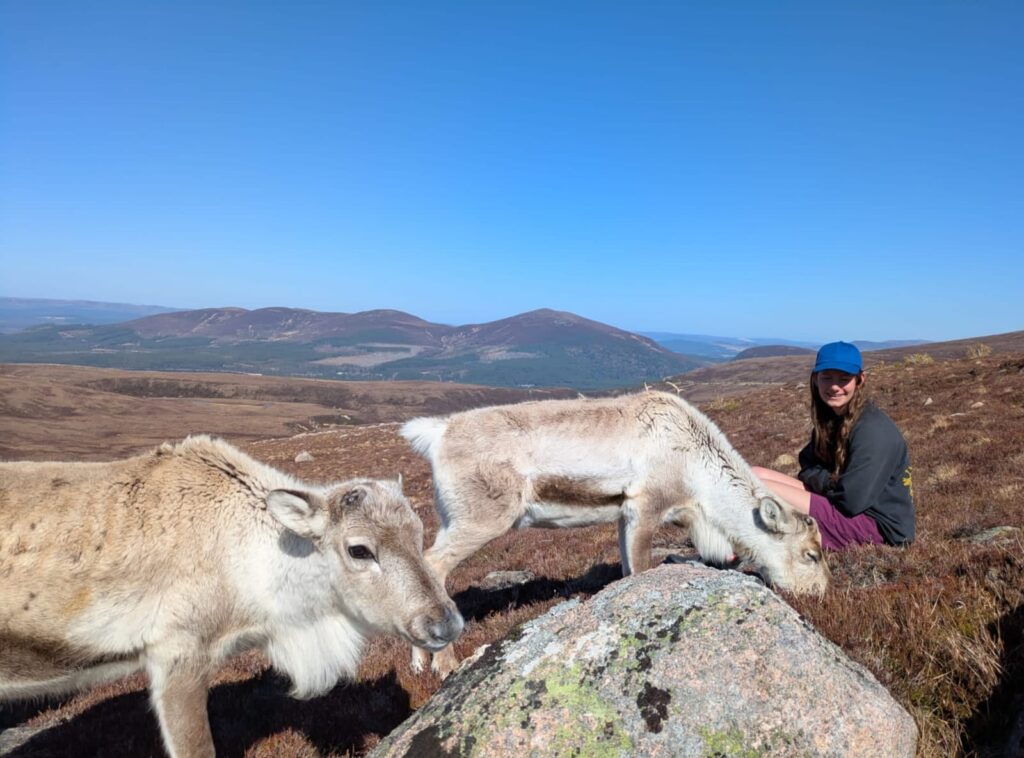
It took me a while to get used to being comfortable around the reindeer just because they are animals and I was still unsure of what their next steps were going to be. However now a few years down the line I’m comfortable with having reindeer brush up against me and try to calm a situation. From working with the reindeer my confidence has boosted and people in my life outside of reindeer can see that. This year was my first proper calving with working a lot more often during the weekend and my study leave. The calves are such sweeeties!
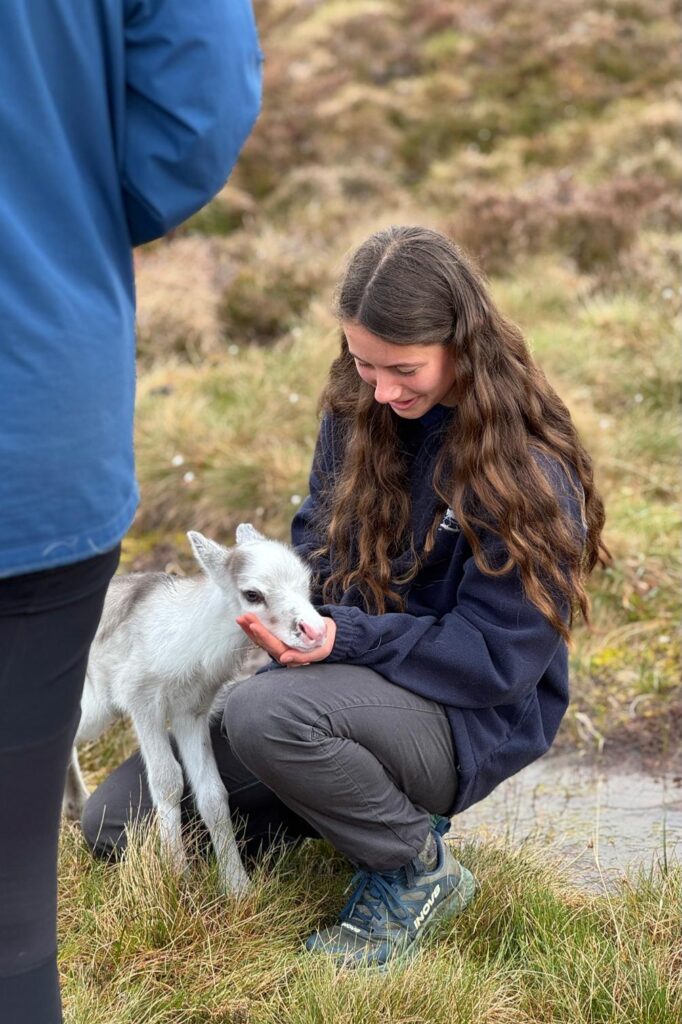
I think young people should get the chance to work outside with animals and in the outdoors more as so many young people are not getting opportunities to try many varied environments of work. I have found my own self confidence and knowing many young people struggle with this, it would benefit many. Working with reindeer has made me realize that I’m never going to want to get an inside office job mainly because I would probably explode if I were to sit still for 8 hours a day! I know there are lots of young people just like me that are meant for outdoor jobs and volunteering and working with animals gives you a chance to explore that. I’m also grateful for the resposibility and to find a group of people with interests just like mine. Sometimes you just find the right place where you belong!
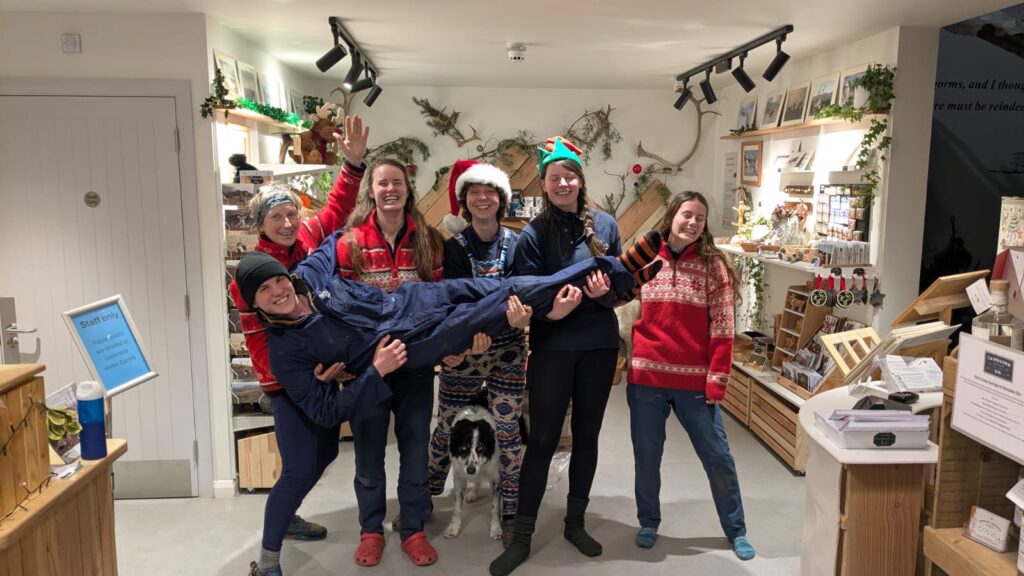
Maisy
A free range season adventure!
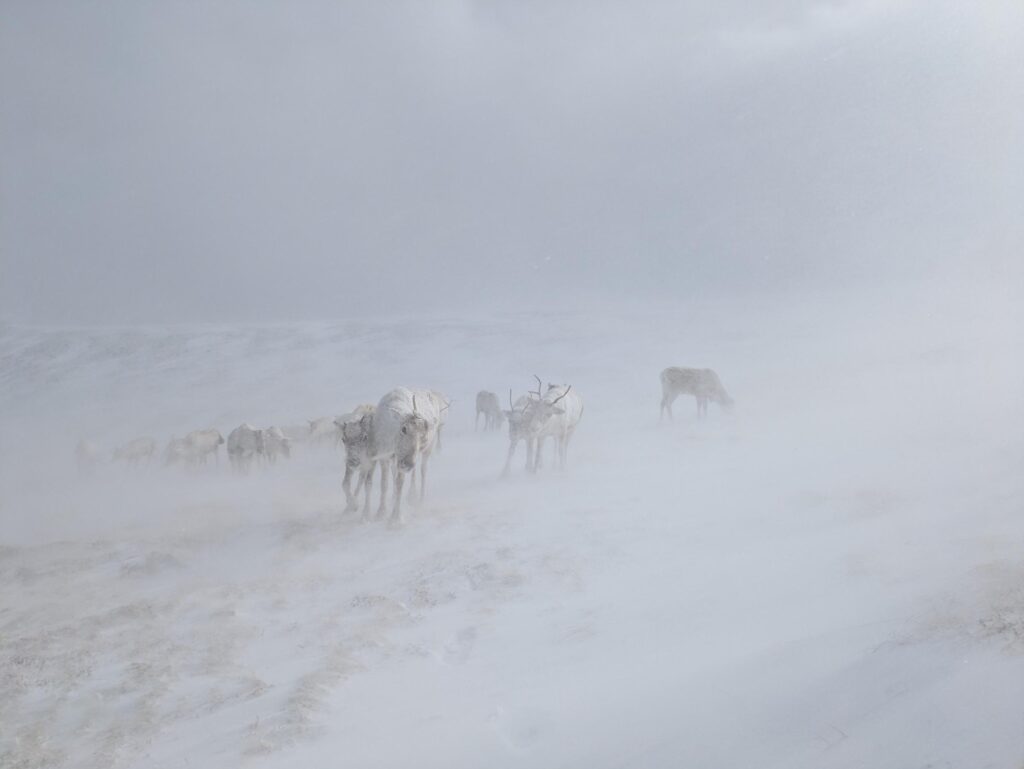
Daisy: It was morning briefing in mid April and we were contacted to inform us the reindeer had moved right up onto the mountain plateau not too far from Ptarmigan Station. This was going to be a pretty long walk for us to make it up to the reindeer, find them in some pretty interesting conditions, and then herd them down off the mountains to one of our free range visit spots. Thankfully, Cairngorm Mountain staff came to the rescue!
Andi: A quick phone call to Cairngorm Mountain and they were happy to help us with a ride up on the shiny Funicular Railway – a unique scenic ride which is a destination in itself. For us, this would save us around an hour of uphill walking in blizzard conditions, and made the difference between needing to abandon our Hill Trip plans (with lots of hopeful visitors already booked) and hopefully managing to retrieve our reindeer in time for everyone to enjoy meeting them.
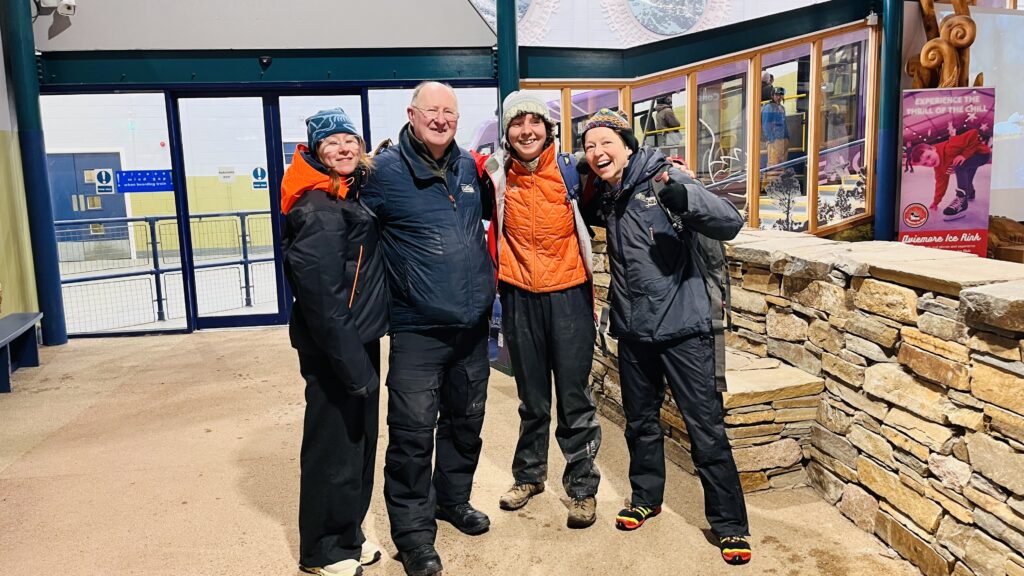
Daisy: It certainly felt like setting off on an expedition that morning with Andi. We had all our gear on, map and compass in our bags alongside lots of reindeer food, and jumped on the mountain railway. A really cool way to start off a herding trip for the day! I actually had never riden the train up the mountain before so we grabbed a front spot and watched the snow get deeper and the visibility worse.
Andi: Travelling from Glenmore, where it felt like spring, to the ski car park, where it was cold and wintry with a little snow, it felt like we were going to a different world as the train took us into the cloud and the weather closed in. Definitely a day where knowing that you have a storm shelter in the bag is reassuring!
Daisy: As soon as we stepped out of Ptarmigan, we were hit by a pleasant enough breeze carrying some of the snow down the mountain. I pulled my microspikes onto my boots and my ski goggles over my eyes, and followed Andi along a snow fence and up away from the restaurant and Cairngorm summit. A few patches of deeper snow to stumble through, and a lot of frozen ground and sheets of ice that made for nice walking with the spikes on. We crossed past the final lift before the plateau and set off into a frozen, snowy, rocky landscape with little to no visibility. It’s funny to think how many people wander the plateau and hike these beautiful mountains throughout the year, because in that moment it was like we were the first people to explore what felt like a different planet.
Andi: Whilst I’m pretty familiar with our local mountains, having pottered around after reindeer for the past 15 years, it is a whole different ball-game in a blizzard. Visibility was between 10 and 30 metres, and it is so easy to see how people get completely disorientated. It takes a lesson in trust to believe the compass bearing when your brain can play tricks on you, making you think you’re heading in the opposite direction.
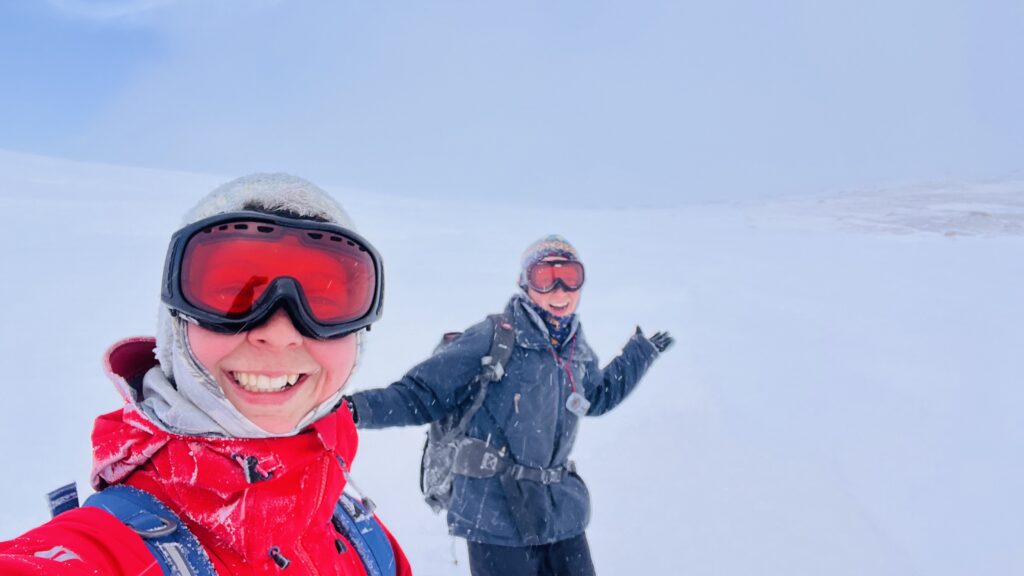
Daisy: We used a combination of a good old trusty compass and Google Maps to navigate through the white out. Despite the freezing temperatures and snow that was blowing up off the ground, we were actually nice and toasty in very excited high spirits the entire time. Looking at the satellite imagery on Google Maps of roughly where we knew they were, I made up names for all the features I couldn’t see in front of me, and was probably really reassuring to Andi when I kept repeating “the reindeer should be at the bottom of the orange segment just in front of us”.
Andi: Between Daisy using the tech to pinpoint where the reindeer should be, and me keeping us on a compass bearing with the old-school methods, it felt like we had a plan! It was reassuring having two brains on it, keeping each other right and cross-referencing to ensure we were on track. Most of our reindeer herding is not done in a white-out, so it was a fun challenge to be testing out our nav skills.
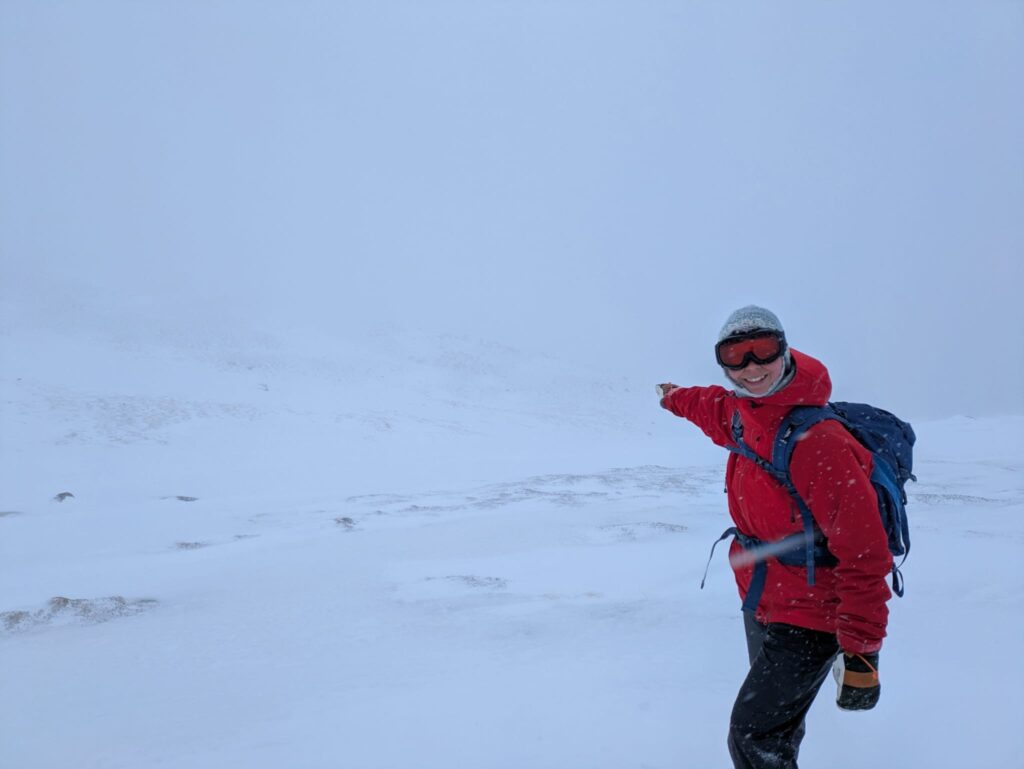
Daisy: We came to a stop and scanned the landscape, the reindeer should have been metres from us at that point. Then like magic, some cloud lifted and Andi pointed off into the distance: “Reindeer!”. There they were, 73 reindeer hunkering down on a hill edge. Several cheers followed as we dug our spikes in to descend a small ice sheet to get to them.
Andi: I was glad to have a fair bit of experience picking out a herd of reindeer on a hillside, as their camo was excellent, but something in the shape/shade of these particular bumps ticked the box of not just being rocks! It felt like such a prize to have managed to follow our bearings directly to them.
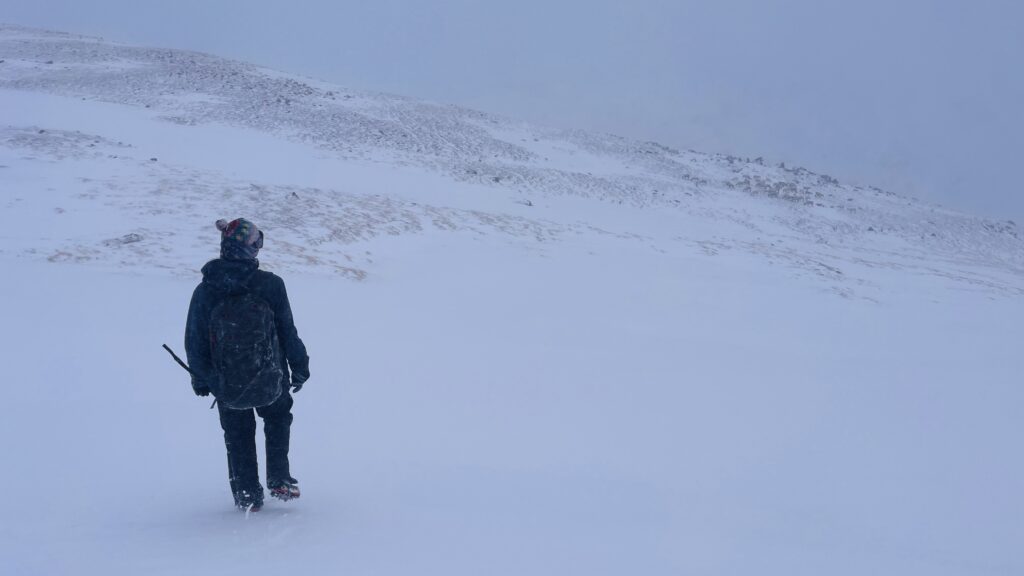
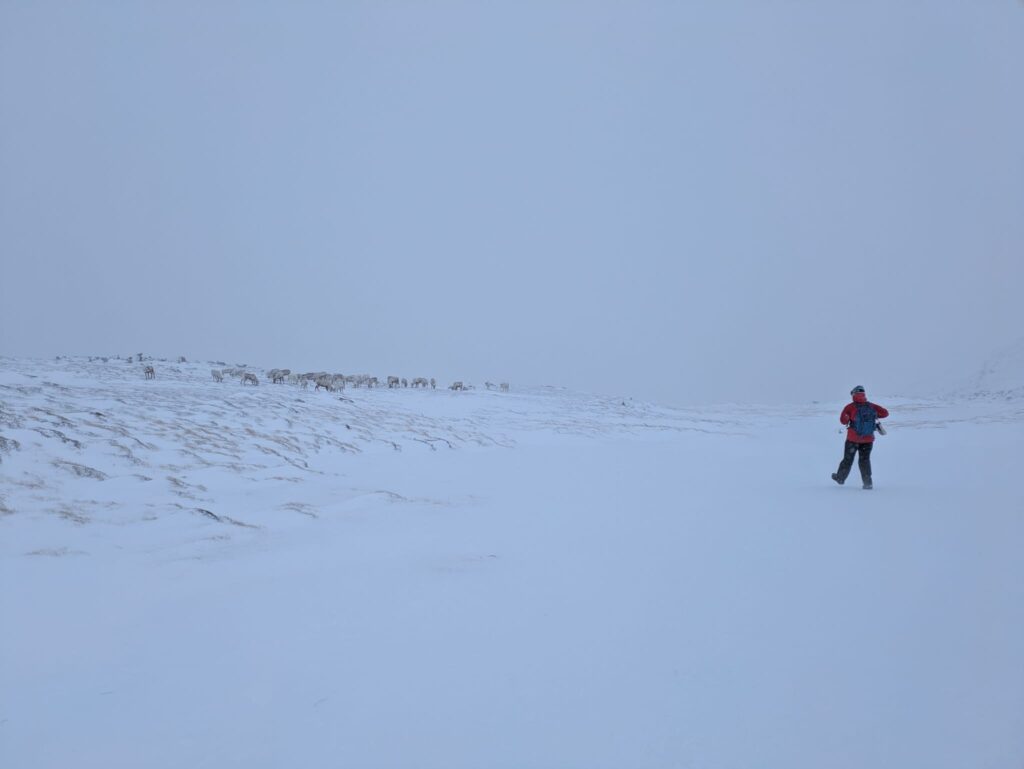
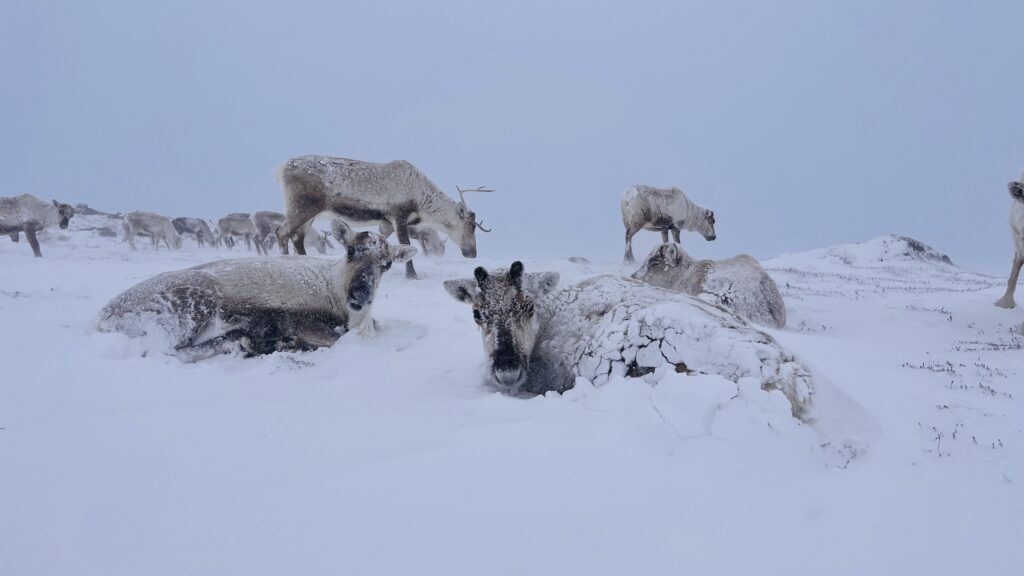
Daisy: It was my first time seeing how effective a reindeer’s coat is against heavy snow and winds and it was amazing to see the snow piling up against them. As I got nearer and walked around the back of the herd to encourage them up, I could see just how cold it must have got overnight with all the frozen snow and ice on them – not bothering them at all!
Andi: It amuses me how reindeer are so blase about weather, actively choosing to wander up to exposed ridges in the worst of conditions. There is actually method in their madness, as wind will blow snow off the ridgeline, meaning they have to dig less for food, and there is also less risk of getting stuck in a snow drift. But still!
Daisy: With the herd up and already eager to follow Andi, we set off into the white to move the reindeer off the mountains and down to much lower ground. It wasn’t long before the winds started to pick up and throw quite a bit of snow at us. The herd stuck together really well and I got my first experience of how they stay together in low visibility. Usually they spread themselves out a fair bit when on the move, some will stop to graze and take their time – but in the harsh windy conditions and terrible visibility they were staying close as a herd the entire time.
Andi: The herd were in a very co-operative mood and as I set off in the right direction, shaking a bag of food, they all trotted after me. I tried to set a pace where the herd were close enough to me that I could still see Daisy, who was following at the back. It felt sensible to be able to keep an eye on each other!
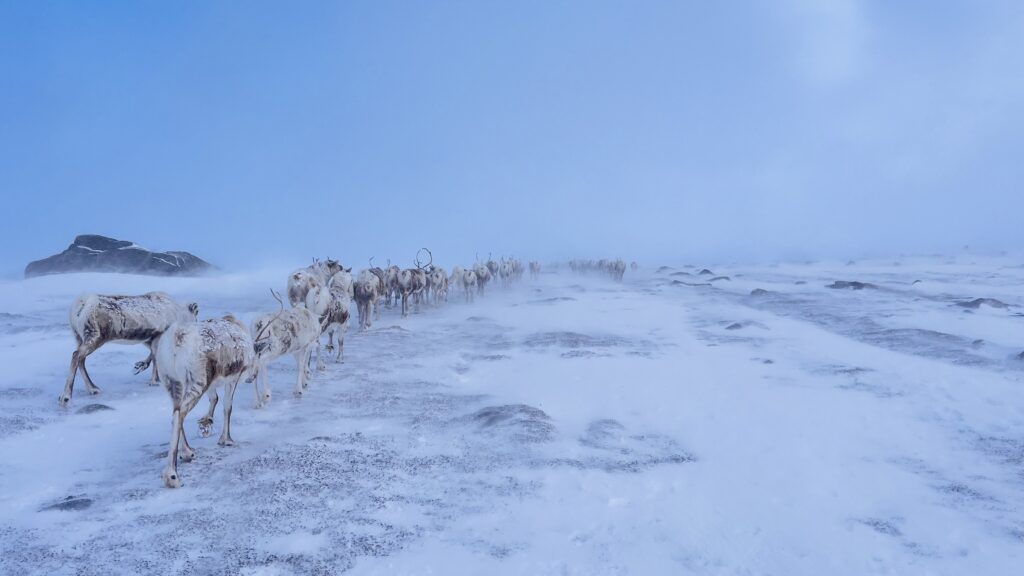
Daisy: I’m glad that it was actually probably the easiest herding I’ve ever done, the reindeer wanting to get off the windy plateau as fast as we did. It gave me plenty of time for photos and to take in how amazing the experience was. Plus I was able to focus on my own struggles in the wind – like making sure I didn’t get blown over every 30 seconds!
Andi: As the wind buffeted us, humans and reindeer alike, I had to stop myself from feeling guilty that the reindeer were in these conditions, reminding myself that they had chosen to come up this high themselves!
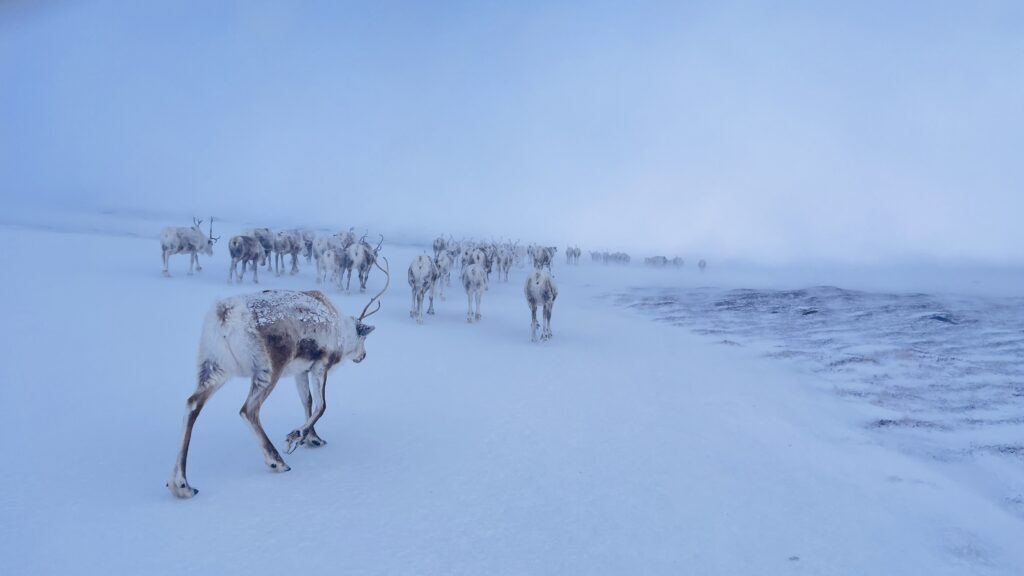
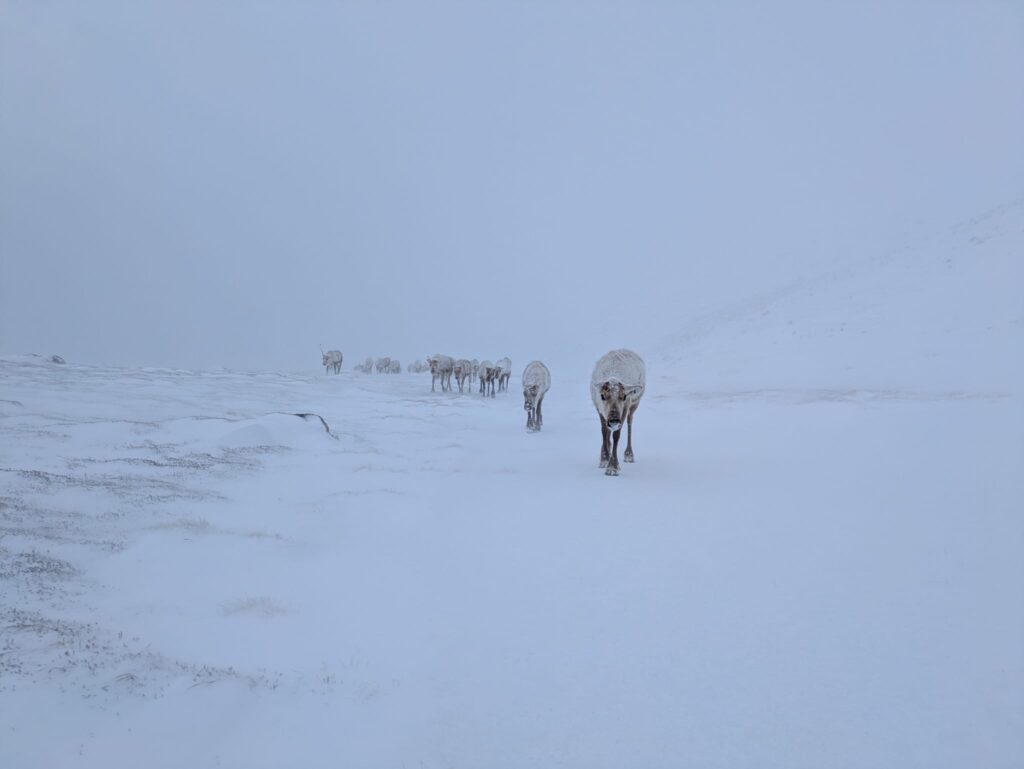
Daisy: I was so grateful to be at the back! Apart from making sure I kept up with the herd, (which did involve the occasional sprint whenever they ran on ahead to regroup around Andi – slightly stressful as I’m much slower than a reindeer!) I at least didn’t have to worry about navigating. Andi had to lead 73 reindeer and one herder down off the mountains following just compass bearings!… I did not envy that task at all.
Andi: When fetching the herd, we generally take turns at either leading or pushing. Today Daisy had volunteered me to lead, as I knew the hills better than her so there was some theory that I would pick a good route. In reality, I’ve found it’s a case of heading in roughly the right direction, glancing back at which way the savvy reindeer are going, and repositioning yourself to be in front of them, which makes it look like you knew exactly what you were doing… The reality is that the reindeer spend their whole lives in these mountains and know them far better than any human. Once you have the herd on side, the job of leading becomes much more straightforward, though it is the first time I have brought reindeer in whilst using a compass!
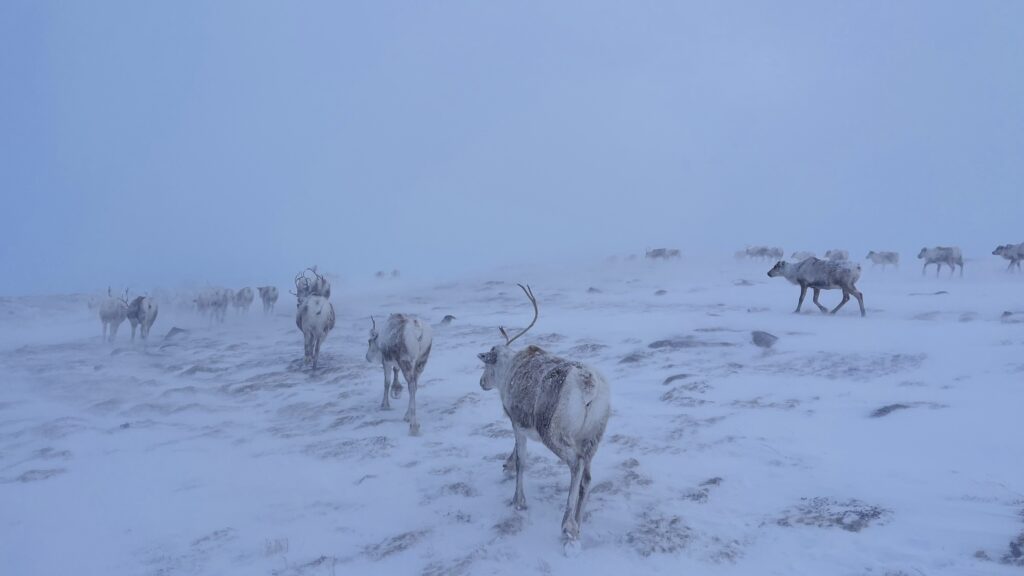
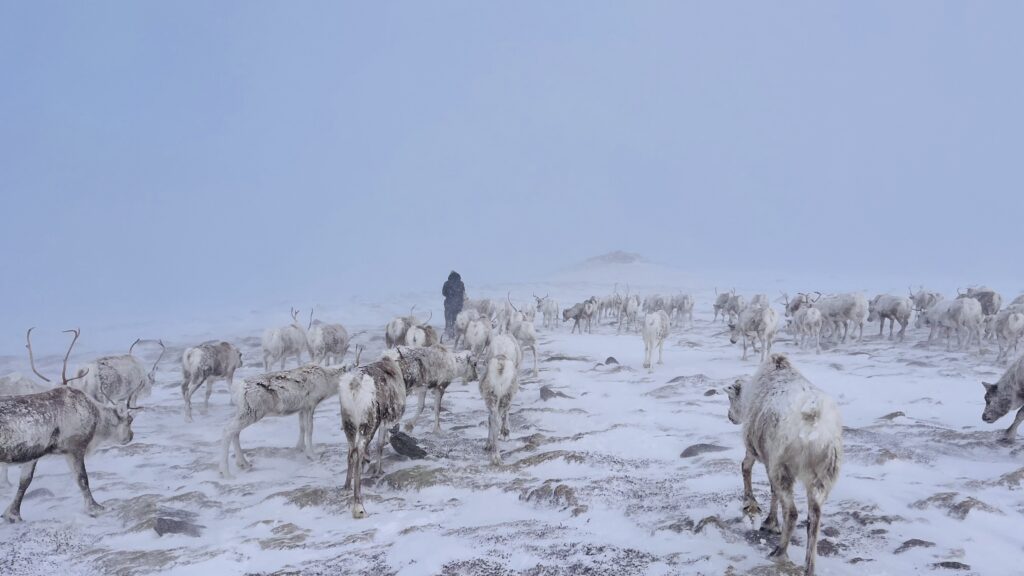
Daisy: The further we got and the lower we started to descend, the higher the wind speed increased and the snow began to feel like needles being fired at us. I quickly lost any feeling in my face, and loved watching how the reindeer turned themselves into the wind, the cows with their calves sheltered alongside them. While I struggled to stay balanced on my feet and really starting to feel the cold bite – the reindeer were in their element! Sticking together as a herd and following the hoof prints of the reindeer in front of them.
Andi: Whilst the reindeer made it all look easy, the conditions were not so easy for us humans. As we began descending we encountered more deep banks of snow, which resulted in a couple of complete face plants for me! The look of confusion from the reindeer at how useless us two-legged-creatures are was pretty funny!
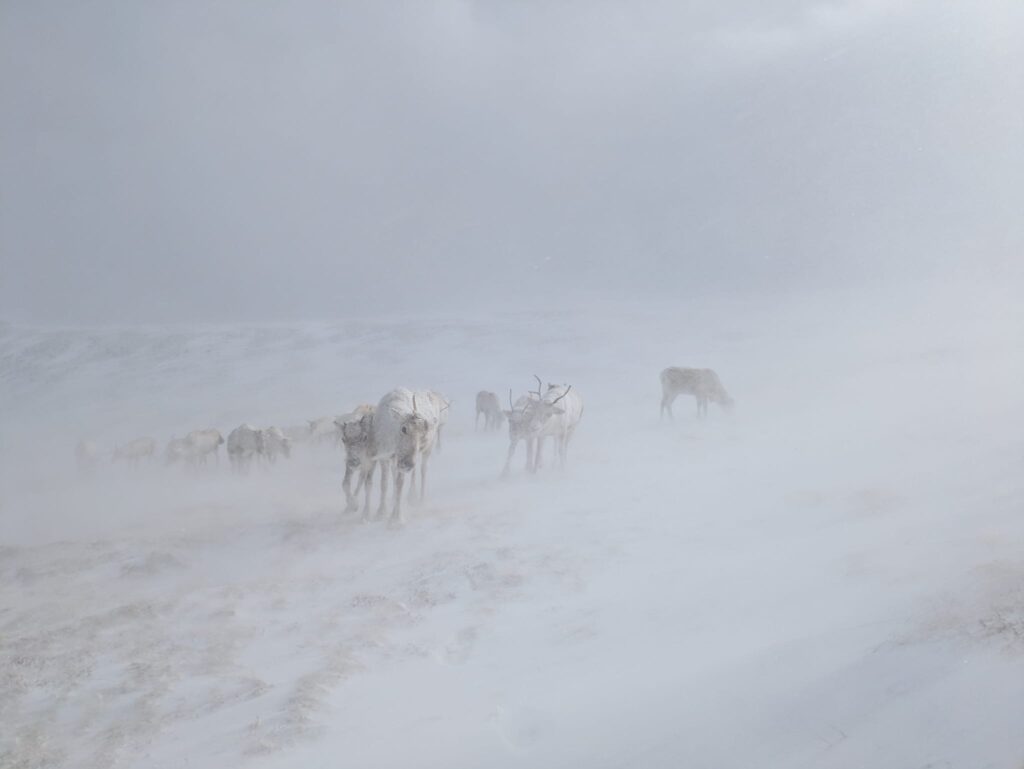
Daisy: We had finally made it low enough that the cloud cover began to lift and I could see all the recognisable land marks to suggest we had nearly made it! We had one last push over a steep bit of rocky ground that proved quite difficult to navigate in the high winds and deep snow – at this point I had stopped bothering with my count of how many times I’d fallen over in suprise patches of knee deep snow. The reindeer were even bracing the final harsh whips of wind for some lichen grazing! The last stretch to the visit spot they picked up pace downhill towards Andi and I watched as they swapped to a very wide gait in the way they were running. It looked pretty comical – their legs so far out to the sides as if they were going to skid on their bellies at any moment, but worked perfectly. Their hooves hardly made a dent in the snow and they kicked through patches of powder at speed. I did attempt my own version to see how effective it would be for a person, and even tried to keep my boots in their hoof prints. You guessed it… I built up a lot of speed before hitting the snow hard and my arms disappearing in front of me. Thankfully only Winnie saw, who gratefully had kept me company the entire walk. I won’t be trying to run like a reindeer again anytime soon!
Andi: By the time we reached our ‘visit spot’, we were low enough to drop down out of the cloud, the skies were clear and there was only a smattering of snow on the ground. We fished out the reindeer feed from our backpacks and the calves tucked in – we give them a brief preferential feed through the winter. The adults know the drill and waited patiently, then we popped out a line of feed for everyone. A quick headcount – everyone was present and correct.
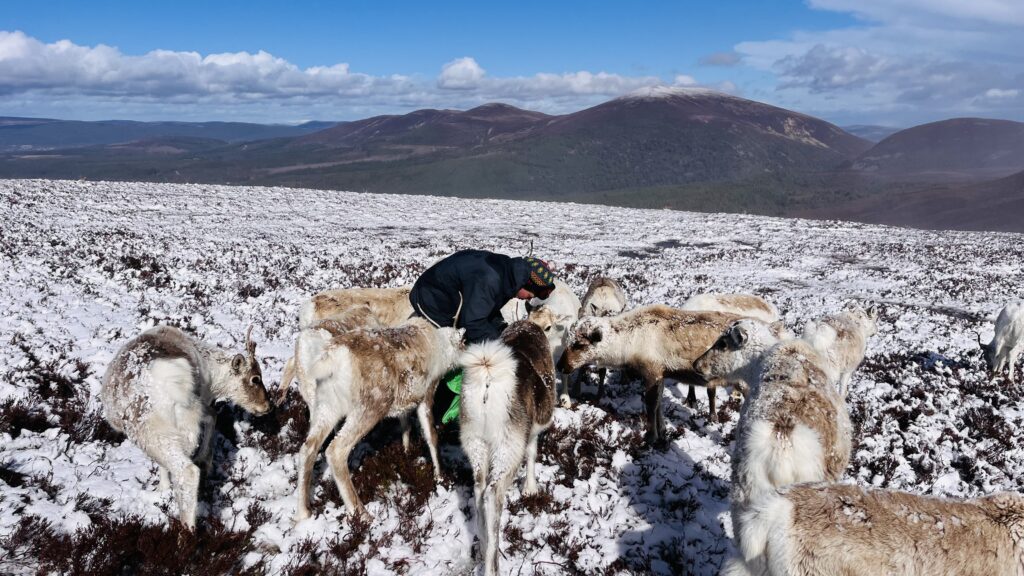
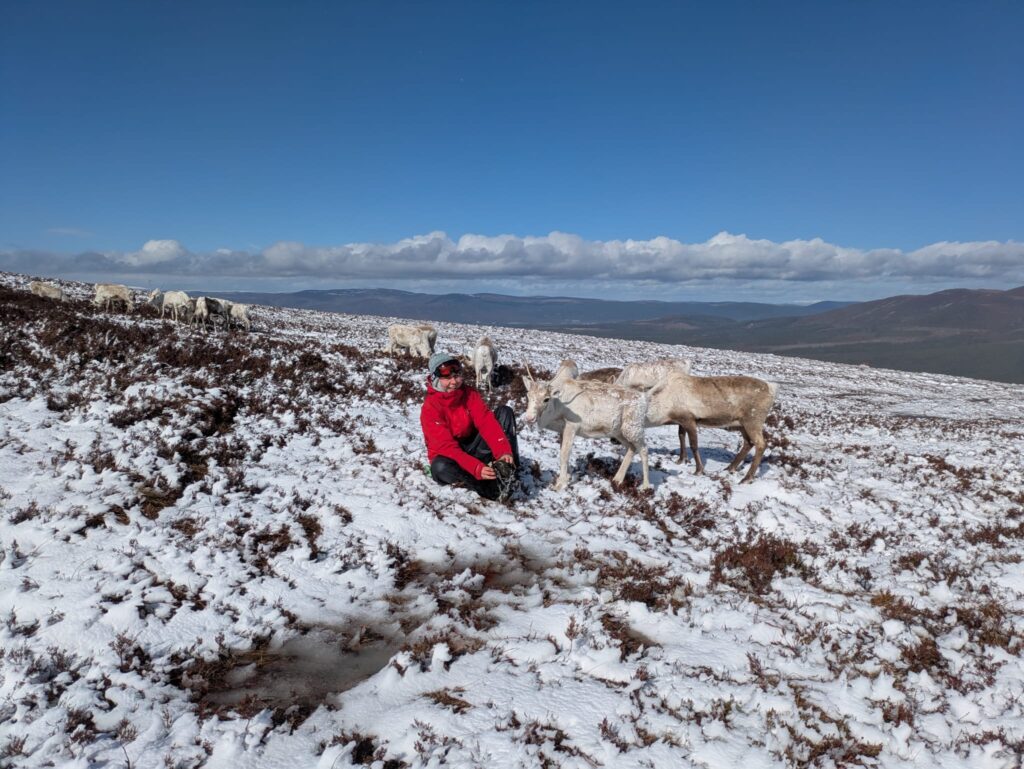
Daisy: We had done it! Thanks to Andi’s amazing navigation, we had successfully led the herd of 73 reindeer from the mountain plateau down just in time for the days Hill Trip! We fed the hungry reindeer and checked we had everyone and they were all looking happy and healthy and then had a moments breather to chat about how amazing the experience had been. I can confidently say, that herding adventure was the best experience I’ve ever had! Being in such harsh conditions with the wind, the snow, the lack of visibility – it felt like being on a different planet. Experencing the kind of conditions the reindeer are built, not only to endure, but to happily live in felt like such a privilege. Stumbling and running after them at points to keep up, gave me even more respect for how incredible animals’ adaptations are to their home environment, and how much of a privilege it is to experience nature at its best!
Andi: Many visitors assume that being a reindeer herder means you’re incredibly fit and spend all of your time running round the mountains. The reality is that a lot of our job is actually based in the office, shop, and working with visitors. Yes, we do get to roam around on the mountains too, but the weather is not usually quite so gnarly! We had so much fun testing our skills and experiencing the extremes that the reindeer are so at home in, and were buzzing for the rest of the day! It really felt like we’d voyaged to a different planet…
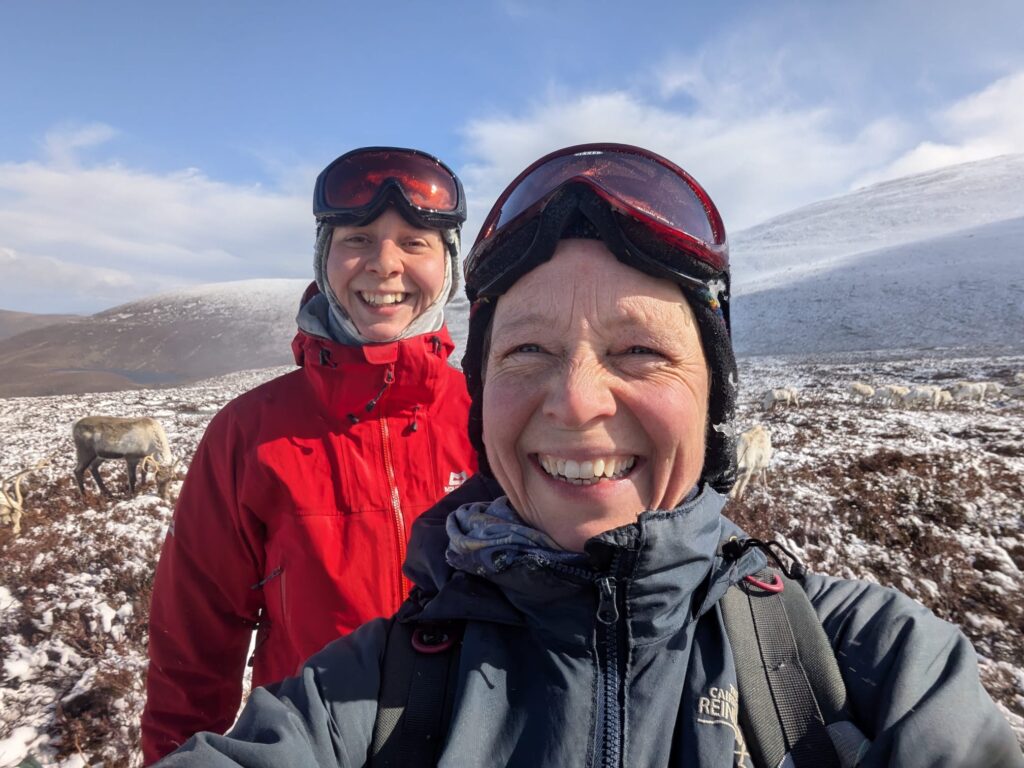
Daisy and Andi
Calving 2026 went really well but it’s now all done for another year with the last calf born on 24th May. It’s an absolute favourite time of year for all the herders welcoming the new additions into the herd and enjoying the few weeks with them before they head onto the free range for the summer. We try to get out when we can to visit them but what happens on the summer free range is completely natural so we don’t always see every calf returning which means it is what it is! I thought I’d write down a few moments that I’ve enjoyed this summer to share our lovely experiences with the reindeer and their calves so here goes:
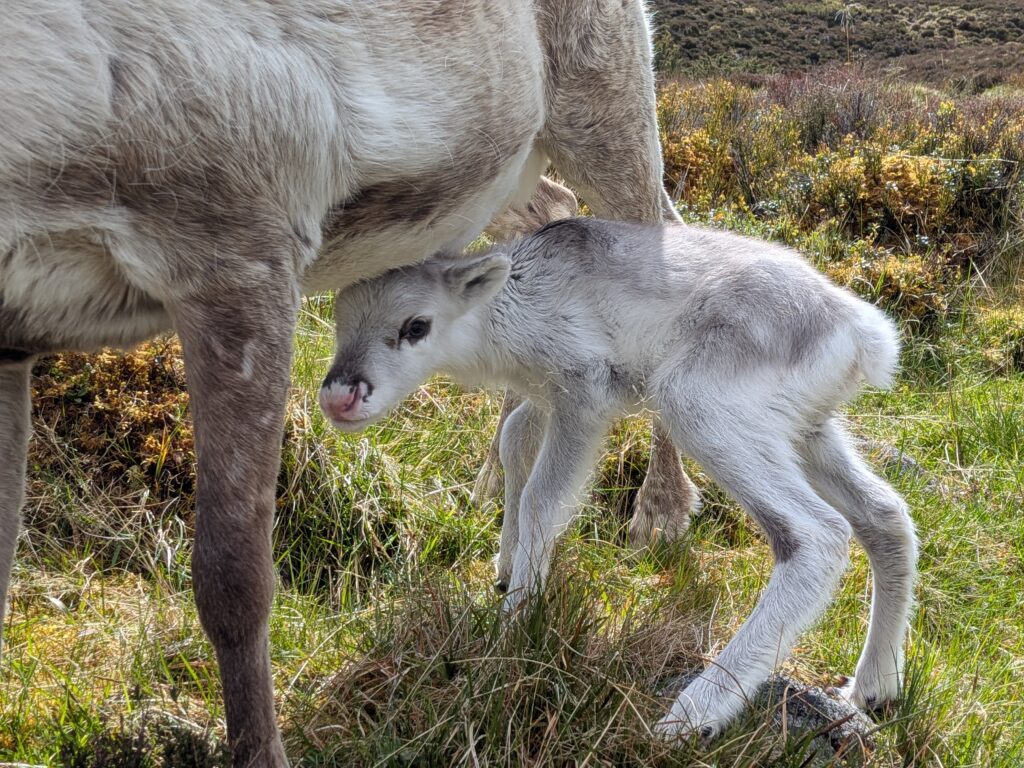
Filming – Mid May we took part in some filming which you will no doubt see later in the year (watch this space). As a result Andi and I headed onto the hill with a very small film crew of two other people and spent the whole morning hanging out with the herd which was mainly the cows and calves. As there was quite a lot of standing around while they were getting the shots they were after, it’s always during these moments you really get to enjoy being around the calves who are finding their feet within their new environment. Now and again they’d get the zoomies which usually meant mum flying after them trying to keep up and get them back under control… They can also be quite inquisitive and if you stand still long enough then you find a few calves come sniffing round your legs and giving a wee tug on your trousers.
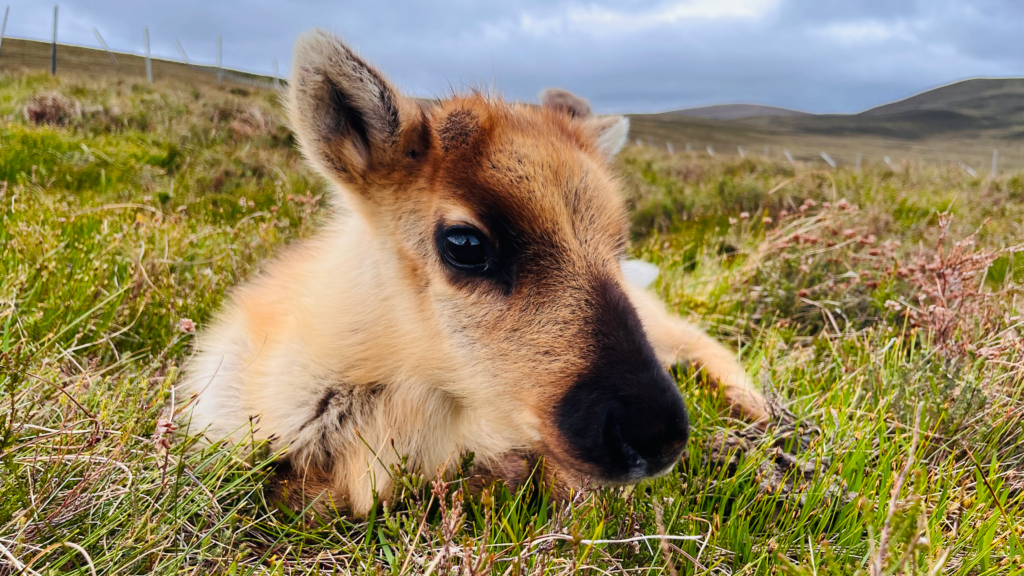
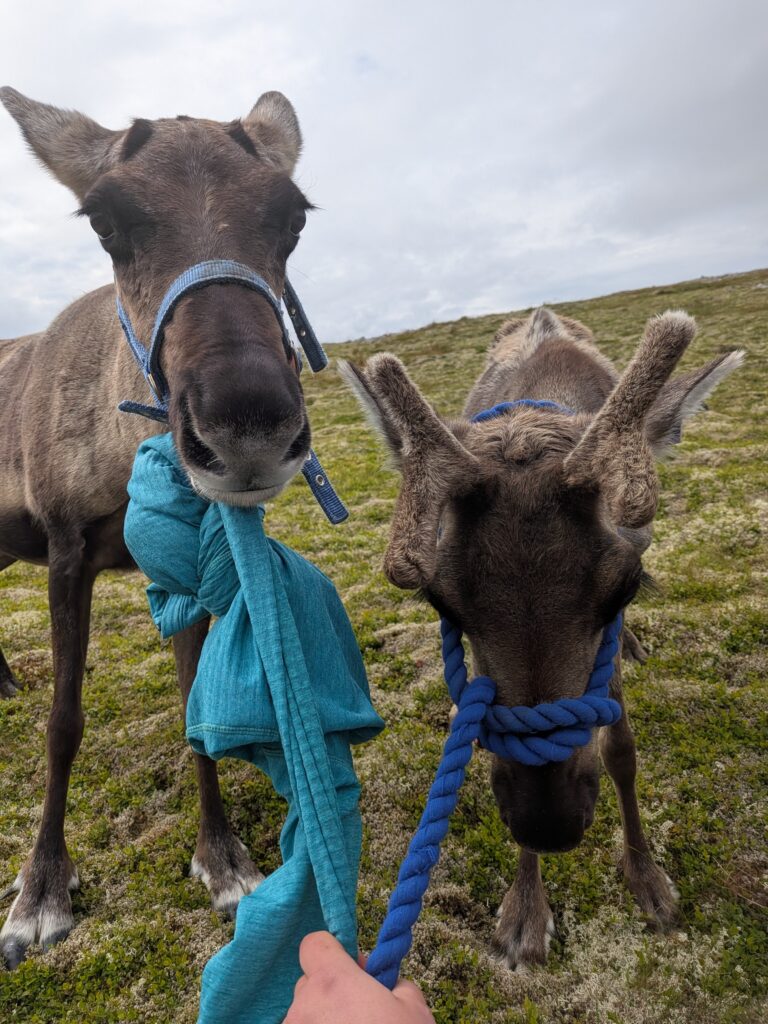
Another nice moment I had was bringing Lolly and her calf in from our main enclosure which is around 500 acres of hill and forested ground into our smaller ‘creche’ where we keep the cows and calves once they’re born. I first had to locate them and of course they were at the furthest back point of the enclosure in the woodland, so, as I started pushing her back towards the herd the calf kept getting stuck in deep heather. Eventually I decided Lolly wasn’t taking her calf on the best route home so I thought I’d try catching her instead and walk them in via a more sensible and less vegetated route. Lolly is one of these reindeer who it’s hit or miss whether you can catch her to put her on a head collar or not so I was going in with caution, however, she was obviously in a good mood today and I caught her no bother. The three of us then set off, at a very slow pace, back towards our final destination. The calf at this point was only a day old so still pretty doddery… We stopped a couple of times, the calf had a lie down then a suckle of milk from mum then we’d carry on. It was a lovely sunny morning so I didn’t feel like I needed to rush. Both Lolly and calf were totally relaxed. From a reindeer who in the past was never up front and had a shy character Lolly has definitely gone up in my estimations.
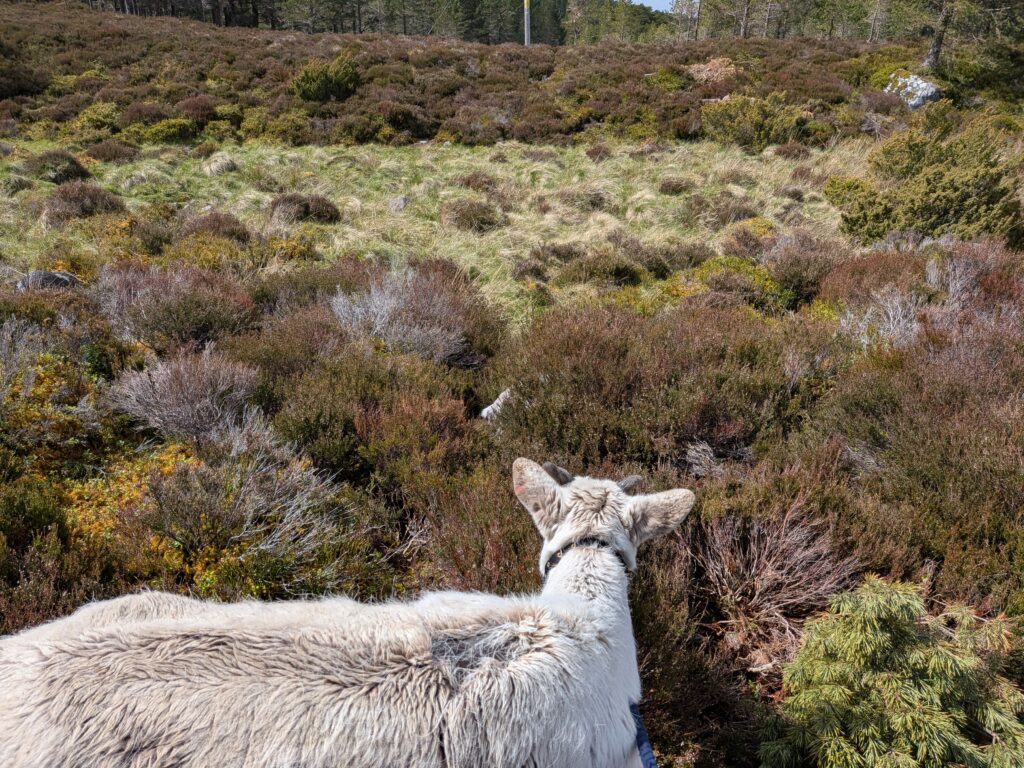
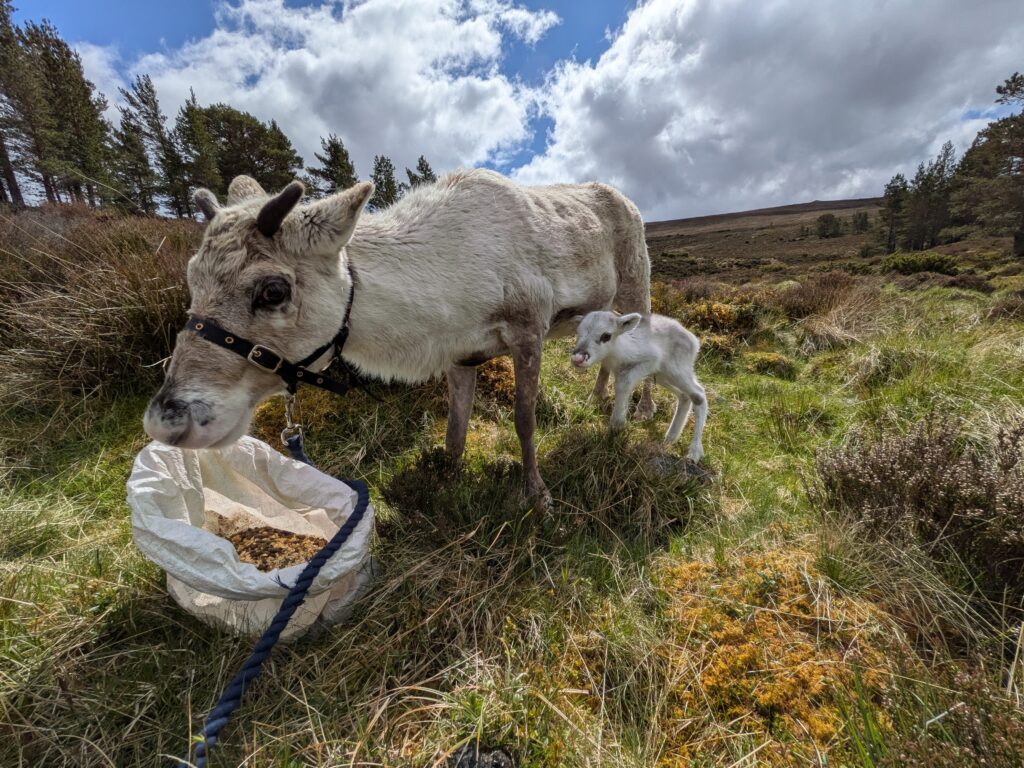
The last wee story I’ve got for you, or maybe this was more of a challenge during calving time, was when Winnie, our hand reared female from three years ago decided to start calving during one of our guided Hill Trips in front of 40+ tourists… There is a time and place Winnie! Herder Amy swiftly popped her on a head collar and brought her into an area a bit quieter and out popped a little pale coloured female calf. At first Winnie was not impressed by what had just happened and was showing no signs whatsoever of wanting or loving this new addition in life! So, Amy dried off the wee bundle and we all worked out where to go from there. We held Winnie so her calf could get it’s first milk as this is really important, however, her milk wasn’t coming through as it should so I suspect this little lass was premature. We brought her off the hill to our paddock area where we could monitor her more closely and after chatting with our vets decided to give her a hormone injection to help bring her milk on but also help with the bonding.
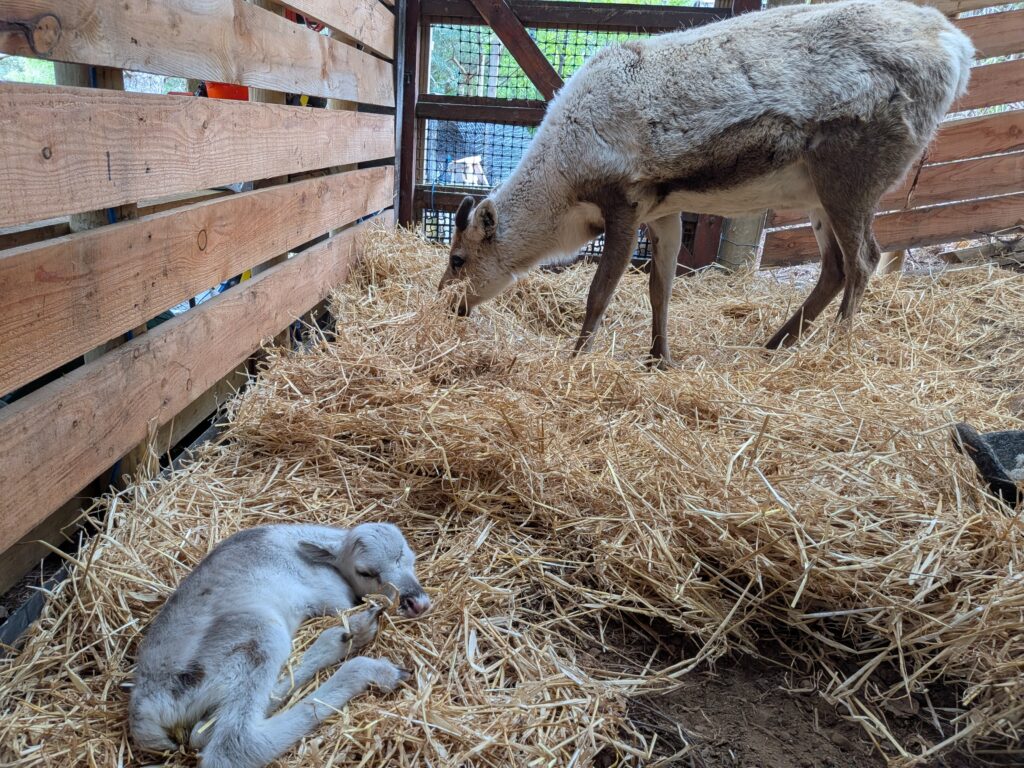
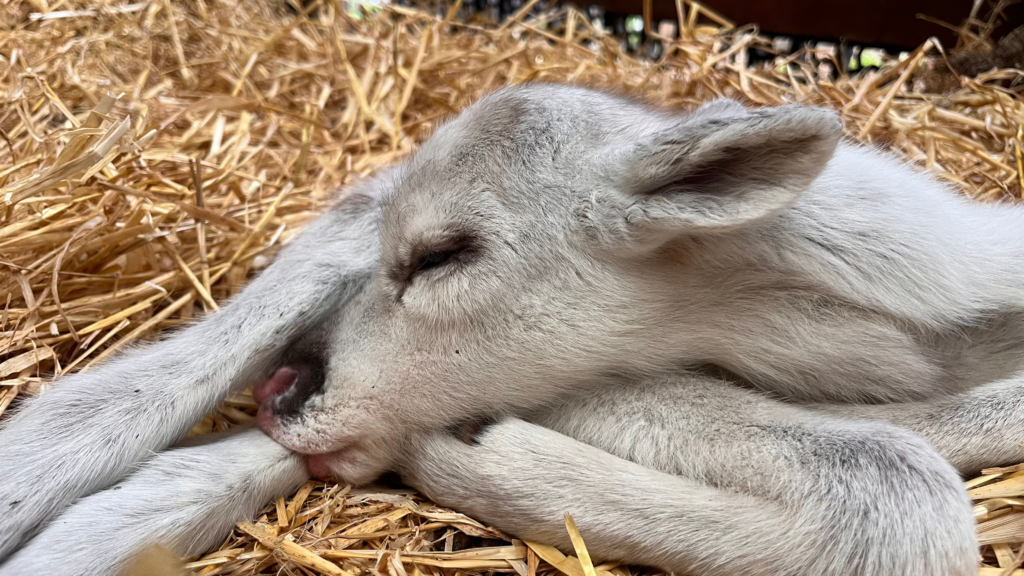
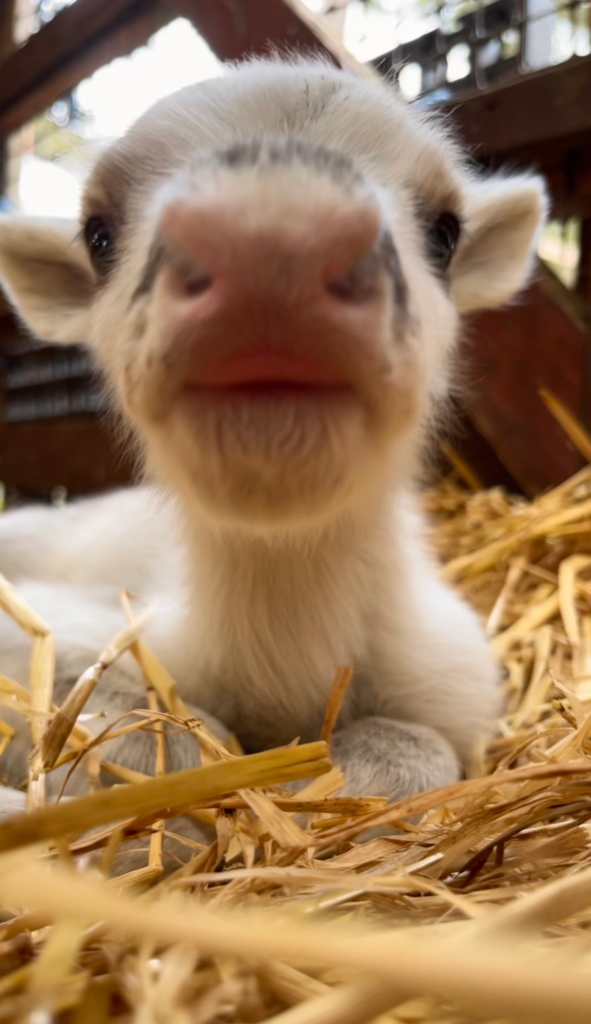
This worked a treat and 2 hours after her injection she loved her wee calf and was licking her. The calf was still a bit too weak to stand and feed herself so we had to assist, however, with Winnie being so tame this only required some extra lichen (reindeer’s favourite food) for her while we held her calf in place. We did this every 3 hours roughly through the day and her last check/feed was around 10pm and first feed around 5am. The two then joined the reindeer on the hill so the wee calf could learn how to be a reindeer, not a human! Then at the beginning of June they headed for the high tops of the Cairngorms to spend the summer free ranging. With all the extra handling the calf got she was super tame and became a quick favourite amongst us herders.
Fiona
The bodies of reindeer go through many changes allowing them to cope with huge temperature difference throughout the seasons. In summer reindeer can cope with temperatures above 30 degrees and the lowest recorded temperature that reindeer have been know to survive is -72 degrees Celsius. Reindeer have two different coats, a thick white winter coat as well as a fine, dark summer coat. Their antlers grow in an annual cycle and the different times of growing and shedding them allows different animals to be dominant at different times of year. One of the most interesting, and important, changes to a reindeer though, you can’t see – their metabolism.
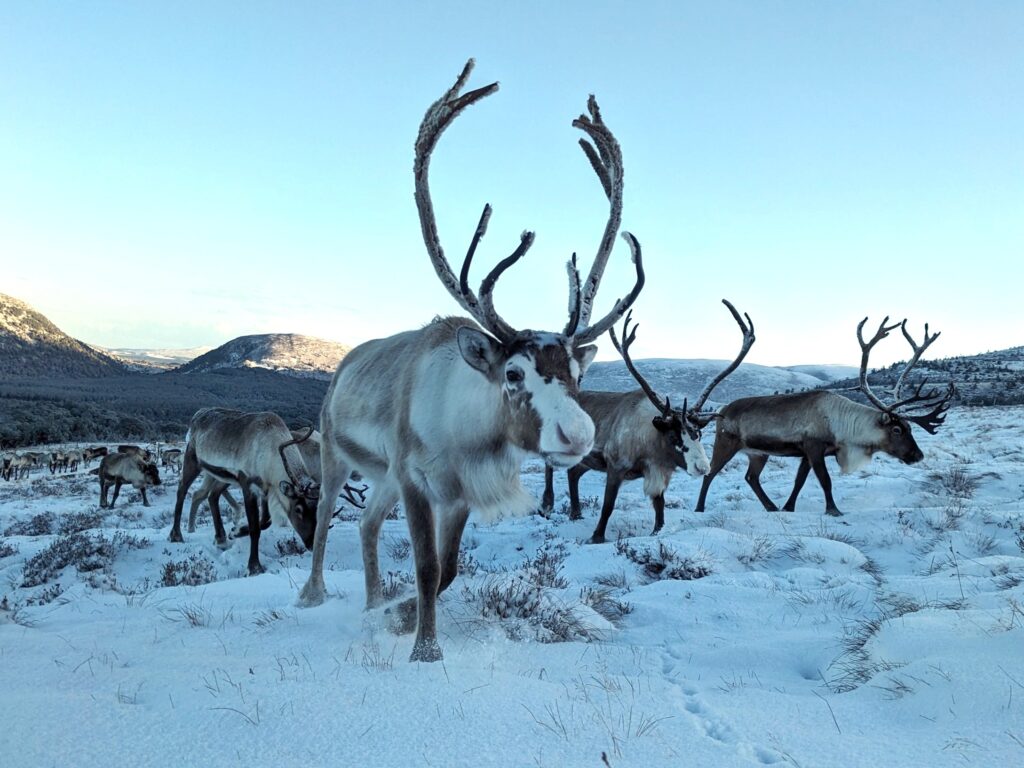
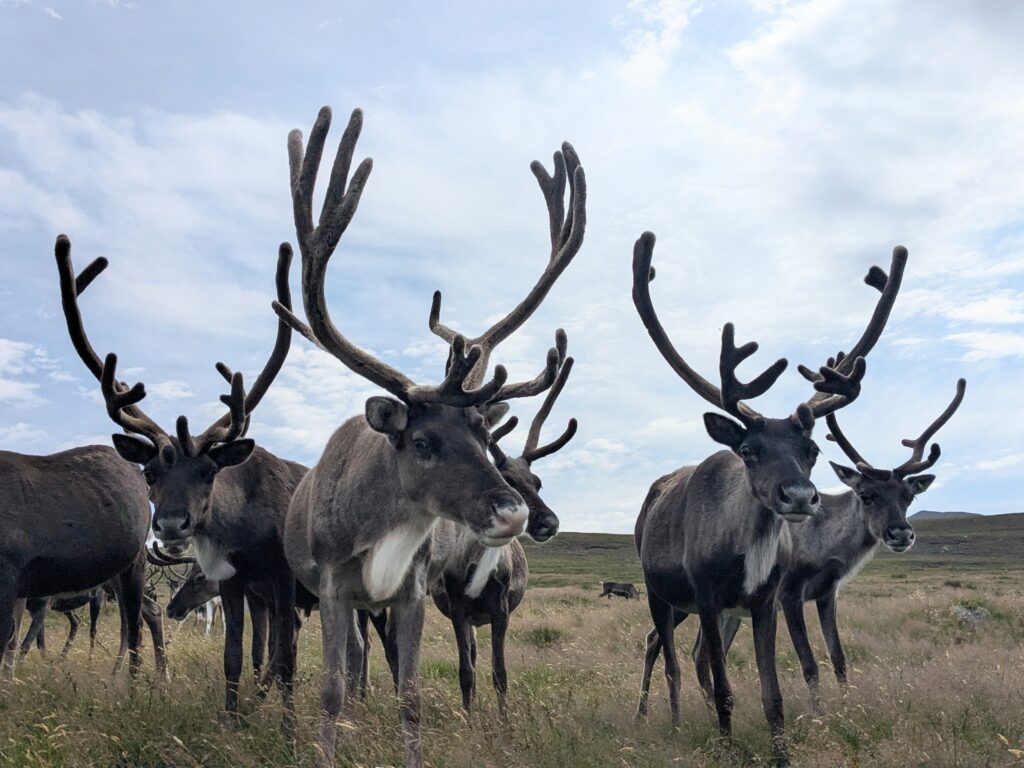
Reindeer have adapted to eat vast amounts of food throughout the spring, summer and autumn to gain enough weight to survive the winter, when food is scarce. To cope with these changes in food availability their metabolism changes too. In the summer reindeer will graze around the clock, eating a huge variety (between 200 and 300 different species) of plants which are high in nutrition. This allows each individual to grow a new set of antlers, they start to grow in the spring and are fully grown by the end of august and the heaviest set we have had in our herd, weighed a whopping 8.9 kgs. The summer is also the time that the young reindeer grow in body size. Finally, every reindeer will need to gain body fat which will act as reserves over the winter. All these things require their digestive system to work in overdrive converting the food they are eating into energy that can be used by their body to create protein, bone, fat, and whatever is needed.
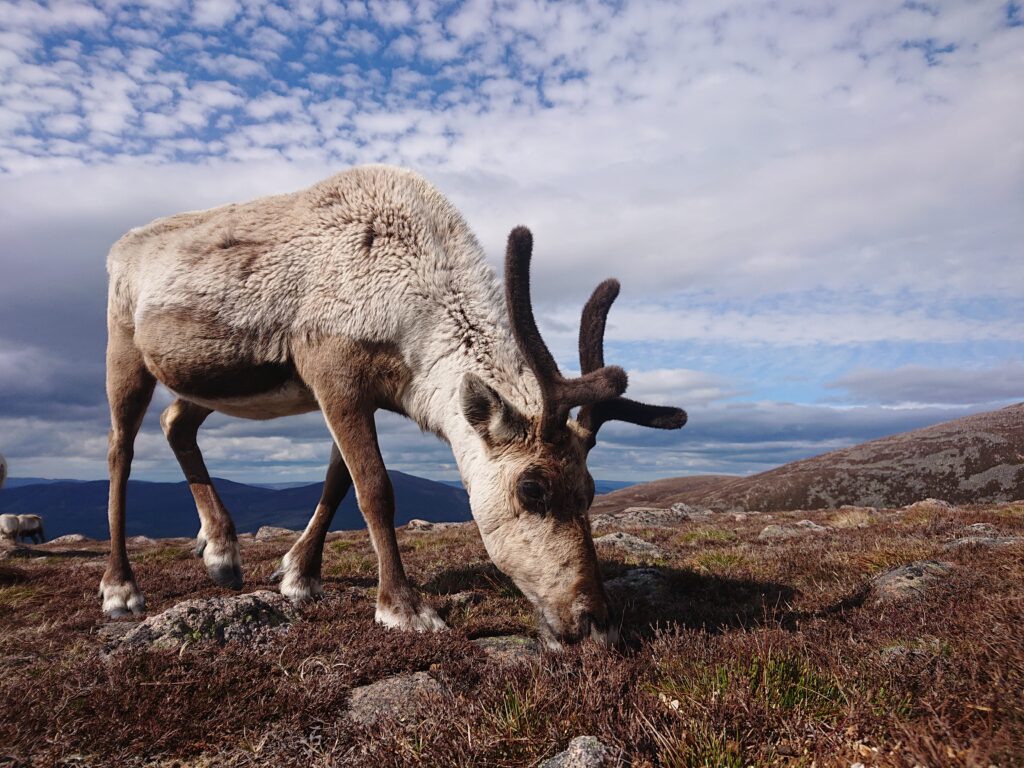
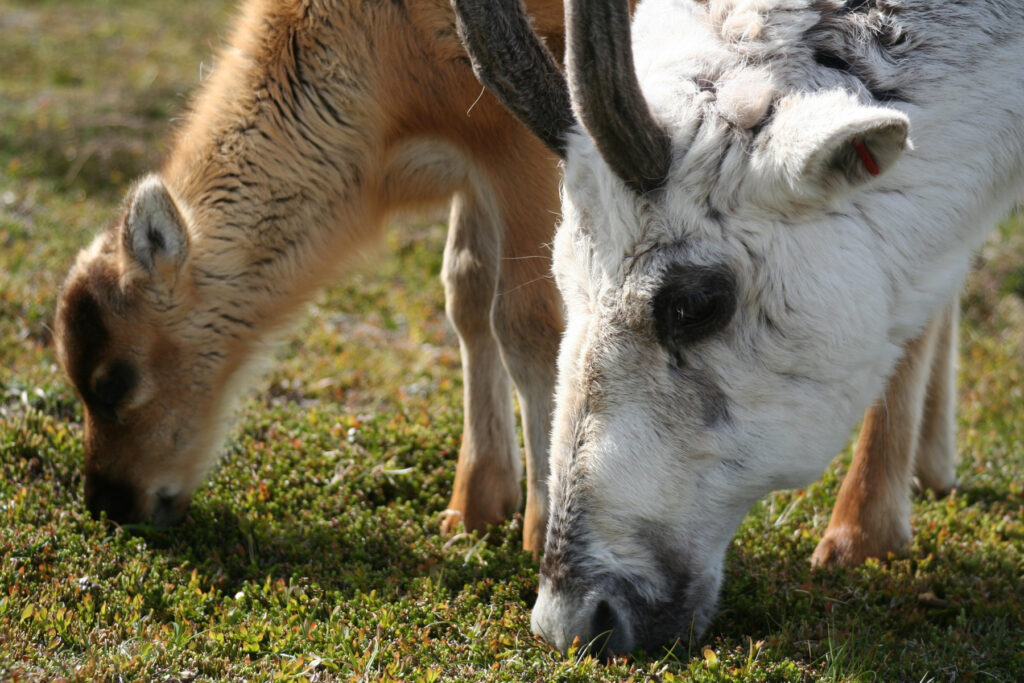
On the contrary, winter is all about survival. During the winter most of the plants will have died under the snow and 70% of a reindeer’s diet is made up of lichen. Lichen is a symbiosis of fungi and algae and is very resistant to extreme changes in temperature. Over the winter lichen won’t grow but it will stay dormant, preserved under the snow. Reindeer will then dig down through the snow to reach the lichen. But lichen is relatively low in nutrients, just enough to sustain the reindeer through the winter and their metabolism shifts in line with this. In fact, even if you gave a reindeer a big pile of food, during the winter, they just aren’t as hungry and wouldn’t eat it all.
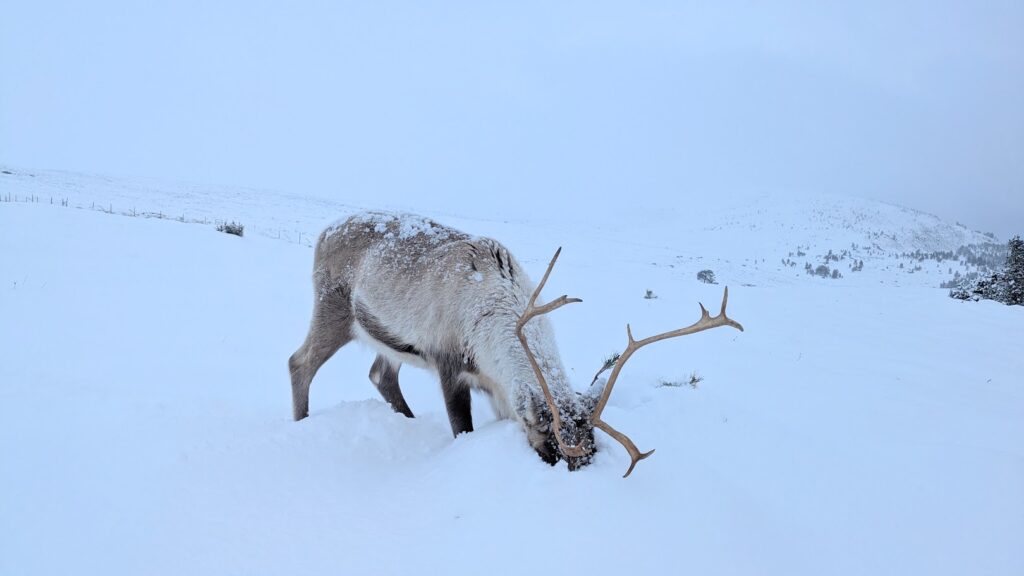
During the winter reindeer are no longer growing their antlers, they won’t increase their body size at all, a calf will grow lots in the first 6 months of their life and then stay the same size for the next 5 months, until the following spring. They will survive the winter by using their fat reserves. The one important growth that does happen in winter is that of a growing foetus. This is the reason that the females grow antlers and keep them after the males have shed them, as it gives them a physical advantage during the time that they are pregnant and therefore they get first dibs on the food.
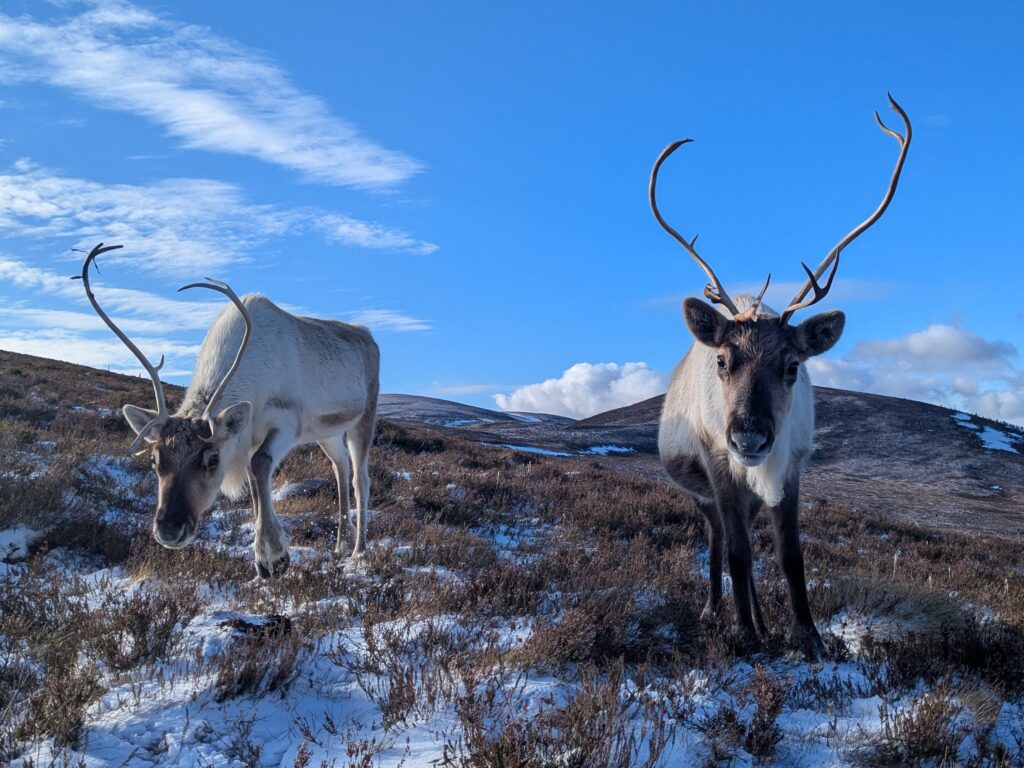
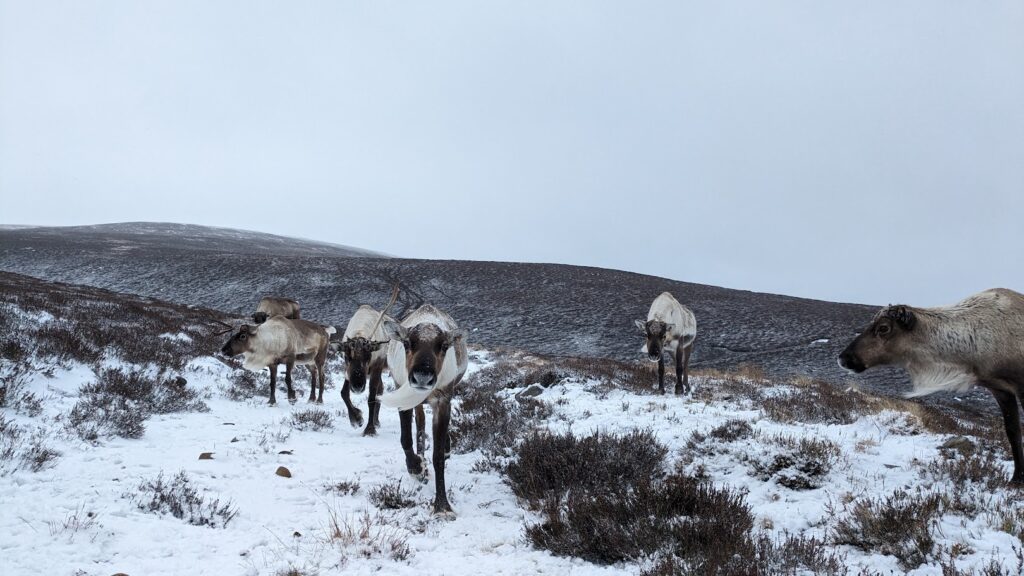
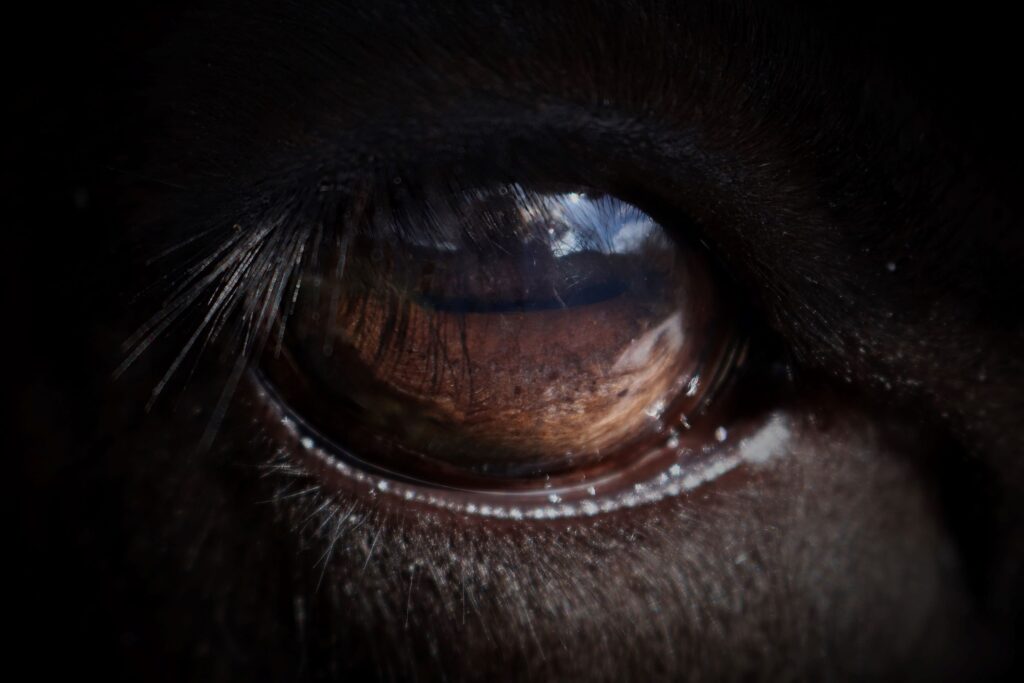
But how does a reindeer know that it’s time for spring? Rather than responding to food availability or temperature which may well change year by year, the changes in their metabolism are triggered by the changes in daylight. The increased daylight associated with spring is detected by specialised receptor cells in their eyes which then convert to a hormonal signal using melatonin. Melatonin is synthesised during the dark period each day and then synthesis stops during daylight. This means that the amount of melatonin varies based on the time of year. The concentration of melatonin has many effects. In terms of metabolism, in the spring as melatonin decreases, this increases the appetite of the reindeer. In the autumn, as melatonin increases, this decreases the appetite of the reindeer and increases the breakdown of fat stores. The changing melatonin levels also controls their antler growth and release of sex-hormones but that may be another blog in the future.
For anyone particularly interested in a much more in-depth description of the physiology behind these changes, I would highly recommend reading this article.
https://septentrio.uit.no/index.php/rangifer/article/download/335/327/1280
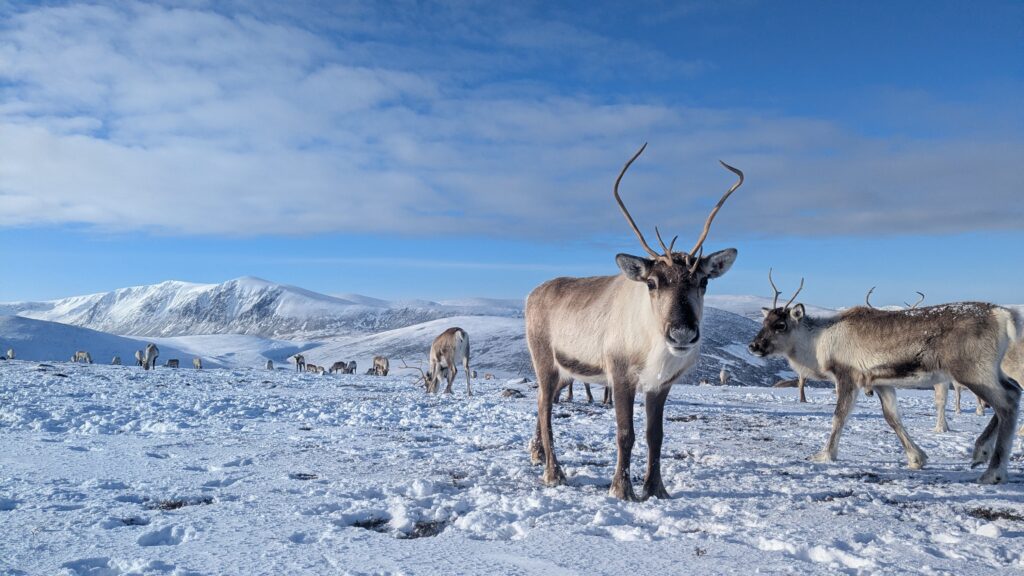
If you have made it this far, thanks for reading my very nerdy reindeer biology blog! Hopefully you have learnt something and enjoyed the pictures of the reindeer along the way.
Lotti
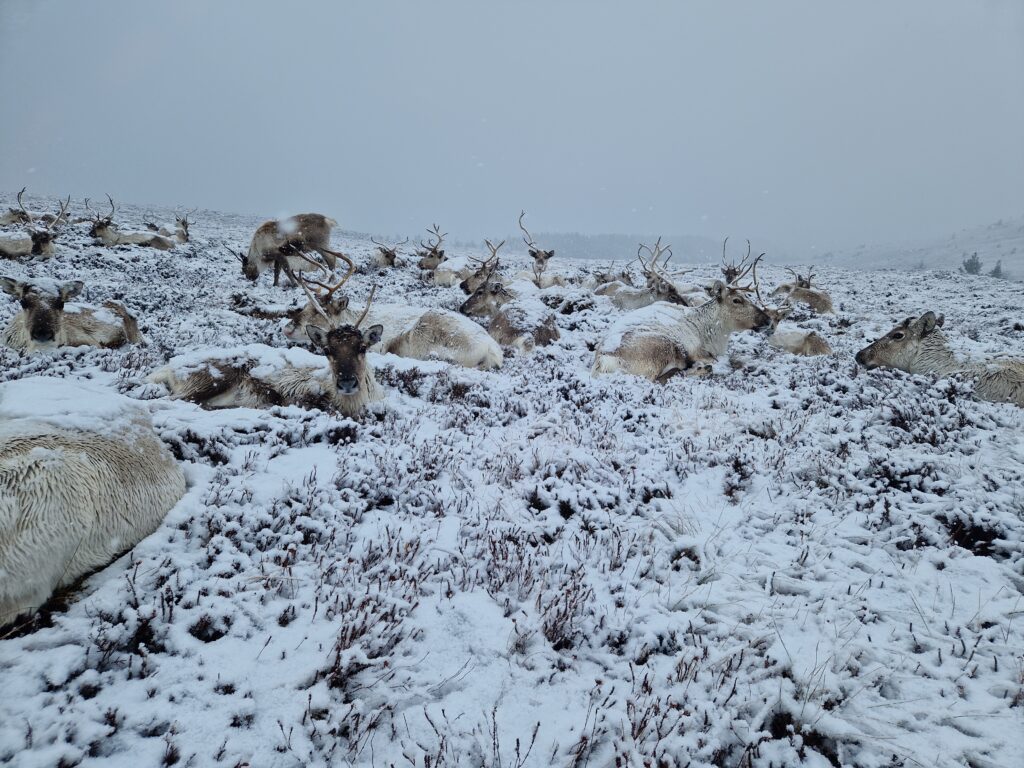
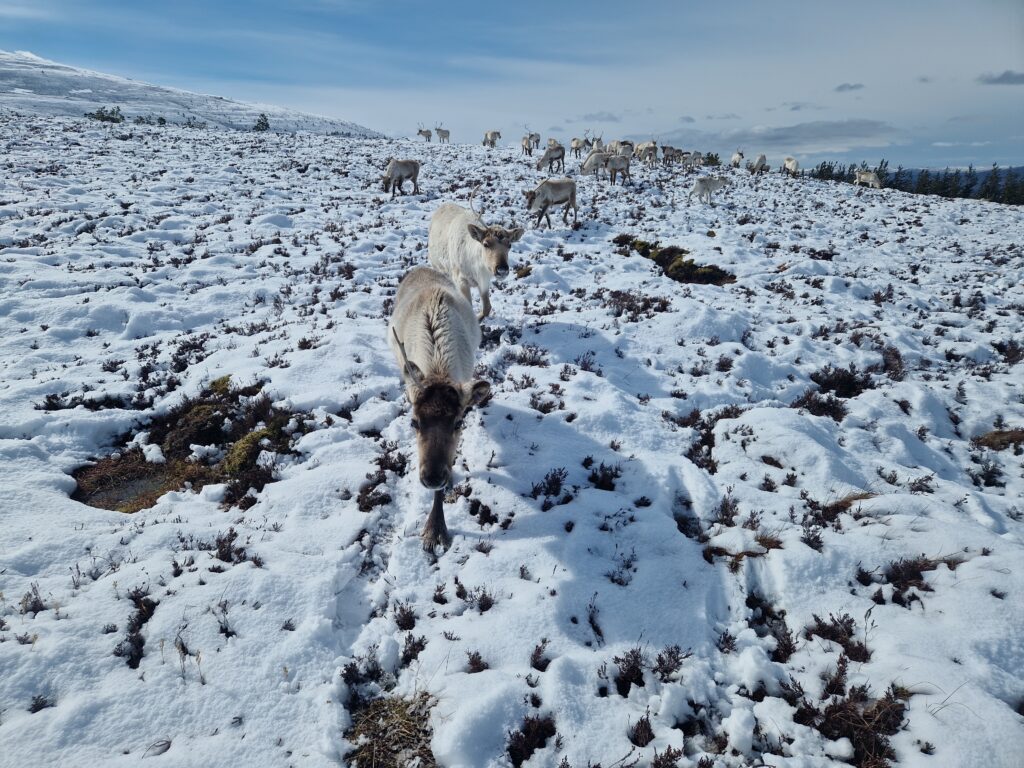
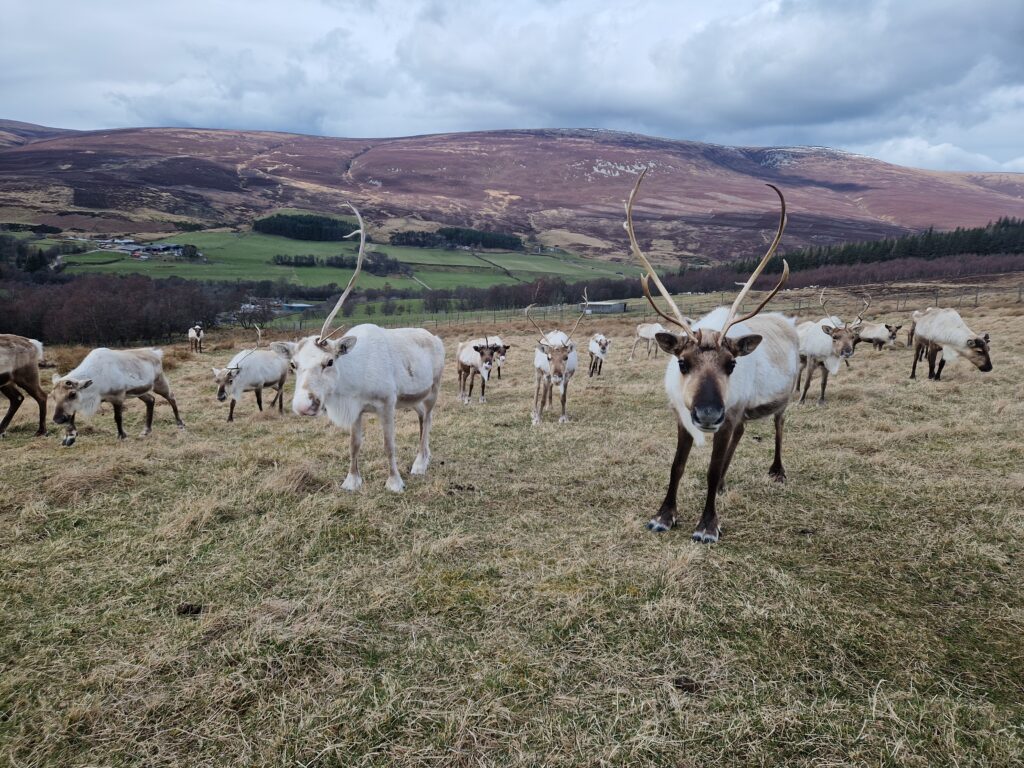
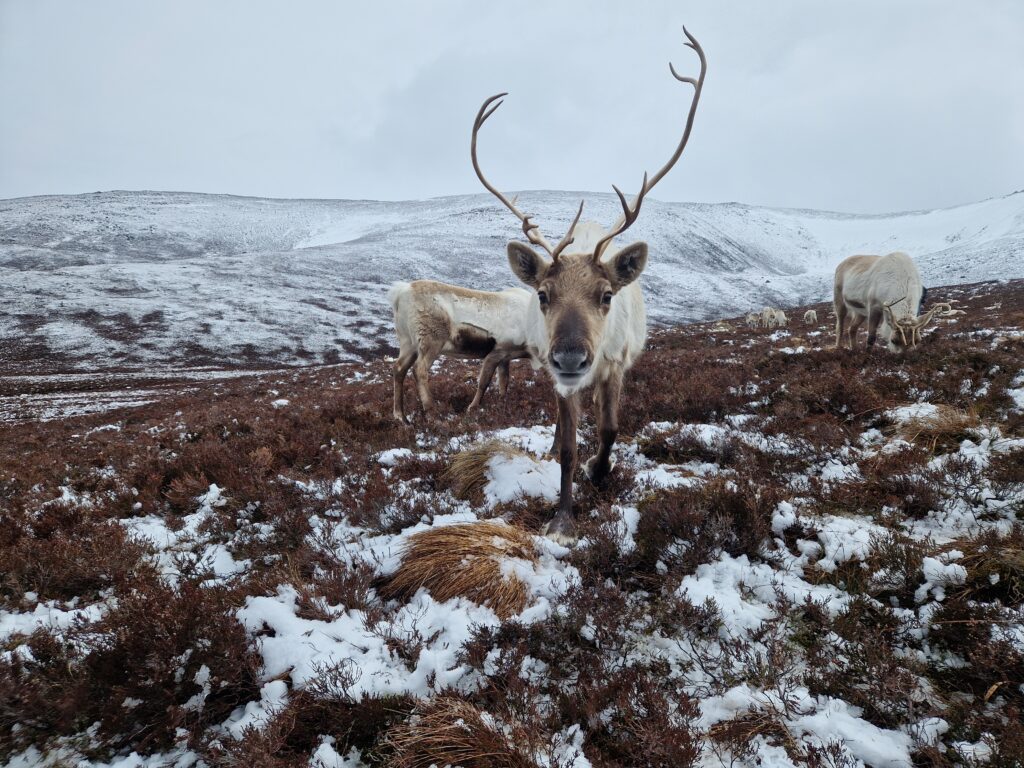
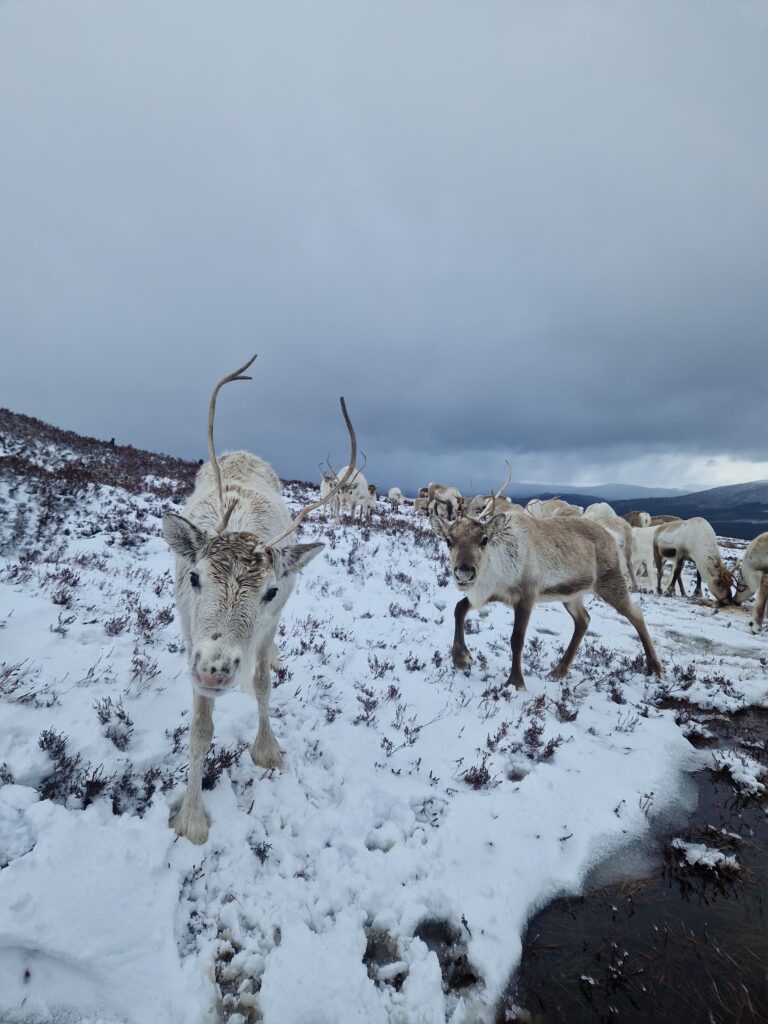
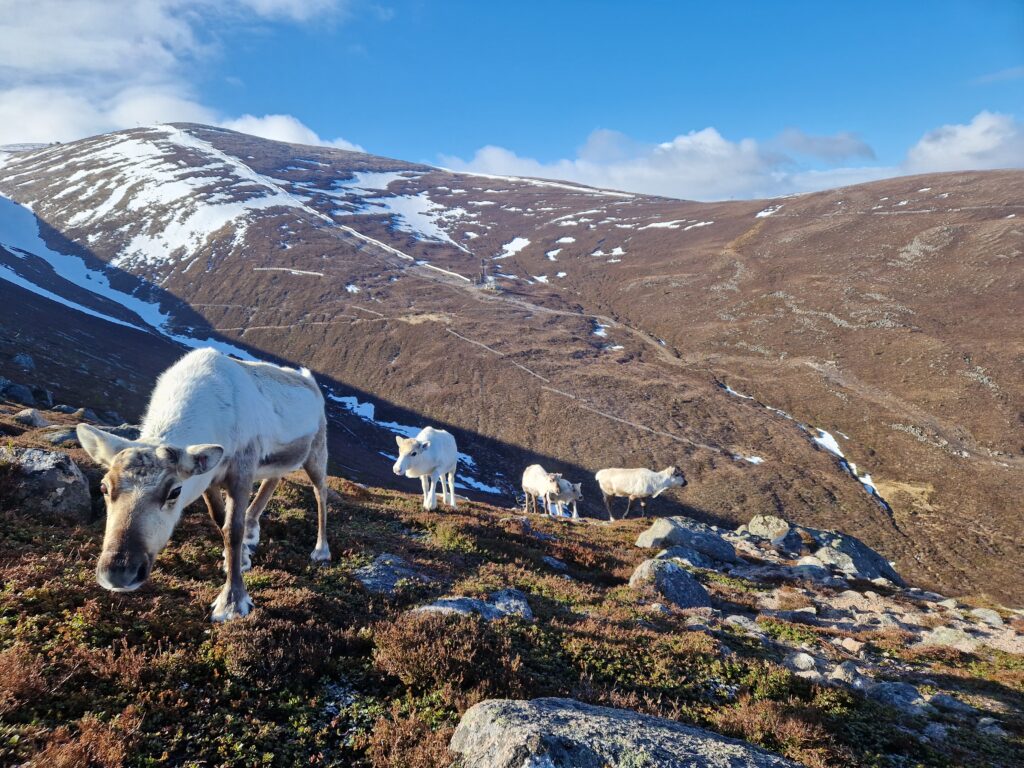
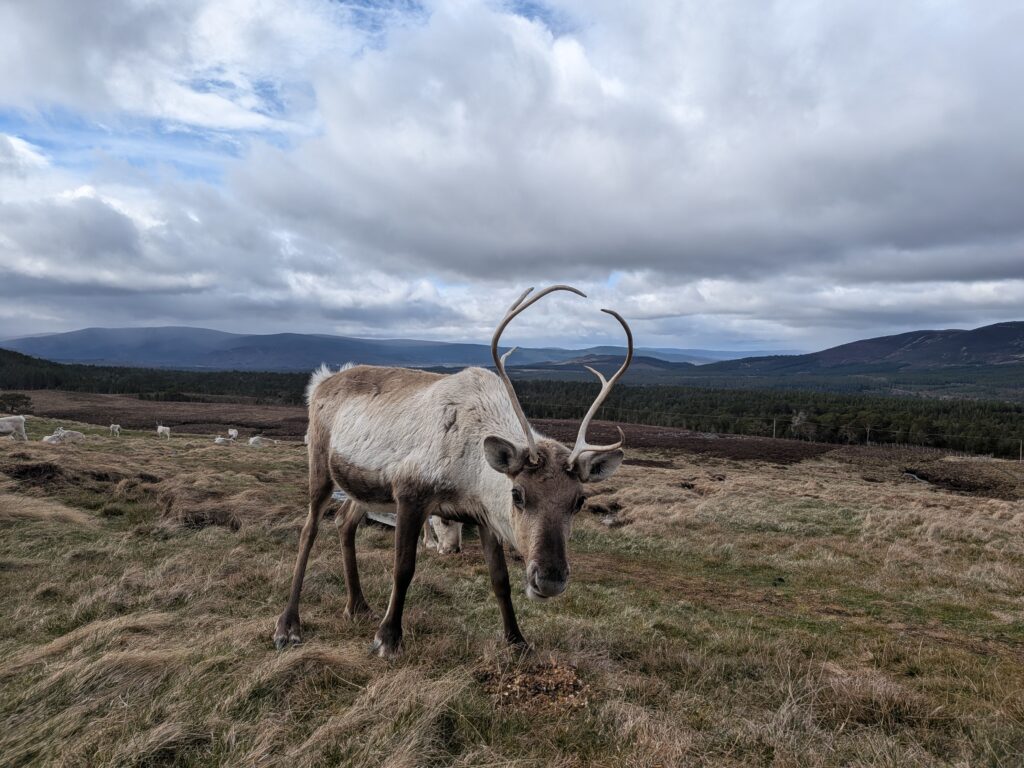
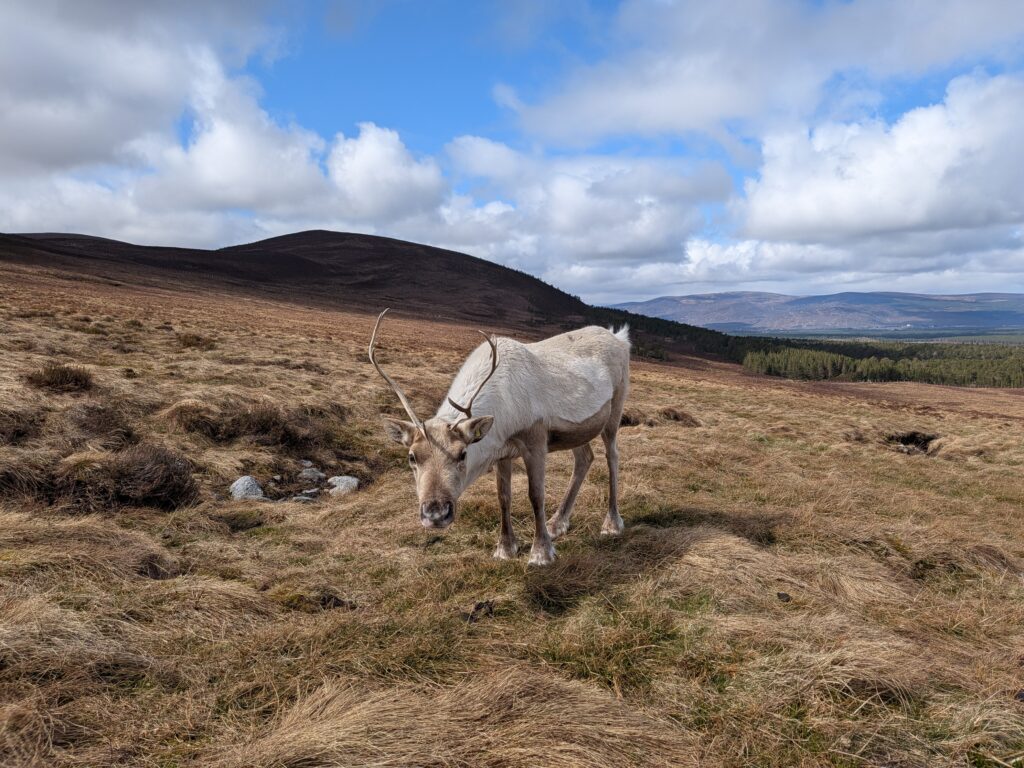
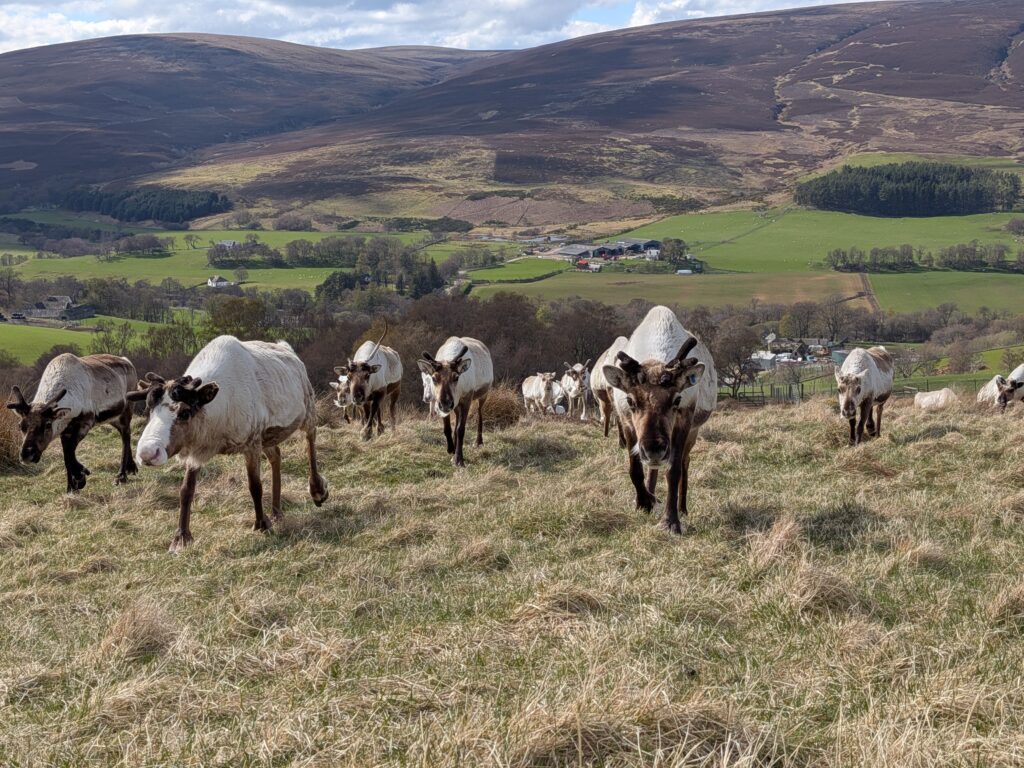
April started with snow showers and continued with frequent snowy showers higher in the hills nearly to the end of the month. Throughout the month we have definitely started to see the signs of spring lower down, with the Blaeberry beginning to flower and the mountain flora becoming greener!
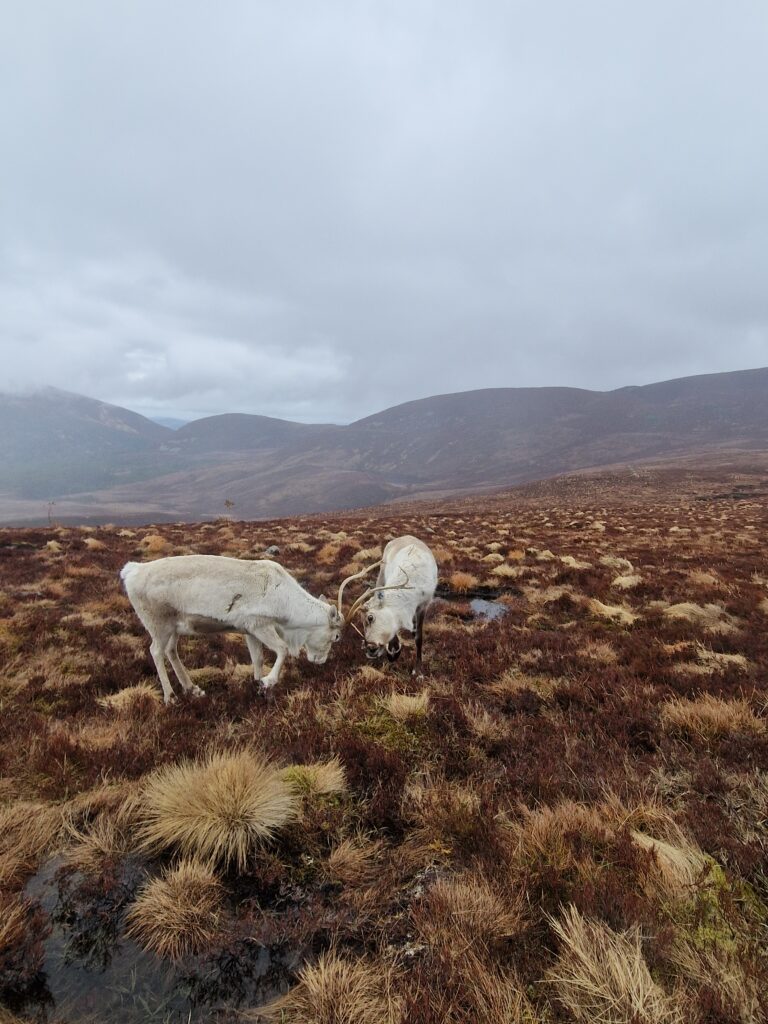
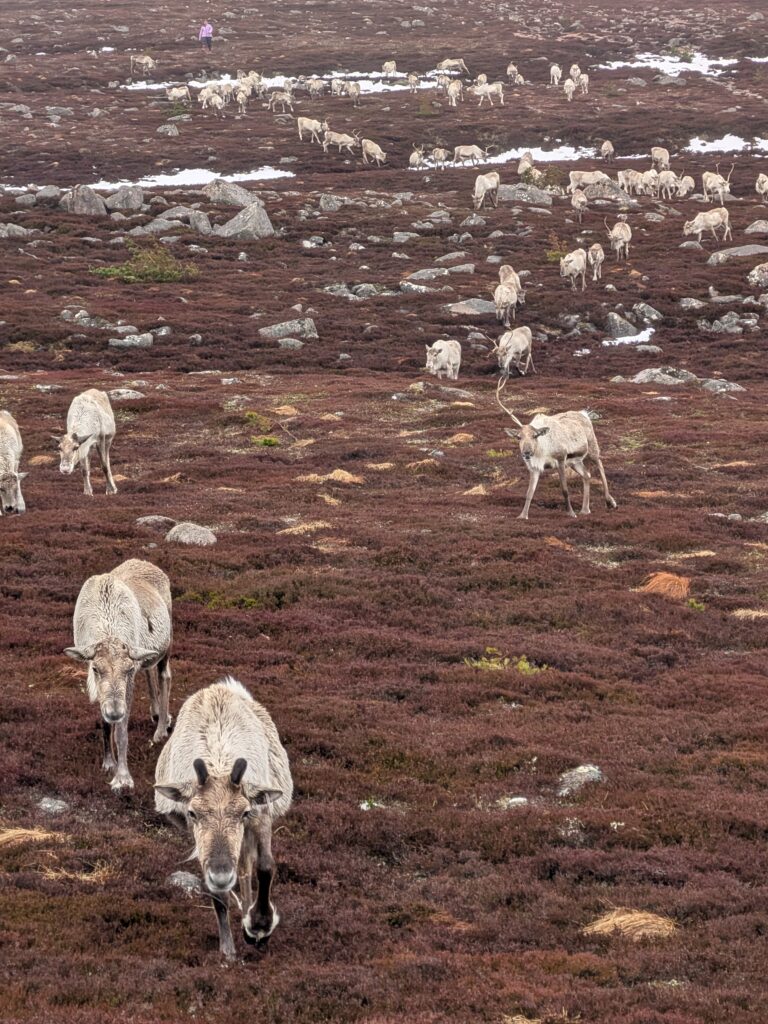
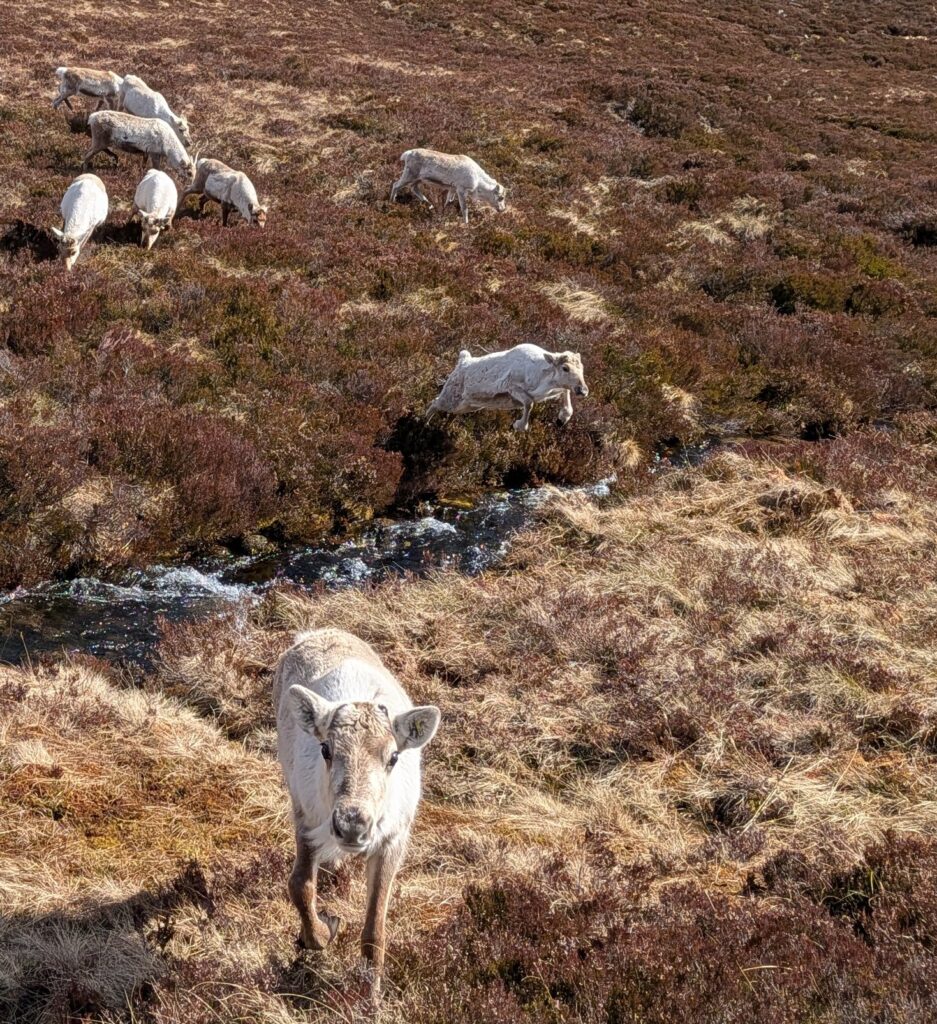
Our female reindeer enjoyed a few more weeks out on the free range before we moved them into our hill enclosure in preparation for the Calving season; there are definitely a few big bellies and udders starting to form. Every year the reindeer herders partake in a calving bet which involves us choosing a reindeer and hoping that they are not the last to calve. If they do, we are required to bake a cake for us to enjoy when we name the calves in September; it isn’t the worst if you lose the calving bet. Some herders chose strategically and others chose their favourite reindeer, so by the end of April all the calving bets are in, and it has become a waiting game!
Amy
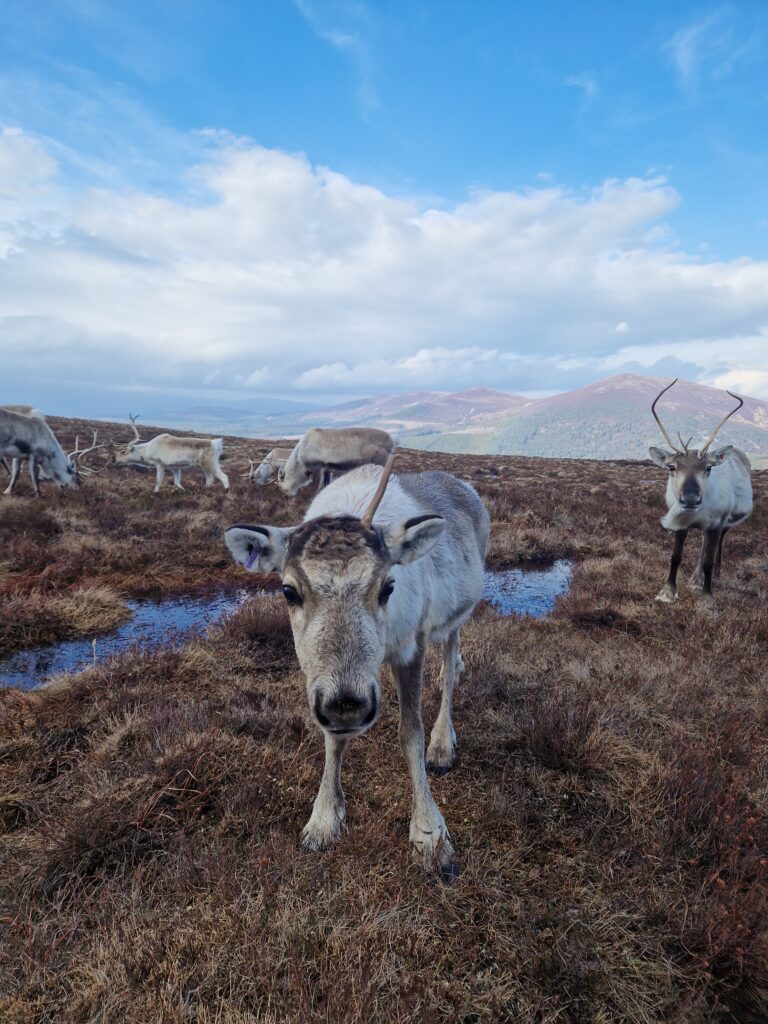
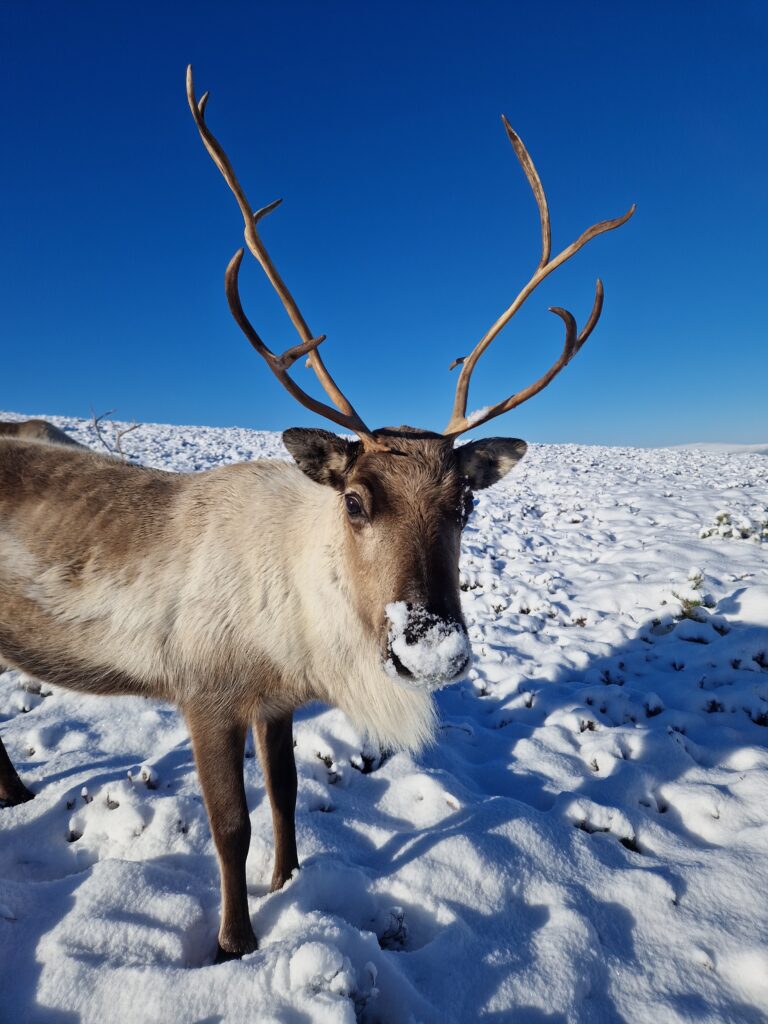
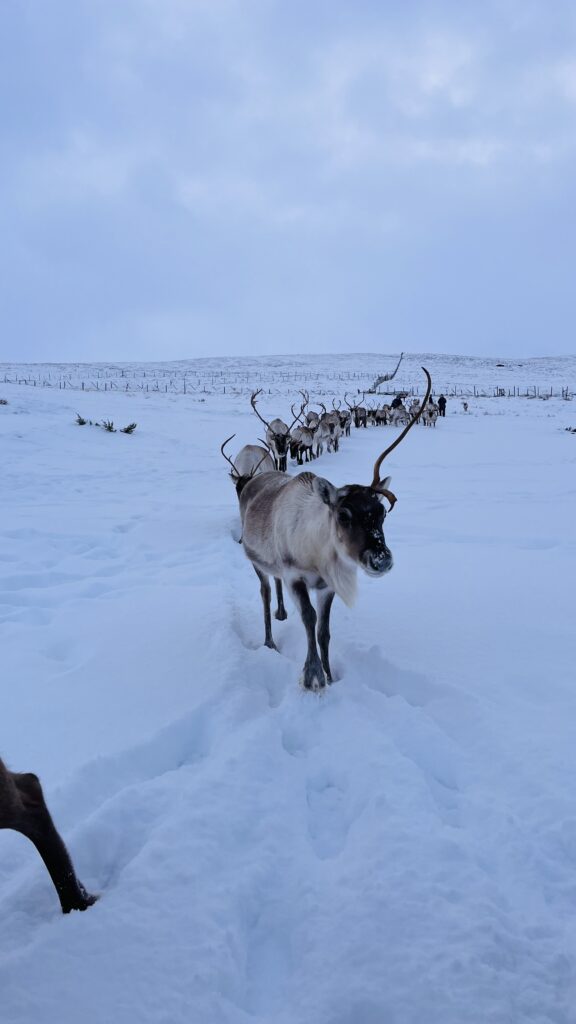
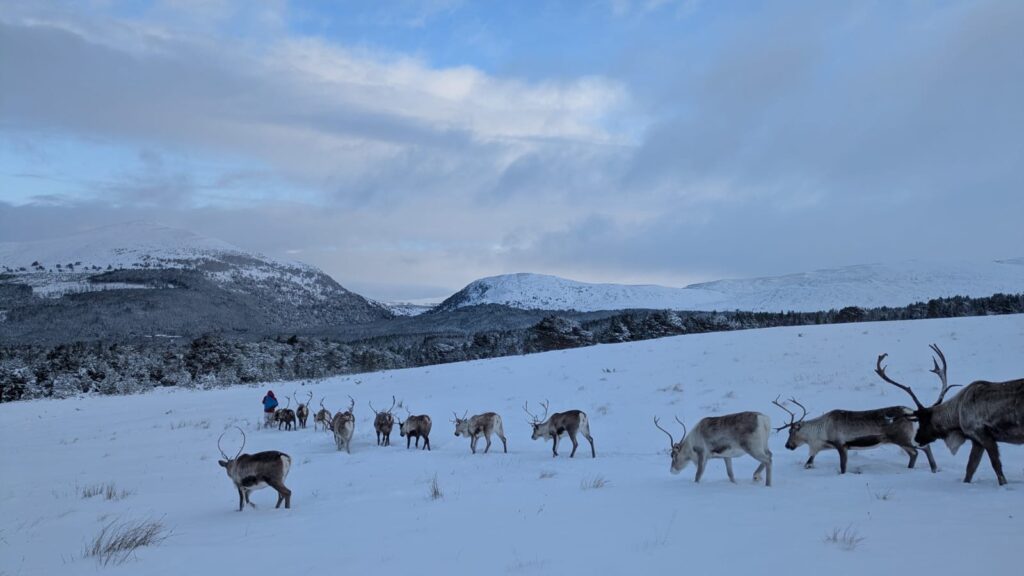
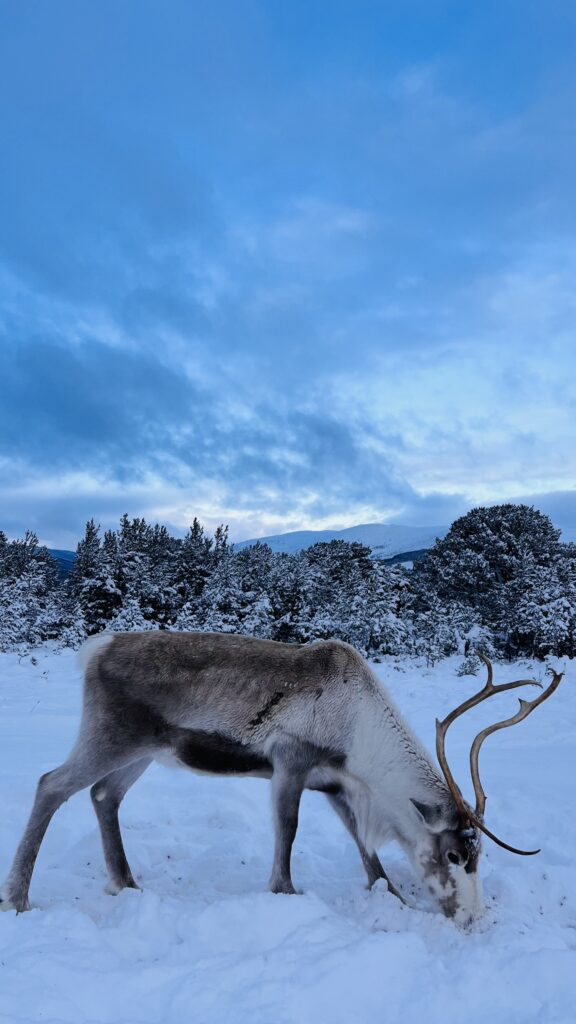
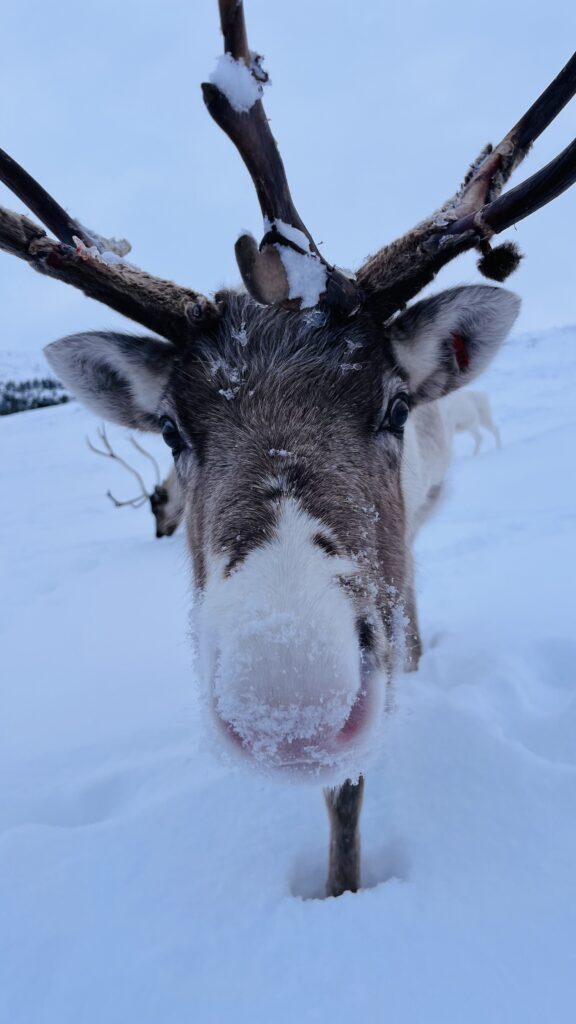
So far during March we have encountered all manners of weather, thankfully though in comparison to January and February there has been an increase in good weather days. During the start of the month, we had beautiful blue skies and even a fresh dumping of snow. The reindeer have been amicable, meaning that our walks out to collect them in the morning have been a bit easier than the previous months; once they find a good patch to graze on it can be hard to move them again and as you can imagine there is fresh grazing begining to sprout on the mountain side.
It is usual in March for some of our younger reindeer to come down to lower ground at our secondary site and in return a handful of reindeer were returned to us here at Cairngorm. The most important being Winnie of course- she has been missed!
Over the last month our cows have began to lose their antlers and there are now a few of our girls walking around with no antlers on their head. By the end of the month, Ryvita, one of our 16 year old females has began to grow a new set!
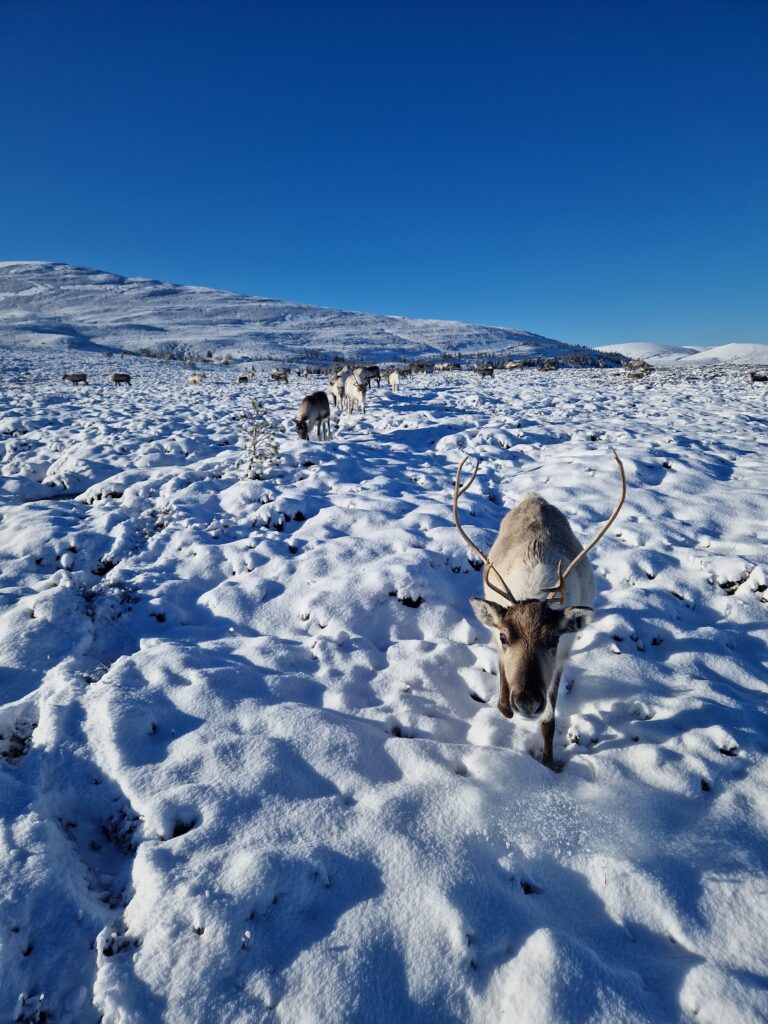
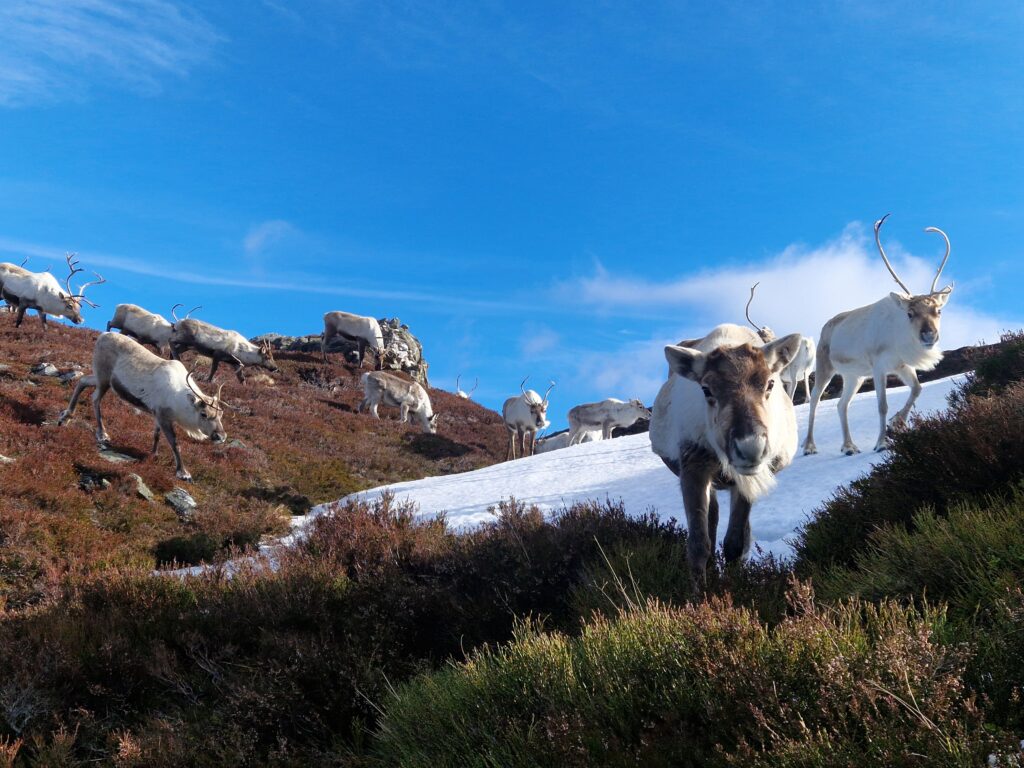
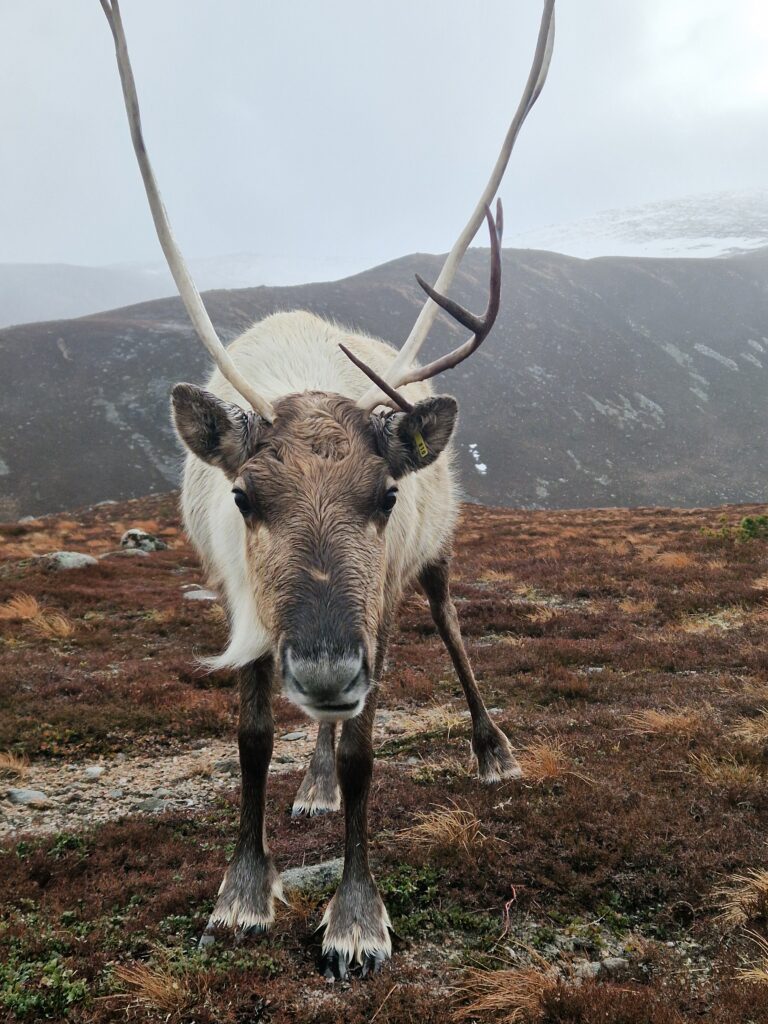
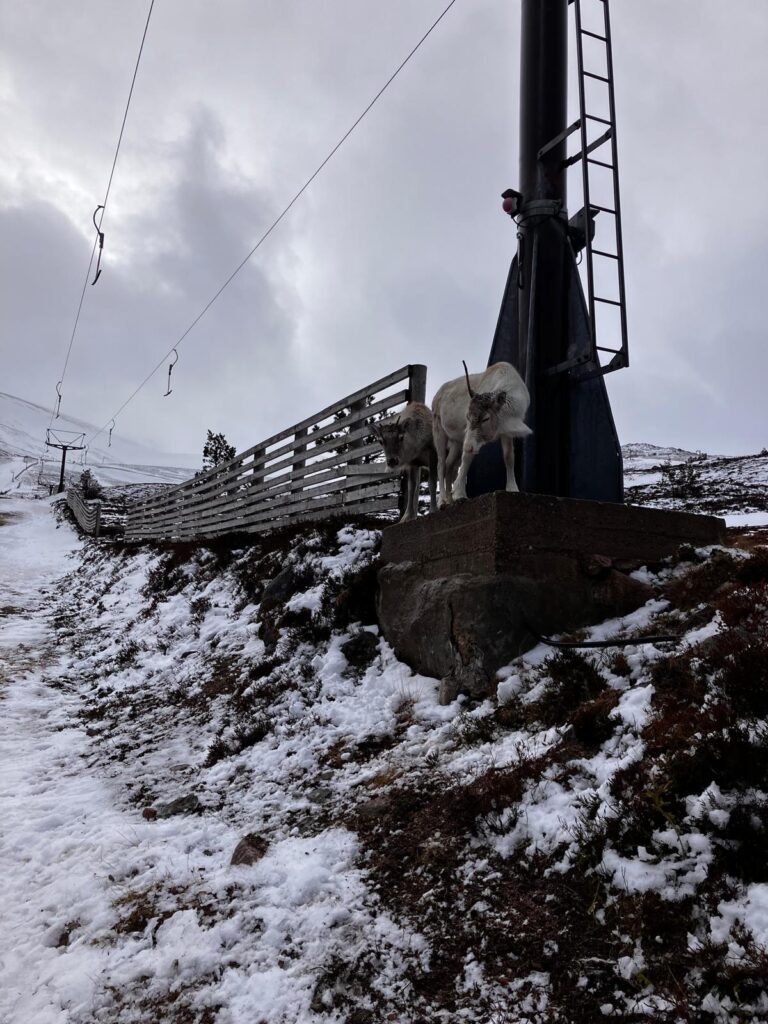
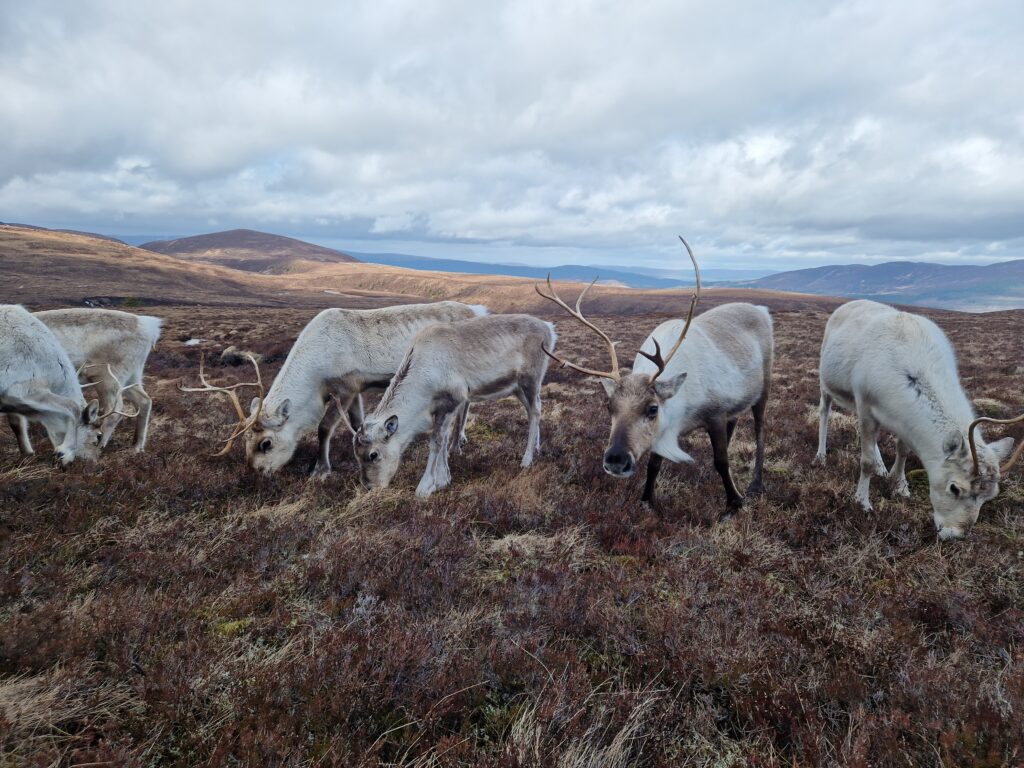
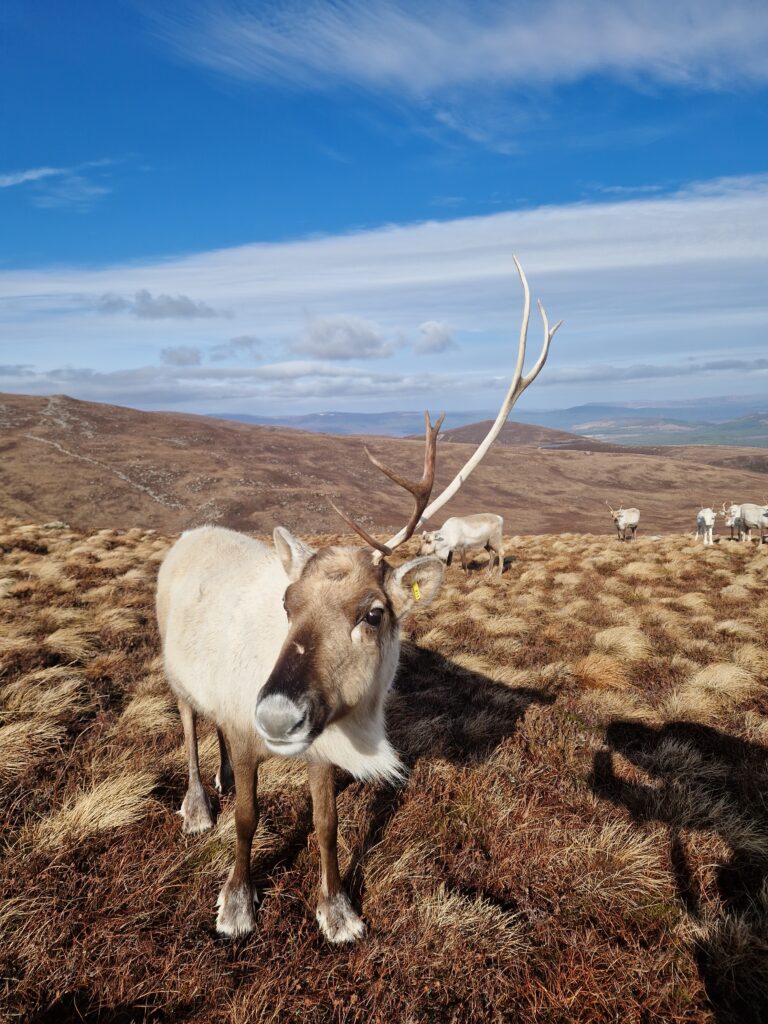
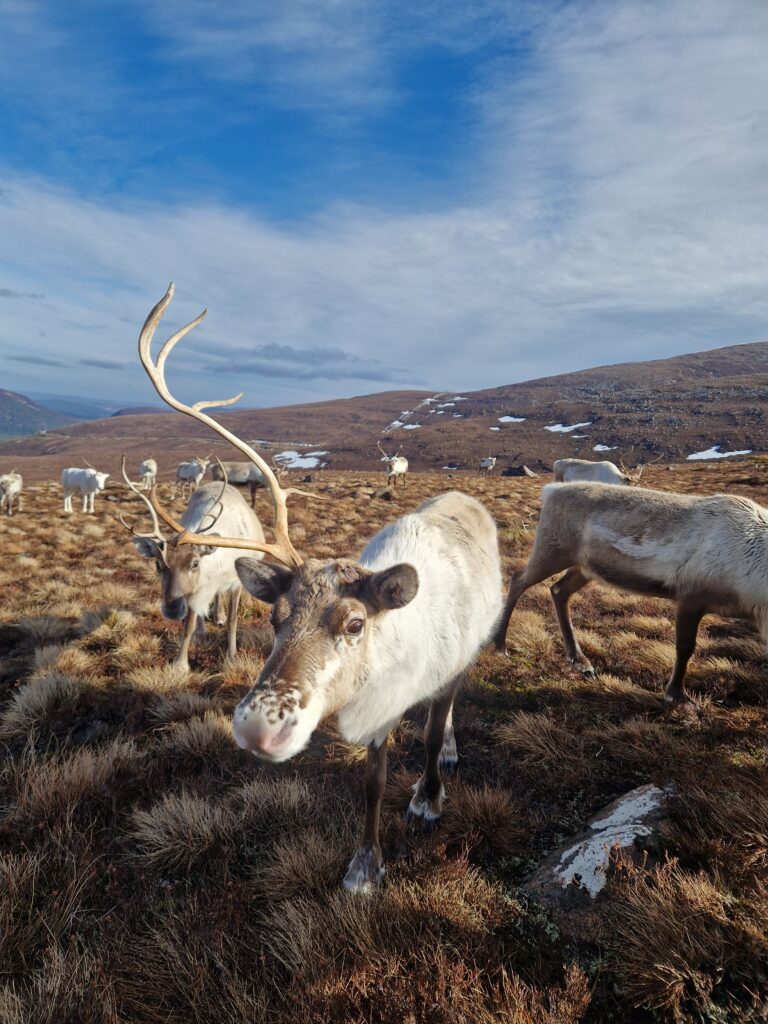
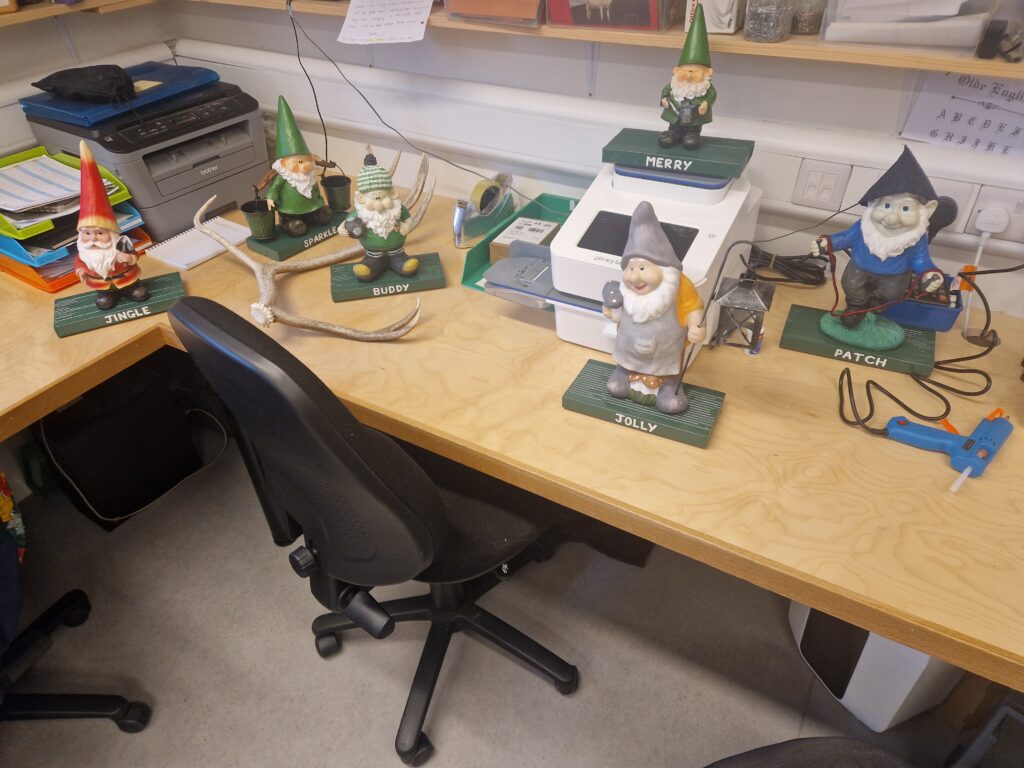
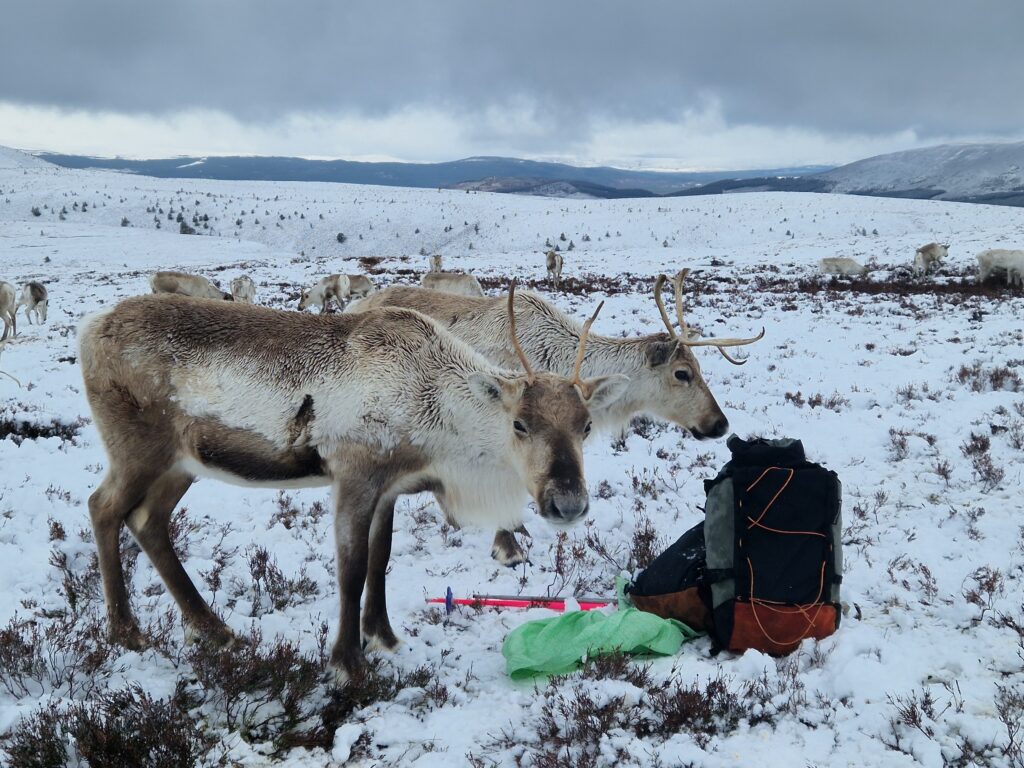
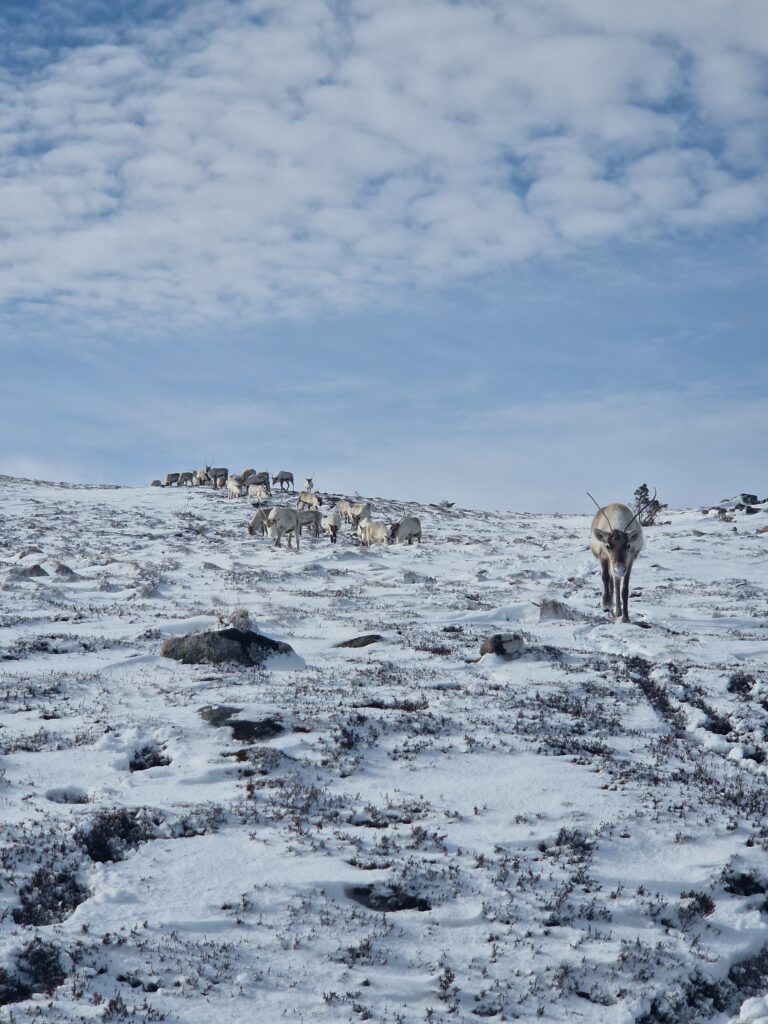
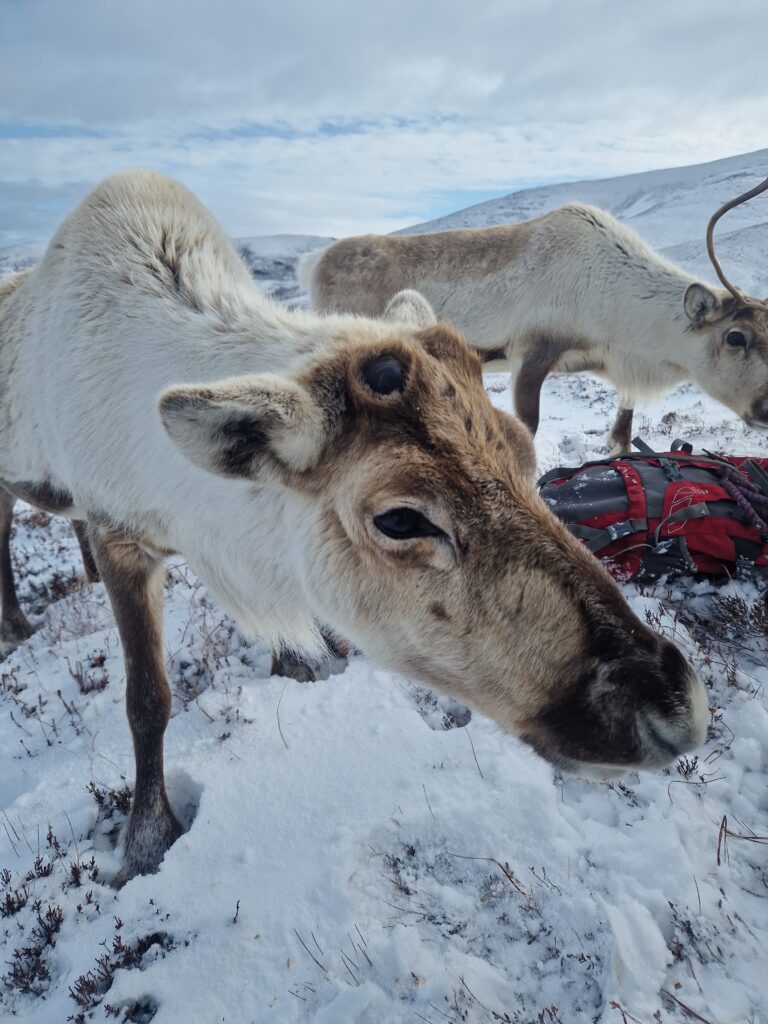
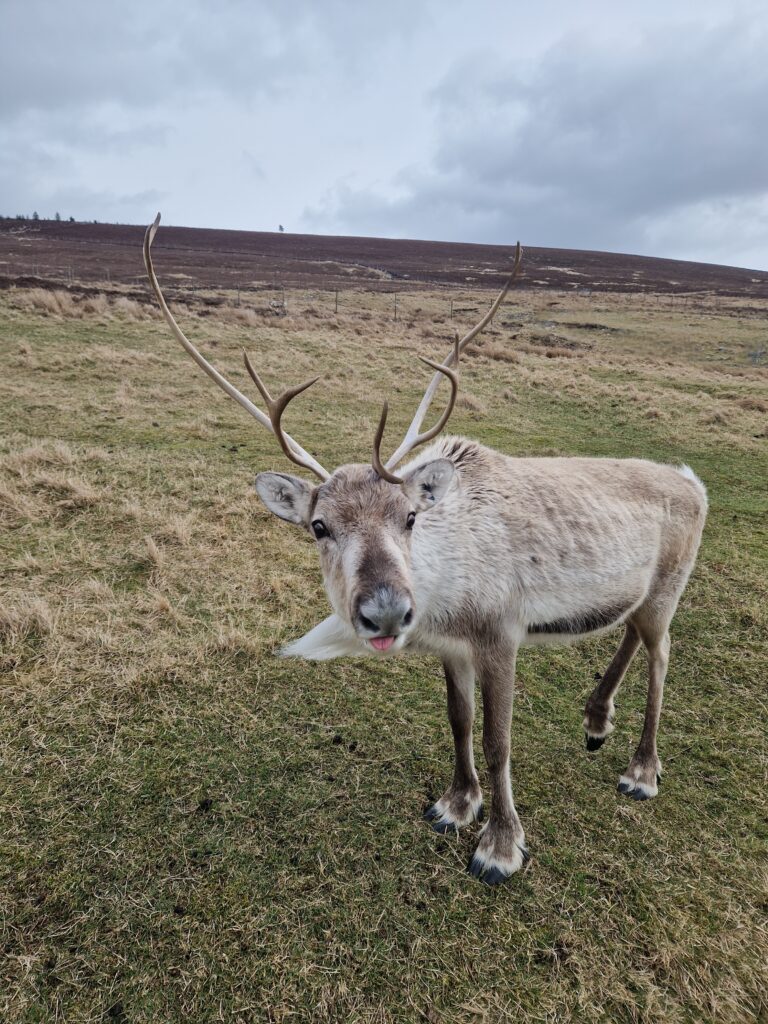
Amy
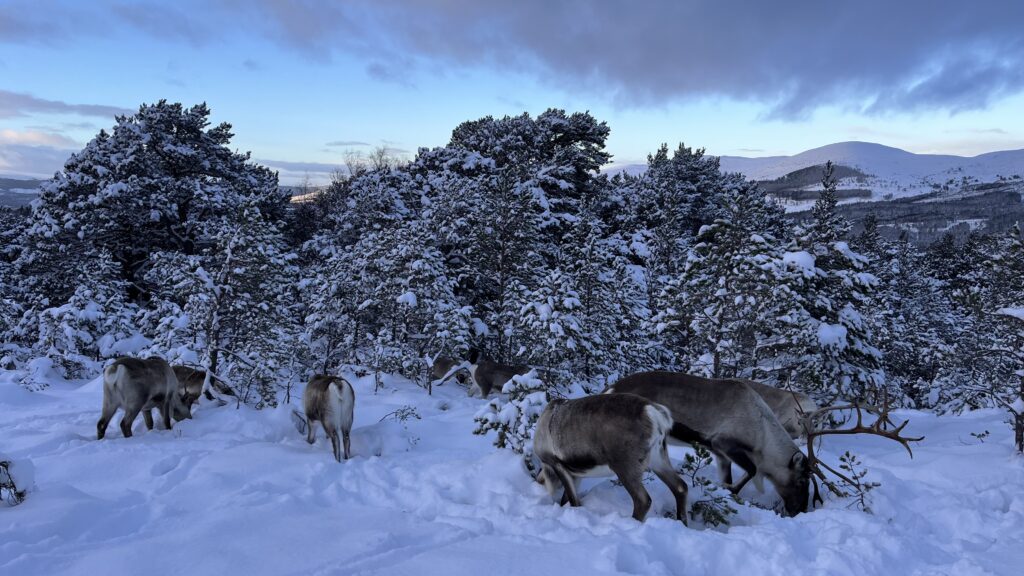
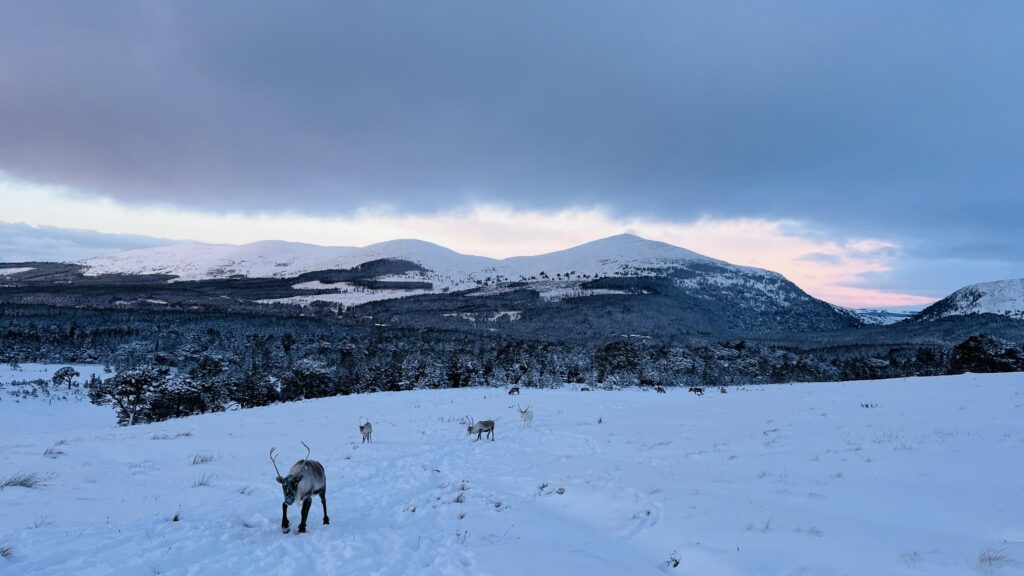
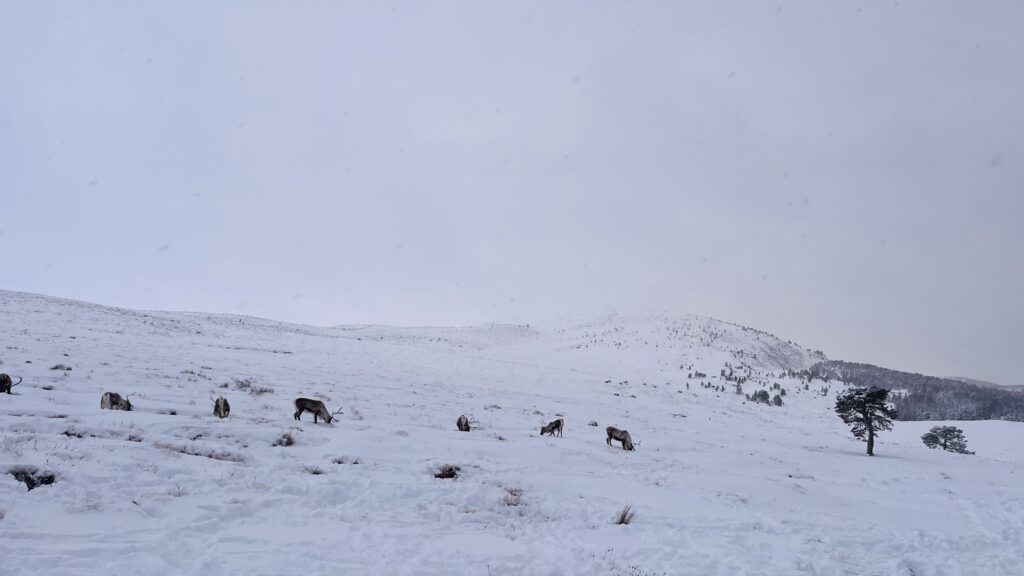
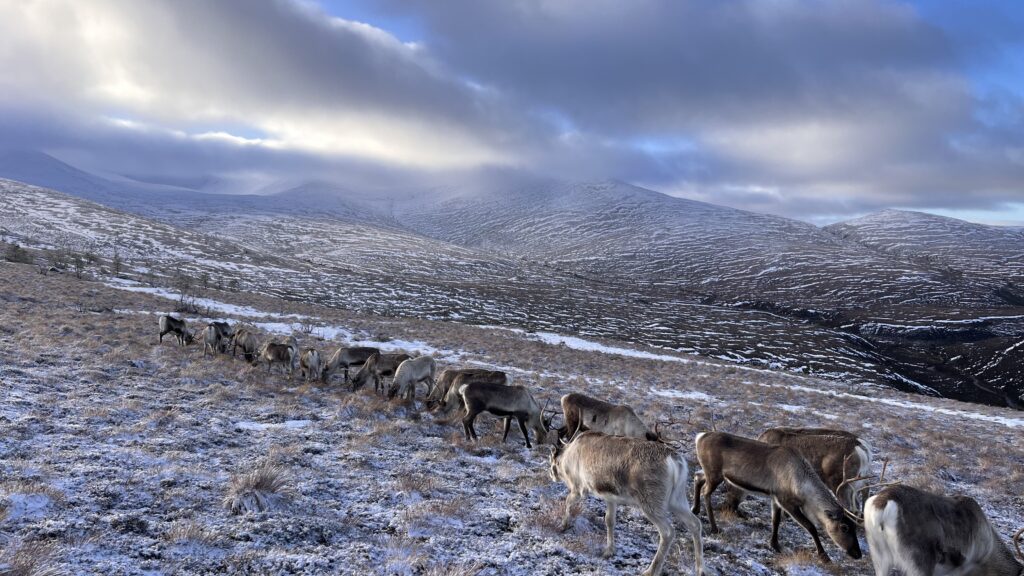
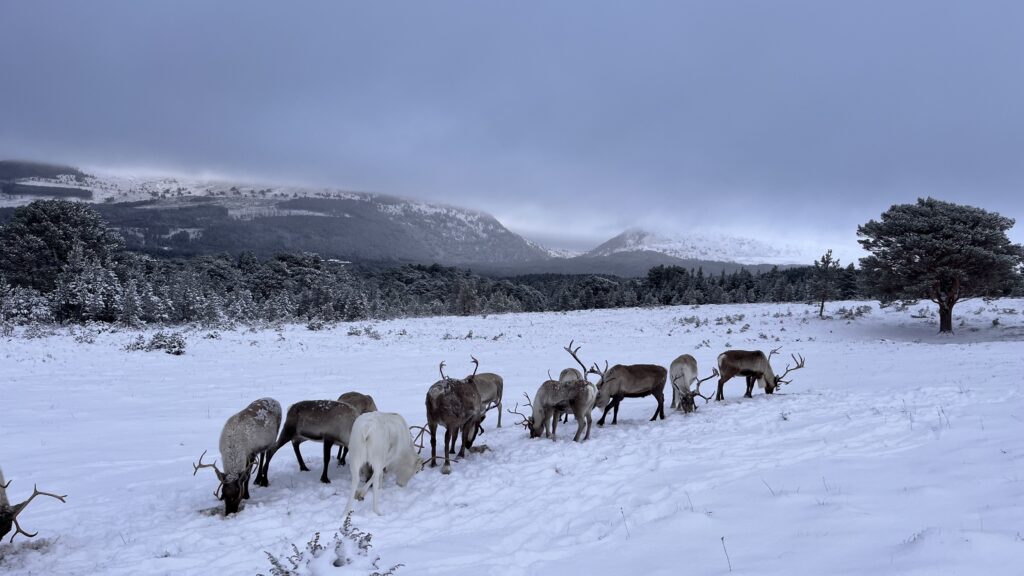
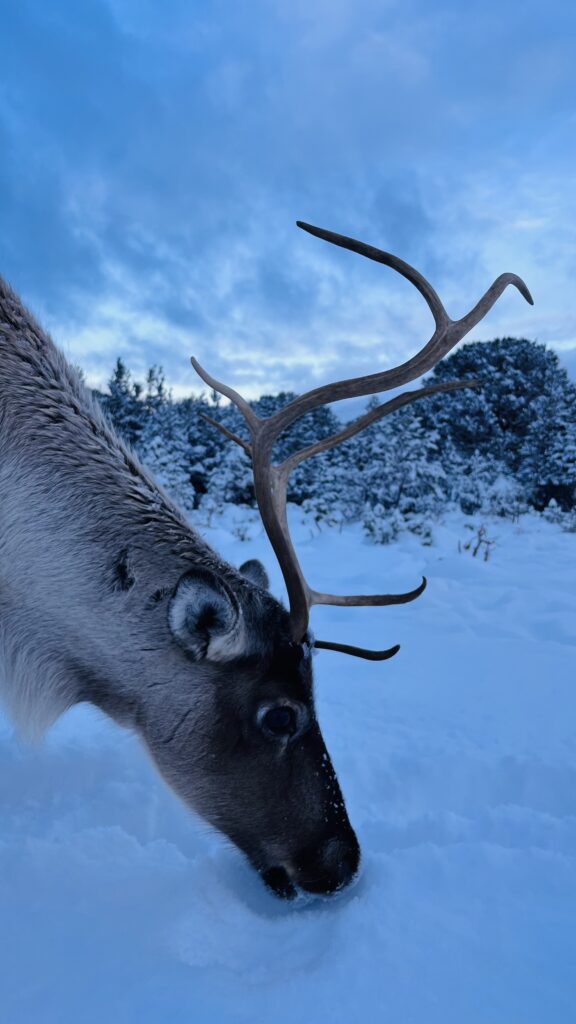
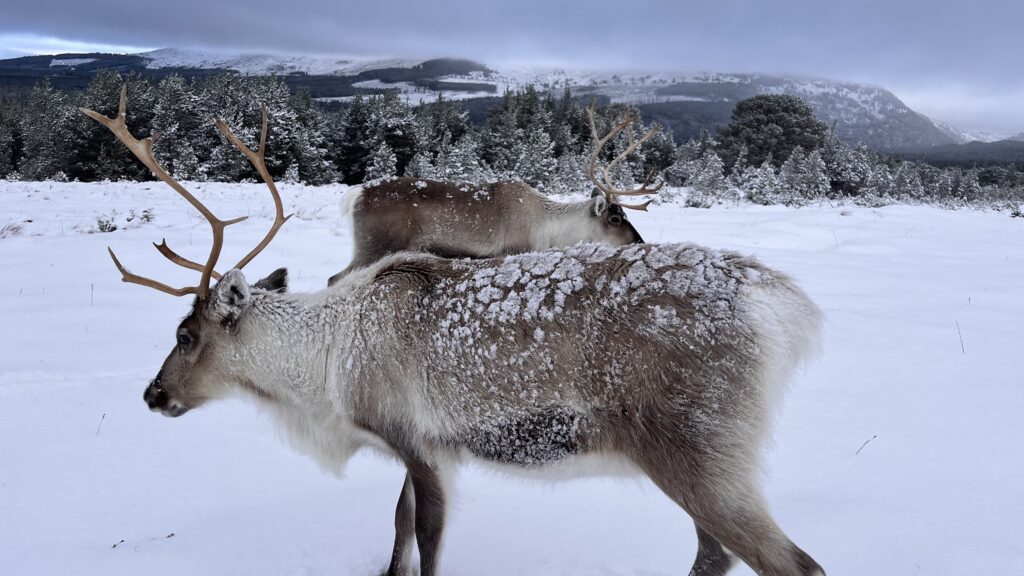
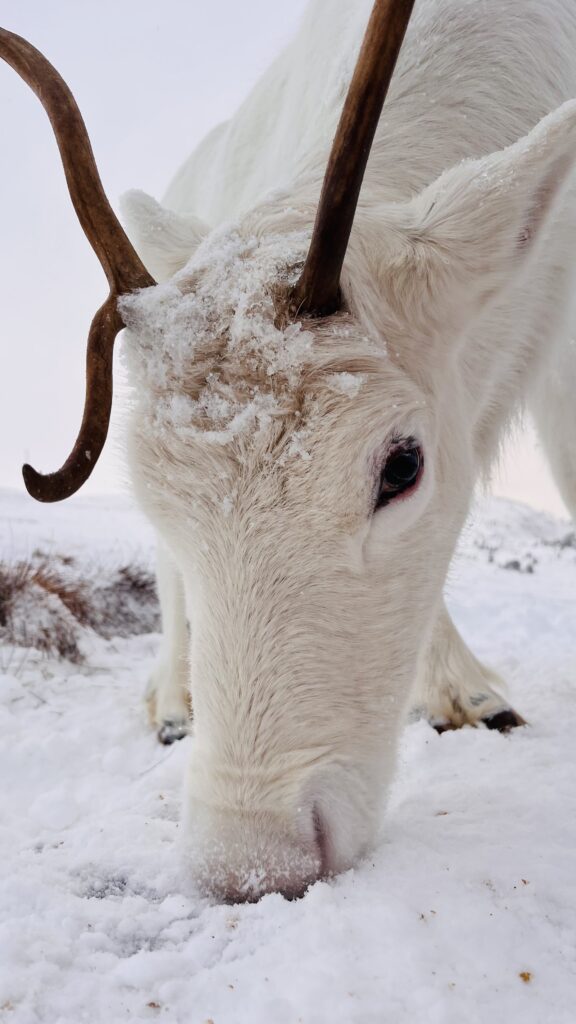
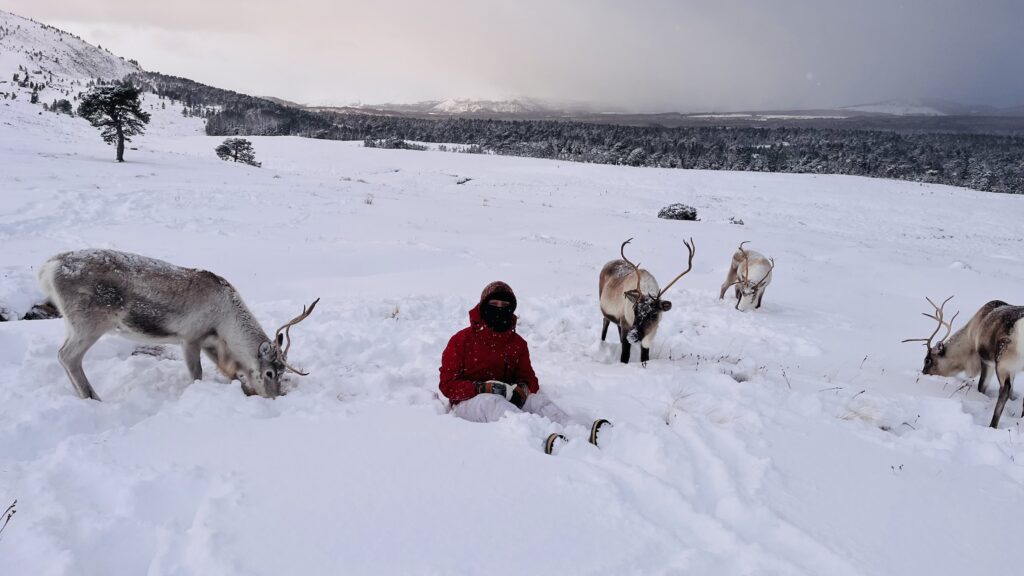
Daisy
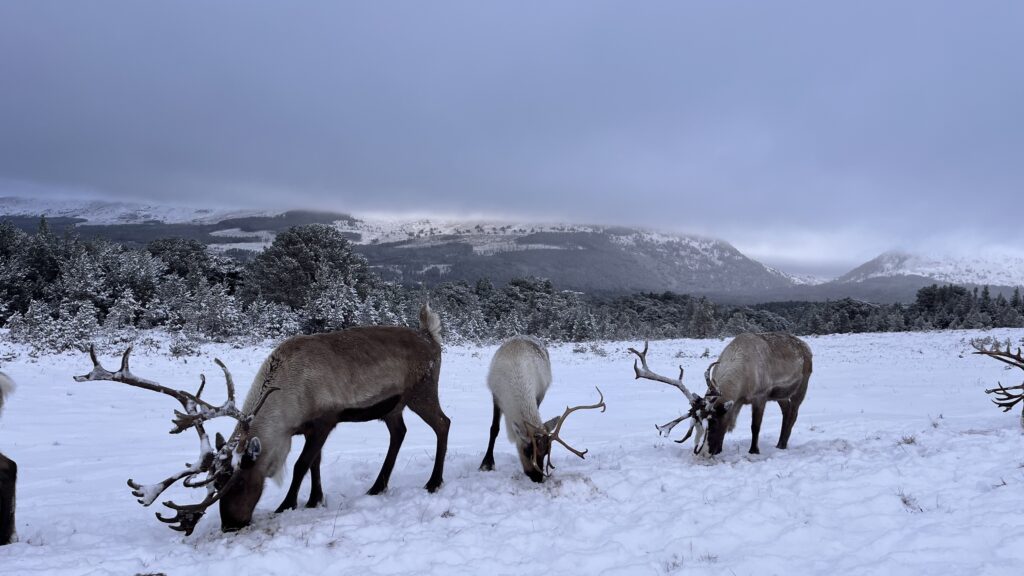
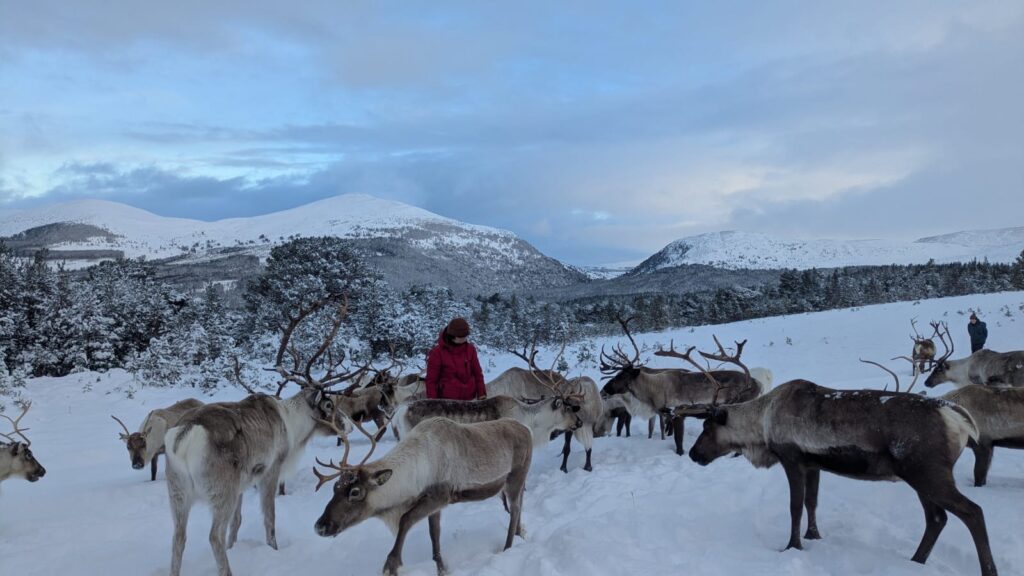
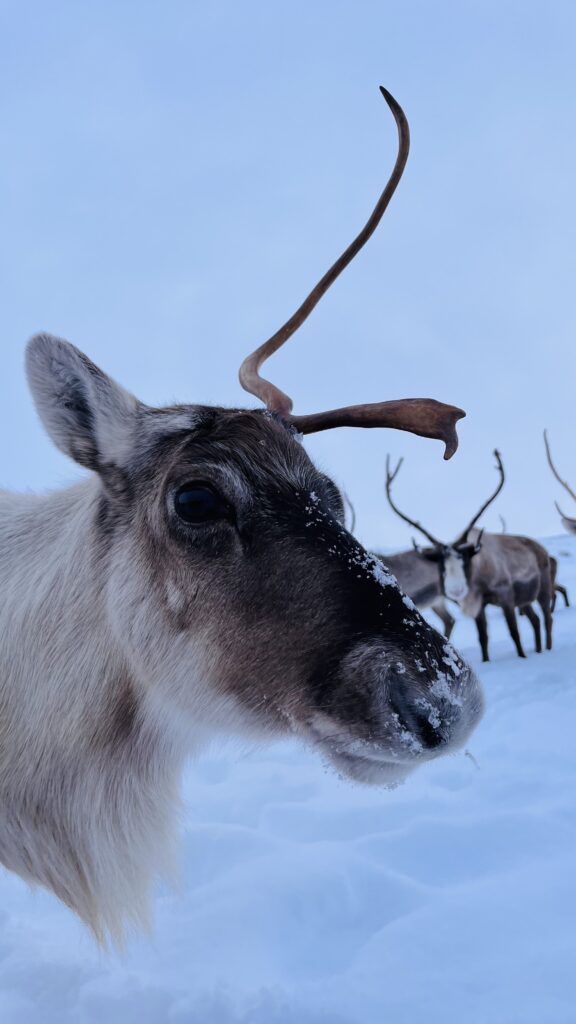
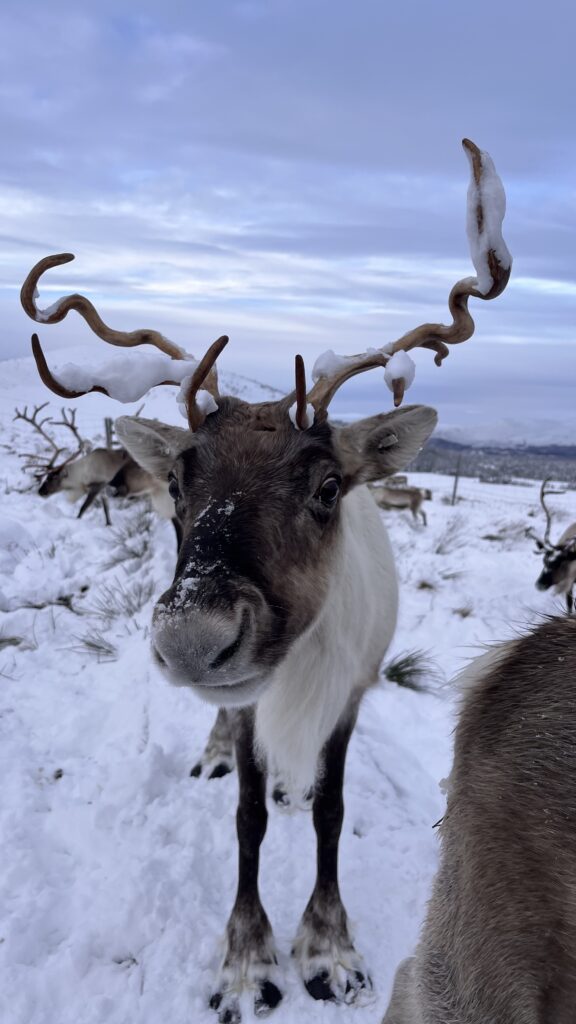
As months go, January generally has a pretty bad reputation for being dark, cold, and really a bit depressing. Unless you are a reindeer herder, in which case January is likely to be one of your favourite months. Every year, from the end of the Christmas holidays to the start of the February holidays we close to the public. As much as I love taking hill trips and watching so many people spending time with the herd, after such a busy few weeks over Christmas, we all heave a sigh of relief once we can turn our signed to ‘closed’ for the month.
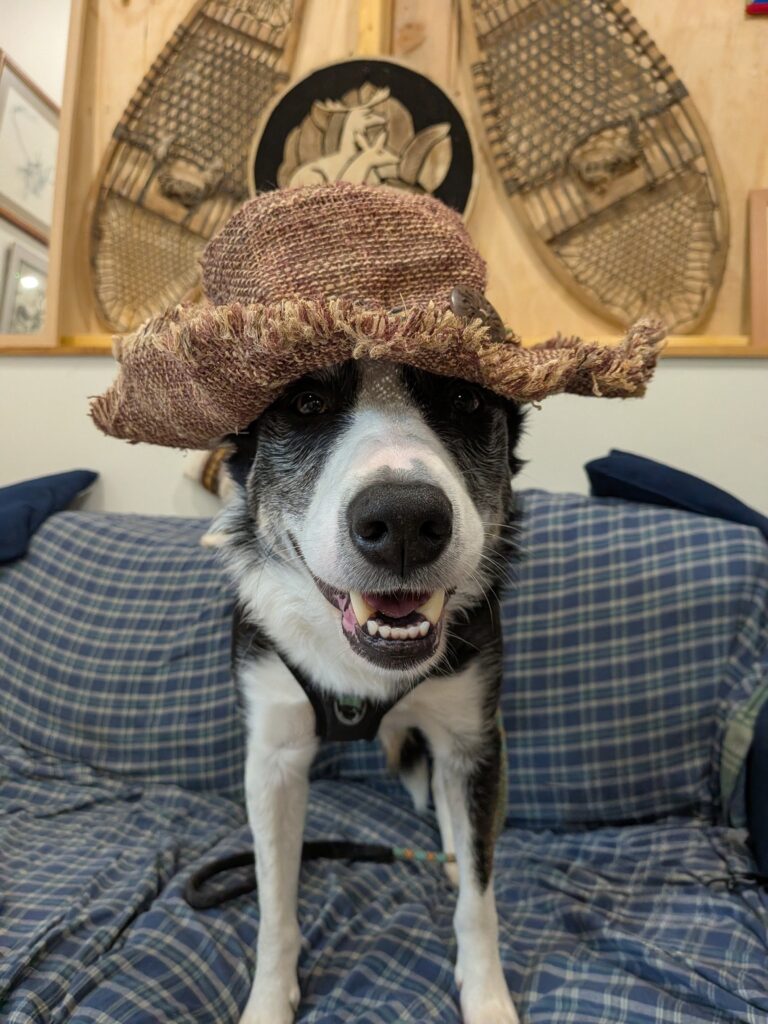
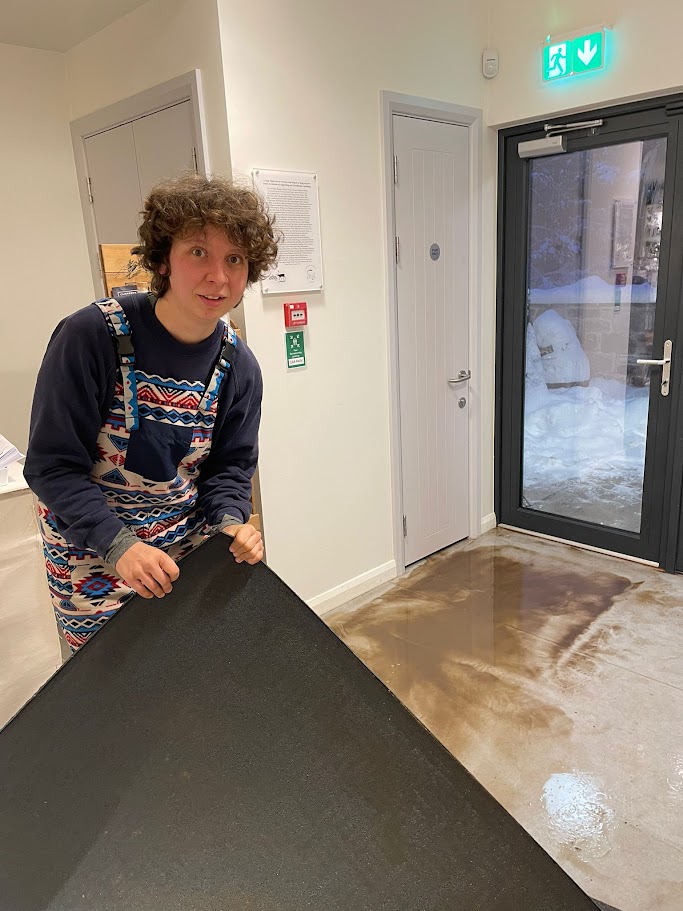
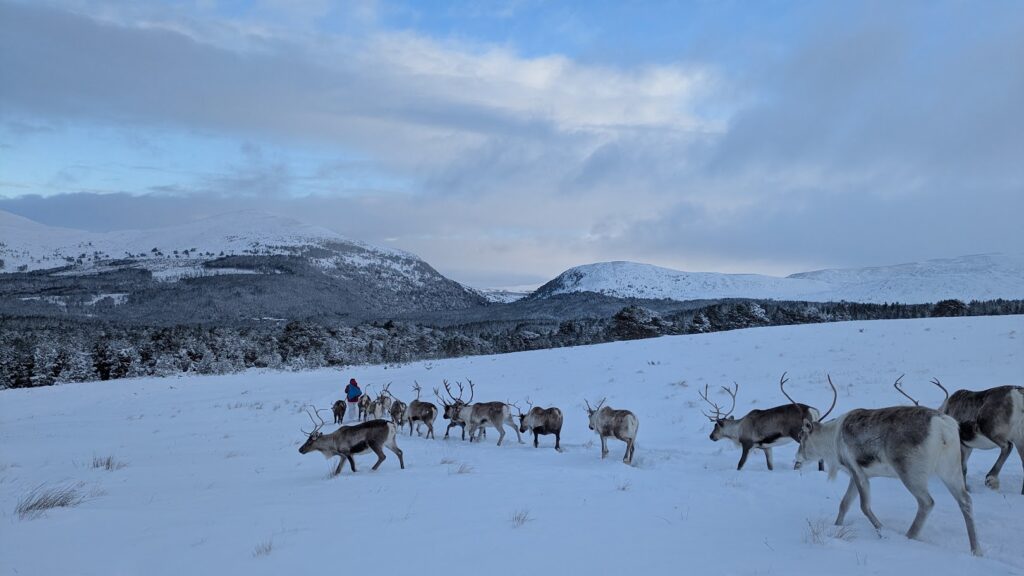
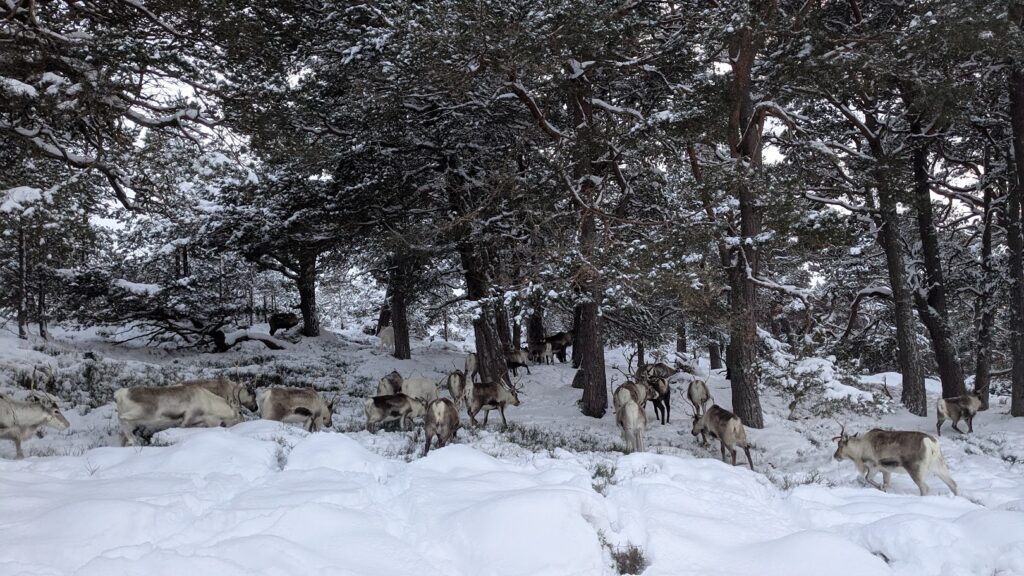
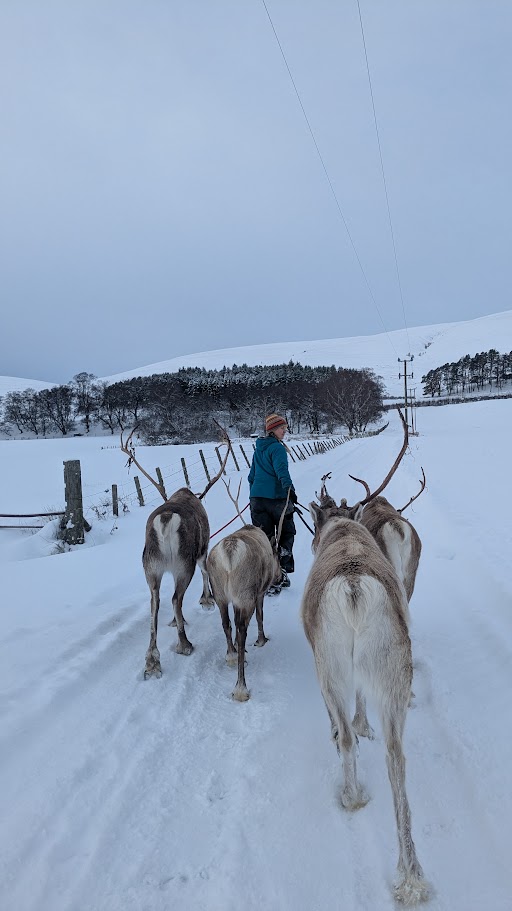
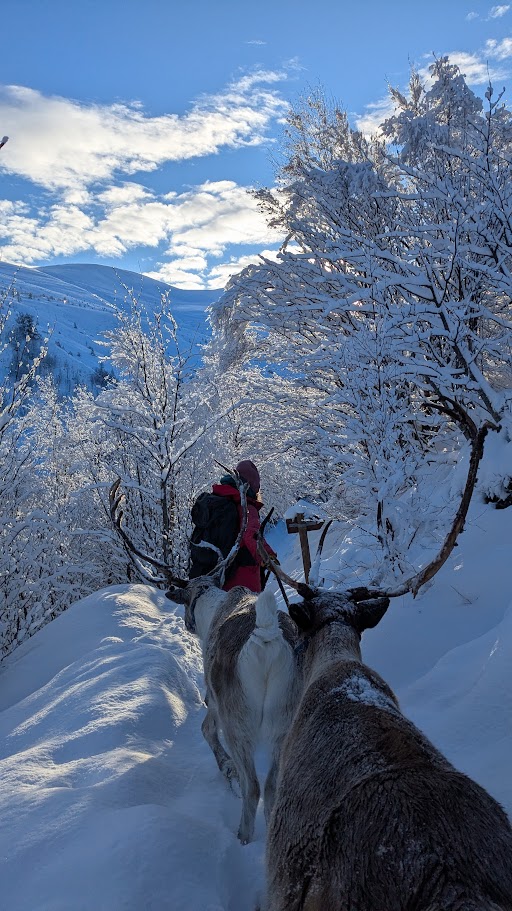
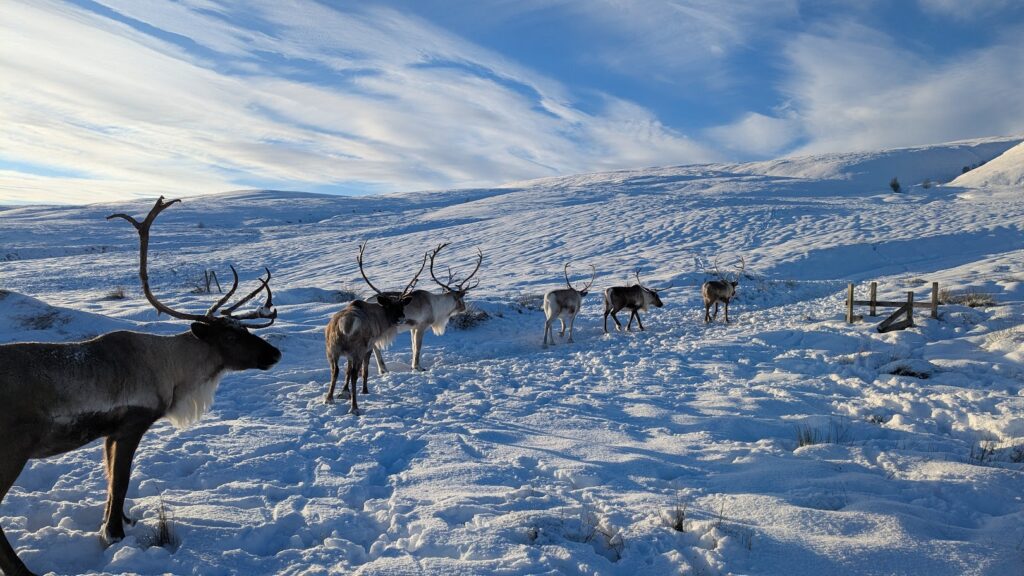
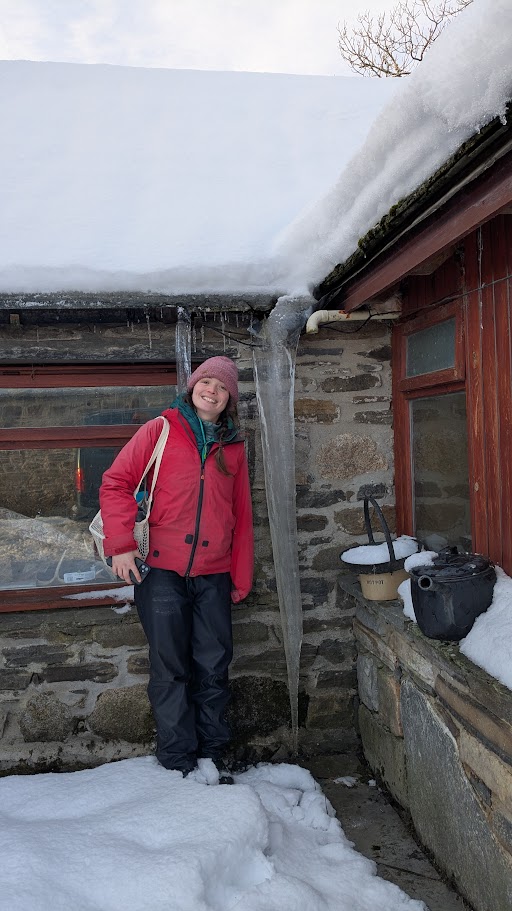
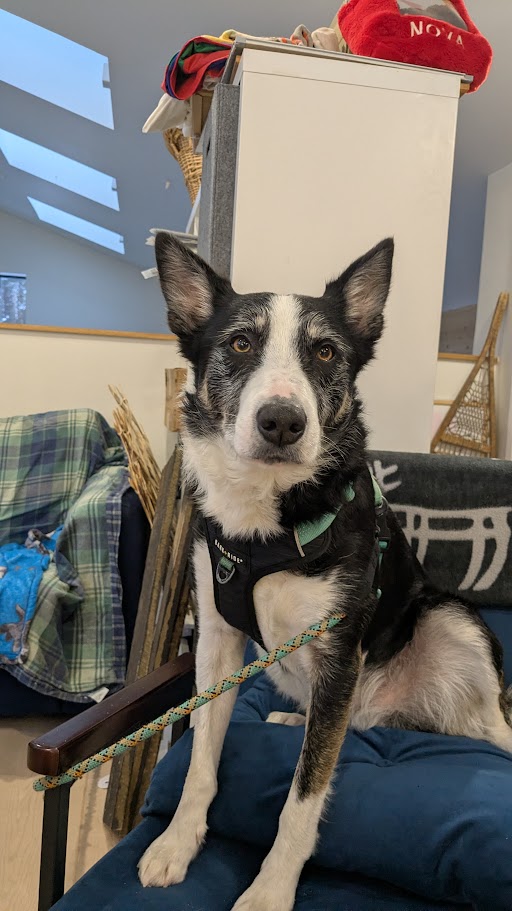
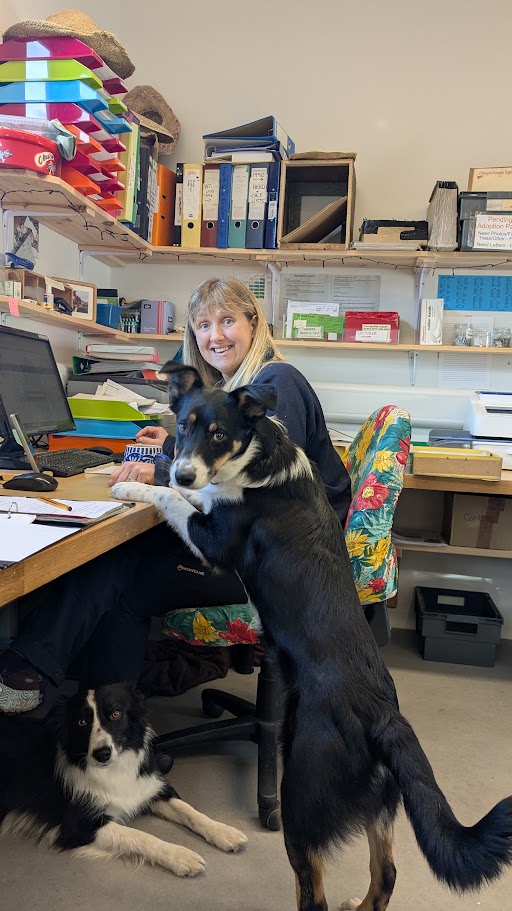
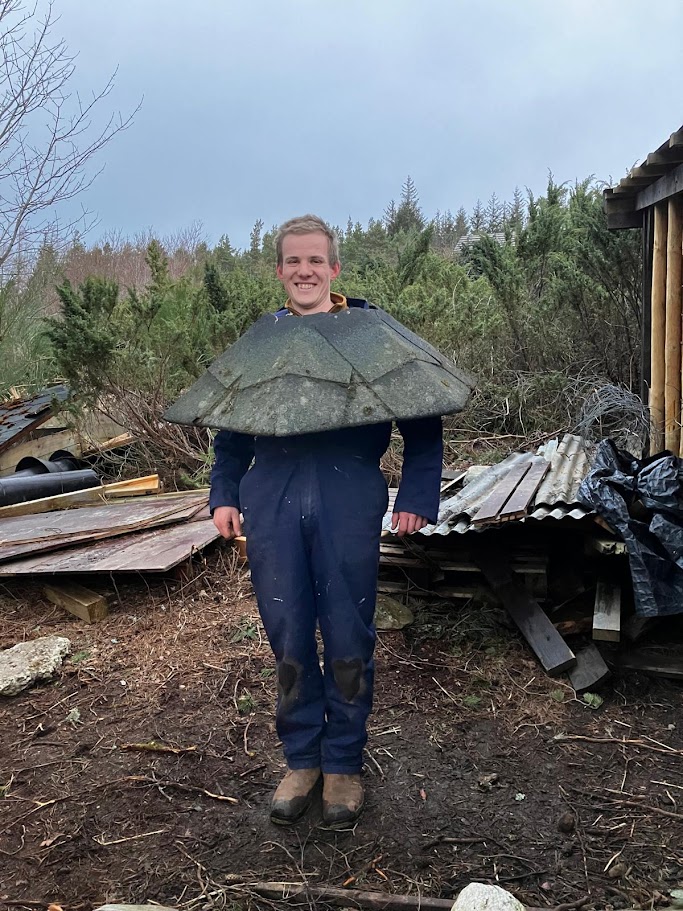
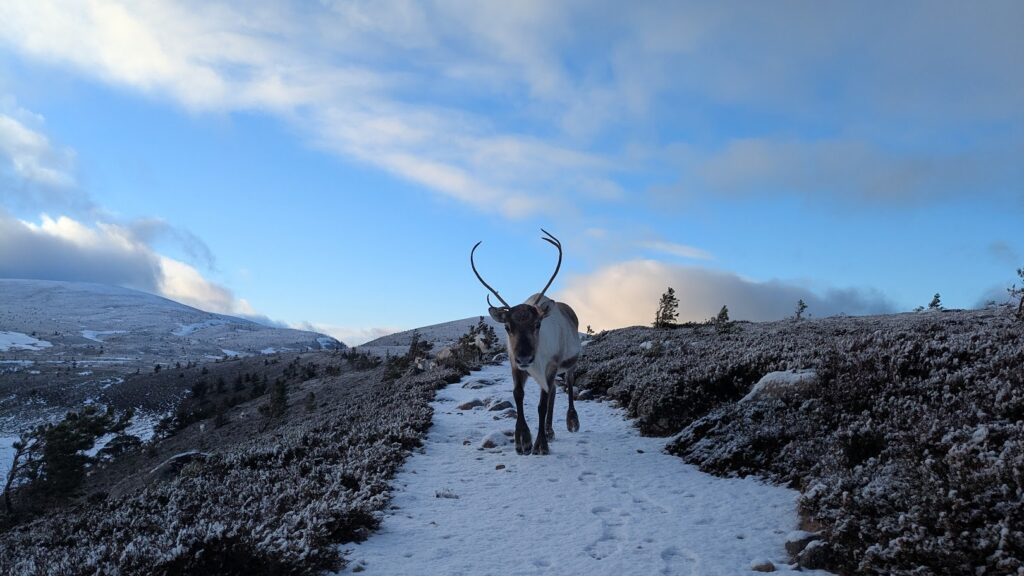
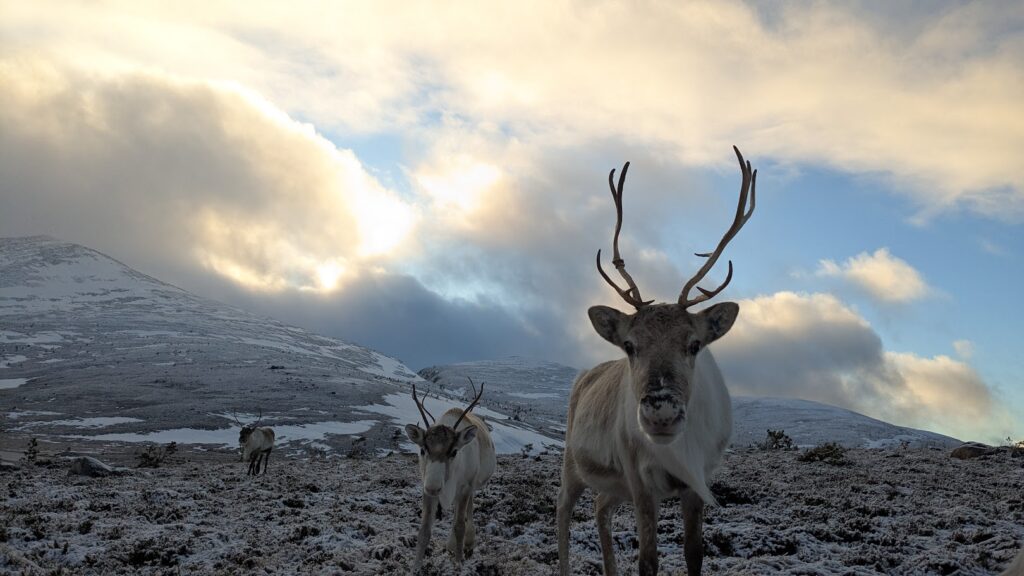
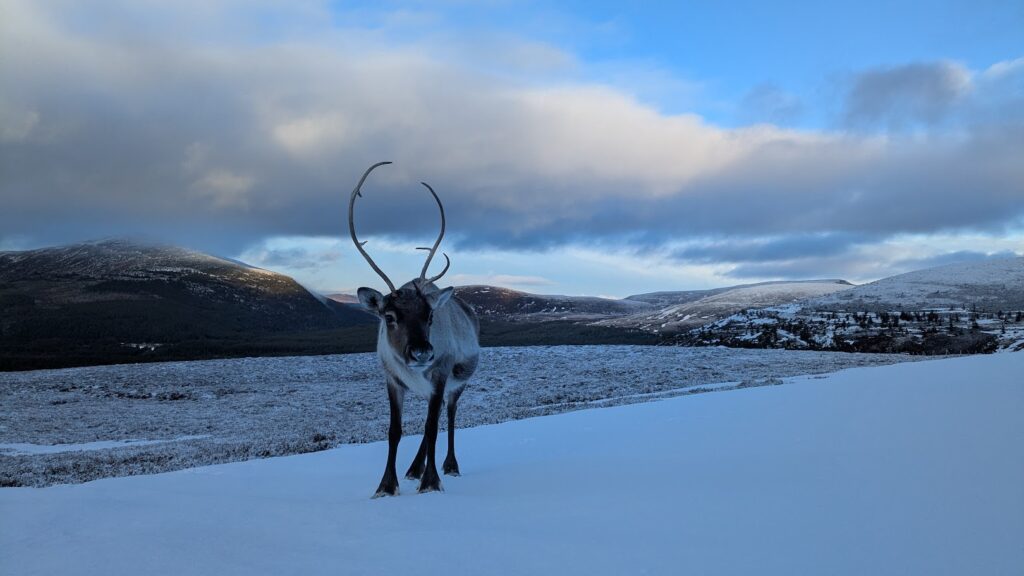
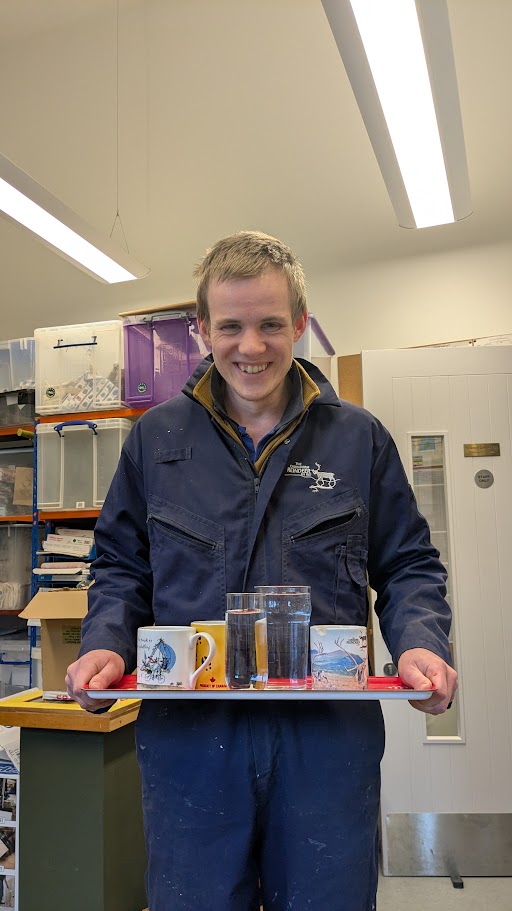
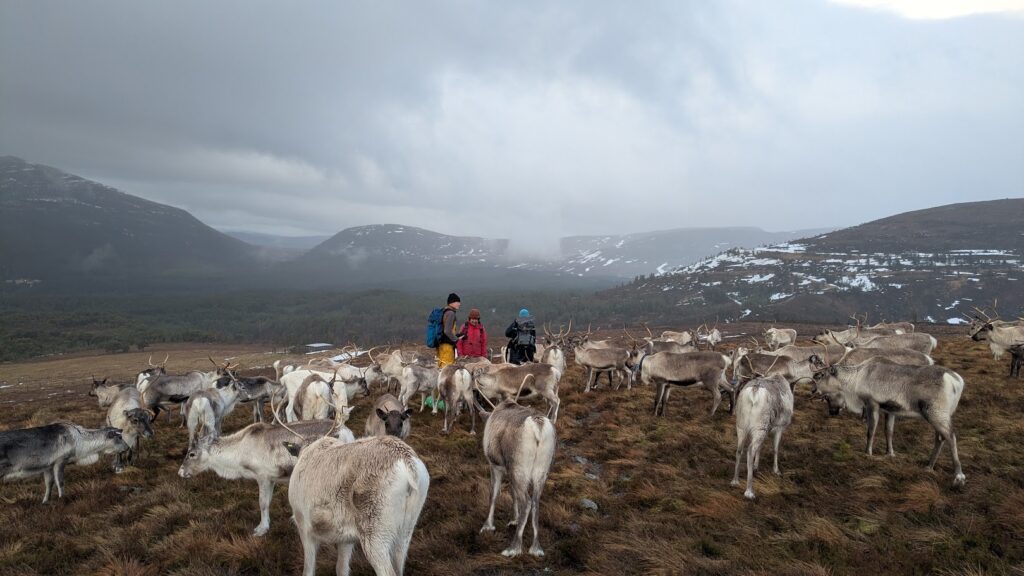
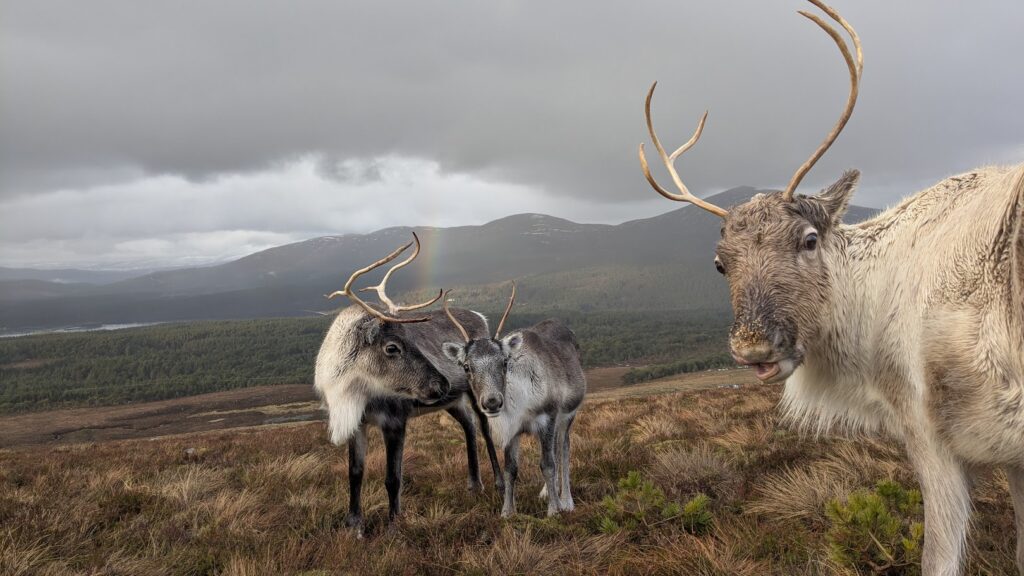
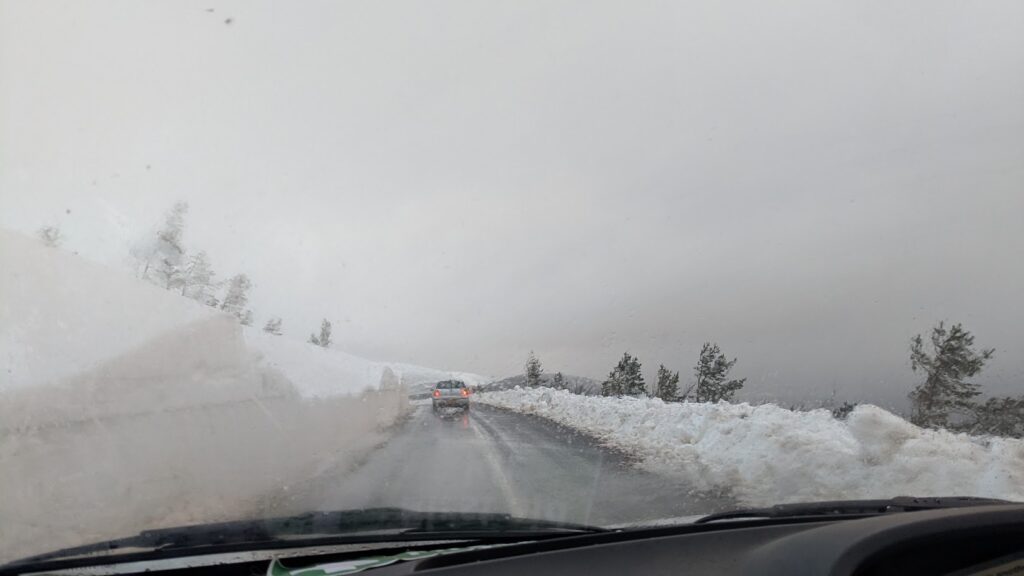
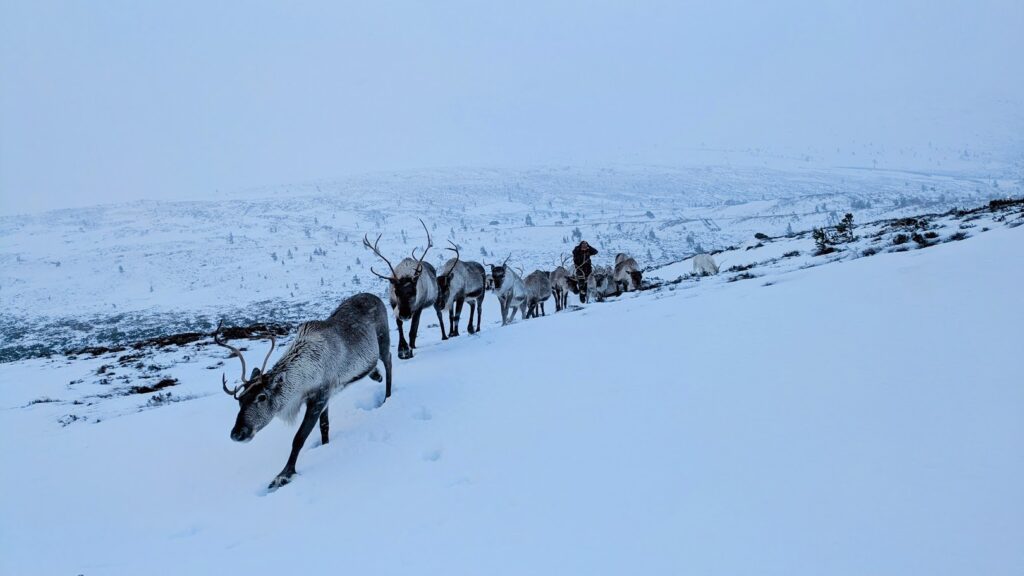
Despite being closed, January is still a really busy month. We spent the first few days getting all of our reindeer to the correct places to spend the winter free ranging. This year that coincided with a very snowy week, so we had lots of snowy walks and drives between Glenmore and our farm, to get everyone in the right places. We have been kept busy doing all the jobs that we just can’t do whilst we are open. Painting, cleaning, building, washing, repairing – you name it. Oh, and of course, we are still heading to the hills to feed the reindeer when we need to, we don’t feed the reindeer everyday so you will be treated to some extra dog photos this month – what’s not to love!
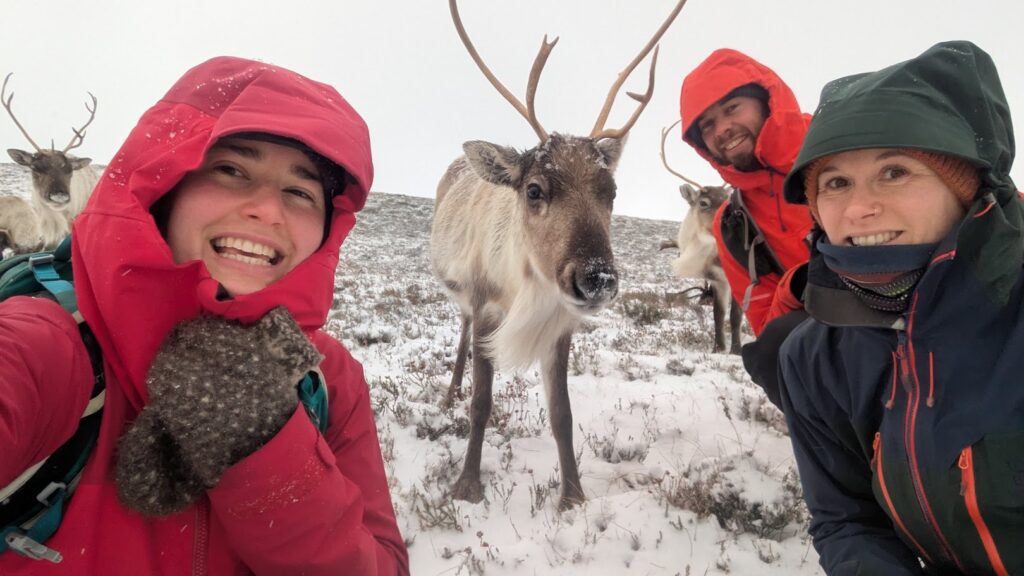
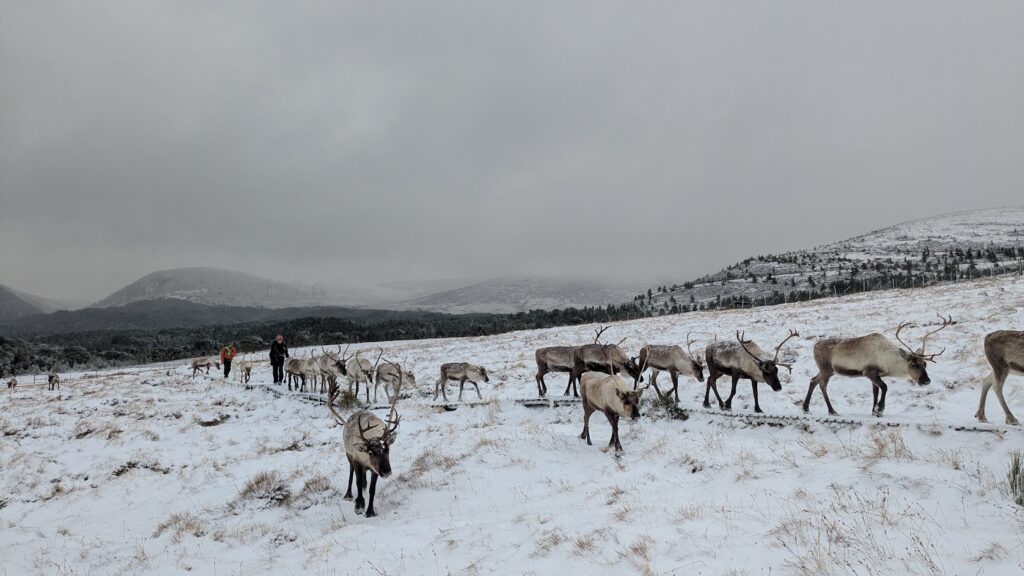
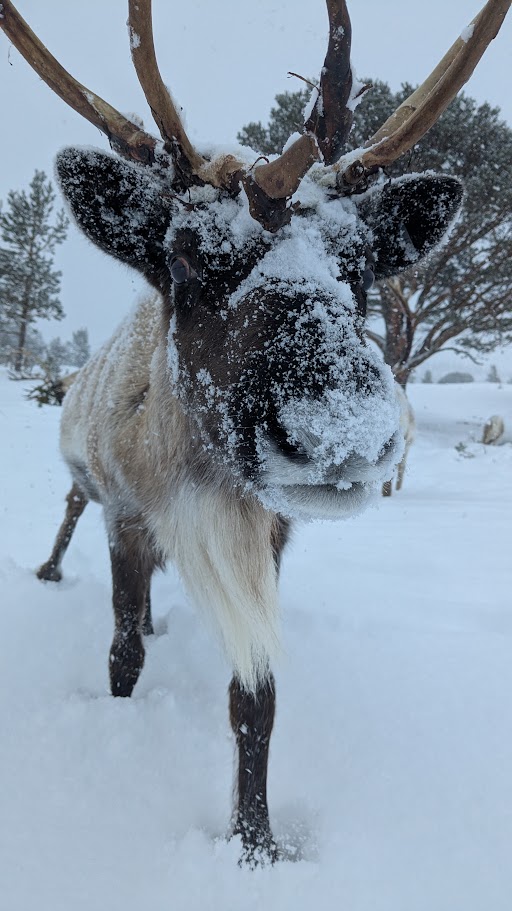
Lotti
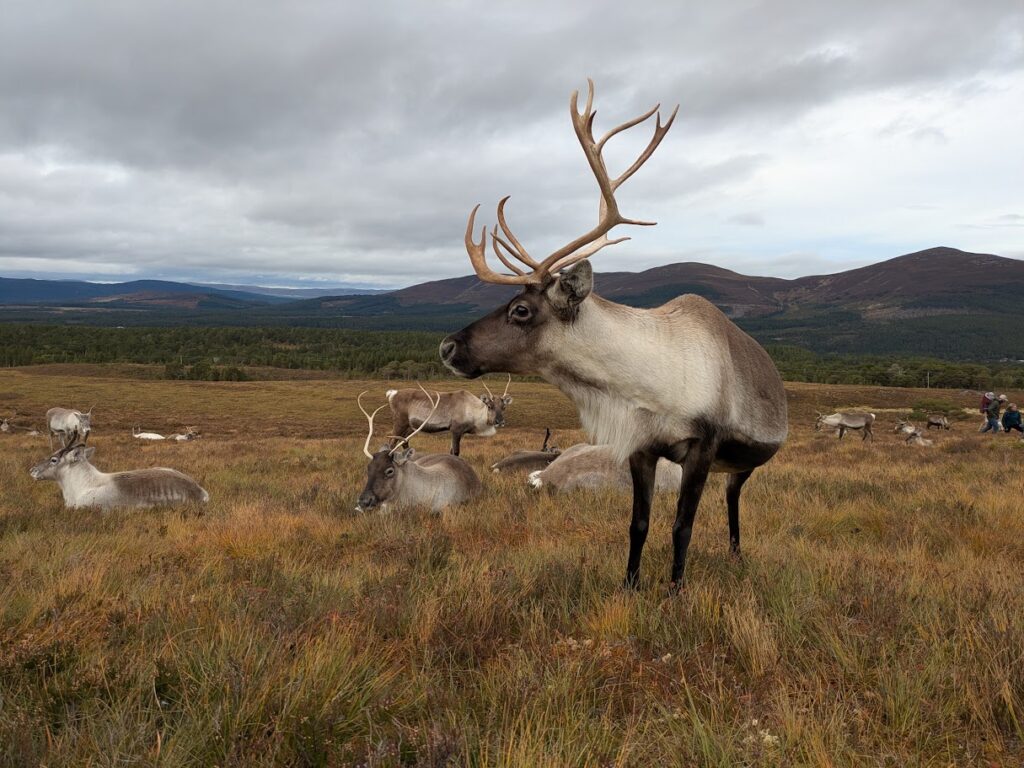
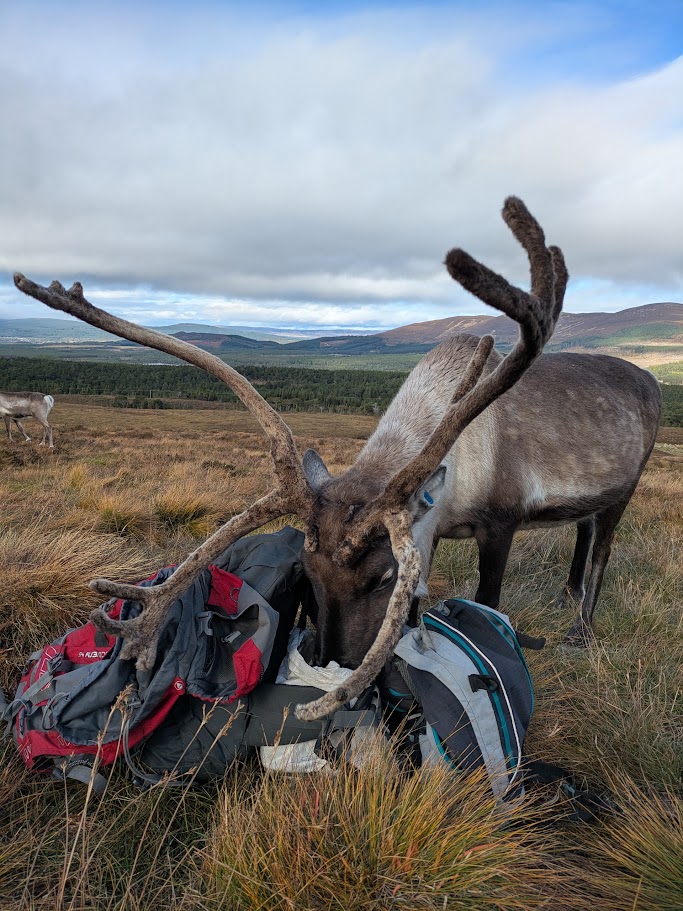
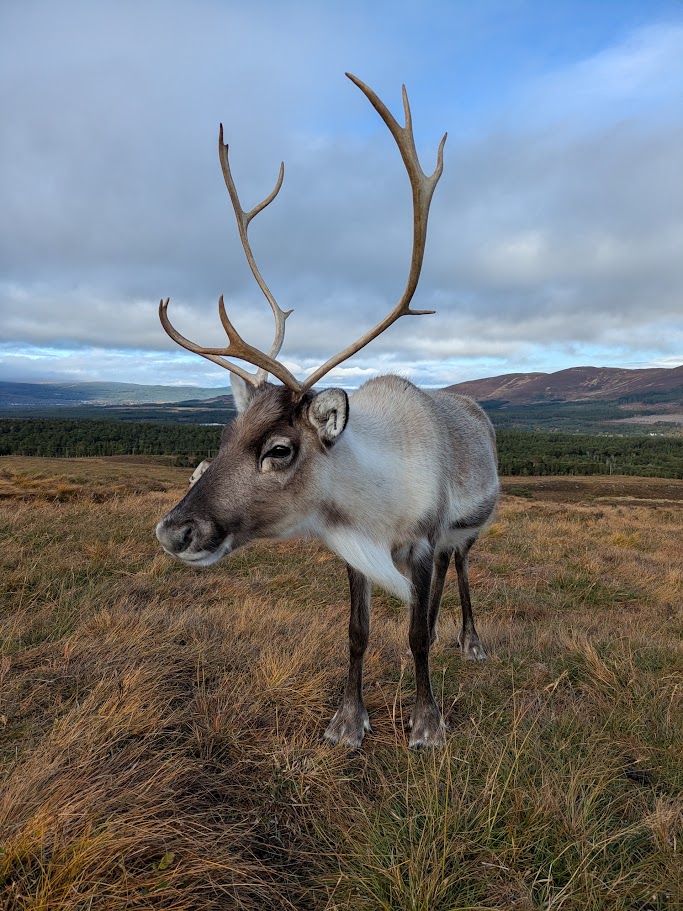
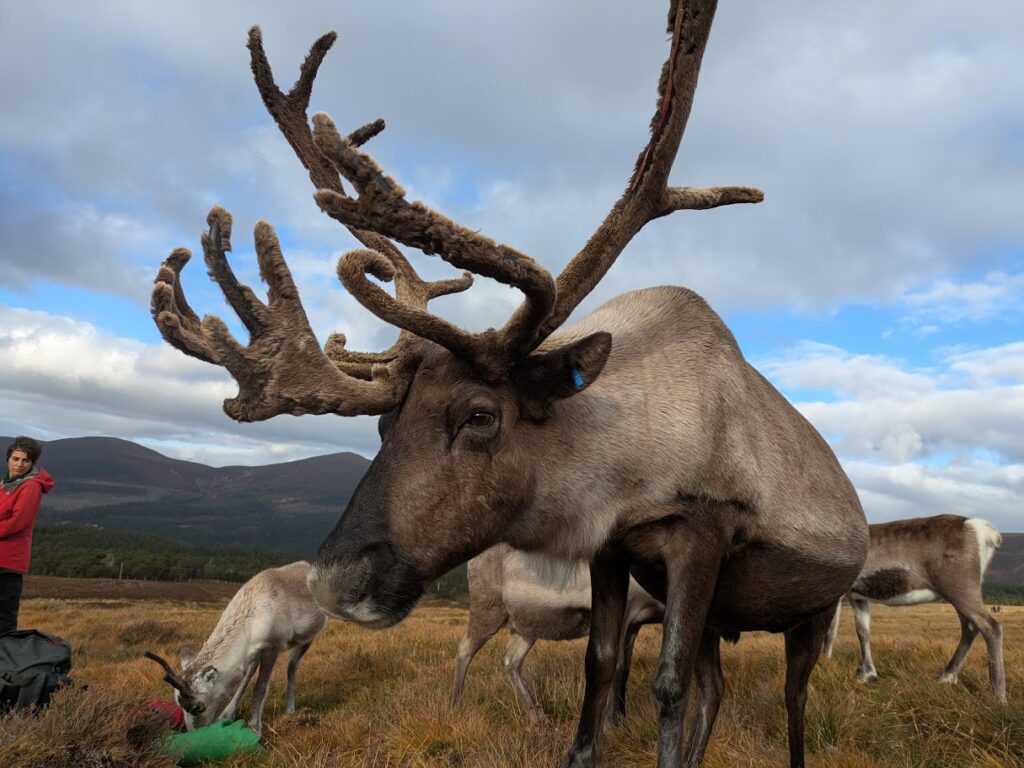
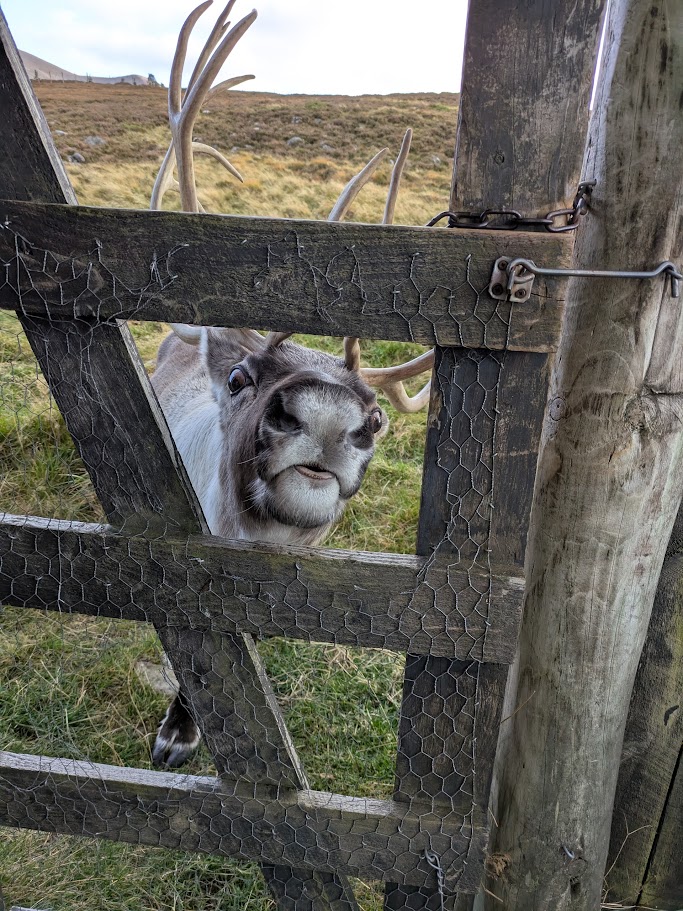
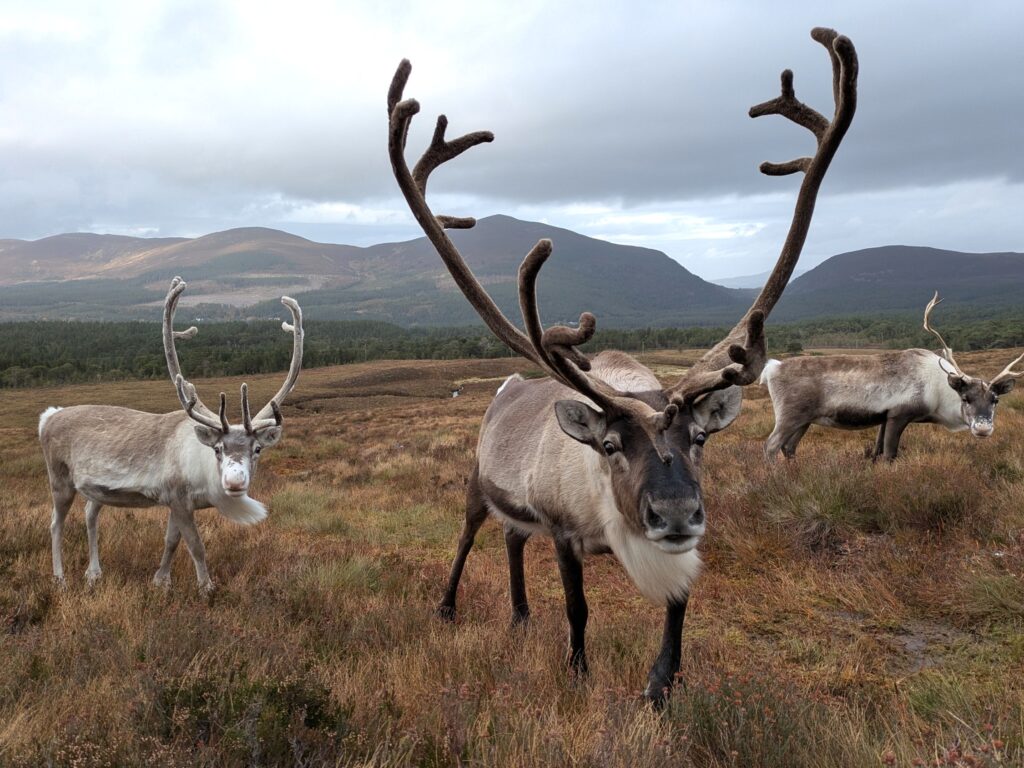
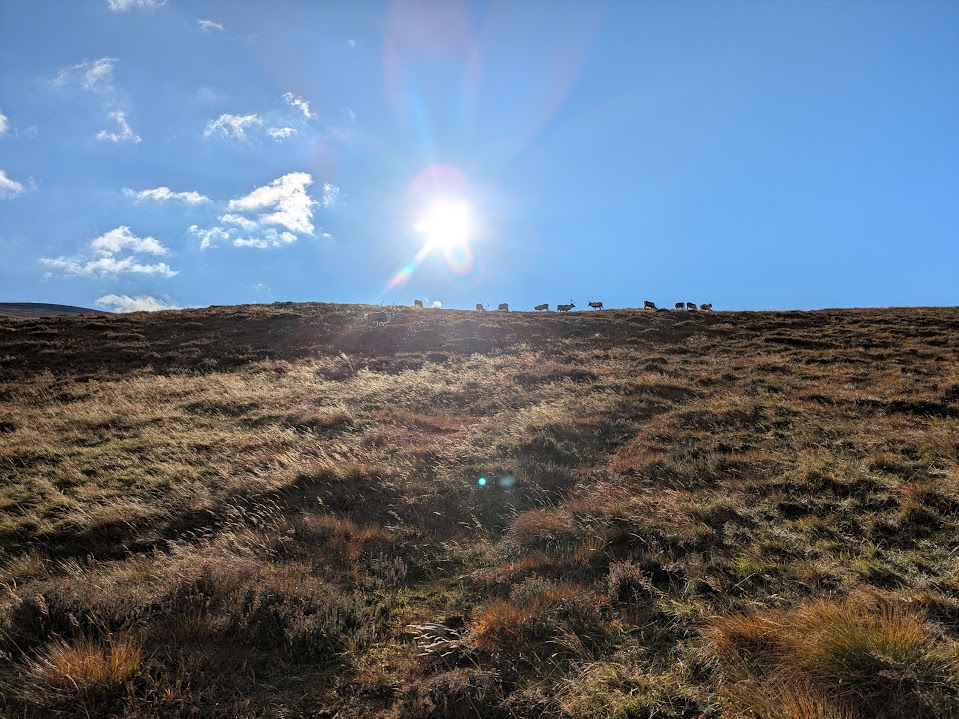
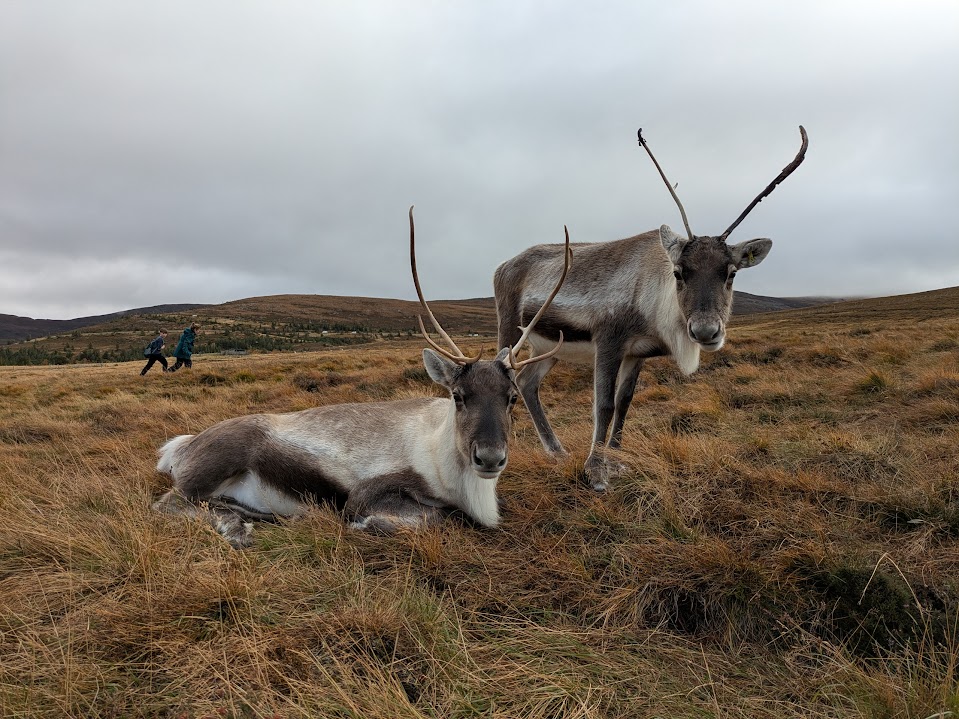
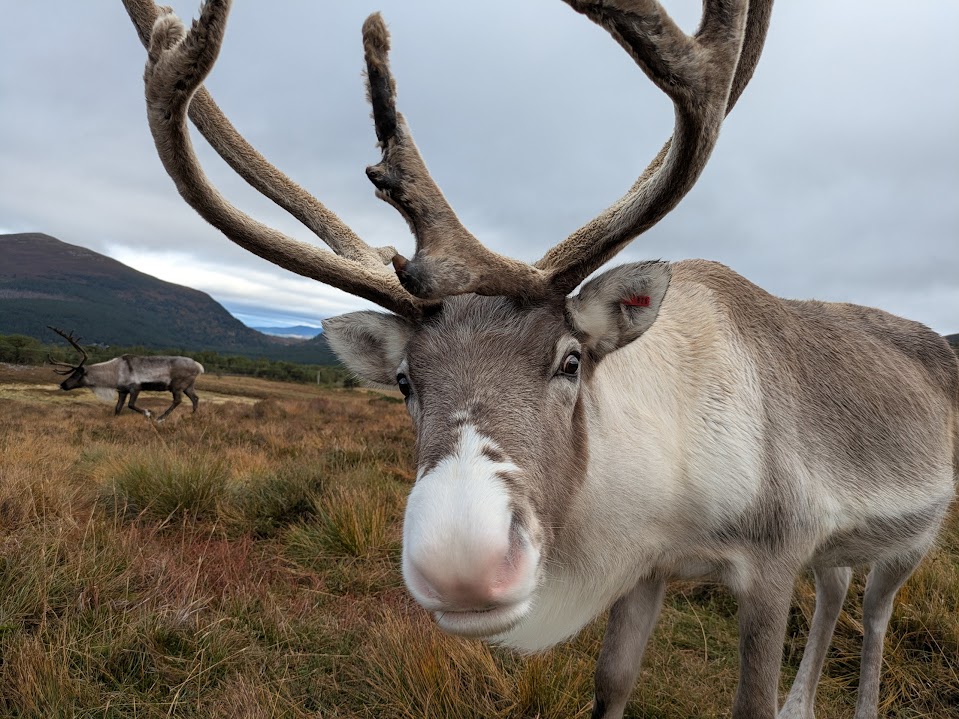
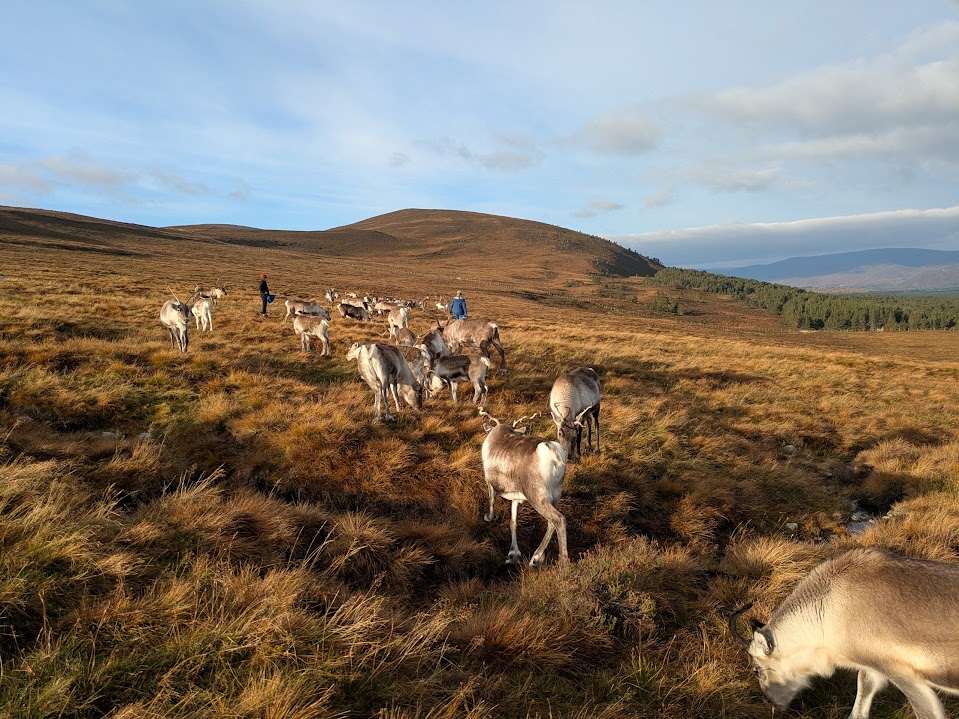
Where has October gone?! It was a pretty hectic month here with the rut in full swing, halter training the calves, free ranging reindeer keeping us busy, and three weeks of October holidays. But it’s been very fun and hopefully a successful rut – we’ll find out in the spring! The big news was that we managed to open the Exhibition! We did a very ‘soft opening’ just letting the October holiday makers have a look around to test things out. The best place to find up to date information regarding our Paddocks and Exhibition is still our website, or feel free to give us a call.
Ruth