Learning to ID reindeer

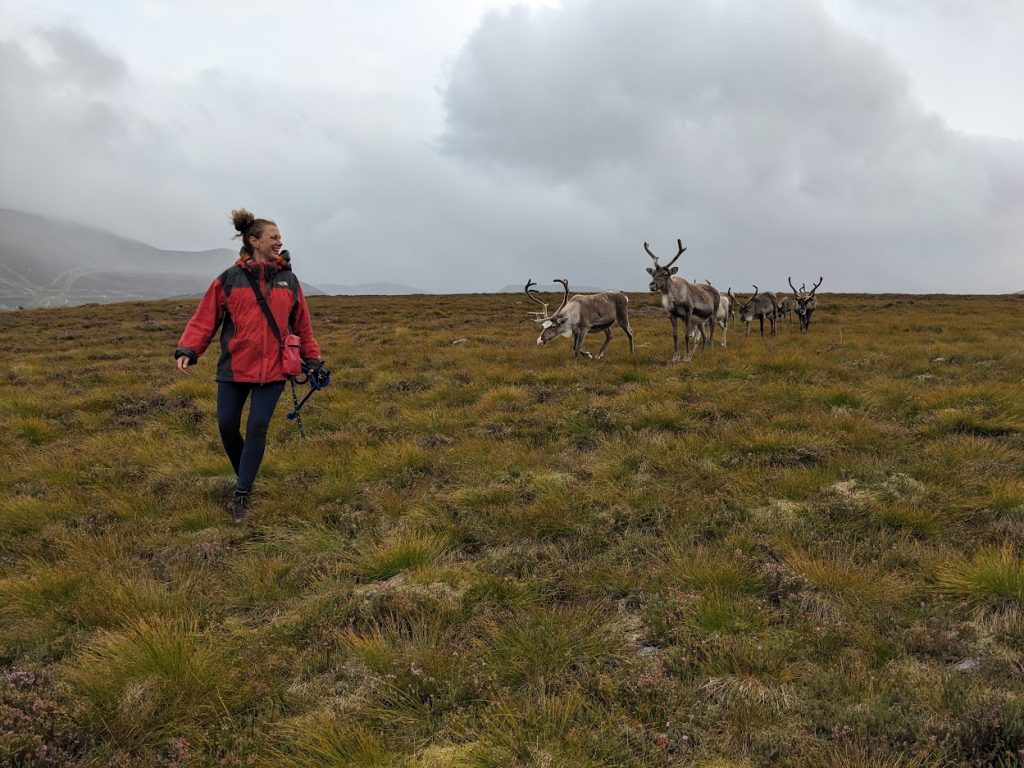
One of the trickiest things to learn when starting out as a herder is telling reindeer apart! With over 150 reindeer in the herd, all with their own name, it can seem a very daunting task. So how do you tell a reindeer apart from all the rest?
Who’s who?

Every herder has their own method of identifying reindeer. Most can just take one glance, and due to having spent years with the same reindeer and learning to tell them apart – instantly know who it is. But if you haven’t spent years watching the reindeer grow and change with the seasons, there are a few techniques you can use. Be warned though, you’ll constantly feel like you’re back at square one should you visit us throughout the year and try to recognise your favourite.

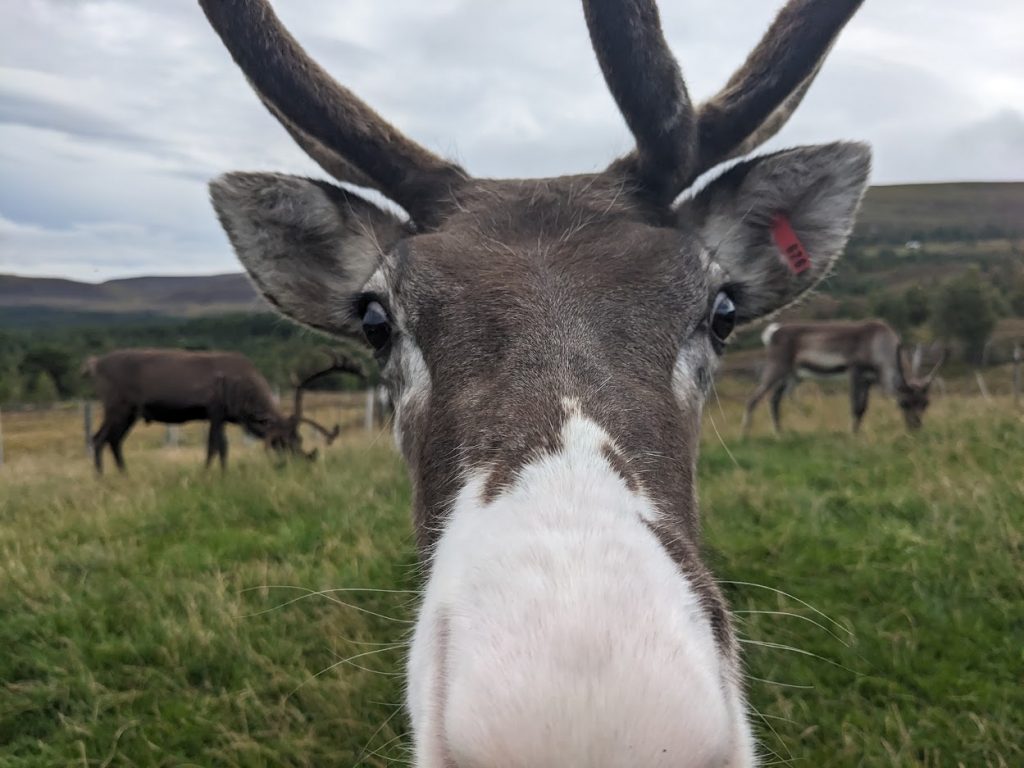
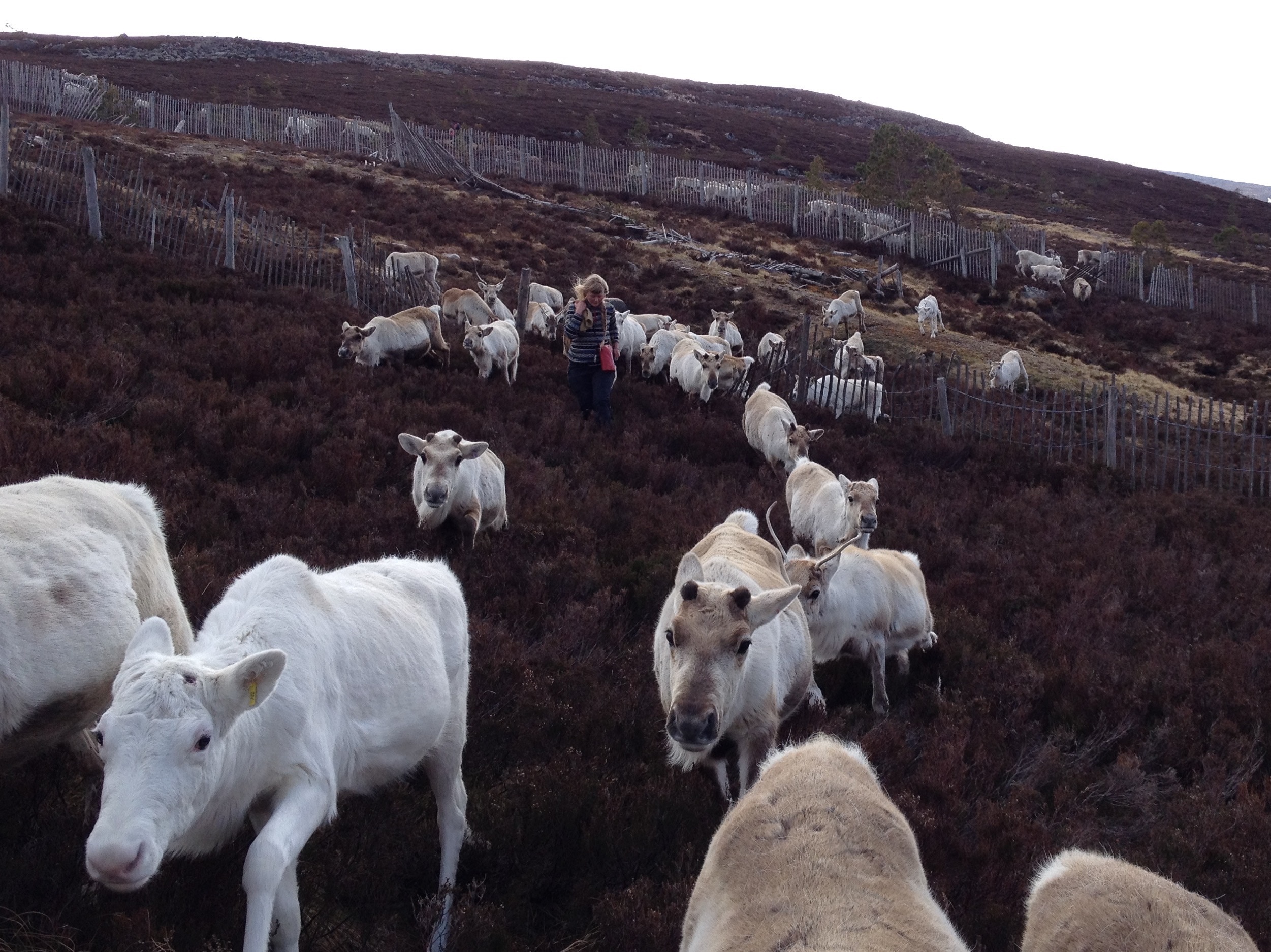
I’ll start with the easiest way to tell the reindeer apart – their ear tags. Each of our reindeer are tagged with a group colour and a unique number. The colour changes each year, allowing us to quickly work out how old they are. For example, yellow ear tags are for this year’s yearlings, born in 2024 and all named after hot drinks. Silver ear tags belong to the peas, beans and seeds calves of 2020, making them all five this year, and so on. The number then allows you to straight away know exactly who the reindeer is (orange tag 201 for instance, being the lovely, and very well-known Sherlock). The downside to this method is, you have to memorise over 150 ear tag colours and corresponding numbers…
Can you see our ear tags from there?

The more enjoyable method is personalities. All our wonderful reindeers have their own unique quirks and traits. Whether they’re extremely greedy and can always be counted on to be front and centre for our hill trips (I’m talking about you Nile!), or if they have a more reserved character and tend to be the shy contemplator at the end of the feed line. Their personalities shine through and can be a good way for us to tell who’s nearby.
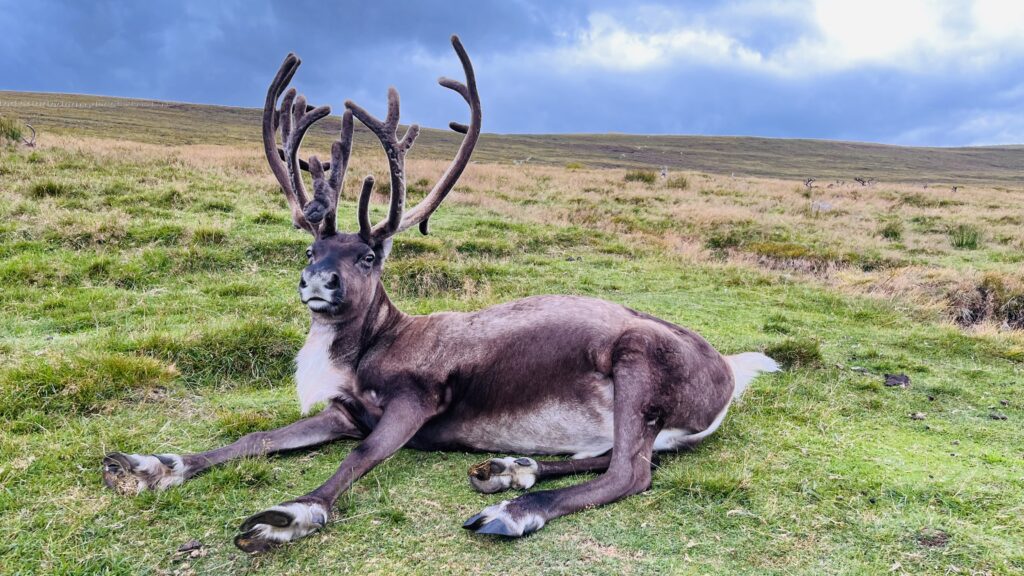
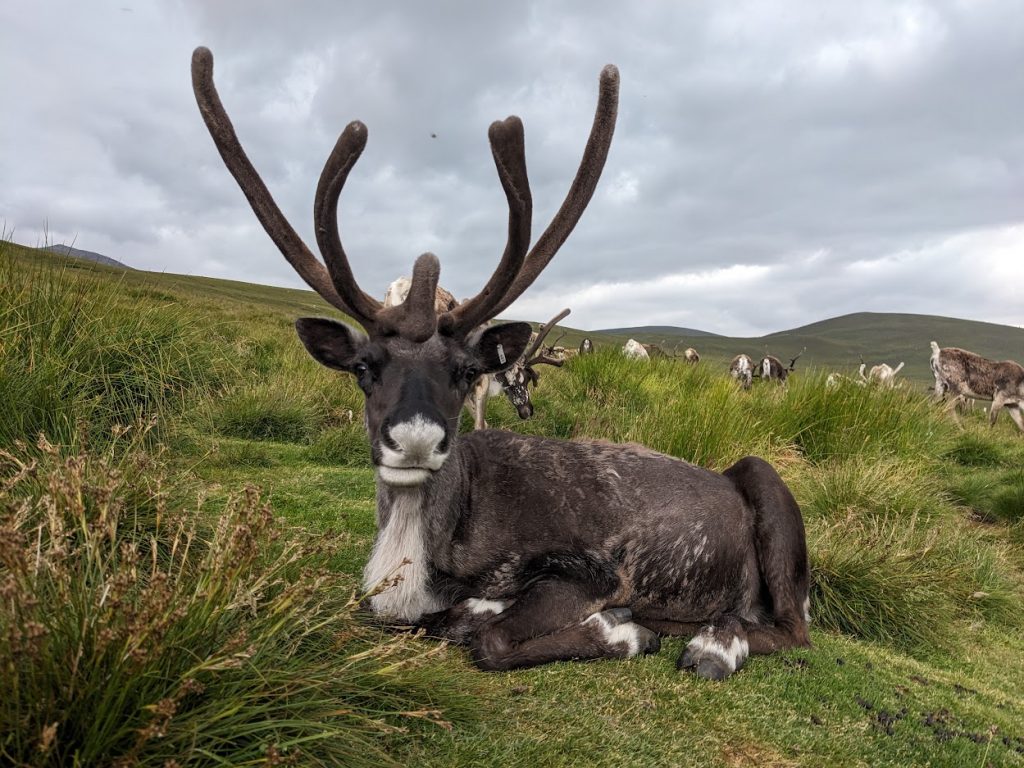
As chilled as a reindeer can be. Busby is good at chilling!

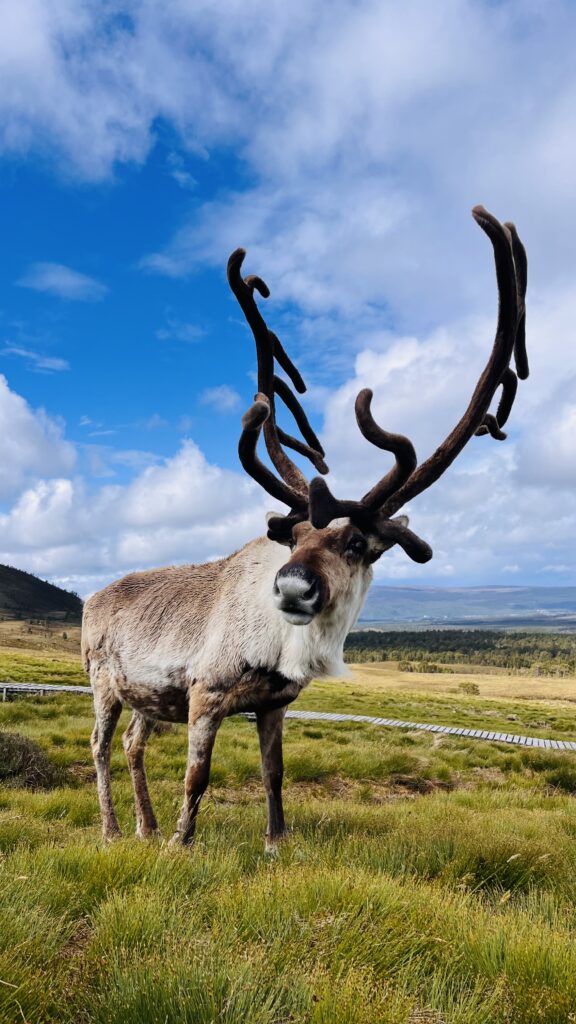
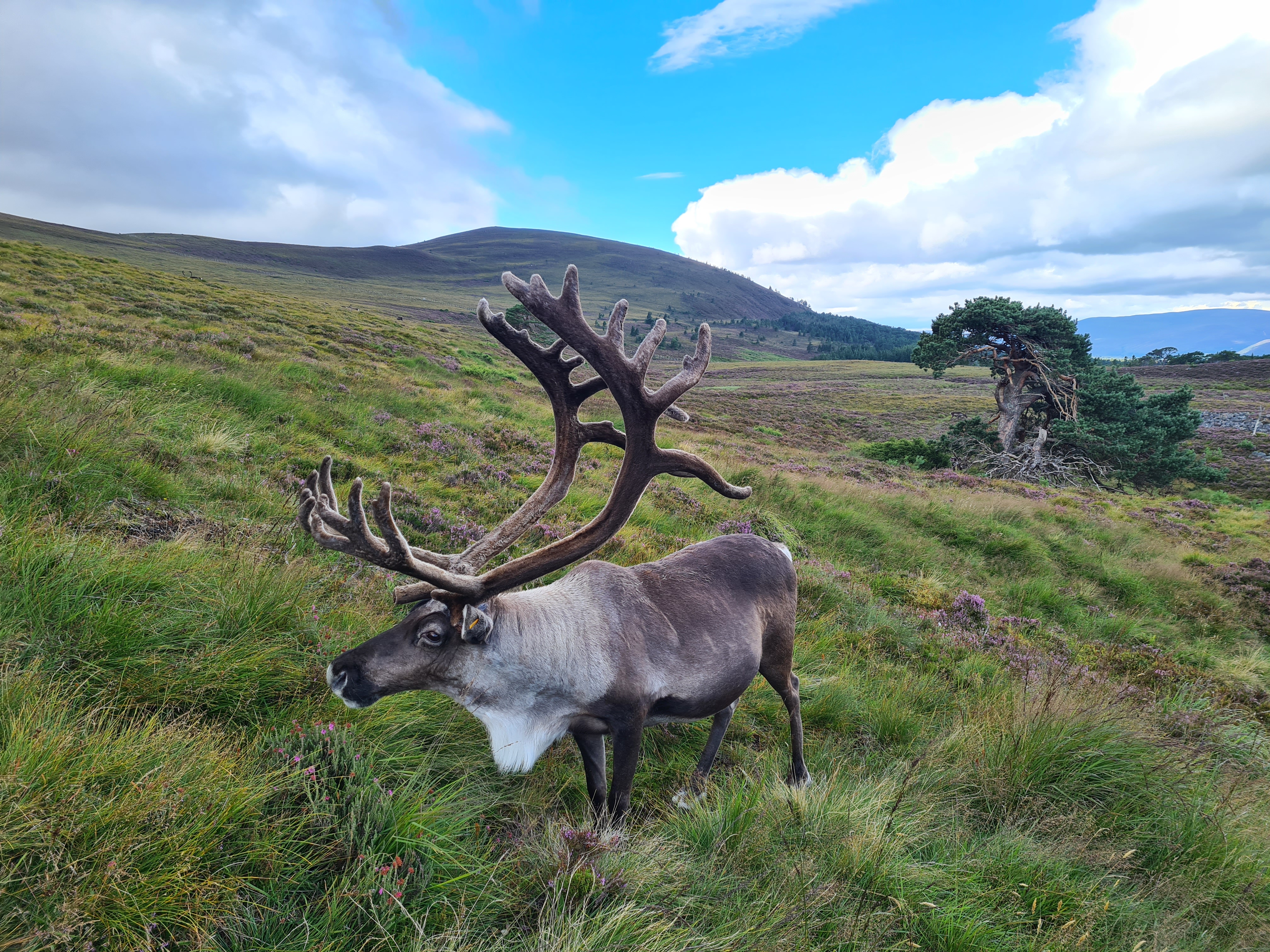
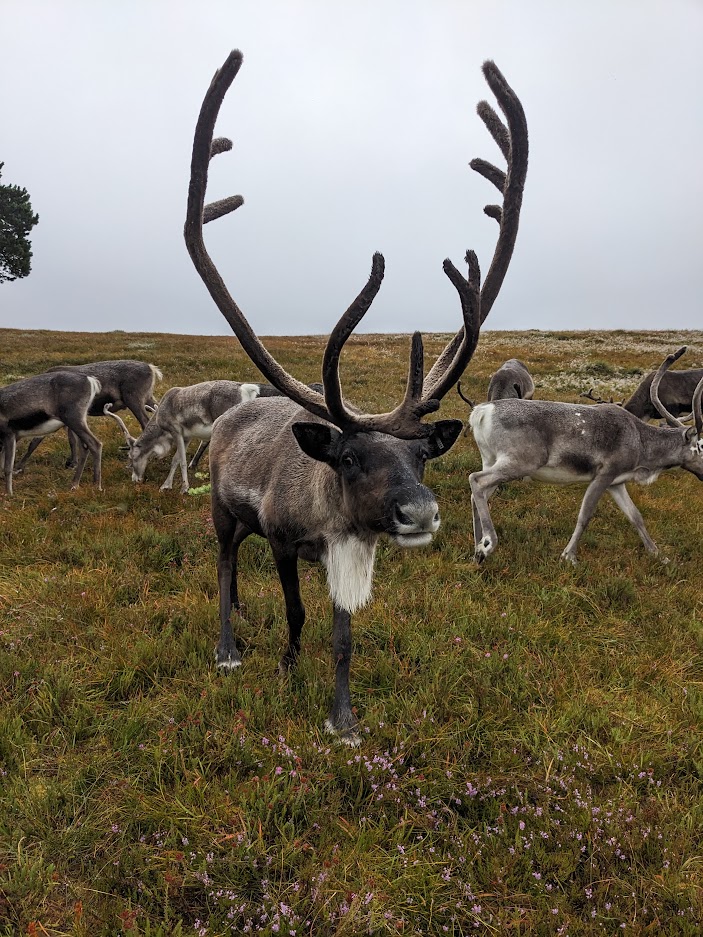
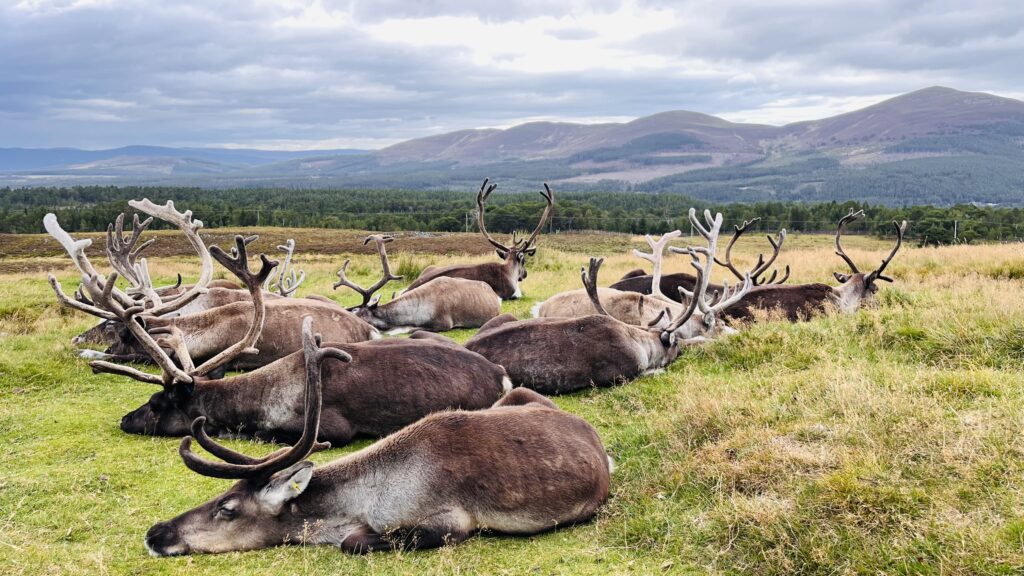
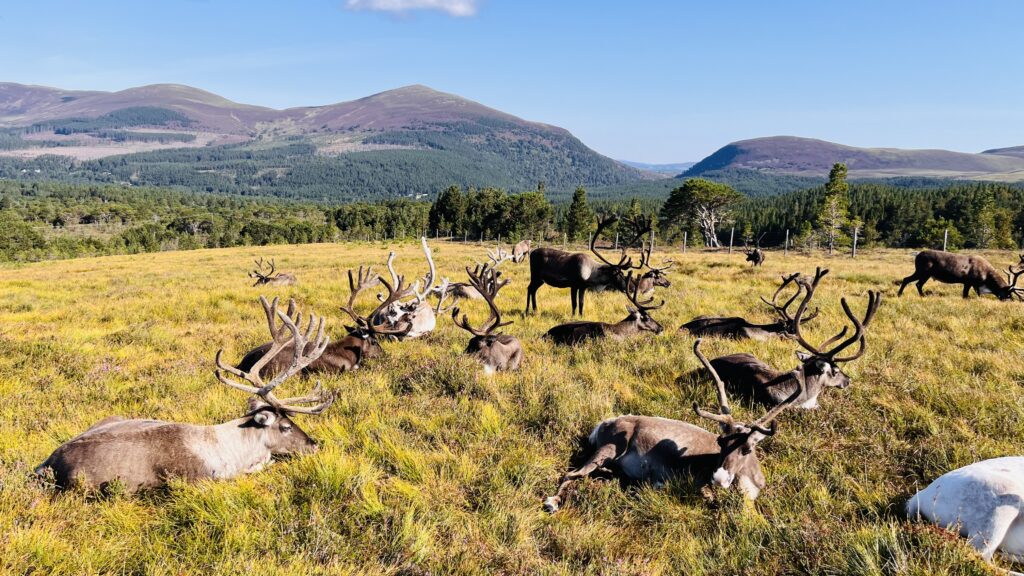
Now let’s talk about antlers! From little twigs on top of a calf, to magnificent displays fit for a castle fireplace once a bull has finished with them – antlers can be a great way to tell reindeer apart. After the age of three or four, when a reindeer is fully grown, you can usually count on a reindeer to grow the same set of antlers every year. The shape and size of a reindeer’s antlers is genetically inherited by their parents, and is unique to that reindeer, just like our thumb print (how cool is that?!). there are some factors that can influence this, such as the health of the reindeer, their age, if a male has been castrated or a female is caring for a calf. But generally, you can count on antlers being a very reliable way to identify a reindeer. Until they shed them of course!
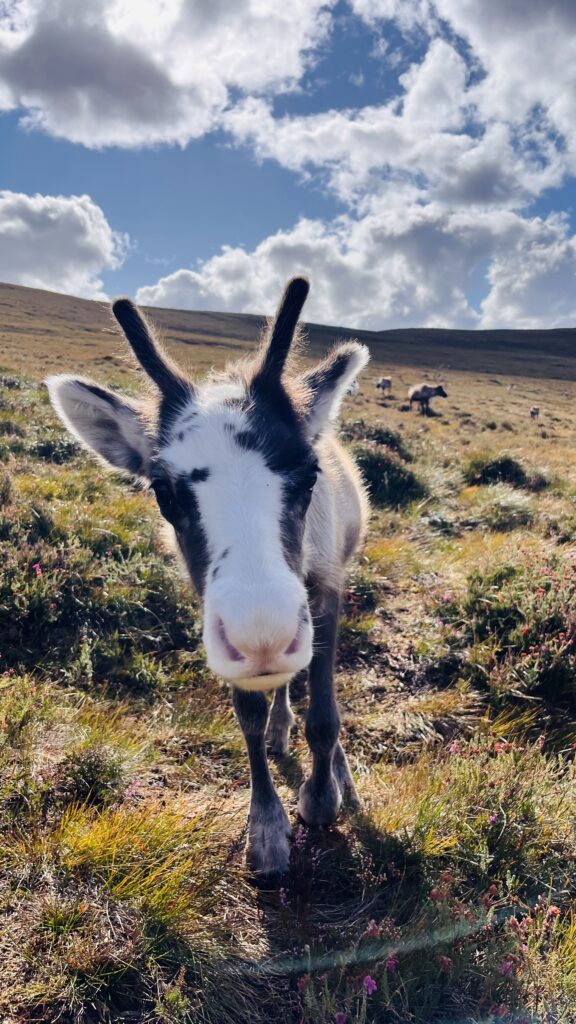
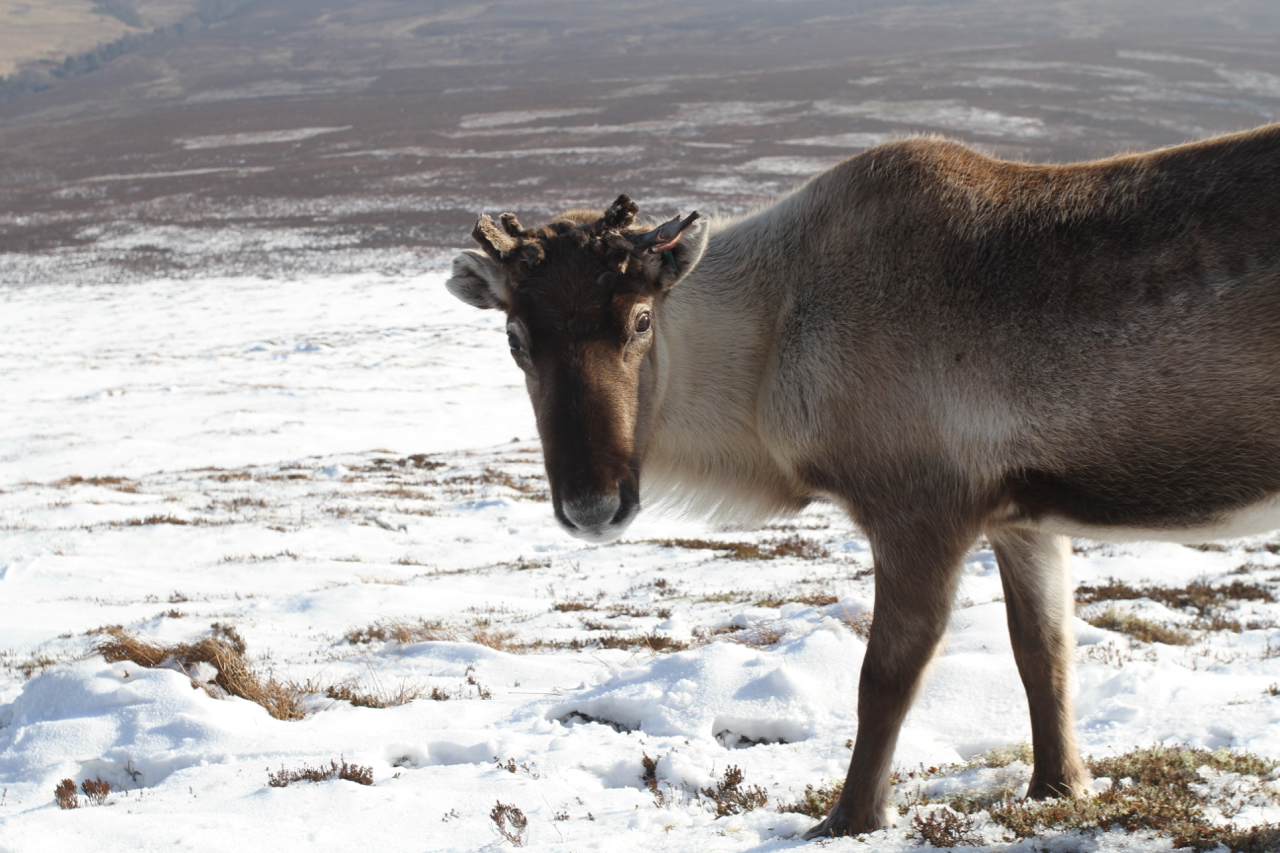
Twiglet antlers on Waltz!
Iskrem looking slightly different now the velvet has stripped.
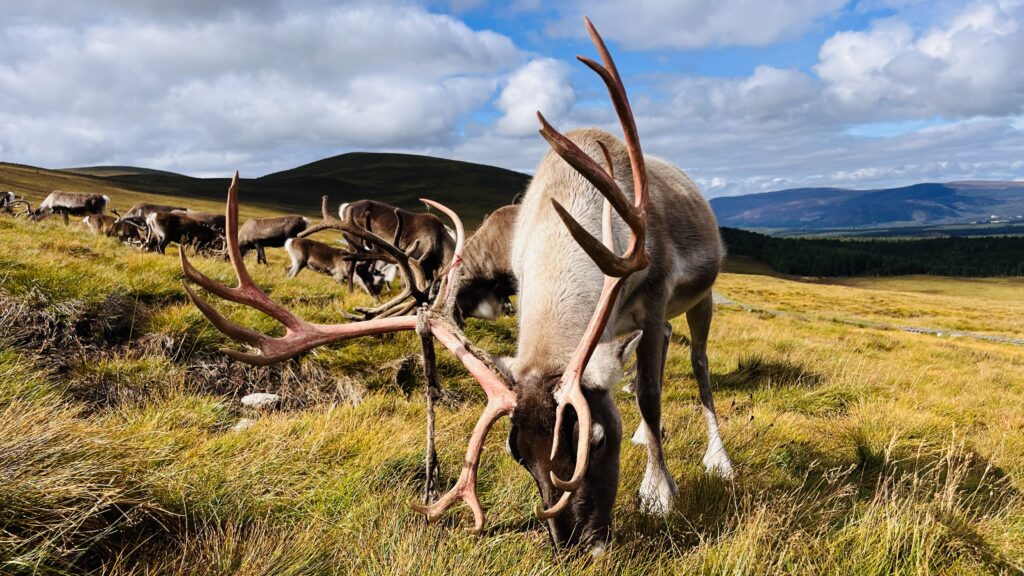
How many points can you count? That can help you tell who’s who, in this case, Calippo.
Some antlers just stand out from the herd! Sherlock to name one!

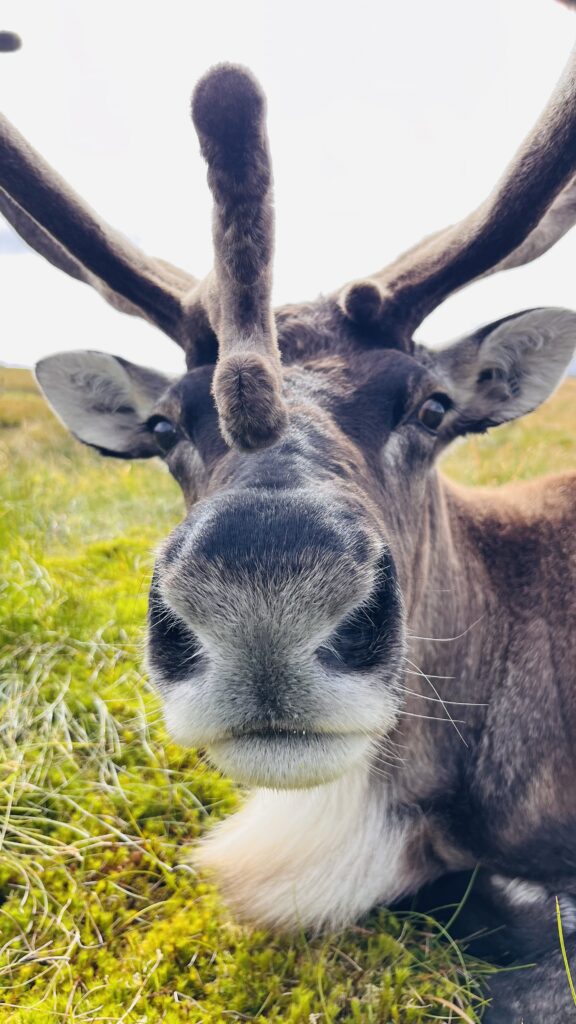
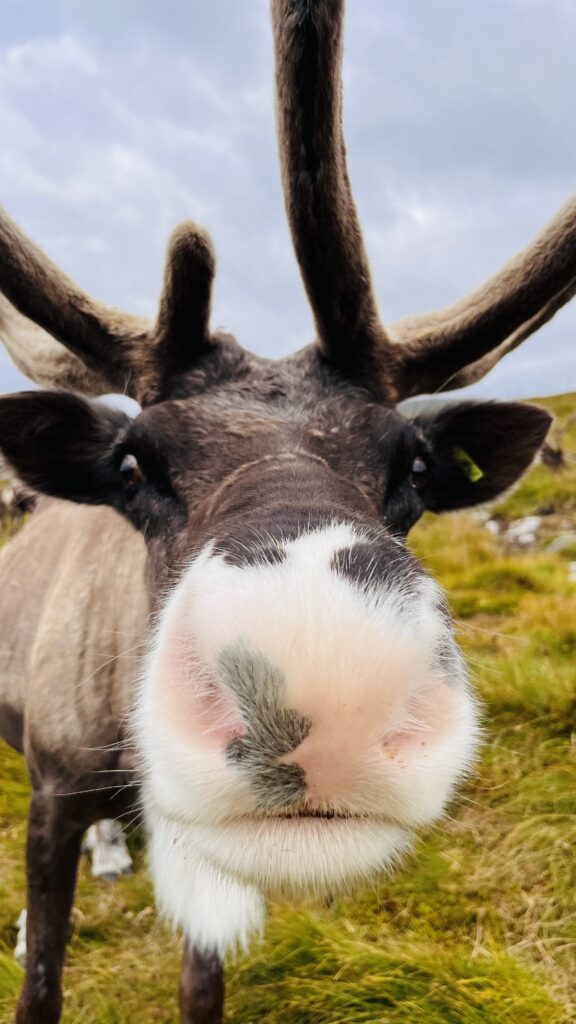
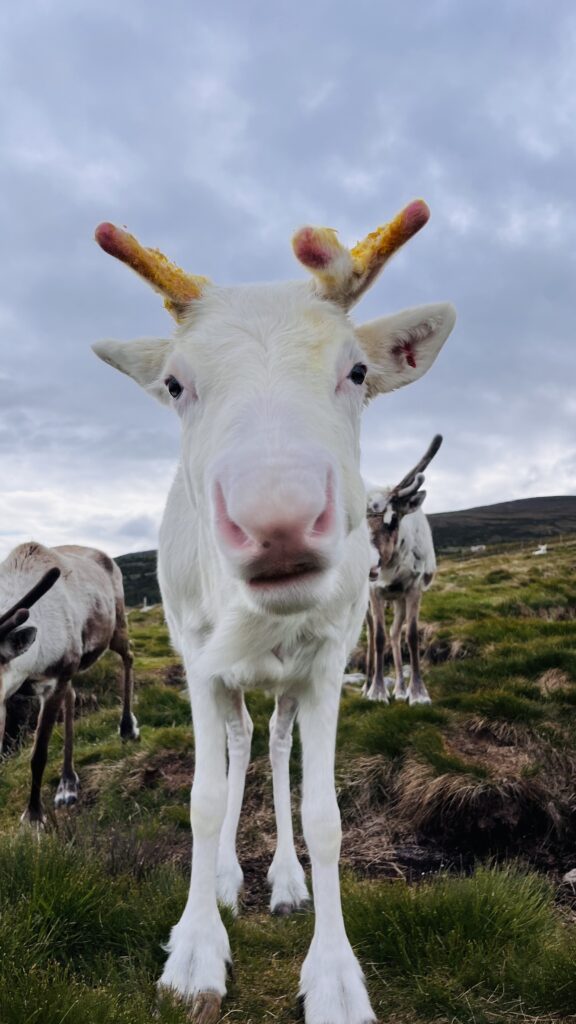
So, their antlers are gone, and you didn’t study your list of ear tag numbers – now what do you do? Well now you have the not so fun task that no body would possibly want to do… get up close and personal with 150 cute and fuzzy faces! The longer you look at the reindeer, the more obvious the differences in their coat and face markings and the shape of their bodies becomes. With an odd white reindeer here and a brown face with a white speckled nose there, you quickly begin to use markings and patterns to learn who’s who.
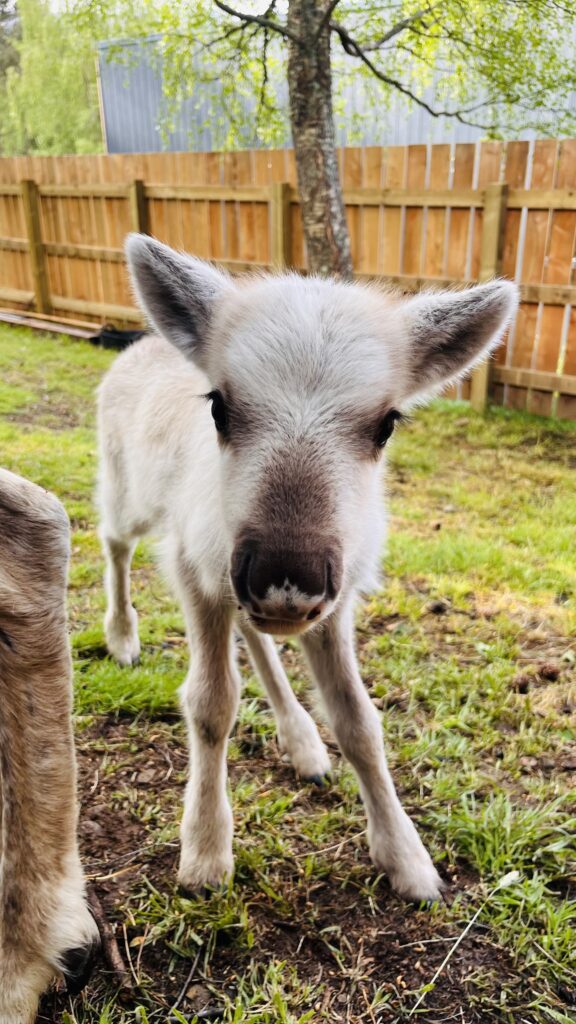
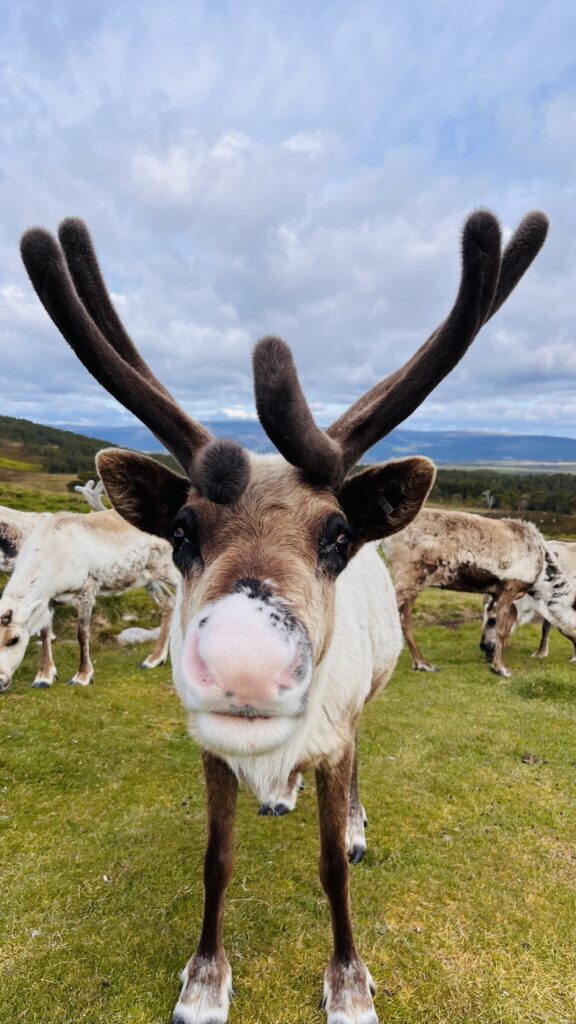
Such a tough job, studying the cute face of Lochi.
Speckled nosed Hemp is easy to spot.
A darker nose and a large blade antler, you must be… Kernel.
A pink nose with brown splotches, who might you be?… Spartan!
There’s only one Mr. Whippy!

But don’t forget those changing seasons… The reindeer you think you learnt in winter are likely to be all brown by summer. So, maybe you should get memorising those ear tag numbers after all.

Daisy
Reindeer Identification

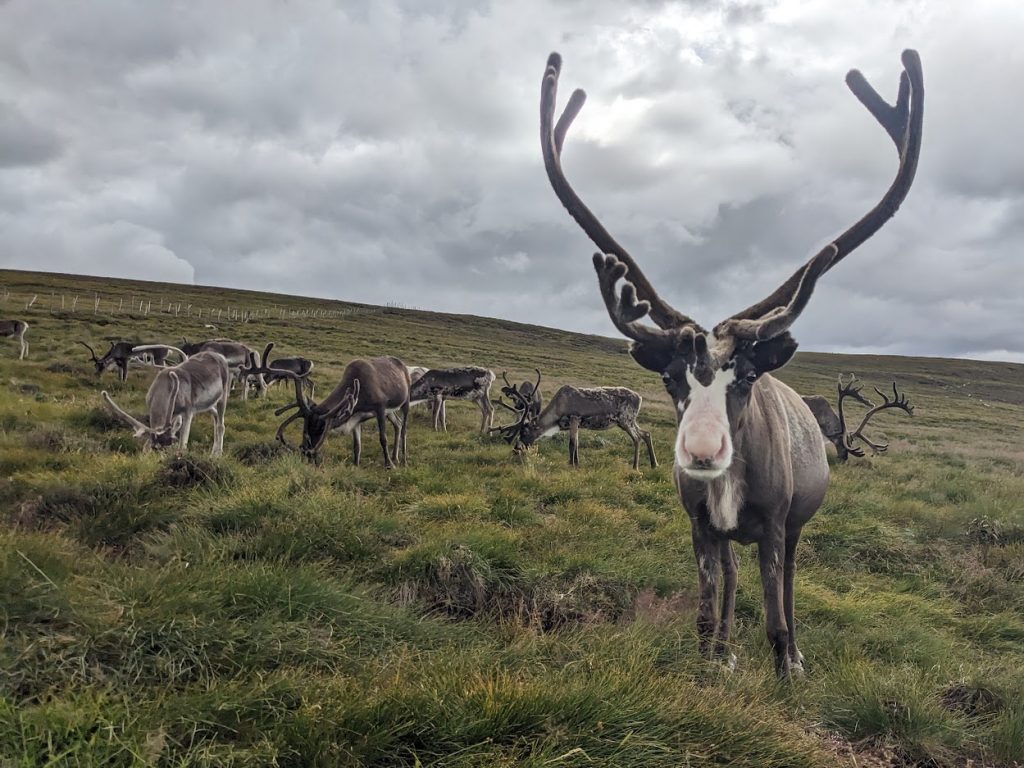
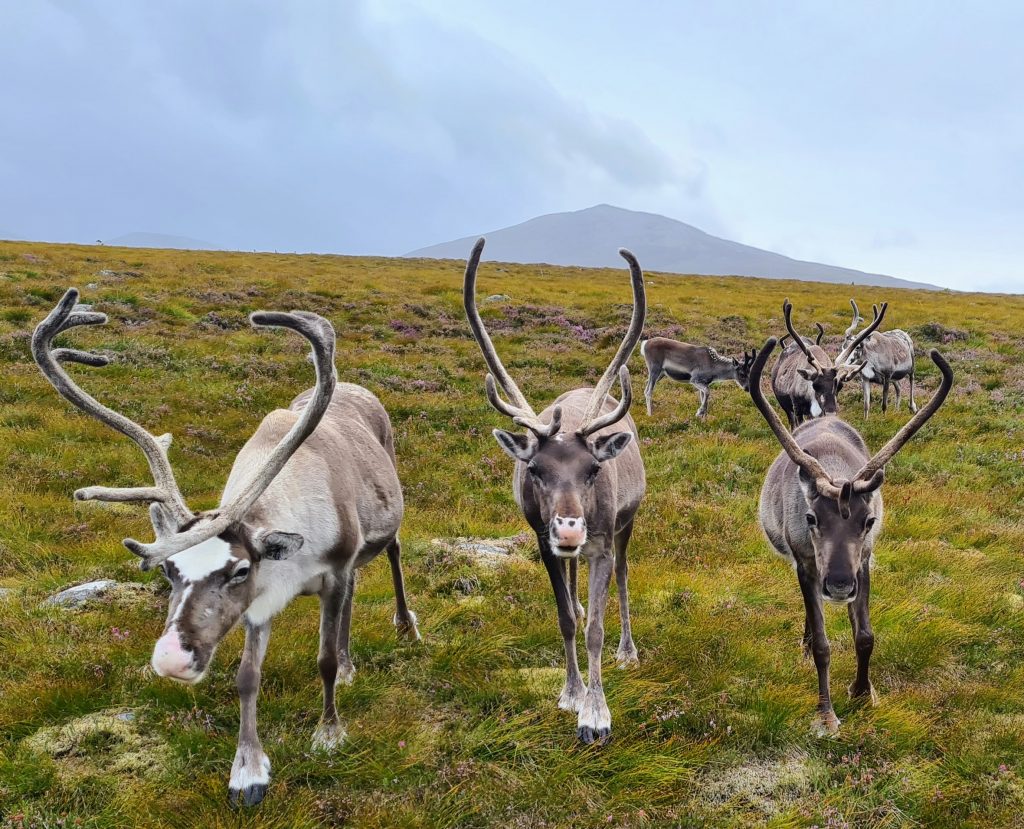
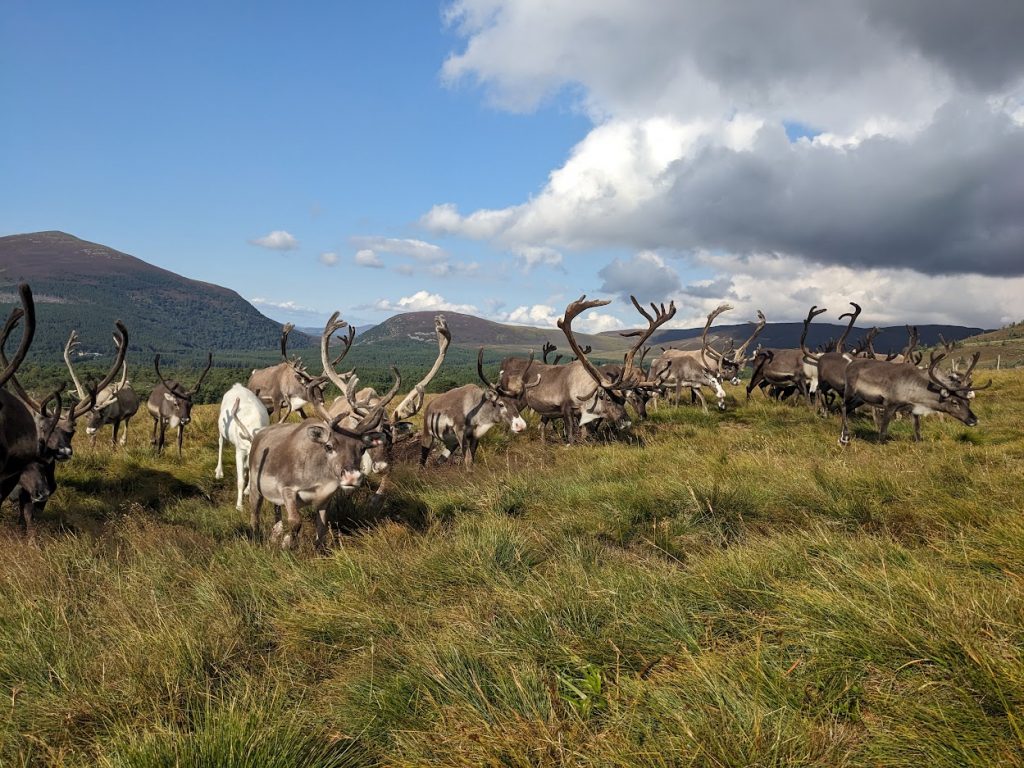
What a lovely herd, but how do you learn all their names?

Reindeer identification is definitely one of the most challenging aspects of the work here at the Reindeer Centre. Of course there are a few individual reindeer that are very distinctive and easy to spot like Sherlock with those enormous antlers and Dr Suess with his with white nose. I’m also pretty confident telling apart the two white yearling males (99 and Mr Whippy) as long as they’re not too far away!

Sherlock is a very distinctive boy with big antlers.
Most visitors to the hill will be able to recognise Dr Seuss within a few mins of meeting him.

I’ve been taking as many opportunities as I can to try to get to know who’s who for the less obvious members of the herd. During the summer months while I’m here, the hill enclosure is home to a lovely smaller herd made up of some of the bulls. It’s a good time to try to learn a few reindeer while they’re part of a smaller group and I can see them most days.

The ear tags on the reindeer are colour coded depending on the year they are born, for example last years calves all have red ear tags (I was lucky enough to be volunteering the day they were tagged!). As a rule, I tend to look for any distinguishing features first like coat colour, markings, antler shape and size, and body size. After that, I’ll try to spot what colour the ear tag is. Some of the older reindeer are easier because there are fewer to choose from with that year’s colour ear tag.

Zoom showing off his red ear tag. But it’s his white face markings and cheeky character which give his identity away!

As well as the more obvious physical features, its been really helpful to speak to the other herders to get hints and tips on how they remember who’s who. For example, Sheena pointed out that Poirot’s antlers come out straight from his forehead like two fingers or the number “11” and his number is “211”. Isla told me how she remembers Arta’s name because the pattern on his nose looks like artwork and Mollie told me that Cicero has the biggest of the silvery coloured antlers.

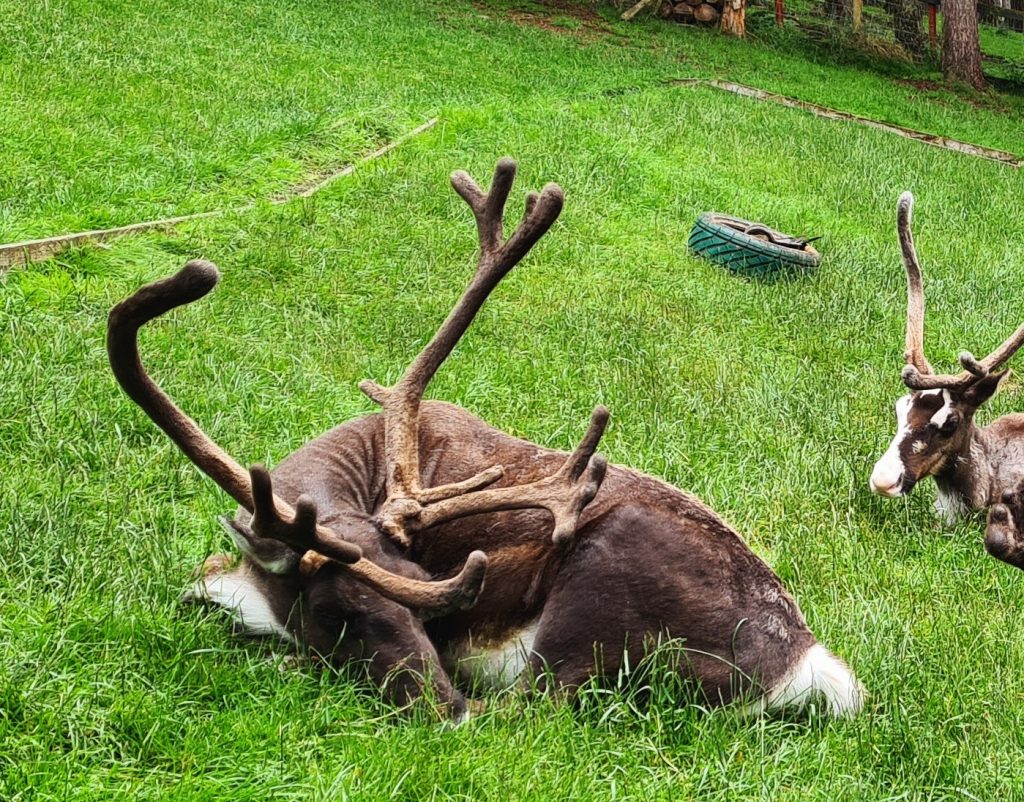
Poirot having a snooze in the Paddocks. The unique shape of his left antler helps Fran identify him.

This week I learned that Merida, Dr. Suess’ mum, also has a lovely white face and I was able to spot my personal favourite, Beanie, thanks to her lovely speckly nose and the fact that she was with a group of two cows with their calves.

Merida on the left has a very distinctive white hourglass face markings. But who are the others?! Chickpea is in the middle and Solero on the right.

However, often, just when I get the hang of this ID game, things start to change. The boys summer coats don’t really last more that a few weeks it seems so no sooner was I was feeling very confident identifying Lupin and Kernel with their beautiful dark summer coats they’re both already growing their winter coats! We’re also bringing some of the girls into the enclosure which is adding ever more complexity to the task. My ID skills are definitely a work in progress and I’m loving taking every opportunity to watch the herd and learn who everybody is.

Lupin in his short dark summer coat at the end of June…
…2 months later at the end of August, Lupin is growing through his winter coat and is looking more silvery.
Fran helping to bring some more free ranging girls into the enclosure. Yet more names to learn!

Fran

Who’s Who

Visitors are often surprised to find that every reindeer in our 150-strong herd has a name, and borderline astounded that we can identify them all at a glance. It’s important to us that we do know them as well as we do, as if one is a little under the weather it means we can all know who to keep an eye on. I thought I’d try to explain a little some of the features that help us work out just who is who.

img_9311
Gloriana showing off her distinctive white nose

First up, and perhaps most obviously, reindeer vary in colour. This is most apparent in summer, when they have shorter, richer coloured coats, and hardest in late spring when the elements have bleached their thick winter coats to a pale washed out cream. Domestication has led to reindeer coming in all colours – pure white through to almost black, some with white facial markings and an occasional one with white on other parts of their body. People have a tendency to select for interesting colours, whilst nature does the opposite and tends towards normality, hence the caribou of North America (which have never been domesticated) show little variation.

12819405_1183354135023003_7339639504957411250_o
Blondie standing out (or blending in!) beside the more normal coloured Kara

The next big pointer (though only for part of the year) is the shape and size of the antlers. Reindeer are unique amongst deer species in being the only one where females and calves grow antlers as well as the males. The size of the antlers is determined chiefly by age – getting bigger each year until their prime and then smaller again – and also by body condition – a reindeer in poor condition will only grow tiny antlers. The shape is determined genetically, which is very helpful to us herders – once you learn the shape of an adult’s antlers, you have a good chance of recognising the antler shape the following year. Unfortunately antlers aren’t something you can rely on too much though, as every year they fall off to make way for a new set. Once we get to about April we are confronted by a sea of antler-less reindeer, and it’s a real test of how well you actually know them!

img_3486
By April, there is barely an antler to be seen and their coats are bleached out – the hardest time to ID reindeer!

Character is a big part of working out who is who – certain reindeer will always be mugging you for food, whilst others prefer to keep their distance. Approaching an unknown reindeer with a handful of food will often narrow down who they could be – some will turn away whilst others will come charging over. Thankfully character changes very little from season to season and year to year, so it’s a good marker.

dsc_0070
Let’s just say that this ISN’T one of the shy reindeer… Viking.

Once you’ve worked with the herd for a few years, you start to recognise certain reindeer by their individual face shape, their mannerisms, or just a particular ‘look’ that they have. This can be the most awkward thing to try to explain to a new herder who is learning the names – “Why is that Lilac?” “It just… is…” It took me over a year of working here before I suddenly recognised the resemblance in a particular family line – there is a silvery tint to their coats that, once you’ve seen it, is very obvious. It can be great fun watching as youngsters mature into adults and suddenly looking at them one day and realising they look just like their mum! I often catch myself glancing round the hillside and rattling off names when I’ve only seen part of a reindeer – you learn to trust your instincts! You know you’ve worked here too long when you can guess with confidence who the reindeer silhouetted half a mile away is!

img_6399-1
Antler shape is of no help here, but that long nose could only belong to Shinty.

Finally, if you can get close enough, every reindeer has a unique ear tag. We use a different colour for each year, so even from a distance you can usually see which year they’re from. There is then a number on each tag, though these aren’t always so easy to read, especially on shy reindeer with hairy ears – there can be a lot of peering at them through binoculars, or occasionally taking a photo so you can zoom in on it!

So there you are – it’s not really as impressive as it sounds, and even most of our summer volunteers surprise themselves with how many reindeer they can name after a week – we give them a ‘herd list’ which they annotate with comments to help them remember distinctive features – “really greedy”, “tiny antlers”, “pointy ears”. I’m always reminded of sheep farmers who can identify individuals out of (to me) identical faces, and it really shows that, given enough time and effort you really can work out the little differences in anything. It’s perhaps a sign that I need to get out more, but I’m pretty proud that I know the reindeer as well as I do.

Andi

Book Now