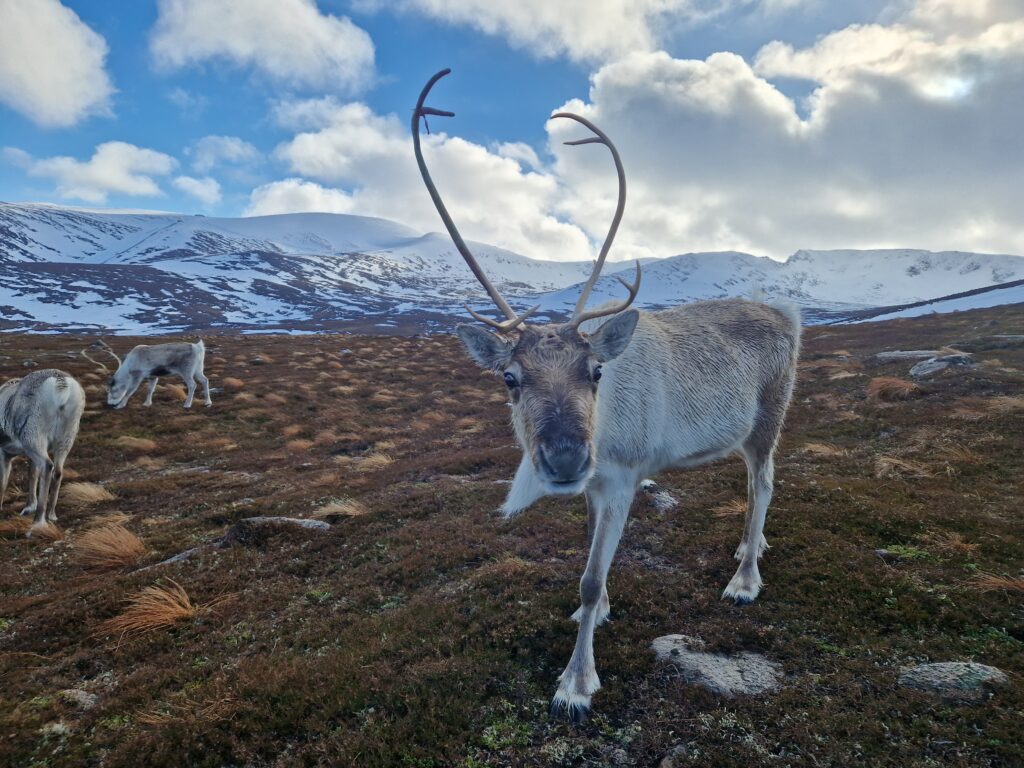
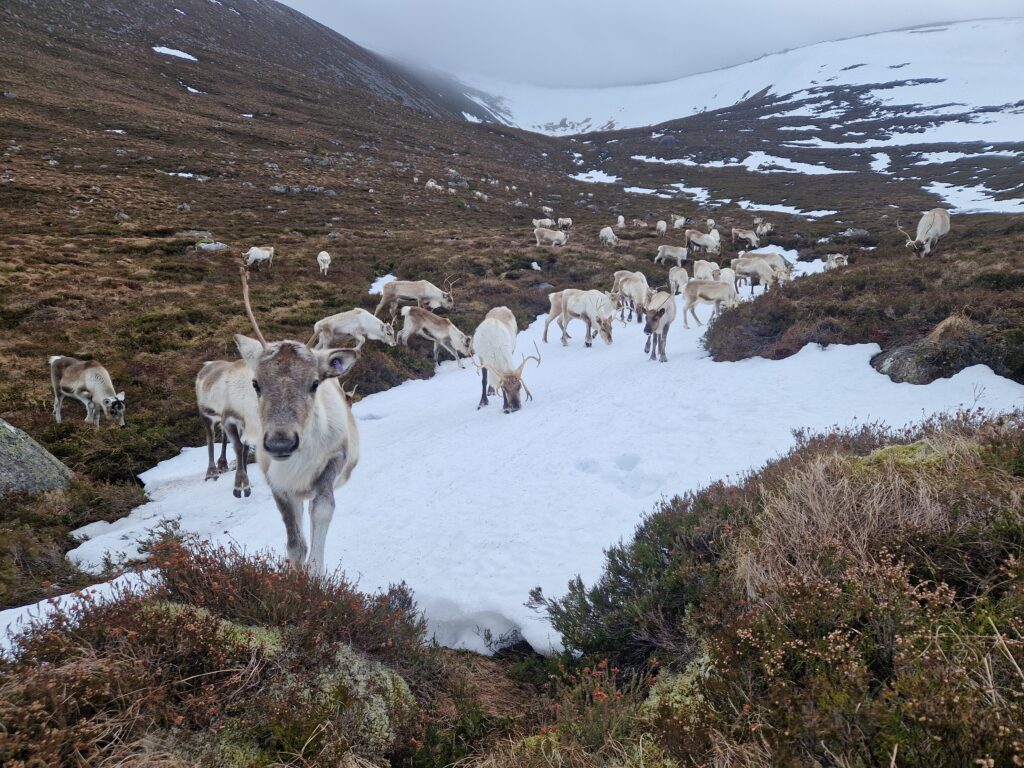
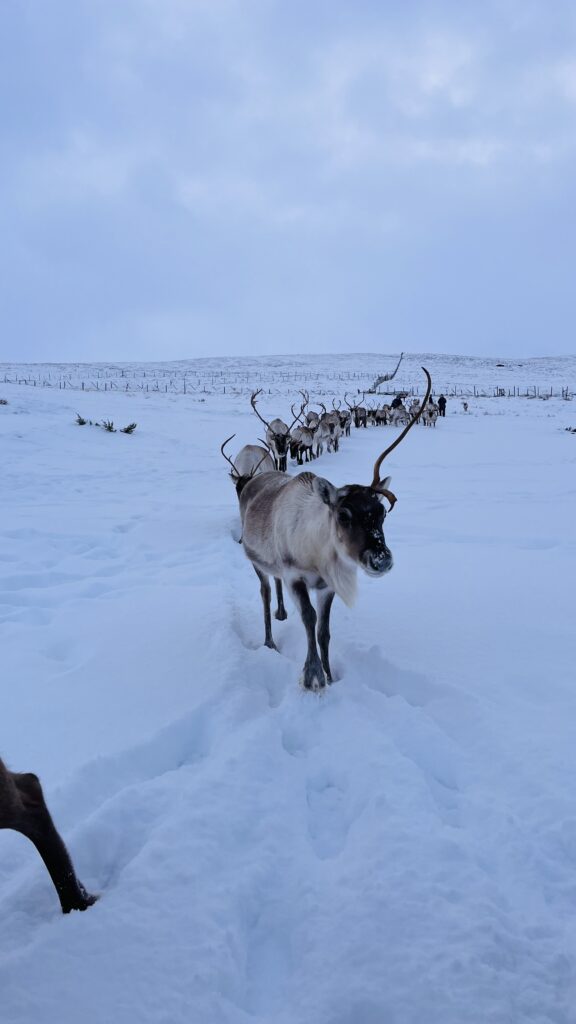
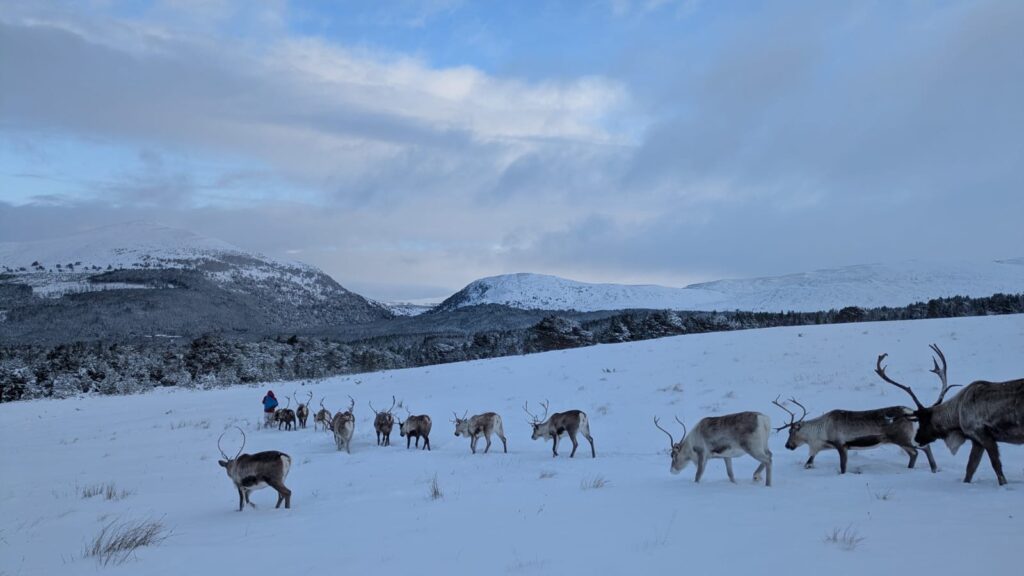
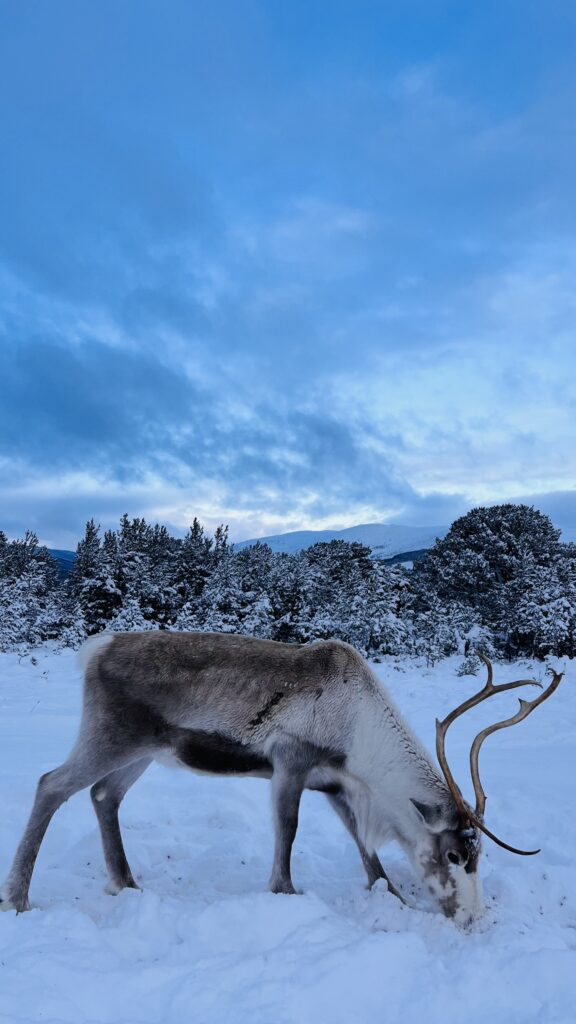
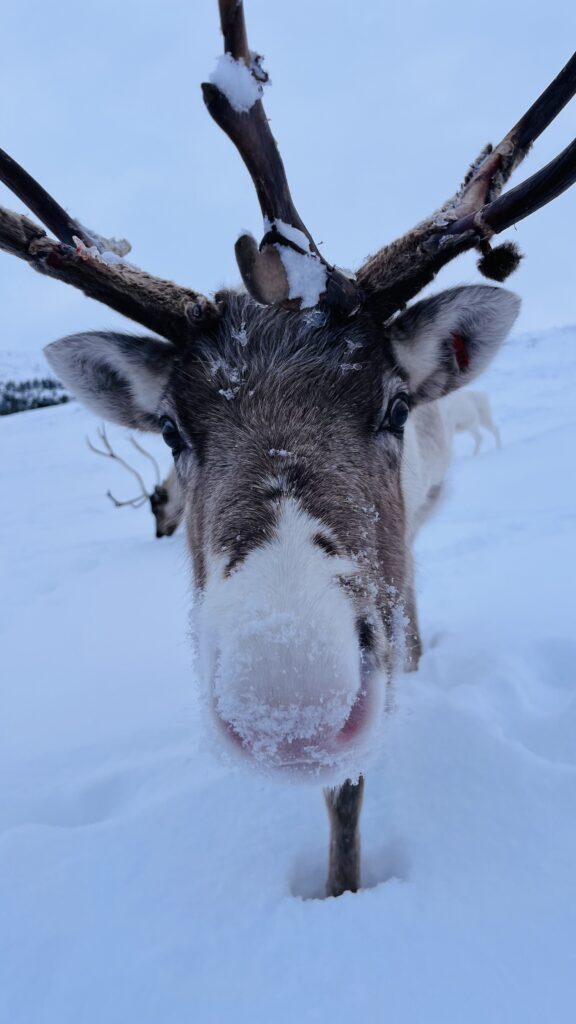
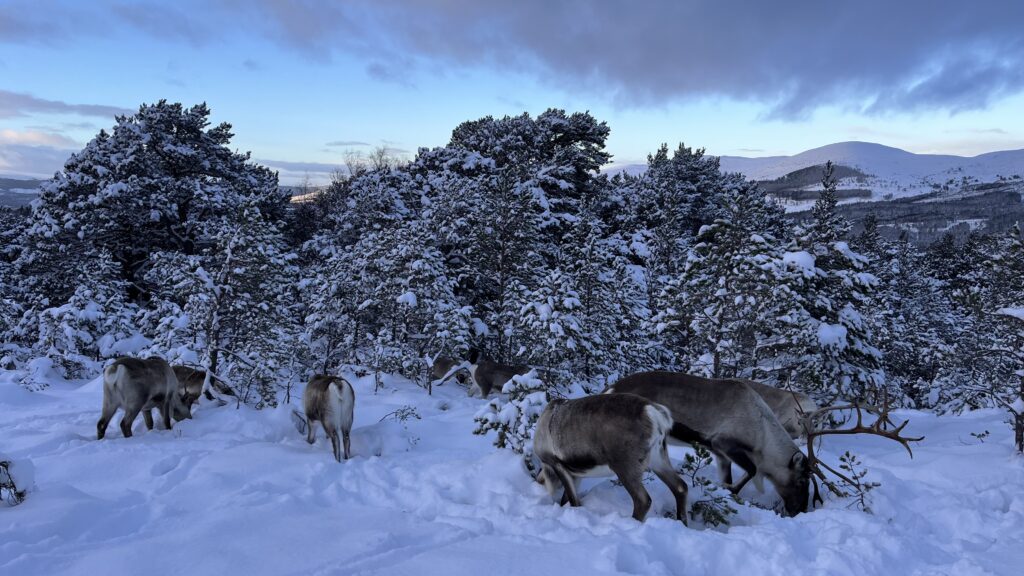
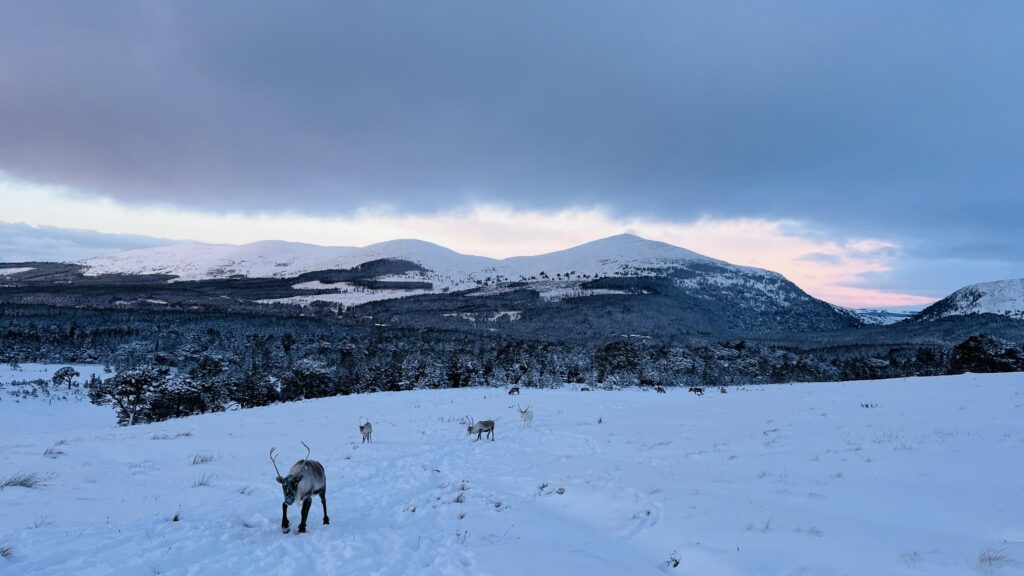
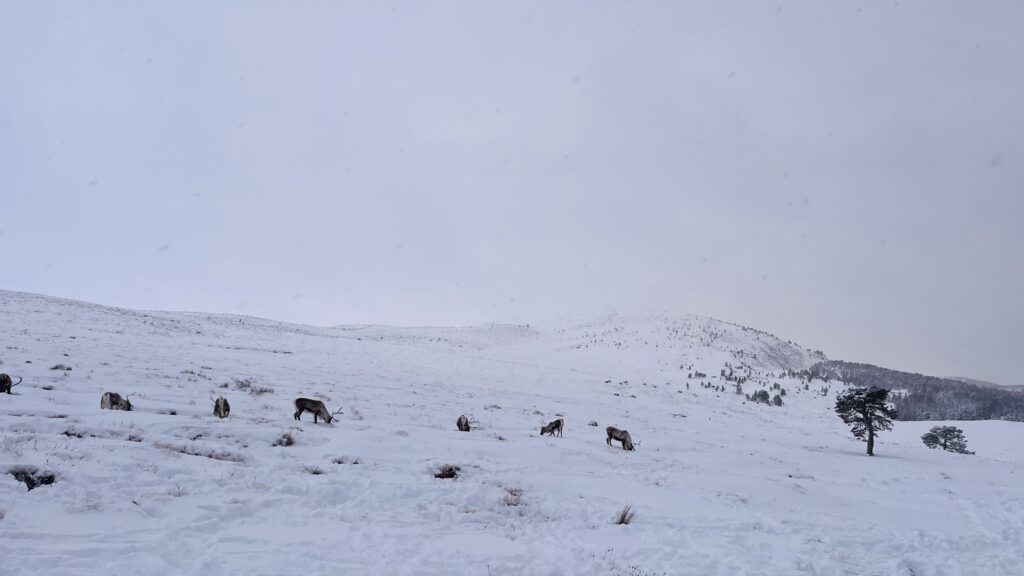
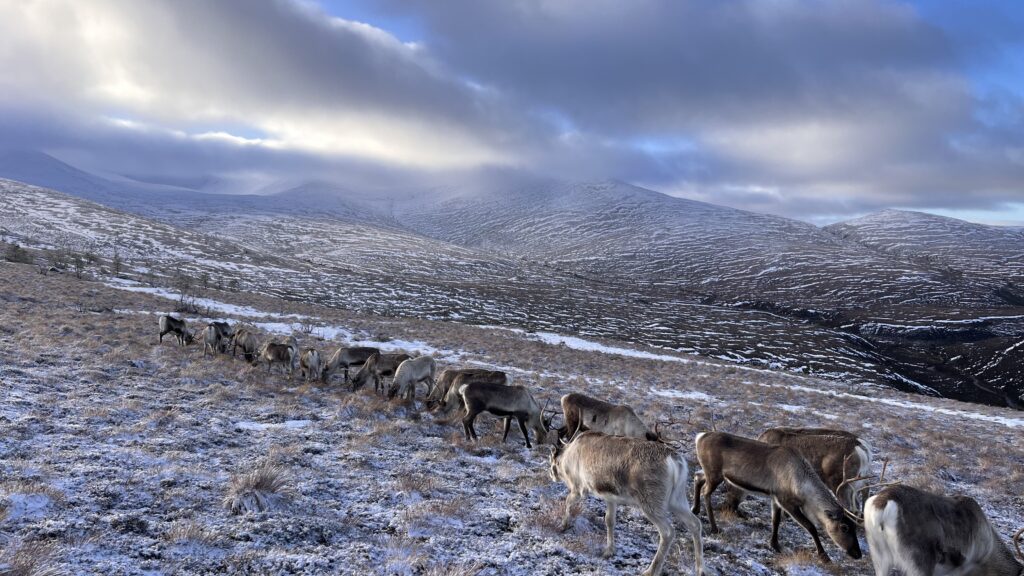
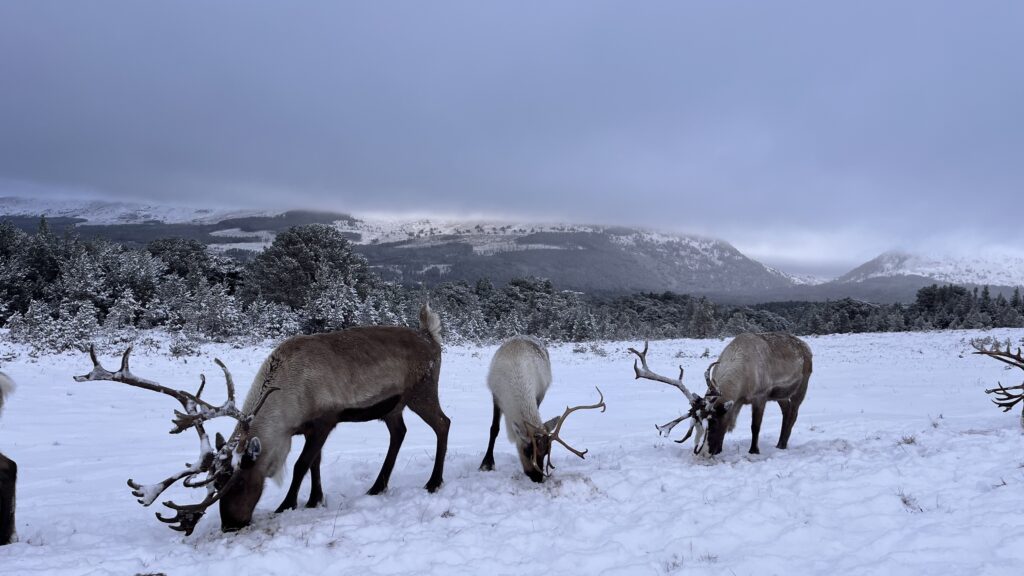
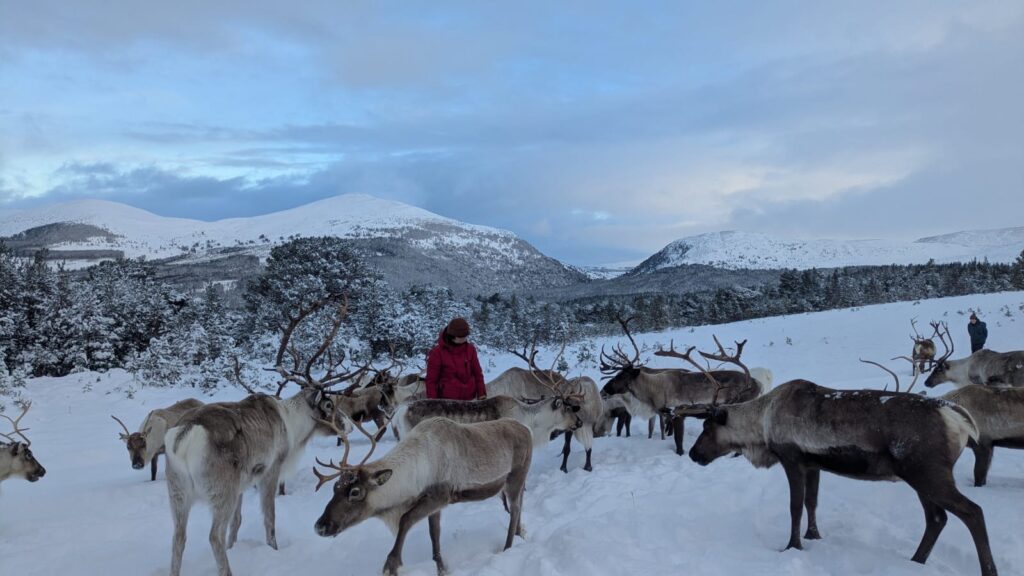
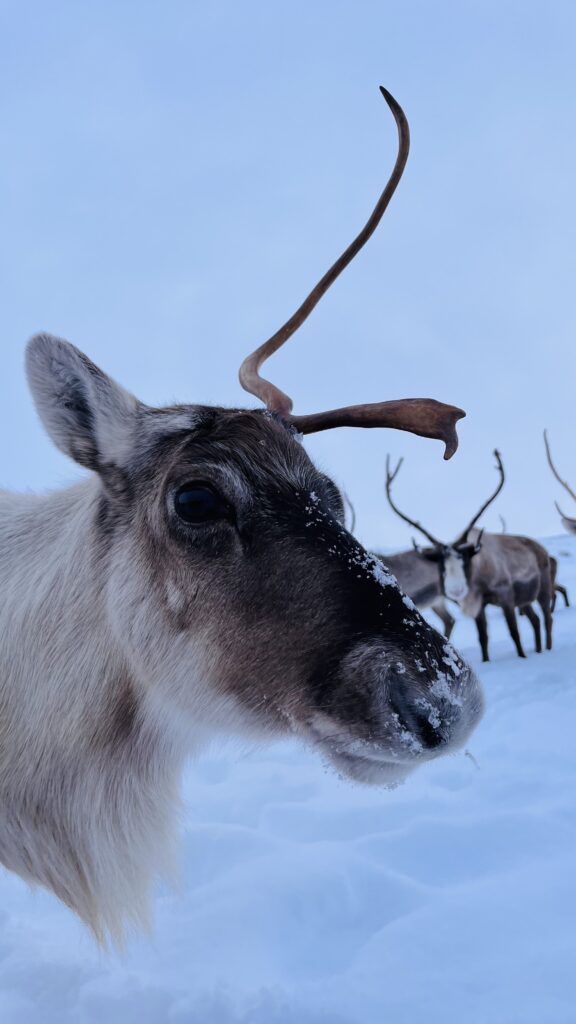
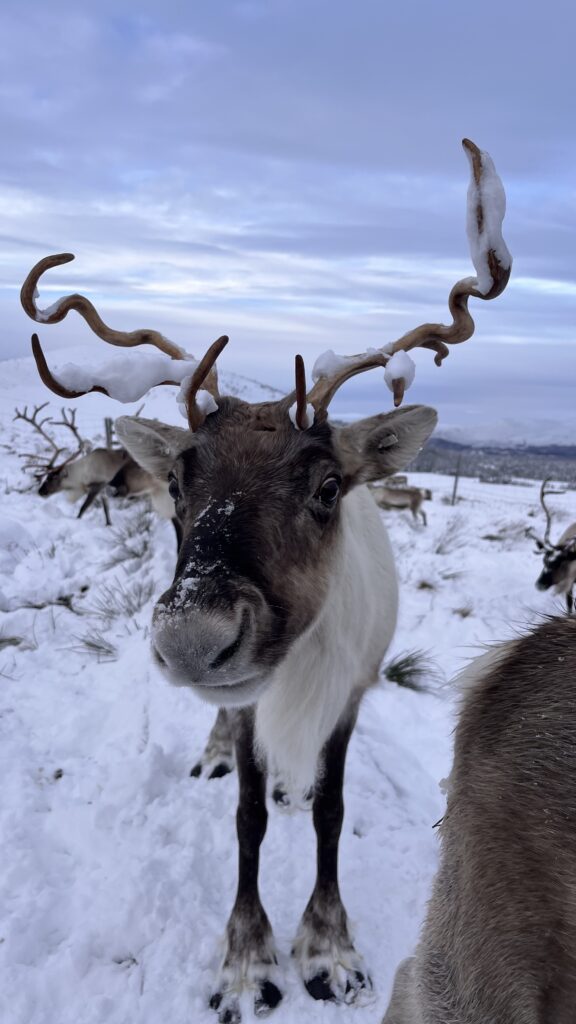
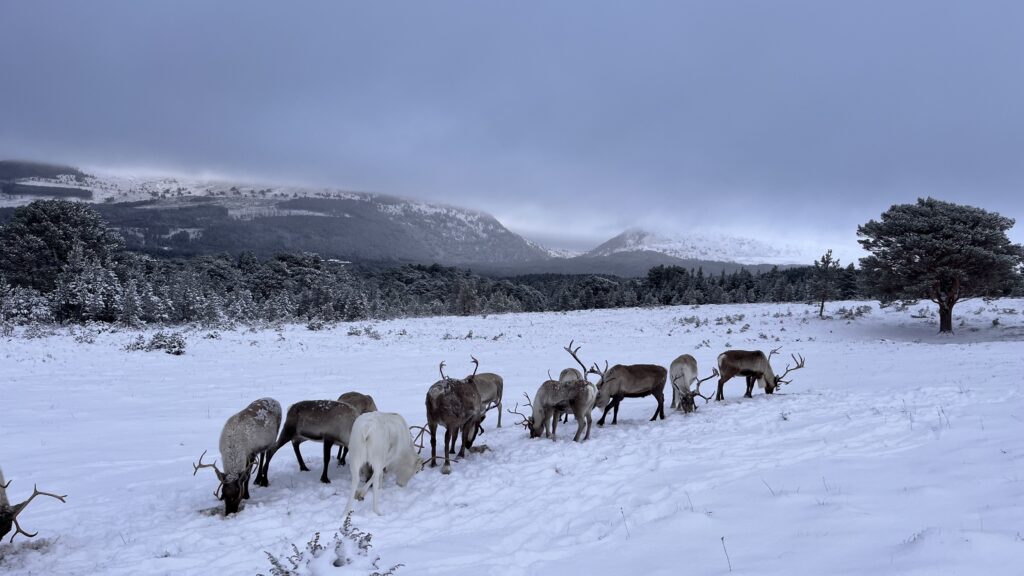
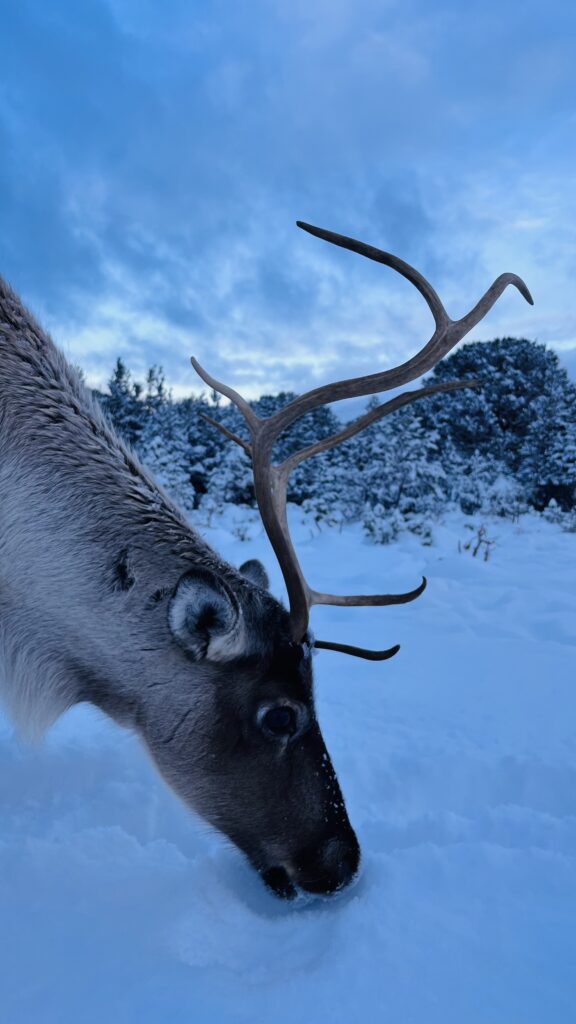
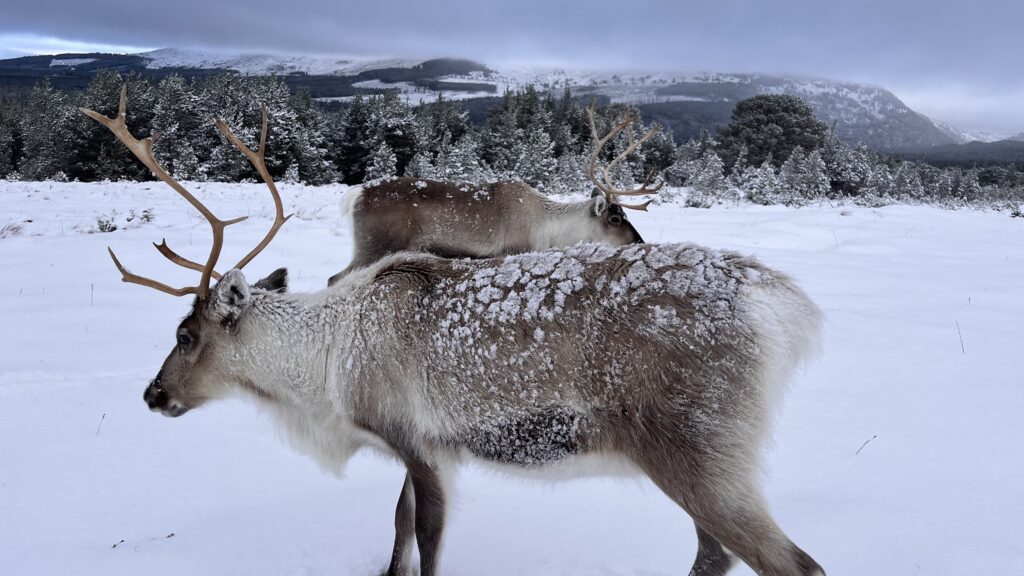
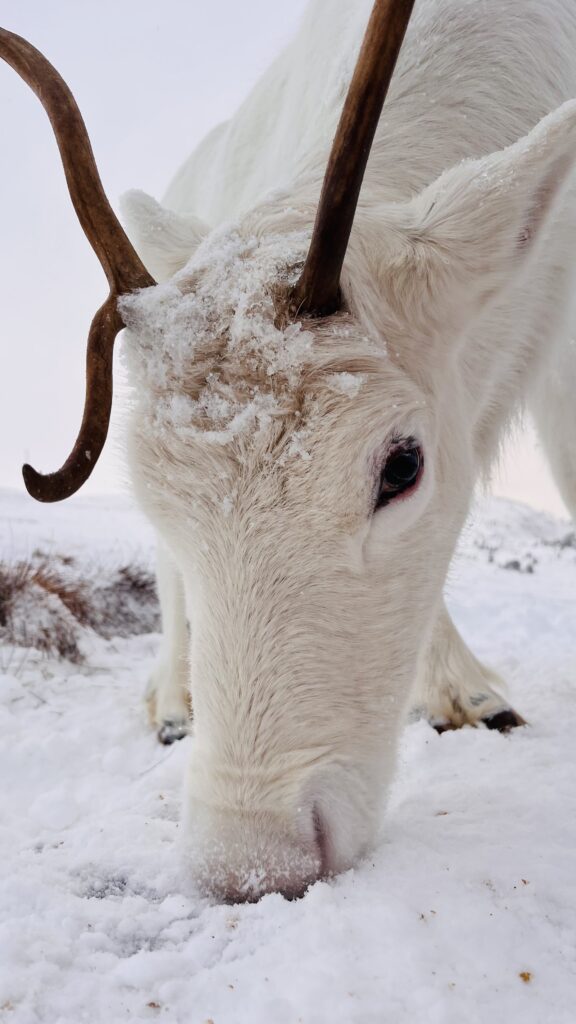
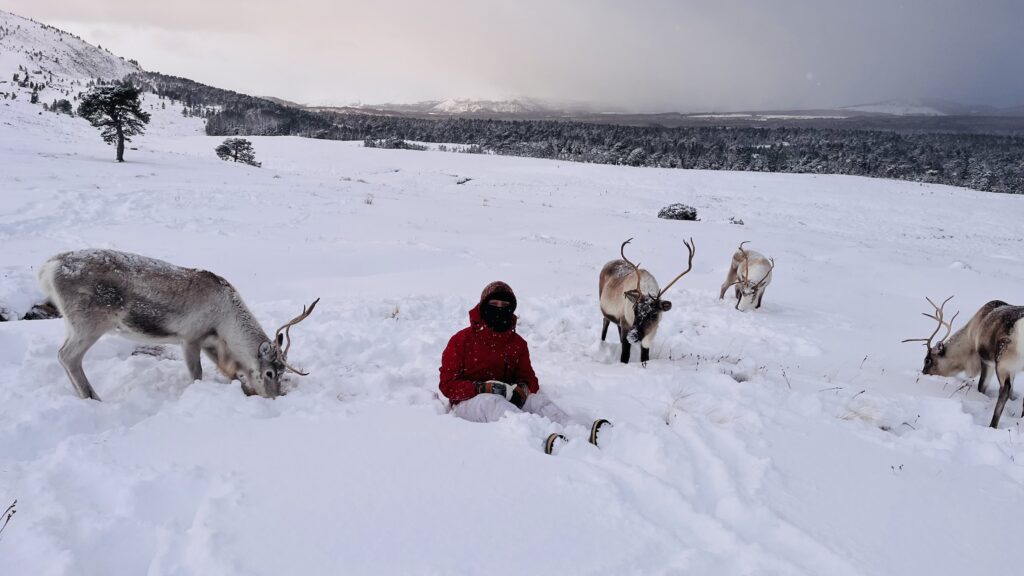
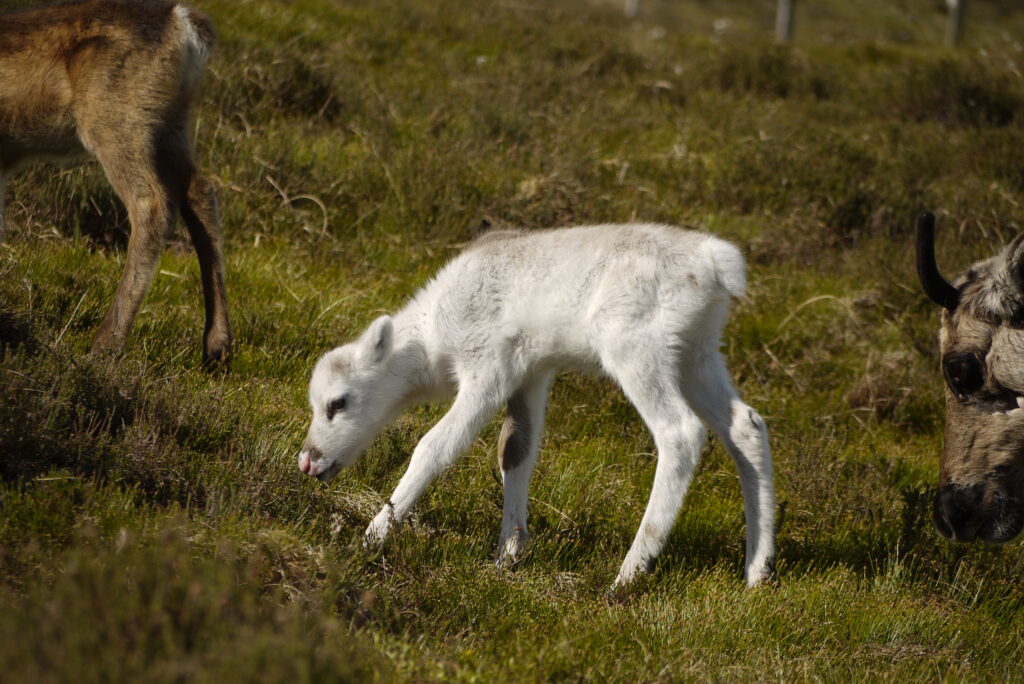
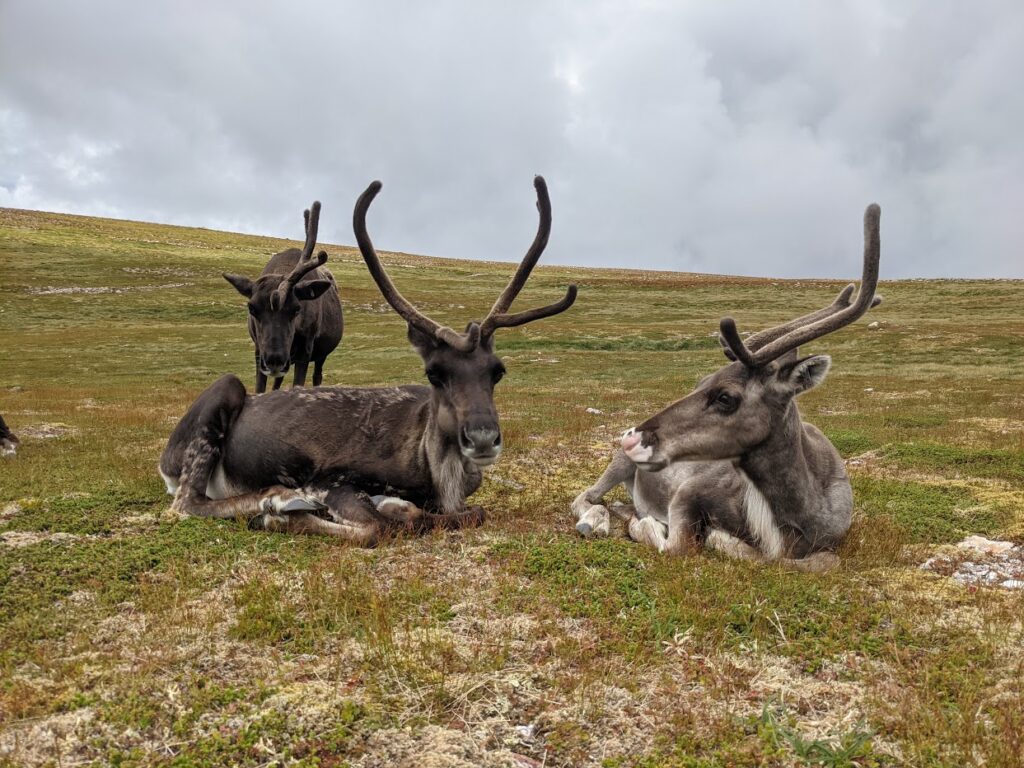
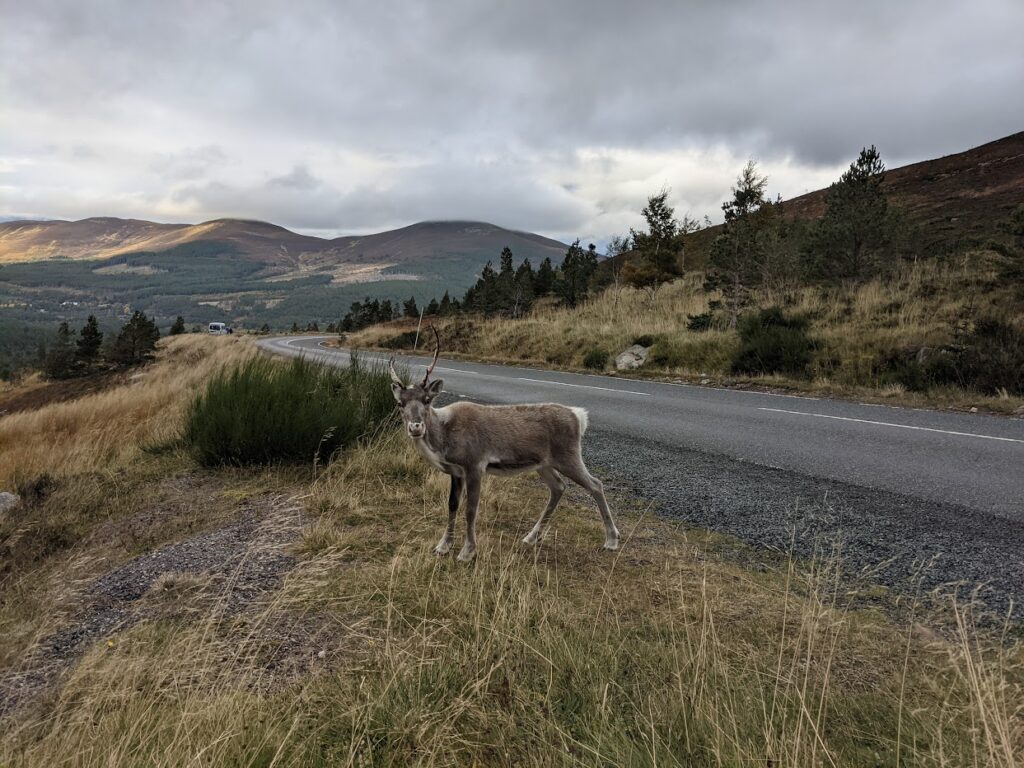
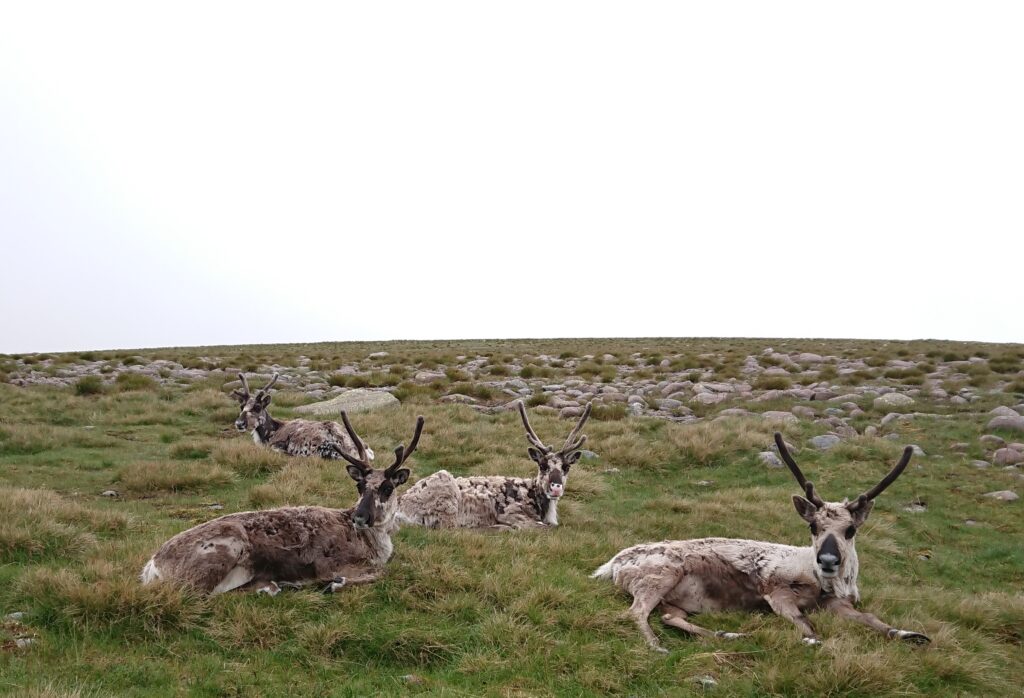
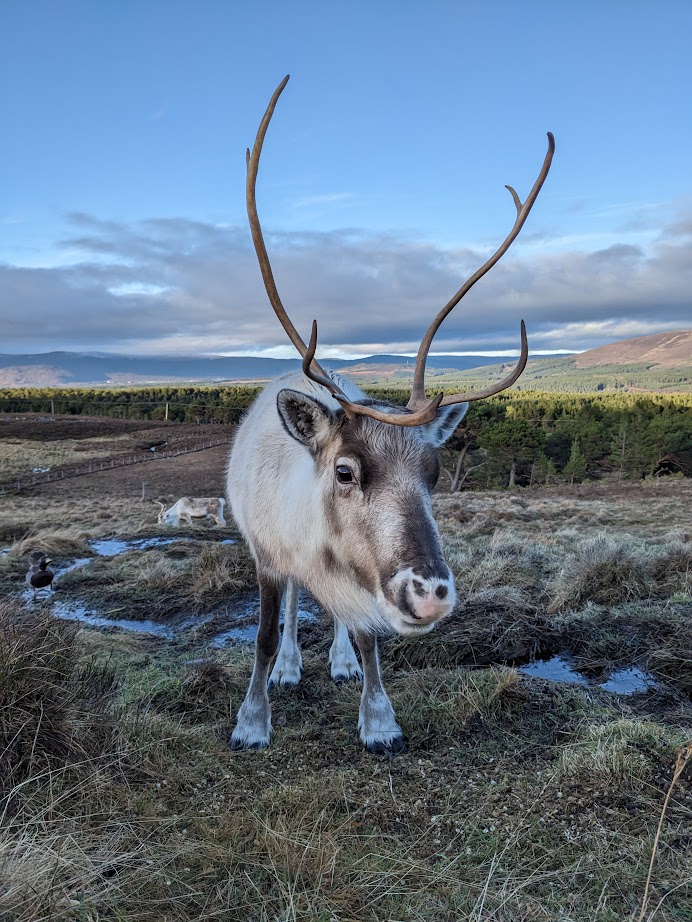
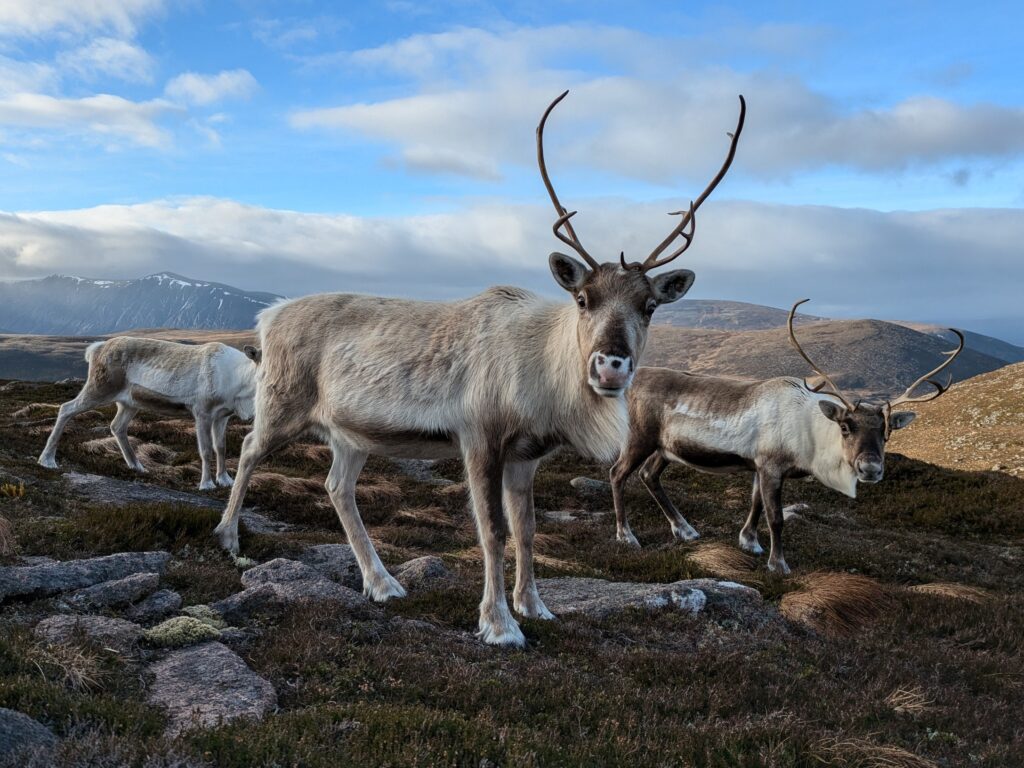
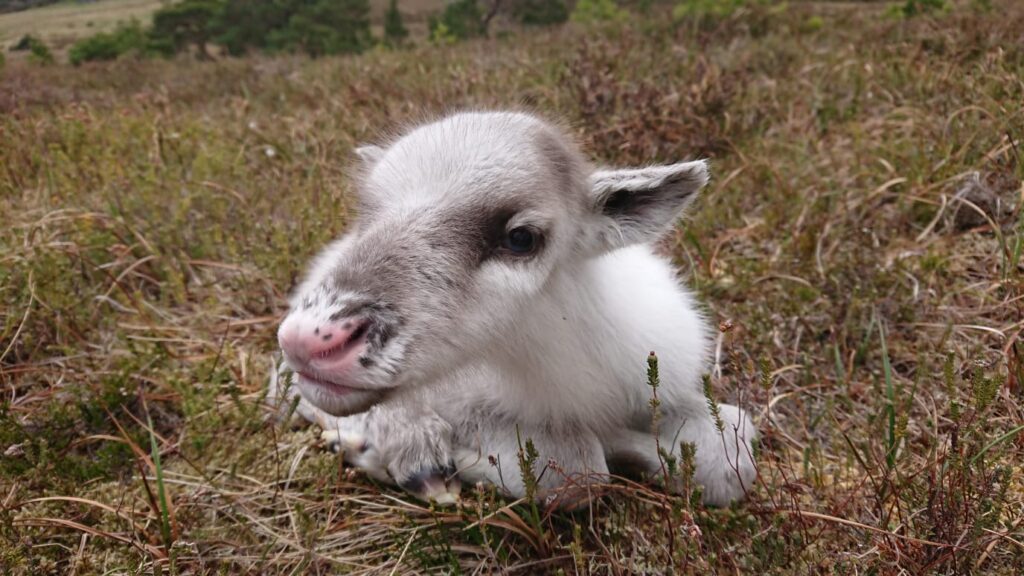
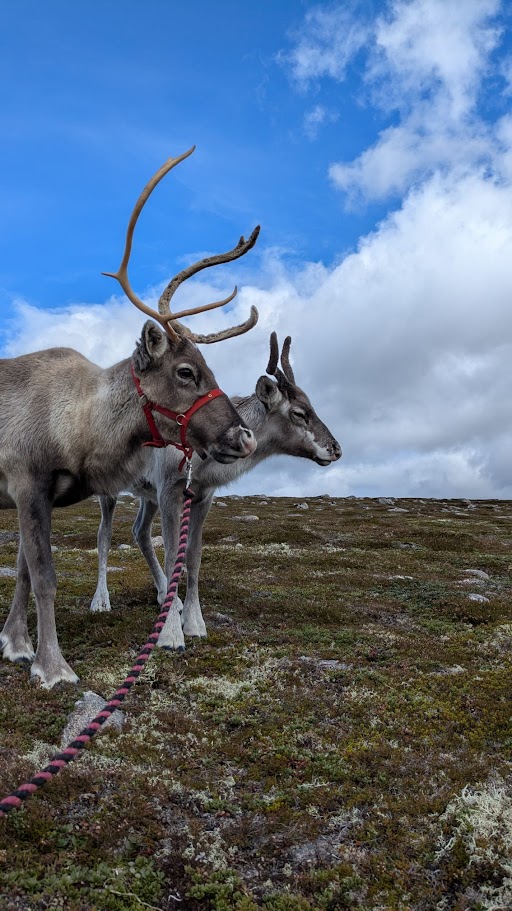
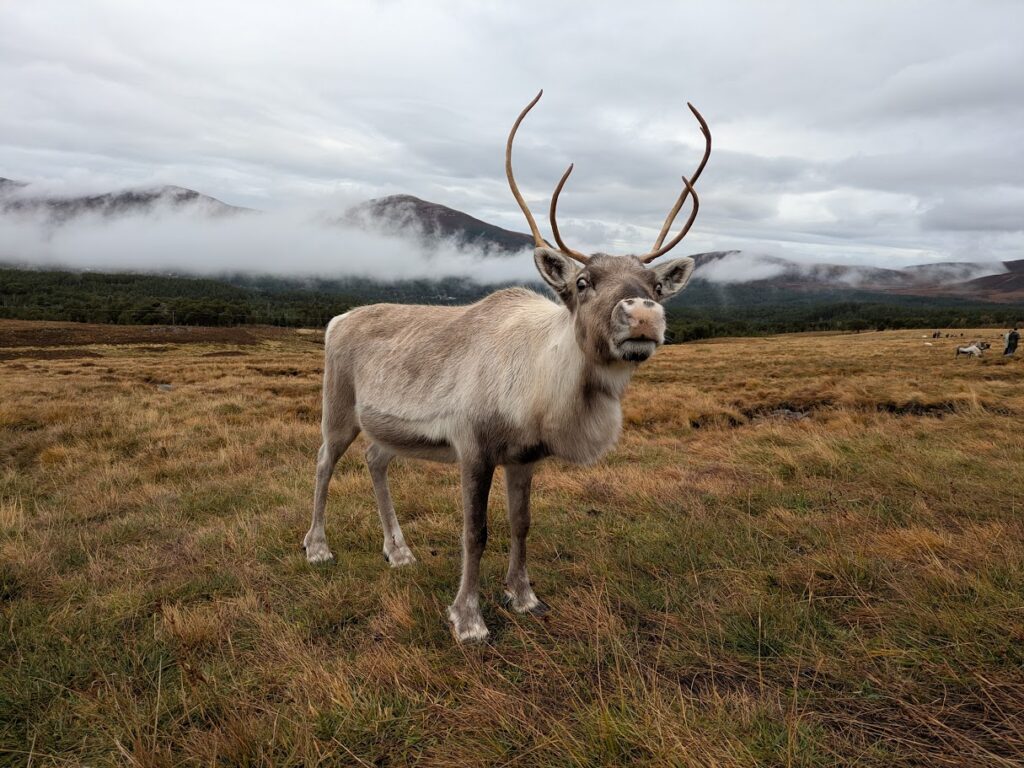
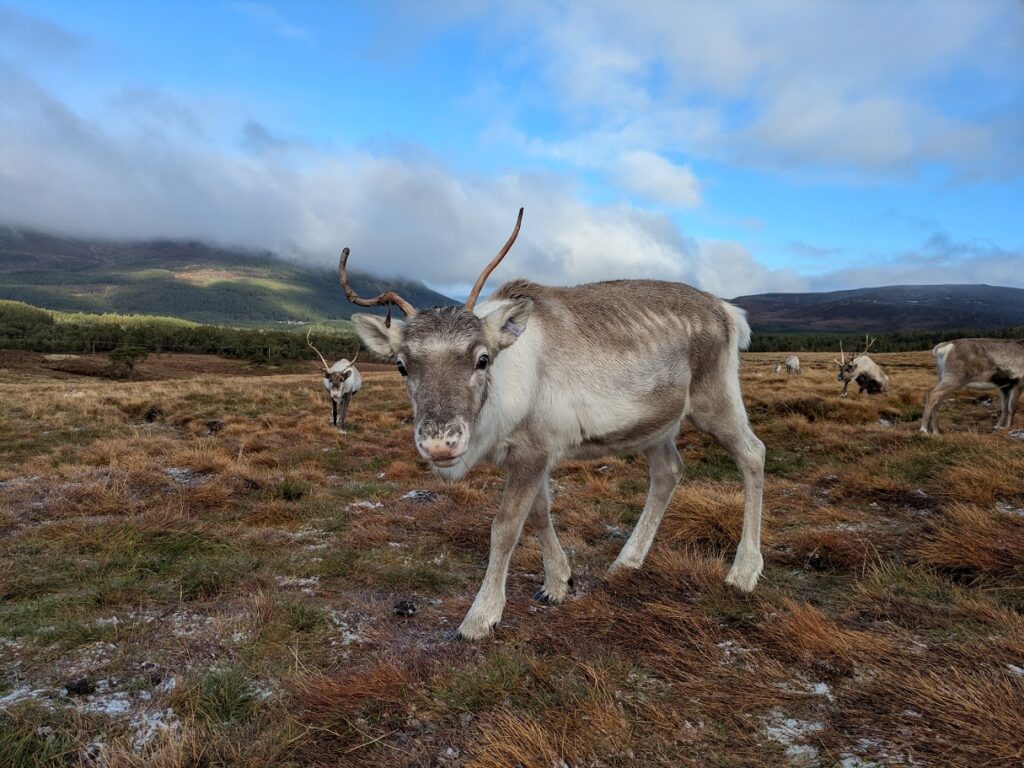
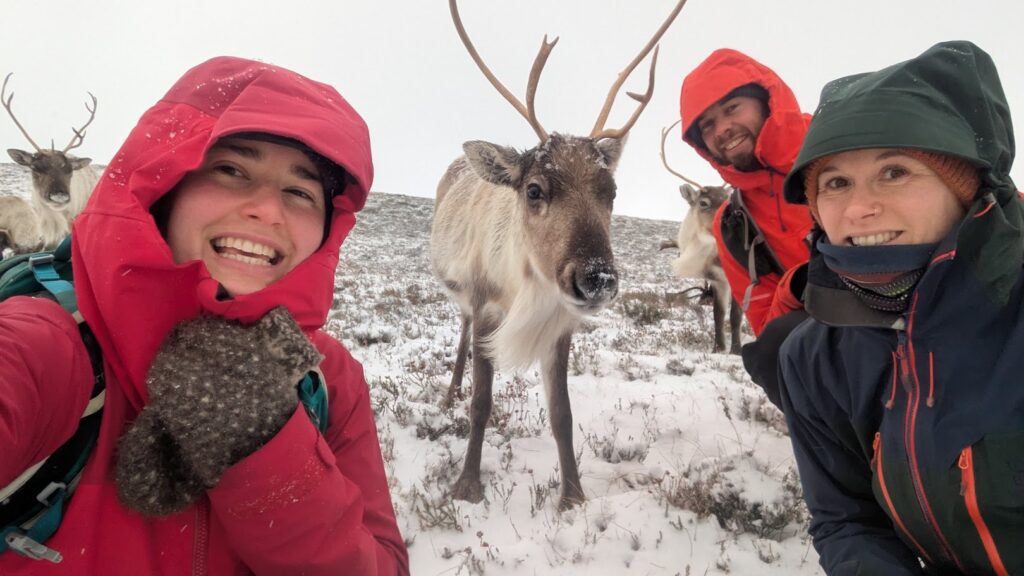
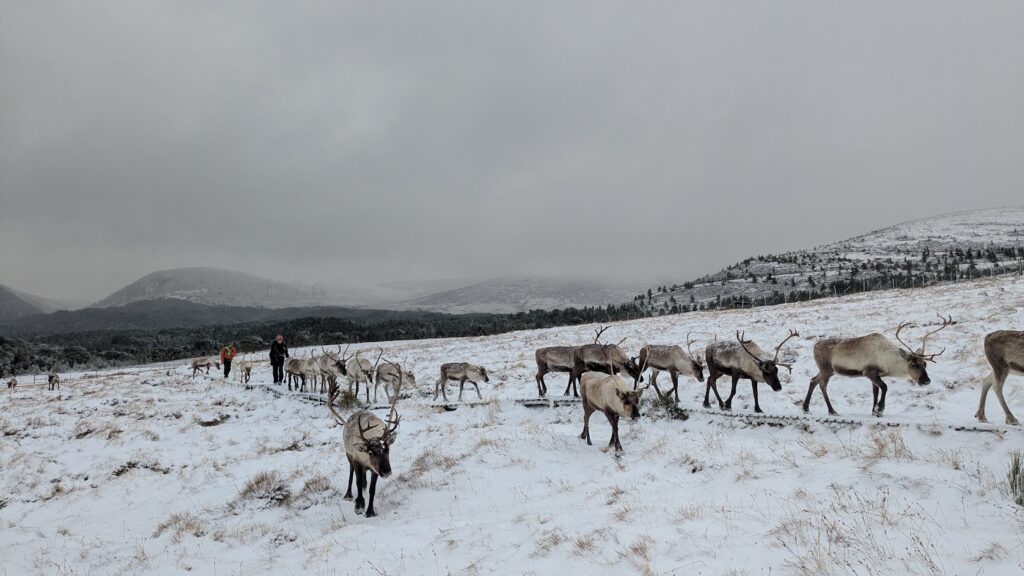
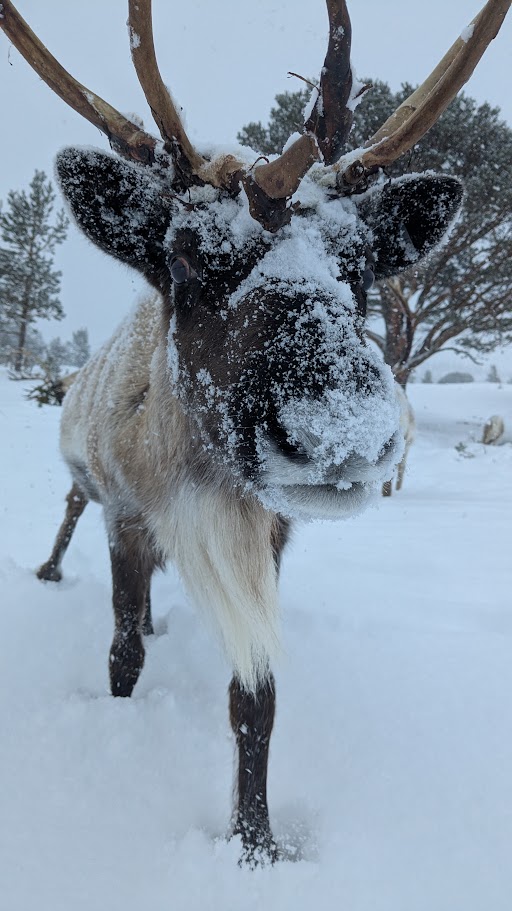
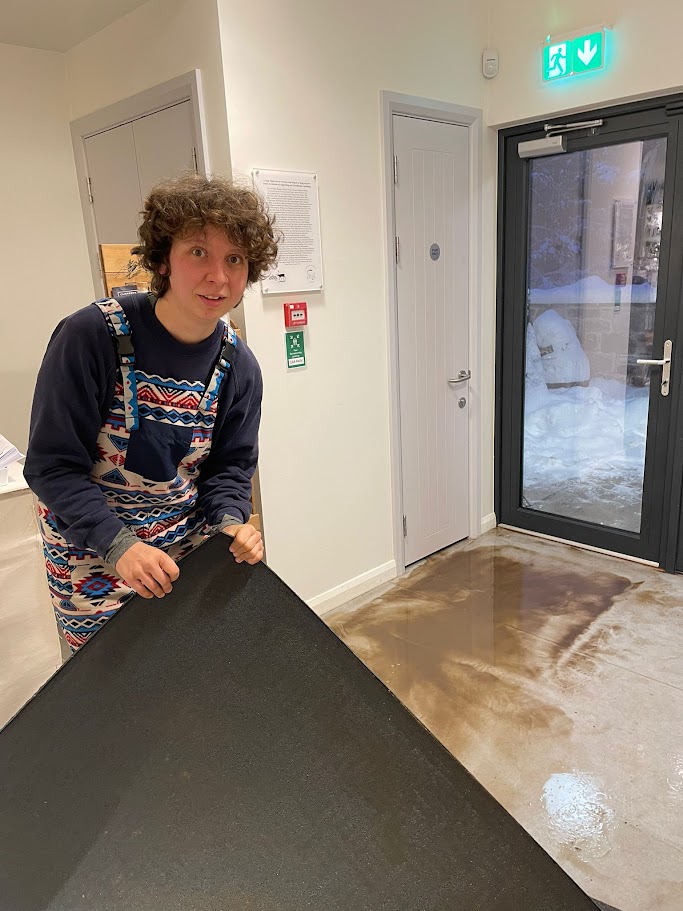
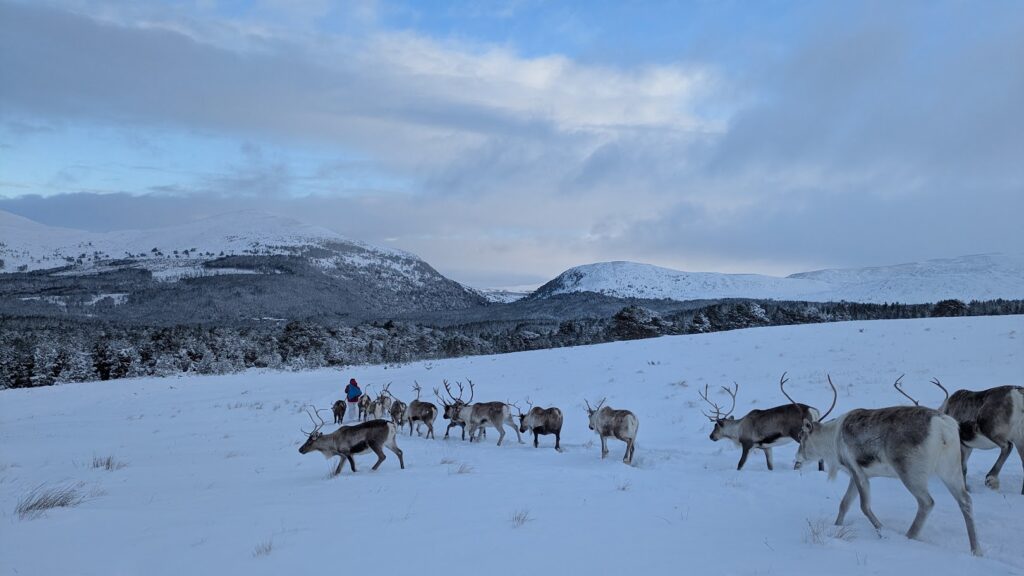
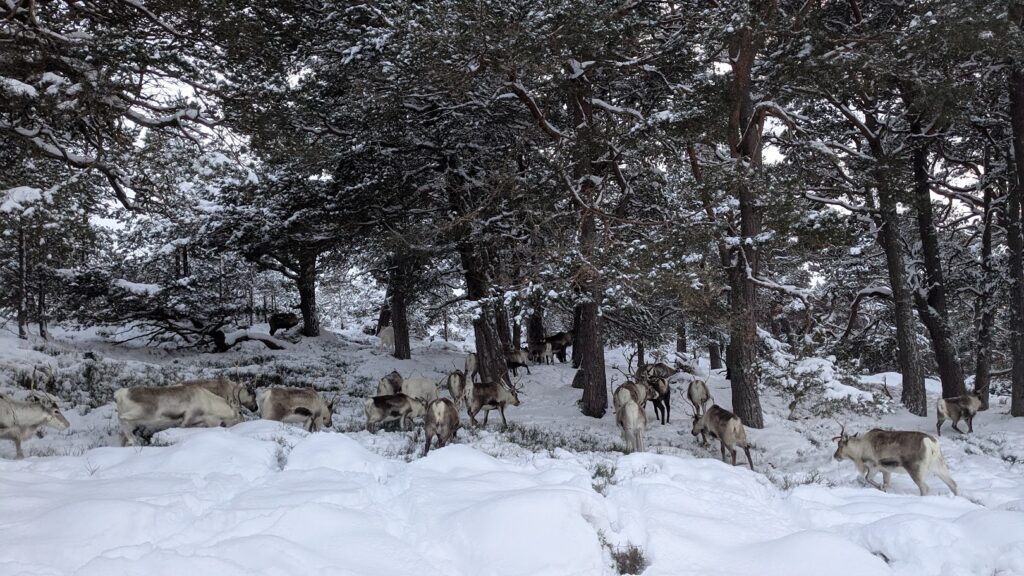
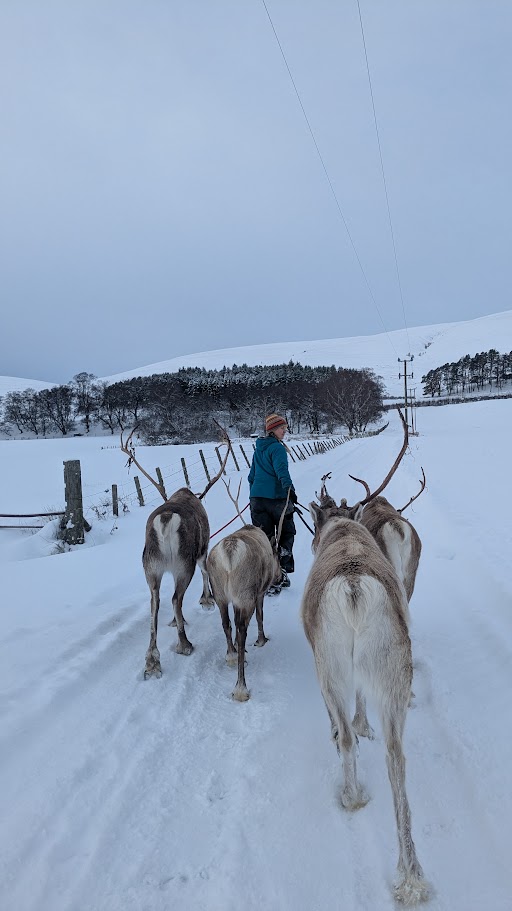
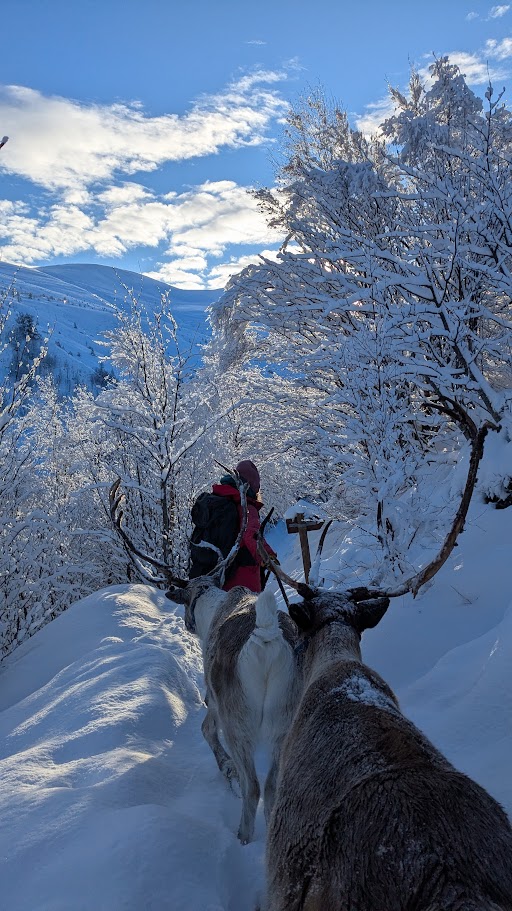
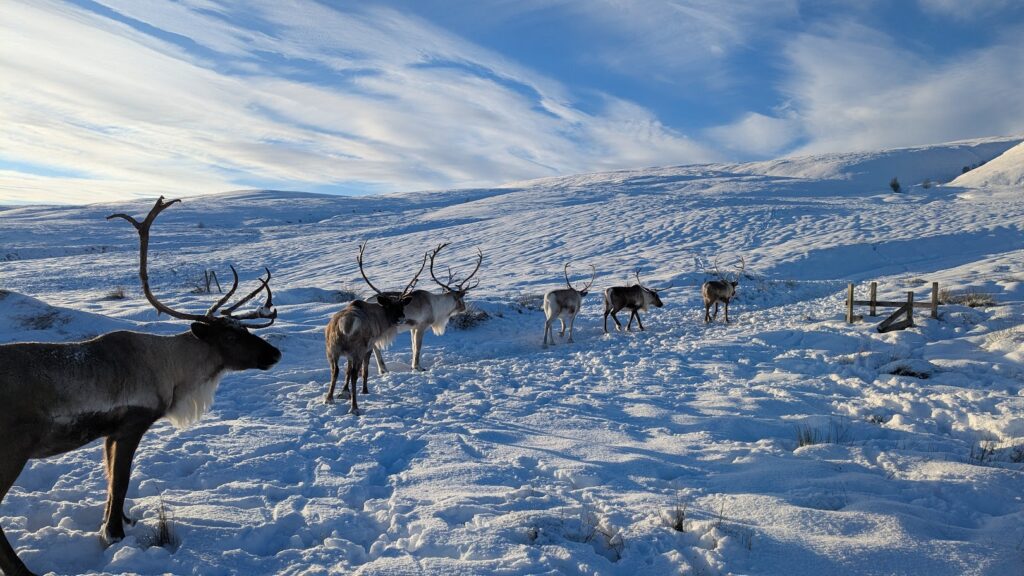
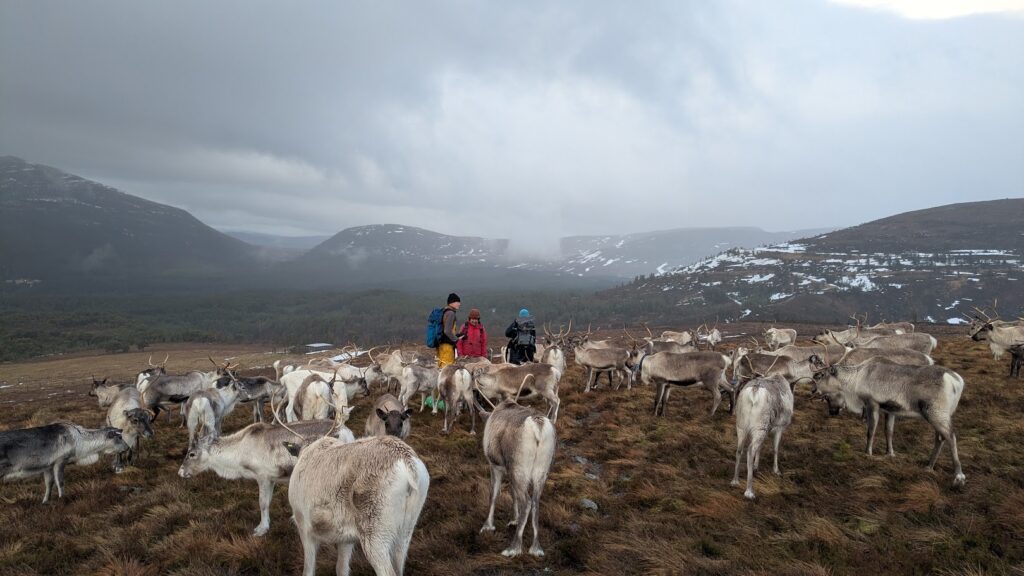
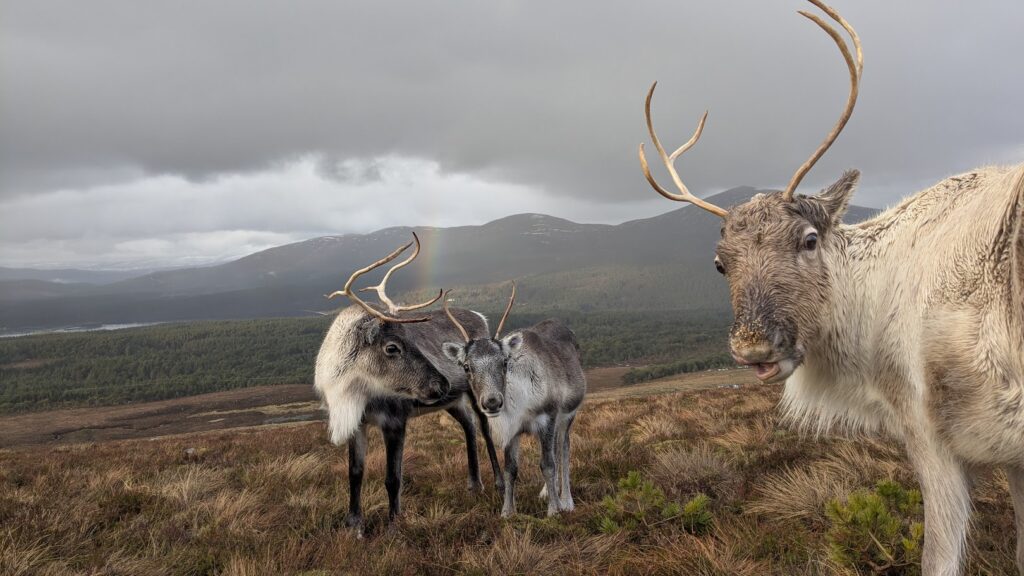
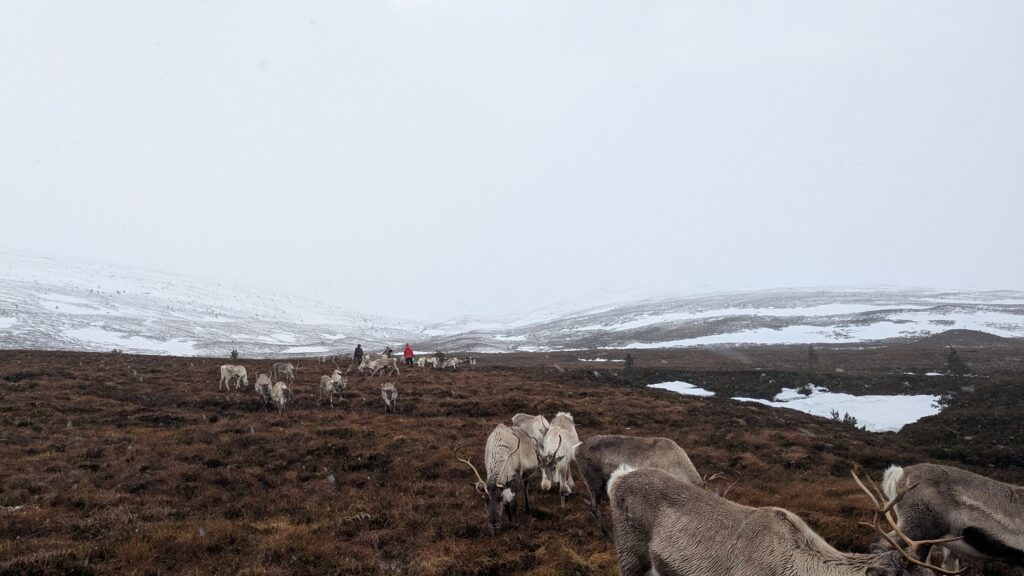
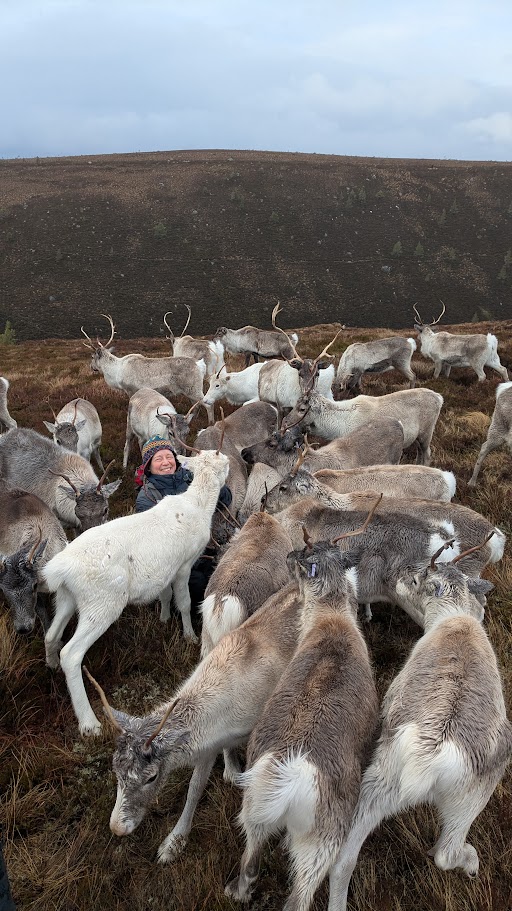
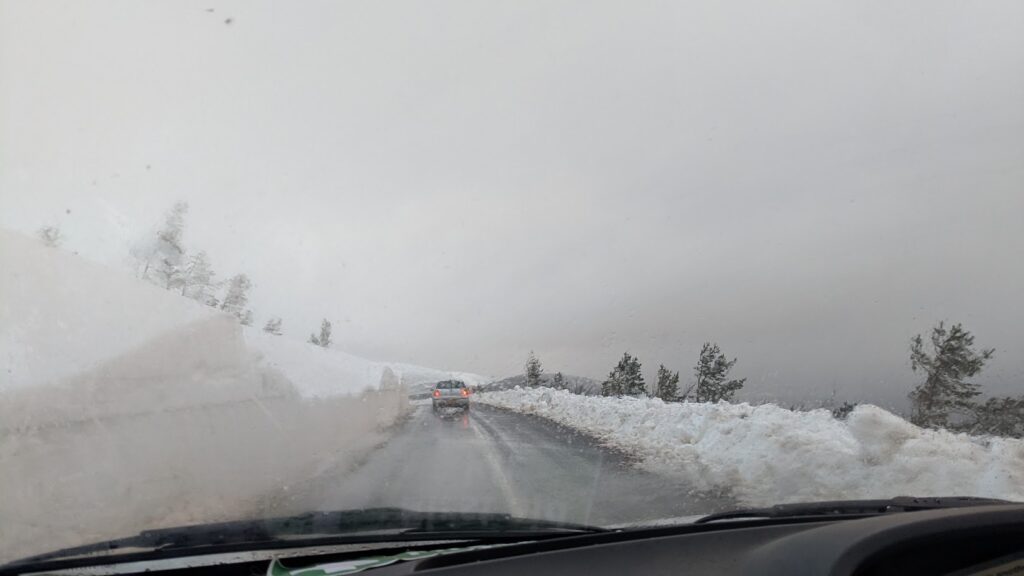
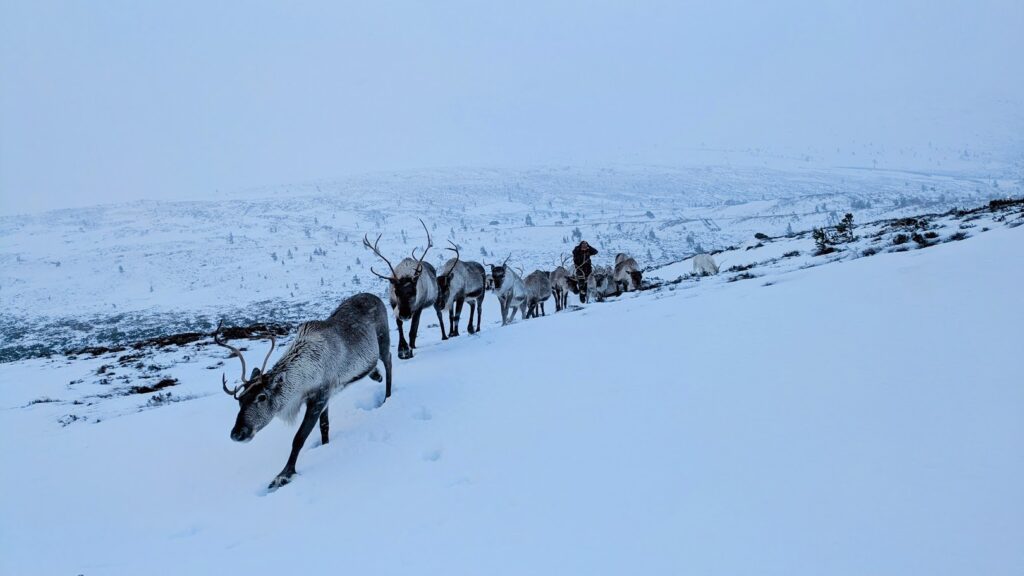
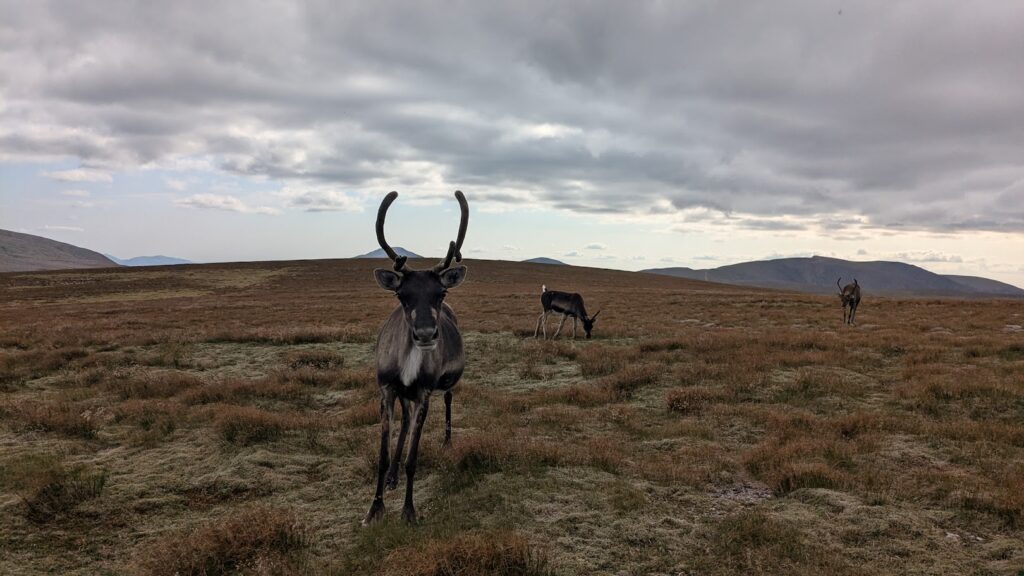
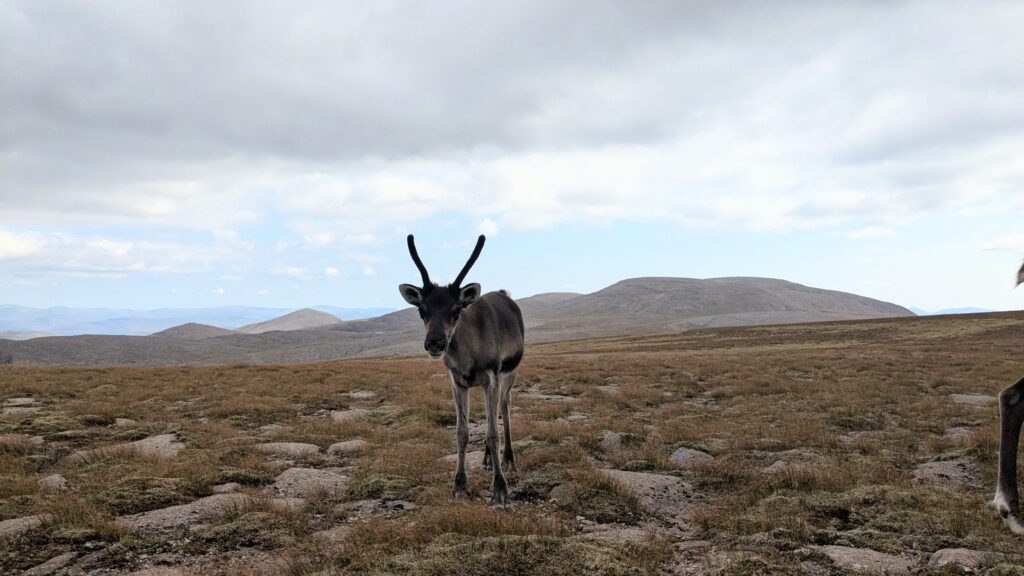
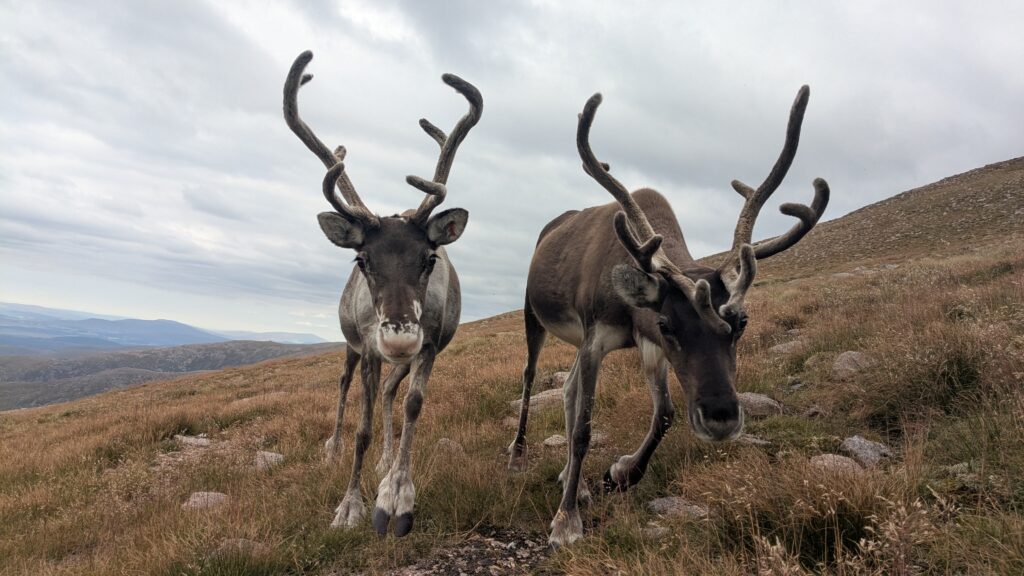
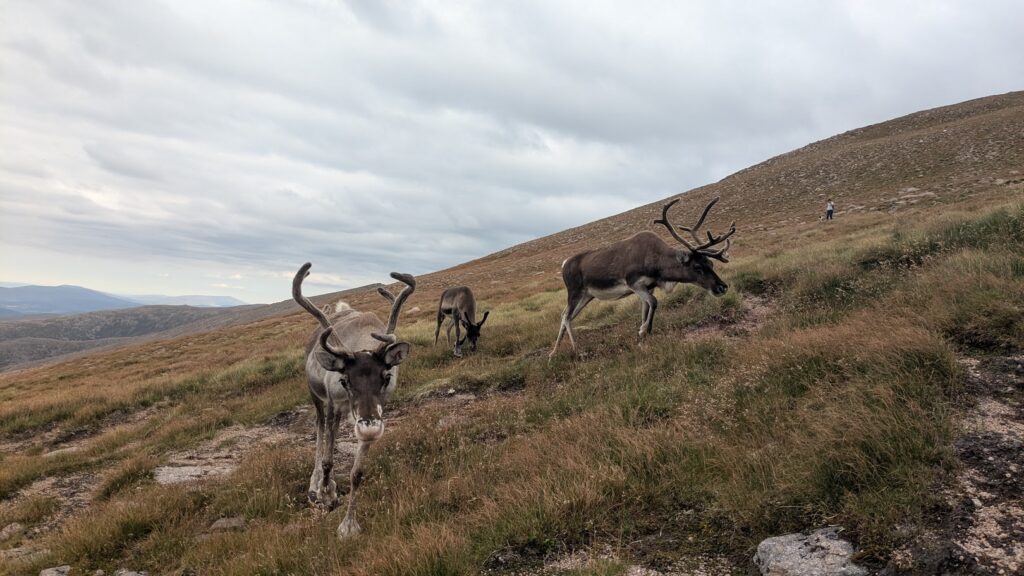
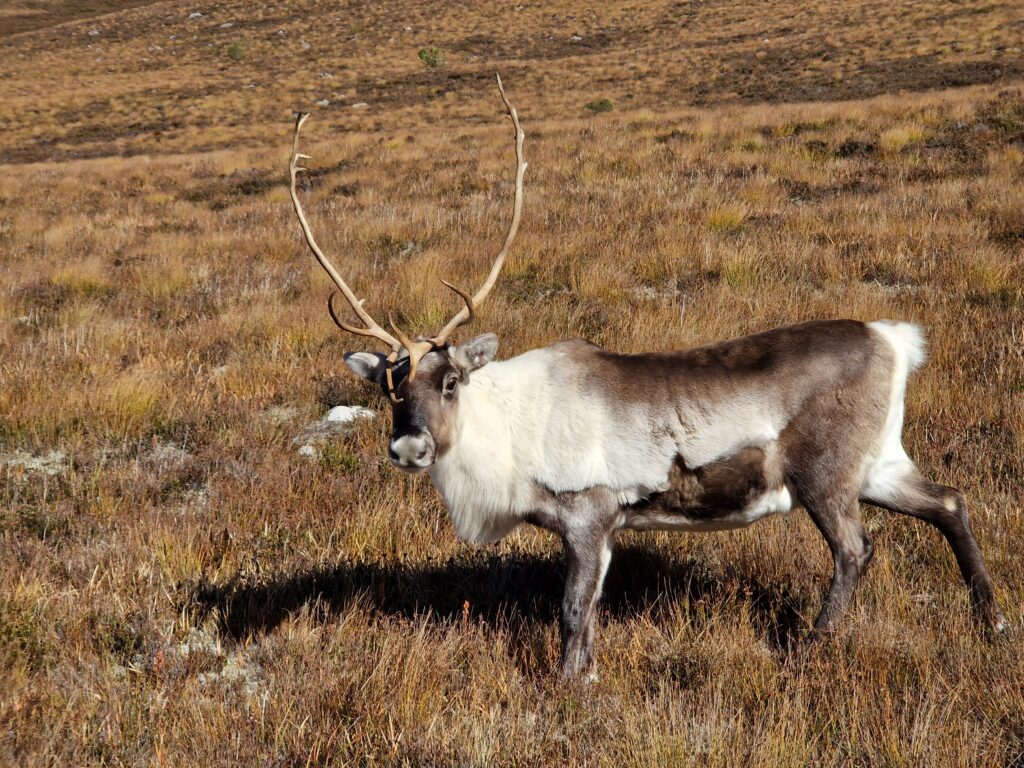
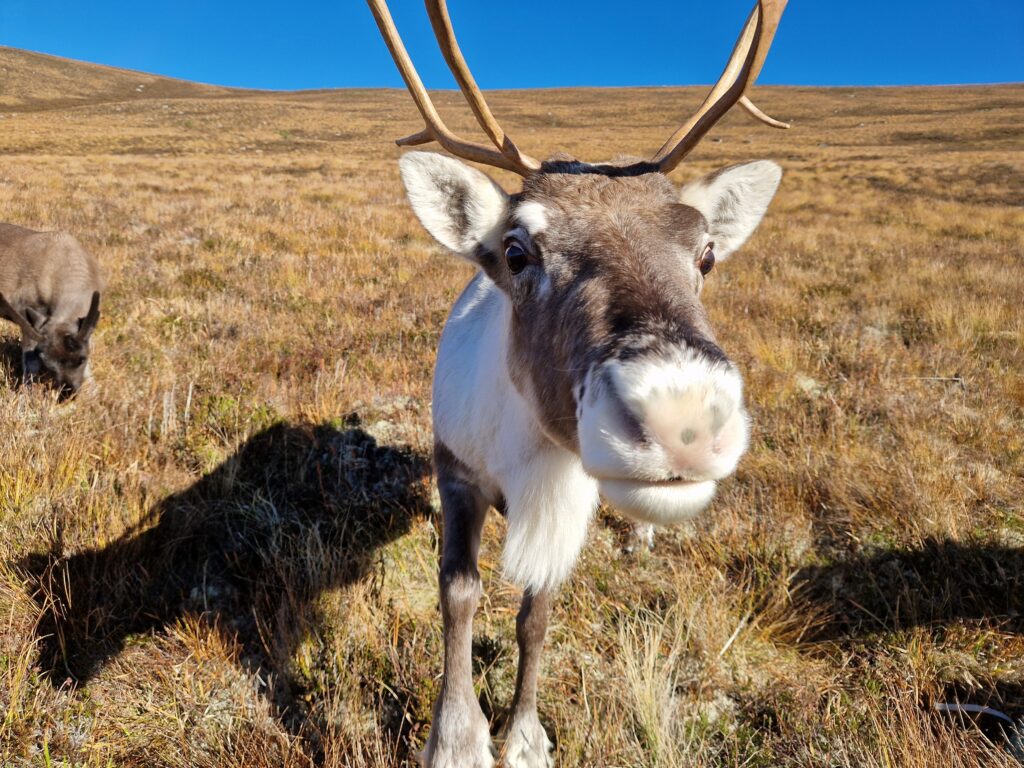
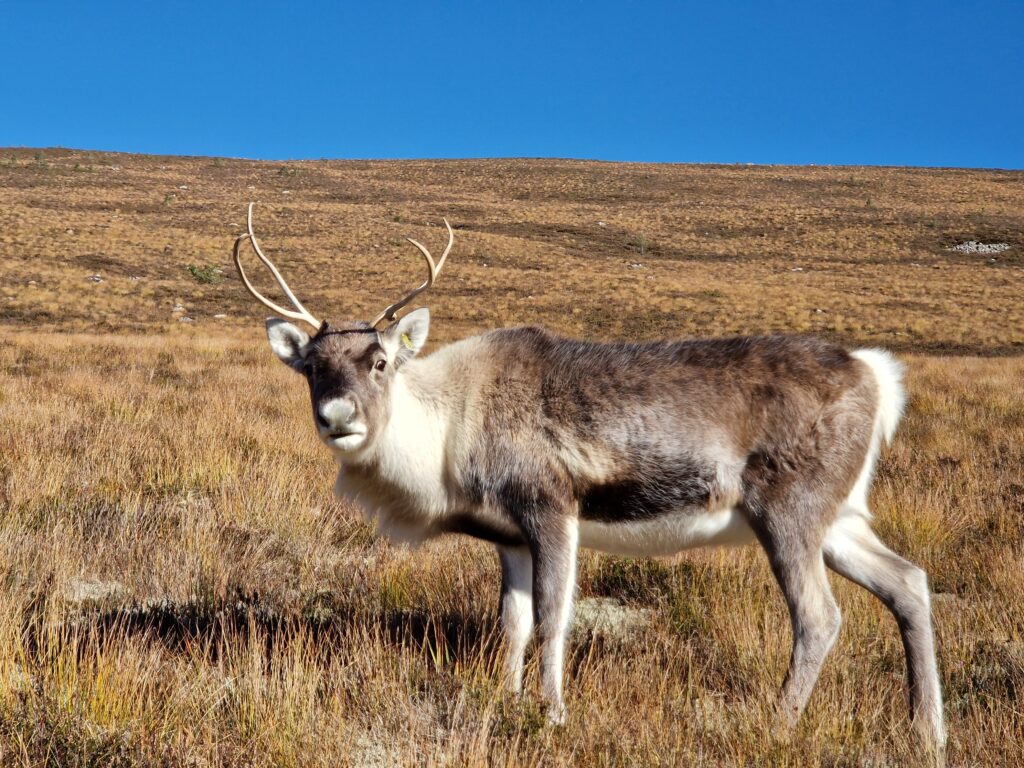
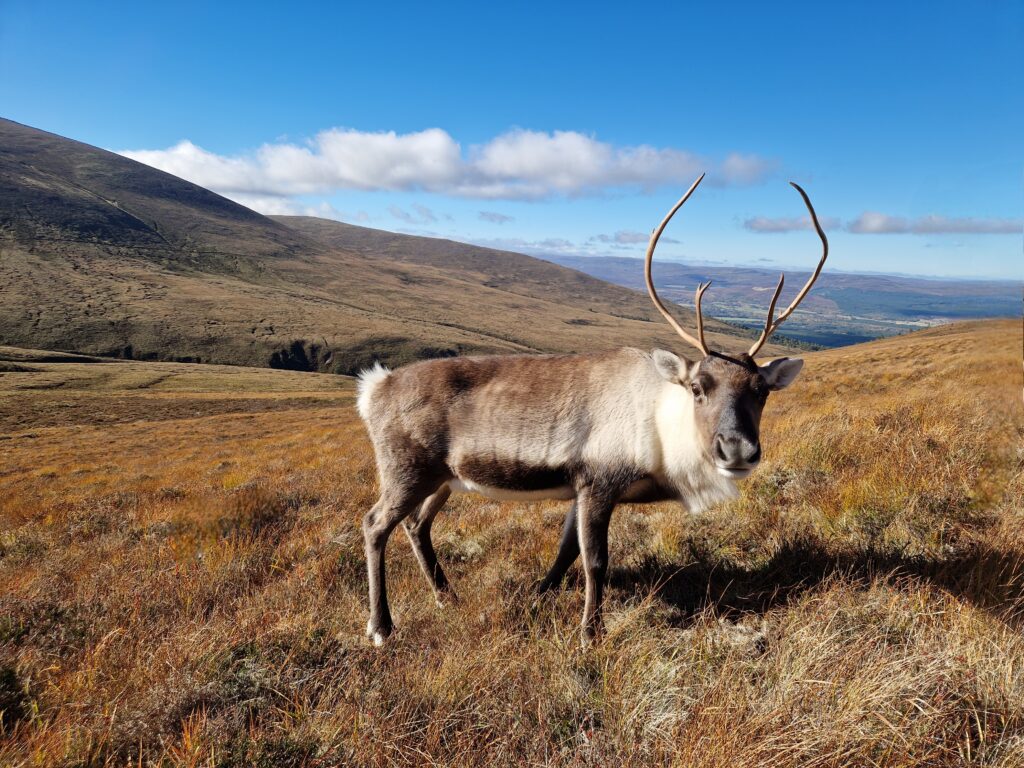
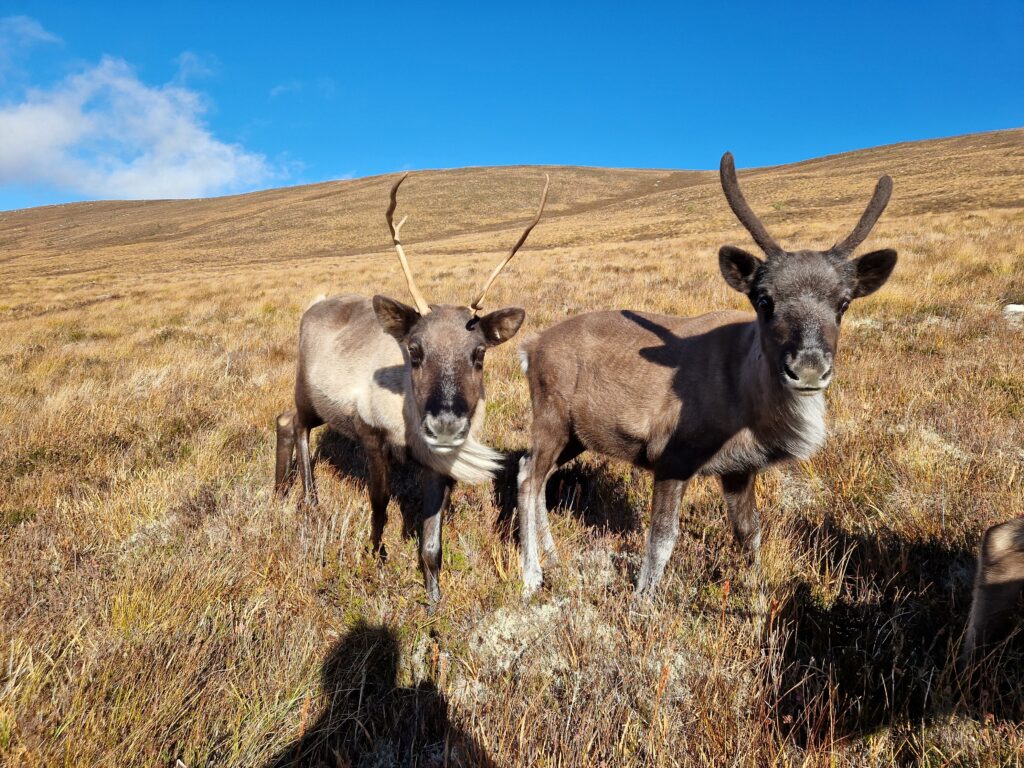
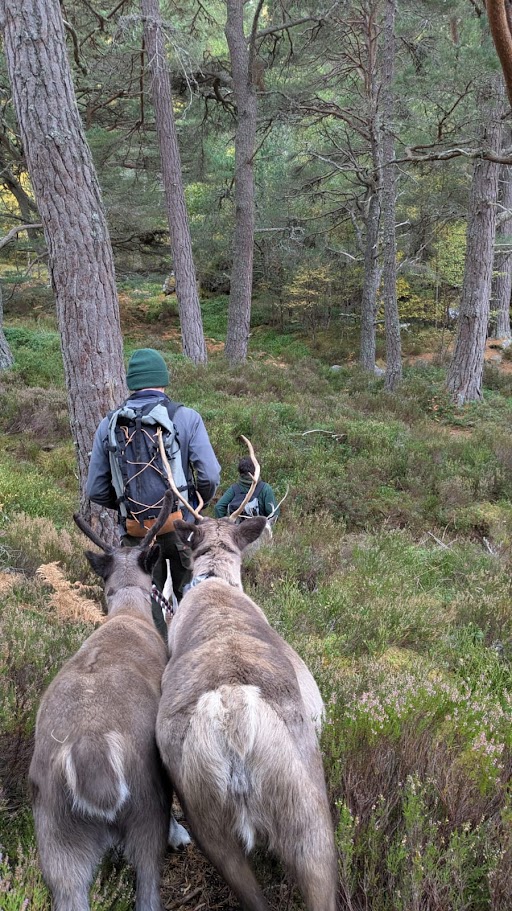
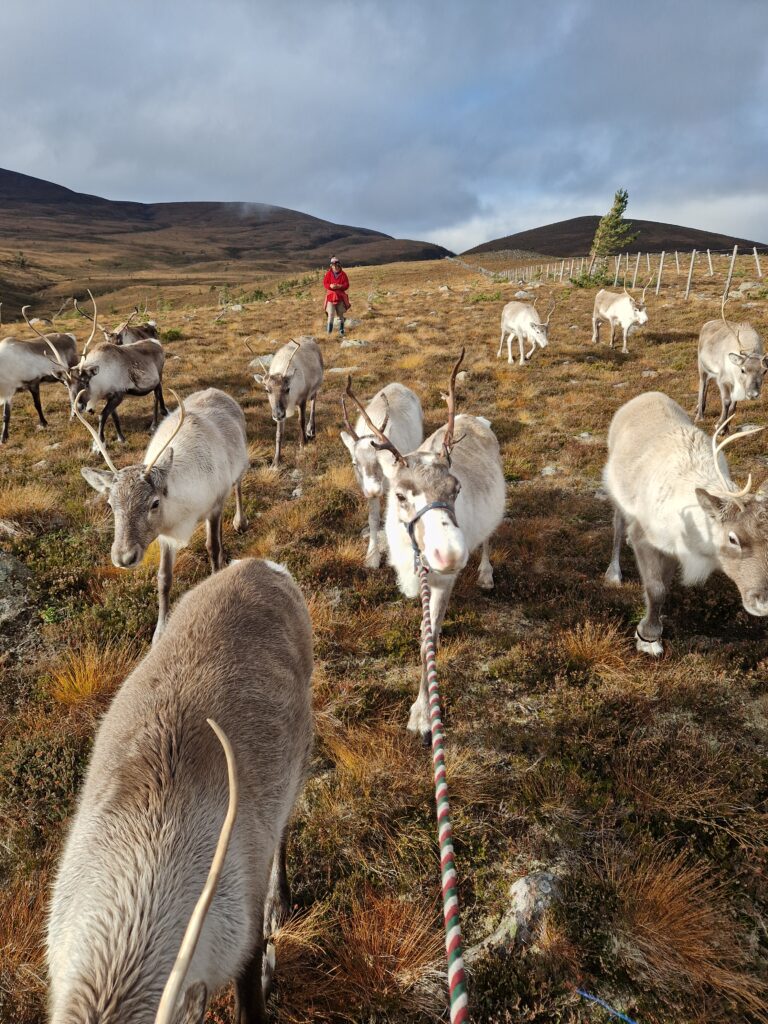
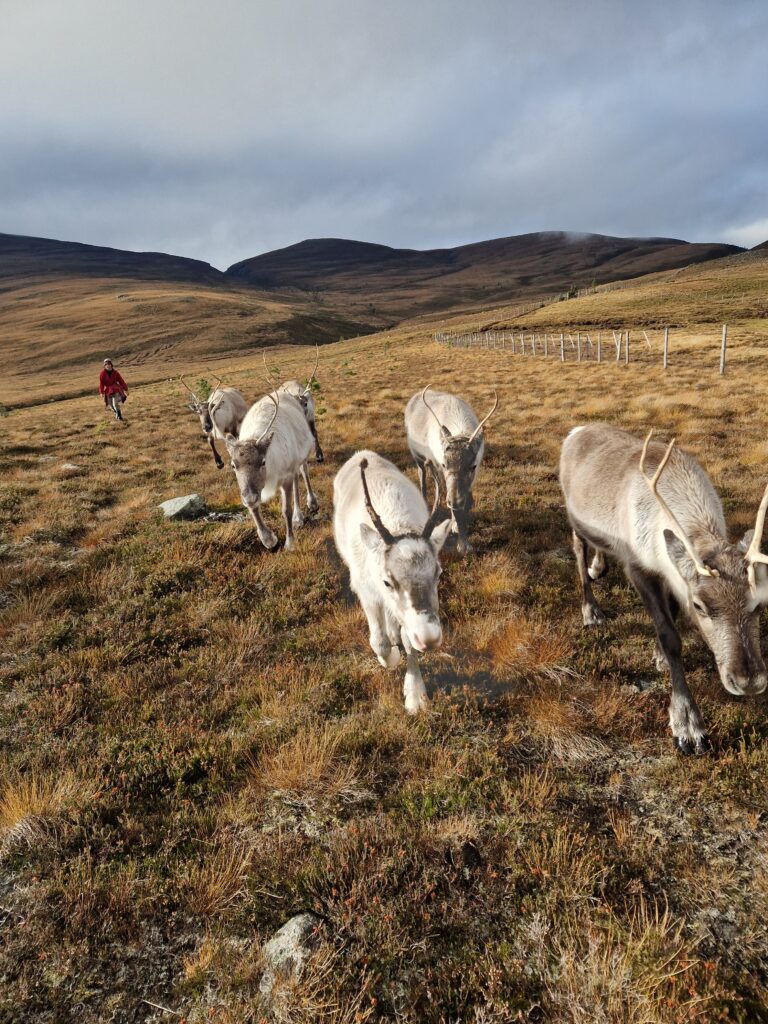
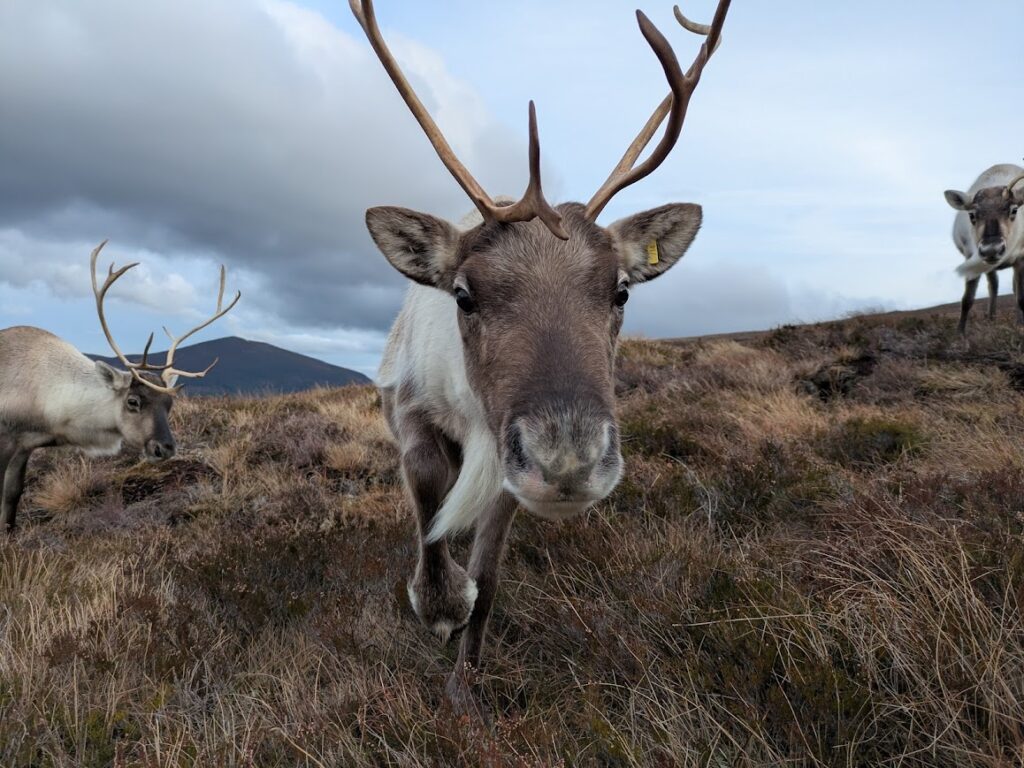
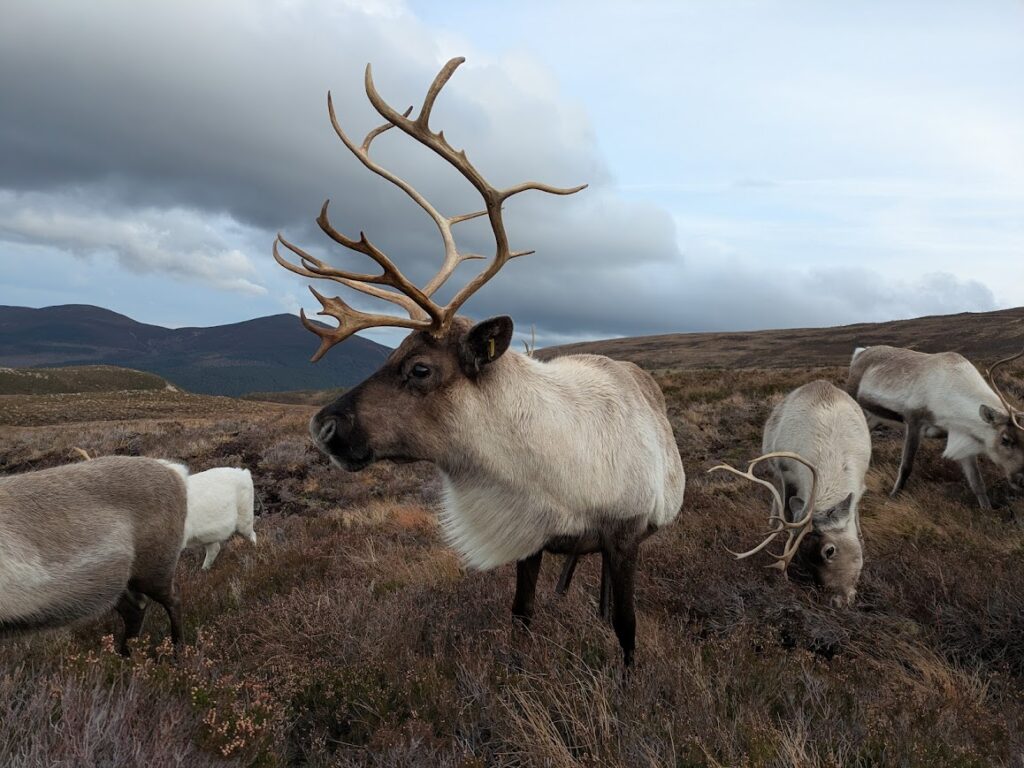
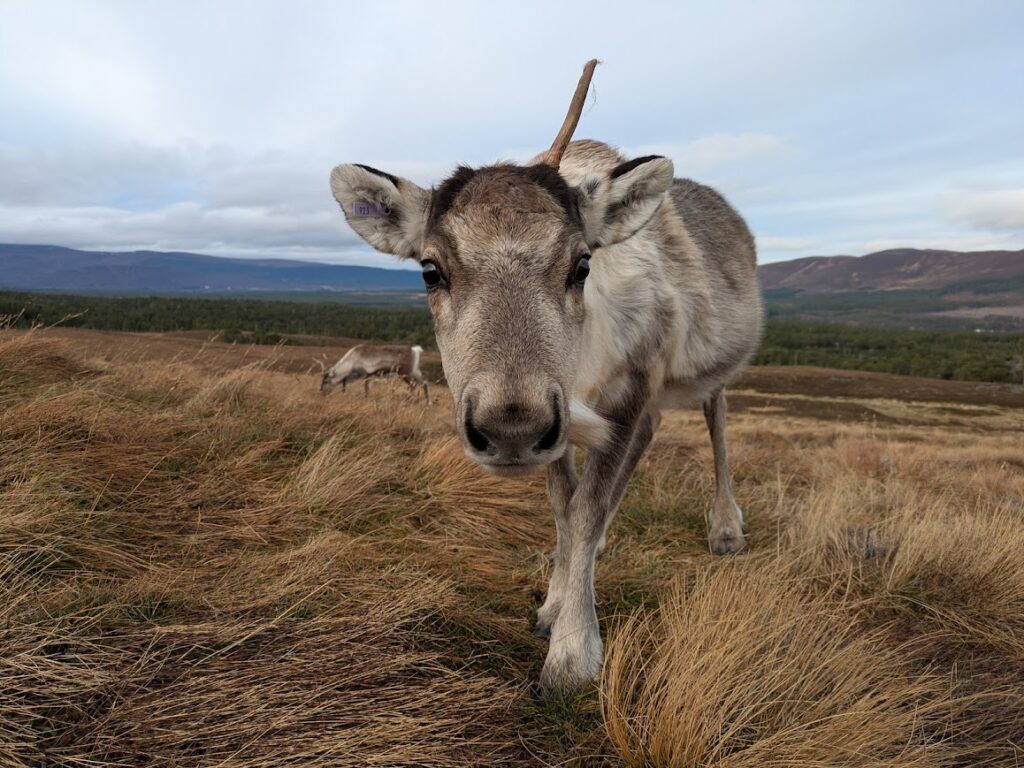
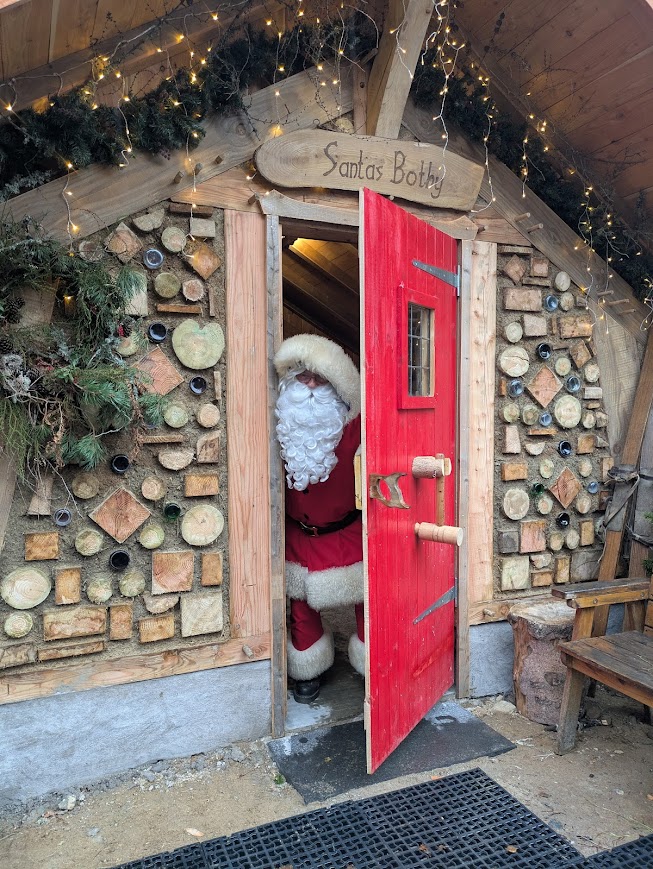
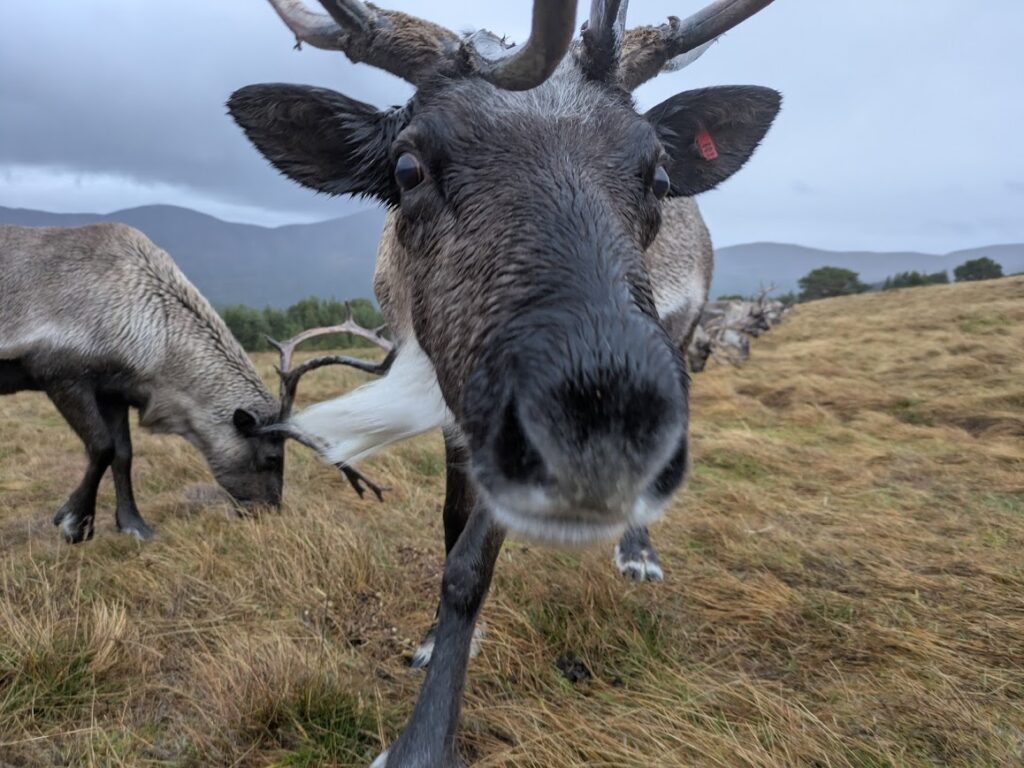
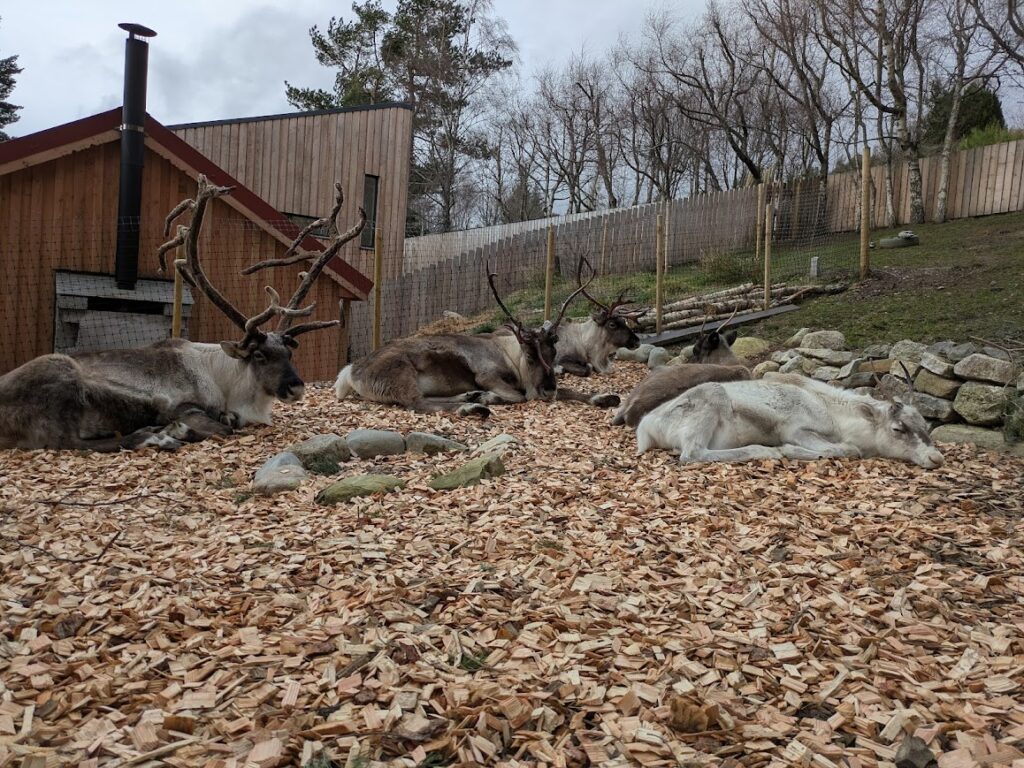
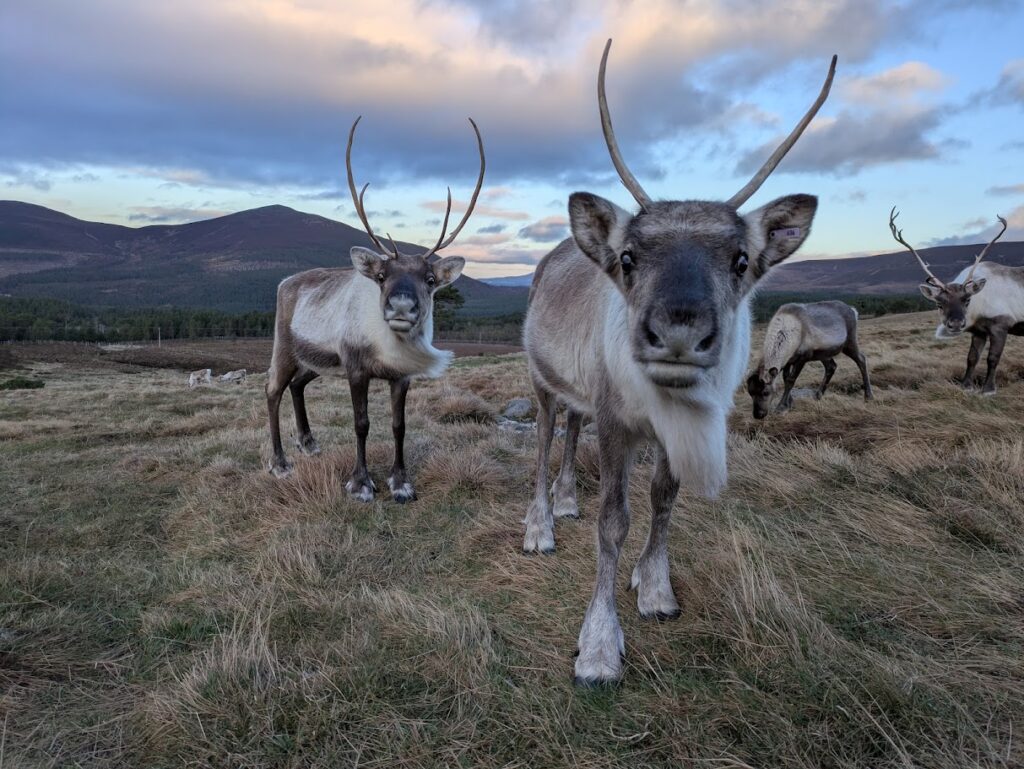
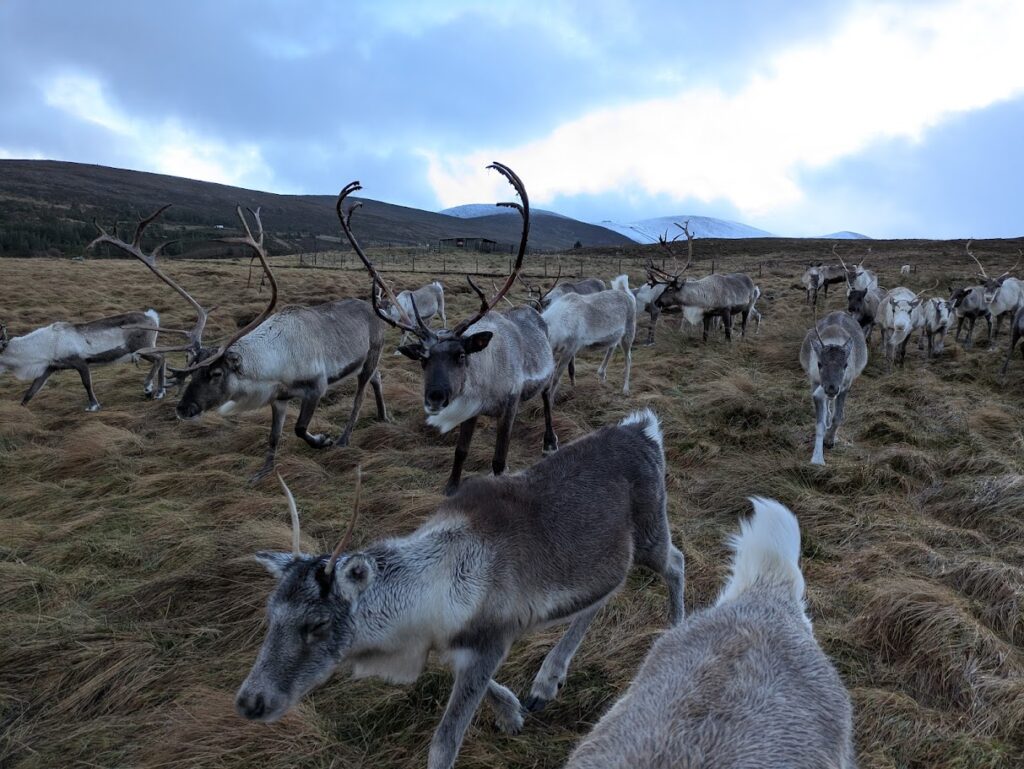
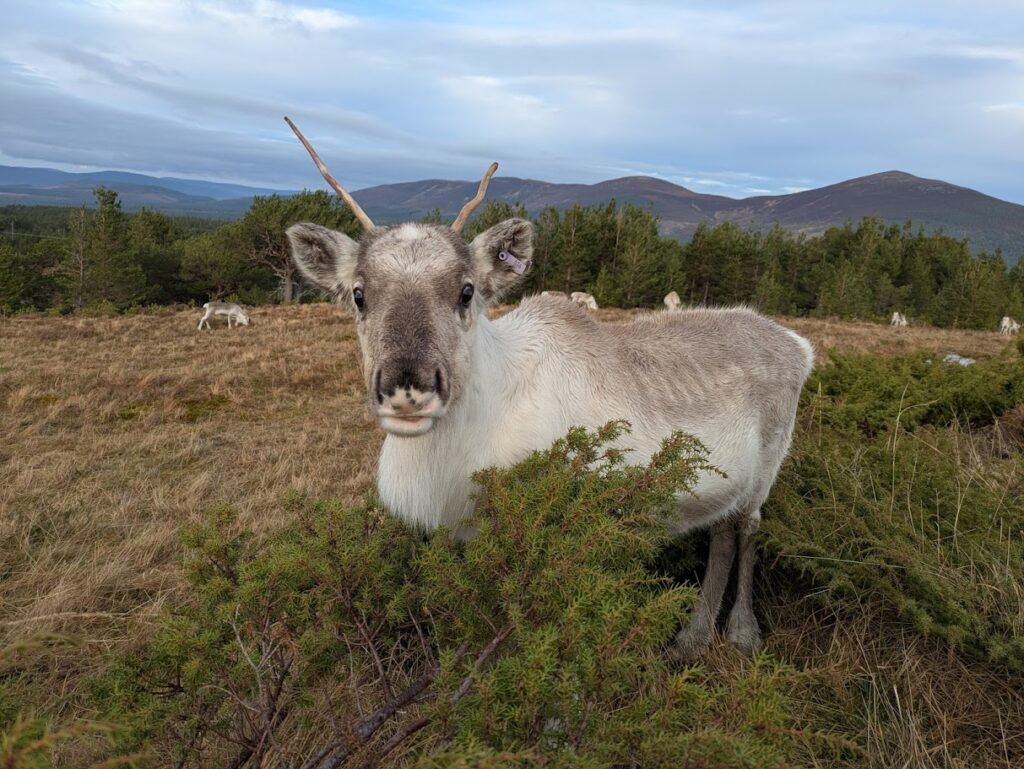
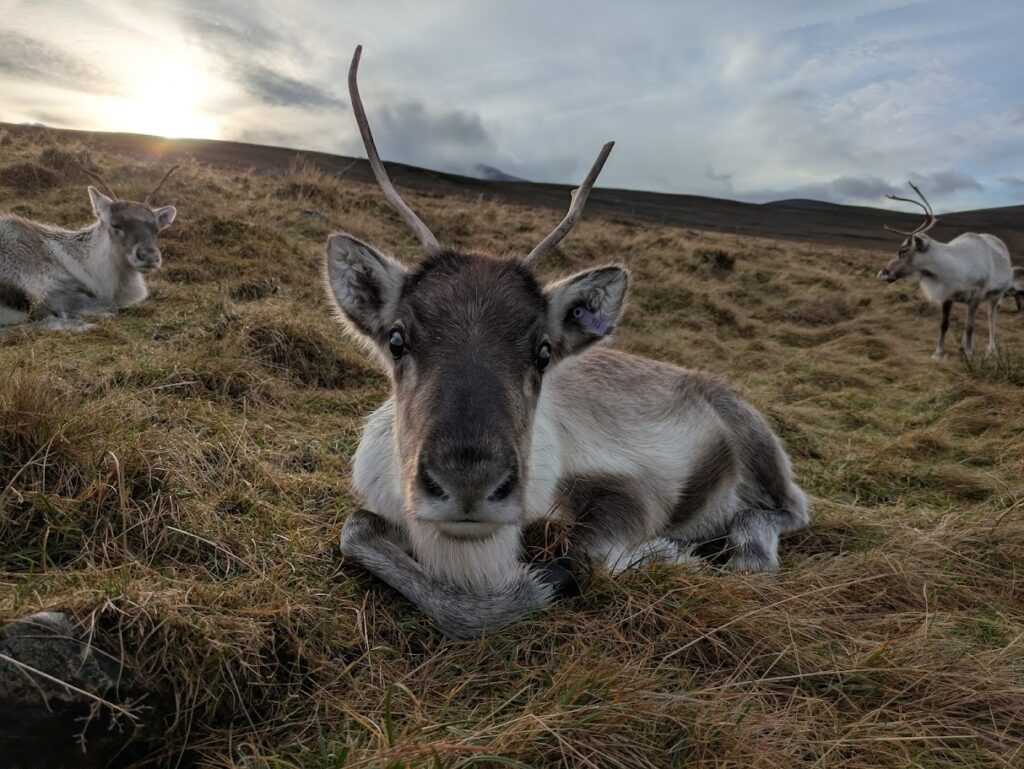
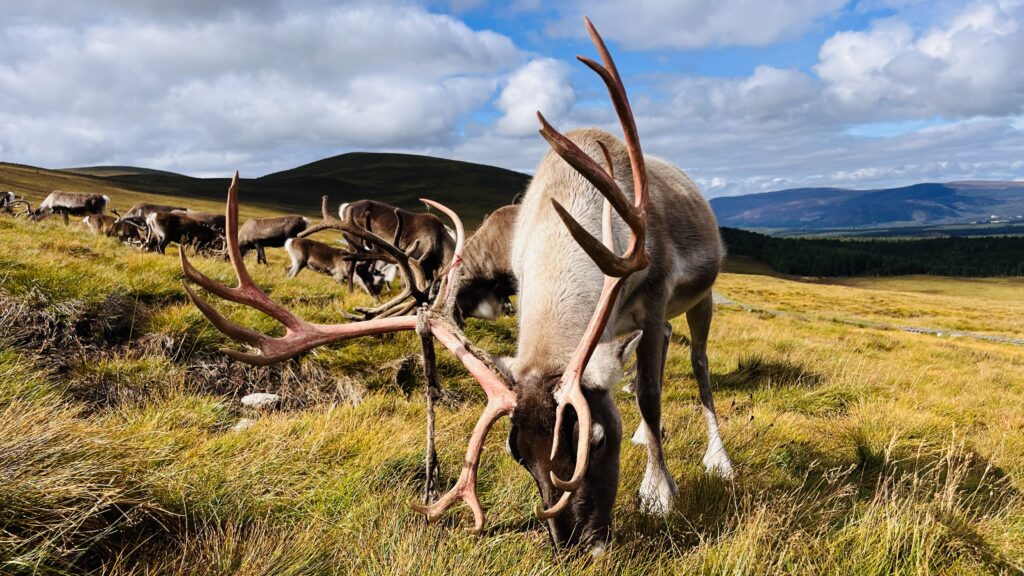
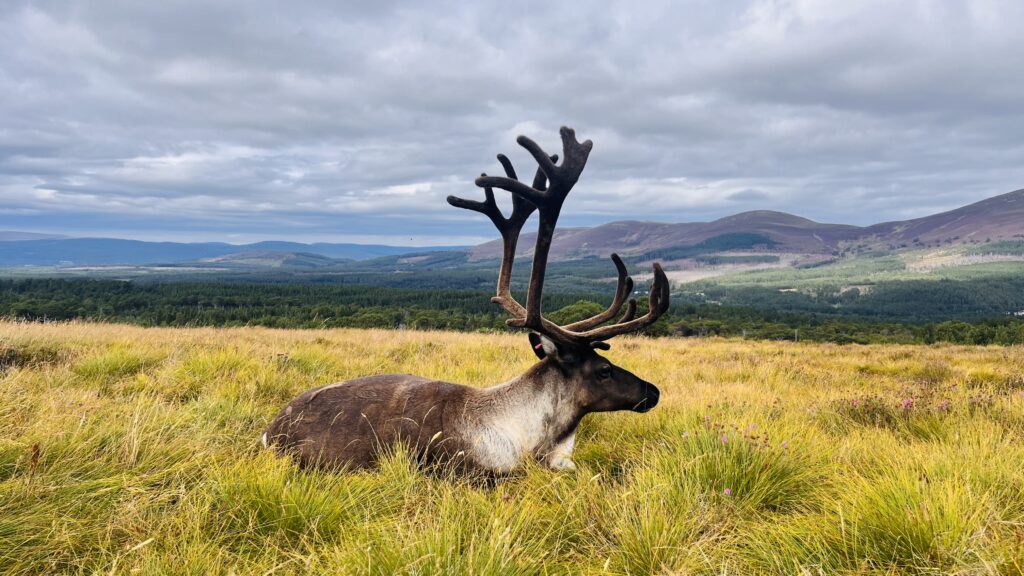
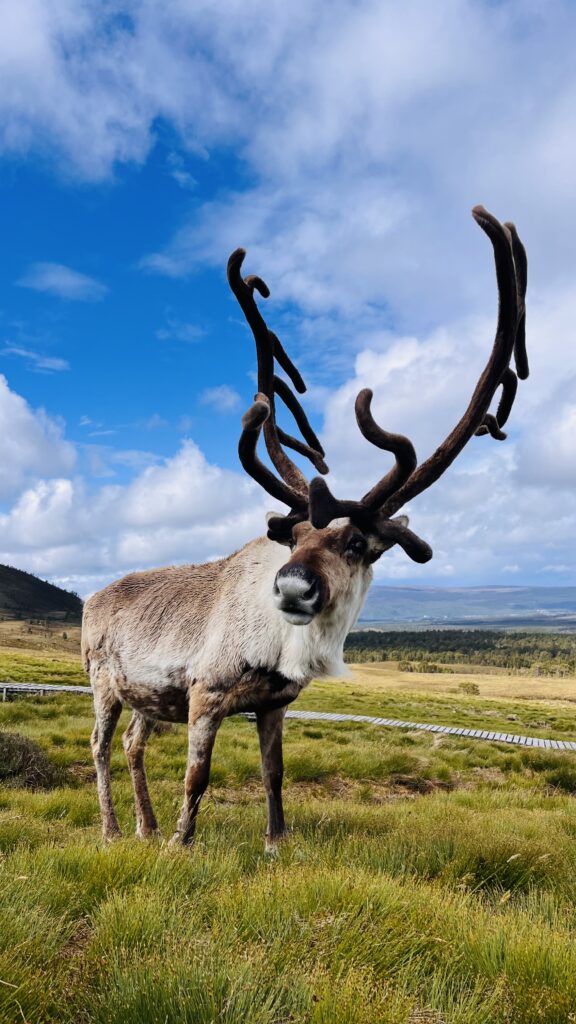
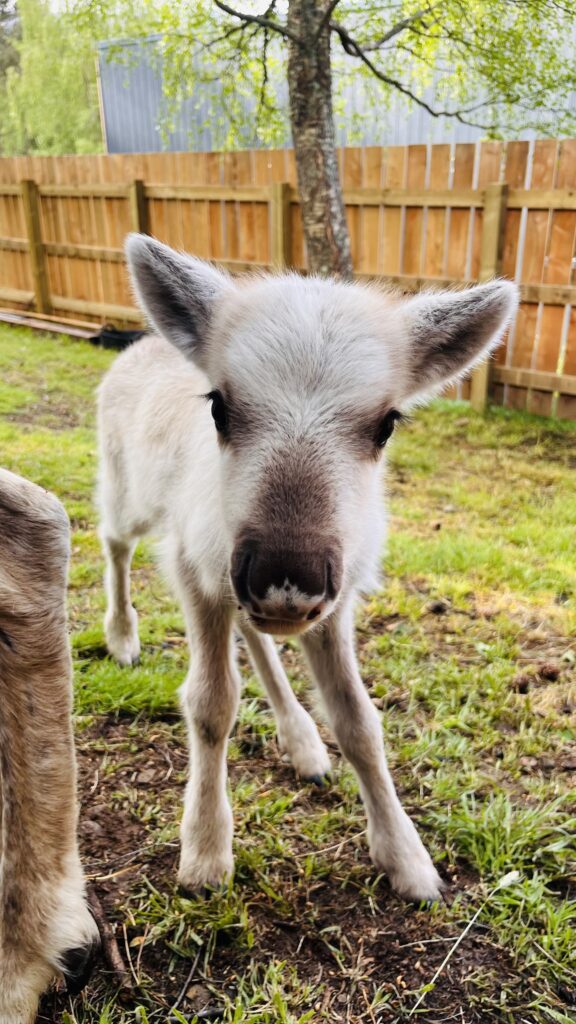
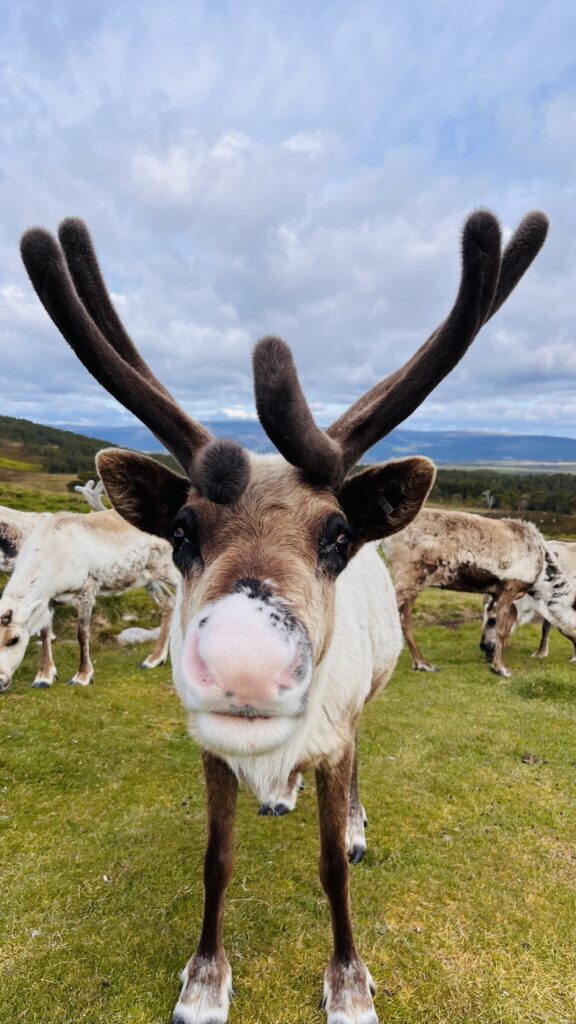
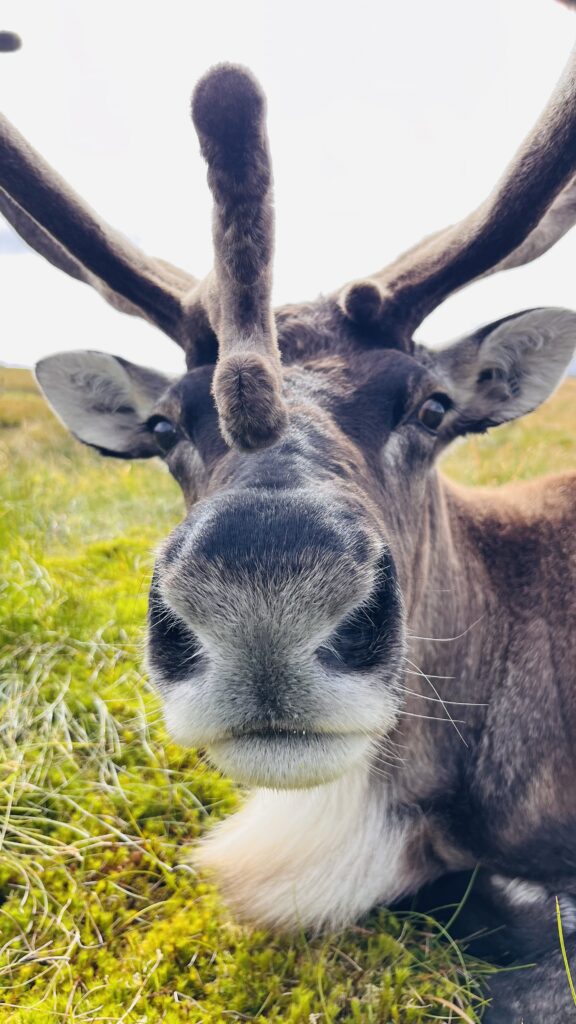
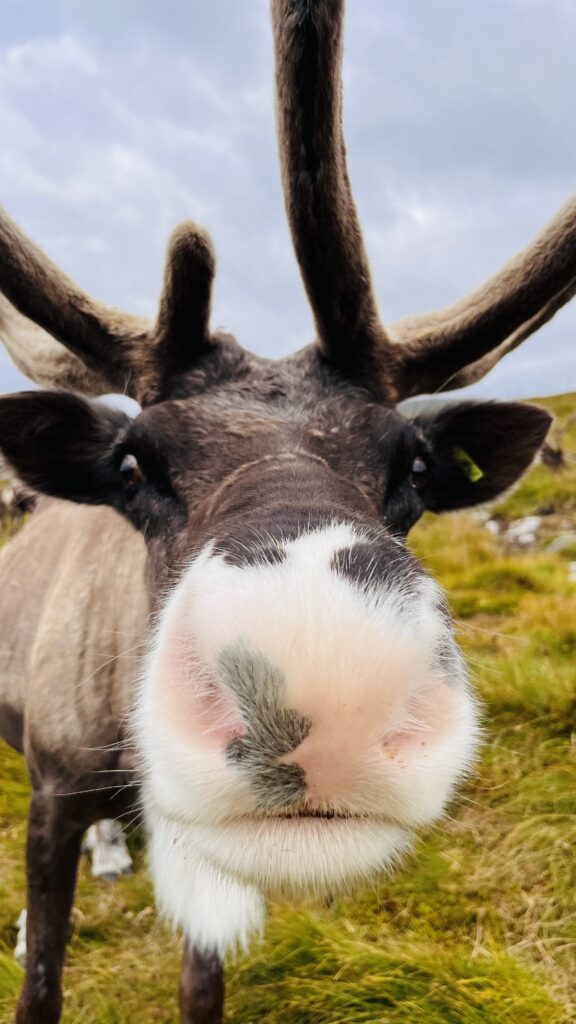
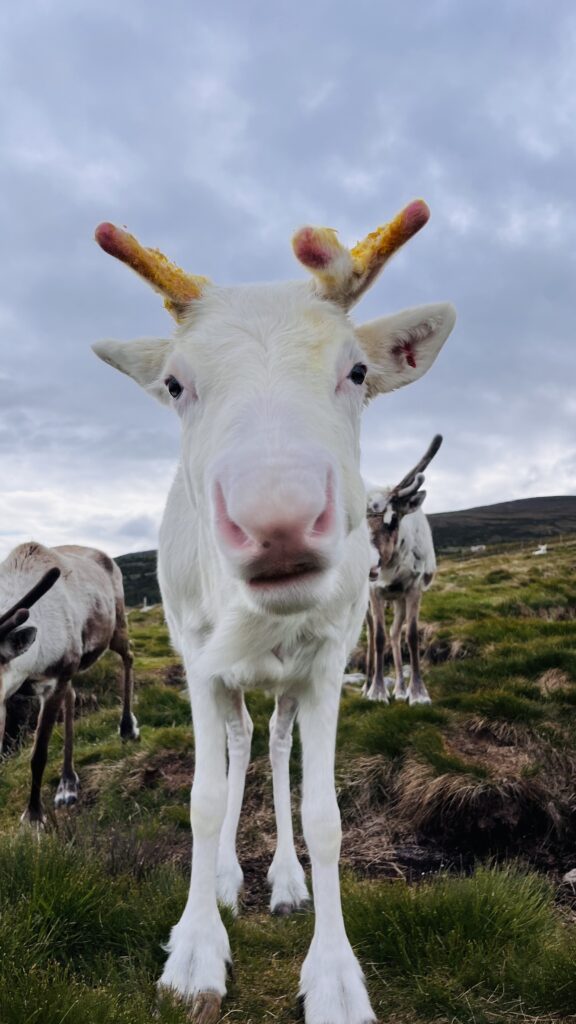
February is the month that we ease ourselves back into Hill Trips again after being closed for a month. From mid-January to mid-February, we are trying to catch up with general maintenance and into February prepare for being open to the public again. The start of the month consisted of feeding reindeer, ensuring we are prepared for opening and we also spared some time to visit one of the Lynx reintroductions drop in’s that have been happening in the area.
The 7th of February was our first day open to the public. It is always a bit of a daunting thought, and you’re left hoping that you remember how to talk about reindeer and that you have hopefully remembered everything that needs done first thing in the morning. But these anxious thoughts were soon squashed by our first Hill Trip of the season, the weather was good and how to be a public facing reindeer herder came flooding back!
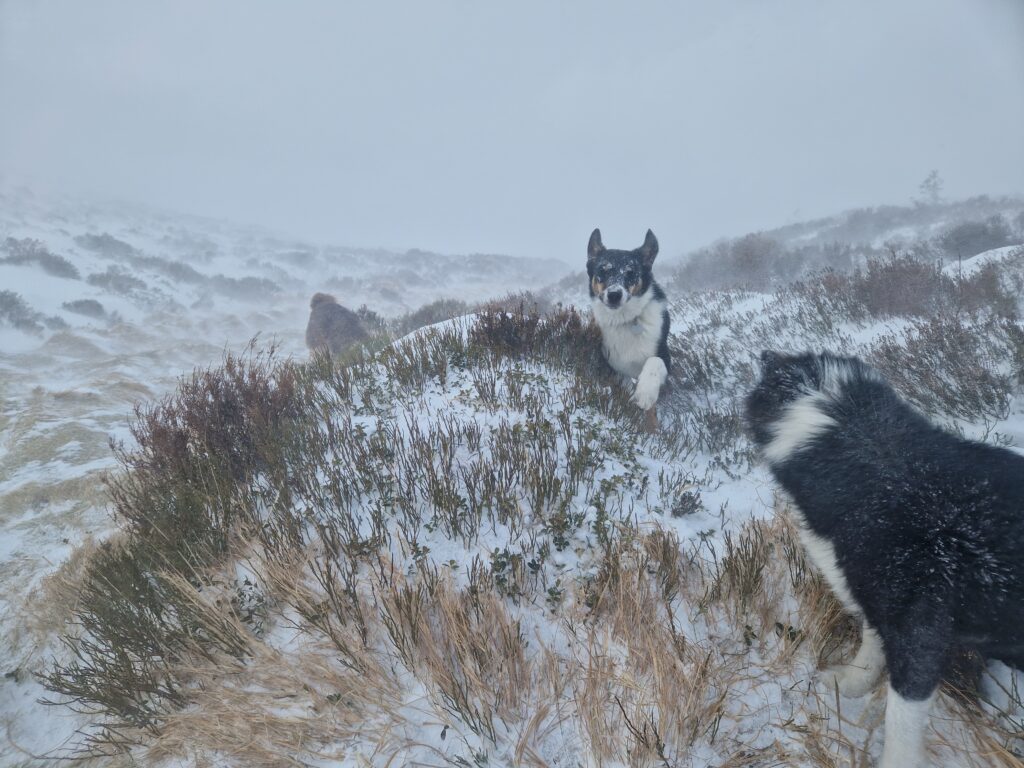
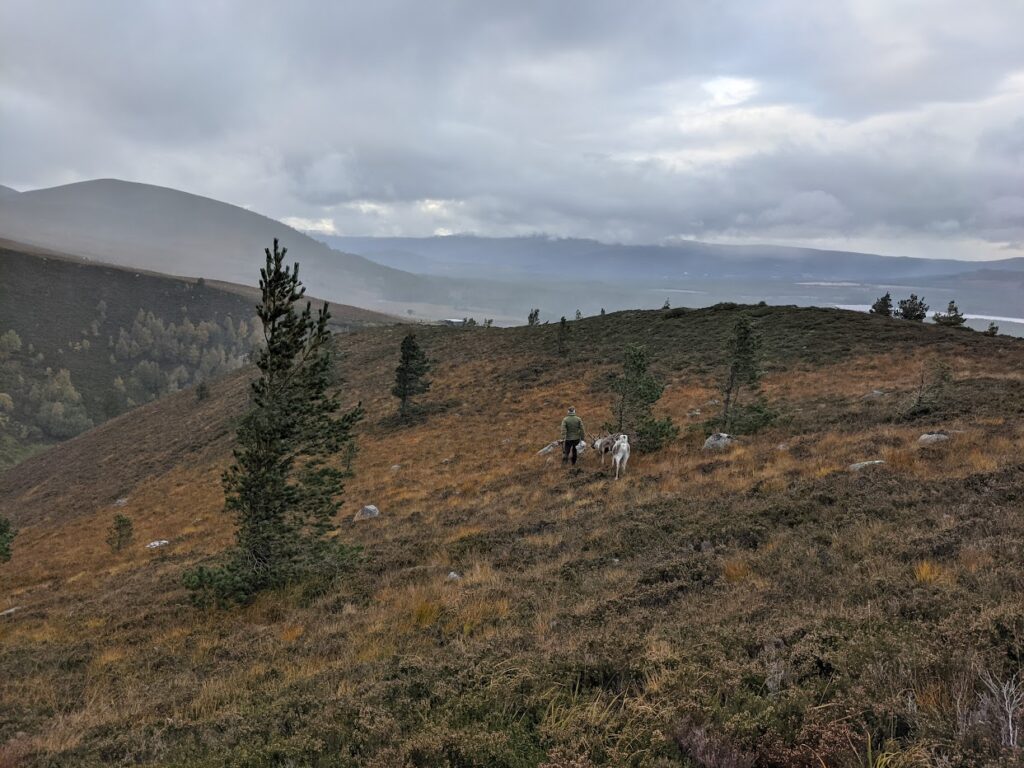
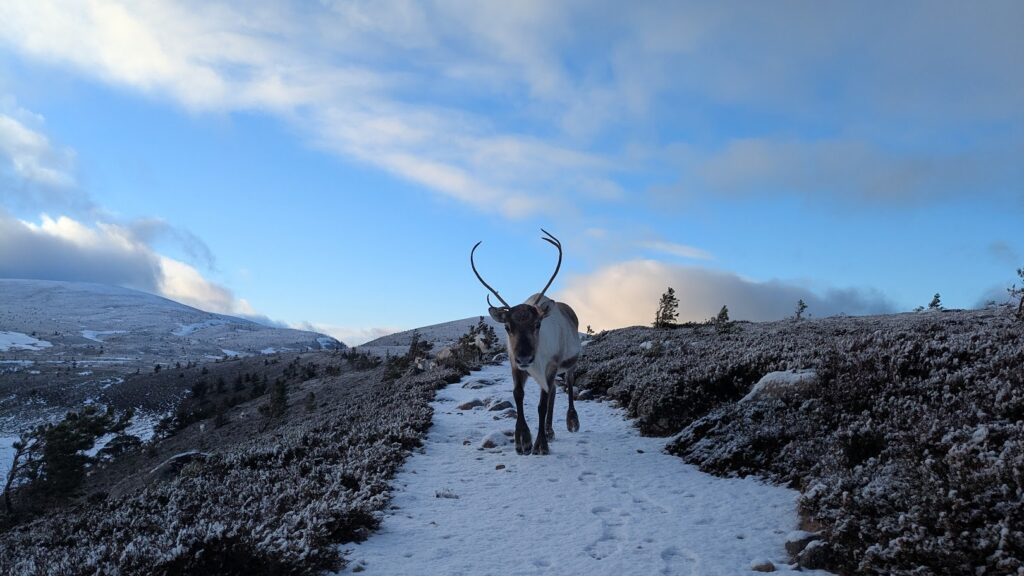
The weather at this time of the year can be challenging and trying to take a picture that encompasses how brutal the weather is on a hill trip is hard. Daisy and I did a Hill Trip on the 11th, and the conditions were rather wintery. The met office report for the day told us that the max wind gust at Base Station was to be 26 MPH, our Hill Trip that day was lower than Base Station and the wind was enough to knock you off balance, so I feel it may have been a little stronger than that! I do love the variation that we get in weather as it makes the good weather days feel special.
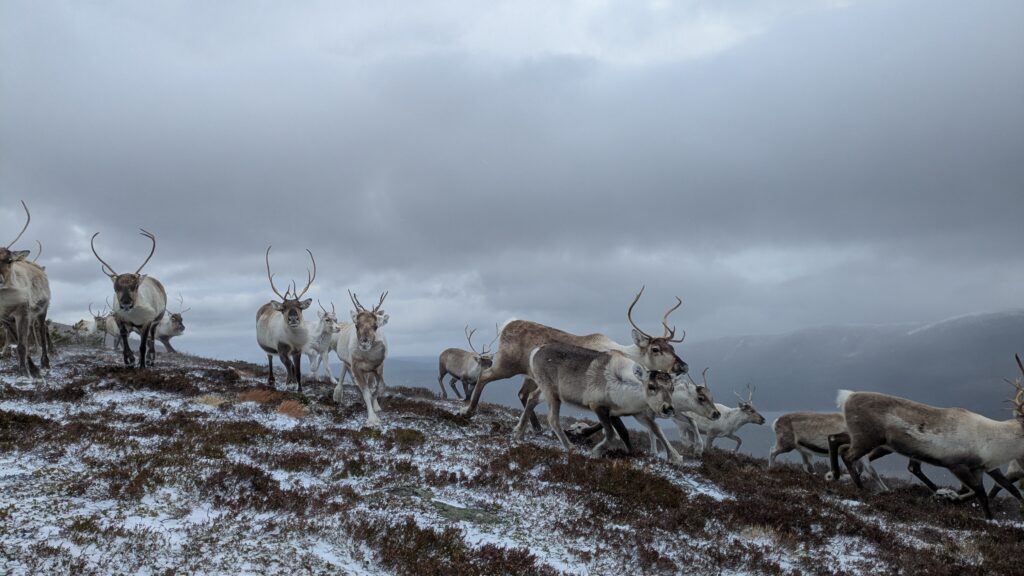
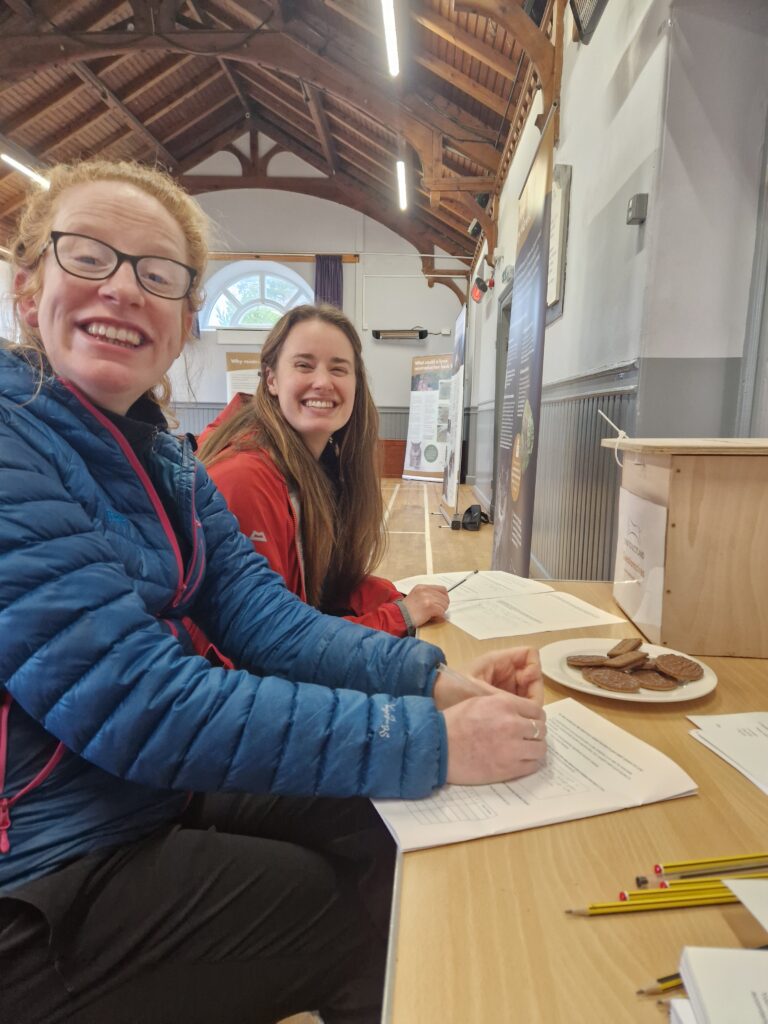
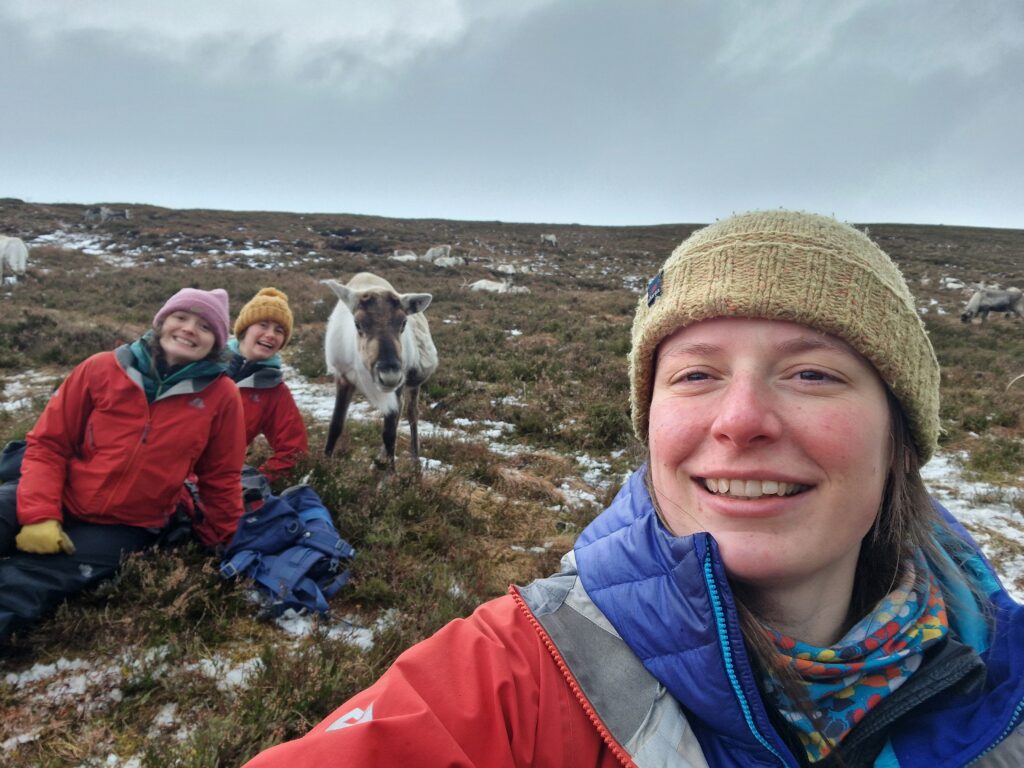
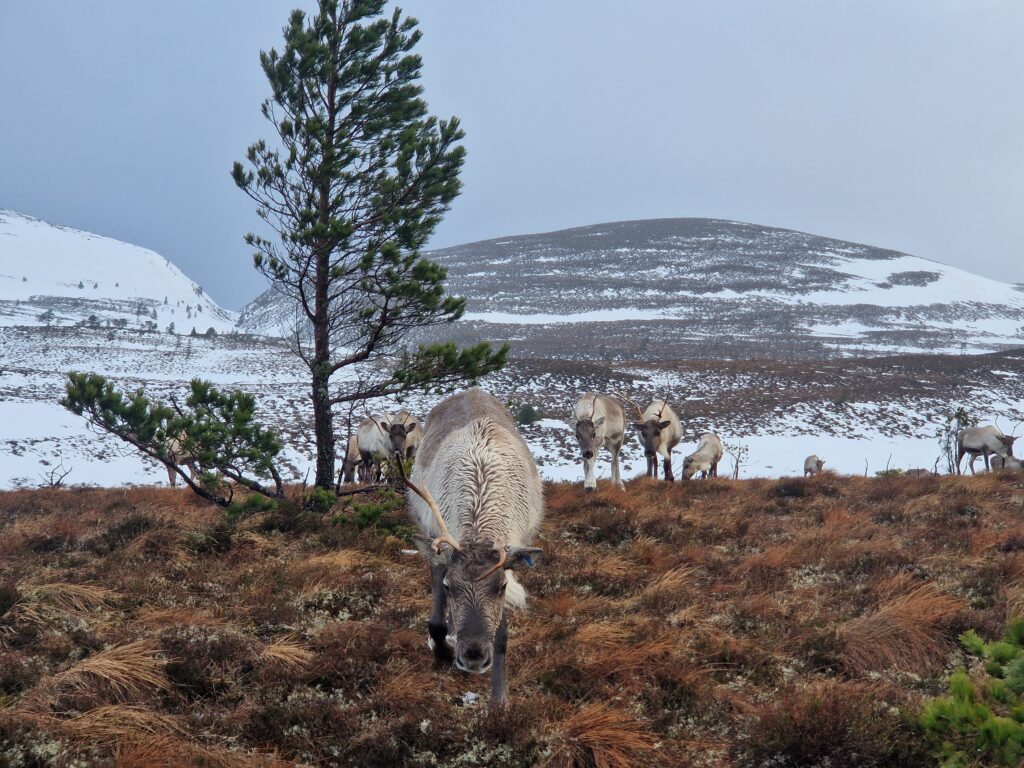
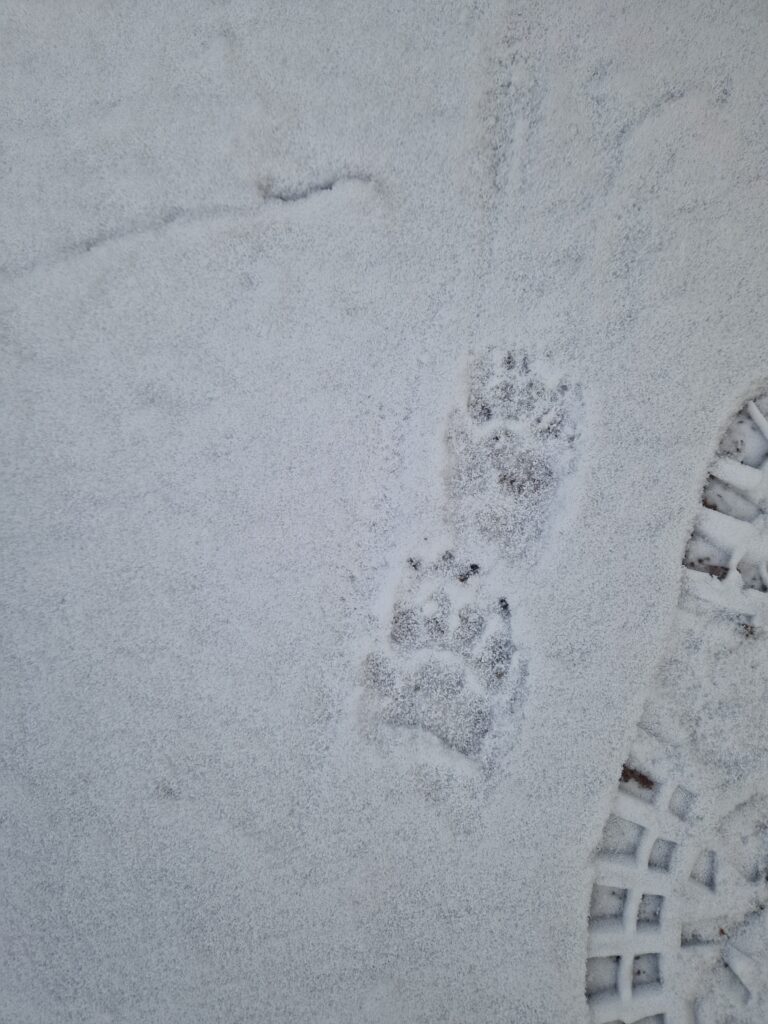
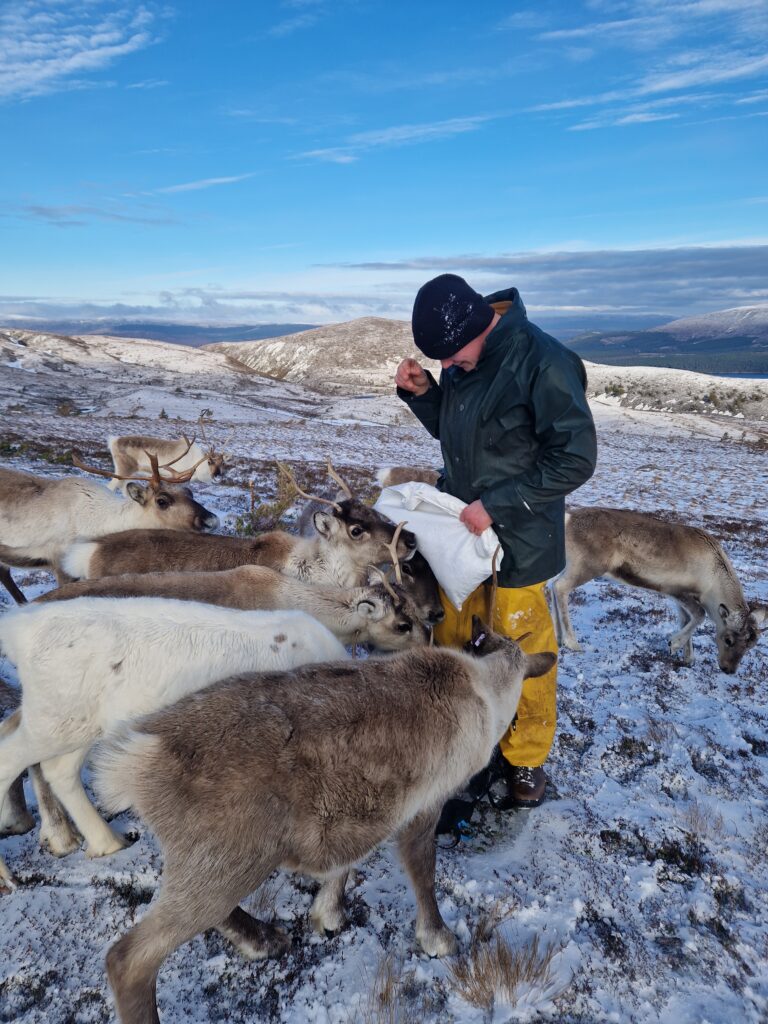
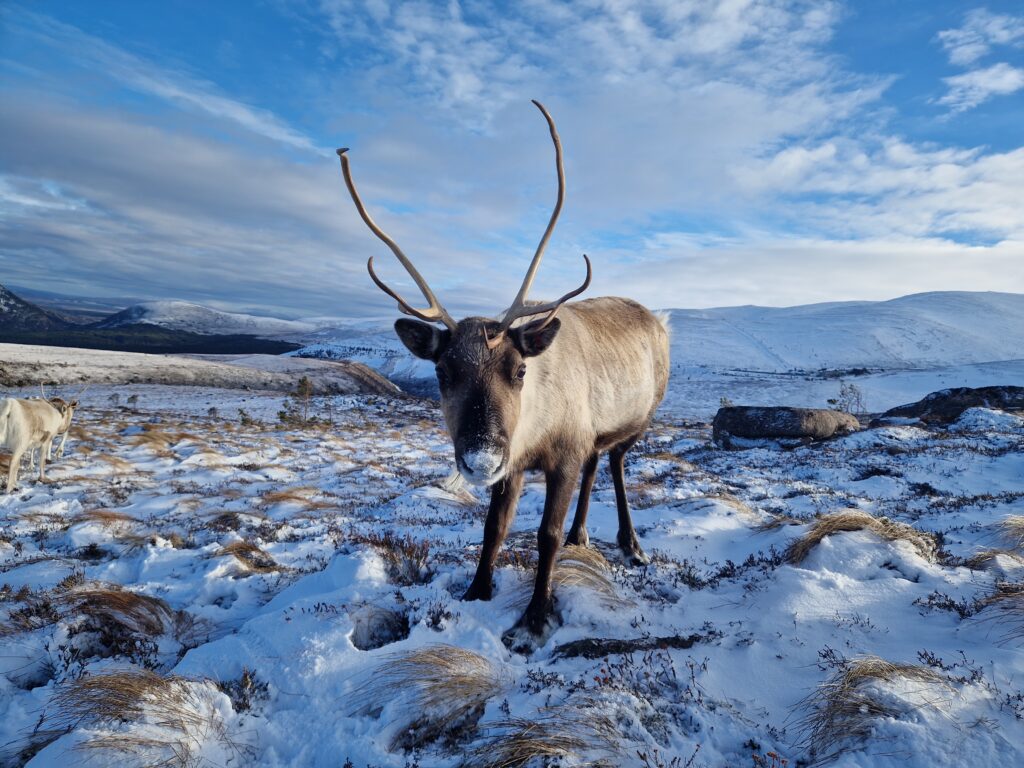
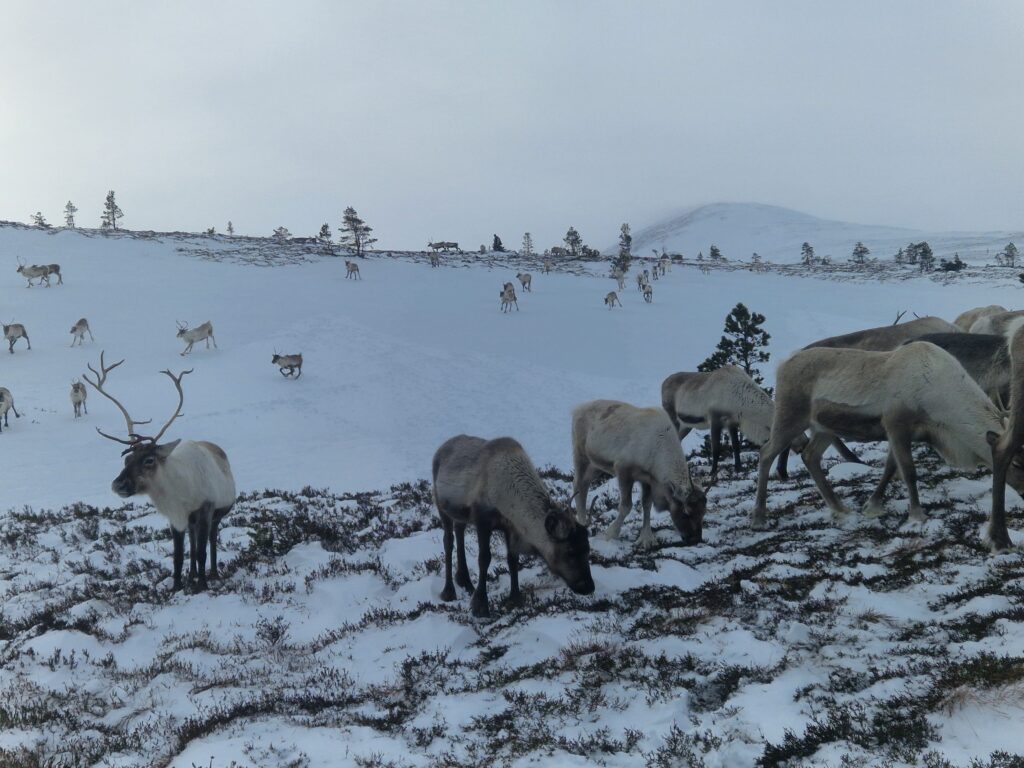
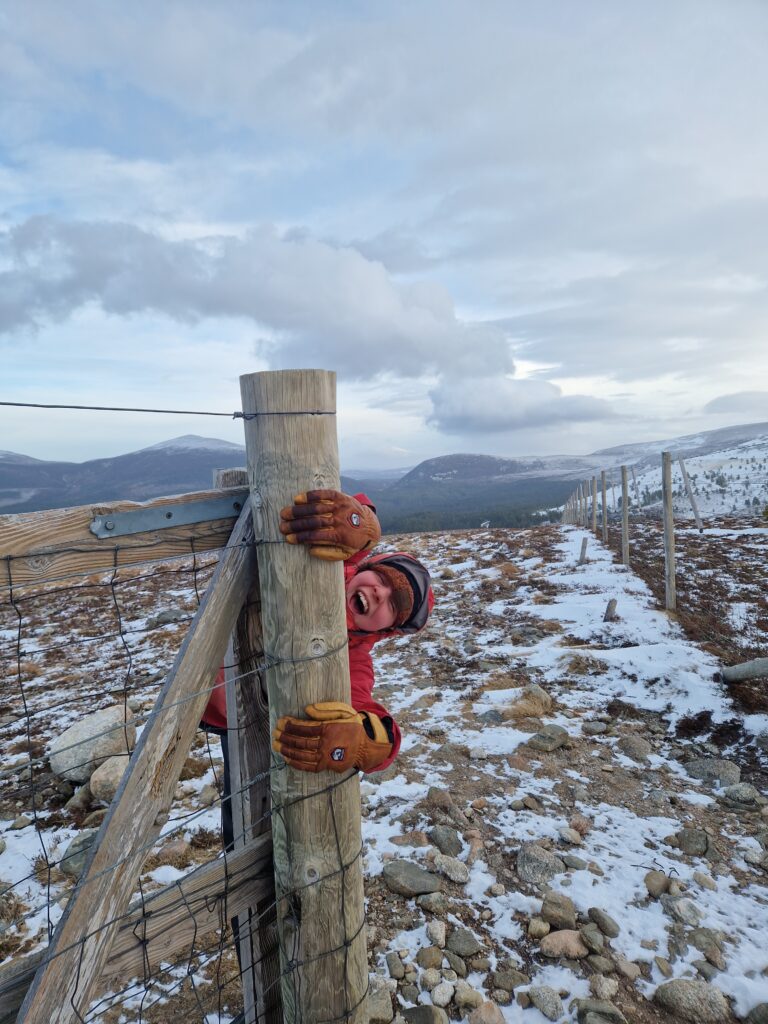
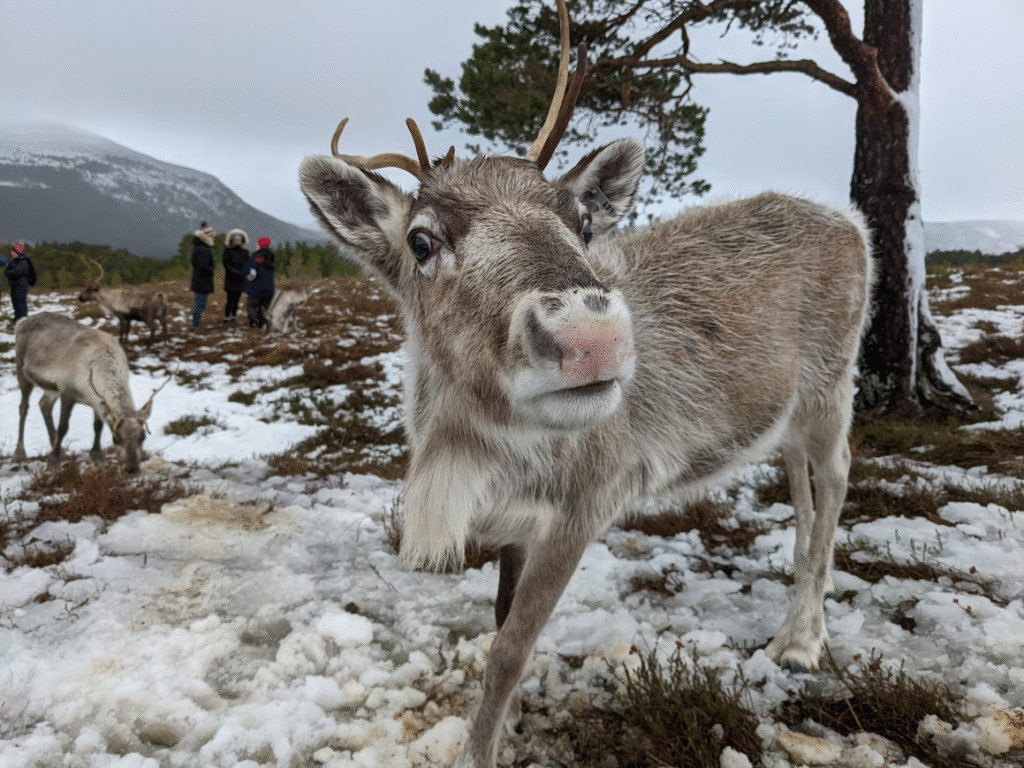
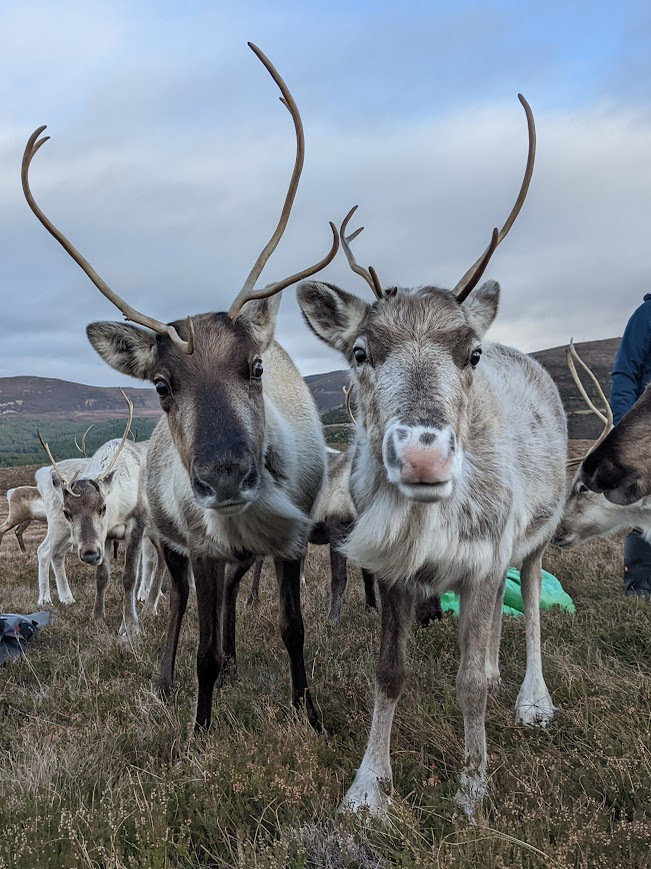
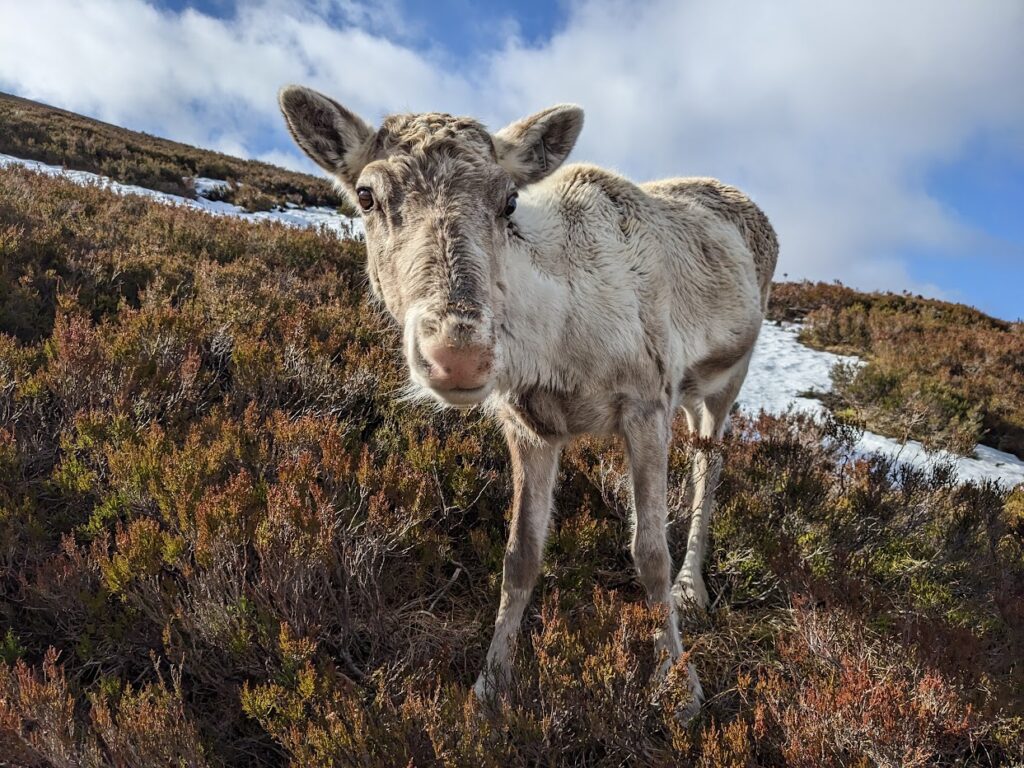
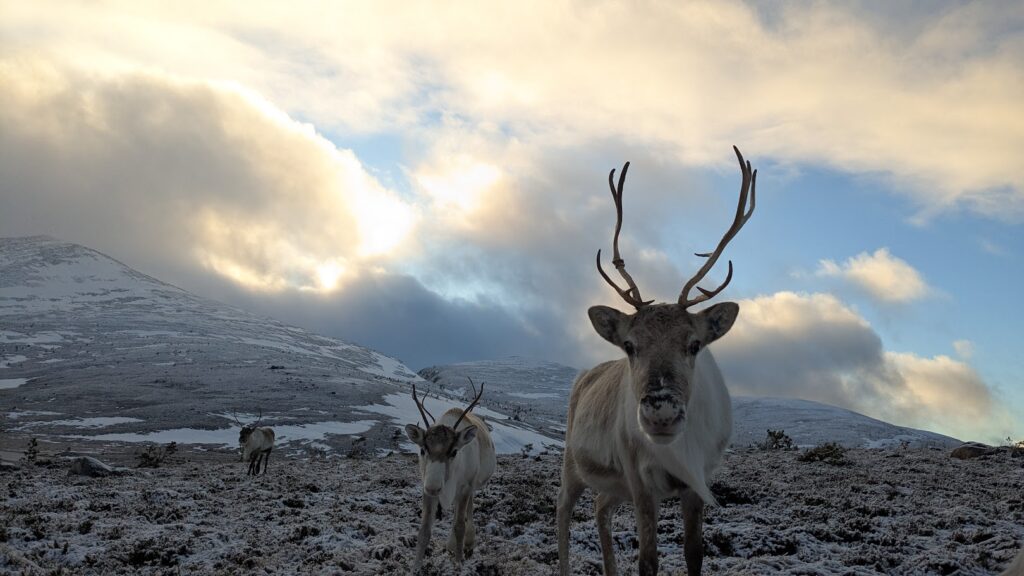
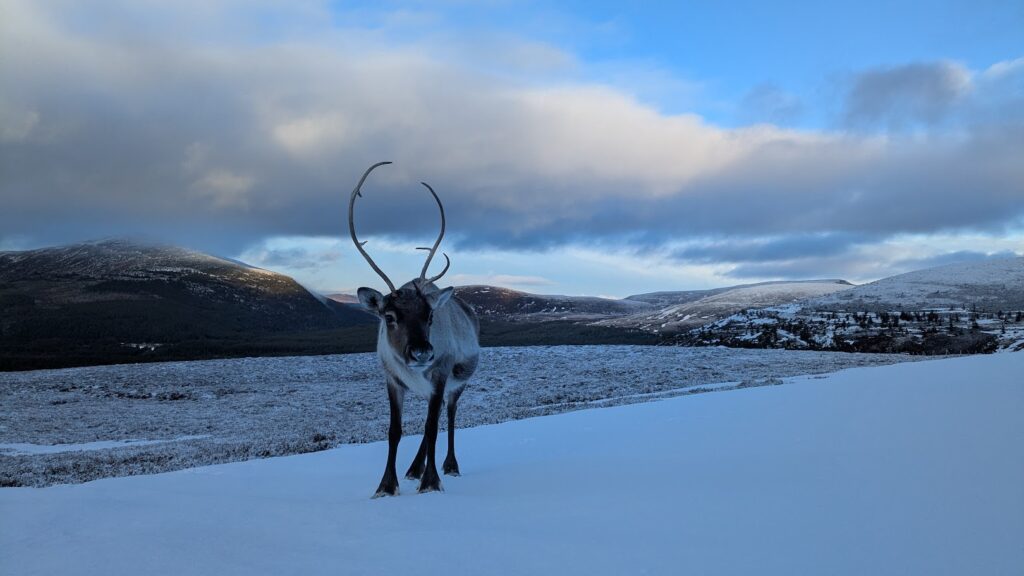
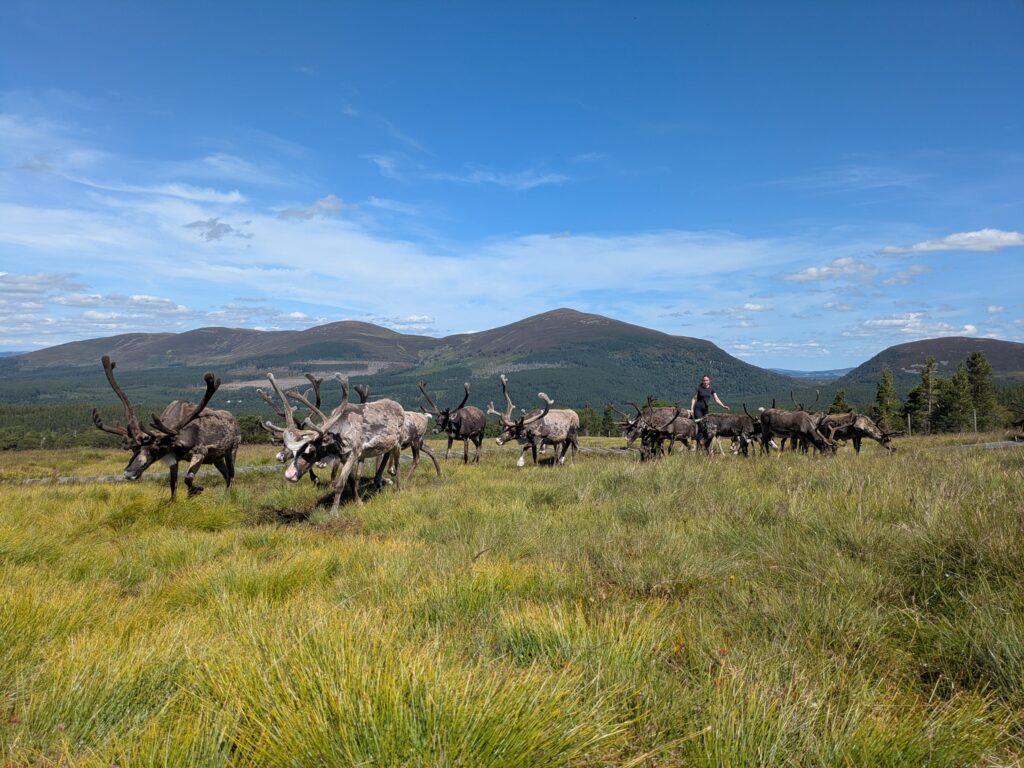
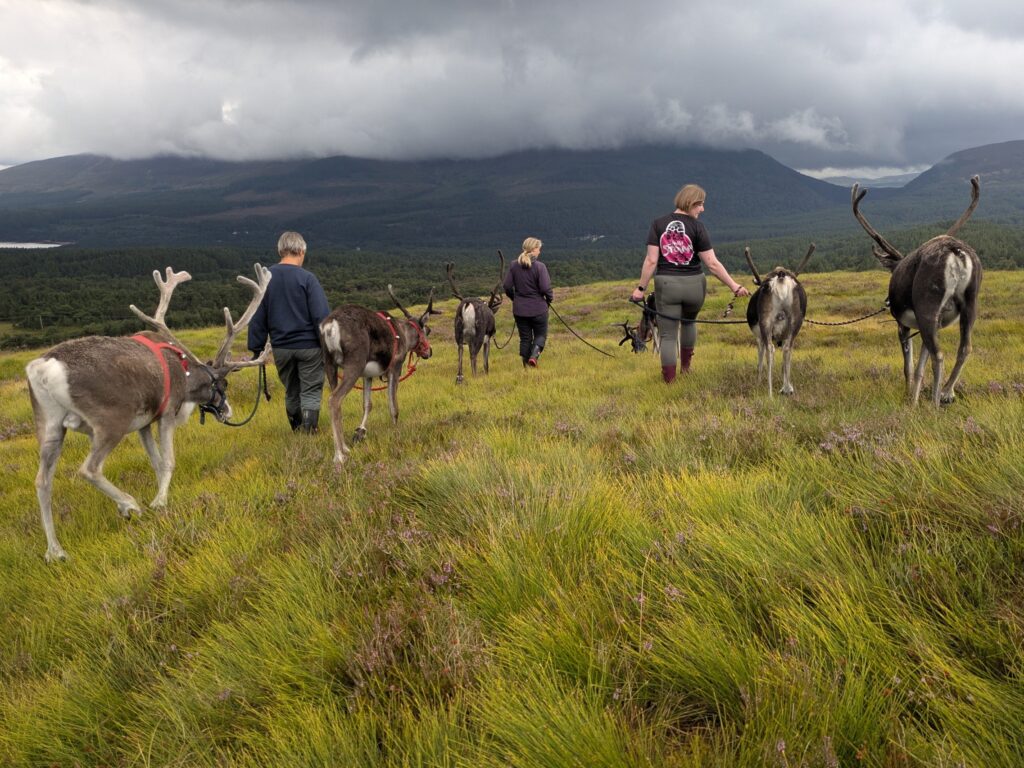
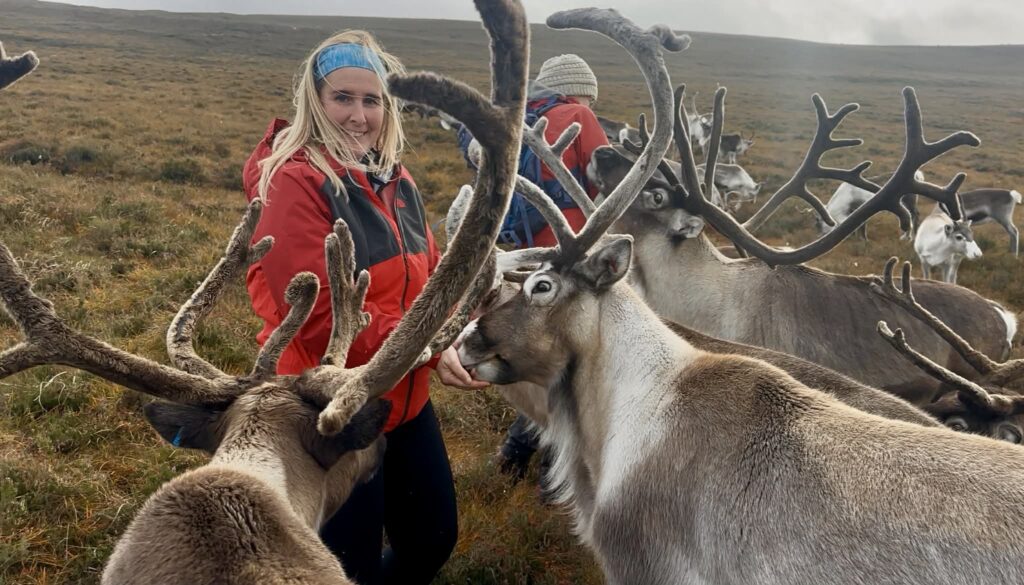
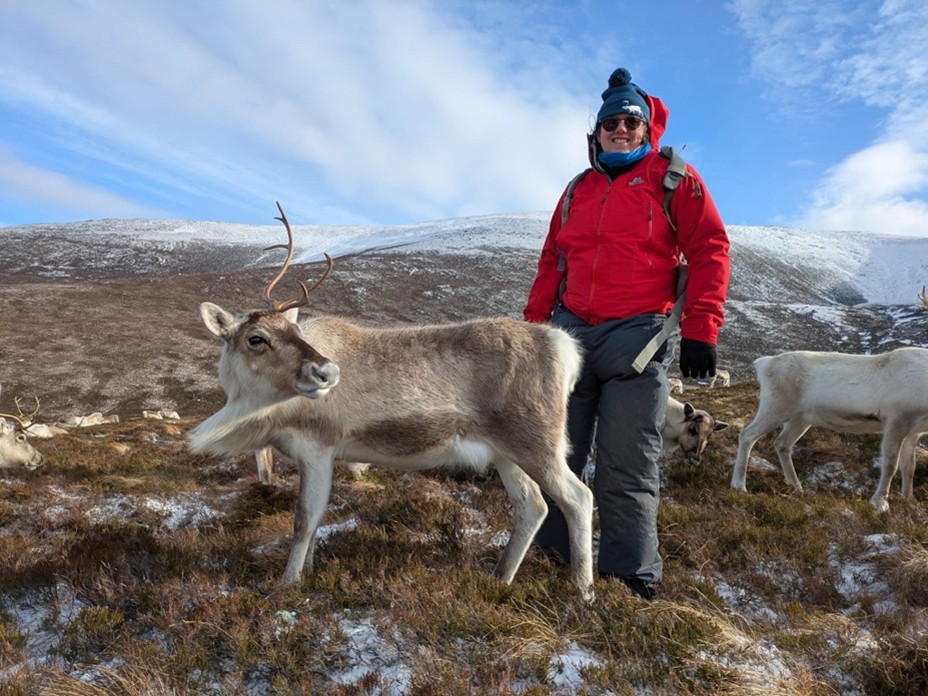
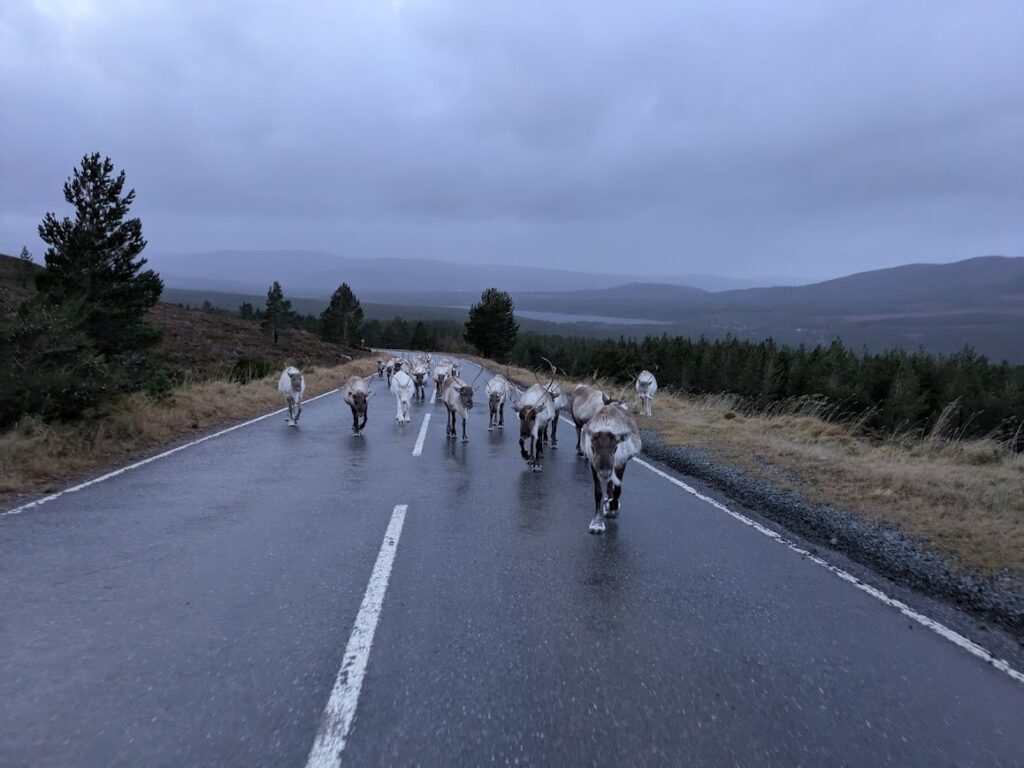
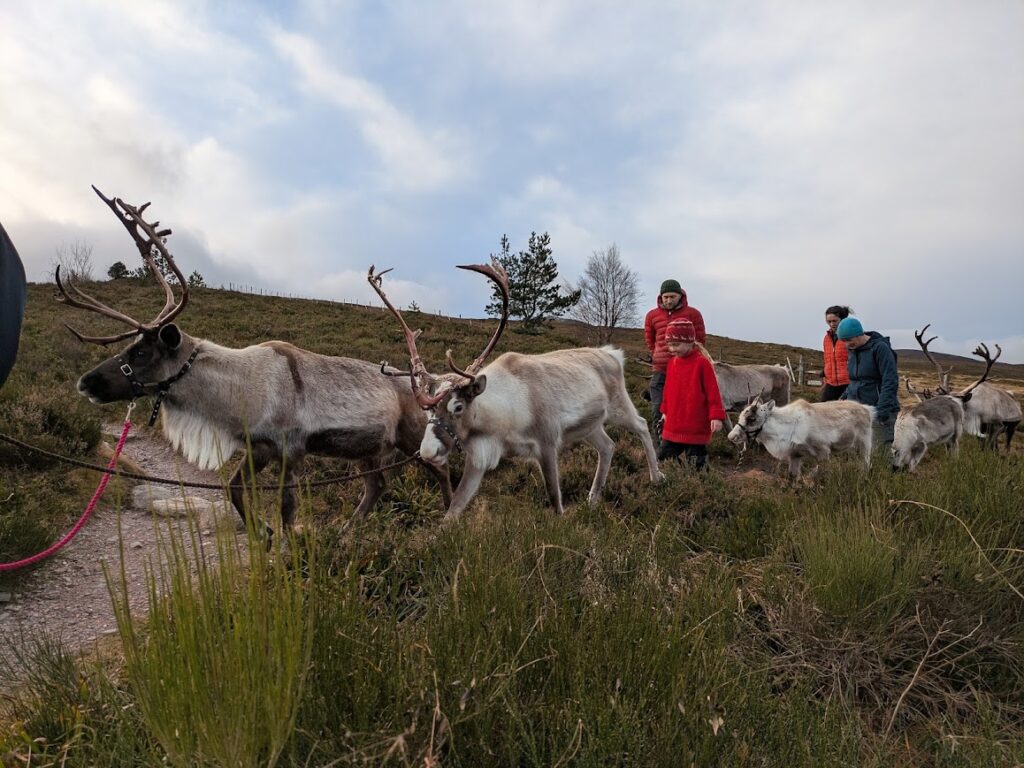
4th of February: Left to Right- Suebi, Orinocco, Bolero, Ceilidh and Glacée on a very blustery trip out to feed the herd before we begin Hill Trips again. 5th of February: Ruth and Lotti enjoying biscuits whilst completing their Lynx questionaires. 7th of February: Myself, Kate and Maisy with Ryvita after the first Hill Trip of the new season.8th of February: Trilby leading the herd in for our morning Hill Trip with Disco on her left, Tango and then Pip.11th of February: On the walk out to the reindeer myself and Cameron noticed some unusual prints in the snow… Possibly Badger prints?11th of February: Cameron teaching his merry band of calves bad habits 11th of February: Above is Beautiful Solero. This was the first day of good weather we had seen in a while, so plenty of pictures were taken!15th of February: Another mission to collect the reindeer before our 11 am Hill Trip. In the fore ground (left-right) we have Dante, Disco and Bolero.18th of February: The first day of the season where we had to cancel the Hill Trip due to the weather. Sanna, Fraoch and myself agree that it was the best call! 19th of February: Daisy clinging on for her life on a very windy walk out to collect the reindeer in the morning.22nd of February: Vienna, often found snooping around us herders looking for extra food. 25th of February: Polka leading the herd in before our Hill Trip.
Breaking trail and the herd following in my footsteps. Holy Moley right behind me. Breaking trail and the herd following in my footsteps.Cheer.Cold snow giving Zoom a red nose.Colder temperatures bringing them lower towards the tree line.Counting reindeer as they walk towards me.Counting reindeer on the line of feed.Feeding free rangers during the first snowfall.Fuzzy noses keeping them warm while they snuffle into the snow for low growing vegetation and feed from us herders.Hanging out with the herd.Holy Moley and her snowy nose.Morven’s antlers turning into icicles.Munching in the snow.Shannon.Winnie demonstrating how their thick coats allow the snow to settle, so well insulated it doesn’t melt.Vanilla blending in.Wrapped up warm with the reindeer.
Chickpea is a beautiful lass with a distinctive white nose. She was born in 2020 to mum Angua and dad Spartan. Her first couple of years were quite tough, with illness and not one but two periods of time where she went missing from the herd whilst she was out free ranging in the hills. Thankfully she has truly come into her own and is now a strong healthy lass, in excellent condition. She had her first surviving calf in 2025, a handsome male we named Jig, so a true happy ending after the rather wobbly ‘teenage’ years.
Chickpea’s full brother Zoom (who has very similar markings) also has a rather interesting tale which Andi wrote about in this blog. Well worth a read, another lovely story!
Chickpea as a new-born calf in May 2020.
I didn’t meet Chickpea until summer 2021, when I returned to reindeer herding, so I missed the first year of her life but she certainly looked like a gorgeous calf. The first time I remember meeting Chickpea was in summer 2021 whilst I was out on a free range mission. I found a lovely group of reindeer which included Chickpea and her mum Angua, who both looked very relaxed and in good health.
Mother and daughter, Angua and Chickpea, free ranging together in summer 2021.
At the end of the summer/early autumn we start seeing the free ranging reindeer more on lower slopes of the hills as the higher plateau gets colder, the grazing deteriorates, and the tasty mushrooms start appearing at lower altitudes. By around mid-September 2021 we’d managed to catch up with all of the free rangers, except for one, Chickpea! What had happened to her? This occasionally does happen, a reindeer goes missing and after a while we have to very sadly conclude that they must’ve died whilst out free ranging, perhaps succumbing to an illness. But we didn’t give up hope for Chickpea! On the 29th of September a hillwalker reported a small single reindeer on the mountain plateau. With all other reindeer accounted for this had to be Chickpea. The rest of the free ranging herd were in a good area not too far away from the hill enclosure, so we just had to hope Chickpea was able to navigate her way to them.
Just over a week passed and there were no more reports of her. As normal at that time of year, we drive up to Cairngorm Base Station and spy the hills to see if we can see any free ranging reindeer. On the 9th of October, Sheena and I were up on the hill early looking for reindeer and who did we bump into? Chickpea! Hooray! Along with another yearling female called Sunflower. Her new winter coat looked a bit tatty, and we think she must’ve had an illness in the late summer, but otherwise she appeared just fine.
Chickpea found on the side of the road looking a bit scruffy but fine – on the 9th of October 2021. The first time we’d seen her in a long while.Sheena leading Chickpea and Sunflower into the enclosure on the 9th of October after being AWOL.8th of January 2022 – Chickpea looking for more feed on a Hill Trip.Chickpea and her mum back out on the free range in January 2022.
Chickpea then spent the first part of 2022 out free ranging in the hills. As a young female, she didn’t need to come into the hill enclosure for calving, so she remained out free ranging with the rest of her cohort and all the other non-breeding females. Her mum Angua was brought in for calving and gave us a gorgeous calf, we later called Zoom!
We caught up with Chickpea as normal in the beginning of the summer and Andi found her in a nice big herd of cows and calves in mid-July 2022 looking healthy and in good condition. But as autumn rolled around and once again, we start bringing reindeer in off the free range, Chickpea, Angua and her calf Zoom were the only reindeer not to be accounted for. You’ll read the full story of Zoom’s return in Andi’s blog (link above) but once he was brought back into the enclosure the only reindeer left unaccounted for was Chickpea… again!
We got several reports from hillwalkers of a single reindeer and we even received a couple of emails with photos of her so we knew she was out there somewhere, but frustratingly we were unable to catch up with her ourselves. There are no fences on the free range so the area they can roam is vast and the sightings of her were all from the furthest part of their range.
Then on one otherwise completley normal morning on the 21st of March 2023, Hen and Lisette went out to find and move the herd in time for the Hill Trip. And who was there?! Chickpea! She looked very scruffy and was a little on the lean side but was otherwise in good spirits and keen to get into the handfeed bag!
It is normal for us to go weeks or months without seeing a particular free ranging reindeer over the summer. However, Chickpea ended up evading us for around eight months! Thankfully, this is very unusual! I certainly do not know of another reindeer who has gone AWOL for anywhere near that long whilst I’ve been working here.
Chickpea shortly after her reappearance in March 2023. Everyone was so happy to see that face!
Thankfully Chickpea has not made us all this anxious again! In fact, she’s absolutely thrived and you certainly couldn’t tell by looking at her she has had a couple of rather big solo ‘adventures’. She remained with the herd throughout March and April 2023 and we gave her some extra calorific food to give her a wee boost. She then continued to free range all spring and summer, but we saw her much more frequently!
Chickpea in the middle on the free range in July 2023 – looking scruffy due to the moult but in great condition. She’s obviously recovered and found lots of good grazing. Chickpea in January 2024 – such a difference from the photo from March 2023 (above).Chickpea free ranging in the hills in January 2025. What a bonnie lass!
In May 2025 Chickpea gave birth to a gorgeous male calf, also with a white nose. The pair went out to free range for the summer, we caught up with them several times, and they clearly had a good season as they both came back into the enclosure in the autumn in great condition. We named Chickpea’s calf Jig, and he’s one of the biggest calves of the year. Chickpea is going from strength to strength and hopefully will never make us worry so much again!
In May 2025 Chickpea gave birth to this lovely wee fella who we later named Jig.Chickpea and Jig spent summer 2025 out free ranging in the hills. This time we caught up with her at a perfectly normal time of year – around mid-September – and were able to bring them both back into the hill enclosure. Chickpea in October 2025 with a very characteristic look on her face – any more food for me?!Jig is a lovely young lad and naturally tame. This is him in November 2025.
As months go, January generally has a pretty bad reputation for being dark, cold, and really a bit depressing. Unless you are a reindeer herder, in which case January is likely to be one of your favourite months. Every year, from the end of the Christmas holidays to the start of the February holidays we close to the public. As much as I love taking hill trips and watching so many people spending time with the herd, after such a busy few weeks over Christmas, we all heave a sigh of relief once we can turn our signed to ‘closed’ for the month.
Despite being closed, January is still a really busy month. We spent the first few days getting all of our reindeer to the correct places to spend the winter free ranging. This year that coincided with a very snowy week, so we had lots of snowy walks and drives between Glenmore and our farm, to get everyone in the right places. We have been kept busy doing all the jobs that we just can’t do whilst we are open. Painting, cleaning, building, washing, repairing – you name it. Oh, and of course, we are still heading to the hills to feed the reindeer when we need to, we don’t feed the reindeer everyday so you will be treated to some extra dog photos this month – what’s not to love!
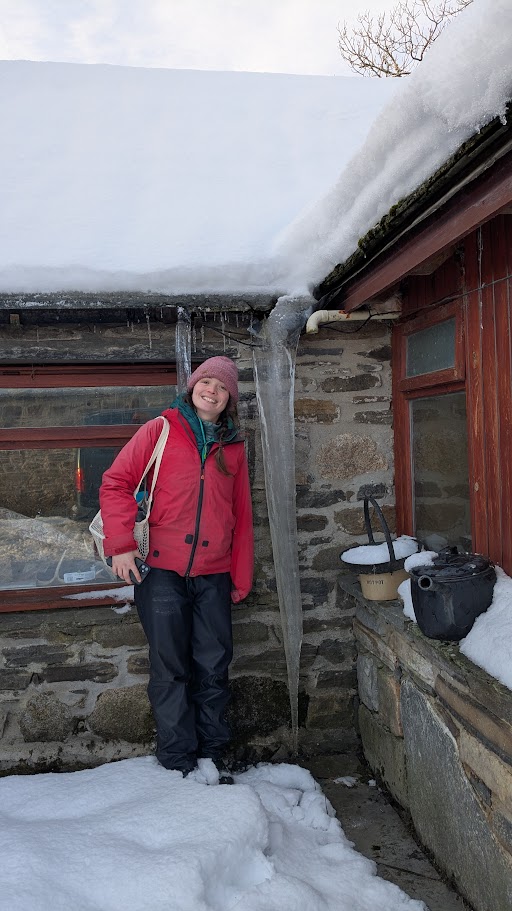
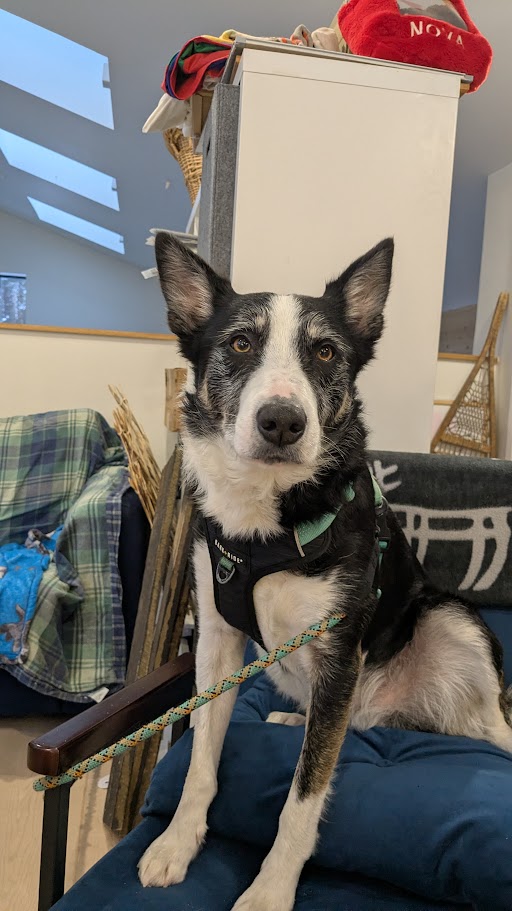
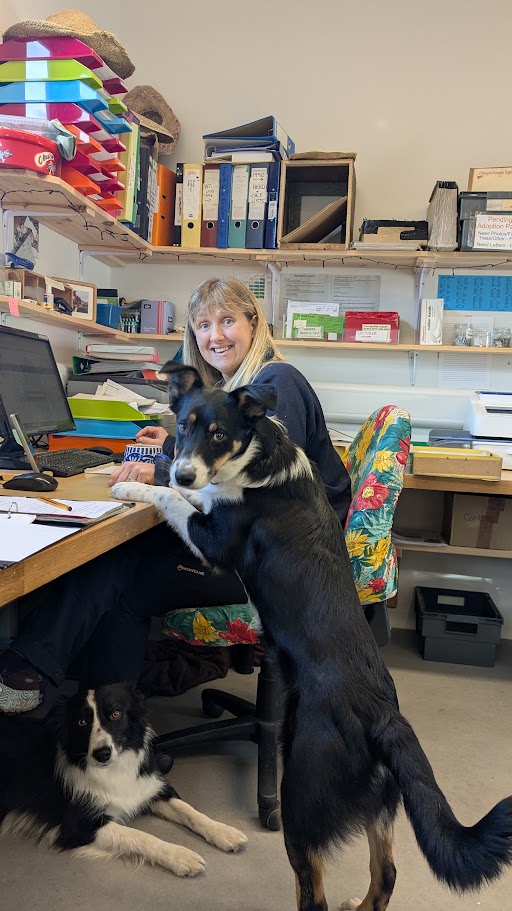
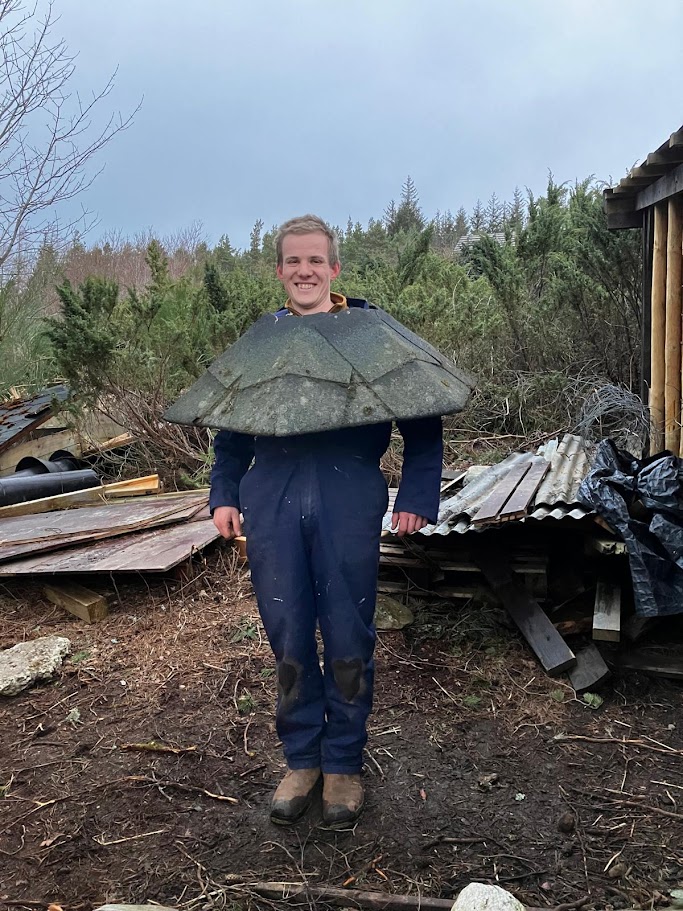
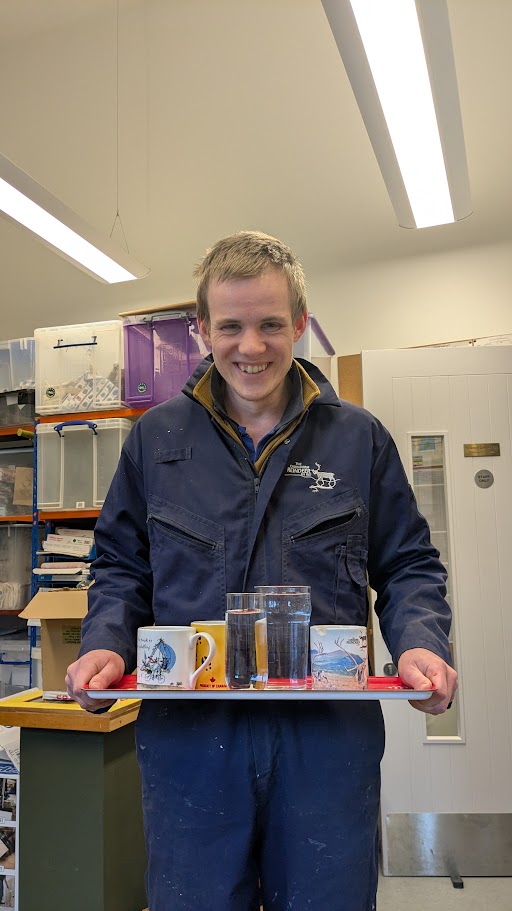
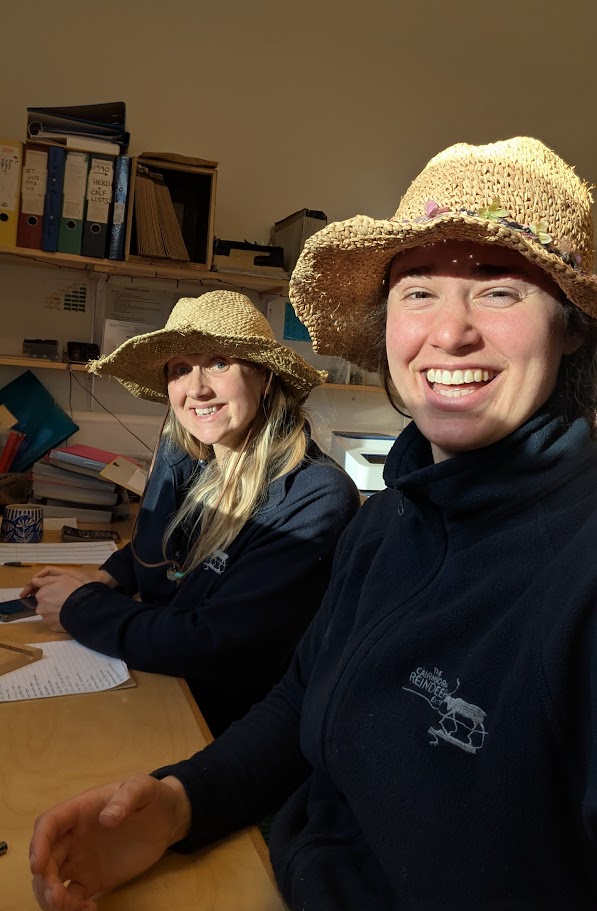
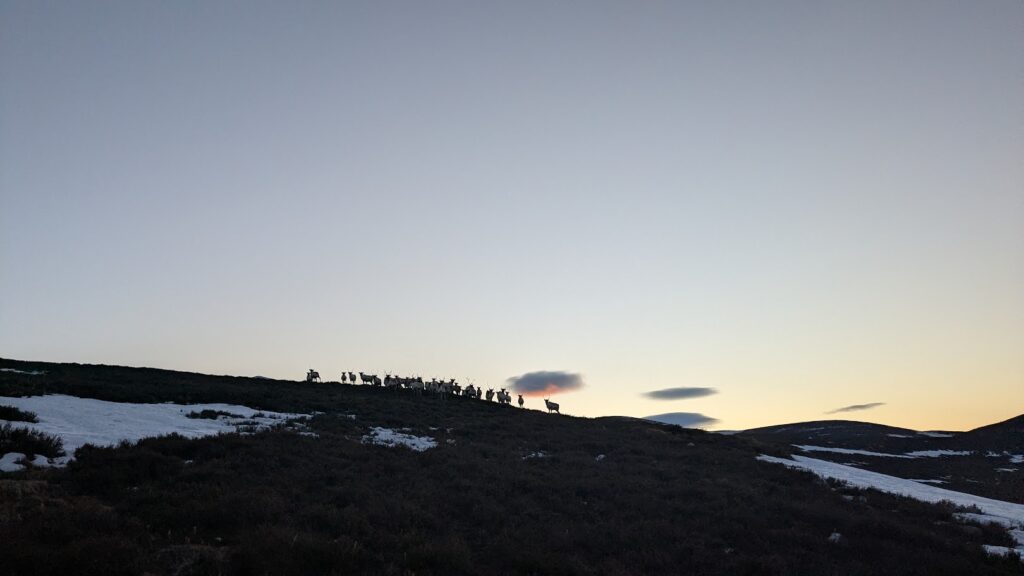
1st January 2026: Herders Lotti, Joe and Zoë with the lovely Winnie for the new years day feed. 1st January: The herd and herders walking up the boardwalk for their feed.3rd January: The lovely Lupin with a wonderfully snowy nose!3rd January: A very alarmed Daisy at the state of the shop floor after a busy, snowy day.4th January: Daisy leading the herd for their breakfast.4th January: The reindeer in the trees at the end of the hill trip.6th January: Fiona walking some of the reindeer onto the free-range hills.8th January: A very snowy walk from the enclosure with the boys getting them ready to free-range.8th January: The boys heading up onto the hills.8th January: The most enormous Icicle at the farm (Kate for scale).9th January: The very handsome Rowan was our office dog of the day!12th January: Sanna helping Fiona with her computer work!12th January: Cameron coming up with creative wet-weather clothing solutions.13th January: Suebi leading the herd over. With the deep snow and high winds we’d not seen the reindeer for 5 days. They were delighted to see us.13th January: Foxtrot and Beanie saying hi!13th January: Shannon on a snow patch.16th January: Cameron delivering the all important tea run!17th January: Cameron, Daisy and Hen feeding the herd on a rather dreich day.17th January: Helsinki and River being very lovely and Latte photobombing absolutely covered in feed! 😂19th January: Fiona and Lotti sporting rather fetching sunhats to keep the low, afternoon sunlight out of their eyes.19th January: As we arrived on the hill that afternoon the reindeer were looking very majestic on the skyline.20th January :Feeding the herd on a rather dreich day.25th January: Andi surrounded by a sea of calves!29th January Some very impressive snow drifts on the drive up the hill.29th January: Glacee, Pip, Suebi and Jig crossing a snowy patch.
Now we’re in the middle of winter, it’s hard to imagine the hills in summer time. But I found these photos on my phone from a day off in August and thought I would share them in a blog.
I was off for a walk with a friend around Cairn Gorm. During our walk we saw three groups of free-rangers, in different places on the hill which was really wonderful. The first group consisted of Orinoco, Nuii, Vanilla and Solero. The second group was Helsinki, her calf River and Brew. The final group was Sundae, her calf Salsa and Mississippi. My friend Hannah was visiting for the weekend and she had come on a Hill Trip to see the reindeer the day before so it was a real treat for her to see some of the girls out free-ranging. We also had my friend’s dog with us, Foss, so we had to take it in turns going over to see the reindeer whilst one of us waited with Foss at a good distance. We all had a wonderful walk and seeing the groups of free-range reindeer certainly made my day.
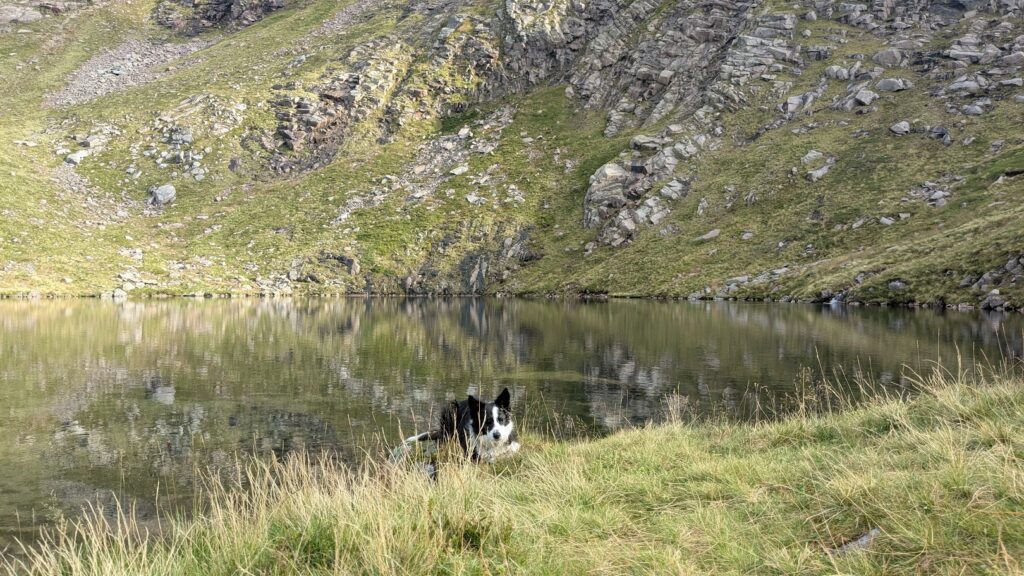
Orinoco, Nuii, Vanilla and Solero hanging out in the ski area.Vanilla and Solero looking wonderful!Foss at the top of Cairn Gorm.Brew walking over to say hi.Helsinki with her calf behind her (River) and Brew to the right.River, Helsinki’s calf. Our final group – Sundae and Mississippi.Sundae and Mississippi with Sundae’s calf (Salsa) close behind.Finally we stopped for a swim in Coire an Lochain on our way down.
Once again we had an excellent volunteer season in 2025, with a lot of familiar faces returning to spend another week with the reindeer, and also plenty of fresh new ones!
We take on volunteers for a week at a time, starting on a Monday, from roughly the start of May (start of April from 2026 onwards) when we move up to two daily guided Hill Trips, through to the end of the October holidays. In 2025 we had the Paddocks up and running once again so everything has had a more ‘normal’ feel to it, with volunteers learning the daily routine down at the Centre as we open to the public each day – lots of poo-picking and sweeping and general smartening up of the place each day! But most time is spent up on the mountainside with the main part of the reindeer herd, helping with the guided tours and chatting to all the visitors. Taking a volunteer along on one, often two, tours a day is the best way we can provide heaps of time right in amongst the reindeer – time that is something I suspect us herders can take for granted rather easily.
So, in no particular order, huge thanks to our ‘new’ volunteers in 2025 – Stephan, Victoria, Dylan, Marsaili, Ruth, Jo, Jane, Sarah, Kathy, Jamie K, Anna, Sue and Jamie C. There was also Daisy and Alicia, but it seems a bit odd now to list their names as volunteers as they’ve both come back to work for us – this time in return for money! Alicia, who lives locally, has been doing a couple of days a week, whilst Daisy (and her lovely collie dog Echo) loaded up her camper van and made the long journey north from Kent and is working full time for us. Volunteering is our favourite way of recruiting future staff, so hint, hint if you want to get your foot in the door here… Here’s a link to the excellent blog Kathy wrote for us after her visit, if you want an idea of what volunteers get up to. And here’s another blog written by Anna who amongst her volunteer duties enjoyed taking photos of the reindeer.
Kate and volunteer Alicia, who is now working with us a couple of days a week. Daisy on the left, who after a volunteering for a week in June is working here full time.Kathy and Busby.Marsaili (in the distance!) doing an expert job herding the reindeer on a very hot July day.
For the returnees, we had Kathleen, Jayne, Sophie, Lisa, Helen, Rachel, Katie, Stephanie, Anne, Becca and Emm. Long-term followers of ours will probably know of Emm, who’s helped us out over the years multiple times, and always writes us wonderful blogs about her time here! You’ll find her most recent blog from her visit in February here – no doubt there will be another from her October visit published in the next few months.
Hen, Fiona and returning volunteer Rachel doing some harness training with the male reindeer.Lisa has volunteered with us several times now – here she is hand feeding Magnum!Emm and Holy Moley in February 2025.
In 2025, 15 year old Maisy has turned from a volunteer to a paid member of staff, working some weekends and in the school holidays. She apparently can’t get enough reindeer time though, as she still turns up to volunteer too at times, sometimes arriving off the school bus unexpectedly! She wrote a blog with lots of lovely photos here, back in the summer. And Carol, our local volunteer from Moray, has been in on some weekends too.
All in all, another excellent year! If YOU are interested in volunteering, we start booking people in from the start of January each season, so drop us an email. Volunteer weeks start on Mondays from April to October inclusive, and are 5-7 days a time. We can only take on one person at a time though, so it’s first come, first served…
At the end of the summer, we begin to collect our female reindeer off the free range which allows us to give them a check over and start preparing for the rutting (breeding) season in October. How soon the reindeer make their way back to our hill enclosure usually varies per year and this year we were heading into October with two cows and their calves still somewhere out on the free range with very limited sightings of them.
We were close to mid-October when we received a very exciting call about some reindeer being spotted on the free range. Due to it being the rutting season, it meant that us reindeer herders were busy checking on reindeer in our hill enclosure and on Hill Trips meaning there wasn’t really anyone to spare to head out on to the free range. Since we had those two pairs of cows and calves still to be accounted for, we were keen to get out to the group as soon as we can.
The next day, I headed out to where the group was last seen and enjoyed a wonderful search on a quiet area of the mountainside with gorgeous weather. Lucky for me, the group of reindeer that had been seen weren’t that far from where they had last been reported. So, I headed down to them to identify who was there. Initially, I spotted girls that we had seen often through the summer period; Spy is easy to ID from afar as she is aloof and has a stunning set of antlers, Oatcake is another reindeer we had seen recently and is easy to ID on the free range as, as soon as she realizes you have food there is no getting away from her!
Spy has epic antlers and is always fairly suspicious of us!Oatcake is one of our older girls at 16 and loves the sight of a white bag whilst she’s out free ranging.
I moved closer to the group and noticed a few other younger reindeer like Fab and Mocha, who were both looking great and catching up with the group was made even more special once I had noticed we had a cow and a calf present (a calf who was huge and in great condition). Tap and her calf (now named Charleston) hadn’t been seen for a wee while, which meant that it was great to catch up with them. Tap was also uncharacteristically sociable and was keen to eat the hand feed that I had to offer, she is usually like her sister Spy in nature- very independent!
Yearling Mocha. Three year old Fab.Tap and her big calf, Charleston.
Now that we knew who was in the herd, I grabbed a few photos and then fed the group in a spot where it would be easy for my fellow herders to find them the following day. Once Tap and Charleston were moved into our enclosure, this just left one cow and calf on the hill side which we hadn’t seen since the start of the summer.
The next day a team of herders went out to catch Tap and her huge son Charleston and brought them back to the hill enclosure.
Fast forward a week, and we were in our hill enclosure walking out to one of our breeding groups who we were due to feed. At this time our free-range reindeer were keeping close to our hill enclosure in hopes of extra food and were right outside the fence line. I personally hadn’t thought much about it as I was focused on how Jimmy (the breeding bull) would react to our arrival and it wasn’t until Fiona took account of the group that we realized our last cow and calf had made their way back to the hill enclosure on their own accord; we weren’t expecting to catch up with Pinto and her calf Quickstep that morning, which was the most welcome of surprises.
Pinto on a halter and her calf Quickstep following just behind. Quickstep with his lovely white nose walking into the hill enclosure.
I have enjoyed heading out onto the free range a few times over the summer, getting to experience different areas that the reindeer frequent and I am constantly in awe at how much our girls move around during the summer and would love to get an inside view on their knowledge of the hill side, as it is quite common that we do not catch up with reindeer for a few months until they arrive on the door step of our hill enclosure.
The last photo blog of the year! I’ve actually been rather rubbish at taking photos this month as it’s just been so busy (and rather dark with the shortest days of the year) but here’s a wee look at some of the pics I’ve taken on my phone over the past few weeks.
Christmas events went well with teams making us all very proud. Hill Trips have been mostly sold old for weeks (well done if you got tickets) and Christmas Fun was mostly sold out too – it’s been great to see so many people enjoying the brand-new Exhibition and folks getting to meet Santa! Meanwhile up on the hill the reindeer have all been well and unaware of the slight frazzled state of the herders down at the Centre.
Enjoy the photos and Merry Christmas! A big thank you to all who have read the blog over the last 12 months.
4th of December: Brie is having a wonderful end to 2025 free ranging in the hills.4th of December: Another reindeer from the ‘Cheese’ year! Feta is also having a wonderful time out free ranging. She’s grown a cracking set of antlers this year.5th of December: Ceilidh coming over to see if there is any spare food for her.6th of December: Santa is here!9th of December: Tub on a very soggy day.10th of December: Moving the free ranging herd – easiest way to get them to where we wanted was just to walk up the road! Old girl Ryvita leading the way.13th of December: The ‘Christmas Fun’ team for the day – Sherlock, Stenoa, Bond, Charleston and Quickstep.14th of December: Leading a team of reindeer off the hill ready for their event at Landmark – Lupin and Magnum at the front.15th of December: Ballet and Sorbet.15th of December: These boys have all been superstars on Christmas events this season – Jester, Busby and Dr Seuss. 16th of December: Disco and her beautiful mum Dante.16th of December: Lochi and Beanie. 16th of December: Marple and her son Mosh. He’s such a cheeky wee thing!19th of December: The herd coming in for their breakfast. 23rd of December: Lochi being all cute. 23rd of December: Salsa lying down after a Hill Trip.23rd of December: The handsome Zoom.
With autumn being the season that the calves return to the hill enclosure, along with their mums, it’s always exciting to see them and to start to get to know them as characters. Having spent all summer with males only in the enclosure, it’s suddenly a bit overwhelming to have a sea of ‘new’ reindeer to get to know once again! The calves are the hardest to learn who is who.
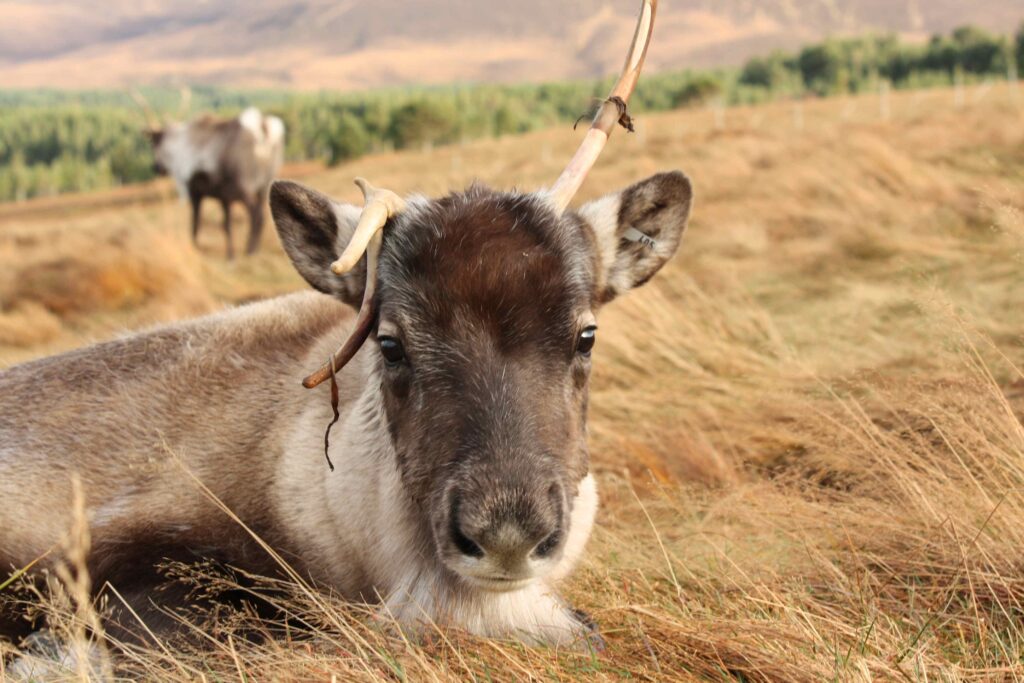
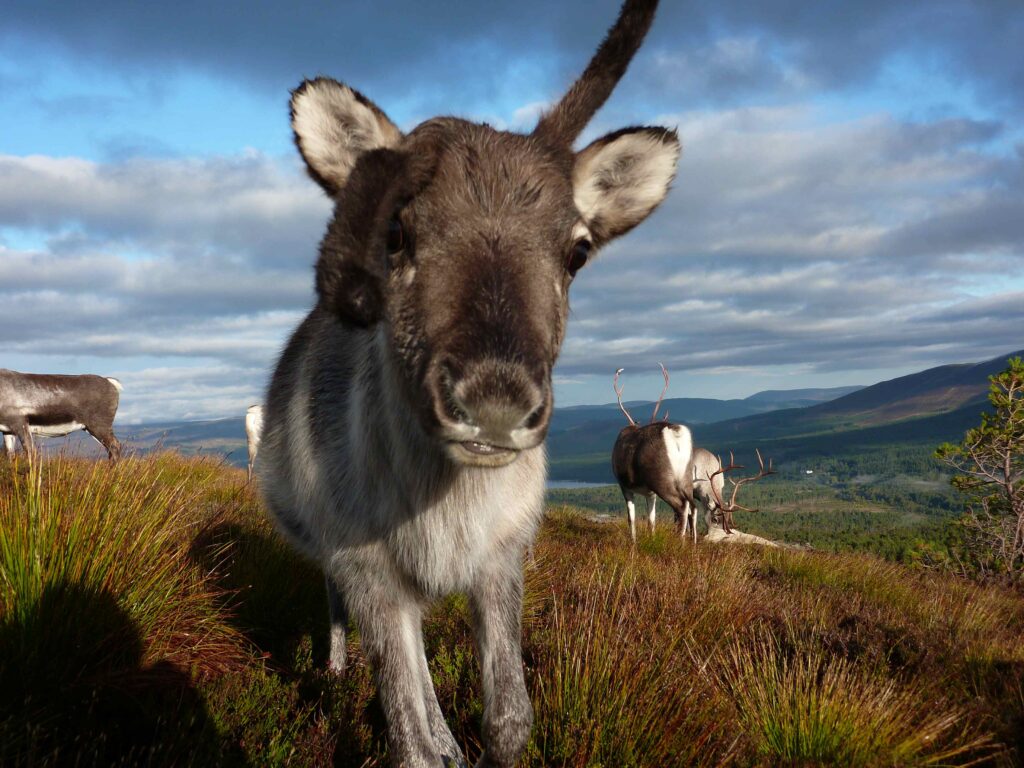
Last time we saw them properly, in late spring, they were tiny and heading out to free-range in their calf coats, which are quite different in colouration to an adult reindeer’s coat. By autumn they’ve moulted, grown their new winter coat, and are many times bigger – i.e. they look COMPLETELY different! Other than very obvious colour variation and face markings, their wee antlers are the easiest way to tell them apart. The photo below shows Macchiato at 4 months old, looking about as generic as is possible for a reindeer calf – very average size and shape antlers, along with being very much the ‘normal’ body colour. Difficult to tell one from t’other, looking like this!
Macchiato, aged 4 months
So I thought I’d show some of the antler shapes of calves over the years in this blog. The memorable ones tend to be the biggest ones, of which the outright winner – by a country mile – is Gandalf. However, he was born in Sweden, and many of the Swedish calves we’ve imported over the years (to increase our genetic diversity within the herd) have had very big antlers so maybe he should be disqualified my list…
But here’s a photo of Gandalf anyway. Compare those antlers to Macchiato’s in the photo above!
So… my winner for sheer height of antler is Jester, who definitely looked a bit out of proportion as a calf. He’s gone on to grow enormous adult antlers too, though tending towards wider rather than tall.
Jester.
Some calves have really complex antlers – not quite as tall as Jester’s but more elaborate with several points on each. Examples include:
Murray, born in 2012. Look at that headgear!Christie (antlers still in velvet here) – exceptional as she is female. As an adult she’s gone on to have very big antlers each year, a family trait inherited from mum Caddis and granny Haze.Cream – these calf antlers always reminded me of water divining rods!
Duke gets a bonus point for having a forward-pointing tine at the base of one of his calf antlers – perfectly normal in an adult reindeer, but rare in a calf.
Duke.
Whilst not the biggest calf antlers ever, Fez wins my ‘prettiest’ antlers award. Small and perfectly formed, with several points top and bottom. Beautiful!
Beautiful in antler – and face!
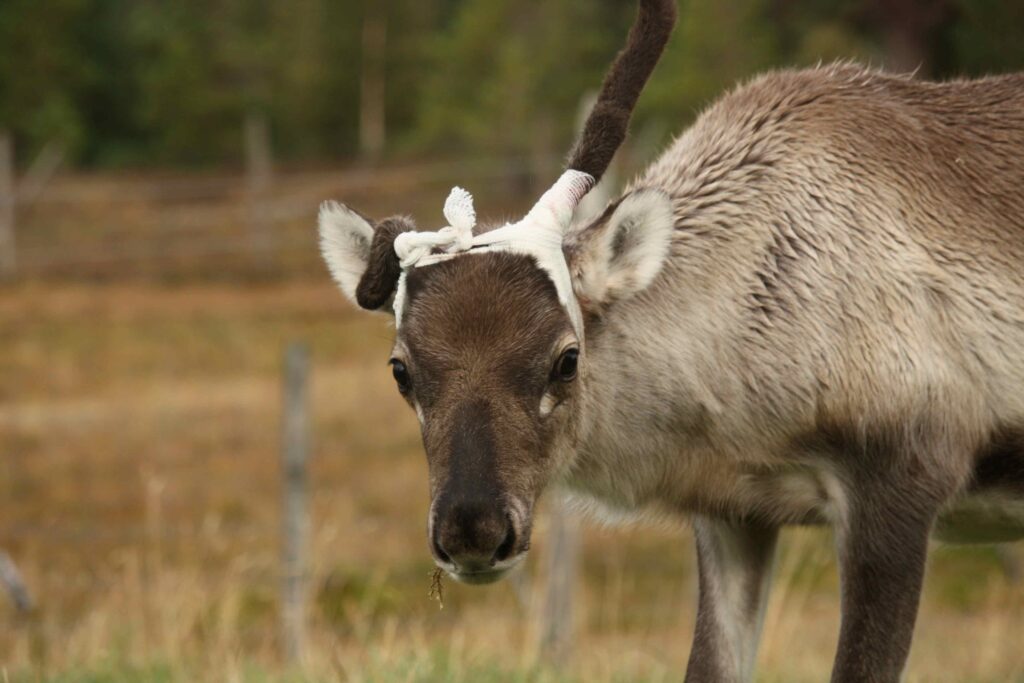
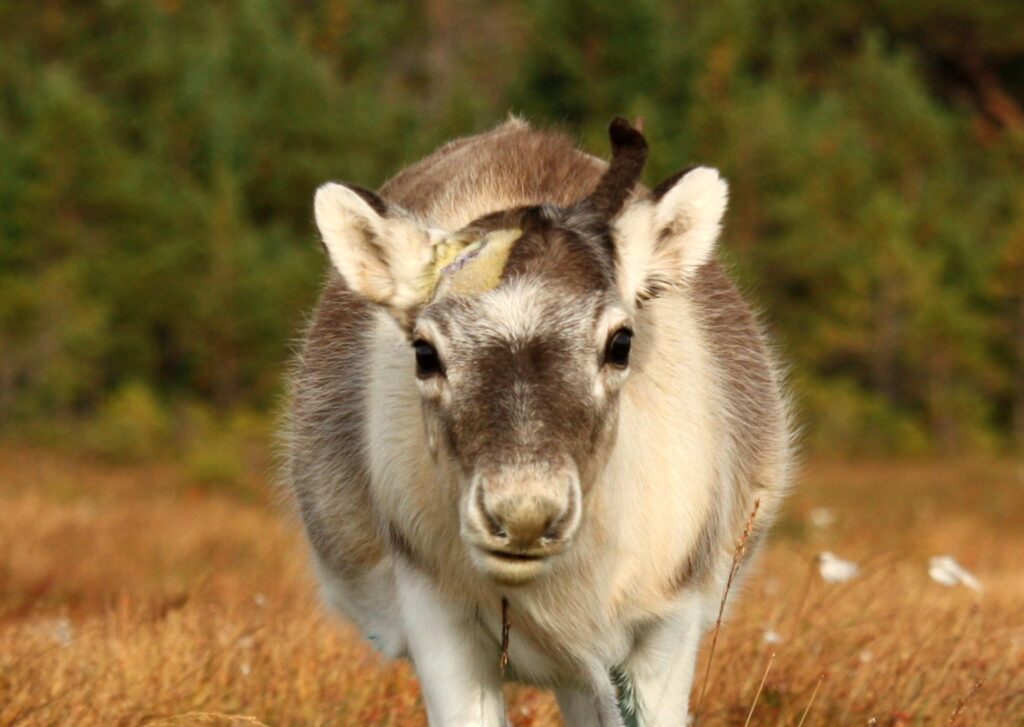
But sometimes, it all goes wrong. Calf antlers, being thinner than adult antlers, are easily broken, especially as adult reindeer show no love whatsoever for anyone else’s offspring other than their own, and are all too willing to whack a calf on the head with a hoof should they get in their way. This results in antlers breaking, and this happens whilst the antler is still growing, they will sometimes fuse at the break and the calf is left with a flopped-over broken point.
One of this year’s calves, Lochi, with the classic ‘been-walloped-on-the-head-by-a-hoof’ look.
If this happens early enough in the season, the antler will, once the break is fused and healed, start to grow upright once again from the break. Here’s Fava below, who had managed to break his right hand antler not once but twice, resulting in two downward pointing bits. His antler shows a centimetre of new, upward growth from the break – and then he ran out of time to grow any more!
Fava.Hopscotch.
Antlers broken right at the base can cause a problem with obscuring vision, poor Hopscotch here had to have this disaster (above) sawn off once it had lost all feeling in the autumn, so she could see where she was going!
And sometimes, it all just goes terribly, terribly wrong…
Poor Heinz! Two broken antlers, bound in place to keep them as still as possible, waiting for the vet to arrive.Holy Moley.
Holy Moley’s broken antler resulted in a shaved head after the vet had to remove the broken bit right at the base to prevent further damage. Some of you might remember watching her story on our Channel 4 documentary in 2020!
One of the trickiest things to learn when starting out as a herder is telling reindeer apart! With over 150 reindeer in the herd, all with their own name, it can seem a very daunting task. So how do you tell a reindeer apart from all the rest?
Who’s who?
Every herder has their own method of identifying reindeer. Most can just take one glance, and due to having spent years with the same reindeer and learning to tell them apart – instantly know who it is. But if you haven’t spent years watching the reindeer grow and change with the seasons, there are a few techniques you can use. Be warned though, you’ll constantly feel like you’re back at square one should you visit us throughout the year and try to recognise your favourite.
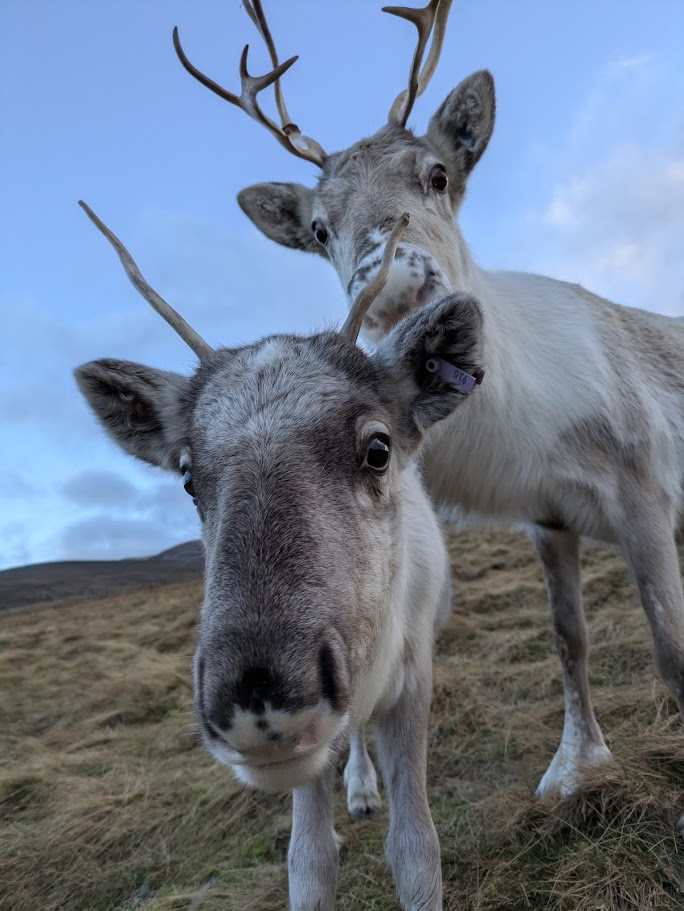
I’ll start with the easiest way to tell the reindeer apart – their ear tags. Each of our reindeer are tagged with a group colour and a unique number. The colour changes each year, allowing us to quickly work out how old they are. For example, yellow ear tags are for this year’s yearlings, born in 2024 and all named after hot drinks. Silver ear tags belong to the peas, beans and seeds calves of 2020, making them all five this year, and so on. The number then allows you to straight away know exactly who the reindeer is (orange tag 201 for instance, being the lovely, and very well-known Sherlock). The downside to this method is, you have to memorise over 150 ear tag colours and corresponding numbers…
Can you see our ear tags from there?
The more enjoyable method is personalities. All our wonderful reindeers have their own unique quirks and traits. Whether they’re extremely greedy and can always be counted on to be front and centre for our hill trips (I’m talking about you Nile!), or if they have a more reserved character and tend to be the shy contemplator at the end of the feed line. Their personalities shine through and can be a good way for us to tell who’s nearby.
As chilled as a reindeer can be. Busby is good at chilling!
Now let’s talk about antlers! From little twigs on top of a calf, to magnificent displays fit for a castle fireplace once a bull has finished with them – antlers can be a great way to tell reindeer apart. After the age of three or four, when a reindeer is fully grown, you can usually count on a reindeer to grow the same set of antlers every year. The shape and size of a reindeer’s antlers is genetically inherited by their parents, and is unique to that reindeer, just like our thumb print (how cool is that?!). there are some factors that can influence this, such as the health of the reindeer, their age, if a male has been castrated or a female is caring for a calf. But generally, you can count on antlers being a very reliable way to identify a reindeer. Until they shed them of course!
Twiglet antlers on Waltz!Iskrem looking slightly different now the velvet has stripped.How many points can you count? That can help you tell who’s who, in this case, Calippo.Some antlers just stand out from the herd! Sherlock to name one!
So, their antlers are gone, and you didn’t study your list of ear tag numbers – now what do you do? Well now you have the not so fun task that no body would possibly want to do… get up close and personal with 150 cute and fuzzy faces! The longer you look at the reindeer, the more obvious the differences in their coat and face markings and the shape of their bodies becomes. With an odd white reindeer here and a brown face with a white speckled nose there, you quickly begin to use markings and patterns to learn who’s who.
Such a tough job, studying the cute face of Lochi.Speckled nosed Hemp is easy to spot.A darker nose and a large blade antler, you must be… Kernel.A pink nose with brown splotches, who might you be?… Spartan!There’s only one Mr. Whippy!
But don’t forget those changing seasons… The reindeer you think you learnt in winter are likely to be all brown by summer. So, maybe you should get memorising those ear tag numbers after all.