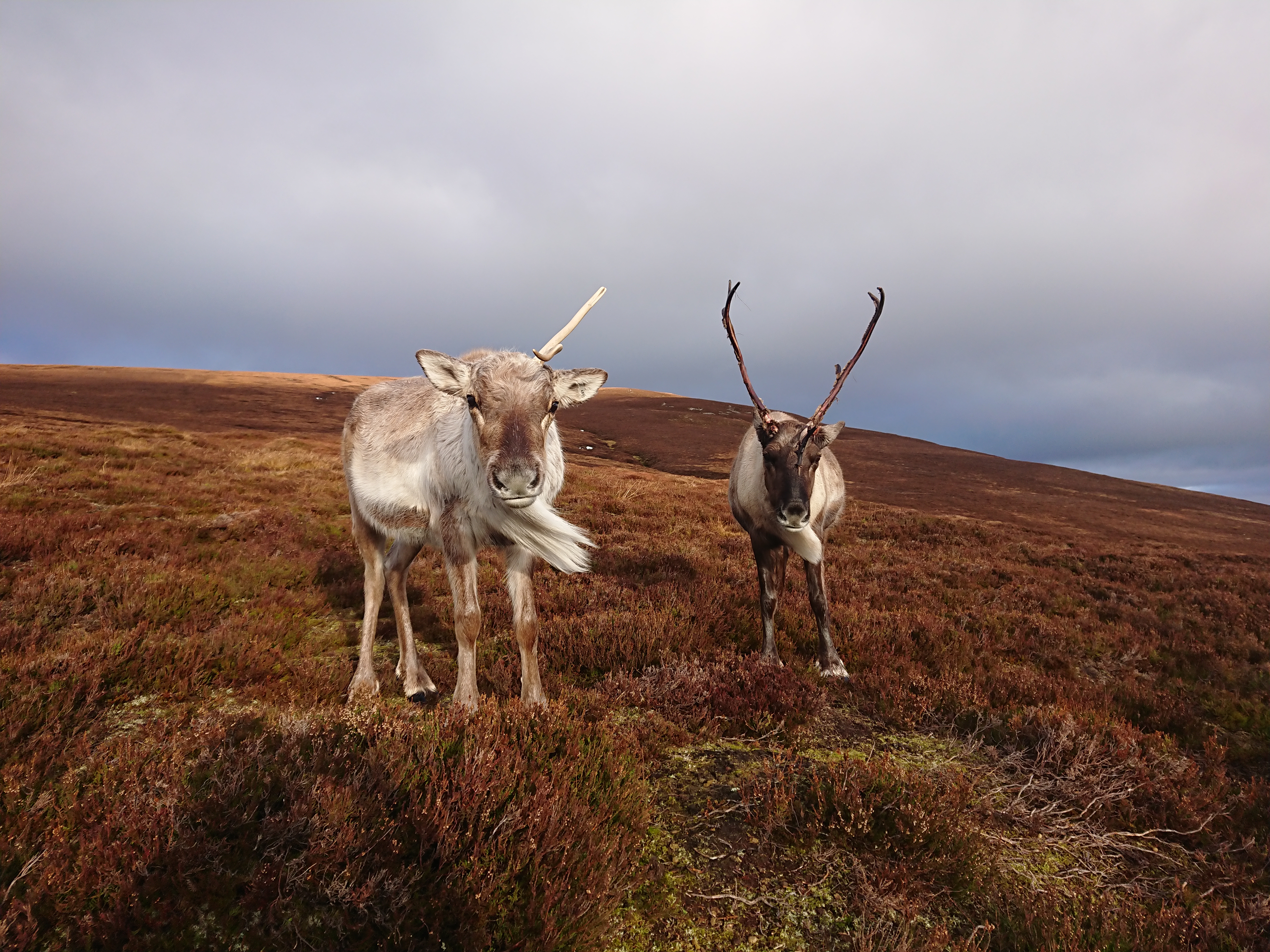
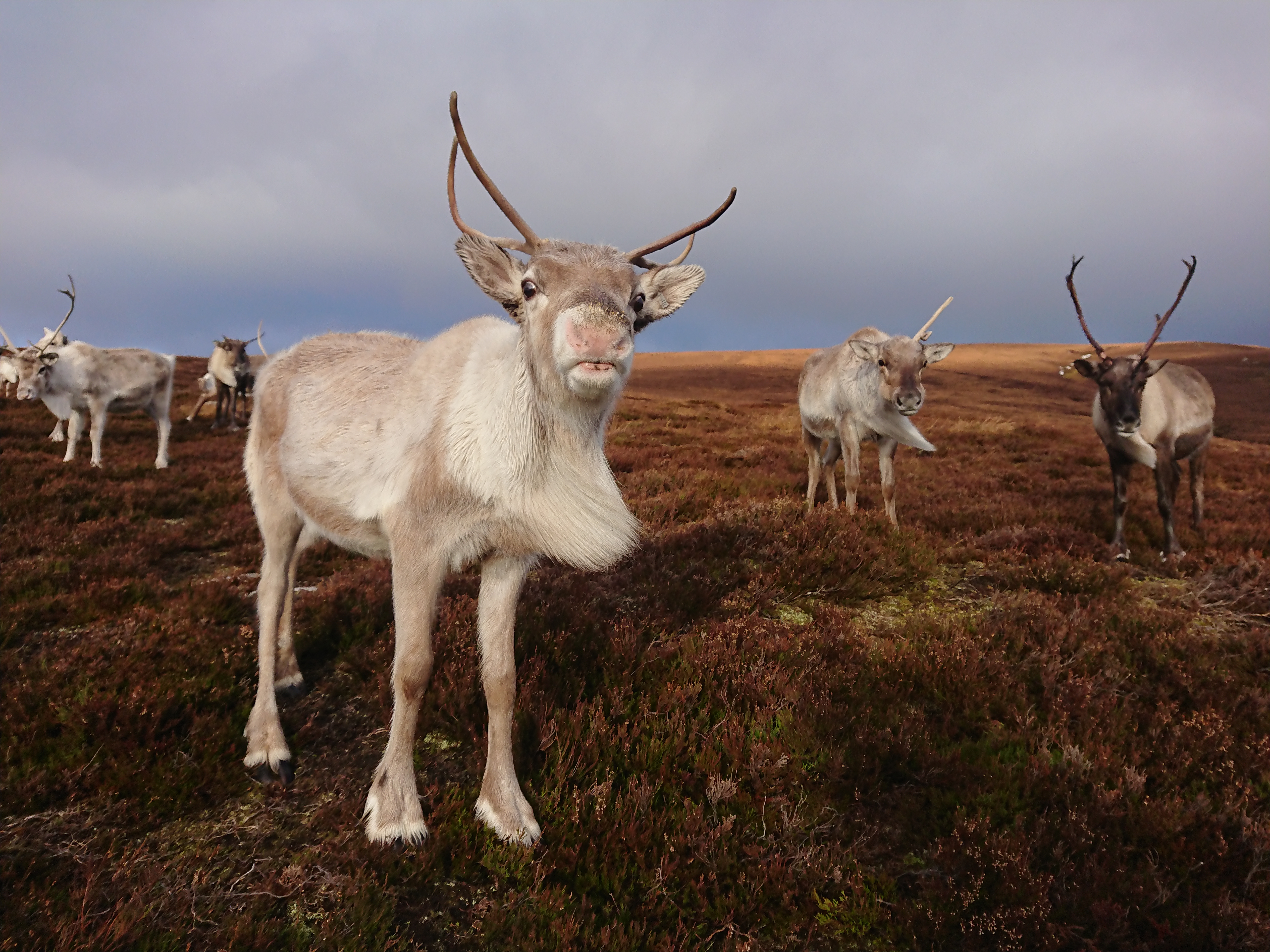
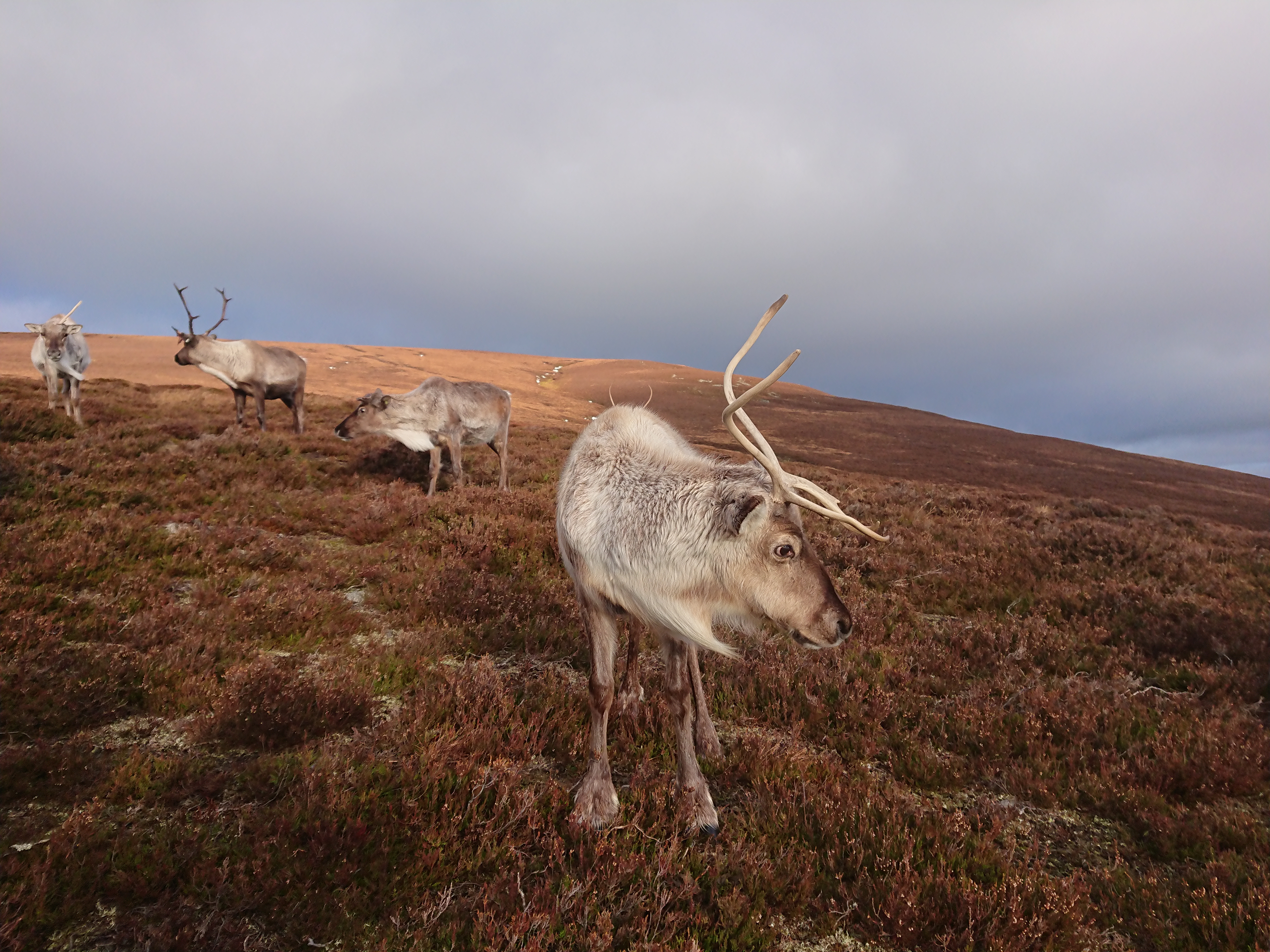
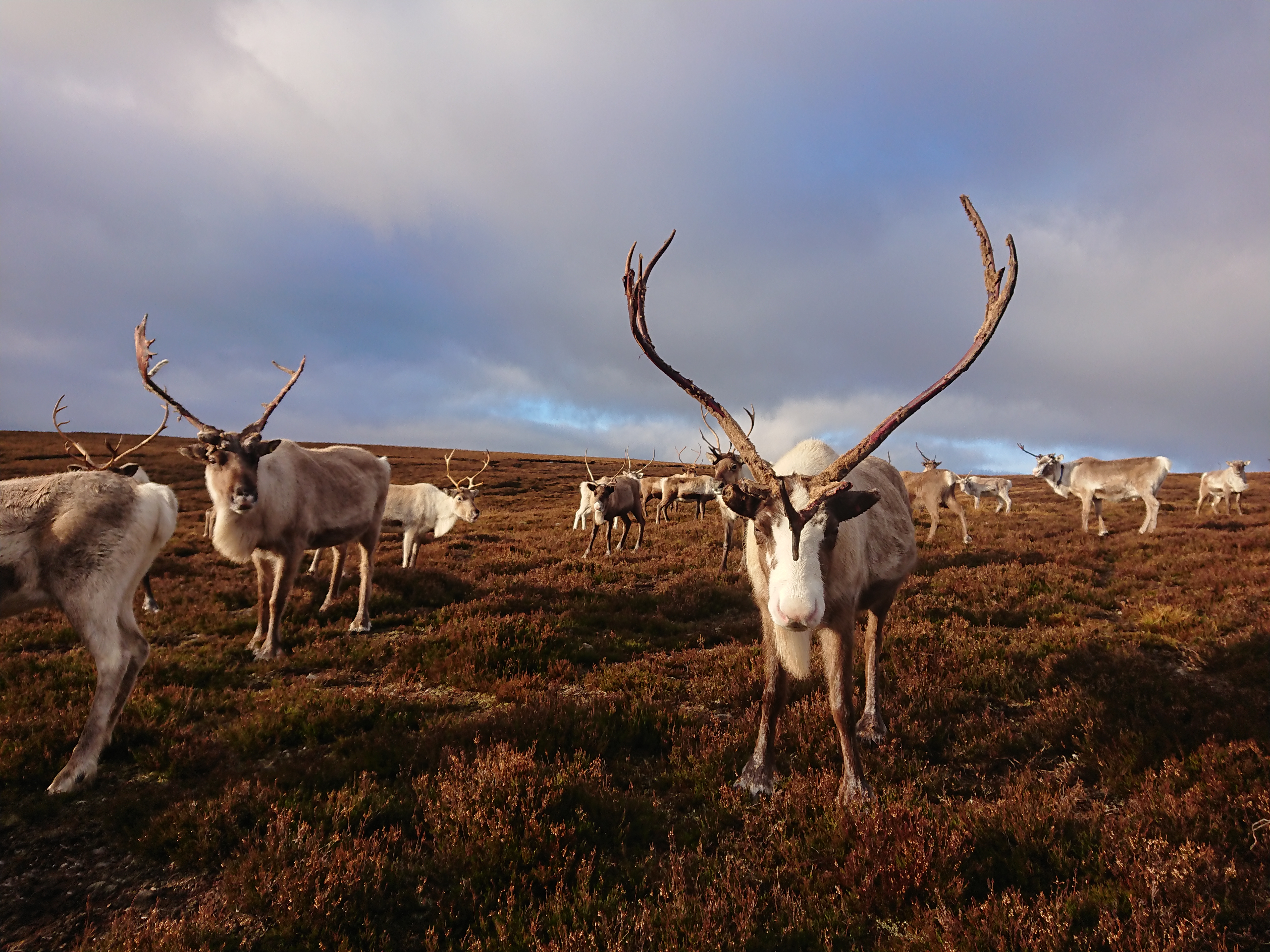
Wee calfie antlers!

With autumn being the season that the calves return to the hill enclosure, along with their mums, it’s always exciting to see them and to start to get to know them as characters. Having spent all summer with males only in the enclosure, it’s suddenly a bit overwhelming to have a sea of ‘new’ reindeer to get to know once again! The calves are the hardest to learn who is who.

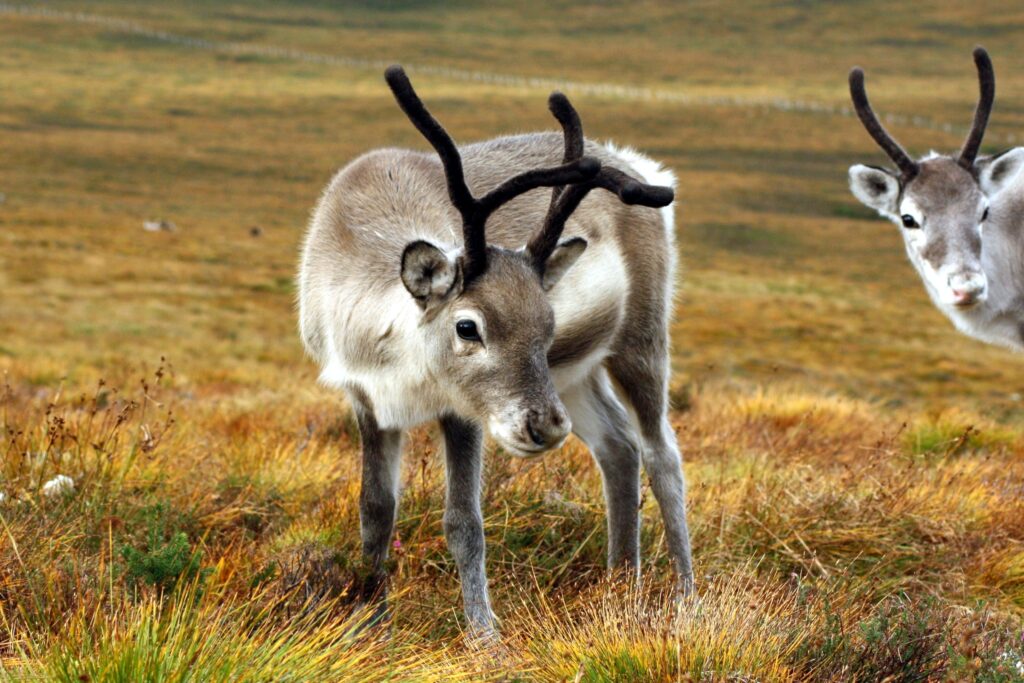
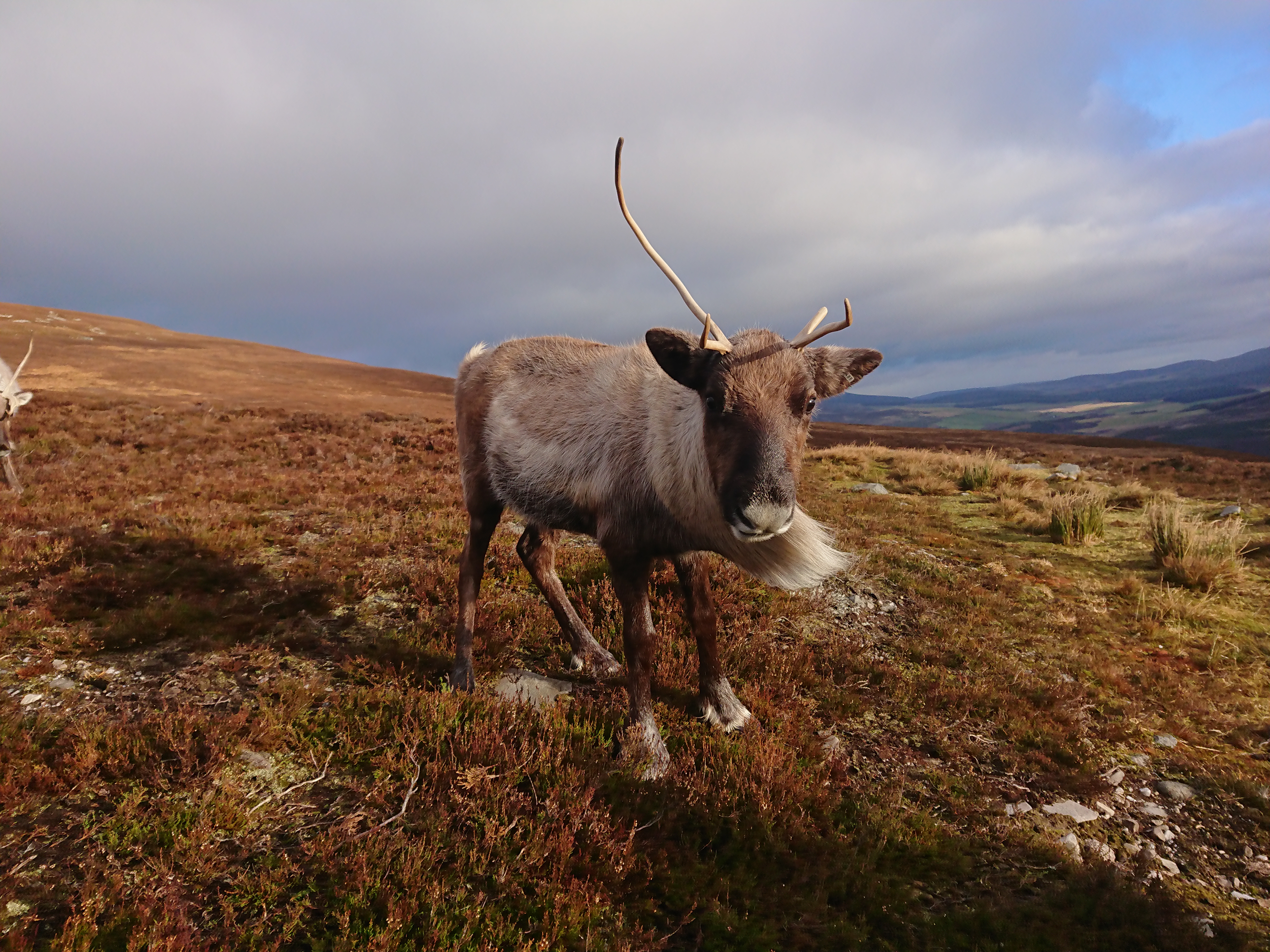
Last time we saw them properly, in late spring, they were tiny and heading out to free-range in their calf coats, which are quite different in colouration to an adult reindeer’s coat. By autumn they’ve moulted, grown their new winter coat, and are many times bigger – i.e. they look COMPLETELY different! Other than very obvious colour variation and face markings, their wee antlers are the easiest way to tell them apart. The photo below shows Macchiato at 4 months old, looking about as generic as is possible for a reindeer calf – very average size and shape antlers, along with being very much the ‘normal’ body colour. Difficult to tell one from t’other, looking like this!
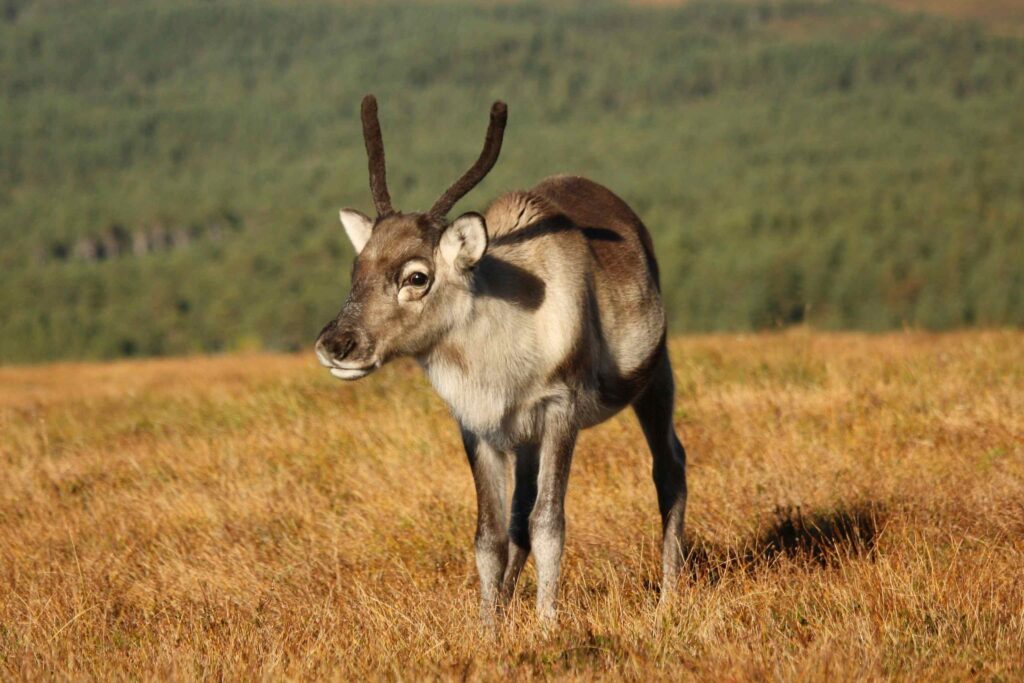
Macchiato, aged 4 months

So I thought I’d show some of the antler shapes of calves over the years in this blog. The memorable ones tend to be the biggest ones, of which the outright winner – by a country mile – is Gandalf. However, he was born in Sweden, and many of the Swedish calves we’ve imported over the years (to increase our genetic diversity within the herd) have had very big antlers so maybe he should be disqualified my list…

But here’s a photo of Gandalf anyway. Compare those antlers to Macchiato’s in the photo above!

So… my winner for sheer height of antler is Jester, who definitely looked a bit out of proportion as a calf. He’s gone on to grow enormous adult antlers too, though tending towards wider rather than tall.
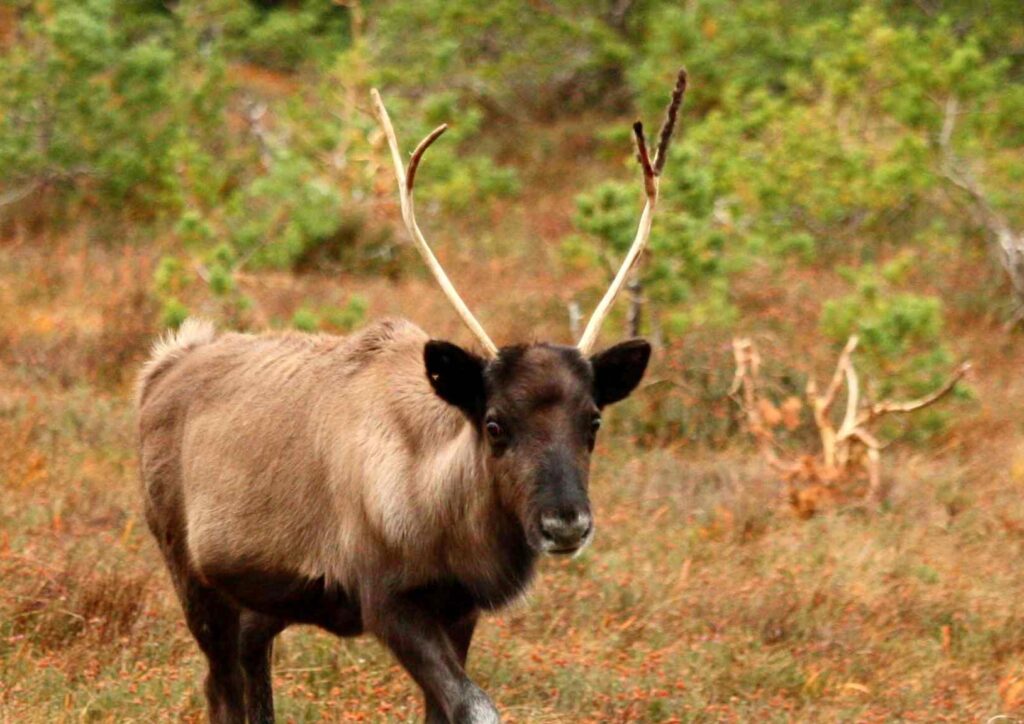
Jester.

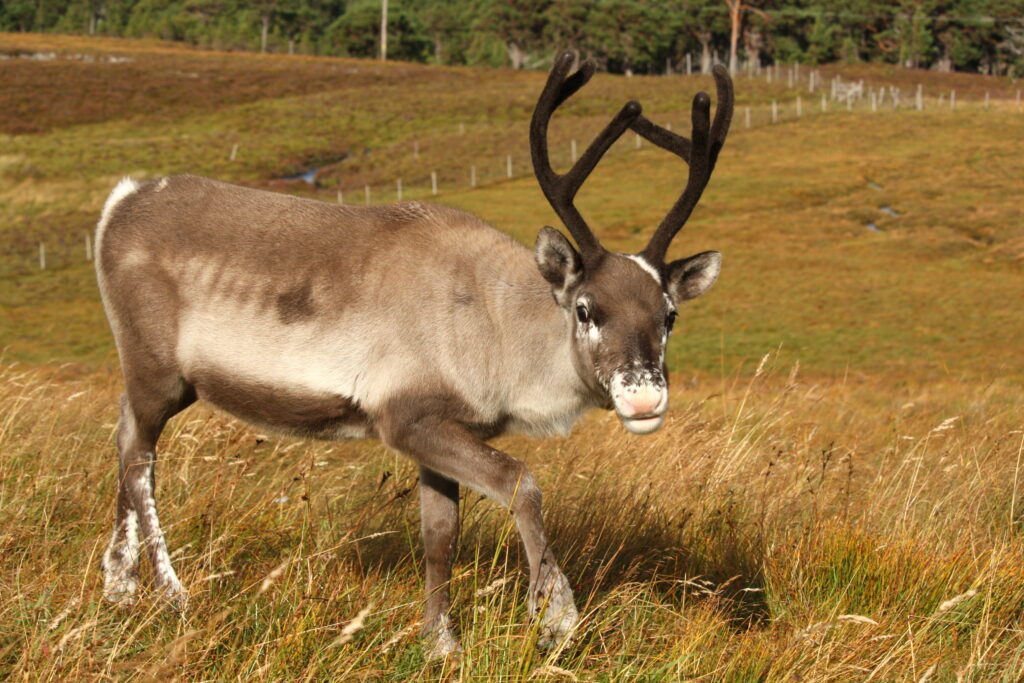
Some calves have really complex antlers – not quite as tall as Jester’s but more elaborate with several points on each. Examples include:
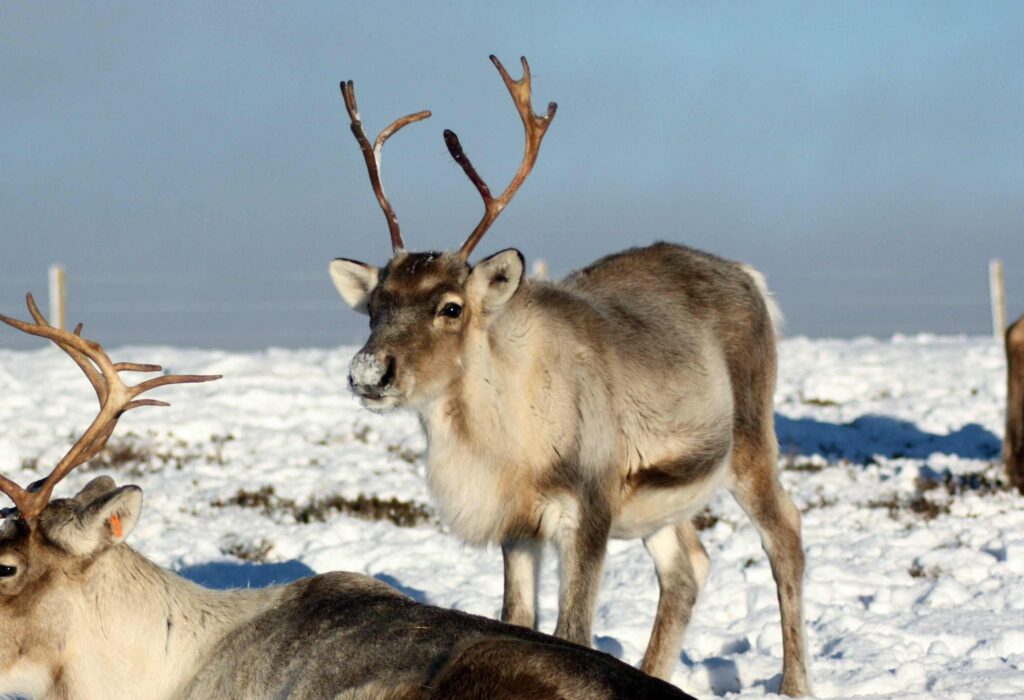
Murray, born in 2012. Look at that headgear!
Christie (antlers still in velvet here) – exceptional as she is female. As an adult she’s gone on to have very big antlers each year, a family trait inherited from mum Caddis and granny Haze.
Cream – these calf antlers always reminded me of water divining rods!

Duke gets a bonus point for having a forward-pointing tine at the base of one of his calf antlers – perfectly normal in an adult reindeer, but rare in a calf.

Duke.

Whilst not the biggest calf antlers ever, Fez wins my ‘prettiest’ antlers award. Small and perfectly formed, with several points top and bottom. Beautiful!
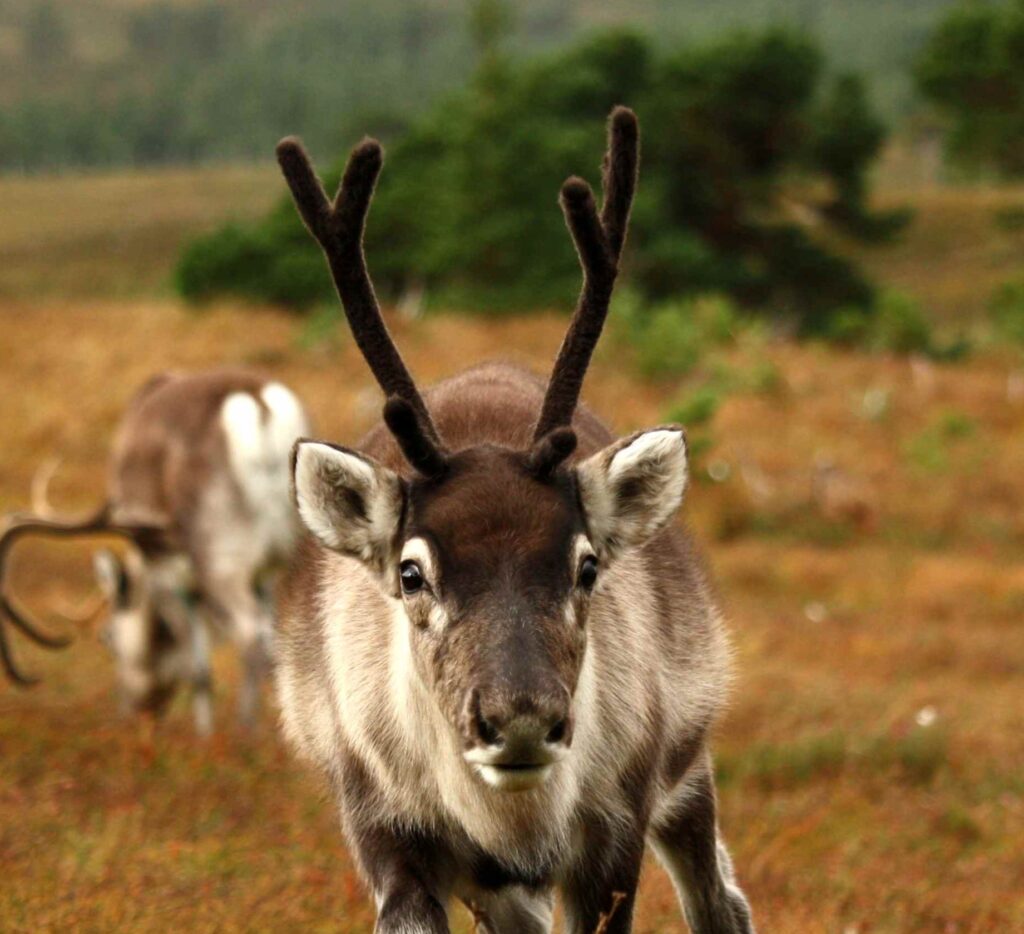
Beautiful in antler – and face!

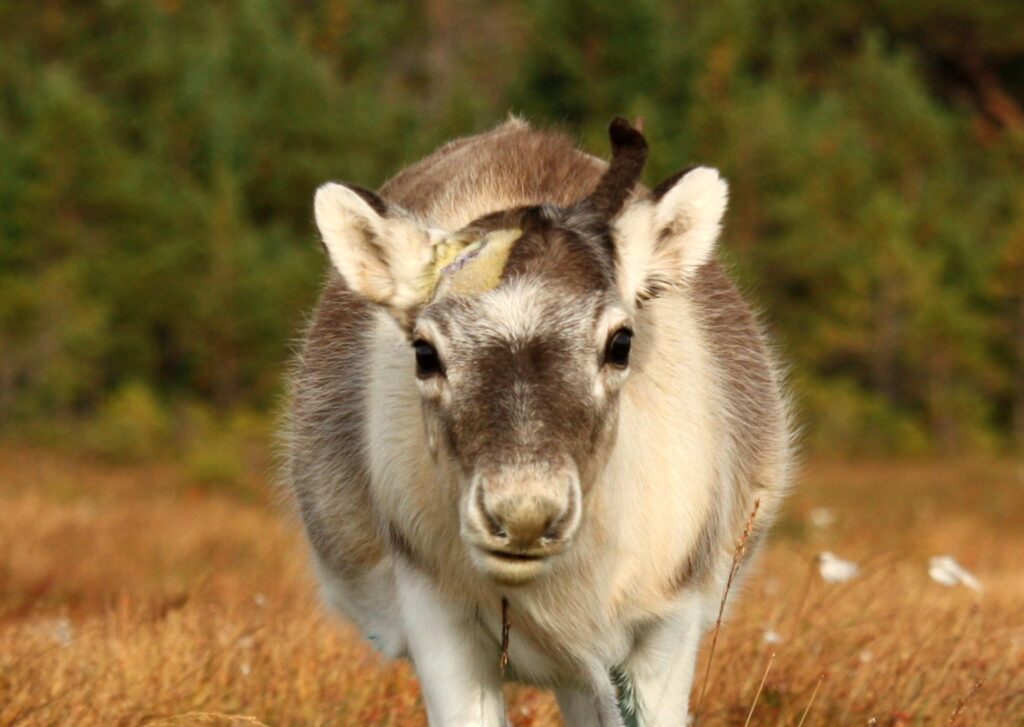
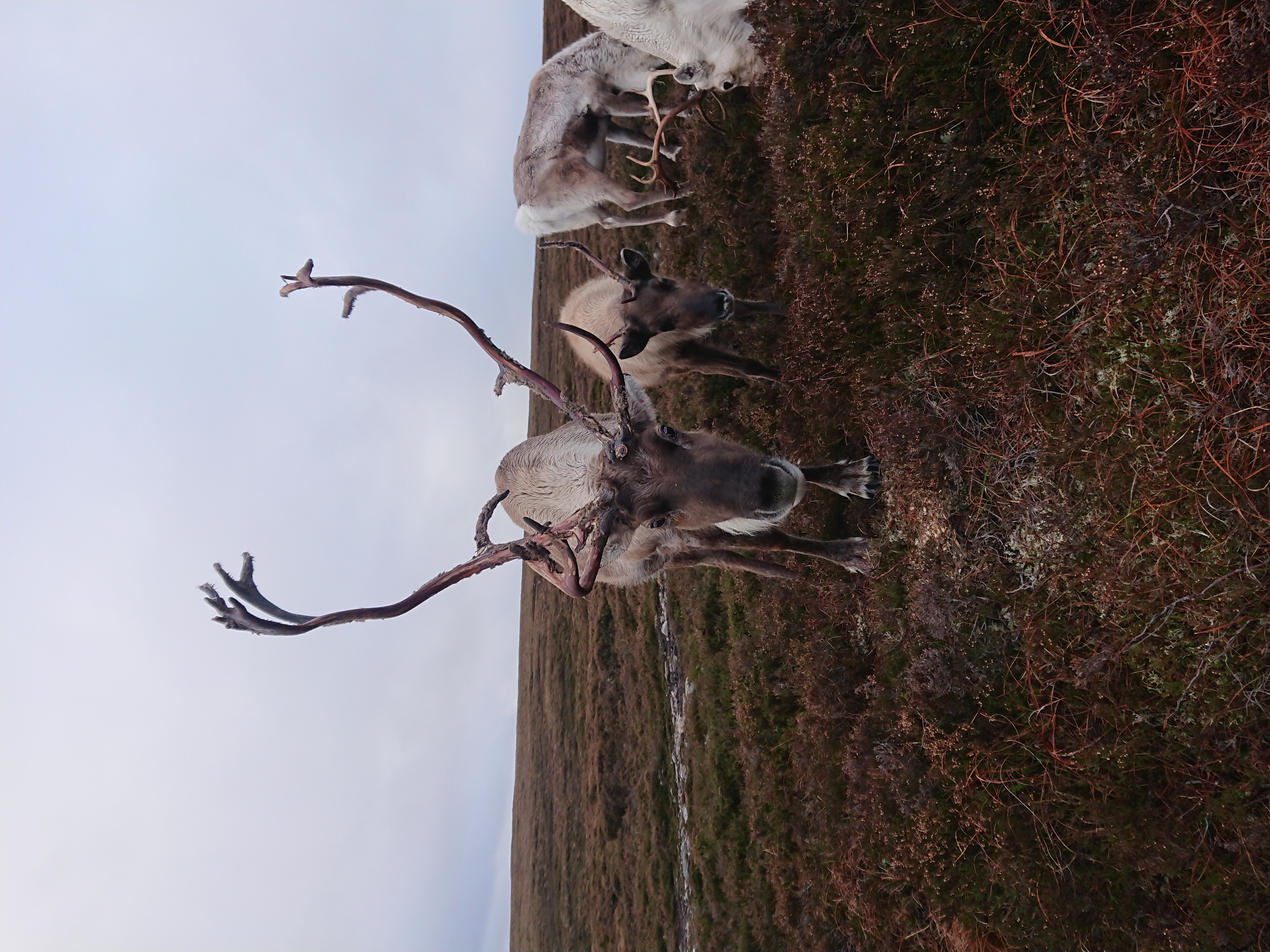
But sometimes, it all goes wrong. Calf antlers, being thinner than adult antlers, are easily broken, especially as adult reindeer show no love whatsoever for anyone else’s offspring other than their own, and are all too willing to whack a calf on the head with a hoof should they get in their way. This results in antlers breaking, and this happens whilst the antler is still growing, they will sometimes fuse at the break and the calf is left with a flopped-over broken point.
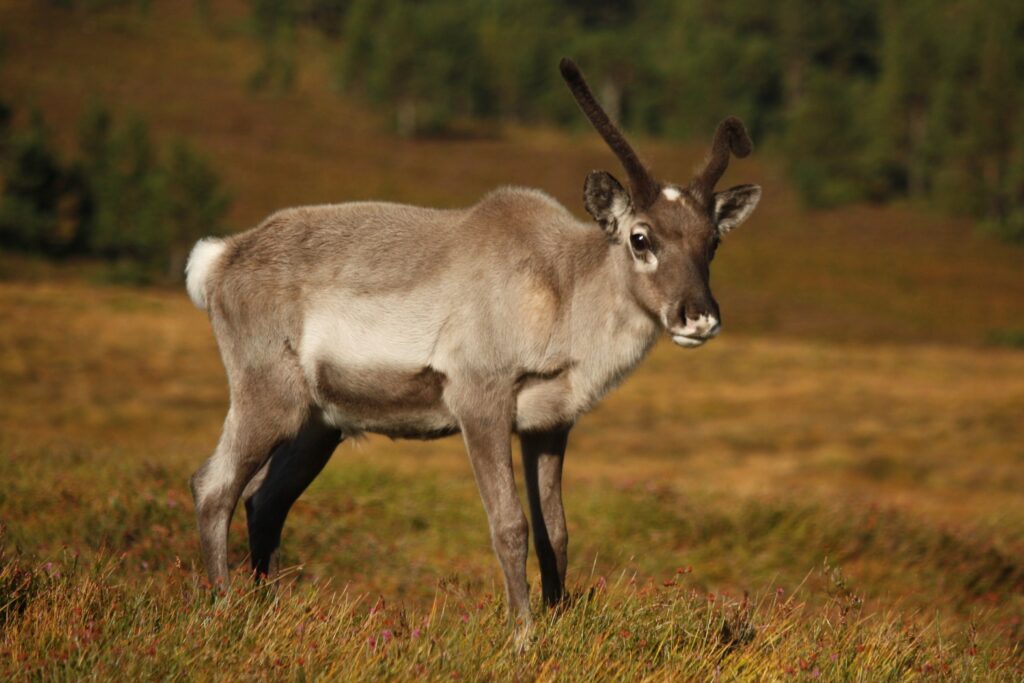
One of this year’s calves, Lochi, with the classic ‘been-walloped-on-the-head-by-a-hoof’ look.

If this happens early enough in the season, the antler will, once the break is fused and healed, start to grow upright once again from the break. Here’s Fava below, who had managed to break his right hand antler not once but twice, resulting in two downward pointing bits. His antler shows a centimetre of new, upward growth from the break – and then he ran out of time to grow any more!
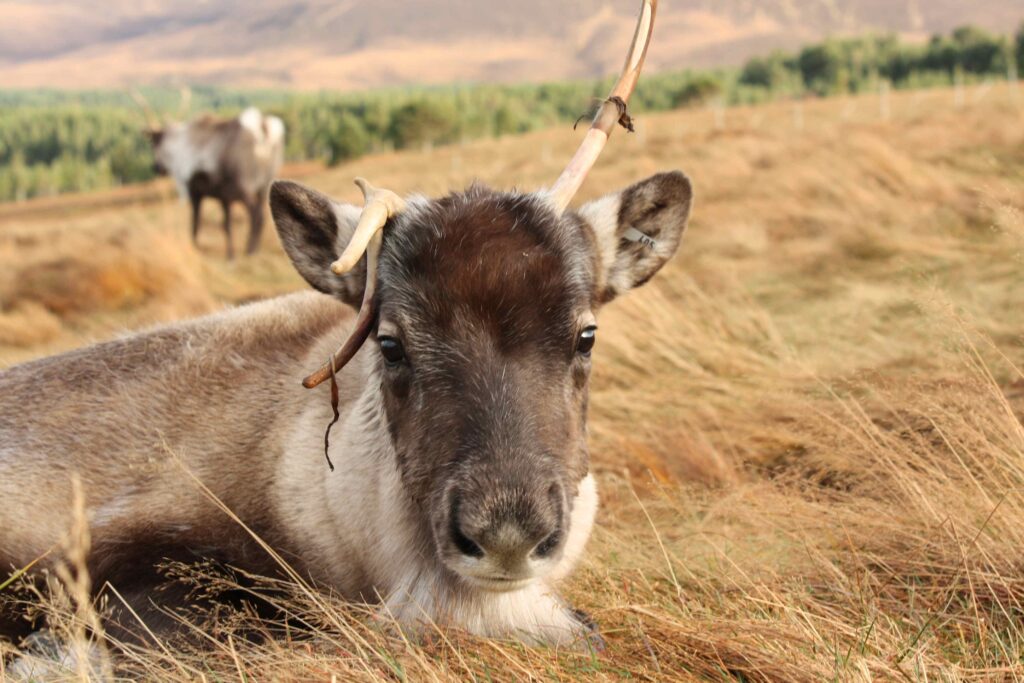
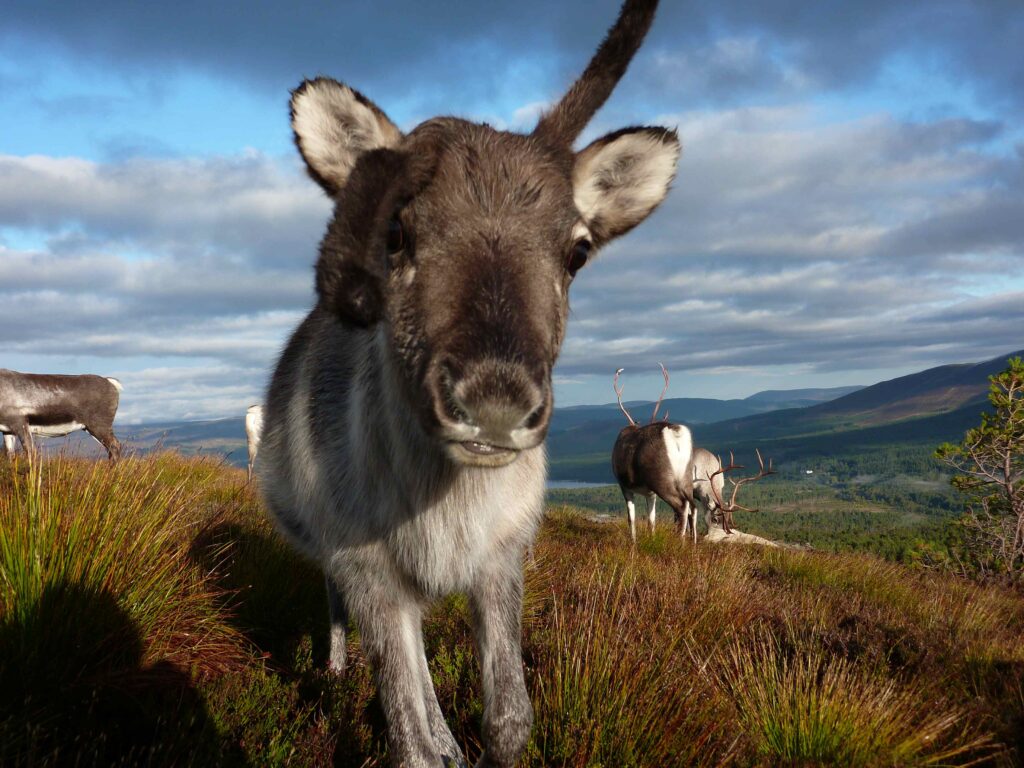
Fava.
Hopscotch.

Antlers broken right at the base can cause a problem with obscuring vision, poor Hopscotch here had to have this disaster (above) sawn off once it had lost all feeling in the autumn, so she could see where she was going!

And sometimes, it all just goes terribly, terribly wrong…
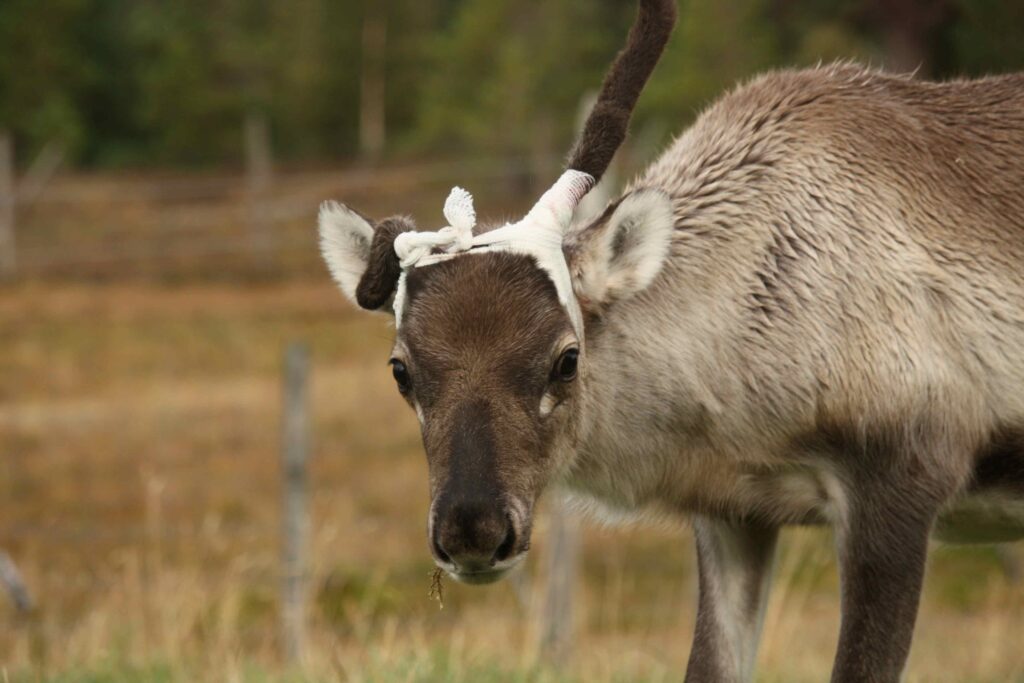
Poor Heinz! Two broken antlers, bound in place to keep them as still as possible, waiting for the vet to arrive.
Holy Moley.

Holy Moley’s broken antler resulted in a shaved head after the vet had to remove the broken bit right at the base to prevent further damage. Some of you might remember watching her story on our Channel 4 documentary in 2020!

Hen
The ‘June lull’

The spring here is extremely busy, as life at the Reindeer Centre revolves around the female reindeer and the calving season, and no day passes particularly peacefully – both for good and bad reasons. Herders scurry up and down the hill all day long, visitors arrive hopeful of seeing newborn calves, and there is almost always some sort of drama going on behind the scenes… Is that calf sucking properly? Was that reindeer looking a bit peaky this morning? Help – so-and-so has just calved and promptly turned feral… Why does that cow appear to have no calf – it was with her 5 minutes ago! There is never a day where I get to 5pm, and think ‘well, that was a boring one’.  

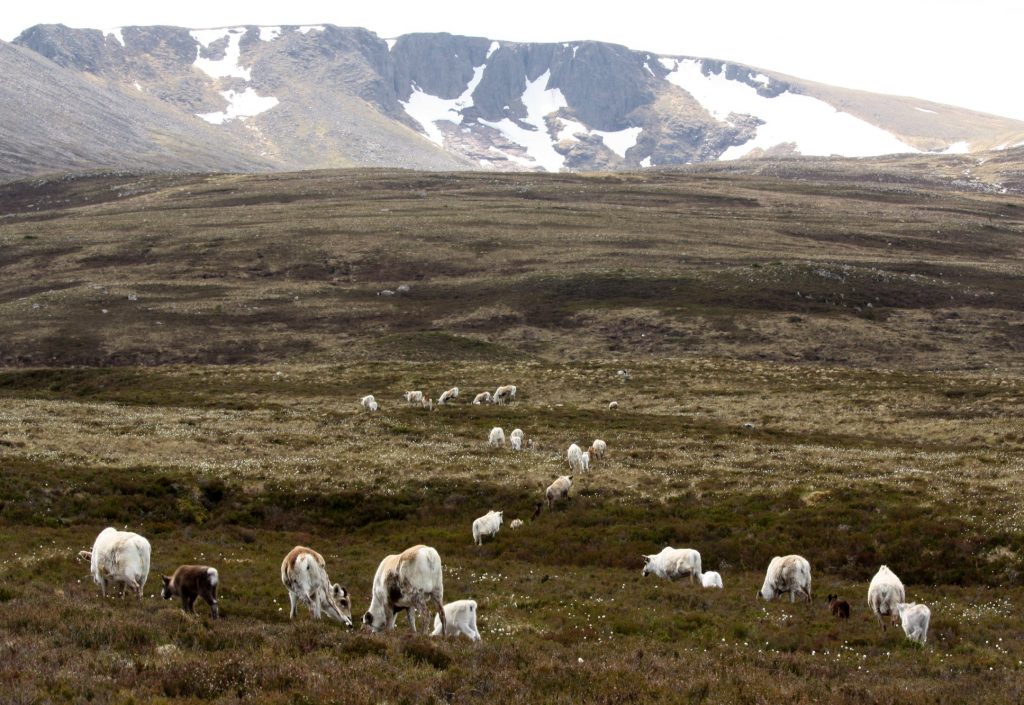
Early June and the cows and calves head off to free-range for the summer, leaving behind a rather calmer state of affairs in our hill enclosure.

In contrast, June is a time to draw a few breaths and take stock. In the first week of the month the cows and their calves are led out on to the mountains and they head off to free-range themselves, and then calmness finally returns to our lives. While admittedly June does sometimes feel a bit lacking in excitement after the chaos of the previous few weeks, it also brings with it a welcome lull – generally all is quiet on the reindeer front, and all is calm at the Centre itself too.

June is scruffy reindeer month too – here’s Cicero, Morse, Kiruna and Fava looking… frankly, rather moth-eaten!

The spring tends to be a time when reindeer pick up more illnesses as ticks are more prevalent, but by the time we reach June this settles down a bit, and we have less occurrences of high temperatures and out-of-sorts reindeer. Us herders can therefore relax slightly – less worried that someone is about to expire unexpectedly. We do, of course, keep our vigilance levels as high all through the summer as through the spring, but June, July and August are undoubtedly a little calmer on the veterinary front. September brings with it a spike in ticks – and therefore illnesses – once again, but for now all is relatively quiet.

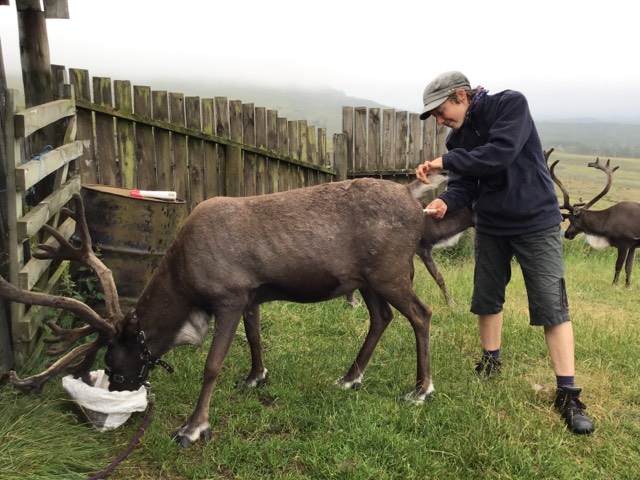
Regular temperature checks are done throughout the summer, to look for a tell-tale raised temp of a reindeer with a tick-borne fever.

As well as the reindeer influencing our level of busy-ness very variable throughout the year, the other major factor is our visitors. Being a tourism-based business, the number of people through our doors goes up and down like a yo-yo throughout the season, with spikes coinciding with school holidays. As the saying goes we ‘make hay whilst the sun shines’, soldiering on though hectic spells with millions of people around, but it is countered by the quieter periods. Our reindeer apparently consulted a calendar in organising their yearly cycle – as spells when we are busiest with the reindeer themselves (calving in May, the rut in September/early October, Christmas tour in November) tend to coincide with school term times. How considerate of them! Until… the Christmas holidays, when everything goes out of the window and reindeer chaos and visitor chaos collide. This is one of the reasons the Reindeer Centre closes for a few weeks each January – us herders are so frazzled that we need to recuperate.

But I digress. Back to June. All kids, in the UK at least, are still at school in June so it is one of the quieter months to visit – the afternoon Hill Trips in particular this year tended to be quite small. It felt a bit like ‘old times’ back before the area – and Scotland in general – became much, much busier with tourists. I started working here in 2007 and at that point Hill Trips with a dozen or less people were completely normal but in more recent years much bigger groups have become the norm – by 2019 we were occasionally taking tours of 70 or even 80 people. In 2020 however, we put a cap on the maximum number of people to 50 in an attempt to go for quality over quantity (as in a quality tour, as opposed to quality visitors), so now it never gets quite that crowded. But – speaking as a guide, at least – this June was wonderful. Busy morning tours but then smaller ones in the afternoon; I even did a tour with just 5 lovely visitors on one occasion. So peaceful! Plus it gave me time to catch up on all the office work that had been cast aside throughout May…

Hen

Photo blog: Winter free-rangers

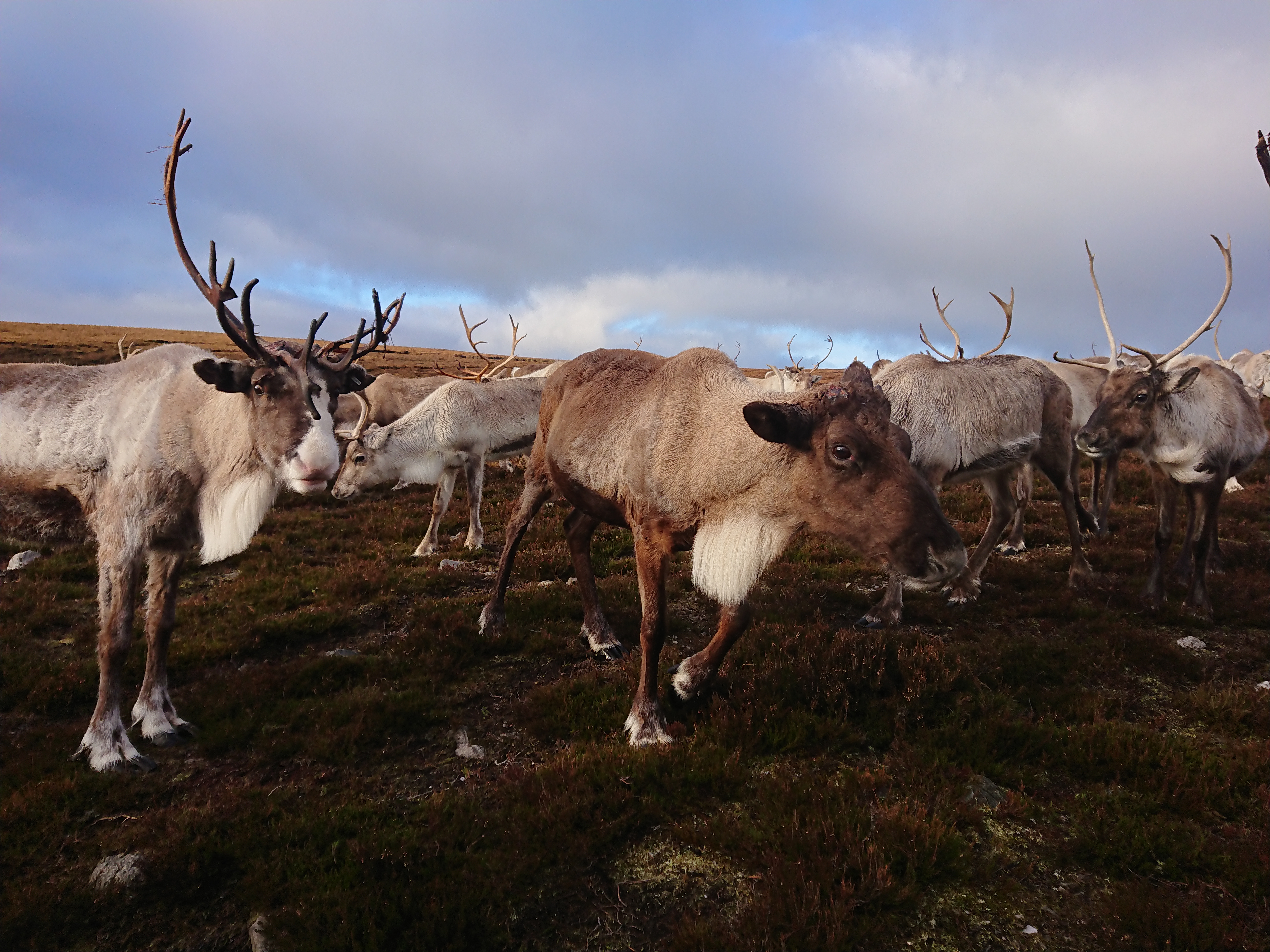
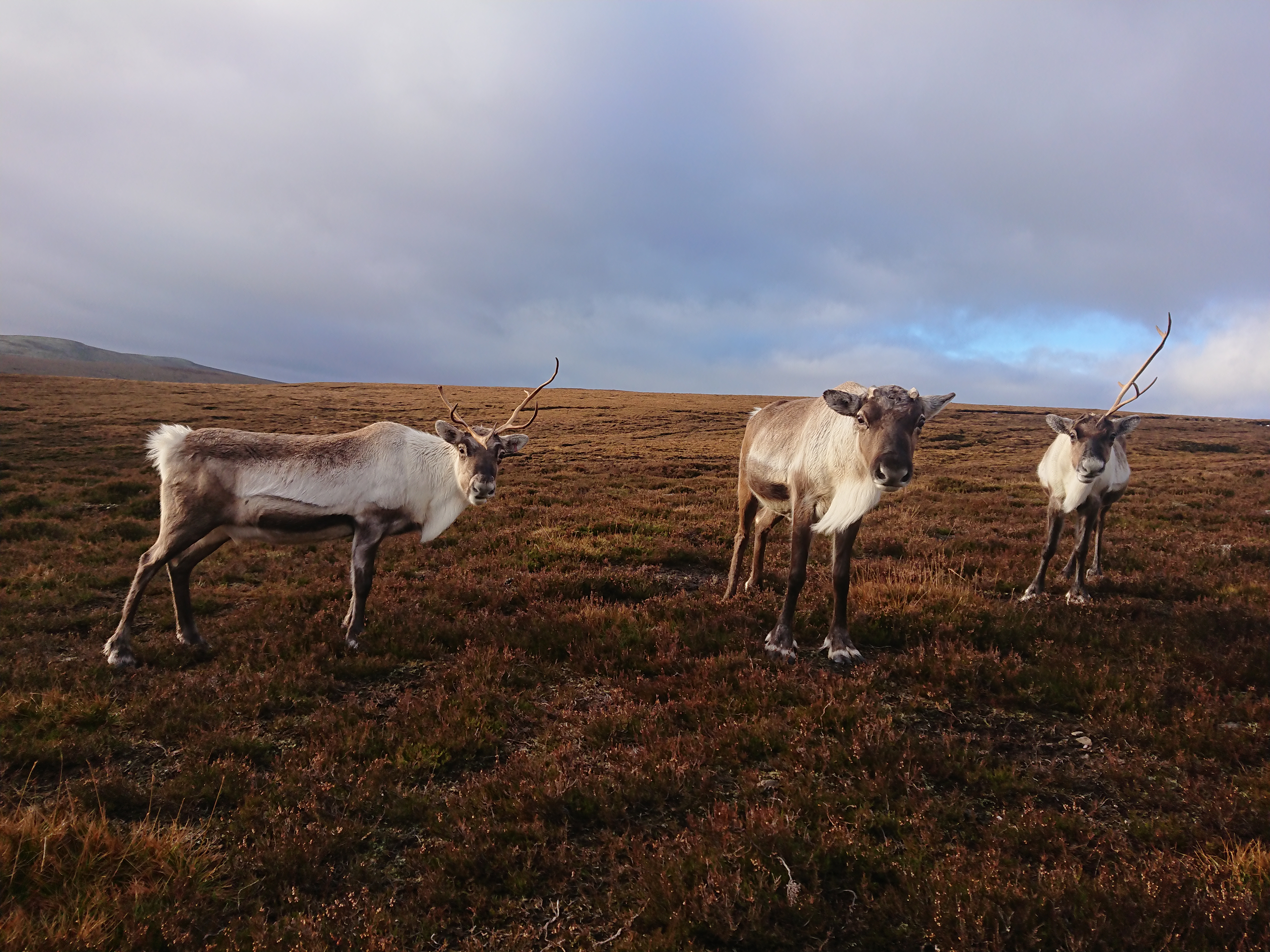
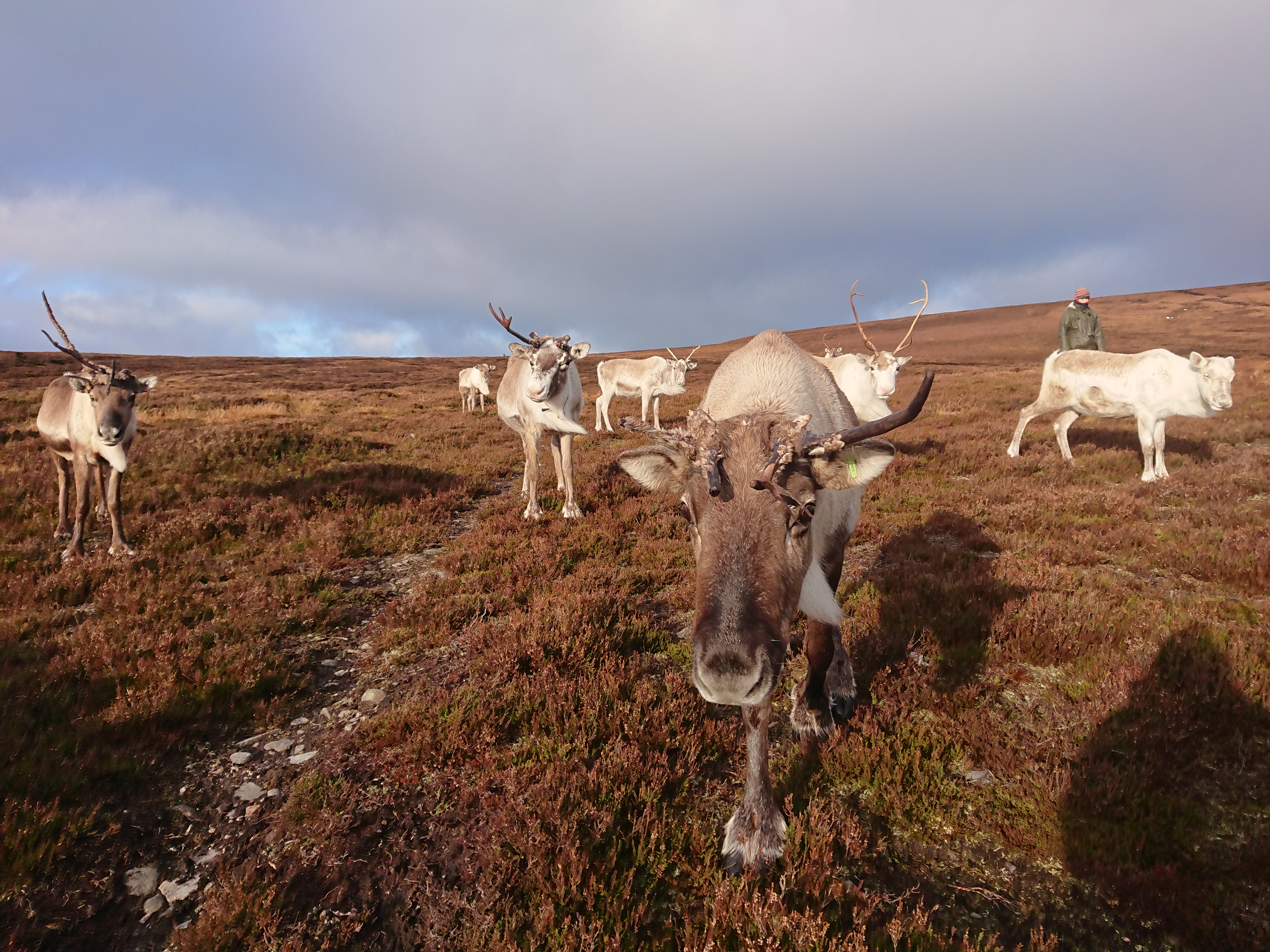
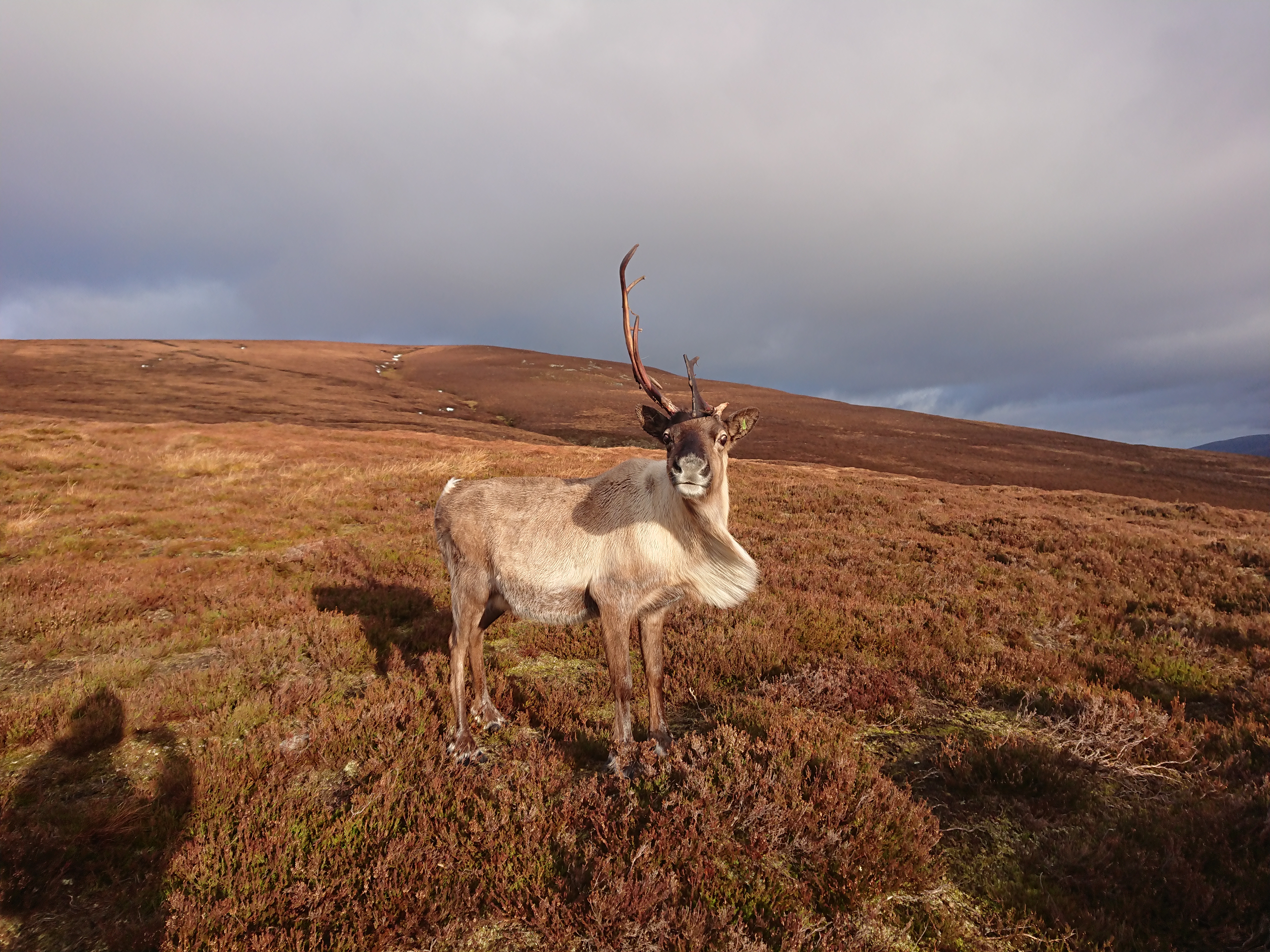
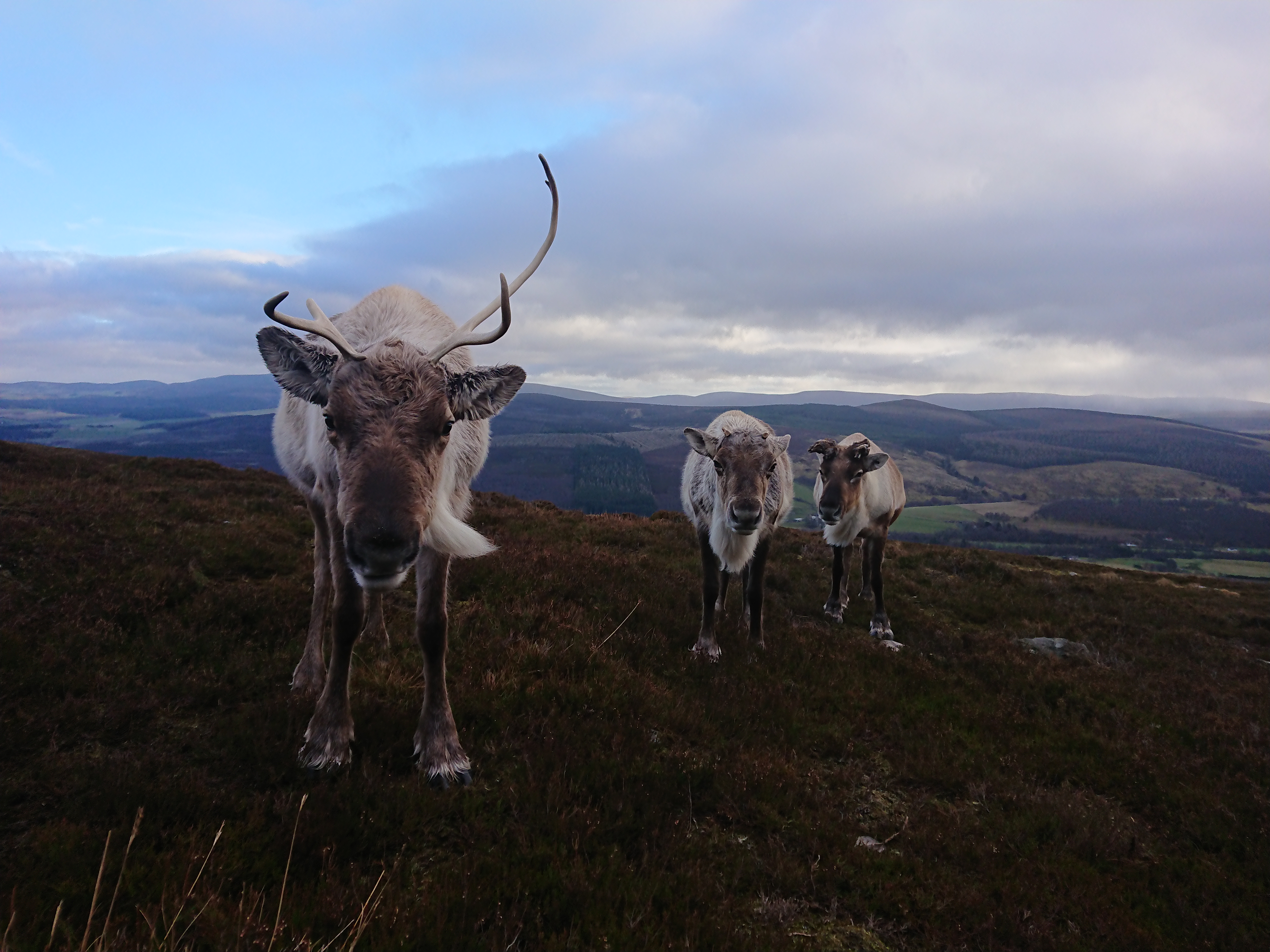
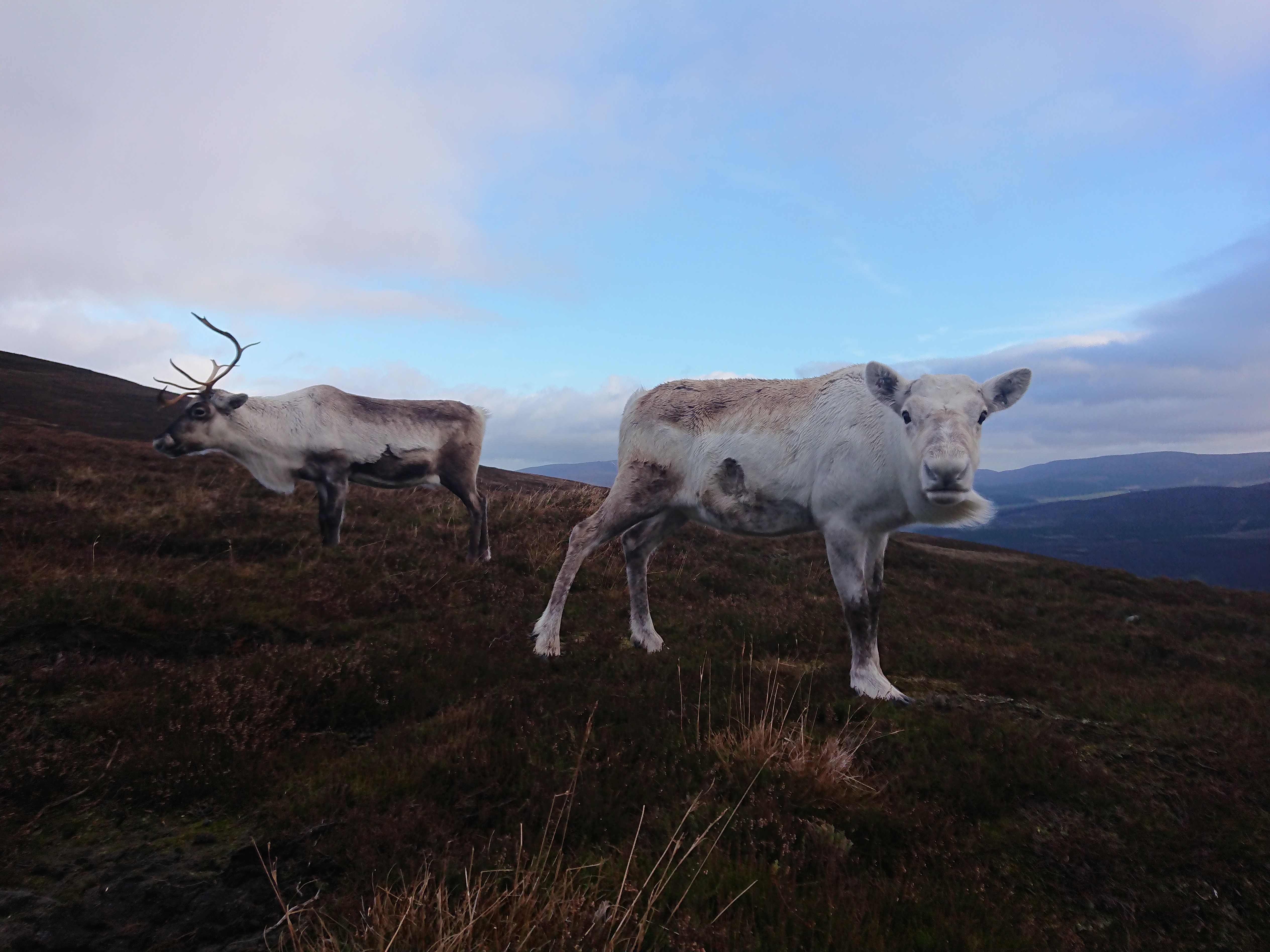
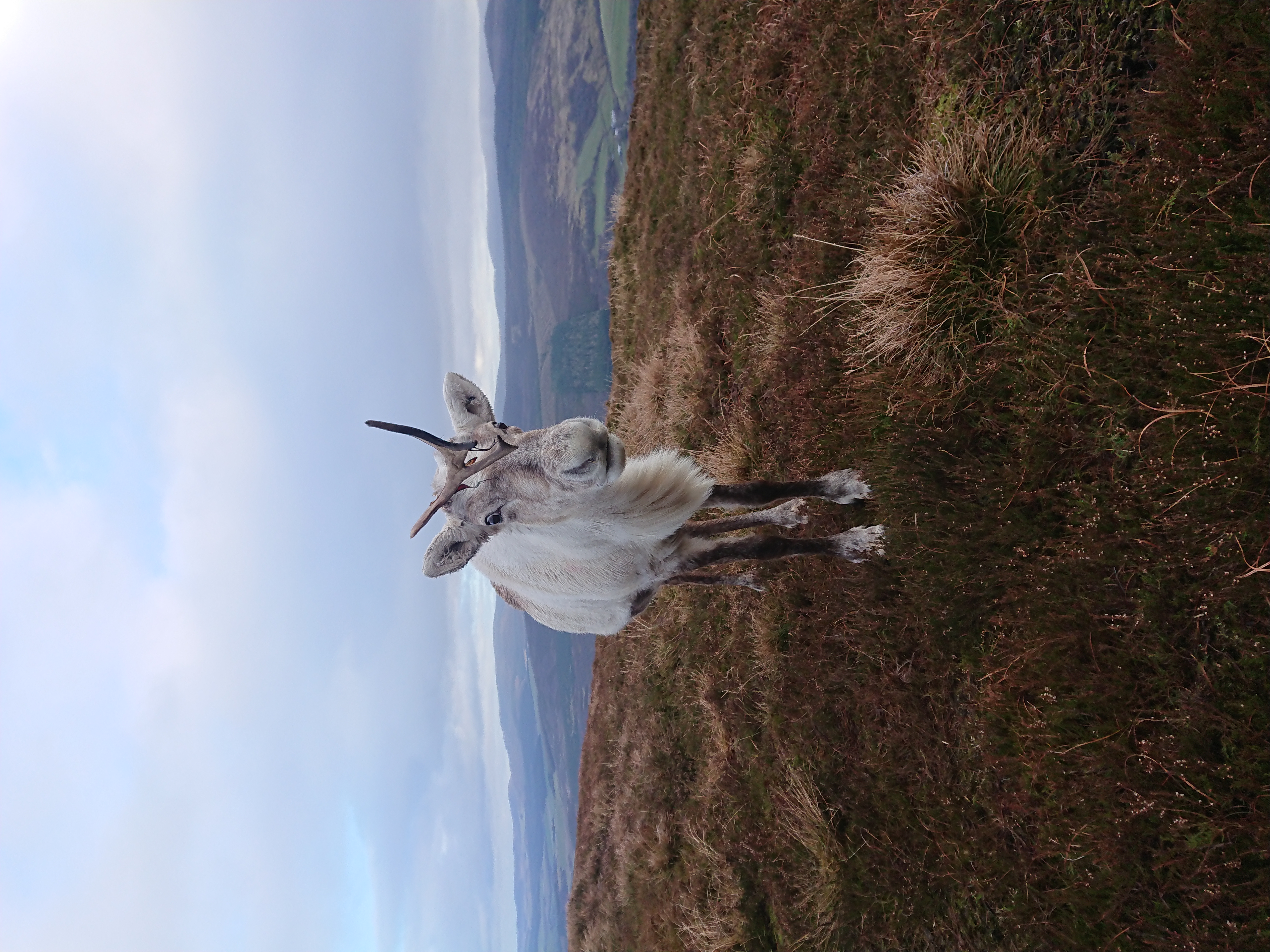
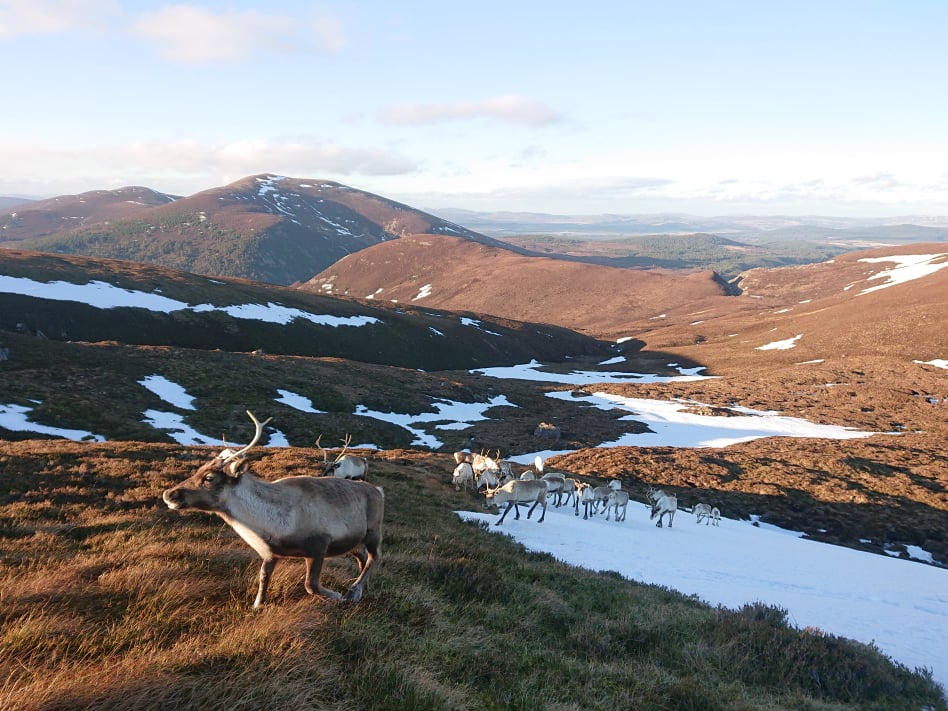
In the winter months, all of our adult male reindeer plus some of our cows roam free on the mountains over near Glenlivet. Tilly and the farm crew take care of their day-to-day feeding but occasionally one of us herders from the Glenmore base will pop over to help. Here is a random selection of photos from one of my recent visits:

Cicero and Slioch
Butter, Cicero and Slioch
Legume
Anster, Emmental, Hemp, Dr Seuss and Boris
Lupin
Old lad Strudel
Jonne, Mangetout, Bourbon and Fava
Spy, Morse, and his granny Pavlova
Rubiks, Addax, Boris, Arta, Aztec, Cheer, Diamond (and Tilly in the background!)
Druid the poser!
Jelly, Kiruna and Stenoa
Spy and Diamond
Bingo and wee Cannellini, with Lulu to the right
LX

Andi

The Sámi Flag and the Children of the Sun

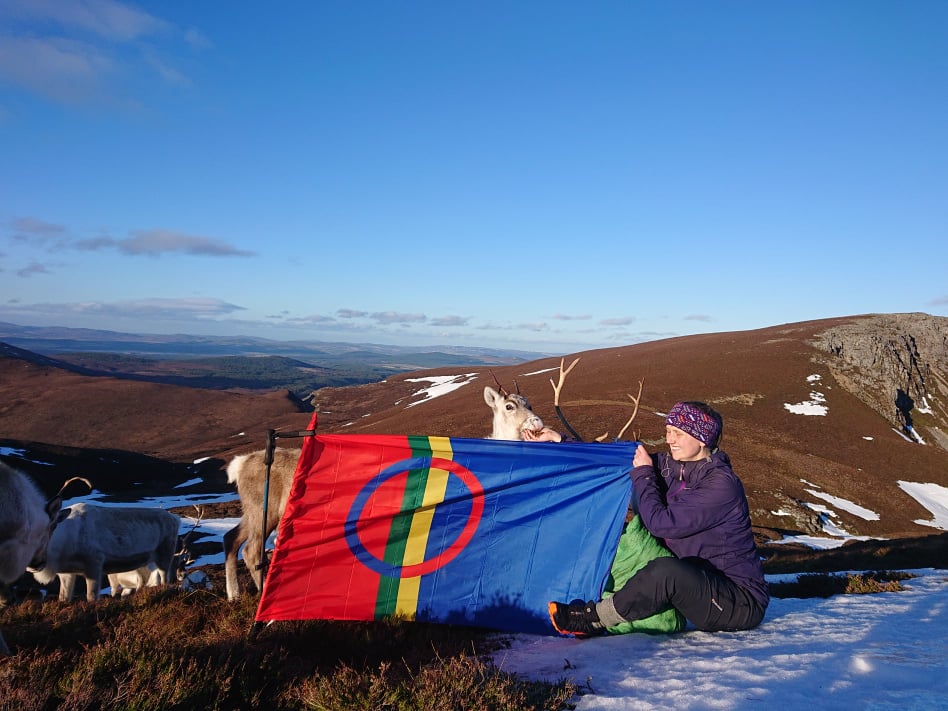
Recently one of our supporters posted us two Sámi flags. He wrote explaining that he had been hoping to come and visit the reindeer in February, and on Sámi day, take the flags up to the herd, and make a toast to the Sámi people, culture, and way of life. He had originally been planning a trip to visit the Sámi people but when it was apparent this wouldn’t be possible, he had planned to visit us instead. So, you can imagine how disappointed he was to find out that his trip to the Cairngorms also wasn’t possible. He asked if we could take the flags on the hill and raise a toast in his place, of course we were delighted to do this.

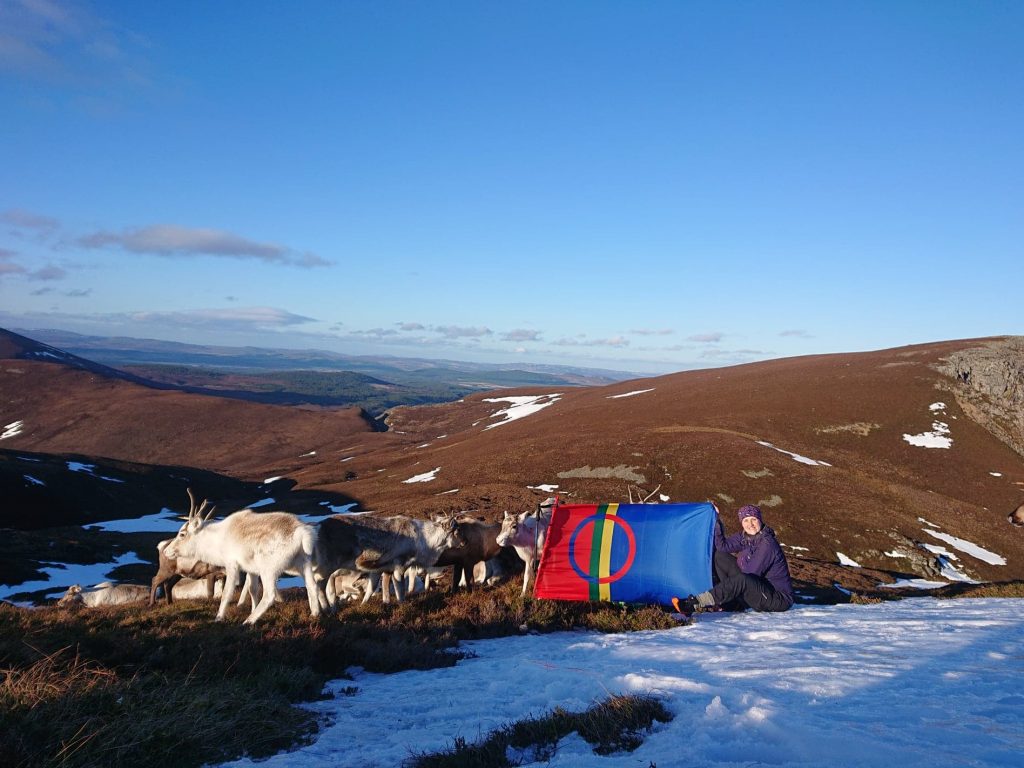
Fiona and the Sámi Flag with some of the free-rangers

For the week around Sámi national day, when Dennis had been hoping to visit the reindeer, the weather was so wild that we couldn’t even get to where the reindeer were, let alone fly a flag. We’re talking snow drifts across the road as tall as me! This was serious winter weather. The reindeer were of course totally fine. When the weather gets wild and the snow gets deep the reindeer head up onto the ridges where the wind has blown the snow off and it’s easier to dig through to the grazing underneath. There was a couple of days when we forgot to take the flag out to the herd. The day we were finally able to was pretty wonderful. Me and Fiona headed out to find the herd, we had spied them quite a way away and were hoping to call them a bit closer. In the end we met somewhere in the middle. It was beautiful sunshine and certainly felt like spring was on it’s way. We flied the flag with the reindeer around it, it got me thinking a bit about what the Sámi flag represents.

Fava leading the herd

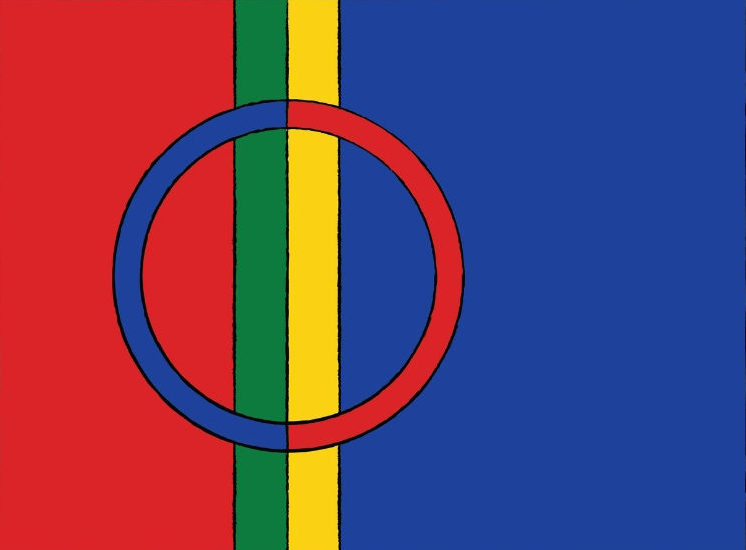
The Sámi flag is a relatively new flag, it was first designed in the 60s. The colours in the flag, red, green, yellow and blue, are the most common colours used in Sámi clothing. The circle symbolises the sun in red and the moon in blue. The yellow and green in the middle are to symbolise the animals and nature.

The Sámi flag

The sun is incredibly important in Sámi culture and the sun symbol appears in lots of traditional Sámi artwork. The sun is worshipped in Sámi culture in particular due to the lack of sun in winter and the life that it brings in the summer. In the Sámpi, the area where the Sámi live, in the winter the sun doesn’t reach the horizon. Beaivi is the name of the Sámi sun deity. On the winter solstice a ceremony is carried out for Beaivi and a white reindeer is sacrificed to ensure that the sun returns, and the long winter ends. In spring when the sun arrives, the plants start to flourish and so do the reindeer which brings prosperity to the Sámi people. In order to give the sun more strength to rise in the sky, Sámi people leave butter on their doorsteps which melts and provides energy to the sun.

Fiona and Borlotti with the Sámi flag

The moon is also important in Sámi culture, unlike the sun however, in Sámi folklore people are very suspicious of the spirit of the Moon. Supposedly in December the evil spirits wander among the people and the moon is thought to be the leader of them. Traditionally in February there would be a festival under the full moon in which people would bang drums and make a lot of noise to scare the moon away so that the sun can return. The sun and the moon are often shown to be battling in folklore. I would imagine that people are suspicious of the moon as it always comes out at night when it is dark.

The Sámi flag is a beautiful array of colours and wonderfully represents how the Sámi way of life revolves around the seasons and nature, much like the lives of the reindeer themselves.

Lotti

Book Now