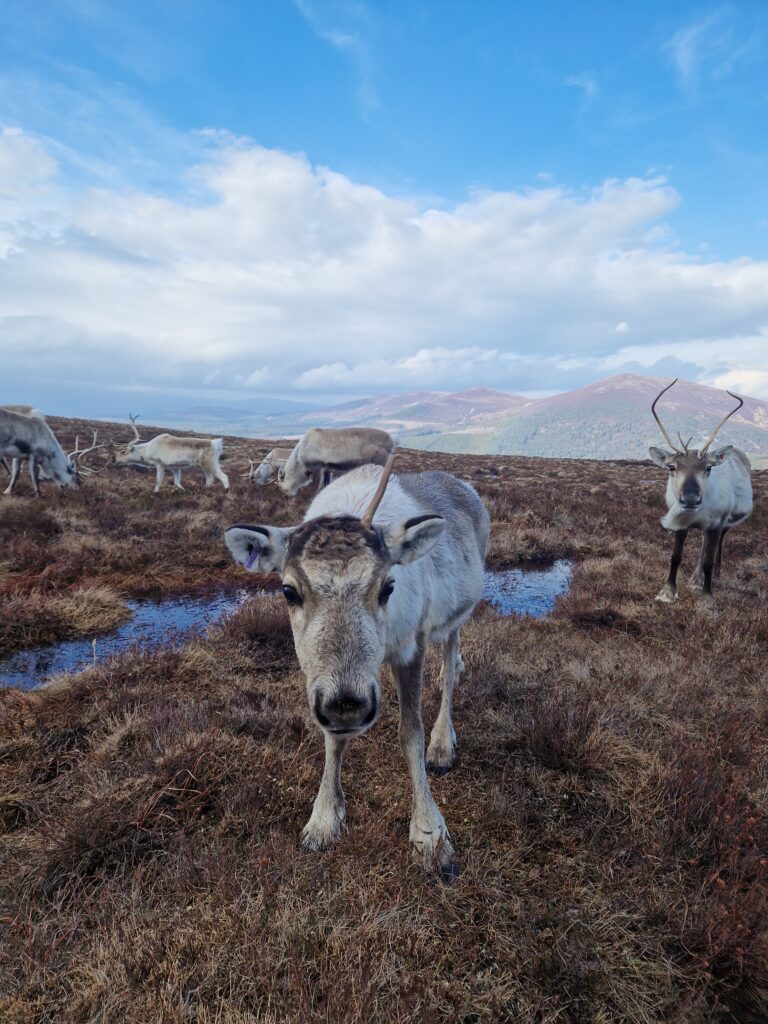
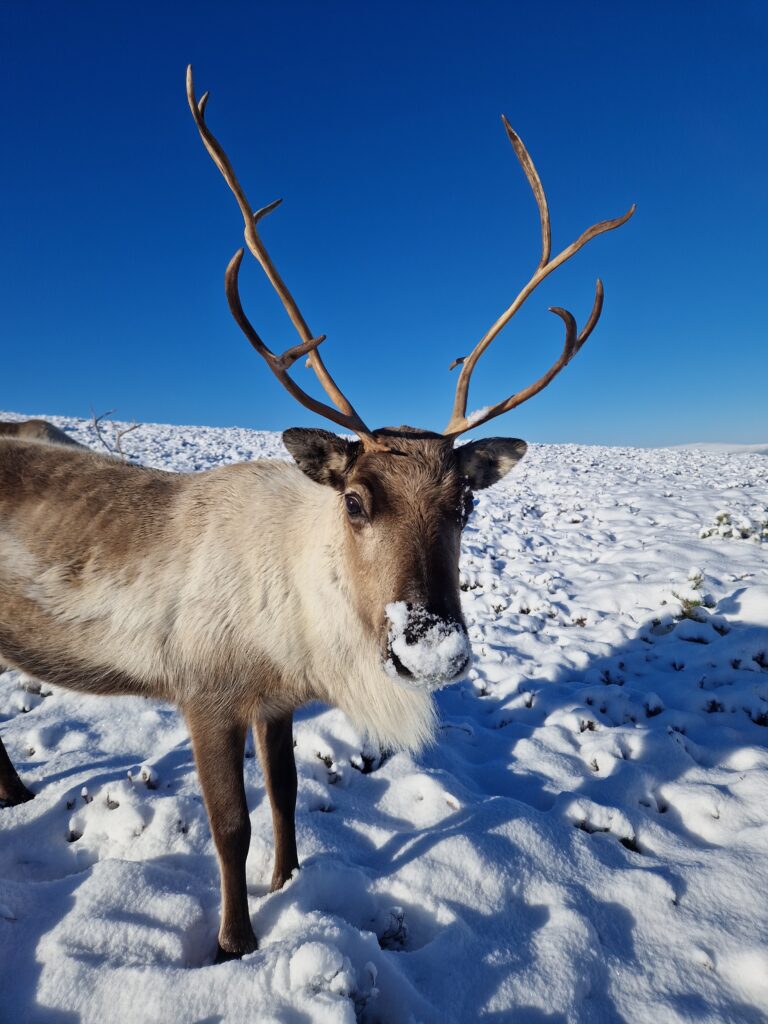
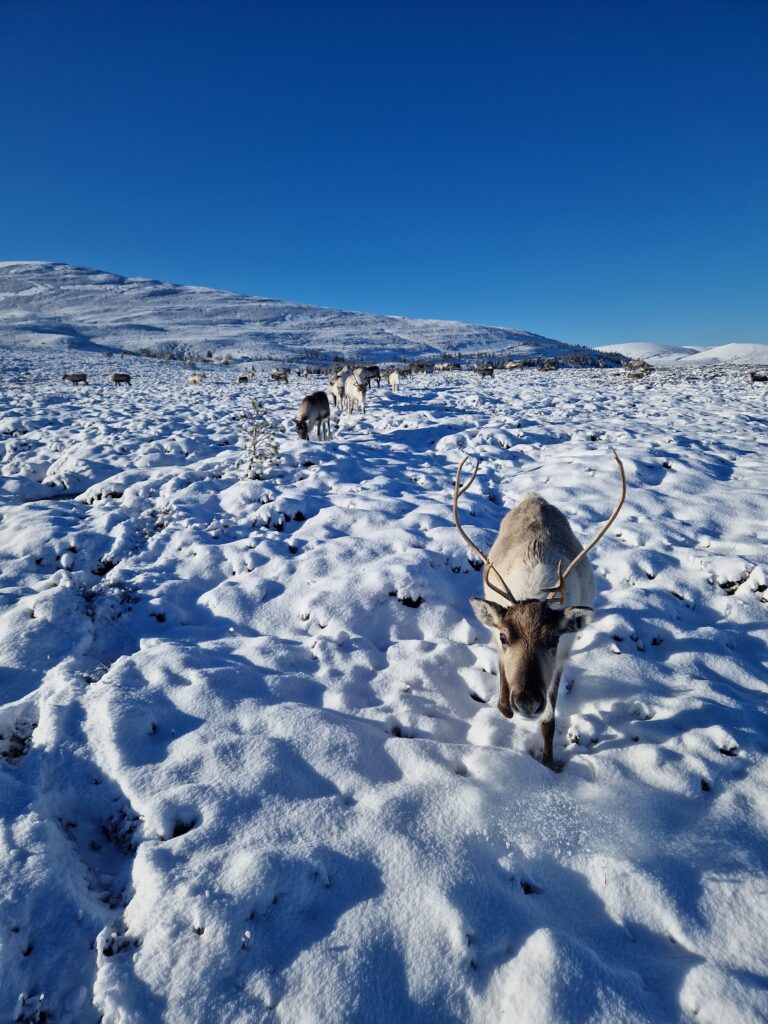
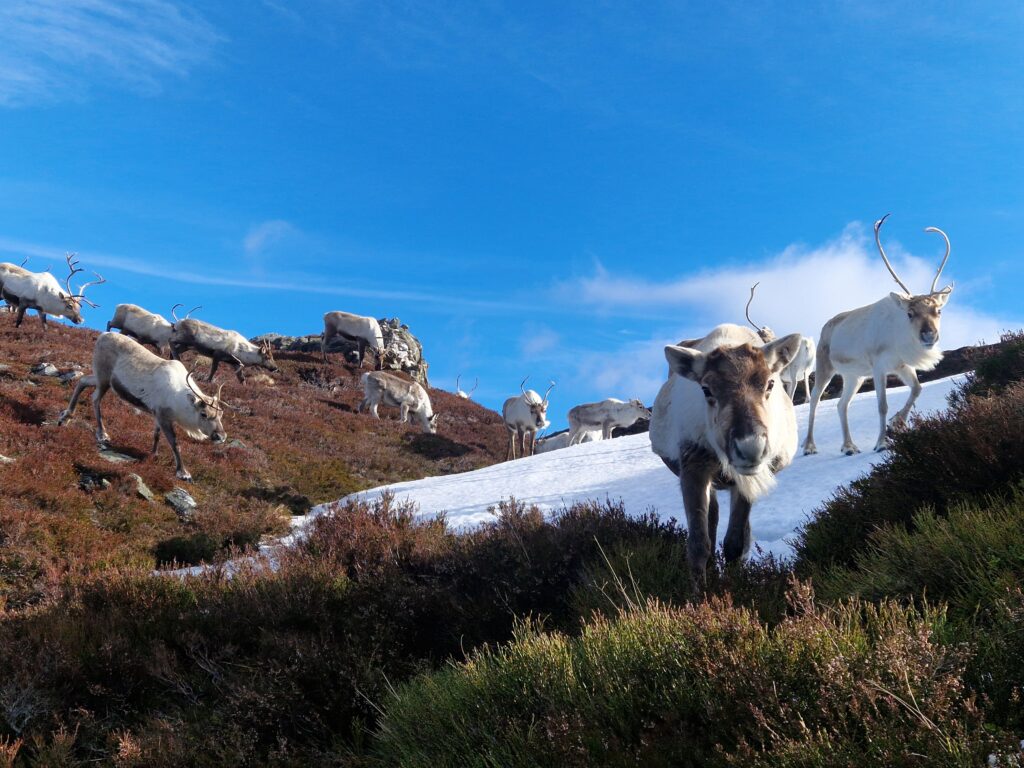
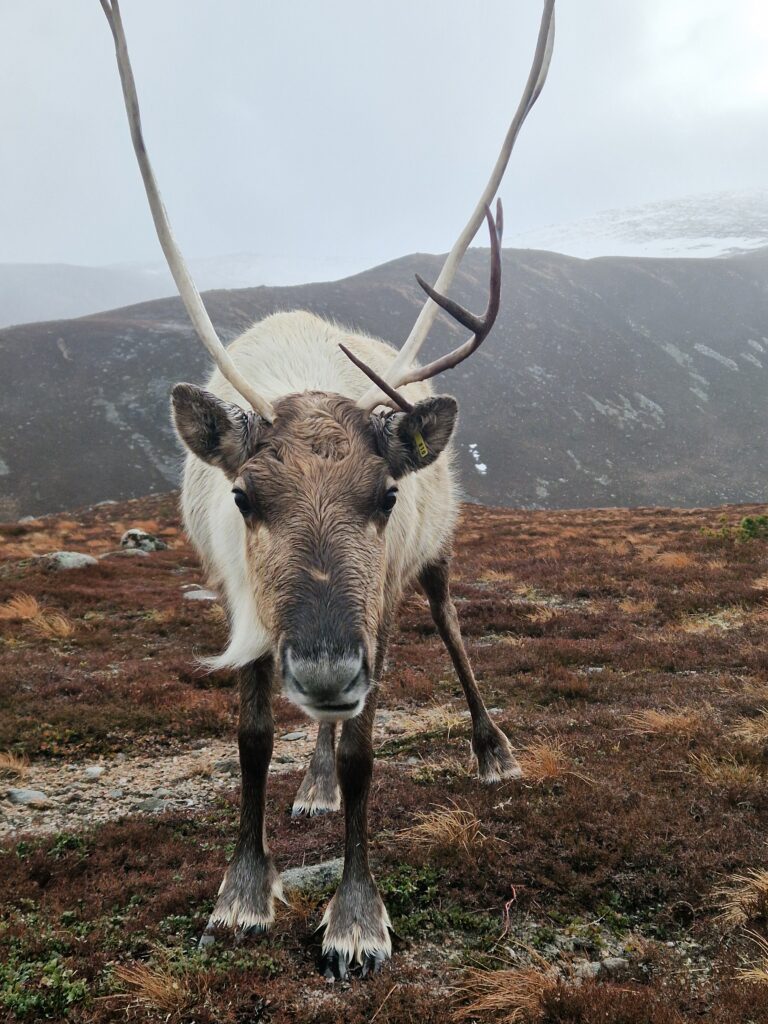
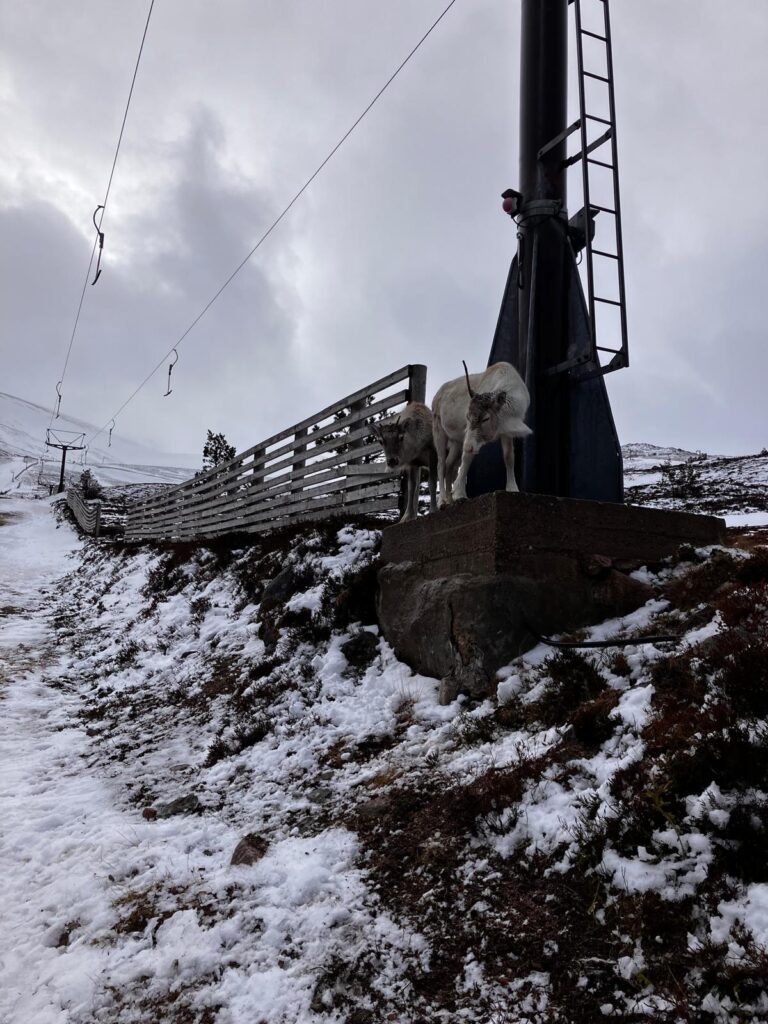
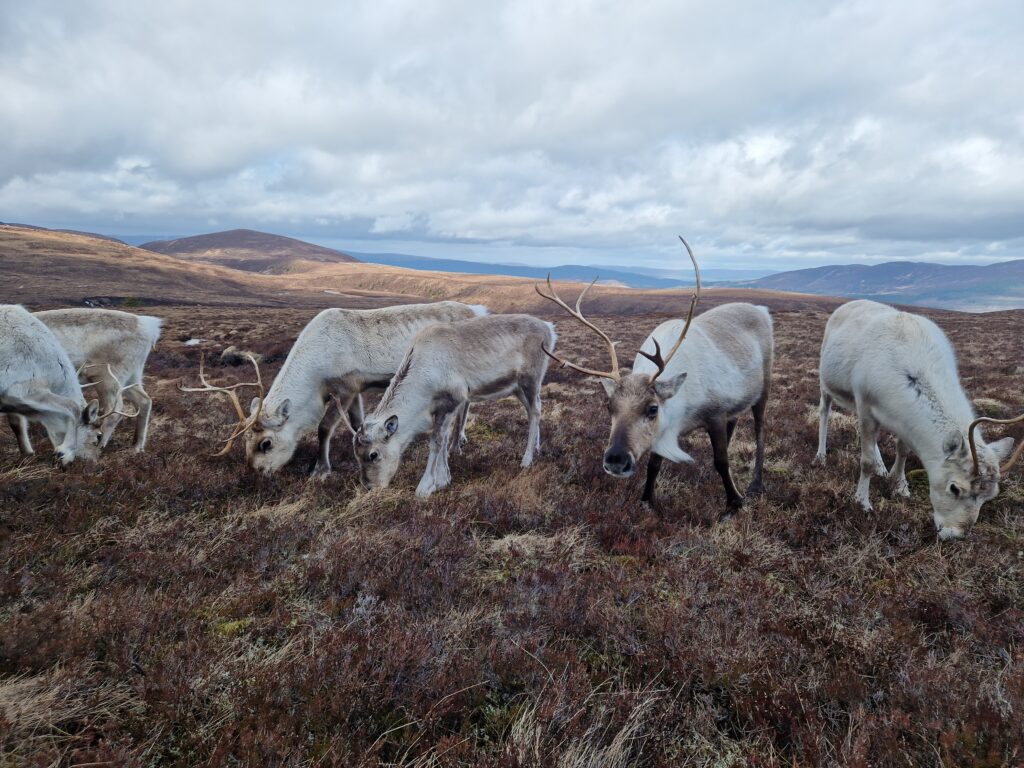
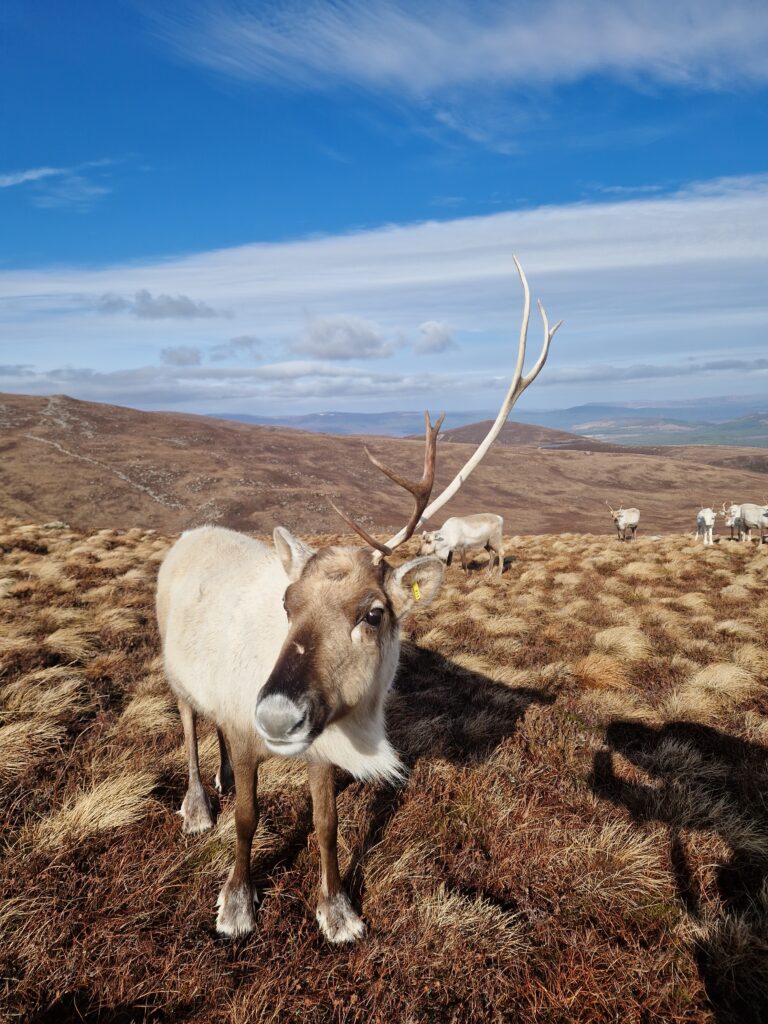
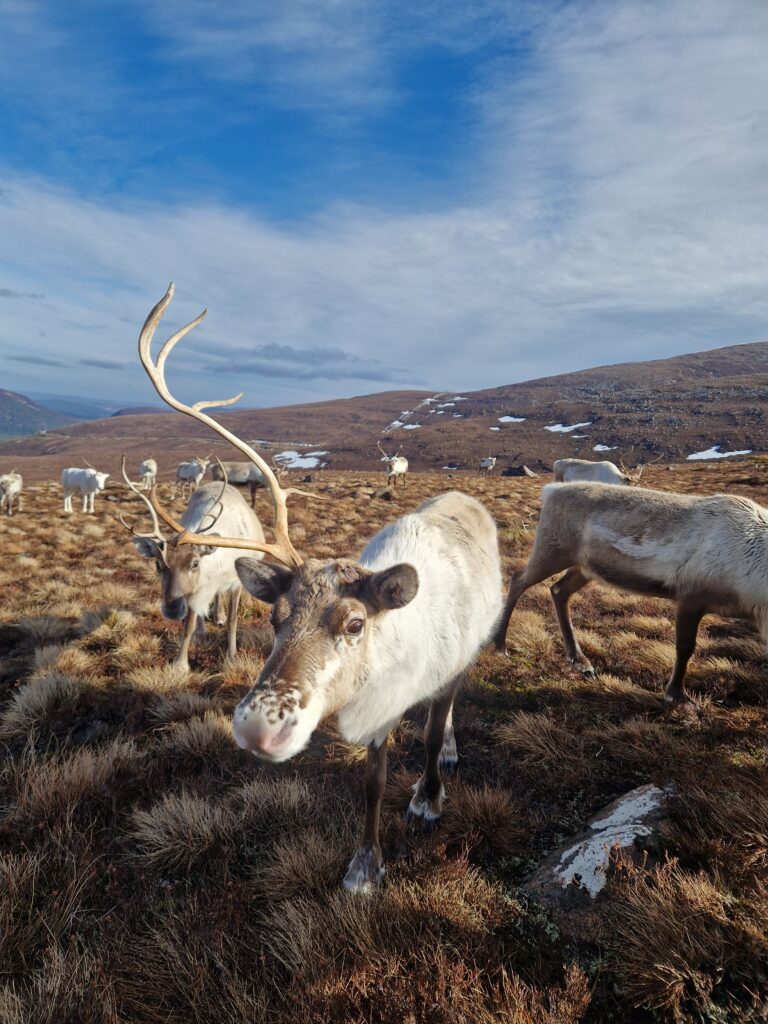
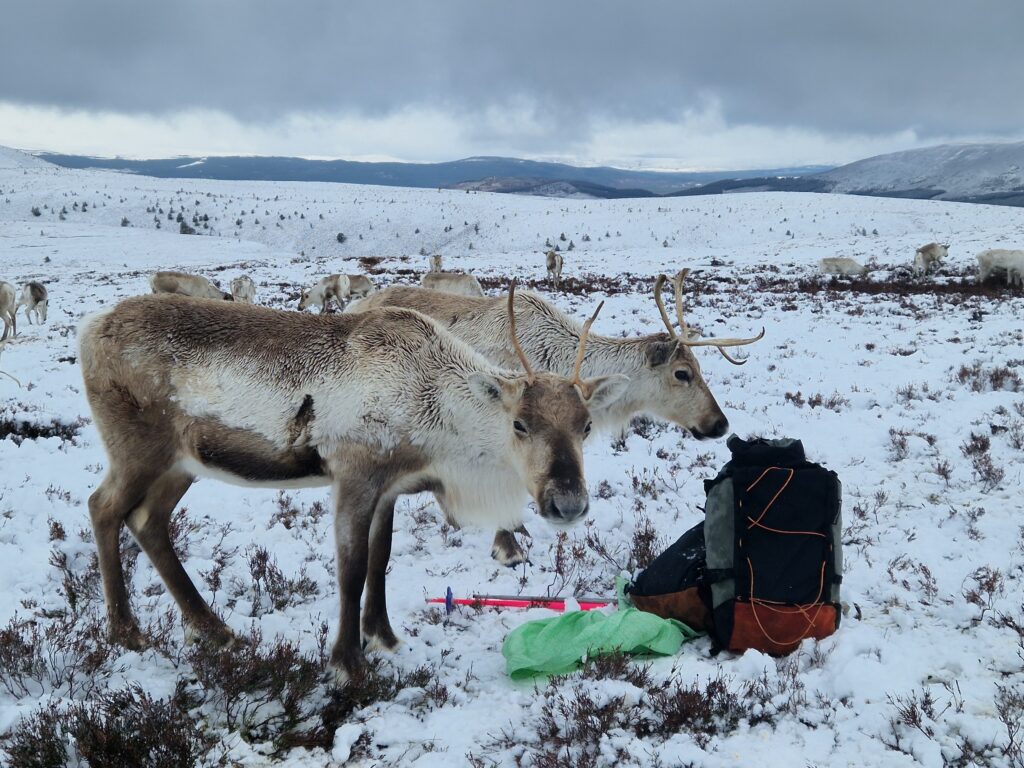
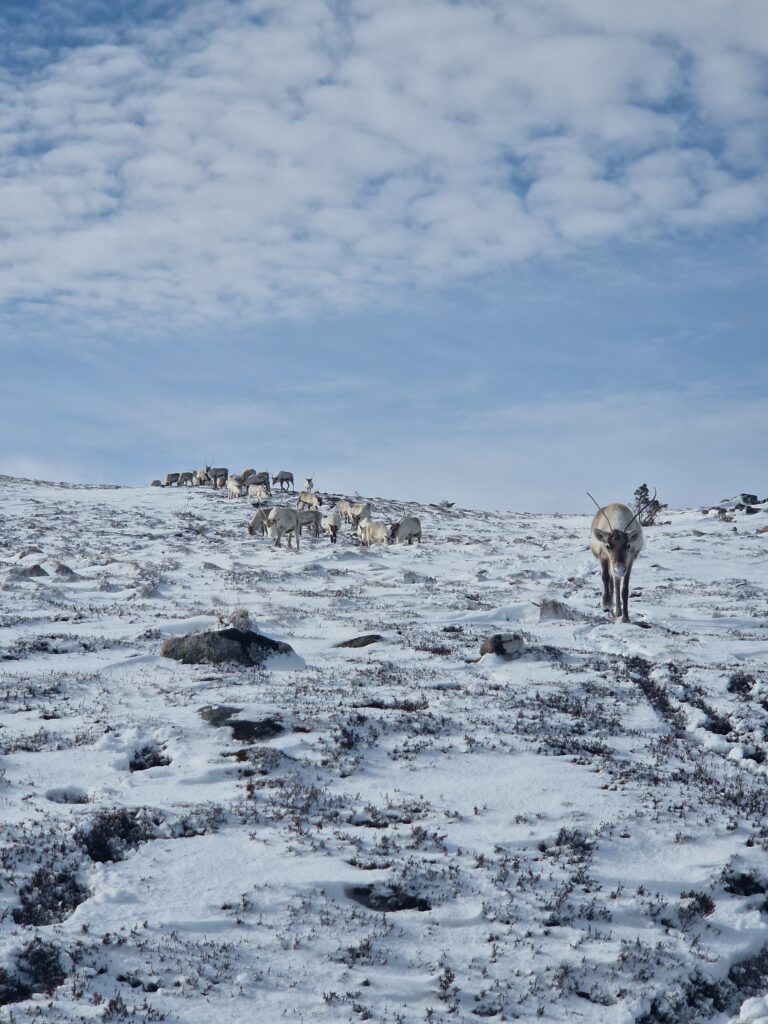
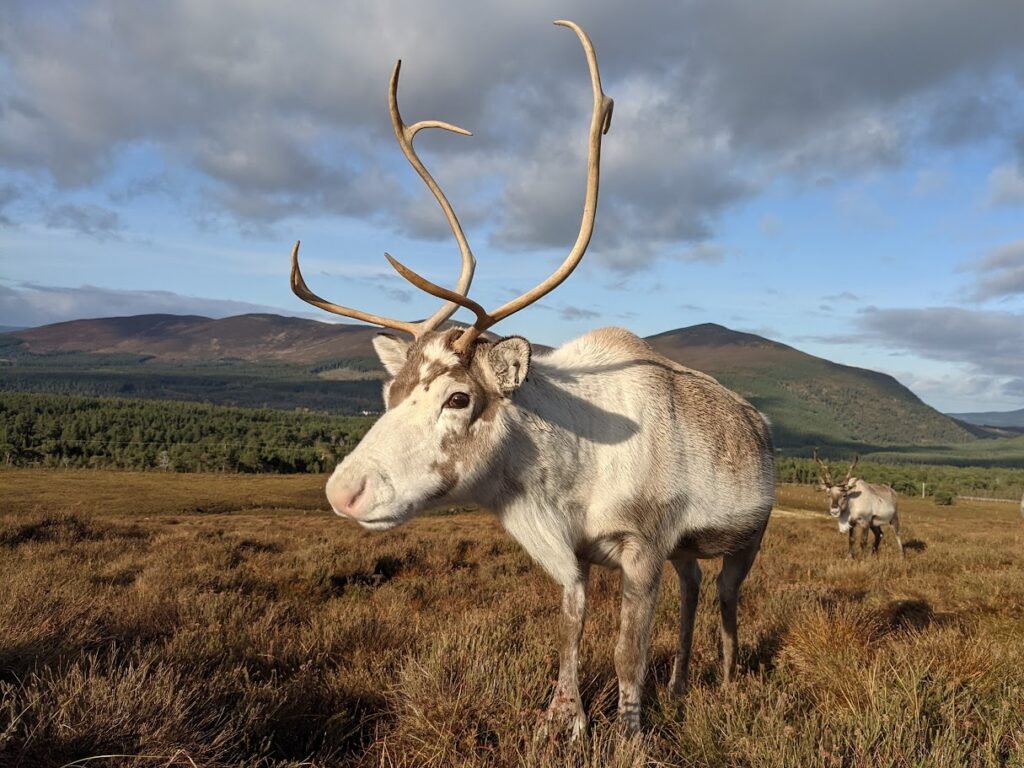
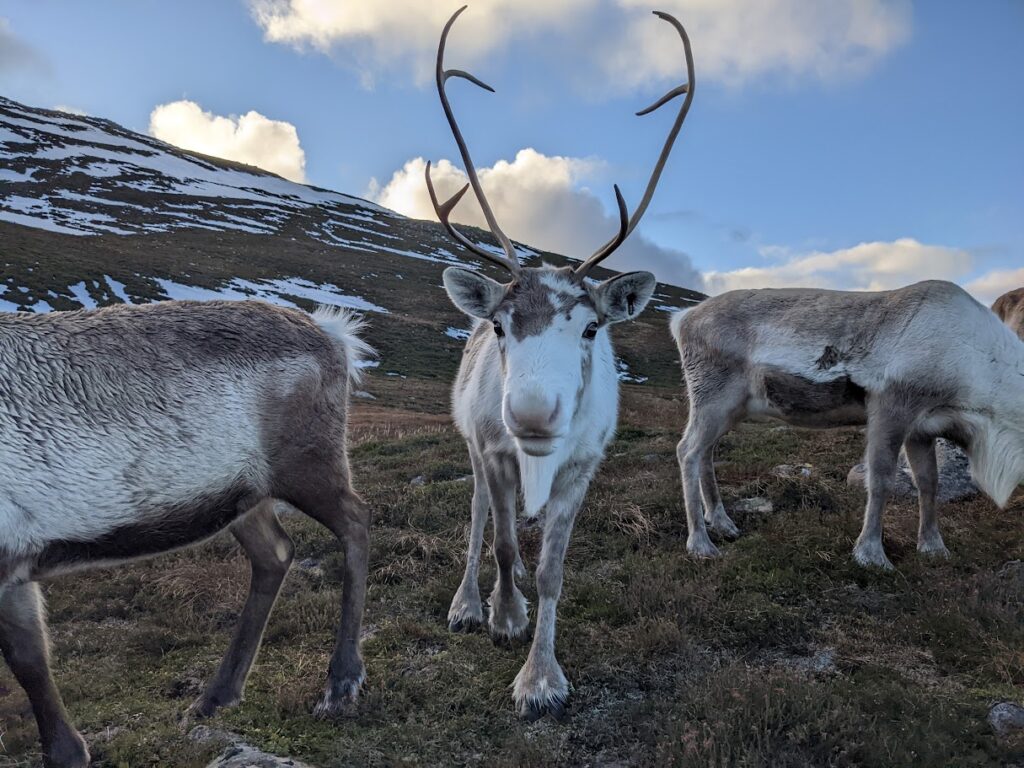
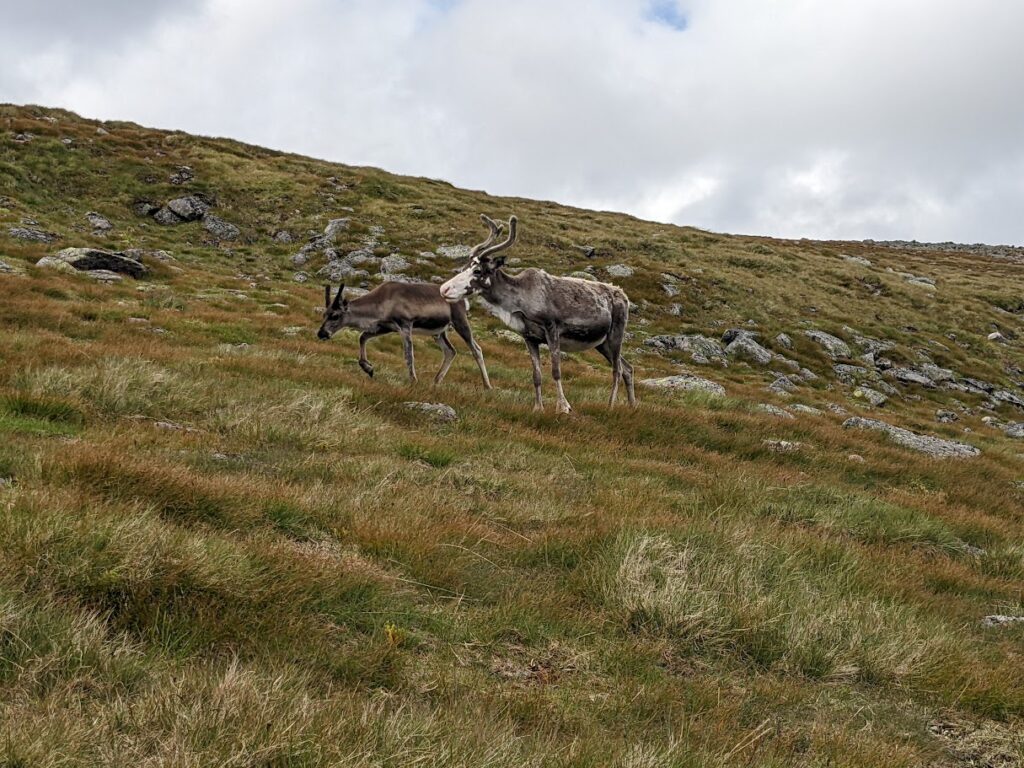
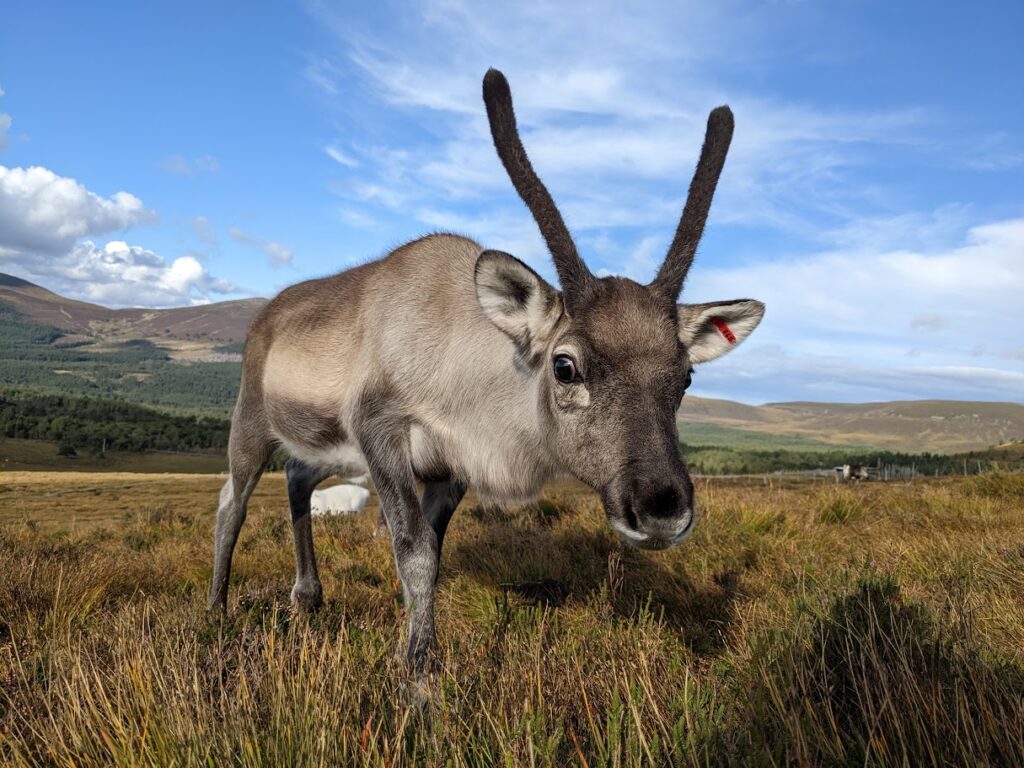
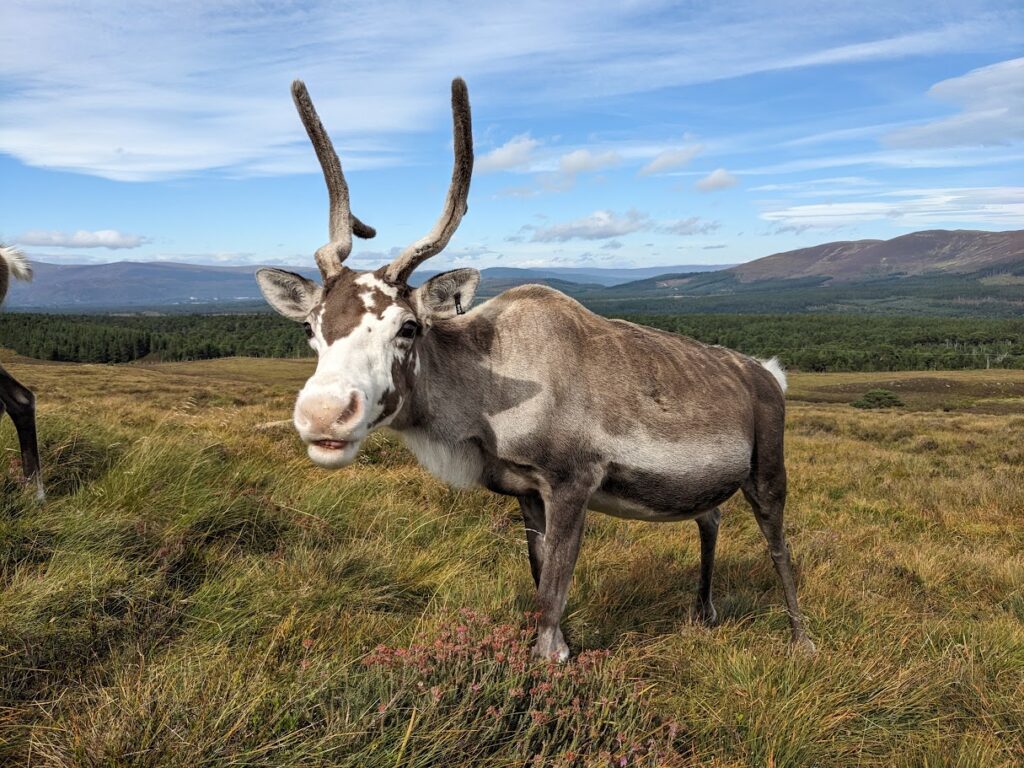
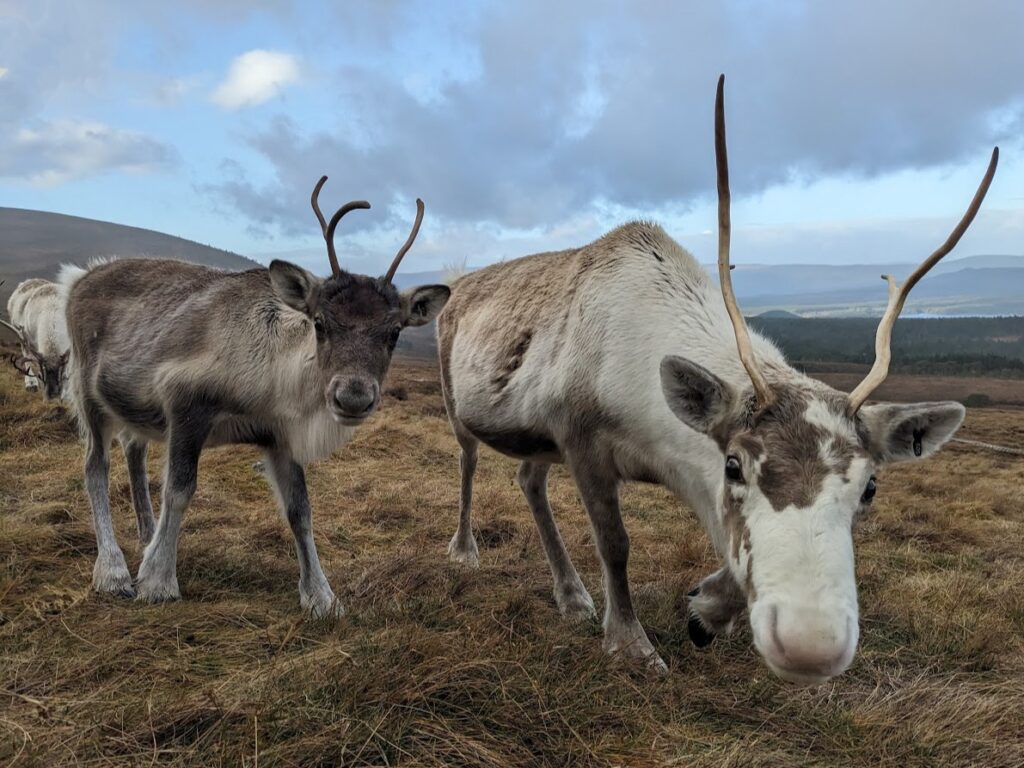
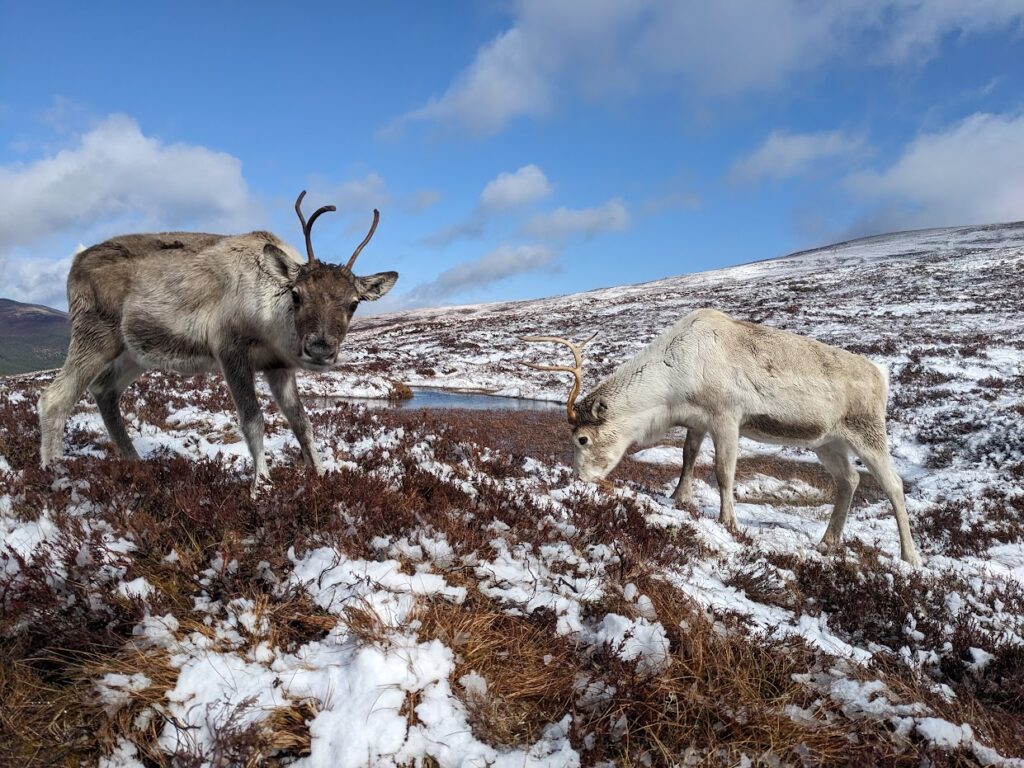
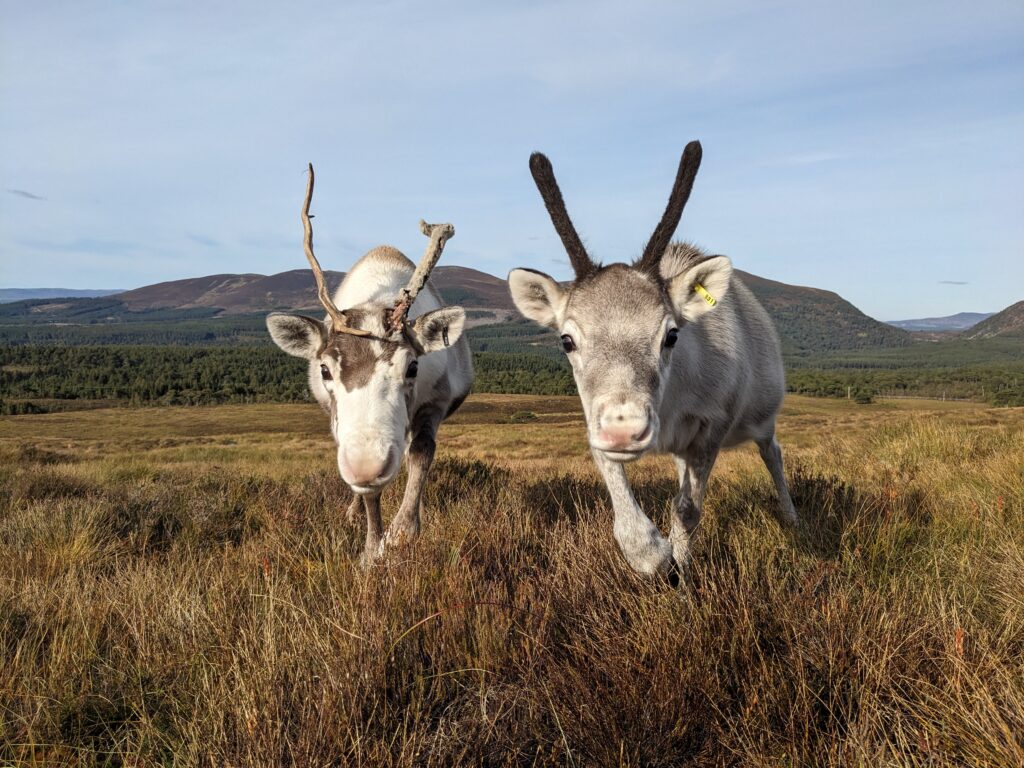
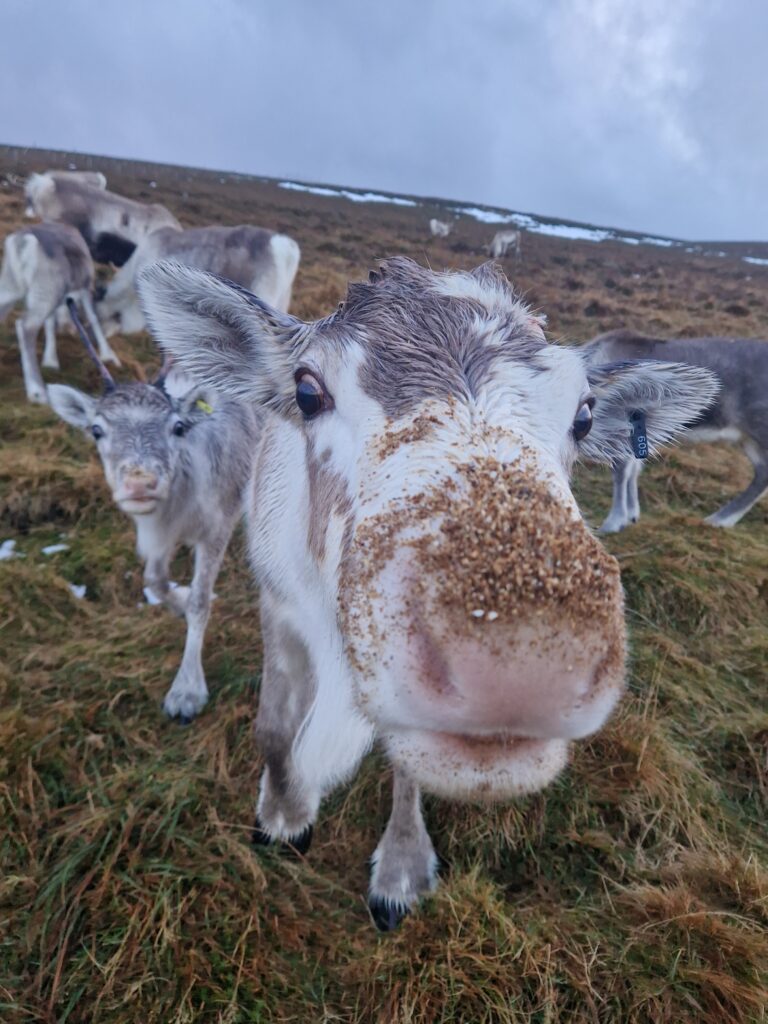
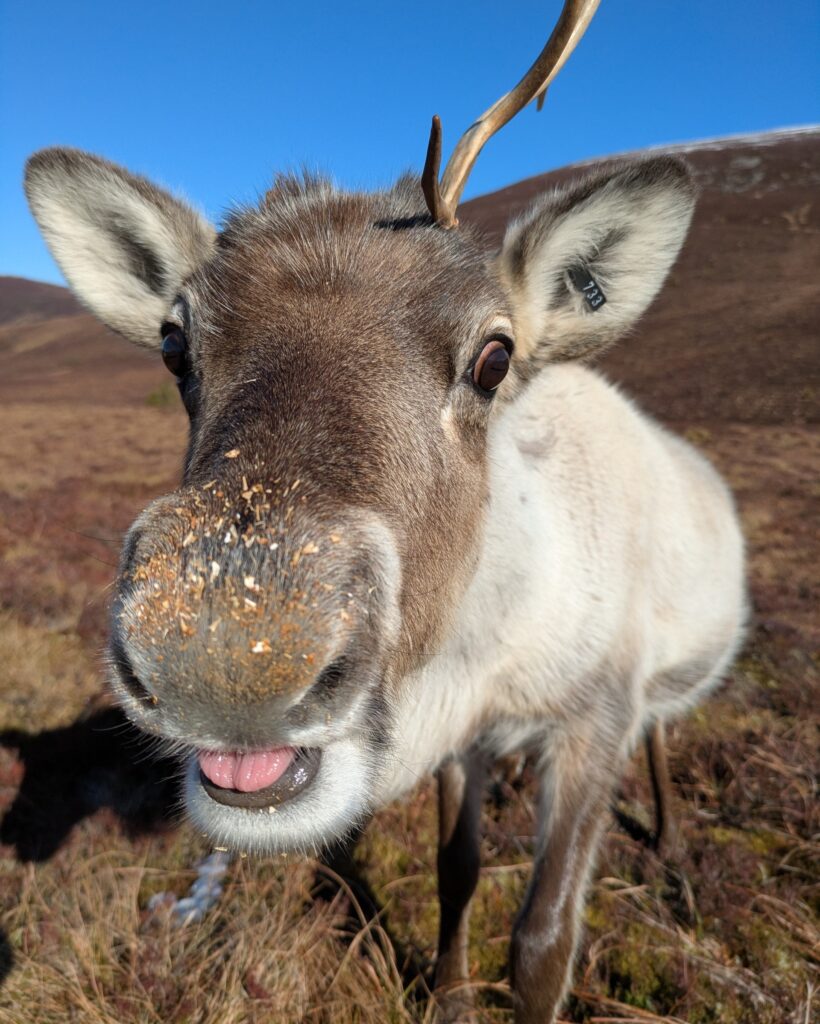
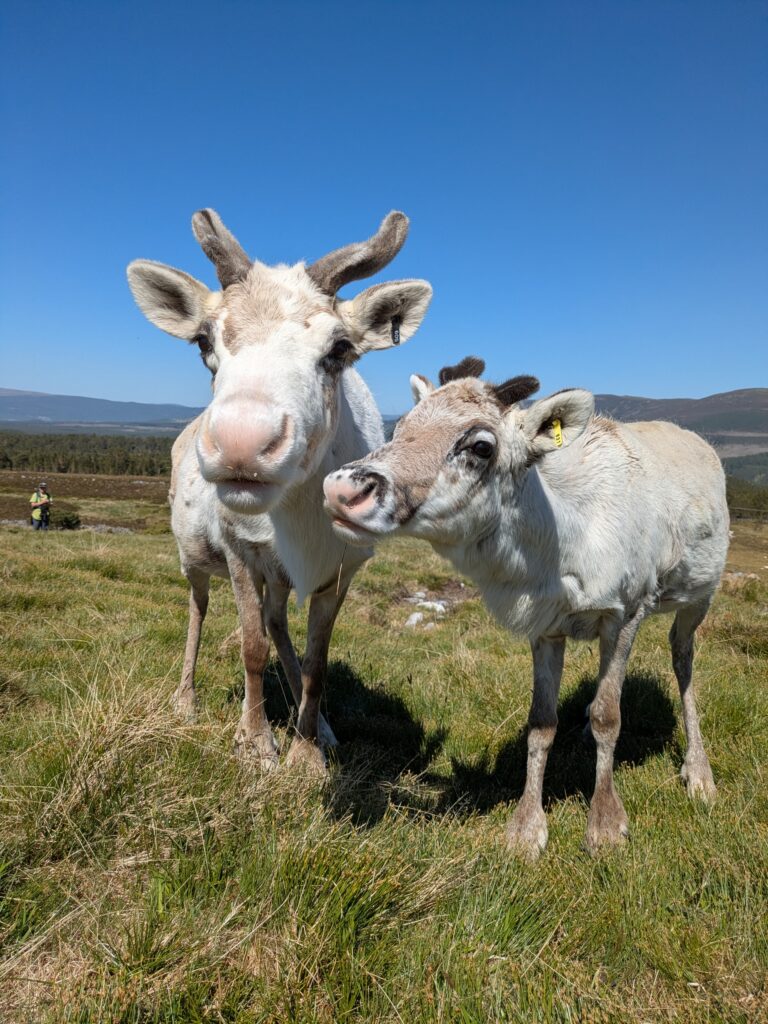
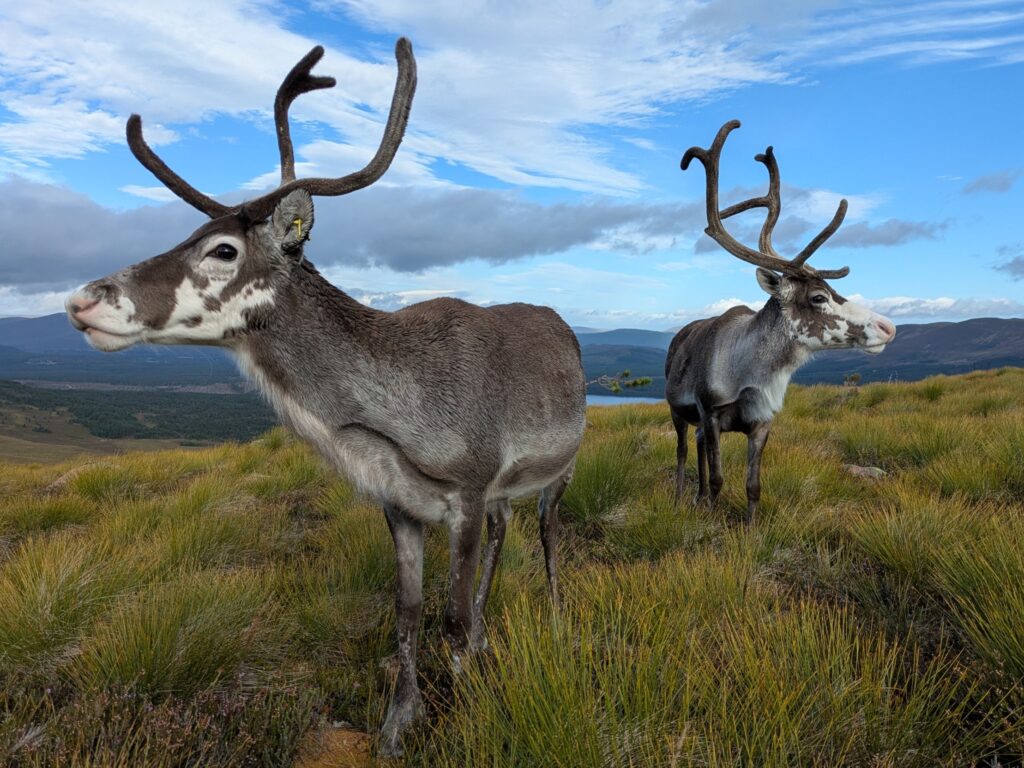
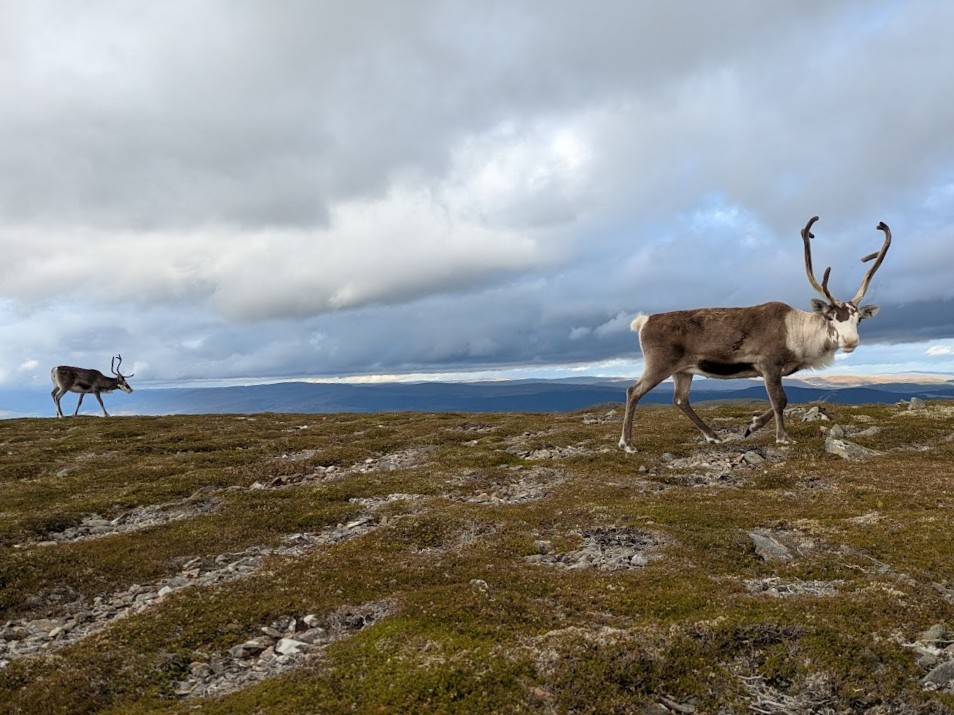
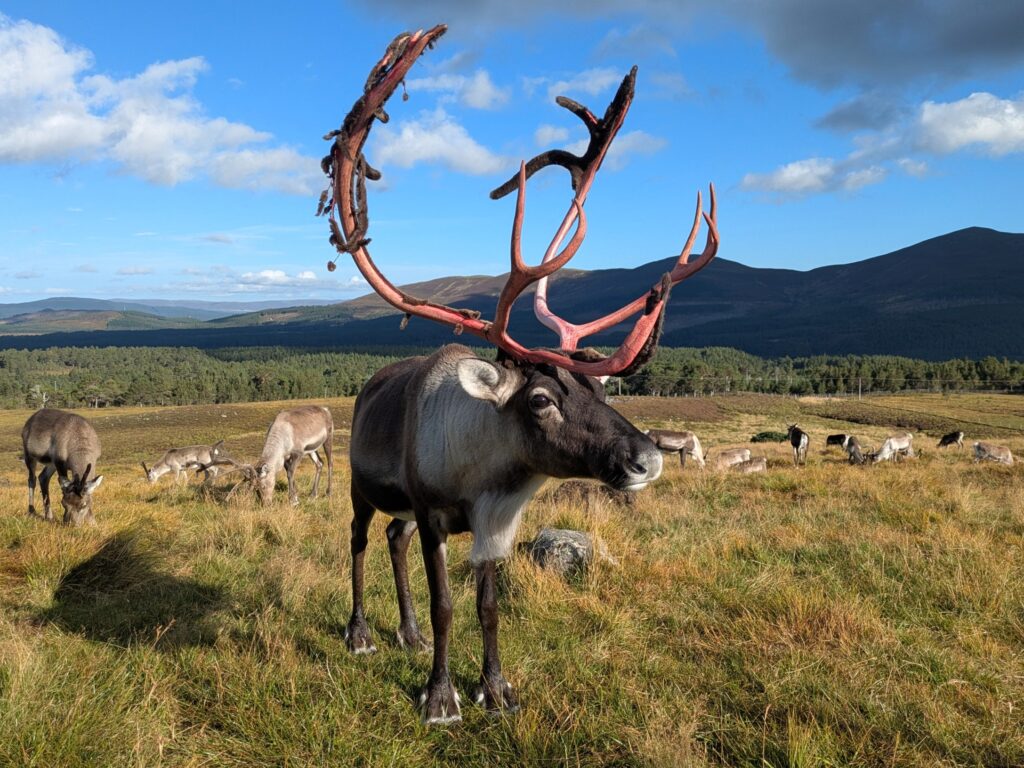
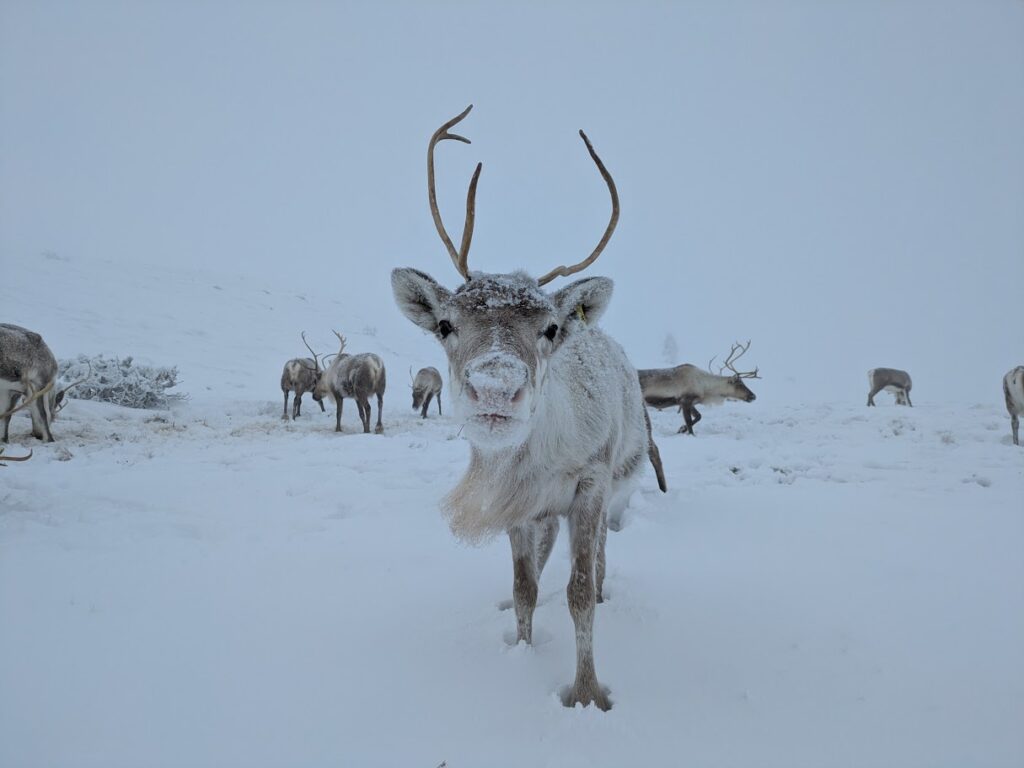
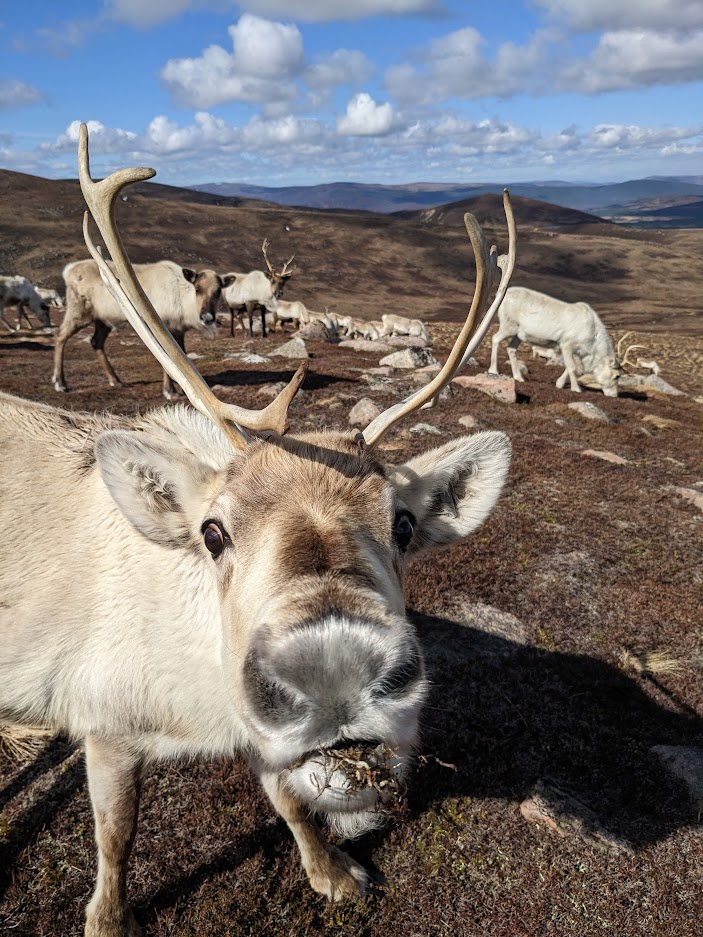
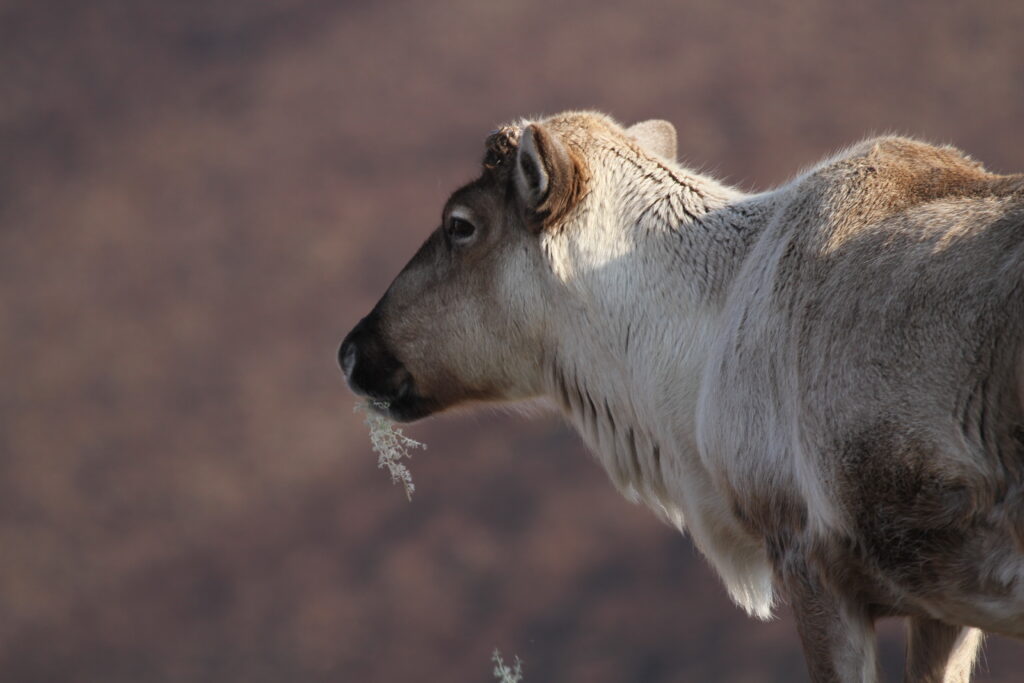
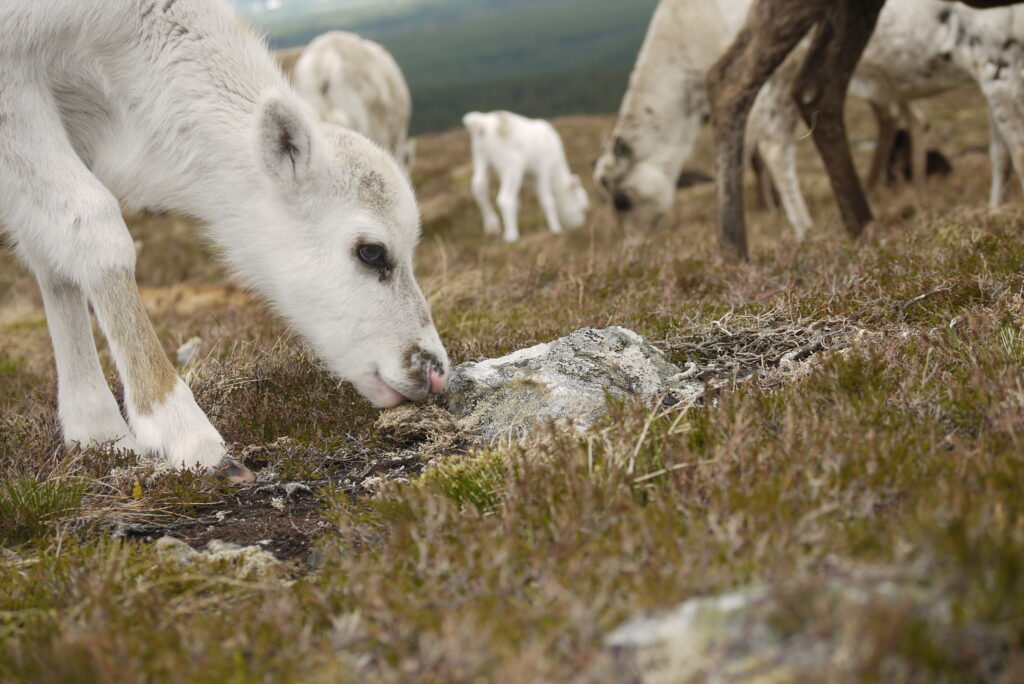
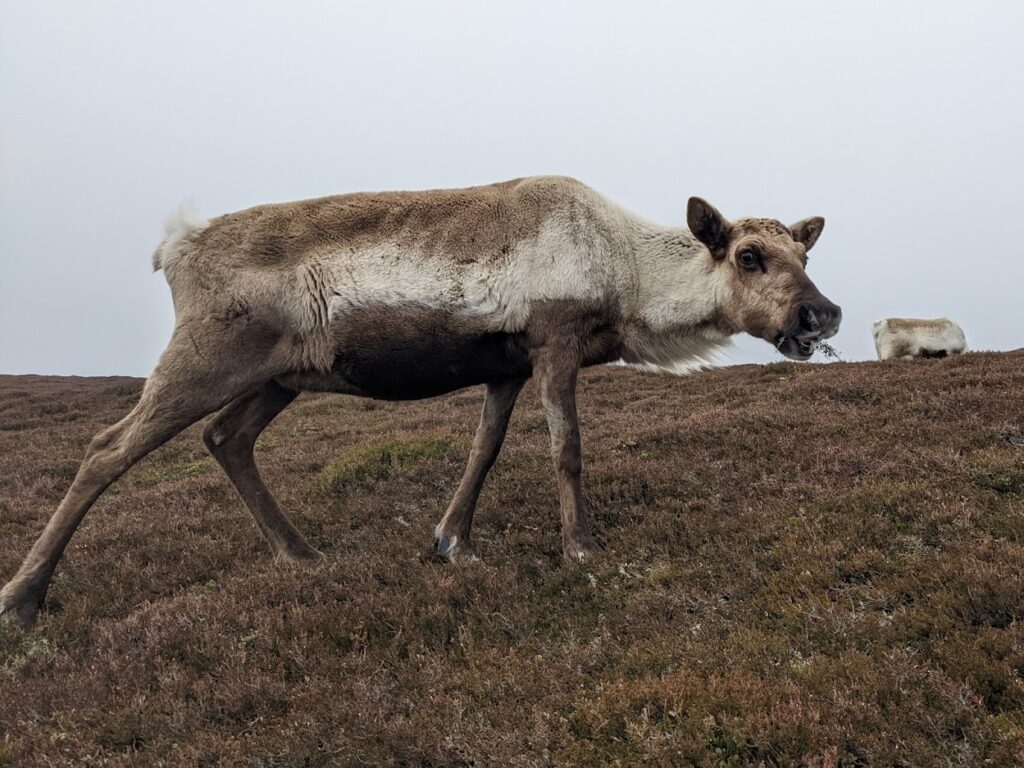
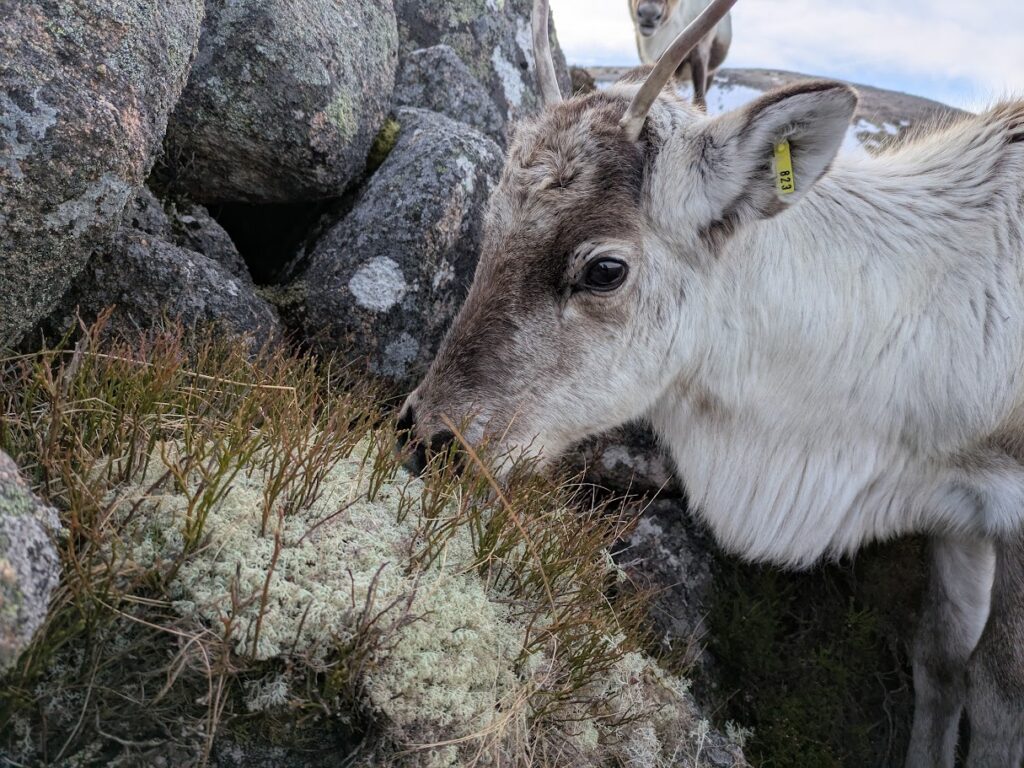
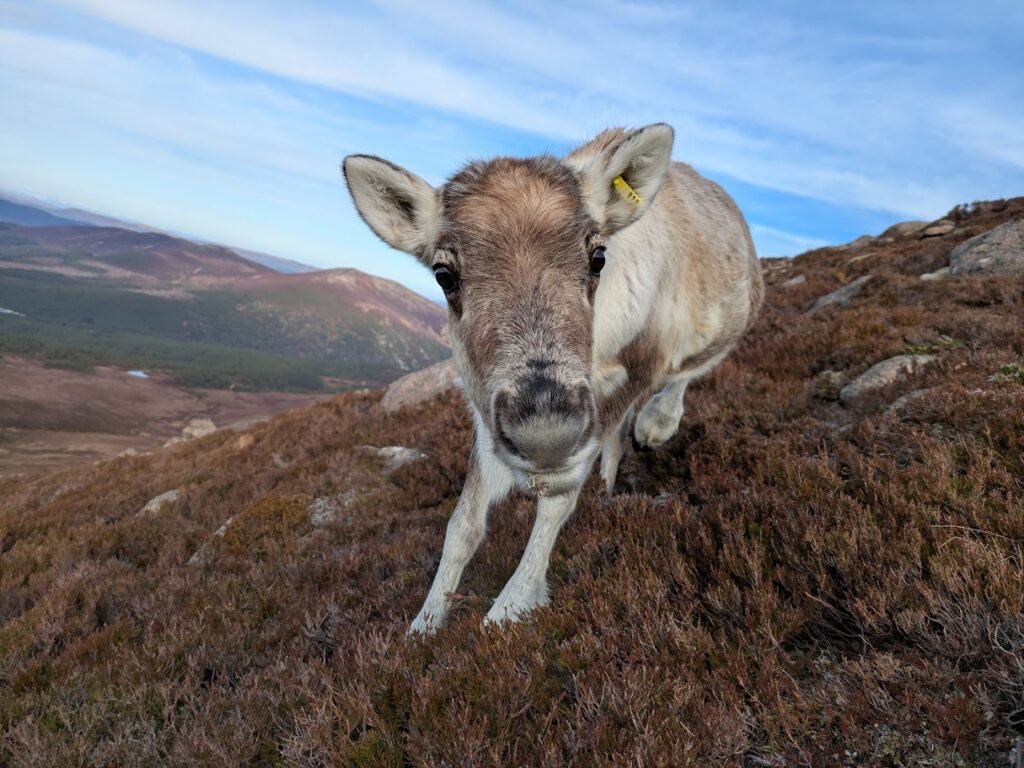
So far during March we have encountered all manners of weather, thankfully though in comparison to January and February there has been an increase in good weather days. During the start of the month, we had beautiful blue skies and even a fresh dumping of snow. The reindeer have been amicable, meaning that our walks out to collect them in the morning have been a bit easier than the previous months; once they find a good patch to graze on it can be hard to move them again and as you can imagine there is fresh grazing begining to sprout on the mountain side.
It is usual in March for some of our younger reindeer to come down to lower ground at our secondary site and in return a handful of reindeer were returned to us here at Cairngorm. The most important being Winnie of course- she has been missed!
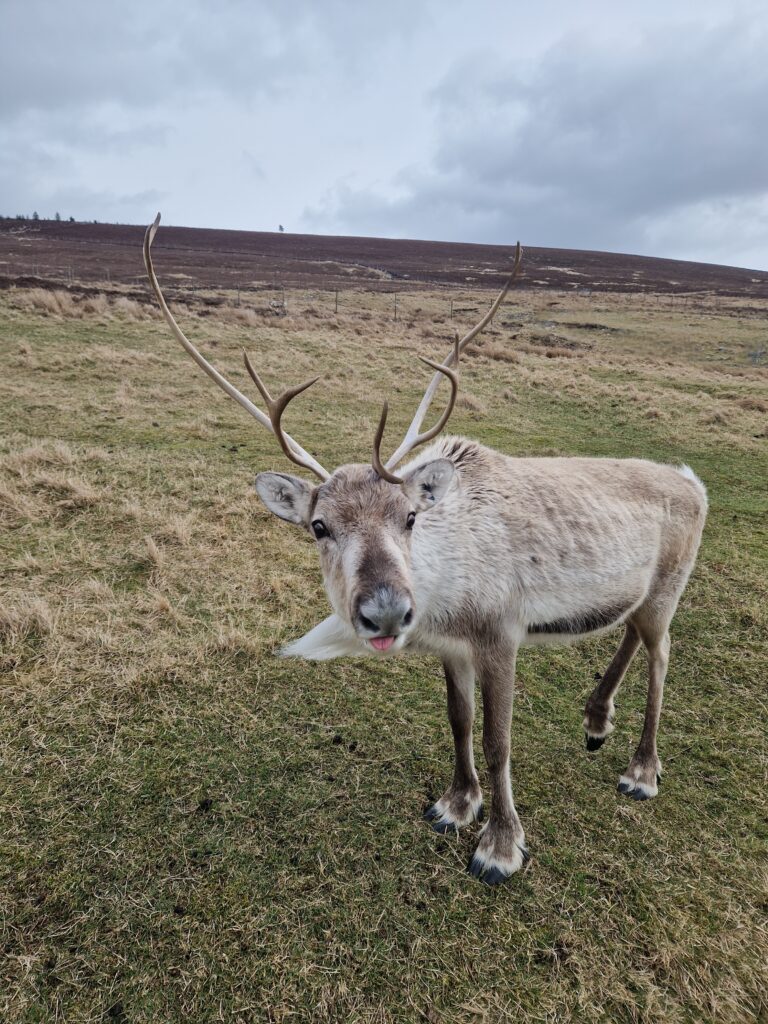
Over the last month our cows have began to lose their antlers and there are now a few of our girls walking around with no antlers on their head. By the end of the month, Ryvita, one of our 16 year old females has began to grow a new set!
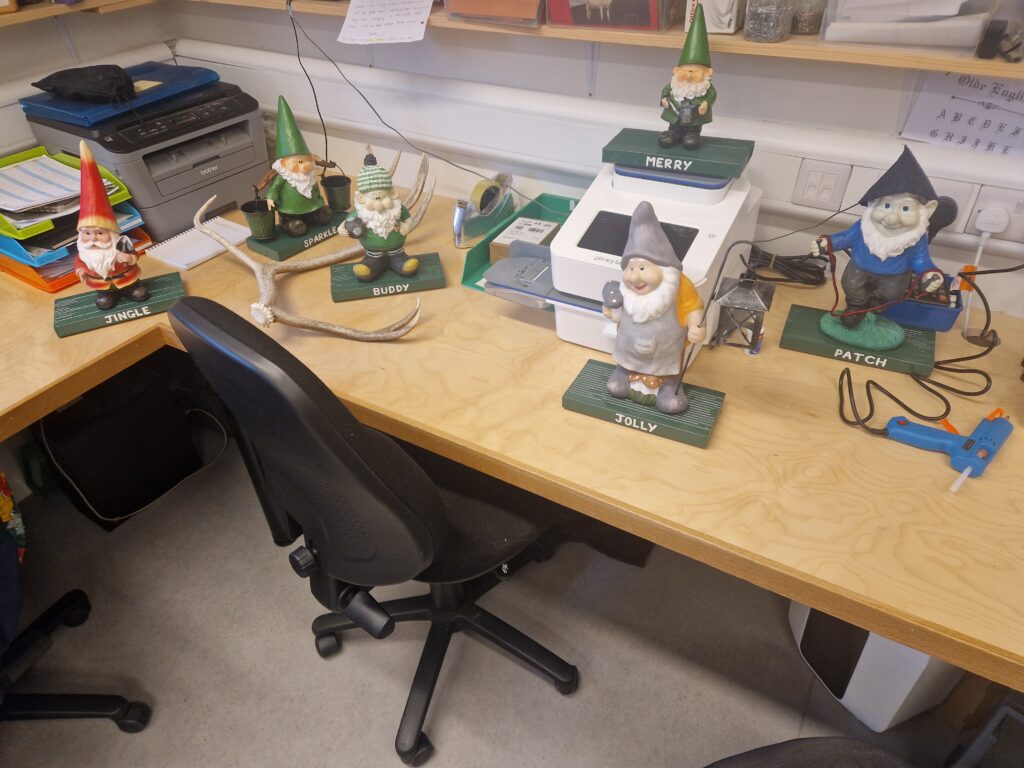
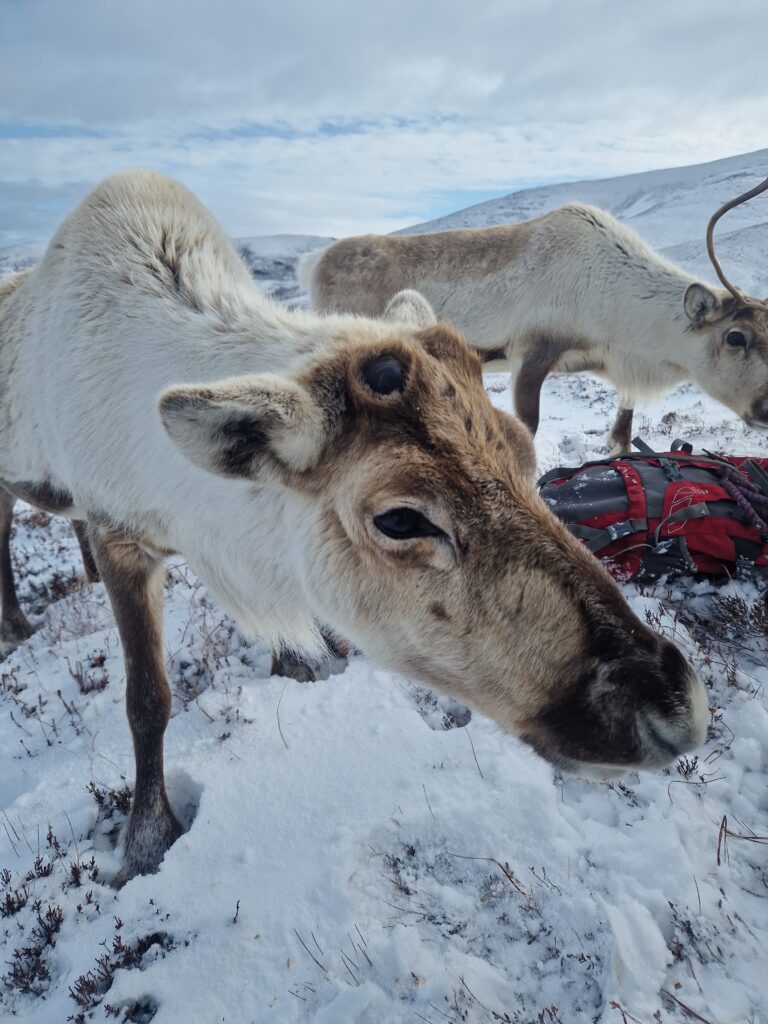
4th of March: Celidh with Mum Glacee on her right. These two are definitely continuing their families fiesty character.6th of March: Fresh snow fall means that most grazing is covered. Thankfully pip’s fluffy nose is protecting her from the effects of the cold.6th of March: Winnie is back!!8th of March: Ryvita and Vienna leading the herd on our way to the visit spot. In previous years, Vienna was often found at the back of the herd, not this year, she is pretty determined to make sure she is at the front of the group.15th of March: After almost a week a way from work it was a wet morning to collect reindeer. Here is a very soggy Lapsang.15th of March: Fox trot and Oro are questioning their choices at the back of the herd during the morning walk to the visit spot.17th of March: Moving left to right- Peanut, Polka, Pip and Lolly all eating off the feed line during todays Hill Trip – it was a blustery one!18th of March: We are hitting the time of the year were our female reindeer are begining to lose their antlers. Here is Lapsang again with only one antler.18th of March: Christie also sporting one antler with Mississippi behind.22nd of March: Our christmas elves are observing the office and making sure we are working hard!25th of March: Bordeaux and Zambezi waiting patiently for extra feed after the Hill Trip.26th of March: Fika (one of our young females, born in 2024) first in line for the morning feed! 26th of March: Ryvita showing off that her new antlers have begun to grow. 26th of March: Finishing up with a picture of Alba, who is currently at our secondary site, as we cannot mention Winnie without including Alba! As the girls have matured they have forged their own paths in the herd and it isn’t very often that we find them both together.
I thought I would write a blog to celebrate Cheer the reindeer.
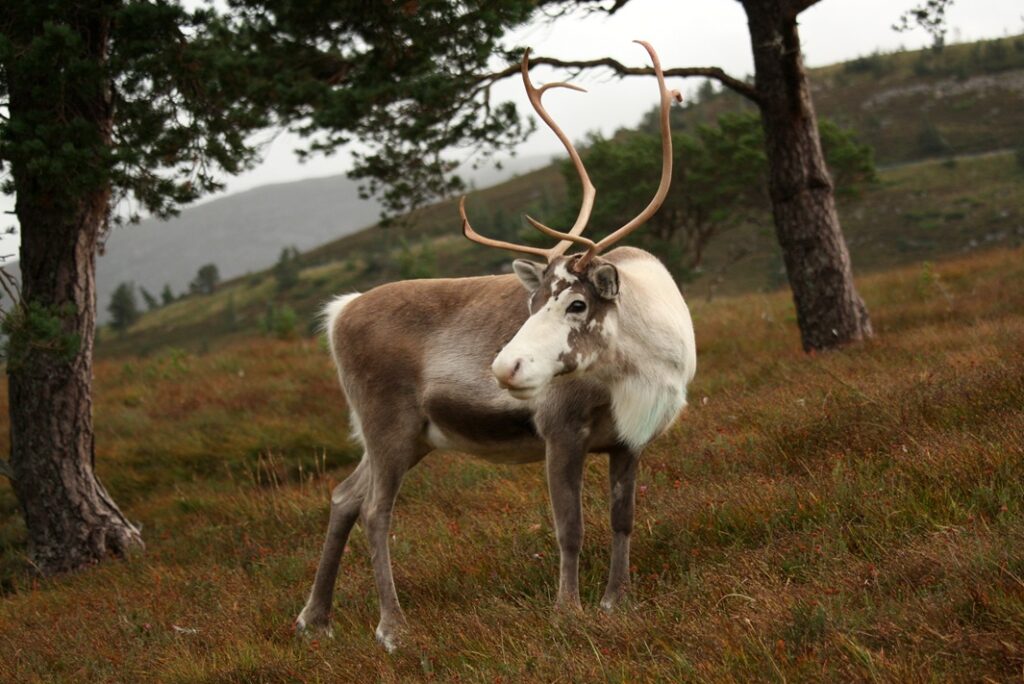
She has a very distinctive white patchy face and often reindeer with white noses or faces stand out from the herd and get lots of attention. But in general I would say Cheer has avoided the spot-light for most of her life as naturally she is quite shy around people, preferring to keep her distance, and she’s not super dominant towards other reindeer either. On Hill Trips she’ll often be more in the distance and definitely not muscling her way in for the hand feed amongst the greediest of reindeer.
Cheer in September 2021 looking beautiful.
Cheer will turn 14 in the spring so definitely falls into the ‘old girl’ category and has been retired from breeding after her last calf was born in 2024. This means she now can spend the vast majority of her year out free ranging enjoying a peaceful life.
I don’t really remember encountering Cheer when I first came to be a herder for around 10 months in 2017 – 2018 (sorry, Cheer!). However, when I returned to reindeer herding in 2021 I got to know her much better. She had a calf in 2022 (Choc-ice), 2023 (Shannon) and 2024 (Chai) which meant Cheer spent a bit more time in our hill enclosure (as opposed to free ranging out in the mountains) during the calving season in the spring and again in the autumn so she was around more.
I’ve now got a real soft spot for her. She is greedy and does love feeding from the hand feed bag but only if there’s no pushy reindeer around and she’s confident that we herders don’t want to ‘do anything’ to her! Then her shy and suspicious nature kicks in.
So here’s just lots of photos of her, and her offspring, taken over the past few years. Enjoy.
2021
One of my first photos of Cheer, when I bumped into her on the free range in August 2021. She’s the one in the background looking a bit suspicious of me! Addax is closest to camera. Cheer back in the enclosure for the rut in October 2021. Still an uncertain look in her eye.December 2021 – Cheer is back out free ranging and curious to know what’s in the feed bag!
2022
Cheer and her calf Choc-ice out free ranging in August 2022. Unfortunately they didn’t want anything to do with me! Still nice to see them looking good and enjoying themselves in their mountain home. She grew small antlers over the summer as she diverted more energy into her son. As soon as we brought Choc-ice and Cheer back into the enclosure in September 2022 it became apparent Choc-ice had not inherited Cheer’s shy character! He has a naturally tame and bold personality.
2023
September 2023 – Cheer back in the enclosure and clearly has been in the feed bag looking at the crumbs on her nose!Shannon and mum Cheer in November 2023.
2024
March 2024 – Shannon and Cheer free ranging together. Cheer and daughter Chai – October 2024. Both are back in the hill enclosure after free ranging all summer. Cheer (and Chai just behind) in December 2024. Clearly not feeling shy today!
2025
Shannon in March 2025. It appears she has inherited Cheer’s shyer characteristics, but she’s also greedy so she’s becoming more and more confident the more we gently work with her. Cheer and Chai in May 2025, as Chai turned from calf to yearling. Chai and Cheer in August 2025 – the pair have remained bonded and are often seen together whilst out free ranging.I bumped into Chai and Cheer again in September 2025, free ranging together, but today Cheer was feeling suspicious of me! and perfectly happy to be left in peace. Choc-ice stripping the velvet from his antlers in September 2025. He was one of our main breeding bulls in the rut the following month, so fingers crossed he’ll have passed on his and Cheer’s genes to the next generation of reindeer calves, greatly expanding Cheer’s dynasty.Chai enjoying the snow in November 2025.
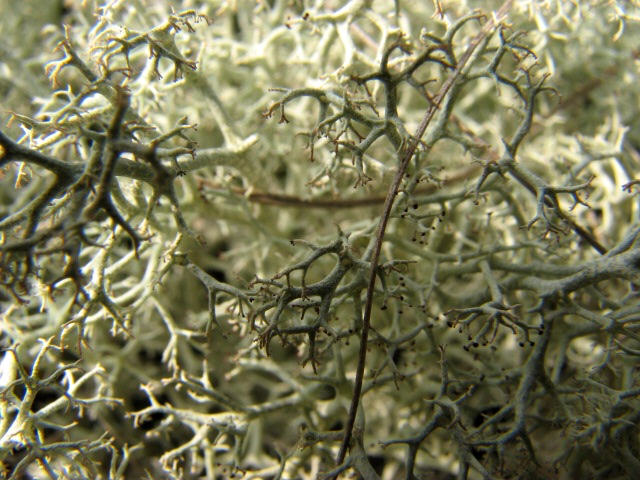
“Lichen, any of about 15,000 species of plant-like organisms that consist of a symbiotic association of algae (usually green) or cyanobacteria and fungi (mostly ascomycetes and basidiomycetes)” (Britannica, 2025). Now that’s a lot of big words and what do they actually mean? What really is a ‘symbiotic association of algae’? And why is lichen so important for reindeer?
Lichen (AKA reindeer moss). Photo by Evelyn Simak
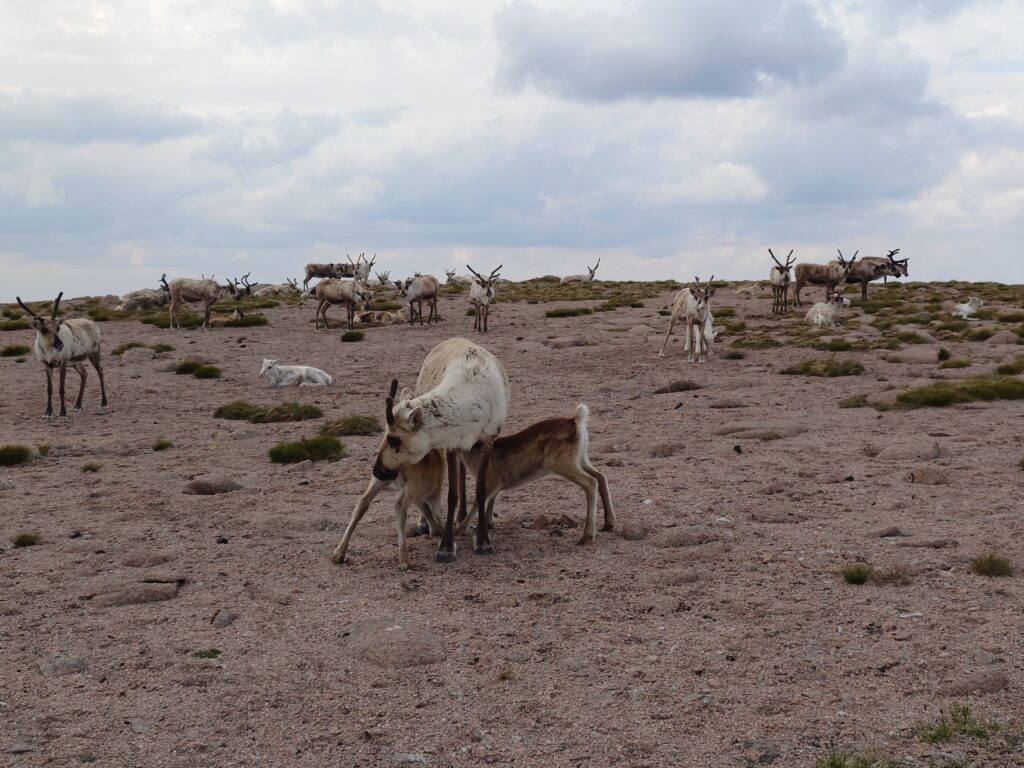
Let’s look at the bigger picture to start. Cast your minds to the vast open landscape that makes up a subarctic tundra ecosystem. Excitingly enough, we can talk about our very own Cairngorm mountains for this, as our reindeer live in the only ecosystem of its kind in the UK.
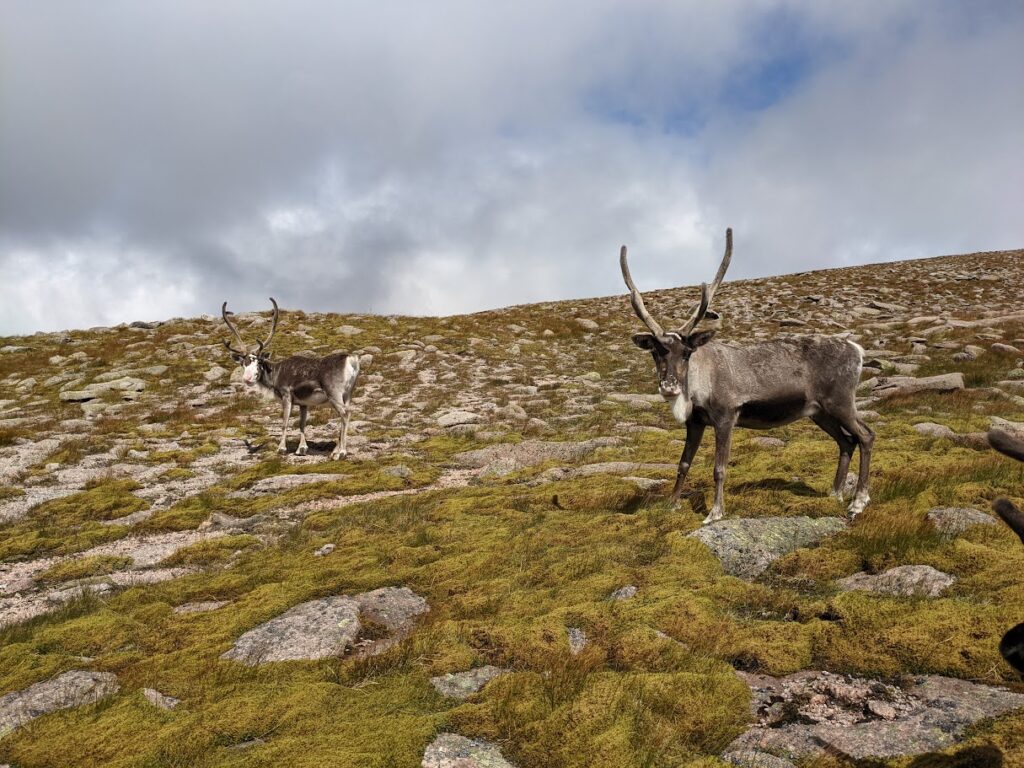
The Cairngorm reindeer free roaming in the mountains.
A subarctic tundra ecosystem falls south of the Arctic Circle line and includes treeless habitats of permafrost and generally short flora growing seasons due to harsh weather and low temperatures. It can include fragmented plant growth, like rocky mountainous peaks with scatterings of low growing vegetation including mosses, grasses, dwarfed shrubs, and lichens.
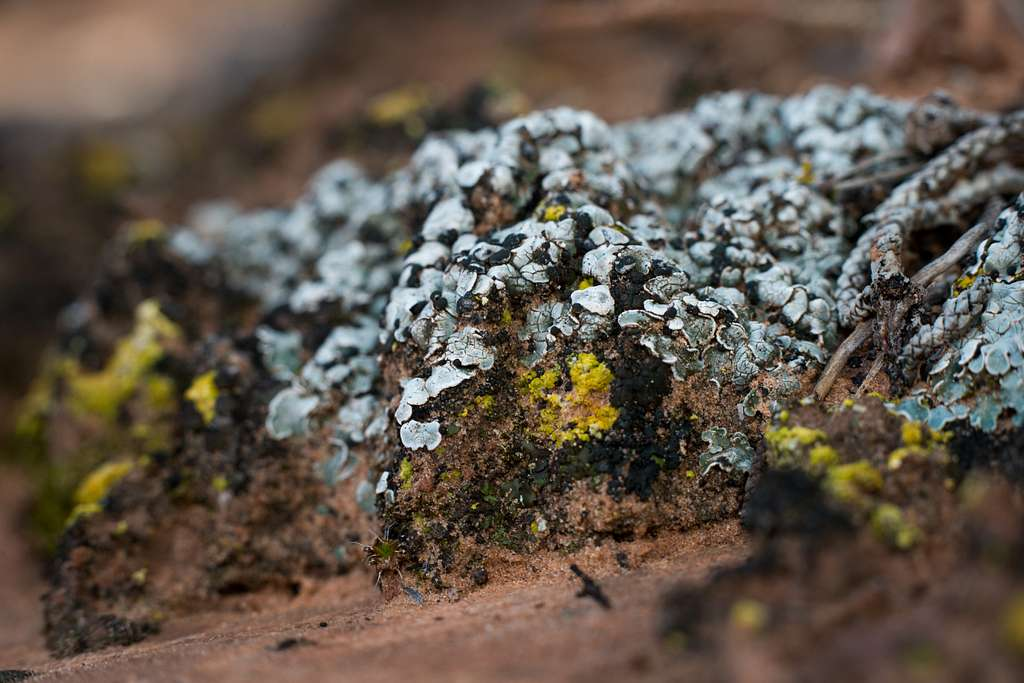
These harsh conditions mean that lichen do not have to compete for space or light with other forms of vegetation, enabling the lichen to grow in blankets across mountain plateaus. Due to their unique differences to other plant life, they are also able to grow on exposed rocks and as part of biological soil crusts. These soil crusts are found in cold and dry areas and make up the majority of all living ground cover in these almost uninhabitable places. The crusts are made of living material that sit on the top few millimetres of ground, meaning larger plants are unable to root and grow due to the ground conditions.
An example of biological soil crust.
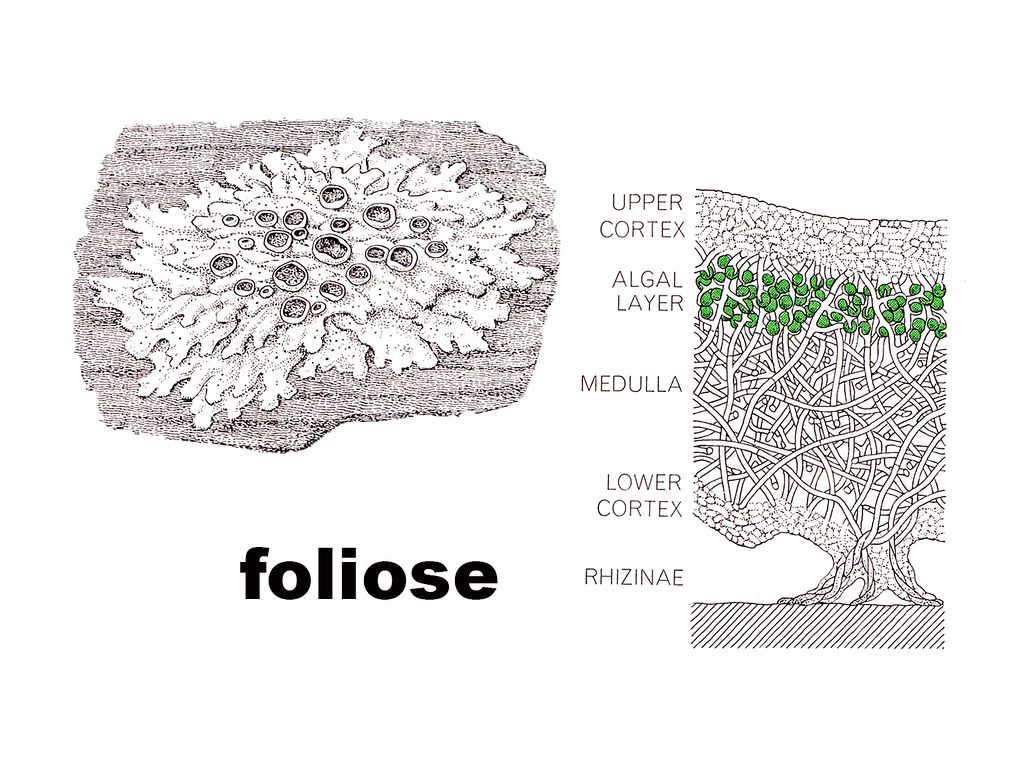
So that brings us back to our opening question, what is a symbiotic association of algae? What is lichen? From what we understand of lichen, it is a community of living organisms from both the fungi and the algae family. The fungi provide the water and minerals, as well as giving the lichen its structure, and the algae provides the food in the relationship, through photosynthesis. This happy partnership allows the lichen to grow and cope with harsh conditions that a normal single organism may not be able to thrive in.
The perfect partnership.
Now let’s add the reindeer into the mix! Reindeer rely heavily on lichen, consuming so much that it can make up to 70% of their annual food intake. This is because those harsh landscapes we spoke about earlier have very little choice available for the reindeer, but they can always rely on the lichen to grow all year round. Reindeer even have specialised gut floras to be able to properly digest the carbohydrates lichen contains.
Winter lichen for our free ranging reindeer.
Maybe it’s not that it tastes good then, maybe it’s because they have little other choice?…
But if you asked our reindeer, they would tell you it’s the best thing on the menu!
Delicious!Dixie enjoying a mouthful of lichen. Macchiato with a lovely big patch.Mocha with a bit of lichen hanging from her bottom lip!
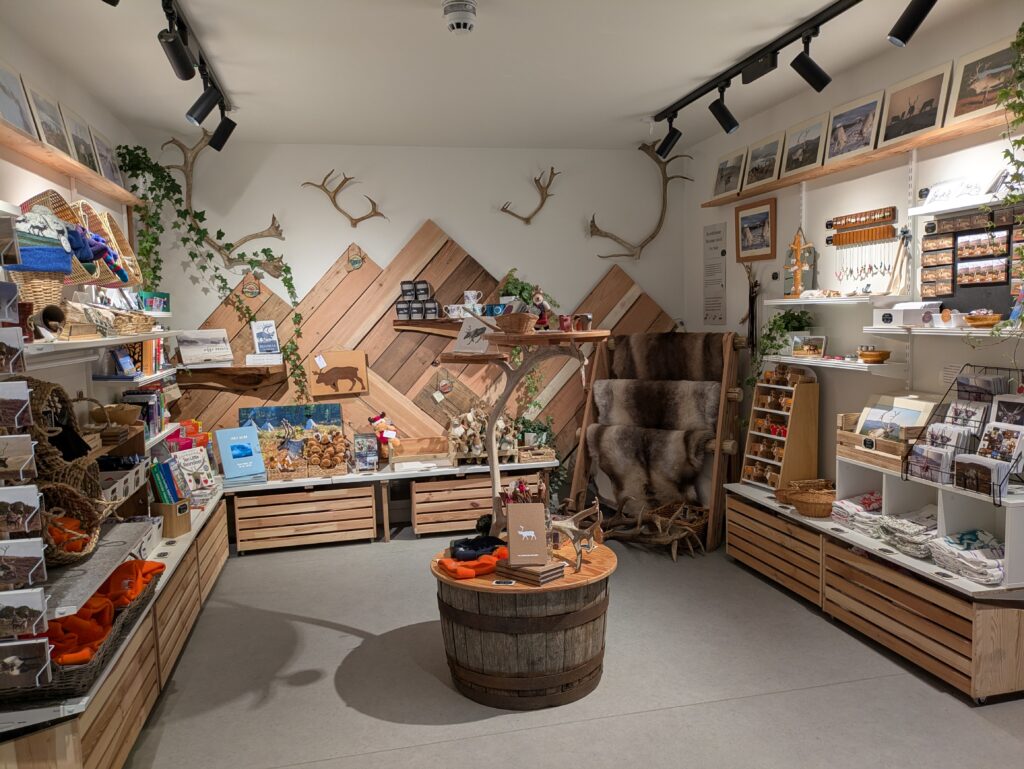
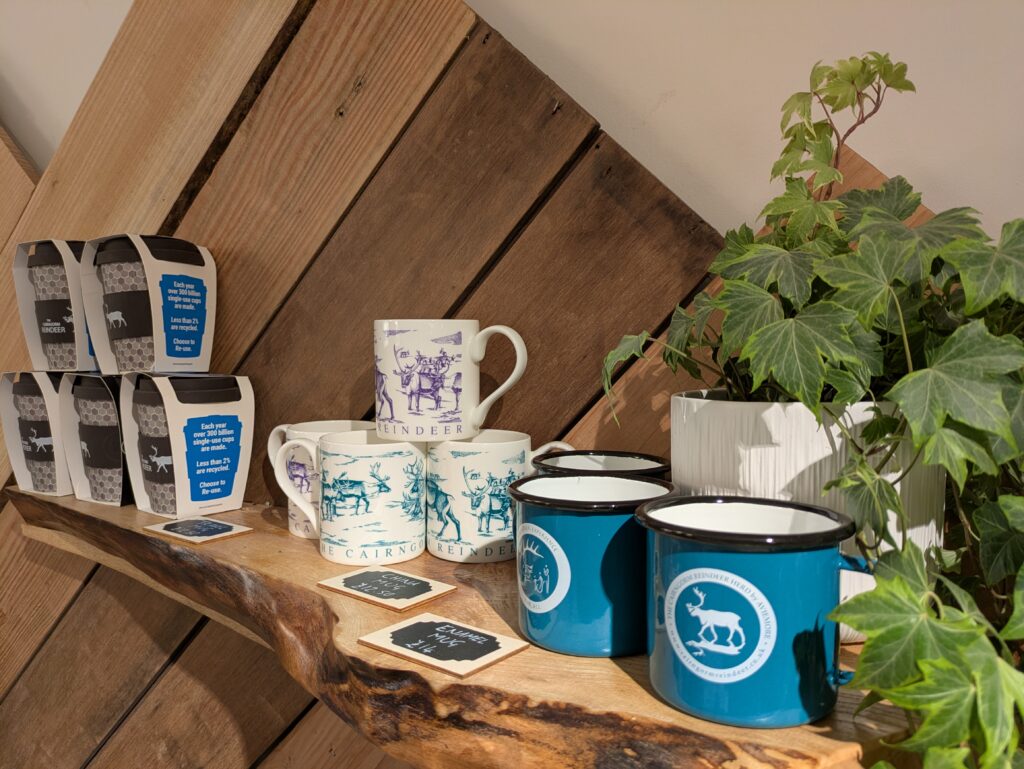
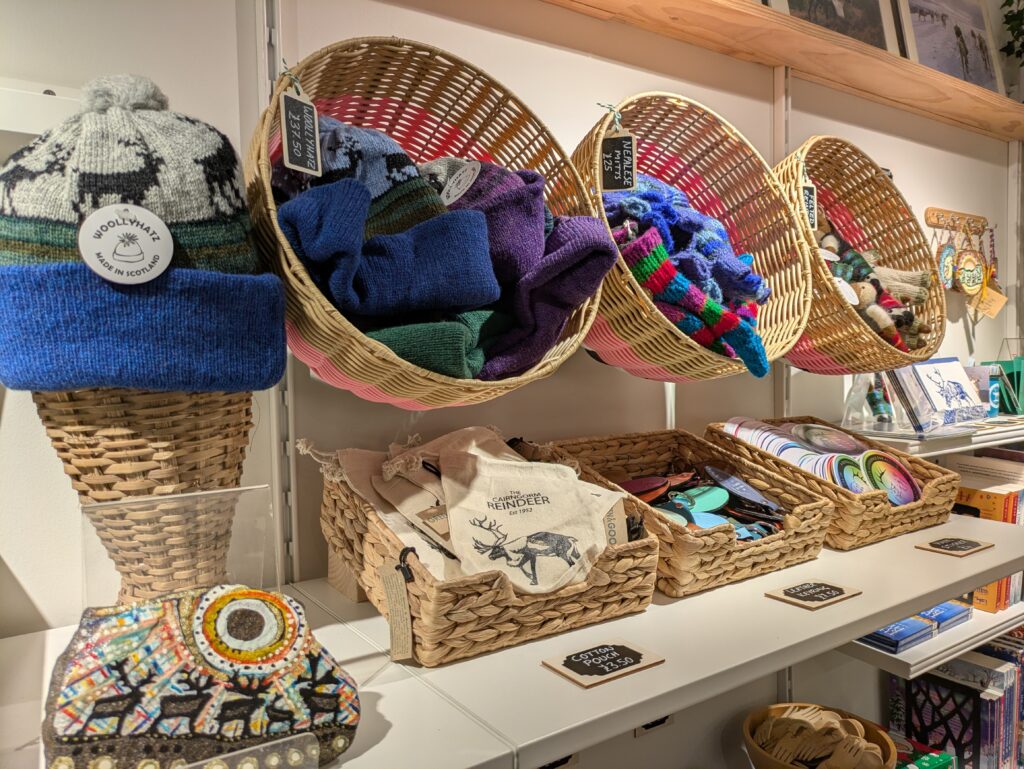
Our beautiful new shop – packed-full of lots of wonderful reindeer related goodies.
Since moving into our shiny new Centre, we’ve had a brand new shop space to play with. It may look a little different to our very rustic, wood clad shop of old, but we’ve kept a few nods to the old style.
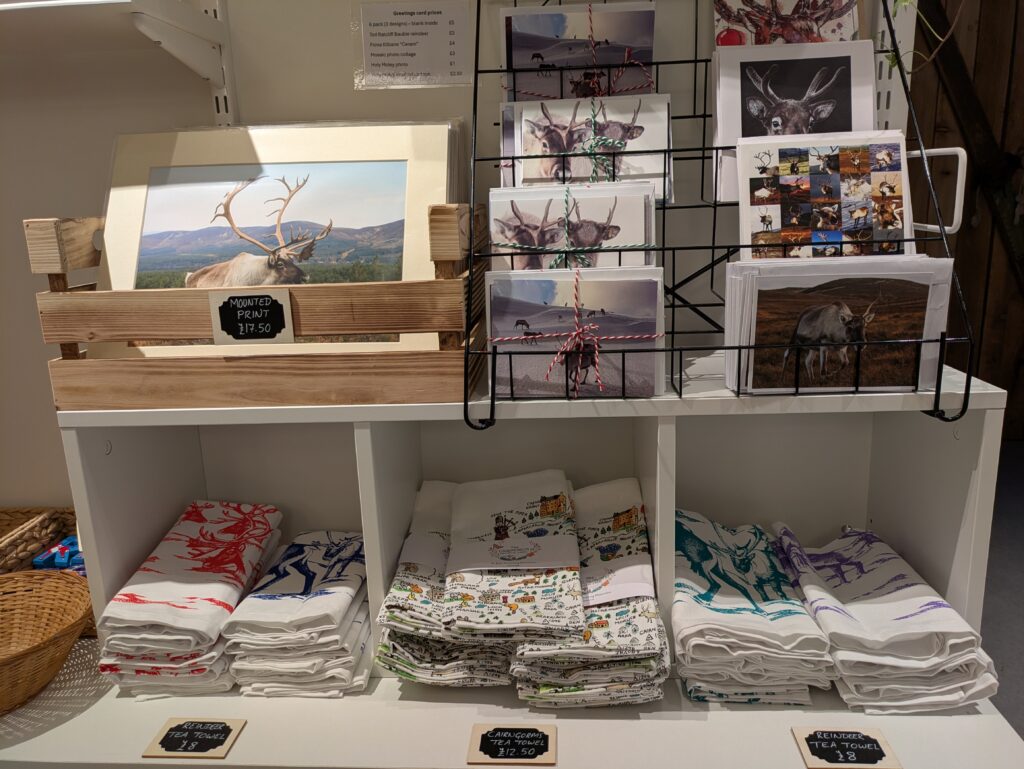
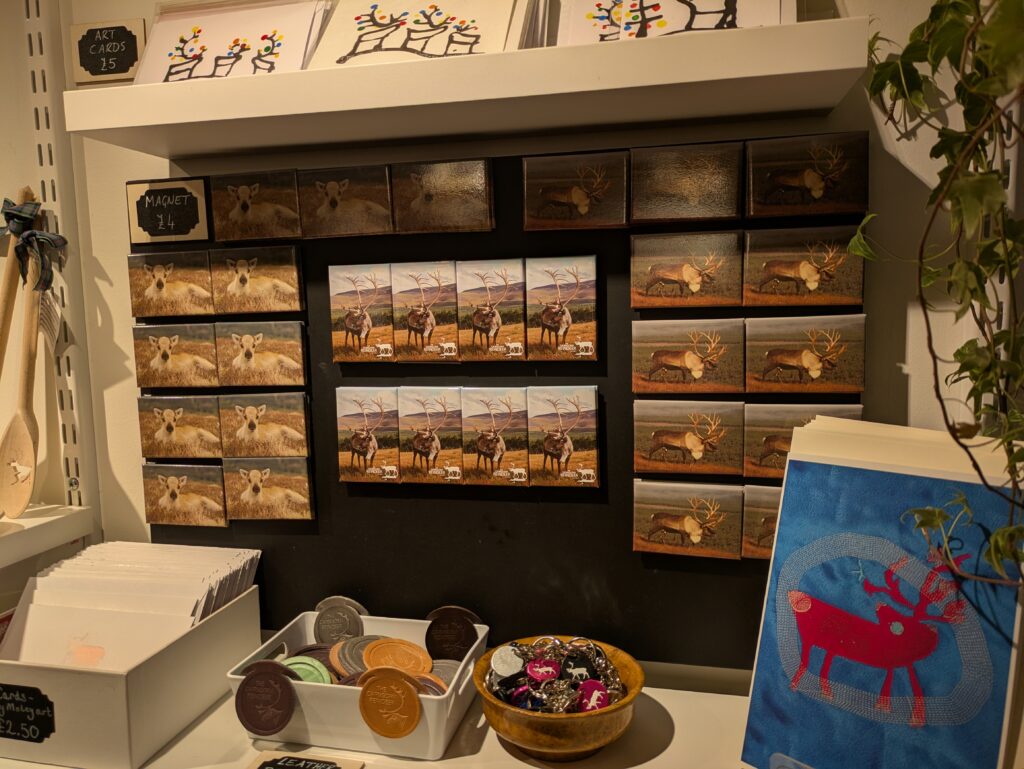
Our rule-of-thumb with a pretty small space is that any product we sell has to feature reindeer (with the odd bending of the rule…) and we try to find as many unique/local products as possible.
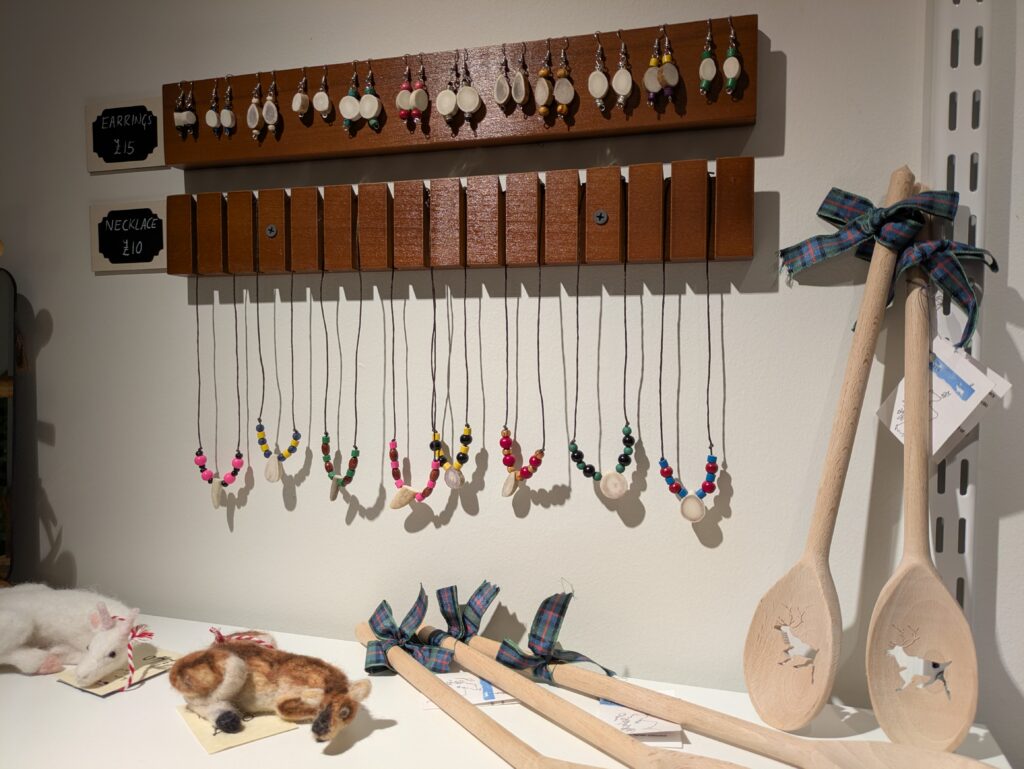
Herder Fiona crafts with naturally cast antler to make beautiful jewellery, and there is often bespoke artwork by herders Kate, Ruth and Sheena .
Some of Fiona’s jewellery, with sections of real antler, along with a few of Kate’s needle-felted reindeer.
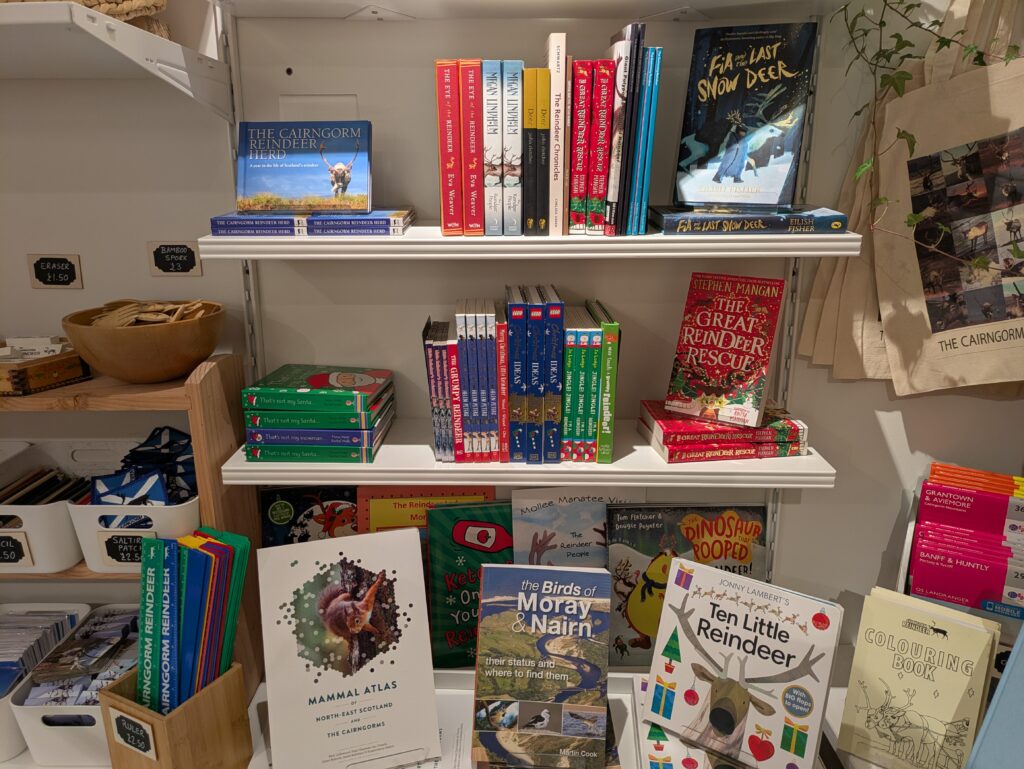
I’ve been particularly excited to find space to stock a much bigger range of books, the best antidote to too much screen time!
Our reindeer library – something for everyone – children and adults.
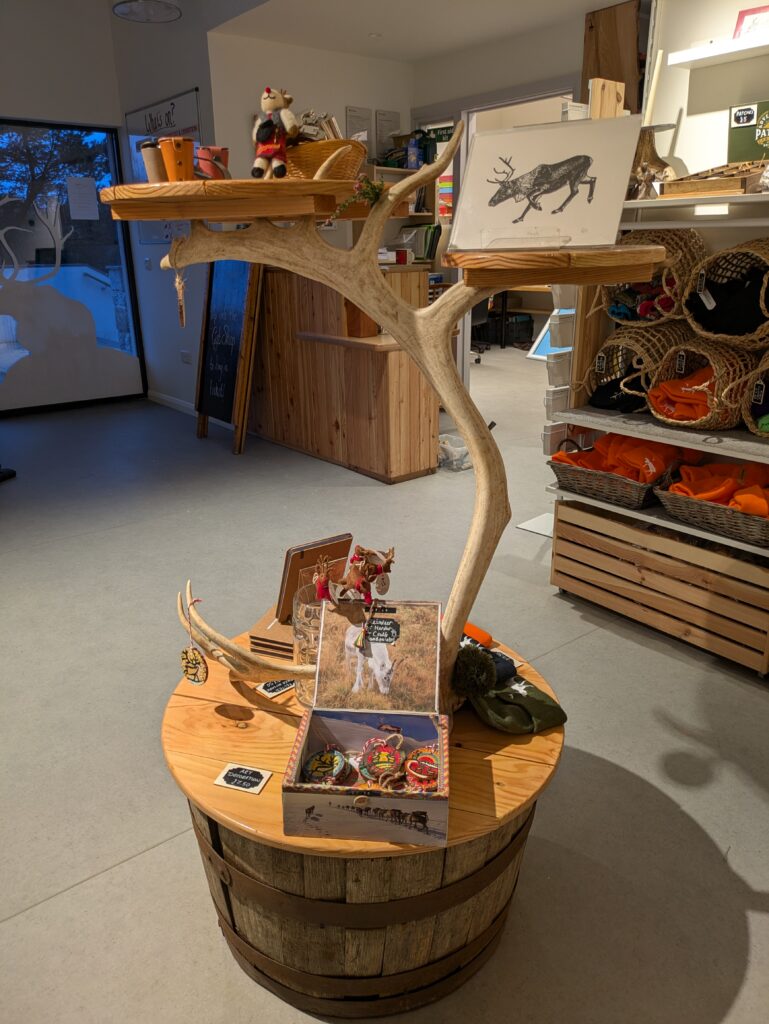
Look at this beautiful centrepiece, created from one of Sherlock’s antlers and an old whisky barrel!
One of Sherlock’s antlers is proudly displayed in the centre of the shop – adorned with lots of wonderful items.
If you aren’t planning a visit soon, you will find most of our products online on our shop at https://store.cairngormreindeer.co.uk/ We aren’t able to list more unique products like Ruth’s lino prints and Sheena’s art, so if there is something that you’d like that’s not on there then do drop us an email and we can show you what is currently available and send through a payment link.
If you live in the EU, unfortunately we can’t post to you due to legislation, but elsewhere in the world we can create a custom order if you email to let us know what you’d like and your address.