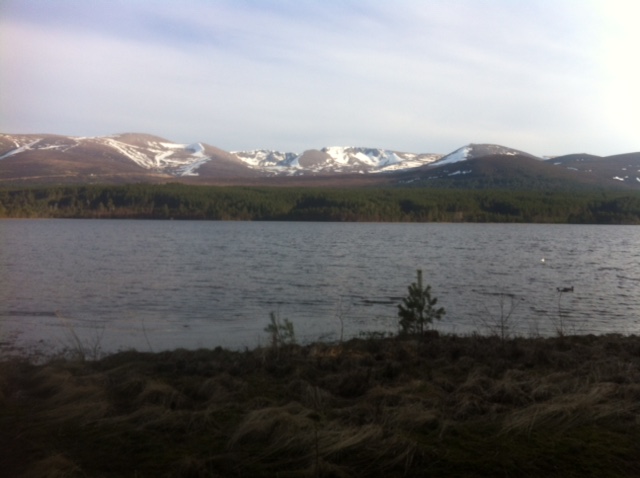
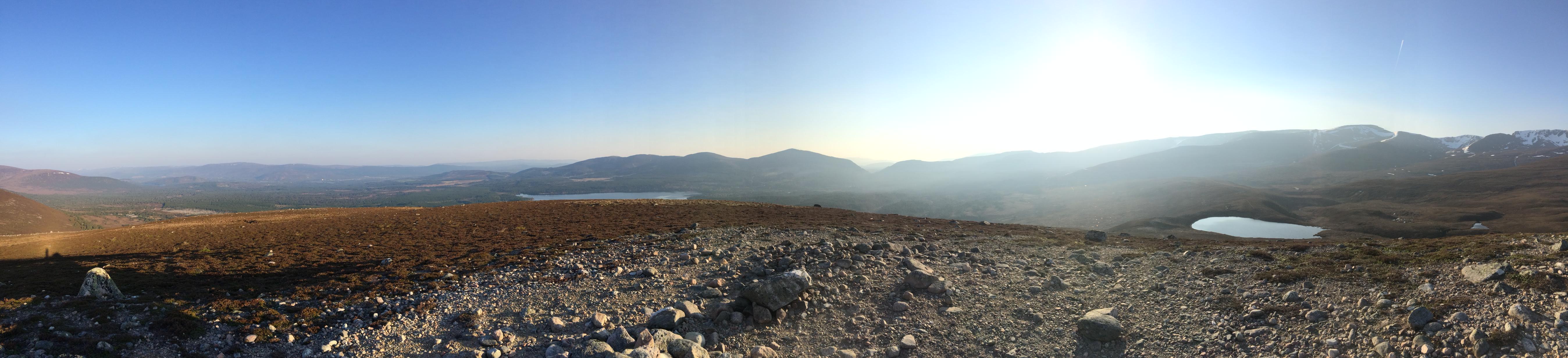
For me the summer solstice always fell on June 21st and I never knew otherwise however apparently this year it was on the 20th… Something to do with being a leap year?!? Anyway to mark the occasion it’s always quite nice to do something, whether we get a group of folk together and have a game of rounders or go for a nice ‘summery’ walk. This year we decided to take a wander up into the Northern Coire’s – Coire an Lochain in particular! Looking up from Glenmore and Loch Morlich this is the furthest right Coire with a large patch of snow on the right hand side of it. Mid-summer here always seems to be fairly awful weather, I even recall wearing my waterproof ski trousers for this about 4-5 years ago and in true Scottish Highlands style this year was no different. However, it wasn’t raining so we were already up on other years!
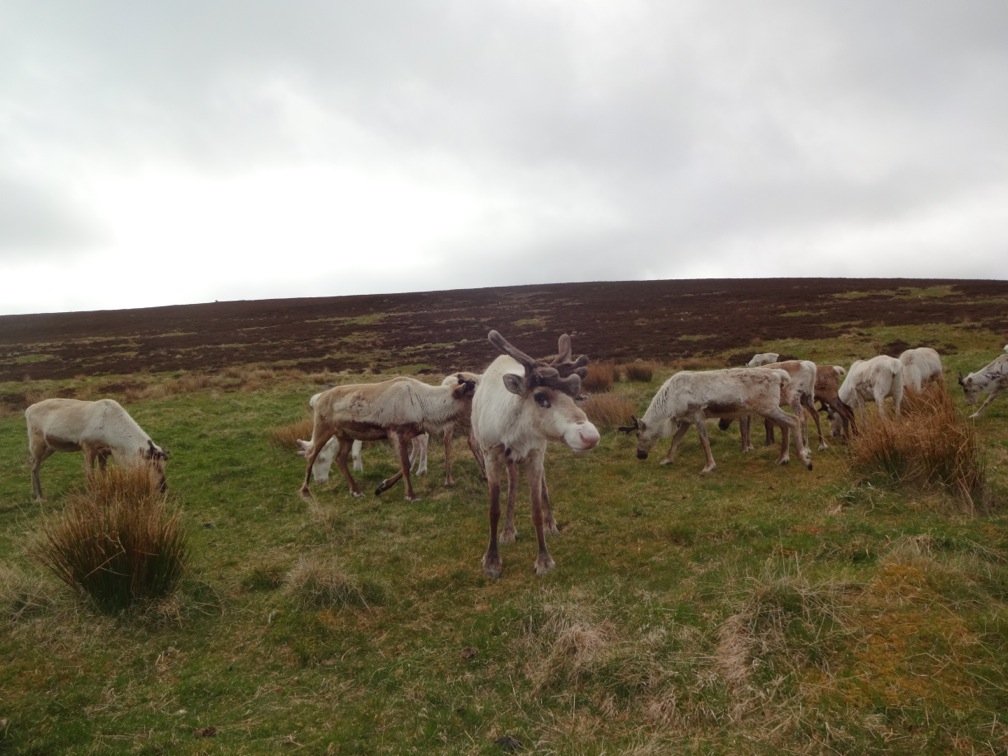
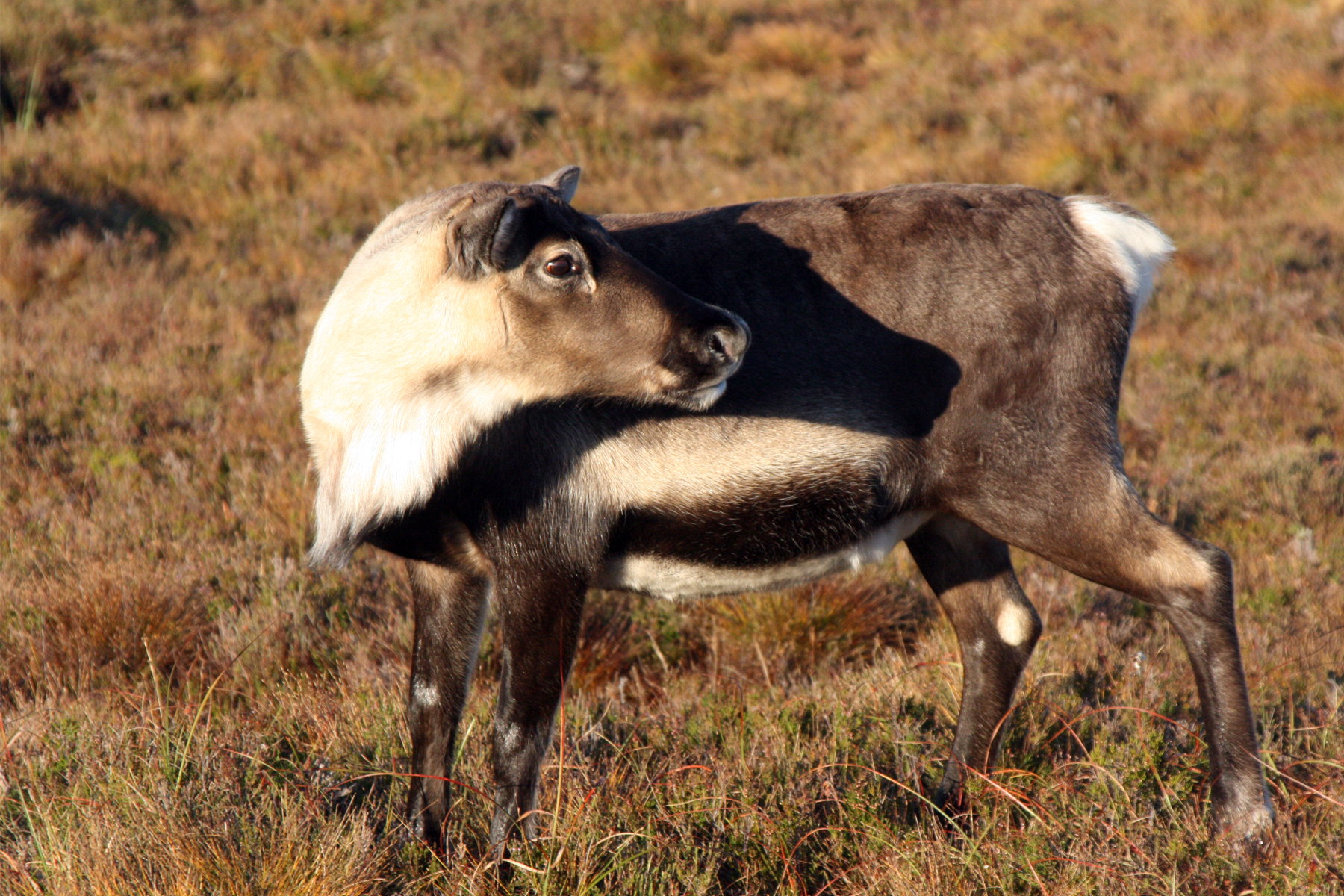
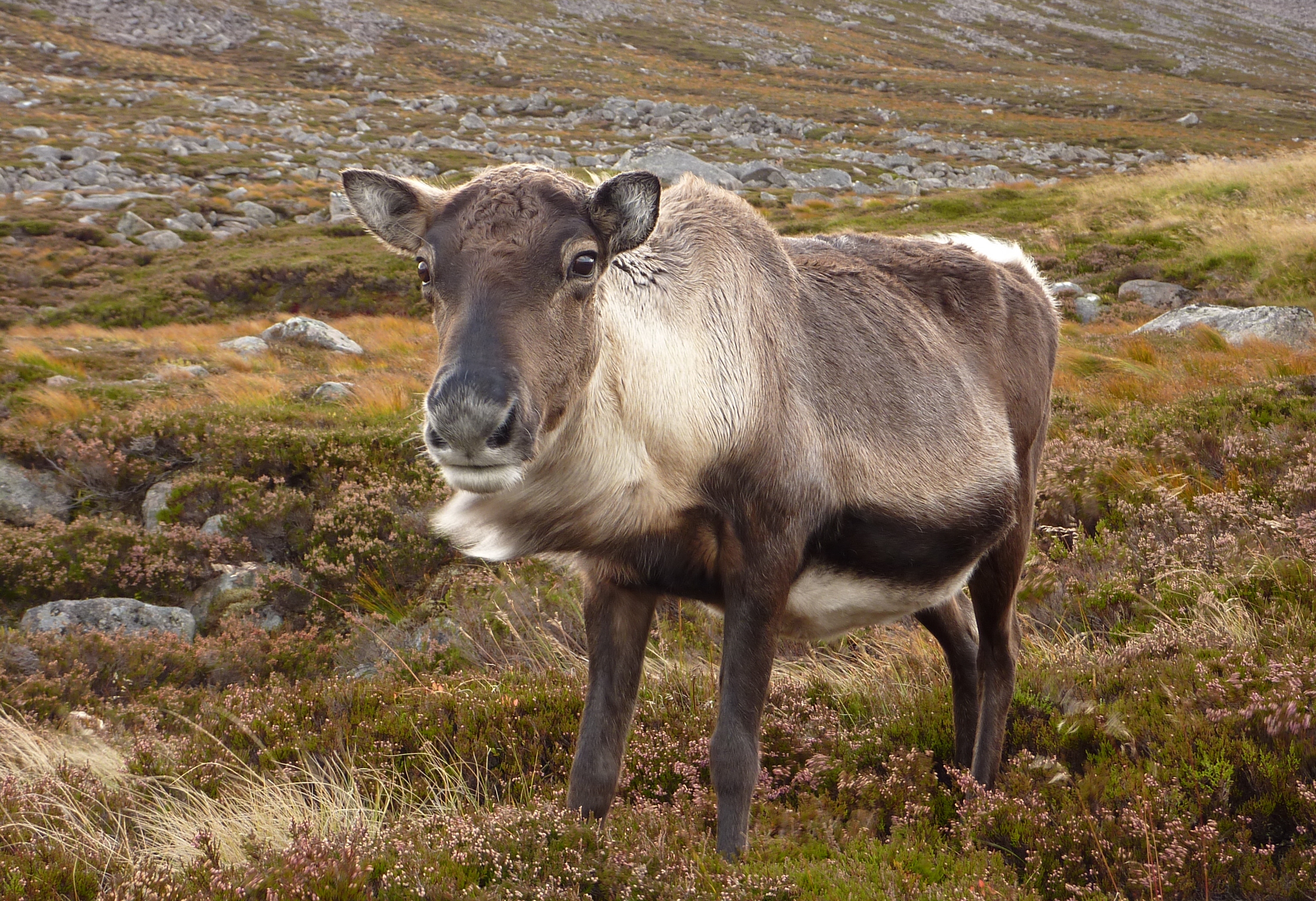
So we set off up the path into the Coire and it took us about an hour of which we chit chatted the whole way, of course putting the world to rights! Right in the back of Coire An Lochain there is, as stated in its name, a wee loch. We arrived with bags filled with tea and cake (very important for us reindeer herders), my bagpipes and four fairly hyper dogs (3 of them being under the age of two). As we arrived into the Coire something caught my eye… 4 reindeer behind the loch. Straight away dogs were called in and put on a leads, just in case, and I scooted over towards them to see if I could see who it was. Malawi, one of our older females in the herd at the age of 11 now was leading them away from us and she was followed by Okapi and two younger females (who I didn’t get close enough to, to ID). A three year old and a two year old, I got that much! They obviously weren’t too keen on coming up to us as we had the dogs but they did stop in their tracks when I started calling them, it was just unfortunate I didn’t any food as a bit of bribery to come a bit closer, then I would have definitely worked out the other two. Malawi is easy to identify because she has never grown any antlers which is pretty unusual.
Like I said the reindeer didn’t hang around as they don’t like dogs so we got onto what was also very important after our walk in – tea, cake and a quick blast on the bagpipes. I’m not really in practice at the moment so any wee slip up with notes I blamed on the cold weather and my fingers weren’t working properly but they sounded pretty awesome in the Coire getting good acoustics bouncing off the head wall. At this time of year it is light until about midnight and light again in the morning round 3.30am. Such a lovely time of year which is why we try to make the most of it by being outside. It’s a bit different in the winter months when it isn’t light until 9am and dark by 3.30pm but it’s also nice to have that comparison throughout the year too. Of course in the far north and Scandinavia they have the midnight sun… I shall have to go and see that one year for sure!
Sonya, author of this blog, came up to us in June to volunteer with our beautiful reindeer. She has very kindly written us a blog about her experience, and we will be sharing it over the next few weeks. Thanks so much to Sonya for coming along and being so helpful, and we really hope to see you again in the not too distant future!
Day One
In June 2016 I arrived for my volunteer placement at the Cairngorm Reindeer Centre in Glenmore with no previous experience of working with animals but lots of enthusiasm and affection for the reindeer I had visited as a tourist many times before. I had recently taken the opportunity to take voluntary redundancy from my 20 year career and had a whole summer to fill before starting university in September. I had no idea what to expect but was seeking solace and comfort in the remoteness of the fabulous Cairngorms and the company of the placid reindeer. I was blessed with a rare dry day on the first Monday and arrived promptly at 8am alongside fellow herders Imogen who has a zoology degree and big-bearded Dave who I later found out to be exceedingly well travelled and originally from New Zealand. By the way, it’s the beard that’s big, not Dave himself.
So after meeting a confusing muddle of strangely named dogs, I was introduced to Fiona who runs the Centre, and tasks were allocated for the morning. Can you guess what my first job was? That’s right…. reindeer poop scooping. Keen to carry out all necessary tasks enthusiastically, I wielded the bespoke pooper scooper and collected a remarkable bucketful of the stuff from the paddocks. A few of the herd are kept in the paddocks for two weeks at a time so they are more accessible to very young, old or less-able visitors who can’t manage the hill trip to see the whole herd. After scooping all the poop I could find, transferring the contents of the bucket to a sack was a trickier and less appealing task but the trusty Dave was on hand to show how it’s done without spilling too much. I confess from that moment on I found myself a pair of gloves for this task and many others, much to Dave’s derision, I suspect. But hey, you can take the girl out of Essex………
I had a full and detailed explanation from Dave on how to open up the exhibition ready for visitors and spent some time replenishing the children’s craft materials, I wish I was 5 years old again so that I could make paper chains or make an antler headband, and draw colourful pictures of my reindeer friends. However, with pencils sharpened, loan wellies sorted into sizes and the shop vacuumed, it was time to set off on the first hill trip. The tourists were very impressed with Dave’s authentic appearance of bushy beard and battered green hat and took several photos of him and the van before we even set off. I’m convinced I need to change my image, which currently consists of generic walking attire, so as to appeal to the tourists but I am stuck for inspiration, more of this later.
On the first hill trip the cheeky Svalbard is overly friendly and pushes and prods me repeatedly with his antlers and nose. The tourists mistake his behaviour for affection and there are many oohs and aahs and clicks of cameras, however it’s far more likely that he recognised the smell of food on the jacket I was borrowing from the Reindeer Centre.
Svalbard
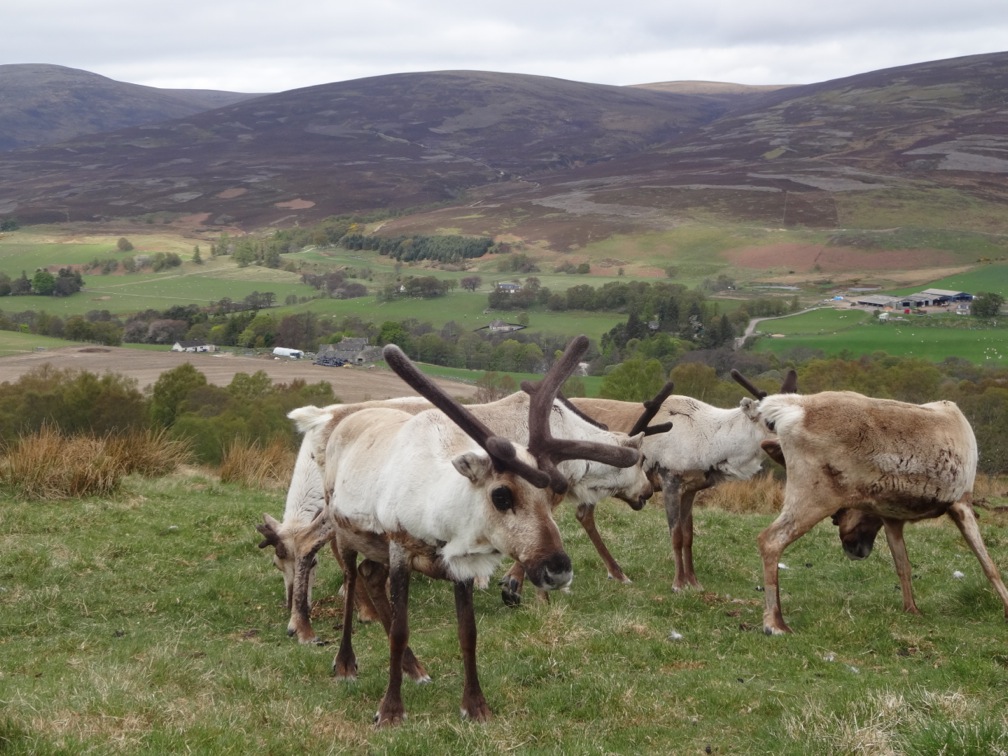
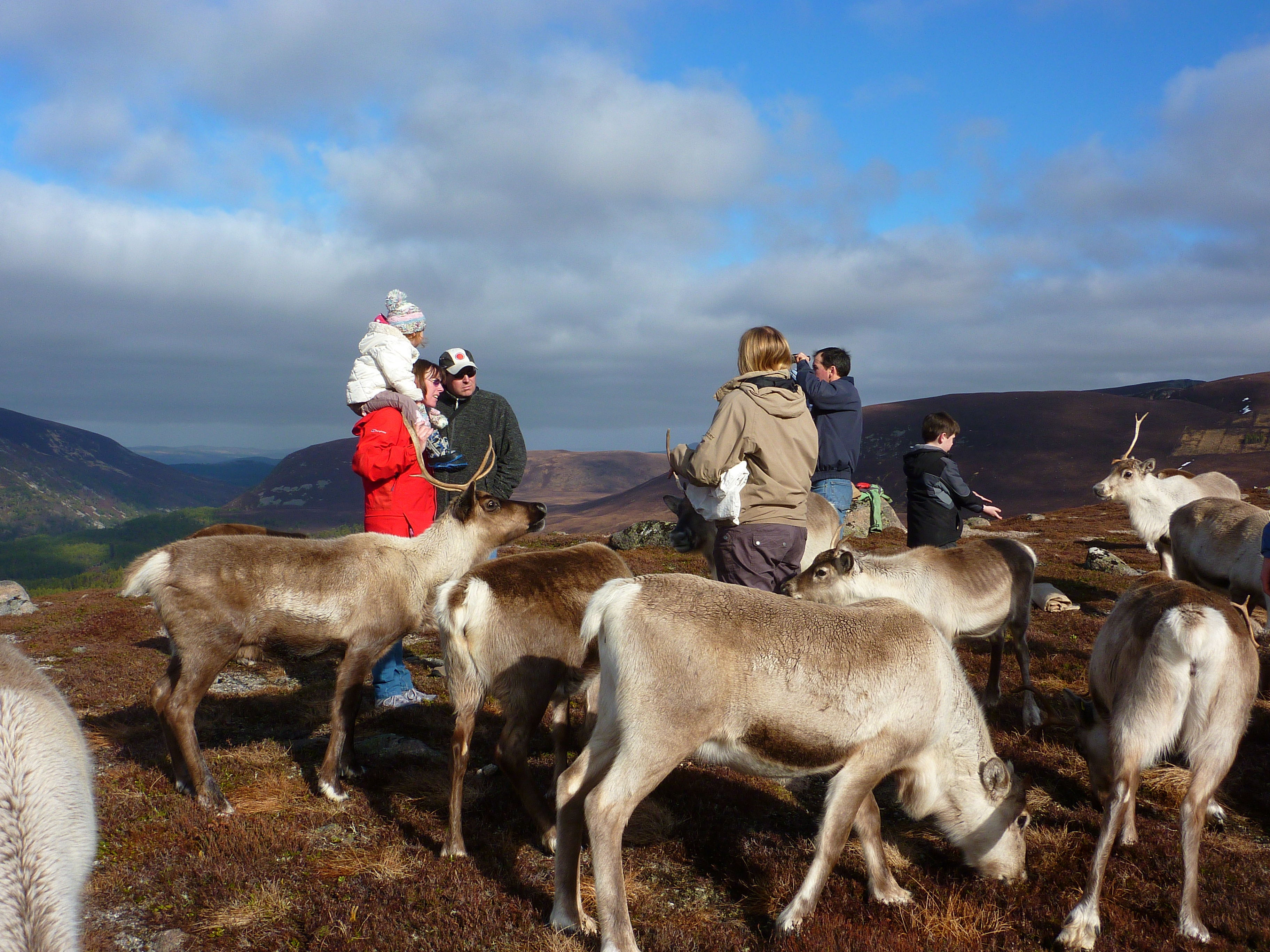
I also learnt that my adoptee ‘Gandi’ is there somewhere, in amongst the swirling sea of moulting coats and velvet antlers that greeted us. Correction, they are greeting the sack of food, not us, and I have learnt they couldn’t care less about us or how the food gets there. Despite this pragmatic realisation, I am still deluding myself that Gandi recognised me, if he could talk he’d even remember my name, of course!
Visitors admire Gandi
I am delighted and relieved to see him in such good health with a remarkably majestic pair of antlers. I feel inordinately proud that I chose such a worthy recipient of my sponsorship, for he is also a recent TV star in the BBC Scotland programme about the Highlands due to be shown across other BBC regions in Autumn 2016.
After lunch Dave teaches me how to mix the reindeer food, I was keen to get started as I love a piece of machinery and rather ingeniously, I thought, a cement mixer is used to mix the food. And when you realise the quantity of food they get through, you realise why it’s necessary to mechanise the process. There is little demand for a commercially available reindeer food, as this is the only large free-ranging herd in the UK, so I was shown the recipe and the shed full of ingredients. We started with sheep food containing corn and grains, then added extra barley, some starchy sugar beet, some fibrous malt pellets which are a waste product from the numerous nearby distilleries, added a sprinkle of a secret mineral supplement and four big handfuls of hay enriched with garlic and molasses. Well this was all fascinating for me and I was enjoying making this tasty treat until we ran out of grain. Dave despatched me to the shed to fetch more barley, all good so far. I located the barley and saw with some dismay how huge the new sack was. I should mention at this point that I only manage to measure five feet with my shoes on, and the heaviest thing I’d lifted in my previous job was a bottle of Chanel No 5! Battle with the barley sack commenced but I should have been grateful for small mercies as some of the other ingredients are much heavier.
Preparing the feed
By the time we had mixed about half a cubic metre of food, it was a relief to leave behind the previously fascinating cement mixer, and head up to the hill again on the 2:30pm trip. Dave encouraged me to carry the sack of food but I chickened out and took the lighter and smaller sack of hand feed. Poor Dave gets the bigger, heavier sack yet again, but gallantry isn’t completely dead in my world!
Near the end of the trip Dave gets a phone call, we’re a 20 min walk from the nearest road and goodness knows how far from the nearest dwelling but amazingly there’s a mobile signal in the reindeer enclosure. I can’t always get one of those in flat, overpopulated Essex. Anyway the phone call is to invite me to the reindeer shed to see some vaccinations taking place where I met the famous Tilly, Fiona’s mum and owner of the herd. The injection is to help prevent the potentially fatal red water fever that can kill a reindeer if not caught early enough. Imogen had previously told me that Tilly always comes to administer these injections as there is a tiny chance the reindeer will go into anaphylactic shock and she has the most experience to deal with that possibility. Despite their huge antlers and sharp hooves, I had never felt even remotely intimidated by reindeer before. But closed in a tiny shed with six of them circling round and round in an effort to escape the needle, it felt a bit like being caught up in a whirling dervish of hoof and hair and taught me a greater respect for the fact they are still wild animals even though they generously humour us with their presence and grace.
Day Two
Tuesday starts with much excitement and anticipation when Fiona tells me I can join her and Hen on a harness training session. Hen is the longest serving herder based at Reindeer House other than Fiona and I found out she can recognise and name every single reindeer, as can most of the herders. However, if a pair of antlers are cast in the autumn, Hen knows which reindeer they belonged to as she recognises the distinct and unique form of each and every reindeer’s antlers even when they’re no longer on the animal. The Cairngorm reindeer participate in many Christmas events across the country and it’s important they keep practising with the halter and harness throughout the year so that Christmas is a relaxed affair with no anxiety. Another treat for me is that my adoptee Gandi is one of the reindeer coming along on the practice session because he and Elvis are experienced trekkers and will set a good example to Camus, Balmoral and Shinty. I hadn’t met the last three reindeer before and I’m pleased to say they all did very well with their training. Shinty was the most reluctant to get going and he gave Hen a thorough workout by making her tug him up the hill, but with Gandi encouraging him from behind, we were soon underway on our circuit.
So this is Hen on the left and me on the right with reindeer (from left to right) Elvis, Shinty, Gandi, Camus and Balmoral. It was to be the last glimpse of the sun for several days so I’m glad I took up Fiona’s offer to take a photo of me with the reindeer and I sent it to my ex-colleagues to illustrate the dramatic difference to my working day.
The rest of the day was spent on hill trips with tourists, becoming more familiar with the information we impart to the eager visitors. Many people meet a favourite reindeer on their visit, as I did with Gandi, and decide to adopt them. In between the trips we all work on the biannual newsletter as it’s time to send it out to all the reindeer adopters. This edition of the newsletter features many tales of the reindeer and activities and events at the centre. There are some hilarious stories about Fergus, a hand-reared calf who has turned out to be a very cheeky boy indeed, and sadly, there’s a moving obituary to Grunter, a much loved reindeer who was also hand-reared when he was a calf.
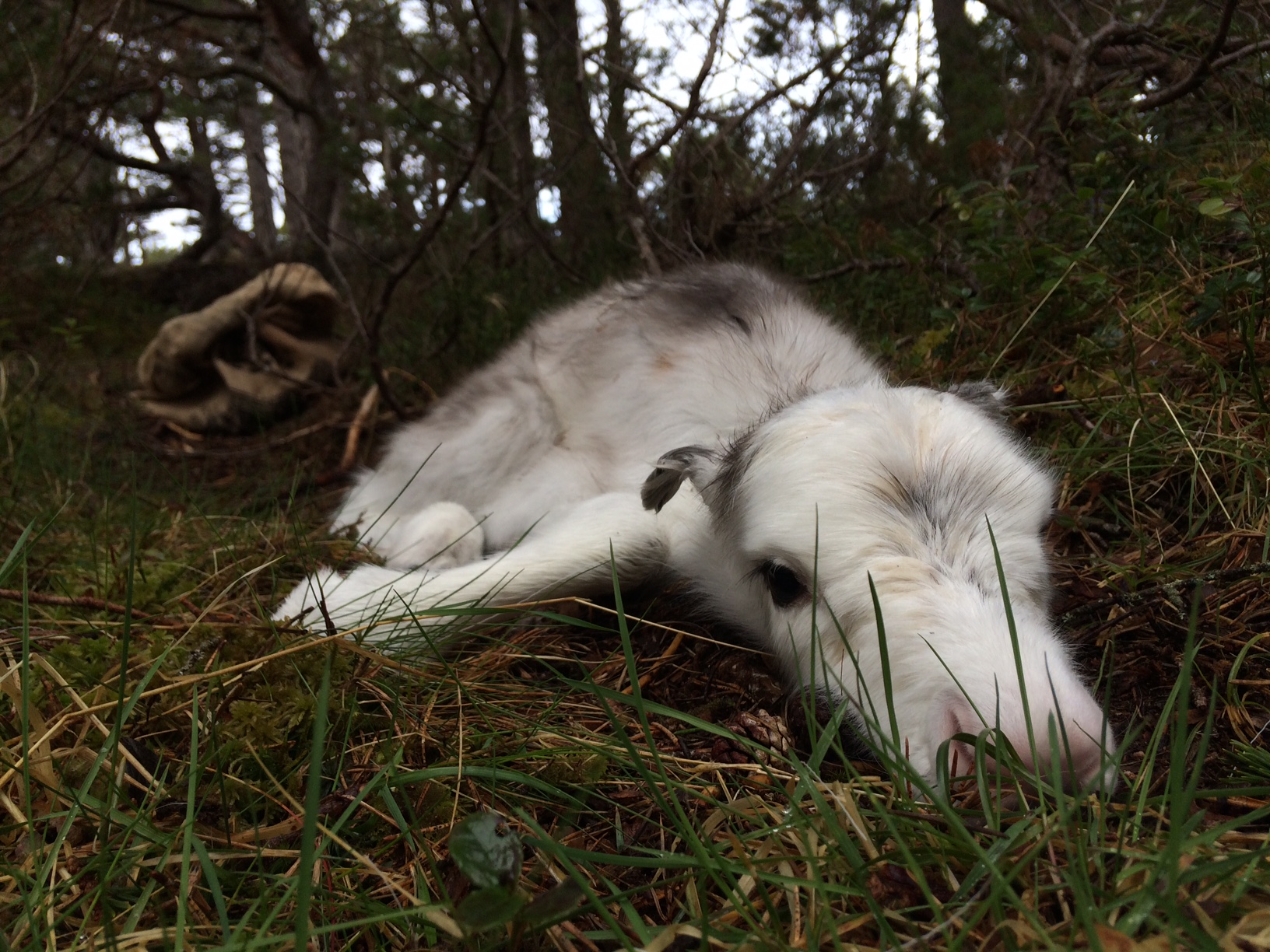
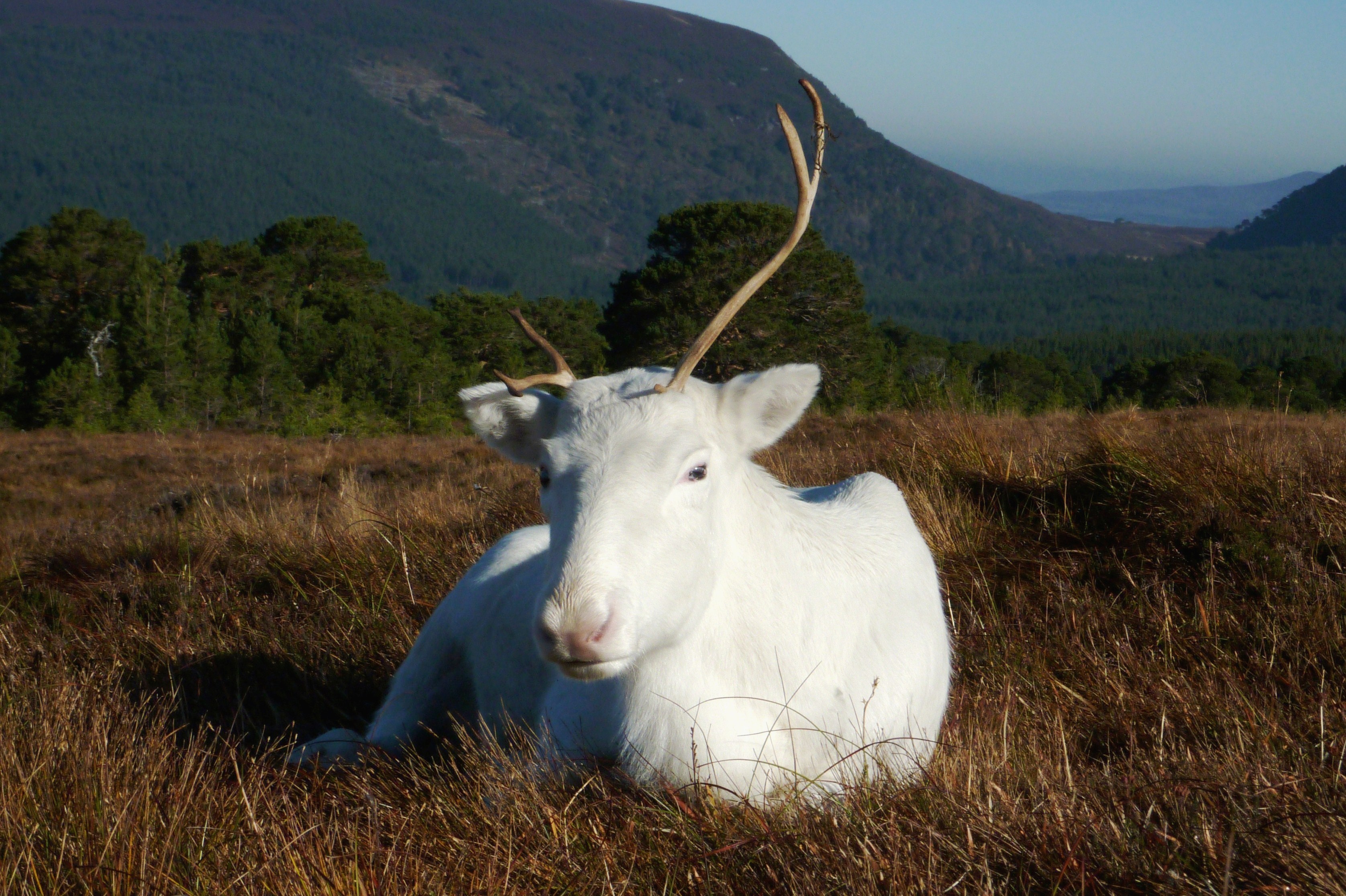
I’ve learnt the name of another member of the herd today, the endearing Blue, who was named in the year of cheeses 2013. He was born with a condition which means he is very pale, almost completely white and he’s also deaf. Many visitors think he is albino but Imogen explained to me that albinism means a complete lack of pigment, whereas Blue just has a reduced level of pigment which means he is Leucistic. His skin is very pink and prone to sunburn and any broken skin could lead to infection so he has bright yellow ‘summer cream’ on his face which is a mix of sunscreen and insecticide to keep the midges away. Blue has been a bit slow to come for food today and hasn’t hand fed from the tourists as much as normal so on one of my hill trips with Imogen, it’s necessary to take his temperature once the visitors are gone. I’ve seen this before and it involves luring them close with an irresistible bucket of lichen to get a halter on them, one person holds the head while the other person takes the temperature from the ‘other end’. Whilst Imogen does the ‘business’ she regales me with detailed advice about insertion of the thermometer, which angle is best, how long to leave it in, etc. I decide it’s time to manage her expectations and make it clear, I’m happy to learn the theory, but as far as practise goes, I think I’ll remain at the head end, thank you very much!
Blue having a wee lie down
Today I also discussed with Imogen how I could possibly look less like a tourist when we take the visitors out. Her insightful but wildly impractical suggestion is that I should dress for conditions at least ten degrees warmer, so go up the hill in just a t-shirt when everyone else is in hats and jackets, and claim it’s a warm day. I fear this soft southerner might catch her death if she attempted that, so I bear it in mind but keep my multiple layers firmly in place.
Sonya
Stay tuned for part 2 of Sonya’s blog, which will be out in a couple of weeks!
Spring and early summer is a wonderful time here at Glenlivet because the farm comes alive with very noisy breeding birds, in particular waders like Curlew, Oyster catchers and Lapwings.
All three species are ground nesting so vulnerable to disturbance, intensive farming and predation. Because of the remote nature of Glenlivet area, the traditional way farming is practiced and the fact that it is an active sporting estate all helps the plight of these birds and encourages good breeding populations of all three.
All migrants, they come to inland areas like Glenlivet to breed and the first to arrive are the lapwings which is a sure sign for us residents that spring is on the horizon. With their characteristic ‘peezie’ call, swooping flight and distinct head crest they are easily identified. The oystercatchers are close behind and their distinctive call, ‘cleep, cleep’ resonates around our farm from late February onwards.
Lapwing, showing off its beautiful crest
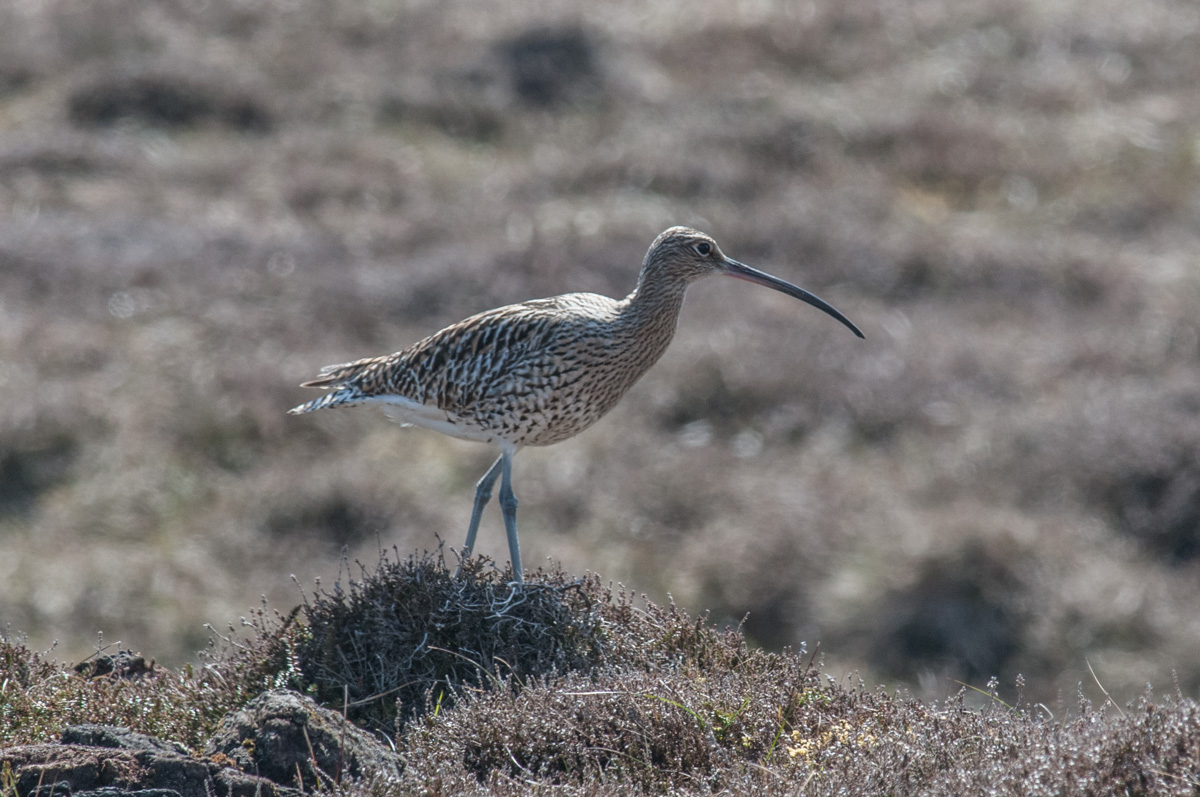
My favourite however is the Curlew, a beautiful mottled brown colour with long curving beak they are the biggest of the three species and have the most wonderful call that sounds like their name. Like our reindeer they frequent the higher ground, heather moorland where they circle endlessly seeking out a good place to nest and chasing away predators once they have laid eggs.
Curlew (photo courtesy of Austin Taylor, at austintaylorphotography.com)
It’s late June now, the eggs have hatched and some of the chicks are as good as fledged. Indeed today when I went up onto the hill to gather the reindeer a half-grown curlew rose from the ground to the frantic call of its parents, I suspect flying for the first time.
Now the longest day is past these chicks, like reindeer calves, need to grow quickly and be ready for the winter ahead. The Oystercatchers, Lapwings and Curlew will all leave us for the winter, many of them going out to coastal habitats and river estuaries until next spring when they will return to breed again.
Like these birds our life with the reindeer is ruled by the changing seasons, calving in spring, growing during the summer, rutting in the autumn and surviving in the winter. It is just amazing how quickly the days flash by, it just seems like yesterday that it was the New Year and now we are past the longest day. If I was a pessimist I would say its downhill from now on, but I’m not and I enjoy the changing seasons and look forward to what the next one brings.
Whilst some of you may have heard of the pastime of geocaching, others may not, so I’ll start my story with a wee definition to give you all some background. Geocaching.com, the hub for geocachers the world over, describes it as: “Geocaching is a real-world, outdoor treasure hunting game using GPS-enabled devices. Participants navigate to a specific set of GPS coordinates and then attempt to find the geocache (container) hidden at that location.” I have to say that I prefer the more frank description of “Using multi million pound technology to find tupperware in the woods”!
Herder Eve delighted by finding her first geocache.
I first started geocaching in the Lake district about 5 years ago, and became addicted enough to have now found nearly 1000 caches, right across the country. It is a great way to explore a new place – many people will set trails of geocaches that lead you round a route – and a great excuse to get people old and young out into the great outdoors. Whilst a lot of the caches that you come across are fairly mundane, there can be real surprises in them, and sometimes incredible containers – for example when the cache is hidden inside an old snail shell! Sneaky!
The cache at the Reindeer Centre
A few years ago, myself and fellow herder-and-geocaching-partner-in-crime Hen set out a trail of our own cleverly disguised caches starting at the Reindeer Centre in Glenmore. As the “owner”, it is our responsibility to maintain the caches in good condition. Checking the cache right outside the Centre recently, I was pleased to find what is known as a “trackable”. This is a small object with a unique code on it, so it can be looked up online. Trackables are often set a mission, for example to travel from one end of the country to the other, or to only visit caches near rivers. One cacher will leave it in a cache, and the next person to find the cache can choose to move it along to another cache.
Cheese shows off how beautiful the Cairngorm reindeer are!
I was amazed to find that this particular trackable geocoin had been “released” in Germany almost 10 years ago, and was named “The Cairngorm Reindeer Centre Geocoin”. Its mission was to travel all the way to Scotland and meet the reindeer here. Unbeknown to me, it was enroute before I’d even heard of geocaching, and before there was a cache placed here at the Centre. 10 years is also an amazingly long time for a trackable coin to travel without getting lost or stolen.
Gloriana with the coin – “Is it edible?”
Gloriana and Cheese were more than happy to pose with the coin, which will soon be “released” to make its way back towards its owners in Germany. Let’s hope its run of luck remains for long enough for it to return safely home. It just shows that you never do know what surprises you may encounter.
Now that I’ve revealed my complete nerdiness, if you’re inspired to try something new, have a look at www.geocaching.com and see what geocaches are near you – you’ll very likely find that there is one hidden on the corner of your street or in a local park, and anyone can get involved using a smartphone or GPS. Who can say no to a free treasure hunt??!
No job with animals is entirely “9 til 5”. As reindeer herders, we normally work from 8am to 5pm. In calving season, however, this becomes rather more flexible. When cows are ready to give birth, they tend to head away from the herd to find a nice secluded spot, which in our 1,200 acre enclosure means they can vanish! Every time we feed the herd, we do a head count to check if anyone is missing, work out who they are, then someone will be dispatched to walk round the enclosure looking for them. This means we can hopefully find them not too long after they’ve given birth, check the calf over, spray its navel and put a drizzle of insecticide on their back to protect against ticks. If a reindeer heads off at the morning, this is easy – a herder will walk out. But if a cow is heading away in the afternoon, we take turns to do an “early” – basically starting at the crack of dawn to give ourselves the best chance of an unhurried search of the enclosure.
There can be some cracking views early in the morning
Now, like several of the other herders, I’m really not a morning person, but I never resent taking my turn at an early. There’s something incredibly special about being alone up the hill as the sun rises and the world wakes up for another day. The potential of being the first person to find a newborn calf is also good motivation! I thought I’d fill you in on a typical early start in the calving season…
5am: Painful as it is, the alarm clock buzzes me out of slumber, and I get up and ready quickly, putting toast on and making up a flask of coffee to take with me. I’m entirely dependent on caffeine, especially when I’m awake unsociably early.
5.15am: Out of the door and on the short commute to Reindeer House. This early in the morning it seems that the rest of mankind is still asleep – all I see are numerous wood pigeons (who seem to love sitting on roads in the early morning) and a roe deer buck.
5.30am: Arrive at Reindeer House and swap into the work van. The night before it was prepared with reindeer feed, binoculars and the all important “baby bag” – stocked with lichen, reindeer food, headcollar, antiseptic spray and emergency chocolate. I then drive round the mountain road – it gives a good view across to the enclosure and a bit of an advance idea of where missing reindeer may be hidden – anything to make it a bit less “needle in a haystack”.
5.45am: Shoulder a sack of feed and the baby bag, and walk up to the enclosure. The sun is just coming up, the woods are alive with birdsong, and the day is already warming up. Whilst some of our reindeer cows calve out on the free-range, we use the enclosure for most of them as it provides a safer environment (away from dogs) and means we can keep a bit of an eye on them. They are great mums and rarely have any problems, but just on occasion we can give them a helping hand.
Some of the cows and calves as the sun comes up
6am: Most of the herd are already waiting at the gate, back from their night of wandering, aware that we are on “calving time” and there is a chance an early breakfast may be on offer. I let them in to a different part of the enclosure, feed them, then go along the line of munching reindeer, naming them out loud: “Bumble, Clarinet, Enya, Orkney, Morven…” When I reach the end of the line I scan over the list of the reindeer who should be there and note the absentees – in this case four of the females. One of them we have already seen with her new calf, but we haven’t yet got her in to our “nursery” area of the enclosure. The others are potentially away to calve, or perhaps are just a little late in for breakfast!
The main herd in, fed, counted and ID’d
6.15am: With the herd fed and content, I begin the walk round the enclosure. Everyone ends up with their own favoured route, but in general everyone begins by walking right up and round Silver Mount, the small mountain in the enclosure, before searching the woods. You can expect to be walking for about 2 hours, stopping to peer through binoculars at anything that could be a reindeer (so many reindeer-shaped rocks in this part of the country…). Today it’s already a glorious sunny day and I’ve soon taken off my jumper, but the weather isn’t always so kind – Fiona had the first early of the year in gale force winds and hail! Once I gain the height of the ridge, I spot two of the cows at different places in the woods, but no sign of the third one, so I carry on walking.
Glorious views from the summit of Silver Mount, at 6.30am in the morning.
7.30am: I’ve almost completed my circuit, and haven’t found the third cow, but have had nice views of a cuckoo, tree pipits and a black grouse. We’re lucky to have a huge amount of wildlife set up home within the enclosure, probably because its mostly free of people (apart from when we’re searching for reindeer!) and dogs. Last week there were even two osprey circling above, though I suspect they decided Black Loch was too small for their purposes!
7.45am: I reach one of the cows I’d spotted from the ridge. She stands up when I call to her and despite shaking a bag of food for her, she heads away from me purposefully. There is no calf following at her heels, but her behaviour suggests that she’s soon to give birth, so I leave her to it.
Spot the reindeer! A lone cow is in the centre of the trees.
8am: I find the second cow that I’d spotted, but she is equally as keen to keep her distance, and sadly for me hasn’t calved yet either. Finding a newborn calf is always the highlight, and many of the females are just delighted to get some food, so are completely unconcerned by you checking the gender of the calf, spraying its navel and having a quick cuddle before leading them in to join the group of cows and calves. Some of the cows, however, do turn completely wild once they’ve calved, and won’t come anywhere near you – instinct kicking in to protect the vulnerable calf from any potential danger. Thankfully they tend to calm down after a couple of days.
8.15am: No new calves for me this morning, but I do have the task of getting in the female who calved a few days ago. She isn’t too far from the gateway that I need her to go through, but is in a flighty mood so it is a case of gently herding her in the right direction. I’m lucky that she is happy to go the direction I’d like her to go, as there is no way I can outrun her two-day-old calf! Once through with the group of cows and calves, she immediately comes over for a pile of food – flight mode forgotten!
This is what you’re always hoping to find – a newborn bundle of calf!
9am: With the main herd let back out into the main enclosure, and everyone fed, it is time for me to head back down to the Centre. An unsuccessful morning in a way, with no new calves found and one cow successfully hiding from me (shows how massive the enclosure is!), but when the sun is shining and all the reindeer are well, there’s no way I can begrudge the early start.
Later that day Hen was the lucky one to find the first cow I’d come across with a newborn female calf. Maybe I’ll be treated to a newborn calf the next time!
As most of you know part of the Cairngorm reindeer herd lives over near Tomintoul on the Glenlivet Estate. We first took part of the herd over to our hill farm back in the early 1990’s and to this day the herd is split between Glenlivet and Cairngorm.
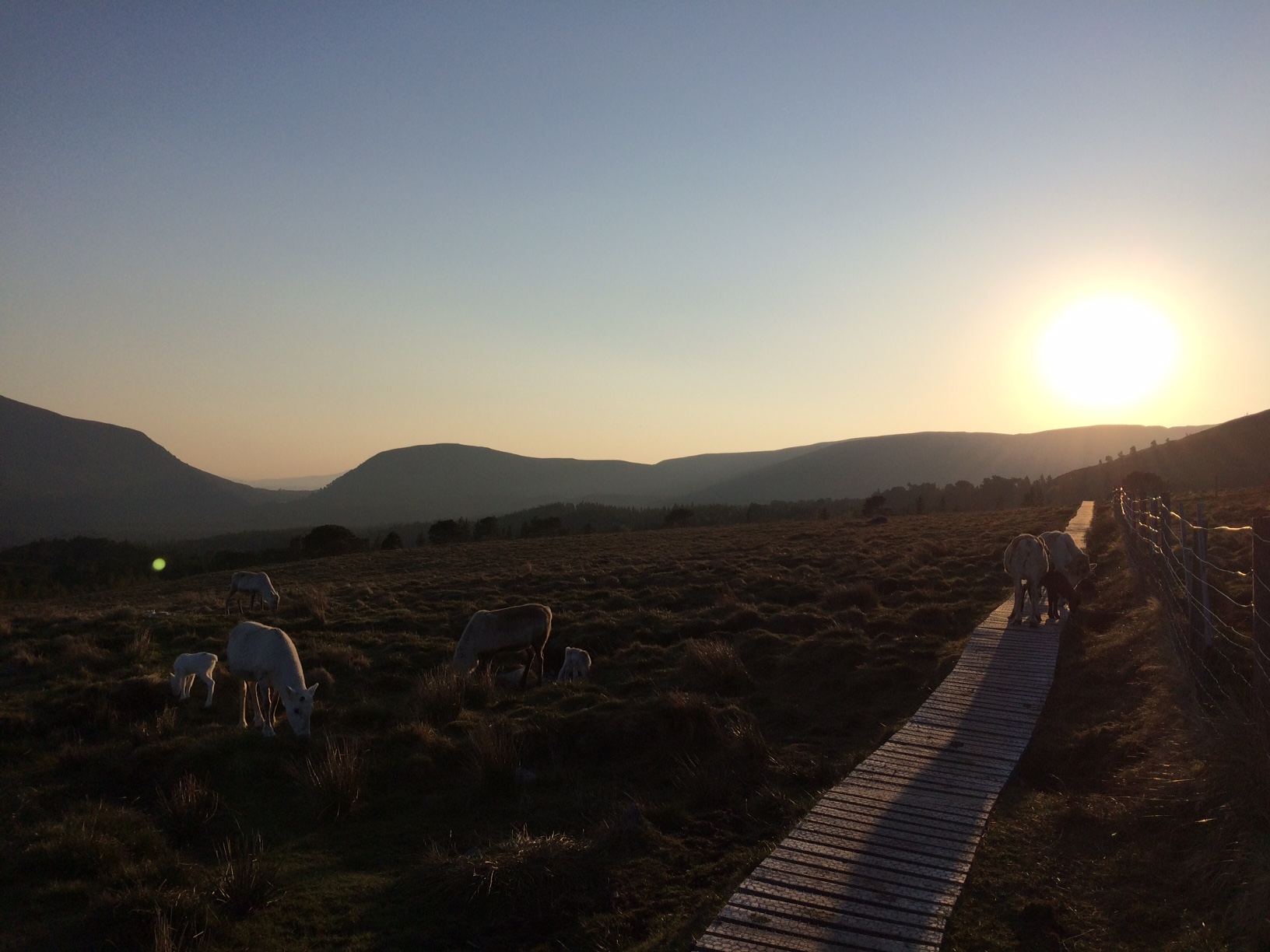
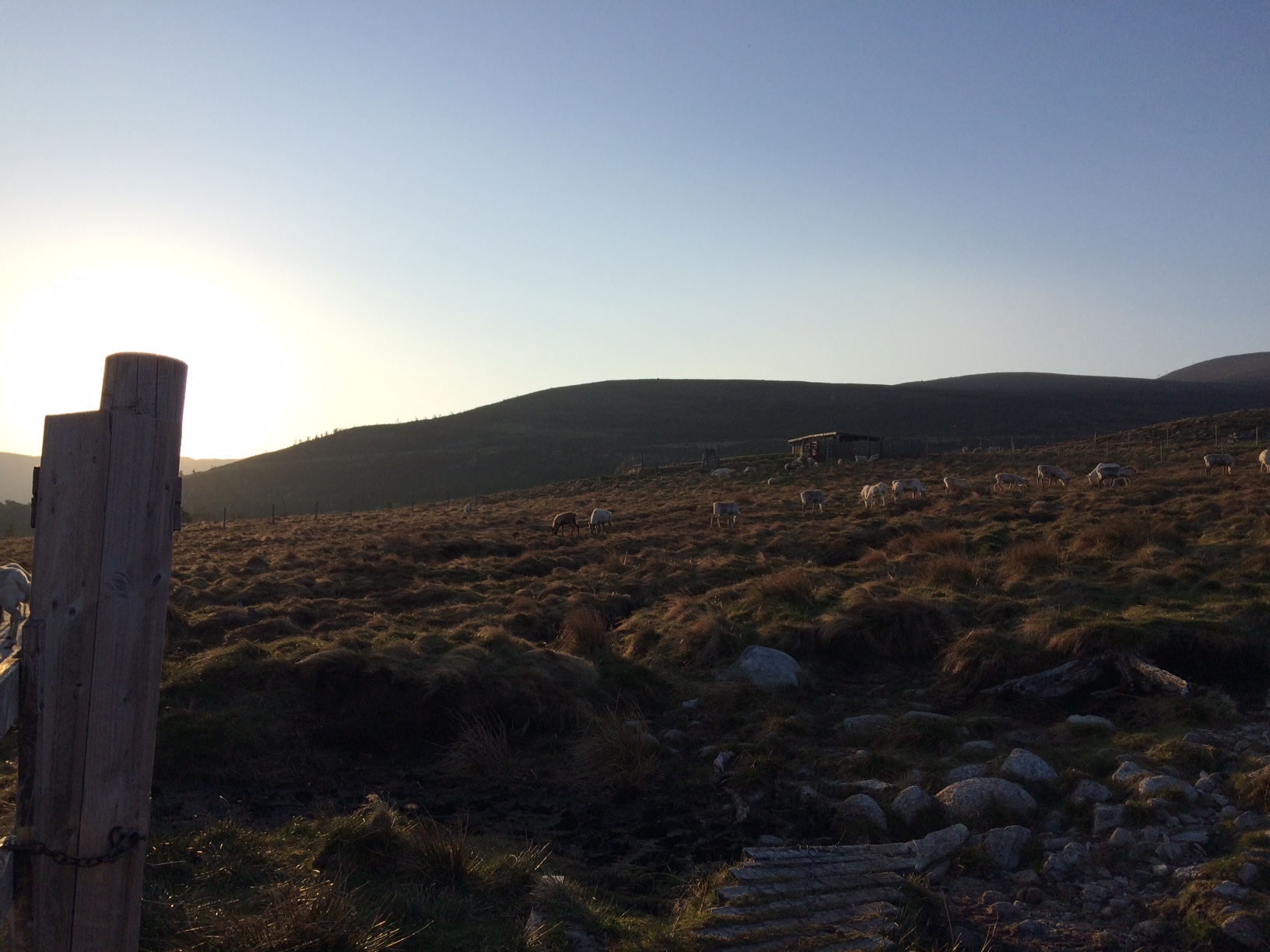
Over the winter months the reindeer at Glenlivet are up on the Cromdale range but by the end of April it is time to bring them down for the summer closer to the farm. Reindeer love routine and by the time we get to the last few days of April the reindeer are expecting to be on the move.
From now onwards it is all about eating. With spring just about here many of the reindeer are beginning to grow their new antlers and need to put on weight, lost over the winter. They need extra sustenance to achieve this and the winter diet of lichens and last years vegetation is not enough. The new spring growth and the extra feed we give them is what’s needed. Appetite increases many fold and to be absolutely honest everything we give them, they eat.
Every farmer up in the Highlands of Scotland will tell you that this year spring is really late. Whether it is the fields of grass that need to grow for hay and silage later in the year or the newly sown spring barley, the weather has just been too cold. And despite and recent few days of incredibly high temperatures it is not enough to kickstart the growing season yet. New vegetation on the higher ground is also absent so even more reason for us to be feeding the reindeer more than normal for the time of year.
Since it’s Friday the 13th, I thought I would try to write up a blog about superstitions from reindeer herders around the world. I thought it would be a fairly easy subject to research, but it turns out it is rather difficult and trying to determine what was actually believed way back when, and what has been made up for the tourist industry is exceedingly difficult. I have tried my best to be as accurate as possible and only report on reliable information, but do feel free to correct me if any of what is said below is wrong. Sámi shamanism, traditions, superstitions etc. are very difficult to come by because up until the mid-20th century, the Sámi underwent ‘Norwegeniasation’. The Sámi were not allowed to speak their own languages, were converted to Christianity by missionaries and it was shameful to have Sámi roots. Attitudes have now changed and it is cool to be a Sámi now. There is even a festival in Norway called Riddu Riđđu where people can explore and enjoy their Sámi roots. Anyway, here are some little snippets of traditions and beliefs of reindeer herders around the world.
A band at Riddu Riđđ, holding a Sámi flag on stage. (Photo from norwayfestivals.com)
The Chukchi, a group of reindeer herders from Siberia, thought it akin (bad) to sell a live reindeer, but would happily sell a dead reindeer. There is a book called ‘In a Far Country’, by John Taliaferro, which is a true story describing how, after whaling ships were trapped on Alaska’s north coast by ice, a missionary named Top Lopp decided to herd reindeer out to the 200+ whalers who would otherwise starve to death, with the help of 7 Eskimo herders, in the late 1800’s. The book describes the troubles that the men faced in trying to purchase live reindeer to herd across the Bering strait to the men stranded in Alaska. It talks about the Chukchi being offered a fortune in tobacco and cloth, but they would always refuse. The Chukchi would sell dead reindeer at 75 cents apiece, up to 500 at a time, but never a live reindeer.
Chukchi reindeer herder, Sergei Elevye, with one of his bull reindeer. (Photo from mediastorehouse.com)
The Sámi had and have a very close bond with nature, and natural phenomenon which nowadays can be easily explained by science, were of course much more exciting/terrifying occurrences. The aurora borealis, or Northern lights are of course one of the most fascinating and obvious phenomena in the north. Some northern Finnish reindeer herders used to believe that they were caused by a fox running extremely fast across the sky, whipping up the colours with her tail. The Sámi of Sweden feared the lights and would even hide away from it, or at least try to cover themselves if they could not hide. It is also extremely bad luck to mock, or even make notice of the lights, to some. It was believed that if you whistled at the lights, they would swoop down and kill you. However, if they did try to kill you, you could clap your hands and they would leave you alone.
This close connection with the natural world often meant that they would pray and give sacrifices to many different Gods. They also believed that everything had a spirit including certain trees and rocks. There were often stones that people would have to greet, otherwise the stone could get angry and come down on them. Unusual landforms, especially rocks, were often called seidi‘s and were worshipped to bring the worshipper protection. They were also seen as gateways to the underworld.
A seidi in Balsfjord (Image from wikipedia.com)
It is also believed that white reindeer bring good luck and all herders should have a white reindeer in their herd. Luckily, we have quite a few in our own herd, including Blondie, and her son Lego. Fiona has also heard that if you see a white reindeer, the sun and the moon all at the same time, it brings good luck. So have a look out next time you come on one of our visits!
Blondie, relaxing on a sunny day.
The Sámi also joik, a form of acapella singing; its themes usually include animals, people and special occasions in life. The Sámi also joik about Stállo, who is a mythical being, very rich and very smart, and who is able to change shape and can even change the landscape so people become lost. He is an evil entity, and often the joiks describe how to trick Stállo.
We haven’t had many reindeer born on Friday 13th, since it really is only May that the reindeer calve. We did have one handsome male reindeer born, called Peru. He lived up until around 8 years old, and was a ‘Christmas reindeer’. There are actually only 4 reindeer still alive who were born in 2005 with Peru, so I think he did ok to get to 8 years old. Obviously, I don’t know if one has been born today or not, but it doesn’t seem to be too bad an omen for the reindeer.
So this blog is a wee bit different, of course there’ll be a wee bit of reindeer chat – what’s a reindeer blog without the reindeer! However, this week we thought we’d plug some of the fab things going on in the Cairngorms next weekend for the Cairngorms Nature Festival – if you’re around get involved as there’s a plethora (a good word I know!) of ace things on offer to see and do for all ages!
Every May, the National Park has a weekend to celebrate all the amazing nature things in the area, and this year it will be running on Saturday 14th and Sunday 15th May. It’s a super way of seeing and learning a wee bit more about the environment here and what makes it special, be it if you’re local or on holiday, get out there and learn something cool!
I guess we should get on to the reindeer bit… we’ll be business as usual with hill trips going twice a day at 11am and 2.30pm as well as the paddocks & exhibition being open and all tickets prices will have a 20% discount applied. Come and feed the reindeer up on the hill, but be prepared for all weathers!
Hopefully the sun will be shining when you come to visit us!
There’ll also be tonnes of other things happening all over Badenoch and Strathspey, around Blair Atholl, Upper Deeside and Tomintoul. Some events that adults might enjoy include Green Woodworking Demos with Wooden Tom (he’s a really cool chap) at Feshiebridge Sculpture Trail on Saturday 14th. This is a ‘drop in anytime’ session running from 10am until 4pm (Here’s a handy link to his website). There is also the ‘Night Time on Nethy’ event on Saturday at 9pm. You’ll be on the river Nethy at night with the ranger, and booking is essential for that event. If you’d like to go on an all-day adventure, why not book into the ‘High Living in the Cairngorms’ event. This is a walk, starting at the Glenmore visitor centre and will involve some uphill. Booking is advisable and you will need to be dressed to be outside all day, in all weathers, and make sure you have a packed lunch too.
Wooden Tom, who will be demonstrating Green Woodworking Skills
For families, there are lots of interesting things to do. You can help the Loch Garten forest elves and fairies, by helping to create a garden for their enchanted tree. This event takes place on Saturday 14th, from 10.30am until 3.30pm (drop in any time) and you will also make some little forest-folk to take home at the end as well! This is located just 5 minutes from the Osprey Centre, and you can ask for directions from the kiosk there. On Sunday the 15th, there’s a self-guided trail letting us know all about how trees grow. It starts from the Glenmore Visitor Centre and you can do it any time between 10am and 4pm. At Blair Atholl there’s a ‘Woolly Woods and Woolly Nature Trail’ on both Saturday and Sunday. You can drop in at any time and search for the knitted nature and other wildlife from the Blair Atholl Information Centre.
There are lots of other events going on all over the place, and you can get more information and book spaces by going to the Cairngorms Nature Festival page, where you can download a .pdf of all the events running throughout the weekend.
Hope you all enjoy some of the events being put on!
Annually, every single reindeer in the herd must get a routine vaccination to protect them against various diseases. This is an injection that can leave them feeling a bit worse for wear the next day, but it’s only for 24 hours and as it’s important injection they just have to suck it up!
Our herd here on Cairngorm conveniently crossed over to the Cas side of the mountains of their own accord and we jumped at the chance to get them into the mountain enclosure to give them the vaccine. Unfortunately it was only three quarters of the group but we still decided to go ahead, hoping the others would show face in the next day or two. As predicted they did and although we left the herd feeling a bit off-colour they quickly got over it and are all now back out free ranging. Read Mel’s account of last year’s jabs here.
The herd begin moving down off the tops towards the promise of food
The next step was doing the same at our Glenlivet site over on the Cromdale hills. This requires a lot more energy as the reindeer are always fairly ‘clued up’ to what we are doing by gathering them into the corral at the bottom of the hill. So after locating where they were that morning, Alex, Abby, Derek and myself set off on the quad bike for a very bumpy journey to the top where we were greeted by 80 hungry-looking reindeer. And who was number one to run over but the famous Fergus! Both Abby and I hadn’t seen Fergus since he joined the herd on the Cromdales in early January so it was great to see him again.
Using the quad bike to encourage the reindeer down the hill
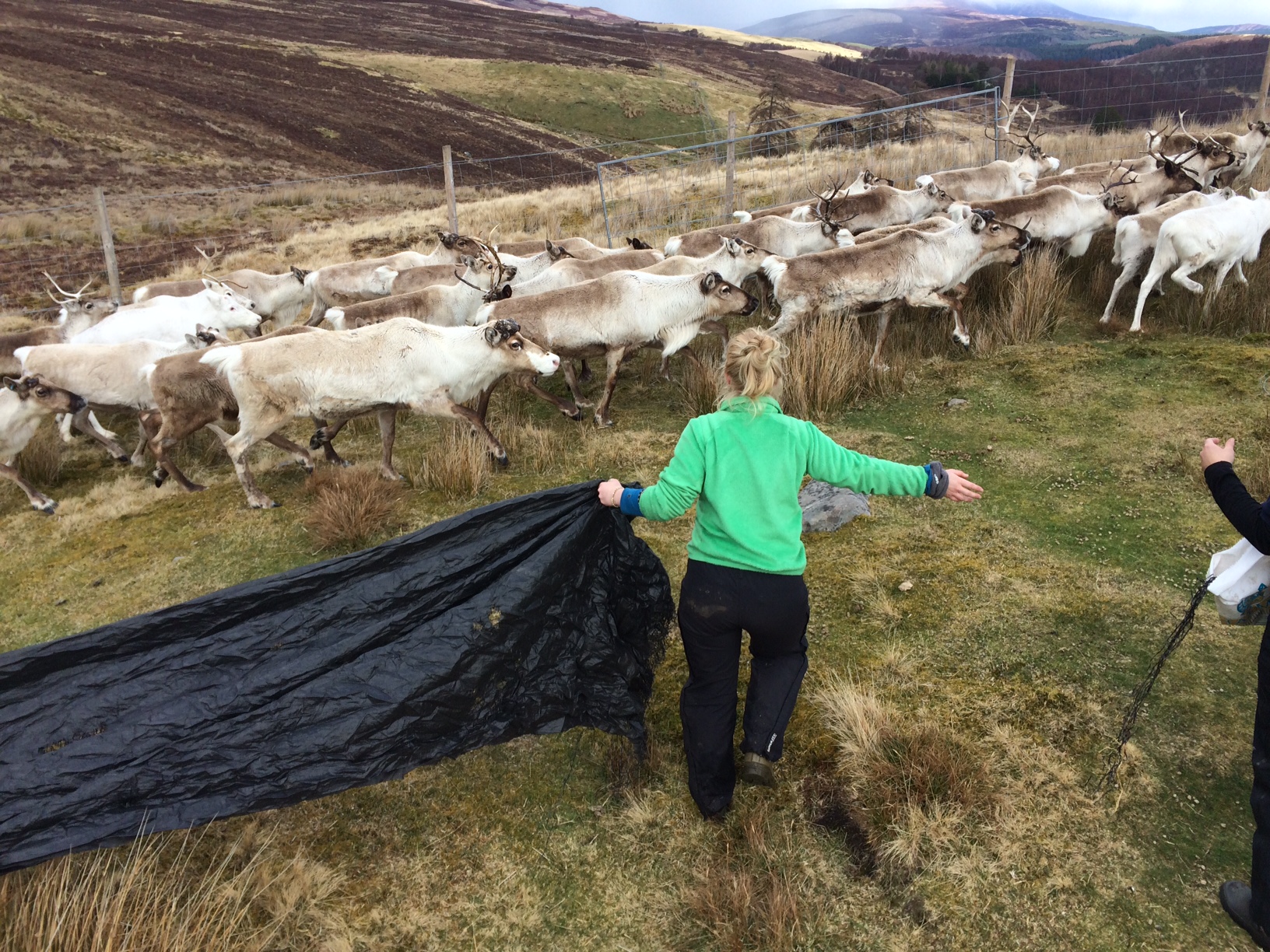
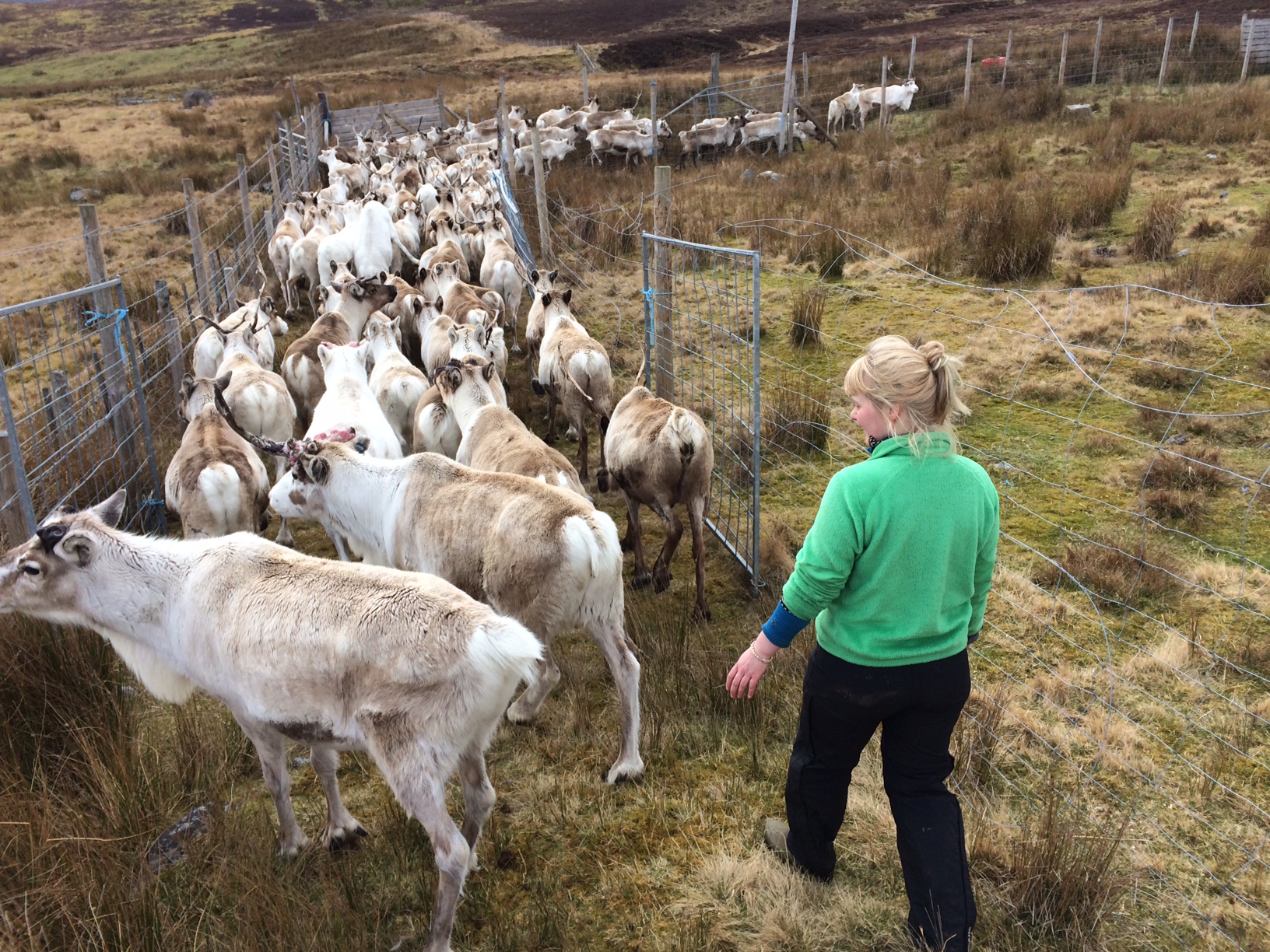
Tilly and Colin then joined us and Tilly set off with Dragonfly on a halter leading the herd down the hill while Alex, Abby and myself were on foot pushing and Derek was on the all-important quad bike to turn back the naughty ones who tried to break away. It was all going so well then the whole lot managed to get themselves over a burn (small river) onto another hillside, but we persevered and after a lot of running around to catch up with them (they have four legs we only have two!) we managed to get them back following Tilly and Dragonfly into our corralled area.
“Ok, we’re going!” The reindeer often seem to view being rounded up as a game – they definitely have no fear of us. Especially Magnus, who is always the reluctant one at the back!Colin and Abby using hessian as a temporary barrier – it prevents reindeer nipping back through gaps between the herdersAlways a challenge to not fall over your own feet!
There was only one slight hitch in the form of Gnu… an eight-year-old Christmas reindeer who always gives us the run around and he did manage to slip the net, so all we saw at the end was his bottom disappearing over the skyline in the distance. We had some words to describe him at the time which I won’t repeat on here! I have to say if it wasn’t for the speed and technical driving of Derek on the quad bike we would have lost a lot more than just Gnu. We will catch up with him… when he least expects it! Lets hope he doesn’t read these blogs…
Abby coaxing the boys down into the corralSuccess! Reindeer penned and ready for their vaccinations
So with all the reindeer in and fed we got through the injections very smoothly. It was nice to see the male reindeer after so long and the youngsters had grown up lots over the winter with the great grazing up there. The bulls have already started growing their new velvet antlers and all in all they were looking in fantastic condition!
One of my favourite reindeer when I first arrived was Arnish. To start with this was possibly because she was so distinctive as she didn’t grow any antlers, making her one of the very first reindeer in the herd that I learnt, but quickly my reasoning changed and simply became because she was just so, well, cool.
Arnish in 2007, aged 10
Arnish was, quite simply, a dude. Everyone liked her, and she was a tame, friendly female. Some of the females in the herd skulk around in the background, not particularly wild nor particularly tame, spending most of their time out on the Cairngorm free-range where we barely ever see them. But some, like Arnish, always seem to be around, and spend a good bit of their time in the hill enclosure too as well as on the free-range, when it is easier to get to know them as we see them daily.
Arnish in 2009
Antlers are a symbol of dominance in reindeer, generally the bigger the better. A reindeer with no antlers should therefore be very low in the hierarchy, but it seems no-one told Arnish this. A great lump of a female, thickset and solid, with a head the size of a male reindeer’s, Arnish ruled the roost and was one of the leaders of the herd, or at least she was by the time I arrived on the scene. At this point she was 10 years old already and only needed to look at a group of reindeer for them to part like the Dead Sea to make way for her! If all else failed, she just ploughed into them headfirst, somewhat resembling a hairy bulldozer. No-one messed with Arnish.
Hanging out with Arnish
Her lack of antlers had one significant downside, for us at least. If Arnish got her head into the feedbag you were carrying, it was nigh on impossible to get her out. When any other greedy, tame reindeer push their way into a feedbag, we can remove them but hoicking them out by an antler but this just wasn’t possible with Arnish – there were no handles! The battle was lost already. I should add that most of the time we never touch a reindeer’s antlers, certainly not when they are in velvet, but when in their bone form with no feeling needs must at times!
Arnish and Jaffa, 2009
Arnish may be gone now, but she’s left behind a legacy in the form of Addax, Jaffa and Svalbard. Daughters Addax and Jaffa have gone on to have calves of their own, and son Svalbard, along with Addax’s own son Monty, are part of our team of ‘Christmas reindeer’ – males who are trained to harness and go out on tour in November and December.
Arnish and Svalbard, June 2011
Svalbard was Arnish’s last calf, and there’s a wee story about his name to tell. He turned up without his mum in October 2011, and we named him Meccano, to fit into the ‘Games and Pastimes’ theme of that year. Arnish had passed away out on the mountains, but at 4 months old her calf was just about old enough to survive without her. Short and dumpy, Meccano looked very much like a Svalbard reindeer, the sub-species of the Svalbard Islands which have evolved shorter legs than their migratory cousins. Try as we might, the nickname stuck, and Meccano became Svalbard.
Svalbard has grown into a strapping lad!
With Addax’s daughter Parmesan quite possibly pregnant just now with her first calf, Arnish’s bloodline looks set to continue for a good while yet. Every descendant so far has produced antlers, but the antlerless trait can skip generations so maybe watch this space.