Well, we’ve had our annual month of closure to the public and are now open again for hill trips! The weather hasn’t been too horrendous this winter and most of us here are really missing the snow; we are all considering going off to the Alps for our skiing and snow fix!
Of course, it is now the February half term so we are back with a bang and having busy hill trips, even reaching our limit of numbers on some days. Most of us have had a slight panic at the beginning of our first visit: “What do I say again?” “Where do I go again?” “What is a reindeer?(!)” Luckily, once you are faced with a whole load of expectant tourists most of your talk comes flooding back to you and you manage to muddle through, getting the important safety and history information in.
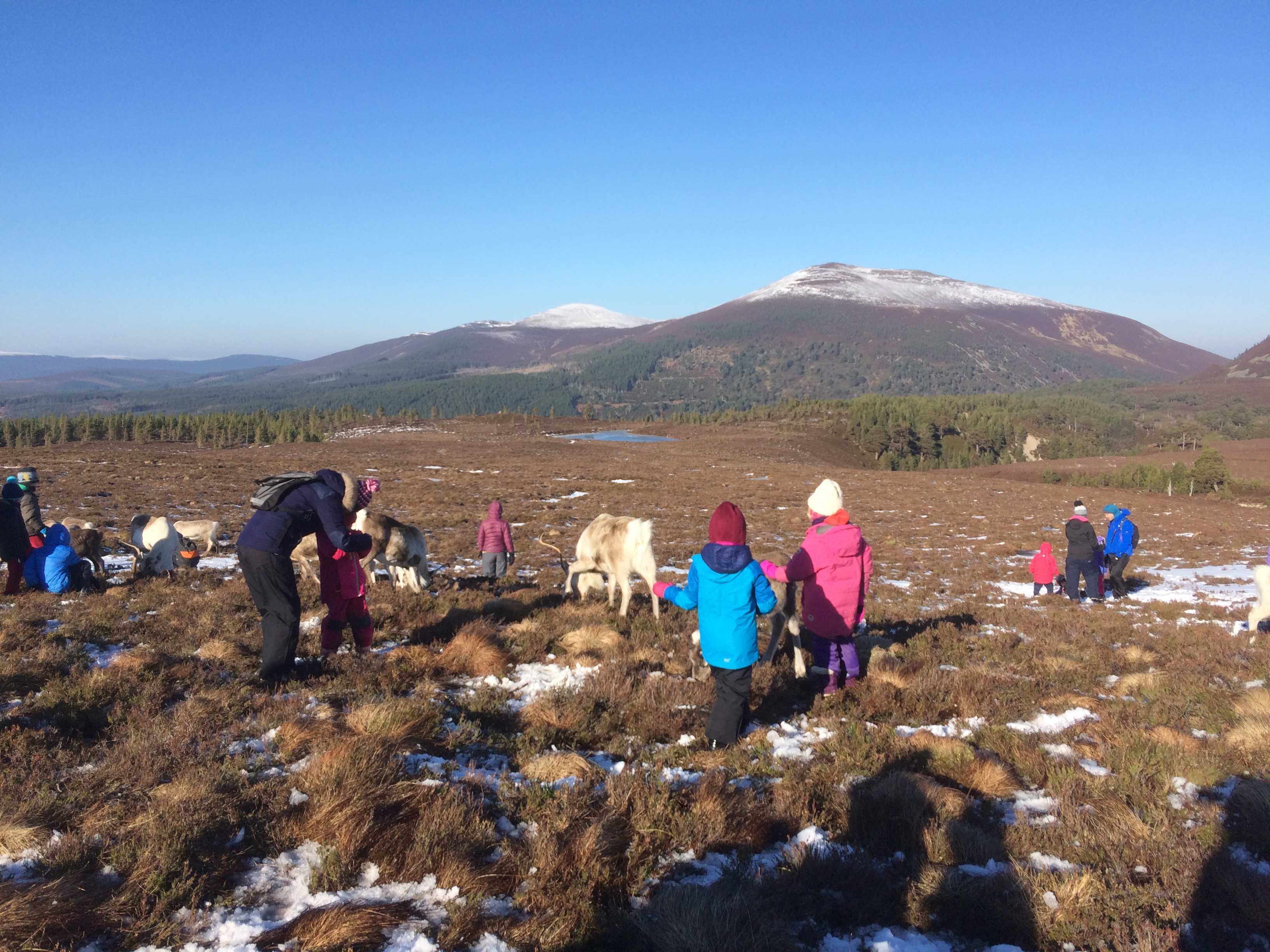
Although it is not that snowy at the moment, it is relatively cold and we have had some quite windy days too. Most folks have been well enough dressed that they’ve managed to keep the cold out and have enjoyed the trips. If you would like to come visit us in the near future, please remember to dress up warmly, and give us a call in the morning to make sure we definitely are going ahead with the trip. The reindeer are completely free-ranging at the moment, so both they and the weather mean that we can’t always run the trip!
Reindeer are the past masters at keeping warm. When you evolve to live in temperatures below minus 30 Celsius then you need all your wits about you to keep warm.
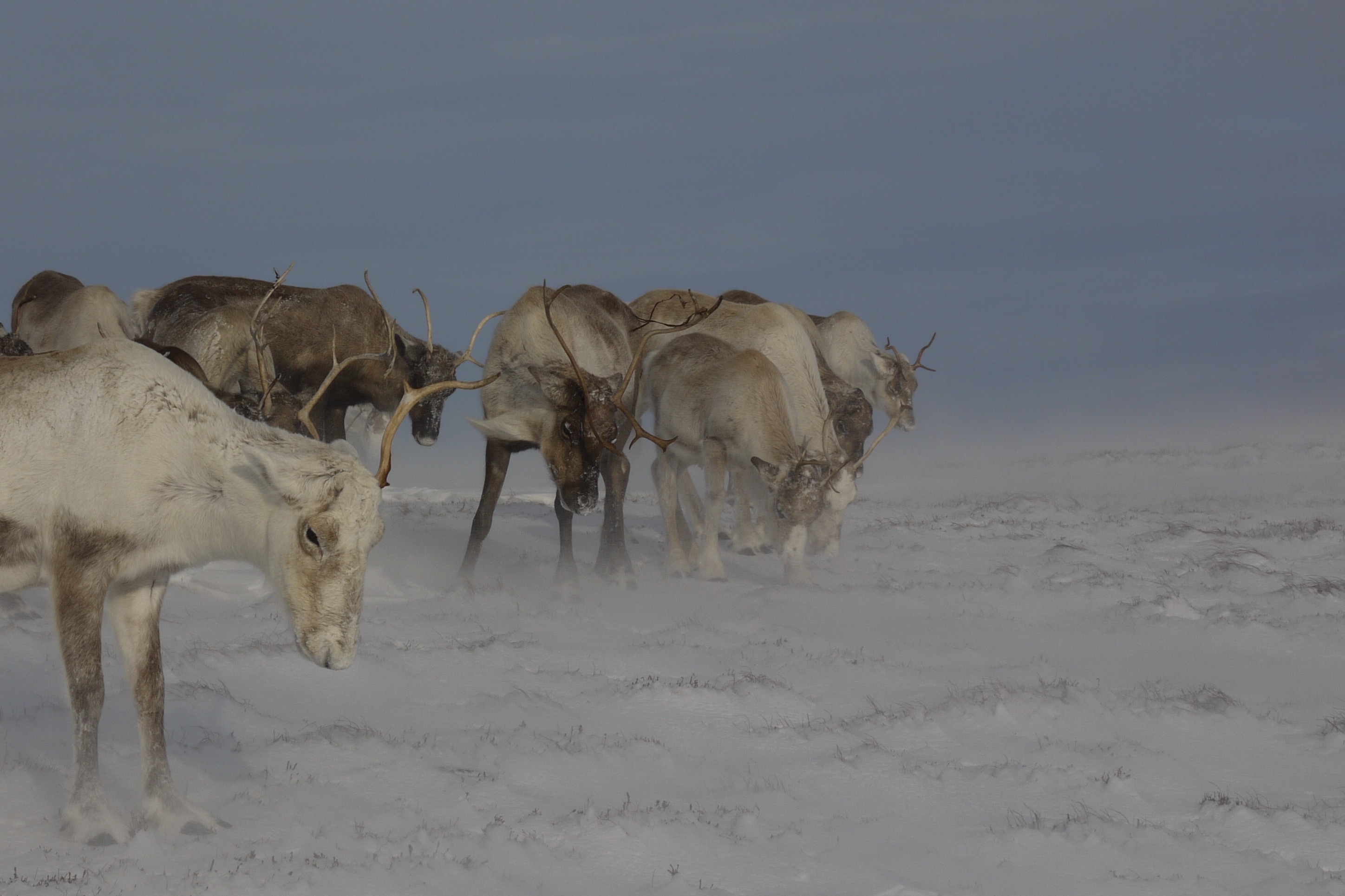
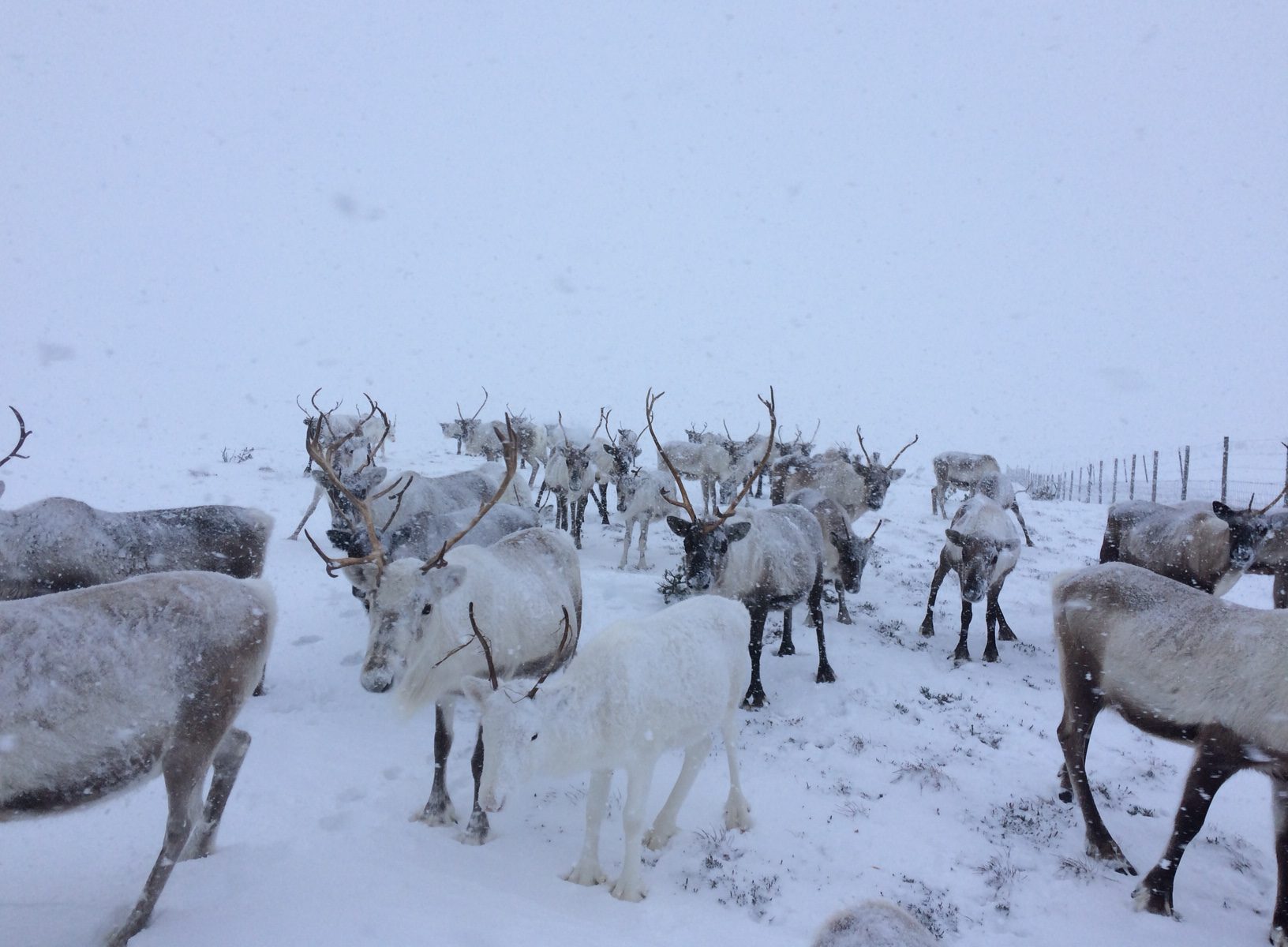
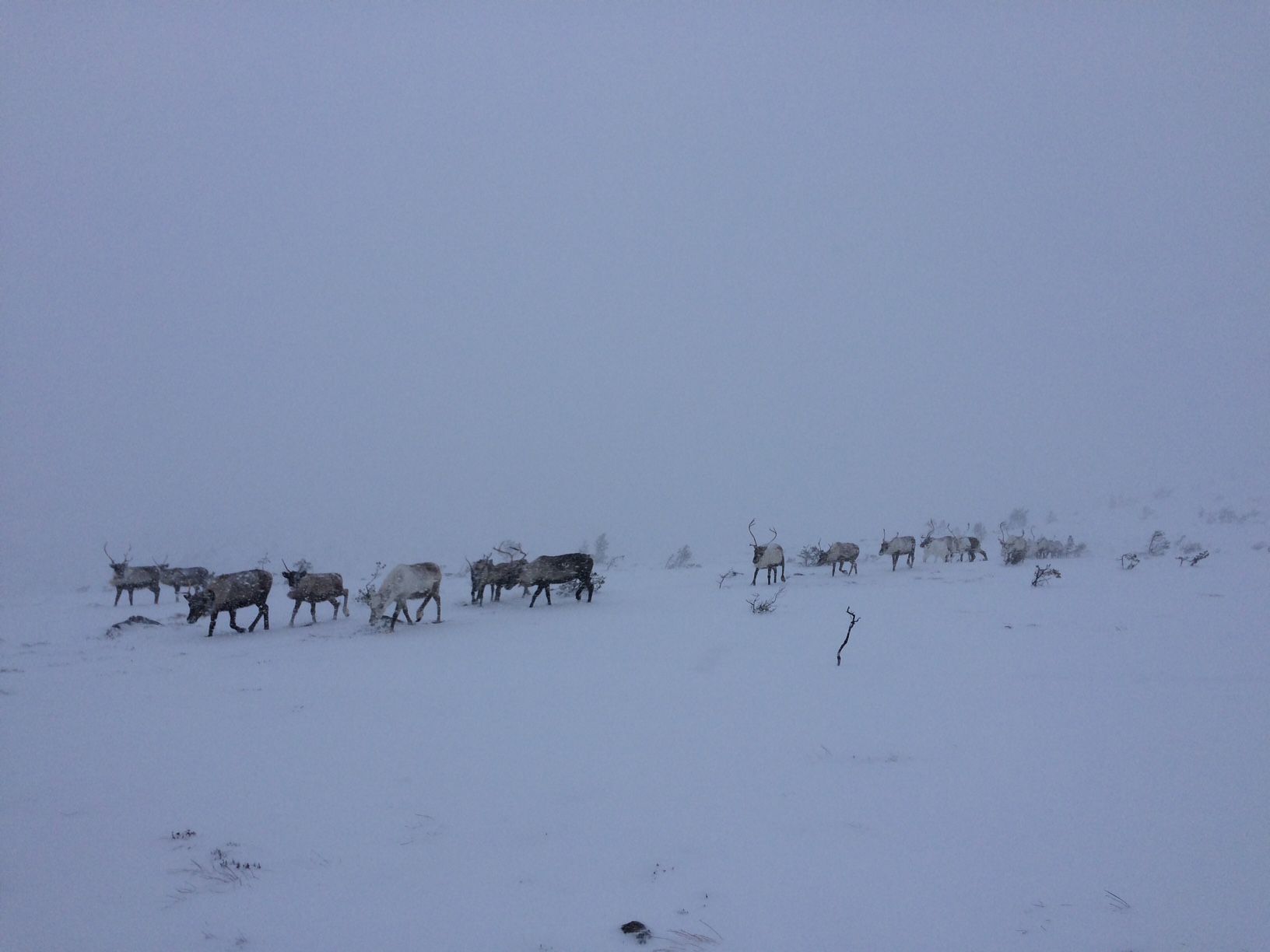
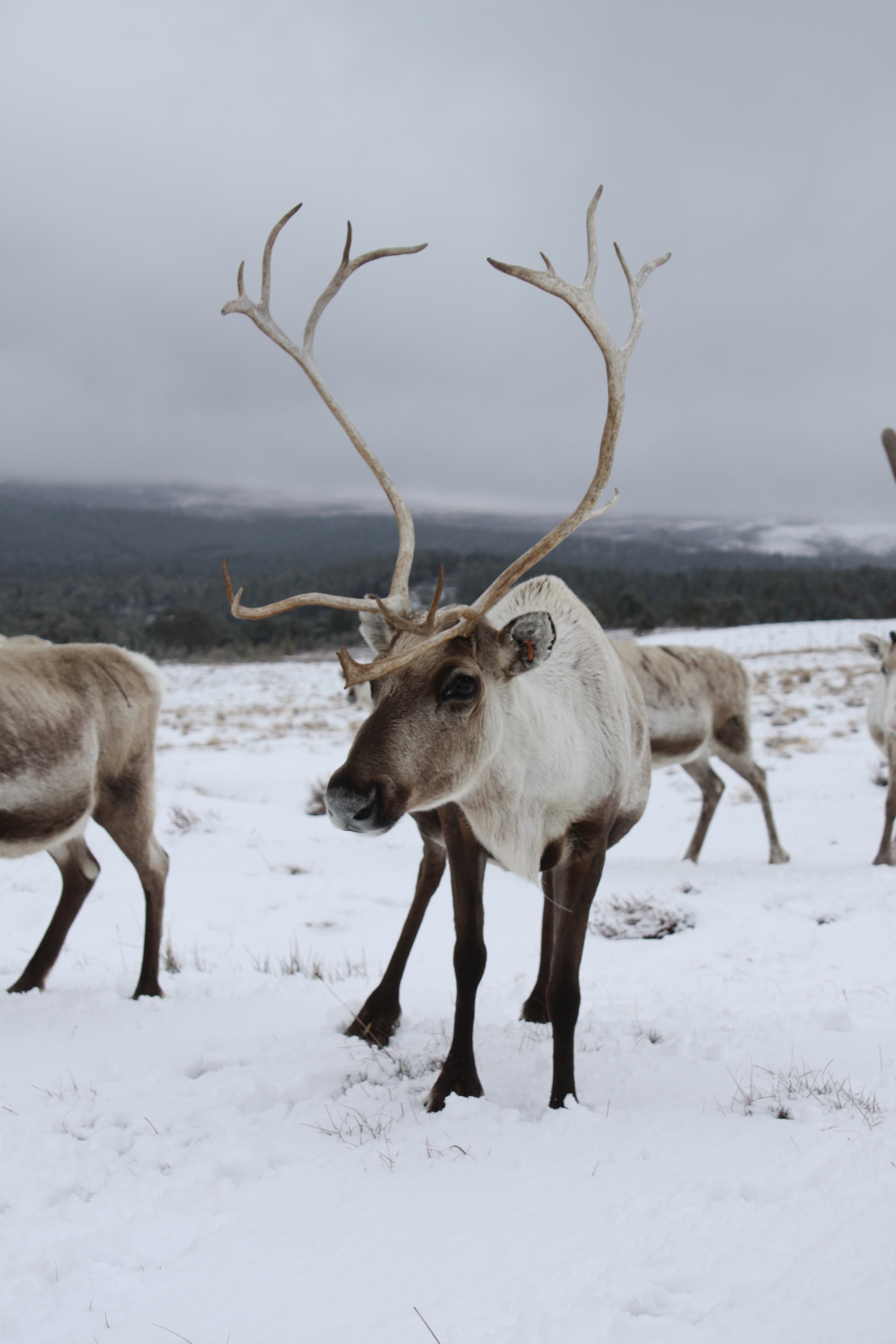
Some of the boys toughing out a blizzard, ice plastered to their foreheads, including big Magnus (centre) who even has snow layering his antlers.
To begin with they have an extremely dense winter coat, 2,000 hairs to the square centimetre although I have to confess to not having confirmed that by counting them myself! Secondly, each individual hair is hollow for the same reason that we have holofil in our duvets. Air is a very good insulator so the combination of air in each hair and around each hair increases the insulation factor. In fact, reindeer are like a mobile thermos flask, neither allowing the cold in or indeed the warmth out. A bed of snow is a comfortable spot for a reindeer, and they can lie on it without even melting it.
Caddis and her young calf Mozzarella (in 2013) – calves have even thicker coats than adults so they can stay snug in late snowfall.
You may have noticed that cows or horses out in fields in windy weather tend to put their backs to the prevailing winds (as well as look pretty miserable). That is actually not a very clever thing to do, as the wind lifts the hairs and takes away more of their body heat. They need to copy reindeer who face a blizzard. By doing this they keep the hair across their body flat and so do not lose heat. The only disadvantage to this is you end up with a ice pack on your face. Lucky that reindeer have hairy foreheads.
Jenga in just a wee bit of snow, but not cold!
Actually if you study a reindeer closely from nose to tail you will find no bare skin anywhere and that even applies to the bottom of their feet. Yet another fine adaption to the cold, and with the added bonus of improving their grip on the ice and snow.
Finally, if you measure the temperature of the blood of a reindeer at its extremities you will find it is cooler. Once again this is to prevent heat loss. To do this a counter current system has evolved whereby the warm blood exiting from the main part of the body passes close to the colder blood coming back from the extremities. The net effect is the cold blood is warmed and the warm blood is cooled and the heat remains in the body.
A reindeer’s perfectly designed coat beats all of the artificial layers us herders have to wear – no contest! Look at the snow sitting unmelted on top of the fur.
There are other heat saving aspects to reindeer but I think that’s enough for now. Food for thought however it does mean that they can get awfully hot in the warmer weather. I reckon reindeer would be the first to sign up to a programme to slow down global warming!
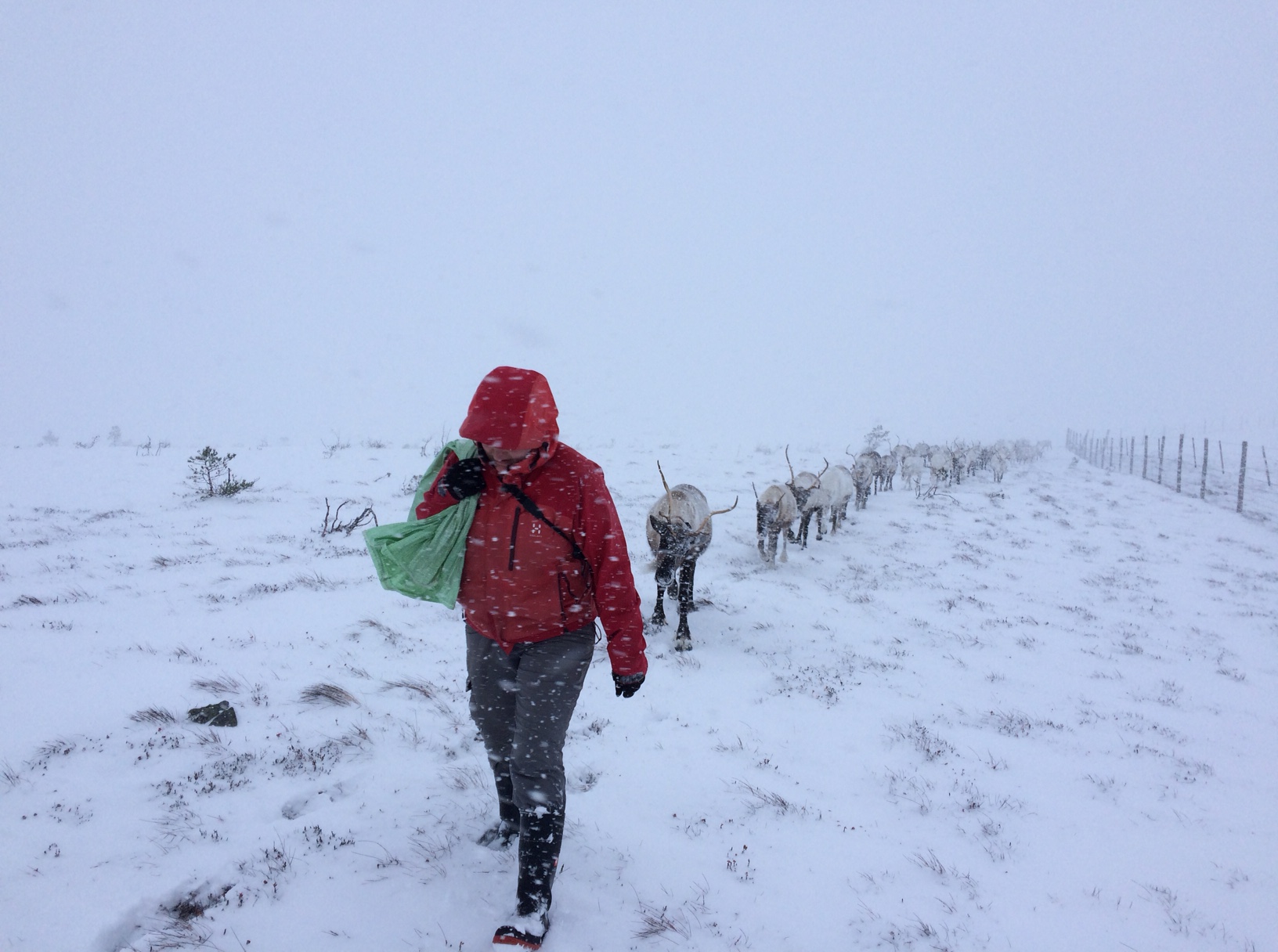
In January, we are closed to the public, and it’s the time of the year when we all take the opportunity to take holidays and have a bit of a break. There’s still plenty to get on with though at the Centre – the reindeer are all free-ranging but we still feed them daily, if of course we can find them! At this time of the year their appetite is greatly reduced and the weather doesn’t always permit us to walk out onto the mountainside. If we can’t feed them, it doesn’t matter as they’re perfectly capable of finding enough food themselves, but its always nice to check them over and see that they’re all fine. On snowy days, this can take two or three of us two or three hours, as we’re often breaking a track through deep snow, whilst carrying feed, to get to where the reindeer are.
Gorgeous views, spying for the reindeer
Calling the reindeer – the better your call, the less distance you have to walk…!Not always the easiest of walks – reindeer may be designed for the snow but us herders aren’t!Hen’s call must have been good enough – the herd come to meet us.Follow the leader. This is on the outside of the enclosure fence line.Posers! This is Gazelle.Waiting expectantly for the food.
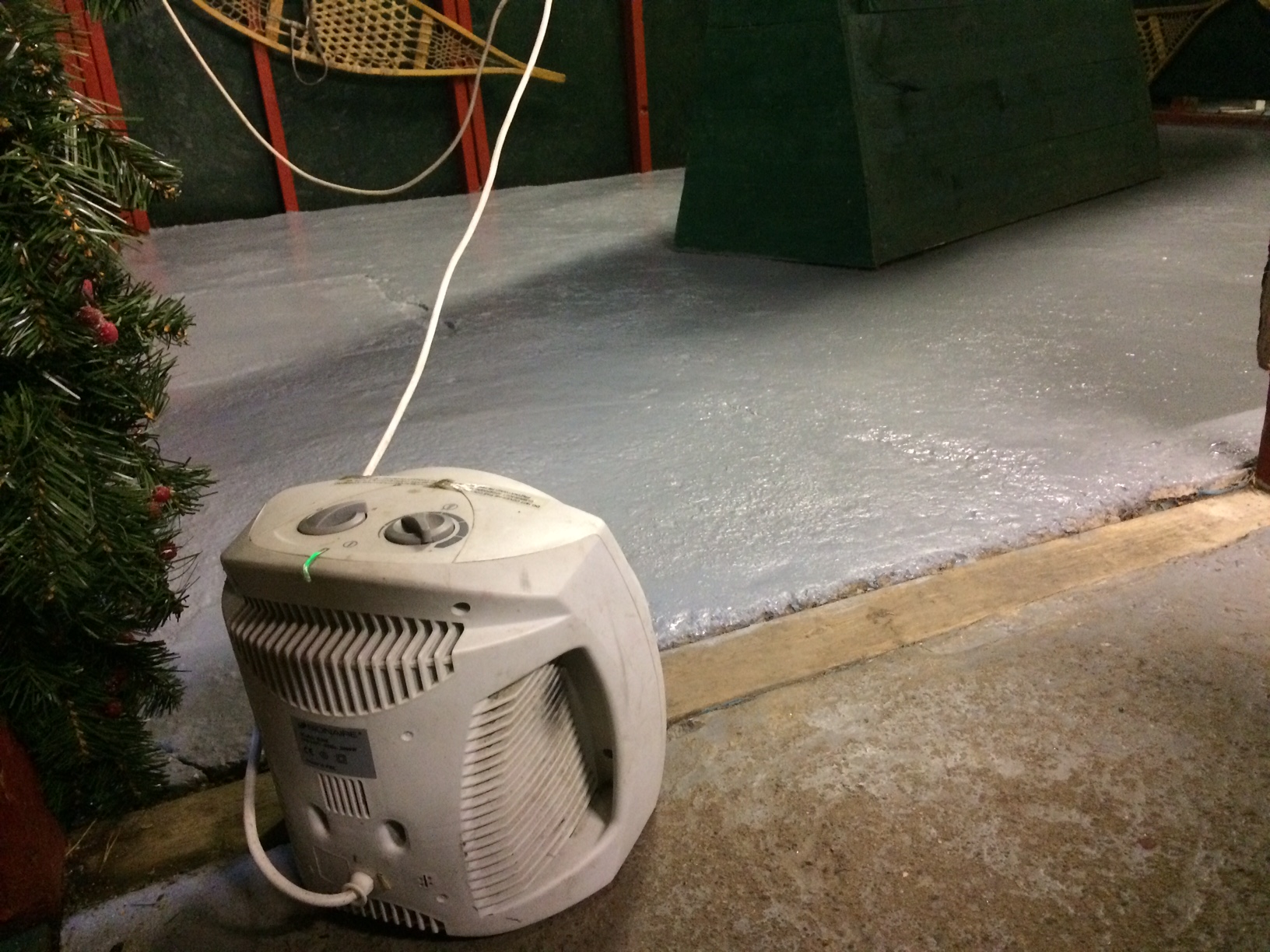
Aside from feeding the reindeer, there is plenty of maintenance to do at the Centre, which we can’t really do whilst we’re open. Painting the exhibition shed floor is a big job each January – it gets very worn over the course of the year so needs three coats of garage floor paint to smarten it up in preparation for all of our visitors over the coming year! It’s always entertaining reading the instructions on the paint can “Ensure the temperature is over 10*C”, then looking out of the window at the snow – anyone who’s visited will know that our exhibition shed is unheated, so it’s unfortunate that we have to do the floor in the coldest month of the year, when the temperature is mostly sub-zero. Our solution is to block off the doors and get a fan heater on, which helps, but I still wear a hat and gloves and take a cup of tea to help keep me warm!
Coat one is well under-way, you can see how worn the floor gets.
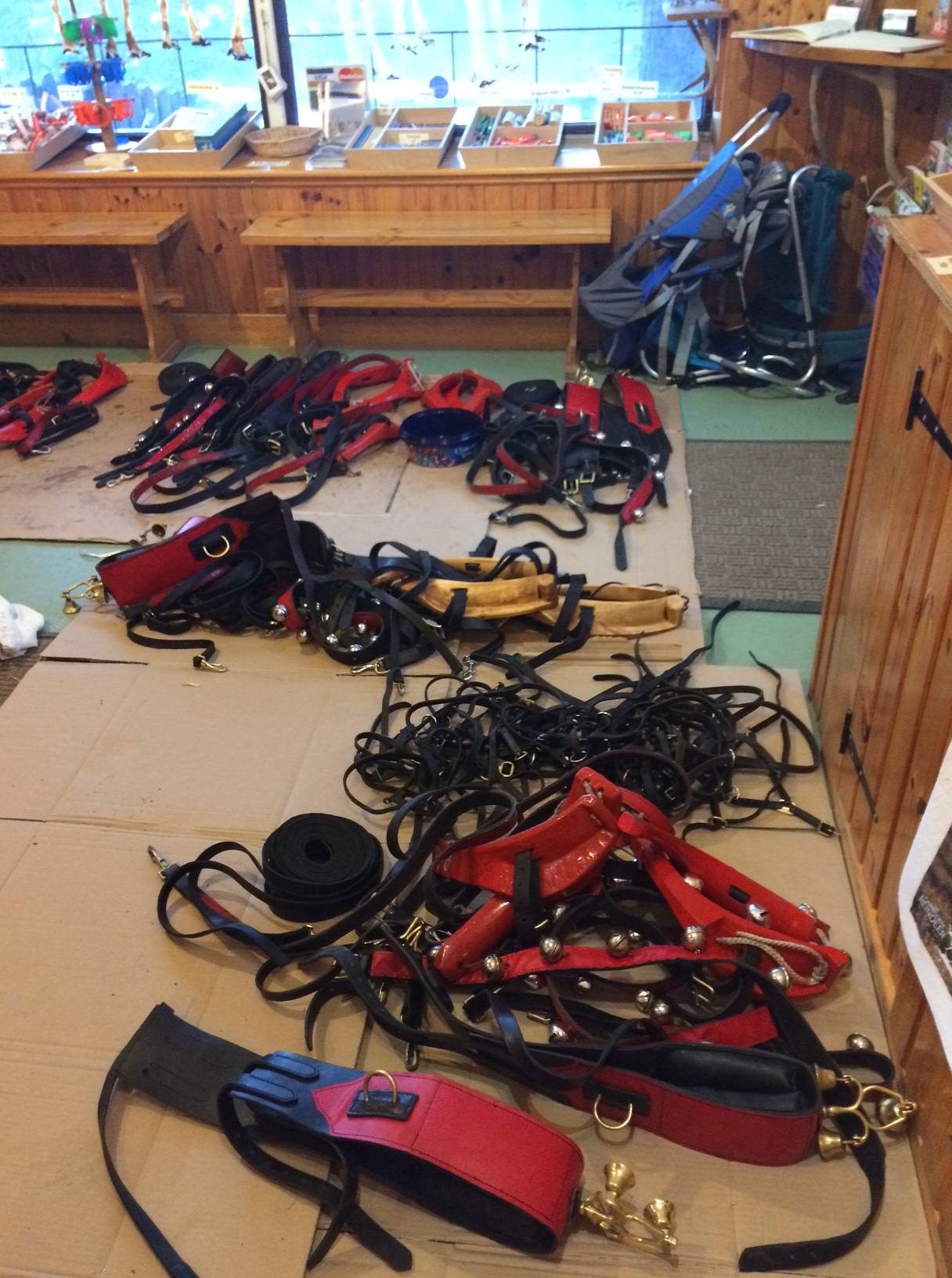
The other big job for me is to oil all of our Christmas harness and make any necessary repairs before it is popped into storage for the year. If you’ve met me, you may realise that I absolutely love order and lists, so organising harness is one of my favourite jobs. It’s also a little warmer sitting oiling harness in the shop than most of the other tasks. The shop is the only place large enough to do this really, which is another reason that its done whilst we’re closed, along with the fact that we’d never get round to it if we left it until before Christmas!
The shop in its January role.
There’s still also plenty of office work to get on with: making up adoption packs, answering emails, planning what gifts we’ll order to go in next year’s adoption packs, counting and reordering shop stock (again a delight for me as I get to make lists!). So whilst we may be a little quieter, don’t imagine we’re just sat around with our feet up!
Perhaps the most important purpose of being closed to the public in January is that after a hectic Christmas season (in fact all of 2016 was hectic…) it gives both us herders and the reindeer a proper break and change in routine, which means that when we reopen in February we’ll be bright and bushy tailed, and actually look forward to meeting our visitors and introducing everyone to the beautiful reindeer!
Amber was one of the very first reindeer I remember meeting when I arrived back in 2007. At that time she was in the hill enclosure with her 6-month-old son, Go. Both were very tame and friendly, and with her distinctive curved antlers, I found her easy to recognise amongst the sea of reindeer I was frantically trying to tell apart. Amber was also incredibly pretty, with a delicate, dished face and a gentle expression.
Amber in 2007 with her awesome antlers
Born in 1999, Amber was the final calf from her mum Trout. Trout and her compatriot, Tuna, lived to the grand old age of 18, which as far as I know is the record for any reindeer in our herd (Editor’s note: Lilac now holds this record, surviving to age 19 in 2018). No prizes for guessing the naming theme for their year of birth (1984)! Unlike Trout, who has 11 calves to her name on the family tree, Amber never proved to be such a successful breeding female, with her only offspring being Esme, Oasis, Go and Sambar, or at least those are the only ones that survived long enough to be named (we usually lose a calf or two each year in the summer months when they are very young and vulnerable). Esme managed a better job of breeding than her mum, with 7 calves to her name.
Amber in 2009Amber looking out over the hills towards Meall a Bhuachaille
Amber was one of those lovely, gentle reindeer, but a fairly dominant character in the herd – a matriarch, if you will. She was a great reindeer to have around in the winter months when the herd all free-range completely as she so was easy to catch, and therefore an ideal candidate to be put on a halter and used as the ‘lead’ reindeer when needing to move the herd from place to place. I remember Fiona once leading her all the way from Eagle Rock back to near the Ciste carpark (where we were going to take the tour to that day) with her belt looped loosely around Amber’s neck, in place of a halter which we had managed to forget to take with us.
The continuation of Trout’s branch of the family tree now rests squarely upon the shoulders of Amber’s last calf Sambar, who is the sole remaining female in Trout’s descendants, other than Esme’s daughter Okapi. Unfortunately we don’t want to risk breeding from Okapi as she has had a prolapsed uterus a couple of times, so we think it’s better to not risk the chance of this happening again. We want it to stay firmly where it belongs! So Sambar has a lot of expectation on her, and is a lovely reindeer to boot, although a wee bit shyer than Amber was.
Esme in 2009, with yearling OkapiAmber with Sambar on the left, in 2008
Amber herself passed away at some point in 2013, although we never knew exactly when as she just didn’t return from the summer grazing range in the autumn. She was over 14 by this point, so a very respectable age for any reindeer, and we are glad she finished her days out on the hills roaming freely.
Throughout much of the western world, the creation story known is that of Adam and Eve, and perhaps this is the most well-known. The Sámi, however, believe that in the beginning there was only the Sun and the Earth. The Sun was the father, and the Earth the mother, and together they created a Son. The home of the Son of the Sun did not have any females, so he set out on a boat to the land of Giants to find a wife. There, he fell in love (or lust), with the daughter of the blind Giant King. With the help of the daughter, he won a game of finger pulling against her father and earned the right to marry her. They were then intimate, and then sailed away. However, they were pursued by her angry brothers who wanted her back. The couple defeated the brothers with her magical handkerchief and the Son’s hot rays, burning the men to death, essentially. They were married, and she soon gave birth to the ancestors of the Sámi, the Gállá-bártnit, who were hunting sons and passed their hunting knowledge down to the Sámi.
There aren’t many pictures to go with this blog, so I thought I would just put some pretty reindeer as eye candy. This is the beautiful Wapiti.
The Sun and the Earth also had a daughter, which the Sámi believe came to earth to live with the Sámi. She gave the Sámi their reindeer to herd, and looked after them. When she was on her deathbed, she talked about wanting to see her Father, the Sun, again, because the darkness was coming in and she worried for the Sámi people. The story of the Son is all about optimism for the future, whereas the poem about the Daughter is about uncertainty and the need to pray to ensure the future of the Sámi way of life.
The Evenkis of Russia and China believe that the earth was all water and was not inhabited by people, until a maiden with an eight legged reindeer created the land. All the people lived in heaven, and when she refused to marry an old man, she was cast out of heaven, because such refusal was a great sin to the people in heaven. Her late father had left her one reindeer, an eight legged beast who she took with her when she was banished. She cried and cried, and fell asleep on the reindeer as they flew to earth. When she woke up, she realised her reindeer was not flying, but falling. The reindeer spoke to her, telling her to pull out his fur and throw it into the ocean below. She did as was told and logs appeared. The reindeer landed on the biggest one. He told the girl to tie them together to make a raft, so she did. There they floated on the ocean of earth, fishing with hair from the reindeer’s neck made into nets and loops, until the reindeer grew old.
Realising he would soon die, he told the girl to kill him. She wept, not wanting to kill her only friend, but he warned that if she didn’t she too would die. The girl reluctantly did as the reindeer wished. She lay his skin on the water, and it became land. His fur became forests and his skull became mountains. His lice became wild reindeer and his broken bones turned into crackling thunder. Before she lay down to sleep that night, she placed his heart on her left side and his lungs on her right. His heart became a hero and his lungs a boy and a girl. His last breath became the wind.
The herd running for food
I hope you’ve enjoyed having a read of these little stories and I hope I have told them well. If you know of any others, tell us in the comments below.
They say you should avoid filming with children and animals and there is no doubt that both can be unpredictable. However in the case of our reindeer I think there is an exception to the rule and whether we are filming with celebrities or for natural history our reindeer are always very amenable, willing and predictable. As long as there is a reward – food.
A couple of years ago we were approached by a TV company, Maramedia, with a view to filming our reindeer as part of a four part series on the natural world of the Highlands – Scotland’s Wild Heart. We were really pleased to be considered as part of the Highland fauna because our reindeer are a re-introduced species to Scotland and so ‘purists’ may feel reindeer should not have been included. But the Cairngorm reindeer are truly living in their natural habitat and as the filming showed, highly adapted to the Cairngorms, Britain’s only arctic environment.
The film crew decided to focus on our reindeer in the autumn and winter, seasons when reindeer are looking at their very best. The rutting season in autumn is always a spectacular affair and every year we have a number of breeding bulls who sometimes ‘fight it out’ to decide who will be ‘top dog’.
In 2014 the two main bulls were Bovril and Gandi and they were very evenly matched. They were also quite different colouring and so in the narration Ewan McGregor referred to them as the pale bull ( Gandi ) and the dark bull ( Bovril ). It made me smile because it sounded like something out of a western!
Fiona starring in Highlands Book
When reindeer bulls fight it is head on and locked antlers and a trial of strength, a bit like arm wrestling but with more action! Size, strength and experience (which comes with age) all come into the equation.
The film crew then returned a few more times over the winter to film reindeer living in arctic conditions. Of course reindeer are past masters at this and a bed of snow is extremely comfortable for a reindeer, who have such a dense insulating coat they don’t even melt the snow they are lying on! At a preview night where the makers of the series showcased the series to a local audience the camera man who came to film mentioned it was the coldest he had been when filming the reindeer in winter. He should have had a reindeer coat on.
Tilly
The “Highlands: Scotland’s Wild Heart” book
We currently have the beautiful book which accompanies the Highlands: Scotland’s Wild Heart series in stock in our shop. You can pop into the shop in Glenmore and pick it up for only £25, or order by emailing or telephoning us here at the Centre. P+P on request.
So as many of you know we have various folk who volunteer their time and come and work alongside us. This may be for a week or even slightly longer depending on the circumstances. Often they are doing placement work through university or college but sometimes they just want a change of scenery from their lives as you have read in Sonya’s (3-part) blog!
There are our regulars Paul and Kathleen who have been visiting us for many years now and who try to get up at least once but sometimes a couple of times a year. Paul being an ex-carpenter and joiner comes armed with his tool box and basically fixes everything we break throughout the year. We also aren’t allowed to touch the feed bag as we would get our wrists slapped by him if we did. He keeps it filled to the brim and we don’t even have to fill our own daily bags of feed as they are waiting for us in the morning… We love Paul! Kathleen has been a great supporter and ambassador of our herd for a long time now and when she comes up to visit helps out in our shop and taking guided tours onto the hill… It’s a nice break for the girls and boy (Dave) who do the tours the rest of the time so thank you Kathleen. Caroline also manages to join us all the way from Oxfordshire from time to time to donate her arty skills and good humour.
So they are our yearly regulars but we still get a few others for week placements through the summer. You have read all about Sonya’s time with us. I hope it’s brought great entertainment to your weekly blog reading. Fran (who volunteered with us in 2015) joined us for six weeks gathering data for her dissertation… that’s a whole different blog so I’ll let her explain that one. Beth is another great supporter of the herd and whenever she comes up on holiday with the family always pops by for a day or two to help out. This year she did a whole week with us and ditched the family, they were obviously cramping her style! It was great having her around and we have all noticed a big change from the first time she came along till now, she has grown into a very independent young lady.
Sonya helping Hen to train Gandi and some other boys
Joe was with us in May and is a relation from Tilly’s side of the family. Along with Blyth, Leander, Erin and Shannon, he was looking to gain more experience within the animal industry to further his career. Amy came to us in August and for those of you who know the history behind our herd, you will recognise the name Dr Lindgren. Amy is Dr Lindgren’s great granddaughter, so it seems it still runs in the blood. Emm, like Beth, has been a supporter of the herd through our adoption scheme for many years. Her enthusiasm and hard work glowed! She knew most of the reindeer by name after only one week of working with them, and her herd list had notes all over it to help her recognise their individual features… Puts any reindeer herder who doesn’t know their reindeer to shame!
From L-R: Fiona, Blyth and Beth
I’m sure they all have their individual story to tell of their week, maybe many! And we always try to encourage them to take their very own guided tour by the end of the week. After they have heard all our bad jokes and cool reindeer facts they can then pass that onto the public in their own way. Most of them managed to do this, even Leander whose first language was German so good for him!
But I also just want to say thanks to them all as well. Having that extra pair of hands is great and I hope their time spent here was fun as well as informative. They do all this hard work during their time here yet, without fail there is always a box of chocolates (or other cake goodness) left on the table from them to us at the end. Seems the wrong way around, it should be us giving them the treats but hey who are we to complain… don’t let that comment stop any future chocolate/cake giving!
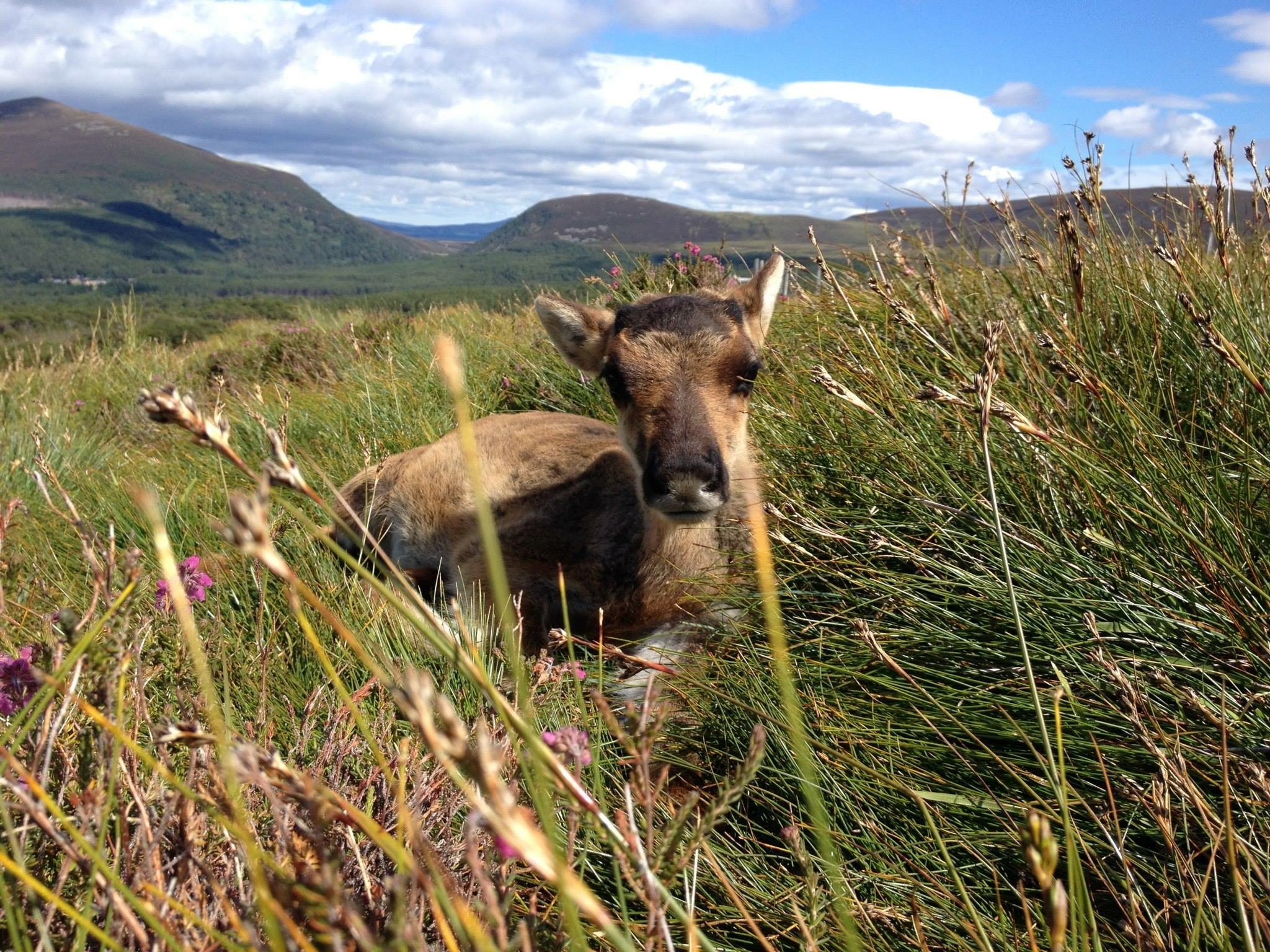
Well, he stole the hearts of many a visitor last year and we are often asked for updates on the boy, so I thought I’d do a quick blog about the naughty man. I am, of course, talking about the darling little Fergus!
Fergus looking angelic on the hill
In June 2015, Foil gave birth to a baby boy. She was a relatively old mother at 13 and unfortunately became ill only a few days after having her calf. We did our best to look after her, but sadly she passed away. The average life span of a reindeer is around 12-14 years, and the vet thinks that Foil had a heart problem, probably linked to old age. This left us with a baby reindeer to hand rear and the prospect of it both excited and dismayed us. Looking after a little reindeer is great, but when they need constant feeding and they decide to poo in your living room, sometimes it can be a little trying. I’m sure you parents out there are scoffing at our patheticness but none of us herders here at the centre have babies, and after this experience I’m sure it will be a while before any of us are having our own!
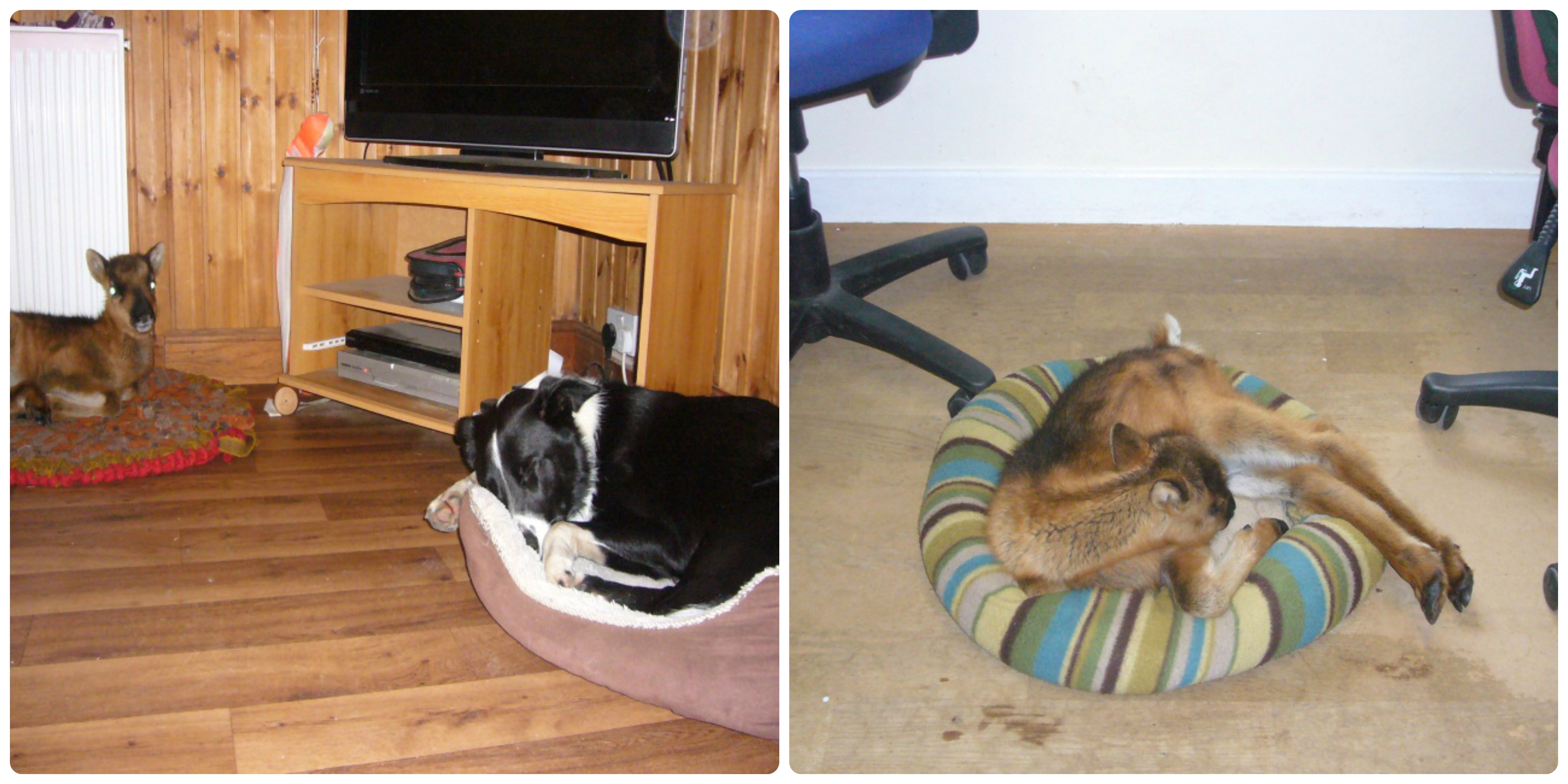
Fergus sleeping in a feed bowl, inside Reindeer House.
So, from 10 days old, Fergus lived at the Centre with a few of the herders. Luckily for them he spent most of his time in the paddocks, but herder Mel took a real shine to him and he was often found napping in her room on her rare days off. Fergus needed feeding 5 times a day, and he soon got to know the times to expect a bottle. He would often be found at the end of the paddocks closest to the house, grunting his little heart out for 5 minutes before his goat milk and growth powder formula arrived. It was always fun for our visitors to see him getting his bottle.
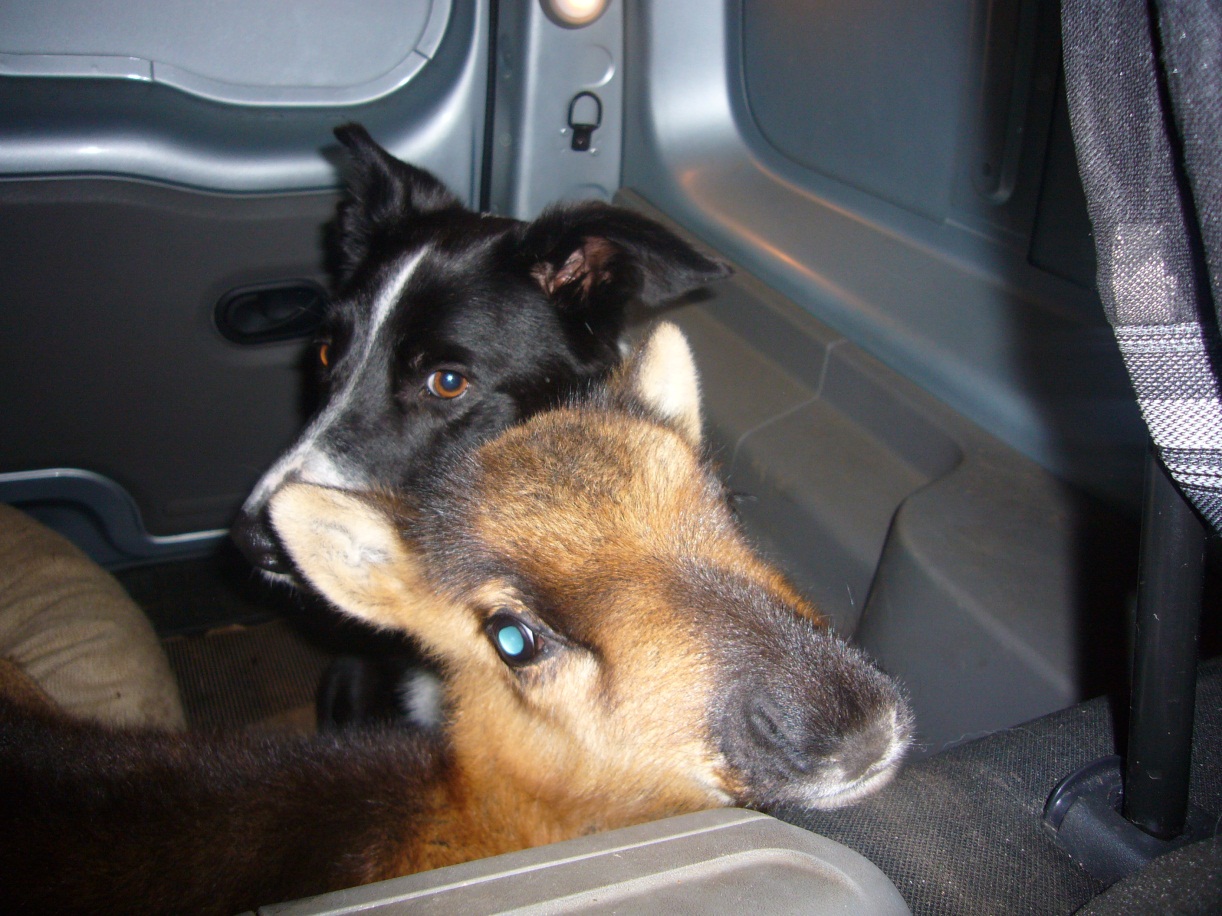
Fergus grew up with dogs around him so is not too worried by the resident reindeer house dogs – Tiree, Murdo and Sookie – who used to cuddle up with him. Murdo always loved to lick Fergus, making it look like Murdo had adopted the little reindeer! Fergus loved to sleep in the dog beds too.
Fergus and Tiree guarding the doorMurdo and Fergus on a ride up to the hillTrying some different beds out for size
Fergus was quite the star last year, ending up in the Press and Journal, our local newspaper. He was even on the front page!
Fergus in the news and up on the hill
In the autumn, Fergus spent more time up in our hill enclosure, eventually living up there full time and just getting a few bottles a day whilst we were doing visits and feeding the other reindeer. Our other calves came back off the free-range and we started to train them to wear a headcollar. Fergus was already adept at this as we had been leading him on and off the hill earlier in the year, and he was a good role model for some of the other calves who were a little shyer around us.
Little Fergus ‘helping out’ on a trek in 2015
Fergus then went off on Christmas tour and of course, he went in Mel’s team. He is pretty naughty and managed to steal mince pies on one of his events, and was trying to nab some Celebrations chocolate on his posh Windsor event as well!
Fergus having a cuddle with ‘mum’ Mel
Then the day came when Mel had to say bye to Fergus, at least for a little while. He had tried bonding with the females way back in autumn, but didn’t really have any success, so had to go onto the Cromdale hills with our other boys to free-range for winter. Fergus had been living in the hill enclosure for a while before we took him and the last remaining boys from the enclosure over to the farm to be led onto the free-range. Mel was upset to see her baby boy head off, but it was the best thing for him.
Soon enough the winter was over and Fergus came off the free-range with the other boys, not a care in the world and ready to get fat over summer. He’s grown a lot since he was a calf, so has spent most of the year over at the farm as he has a tendency to jump on unsuspecting children and give them a fright.
Cheeky devil!Fergus looking great at 1.5 years old
He has been to the Centre for a couple of flying visits, staying in the paddocks, and delighting our visitors. In April, Mel ran the Paris marathon and as a surprise Fergus was brought over here as a well done for her. We made him a little paper collar, congratulating Mel on her run and I’m sure she enjoyed having him round again! He’s been in the house a couple of times over the summer, but he is now far too big for the dog beds he used to sleep in. It’s also not quite so cute anymore when he does his business in the house!
Now Fergus is a cheeky reindeer as you know. His level of foolishness was put up a notch a few weeks ago while we were out painting. Dave was out in the paddocks painting the posts a new and shiny coat of red. Well, you guessed it; he turned his back for only a few moments and Fergus is rubbing his big nose up and down a freshly painted post. And sure enough he turns his face, proudly exhibiting a bright red nose. Though apparently, even with a red nose, Fergus cannot fly. Thanks for the entertainment Ferg!
He’s a hilarious little reindeer who will no doubt make us laugh for many a year to come. Hopefully he’ll get to come up on the hill in a few years, once he’s learnt some manners!
Exploring the meanings of unusual words and the Reindeer hoose Office wall…
To explain this rather dubious title, in our humble office here at Reindeer House there is a list of rather obscure words stuck to our wall: things like Jargogles, Apricity and Twattle. the latter meaning to gossip or talk idly – a lot of that goes on in our office to be sure!
Quite a few of these words we feel are quite apt for a few of our fluffy friends up on the hill so I’m going to introduce you to a few choice selections!
Snoutfair – A good looking person.
I feel this would obviously be quite apt for all the reindeer as they are such gorgeous beasts but Cheese obviously thinks very highly of themselves here!
Cheese being silly!
Cockalorum – A little man with a high opinion of himself.
If there was ever a reindeer that fit this description it would be Mo, Mo is a cheeky little fella and at four years old he’s definitely one of the smallest males in the herd and he more than makes up for it in attitude!
Handsome little thug, Mo
Lethophobia – The fear of oblivion
So this is a tad dramatic but definitely applies to one of my favourite reindeer Shinty. Shinty is originally Swedish and was imported back in 2011. He’s a super sweetie (I think) but painfully shy and often looks apologetic for just turning up in the morning. If any reindeer were to fear oblivion it would be him!
Shinty looking a little wide eyed and worried, as usual
Hugger mugger – To act in a secretive manner
To be honest this applies very well to the female reindeer during the winter months – at this time of year we have to find the reindeer every day and we do all of our visits out on the open hillside. The amount of times we’ve walked out for miles to then turn around and have an entire herd of reindeer smugly behind you is definite hugger muggery if you ask me!
The girls in winter, sneaking off to hide for the night
Jollux – Slang for being a wee bit on the chubby side.
Without a doubt the Jollux of the herd is Magnus, the lovely magnus loves nothing more than chowing down – unfortunately it’s rather hard to put a reindeer on a diet as the hillsides are covered in lovely grazing. This also brings me onto another great word – Callipygian: to have beautifully shaped buttocks. Magnus most definitely gives Beyonce a run for her money!
Magnus looking majestic and pretty tubby!
The final word, one used almost daily here at Reindeer House is Groaking – To silently watch someone eating, hoping to be invited to join them. Every time lunch hour hits there’s some person with a fantastic looking lunch….
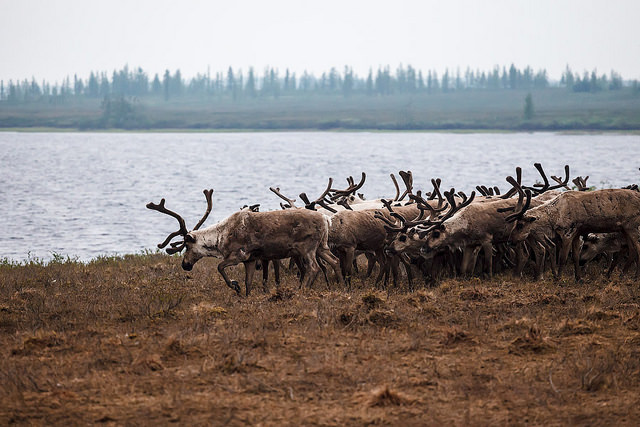
Recently via Twitter we were moved at the news of an anthrax outbreak in Western Siberia, the Yamalo-Nenets region, which has hospitalised over 90 reindeer herders and caused the deaths of almost 2,500 reindeer. The nomadic families herding reindeer across the area were evacuated or vaccinated – authorities are aiming to vaccinate over 40,000 reindeer. In the last few days, a 12-year old boy and his granny have both died.
It is thought that melting permafrost exposed the carcass of a long-dead reindeer, and dormant anthrax contained within it was exposed and became active. In cold temperatures the spores contained within the ground are capable of surviving up to 150 years; in warmer temperatures they morph into a more infectious state.
The melting of the permafrost is unusual, both in its location and its extent. Warming of the tundra this year has been unusually high, with temperatures of 35 degrees. Climate change is something you hear of more and more in reindeer literature and research around the world.
The habitats are changing – flora and fauna increase or decrease as ecosystems fluctuate due to climate, disease or human influence – for example, millions of hectares of birch forest are defoliated by outbreaks of moth now confined to northern latitudes due to climate; wildfires are more common as habitats’ defences weaken; lichens are reduced due to increased pressure on remaining areas and competition; more oil is piped out, disrupting migratory patterns; politics confine reindeer to particular boundaries; and as a way of life reindeer herding becomes more economically challenging.
In Yakutia, to the east of Yamalo-Nenets, there are around 200 burial grounds of cattle which died from anthrax. Perhaps hoping that they won’t be affected isn’t enough.
As a small Scottish reindeer ‘family,’ it is sobering to wonder about the slowly unfolding systemic impact on reindeer and herders around the world – but of course this is just a small part of a very large story, and we mustn’t lose sight of this larger picture that affects us all.