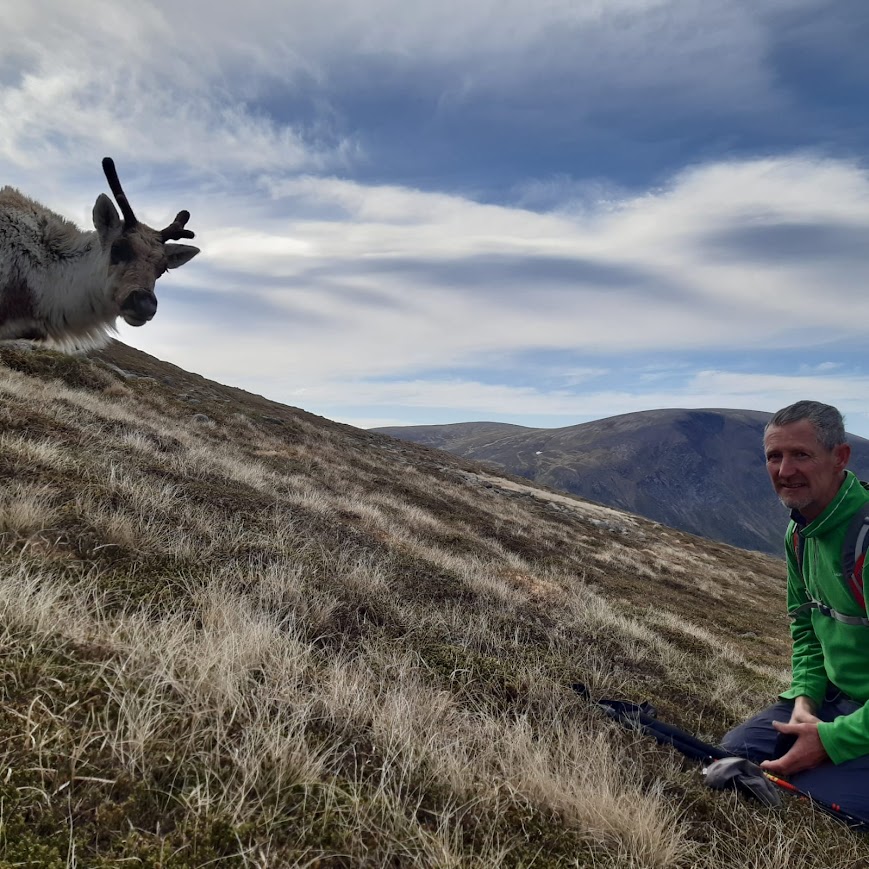
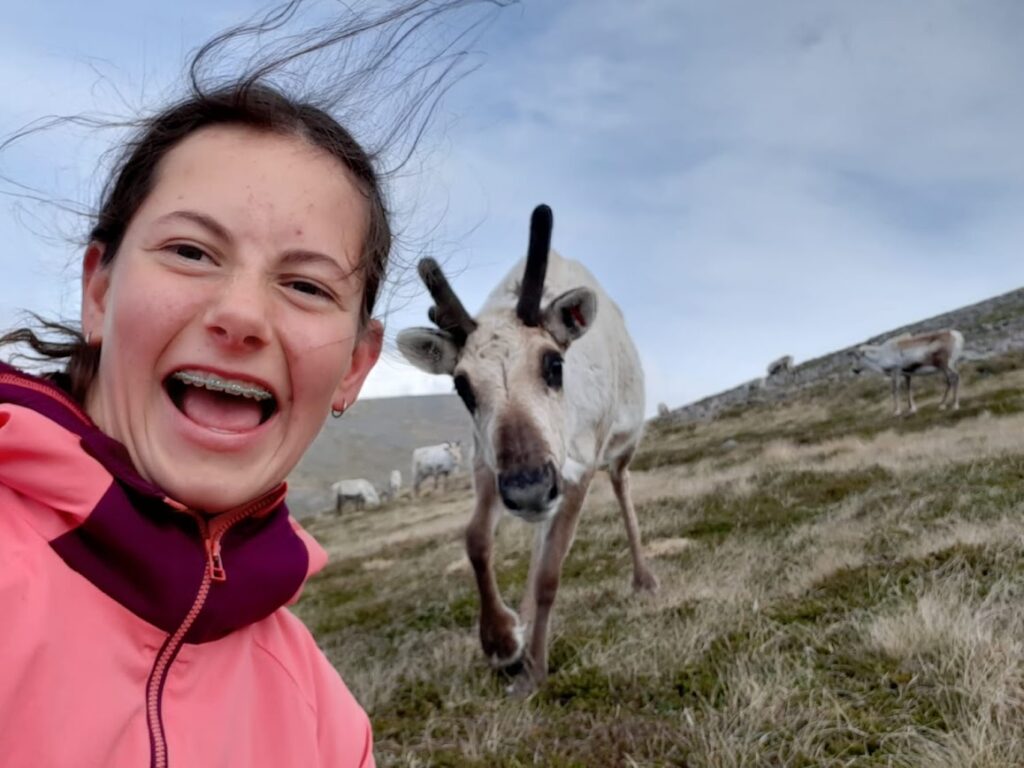
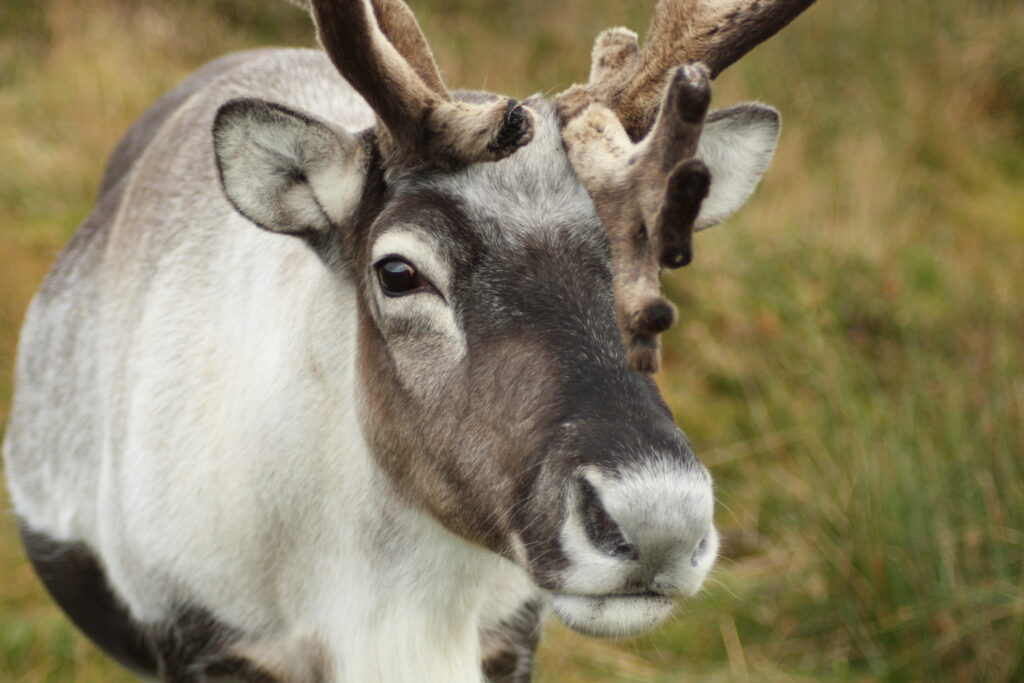
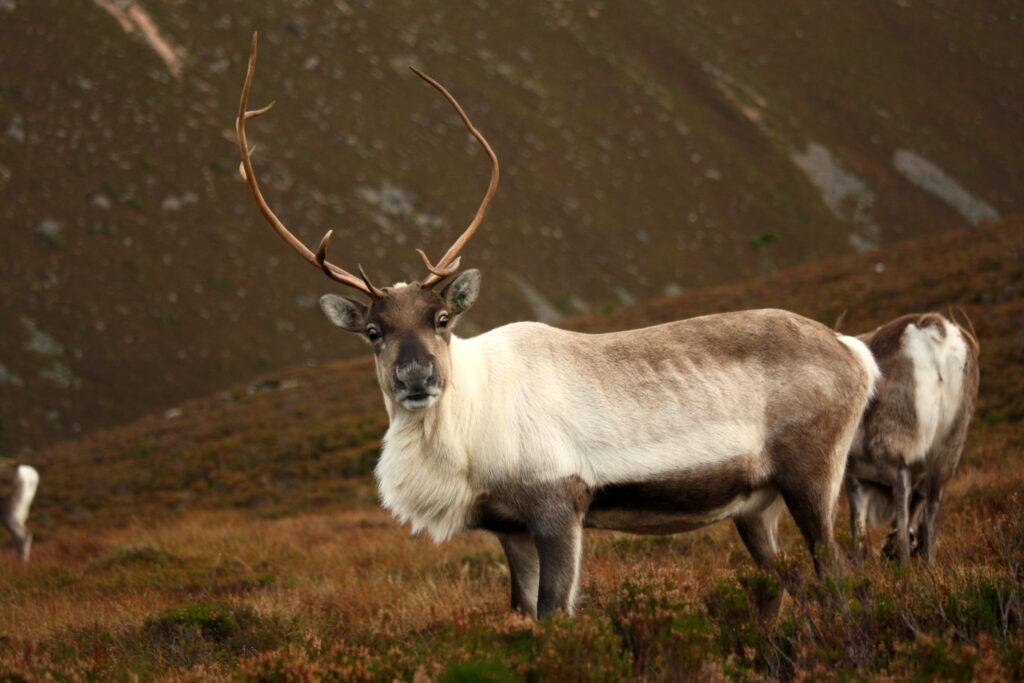
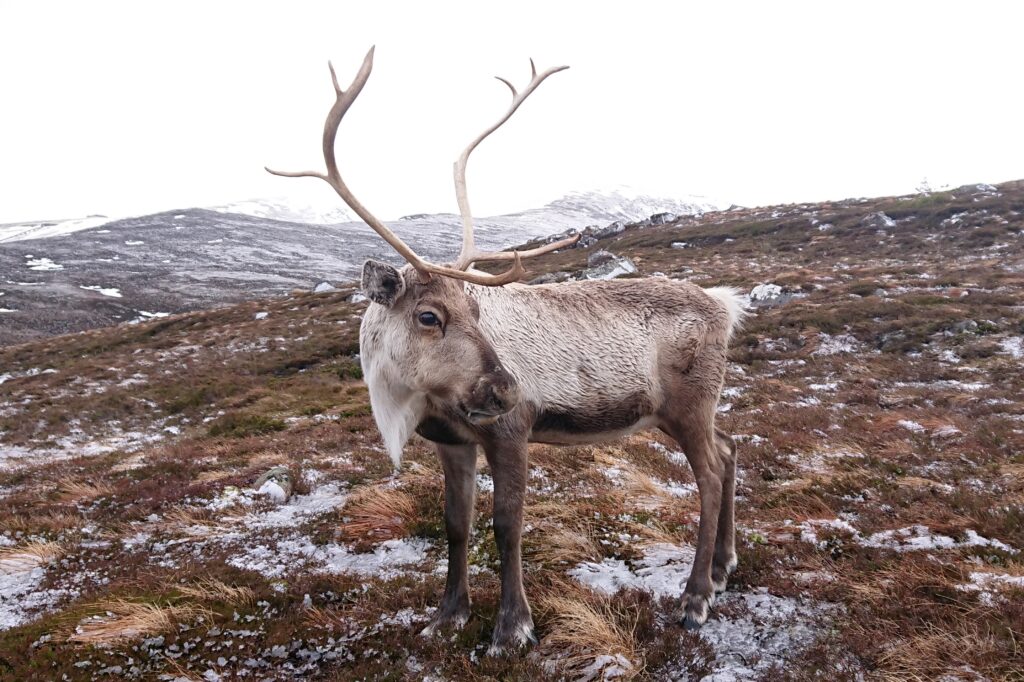
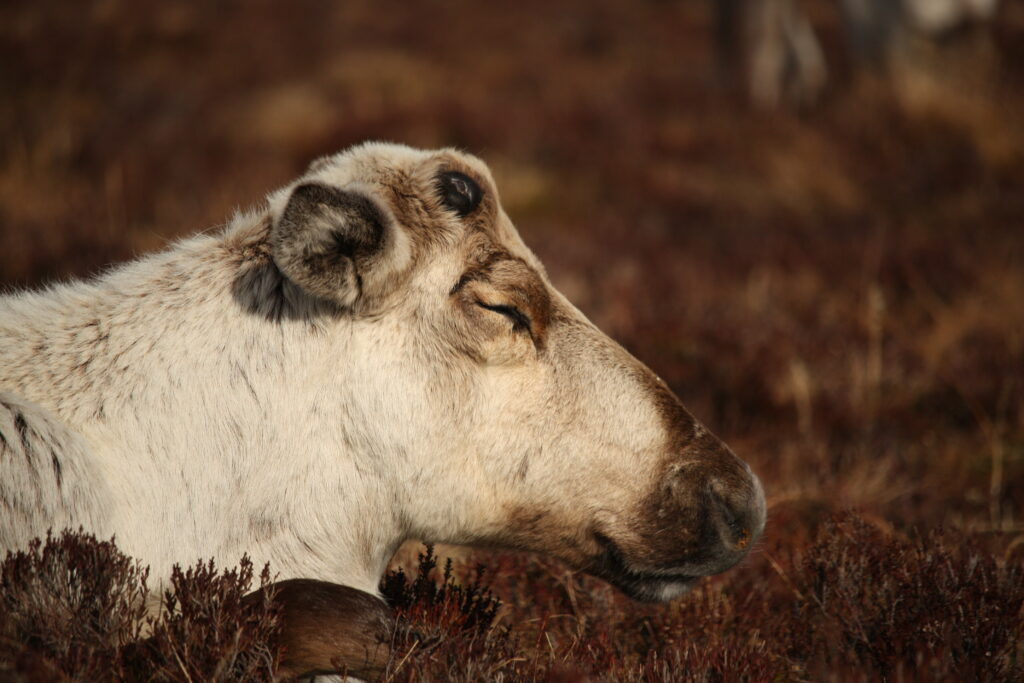
I (Maisy) have been helping out with the reindeer here and there since March 2024. I am now working on weekends and during my school holidays to my delight. I have started to spend a lot more of my time up at the Centre whether it’s because of reindeer, the people and the dogs, it’s just such a welcoming place and I’m very grateful to know them.
Last Christmas I was working quite a bit while being up at Glenmore nearly every weekend in December! This is our busy season for obvious reasons, and it can get quite manic. By the end of December, I think everybody who was working on weekends were really fed up with Christmas songs from hearing the so many times… We were going up the hill in sunshine, rain or snow we just had to wrap up warm and get on with it. At one point I was wearing so many clothes I could hardly move my body it was so cold. Including the wind, it felt like roughly -19 which is pretty cold especially when you’re not moving very fast with your visitors.
My Mum and Dad are friends with Alan and Tilly so when I was younger, we went to the farm to give a hand. One of the only memories I’ve had at the farm when I was little was being in a tractor with my dad and Alan and falling out of it. I have slowly accumulated quite a lot of photos so when Ruth suggested for me to possibly write a blog I obviously said yes.
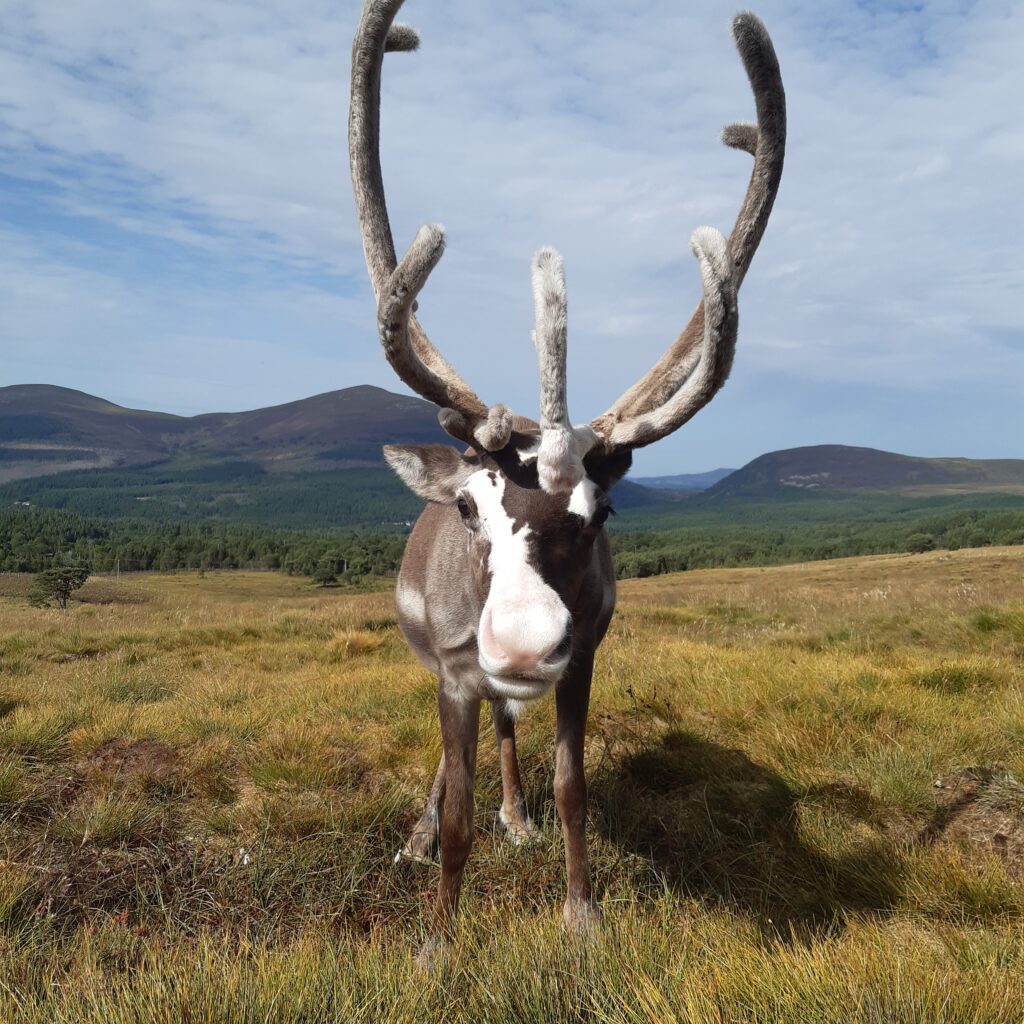
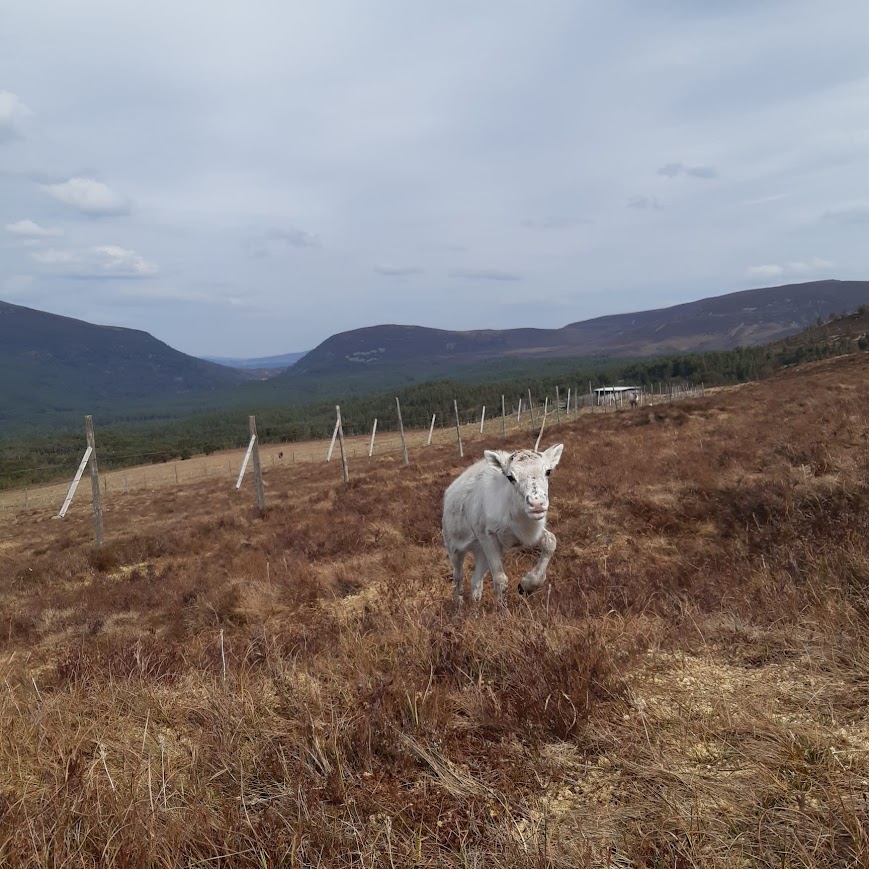
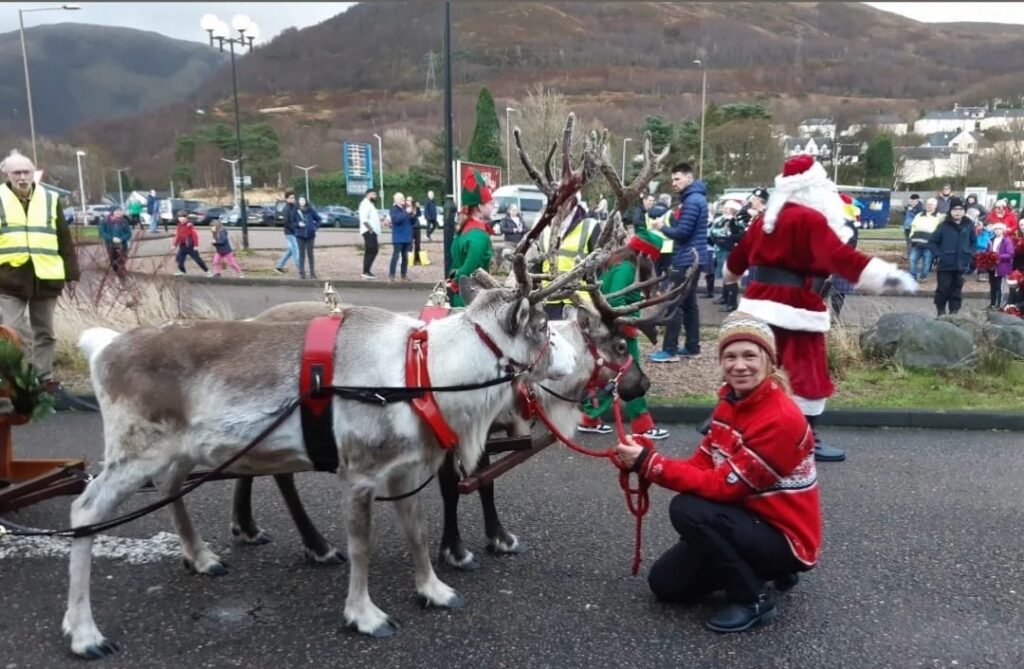
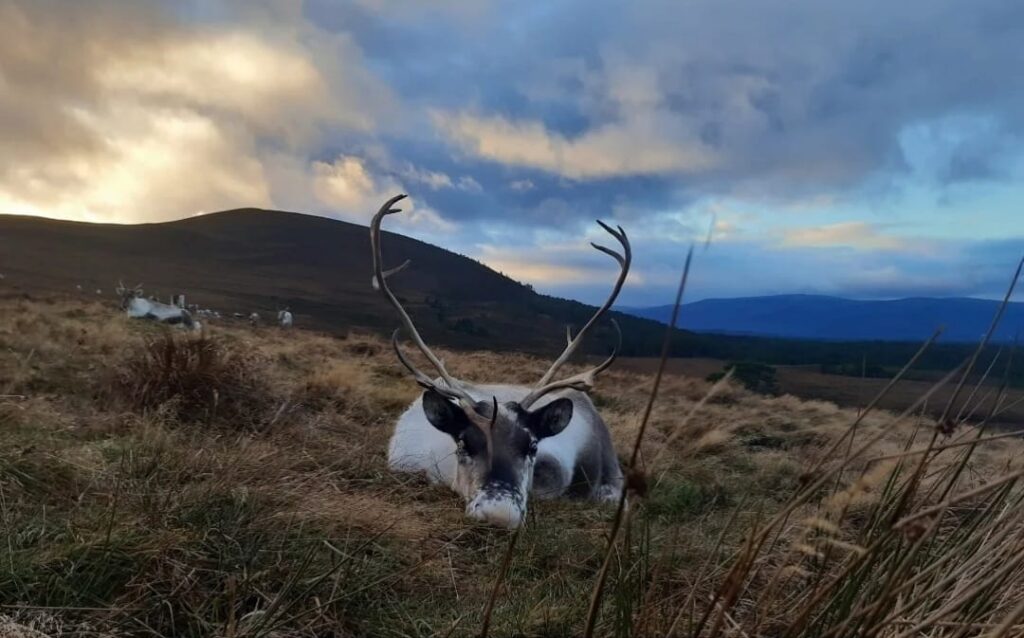
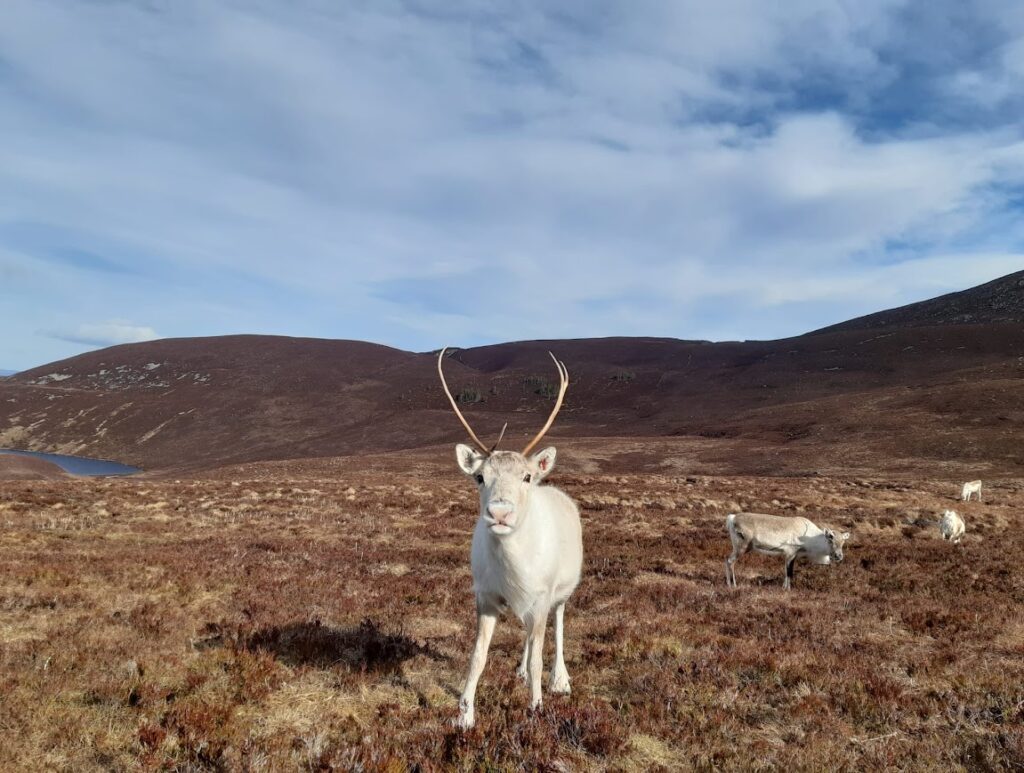
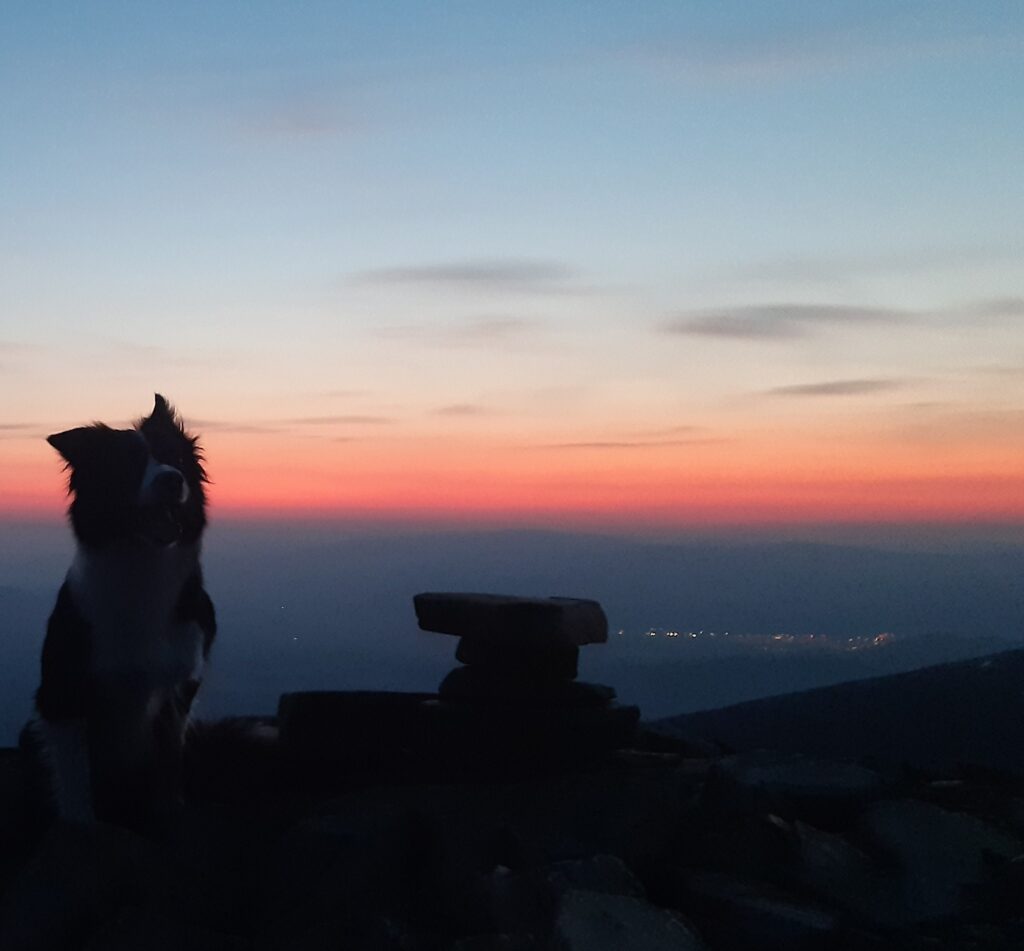
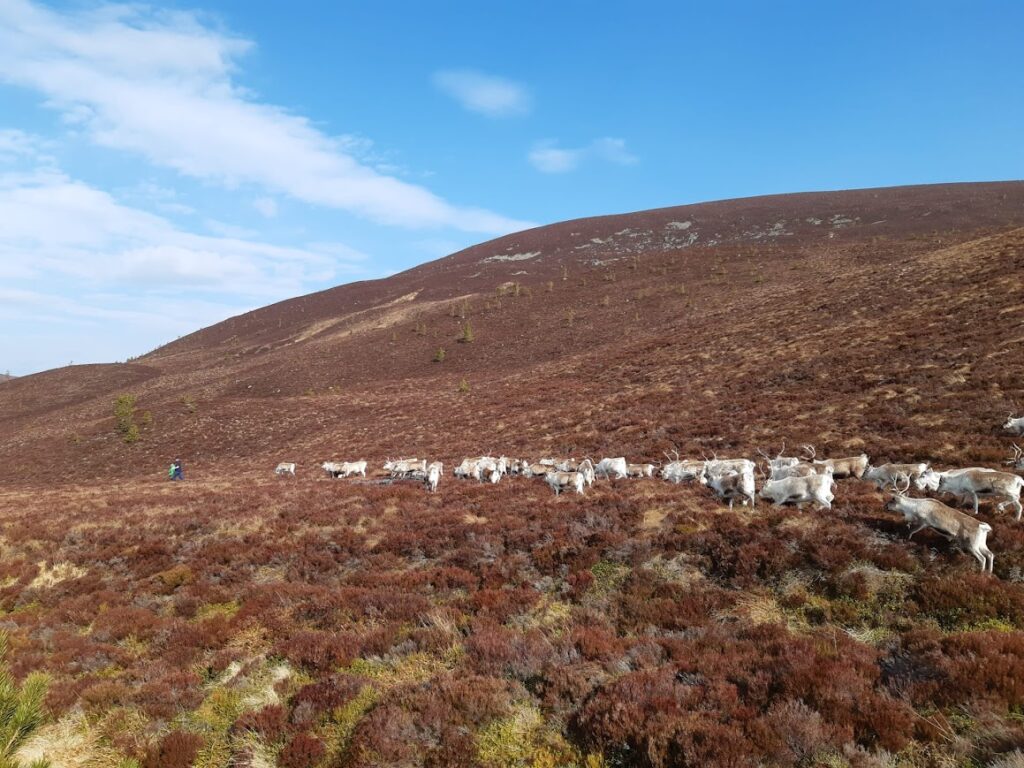
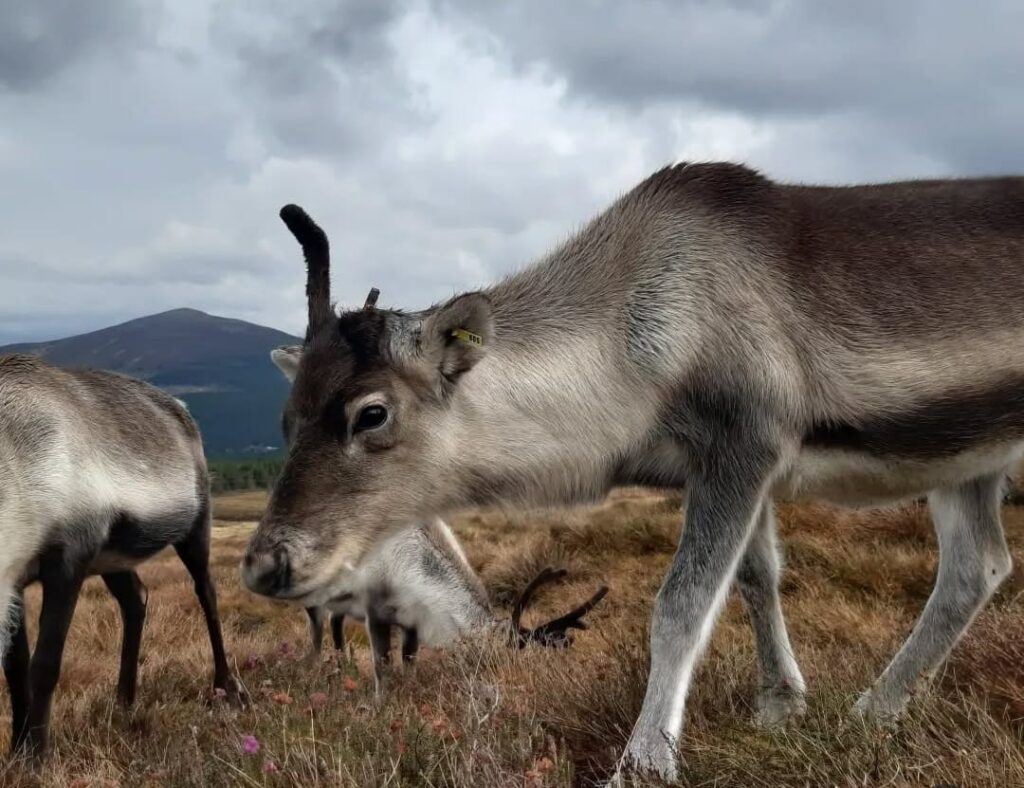
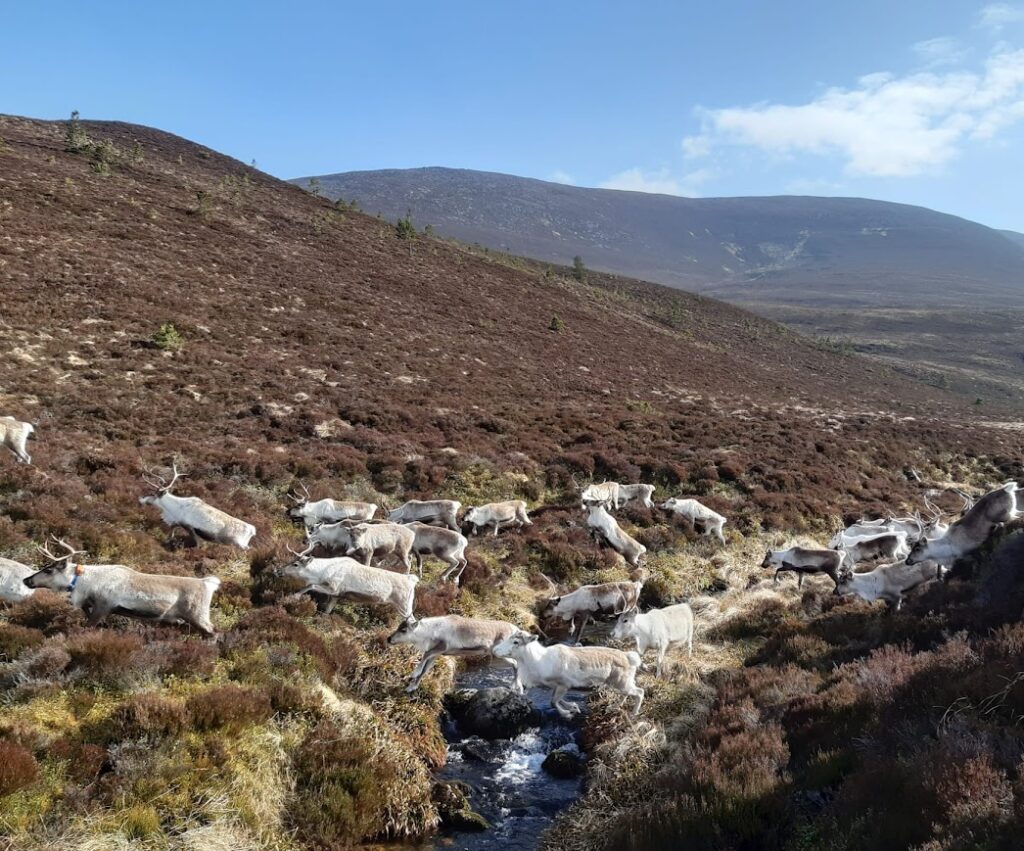
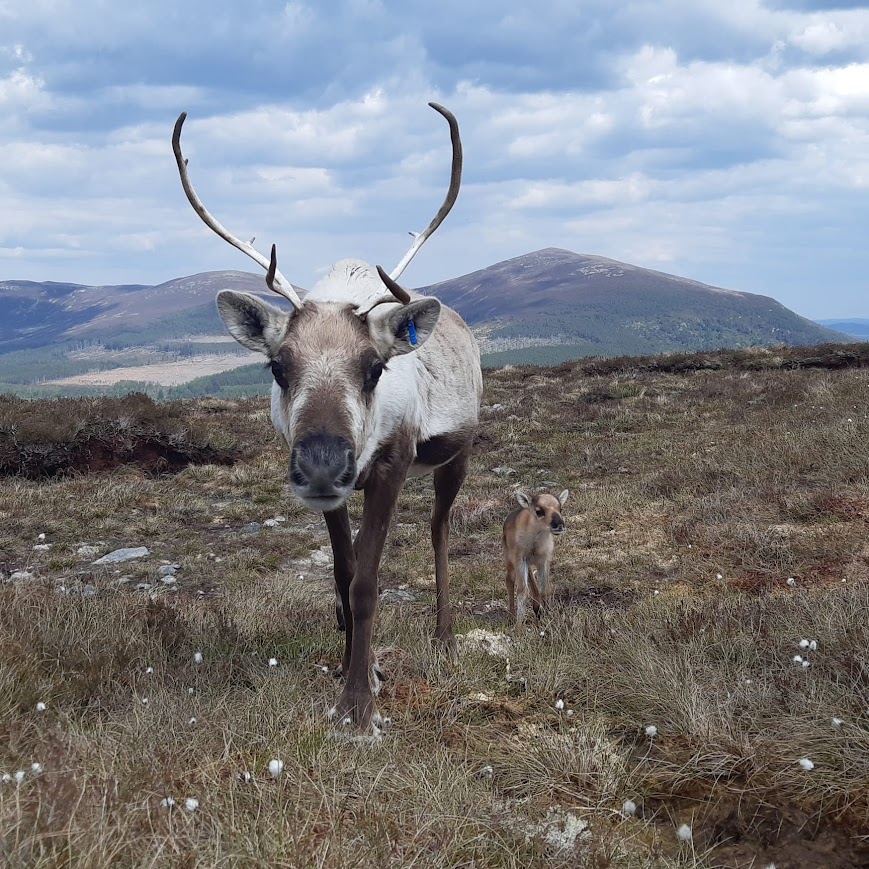
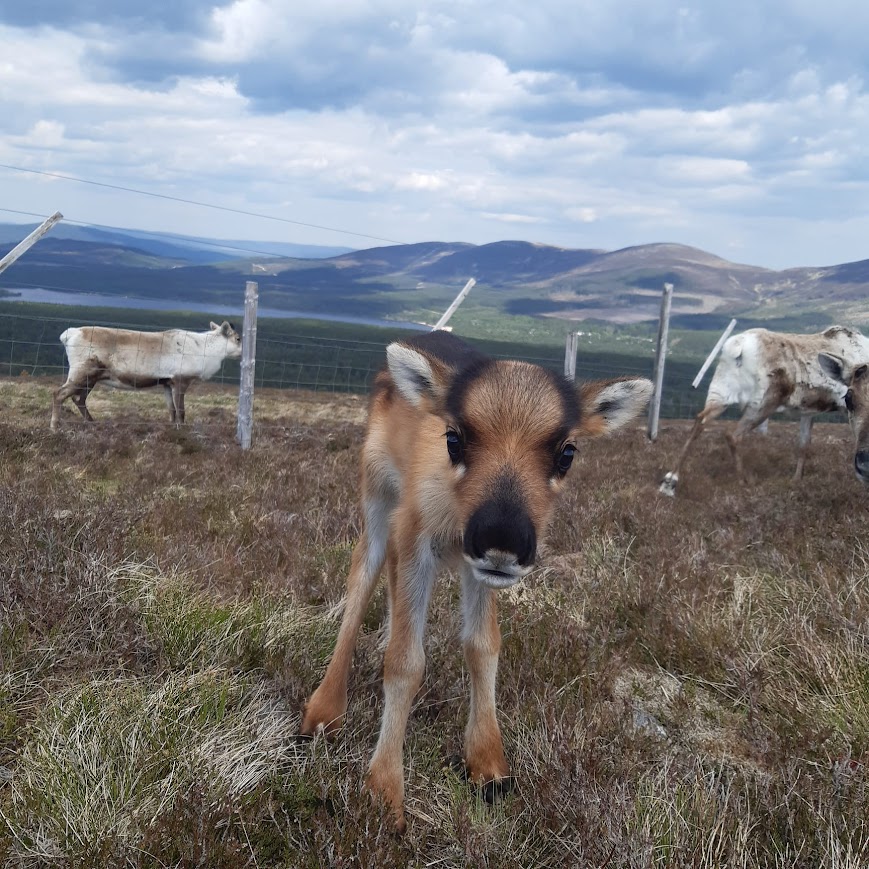
Magnum in the sun on a really hot day in mid August.Chai running for food in the enclosure on the 12th of April 2025.Lisette with Frost and Busby at a Christmas event in Fort William.Christie snoozing on a gorgeous day in December.Lolly looking surprised, overlooking Kidney Lochan while free ranging on the 2nd of March.And of course, can’t miss a dog photo can I. This is Fraoch on the summit of Meall a’ Bhuachaille and it was the best sunset I’ve ever seen! Scotland at its best.The herd following Lotti in early March heading down Plantation Hill.Wee Fika last year in the enclosure. She is currently Free ranging with her mum Sunflower.The herd crossing the Alt Ban on the 9th of March 2025.Trilby with her calf in front of Meall a’ Bhuachaille in the enclosure being just a few days old on the 11th of May.The first calf of the year building up his confidence in the enclosure. And also, being super-duper cute!Me and my dad were out on the hills in May and came across a herd free ranging. This is wonderful Mocha.This is me and Nuii on the same day who was very interested if we had some spare food going. We sadly did not!Marple and her calf with the herd after coming off free range. This was taken on the 14th of August 2025.Zap having a chill time before a busy day with visitors on the 16th of August.
Reindeer live for an average of 12-13 years, with 17 or 18 being an exceptional lifespan, and I have now worked here since November 2007 – getting on for 18 years. In 2023, it got to the point where only a small handful of old reindeer still remained in the herd who had been alive when I first arrived, with everyone else having been born in the duration of my employment.
These five, Lulu, Enya and Elvis (born in 2006) and Fern and Fly (born in 2007), became the ‘oldies’, outlasting many reindeer who were younger than them. I thought of them as my gang of old buddies, the only reindeer to have been here longer than me. Lulu in particular was a real character and a favourite of mine – you can read a previous blog of mine about her here.
Fern in 2018 in her heyday, aged 11 and with an incredible set of antlers.Handsome Elvis with his silver coat.Fly looking shocked that I wanted to take her photo!
But after a couple of years of the situation not changing, 2023 rolled around and in the second half of the year, suddenly we lost Lulu, Enya and Elvis close together. My cohort of oldies was down to two! Fly managed another few months before her time came, leaving just Fern, older by a year to any others in the herd. But Fern was in remarkably good condition for a reindeer aged nearly 17. Big antlers for an old girl and in really good condition, though by late summer 2024 she was definitely looking a bit ‘older’ in comparison.
Fern in February 2024 at nearly 17 years old – looking incredible still.
Throughout winter 2024/2025 Fern continued to soldier on, in better condition than some of her younger buddies other than a bit of arthritis that we could manage with pain relief. We saw that part of the reindeer herd at least every day or two through the winter (in summer we see the females much less) and in the latter part of the season it started to become apparent that Fern’s sight was declining.
We made the hard decision to put her down at the end of the winter, at the point when we would naturally stop seeing the females daily as they move away to their summer pastures. Whilst she may have continued on for a few more months, the potential of her injuring herself accidentally out on the mountains and suffering a slow end without us knowing about it was a risk we were not willing to take – welfare always has to be the first priority for our animals.
My last photo of Fern, taken about 5 weeks before she died. Snoozing in the sunshine!
With the passing of Fern, the whole herd has now completely changed since I started. Gazelle, Sika and Sambar are now 17 years old (Gazelle the oldest by about a fortnight), and I have known them for their entire lives, and this feels like quite a significant point in my time here. Possibly mainly because it’s making me feel even older than usual, but hey ho.
You know something has gone very right when you accidentally end up being a reindeer herder for the summer. I met herders Mel and Chris on the Isle of Rum, and about two months later I found myself moving into Reindeer House. I couldn’t have predicted becoming a herder, and it has exceeded all of my expectations!
I arrived in Glenmore at the start of May, right in the thick of calving season. The first month was an amazing blur where every day was different, calves were being born left right and centre, and the sun was shining every day. By June I felt fully settled in to my new role, the calves were now free ranging in the mountains, and I was able to work on perfecting the art of guiding Hill Trips! July brought on some very impressive sets of antlers, looking back at photos from May, I can barely recognise any of the boys! It has been a process of constantly learning and relearning who is who because the reindeer seem to shape shift on a weekly basis. Now that August is upon us, I’m starting to get sad realising my first summer here at Cairngorm is nearly over!
Here’s some photos from this summer of herding:
Giving Helsinki’s calf a lift into the nurseryJelly welcoming me to the paddocks on my first dayTexel’s calf seeing if any milk will come out of my fingerDruid working his magic…trying to persuade me to feed himDruid’s magic clearly workedA poorly Jimmy on his morning walk. Don’t worry, he recovered well!Rainbow on the free rangeSoggy but happy faces after taking the last group of cows and calves out to the free rangeSolstice camp out with TireeEmily and Alex busy behind the scenes building the new exhibitionA scruffy Yukon in the foreground looking bored while I waffle on to visitors about how cool the reindeer are.
As most readers know, we name reindeer on a theme each year. For example, in recent years we’ve had ‘Teas and Coffees’, ‘Rivers of the World’, and ‘Ice Creams and Lollies’ to name just a few. This old blog goes into the themes themselves a lot more.
The majority of the time the calves are given a name within the given theme more or less at random. There’s hundreds of examples of this but to give you one – in 2022 Caterpillar (‘Bugs and Beasties’) had a female calf that we called Popsicle (‘Ice Creams and Lollies’) for no reason other than it fitted the theme and we thought it a suitable name for a sweet female calf.
But sometimes we try to be a bit clever, linking names within the theme to their mother or other family member. This can help us remember who is related to who… or just confuse us completely!
Often, we use an alliteration, for example Brie (‘Cheeses’), had a calf who we named Beret (‘Hats’), who went on to have a calf called Brew (‘Teas and Coffees’). You’ll also notice a French link between Brie and Beret!
Beret and her mum Brie free ranging on Cairngorm. An alliteration and a French link.Beret in 2024, with her daughter who we later named Brew.
Gazelle (‘Horned and Antlered Animals’), now aged 17, is long retired from breeding. She has three surviving sons whose names all begin with an ‘A’ – Aztec (‘Ancient Civilisations’), Athens (‘European Places’), and Adzuki (‘Seeds, Peas, and Beans’).
Aztec – one of the greediest reindeer in the herd. A trait inherited from his mum Gazelle. He tends to grow quite small antlers. Athens, also very greedy, who tends to grow very wide antlers.Adzuki, perhaps the least food-obsessed of the three brothers, who tends to grow very tall antlers.
Emmental (‘Cheeses’) has been a great breeding female over the years – all her offspring have names beginning with vowels just like her – for example Olmec (‘Ancient Civilisations’), Iskrem (‘Ice Creams and Lollies’), and Ob (‘Rivers of the World’).
Emmental and her son Iskrem enjoying the free range.Ob and older brother Iskrem, both with matching white noses.
Sadly, we lost old girl Ibex (‘Horned and Antlered Animals’) in the spring at a grand old age of nearly 17. She had a female calf in 2020 who we named Flax (‘Seeds, Peas, and Beans’) as both their names ended with the letter ‘x’.
Ibex and Flax, mother and daughter, out free ranging together.
Flax has gone on to have three calves so far, her first in 2023 we named Nile (‘Rivers of the World’), the second in 2024 we named Camomile (‘Teas and Coffees’) and the third was another male born this spring. All going well, he’ll get named in early September, so we’ll see if we select a name that rhymes with his older siblings!
Flax and Camomile.Nile, big brother to Camomile.
Pagan (‘Ancient Civilisations’) was a notorious reindeer in our herd who sadly died very suddenly and unexpectedly in 2023. We were all incredibly fond of her despite her bossiness – she was a real character. We managed to name all of her offspring on a Halloween/witchy theme as best we could. Pumpkin (‘Seeds, Beans, and Peas’), Witch (‘Hats’), Zap (‘Ice Creams and Lollies’), and we named Pagan’s last calf who we hand-reared Winnie. Winnie’s name doesn’t fit the theme that year because she had to be named before the theme was even selected but we went for Winnie (or Winifred), after the witch.
Zap – Pagan’s son looking a bit scruffy during the moult. This was the most ‘witchy’ ice cream name we could come up with. We imagined a witch’s wand might make a zapping sound when used!Winnie’s gorgeous nose.
Sometimes the link can be a little more intellectual, surprising I know! Suebi (‘Ancient Civilisations’) had twins in 2023. Her female twin was hand-reared from the age of just three days old (alongside Winnie) and therefore was given the name Alba long before the theme was even chosen. However, the male twin was named in the ‘River of the Worlds’ theme. The Suebi people were a large and powerful group in the Roman era. They originated on the river Elbe, in what is now north east Germany – so this was the perfect name for Suebi’s son. We think the names Alba and Elbe also go very well together.
Suebi and her twins – May 2023.
And finally, sometimes the link is just a bit silly! Hobnob (‘Cakes, Biscuits, and Biscuits’) had a calf in 2020 when the theme was ‘Seeds, Peas, and Beans’. We named her female calf Mushy, after mushy peas. Why did we select the name Mushy for Hobnob’s calf you may ask? Simply because if you dunk a hobnob into a cup of tea, it goes mushy.
July has been a good month with the reindeer finally starting to look good in their short sleek coats. We’ve some very hot days, but the reindeer have very faired well. They felt the heat on occasions but thankfully have ways off cooling down, I actually think they dealt with it better than me! Check out this old blog to see how the reindeer cope in higher temperatures.
We’ve been busy with three Hill Trips every weekday, and two on weekends. The Paddocks has also been popular and behind-the-scenes there are exciting things going on in the Exhibition. We still don’t have an opening date, but things have progressed well in the last couple of weeks. Exciting! Here’s some pics of some of our lovely male reindeer taken over the past month…
1st of July: Cicero sporting a brilliant ‘wig’!2nd of July: Hemp, Earl Grey and Yukon posing beautifully.2nd of July: Magnum, Amur and Espresso having a lie-down after a Hill Trip. 8th of July: The herd heading for breakfast.9th of July: It’s so hard to take photos at this time of the year as the boys are so busy grazing with their heads down! Spartan and Kulfi are the two boys with their heads up, and white noses.10th of July: Kernel’s lovely nose.10th of July: A morning training session with Caz and Kate. 11th of July: The boys on a hot day, all standing with their feet in a bog to help them cool off. Cappuccino coming over to say hello.12th of July: No reindeer pics today, but I did take one at the river where Kate and I went for a wee paddle to cool off after a hot Hill Trip!14th of July: Earl Grey looking cute. The colour difference between his winter and summer coat is really noticeable. 15th of July: Tub lunging for a feed bag.18th of July: Zoom leading the herd in for their breakfast. 19th of July: Cuppa coming in for his close up. He’s now looking great in his short sleek summer coat. 20th of July: Another morning training some of our wonderful future ‘Christmas reindeer’.22nd of July: Too close Scoop!23rd of July: Tiree and Fraoch helping with the morning duties. 24th of July: Kulfi’s lovely white face.
Just like people, some reindeer have huge resemblance within their families, and some more so than others. I thought I’d write a wee blog to talk about a couple of the best examples in our herd today – and then I discovered that Ruth had beated me to it. So here’s a couple more examples of striking family resemblance, and you can read Ruth’s ‘Mini-me’ blog here.
Family ‘looks’ run especially strongly in Holy Moley’s family. She herself is the spitting image of her mum Galilee, and Holy Moley’s daughter Mississippi popped out looking like a carbon copy too. Here are Mississippi and Holy Moley in the photo above, taken in September 2024 when Mississippi was 16 months old – whilst obviously smaller still as she’s not full-grown, the resemblance is uncanny. Holy Moley only grows a single antler each year due to an injury as a calf, and it seems Mississippi even tried to emulate this look by breaking hers! I’d loved to have had the opportunity to photograph Galilee alongside the two of them, but sadly she died when Holy Moley was only 4 months old.
This is half-brothers Jelly and Cicero, who are both extremely similar. Jelly is a touch darker, but both grow matching antlers and for much of the year they can be pretty hard to tell apart, especially as they are the same age as each other. The best family resemblance of all is between their dad Houdini and Cicero (on the right in the photo), but once again I’ve never had the opportunity to get a photo of them all together, and Houdini is now very old and age has now changed his appearance somewhat. Houdini was originally born in Sweden and imported to join our herd in 2011, hence we bred from him a fair bit to use his ‘fresh’ genetics, but these two offspring are the most similar in appearance, both to him and to each other. All three grow relatively simple antlers for males, with not too much going on at the tops compared to some reindeer.
There are some other good examples in the herd, but it can be difficult to get photos of certain individuals together, so maybe I’ll add another blog further down the line when opportunity arises!
50,000-12,000 years ago the world was in the grip of the last glacial period (the Ice Age). During this time, reindeer were abundant across Eurasia’s glaciated landscape. Huge herds of them provided a vital source of food and materials to our late Stone Age ancestors. At the same time, early human artwork was flourishing. There are several examples of ice age art from modern-day France that reveal how significant reindeer were to the people living there – not only as a resource but as a source of inspiration.
One of the oldest examples is the ‘Reindeer Panel’ in Chauvet-Pont D’Arc cave, featuring reindeer alongside other animals. These palaeolithic paintings are estimated to be up to 36,000 years old!
‘The Reindeer Panel’ in the Chauvet-Point D’Arc Cave, discovered by Jean-Marie Chauvet, Eliette Brunel, and Christian Hillaire in 1994.
17,000-11,000 years ago, Magdalenian culture emerged in Western Europe. Reindeer were such an important source of food and materials for these people that it’s sometimes referred to as the ‘Reindeer Era’.
The Font-de-Gaume cave in France is home to the ‘Two Reindeer’ piece. The original is very faded, but reconstructions reveal a duo of reindeer facing each other. This site is dated at about 19,000-17,000 years old.
A reconstruction of ‘Two Reindeer’, Unknown Artist (Above). The original ‘Two Reindeer’ from the Font-de-Gaume cave, formally discovered in 1901 (Below).
This engraving of a calf – and what looks like the broken remains of a larger reindeer – is carved into a reindeer metatarsal (foot bone). It’s dated to 14,000-10,000 years ago.
Engraved bone excavated in 1863 by Henry Christy and Edouard Lartet at the La Madeleine site in Tursac, France.
The ‘Swimming Reindeer’ piece might be the most famous example of palaeolithic reindeer art. This carving depicts two reindeer carved into a piece of mammoth tusk. It’s thought to be 13,000 years old. This was around the time that a changing climate caused reindeer populations in France to start to fragment.
‘Swimming Reindeer’, discovered in 1866 by Peccadeau de l’Isle and pieced together from two parts in 1904.
About 11,000 years ago, the last glacial period retreated, and with it the ice sheets and reindeer were pushed north and to higher altitudes. Our planet entered its current ‘interglacial state’ – the Holocene. As humans adjusted over the millennia to a warmer world, reindeer became a distant memory in most of western Europe. In the Arctic/Subarctic regions though, humans formed an even closer relationship with reindeer which eventually transitioned from hunting to herding.
Antlers are my ‘thing’, here at the Reindeer Centre, so it’s a natural subject to turn to for a blog when Ruth is starting to look a little twitchy about needing the rest of us to crack on and provide her with some blogs to keep her going through the calving season (no chance of having enough time to write any then!).
I thought I’d write about different antler shapes amongst female reindeer in this blog, as there is so much variation. Reindeer tend to grow the shape shaped antlers from year to year, but there are factors that influence it, such as general body condition, or whether they’ve got a calf at foot to raise – so more variation tends to be seen amongst the females from year to year than the males.
I’ll start with Marple, above, who I would say grows very much the ‘average’ style of antlers. Upright shafts with multiple tines growing backwards from them; forward-pointing tines originating from the base, and a ‘blade’ – a tine from one antler growing towards the nose. I’ve written more about Marple’s antlers in the past here. However, we also see a wide range of shapes from year to year, such as:
The ‘Bonsai’: Indigo’s antlers are very convoluted and wiggly here!The ‘Salad tongs’: Meadow grew this incredible set of antlers as a two year old – I’m not sure what happened to them but they would have made excellent salad tongs!The ‘Ant’: Merida’s efforts in 2024 were, quite franky, ridiculous.The ‘Unicorn’: Multiple reindeer over the years have only produced a single antler, such as Dixie here. It’s a natural occurance that just happens sometimes. The ‘Gate hooks’: If you’re going to grow a gate hook on your head, might as well grow two! Russia looks very strange….The ‘Lazy antlers’: Israel couldn’t be bothered to put too much effort into her antlers this year, but all the effort went into her body instead. Look at those rolls of back fat!!!The ‘I don’t need no antlers’. Arnish was a ‘polled’ reindeer, one who never grew antlers, but she was built like a tank so no-one messed with her at all – the lack of antlers certainly didn’t hinder her in the herd!
Read more about polled reindeer in a previous blog here, and if you’re wondering whether we ever sell antlers, you can find out here. There’s more general info about antler growth here too.
June is the scruffy reindeer month! Perhaps, not their most photogenic season but still a wonderful time of year and I still managed to take lots of photos of course to fill the monthly photo blog . The cows and calves are all free ranging in the hills and we have around half our males in our hill enclosure here, growing lovely antlers and meeting our visitors.
1st of June: Elbe still with almost a full winter coat, but you can see the short summer coat around his eyes and on his nose. The ears back look is very common in Elbe’s family. His twin sister Alba also often has the same ears back rather grumpy expression! 3rd of June: Dr Seuss with his pink nose! Every June his old winter coat falls out completely before his summer coat grows through.6th of June: Bond looking majestic! Sadly the very next day he had broken his antler and now looks a little less majestic. 8th of June: No reindeer, but a lovely view from the side of Silver Mount looking down towards Glenmore and Loch Morlich with the lovely cotton grass in the foreground. 9th of June: 99 sporting his yellow sun block!9th of June: The handsome Akubra coming to say hello.11th of June: On a warm day the boys can go back to the gate and cause a bit of a road blockage for our visitors wanting to leave!11th of June: Trying to get a decent photo for social media to announce the arrive of our 2026 calendar. This is me showing Amur his page in the calendar.14th of June: Choc-ice finding a good chin rest for a snooze.14th of June: After a rainy night, Lupin looks incredibly shaggy – his winter coat is coming off in big dreadlocks!14th of June: What a motley crew. From R-L we have 99, Rocket and Dr Seuss. 17th of April: Druid doing his best ‘wooing’ face after the Hill Trip. He’s quite a shy reindeer but after a Hill Trip he comes looking for the white bag and wins the hearts of our visitors!18th of June: Scoop is looking very smart in his short summer coat.18th of June: Busby lying down and looking very handsome after a Hill Trip.19th of June: Harness training with some of our male reindeer. 20th of June: A sunny Hill Trip!25th of June: Butter, one of last year’s breeding bulls, growing a lovely set of antlers. 25th of June: Morse has also been a breeding bull in his day, but is now one of ‘Christmas reindeer’ trained to harness. 26th of June: Ärta looking very scruffy. 26th of June: Paddock swap day! Taking the Paddock boys back up the hill.
Every reindeer herder looks forward to May – it’s pretty much the best month of the year for us with calving time for the reindeer dominating it. But May is also one of my absolute favourite months for other reasons too, the trees are coming into leaf, the plants in my garden are growing like mad, the weather is generally fairly amenable, and the migrant birds are back.
May looks like THIS to reindeer herders!
Mention May to any reindeer herder and calving is – I guarantee – the first thing that pops into their head. Reindeer are very seasonal with their breeding, and whilst the occasional calf might be born in the last few days of April, the vast majority arrive in May every year. Calving is a wonderful time of year for us – who can resist the cuteness of a a newborn reindeer? – though it comes with a fair amount of stress too, as we do our best to keep everyone happy and healthy. You’ll find lots of blogs about calving if you use the search function on the blog page here (only visible on a laptop/desktop) if you’d like to know more. Plus lots of lovely photos – of course!
Calves Gelato and Zoom at couple of weeks old
But I have other connotations for the month of May. The second one are the cuckoos. We’re lucky enough to still get plenty of cuckoos in this area, although nationwide they have declined by about 65% since the early 1980s. Even the least ‘birdy’ person in the UK surely knows their iconic call, and I associate them so much with May. They call from the forest below the reindeer’s hill enclosure all through the month, and the far-carrying sound is so reminiscent of all the early mornings over the years that I have trudged about on the hill side looking for cows with their newborn calves. Cuckoos seem to stop calling earlier than some species, I’ve noticed, and already as I write (early June) I realise that I’m barely hearing them any more. Such a short season, and yet they are utterly ingrained into our conscious in spring! Read more about other migrant species who are summer visitors to us in one of my previous blogs here.
The third thing I really associate with May here in the Cairngorms is the cotton-grass (Hare’s-tail Cotton-grass, to be precise), which grows on acidic moorland and is familiar to many, with it’s bobbing cotton-wool like flower heads.
Hare’s-tail cotton-grassFab as a calf
It’s not actually a grass but a sedge, and some years give particularly good displays, where it can almost look like it has snowed. It comes into flower in May, and grows particularly well in the bottom of our hill enclosure on the flatter areas there, which tends to be where the cows and their calves hang out during the month.
Calving in the cotton-grass… A very grumpy looking Brie with her grey calf Latte, and Peanut and her calf Kuksa in between.
So there we are – the three ‘c’s that are incredibly strongly associated with May to me. The fourth would be ‘chaos’, but that’s part and parcel with calving so can be combined into one!