Wee calfie antlers!

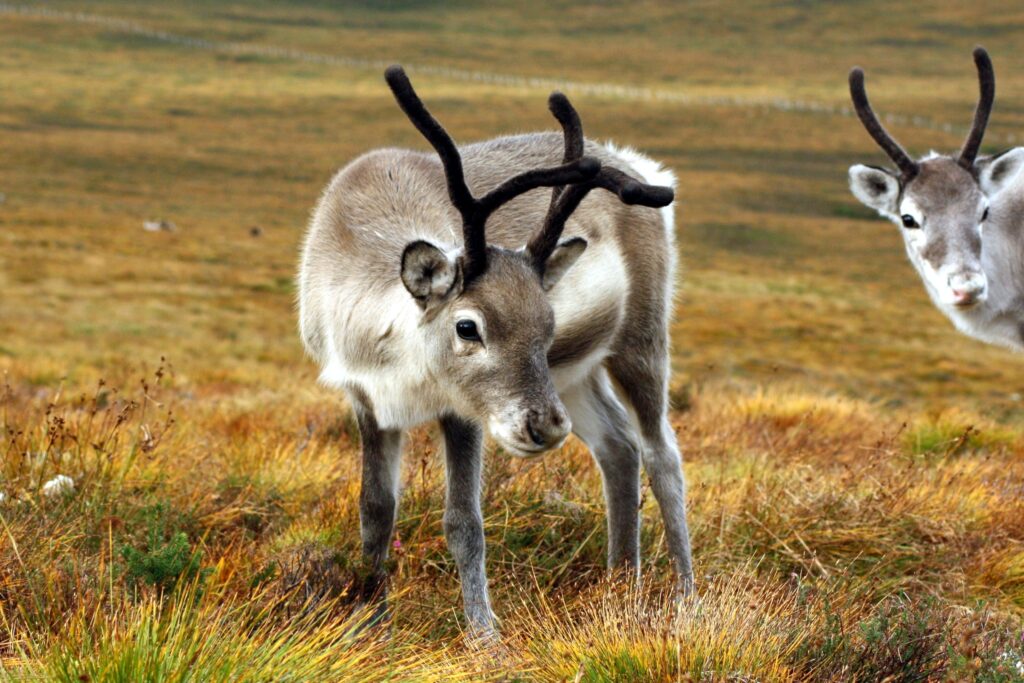
With autumn being the season that the calves return to the hill enclosure, along with their mums, it’s always exciting to see them and to start to get to know them as characters. Having spent all summer with males only in the enclosure, it’s suddenly a bit overwhelming to have a sea of ‘new’ reindeer to get to know once again! The calves are the hardest to learn who is who.

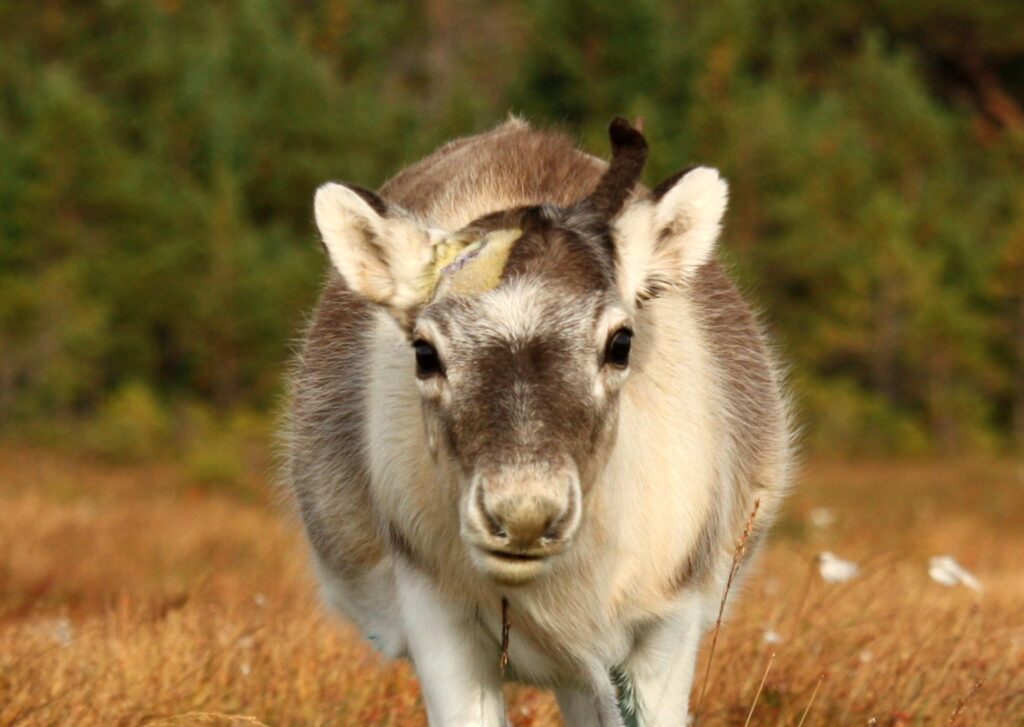
Last time we saw them properly, in late spring, they were tiny and heading out to free-range in their calf coats, which are quite different in colouration to an adult reindeer’s coat. By autumn they’ve moulted, grown their new winter coat, and are many times bigger – i.e. they look COMPLETELY different! Other than very obvious colour variation and face markings, their wee antlers are the easiest way to tell them apart. The photo below shows Macchiato at 4 months old, looking about as generic as is possible for a reindeer calf – very average size and shape antlers, along with being very much the ‘normal’ body colour. Difficult to tell one from t’other, looking like this!
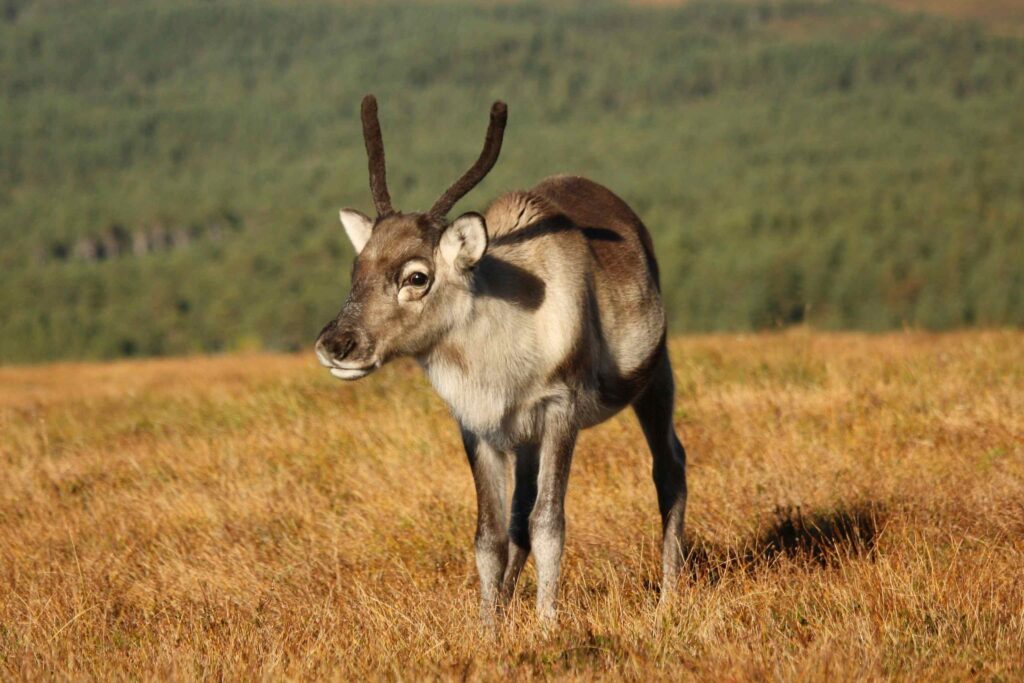
Macchiato, aged 4 months

So I thought I’d show some of the antler shapes of calves over the years in this blog. The memorable ones tend to be the biggest ones, of which the outright winner – by a country mile – is Gandalf. However, he was born in Sweden, and many of the Swedish calves we’ve imported over the years (to increase our genetic diversity within the herd) have had very big antlers so maybe he should be disqualified my list…

But here’s a photo of Gandalf anyway. Compare those antlers to Macchiato’s in the photo above!

So… my winner for sheer height of antler is Jester, who definitely looked a bit out of proportion as a calf. He’s gone on to grow enormous adult antlers too, though tending towards wider rather than tall.
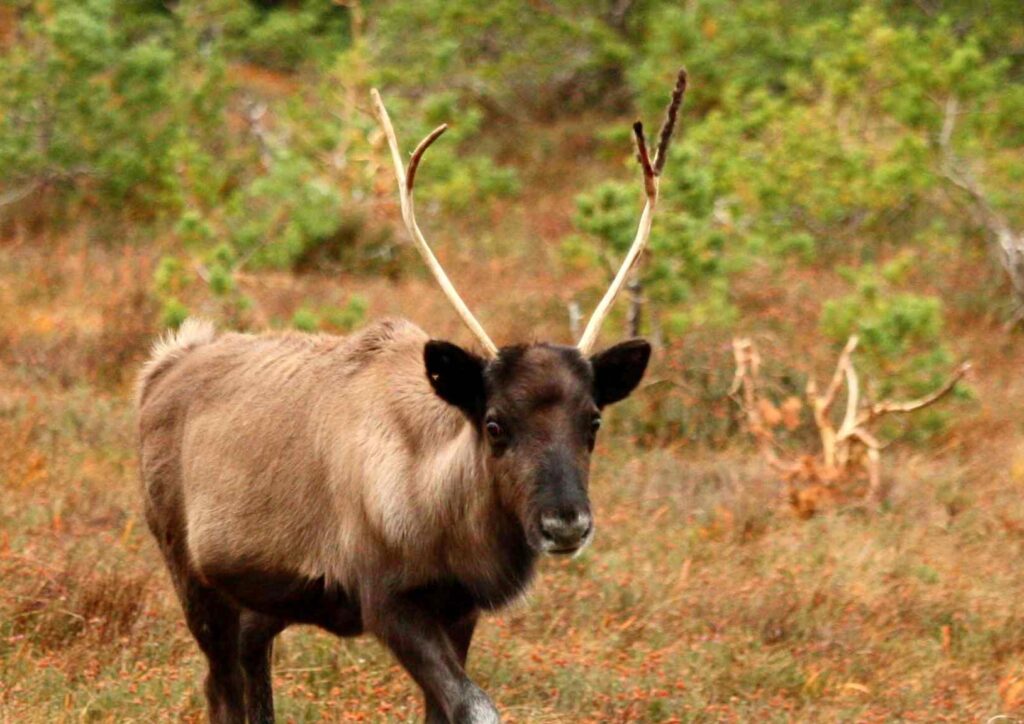
Jester.

Some calves have really complex antlers – not quite as tall as Jester’s but more elaborate with several points on each. Examples include:
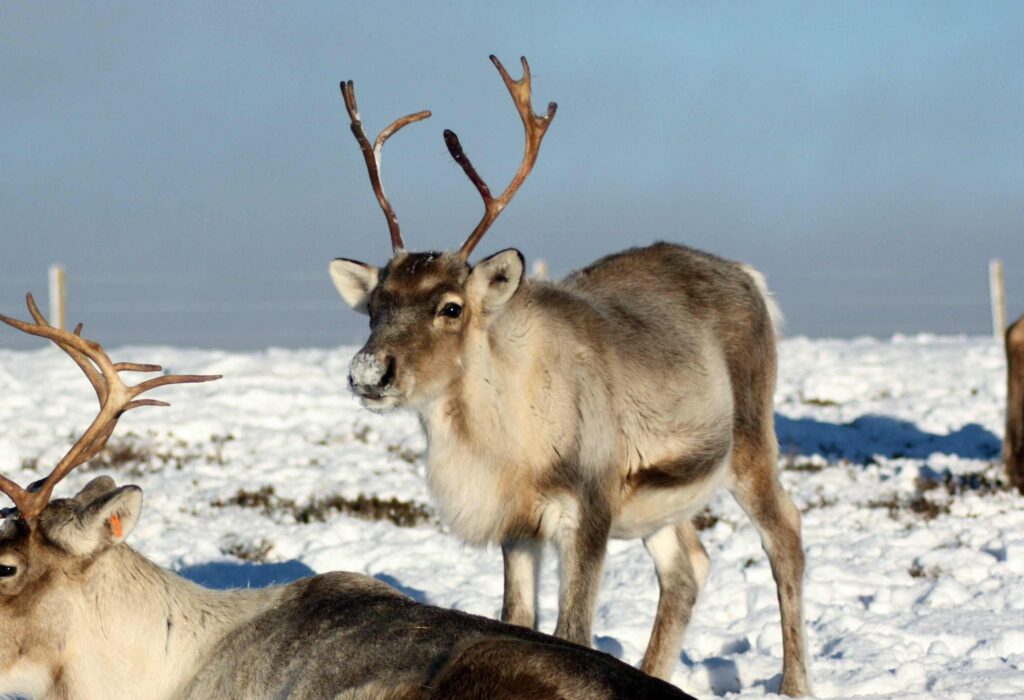
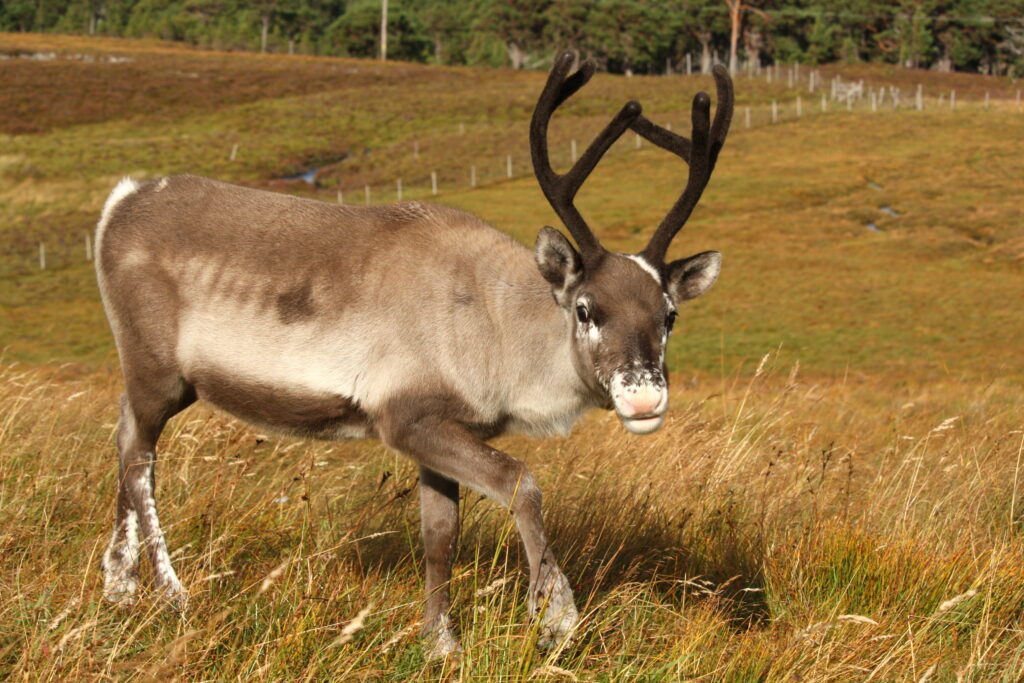
Murray, born in 2012. Look at that headgear!
Christie (antlers still in velvet here) – exceptional as she is female. As an adult she’s gone on to have very big antlers each year, a family trait inherited from mum Caddis and granny Haze.
Cream – these calf antlers always reminded me of water divining rods!

Duke gets a bonus point for having a forward-pointing tine at the base of one of his calf antlers – perfectly normal in an adult reindeer, but rare in a calf.

Duke.

Whilst not the biggest calf antlers ever, Fez wins my ‘prettiest’ antlers award. Small and perfectly formed, with several points top and bottom. Beautiful!
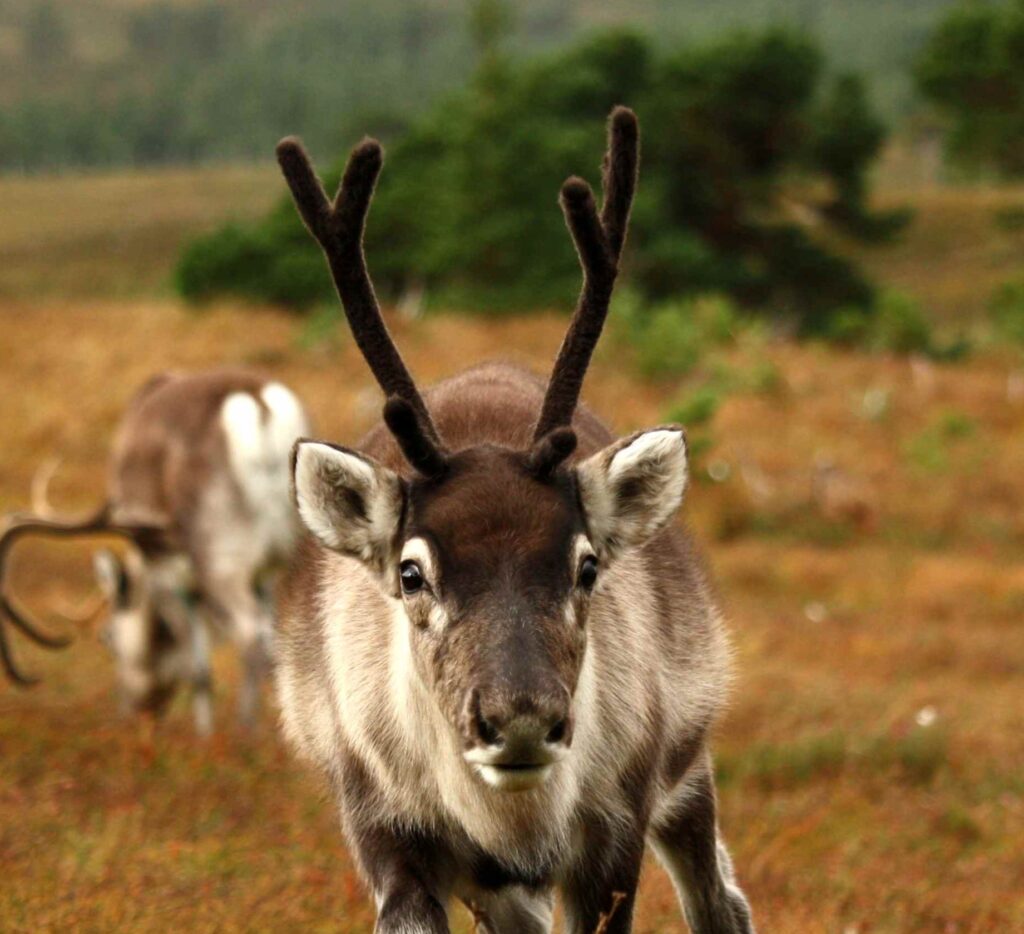
Beautiful in antler – and face!

But sometimes, it all goes wrong. Calf antlers, being thinner than adult antlers, are easily broken, especially as adult reindeer show no love whatsoever for anyone else’s offspring other than their own, and are all too willing to whack a calf on the head with a hoof should they get in their way. This results in antlers breaking, and this happens whilst the antler is still growing, they will sometimes fuse at the break and the calf is left with a flopped-over broken point.
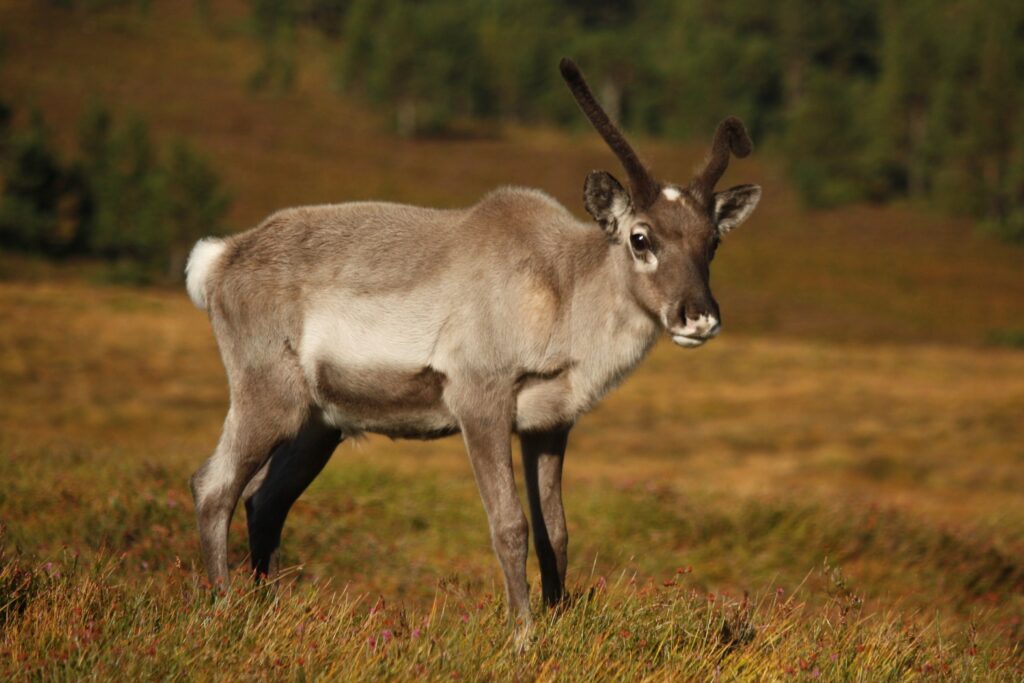
One of this year’s calves, Lochi, with the classic ‘been-walloped-on-the-head-by-a-hoof’ look.

If this happens early enough in the season, the antler will, once the break is fused and healed, start to grow upright once again from the break. Here’s Fava below, who had managed to break his right hand antler not once but twice, resulting in two downward pointing bits. His antler shows a centimetre of new, upward growth from the break – and then he ran out of time to grow any more!
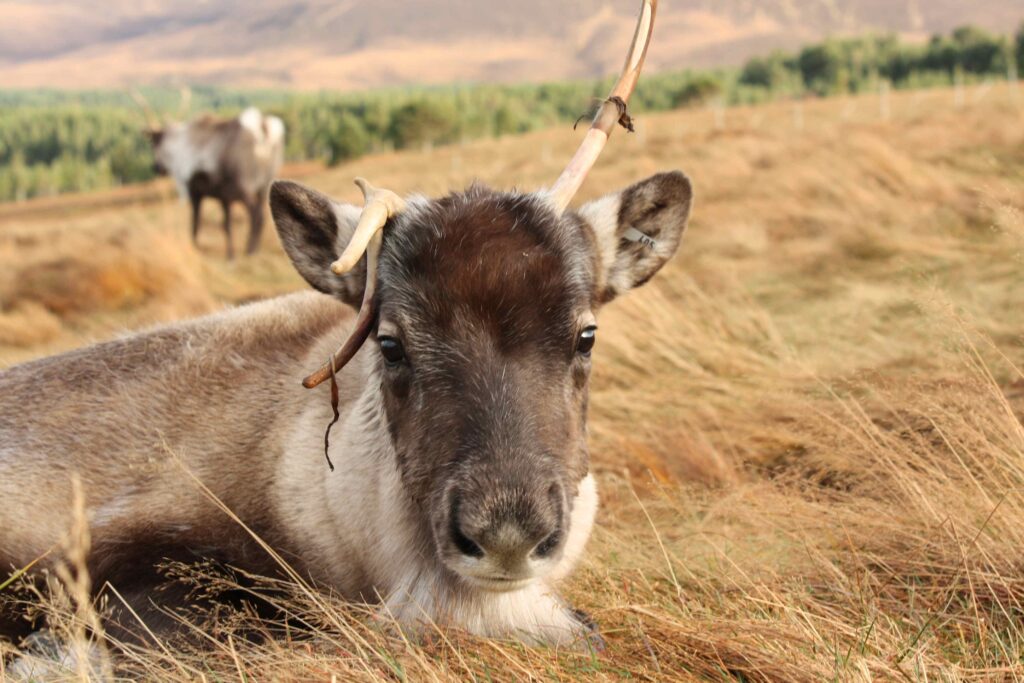
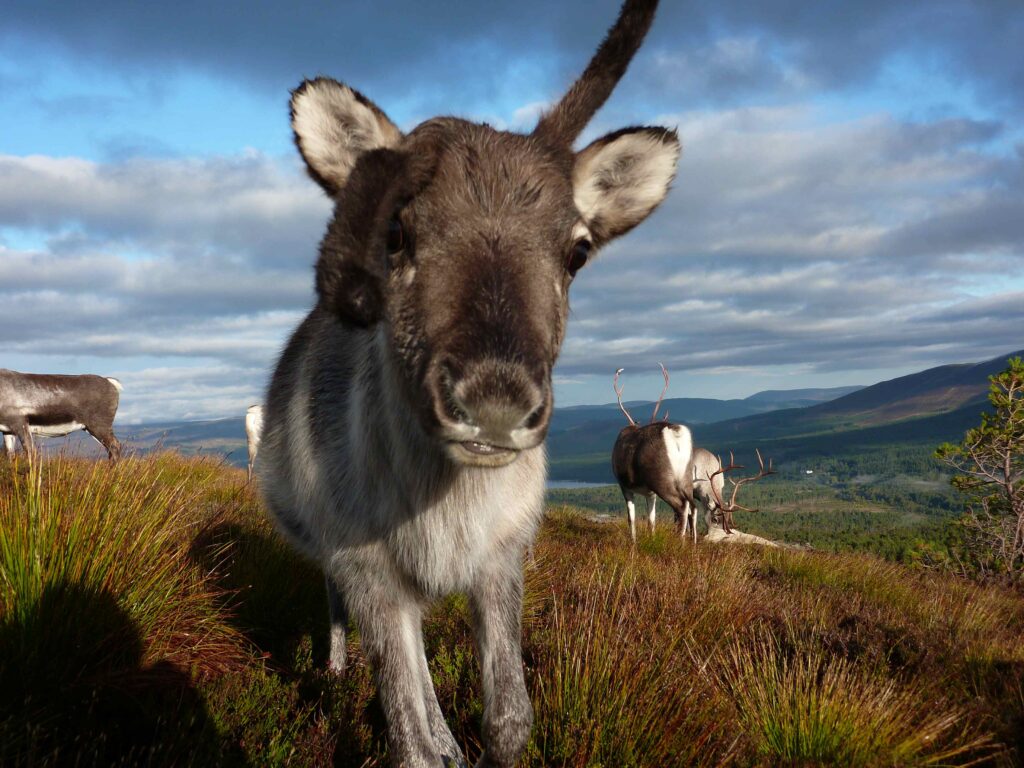
Fava.
Hopscotch.

Antlers broken right at the base can cause a problem with obscuring vision, poor Hopscotch here had to have this disaster (above) sawn off once it had lost all feeling in the autumn, so she could see where she was going!

And sometimes, it all just goes terribly, terribly wrong…
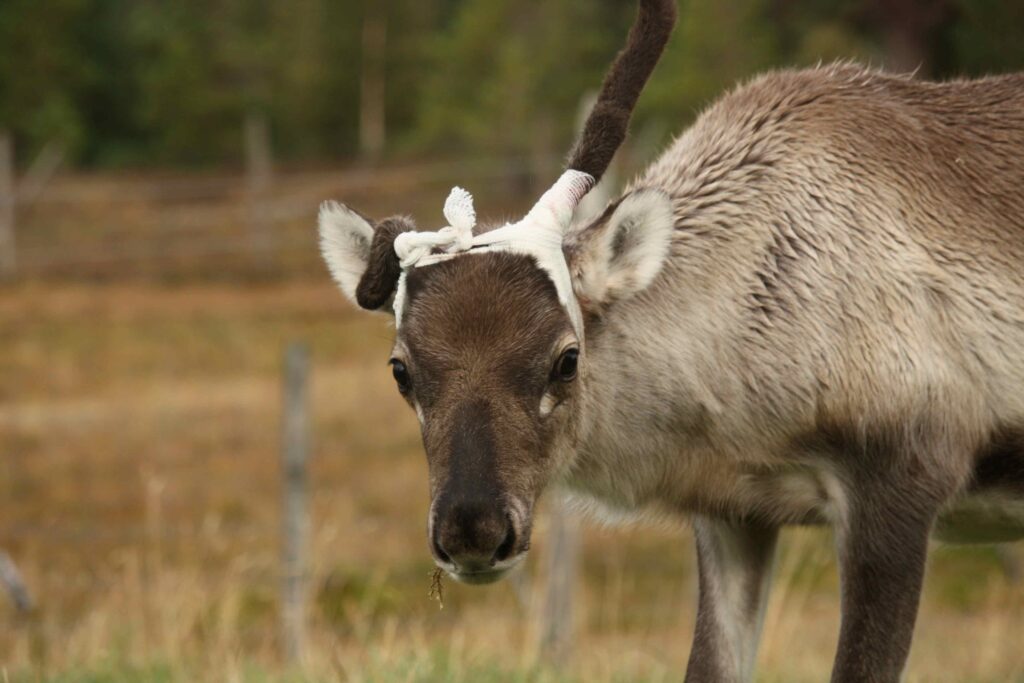
Poor Heinz! Two broken antlers, bound in place to keep them as still as possible, waiting for the vet to arrive.
Holy Moley.

Holy Moley’s broken antler resulted in a shaved head after the vet had to remove the broken bit right at the base to prevent further damage. Some of you might remember watching her story on our Channel 4 documentary in 2020!

Hen

Reindeer Artwork on Postage Stamps.

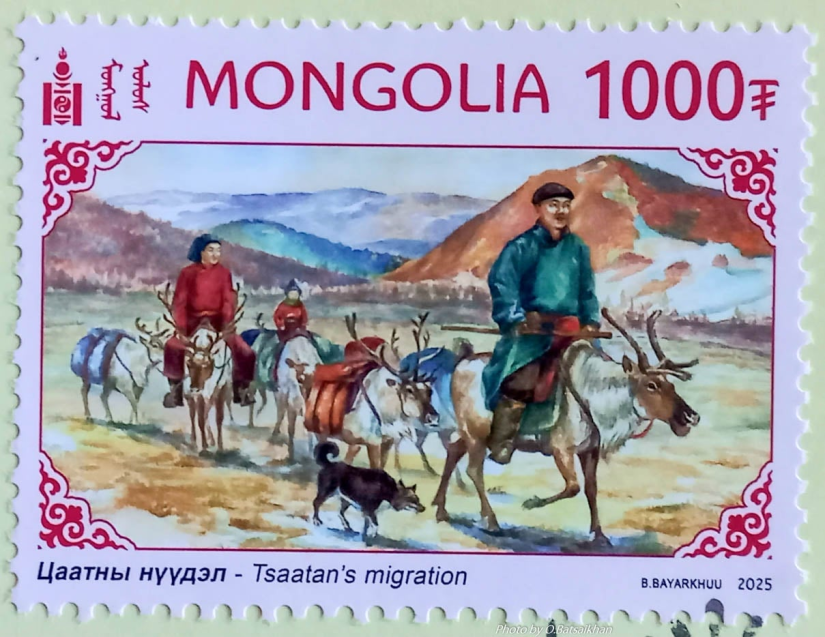
Recently, when researching something else, I came across series of beautiful, Mongolian, postage stamps highlighting the Tsaatan people’s lifestyle throughout different seasons. After a quick Google I found loads of other beautiful stamps from many different reindeer herding nations across the world. I thought people might enjoy having a look through some of the beautiful reindeer artwork displayed on some of the stamps.

Mongolian postage stamps:

The Mongolian stamps that I found portray images of the Tsaatan people (also known as the Dhuka), a group of indigenous, nomadic reindeer herders who live in the depths of the Taiga in northern Mongolia. The Tsaatan are one of the few indigenous reindeer herders who ride their reindeer.

Mongolian stamp showing an image of a Tsaatan camp.
Mongolian stamp showing an image of Tsaatan schoolchildren riding their reindeer.
Mongolian stamp showing an image of Tsaatan migration.

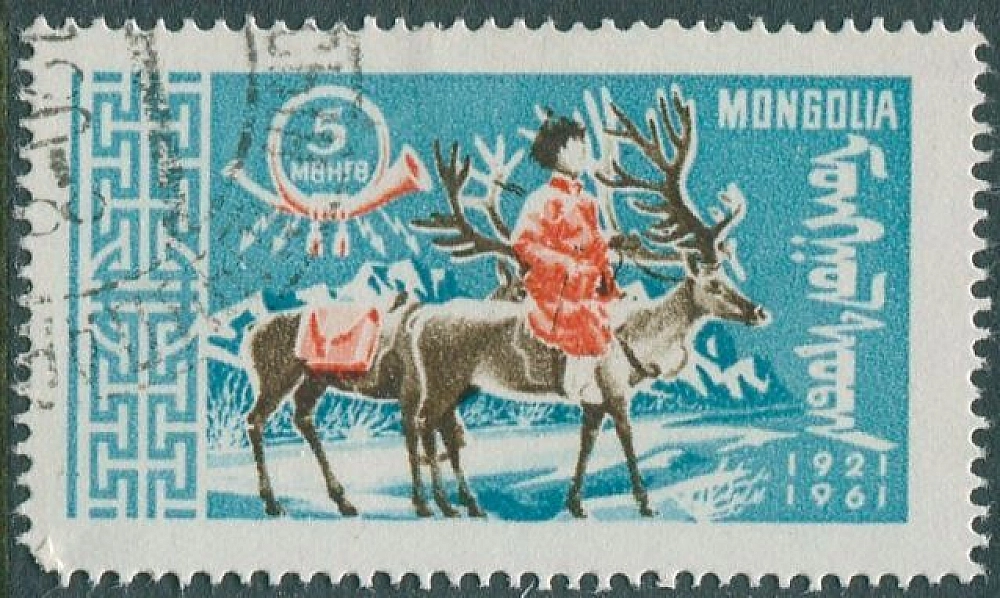
I also found this much older Mongolian stamp from 1961. Note how it also shows reindeer being ridden.

Mongolian stamp from 1961.

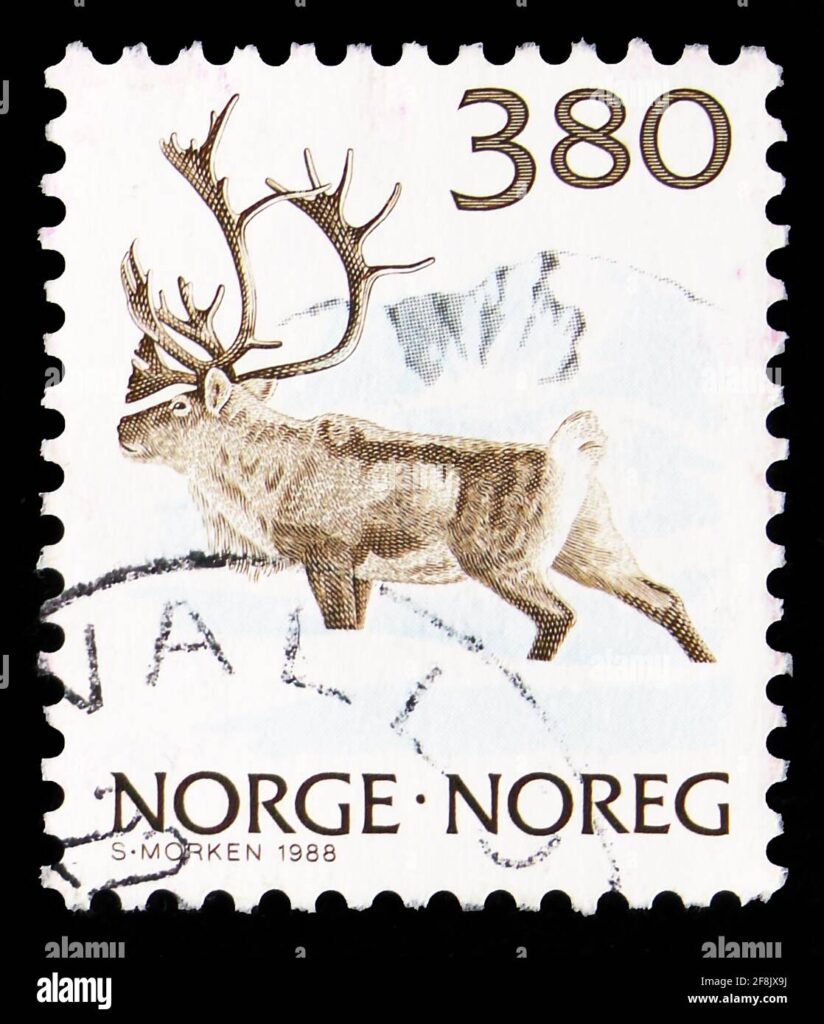
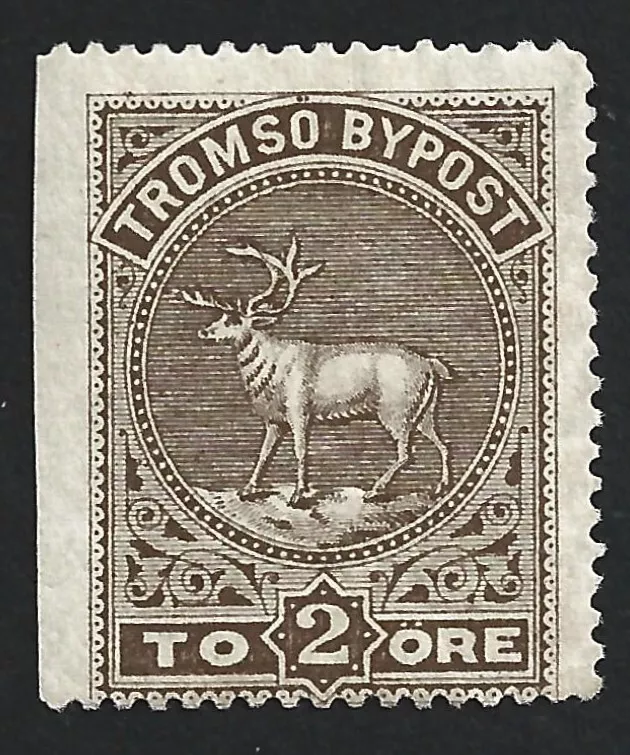
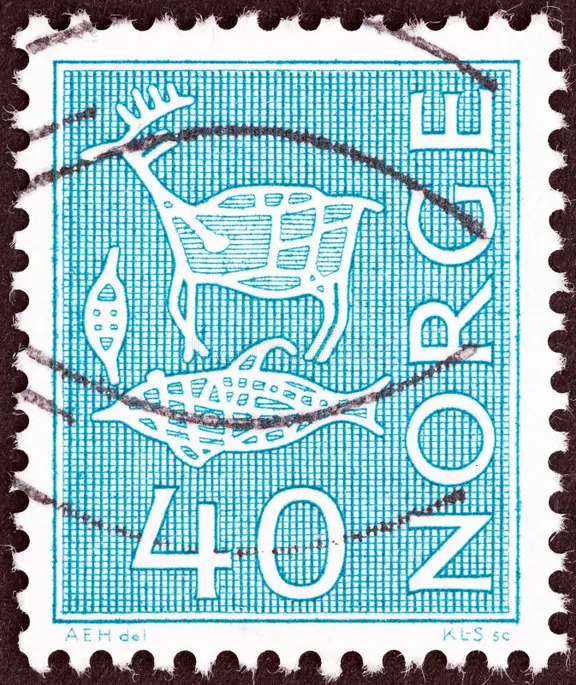
Norwegian postage stamps:

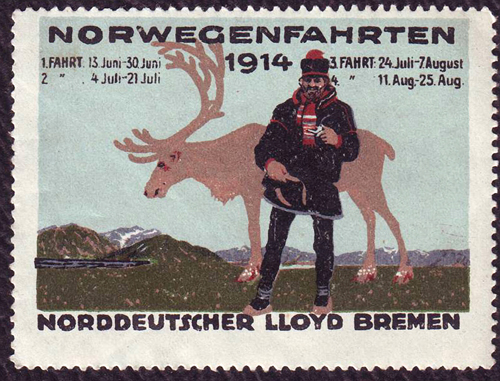
I found a whole range of Norwegian postage stamps from this first one from 1914 advertising Norwegian trips (Norwegenfahrten) with a particular shipping company along with some others with beautiful illustrations.

Norwegenfahrten (Norwegian Trips).
Norge Noreg.
Tromso by post.
Norwegian stamp from 1963 showing a reindeer.

Russian postage stamps:

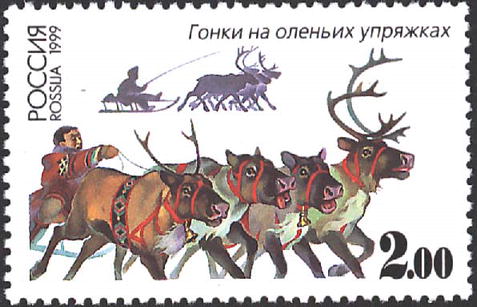
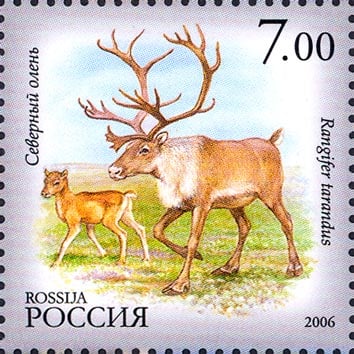
Russia is home to many indigenous reindeer herders from the Sami who inhabit the Kola peninsula in the northwest of Russia, to the Chukchi who live in the northeastern part of Siberia (with many other indigenous herders living in between). I found just a few Russian stamps showing reindeer including one showing reindeer racing.

Russian stamp – Reindeer racing.
Russian stamp – Reindeer and calf.

South Georgian postage stamps:

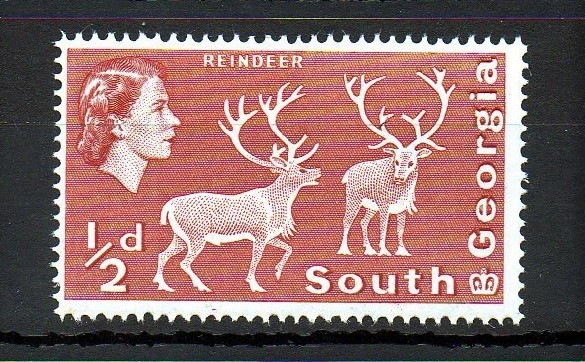
For about 100 years, reindeer resided in South Georgia and this is reflected in some of their stamps. The reindeer were introduced in the early 20th century as a food source for whalers. After the end of whaling with the lack of humans or predators the number of reindeer increased to the point there were too many for the land, so the decision was made to eradicate the south Georgian reindeer between 2013 and 2015.

Stamp from South Georgia.

Falklands postage stamps:

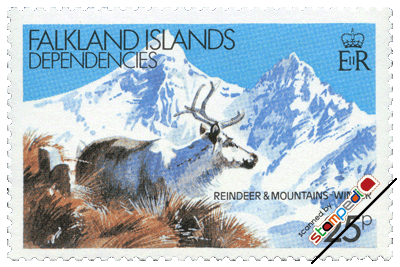
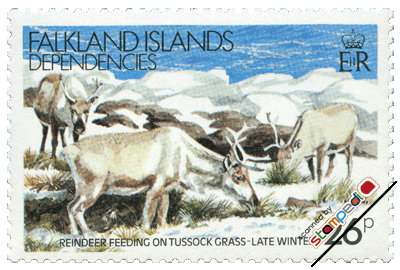
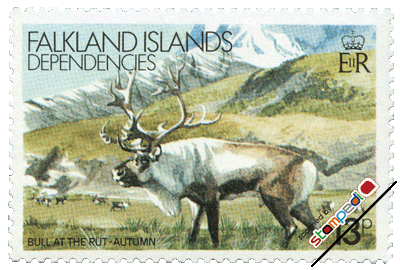
In 2001 a group of roughly 50 reindeer were translocated from South Georgia to the Falkland Islands and some of their stamps in the years following celebrate the reindeer through the different seasons.

Falkland Islands – Reindeer in Winter.
Falkland Islands – Reindeer feeding on tussock grass.
Falkland Islands – bull in the rut.

USA postage stamps:

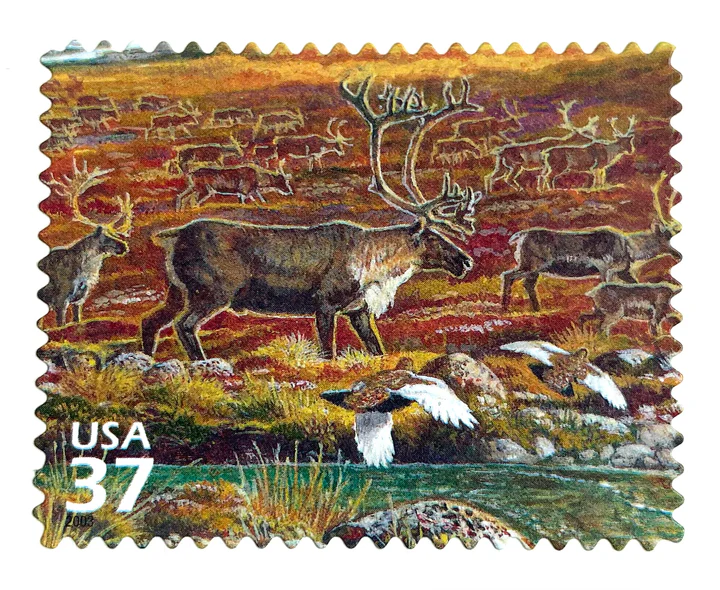
North America is home to the Caribou which is the same species as reindeer, but haven’t been domesticated. They are found in Canada and Alaska. Here they are celebrated in this beautiful stamp.

USA – Caribou stamp.

Lotti

People of the Reindeer

The people of the northern hemisphere and reindeer have a long-interconnected history. In the days of the ice ages reindeer were known as far south as Spain and as one of the larger and least scary animals roaming the land (compared to cave lions and aurochs), they made natural prey for humans of all kinds. Reindeer antlers and bones found in archaeological sites in France age the Reindeer-Homosapien relationship at least 45,000 years old – although it is argued there is some evidence of Neanderthals hunting reindeer 60,000 years ago!

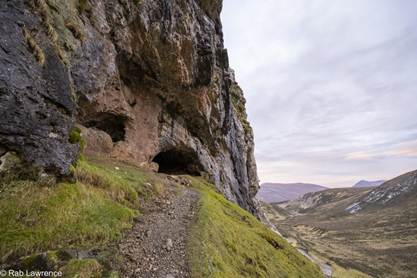
‘Bone cave’ in Inchnadamph where many reindeer bones were found alongside early human remains.

In the 40ish thousand years reindeer and humans have been in contact, our relationship has evolved. From hunter-gatherers hunting reindeer with spears and bows to rifles or to our Reindeer Centre in Glenmore and our Christmas Reindeer pulling sleds. In this blog, I am going to focus on how we lived with reindeer pre-domestication.

One of the more interesting sources we have on how people of the reindeer live with undomesticated reindeer are the peoples that still live or until recently have lived with the Caribou – most notably the various groups of inland Inuit in North America. (Note: Caribou and Reindeer are the same species, but the north American caribou has never been domesticated). For these people, as many other people of the reindeer, reindeer are the lifeblood of their communities.

Reindeer tend to be migratory animals (one subspecies of reindeer in Canada makes the largest migration of any land mammal!) and the humans around them have tended to take on nomadic or semi-nomadic habits as well. In many places, they haven’t needed to be with the reindeer the whole time but moved between pinch points of the migration routes – narrow mountain passes or land bridges between great lakes that the seemingly endless rivers of reindeer would be forced to cross, into the waiting arms of the local hunters. Life like this is boom and bust. A few times a year, the community will catch the great river of deer and during these times will feast. Much of the meat will also be preserved for the many winter months when the reindeer no longer pass through (as they are less mobile during the winter and stay hidden in wintering grounds). Outside of the major floods of reindeer, the odd one is to be found wandering, and much time is spent looking for fresh meat to aid hungry bellies. During the winter, in the coldest places, people in history have been known to survive on semi-frozen dried meat.

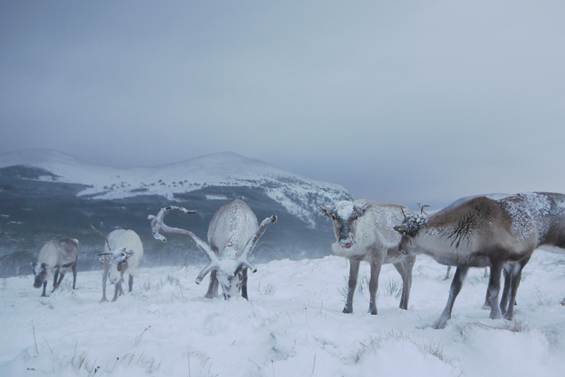
A group of our reindeer weathering a winter blizzard. Cairngorm reindeer don’t have a huge migration, but they do come lower down the hills in winter.

Many of these people lived almost exclusively on deer produce. In a carnivore diet, fat becomes essential; it contains much of the necessary vitamins for life that aren’t contained in meat alone. Thus, much of the animals were eaten, not just the finest cuts rump. In fact, those rump stakes we prize so highly are comparatively low in nutrients and were sometimes the parts of the animals given to the dogs.

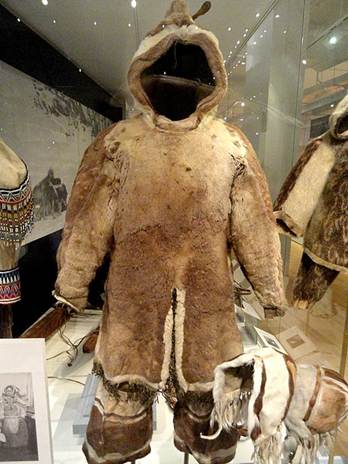
The reindeer haven’t only been used for food, in almost all cultures of people of the reindeer, every bit of the animal is used. Clothing and boots are made from their skins – often the skin from the belly of the reindeer is chosen for the soles of shoes for its toughness; the hide from the back for coats and parkas due to its thickness and warmth; hoods, mittens and boot tops are made from the hide from the brow due to its suppleness; etc… The shelter the reindeer provide also extends to summer tents, where scrapped and tanned hides are stretched around (often) birch poles to form the semi-mobile summer home. To lash the tent together, many cultures make use of the long and strong sinews from the back of the reindeer. These are also used to sew the clothing together – they have the bonus of swelling when they get wet so that most well sewn seams are fairly watertight.

The trousers and parka of an Inuit man, southern Baffin Island, Hudson Bay, 1910-1914 – Royal Ontario Museum

Reindeer antler and bone is also a useful material, antler is still commonly used for making knife handles and for fixings of all kinds. Reindeer House here in Glenmore is held together by reindeer antler (click here for proof)! The parts of the reindeer that remain can be used as ritual objects or donations back to the ecosystem. This respectful use of the whole animal is repeated through most people of the reindeer, even in people who now live with domesticated reindeer.

Beni

Family resemblance

Just like people, some reindeer have huge resemblance within their families, and some more so than others. I thought I’d write a wee blog to talk about a couple of the best examples in our herd today – and then I discovered that Ruth had beated me to it. So here’s a couple more examples of striking family resemblance, and you can read Ruth’s ‘Mini-me’ blog here.

Family ‘looks’ run especially strongly in Holy Moley’s family. She herself is the spitting image of her mum Galilee, and Holy Moley’s daughter Mississippi popped out looking like a carbon copy too. Here are Mississippi and Holy Moley in the photo above, taken in September 2024 when Mississippi was 16 months old – whilst obviously smaller still as she’s not full-grown, the resemblance is uncanny. Holy Moley only grows a single antler each year due to an injury as a calf, and it seems Mississippi even tried to emulate this look by breaking hers! I’d loved to have had the opportunity to photograph Galilee alongside the two of them, but sadly she died when Holy Moley was only 4 months old.

This is half-brothers Jelly and Cicero, who are both extremely similar. Jelly is a touch darker, but both grow matching antlers and for much of the year they can be pretty hard to tell apart, especially as they are the same age as each other. The best family resemblance of all is between their dad Houdini and Cicero (on the right in the photo), but once again I’ve never had the opportunity to get a photo of them all together, and Houdini is now very old and age has now changed his appearance somewhat. Houdini was originally born in Sweden and imported to join our herd in 2011, hence we bred from him a fair bit to use his ‘fresh’ genetics, but these two offspring are the most similar in appearance, both to him and to each other. All three grow relatively simple antlers for males, with not too much going on at the tops compared to some reindeer.

There are some other good examples in the herd, but it can be difficult to get photos of certain individuals together, so maybe I’ll add another blog further down the line when opportunity arises!

Hen

Stone Age Reindeer Art

50,000-12,000 years ago the world was in the grip of the last glacial period (the Ice Age). During this time, reindeer were abundant across Eurasia’s glaciated landscape. Huge herds of them provided a vital source of food and materials to our late Stone Age ancestors. At the same time, early human artwork was flourishing. There are several examples of ice age art from modern-day France that reveal how significant reindeer were to the people living there – not only as a resource but as a source of inspiration.

One of the oldest examples is the ‘Reindeer Panel’ in Chauvet-Pont D’Arc cave, featuring reindeer alongside other animals. These palaeolithic paintings are estimated to be up to 36,000 years old!

‘The Reindeer Panel’ in the Chauvet-Point D’Arc Cave, discovered by Jean-Marie Chauvet, Eliette Brunel, and Christian Hillaire in 1994.

17,000-11,000 years ago, Magdalenian culture emerged in Western Europe. Reindeer were such an important source of food and materials for these people that it’s sometimes referred to as the ‘Reindeer Era’. 

The Font-de-Gaume cave in France is home to the ‘Two Reindeer’ piece. The original is very faded, but reconstructions reveal a duo of reindeer facing each other. This site is dated at about 19,000-17,000 years old.

A reconstruction of ‘Two Reindeer’, Unknown Artist (Above). The original ‘Two Reindeer’ from the Font-de-Gaume cave, formally discovered in 1901 (Below).

This engraving of a calf – and what looks like the broken remains of a larger reindeer – is carved into a reindeer metatarsal (foot bone). It’s dated to 14,000-10,000 years ago.

Engraved bone excavated in 1863 by Henry Christy and Edouard Lartet at the La Madeleine site in Tursac, France.

The ‘Swimming Reindeer’ piece might be the most famous example of palaeolithic reindeer art. This carving depicts two reindeer carved into a piece of mammoth tusk. It’s thought to be 13,000 years old. This was around the time that a changing climate caused reindeer populations in France to start to fragment.

‘Swimming Reindeer’, discovered in 1866 by Peccadeau de l’Isle and pieced together from two parts in 1904.

About 11,000 years ago, the last glacial period retreated, and with it the ice sheets and reindeer were pushed north and to higher altitudes. Our planet entered its current ‘interglacial state’ – the Holocene. As humans adjusted over the millennia to a warmer world, reindeer became a distant memory in most of western Europe. In the Arctic/Subarctic regions though, humans formed an even closer relationship with reindeer which eventually transitioned from hunting to herding.

Kate

Links/References:

Chauvet Cave:
https://archeologie.culture.gouv.fr/chauvet/en/reindeer-panel

Magdalenian Culture: https://www.britannica.com/topic/Magdalenian-culture

Font-de-Gaume Cave: https://www.lascaux-dordogne.com/en/patrimoine-culturel/grotte-de-font-de-gaume/

Engraved Bone: https://www.britishmuseum.org/collection/object/H_Palart-419

Swimming Reindeer: https://www.britishmuseum.org/collection/object/H_Palart-550

Antler shapes

Antlers are my ‘thing’, here at the Reindeer Centre, so it’s a natural subject to turn to for a blog when Ruth is starting to look a little twitchy about needing the rest of us to crack on and provide her with some blogs to keep her going through the calving season (no chance of having enough time to write any then!).

I thought I’d write about different antler shapes amongst female reindeer in this blog, as there is so much variation. Reindeer tend to grow the shape shaped antlers from year to year, but there are factors that influence it, such as general body condition, or whether they’ve got a calf at foot to raise – so more variation tends to be seen amongst the females from year to year than the males.

I’ll start with Marple, above, who I would say grows very much the ‘average’ style of antlers. Upright shafts with multiple tines growing backwards from them; forward-pointing tines originating from the base, and a ‘blade’ – a tine from one antler growing towards the nose. I’ve written more about Marple’s antlers in the past here. However, we also see a wide range of shapes from year to year, such as:

The ‘Bonsai’: Indigo’s antlers are very convoluted and wiggly here!
The ‘Salad tongs’: Meadow grew this incredible set of antlers as a two year old – I’m not sure what happened to them but they would have made excellent salad tongs!
The ‘Ant’: Merida’s efforts in 2024 were, quite franky, ridiculous.
The ‘Unicorn’: Multiple reindeer over the years have only produced a single antler, such as Dixie here. It’s a natural occurance that just happens sometimes.
The ‘Gate hooks’: If you’re going to grow a gate hook on your head, might as well grow two! Russia looks very strange….
The ‘Lazy antlers’: Israel couldn’t be bothered to put too much effort into her antlers this year, but all the effort went into her body instead. Look at those rolls of back fat!!!
The ‘I don’t need no antlers’. Arnish was a ‘polled’ reindeer, one who never grew antlers, but she was built like a tank so no-one messed with her at all – the lack of antlers certainly didn’t hinder her in the herd!

Read more about polled reindeer in a previous blog here, and if you’re wondering whether we ever sell antlers, you can find out here. There’s more general info about antler growth here too.

Hen

Calving, cuckoos and cotton grass!

Every reindeer herder looks forward to May – it’s pretty much the best month of the year for us with calving time for the reindeer dominating it. But May is also one of my absolute favourite months for other reasons too, the trees are coming into leaf, the plants in my garden are growing like mad, the weather is generally fairly amenable, and the migrant birds are back.

May looks like THIS to reindeer herders!

Mention May to any reindeer herder and calving is – I guarantee – the first thing that pops into their head. Reindeer are very seasonal with their breeding, and whilst the occasional calf might be born in the last few days of April, the vast majority arrive in May every year. Calving is a wonderful time of year for us – who can resist the cuteness of a a newborn reindeer? – though it comes with a fair amount of stress too, as we do our best to keep everyone happy and healthy. You’ll find lots of blogs about calving if you use the search function on the blog page here (only visible on a laptop/desktop) if you’d like to know more. Plus lots of lovely photos – of course!

Calves Gelato and Zoom at couple of weeks old

But I have other connotations for the month of May. The second one are the cuckoos. We’re lucky enough to still get plenty of cuckoos in this area, although nationwide they have declined by about 65% since the early 1980s. Even the least ‘birdy’ person in the UK surely knows their iconic call, and I associate them so much with May. They call from the forest below the reindeer’s hill enclosure all through the month, and the far-carrying sound is so reminiscent of all the early mornings over the years that I have trudged about on the hill side looking for cows with their newborn calves. Cuckoos seem to stop calling earlier than some species, I’ve noticed, and already as I write (early June) I realise that I’m barely hearing them any more. Such a short season, and yet they are utterly ingrained into our conscious in spring! Read more about other migrant species who are summer visitors to us in one of my previous blogs here.

The third thing I really associate with May here in the Cairngorms is the cotton-grass (Hare’s-tail Cotton-grass, to be precise), which grows on acidic moorland and is familiar to many, with it’s bobbing cotton-wool like flower heads.

Hare’s-tail cotton-grass
Fab as a calf

It’s not actually a grass but a sedge, and some years give particularly good displays, where it can almost look like it has snowed. It comes into flower in May, and grows particularly well in the bottom of our hill enclosure on the flatter areas there, which tends to be where the cows and their calves hang out during the month.

Calving in the cotton-grass… A very grumpy looking Brie with her grey calf Latte, and Peanut and her calf Kuksa in between.

So there we are – the three ‘c’s that are incredibly strongly associated with May to me. The fourth would be ‘chaos’, but that’s part and parcel with calving so can be combined into one!

Hen

Reindeer migration

As the seasons change and we transition from spring into summer our female reindeer will start to move from the lower grounds where they have spent most of the winter, higher onto the hills. This is partly to stay cool as the weather will warm up but also to follow the grazing. In the middle of the winter there will be more snow higher on the hills, meaning further for the reindeer to dig but in the summer the tops of the hills are where the best grazing is.

Waving the cows and calves off to spend the summer free-ranging.

For our reindeer this migration may be only a few miles but across the world, reindeer and caribou (which are genetically the same as reindeer but haven’t been domesticated) migrate long distances. In fact, caribou hold the record for the longest land migration of any animal, migrating a whopping 2,000 miles between their summer and winter-feeding grounds. The equivalent records are held by the humpback whale with the longest migration through water of 5,000 miles and the arctic tern with the longest migration through the air with a mind boggling 18,000 miles.

Long Distance Migration (Varpe and Bauer).
Arctic Tern.
Humpback.

2,000 miles is still an incredibly long way and takes the caribou first to their spring calving grounds near the coast. The spring calving grounds are highly fertile, providing lots of food for the new mums and free of predators, which is important as the young are born. This sounds like the ideal location to spend the summer and perhaps it would be if it wasn’t for the swarms of mosquitoes that arrive at the start of the summer. These mosquitoes, as well as the warmer weather, drive the caribou to migrate higher onto the hills. They spend the summer grazing on a plethora of different plants and lichens. Summer is a time of abundance in the arctic and sub-arctic regions.

Lace and Ryvita free ranging in the Cairngorms.

With long hours of light, the plants grow quickly, and the reindeer will graze on over 200 different species. This allows the reindeer calves to grow quickly, before the winter. It also allows bulls, cows and calves to all grow a set of antlers. The antlers grow over roughly 5 months and can reach a massive size. The largest set we’ve had in our herd weighed 8.9kg for the pair. It is also important that reindeer gain weight in the summer in order to survive the harsh winter.

Christie’s calf, Espresso, Christie and Borlotti enjoying the best of the summer grazing on the plateau.
Glacée and Dante looking fantastic at the end of a summer of free-ranging.

As autumn approaches the reindeer will migrate yet again. As the temperature drops, there will be less to eat high on the hills so the reindeer will move to the lower hills in search of better grazing. It is also the time of year that the mushrooms emerge so many of the reindeer will come into the edge of the woodland to forage mushrooms. They eat many varieties, but the boletus family are their favourite.

In our herd the female reindeer spend the summer months free-ranging and the males spend it in our hill enclosure. This means there is another drive for the females to come to the lower slopes and into the hill enclosure, the boys! The cows know that the rut is held in our hill enclosure each year so when their hormones tell them it’s time to find a mate, they know where to come!

Dante munching on a mushroom.

The migration of the Cairngorm reindeer may be much smaller than reindeer and caribou elsewhere, but it is equally important. It allows the reindeer to move to the best location for each season, following where the best food and climate is.   

Lotti

How does a reindeer keep warm in the winter?

Each winter, when the temperature drops, and we start reaching for our big coats and gloves. It always amazes me how comfortable the reindeer are in these conditions. It’s not a surprise really, being an arctic animal, they have evolved to cope with some of the coldest temperatures on the planet. Reindeer don’t show physiological signs of being cold until -35°C and have been known to survive right down to -72°C in Siberia. So how do they do it? I thought I would write a blog describing some of their incredible adaptations that keep them snug in the winter.

Cairngorm reindeer in a blizzard.

Coats

Reindeer have an incredibly insulative coat with hairs all over their body, in their ears, up their noses, between their toes. The only part of a reindeer without hair is their eyeballs! Their winter coat is so insulative that they lie on the snow without melting it. Their winter coat is formed of two layers, long guard hairs with a fine downy layer underneath. The long guard hairs are all hollow, with a honeycomb structure inside trapping pockets of warm air – an excellent insulator. They are also triangular allowing them to fit closely together without gaps to let the cold in.

Peanut lying down in the snow. In their winter coat, reindeer are so well insulated that they lie on snow without melting it.

Clicking

A question that we are regularly asked on Hill Trips is: what noise does a reindeer make? In the spring mothers and calves call out to each other by grunting and in the rut a bull reindeer will grunt to his females. During the winter though, reindeer don’t make many vocal noises. Instead, they make a clicking noise. This comes from a tendon sliding over a bone in their back legs with every step they take. This allows the reindeer to stay together as a herd during a blizzard when they can’t see each other without having to vocally call out to each other, which would lose body heat.

Herd of reindeer keeping their eyes closed during a blizzard.

Nose

Reindeer noses are amazing, definitely one of my favourite reindeer adaptations for the cold. During the winter time, reindeer generally keep their mouths closed, keeping the heat in, and instead breath through their noses. Inside their noses are amazing scroll structures which increase the surface area between the cavities where the air they are breathing in and the air they are breathing out are stored. This means heat exchange can occur and the air they are beathing out can warm the air they are breathing in, essential when the outside air is well into the minuses. Back in 2018, Ruth wrote a fantastic blog explaining in detail how amazing the nose of a reindeer is, it is well worth a read for more information, click here to see!

Glacée showing off her gorgeous velvety nose.

Feet

Reindeer have huge feet which serves two purposes: snowshoes and snow shovels. By being so big it spreads their weight out on the snow, stopping them sinking too far into the snow. Their back feet also step into the prints of their front feet and they will move as a herd in a single file line, stepping in the prints of the first reindeer, this makes walking through snow incredibly efficient. Sometimes when it’s really snowy here, we put out skis on to go and find the reindeer, in that case they will walk in our ski tracks instead. They can also their feet as big shovels to dig through the snow. Reindeer can smell lichen through a meter of snow and will dig through the snow to get to it.

Big reindeer feet with splayed out hooves.
Lotti on skis with the herd following in her ski tracks.

Antlers

Last but certainly not least…. antlers! Antlers are absolutely amazing and definitely could be an entire blog by themselves (in fact I have linked some previous blogs about antlers below). They are made of bone and grow and fall off again every year and then regrow the following year. They grow each year during the spring and summer, and whilst the bone is growing it is encased in a specialised skin called velvet. The velvet provides the blood supply that feeds the bone as the antler is growing. Once they finish growing, the velvet strips off and the antlers can then be used as weapons! The males use them to fight with each other during the rutting season over the right to breed with the females. Once the rut is over, their antlers will fall off, they are too heavy on the males to keep them all winter. Our heaviest set weighed a whopping 8.9kg. So, what do antlers have to do with the cold? Well, during the winter, once the males have lost their antlers it’s only the females and the calves who still have them. This gives the females a physical advantage whilst they are pregnant and makes sure they get plenty of food to eat during the harshest time of the year. The females loose them too, in the spring, as the new antler grows through underneath.

Beanie showing off her beautiful antlers in March last year.
Sherlock, who in March had not only lost his previous antlers but had also started to grow his new antlers already!

Lotti

Thermal photos of reindeer

In early October, a few of us were up the hill with the reindeer at about 8pm (the time on the camera was set wrong – definitely wasn’t 3am!), when it was already pitch dark. One of our friends, Sam, had a thermal camera with him that he was playing with, so we thought a few of his photos would make an interesting blog subject.

We always talk about how good a reindeer’s coat is during the Hill Trips – up to 10,000 hairs per square inch of the skin, with a percentage of those hairs (the ‘guard hairs’) being hollow to trap in body heat, and the remaining hairs forming an incredibly dense undercoat. This coat is designed to keep reindeer alive in incredibly cold environments; the recorded coldest temperature that reindeer have been found alive in is -72 degrees Celsius. Thankfully in Siberia and not Scotland!

These are female reindeer Turtle and Mangetout in this picture. You can see that they don’t show up as much as you might expect, and this is down to that super efficient thick coat that is trapping their body warmth in. Most heat is lost around their eyes and muzzles, and you can see heat retained within their coats where the hair is slightly parted.

A little bit of heat is being lost around the base of Scully’s antlers too, but her antlers themselves are in hard bone just now, with no velvet skin covering them – as you can see there is no heat at all coming from them.

Another setting on the camera, showing in colour this time. Again the eyes and muzzle are most obvious, this time on Merida, along with her legs where her coat isn’t as thick.

This photo is interesting for a couple of reasons. This is me (Hen), and look at how much heat is being lost at my neck. My body is showing up relatively well too, although perhaps not as much as expected – however in this picture I’m wearing a long-sleeved thermal top, a t-shirt, a jumper, a bodywarmer and a waterproof jacket, as well as a neck buff and gloves (it was a very cold night, in my defense)! Yet still my body is showing up as warmer on average than a reindeer’s – with a couple less layers on I would have been glowing like the sun!

The other (more) interesting thing in this photo is the set of antlers in the middle of it, belonging to Pip’s big female calf, who’s grown amazing antlers for a calf this year. Unlike all the adult reindeer in these pics, the calf’s antlers are still covered with velvet skin – but one is dark and one is light. At this time of year the blood supply to the calves’ antlers is cutting off, so here the right hand antler is still vascular (has a blood supply) whilst the left hand one has already lost it’s supply. Sure enough when Sam pointed this out, I touched her antlers briefly and the right hand one was still warm but the left one stone cold. How cool – we’d have never have known without Sam’s camera!

The castrated male reindeer mostly still have velvet skin on their antlers just now, but unfortunately there were none in this group that we could point the camera at – it would be interesting to see how vascular they are still, if at all. Another time! In the meantime I’ll stand by my statement that antlers are one of the coolest things in the animal kingdom!

Many thanks to Sam Ecroyd for the use of his photos for this blog.

Hen

Book Now