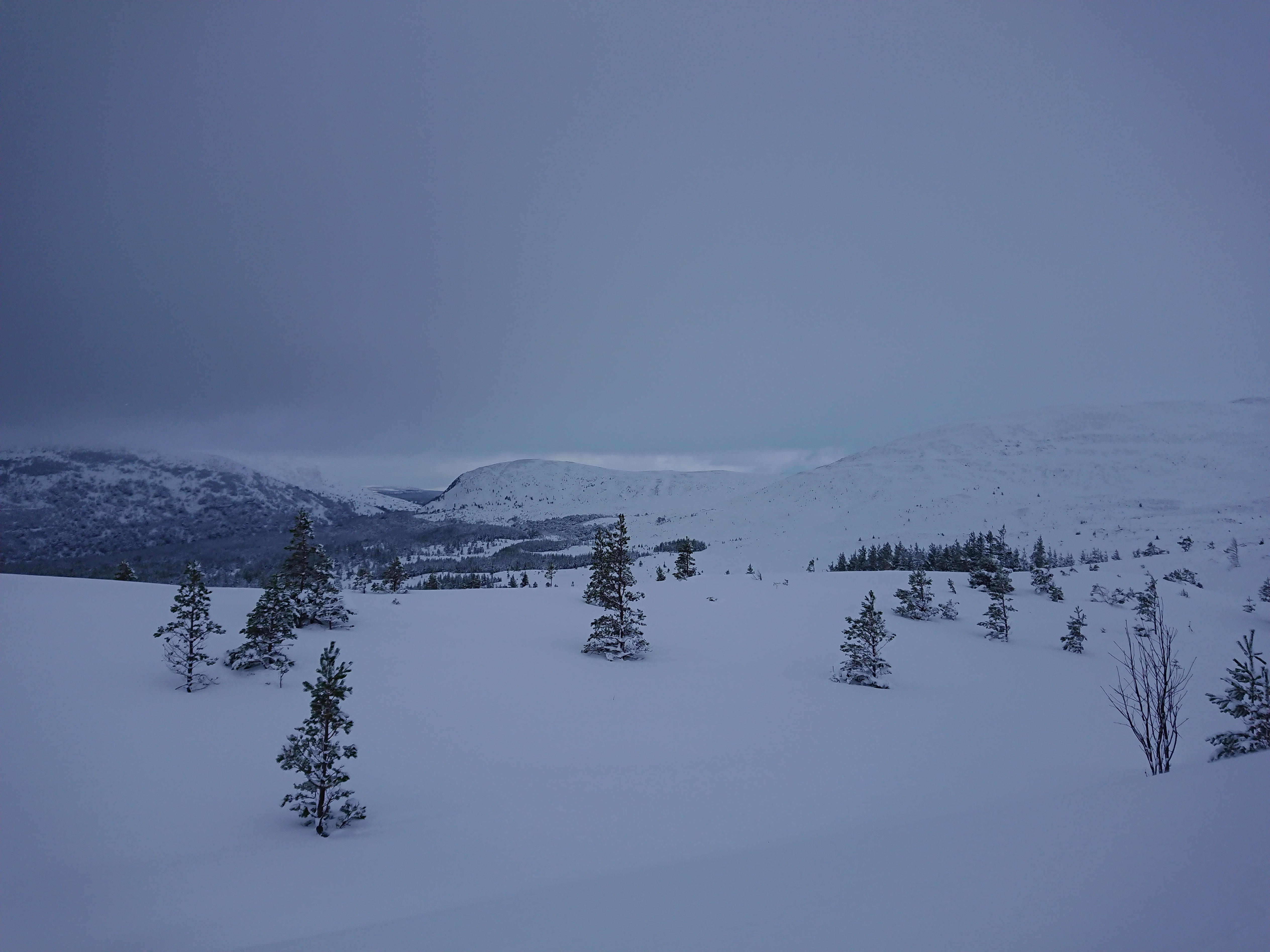
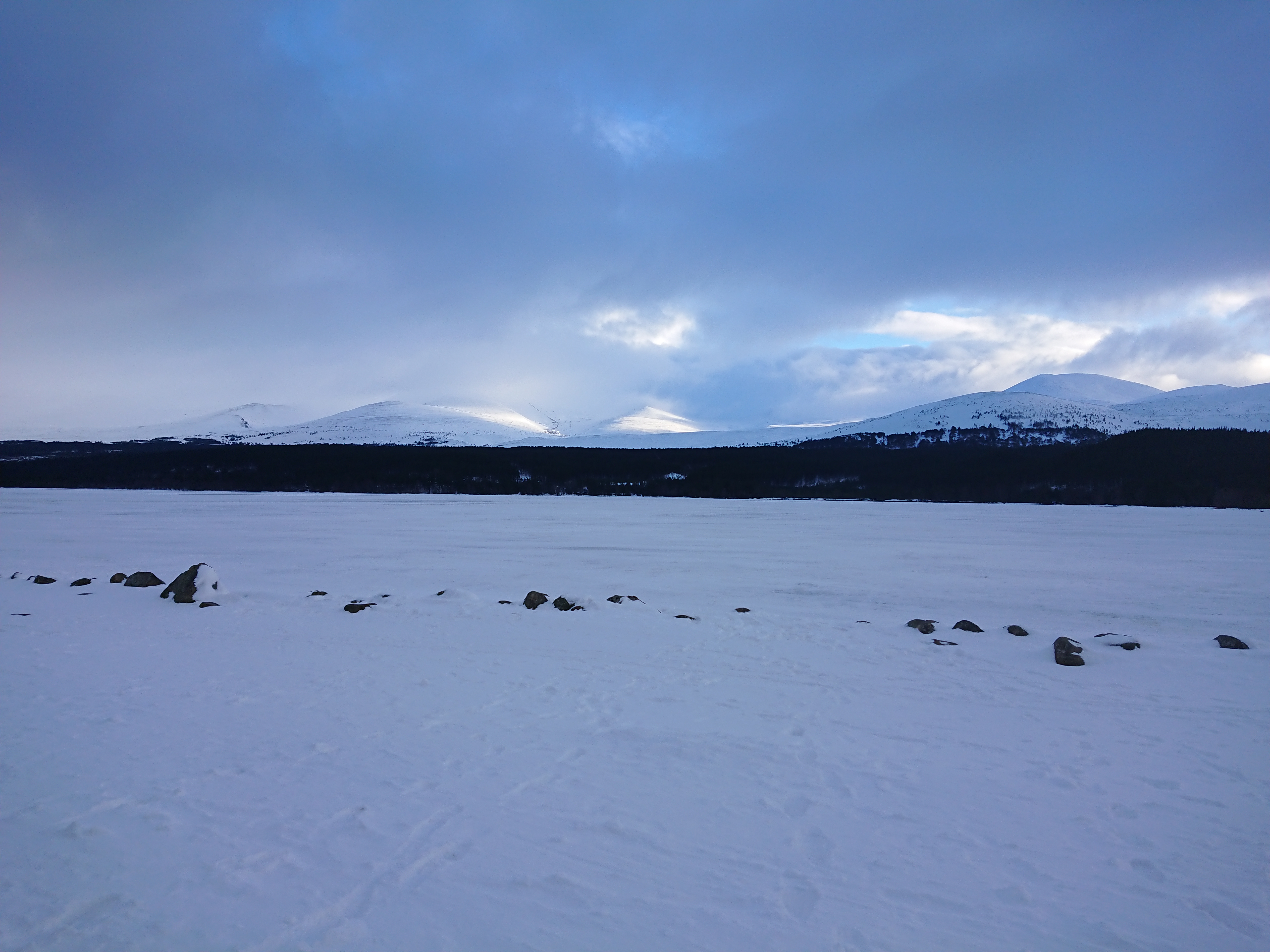
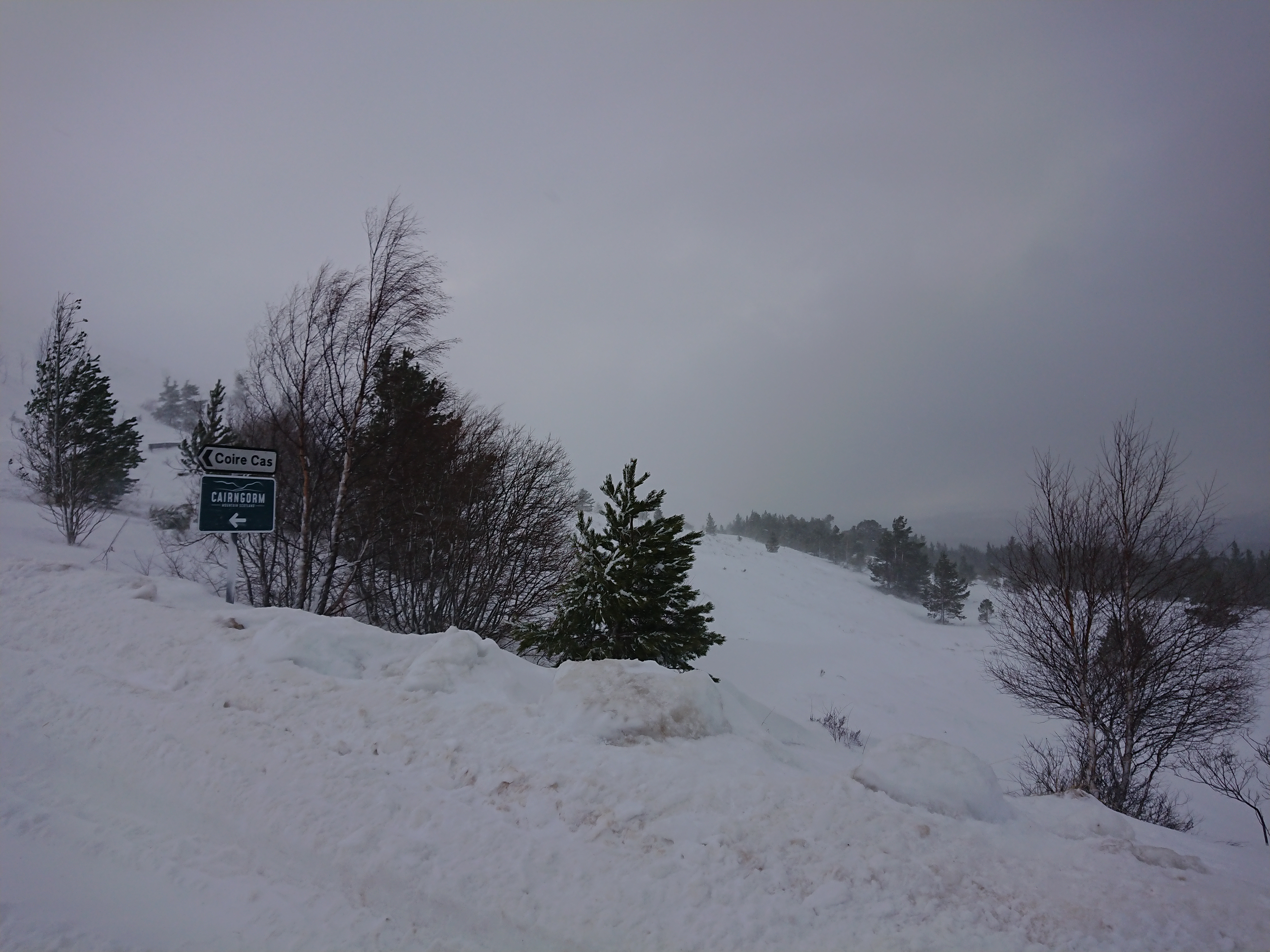
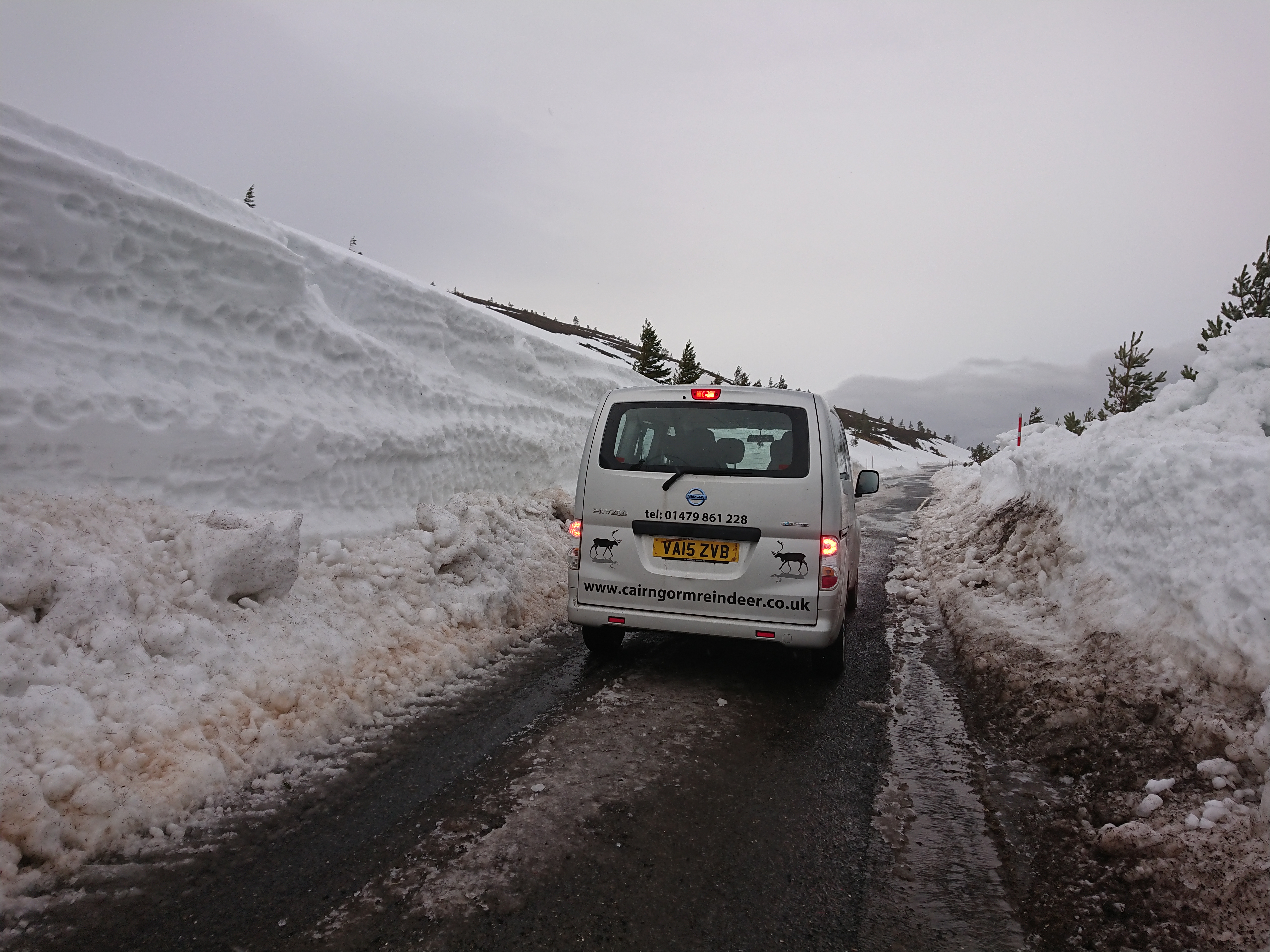
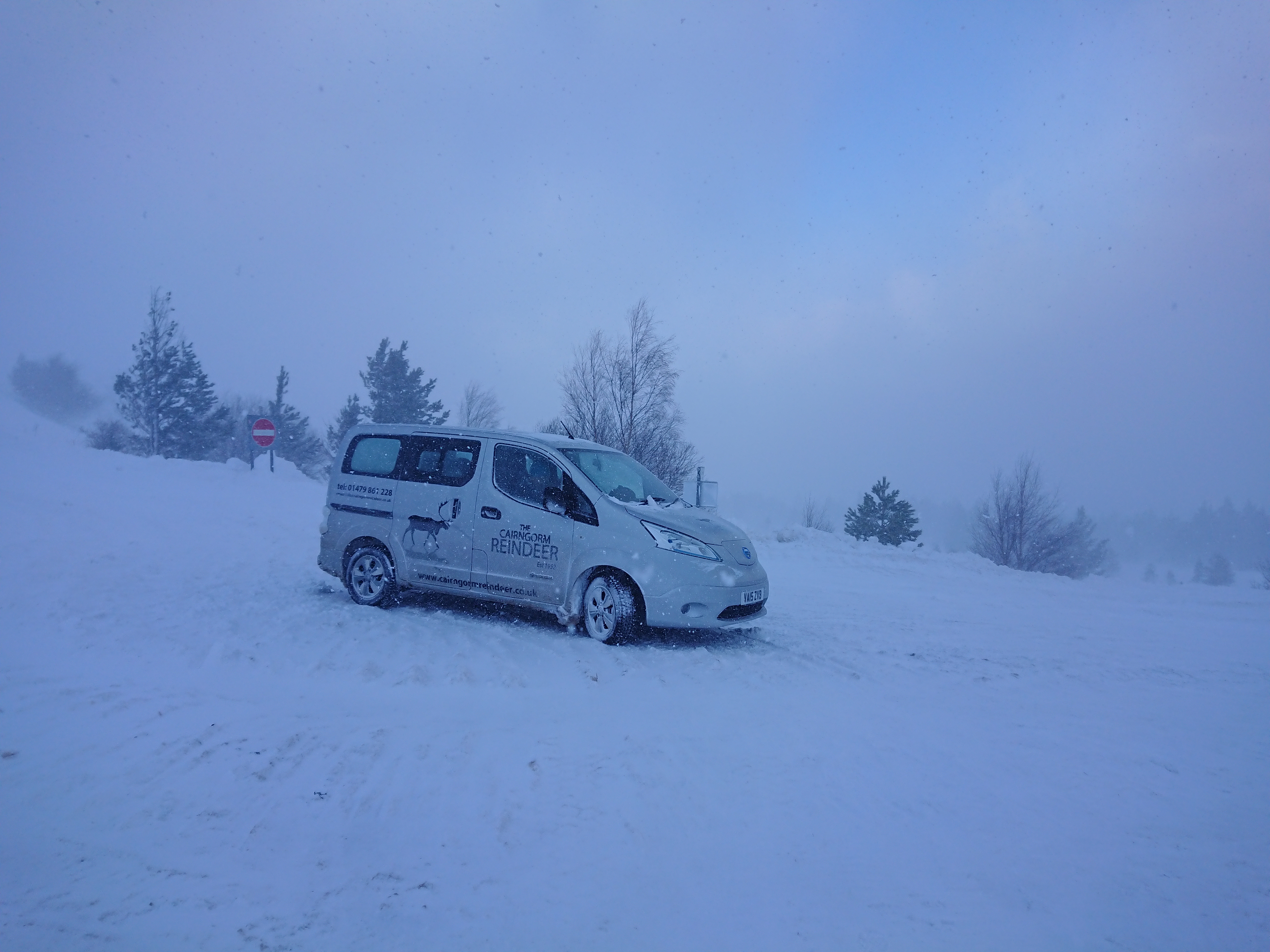
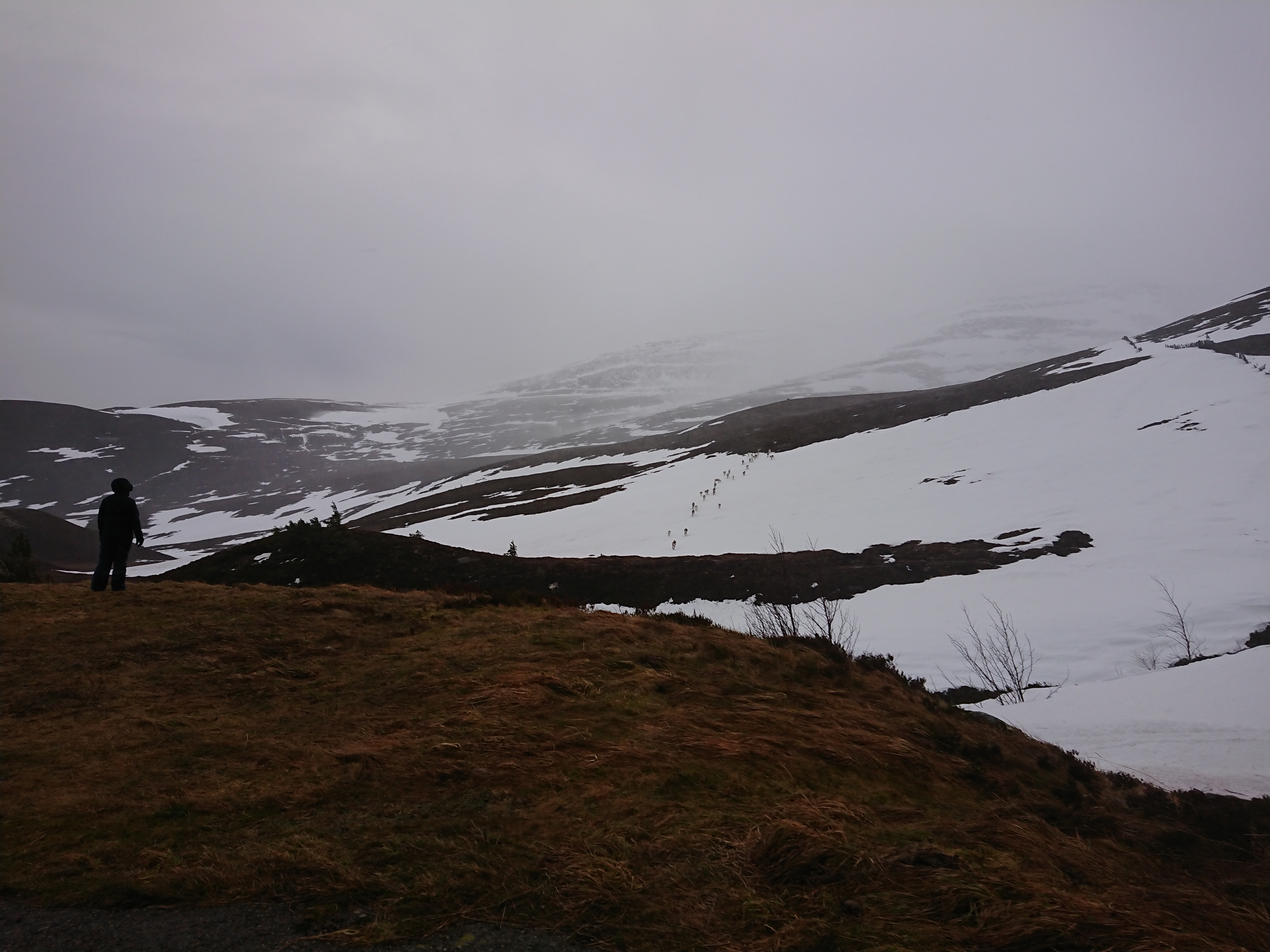
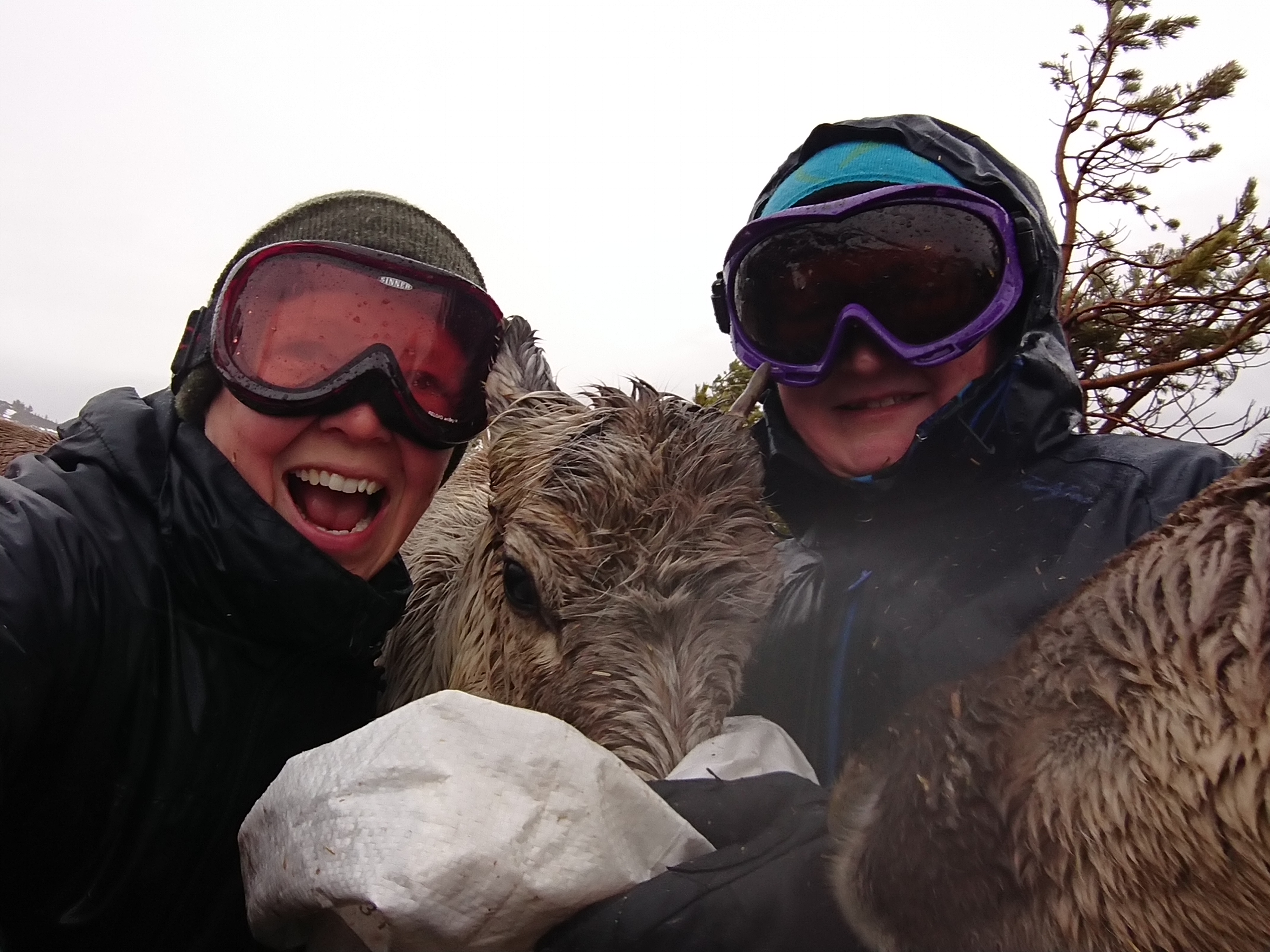
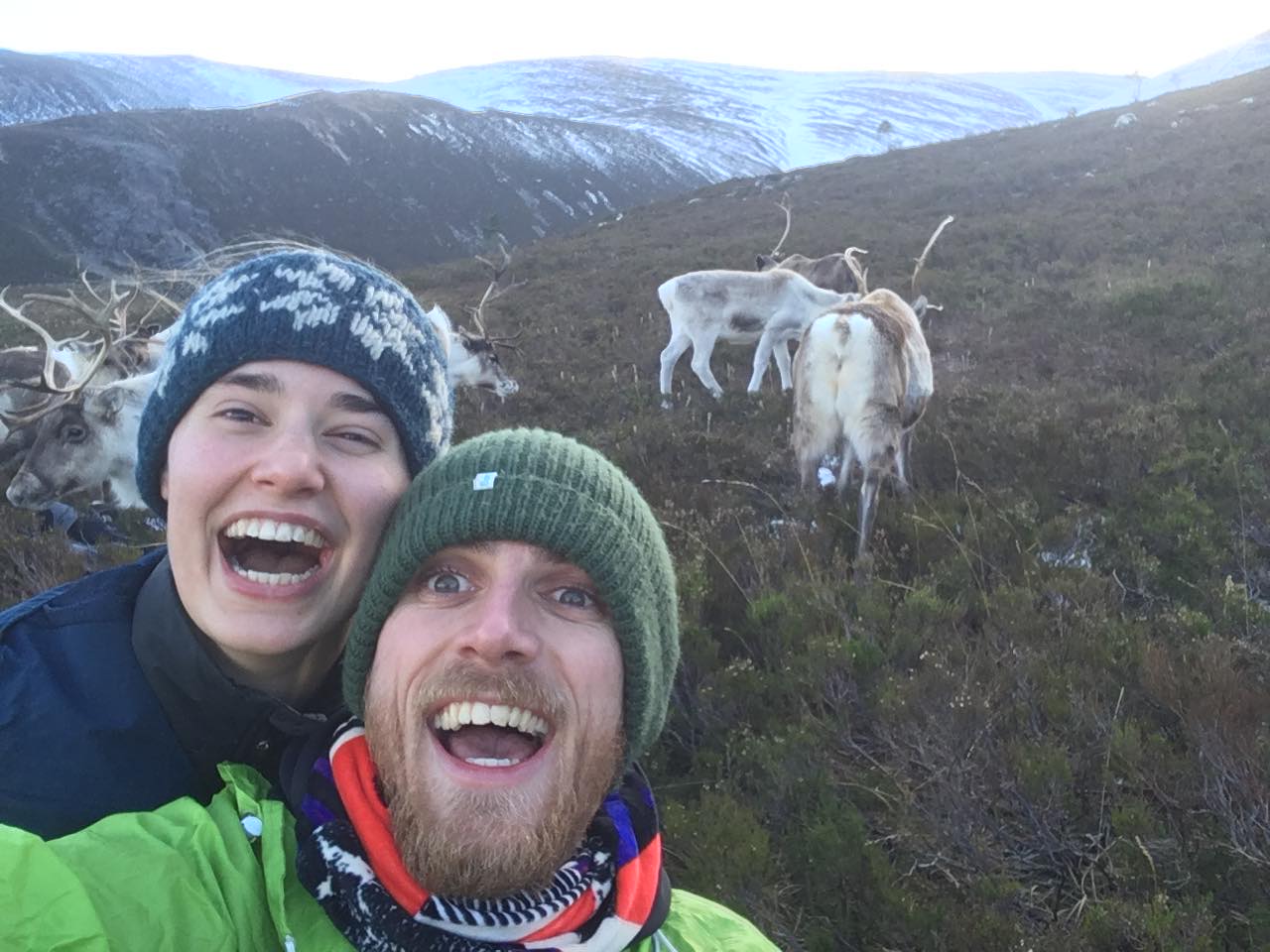
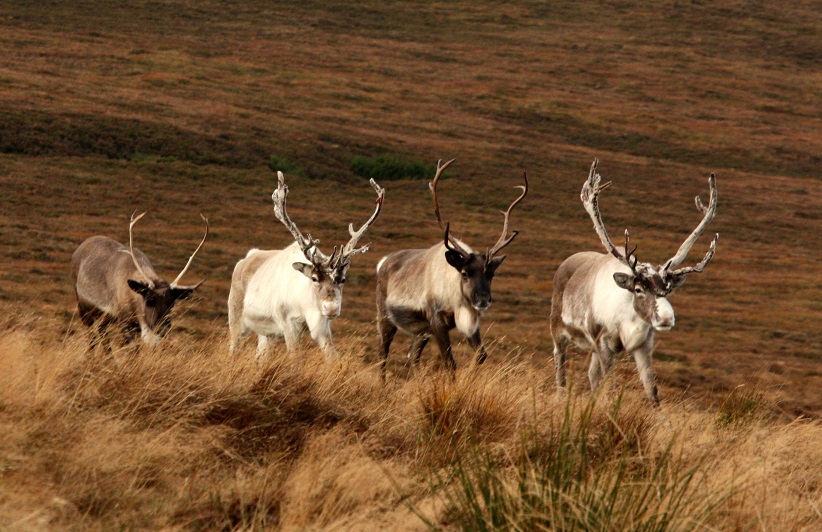
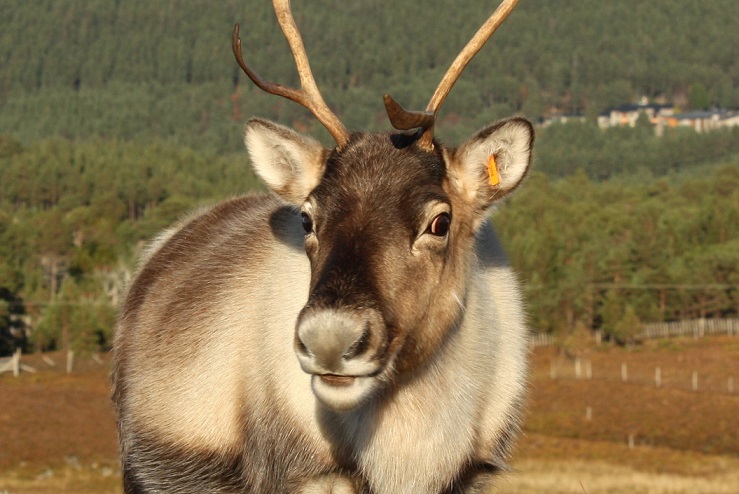
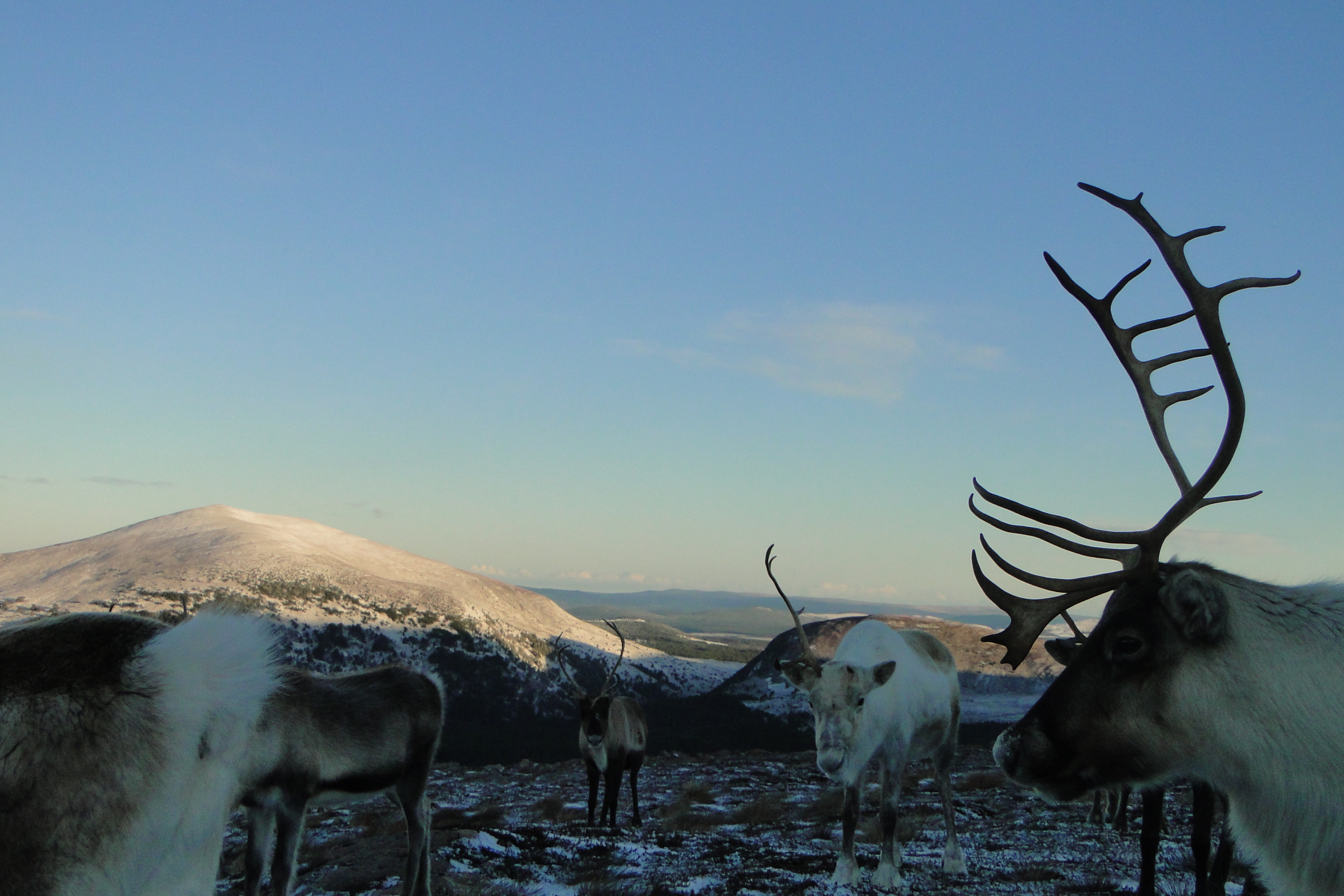
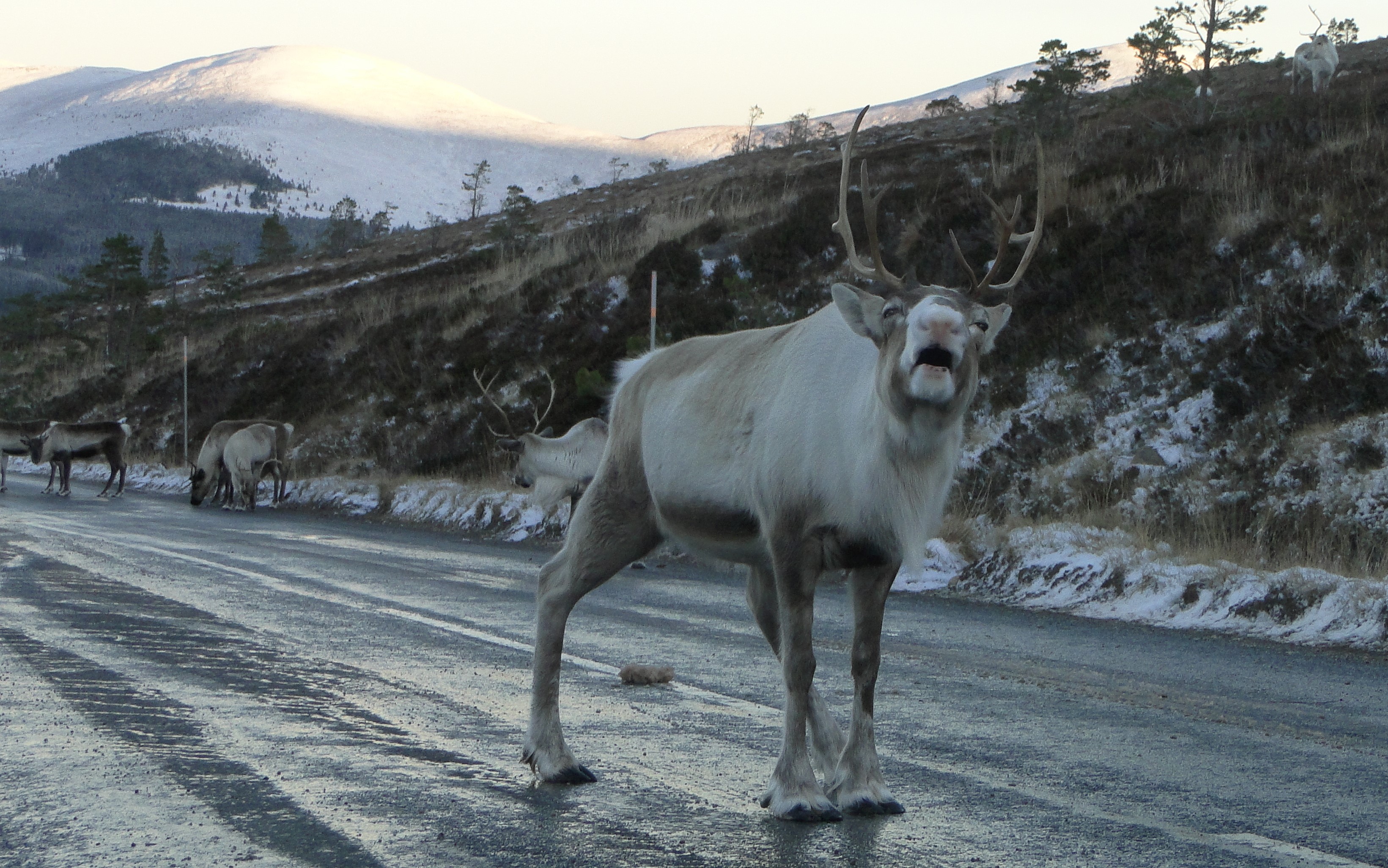
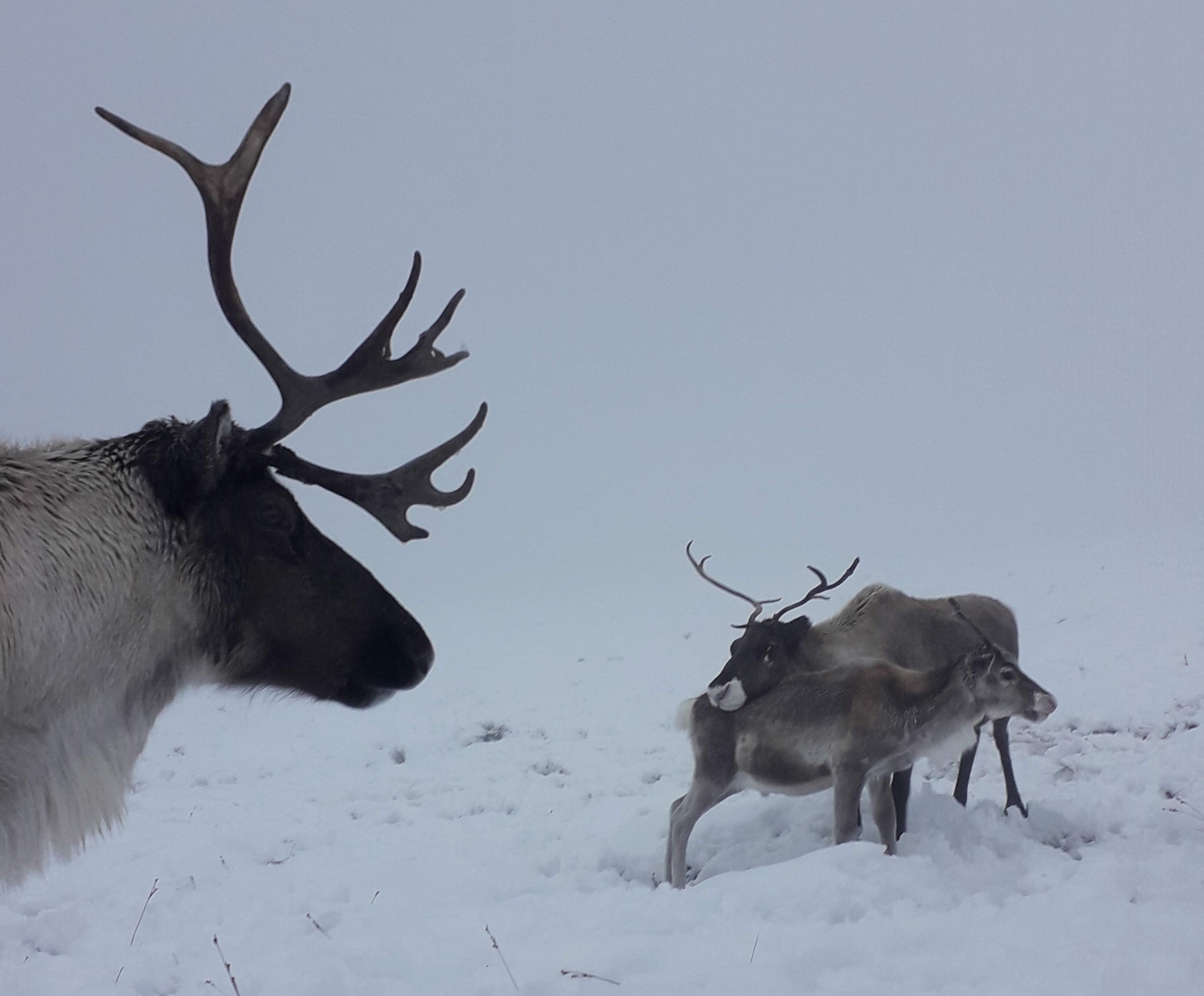
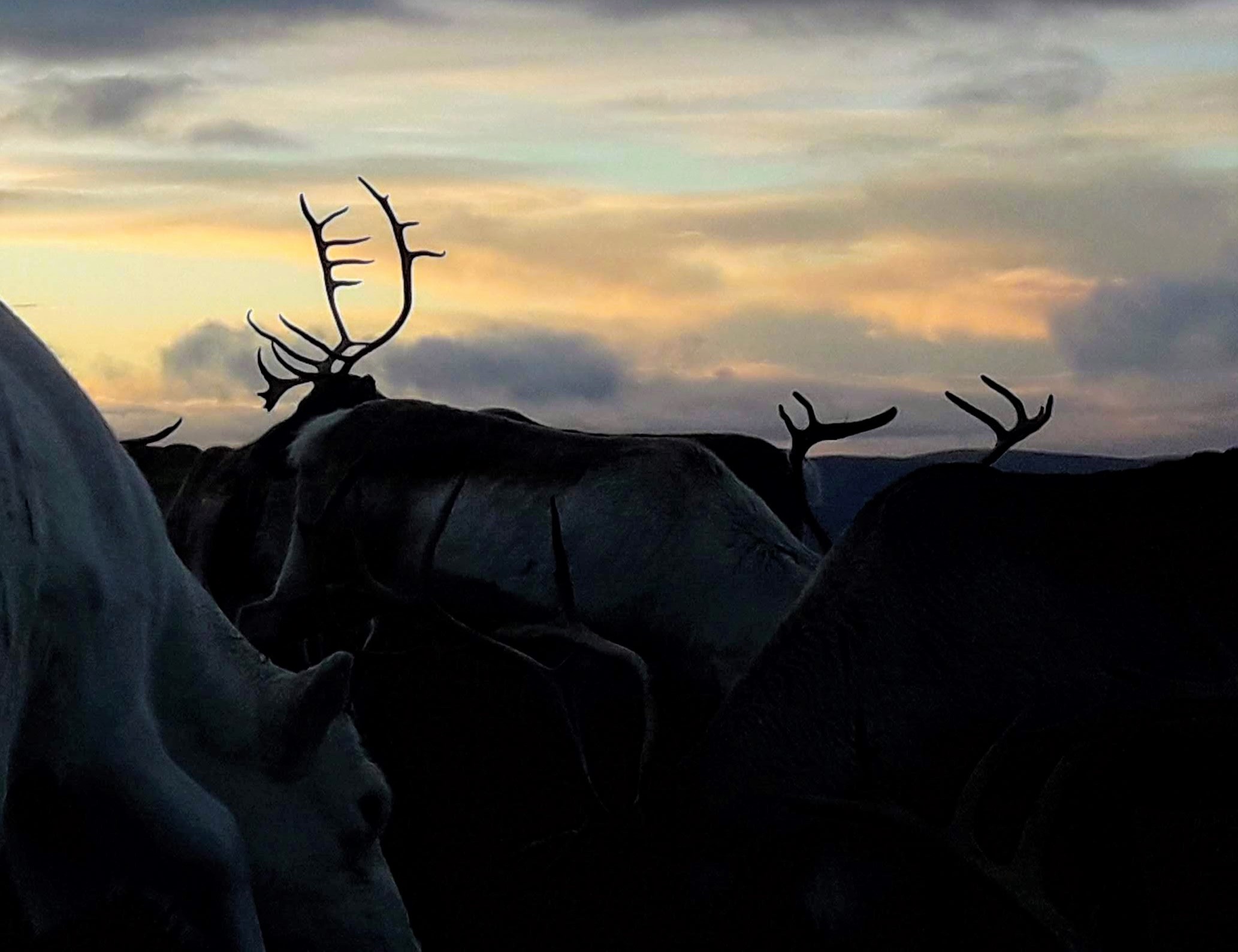
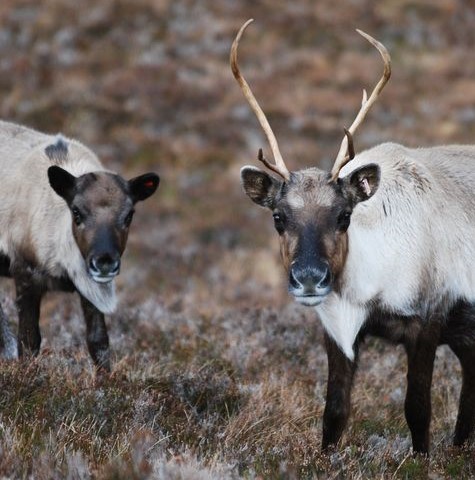
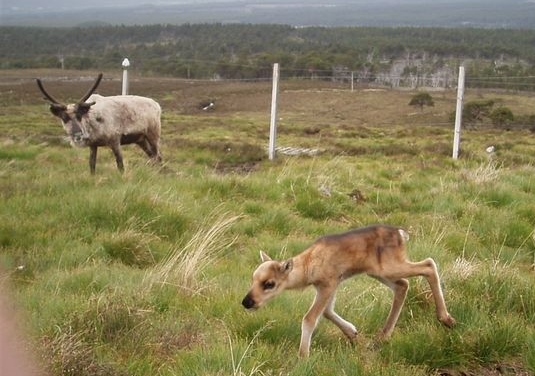
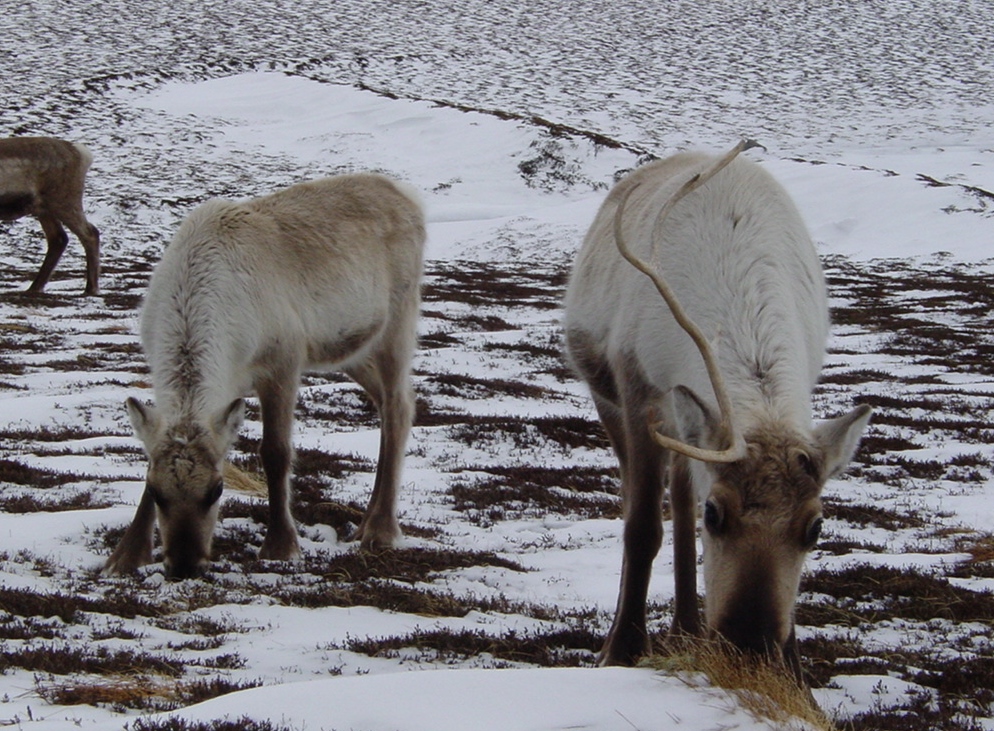
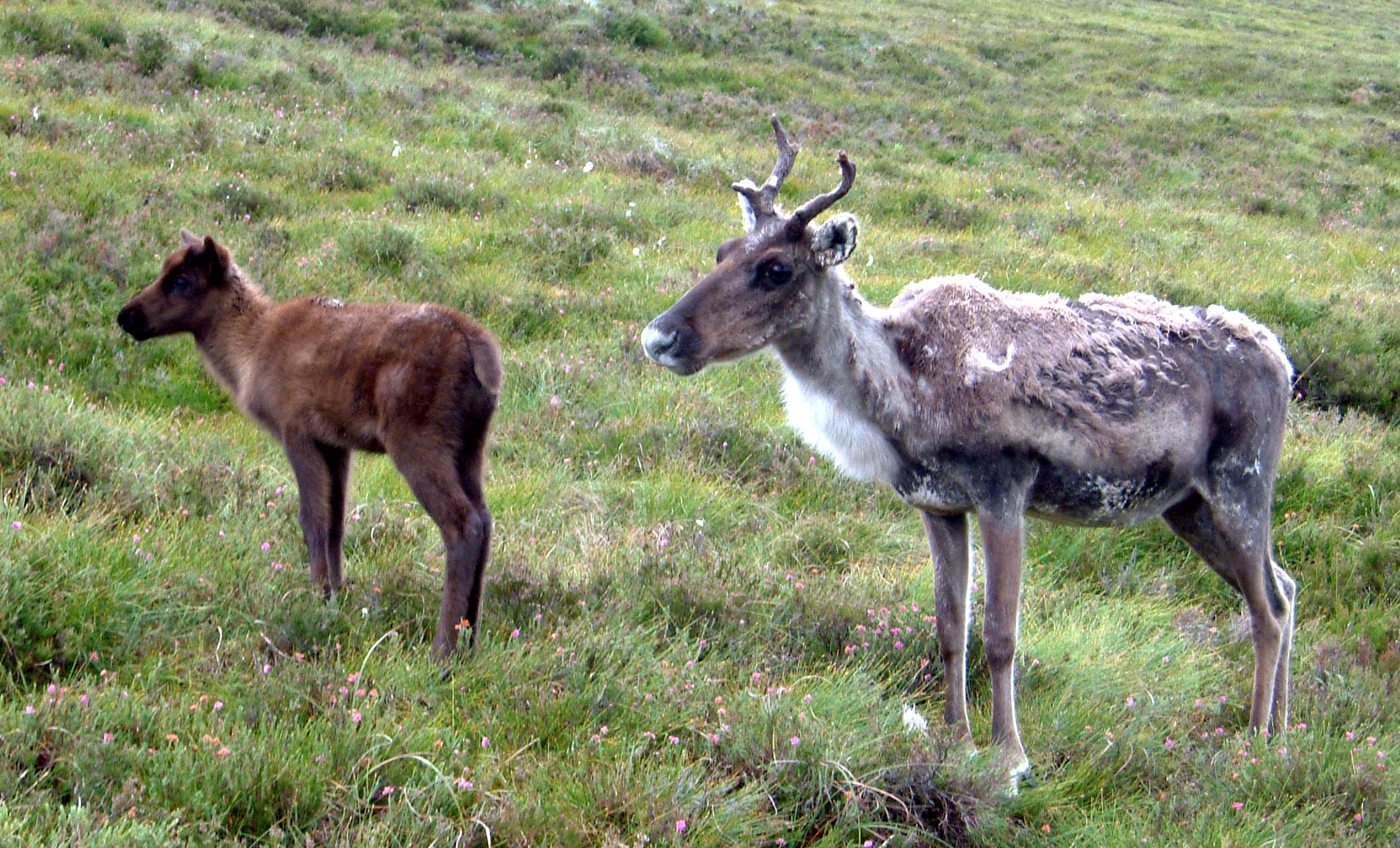
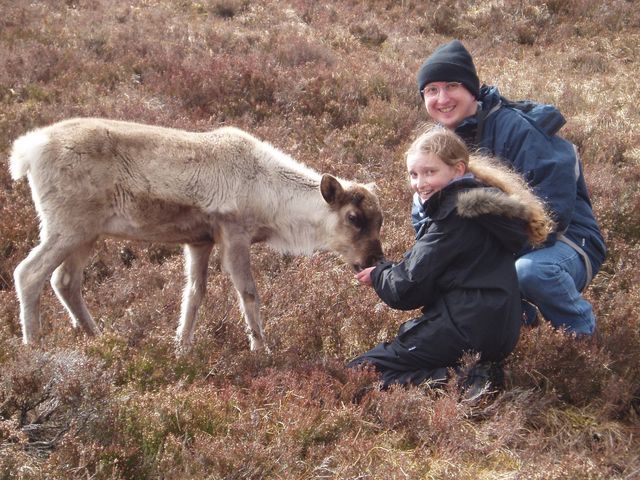
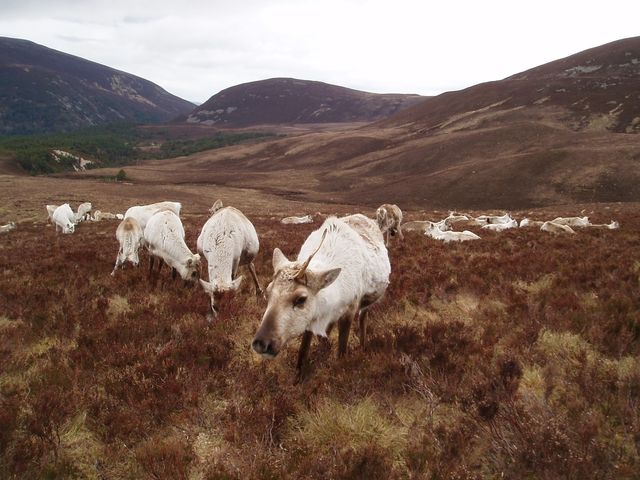
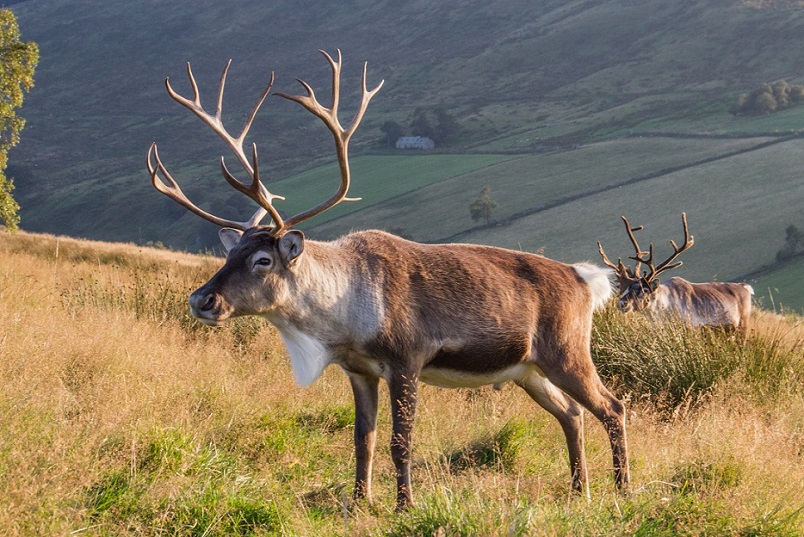
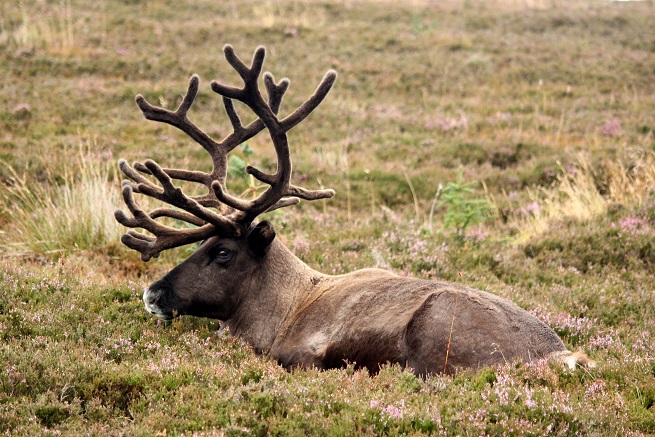
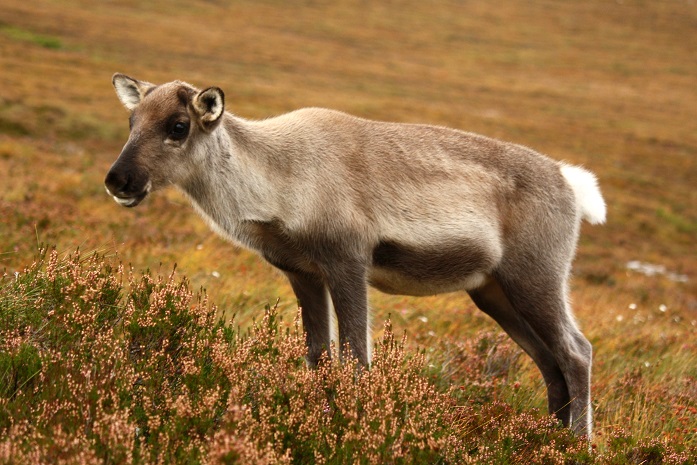
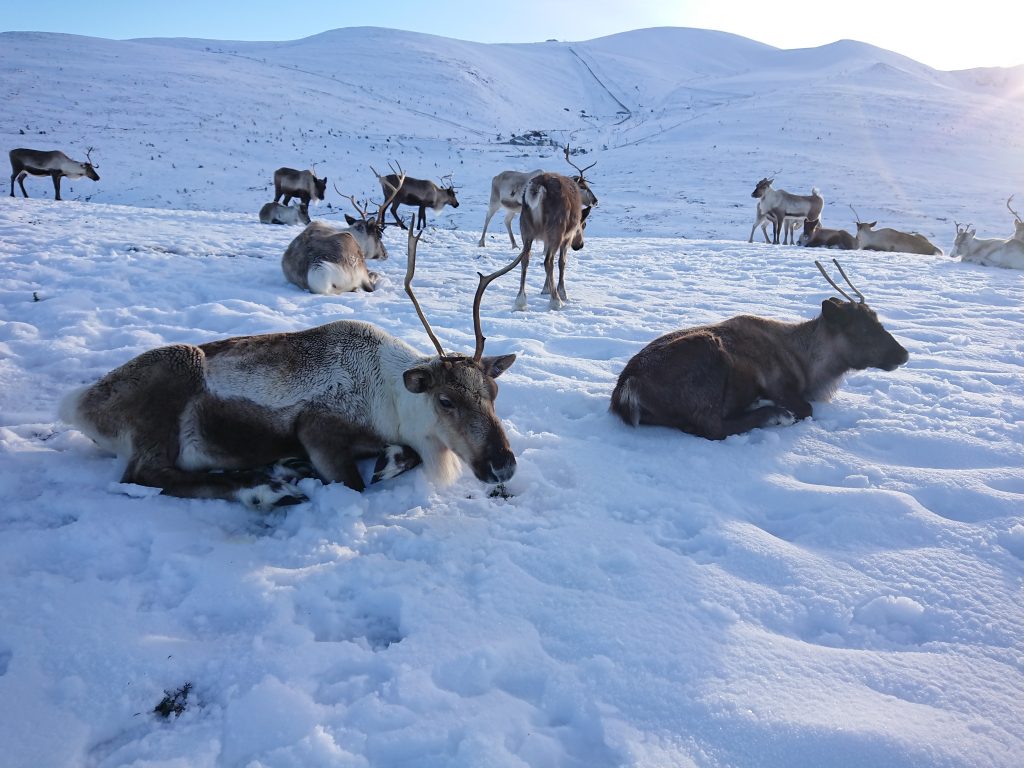
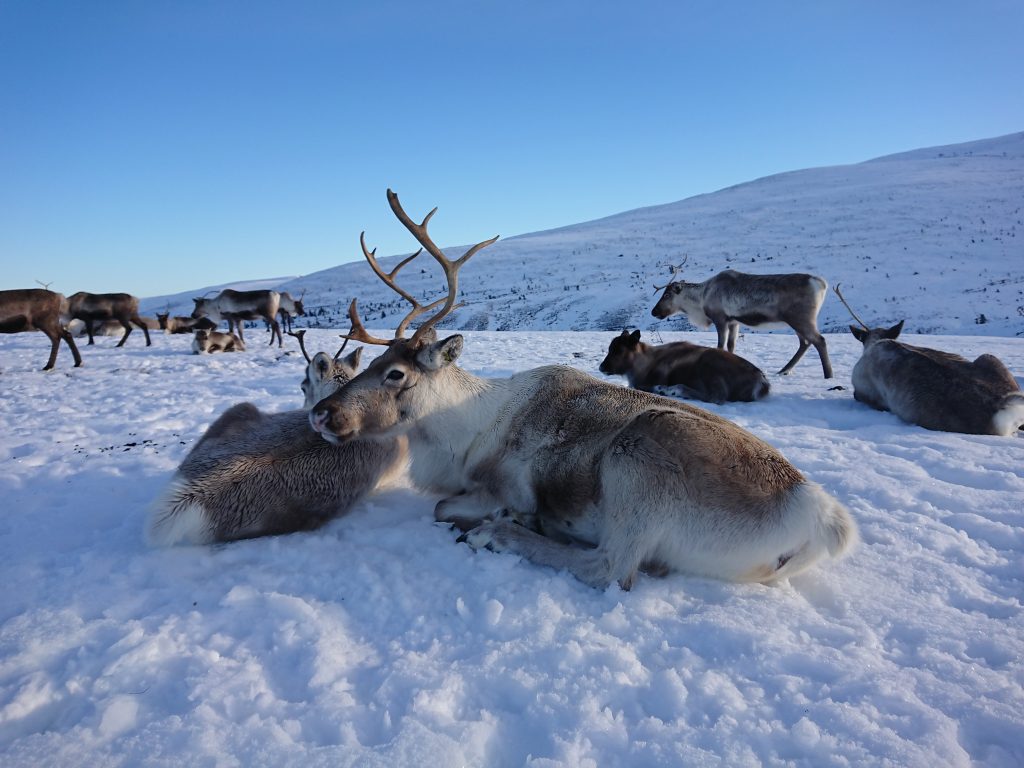
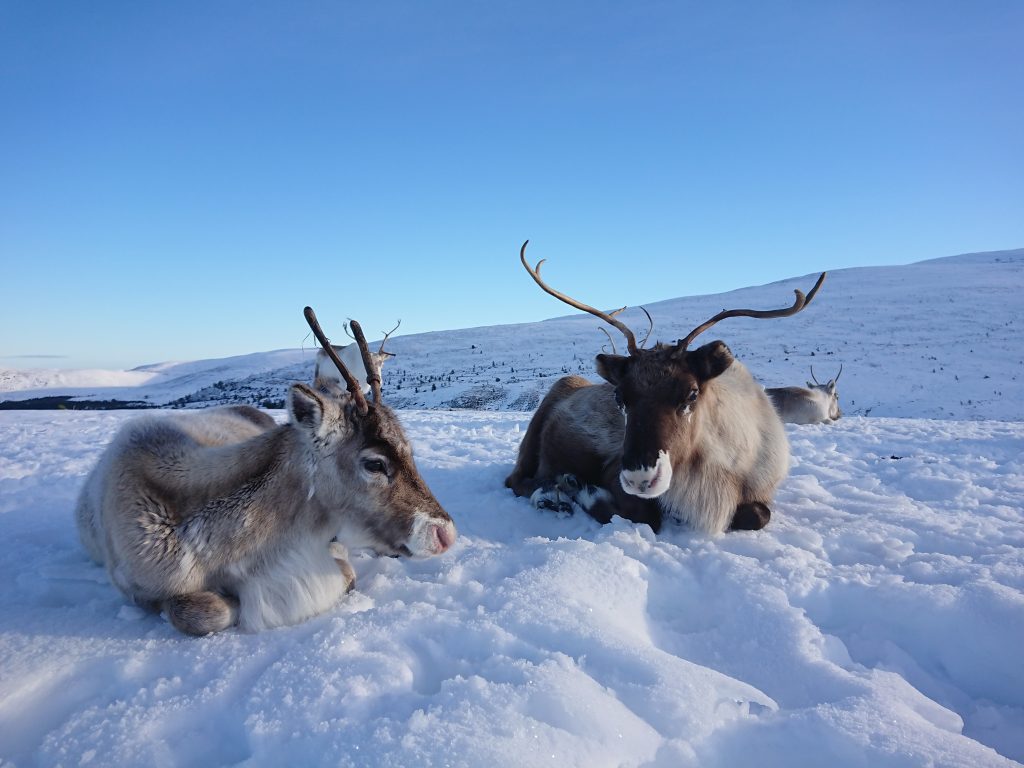
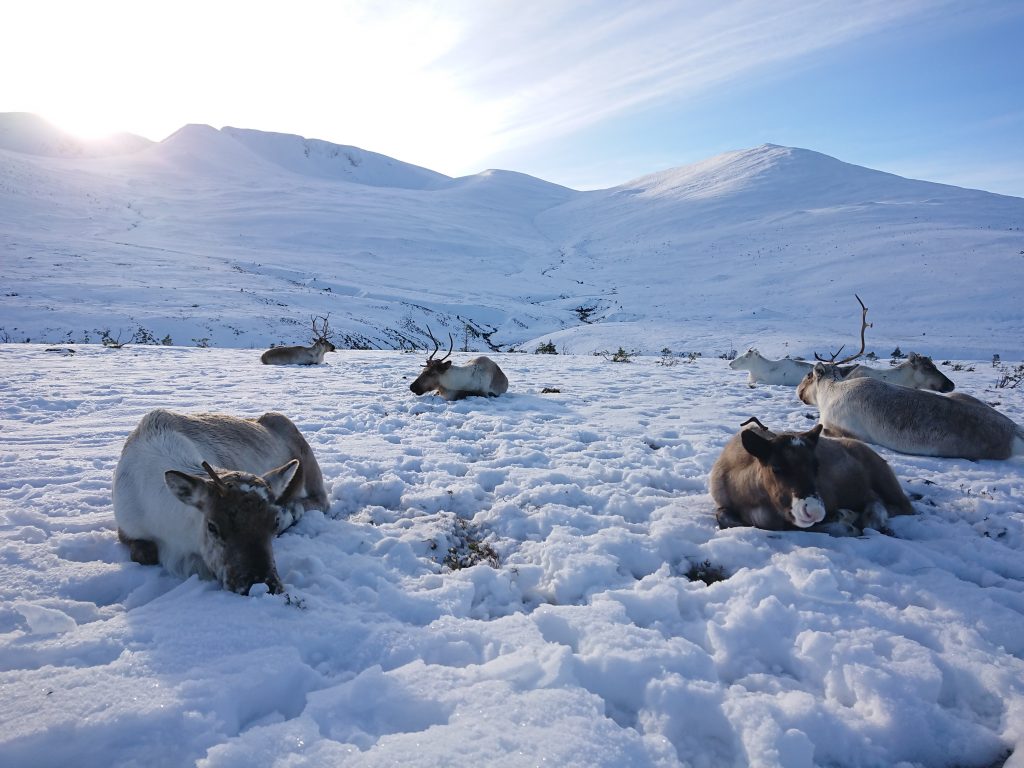
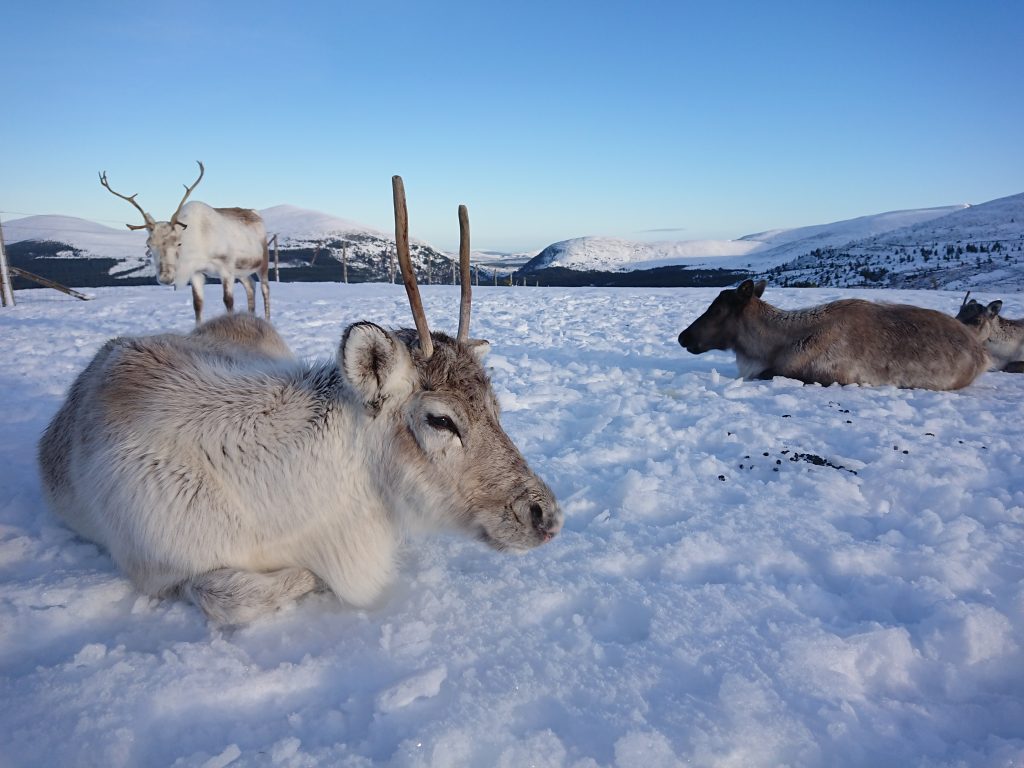
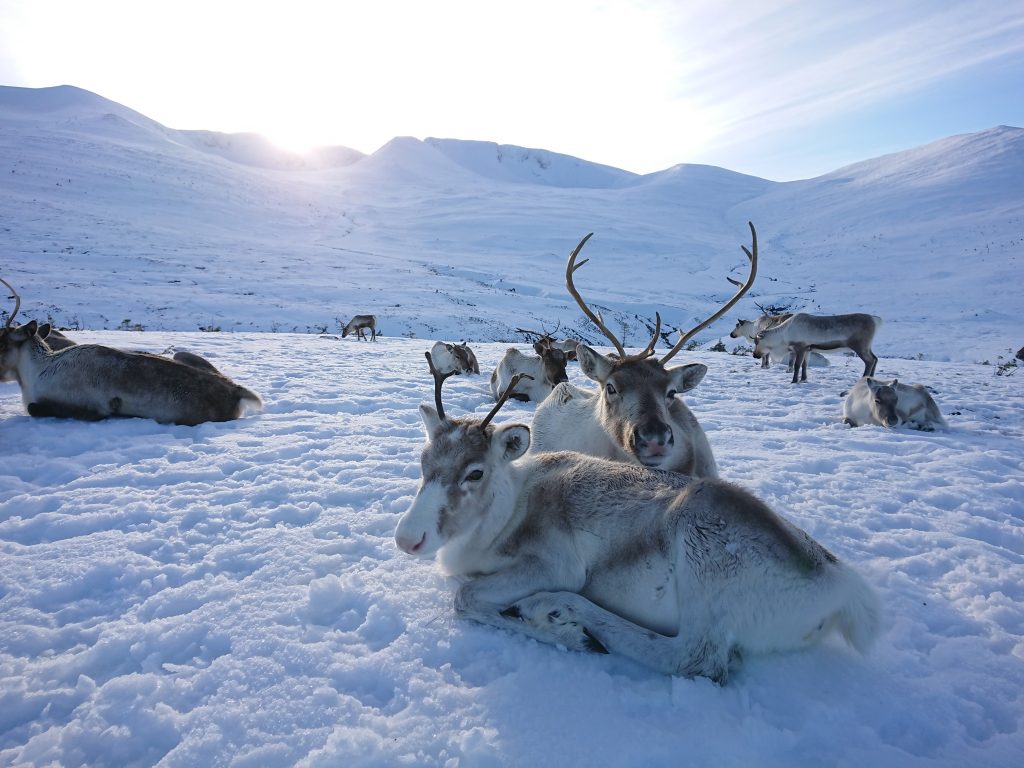
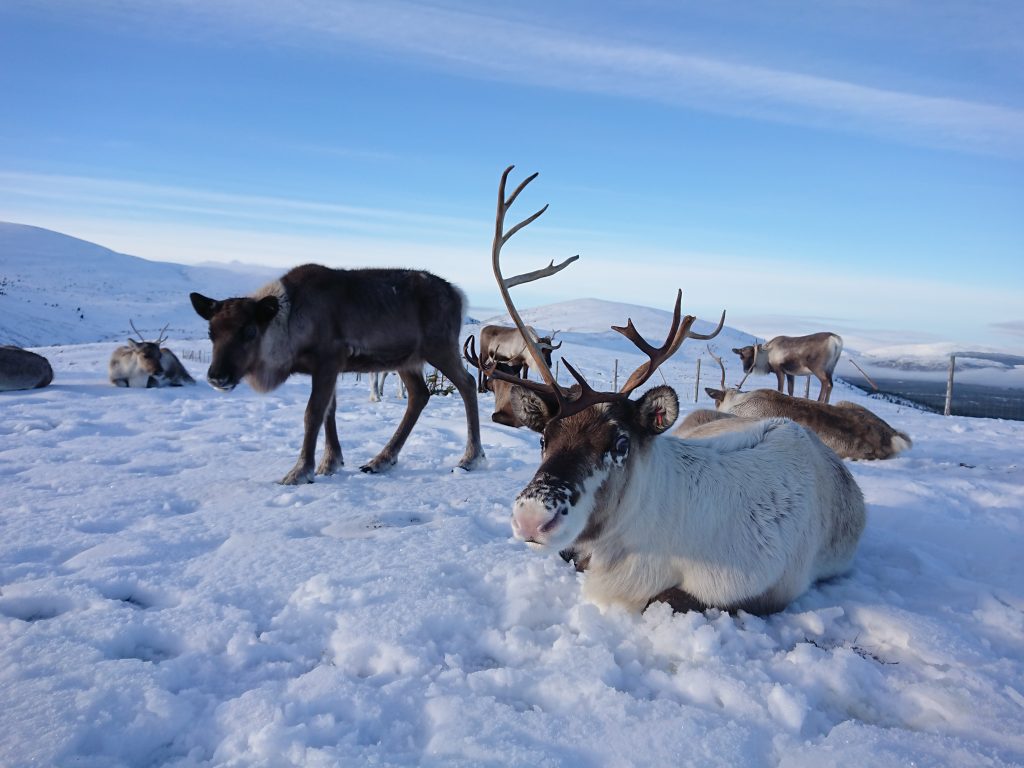
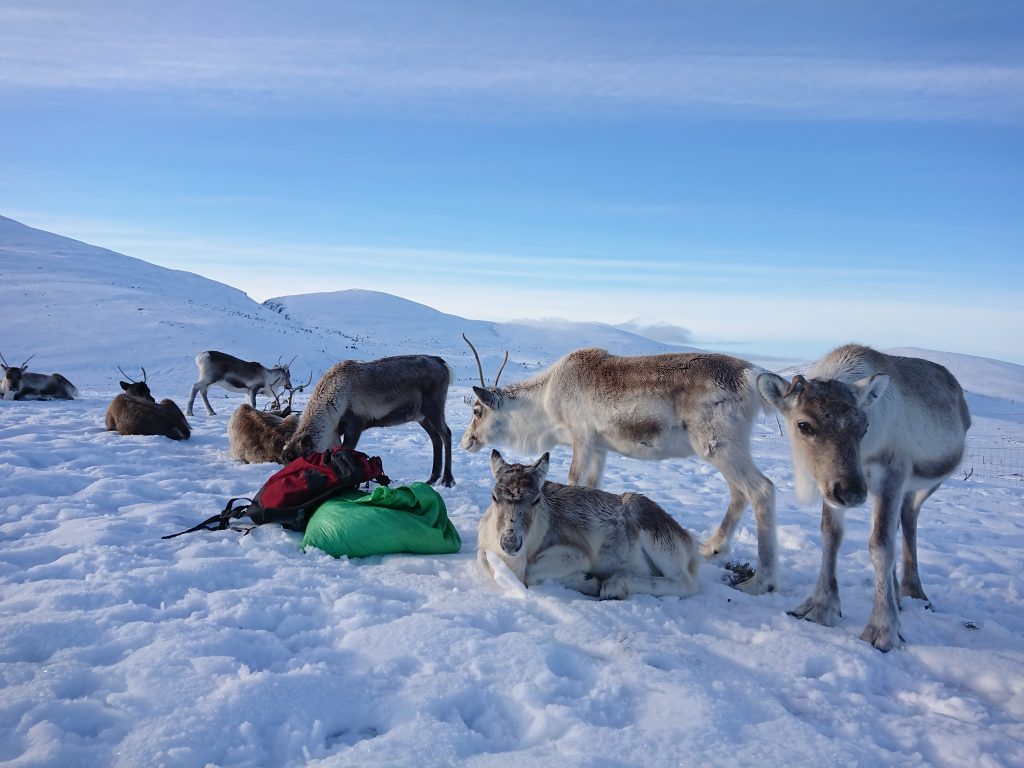
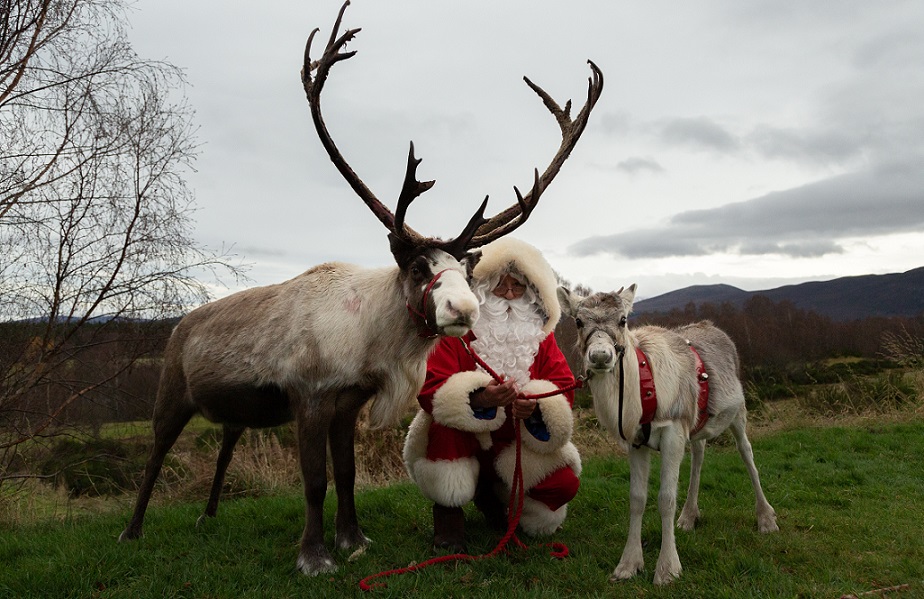
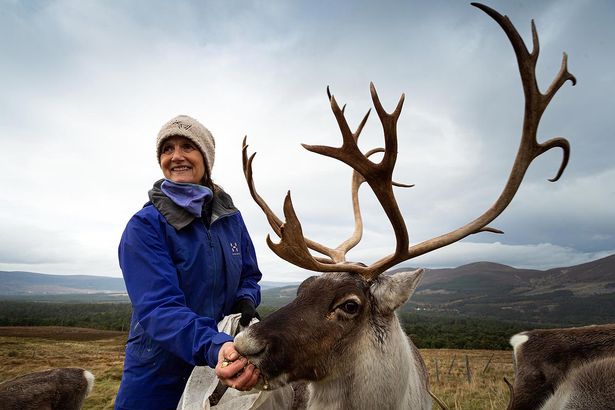
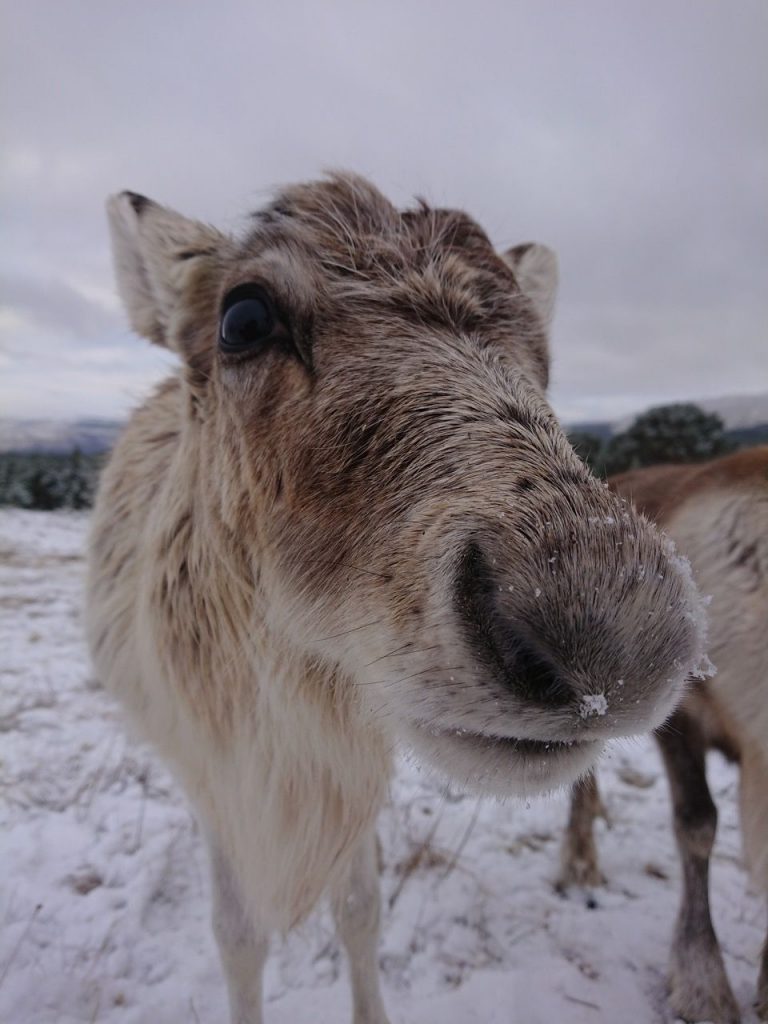
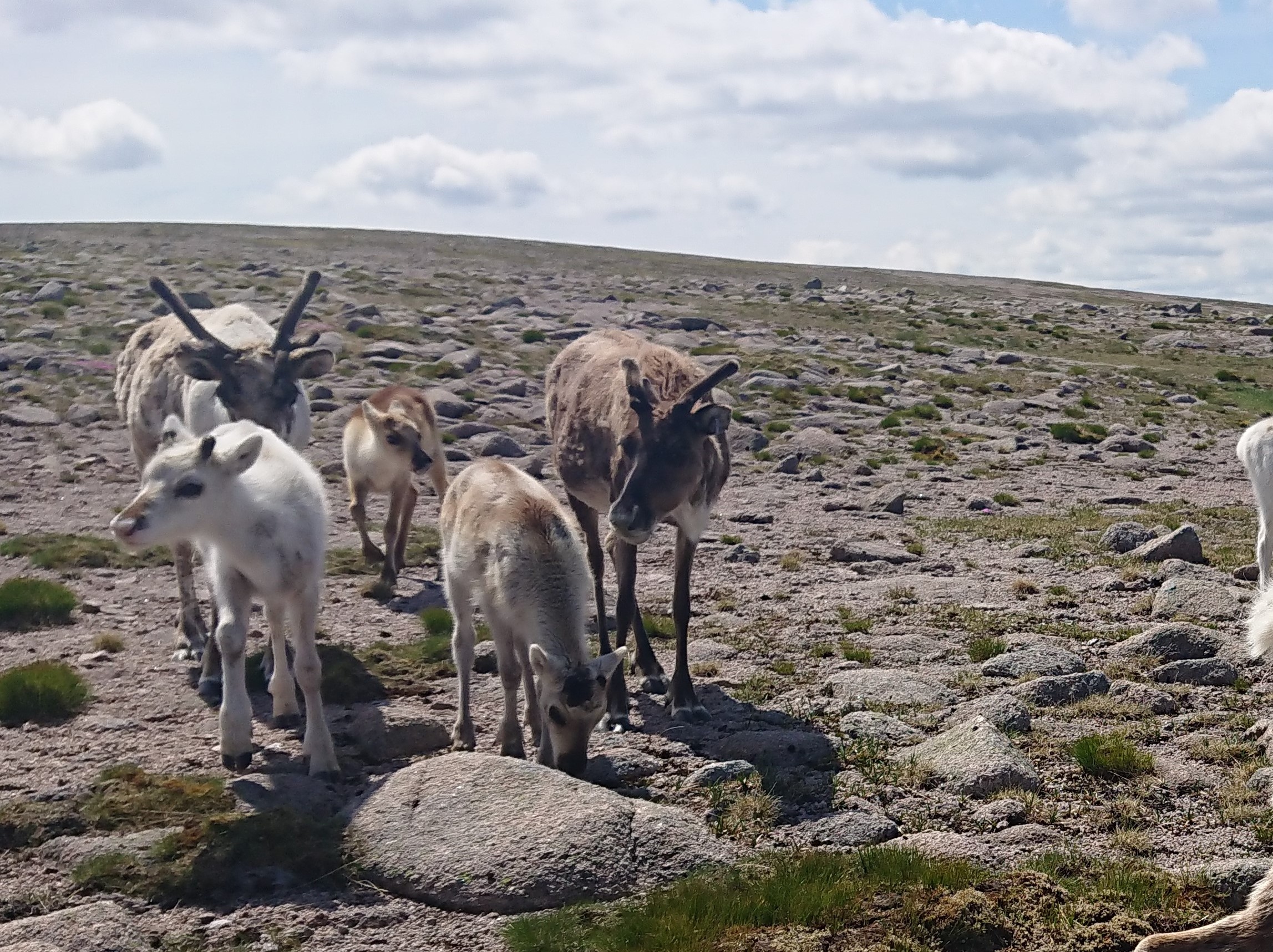
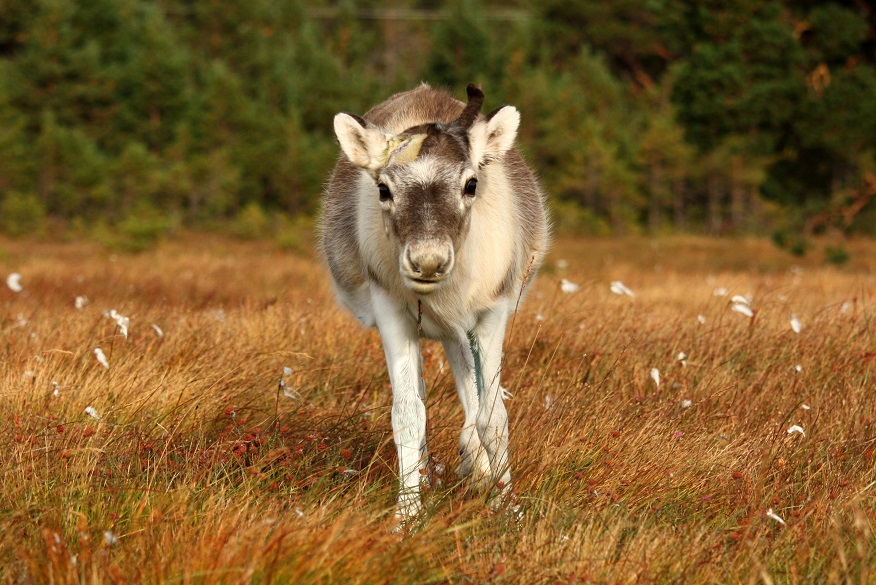
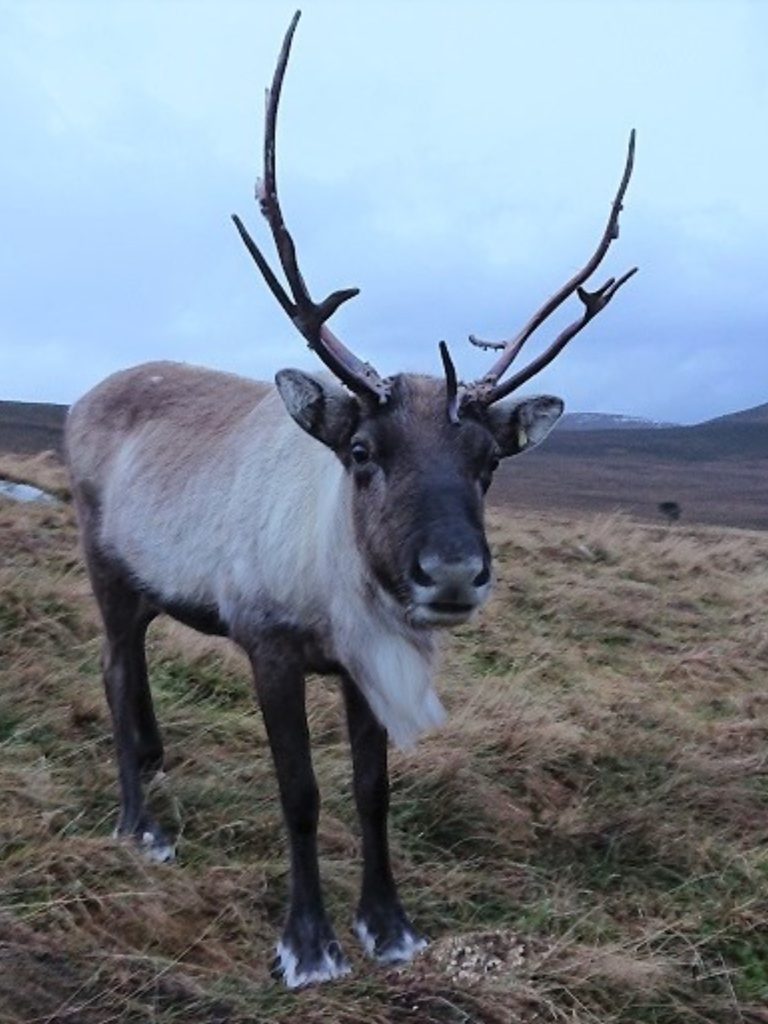
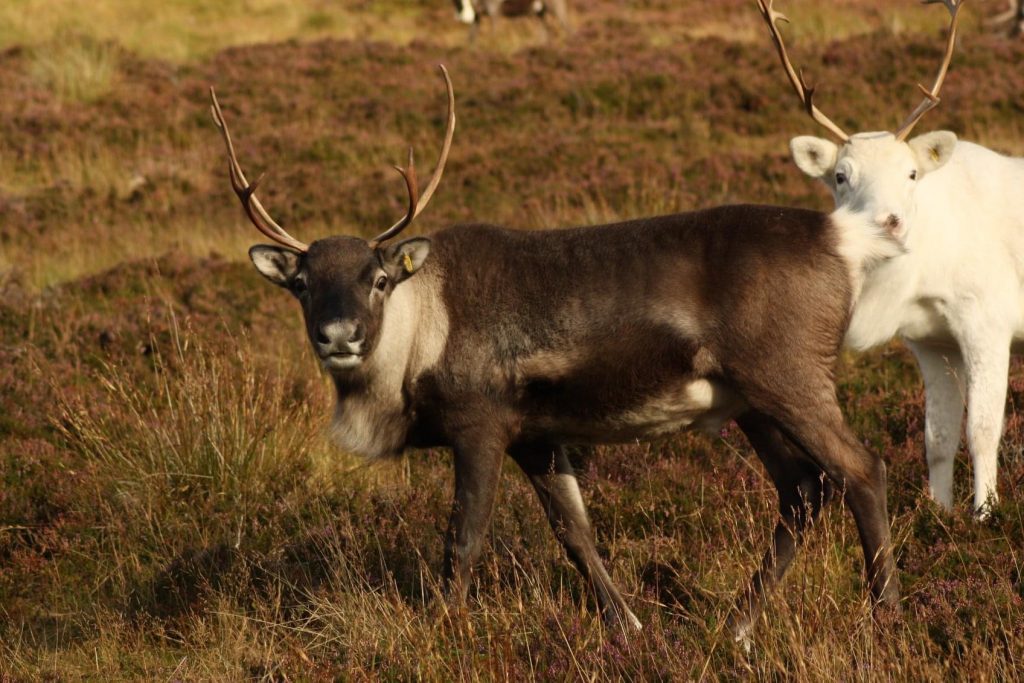
Don’t you ever wish you could just lie down and take a snooze if things are taking too long?? With their thick coats, that’s exactly what reindeer do – everywhere can be a bed! Here’s some shots of them having a snooze in the snow a few weeks ago…
Old lass Fonn and young LimaHi Lima!Kernel, Cicero and his mum BrieWee ChickpeaEmmental with her calf EdamameButter with his mum GlorianaAddax and her calf HempHaricotEmmental and her calf EdamameChristieGuardians of the bag – Pumpkin, Ärta and Heinz, with Holy Moley lying down
Following the TV programme on Channel 4, ‘A Baby Reindeer’s First Christmas‘, we have been overwhelmed with lovely letters of support, incredibly generous donations and new ‘adopters’. It really has been a fantastic lifeline for us here at the Cairngorm Reindeer Centre and I can honestly say our lovely reindeer have touched the hearts of many, both at home and abroad.
TV stars Dr Seuss and Holy Moley at the Strathspey Railway event. Photo: Justin Purefoy/Maramedia
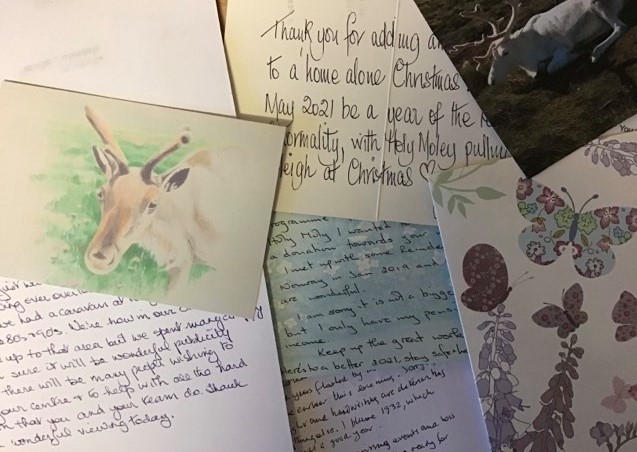
The lovely letters we have received have been incredibly varied and while protecting people anonymity I thought it would be nice to share some of the contents of these letters.
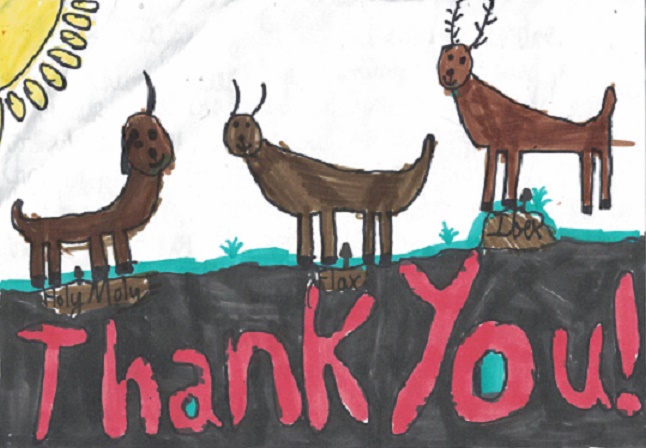
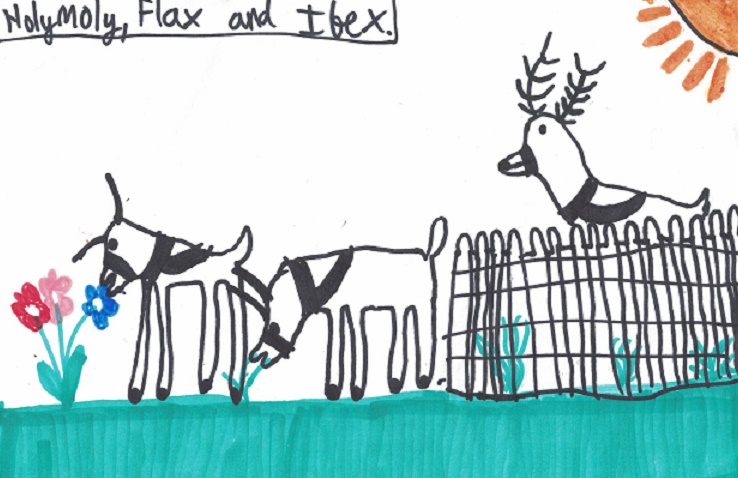
A young lass from the Midlands sent a wonderful letter, written and illustrated by herself. Her attention to detail was amazing and I can’t resist sharing her lovely drawings with you.
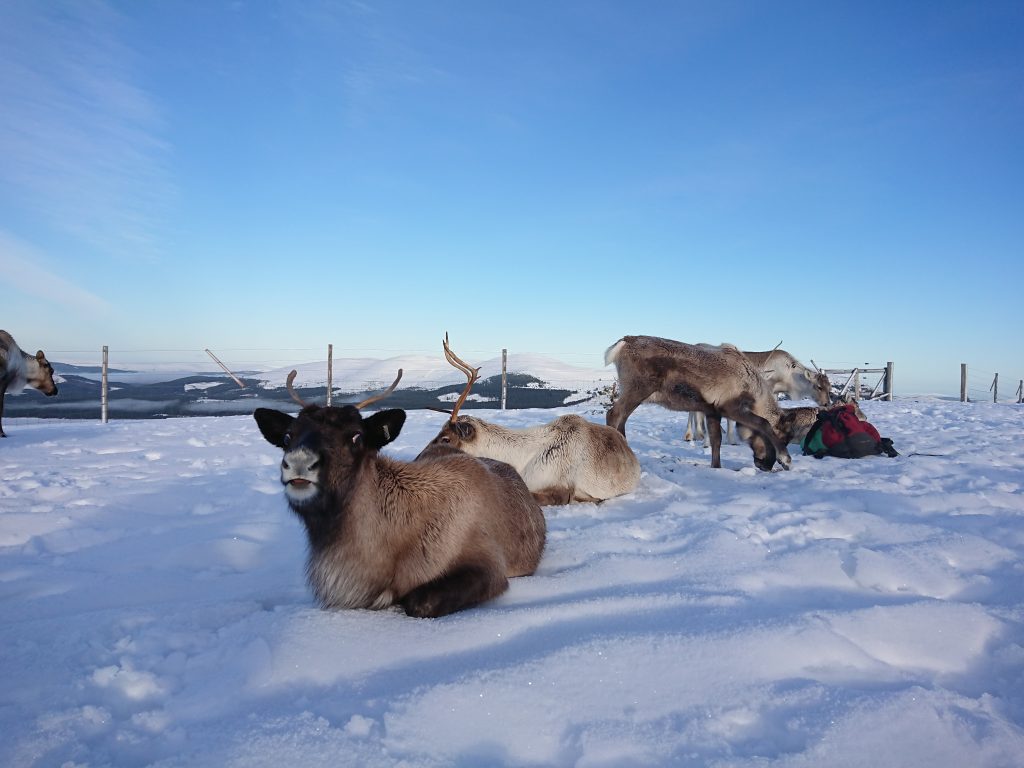
If any of you budding young reindeer enthusiasts would like to also send in anything we would love to receive it. Getting letters through the post is always special and here at The Cairngorm Reindeer Centre we would love to receive any works of art or prose! Our postal address and email address can be found on the Contact Us page of our website.
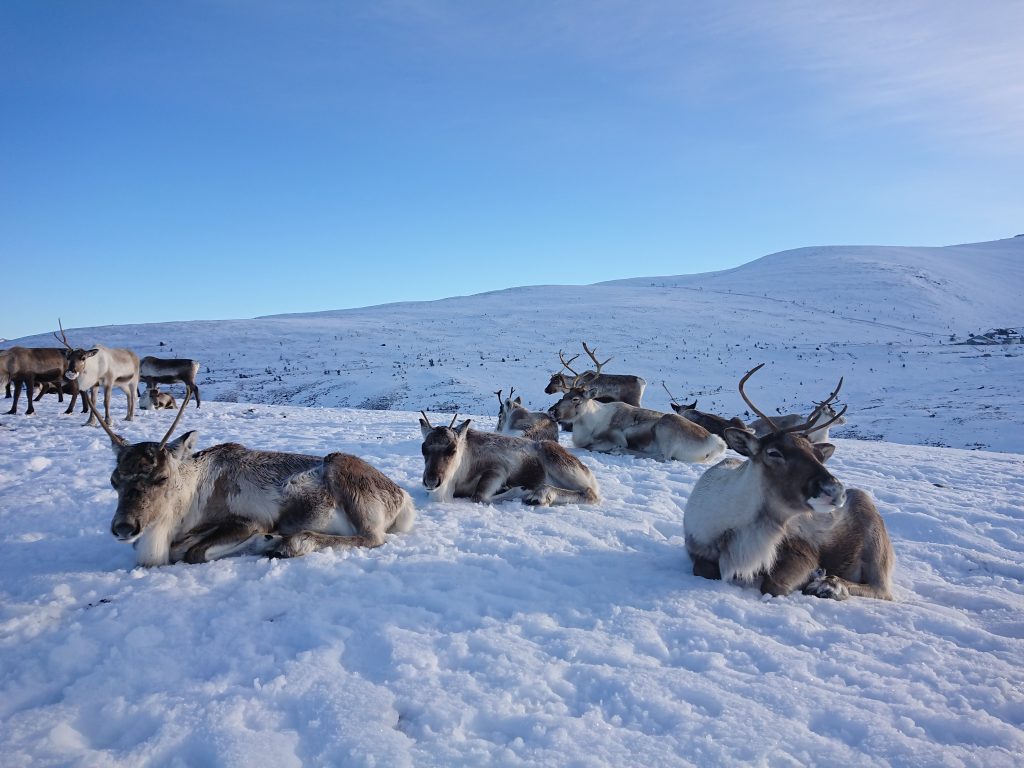
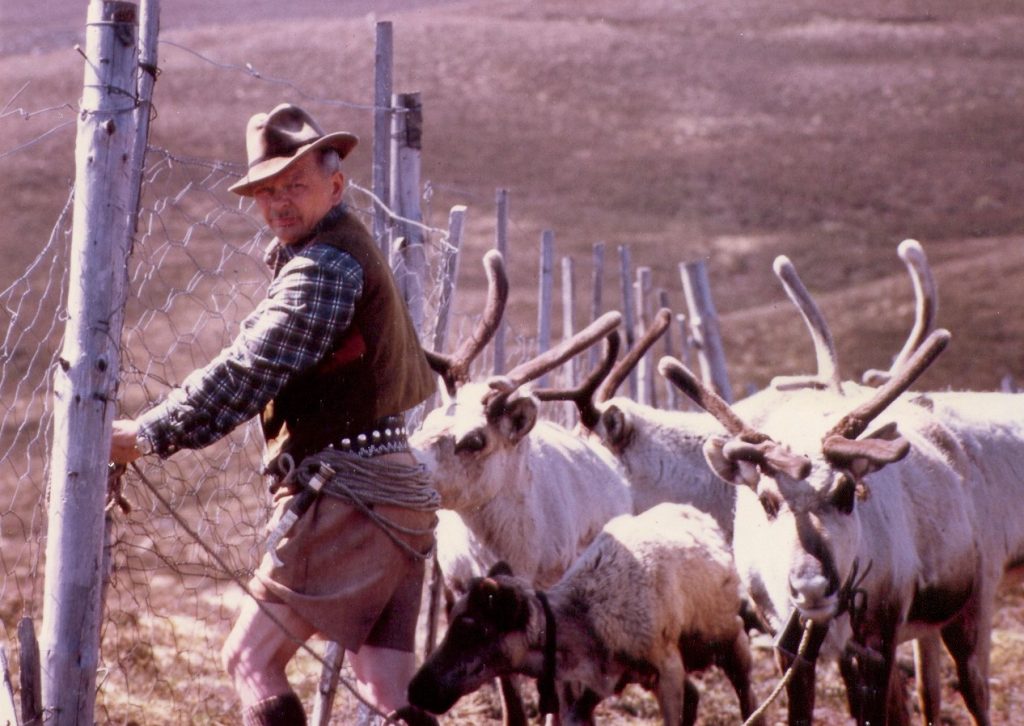
Quite a number of letters and cards came from people reminiscing about days gone by, maybe an occasion when they met the original owners of the herd, Mikel Utsi and Dr Lindgren. Although we have a considerable archive here at Reindeer House of the history of the herd, many of the stories recalled were new to me and so all the more interesting.
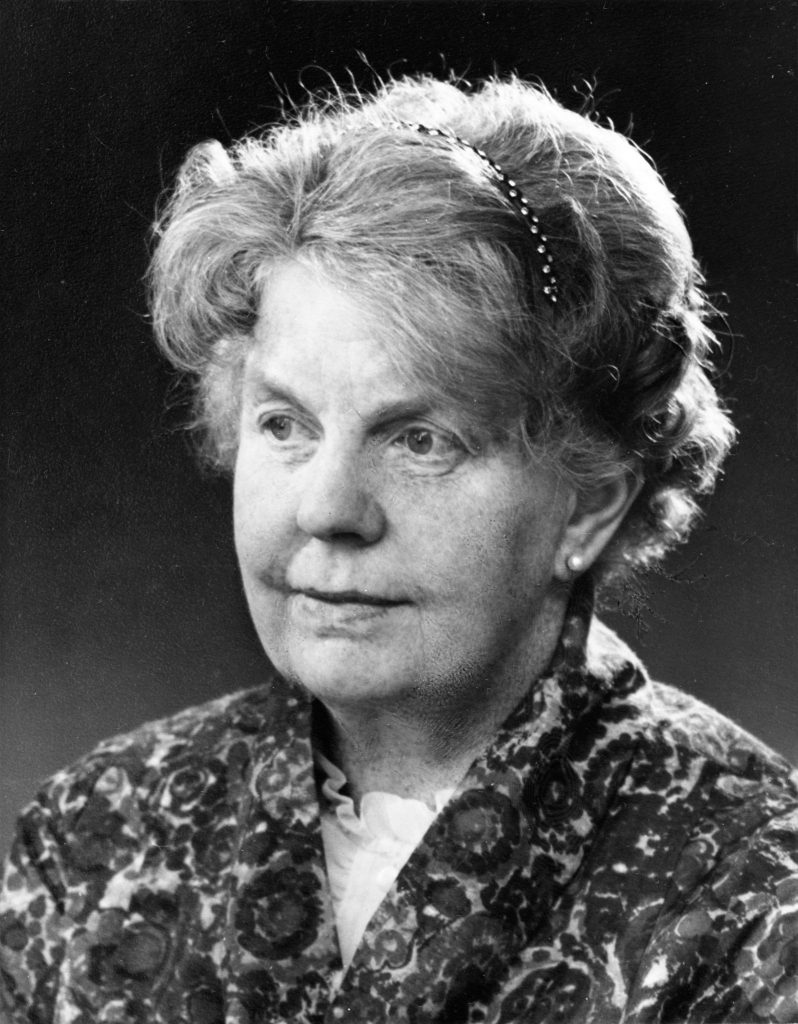
I smiled at the recollection of one couple who attended a talk given by Dr Lindgren and described her as ‘large’ (not fat) and very straight backed and a loud voice. Well I certainly chuckled at this description! Dr Lindgren indeed a very tall lady and the above description hits the nail on the head. I knew Dr Lindgren well in her latter years and I was terrified of her! She was so worldly, intelligent and dominant, but she was also kind and considerate when necessary. I would love to hear from anyone who knew her personally and has a story to tell – she was quite a character and had many different interests and skills, other than reindeer.
And then there was a lady who met Mr Utsi, in North Sweden, before the first reindeer came to Scotland in 1952. This was a lovely encounter, which was described in detail to us. Back in 1951, the lady who wrote to us went on a skiing expedition with her school to Swedish Lapland. Many of them had never skied before, but quickly got to grips with the sport and by all accounts had lifetime memories from their time there. While there they were taken to see a herd of reindeer and the owner Mikel Utsi told them that he was introducing his reindeer to Scotland! What a wonderful memory and I am so glad this lady was able to see the TV programme on Christmas Eve and see just how it is all those years later!
There was a strong common theme through the many letters we received with comments as follows:
‘ best viewing ever over the Festive season’
‘Thank you for adding ‘animal magic’ to a home alone Christmas’
‘A Baby Reindeer’s First Christmas was absolutely brilliant and a stroke of genius – wonderful publicity, informing such a wide audience of all the great work you are doing for the community’
‘The programme brought back lovely memories of when we used to visit you in your early days’
So thank you from the bottom of my heart to everyone you has been in touch to reminisce, donate and adopt reindeer. It has been a huge help to us and most importantly ‘put a smile on our faces’.
Tilly feeding young bull Sherlock. Photo: Justin Purefoy/Maramedia
A lot of you may have already heard of Holy Moley, whether it be on one of our guided tours up here in the Highlands of Scotland, on our social media or most likely through the recent Channel 4 programme (‘A Baby Reindeer’s First Christmas’) where Holy Moley was the star reindeer! The programme takes you through her roller-coaster of a life so far but it didn’t actually explain why she was called Holy Moley in the first place so I’m going to take this opportunity to explain her name.
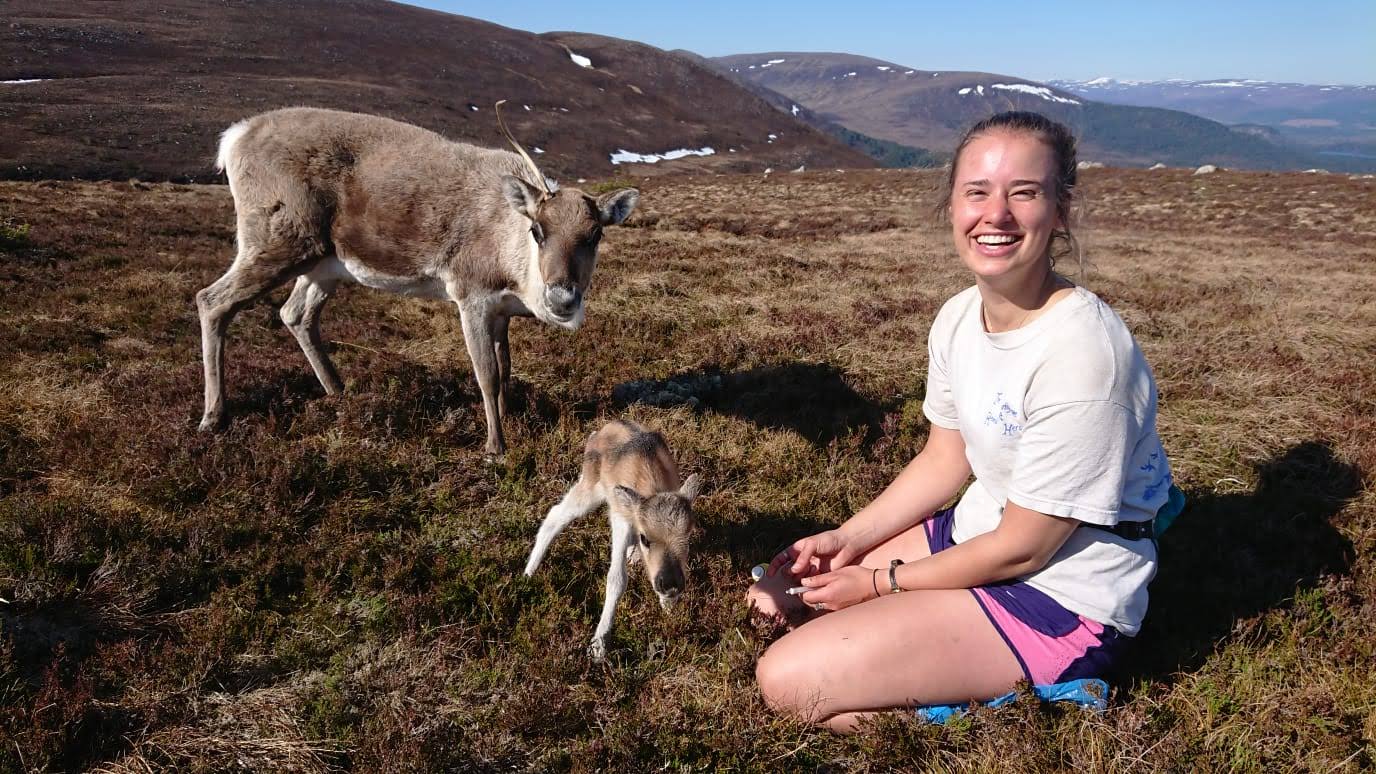
On the 25th April 2020 our first reindeer calf of the year was born. Lotti and myself headed out for about an hour’s hill walk to look for Galilee, a 6 year old very pregnant female reindeer who we spied from a distance through binoculars. On top of a hill called Silver Mount within our 1200 acre mountain enclosure, or Airgiod-meall in Gaelic, we found her and her new calf. This was Lotti’s first calving season with us, so her first reindeer calf. However, like Galilee I was an old hand at this time of year so was passing on advice on approaching and treating new born calves correctly to Lotti. Galilee couldn’t have been more chilled out with our presence, in fact she was pretty delighted we brought her a tasty feed after what had probably been an exhausting few hours! Lotti was absolutely ecstatic! A smile beamed from ear to ear which of course was infectious so the two of us were on cloud nine. We sprayed the newborn’s navel to stop any infection and popped a wee bit of insecticide on her back to prevent ticks from biting and causing problems for the wee girl then left her to get to know her mum. As she was the first calf we weren’t in a hurry to bring her in closer to the herd into the smaller fenced area which becomes a ‘nursery’ through the spring, but thought we would wait until another female had calved so they could come in together.
Huge excitement!
We caught up with them the next day to feed Galilee and check her calf was well. Galilee this time decided that with her calf being much more mobile, that she wasn’t sticking around so again we left her to it, with no urgent hurry to bring them in. Then on the 27th April myself, Andi, Lotti and Joe headed out to bring Galilee and calf (and now also Dante and her calf) into an enclosure a bit closer so we could keep an eye on them. Andi and Lotti concentrated on Dante and calf while Joe and I headed over to where we could see Galilee, assuming her calf was with her.
As we approached Galilee she didn’t move away from us, as you would expect a new mum to do. I got closer and closer and realised quite quickly that things weren’t normal. Galilee was grunting a lot. A call she would use to communicate with her 2 day old calf but I couldn’t hear or see her calf anywhere. Galilee was right in amongst a pile of boulders which didn’t cover a big area but she was pretty adamant to stay close to a certain area, sticking her nose into a section where the boulders had big gaps between. My heart sunk when I realised her calf must have fallen down in between the gaps somehow! Joe and I searched, treading carefully over the boulder field. After about 10 minutes (which felt like an hour) of searching we could then hear a very faint calf grunting back to her mother. This then confirmed whereabouts in the boulders she was, however she was so far down we couldn’t see her, let alone reach with our arms to get her out.
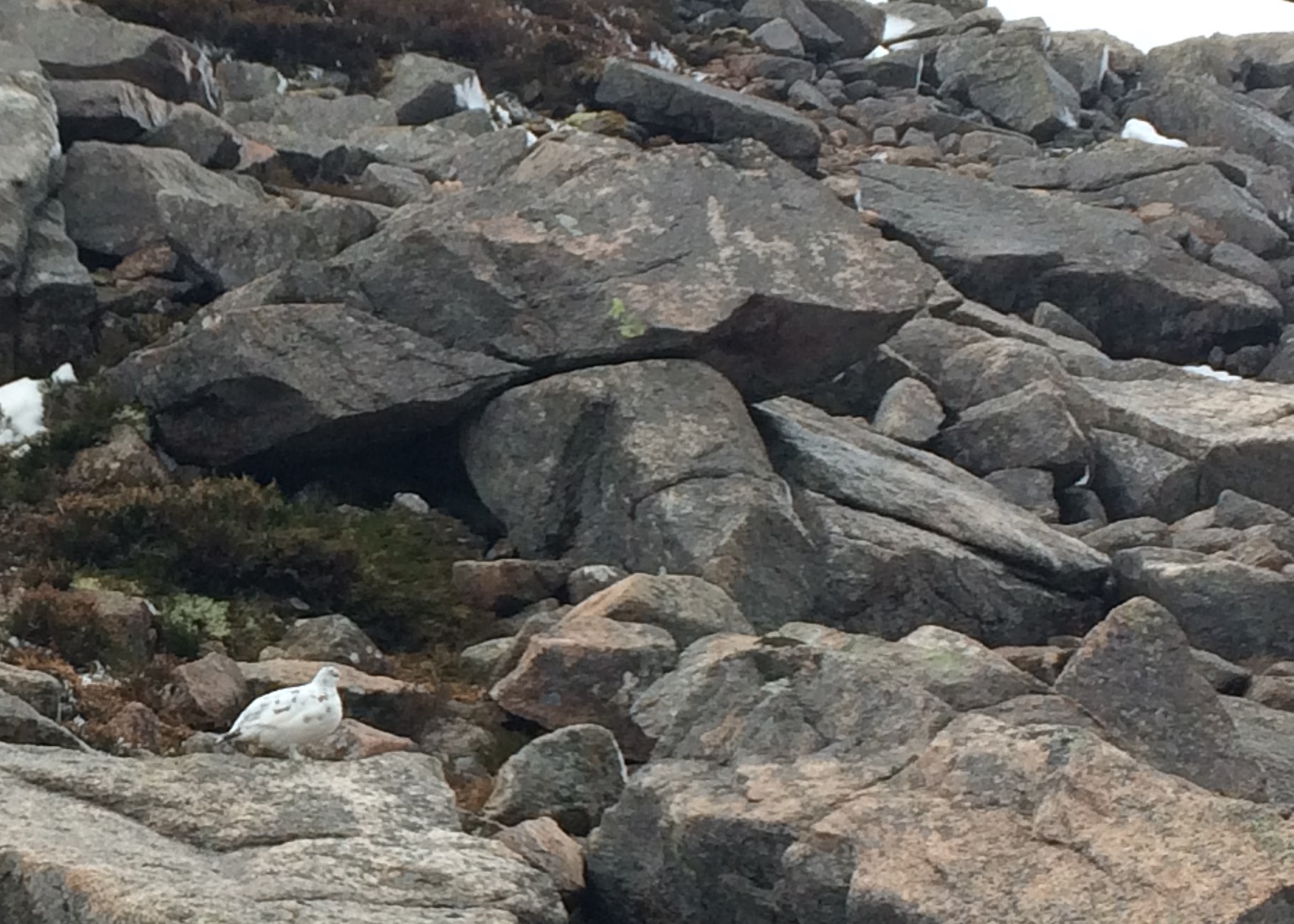
Unsurprisingly we didn’t stop to take any photos during the rescue, but here’s a different boulder field to give you an idea of the type of terrain. Bonus point for spotting the ptarmigan!
By this time we realised we needed more assistance – Joe and I alone weren’t strong enough to remove the very large and heavy stones. Olly was at the Centre so we called him to come up the hill with tools which could potentially act as leverage. We also called Lotti down from bringing in Dante for an extra pair of hands. By this point 15-20 minutes had passed and Galilee decided there was too much commotion for her to be sticking around so she went back and joined the main reindeer herd, leaving us to find her calf. After removing, with great effort, some very large boulders we got our first glimpse of the calf… she was about 5ft down, but alive! I managed to reach as far as I could and with the tips of my fingers I could feel her. With a bit of rummaging I got hold of her back legs and very gently pulled, cautious not to cause her any hurt or injury. In my first attempt to pull her out there was too much resistance, like something was stuck. I pushed her back down, moved her body around a bit more, hoping she would release whatever was stuck. I had to do all this by feel as she was so far below ground that we couldn’t see her. On my second attempt to pull her out she came much more easily, and once I could get a second hand on her I supported the rest of her body and head coming out the hole backwards.
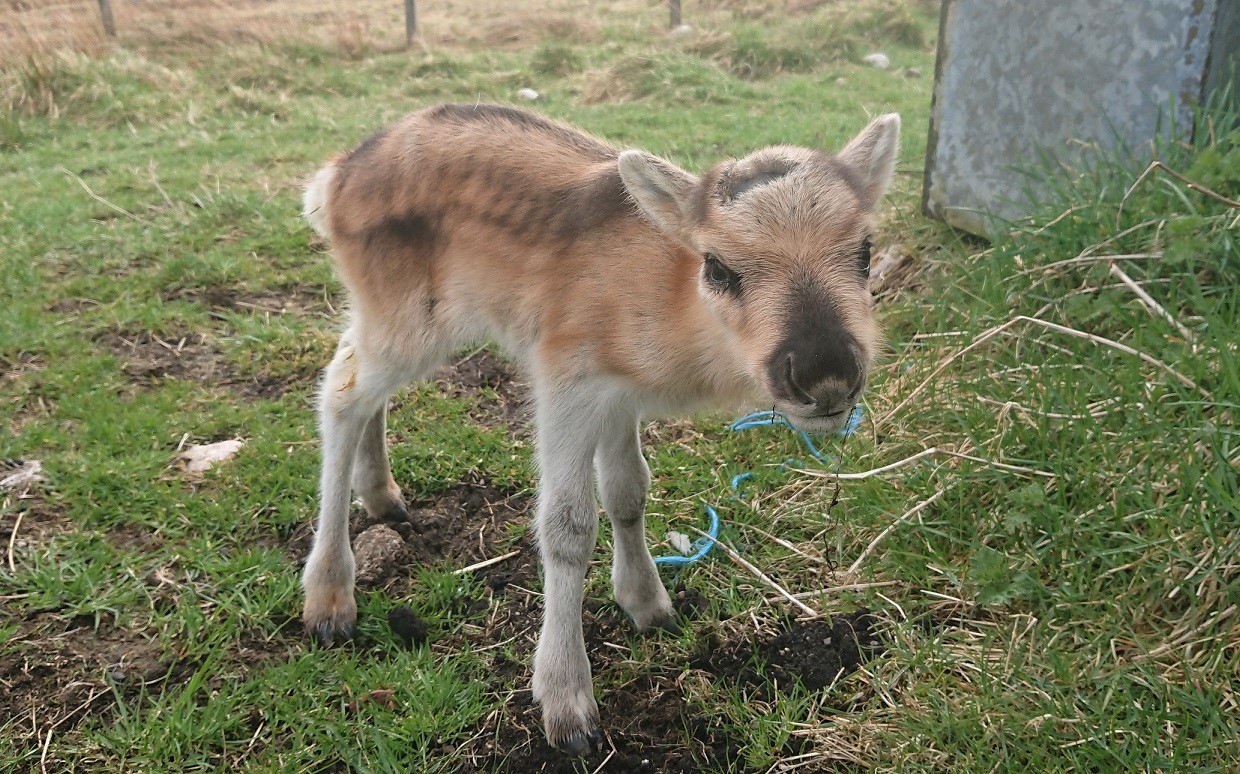
The poor wee girl probably didn’t know what was going on and we have no idea how long she was down there. She had rubbed the hair from the knees on her front legs and also a patch on top of her head so with a few bald patches and a sore back leg I carried her the ½ mile across mountain ground back to her mum. While walking back she was nuzzling my armpit looking for some milk – she was obviously quite hungry. I popped her down in front of Galilee who without hesitation sniffed her and realised it was hers. I suspect the two of them immediately forgot the whole scenario, being animals I don’t suppose they think of the past or what just happened. But I will remember it for a long time yet. Having been cooped up in a hole for so long she was a bit staggery on her feet to begin with but the wee calf was absolutely fine.
Back at the nearer end of the hill enclosure and reunited with her mum – but complete with bald patch on her head and rather bumpy knees!
Once it was all over and we could breathe a sigh of relief one of us used a phrase quite common amongst us herders… “Holy Moley, what a day!” And from there she got her nickname – ‘Holy Moley, the calf who fell down a hole’. It was never intended to be her name forever but inevitably that has happened. Most reindeer who end up with a nickname from a young age keep hold of it for the rest of their life – Grunter, Hippo, Paintpot and Hamish to name a few.
With mum Galilee (right) on the summer free-range – Holy Moley’s missing calf coat on her head still making her easy to pick out amongst the other calves.
So there we have it, at two days old Holy Moley fell down a hole between boulders and without our assistance she would not be with us today. She’s had a pretty tough start to life as unfortunately we then lost Galilee, her mother, in the summer while the two of them were free-ranging in the Cairngorm Mountains. Holy Moley has managed to muscle through on her own by keeping herself with the herd, stealing milk from other females and I suspect by having a bit of fight in her she will go on to be a big strong female reindeer herself. She certainly didn’t give up in the hole and every time we catch up with her on the mountains she makes sure she’s first to get her head in a bag of feed… She knows we’ll look after her!
Holy Moley in September, complete (once again) with bald patch, this time after the vet had to remove her badly broken antler!
This week’s blog is from Cameron, one of our younger supporters. If any readers would like to contribute a wee story for a blog we are always delighted by this – please send them to info@cairngomreindeer.co.uk , for attention of Hen:
On the 24th September 2018 we decided to come and meet the Cairngorm Reindeer for the first time. I was 8 and really loved reindeer so was delighted to find out I could actually meet them. We decided to do the Hill Trip and although it was quite windy it was amazing to see the reindeer coming down the hill as they could see the herders with the feed!
Surrounded by reindeer!
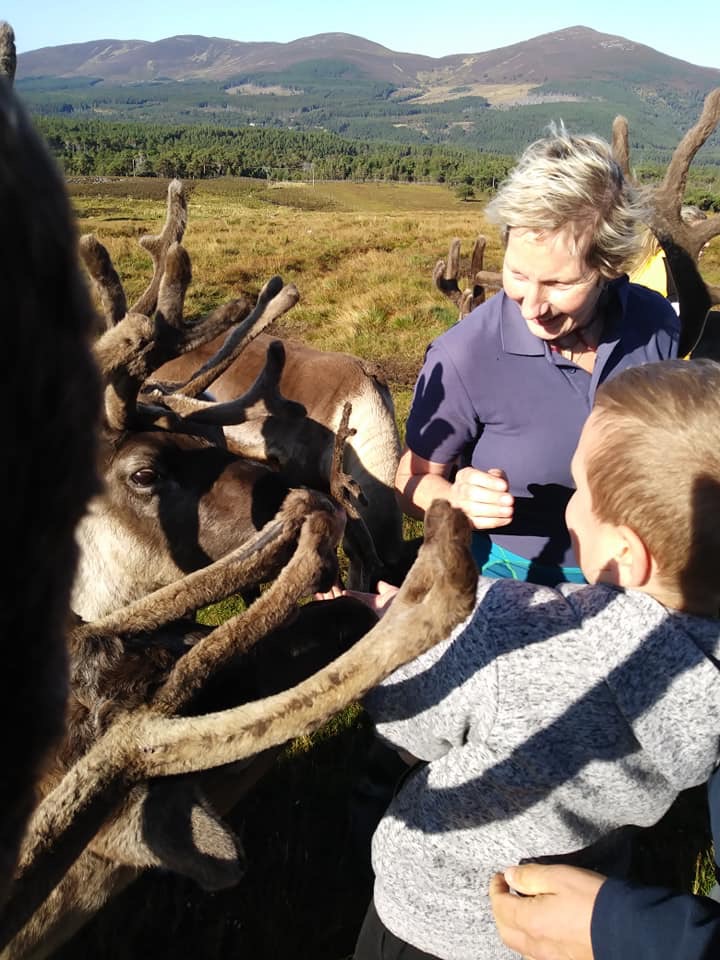
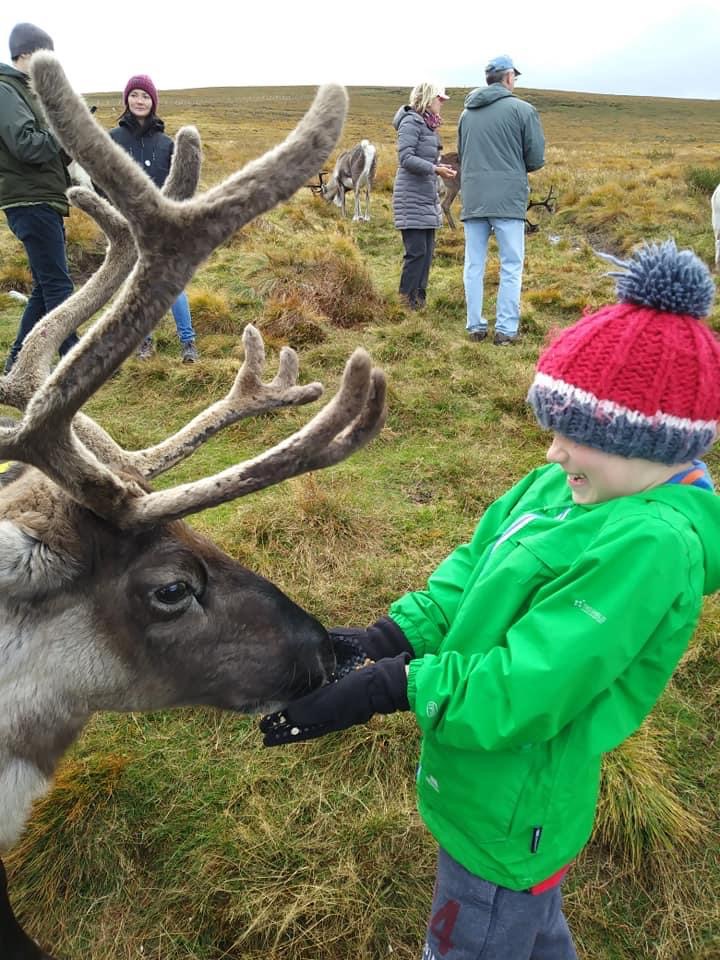
I loved being able to hand-feed and stroke the reindeer (which visitors could do before Covid-related restrictions came in last year) and they were so gentle and friendly to everyone. This was the day that I met my adoptive reindeer Crowdie for the first time. Crowdie came right up to me to feed and was such a lovely boy, he was a bit mischievous as he tried to get into the feed bags and kept coming for more and more food.
Crowdie and me!
When I heard that you could adopt any of the deer I really wanted to do this to help the herd survive. Unfortunately at the time we didn’t know the name of the reindeer that I fell in love with. Unknown to me my mum sent the photo of me to the Centre who told her it was Crowdie and I was delighted to get him as my adopted reindeer for Christmas that year.
We have visited Crowdie a few times and are came to visit most recently in October last year.
This year I was lucky enough to spend May looking after all the cows and calves during calving season, whilst most of the country was in lock-down. This was my first calving season and I found it really fascinating to watch how the behaviour of the reindeer changed once they had calved. Especially for the first-time mums who were acting purely on instinct, which amazed me how strong that is! There were a couple of things that I noticed a few of the mum’s doing in the hours and days after they had calved which I thought might be interesting to read about.
Licking their calf dry
The very first job of a reindeer once she has calved is to lick her calf dry. This year some of our calves were born in the snow so they want to get dry as quick as possible so that their fluffy calf coat can keep them warm. I was incredibly lucky to be able to watch Brie calve this year, I watched through binoculars as she carefully licked all the placenta off the calf, Cicero, until he looked like all the other calves I had seen at a couple of hours old – fluffy rather than slimy.
Eating the placenta
Being an arctic animal, every bit of nutrition reindeer can get is very important – placenta included. We found Ibex and her calf Flax when she was a couple of hours old, by which point Ibex was obviously feeling peckish. I can’t say that it looked particularly appetising to me but then I’m not a mother, nor a reindeer!
Licking their calf’s bum
To stimulate the calf suckling the mother must lick her calf’s bum. This all works in a cycle because the cow licking the calves’ bum stimulates the calf suckling and the more that the calf suckles the more milk that the cow will produce! All resulting in a good strong calf. It’s also very important to help keep the calf clean, their very first poo can be very sticky and a couple of the mums – mostly the ones who had had many calves before – didn’t do a very good job of licking their calves bottoms meaning we had to do it instead (cleaning it, not licking it….)! I can’t really believe how something so smelly can come out of something so sweet, so I guess I can’t really blame the cows. When the calf is really young the mum will also lift her leg so that the calf can suckle whilst lying down, here is Pagan demonstrating both very well with her calf Pumpkin!
Teaching the calves to walk
The last thing that I found really interesting was the way that the mums get their newborn calves to start walking. As a prey animal it is very important that the reindeer are up on their feet as soon as possible. But how do they go from an incredibly wobbly newborn calf to the agile calves who can easily outrun me? The answer is lots of careful training from their mums. From when Cicero was about 20 minutes old, Brie started to stand up and walk a few metres away and wait for her calf to take a few wobbly steps over. The calf would then lie down exhausted for a while before she did the same again. Eventually the steps become less and less wobbly as the calves grow stronger.
(with apologies to Cheer, who has a dubious role this blog…)
January: Optimism going in to 2020, the year ahead of us all… it’s going to be great!
February: Hold up. What is this new devilry on the horizon?
March: Holy crap! Run away!!!
April: Lockdown…. battling the virus
May: Still going…
June: …and going….
July-September: Starting to win! Virus receding…
October: Uh-oh
December 31st: Can’t leave 2020 behind quick enough! Dear god let’s hope 2021 is better….
Sending love and respect to everyone who has struggled through 2020, in particular the NHS staff and all the essential workers who have worked throughout – to you all we raise a dram. Fingers crossed there are calmer waters ahead.
Well hasn’t 2020 been an unexpected year for us all?! We wanted to take the opportunity to share a little message on Christmas day – enjoy!
We hope everyone has a lovely peaceful Christmas and a good start to 2021, and big thanks to the wonderful Spud the Piper for helping add a little sparkle to this video – if you’d like some more bagpipes in your life check out his Facebook page @spudthepiper.
One of our long-standing supporters is Carola, who started by adopting a reindeer many years ago, and has since amassed quite a herd! Here’s her story about her love of the reindeer:
I am not only a reindeer ‘adopter’ but also a reindeer ‘groupie’. Yes, a groupie. We have a group of friends that are all reindeer mad. Most of them live in the UK, one in Denmark and my husband and I live in the Netherlands. We visited the Reindeer Centre for the first time in 1999.
Feeding Biscuit on my first trip to the Reindeer Centre in 1999
I fell in love with a greedy baby called Biscuit. I then adopted him in 2004. On the Facebook page of the Reindeer Centre I met the Pattisons who adopted Biscuit as well. Maggie and I became friends, and a few years later we met , in Aviemore of course. I met some other people on the reindeer Facebook, some at Christmas Events, we became friends on online, friends became friends so we got a whole group of reindeer mad people, the ‘reindeer groupies’. We’ve met several times, and try to spend some time together in Aviemore every October. It’s great to visit the reindeer with them, we all love the reindeer and can spend ages sitting on the hill and watching them.
My very first adoption certificate!
I’ve been to some Christmas events with Candice and Pandra; had a great girls weekend with Belinda and Candice – attending Christmas events with the reindeer, and bubbles and disco lights in our hotel room. That was fun and it ended up with the three of us adopting Clouseau together.
Lego’s son Blue looking for a titbit at a Christmas event!
Visiting long-time favourite Oryx over at the farm
And adopting – yes, love adopting. I’ve had quite a few reindeer. It started with Biscuit. Then his brother Bhoy who sadly died too young. I had Paintpot and Oryx, who is still around. I adopted Biscuit’s mum Glacier who was 16 at the time. Can remember Hen saying I was crazy, I know, I am. Six weeks later Glacier died. I had deaf Lego, Swedish-born Magnus, Tinto, and Mo who are all gone now. One of the sad things, getting that letter that no one of us wants to get, telling that your adopted reindeer has died. But that is how it is.
Morven gazing at me when I first met her!
Tinto
A visit to the farm to see some of the boys
I can’t remember when the adopting thing got a bit out of hand. But now I am adopting 9 reindeer. Yes I know, I told you before, I’m crazy. I have a soft spot for my old man Oryx. I have Svalbard, a real character. I have Boris, who is NOT ugly guys! (Editors note: Boris was born with a wonky nose and let’s say he’s not our most handsome reindeer…) I have my girlie Morven who I fell in love with on the hill when she was a calf, staring at me. I have Celt, together with my husband, who was such a cute little boy and now is a real big lad. And we also both have Frost, a light one with nice face markings. I have Clouseau who I share with Belinda and Candice. I have Baffin, who (sorry Baffin), I think is difficult to recognize, but Belinda adopts him as well, and she does. And last October I adopted 14 year old, white , deaf Blondie, mother of Lego.
Visits to the herd are always entertaining!
Because we live in the Netherlands we don’t get to see the reindeer as often as we would love to. But we’re lucky to have our groupie friends who visit more often and always want to make pictures of my little herd. Thanks guys. I wish we could have come and visit this June or October to see the reindeer, but sadly 2020 is not a very good year because of the Covid-19. But I enjoy the pictures from the friends and the herders, and the Facebook Live videos from Andi, which are great.
Andi giving Grunter a cuddle
Oh, and since the Reindeer Centre can use some extra support this year, I decided to adopt reindeer number 10… not sure who yet.
‘My’ herd last year!
And yes, I know, I’m mad, reindeer mad. And I love it.
Following on from my previous blog about reindeer coloration, I thought I’d highlight some of the funky face patterns in our herd today. White face markings are super helpful at aiding us in identification of the reindeer, as they don’t change much throughout the year (or their lives). Though they can be harder to make out when the reindeer are in their late winter coats, as they are less distinct.
Addax with her calf ParmesanAnster showing off his white nose tip!Boris with his patchy white face and squiffy noseCheer has one of the whitest faces in the herd.Christie with her white “smile”Merida with a white hourglass, followed by her calf Dr Seuss with his striking white face.Gloriana’s mark makes us think of the Joker!Wee Hemp has a speckly nose and white spot on his forehead.Jonne with his yin-yang white noseOatcake has random splodges all overIn winter, Ochil’s markings are less noticeable.Spartan looks like he’s dipped his nose in white paint!Svalbard showing off his white nose and forehead.Texel has a white face with two darker dots.
Back in August we posted a blog with some quiz questions, from the quiz I ran for the staff here at Reindeer House towards the end of the (first!) lockdown, when the restrictions were starting to lift. So here are the long awaited answers! If you had a go then hopefully you have come up with the answers and they are similar to mine!
1: An old term for a stag?
‘Hart’ is an old English term for a Red stag. I grew up in the village of Welwyn, in Hertfordshire and the local Pub was called The White Hart.
One of the red deer stags at our hill farm (the second site for the reindeer herd). Photo: Alex Smith
2: Name the three types of Scottish heather, and in which order do they flower?
‘Bell’ heather is first to flower and is a very bright purple, generally growing in distinct patches on dry moorland heath. The ‘crossed leaved heath’ is a close second, much paler purple in colour, it prefers wetter, boggier ground. Then finally the ‘ling’ heather, which clothes the Scottish hillsides with the wonderful purple hue and this year we had one of the best ever flowering of the ling!
The bright pink/purple of the bell heather, with the paler ling heather amongst it
3: The Scottish name for a woodlouse?
A ‘slater’. They are very small terrestrial crustaceans, which I often find under stones (so not sure where the name ‘woodlouse’ comes from!). When we named the reindeer calves in 2010 on a Bugs and Beasties theme, one of the male calves was called Slater. Sadly he’s no longer with us but we still have some of them from that year, including Spider, Beastie, Lace and Caterpillar.
4: What are the colour of the following berries?
Bearberry is bright redand has a sharp taste.
Crowberry is black, only grows high on the mountain and provides an important source of autumn and winter food for Ptarmigan.
Cowberry is red like the bearberry – in fact it’s easy to confuse the two. They grow at similar altitudes on the moorland but the cowberry is an upright plant whereas the bearberry is prostrate, growing along the ground often on stony ridges.
Cloudberry when ripe is orange/peach colour and grows in wet mossy areas.
And finally blaeberry is blue/black, called ‘bilberry’ in England and is very tasty.
5: Loch Morlich is a glacial feature, but what type?
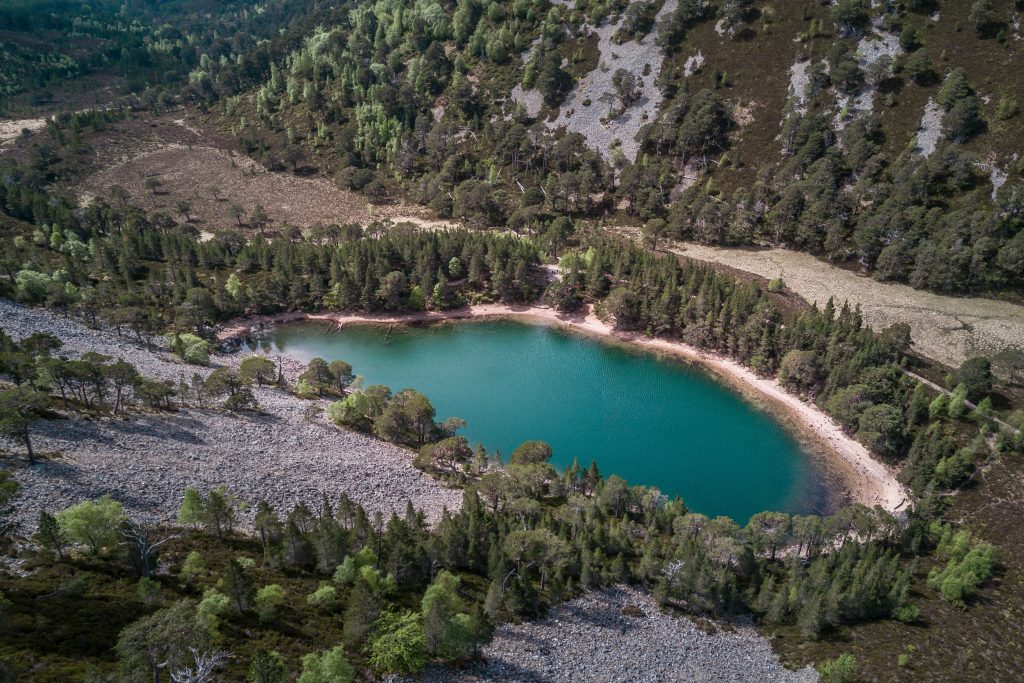
A Kettle Hole, which is formed by a ‘plug of glacial ice’, which was been left behind after the ice retreated and gouged out a depression.
Mozzarella looking rather gormless, but more importantly with the giant kettle hole of Loch Morlich behind!
6: Name the mythical creature of Ben Macdui. It has to be exact!
The Big Grey Man of Ben Macdui.
7: In which coire in the Cairngorms does snow linger the longest? indeed some years it doesn’t melt at all.
An Garbh Choire which is between the Braeriach plateau and the Lairig Ghru.
8: Name the two insectivorous plants that grow in boggy ground?
Butterwort and Sundew. They both have ‘sticky leaves’ which attract the small insects (like midges) which then get stuck on the leaf. The plant then ‘digests’ the insects by injecting enzymes into it. Sounds like something out of science fiction!!
Both insectivorous plants in the UK in the same photo! Butterwort (top) and Sundew (bottom).
9: Who was the first pure white reindeer to be born in the Cairngorm herd?
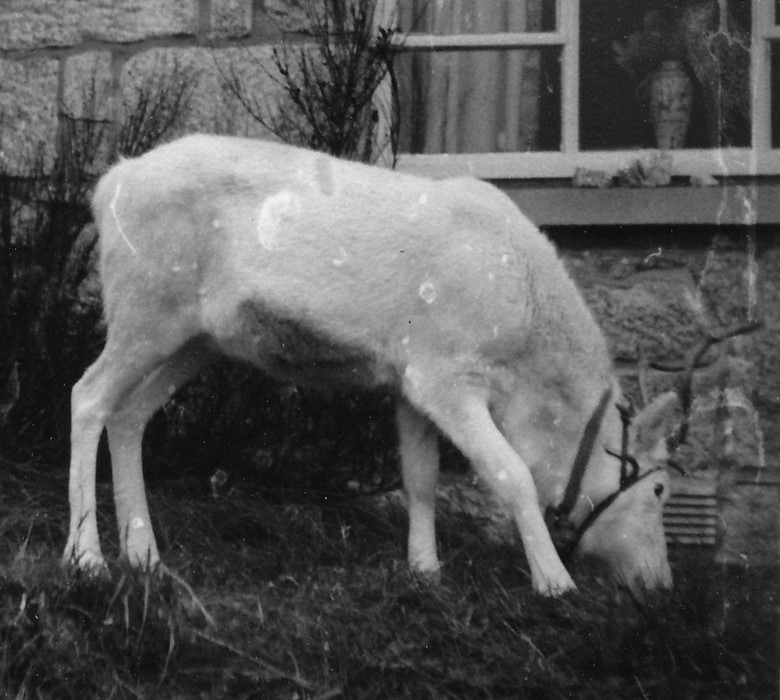
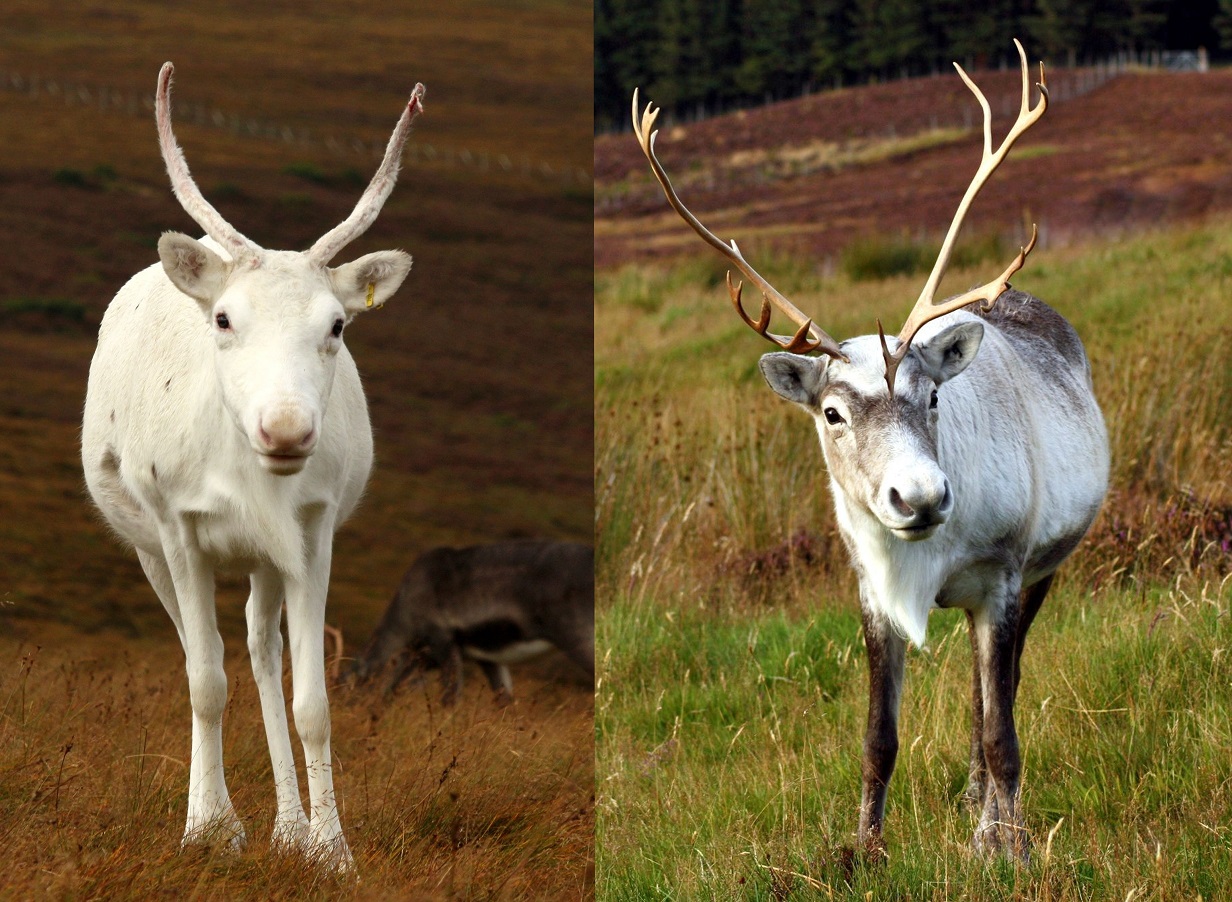
Snowflake was born in 1966? and Mr Utsi was very pleased to have a pure white calf in the Cairngorm herd. Many of the reindeer herding people hold white reindeer in high esteem and are regarded as very special. Indeed Mr Utsi always claimed that more white reindeer were born in areas where there was a lot of white rocks and to encourage more white reindeer to be born he painted some of the rocks white!
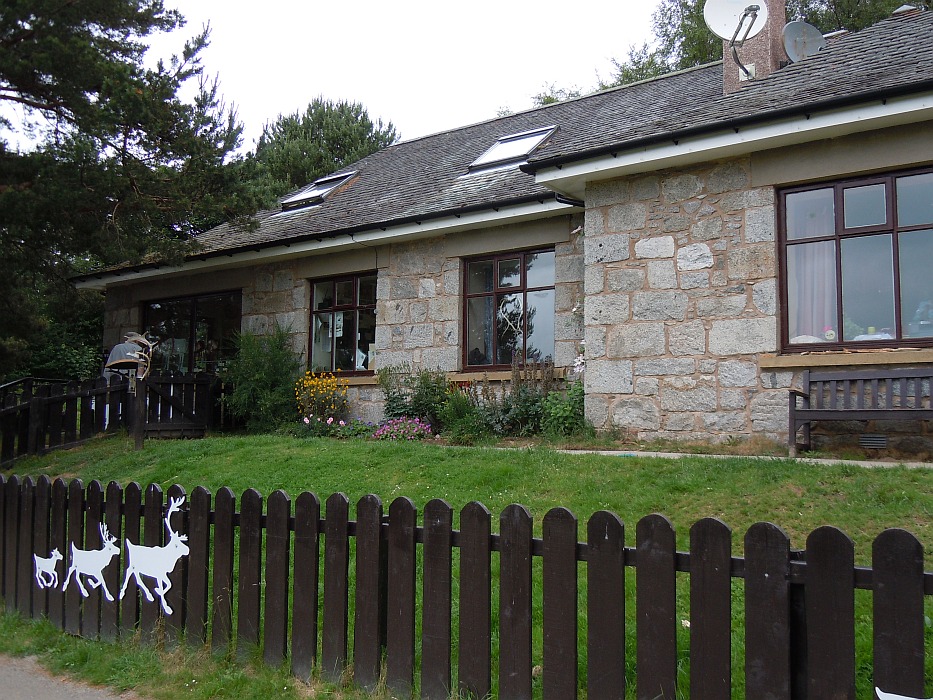
Snowflake with one of her calves in the early 70s, in the Reindeer House garden!
10: What are the full titles and subtitles of the three books I’ve written?
Velvet Antlers Velvet Noses: The Story of a Reindeer Family 1995
The Real Rudolph: A Natural History of Reindeer 2006