Spring

As the year rolls from March into April, here in the Highlands we start to see more definite signs of spring. The snowdrops have of course been and gone, but now the daffodils are out in their full glory, along with primroses and crocuses. There is a noticeable difference in the grass too – during March there is very little colour in the fields, everything is a washed out browny-yellow. But as April approaches, I start squinting at the verges – is there just a hint of fresh green there? By now there is no doubt, the Paddocks and garden are looking almost lush and their first cut is fast approaching. For all of you down in England, I do appreciate that you’ve probably had the lawnmower out several times already, but we have the longest winters in the UK here – one of the reasons it is still a suitable habitat for reindeer.

IMG_9610
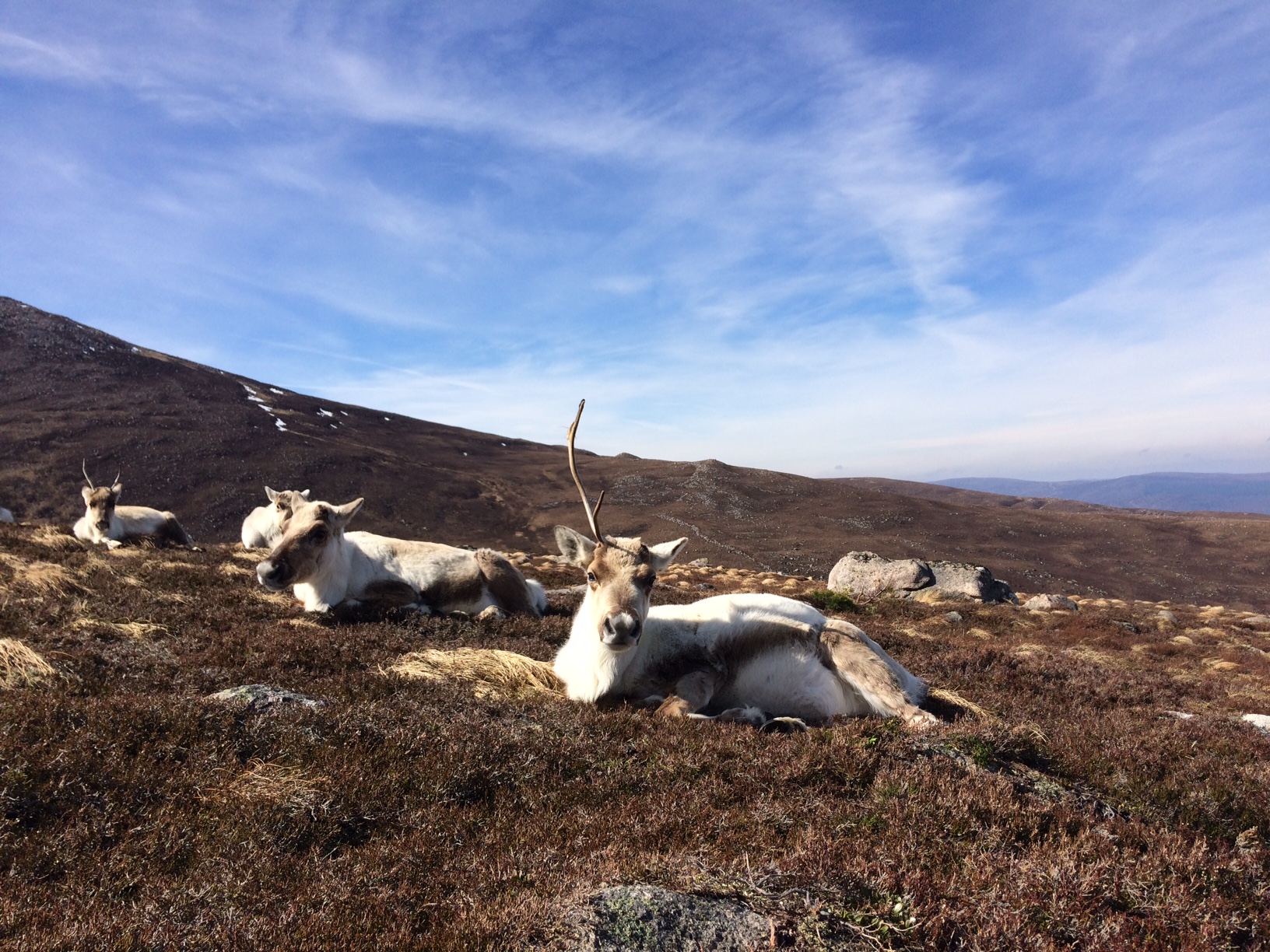
Relaxed reindeer with a glorious backdrop. Jenga has the best start on her new antlers of the females.

Up on the mountain, the deer grass is breaking through, and the first migrant birds are arriving back from their winter holidays – there were three ring ouzel squabbling their way along the path as I walked out to feed the herd this morning. I’ve heard tell that the first swallows are in Devon (it’ll still be a few days until they pass by us) and the distinctive osprey pair are back at Loch Garten – we popped along the other day and were glad to see EJ hanging out on the nest, and a brief visit from her long-term partner Odin. Last year I watched a pair circling over the hill enclosure, just checking out Black Loch perhaps before deciding it wasn’t suitable to nest at.
IMG_9614
Old girl Lilac still looking superb at nearly 18 years old.

April is a fun time to spend with the reindeer, with anticipation in the air. The females tend to be relaxed and lazy, with heavy tummies and enjoying the fresh grazing starting to come through. Their coats have lost their sheen and are starting to moult, and most of last year’s antlers have fallen off, with some making good progress on this year’s set. Slightly less relaxing (for us, but not the reindeer) is the start of the Easter holidays, with its associated rush of visitors. Having a limit on numbers for the Hill Trip has certainly made our lives less stressful though and hopefully improves the experience for our visitors too – just a reminder to come early if you’re coming for the Trip to make sure you get tickets!
IMG_9621
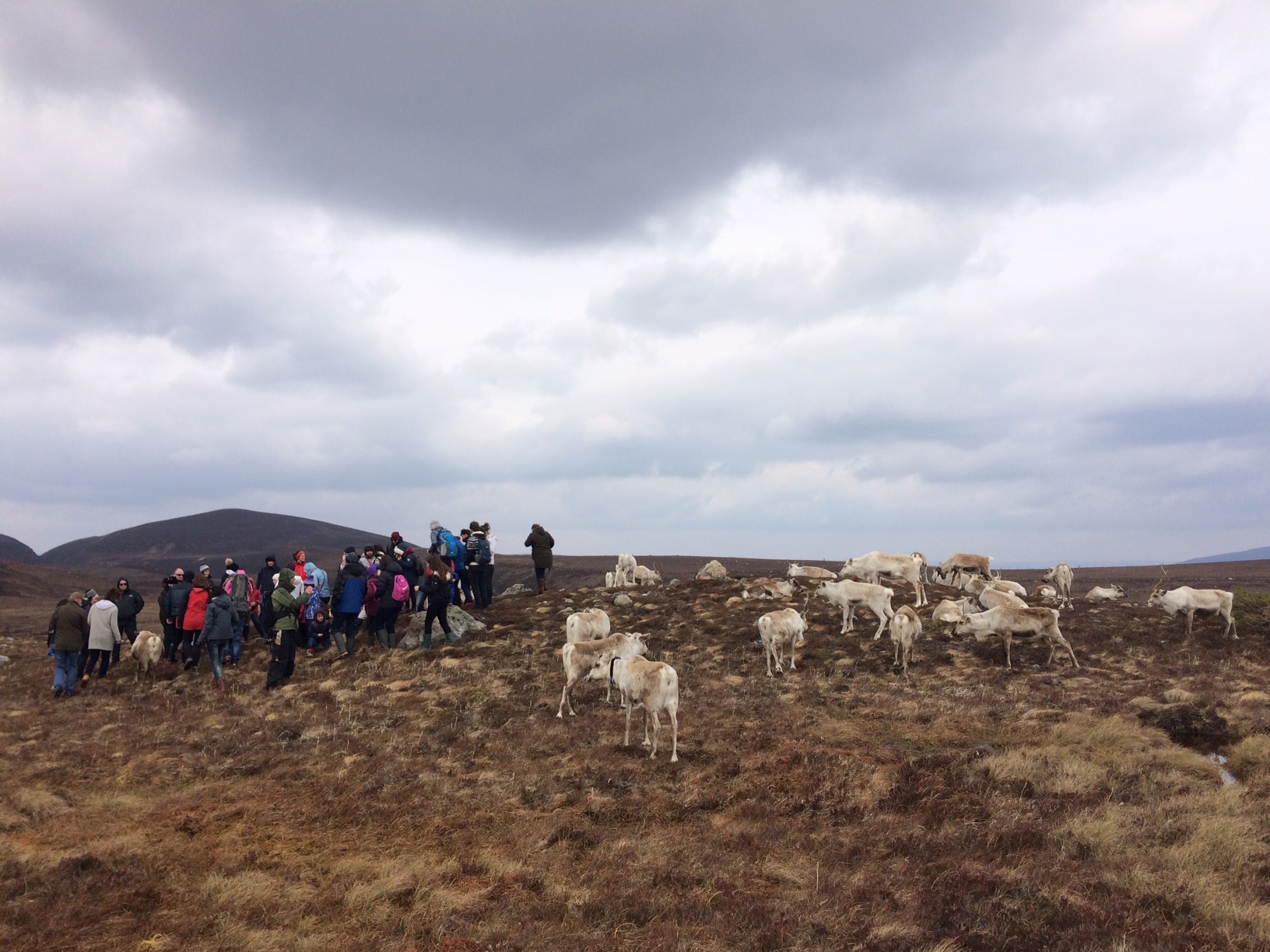
A group of visitors learning about the reindeer, who are delighted to pose whilst they wait for their dinner.

The other slight bit of stress is that all of us herders are assessing who we should pick for our calving “bet” – the annual game of trying to guess who will calve first. Us herders spend a lot of time peering at bellies and potential developing udders, trying to work out who is pregnant and who is likely to calve early. There isn’t any money put down, and indeed no prize for winning, but the person whose reindeer calves last has to swim in the loch! The decisions are mostly made now, but I’m already slightly apprehensive that I’ve made the wrong choice – suddenly everyone else’s choices appear much rounder in the belly department than mine… I’ll stick to my guns though with fingers crossed!

IMG_9607
Every time I look at Dixie’s belly I worry that I’ve picked the wrong reindeer for the calving bet!

Normally, spring is a welcome relief after a long hard winter… this year I can’t really claim that as it’s been a very easy winter with little snow, but it’s still lovely to see the lengthening days and warmer temperatures, with the promise of a (hopefully) long, glorious summer ahead. Fingers crossed that it’s warm to make for an easier swim if I end up losing the bet!

Andi

Antlers vs Horns – What is the difference?

Many people who come and visit the reindeer want to know the answer to this very question: What is the difference between antler and horn?

Antlers

First of all, just in case you are in any doubt, reindeer grow antlers, not horns! Many folk ask us what antlers are made of and ‘are they made of wood?’ is a surprisingly common question which always amuses us!

Antlers are an extension of the animals skull, found on members of the family Cervidae (i.e. deer). They are made of bone, are a single structure and are shed and regrown every year. Antlers grow from pedicles – bony supporting structures that develop on the skull. Sometimes, the pedicles get damaged and you get a lopsided set of antlers like one of our female reindeer, Hopscotch. Occasionally, they don’t develop on one side at all, for example Dixie who only ever grows one antler.

Dixie and Arnish
Dixie with her one antler, and antlerless Arnish

Generally they are only grown on males but, of course, reindeer are the exception to the rule. Male reindeer lose their antlers shortly after the rut, the breeding season, in autumn. Female reindeer hold on to their antlers over the winter because access to food is critical during winter pregnancy. Having antlers generally makes you more dominant so you can push the antler-less boys off the good food patches! However there are always exceptions… Arnish, who is no longer with us, was a ‘mega hard’ reindeer and never grew a single antler but she was as tough as old boots and just battered other reindeer with her front hooves when required!

Reindeer start to grow new antlers again in the spring and its incredibly fast growing, up to an inch in a week. On some of the big boys, like Crann, you have a few days off and return to see a massively noticeable difference in his antler size. While the antlers are growing, the bone is encased in super soft velvet, hair covered skin, which covers the nerves and the blood vessels feeding the antlers from the tip. Once the antlers are fully grown, end of August for reindeer, the blood supply cuts off and the velvet starts to dry and crack and come away from the bone. The reindeer help this process by rubbing their antlers against vegetation and what ever is about, like a fence post! They can look a bit gory at this stage as flaps of bloody velvet dangle off them like dread locks! Once its all peeled away they are left with solid bone antlers which the bulls now use during the rut to impress females and fight off other bulls.

Crann
Crann and his huge set of antlers

They lose them, as already mentioned, shortly after the rut or after winter for females and then the whole process restarts the following spring…pretty clever!

Horns

Horn structure

Found on sheep, bison, cows, pronghorn and antelopes, horns are made of two parts. They have an interior of bone (also an extension of the skull) covered by an outer keratinized sheath made of a very similar material to your fingernails.

Soay sheep at our farm, with their horns. Photo: Alex Smith

One pair of horns is typical but some species of sheep have two or more pairs, for example Jacobs sheep. Horns are usually spiral or curved in shape and often have ridges on them.

Impala
Male impala with impressive horns

Horns start to grow soon after birth and grow continually through the life of the animal and are never shed, with the exception of the Pronghorn which sheds and regrows its horny sheath every year, but retains its bony core. Unlike antlers, horns are never branched and although more commonly grown on males of the species, several females grow them too.

So hopefully that has shed (no pun intended!) some light on the subject. Come and visit the reindeer at different times of the year to see how the antlers change with the seasons. By the end of winter/start of spring, barely any will have antlers still attached and they do look a little strange compared to when they have the magnificent bony antlers of autumn. Just now the reindeer are all growing their new antlers so they are covered in lovely super soft velvet and are about half way to complete size.

Mel

Book Now