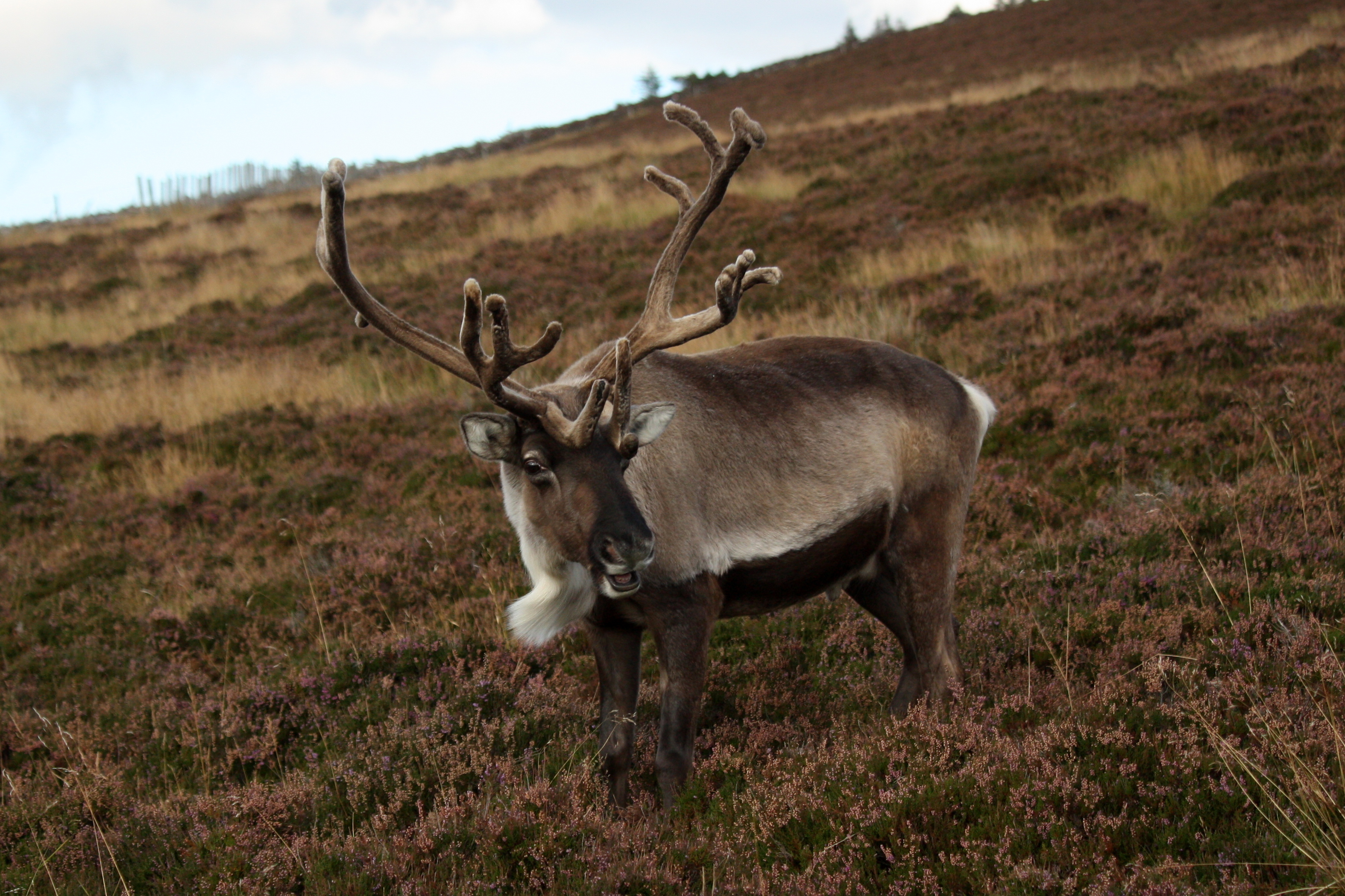
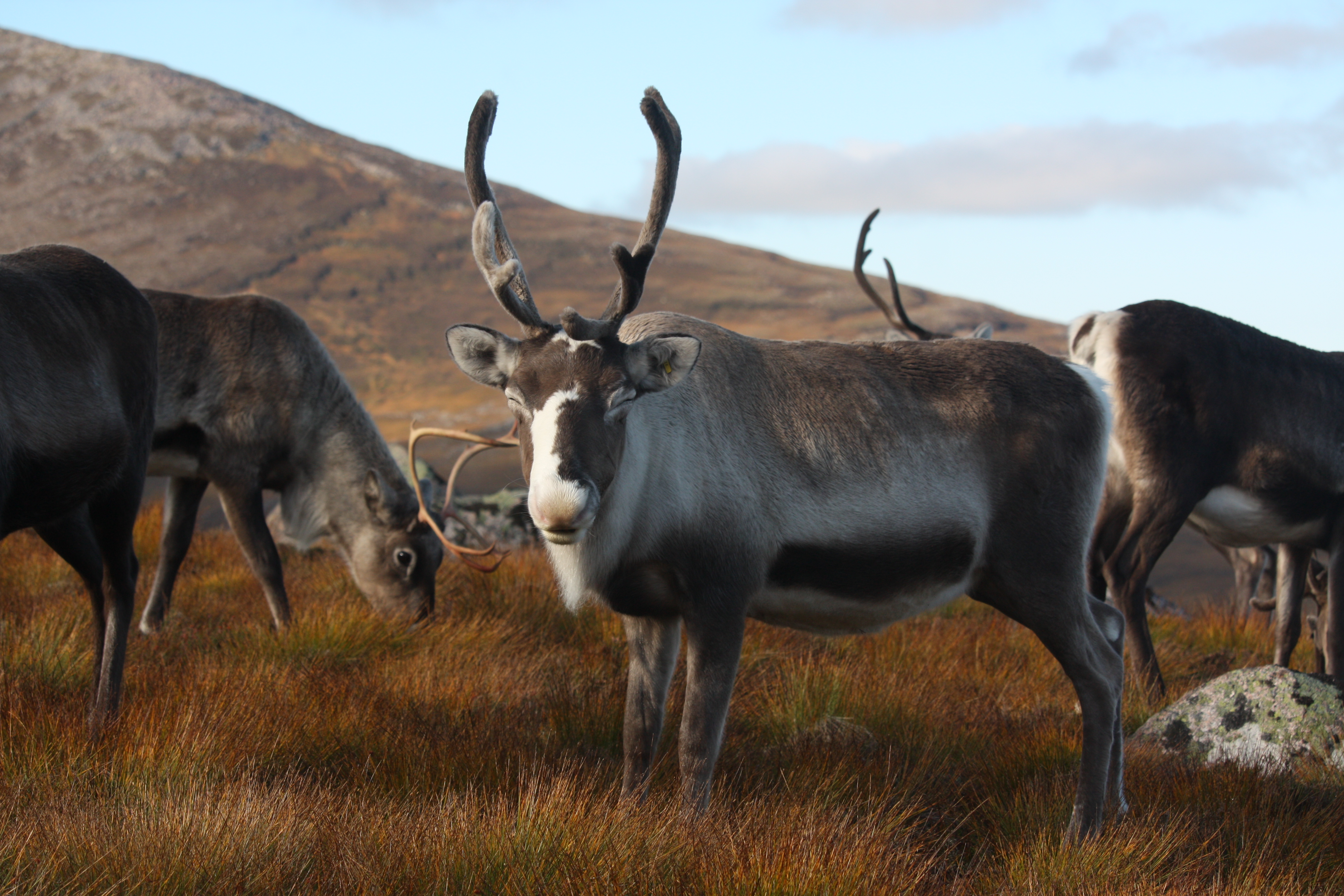
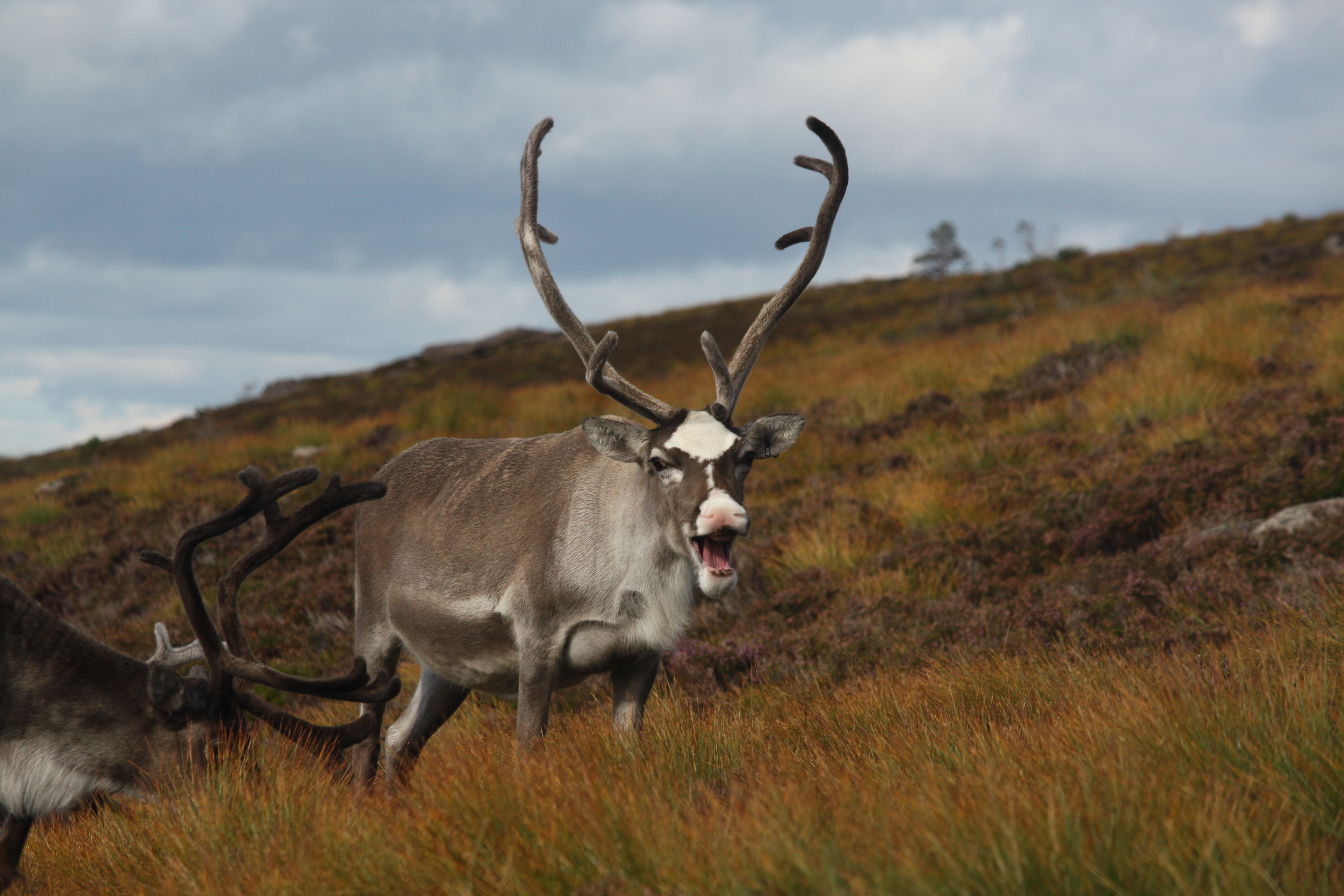
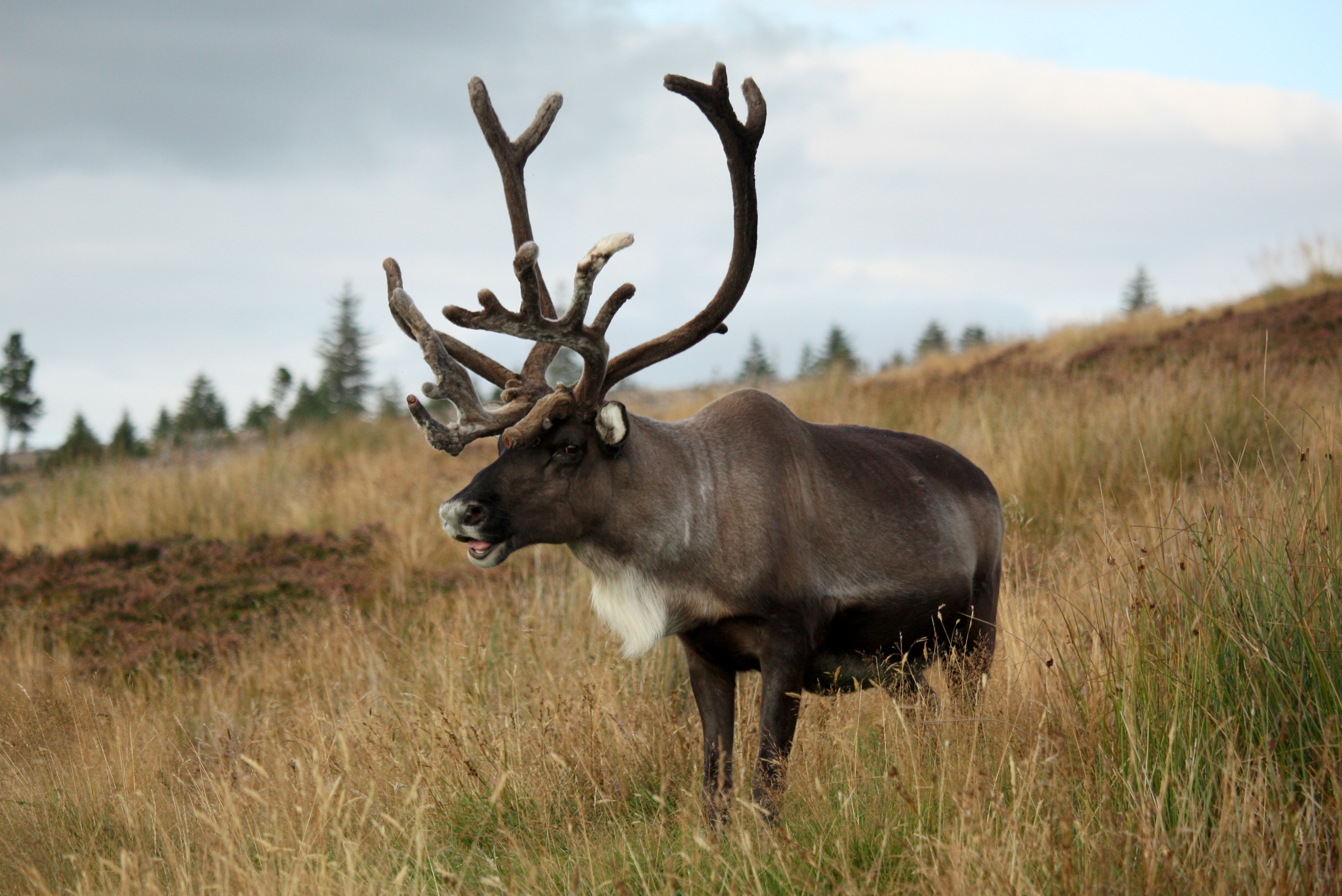
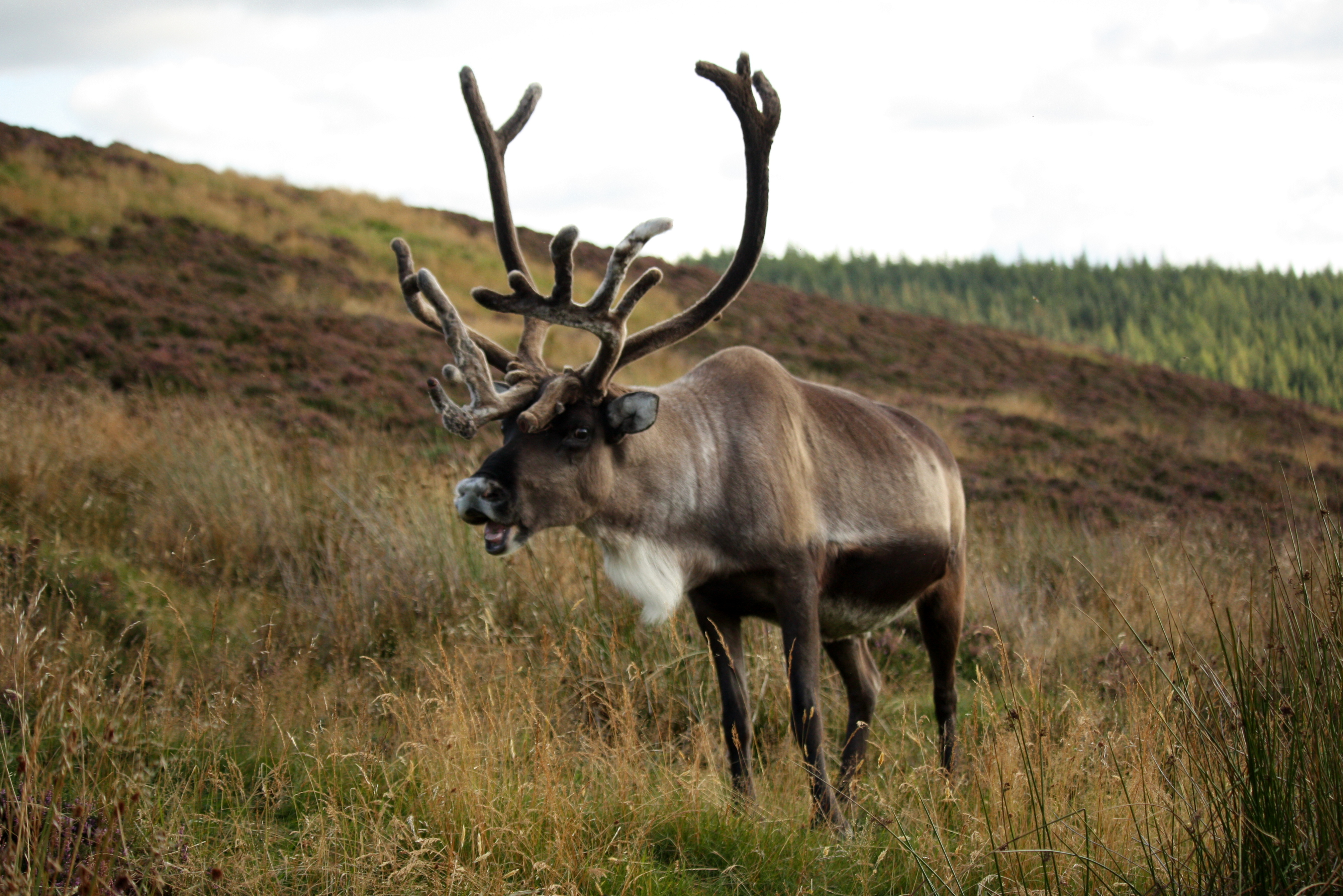
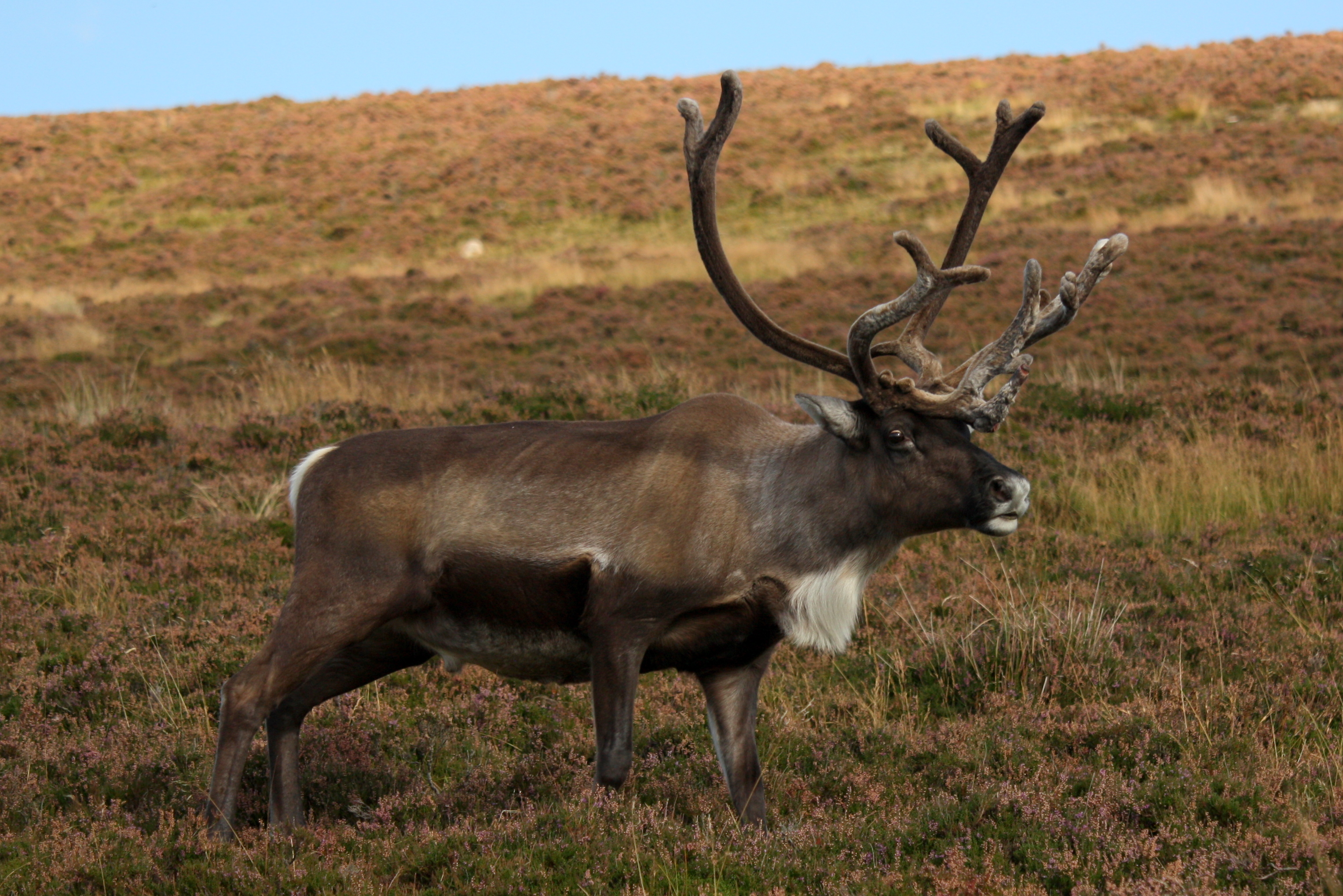
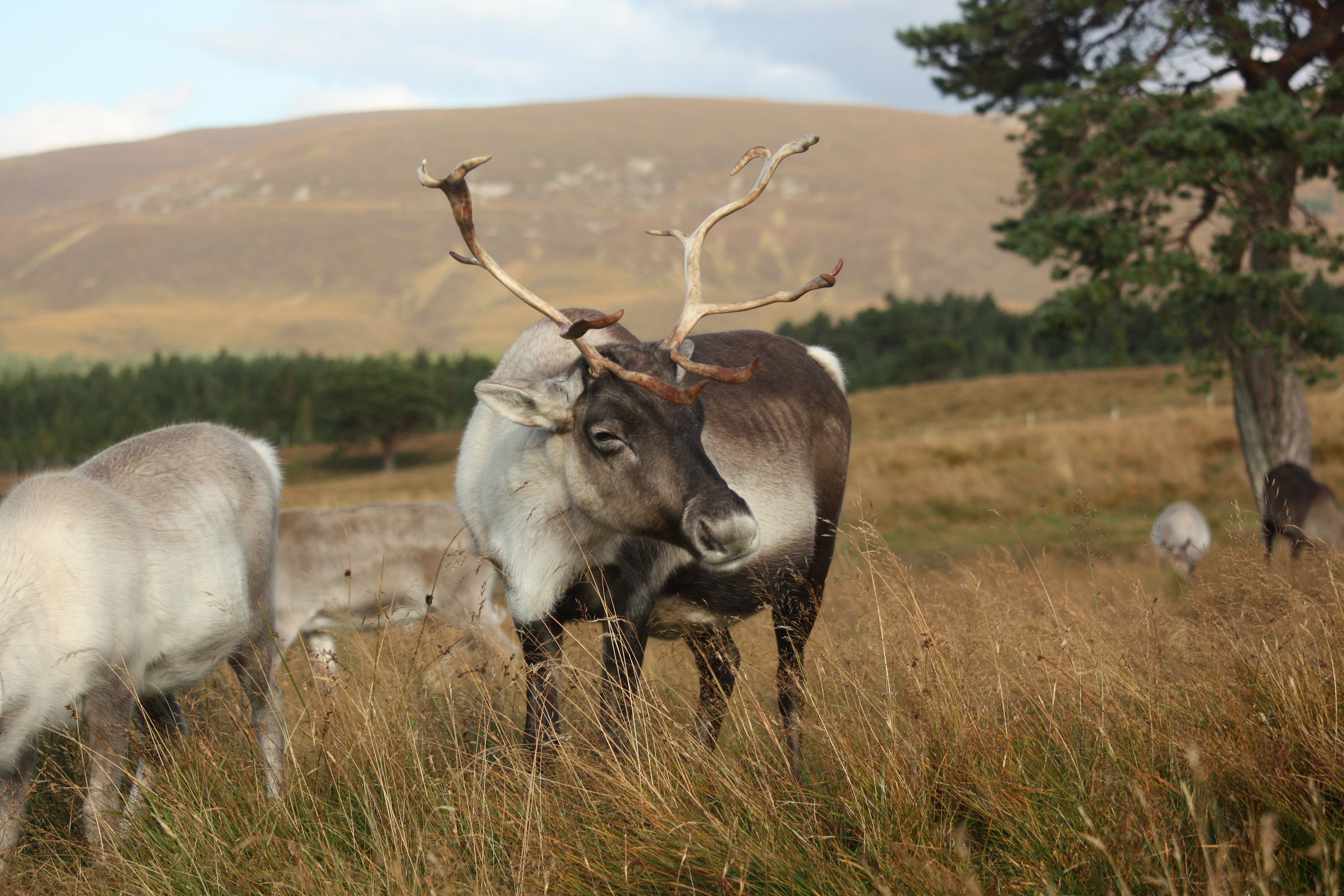
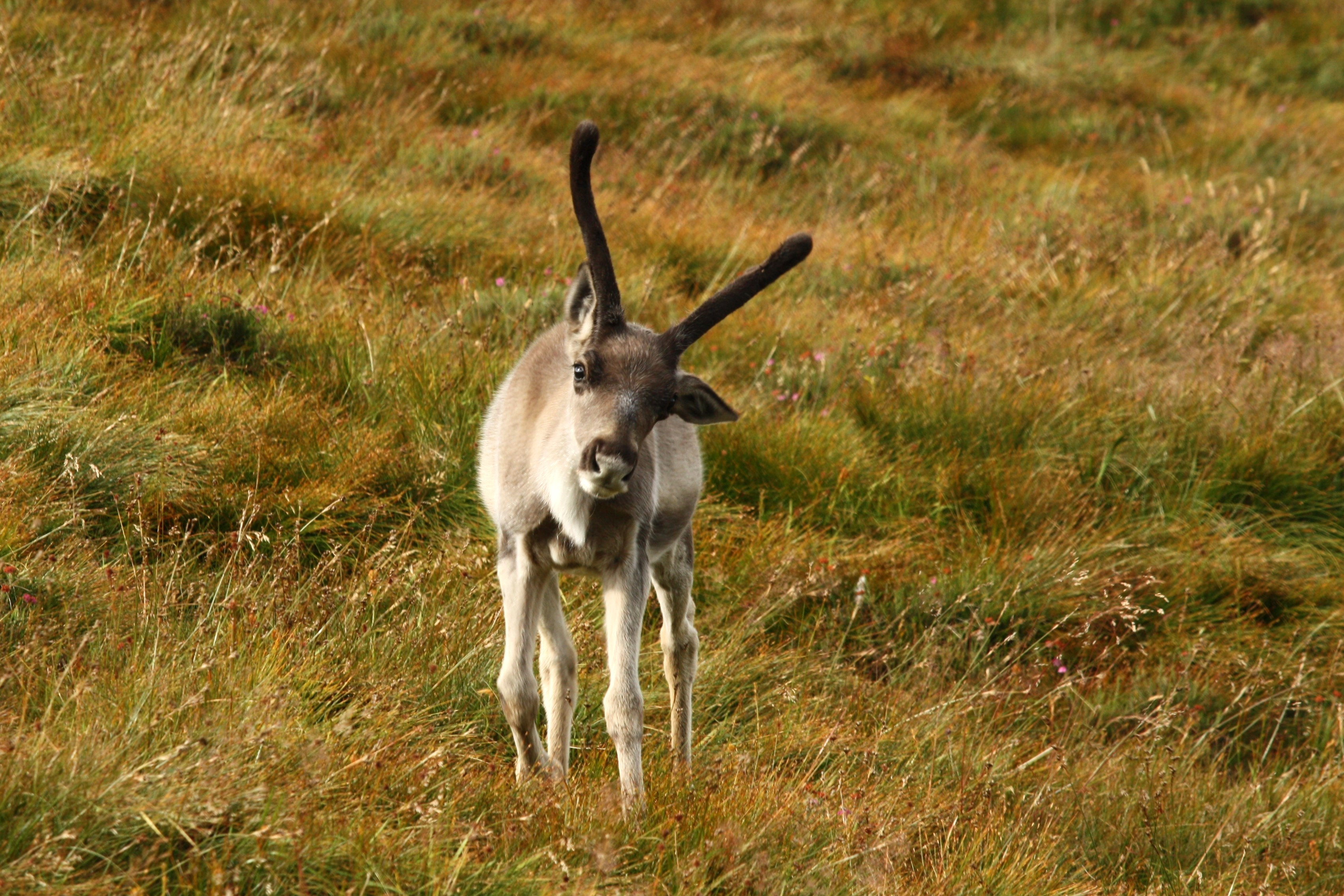
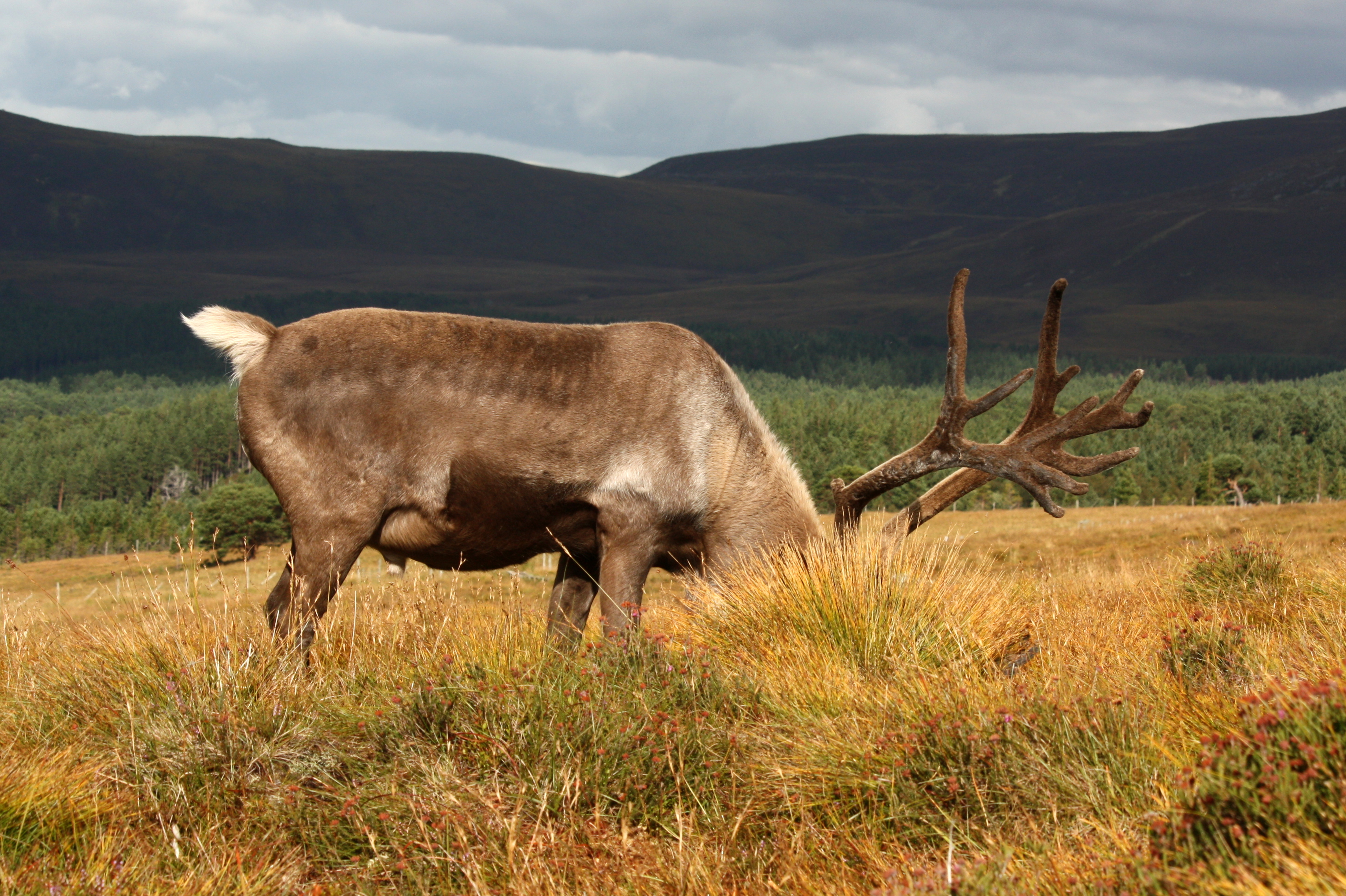
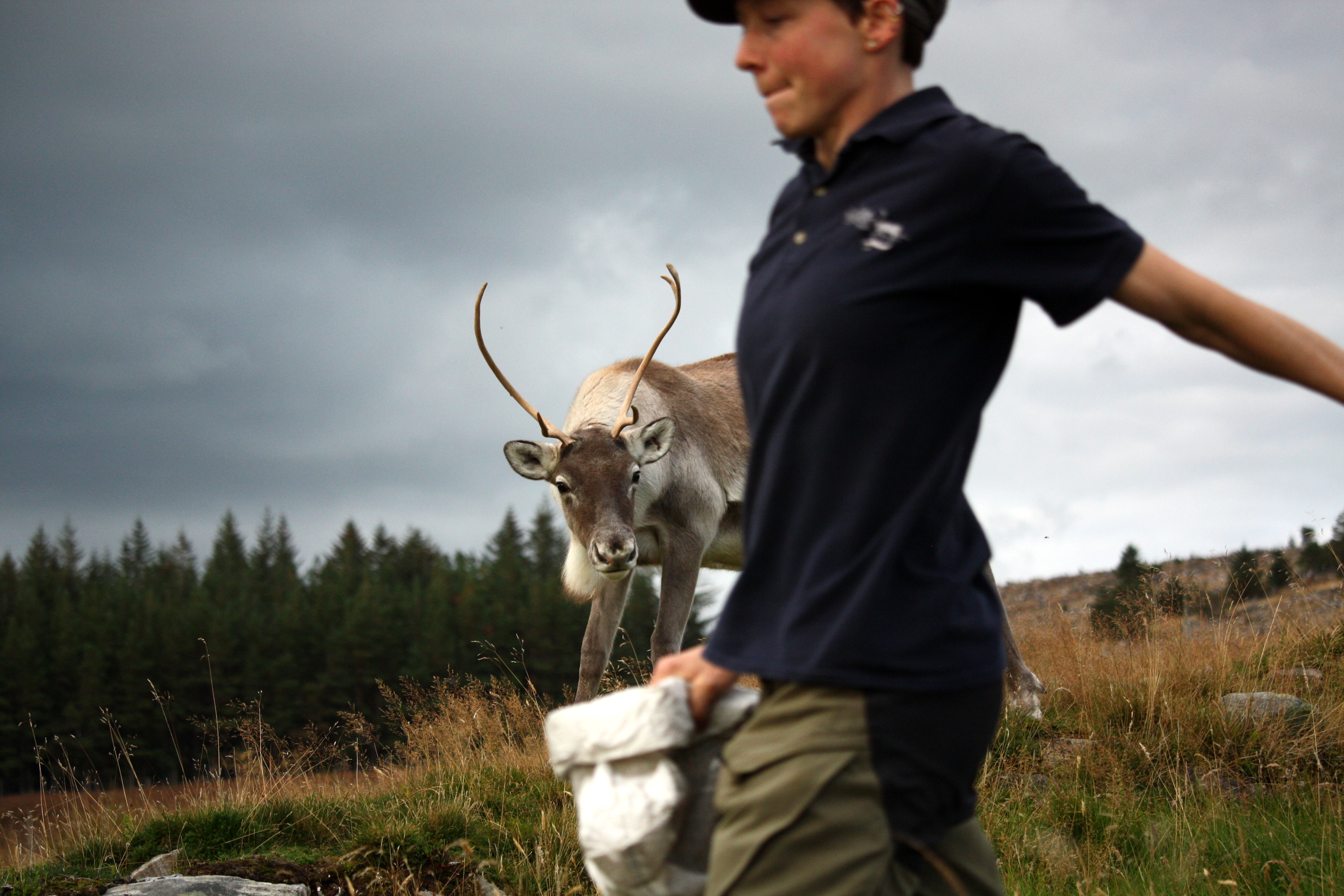
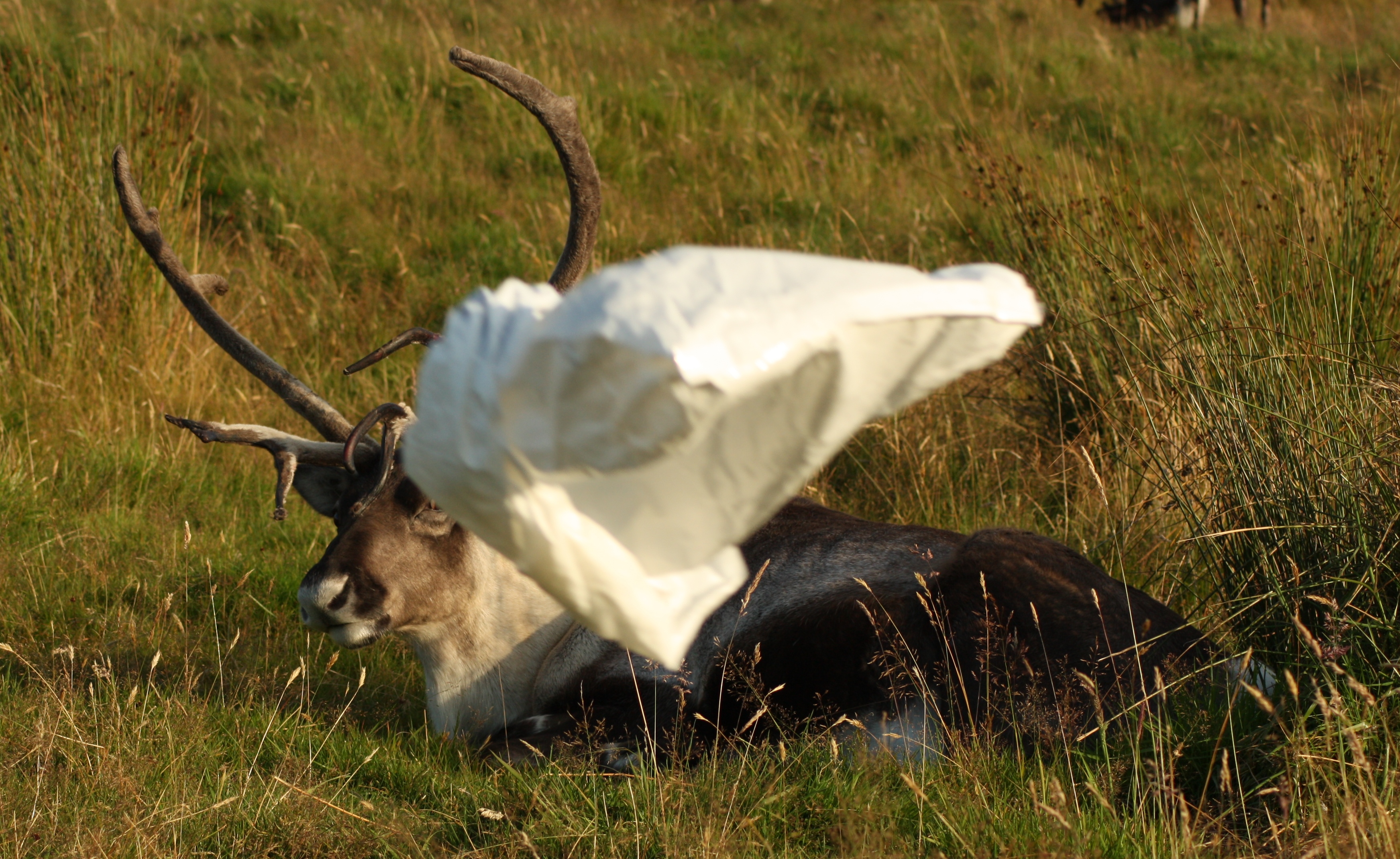
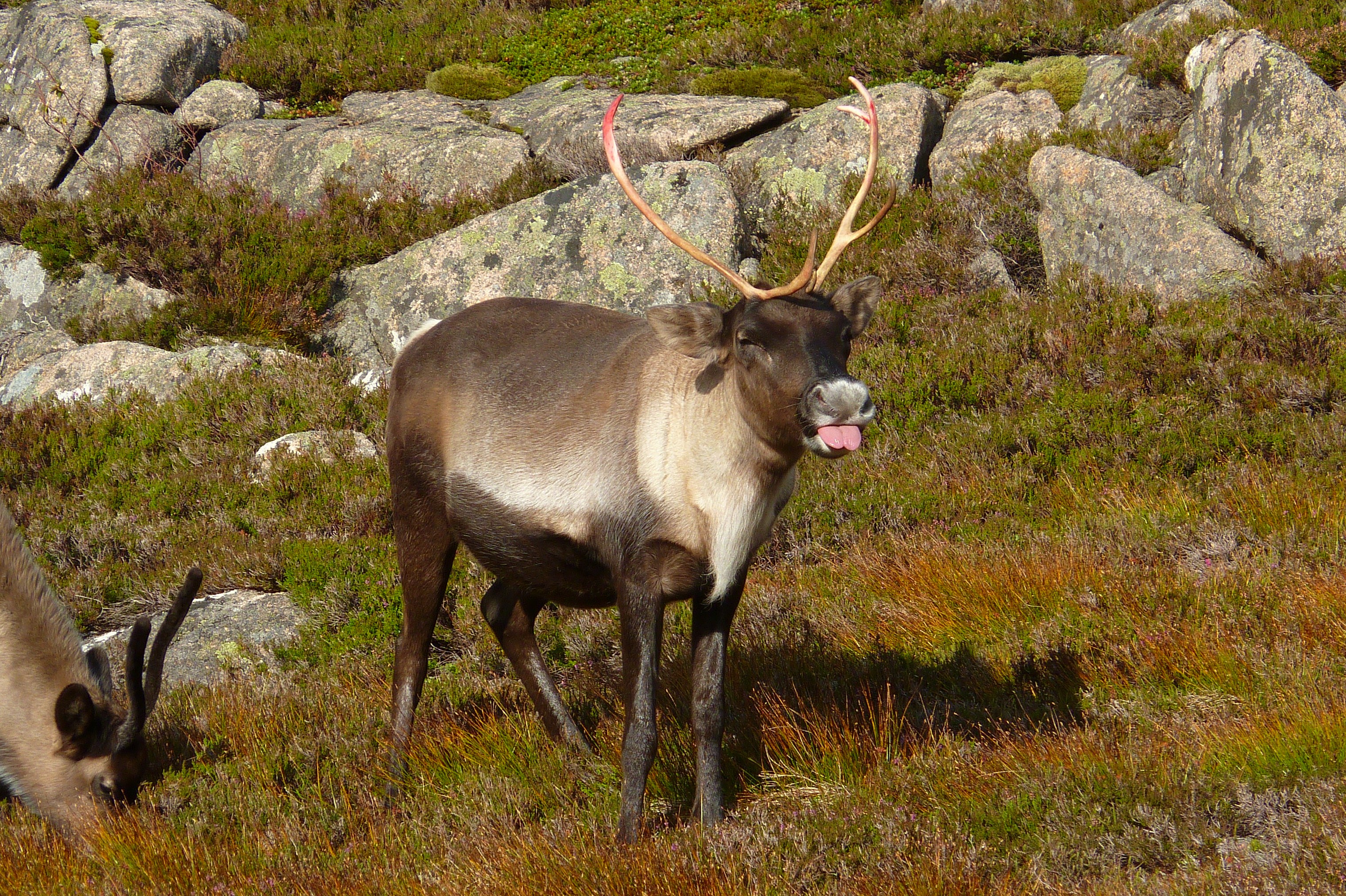
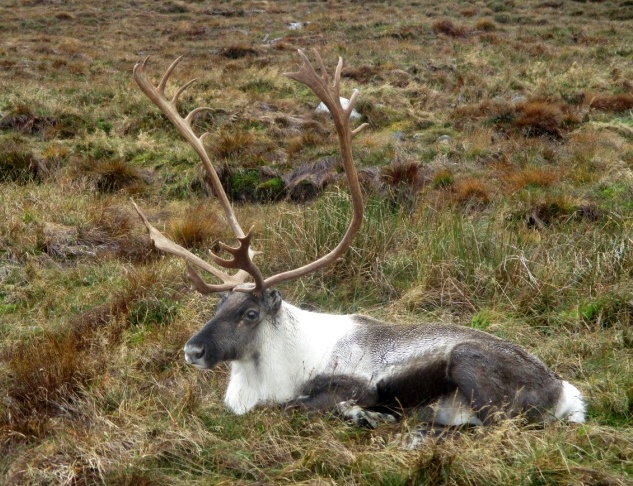
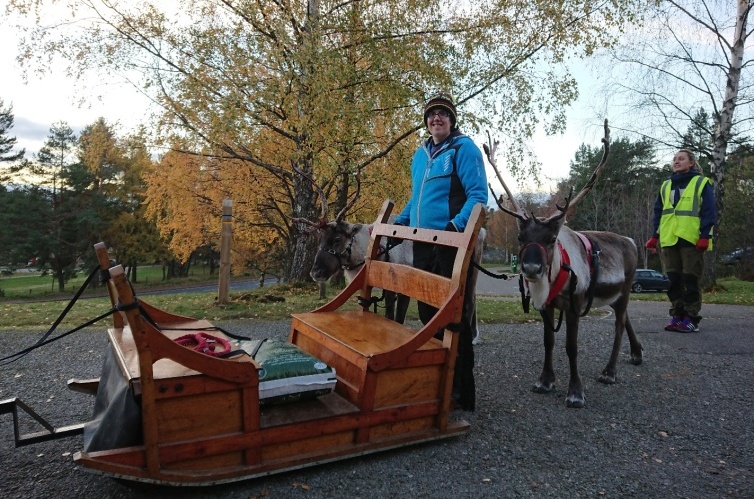
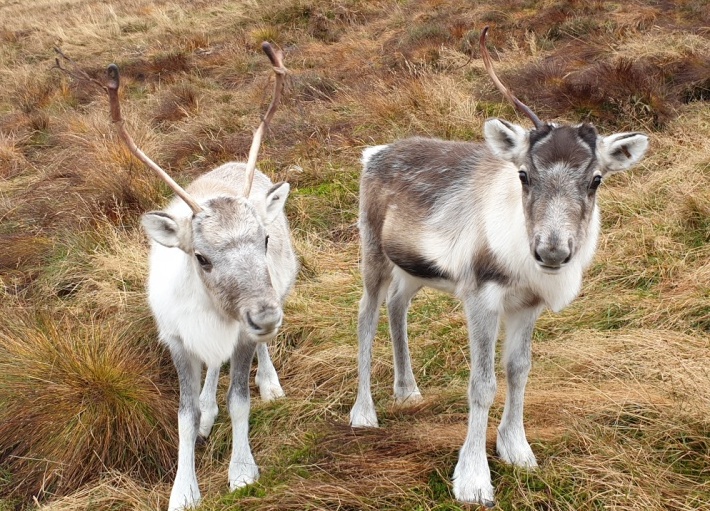
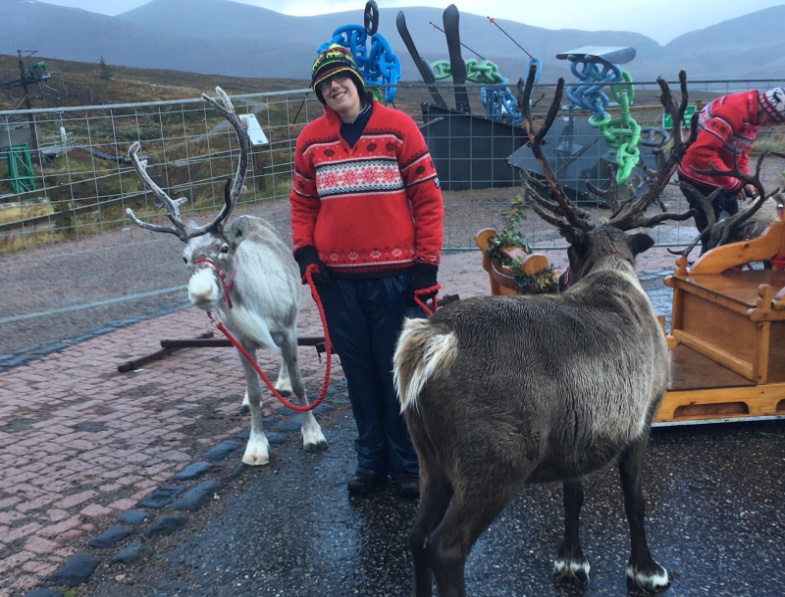
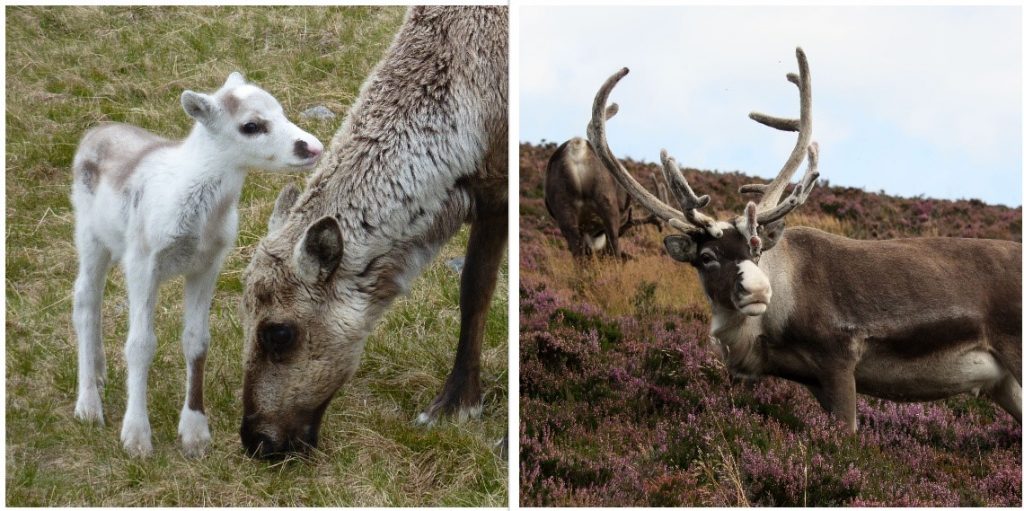
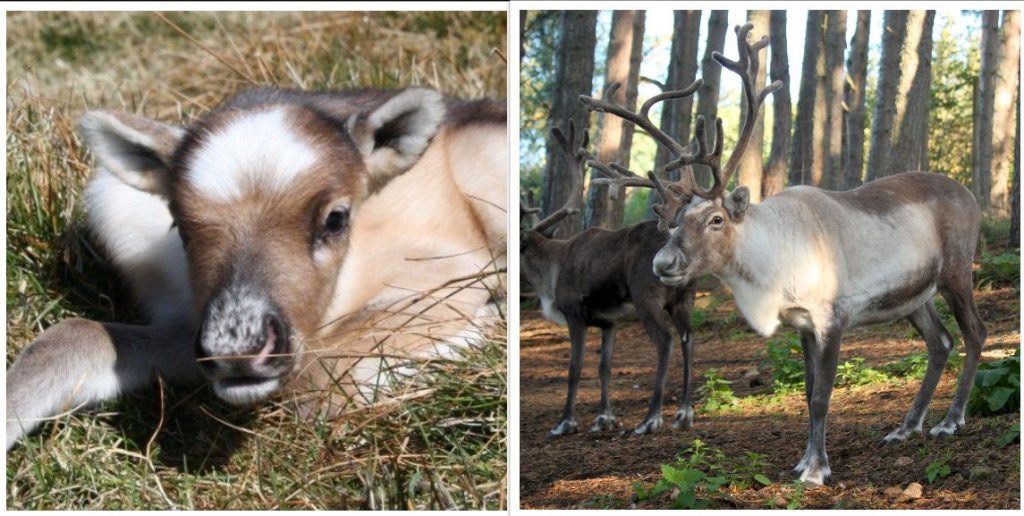
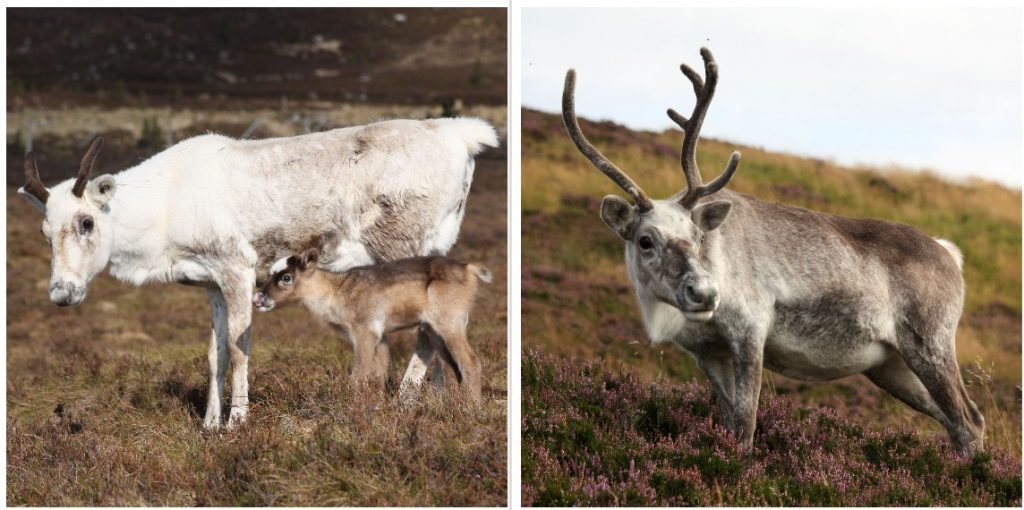
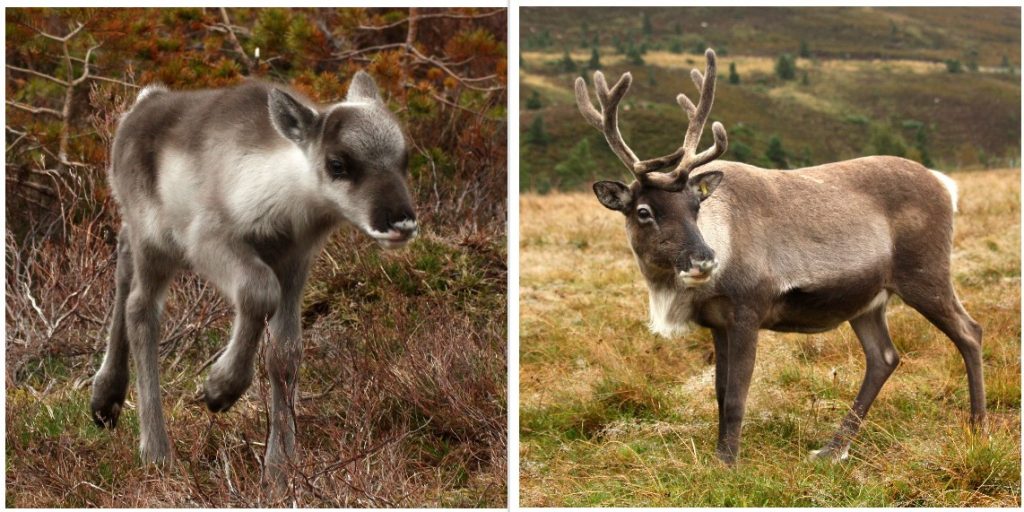
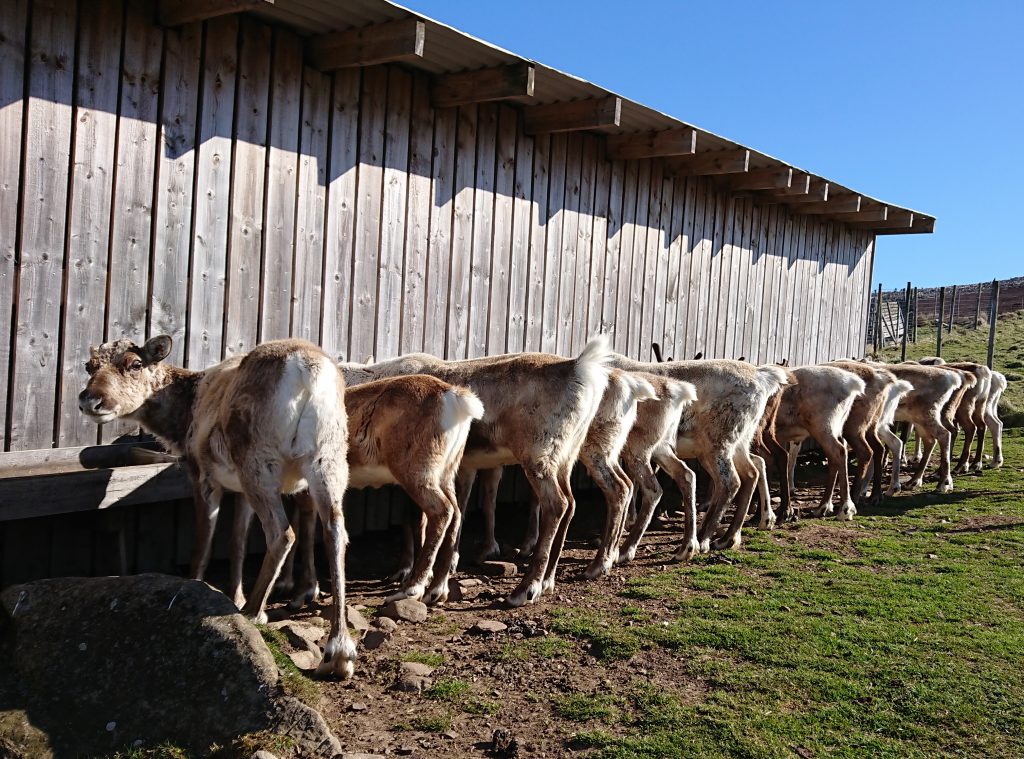
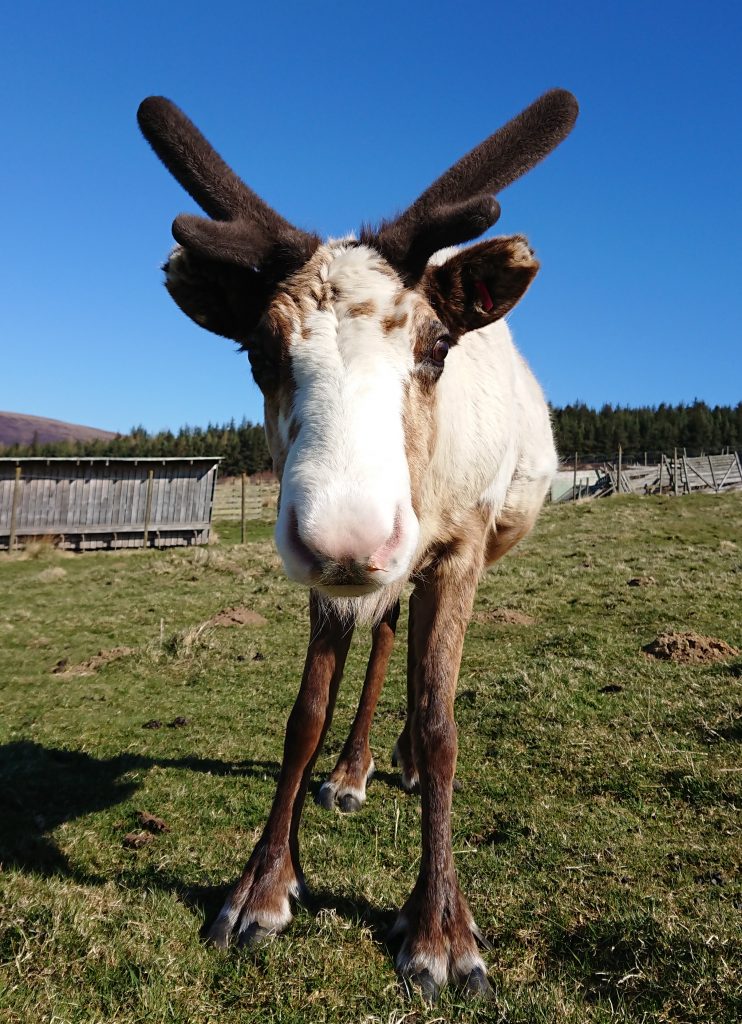
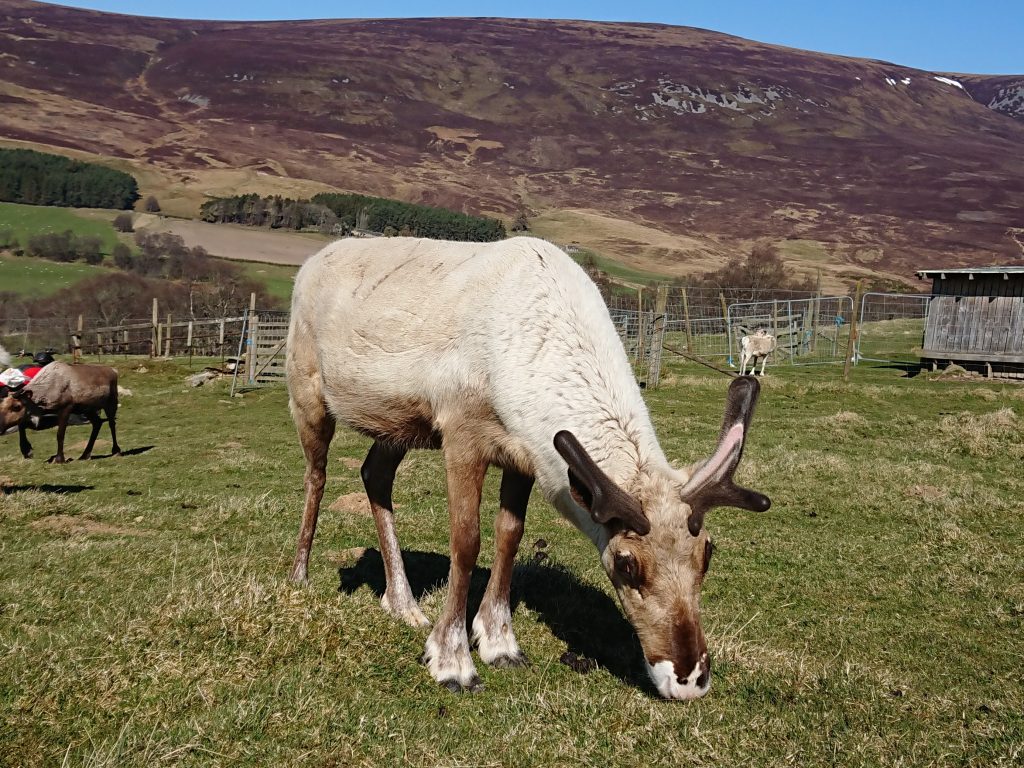
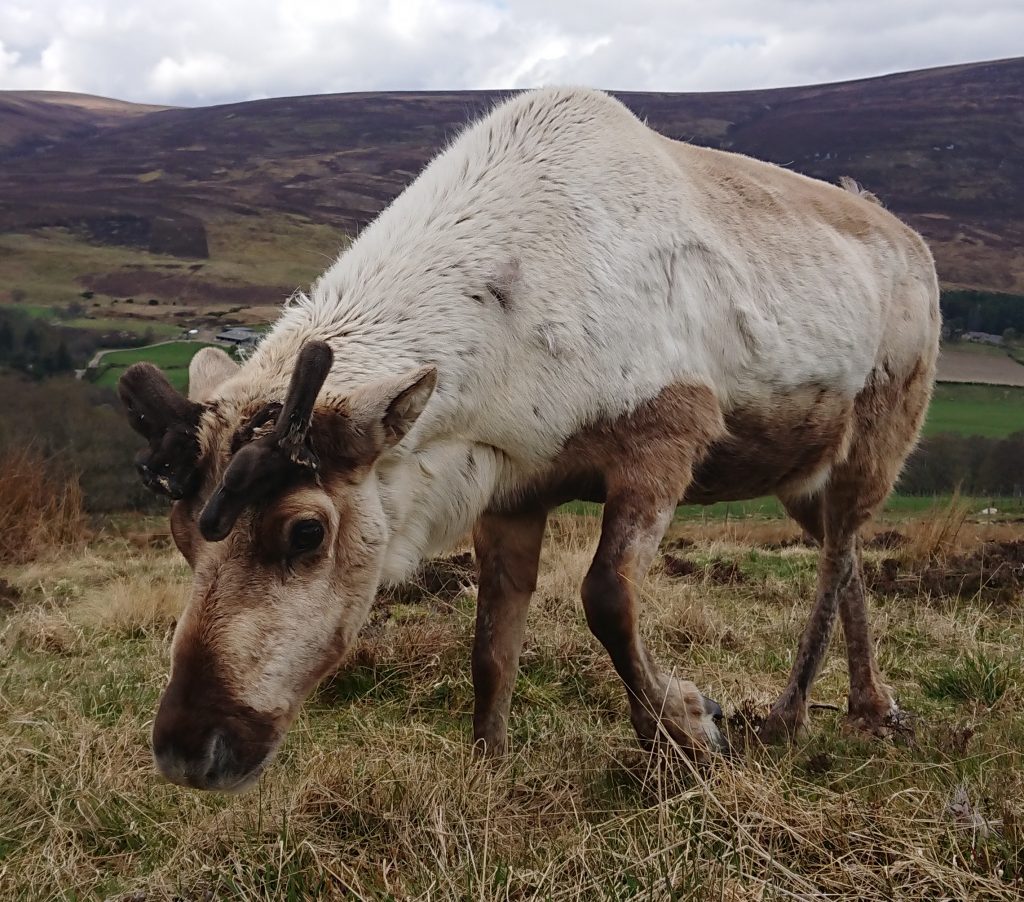
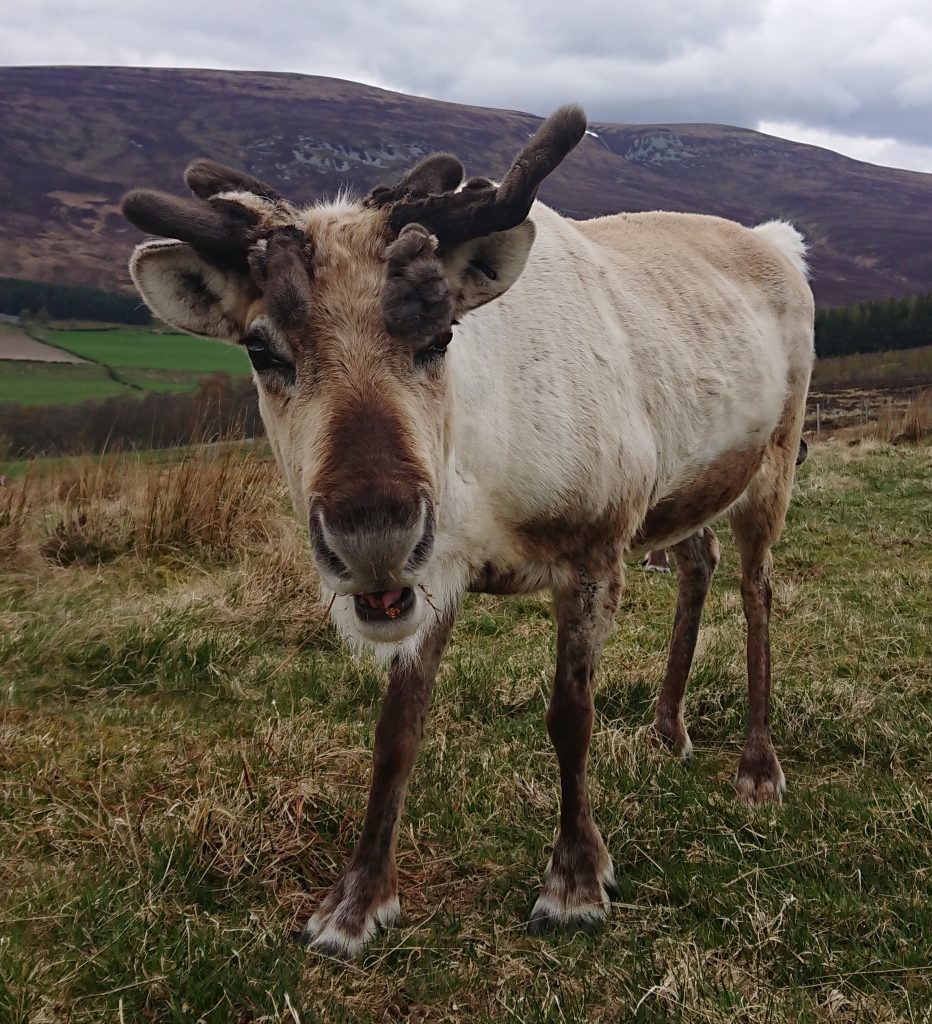
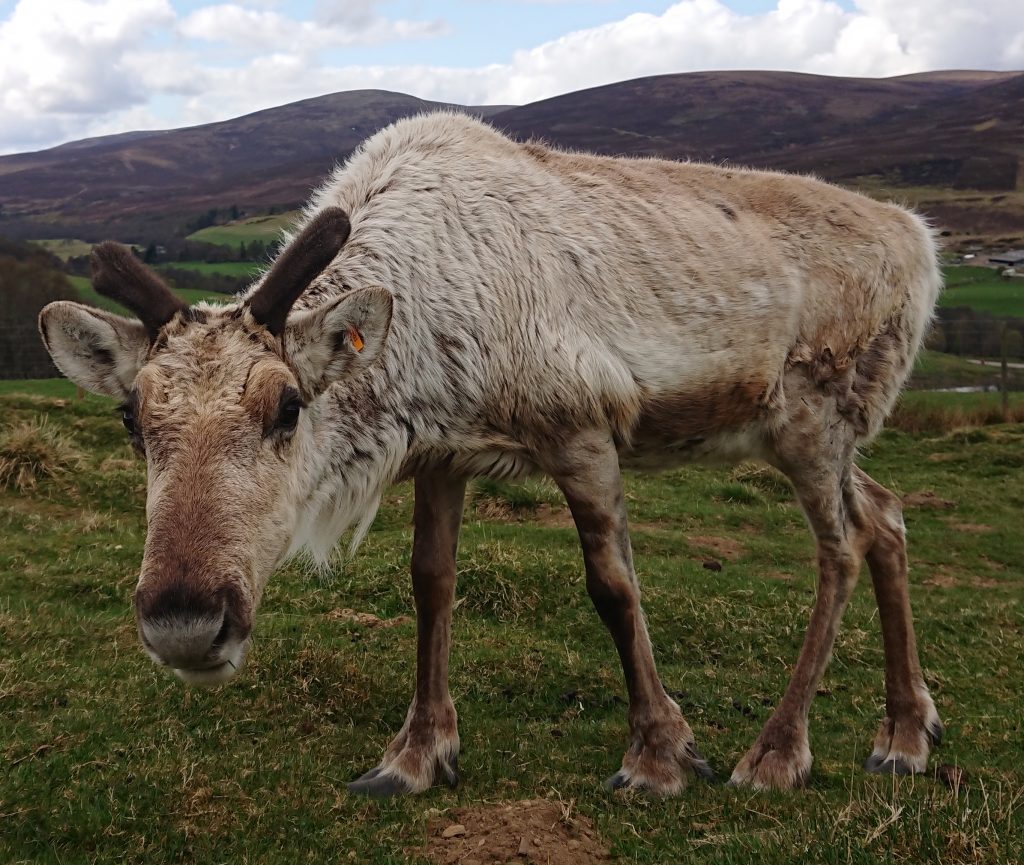
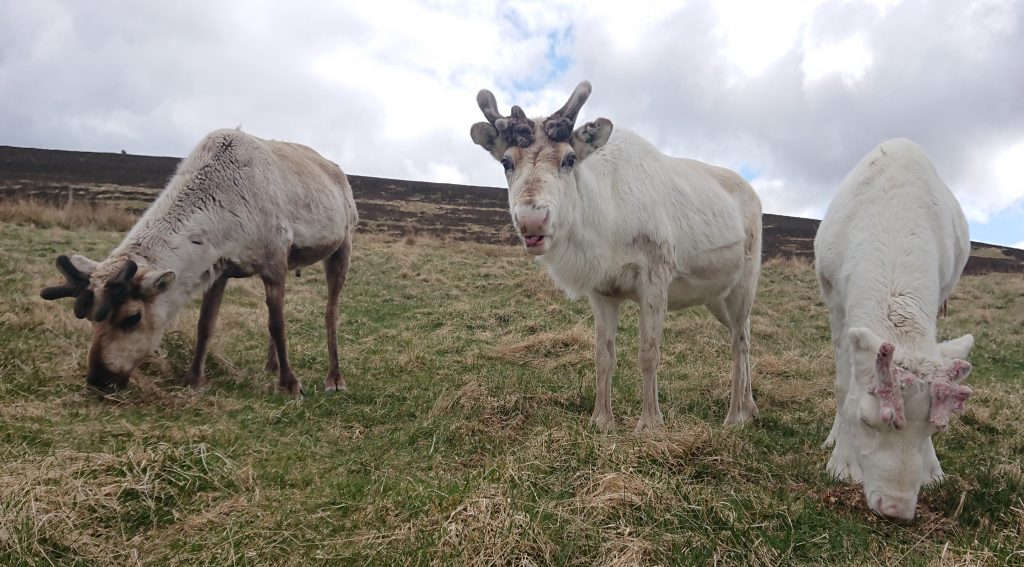
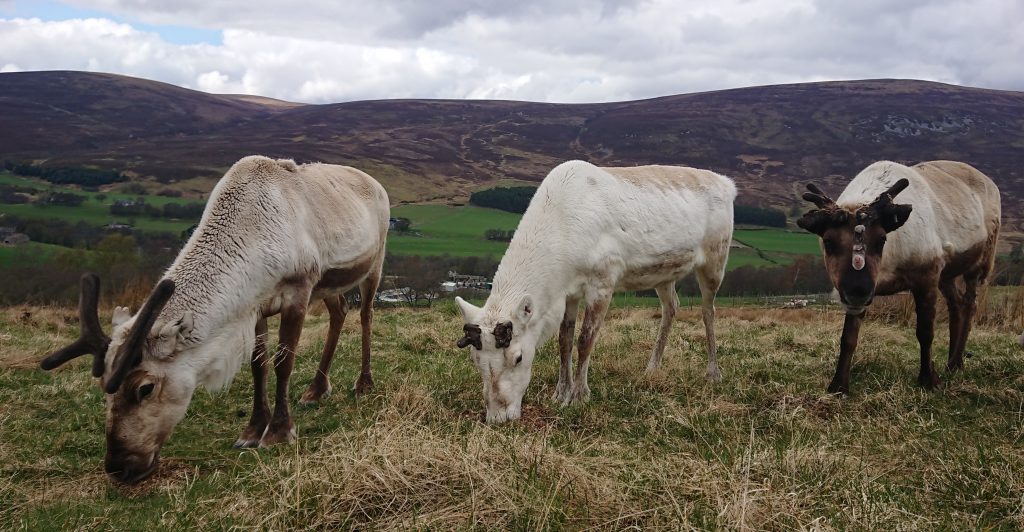
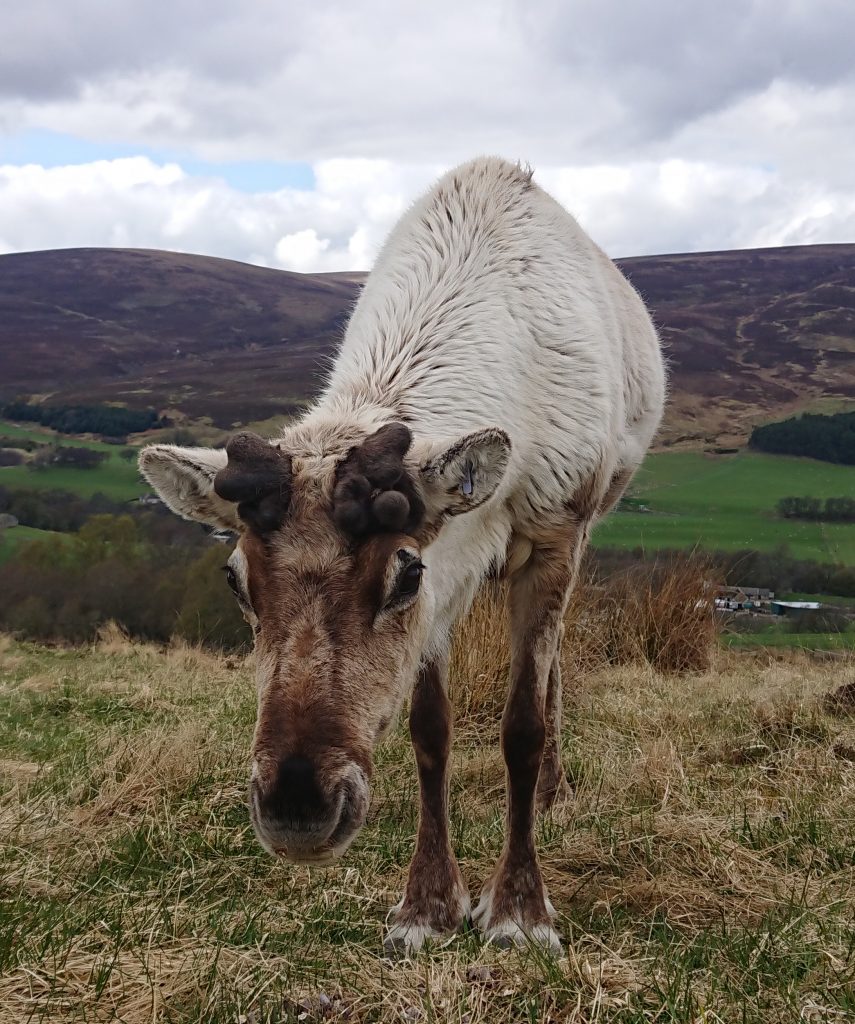
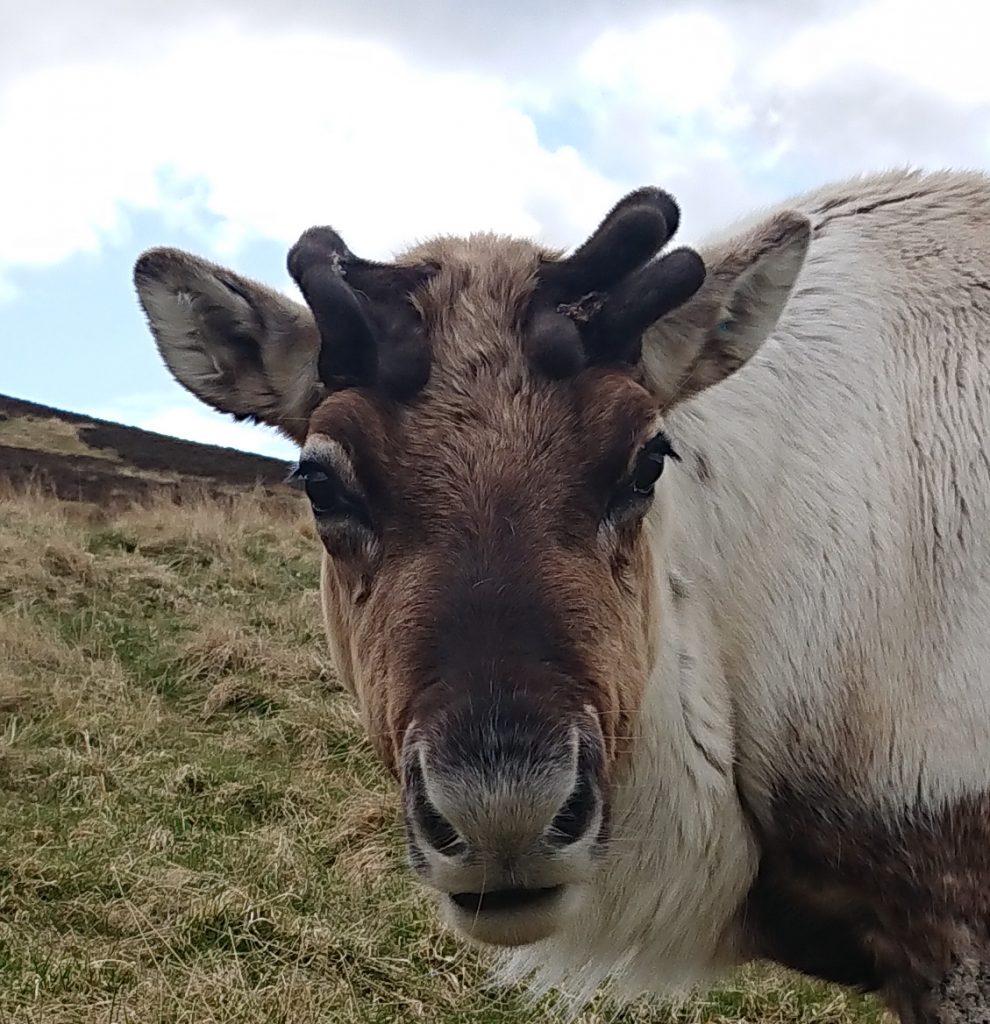
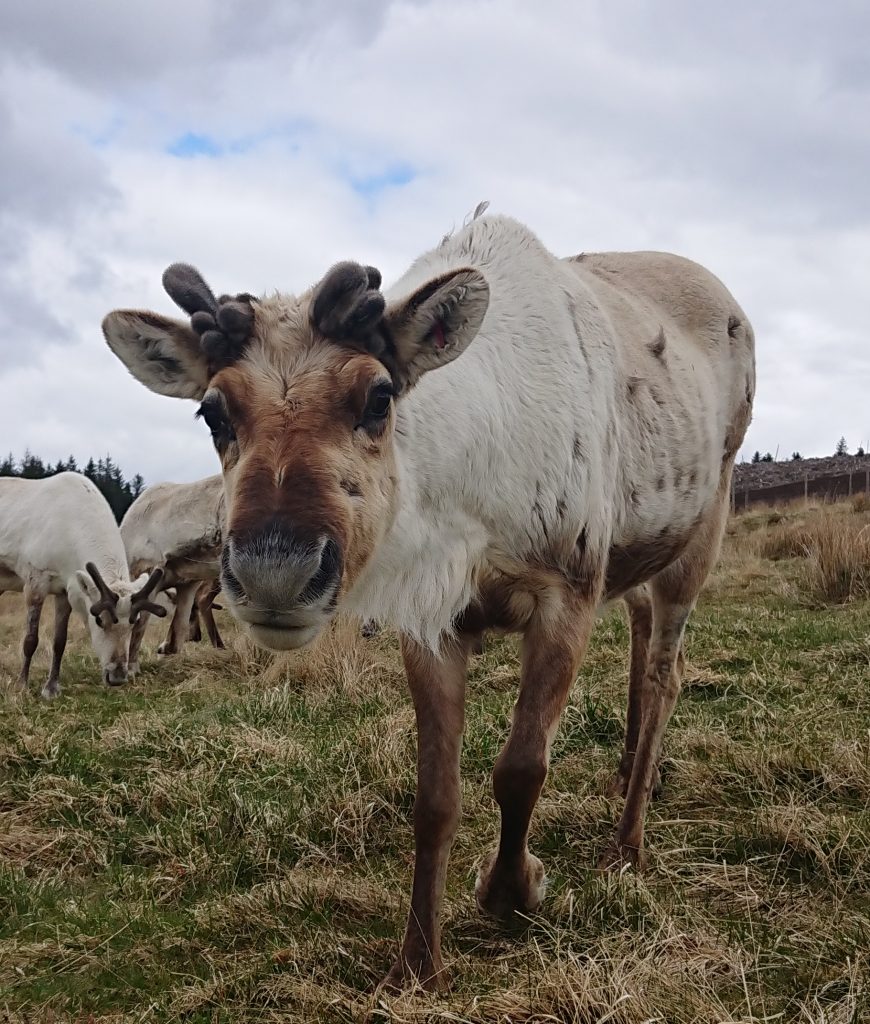
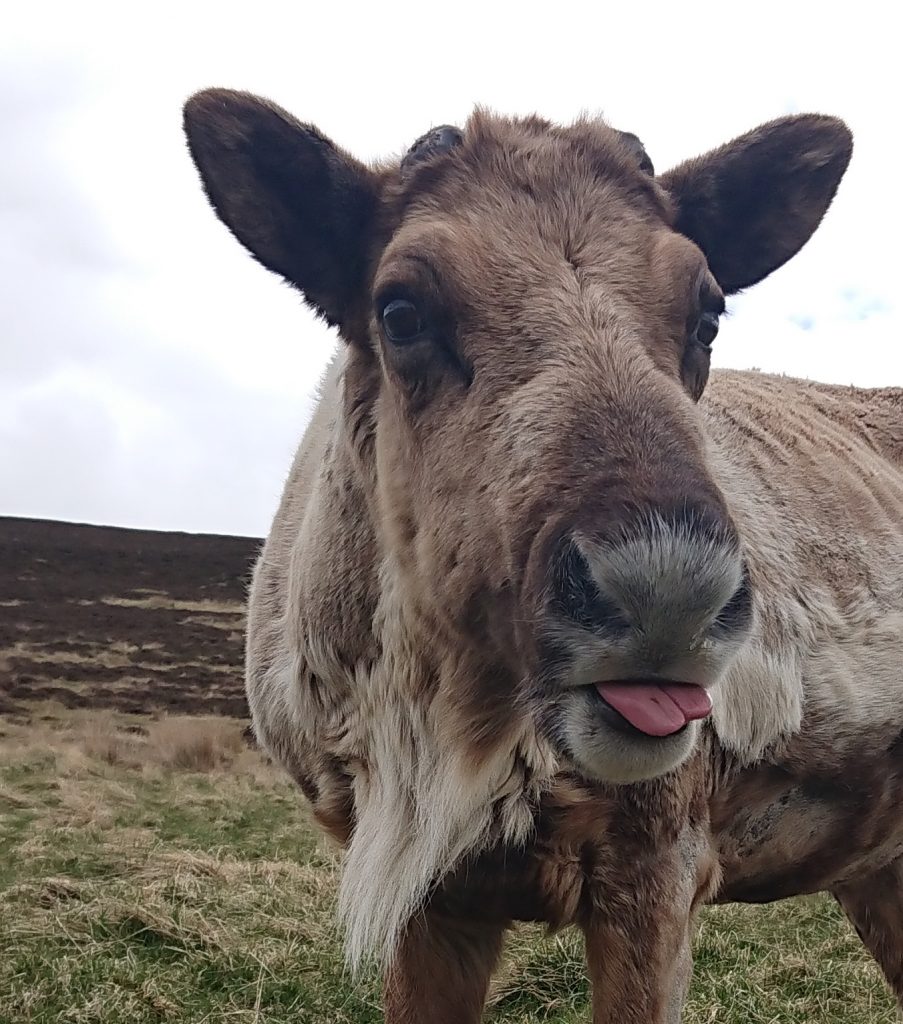
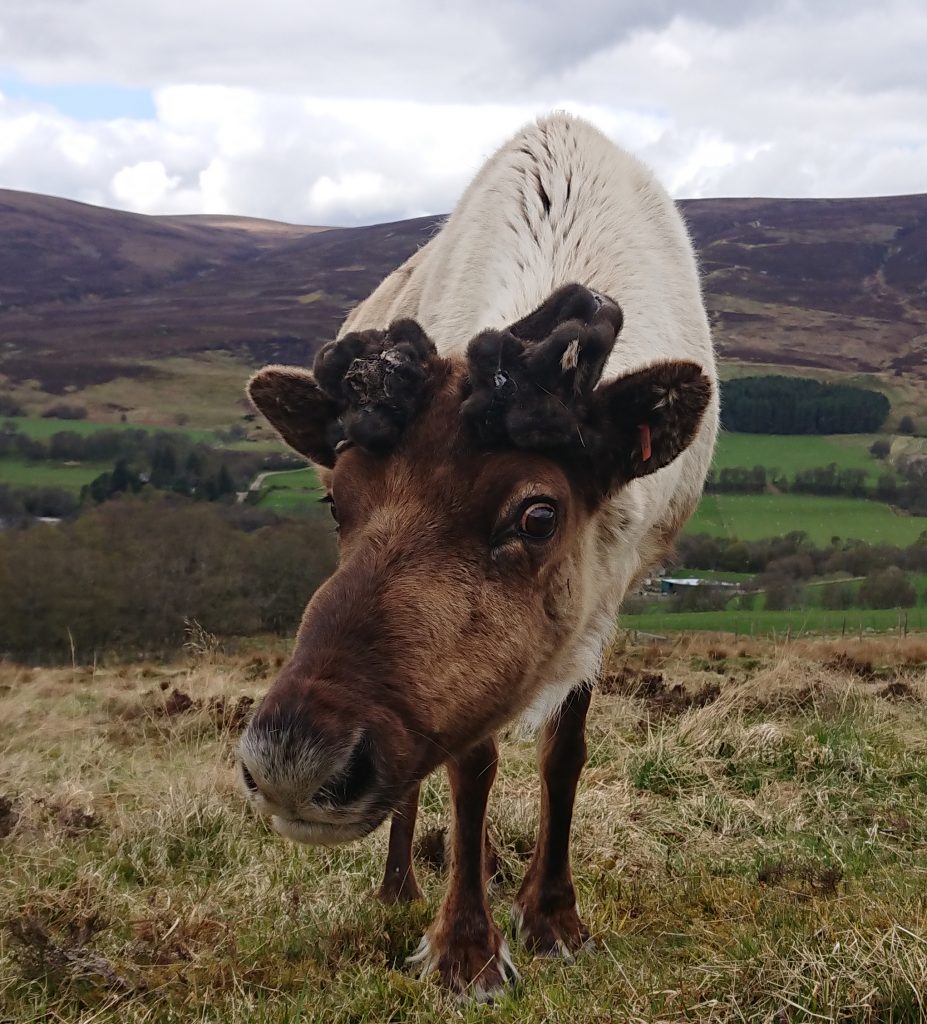
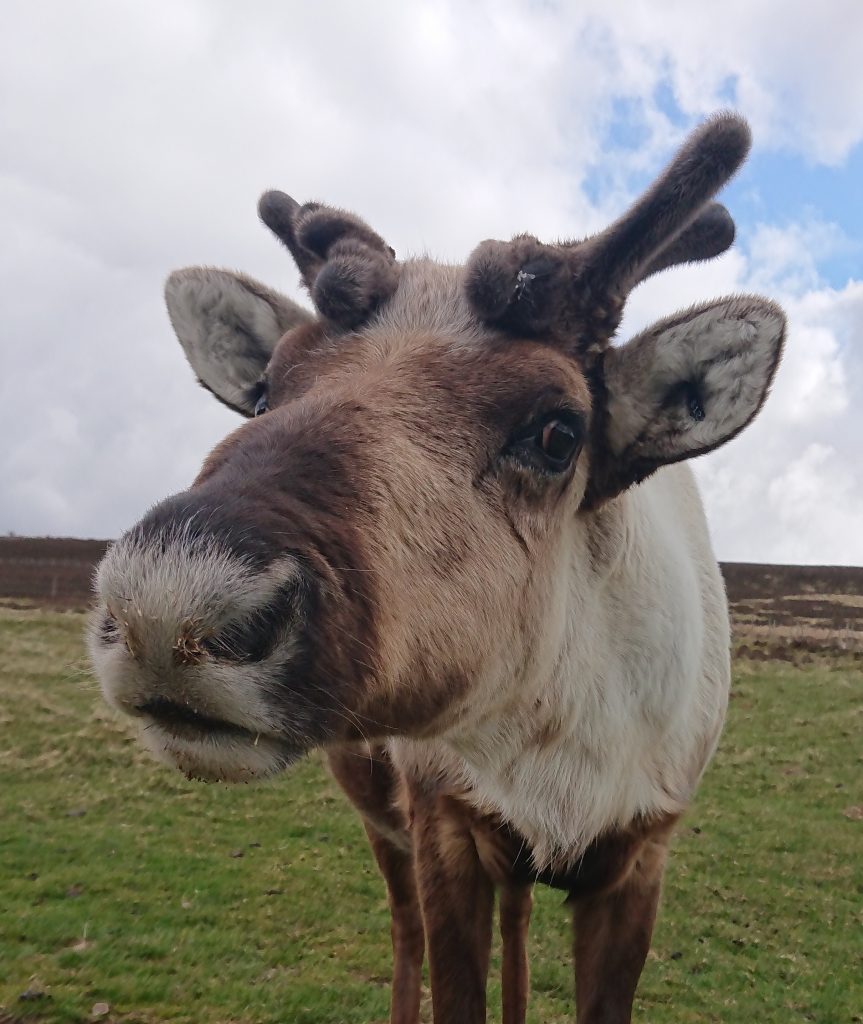
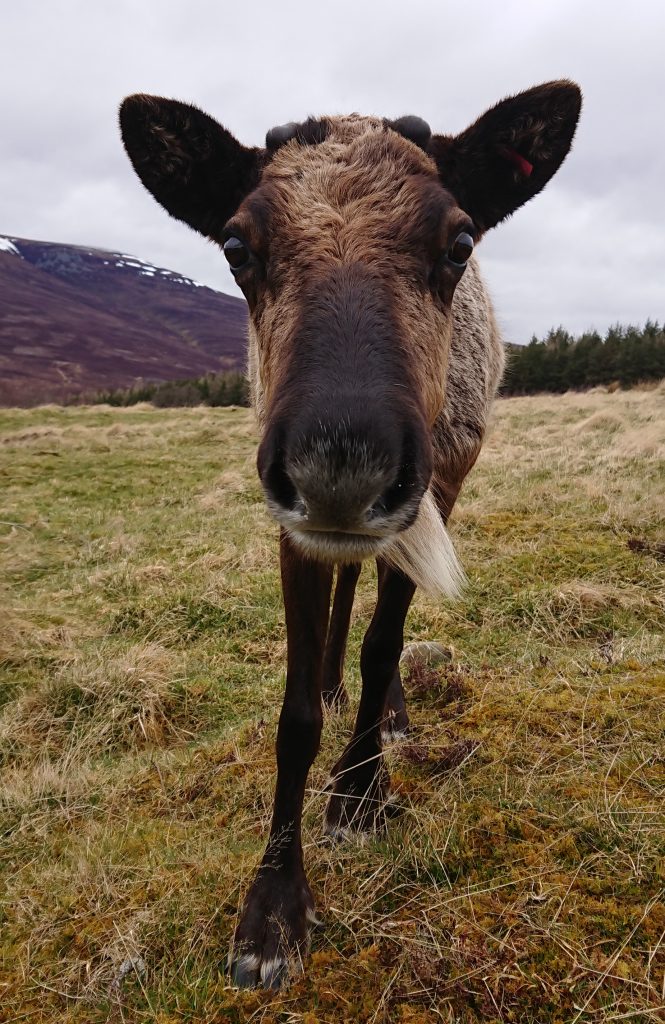
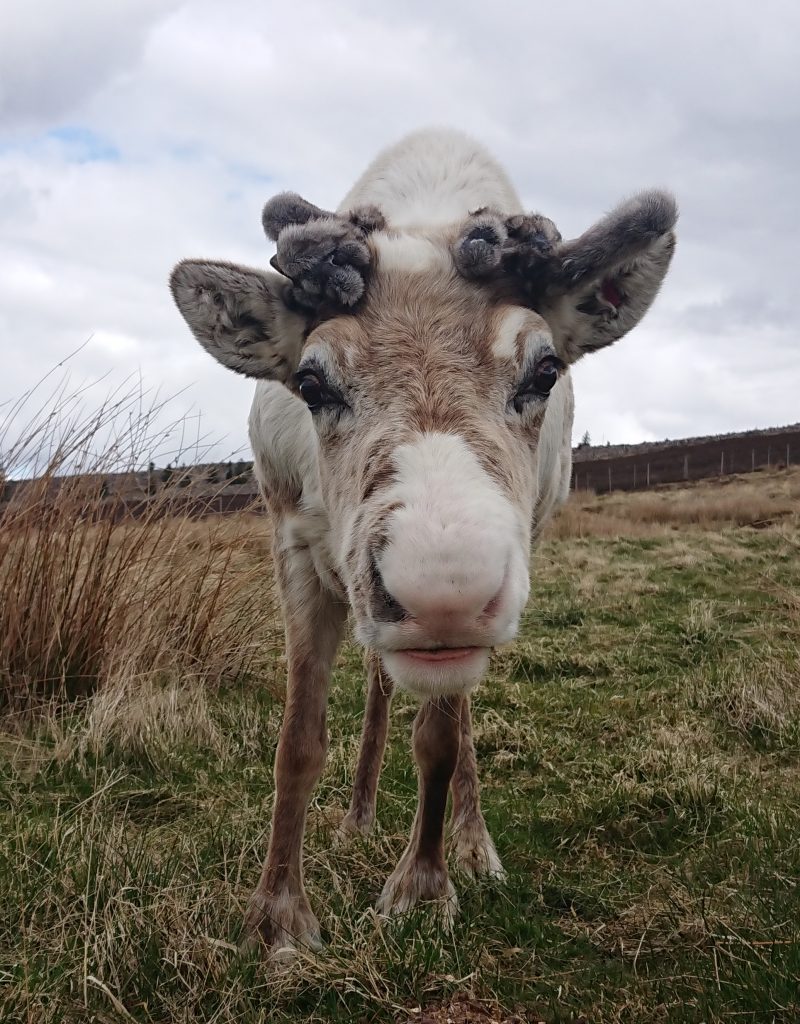
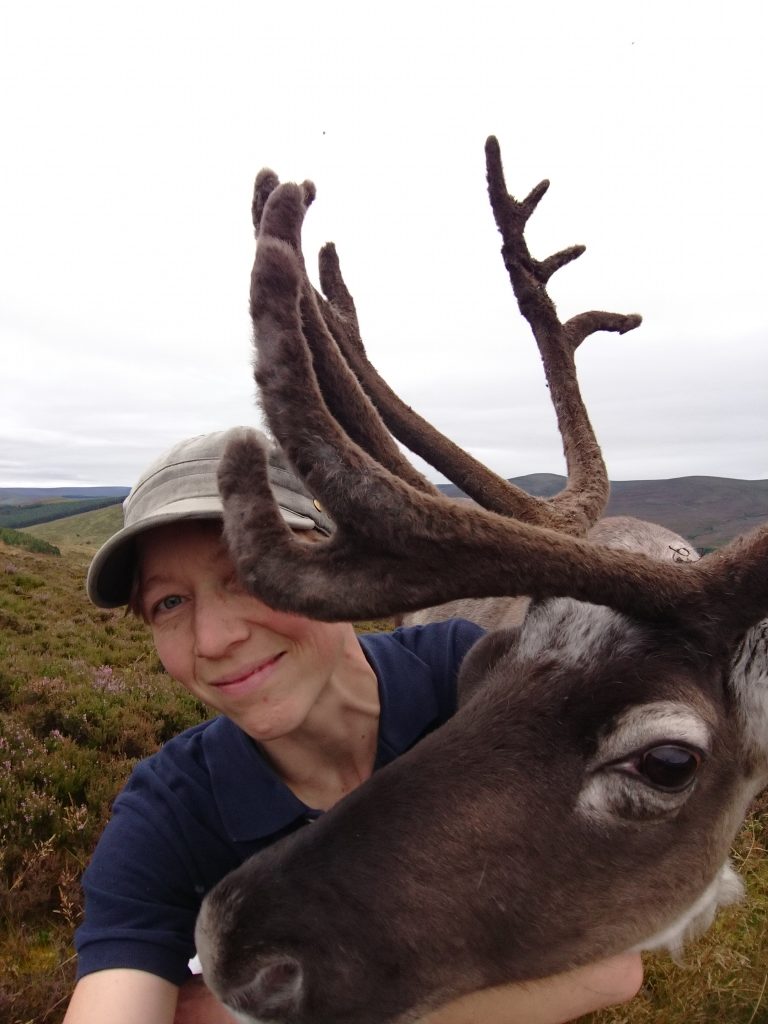
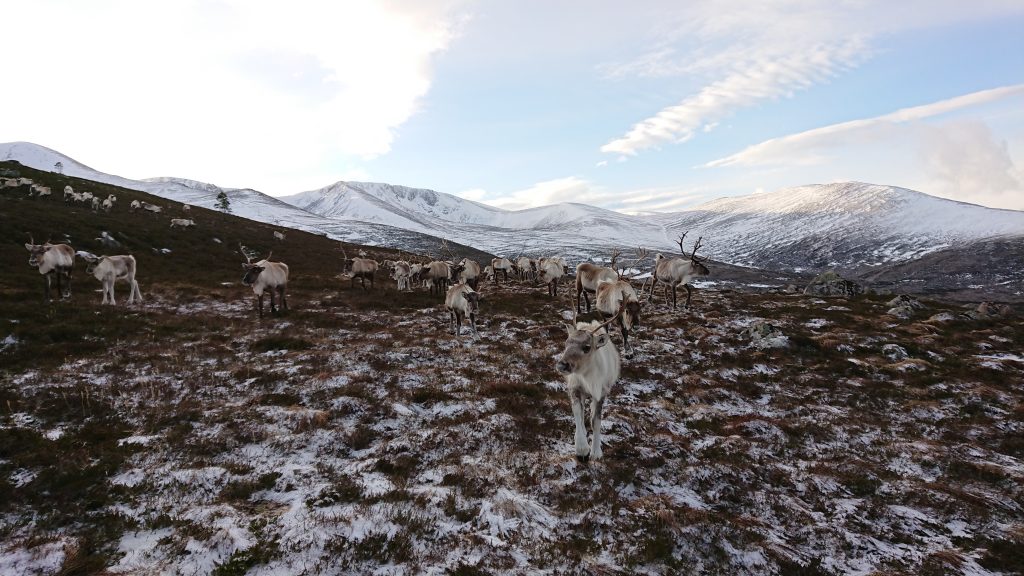
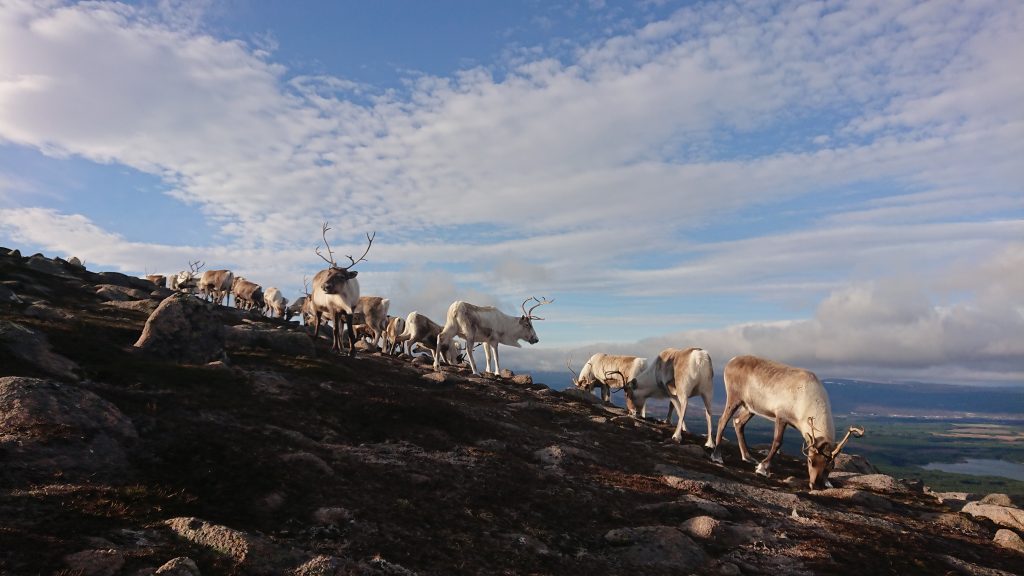
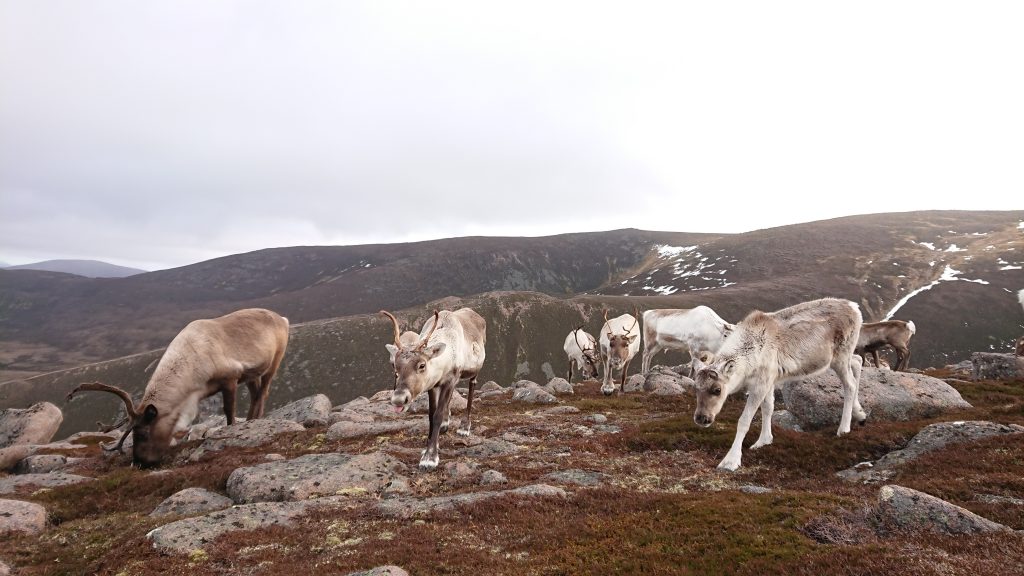
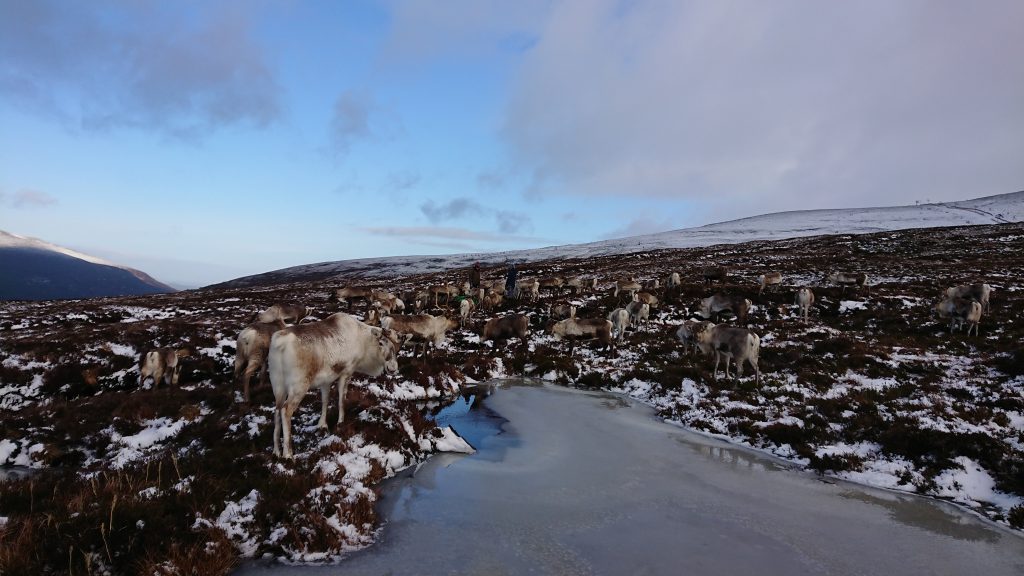
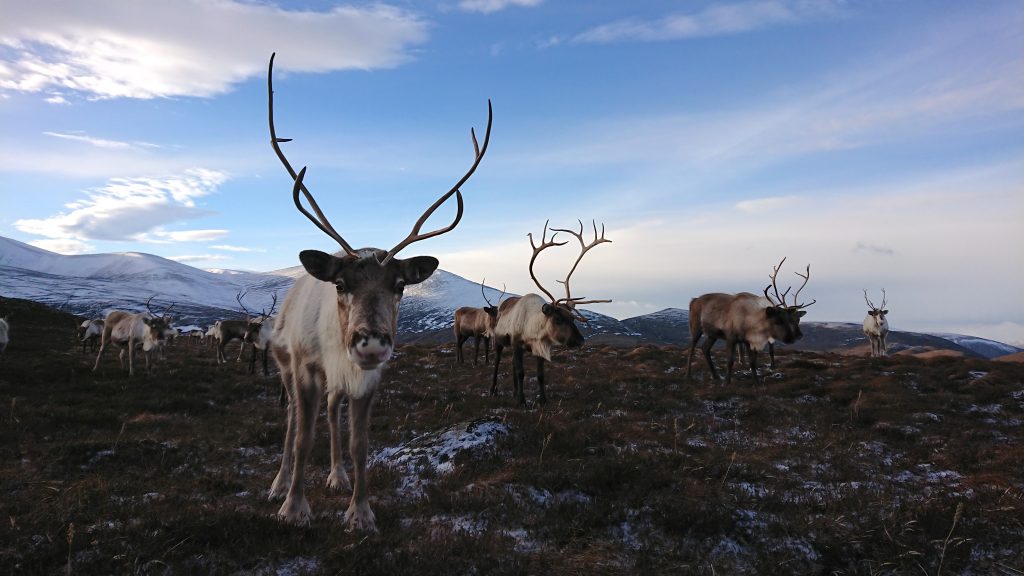
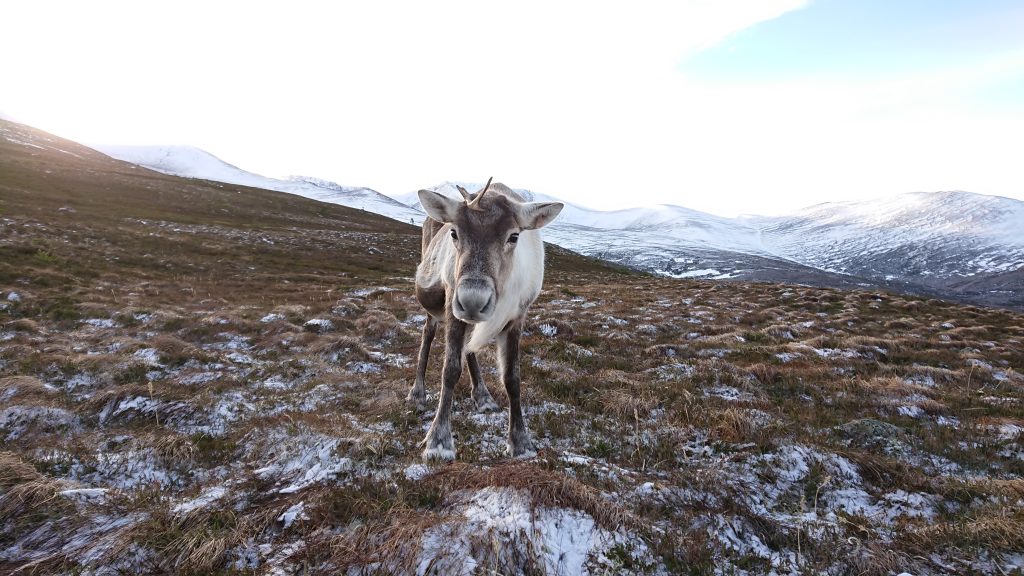
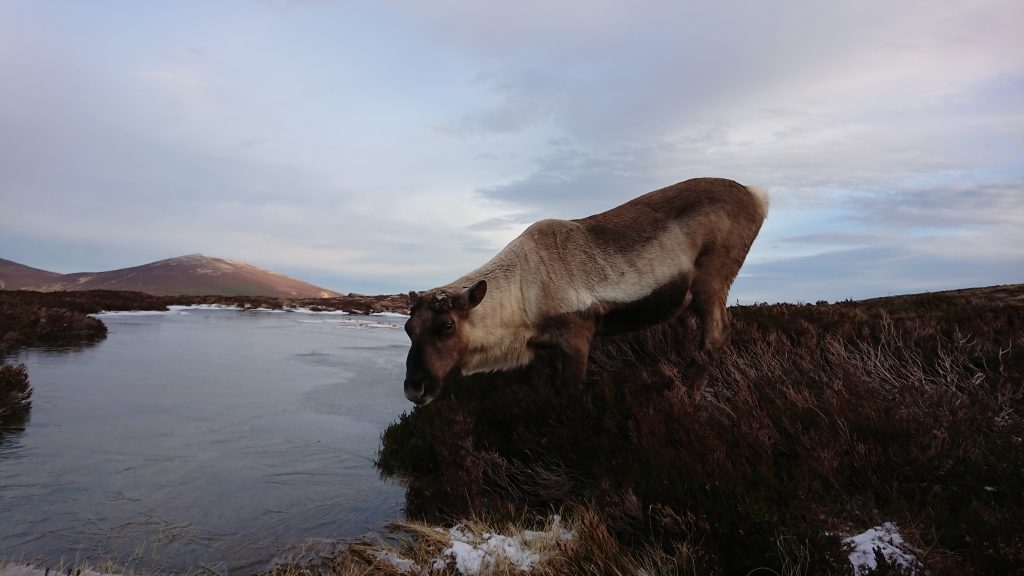
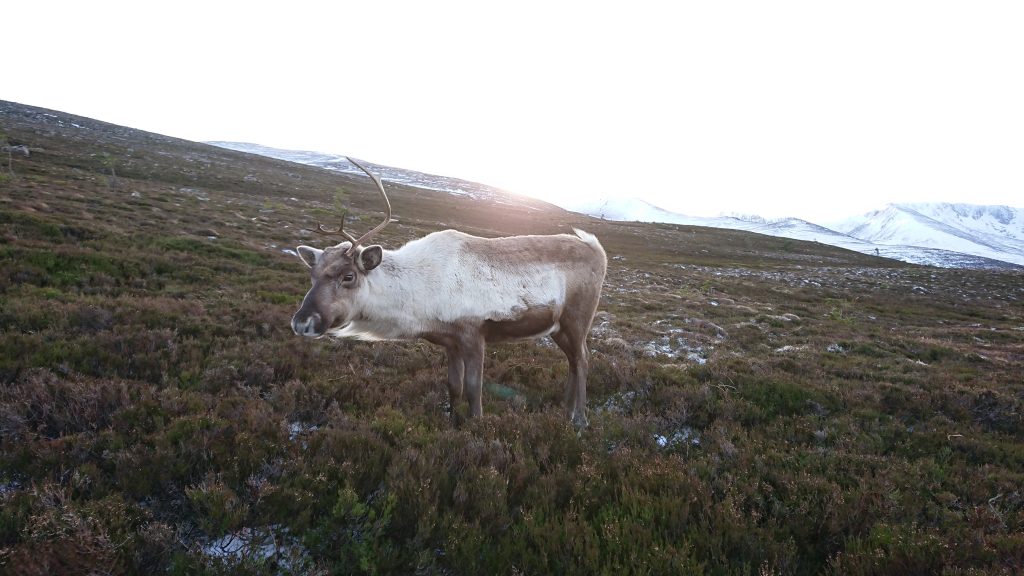
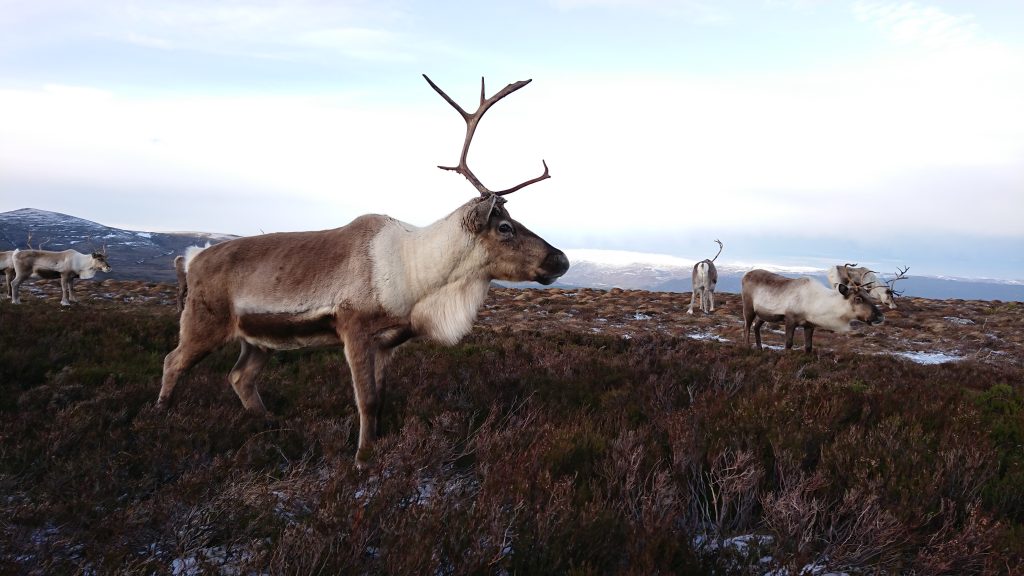
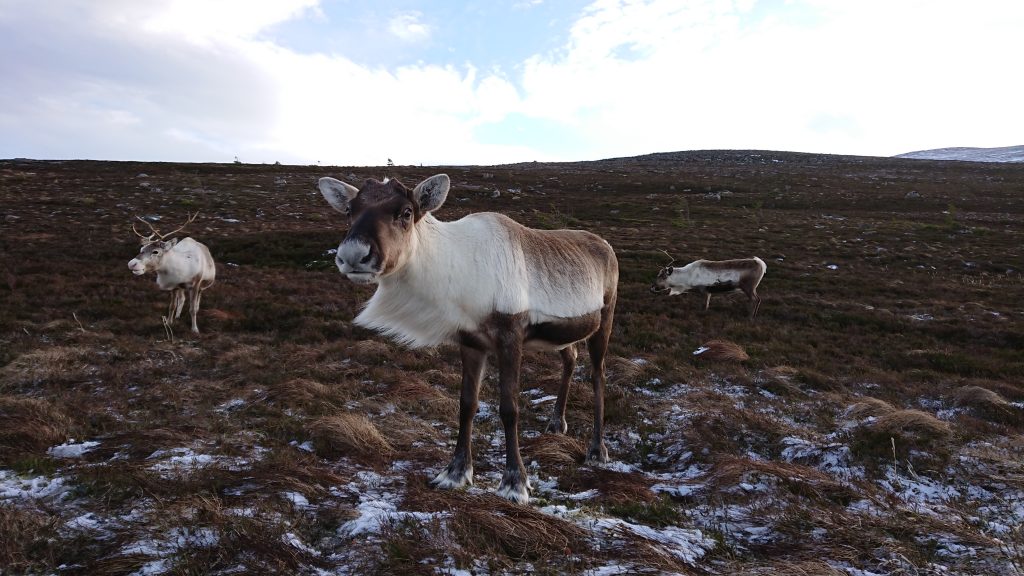
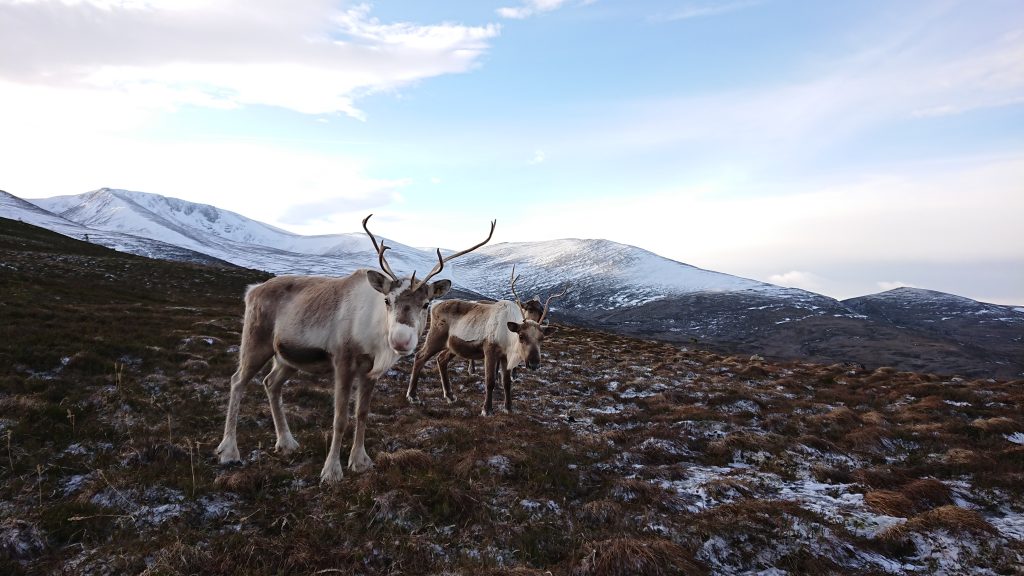
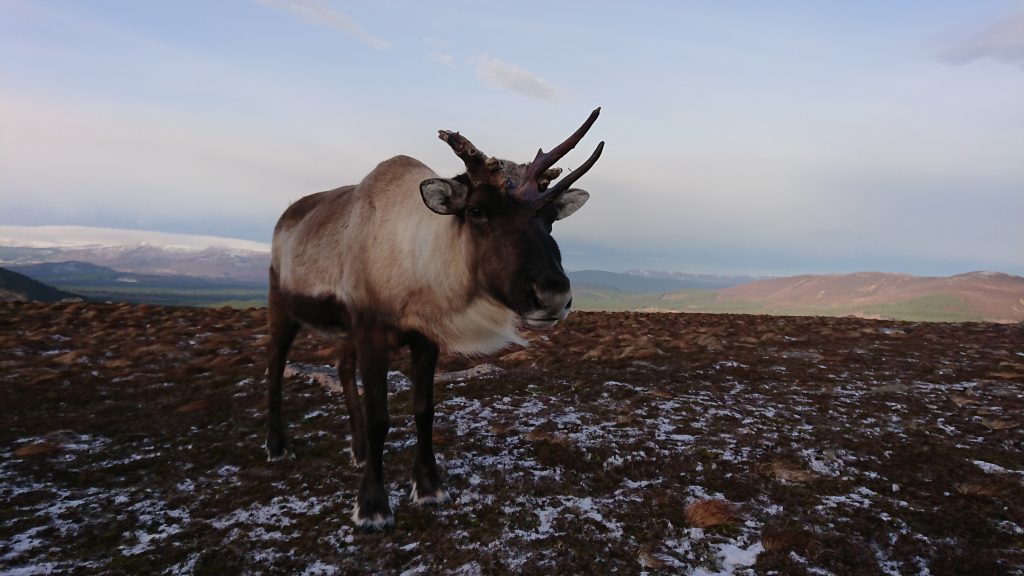
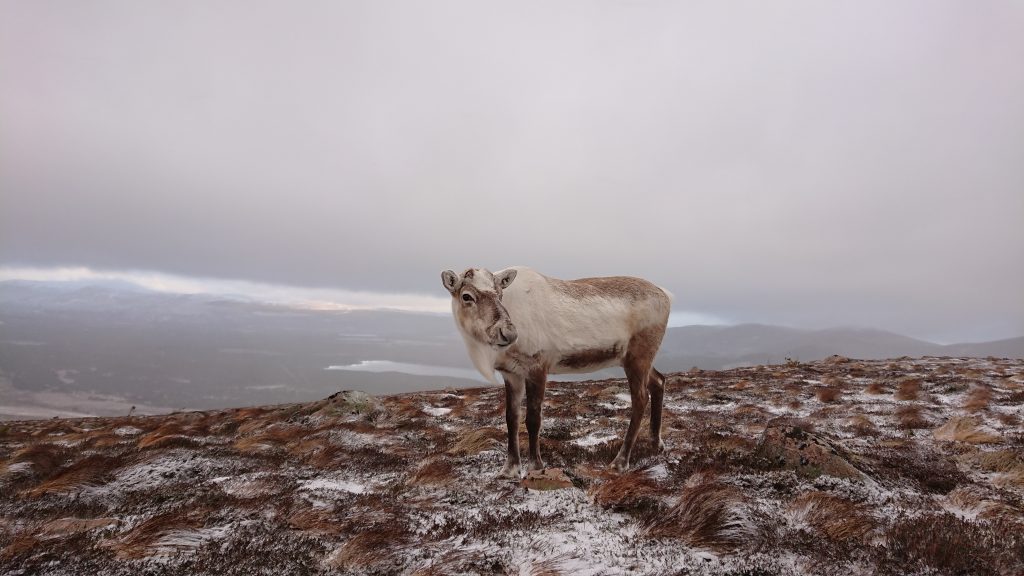
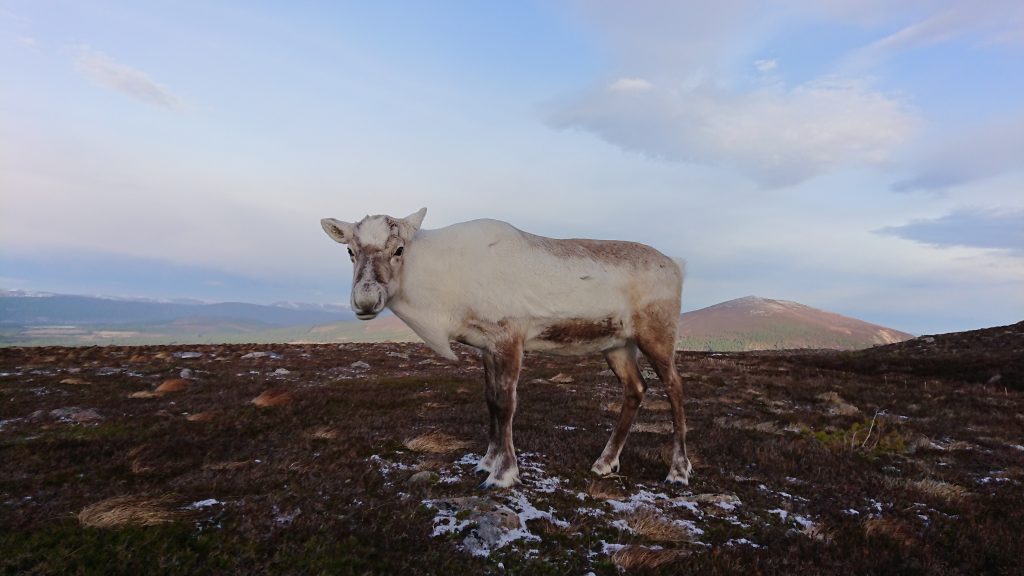
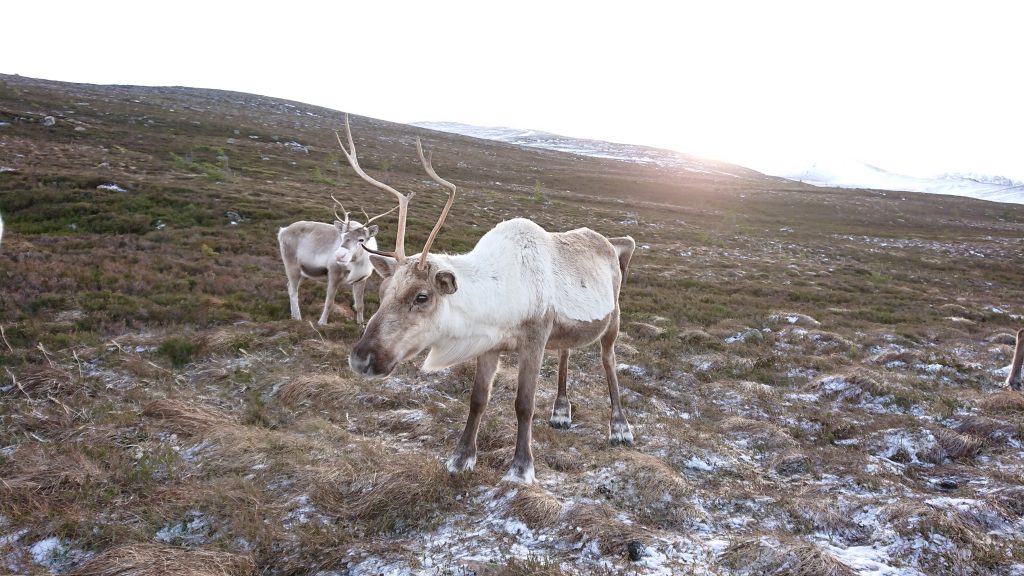
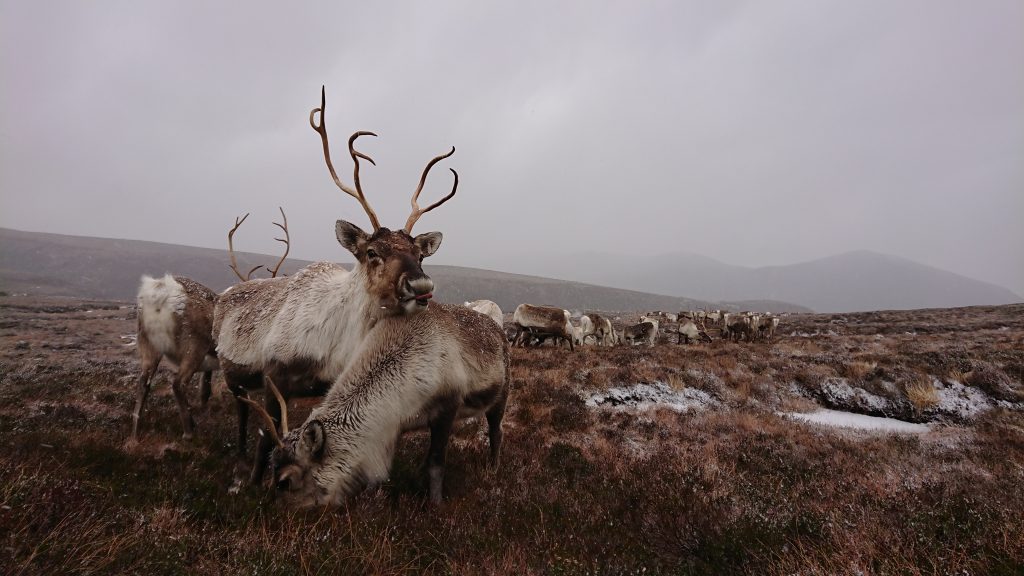
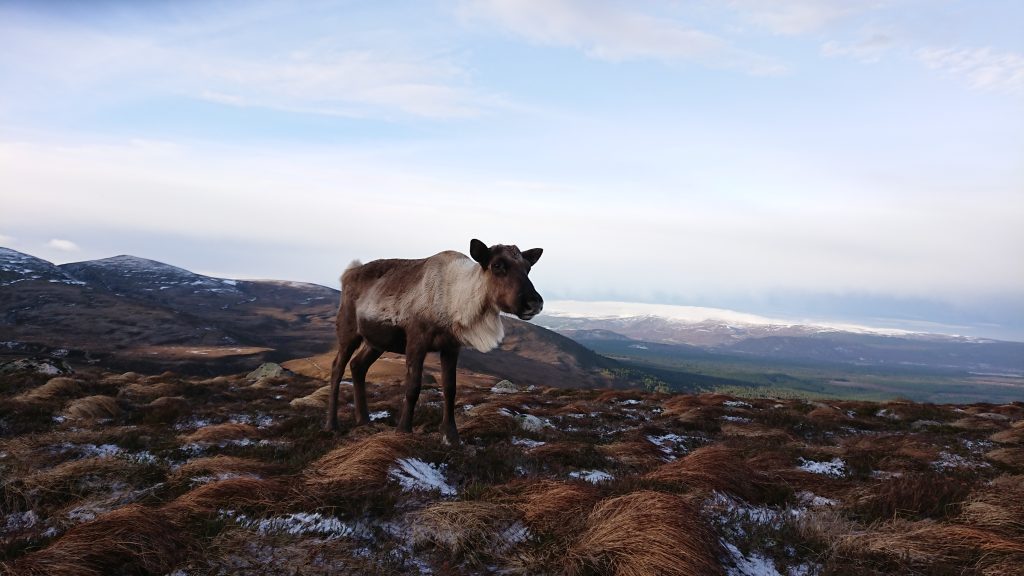
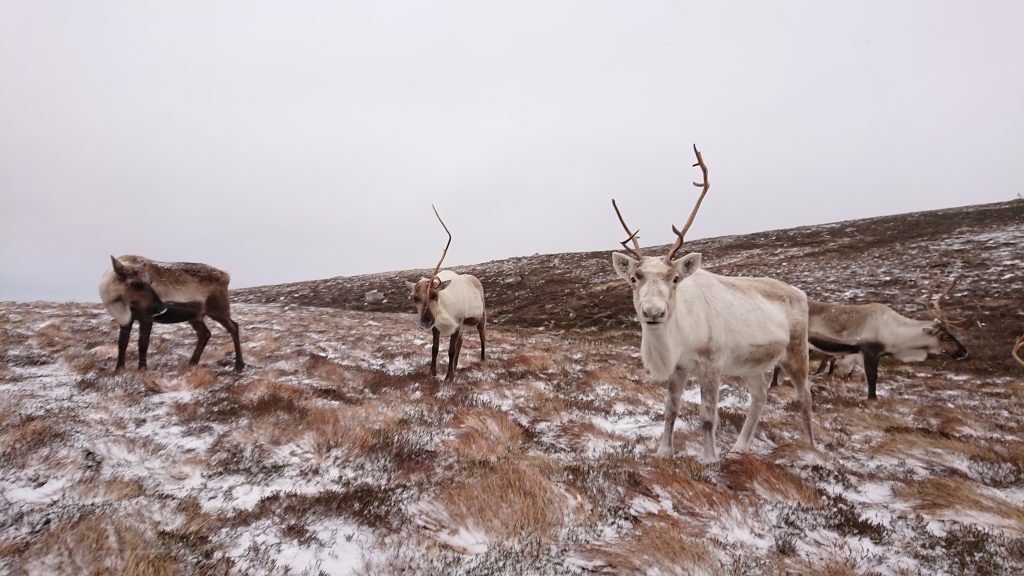
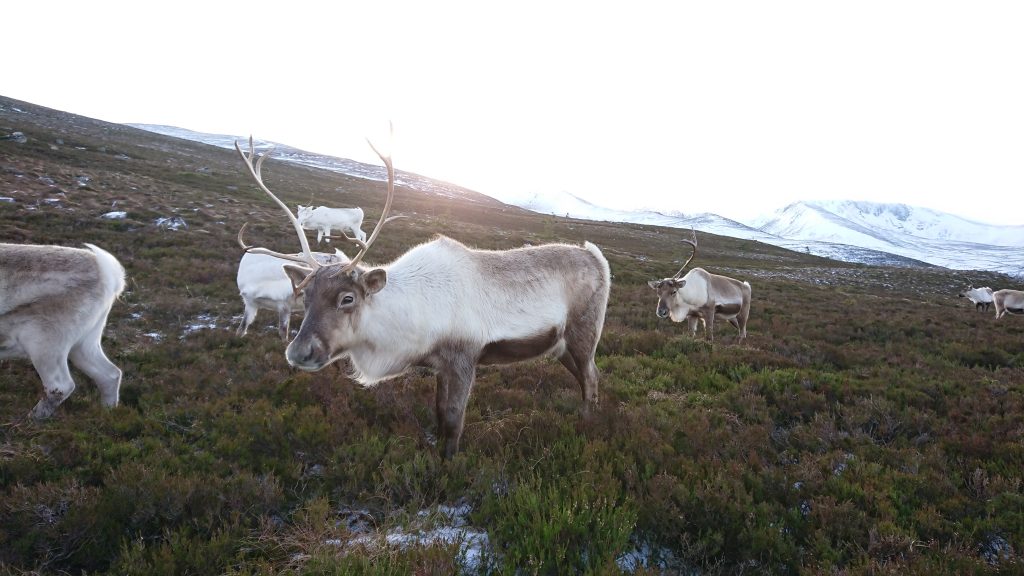
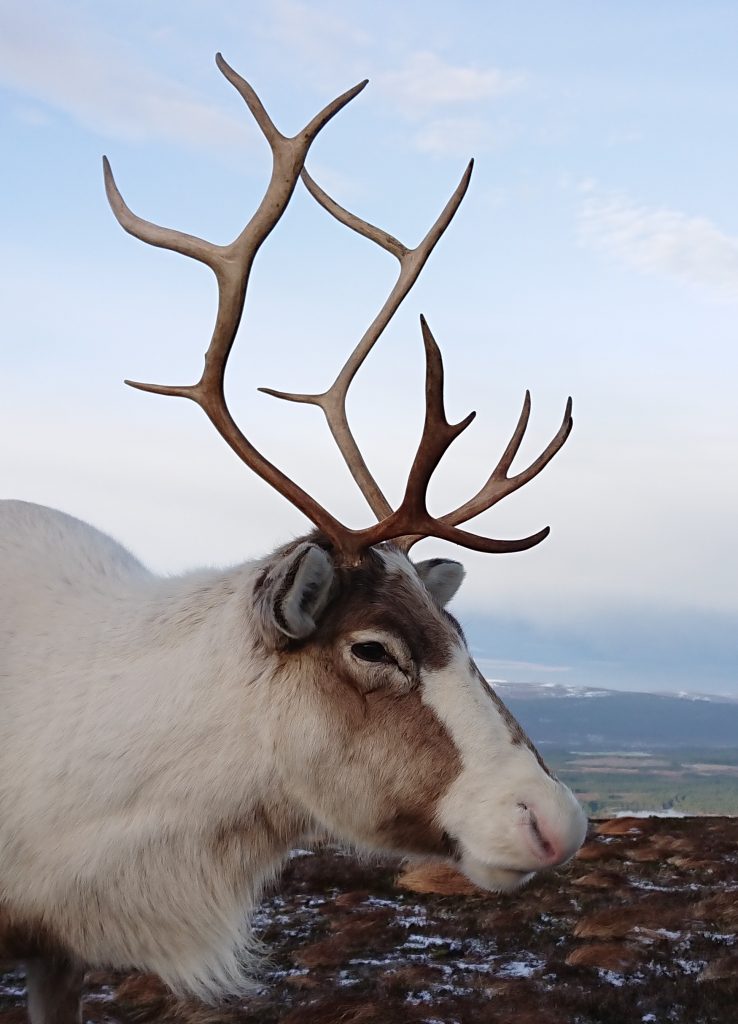
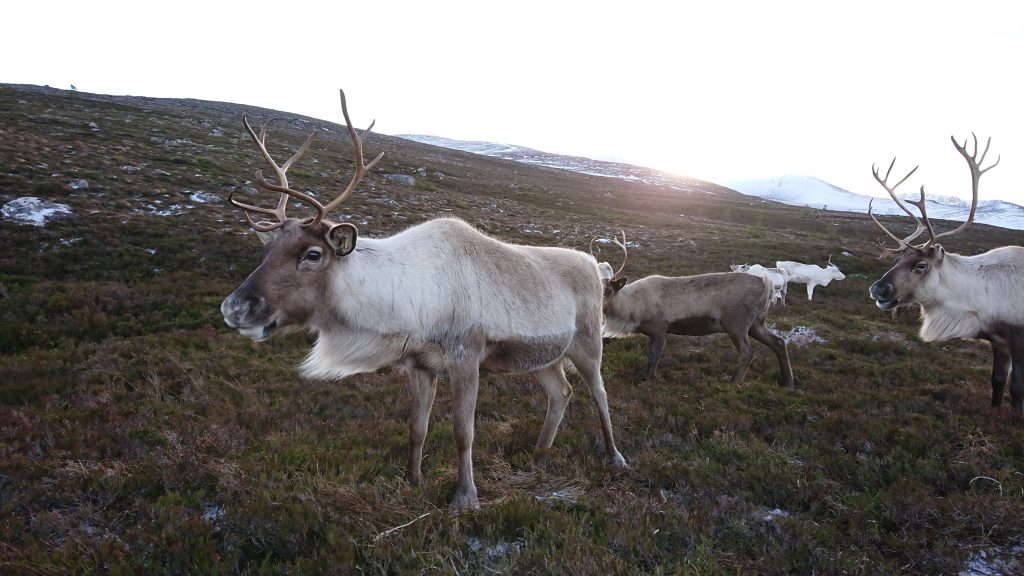
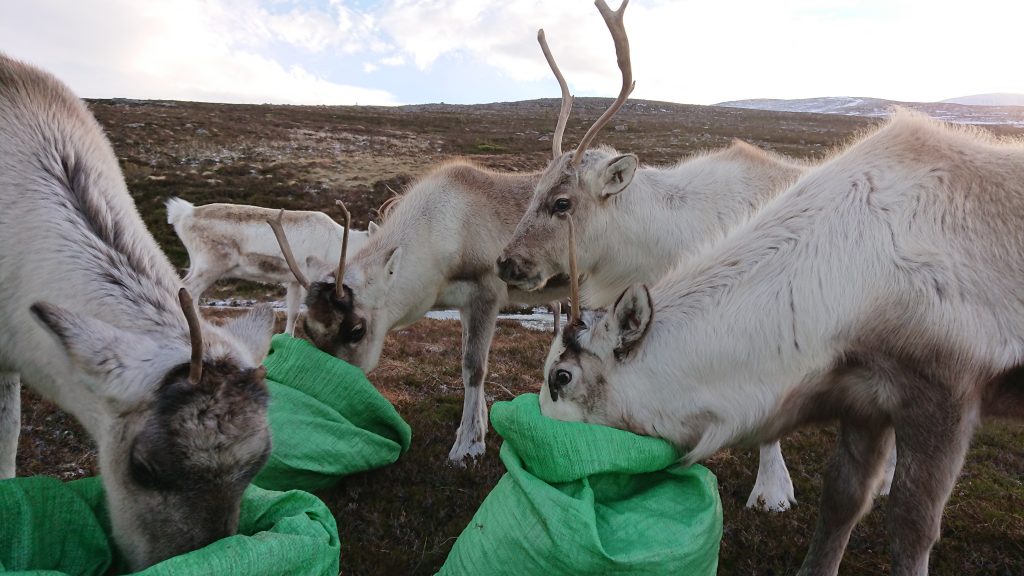
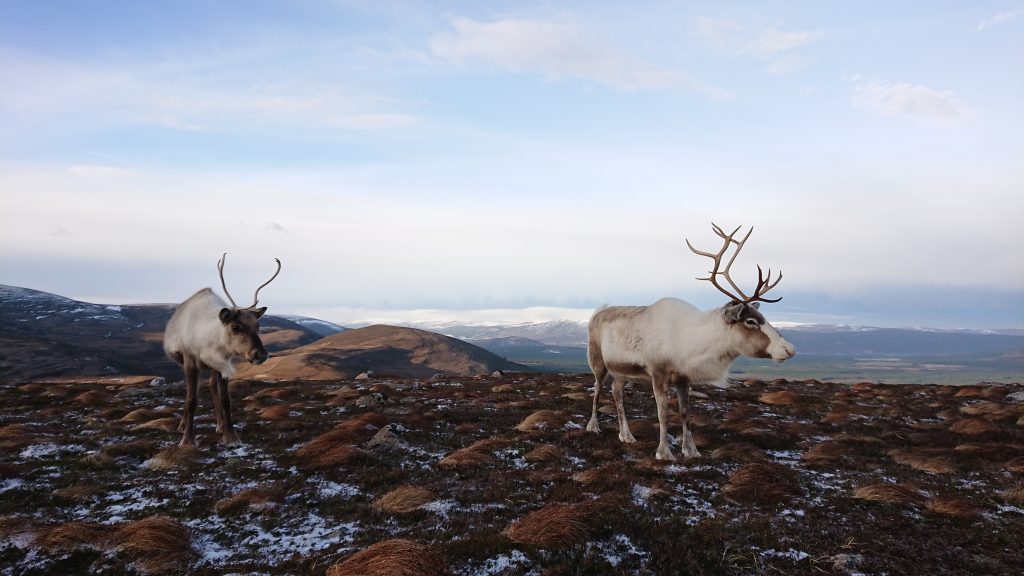
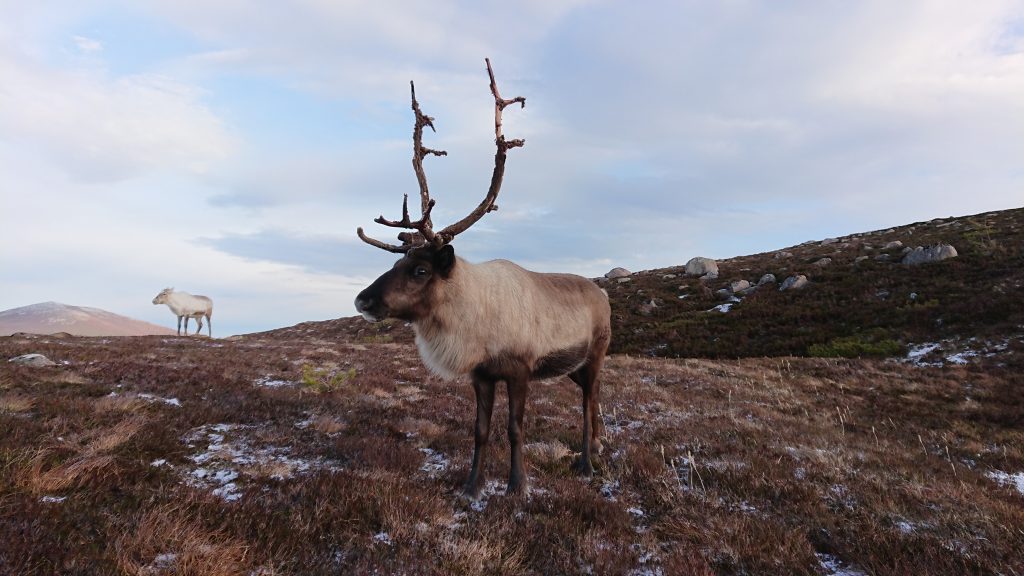
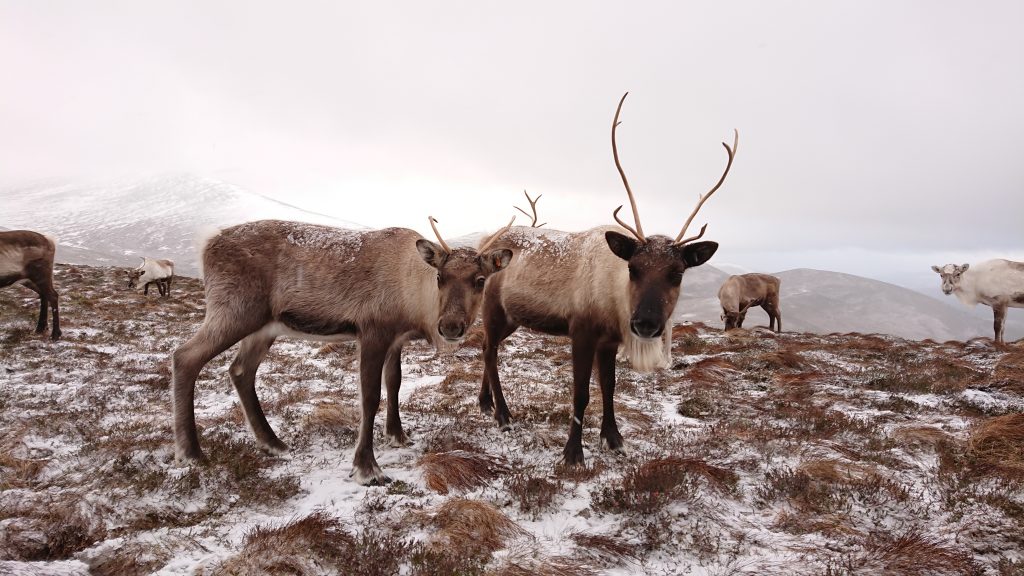
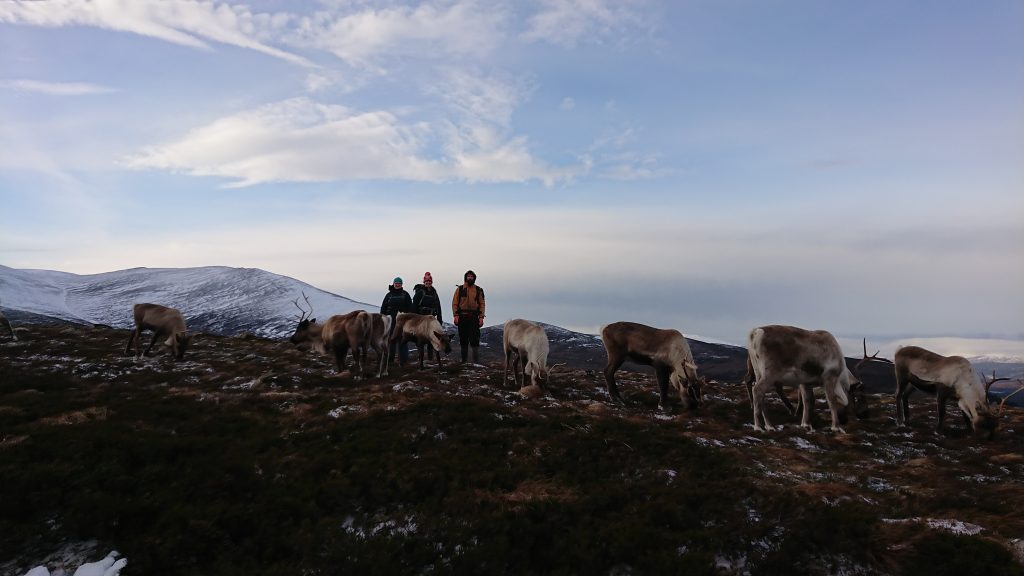
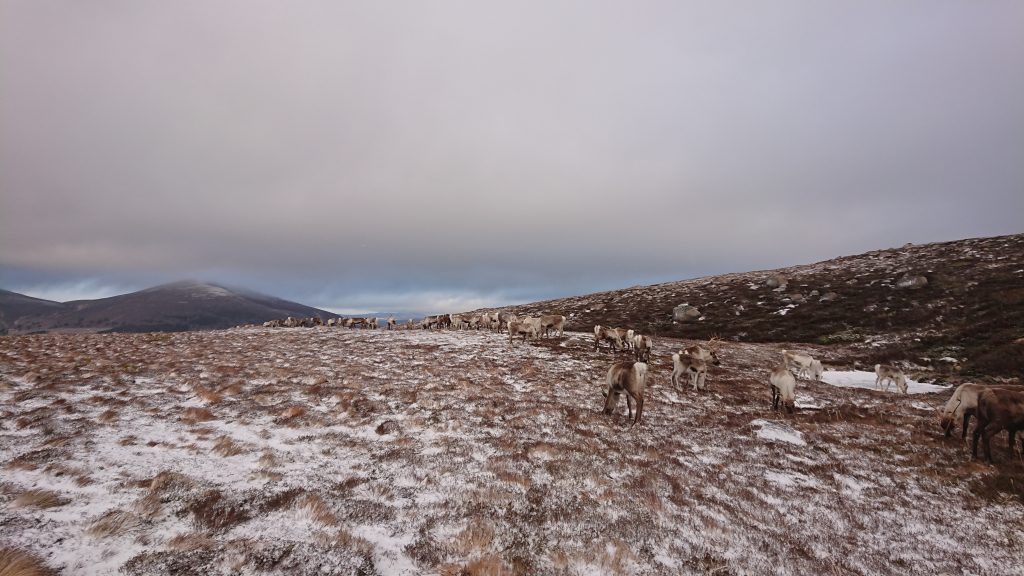
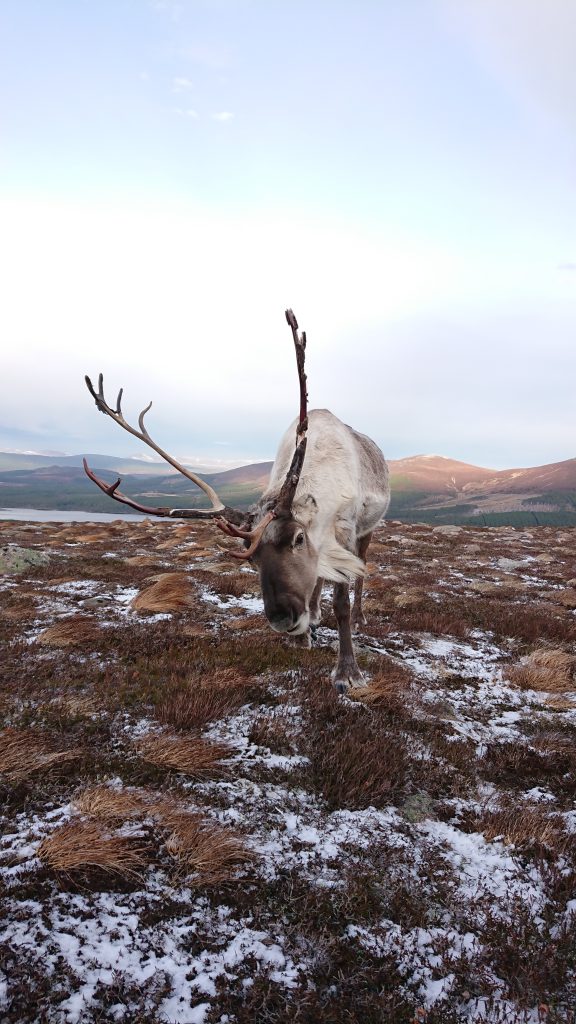
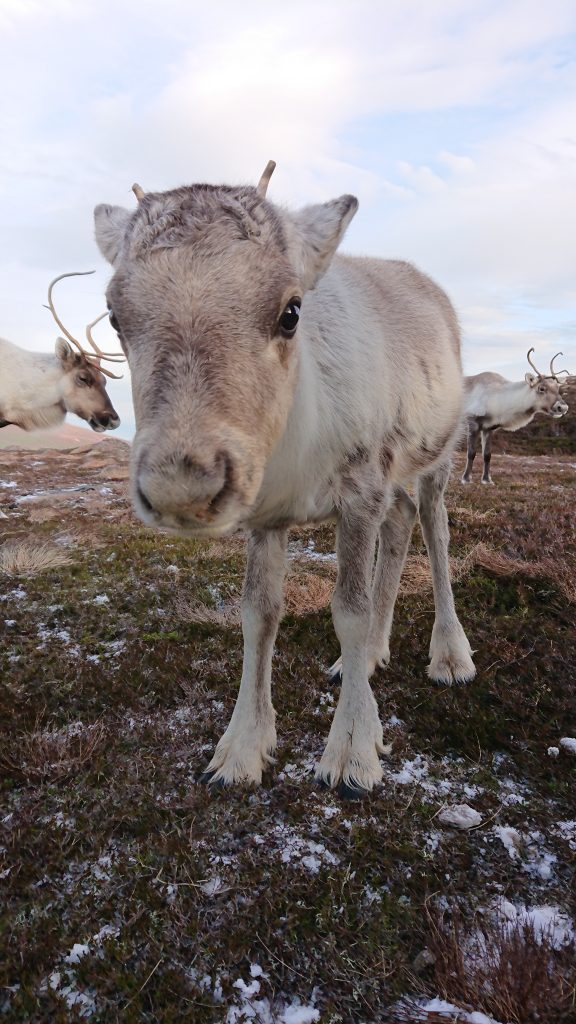
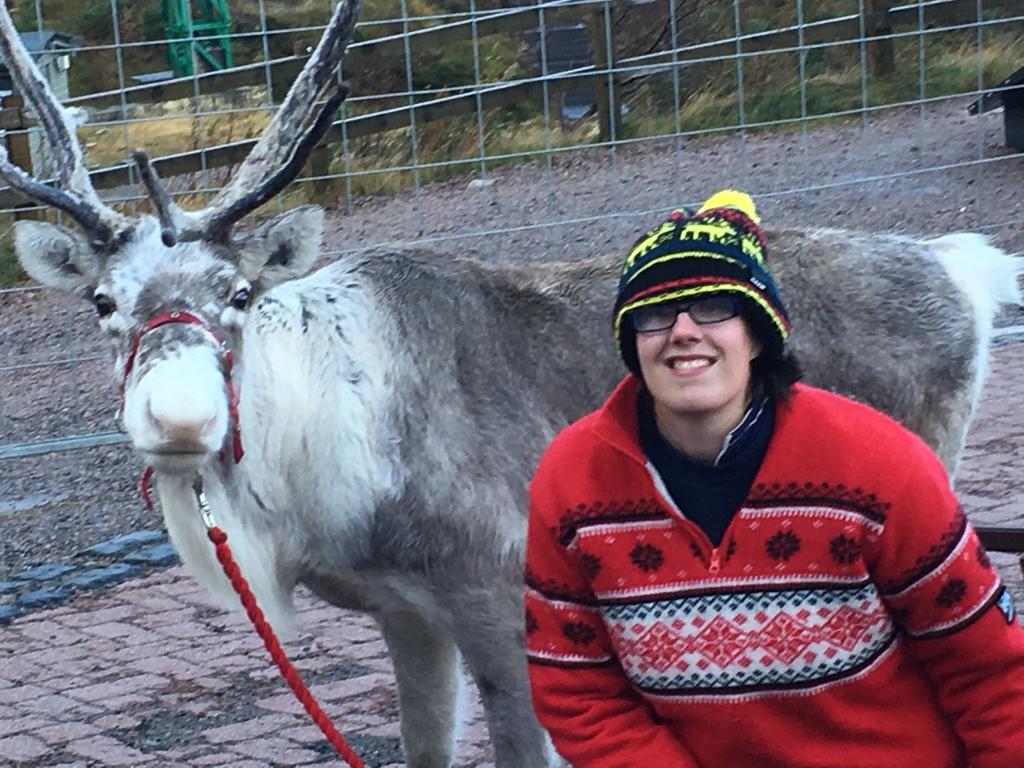
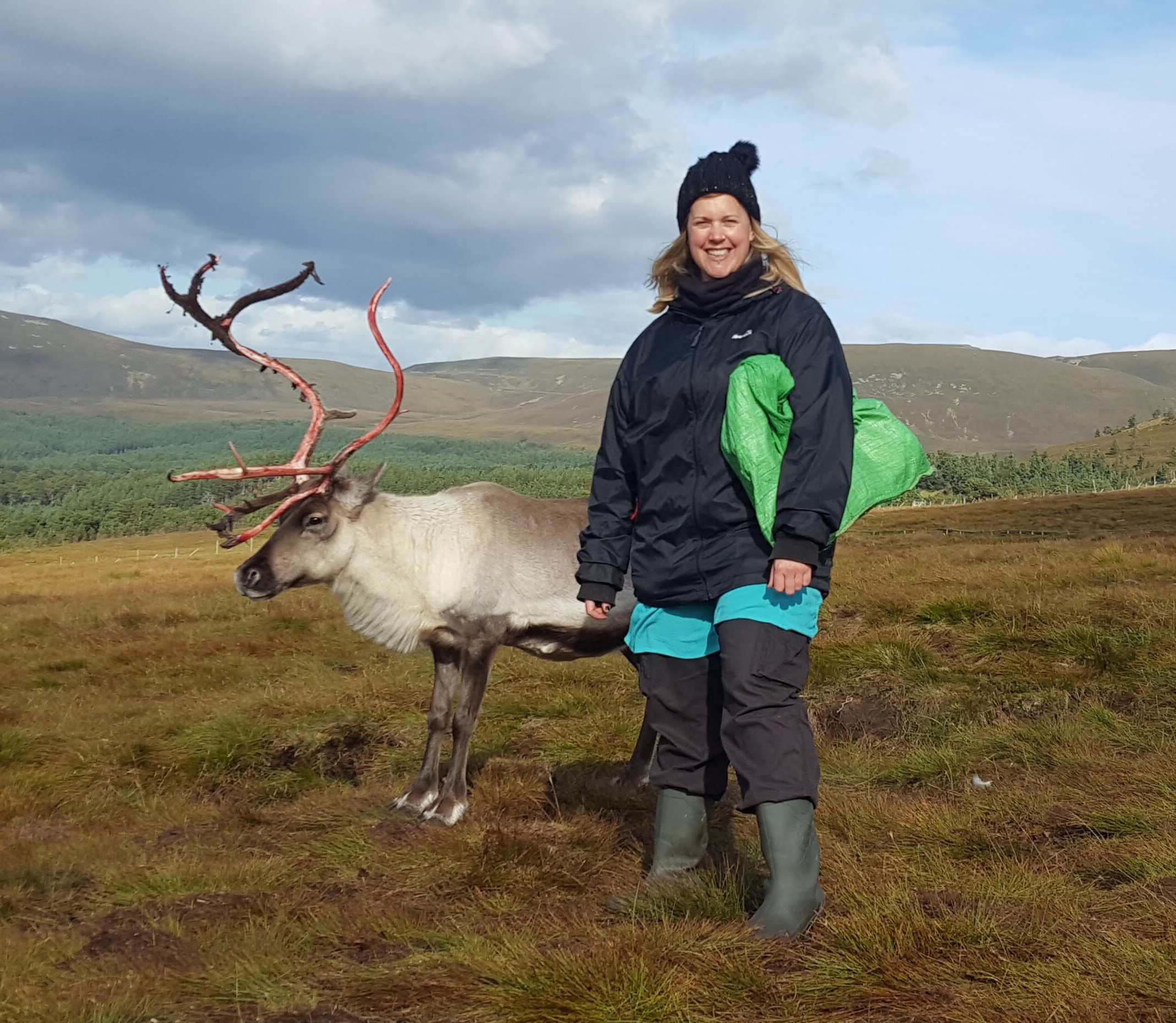
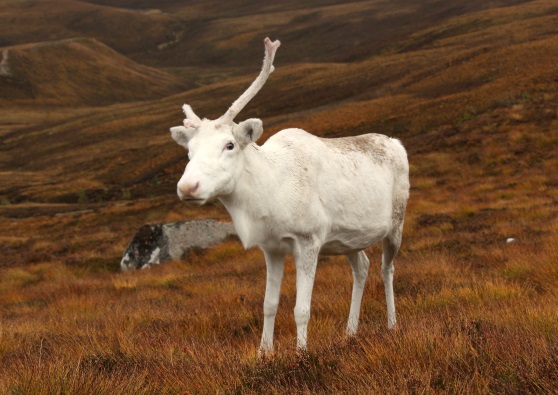
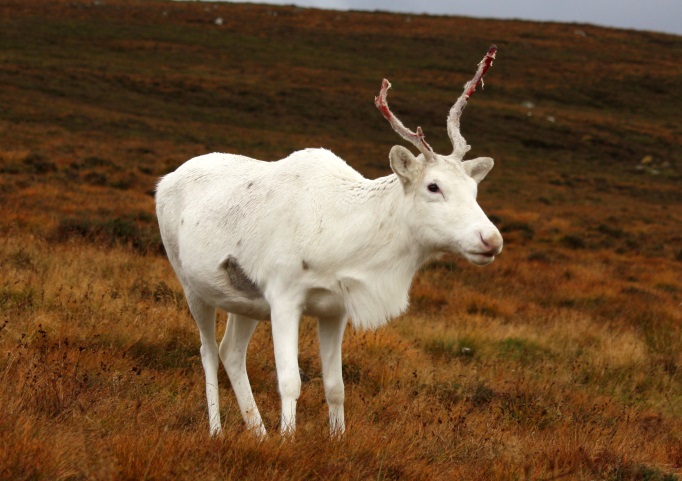
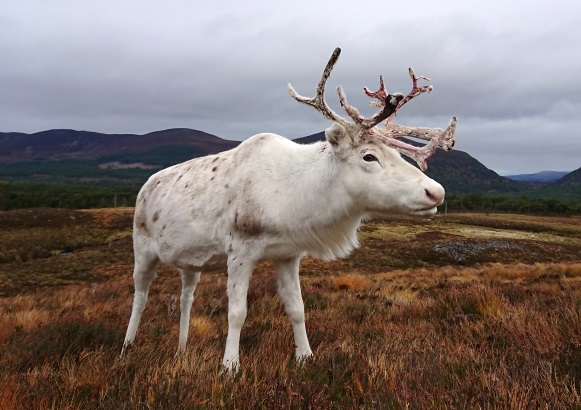
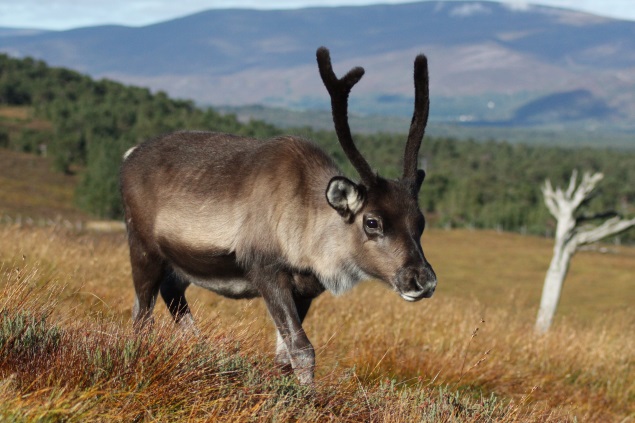
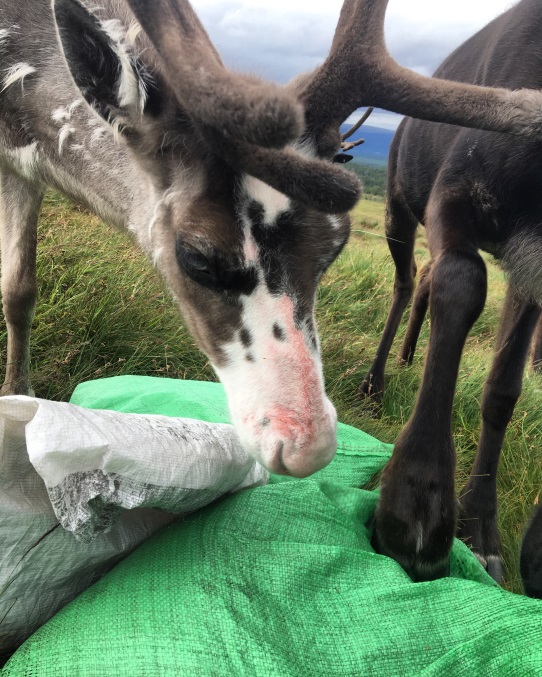
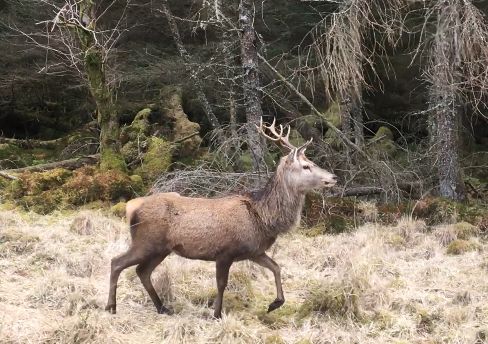
Other than the few reindeer still out free-ranging who I haven’t seen lately, I’ve otherwise managed to get nice ‘adopt’ photos of everyone in the herd in the last few weeks. These photos are to go on the certificates that go out to all the lovely people who support us by adopting a reindeer, and as autumn is when reindeer look at their best, it is therefore when I take all the photos.
I realise (after sitting down to write this) that I’ve actually written a blog about photos before (to be fair, that was 5 years ago and I have a rubbish memory at times…) but hey, what’s wrong with repetition?! But actually I thought I’d just show you some of the ‘outtake’ photos, ‘cos everyone likes to see photos of reindeer looking daft, don’t they?
Most photos that don’t make the grade are just because of open mouths or closed eyes:
BeastieCamembert
A classic of Merida from a couple of years ago!
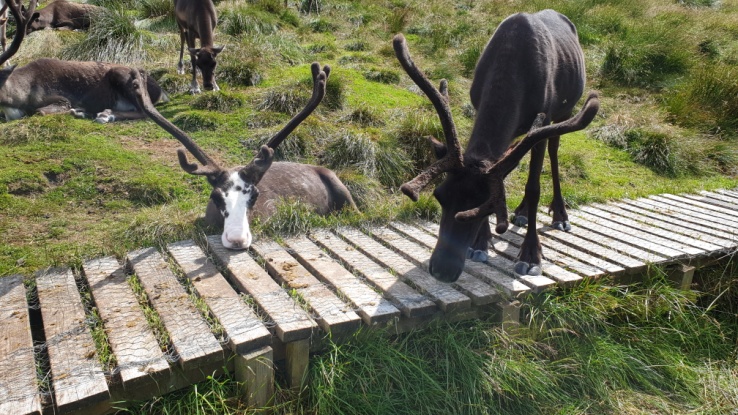
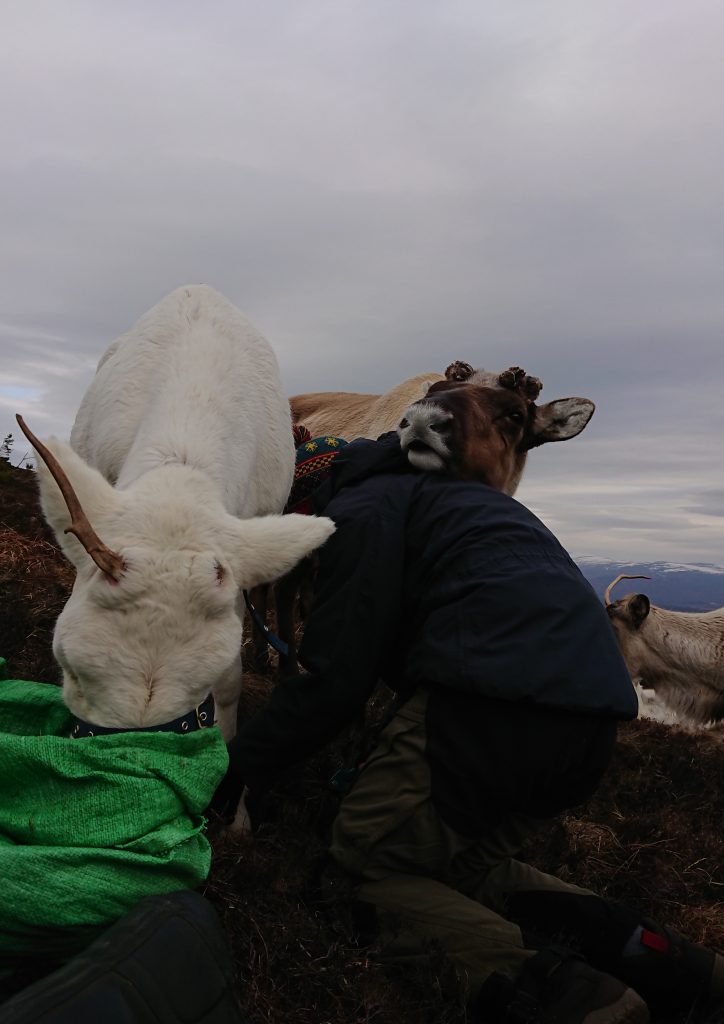
But after my trip over to our farm last month to photograph the reindeer there, I realised that I’d mainly just taken photos of Olympic looking ridiculous!
Possibly my favourite…
Then there’s just the odd ones:
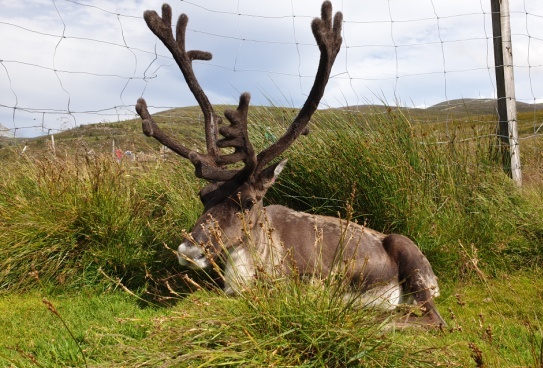
Morven looking like she’s just remembered something she’d rather forget…Looking attractive, Athens!Background? Check. Good light? Check. Camera in focus? Check. Dr Seuss looking handsome and majestic? Che… oh. No.
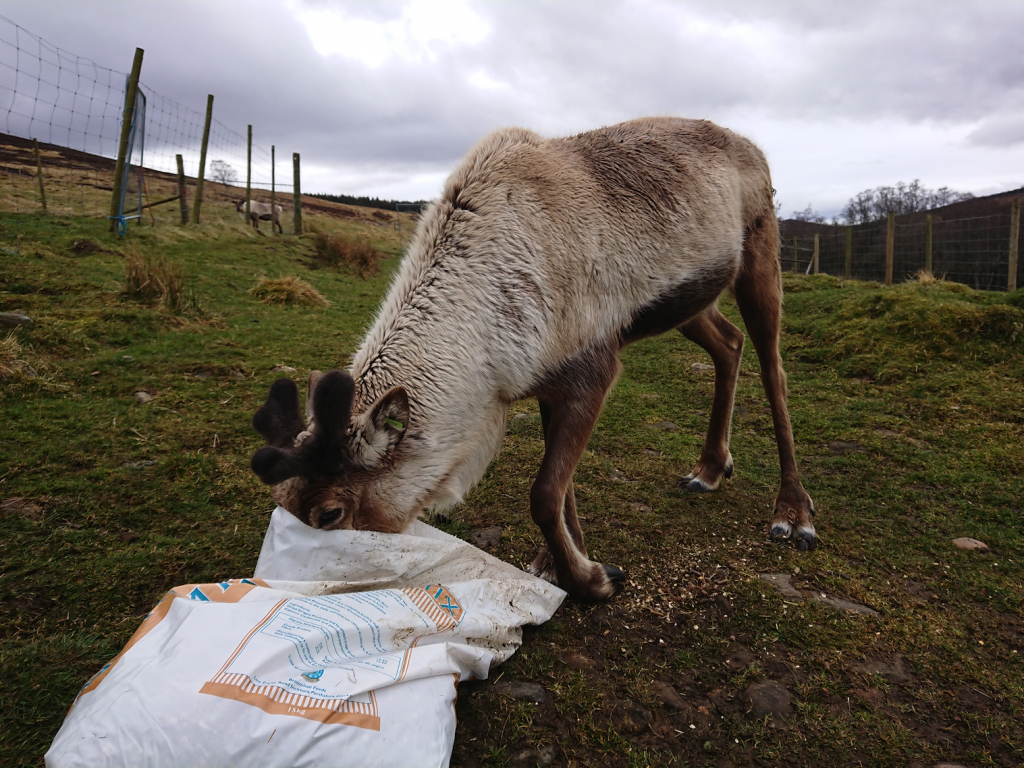
Reindeer often need encouragement to look alert for their photo, with ears pricked. This results in my photography assistant (Andi) doing a lot of dancing in the background while making a lot of noise, or sprinting back and forth shaking a feed bag…
…resulting in photos like this, where there’s been crossed wires about which reindeer I’m actually trying to photograph at the time…
And sometimes we resort to throwing things at the reindeer (well, nearby anyway) to get their attention!
Horse many years ago, steadfastly ignoring us.
Most of the time it seems, this is what the reindeer think of me and my camera!
Emm volunteers with us several times a year usually, and has been doing so for years now. Here’s her story of working in the summer and autumn seasons! Her recent blog about the winter and spring can be found here.
Summer
In summer I have been up in both July and August. The visitors are meeting the male reindeer in the hill enclosure. The female reindeer and the calves are free ranging on the Cairngorm Mountains.
The reindeer’s antlers have done the majority of their growth and the velvet is getting ready to strip away at the end of August. The reindeer are looking smart in their dark summer coats.
Dr Seuss and Pratchett in the hill enclosure
The weather can be hot in the summer. The flies bother the reindeer by flying noisily around them, sometimes the reindeer rush around to try to get away from the flies which tend to sit on their antlers as they can sense the blood supply in their growing antlers. We spray the reindeer’s antlers with citronella spray to protect them from the flies. Midges are also a problem in the summer for both reindeer and humans.
Monopoly in his summer coat
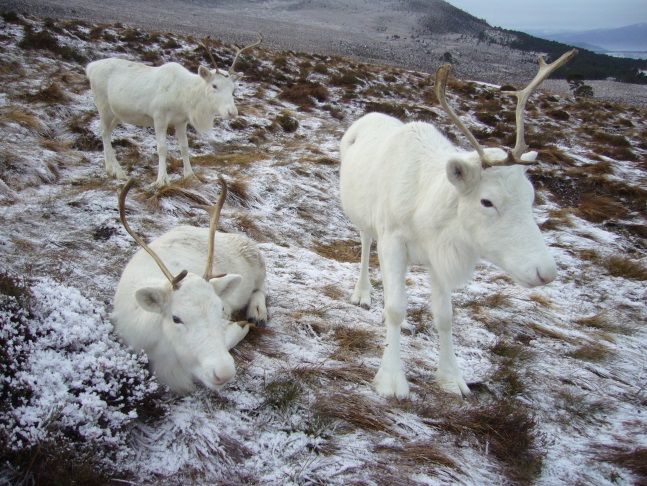
In one part of the enclosure, the reindeer have access to a shed for shade. One time when we got up there with the visitors, the reindeer were nowhere in sight. All 41 of them had gone into the small shed. The shed doesn’t look like it can fit 41 reindeer in but it is does, it is like a Doctor Who’s Tardis. One Hill Trip, I was herding them out of the shed, I realised that I hadn’t seen Blue – I found him in a small part of the shed asleep. Blue, who was deaf, didn’t hear his reindeer friends move on. The reason Blue was deaf is because he was leucistic (pure white with blue eyes). Leucism is a condition in which there is partial loss of pigmentation. Leucistic reindeer are camouflaged in the snow.
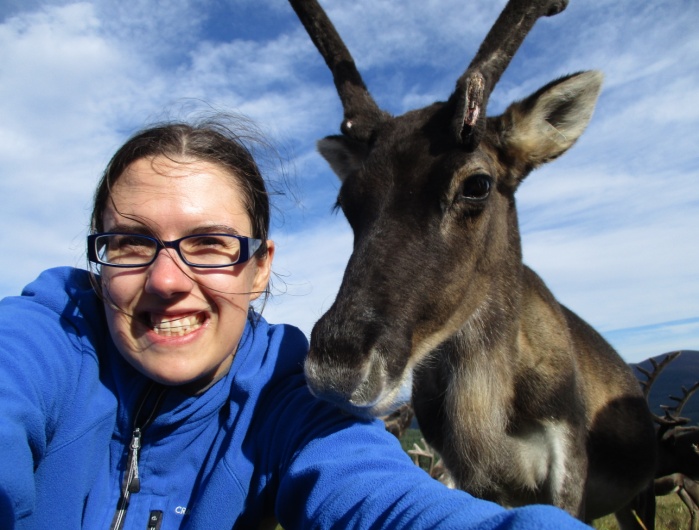
Selfie with Glenshee, back in 2016
There are three Hill Trips a day (during the week) in the hill enclosure and last year we did ‘Summer Fun’ in the Paddocks which involved feeling the weight of antlers, feeling the weight of a feed sack, Paddock reindeer talks and much more fun (N.B. This will return in 2021!). Reindeer House is busier as the seasonal summer staff are working as there is a lot going on with three Hill Trips a day and Summer Fun in the Paddocks.
One of the jobs in the summer is to water the garden as it is hot.
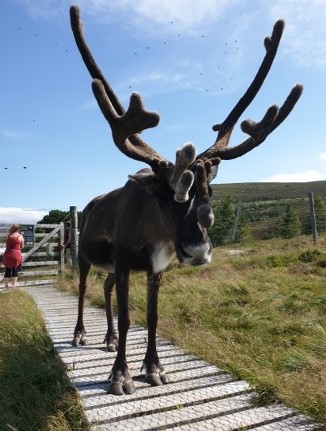
Last July, Olympic would stand by the gate like he was guarding it and wouldn’t let visitors out of hill enclosure. I kept having to go over to him and move him on.
Olympic
Autumn
In the Autumn, I normally come in October half term. The scenery is changing with leaves changing colour and leaves falling off the trees.
The reindeer’s winter coat is growing and most of the velvet has stripped off revealing the hard bone antler underneath.
It is the rutting and breeding season. Normally in different areas of the hill enclosure there is a bull with his girls. My two favourite breeding bulls are Houdini and Kota as they have massive magnificent antlers. When we feed the breeding bulls with their girls we have to be careful as they can be protective over their girls. We don’t take the visitors in with the bulls and their girls.
Breeding bull Kota
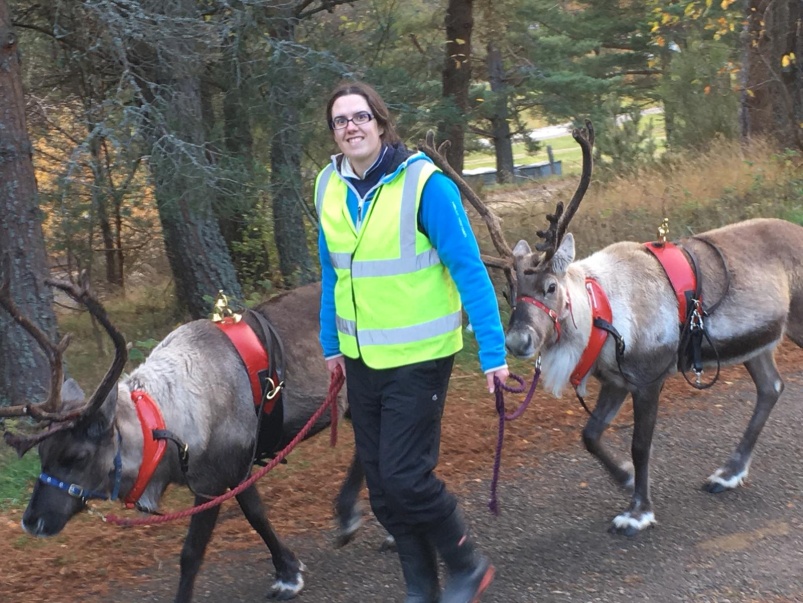
We do one Hill Trip a day in the hill enclosure. Normally in the afternoons we do sleigh training with the ‘Christmas reindeer’. We put the harnesses on them and harness them up to the sleigh. The reindeer pull the sleigh around Glenmore (where the Reindeer Centre is based). They even go on the road. It is so funny to see people’s faces when they drive past reindeer pulling a sleigh.
Sleigh training
We also get to handle the calves to get them used to people. We sometimes take them on a walk around Glenmore in the morning.
Calves Athens and Helsinki in October 2019
I am busy learning the calves names and if I hadn’t been up in May, I am learning which calf belongs to who and meeting all of them. The calves are also getting their new ear tags.
One year, I was lucky enough to help out at a early Christmas parade at the very start of November which was very special. It was at The Cairngorm Mountain. We wore red Christmas jumpers and woolly hats with reindeer on them. The reindeer team were Mo, Spike, Sooty, Aonach and calves Morse and Poirot. Mo and Spike pulled the sleigh with Santa in it. It was so wet and so windy. The wind was 60 miles per hour. Santa was holding his hat on in the sleigh. Not many people turned up. We had to tie things on to the pen railings otherwise they would have flown away.
Holding Mo and Spike after the parade
One of the other jobs in the autumn is to sweep up the leaves. At 4 o’clock it is starting to get dark. So we put the Paddock light on in the Paddocks so the visitors can still see the reindeer. When we put the reindeer to ‘bed’ in the woods and give them their tea, I normally put my head torch on.
My 2 Favourite Seasons
I have two favourite seasons which are autumn and spring.
Sleigh training with Slioch and North
In the autumn, I love doing the Christmas sleigh training, helping the calves get used to being handled, learning the calves names and seeing the reindeer with their newly formed antlers.
With the cows and calves
In the spring, I love seeing the newly born calves, seeing the reindeer being mums and hearing the grunts between mum and calf.
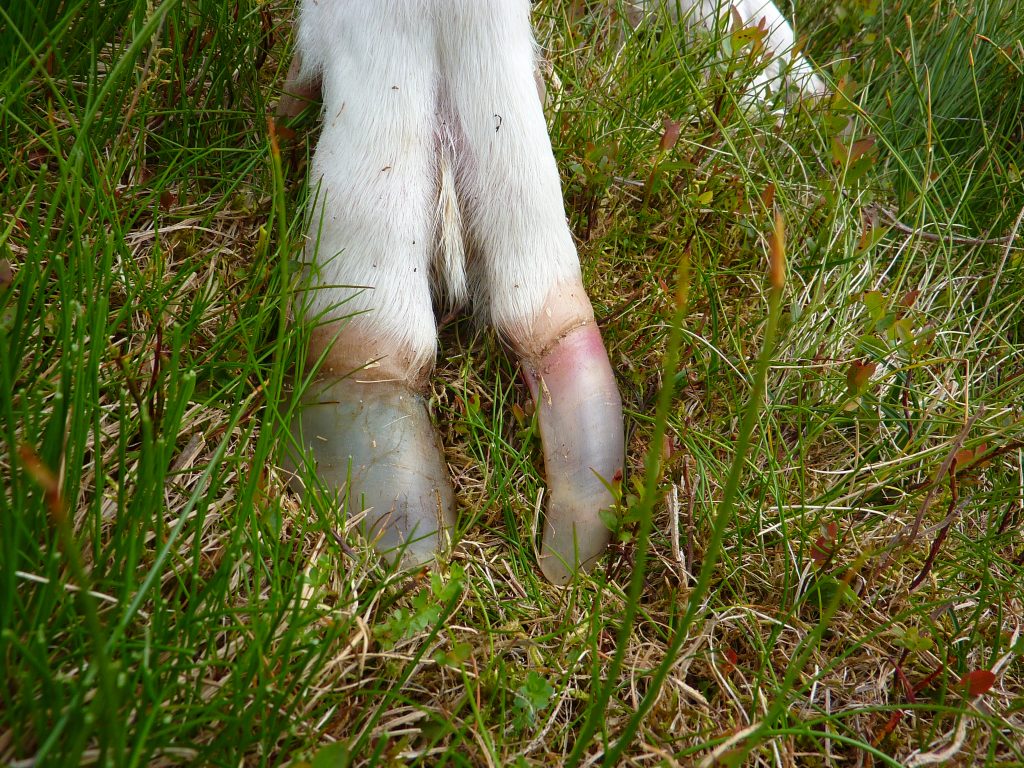
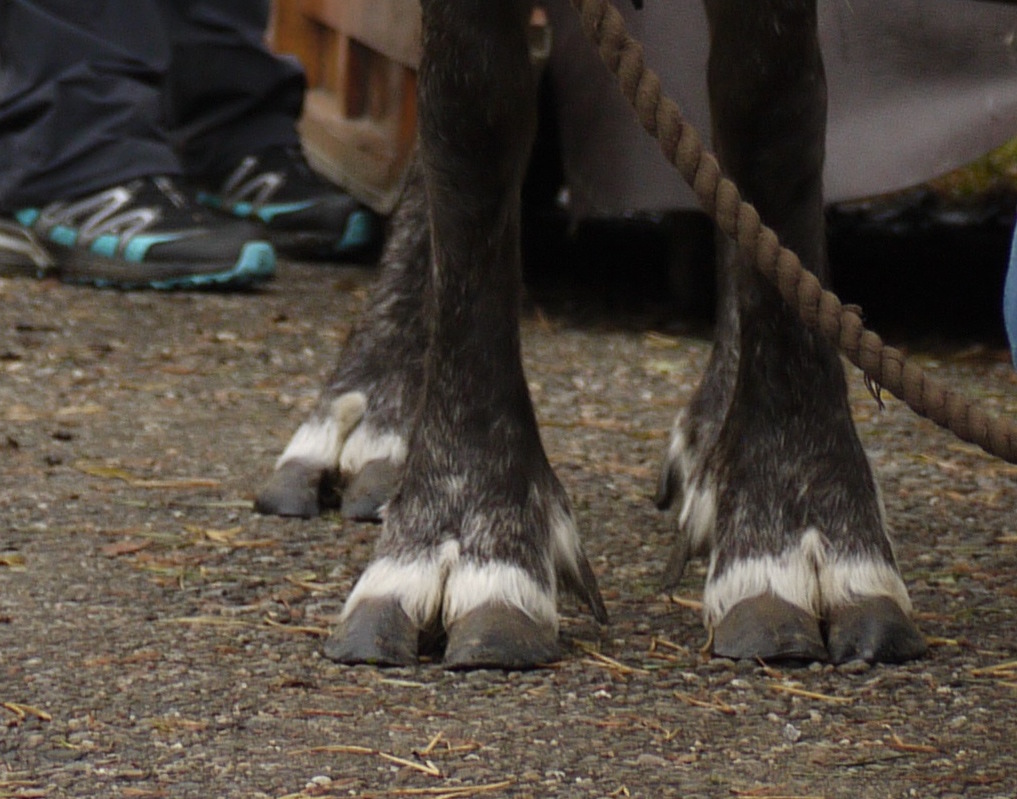
A common question we’re asked, usually after spending some time with the reindeer and noticing their beautiful big feet, is whether we need to trim their hooves. Reindeer are endowed with large feet with four toes to each hoof: two main weight bearing toes which do most of the work, plus two smaller and higher up toes which only touch the ground when on soft surfaces (snow or bog), when they spread out like a large snow shoe and mean reindeer can traverse snow drifts a lot easier than humans.
Okapi showing off how well her hooves serve her on snow.Reindeer find snow way easier than us humans.Fly says “It’s snow problem!”
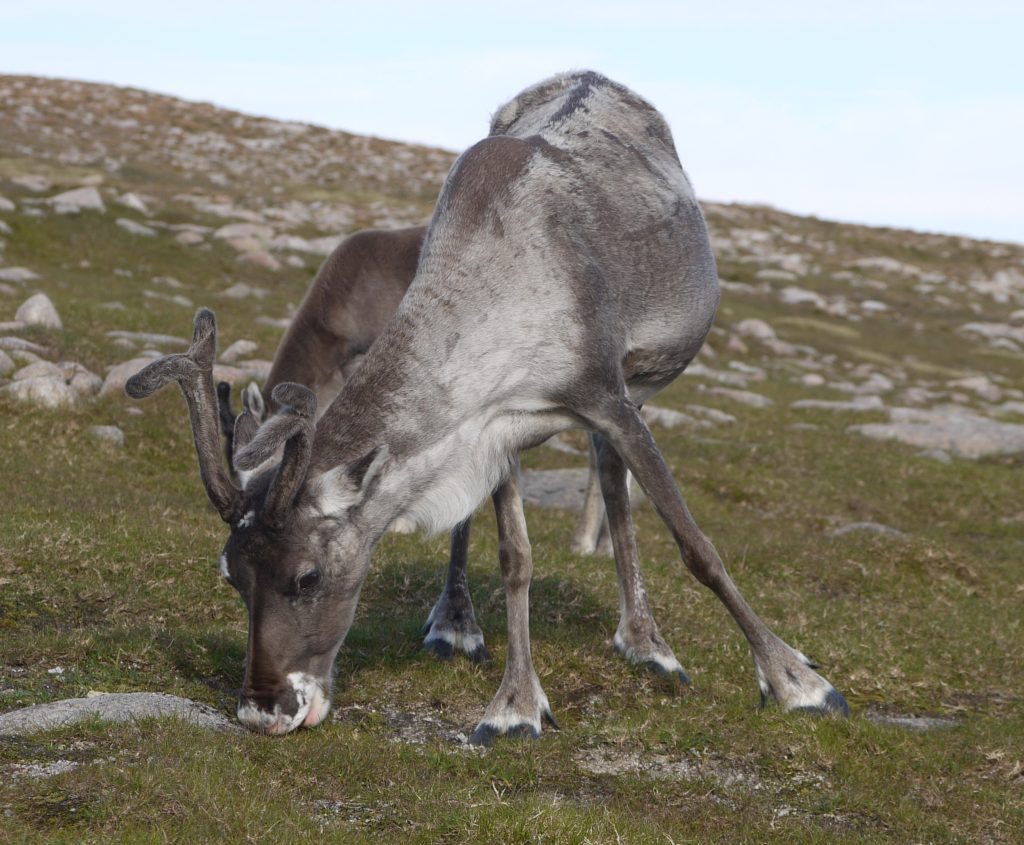
In general our answer is no, we don’t have to routinely trim the hooves of our reindeer. Just like our own nails, the hard outer hoof continues growing constantly throughout their lives, but as they are roaming fair distances each day over rough, rocky and stony mountainous ground, the amount of wear tends to balance this out and means their toes stay nice and neat. Of course there is no one out trimming the hooves of wild caribou and other deer, who get through their entire lives with perfectly shaped hooves, and as our herd are in the correct habitat with plenty of movement, they are usually fine without intervention.
Wapiti grazing on short vegetation with gravel and rocks beneath it.Spending much of their time on hard ground like this wears hooves down correctly.Oatcake has beautiful feet!
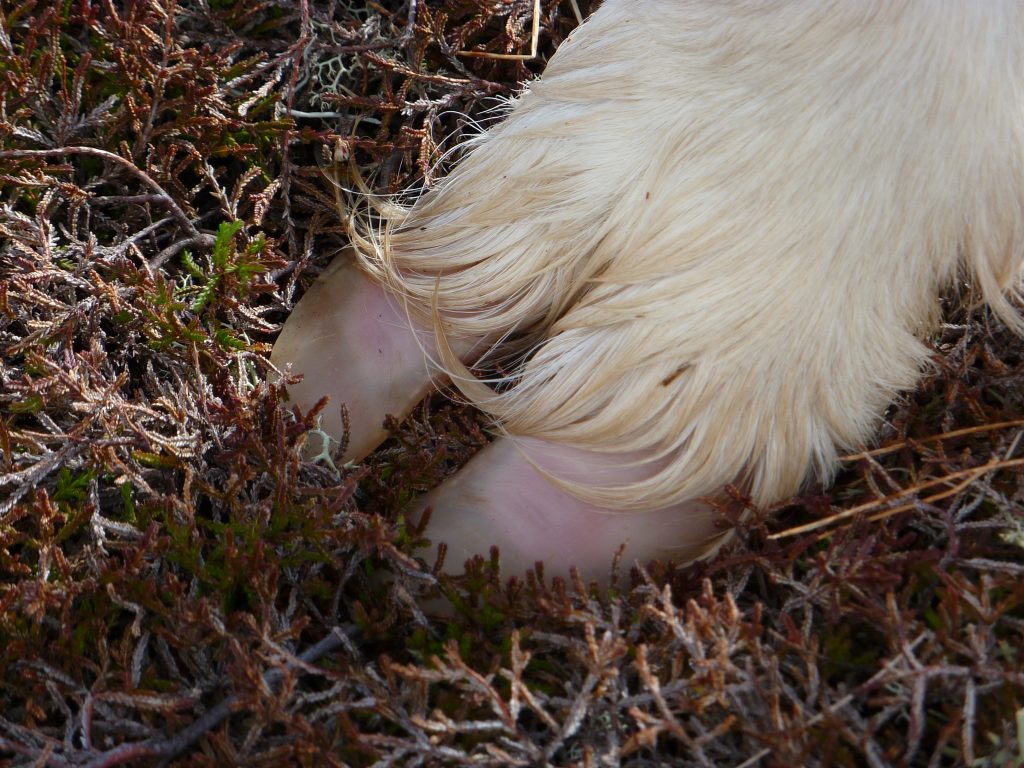
However, there is always the exception to the rule. There are perhaps three reasons why we sometimes do need to dust off the hoof trimmers. First up is that we’re found our pure white reindeer (step forward Blondie and Matto in particular) have hooves that, for whatever reason, seem to grow faster than those of their darker coloured compatriots. Once or twice a year we’ll decide they are a little lengthy and have a trim to keep everything in place. Over-long hooves can cause all kinds of problems, especially putting pressure on their joints as their foot cannot sit correctly, so everything becomes misaligned. There’s an old saying “No foot, no horse”, and it applies equally to reindeer – without happy feet they can’t lead a happy life.
On white hooves you can see through to the bony structure of the foot beneath, and the hoof appears pink as you can see through to where the blood vessels are.Matto joined our herd from Sweden, but despite not getting handled until he was a bit older he is an absolute star when we need to trim his feet. He’s busy moulting in this photo so looks a bit scruffy!This hoof needs a wee trim…Blondie barely needs a halter while her feet are trimmed as long as there’s a bag of feed. Olympic can’t believe that she is getting breakfast before him – the weariness has left him without strength to even hold up his head…
The second reason is if a reindeer has an injury or abnormality meaning a toe or whole hoof doesn’t receive the same amount of wear. Jute has one hoof which tends to grow a bit differently to normal, curving inwards instead of straight, which then prevents the edge wearing down in the usual manner. It’s no problem at all to him as long as we keep an eye on it and trim it as needed, but if we didn’t it could cause him difficulty walking as it grew.
And the third reason, embarrassingly, is pure laziness. This is where I’m going to point the finger squarely at some of our middle-aged males, the ones who can’t always be bothered to head off and graze as a real reindeer should, but who would much rather just lie waiting at the gate for their next meal to be served (Hamish, I’m looking at you). The straightforward reason that their hooves are too long is that they haven’t done anywhere near enough exercise to wear them down in balance with the rate that they’re growing. Perhaps we need to start a fitness club?! Funnily enough, there’s not a single female reindeer who falls into this category…
Hamish’s feet in his younger days (aged 4) when they were neat and pristine. Alas, in the last year or two laziness has caught up with him and they have a tendency to grow a little longer than this now…
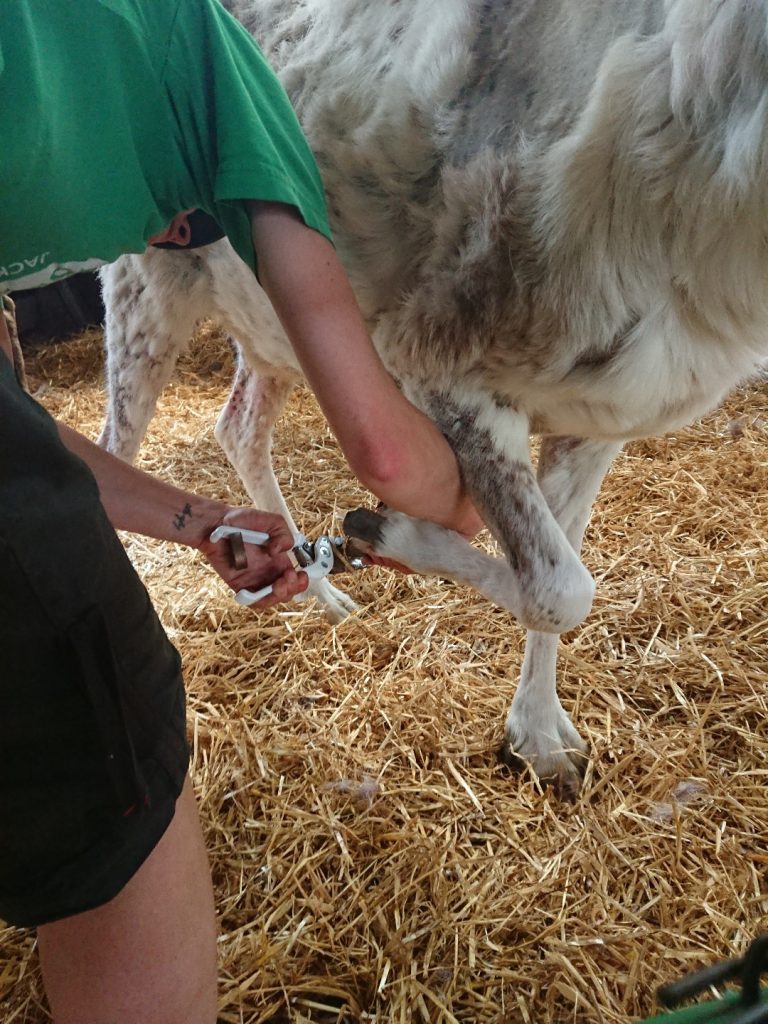
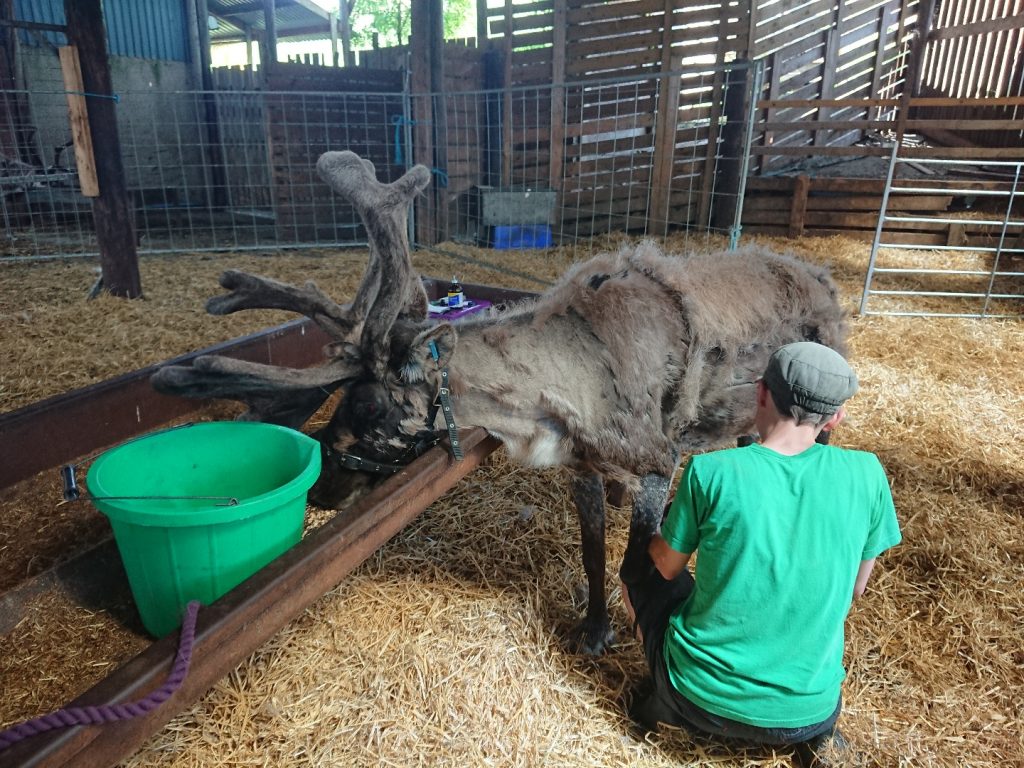
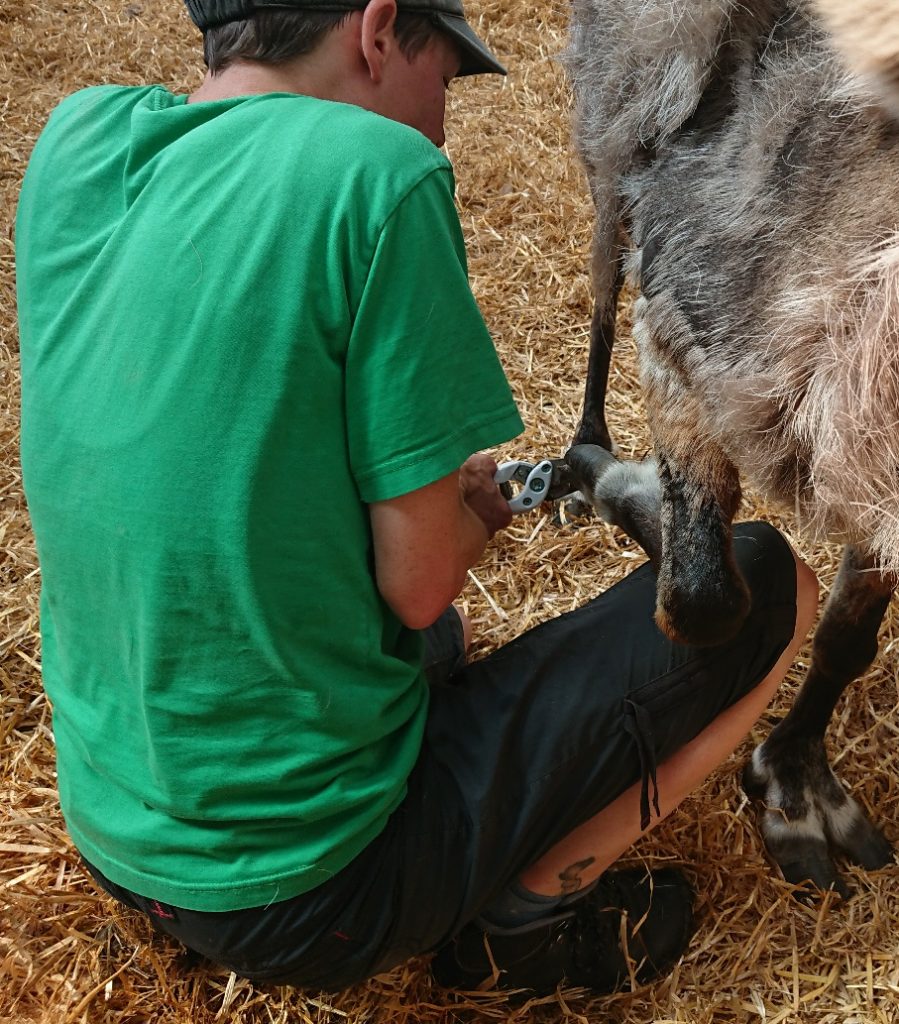
Thankfully, trimming the hooves of our reindeer is stress free. Every single reindeer in our herd is halter-trained as a calf and is well used to being around humans. That means that if we spot their hooves need some TLC we simply catch them, pop a headcollar on, and whilst one herder occupies them with a bucket of tasty treats, another herder gets to work with a pair of snips to cut back the hard outer hoof. There is no feeling in this section of the foot so no discomfort is caused, and despite the fact that we never work at teaching reindeer to have their feet lifted like you would with a horse, they very quickly cotton on to the fact that nothing bad is happening and just let you get on with it. We never need to use tranquillisers in order to trim hooves, or hold the reindeer in place by force.
Hamish (mid-moult) contenting himself with a snack in the trough while I deal with his hooves. You may note that the lead rope has been abandoned entirely in order for the photograph to be taken!Perfecting the crouch – balance their knee – trim action
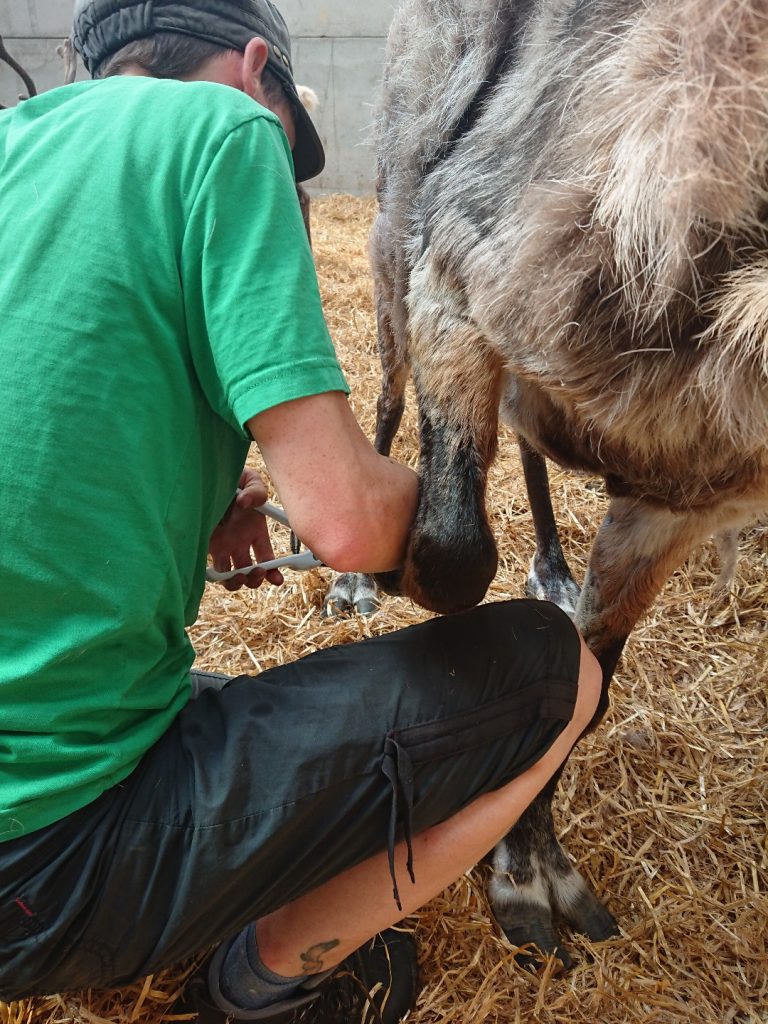
My personal favourite technique is to crouch by a front leg, rest their knee on my knee, which leaves me two hands free to trim their hoof! Sometimes two hands are needed to cut through the tough hoof, especially on the old boys (hey, Elvis!) who have real “old man toenails”!
Sometimes two hands are needed!
We’re pretty proud of how good our reindeer are at standing to have their hooves trimmed.
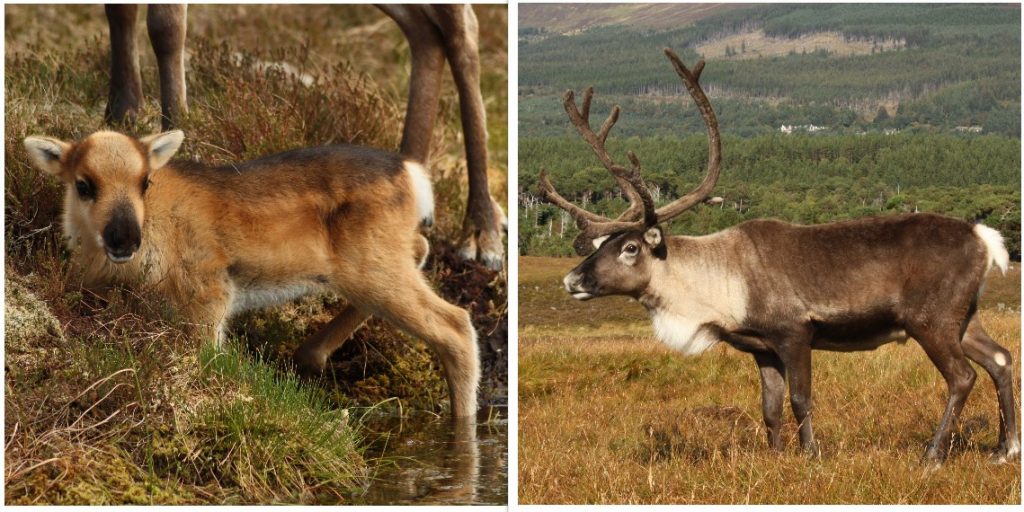
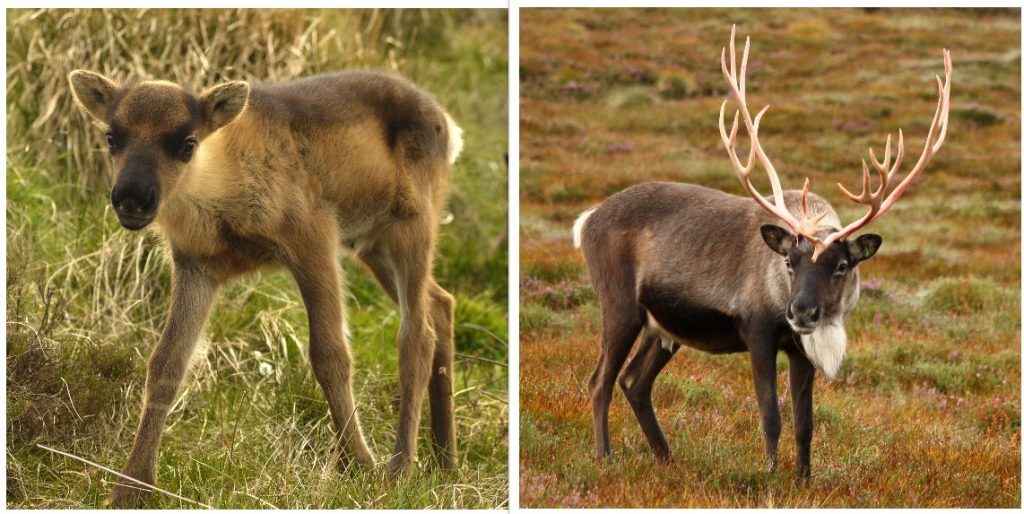
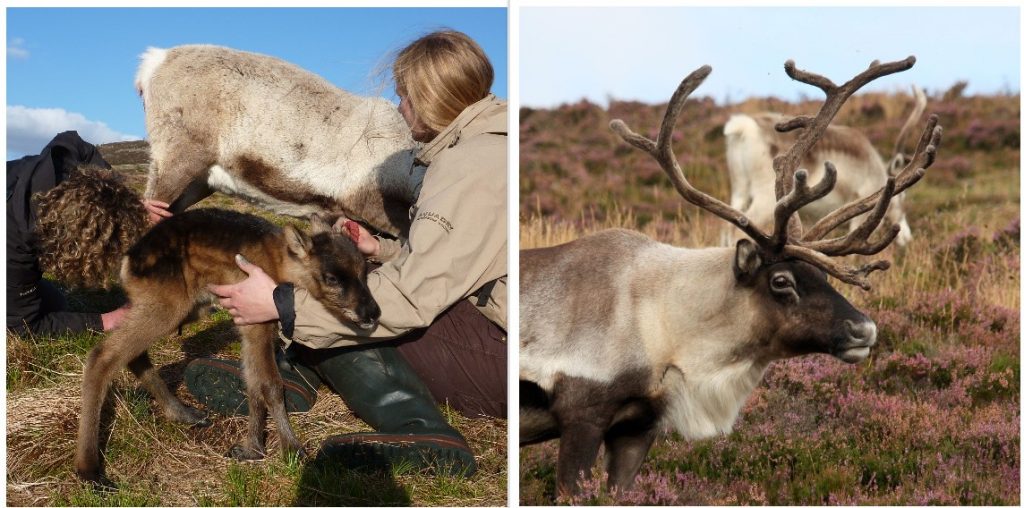
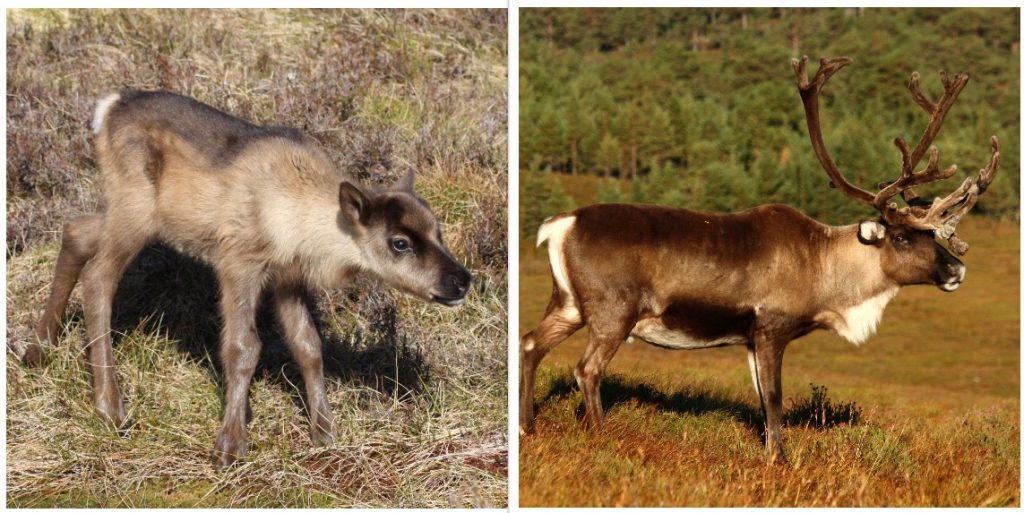
With all these photos of calves over the last few weeks on our social media pages, I thought I’d dig out some photos of adult reindeer in our herd when they were just a week or two old, as a way of demonstrating their colouration and it’s changes with time. Reindeer are born in an extremely warm winter coat to protect them from the elements, but this calf coat isn’t necessarily the same colour as they will end up.
There’s a very short window from when they are born in May, to when they first moult in July, when they have this lovely calf coat. By July they have a short, darker summer coat, although their legs often retain their calf coat for a few extra weeks, and then their adult winter coat grows in for the first time in early September. At this point onwards they look like mini adults, and have lost the ‘cute’ factor.
We’ll start with Aztec. He was the most common colour for a calf, a gingery brown that we just call ‘normal coloured’. As an adult he’s still ‘normal’ – as common as muck! (But only in colour, not character!).
Roman was also a ‘normal coloured’ calf, although a much richer red colour (NB. it’s not so noticeable in this photo as it was taken on a different camera to the other pics) than the gingery colour of many calves. The rich red look is one of my favourites amongst the calf coats!
Still ticking the ‘normal coloured’ box is Hamish, although you’ll notice the blacker back he had. This photo popped up on my Facebook ‘memories’ for 10 years ago recently – where has the time gone?! Hamish had to be pulled out by Fiona after getting stuck being born – hence the rather weak looking little calf knuckled over and two herders in attendance (trying to assess whether there’s any milk in that udder…).
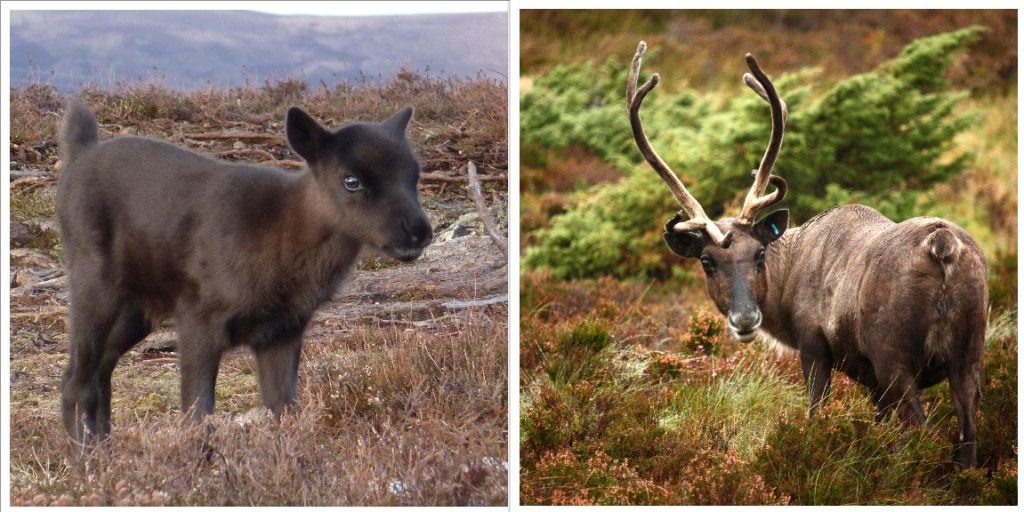
‘Chocolate brown’ is the next category, darker all over than the others so far. Olympic has grown in to a dark coloured adult, but by no means as dark as they get….
….unlike Lace! Jet black as a calf, she’s always been one of the very darkest reindeer in the herd. Note how dark her bum is compared to Olympic above!
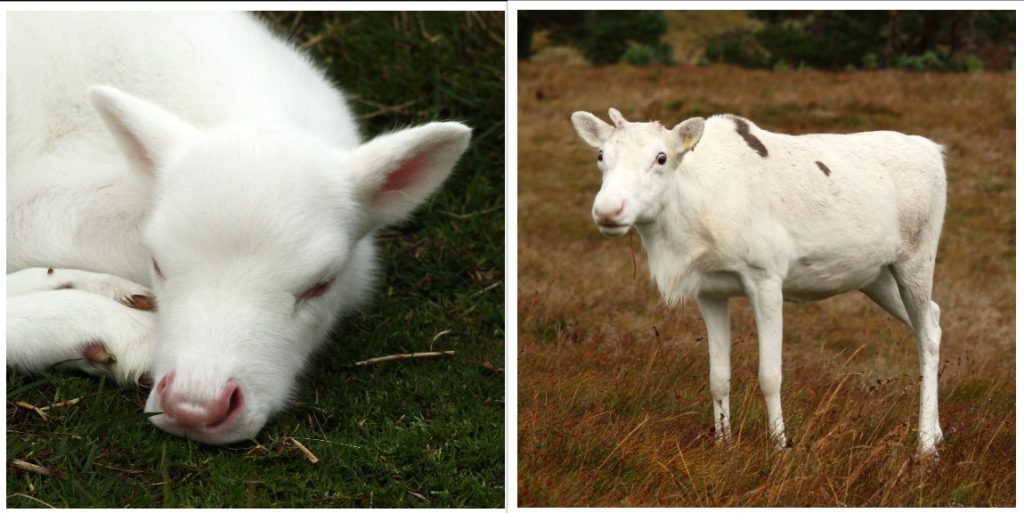
And at the other end of the scale is Mozzarella. If a calf is pure white, whether they are actually leucistic or literally just very white, they will stay that way their whole lives, regardless of the changing of the seasons. Their summer and winter coats are both pretty much the same. Mozzarella has a couple of dark markings on her, and these will change in darkness depending on the season, but not her white hairs.
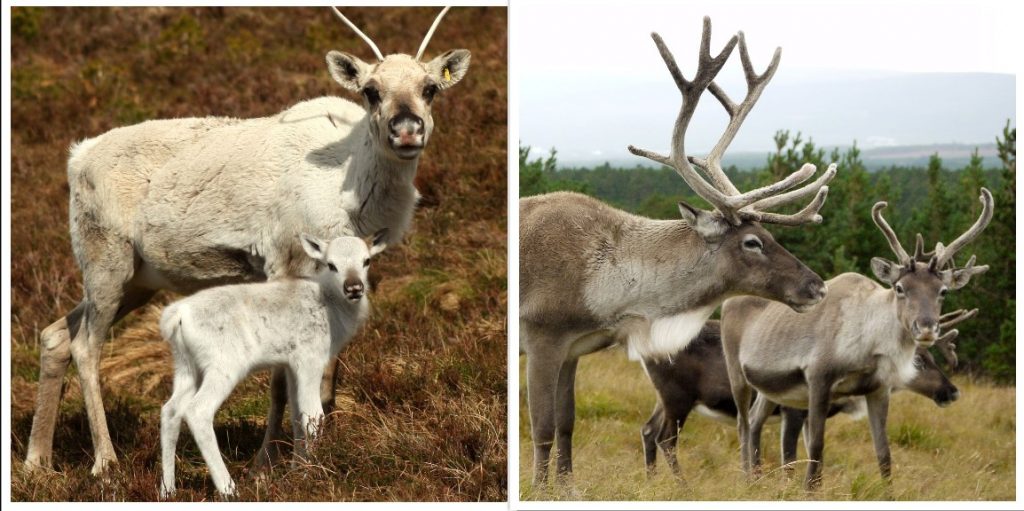
Olmec and his mum Emmental are both ‘white’ reindeer too, or at least what we would refer to as a white or light coloured reindeer. In August, on the right, (and 3 years later!) they are much greyer, about halfway from summer to winter coats, but reindeer’s coats bleach in the light throughout the winter months, turning them much whiter by spring.
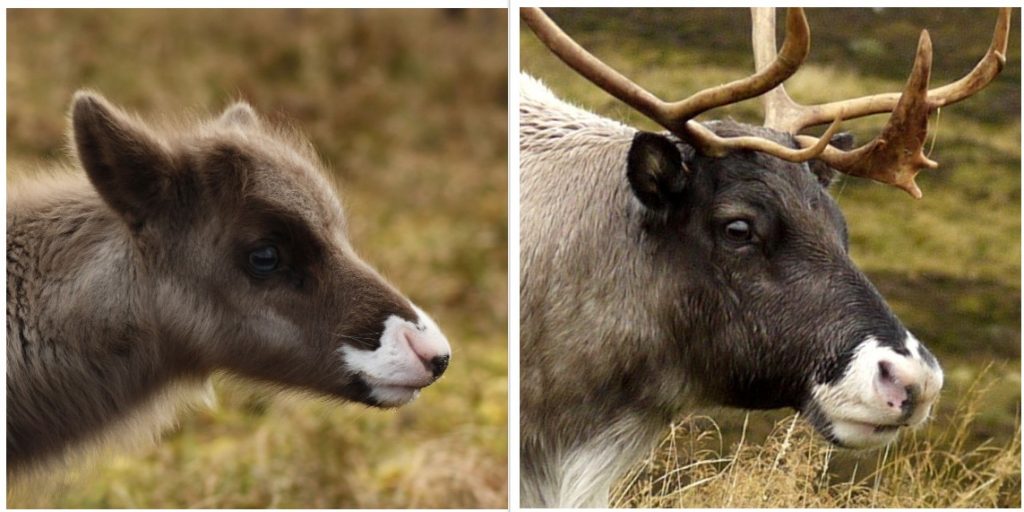
Many light coloured reindeer also have white face markings, as Svalbard demonstrates here. The darker markings on calf coats tend to be much less obvious as adults though – you have to peer closely to see Svalbard’s dark leg nowadays! While he’s not a light coloured reindeer as such now, he’s still on the pale side.
Not all light coloured adults start out light though, as LX and Diamond demonstrate here. White foreheads on a brown calf generally signify a calf will turn white in adulthood though! It’s not a particularly common colouration though – I think these are the only two I remember in my time here (or at least the only two who survived to adulthood – there may have been others).
Finally, there’s always one or two odd ones each year. Above is Brie, a sort of slate-grey colour as a calf with a little white nose, but generally she’s pretty much normal coloured now as an adult, albeit still rather greyish. She was a very pretty calf!
And finally Spartan, again slate grey as a calf but on the darker side as an adult. His pale eyes are a giveaway for his slightly odd colouration though, and as a breeding bull he’s thrown some equally unusual looking calves this spring!
There’s nothing more exciting than walking towards a cow who just calved, having eventually tracked them down – knowing you’re the very first human to lay eyes on that calf. At 8am when reporting from the hill down to Reindeer House, having been on the early shift and out for two or three hours already, I’ve squeaked “You’ll never guess what colour so-and-so’s calf is!” down a phone excitedly many times in the past. Freezing toes, soaked clothes and rumbling belly temporarily forgotten.
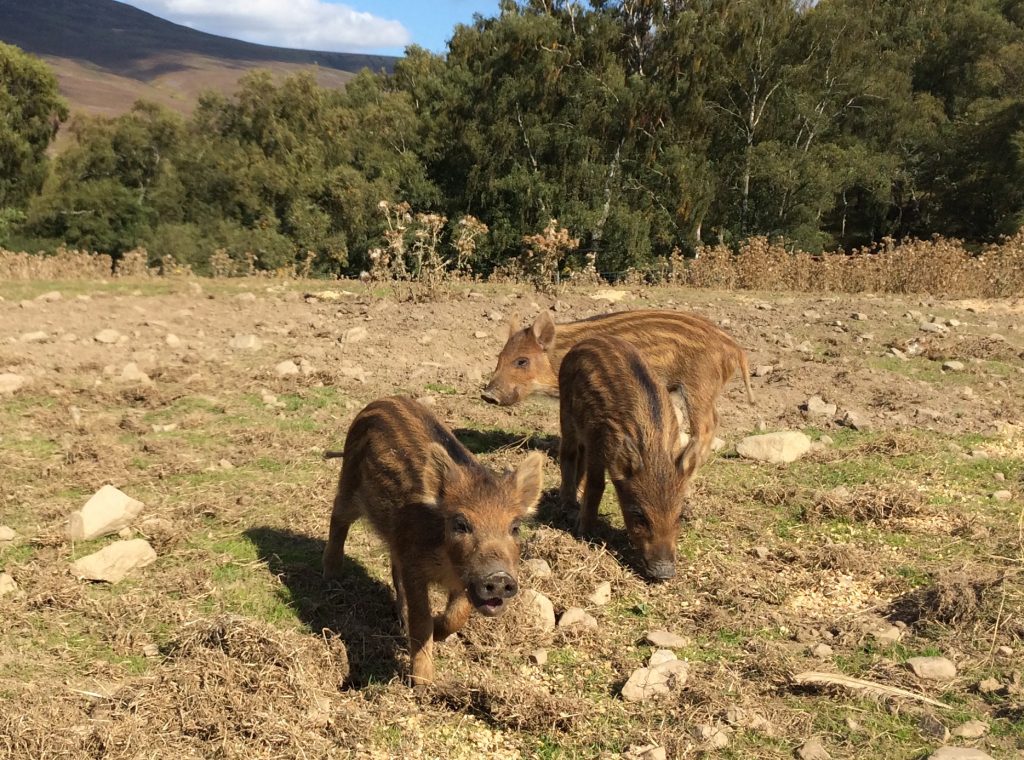
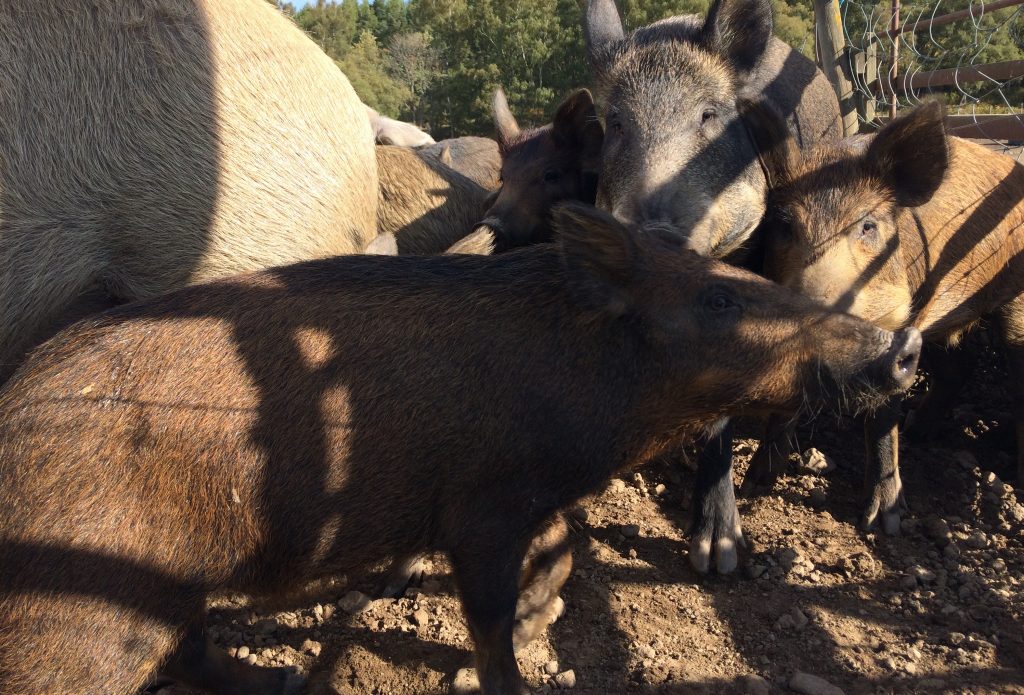
Whilst I’m normally based over at the main visitor centre in Glenmore, with the current chaotic situation I’m spending a lot more of my time at our second base, the hill farm at Glenlivet. The Smiths have farmed there since 1990, specializing in native breeds such as Belted Galloway cattle, Soay sheep and Wild boar crosses, plus of course extra summer hill grazing for our lovely reindeer herd. I thought I’d give all of you wonderful folk a snapshot of one of my typical days at the farm…
7.15am: Up bright and early, it’s a glorious sunny day outside. Breakfast, pack my lunch (leftovers from last night, win!) and plenty of snacks, just like the reindeer my appetite is never satisfied!
Nice way to start the day…
7.55am: Out of the house to head over to the farm. It’s about a 35 minute drive for me, and at the moment it’s rare for me to pass more than a couple of cars. Not a bad commute!
8.30am: Arrive at the farm and make a plan for the day. The morning is usually spent feeding the animals. I load up the quad bike, a lifesaver when lugging heavy feed up hilly fields!
9am: First stop, the pigs. We have a mix of Wild boar and Tamworth, also known as “Iron Age” pigs. They get fed first because if you leave them too late they make a pretty big effort to break out and come and find the food themselves! When I first met the pigs years ago, I was a little daunted as they charge up and down grunting and slathering ready to eat, but actually they’re pretty well behaved and haven’t attempted to nibble on me yet!
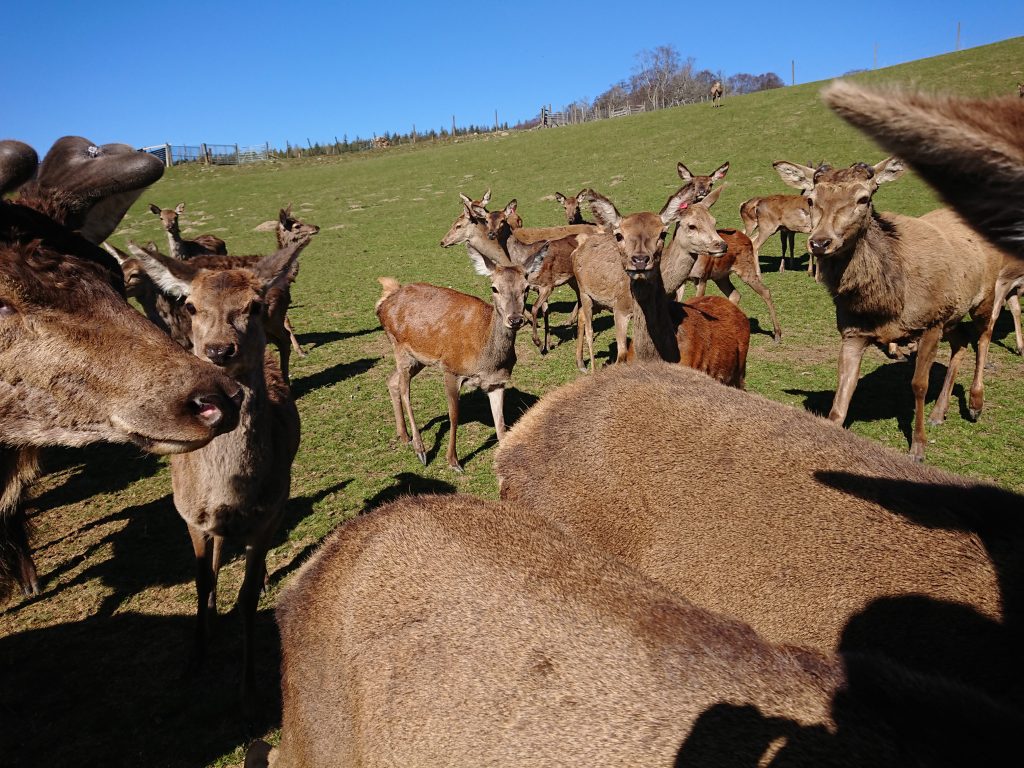
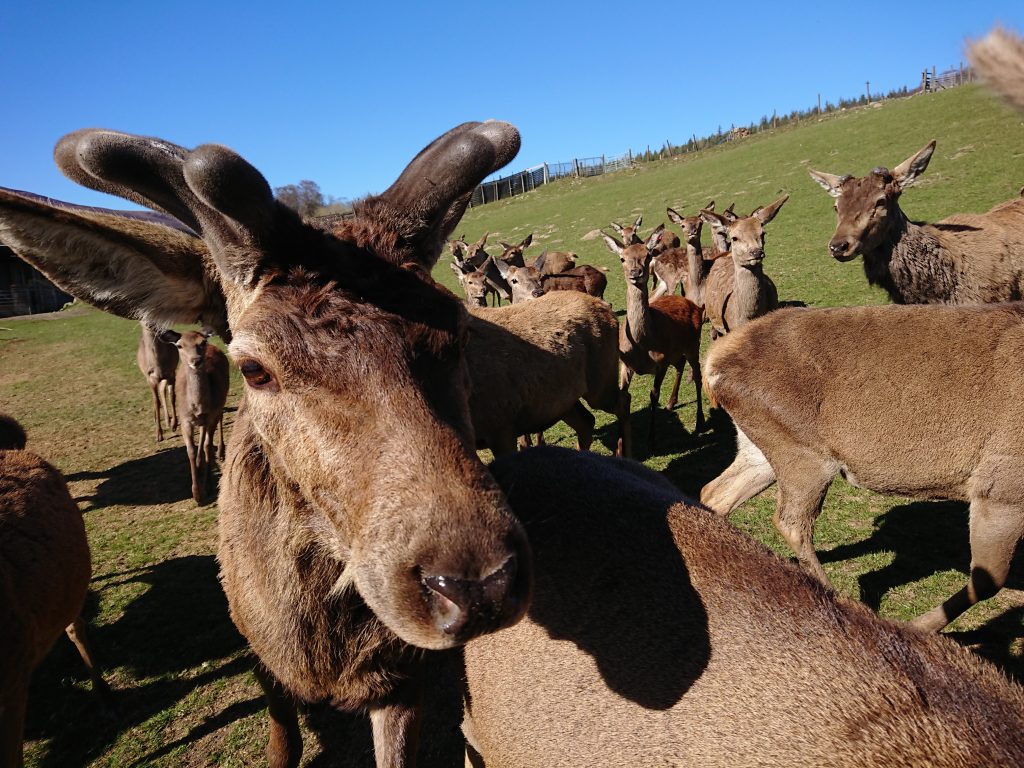
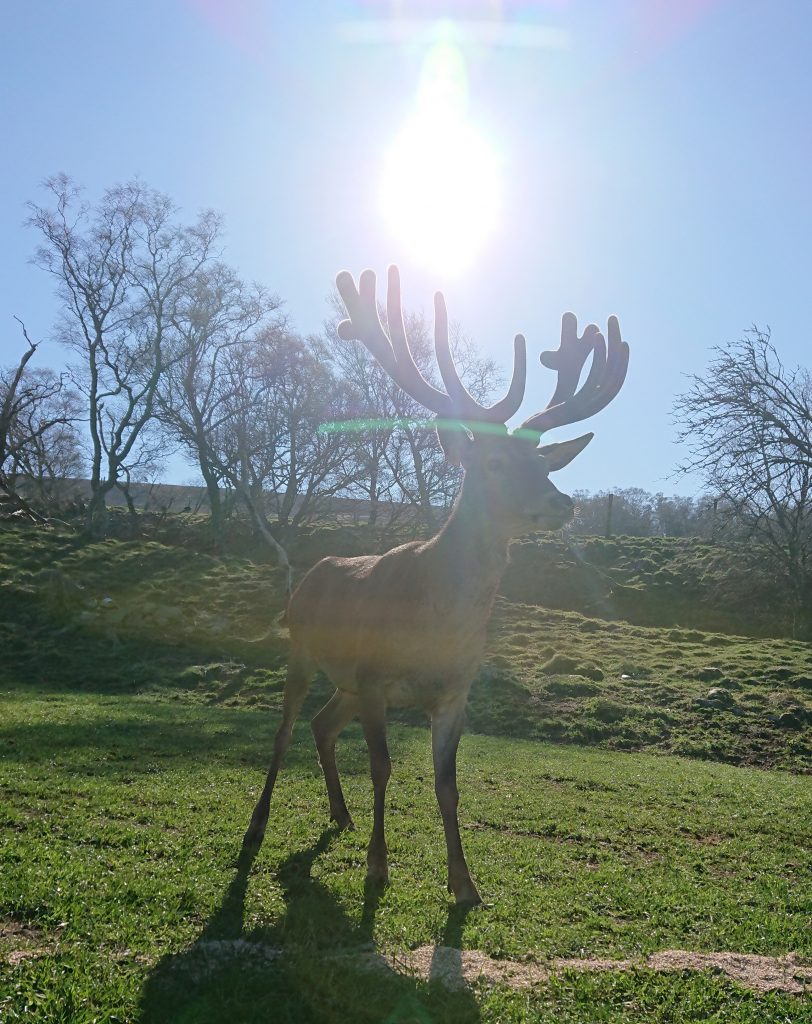
Next up are some of the Soay sheep and Red deer. Soays are quite wild in nature, a lot more skittish than most sheep you’ll meet, which also means they’re hardy and self-sufficient, rarely needing any assistance lambing or seeking much shelter from the weather. But they do enjoy some extra feed! The red deer are very different from the reindeer, much livelier and jumpier, but come charging after the quad in expectation! Their antlers are growing at an insane rate – every time I see them they seem to be a few inches bigger…
10am: After reloading the quad with more feed, it’s up the hill to check on the reindeer. Throughout spring we have the male reindeer in what we call the “French” enclosure, as it’s where we initially housed our reindeer who joined us from France in 1995 (original hey?!). There is a large shed which is handy for providing shade and also for handling the reindeer for vaccinations etc, and the enclosure extends right up onto the hillside, providing natural grazing.
Roman decides I’m being too slow to put the feed out…Trough of feed = happy reindeer
The reindeer have pretty good body clocks and are ready and waiting, and cheerfully come in to eat their food from the troughs round the shed. This gives us an opportunity to check everyone looks happy and healthy – we’re already into tick season, and these biting pests can make our reindeer poorly. Today though, everyone is fine, so after chatting to everyone and admiring their lovely antlers, also growing fast though nowhere near as large as the ones on the red deer, it’s back down the hill.
Dr Seuss showing off his new antler growthSpartan has a good set coming alongStrudelStenoa looking… handsome?!Young SherlockBeastie, Jonas and MattoHoudini, Origami and Bovril enjoying lunchAtlanticAtlantic’s older brother, HamishBingoOld lad BourbonAnother of our old boys, MooseOlympicYoung bull PratchettSvalbard
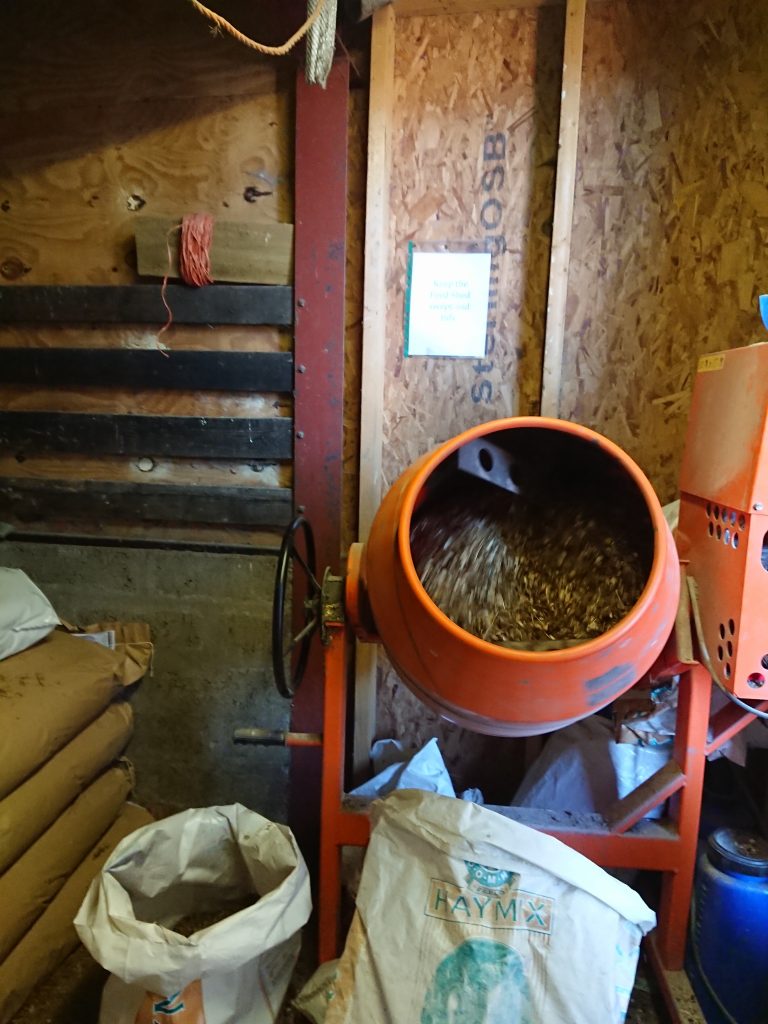
11.30am: Powered by a good cup of coffee (essential!) and a snack, my next job is mixing up a big batch of reindeer feed. We have worked out a good combination which is perfect as a supplement to the natural grazing our reindeer have on the hills. They do love their feed, it helps them put on body condition in the summer and maintain condition through winter, and means they’re pleased to see us every day – in the same way that I like to see people who have a habit of bringing me cake! We use a repurposed cement mixer to do the hard work for us, and bag it ready for the next few days of feeding the herd.
Mixing feed
1pm: Lunch! Working outdoors makes you hungry, a great excuse to eat plenty of food! (I think I just take after the reindeer…).
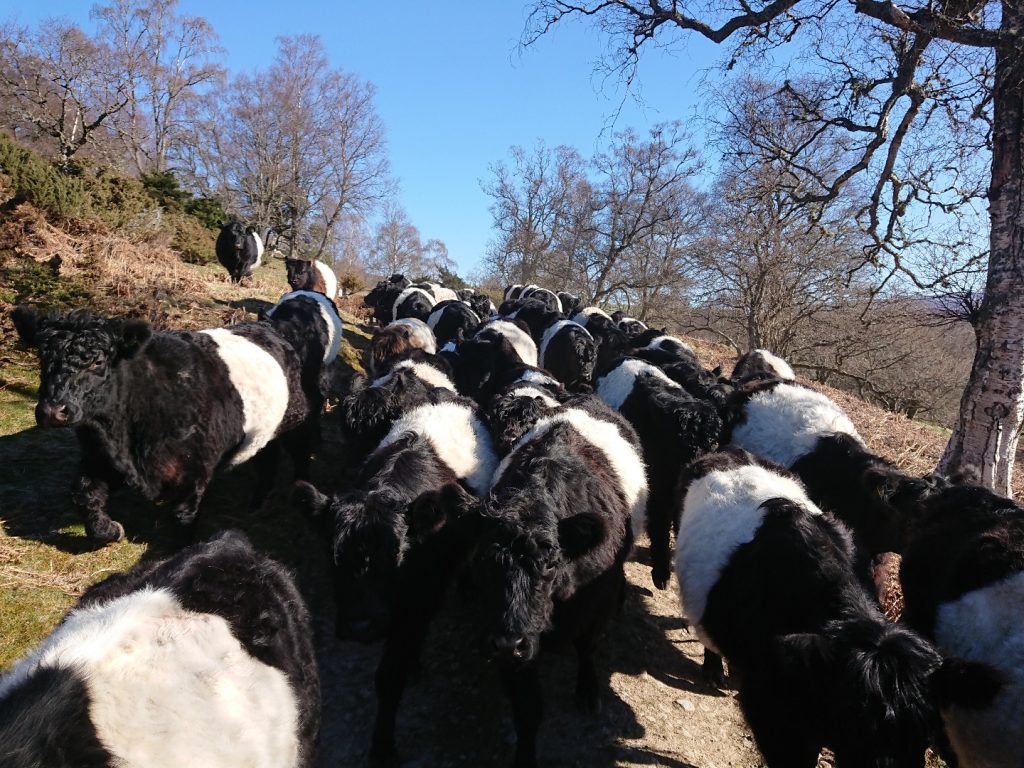
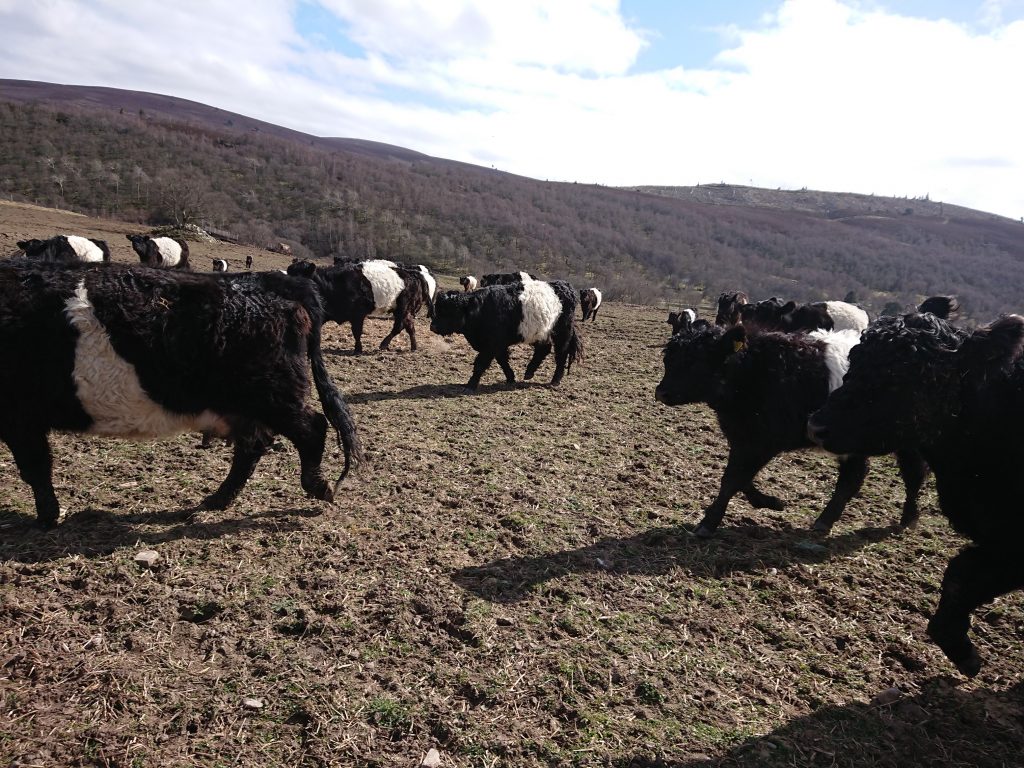
1.45pm: I hitch up the snacker trailer to the back of the quad and fill it with feed for the Belted Galloway herd. The cattle were in fields in the glen, across the river, so getting there involves a bit of hopping on and off the quad to open and close gates. Once there, I run out the feed in a line and count the cattle to check they’re all present. It’s calving season and the new calves look incredibly fresh and clean, like they’ve just been through the wash!
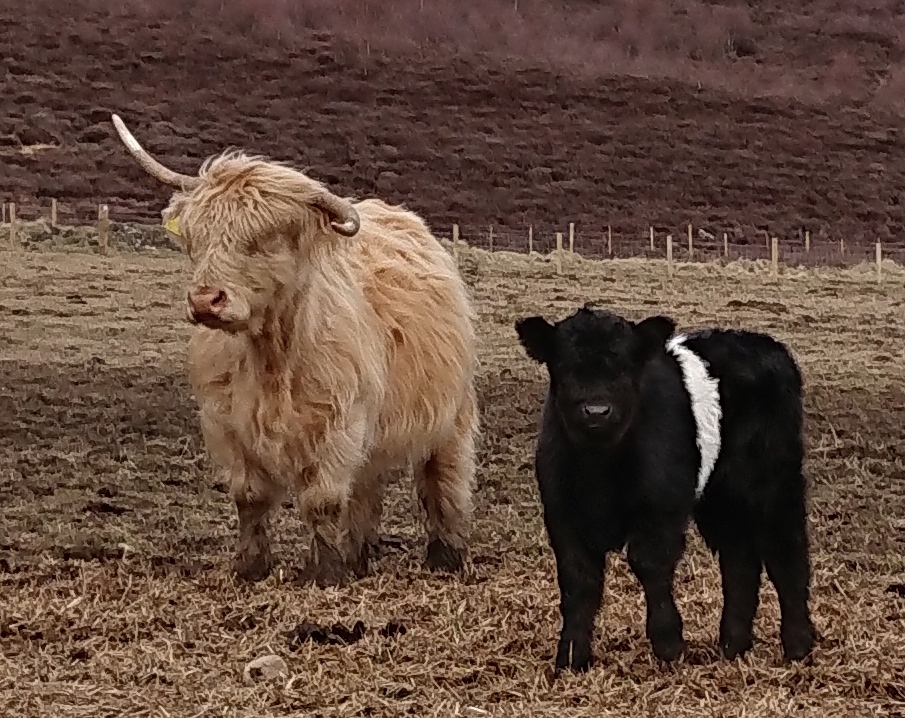
The Belties are delighted to go anywhere for food.Look at them go!Dolly the Highland cow, and a beltie calf
3pm: The rest of the afternoon is taken up with odds and ends, sorting out a delivery of burgers and sausages into the appropriate freezers ready for sale, packing firewood into storage, and folding up tarpaulins… there is never a shortage of things to do on a farm, even when I can’t drive a tractor!
5pm: Homeward bound. I’m tired after being on my feet for most of the day, but I’m so grateful that I can spend my time like this – I’m appreciative of how lucky I am to be out in the country, working with animals and able to pretty much forget what is going on across our planet. The reindeer, cattle and sheep have no idea that our lives have changed so much in the past couple of months – they are still living life as normal and expect us to feed and care for them as normal. It’s a welcome break from the news and social media updates which can be pretty worrying at present. Whilst you may not be able to escape to a remote hill farm, I hope you can find your own escape if you’re finding things hard, whether that is in a good book, taking a new route for your daily exercise, or deciding to turn off your laptop and phone for a day. Take care all!
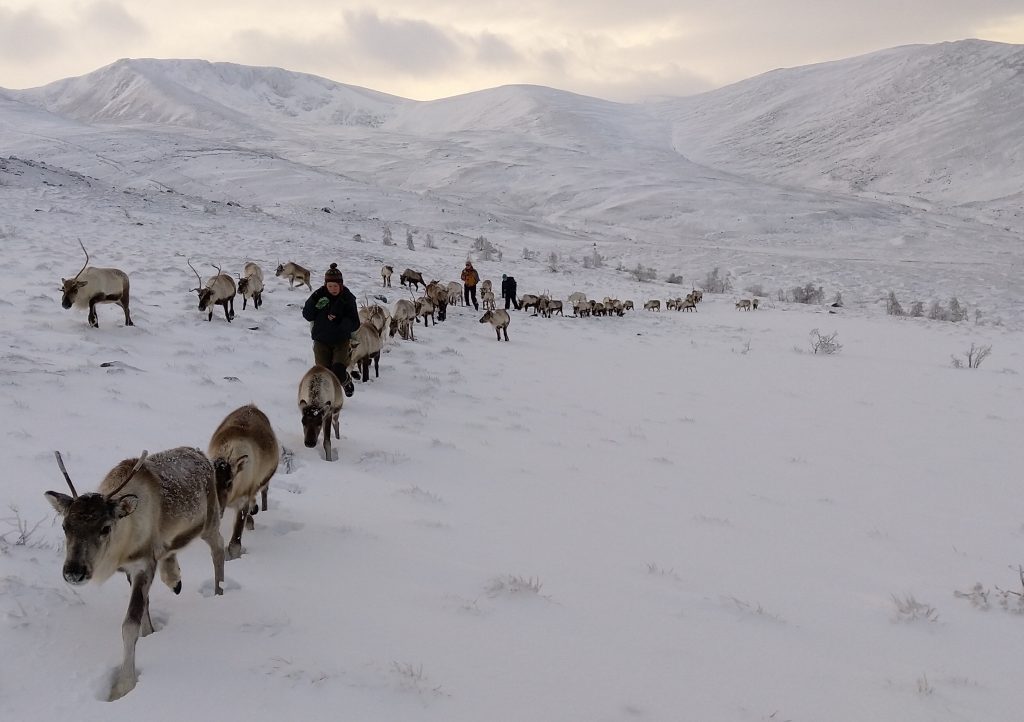
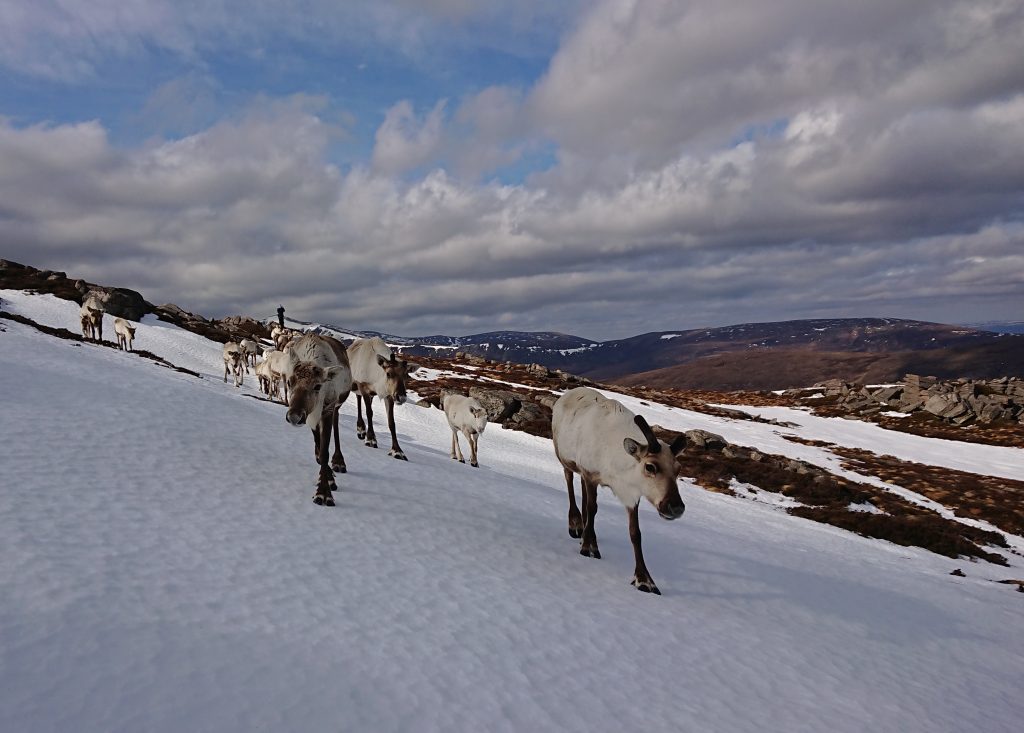
From January to May, our whole herd are out roaming free on the mountains, enjoying the wintry weather that they’re so well-equipped for. Whilst it can be ridiculously wild at times, on other days it is completely still, with glorious sunshine. I thought it would be nice to put up a selection of photos from the last month or two to give you a taste of our winter days…
Oslo leading the herd over for breakfast.Glorious views out over Aviemore on a beautiful day.Camus, Sika, Brie and Bordeaux. Sika’s not sure about what she just ate!Origami and the herd on an icy morning.Ochil wondering if the food is ready yetOkapi has cast the main uprights of her antlers, leaving her looking a bit like a unicorn!Spider has found a nice pool for an after dinner drink.Santana sporting one of her antlers.Handsome Rubiks posing!Pavlova is easily recognised with her white tuft of hair on her forehead.Parmesan with her white face marking, and old lass Fonn in the background.Olympic is always one of the first to see us.LX on a grey day…… and again on a blue sky day!Fonn is the oldest reindeer in the herd, at nearly 17 years old.Ryvita and her calf Berlin.Beautiful Dixie.Dixie, Fly and Lulu, stalwarts of the herd.Young Dante.Camembert, what a star!Brie, Inca and Meadow.We always give the calves some preferential feeding out of the bags – it keeps their condition up and keeps them tame – here’s Bordeaux, Florence, Athens and Texel enjoying a snack.Blyton and Camembert.Baffin.Angua and mum Tap. Both are quite shy reindeer but we’ve put lots of effort into feeding them extra feed each day and their confidence has come on in leaps and bounds.Hen, Lotti and Dave – feeding mission completed!Happy reindeer eating their feed.Celt on a windy day.Little Kiruna.
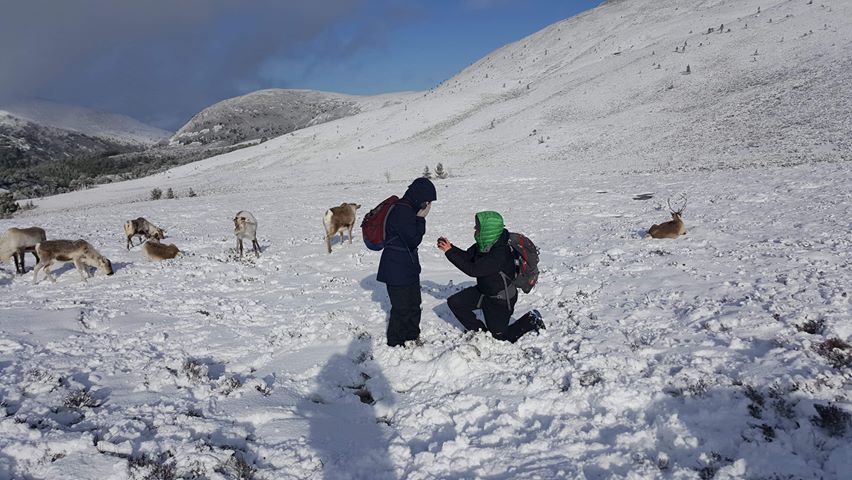
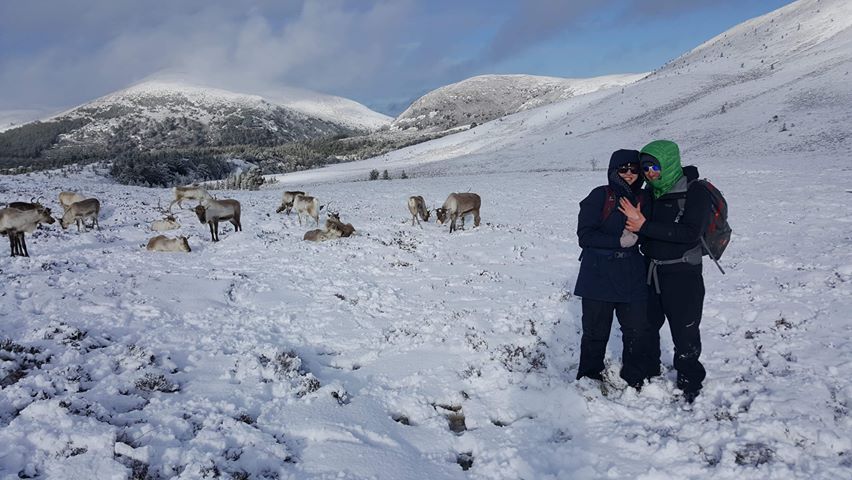
On a wild Hill Trip in February we were fortunate to witness a special moment. Andrew passed his phone to Manouk during a brief break in the weather and asked her to to take some pictures. She was able to capture the moment his partner Jasmine, became his fiancé.
The big question for JasmineShe said yes!Olympic kindly lent his nice thick winter coat as a nice background. Aztec was keen to watch on too in case it meant handfeed!
Thanks to Jasmine and Andrew for sharing their photos with us. Congratulations from everyone at the Cairngorm Reindeer Herd. Let us know if you want Olympic and Aztec at the wedding….
There’s a lot to be learned volunteering at the Reindeer Centre and multi-cultural knowledge is one theme very obvious, just thinking about the reindeer names and the regular herders’ nationalities. However, walking up to hand feed the reindeer throughout December it occurred to me how many visitors travelled many, many miles to experience the thing we have taken for granted over the last 30 years – velvet noses snuggling into your hands for a taste of delicious grains of feed.
(Apologies for the small photo files, they are at their maximum sizing!)
Colin feeding Olympic
During our three weeks in December 2019 we talked to visitors from as far afield as Australia, New Zealand, Austria, China, Thailand, Canada, Holland, Egypt and Germany, not forgetting those from England and Scotland.
December in Australia is the children’s Christmas school holidays and for many families a trip to Scotland and the reindeer is a top priority, as we were quite rightly informed. During our second week, beginning the 9th December we had a good drop of snow, which I enjoyed as much as the reindeer and visitors!
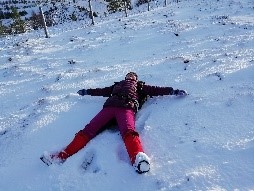
Snow angels!
The reindeer in my opinion are at their best in deep snow. For two children from Australia the combination of sun, snow and reindeer made just the perfect day and it was such a joy to experience their excitement. Having never experienced snow in their lives it was an exhilarating event. With wellie boots borrowed from Reindeer House it didn’t take them long to jump in the deep snow drifts and fill their wellie boots with the cold stuff – and we were not yet at Utsi’s Bridge!
As many of you know, if you have been on a visit, once in the enclosure we follow the board walk, which the reindeer also like to use and they get in between visitors slowing the speed of progress. Well for two young people this meant having to step to one side to let the reindeer pass and subsequently ‘falling off’ the board walk into the deep snow – their feet were rather cold and wet by this time but no adult advice could curtail their excitement, it was infectious! We then had adults stepping off the board walk to experience the deep snow just for the fun of it! We had a lovely visit and the snow was appreciated by everyone, young, older and the reindeer!
We have a huge network (well, by our standards) of staff members who work at least part of the year for us, ranging from those full-time year round, through seasonal staff right down to the odd ex-herder roped in for literally just a day or two a year. Our job is made far easier however, by the epic efforts of a constant stream of volunteers, and 2019 has been no exception. So this is just a wee blog to say thank you to everyone!
We have, over the years, built up quite a collection of regular, long-standing volunteers, some of whom visit annually, and some just every now and then. The top dog of this crew has to be retired joiner Paul, who first came to help for a couple of weeks back in May 1999. Twenty years on and he’s still coming for a fortnight twice a year to ‘mend, bend, and fix’ and while he may be 80 now, age hasn’t slowed him down too much yet!
Paul with Olympic
Emm is another very regular volunteer, having settled into a regular pattern in the last couple of years of 4 separate weeks of volunteering throughout the year. She’s a great help to us with everything reindeer related, and the kitchen table is never short of cake while she’s around… You can read more about one of her stints in one of her blogs here. We also have Sharon and Colin who come once or twice a year too – always bringing a good supply of crafting materials for the Paddocks, and – socks! Their blog is here:
Emm with her adopted reindeer Mo, braving the weather at a very cold and wet local Christmas event.
Our other type of regular volunteer is the lovely Anna who’s been helping us out once a week throughout the summer and autumn, and we hope will continue to do so in the future. Stella fits into this category too but is a bit elusive of late – she’s always off volunteering for all sorts of different organisations or visiting far-flung parts of the world. Having far too much fun! Stella – if you’re reading this, will we ever see you again?!
Long-standing volunteers have the luxury of picking and choosing what season they want to come in, but otherwise we are helped out by a steady stream of helpers from the last week of May until the end of October. This year has been great, and I think I’ve remarked to everyone here at some point just how lucky we’ve been with the 2019 vols! Once upon a time we used to get mainly vet students wanting to volunteer in order to gain experience, but nowadays we seem to get a much wider range of people from all walks of life, which suits us nicely as it’s lovely to meet so many interesting people! This year they included a chocolatier, an Olympic physiotherapist, a costume designer and a goat milker, with all sorts in between! So HUGE thanks for all their willing and tireless help to Arianne, Cathy, Becks, Katy, Rowena, Katie F, Sally, Laura F, Amy, Ida, Mary, Hannah, Christine, Kathleen, Helen K, Laura W, Helen A, Heather, Katie D, Kimberley, Mhairi, Lou and Joanne. But no thanks whatsoever to the volunteer who booked in for a week and then never turned up, having not thought to mention to us that her plans had changed…
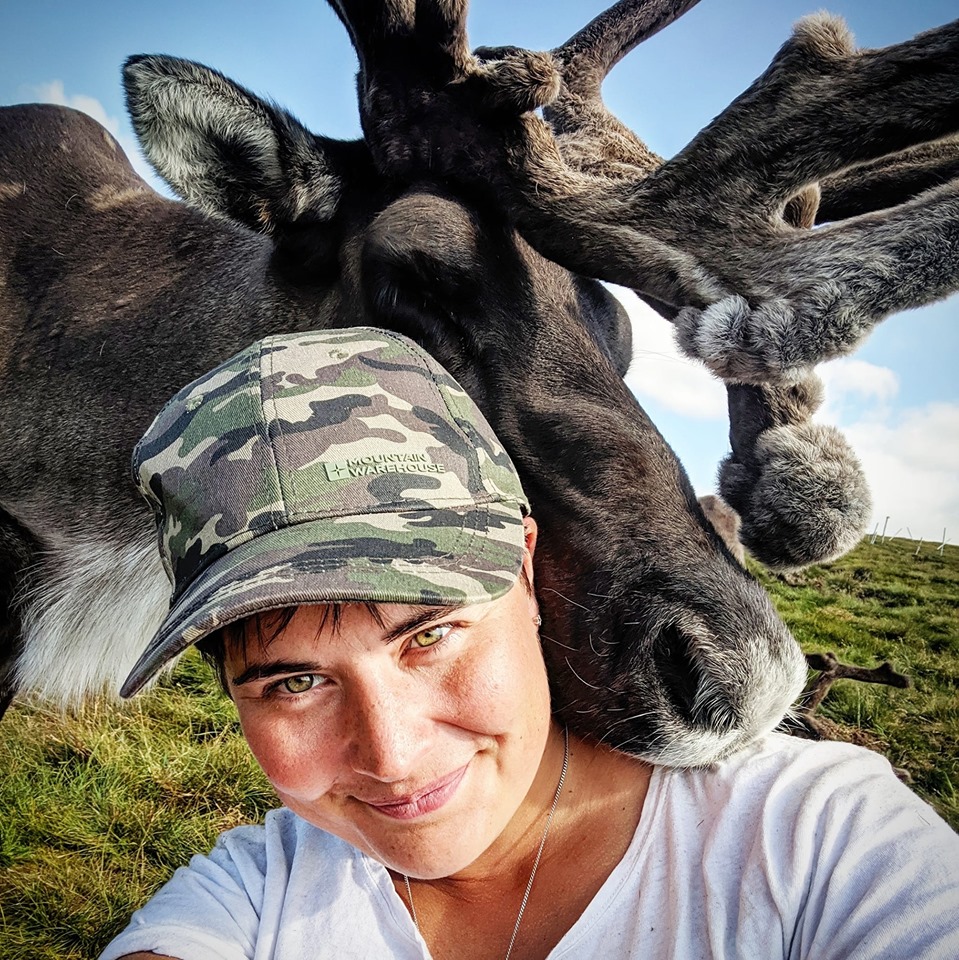
Volunteer Amy finding time for a selfie with Olympic. Or possibly just being a head-rest for him!
Special thanks and recognition go to Cathy, who downed tools with 3 days’ notice to drive to the opposite end of the country to help us out after another volunteer cancelled on us; and to Rowena, Sally, Mary and Katie D who all came in 2018 and had such a good time they gave up another spell of their precious time to come back this year. And another special mention (and possibly a round of applause!) has to go to Helen A, who managed to break her wrist on the third day of her week with us but still soldiered on for the next 4 days! And finally Nell, who managed to time her volunteering stint just at the point that we decided we needed an extra staff member for the summer, so she ended up with two months’ paid work afterwards.
Laura with Fly. Looking the part!
Thank you all SO much – we’ve loved having you all here and hope you all had a great time! And I expect we’ll see quite a few of you again in the future 😊
In this blog, I will be exploring the way Reindeer and other Deer species are represented within myths, legends and general stories over a variety of cultures. From old folklore to modern day films and books, Deer have been used as symbolism for magic, and an insight into the natural world.
2000 years ago, the Sami people inhabited large parts of the arctic circle. The oldest recorded document regarding the Sami people dates back to 98AD by the Roman Historian Tacitus. The Sami have a close connection with nature and the animals that live and survive around them.
Sami folklore states that the white reindeer was the most magical reindeer of all the reindeer. It was believed that if a human was to catch a white reindeer it would bring them luck, riches and eternal happiness.
Harry, Bajaan, Minto
In some other cultures they have a beautiful belief of how they believe that in the beginning there was only the sun and the earth, and the white reindeer created the wold. The Veins became rivers, its fur became the forest, and its antlers became the mountains. Either way it seems that people who work alongside reindeer have a deep connection and understanding about nature and its natural balance.
Blondie
What makes a reindeer white- Leucism is a mutation in the genetics of reindeer. This makes the particular reindeer pure white, however the mutation can also cause them to be deaf too. Reindeer rely on hearing to communicate through involuntary clicking from a tendon snapping against the bone as they walk. If a predator is close by the clicking would be loud and in quick succession, signalling that the herd was running. A deaf reindeer wouldn’t be able to hear this, therefore, not so many white reindeer exist in the wild.
Mozzarella
In the Cairngorms we currently have two pure white Scottish females Mozzarella and Blondie, and one white Swedish male, Matto (although not leucistic), he was chosen for us, so we would have a white reindeer in our herd. Matto was brought over from Sweden to potentially be a breeding bull, however there were sadly more handsome specimens available, and Matto was a bit on the small side. However, with no large bodied predators in Scotland, such as wolves and lynx, allows the white reindeer to survive, and pass on the lucky trait of being pure white! Or we are just a really lucky herd with huge amounts of eternal happiness.
Matto
Deer in general have strong places in the mythology across the world. In Celtic folklore, has several stories involving deer as spiritual figures. In some Scottish and Irish tales Deer are seen as “Fairy Cattle,” and are herded by otherworldly women, who can shapeshift into the form of a red or a white deer.
Furthermore, in many other culture’s deer are heavily featured in songs and poems, such as the beginning proportion of the poem Beowulf, and in the Poetic Edda poem Gimnismal The Four Stags of Yggdrasil, who are four stags who eat among the “Yggdrasil” (the world tree). A theory to these four stags is that they represent the four seasons, and the “World Tree” This poem also relates to mythical stag “Eikbyrnir” who lives on top of Valhalla.
Deer have also got links with Greek Mythology. The Third Labour of Heracles; Eurystheus and Hera were angered that Heracles had beaten the beasts in the first two labours, so gave him the task of capturing the female Cerynein Hind, a hind that could grow antlers, and outrun a flying arrow.
There are different versions of the story, one where Hercules captures the deer by waiting for her to fall asleep; another version says that Artemis intercepts Hercules trying to capture her sacred animal and tells him to relay the message to Hera and Eurystheus and the labour would be considered complete.
The hind was the sacred animal of Artemis, the goddess of hunting and the wilderness. She was the daughter of Zeus and Leto, and one of the twelve Olympians.
Olympic as a calf
Reindeer pee- now this isn’t myth or legend, just a good (and true) story. Reindeer, particularly young males, occasionally enjoy eating a variety of mushrooms. Some of these mushrooms are highly poisonous to humans, however, because reindeer are ruminants, they are able to digest and deal with the poisons within the mushrooms. These mushrooms, however, can have some side effects. They can get high off the mushrooms; this happens in the cairngorm reindeer herd too, our boys go ‘shrooming’.
In some Scandinavian countries, they use this talent of digesting poisonous mushrooms to their advantage and drink the urine of the reindeer. Due to the poisons in the mushrooms being broken down, it just leaves trace elements from the fungi. These can have psychedelic effects if ingested.
Rudolph the red nose reindeer- The shiny nosed reindeer was first introduced by Robert L. May in 1939, in order to save money for annual Christmas promotions in the department store chain, Montgomery Ward. In its first year over 2 million copies were sold. May tried and tested different versions of the story on his young daughter. “Rudolph the red nose reindeer” was first printed on a large scale in 1947, and due to its success, a short cartoon was shown in theatres the following year. From the increasing success since 1939, Rudolph is probably the most famous reindeer of all.
Annabelle’s wish is a Christmas film about a cow who wants to become a reindeer. Is still my favourite Christmas film of all time! Annabelle and the rest of the farm animals are able to talk for one whole day, due to Santa’s magical powers. Annabelle is amazed by the reindeer who pull his sleigh and decides that next year she’ll ask Santa to make her a reindeer too. She is given as a gift to a little boy who cannot speak. She becomes really close friends with the boy and when the following Christmas comes decides to ask for another wish- so Billy can speak again. However, in doing this Annabelle is never given the power to talk again. She grows old and stays with Billy until he’s an adult with his own family. In the end Santa grants Annabelle her original wish and she becomes a reindeer, and part of Santa’s sleigh team.
Bambi- Was released in 1942 produced by Walt Disney and based on the book Bambi, a Life in the Woods by Austrian author Felix Salten. Bambi was only the fifth Disney animated feature film.
One of our yearlings, Frost
Bambi is based on a mule deer. However, Disney had to change the species from Roe deer to Mule deer to better fit the native species in north America. The film received three Academy Awards.
Fire Bringer was published in 1999 as a young adult Fantasy Novel by David Clement- Davies. The story follows the life of a young red deer, Rannoch, during the 13th century in the lowlands of Scotland, whose life is subject of an old prophecy among the deer.
Young male Red Deer in Glen Etive
Fire Bringer is one of the few books that I have read that I wish I could read again for the first time all over again. It is such a beautiful story with many adult underling themes. If I was to compare it to another book it would be of the same themes of Watership Down. With several different links to historical events throughout the book. I highly recommend reading this book! Izzy