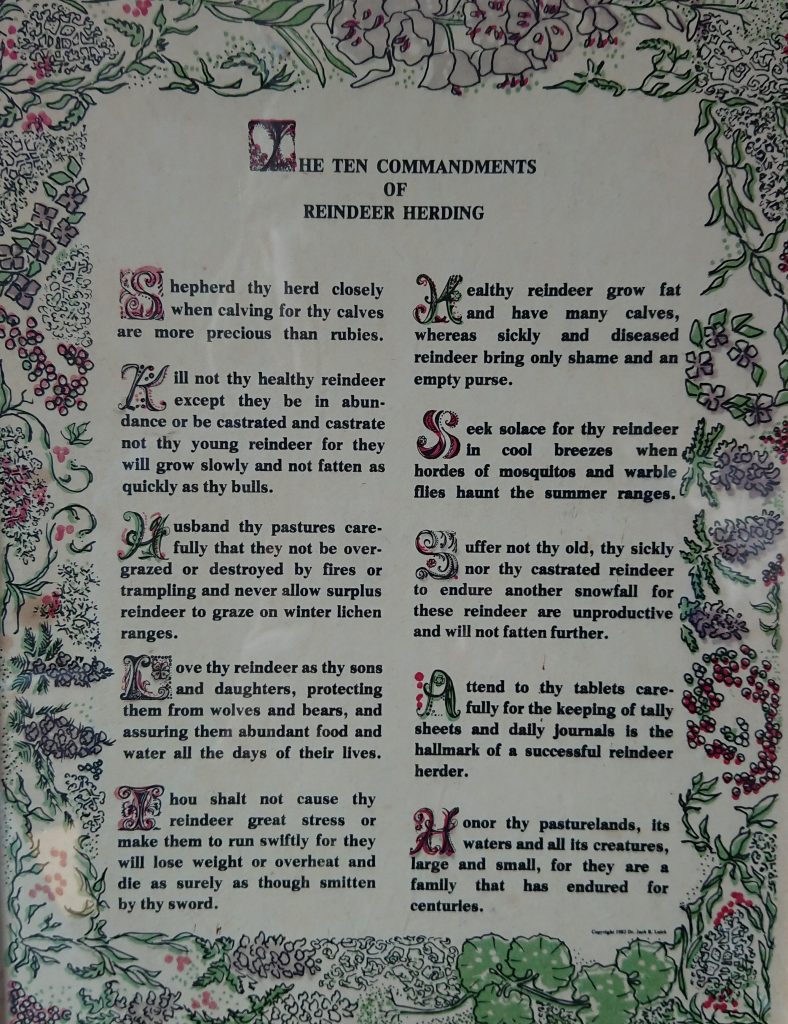
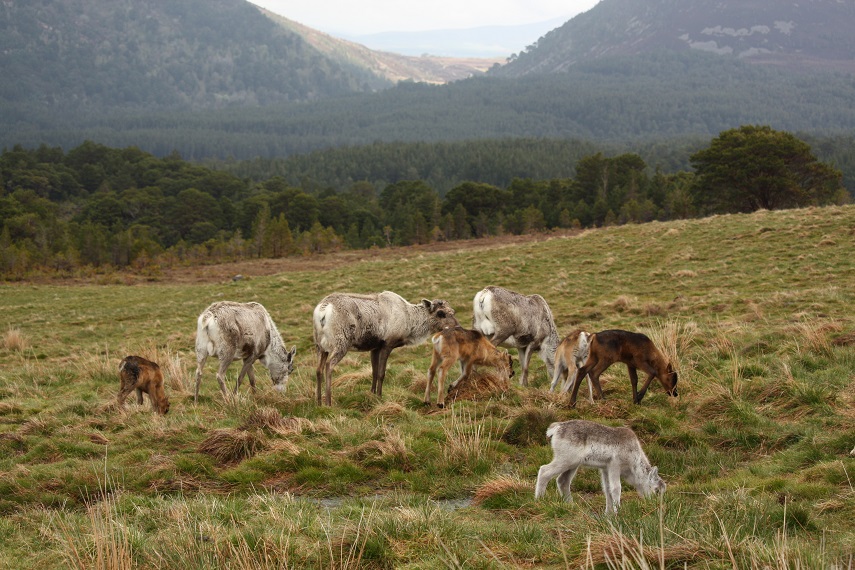
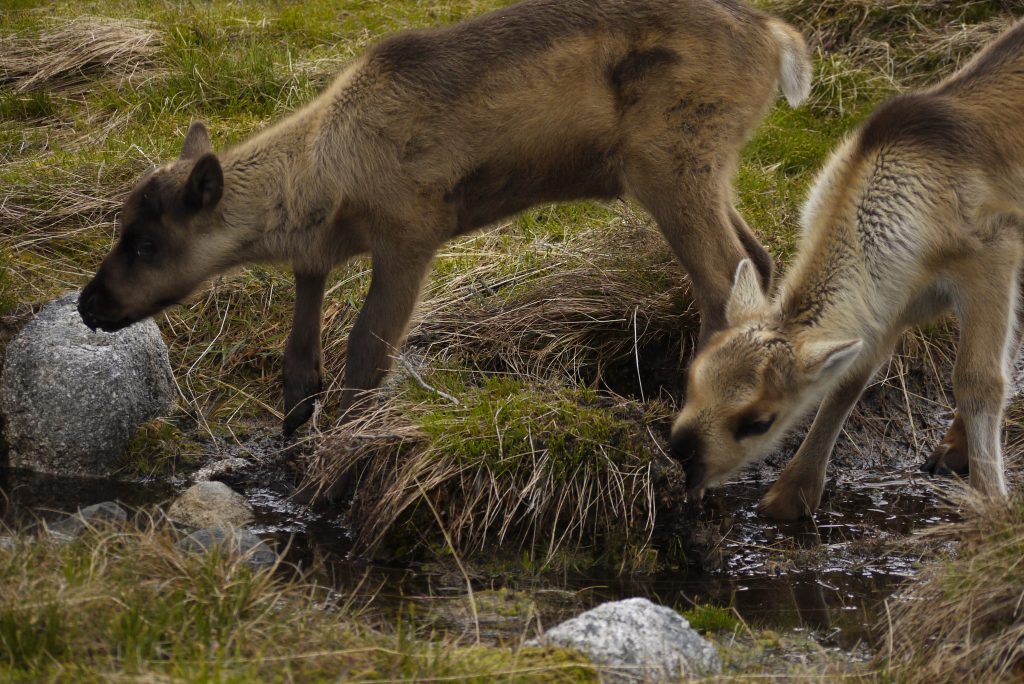
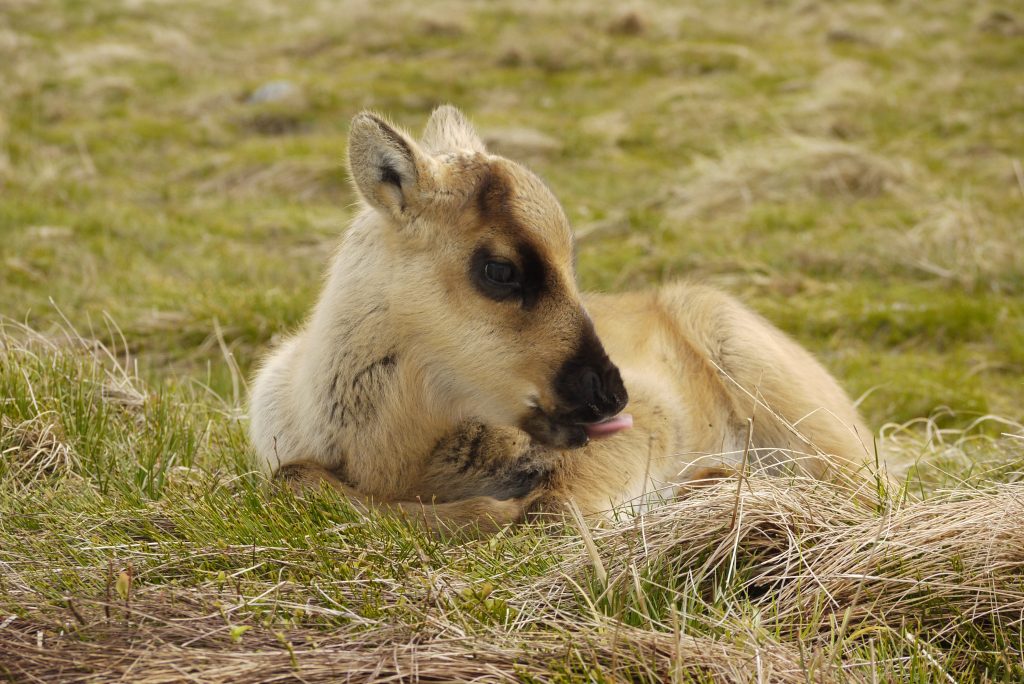
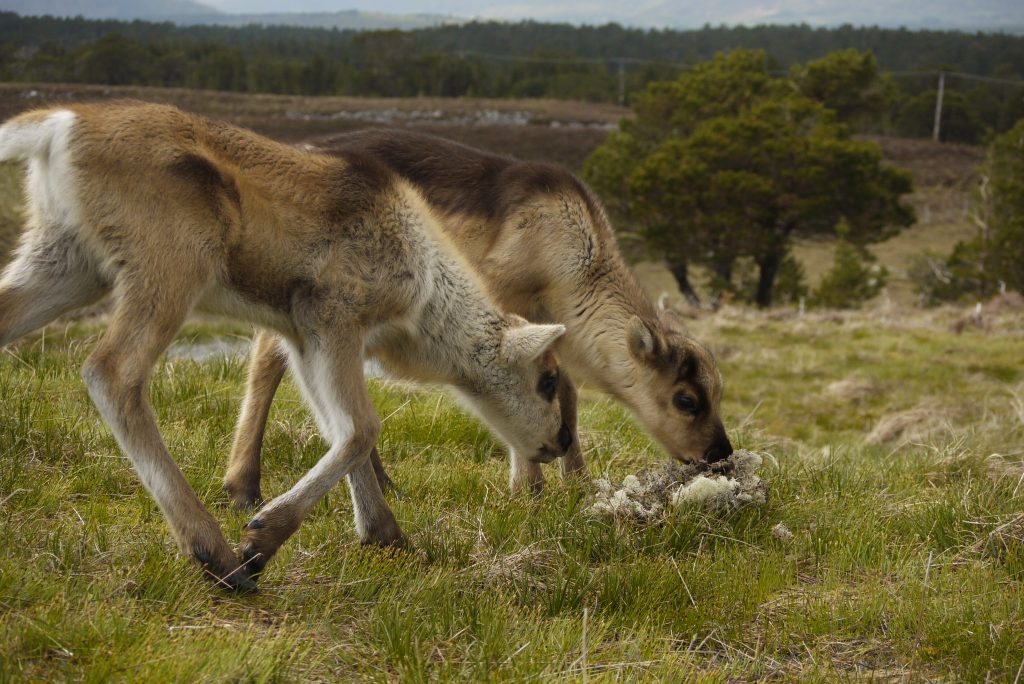
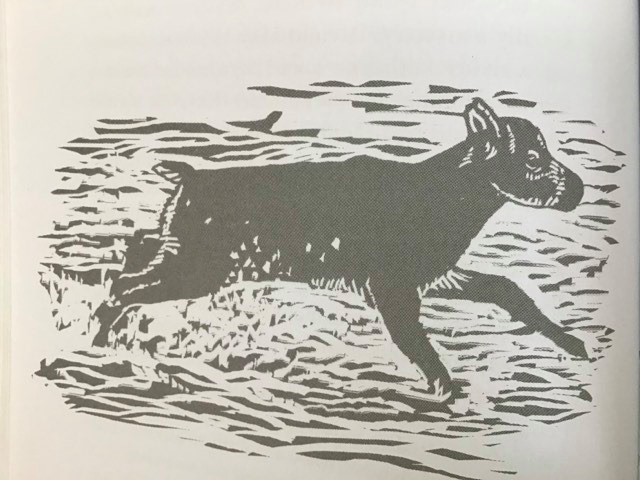
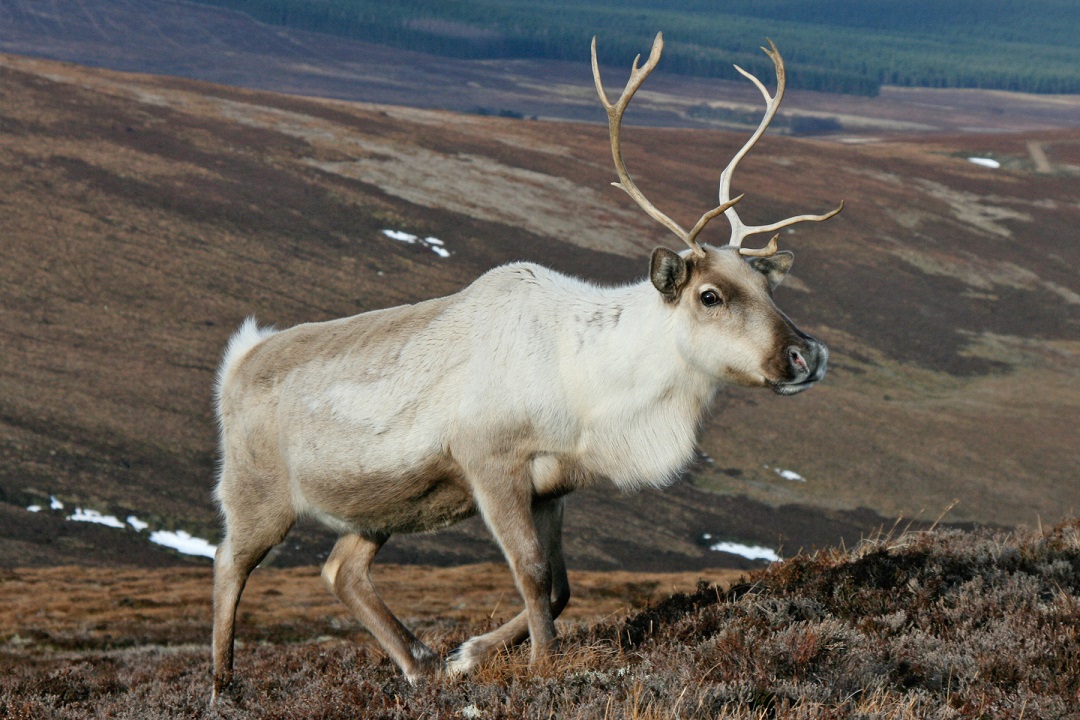
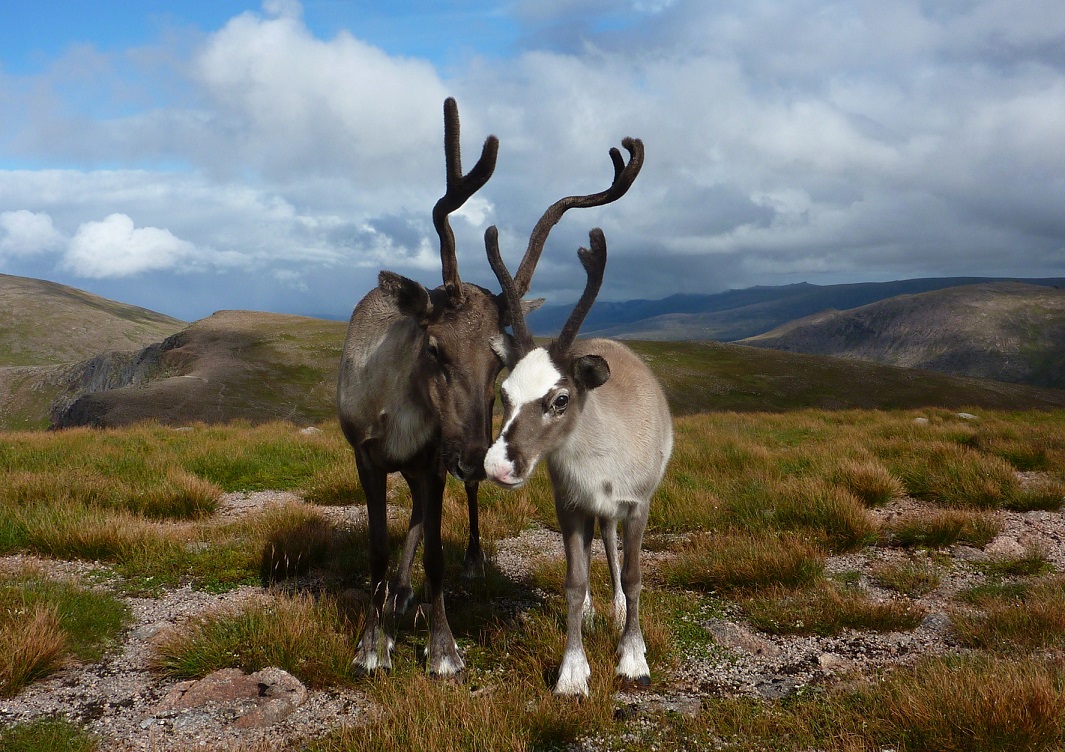
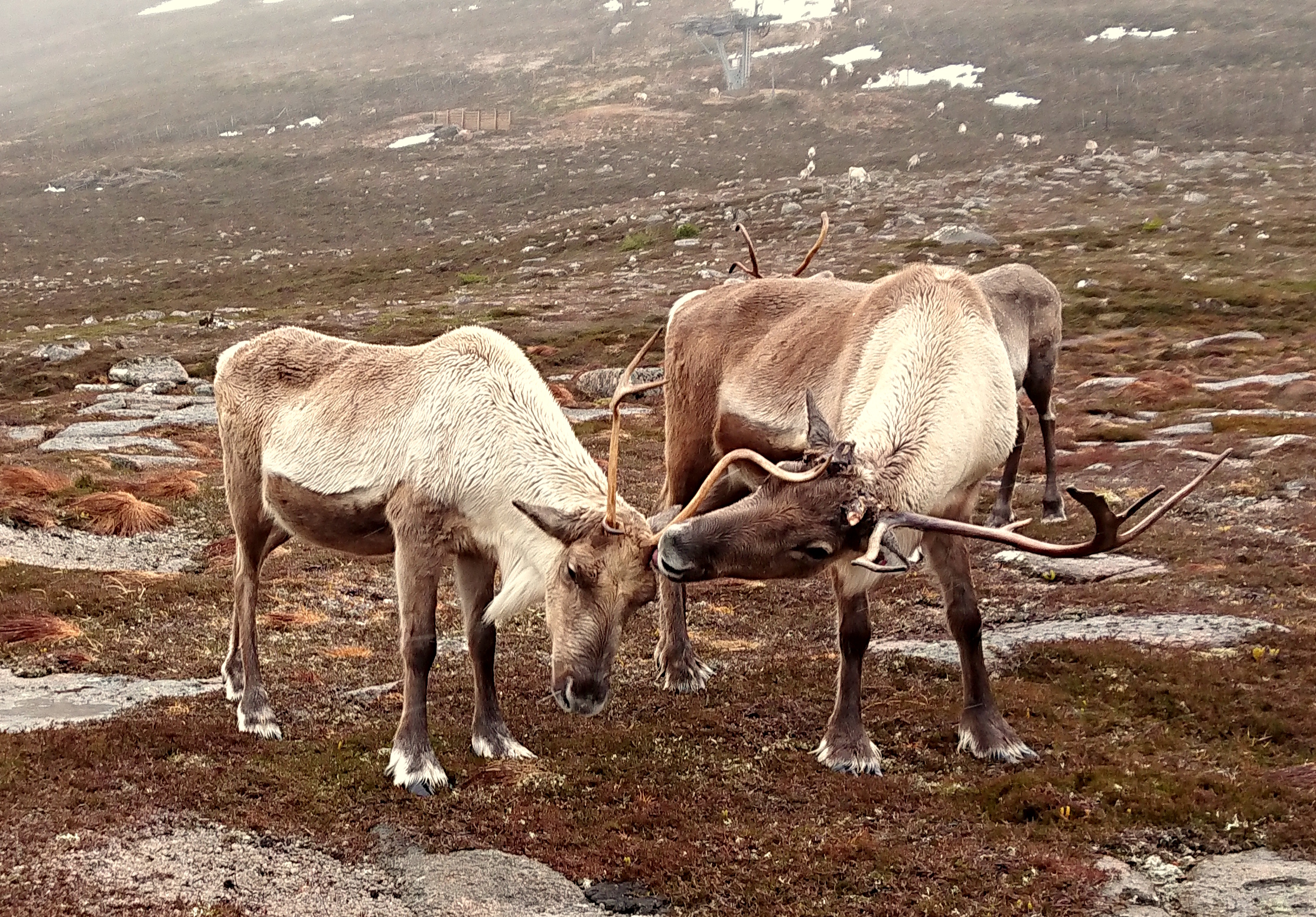
There’s a poster that has been kicking around the Reindeer Centre for as long as I’ve known. It’s since been framed and we keep it in our shop area as it’s a rather sweet poster with some words of wisdom when it comes to reindeer herding.
In case the image is too small to read properly, the text is:
Shepherd thy herd closely when calving for thy calves are more precious than rubies.
Kill not thy healthy reindeer except they be in abundance or be castrated and castrate not thy young reindeer for they will grow slowly and fatten as quickly as thy bulls.
Husband thy pastures carefully that they not be over-grazed or destroyed by fires or trampling and never allow surplus reindeer to graze on winter lichen ranges.
Love thy reindeer as thy sons and daughters, protecting them from wolves and bears, and assuring them abundant food and water all the days of their lives.
Thou shalt not cause they reindeer great stress or make them to run swiftly for they will lose weight or overheat and die as surely as though smitten by thy sword.
Healthy reindeer grow fat and have many calves, whereas sickly and diseased reindeer bring only shame and an empty purse.
Seek solace for thy reindeer in cool breezes when hordes of mosquitos and warble flies haunt the summer ranges.
Suffer not thy old, thy sickly not thy castrated reindeer to endure another snowfall for these reindeer are unproductive and will not fatten further.
Attend to thy tablets carefully for the keeping of tally sheets and daily journals is the hallmark of a successful reindeer herder.
Honour thy pasturelands, its waters and all its creatures, large and small, for they are a family that has endured for centuries.
In reference to point 2, I’ll add that we don’t cull any of our herd at all – when they were reintroduced from Sweden in the 50s it would have been the intention to cull ‘extra’ males who weren’t needed for breeding, but the direction of the herd changed pretty quickly to being purely a tourist attraction. No reindeer burgers here!
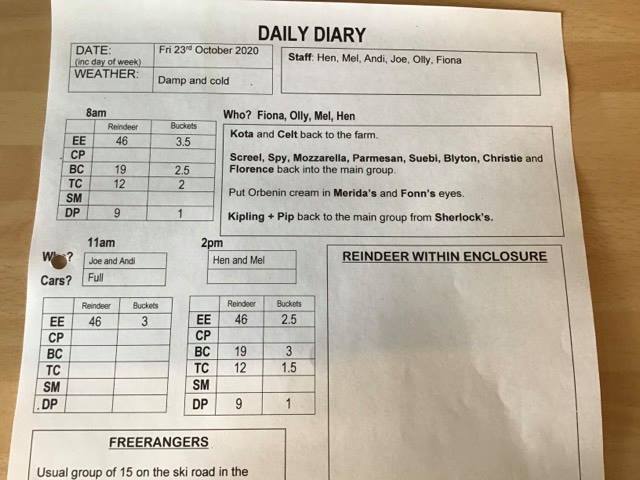
And on point 9, a diary has been kept daily since the 50s, recording the movements of the herd and any interesting information, and this is something that we continue to this day. Of course now it’s on a computer rather than hand-written, but everything is religiously recorded, day in and day out.
An example of one of last year’s daily diaries – detailing exactly how much feed was fed to each group of reindeer in each area of the hill enclosure (this was during the rutting season so a very busy time of year for us), movements between groups of certain reindeer – and who was working that day (so we know who to blame things on a later date!).
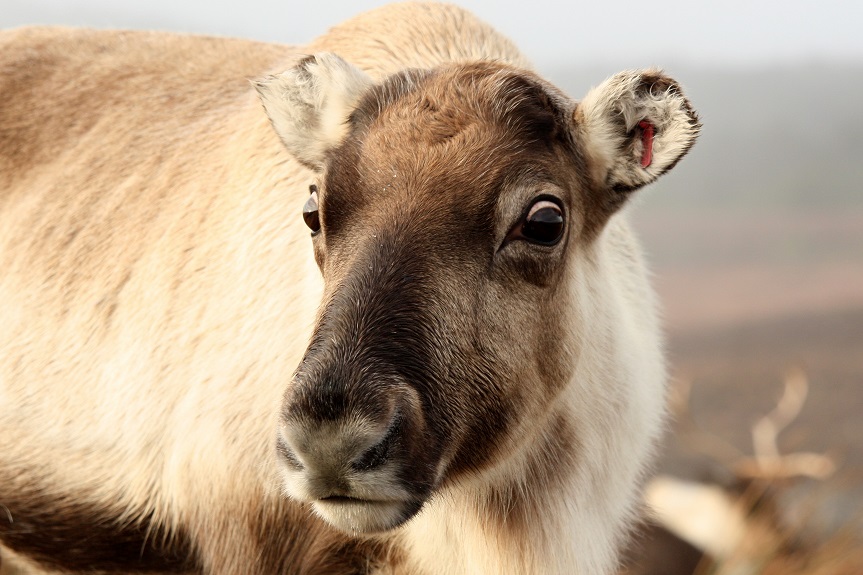
Whilst the majority of our reindeer are docile, friendly and laid back, there is always an exception, so in this week’s blog I thought I’d introduce you to Pony…
Pony was born in our “Games and Pastimes” themed calving of 2011. It might not seem an obvious game, but it was a bit of a stretch, naming her after the My Little Pony craze. The broader picture is that her older brother from the Bugs and Beasties theme was named Horse, slightly ironically, in the hope that if we gave the calf a rather rubbish name then sod’s law would mean it had a long life, as mother Mawar was renowned for losing her calves at a young age. It seemed to have had the desired effect so we stuck with the animal theme for Pony, then later for her brother Goat (in the Cheese theme).
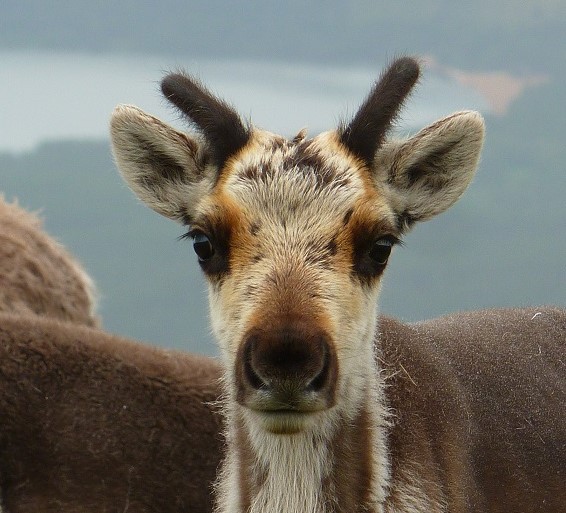
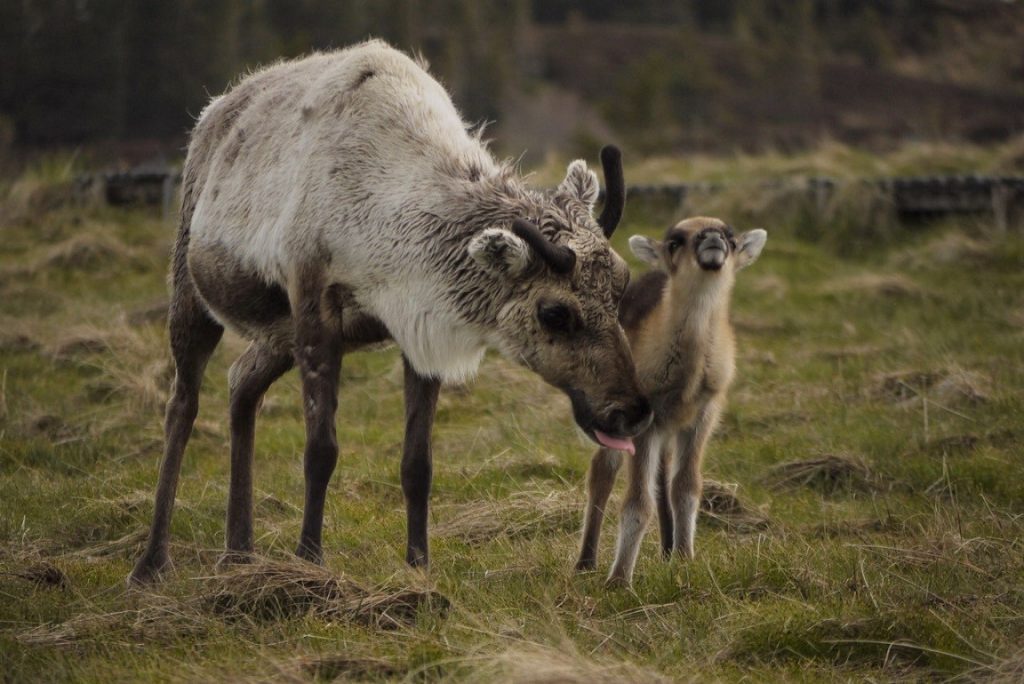
Pony, aged 2 months
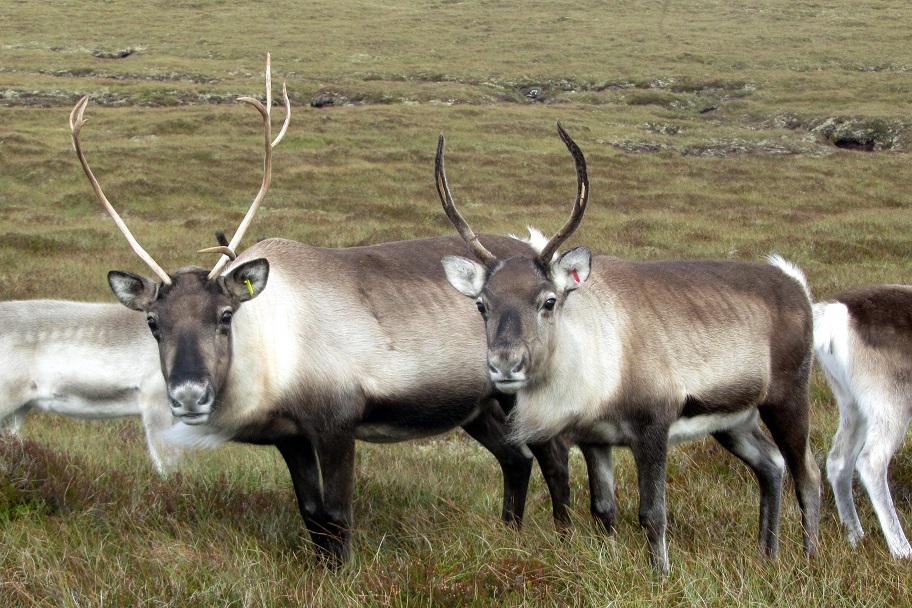
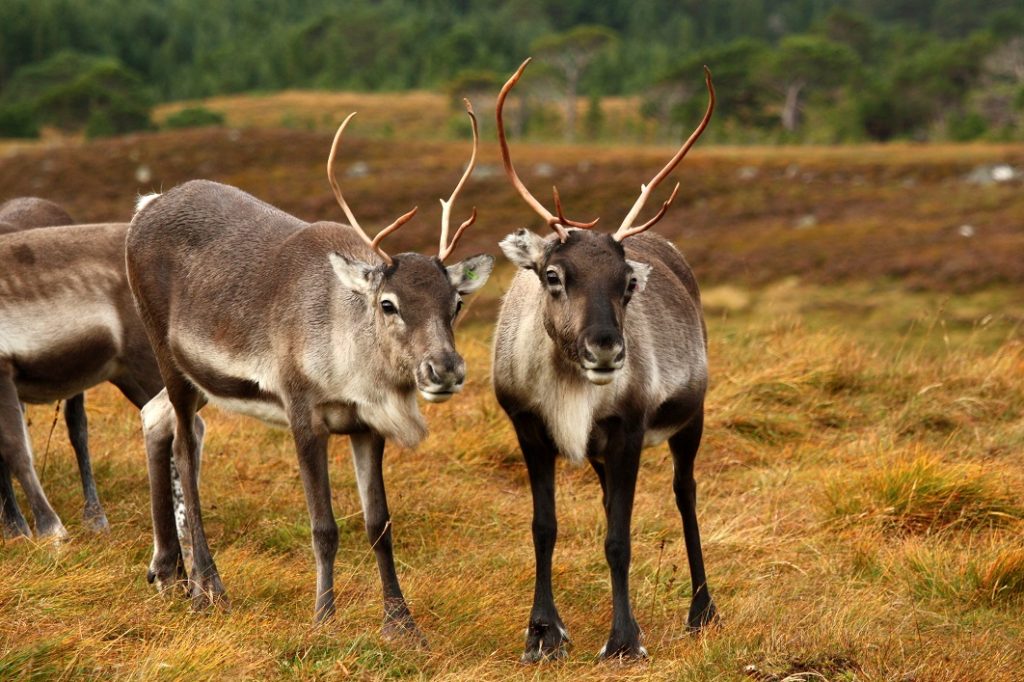
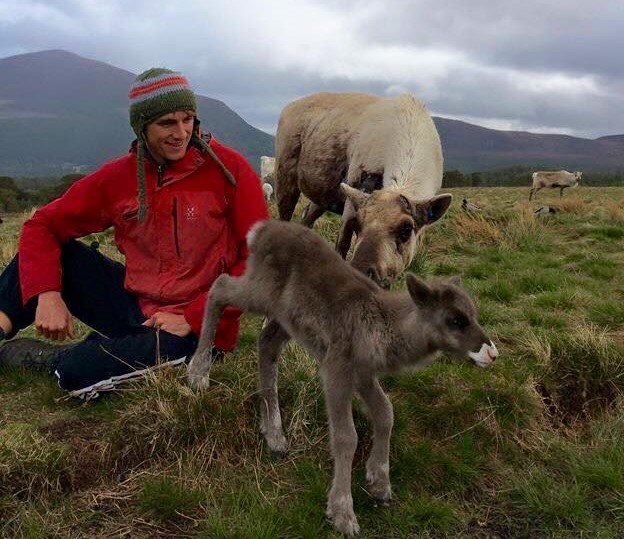
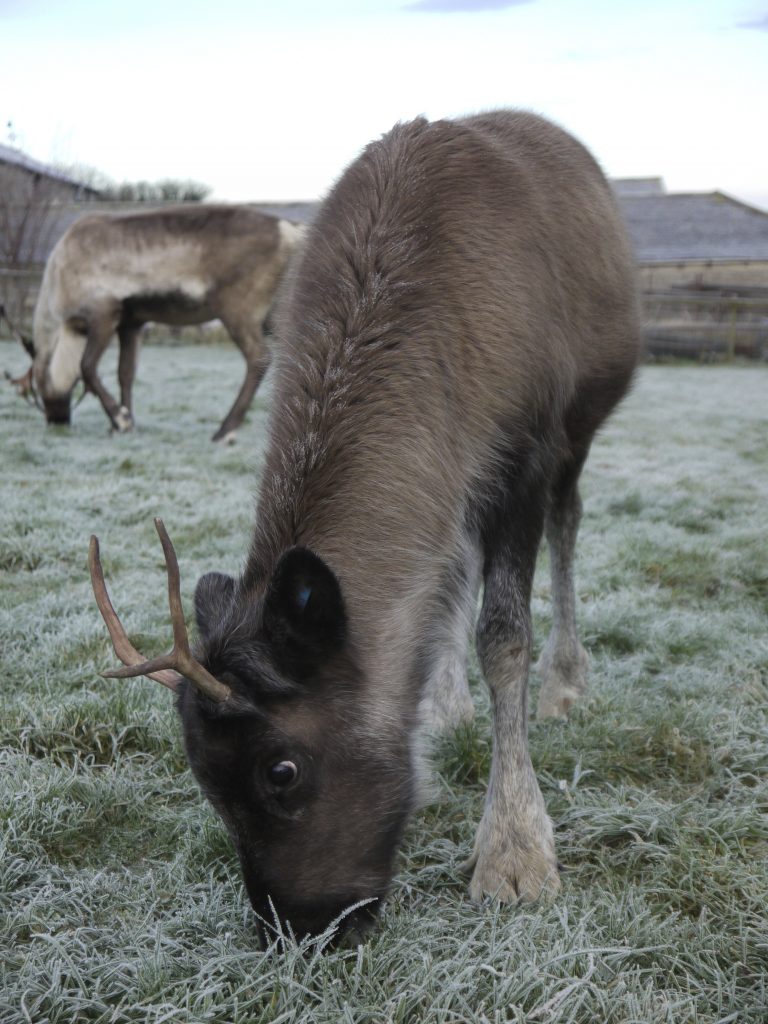
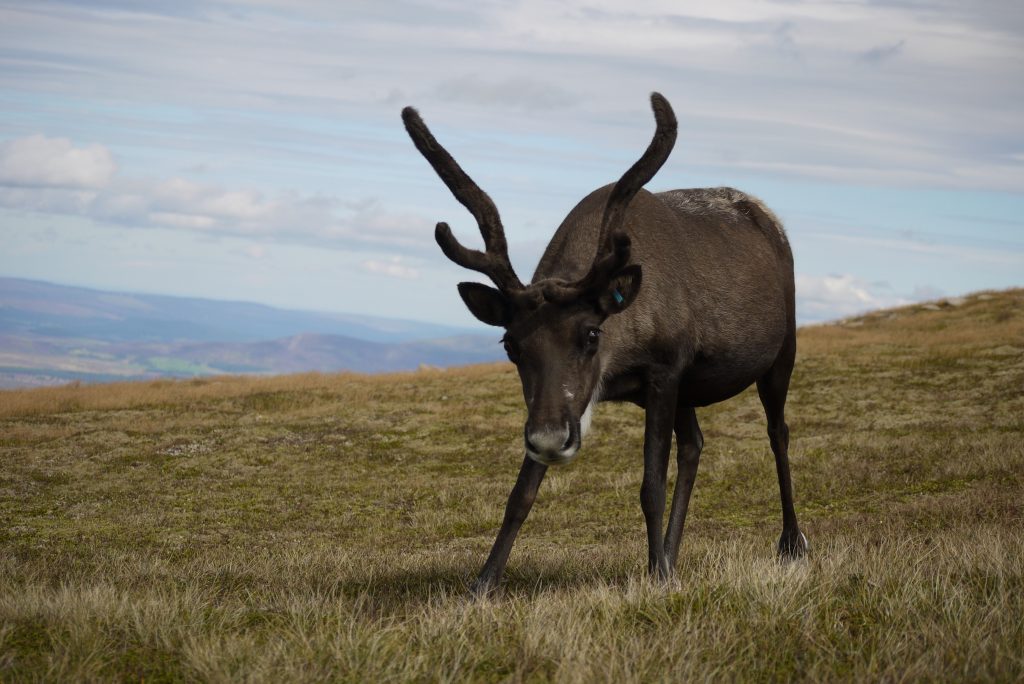
Pony is quite easy to pick out among the other normal coloured cows of the herd as she is missing the very tips of her ears. Sometimes if a reindeer is quite poorly as a calf they don’t maintain the blood supply to the extremities and the tip of, or occasionally the entire ear, can drop off. Whilst changing their appearance somewhat, it doesn’t seem to have any other negative impact on the reindeer.
With mum Mawar (left), before the tips of Pony’s ears fell off (which is very noticeable in the first photo at the top of this blog)
Pony’s mother Mawar was a lovely sweet natured reindeer, but perhaps Pony has a chip on her shoulder from missing her ear tips, as she has always had a bit of attitude. Or perhaps it comes from further back in her family tree as her auntie Lulu isn’t averse to snorting and waving her antlers at people! Unfortunately I also found out that Pony can hold a grudge, and I inadvertently got myself on the wrong side of her in 2018.
It was May, and Pony was in our hill enclosure looking very pregnant and ready to calve. One day she had headed away from the herd, so myself and Kate made an early start the following morning, assuming she must have a new calf. And indeed she did, a very cute wee male, quite a distance from the main herd. We like to bring them in to a smaller “nursery” pen where we can keep an eye on the new mums and young calves, so Kate and I started following behind Pony and the calf, gently herding them in the right direction.
Reindeer calves are very capable but his wee legs got more and more tired, until eventually he lay down and didn’t want to walk any more. Normally at this point we would just carry the calf with mum following behind, but Pony already had a reputation for defending her calves, so I decided to try to pop Pony on a headcollar. She was a bit suspicious but hungry enough after giving birth to snatch a bite of feed from my bag, at which point I grabbed hold of her antler! Kate nipped in and we put on the headcollar. Pony was NOT impressed, and even less so when Kate picked up her calf, with me holding her back enough to not wallop Kate with those antlers!
Pony and wee calf
We made our way in, by some miracle nobody died or got skewered on Pony’s antlers, and we released Pony and her new calf out with the rest of the new mothers. Sadly for me, Pony never forgave me for this perceived wrongdoing (though they were never more than 6 ft apart and the tired calf seemed relieved to be carried!). From that point on, I had to watch my back, as anytime I was anywhere near Pony’s calf she’d come after me, threatening me and snapping at me!
The queen of ‘resting b*tch face’!
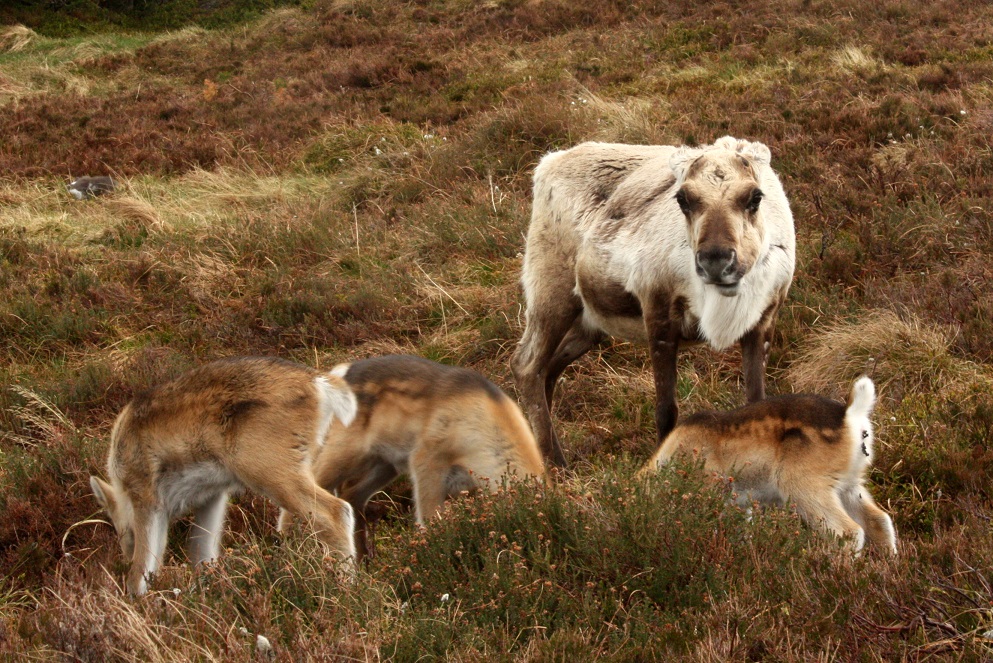
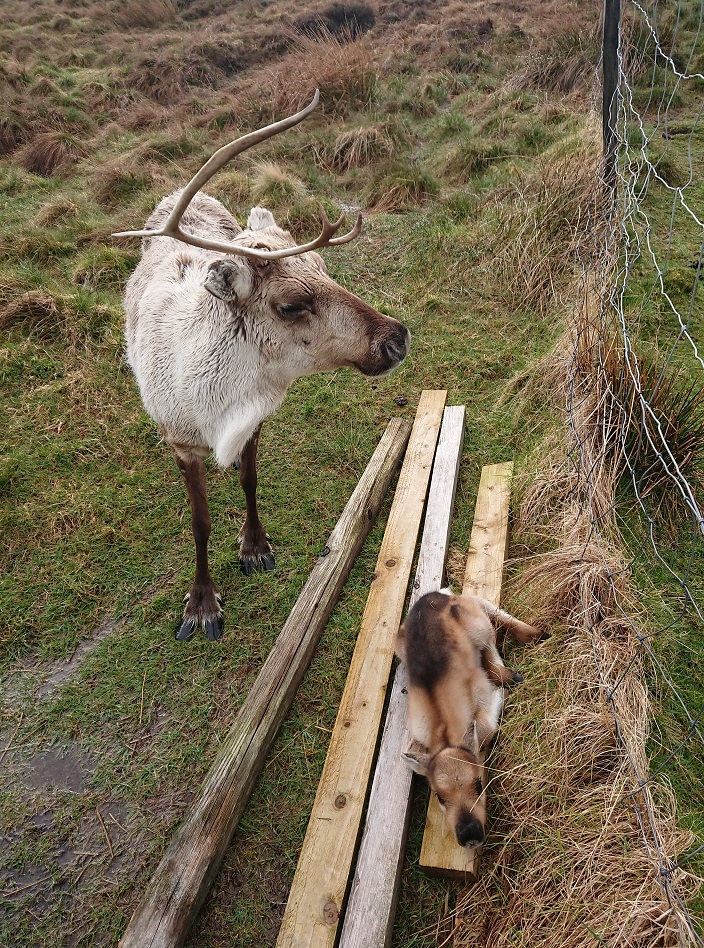
This love has persisted over the years, and when Pony had her next calf in 2020, a wee female, it fell to me to bring her in. Pony had calved much nearer this time, and shot off away from me, the wee toot scrabbling after, all going smoothly until they got to the gateway, which Pony went through, but her calf went straight into the fence. Shutting the gate behind Pony to prevent her spinning back round and beating me up, I was free to disentangle the calf. We named her Turtle, and she is a very sweet lass, though I’m waiting for the day her mother’s attitude comes through!
With Turtle at less than 24 hours old, Pony having just done her best to nail me…
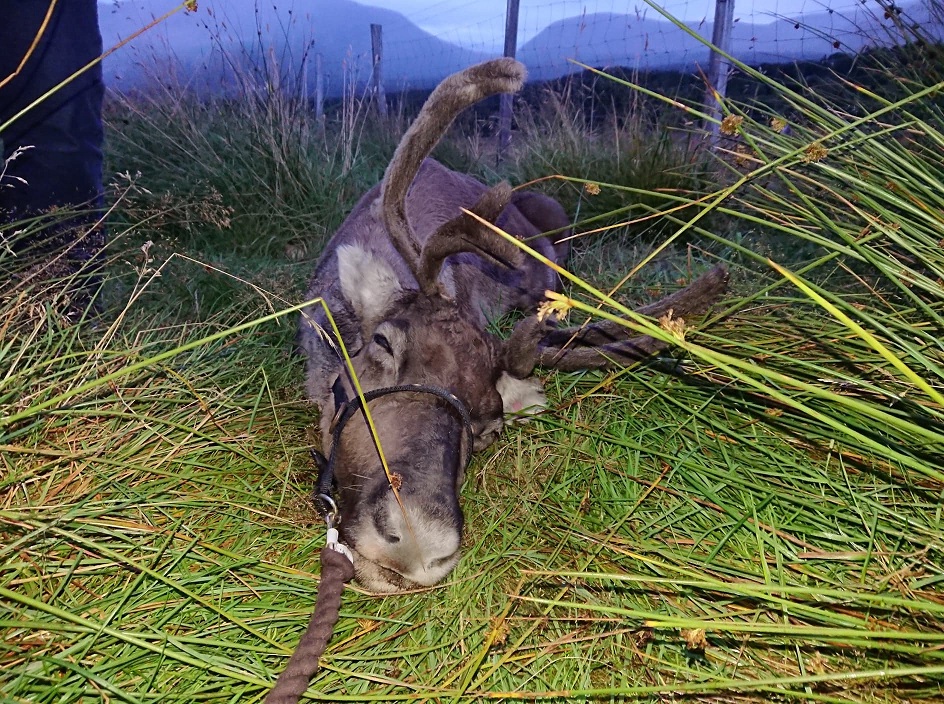
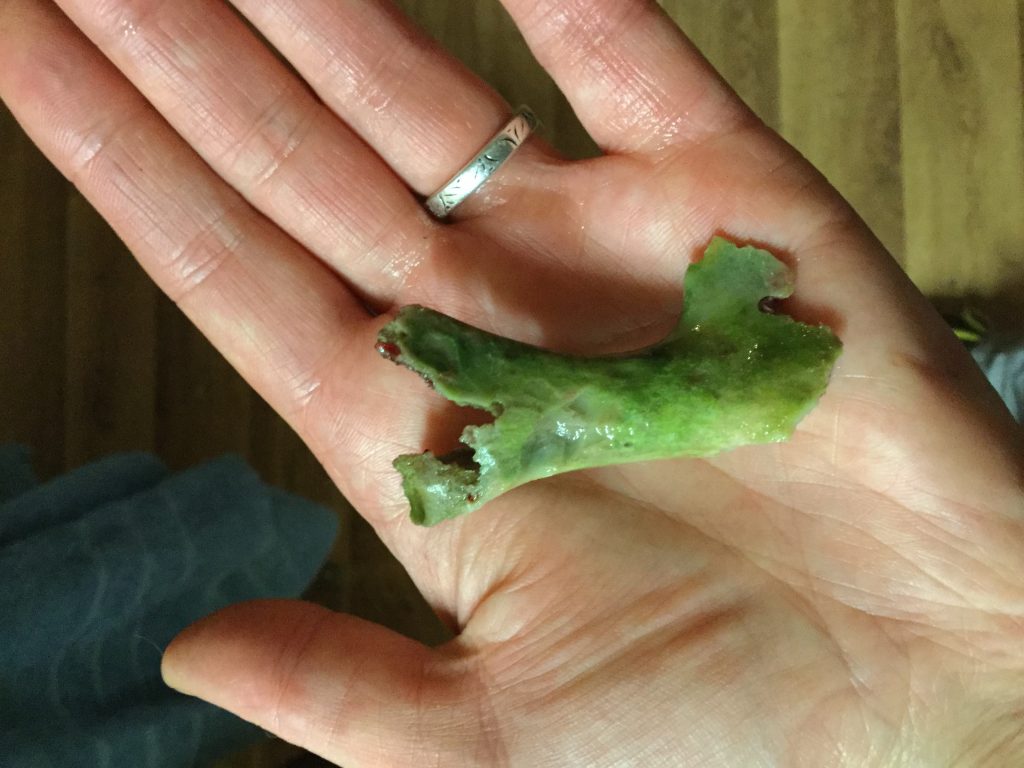
Pony’s hatred of me rose to another level in the autumn, when Pony managed to wedge a chunk of bone she was chewing on beneath her tongue, necessitating a visit from the vet and an operation to remove it. As I was one of the herders there (giving up my evening to wait for the vet to arrive…), Pony seems to have linked the pain and discomfort with somehow being my fault… I went to check she was ok the next morning and got chased for my efforts! What a reindeer!
In the half-dark, waiting for the sedative to wear off……after this old bit of bone was removed from her mouth, having been impaled into the underside of her tongue!
For my part, I still like Pony, and this winter decided to try and win her round by offering her extra tasty treats from a bag. She cottoned on quickly and is quite willing to accept the offering, but it’s fairly daunting as she comes flying over with her ears back, and I hold the bag up partly as a shield! I think her lack of ear tips does make her look more angry than she actually is at times, but I’m still pretty cautious around her, doing my best not to tread on her toes, so to speak!
Pony in the company of her daughter Suebi, aged 2
Just the other day, we were noticing that her oldest daughter, Suebi, who until this point has been a sweet natured lassie, seems to be getting more “opinionated” with age, so fingers crossed we’re not going to end up with another Pony on our hands!
This past year has been my first full year as a reindeer herder. Despite becoming a reindeer herder seven years ago in 2014 (remember then? simpler times!), I was very much a seasonal herder. I would arrive for a few months in the summer whilst either my university course was having a break, or in-between travels abroad.
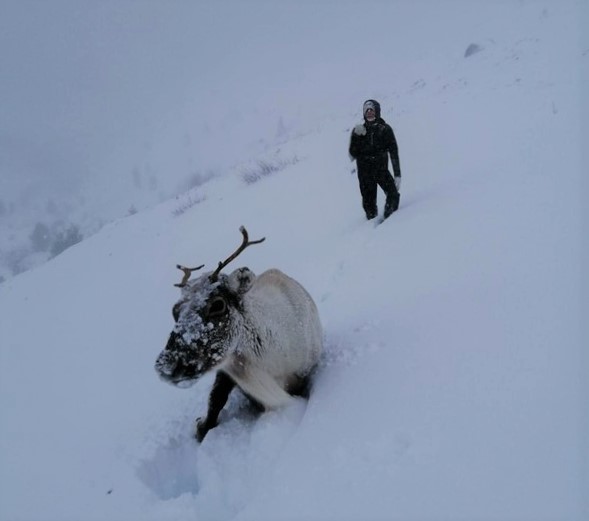
Therefore, last winter was my first winter as a reindeer herder. And what a memorable winter it was! Firstly, it was lockdown, so it was very different to how things usually operate which was new and exciting whilst also being unpredictable and slightly chaotic. But also, there was the snow. So. Much. Snow. And I thought it would be a good opportunity to share a couple of videos and photos from the crazy weather, including this short clip of Joe and I leading the herd downstream in blizzard-like conditions at the start of February.
Pony and I trying not to sink!
Leading Feta and Diamond along the path on a snowy day
And it’s not just reindeer that we fed throughout the winter! Opportunistic snow buntings joined in most days too:
I am writing this at the start of May where we have had quite a bit of fresh snowfall over the past couple of weeks, so maybe we are not through all the snowy weather just yet. But I am sure it won’t be anywhere near as much as the volume of snow that fell this winter. Overall, it was a lovely first year as a reindeer herder, albeit very unusual as the whole country adapted to changing circumstances. Now I look forward to my next year and hopefully getting to see all the ‘normal’ activities such as Christmas events and parades.
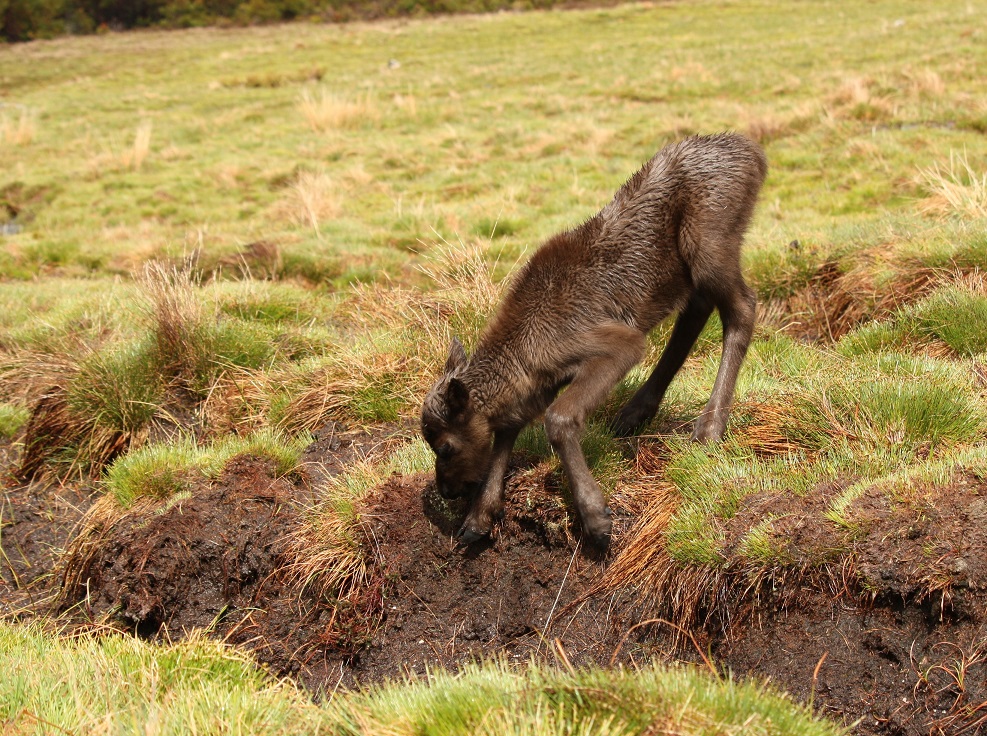
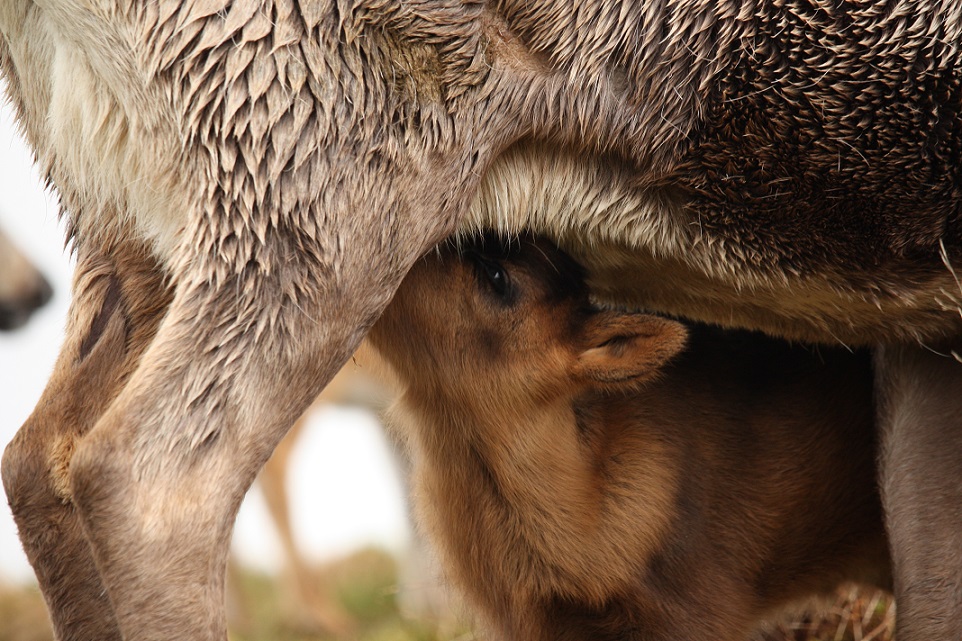
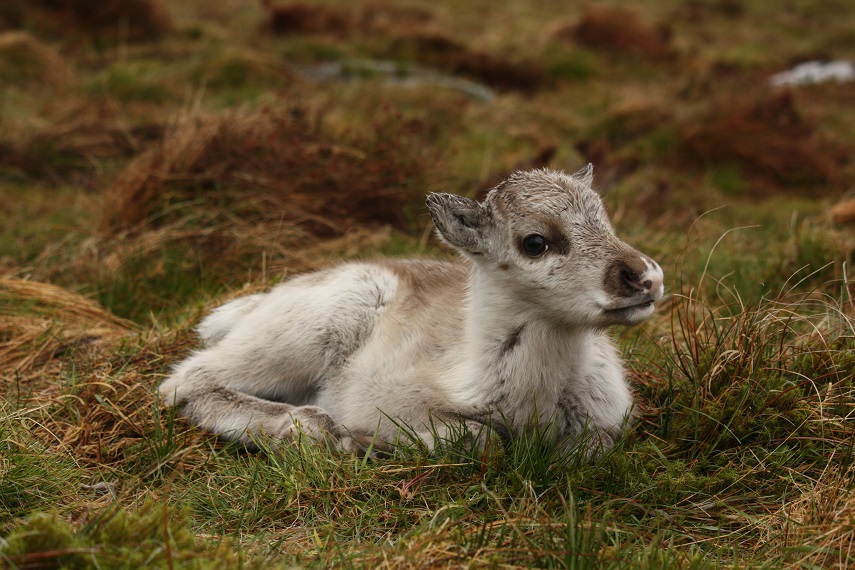
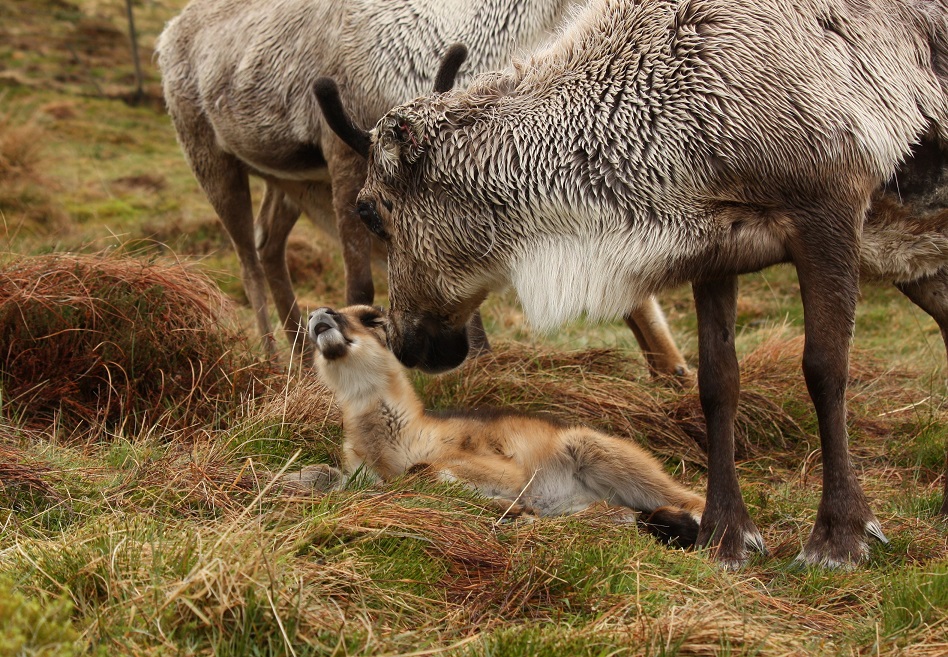
Every year we try and post a blog in May with lots of calf photos – because let’s be honest, it’s all any of you really want to see at this time of year!
We don’t, however, reveal which reindeer have calved at the moment, as we like to wait until after the June newsletter is sent out to our reindeer adopters before revealing who has become a mum. The reason for this is two-fold – the main one being so as not to spoil the surprise element for adopters of opening that envelope in June, and scanning down the calving list to find our whether ‘their’ reindeer has calved.
The second reason is that sadly not every calf born will survive, and reindeer are at their most vulnerable in their first few weeks of life. While we don’t shy away from the fact that reindeer don’t last for ever and do die, sometimes at a very young age, we also don’t want to upset anyone unnecessarily by allowing them to see photos of their adopted reindeer’s super-cute newborn online – only to find them suspiciously missing from the calving list in the newsletter a couple of weeks later. It would be unfair of us to upset those of a perhaps more delicate disposition with the realities of life if it can be easily avoided by not naming who is who, at least until the calves are past the most vulnerable month of their lives.
The reindeer I’ve chosen to talk about in this week’s blog is a reindeer who I like a lot. I met him when he was just hours old and he has now become one of the breeding bulls for the herd. His name is Spartan. He was born in 2016 and was named after that year’s naming theme of ‘lost civilizations’. This means he’s about 5 years old and is coming in to his prime. In this blog I’d like to talk a bit about Spartan’s journey from unassuming calf to sweet-natured breeding bull as well as his heritage and his offspring.
Spartan as a very young calf, with mum Bumble keeping an eye on him
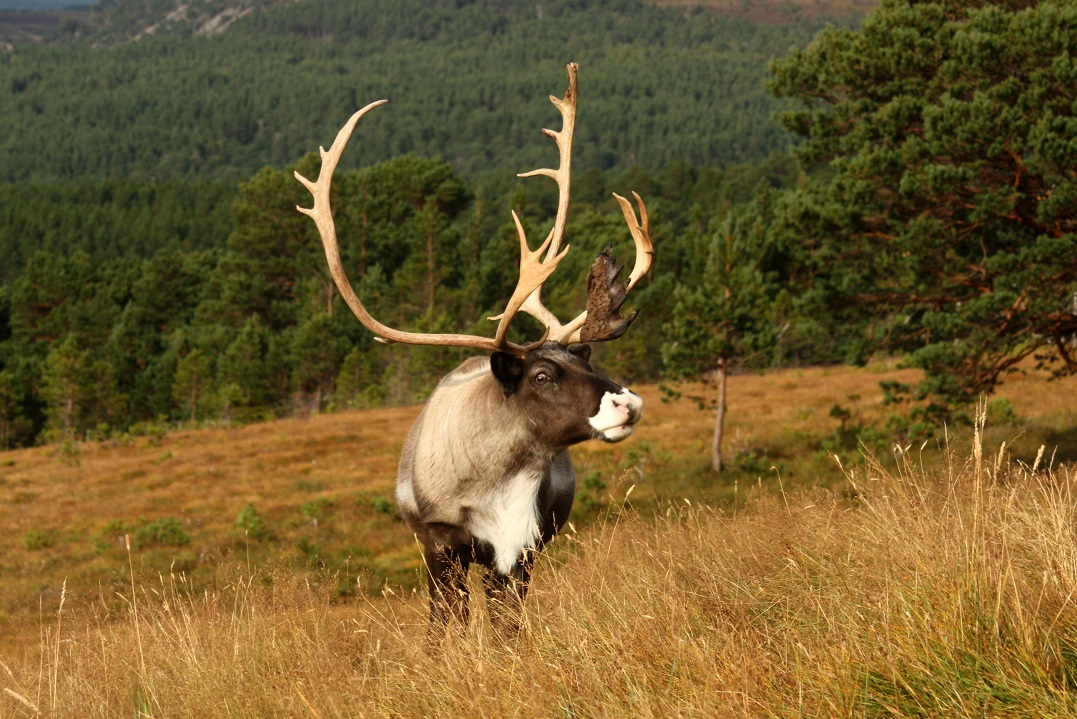
During Spartan’s first year of life he was always an unassuming calf. He wasn’t exactly oozing in character and was a relatively quiet calf. He was always polite and never pushy, and he grew very simple antlers. However, as you can see from the photo below, his antlers are far from simple nowadays. They are one of the largest and most beautiful in the herd.
What a bonny lad!
From a personality point of view, Spartan really grew into himself over the years. He has a sweet, lovely nature, even during the rut. For those who don’t know, the rut is a period in autumn – about a month in duration – where reindeer come into season and the breeding occurs. Breeding bulls are known to alter their nature and become more territorial which can lead to these bulls being more scary and aggressive (hence why we don’t visit the breeding bulls on hill trips in October/November). However, Spartan remained well-behaved despite being swarmed by hormones. Compared to our other breeding bulls he is definitely on the well-behaved end of the spectrum. Perhaps this was due to his much-loved mother, Bumble, being incredibly sweet-natured and passing on those genes to her son. If you wanted to read more about Bumble, you can read a blog on her by clicking here.
Bumble – a monstrously greedy reindeer!!!
Spartan had his first experience of being a breeding bull in 2019 and is believed to be the father of 10 calves that were conceived that year and later born in 2020. However, the selection of Spartan as a breeding bull wasn’t an obvious selection. Each year we have to make the decision of which young adult male reindeer we want to pass on their genetics for the future of the herd, and which reindeer we want to castrate. This decision is made when the male reindeer is at least 3 years old and is integral in keeping the number of reindeer in our herd to a sustainable amount. Moreover, by controlling the breeding it means that we never have to cull any reindeer. When it came time to select which reindeer were to be castrated from the 2016 year we decided that we would keep 2 reindeer as breeding bulls that year. Roman was the first choice and after lengthy discussions, Spartan’s genes seemed to win out over other contenders such as Aztec and Celt. He kind of snuck through the castration net, so to speak.
Roman, in the foreground, grows amazing antlers!
Spartan comes from a blood line that had almost become lost within our herd. And now that he is one of our few breeding bulls, it means that the blood line has a new lease of life. Spartan’s father was the popular breeding bull Nutti who was imported as a calf from Sweden in December 2011. We imported a large amount of young male reindeer from Sweden around that time as we wanted to diversify the genetics in our herd and introduce more blood lines. Nutti unfortunately died in April 2018 whilst free-roaming in the Cromdale hills but as you can see from the photo below, his genetics live on in Spartan whose looks, and indeed nature resemble that of Nutti.
Nutti – explaining where Spartan’s face marking came from!
In 2019, almost immediately after the decision that he would become a breeding bull, Spartan was put into the rut and introduced to his own group of females that were coming into season. It turned out that the other breeding bull contenders were related to more of the eligible cows than Spartan. Therefore, we believe he is father to a group of 10 lovely calves (now yearlings) all of whom were named after ‘peas, seeds and beans’. The calves that we think are probably Spartan’s all appear to be very sweet natured and endearing. They are Cannellini, Lupin, Hemp, Chickpea, Mushy, Pinto, Edamame, Adzuki, Borlotti and Haricot. And with only a few exceptions, many of the calves have distinctive white face markings, just like Spartan. These are most notable on Pinto, Edamame, Hemp, Borlotti and Adzuki, the offspring of Morven, Emmental, Addax, Clootie and Gazelle respectively.
Winner of the most interesting markings as a newborn calf – Hemp!
Although we didn’t use Spartan in autumn’s rut of 2020 he retains his ‘equipment’ and his name is being discussed as a potential breeding bull for this year’s rut. He is currently in great condition and is having a very peaceful year! In the early months of 2021 Spartan has been free-roaming on the Cromdale hills.
So there you have it! The story of Spartan – one of our friendliest breeding bulls.
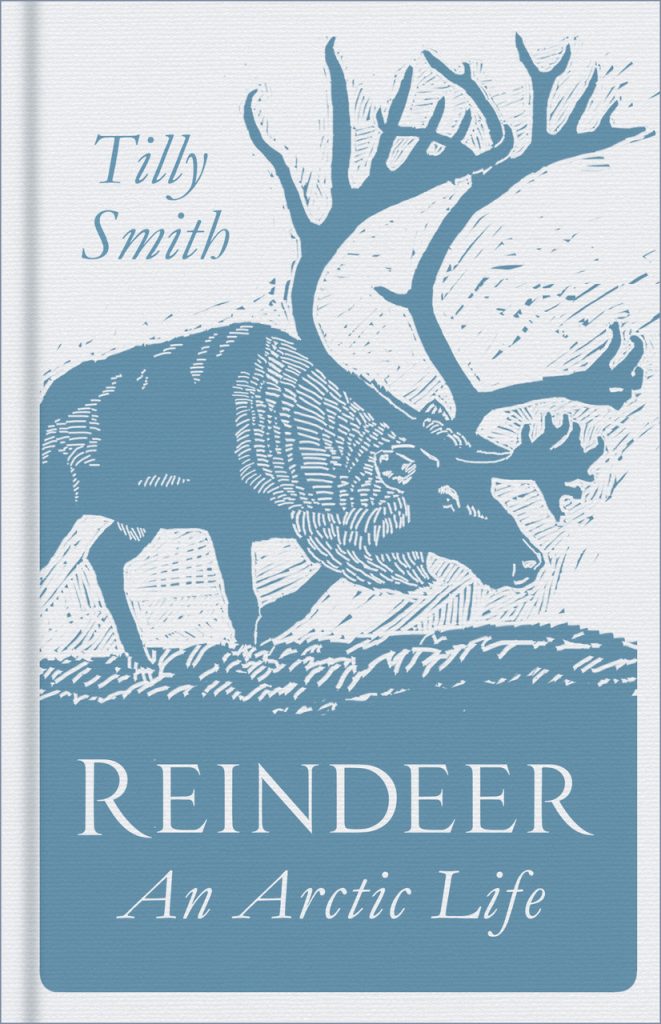
This is the third (but maybe not last!) book I have written about reindeer. Published by The History Press, I was approached by them in the latter months of 2015 to ask if I would write another book about reindeer.
My immediate reaction was, “I’m not sure, there is only so much that can be written about reindeer!”, but after I had given it some thought I decided to agree. I don’t dispute I enjoy writing, I am passionate about reindeer and I have had many ‘busman’s holidays’ to reindeer places in the world. It would also be another way of promoting our unique herd of reindeer. So by the end of the year I was already putting pen to paper.
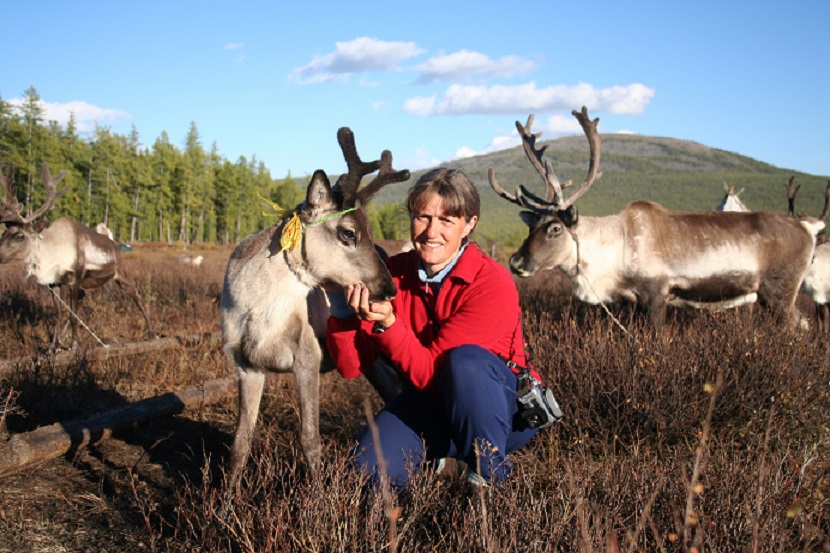
A trip to Mongolia in 2005 – no point going on holiday anywhere where there aren’t reindeer!
The History Press was looking to have the book on the shelves by Christmas 2016 and so I had to get my skates on. In fact as a person who likes a deadline I said I would have the draft ready by the end of March. And much to their surprise I did!
When we talked about the layout of the book the editor was keen to have the book illustrated, rather then include photographs. At first I was not so sure this was a good idea, reindeer are incredibly photogenic and of course live in some of the most iconic places in the world. However now in hindsight I am really pleased that it is illustrated with line-cut drawings and actually I think it may have made me more descriptive in my writing.
I start and finish the book in winter, the time of year that reindeer are without a doubt, in their element. It is the sort of book you can dip into for fun facts or entertaining stories, and a must for any reindeer enthusiasts, groupie or geek like myself!
Reindeer: An Arctic Life is still in print and if you fancy a copy then buying a signed copy (with personal dedication if you so wish) from us here at the Cairngorm Reindeer Centre will help to support the herd far more than going to Amazon! You can buy it from our online shop ( along with lots of other reindeer related gifts ) or just ring the Reindeer Centre and speak to a friendly reindeer herder to you prefer to order things the old-fashioned way, or want a personalised dedication.
We lost one of our old girls a few weeks back, Fonn. She was a really sweet character in the herd and got to the grand age of 17, only one month off her 18th birthday. Considering anything over 10 years old is doing well this meant she did really well! Although the last few years she was starting to look her age she continued to stay in good condition, giving us no cause for concern. This was helped by us letting her get her head in the bag of feed of course!
Fonn in her heyday
As a youngster she had her fair share of calves of which her son Rubiks and daughter Merida are still going strong. Her oldest daughter Joni we lost in 2020 to old age, however Joni also had a few calves over the years so it’s a good sized family. She has 5 grandchildren currently in the herd – Bourbon, Jenga, Jute, Dr Seuss and Ärta. She also has one great grandson, Jelly. I wont get into cousins and second cousins cos I’ll be here all day.
With daughter Merida, back in 2012
In the past 7 years Fonn hasn’t had a calf and as a result lived to a grand age. She was always super reliable when bringing the herd in for feeding time and if we ever needed to catch a reindeer out to walk on a halter as a lure for the others to follow then Fonn was a good one to do this. Last year she re-formed a very sweet bond with her 9 year old son, Rubiks. The two of them remained side by side for 7 months through winter, spring and summer 2020 which considering they’d spent no time together in the years previous to that was quite amazing they remembered each other. Dr Seuss, her 4 year old grandson has turned into one of the most recognisable characters in the herd not only through looks with his big antlers, white face and dark body but he also featured as one of the main reindeer in last year’s TV show ‘A Baby Reindeer’s First Christmas’.
Rubiks licking Fonn’s face, back in January 2020
Always friendly to visitors!
Many reindeer come and go throughout the years and although they are all great characters some leave a slightly bigger hole in your heart than others and Fonn was certainly one of them. Of course it is sad, however the sadness is outweighed by knowing she had such a fantastic life up here in the Cairngorm Mountains. She has succession through her wonderful family which is a mix of Christmas reindeer, females and young bulls so the line will go on and she can be proud of what’s to come.
The last ‘adopt’ photo of Fonn (photo taken for her adoption certificates), looking old but still very well last autumn.
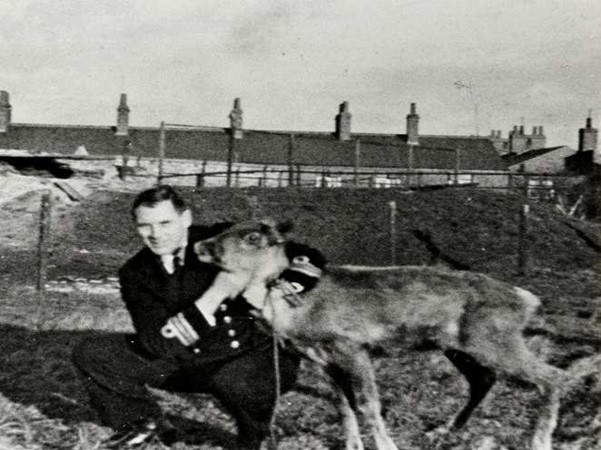
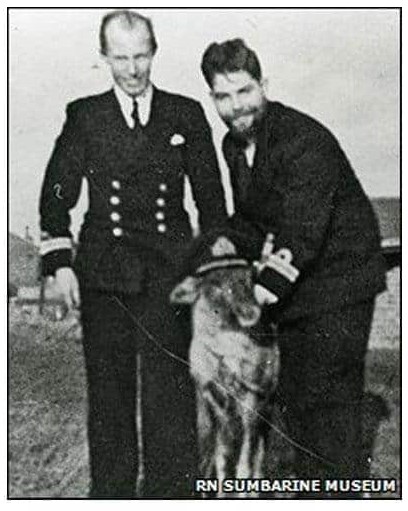
I recently came across the remarkable story of Pollyanna the reindeer. She was a reindeer who lived on a British submarine during World War II. It was my brother who informed me of this crazy tale, knowing my passion for all things reindeer and it was such a weird and wonderful story that I initially thought it couldn’t be true. Turns out facts are sometimes stranger than fiction…there really was a reindeer submariner.
HMS Trident captain, Geoffrey Sladen, with Pollyanna the reindeer submariner.
In 1941 HMS Trident stopped for repairs in the Soviet Union and it was at this point that the crew on HMS Trident got themselves a furry new recruit, accompanied by “a barrel of moss”. There’s a couple of different stories as to the recruitment process for Pollyanna. One tale states that she was gifted to the British crew as a token of gratitude for their assistance in fighting the German forces in the Arctic Circle. Another story details that whilst dining with the Russian Admiral, the captain of HMS Trident mentioned how his wife was having problems pushing her pram in the winter snow of England. This led to the admiral stating that what the captain needed was a reindeer, and as such Pollyanna was gifted to the crew. I’m not too sure of the logic there, was the reindeer meant to pull the pram through the streets of London? If so, Pollyanna would do well at our Christmas events.
Pollyanna spent six weeks aboard HMS Trident and it began with her being lowered in through one of the torpedo tubes. The plan was for Pollyanna to live in the torpedo store area (what could go wrong there?!?!). However, Pollyanna had other plans. She took herself out of the torpedo store area and she stationed herself in the captain’s cabin. And why not? I imagine the captain’s cabin was far more comfortable.
However, it wasn’t long before the barrel of moss sustaining Pollyanna ran out. Being an active submarine, HMS Trident couldn’t stop for supplies. But Pollyanna adapted, eating leftovers from the crew’s vegetables and developing a real taste for the old war time favourite, Carnation condensed milk. It’s reported that she even ate some navigation charts. I can’t imagine that would go down well with the rest of the crew! I think she’d have more of an excuse than any human though.
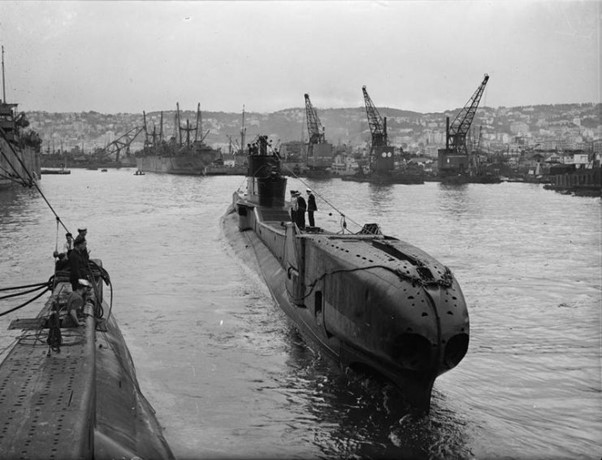
HMS Trident leaving harbour
After six weeks of patrols off Norway, HMS Trident docked in Blyth and all was well. However, when it came time to leave, it became obvious that there was a problem. After all the condensed milk and scraps (and navigation charts) Pollyanna had put on a lot of weight. She couldn’t fit out of the submarine. It took a protracted and coordinated effort of winching Pollyanna through the hatch, but it was a success and there we have it… Pollyanna set her hooves down on U.K. soil after six weeks at sea.
Photo courtesy of Royal Navy Submarine Museum
The captain decided that instead of giving Pollyanna the role of his wife’s ‘chief pram puller’, she would instead be gifted to London Zoo where she reportedly became a firm favourite with both staff and visitors. Pollyanna lived for a further five years and in a touching case of fate, both Pollyanna and HMS Trident met their ends within the same year of 1947, when HMS Trident was decommissioned and scrapped. It was said that Pollyanna never forgot her submariner nature and whenever a siren, bell or tannoy was sounded at London Zoo, Pollyanna would lower her head, much like she would have done when the HMS Trident dived.
All of us here at the Cairngorm Reindeer Centre would obviously never condone keeping a reindeer enclosed. Nevertheless, the tale of Pollyanna does make for a very obscure and touching story I’m sure you’ll agree. The crew seemed to really take to Pollyanna and she reportedly made a massive contribution to the crew’s morale. I do wonder however, where did all of Pollyanna’s poo go? Some questions are probably best left unanswered.
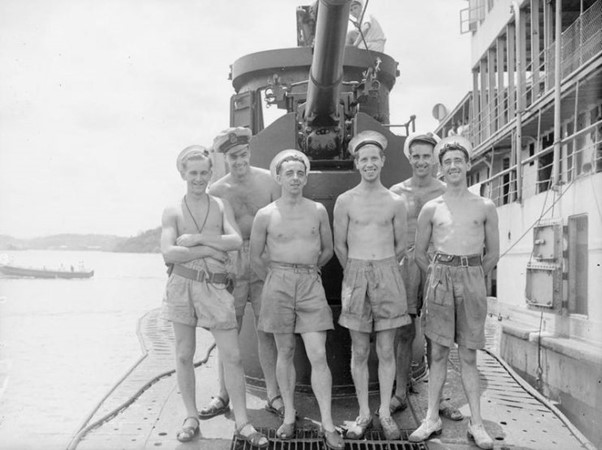
The crew of HMS Trident in July 1945, towards the end of the war.
In the course of writing this blog I have found it entertaining to think of some of our reindeer aboard a submarine. Which one would do best? Of course, we’d never put our lovely reindeer aboard a submarine, not that it’s a request we often come across. But being such resilient and hardy animals, I bet most of them would take it in their stride and ‘keep calm and carry on’. They may well adapt to the situation better than me. Atlantic probably has the best name in the herd for the next reindeer submariner. And I’m counting Scrabble and Svalbard out of selection due to their size. Like Pollyanna, I don’t think we’d get them back out if they got in. And any submarine would have to double the amount of Carnation condensed milk on board. Bond would fancy himself, with his enthusiasm and in living up to his secret agent name. I mean…who wouldn’t want a submarine Bond scene?! Which reindeer from the herd do you think would theoretically make the best reindeer submariner? Or the best reindeer pram puller?
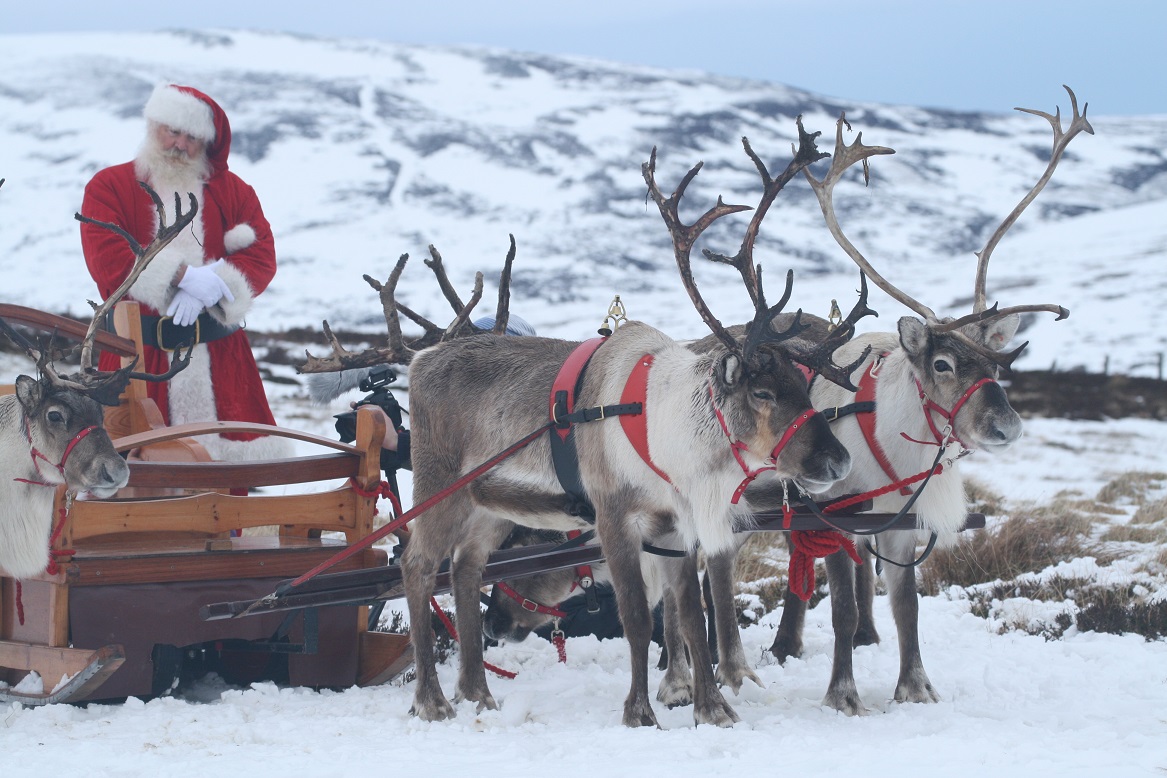
Should these lads be pram pullers instead of sleigh pullers?!
Ben – with credit to Claudia Mendes’ article on War History Online. B&W photos courtesy of National Museum of the Royal Navy.
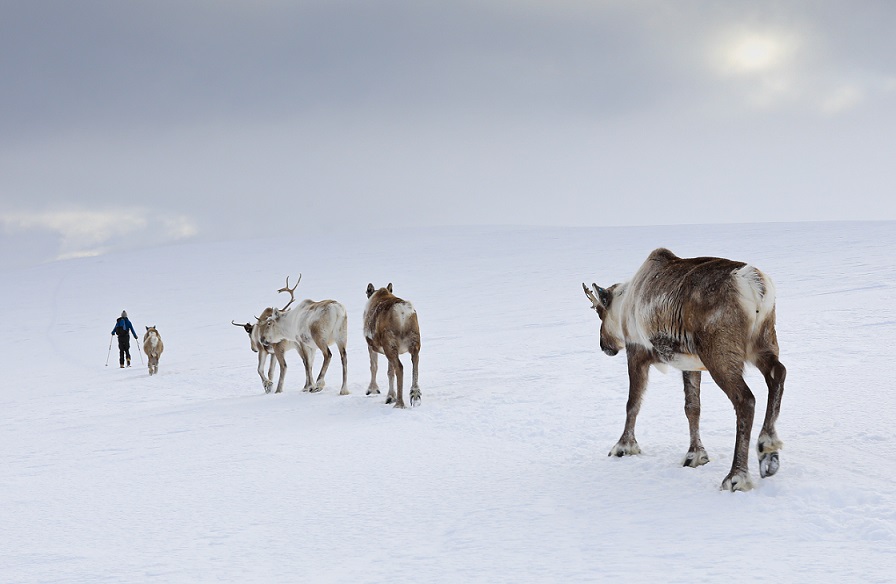
I know snow and ice is not everyone’s cup of tea, but for our reindeer it definitely is! Reindeer are incredibly well adapted for arctic life, with thick coats to keep out the cold and large flat feet to stop them sinking in the snow.
And this winter was certainly a ‘proper’ one. Since the beginning of the year through to mid February we had sustained cold conditions in the Highlands and the mountains and hills were clothed in snow. We also saw considerable snowfall at lower levels, with both Reindeer House and my farm being white for many, many weeks.
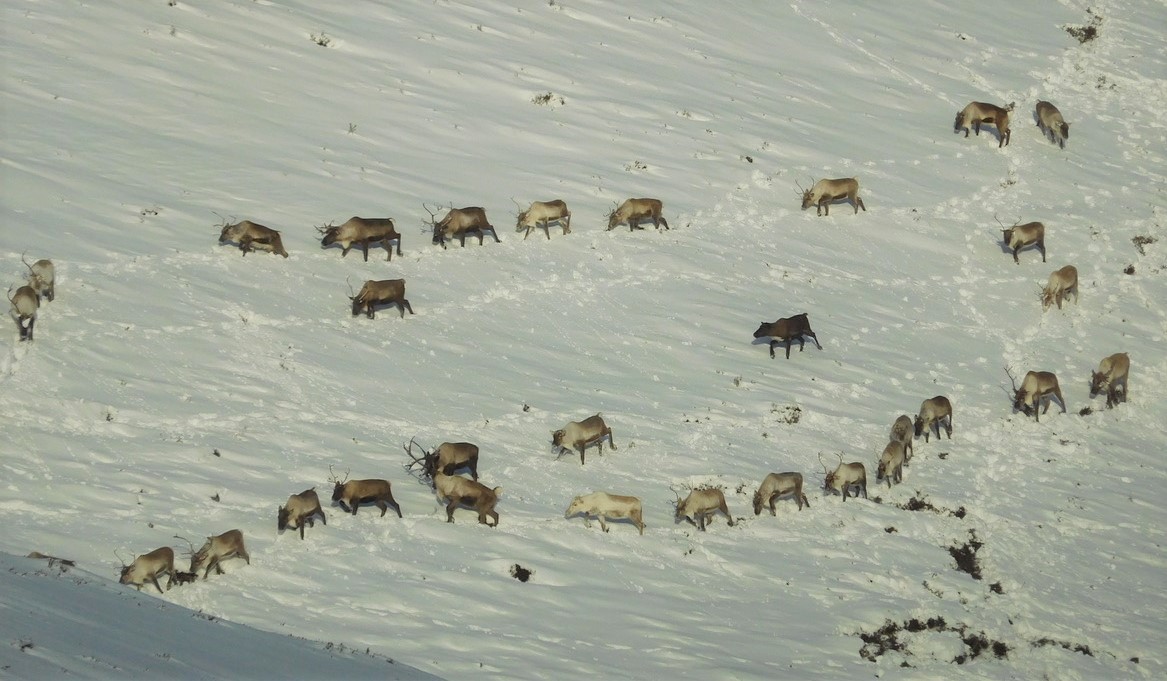
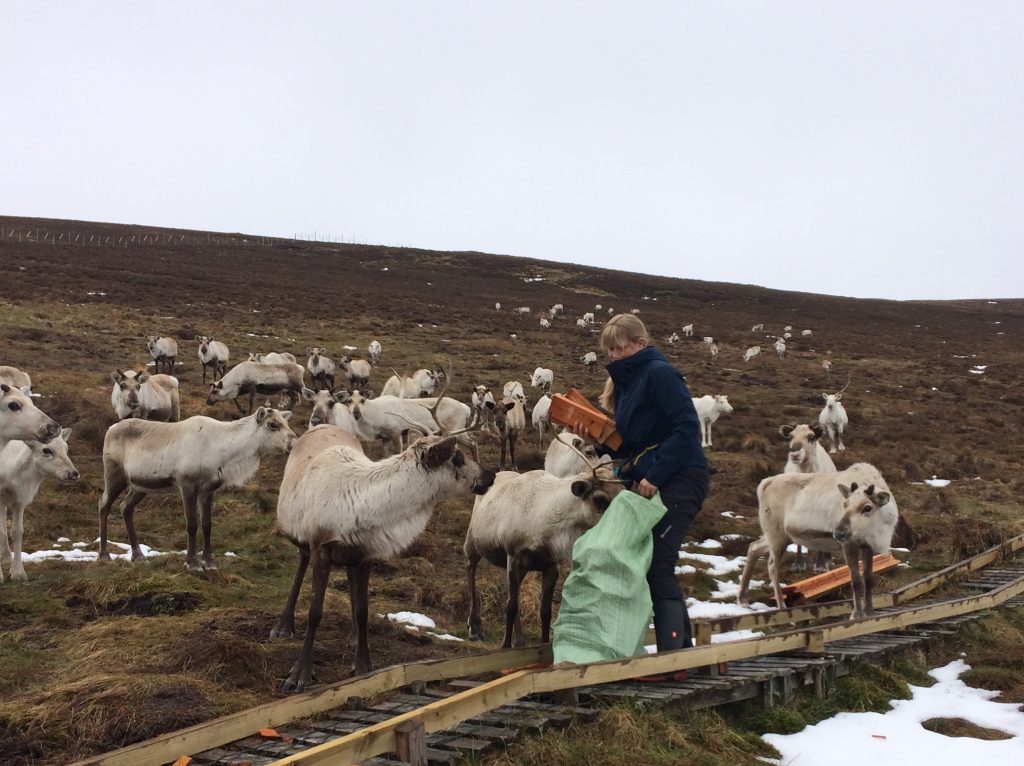
Over at our second site for reindeer at Glenlivet we over-winter part of the Cairngorm Reindeer Herd out on the hills there, just the same as on the Cairngorms. At this time of year the reindeer are grazing on ground lichens, their preferred winter diet and they will use their lovely big feet to dig down through the snow to the lichen below. Because of their thick insulating coats they do not seek any shelter and so in the worst of storms they remain on the tops of the ridges where the lichen grows best.
We do like to check the herd regularly though and so as often as we can we go out to see and feed them, although this was impossible for much of this winter due to the inaccessibility of the hills in such deep snow. The reindeer never say no to extra food and when we call them down they come running. We don’t need to feed them much to satisfy them because the reindeer have a lower metabolic rate in the winter, so just a little bit of food is sufficient, and allows us to cast an eye over them to check all is well.
Sometimes skis were the only option for moving about!
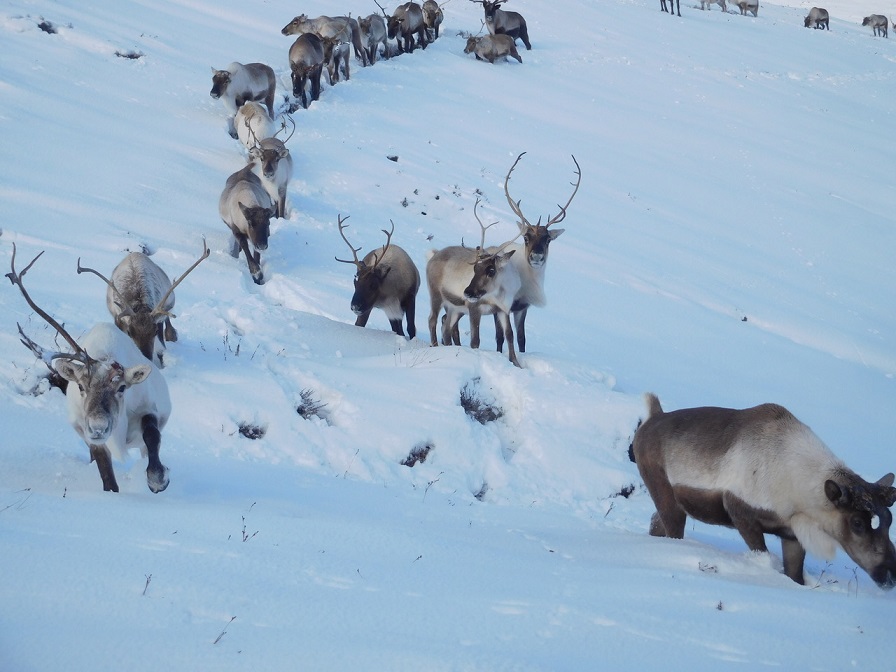
It’s a lovely sight watching the herd weave their way down through deep snow. They are past masters at conserving energy, which means they walk in each others footprints, to save working too hard. It often amuses me to consider which reindeer does the hard work at the front. Is it always the greedy ones that break track or do they ‘take turns?! I suspect it’s the greedy ones.
Once fed, they will drift away and settle on the higher ground in the snow for the night. A bed of snow is very comfortable for a reindeer.
It’s been a while since I’ve written about a “Memorable Reindeer” and I thought we were overdue a bit of reminiscing. And who better to talk about than Bumble?
Bumble in her prime, 2015
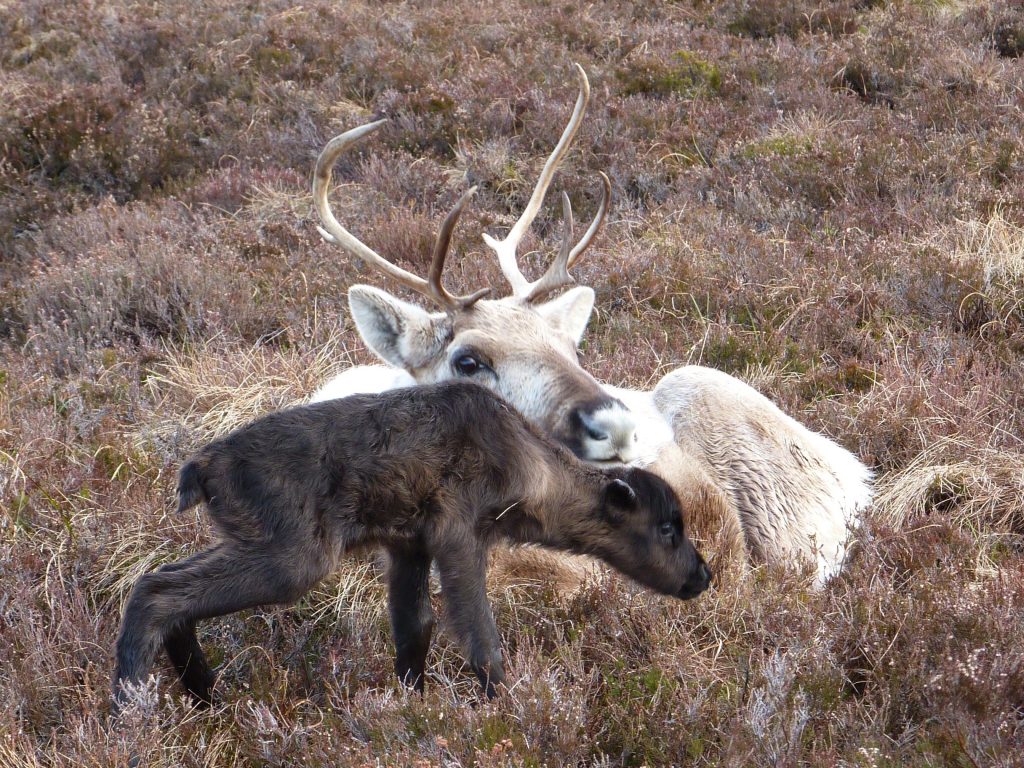
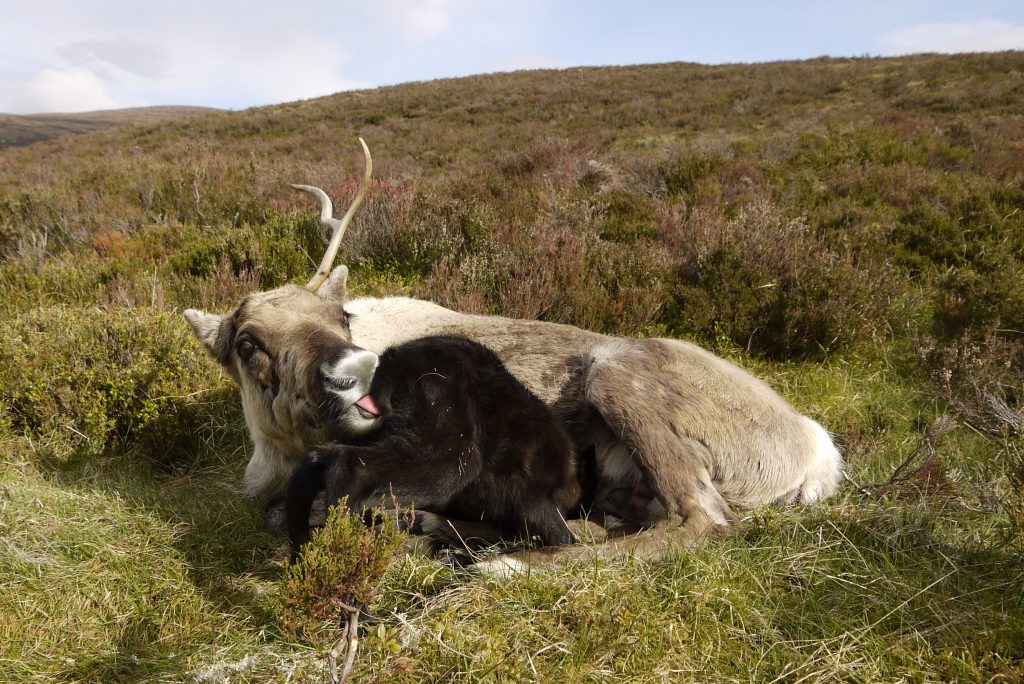
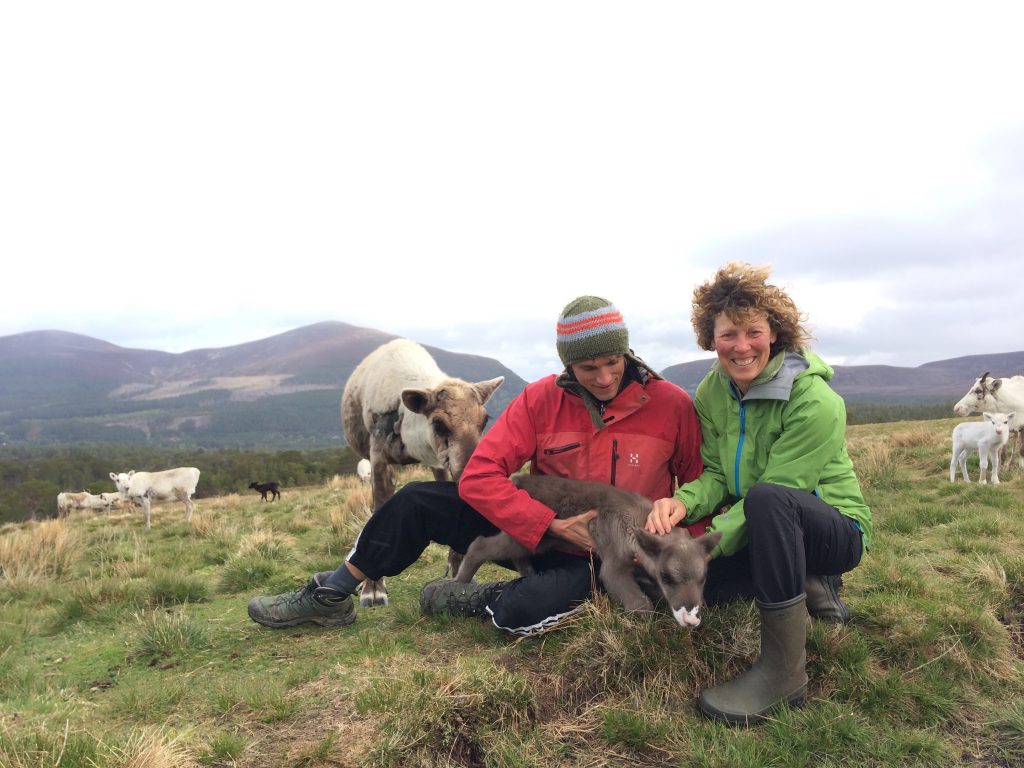
Bumble was born in May 2010, to mum Tjakko. Jack had just started volunteering with the herd, and managed to film the whole birth. By the time the other herders arrived, they found the new mum and calf, along with Jack, all curled up asleep in the heather. It set the scene for how tame Bumble would be for the rest of her life, completely at home in the company of people. Indeed, most of her family are similarly friendly and greedy – including older sisters Dixie and Ibex.
Newborn Bumble with mum Tjakko
That autumn, as the cows and calves began returning from the high tops of the mountain free-range, one unknown little calf came in without her mum. Alone though she was, she didn’t seem scared of us, and was straight into the food. A process of elimination quickly identified her as Tjakko’s calf, orphaned over the summer. We named her Bumble – fitting in the “Bugs and Beasties” theme – and following on from Tjakko’s 2009 calf Crumble. With her silvery legs and confident character, she quickly won us round and stole my heart.
Bumble as a calf, November 2010
Bumble was a marmite reindeer – her confidence and persistence in trying to break into every bag of food either frustrated or amused herders. I found her hilarious. She never grew a “good” set of antlers – they were always simple with basic points pointing in every direction like radio antennae. It just added to her air of goofiness. In general, reindeer aren’t keen on being touched, but Bumble had no sense of personal space and was quite happy being scratched and petted. She even had a starring roll in a commercial we did for Tuffphone, pawing at a food bag and standing squarely on the phone to prove how sturdy it was as if on cue.
If there’s a bag, it has to be checked for food…
Bumble had a reputation for her ample “booty”, earning her the nickname of Beyonce.
Typical sighting of Bumble, moving at full pelt towards the feed bag
Like her mum, Bumble had a real stubborn streak, and leading her on a headcollar could be… interesting. Indeed I remember several times being told, “She’s your favourite, you have to lead her”. Thankfully as she got older she became better behaved, but it was definitely unwise to starting a tugging war with her, as she would just dig in her heels!
On the freerange in her summer coat
Bumble had several calves in her life, the first being Biscay, in 2014. While most cows head away from the herd to calve in private, Bumble didn’t think it was worth risking missing a feed, and tended to give birth within sight of the enclosure gate. Her carefree attitude about human company meant she was utterly unphased by us being nearby during and immediately after the birth, and I was lucky enough to watch her give birth to her second calf, using binoculars from a discreet distance.
Bumble completely unphased by motherhood – with her newborn calf Biscay.
Sally teaching Ben how to check over a new calf, with Bumble lending young Spartan for practice – she’s keeping a close watch to check everything is done correctly.
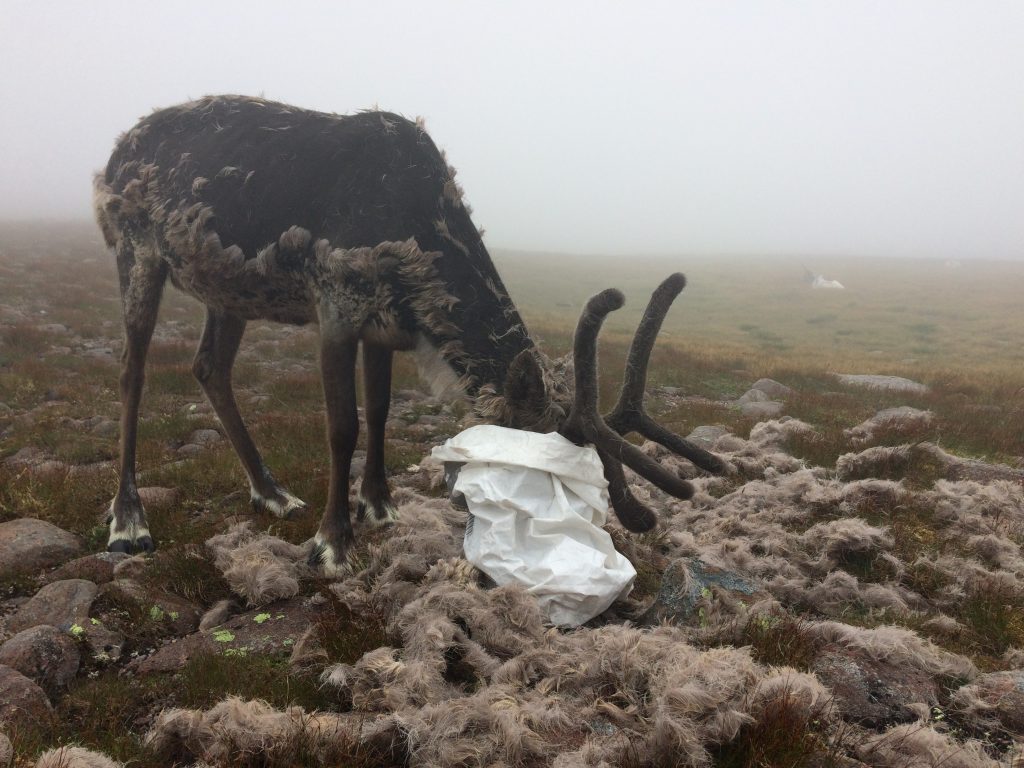
It’s always fun catching up with the females on the free-range in summer, and one year I found a group including Bumble, who was at the “extreme moulting” stage of the year, and whilst she occupied herself with the bag of food I’d brought, I proceeded to groom off virtually all of the loose fur, leaving her rather lighter and cooler for the hot summer days! If any walkers came across the pile of discarded fur, goodness knows what they’d have thought!
Bumble on the summer free range occupying herself with some food whilst I groomed off her excess old winter coat.
I was always delighted to catch up with Bumble.
Bumble was last seen on the free-range in late 2018, in great condition and her usual cheeky self. The next time that group was seen she wasn’t with them, and whilst I held out hope that she was just off doing her thing and would turn up, it wasn’t to be and, despite searching, she was never seen by us again. It was one of those frustrating occasions where we will never know exactly what happened – she was a big strong lass in the prime of her life and not a reindeer we would expect to lose – but there are risks on the mountains, and it is the payoff for the wonderful natural life our herd lead that occasionally one is unlucky.
One of the last photos of Bumble, out on the summer free-range – sent to me by Ruth as a “Look who weve found”
Weathering the storm – Bumble in a blizzard.
For me, Bumble was one in a million and there is a little less joy in the herd without her – when I decided to get a new tattoo it was her crazy antlers that I chose to have tattooed on my side. But her line continues through her son Spartan, who ran as a breeding bull in 2019 and fathered a lovely batch of calves. Among them are several unexpectedly tame calves (from shyer mums) who I see a little bit of Bumble in. Life in the herd goes on.