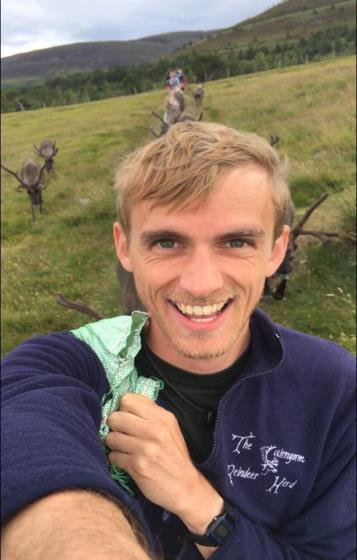
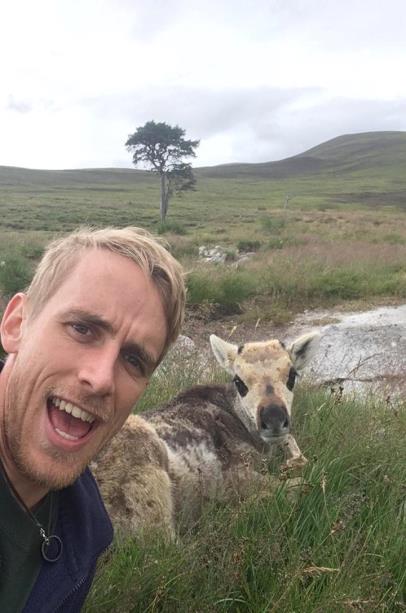
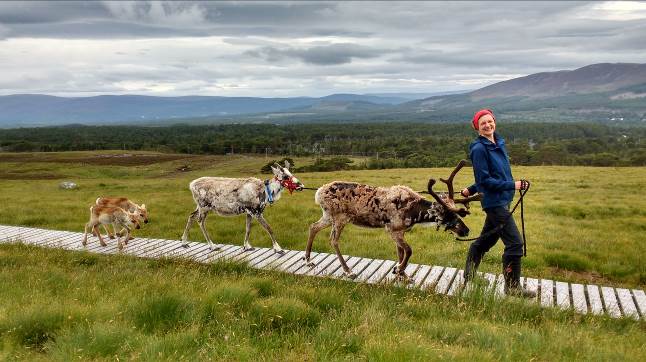
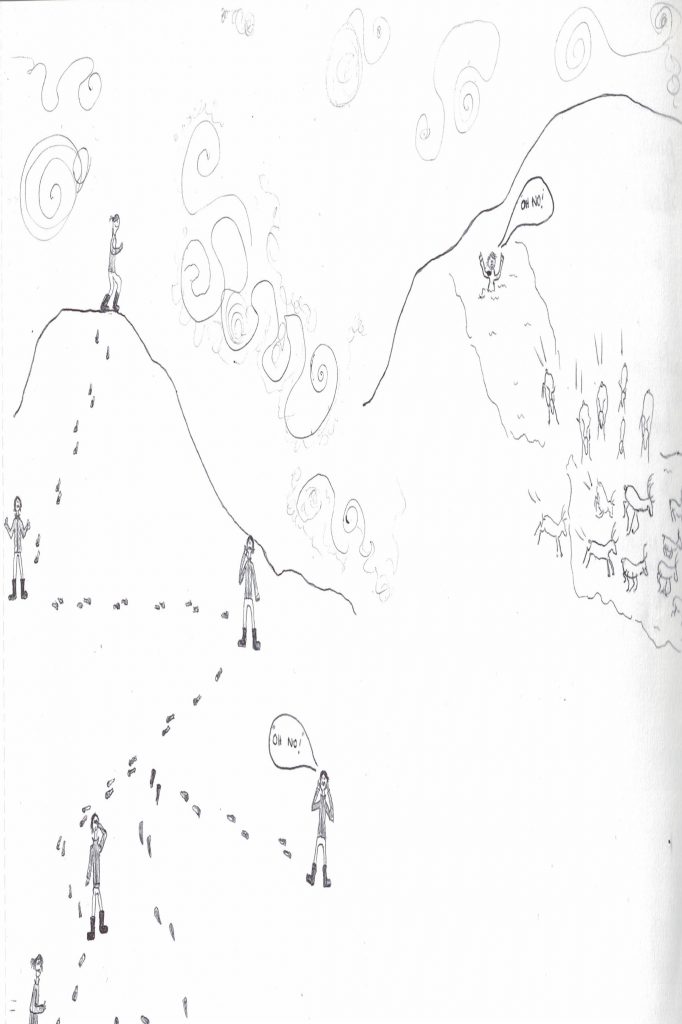
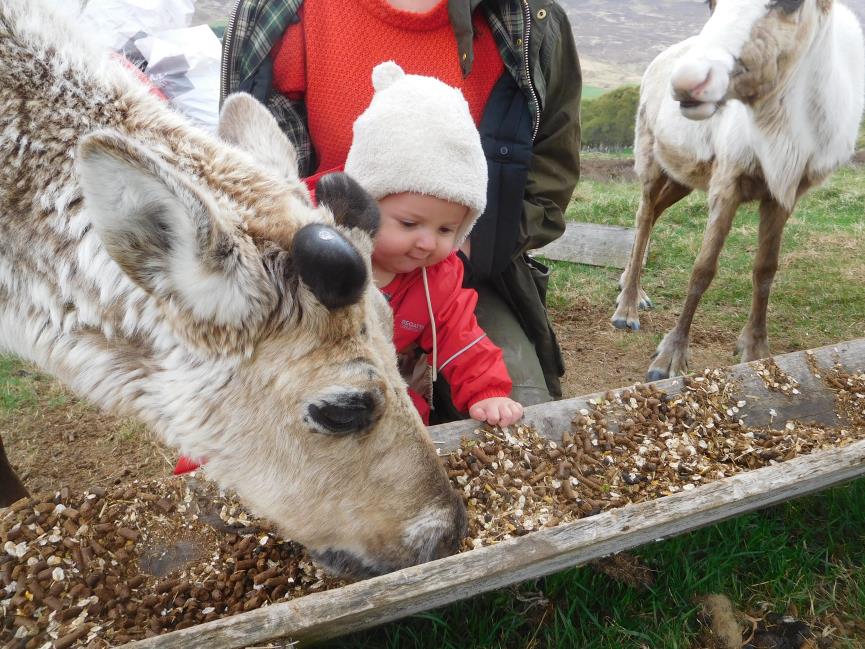
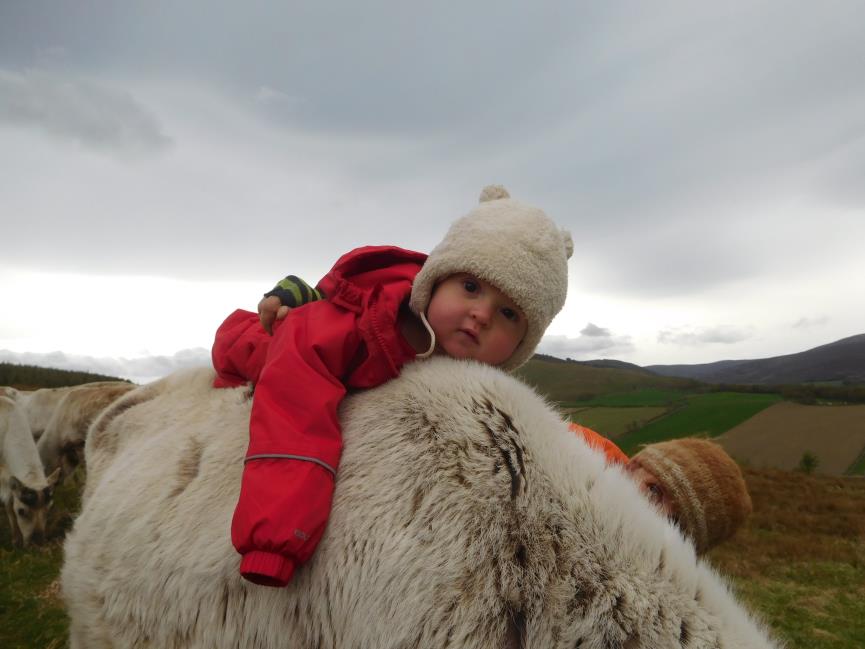
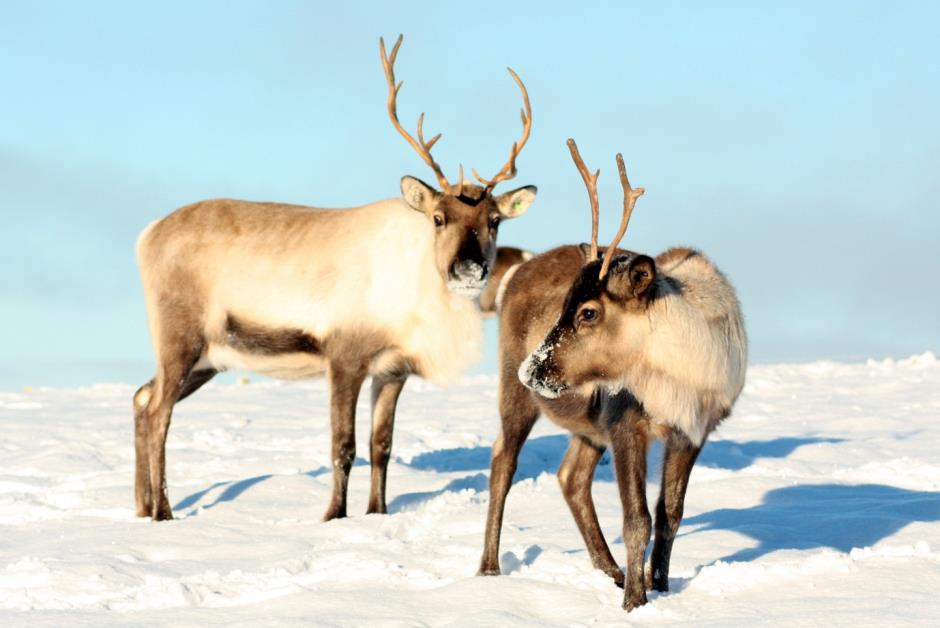
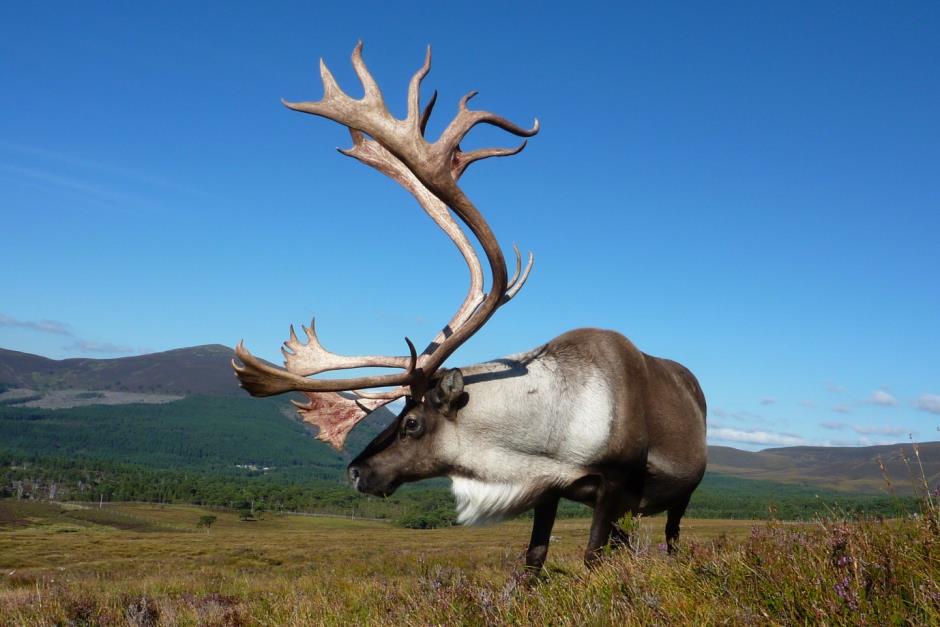
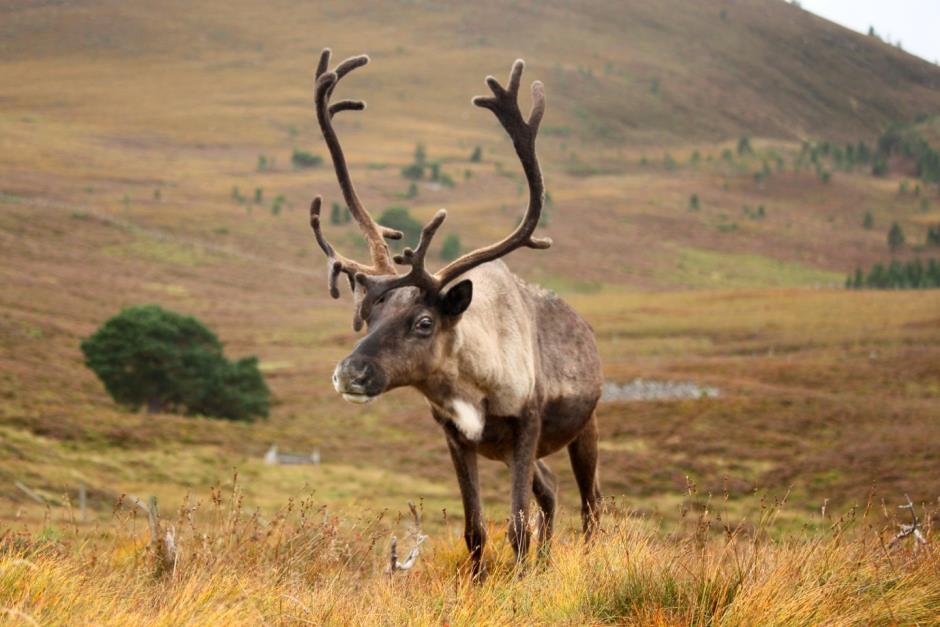
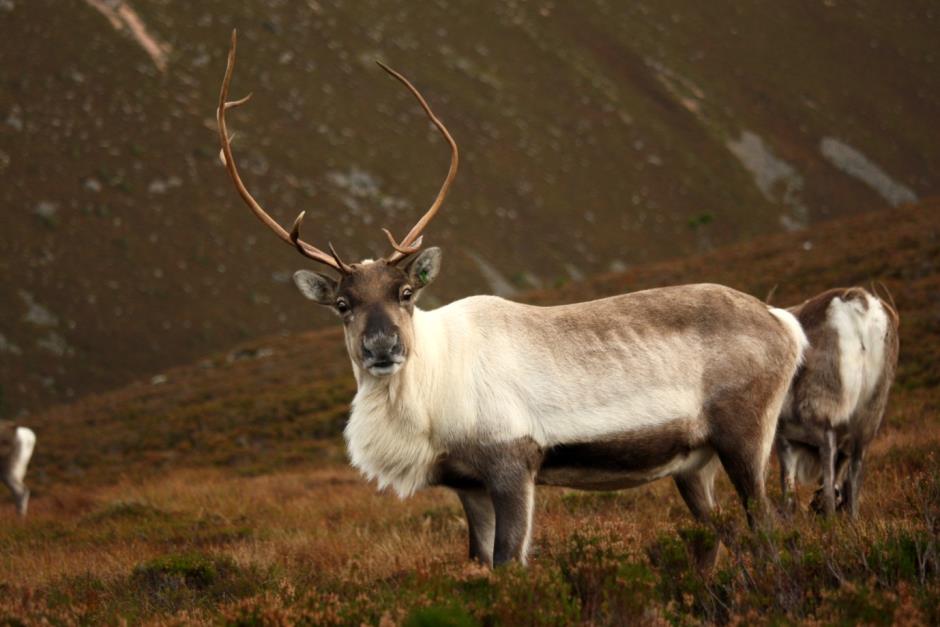
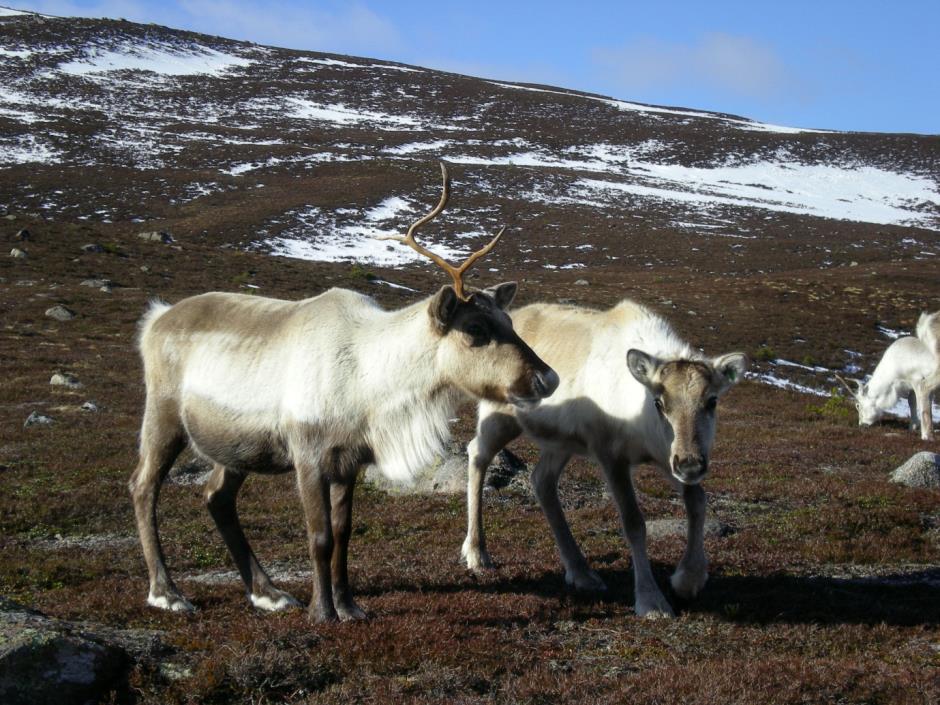
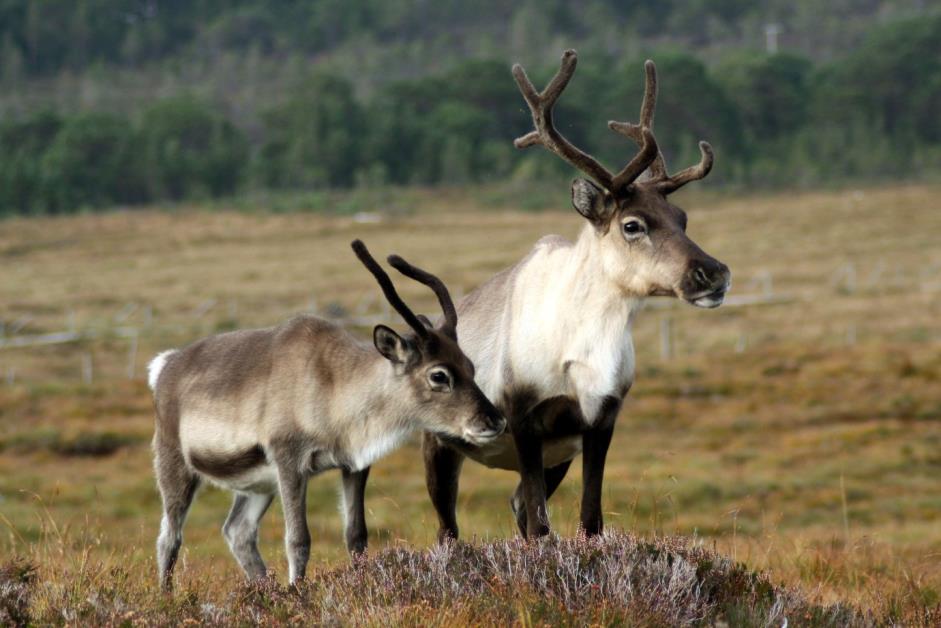
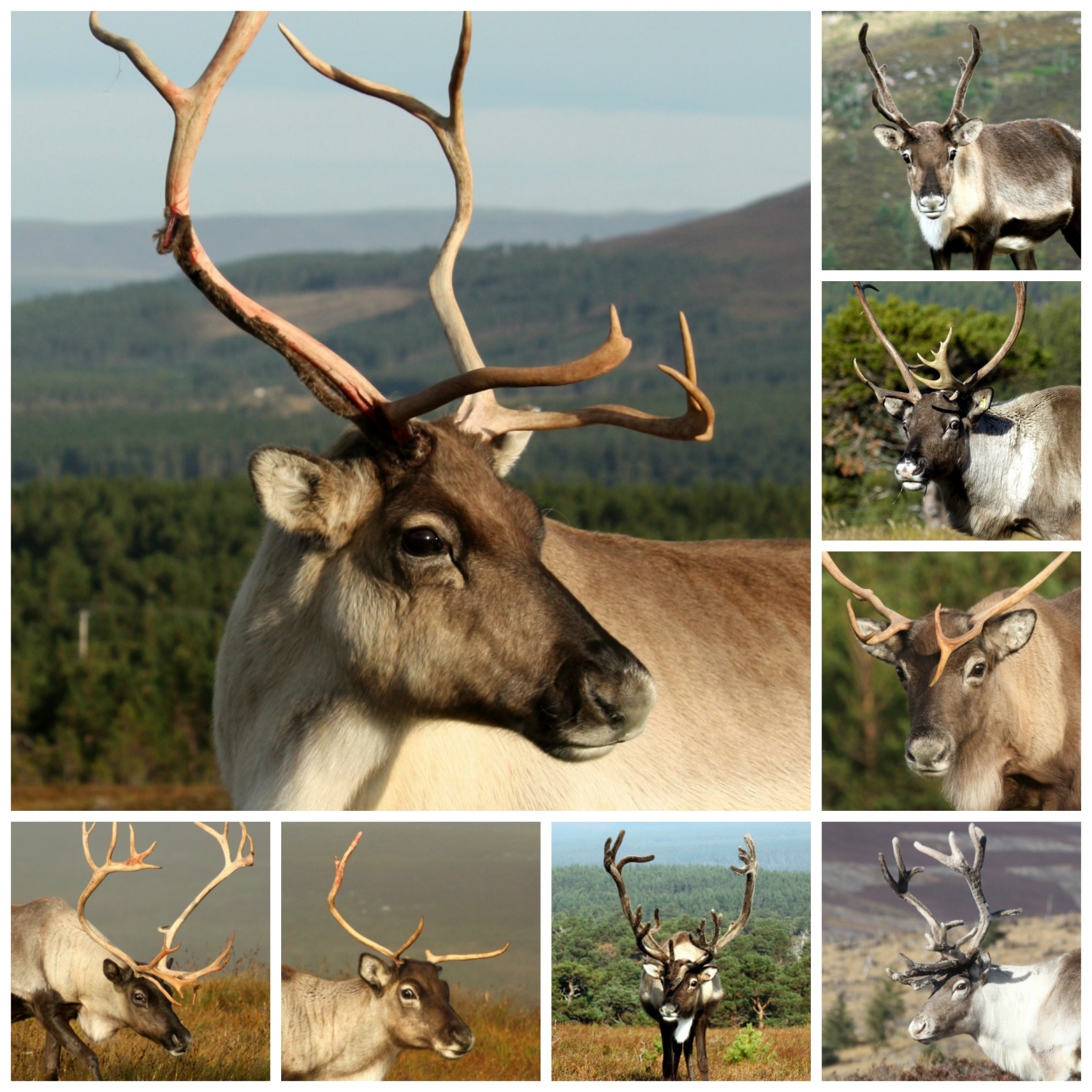
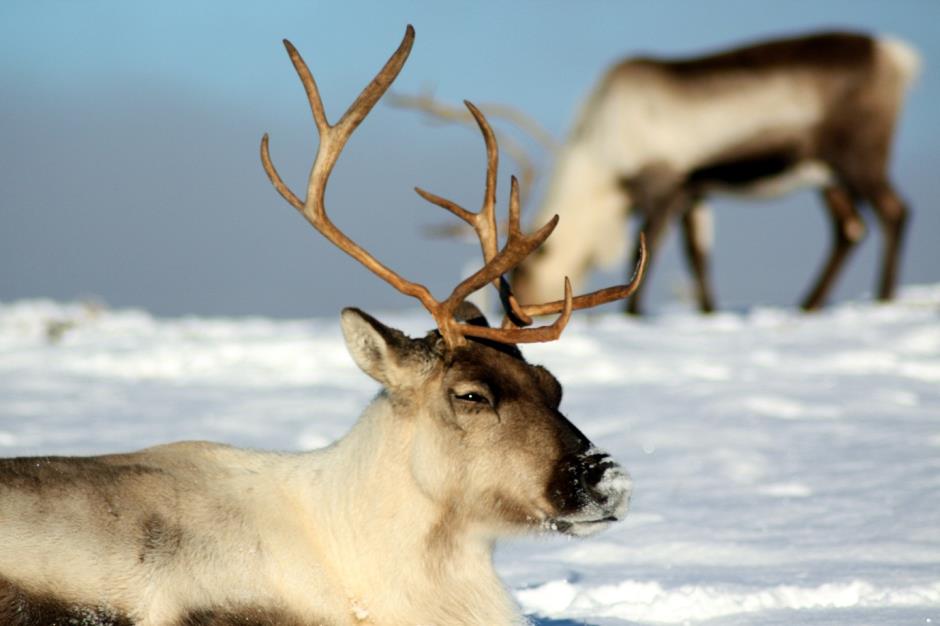
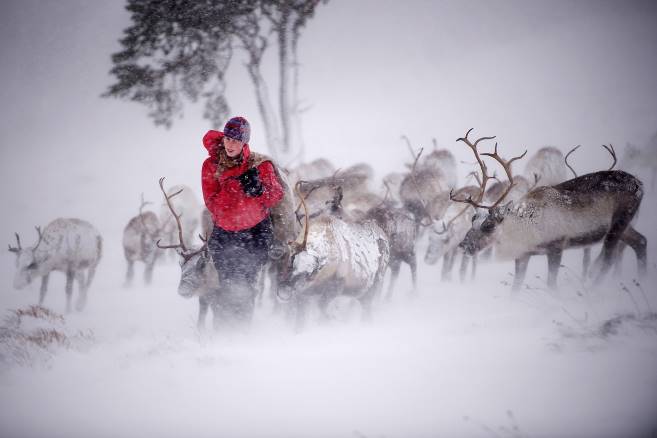
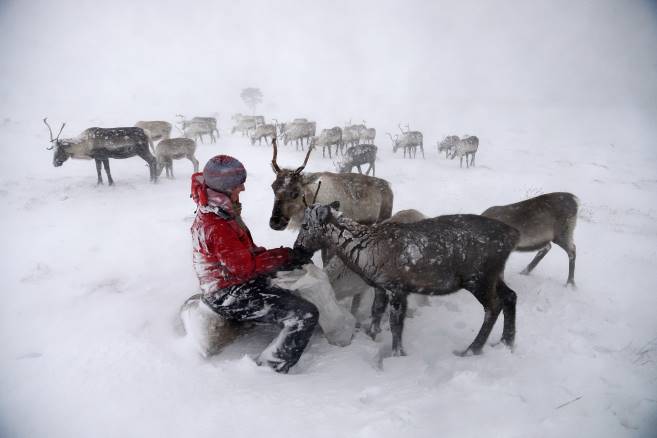
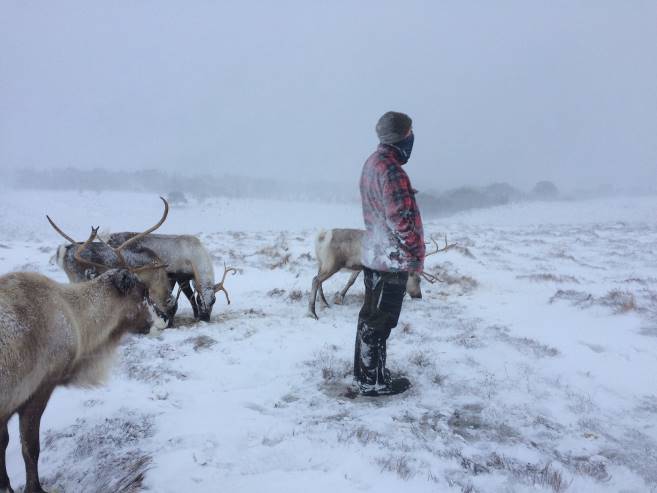
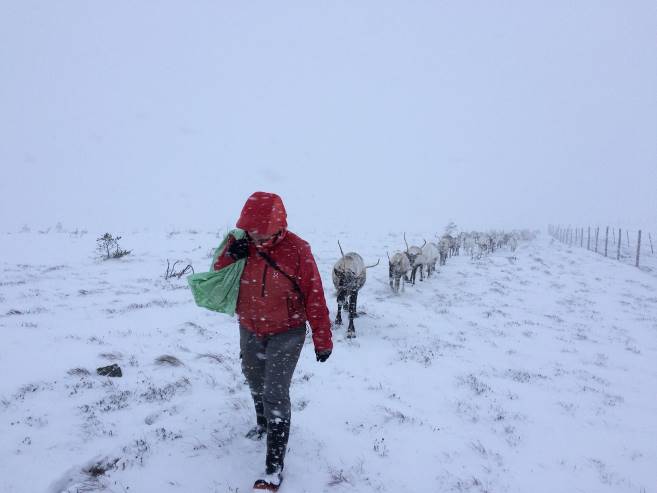
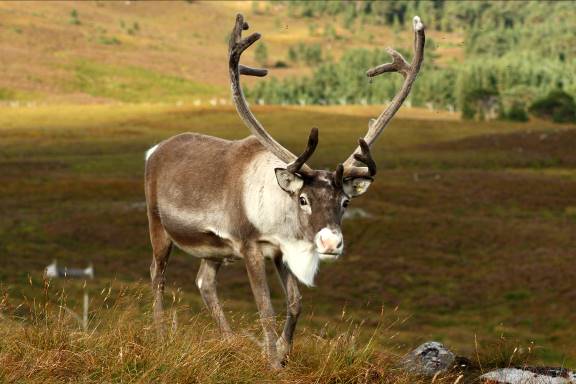
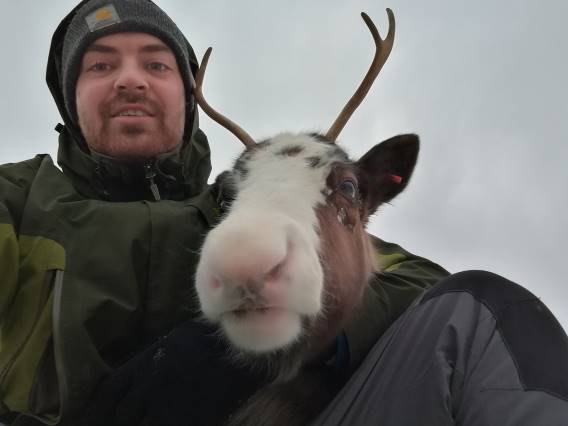
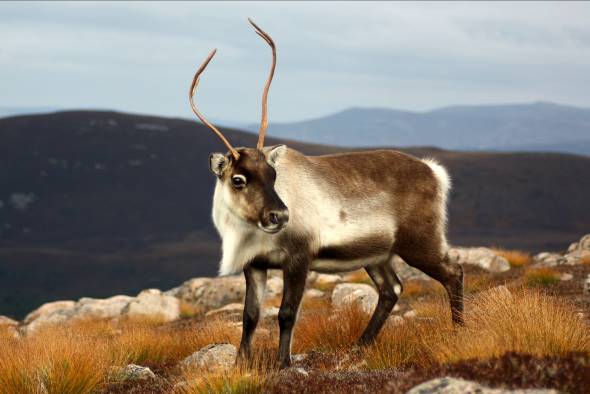
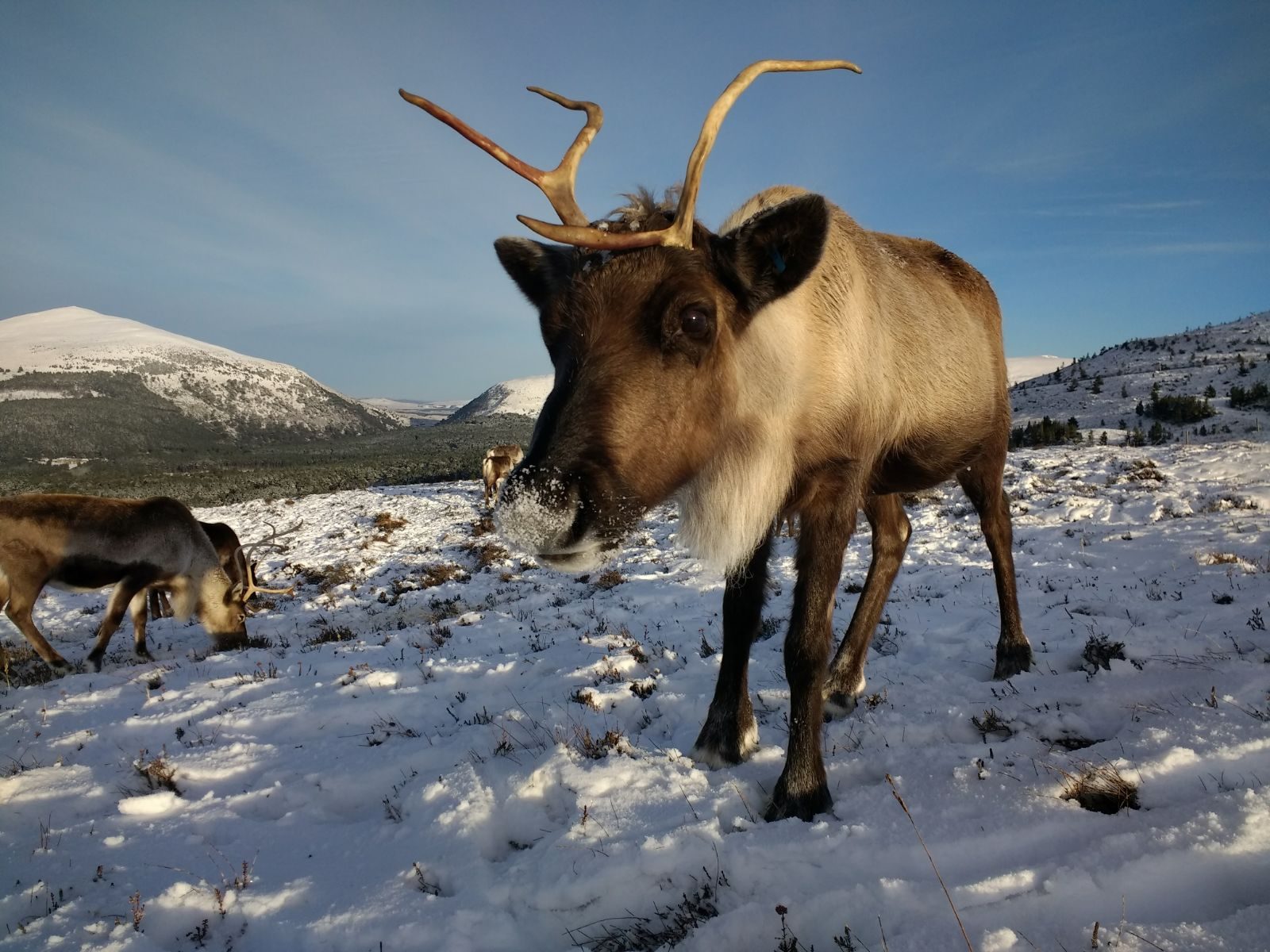
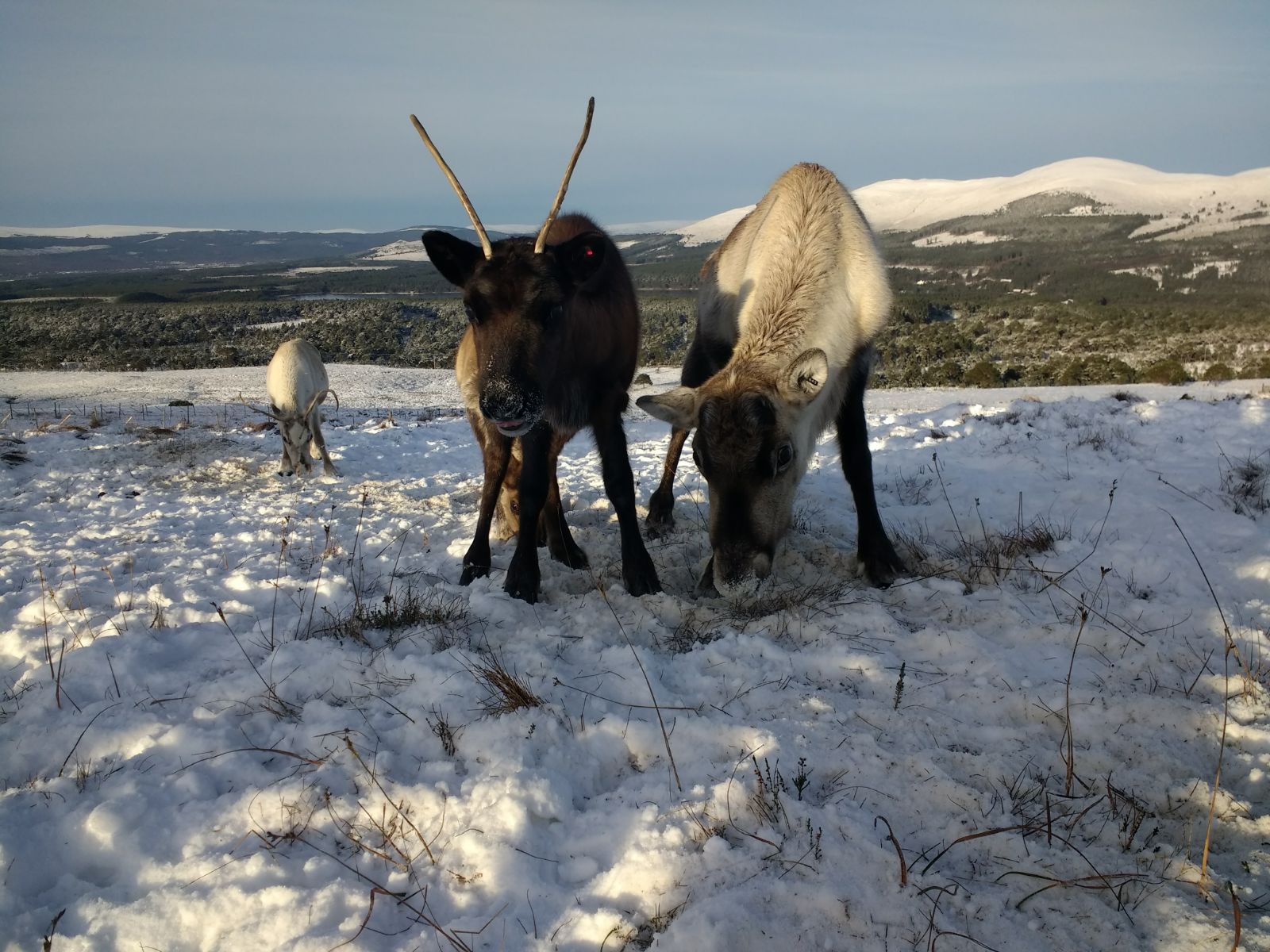
We have a lot of very sweet reindeer. They come right up to me and stick their noses right into the feed bag I have just carried up the hill…. Bumble, for instance…. I cuddle Dr Seuss and scruff up his nose hairs. Reindeer are wonderful creatures. So powerful and hardy, standing into the gales, looking into the snow that flies across the hill, this is where they live. The likes of Bumble and Dr Seuss have lots of adopters. Everyone loves Bumble. So cheeky, so adorable.
Dr Seuss came over for a cuddle with Reindeer Herder Chris one morning to shelter from the wind!
Occasionally someone comes into the shop and asks to adopt a real wild reindeer, a rebel, one who knows no boundaries. I breathe a sigh of relief and start rattling of my favourites, because I prefer the less tame reindeer. I prefer the ones at the back that no one ever sees or the ones that elude even us herders. Tambourine, Enya, Wapiti, Chelsea, I say, these are my favourites. These reindeer have a different beauty. These reindeer laugh at us mere humans. These reindeer have few adopters. Who wants to adopt a reindeer that will wallop you, or walk away, if you go near it?
Champagne at home on the hillside.Bega in the enclosure in late summer 2016.
My favourite when I first arrived was Bega. A pale coloured male that was born on the free-range and a real struggle to train. My other favourite was Champagne, a flighty young female, with distinctive spear like antlers. Both Bega and Champagne died before their time.
I guess this is perhaps what makes the herd so wonderful and interesting – we have both tame and less tame reindeer!
This winter we have prolonged periods of cold snowy weather, as I write this the weather forecast predicts it’s not going to be above zero during the next two weeks! It’s pretty chilly for us herders even under our many layers, but for the reindeer it’s ideal (if a little mild!) and we have a big happy free-ranging herd.
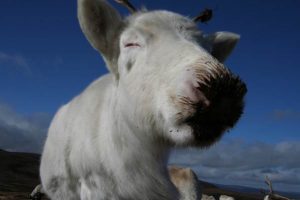
On Hill Trips we often talk about how reindeer are adapted to Arctic and subarctic life by describing their thick winter coat, large hooves, beards, and their amazing clicking back feet. However, in my opinion, one of the most wonderful and endearing adaptations of a reindeer is their beautifully soft velvet noses!
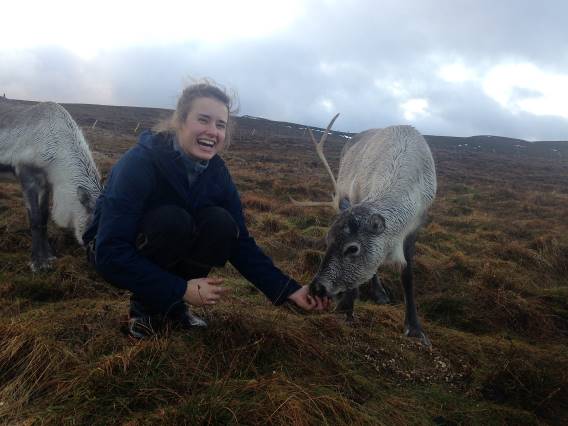
Their fuzzy noses also makes them a joy to hand feed as herder Lotti’s smile demonstrates as she feeds Brimick
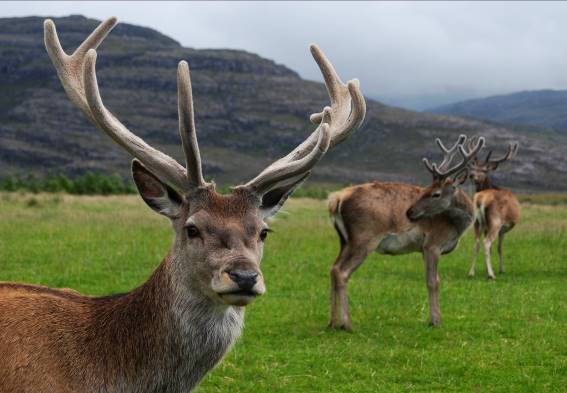
Out of the 40 odd species of deer in the world, reindeer (and Caribou) are the only deer which have hairy noses rather than shiny, moist ones. This prevents the build up of frost which would occur on a cold wet surface during exhalation; perhaps this is the reason why male polar explorers (and Scottish reindeer herders) often grow beards!
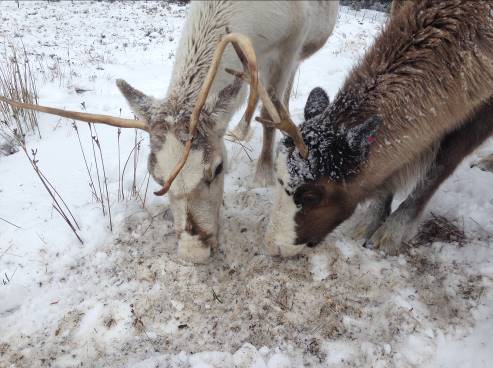
Merida and calf Dr Seuss vacuuming up their breakfast without getting chilly thanks to a completely hairy muzzleBy comparison, here’s a red deer stag with a shiny, wet nose https://commons.wikimedia.org/wiki/File:Red_deer_stag.jpg
However, the most special part of a reindeer nose is actually on the inside. This blog will endeavour to delve under the cute furry exterior to hopefully show how truly remarkable a reindeer’s nose is…. as well as a good excuse to show lots of lovely fuzzy photos!
There is a complicated and highly specialised arrangement of cartilage, bone, fleshy bits, mucous membranes and blood vessels that make up their nasal passages. Together they form an extremely large surface area; the shape of which is often described as a ‘rolled scroll’ or sometimes a ‘seashell’. This specialised structure allows a reindeer’s nose to remain warm and retain moisture in freezing temperatures as well as allowing them to expel excess heat on warmer days.
No cold noses for Sitini and her calf Pratchett as they munch on snow.
A reindeer would soon be chilled if freezing air was to reach their lungs on every breath. To overcome this they have the fascinating ability to change the temperature of the air they inhale before it reaches the lungs, and vice versa. This is all thanks to their ingenious nasal structure, which works as a counter-current heat-exchange system.
For example, if the outside air temperature is -40⁰C, the temperature when the air reaches the reindeer’s lungs is about +38⁰C. In other words, they can change the temperature of the air an incredible 70-80⁰C in less than one second! Additionally, winter air tends to be cold and dry, especially for reindeer that live in higher latitudes. In order for the heated air not to be over dry when it reaches the lungs, a bit of moisture is released from the internal mucous membranes into the air when the reindeer inhales. Move over Rudolph with your shiny red nose, I think that is pretty magic!
Bumble’s snowy nose
On exhalation the opposite happens so a reindeer is able to cool its warm breath, in order to conserve as much body heat as possible. When breathing out they also conserve as much water vapour as possible; especially important when snow may be the only form of water they are able to get!
So when it’s cold in winter, us meagre humans can see our breath as we exhale. However, a reindeer standing at rest in sub-zero temperatures will have no visible breath steaming from their nostrils! That’s because air leaving a human nose is about 32⁰C and the water it contains condenses into visible water droplets as our warm breath meets the cold air. In a reindeer’s nose, warm air is cooled down by about 21⁰C before it is exhaled, saving the majority of the heat. The mucous membranes in the snout recover the moisture, enabling the water in the air to condense inside the nose which then trickles into special folds which direct it to the back of the nose and into the throat, meaning the reindeer exhales drier and partially cooled air.
Beneath Christie’s pretty nose lies an amazing complicated anatomy!Second doing his best Rudolph impression whilst out on tour last Christmas!Reindeer noses can also be very useful for sleeping on, as Fergus is demonstrating her!Last but not least…. Dr Seuss’s gorgeously handsome super soft snozzle!
Ruth
References:
https://geminiresearchnews.com/2016/12/magical-reindeer-nose/
The Real Rudolph, Tilly Smith
I’ve been well aware over the last couple of weeks that it’s definitely my turn to write a blog, and my justifications of going away on holiday, then having to catch up on work, and reorder stock for the shop, and organise the new adopt gifts, and… have started sounding a little too like excuses. Hen started a lovely series about memorable reindeer, and I thought I’d jump on the bandwagon.
Young Esme as a calf
In my first calving season, 2012, Esme was one of the pregnant females who was in the enclosure so we could keep an eye on her when she calved. Being a novice to the world of reindeer midwifery, I would walk out with a more experienced herder and learn the correct way to approach a new mum, how to check over the calf, and how to bring them back in to the herd.
As we neared the end of May, only one female was left to calve – Esme. She was the sweetest of reindeer – calm, docile, and an experienced mum. She was also beautiful, with a silvery sheen to her coat. So when the day came that Esme had left the herd to calve, we spied her with binoculars up on Silver Mount, and Fiona asked if I wanted the honour of going to find her and her new calf. I was apprehensive – What if I didn’t get it right? Or if she wouldn’t let me approach? – but still jumped at the chance. Hiking up from Black Loch onto Silver Mount, the “baby bag” with the essentials on my back, I still remember feeling the nervous anticipation. I needn’t have worried – as I came over the ridge and saw Esme, she looked up calmly and took a couple of steps towards me (well, the bag of food). I scanned around – had she calved yet? – before spotting the tiny bundle of new life at her feet.
I can’t claim to have done everything in a smooth polished fashion, but Esme was the most patient lass ever, standing whilst I fumbled with the headcollar, not quite having the right technique for holding her calf whilst I sprayed his navel, and talking myself through what to do (out loud!). Finally, we were ready, and we proceeded down the hill and back to the “nursery” area of the enclosure. She must have been rolling her eyes at my inadequacy, and I’m fairly sure she did actually yawn a couple of times!
Over the following years, Esme remained one of my favourite females – she was always a friendly face in the herd, dependable and happy to follow a bag of feed to wherever you wanted her to go, and easy to catch if you needed to put a headcollar on her. As she aged, she struggled a little at times to maintain her condition, and we’d slip her extra bits of feed, allowing her to join in when we fed the calves out of the bag. Throughout, she was never pushy, always waiting to be invited, though once her head was in a feed bag it was almost impossible to remove it!
Esme in her prime
Reindeer, like people, age at different rates, and whilst some of our charges still look in their prime at 13 or 14 years old, by the time Esme was 11 she certainly looked like an old girl. She was also spending more time alone, away from the herd, which isn’t uncommon for the older females – they have the confidence to enjoy their own company, and can sometimes be pushed out by the younger, stronger reindeer. In the 2014/15 winter, Esme was often away from the herd for weeks at a time, off doing her own thing, and there was a memorable day when we spied for the reindeer and saw one lone female marching across the Ciste flats towards the car park. Aware that the rest of the herd were a good distance away in the next glen, we peered through the binoculars trying to work out who it was, finally realising it was Esme!
She seemed delighted to see us, and, wondering if she was looking for the herd, thought we should join her up with them. Whilst we could have hiked over the ridge with her on a headcollar to reunite her with the herd, we wondered if we could save both her energy and ours (of course we were thinking about the fact that she’s an OAP rather than our own tiredness level…) and hop her into the back of the van…
Supervising Esme in the van
Once we’d popped the back seats down to give her some more room, she gave no objections to following us into the van. She must have thought it was a definite upgrade on the usual trailer, with a much better view, and being allowed to munch her way through a bag of feed en route was also an added bonus! A short 5-minute drive and it was time to emerge at the other car park nearer the herd. There was a car pulled up with a few people admiring the view, and the last thing they must have expected was for a reindeer to hop out of a van! Esme didn’t bat an eyelid at the whole experience, and was quickly reunited with the herd.
Enjoying the snow in her last winter
Esme had a good summer that year high on the Cairngorm free range, but when the females started coming down to lower ground in autumn, she was clearly feeling her years. We moved her over to our Glenlivet hill farm, where she could have access to the large straw-filled barn and ad-lib food in the day, with a gentle stroll onto the hill at night, and she settled right in – she was a funny sight – a little old lady amongst all of the big chunky castrates. She also completely won over the hearts of the men at the farm!
One evening, they went to move out the reindeer onto the open hill for the night, and for the first time, Esme didn’t want to go. With no wish to force her, they let her stay in the shed, and slipped her an extra bucket of lichen. In the morning, she had passed away in her sleep, peacefully tucked up in the straw.
Esme with her yearling daughter Okapi, a proper mini-me
It’s always galling when animals die, but I can’t think of a better end for one of the gentlest reindeer I’ve known. Esme’s family members are still in the herd – her daughter Okapi is a slightly less polite version of her, son Elvis is a dependable but enthusiastic fellow, and sister Sambar is a sweet lass who keeps to herself. All of them share the similar silvery coat colouring, and remind me each time I see them of lovely Esme.
We are now once again open to the public, hooray! Each year the reindeer Centre shuts its doors for about 5 weeks from the end of the Christmas holidays to February half term.
8th of January and we are CLOSED! Re-opening on the 10th of February!
This begs the question what do the reindeer and herders do for these weeks of the year! Well, some herders choose to head off on exotic travels to Australia, others choose to take time off to be with their families. Others remain hard at work clearing up after a busy Christmas season and preparing for a busy year ahead… albeit with some fantastic flexi-time, for example finishing work a wee bit early to make the most of some good weather by running up our local hill (thanks Fiona!).
View from the top of Meall a’ Bhuachaille in the late afternoon!
As for the reindeer it’s the time of year when the whole herd heads for the hills, free-ranging for the first few months of the year. Some we still see on an almost daily basis, others weekly, and others not for several months! This winter has been great for the herd; cold, snowy and the usual huge abundance of lichen to keep them going.
Each day, if the weather allows, we usually go up and check on some of the herd…
Reindeer House dogs Tiree and Sookie are ready to head up the hill and search for the cows and calves.
Reindeer Herder Chris spies for the reindeer from the ski car park, with the rain and patches of snow it’s sometimes pretty difficult…Have you found them yet?!And we’re off to check on the herd and give them a wee bit of extra food!Found them! We like to make sure the calves get a wee bit of extra feed. It’s a tough job!
How many reindeer calves can stick their head in one bag?
We also ‘need’ to check the calves are nice and friendly ready for when we re-open!Counting the cows and calves to see who is about
When we’re not out on the hill we have a big list (mostly left by the herders who went to Australia!) to try to complete, such as repairing boardwalk, repainting the floor of the Exhibition, checking first aid kits, oiling the Christmas harnesses, re-packing Christmas kit boxes etc etc…
Chris has been scrubbing and re-labelling our wellies, ready for our first visitors to make them mucky!Morna sorting out the Christmas kit boxes ready for November!
Meanwhile there are always the adoption packs to make up, reindeer food to mix, Wild Farm Cottage bookings to take, plus emails and phone calls to deal with. On top of all this Captain Christmas herself, Fiona, has been incredibly busy organising Christmas 2018!
Ruth completing the daily diary after a busy day in JanuaryOlly writing letters for our adopters
Now we’ve got the place ship-shape and all the herders and reindeer have had some time off, we are refreshed and delighted to be open again and hope to see you soon on a Hill Trip or in the Paddocks!
Reindeer Herder Dave is raring to go!A busy Hill Trip on opening weekendAddax and Bumble enjoyed the extra food given on the Hill Trip!
Burns Suppers celebrate the life and work of the Scots poet Robert Burns. More commonly known as Burns Night the suppers take place on or around his birthday, 25th January and are effectively a second national day in Scotland. Here at Reindeer House we just love any excuse to get together and eat some fantastic food with some great company! For those of you that don’t know about the Burns Supper tradition here’s a brief overview of what we got up to last night at our Burns Supper, along with some tales of our reindeer named Burns, seeing as this is a reindeer blog after all!
Robert Burns was born in 1759 in Alloway, Ayshire and lived until he was 37. He is known and celebrated worldwide for his poetry much of which was written in the Scots language or Scots dialect. Whilst many of his poems were of the Romanticism style he lived through a period of political repression. His work often reflected or commented upon this and some considered him to be a radical and revolutionary which perhaps helped give him such a huge following during and after his lifetime.
The poem and song “Auld Lang Syne” is sung all over the world on Hogmanay and is one of Rabbie Burns’ most famous works. Other well known work by him includes “Scots Wha Hae”, a patriotic song which became an unofficial national anthem for Scotland. It was written in the form of a speech from Robert the Bruce before the Battle of Bannockburn in 1314 where Scotland defeated England in Battle. Romantic work included (My Love is Like) “A Red, Red Rose” whilst “Tam o’ Shanter” and “To a Mouse” reflect on his upbringing as a tenant farmer. For us though at Reindeer House his “My Heart’s in the Highlands” seems most appropriate!
Farewell to the Highlands, farewell to the North,
The birth-place of Valour, the country of Worth;
Wherever I wander, wherever I rove,
The hills of the Highlands for ever I love.
My heart’s in the Highlands, my heart is not here, My heart’s in the Highlands, a-chasing the deer; Chasing the wild-deer, and following the roe, My heart’s in the Highlands, wherever I go.
Farewell to the mountains, high-cover’d with snow, Farewell to the straths and green vallies below; Farewell to the forests and wild-hanging woods, Farewell to the torrents and loud-pouring floods. My heart’s in the Highlands.
If you needed further persuasion of Robert Burns’ stature then did you know he won a contest run by STV to be called “The Greatest Scot” of all time in 2009? It is a rather impressive feat to have beaten Mel Gibson (William Wallace) to the title don’t you think? Perhaps he was aided by some of his extremely impressive nicknames that make him sound more like a cross between a rap artist and a boxer:
– The Bard of Ayrshire
– The Ploughman Poet
– Or just plain Rabbie Burns
Here’s a photo of some of our cows and calves on the free range a couple of weeks ago for anyone desperate to get back onto reindeer!
Burns Suppers have been taking place for over two centuries with the evenings format barely changing over the years. There is usually a general welcome followed by the “Selkirk Grace”
Some hae meat and canna eat,
And some wad eat that want it;
But we hae meat, and we can eat,
Sae let the Lord be thankit.
Supper usually then begins with a soup dish such as Scotch broth or Cullen skink before everyone stands for the “Piping” of the haggis (this is exactly how it sounds). We stand whilst the haggis is brought into the room by the cook whilst a piper plays a tune such as “A Man’s a Man for A’ That” written by Burns. Before you can eat the haggis though, you must first address it! “Address to a Haggis” is a poem written to a haggis with the opening line of Fair fa’ your honest, sonsie face” (translated as Nice seeing your honest, chubby face). At last we can eat the haggis! Served with neeps (swede) and tatties (potatoes) our meal last night was delicious! The evening concludes with an often amusing “Toast to the Lassies” and a reply for the laddies before a vote of thanks is given and everyone stands to sing “Auld Lang Syne”.
Reindeer herders, spotted for once out of our scruffy clothes!
As you can see we had a fantastic evening, but back to the reindeer!
As well as giving us an excuse for a party at the end of January, Rabbie Burns is of particular importance to us because we have a reindeer named after him! This year our calves were named after authors, writers and poets so we obviously had to name one Burns. He has turned out to be one of the biggest, strongest and healthiest calves of the year. He is extremely tame and bold and quickly became quite a cheeky chappy. We have him marked down, along with Dr Seuss, as being one of the biggest characters of the next few year but hopefully neither of them will misbehave too much in the following years as young bulls like Fergus did.
Burns, of the reindeer variety rather than his namesake Robert. Taken a few months ago he’s now substantially bigger!
When he came in off the free range in late summer with his mother Gazelle he had broken one of his antlers and it was growing over his face making it difficult for him to feed. We called out the vet who cut away the antler from his face and after a short while with a bandage in the shed he recovered well to become the strong healthy calf that he is. We are interested to see next year whether his antler will grow back in a more “normal” direction and shape or whether the pedicle from which the antler grows has been damaged and Burns will perhaps always grow one antler in a funny shape and direction.
Fiona and Burns out on the free range this week showing off his forward growing antler.
I added up how many years I’d been involved in Christmas tour with the reindeer the other day, and was astounded to realise that this was my eighth season. As I frequently tell visitors, “I only came for the summer!” but I seem to have fallen under the spell of the reindeer and the Cairngorms. Hen has been here even longer than me. So with several new herders this year, Fiona sent us off with Morna, with the idea that we’d show her the ropes as it were. Morna has been working with the herd all year, so knew the reindeer very well, but Christmas tour brings its own challenges which can take some adjusting to.
Over the months running up to Christmas, we’d been fairly entertained by the enthusiasm of Morna, Ruth and Olly about tour, and wondered how long it would take for the novelty to wear off! But spirits were certainly high as we got ready to set off for our week away, and we had great fun working out our team name: usually we’re just Handi, but this time we would be even MORHANDI!
I hope you enjoy the photos below – we certainly enjoyed our week, and it was really odd when we dropped Morna off to visit her family and were left with just two of us in the cab… it felt like we’d lost part of our team!
Leading our team off the hillQuick pose for a team photo – unintentionally matching outfits!As Morna couldn’t drive the truck, her task was to keep Hen and me entertained and hence alert, primarily through some good DJ and karaoke work!Reindeer happy in their overnight accommodation. Riding arenas aren’t just for horses…We went for a look round the stables and met all the ponies and assorted menagerie that live there.One of the ponies, Haggis, is a legend amongst herders as he just loves to play with zips. Problem is, he’s small and brown, like most of the ponies. Our solution is to walk round offering our jacket to every pony until we find a taker!Hard frost the next morning.We exercise the reindeer loose every morning – here they are having a trot round the field. Sometimes they have more “bounce” than others!Why lead two reindeer each when Hen can lead the lot?!The drive down to Wales was all too much for MornaLovely welcome from our hosts at the Welsh baseWe took the reindeer for a run in the field, but first Morna had to escape the attentions of some grown-up pet lambs!Ready for the parade! This was Matto’s (the white one) and Morna’s first ever parade in public, and he didn’t put a foot wrong. She did alright too!The reindeer are always happy to load and travel brilliantly – they are loose in the back of the truck and frequently lie down and have a snooze, as seen here.One of the perks to tour – you sometimes have time to cook a lovely breakfast!Here’s Morna doing a great job (with Matto again) leading the parade at Stockeld park. Though she was trying to redeem herself after breaking the decorations and a (non-essential) part of the sleigh in the same morning!The team were incredibly relaxed and loving their enormous pen at the event.
Back in 2012, when we got to the 60th year of the Cairngorm Reindeer Herd, we thought we ought to mark the occasion in some way. Therefore, in the October of that year, we ran a special weekend aimed at all our amazing reindeer adopters, who show us so much support from year to year, and without whom we couldn’t continue in the way we do today. As the weekend finally rolled around, the sun shone, the adopters flocked our way and everything ran like a dream. And somehow, somehow, the stress of organising such a big event (bang in the middle of the run up to our hectic Christmas season) faded into the past… So in March this year, when Tilly announced that as we were 65 years old now we should do a similar event, I blithely said “Ok Tilly! Whatever you say, Tilly.” More fool me.
About a week later, I realised that I was going to have to be in charge of the organisation. The Sunday at the farm could mainly be left to Tilly, but the Saturday here at Reindeer House was going to be mostly my domain – whether I liked it or not – with Andi as my trusty sidekick. Heather organised the 2012 do, but isn’t working here anymore; Fiona would be far too busy organising the annual Christmas tour; and all the other staff have started here much more recently. Damn. Even just choosing the weekend proved problematical. It had to be October, but the ‘usual’ weekend clashed with the Aviemore Half-Marathon, and another clashed with the Craggy Island Triathlon, where half the staff decamp to each year. The weekend before, at the very beginning of the month? Tilly’s first grand-child would be due then… It would have to be the 21st and 22nd (ironically, the baby then resolutely refused to put in an appearance until 2.5 weeks after his due date, meaning Tilly’s son Alex had bigger fish to fry by the time we got to the Open Day. Granny Smith (haha) is delighted though).
Bumble making a new friend!
The spring and summer passed in a hectic haze of the usual reindeer related activities and millions of visitors, and we managed to get the Save the Date cards out, and then the general info out with the June newsletters. Thankfully Heather had done a great job of organising everything the first time around and much of the stuff was still filed away on the computers here, just need updating a bit. As time passed I started to get more and more twitchy, and in the final couple of weeks was starting to sweat a little. Anyone who knows me knows that I am not always the calmest under pressure! I started making lists, and delegating left, right and centre, but gradually it all started to come together. It probably helped that I had a couple of days off in the week running up to the event, although I did insist on working on Fri 20th to save everyone from a day of answering the phone the find a squawking Hen on the other end, worrying about whether such and such had been done yet! But everyone here was absolutely awesome, and I needn’t have worried at all as everything came together perfectly. In fact I was barely needed…
The back shed all ready for the big day
We opened at 8.30am on the Saturday, and started off the day with a Hill Trip at 9am, followed by another at 11am. All the reindeer who had visitors coming were in the nearest part of the enclosure (the ‘Bottom Corridor’), which made life easier without having to trail around all over the various parts of the enclosure to show everyone ‘their’ reindeer. Kota, the breeding bull on the hill, still in full rut mode, was just over a fence with his girls and ensured that everyone got to see just how impressive he was as he grunted at anything that moved, peed on his legs and charged about…and tried to climb the fence once or twice. Eeek. Thankfully he remained the right side of the fence all day long.
Kota looking super handsome! Photo: Belinda Beattie
Down at the Reindeer Centre, sleigh training demonstrations were in full swing, and everyone could try their hand at lassoing, Sami-style (not on a real reindeer but rather on a skull mounted on a post!). We had set up a little marquee beside the shop to provide some cover in case of awful weather, so lots of people parked themselves in there with a tea or a coffee and caught up with old friends, or made new ones! Visitors could also walk to Utsi’s Hut, the wee cabin in the woods built from the crates the first reindeer arrived in back in 1952, and Fiona did a special hill run in the afternoon up Meall a Bhuachaille behind Reindeer House, with everyone guessing her time for a donation towards the Everest Marathon Fund. Overall, there was a lovely atmosphere and it was all very relaxed, with people pottering around and just enjoying being here. And the weather was relatively kind to us too! It was mild, not windy, and only a little bit of rain at times…
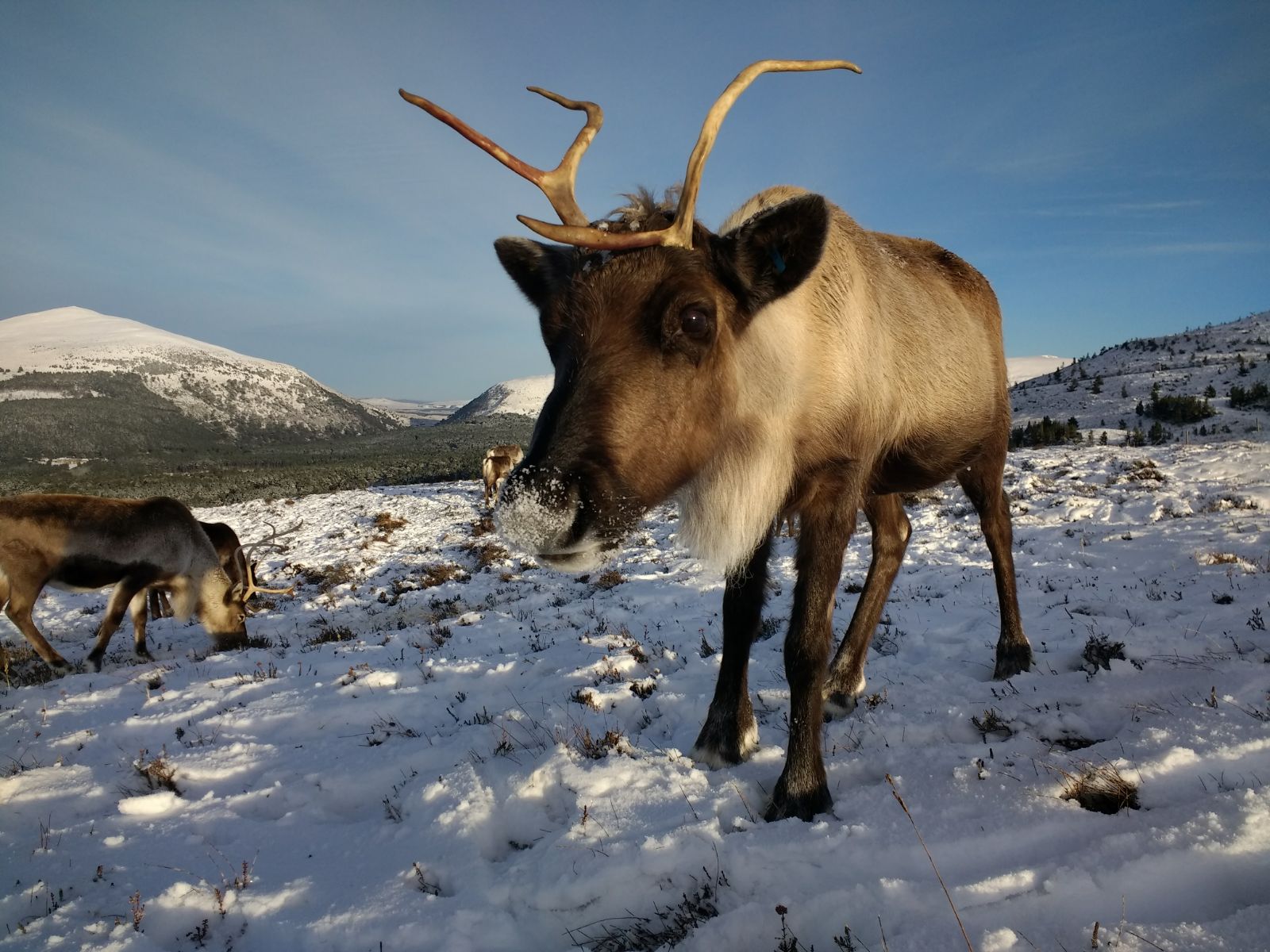
In the afternoon we trialled an ‘Open Hill’ system where visitors collected their tickets and maps, and made their own way to the hill enclosure, to be met by a herder on the gate, and a couple of herders in with the reindeer who could show them who was who and answer any questions. This seemed very popular too, although the weather deteriorated a bit as the afternoon went on.
Fiona and Tilly doing a sleigh training demo. Photo: Barbara and Martin ButtersFiona setting off on her hill run! Photo: Belinda BeattieReindeer harnessed up and ready!
And then on to Tilly’s talks at Glenmore Lodge! She ran one at 5pm and another at 6pm, and both went very well apart from some technical issues with the powerpoint, meaning some of the photos didn’t show up. This probably made the 6pm talk a little smoother, as at least she was prepared for the issues! Tilly also played a wonderful 20 minute film made in the 50s for the BBC about Mikel Utsi, the man who started it all, bringing reindeer back to their rightful home in Scotland after a 2000 year absence – thankfully the technology gods were with us for this one and it played fine!
Tilly’s talk at Glenmore Lodge. Photo: Belinda Beattie
So all in all it was a wonderful day, but most thanks must go to our wonderful reindeer adopters, who give us so much support from year to year. We all went home exhausted on Saturday evening, but the fun didn’t stop there as most folks met up again the following day over at our farm, along with a few new faces too who hadn’t made it to the Saturday. But the blog does stop here, as Sunday’s write up can wait for another week!
Although first here’s some more photos…enjoy!
Hen
Enjoying a walk to Utsi’s Hut. Photo: Matt and Toni O’Gorman
Paintpot (and LX) meets one of his adopters! Photo: Martin and Barbara Butters
OatcakeTilly and Fiona. Photo: Clare StokesStrudel and North. Photo: Carola de RaafKara meets her adopter Candice! Photo: Candice BellSanta’s little helpers! Photo: Candice BellMaking friends on the hill. Photo: Belinda BeattieSooty and his adopter. Photo: Belinda BeattieJonas and FionaFirst glimpse of Utsi Hut (Photo by Karen Sinclair)Utsi’s Hut. Photo: Martin and Barbara ButtersWelcome to the hut! (Photo by Karen Sinclair)Sookie tried to go home with someone! Photo: Martin and Barbara ButtersCheerAll too much for some reindeer by the end of the day! Photo: Belinda Beattie
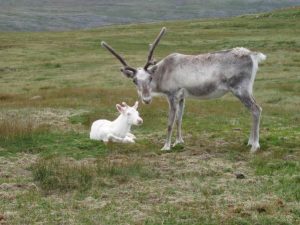
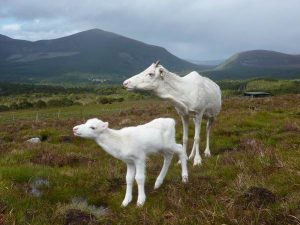
These are questions I have pondered while fixing the boardwalk, closely accompanied by Blue, our male leucistic reindeer. The subject of leucism is quite hotly debated and seems only those with a Doctorate in Pathology may comment, but here goes:
Blue inspecting my handiwork.
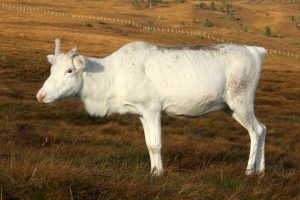
Leucism (pronounced loo-kiz-im) is a genetic peculiarity which gives a white colour. The condition is recessive. It is a defect in the skin, not the pigment cells. Leucistic animals are all perfectly white. It seems however that there are differing levels of the condition – partial and full.
One other characteristic of leucism is deafness, however is seems that this is not always the case. Leucism is developed during the early stages of embryonic development and can influence the central nervous system. It therefore most commonly affects sight and hearing.
Blondie, a leucistic (and deaf) female, sleeping peacefully and completly unaware that the rest of the herd has walked away and we are standing nearby.
If a condition is recessive it means that the offspring must receive the leucism gene from both parents to develop the condition. We have leucism in the herd. It doesn’t affect the carriers at all but if they breed with a carrier there is 25% chance that their offspring with have leucism. We currently have two leucistic Reindeer that are both deaf – Blue and Blondie.
Blondie’s(ll) father was Sirkas (Ll) and mother was Glacier(Ll) both carriers, therefore there was a 25% chance that Blondie was born with leucism. Glacier had nine calves of which only one was born with leucism but of course several carriers.
Blondie and her calf Lego, both pure white.Blondie nicely camoflauged against the snow. Leucism does have its advantages!
Blue’s(ll) father is Lego who had leucism (ll), Blue’s mother is Lulu who was a carrier (Ll). There was therefore 50% chance that Blue would be born with leucism.
A baby Blue, very obviously un-camoflauged against the heather (but very cute).
Albinism is a total deficiency of melanin producing cells in the skin. It is a skin mutation. There is a total lack of pigment. Albino animals have pink/red eyes. The pigment (colour) that would normally be seen in our eyes is missing so the blood vessels behind are seen in the eye, given the appearance that the eye is red in colour.
As I do not have a Doctorate in anything (except drinking tea) these are not comments but merely my interpretation of several articles written by Doctors of Science.
One of our visitors recently decided to adopt a reindeer they’d met at the Centre, but called us up when they received their pack to let us know that we’d sent a photo of the wrong reindeer. The reindeer they’d met had been a pale brown, with a thick shaggy coat and small antlers, whereas the photo on their certificate was of a sleek black coloured reindeer with large bony antlers. Thankfully, we hadn’t got it wrong, but could totally understand their confusion, as the reindeer change in appearance a lot throughout the year.
Bovril in his shaggy old winter coat in June, and looking smart in September
First, there is the coat appearance. From May, the reindeer start moulting out their long winter coat, which, with 2000 hairs per square inch, takes about six weeks. They look incredibly scruffy at this time, but by around mid-July the whole herd look glorious in their short summer coat. This summer coat is a richer colour than the winter coat, so the white reindeer are gleaming white, and the darker reindeer are virtually black. The short coat exposes all of their angles, so they can look a bit gaunt, with angular heads and shoulders.
Olympic’s varied coat throughout the same year (2014) – in February, July and September
Summer in the Highlands is short-lived, however, so by September their long winter coat is growing through, softening their appearance and turning them into cuddly teddy-bear lookalikes. This coat is slightly lighter in colour, so the darkest reindeer are now a rich brown. Over the winter months, the sun gradually bleaches out the colour, so by April the whole herd are a similar washed-out shade, with only the pure white reindeer looking different. It is the worst time of year to become a reindeer herder, as the reindeer look almost identical, and I’ve had sympathy with Ruth, and previously Dave and Imogen, starting in April and trying desperately to work out who is who!
Young Beastie throughout the same year (2011) – in full winter coat in January, darker summer coat in July, and new winter coat in SeptemberYoung Strudel throughout the same year (2010) – in old winter coat in May, dark sleek summer coat in August and with new winter coat growing through in September
Whilst the colour of a reindeer varies depending on the time of year, a dark coloured reindeer will always be comparatively dark, and a light one will be light. There is one exception, in that some white calves are born a mousy brown or grey colour, with a white forehead. This white forehead suggests their future colour, and once they are a yearling they have changed into their adult silvery coat.
Diamond as a brown calf with a white forehead, turning silvery later that year, and even lighter as a yearlingOrigami as a calf with a white forehead, and as a silvery white adult
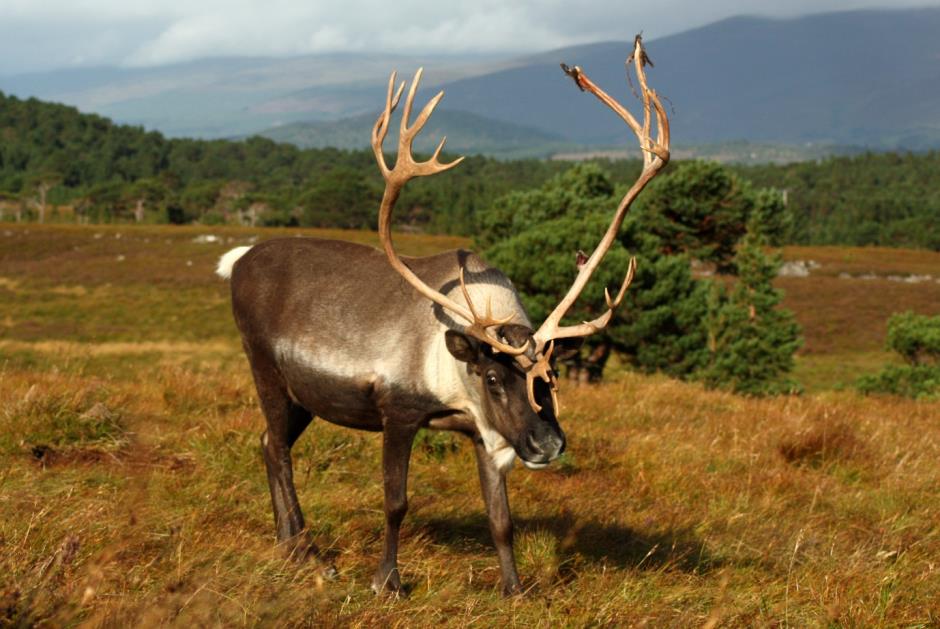
The other major change in appearance is relating to the antlers. Every year, each reindeer grows a full new set of antlers before casting them again at the end of the season ready to grow the next (hopefully better) set. From January to March, the male reindeer are antler-less, with the females usually losing theirs a little later, between March and May. Antlers are very distinctive, with each individual tending to grow a similar shape or pattern each year once they pass the age of about three. This is really useful for us herders, helping us to recognise the reindeer from year to year. Not much help in the period between casting the old set and the new set getting to a sensible size though! New herders are cautioned to try to “look beyond the antlers” and instead learn more permanent characteristics, such as the shape of their face.
Caterpillar with very similar antlers over three consecutive years – 2014, 2015, 2016.Puddock with his familiar crazy branching antlers over three consecutive years.
There is a slight spanner thrown in the works though, as adult reindeer don’t necessarily grow the same size of antler each year. Antler size is determined largely by condition, so if reindeer are short of energy, they will grow smaller, more basic antlers – it’s pointless to waste energy on an amazing set of antlers if you don’t save enough energy for your body to survive! The three main reasons for sub-standard antlers are illness, rearing a calf, and advancing years. If a reindeer becomes ill whilst growing their antlers, the growth will be checked, and sometimes the new bone is weakened to the point that it breaks off, leaving the reindeer with short, oddly shaped antlers. Antler growth also checks when a female is about to calve, and the extra effort of producing milk to feed the calf can mean the antlers are considerably smaller than usual. Finally, once a reindeer is in their old age, their antlers often become distinctly short and basic – they are focusing their efforts on being alive rather than growing antlers for dominance.
Lulu with impressive antlers in 2013, and a rather less impressive set the following year, due to rearing a calf.Beautiful Sequin in her prime with a large set of antlers, and with a simpler set in her old age.
It’s always entertaining for new herders watching the change in reindeer throughout the year, and sometimes peering in disbelief that the handsome reindeer in a photo is the same beastie as the scruffy fellow they know on the hill (as a side note, most of the photos for the adoption certificates are taken in September when they reindeer are at their smartest, with a fresh winter coat and recently stripped full-grown antlers). So if you do receive an adopt certificate with a reindeer looking a little different from when you met them, it is of course possible that we’ve got it wrong (we’re only human!) but if we check for you and confirm that it is them, hopefully this blog will help you to believe us!
I’m from New Zealand so anything Southern Hemisphere-related reminds me of home..
I have been doing some research about any reindeer activity in the Southern Hemisphere. As we all know reindeer are native to the Arctic region but it appears they quite like the Antarctic region as well. Though animals introduced outside their native land always have some sort of impact.
In 1911 Norwegian whalers introduced reindeer onto South Georgia. South Georgia is a sub-Antarctic island situated in the South Atlantic about 1000 miles off the western coast of Argentina. It is almost exactly the same distance from the equator as we are here in Scotland. It is a remote and inhospitable collection of islands and just what reindeer like!
An old whaling map of South Georgia (maked as Unknown Land) and the Falkland Islands, shown as close to South America. Photo taken from Mick Roger’s blog.HMS Leeds Castle in Stromness Bay, Falkland Islands, with introduced reindeer on the shore. Photo taken from Mick Roger’s blog.
The reindeer were introduced to provide recreational hunting and for fresh meat for the numerous people working in the whaling industry at the time. Since the end of the Whaling industry in 1960s the reindeer population had been growing uncontrollably. In 2011 it was noted that their numbers had exploded and the islands habitats were being destroyed. Fears of forcing some birds into extinction it was decided to eradicate the island of its reindeer population.
As these reindeer were introduced outside of their native range they were having significant impact on flora and fauna. Their range on the island was limited by natural glacial borders meaning their density increased to much higher than normal levels. In the Cairngorms we have a density of approximately one reindeer per square kilometre. On South Georgia the density had swollen to between 40 and 80 reindeer per km2. Imagine the northern corries here in the Cairngorms with 3000 – 6000 reindeer! The available land on South Georgia couldn’t support this many reindeer leaving many to die of starvation in the winter. Another common cause of death was falling from cliffs while trying to access ungrazed areas.
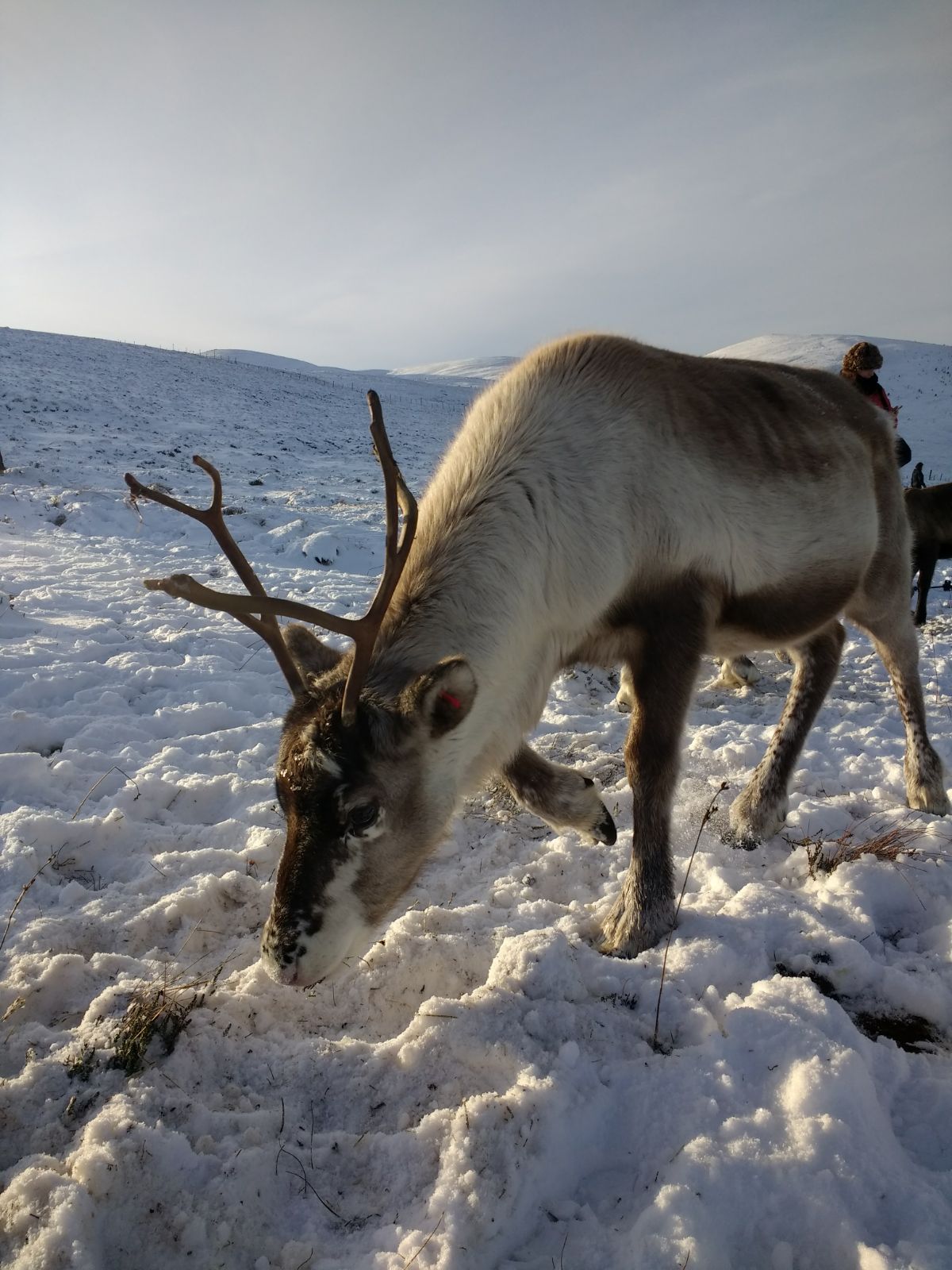
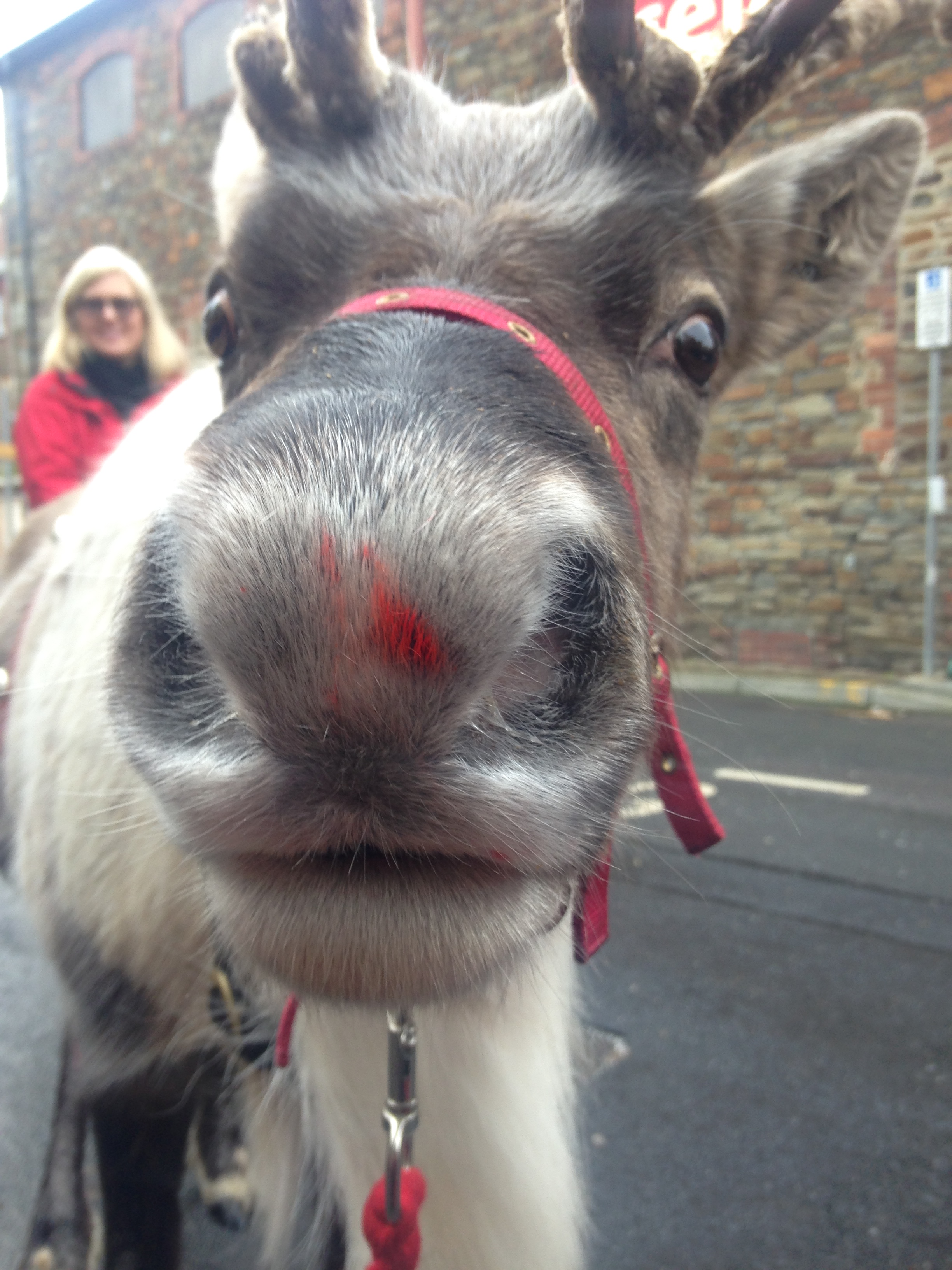
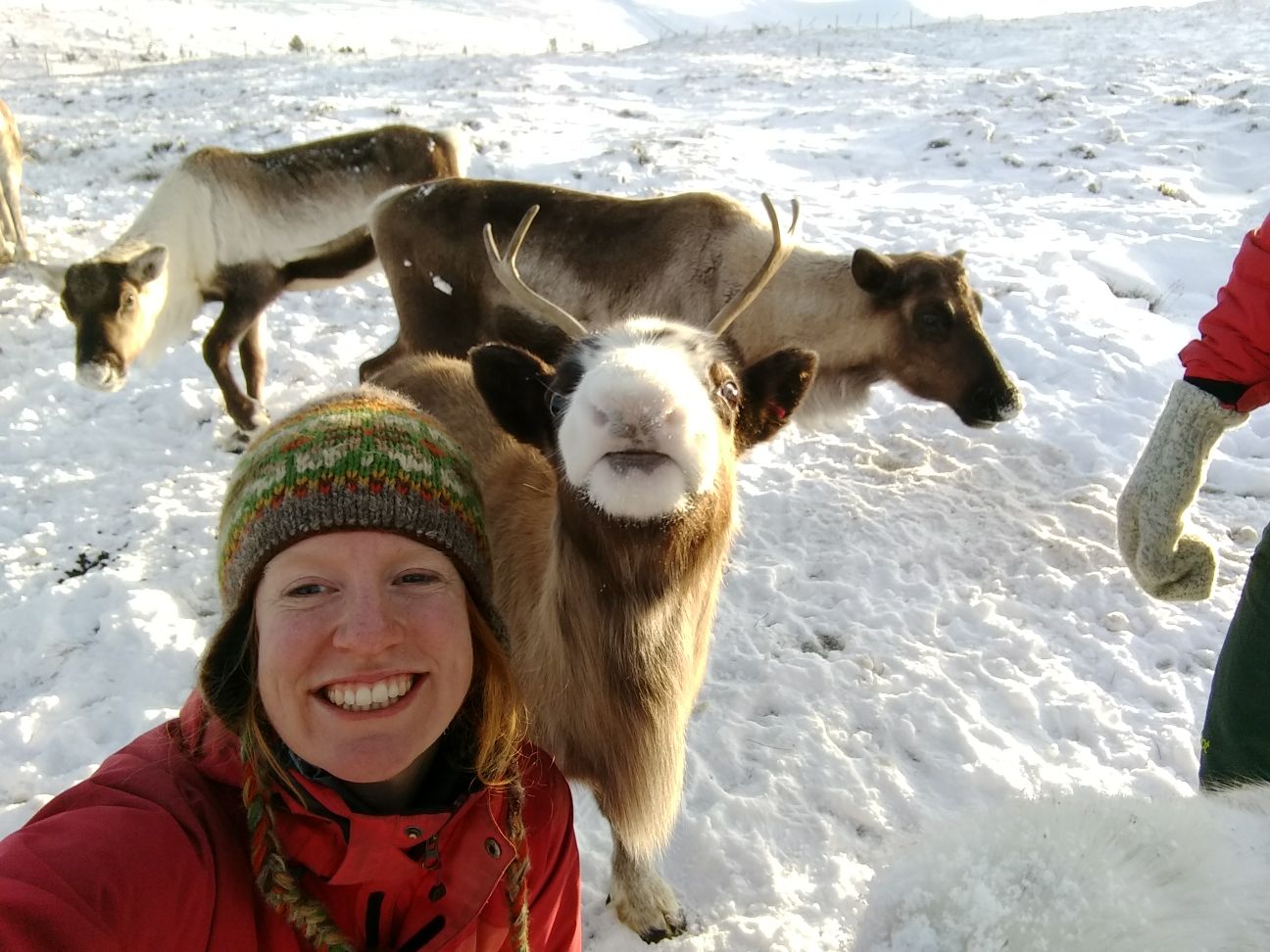
Over two years from 2013, 6,690 reindeer were culled on South Georgia. Animal welfare professionals were involved and 7500kg of meat was recovered.
In an attempt to diversify agriculture on the Falkland Islands around 50 reindeer were translocated from South Georgia prior to the eradication. I couldn’t find much information about this farming enterprise online but let’s hope it doesn’t end in another ecological nightmare!
Reindeer were also introduced to the sub-Antarctic Kerguelen Islands in 1954 this time however from Swedish Lapland. The Kerguelen Islands are a French territory in the southern Indian Ocean. In the 1970s reindeer numbers were recorded at 2000. Unsuccessful attempts to introduce reindeer to Chile and Argentina also occurred in the 1940s.
Southern Rockhopper penguins on the Falkland Islands, the new island-mates of the introduced reindeer. Photo by Ben Tubby.
So where does all this info leave us? It seems reindeer are extremely well suited for the sub Antarctic climate but without close and continued management is a very risky game as they are not native to the region. And for me, it seems I may be able to continue my career as a Reindeer Herder in the Southern Hemisphere, if I ever go back.