To any southerner just an inch of snow means great excitement, school closed for a week and the front page story on every newspaper! Having spent the first 18 years of my life living in Bristol, where the yearly day of snow is celebrated (before everything grinds to a halt) you can imagine my excitement to wake up to snow one morning in early November!
The morning commute
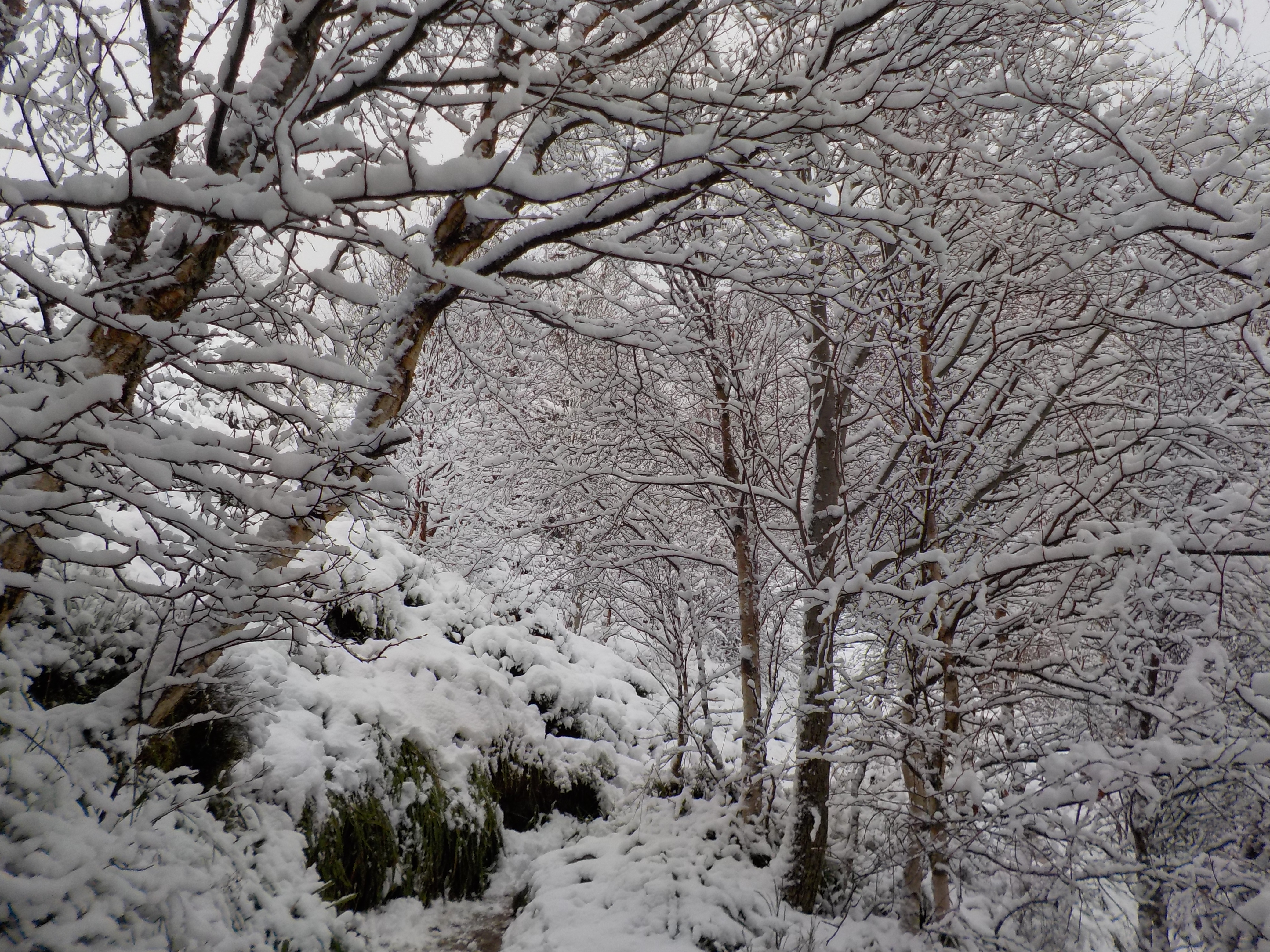
Seeing as my room (fondly known as the Cave) in Reindeer House has no external windows, it was not till I opened the curtains in the kitchen, I saw the snow covered wonderland that was Glenmore. I proceeded to eat my porridge in the garden and then spend the last ten minutes before work throwing snowballs for the dogs, before realising I had no gloves on and could no longer feel my hands.
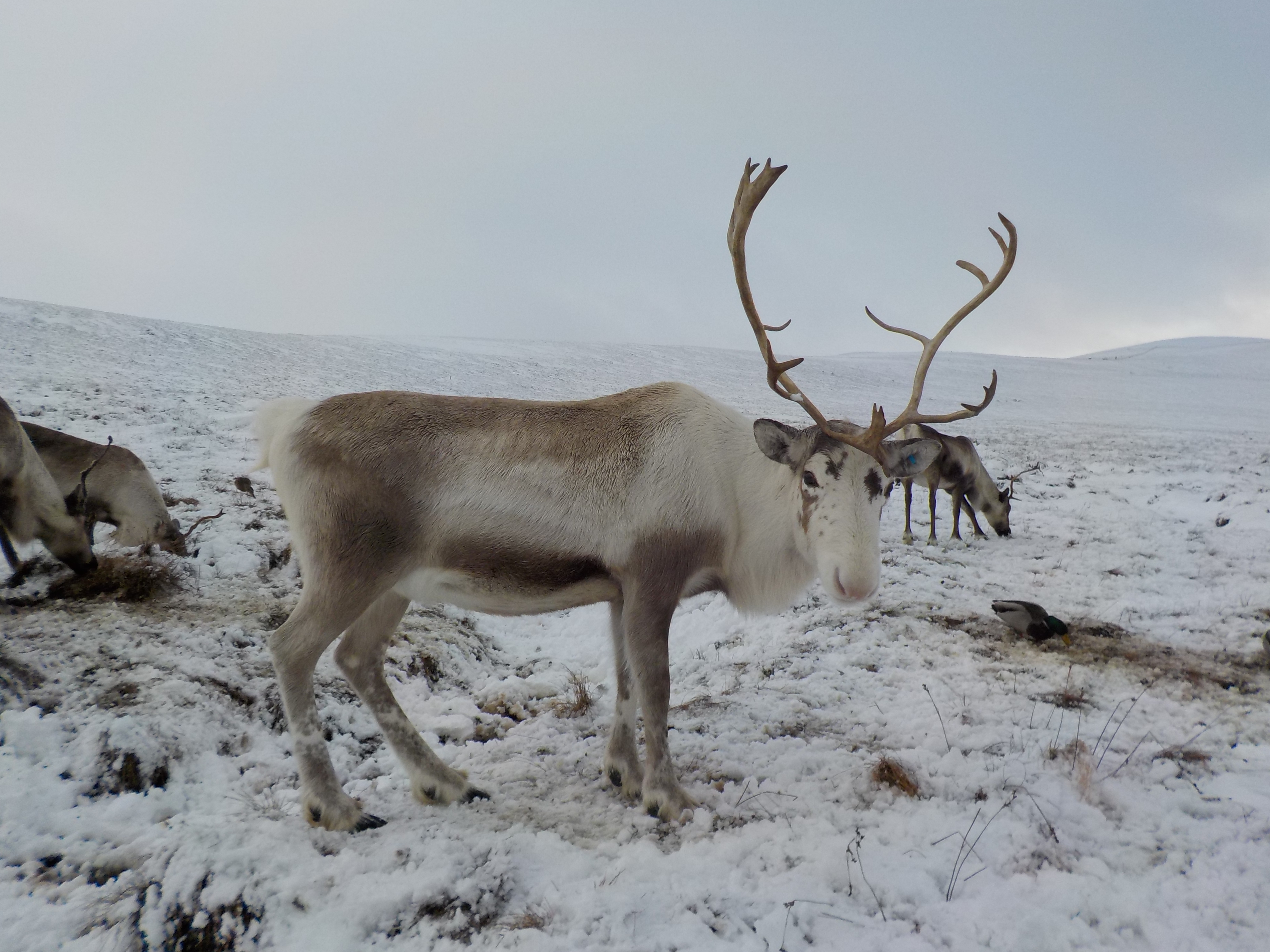
Caddis looking beautiful on the snow covered mountain side!
Initially my excitement was laughed at as the dusting that we woke up to barely counts as snow if you’re Scottish. By mid-morning however I was told by Fiona that we now had ‘real snow’ which looked a lot like a blizzard to me!
Arrochar looking a wee bit shocked by the whole thing (I think that may just be her resting face)
I was away on Christmas events the first three weekends that it snowed here, but I just about managed to fit in a few rounds of torch-lit sledging before work (dogs in tow of course) and a snow angel or two. This weekend was the first weekend to be at home for the snow (enough for the snow plough to be out) and I took up a lovely snowy visit.
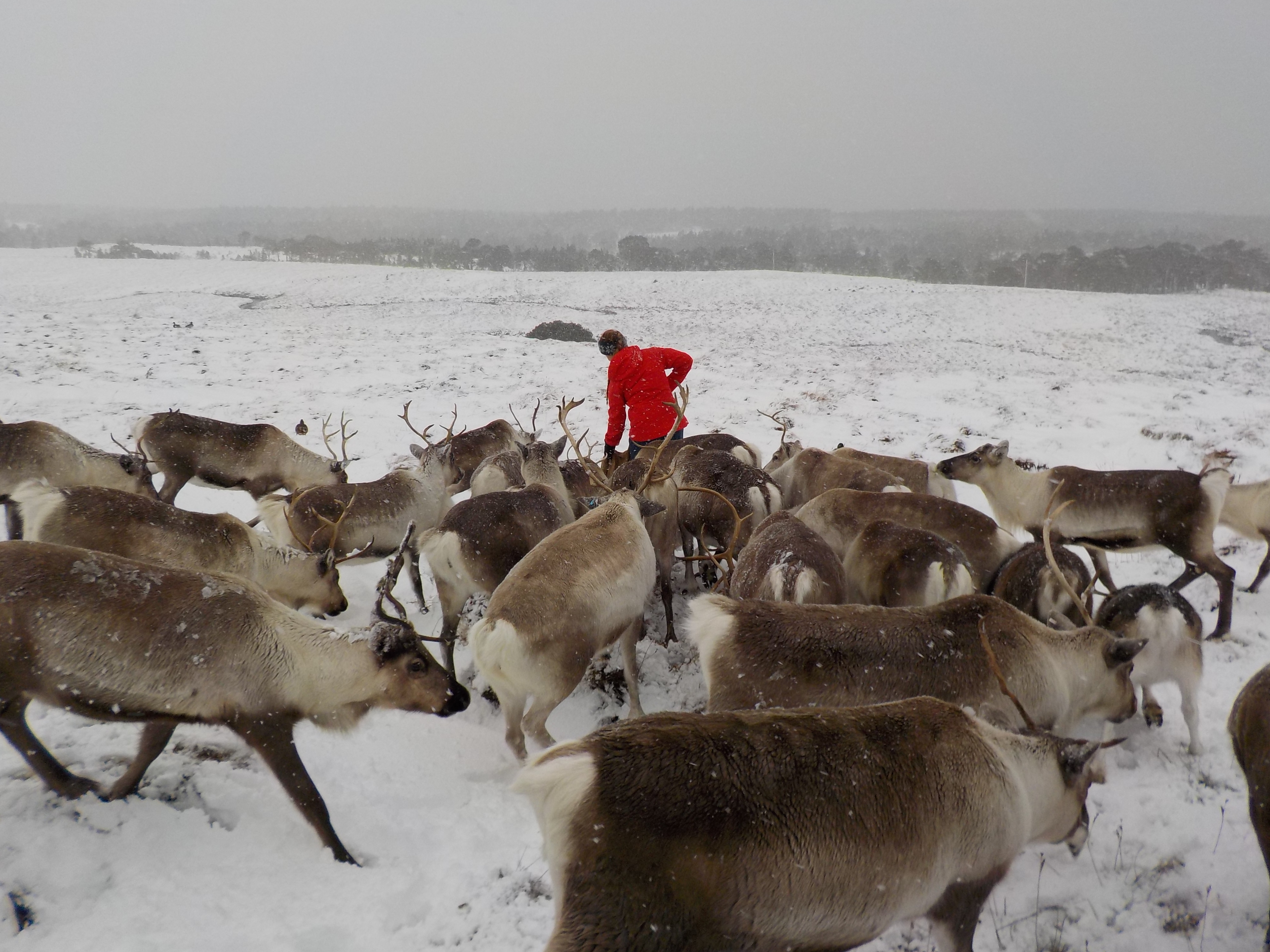
Feeding the herd on a lovely snowy morning
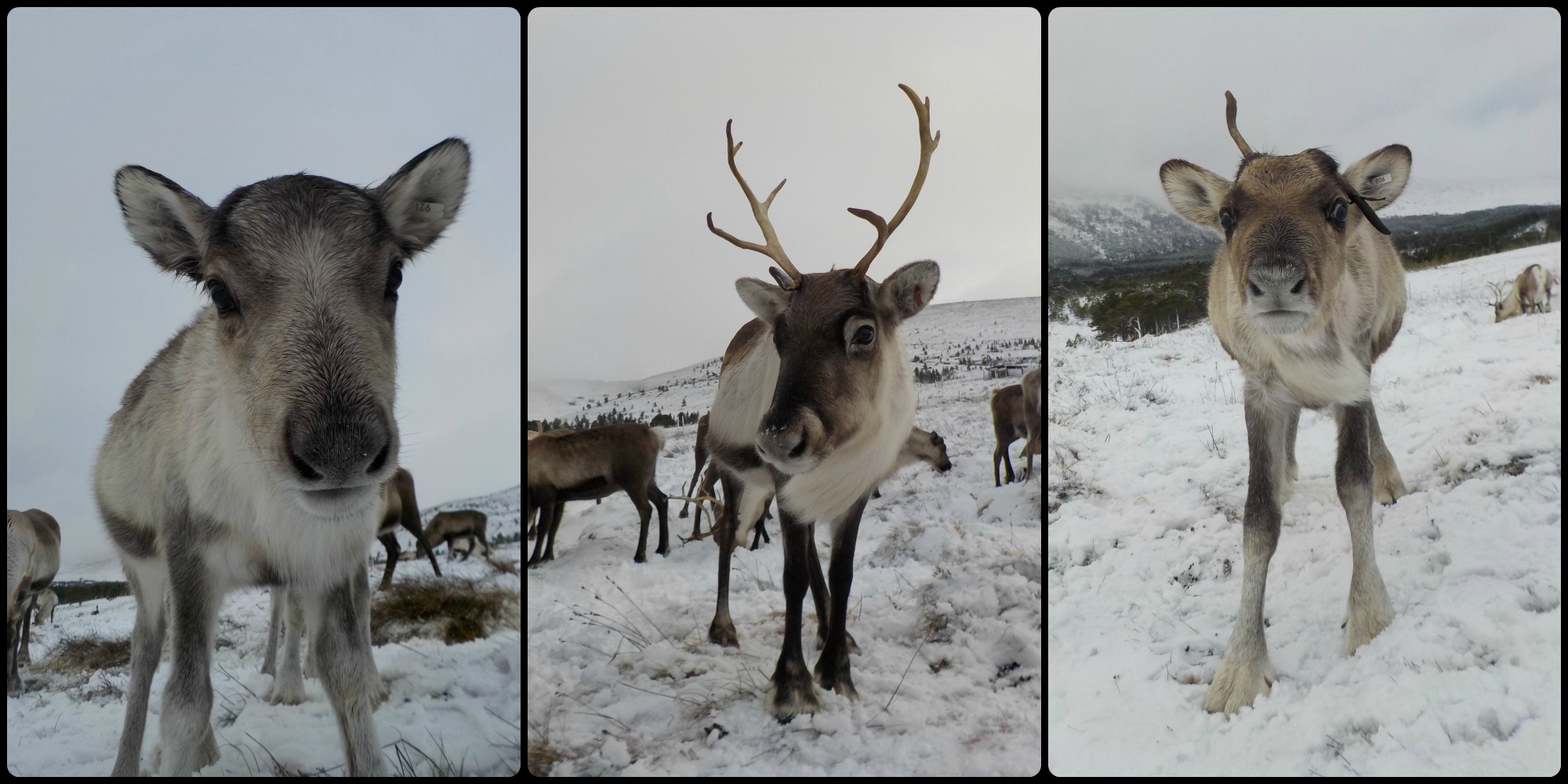
The reindeer are absolutely in their element at this time of year; they couldn’t be happier in the snow. If you’re coming up to visit us make sure you’re well wrapped up (as many layers are you can wear and still move and a full set of waterproofs) so you can feed the reindeer in the snow and love it as much as I do!
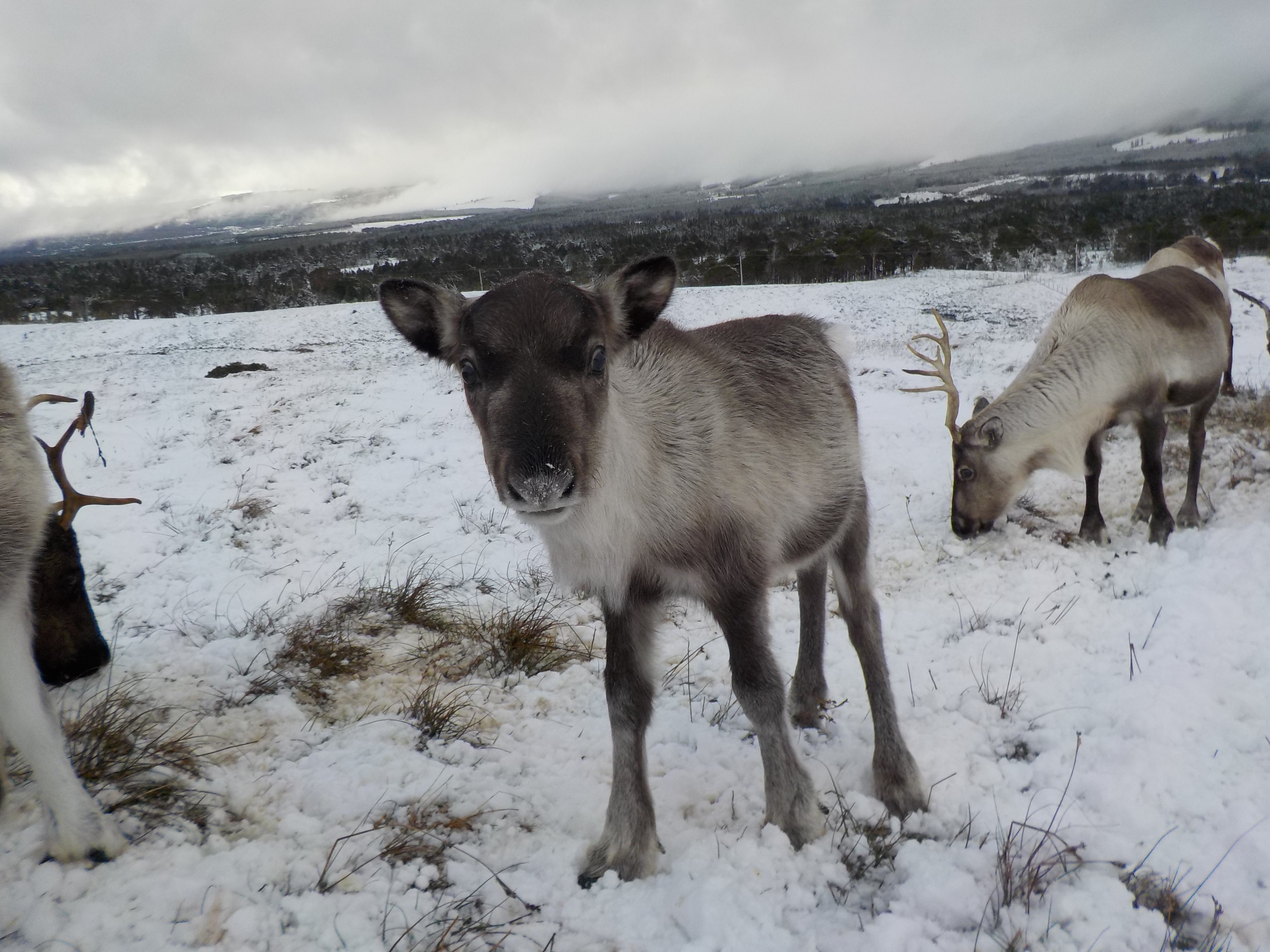
Brimick looking incredibly cute, Spy posing for the camera and Cioch pulling a silly face
We’re pleased to tell you about an exhibition we’re helping to host up here in Glenmore.
“Reindeer with pack & crib held by Kardin & Nikolaevich Buldotovsky.” Baramakan Camp, Inner Mongolia
Life in the snow forests: 100-year-old photographs displayed for the first time
Indigenous people from the snow forests of Inner Mongolia and Siberia have been reunited with century-old photographs of their family and communities as part of a research project and exhibition at the University of Cambridge.
Previously unseen photographs capturing life in a remote corner of the world a hundred years ago will now be displayed in Glenmore, following the River Stars Reindeer first unveiling at the Museum of Archaeology and Anthropology, Cambridge.
The photographs record the indigenous Evenki and Orochen communities and were made by Russian ethnographer Sergei Shirokogoroff and his wife Elizabeth between 1912-1917, and by Cambridge graduate Ethel Lindgren and her husband, Oscar Mamen, between 1929-1932.
The exhibition, was the culmination of a painstaking curatorial process, which involved choosing 70 images from more than 26,000 photographs. A process further complicated by the research team coming from ten different institutes located in three different countries.
One of the curators of the Cambridge exhibition, Jocelyne Dudding said: “This is a unique opportunity to see the very best of their images together for the very first time. The photographs are not only a wonderful record of the ways of life for Evenki and Orochen, but they also speak of the more personal stories behind every image.
“Each photograph tells many, many different stories about the lives of the people, the clothes they wore, the animals they raised and the places they called home.
The conversations Dudding and her fellow researchers from Aberdeen, St Petersburg and Hohhot had with the indigenous communities directly influenced the selection process for the exhibition. As the project developed and word spread, more and more communities from other areas came forward and asked to be included.
“River Stars Reindeer comes about from a digital sharing project to reunite Evenki and Orochen communities with their photographs, and thereby their histories and their cultural heritage,” added Dudding. “We are now in the process of digitally sharing our photographs with them – having spent the last 18 months digitising 16,000 images so far.
“A shaman, a shamaness, and a Achinsk Lama with their helpers.”
The exhibition title River Stars Reindeer speaks of the cosmologies and realities of the lives of Evenkis and Orochens in an area known as the three rivers region.
Many of the photographs to be displayed at the exhibition were gathered by anthropologist Dr Ethel Lindgren and photographer Oscar Mamen. Lindgren went on to continue her studies and immersion with reindeer husbandry and in later years married her second husband Mikel Utsi, Swedish Sami reindeer herder. In 1952 Lindgren and Utsi successfully re-introduced reindeer to Scotland. The Cairngorm Reindeer Herd still thrive today and exist freely within the Cairngorm mountains.
River Stars Reindeers exhibition runs from 26 November 2015 until 3 January 2016 and will be displayed at Glenmore Visitor Centre. The exhibition is on loan from the Museum of Archaeology and Anthropology, Cambridge where it has recently been shown.
Whilst our reindeer spend the vast majority of the year leading a very relaxed life out on the Cairngorm mountains, for the six weeks running up to Christmas, some of our full-grown adult males and six-month-old calves take it in turns to join in Christmas events across the country. These events serve several purposes: spreading the word and educating people about the reindeer, raising vital funds to sustain the herd through the coming year, and of course spreading some festive cheer, especially to those who are unable to make it up to see the herd at home.
Sleighs and sign boards waiting to be varnished, whilst some of the “farm boys” observe from their part of the barnBoxes of sleigh decorations, useful kit for the trucks, spare everything…
Of course taking up to eight teams of six reindeer away on tour requires just a bit of preparation. Or rather, a lot of preparation. Poor Fiona deals with all of the paperwork and logistics, starting in January (it’s always Christmas for her!), whilst Tilly is the queen of organising the rest of us into helping her sort out the physical kit required. In October, most of the team end up spending a day or two at the farm, helping to scrub, sort, varnish, count and clean the various bowls, head collars, harness, ropes, boxes and sleighs, and to mix numerous bags of feed.
Digging out the smart event head collars and ropes from storageGiving the sleighs a fresh coat of varnishImogen got the short straw of pressure-washing all of the feed and water bowls
Our specially designed “boxes” which the reindeer travel in, similar to a large horse box but with additional room for a sleigh, also have to be taken out of storage and painted, cleaned and bedded down ready for the first trip of the year.
Greg and Karen (the happy couple) with Svalbard (left) and Duke (right).
A few weekends ago a selection of our beautiful reindeer were invited to a wedding, with a special request for the lovely Fergus (the wee calf we are currently hand rearing). Along with Fergus we took four of our Christmas reindeer; Moose (an old hand at pulling the sleigh and wearing bells and harness), Svalbard (a rather small and stocky but very handsome reindeer aptly named after the reindeer from the island of Svalbard who are much smaller than their Scottish cousins), Monty and Duke (two of our three year olds who have recently become Christmas reindeer this year and will be trained to pull the sleigh and go out on tour with Father Christmas this winter, both are very handsome reindeer with lovely big antlers).
Svalbard, Fiona, Moose, Fergus, Duke, Lotti and Monty eagerly waiting in their bells and harness for the music to finish and the wedding party to arrive.
First we took the boys out of the Brenda (our fondly named livestock lorry) and gave them a good bit of lichen. This bribe allowed us to slip the harness and bells onto the boys, who barely batted an eye lid. Having worn harness for many years Moose was the perfect role model for Svalbard who has only done one Christmas season and Duke and Monty who have never worn bells before but behaved themselves fantastically. Fergus has always followed us like a little lamb and jumped in the back of our van, so I think his nose was a put a bit out of joint when he had to wear a halter and travel in the reindeer lorry with the other reindeer (instead of in with the herders and dogs).
Duke, Svalbard, Fergus, Moose and Monty with Greg, Karen and their friends and family.
Once the ceremony was finished the wedding party and guests came out to meet the reindeer, all of them posed fantastically for photos and Fergus charmed everybody with his cheeky personality.
Svalbard (left) and Duke (right) posing with ex reindeer herder Zac and his partner Emily.The blushing bride leading Duke for a walk in the woods, with both Greg and Svalbard checking the path behind for any oncoming dogs (other than Fergus the reindeer are not keen on dogs).
The boys showing off their slightly less photogenic end!
All in all a fantastic afternoon was had by everybody. The boys behaved themselves wonderfully and had a little practice for the madness that is Christmas. I think after a bit of sleigh training for Duke and Monty, they will all be ready in time to pull Santa’s sleigh all over the country. The real question is will we be?
Newsletters. The very word strikes alarm into the heart of a reindeer herder. Twice a year, our very outdoorsy, active job becomes a little more office bound for a few days, as we frantically scrabble to prepare, write, and compile about 3000 words into a comprehensible piece of A3, and then mail it out to our supporters of the herd, each of whom ‘adopts’ one of our reindeer. Or more than one, and in the case of one particular adopter (you know who you are…) – six!
We send out the newsletter twice a year, in late June and late October. The June one isn’t usually as fraught as the October one, which coincides with a hectic time of year for us: calf halter training, reindeer sleigh training, the run up to the Christmas tour and the October half term. Over time they have evolved from a single, black and white sheet to a glossy, double-sided and full colour affair. We always include info about each adopter’s particular reindeer in June, but over the years as the support scheme grew, this became too much for us to cope with in October and now we send a photo of the herd instead, with a little info on the back.
Some of our more recent newsletters
There’s no fancy computerised system for us though, we instead trawl through the filed adoption slips for each year of adopters, bit by bit double-checking the info on the form and the printed label is correct, and combining a newsletter with the correct photo or info slip – and then lots of envelope stuffing ensues! When I started working here, years ago, newsletter time seemed to go on for weeks, but now it is a matter of days, usually driven by panic by the amount of other work building up that is on hold. Newsletters come first for a few days! There always seems to be one envelope that floats around the office for a few extra days, with a scribbled post-it on it saying something like ‘can’t find form in folders!’, or ‘why isn’t this on the database!!!!’.
A clear kitchen table and massive amounts of water are needed as preparationEven Tiree is roped in to help spot the right address labelsAll of these folders are full of adoption forms… and all of them must be manually checked
While we do our best to save paper and only send one newsletter to each person who adopts more than one reindeer, there’s no way for adoptions to be easily linked together, so it relies purely on the memory of person working their way through the filed forms, one by one. Many of us recognise most adopters’ names straight away, and the office talk will involve lots of ‘hang on, I think these guys adopt someone else too. Where’s their other form?!’. Often punctuated with ‘bugger, I forgot they adopted so-and-so too. It’s been posted already…’. So if you receive two separate newsletters in the post, bear with us, one day we’ll get it right! (and on that note – if you spot anything wrong with your address, do drop us an email so we can correct it!)
And then, finally, comes the mission of franking all 1000 plus envelopes. A mind numbing job, but quite soothing as the machine beeps away – known to us as ‘the franking song’. The beeping ditty is stuck in the head of the unfortunate herder tasked with this job for the rest of the day.
The hardest week of the year for the franking machineAt last – envelopes stuffed, labelled, checked, franked, boxed and ready to wing their way across the country!
So hopefully by now (or within the next few days at least), you adopters out there should have your shiny new Oct 2015 newsletter in your hands. And if don’t adopt a reindeer, and want to get your paws on one of these hallowed pieces of literature (ha!), then there’s only one way to do so. Now, where’s that adoption form got to???
October is a fun time of year as it’s when we train this year’s calves as well as harness training our young Christmas reindeer to pull Santa’s sleigh. Halter training and handling the calves makes them much tamer and easier to handle for the rest of their lives so even if they don’t end up pulling Santa’s sleigh at least we can catch them if we ever need to when they are out in the hills…well, most of the time anyway, some are always wild…it’s in the genetics!
Luckily reindeer are very food orientated, aren’t we all! So stage one is to get their heads in a bucket full of tasty lichen, chocolate for reindeer!
Lotti luring the calf into the bucket of delights!
Once the head is ‘inserted’ a sneaky manoeuvre gets the halter on with them barely noticing what’s happened!
Mel putting on the calf’s halter while Lotti holds the bucket
Once the wee ones are caught we get ourselves a couple of steady old boys to come alongside and ‘teach’ the calves…this day it was Puddock and Parfa’s turn to be the companions. We have found that they are better behaved without their mums, like some children! So mum’s go back up the hill once they have accompanied the calves down to the ‘training centre’ and the big boys take over.
All haltered up, we are ready for a wee walk around Glenmore to see the new sights and sounds…….To try and make the walks a ‘fun’ thing we go off into the woods in search of yummy snacks!Enjoying some freshly picked tree lichen from Lotti.The boys enjoy the smorgasbord walks just as much as the calves! Puddock nibbling lichen from the trees.Fresh birch leaves are another favourite, Grunter snacking on leaves while Lotti feeds the wee calf, Ochil.Moose ready to grab a big mouthful of leaves, it’s interesting to watch the technique. They grab the twig some way toward to base and then pull it throw their teeth and hard pad to strip off all the leaves but leave the twig and tip intact so they don’t actually damage it, clever!The training/buffet walk finishes with a wee graze of the grass.
Lastly with heads snuggly back in buckets of lichen, halters are carefully removed! After 2 or 3 outings like this they will be pretty much halter trained. The key to winning them round is lots of tasty snacks and pockets full of lichen as you will have seen and a couple of old boys who can be a good influence!
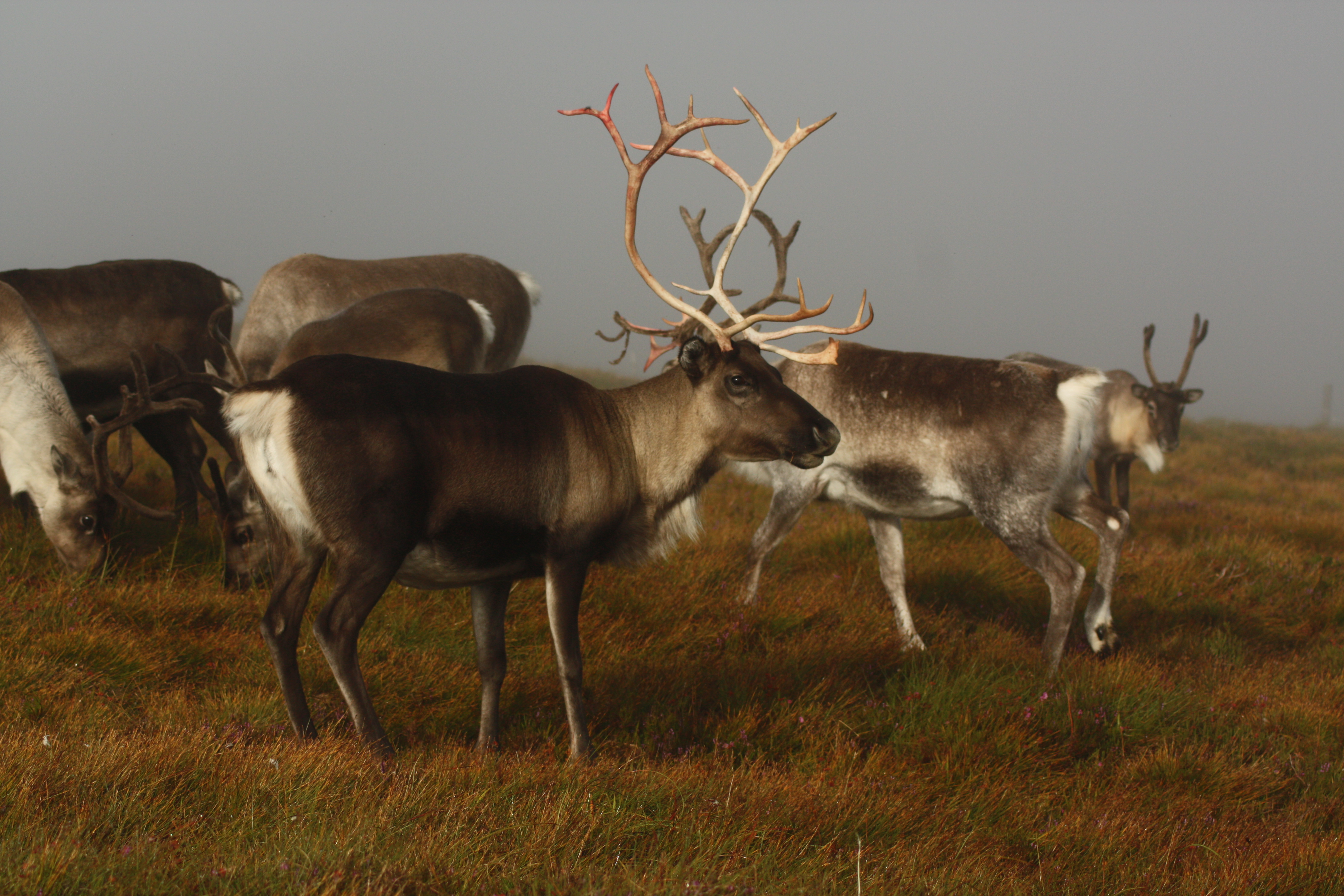
Since some of our female reindeer finally decided to join us at the hill enclosure, the rut has got underway. We use different sections of our 1,200 acre hill enclosure to help us manage the bulls during the rut, as it would be complete chaos if we just put them all in together and left them to get on with it! By splitting each bull with a small group of females, everything is a bit more relaxed and the big lads feel less at risk of losing their girls. We do, however, let some of the younger, smaller bulls “have a go” by letting them remain in with a big bull, and if they manage to sneak a female away and have their wicked way, then good for them. Of course, most of the time, they don’t stand a chance!
Swedish Gandi with his distinctive white nose
This year we have quite a few bulls who may be getting a chance to spread their genetics in the herd. As usual, most of these are of Swedish descent. Whilst we keep a record of the parentage of each calf born here, it is a lot easier to prevent inbreeding and promote genetic diversity if we use bulls that we know aren’t related to anyone else. Bovril, Gandi, Boxer, Nutti, Pera and Bandy all started their lives in Sweden, before joining our herd in 2011. After we have bred from them for a few years, they will join our Christmas team and live out the rest of their life as a part of the Cairngorm herd.
Big handsome Bovril
Bovril and Gandi are perhaps the biggest and most impressive of the boys this year, especially Bovril as he is black in colour, and whilst he’s actually very sweet natured, when he’s strutting his stuff and chasing away the other males he can look extremely intimidating! Pera is another black reindeer, but is slightly smaller than Bovril. He is easily recognised due to having rather bizarre antlers – the top points point forwards rather than backwards. As antler shape is determined genetically, it will be interesting to see what the antlers of Pera’s offspring turn out like!
Pera with his bizarre antlers
Boxer is another dark coloured reindeer, but Nutti is much lighter and has a white nose, as does Gandi. Bandy is the one right in the middle – what we would call a “normal” colour. He’s quite a slight build and a bit less scary than the other big bulls, but is perfectly capable of holding a group of females.
A range of different colours: dark coloured Boxer, normal coloured Bandy and white-nosed Nutti
Of our Scottish born bulls, three-year-old Balmoral is the biggest and most impressive. He comes from a great family line – Fly is his mum – and his family has a good record for producing big strong calves with large antlers, so hopefully any offspring he fathers will inherit these traits. A few of the younger bulls may also get a look in – notably Cambozola, Mo and Atlantic are convinced that they are handsome enough to win over any female… its just a case of whether they can steal them away from the big lads or not!
Three-year-old BalmoralThe Young Hopefuls: Cambozola, Mo and Atlantic
Watching the bulls performing is always entertaining – unlike the red deer stags who roar their challenge at other males, reindeer bulls merely grunt. They also lick their lips, pee on their hind legs and generally swagger around thinking they’re the bees knees. Personally, they remind me of drunken lads out on the town, but they do seem to have some degree of success at impressing the cows. Quite how successful will only be proven next year in May!
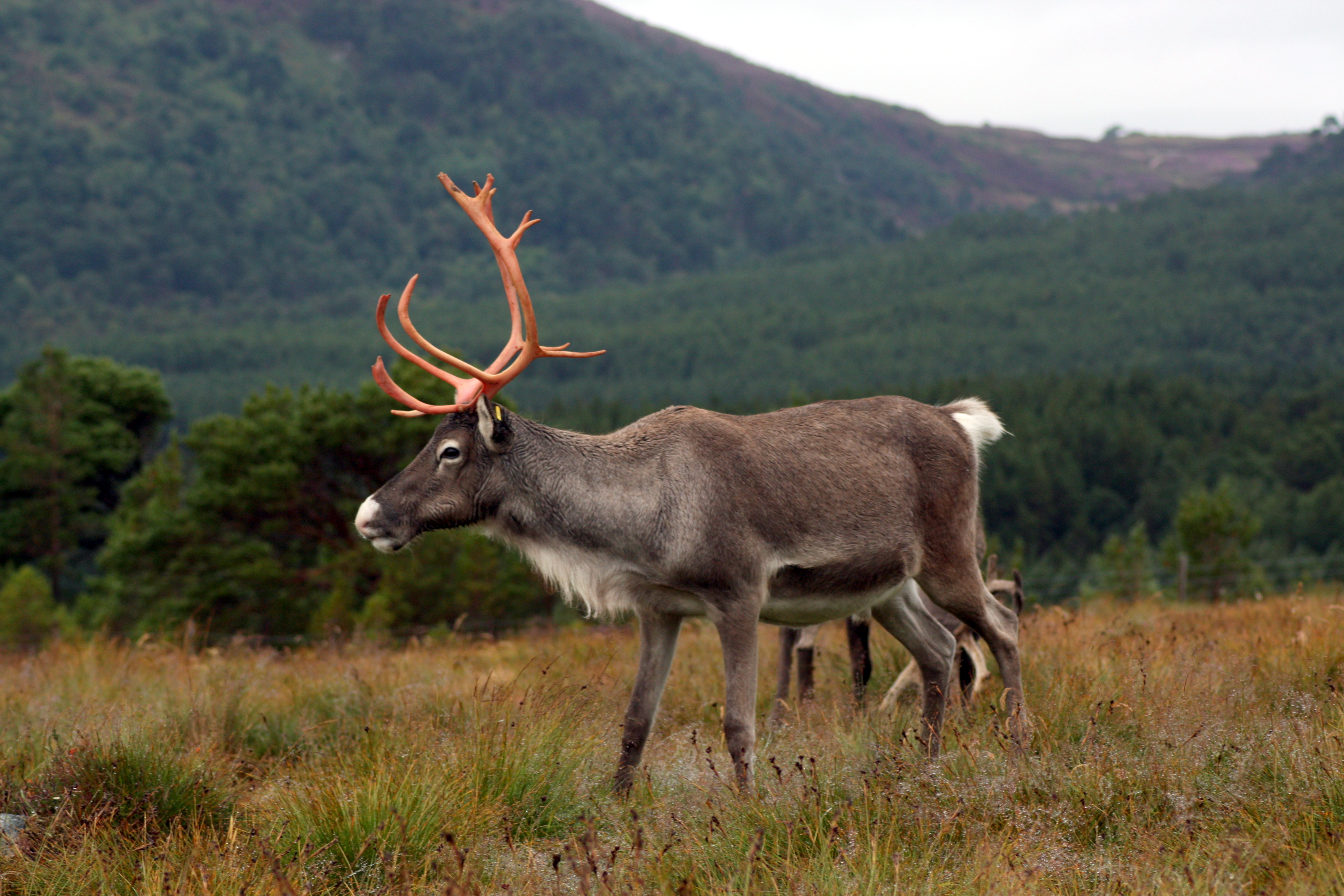
The reindeer look superb in Autumn, with their fully grown antlers and thick winter coats just come through. Here’s some photos to give you an idea of how good they’re looking…
Young bull Cambozola, having freshly stripped the velvet from his antlersYearling bull Hudson, with Mo in the background. Often a few ‘streamers’ of velvet cling on after most has been stripped.One of the biggest and oldest female calves of the year, LairigA wee male calf, Tinto, with unusual facial markings. It doesn’t take long for the calves to learn that we provide tasty food for them!Wapiti grows one of the biggest sets of antlers among the femalesLittle Brie looking amused!Beautiful Caddis is easily recognisable with her patchy white faceGrunter and Max enjoying a drink at the loch at our Balcorrach Hill farm
Each year, September and October become stressful months for me. Although the crazily busy summer season has passed and some sense of normality is returning to the slightly frazzled reindeer herders (shortly to be removed by the onset of the Christmas season, however), autumn is the season of ‘adopt photos’. This is my responsibility (although frequently assisted by Alex and all the other herders that I’ve begged…), so I spend my time armed with a camera and a sense of hopefulness that maybe, just maybe, the sun might come out…
Sometimes it all goes right! Gnu featuring in an example of a good adopt photo in 2010
We have been running our Support Scheme for over 25 years now and right from the beginning adopters of our reindeer have received a certificate annually, along with a recent photo of ‘their’ reindeer. Added to the issue of there being about 150 reindeer in the herd, is the problem that they free-range on the mountains a lot of the time and there is never any guarantee that they’ll be in the right place when I need to get that elusive photo. Having been here for years now, I know the details of our adoption database well, and I frequently have a constant niggling worry that I know so-and-so’s adoption renewal form of a particular reindeer is going to crash onto our mat any day, and I STILL haven’t got ‘the photo’…
So many potential photos end up like this – Grunter spoiling my photo!
Reindeer don’t always lend themselves to being easy photo subjects. They spend a large part of the summer being incredibly scruffy as they moult their winter coat, and then part of the winter (ranging from one to several months) with no antlers, having cast their old set. Nobody really wants a photo of a bald reindeer (except, perhaps, adopters of Malawi, who actually is bald, having never grown an antler in her life). I need the weather to co-operate too as cameras and rain don’t mix well, as everyone knows, and this is often one of my main obstacles.
Reindeer look at their absolute best in September and October, with full grown antlers and fresh, thick winter coats. So, this is the season that I aim to get a complete set of photos of every single reindeer, to use for the majority of the next year. I then try and get ‘back-up’ photos in Jan/Feb, to use in the late summer to avoid any possible overlap of photos for the adopters whose renewals are due around that time. Older reindeer don’t change much in appearance from year to year (other than the moulting/antler issue), but the young ones do as they grow, so they usually need more regular photos too.
Ducks are frequent photo-bombers in the hill enclosure – Duke in 2014
The natural stance of a relaxed reindeer doesn’t help either, heads down, ears out sideways, somewhat glazed look. If you receive a photo of your reindeer with its head up, ears pricked and an alert look, bear in mind that at the moment I pressed the shutter I probably had another herder dancing around nearby like a nutcase, barking like a dog, or throwing a feed bag in the air! In moments of desperation I have been known to throw the empty feedbag at the reindeer… Unfortunately (for me anyway), the tamest and friendliest reindeer are the most adopted ones, and are always the most difficult to generate a response from. Naming no names. Well, Puddock. Paintpot. Beastie… It’s a well-known and frustrating rule of mine that I always take the nicest photos of shy, un-adopted reindeer.
Horse refuses to look interested, even at a flying feed bag
However, each photo is filed in our photo archive, so whether they have been used on a certificate or not, they still provide a visual record of a reindeer’s life through its various stages. But regardless, one of the highlights of my year (maybe I should try getting out more) is that glorious moment when I press ‘confirm’ on the online order in the autumn, and sit back knowing that in a few days 1000+ shiny photos will arrive and can be filed, awaiting the flood of adoptions over the coming months. Huge sigh of relief!
As some of you may know our female reindeer spend the vast majority of their year pootling about on the Cairngorms in theory not getting into trouble! There are but two times of year when we bring them into our hill enclosure and one of the most important is ready for the breeding season in October.
Females on the horizon
Our lovely ladies usually start turning up around mid August and us reindeer herders dutifully place them back on ridges day after day until we’re ready to bring them in. We like this time of year as it means we get to eat more cake… this year however we’ve had no cake! August came and went with barely a sighting of a female reindeer and then September arrived and we thought they’ll all turn up any day now (bearing in mind there are about 50 females and calves up on the mountains there) but again no sign. So off we trogged on several missions to see if we could track down some reindeer so the poor bulls, who’ve been ready for the rut for several weeks now, could see some ladies!
One of our calves on the mountains
Things looked promising when I went on a wee jaunt up Meall a’ Bhuachaille behind the Reindeer Centre and found four cows and calves who we attempted to walk in. Things, however, did not go the plan and we had come to the conclusion that this year the cows have decided that as independent women they have the right to have a calf if and when they choose! We did however see an adder… who can spot it?
Spot the adder!
By now it was mid September and all was quiet on the reindeer front, every day we religiously checked the roads and spied at the mountains but nothing was seen. Today everything changed, myself and Andi checked the roads as normal and actually spied a reindeer… then a few more on the ski slopes of Cairngorm and the few turned into nine lovely ladies and calfies (eventually… they do so love making you call like an idiot when there’s an audience!). Andi and I often end up being completely unprepared and had no head collars so after a brief wait for the valiant Hen with a halter delivery we embarked on walking them in, pleased that we’d finally been able to get some cows in. It was soon to get even better! A phone call from Hen gave the news that another large group of girls had heard our calls and were enclosure bound too!
Cows and calves trotting into the enclosureCuddles with a calf!
One and a half hours later we had 36 beautiful cows and calfies safely in the enclosure, 12 very happy bulls and finally reindeer herders who can justify eating cake again!