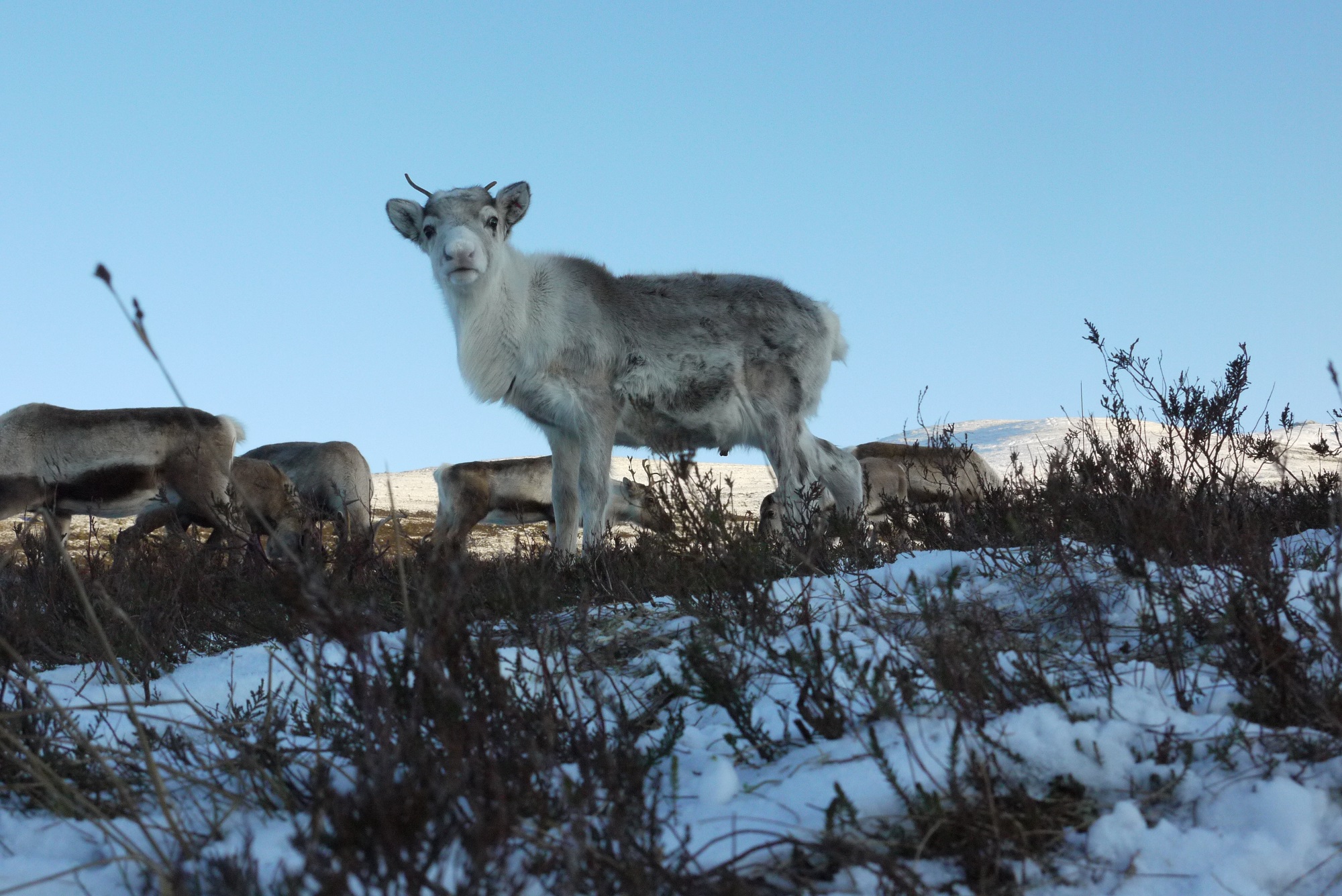
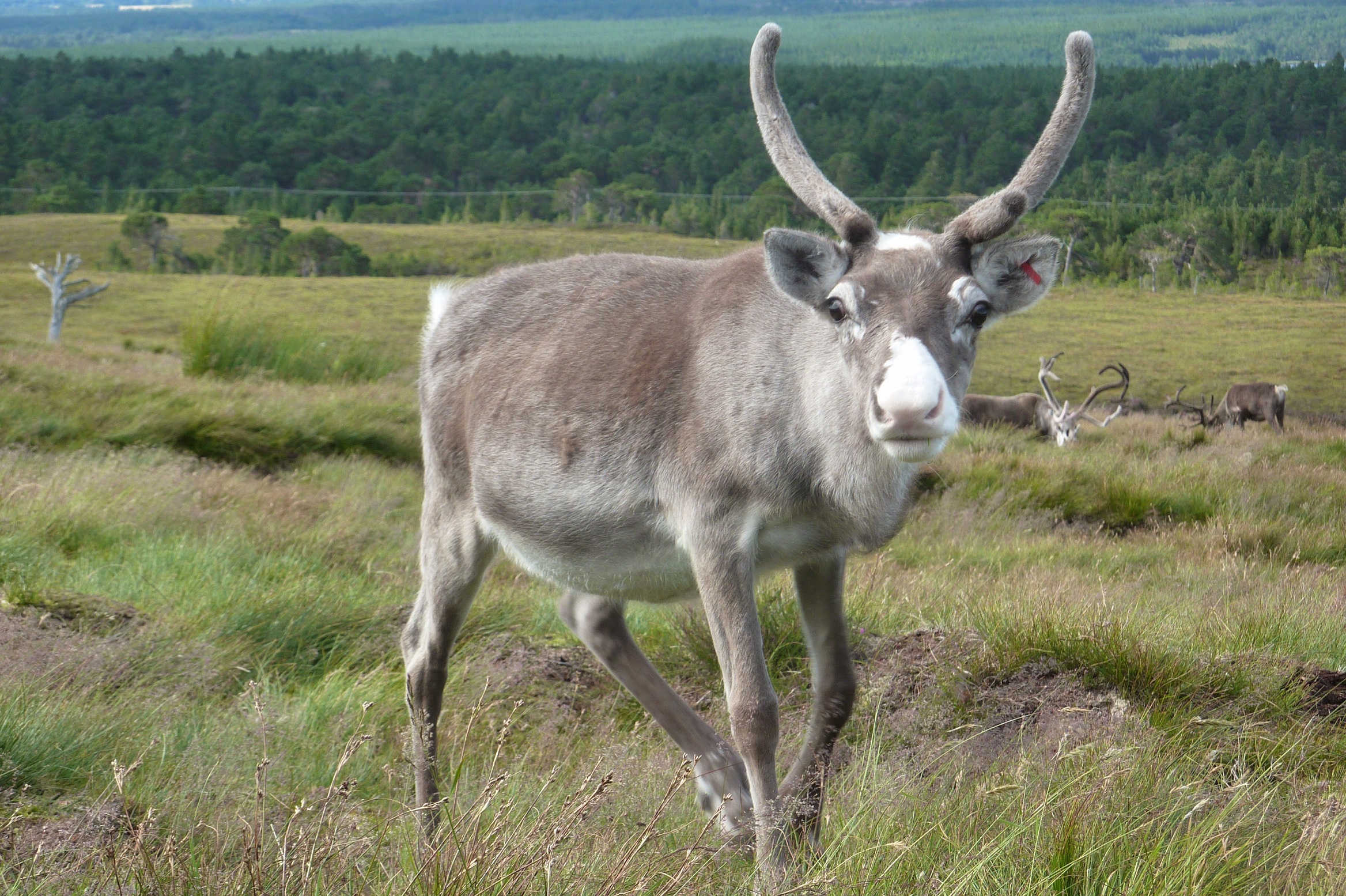
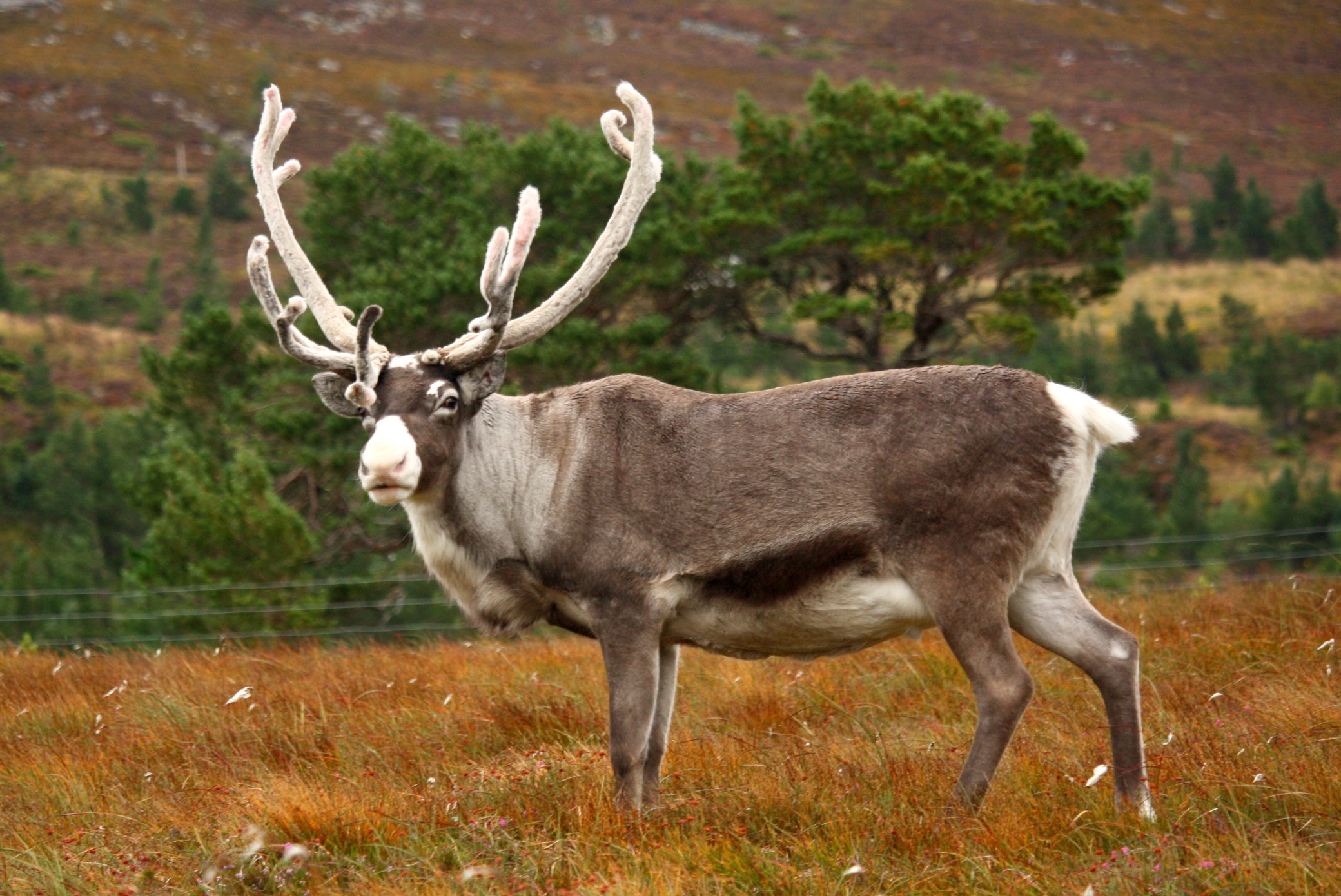
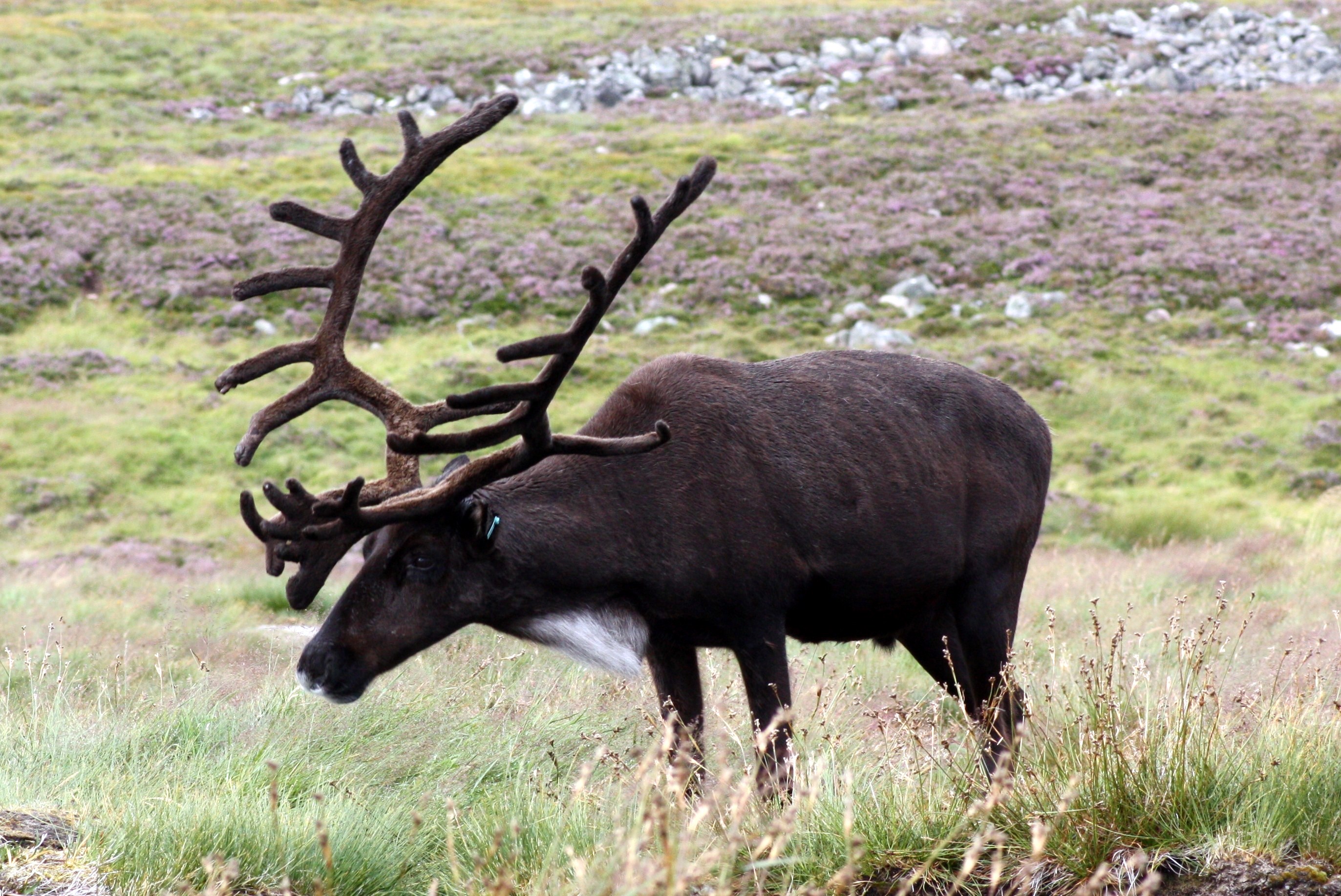
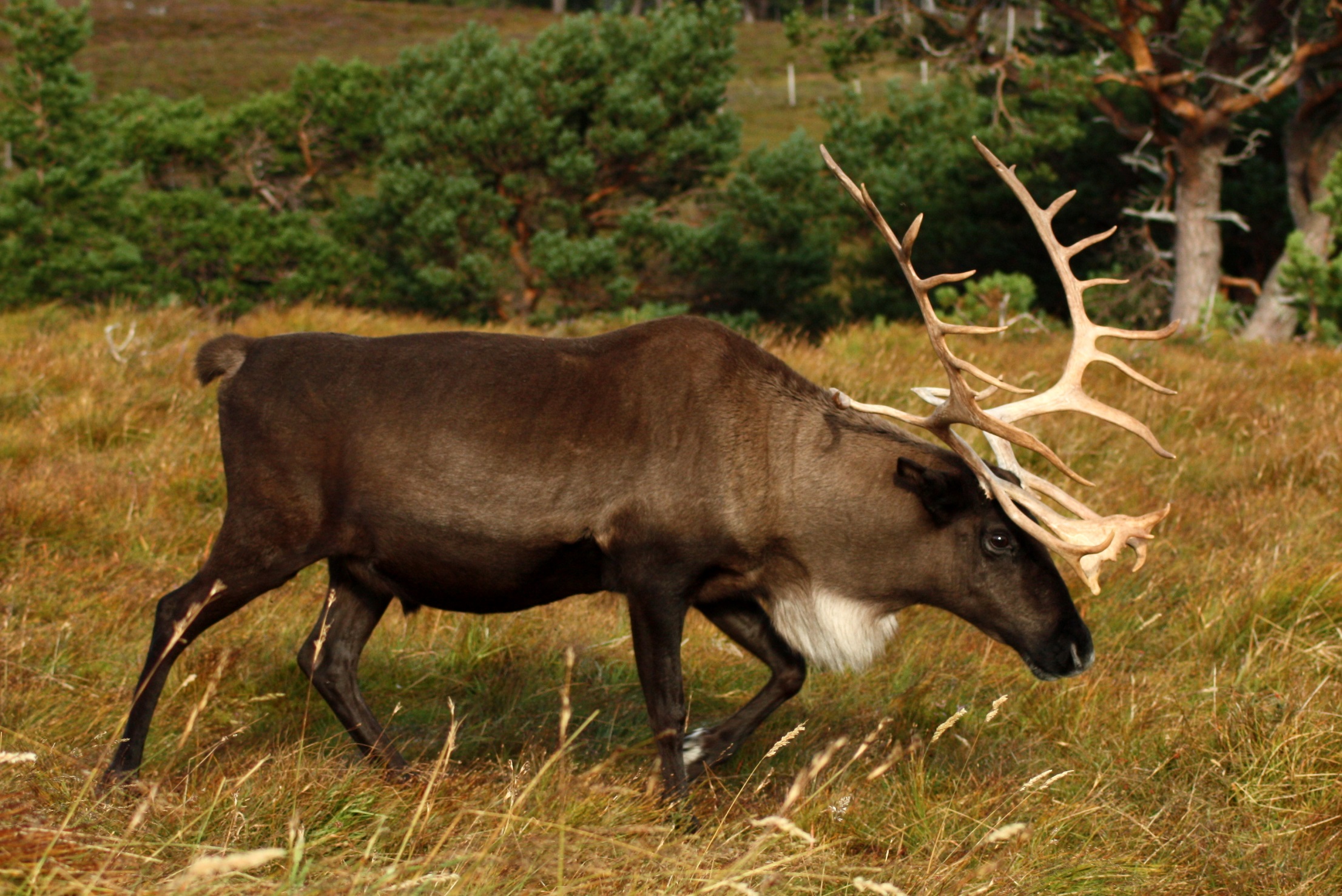
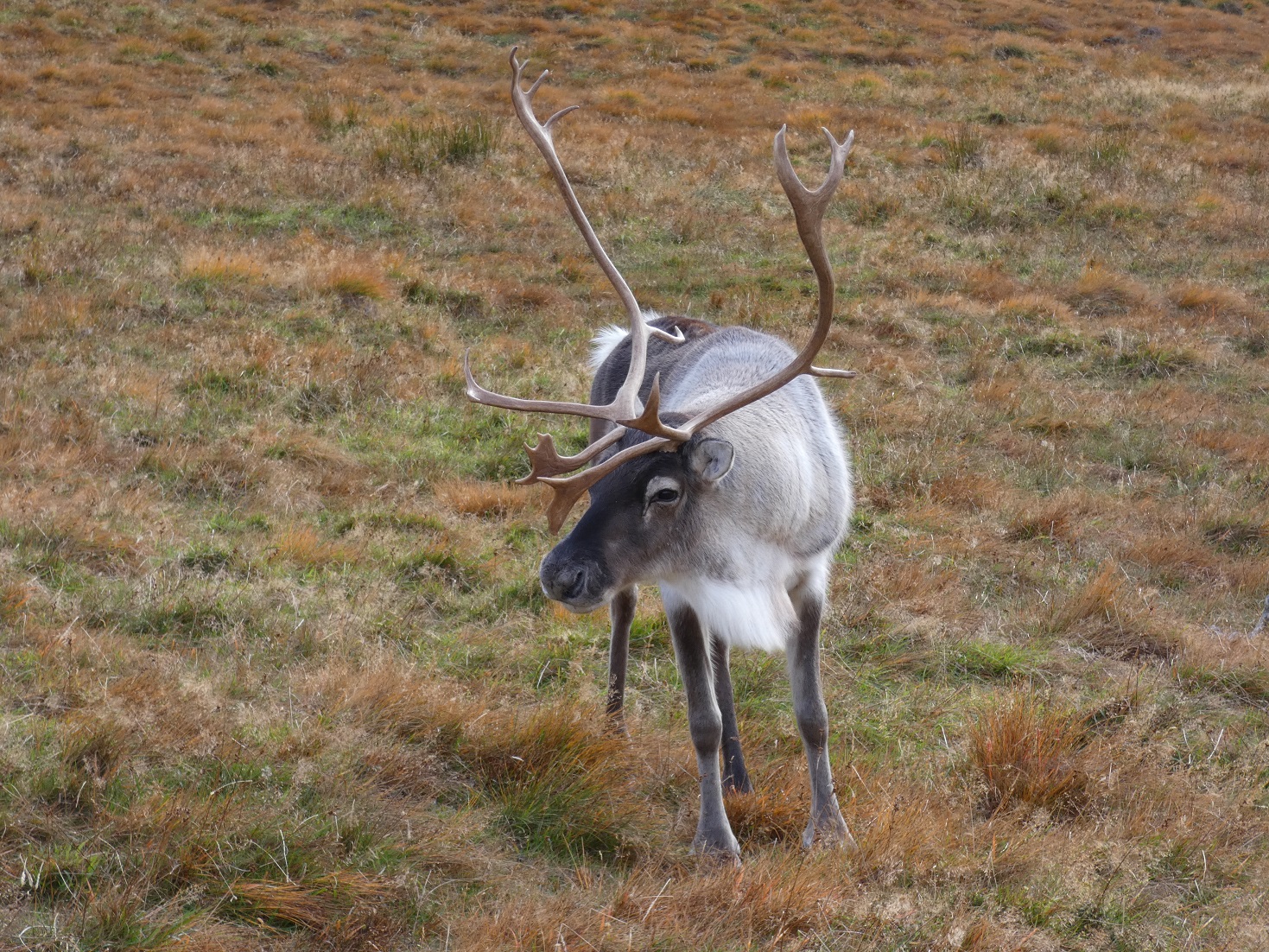
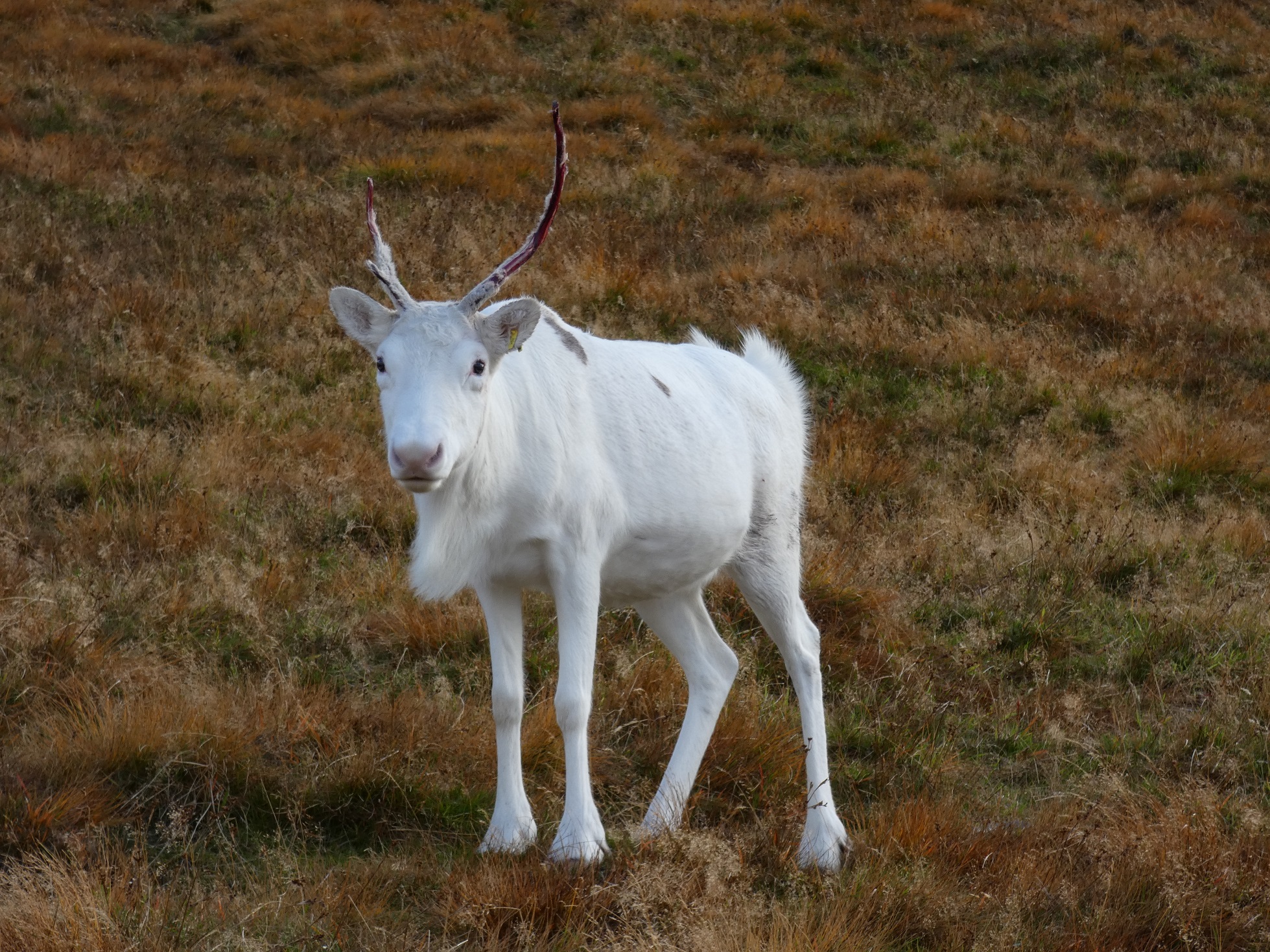
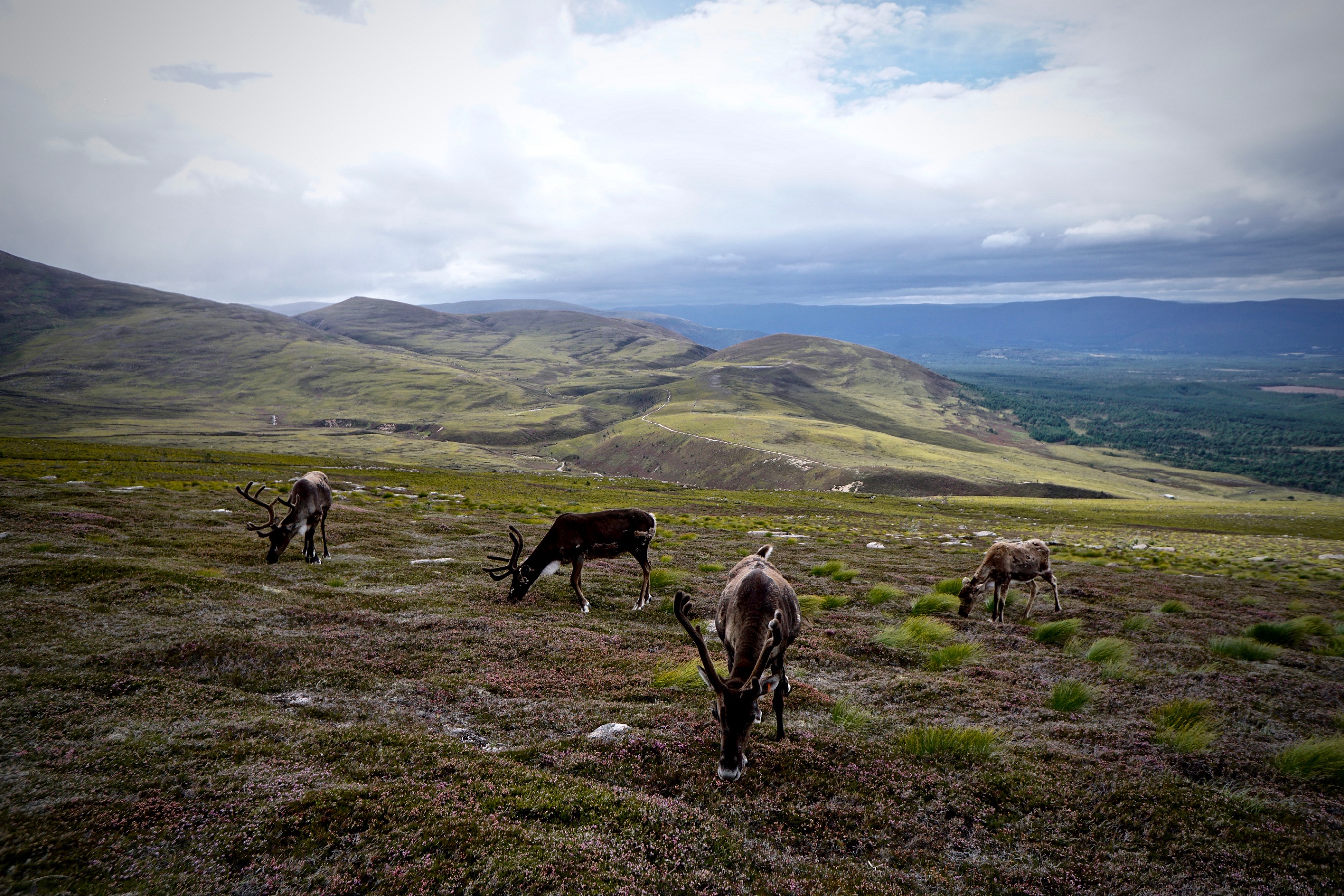
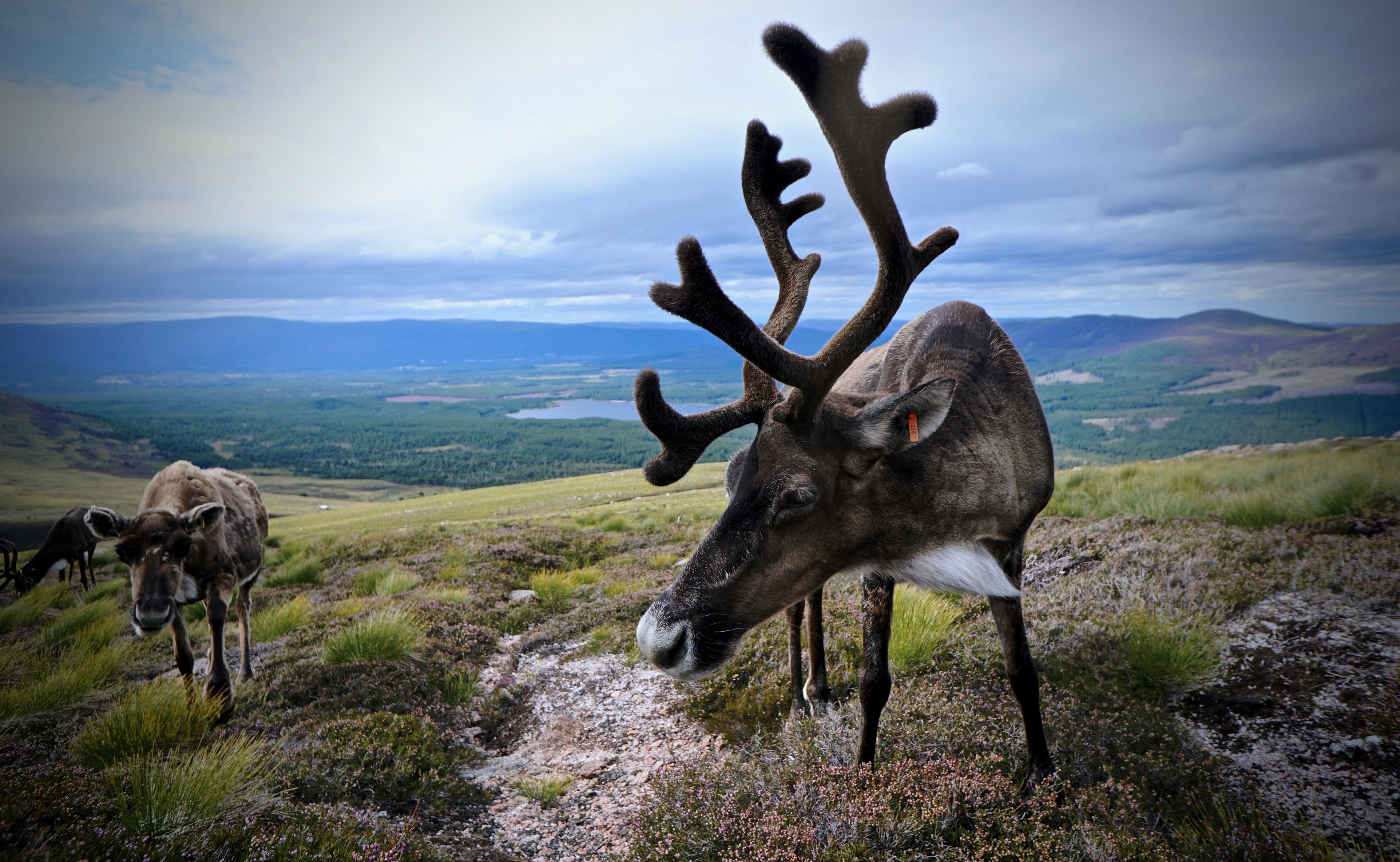
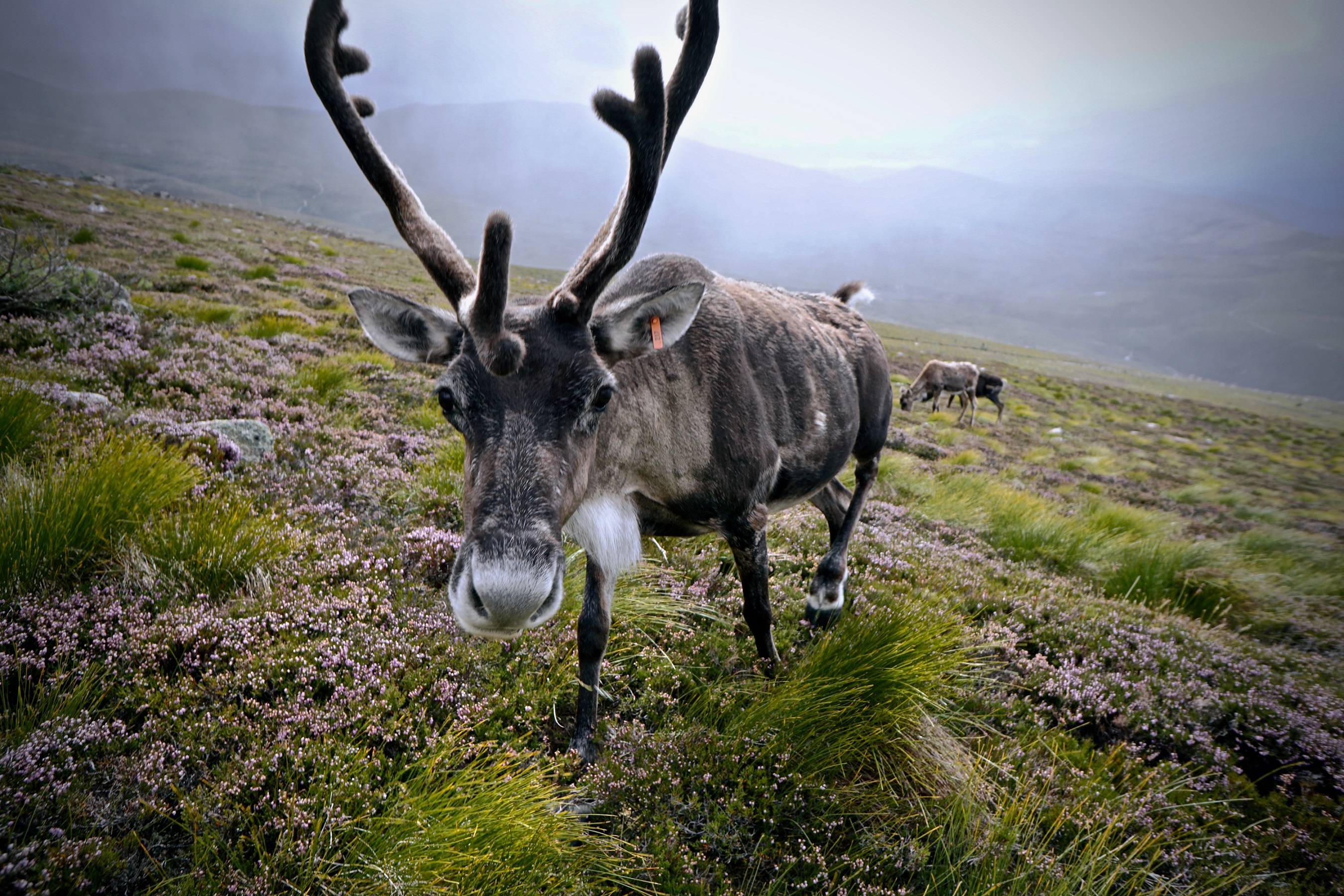
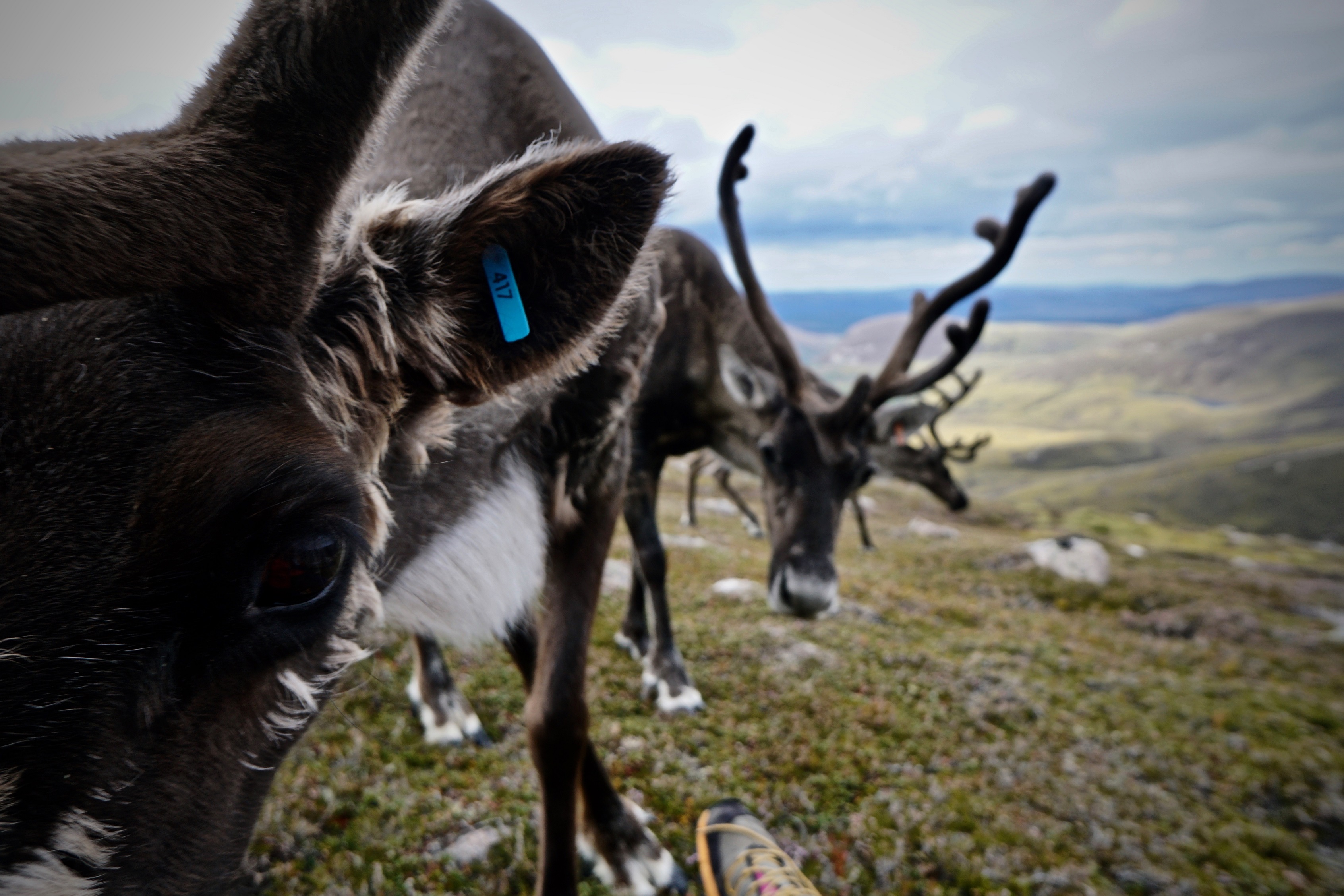
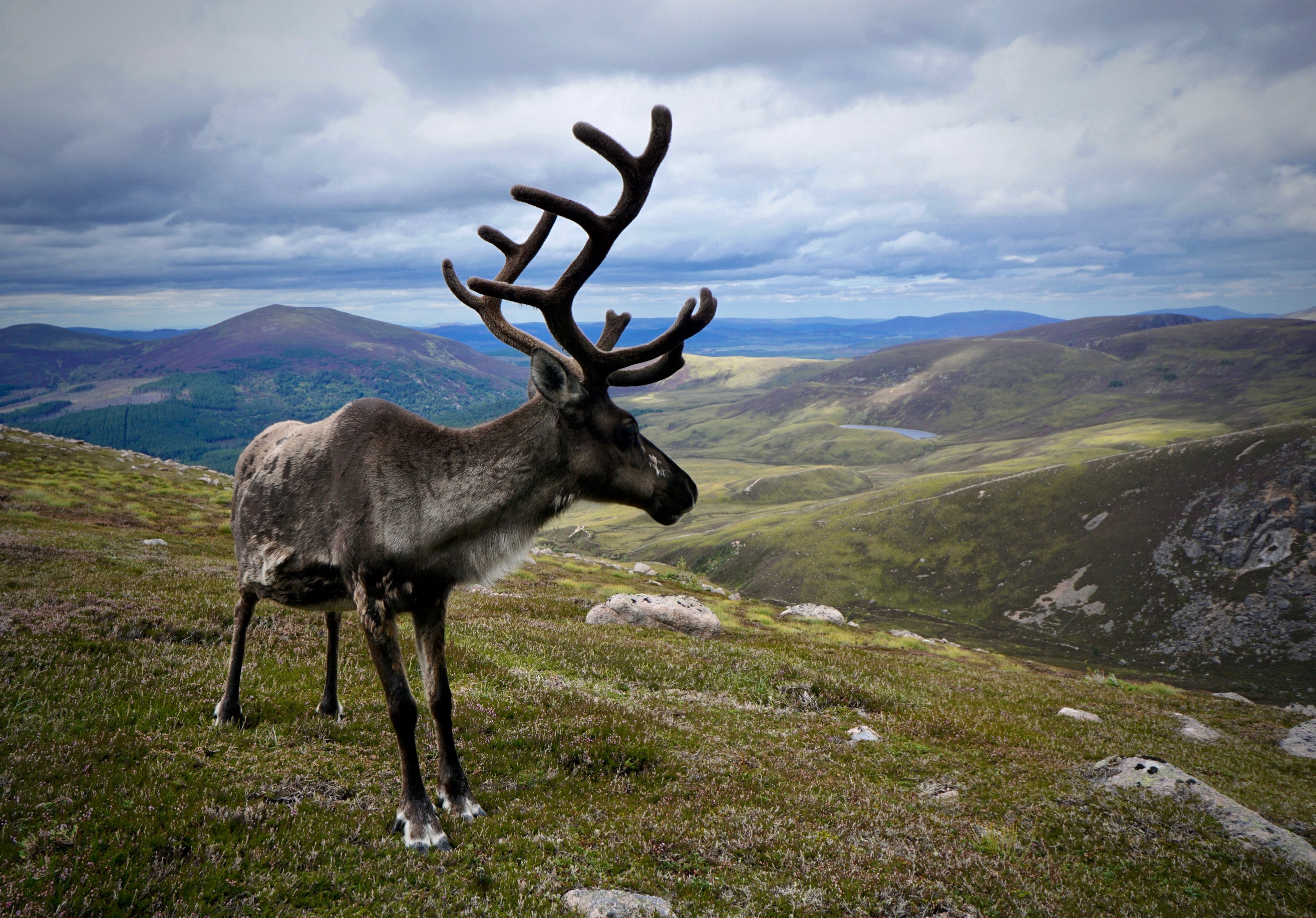
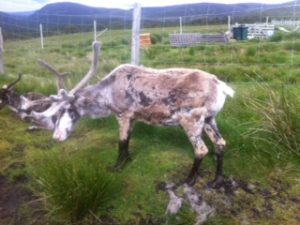
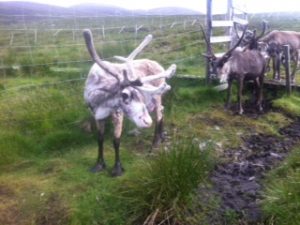
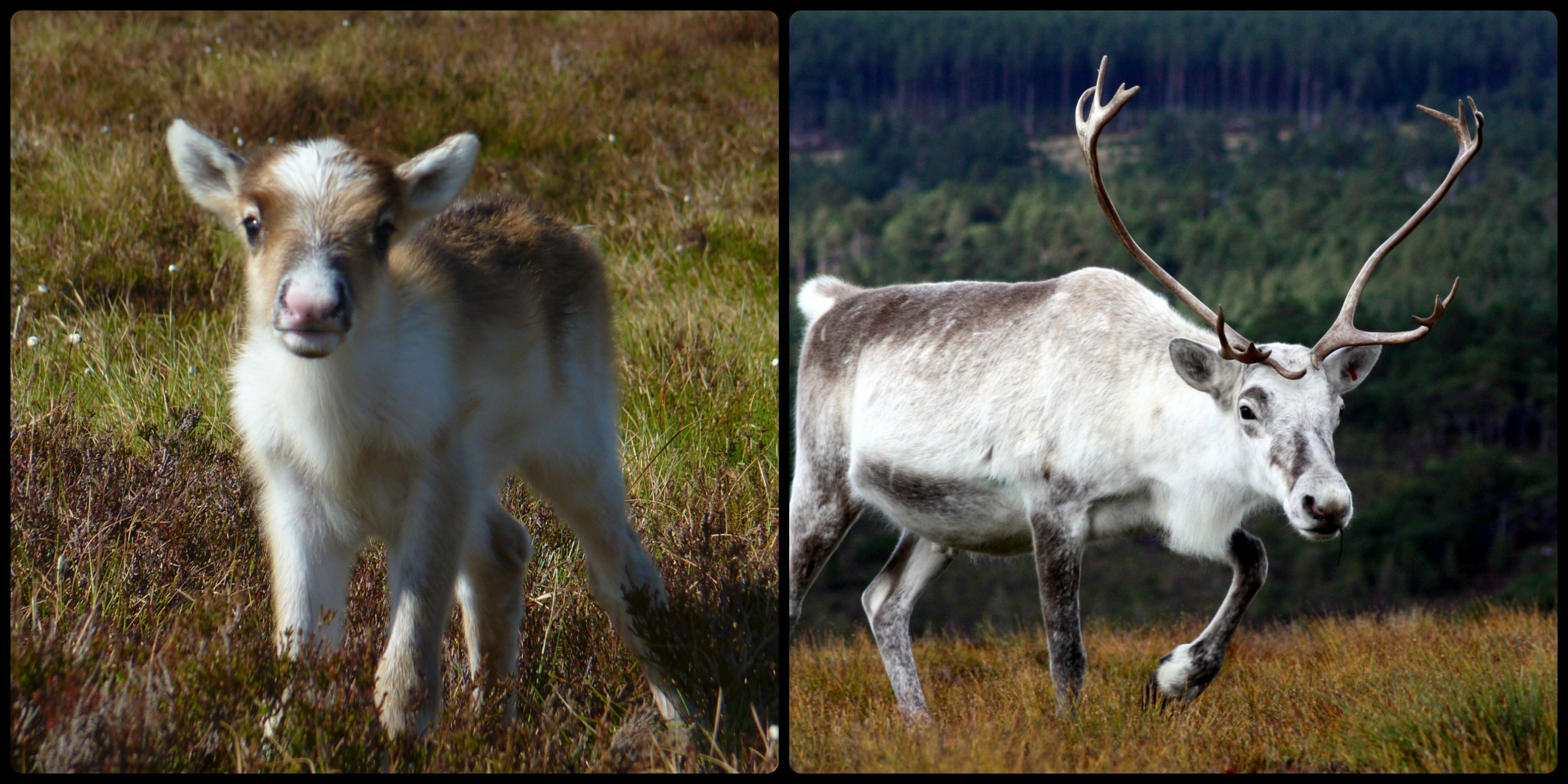
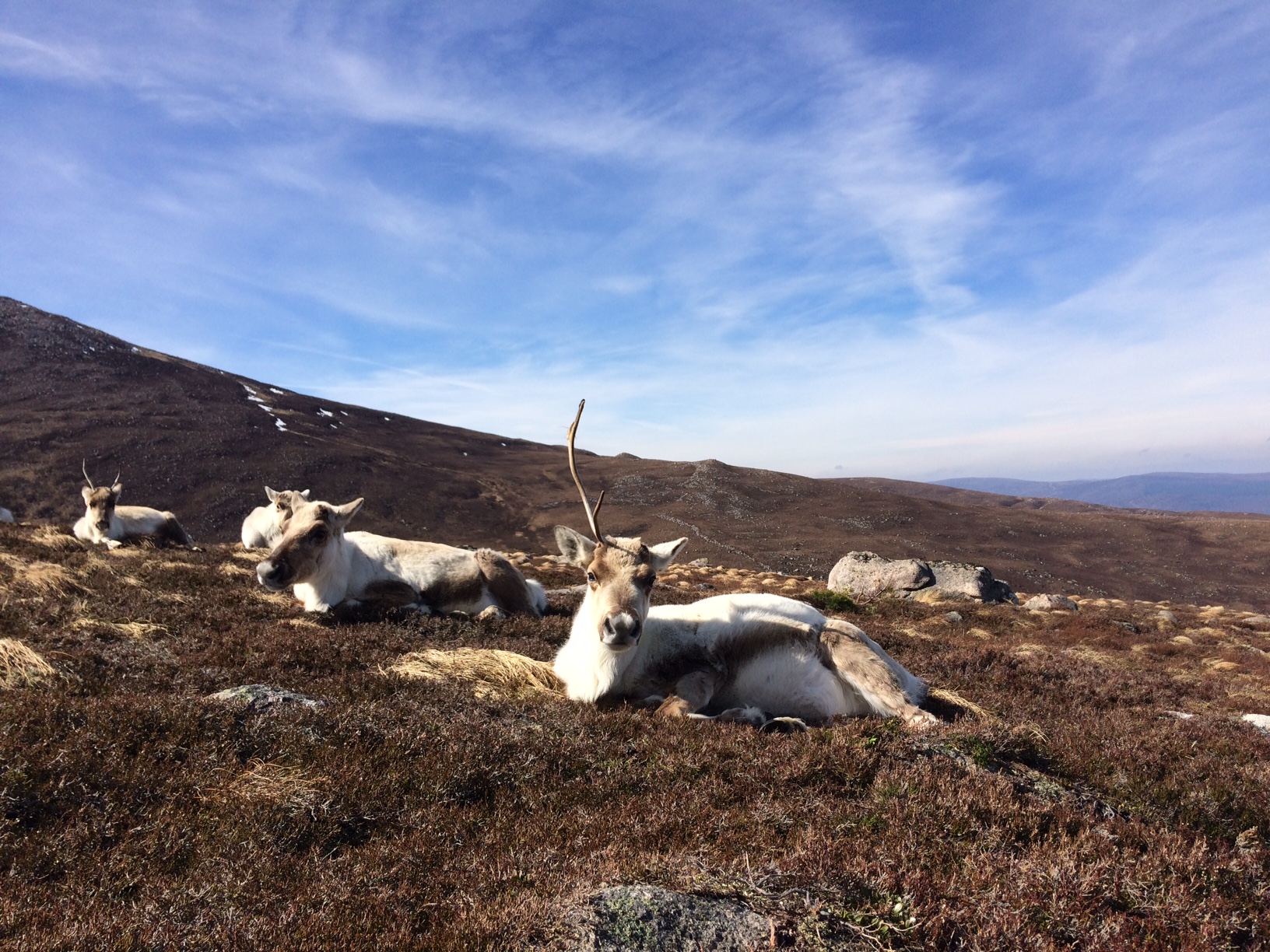
Svalbard was born in the year calves were named after Games and Puzzles, with other reindeer born that year including Hopscotch, Bingo, Monopoly and Jenga. Svalbard was originally named Meccano, however in the autumn of 2011 when he came back off the free-range as a 5-month-old calf we were so struck by his short legs and dumpy body that we nicknamed him Svalbard, after the short, fat reindeer found on the high Arctic island with that name, and it stuck.
Svalbard at around 8 months old
Now at seven and a half years old you could hardly describe Svalbard as short and dumpy. Maybe just rotund? Despite being a late born calf and coming back after the summer at 5 months old without his elderly mum Arnish (who must have died), Svalbard has matured into a really fine reindeer with, dare I say it, attitude.
Svalbard comes from a fine family of reindeer. His great-uncle was one of our favourite reindeer of years gone by, Gustav. His mother Arnish was a real character in the herd, who despite being antlerless all her life was certainly not disadvantaged by her lack of weapons on her head. She often took the initiative when it came to confrontations with antlered reindeer and invariably won!
Svalbard as a yearling
Although a dark reindeer Arnish was prone to producing light coloured calves and in particular white faced calves like Svalbard. Her daughter born in 2008, Addax, has a white face and has gone on to produce calf Parmesan, who has white markings too.
And finally Svalbard reminds many of us of Sven, the reindeer in the Disney film ‘Frozen’ and that says it all.
One year after spending Thanksgiving as the lone American in Nepal with a group of runners that included Fiona Smith, I could have never imagined that I would be cooking Thanksgiving dinner for a group of reindeer herders in the Scottish Highlands. Nonetheless, here I am, still the lone American, but with a whole bunch of great friends surrounding me and accepting me as the, ‘token yank’.
My road to becoming a reindeer herder was unconventional to say the least. Actually, is there really any conventional way to end up working at the Cairngorm Reindeer Center? And yep, that is Center spelled with an ‘er’ at the end because there are just some things that I refuse to conform to including British spelling of certain words. So if you receive an adoption pack describing your reindeer’s ‘color’ you can bet that I wrote it.
Freerangers Fonn and Okapi
It all began last November while in the Himalaya finishing up my mission to run a marathon in every continent, and Asia was my last one. I was part of an expedition running the Everest Marathon, a group that included the one and only reindeer extraordinaire, Fiona Smith. When we were doing our introductions on the first few days of the trek, I honestly thought that she was joking when she enlightened us all to her incredibly unique profession. C’mon now, no one actually herds reindeer for a living? They just sit at the North Pole and eat carrots; no one looks after them but Santa. Boy, was I wrong. I knew virtually nothing about these incredible animals and the amazing people that take care of them here in Scotland.
Fast forward to this past July, Fiona, our friend Tom from the Everest Marathon, and former reindeer herder Ruth Molloy found themselves on a plane to America to join me on my hike of the Appalachian Trail (AT). And for about a week, they all enjoyed the delightful experience of arduously trudging through the muddy hemlock forests of Vermont.
Anytime you meet someone while traveling, you know them in a very isolated context, so it becomes quite odd when you see them outside of that original encounter. However, when participating in something like the Everest Marathon, it enables you to create a bond with people that transcends far beyond what is normal. Because of this we stayed in close communication in the months following our journey through the Himalaya. When I had first told them that I would be hiking the Appalachian Trail, they must have done little to no research because they were quite keen to join me!
First reindeer in snow experience
While we all hiked there were many jokes made on my behalf regarding my homelessness and unemployment, simply living in a tent for five months in the mountains of the east coast of the United States. These jokes however, led to an offer that seemed to be taken more seriously as the days on the trail with Fiona and company went on. She suggested that when I had finished hiking, if I would like to visit her in Scotland, I’d be welcome to come help out at the Reindeer Center for November and December. The Christmas season tends to be a busy time of year for reindeer (I at least knew that), so they always welcome an extra set of hands.
Next thing I knew, I had myself a plane ticket to Scotland and not the slightest clue into what I had gotten myself into. The first few days as a reindeer herder were a whirlwind of fact learning, feed mixing, and poo picking. Very different than my normal job occupation in the United States as a paramedic, I found it quite enjoyable being in an environment where no one was yelling at me or bleeding on me (hopefully). And on my measure at how successful I am at a task, I was doing very well, no one was dying!
First day off in the Cairngorms exxploring with Tiree and Joe
There have been several learning curves thus far that many other herders don’t generally experience. As I’ve alluded to already, my spelling of certain words has been critiqued by many of my colleagues; they are especially disturbed by ’aluminum’. Conversely, I have a particularly difficult time attempting to pronounce many of the names of the Scottish towns and hills. People have been very amused by my attempts to say them in an American accent as well.
Additionally, I have never seen so many hot drinks consumed in my life! It seems like tea kettles are constantly boiling at all hours of the day. Honestly, I feel it would be more efficient to set up an IV infusion of tea for some of my coworkers!
Driving on the left side of the road has also evoked a sense of paranoia that even distracts me from singing along with the radio. I find myself constantly repeating the mantra of, “left, left, left” while driving on the winding narrow backroads of the Highlands. But with the help of my fellow herders, all of these hurdles (see what I did there) have been uneventfully navigated.
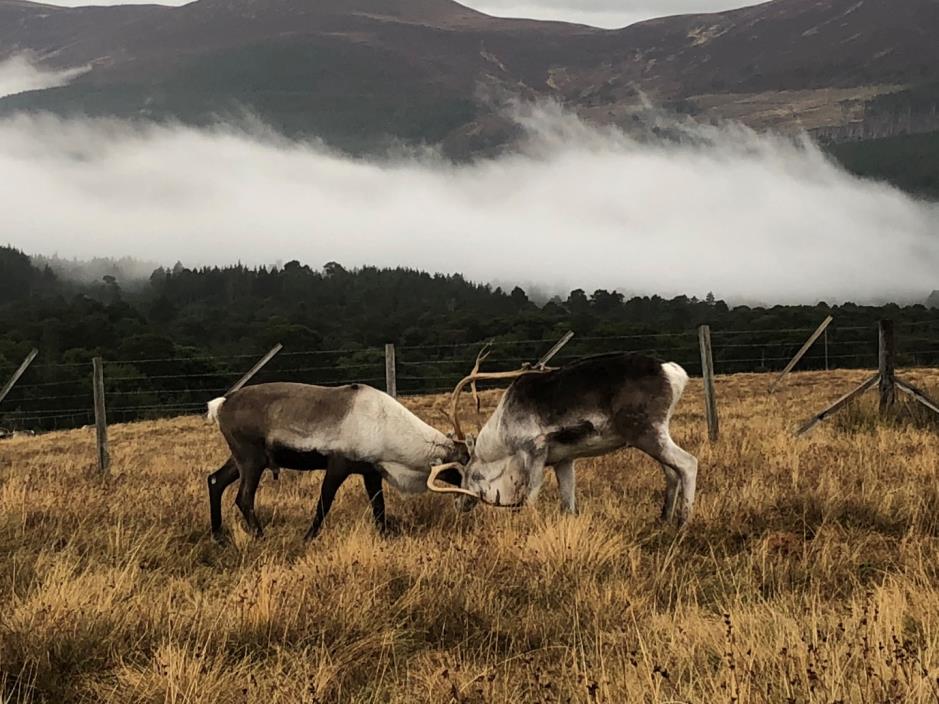
Breeding bulls Kota and Sargasso having a tussle at the end of the rut
Often times while I blogged during my time on the Appalachian Trail, I wrote how it wasn’t necessarily the place, but the people that dictate an experience. Living at Reindeer House certainly does not fail to hold true to that theory. With seven of us from four different countries living under the same roof, from morning to night we certainly have a lot of fun. Friends that I have been with for only a month now feel like I have known them for years (in a good way). And last night the staff of the Cairngorm Reindeer Center held the first Thanksgiving in the sixty-six year history of the herd.
To say my experience as a chef is limited would be an understatement. Aside from my mother’s fantastic meals, I’ve essentially lived off of peanut butter and jelly sandwiches and noodles for the past twenty-four years, cooking a full turkey dinner was an ambitious exploit to say the least. The thought of preparing a meal of this magnitude for so many people left me more unsettled than being in the back of an ambulance with a trauma patient. But with a day off and Google at my fingertips I was eager to give it a go nonetheless. Having a bit of help from Fiona and the internet I’m happy to say it all went off without a hitch and the food was very enjoyable.
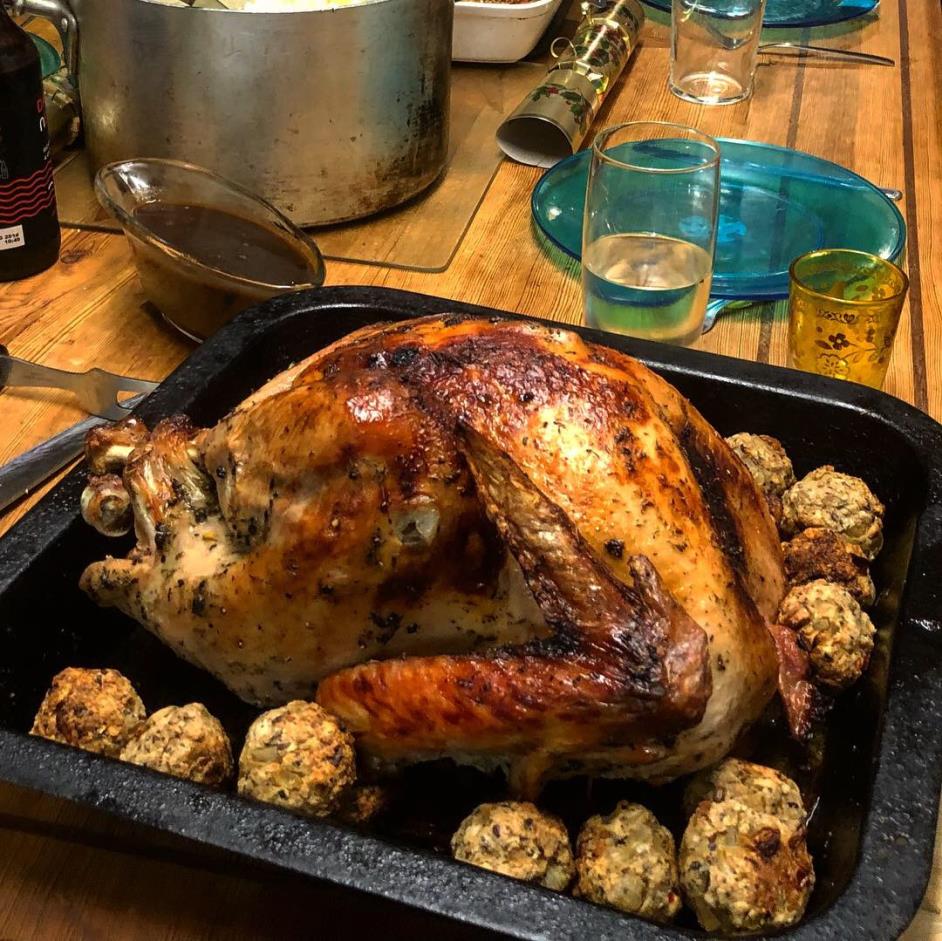
Turkey!
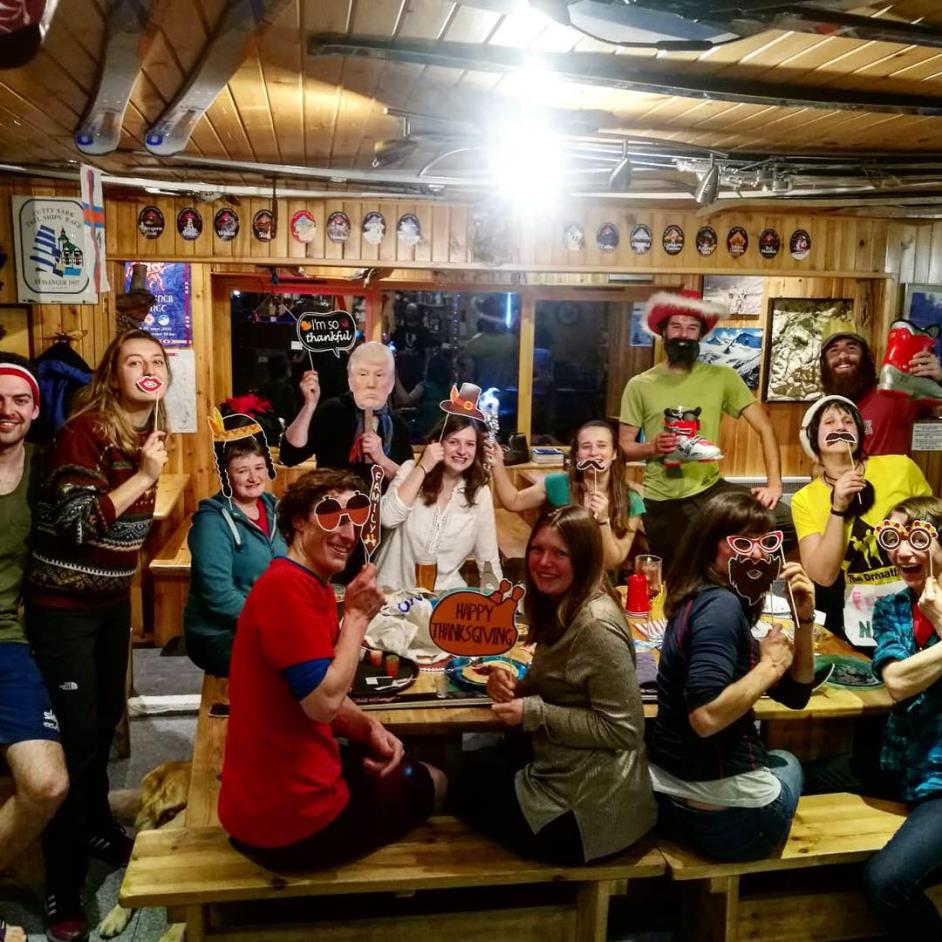
Everyone dressed up in their finest American attire, Fiona made an American playlist, and laughs and delicious food were shared by everyone. Even Scotty and Kate the owners of the local bar, the Pine Marten, decorated the walls with American flags, the Declaration of Independence, and many other photos of American symbols and monuments.
It was truly one of the greatest Thanksgiving celebrations I have ever had with people that I am certain will be lifelong friends. Although I missed my family, this wild bunch of reindeer herders made the holiday very special for me.
I think this says a lot about Cairngorm Reindeer Center and the people it attracts here. If you’ve ever come for a visit you may have noticed the kindness and attentiveness the staff has exhibited, but what you see is just a small sample of the true personality of all the herders. This incredible group of people that I have been working and living with are some of the most caring and altruistic humans I have ever met. Their love for the reindeer, their job, and each other is unparalleled to most environments I have witnessed. So from the bottom of my heart I need to thank Fiona and the whole Smith family because now I feel incredibly fortunate to also be a part of this wonderful community. Bobby
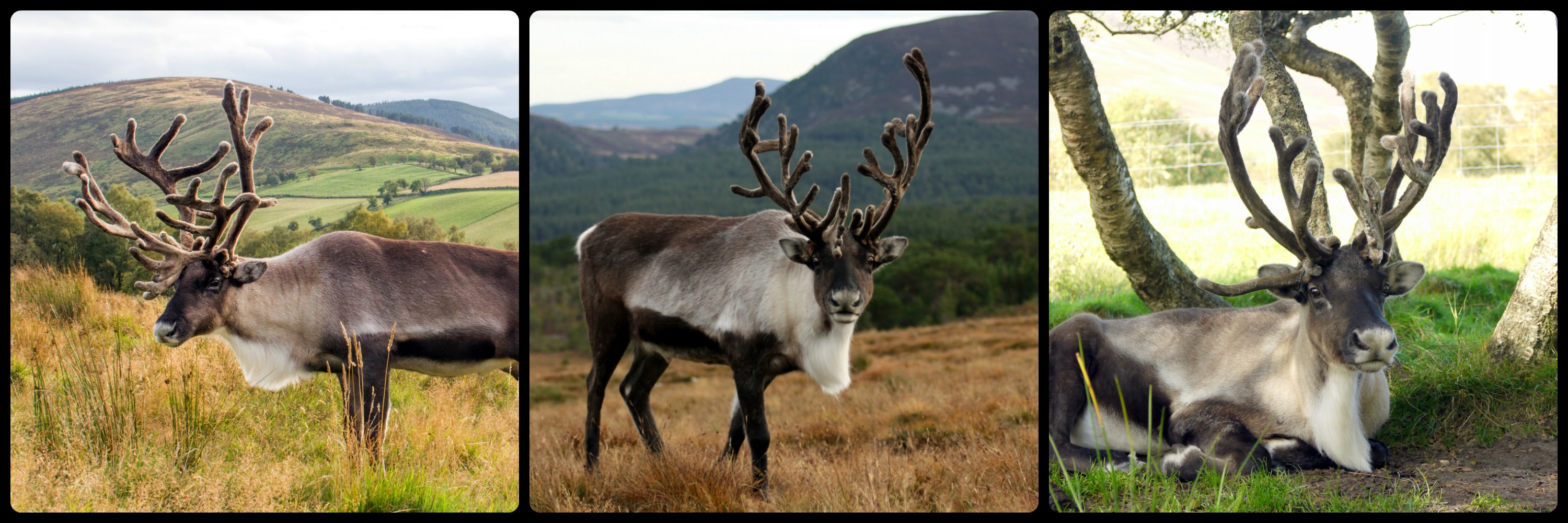
Pera’s antlers really are worth writing about. As a calf he grew short simple antlers, which would not have given us any idea of their shape and form three years later. As a two-year-old, Pera’s antlers were slightly strange – very wide and ‘flattened’ but nothing particularly out of the ordinary. However, by 2014 his antlers are completely bizarre.
Pera 2014
As a general rule reindeer grow antlers of a similar basic pattern, with long brow tines, including the front blade pointing forward low down above the base of the antler. Then as the main beam elongates, the later tines grow pointing backwards. Sometimes the tines can be flattened with extra points coming off them too.
Pera’s antlers, however, look like they are completely the wrong way round with the tines higher up literally pointing the wrong way. Also his antlers are incredibly wide apart at the top with very long splayed tines at the bottom. Apart from looking extraordinary it’s actually quite difficult to get a halter on him!
Antler shape and form is basically inherited – must have been an interesting combination of antlers from his mother and father to come up with Pera’s! However, we will never know exactly what they were because Pera was born in Swedish Lapland and finding out his parentage from a herd of 5,000+ reindeer would obviously be impossible. In 2014 he was one of our breeding bulls and so one of the calves he fathered was Aonach. Now Aonach is 3 1/2 you can certainly see the influence of his father on the shape of his antlers!
Reindeer are incredibly interesting animals. Many people that come on a hill trip or visit the paddocks conclude this after learning a wee bit about them. I thought so too, when I first came here, and it’s one of the reasons I kept coming back, as a visitor, then volunteer, and now member of staff. What I didn’t know then was that the more I would learn, the more fascinating the reindeer would become!
I’m currently finishing reading Tilly’s second book (The Real Rudolph) after having read her first (Velvet Antlers, Velvet Noses). I am fascinated by all the new things I learn and try to share as much of that fascination I can with people during tours and paddocks talks. I look forward to starting on Tilly’s third book (Reindeer: An Arctic Life) which has just been published. Below I’ve listed some of the amazing facts I’ve only recently discovered:
– Reindeer are omnivorous: they eat what they can find and in the harsh conditions they live in this does mean that the amount of shrubbery can be limited, which can result in them eating birds!
A mighty rutting bull, strong as they look, is actually weaker than his female or castrated counterparts. I’ve learned the hard way, unfortunately, as we lost one of our beloved breeding bulls to a disease that sometimes can be cured if we spot it early. Even before the rut they will have spent a lot of energy in growing antlers, and their rutting behaviour is also very energy-consuming. This leaves them often exhausted by the end of it, makes them less effective in fighting off diseases, and causes them to go into winter with less energy reserves, which makes it harder for them to cope with the harsh winter conditions.
Breeding bull Sargasso
White reindeer that have leucisim (partial loss of pigmentation) can get sunburned in summer. We sometimes put sunscreen on their faces to prevent this from happening!
Mozarella, a leucistic reindeer
Even when we let a female reindeer in with several breeding bulls, we can still figure out which of the bulls was the father if she gets a calf later on. The simple reason for this is that they come in season for one day only, and this is then repeated in cycles of 3 weeks. A reindeer’s pregnancy lasts 221 days so when the calf gets born, it’s a simple calculation of with whom she was that many weeks ago when she was in season, and then we know the dad!
How long reindeer keep their antlers for is affected by hormones. It is for this reason that Christmas reindeer (who are all castrated) keep their antlers longer than breeding bulls. If we contracept females for that year it may cause them to loose their antlers early too!
31/07 (1) My first day of the year going out on the free-range. A group of four females (Bumble, Okapi, Clootie and Malawi) were spotted down by the road. Another group had been spotted at the top of Cairn Gorm so the plan was to join the groups up. Chris (another herder) headed up Cairn Gorm to bring his group lower down and I took the group of four up and over Wind Ridge which connects to Cairn Gorm. My group were wonderful at following my bag of feed I was carrying, stopping every so often for a quick graze.31/7 (2) Okapi was one of the greediest in the group and was eagerly following me the whole way up the hill. I was struck by how beautiful she appeared and her lovely nature.31/07 (3) Behind Okapi we can see the rain cloud coming in. Thankfully the weather only changed for five minutes and soon went back to lovely sunshine.31/07 (4) Whilst taking this photo Bumble decided to push me over in an attempt to get to the feed bag. It was my first time meeting her and it was very memorable as she is such a greedy female!31/07 (5) The beautiful Clootie looking over the hills. We didn’t manage to join the two groups up in the end as both groups of females began to loose interest in our feedbags. More importantly though, we had managed to move the small herd away from the roads and any fast cars travelling on them. Over the course of the summer, we saw a lot more of the females and gradually got them used to following the feedbag for longer in preparation for the rutting season where they are required to follow the bag all the way down to the hill enclosure.
First off, I’m not talking about the reindeer in that heading. Reindeer only fly at Christmas time after Santa has given them the magic powder and our lovely reindeer don’t attack.
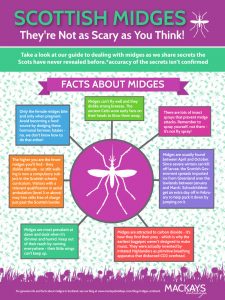
I am of course talking about the flying mini beasts – flies, bugs and, the worst of the worst, midges. Scotland wouldn’t be Scotland without those little terrors, and they are a sign that summer has finally arrived here in Cairngorm, but they aren’t my friends.
No one here likes the midge, including the reindeer. With the heat rising above 20°C and them still having some of their winter coat, our boys are feeling the heat. In hot weather we often give them access to the shed to hide from the heat – you’d be amazed how many come running out at feeding time.
They are also bothered by the flies and midges, but there’s not much we can do there. As much as I’d like to eradicate midge for both my own and the reindeer’s comfort, they are an important food source for birds, toads and frogs, and bats.
Our boys cope with the midges fairly well; in the Paddocks they hide under our shelter shed and up on the hill avoid stagnant pools where midges breed and shake to get rid of the biting buggers. Sometimes it’s like watching a little reindeer dance: they stomp their back foot a few times, then the other, a little shake, a few more stomps, and then if the midges are really ferocious, they’ll burst off in a sprint, jumping and kicking the air. It’s quite funny to watch!
We also spotted Oryx doing something a bit odd. It was the end of a Trip, and we were heading to the gate to leave the enclosure. A few boys followed us, no doubt thinking there’d be more food. There’s a large mud bath just at the gate, which usually the reindeer don’t bother with, but this time Oryx got into the big puddle and just stood there. He seemed pretty content, so he was left to his own devices while Fran and I did some poo picking (the glamorous lives we lead). Eventually he decided his spa treatment was finished and got out of the mud bath. He looked ridiculous with mud socks up to his ankles, but he seemed pretty happy with himself.
It’s known that red deer wallow, or bathe in mud, but the cause for this is still unknown. Some think it may be to reduce ectoparasites, while others believe it is to cool down. I’m not sure it’s ever been recorded in reindeer before (a quick Google search didn’t come up with much) but I think Oryx may have been trying to avoid the midges biting at his legs. Either that or he fancied a quick mud treatment at the ‘spa de le Cairngorm’.
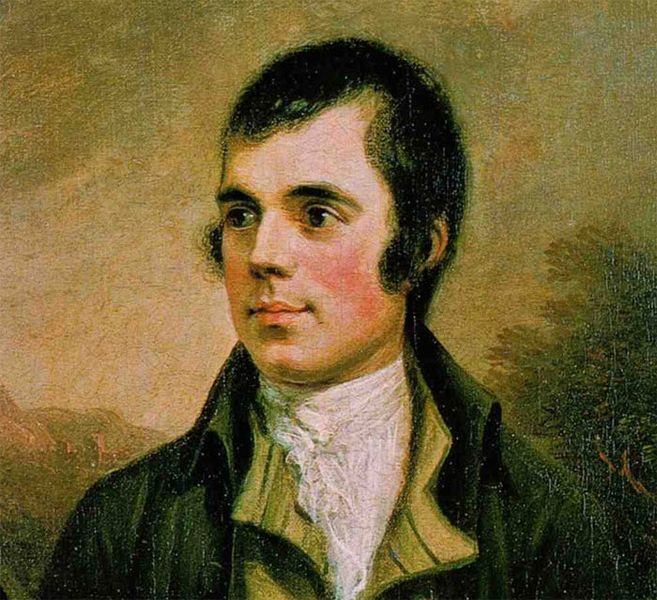
Burns Suppers celebrate the life and work of the Scots poet Robert Burns. More commonly known as Burns Night the suppers take place on or around his birthday, 25th January and are effectively a second national day in Scotland. Here at Reindeer House we just love any excuse to get together and eat some fantastic food with some great company! For those of you that don’t know about the Burns Supper tradition here’s a brief overview of what we got up to last night at our Burns Supper, along with some tales of our reindeer named Burns, seeing as this is a reindeer blog after all!
Robert Burns was born in 1759 in Alloway, Ayshire and lived until he was 37. He is known and celebrated worldwide for his poetry much of which was written in the Scots language or Scots dialect. Whilst many of his poems were of the Romanticism style he lived through a period of political repression. His work often reflected or commented upon this and some considered him to be a radical and revolutionary which perhaps helped give him such a huge following during and after his lifetime.
The poem and song “Auld Lang Syne” is sung all over the world on Hogmanay and is one of Rabbie Burns’ most famous works. Other well known work by him includes “Scots Wha Hae”, a patriotic song which became an unofficial national anthem for Scotland. It was written in the form of a speech from Robert the Bruce before the Battle of Bannockburn in 1314 where Scotland defeated England in Battle. Romantic work included (My Love is Like) “A Red, Red Rose” whilst “Tam o’ Shanter” and “To a Mouse” reflect on his upbringing as a tenant farmer. For us though at Reindeer House his “My Heart’s in the Highlands” seems most appropriate!
Farewell to the Highlands, farewell to the North,
The birth-place of Valour, the country of Worth;
Wherever I wander, wherever I rove,
The hills of the Highlands for ever I love.
My heart’s in the Highlands, my heart is not here, My heart’s in the Highlands, a-chasing the deer; Chasing the wild-deer, and following the roe, My heart’s in the Highlands, wherever I go.
Farewell to the mountains, high-cover’d with snow, Farewell to the straths and green vallies below; Farewell to the forests and wild-hanging woods, Farewell to the torrents and loud-pouring floods. My heart’s in the Highlands.
If you needed further persuasion of Robert Burns’ stature then did you know he won a contest run by STV to be called “The Greatest Scot” of all time in 2009? It is a rather impressive feat to have beaten Mel Gibson (William Wallace) to the title don’t you think? Perhaps he was aided by some of his extremely impressive nicknames that make him sound more like a cross between a rap artist and a boxer:
– The Bard of Ayrshire
– The Ploughman Poet
– Or just plain Rabbie Burns
Here’s a photo of some of our cows and calves on the free range a couple of weeks ago for anyone desperate to get back onto reindeer!
Burns Suppers have been taking place for over two centuries with the evenings format barely changing over the years. There is usually a general welcome followed by the “Selkirk Grace”
Some hae meat and canna eat,
And some wad eat that want it;
But we hae meat, and we can eat,
Sae let the Lord be thankit.
Supper usually then begins with a soup dish such as Scotch broth or Cullen skink before everyone stands for the “Piping” of the haggis (this is exactly how it sounds). We stand whilst the haggis is brought into the room by the cook whilst a piper plays a tune such as “A Man’s a Man for A’ That” written by Burns. Before you can eat the haggis though, you must first address it! “Address to a Haggis” is a poem written to a haggis with the opening line of Fair fa’ your honest, sonsie face” (translated as Nice seeing your honest, chubby face). At last we can eat the haggis! Served with neeps (swede) and tatties (potatoes) our meal last night was delicious! The evening concludes with an often amusing “Toast to the Lassies” and a reply for the laddies before a vote of thanks is given and everyone stands to sing “Auld Lang Syne”.
Reindeer herders, spotted for once out of our scruffy clothes!
As you can see we had a fantastic evening, but back to the reindeer!
As well as giving us an excuse for a party at the end of January, Rabbie Burns is of particular importance to us because we have a reindeer named after him! This year our calves were named after authors, writers and poets so we obviously had to name one Burns. He has turned out to be one of the biggest, strongest and healthiest calves of the year. He is extremely tame and bold and quickly became quite a cheeky chappy. We have him marked down, along with Dr Seuss, as being one of the biggest characters of the next few year but hopefully neither of them will misbehave too much in the following years as young bulls like Fergus did.
Burns, of the reindeer variety rather than his namesake Robert. Taken a few months ago he’s now substantially bigger!
When he came in off the free range in late summer with his mother Gazelle he had broken one of his antlers and it was growing over his face making it difficult for him to feed. We called out the vet who cut away the antler from his face and after a short while with a bandage in the shed he recovered well to become the strong healthy calf that he is. We are interested to see next year whether his antler will grow back in a more “normal” direction and shape or whether the pedicle from which the antler grows has been damaged and Burns will perhaps always grow one antler in a funny shape and direction.
Fiona and Burns out on the free range this week showing off his forward growing antler.
I added up how many years I’d been involved in Christmas tour with the reindeer the other day, and was astounded to realise that this was my eighth season. As I frequently tell visitors, “I only came for the summer!” but I seem to have fallen under the spell of the reindeer and the Cairngorms. Hen has been here even longer than me. So with several new herders this year, Fiona sent us off with Morna, with the idea that we’d show her the ropes as it were. Morna has been working with the herd all year, so knew the reindeer very well, but Christmas tour brings its own challenges which can take some adjusting to.
Over the months running up to Christmas, we’d been fairly entertained by the enthusiasm of Morna, Ruth and Olly about tour, and wondered how long it would take for the novelty to wear off! But spirits were certainly high as we got ready to set off for our week away, and we had great fun working out our team name: usually we’re just Handi, but this time we would be even MORHANDI!
I hope you enjoy the photos below – we certainly enjoyed our week, and it was really odd when we dropped Morna off to visit her family and were left with just two of us in the cab… it felt like we’d lost part of our team!
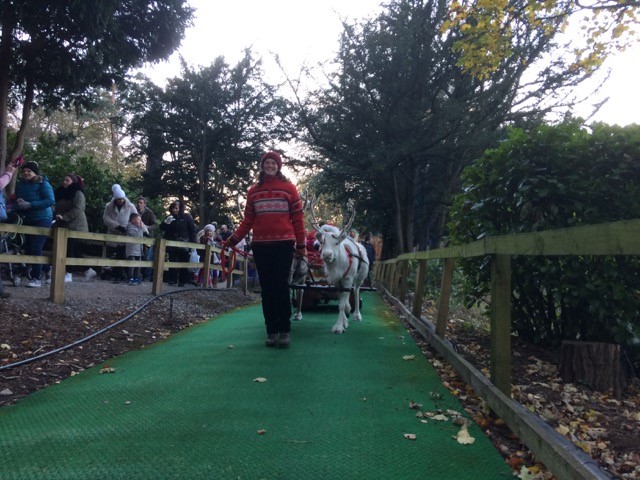
Leading our team off the hillQuick pose for a team photo – unintentionally matching outfits!As Morna couldn’t drive the truck, her task was to keep Hen and me entertained and hence alert, primarily through some good DJ and karaoke work!Reindeer happy in their overnight accommodation. Riding arenas aren’t just for horses…We went for a look round the stables and met all the ponies and assorted menagerie that live there.One of the ponies, Haggis, is a legend amongst herders as he just loves to play with zips. Problem is, he’s small and brown, like most of the ponies. Our solution is to walk round offering our jacket to every pony until we find a taker!Hard frost the next morning.We exercise the reindeer loose every morning – here they are having a trot round the field. Sometimes they have more “bounce” than others!Why lead two reindeer each when Hen can lead the lot?!The drive down to Wales was all too much for MornaLovely welcome from our hosts at the Welsh baseWe took the reindeer for a run in the field, but first Morna had to escape the attentions of some grown-up pet lambs!Ready for the parade! This was Matto’s (the white one) and Morna’s first ever parade in public, and he didn’t put a foot wrong. She did alright too!The reindeer are always happy to load and travel brilliantly – they are loose in the back of the truck and frequently lie down and have a snooze, as seen here.One of the perks to tour – you sometimes have time to cook a lovely breakfast!Here’s Morna doing a great job (with Matto again) leading the parade at Stockeld park. Though she was trying to redeem herself after breaking the decorations and a (non-essential) part of the sleigh in the same morning!The team were incredibly relaxed and loving their enormous pen at the event.
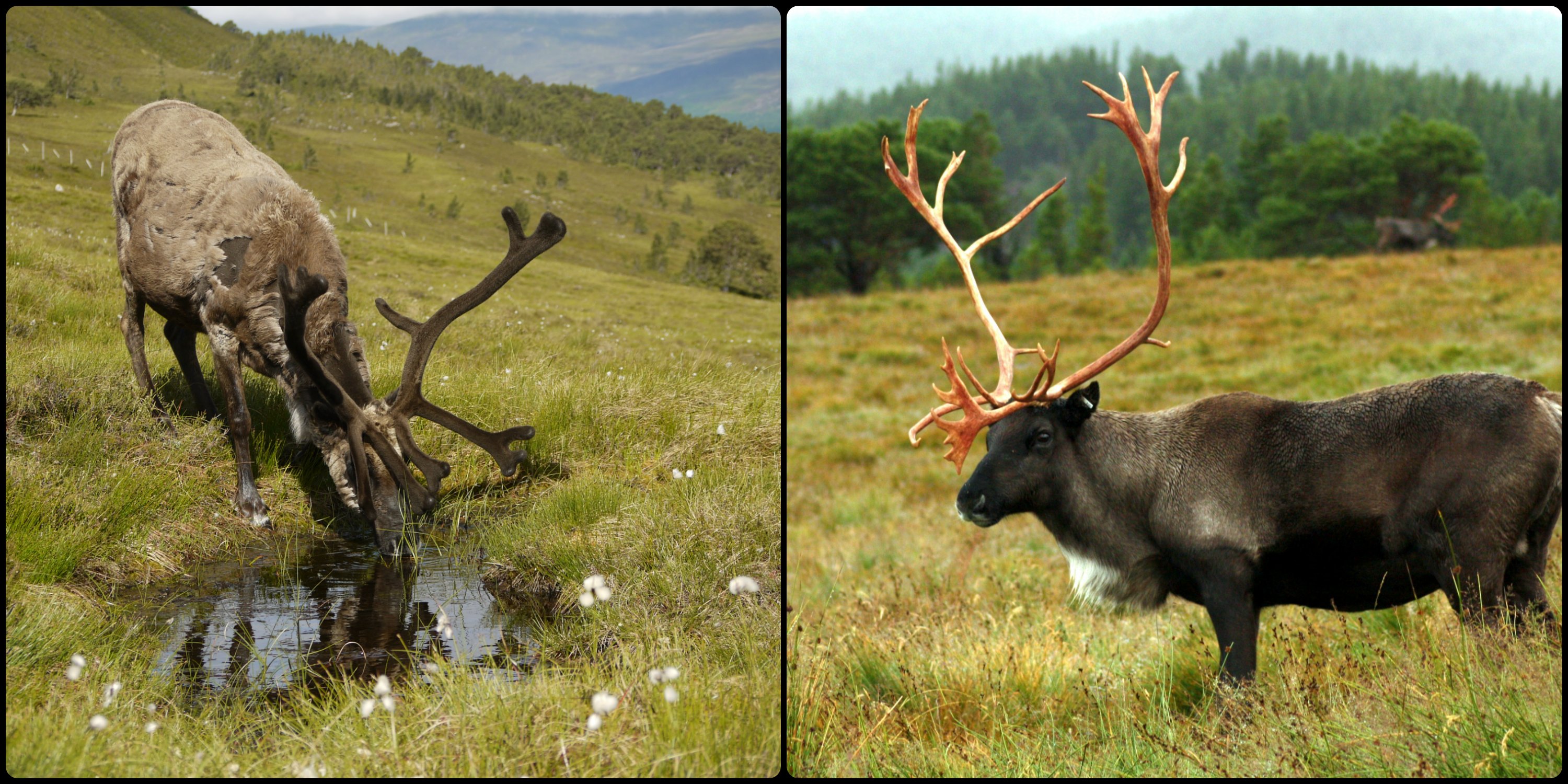
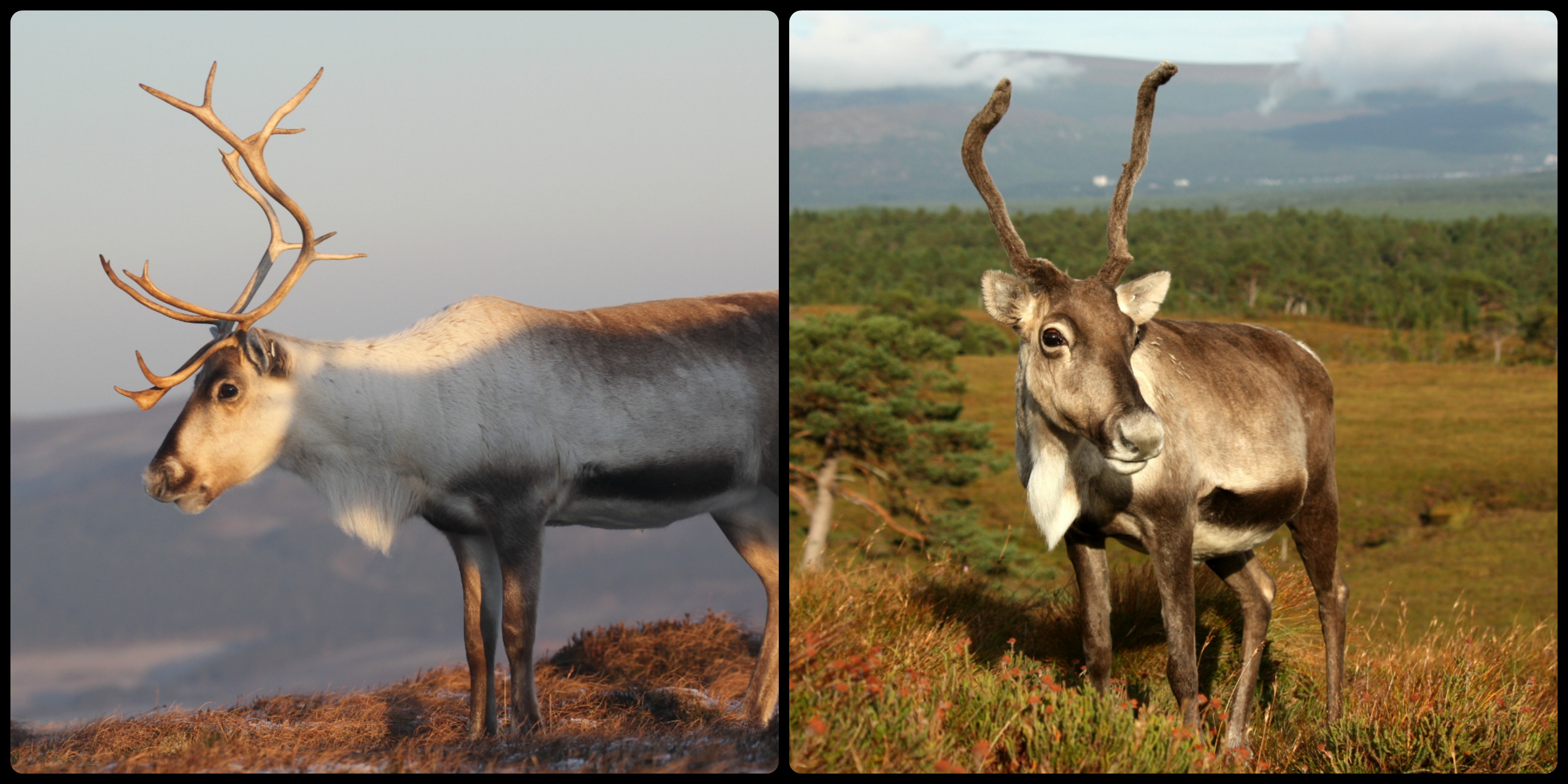
One of our visitors recently decided to adopt a reindeer they’d met at the Centre, but called us up when they received their pack to let us know that we’d sent a photo of the wrong reindeer. The reindeer they’d met had been a pale brown, with a thick shaggy coat and small antlers, whereas the photo on their certificate was of a sleek black coloured reindeer with large bony antlers. Thankfully, we hadn’t got it wrong, but could totally understand their confusion, as the reindeer change in appearance a lot throughout the year.
Bovril in his shaggy old winter coat in June, and looking smart in September
First, there is the coat appearance. From May, the reindeer start moulting out their long winter coat, which, with 2000 hairs per square inch, takes about six weeks. They look incredibly scruffy at this time, but by around mid-July the whole herd look glorious in their short summer coat. This summer coat is a richer colour than the winter coat, so the white reindeer are gleaming white, and the darker reindeer are virtually black. The short coat exposes all of their angles, so they can look a bit gaunt, with angular heads and shoulders.
Olympic’s varied coat throughout the same year (2014) – in February, July and September
Summer in the Highlands is short-lived, however, so by September their long winter coat is growing through, softening their appearance and turning them into cuddly teddy-bear lookalikes. This coat is slightly lighter in colour, so the darkest reindeer are now a rich brown. Over the winter months, the sun gradually bleaches out the colour, so by April the whole herd are a similar washed-out shade, with only the pure white reindeer looking different. It is the worst time of year to become a reindeer herder, as the reindeer look almost identical, and I’ve had sympathy with Ruth, and previously Dave and Imogen, starting in April and trying desperately to work out who is who!
Young Beastie throughout the same year (2011) – in full winter coat in January, darker summer coat in July, and new winter coat in SeptemberYoung Strudel throughout the same year (2010) – in old winter coat in May, dark sleek summer coat in August and with new winter coat growing through in September
Whilst the colour of a reindeer varies depending on the time of year, a dark coloured reindeer will always be comparatively dark, and a light one will be light. There is one exception, in that some white calves are born a mousy brown or grey colour, with a white forehead. This white forehead suggests their future colour, and once they are a yearling they have changed into their adult silvery coat.
Diamond as a brown calf with a white forehead, turning silvery later that year, and even lighter as a yearlingOrigami as a calf with a white forehead, and as a silvery white adult
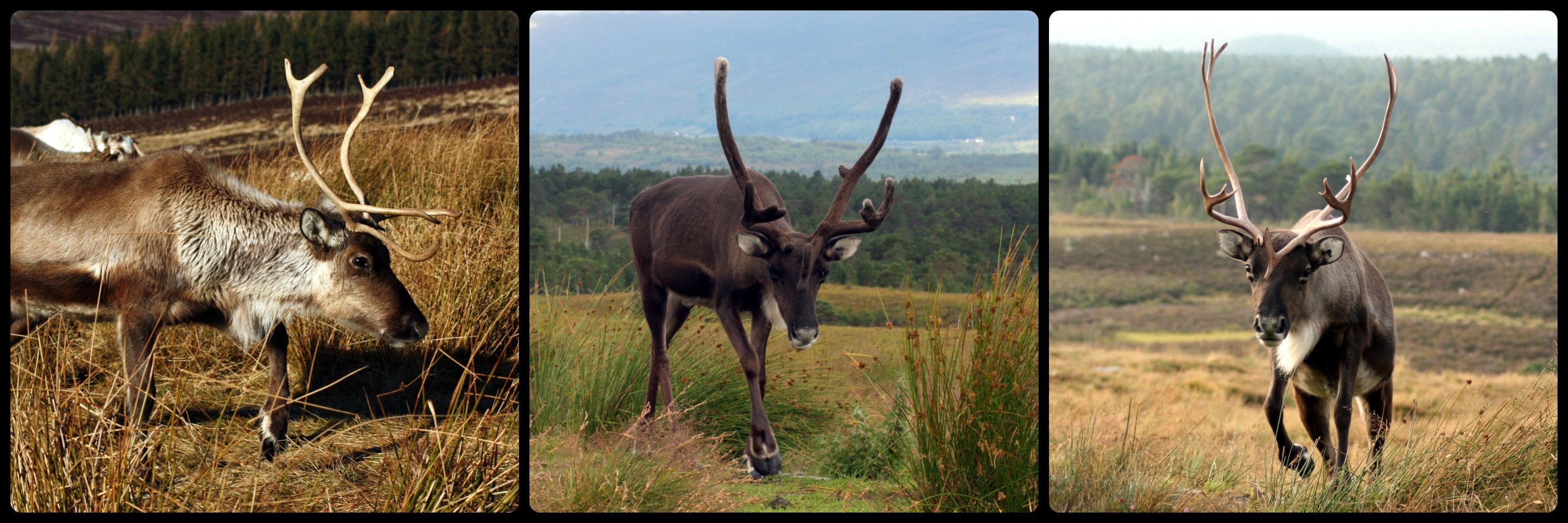
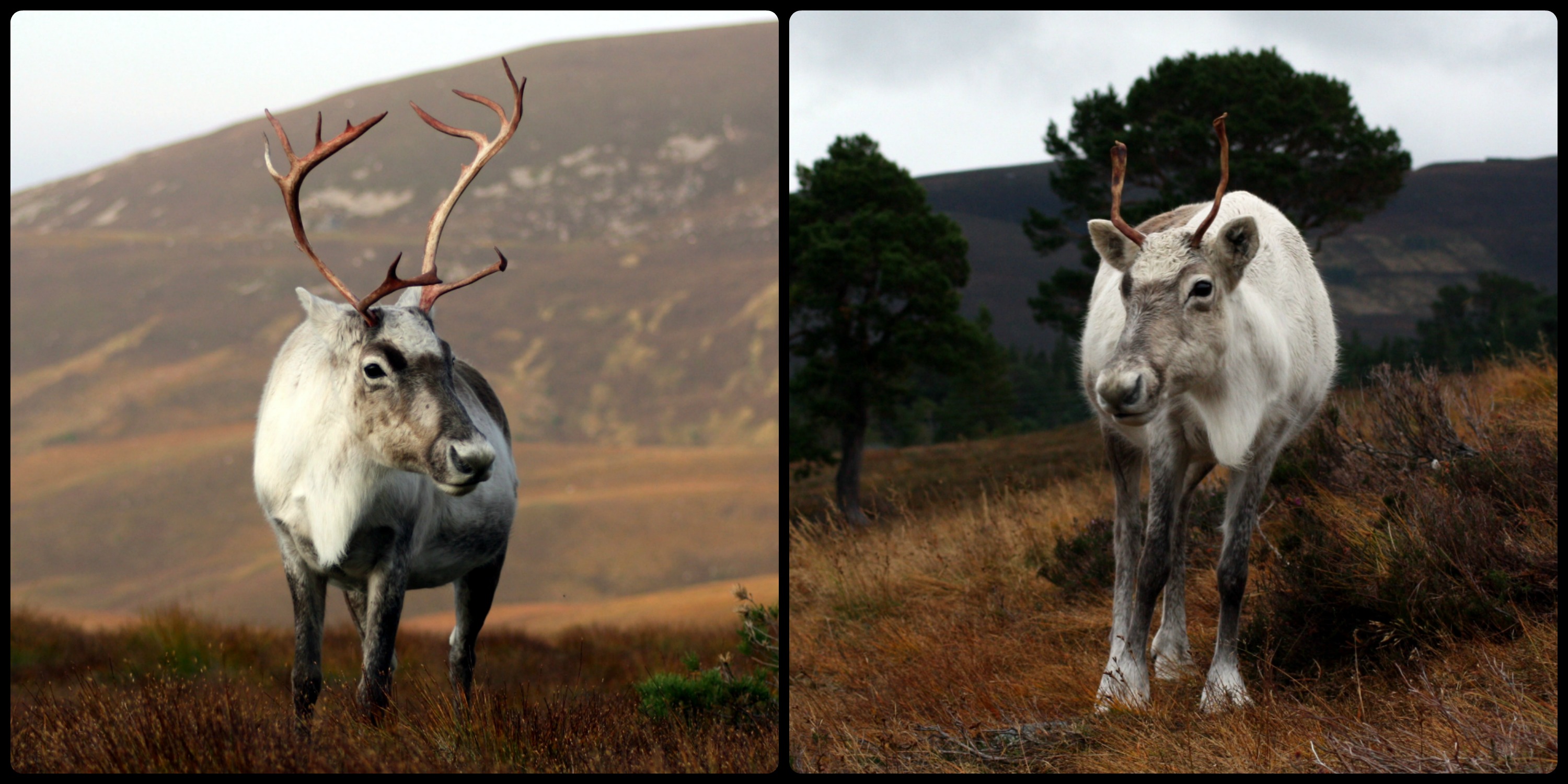
The other major change in appearance is relating to the antlers. Every year, each reindeer grows a full new set of antlers before casting them again at the end of the season ready to grow the next (hopefully better) set. From January to March, the male reindeer are antler-less, with the females usually losing theirs a little later, between March and May. Antlers are very distinctive, with each individual tending to grow a similar shape or pattern each year once they pass the age of about three. This is really useful for us herders, helping us to recognise the reindeer from year to year. Not much help in the period between casting the old set and the new set getting to a sensible size though! New herders are cautioned to try to “look beyond the antlers” and instead learn more permanent characteristics, such as the shape of their face.
Caterpillar with very similar antlers over three consecutive years – 2014, 2015, 2016.Puddock with his familiar crazy branching antlers over three consecutive years.
There is a slight spanner thrown in the works though, as adult reindeer don’t necessarily grow the same size of antler each year. Antler size is determined largely by condition, so if reindeer are short of energy, they will grow smaller, more basic antlers – it’s pointless to waste energy on an amazing set of antlers if you don’t save enough energy for your body to survive! The three main reasons for sub-standard antlers are illness, rearing a calf, and advancing years. If a reindeer becomes ill whilst growing their antlers, the growth will be checked, and sometimes the new bone is weakened to the point that it breaks off, leaving the reindeer with short, oddly shaped antlers. Antler growth also checks when a female is about to calve, and the extra effort of producing milk to feed the calf can mean the antlers are considerably smaller than usual. Finally, once a reindeer is in their old age, their antlers often become distinctly short and basic – they are focusing their efforts on being alive rather than growing antlers for dominance.
Lulu with impressive antlers in 2013, and a rather less impressive set the following year, due to rearing a calf.Beautiful Sequin in her prime with a large set of antlers, and with a simpler set in her old age.
It’s always entertaining for new herders watching the change in reindeer throughout the year, and sometimes peering in disbelief that the handsome reindeer in a photo is the same beastie as the scruffy fellow they know on the hill (as a side note, most of the photos for the adoption certificates are taken in September when they reindeer are at their smartest, with a fresh winter coat and recently stripped full-grown antlers). So if you do receive an adopt certificate with a reindeer looking a little different from when you met them, it is of course possible that we’ve got it wrong (we’re only human!) but if we check for you and confirm that it is them, hopefully this blog will help you to believe us!
As the year rolls from March into April, here in the Highlands we start to see more definite signs of spring. The snowdrops have of course been and gone, but now the daffodils are out in their full glory, along with primroses and crocuses. There is a noticeable difference in the grass too – during March there is very little colour in the fields, everything is a washed out browny-yellow. But as April approaches, I start squinting at the verges – is there just a hint of fresh green there? By now there is no doubt, the Paddocks and garden are looking almost lush and their first cut is fast approaching. For all of you down in England, I do appreciate that you’ve probably had the lawnmower out several times already, but we have the longest winters in the UK here – one of the reasons it is still a suitable habitat for reindeer.
Relaxed reindeer with a glorious backdrop. Jenga has the best start on her new antlers of the females.
Up on the mountain, the deer grass is breaking through, and the first migrant birds are arriving back from their winter holidays – there were three ring ouzel squabbling their way along the path as I walked out to feed the herd this morning. I’ve heard tell that the first swallows are in Devon (it’ll still be a few days until they pass by us) and the distinctive osprey pair are back at Loch Garten – we popped along the other day and were glad to see EJ hanging out on the nest, and a brief visit from her long-term partner Odin. Last year I watched a pair circling over the hill enclosure, just checking out Black Loch perhaps before deciding it wasn’t suitable to nest at.
Old girl Lilac still looking superb at nearly 18 years old.
April is a fun time to spend with the reindeer, with anticipation in the air. The females tend to be relaxed and lazy, with heavy tummies and enjoying the fresh grazing starting to come through. Their coats have lost their sheen and are starting to moult, and most of last year’s antlers have fallen off, with some making good progress on this year’s set. Slightly less relaxing (for us, but not the reindeer) is the start of the Easter holidays, with its associated rush of visitors. Having a limit on numbers for the Hill Trip has certainly made our lives less stressful though and hopefully improves the experience for our visitors too – just a reminder to come early if you’re coming for the Trip to make sure you get tickets!
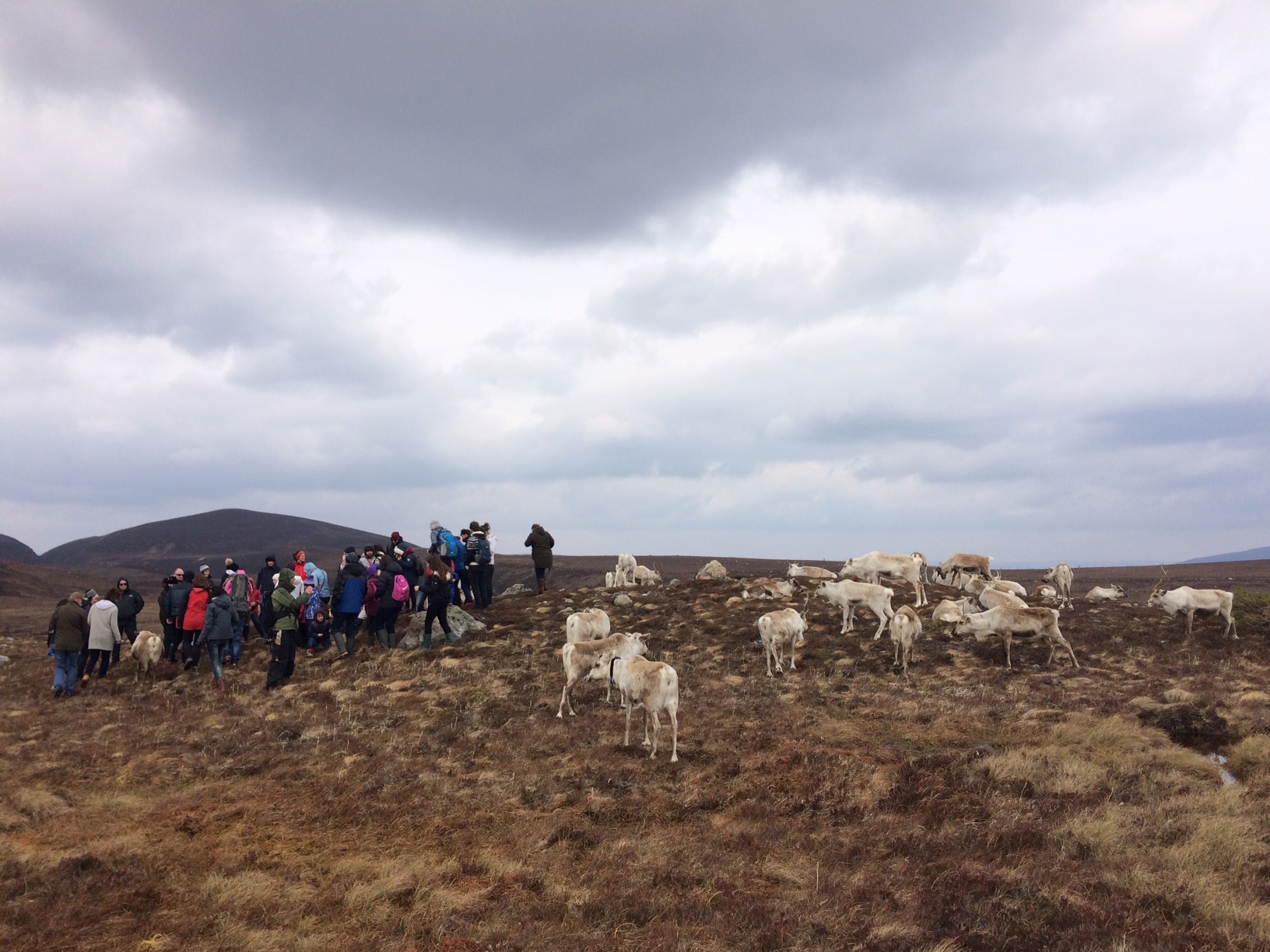
A group of visitors learning about the reindeer, who are delighted to pose whilst they wait for their dinner.
The other slight bit of stress is that all of us herders are assessing who we should pick for our calving “bet” – the annual game of trying to guess who will calve first. Us herders spend a lot of time peering at bellies and potential developing udders, trying to work out who is pregnant and who is likely to calve early. There isn’t any money put down, and indeed no prize for winning, but the person whose reindeer calves last has to swim in the loch! The decisions are mostly made now, but I’m already slightly apprehensive that I’ve made the wrong choice – suddenly everyone else’s choices appear much rounder in the belly department than mine… I’ll stick to my guns though with fingers crossed!
Every time I look at Dixie’s belly I worry that I’ve picked the wrong reindeer for the calving bet!
Normally, spring is a welcome relief after a long hard winter… this year I can’t really claim that as it’s been a very easy winter with little snow, but it’s still lovely to see the lengthening days and warmer temperatures, with the promise of a (hopefully) long, glorious summer ahead. Fingers crossed that it’s warm to make for an easier swim if I end up losing the bet!