Reindeer Around the World: The Svalbard Reindeer

Rangifer tarandus platyrhynchus

A wonderful past blog written by herder Hen detailing how the species Rangifer tarandus (more commonly known as reindeer) is broken down into seven different subspecies, got me thinking that I didn’t know too much about these differences. What adaptations did each subspecies have to equip them for their differing environments? I decided to start my research with the Svalbard reindeer – the smallest of all the reindeer and only found within the islands of Svalbard.
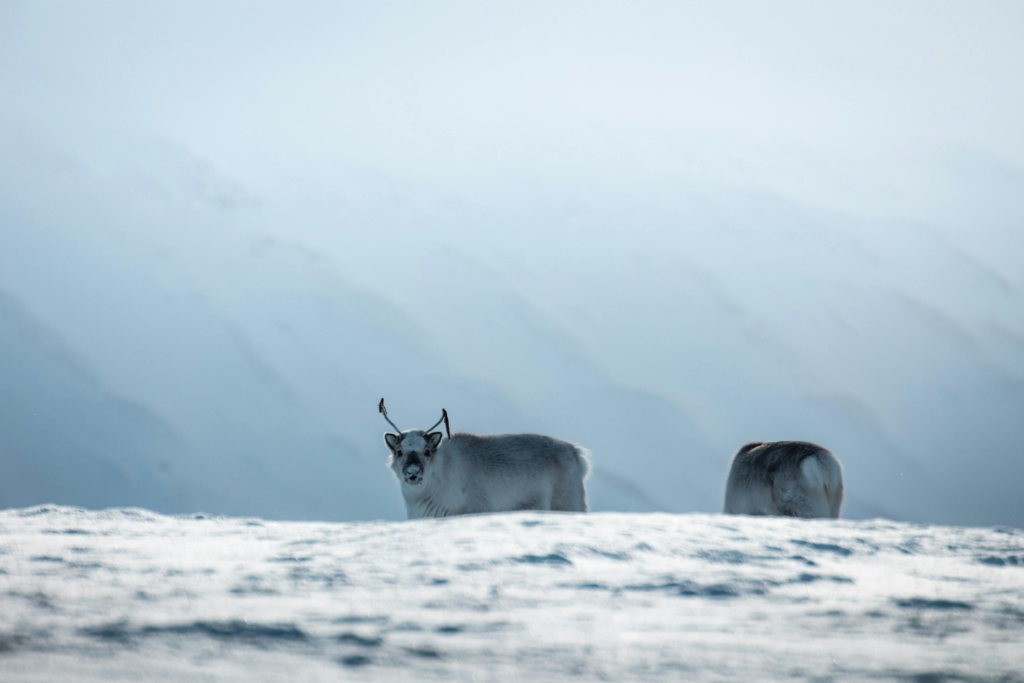
Svalbard reindeer.

It is estimated that Svalbard reindeer became isolated from other populations of reindeer around 10,000 years ago when the vast ice sheet covering the Barents Sea melted as the earth warmed after the last ice age. Svalbard then became cut off from mainland Europe, effectively trapping any land mammals.
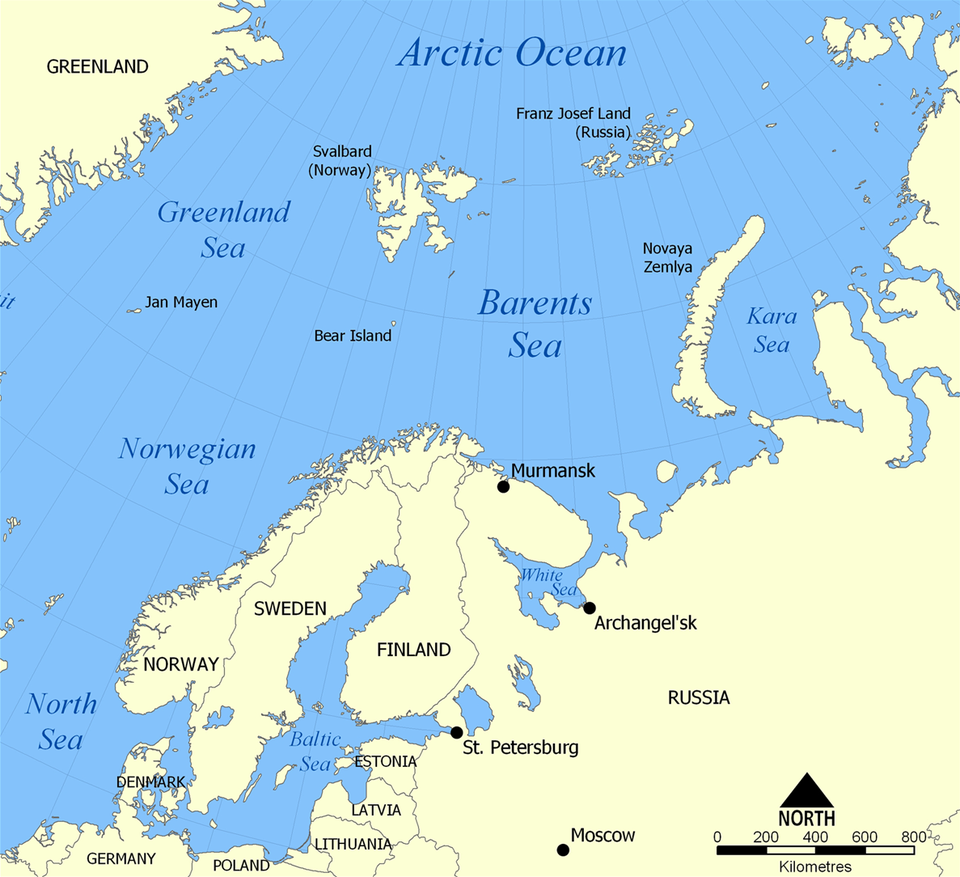
Map displaying the Barents Sea.

So, what happened to them 10,000 years ago to equip them with living on an open, isolated, arctic tundra landscape? Unlike other subspecies of reindeer, the Svalbard population dropped its need to migrate, only needing to cover short distances on a regular basis, remaining on mountain ridges and plateaus – continuously exposed to the elements. They also lacked forests for cover and fed primarily on short-growing lichens and vegetation.
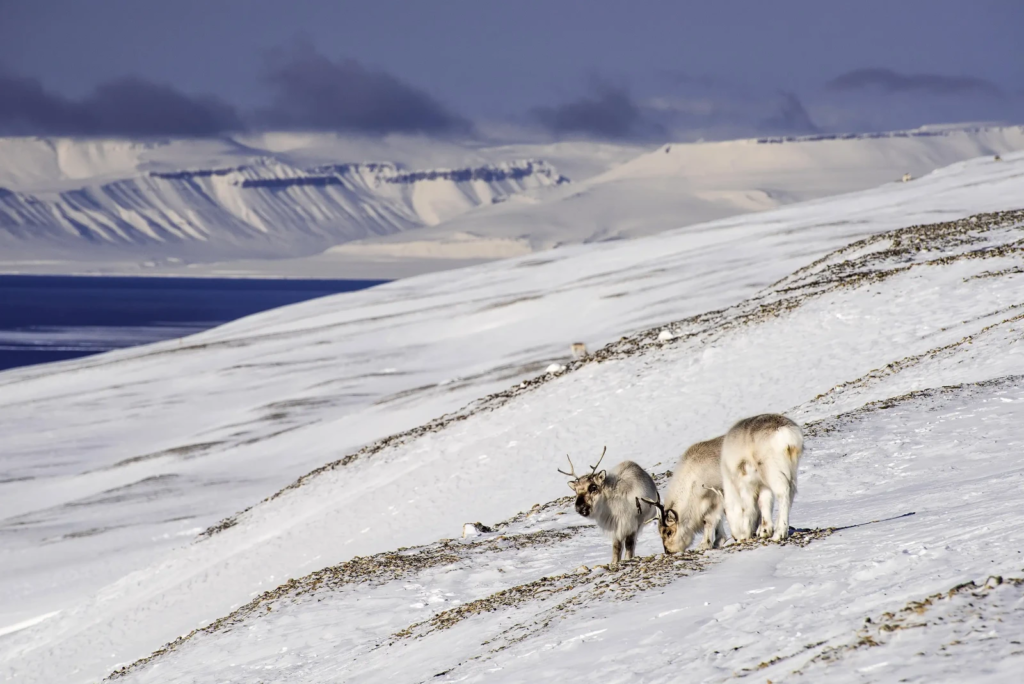
The home of the Svalbard reindeer – open plains and Arctic mountains.

Apart from the occasional polar bear… the Svalbard reindeer also doesn’t have the worries that other subspecies have regarding predators. Due to these changes in their food chain and environment, the Svalbard reindeer evolved to have far shorter legs than the other subspecies. They could still reach a maximum speed of 60 to 80km/h but didn’t require the longer legs of other reindeer – so to conserve body heat, their legs became shorter.
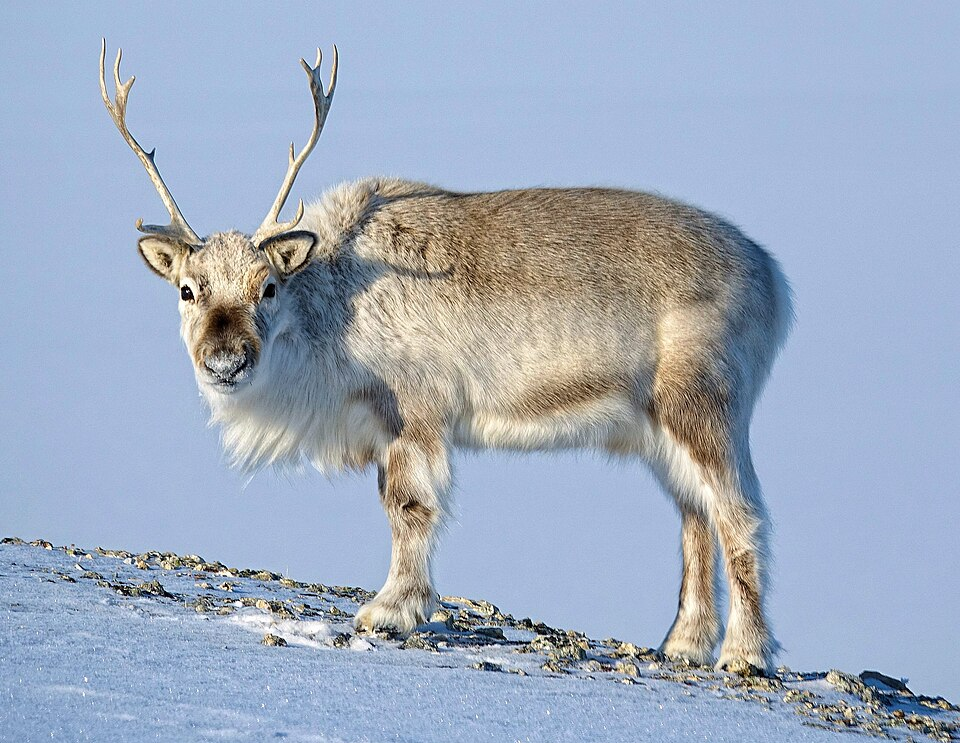
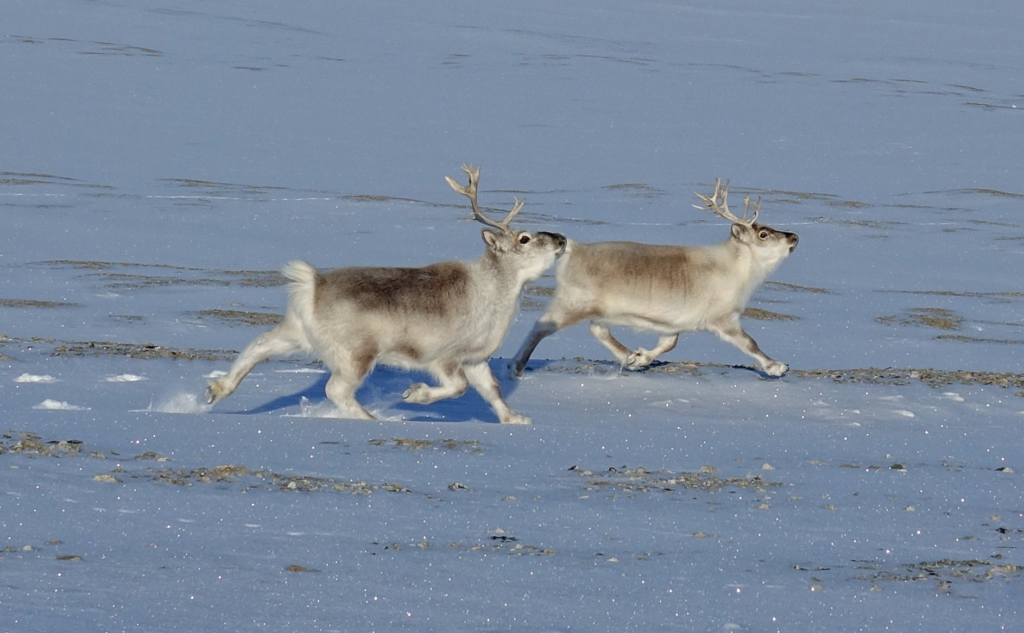
Body heat is lost through a reindeer’s legs due to less fat and blood vessels near to the surface of the skin, so if you don’t need to migrate – grow shorter legs and stay warm!
Svalbard reindeer running, perfectly displaying how disproportionate their bodies are to their small heads and legs. Perfectly adapted to an environment that doesn’t require movement, but encourages good fat reserves. (Photo credit: Bjørn Christian Tørrissen)

Another unique adaptation to the Svalbard reindeer is their difference in circadian rhythm to other subspecies of reindeer. Svalbard has an extremely reduced day length in winter months. There are between 100 to 150 days per year during which there is no light and the sun does not rise above the horizon. Research has concluded that the Svalbard reindeer has a mutation in a gene associated with maintaining circadian rhythm, allowing their bodies to cope with lack of sunlight (vitamin D etc.). Another change in the genetic make up of this subspecies in comparison to the others, is a change in the genes associated with eye/ optic nerve development – allowing their eyes to adapt to winter conditions.
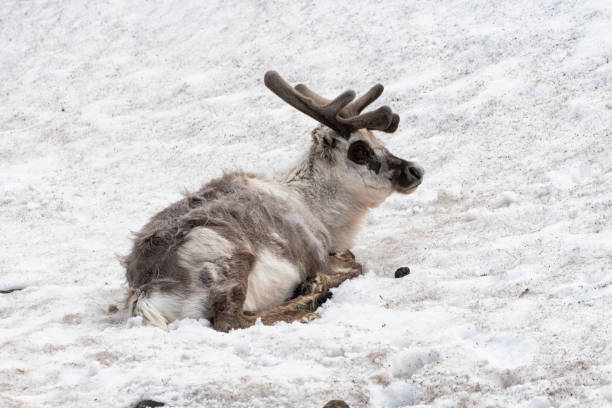
Svalbard reindeer have dark eyes, that like other subspecies are able to see into the shorter end of the light spectrum. This allows them to use UV light during twilight periods of the year to see their general surroundings – identifying food sources, other forms of life, etc.

Their diet is very similar to other subspecies of reindeer, feeding on low growing vegetation found along ridges, plateaus and mountain slopes. Feeding to excess on healthy vegetation during summer and then relying on fat reserves and limited grazing during winter when vegetation is limited, but lichen can be found in abundance. The Svalbard population is more of a solitary subspecies than the typical social herd structure of other populations of reindeer. They are often only found in groups of three to five and so over grazing is not as much of a concern in a smaller region, such as Svalbard. However, despite this, starvation is the most common cause of death due to worn teeth grazing on sparse vegetation growing amongst rocky landscapes, or from food frozen into ice pastures.
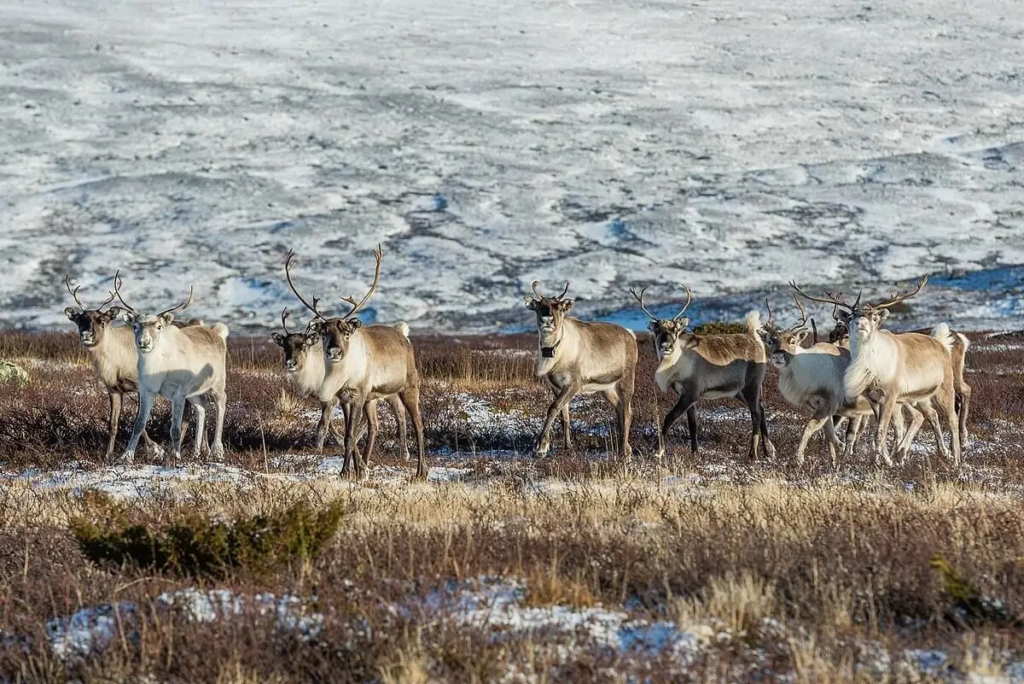
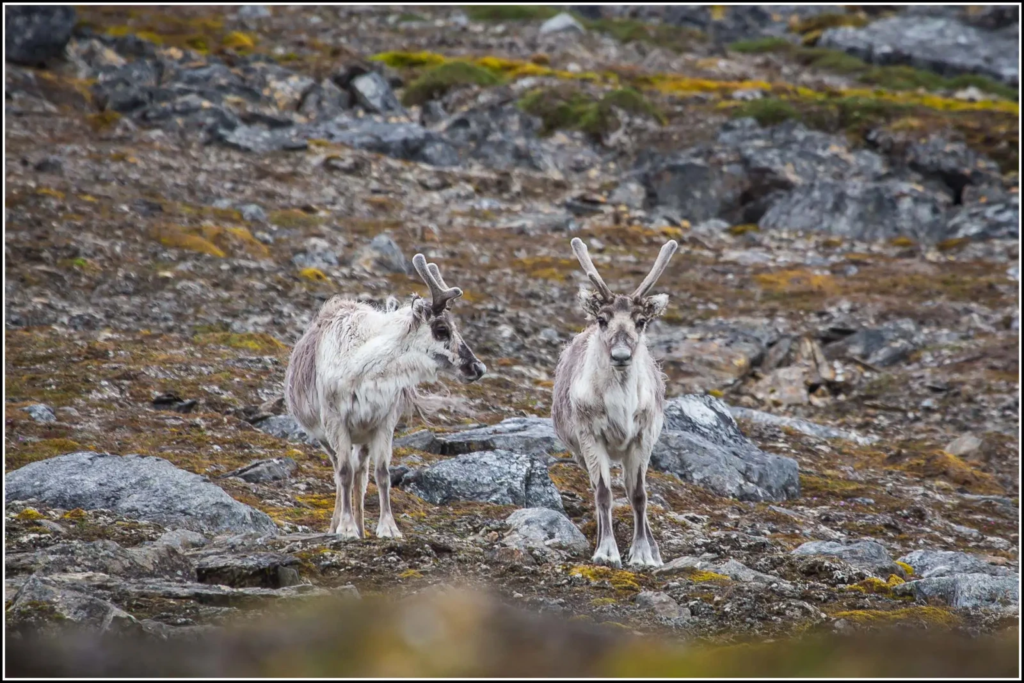
Svalbard reindeer grazing on vegetation with areas of ice pasture seen behind them.
Pick out the areas of low quality grazing amongst the rocks.

Despite their challenges and differences, one thing is for sure… the Svalbard reindeer are one darn cute animal!
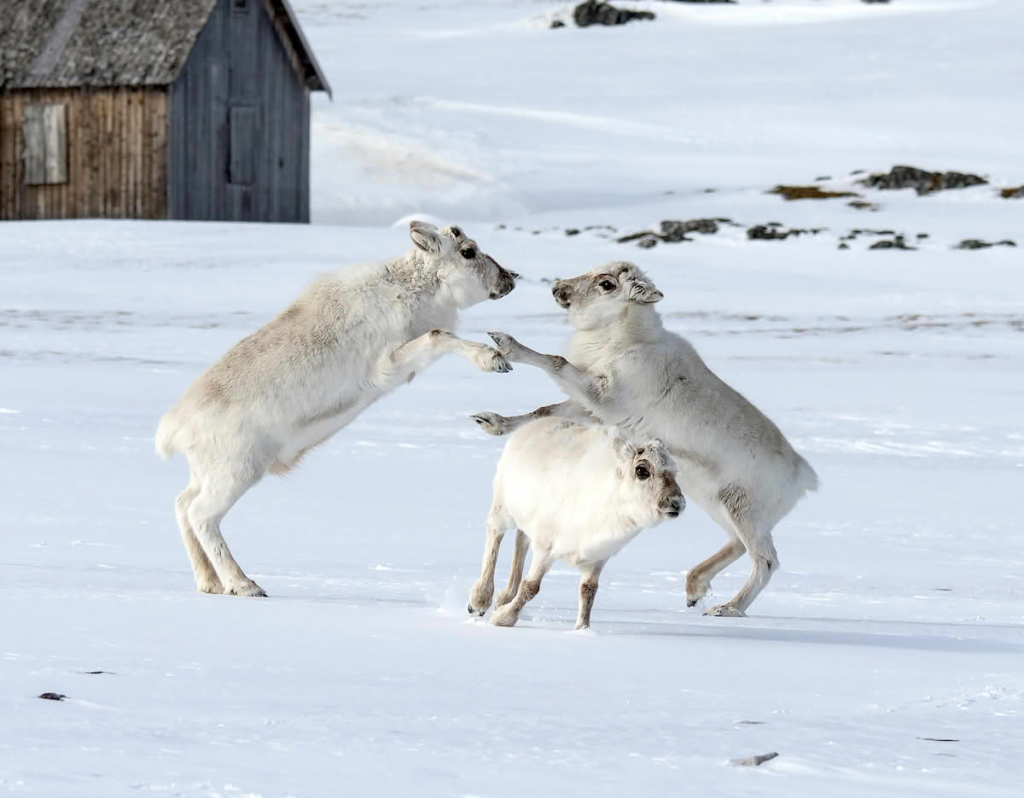
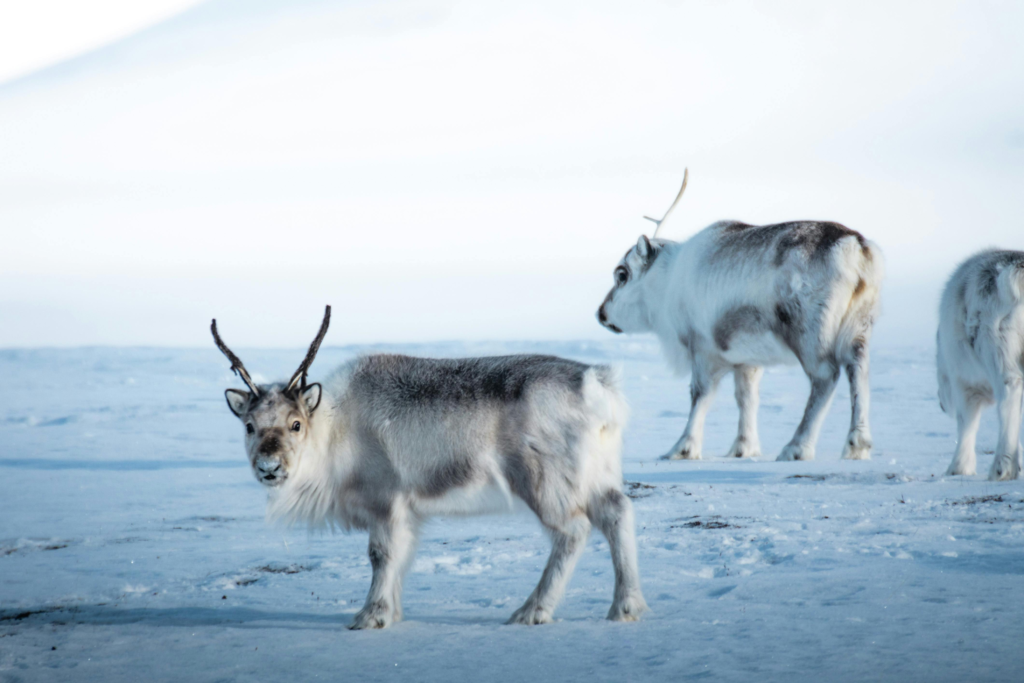
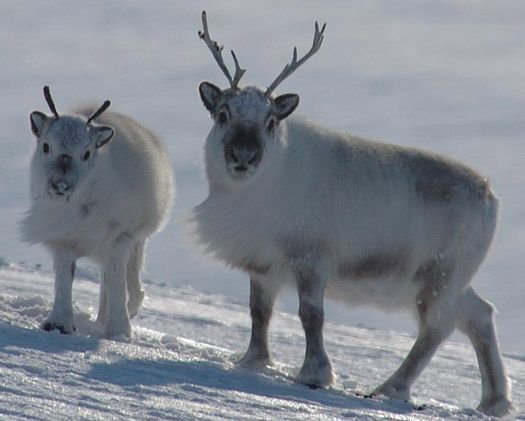
Pocket-sized reindeer!
Trying to think of something professional to say here, but all I can think is… STOP IT!

Okay, no more cute photos! I’ll leave it there until next time when we look at the cool adaptions of another subspecies of the Rangifer tarandus.

Daisy


More reading:
https://polar-latitudes.com/discover/wildlife/svalbard-reindeer/
https://www.americanscientist.org/article/the-eurasian-arctic-during-the-last-ice-age
https://www.aurora-expeditions.com/eu/wildlife/arctic/mammals/svalbard-reindeer
https://academic.oup.com/gbe/article/17/9/evaf160/8233719
https://npolar.no/en/species/svalbard-reindeer/#3
Reindeer as a Species

On our kids quiz in the Paddocks is the question ‘Name a sub-species of reindeer’, and I notice it’s often the one that people get stuck at (despite the fact that the answers are there on the display boards). I’ve realised over the years however, that this is often down to a basis lack of understanding of a percentage of the population of the concept of species and sub-species, rather than anything else. So therefore, allow me to explain.

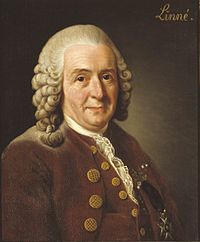
As a zoology student (all too many years ago, so bear with me if my science is rusty), the classification of all organic species using a system of ‘taxonomic rank’ was drilled into us. The system still in use today was founded by Swedish botanist Carl Linnaeus in the 16th Century and brought order and clarity to the then chaotic and disorganised way of naming and categorizing all types of life. No wonder I loved learning about taxonomy – lists and organisation? My kinda thing.

Carl Linnaeus (1707 – 1778)

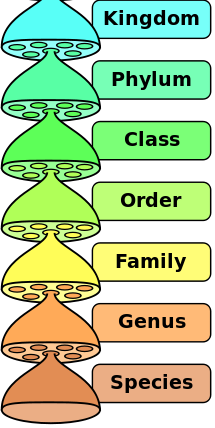
The Linnaean system breaks down all living things into 7 major kingdoms, animals being one and plants another, and then each kingdom is broken down further, into different phyla. Then phyla are broken down once more to the next level, which is class, and the system carries on through order; family, genus and finally species. So reindeer can be categorized as such:

Kingdom: Animalia (Common name: Animals)

Phylum: Chordata (Chordates  – meaning ‘possessing a nerve cord’)

Class: Mammalia (Mammals)

Order: Arteriodactyla (Even-toed hooved mammals)

Family: Cervidae (the Deer family)

Genus: Rangifer

Species: tarandus


Biological classification chart

The two part ‘binomial’ name Rangifer tarandus is perhaps more commonly known as a ‘Latin name’, and every species in the world has one. You will be familiar with ours as Homo sapiens, and like humans, reindeer are the only species within their genus, Rangifer. A regular question from visitors is ‘So….how are reindeer different from deer?’ Bizarrely, it can be quite hard explaining to people that reindeer are deer. My usual analogy is to get people to think about lions and tigers. Both obviously cats, so therefore members of the cat family (‘Felidae’), but at the same time both clearly different species from each other. So while reindeer are a member of the deer family, they are a different species from other types of deer. For example, moose, red deer and muntjac – all clearly distinguishable in looks from one another, but crucially also genetically different.

But then, as with most things, it all gets a little more complicated. Not content with 7 major divisions, scientists introduced sub-divisions in order to break down everything further. So now there are, among others, sub-classes, sub-families, sub-genera etc. Arghh! While Rangifer has no sub-genus, there are some subspecies to contend with, and this is the relevant info that we hope people will track down in our Paddocks. All seven subspecies of reindeer and caribou are all still Rangifer tarandus, so effectively all genetically the same animal, but a subspecies is shown by adding a third name after the binomial. Just to clarify too, reindeer and caribou are the same animal, but reindeer are the domesticated version of caribou. The differences are also geographical, in that reindeer are found in Europe and Asia, while caribou are found in North America and Greenland.

So back to our seven subspecies. We have:

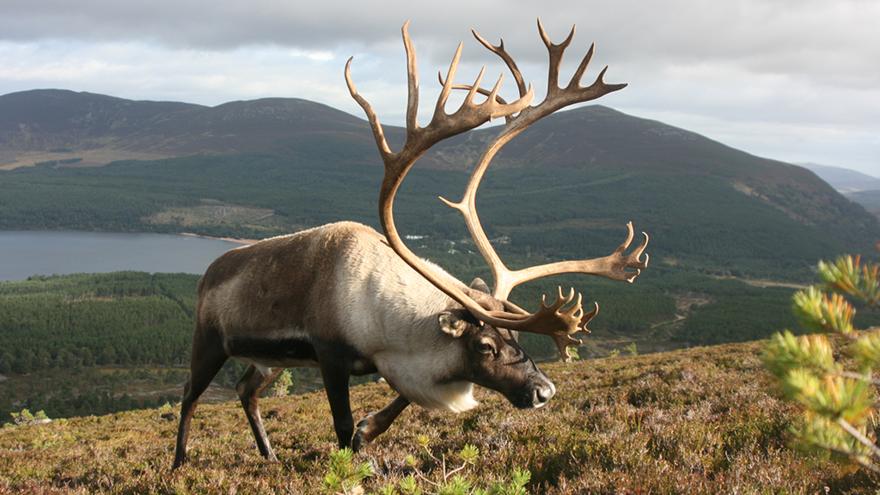
Eurasian Tundra reindeer (Rangifer tarandus tarandus): Open-ground dwelling subspecies, which the majority of all domesticated reindeer belong to, including ours.

Our big bull Crann, a ‘tundra reindeer’

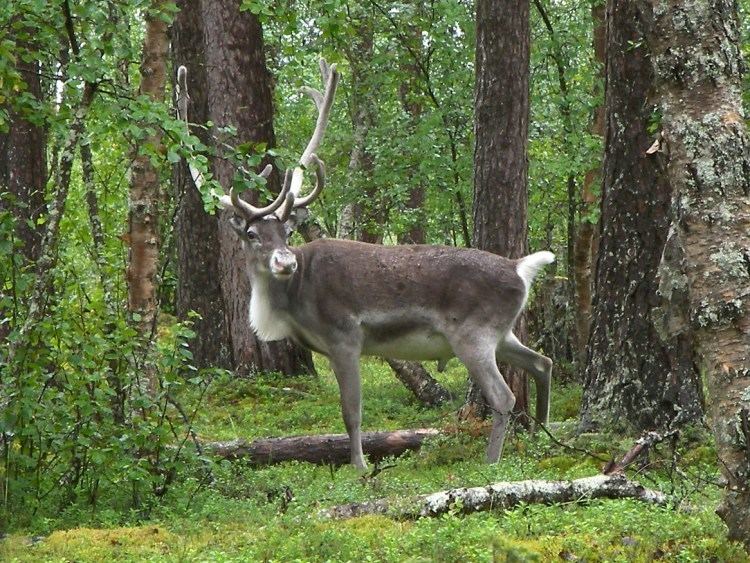
Eurasian Forest reindeer (Rangifer tarandus fennicus): Boreal forest dwelling subspecies, typically taller than tundra reindeer.

Forest reindeer

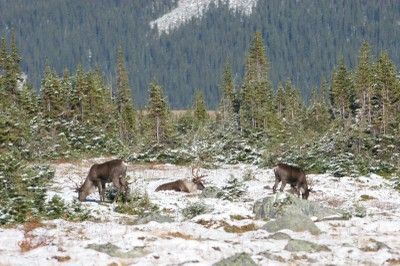
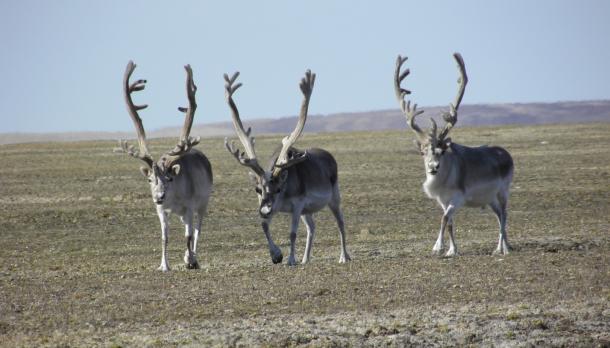
Svalbard reindeer (Rangifer tarandus platyrhynchus): Smallest subspecies, endemic to the arctic archipelago of the Svalbard islands. Short legged!

Svalbard reindeer

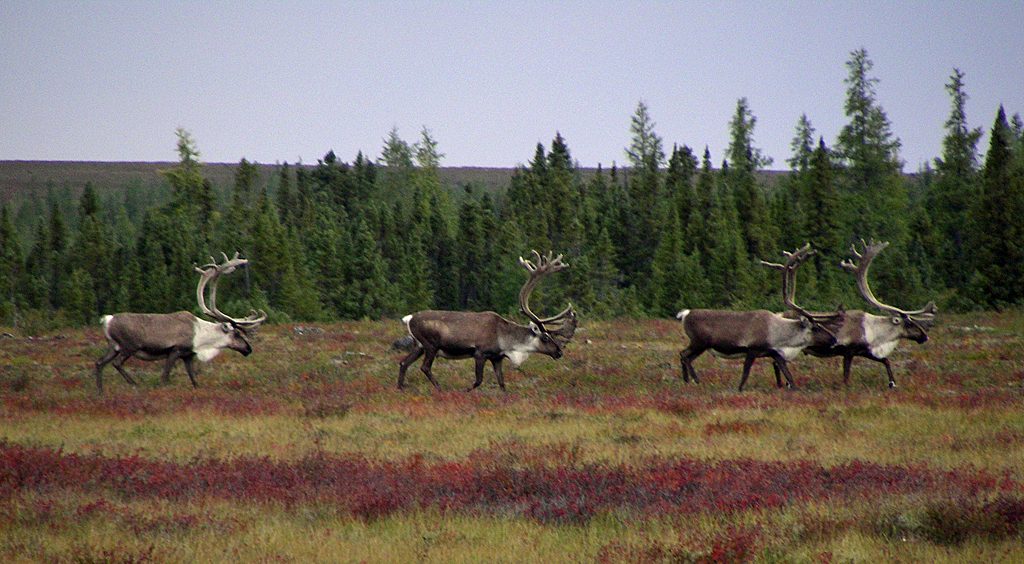
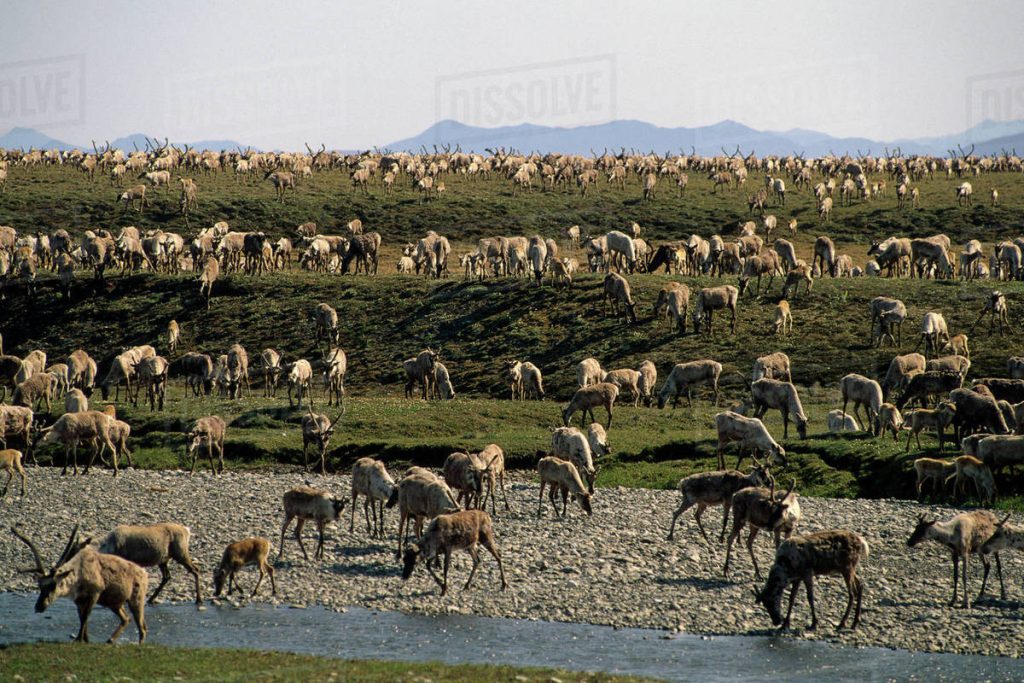
Barren-ground caribou (Rangifer tarandus groenlandicus): Migratory subspecies of open ground. The most similar of the caribous to our tundra reindeer.

Barren-ground caribou

North American woodland caribou (Rangifer tarandus caribou): Largest caribou subspecies, often darker in colour. As the name suggests, they live in forests, and generally don’t migrate.

Woodland caribou Copyright Paul Sutherland

Peary caribou (Rangifer tarandus pearyi): Smallest of the caribou subspecies.

Peary Caribou Copyright Trent University 

Alaskan or Porcupine caribou (Rangifer tarandus granti): Migratory subspecies most closely resembling the barren-ground caribou, and named after the Porcupine river, which runs through much of their range. The longest migrating land mammal on Earth.

Porcupine caribou

There have been two other subspecies in the past but these have now died out – the East Greenland Caribou and the Queen Charlotte Island Caribou.

So there you go, a brief taxonomy lesson, and congratulations to anyone who has stuck with me, as well as apologies for some slight over-simplifications for any scientists amongst you. Hopefully you’ll have all learnt something though – I’m a big believer of sneaking in educational blogs among the pretty pictures and funny stories we often post! And if it’s all too much and you’d just prefer something a bit more light-hearted, head off and google pictures of Svalbard reindeer. You’ll not be disappointed.

Hen

Book Now