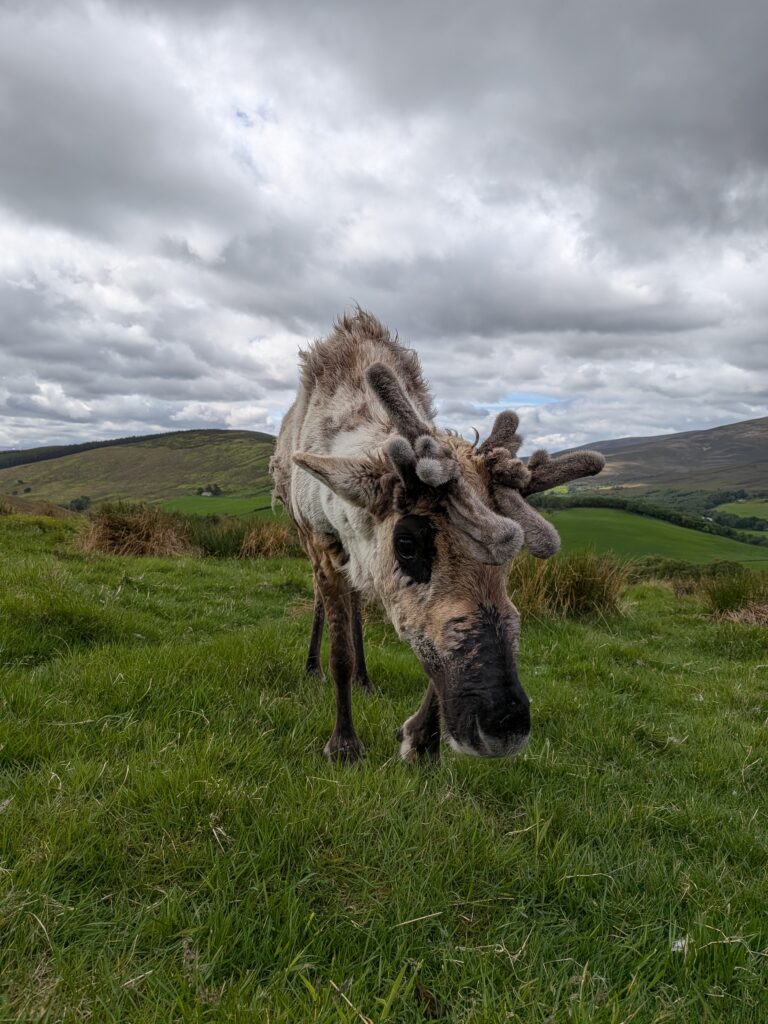
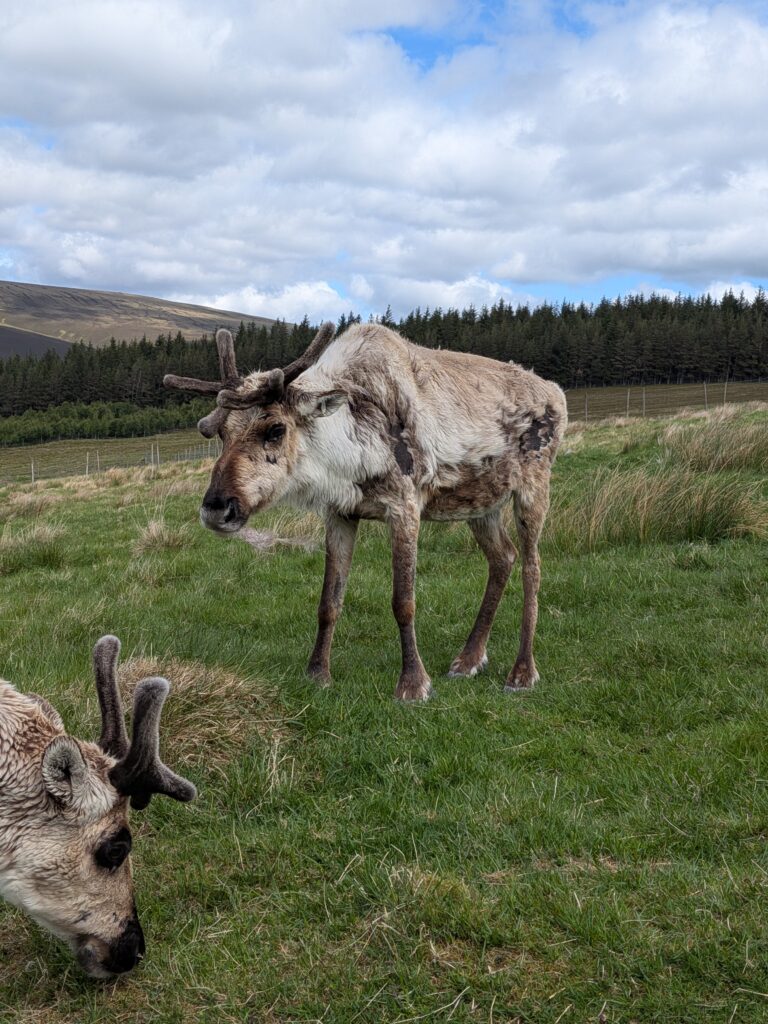
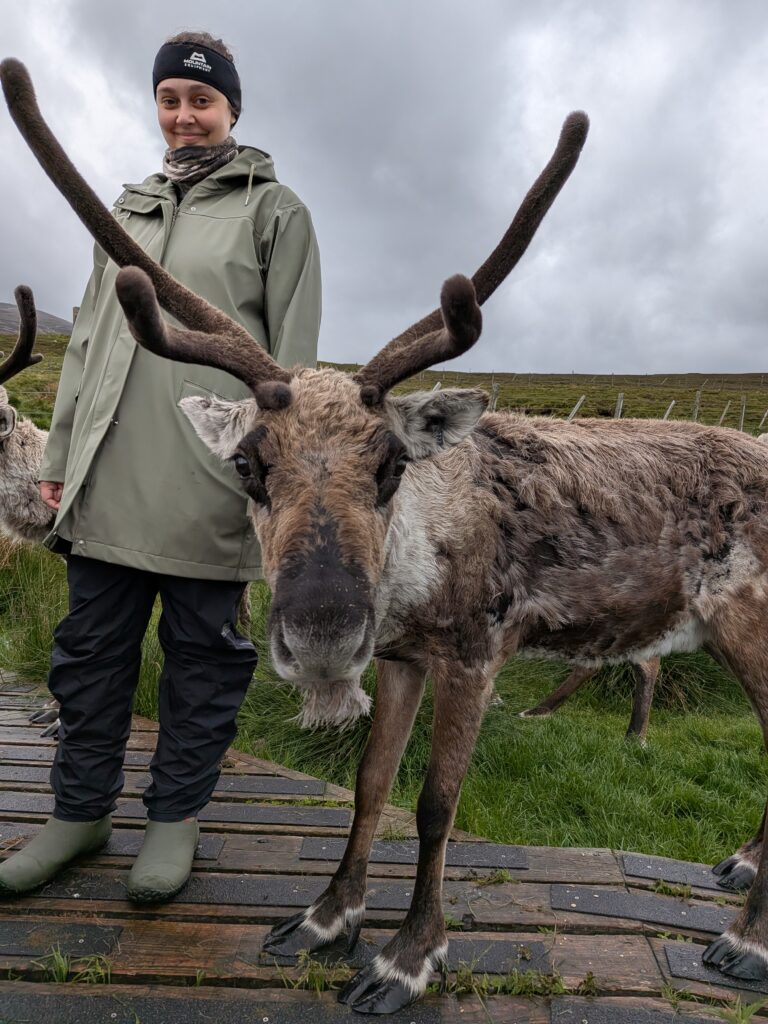
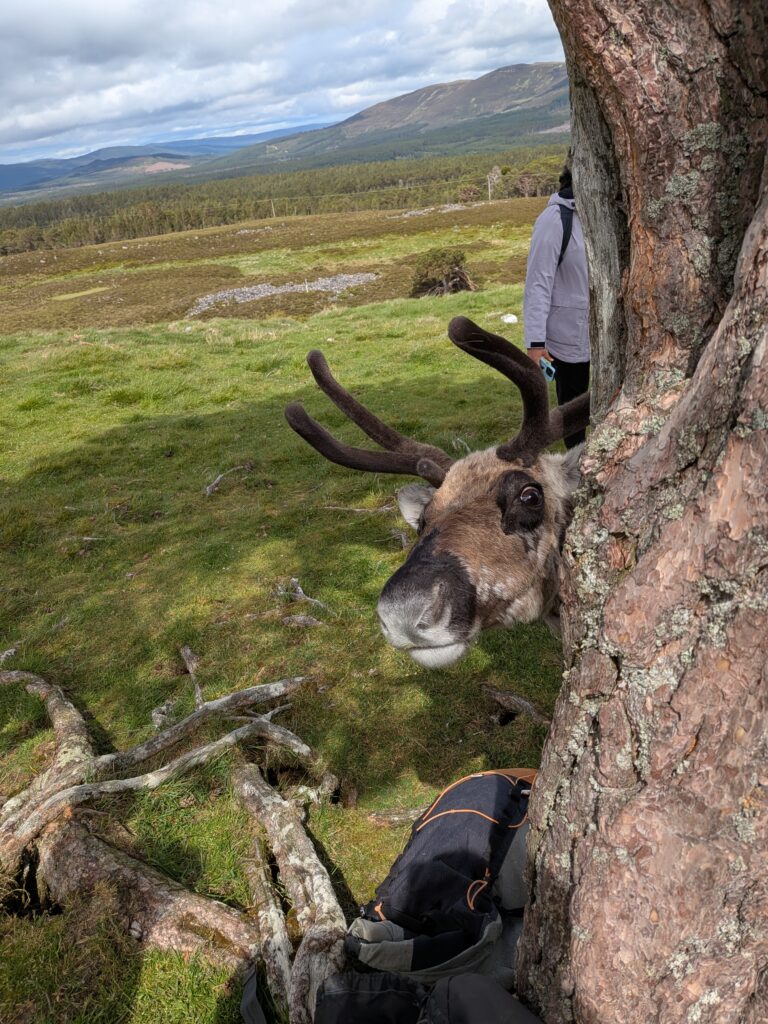
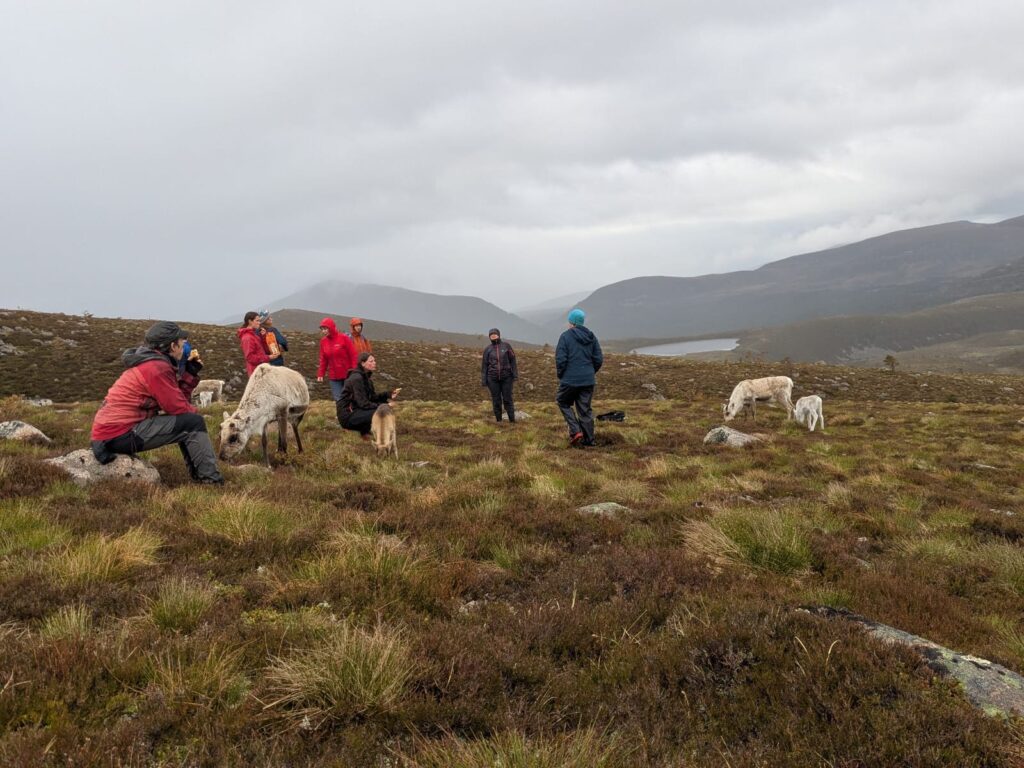
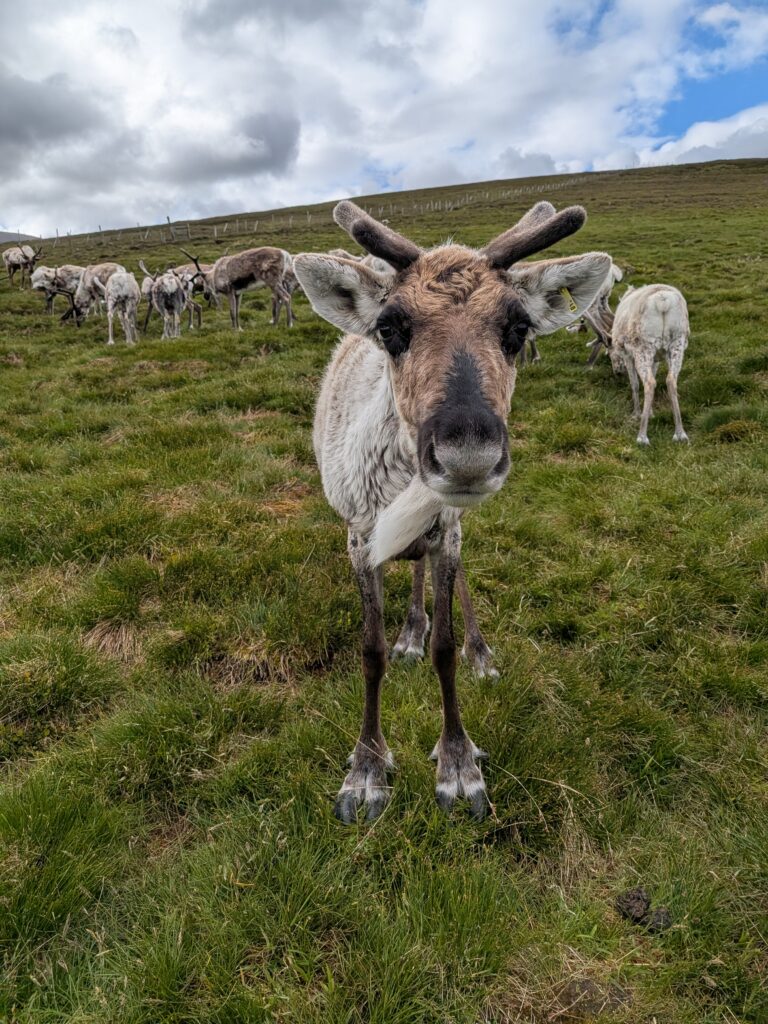
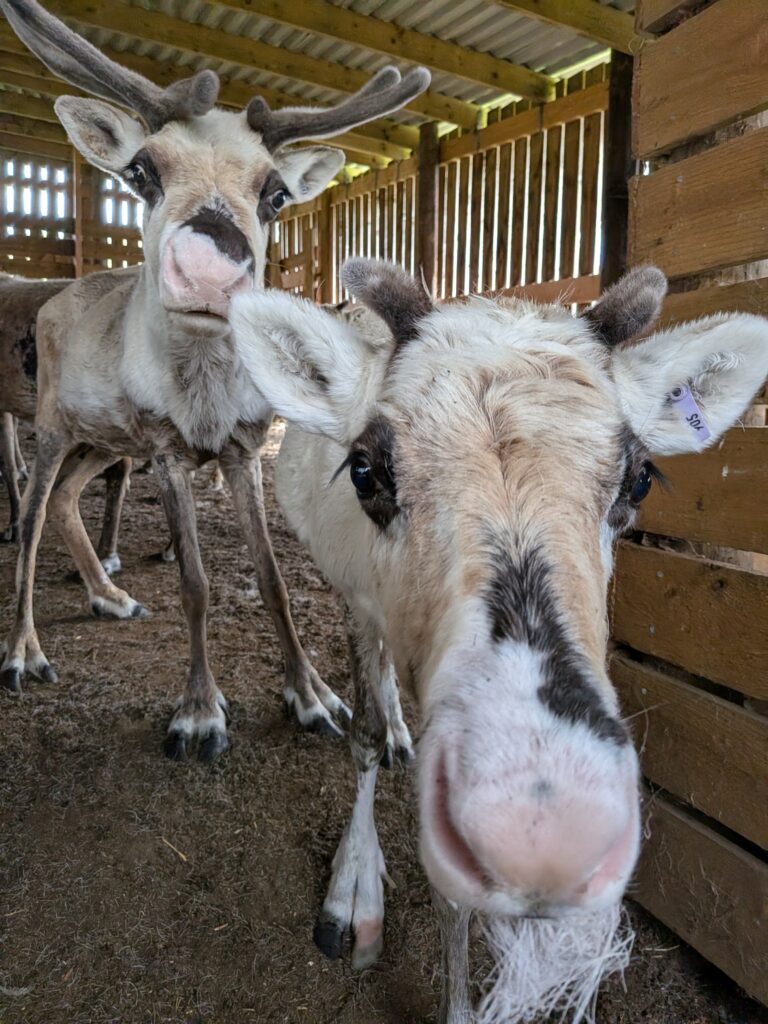
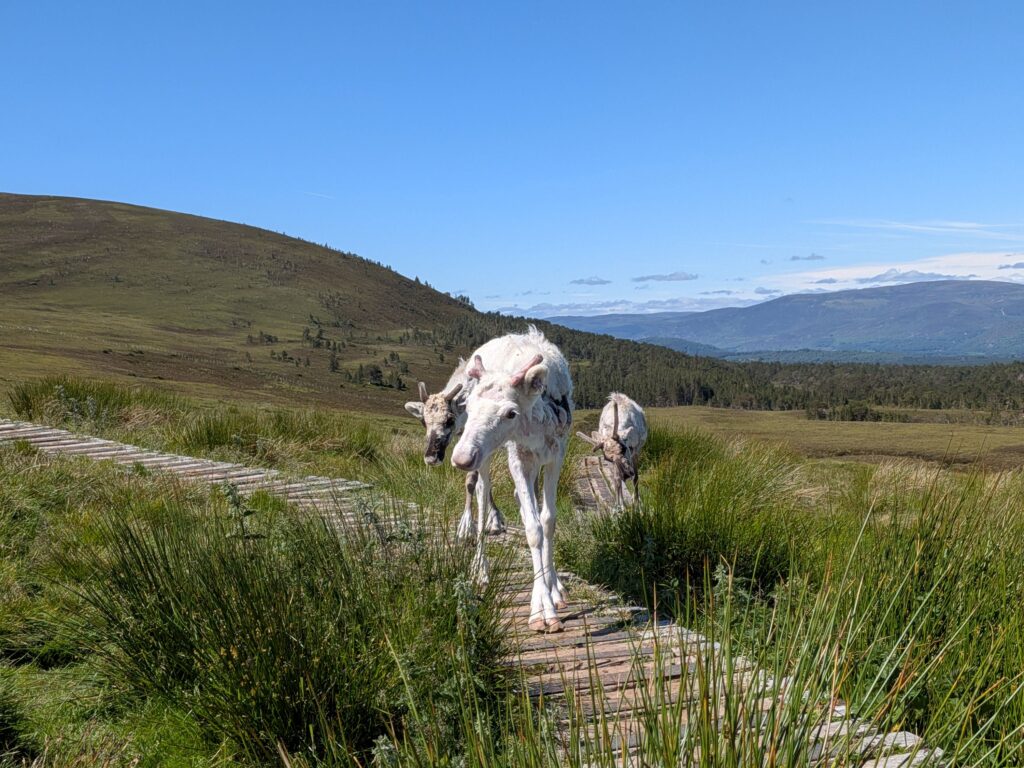
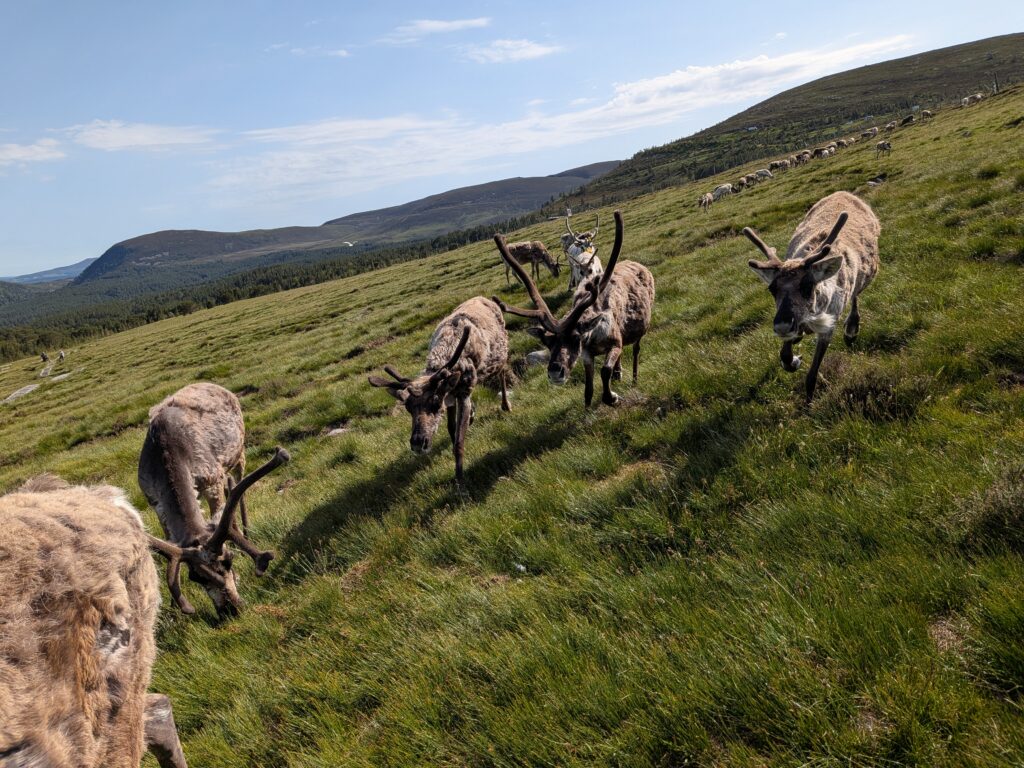
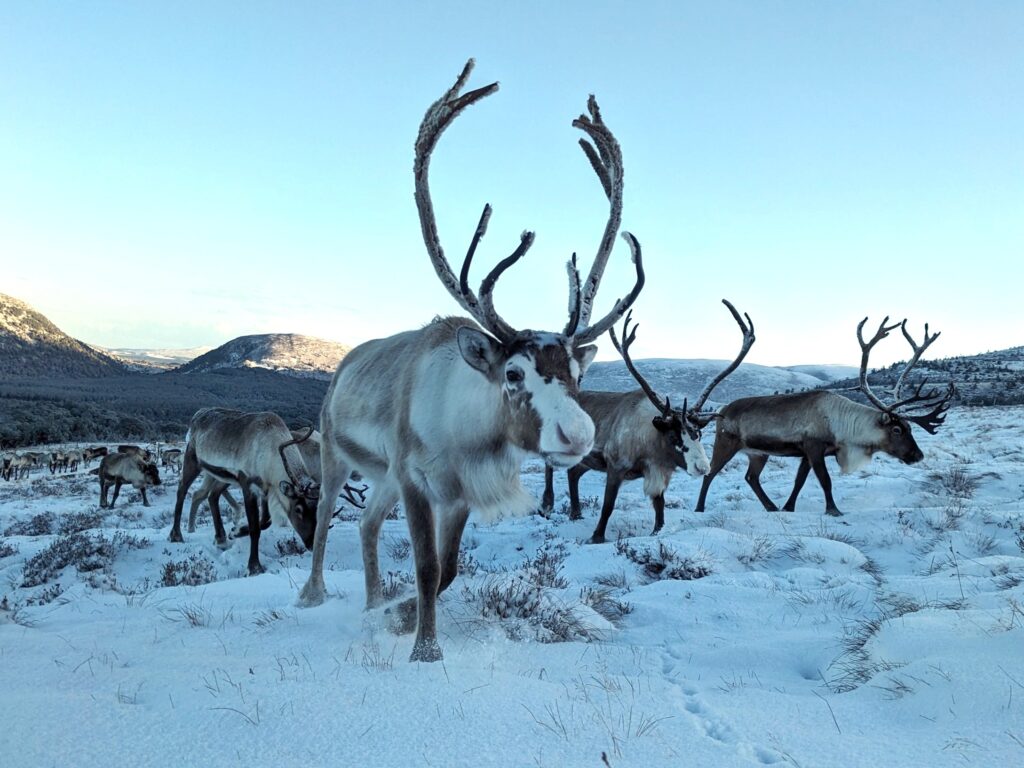
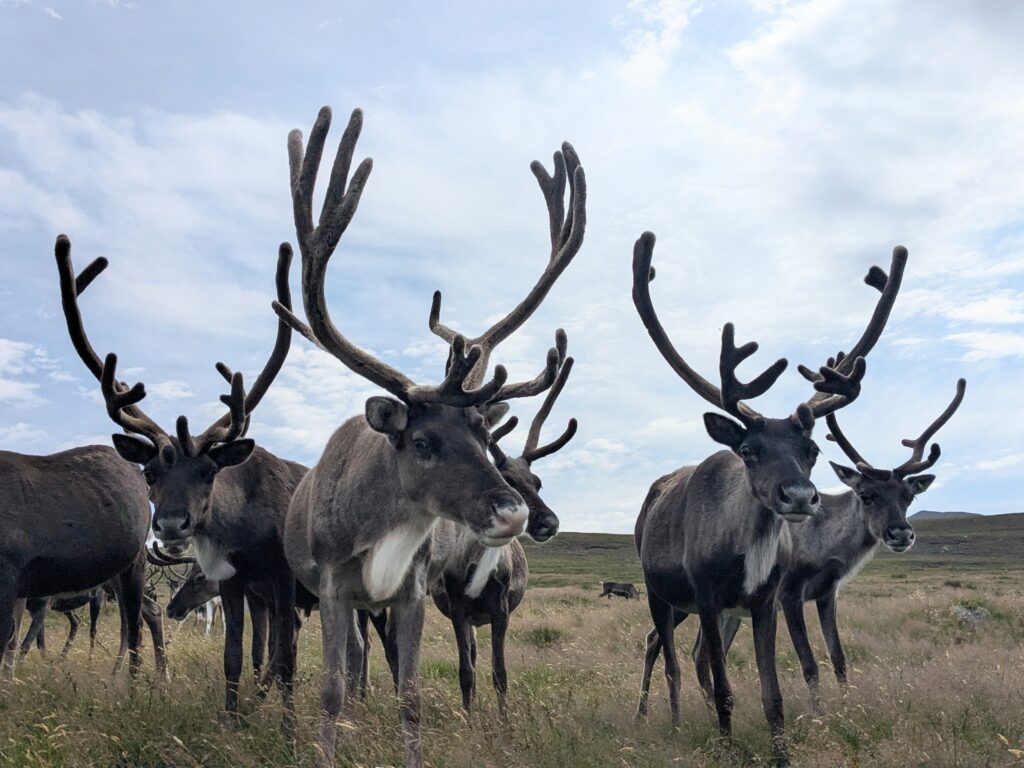
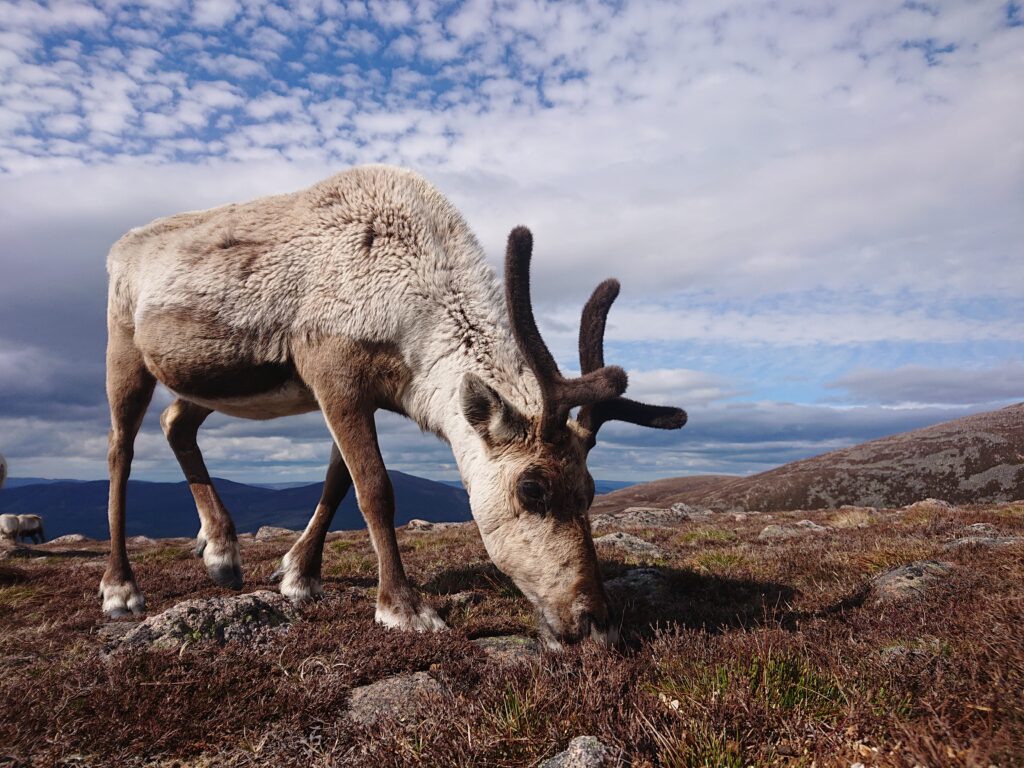
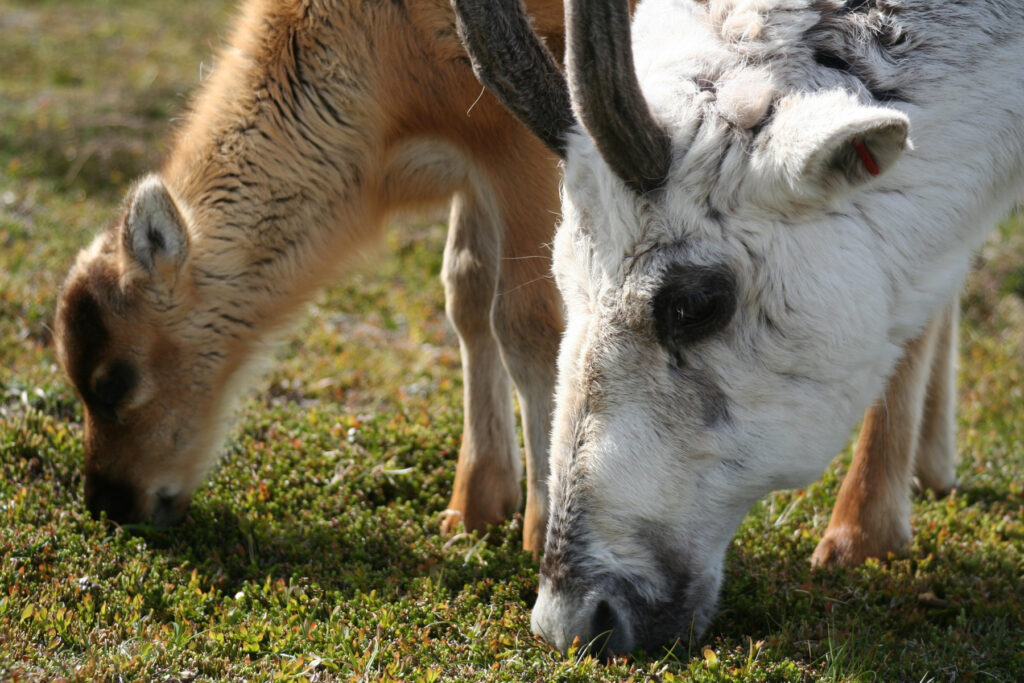
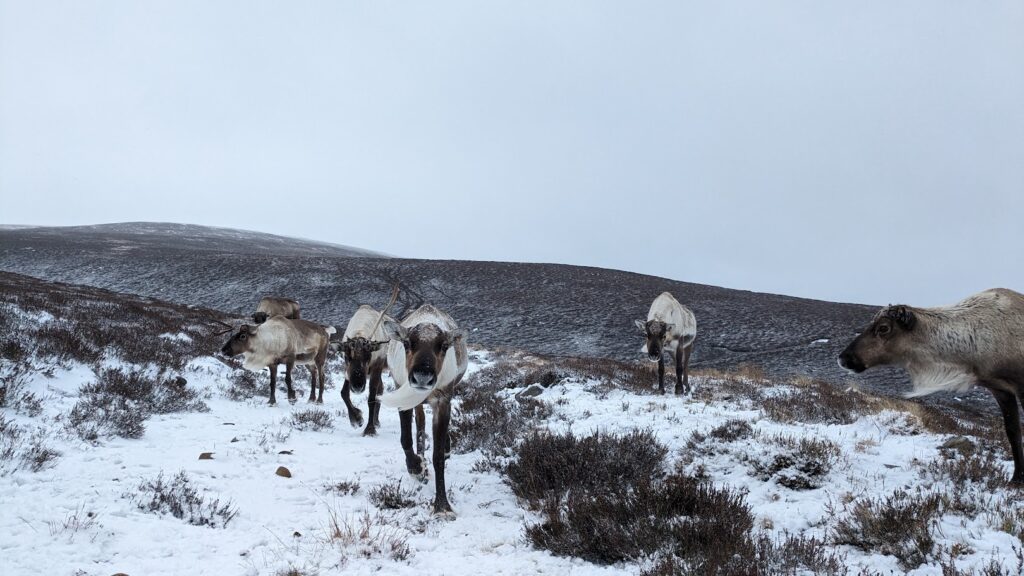
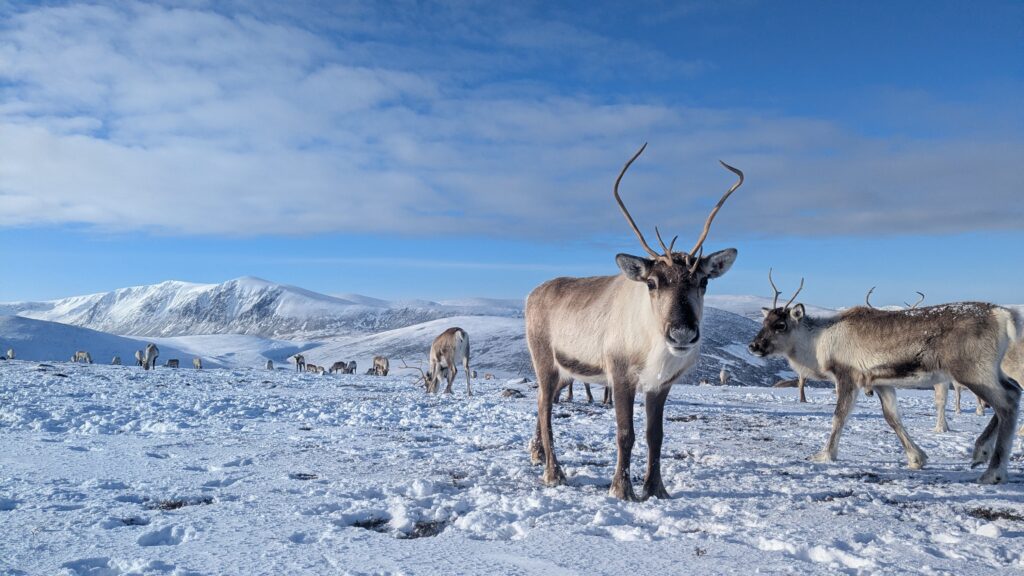
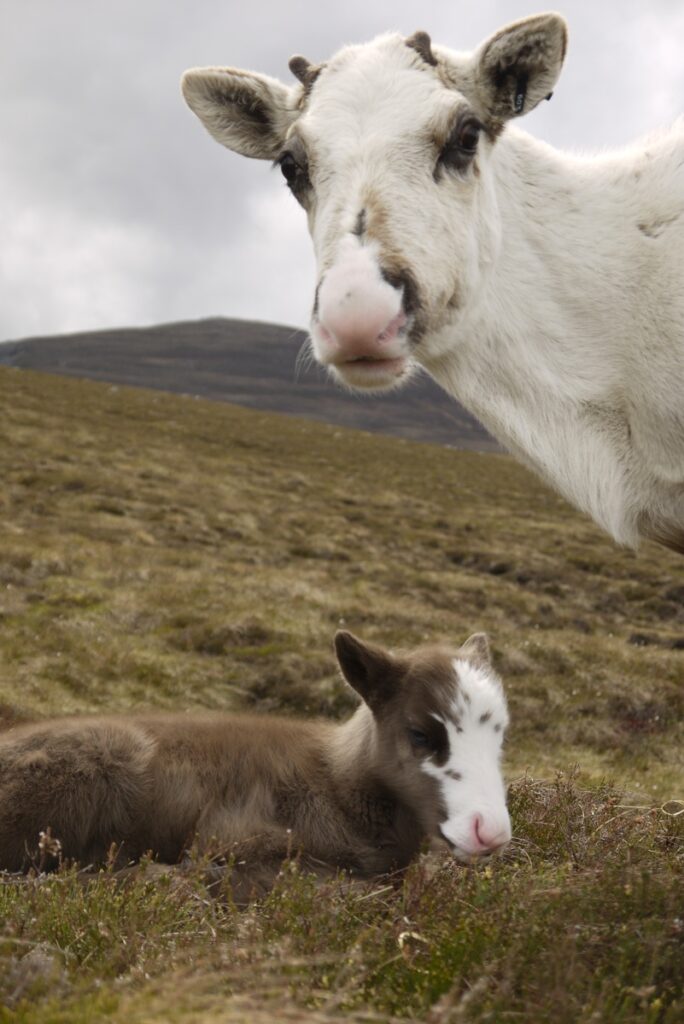
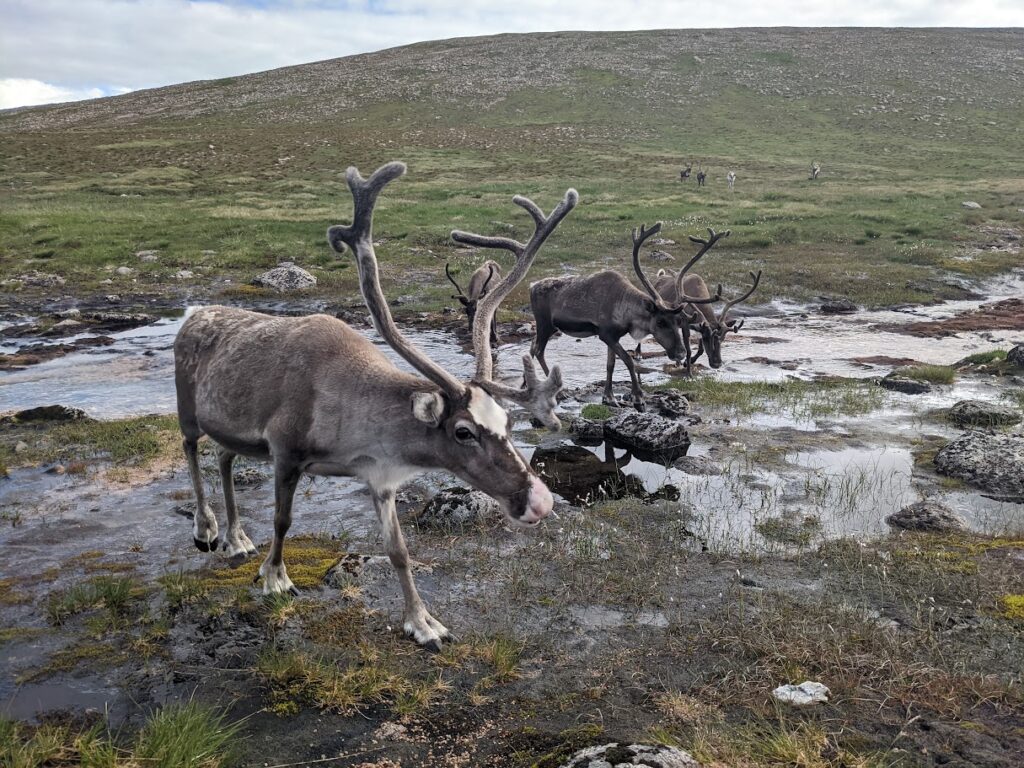
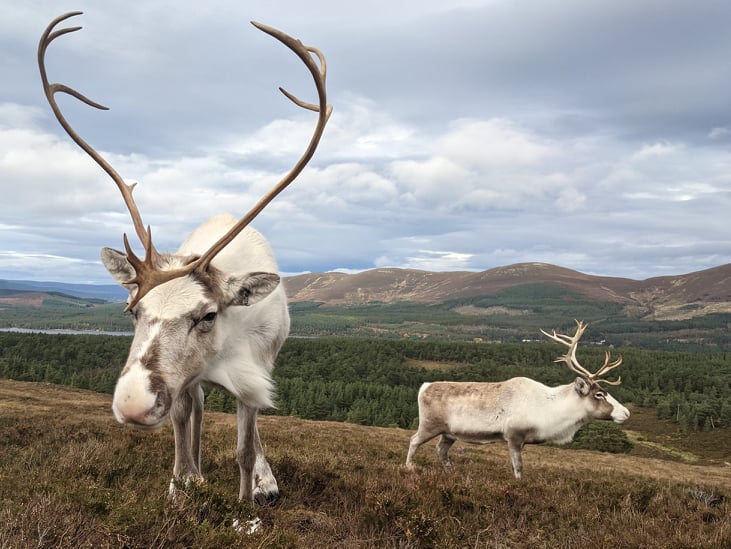
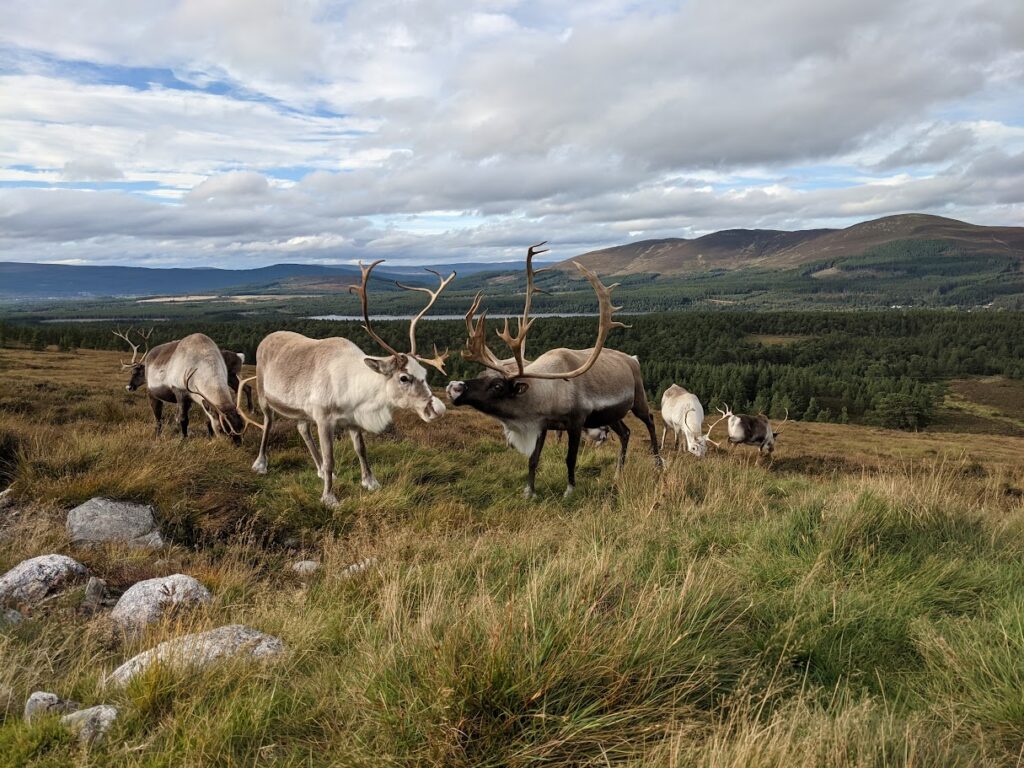
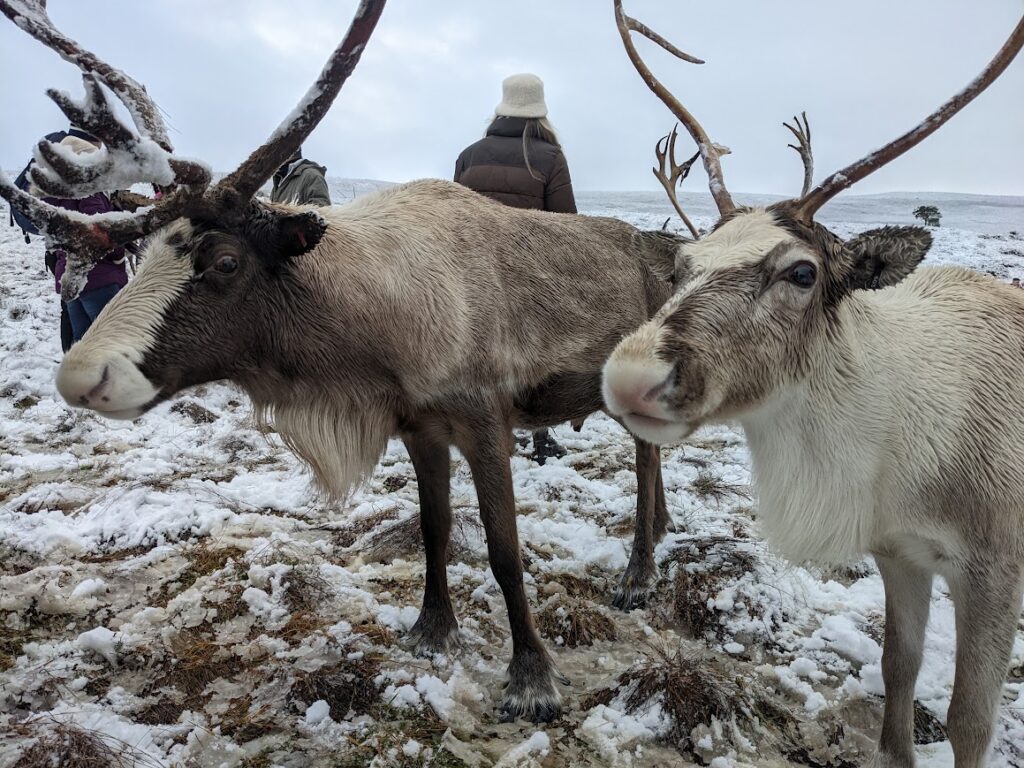
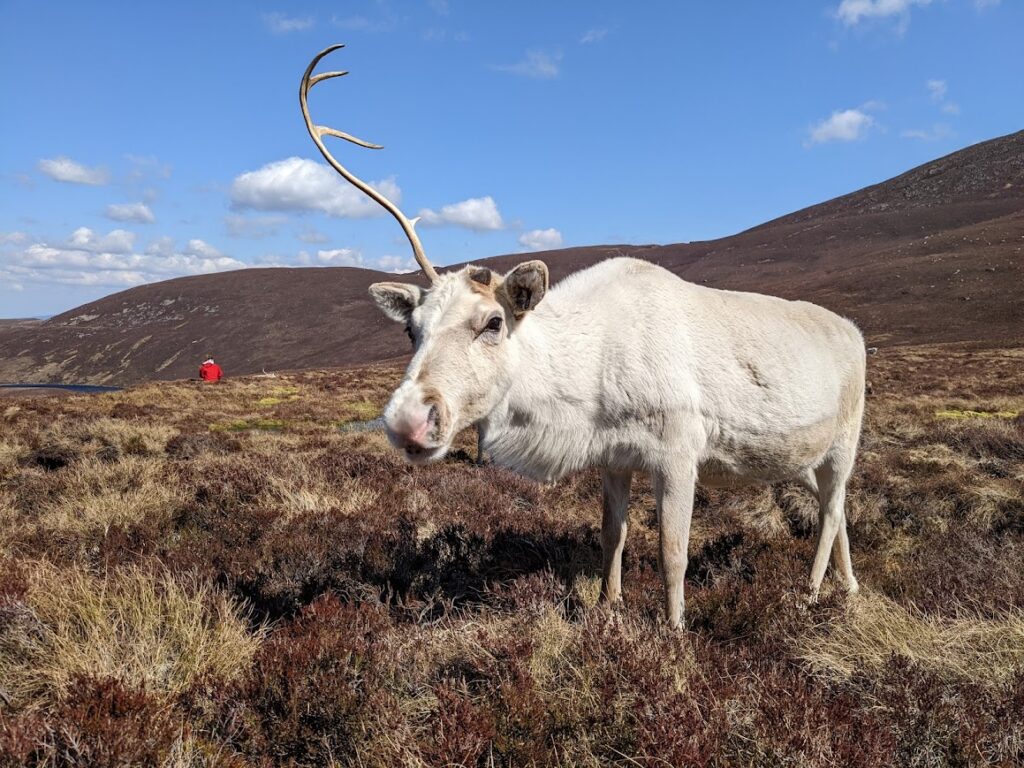
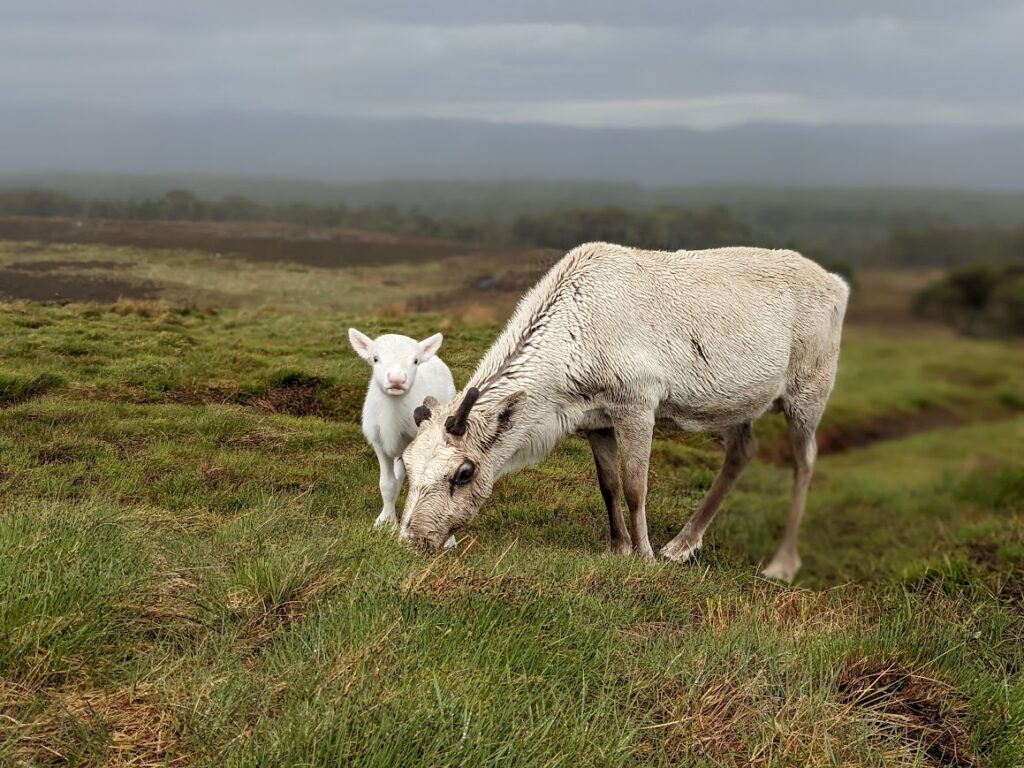
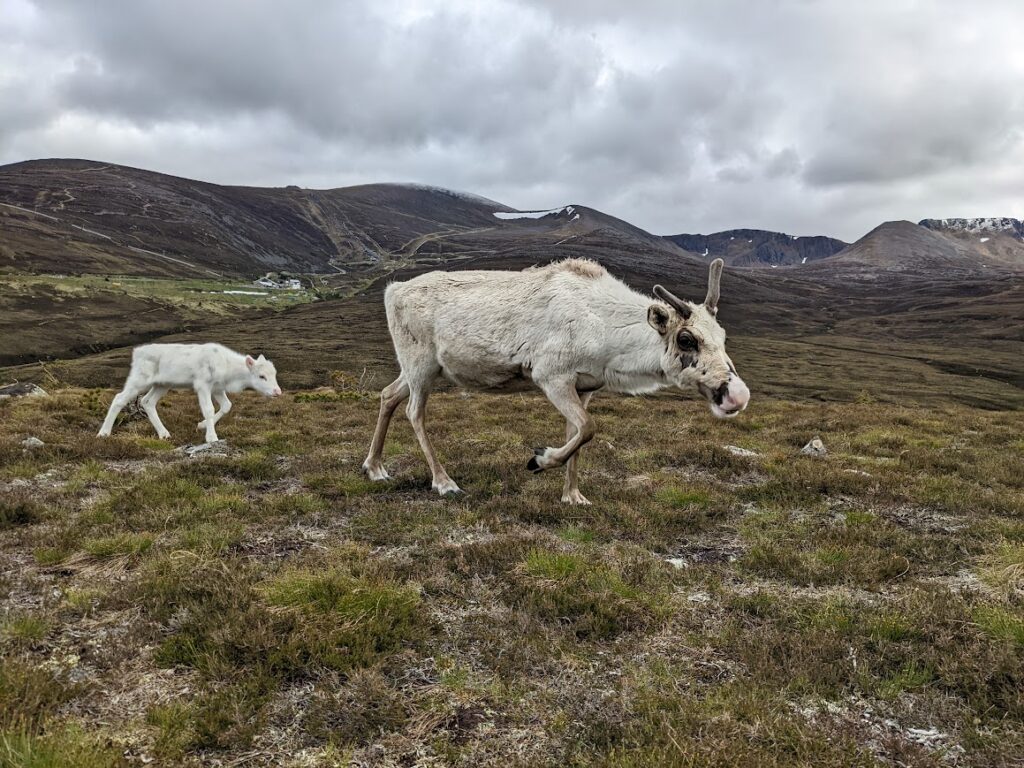
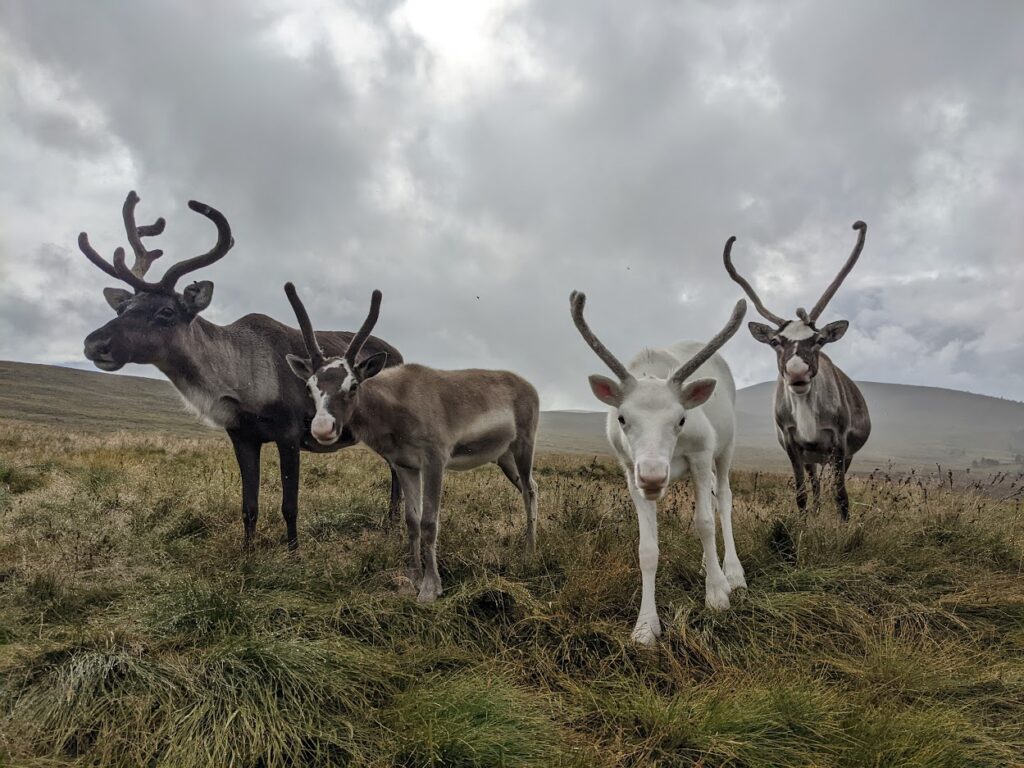
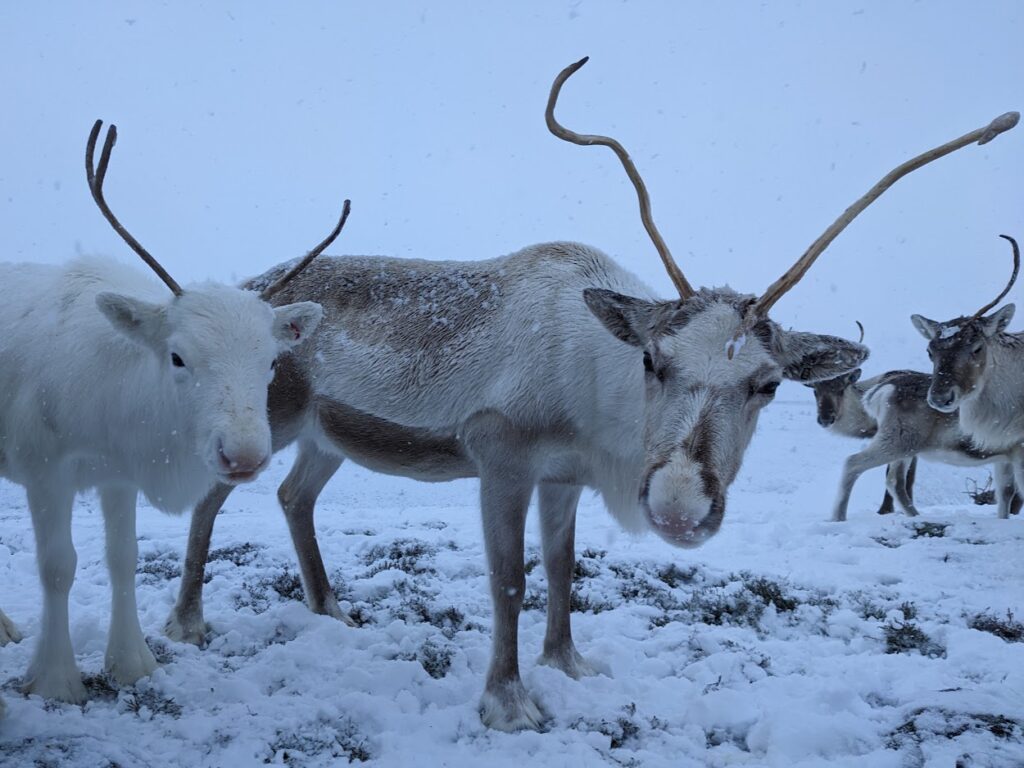
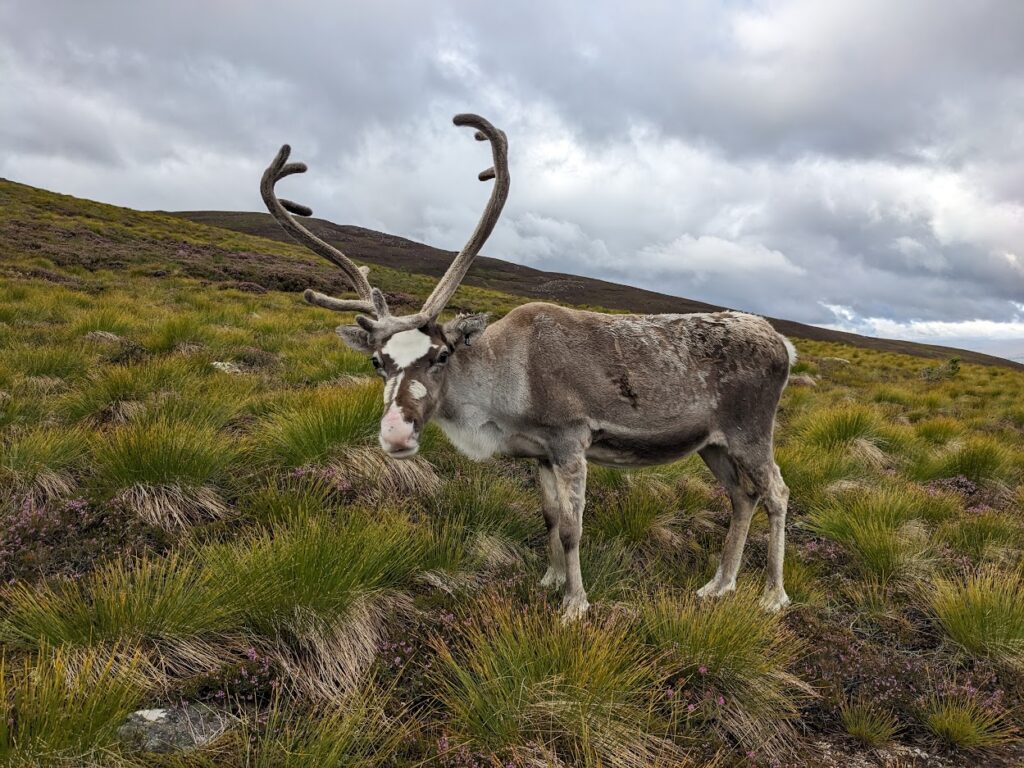
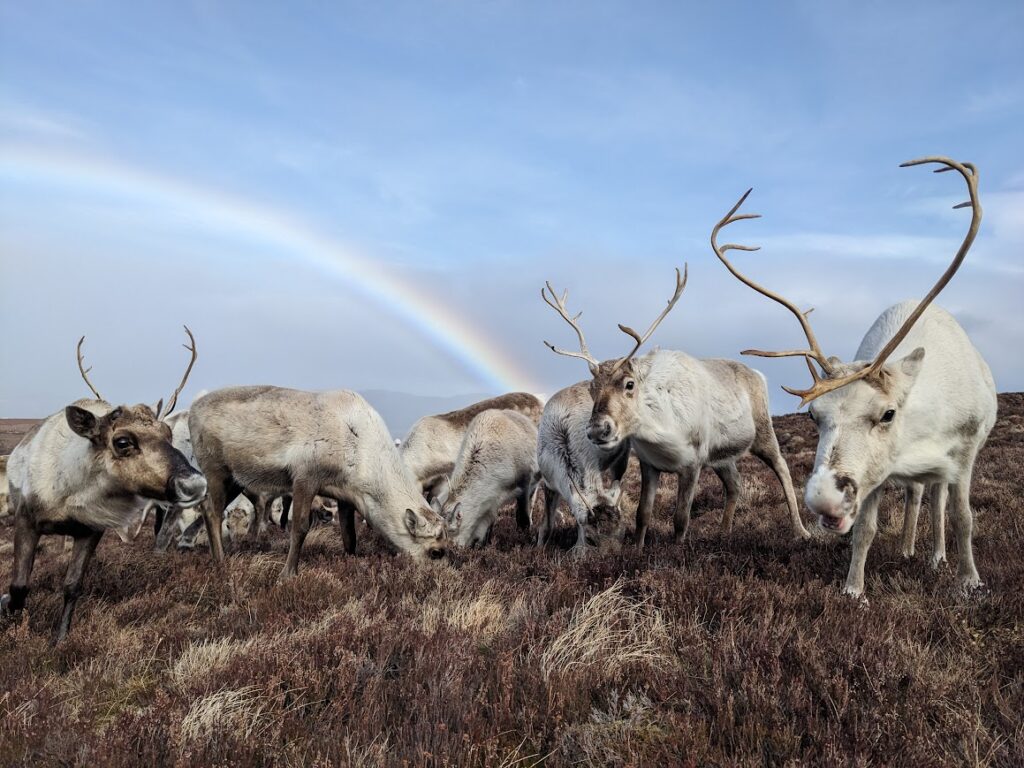
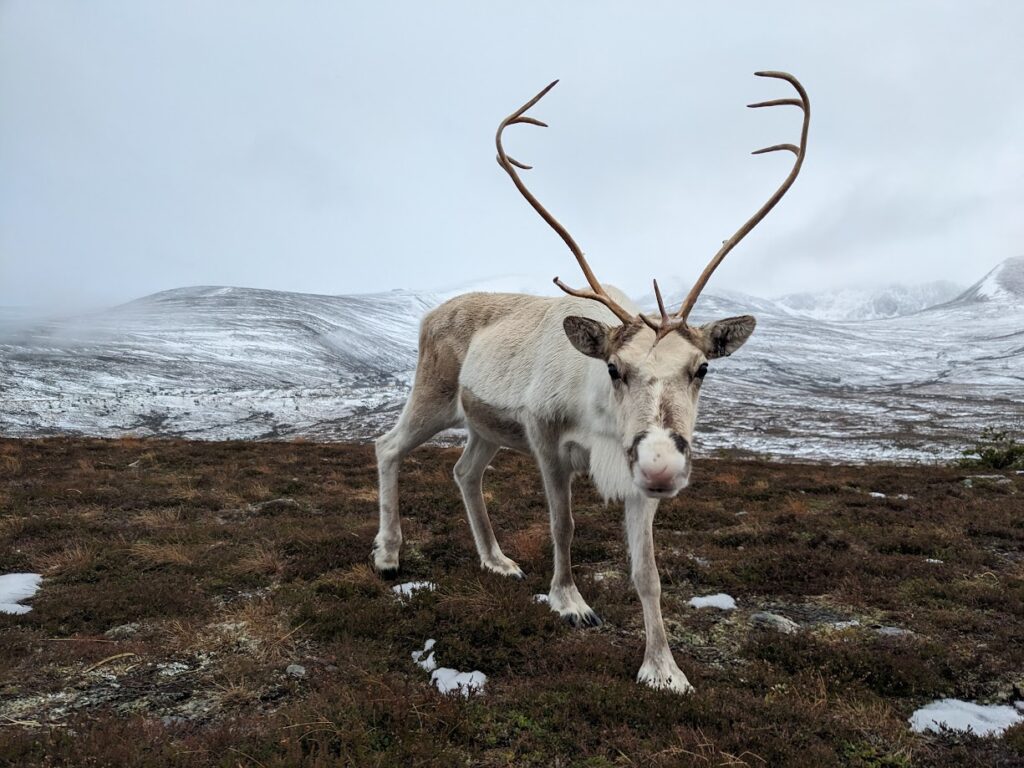
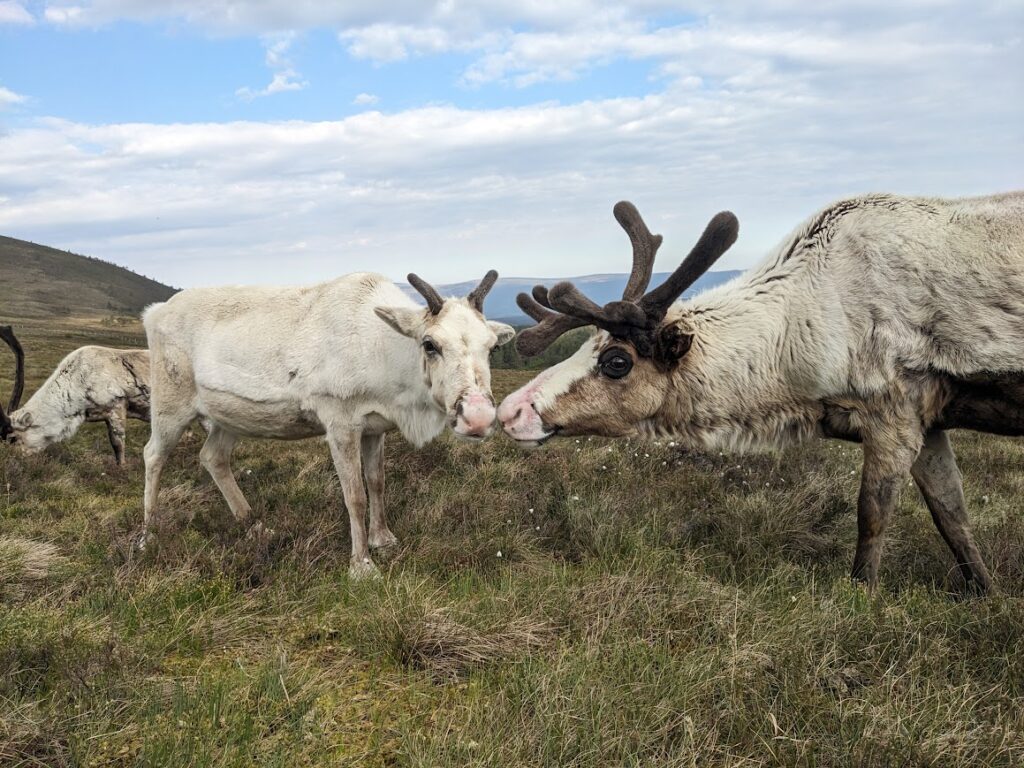
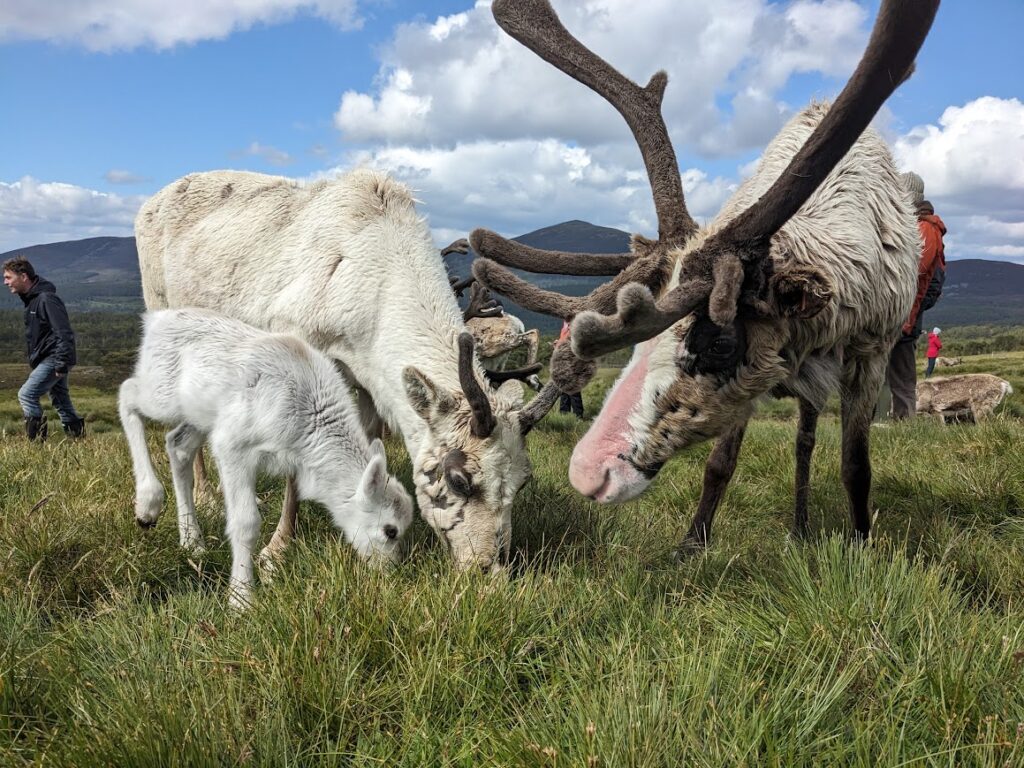
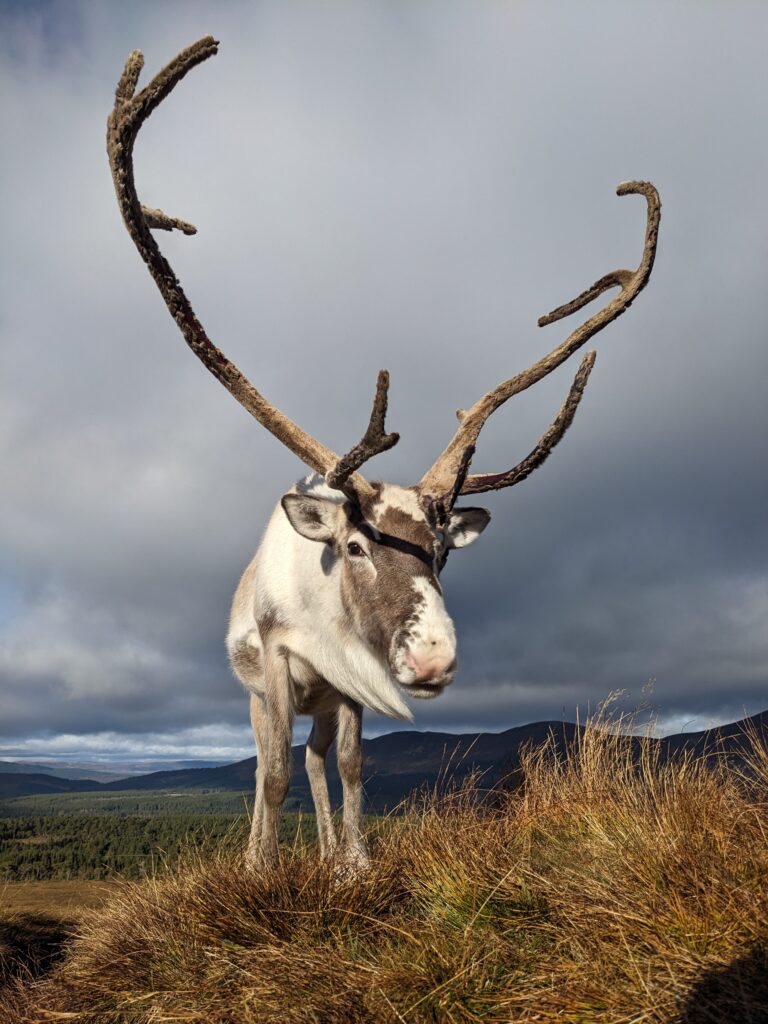
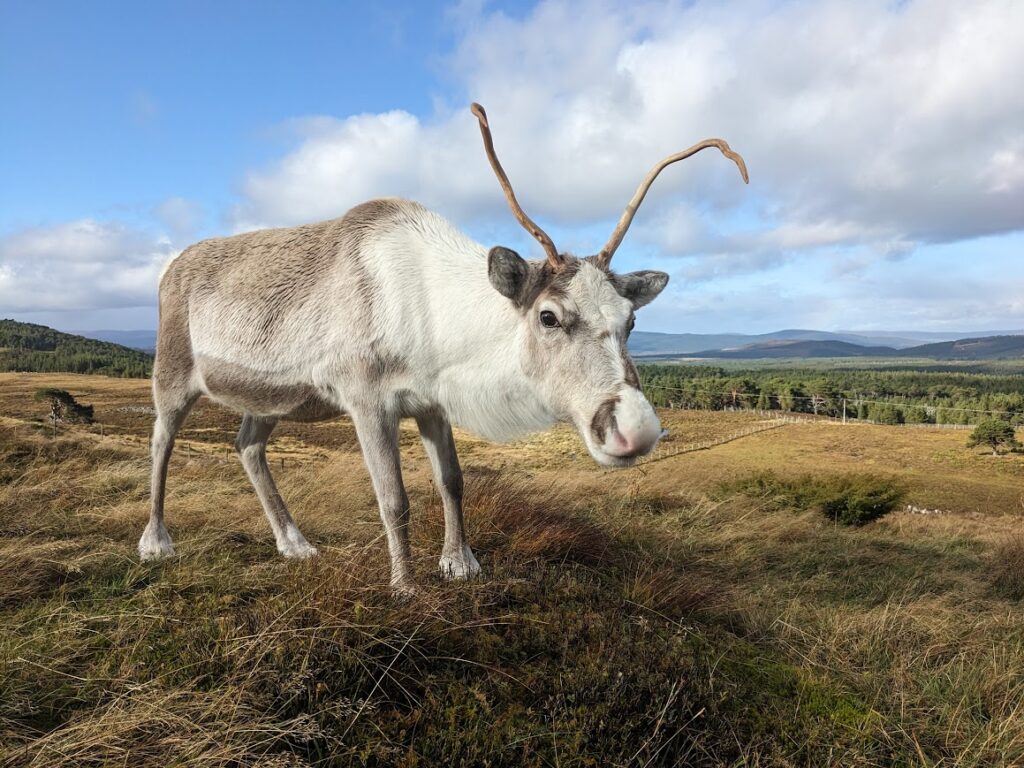
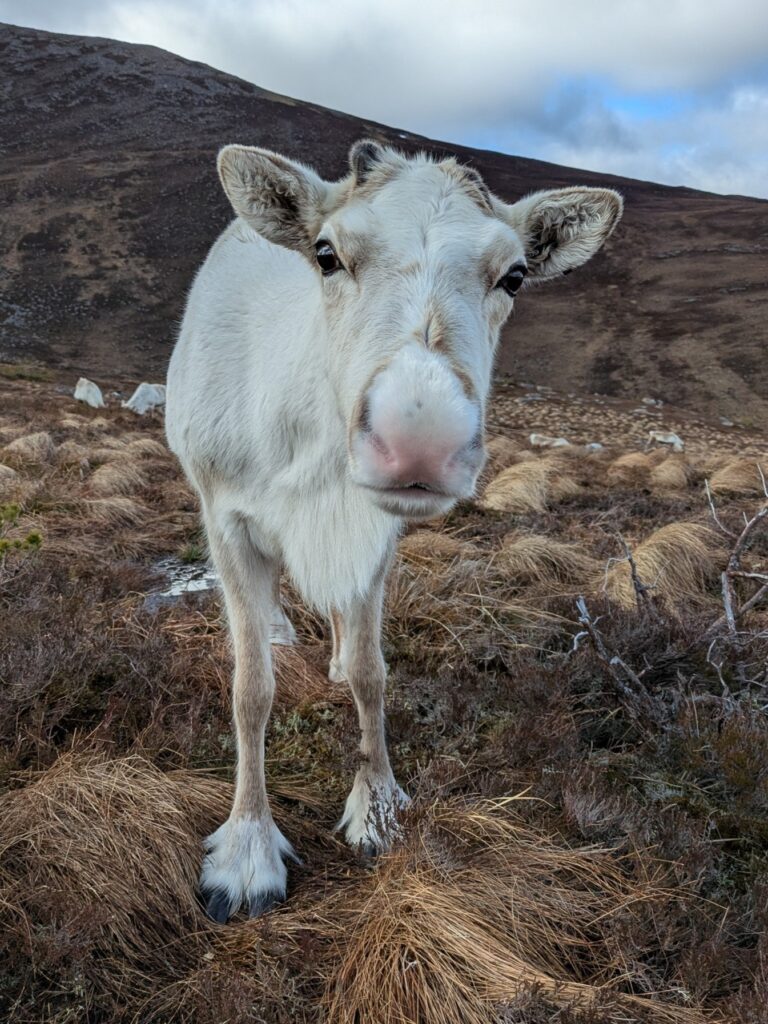
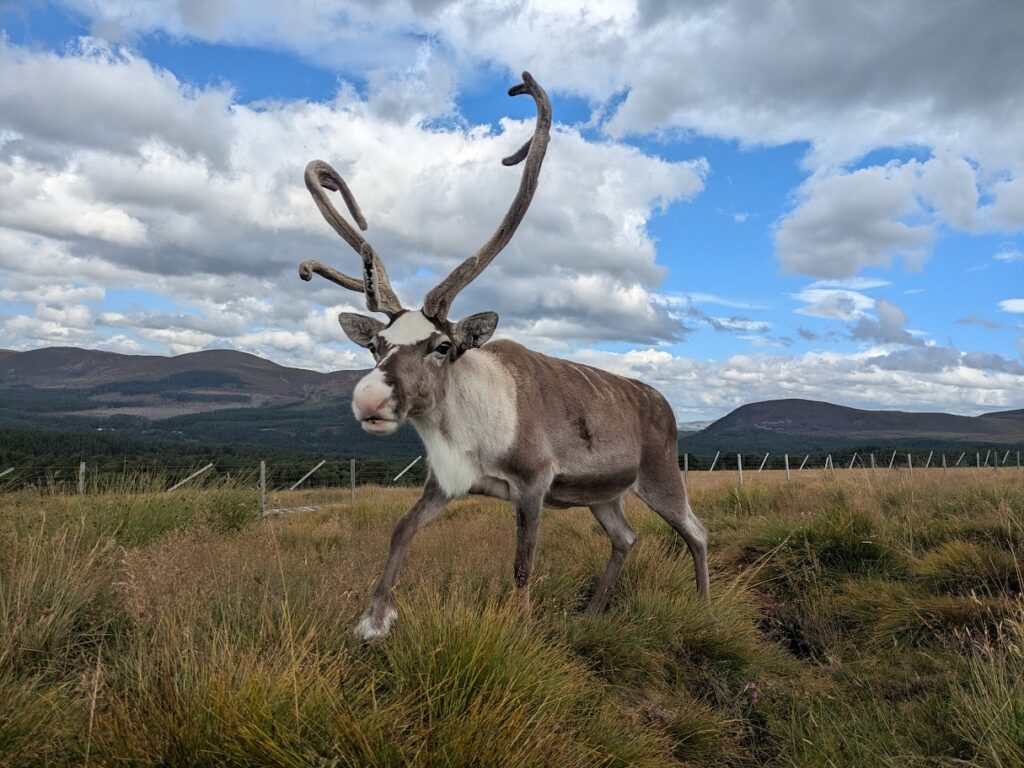
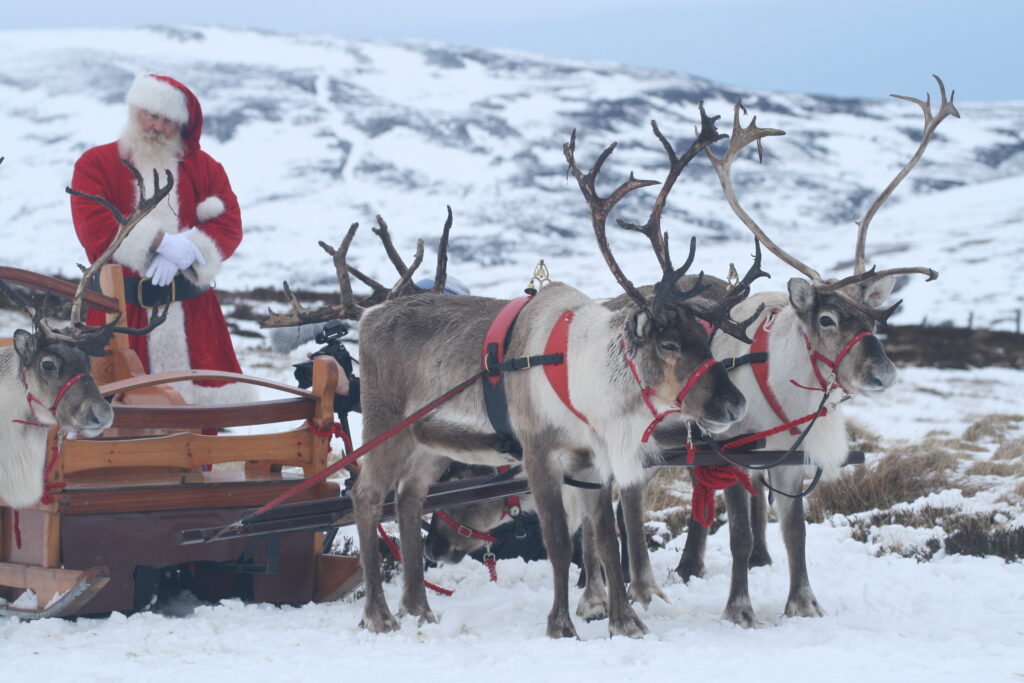
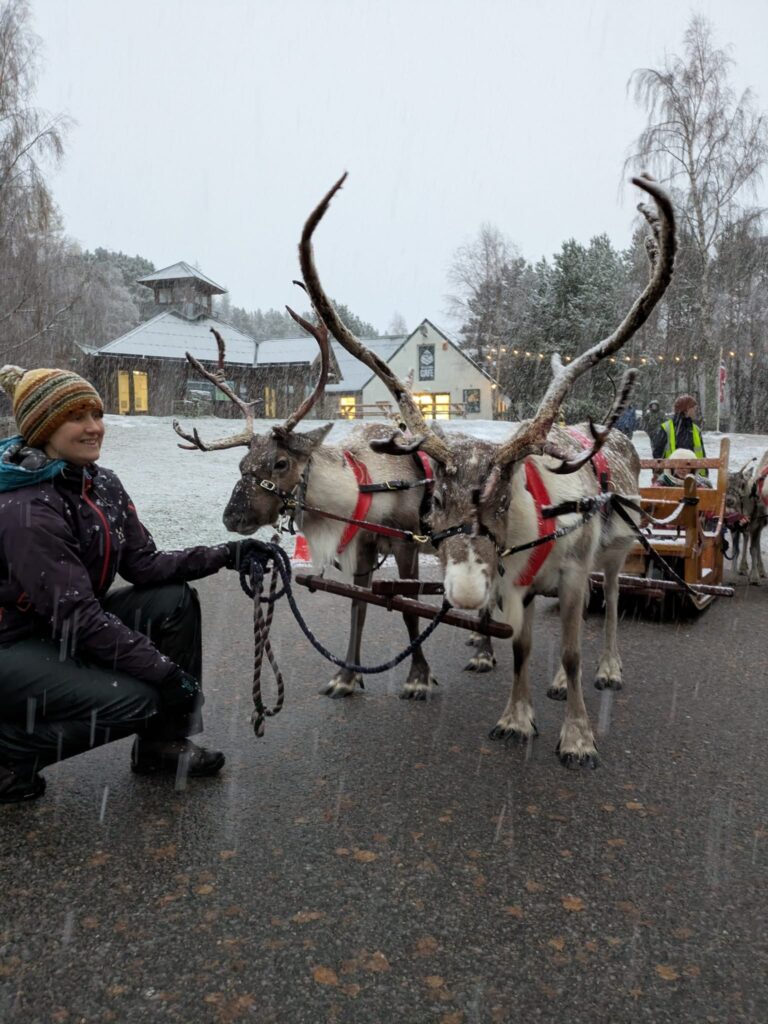
At the end of May, the first group of cows and calves made their way out onto the free range for the summer as the younger group were growing stronger and more confident. A week into June the last group of cows and calves were walked out onto the free range to spend their summer there. Meanwhile lower down, the reindeer are starting to moult their winter coat, meaning they are looking rather scruffy. By the end of the month, we have most of our male reindeer in our hill enclosure and their appetites have definitely ramped up. It has also been great to catch up with all of our male yearlings since they have spent the last few months at our secondary site- identifying them all has been a challenge and us herders have been relying on their ear tag numbers to identify them at the moment.
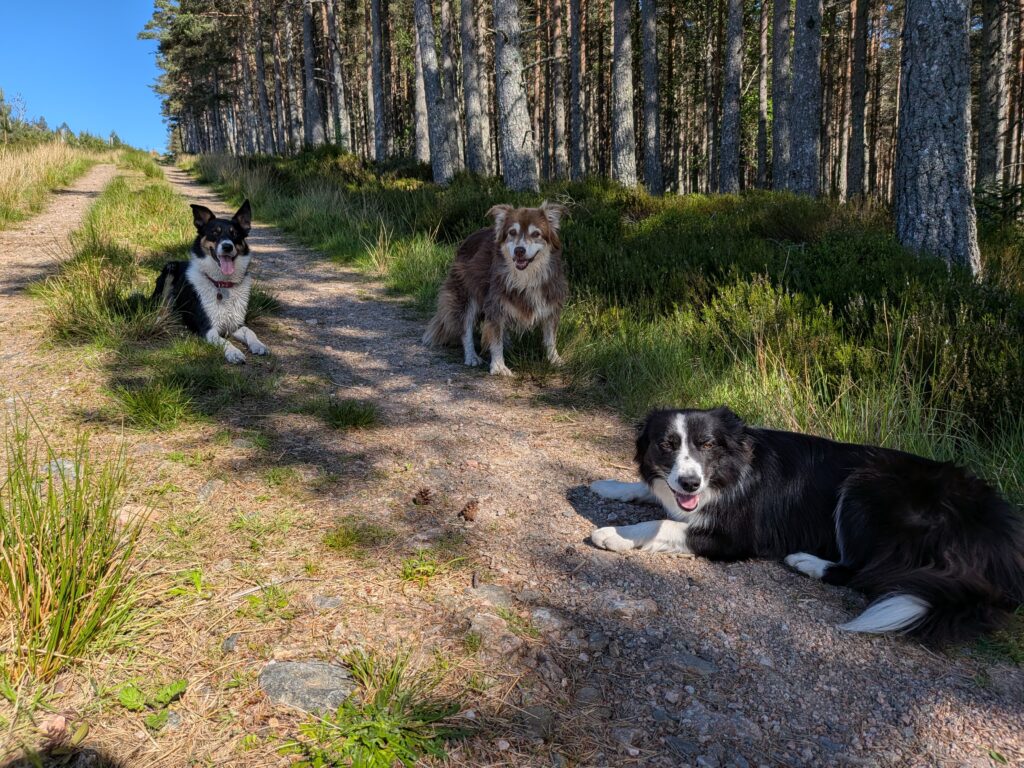
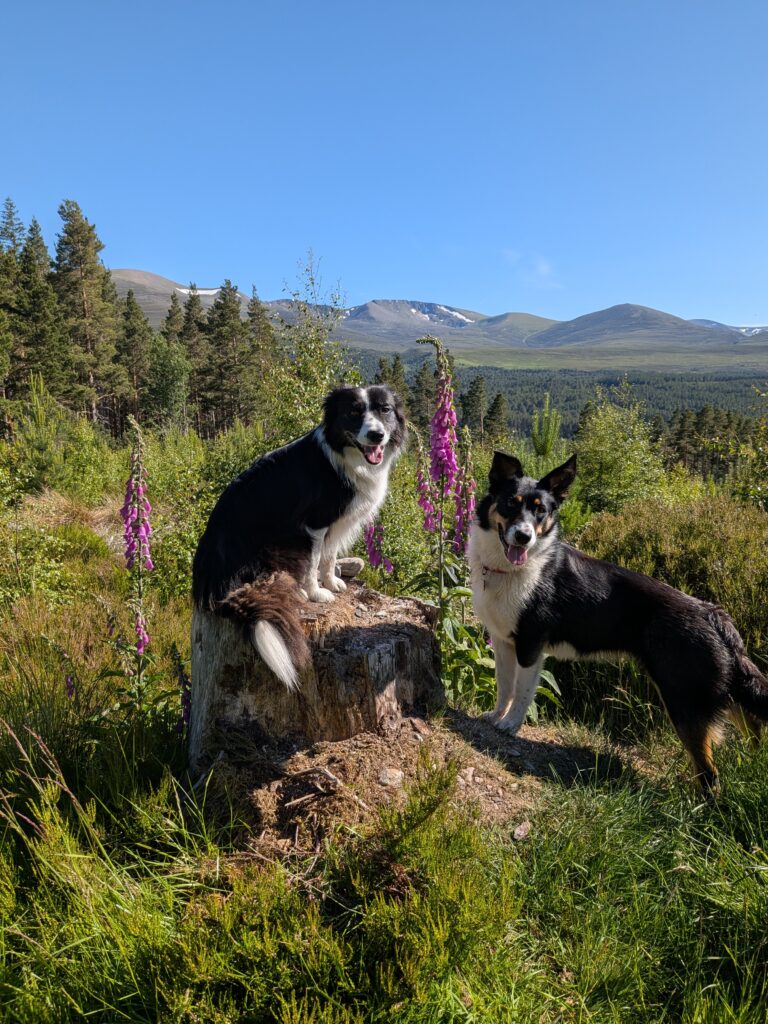
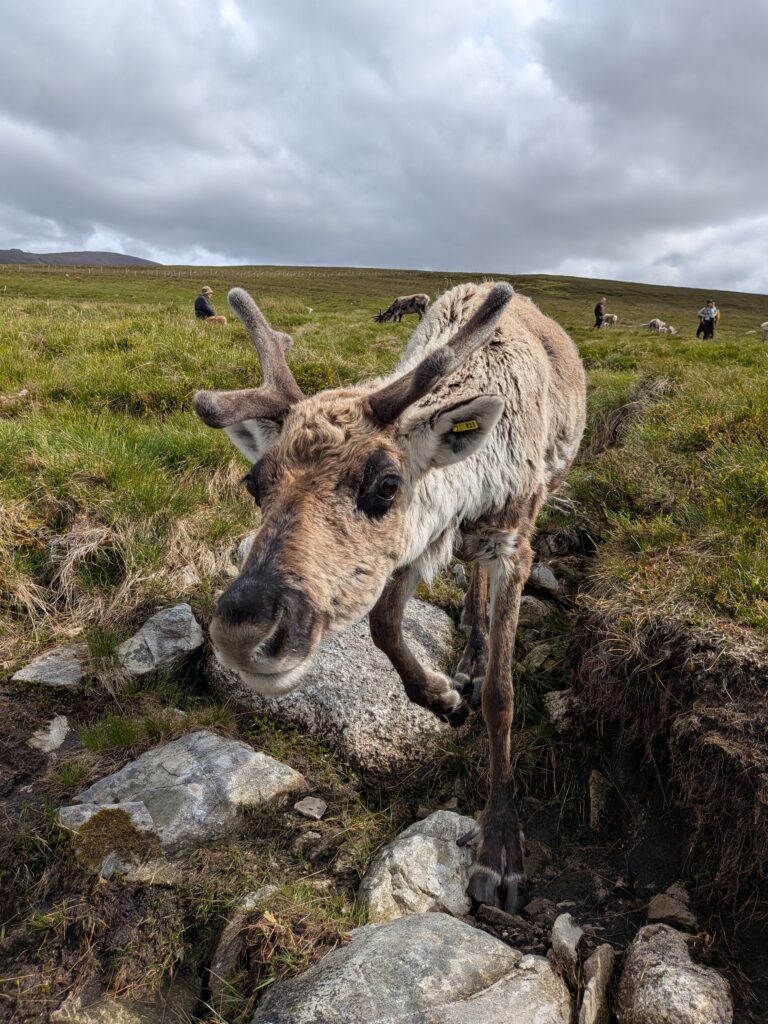
5th of June: Aztec is showing off his panda eyes. One of the first places that the summer coat will pop through is on the nose and around the eyes of a reindeer. 5th of June: It’s the season where you go for an itch and come back with a mouthful of hair. Lovely Scolty with a mouthful of fur. 6th of June: Elbe after an itch along side one of our Volunteers.7th of June: Who could resist this little face. Here is Elbe chancing his arm for some extra feed! 7th of June: The last group of our cows and calves were led out to the free range; we will hopefully catch up with them again soon.10th of June: Despite there being food on the ground Cappuccino is looking for more10th of June: I enjoyed a morning heading to our secondary site to check our reindeer there. After gathering the herd there in our shed for a feed, they were moved back out onto the hill side again. Here is Butter and Quickstep after their food. 13th of June: Perks of being a reindeer herder – you can walk dogs sometimes too! Sanna, Tiree and Fraoch having a pit stop in the shade 14th of June: Fraoch and Sanna with the Northern corries behind; as you can see the Fox glove is in full swing. 15th June: Irish marching down hill looking for extra food on one of our Hill Trips24th of June: Here come the boys! Yearlings (left to right) Bolero, Morris and Oro are now in our hill enclosure after spending time at our secondary site. 25th of June: Whilst feeding the reindeer we put their food out in a long line which allows us to count the reindeer a lot easier. (Left to right) Tub, along with Choc- ice and Cappuccino raced from one end of the feed line to another to ensure they get some food.
The bodies of reindeer go through many changes allowing them to cope with huge temperature difference throughout the seasons. In summer reindeer can cope with temperatures above 30 degrees and the lowest recorded temperature that reindeer have been know to survive is -72 degrees Celsius. Reindeer have two different coats, a thick white winter coat as well as a fine, dark summer coat. Their antlers grow in an annual cycle and the different times of growing and shedding them allows different animals to be dominant at different times of year. One of the most interesting, and important, changes to a reindeer though, you can’t see – their metabolism.
Magnum in his winter coat.Colorado, Iskrem, Yangtze looking smart in their summer coats.
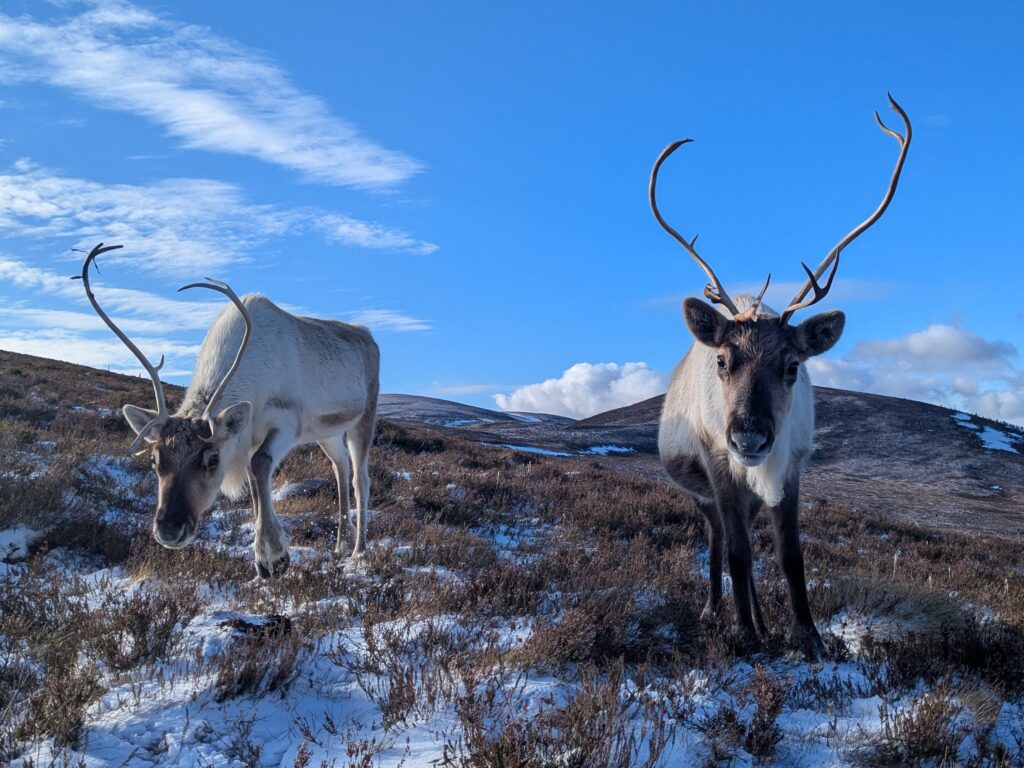
Reindeer have adapted to eat vast amounts of food throughout the spring, summer and autumn to gain enough weight to survive the winter, when food is scarce. To cope with these changes in food availability their metabolism changes too. In the summer reindeer will graze around the clock, eating a huge variety (between 200 and 300 different species) of plants which are high in nutrition. This allows each individual to grow a new set of antlers, they start to grow in the spring and are fully grown by the end of august and the heaviest set we have had in our herd, weighed a whopping 8.9 kgs. The summer is also the time that the young reindeer grow in body size. Finally, every reindeer will need to gain body fat which will act as reserves over the winter. All these things require their digestive system to work in overdrive converting the food they are eating into energy that can be used by their body to create protein, bone, fat, and whatever is needed.
Ryvita grazing and growing her beautiful antlers.Cow and calf grazing on the high plateau plants.
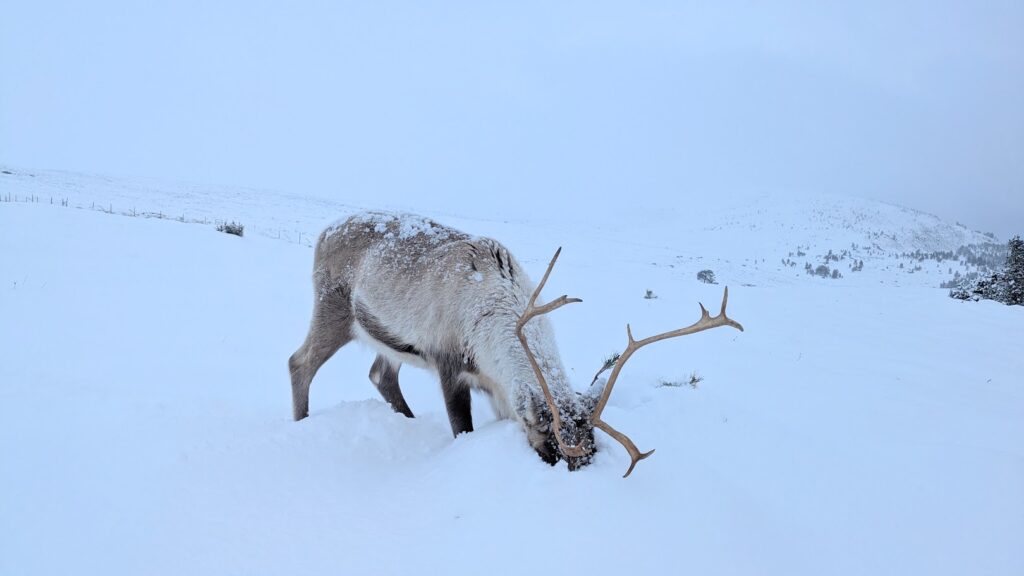
On the contrary, winter is all about survival. During the winter most of the plants will have died under the snow and 70% of a reindeer’s diet is made up of lichen. Lichen is a symbiosis of fungi and algae and is very resistant to extreme changes in temperature. Over the winter lichen won’t grow but it will stay dormant, preserved under the snow. Reindeer will then dig down through the snow to reach the lichen. But lichen is relatively low in nutrients, just enough to sustain the reindeer through the winter and their metabolism shifts in line with this. In fact, even if you gave a reindeer a big pile of food, during the winter, they just aren’t as hungry and wouldn’t eat it all.
Winnie eating lichen under the snow.
During the winter reindeer are no longer growing their antlers, they won’t increase their body size at all, a calf will grow lots in the first 6 months of their life and then stay the same size for the next 5 months, until the following spring. They will survive the winter by using their fat reserves. The one important growth that does happen in winter is that of a growing foetus. This is the reason that the females grow antlers and keep them after the males have shed them, as it gives them a physical advantage during the time that they are pregnant and therefore they get first dibs on the food.
Vienna and Amazon showing off their beautiful antlers right through the winter.A group of our males in the winter having cast their antlers.
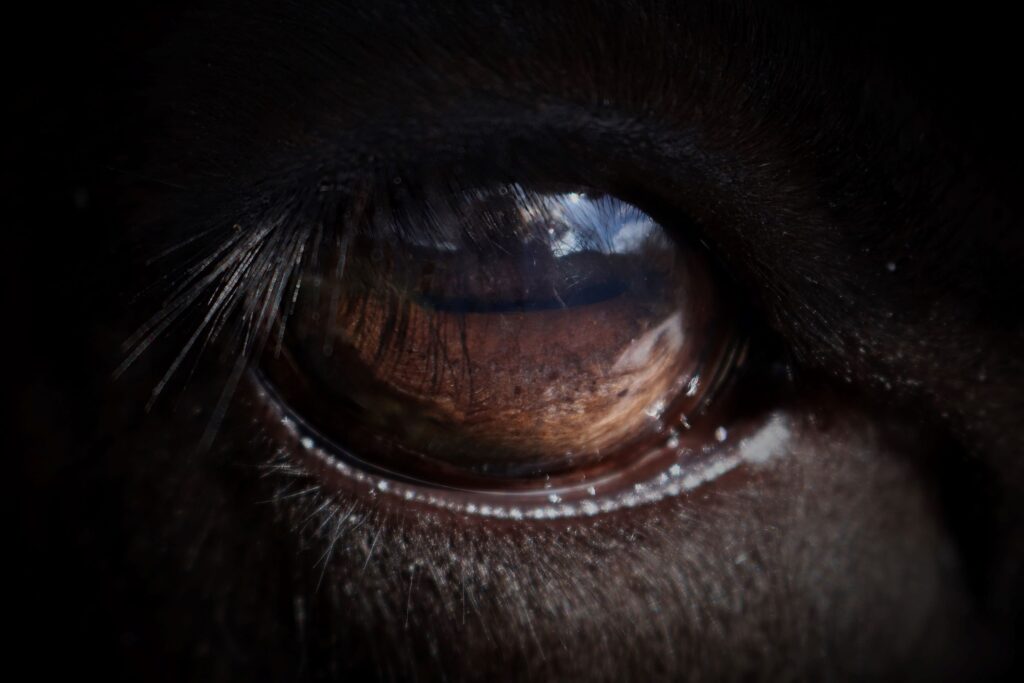
But how does a reindeer know that it’s time for spring? Rather than responding to food availability or temperature which may well change year by year, the changes in their metabolism are triggered by the changes in daylight. The increased daylight associated with spring is detected by specialised receptor cells in their eyes which then convert to a hormonal signal using melatonin. Melatonin is synthesised during the dark period each day and then synthesis stops during daylight. This means that the amount of melatonin varies based on the time of year. The concentration of melatonin has many effects. In terms of metabolism, in the spring as melatonin decreases, this increases the appetite of the reindeer. In the autumn, as melatonin increases, this decreases the appetite of the reindeer and increases the breakdown of fat stores. The changing melatonin levels also controls their antler growth and release of sex-hormones but that may be another blog in the future.
Eye of a reindeer.
For anyone particularly interested in a much more in-depth description of the physiology behind these changes, I would highly recommend reading this article.
If you have made it this far, thanks for reading my very nerdy reindeer biology blog! Hopefully you have learnt something and enjoyed the pictures of the reindeer along the way.
Following on from a blog I recently wrote all about Cheer, I thought I’d write another blog about another white-faced reindeer born in 2012 – Merida!
I first met Merida in May 2017 when she was five years old. It was my very first week as a reindeer herder and I have a very strong memory of sitting in the hill enclosure with Sally who was showing me the ropes. Two cows and calves were in a smaller part of the enclosure and we were spending time observing how they were getting on – what a tough job! Merida and her new born calf were there, and whilst Merida herself was fairly uninterested in us, her calf came right up to me and starting nuzzling my shoe laces. It was instant love! This tiny reindeer calf grew into the mighty Dr Seuss, who everyone knows is the best reindeer ever. As the ‘mother of the greatest’ I am also very fond of Merida, so this blog is full of photos of her.
Merida has a very distinctive hourglass pattern on her face and therefore one of the first reindeer I learnt to identify. She is friendly around people and enjoys hand feeding. She has been an excellent mother over the years and has three surviving sons – Dr Seuss, Ärta and Mr Whippy.
Merida and her newborn calf – who later was named Dr Seuss. This was around the time I first met them both.
I left the Reindeer Centre in March 2018 for another opportunity, but missed the herd (and my colleagues!) too much so returned to herding in March 2021. Most of these pics are therefore of Merida, and her offspring, over the last 5 years or so.
2021
Catching up with Merida whilst she’s out free ranging in the hills. With no calf at foot in 2021 she was able to put more energy into herself and grow lovely big antlers.Merida looking beautiful with her beard blowing in the breeze in October 2021. Camembert is the reindeer in the background.Spartan doing his best to woo Merida. She looks a bit unsure but it must’ve worked as the following spring Merida had a male calf.
2022
Dr Seuss and his mum in early January 2022, hanging out together – both waiting in line for the hand feed.A heavily pregnant reindeer in April 2022. Her new antler is just beginning to grow. Merida and newborn calf in May 2022. We later named him Mr Whippy! You can see the antler that had a head start (see above photo) is taller than the other.Merida and her calf the day they were released out on to the free range for the summer.Torch & mum Magnum and Mr Whippy & mum Merida in September 2022 after coming back into the hill enclosure.
2023
Merida and Mr Whippy back out free ranging in the hills in January 2023.Merida enjoying herself on the free range in early August. She looks a bit scruffy as she’s moulting the final bits of her old winter coat. She’s grown another set of cracking antlers!Merida on the end of the feed line in October 2023 with a lovely rainbow behind.
2024
Merida in February 2024 with her epic antlers!In May 2024 Merida had a new male calf. When Merida grunted for her new calf, her 7 year old son Dr Seuss would come running over!Merida and new calf with older son Dr Seuss (mid-moult with a sunburnt nose). Dr Seuss was often by his mum’s side for the few weeks they all overlapped in the hill enclosure. Very sadly Merida’s calf picked up a tick-bourne illness in August and despite receiving medication and all our best efforts he sadly didn’t survive.Ärta in October 2024 – Merida’s son born in 2020. I can’t resist including this photo – he looks so magestic! Whilst Merida has never had a female calf, son Ärta has been bred from so her line continues.Merida in October 2024 with rather silly antlers. Merida invested so much energy into her calf that her own antlers were a rather poor show this year.
2025
Merida in March 2025 – just beginning to grow her antlers. Her old winter coat is quite faded so harder to see the distinctive hourglass pattern on her face.Merida in August 2025 looking great in her short summer coat. She’s now retired from breeding so will spend most of her days free ranging in the hills and enjoying life!
2026
Cameron’s photo of Merida enjoying free ranging in February 2026. She’s in a big herd which includes her three sons – Dr Seuss, Ärta and Mr Whippy.
Rangifer tarandus tarandus and Rangifer tarandus fennicus
Continuing on from learning about the lovely Svalbard reindeer (we all remember how cute those guys are!), this time we’ll look at the two other European subspecies of reindeer, the forest and tundra reindeer. Starting with the tundra reindeer…
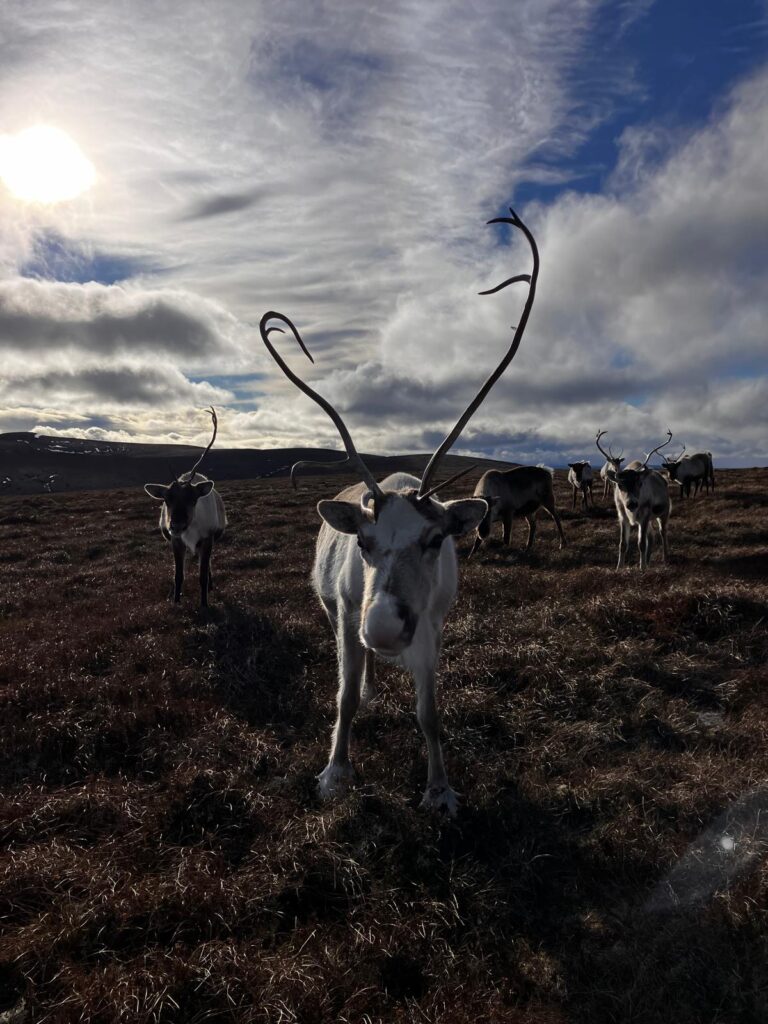
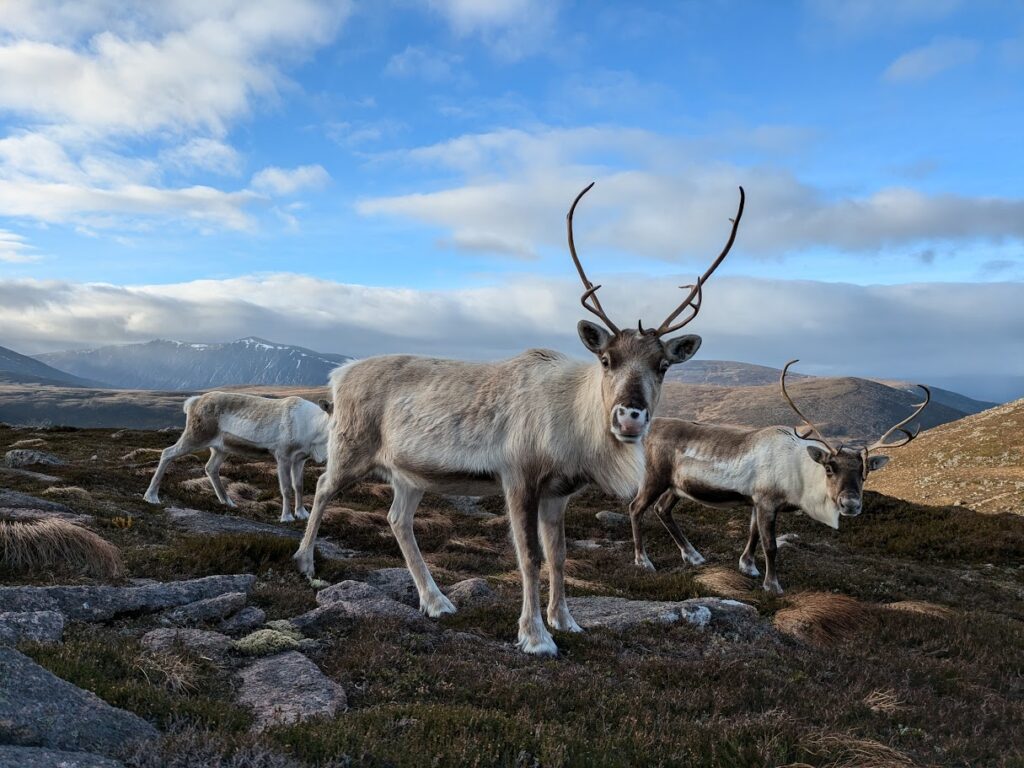
Our very own tundra reindeer, Chickpea and Morven roaming the Cairngorm mountains.
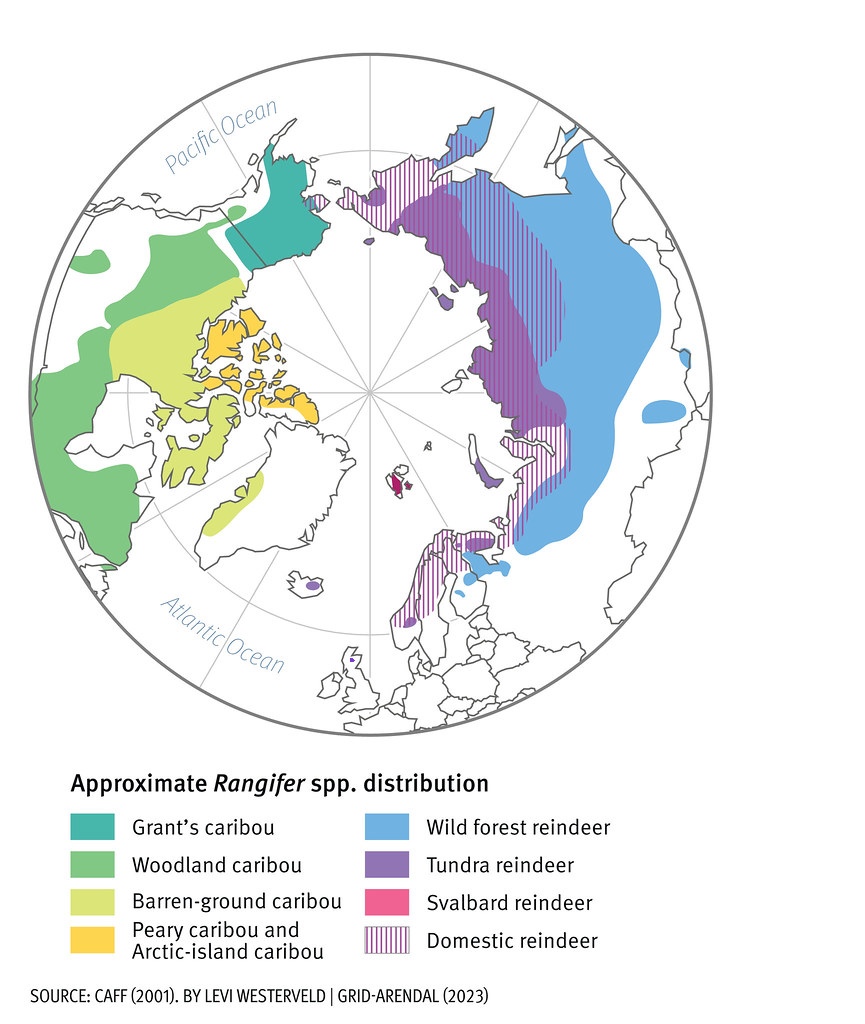
Found across Northern Scandinavia and across Northern Russia with a large population in Siberia. They are also found here in the Highlands of Scotland roaming the Cairngorm mountain plateau. The southern most population on continental Europe is found in the mountain regions of Norway, however it is quite tricky to know where the tundra reindeer population ends and the forest reindeer population begins.
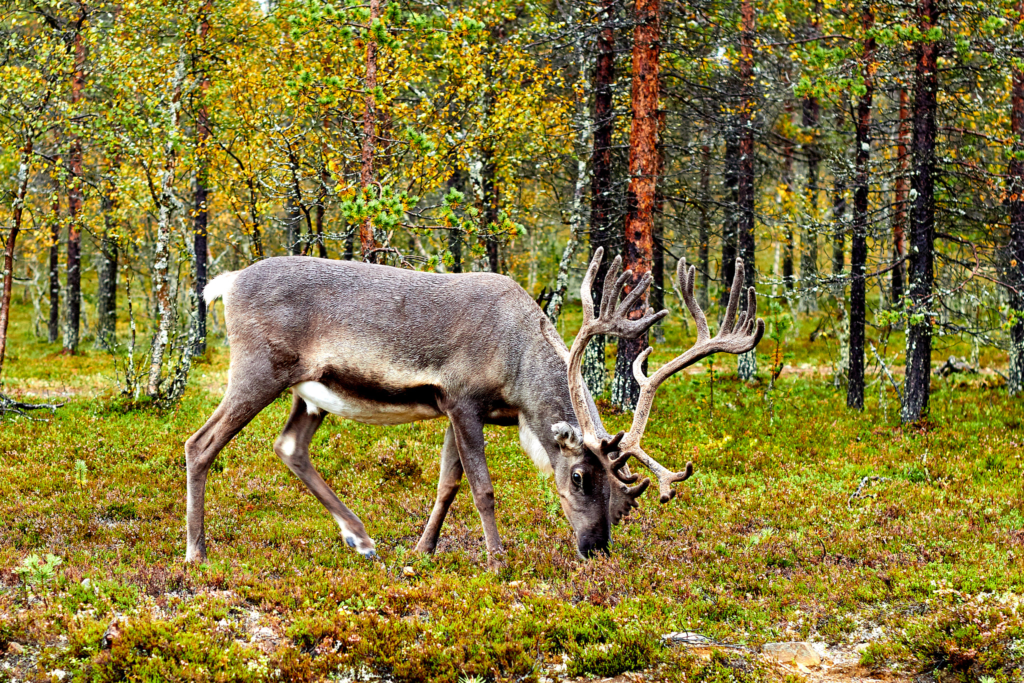
Forest reindeer grazing amongst trees.
The most notable population of forest reindeer is found surrounding the Karelia region, near the border of Finland and Russia. The population is then further wide spread across Russia.
Population map of all subspecies of reindeer, including the N.American caribou populations and the European domestic and wild populations. (Map source: found at the bottom of the image)
Unlike the Svalbard reindeer, these subspecies do follow a larger migratory pattern, and will usually cover anywhere from 12 – 34 miles per day. They move between areas following the availability of vegetation and to avoid the harshest environments during winter months.
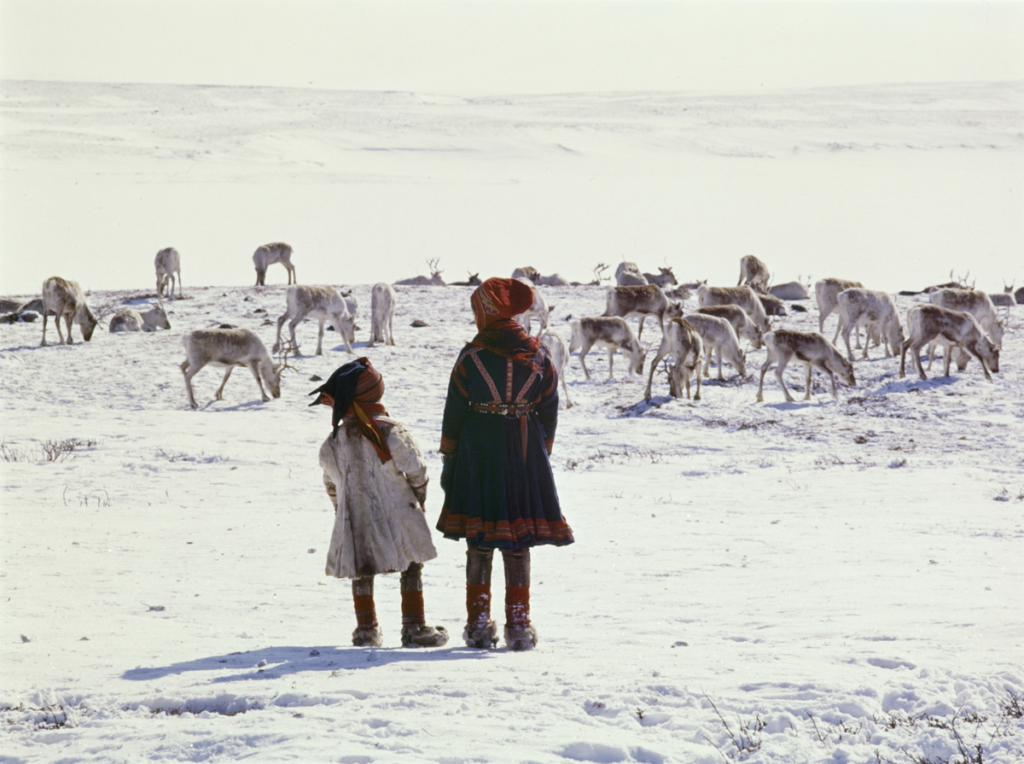
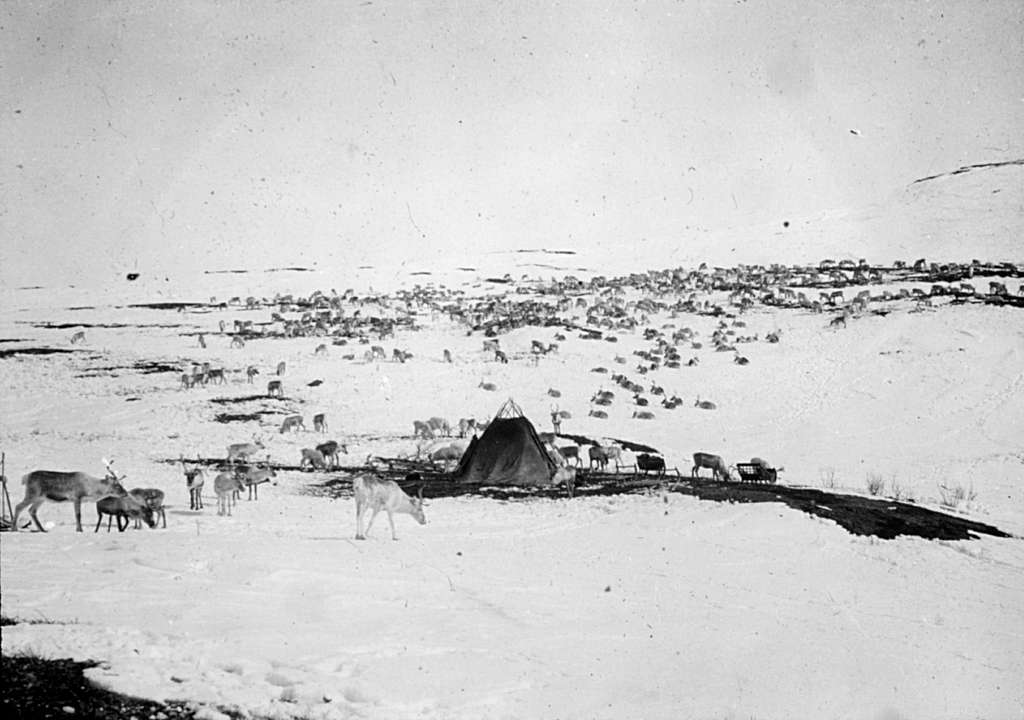
The herds will also move alongside humans. Both species are heavily domesticated and have been for over 10,000 years now. Not only are the reindeer used for food, income, and general way of life by indigenous communities (most noteably in Europe – the Inari Sámi), but the reindeer themselves benefit. Knowledge passed down through generations regarding migratory behaviour, and the animals role in the ecosystem means a huge positvie impact on Arctic conservation. This not only benefits the domestic populations of reindeer, but also the wild ones, as well as all other forms of life living in these ecosystems.
Sámi communities will follow the reindeers migratory habits, travelling vast distances with them every year. (Photo credit: Norsk Teknisk Museum)
The vast numbers of these two subspecies, the distribution of their population, and their movement patterns, give them a much larger impact on the ecosystem than the Svalbard reindeer. With grazing habbits helping to maintain Arctic tundra, it prevents the release of stored carbon in the permafrost. Being farmed in the traditional methods that they are – constantly moving, following the behaviour of the reindeer rather than using other methods of stationary farming – the reindeer are still able to exhibit their natural behaviour. It has also maintained a positive coexsistence between man and the fragile Arctic ecosystem.
Moving home and following the natural behavioural patterns of the reindeer.
This means that the reindeer have not needed to adapt to a stationary lifestyle. Their bodies are still designed to cover large distances and they remain successfully adapted to their role in the ecosystem – dispersing seeds in the trampled ground they’ve moved over.
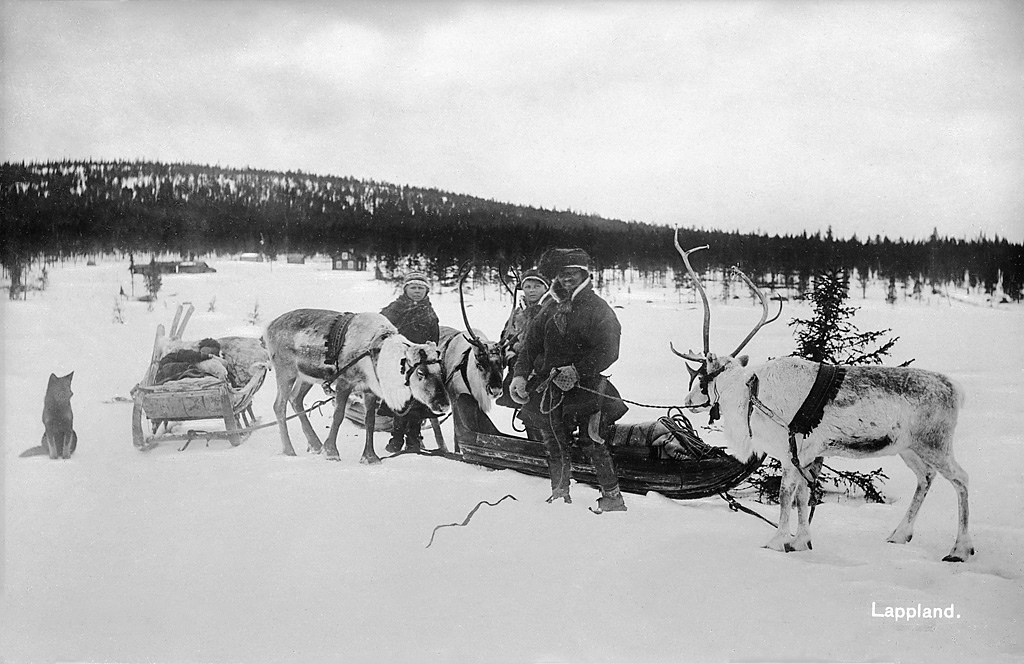
Something they have adapted for over the last 10,000 years though, is sledge pulling.
Bigger males, often castrated herd members will be used to pull belongings when following the reindeers migratory habits.
Due to living alongside humans for such a long period of time, the European tundra and forest reindeer are semi domesticated. They don’t perceive humans as a threat and are very accumstomed to interacting with people and being handled. This means their strength and good hoof structure can be utilised for sled pulling.
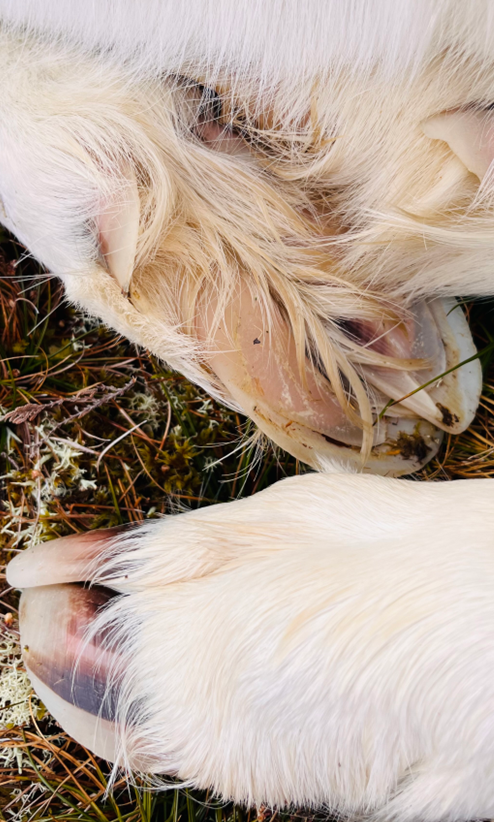
Reindeer toes!
During the winter months, their footpads will shrink and tighten, this exposes the edge of the hoof and allows them to dig it in to the snow. They’ll maintain grip for descending and ascending hills/mountains, and still be able to run at high speeds without the risk of losing their footing. Their strong and muscular build, easy going/ docile nature, and drive for yummy rewards(!) makes them the perfect Arctic sled pulling animal. Second to the sled dog of course, also having worked alongside humans for approximately 8 – 10,000 years (I don’t think anyone could be happier pulling a sled than those guys!).
Keeping tradition alive. Our very own reindeer pulling sleds here in the Cairngorms. (Photo credit: Alex Smith) Our wonderful boys Zoom and Mivvi pulling a wheeled sleigh through Glenmore.
So, in summary, it seems the main adaptations for the European tundra and forest reindeer are behavioural more than physical. They have adapated to be more docile around humans, whilst still maintaining their natural drive to move. Not only for their benefit of chasing good grazing, but also for the benefit of the ecosystem – keeping the Arctic environment healthy.
Next time we’ll jump over 4000 miles from Europe to North America, and find out what the difference is between a reindeer and a caribou (if any).
Daisy
Further reading:
www.//oneearth.org/species-of-the-week-reindeer/
Reindeer and Caribou: Health and Disease, edited by Morten Tryland and Susan J.Kutz (CRC Press, 2019)