
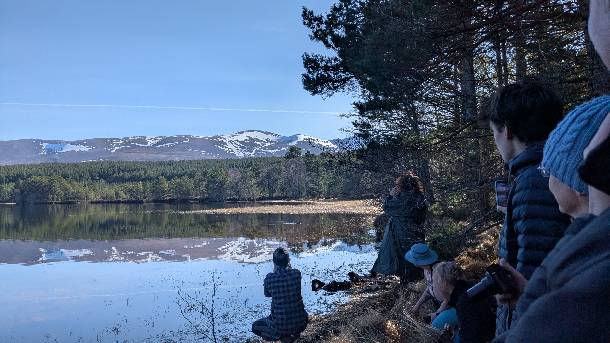
There was a real air of excitement as folks from Forestry and Land Scotland, the Cairngorm National Park (CNP), NatureScot, the Glenmore Visitor Centre, and even several members of the public gathered on a surprisingly sunny morning in March. Daisy, Lotti, and I were fortunate enough to be invited to represent the Cairngorm Reindeer Herd. Huddled together at one end of Loch Morlich, we eagerly awaited the arrival of two of the loch’s newest residents: a pair of beavers!
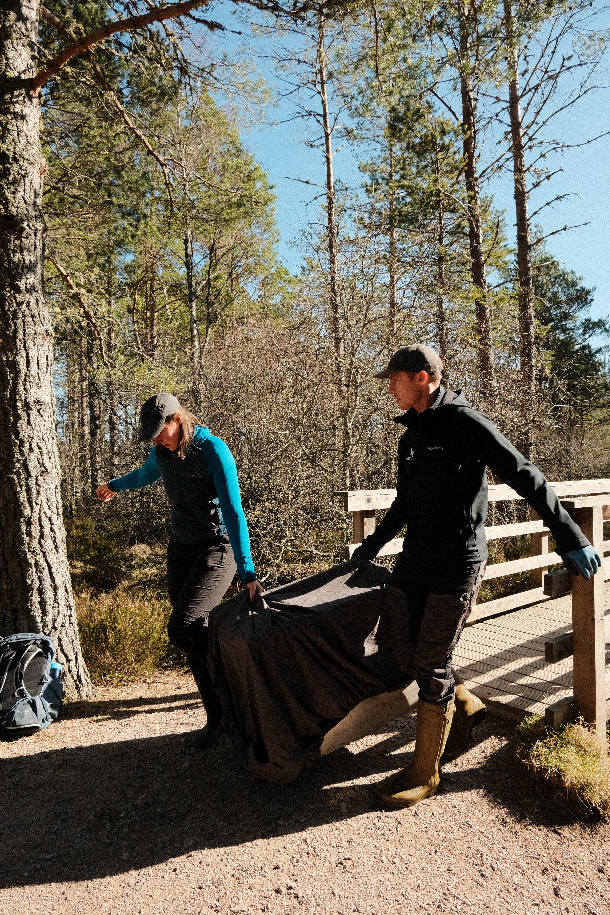
After a brief introduction to the history of the two beavers by Dr Roisin Campbell-Palmer (aka “Dr Beaver”!) from the Beaver Trust and Jonathon Willet from CNP, and a rundown of how the release would happen, we all crowded onto the edge of the loch to watch as the pair, a bonded male and female, were released into the water.
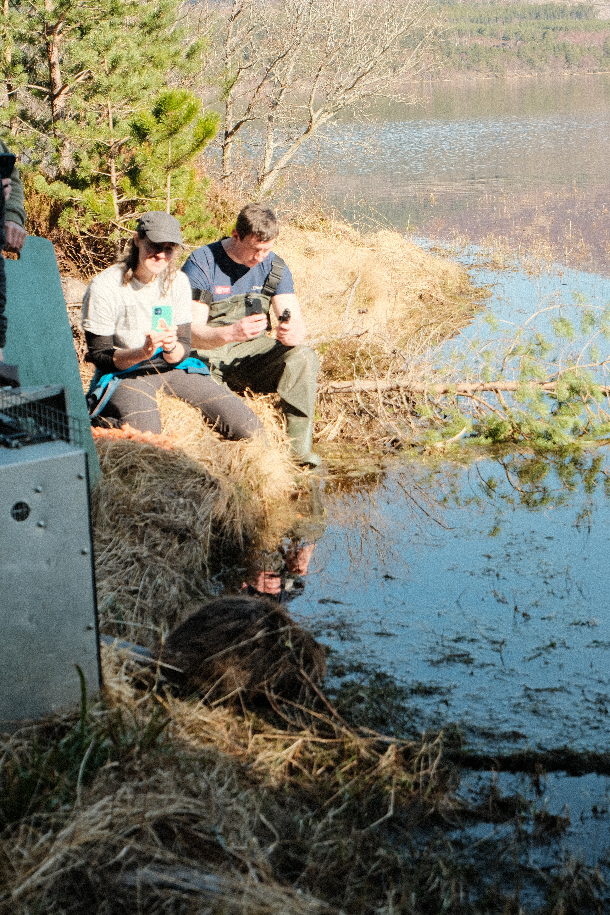
As the morning went on, we learned that the pair were being relocated from a farm in Tayside where they had been considered a nuisance. Hopefully they would find a warm welcome in their new home and become part of what makes Loch Morlich so special!
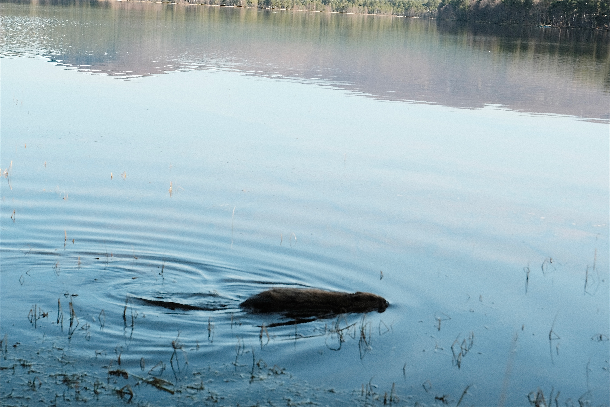
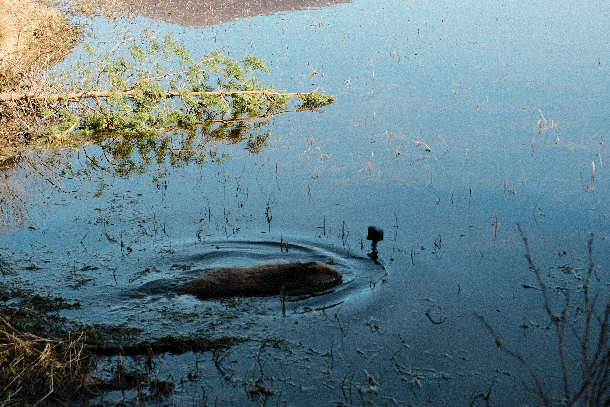
The male beaver was released first, and with several slaps of his powerful tail he disappeared underneath the water to explore. We watched him surface and swim around, exploring the shores and then venturing out into the deeper waters of Loch Morlich.
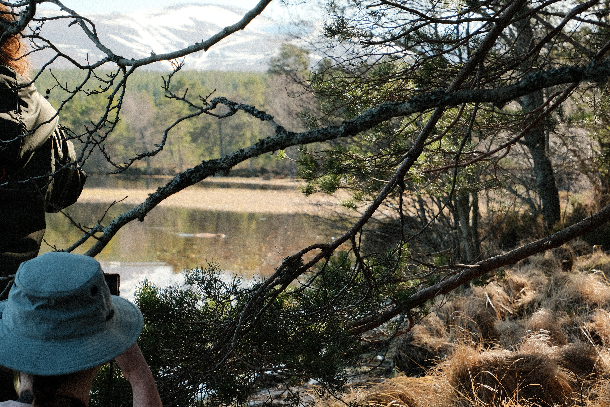
Next up was the female, who we were told had never really experience deep water before. It was a real joy to watch her dive down and resurface several times, behaviour which Dr Roisin explained was her testing out and playing in this new, deeper water!
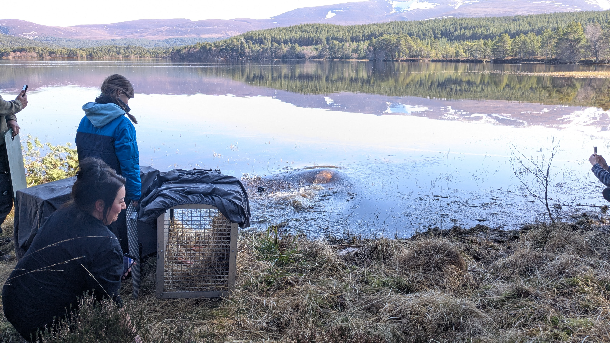
The crowd watched on in raptured silence, lingering on long after the beavers had swum away. I don’t think anyone really wanted the moment to end, it felt really special to be a part of this next chapter of the National Park!
Eurasian beavers (scientific name Castor fiber) are the largest of the rodent family found in Britain. Perhaps best known for chewing on tree trunks and using the fallen logs to build dams, these animals play an incredibly important role in restoring and maintaining the health of the waterways in which they live and feed. Known as “nature’s engineers”, beavers are herbivores who strip bark and feed on the soft inner cellulose from the trunks of trees such as willow and birch. They then use the leftovers to build dams which can convert rivers and streams into slower-flowing ponds and wetlands. Whilst this behaviour is motivated by the drive to make their waterways deeper and therefore safer for the beavers themselves, they have a large impact on the ecosystem by improving the environment and attracting other animals and insects to the area.
Beavers had been extinct in Scotland for about 400 years, but since 2009 there have been releases of captive-bred and wild beavers back into several areas around Scotland, including Argyll and Bute, and Tayside. Earlier this summer, it was reported that beavers in Ealing, west London, had helped to solve problems with flooding of local tube station by building dams that retained water and eased stress on man-made drainage systems!
Thank you for all your hard work beavers and welcome to your new home! More information on the Cairngorms Beaver Project can be found here.
Alicia