Beaver Day!

There was a real air of excitement as folks from Forestry and Land Scotland, the Cairngorm National Park (CNP), NatureScot, the Glenmore Visitor Centre, and even several members of the public gathered on a surprisingly sunny morning in March. Daisy, Lotti, and I were fortunate enough to be invited to represent the Cairngorm Reindeer Herd. Huddled together at one end of Loch Morlich, we eagerly awaited the arrival of two of the loch’s newest residents: a pair of beavers!
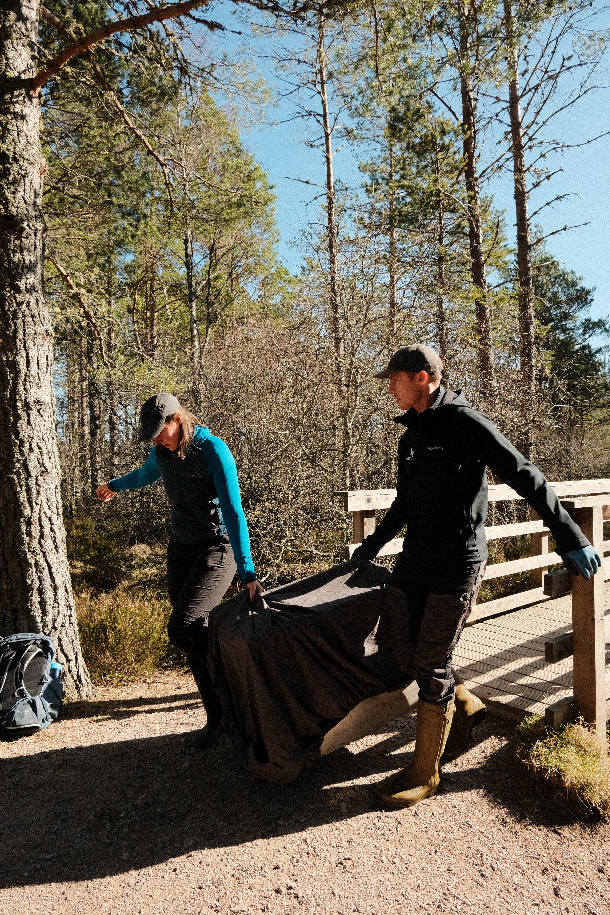
The beavers had arrived! They were carried in small covered crates to the waters edge for their release.

After a brief introduction to the history of the two beavers by Dr Roisin Campbell-Palmer (aka “Dr Beaver”!) from the Beaver Trust and Jonathon Willet from CNP, and a rundown of how the release would happen, we all crowded onto the edge of the loch to watch as the pair, a bonded male and female, were released into the water.
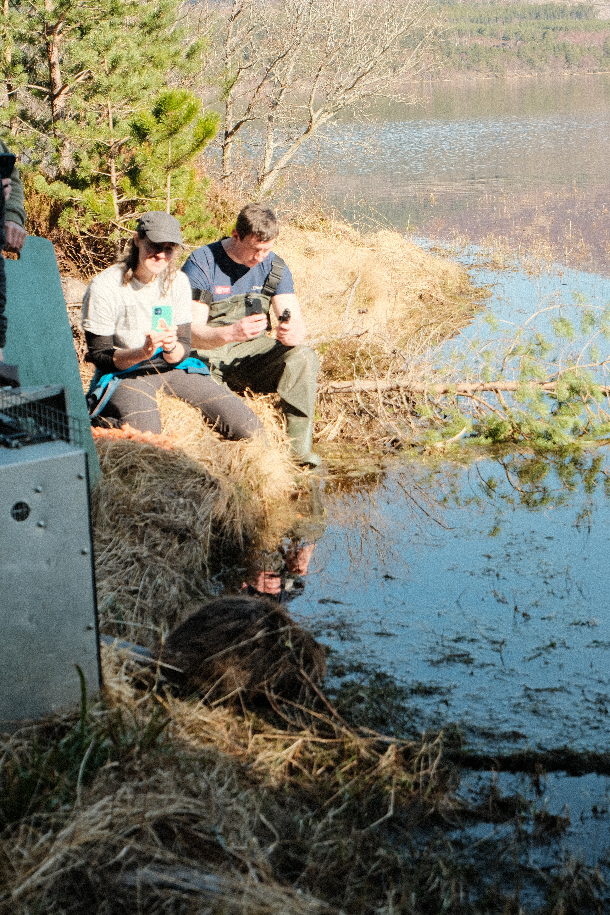
Taking to Loch Morlich for the first time!

As the morning went on, we learned that the pair were being relocated from a farm in Tayside where they had been considered a nuisance. Hopefully they would find a warm welcome in their new home and become part of what makes Loch Morlich so special!

The male beaver was released first, and with several slaps of his powerful tail he disappeared underneath the water to explore. We watched him surface and swim around, exploring the shores and then venturing out into the deeper waters of Loch Morlich.
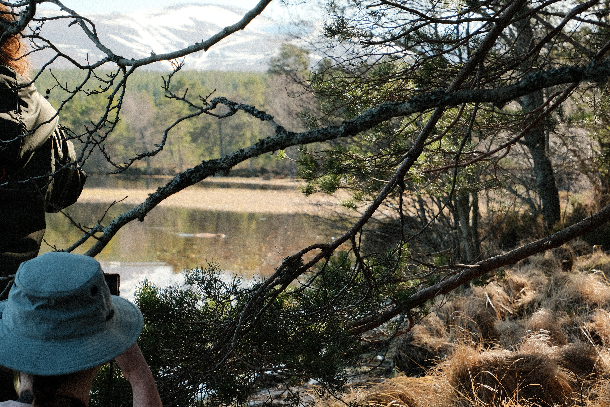
Alicia recording the release of the male beaver as he shot out into the loch, exploring his new home.

Next up was the female, who we were told had never really experience deep water before. It was a real joy to watch her dive down and resurface several times, behaviour which Dr Roisin explained was her testing out and playing in this new, deeper water! 
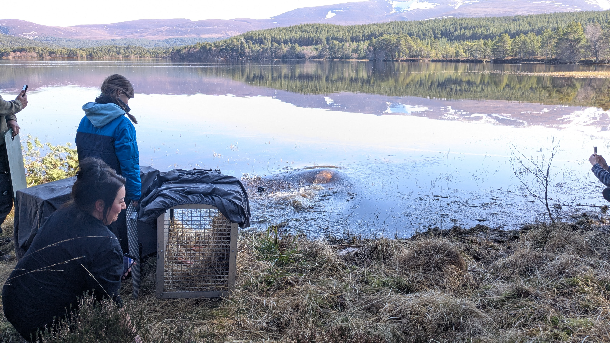
Quite a splash! Dr Roisin can be seen bottom left.

The crowd watched on in raptured silence, lingering on long after the beavers had swum away. I don’t think anyone really wanted the moment to end, it felt really special to be a part of this next chapter of the National Park!
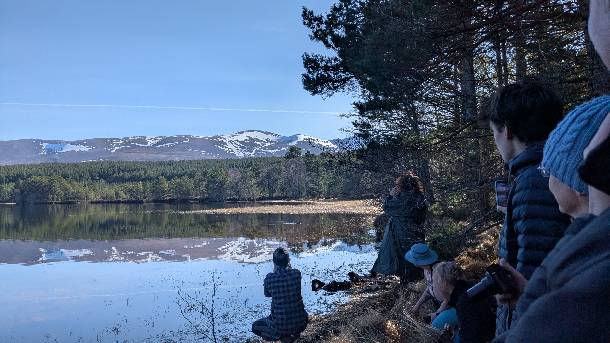
An incredible experience for all involved.

Eurasian beavers (scientific name Castor fiber) are the largest of the rodent family found in Britain. Perhaps best known for chewing on tree trunks and using the fallen logs to build dams, these animals play an incredibly important role in restoring and maintaining the health of the waterways in which they live and feed. Known as “nature’s engineers”, beavers are herbivores who strip bark and feed on the soft inner cellulose from the trunks of trees such as willow and birch. They then use the leftovers to build dams which can convert rivers and streams into slower-flowing ponds and wetlands. Whilst this behaviour is motivated by the drive to make their waterways deeper and therefore safer for the beavers themselves, they have a large impact on the ecosystem by improving the environment and attracting other animals and insects to the area.
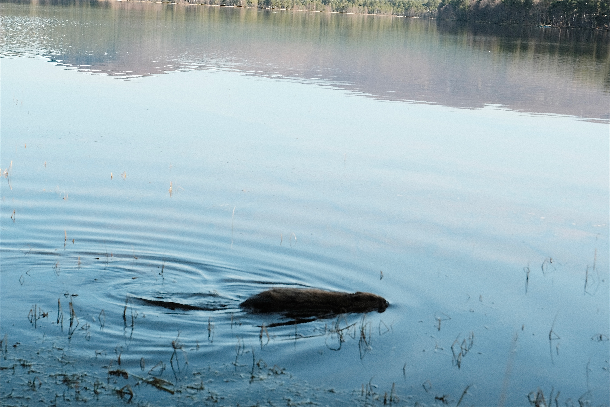
The seond pair of Eurasian beavers introduced to Loch Morlich.

Beavers had been extinct in Scotland for about 400 years, but since 2009 there have been releases of captive-bred and wild beavers back into several areas around Scotland, including Argyll and Bute, and Tayside. Earlier this summer, it was reported that beavers in Ealing, west London, had helped to solve problems with flooding of local tube station by building dams that retained water and eased stress on man-made drainage systems!
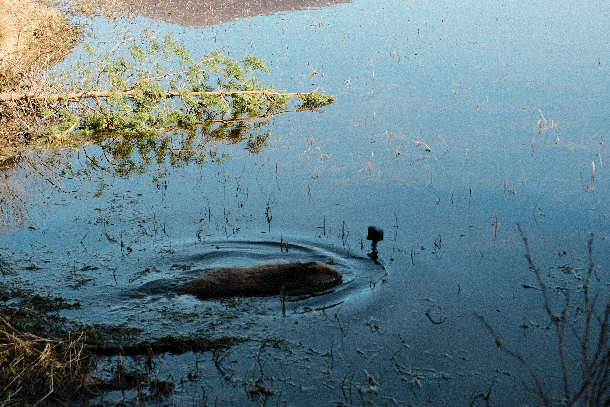
A GoPro was fixed in place for the best view in the house as the beavers took to their new home.

Thank you for all your hard work beavers and welcome to your new home! More information on the Cairngorms Beaver Project can be found here.

Alicia
Making a Home for Wildlife

Over the past year and a half our new exhibition & paddocks have been a non-stop project. One thing we knew we wanted to achieve was to make the new and improved paddocks a haven for local wildlife.

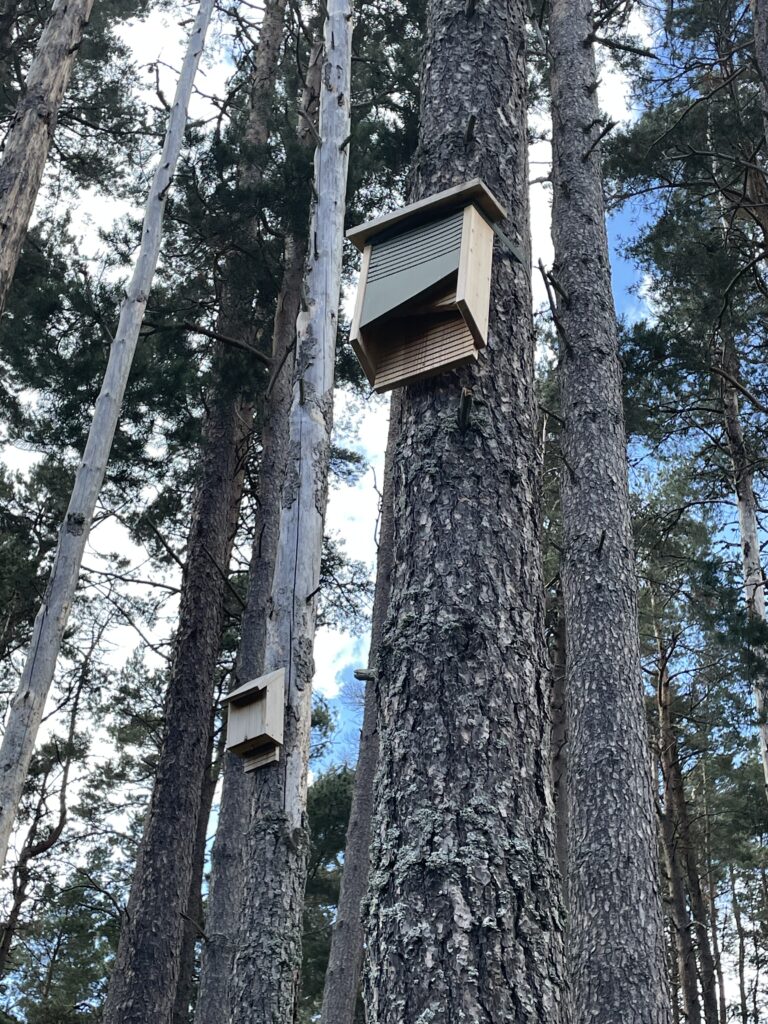
Our mission to make a home for wildlife within the paddocks started with some bat boxes. We strapped these to some trees and snags at the edge of the woods our paddock reindeer overnight in. With bat boxes, you want to make sure they are at least 4 metres off the ground, and that the bats will have a clear flight path to enter – so no low branches blocking them. A sheltered position that gets direct sun for a good portion of the day provides the cosy conditions the bats want. Somewhere undisturbed by artificial lighting is preferred too.

Bat boxes on trees.

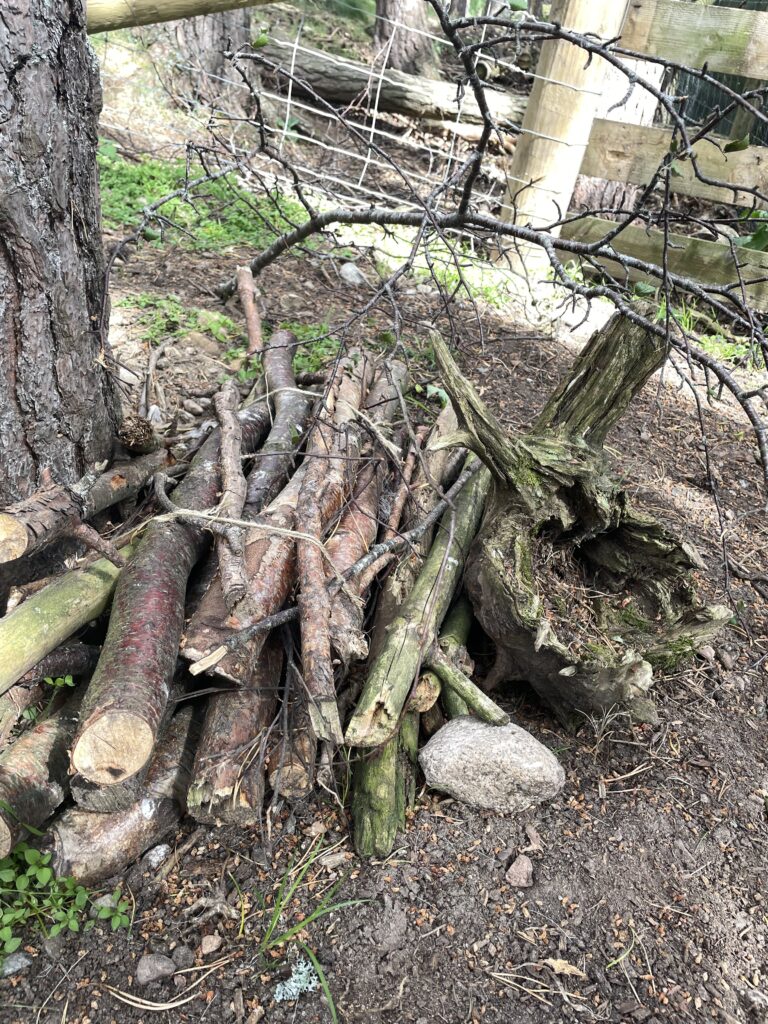
I put together some stacks of deadwood – these provide brilliant habitat for a whole host of invertebrates, and other small animals. These are pretty self-explanatory to make – and weren’t much effort as we have so much brash and deadwood on the ground from all the ongoing works in the paddocks, and the frequent windy weather that brings down branches from the pine woods.

Deadwood pile.

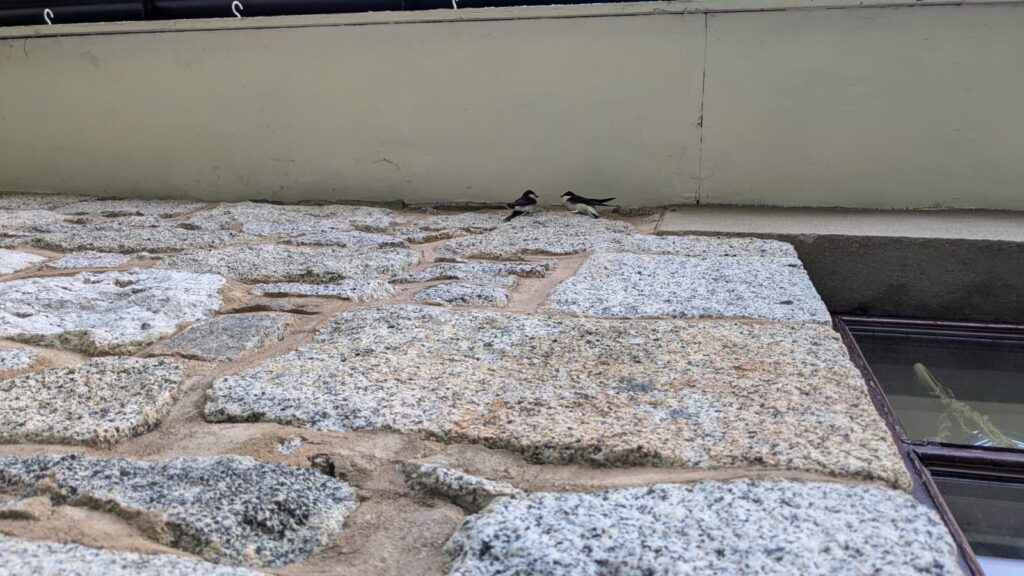
In 2024 Lotti put some house martin nest boxes on the old building – now exclusively staff residence, after seeing some house martins eyeing it up as a nesting site. This inspired us to do something with the new building. We decided it wasn’t suitable for house martins, but they aren’t the only birds suffering from a lack of nesting sites.

House martins on the old building.

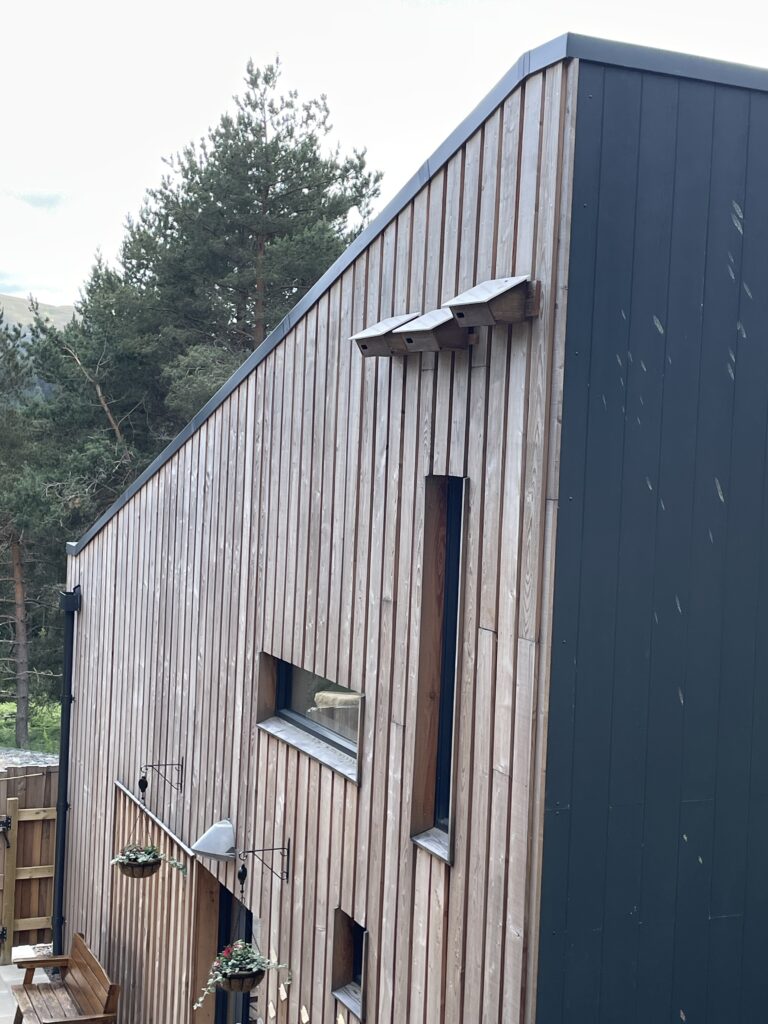
We were kindly donated some swift boxes by ex-herder Jack (thanks, Jack!). Me and Cam had an exciting (terrifying) time, taking turns at the top of a very tall ladder to get these up on the side of the main building. We managed three. Maybe one day we’ll pluck up the courage to put the rest of them up!  Swift boxes should be placed close under the eaves of a building, as high as possible. Swifts want a clear flight path to swoop down and then up into their nests, so it’s important there are no nearby obstacles in their way. North or east facing placements are best, to avoid the worst of the afternoon summer heat.

Swift boxes on building.

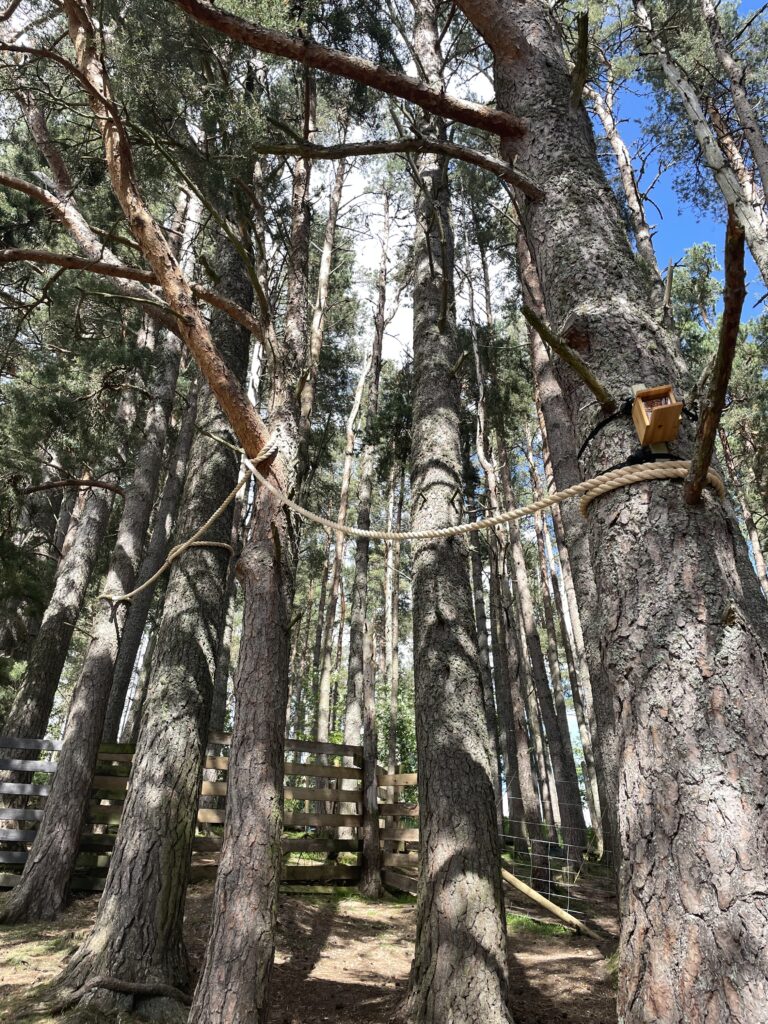
Daisy has recently been hard at work putting together a squirrel feeding station, with ropes for them to scamper tree-to-tree. Squirrel feeders are specially designed for just the squirrels to access, and you can buy special squirrel food blends that best resemble their natural diet.

Daisy’s squirrel station.
Limpopo waiting for the squirrels to turn up.

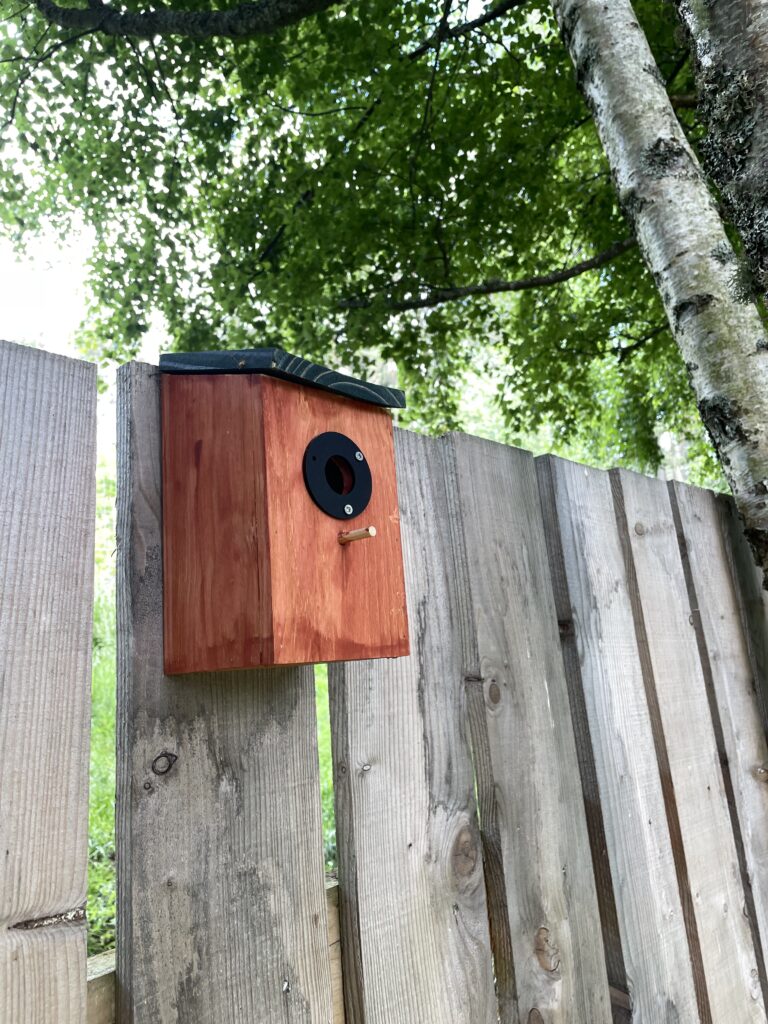
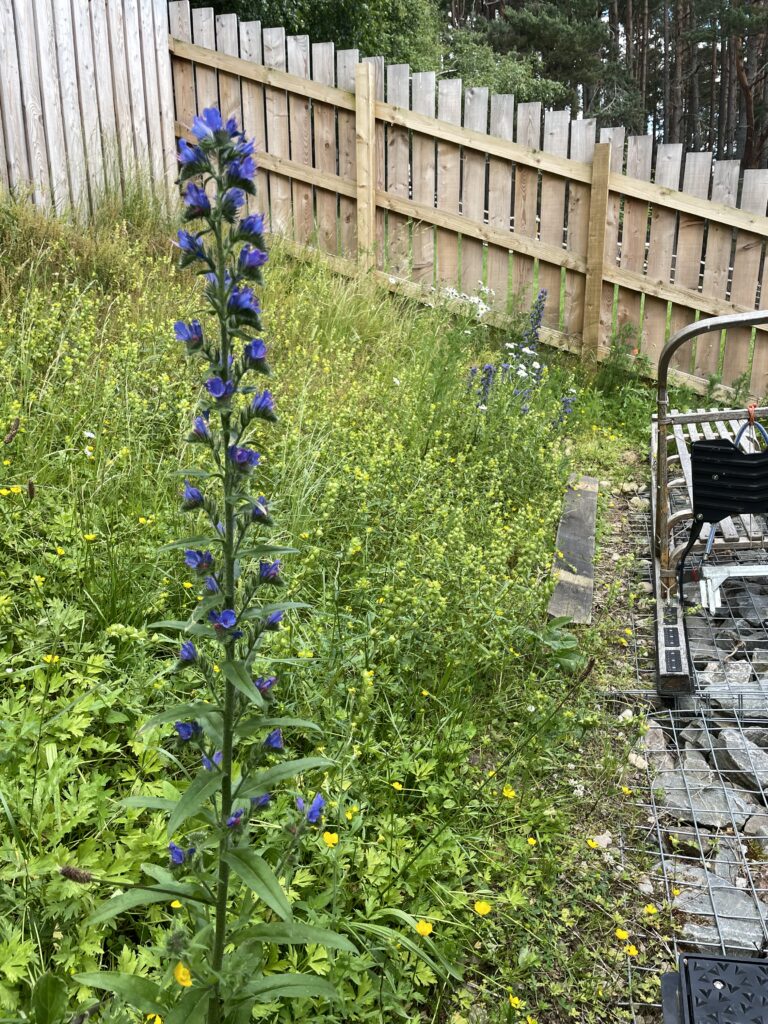
As well as these specific efforts, we’ve also put up multiple nesting boxes for small birds, and sowed a wildflower bank behind our staff room which should hopefully continue to flourish and improve over the coming years.

Bird boxes.
Wildflowers behind the building.

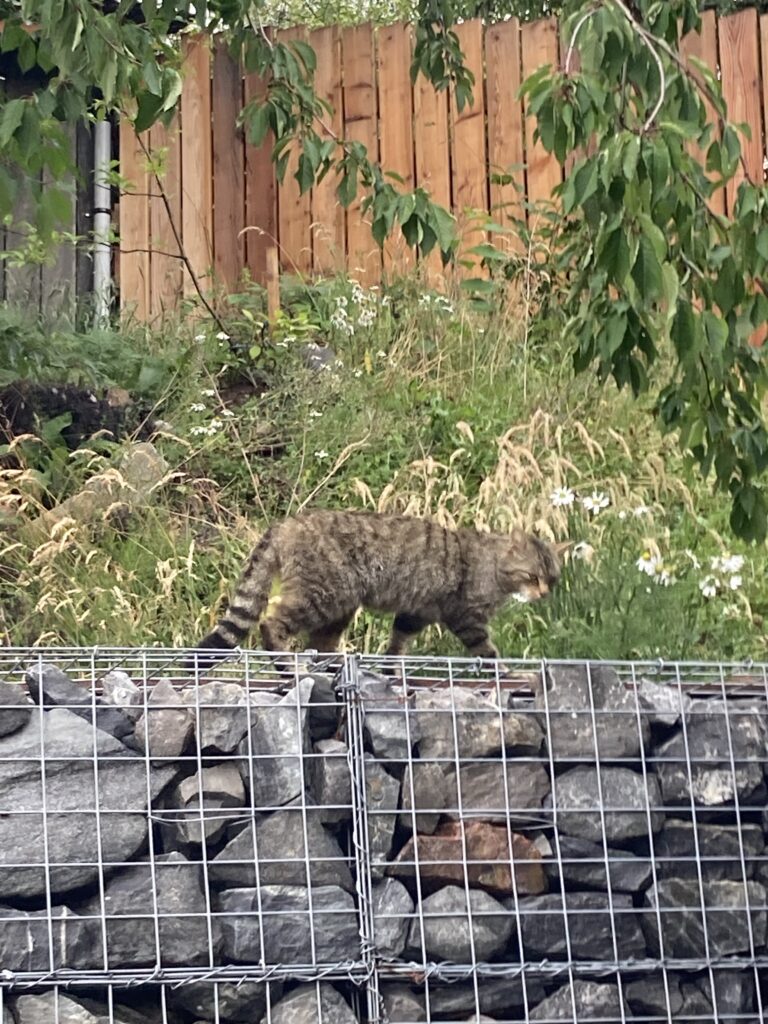
We’ve had some great wildlife sightings in the paddocks in the past year. We’ve had multiple visits from Callie the Scottish wildcat (part of a release scheme in the area), a resident badger in the woods last winter, and to my delight a beautiful male adder last summer! We also have an abundance of different bird species, small mammals like red squirrels, shrews, voles, and moles, and undoubtedly plenty of invertebrates. Hopefully our efforts in the paddocks will bring in even more, and we can make our wonderful local wildlife feel at home.

Callie the wildcat.

Kate

Book Now