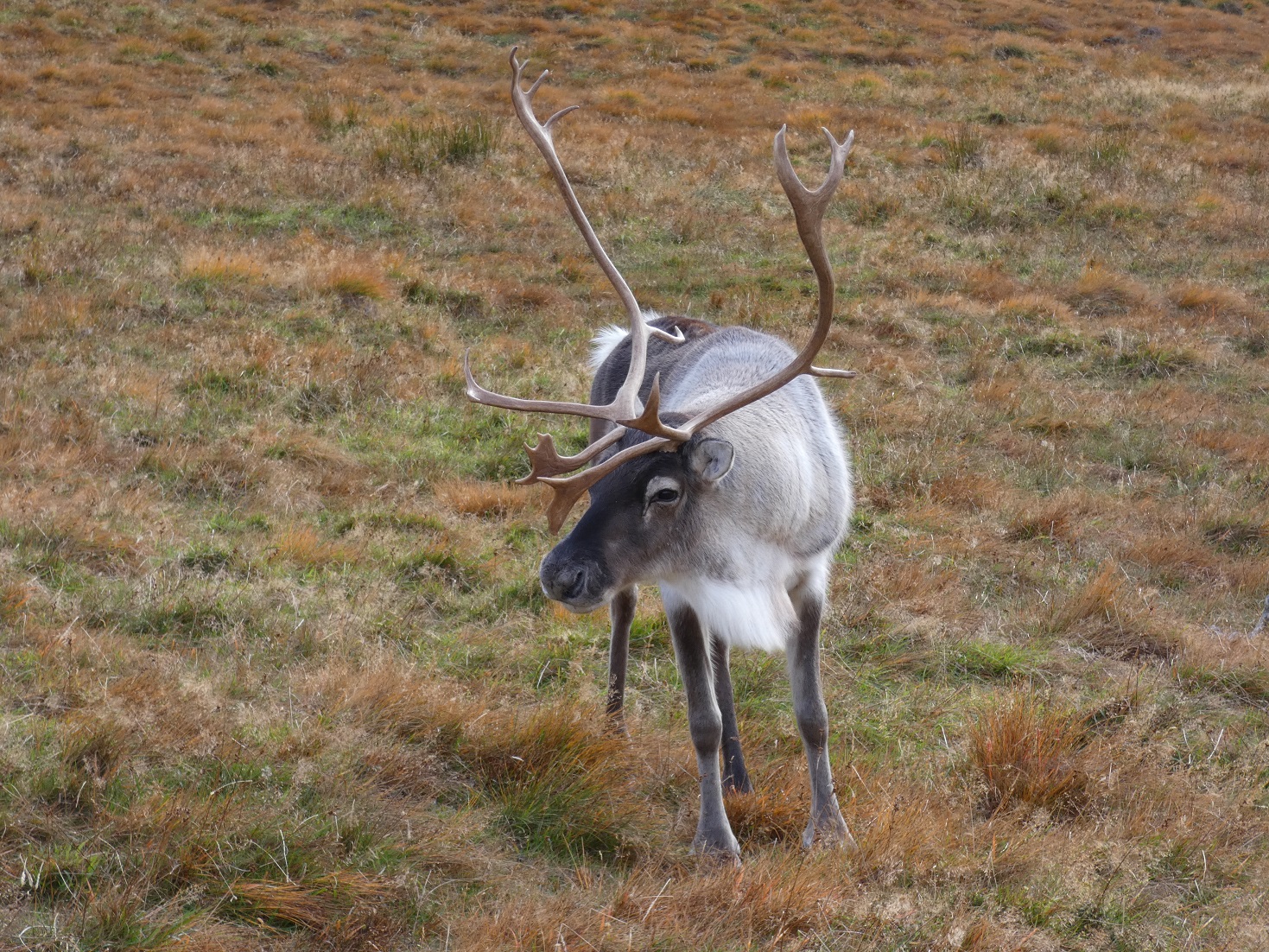
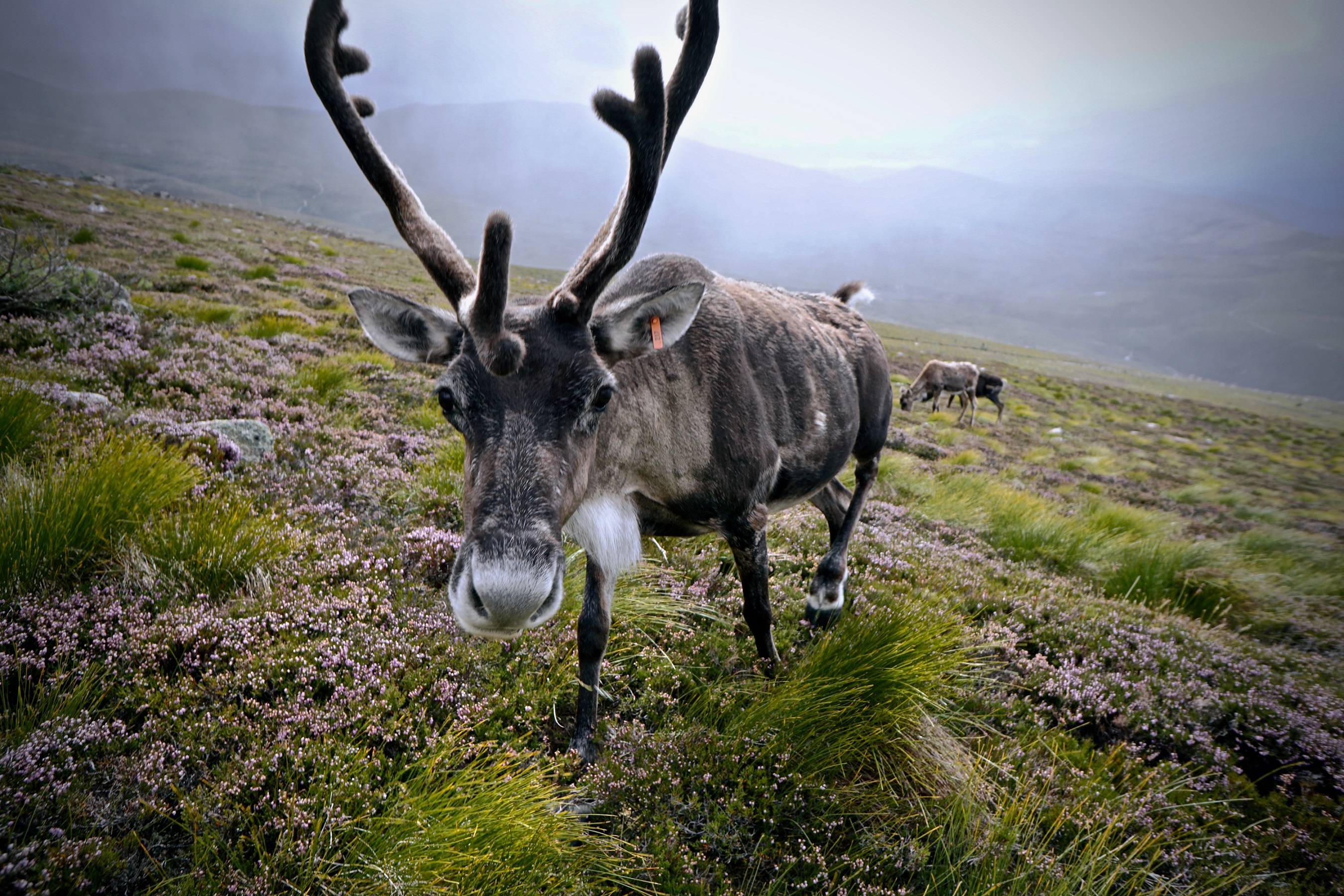
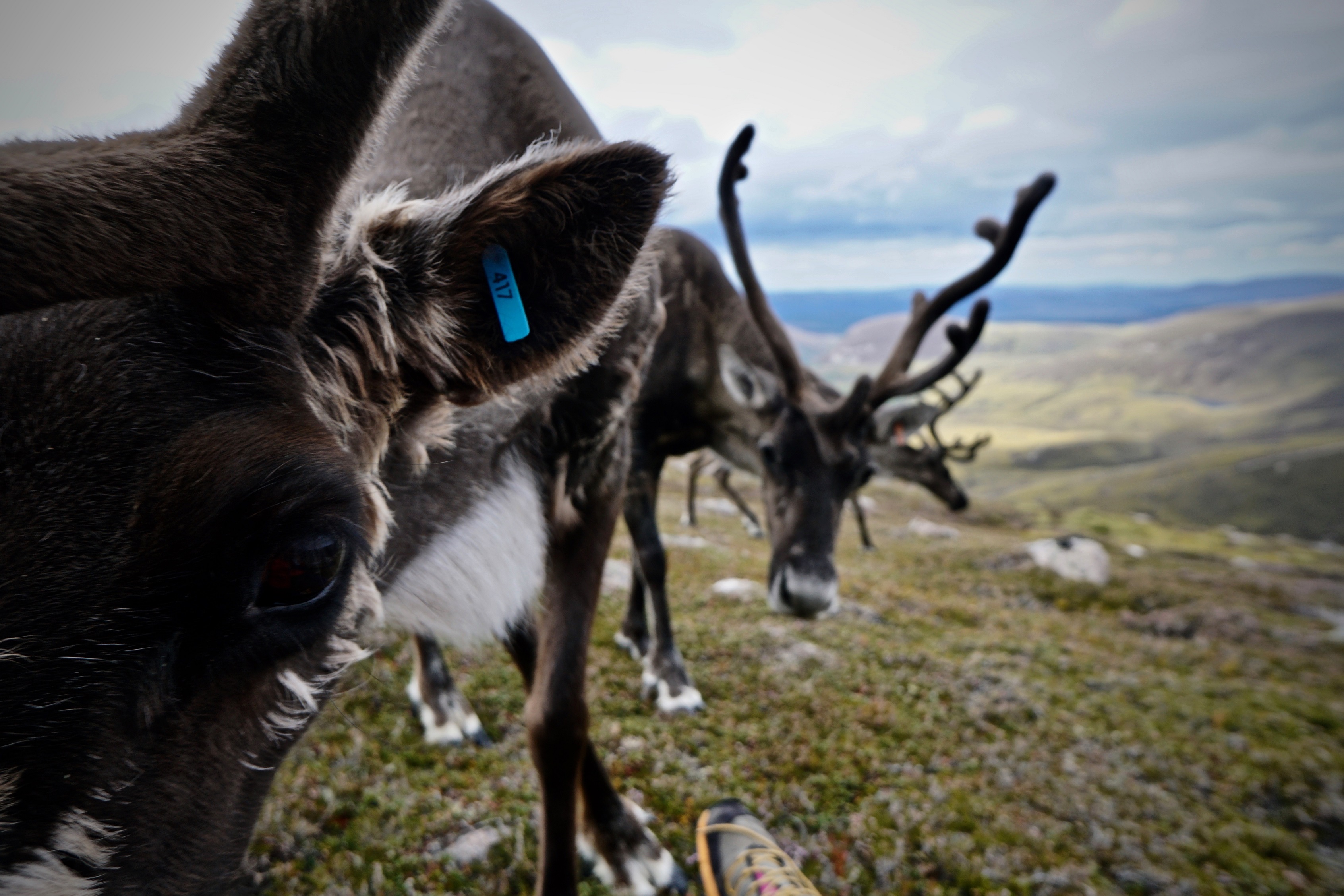
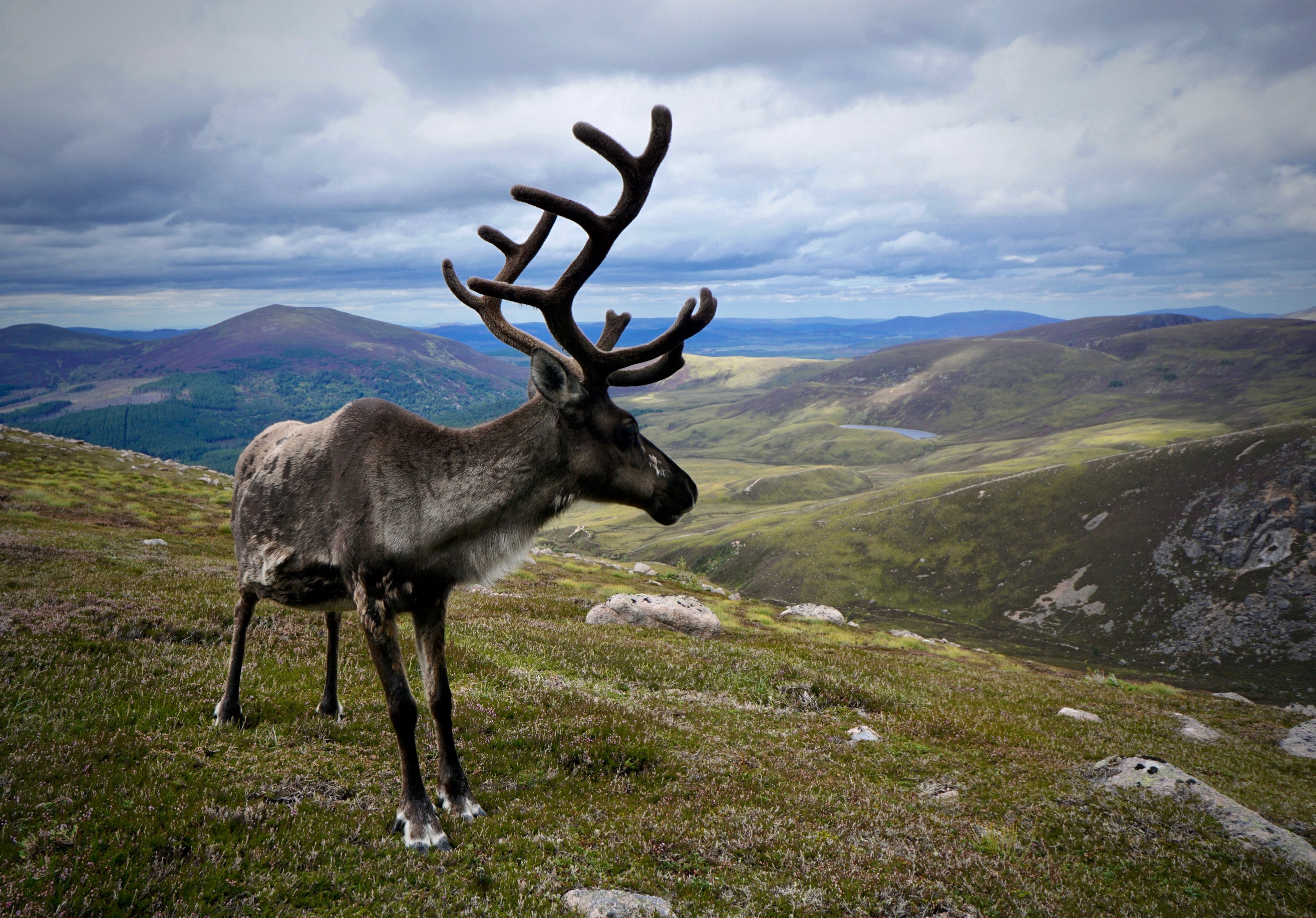
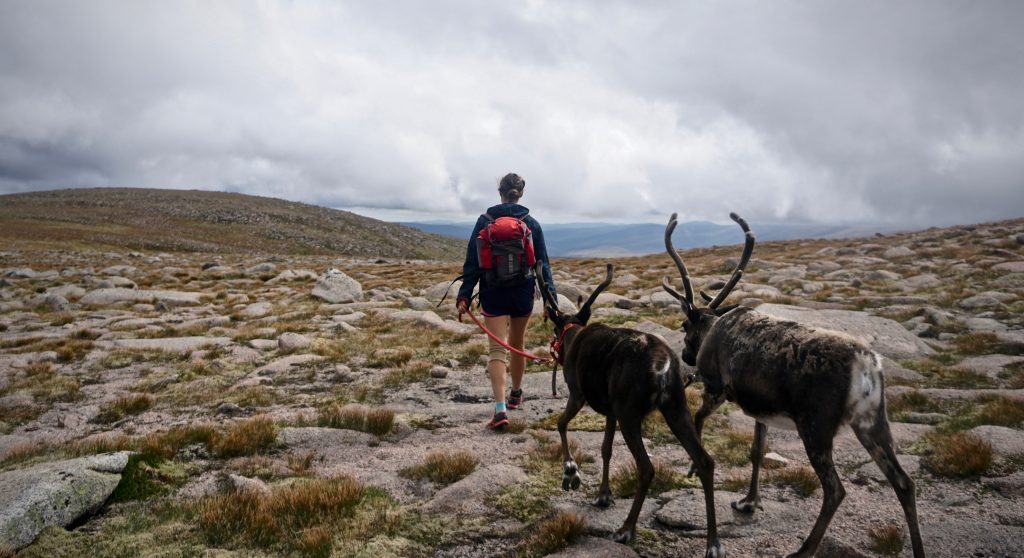
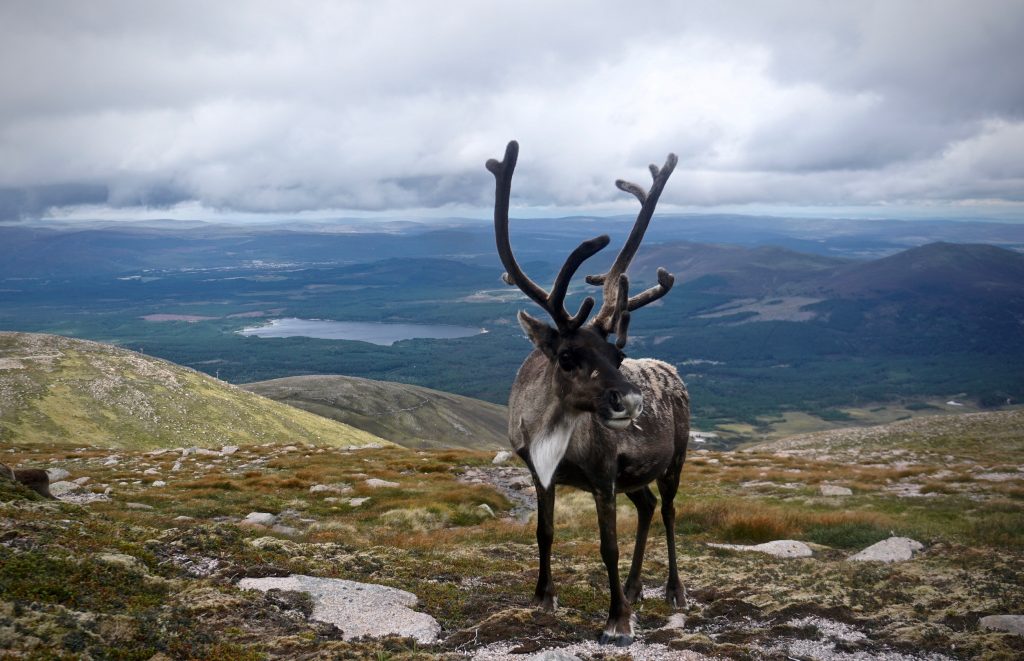
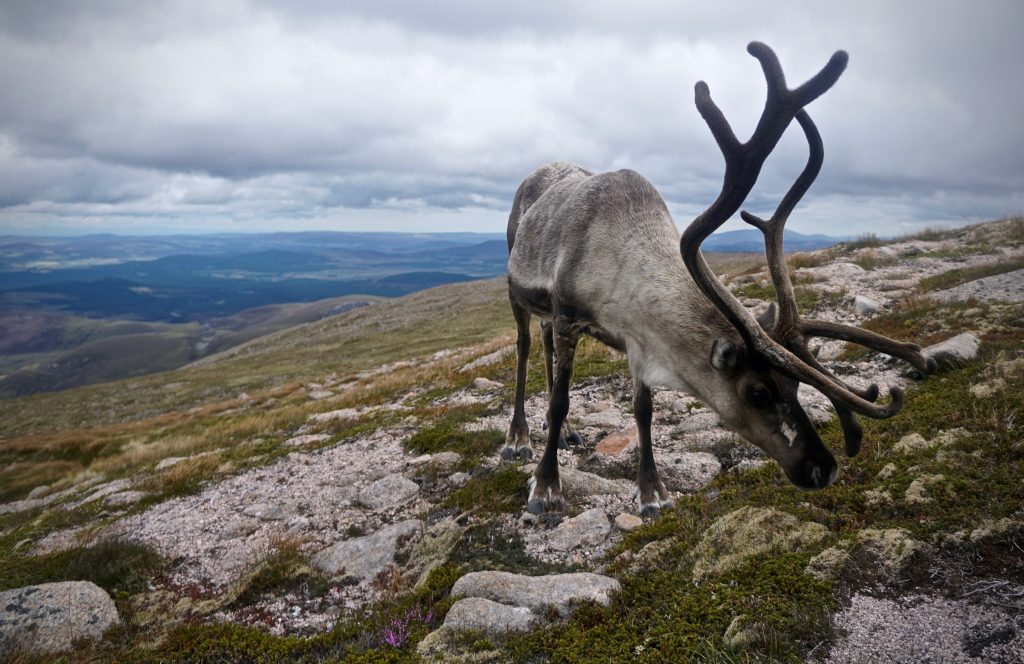
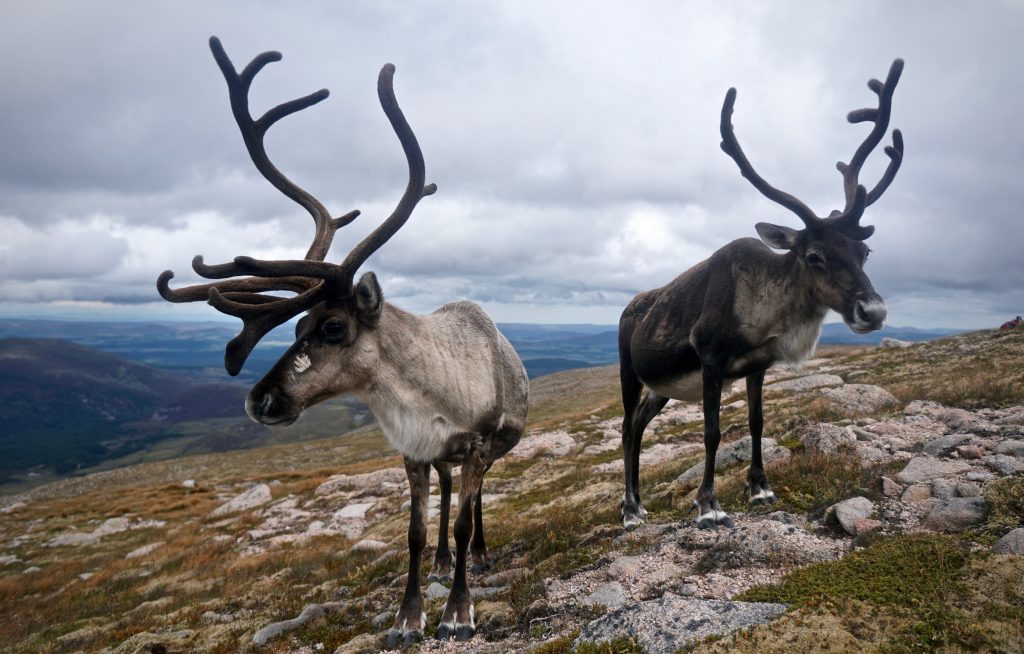
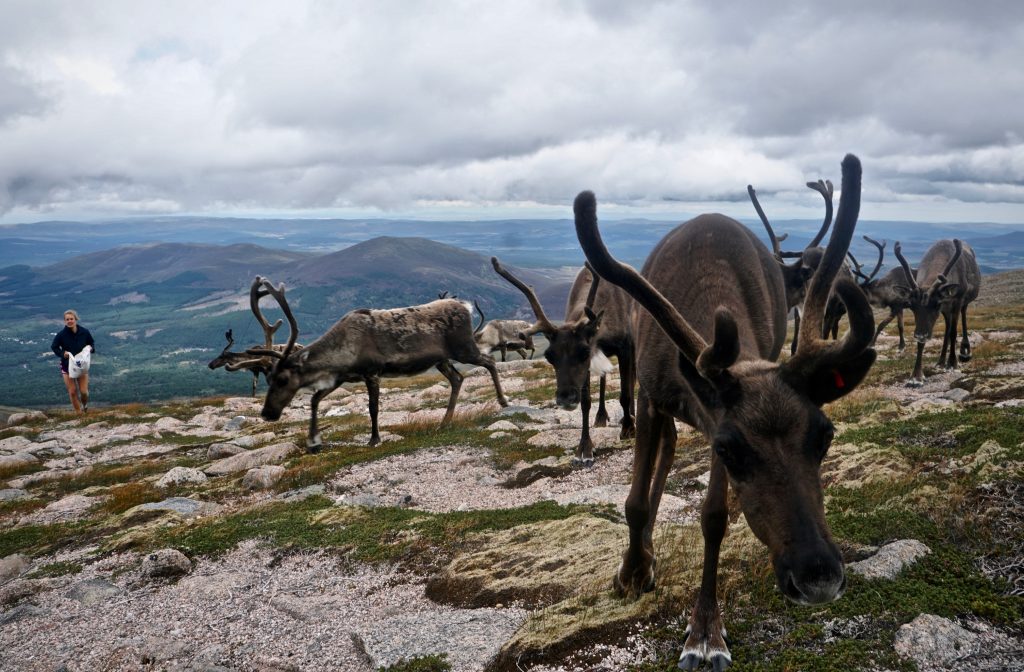
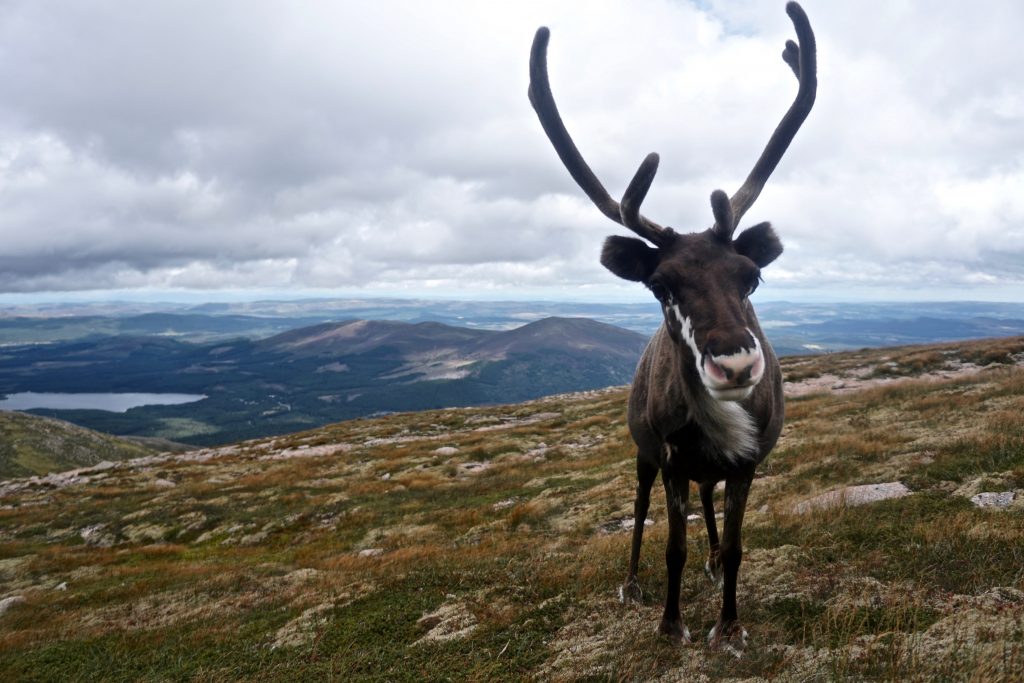
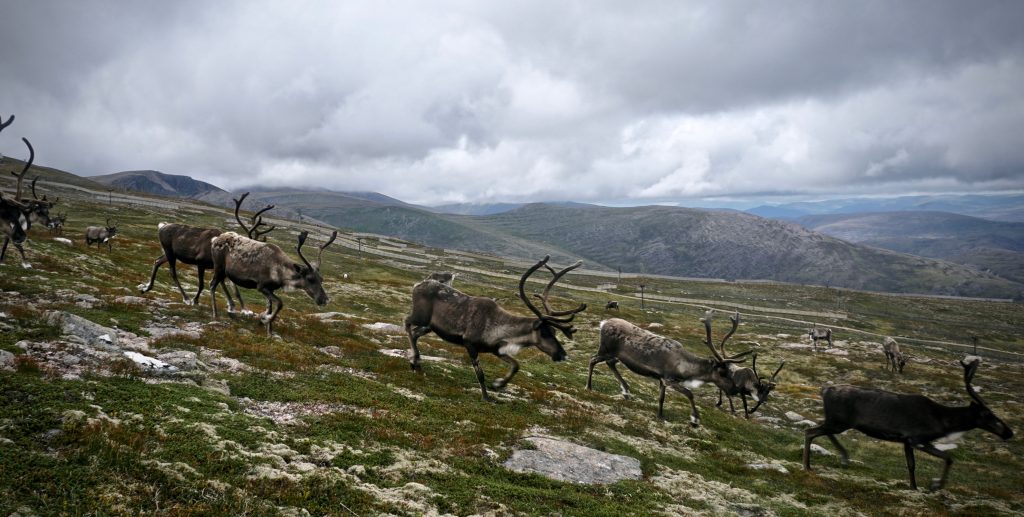
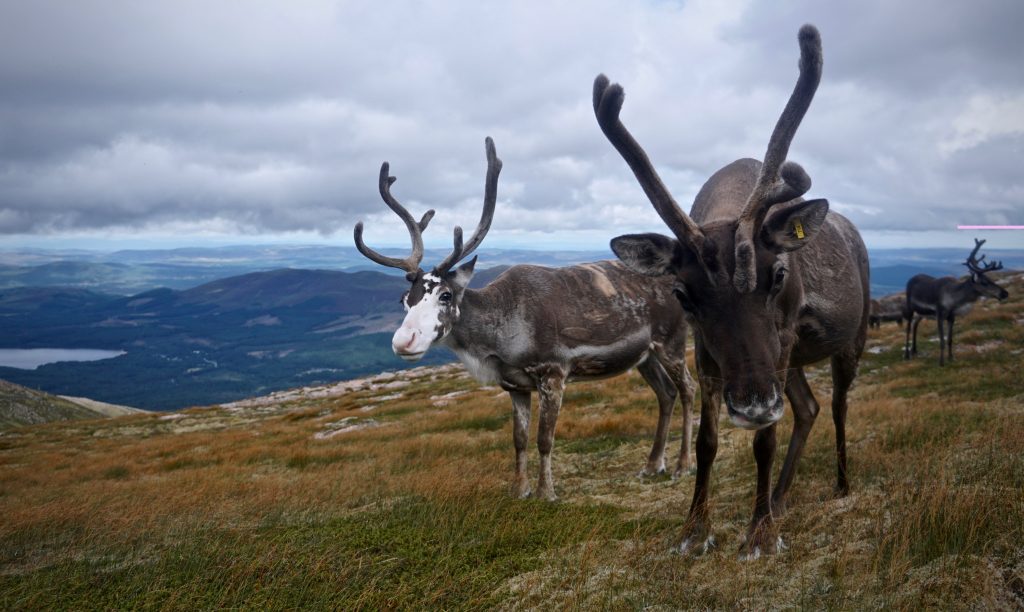
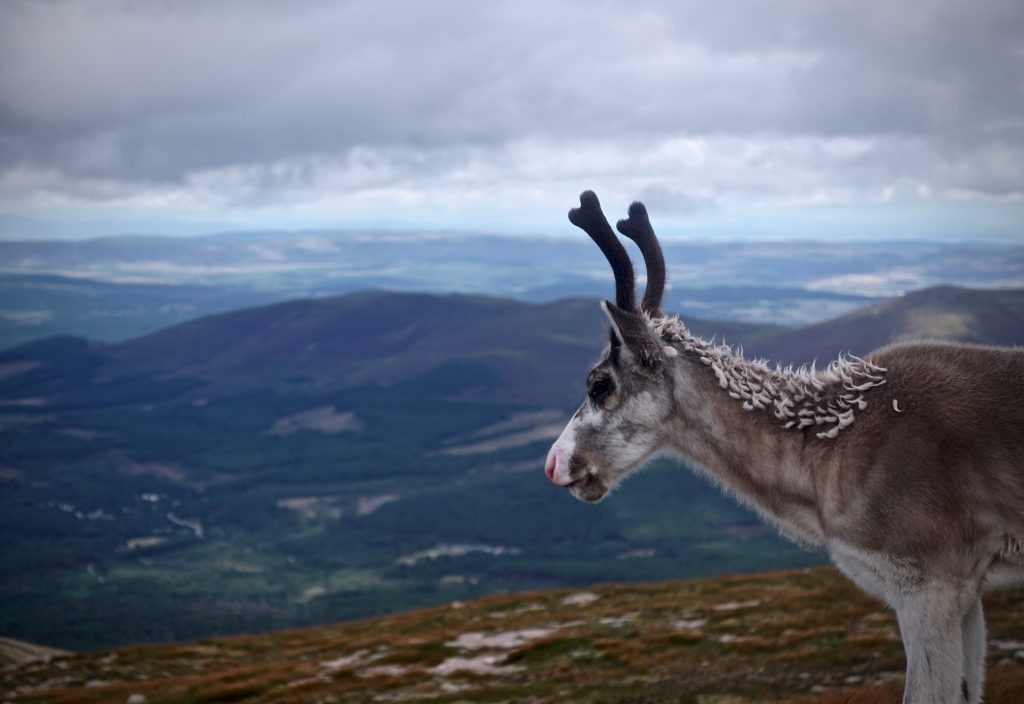
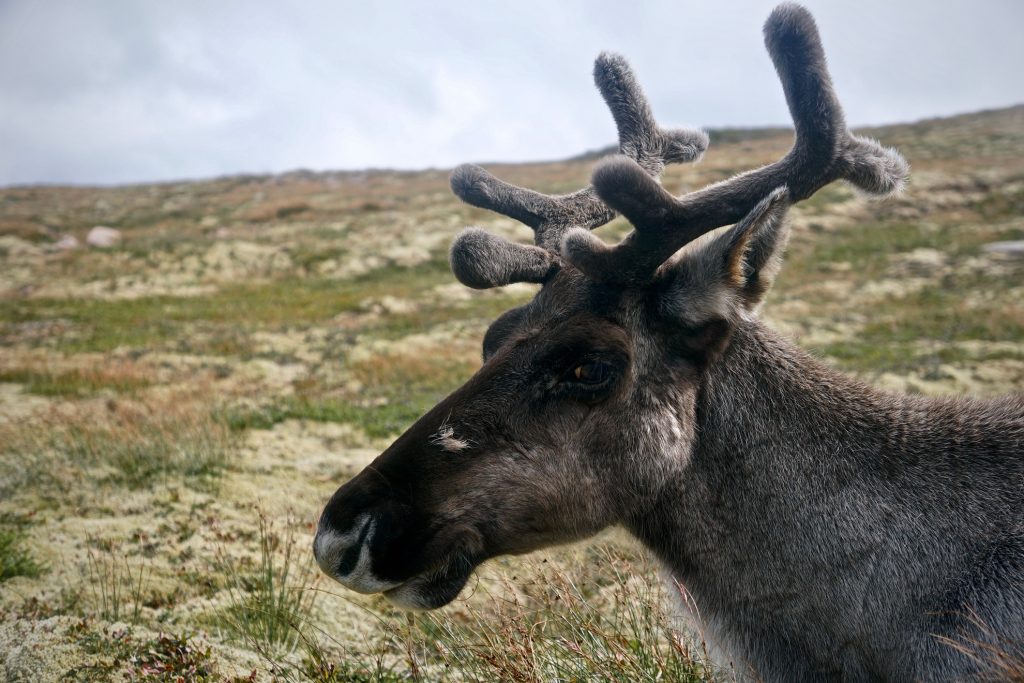
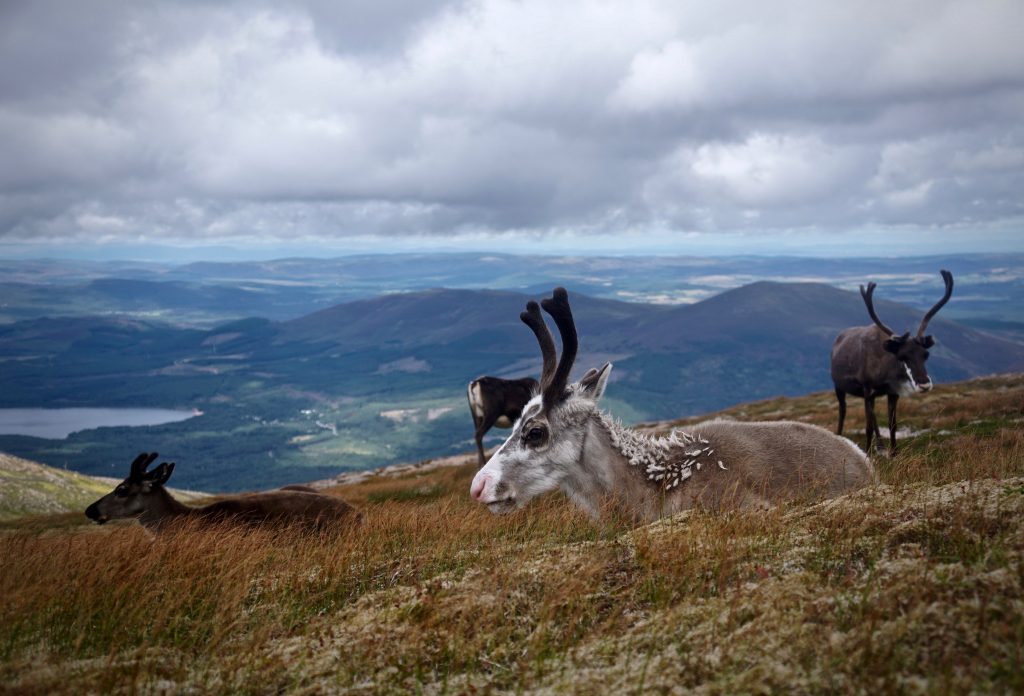
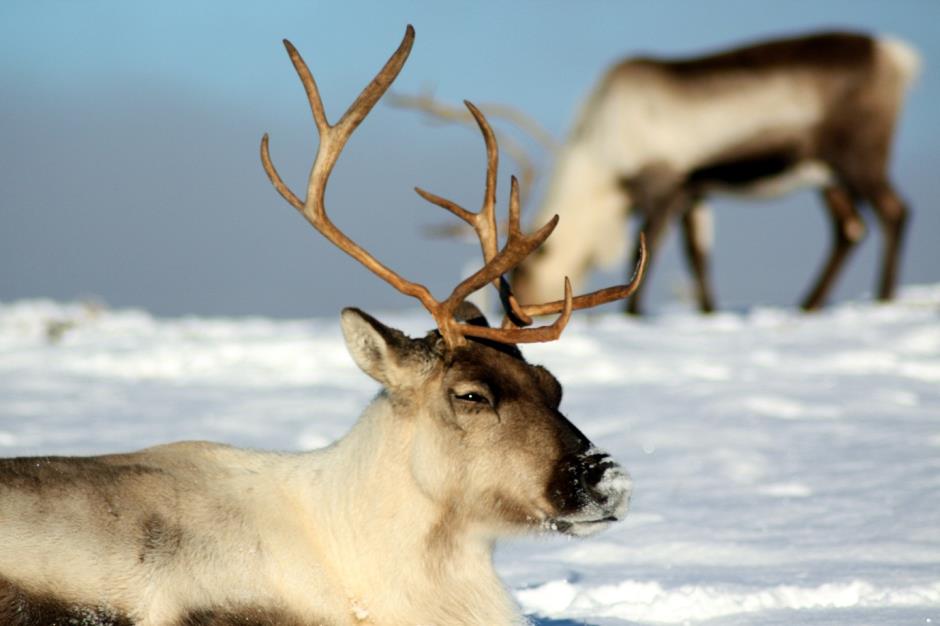
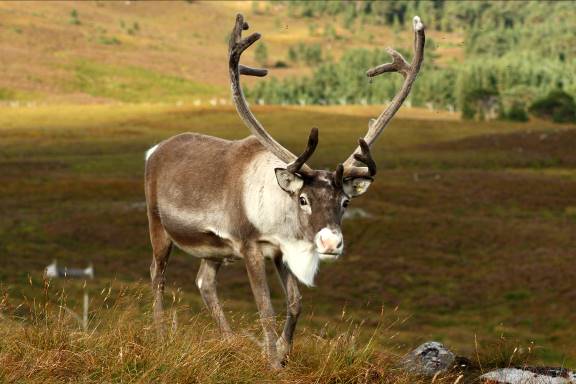
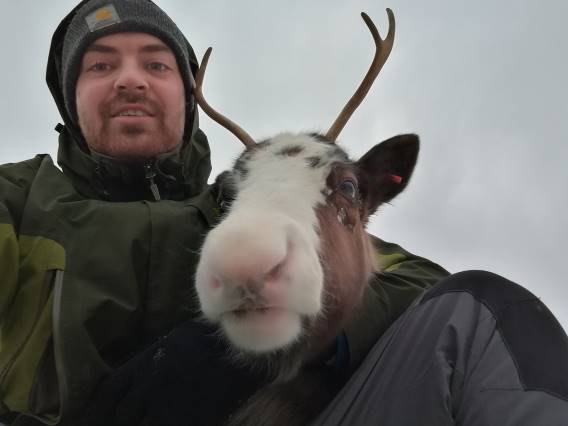
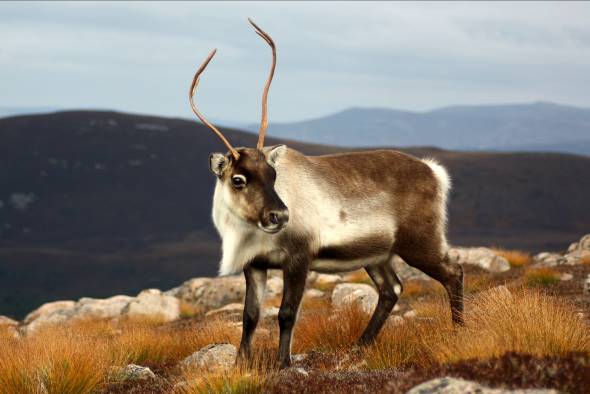
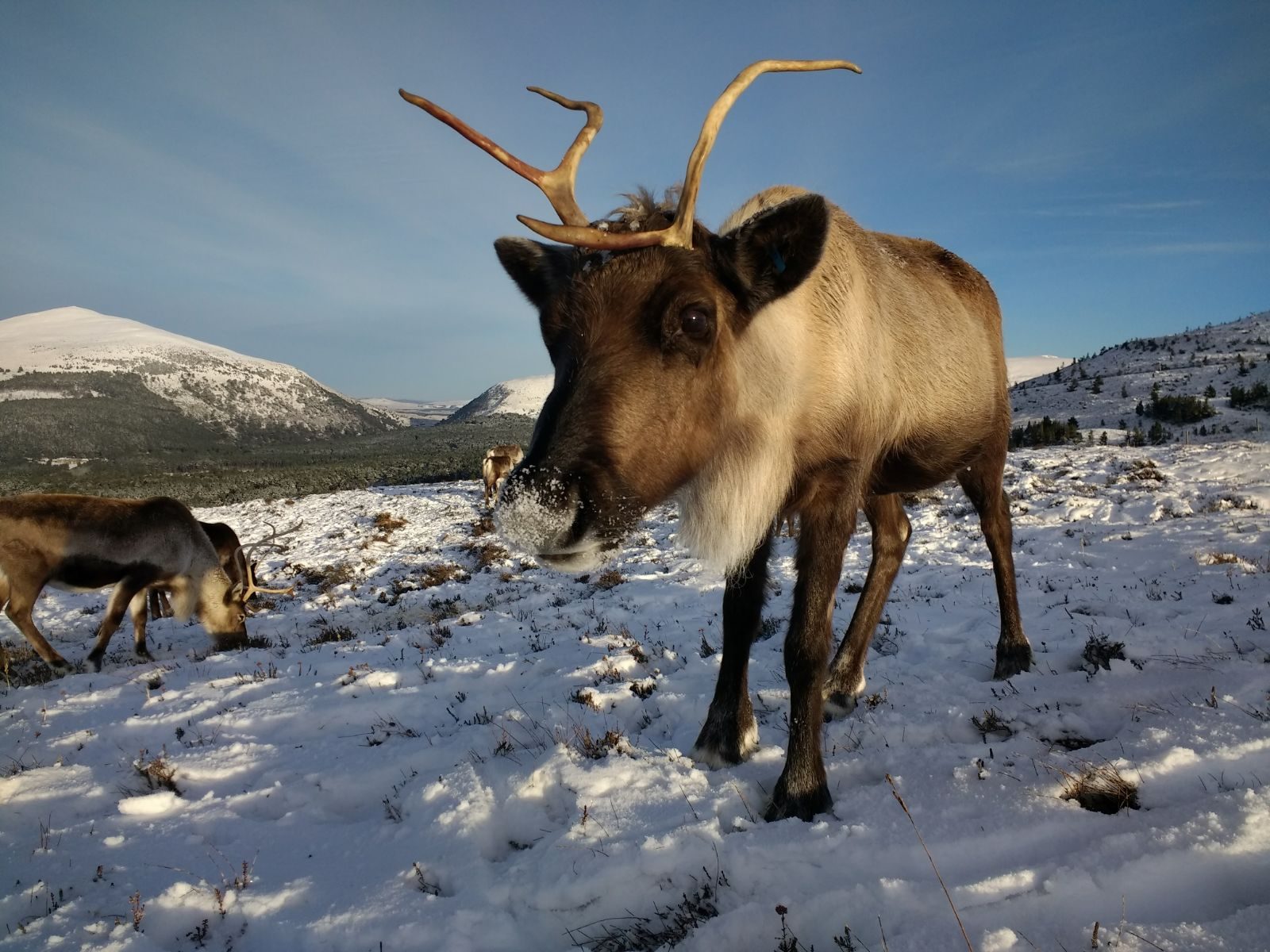
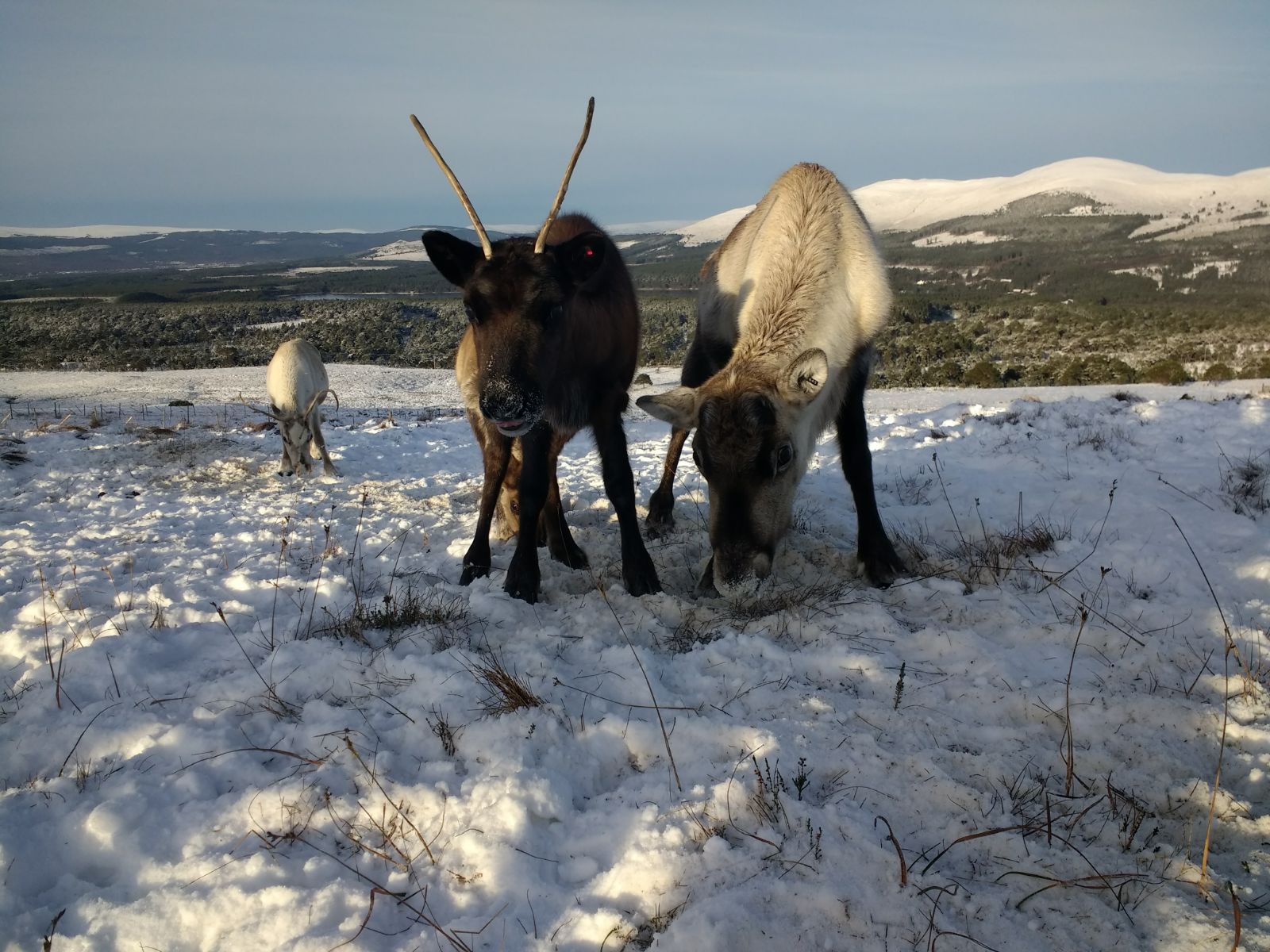
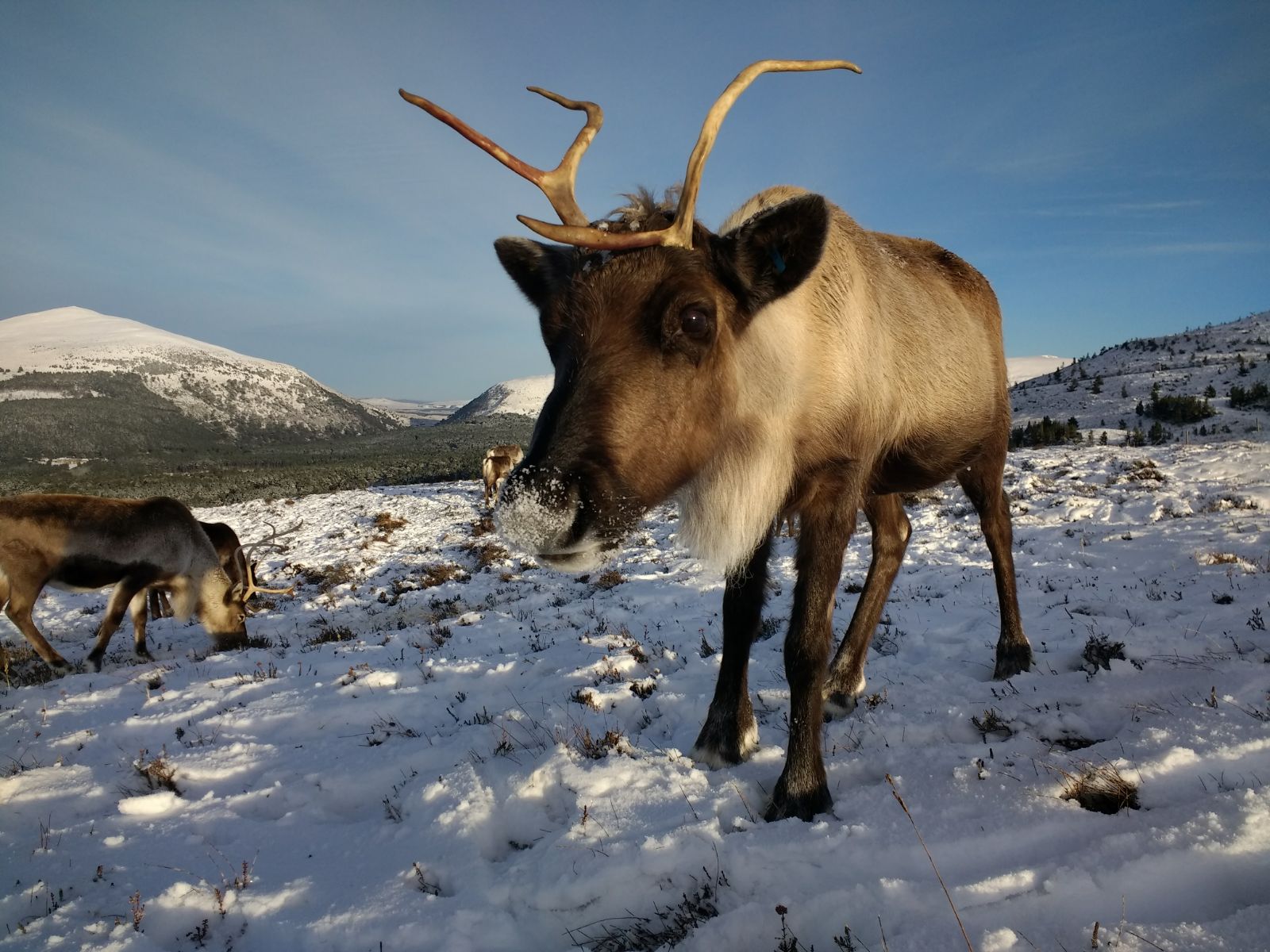
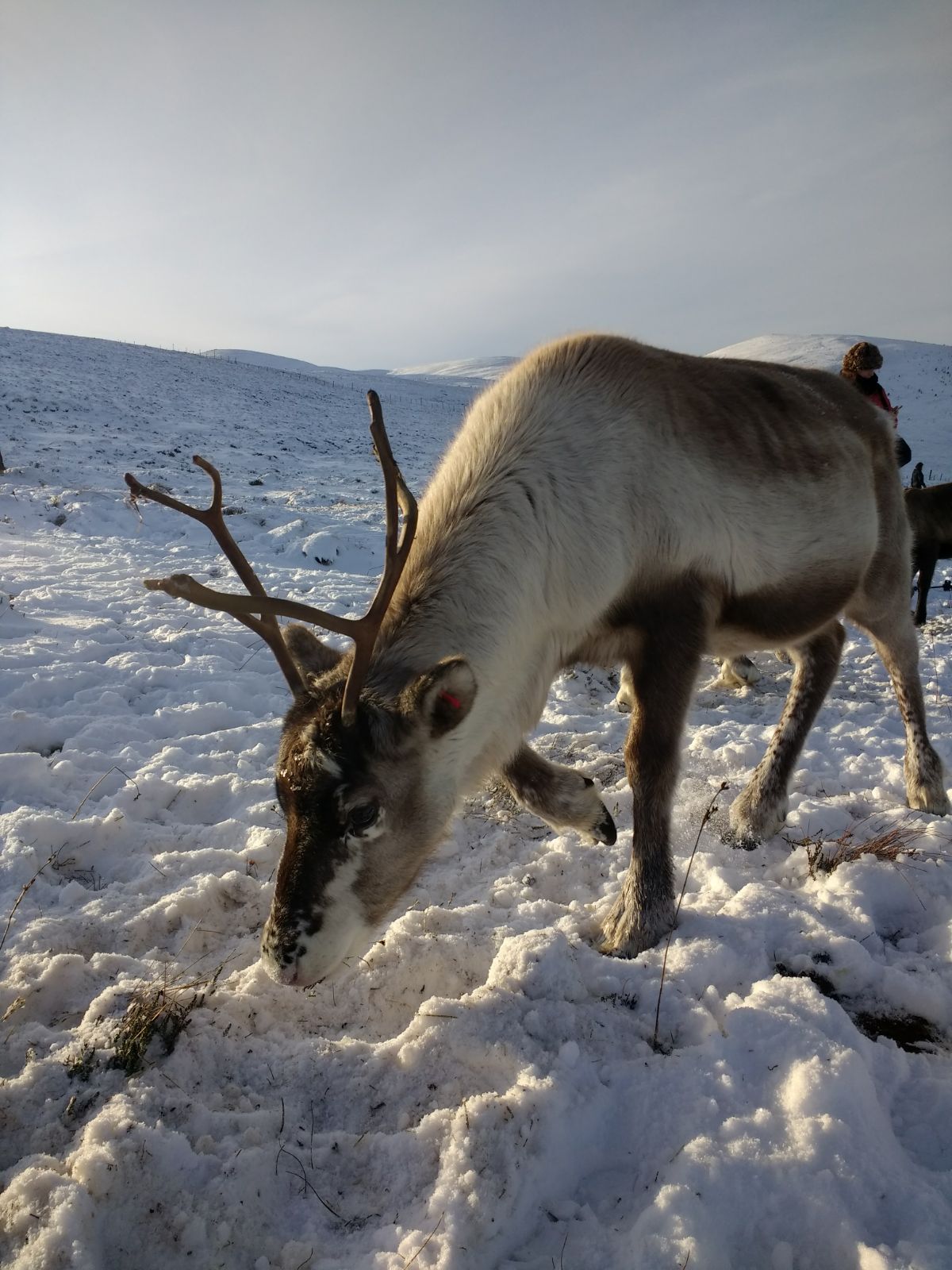
Featured Reindeer: Fly

Fly: Born May 2007
Mother: Fiddle

Calves: Custard 2009, Dragonfly 2010, Domino 2011, Balmoral 2012, Anster 2013, Hudson 2014, Aonach 2015

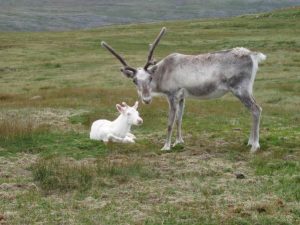
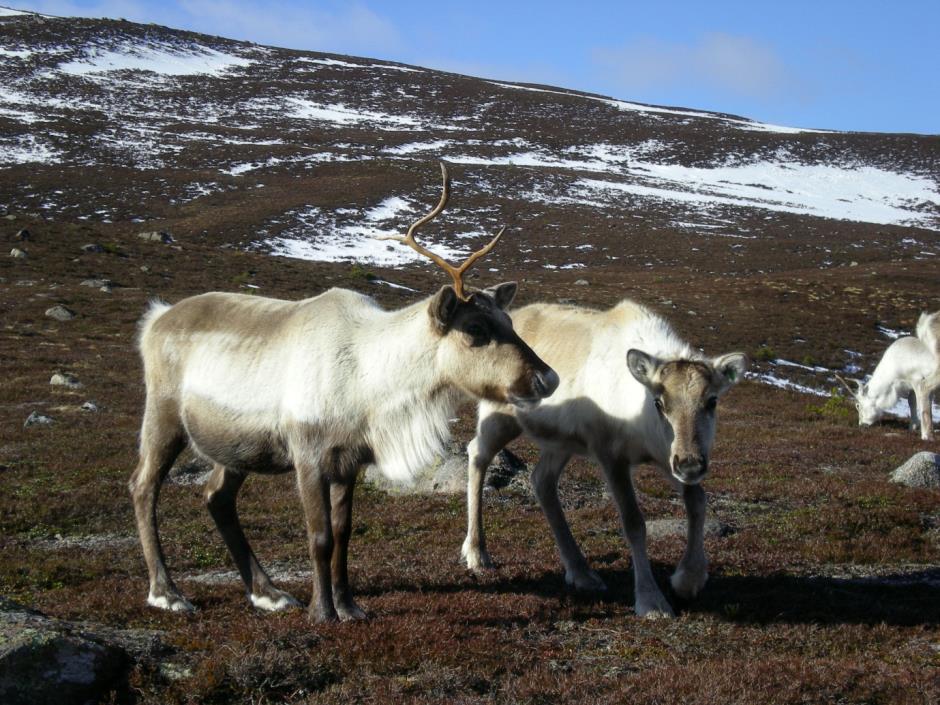
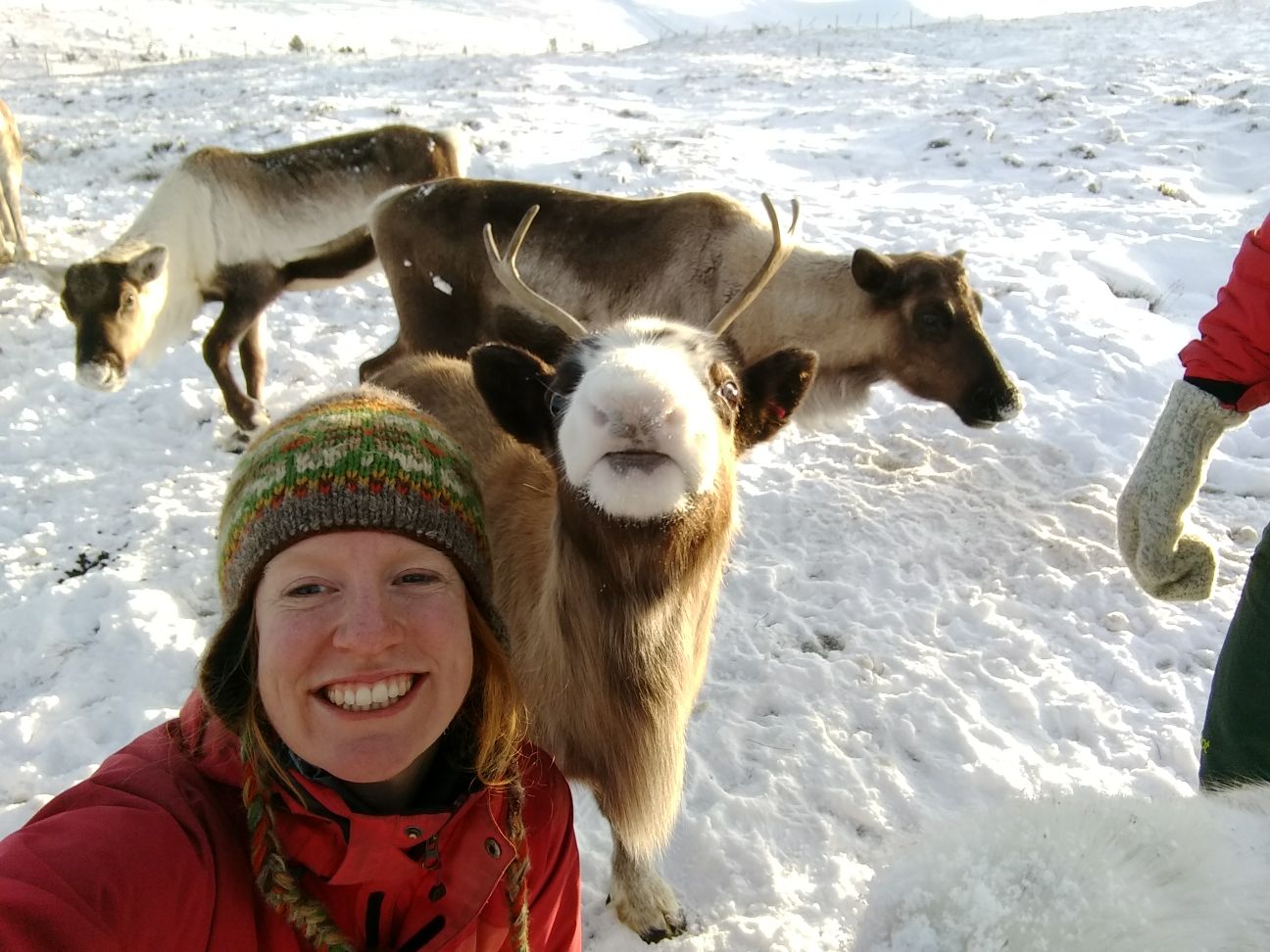
Fly as a calf, with her mother FIddle during the winter of 2007/08

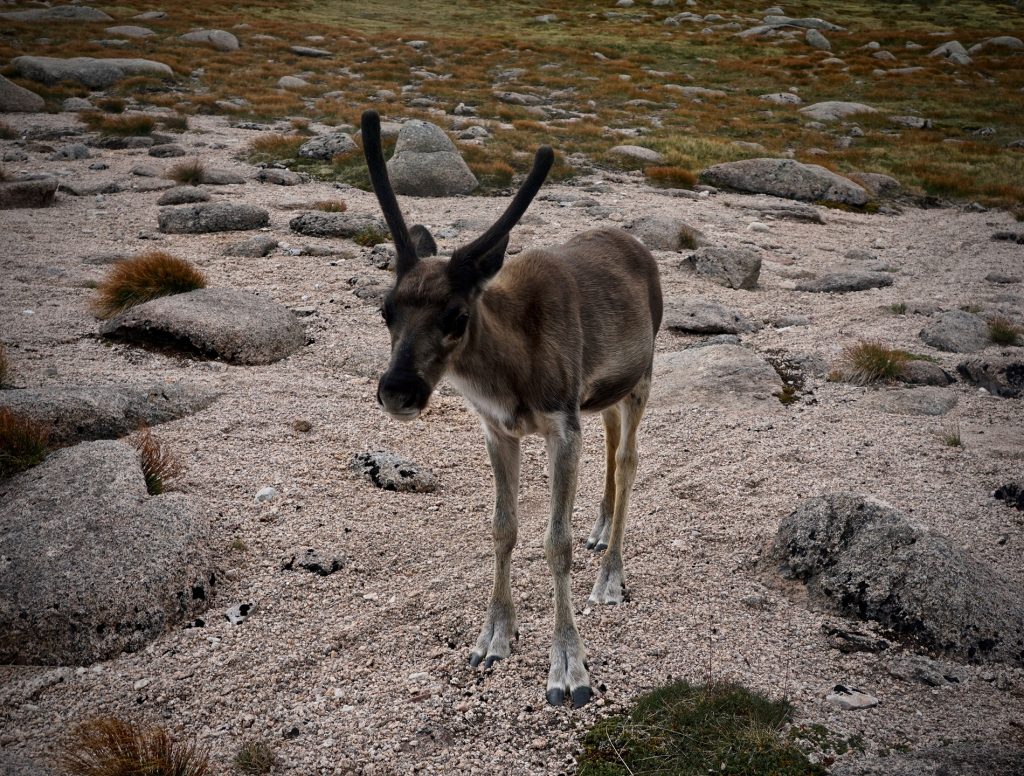
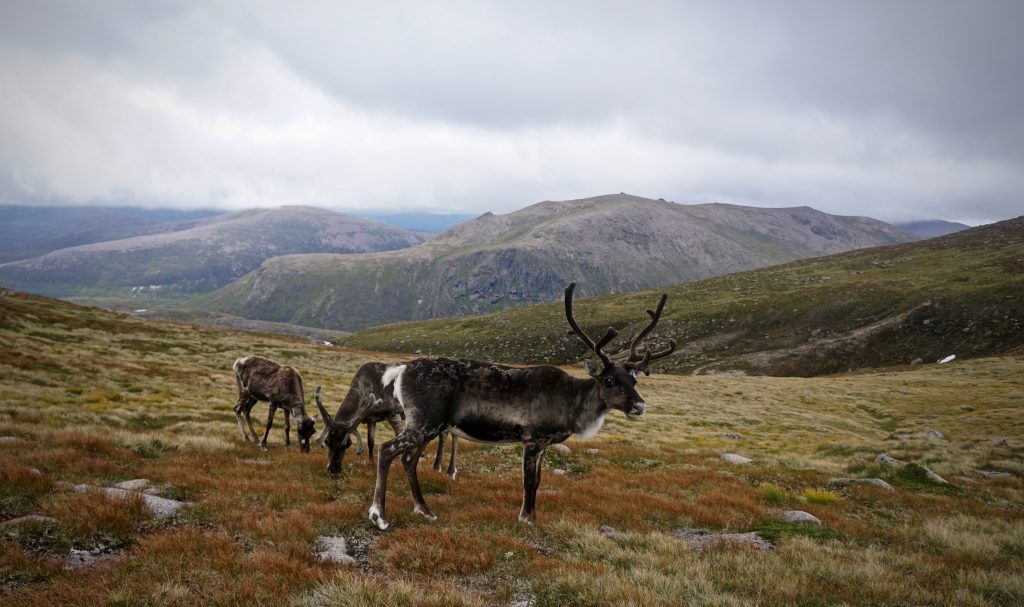
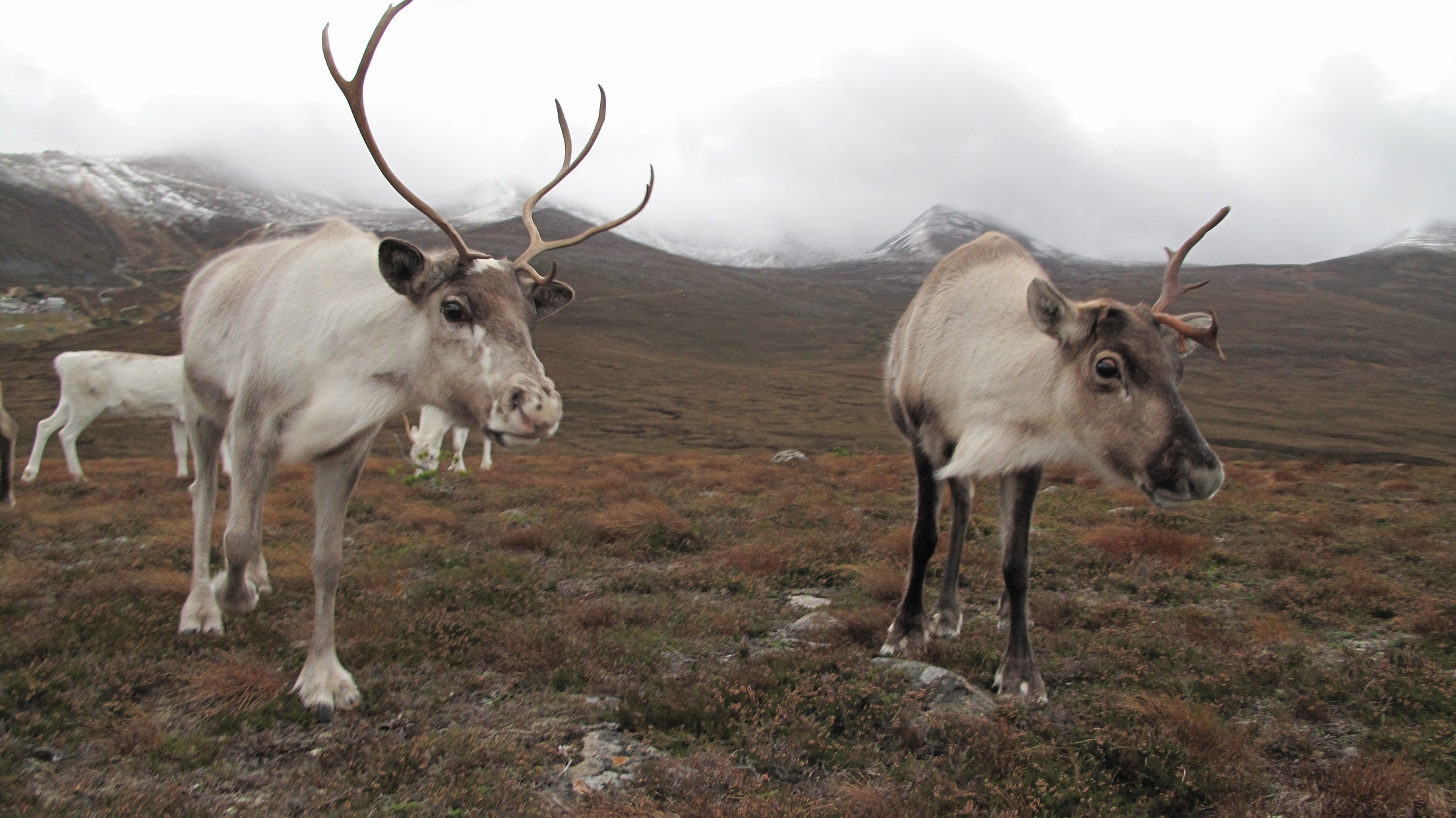
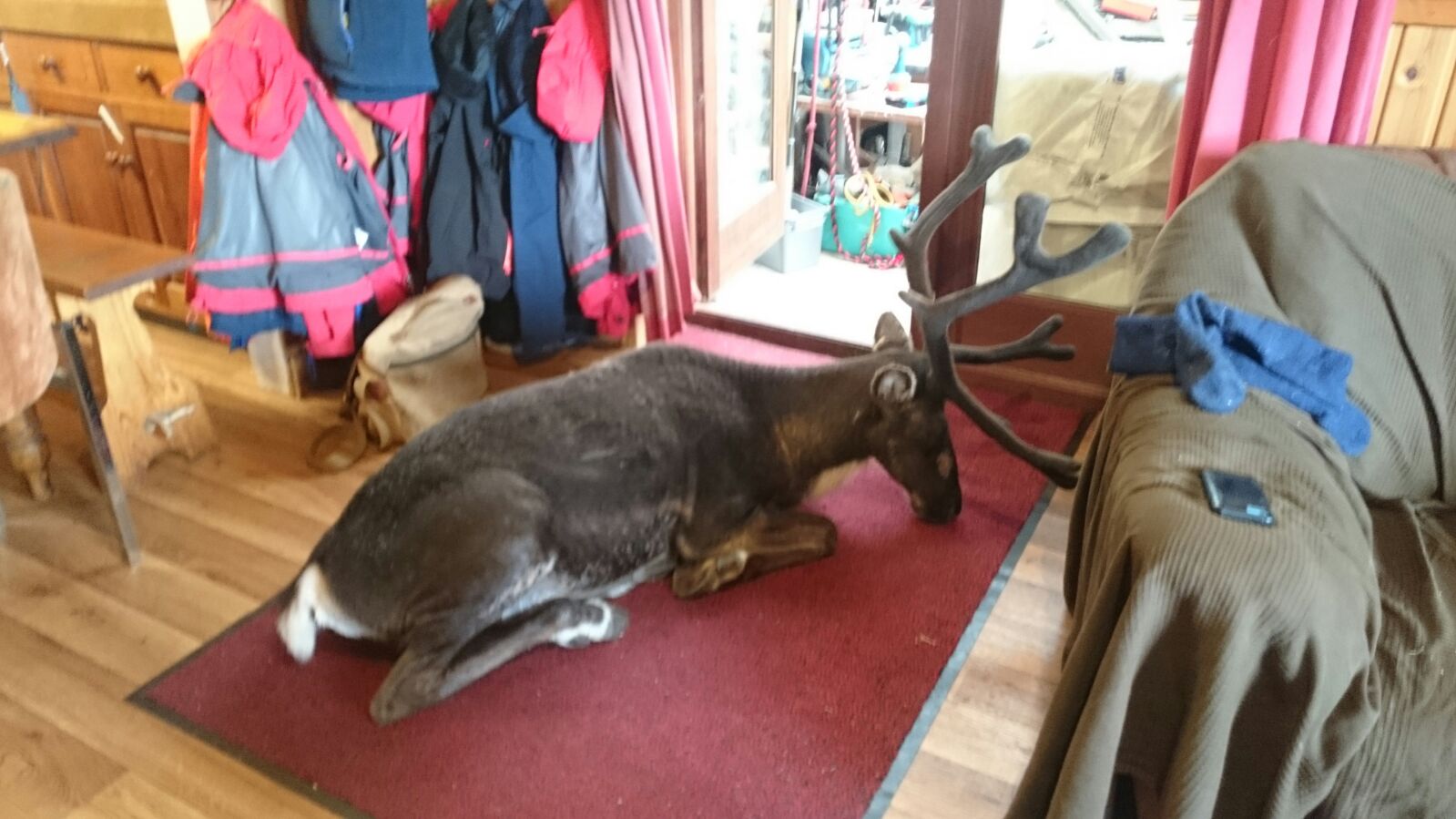
I was inspired to write about Fly as the featured reindeer for this blog as I followed her back from the far end of the hill enclosure with her new-born male calf back in May 2014. Fly’s name has a tenuous connection to the 2007 theme of the colour green: the gardener’s worst nightmare, greenfly. We shortened her name to Fly.
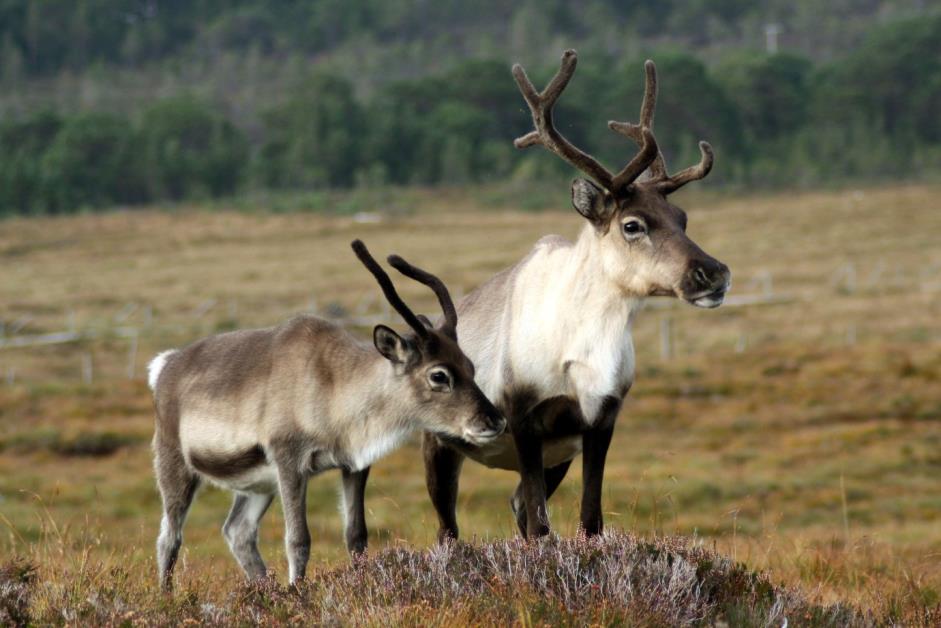
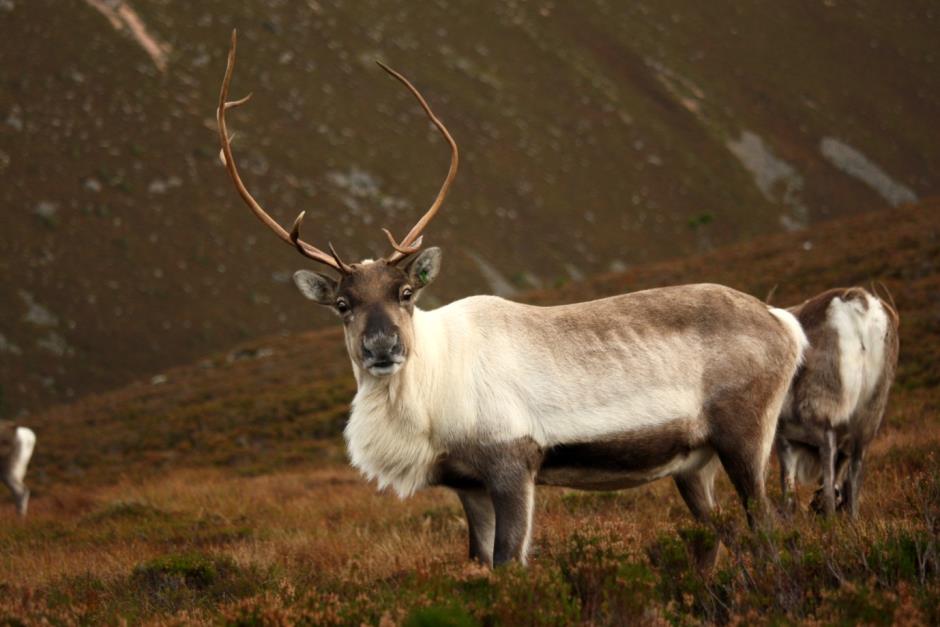
Fly: Autumn 2017

As I followed her through the wooded slopes of Silver Mount Fly led me a tortuous route up and down the hill through deep heather and thick woodland. I’m not sure who she was testing, me or her calf. Her calf was amazing, struggling through the jungle of rank heather, scaling rough boulders and trying to keep up with his mum as she strode up the hill. I had to keep my wits about me as on a couple of occasions she appeared to completely vanish. Fly by name, fly by nature.

Fly and Hudson, a while after giving Tilly the runaround

There are only a few breeding females in our herd that get the gold star for breeding success and Fly is up there with the best of them. She calved first as a two year old, a strapping female calf who we called Custard (can you guess the link?!). Custard calved for the first time in 2012 then in 2013 she had a beautiful female calf, Cream (clever with linking names eh), so Fly at the age of only five years old became a granny. In the world of reindeer grannies can go on to be mothers too for many years and since having custard Fly has gone on to produce six strapping males: Dragonfly, Domino, Balmoral, Anster, Hudson and Aonach.

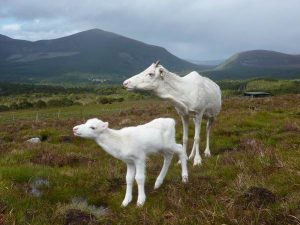
Fly with all of her wonderful sons and daughters

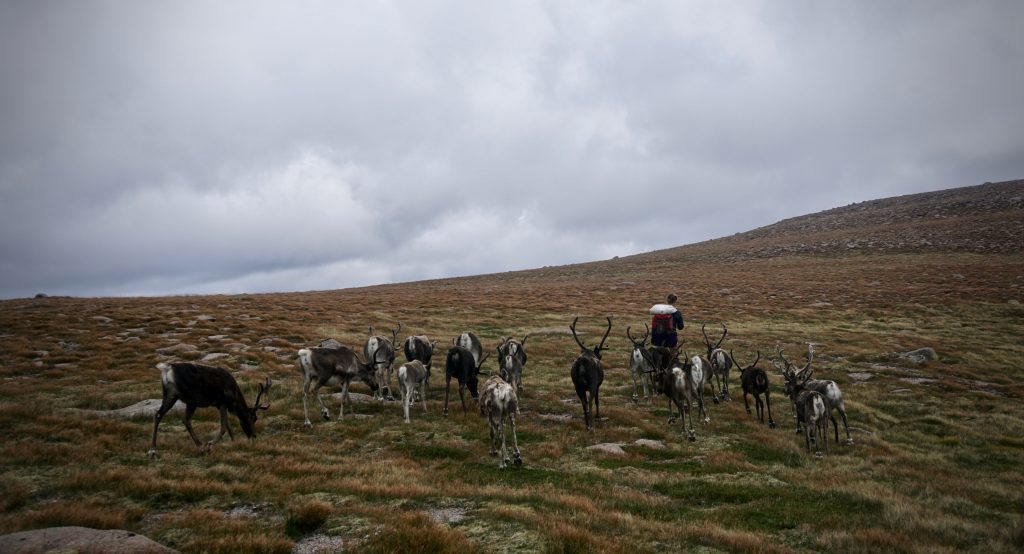
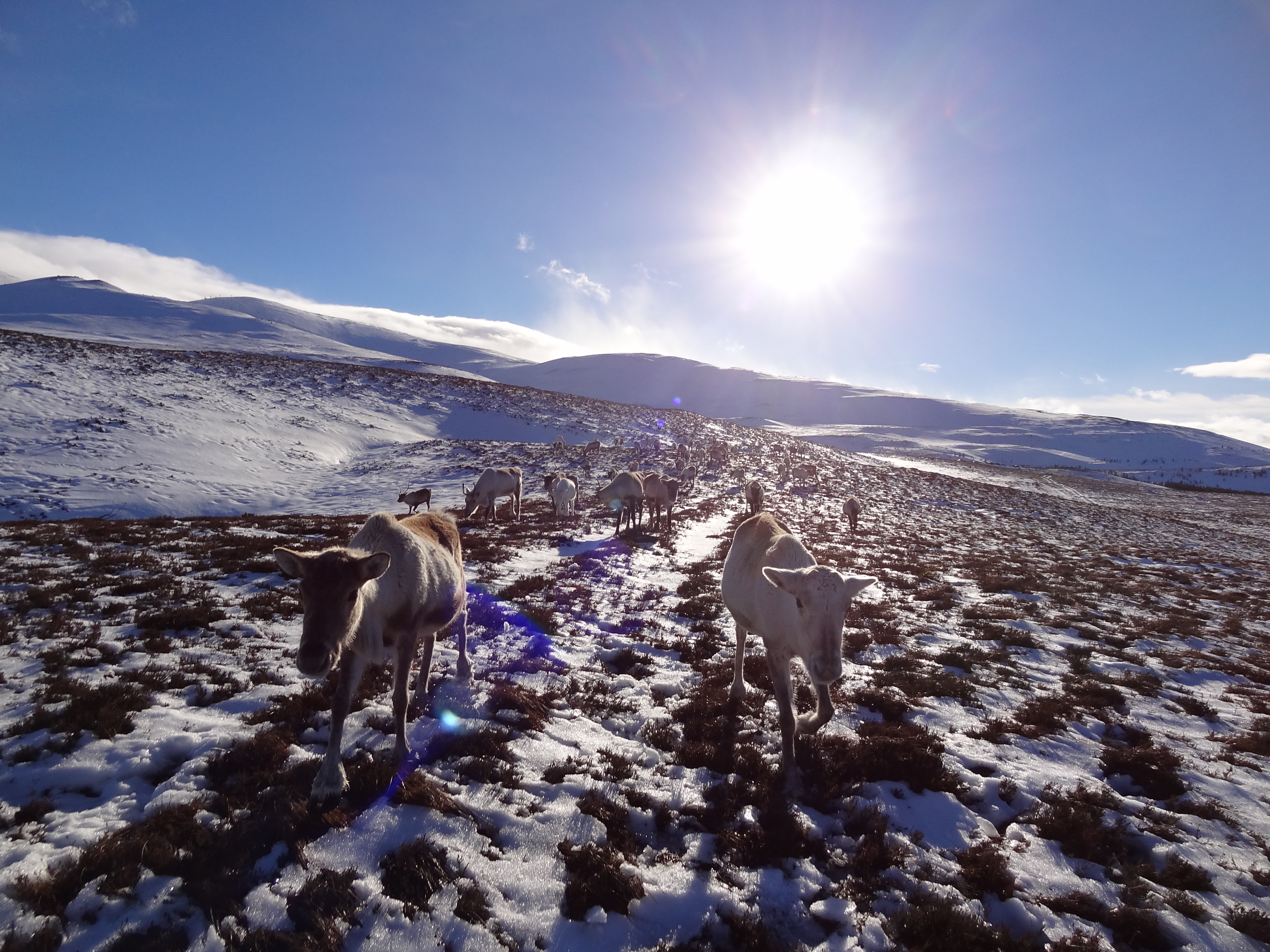
Fly is coming up 11 now and having missed out on the rut last year she shouldn’t be calving this year. However, as she’s still one of the biggest and strongest females in the herd it’s possible she may well run in the rut with a male again this autumn if she stays in good health. Fly has maintained a remarkable record of being the first female to come to call every time Fiona has been out to bring in the free-rangers these last couple of months. She is never far from the front of the group when the other herders call the reindeer down but she is always first when Fiona calls!

Tilly

Fly having a well earned rest in the snow

I prefer the less tame reindeer.

I prefer the less tame reindeer…

We have a lot of very sweet reindeer. They come right up to me and stick their noses right into the feed bag I have just carried up the hill…. Bumble, for instance…. I cuddle Dr Seuss and scruff up his nose hairs. Reindeer are wonderful creatures. So powerful and hardy, standing into the gales, looking into the snow that flies across the hill, this is where they live. The likes of Bumble and Dr Seuss have lots of adopters. Everyone loves Bumble. So cheeky, so adorable.

Dr Seuss came over for a cuddle with Reindeer Herder Chris one morning to shelter from the wind!

Occasionally someone comes into the shop and asks to adopt a real wild reindeer, a rebel, one who knows no boundaries. I breathe a sigh of relief and start rattling of my favourites, because I prefer the less tame reindeer. I prefer the ones at the back that no one ever sees or the ones that elude even us herders. Tambourine, Enya, Wapiti, Chelsea, I say, these are my favourites. These reindeer have a different beauty. These reindeer laugh at us mere humans. These reindeer have few adopters. Who wants to adopt a reindeer that will wallop you, or walk away, if you go near it?

Champagne at home on the hillside.
Bega in the enclosure in late summer 2016.

My favourite when I first arrived was Bega. A pale coloured male that was born on the free-range and a real struggle to train. My other favourite was Champagne, a flighty young female, with distinctive spear like antlers. Both Bega and Champagne died before their time.

I guess this is perhaps what makes the herd so wonderful and interesting – we have both tame and less tame reindeer!

Thanks for reading. Dave

Furry Noses

This winter we have prolonged periods of cold snowy weather, as I write this the weather forecast predicts it’s not going to be above zero during the next two weeks! It’s pretty chilly for us herders even under our many layers, but for the reindeer it’s ideal (if a little mild!) and we have a big happy free-ranging herd.
On Hill Trips we often talk about how reindeer are adapted to Arctic and subarctic life by describing their thick winter coat, large hooves, beards, and their amazing clicking back feet. However, in my opinion, one of the most wonderful and endearing adaptations of a reindeer is their beautifully soft velvet noses!

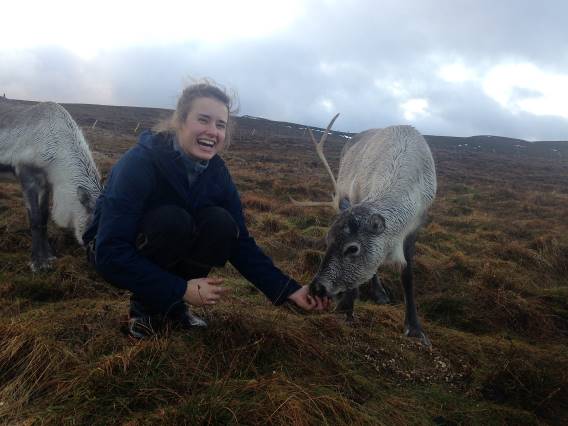
Their fuzzy noses also makes them a joy to hand feed as herder Lotti’s smile demonstrates as she feeds Brimick

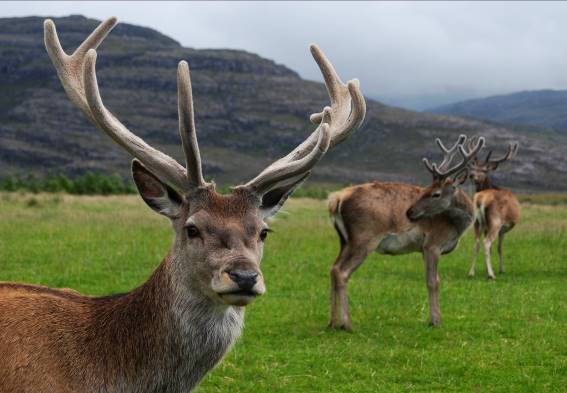
Out of the 40 odd species of deer in the world, reindeer (and Caribou) are the only deer which have hairy noses rather than shiny, moist ones. This prevents the build up of frost which would occur on a cold wet surface during exhalation; perhaps this is the reason why male polar explorers (and Scottish reindeer herders) often grow beards!

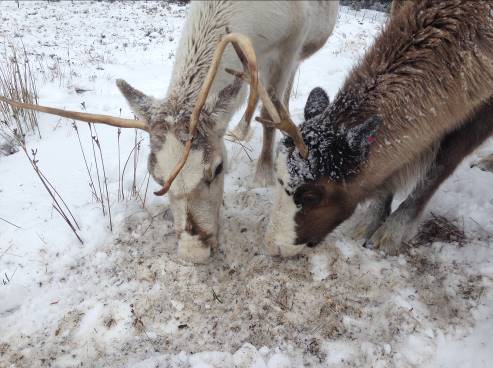
Merida and calf Dr Seuss vacuuming up their breakfast without getting chilly thanks to a completely hairy muzzle
By comparison, here’s a red deer stag with a shiny, wet nose
https://commons.wikimedia.org/wiki/File:Red_deer_stag.jpg

However, the most special part of a reindeer nose is actually on the inside. This blog will endeavour to delve under the cute furry exterior to hopefully show how truly remarkable a reindeer’s nose is…. as well as a good excuse to show lots of lovely fuzzy photos!
There is a complicated and highly specialised arrangement of cartilage, bone, fleshy bits, mucous membranes and blood vessels that make up their nasal passages. Together they form an extremely large surface area; the shape of which is often described as a ‘rolled scroll’ or sometimes a ‘seashell’. This specialised structure allows a reindeer’s nose to remain warm and retain moisture in freezing temperatures as well as allowing them to expel excess heat on warmer days.

No cold noses for Sitini and her calf Pratchett as they munch on snow.

A reindeer would soon be chilled if freezing air was to reach their lungs on every breath. To overcome this they have the fascinating ability to change the temperature of the air they inhale before it reaches the lungs, and vice versa. This is all thanks to their ingenious nasal structure, which works as a counter-current heat-exchange system.
For example, if the outside air temperature is -40⁰C, the temperature when the air reaches the reindeer’s lungs is about +38⁰C. In other words, they can change the temperature of the air an incredible 70-80⁰C in less than one second! Additionally, winter air tends to be cold and dry, especially for reindeer that live in higher latitudes. In order for the heated air not to be over dry when it reaches the lungs, a bit of moisture is released from the internal mucous membranes into the air when the reindeer inhales. Move over Rudolph with your shiny red nose, I think that is pretty magic!

Bumble’s snowy nose

On exhalation the opposite happens so a reindeer is able to cool its warm breath, in order to conserve as much body heat as possible. When breathing out they also conserve as much water vapour as possible; especially important when snow may be the only form of water they are able to get!
So when it’s cold in winter, us meagre humans can see our breath as we exhale. However, a reindeer standing at rest in sub-zero temperatures will have no visible breath steaming from their nostrils! That’s because air leaving a human nose is about 32⁰C and the water it contains condenses into visible water droplets as our warm breath meets the cold air. In a reindeer’s nose, warm air is cooled down by about 21⁰C before it is exhaled, saving the majority of the heat. The mucous membranes in the snout recover the moisture, enabling the water in the air to condense inside the nose which then trickles into special folds which direct it to the back of the nose and into the throat, meaning the reindeer exhales drier and partially cooled air.

Beneath Christie’s pretty nose lies an amazing complicated anatomy!
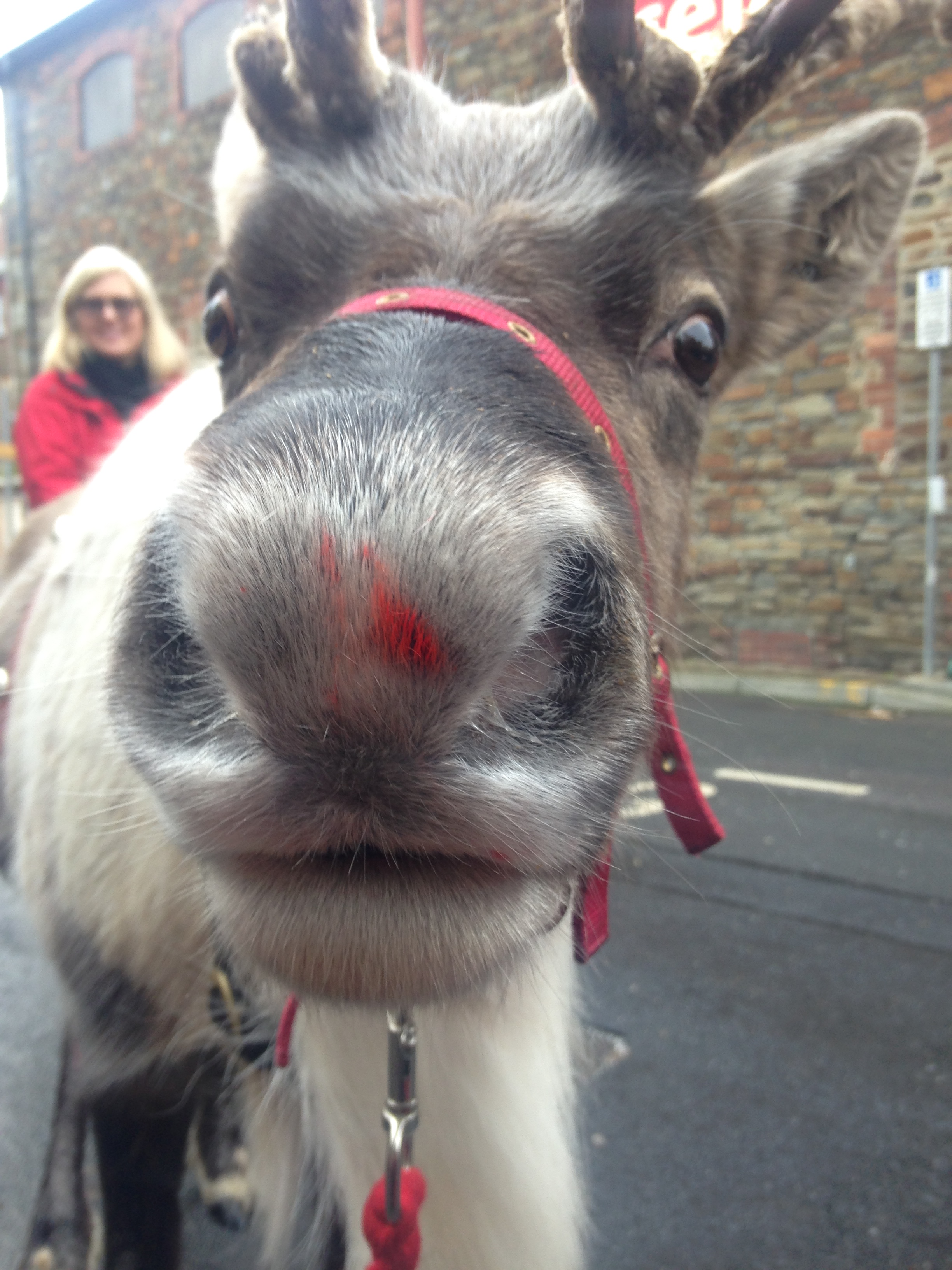
Second doing his best Rudolph impression whilst out on tour last Christmas!
Reindeer noses can also be very useful for sleeping on, as Fergus is demonstrating her!
Last but not least…. Dr Seuss’s gorgeously handsome super soft snozzle!

Ruth

References:
https://geminiresearchnews.com/2016/12/magical-reindeer-nose/
The Real Rudolph, Tilly Smith

The making of the Cairngorms

Our reindeer roaming here in the highlands of Scotland live in a truly unique landscape, that has been sculpted over the centuries. However, the formation of the Cairngorms is not known by many, and so here I’ve summarised a brief part of it to explain how the reindeer got their home.

DSC07663
A herd of females, happy in their home grounds, the Cairngorms.

The Cairngorms are underlain by 427 million year old Granite and were, believe it or not, once in the range of the Himalayas standing far higher than today. Millions of years of degradation and the prolific effects of repeated glacial (cold) and interglacial (warm) cycles throughout the last 2.5 million years (Quaternary) have carved out the landscape in which we see today.

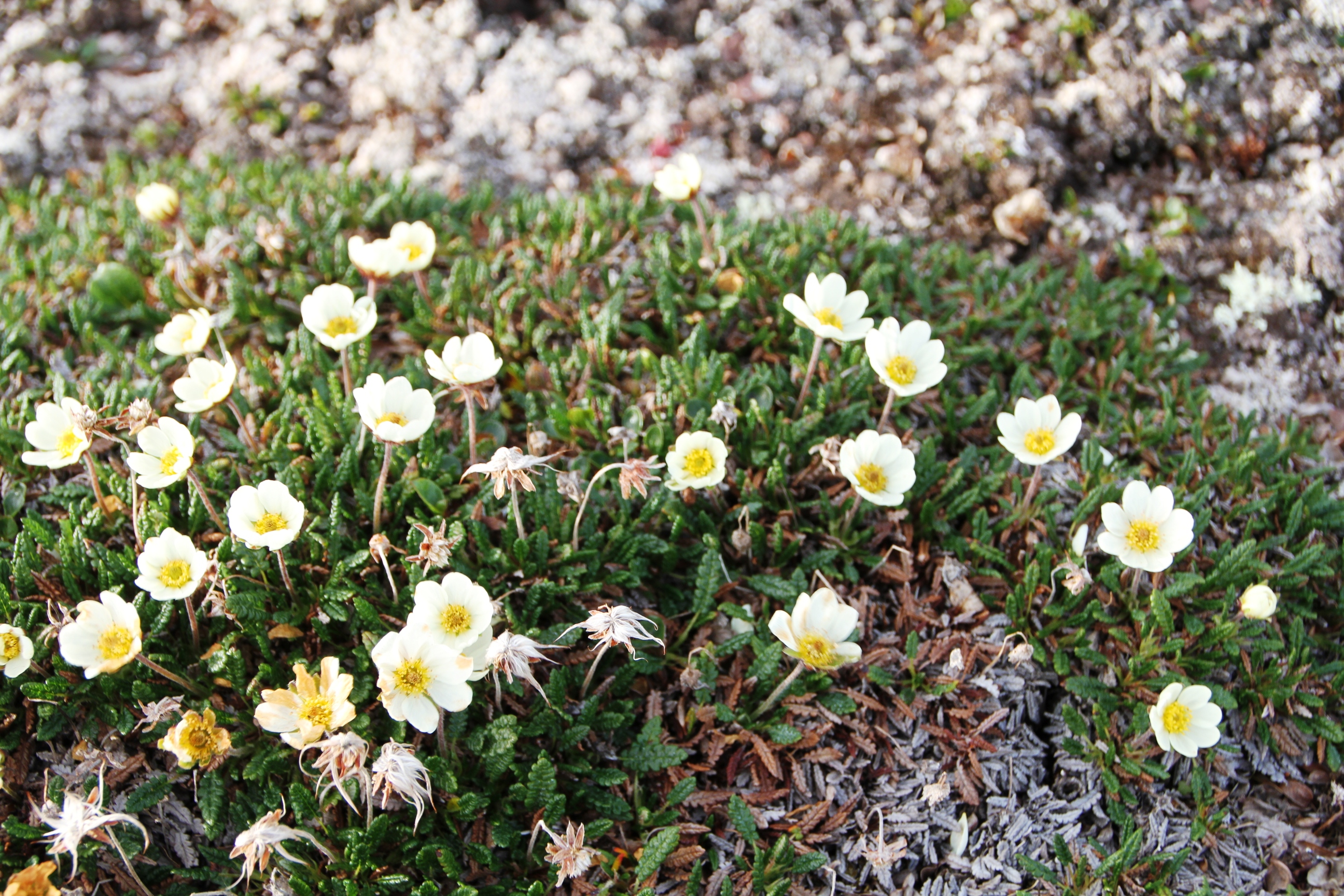
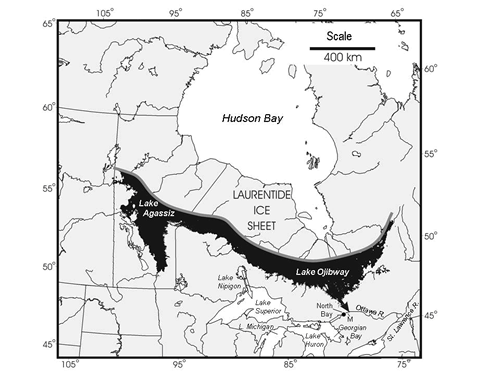
About 13,000 years ago, cold glacial conditions were increasing in many parts of the Northern Hemisphere. There have been many debates as to why this happened but scientists have hypothesized that this major cooling event was caused by an enormous dumping of fresh water into the North Atlantic by the large North America Lake Agassiz. As the ice retreated from the last glacial maximum 21,000 years ago the lake burst its banks causing a catastrophic flood. The flower (Dryas octopetala), the Younger Dryas or, Loch Lomond Stadial, marked the return to what we see today.

1
The beautiful wee flower, Dryas octopetula Photo from Wikipedia commons.
2
Photo from Wikipedia commons.

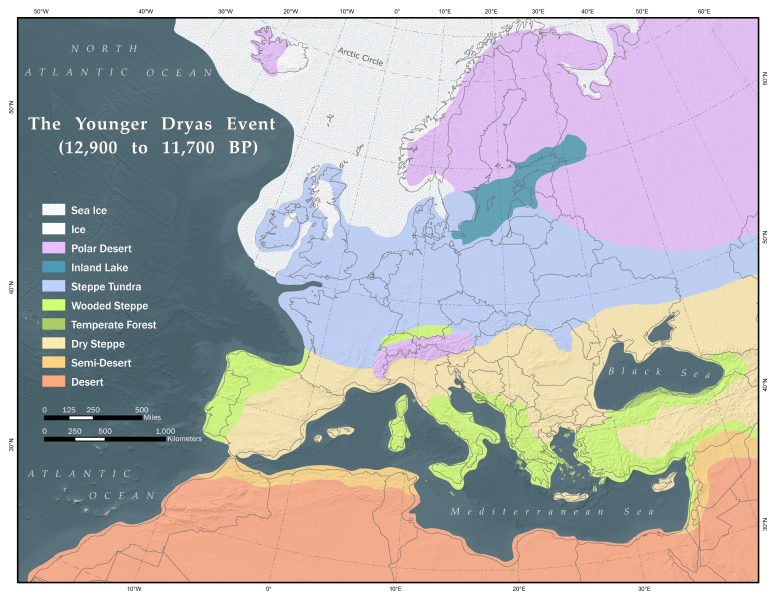
This cold water slowed down the oceans conveyor belt or ‘thermohaline circulation’ to an almost standstill, meaning there was a complete loss of heat transfer and a massive reduction in sea surface temperatures in the North Atlantic. The sea and the atmosphere share a sort of ‘love – hate’ relationship whereby if one is behaving well the other will behave; however if one decides to throw a spanner in the works its counterpart will throw quite the tantrum and this is exactly what happened. The rapid cooling of the previously warm salty sea water coming up the west coast of Scotland caused the atmosphere to cool dramatically; hence resulting in ice growth and incredibly cold conditions across much of Scotland.

3
The land cover about 12,000 years ago in Europe. Notice the prevalance of ice and tundra habitat in the highlands of Scotland, where our reindeer now live. Photo from Wikipedia commons.

This last ‘hurrah’ of ice has sculpted much of the landscape we see today. As the ice retreated, Scots pine rose up the mountains pushing the level of steppe tundra with it. The subarctic conditions that now occupy this landscape mirror that of Arctic Canada and Siberia meaning that reindeer can survive and thrive here in the Scottish Highlands. These wonderful animals now inhabit a land forged by ice so can therefore thank these bouts of extreme cold as without them we would not have our reindeer here today.

763538_b36d1ac6.jpg
A lone Scots Pine in Scotland’s snowy landscape. Photo from Geograph, licensed for reuse.

Rob

Snow has arrived!

Up here on the Cairngorms (as well as many other places in Scotland), the first proper snow has arrived. As much of our blogging and online posts recently have been about our Christmas tours, I thought I would share with you all some photos, to remind you all where our reindeer live for most of the year.

This wild landscape can be cold, cruel and hard, but the reindeer thrive, and love their habitat in the snow. We also love it!

IMG_20171123_112142235
A chilly but beautiful walk through the woods up to the enclosure.
IMG_20171123_113122765.jpg
The brave souls choosing to come on our hill trip.
IMG_20171123_113146036
The Alt Mor in the snow.
IMG_20171123_113746407
Sheena entertaining her visitors with tales of past days.

Its one of the most beautiful times of year to visit the herd, with their wicked antlers still on their heads, long soft winter coats,and furry noses to keep them warm. Reindeer truly love the snow, and if you’re lucky you get to see them dancing about and chasing each other round.

IMG_1809
As we call the reindeer, they appear in the distance, coming down off Silvermount.
IMG_1812
The first of the greedy bunch!
IMG_1830
The reindeers’ view – looking down across the Reindeer Centre, Meall a’ Bhuachaille, and the cold Loch Morlich.
IMG_1822
The beautiful Aral, face blending in with the snow.
IMG_1820
Mmmm.. brunch.
IMG_1828
Dixie and Kara, mother and daughter, sharing their food.
IMG_1833
Bovril’s big antlers carrying snow, looking ready for a snowball fight?

Our Hill Trips are still running each day, at 11am, so if this inspires you to get up and visit the herd, make sure you come properly dressed for a cold encounter and get here in plenty of time. And to sign off, I’m leaving you with a picture of our beautiful Svalbard!

IMG_20171123_132532199_HDR
Svalbard, back on home territory.

Morna

Looking Back Part 2: The Norwegian Reindeer

Recently a Norwegian man got in touch with us while writing a book about the reindeer populations in an area of southern Norway called Setesdal, so I dug out the old records to see what info I could help him with. While most of our herd originated from Sweden (see Looking Back: Part 1), in 1961 the 5th consignment of reindeer joined the Cairngorm herd, arriving from the Setesdal area on the MS Blenheim in the middle of September.

Photo 1

The group consisted of seven cows and one bull, ranging in age from yearlings to three year olds. The still relatively newly established Cairngorm herd was struggling a bit as many had died over the past 9 years, finding it difficult to thrive down in the forest as they were more suited to the mountain habitat above. In the mid-50s Mr Utsi had gained permission to move the reindeer higher up the hills where they managed much better, but new blood was also needed to prevent inbreeding – it was definitely time to bring in more reindeer. The Norwegian import brought the herd to around 30 animals.

Photo 2
One of the pages of our press cuttings scrapbooks from 1961.

Their success was varied however. Breive, Lisa, Olga and Valle had all died before the end of 1961, though I can’t find reference in the records as to whether they simply went missing, or died of a particular illness. Reindeer under the age of three are particularly susceptible to illness, having not had as much time to build up immunity to disease, and the Norwegian reindeer also arrived at a time of year when ticks are rife – still the main cause of illness amongst our reindeer today.

Photo 3
Laila on the left (with the collar) with Mr Utsi in March 1962.

Laila was the only reindeer of the consignment to calve the following year, on the 8th June 1962, but disaster struck when she died less than 24 hours after the birth. The calf was strong however, so Mr Utsi went on to hand-rear him, naming him Boko. Boko followed Mr Utsi everywhere and was extremely tame, going on to become a breeding bull in later years. He survived until December 1967, but as with all hand-reared animals, could be a little bit of a liability – there is a reference in the records which says ‘Very tame to lead if you keep your eyes on him’! Hand-reared animals don’t tend to understand the boundaries of acceptable behaviour – as any of you who have been on the receiving end of Fergus will know, our reprobate in the herd today!

Photo 4
Laila with Boko, a few hours after he was born.
Photo 5
Mr Utsi with the ever-present Boko at his heels, in 1963.
Photo 6
Mr Utsi at the Strathspey Farmers’ Club Show with Boko and bull Vikhta (August 1963).

Of the original 8 Norwegian reindeer, by far the most successful of them were the bull Jacob, and two cows Janet and Bykle. Jacob was used as a breeding bull for several years in the 60s, his bloodlines still very prevalent in the herd today, and Bykle produced one calf, Heather, who in turn went on to produce several offspring. This line died out in the 70s however but Janet went one better, producing three calves whose descendants continued in the herd until well into the 80s, finishing with another hand-reared calf, Wally. Wally was hand-reared by Alan, and a photo still hangs in the living room of Reindeer House of Alan bottle-feeding him, back in 1982.

Photo 7
Jacob in Coire Sneachdha, a familiar background to us all even now…
Photo 8
Alan (with considerably more hair than nowadays!) bottle feeding Wally.

So there we go. The success of the bull Jacob, in particular, goes to show the importance of introducing new bloodlines to the herd, and we have continued to import reindeer every now and then to keep our genetics as strong and as varied as possible. Right now there are 25 reindeer in our herd who were born in northern Sweden, one still remaining from our 2004 introduction (Addjá), two from 2008 (Magnus and Laban), and the remainder from 2011, many of whom are still breeding bulls today.

Hen

Looking back: The arrival of the first reindeer

2017 is our 65th anniversary, and just lately I’ve been trawling through the records of the reindeer herd for one reason or another. As such I’m feeling a bit nostalgic, and think it is time I started another occasional blog series, this time about the history of our herd.

If you’ve been on a Hill Trip with us, you may know the basic story. Sami reindeer herder Mikel Utsi visited the Highlands of Scotland in 1947, and was immediately struck by the similarities to his homeland of northern Sweden.

Photo 1
Northern Sweden (top) and the Cairngorms (bottom)

Looking across Rothiemurchus Forest to the Cairngorms from the railway bridge at Aviemore, on a cold morning in April 1947, I was instantly reminded of reindeer pastures. Travel in the Highlands showed that many species of ground, rock and tree lichens which are elsewhere the chief reindeer food were plentiful and of little use to other animals. Red deer and domesticated animals graze on plants and fodder than reindeer seldom eat. The Orkneyinga saga tells us that about 800 years ago red deer and reindeer were hunted together, in Caithness, by the Jarls of Orkney.”

IMG_0821
One of the crates being winched on board the S.S. Sarek in April 1952

Mikel Utsi decided it was time that reindeer once again roamed the mountains of Scotland, and five years later, that dream became a reality. The Ministry of Agriculture gave permission for Mr Utsi and his Swedish-American wife Dr Ethel Lindgren (an anthropologist who had studied in China and Mongolia as well as Swedish Lapland) to bring the first consignment of reindeer over to Scotland, and at first they were granted an area of around 300 acres near Moormore in the Rothiemurchus forest, which was completely fenced to contain them. Moormore is now better known as the Cairngorm Sleddog Centre. Mr Utsi knew this was not ideal for the reindeer however, and had his eye on the higher ground of the Cairngorms themselves – much more suitable reindeer habitat.

photo 3
Mikel Utsi (right) and Sarek on board the S.S. Sarek

Photo 4.jpg

The first consignment of 8 reindeer landed at Clydebank in Glasgow on the 12th April 1952, having travelled on the S.S. Sarek from Sweden, which had been somewhat rough four day crossing. The group consisted of two bull reindeer (Aviemore and Murjek), four cows (Mona, Kristina, Margaret and Rowena), and a castrated male who was named Sarek. After a month in quarantine at Edinburgh Zoo, the reindeer finally made their way north to the Cairngorms to the Moormore enclosure.

IMG_0822.JPG
Reindeer in the forest, looking up to the Cairngorms

Photo 6.jpg

It wasn’t a particularly auspicious start, with the reindeer struggling to cope with the low ground and the insects, but in 1954 Mr Utsi finally got permission from the Forestry Commission to lease Silver Mount, which many of you will know as the hill at the far end of the current reindeer enclosure, the back drop to the majority of our guided tours throughout the year. Later the same year free-grazing up to the summits of the northern corries of the Cairngorms was finally allowed, as well as the continued use of the Silver Mount enclosure. Finally the reindeer could escape the insects and the herd began to thrive. Further groups had been introduced from Sweden too; Inge, Alice, Anne, Pelle, Assa, Ella, Ina, Maja, Siri and Tilla in October 1952; Nuolja, Kirtik, Ranak, Neita, Noki, Rovva and Vilda in early 1954. Bulls Fritzen and Ruski followed in 1955.

Photo 7.jpg
The 3rd consignment of reindeer on the M.S. Nuolja in 1954
Photo 8.jpg
Bulls Fritzen and Ruski in April 1955 – the 4th consignment

To keep a closer eye on his herd, Mr Utsi felt it was important to be on site as much as possible. He made a hut at ‘Road End Camp’ in the 50s, tucked away in the woods at the base of Silver Mount, building it from the wood from the crates that the reindeer had been transported to Scotland in. This made life much easier as there was no bridge across the Allt Mor at that time, or indeed, a road up to where the Ski Centre is now, so for Mr Utsi the herd was now much more accessible. Today, the hut still stands, and some of you may have even been there – in recent years we used to stop for a rest at Utsi’s Hut on some of our half-day treks with visitors. A shelter was also built at the top of Silver Mount, and although this no longer stands, there are still a few old, weathered, pieces of planks lying around up there, which are the last remnant of the shelter.

Photo 9 (2).jpg
Mr Utsi harnessing Sarek at Road End Camp in October 1955. Utsi’s Hut is on the right.
Photo 10.JPG
Trekkers at Utsi’s hut in more recent years! With reindeer Gandi and Svalbard.
photo-11
The shelter on top of Silver Mount in July 1954

By the mid-fifties the herd had grown to around 20 animals, and the herd was doing well. There’s lots more to tell you, but it’s a story for another day! However, if your appetite to learn more of our history has been whetted, we have a lovely book called ‘Hoofprints’ in our online shop on our website which is all about the history of the herd with loads of beautiful photos, so pop over there for a wee look.

Hen

Reindeer calving: Can we predict whether there will be more males or females born?

It has been an exceptionally mild winter here in the Cairngorms; the ski season never really seemed to kick off, the herders are missing the snow and it has just felt a bit wetter and warmer than usual. I’m sure you’ve noticed how early the snowdrops and daffodils seem to have emerged and we have noticed that the hills are looking a bit greener with the heather and deer sedge starting to grow already. Looking at the Met Office summary for winter 2016-2017, temperatures are up about 3.0°C on average (average being data from 1981-2010) in the UK.

OLYMPUS DIGITAL CAMERA
This blog is really just an excuse to look at cute calves. Here’s a reindeer and a red deer calf, both being hand reared.

For the reindeer, this warming winter could have lots of effects, and we have recently heard of the reindeer in the Yamal peninsula, Siberia, starving to death due to increased rainfall in the autumn freezing and leaving a thick layer of ice impenetrable to them for foraging.

Our reindeer seem to be coping just fine and it has not frozen here enough for them not to reach their favourite food, lichen. However, research done by previous reindeer herder Heather Hanshaw has shown that weather conditions do definitely affect the proportion of male to female calves born in the spring. Since calving will soon be upon us, I thought it might interest you to know about this research and what our mild winter may mean for us in the upcoming weeks.

calf
Newborn calf

Heather studied Physical Geography at Edinburgh University and in her final year needed a project to study. Of course, having an interest in climate as well as reindeer, and having worked at the Reindeer Centre, a project about how climate affects them was a natural interest to Heather. She knew that Mr Utsi and Dr Lindgren had been very meticulous about the data kept on calves born in the Cairngorm herd, and climate data was easily enough accessed, so Heather devised a project determining if weather (temperature and rainfall) had any effect on the proportion of male to female reindeer calves born. A similar study was conducted with Red deer on the Isle of Rum, and their study found that milder winters led to more male calves. Would it be the same or opposite of Rum, or would weather have no effect on the Reindeer?

fergus-5
The famous Fergus, asleep on Mel’s rug

It turns out that Reindeer are similar to Red deer and when the winter temperature increases, so does the proportion of male calves. So, will that turn out to be true this year? With only a few weeks until calving begins, it will be interesting to look at whether we have lots of male calves this year.

Last year the winter seemed fairly average, possibly on the warm side a little, and our calving ratio was almost perfectly 1 male to 1 female, so it will be really interesting to see if this mild winter has had an effect on what will be born this May.

Hopscotch and calf
Hopscotch and calf

Please find sources below.

http://www.metoffice.gov.uk/climate/uk/summaries/2017/winter

https://www.newscientist.com/article/2112958-80000-reindeer-have-starved-to-death-as-arctic-sea-ice-retreats/

http://www.nature.com/nature/journal/v399/n6735/abs/399459a0.html

Imogen


First impressions of a new reindeer herder

As a new herder asked to write a blog post, I thought I would share a few of my first impressions of the herd with you all. There has been a lot to learn and a lot still to learn, but one thing’s for certain: the life of a reindeer herder is never boring…

Things I have learnt so far:

  1. The title of reindeer herder does not just include herding reindeer. In the last few months, I have not only found out how to very slowly herd reindeer down a hill and keep the attention of a group of 50 people through a health and safety talk, but have also found myself painting arctic scenes, fixing fences, hoovering, carrying wood up a hill, lighting fires, fixing biomass boilers and hand-writing many a letter. Reindeer herding also includes, much to my delight, drinking copious amounts of tea and, on sunny days, eating lunch outside whilst bathing in the sun. Days can be both hectic and peaceful, split between manning a bustling shop to walking down a quiet hillside with a herd of reindeer in tow.
  2. There are a lot of reindeer in the herd, and so A LOT of reindeer names to learn! Much of my time on the hill until now has been spent squinting at different reindeer and racking my brains to try to remember who on earth it is. With some hints from other herders, and no help from the reindeer losing their antlers at any given opportunity, I am finally on my way to recognising the 60 that we have here on the Cairngorms at this time of year. But alas, the day the rest of the herd turning up is near approaching..

    IMG_9606
    Now who is she?
  3. Reindeer are constantly full of surprises! Some days they come bouncing down the hill at the slightest whisper of a call, some days they stubbornly sit and stare you out from an unreachable hill, and some days they just cannot be found. They are characterful, frustrating, lovable and peaceful animals all at once, and I feel the luckiest person to be able to work with and around them.

    IMG_20170408_094710189_HDR
    The 67 reindeer here on the Cairngorms coming down to our call, on a sunny friday morning.
  4. There are a lot of words in the English language that I do not know. Before becoming a reindeer herder, I never knew it was possible to ‘groak’, ‘twattle’, ‘lunt’ or be a ‘sluberdegullion’. But with a board in the office that lists all the words you never thought you’d need, I am learning the true meaning of being a herder..

Morna

Spring

As the year rolls from March into April, here in the Highlands we start to see more definite signs of spring. The snowdrops have of course been and gone, but now the daffodils are out in their full glory, along with primroses and crocuses. There is a noticeable difference in the grass too – during March there is very little colour in the fields, everything is a washed out browny-yellow. But as April approaches, I start squinting at the verges – is there just a hint of fresh green there? By now there is no doubt, the Paddocks and garden are looking almost lush and their first cut is fast approaching. For all of you down in England, I do appreciate that you’ve probably had the lawnmower out several times already, but we have the longest winters in the UK here – one of the reasons it is still a suitable habitat for reindeer.

IMG_9610
Relaxed reindeer with a glorious backdrop. Jenga has the best start on her new antlers of the females.

Up on the mountain, the deer grass is breaking through, and the first migrant birds are arriving back from their winter holidays – there were three ring ouzel squabbling their way along the path as I walked out to feed the herd this morning. I’ve heard tell that the first swallows are in Devon (it’ll still be a few days until they pass by us) and the distinctive osprey pair are back at Loch Garten – we popped along the other day and were glad to see EJ hanging out on the nest, and a brief visit from her long-term partner Odin. Last year I watched a pair circling over the hill enclosure, just checking out Black Loch perhaps before deciding it wasn’t suitable to nest at.

IMG_9614
Old girl Lilac still looking superb at nearly 18 years old.

April is a fun time to spend with the reindeer, with anticipation in the air. The females tend to be relaxed and lazy, with heavy tummies and enjoying the fresh grazing starting to come through. Their coats have lost their sheen and are starting to moult, and most of last year’s antlers have fallen off, with some making good progress on this year’s set. Slightly less relaxing (for us, but not the reindeer) is the start of the Easter holidays, with its associated rush of visitors. Having a limit on numbers for the Hill Trip has certainly made our lives less stressful though and hopefully improves the experience for our visitors too – just a reminder to come early if you’re coming for the Trip to make sure you get tickets!

IMG_9621
A group of visitors learning about the reindeer, who are delighted to pose whilst they wait for their dinner.

The other slight bit of stress is that all of us herders are assessing who we should pick for our calving “bet” – the annual game of trying to guess who will calve first. Us herders spend a lot of time peering at bellies and potential developing udders, trying to work out who is pregnant and who is likely to calve early. There isn’t any money put down, and indeed no prize for winning, but the person whose reindeer calves last has to swim in the loch! The decisions are mostly made now, but I’m already slightly apprehensive that I’ve made the wrong choice – suddenly everyone else’s choices appear much rounder in the belly department than mine… I’ll stick to my guns though with fingers crossed!

IMG_9607
Every time I look at Dixie’s belly I worry that I’ve picked the wrong reindeer for the calving bet!

Normally, spring is a welcome relief after a long hard winter… this year I can’t really claim that as it’s been a very easy winter with little snow, but it’s still lovely to see the lengthening days and warmer temperatures, with the promise of a (hopefully) long, glorious summer ahead. Fingers crossed that it’s warm to make for an easier swim if I end up losing the bet!

Andi

Book Now