Reindeer Metabolism and How it Changes Throughout the Year

The bodies of reindeer go through many changes allowing them to cope with huge temperature difference throughout the seasons. In summer reindeer can cope with temperatures above 30 degrees and the lowest recorded temperature that reindeer have been know to survive is -72 degrees Celsius. Reindeer have two different coats, a thick white winter coat as well as a fine, dark summer coat. Their antlers grow in an annual cycle and the different times of growing and shedding them allows different animals to be dominant at different times of year. One of the most interesting, and important, changes to a reindeer though, you can’t see – their metabolism.
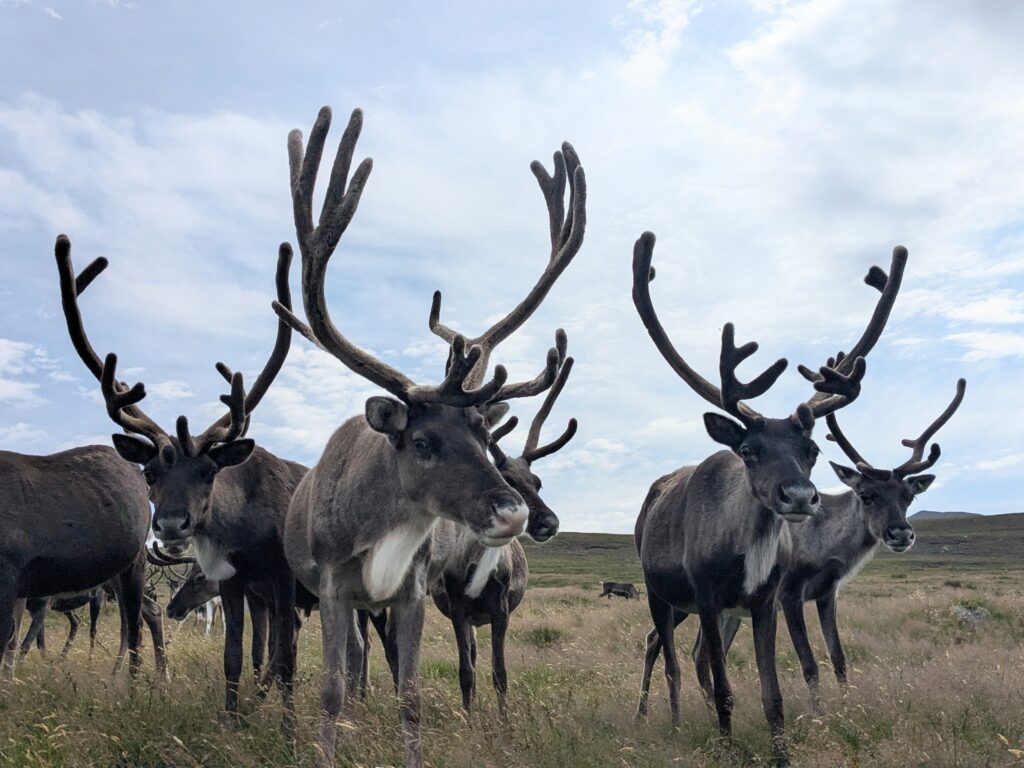
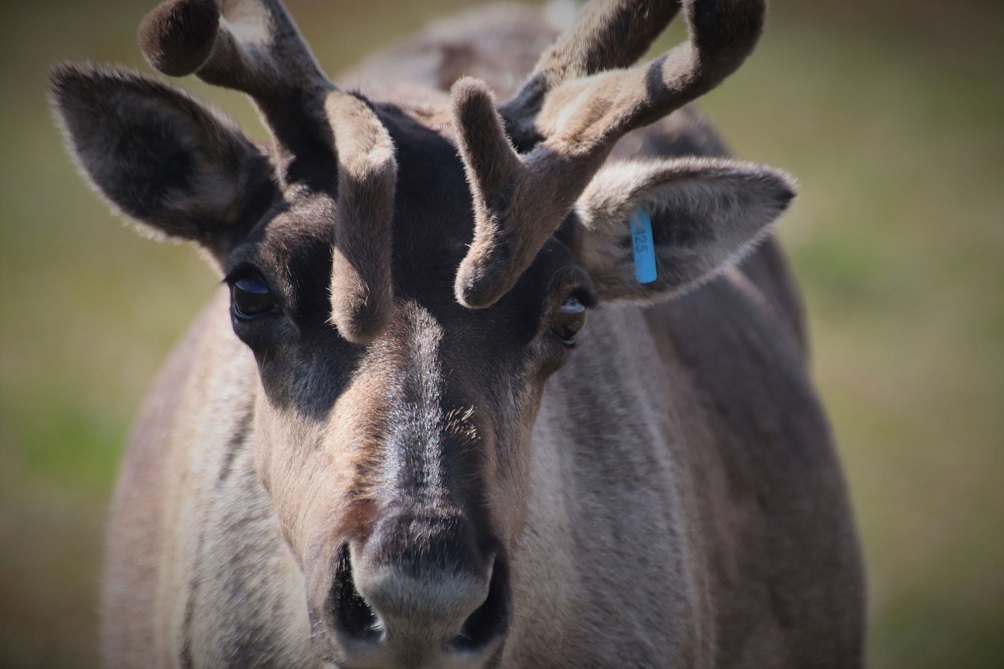
Magnum in his winter coat.
Colorado, Iskrem, Yangtze looking smart in their summer coats.

Reindeer have adapted to eat vast amounts of food throughout the spring, summer and autumn to gain enough weight to survive the winter, when food is scarce. To cope with these changes in food availability their metabolism changes too. In the summer reindeer will graze around the clock, eating a huge variety (between 200 and 300 different species) of plants which are high in nutrition. This allows each individual to grow a new set of antlers, they start to grow in the spring and are fully grown by the end of august and the heaviest set we have had in our herd, weighed a whopping 8.9 kgs. The summer is also the time that the young reindeer grow in body size. Finally, every reindeer will need to gain body fat which will act as reserves over the winter. All these things require their digestive system to work in overdrive converting the food they are eating into energy that can be used by their body to create protein, bone, fat, and whatever is needed.
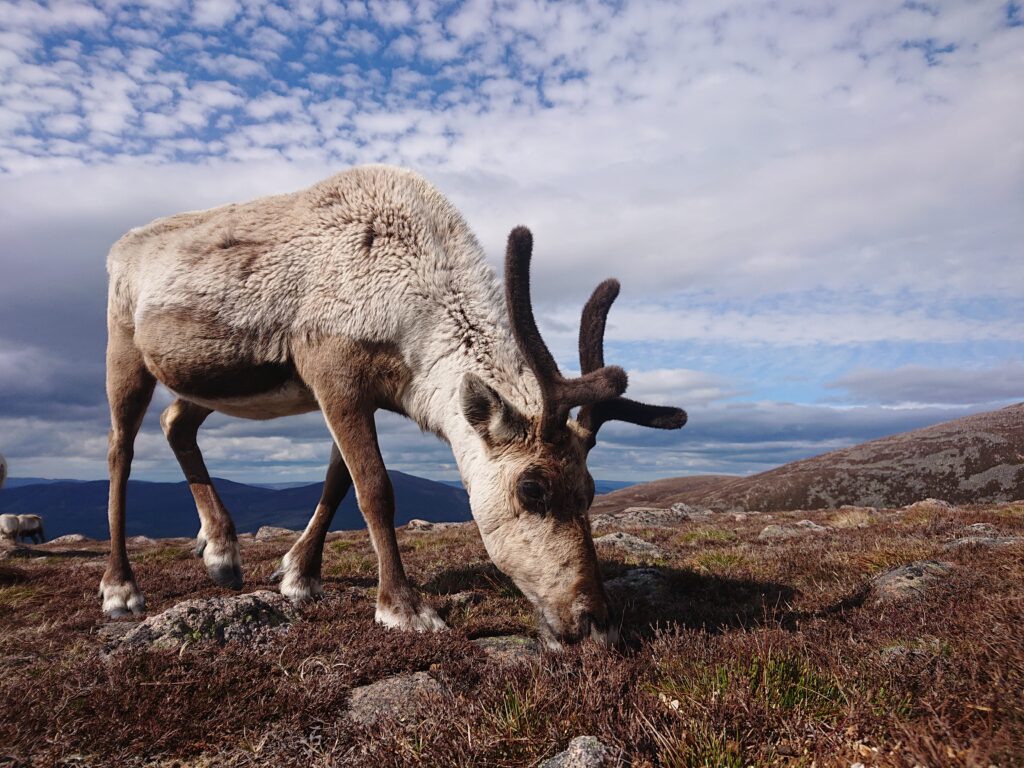
Ryvita grazing and growing her beautiful antlers.
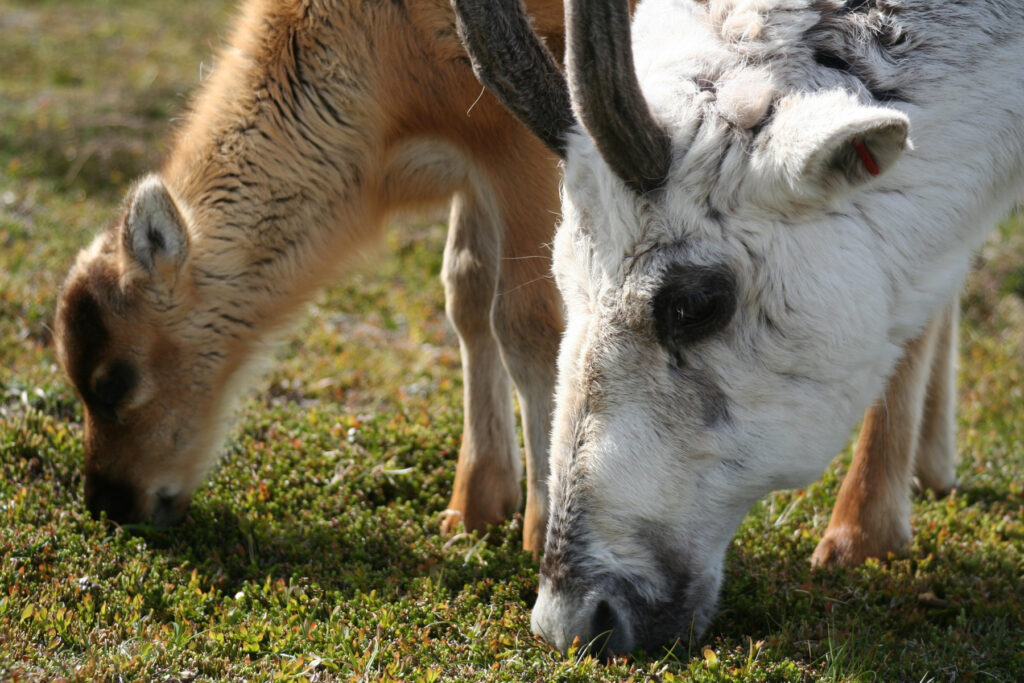
Cow and calf grazing on the high plateau plants.

On the contrary, winter is all about survival. During the winter most of the plants will have died under the snow and 70% of a reindeer’s diet is made up of lichen. Lichen is a symbiosis of fungi and algae and is very resistant to extreme changes in temperature. Over the winter lichen won’t grow but it will stay dormant, preserved under the snow. Reindeer will then dig down through the snow to reach the lichen. But lichen is relatively low in nutrients, just enough to sustain the reindeer through the winter and their metabolism shifts in line with this. In fact, even if you gave a reindeer a big pile of food, during the winter, they just aren’t as hungry and wouldn’t eat it all.
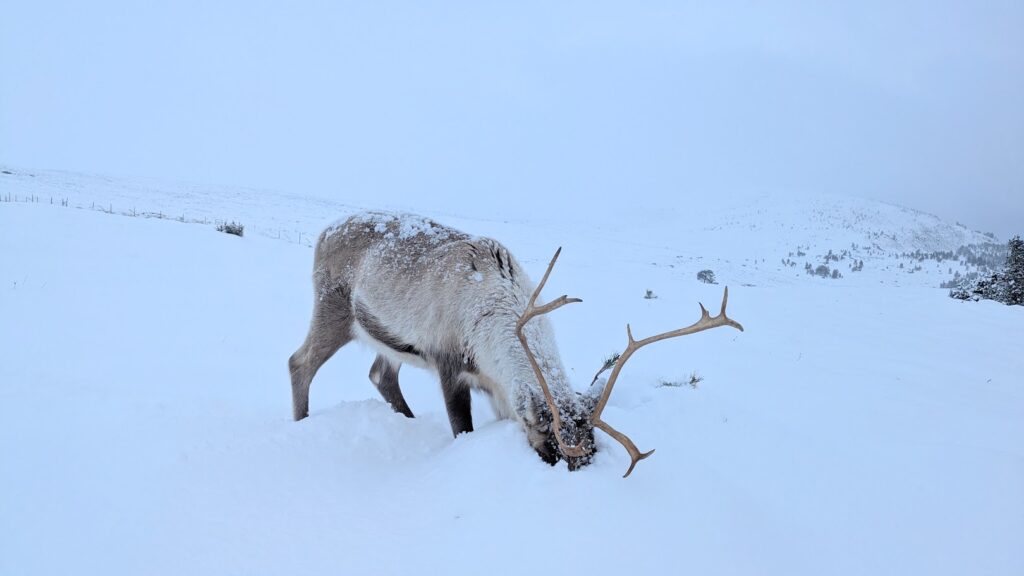
Winnie eating lichen under the snow.

During the winter reindeer are no longer growing their antlers, they won’t increase their body size at all, a calf will grow lots in the first 6 months of their life and then stay the same size for the next 5 months, until the following spring. They will survive the winter by using their fat reserves. The one important growth that does happen in winter is that of a growing foetus. This is the reason that the females grow antlers and keep them after the males have shed them, as it gives them a physical advantage during the time that they are pregnant and therefore they get first dibs on the food.
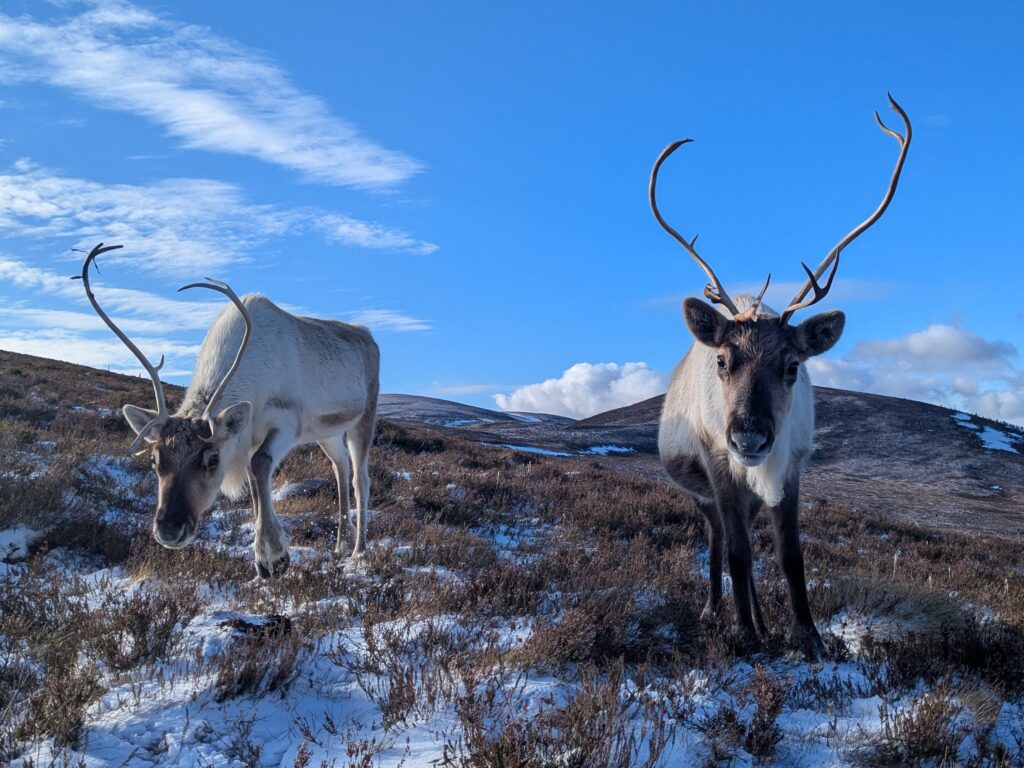
Vienna and Amazon showing off their beautiful antlers right through the winter.
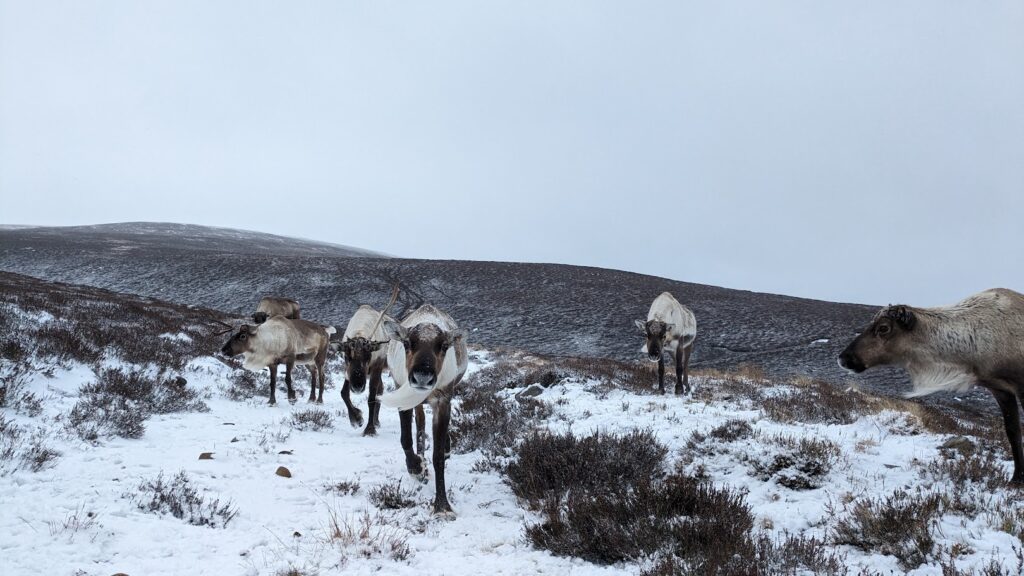
A group of our males in the winter having cast their antlers.

But how does a reindeer know that it’s time for spring? Rather than responding to food availability or temperature which may well change year by year, the changes in their metabolism are triggered by the changes in daylight. The increased daylight associated with spring is detected by specialised receptor cells in their eyes which then convert to a hormonal signal using melatonin. Melatonin is synthesised during the dark period each day and then synthesis stops during daylight. This means that the amount of melatonin varies based on the time of year. The concentration of melatonin has many effects. In terms of metabolism, in the spring as melatonin decreases, this increases the appetite of the reindeer. In the autumn, as melatonin increases, this decreases the appetite of the reindeer and increases the breakdown of fat stores. The changing melatonin levels also controls their antler growth and release of sex-hormones but that may be another blog in the future.
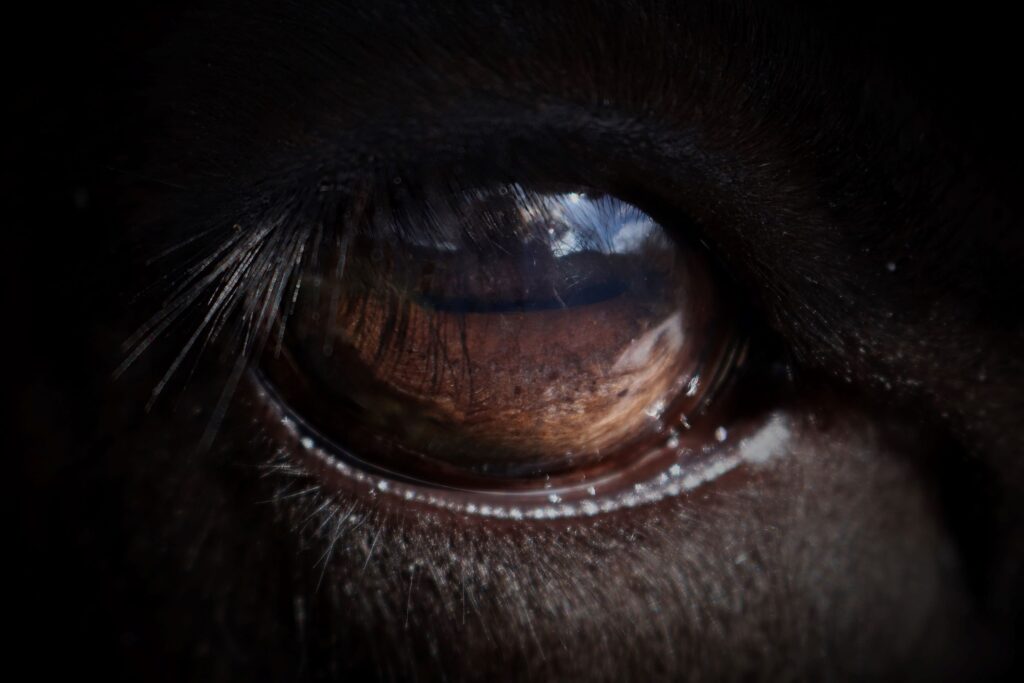
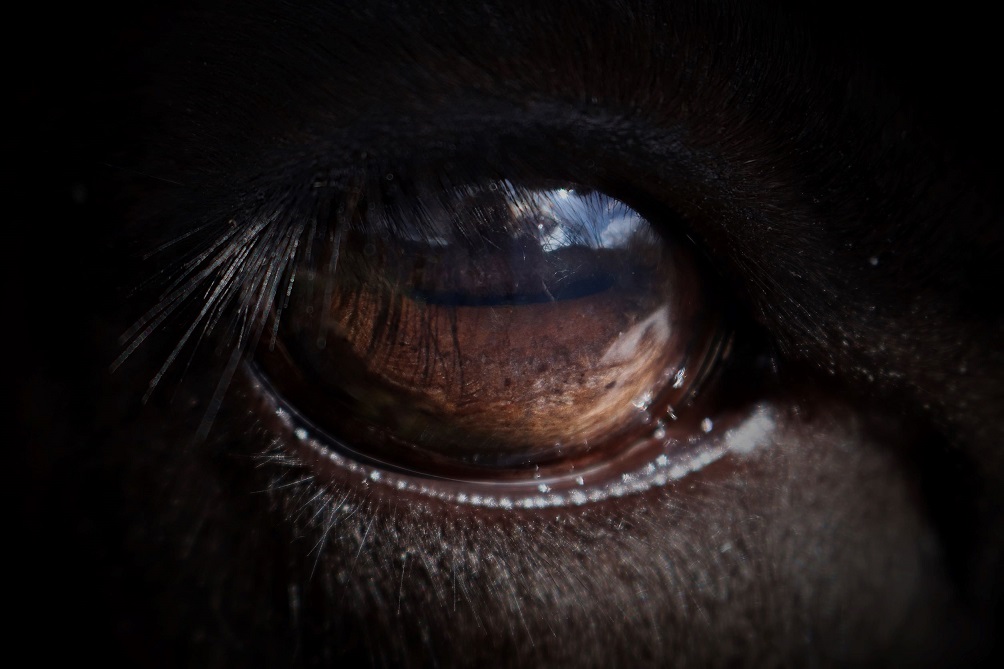
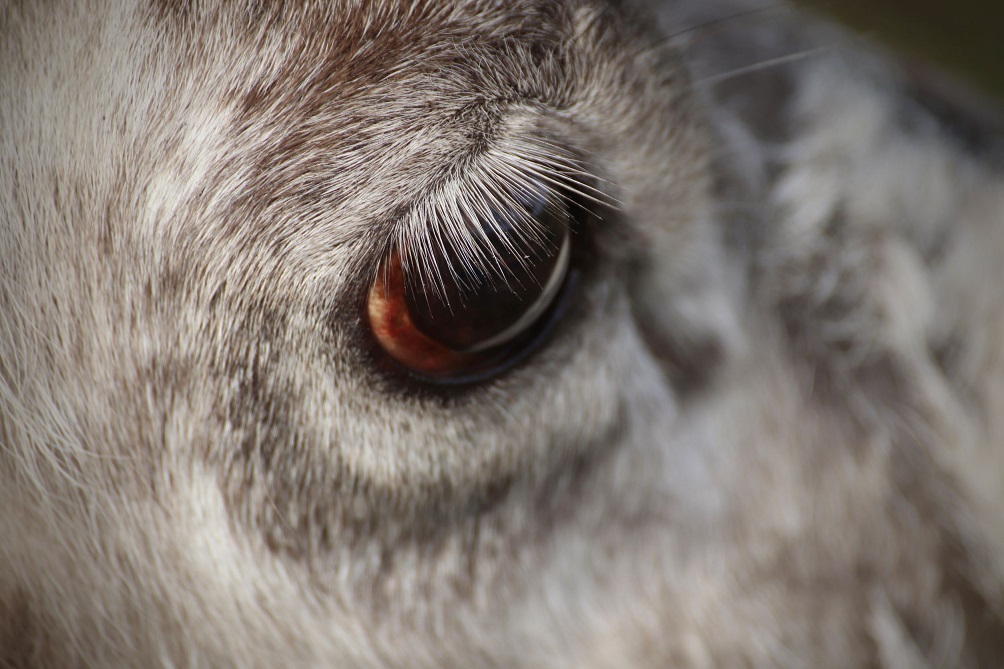
Eye of a reindeer.

For anyone particularly interested in a much more in-depth description of the physiology behind these changes, I would highly recommend reading this article.


https://septentrio.uit.no/index.php/rangifer/article/download/335/327/1280
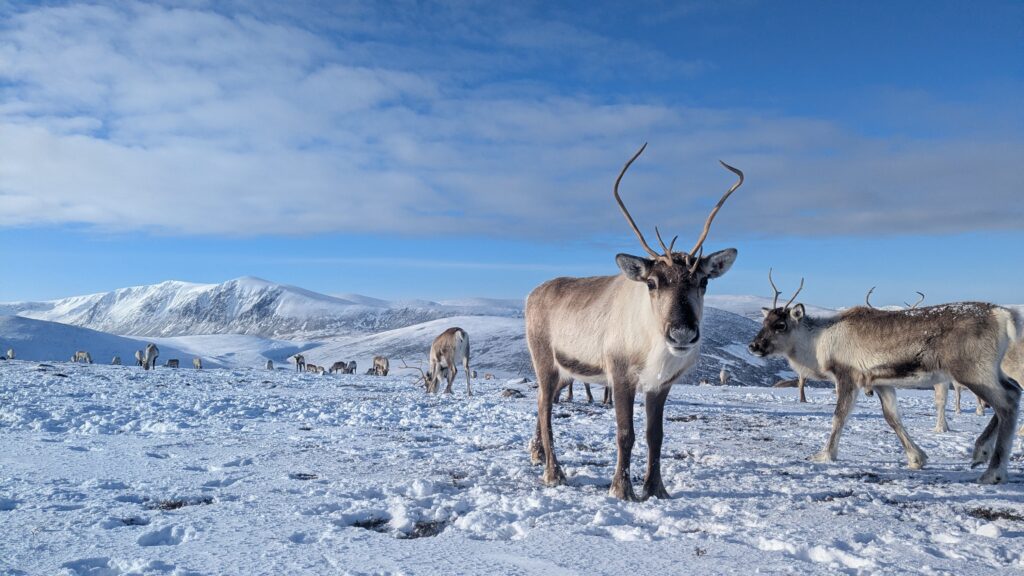
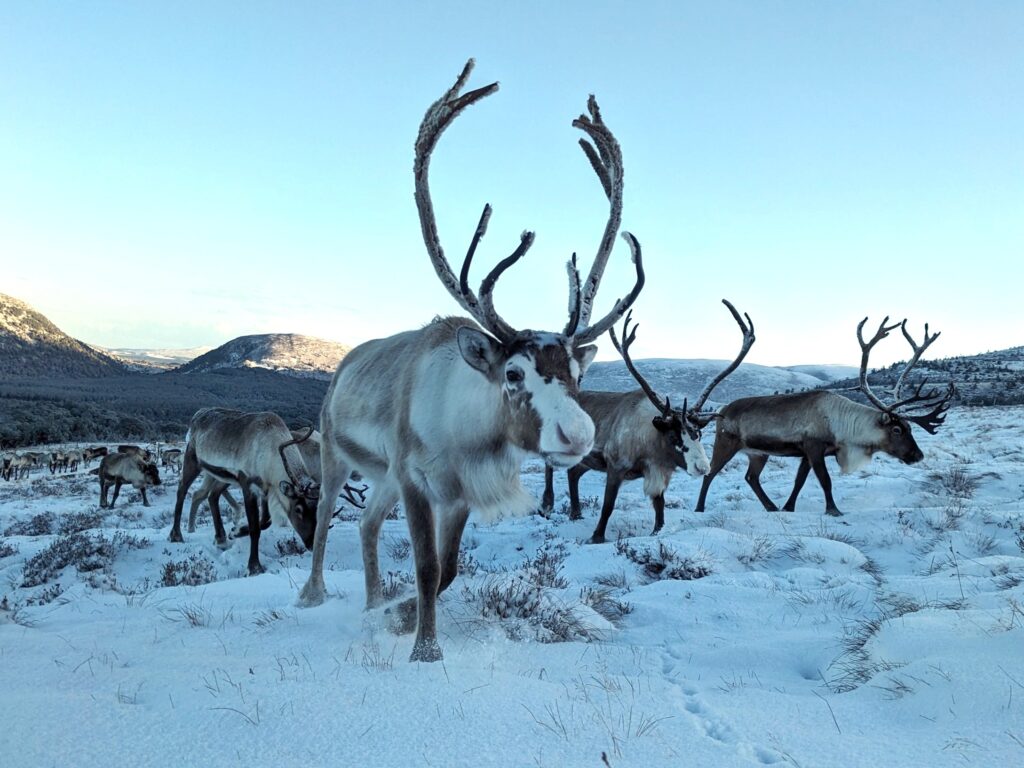
Glacee, Salsa and the herd enjoying a snowy day!

If you have made it this far, thanks for reading my very nerdy reindeer biology blog! Hopefully you have learnt something and enjoyed the pictures of the reindeer along the way.

Lotti
Through the Eyes of a Reindeer

A visitor recently asked me why reindeer have horizontal pupils. The question had me thinking about the importance of vision to reindeer. It is easy to forget that many animals don’t see the world the same way we do, and reindeer eyes are in many ways different from our own.

Reindeer live in arctic and sub arctic regions that experience hugely variable light levels. Above the arctic circle, they’ll experience 24 hour darkness in winter and 24 hour sun in summer, and no matter how dark it is, they still need to be able to find their food and see predators coming. So how do reindeer eyes cope with their environment?

Origami – Photo by Kate Brown

When you look at a reindeer, the most obvious thing about their eyes is that they are placed on the side of their heads. This is common in prey animals, and it gives them a wide field of vision that means they can see danger coming from almost any direction. The placement of their eyes does mean they have a blind spot right in front of their noses, but aside from this it’s very hard to sneak up on a reindeer!

Ladybird – Photo by Kate Brown

If you look a bit closer, the next thing you might notice – aside from their beautiful eyelashes – is that they have long,  horizontal pupils. This adaption helps focus a reindeer’s sense of sight at the ground level and the horizon – where their food and their predator’s are found. These horizontal pupils also help compensate for the placement of their eyes and reduce the size of that blind spot in front of a reindeer, so that they can see forwards – vital for finding an escape route when on the run from a predator.

Dr. Seuss – Photo by Kate Brown

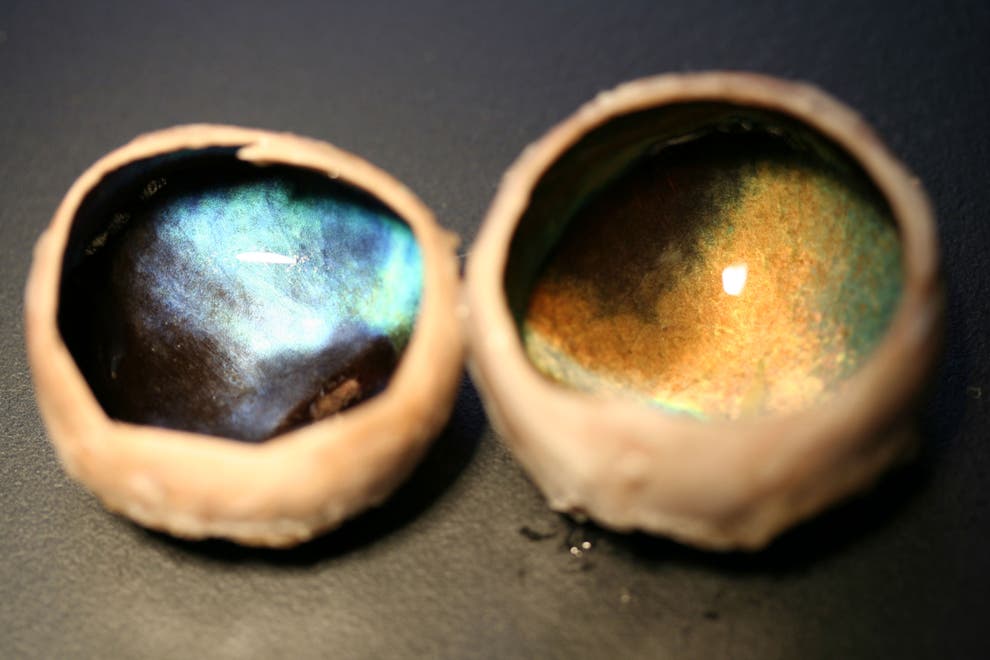
If you looked deeper into a reindeer’s eyes, you would find even more amazing adaptions. In 2013 scientists discovered that reindeer eyes actually change colour with the seasons! A layer of tissue in the retina changes from a golden colour in summer to a deep blue in winter. This change means that less light is reflected back out of the eye, helping reindeer keep their vision sharp even in the long dark winter months. This is the first time this kind of colour change in a mammalian eye has been found. It is thought the colour change might be caused by increased pressure in the eye in winter. The pupil is permanently dilated in the dark, and this reduces the space in the collagen structure of the retina, which in turn changes the reflectiveness of the retina and shortens the wavelengths of light being reflected.

Two dissected reindeer eyes, the left taken from a reindeer that died in winter, the right from one that died in summer. Photo by Glen Jeffrey (The Independent).

Reindeer vision is made even more interesting by the fact that they can see into the UV range. There are high levels of UV light present in the polar regions of the world due to the reflections from snow and ice. Many lichens – the favoured winter food of reindeer – are very effective at absorbing UV. Wolf fur as well is also shown to absorb UV, so being able to see UV wavelengths helps reindeer pick out both their food and their predators in the snow (see here for a previous blog on UV vision).

Reindeer seem to view the world quite differently to us, and it’s clear their eyes have had to adapt to many challenges. They’ve had to adapt to pick out predators and hard to find food, to cope with extreme seasonal changes in light, and to deal with the large amount of UV present in the arctic. Their eyes are just another example of how well adapted reindeer are for their environments.

Kate

Sources:

Why do animal eyes have pupils of different shapes? | Science Advances (sciencemag.org)

Arctic reindeer extend their visual range into the ultraviolet | Journal of Experimental Biology | The Company of Biologists

Shifting mirrors: adaptive changes in retinal reflections to winter darkness in Arctic reindeer | Proceedings of the Royal Society B: Biological Sciences (royalsocietypublishing.org)

Book Now