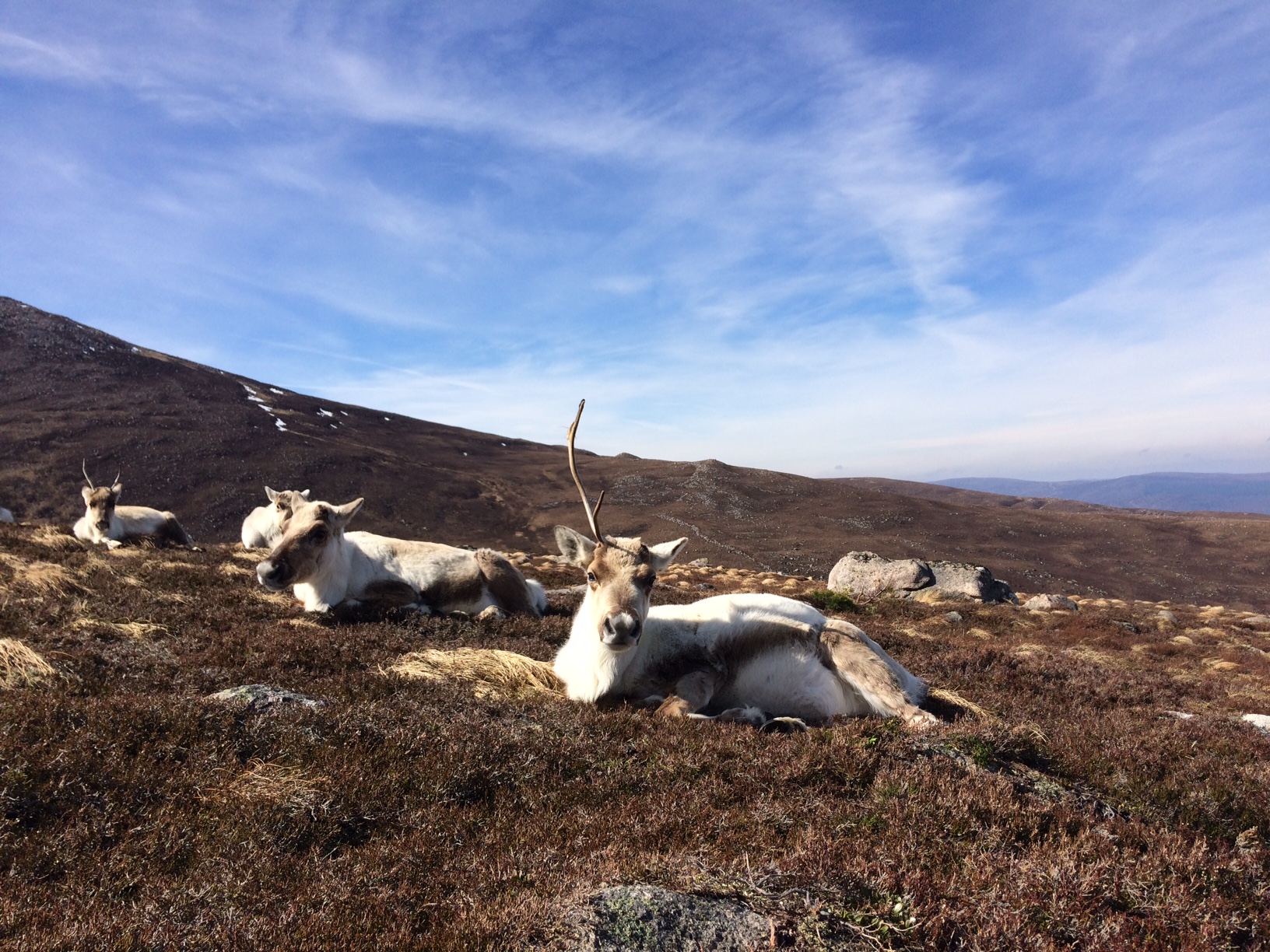
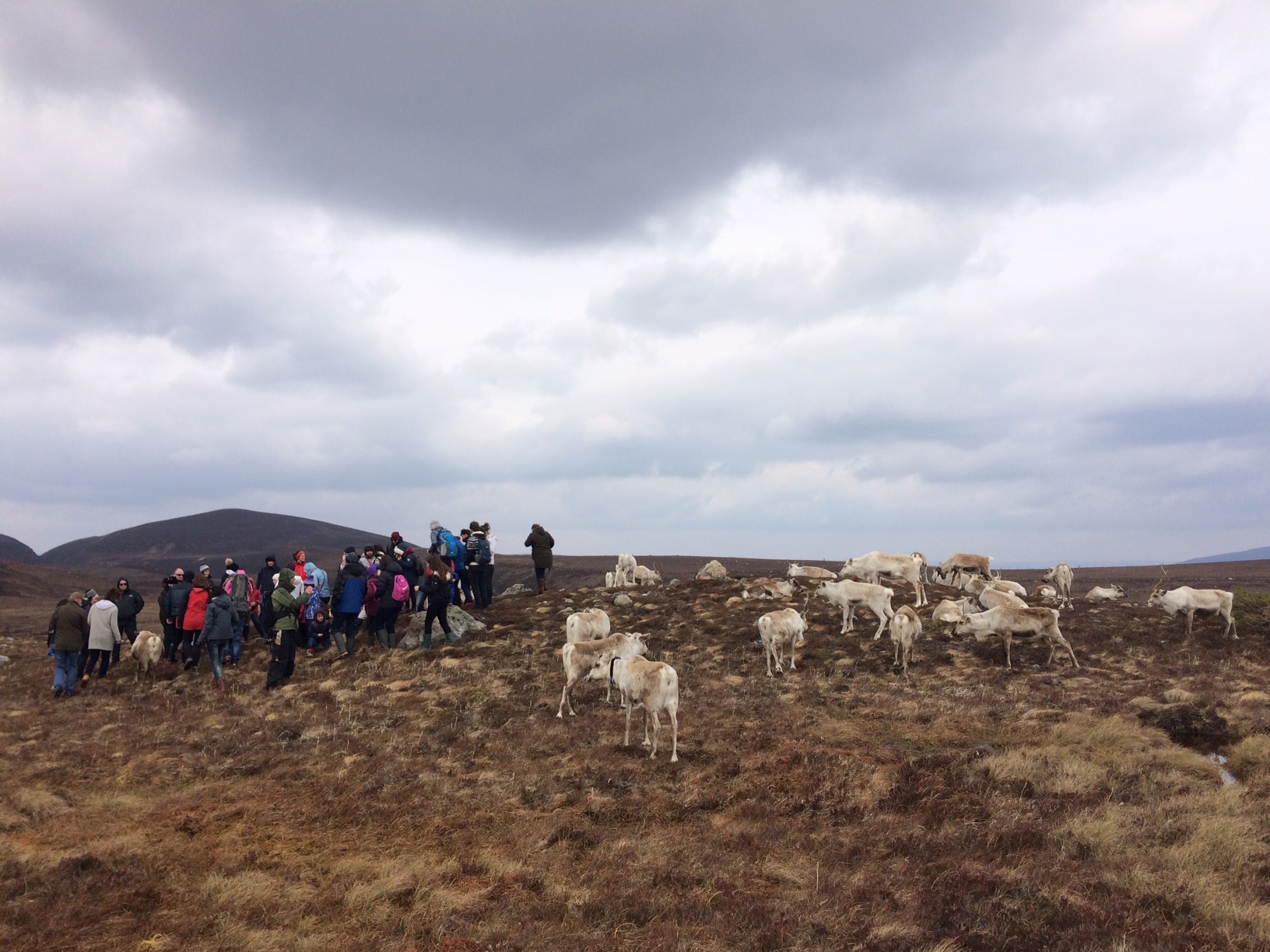
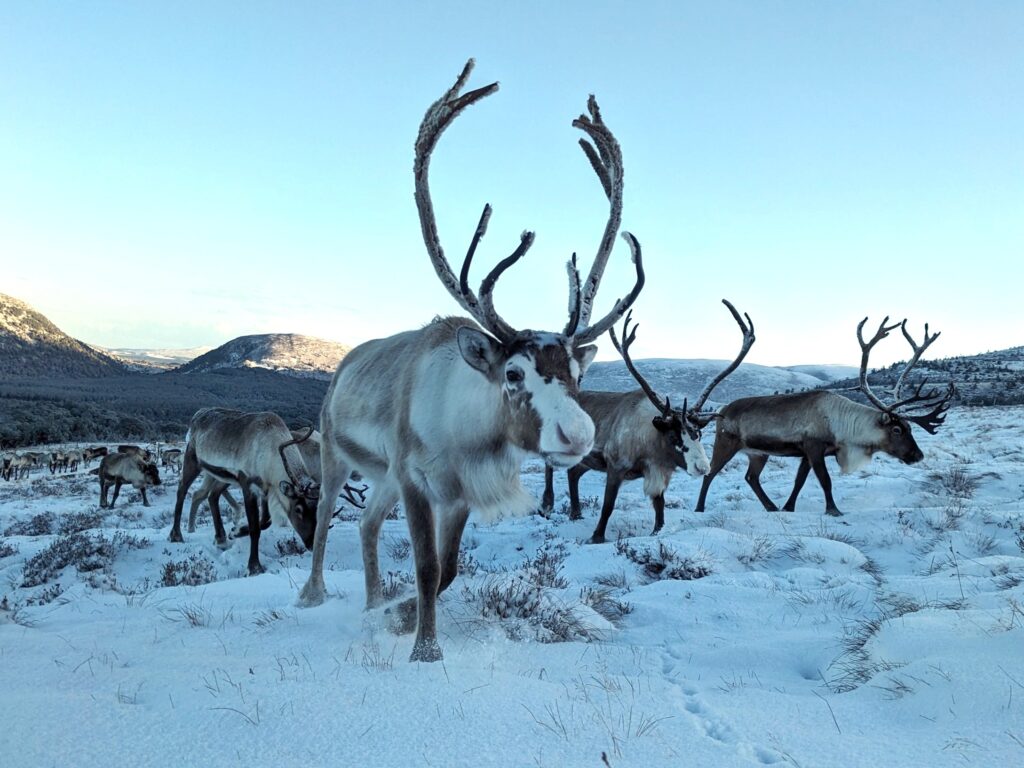
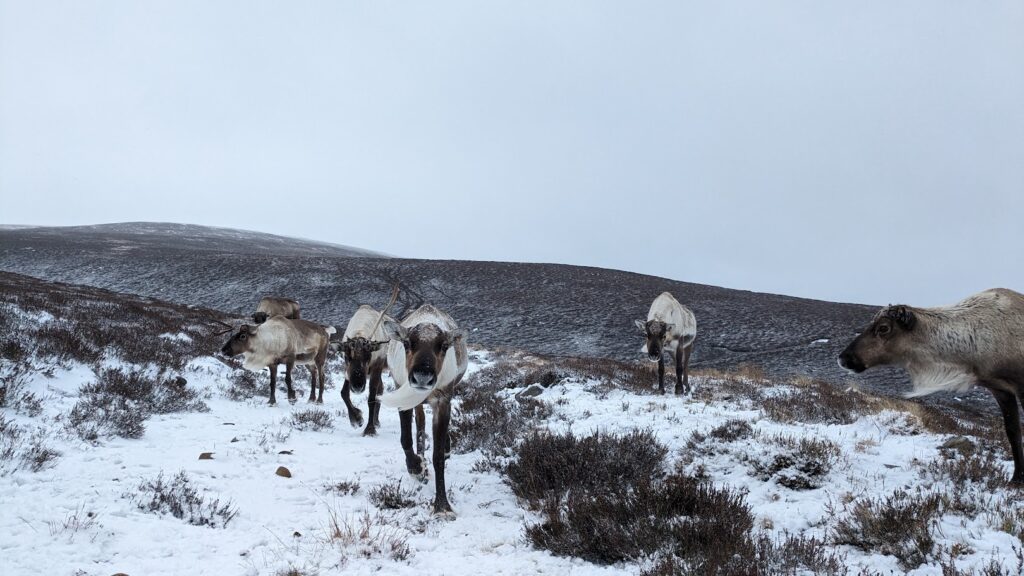
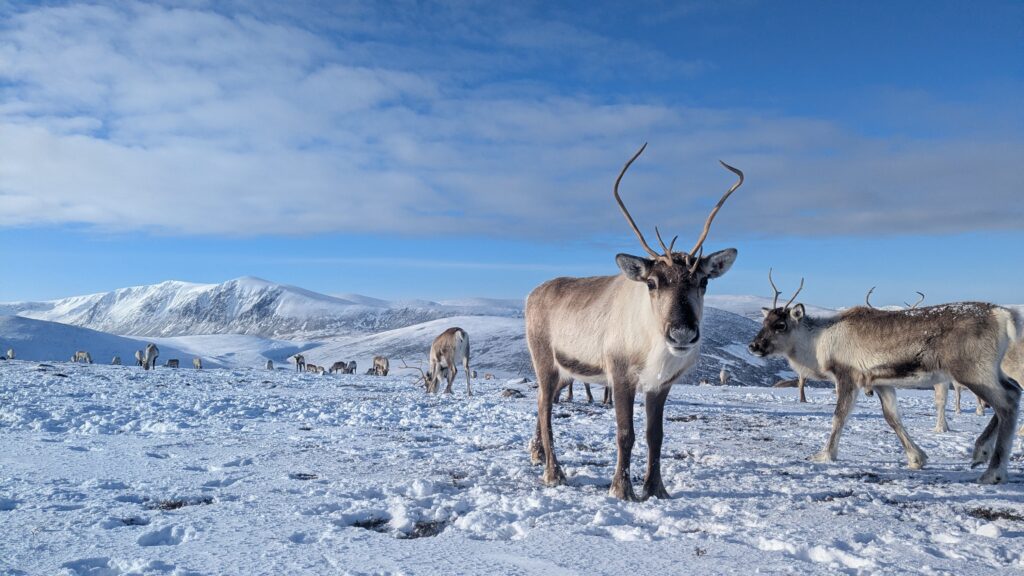
The bodies of reindeer go through many changes allowing them to cope with huge temperature difference throughout the seasons. In summer reindeer can cope with temperatures above 30 degrees and the lowest recorded temperature that reindeer have been know to survive is -72 degrees Celsius. Reindeer have two different coats, a thick white winter coat as well as a fine, dark summer coat. Their antlers grow in an annual cycle and the different times of growing and shedding them allows different animals to be dominant at different times of year. One of the most interesting, and important, changes to a reindeer though, you can’t see – their metabolism.
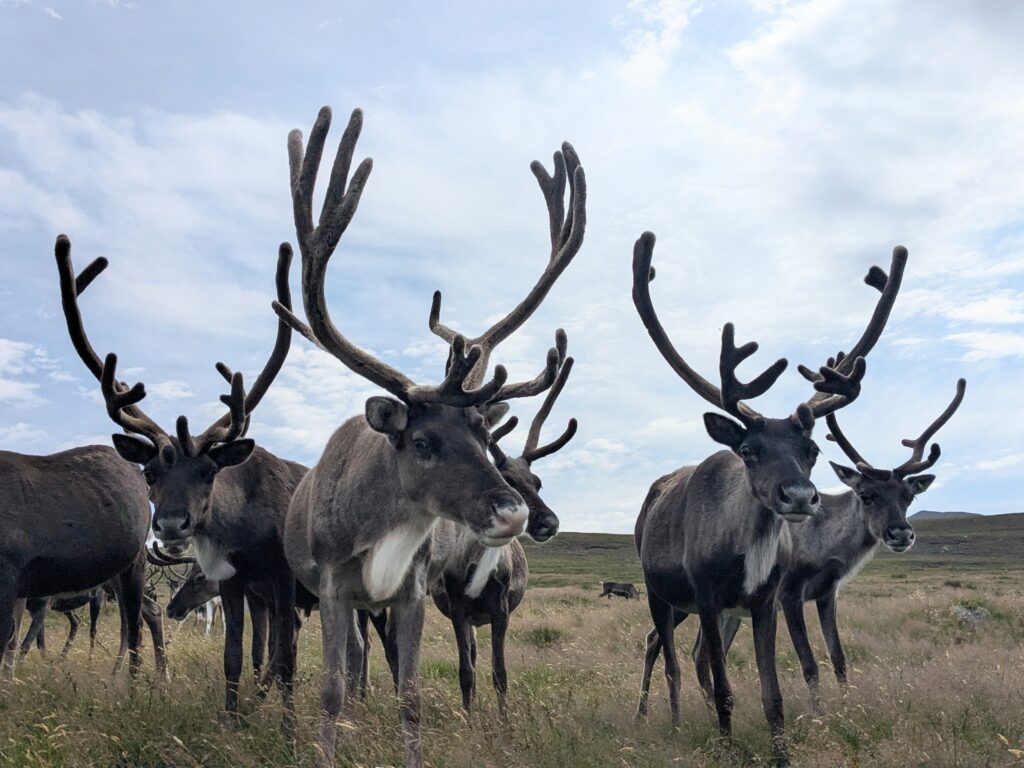
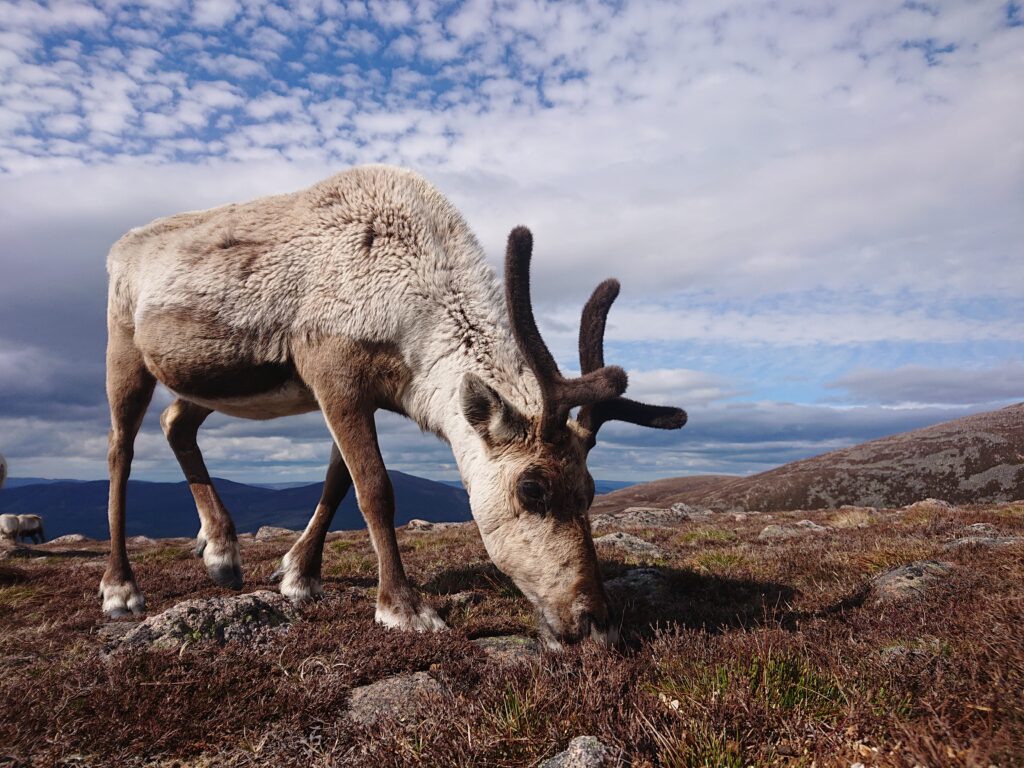
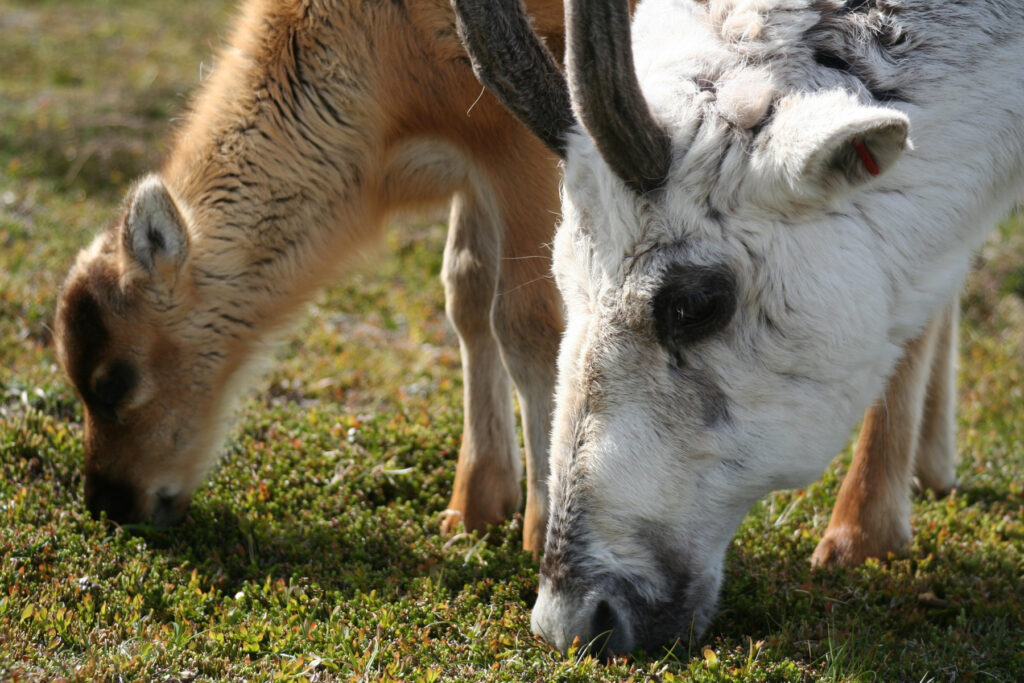
Reindeer have adapted to eat vast amounts of food throughout the spring, summer and autumn to gain enough weight to survive the winter, when food is scarce. To cope with these changes in food availability their metabolism changes too. In the summer reindeer will graze around the clock, eating a huge variety (between 200 and 300 different species) of plants which are high in nutrition. This allows each individual to grow a new set of antlers, they start to grow in the spring and are fully grown by the end of august and the heaviest set we have had in our herd, weighed a whopping 8.9 kgs. The summer is also the time that the young reindeer grow in body size. Finally, every reindeer will need to gain body fat which will act as reserves over the winter. All these things require their digestive system to work in overdrive converting the food they are eating into energy that can be used by their body to create protein, bone, fat, and whatever is needed.
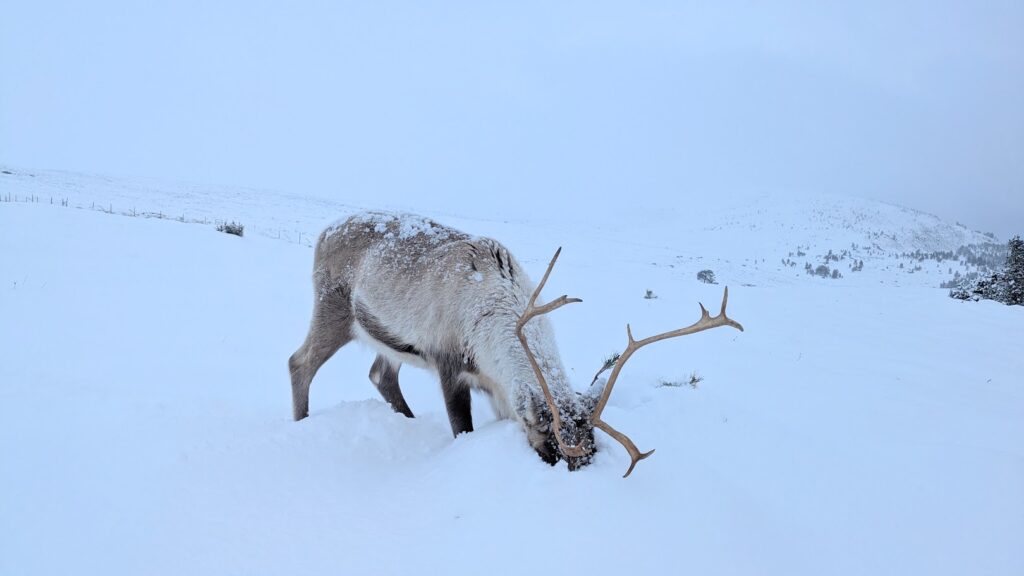
On the contrary, winter is all about survival. During the winter most of the plants will have died under the snow and 70% of a reindeer’s diet is made up of lichen. Lichen is a symbiosis of fungi and algae and is very resistant to extreme changes in temperature. Over the winter lichen won’t grow but it will stay dormant, preserved under the snow. Reindeer will then dig down through the snow to reach the lichen. But lichen is relatively low in nutrients, just enough to sustain the reindeer through the winter and their metabolism shifts in line with this. In fact, even if you gave a reindeer a big pile of food, during the winter, they just aren’t as hungry and wouldn’t eat it all.
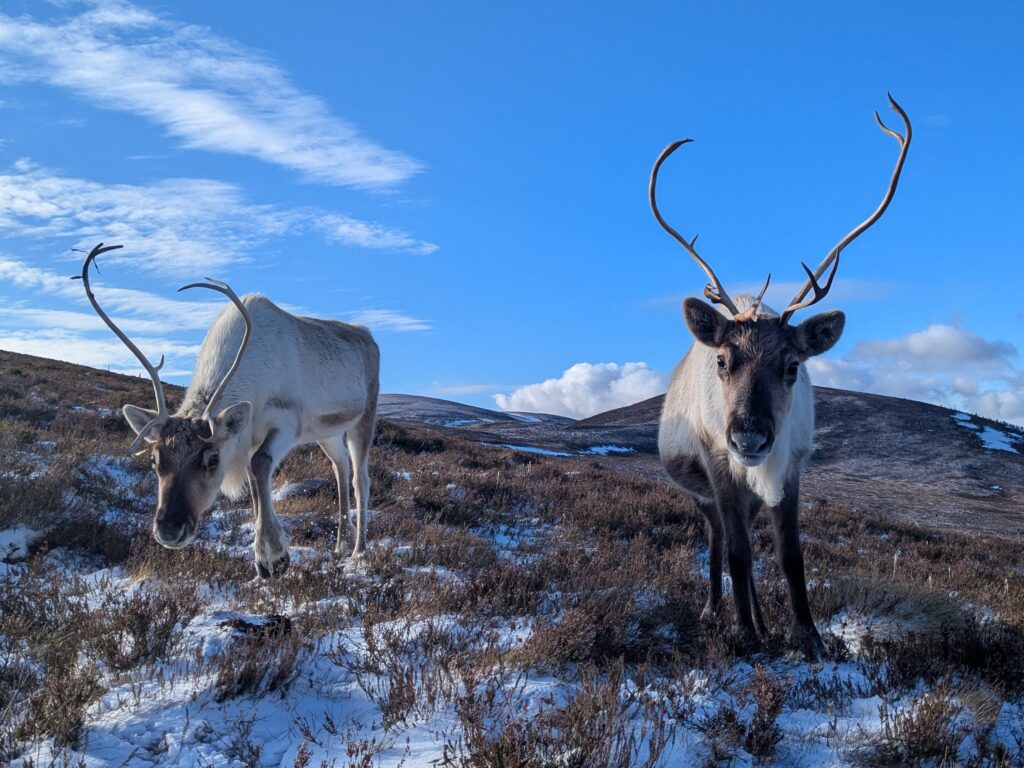
During the winter reindeer are no longer growing their antlers, they won’t increase their body size at all, a calf will grow lots in the first 6 months of their life and then stay the same size for the next 5 months, until the following spring. They will survive the winter by using their fat reserves. The one important growth that does happen in winter is that of a growing foetus. This is the reason that the females grow antlers and keep them after the males have shed them, as it gives them a physical advantage during the time that they are pregnant and therefore they get first dibs on the food.
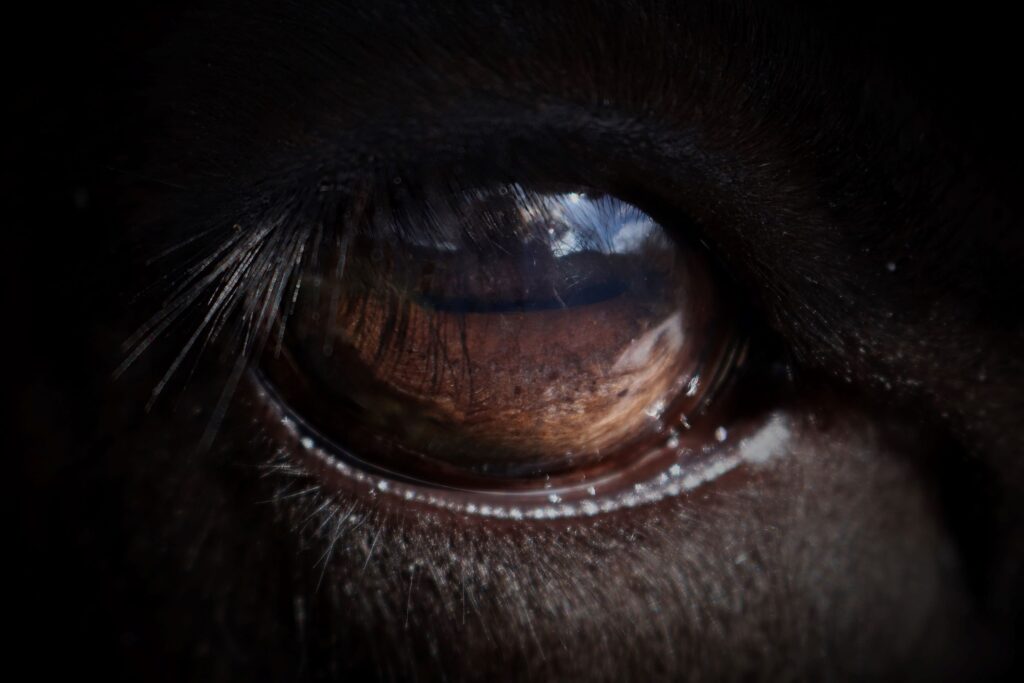
But how does a reindeer know that it’s time for spring? Rather than responding to food availability or temperature which may well change year by year, the changes in their metabolism are triggered by the changes in daylight. The increased daylight associated with spring is detected by specialised receptor cells in their eyes which then convert to a hormonal signal using melatonin. Melatonin is synthesised during the dark period each day and then synthesis stops during daylight. This means that the amount of melatonin varies based on the time of year. The concentration of melatonin has many effects. In terms of metabolism, in the spring as melatonin decreases, this increases the appetite of the reindeer. In the autumn, as melatonin increases, this decreases the appetite of the reindeer and increases the breakdown of fat stores. The changing melatonin levels also controls their antler growth and release of sex-hormones but that may be another blog in the future.
For anyone particularly interested in a much more in-depth description of the physiology behind these changes, I would highly recommend reading this article.
https://septentrio.uit.no/index.php/rangifer/article/download/335/327/1280
If you have made it this far, thanks for reading my very nerdy reindeer biology blog! Hopefully you have learnt something and enjoyed the pictures of the reindeer along the way.
Lotti