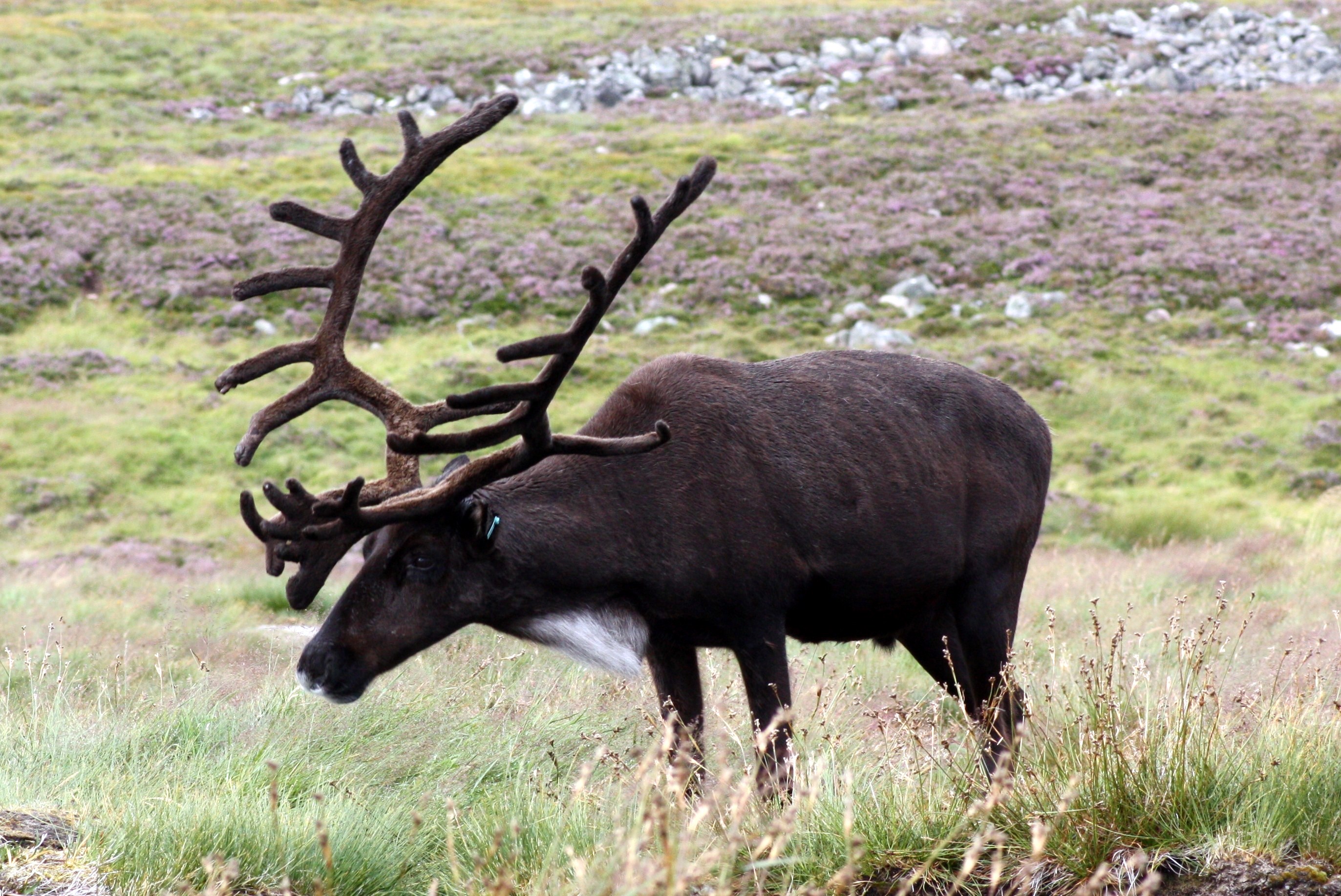
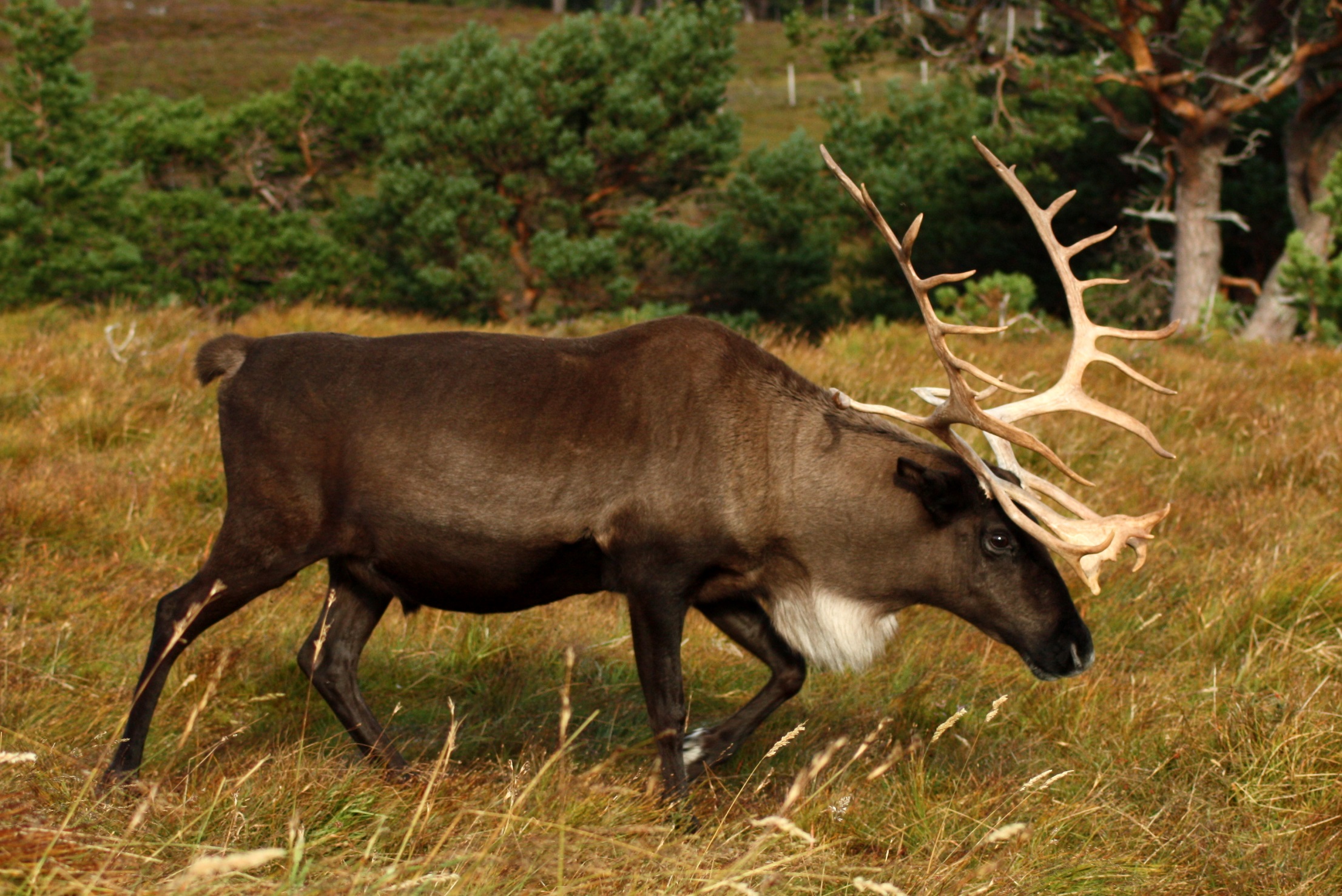
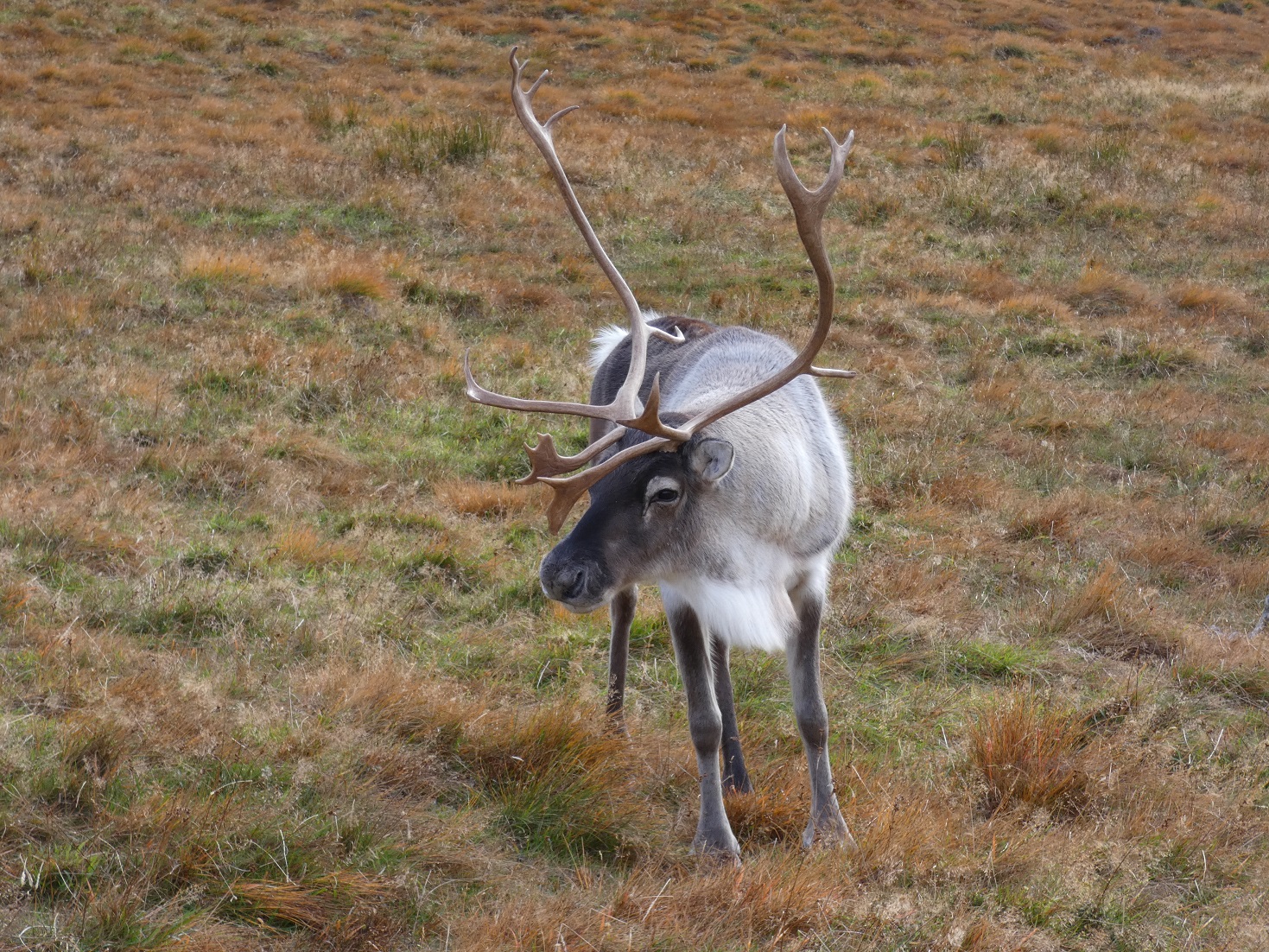
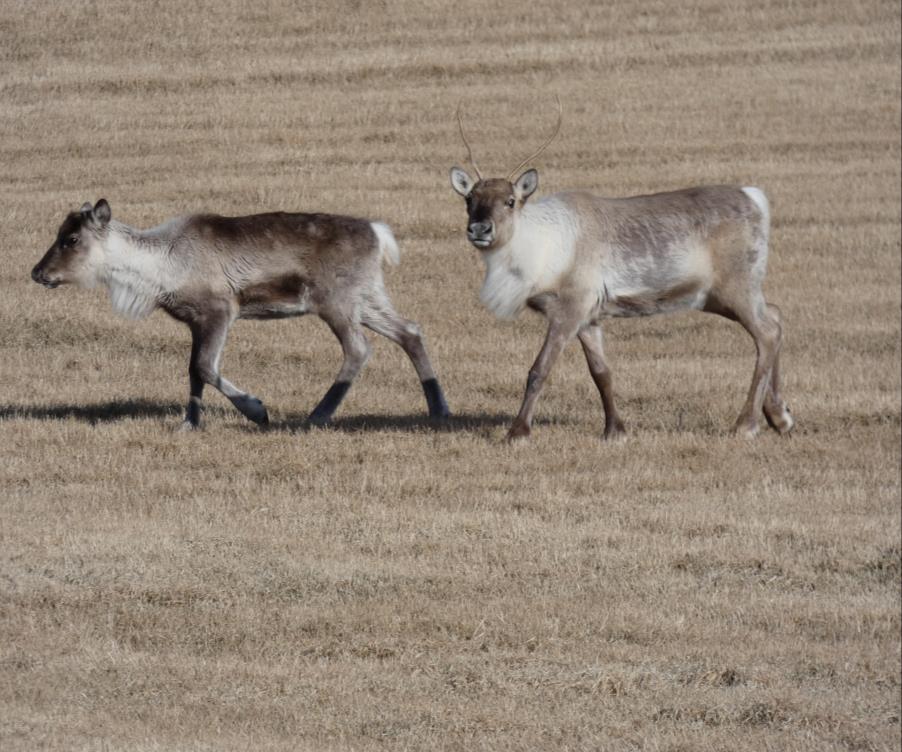
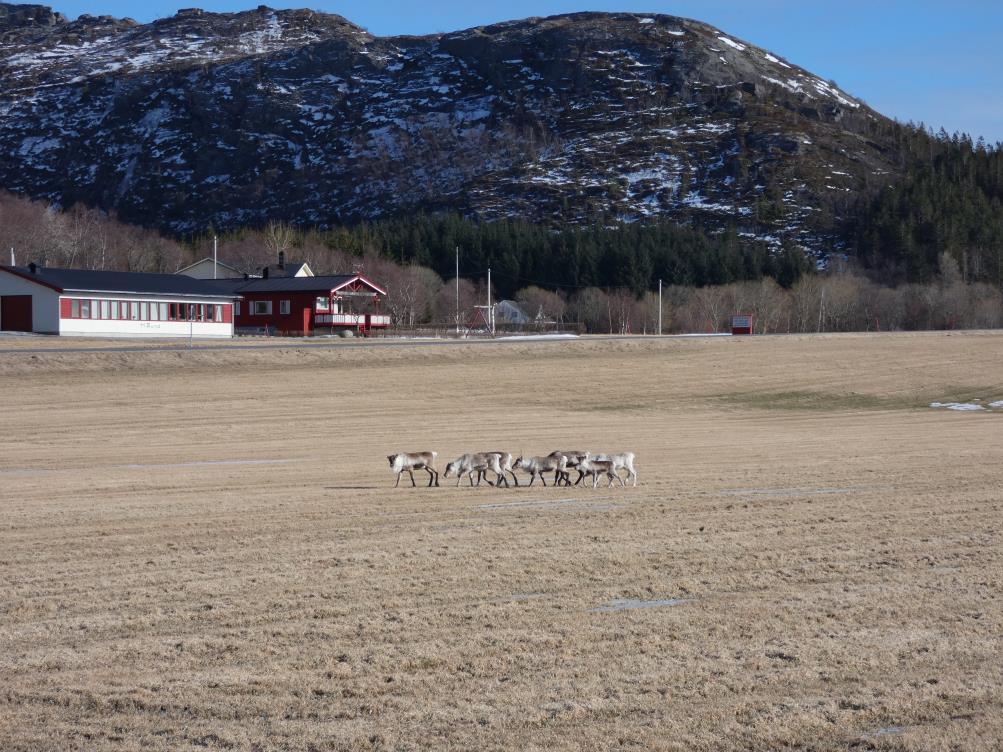
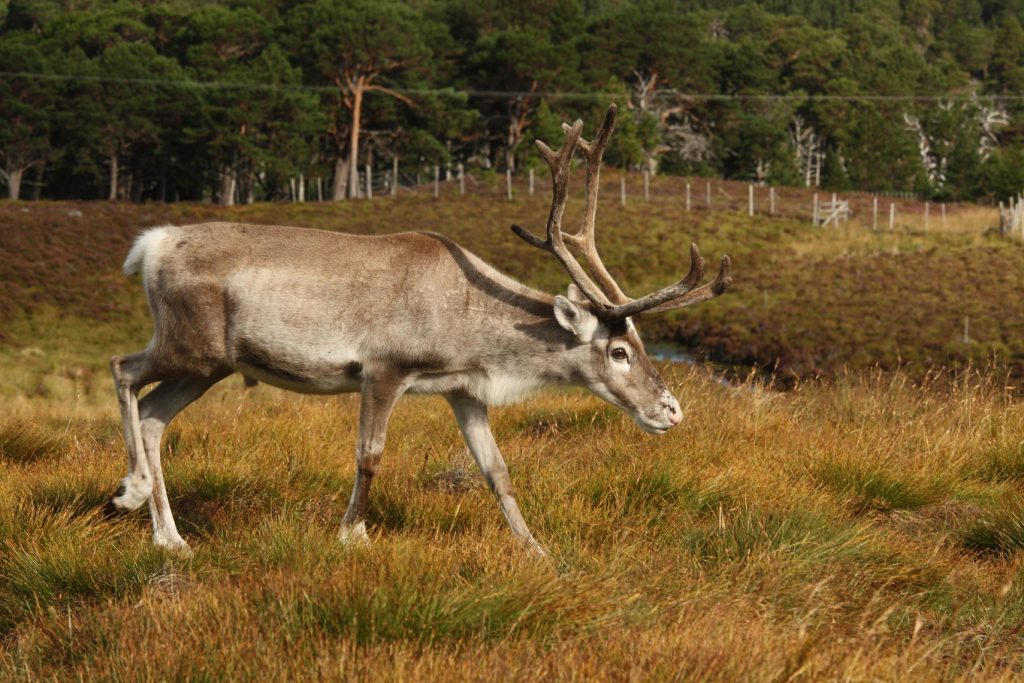
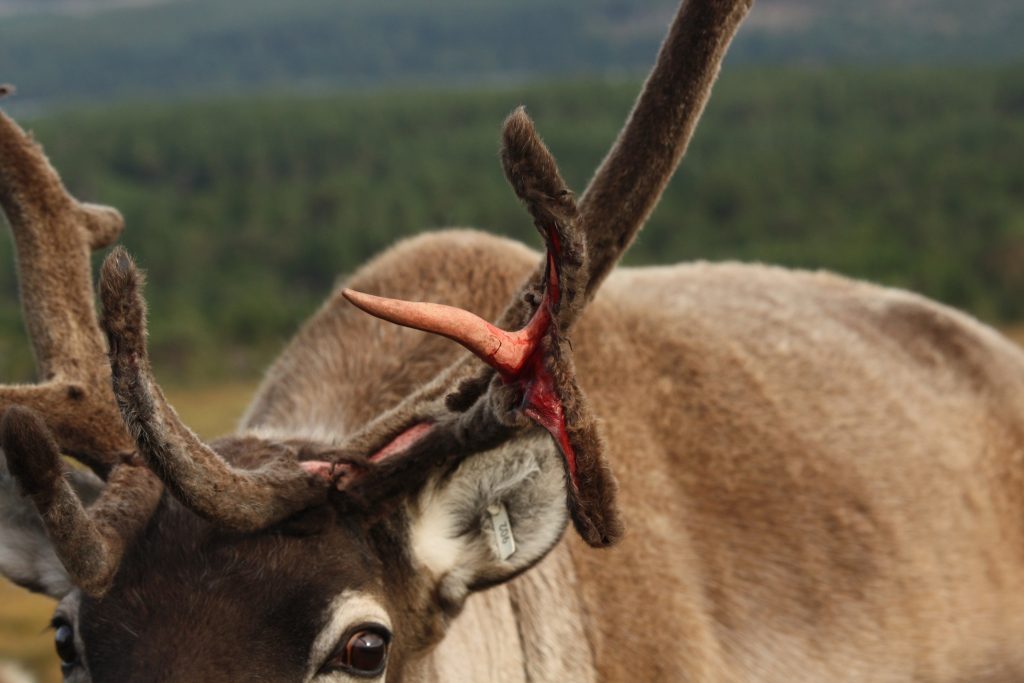
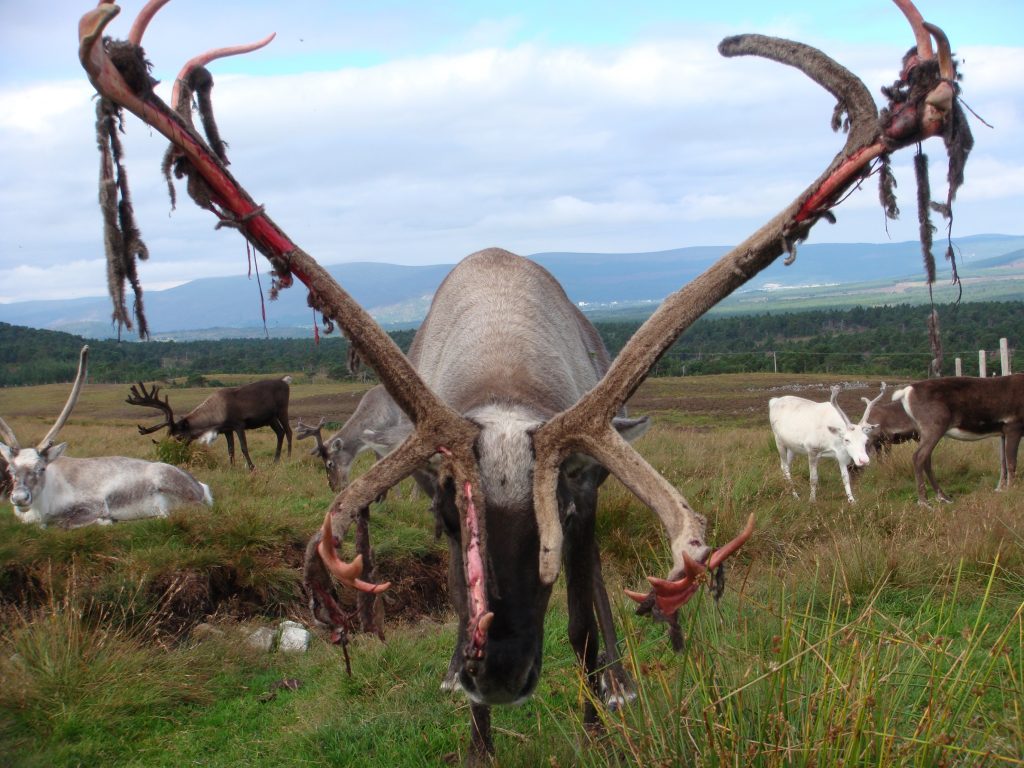
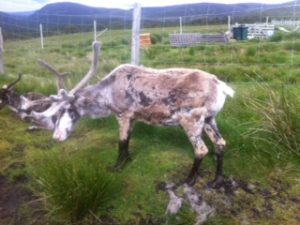
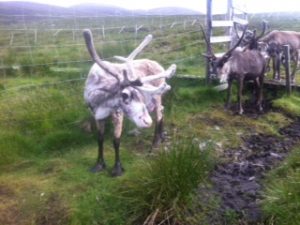
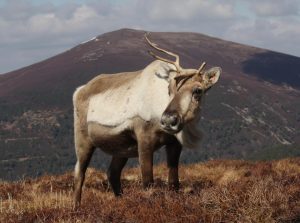
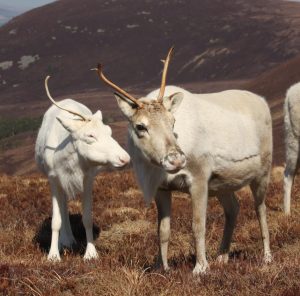
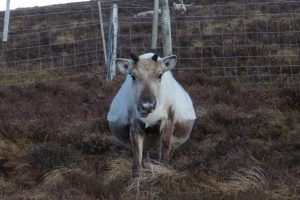
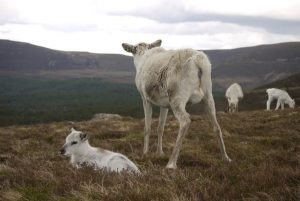
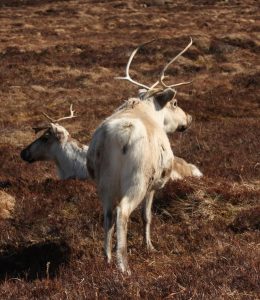
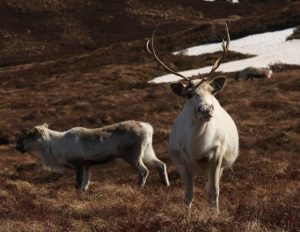
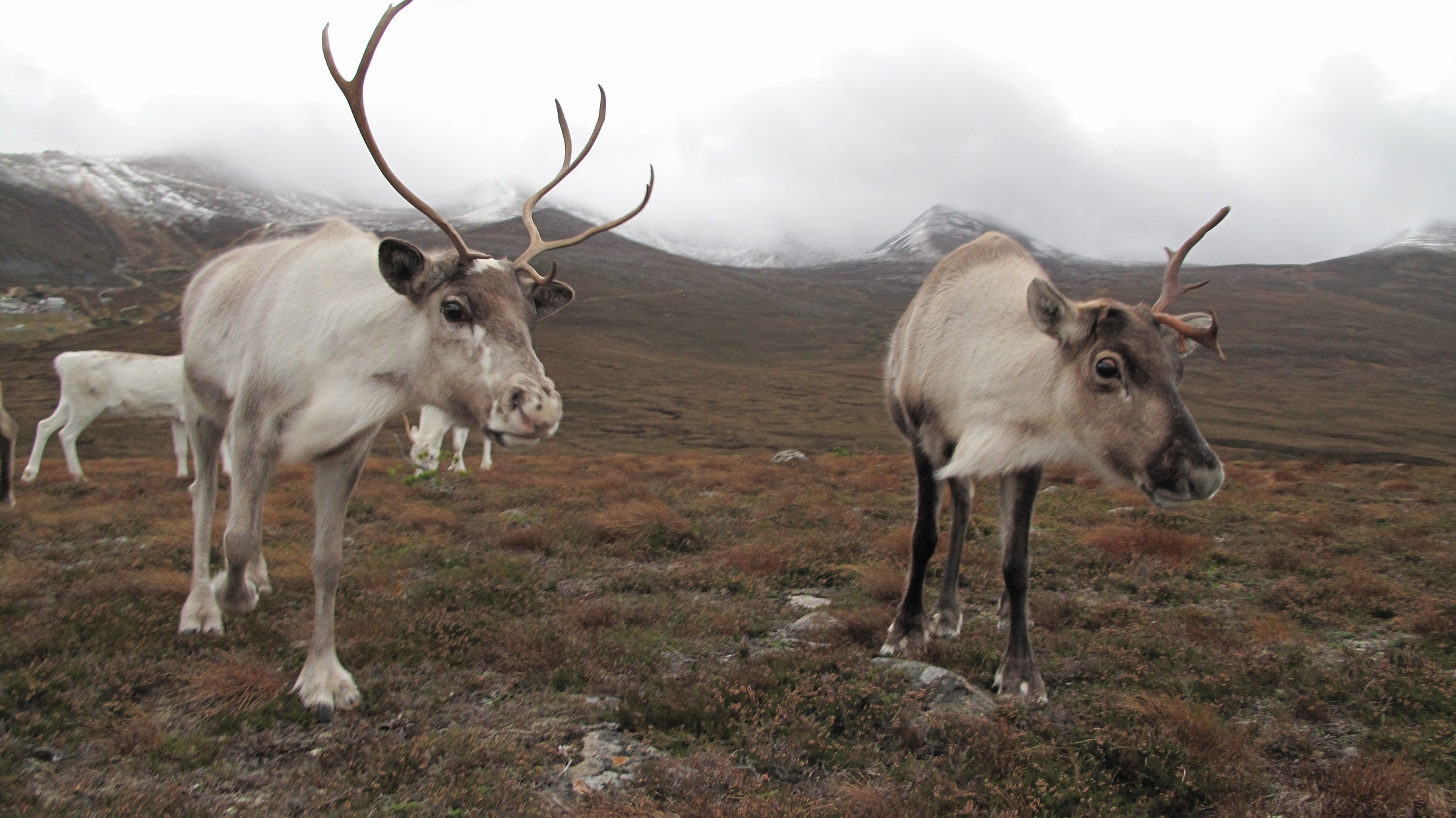
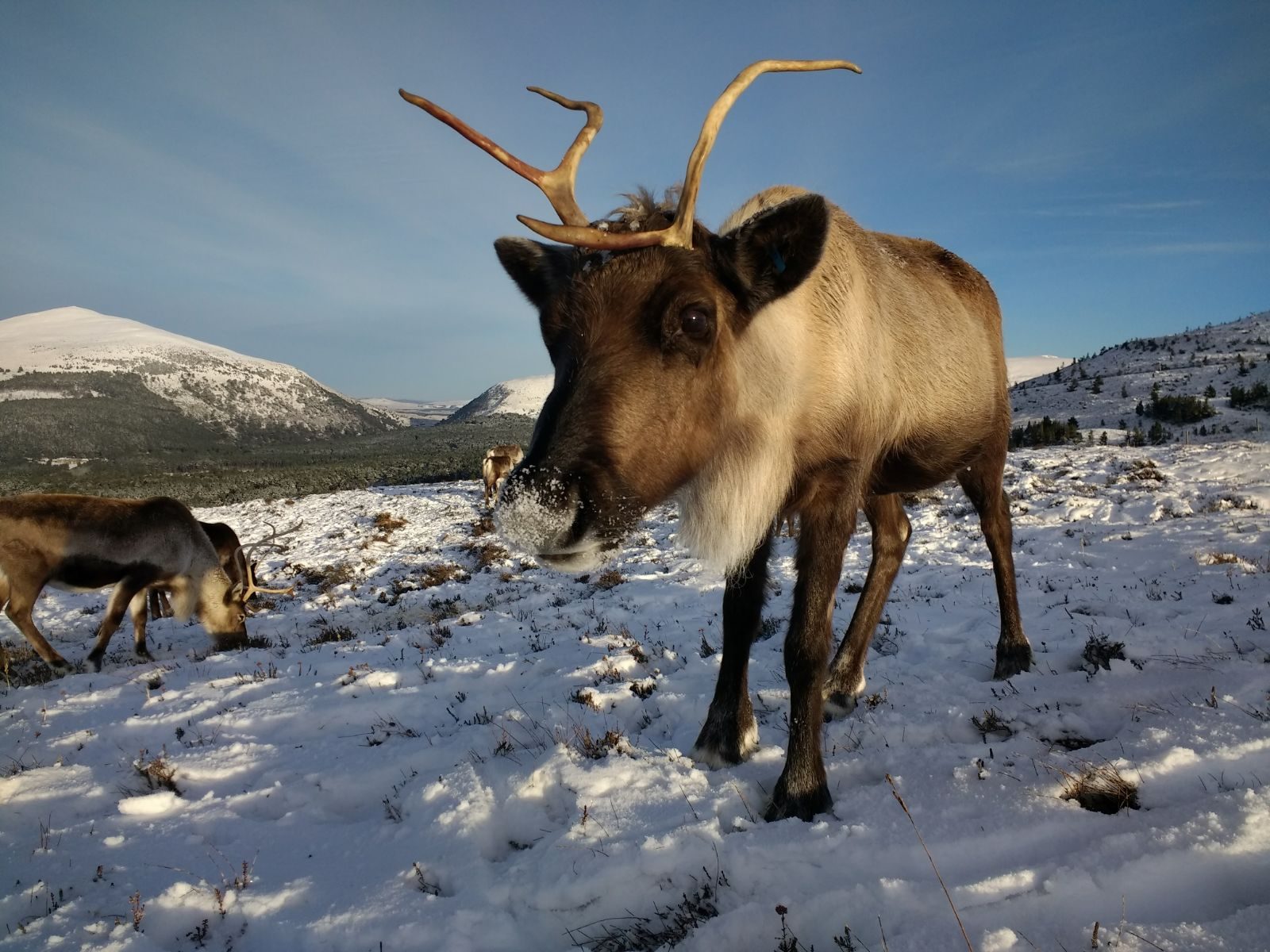
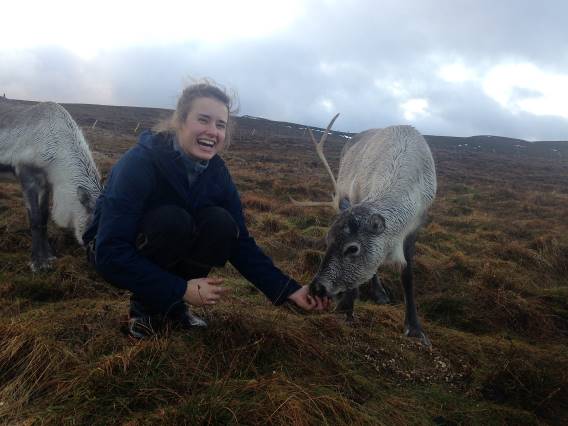
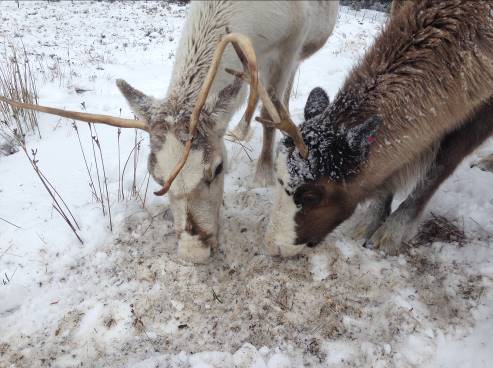
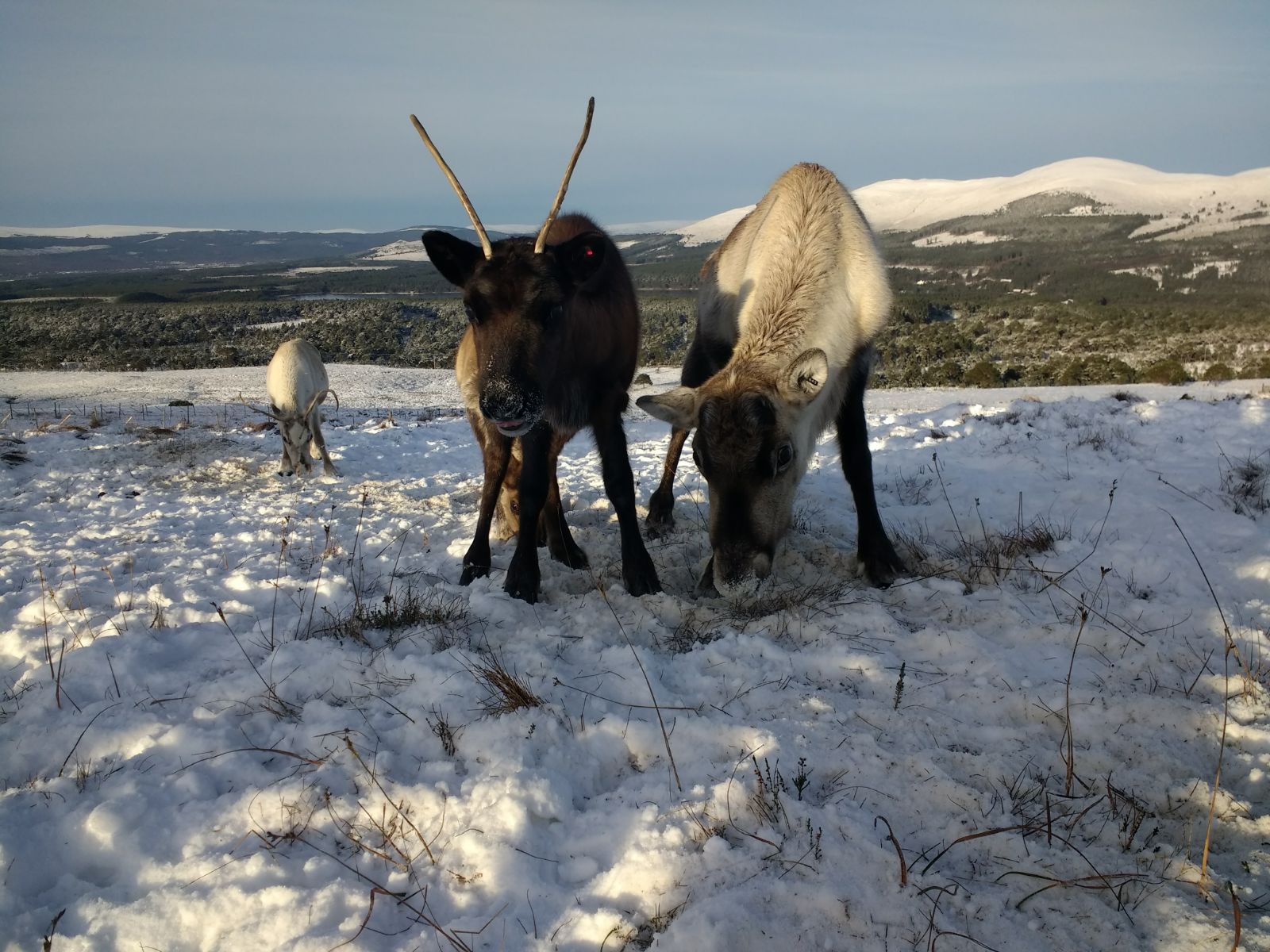
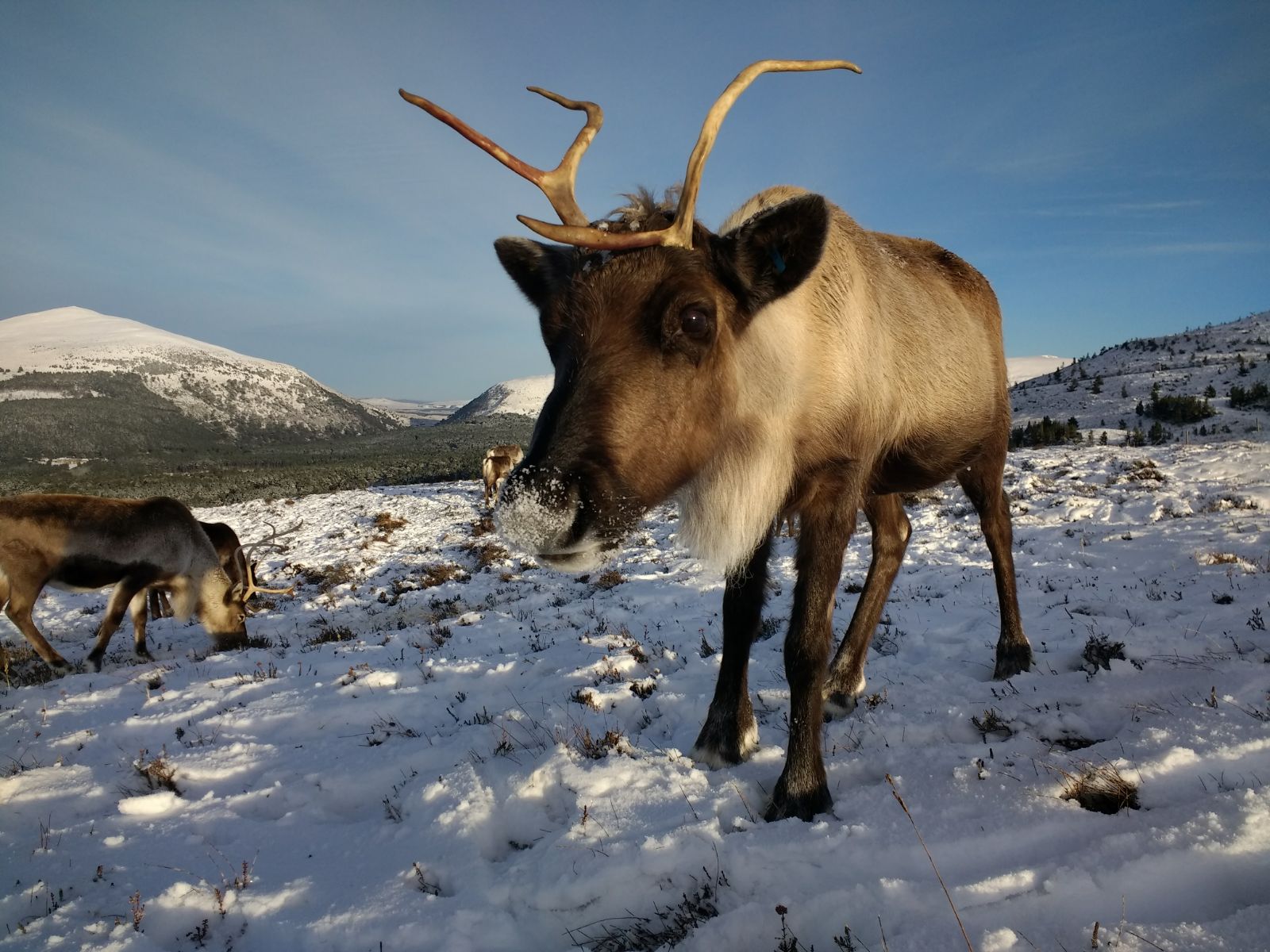
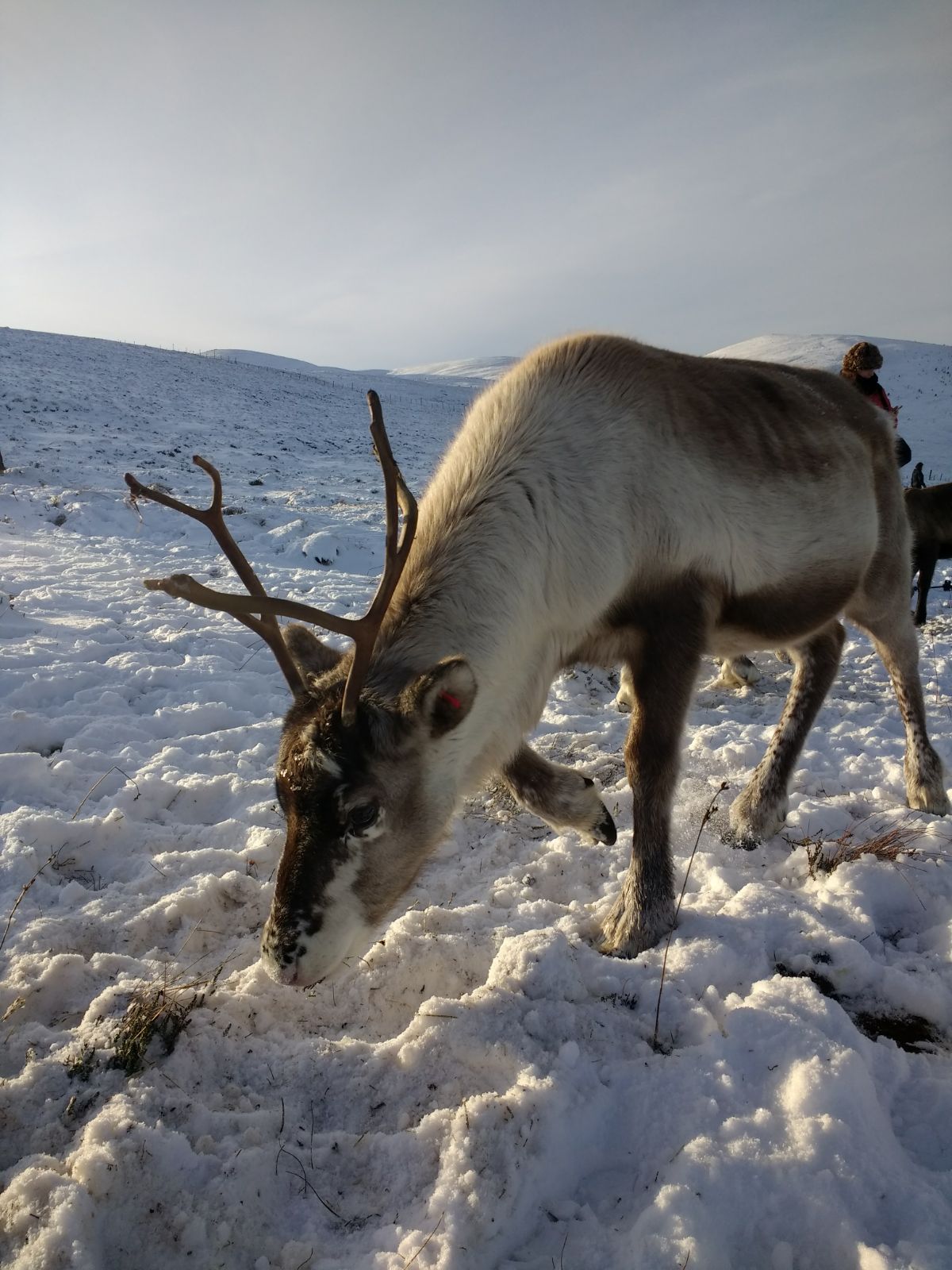
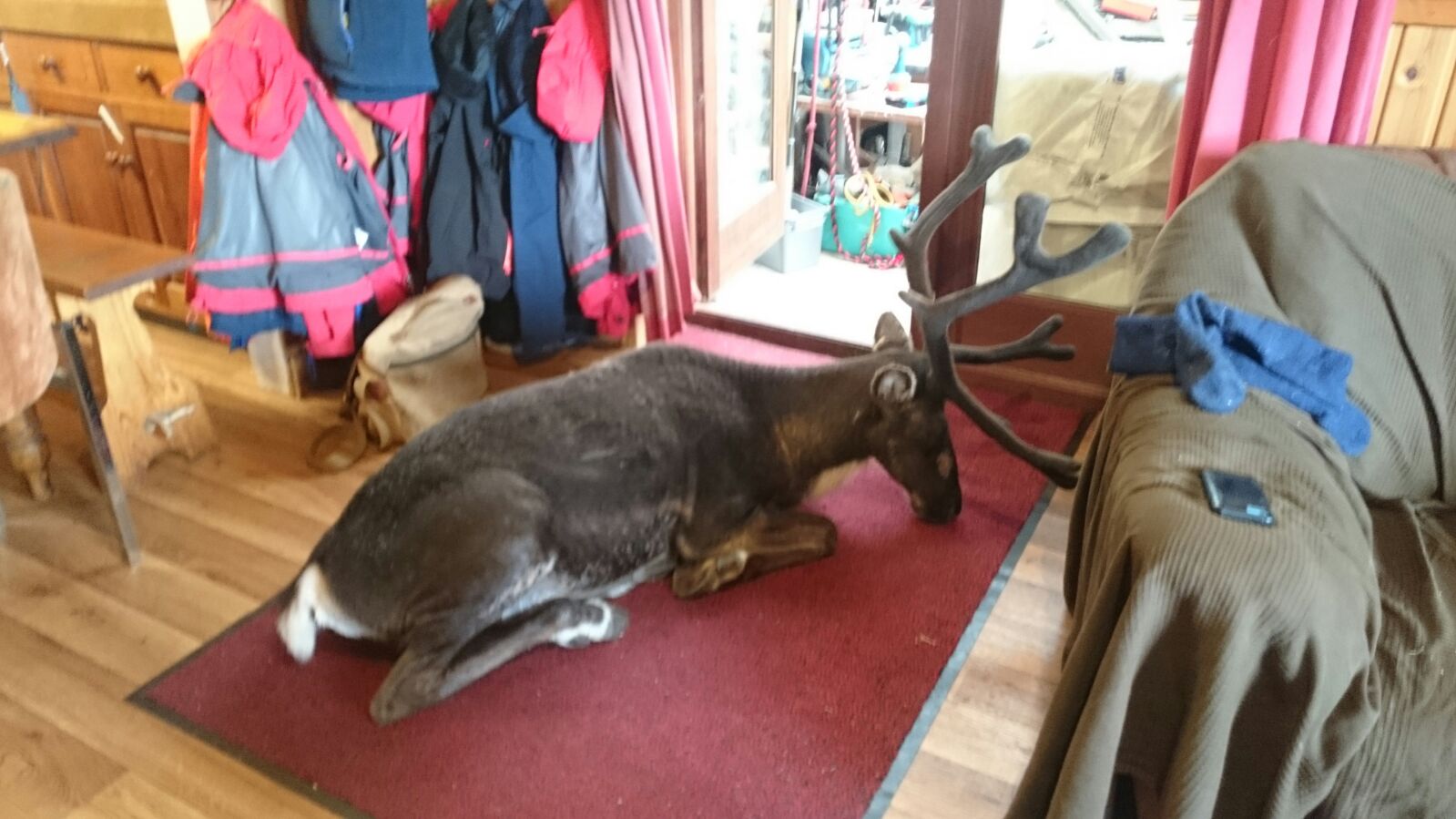
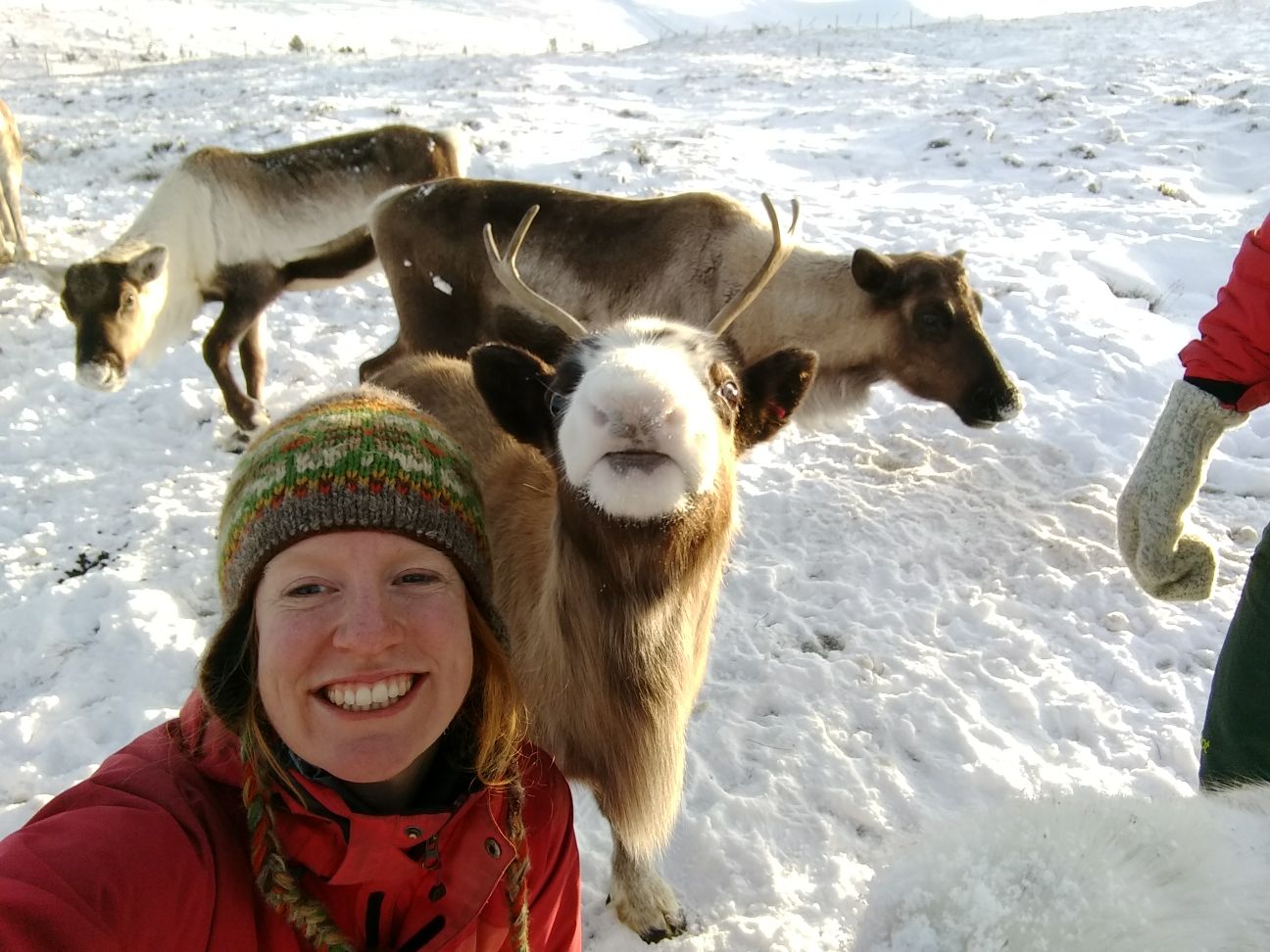
Pera’s antlers really are worth writing about. As a calf he grew short simple antlers, which would not have given us any idea of their shape and form three years later. As a two-year-old, Pera’s antlers were slightly strange – very wide and ‘flattened’ but nothing particularly out of the ordinary. However, by 2014 his antlers are completely bizarre.
Pera 2014
As a general rule reindeer grow antlers of a similar basic pattern, with long brow tines, including the front blade pointing forward low down above the base of the antler. Then as the main beam elongates, the later tines grow pointing backwards. Sometimes the tines can be flattened with extra points coming off them too.
Pera’s antlers, however, look like they are completely the wrong way round with the tines higher up literally pointing the wrong way. Also his antlers are incredibly wide apart at the top with very long splayed tines at the bottom. Apart from looking extraordinary it’s actually quite difficult to get a halter on him!
Antler shape and form is basically inherited – must have been an interesting combination of antlers from his mother and father to come up with Pera’s! However, we will never know exactly what they were because Pera was born in Swedish Lapland and finding out his parentage from a herd of 5,000+ reindeer would obviously be impossible. In 2014 he was one of our breeding bulls and so one of the calves he fathered was Aonach. Now Aonach is 3 1/2 you can certainly see the influence of his father on the shape of his antlers!
Reindeer are incredibly interesting animals. Many people that come on a hill trip or visit the paddocks conclude this after learning a wee bit about them. I thought so too, when I first came here, and it’s one of the reasons I kept coming back, as a visitor, then volunteer, and now member of staff. What I didn’t know then was that the more I would learn, the more fascinating the reindeer would become!
I’m currently finishing reading Tilly’s second book (The Real Rudolph) after having read her first (Velvet Antlers, Velvet Noses). I am fascinated by all the new things I learn and try to share as much of that fascination I can with people during tours and paddocks talks. I look forward to starting on Tilly’s third book (Reindeer: An Arctic Life) which has just been published. Below I’ve listed some of the amazing facts I’ve only recently discovered:
– Reindeer are omnivorous: they eat what they can find and in the harsh conditions they live in this does mean that the amount of shrubbery can be limited, which can result in them eating birds!
A mighty rutting bull, strong as they look, is actually weaker than his female or castrated counterparts. I’ve learned the hard way, unfortunately, as we lost one of our beloved breeding bulls to a disease that sometimes can be cured if we spot it early. Even before the rut they will have spent a lot of energy in growing antlers, and their rutting behaviour is also very energy-consuming. This leaves them often exhausted by the end of it, makes them less effective in fighting off diseases, and causes them to go into winter with less energy reserves, which makes it harder for them to cope with the harsh winter conditions.
Breeding bull Sargasso
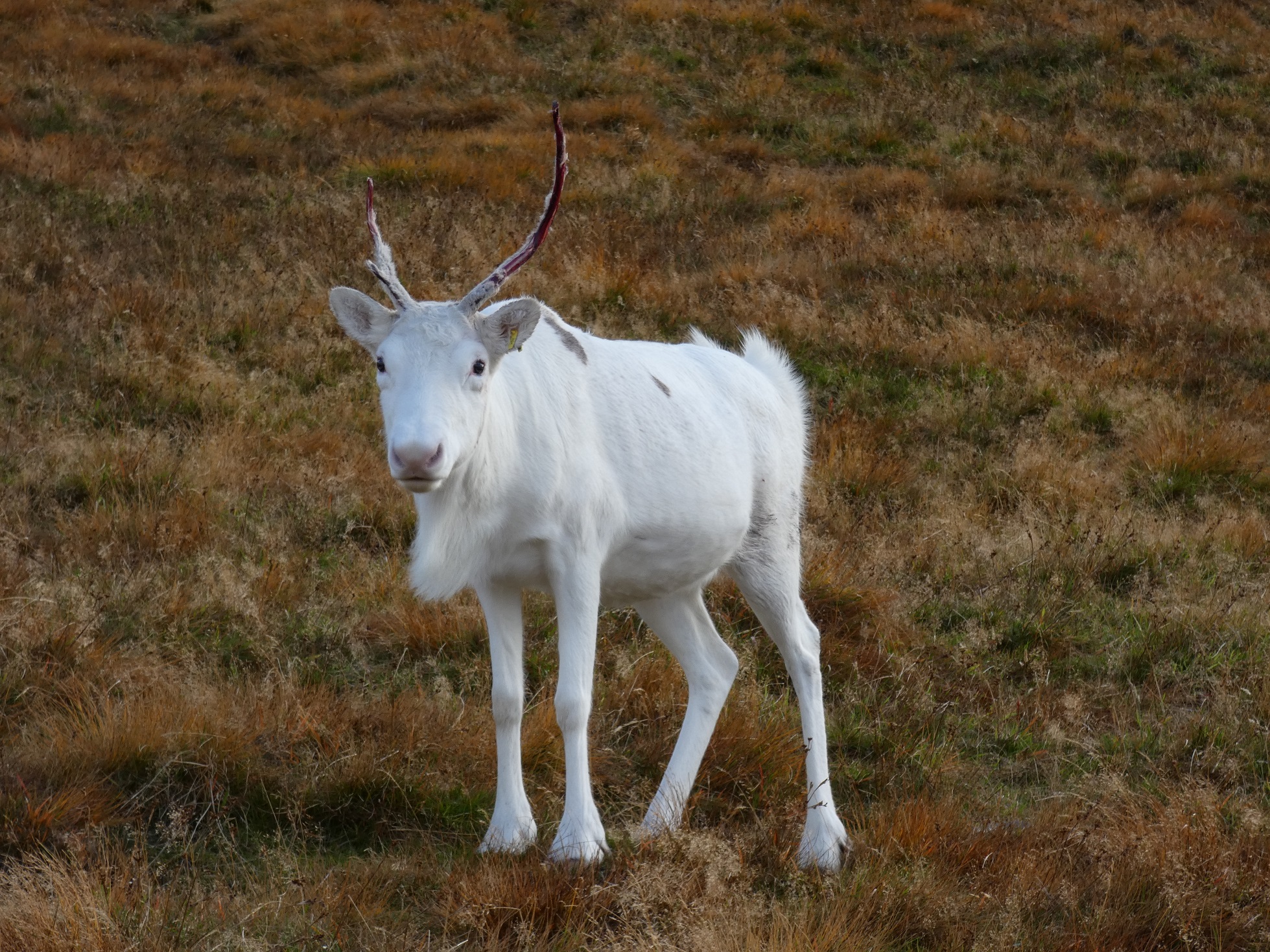
White reindeer that have leucisim (partial loss of pigmentation) can get sunburned in summer. We sometimes put sunscreen on their faces to prevent this from happening!
Mozarella, a leucistic reindeer
Even when we let a female reindeer in with several breeding bulls, we can still figure out which of the bulls was the father if she gets a calf later on. The simple reason for this is that they come in season for one day only, and this is then repeated in cycles of 3 weeks. A reindeer’s pregnancy lasts 221 days so when the calf gets born, it’s a simple calculation of with whom she was that many weeks ago when she was in season, and then we know the dad!
How long reindeer keep their antlers for is affected by hormones. It is for this reason that Christmas reindeer (who are all castrated) keep their antlers longer than breeding bulls. If we contracept females for that year it may cause them to loose their antlers early too!
What do reindeer herders do when they meet reindeer when they are travelling abroad? Right, try to get some interaction! After having volunteered with the herd for a couple of weeks at different times last year, I had to finish my studies and for that I needed to do an internship in Norway (I know, poor me ;D). The lovely Trondheim, the town I lived in for 4 months, is surrounded by distant reindeer areas North, East and South of the city. I was really looking forward to meeting some Norwegian reindeer, and since I hadn’t seen them during the first week I was there (I mean, come on, it’s reindeer country!) I decided to just go to the nearest herd with a visitors centre, which was at a 2/3 hour drive away from home (practically nothing in Norwegian standards).
Interacting with reindeer in Røros
I met some beautiful reindeer behind a fence, but they were a bit far away… Then I got the slightly mad idea of trying to call them over the way we do in Scotland. I started at a very low volume but once I got their attention I decided to go for it, and they all came and meet me at the fence. It was really funny to see that these reindeer, so far from our herd in Scotland, actually seemed to react to the call we use there.
A reindeer sniffing for food in Røros
Later on I bumped into a herd that was free-ranging, tried the same thing, and had success again. The reindeer had been lying down, probably regurgitating some food they ate before, and they got up and came running towards me as soon as they heard the call.
I wonder if the reindeer I encountered reacted because our call is the same call used by Mikel Utsi, the Swedish Sami herder who was the founder of our herd in Scotland, or if reindeer are just greedy and associate human beings that show interest with the prospect of a nice meal! Reindeer sure are keen on their food, and if they can find any way to preserve energy by having it brought to them they are not likely to skip that opportunity.
Later on at the Centre I told the story to many a colleague and found out that they had tried similar things in other countries. Guess the quirkiness of reindeer herders is just as prominently present as the love for food in reindeer!
I took photos with the purpose of writing this blog in September 2017, and then everything got too busy and I didn’t manage to actually write it. But here it is finally, so late that the subject matter has effectively come back into fashion once again! All the photos below are from last year (or earlier), rather than this year however.
Viking with his velvet antlers, pre-stripping
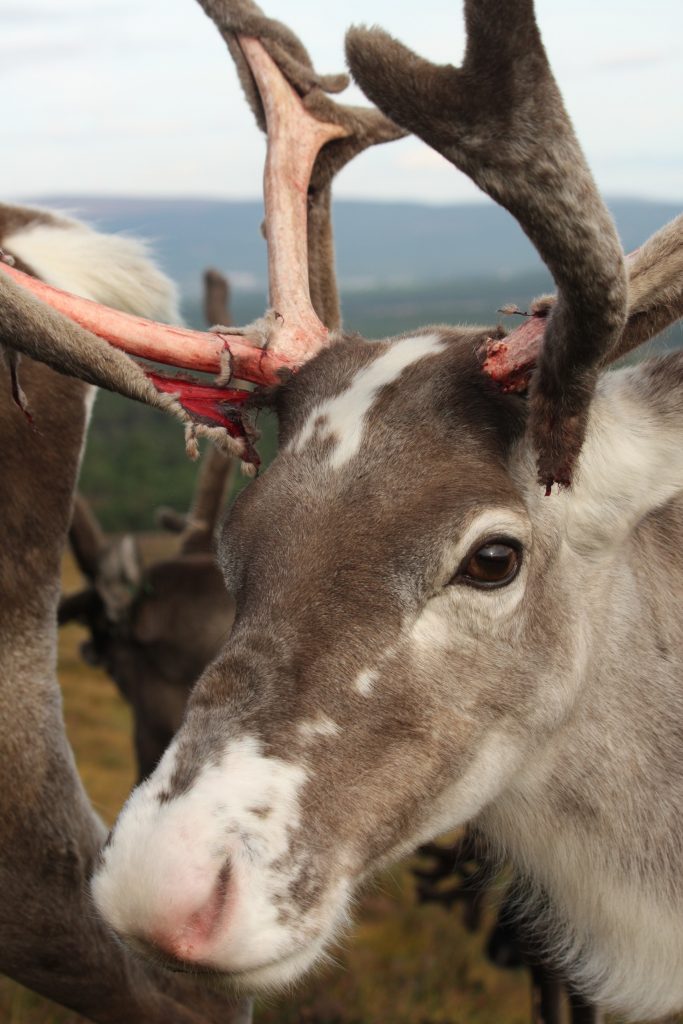
Reindeer antler is made of bone, and bone needs a blood supply for it to grow. Antlers start growing in the spring and at this point the soft, growing bone is covered with a layer of ‘velvet’ – a thin, hair-covered skin which is full of blood vessels and nerves. Late August and September are the months when reindeer finish growing their antlers each year, the bone hardens up, and then the ‘velvet’ skin strips away. Now, this can be a bit of a gory affair if you don’t know what to expect, so read on with caution if inclined to be a little squeamish. Although depending on what size of computer or phone screen you’re reading this on… it might be too late already. Sorry.
I could write all day about antlers, but to cut a long story short (for now at least), the antlers reach full grown at the end of the summer and then the bone hardens up, and finally the blood supply to them cuts off right at the base. This means that the velvet skin is effectively then just dead tissue, and that dead tissue needs to come away. You can’t be a big scary bull during the breeding season if you have cute fluffy antlers on your head…
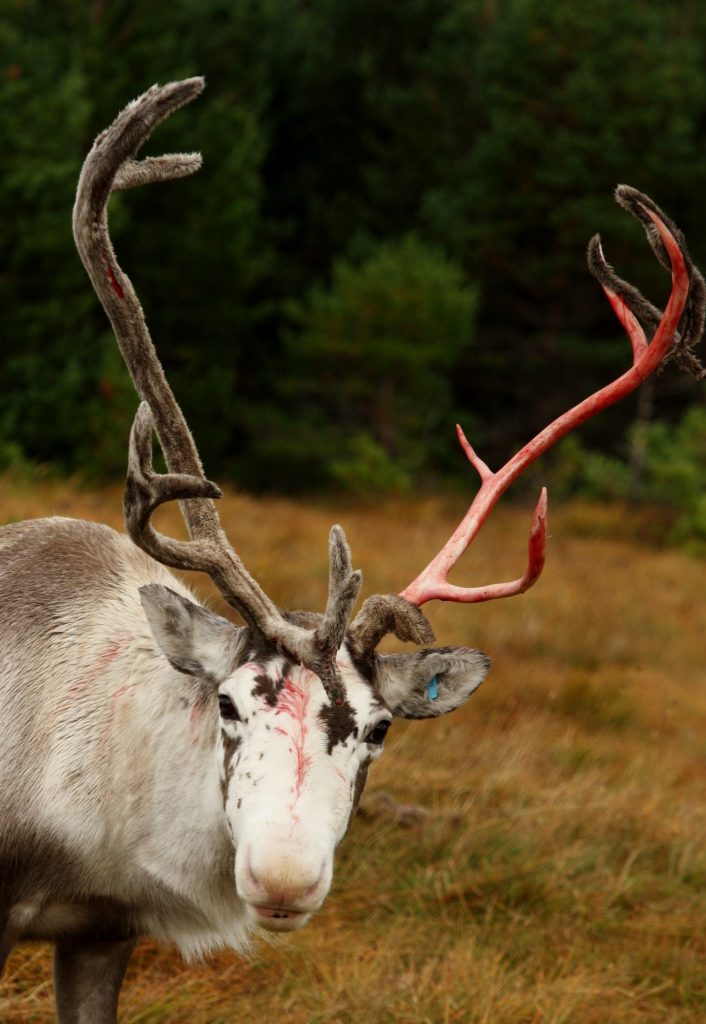
The tell-tale sign of a stripping bull.The velvet starts to peel away in earnest
The first reindeer to ‘strip’ their velvet each year are the mature bulls, starting at the end of August. They are followed but the younger bulls in early September, and then the cows will strips their throughout the rest of September and into October. The castrated males, or ‘Christmas reindeer’ as we call them, are slightly different as they no longer have a hormonal trigger to strip the velvet away as their hormone balance has changed. They do still strip their velvet, but slowly and over the course of months as opposed to the space of a couple of days.
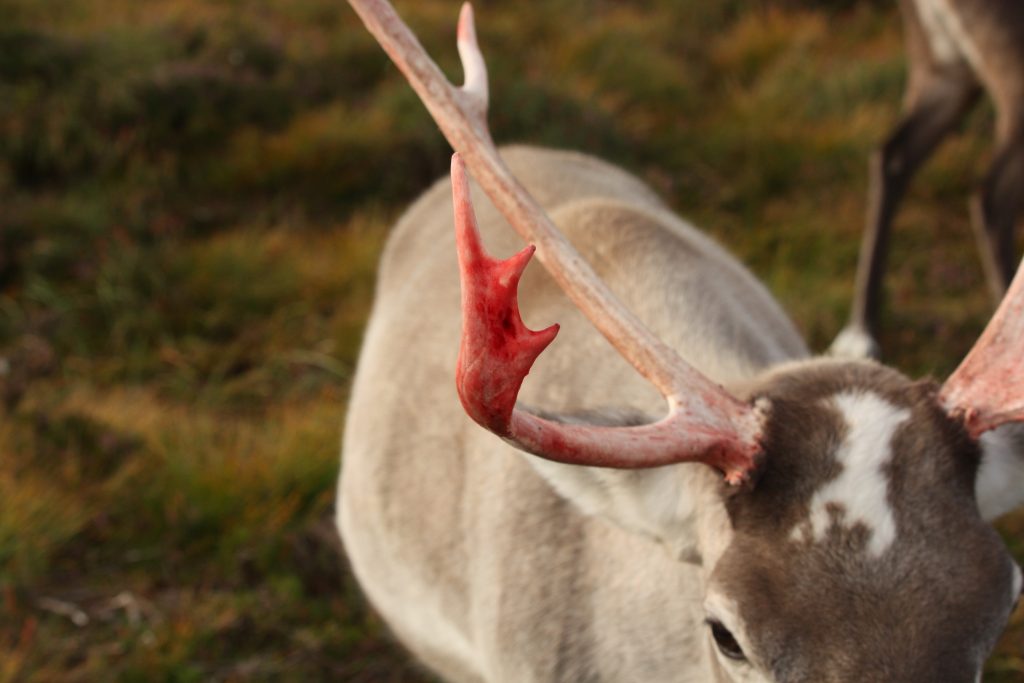
Clean but bloody antlers. Rain is needed!The word ‘strippers’ has a whole different meaning here at Reindeer House to the more commonly known meaning…
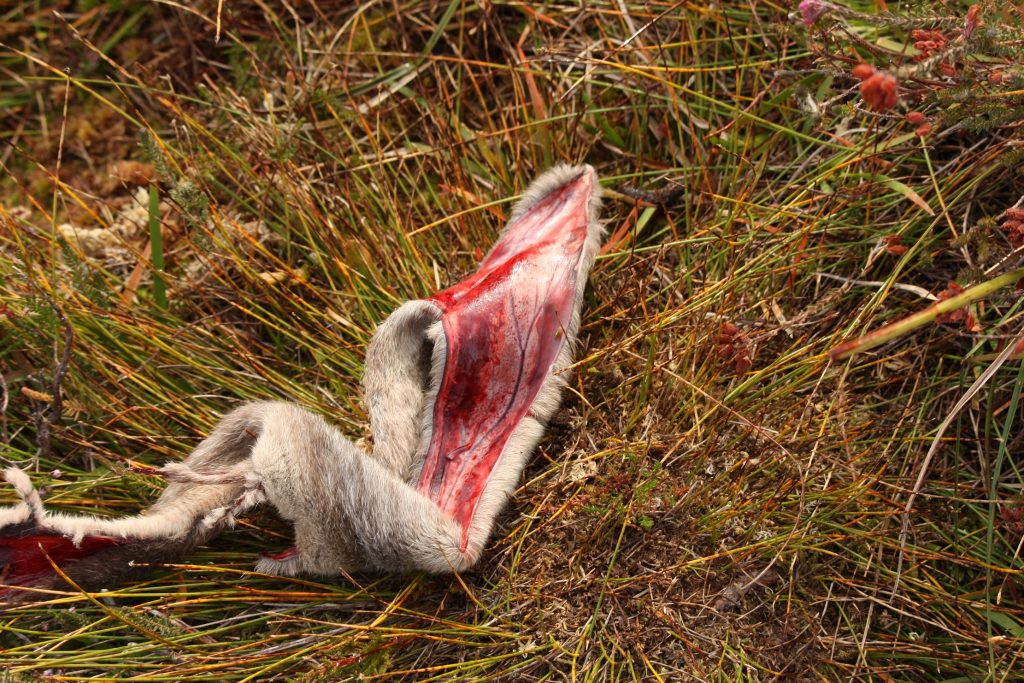
Although the blood supply to the velvet has cut off, there is still residual blood remaining in the blood vessels of the velvet, so stripping can be a gruesome affair at times. There is no feeling left in the antlers by this point however so it is completely painless, and this is a fact we have to drum into to all visitors before they come face to face with a reindeer whose skin appears to be falling off! It’s not a good look. But for those visitors who are feeling brave, I take great delight in showing them a section of freshly stripped velvet as the blood vessels are visible, making it easier to explain the process of the antler’s growth. I find kids are generally well impressed and want to poke at the bloody skin, whereas adults are often a little grossed-out and not keen to touch!
Blood vessels in the skin of the velvet
Once the antlers are clean of velvet, they tend to be a bit red-tinted from the blood until there’s been a rain shower, and then they are a more normal, ‘bone’ colour. And then it’s time for all hell to break loose, as the young bulls start squaring up to each other and the big bulls have to be separated from the herd for the safety of the visitors each day, until they can be split up and moved to closed off sections of the hill enclosure with a group of females apiece. The rut has arrived!
First off, I’m not talking about the reindeer in that heading. Reindeer only fly at Christmas time after Santa has given them the magic powder and our lovely reindeer don’t attack.
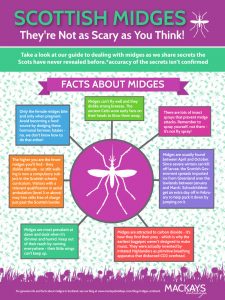
I am of course talking about the flying mini beasts – flies, bugs and, the worst of the worst, midges. Scotland wouldn’t be Scotland without those little terrors, and they are a sign that summer has finally arrived here in Cairngorm, but they aren’t my friends.
No one here likes the midge, including the reindeer. With the heat rising above 20°C and them still having some of their winter coat, our boys are feeling the heat. In hot weather we often give them access to the shed to hide from the heat – you’d be amazed how many come running out at feeding time.
They are also bothered by the flies and midges, but there’s not much we can do there. As much as I’d like to eradicate midge for both my own and the reindeer’s comfort, they are an important food source for birds, toads and frogs, and bats.
Our boys cope with the midges fairly well; in the Paddocks they hide under our shelter shed and up on the hill avoid stagnant pools where midges breed and shake to get rid of the biting buggers. Sometimes it’s like watching a little reindeer dance: they stomp their back foot a few times, then the other, a little shake, a few more stomps, and then if the midges are really ferocious, they’ll burst off in a sprint, jumping and kicking the air. It’s quite funny to watch!
We also spotted Oryx doing something a bit odd. It was the end of a Trip, and we were heading to the gate to leave the enclosure. A few boys followed us, no doubt thinking there’d be more food. There’s a large mud bath just at the gate, which usually the reindeer don’t bother with, but this time Oryx got into the big puddle and just stood there. He seemed pretty content, so he was left to his own devices while Fran and I did some poo picking (the glamorous lives we lead). Eventually he decided his spa treatment was finished and got out of the mud bath. He looked ridiculous with mud socks up to his ankles, but he seemed pretty happy with himself.
It’s known that red deer wallow, or bathe in mud, but the cause for this is still unknown. Some think it may be to reduce ectoparasites, while others believe it is to cool down. I’m not sure it’s ever been recorded in reindeer before (a quick Google search didn’t come up with much) but I think Oryx may have been trying to avoid the midges biting at his legs. Either that or he fancied a quick mud treatment at the ‘spa de le Cairngorm’.
I packed and unpacked many many times as you can imagine but left with a very civilised 13kg rucksack with everything I needed… I hoped! Having never done anything like this before I was a bit of a fish out of water but what’s the worst that could happen? Alex, my brother, dropped me off at the airport in Inverness to fly to Heathrow where I would meet most of the team of folk and organisers taking part in this adventure. When I got there I had a bit of time to spare so I went and grabbed a coffee. While sitting there I clocked someone in the coffee line who looked suspiciously like another runner and surely had to be on the same trip. He was wearing some serious gear with a fancy running rucksack and water bottles on each strap, straws sticking up ready for quick access… he looked ready to compete! And here’s me in my chequered shirt, comfy travelling trousers looking ready for a leisurely holiday. It was this point I text a couple of friends questioning whether I should be on this trip, What have I signed up for!?!?
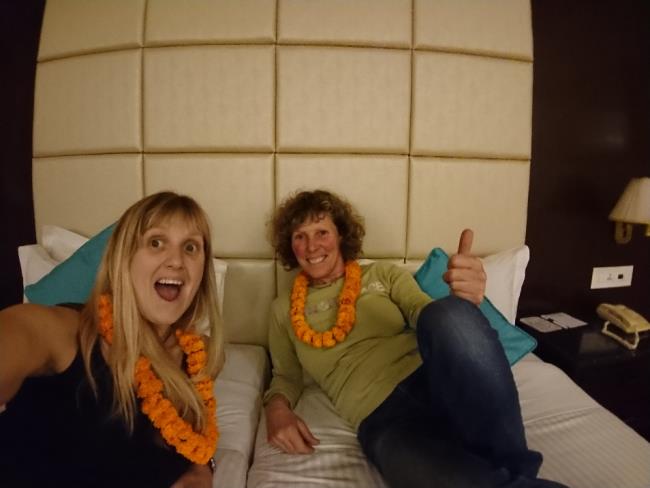
Shortly after, Sally (fellow reindeer herder), found me. It was Sally who introduced me to the idea of doing the marathon so ultimately she is to blame for all this ? I pointed out the other runner, told her how much I was bricking it, but in her usual bubbly, positive self she said ‘it’ll be fine… you’ll be fine’. The two of us headed to meet up with the rest of the group and set ourselves up for the two long haul flights. We arrived into Kathmandu Airport. It was absolutely buzzing. The smog levels were unreal, felt like I needed a buff over my mouth the whole time. Our hotel was a little piece of paradise in amongst the chaos of Kathmandu. We had time for some dinner and a shower but I think everyone was feeling the need to go to bed, knowing we had a fairly early start.
Sally and I delighted we had arrived in Kathmandu after a long day travelling.
The next morning we were allocated into our groups. This is where Sally comes into it, she was the yellow group leader so she got our group together in the hotel garden and we did the tedious but necessary introductions. First up was McKenzie, he was from the North of England. McKenzie was one of those people who, although dealt a harder card in life, really was an inspiration to everyone by picking himself up and ‘taking the bull by the horns’. He took on adventures for various charities supporting causes close to his heart. Now this is where first impressions were blown out the water because it was McKenzie who I saw in the coffee line only hours before and when I got to know him, he couldn’t have been more different from that serious looking, coffee drinking runner in Café Nero! Then we had an Aussie couple Travis and Kelly. They were setting off on a worldwide adventure and going for as long as money and time would allow, starting with the Everest Marathon… One hell of a start if you ask me!
The next group of people were fellow Celts… the four Irish! Tom, John, Frank and Daithi are all friends from a running group back home. As well as their great banter they were just the most genuine lovely people who I spent a lot of my time with while in Nepal. I wont big them up too much or they’ll think I liked their company, and I’ll never hear the end of it ?. Also in our group was Chris who is an English guy now living in Thailand, he was here to be a marshal on race day having done the marathon in the past. He was a real rock in the group and had a heart of gold as well as lots of good advice for us.
Steve was one of the oldest competitors, but this meant nothing in this type of event as he was certainly fitter than most of us and has completed some amazing races including an Iron Man. If you don’t know what an Iron Man is, google it, because it will blow your mind! Christian came from Guernsey… You can’t get much further from my Cairngorm home. He was a really great guy and always so positive. Even though Nepal dealt him the mean card when it came to tummy troubles he never moaned and always had a smile on his face and a toilet roll handy ? (Sorry Chris!)
Bobby was our token Yank! A 23 year old that really has been there, done that. He was completing his last marathon on every continent… what an achievement at such a young age! I spent a lot of time trekking with Bobby being a similar pace oh and not to mention kicking his ass at card games (he may say otherwise but it’s not true!). Sam lives and works in London… again couldn’t get much further from my life but its amazing how different our lives can be yet we are brought together in this adventure and get along so well. Working in the world of computers and technology I’ll never forget trying so hard to understand a conversation he was having with a friend during a trekking day about some software or app and my brain failing to understand any of it… I just don’t have it when it comes to anything technical! Sam was always game for everything, a real good sport!
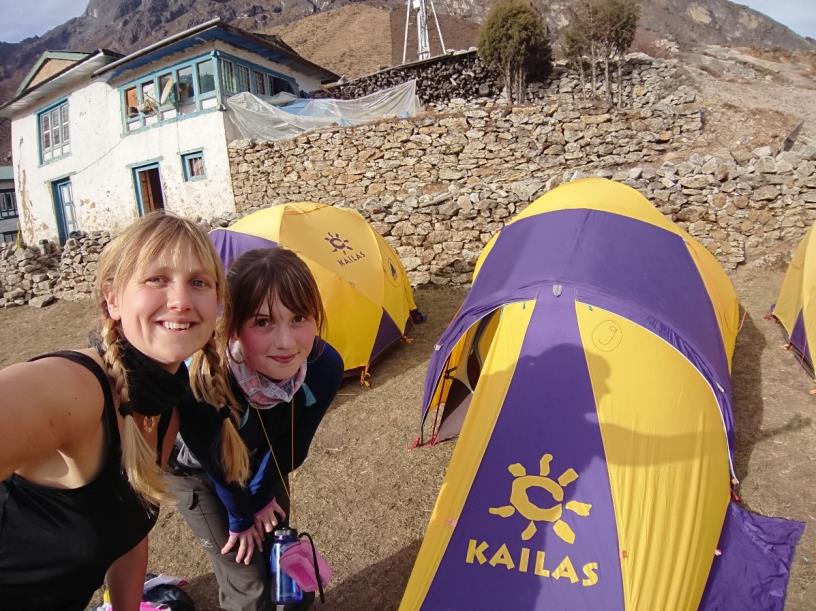
Shauney was another Scottish lassie and my tent buddy… Do you think they planned that?!?! I couldn’t have asked for a better person to share this adventure with. She is the youngest person (aged 22) to complete the Everest marathon and having done some epic long distance races in the past already had some great stories. I’m not sure I would have taken on such a massive adventure when I was her age so I really admire what she has achieved. The best thing is she only lives over the hill and is a horse trainer… Future reindeer herder comes to mind!
Next are father and son Ross and Lachie from New Zealand. Ross is a mountain runner back home so this was his adventure and Lachie was coming along to be a marshal on race day. It all changed slightly for Lachie and having been strong during trekking days he decided to give the full marathon a go. Read on to see how he gets on! Mark and Ulla were a couple from Northampton who are good friends with one of the Everest Marathon doctors. This is how they came to be sat in this circle of crazy people. Mark was to take on the marathon and Ulla was there to marshal. The two were such a positive couple and so lovely. They were actually the first ones I met back in Heathrow Airport when I was super nervous about the whole adventure and they were so relaxed and calm.
Ali wasn’t here as a competitor or marshal, she was here learning the ropes for taking on the organising of the Everest Marathon in the future so she was constantly jotting down notes and off with the Nepalese organisers trying to get her head around the ins and outs of the whole thing. Nishma was our group doctor and has been the doctor on the Everest Marathon before so was all ready and set for the challenge ahead. Such a bubbly lady who always had a smile on her face and great advice. Couldn’t have asked for a better person to look after us and she had skills when it came to card games! Then last but not least, Sally. Some of you may already know Sally as she has been a seasonal reindeer herder on and off for about ten years. She is the most positive, smiley person I know. Having her as our group leader created such a great atmosphere and I really feel our group gelled so well and looked after each other which was also down to her great leadership. I wouldn’t have taken part in this amazing adventure and met these incredible people if it wasn’t for Sally, so she’s to blame… I mean she’s to thank! So as well as our group there was the red group. I won’t introduce all of them or we will be here all day but I will mention Rich and Dr Mike who we adopted as honorary yellow group members over the course of the adventure. Both great guys, game for everything and super strong in the mountains!
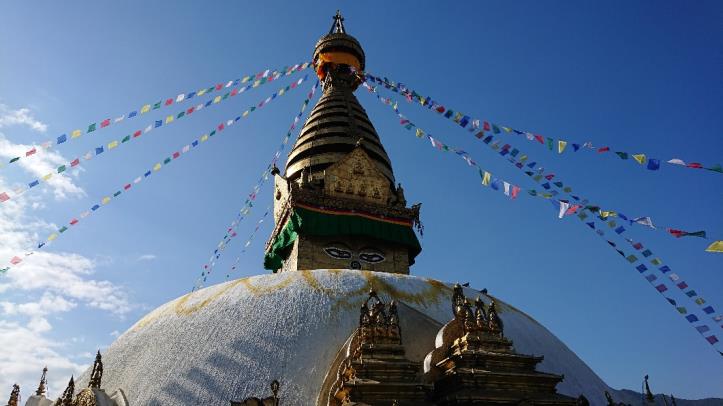
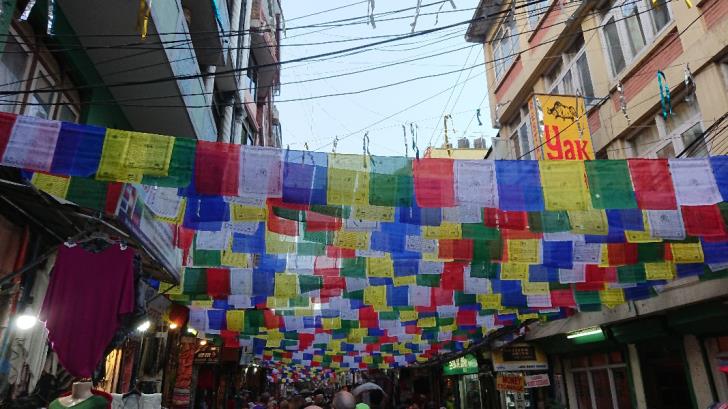
Sightseeing around Kathmandu visiting temples and monasteriesColourful streets of Kathmandu
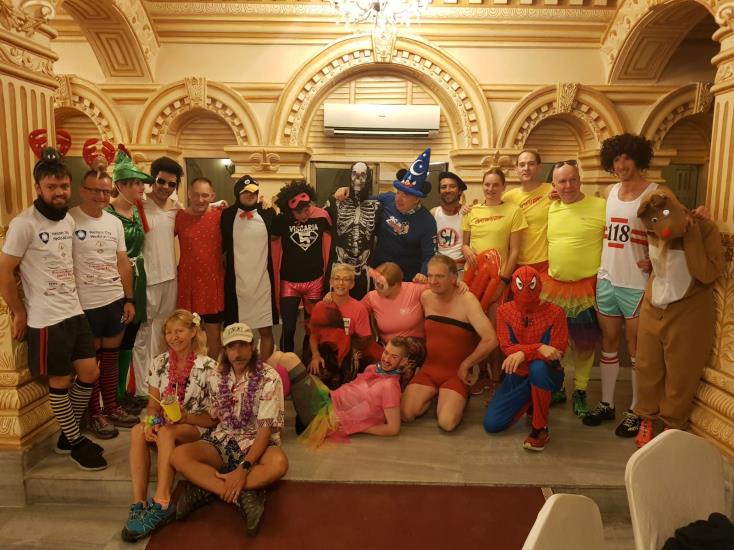
While we were still in Kathmandu we all took part in a fun run. We all hopped onto a bus which took us out of town to the top of a hill (thankfully) ready to run down in our costumes. We had Elvis, 118 118 man, Peter Pan, a penguin, four Irish Leprechauns and many more costumes. Everyone made a real effort to dress up. I wore a reindeer onesie which at the time seemed like a great idea until the Nepal sun came out and it turns out running in 25 degrees gets rather hot! As well as the fun run there was an excursion to the Monkey Temple and also other iconic spots around Kathmandu. This then brought us to the morning we left for the mountains. It was all getting rather real now… eek!
Everyone dressed up for the fun run
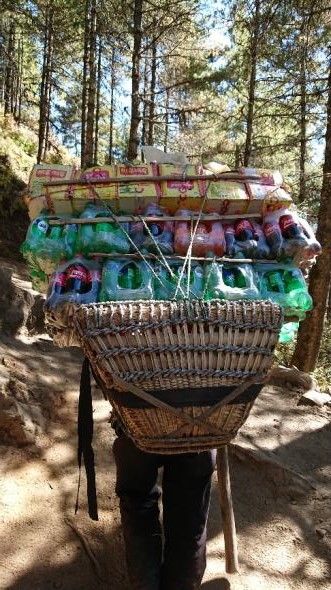
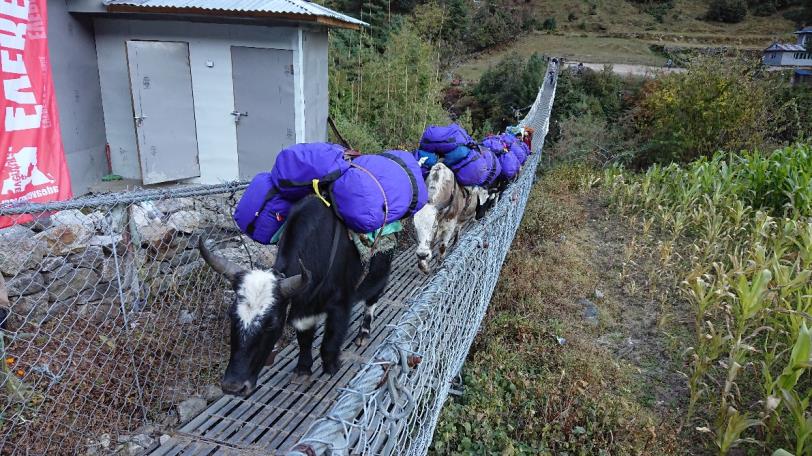
We hopped on a tiny 16 seater plane and flew to Lukla. The views were spectacular looking over to some of the worlds biggest mountains. Now this runway is renowned for its shortness. Luckily I couldn’t see it from my side of the plane until the last minute. It certainly made my stomach turn slightly but there was nothing we could do bar hope the pilot was on course, which he was. It helped that the weather that day was glorious so no turbulence to contend with. Once we landed, we grabbed some lunch and various instructions from our leaders and headed off on our first trek together as a group. We had about 4 hours walking that day passing yak trains, some of the most beautiful scenery in the world, Sherpas carrying the most incredibly heavy loads, many tourists, plant life I’ve never seen, traditional houses and hamlets, children running to school (which at that altitude, walking was tough enough for us), suspension bridges, and many more amazing things. What a beautiful country and the colour from prayer flags and the Nepalese clothing just brought it all alive.
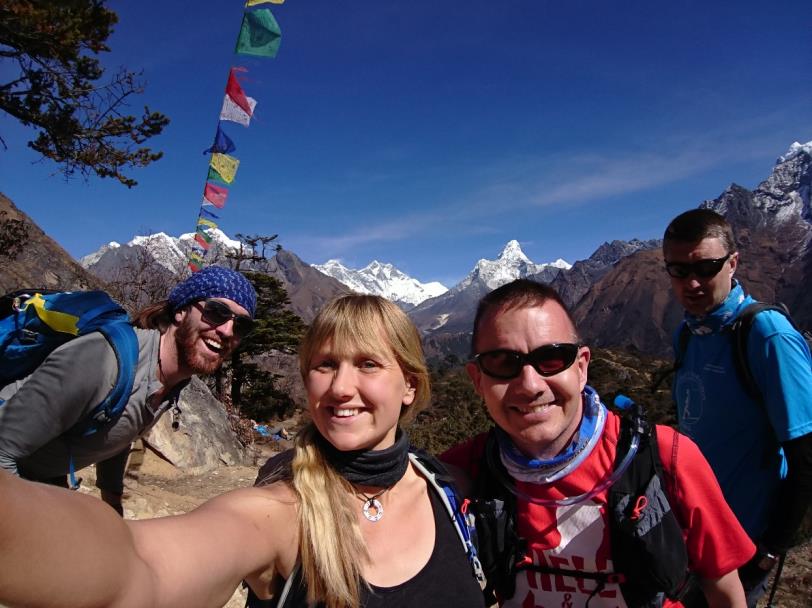
One of the huge loads carried by porters along the trekking routesOur herd of yaks carrying all our gearBobby, Tom and Frank getting in on a photo opportunity with Everest behind
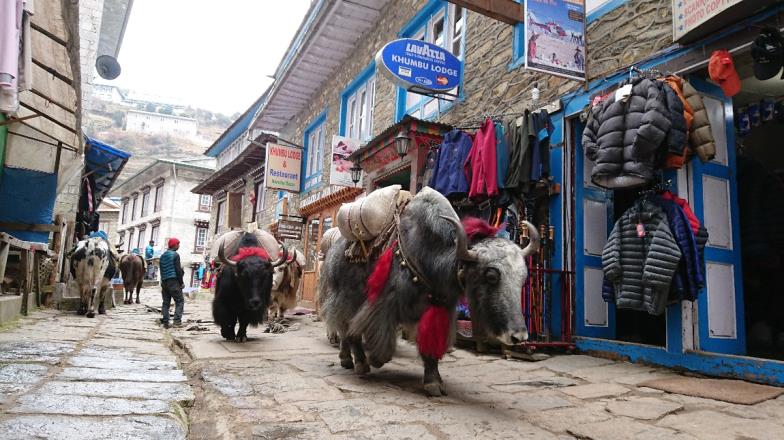
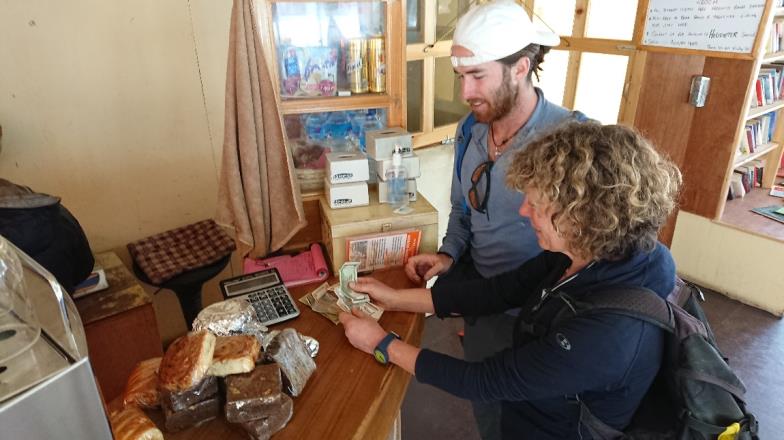
Over the next two days we trekked to Namche Bazaar which is the main village and last proper civilisation for most trekkers and climbers before heading onto other trails and Mount Everest itself. It was a lovely little place with cafes, bars and shops selling curios and souvenirs. Also for sale was lots of outdoor gear which was branded names but not branded prices… We had a couple of days in Namche Bazaar getting any last minute essentials but more importantly acclimatising. It is really important for your body to adjust slowly and properly to altitude or you can make yourself really sick. Some folk in the group were already experiencing some symptoms but luckily I was OK, so fingers crossed it stayed that way. From Namche we did a couple of treks for good views but also to help with the altitude then after a few days we headed off. This was for real now. We had our lovely Sherpas, a herd of yaks to carry the gear and lots of nervous but excited folk ready for this massive adventure ahead. We still had two weeks until the marathon itself, which at the time felt like ages away but its amazing how it seemed to fly by.
Yaks walking through Namche Bazaar
On leaving Namche we discovered the red group was very well trained and all had their assigned number so when we were all due to leave they would shout out their number to make sure everyone was there. Needless to say we were rubbish and when put on the spot I’m not sure any of us remembered which number we were. So later that night, during our nightly meeting with Sally we decided we had to do better therefore we gave ourselves a letter, starting with A, B, C… etc and with our letter we had to think of an animal. So here goes… I think this was all the animals in our group and what ended up being our morning chorus before setting off on trekking days to make sure everyone was there – Ass, Baboon, Cat, Donkey, Elephant, Ferret, Giraffe, Horse, IBEX (this was Bobby’s animal and always said with great volume!), Jaguar, Koala, Lemur, Meerkat, Nightingale (this was me), Orangutan, Pufferfish, Quail, Reindeer (of course), Snake, Tiger and Unicorn. It took a few days to perfect but it sounded awesome when we did get it right. Peter, the leader of the red group said he’d buy Sally a beer if we managed so I think he needs to dig deep cos we definitely got there!
Shauney and I ready for our first night camping
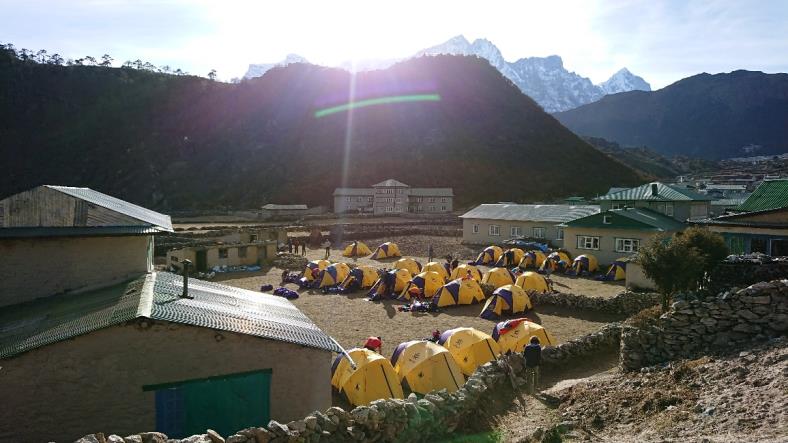
From now on we were camping. We would arrive at camp every day to our tents already set up and our Sherpas starting our dinner. Our kit bags would arrive and we set up camp for the night laying out our sleeping mat and bag then change into our evening attire (I had two sets of clothes, daytime and night time… that was it!), park ourselves in the lodge and crack out the card games. This happened most nights. Some folks would read, go for a wee walk, sleep and now and again Sally had organised a quiz so it was a real social time all round. Ulla had a birthday while we were there and amazingly the Sherpas managed to bake a cake. How? I have no idea but it was delicious. After dinner the Sherpas heated up water for us which we would stick into our water bottle and put in our sleeping bags. Worked as a fantastic hot water bottle especially when camping in the minus’s. Ice would form on the inside of the tent, that’s how cold it was.
One of our many campsites
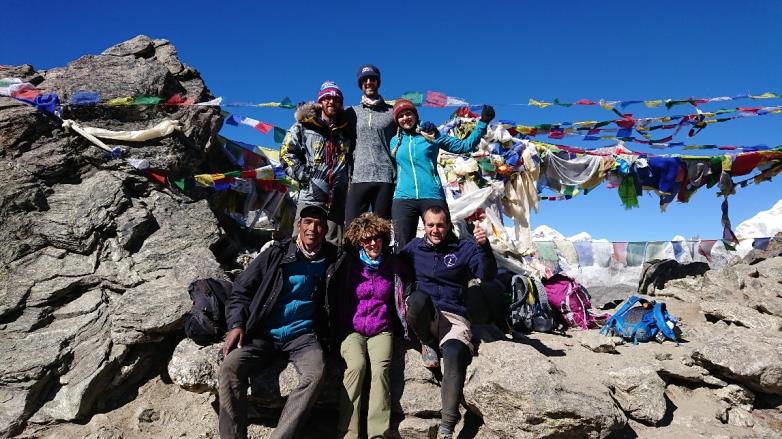
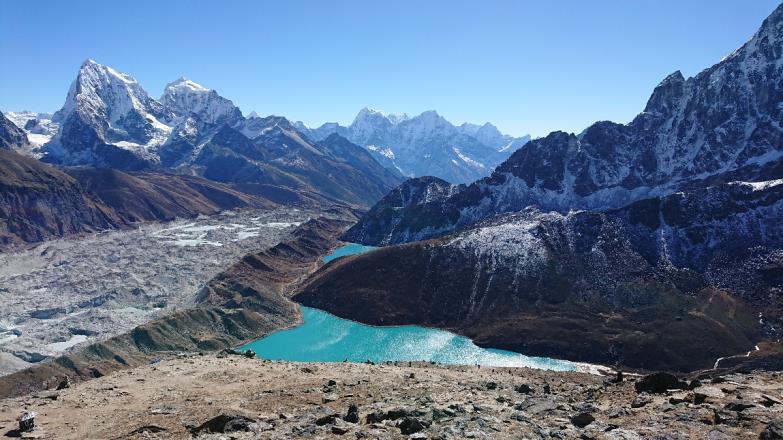
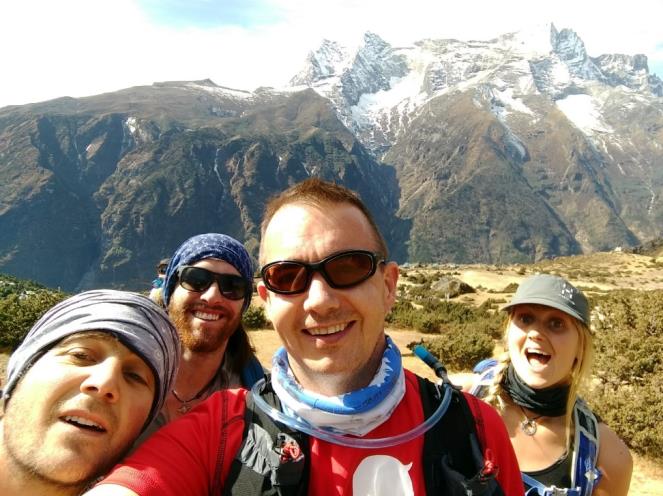
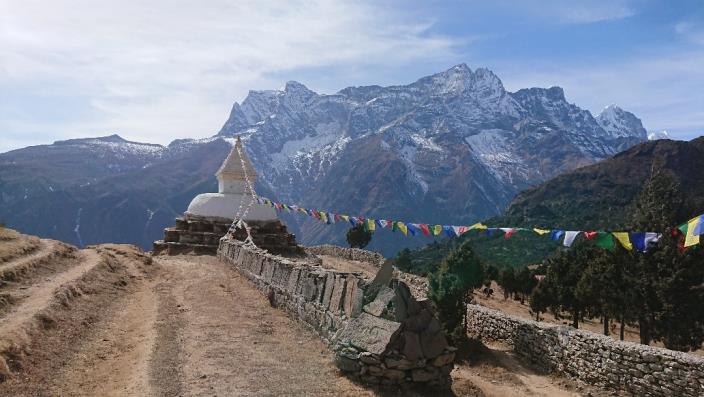
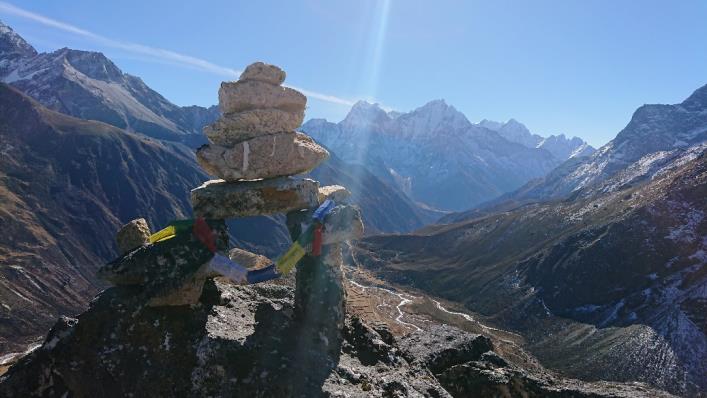
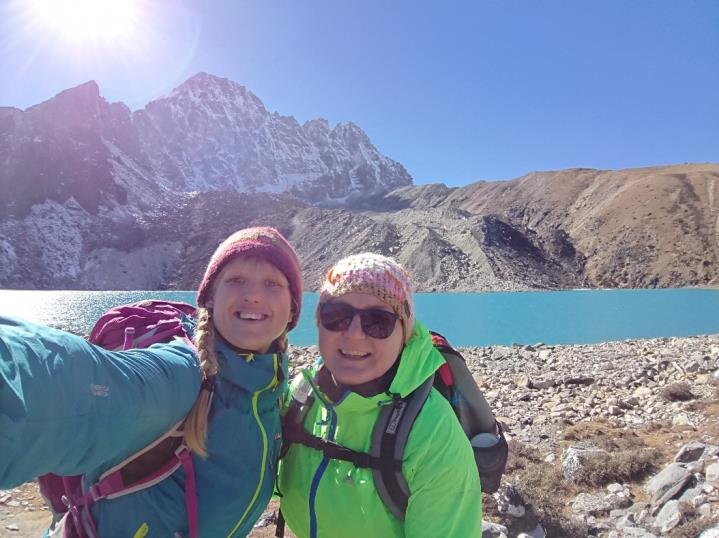
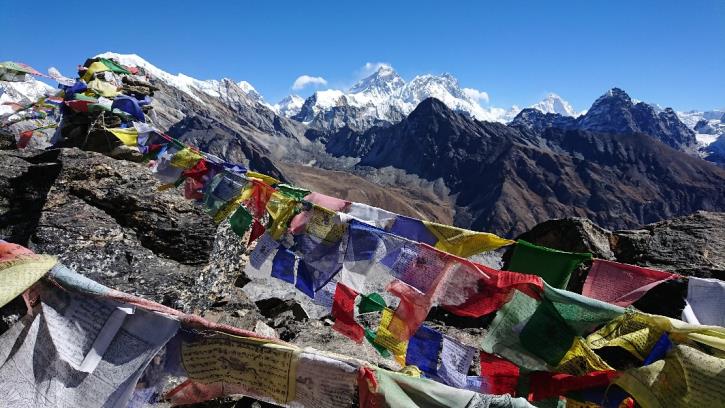
Our first few days after leaving Namche took us up a valley towards Gokyo. We camped at a place called Machherma for four nights which was great, it meant we didn’t have to pack up camp daily. One of the days we just did a walk up and run down for nice views and acclimatising. Then on one of the other days we headed up towards Gokyo and Gokyo Ri which meant we were gaining a lot of height. This was a big day and not everybody opted into doing the bigger walk but from the top of Gokyo Ri there was the most magnificent views of Mount Everest. The walk was super tough as we reached almost 5400m but every step was worth it. Bobby had a beer from one of his sponsors which he downed at the top… not sure how but I put it down to having 8 years on me ? The blue water lakes were just incredible and we had great weather to top it off. Saying that it was pretty chilly up there. On one of our other days it was meant to be a rest day but Bobby, Sally and I decided to go for a wander, taking us back to Gokyo because it had a good bakery. We took a massive cake order from both yellow and red group and headed off on our ten mile round trip… things we do for cake!
Top of Gokyo Ri. Bobby Chris and I above then Ngima, Sally and Rich belowLooking down valley from Gokyo RiOur trip back to Gokyo for more cake!
As days went by we covered lots of ground trekking and most of us acclimatised well. Depending how some people were coping with altitude meant their trip was altered but on the whole everyone was doing amazingly. Once dropping down again in altitude some folk decided that was as far as they would go and would meet the group again at the end of the marathon back in Namche Bazaar. For the rest of us we were starting the marathon route in reverse, trekking it over a number of days. It was crucial at this point to know where we were going as the next time we would see it would be on marathon day itself. There were a few big climbs and drops again as we made our way up the valley. This was also the main route to Base camp and Mount Everest. We stopped at various lodges along the way and camping overnight. We even went to hang out with the monks in one of the monasteries in Tengboche. We passed many yaks and Sherpas and the further up we went the colder it got. One of the coldest nights was in a place called Pheriche a couple of camps before our last night in a tent.
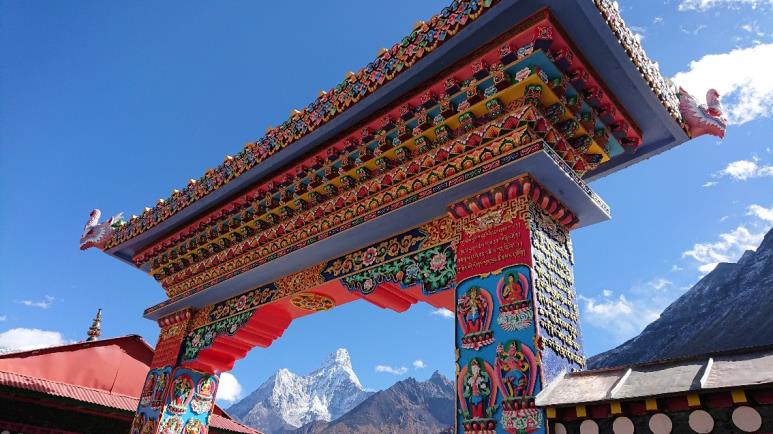
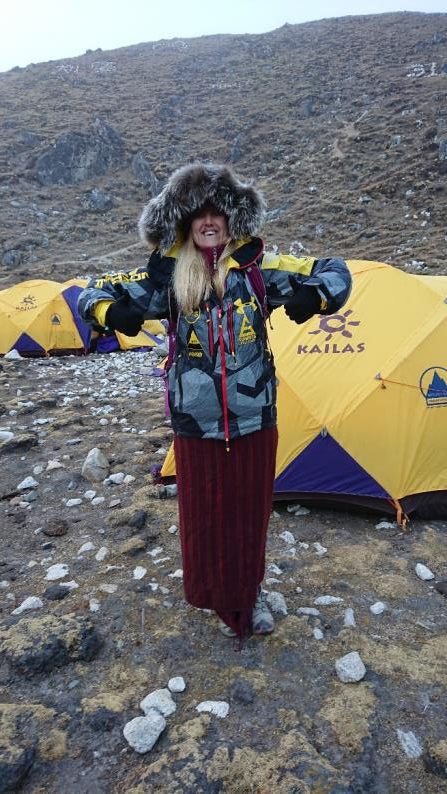
Beautiful building and archways at the monastery in Tengboche. Ama Dablam in the background. Despite it’s impressive stature it is “only” 6,812m and not even close to being in the top 100 highest mountains in the world!Wrapped up warm in down jacket and yak blanket
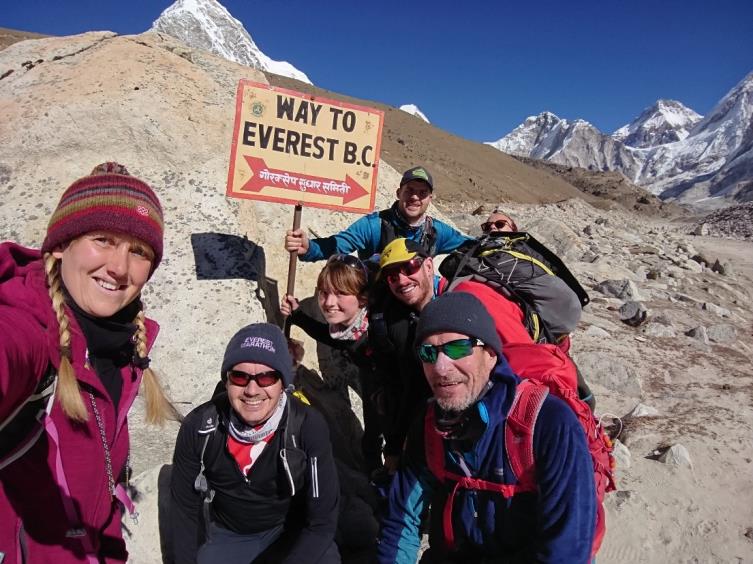
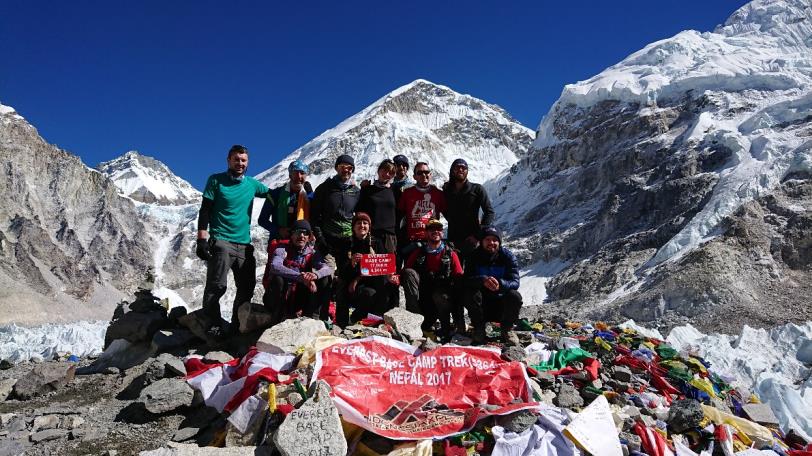
We reached Lobuche, this was our final two nights camping and start of preparation for marathon day. It was a bleak wee place and the lodges were cold at night. When we were back in Namche Bazaar I bought myself a yak wool blanket. I think its safe to say this was my best purchase and every night I wrapped myself up in it and wore it like a skirt in the lodges. It was so toasty warm and some of the group commented on it being surgically attached to me… it wasn’t far off it that’s for sure! We had a rest day here where we had the option to walk up Kala Putar giving us great views of Everest but a few of us opted to go to Base Camp instead. In 2016 a friend of mine summited Everest and while he was out there I would hear of his adventures and obviously he spent a lot of time at Base Camp so it was nice to go to the area I had heard so much about. Base Camp is also one of those places in the world you hear people talk about so now I have ticked that off the bucket list I’m pretty delighted. The same day we also passed Gorek Shep, this was to be the start line on race day. The first three miles was going to be tough though as it was mostly boulder field. This part a lot of people were dreading but I’m afraid to say it was the one part of the whole race I enjoyed the most. The rougher the better for me as I’m not exactly a built long distance or fast running, I am however built for hills and rough ground whether it be up or down so this part was fine by me, it was the flat runnable bits I was rubbish on!
Myself, Tom, Shauney, Steve, McKenzie, Travis and Kelly going to check out Everest basecampFrank, Daithi, John, Shauney, Chris, Tom, Bobby behind. Steve, Me, McKenzie and Lachie in front
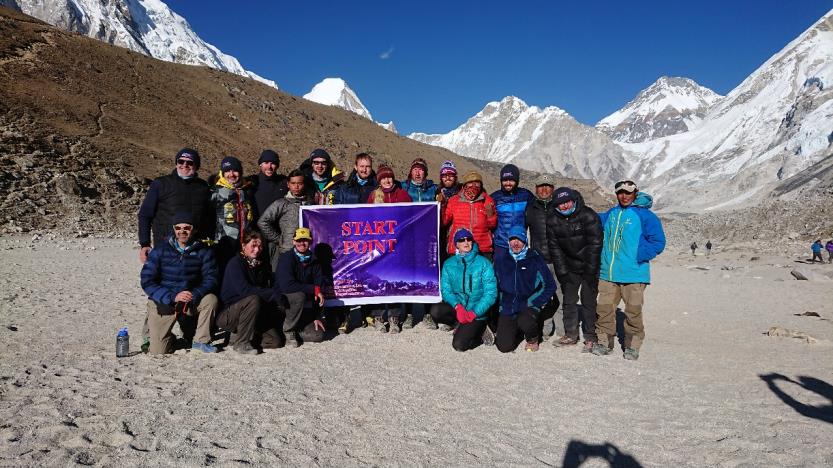
The last health and kit checks were done the day before the marathon in Loboche and this was where we sadly had to leave Sally as she was to marshal this first check point the next morning. Really I feel she should have been allowed to come to the start line with her group. By this point of the journey we really had got to know everyone in our group so well and with Sally being our group leader it was a shame for her not to see us on our way, however, this wasn’t hers or our choice and seeing her smiling face, 3 miles into the marathon was also really nice… a real boost! That afternoon we trekked to Gorek Shep once again and stayed the night in the lodge there. It was pretty chilly and the yak blanket was out again for sure! We prepped our kit bags, got some food inside us and all hit the sack nice and early, ready for a 6.30am race start. Poor Shauney, my tent buddy, fell ill and she couldn’t manage any food that night. Not only that but the sickness kept her from resting properly before the race. We made sure she had some sugary fuel through the night but that was real bad luck as she was definitely one of the strongest women competitors in the group!
Team Yellow on the start line!
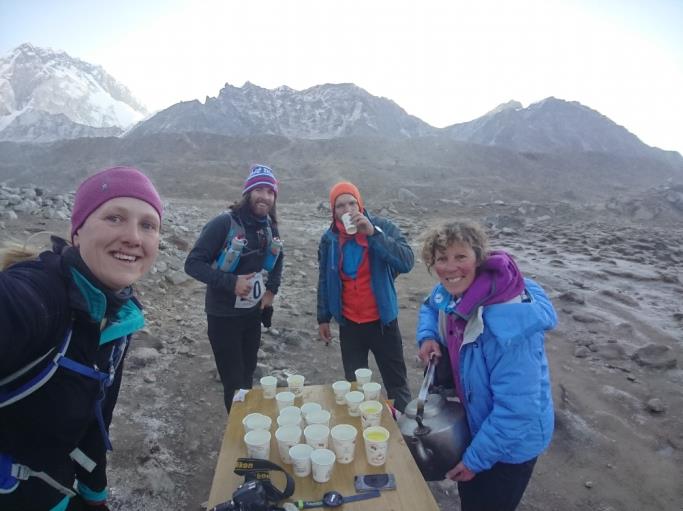
We all got up around 5am, had some porridge and tea for breakfast and also just to warm us up. The lodge didn’t exactly have central heating. We got onto the start line for 6.15am, all absolutely freezing and leaving our down jackets on for as long as possible. Minutes before 6.30am we reluctantly took our jackets off in preparation for the start whistle. Then… We were off! The Nepalese runners were wearing hardly anything and they shot off at the speed of light leaving all us international runners behind. We plodded on but at 5,140m even plodding felt exhausting. Although you make some really good friends during this adventure, come race day I was always going to run my own race and if that coincided with someone else of similar speed then great but I wanted the experience to be my own however it panned out. I reached Sally after the 3 miles of rough boulders and she was our first check point. I did a reindeer call from afar so she knew I was coming. A warm drink and hug from her was welcomed and we carried on our merry way.
First check point, 3 miles in, on race day. Sally pouring us some hot juice.
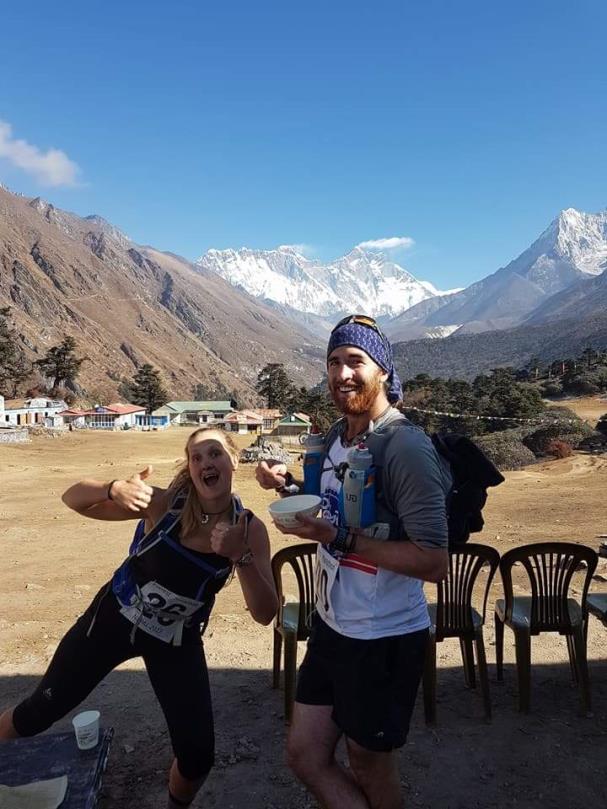
We had another few miles before our next check point which was Chris in Dugla (4620), again it was so nice to see a friendly face and a bite to eat. By this point in the race we were still seeing a few of the other runners but as the race went on folk dispersed more and more and I think this was the last time I saw the front runners of the international field, they were well and truly off ahead of me after Dugla. The next part of the race was all very runnable, this is where I’m not so strong but I plodded on. Where I gained places in the rough sections I definitely lost here, which was fine, everyone excels in different terrains. Next check point was Pheriche which was where Dr Mike was based. We were now 7.5 miles into the race and it was still pretty cold, all my layers from the beginning were still on and weren’t coming off anytime soon. From here Bobby and I ended up running at a similar pace. He was much quicker on the flats though. It was really nice running with someone by this point and as we ended up trekking together most days a familiar, friendly face was definitely a boost! We ran together for the next 7 miles, through check point number 4 in Pangboche and onto checkpoint 5 in Tengboche. This was where we visited the monks and they had good coffee from our visit there a week previously. It took quite a lot of will power not to visit the bakery on route! We were given some rice pudding and another drink before the steep decent into the valley, knowing we would have to climb out of it afterwards.
Bobby and I 14 miles into the marathon, topping up on drink and rice pudding. Mount Everest in the background.
It was also this check point that Bobby and I ended up on different paths but I knew I would see him again somewhere along the way. During the decent there was a yak train coming up so I stepped off the path and decided to use a wee path cutting the corner. Big mistake… immediately after stepping off the path I rolled my ankle. Gahhh!!! I could have kicked myself. I walked it out for a bit and once I got to the bottom of the valley and crossed the suspension bridge it seemed to sort itself out. Or at least it wasn’t hurting quite as much. It was down here I saw Lachie (the Kiwi who came to marshal the race but ended up running it). This was the first I had seen him since the start line. He was a couple of minutes ahead of me so I didn’t get to chat to him but I was so pleased he was going strong. The next check point was after the big climb and 17 miles in so by this point I’m only a few miles off the furthest I’ve ever run. It was here that the marshal told me I was the first international lady through, which as you can imagine totally shocked me. I felt pretty good about it (who wouldn’t) but I was well aware I was getting to a point of the race where I may get tired quicker than some of the other ladies who have done lots of marathons. But what will be, will be. This race was always just going to be an adventure for me whatever the outcome so I plodded on with no pressure.
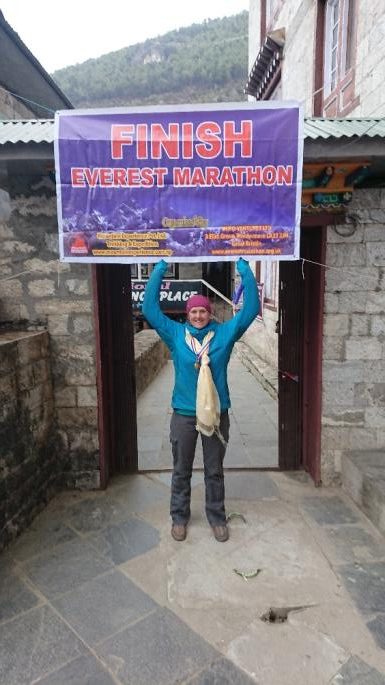
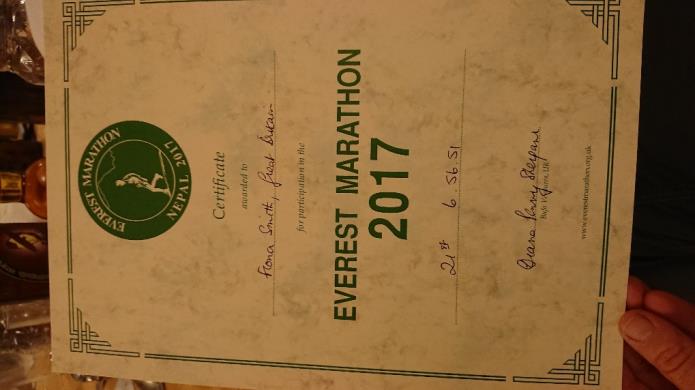
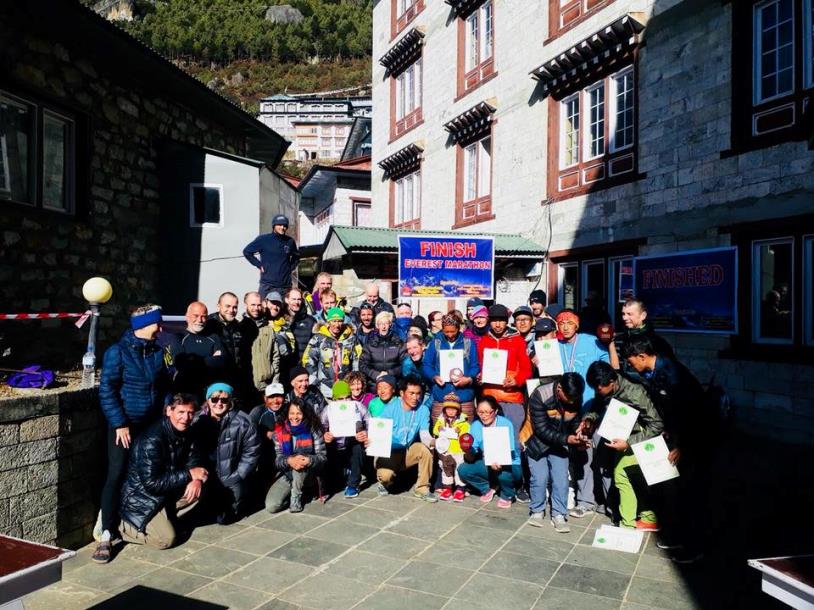
The next 3 miles seemed to go on forever. It was quite flat and very runnable, which by mile 18, 19 and 20 I wasn’t really feeling the running love anymore. Also by this point I hadn’t seen any other runners for quite some time and it was getting quite lonely. Usually when I’m home and out running I have the dog with me and having spent the past 2.5 weeks trekking there is always someone to chat to so this was probably the hardest part of the race for me mentally. The next check point was very welcomed, it was Ulla and she was the smiley face I needed to see. This check point was actually at Namche Bazaar, mile 20. Namche Bazaar was where the finish line was, right in the middle of the village, however we still had another 6 miles to complete which was a real kick in the guts so off I set on the 6 mile Thamo loop. The only plus side to doing this extra 6 miles was I got to see some of the other runners again which really helped the moral. The loop meant we ran out for 3 miles, turned around and then ran back the same way so all those folk in front of you passed you on their way back. So, half a mile into the loop I see Franck running towards me. Franck is from France and he was always the strongest trekker and I was really gunning for him to do well in the marathon as he absolutely deserved it. So as we pass each other, we exchange a high five and he heads onto the finish line. The next friendly face was Rich, then Alistair and the fourth international runner was Chris from Guernsey. He was the first from our yellow group so again a delighted high five exchange as he goes onto finish. Theses 3 miles seemed to be going on forever but being back in amongst some friendly faces definitely helped! I reached the turning check point. It was here there was some local Nepalese marking off the runners as they went through. They clocked that I was the first international lady through so they tied a prayer scarf round my neck and I wore it as I ran back to Namche. About ½ – 1 mile on my way back I pass Kim. This was the first time I’d seen her the whole race and now I felt like I needed to try and hold my position or the lovely prayer scarf they just gave me would be hers. We exchanged our high five and I just had to hope she was as tired as I was. On my way back I now knew this was the furthest I had ever run before, and I’m not going to lie I was pretty knackered! But even if I walked the last couple of miles I knew I was going to finish so there was definitely comfort knowing this. I passed Bobby who sadly had been struck by the sickness everyone had a few hours before. He said he was OK and would see me back in Namche. Then I passed the Irish guys. Screw the high fives by this point it was hugs all round, but they weren’t for holding me up they wished me luck and told me to go get first international lady. To be completely honest I would have been delighted to have a blether by this point, it was just nice to see them, but I plodded on. Every corner I turned I hoped the next would be Namche Bazaar… Then finally there it was! The steep stony steps, narrow streets and locals ringing bells shouting ‘Runner’!!! As I jogged through the street towards the finish line I couldn’t quite believe it was all about to be over. It was all quite overwhelming but I was definitely ready to have a sit down! Through the finish line I went in 6 hours, 56 minutes and 51 seconds!
First marathon completed… Phew!
We were told as a rough guide to how long we will take was to double our marathon time and this would be pretty accurate, however I couldn’t do this so I was delighted with my personal best! Seeing the others who had already finished was really nice and hearing of their stories along the way. Lachie who wasn’t even coming to do the race finished a few minutes ahead of me, also getting a personal best as it was his first marathon too so he was super happy, and looked way to fresh… or at least fresher than me! We then waited at the finish line for our other friends to come in. Kim was about 15 minutes behind me, but looked like she could have done another few miles, no bother! Then a few more came in over the next hour. The Irish weren’t far away, however it turned out that Bobby fell really quite ill, staggering, being sick and generally not in great form. The Irish group clocked this on their way back and they helped him back to the finish line. It was a real shame the illness got Bobby mid race but finishing alongside his good friends must have been pretty special too. He needed to see the doctor right away but soon got himself sorted out. I was now waiting for Shauney to arrive. Knowing she was so ill the night before I was really keen to see her finish. Sam from our group ran with her the whole day which was absolutely incredible of him and the two of them came in a couple of minutes apart. I absolutely take my hat off to that girl, she completed that race having the worst night and illness. I’m not sure I would have managed in her circumstances. We then welcomed home Mark who was still looking so strong and Frank, the last of the Irish to come through. Unfortunately he also wasn’t well but considering lack of energy and illness he plugged through and completed it. So out of the 46 who started the race, 40 completed the full marathon. The rest finished at the 20 miles mark when we first reach Namche Bazaar so everyone did amazingly. A massive well done to all runners. Of course we had the support of the check points along the way which did heaps for moral and food and drink where necessary so a massive thank you to them as well. Sally and Chris who were the furthest away check points were the real heros of the day as MacKenzie fell ill very early on in the race and they helped him home by walking but he was so weak that he had to get on a horse to get back to Namche so the real gold medal goes to them and the Irish team for helping others.
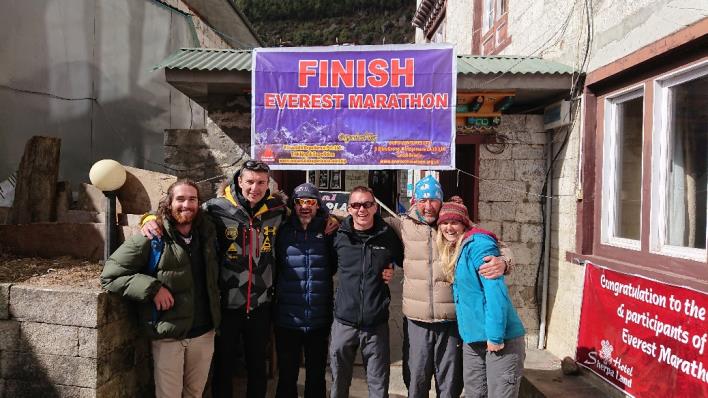
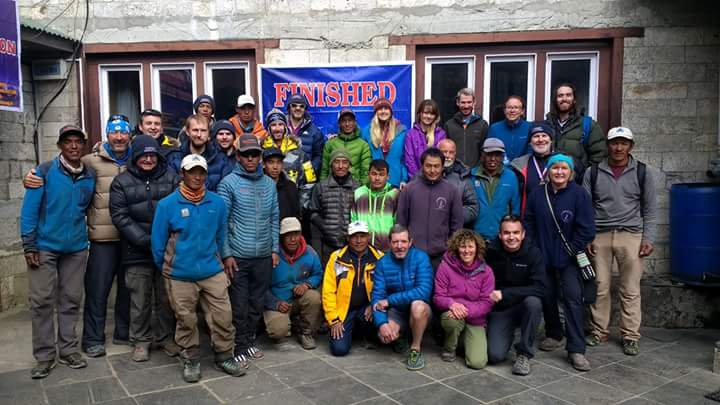
Obligatory finish line photos with Bobby and the Irish Crew.Team Yellow and our wonderful Sherpas
I think we were all ready for some comforts now after a pretty gruelling day so we headed to the Irish bar (of course!) for food and beers all round. It was, as expected, a fairly tame night but catching up with everyone on their day was really nice and everyone experienced a really different race ultimately ending in their own massive achievements! I was shocked, overwhelmed, delighted… all the emotions, as I really hadn’t set out for any great achievement, I was just in it for the jolly and adventure so to bag first international lady was as much of a shock to me as everyone else. But I couldn’t have done it without the support of the amazing yellow team and Sally so really they are all to thank.
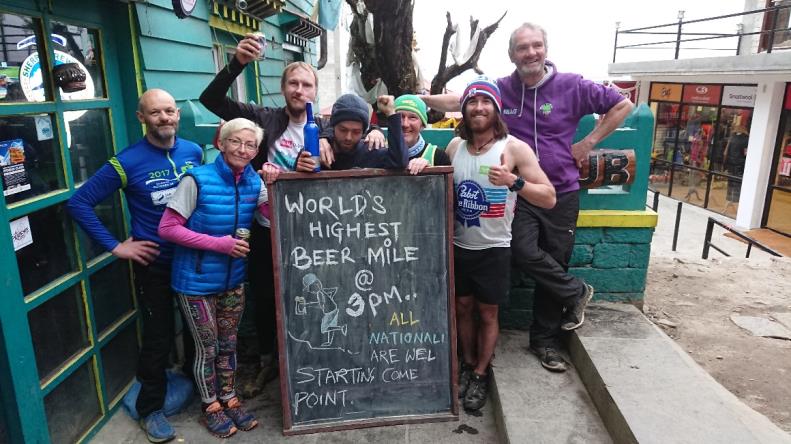
The next day was a rest day in Namche Bazaar and of course a bit of retail therapy… AKA buying presents for friends and family, and myself. My legs today were pretty exhausted and sore but a few celebratory beers later helped ease the pain. That afternoon Bobby organised the worlds highest beer mile, Google ‘beer mile’ for details, but at 3000+ meters and sore legs there was no way I was going to survive this so I watched from the side line. The next day we had to walk 14 miles back to Lukla where we were going to catch our flight the following day back to Kathmandu. This was the hardest walk I have ever done. My legs two days after the marathon were the sorest they have ever been. Stepping down was the worst but in general the body was just exhausted. We plugged through and made it to Lukla but was very happy to see a bed that night.
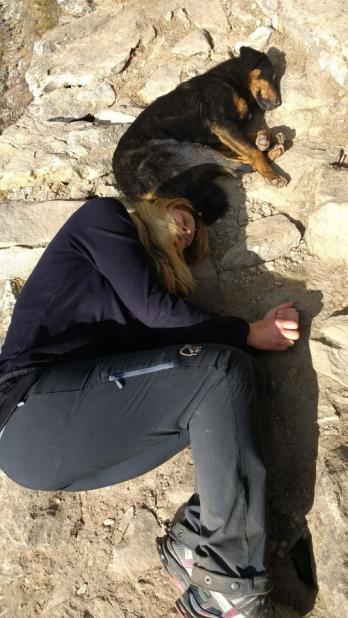
Competitors in the worlds highest beer mile! John, Gill, Sam, Lachie, Steve, Bobby and ShagThe walk back to Lukla really was exhausting after the past few days so curling up with this wee fella seemed like the best option.
The flights from Lukla go in small aeroplanes so we were split into 3 groups to get back. Due to poor weather conditions the 2nd and 3rd group unfortunately didn’t get back to Kathmandu that day. This included me, however that is the way the cookie crumbles and it was out of our hands. We pushed hard the next day to get on one of the first flights going and much to everybody’s delight, we got back… Woo Hoo! The hotel seemed so luxurious compared to when we first stayed there. A hot shower was welcomed by everyone and a change of clothes meant we all transformed from that grotty hiker back to clean holiday maker. All the men were suddenly clean shaven again, they were hardly recognisable! As we missed a day in Kathmandu due to flight delays we all rushed around getting some extra shopping (more yak blankets), had a few more celebratory beers (can they still be called celebratory beer by this point?) and headed back to the hotel for the presentation of our certificates. The food and celebration was great and it was nice to have one last night with everyone before we all went our separate ways the next day. One beer of course leads to another which apparently leads to drinking card games in the hotel rooms so our heads the next day were a bit worse for wear… When in Kathmandu!
Presentation of our certificates back in Kathmandu.
So the adventure comes to an end, and what an adventure it was. We all caught our various flights back home. A few kilos lighter for most people as when you spend time at altitude inevitably you lose weight. Some folk lost a stone, I only lost 4kg, which was enough that my trousers looked a bit silly on me! The last of us said our goodbyes at Heathrow airport, I blagged a lift to the Lakes District where I then jumped into a reindeer lorry going back home to the north of Scotland. 12 hours later from Heathrow and after walking the reindeer back onto the hill after their Christmas tour all my family and friends were there waiting to welcome me back. Dogs went mental having not seen me for 3.5 weeks and after two days travelling it was sooooo good to be back. Especially back into my own bed!
So although this amazing adventure has come to an end I am left with the most incredible memories and lifelong friends out of it. Already there are plans to visit folk and a reunion up here in Scotland later in the year. This of course has to be based around a race of some sort so the Dramathon (marathon around the whisky distilleries) seems like the most apt one to pick which is happening in October. Already a good few folk are booked in to do this so its going to be a great weekend, I cant wait!
The Everest Marathon is a charity set up to help the people in rural Nepal. As runners we were asked to fundraise to take part in the race. Friends and family have been super generous, as well as adopters from our reindeer support scheme and the general public passing through the Reindeer Centre and I managed to raise £2,431.23 which is just amazing so THANK YOU all so, so much.
Here’s some more photos of my amazing adventure and friends along the way.
Fiona
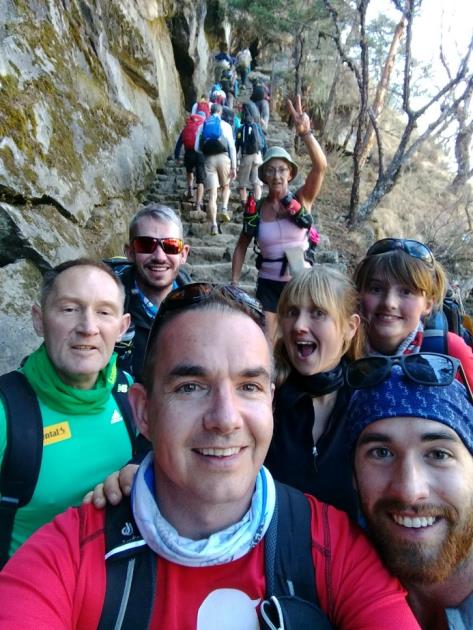
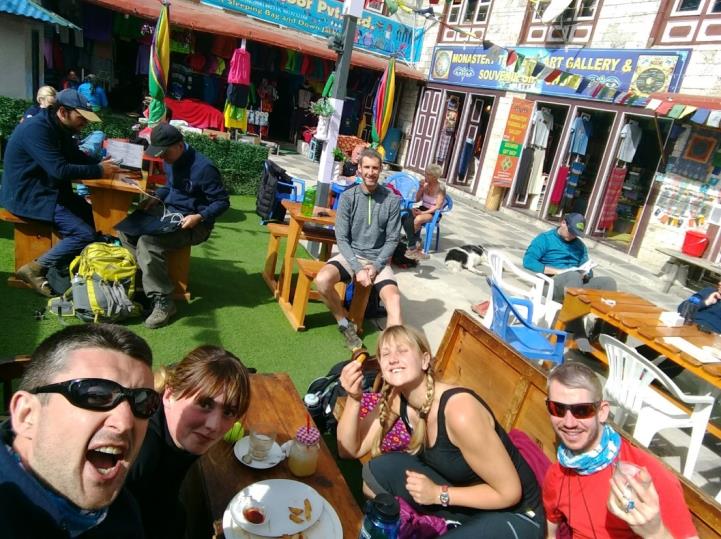
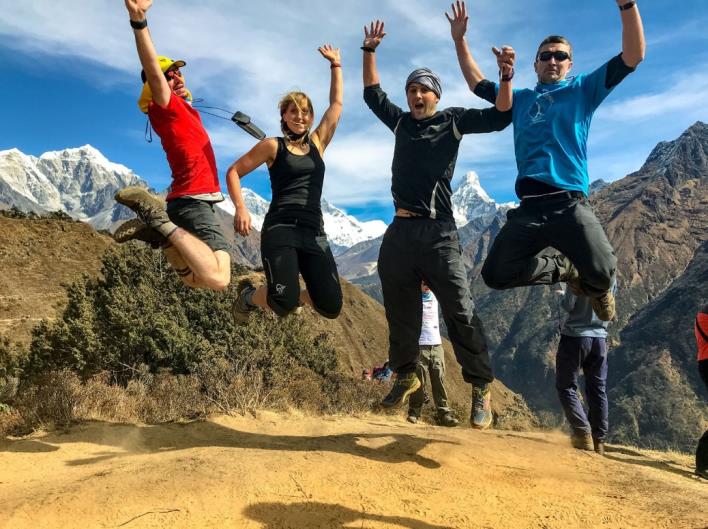
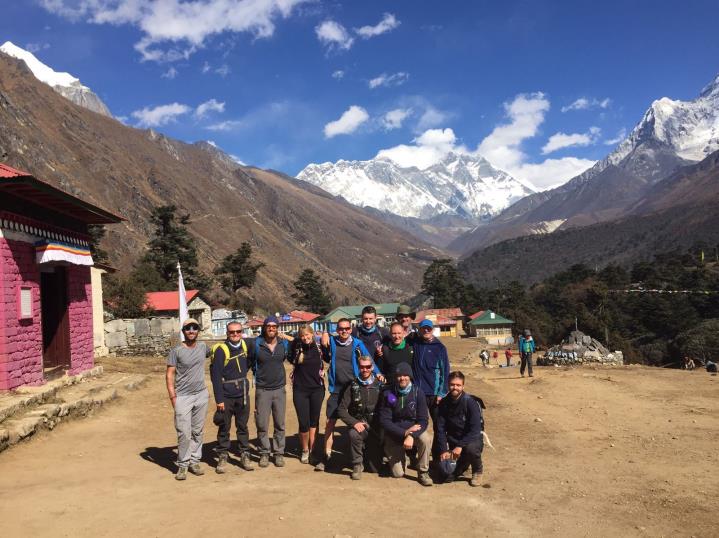
Tom and Bobby with Steve, McKenzie, Gill, Myself and Shauney behind.Frank, Shauney, myself and McKenzie with Chris is the background. Relaxing in a café in Namche Bazaar.Rich, Bobby, Tom and I on one of our many sunshine and blue sky hiking days.One of the many monasteries up in the mountains.Beautiful Himalayas…Myself and Ulla trekking back from Gokyo with the most amazing coloured lakes!Top of Gokyo Ri looking over to Mount Everest.Obligatory jumping shot with McKenzie, Rich and Frank.A group shot in Tengboche looking over to Mount Everest. Franck on the left was 1st international and 1st over 40 in the Everest Marathon.Group shot with Nepalese runners too.
Mid April here has a definite ‘calm before the storm’ feeling. The area has quietened down as the school holidays have finished and all is peaceful on the reindeer front…but it won’t be for long. At the start of May, all hell will break loose.
A growing belly!
Calving is nearly upon us. Although we know exactly which females ran with bulls during the rut last autumn and should therefore be pregnant now, it’s not easy to tell with a reindeer, and it’s really only into April that bellies start looking that little bit more than just well padded. Scanning them like farmers do with sheep is obviously completely impractical, so all we do is to keep an eye on the possible candidates and watch for rapidly expanding tummies. Literally within a couple of weeks reindeer can go from looking exactly the same as their non-pregnant chums, to looking absolutely enormous! As I write, in mid-April, we’re in the middle of that stage, and every day someone will remark on a particular reindeer’s sudden portliness. The weather has finally warmed up too, and with the reindeer still having their full thick winter coats as well as extra weight to lug about, they are looking like they are starting to find it all a bit of an effort, and there’s lots of huffing and puffing when the herd move from place to place.
A couple of hot and bothered pregnant female reindeer, Blondie and Oatcake.
By the time you read this, we’ll have moved the herd across to our hill enclosure, and will be doing a bit of sorting out. Non-pregnant females will go back out onto the free-range to spend their summer there looking after themselves, while male yearlings will be split from their mums and be moved across to join the other male reindeer at our farm, near Glenlivet. Pregnant females will stay in the hill enclosure until they’ve calved, and then will head out to the hills to join the other females, leaving us to bring male reindeer across to the enclosure from the farm, to duly entertain all the visitors through the busy summer months.
The biggest pregnant belly I’ve ever seen! This is old lass Chime, back in 2010‘A small hairy udder! Seen here on Emmental, with her now two year old Olmec beside her’
Once bellies give away obviously pregnant reindeer, then the next clue is an udder starting to form. Reindeer don’t have huge udders like cows do, as no arctic animal wants a frost-bitten udder, but instead have much smaller, fur-covered udders and produce smaller volumes of milk, but much richer in fat than that from a cow.
Any sign of udders yet?
As many of you probably know, all the staff here take part in a calving bet to pick who they think will calve first. Winning doesn’t really matter; it’s not being last that is most important, as a cold swim in the loch awaits the unfortunate loser (as told by myself and Abby on a previous blog: The Calving Bet. So from now on until the start of May, there will be a lot of inspecting bellies and peering between back legs to be done…
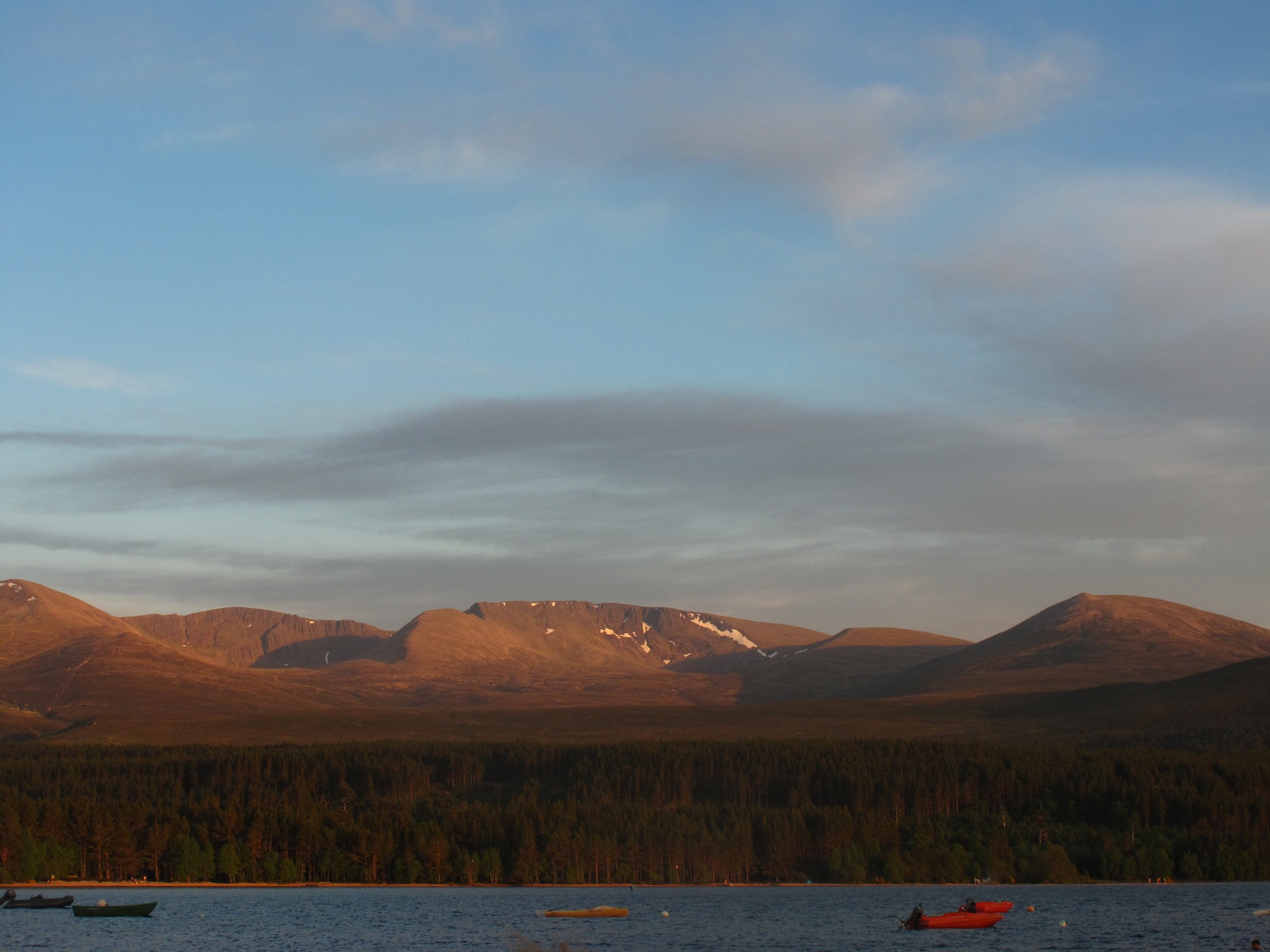
As it’s my turn to write a blog, I thought I would do something a little different. Here at the Reindeer Centre in Glenmore, every time I look towards the hillside and enclosure, my eyes are always drawn to the daunting shape which stands boldly behind it. These are the Northern Corries of Cairn Gorm. On a clear day in the Glen, whether you’re here to see reindeer, walk, ski or simply escape into the space of this beautiful place, the horizon of towering cliffs and steep slopes might just fill you with awe as it does for myself. It’s for that reason that I’d like to tell people a little bit about what lies on the reindeer’s doorstep and where they have the opportunity to go now the time has come for them to explore the free range.
The Northern Corries from Loch Morlich
The Northern Corries are what make up the North West side of Cairn Gorm, Britain’s 6th highest mountain at 1245m high. There are 3 corries in total that sit side by side to one and other, each having it’s own individual character. A coire (corrie) or cirque is an amphitheatre like, bowl shaped valley formed by glacial erosion. The head of a coire is usually very steep with cliffs and rock faces. Below these, a steady downhill slope carved by the glacier that would have once existed.
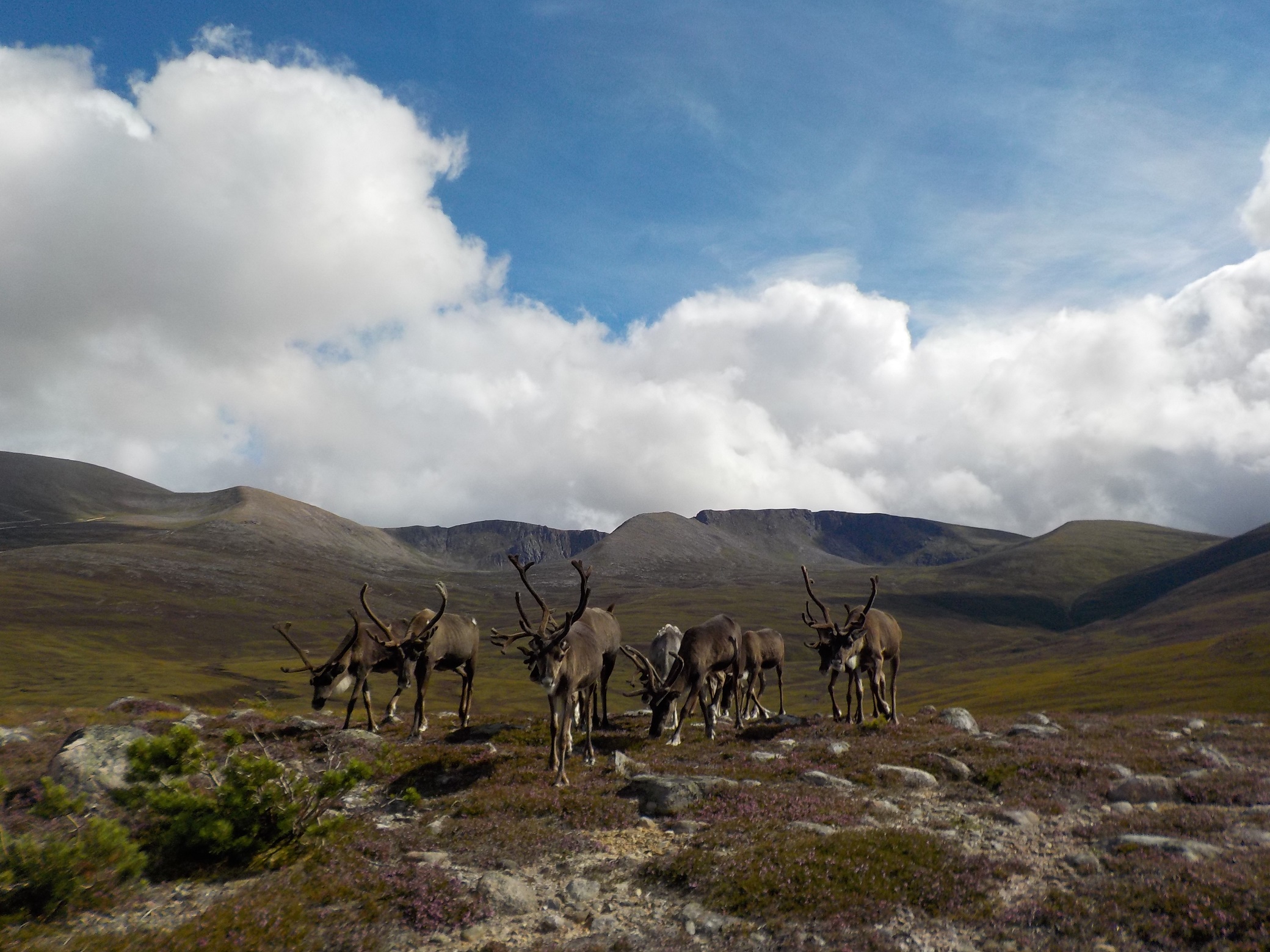
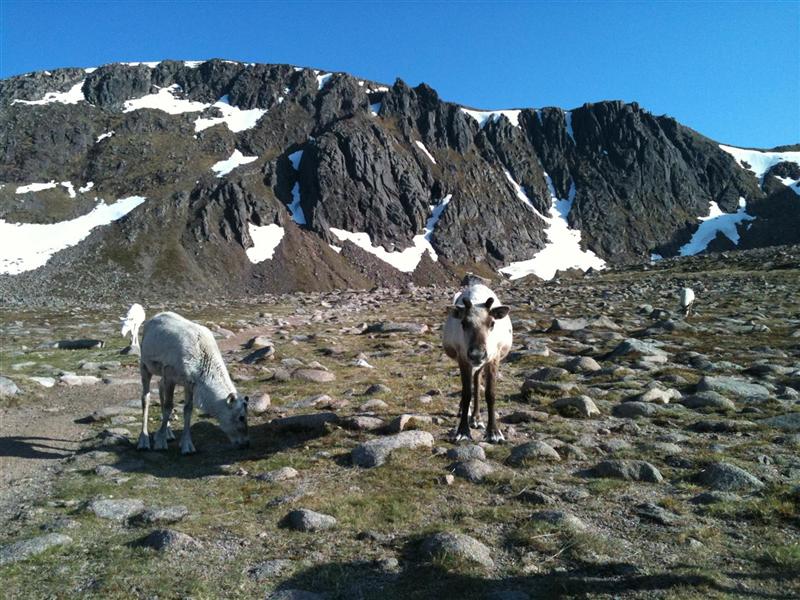
Reindeer in the Northern Corries
As one of the most iconic spots in the whole of the Cairngorms National Park they are also popular with people, in particularly Coire Cas. This is the most eastern of the 3 corries where the ski centre and funicular railway is. It’s over 50 years since the first chairlift opened to skiers and it’s grown in popularity ever since. Our reindeer have been known to wander here every now and again but during the winter months they tend to keep their distance from the busy ski slopes. However, they have often been seen licking salt off the road to the main carpark! Interestingly, other animals such as mountain hare and the ptarmigan also use the busy slopes as protection from predators such as the Golden Eagle and Ravens who, like our Reindeer usually keep away the busier areas.
The central coire of Coire an t-Sneachda is the most dramatic. Here the cliffs can be up to 200m high and below them, a huge boulder field with rocks the size of cars that have been crumbling away from the cliffs high above for thousands of years. During the winter, climbers and mountaineers can flock into the coire if the conditions are good as it is one of the most reliable places for this style of climbing anywhere in the UK. For our reindeer, I could imagine there is actually a lot of food for them in the coire with lots of boggy areas where lichen would thrive but over the years. Unfortunately for them, Sneachda has also got busier and busier with people and it’s become a place where the reindeer spend less time other than the odd spot of grazing.
Reindeer grazing in Coire an t-Sneachda
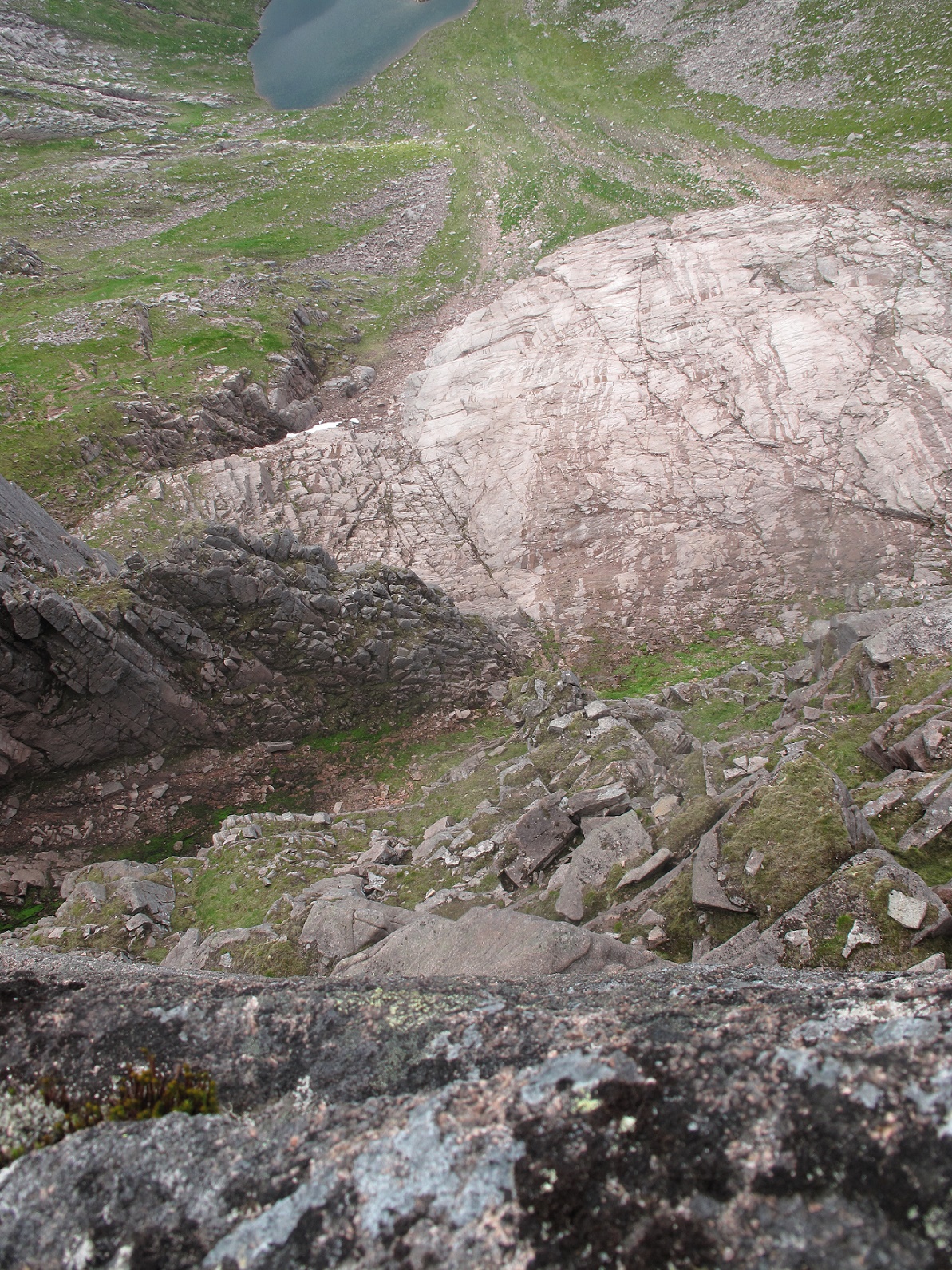
The final and most westerly coire is Coire an Lochain. This is another steep sided coire where more giant cliffs lie at the back. It is also home to the highest loch or lochain in Scotland at around 920m. What makes this coire special is that it’s thought to have had the UK’s last glacier as little as a few hundred years ago. Remnants of this are still visible all around the coire, but the most obvious sign of past glacial activity is the Great Slab, a glacial moraine of rock that sits proudly just under the upper cliffs.
The Great Slab in Coire an Lochain
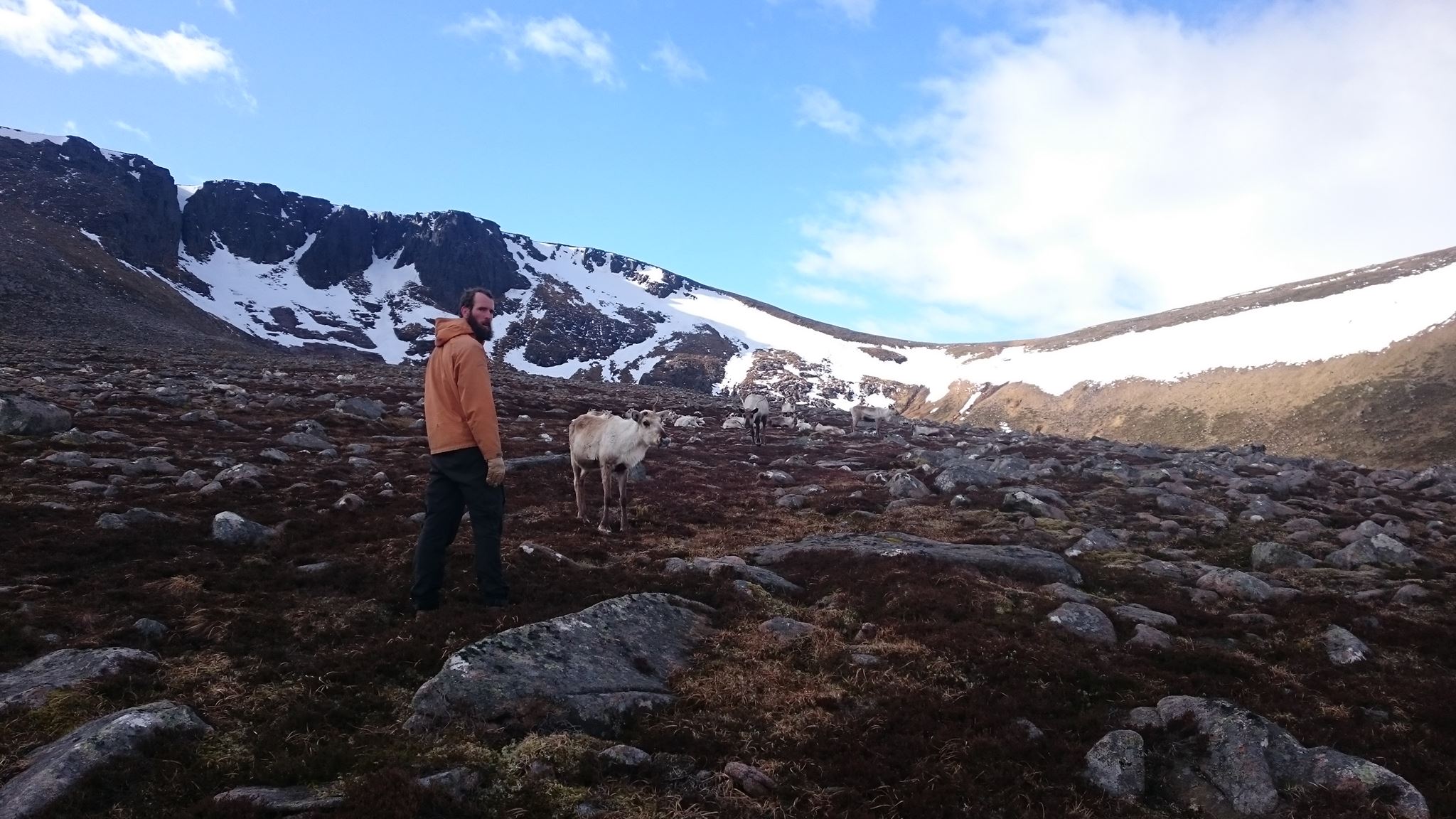
Climbers and walkers do regularly venture into Coire an Lochain but not in the numbers that the other two coire get. Being a little quieter, this is the most popular of the coires for the reindeer. Similarly to Coire an Sneachda, the coire is much wetter than the plateau with many small burns and boggy areas, meaning there is more lichen and other foods for them. The females and calves have been found there a few times recently. On the whole though, the reindeer don’t spend huge amounts of time here and usually pass through to higher, more remote places in the summer months.
Dave with the reindeer in Coire an Lochain
If you are planning on exploring the Northern Corries in the coming year summer or winter, keep an eye out for some of the herd. You may be lucky to bump into some of them in one of Britain’s true mountain areas.
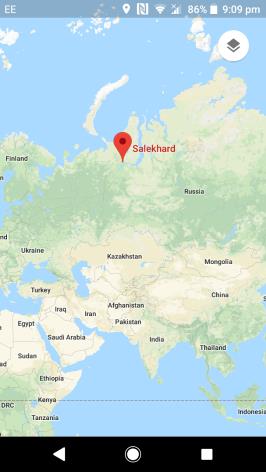
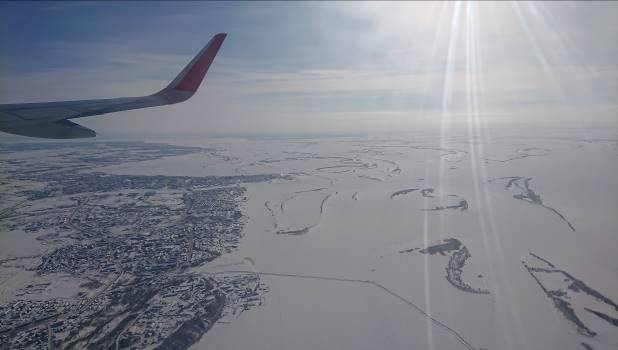
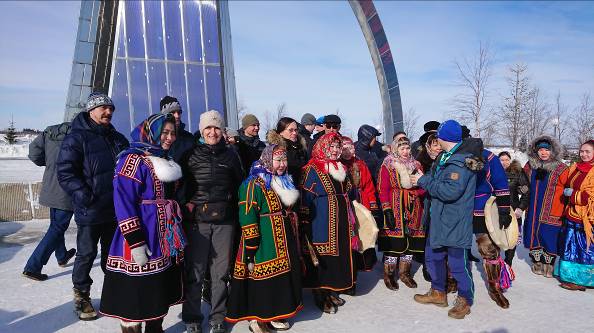
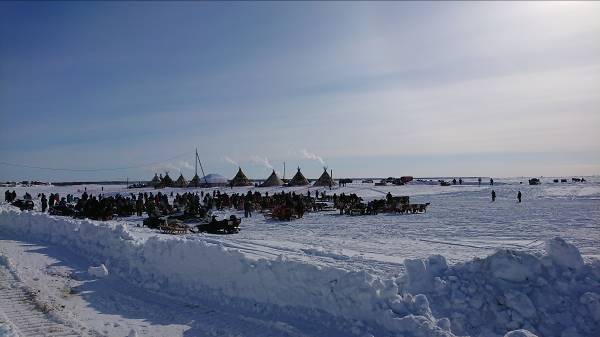
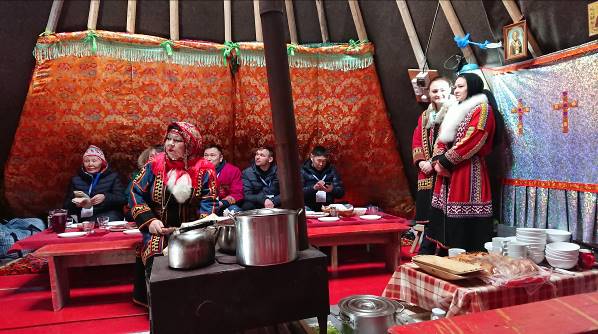
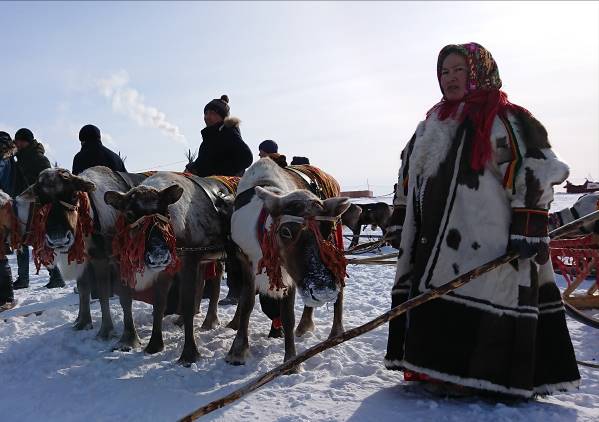
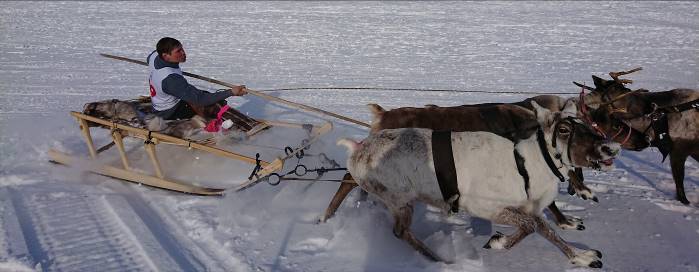
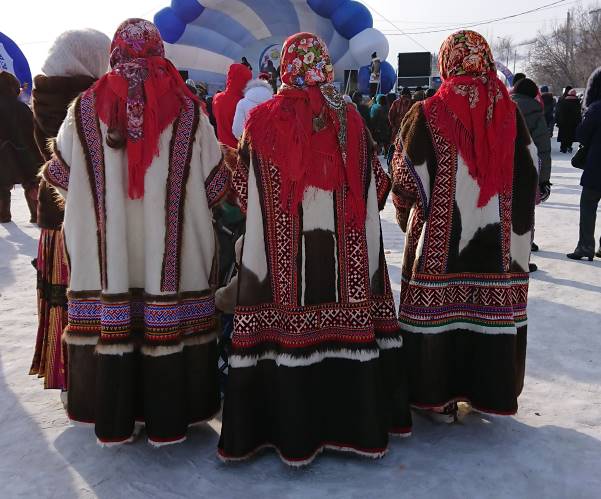
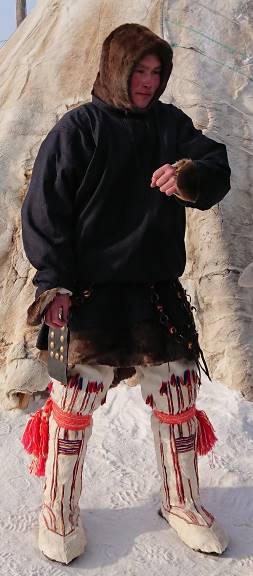
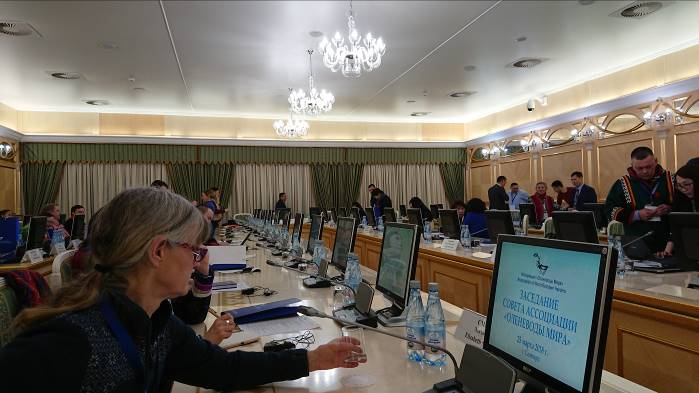
On Thursday 22nd March Tilly and Fiona set off on their journey to the north of Russia where there was a World Reindeer Herders council meeting. This was to be held in Salekhard which is a town at the bottom of the Yamal Peninsula, and also where you find the Nenet reindeer herders. Here are a few photos from their weekend away, we will write a more detailed version of events in our newsletter in June.
For those of you who don’t know where Salekhard is, it’s in northern Siberia.The view as we flew in over the Tundra and the big frozen area on the right is the River ObA welcome ceremony on the Arctic CircleThe first sighting of the Reindeer Peoples Festival – Nenet reindeer herders of the YamalInside a Chum, a traditional Nenet tent. Here they gave us food and tea consisting of raw fish and reindeer as well as salted fish and a reindeer and potato stew. Opposite are other reindeer herders from other regions in Russia.
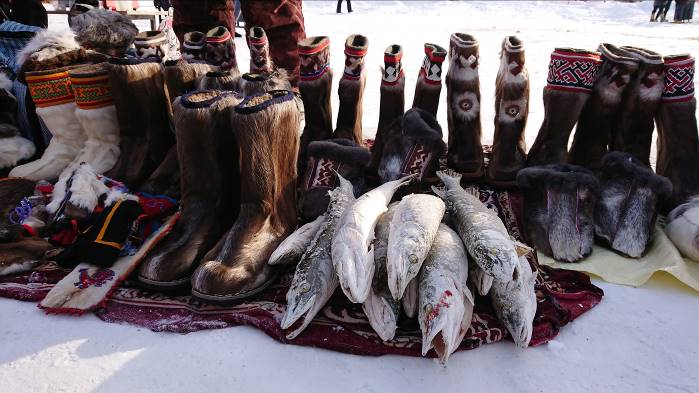
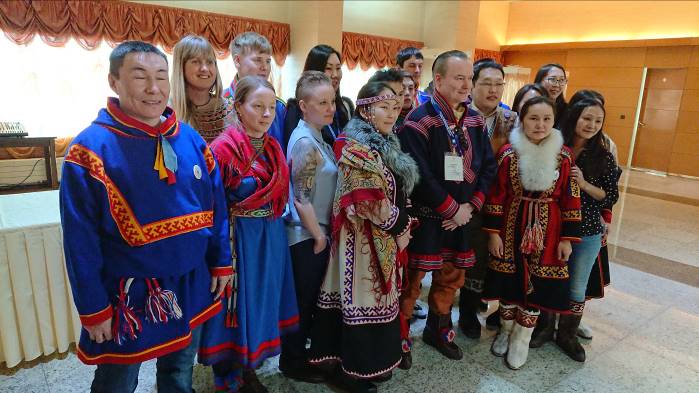
A Nenet lady in traditional reindeer skin clothing with her reindeer and sled.Reindeer racing was one of the event the Nenets were taking part in. Four reindeer can pick up a fair speed!Beautiful reindeer skin clothingLong reindeer skin boots to keep you warm in their very cold temperatures. Reindeer skin products are the only suitable material in such extreme temperatures.Reindeer Peoples Festival marketWorld Reindeer Herders council meetingThey really embrace the young reindeer herders, acknowledging that they are their future so this is a photo of us all. Fiona snuck in behind of all the lovely traditional clothing!
There will be a more detailed write up in the next adopters newsletter so keep your eyes peeled!
This winter we have prolonged periods of cold snowy weather, as I write this the weather forecast predicts it’s not going to be above zero during the next two weeks! It’s pretty chilly for us herders even under our many layers, but for the reindeer it’s ideal (if a little mild!) and we have a big happy free-ranging herd.
On Hill Trips we often talk about how reindeer are adapted to Arctic and subarctic life by describing their thick winter coat, large hooves, beards, and their amazing clicking back feet. However, in my opinion, one of the most wonderful and endearing adaptations of a reindeer is their beautifully soft velvet noses!
Their fuzzy noses also makes them a joy to hand feed as herder Lotti’s smile demonstrates as she feeds Brimick
Out of the 40 odd species of deer in the world, reindeer (and Caribou) are the only deer which have hairy noses rather than shiny, moist ones. This prevents the build up of frost which would occur on a cold wet surface during exhalation; perhaps this is the reason why male polar explorers (and Scottish reindeer herders) often grow beards!
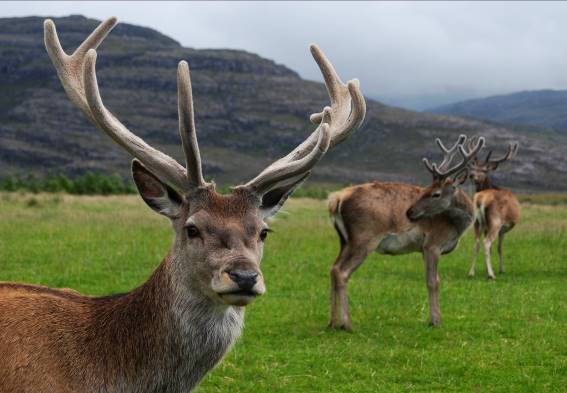
Merida and calf Dr Seuss vacuuming up their breakfast without getting chilly thanks to a completely hairy muzzleBy comparison, here’s a red deer stag with a shiny, wet nose https://commons.wikimedia.org/wiki/File:Red_deer_stag.jpg
However, the most special part of a reindeer nose is actually on the inside. This blog will endeavour to delve under the cute furry exterior to hopefully show how truly remarkable a reindeer’s nose is…. as well as a good excuse to show lots of lovely fuzzy photos!
There is a complicated and highly specialised arrangement of cartilage, bone, fleshy bits, mucous membranes and blood vessels that make up their nasal passages. Together they form an extremely large surface area; the shape of which is often described as a ‘rolled scroll’ or sometimes a ‘seashell’. This specialised structure allows a reindeer’s nose to remain warm and retain moisture in freezing temperatures as well as allowing them to expel excess heat on warmer days.
No cold noses for Sitini and her calf Pratchett as they munch on snow.
A reindeer would soon be chilled if freezing air was to reach their lungs on every breath. To overcome this they have the fascinating ability to change the temperature of the air they inhale before it reaches the lungs, and vice versa. This is all thanks to their ingenious nasal structure, which works as a counter-current heat-exchange system.
For example, if the outside air temperature is -40⁰C, the temperature when the air reaches the reindeer’s lungs is about +38⁰C. In other words, they can change the temperature of the air an incredible 70-80⁰C in less than one second! Additionally, winter air tends to be cold and dry, especially for reindeer that live in higher latitudes. In order for the heated air not to be over dry when it reaches the lungs, a bit of moisture is released from the internal mucous membranes into the air when the reindeer inhales. Move over Rudolph with your shiny red nose, I think that is pretty magic!
Bumble’s snowy nose
On exhalation the opposite happens so a reindeer is able to cool its warm breath, in order to conserve as much body heat as possible. When breathing out they also conserve as much water vapour as possible; especially important when snow may be the only form of water they are able to get!
So when it’s cold in winter, us meagre humans can see our breath as we exhale. However, a reindeer standing at rest in sub-zero temperatures will have no visible breath steaming from their nostrils! That’s because air leaving a human nose is about 32⁰C and the water it contains condenses into visible water droplets as our warm breath meets the cold air. In a reindeer’s nose, warm air is cooled down by about 21⁰C before it is exhaled, saving the majority of the heat. The mucous membranes in the snout recover the moisture, enabling the water in the air to condense inside the nose which then trickles into special folds which direct it to the back of the nose and into the throat, meaning the reindeer exhales drier and partially cooled air.
Beneath Christie’s pretty nose lies an amazing complicated anatomy!Second doing his best Rudolph impression whilst out on tour last Christmas!Reindeer noses can also be very useful for sleeping on, as Fergus is demonstrating her!Last but not least…. Dr Seuss’s gorgeously handsome super soft snozzle!
Ruth
References:
https://geminiresearchnews.com/2016/12/magical-reindeer-nose/
The Real Rudolph, Tilly Smith