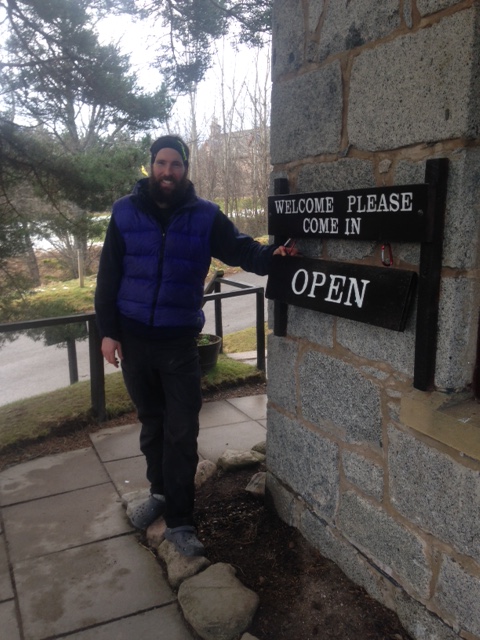
We are now once again open to the public, hooray! Each year the reindeer Centre shuts its doors for about 5 weeks from the end of the Christmas holidays to February half term.
8th of January and we are CLOSED! Re-opening on the 10th of February!
This begs the question what do the reindeer and herders do for these weeks of the year! Well, some herders choose to head off on exotic travels to Australia, others choose to take time off to be with their families. Others remain hard at work clearing up after a busy Christmas season and preparing for a busy year ahead… albeit with some fantastic flexi-time, for example finishing work a wee bit early to make the most of some good weather by running up our local hill (thanks Fiona!).
View from the top of Meall a’ Bhuachaille in the late afternoon!
As for the reindeer it’s the time of year when the whole herd heads for the hills, free-ranging for the first few months of the year. Some we still see on an almost daily basis, others weekly, and others not for several months! This winter has been great for the herd; cold, snowy and the usual huge abundance of lichen to keep them going.
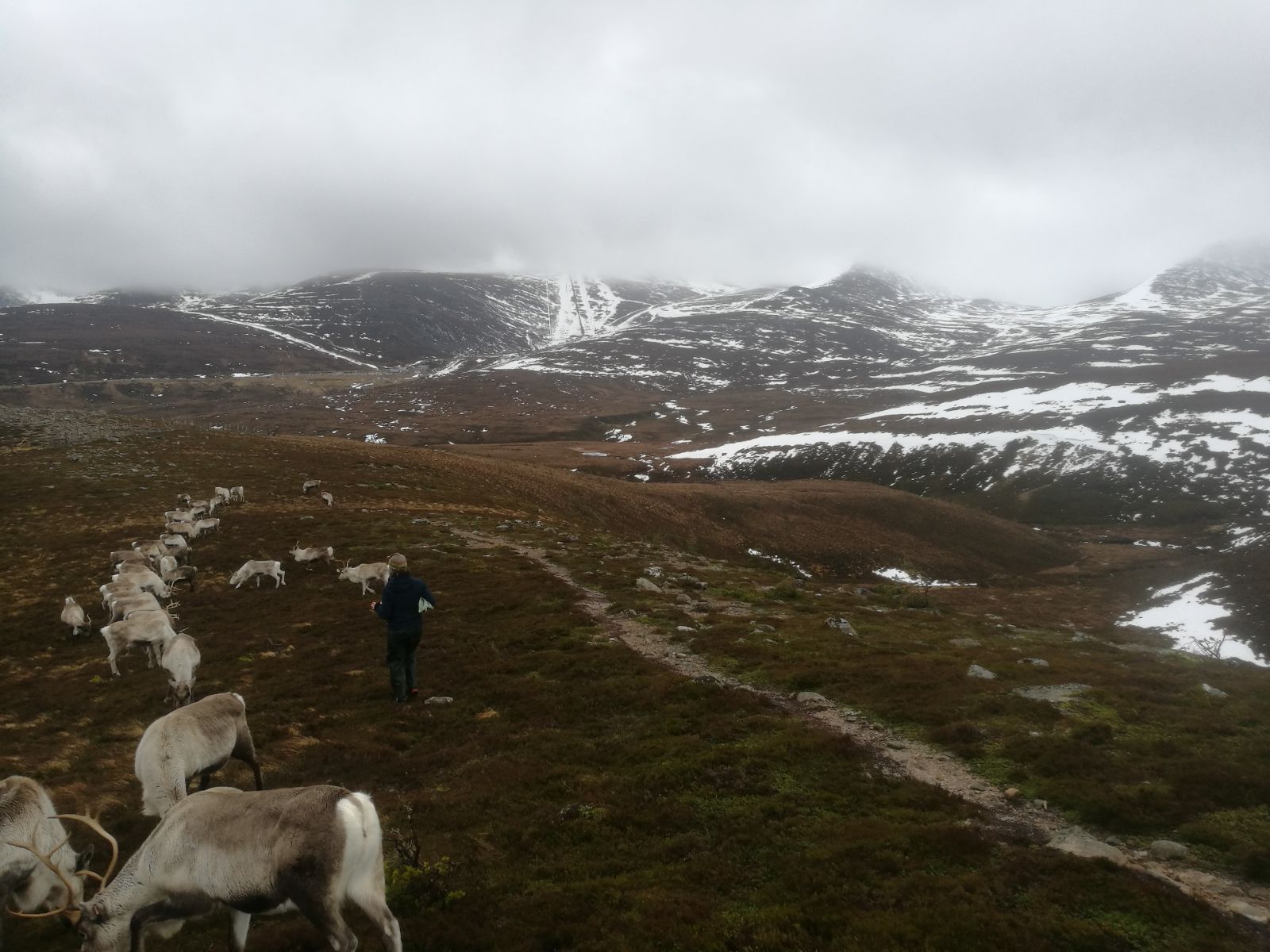
Each day, if the weather allows, we usually go up and check on some of the herd…
Reindeer House dogs Tiree and Sookie are ready to head up the hill and search for the cows and calves.
Reindeer Herder Chris spies for the reindeer from the ski car park, with the rain and patches of snow it’s sometimes pretty difficult…Have you found them yet?!And we’re off to check on the herd and give them a wee bit of extra food!Found them! We like to make sure the calves get a wee bit of extra feed. It’s a tough job!
How many reindeer calves can stick their head in one bag?
We also ‘need’ to check the calves are nice and friendly ready for when we re-open!Counting the cows and calves to see who is about
When we’re not out on the hill we have a big list (mostly left by the herders who went to Australia!) to try to complete, such as repairing boardwalk, repainting the floor of the Exhibition, checking first aid kits, oiling the Christmas harnesses, re-packing Christmas kit boxes etc etc…
Chris has been scrubbing and re-labelling our wellies, ready for our first visitors to make them mucky!Morna sorting out the Christmas kit boxes ready for November!
Meanwhile there are always the adoption packs to make up, reindeer food to mix, Wild Farm Cottage bookings to take, plus emails and phone calls to deal with. On top of all this Captain Christmas herself, Fiona, has been incredibly busy organising Christmas 2018!
Ruth completing the daily diary after a busy day in JanuaryOlly writing letters for our adopters
Now we’ve got the place ship-shape and all the herders and reindeer have had some time off, we are refreshed and delighted to be open again and hope to see you soon on a Hill Trip or in the Paddocks!
Reindeer Herder Dave is raring to go!A busy Hill Trip on opening weekendAddax and Bumble enjoyed the extra food given on the Hill Trip!
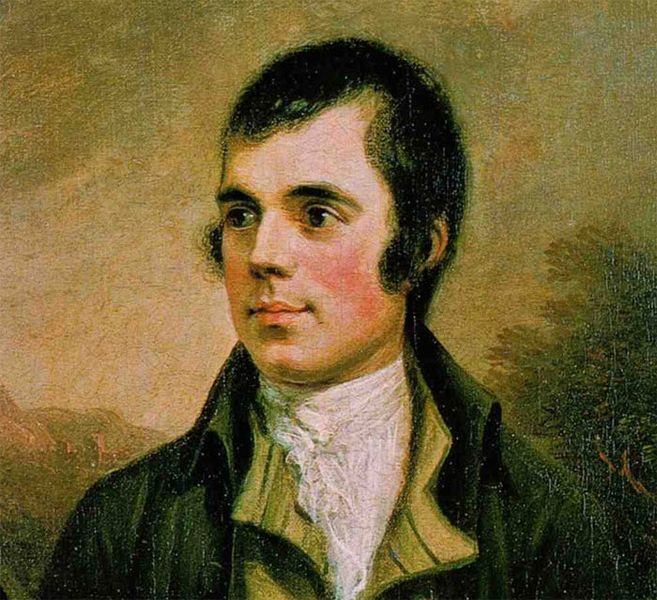
Burns Suppers celebrate the life and work of the Scots poet Robert Burns. More commonly known as Burns Night the suppers take place on or around his birthday, 25th January and are effectively a second national day in Scotland. Here at Reindeer House we just love any excuse to get together and eat some fantastic food with some great company! For those of you that don’t know about the Burns Supper tradition here’s a brief overview of what we got up to last night at our Burns Supper, along with some tales of our reindeer named Burns, seeing as this is a reindeer blog after all!
Robert Burns was born in 1759 in Alloway, Ayshire and lived until he was 37. He is known and celebrated worldwide for his poetry much of which was written in the Scots language or Scots dialect. Whilst many of his poems were of the Romanticism style he lived through a period of political repression. His work often reflected or commented upon this and some considered him to be a radical and revolutionary which perhaps helped give him such a huge following during and after his lifetime.
The poem and song “Auld Lang Syne” is sung all over the world on Hogmanay and is one of Rabbie Burns’ most famous works. Other well known work by him includes “Scots Wha Hae”, a patriotic song which became an unofficial national anthem for Scotland. It was written in the form of a speech from Robert the Bruce before the Battle of Bannockburn in 1314 where Scotland defeated England in Battle. Romantic work included (My Love is Like) “A Red, Red Rose” whilst “Tam o’ Shanter” and “To a Mouse” reflect on his upbringing as a tenant farmer. For us though at Reindeer House his “My Heart’s in the Highlands” seems most appropriate!
Farewell to the Highlands, farewell to the North,
The birth-place of Valour, the country of Worth;
Wherever I wander, wherever I rove,
The hills of the Highlands for ever I love.
My heart’s in the Highlands, my heart is not here, My heart’s in the Highlands, a-chasing the deer; Chasing the wild-deer, and following the roe, My heart’s in the Highlands, wherever I go.
Farewell to the mountains, high-cover’d with snow, Farewell to the straths and green vallies below; Farewell to the forests and wild-hanging woods, Farewell to the torrents and loud-pouring floods. My heart’s in the Highlands.
If you needed further persuasion of Robert Burns’ stature then did you know he won a contest run by STV to be called “The Greatest Scot” of all time in 2009? It is a rather impressive feat to have beaten Mel Gibson (William Wallace) to the title don’t you think? Perhaps he was aided by some of his extremely impressive nicknames that make him sound more like a cross between a rap artist and a boxer:
– The Bard of Ayrshire
– The Ploughman Poet
– Or just plain Rabbie Burns
Here’s a photo of some of our cows and calves on the free range a couple of weeks ago for anyone desperate to get back onto reindeer!
Burns Suppers have been taking place for over two centuries with the evenings format barely changing over the years. There is usually a general welcome followed by the “Selkirk Grace”
Some hae meat and canna eat,
And some wad eat that want it;
But we hae meat, and we can eat,
Sae let the Lord be thankit.
Supper usually then begins with a soup dish such as Scotch broth or Cullen skink before everyone stands for the “Piping” of the haggis (this is exactly how it sounds). We stand whilst the haggis is brought into the room by the cook whilst a piper plays a tune such as “A Man’s a Man for A’ That” written by Burns. Before you can eat the haggis though, you must first address it! “Address to a Haggis” is a poem written to a haggis with the opening line of Fair fa’ your honest, sonsie face” (translated as Nice seeing your honest, chubby face). At last we can eat the haggis! Served with neeps (swede) and tatties (potatoes) our meal last night was delicious! The evening concludes with an often amusing “Toast to the Lassies” and a reply for the laddies before a vote of thanks is given and everyone stands to sing “Auld Lang Syne”.
Reindeer herders, spotted for once out of our scruffy clothes!
As you can see we had a fantastic evening, but back to the reindeer!
As well as giving us an excuse for a party at the end of January, Rabbie Burns is of particular importance to us because we have a reindeer named after him! This year our calves were named after authors, writers and poets so we obviously had to name one Burns. He has turned out to be one of the biggest, strongest and healthiest calves of the year. He is extremely tame and bold and quickly became quite a cheeky chappy. We have him marked down, along with Dr Seuss, as being one of the biggest characters of the next few year but hopefully neither of them will misbehave too much in the following years as young bulls like Fergus did.
Burns, of the reindeer variety rather than his namesake Robert. Taken a few months ago he’s now substantially bigger!
When he came in off the free range in late summer with his mother Gazelle he had broken one of his antlers and it was growing over his face making it difficult for him to feed. We called out the vet who cut away the antler from his face and after a short while with a bandage in the shed he recovered well to become the strong healthy calf that he is. We are interested to see next year whether his antler will grow back in a more “normal” direction and shape or whether the pedicle from which the antler grows has been damaged and Burns will perhaps always grow one antler in a funny shape and direction.
Fiona and Burns out on the free range this week showing off his forward growing antler.
Reindeer are an integral part of life in the far north. The cultures there rely on the animals for transport, food and skins.
Reindeer are the only animal suited to the cold that can provide the people living in the arctic regions with animal protein. They are raised for venison but almost all parts of the animals are used. The skin is an obvious, valuable and extremely useful product. The skins are used for clothing, rugs and numerous other everyday items. Reindeer are used as draft animals – transporting both people and freight from A to B.
Many of the people of the far north are nomadic. Families or groups migrate large distances to access seasonal pastures. Their reindeer graze and grow and then move on and the people who own them travel with them. Their possessions are on sleighs or directly on the backs of the reindeer. This blog will highlight some of the many arctic cultures and people, and discuss how these people live and especially how they care for, work with and use reindeer.
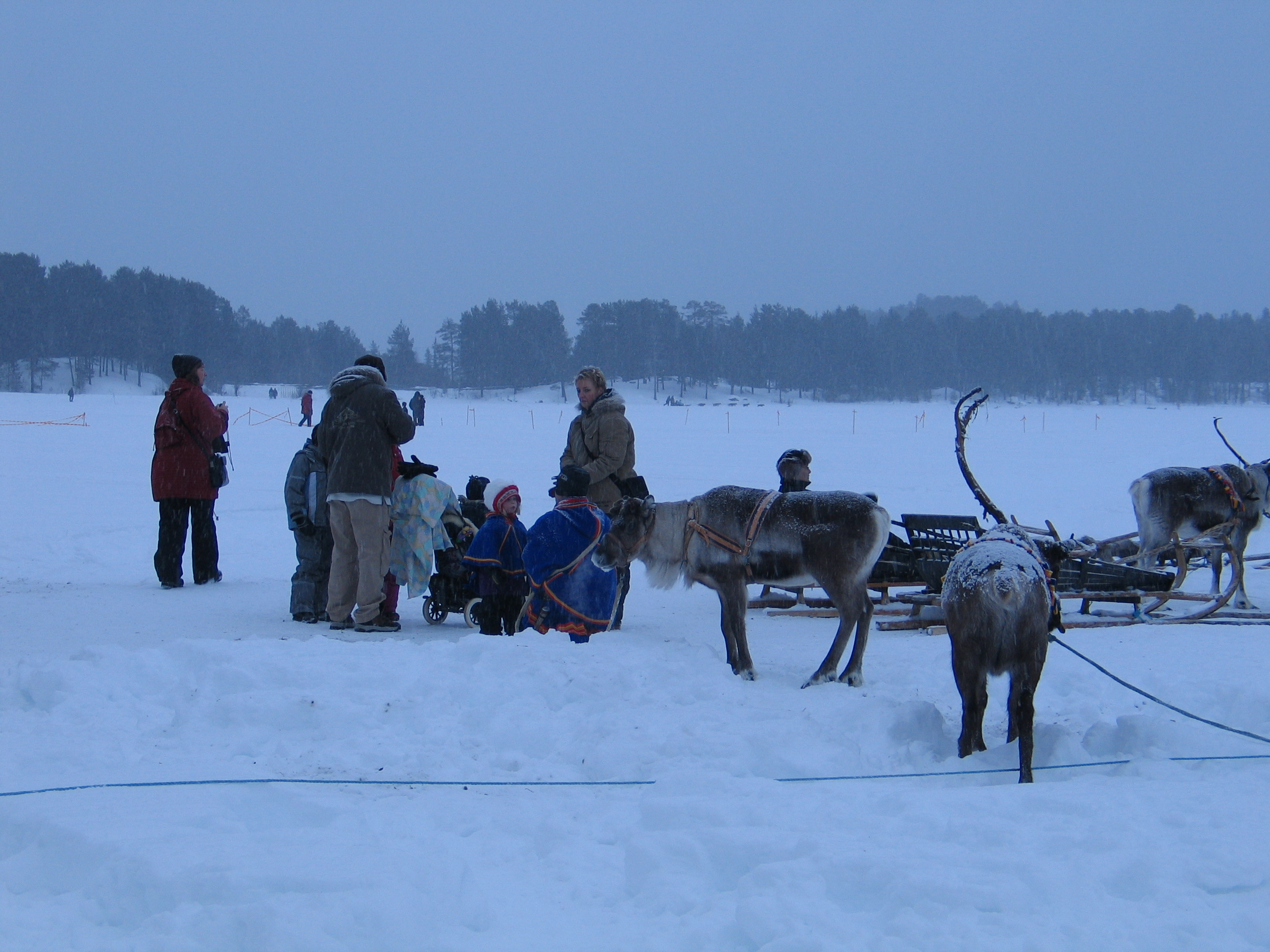
Reindeer harnessed for a demonstration of sleigh pulling. Photo taken during visit to Sweden in 2008.During a cold winter in Sweden, reindeer historically provide the main means of survival. Photo taken during visit to Sweden in 2008.
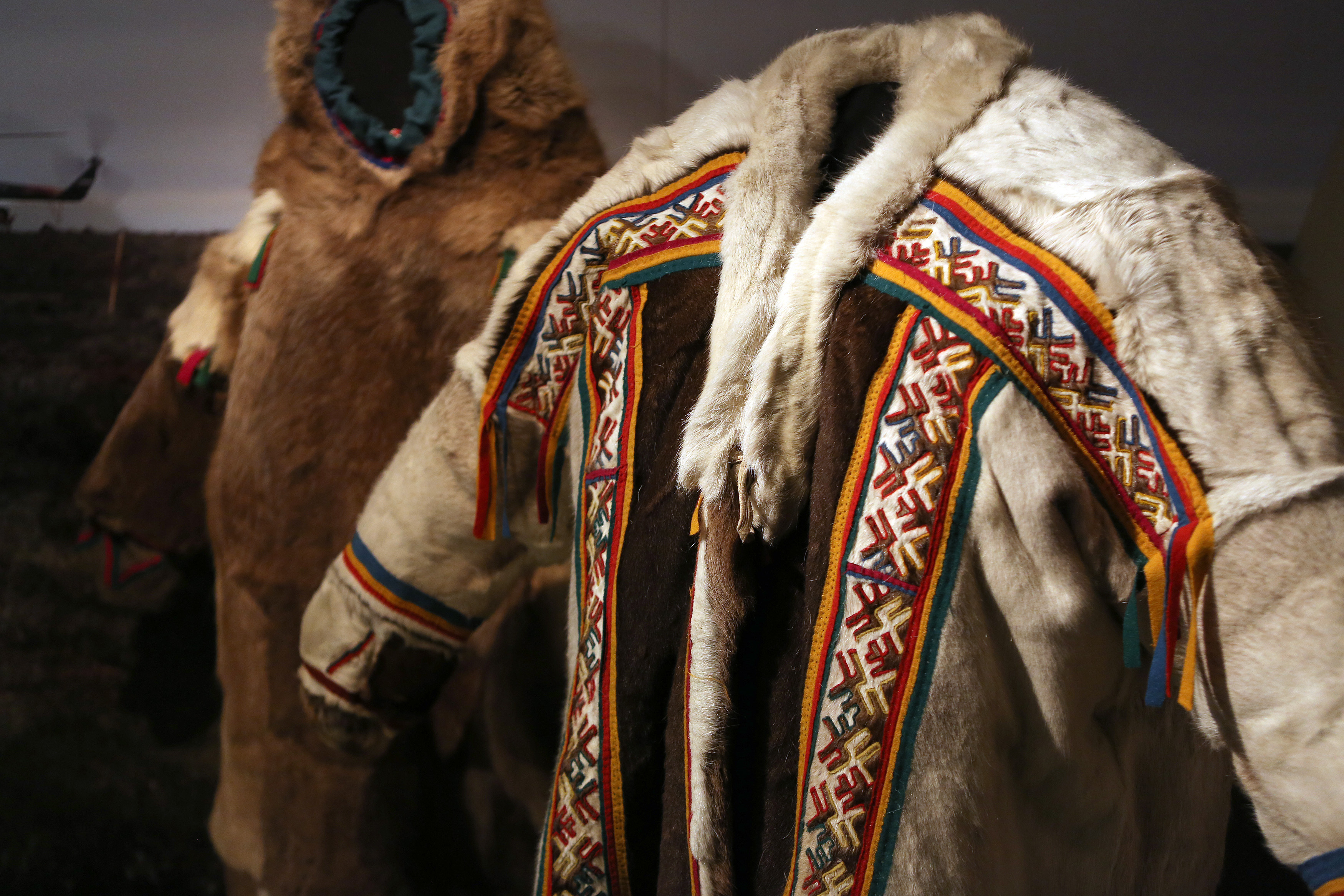
Nenets herders of Russia travel up to 1000km seasonally to survive the challenges of life so far north. The Nenets form the largest group of people in Northern Russia totalling around 40,000 people, with some 700,000 reindeer. The Nenets eat reindeer meat and use the skin of the reindeer as clothing.
A warm jacket made of reindeer skin from the Nenets culture. Photo from Wikimedia commons.
The Chukchi people of Eastern Russia trade reindeer meat and skins with coastal people who provide whale fat and seal skins. The Chukchi people make their tents out of reindeer skins.
The Evenki people in China live with small numbers of reindeer who are milked and used for transport. The reindeer are highly prized and not slaughtered for meat. The antlers are taken and used in traditional Chinese Medicine.
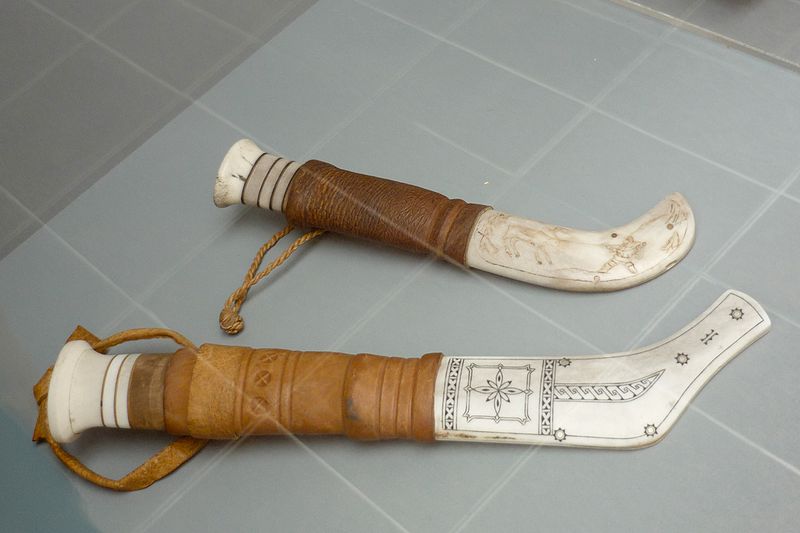
Sami people are the indigenous people of Scandinavia and today live in the far northern areas of Norway, Sweden and Finland. Currently around 3000 people in this area are involved full time in nomadic reindeer herding. The Sami culture is famous for its connection to reindeer. The Sami people produce wonderful crafts and engravings often using reindeer antlers and skins.
Knives made by people from the Sami culture. Photo from Wikimedia Commons.
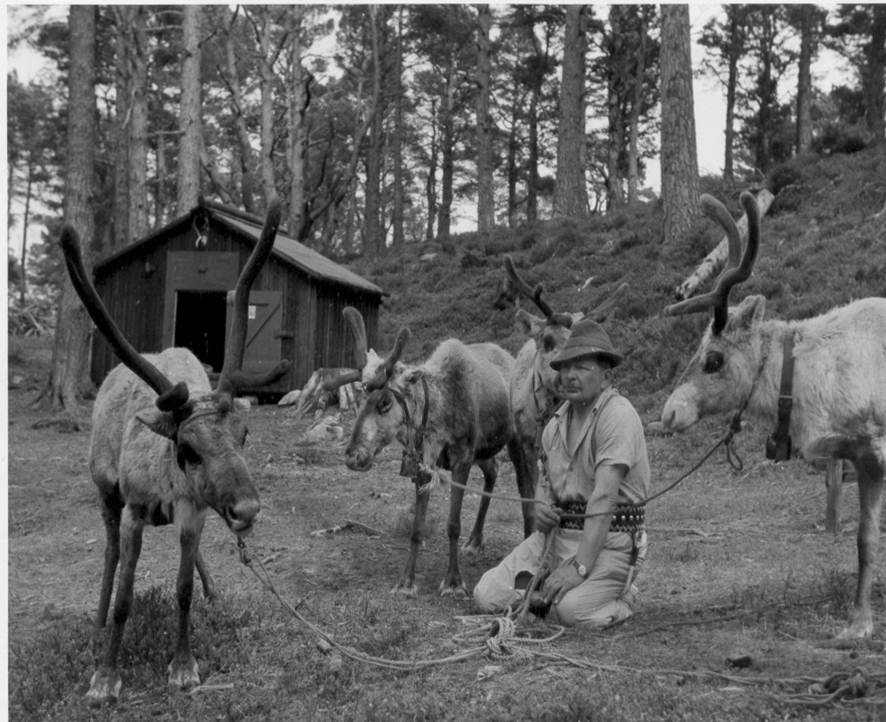
Reindeer herding is big business in the Arctic regions and without reindeer the survival of the people and their cultures would be in question. The Cairngorm Reindeer herd was of course established by a Sami reindeer herder. Mikel Utsi came from Swedish Lapland and brought his herding, reindeer husbandry skills and Sami culture with him to Scotland. These skills and culture continue and live on through us and our herding here in the Cairngorm National Park.
A reindeer pulling a sledge in Sweden. Photo taken during visit to Sweden in 2008.Mikel Utsi with his reindeer – originally from Sweden – in our current hill enclosure in the 1960s.
Deer in general are fairly quiet animals, uttering little or no noise in their daily lives. However there are two quite vocal times of year, in the spring when female deer calve and in the autumn when the males are competing for the breeding females.
In spring time whether it is a Red deer hind, a Roe doe or Reindeer cow they will call softly to their young when they are looking for them. In May time when our reindeer calves are born the mothers can get quite agitated if their young calves are not right beside them, grunting incessantly to call them back. Red deer hinds ‘mew’ to their young calves and a Roe doe gives a low whistle when calling her young.
But the call of the rutting males can be quite different and is sometimes meant to warn off competing males and signal ‘how big and tough’ they are. At this time of year in the forests and glens of Scotland the red deer are in full rut and they make a fabulous bellowing noise rather similar to the roar of a lion. There have been scientific studies on the meaning of bellowing and it has been proven that the more times a stag roars at one session the more likely he is to be a successful breeding male.
However Reindeer (and Caribou) do not bellow like red deer but instead ‘grunt’ rather like a female calling to her calf, but more ‘gutteral’. And the grunting only really takes place when a bull is chasing after a cow. It is not a loud noise and certainly is not a threatening call in the same way as the red deer bellowing.
A tussel will often follow reindeer grunting, with the winner going on to breed with the females.
Roe buck, patrolling his territory will bark (like a dog) to challenge other bucks who dare to step a foot in his domain and Fallow bucks are different again, issuing a husky, rolling grunt in an attempt to attract the does and warn off other prospective males.
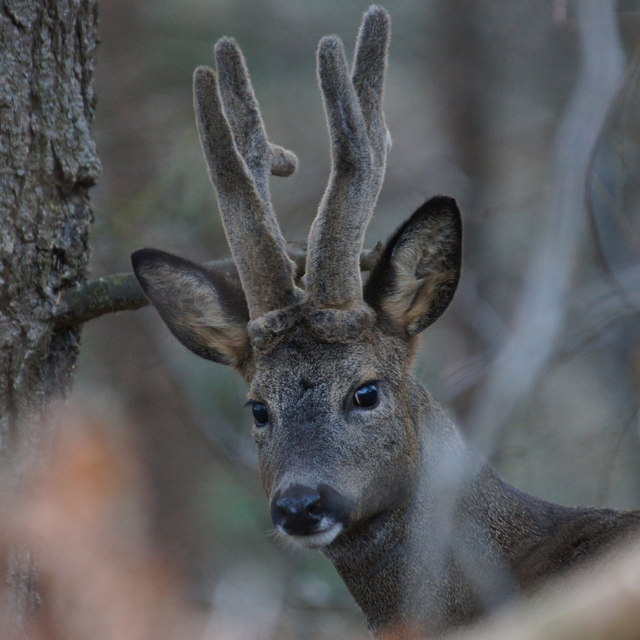
A Roe deer buck with velvety antlers, just before the rut. Photo from Geograph.The grunt of a Persian Fallow deer buck, to warn off competitors. Photo from Wikipedia Commons.
The non-native Sika deer, which were introduced into GB at the turn of the last century, have a characteristic kind of whistle, which turns into a high-pitched scream during the rut.
The more delicate looking of deer species in rutting season, a male Fallow deer. Photo from Max Pixel.
So there is a vast variation of noises from grunts to screams, even among the deer found here in Great Britain. So if you go out in the countryside at certain times in the year and hear something unusual, don’t take flight, it will probably be a female and young calf, or else a harmless male deer in full flow because it’s the rutting season..
Our reindeer roaming here in the highlands of Scotland live in a truly unique landscape, that has been sculpted over the centuries. However, the formation of the Cairngorms is not known by many, and so here I’ve summarised a brief part of it to explain how the reindeer got their home.
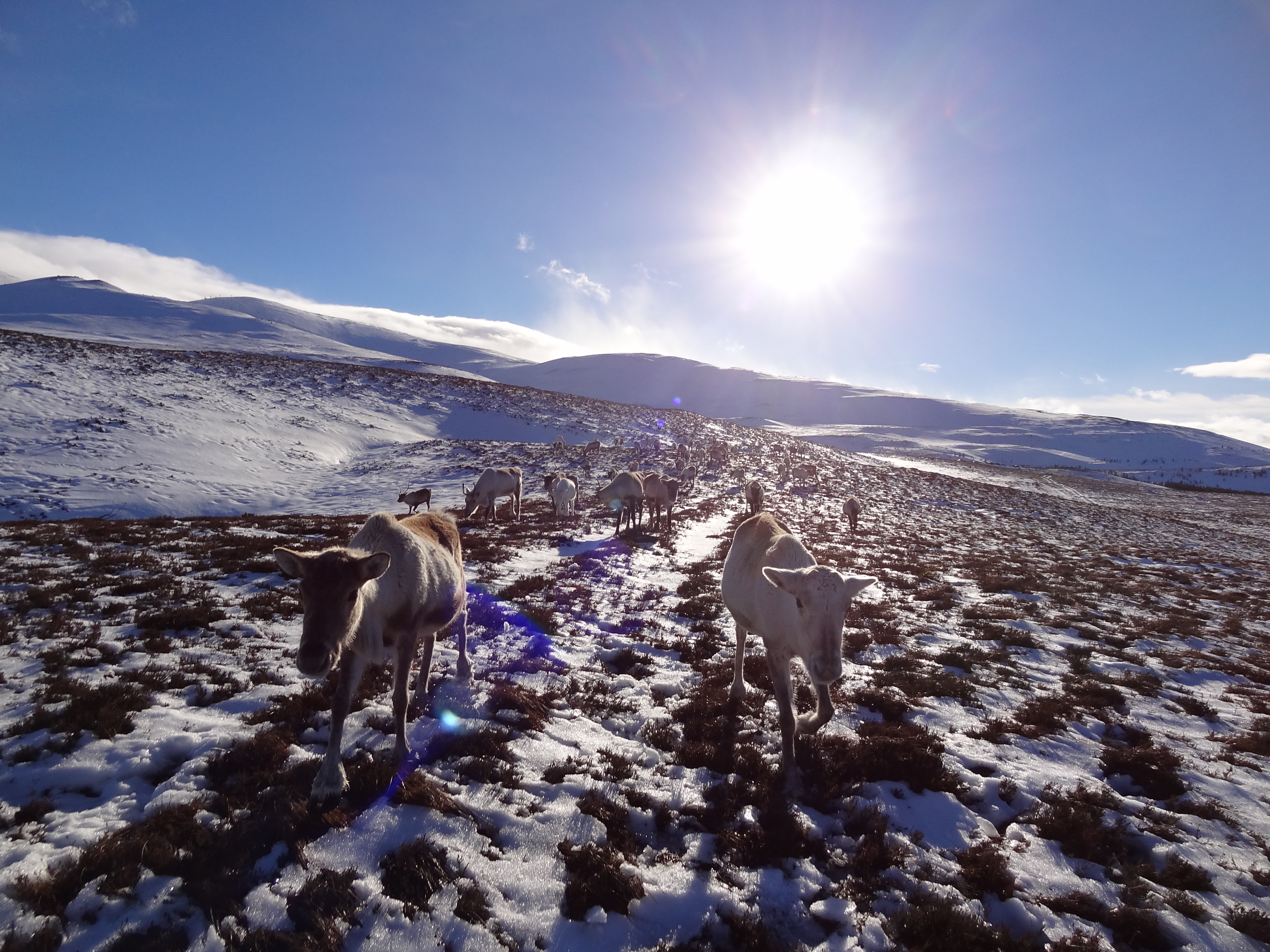
A herd of females, happy in their home grounds, the Cairngorms.
The Cairngorms are underlain by 427 million year old Granite and were, believe it or not, once in the range of the Himalayas standing far higher than today. Millions of years of degradation and the prolific effects of repeated glacial (cold) and interglacial (warm) cycles throughout the last 2.5 million years (Quaternary) have carved out the landscape in which we see today.
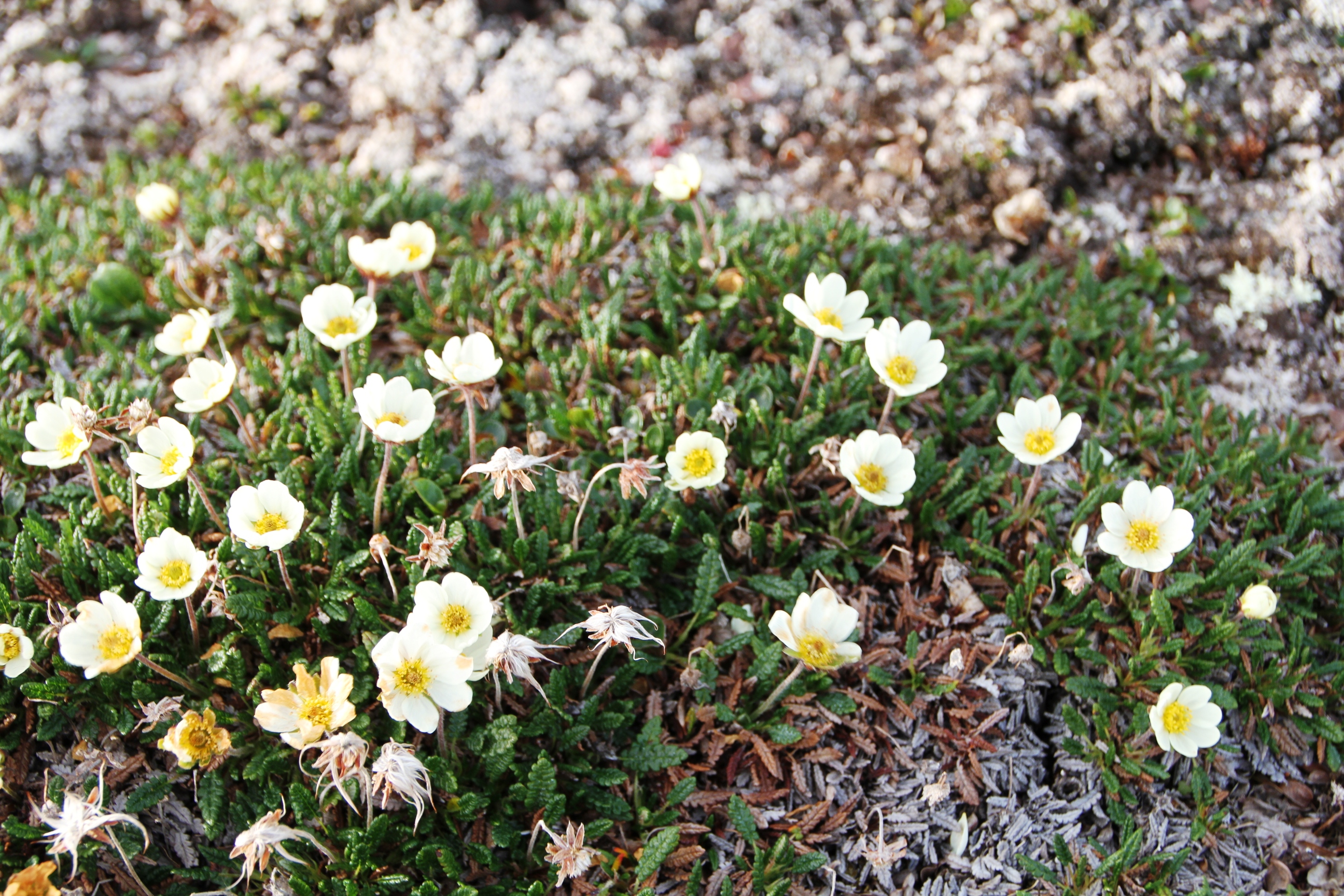
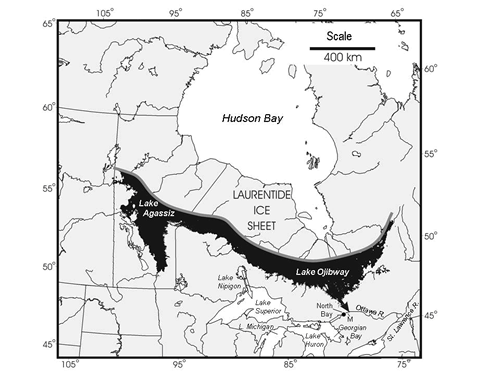
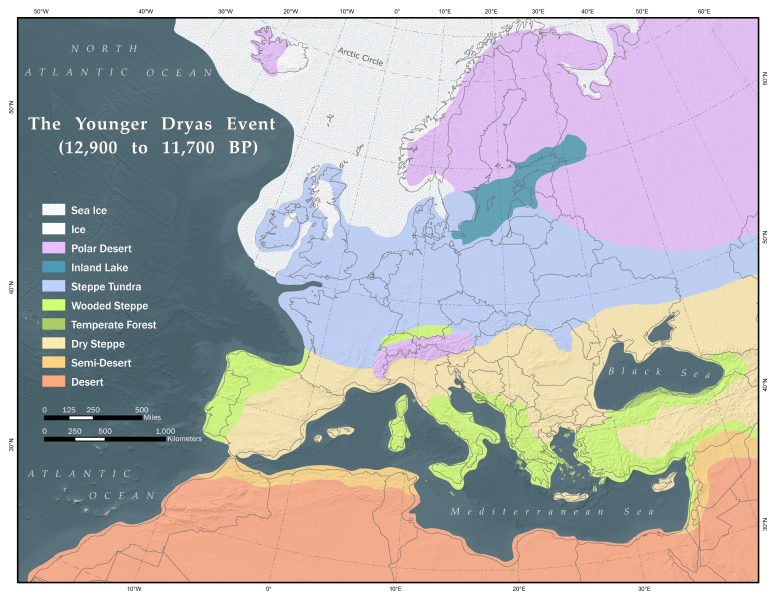
About 13,000 years ago, cold glacial conditions were increasing in many parts of the Northern Hemisphere. There have been many debates as to why this happened but scientists have hypothesized that this major cooling event was caused by an enormous dumping of fresh water into the North Atlantic by the large North America Lake Agassiz. As the ice retreated from the last glacial maximum 21,000 years ago the lake burst its banks causing a catastrophic flood. The flower (Dryas octopetala), the Younger Dryas or, Loch Lomond Stadial, marked the return to what we see today.
This cold water slowed down the oceans conveyor belt or ‘thermohaline circulation’ to an almost standstill, meaning there was a complete loss of heat transfer and a massive reduction in sea surface temperatures in the North Atlantic. The sea and the atmosphere share a sort of ‘love – hate’ relationship whereby if one is behaving well the other will behave; however if one decides to throw a spanner in the works its counterpart will throw quite the tantrum and this is exactly what happened. The rapid cooling of the previously warm salty sea water coming up the west coast of Scotland caused the atmosphere to cool dramatically; hence resulting in ice growth and incredibly cold conditions across much of Scotland.
The land cover about 12,000 years ago in Europe. Notice the prevalance of ice and tundra habitat in the highlands of Scotland, where our reindeer now live. Photo from Wikipedia commons.
This last ‘hurrah’ of ice has sculpted much of the landscape we see today. As the ice retreated, Scots pine rose up the mountains pushing the level of steppe tundra with it. The subarctic conditions that now occupy this landscape mirror that of Arctic Canada and Siberia meaning that reindeer can survive and thrive here in the Scottish Highlands. These wonderful animals now inhabit a land forged by ice so can therefore thank these bouts of extreme cold as without them we would not have our reindeer here today.
A lone Scots Pine in Scotland’s snowy landscape. Photo from Geograph, licensed for reuse.
Each year all the calves are named in September after spending the first four months of their lives free-ranging in the Cairngorms. Every year we select a theme to name the calves by. In 2011 the theme was “Games and Past Times”; as a result we have Scrabble, Rubiks, Rummy, Origami, Monopoly, Puzzle and Jenga amongst others.
However, as with any rule there is always an exception and Svalbard, also born in 2011, is the odd one out for that year!
Svalbard is currently in our Hill Enclosure here in the Cairngorms and, because of his large white nose (not to mention his fondness for food), he often stands out leading visitors on our Hill Trips to ask what his name is. This has prompted me to answer the question, why is Svalbard, called Svalbard?!
To fully answer I’m going to first take us to the Arctic Ocean and the archipelago of Svalbard itself…
You talkin’ about me?!
The Svalbard archipelago of Norway is found in the Arctic Ocean north of mainland Europe, approximately halfway between Norway and the North Pole.
Svalbard is an incredibly wild place with a land area of 61,022 km2 and a human population of only around 2700 (for comparison Scotland’s land area is 77,933 km2). Approximately 60% of the archipelago is covered with glaciers! The islands are home to only a few species of mammal which include polar bear, Arctic fox and its own subspecies of reindeer, called the Svalbard reindeer (Rangifer tarandus platyrhynchus).
Svalbard is located in the Arctic Ocean. Map from Wikipedia.
The Svalbard reindeer has inhabited this harsh wilderness, and has been geographically isolated from other reindeer for over 5000 years. As a result they have become very well adapted to the particular landscape and roam on nearly all non-glaciated areas of the archipelago. The Svalbard reindeer wins the award for being the most northerly living herbivore mammal in the world!
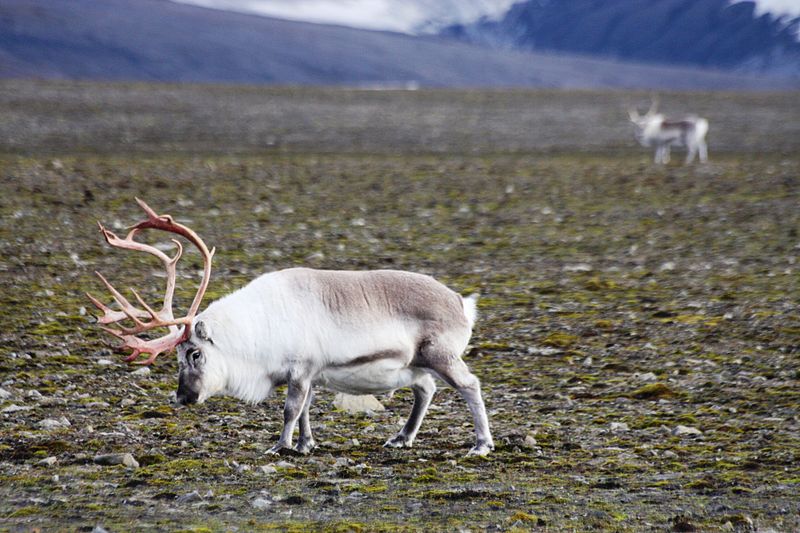
The Svalbard reindeer is the smallest subspecies of all reindeer and caribou. Bulls average 65-90kg in weight, and cows between 53-70kg compared with our Cairngorm reindeer where bulls can weigh 150kg. Svalbard reindeer are very distinctive for having short faces and short legs, making them appear ‘dumpy’. They also have a very think, long winter coat. The long coat also contributes to their short-legged appearance and even starved individuals can appear fat in the winter!
A Svalbard bull with tiny legs! Photo from Wikipedia.
Svalbard reindeer may make short altitudinal movements, or slightly longer inter-island journeys across the sea ice but they are mostly sedentary and therefore have low energy demands. The lack of migration could be a reason why they have evolved short legs, also helping them have conserve heat with a smaller surface area.
However, don’t let their short legs deceive you! They can reach speeds of up to 60 km an hour on a good running surface, giving them the ability to out run a polar bear, the only predator they face on Svalbard (apart from man).
Unlike the majority of Reindeer on the Norwegian mainland the Svalbard Reindeer have not been domesticated, and also do not live in large herds but tend to be solitary or stay in small groups.
Svalbard reindeer, with proportionally shorter legs. Photo from Wikipedia.Not sure what our Scottish lassies would make of these fellas! Photo from Wikipedia.
I’m digressing, so back to our Scottish Svalbard…
Back to me… finally!
Svalbard was born on the free-range in May 2011 to Arnish, as a result his exact birthday is unknown. Arnish and young Svalbard were not seen between July and October that year, until Svalbard turned up by himself in October at the Hill Enclosure, without his mother, who was sadly not seen again.
When this orphaned calf turned up, he was given a name according to the theme for that year. But the herders at the time kept commenting on how dumpy and short-legged he was; as a result he was quickly nick-named “the Svalbard reindeer”. Before too long, the name stuck and he’s been Svalbard ever since! Thankfully for him, he lost his stocky proportions and we now have a handsome reindeer with a big personally!
This whole blog was basically an excuse to show some cute photographs of a young Svalbard (and to research a future holiday destination!) so here come the pictures…
Svalbard with his mother, Arnish (who never grew antlers). Looks like he’s got pretty long legs here!Svalbard – perhaps I can see the short legs here?Svalbard in his gangly teenage phase?Svalbard as a young bull in 2013 with his obvious white nose.
For those of you who forage, or for those of you who are naturalists, or even for those of you who aren’t, you’ll know that now is the time for mushrooms. The reindeer know this too, and they have long clocked into the secret of where the best places are, and at this time of year they can be found down in the woods, where all the best mushrooms grow.
Spotted you!
Reindeer can eat mushrooms that are poisonous to us, and will even seek them out. They have a trick to this that is shared by many other ruminants – having four stomachs and a specialised form of digestion.
Reindeer digestion works as follows:
The reindeer eats a lot of food very quickly and stores it in its first stomach.
The reindeer brings the eaten food back up to its mouth and chews it (chewing the cud) then swallows it into stomach number 2. Stomach number 2 contains many microorganisms which can break down the plant material in a way in which us mammals can’t.
The reindeer brings the food back up into the mouth and chews it a third time. Now the food is mixed with microorganisms and the reindeer chews them all up too. Yummy. The food is then swallowed into stomach 3.
Stomach number 3 absorbs all the water from the food and passes it onto stomach number 4, which is similar to our stomach and contains lots of acid to break the food down further.
Food passes into the intestines and all the goodness from the food and the chewed microorganisms is absorbed.
The complicated stomach of a reindeer, with four stomachs. The rumen, the largest of the four, contains the microorganisms which break down food for the reindeer. Diagram from Wikipedia.
This incredible process means that the microorganisms living in the stomach deal with all the mushroom poisons, and the reindeer gets off scot free. It also means that reindeer can live off of lichen over the winter, when no other food is available, giving them a big advantage over other animals.
A carpet of lichen provides a tasty snack for a mother and calf, all thanks to fantastic digestion abilities.
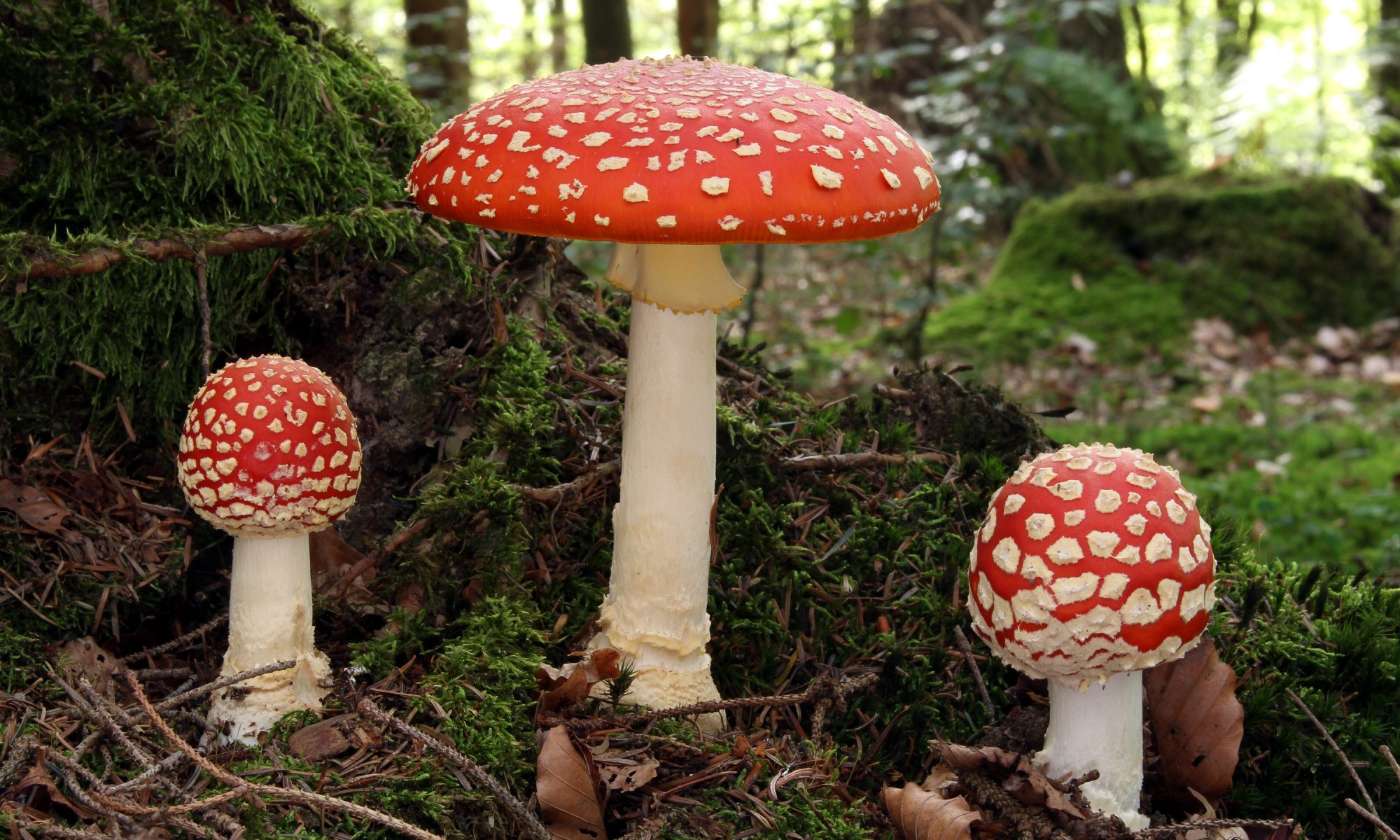
So with the poisons all gone, the reindeer is free to enjoy the mushroom (and any of its other properties!). One of their favourites is the Fly Agaric, the traditional ‘Christmas mushroom’, with its red cap and white spots, and hallucinogenic chemicals. This we believe is sometimes the culprit for any missing reindeer that we find later on in the day, sleeping soundly beside a pile of chewed stems!
A beautiful arrangement of Fly Agarics. Photo from Wikipedia.Hmmm..
Once or twice each day, we take a group of people up the hill to see the reindeer in their natural habitat. Many people cannot believe how friendly and inquisitive (and often greedy!) they are, and it can be wonderful for us to see visitors’ reactions to these wonderful creatures.
Its interesting for us to hear how our visitors percieve the hill trip, and so this week, our blog post comes not from us, but from a blog written by a couple of our visitors. Click on this link to view the post on the ‘Find Yourself Lost’ blog by John and Holly.
The photos capture incredibly well the natural beauty and wildness of the Cairngorms, and we thank John and Holly for their willingness for us to share their post.
We always encourage questions on our Hill Trips; some are simple to answer whilst others get us thinking more and this particular question even inspired me to write a blog!
“Are reindeer colour blind?”
The simple answer is… no. Reindeer, like other species of deer, are not colour blind, although they do see the world in a different way to us humans.
How does Baffin see the world?
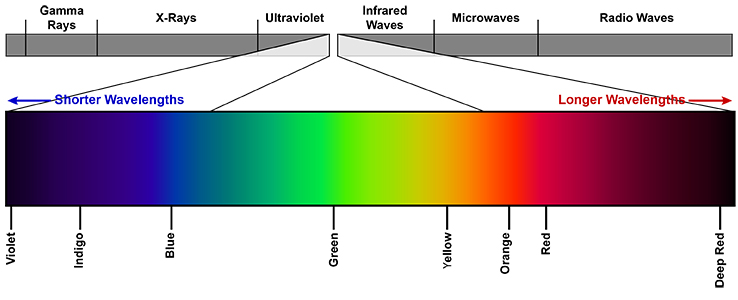
If you take a look at the visible spectrum below, reindeer can only see the colours at one end of it. They only see the short (blue) and middle (green) wavelength colours. This means they can distinguish blue from red, but not green from red, or orange from red. Therefore, their vision is thought to be similar to a human with red-green colour blindness.
The visible spectrum – the portion of the electromagnetic spectrum that is visible to the human eye. Image taken from Wikimedia.
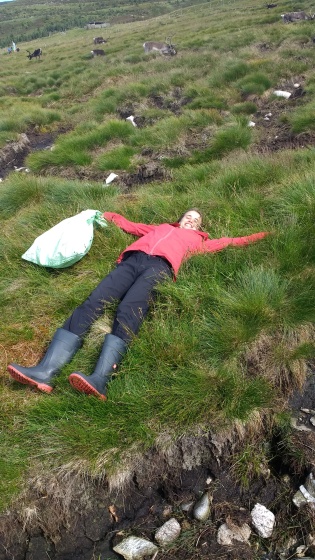
So, when us Reindeer Herders go out for a Hill Trip wearing our bright red waterproof jackets, the reindeer would think we were camouflaged with the green hillside behind us. And there was I thinking we stand out!
Lotti the Reindeer Herder taking a rest! To a reindeer our red jackets would not be distinguishable from the green grass.
To get a little bit more scientific this is because humans have three different kinds of cone cells in the retina which can detect the entire visible light spectrum. However, deer only have two sets of cones meaning that they cannot distinguish the longer wavelengths.
However, as I discovered this is not the end of the story of how a reindeer sees the world…. fascinatingly, they are one of only a tiny number of mammals which can also see ultraviolet!
On the electromagnetic spectrum, ultraviolet fits in right between visible light and X-rays. Image from NOAA.
Humans can’t see UV light but it is in sunlight so we are exposed to it every day; suntans (or in my case freckling and sunburn!) are familiar effects of our exposure to it!
So this led me to ponder the question “why have reindeer evolved to have UV vision?”
Researchers think that reindeer have adapted to see in UV as they live in a very UV-rich world. It’s thought that snow reflects around 90% of the UV light that hits it, compared to snow-free land which usually only reflects a few per cent.
Therefore, reindeer have adapted to their white world and have taken full advantage of it! Their special ability to see in UV allows them to spot things that other mammals would miss and helps them to find food and stay safe.
A reindeer in a white, UV-rich world.
In the frozen white Arctic where the vast majority of the landscape would reflect the UV light, there are a few things which would absorb it. Predators, such as wolves, who to us would appear camouflaged actually stand out to a reindeer as their fur (and also their urine – a sign of a potential predator!) absorbs the UV light making them appear dark grey/black against the white, snowy background. Clever!
Similarly lichen, a major food source for reindeer in the winter months, also absorbs UV light. So if there was a tuft of lichen sticking up above the snow it would also appears very dark allowing the reindeer to see it clearly, in stark contrast to the UV-reflecting snow.
Therefore, they can avoid animals which might want to eat them and instead find lots of delicious lichen to devour for themselves!
Winter coats, huge feet and the ability to see in UV… perfectly adapted animals for their snowy, cold world.A close up of Bovril’s beautiful eyes… Just because!
We’re always getting lots of interesting questions and I look forward to the next one which gets me hitting the books… and maybe even writing another blog!
Up on the hill in our 1200 acre enclosure there is a shed. We use the shed to house sick reindeer, catch the wild ones, and store all our hill-working tools and materials.
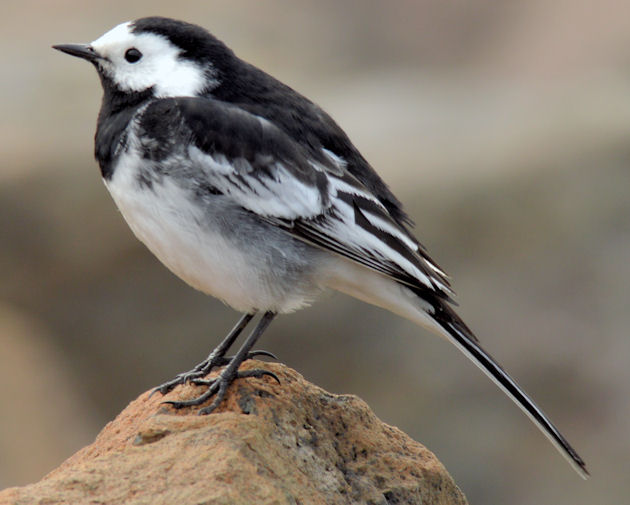
For the last couple of months we have had a visitor in our shed on the hill. A little female Pied Wagtail decided that the shed made an excellent house to hold her nest, and it even came supplied with a renewing source of insulation – reindeer hair!
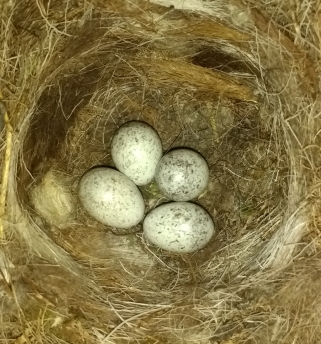
Tucked neatly out of the way, hidden behind some spare fencing wire, Mrs Pied Wagtail laid her second-of-the-year clutch of four teeny-tiny Pied Wagtail eggs. With the reindeer hair lining, and her body warmth for much of the day, the eggs were kept nice and toasty through the variable Scottish summer.
Can you spot the nest?Mrs Pied Wagtail has used her initiative and used all the spare winter-coat reindeer hair to line her nest. Each reindeer hair is hollow, making it an excellent insulator.
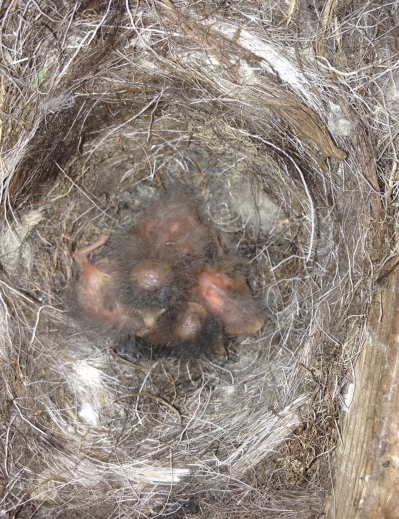
On the morning of the 18th of July, we walked into the shed to the shed to find four little chicks huddled up against the nest. A couple of days later we were greeted by the sound of cheeping, and were delighted to find 4 yellow open beaks hungrily competing for food. It is of course incredibly important not to disturb the mother on her nest, or the chicks whilst they are alone, so these photos were taken quickly whilst the mother was already away.
The newly hatched chicks, huddled up keeping warm whilst Mamma Wagtail is away.Four little chicks on the 24th July, hungrily asking for food.After 2 weeks in the nest, the chicks are noticably bigger and ready to fledge!
Pied Wagtails are a common British bird, often known by slightly unusual nicknames such as ‘Polly Washdish’, or ‘Dishwasher’. These names are thought to come from olden days when women would wash dishes in streams where Pied Wagtails were common. They are lovely, sprightly birds that appear very cheerful and eager with their wagging tails and chirping call.
By the 31st of July, the chicks had fledged, and are now off in the big bad world, where we wish them all the best. We are always happy to see birds and beasts using our shed for shelter, and hope to see our little female Pied Wagtail back next year!



























_hind_with_juvenile.jpg)


