The difficulties of reindeer location at calving time

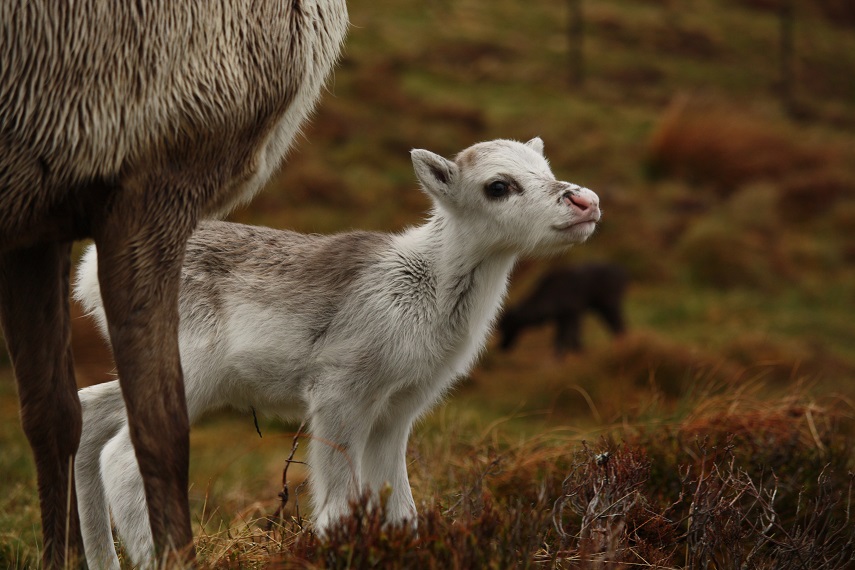
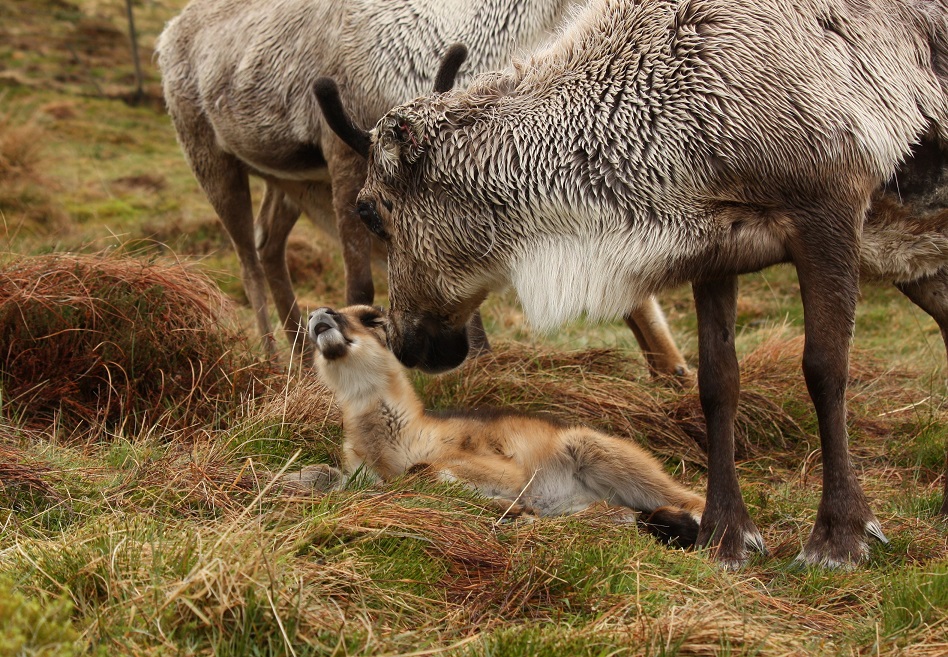
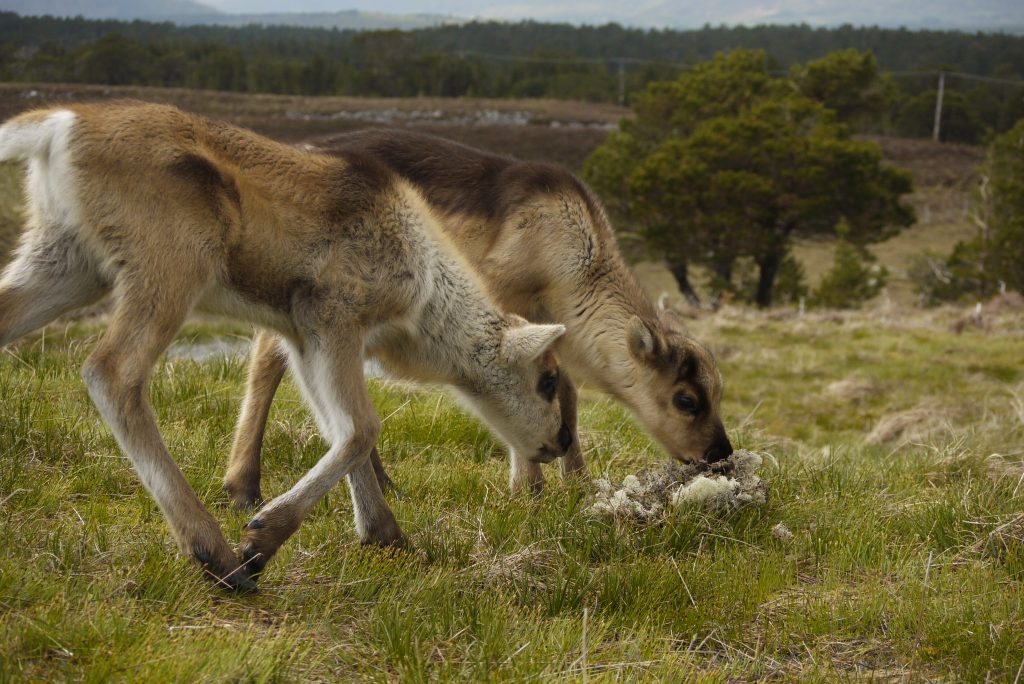
Most of the time our reindeer give birth in our 1200 acre mountain enclosure, not requiring any assistance or shelter whatsoever. Calves are born with a thick, waterproof calf coat, so anything the Scottish weather throws at them is not an issue. Our enclosure can be segmented into several different areas, so what we do is to have the herd of pregnant females in the main, largest, bit, and create a ‘nursery’ in a smaller area, known as the ‘Bottom Corridor’ (as opposed to the ‘Top Corridor’, unsurprisingly further up the hill). Pre-natal and ante-natal, if you will.

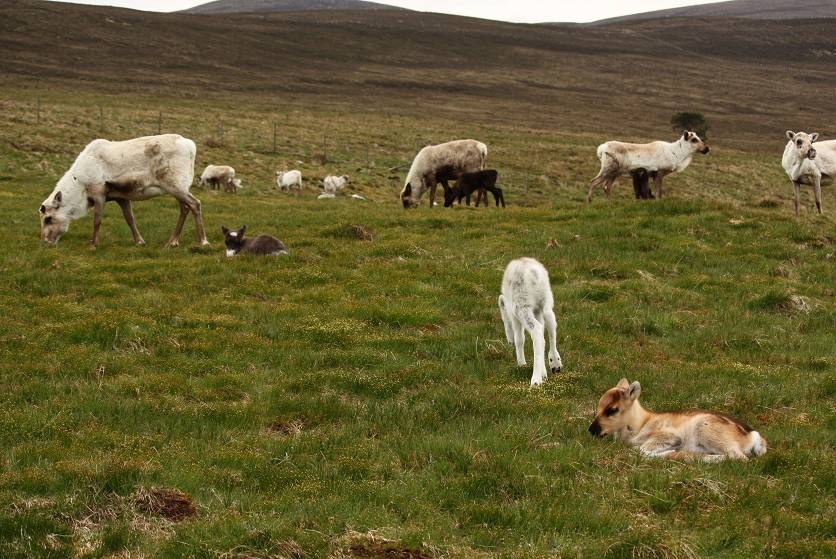
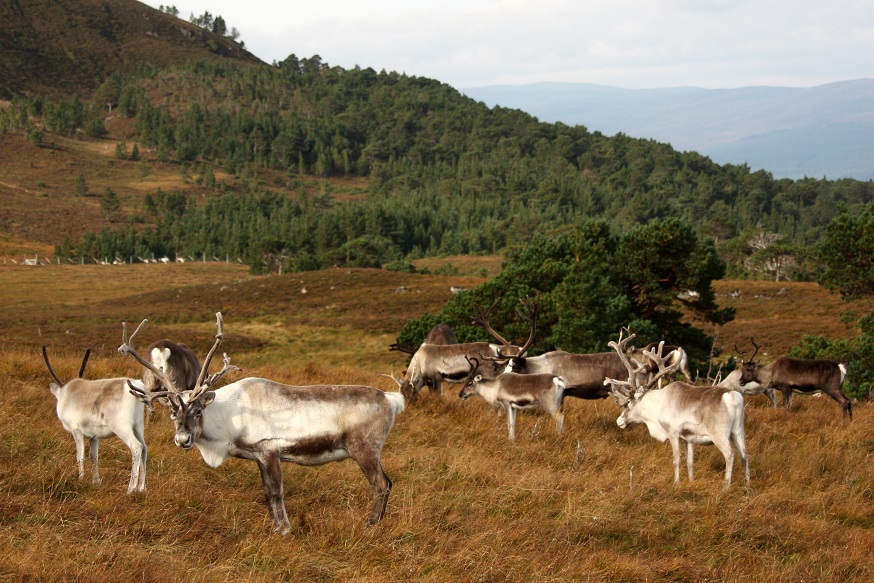
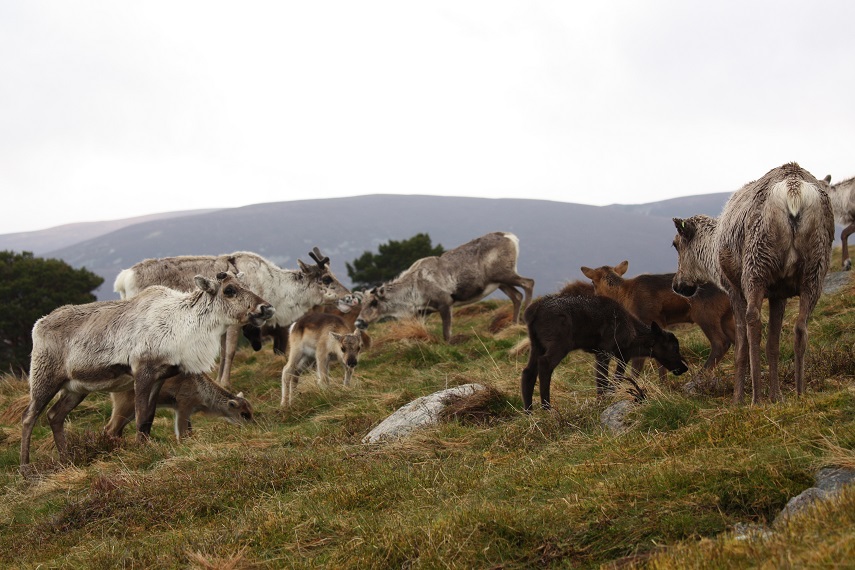
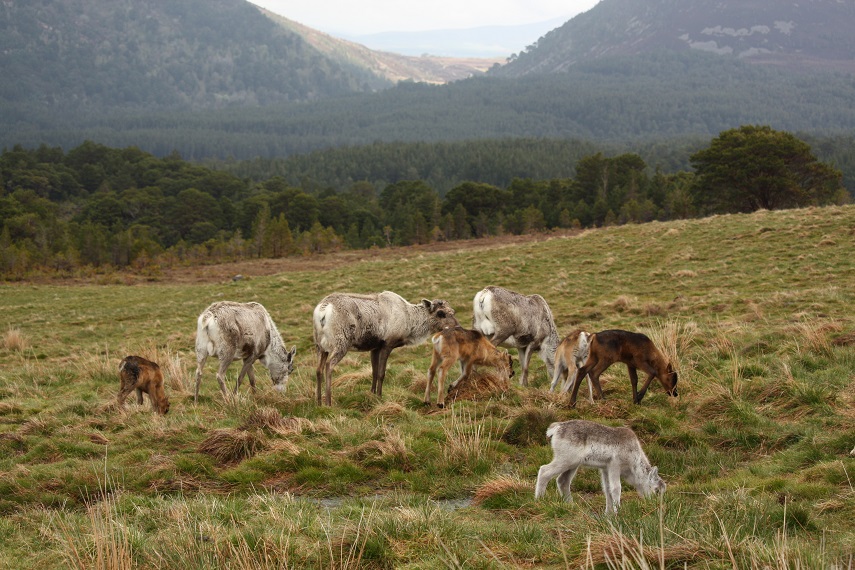
Cows and their calves in the Bottom Corridor ‘nursery’

When a cow is ready to calve she will generally head away from the herd, wanting her own space and peace and quiet. This may be a few hours before calving or it may be a couple of days, depending on the individual. We always count the reindeer each time we feed them, so can work out if a cow has suddenly gone AWOL; and will then head out round the enclosure to track them down (usually the following morning). However, 1200 acres is the size of 1200 football pitches, part of it heavily wooded, and finding a lone reindeer can be a real mission. If they are out in the open somewhere then generally it’s not too hard to track them down, but if they disappear into the depths of the woods then it’s much harder.

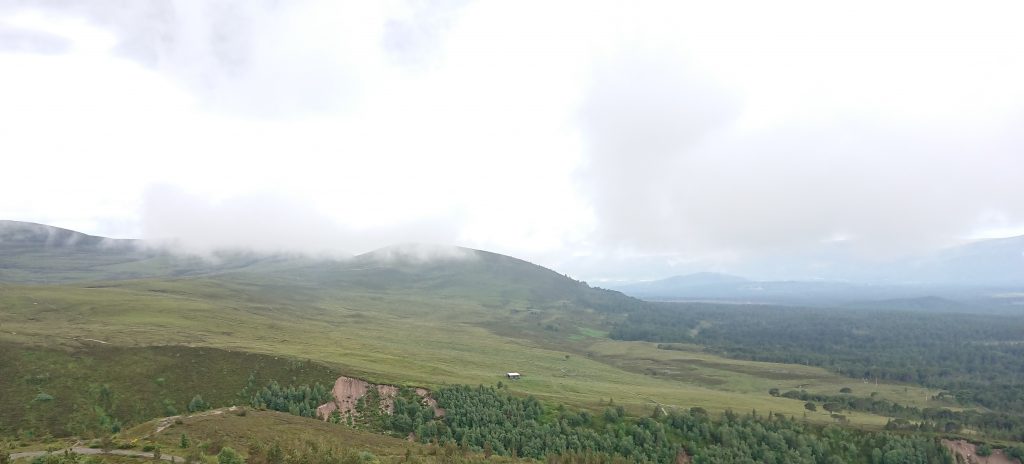
A photo to give you an idea of the rough size of the enclosure – the boundary fence goes right around behind the mountain in the centre of the picture, Silver Mount, and right down into the forest at the right.
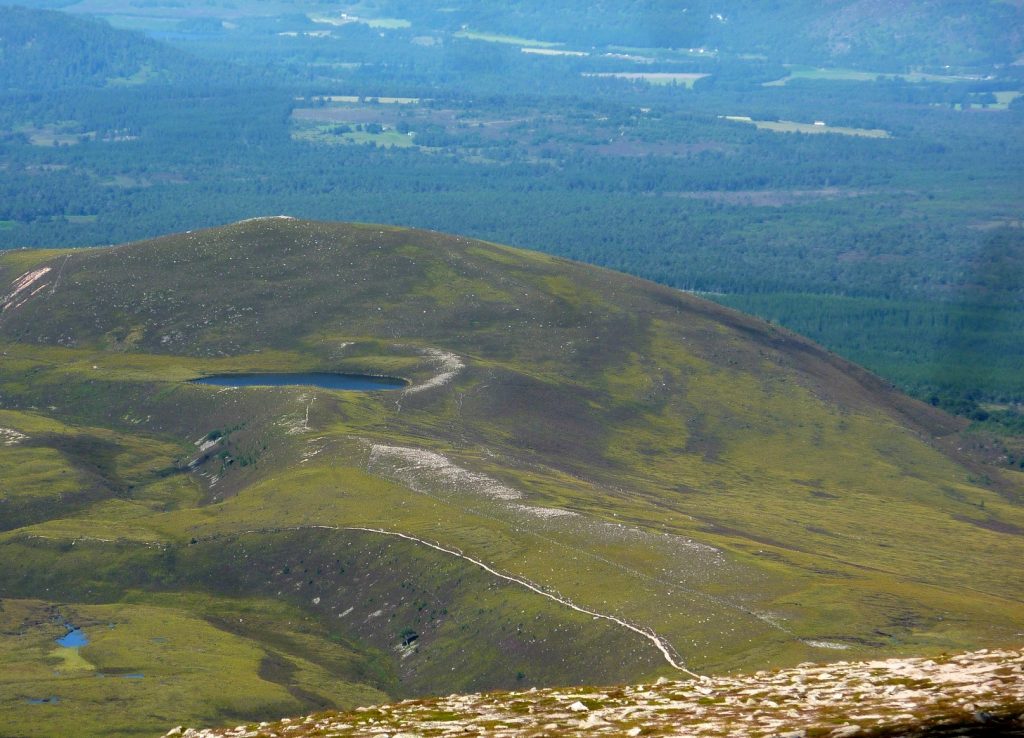
A closer view of Silver Mount in the enclosure, and Black Loch which is hidden from view from most of the enclosure.

This calving season in particular felt like the reindeer were running rings around us, with hardly any of the cows being easy to find. In fact the very first cow who headed away from the herd to calve wasn’t found until two days later, and most of the following few reindeer calved down in the woods too, necessitating long searches, sometimes fruitless and sometimes fruitful.

Let me make this clear too, we’re not talking a pleasant stroll along nice easy footpaths. The forest in the enclosure is proper Caledonian pine forest, complete with a dense understory of juniper, blaeberry and heather, and VERY boggy. Oh, and some of it is extremely steep. And there’s no proper paths, only narrow, muddy deer tracks (made by the reindeer, but also wild red and roe deer). Several hours of trawling through the forest is utterly exhausting, and if emerging eventually empty handed with boots squelching, also utterly demoralising.

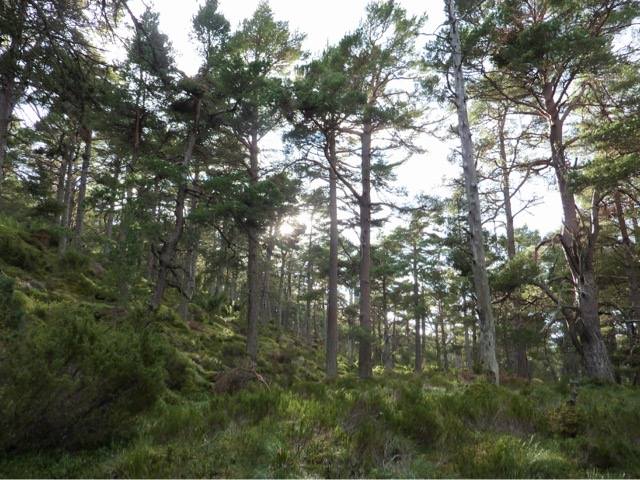
A tiny proportion of the enclosure woods…
The enclosure encompasses a large area of Caledonian pine forest, complete with dense understory of juniper and blaeberry – ideal for concealing reindeer!
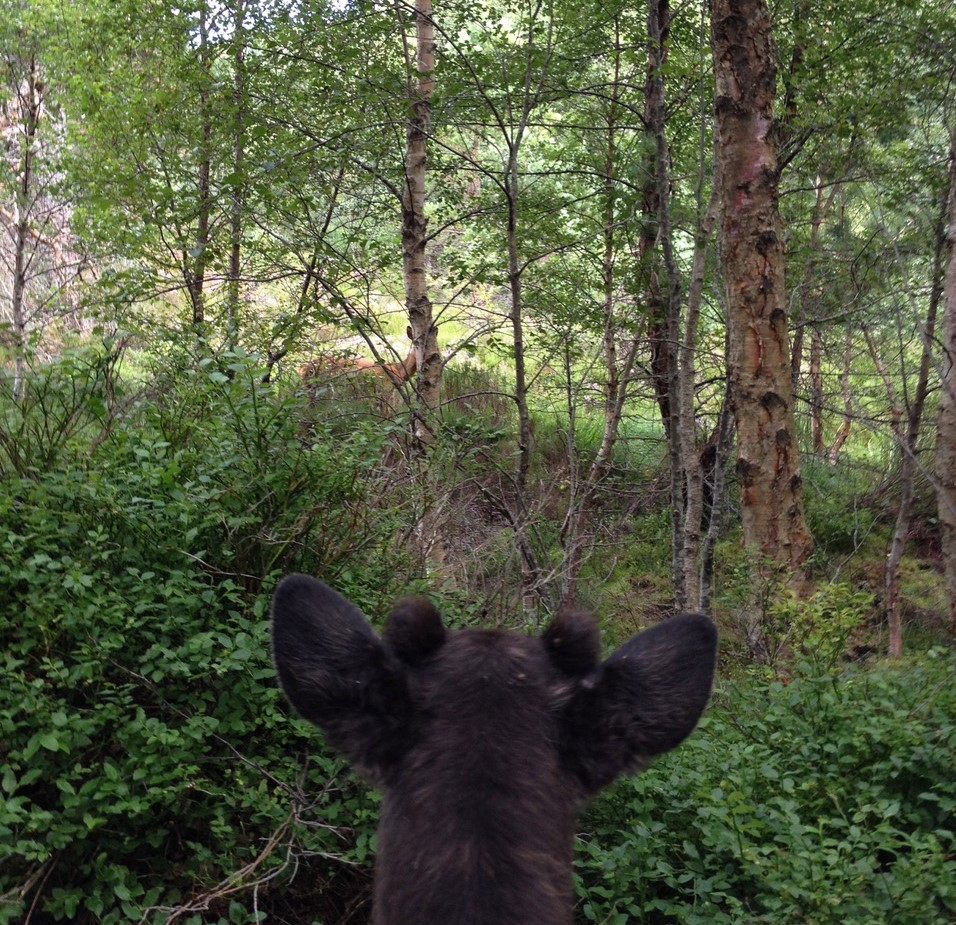
Dense birch woodland in the enclosure too – a reindeer’s eye view!

In 2020, thankfully the reindeer were kind to us during the calving season, as it fell right in the middle of the first lockdown and most staff were furloughed. Reindeer calved mostly out in the open, were found quickly and easily, and brought through to the bottom corridor ‘nursery’ with little hassle. This year however… Sika was the first reindeer to head away from the herd to calve, but it was two days later by the time we found her. And in fact that’s not even really true, we didn’t actually find her at all – she joined up with another cow who had calved by that point and we found both together, Sika’s calf at least 48 hours old by that point.

Pagan was the hardest of the lot – it wasn’t until the fourth day of searching before she was eventually located – tucked into the forest in a hidden spot. I was on my day off and very glad to receive a message to say she’d been found – it had been long enough that I had started to think she must have died giving birth. Normally reindeer won’t stay in the spot where they calved for longer than a couple of days, re-joining the herd of their own volition and making finding them eventually more straight-forward. Heading out to the woods with the prospect of several hours of searching ahead, after several days when you think you may actually be looking for a body rather than a newborn calf, is no-one’s idea of fun. But in this case, Pagan was completely fine, and probably rather smug that she’d managed to waste many, many hours of our time over four days!

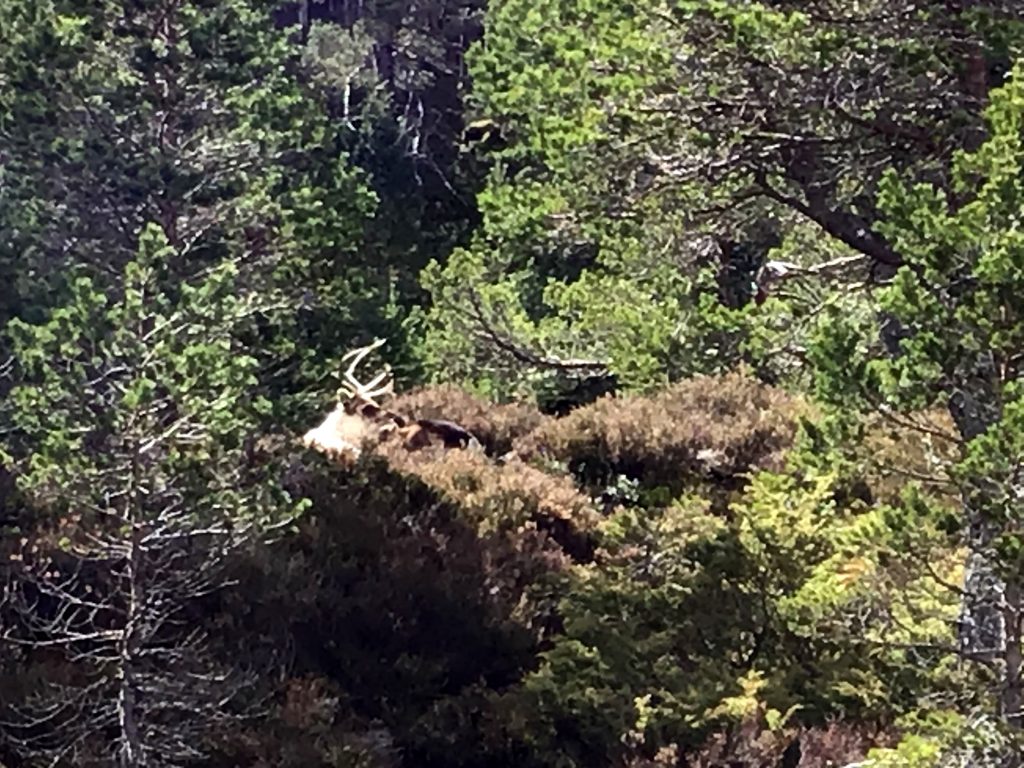
A rubbish photo as it’s really zoomed in – but my moment of triumph this calving season was seeing Feta’s head pop up out the deep heather, after a couple of hours of plodding back and forth through the forest…
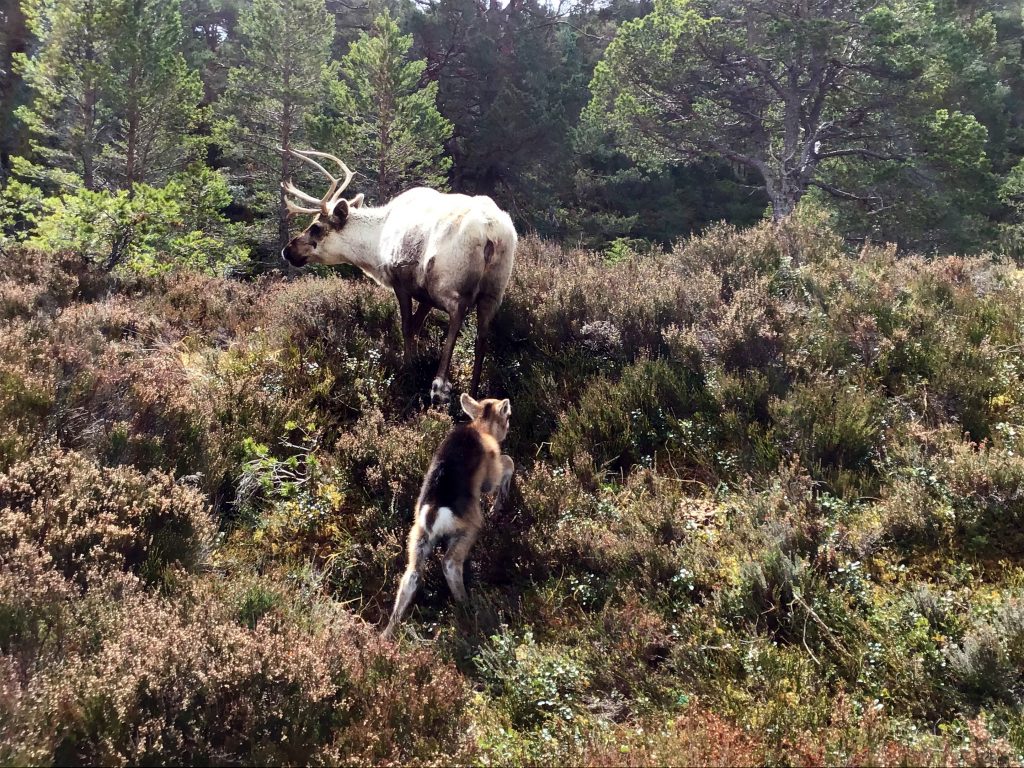
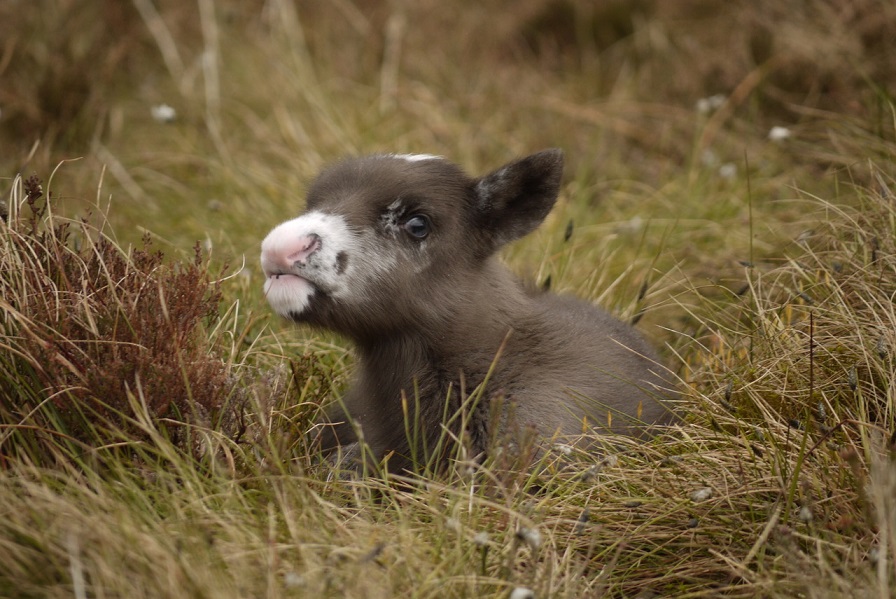
…who promptly tried to lead her calf away from me, but the wee one didn’t make it up this bank, being only a few hours old and not yet wobble-free!

At least it was a small calving this year, so the continual trudging around the enclosure only went on for so long. And the reindeer appeared to finally take pity on us as a couple of the later ones to calve did so in a much more open, agreeable area where they were plainly visible. In fact first time mum Blyton calved right beside the Bottom Corridor fence, right beside the cows and calves, and did so right before we did a Facebook Live video (https://www.facebook.com/182577928433967/videos/517342392958642), meaning she could be seen in the background throughout, and making Andi’s life nice and easy as all she had to do was pop over the fence once the camera stopped rolling to check out the new arrival!

Hen

My Little Pony

Whilst the majority of our reindeer are docile, friendly and laid back, there is always an exception, so in this week’s blog I thought I’d introduce you to Pony…

Pony was born in our “Games and Pastimes” themed calving of 2011. It might not seem an obvious game, but it was a bit of a stretch, naming her after the My Little Pony craze. The broader picture is that her older brother from the Bugs and Beasties theme was named Horse, slightly ironically, in the hope that if we gave the calf a rather rubbish name then sod’s law would mean it had a long life, as mother Mawar was renowned for losing her calves at a young age. It seemed to have had the desired effect so we stuck with the animal theme for Pony, then later for her brother Goat (in the Cheese theme).

Pony, aged 2 months

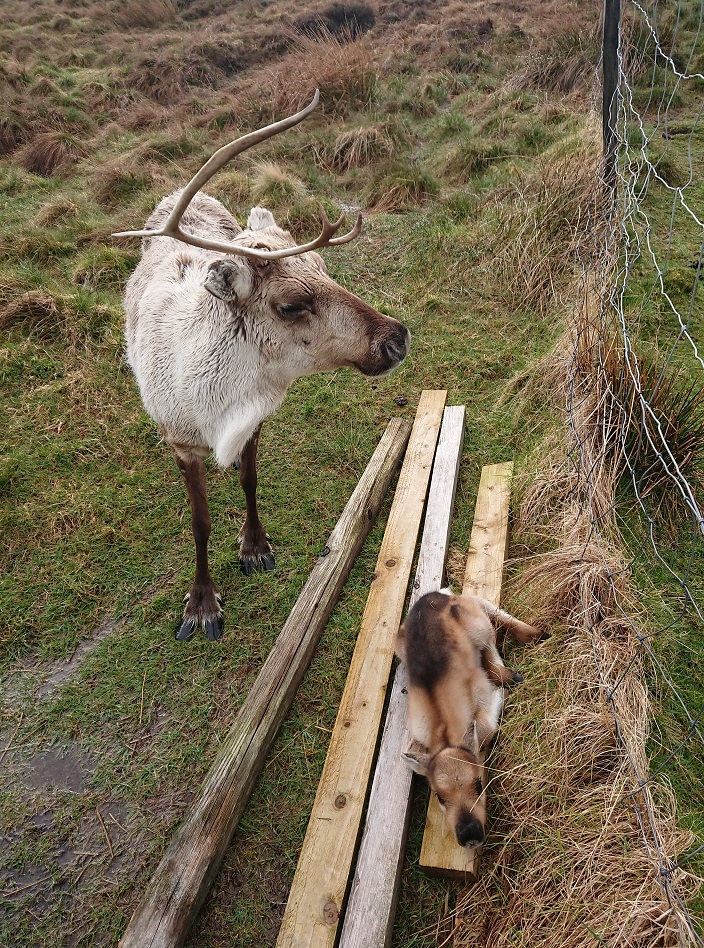
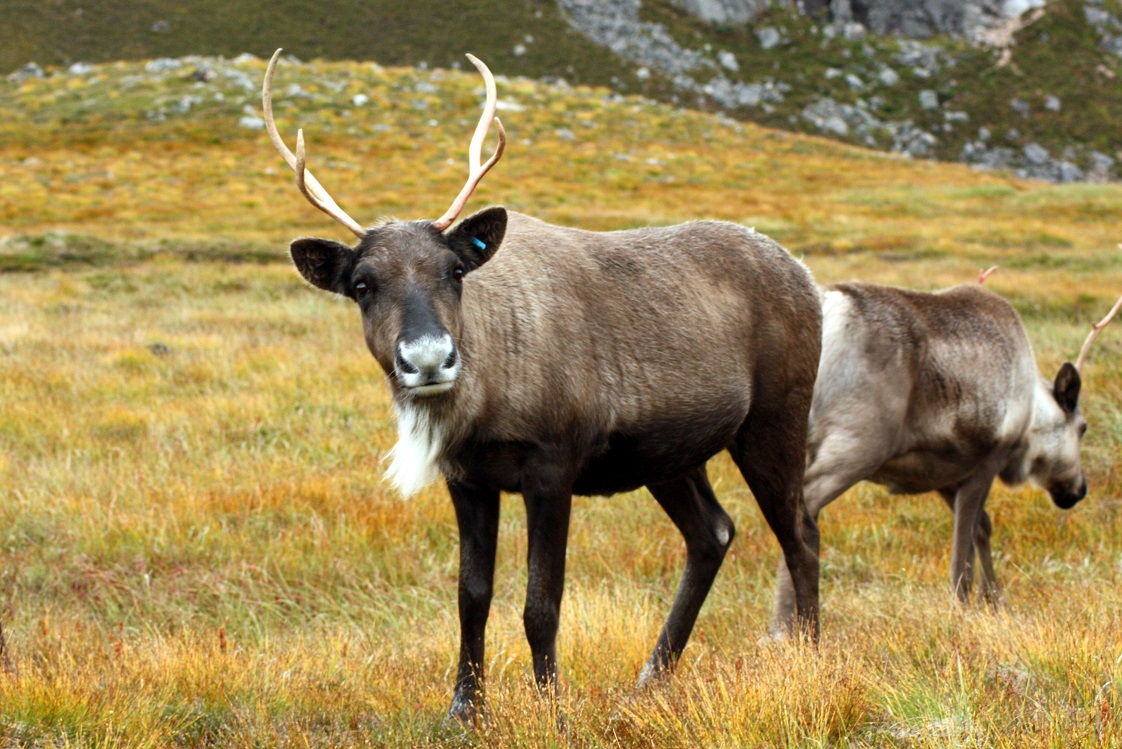
Pony is quite easy to pick out among the other normal coloured cows of the herd as she is missing the very tips of her ears. Sometimes if a reindeer is quite poorly as a calf they don’t maintain the blood supply to the extremities and the tip of, or occasionally the entire ear, can drop off. Whilst changing their appearance somewhat, it doesn’t seem to have any other negative impact on the reindeer.

With mum Mawar (left), before the tips of Pony’s ears fell off (which is very noticeable in the first photo at the top of this blog)

Pony’s mother Mawar was a lovely sweet natured reindeer, but perhaps Pony has a chip on her shoulder from missing her ear tips, as she has always had a bit of attitude. Or perhaps it comes from further back in her family tree as her auntie Lulu isn’t averse to snorting and waving her antlers at people! Unfortunately I also found out that Pony can hold a grudge, and I inadvertently got myself on the wrong side of her in 2018.

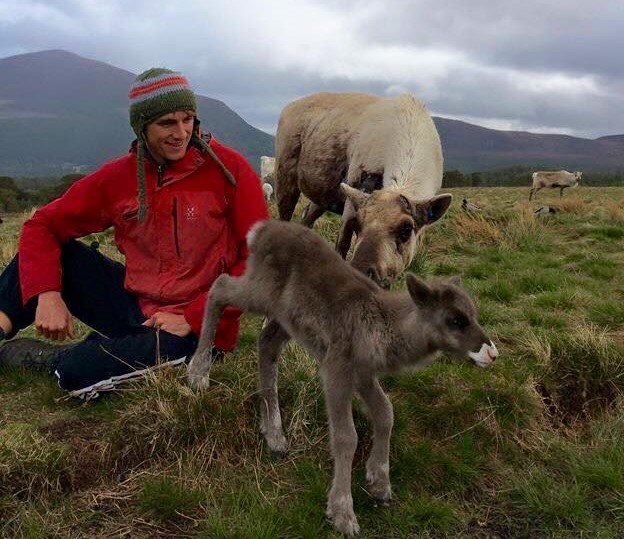
It was May, and Pony was in our hill enclosure looking very pregnant and ready to calve. One day she had headed away from the herd, so myself and Kate made an early start the following morning, assuming she must have a new calf. And indeed she did, a very cute wee male, quite a distance from the main herd. We like to bring them in to a smaller “nursery” pen where we can keep an eye on the new mums and young calves, so Kate and I started following behind Pony and the calf, gently herding them in the right direction.

Reindeer calves are very capable but his wee legs got more and more tired, until eventually he lay down and didn’t want to walk any more. Normally at this point we would just carry the calf with mum following behind, but Pony already had a reputation for defending her calves, so I decided to try to pop Pony on a headcollar. She was a bit suspicious but hungry enough after giving birth to snatch a bite of feed from my bag, at which point I grabbed hold of her antler! Kate nipped in and we put on the headcollar. Pony was NOT impressed, and even less so when Kate picked up her calf, with me holding her back enough to not wallop Kate with those antlers!

Pony and wee calf

We made our way in, by some miracle nobody died or got skewered on Pony’s antlers, and we released Pony and her new calf out with the rest of the new mothers. Sadly for me, Pony never forgave me for this perceived wrongdoing (though they were never more than 6 ft apart and the tired calf seemed relieved to be carried!). From that point on, I had to watch my back, as anytime I was anywhere near Pony’s calf she’d come after me, threatening me and snapping at me!

The queen of ‘resting b*tch face’!

This love has persisted over the years, and when Pony had her next calf in 2020, a wee female, it fell to me to bring her in. Pony had calved much nearer this time, and shot off away from me, the wee toot scrabbling after, all going smoothly until they got to the gateway, which Pony went through, but her calf went straight into the fence. Shutting the gate behind Pony to prevent her spinning back round and beating me up, I was free to disentangle the calf. We named her Turtle, and she is a very sweet lass, though I’m waiting for the day her mother’s attitude comes through!

With Turtle at less than 24 hours old, Pony having just done her best to nail me…

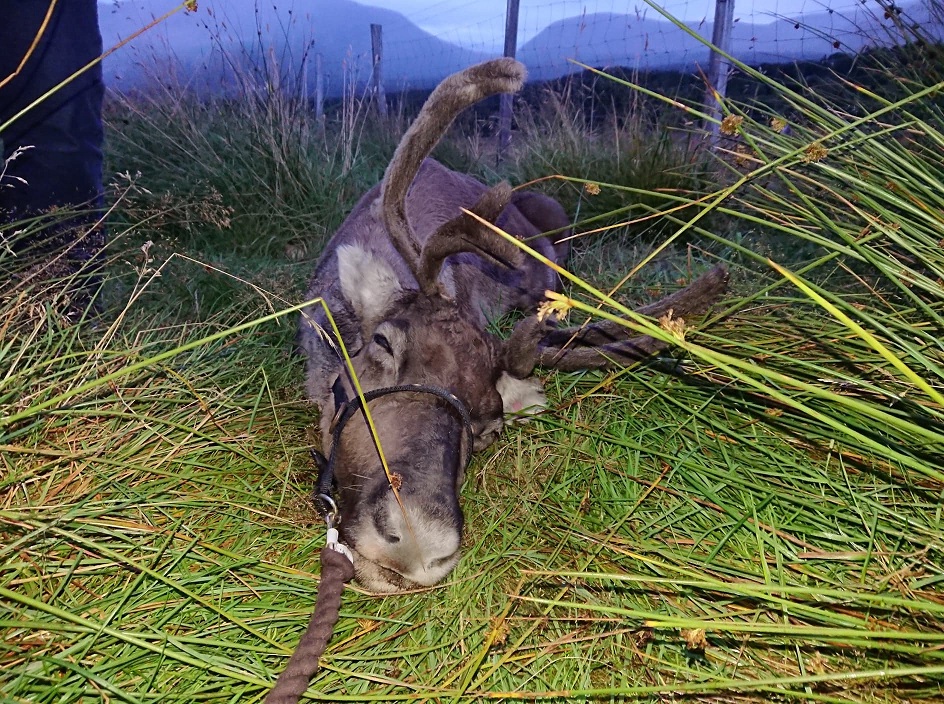
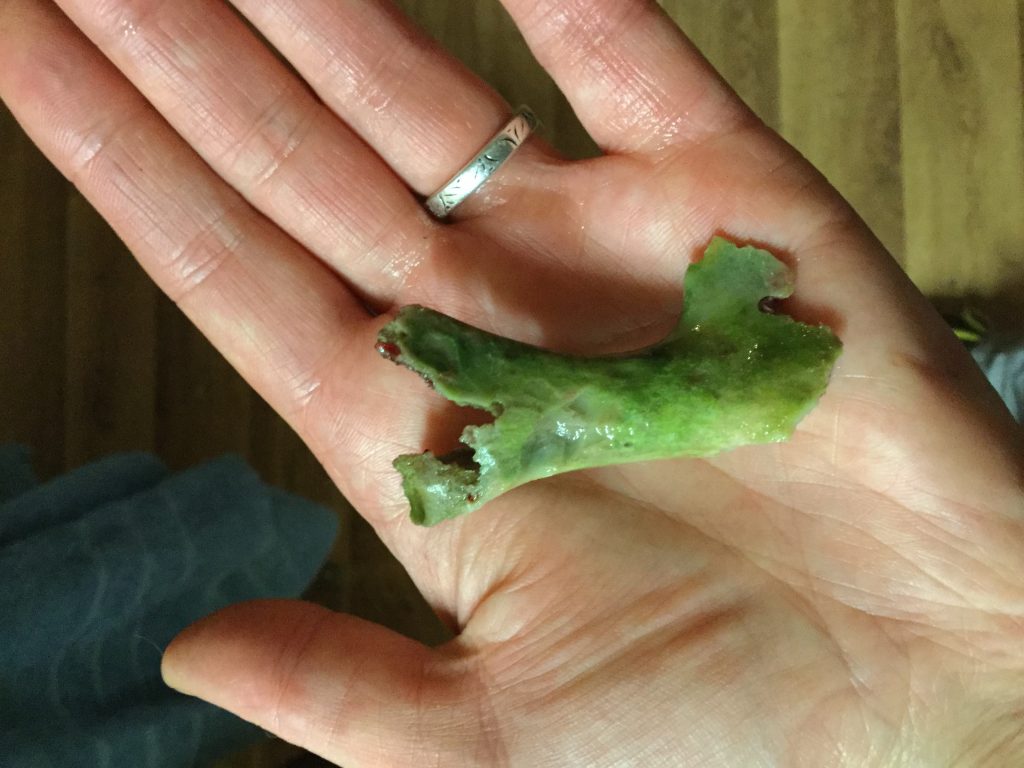
Pony’s hatred of me rose to another level in the autumn, when Pony managed to wedge a chunk of bone she was chewing on beneath her tongue, necessitating a visit from the vet and an operation to remove it. As I was one of the herders there (giving up my evening to wait for the vet to arrive…), Pony seems to have linked the pain and discomfort with somehow being my fault… I went to check she was ok the next morning and got chased for my efforts! What a reindeer!

In the half-dark, waiting for the sedative to wear off…
…after this old bit of bone was removed from her mouth, having been impaled into the underside of her tongue!

For my part, I still like Pony, and this winter decided to try and win her round by offering her extra tasty treats from a bag. She cottoned on quickly and is quite willing to accept the offering, but it’s fairly daunting as she comes flying over with her ears back, and I hold the bag up partly as a shield! I think her lack of ear tips does make her look more angry than she actually is at times, but I’m still pretty cautious around her, doing my best not to tread on her toes, so to speak!

Pony in the company of her daughter Suebi, aged 2

Just the other day, we were noticing that her oldest daughter, Suebi, who until this point has been a sweet natured lassie, seems to be getting more “opinionated” with age, so fingers crossed we’re not going to end up with another Pony on our hands!

Andi

My first winter as a reindeer herder

This past year has been my first full year as a reindeer herder. Despite becoming a reindeer herder seven years ago in 2014 (remember then? simpler times!), I was very much a seasonal herder. I would arrive for a few months in the summer whilst either my university course was having a break, or in-between travels abroad.

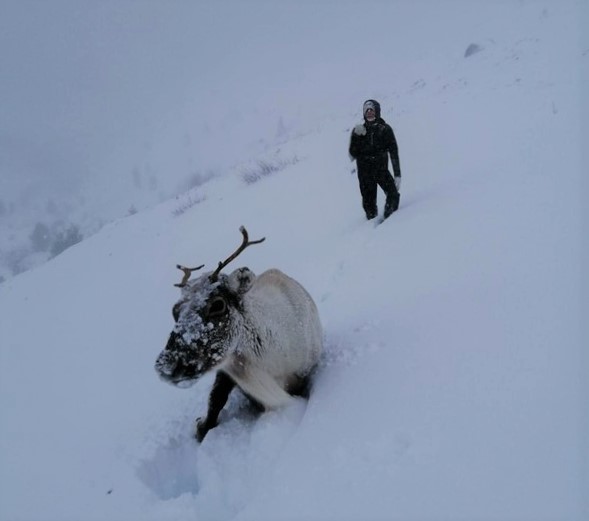
Therefore, last winter was my first winter as a reindeer herder. And what a memorable winter it was! Firstly, it was lockdown, so it was very different to how things usually operate which was new and exciting whilst also being unpredictable and slightly chaotic. But also, there was the snow. So. Much. Snow. And I thought it would be a good opportunity to share a couple of videos and photos from the crazy weather, including this short clip of Joe and I leading the herd downstream in blizzard-like conditions at the start of February.

Pony and I trying not to sink!

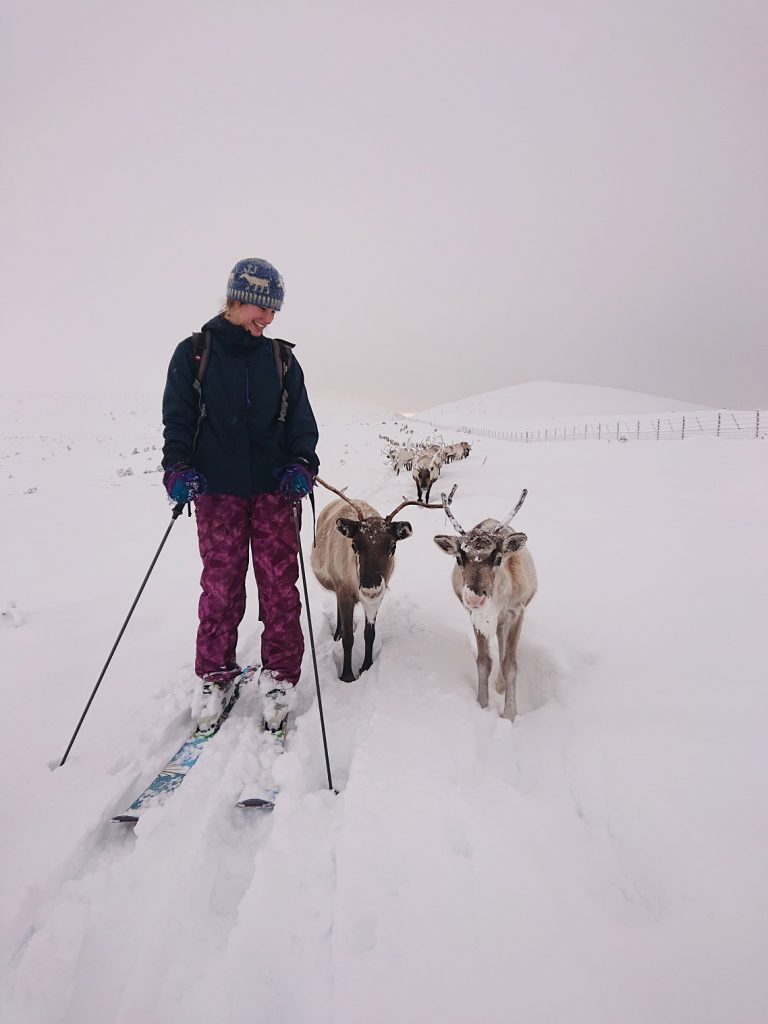
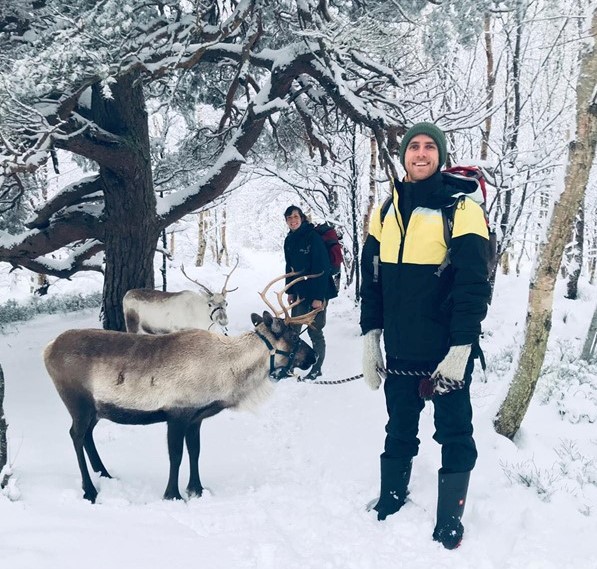
Leading Feta and Diamond along the path on a snowy day

And it’s not just reindeer that we fed throughout the winter! Opportunistic snow buntings joined in most days too:

I am writing this at the start of May where we have had quite a bit of fresh snowfall over the past couple of weeks, so maybe we are not through all the snowy weather just yet. But I am sure it won’t be anywhere near as much as the volume of snow that fell this winter. Overall, it was a lovely first year as a reindeer herder, albeit very unusual as the whole country adapted to changing circumstances. Now I look forward to my next year and hopefully getting to see all the ‘normal’ activities such as Christmas events and parades.

Snowstorm armour!

Ben

Calving 2021

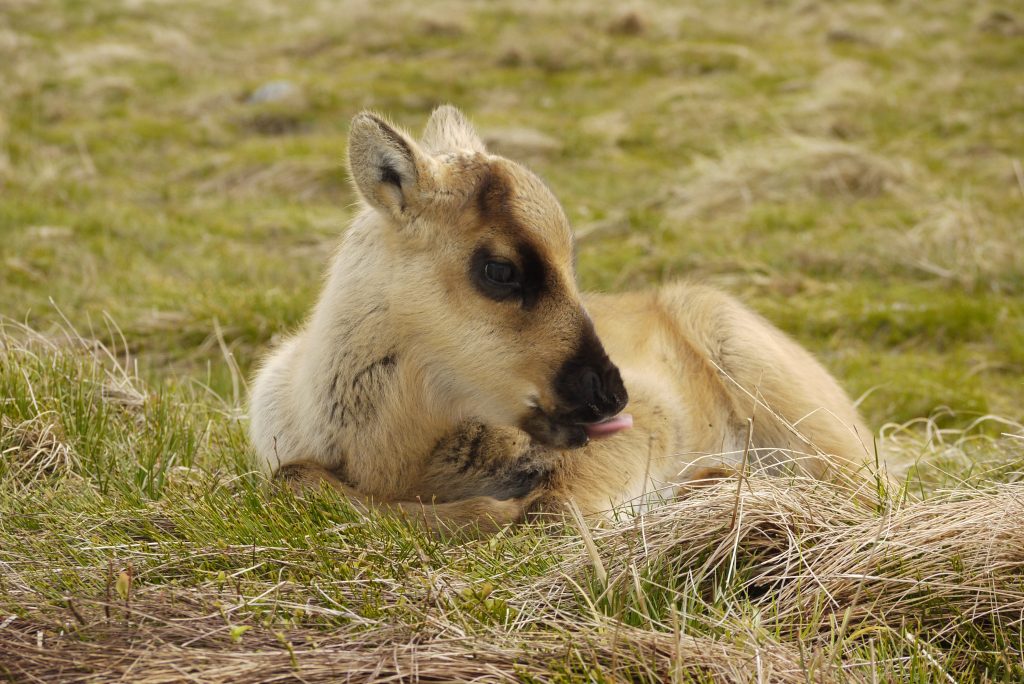
Every year we try and post a blog in May with lots of calf photos – because let’s be honest, it’s all any of you really want to see at this time of year!

We don’t, however, reveal which reindeer have calved at the moment, as we like to wait until after the June newsletter is sent out to our reindeer adopters before revealing who has become a mum. The reason for this is two-fold – the main one being so as not to spoil the surprise element for adopters of opening that envelope in June, and scanning down the calving list to find our whether ‘their’ reindeer has calved.

The second reason is that sadly not every calf born will survive, and reindeer are at their most vulnerable in their first few weeks of life. While we don’t shy away from the fact that reindeer don’t last for ever and do die, sometimes at a very young age, we also don’t want to upset anyone unnecessarily by allowing them to see photos of their adopted reindeer’s super-cute newborn online – only to find them suspiciously missing from the calving list in the newsletter a couple of weeks later.  It would be unfair of us to upset those of a perhaps more delicate disposition with the realities of life if it can be easily avoided by not naming who is who, at least until the calves are past the most vulnerable month of their lives.

So, moving on, please enjoy the photos below!

Calves of many colours!

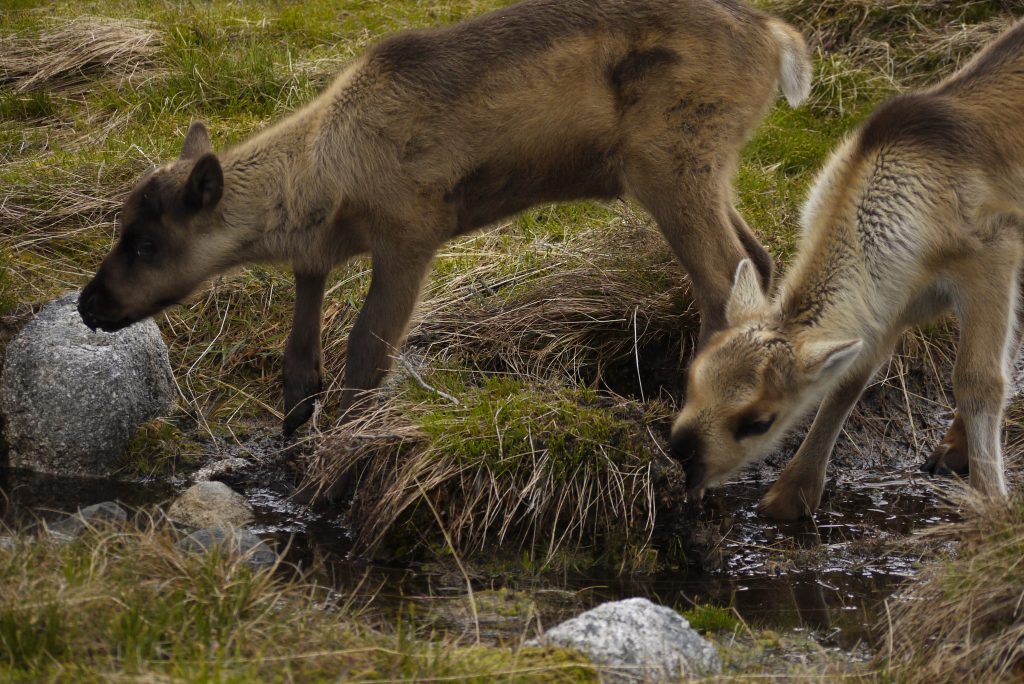
Ditches are a lot bigger when you’re only wee!

Gerrof mum!

Hen

Spartan, one of my favourites.

The reindeer I’ve chosen to talk about in this week’s blog is a reindeer who I like a lot. I met him when he was just hours old and he has now become one of the breeding bulls for the herd. His name is Spartan. He was born in 2016 and was named after that year’s naming theme of ‘lost civilizations’. This means he’s about 5 years old and is coming in to his prime. In this blog I’d like to talk a bit about Spartan’s journey from unassuming calf to sweet-natured breeding bull as well as his heritage and his offspring.

Spartan as a very young calf, with mum Bumble keeping an eye on him

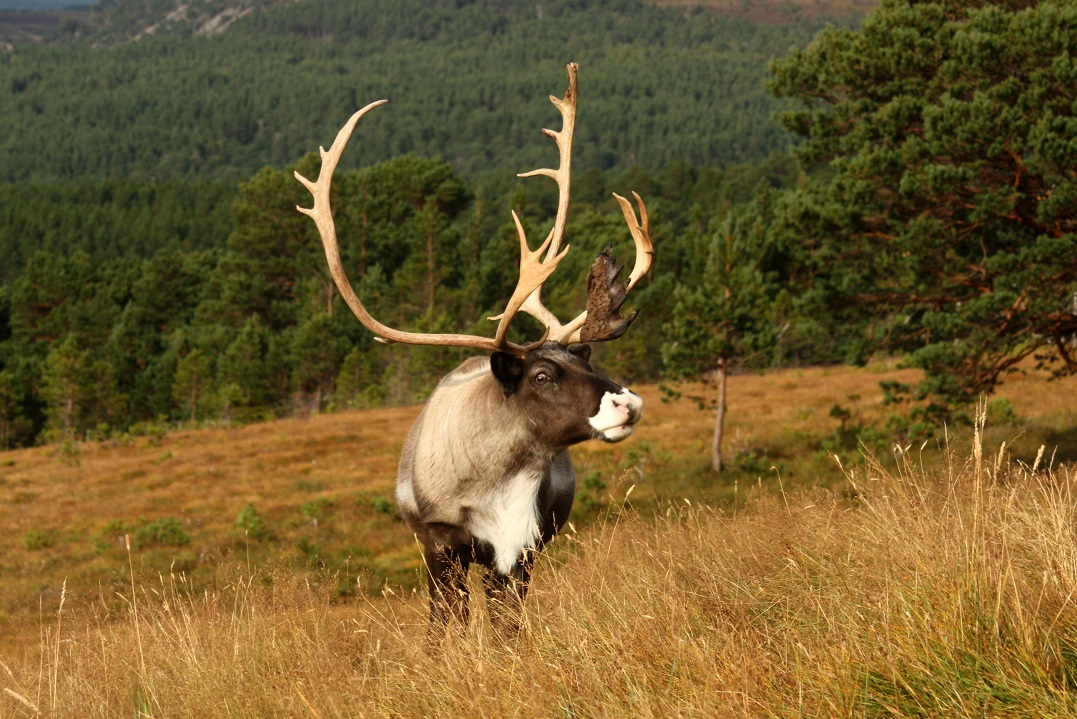
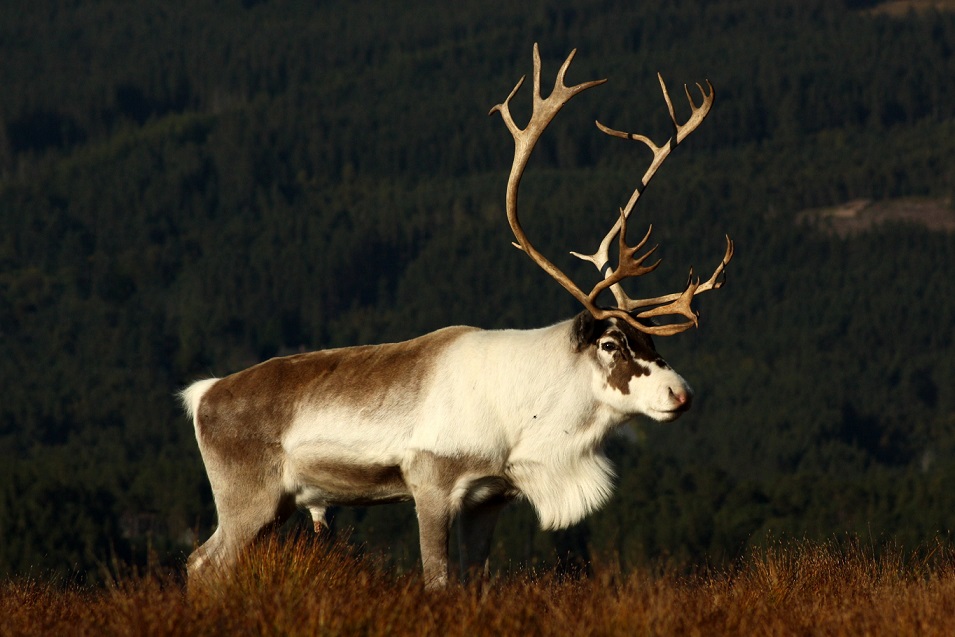
During Spartan’s first year of life he was always an unassuming calf. He wasn’t exactly oozing in character and was a relatively quiet calf. He was always polite and never pushy, and he grew very simple antlers. However, as you can see from the photo below, his antlers are far from simple nowadays. They are one of the largest and most beautiful in the herd.

What a bonny lad!

From a personality point of view, Spartan really grew into himself over the years. He has a sweet, lovely nature, even during the rut. For those who don’t know, the rut is a period in autumn – about a month in duration – where reindeer come into season and the breeding occurs. Breeding bulls are known to alter their nature and become more territorial which can lead to these bulls being more scary and aggressive (hence why we don’t visit the breeding bulls on hill trips in October/November). However, Spartan remained well-behaved despite being swarmed by hormones. Compared to our other breeding bulls he is definitely on the well-behaved end of the spectrum. Perhaps this was due to his much-loved mother, Bumble, being incredibly sweet-natured and passing on those genes to her son. If you wanted to read more about Bumble, you can read a blog on her by clicking here.

Bumble – a monstrously greedy reindeer!!!

Spartan had his first experience of being a breeding bull in 2019 and is believed to be the father of 10 calves that were conceived that year and later born in 2020. However, the selection of Spartan as a breeding bull wasn’t an obvious selection. Each year we have to make the decision of which young adult male reindeer we want to pass on their genetics for the future of the herd, and which reindeer we want to castrate. This decision is made when the male reindeer is at least 3 years old and is integral in keeping the number of reindeer in our herd to a sustainable amount. Moreover, by controlling the breeding it means that we never have to cull any reindeer. When it came time to select which reindeer were to be castrated from the 2016 year we decided that we would keep 2 reindeer as breeding bulls that year. Roman was the first choice and after lengthy discussions, Spartan’s genes seemed to win out over other contenders such as Aztec and Celt. He kind of snuck through the castration net, so to speak.

Roman, in the foreground, grows amazing antlers!

Spartan comes from a blood line that had almost become lost within our herd. And now that he is one of our few breeding bulls, it means that the blood line has a new lease of life. Spartan’s father was the popular breeding bull Nutti who was imported as a calf from Sweden in December 2011. We imported a large amount of young male reindeer from Sweden around that time as we wanted to diversify the genetics in our herd and introduce more blood lines. Nutti unfortunately died in April 2018 whilst free-roaming in the Cromdale hills but as you can see from the photo below, his genetics live on in Spartan whose looks, and indeed nature resemble that of Nutti.

Nutti – explaining where Spartan’s face marking came from!

In 2019, almost immediately after the decision that he would become a breeding bull, Spartan was put into the rut and introduced to his own group of females that were coming into season. It turned out that the other breeding bull contenders were related to more of the eligible cows than Spartan. Therefore, we believe he is father to a group of 10 lovely calves (now yearlings) all of whom were named after ‘peas, seeds and beans’. The calves that we think are probably Spartan’s all appear to be very sweet natured and endearing. They are Cannellini, Lupin, Hemp, Chickpea, Mushy, Pinto, Edamame, Adzuki, Borlotti and Haricot. And with only a few exceptions, many of the calves have distinctive white face markings, just like Spartan. These are most notable on Pinto, Edamame, Hemp, Borlotti and Adzuki, the offspring of Morven,  Emmental, Addax, Clootie and Gazelle respectively.
Winner of the most interesting markings as a newborn calf – Hemp!

Although we didn’t use Spartan in autumn’s rut of 2020 he retains his ‘equipment’ and his name is being discussed as a potential breeding bull for this year’s rut. He is currently in great condition and is having a very peaceful year! In the early months of 2021 Spartan has been free-roaming on the Cromdale hills.

So there you have it! The story of Spartan – one of our friendliest breeding bulls.

Ben

Winter wonderland

I know snow and ice is not everyone’s cup of tea, but for our reindeer it definitely is! Reindeer are incredibly well adapted for arctic life, with thick coats to keep out the cold and large flat feet to stop them sinking in the snow.

And this winter was certainly a ‘proper’ one. Since the beginning of the year through to mid February we had sustained cold conditions in the Highlands and the mountains and hills were clothed in snow. We also saw considerable snowfall at lower levels, with both Reindeer House and my farm being white for many, many weeks.

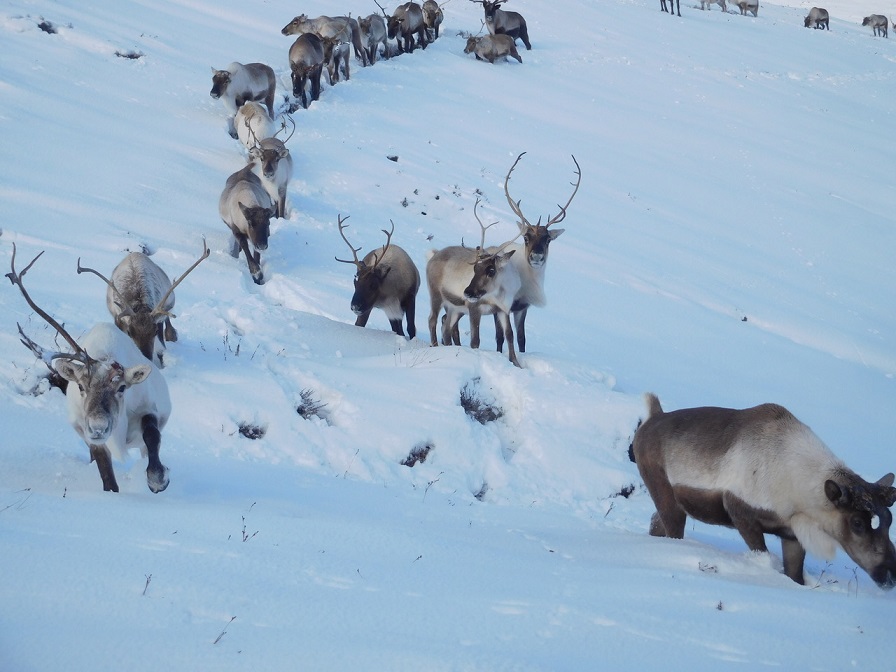
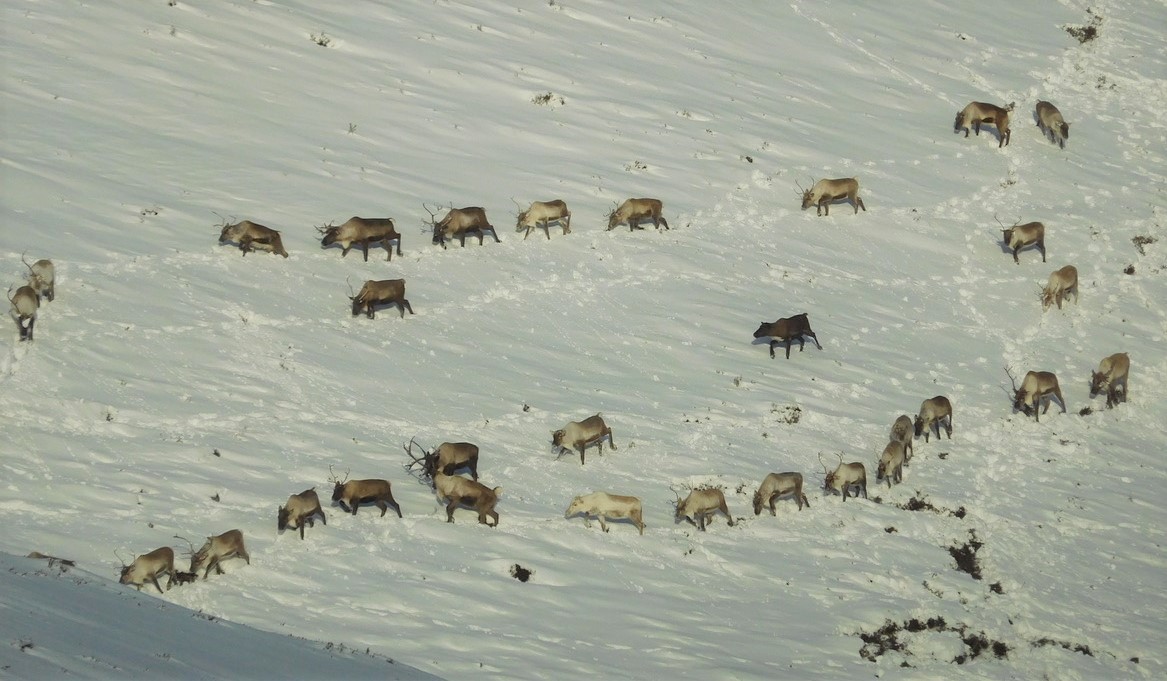
Over at our second site for reindeer at Glenlivet we over-winter part of the Cairngorm Reindeer Herd out on the hills there, just the same as on the Cairngorms. At this time of year the reindeer are grazing on ground lichens, their preferred winter diet and they will use their lovely big feet to dig down through the snow to the lichen below.  Because of their thick insulating coats they do not seek any shelter and so in the worst of storms they remain on the tops of the ridges where the lichen grows best.

We do like to check the herd regularly though and so as often as we can we go out to see and feed them, although this was impossible for much of this winter due to the inaccessibility of the hills in such deep snow. The reindeer never say no to extra food and when we call them down they come running. We don’t need to feed them much to satisfy them because the reindeer have a lower metabolic rate in the winter, so just a little bit of food is sufficient, and allows us to cast an eye over them to check all is well.

Sometimes skis were the only option for moving about!

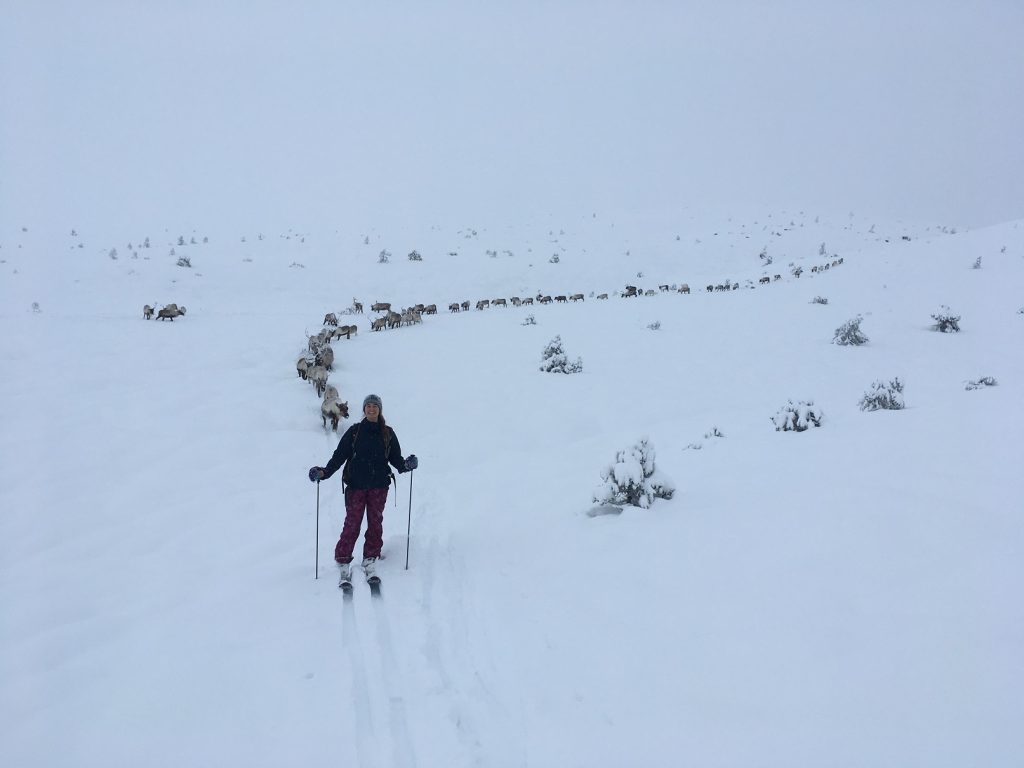
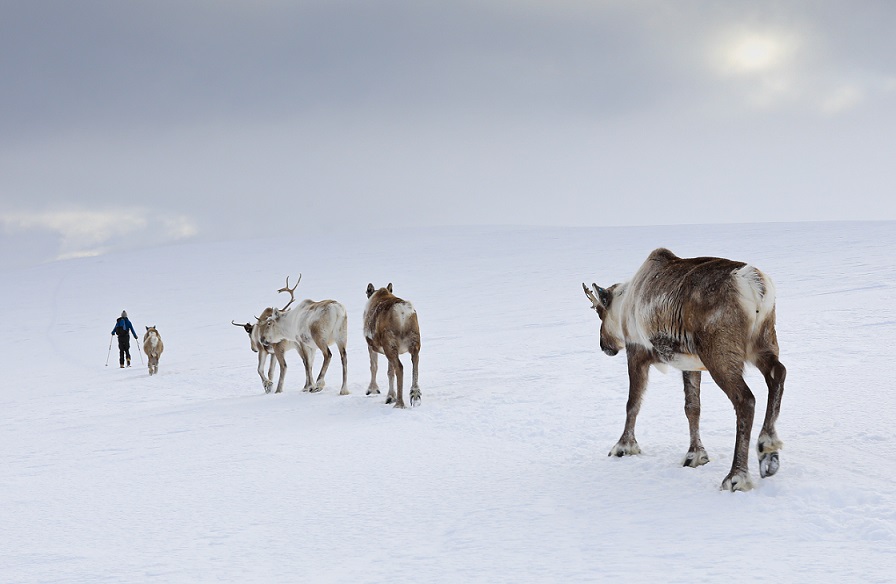
It’s a lovely sight watching the herd weave their way down through deep snow. They are past masters at conserving energy, which means they walk in each others footprints, to save working too hard. It often amuses me to consider which reindeer does the hard work at the front. Is it always the greedy ones that break track or do they ‘take turns?! I suspect it’s the greedy ones.

Once fed, they will drift away and settle on the higher ground in the snow for the night. A bed of snow is very comfortable for a reindeer.

Tilly

Long time, no reindeer

It’s been a bit snowy here in the Cairngorms this winter.

The Cairngorms is unique within the UK in offering a sub-arctic ecosystem, which coupled with the wide expanses of mountainside, make it perfect for our reindeer. In most winters, we get weeks of snow cover on the mountains,  but it’s less common to have such sustained cover as we’ve experienced this year. From Christmas through to mid February, the norm was snow, both on the hills and in the glens. Perfect for the reindeer, great for all of the snowsports enthusiasts who happen to live within reach of the mountains, but I have to confess the novelty of relentless snow began to wear… a little thin for me. I lost count how many times we cleared our drive at home of snow – all that snow shovelling definitely made up for the gyms being closed!

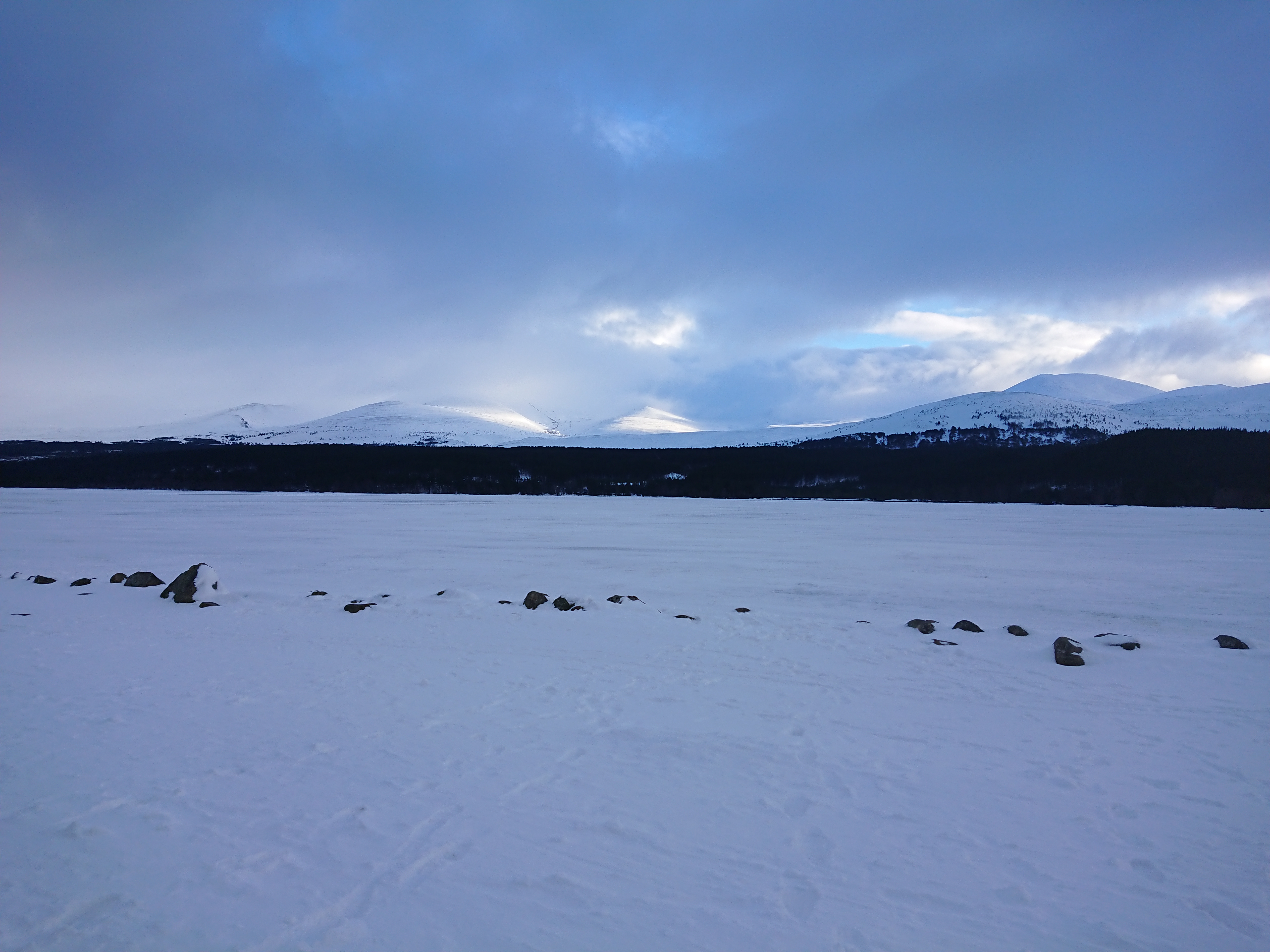
There’s a loch there somewhere! Loch Morlich froze solid enough that some people skied right across it.

If you follow our social media accounts, you’ve probably  enjoyed all those beautiful photos of reindeer in the snow under a bright blue sky, herders skiing out onto stunning mountains to cuddle reindeer, giving the impression that that is our every day experience. But alas, social media photos can be scheduled for the future. With the current situation, we’ve all just been working two/three days a week, keeping the essentials ticking over, which also means that we can work in separate households.

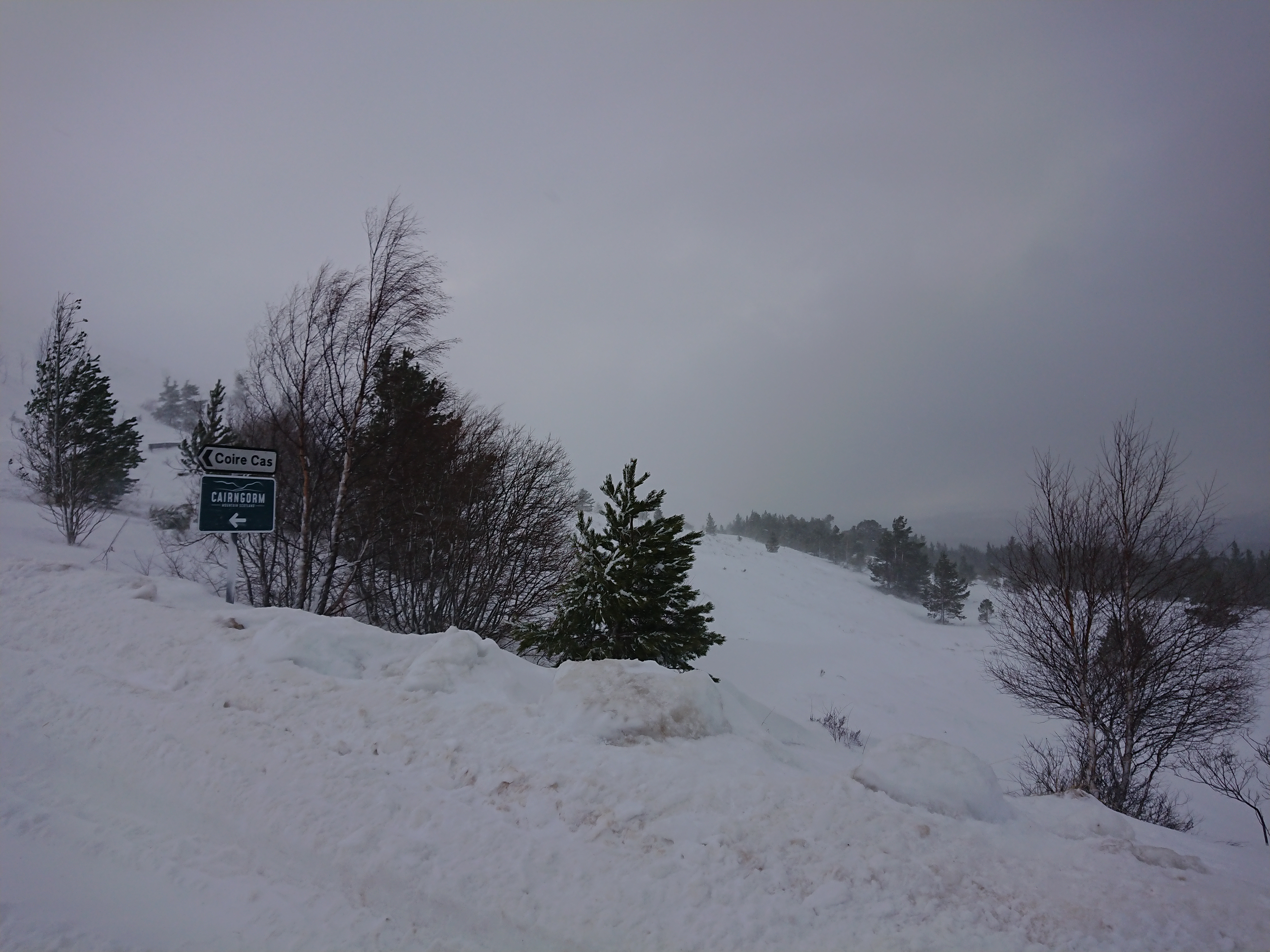
Our path off the car park blocked by a 10 ft drift. No reindeer today then…

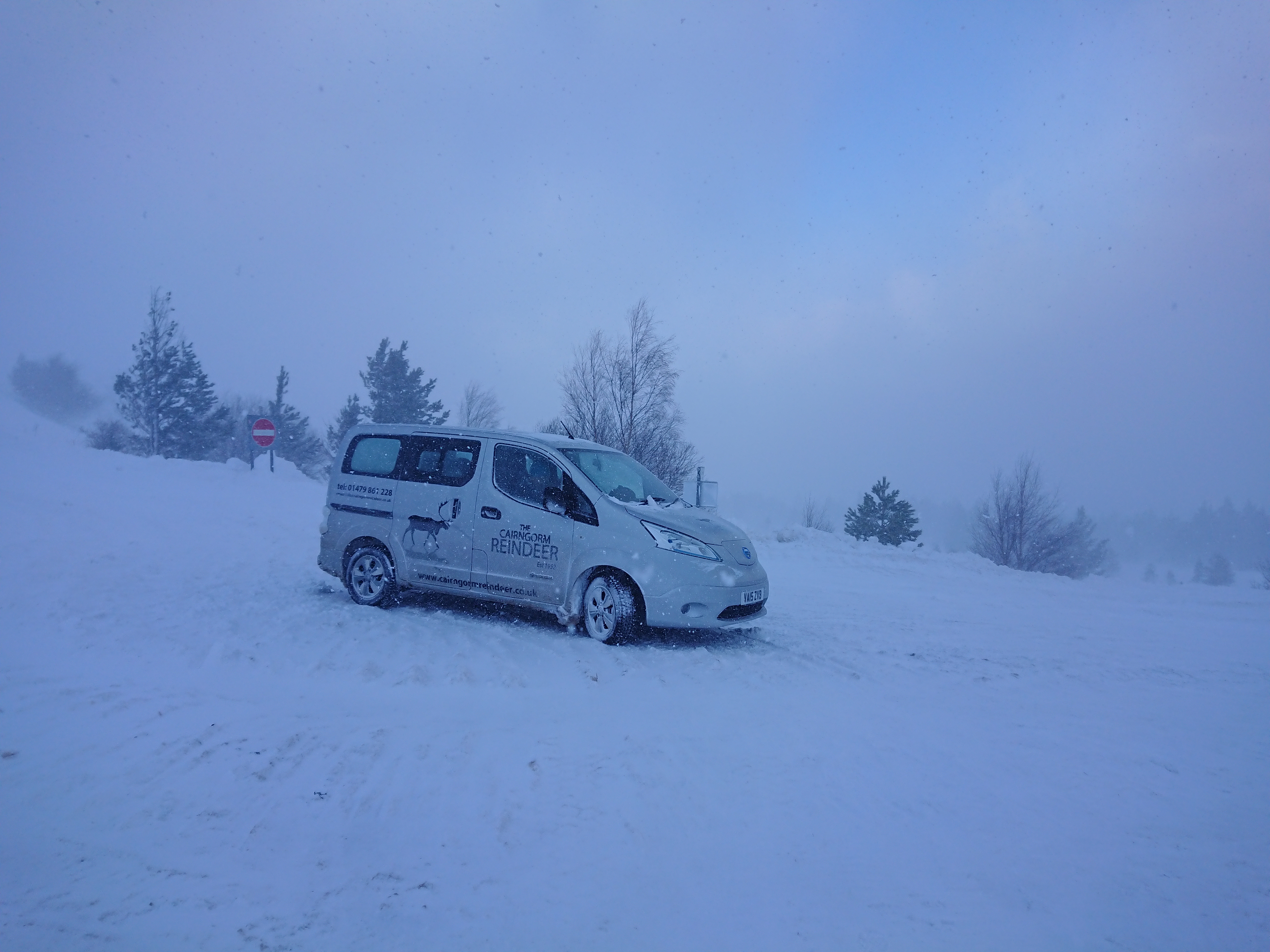
So every Friday and Saturday, Hen and me had our turn to feed the herd. As January rolled into February, with unerring precision, every day we were scheduled to work also appeared to be the scheduled day for a blizzard, a storm, or generally horrific weather. The reindeer were perfectly equipped, and with their appetites very reduced they would be a fair distance away, not fussed about seeking us out for food. Each time, we would drive up the ski road – a mission in itself as the snow was only cleared enough to allow Cairngorm Mountain’s essential staff access. We would wend our way up the closed road in our wee van, driving as far as we could, debating the safety of walking out to try to find the herd. And each time we would be forced to turn back.
The main ski road.

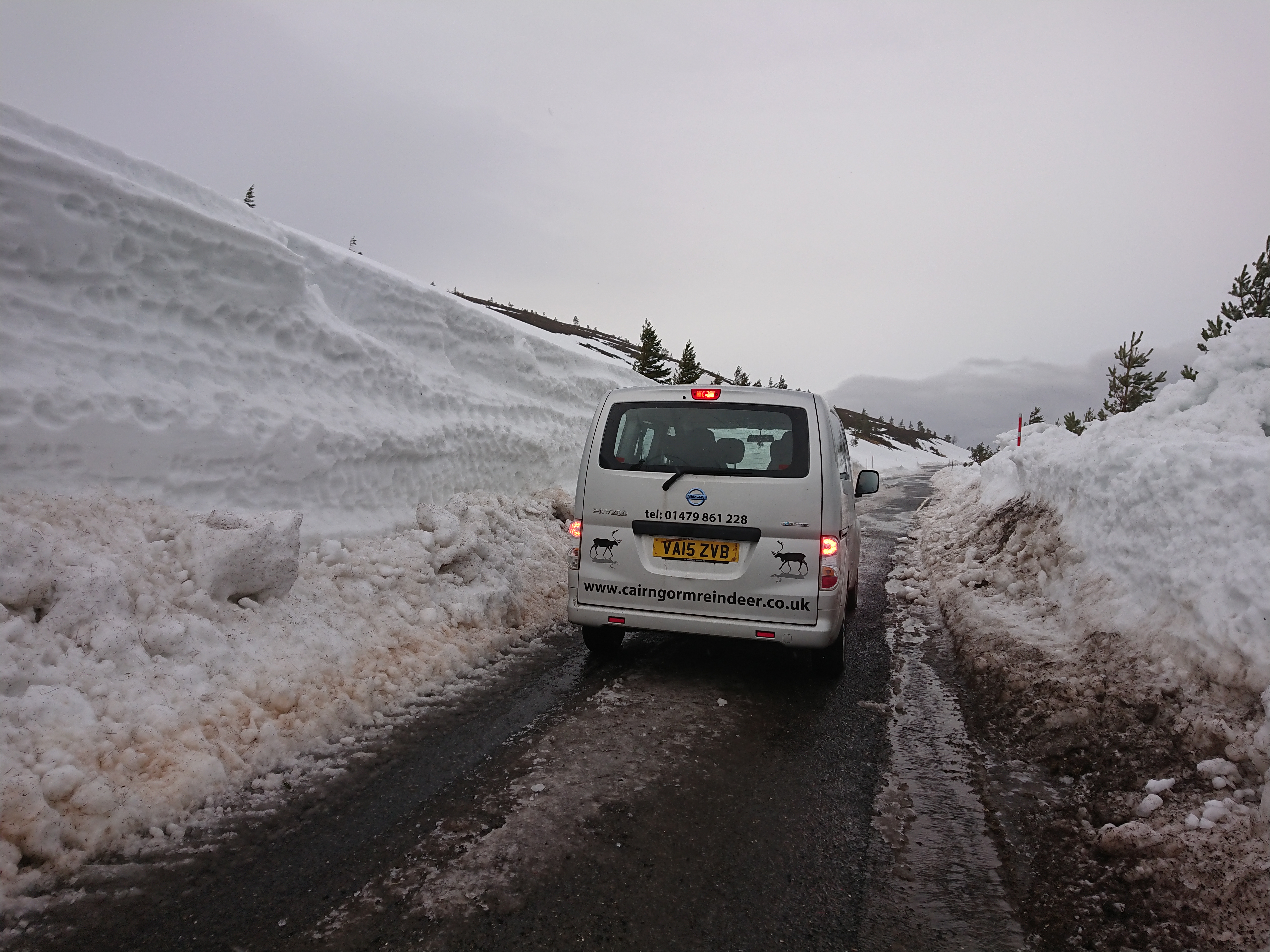
A passage cleared through drifts higher than the van.

Over the course of the next week, our colleagues would be gifted with better weather than us, and would catch up with the reindeer. More glorious photos for Facebook, then as we watched the forecast for our days, the harsh weather returned. The temperature plummeted to -19C, the Spey froze over. A second work “week” of seeing no reindeer, again foiled by the weather, the deep snow, and the distant reindeer. Now I know we can’t complain too much, when we have the privilege of getting to work with these awesome creatures, but by now we were starting to feel a little less like “Reindeer Herders” and a little more like office staff…

Our wee van excelled itself at being a snow van. That’s the main ski road that we’re stopped on…

It was now nearly three weeks since we’d seen the herd ourselves, and with hope we looked at the forecast for our next Friday in – the thaw having finally started. Windy, still snowy, but not too bad… We loaded the van with feed, navigated the narrow cleared passage between the drifts (apparently the deepest for 40 years on the road in places), reached the car park and spied with binoculars.

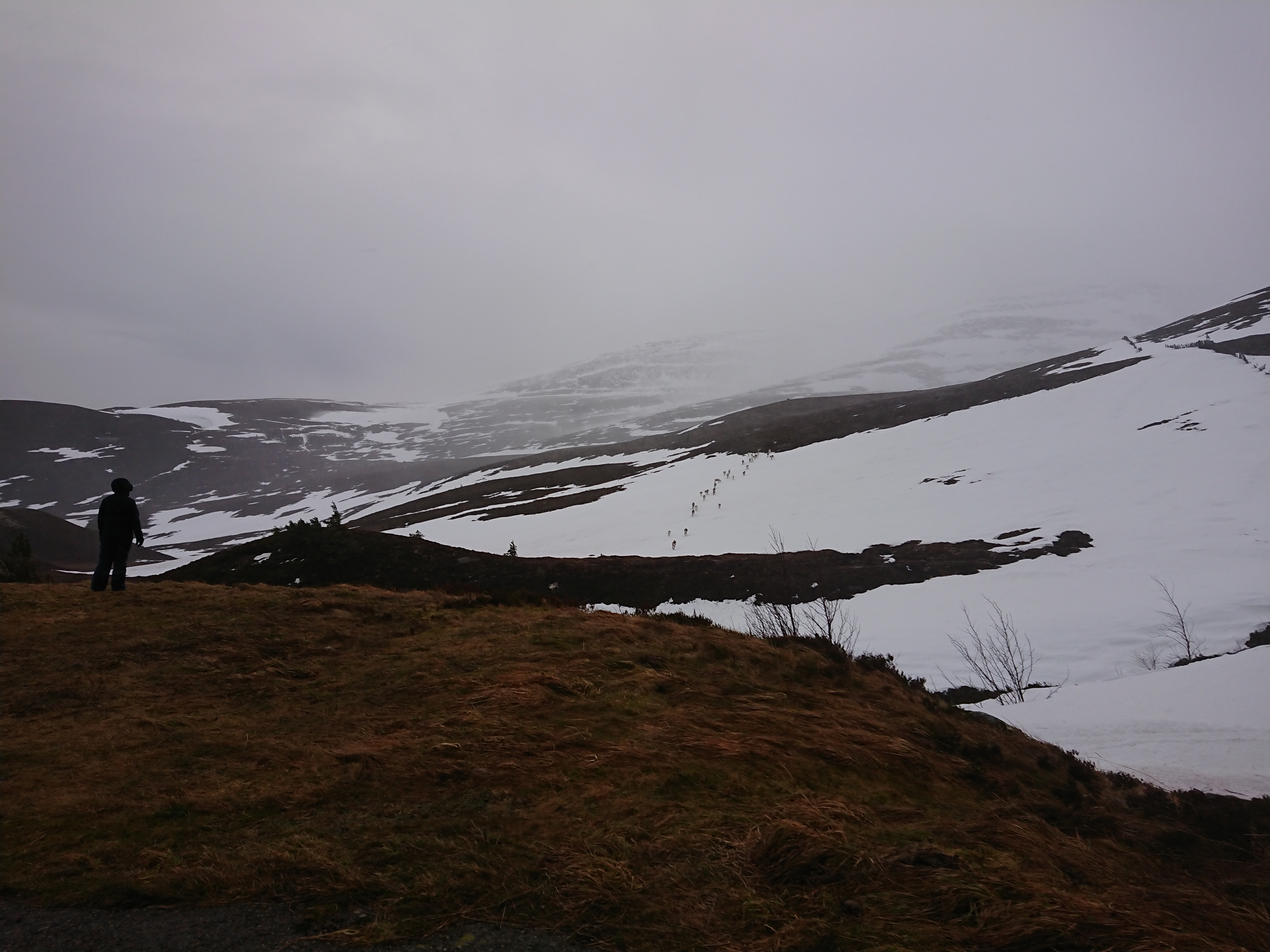
Hen sights the reindeer just above the snow drift

Reindeer! Real live reindeer! Calling against the wind, they heard us, and Pagan led them down.

Call and they shall come (possibly)

Phew, we could feel like reindeer herders once again!

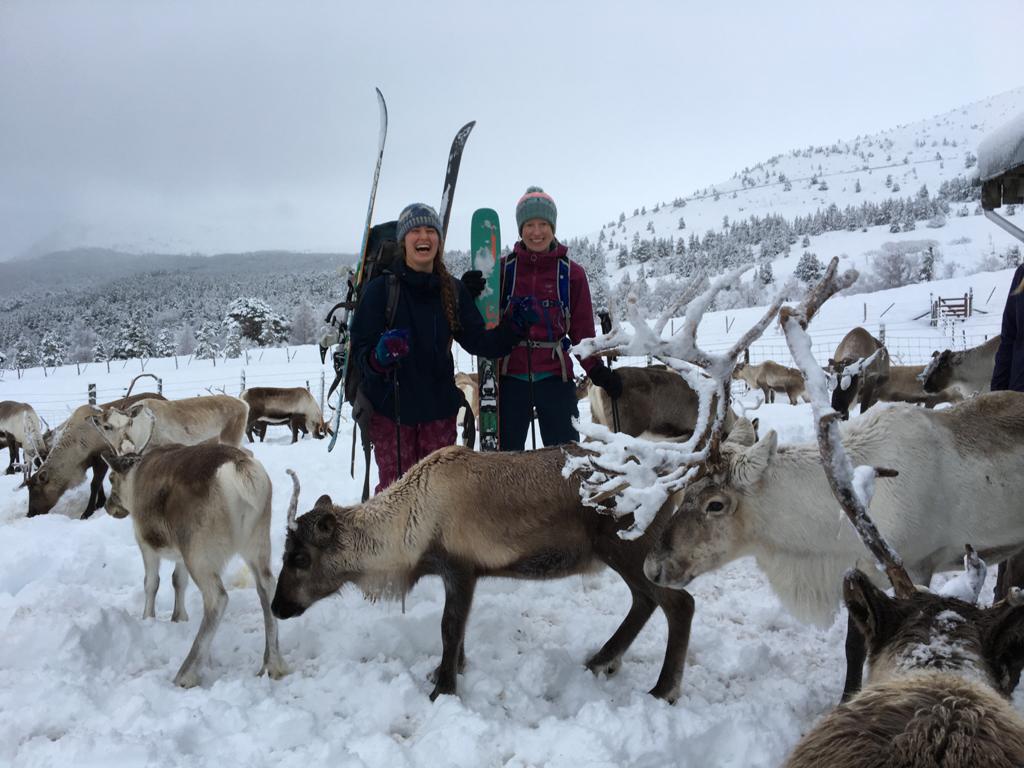
Wild weather but happy herders with hungry Holy Moley

Andi

Long-distance adopting!

Our blog this week comes from Freya, a long-time supporter of the herd for, well, as long as she can remember! Freya now lives in Canada so visiting us isn’t quite as easy as it once was unfortunately, but she and her family adopt several reindeer and keep in touch with the herd via social media. Isn’t technology useful these days?!

When I say I’ve been visiting the Cairngorm Reindeer herd since before I can remember I am quite sure people think I’m exaggerating. Truth is, I have been visiting since before I can remember. It became a well-established tradition for my family (and often my extended family) to visit Scotland at least once a year from when I was about 5 years old. I couldn’t tell you when our first visit to see the reindeer themselves was, but I do recall seeing photos of a tiny little me wrapped up so much that you could barely make out arms and legs!

Jigsaw with her mum Doughnut

The year I will always remember was 2005, the year of the ‘countries’ theme. We had come up to Aviemore for the first time in the Spring and were delighted to be able to see the calves like never before. As luck would have it we finished the climb of the Hill Trip just in time to see a very fresh calf popping into the world! I’ll always remember watching the little calf, later named India (I believe), making all the effort to stand up on those very wobbly legs!

One of the other newborn calves in 2005

It took a single visit for the reindeer to become an essential part of every trip to the Highlands and we would make the trek at least once, sometimes twice, every time we visited – rain, shine, hail or snow! By the age of 8 I was obsessed with the reindeer and we had fallen in love with a family line – specifically Bell (born in 2000), her mother Shell and grandmother Tortoiseshell (Editor’s note: Bell, Shell and Tortoiseshell were descended from a lovely reindeer named Edelweiss, who was a prolific breeding  female in the ’90s and early ’00s. While this line of her descendants has now died out, another branch of her family tree stretches down to Scrabble and Strudel, still present in the herd today). To this day we all (parents and grandparents included) remember the Edelweiss line well!

Shell (right) with Bell in March 2002

Up until that point we had been admirers of the herd but never adopters. The special memories of 2005 changed that and my birthday present a year later in 2006 was to choose a reindeer to adopt. Sadly, by this point India wasn’t an option so instead I adopted Fiji, Bell’s cousin through Shell’s sister Coral. As nature has it, a couple of years later we received the heartbreaking letter that Fiji had passed (I am thankful that I met Fiji several times in the meantime). It was at this juncture that I discovered the Russia family line and Russia became my next adoptee from the ‘countries’ year. I adopted Russia for a few more years and visited lots more times over the coming year until moving away to Canada.

Fiji with her mum Coral in 2005

In 2006 since on a visit with my dad, feeding one of the calves born the previous year. It might have been Fiji but I’m not 100% sure now! (Editor’s note: the reindeer’s coat’s bleach in the light through the winter months, so by late spring, prior to moulting, they are a completely different colour from the previous summer).

A Hill Trip out onto the free-range rather than to the hill enclosure in 2007.

Life happens and I confess that we lost track of the reindeer herd a little in the chaos of emigrating. We liked the page of course, watched any clips we could get hold of, but visiting became much less of an option. The global pandemic brought us many things, most of them bad, but I think it also gave us the opportunity to stop and take the time to appreciate the little things we often forget in the chaos of daily life. In these hard times I made it a resolution to consciously spend less money on large organizations and more supporting smaller, family-oriented organizations. The first one that came to my mind (conveniently right around my birthday) was the Cairngorm reindeer herd and an adoption was the birthday treat of 2020. I got in touch with the lovely team who willingly helped me find a reindeer with a connection to one of my past favourites. I became the proud adopter of Scrabble who is a cousin of Shell and grandchild of Edelweiss.

A Hill Trip with herders Gill and Jack (potential for plenty of ‘Jack and Jill go up the hill’ based jokes!)

Young reindeer Caterpillar in 2012

Fern

During lockdown I completed my Master’s degree, leaving my housemates and I stuck at home with lots a plethora of spare time. My household loves a challenge so to keep ourselves busy we decided to try and work out the past themes and family links of the current reindeer. I can now officially say I’ve read every blog post available online! I may not be an official ‘groupie’ yet – but I think it’s safe to say I’m a groupie-in-training! Another sign – my family and I have adopted two more reindeer (Jonne and Svalbard) and are thinking about a fourth (Holy Moley being a strong contender!) Suffice to say that I am just as excited about supporting the herd now as I was when I was eight and I look forward to visiting again in the future!

Freya

As usual we’re always delighted to include your stories of meeting the reindeer in future blogs. Just get in touch with Hen via our main email address if you’d like to get involved 😀

Snowy snoozes

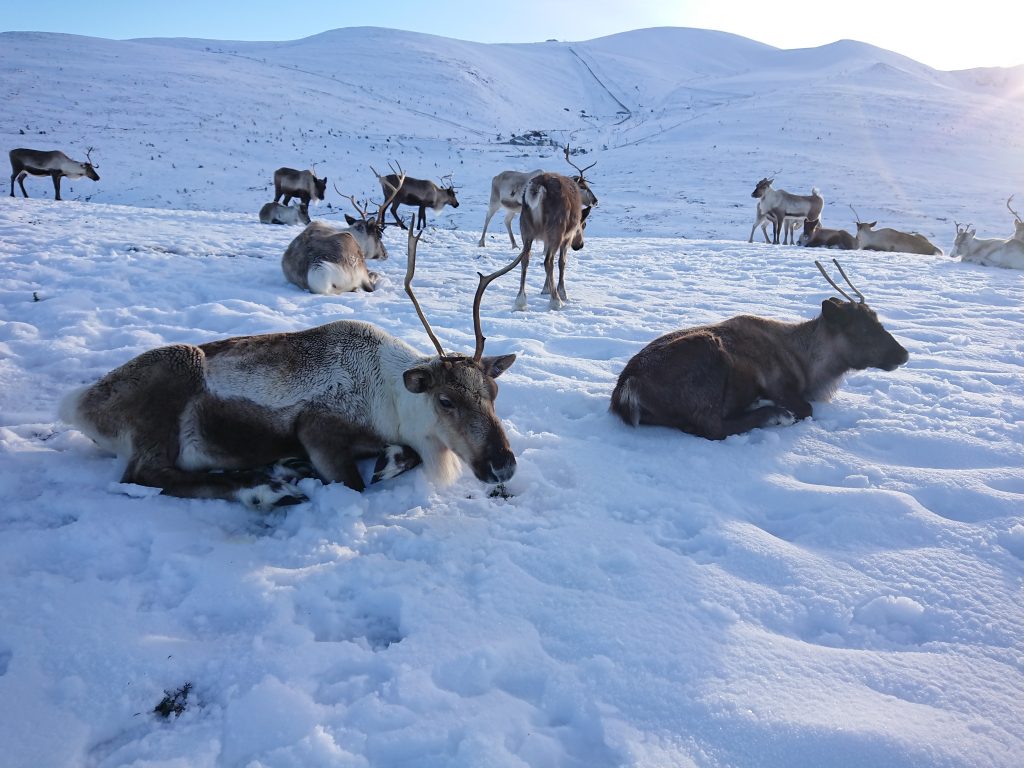
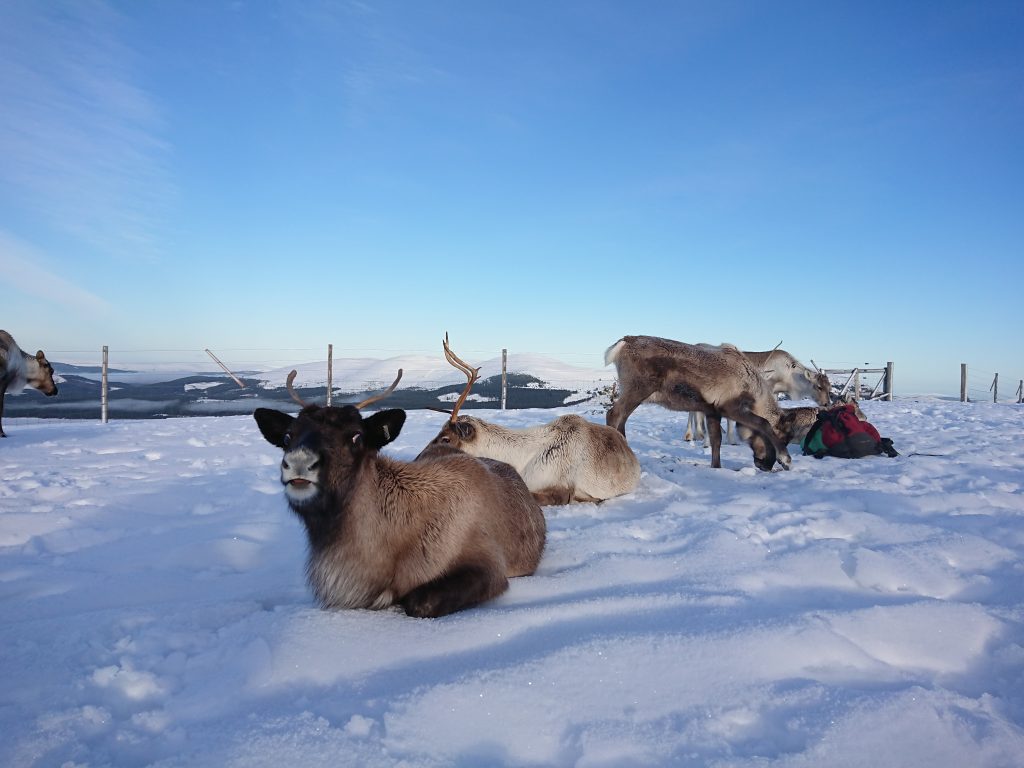
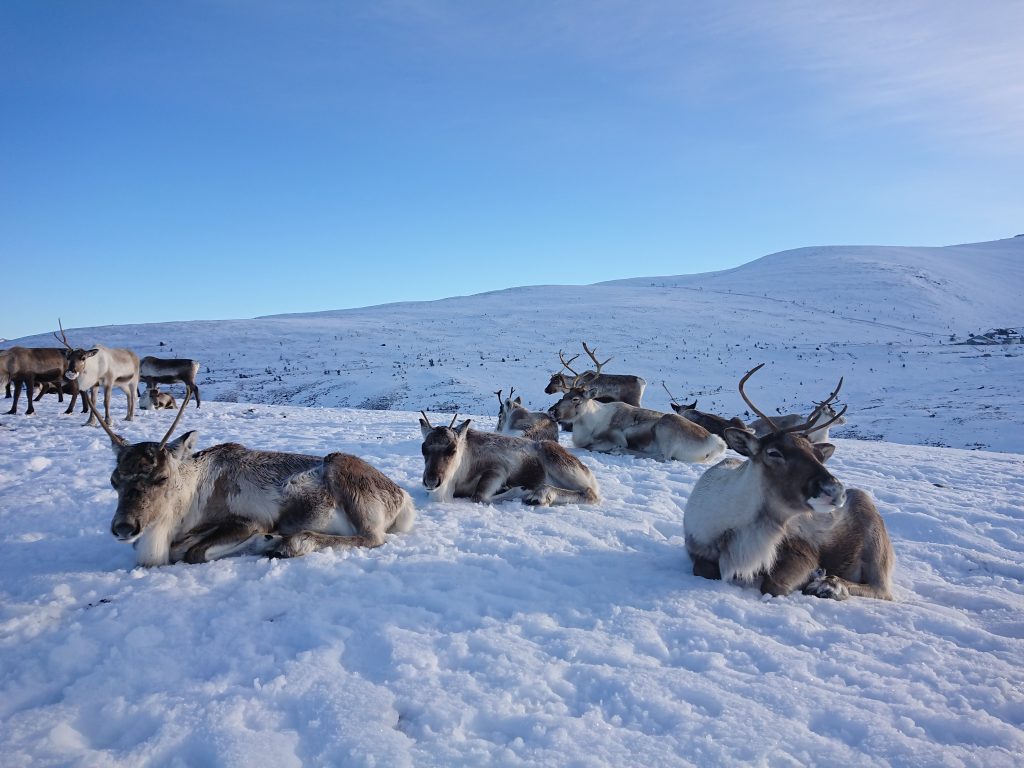
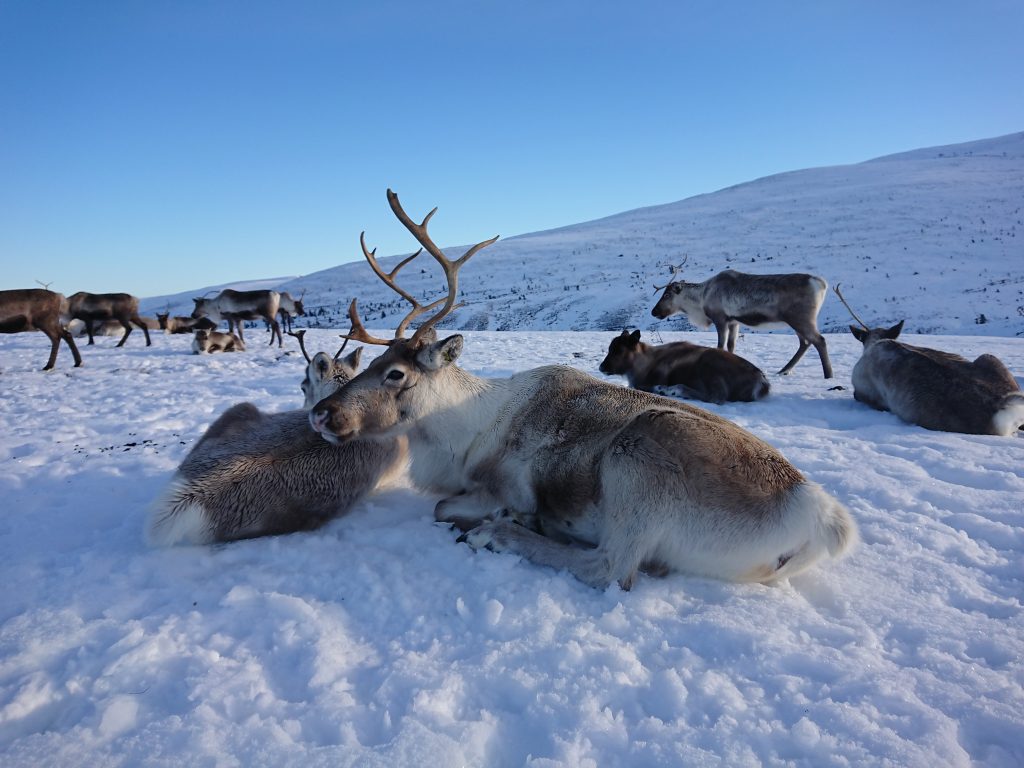
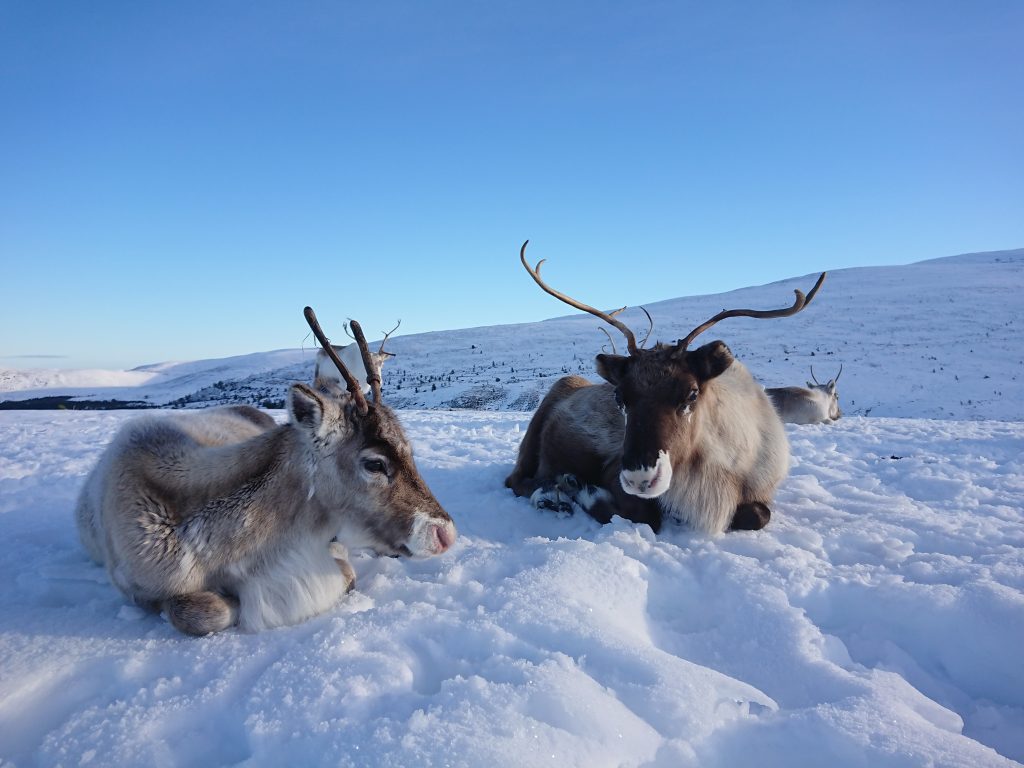
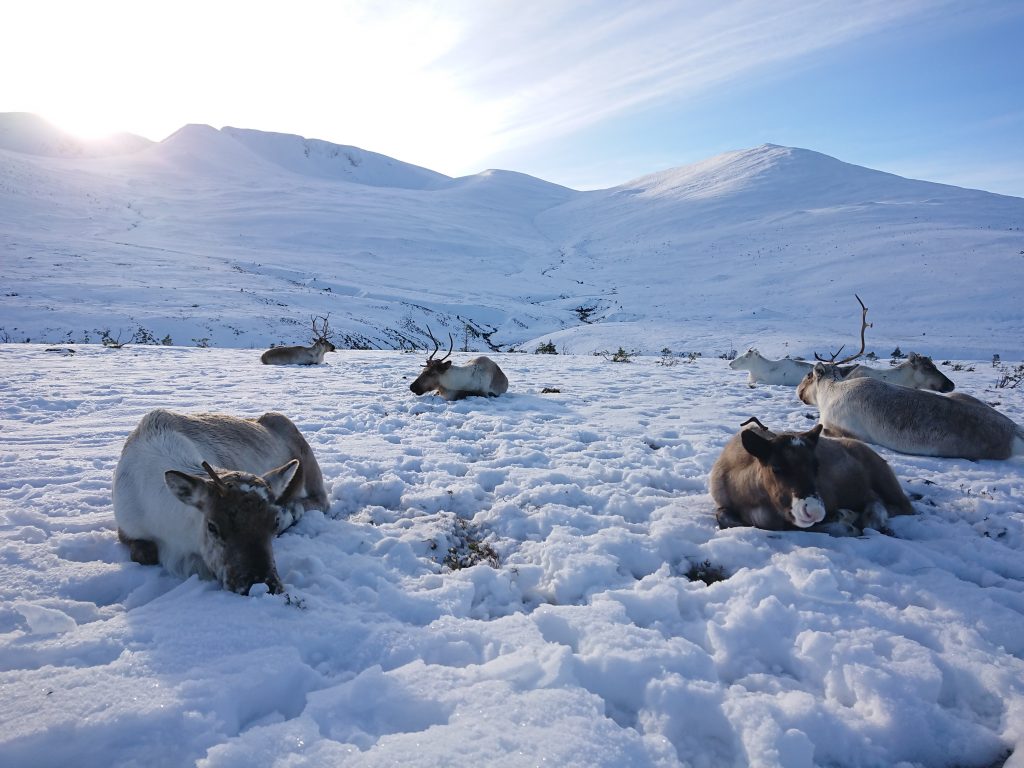
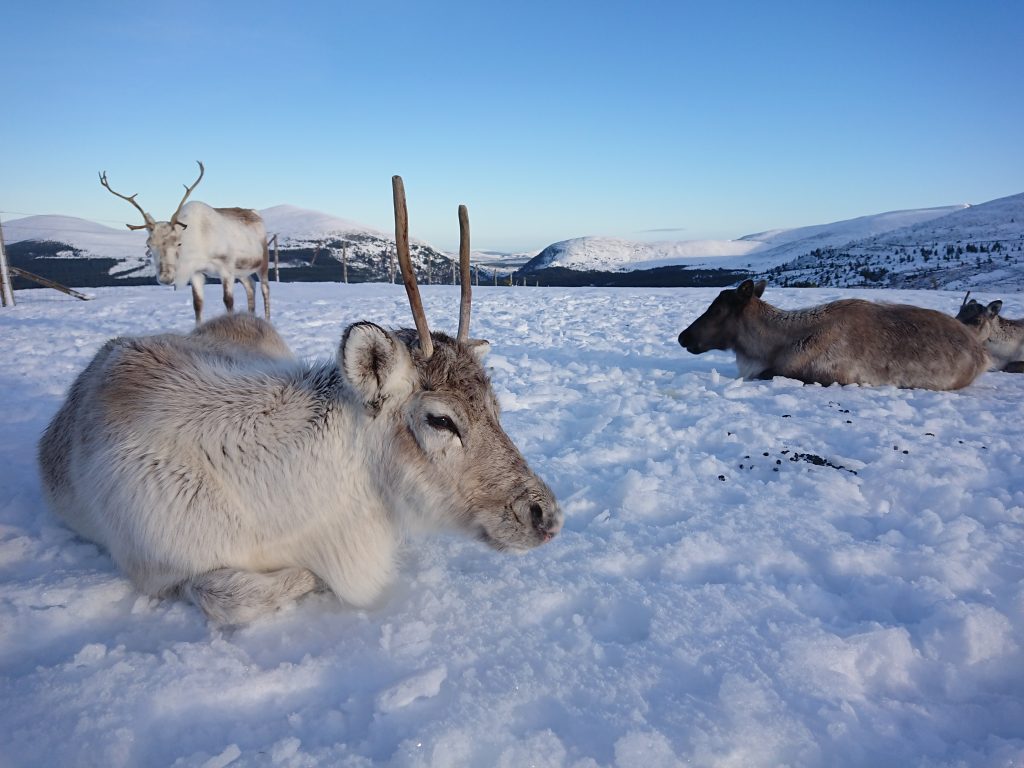
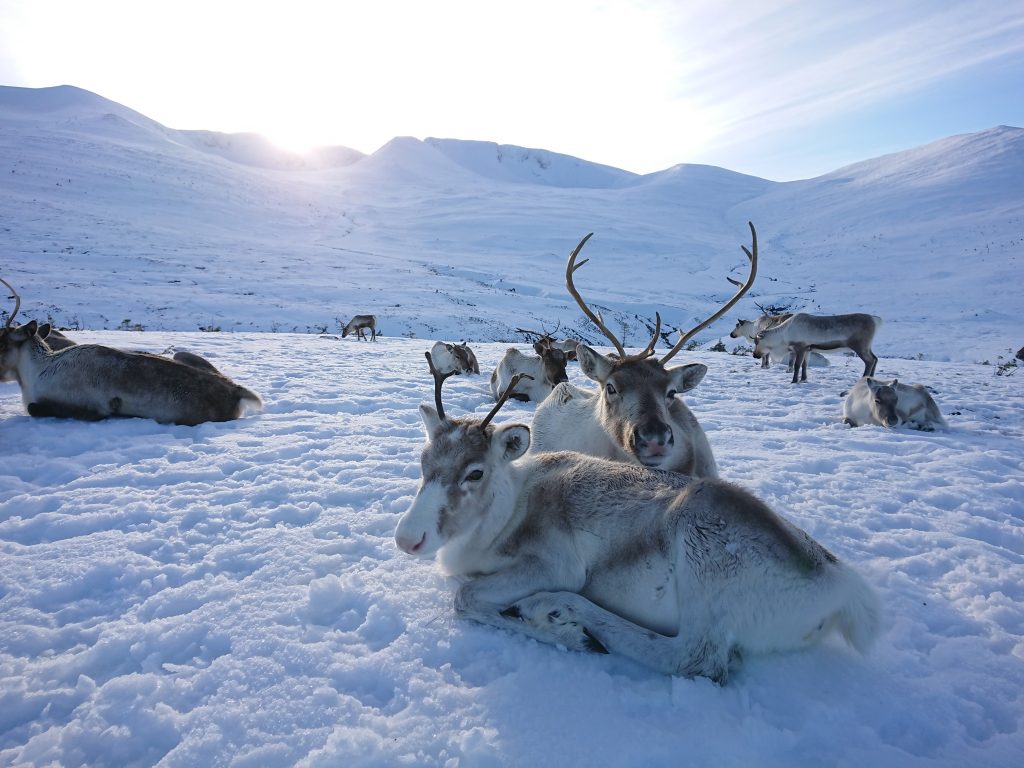
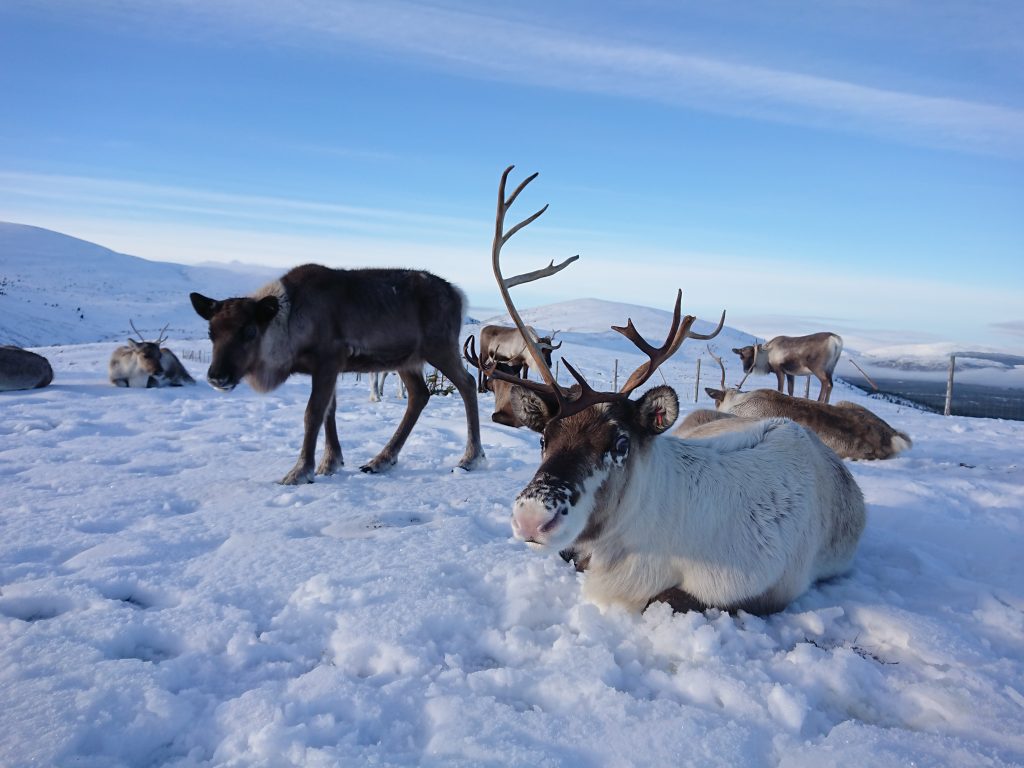
Don’t you ever wish you could just lie down and take a snooze if things are taking too long?? With their thick coats, that’s exactly what reindeer do – everywhere can be a bed! Here’s some shots of them having a snooze in the snow a few weeks ago…

Old lass Fonn and young Lima

Hi Lima!

Kernel, Cicero and his mum Brie

Wee Chickpea

Emmental with her calf Edamame

Butter with his mum Gloriana

Addax and her calf Hemp

Haricot

Emmental and her calf Edamame

Christie

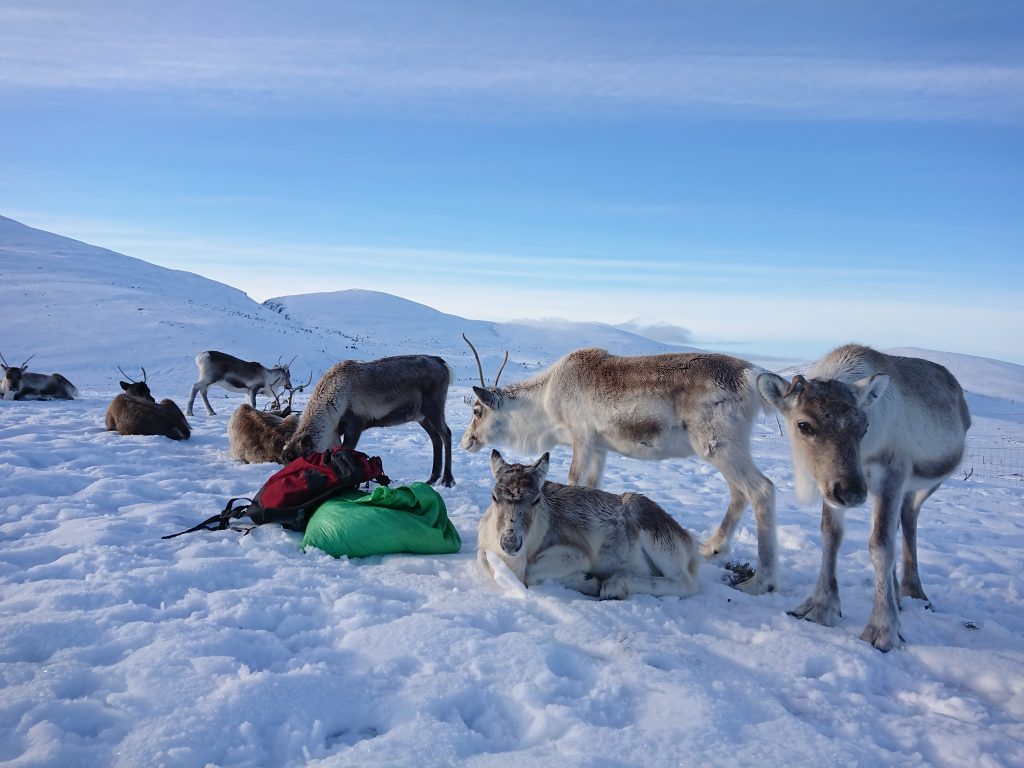
Guardians of the bag – Pumpkin, Ärta and Heinz, with Holy Moley lying down

Andi

Jokkmokk Winter Market

Back when everything felt much more ‘normal’ in February 2020 four of us from the Reindeer Centre went to the celebration of all things Sámi , the ‘Jokkmokk Winter Market’ in Arctic Sweden. It is held in the first weekend of February every year, and apart from world-class Sámi art, culture and handicraft, visitors are usually greeted by proper, cold winter weather.

Olly, Joe and myself at the market last year

Jokkmokk’s Market begins on the first Thursday of February every year. Situated just north of the Polar Circle and with a population a little over 2,000, the small town of Jokkmokk is a tranquil gem on the border of Laponia, the only combined nature and cultural heritage site in Scandinavia. Jokkmokk’s Market was first held in 1605, some 400 years ago, originally purely as a place to trade and meet. The Sámi people met to trade goods, to socialise, and possibly to get a bit tipsy too. At least they’d arrive in their party clothes! The market was created following a request from King Karl XI, who sought to exert control over trading in Lappmarken in order to collect taxes for the Kingdom. To make everything easier to control and run smoother, they organised the market during the coldest time of the year. People had to stay near the houses to keep warm. You might think this sounds like pure fiction, but the fact is that the Swedish state wanted to create a market for economic reasons – money was needed for all the wars the king was involved in down in Europe. And in that way, Jokkmokk got a market in the middle of the freezing cold.

Joe admiring Sámi knives at a stall

Plenty of reindeer antlers for sale!

At a quick glance, as you zigzag between stands selling sweets, t-shirts, knitted socks, doughnuts, there is little to differentiate the market here in Jokkmokk from just about any other market in Sweden. But if you look further than the muddle of seemingly pointless things you will find the genuine and the real. Much of the handicraft, art and jewellery are created in materials derived from the reindeer, such as hides and antlers. It’s an intriguing fusion of traditional Sámi styles and new, modern influences.

Reindeer racing always draws a big crowd

At Jokkmokk’s Market, there’s no mistaking that reindeer are a fundamental part of Sámi culture – they have been an integral part of Sámi life for thousands of years, from winter and summer pastures, from coastal regions to mountain terrain. Throughout history, reindeer have provided humans with food, clothing and materials for functional items, while in past times they were also used to transport everything imaginable between settlements.

For over 50 years, Per Kuhmunen has been walking his reindeer as a daily feature at Jokkmokk’s Market.

It’s not unusual for temperatures to plummet below the –30 degree mark. To get the most out of your market experience, it’s important to have the right clothing – multiple layers of warm materials such as wool, or other functional fabrics, covered by a heavy-duty down jacket, and a sturdy pair of winter boots. Add a fur cap and the warmest gloves you can find, and you’re all set!

Frosty beard men!

Jokkmokk’s Market is an annual highlight, however, this year things have to work a little different and the Jokkmokk Market has to go online… Maybe a little warmer from your kitchen table or living room than walking the streets themselves, though I know I would still prefer to be there in person having experienced the amazing atmosphere this market has to offer, even with cold hands! Learn more by visiting the market’s website and have the opportunity to purchase items from the market – the next best thing to actually being able to visit!

Beautifully carved antler crafts

Colourful gloves

Reindeer wear incredibly colourful harnesses

Mikel Utsi, who re-introduced reindeer into Scotland in the 1950s, originally came from the Jokkmokk area and still to this day when we travel to northern Sweden we stay with his family who are always very welcoming. It helps too if we bring a good bottle of Scottish Whisky! I feel extremely lucky to have visited this market a few times now and I hope this year is the only time it will have to resort to going online as nothing beats being there in person!

John Utsi, Mikel Utsi’s nephew, and his daughter Sofia at my brother Alex’s wedding back in 2013. Both are wearing traditional Sámi dress.

Fiona

Book Now