My top three calving moments…
I’m almost at a complete reindeer year now, having worked through late summer, the rut, Christmas, and free range season, the last for me to complete the set – calving season! I was ready to be inundated with calves everytime I went up the hill each morning, but this May saw a steady trickle of calves, keeping all of us herders on tender hooks for which cows would calve next.
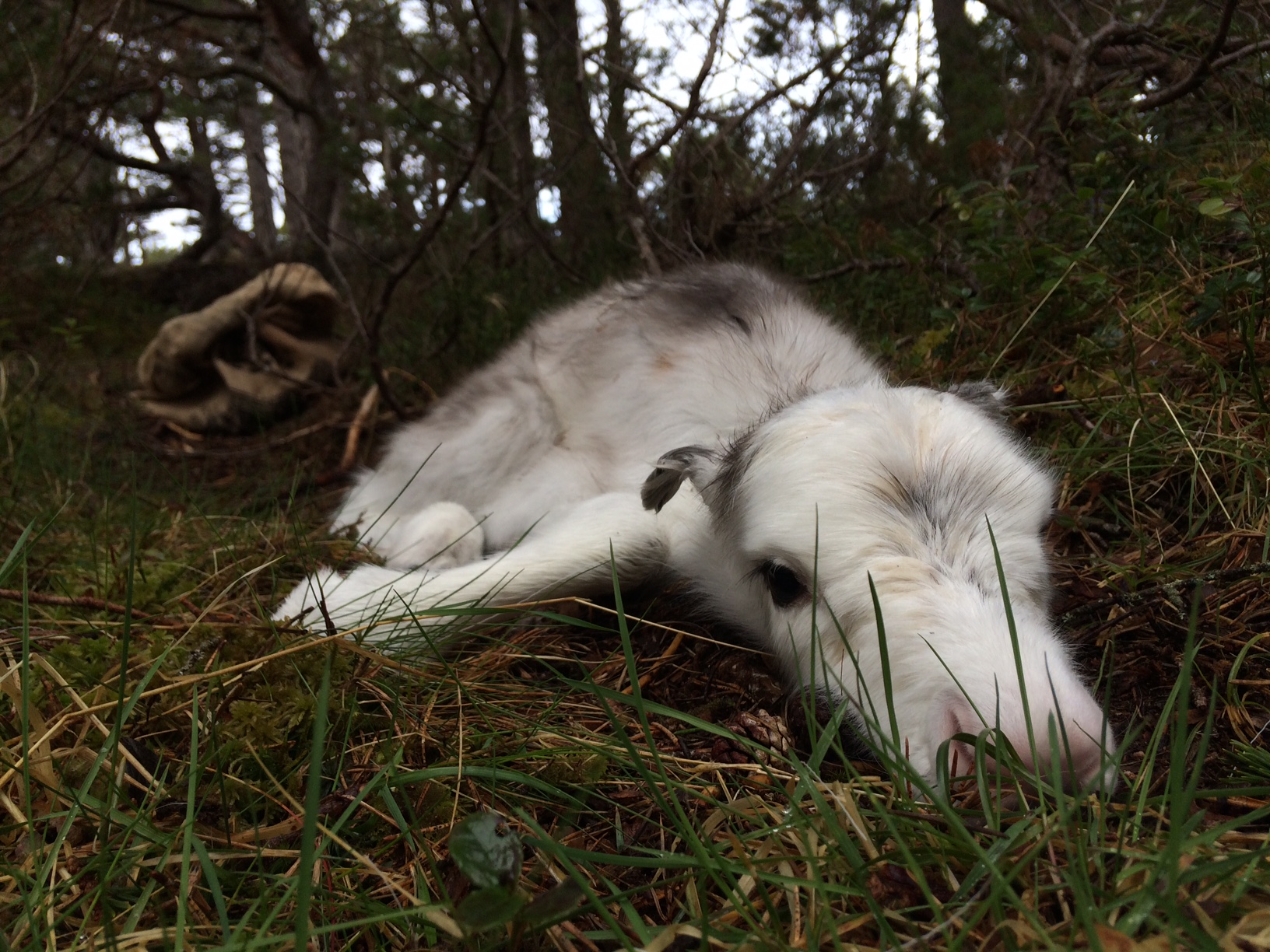
My first trip up the hill at the very start of May left me disappointed to find that no cows had gone off to have their calves overnight. But I didn’t have to wait long for my first calf of my first calving season! (As we wait to let our adopters know which cows have calved this year, I won’t give away any of the wonderful mums at this time, but that doesn’t have to stop us from admiring all their beautiful babies!)
My first calf was a very small female with lovely, what we call ‘normal’ colouring. She did very well following her mum for quite a distance, while Amy, Kate and I gently pushed her from a distance towards the calving pen. The reason we do this is to put all our cows and calves together into a nursery area for the first couple of weeks of the calf’s life. From there they then return to the herd for a week or two before setting out onto the free range as a mini herd of mums and youngsters, set to return from the mountains in autumn.
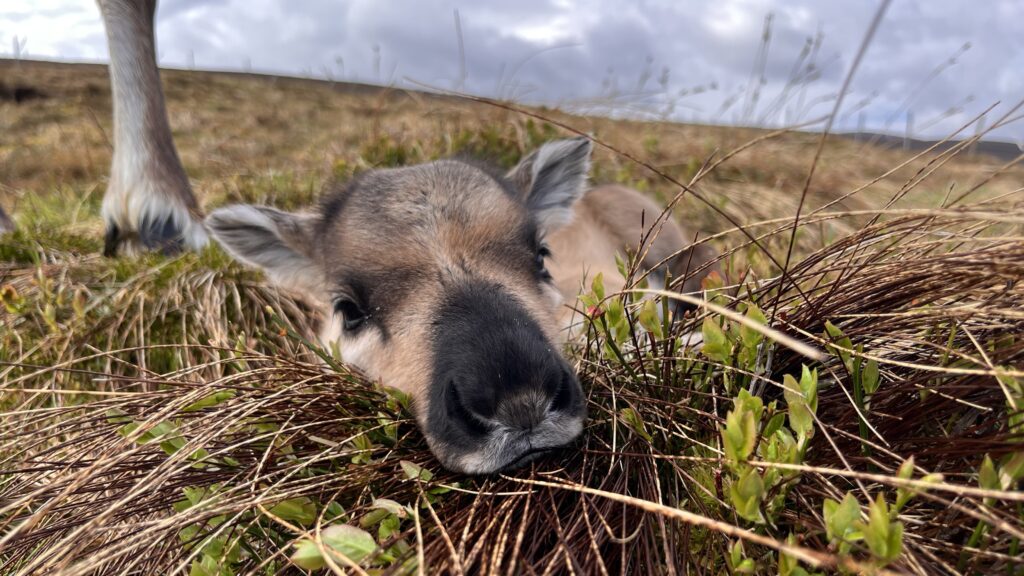
Calf number one of my top three calves this season, made it as far as she could before she flumped down tired into the grass and mum started to graze. Amy was then tasked with the awful responsibility of carefully carrying the calf alongside her mum into the calving pen – what a nightmare…
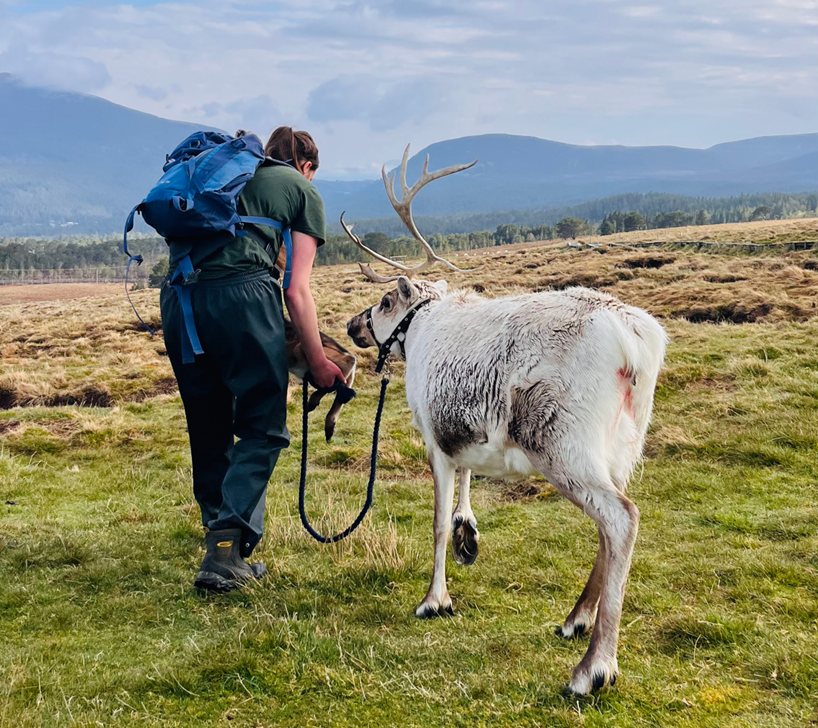
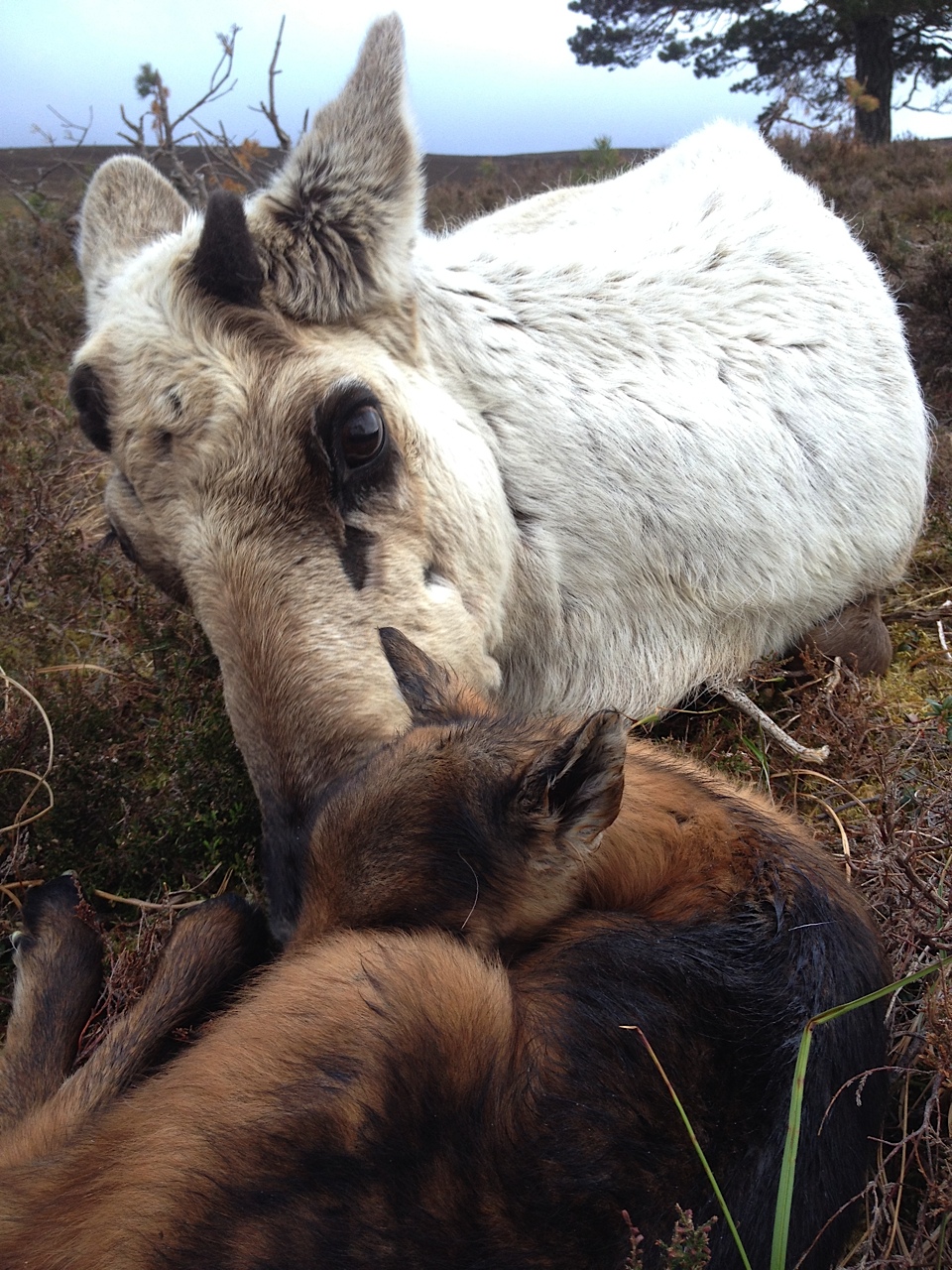
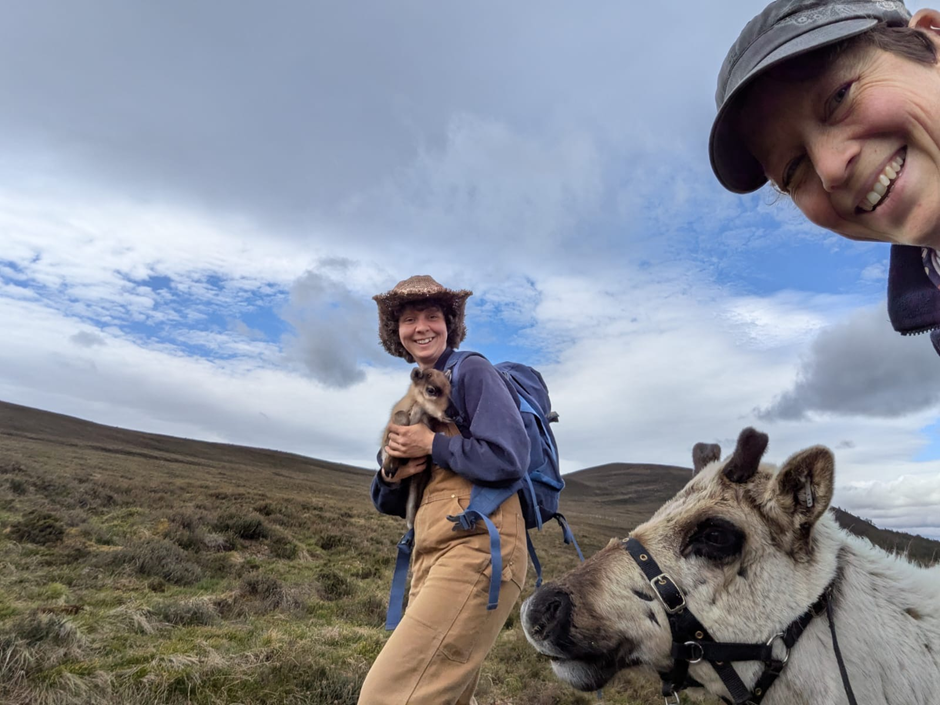
It’s really important when we’re moving the calves like this that we take it slow, allow lots of moments for the mum to be able to nuzzle her calf and for us to keep the calf right next to her. This could be by carrying her slightly in front, next to her face, or it could be by bending right over and carrying the calf by the mum’s back legs. These methods keep the mum calm knowing her baby is right where it should be and the calf can be constantly reassured by smelling, feeling, or hearing its mum.
Once we had got the calf over to the calving pen, we have to treat the calf. We use an antiseptic spray on the remainder of the umbilical cord (which leaves the calves bright blue), and we treat the calves with spot on, giving them protection straight away from the ticks that can be found on the hillsides. While Amy treated the calf, I held her close by mum before we put them both in with the other cows and calves that were mere days older than this one.
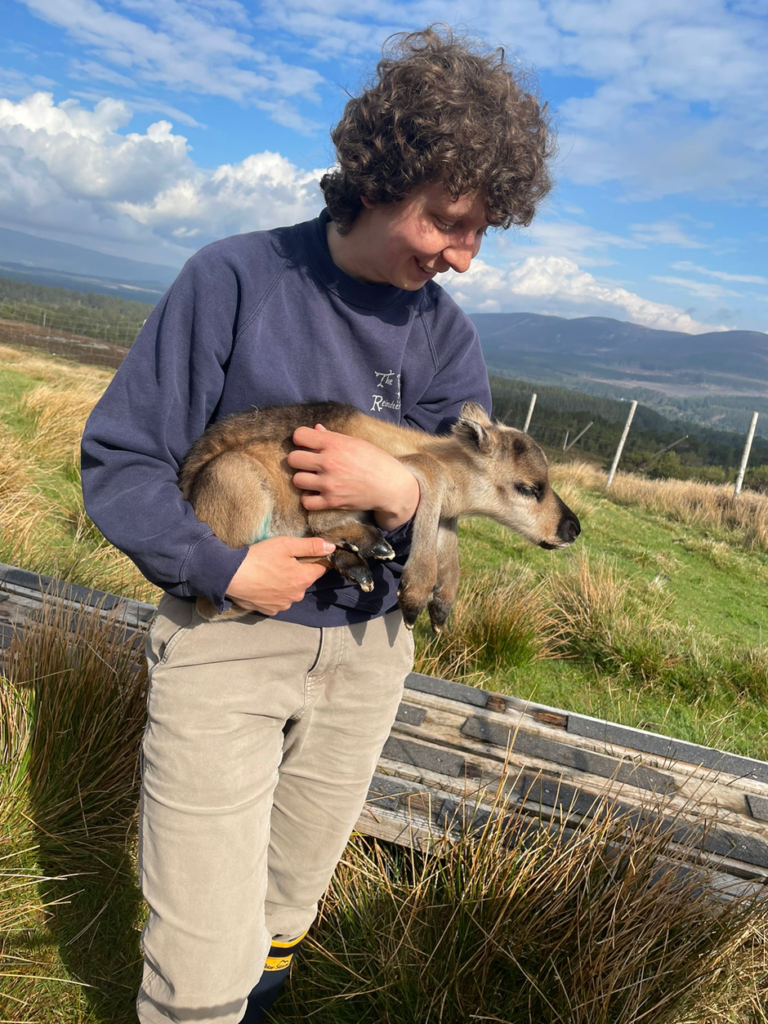
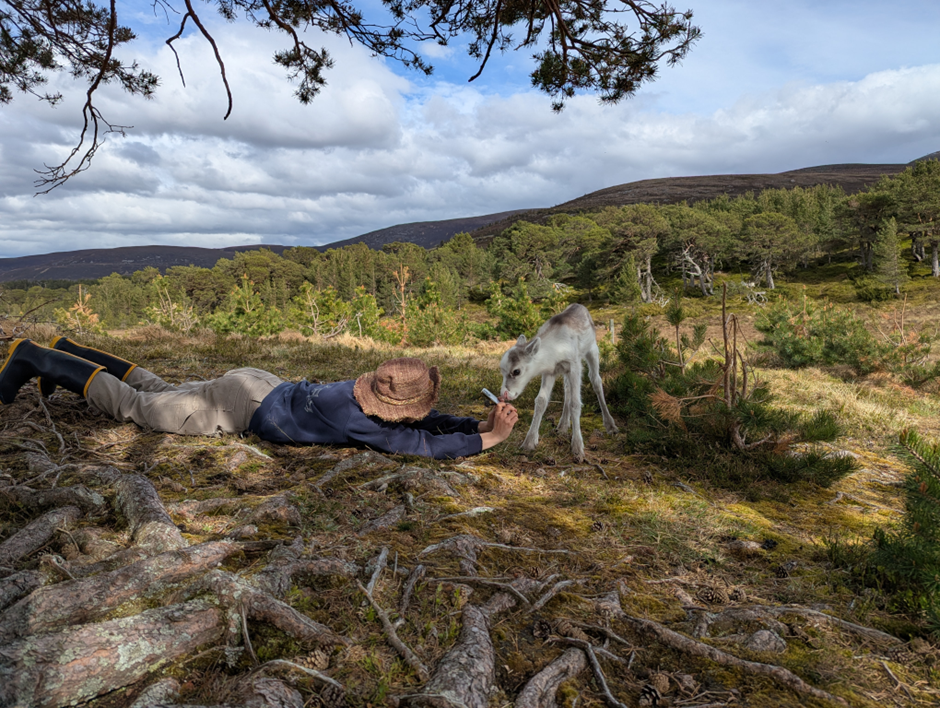
With the excitement of finding my first calf over, the others started to come in a steady stream. As did the exciting moments up the hill. From hanging out daily with the growing calves – both in size and confidence, to setting out on my own for the first time to find a mother and her new calf in order to treat the calf. Thankfully, my first go of solo catching a calf to treat was one born to a very experienced mother who was very calm while I did everything I needed to. Calf number two was a success and I left mum and baby in a quiet spot with a very large pile of feed and lichen for a well deserving mother.
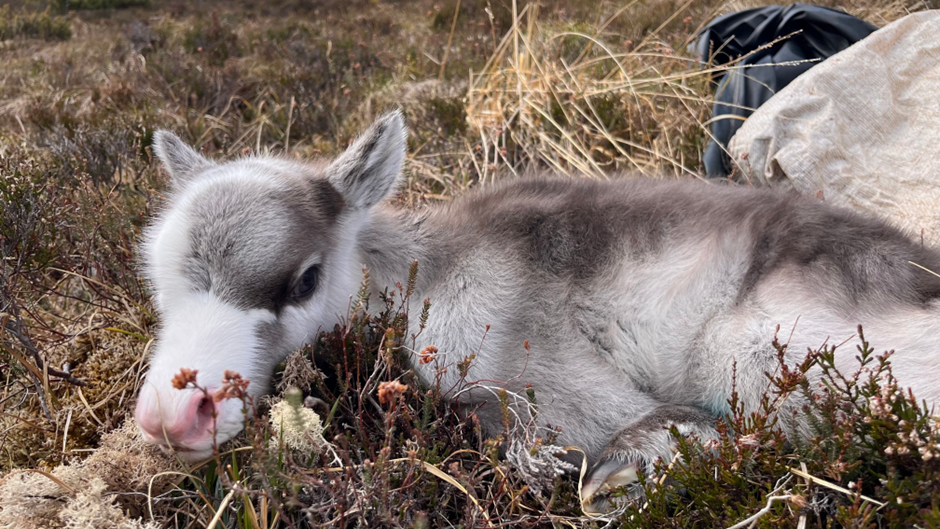
My final top calving moment, and calf number three was my long awaited calving bet!… Every calving season, us herders will all pick a cow we want to back for calving season who hopefully won’t be the last cow to calve. The loser (whose cow is the last to have her calf that year) has to bake a cake for the many victors for calf naming night later in the year. It had become a running joke how much I didn’t want to bake the cake, and as the calves were born and the days ticked by – the joke was losing its steam and I’d begun planning recipes. But, I was saved at the very last moment, coming in second to last, my chosen reindeer had saved me from the jaws of baking and a wonderful female calf joined the herd! (Cue the celebration…)
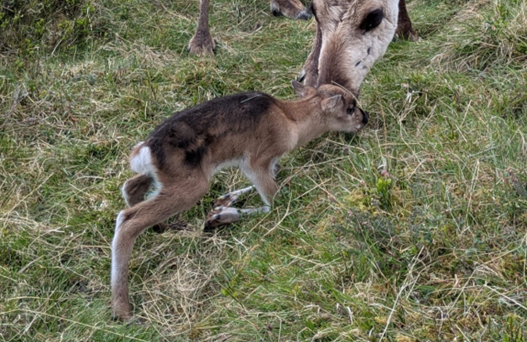
The next day after she was born and had been treated, it was time to bring mum and my saviour into the calving pen, so I set out following Andi across the enclosure to track down mum and calf and hopefully push them in. They had quite a walk to move them across the hill and it was pretty clear right from the first few steps that the calf was going to struggle to move through all the deep heather that mum had settled them both in. So, incoming that awful task that no one wants to do… I volunteered as tribute to carry lucky calf number three across the enclosure.
The walk took quite a while and required a lot of stopping to let the mum lick her calf’s face and to check on her. The calf was very relaxed and sleepy for the entire walk, but like any animal, they’re all different and need different allowances, and this particular female can be quite… grumpy is probably the best word. So we kept them close together and made sure that mum was in control. Finally we made it to the calving pen and they joined the nursery herd, much to the cow’s delight – nursery pen meant lots of lichen!
So, as June starts, calving season comes to an end and it’ll soon be time to walk the cows and calves out onto the free range. Having had the oppertunity to help with that in the start of June last year as a volunteer, it feels like a full circle moment. Maybe I can ditch the ‘L’ plates now…
Daisy