Reindeer Around the World: Caribou

Welcome back to the final installment of Reindeer Around the World! For the last blog in the series we’re travelling west to look at the four subspecies of Caribou that cover Canada, Greenland and a few northern states and Alaska of the USA. So firstly, are caribou and reindeer the same animal? Short answer, yes. Long answer, no, they’re not.

The caribou: similar in nearly everyway to the Eurasian tundra and forest reindeer.

In North America, the reindeer populations are seen as two difference categories of animals: semi domesticated = reindeer, and wild = caribou. But from an ecological stand point, the caribou are broken down into four subspecies:

  • Peary Caribou Rangifer tarandus pearyi
  • Woodland Caribou Rangifer tarandus caribou
  • Porcupine (or Grant’s) Caribou Rangifer tarandus granti
  • Barren – Ground Caribou Rangifer tarandus groenlandicus
The four subspecies of caribou (reindeer).

You’ll notice the similarity in scientific name with the European subspecies of reindeer we’ve previously looked at, confirming they are the same species, but each have slight differences. So, what makes each subspecies of caribou different to each other, and to the reindeer we know and love here in Scotland.

Population map of the four subspecies of caribou and smaller herd populations throughout North America. (Map credit: Cephas)

The Porcupine caribou closely resembles the barren-ground caribou, covering similar landscapes in the northern most territories seen on the above map. They cover a calving ground based on a river system including the Porcupine River – hence the name. They have a darker colouration to them, but their environmental adaptations and ecosystem role are what we’re familiar with throughout the other subspecies of reindeer we’ve been looking into.

Herd of porcupine caribou crossing a river (photo credit: Animalia.bio).

The woodland caribou is again very similar to what we imagine when we picture our tundra reindeer here at home. Adaptations for sub arctic habitats, dealing with deep snow and harsh temperatures, keeping on the move and fulfilling the same ecosystem role. The differences we know of with the woodland caribou are more to do with diet, it seems, than anything else. Inhabitating a lot of areas of old growth forest and smaller herds found in different rugid mountain ranges further south than any of the other populations, they have different species of fauna available to them to feed off. The woodland caribou feed almost exclusively from aboreal lichens for the colder half of the year, followed by dried grasses and some tree species throughout the warmer months.

An example of aboreal lichen, growing along the bark of a tree as opposed to carpets of lichen on the ground. These types of lichen are found at a lower altitude than the rocky mountainous ranges we expect to find reindeer, where they typically live above treelines amongst far shorter growing vegetation such as grasses and heathers.

The Peary caribou are the smallest subspecies of caribou and are found in much smaller herds than any other. During winter time you are most likely only going to find up to four of them travelling together and this expands to maybe a dozen during the summer months. They feed on similar plant life to the other subspecies, having limited choice due to their sub arctic and arctic home ranges. But unlike the others, they predominantly feed on purple saxifrage which can stain their noses with a purple tint. Their migratory path is not as large as other subspecies of caribou, moving up to 150km between winter and summer home ranges, sometimes between islands (seen on the map above as number 6). Similarly to the others they are ready for anything winter can throw at them, but do choose to avoid areas of very deep and heavy snow, retreating instead to rocky mountainous outcroppings and beached areas.

Can you spot the Peary caribou? (Photo credit: Animalia.bio.)

Finally, the last animal on our list to discuss… The barren-ground caribou. Maybe the best to last if that’s fair to say. Let’s meet the animal with the largest ground migratory path in the world! You heard that right, a bigger migration even than the wildebeest in the Serengeti. They migrate twice a year between summer and winter ranges with each journey potentially covering more than 1,000 km depending on the location of their calving grounds. They use higher spots for calving grounds, out of reach of predators such as the wolf, then descend to lower ground and migrate in large herds to areas for summer grazing. Their winter diet consits of some grasses, lichen and leaves from low growth trees. They share their other qualities and adaptations with the other subspecies of caribou, making them efficent at moving and feeding through shallow snow and coping with cold temperatures found in arctic regions.

Barren-ground caribou grazing.

And there we have it – we’ve learnt all about the different subspecies of reindeer all across the globe! Thanks for sticking with me, and I hope you’ve all enjoyed reading this blog series as much as I’ve enjoyed researching it. I feel it’s important to say there are other indivdual named herds that I haven’t covered, but to learn about the different adaptations and qualities, I think we’ve got all bases covered. Reindeer truly are a remarkable and wonderful animal, with clearly a lot more to them as a species than we may first realise.

Daisy

Further reading:

animalia.bio/porcupine-caribou

https://wdfw.wa.gov/species-habitats/species/rangifer-tarandus – desc-range

https://www.gov.nu.ca/sites/default/files/publications/2022-01/Peary%20Caribou.pdf

https://wwf.ca/species/caribou/

https://cpawsnwt.org/barren-ground-caribou/

Reindeer as a Species

On our kids quiz in the Paddocks is the question ‘Name a sub-species of reindeer’, and I notice it’s often the one that people get stuck at (despite the fact that the answers are there on the display boards). I’ve realised over the years however, that this is often down to a basis lack of understanding of a percentage of the population of the concept of species and sub-species, rather than anything else. So therefore, allow me to explain.

As a zoology student (all too many years ago, so bear with me if my science is rusty), the classification of all organic species using a system of ‘taxonomic rank’ was drilled into us. The system still in use today was founded by Swedish botanist Carl Linnaeus in the 16th Century and brought order and clarity to the then chaotic and disorganised way of naming and categorizing all types of life. No wonder I loved learning about taxonomy – lists and organisation? My kinda thing.

Carl Linnaeus (1707 – 1778)

The Linnaean system breaks down all living things into 7 major kingdoms, animals being one and plants another, and then each kingdom is broken down further, into different phyla. Then phyla are broken down once more to the next level, which is class, and the system carries on through order; family, genus and finally species. So reindeer can be categorized as such:

Kingdom: Animalia (Common name: Animals)

Phylum: Chordata (Chordates  – meaning ‘possessing a nerve cord’)

Class: Mammalia (Mammals)

Order: Arteriodactyla (Even-toed hooved mammals)

Family: Cervidae (the Deer family)

Genus: Rangifer

Species: tarandus
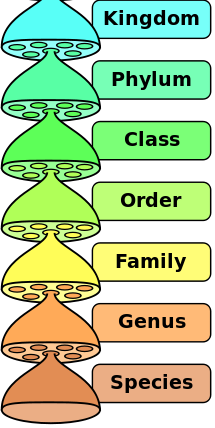
 

Biological classification chart

The two part ‘binomial’ name Rangifer tarandus is perhaps more commonly known as a ‘Latin name’, and every species in the world has one. You will be familiar with ours as Homo sapiens, and like humans, reindeer are the only species within their genus, Rangifer. A regular question from visitors is ‘So….how are reindeer different from deer?’ Bizarrely, it can be quite hard explaining to people that reindeer are deer. My usual analogy is to get people to think about lions and tigers. Both obviously cats, so therefore members of the cat family (‘Felidae’), but at the same time both clearly different species from each other. So while reindeer are a member of the deer family, they are a different species from other types of deer. For example, moose, red deer and muntjac – all clearly distinguishable in looks from one another, but crucially also genetically different.

But then, as with most things, it all gets a little more complicated. Not content with 7 major divisions, scientists introduced sub-divisions in order to break down everything further. So now there are, among others, sub-classes, sub-families, sub-genera etc. Arghh! While Rangifer has no sub-genus, there are some subspecies to contend with, and this is the relevant info that we hope people will track down in our Paddocks. All seven subspecies of reindeer and caribou are all still Rangifer tarandus, so effectively all genetically the same animal, but a subspecies is shown by adding a third name after the binomial. Just to clarify too, reindeer and caribou are the same animal, but reindeer are the domesticated version of caribou. The differences are also geographical, in that reindeer are found in Europe and Asia, while caribou are found in North America and Greenland.

So back to our seven subspecies. We have:

Eurasian Tundra reindeer (Rangifer tarandus tarandus): Open-ground dwelling subspecies, which the majority of all domesticated reindeer belong to, including ours.
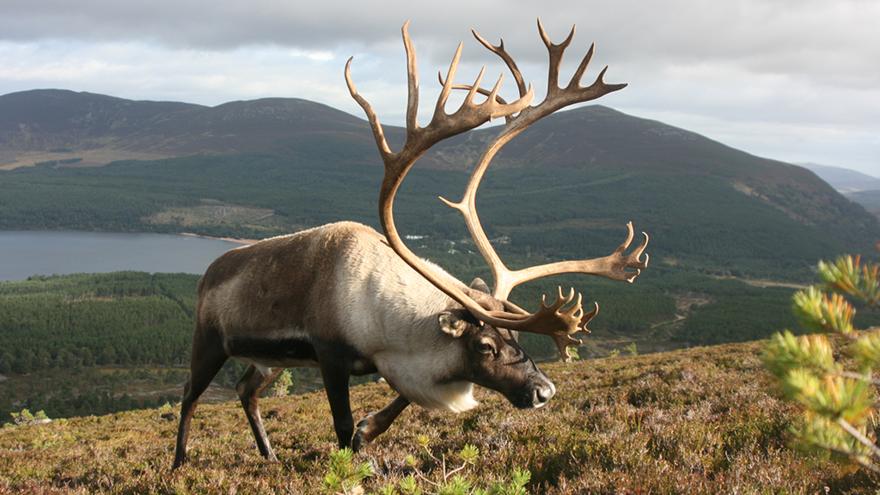
Our big bull Crann, a ‘tundra reindeer’

Eurasian Forest reindeer (Rangifer tarandus fennicus): Boreal forest dwelling subspecies, typically taller than tundra reindeer.
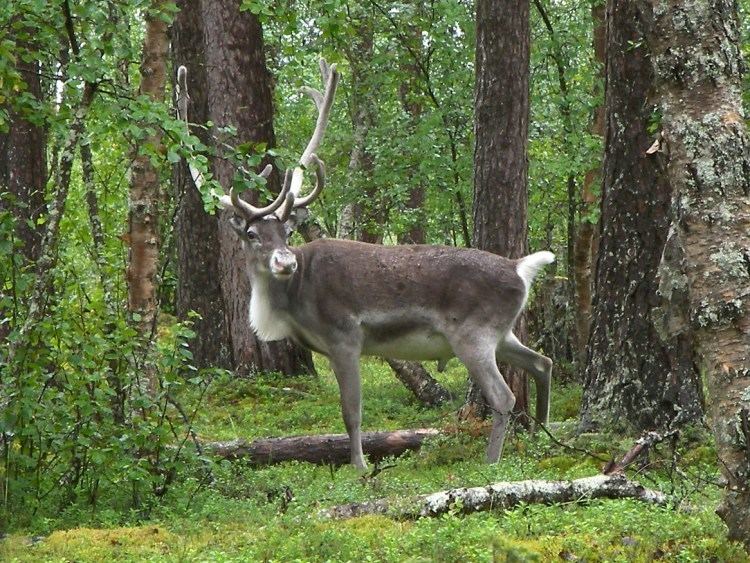
Forest reindeer

Svalbard reindeer (Rangifer tarandus platyrhynchus): Smallest subspecies, endemic to the arctic archipelago of the Svalbard islands. Short legged!
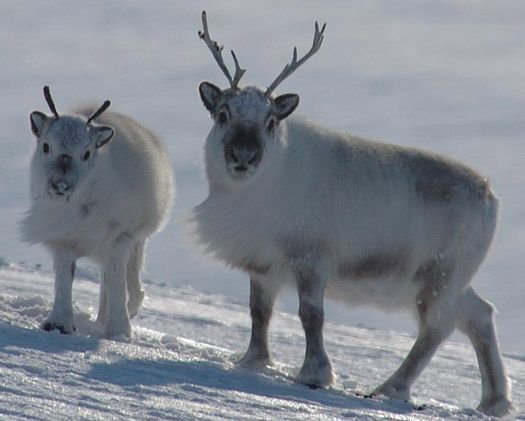
Svalbard reindeer

Barren-ground caribou (Rangifer tarandus groenlandicus): Migratory subspecies of open ground. The most similar of the caribous to our tundra reindeer.
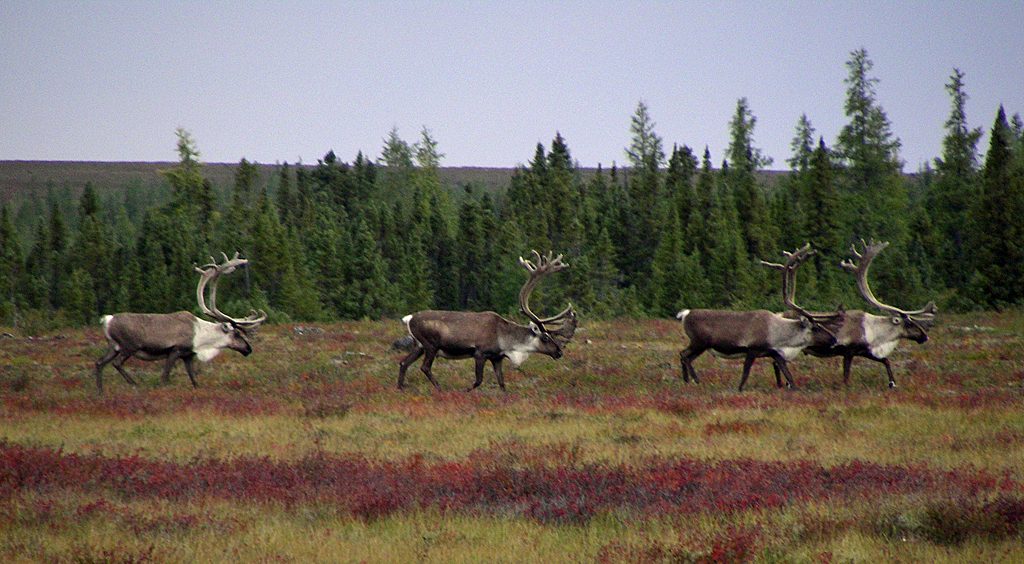
Barren-ground caribou

North American woodland caribou (Rangifer tarandus caribou): Largest caribou subspecies, often darker in colour. As the name suggests, they live in forests, and generally don’t migrate.
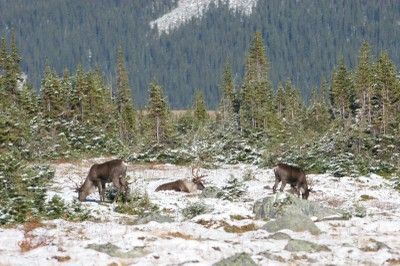
Woodland caribou Copyright Paul Sutherland

Peary caribou (Rangifer tarandus pearyi): Smallest of the caribou subspecies.
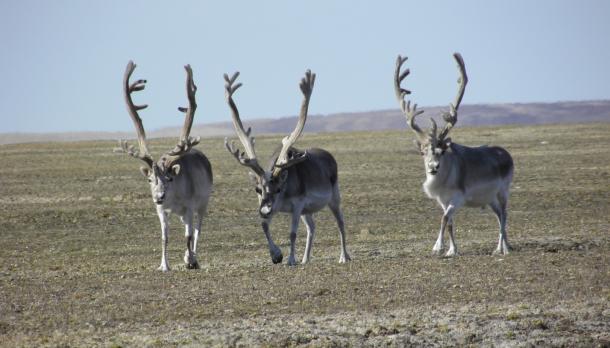
Peary Caribou Copyright Trent University 

Alaskan or Porcupine caribou (Rangifer tarandus granti): Migratory subspecies most closely resembling the barren-ground caribou, and named after the Porcupine river, which runs through much of their range. The longest migrating land mammal on Earth.
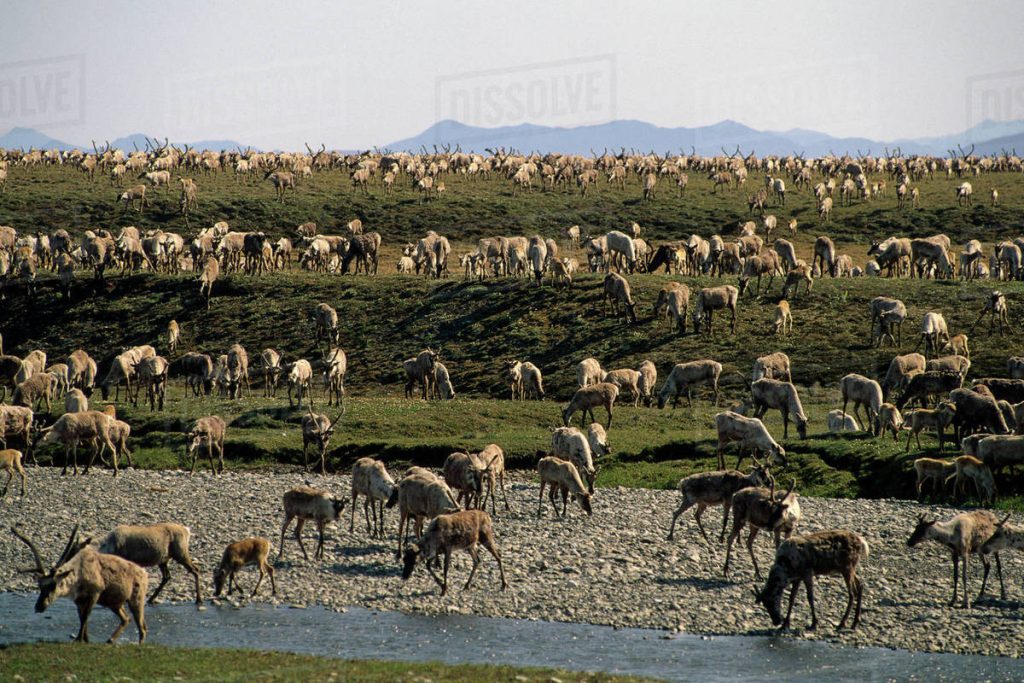
Porcupine caribou

There have been two other subspecies in the past but these have now died out – the East Greenland Caribou and the Queen Charlotte Island Caribou.

So there you go, a brief taxonomy lesson, and congratulations to anyone who has stuck with me, as well as apologies for some slight over-simplifications for any scientists amongst you. Hopefully you’ll have all learnt something though – I’m a big believer of sneaking in educational blogs among the pretty pictures and funny stories we often post! And if it’s all too much and you’d just prefer something a bit more light-hearted, head off and google pictures of Svalbard reindeer. You’ll not be disappointed.

Hen

Book Now