Reindeer Around the World: Caribou

Welcome back to the final installment of Reindeer Around the World! For the last blog in the series we’re travelling west to look at the four subspecies of Caribou that cover Canada, Greenland and a few northern states and Alaska of the USA. So firstly, are caribou and reindeer the same animal? Short answer, yes. Long answer, no, they’re not.
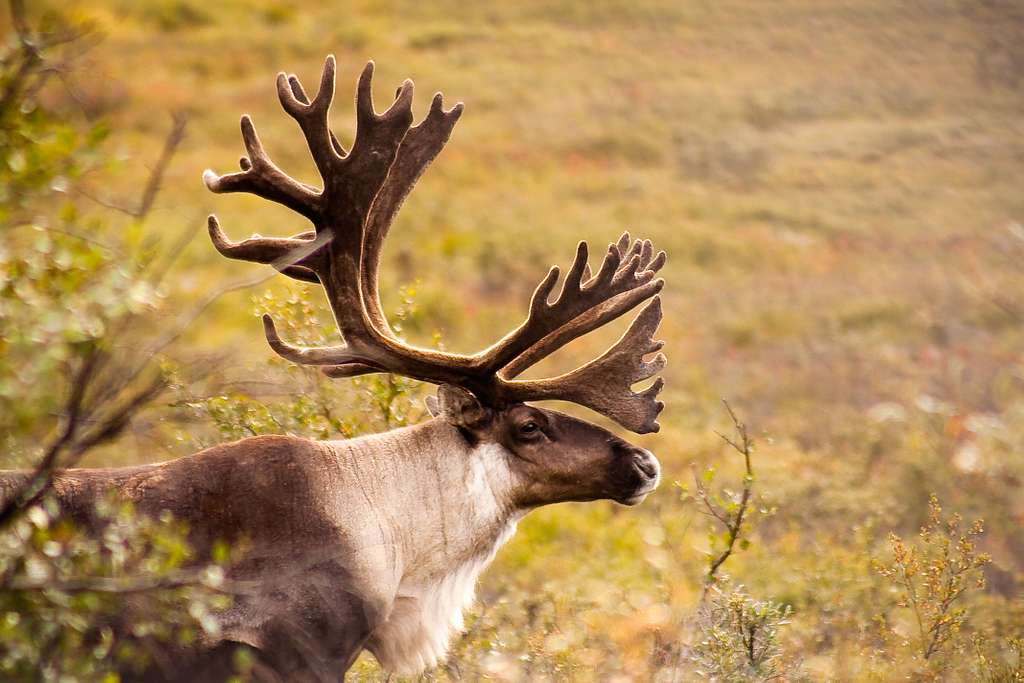
The caribou: similar in nearly everyway to the Eurasian tundra and forest reindeer.

In North America, the reindeer populations are seen as two difference categories of animals: semi domesticated = reindeer, and wild = caribou. But from an ecological stand point, the caribou are broken down into four subspecies:

  • Peary Caribou Rangifer tarandus pearyi
  • Woodland Caribou Rangifer tarandus caribou
  • Porcupine (or Grant’s) Caribou Rangifer tarandus granti
  • Barren – Ground Caribou Rangifer tarandus groenlandicus
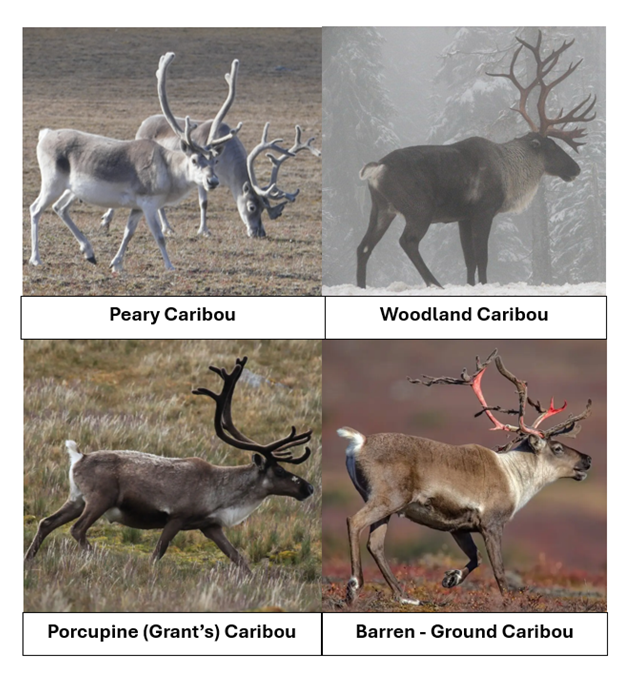
The four subspecies of caribou (reindeer).

You’ll notice the similarity in scientific name with the European subspecies of reindeer we’ve previously looked at, confirming they are the same species, but each have slight differences. So, what makes each subspecies of caribou different to each other, and to the reindeer we know and love here in Scotland.
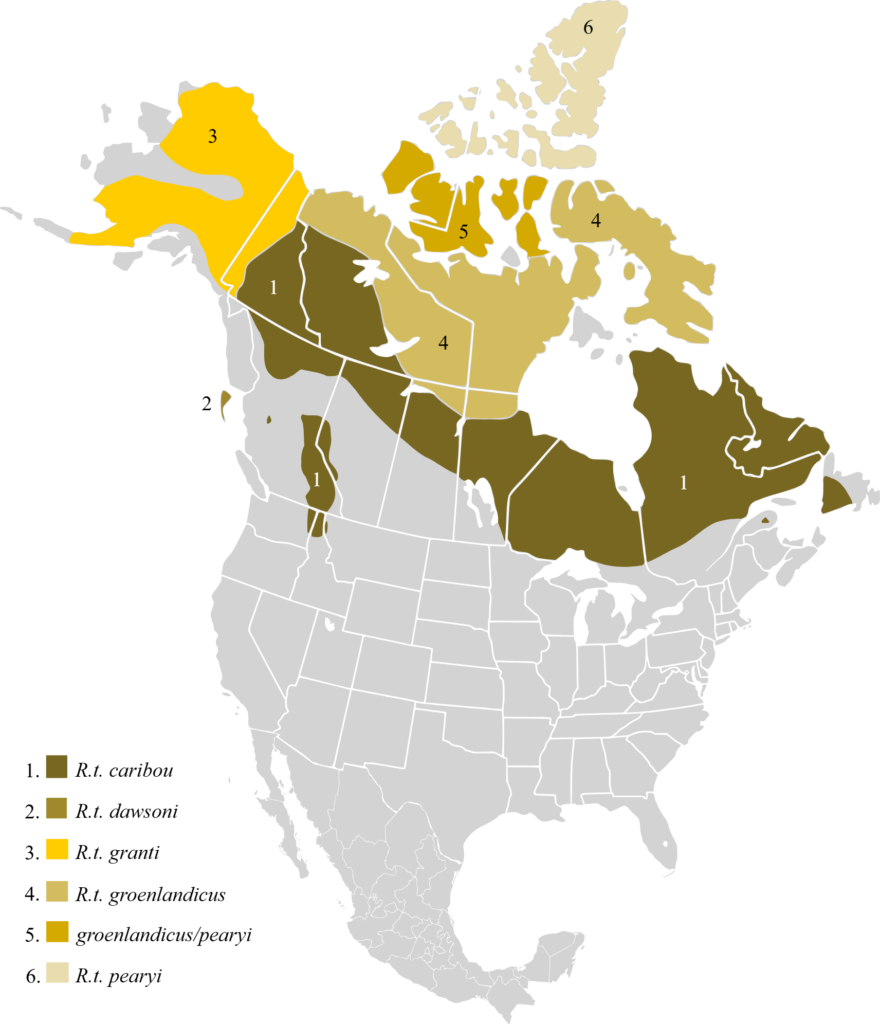
Population map of the four subspecies of caribou and smaller herd populations throughout North America. (Map credit: Cephas)

The Porcupine caribou closely resembles the barren-ground caribou, covering similar landscapes in the northern most territories seen on the above map. They cover a calving ground based on a river system including the Porcupine River – hence the name. They have a darker colouration to them, but their environmental adaptations and ecosystem role are what we’re familiar with throughout the other subspecies of reindeer we’ve been looking into.
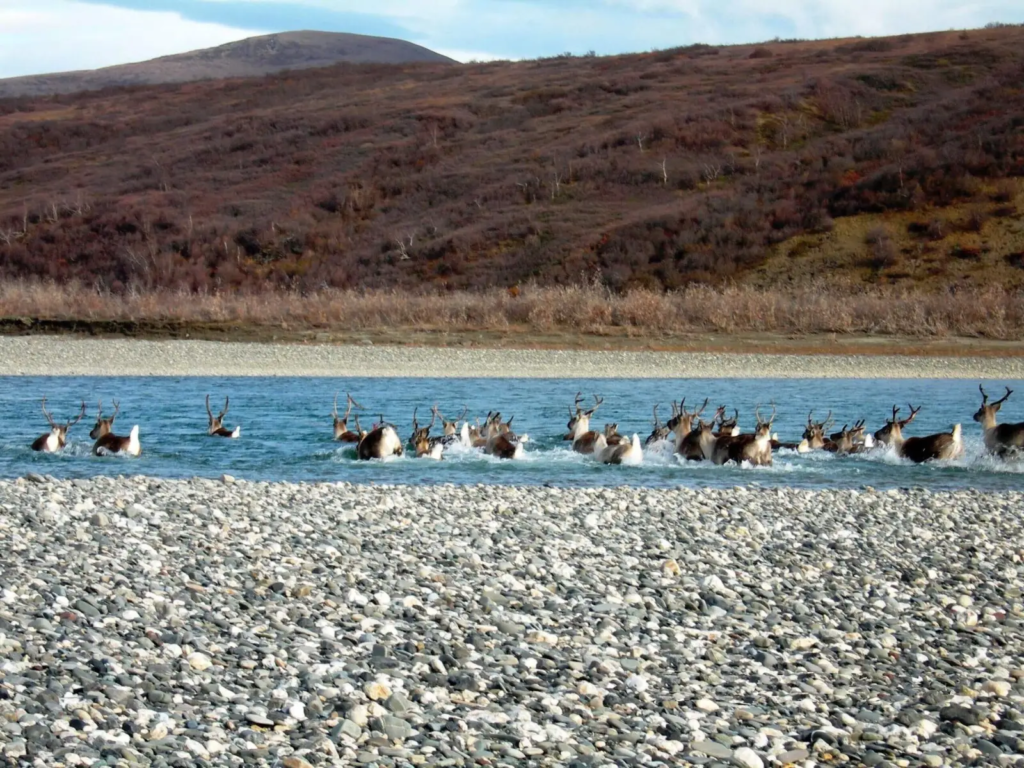
Herd of porcupine caribou crossing a river (photo credit: Animalia.bio).

The woodland caribou is again very similar to what we imagine when we picture our tundra reindeer here at home. Adaptations for sub arctic habitats, dealing with deep snow and harsh temperatures, keeping on the move and fulfilling the same ecosystem role. The differences we know of with the woodland caribou are more to do with diet, it seems, than anything else. Inhabitating a lot of areas of old growth forest and smaller herds found in different rugid mountain ranges further south than any of the other populations, they have different species of fauna available to them to feed off. The woodland caribou feed almost exclusively from aboreal lichens for the colder half of the year, followed by dried grasses and some tree species throughout the warmer months.
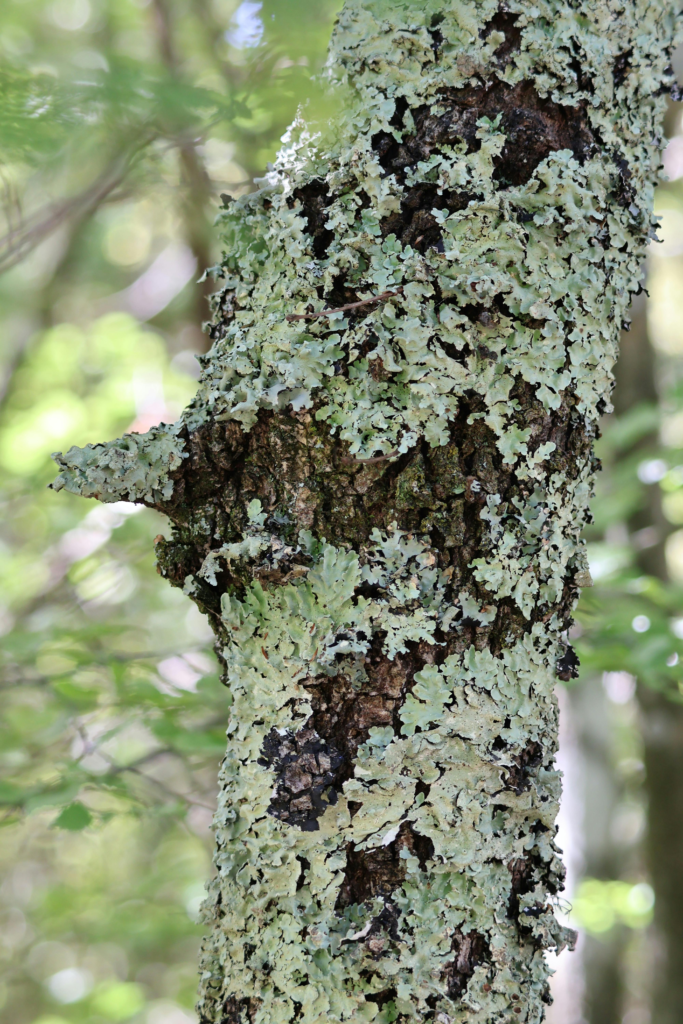
An example of aboreal lichen, growing along the bark of a tree as opposed to carpets of lichen on the ground. These types of lichen are found at a lower altitude than the rocky mountainous ranges we expect to find reindeer, where they typically live above treelines amongst far shorter growing vegetation such as grasses and heathers.

The Peary caribou are the smallest subspecies of caribou and are found in much smaller herds than any other. During winter time you are most likely only going to find up to four of them travelling together and this expands to maybe a dozen during the summer months. They feed on similar plant life to the other subspecies, having limited choice due to their sub arctic and arctic home ranges. But unlike the others, they predominantly feed on purple saxifrage which can stain their noses with a purple tint. Their migratory path is not as large as other subspecies of caribou, moving up to 150km between winter and summer home ranges, sometimes between islands (seen on the map above as number 6). Similarly to the others they are ready for anything winter can throw at them, but do choose to avoid areas of very deep and heavy snow, retreating instead to rocky mountainous outcroppings and beached areas.
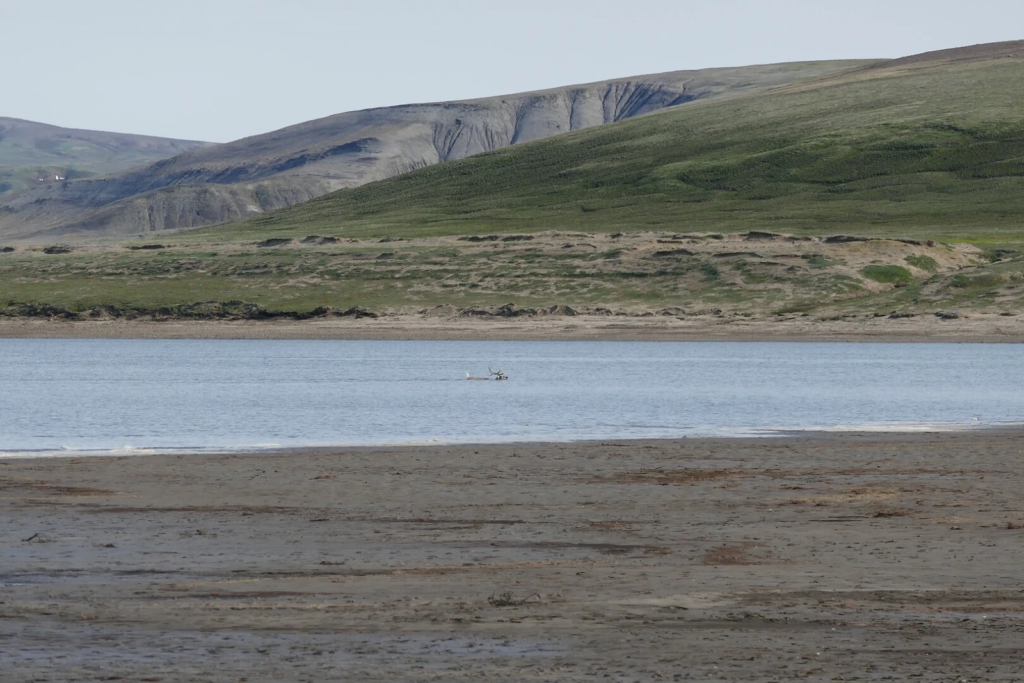
Can you spot the Peary caribou? (Photo credit: Animalia.bio.)

Finally, the last animal on our list to discuss… The barren-ground caribou. Maybe the best to last if that’s fair to say. Let’s meet the animal with the largest ground migratory path in the world! You heard that right, a bigger migration even than the wildebeest in the Serengeti. They migrate twice a year between summer and winter ranges with each journey potentially covering more than 1,000 km depending on the location of their calving grounds. They use higher spots for calving grounds, out of reach of predators such as the wolf, then descend to lower ground and migrate in large herds to areas for summer grazing. Their winter diet consits of some grasses, lichen and leaves from low growth trees. They share their other qualities and adaptations with the other subspecies of caribou, making them efficent at moving and feeding through shallow snow and coping with cold temperatures found in arctic regions.
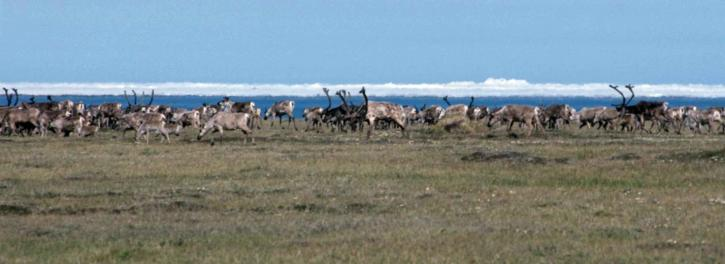
Barren-ground caribou grazing.

And there we have it – we’ve learnt all about the different subspecies of reindeer all across the globe! Thanks for sticking with me, and I hope you’ve all enjoyed reading this blog series as much as I’ve enjoyed researching it. I feel it’s important to say there are other indivdual named herds that I haven’t covered, but to learn about the different adaptations and qualities, I think we’ve got all bases covered. Reindeer truly are a remarkable and wonderful animal, with clearly a lot more to them as a species than we may first realise.

Daisy

Further reading:

animalia.bio/porcupine-caribou

https://wdfw.wa.gov/species-habitats/species/rangifer-tarandus – desc-range

https://www.gov.nu.ca/sites/default/files/publications/2022-01/Peary%20Caribou.pdf

https://wwf.ca/species/caribou/

https://cpawsnwt.org/barren-ground-caribou/

Reindeer, Roe or Red: How to recognise your British deer

Although there are only seven species of deer living wild in the UK, there is often confusion as to which species people have seen, not helped by the fact that usually there is only a fleeting glimpse of a fast-moving rump disappearing into the trees! In this week’s blog, I hope to demystify the issue and perhaps raise your curiosity so you keep a closer look-out for your local deer. So from largest to smallest, here are the species to look out for…

Red deer (Cervus elaphus)
Height (shoulder): 110-150cm

Red deer
Red deer (Photo by Rexness used under CC 2.0)

Our largest species of deer, and in fact our largest land animal, is the red deer. Named for their beautiful reddish brown summer coats, red deer are native to the UK and are a herd animal preferring to live in woodland with open rides. However, as humans have altered the countryside over the centuries, they have adapted to living on moors and heaths, though the red deer of the Scottish highlands rarely grow as big as their cousins in the lowlands. Red deer are found across the UK, and are best recognised by the combination of their large size (they are big!), their buff rump and short tail. They’re also likely to be seen in herds rather than on their own.

Reindeer (Rangifer tarandus)
Height (shoulder): 100-140cm

Reindeer bull
Reindeer bull ‘Nulpu’ © Richard Cope

Reindeer are by far the most familiar deer species to me, because this is the species we care for here at the Centre. Reindeer were once found free-ranging across much of the UK, but died out due to the pressures of over-hunting and climate change at least 1000 years ago. Our small herd were reintroduced to the Cairngorms in Scotland in 1952, and around 150 reindeer now roam the mountains here. As the only British deer species to be adapted to Arctic conditions, they are comparatively stocky and dumpy, and tend to carry their heads below the horizontal. Their colour ranges from pure white to almost black – variation caused by thousands of years of domestication – and both males and females grow antlers. For most people, they are an easy candidate to rule out, as they are only found roaming in the Cairngorms in Scotland.

Sika deer (Cervus nippon)
Height (shoulder): 70-120cm

Sika deer
Sika deer (Photo by Arudhio used under CC 2.0)

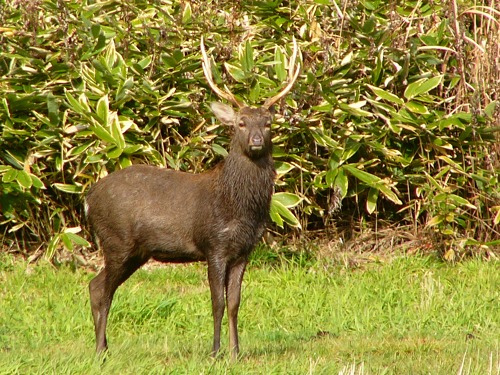
Originally Japanese in origin, Sika deer were introduced to the UK from 1860, and can now be found in patches right across the country, though their stronghold is in north-west Scotland. They are similar in appearance to a red deer at first glance, but are slightly smaller, have a dark dorsal stripe and a much darker brown winter coat. Their heart-shaped rump patch is bright white, compared to the buff colour of a red deer, and for much of the year they are solitary, though they will form small groups of 6-7 in the autumn and winter.

Fallow deer (Dama dama)
Height (shoulder): 70-100cm

Fallow
Fallow deer buck (Photo by Not From Utrecht used under CC 3.0)

The stereotypical “spotty” deer, fallow deer are a common sight grazing in the grounds of stately homes and parkland. There is evidence that fallow once roamed Britain around 400,000 years ago, but today’s population has resulted from escapees from parks. Fallow bucks grow lovely ‘palmate’ (flattened) antlers. The familiar tan “menil” form with white spots is just one of the colours that this variable deer comes in, whilst some individuals are white, some are dark brown with spots that disappear in winter, and some are completely black. The noticeable trait which is the same for all of these colourations is a light coloured rump patch edged with black, with their long tail appearing to split it into two.

Roe deer (Capreolus capreolus)
Height (shoulder): 65-75cm

Roe deer
Roe deer (Photo by JoJo used under CC 3.0)

The dainty roe deer is another of our native deer species, and perhaps the one you are most likely to spot in woodland and gardens right across the UK, with some individuals becoming incredibly tame due to living in close proximity to humans. The species was driven close to extinction in this country in the 1700s due to overhunting. Roe deer are usually seen alone or in small family groups, are a solid brown colour with a small rump patch and don’t have a noticeable tail. They will ‘bark’ if alarmed, which can be mistaken for the yap of a dog.

Chinese water deer (Hydropotes inermis)
Height (shoulder): 50-60cm

Chinese water deer
Chinese water deer (Photo by Nicholls of the Yard used under CC 2.0)

Chinese water deer are a primitive species – instead of growing antlers the males grow tusks which can be seen protruding from their mouths. They were introduced to the UK within the last 150 years and have since become established across the Midlands and East Anglia. As their name suggests, their preferred habitat is fens and wetlands, and they are usually seen alone or in small family groups as they are territorial. The most obvious differences setting Chinese water deer apart are the lack of antlers, large mobile ears and the absence of a rump patch.

Muntjac deer (Muntiacus reevesi)
Height (shoulder): 45-55cm

Muntjac
Muntjac deer (Photo by Nilfanion used under CC 3.0)

The smallest of our deer species was introduced around 1900, and is now well established across most of England. At first glance, it would be easy to mistake a Muntjac for a small dog, or perhaps a large hare, as they tend to have a peculiar hunched stance. Muntjac are usually seen alone or in small family groups, and the males are often heard rather than seen as they bark persistently when rutting. Along with the male’s small antlers, both sexes grow tusks, and as they aren’t seasonal breeders, does can be seen with a fawn at any point of the year. Their tiny stature (think collie-dog size) and hunched posture makes Muntjac easy to distinguish.

So there it is, from the largest to the smallest, the seven species of deer that you may encounter in the UK. Hopefully this has helped make the thought of working out who that disappearing rump belonged to a little less daunting! Keep your eyes open, even in parks and gardens in towns and cities, and perhaps you may be surprised by one of these beautiful animals.

Andi

Book Now