Cairngorms Nature Festival

Yo!

So this blog is a wee bit different, of course there’ll be a wee bit of reindeer chat – what’s a reindeer blog without the reindeer! However, this week we thought we’d plug some of the fab things going on in the Cairngorms next weekend for the Cairngorms Nature Festival – if you’re around get involved as there’s a plethora (a good word I know!) of ace things on offer to see and do for all ages!

Every May, the National Park has a weekend to celebrate all the amazing nature things in the area, and this year it will be running on Saturday 14th and Sunday 15th May. It’s a super way of seeing and learning a wee bit more about the environment here and what makes it special, be it if you’re local or on holiday, get out there and learn something cool!

CNF16POSTERA3

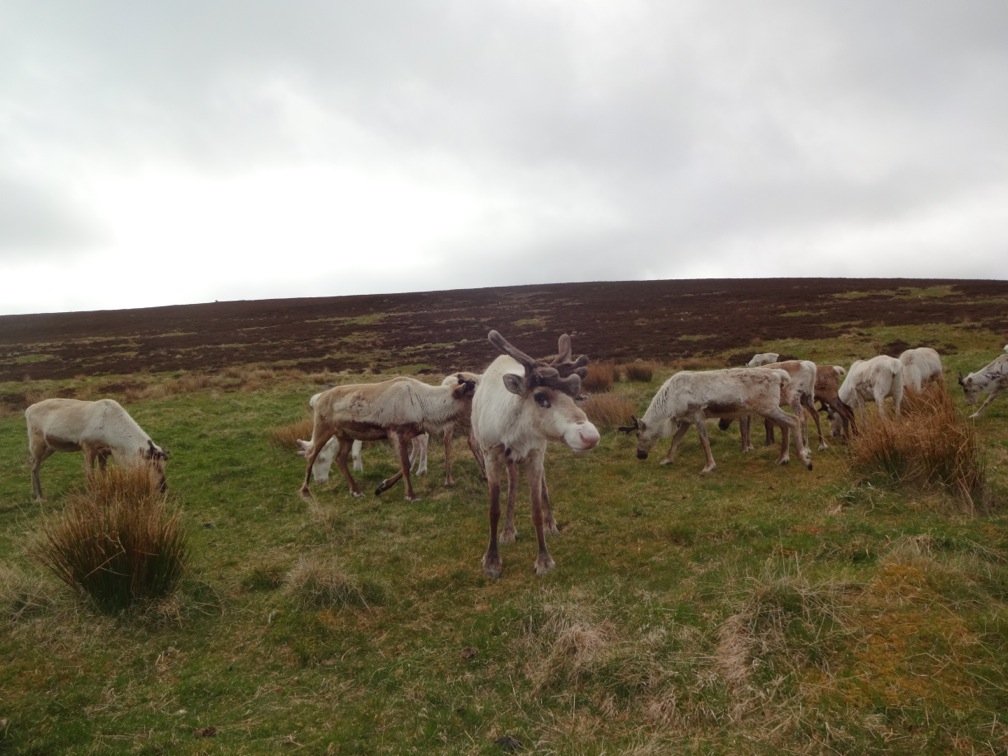
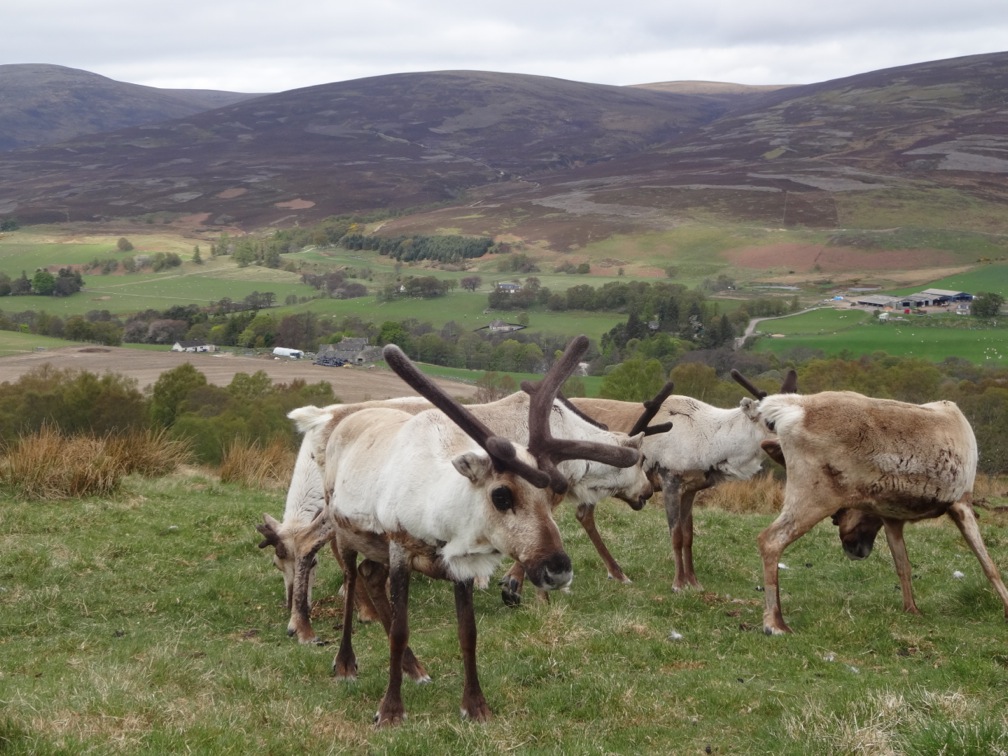
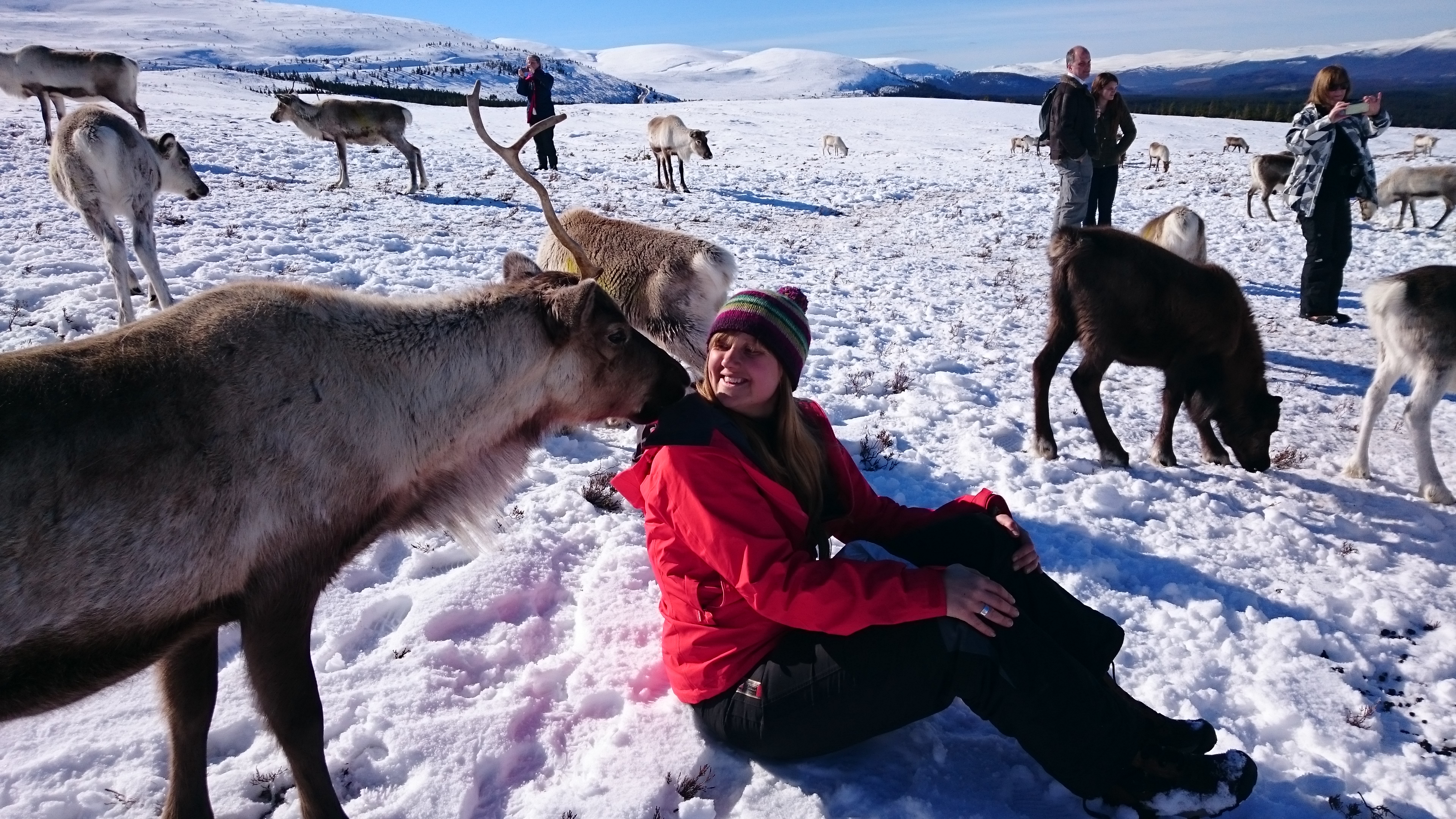
I guess we should get on to the reindeer bit… we’ll be business as usual with hill trips going twice a day at 11am and 2.30pm as well as the paddocks & exhibition being open and all tickets prices will have a 20% discount applied. Come and feed the reindeer up on the hill, but be prepared for all weathers!

Reindeer and Visitors
Hopefully the sun will be shining when you come to visit us!

There’ll also be tonnes of other things happening all over Badenoch and Strathspey, around Blair Atholl, Upper Deeside and Tomintoul. Some events that adults might enjoy include Green Woodworking Demos with Wooden Tom (he’s a really cool chap) at Feshiebridge Sculpture Trail on Saturday 14th. This is a ‘drop in anytime’ session running from 10am until 4pm (Here’s a handy link to his website). There is also the ‘Night Time on Nethy’ event on Saturday at 9pm. You’ll be on the river Nethy at night with the ranger, and booking is essential for that event. If you’d like to go on an all-day adventure, why not book into the ‘High Living in the Cairngorms’ event. This is a walk, starting at the Glenmore visitor centre and will involve some uphill. Booking is advisable and you will need to be dressed to be outside all day, in all weathers, and make sure you have a packed lunch too.

12998552_1184963421523654_2943601241422007354_n
Wooden Tom, who will be demonstrating Green Woodworking Skills

For families, there are lots of interesting things to do. You can help the Loch Garten forest elves and fairies, by helping to create a garden for their enchanted tree. This event takes place on Saturday 14th, from 10.30am until 3.30pm (drop in any time) and you will also make some little forest-folk to take home at the end as well! This is located just 5 minutes from the Osprey Centre, and you can ask for directions from the kiosk there. On Sunday the 15th, there’s a self-guided trail letting us know all about how trees grow. It starts from the Glenmore Visitor Centre and you can do it any time between 10am and 4pm. At Blair Atholl there’s a ‘Woolly Woods and Woolly Nature Trail’ on both Saturday and Sunday. You can drop in at any time and search for the knitted nature and other wildlife from the Blair Atholl Information Centre.

There are lots of other events going on all over the place, and you can get more information and book spaces by going to the Cairngorms Nature Festival page, where you can download a .pdf of all the events running throughout the weekend.

Hope you all enjoy some of the events being put on!

Abby and Imogen

The Calm before the Storm

It is the morning of April 29th, and it is the calm before the storm – the reindeer calving season. All was quiet this morning on the hill, but a sea of large pregnant bellies greeted Sarah and I in the enclosure, ready and waiting…

IMG_8835
Lots of massive bellies!

Having spent the first few months of the year free-ranging out on the mountains, last week we brought the cows into the enclosure to sort them out ready for calving. Non-pregnant females went back out to free-range for the rest of the spring and summer, while the pregnant ones were moved into the main part of the enclosure (after a frantic fixing of the fences after the winter storms!). They will now stay in for the next 3 – 4 weeks but once the majority have calved, they will go out on to the free-range to join the single females out there for the summer. While it’s lovely for us to have the cute wee calves around for a while, ultimately they will do better out on the higher areas of the mountains, up away from the biting insects, and so for this reason we get them out onto the free-range as soon as possible after calving.

IMG_8837
‘Stop taking photos and give us the feed…’

The East Enclosure (the main area inside the enclosure where we take the hill trips to) becomes the pre-natal unit, with one by one as they calve, the reindeer being moved through to the Bottom Corridor (the smaller area immediately inside the main visitor gate) – the ‘nursery’. The cows generally just get on with calving themselves, and older females, knowing the score, have been known to bring their new calves to the gate into the Bottom Corridor (BC) themselves, ready to move into the nursery! Younger or more inexperienced cows often give us a bit of a run around, marching away with their little one trotting at their heels – telling us in no uncertain terms to keep our distance. We spread out and act like sheepdogs, herding the cow gently in the right direction and through the gate into the BC.

IMG_8839
Most of the females have now cast their 2015 antlers, but there’s a few still hanging on in there, like Wapiti.

The reindeer in the enclosure I feel a bit sorry for just now are the female yearlings, still with their mums and totally unaware they are about to plummet from apple of their mum’s eyes to second best, as their mum’s attention is turned to their new siblings. The yearlings are always very confused by this, and often stand despondently nearby, watching the new calf suckling. By the summer though they have come to terms with this new development, and have re-joined their mums to make little family parties.

IMG_8842
Yearling Morven glued at the hip to her mum Spy – poor Morven’s about to get a nasty shock when Spy calves!
P1060770
An old photo – this is Chime way back in about 2010 – but look at the size of that belly!

So there we have it. The reindeer are in the correct place, the staff bets are in for first cow to calve, the calving rucksack is ready for early morning expeditions around the enclosure (complete with emergency chocolate bars) and the stage is set. Unfortunately winter has sneezed on us all again, but hopefully it’s its last spluttering cough of the season – we, and the reindeer, are ready for spring!

Hen

How to keep a herder happy, or trials and tribulations of herding

Spying
Andi searching for elusive reindeer…

As you may know reindeer herding isn’t quite as simple as it may first appear, one very common question we are faced with is, is reindeer herding all you do? We’re a wee team here with five core staff and we literally do everything between us which can be quite entertaining when we’re performing office duties. I (Abby) vaguely attempt to keep advertising under control and routinely receive calls for the advertising department (i.e me) who, when they’re told I’m ‘up on the hill’, are often quite bemused.

Windy
Abby finding its not so easy to walk/stand/be a herder in gale force winds!

When a visitor tells us “You have the best job in the world!” our minds fleetingly head in the direction of the not-so-nice mountain weather as unfortunately it isn’t always sunny here (shocking right?). We have some quite epic storms in the Cairngorms and there’s been many a day where it’s icy, sleeting and gusting upwards of 80mph up where the reindeer are.  These are some of those days you question reindeer herding and your dedication to having wet socks but it can be epically cool to be out and see the reindeer in these conditions.  However, I do have to say I enjoy pretty much enjoy all of it (maybe not all the office work but it must be done!) and it’s super rewarding seeing people absolutely loving life with the reindeer!

Murky day
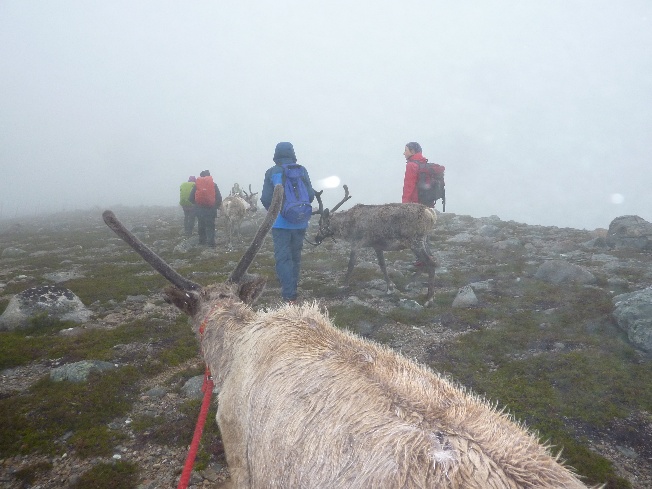
Approaching reindeer on a less than glorious day

Another reindeer herding problem specifically at this time of year is bringing the reindeer in for the visit. If you’ve visited us in spring you’ll know all the reindeer are entirely free-range on the Cairngorms and we have to tempt them in from ridges and corries every morning. In early spring the reindeer metabolism is still in ‘winter mode’ and the girls are beginning to feel and look increasingly pregnant too so they can be more than reluctant to come in in the mornings. Our method of extraction is walking part way out to the darlings if they’re in sight and then calling them in – if they stick a hoof up at us we walk out, catch a dominant female and lead her in on a head collar and the rest of the herd often oblige. To avoid suspicion it’s key to always have food to give them as the calls we use are always reinforced by food and these girls are wily – if you call them over without food one day they’re likely to disappear on you the next!
 

Collapse
Sometimes it all just gets a bit too much…

Obviously all these trips up and down mountainsides to fetch and move reindeer means we cover a lot of ground which is ace! We get some great views, see awesome wildlife, get quite soggy a lot of the time but on the whole it’s pretty fun getting to romp around in the hills for work. However there’s one big downer for us herders and that’s the sheer amount of rubbish we pick up/find plastered over the national park. Seriously, take your wrappers home folk! As we tell all of our visitors we live in the only area of the UK with a sub-arctic habitat – it’s special – finding litter definitely makes it less so, as well as meaning we find odd things in our work jacket pockets when we’ve been good citizens and picked up other people’s rubbish!

IMG_5986
Not such a pretty sight…

This brings me onto my final trial of reindeer herding… doing your office work on a sunny day. I know many people are cooped up daily at a desk but us reindeer herders get a bit antsy if we don’t have at least an hour of outside time and on a sunny day it can literally be a fight to the death to go and paint as many things as we can find here at the Centre! This does however mean at some point we have to be tied to an office chair and get on with it!

photo 4
The curse of glorious days when SOMEONE gets stuck in the office

Our last and certainly most crushing issue is our unending addiction to tea and cake… it’s a sure fire way to make each and every day epic! Us herders never turn a healthy cake down!

Cake
Sometimes there is cake!

Abby

Annual Vaccinations

Annually, every single reindeer in the herd must get a routine vaccination to protect them against various diseases. This is an injection that can leave them feeling a bit worse for wear the next day, but it’s only for 24 hours and as it’s important injection they just have to suck it up!

Our herd here on Cairngorm conveniently crossed over to the Cas side of the mountains of their own accord and we jumped at the chance to get them into the mountain enclosure to give them the vaccine. Unfortunately it was only three quarters of the group but we still decided to go ahead, hoping the others would show face in the next day or two. As predicted they did and although we left the herd feeling a bit off-colour they quickly got over it and are all now back out free ranging. Read Mel’s account of last year’s jabs here.

CromdaleCatch (3)
The herd begin moving down off the tops towards the promise of food

The next step was doing the same at our Glenlivet site over on the Cromdale hills. This requires a lot more energy as the reindeer are always fairly ‘clued up’ to what we are doing by gathering them into the corral at the bottom of the hill. So after locating where they were that morning, Alex, Abby, Derek and myself set off on the quad bike for a very bumpy journey to the top where we were greeted by 80 hungry-looking reindeer. And who was number one to run over but the famous Fergus! Both Abby and I hadn’t seen Fergus since he joined the herd on the Cromdales in early January so it was great to see him again.

CromdaleCatch (4)
Using the quad bike to encourage the reindeer down the hill

Tilly and Colin then joined us and Tilly set off with Dragonfly on a halter leading the herd down the hill while Alex, Abby and myself were on foot pushing and Derek was on the all-important quad bike to turn back the naughty ones who tried to break away. It was all going so well then the whole lot managed to get themselves over a burn (small river) onto another hillside, but we persevered and after a lot of running around to catch up with them (they have four legs we only have two!) we managed to get them back following Tilly and Dragonfly into our corralled area.

CromdaleCatch (5)
“Ok, we’re going!” The reindeer often seem to view being rounded up as a game – they definitely have no fear of us. Especially Magnus, who is always the reluctant one at the back!
CromdaleCatch (6)
Colin and Abby using hessian as a temporary barrier – it prevents reindeer nipping back through gaps between the herders
CromdaleCatch (8)
Always a challenge to not fall over your own feet!

There was only one slight hitch in the form of Gnu… an eight-year-old Christmas reindeer who always gives us the run around and he did manage to slip the net, so all we saw at the end was his bottom disappearing over the skyline in the distance. We had some words to describe him at the time which I won’t repeat on here! I have to say if it wasn’t for the speed and technical driving of Derek on the quad bike we would have lost a lot more than just Gnu. We will catch up with him… when he least expects it! Lets hope he doesn’t read these blogs…

CromdaleCatch (9)
Abby coaxing the boys down into the corral
CromdaleCatch (1)
Success! Reindeer penned and ready for their vaccinations

So with all the reindeer in and fed we got through the injections very smoothly. It was nice to see the male reindeer after so long and the youngsters had grown up lots over the winter with the great grazing up there. The bulls have already started growing their new velvet antlers and all in all they were looking in fantastic condition!

Fiona

CromdaleCatch (2)
Happy herders!

Memorable Reindeer of the Past: Arnish

One of my favourite reindeer when I first arrived was Arnish. To start with this was possibly because she was so distinctive as she didn’t grow any antlers, making her one of the very first reindeer in the herd that I learnt, but quickly my reasoning changed and simply became because she was just so, well, cool.

Arnish
Arnish in 2007, aged 10

Arnish was, quite simply, a dude. Everyone liked her, and she was a tame, friendly female. Some of the females in the herd skulk around in the background, not particularly wild nor particularly tame, spending most of their time out on the Cairngorm free-range where we barely ever see them. But some, like Arnish, always seem to be around, and spend a good bit of their time in the hill enclosure too as well as on the free-range, when it is easier to get to know them as we see them daily.

Arnish
Arnish in 2009

Antlers are a symbol of dominance in reindeer, generally the bigger the better. A reindeer with no antlers should therefore be very low in the hierarchy, but it seems no-one told Arnish this. A great lump of a female, thickset and solid, with a head the size of a male reindeer’s, Arnish ruled the roost and was one of the leaders of the herd, or at least she was by the time I arrived on the scene. At this point she was 10 years old already and only needed to look at a group of reindeer for them to part like the Dead Sea to make way for her! If all else failed, she just ploughed into them headfirst, somewhat resembling a hairy bulldozer. No-one messed with Arnish.

Hen and Arnish
Hanging out with Arnish

Her lack of antlers had one significant downside, for us at least. If Arnish got her head into the feedbag you were carrying, it was nigh on impossible to get her out. When any other greedy, tame reindeer push their way into a feedbag, we can remove them but hoicking them out by an antler but this just wasn’t possible with Arnish – there were no handles! The battle was lost already. I should add that most of the time we never touch a reindeer’s antlers, certainly not when they are in velvet, but when in their bone form with no feeling needs must at times!

Arnish and Jaffa
Arnish and Jaffa, 2009

Arnish may be gone now, but she’s left behind a legacy in the form of Addax, Jaffa and Svalbard. Daughters Addax and Jaffa have gone on to have calves of their own, and son Svalbard, along with Addax’s own son Monty, are part of our team of ‘Christmas reindeer’ – males who are trained to harness and go out on tour in November and December.

Arnish and Svalbard
Arnish and Svalbard, June 2011

Svalbard was Arnish’s last calf, and there’s a wee story about his name to tell. He turned up without his mum in October 2011, and we named him Meccano, to fit into the ‘Games and Pastimes’ theme of that year. Arnish had passed away out on the mountains, but at 4 months old her calf was just about old enough to survive without her. Short and dumpy, Meccano looked very much like a Svalbard reindeer, the sub-species of the Svalbard Islands which have evolved shorter legs than their migratory cousins. Try as we might, the nickname stuck, and Meccano became Svalbard.

Svalbard
Svalbard has grown into a strapping lad!

With Addax’s daughter Parmesan quite possibly pregnant just now with her first calf, Arnish’s bloodline looks set to continue for a good while yet. Every descendant so far has produced antlers, but the antlerless trait can skip generations so maybe watch this space.

Hen

Dressed for Winter

‘There is no such thing as bad weather, merely unsuitable clothing’. It’s a great phrase this and one that is on display in the Reindeer Centre, to warn people to be well prepared for the hill visit to the reindeer (even in summer sometimes!).

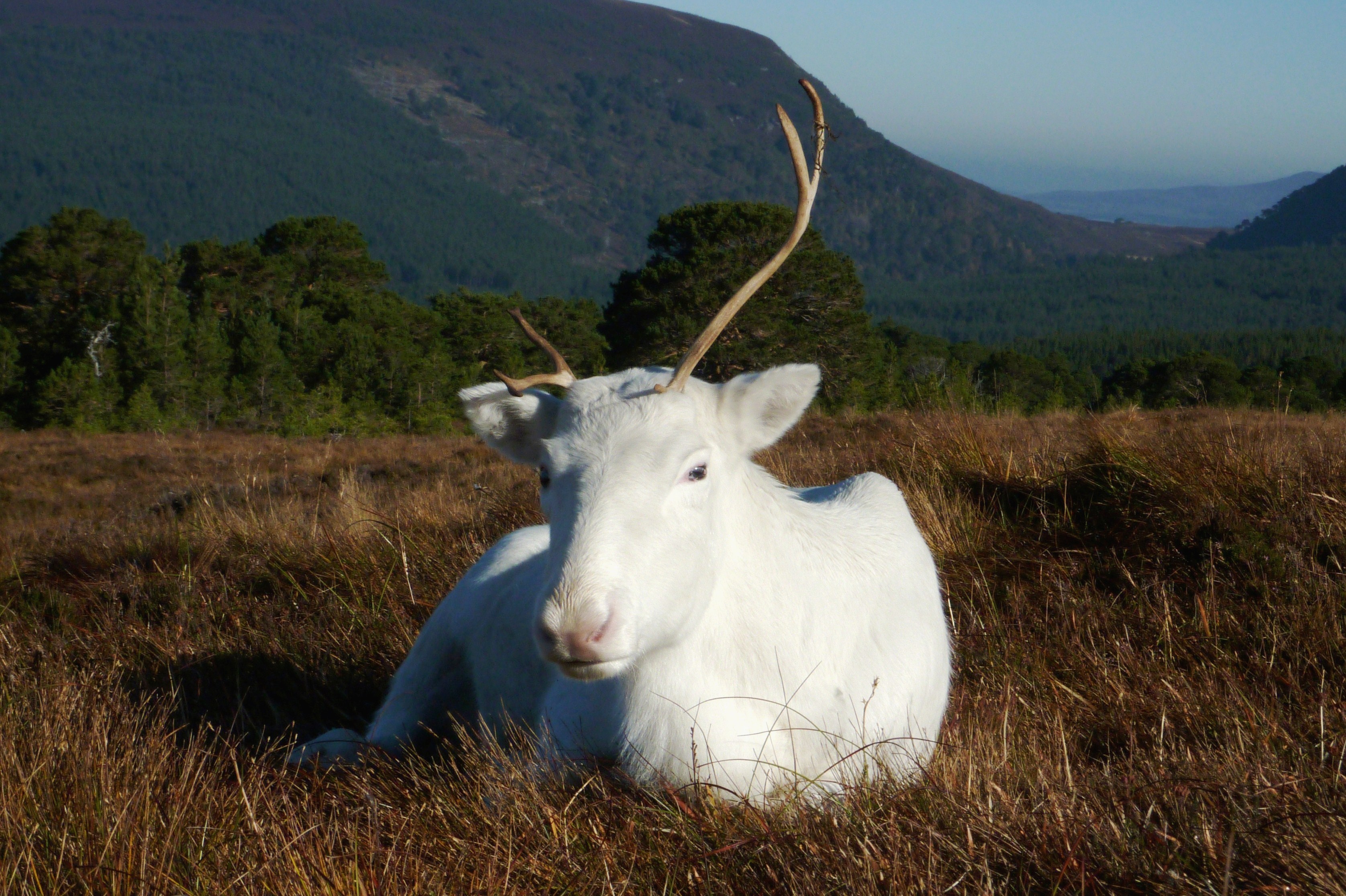
In the animal kingdom, a number of the arctic animals change their coats in winter and in the case of reindeer they not only grow thicker coats but also their coats turn lighter in colour, in some cases pure white.

Reindeer on snow
Reindeer snoozing comfortably in the snow – Lilac (right) is currently our oldest reindeer at nearly 17 years old

The change in colour is associated with shortening day length and there are obvious benefits from being white or very light coloured when it comes to camouflage in snow. But it is also the case that white hair is more insulating than dark hair. White hair lacks pigmentation and nothing replaces this, leaving pockets of air, a very good insulator. So I suppose that means that when the reindeer grow their winter coats they have more airy hair! Indeed the reindeer never cease to amaze me, on the coldest of days, they are high up in the snow, on the exposed ridges, lying around, resting, ruminating and I suspect positively enjoying the weather which we shelter from in our warm houses.

Harry, Minto and Bajaan Dec 08
White reindeer – this photo was taken back in 2008 of male reindeer Harry, Minto and Bajaan

In the herd we do have a few reindeer who are actually pure white: Blondie, Lego and Blue to name just three of them. Knowing that white hair has more insulation does that mean they have the warmest coats? They certainly always look very comfortable in the snow.

Mountain hare
A mountain hare in its winter coat, spotted whilst I was completing my 146th munro!

Over the last few weeks I have regularly seen mountain hares, which live in a similar habitat to our reindeer but are also quite widespread across many of the Scottish hills. They too turn white in winter and like the reindeer have relatively large feet which act as snowshoes making running seem effortless as they hurry across snowfields.

1024px-Lagopus_muta_2_Iceland_Snaefellsnes_April_2012
Ptarmigan (Lagopus muta). Photo by Boaworm [CC BY-SA 3.0], via Wikimedia Commons
There are two other animals found in Scotland that also turn white: the ptarmigan, an arctic grouse that is found in many of the Scottish mountains above 2,000 – 2,500ft, and the stoat, which depending on how far north it lives also turns white, when it is then called stoat in ermine.

Stoat in ermine
Stoat in ermine – white with a black tail tip. Photo by Steven Hint [CC BY-SA 3.0], via Wikimedia Commons
Like the reindeer and mountain hare, the reason the ptarmigan plumage turns white is for camouflage and warmth but I do sometimes wonder about the stoat in ermine. Although I have seen them in snow around the farm, all too often there is not a flake of snow to be found and they ‘stick out like a sore thumb’. But they are a very clever predator, predating mainly on rabbits. They are incredibly quick, will catch and kill prey 10 times bigger than themselves and appear to be completely fearless. They are sometimes thought to ‘hypnotise’ their prey, maybe the white coat and black tip to their tail somehow confuses the rabbit!

Tilly

Antlers for sale

Lace
Lace still proudly wearing her antlers… we’ll see if we can find them when she casts them!

Each year every member of our 150-strong herd (well, with just a handful of exceptions… Malawi, Dixie…) grows a pair of antlers. And every winter, at some point between November and May, those same antlers are naturally cast so the owner can grow a (theoretically) bigger, better set the next year.

Over the winter months, our reindeer are all roaming free on either the Cromdale or Cairngorm mountains, so there are many antlers that ping off into the heather and snow and are either never seen again, or are picked up by a lucky hillwalker. But plenty of the antlers are found by us, collected and brought back to the Centre, then usually handed over to Hen. She has (foolishly?) taken on the task of sorting out what happens to them next.

Antlers
The first of the antlers for the year…

First job is to identify which reindeer the antler belongs to. Sometimes this is easy – perhaps we saw two reindeer having a tussle and witnessed the moment the antler parted ways from its owner. Some antlers are pretty distinctive and when whoever found it walks into the office with it, usually displayed held on their own head and asking, “Who am I??” there is a chorus of correct answers from the other herders present. But sometimes it is a fairly standard shape and size, and then it comes down to skimming through our photo archive (we aim to keep a recent photo of every member of the herd) until it is spotted in its previous position attached to a head.

Once the past owner of the antler is identified, first port of call is our “Antlers wanted” list – if you adopt a reindeer and fancy owning a set of their antlers just drop us an email and we can pop you on it – bear in mind there are only a maximum of two antlers available each year though, and we frequently don’t find both! Otherwise we write to any adopters of that reindeer to see if they’re interested in buying it, on a “first come, first served” basis – whilst this is the fairest way we can do it, it often leads to several phonecalls on the same day asking to buy it, and we can only sell it to the first respondant! Finally, if none of the adopters want it, or indeed if the reindeer has no adopters, then it goes for sale in our shop here at the Centre, usually in about June.

Kota's antlers
Various wearers of the same set of antlers: Kota, Imogen and Hen
Israel
A slightly less impressive offering from Israel this year…

Antlers come in all shapes and sizes, from big handsome bull antlers (we usually only have one or two large sets available each year) to fancy cow antlers, and calf “twigs” to furry broken castrate antlers. We’ve already started working through the pile of antlers that we’ve found this year, and the biggest set without a doubt belonged to our breeding bull Kota. One of his adopters was delighted to purchase the set, but as they don’t live locally, the next challenge was packaging them up to post. As you can imagine, transforming a pair of unwieldly, bony objects into a postable package is easier said than done… We first wrap the points in bubble wrap, not to protect the antler (it’s solid bone) but to stop it bursting out of the package, and then pop the whole thing in an empty barley bag (or two, in the case of Kota’s set). Barley bags are super as they have two strong layers of paper, and we’re helping the environment out by recycling. As an added bonus, recipients often find a few stray flakes of barley! Though on the downside, sometimes the posting out of antlers is delayed because the reindeer haven’t eaten enough for us to use the next bag of barley in our feed mix!

Packaging antlers
Kota’s antlers being packaged for posting

With a large pile of antlers still to work through, and plenty left on the heads of the reindeer on the mountains, its likely that it’ll be summer before we finish finding new homes for them. All of the funds raised from the sales go straight back into the day-to-day care of the herd, so it both helps us out and hopefully brings a lot of pleasure to anyone who buys them. Every antler is unique and its great to have something sustainable which allows people to own a “bit” of a reindeer!

Andi

Please note – there’s now a newer, more up-to-date blog about how we sell antlers, which you can read here.

There’s no such thing as bad weather

Britain's Only Reindeer Herd Prepare For Christmas
Eve feeding the herd in a blizzard (Photo by Jeff J Mitchell/Getty Images)

“There’s no such thing as bad weather… only unsuitable clothing…”

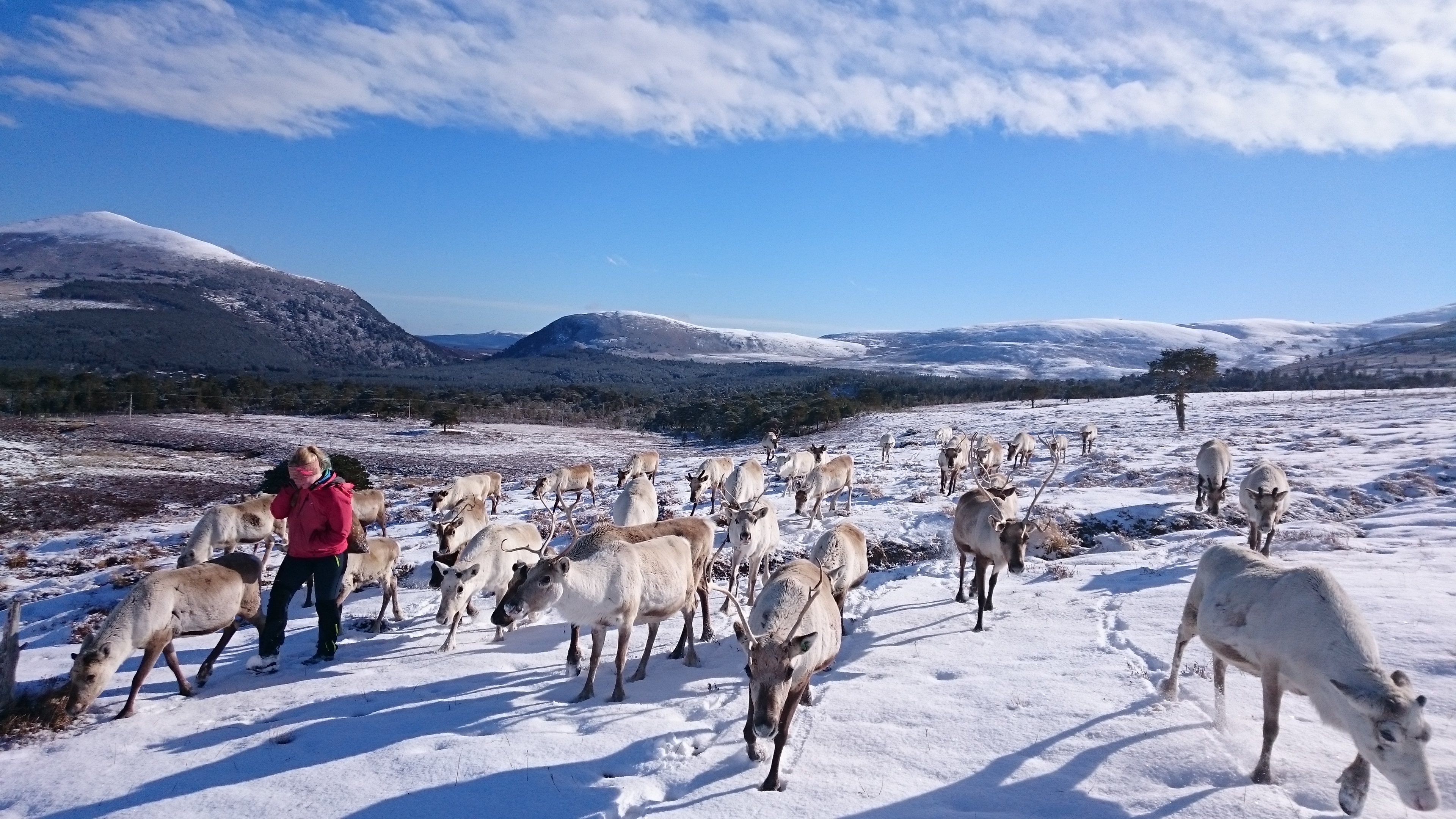
This is very much the mantra us reindeer herders live by and there are unfortunately even days here in the Cairngorms where our beautiful “office” on the mountains leaks and gets a wee bit blustery. This is never more emphasized than during the winter months here where weather conditions are some of the most beautiful and the most extreme.

We often start our mornings here at 8am vaguely unaware of exactly what the weather is going to bring, Reindeer House is fortuitously sheltered at the foot of the Cairngorms and it’s often not until we venture above the tree line that the true extent of the weather hits us.

If the ski road remains open and the reindeer are there we dutifully head out onto the hills even if this means battling 80 mph gusts and freezing temperatures… winds so strong herder Hen’s car was relieved of its undercover last winter! (we love it really!).

Snow AP (5)

It quite often looks a wee bit of a comedy show, us herders trying to walk in a straight line (people must think us perpetually drunk!). Annoyingly, the reindeer often look completely unfazed be it wind, icy temperatures and deep deep snow, quite often as we lumber through the drifts they use us as the snow plough for making them a path, following cheerfully in our footsteps even though they’re the Arctic animal!

Tony and Carol Dilger (4)
Making a path for the herd through the snow (Photo by Tony Dilger)

This brings us to clothing, again the reindeer come annoyingly pre-prepared for the weather with thick insulating, water repelling coats and built-in snow shoes; us on the other hand live for woollen thermals, multiple jumpers and cosy hats and are most definitely never far from a pair of waterproofs! Woe betide the reindeer herder who doesn’t have a spare set of clothes! On the other hand, I personally often find myself far too prepared in the summer months when even in the sunshine I never quite trust that Scotland won’t throw snow at me!

Working in the Cairngorms year round is definitely a different challenge to some of the more indoor based jobs I’ve held but as long as I have my mittens and spare socks I’m super happy to battle whatever the weather throws at us!

Abby

Starting a new life

Just over a week ago, I waved goodbye to my work colleagues in London, where I’d lived for eleven years, jumped in a van, and travelled the 500 miles (so cliche!) to Glenmore to begin my new life at Reindeer House.

London
Last day in London

Three years volunteering with the herd during holidays seeded the thought of moving at the back of my mind. Late in 2015 I thought, “What am I waiting for?” and decided to up sticks, leave my lovely job and lovely colleagues, and life in the city.

Corries
A view of the corries

Waking up to snow-covered hills and a single stream of cars heading for the ski slopes is slightly different to the hordes of people packed onto commuter trains and tubes heading for their glass and steel open-plan offices.

Plateau
Up on the plateau with Sookie
Sookie
Snowy selfies!

Mountains, forests, and fresh air give so much, which cities simply cannot give you – despite the parks and open spaces and being outdoors. The landscape here gives and teaches different things, as equally important, and gives a different outlook on life.

Plants
How I now spend my evenings – learning about plants with Sookie asleep nearby!

I am looking forward to making my way here!

Sarah

Memorable Reindeer of the Past: Flake

I thought maybe I’d start an occasional blog series remembering particular characters in the herd who are no longer with us, because some readers amongst you may have met them once upon a time, and those of you that didn’t can at least have a brief glimpse of some of the most memorable reindeer from our herd.

Flake
Flake with her beautiful antlers

I scrolled through our photo archive of reindeer no longer with us, and my eye alighted on Flake. Well, there is a fine place to start! Plenty of memorable things about Flake, and what a fabulous reindeer she was over the years. I first met her in summer 2009, having been away for several months, and arrived back and headed up to the hill enclosure for the first time. Most of the reindeer there I recognised, or managed to work out pretty quickly, but who was this bull with a blue ear tag? Quite narrow, upright antlers compared to some, but still a very good size, and ‘clean’ in design rather than the chaotic, many tined antlers of the castrate males. I was flummoxed. Turns out it was Flake, in the enclosure for the summer months rather than out free-ranging like the other females, due to her calf Diddly (who we’ll get to in a tick).

Flake
Flake was a beautiful reindeer

Flake’s fabulous antlers set her apart from many of the other cows, as they were much more elaborate than the average female set and a very decent size most years. In 2009 however, the year I first saw her, they were a particularly fine set and there is a specific reason for that…

Flake was a notoriously bad breeding female. Her calving record, filed away on our computer here, is basically a list of disaster after disaster, from stillborn calves, to ones that got stuck and needed pulling out by the vet, to premature twins, you name it. In 2011 she produced a calf who had a problem with his joints, probably not helped by the fact that Flake had calved right next to a large boulder which he had promptly got stuck beneath! The entry on her records for her final calf Brave, born in 2012, reads ‘Normal!!!!’.

But before that, in 2009, there was Diddly. Born prematurely, she was tiny, so much so that she couldn’t reach Flake’s udder. Even if she had been able to, Flake didn’t produce any milk that year anyway, so right from the start we had to hand-rear her, bottle feeding through the night to start with.

Heather feeding Diddly
Heather working hard to look after Diddly, while Flake stands by
Diddly
Diddly was so tiny!

Flake and Diddly started off in the paddocks, then eventually moved up to the hill enclosure for the remainder of the summer and the autumn. And that is the reason for Flake’s great antlers – while we slaved away feeding Diddly for the first 5 months of her life, Flake basically sat back and let us do all the work – a ‘designer mum’. All the energy going into her body from the feed we lug up the hill every day went straight to her antler growth rather than to milk production. The antlers of the other females, out on the high tops foraging for themselves, all showed the detrimental effects of the effort of raising a calf, being smaller and wigglier, but not Flake. She resided in state in the hill enclosure all summer, fat as butter and with fancy headgear, with a queue of reindeer herders tending to her every need and raising her calf for her!

Flake and Diddly
Flake and Diddly when I first met them in August 2009


Flake and Diddly
Flake with the grown up Diddly in February 2011

Flake passed away in 2013, an old girl by that point. Very sadly, Diddly followed later that year, but not before producing her son Crowdie, who is now nearly 3 years old and a great fun wee reindeer. Diddly was an interesting character in her own right as she never produced any antlers at all, remaining bald for her whole life, a little quirk that sometimes happens with female reindeer.

Hen

Book Now