
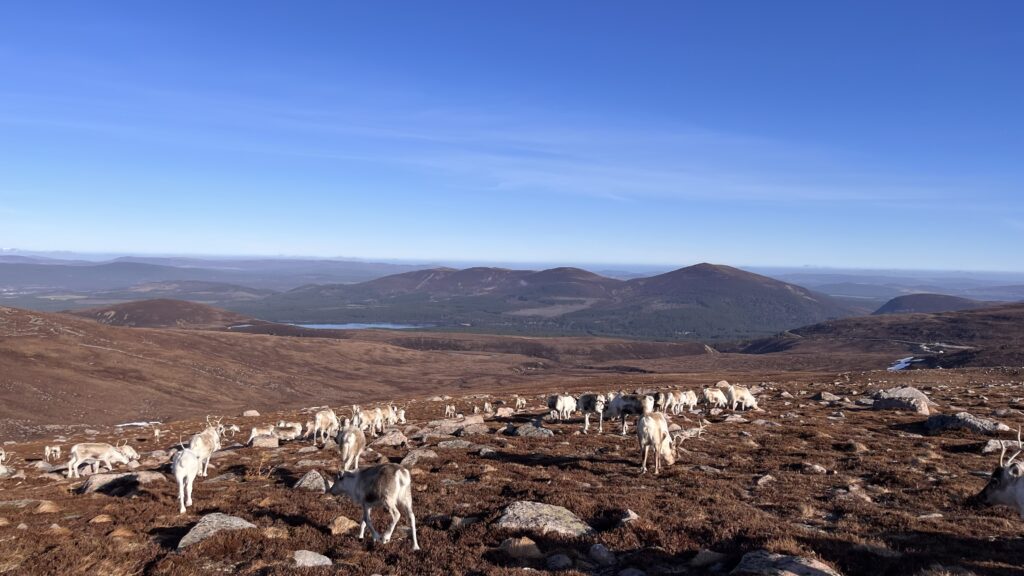
This weeks blog is time to talk about plants! We’re venturing out onto the flats and hills here in the Cairngorms to take at look at the sorts of plants the reindeer eat, and those they don’t.
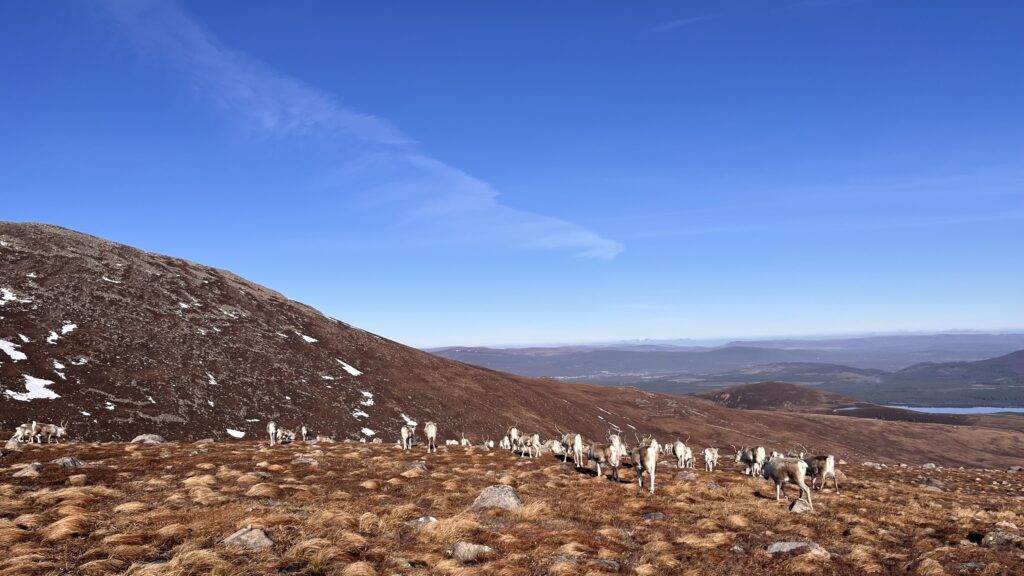
An ecosystem has many teeny, tiny moving parts. Every living thing has a role, providing something, maintaining something, preventing something, killing something. Every little cog is vital to keep the natural machine moving successfully. So, to begin let’s talk about what the reindeer’s role is in this machine to better understand their relationship with the plants growing under hoof.
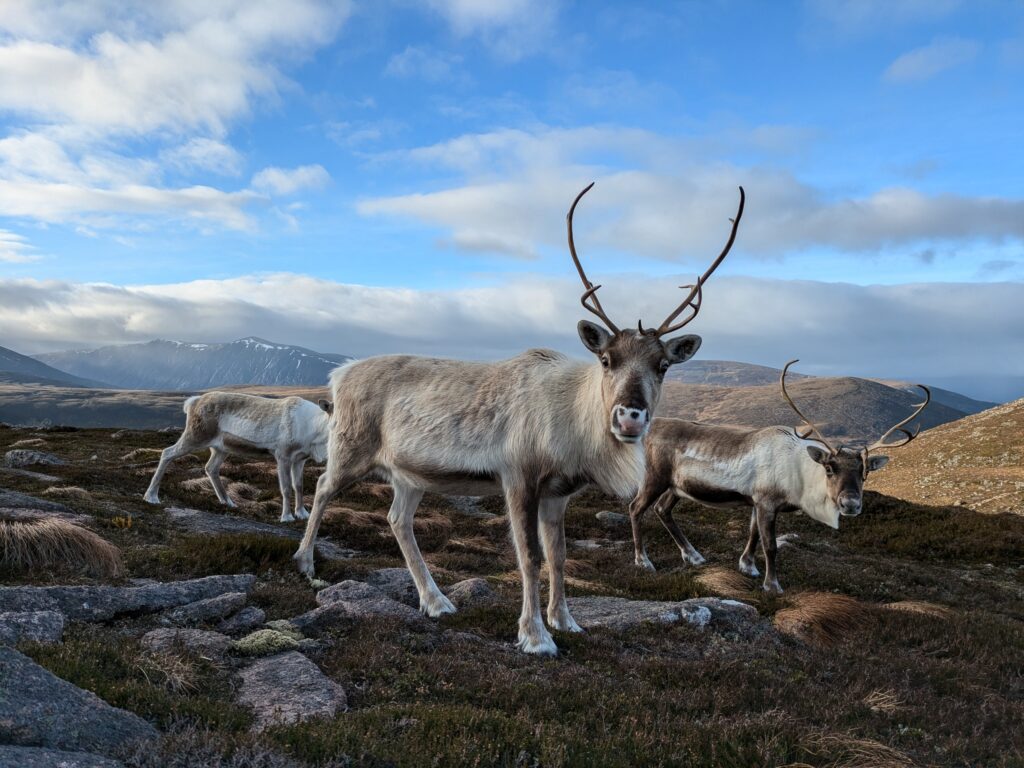
In the most basic terms, a reindeer is a gardener. They migrate vast distances on a daily and annual basis, trampling the ground as they go with their wide hooves, churning the vegetation and exposing spots of soil. Into which, their poop deposits! Reindeer, like many other animals that roam big distances, will not have a “toilet spot”. They’ll go as they move, effectively fertilising their own hoof prints!
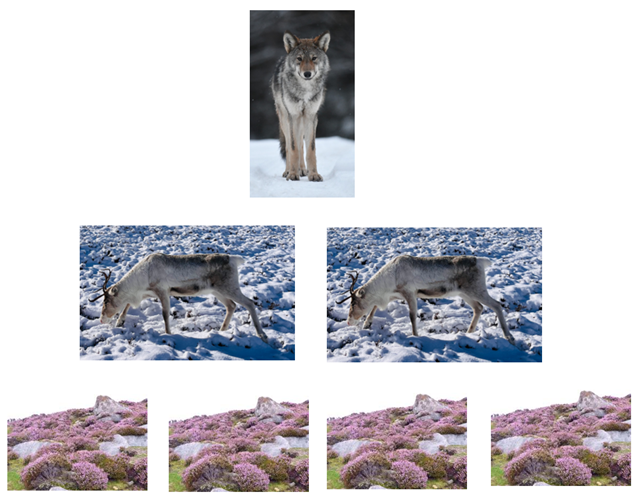
This behaviour rejuvinates the ground with seed dispersal from their food, keeping the ground alive and replacing what’s been grazed at. They also help keep the ecosystem moving as a prey species, their numbers being controlled by predators – never growing too large that they begin to over graze and over trample areas (you can see how it all starts to come together).
So now we know the reindeers’ job, lets see what keeps them fed and what they help to grow. Green thumbs at the ready!…
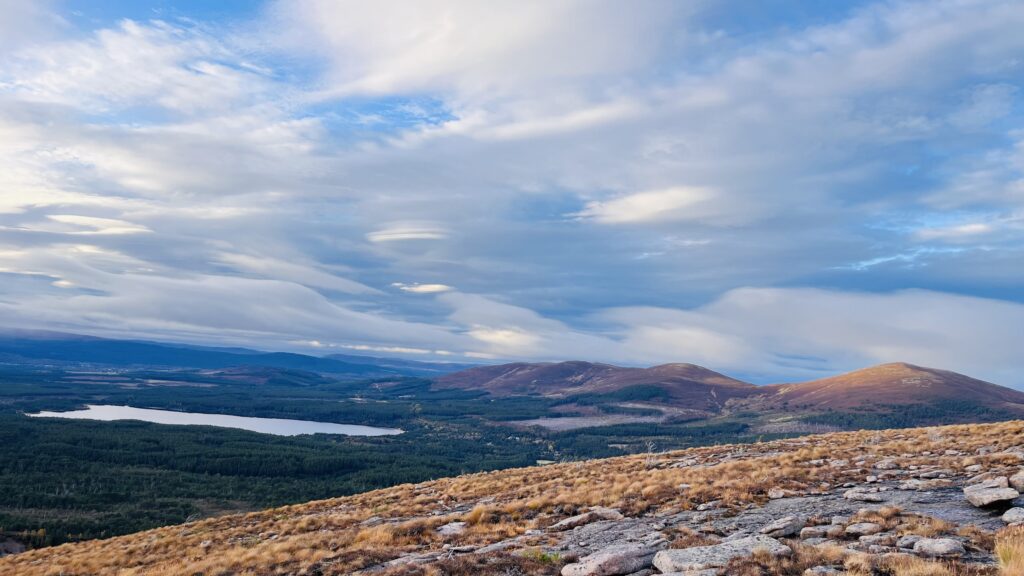
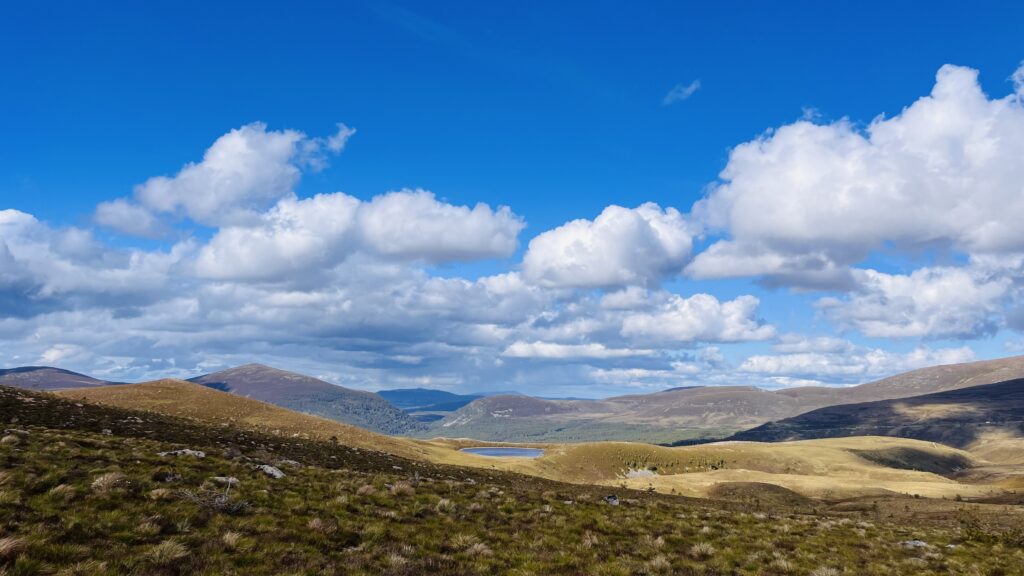
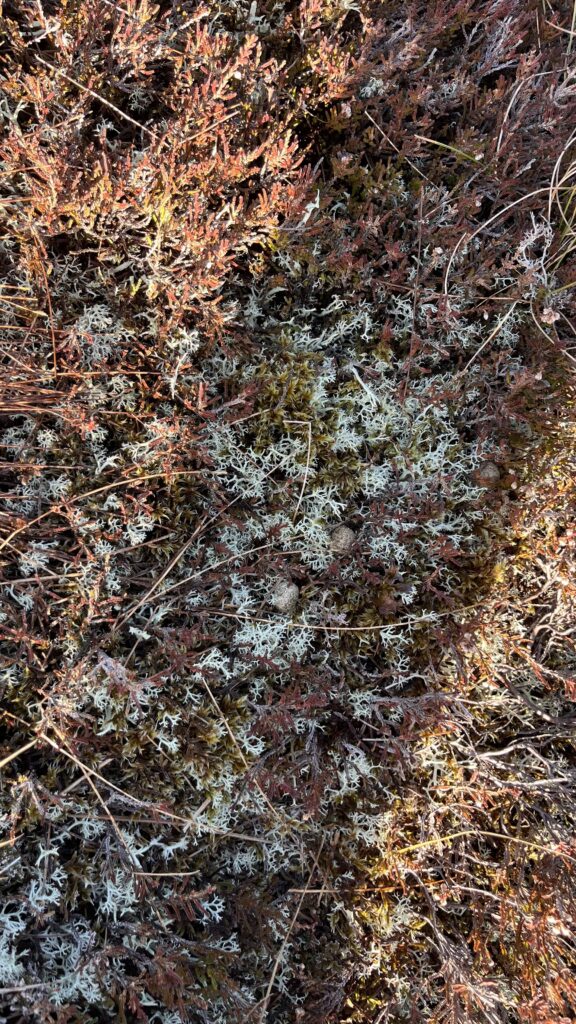
The ground is rocky, the temperature low, and high winds batter over the hills – what plant life is hardy enough to grow here? Let’s start with every reindeer’s faviourate snack, lichen. Easy to grow in many different conditions, the particular lichen (also known as reindeer moss) that is growing on the hills has no competition for light due to no trees or tall shrubs, can easily gorw in the rocky ground, and survives the intense winds, so is able to grow in large blankets. Like all the other plants we’re grateful for, carbon is a food source, so thank you lichen for your offsetting efforts! It makes up a very large portion of the reindeer diet, up to around 70% during winter months when most other plants lose a lot of their nutrition, or simply die back in the freezing conditions.
While we’re thanking the lichen for their carbon efforts, we have to talk about sphagnum moss. Jump off the squishy blankets of lichen and land yourself right into a peat bog! This amazing plant covers vast areas of the reindeer landscape we have in the Cairngorms. Growing up to 20 times its dry size when wet(!), sphagnum moss absorbs water and prevents plant matter from breaking down once in its water-logged form. This means that you can have layers and layers of boggy peat, all storing carbon. There are spots in Scotland where peat bog is as deep as 10m, holding thousands of years of carbon storage! Peatland is actually the largest terrestrial carbon sink on Earth, so an extremely important plant for all of us. Thank you peat bogs, we love you!
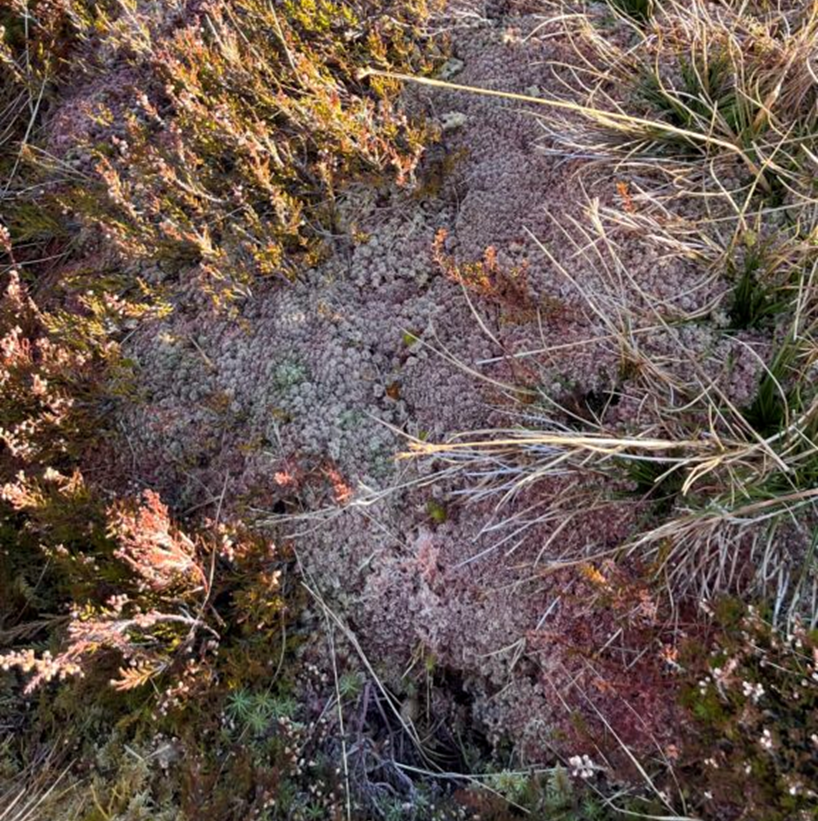
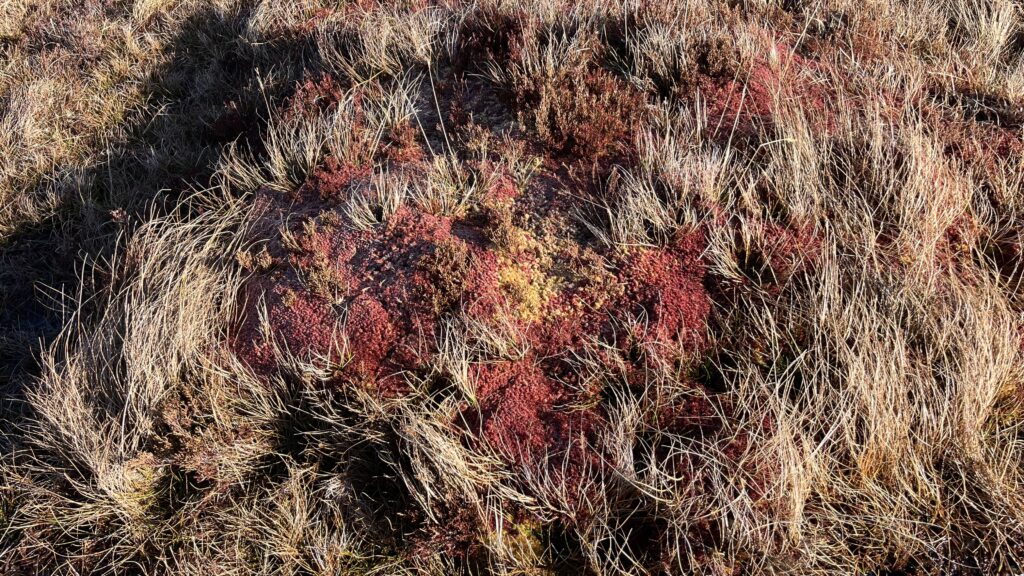
While we haven’t seen the reindeer ever nibbling away at the peat patches, they do sometimes squish their muzzles into them and drink the water the moss is retaining. During summer when the small and narrow streams begin to dry up, the sphagnum moss still retains a lot of water and can provide the reindeer with a good drink in the heat.
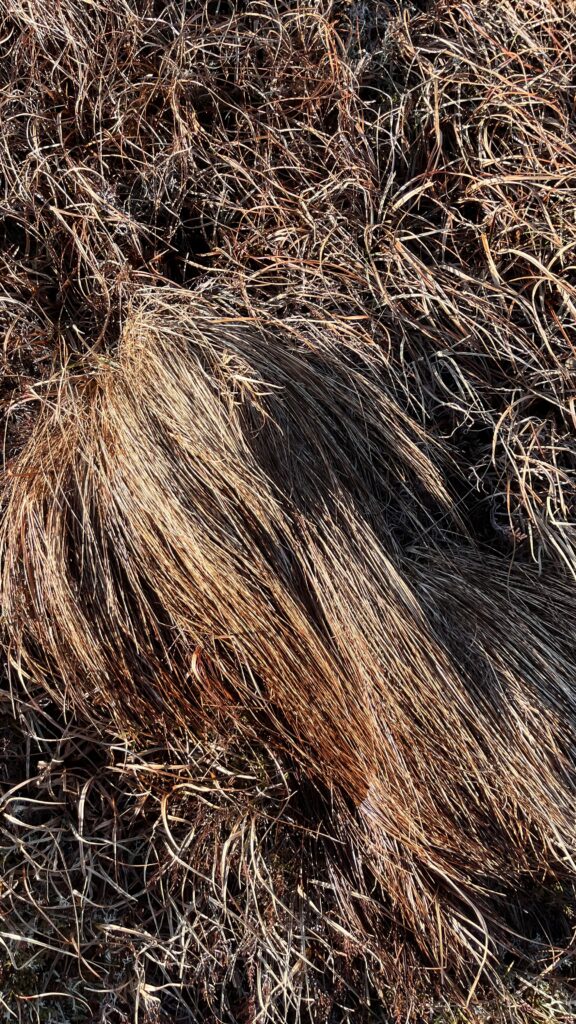
You’ll have noticed some longer grasses in the above photos of the sphagnum moss. These are clumps of deer grass. Deer grass is a type of sedge, thick and long, it is able to grow in areas of high winds and heavy rains, prefering a peaty landscape to grow. Acting as a stabiliser for the soil, the highly fibrous root system prevents erosion, holding everything together. This is one of the grazing plants for the reindeer, growing along the tops of the hills and down to the tree line.
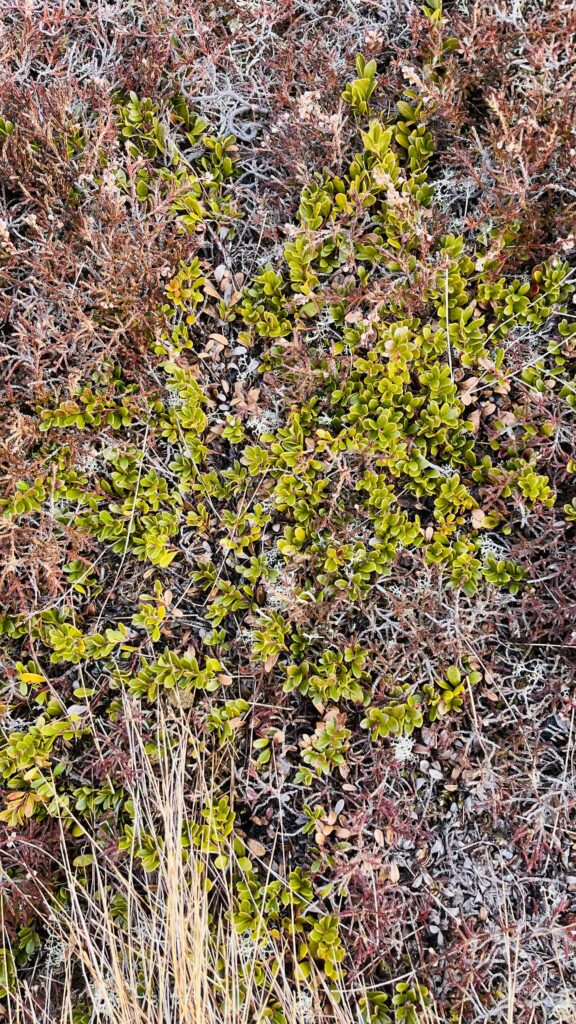
As we move more into the leafy vegetation found in the hills, we can talk about the ever abundant heather, and not so abundant lingonberry. The heather shrubs cover almost the entirety of the reindeers’ landscape, the other plants growing in between. Heather is another plant frequently grazed on by the reindeer, but is extremely resilient to feeding wildlife. It is quick to replace grazed buds and each plant is capable of producing a maximum of 15,000 seeds per germination season! That’s a lot of dispersing for the reindeer to be getting on with! Between the two of them, they’re very good at keeping the landscape nice and heather-y.
The lingonberry plants, like the heather, are very good at growing in bogs, and can cope positively with harsh cold, windy conditions like those found on mountain plateaus. Like the blaeberry that grows further down the hills in the woods and up to the tree line, the berries produced by the plants can also be a tasty treat for the reindeer.
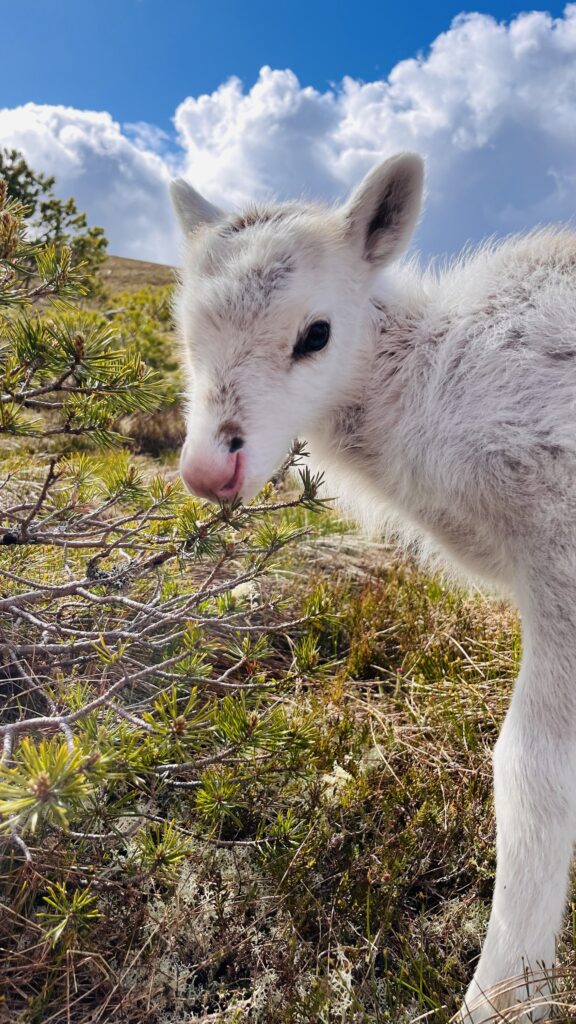
I realise that is a lot of information about plants! So, if you’ve stuck with me till the end I’ve included a final very cute photo below of baby Quickstep out on the free range last summer as a reward! It’s nice to take the time to learn more about our surroundings and not just appreciate the reindeer, but also their home, and how important each and every bit of it is.
Daisy
Further reading:
https://www.forestcarbon.co.uk/news/sphagnum-moss
https://electricscotland.com/gardening/heather.htm
Modelling and mapping the abundance of lingonberry (Vaccinium vitis-idaea L.) in Norway. Jari Miina et al. 2024.