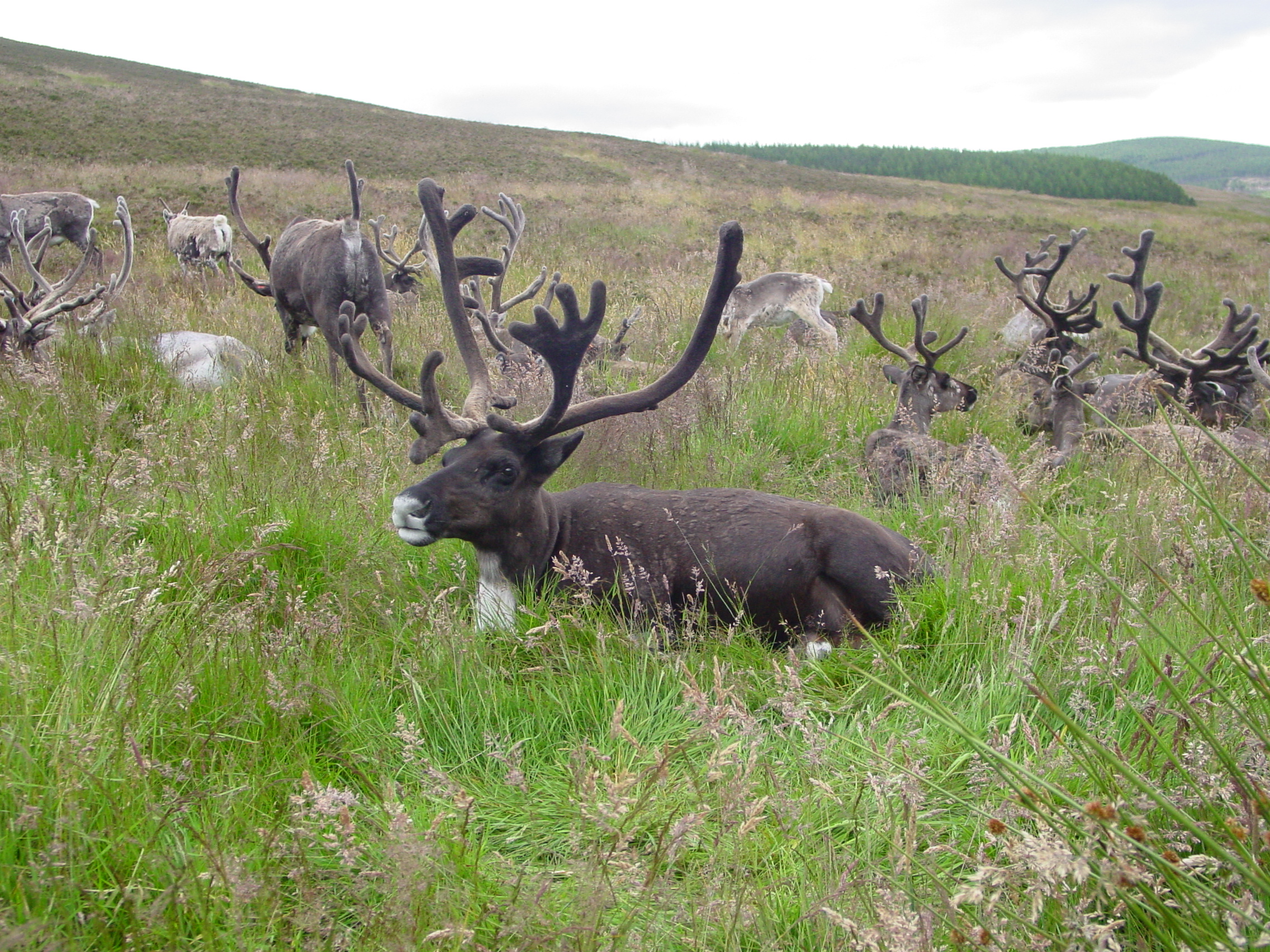
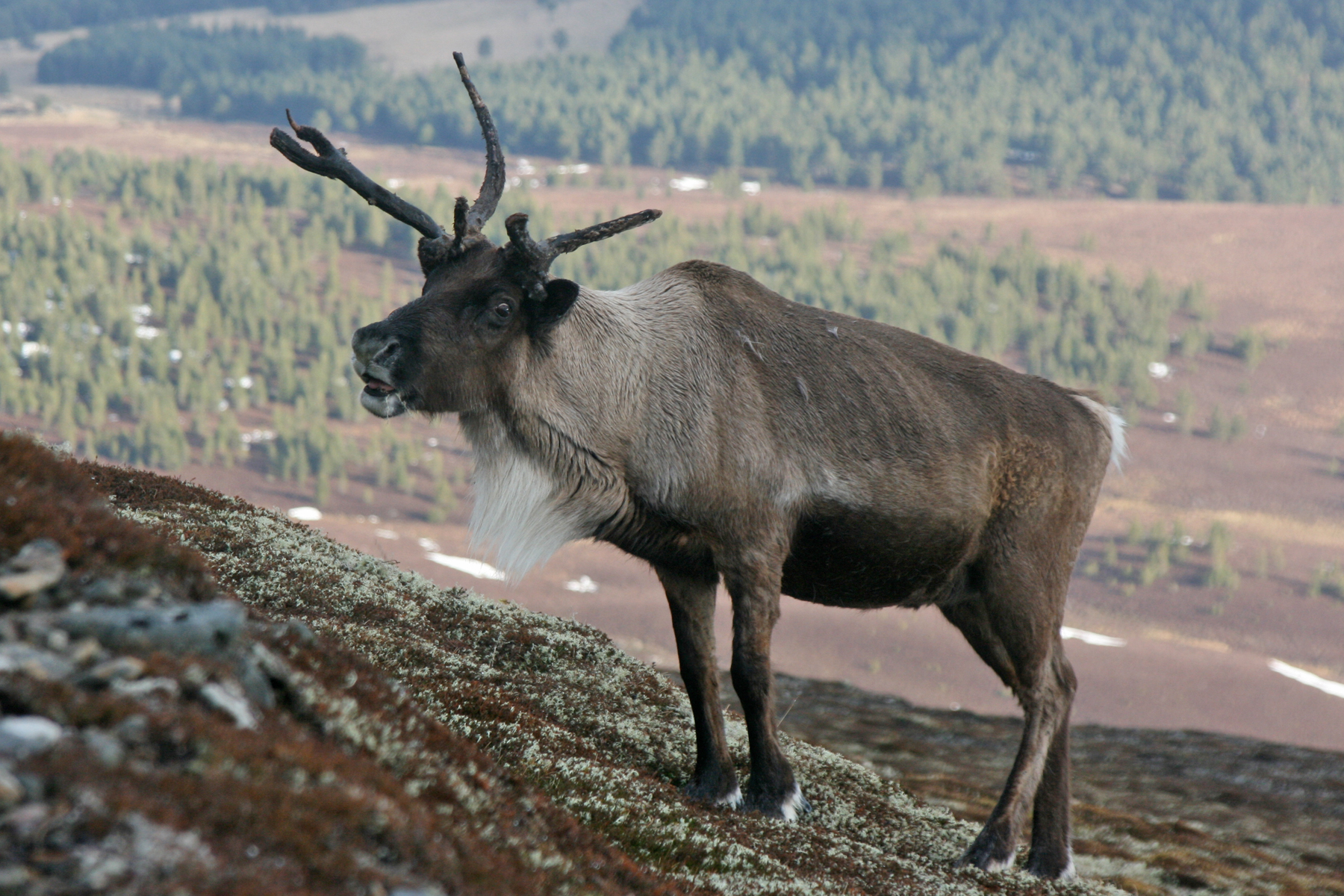
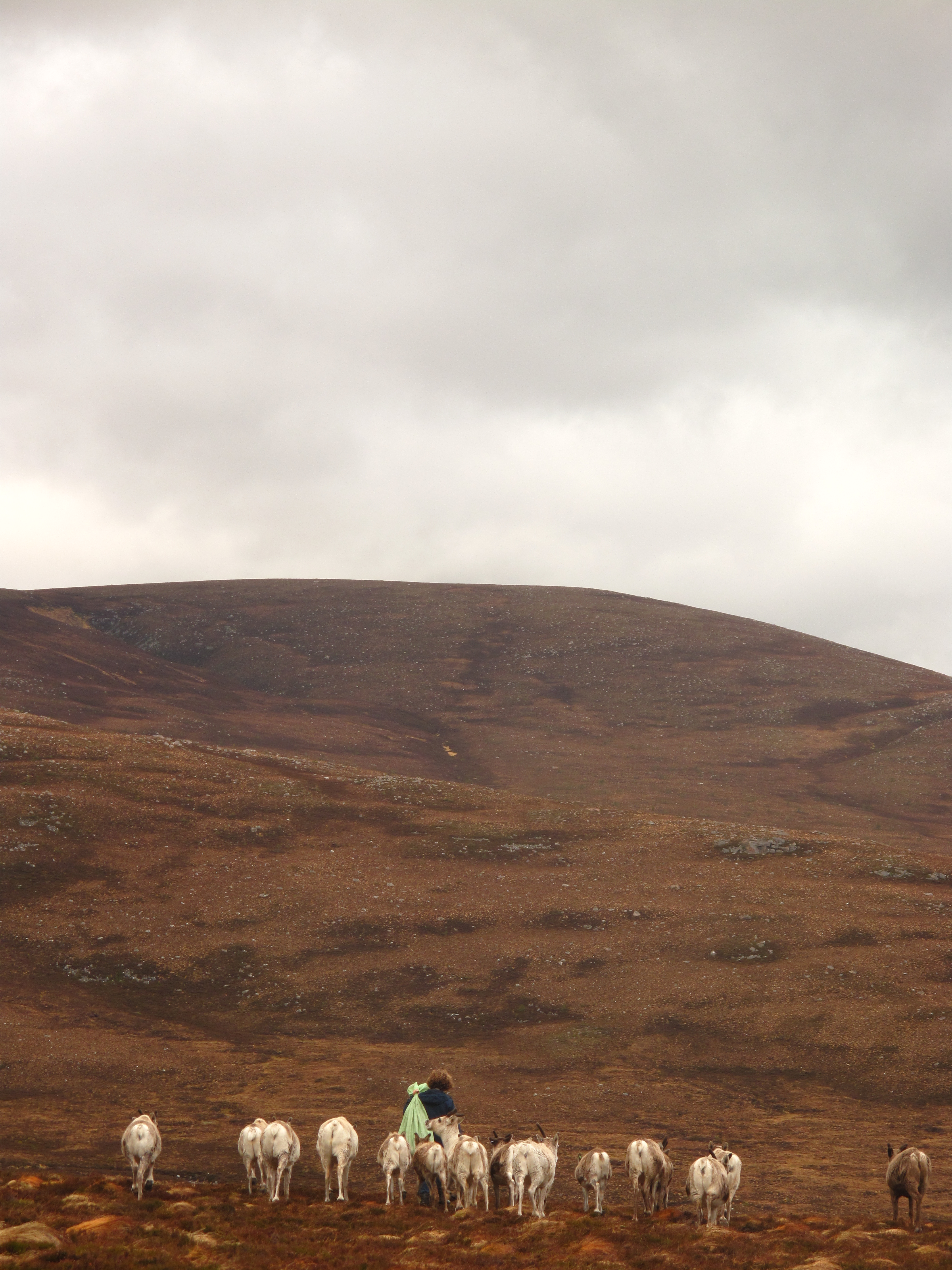
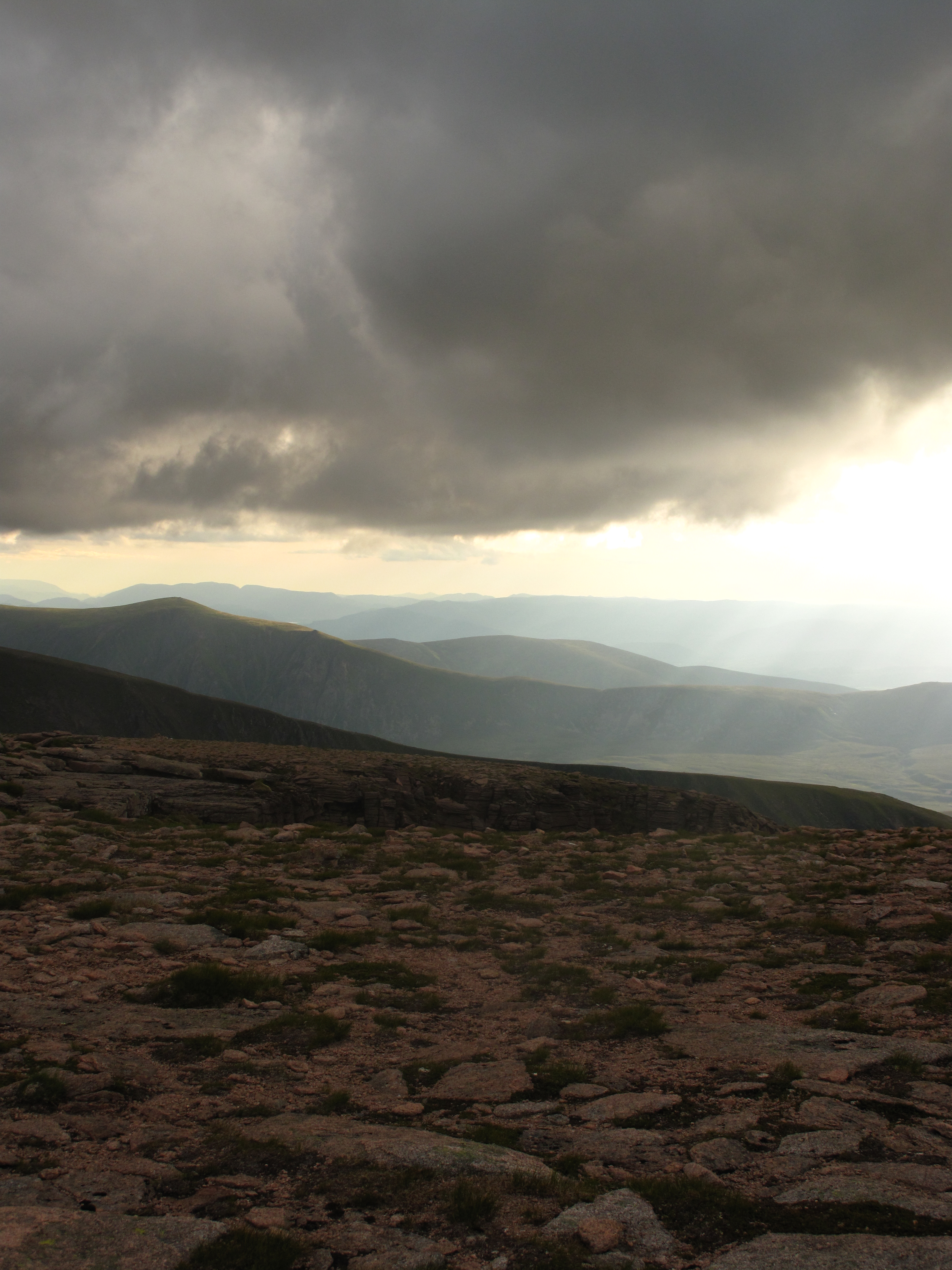
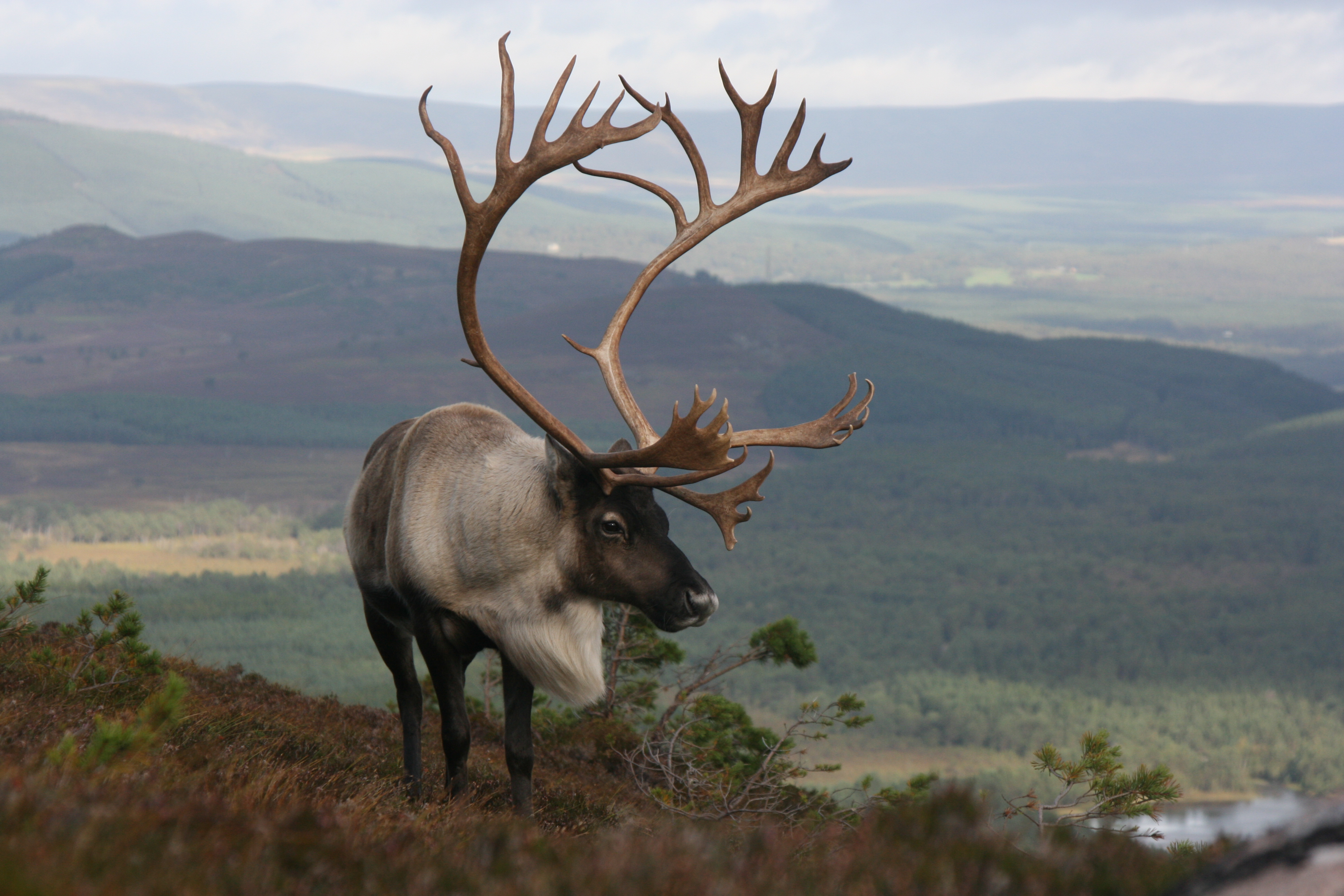
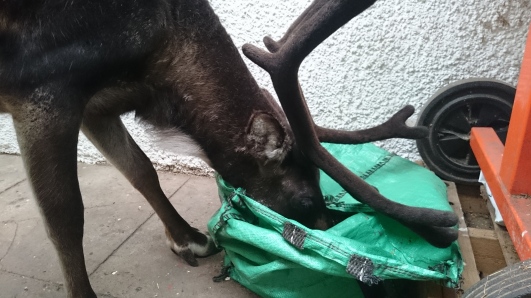
Having been brought up with the reindeer I have had numerous favourites during that time, one of which was Minstrel. He was a dark coloured male and born in 1998 into the sweetie and chocolates theme. I was 11 when he was born. I remember when he was just 1-2 years old he became quite unwell but with lots of TLC and extra lichen he pulled through and made a full recovery. I think having spent this time with him getting better I grew a soft spot for him.
He was a very greedy reindeer which meant he was also super tame… especially as he had the extra handling when he was unwell. If he ever got his head in the bag of food it was an absolute mission to get it back out again! When he got to the age of 4 he became a Christmas reindeer and from the moment we trained him to harness and pulling the sleigh he was an absolute pro! For many years we would call on his expertise to help train new Christmas reindeer who were learning the ropes.
Minstrel taking a wee rest amid the rest of the herd, probably digesting all that food…
Minstrel went from being young to old, there never seemed to be a middle part. So even though he was middle aged for a long time he was always referred to as an ‘old boy’! On Christmas events he would take part in a parade, whether it be pulling the sleigh or walking at the back being the perfect role model, then as soon as the team went into a display pen Minstrel would eat his food (or mainly all the lichen off the top of all the food bowls) then take position right in the middle of the bed of straw for the next couple of hours. He has even been known to completely fall asleep, mid event, out on his side even with a potential snore in there!
Look at all the lichen under his feet!
He had a lovely nature and lived to a good age. He would eat anything offered to him, even a banana flapjack as someone once witnessed. He is one of those legend reindeer we will always talk fondly and forever compare other reindeer if they are misbehaving, wishing they would be more like him.
Up on the hill in our 1200 acre enclosure there is a shed. We use the shed to house sick reindeer, catch the wild ones, and store all our hill-working tools and materials.
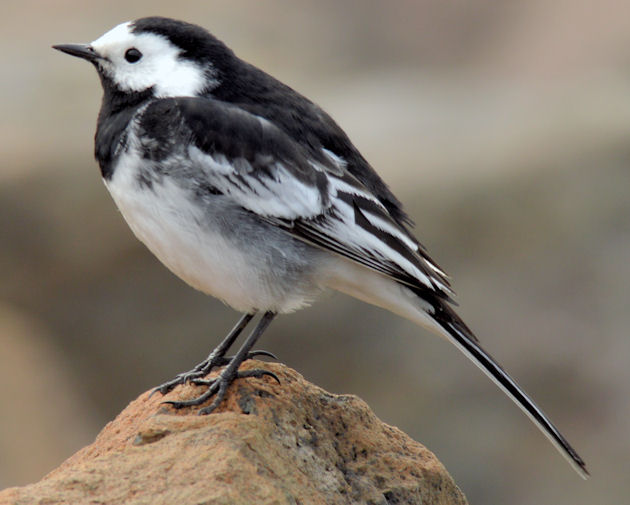
For the last couple of months we have had a visitor in our shed on the hill. A little female Pied Wagtail decided that the shed made an excellent house to hold her nest, and it even came supplied with a renewing source of insulation – reindeer hair!
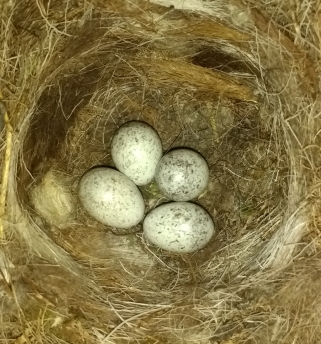
Tucked neatly out of the way, hidden behind some spare fencing wire, Mrs Pied Wagtail laid her second-of-the-year clutch of four teeny-tiny Pied Wagtail eggs. With the reindeer hair lining, and her body warmth for much of the day, the eggs were kept nice and toasty through the variable Scottish summer.
Can you spot the nest?Mrs Pied Wagtail has used her initiative and used all the spare winter-coat reindeer hair to line her nest. Each reindeer hair is hollow, making it an excellent insulator.
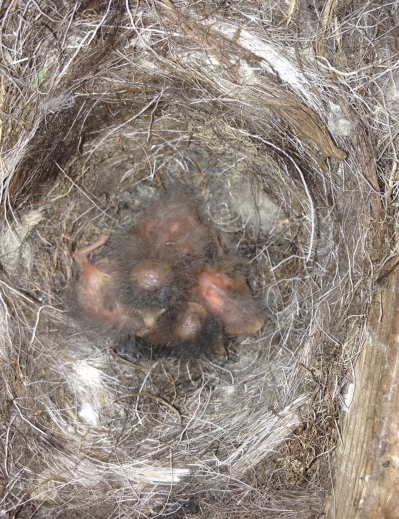
On the morning of the 18th of July, we walked into the shed to the shed to find four little chicks huddled up against the nest. A couple of days later we were greeted by the sound of cheeping, and were delighted to find 4 yellow open beaks hungrily competing for food. It is of course incredibly important not to disturb the mother on her nest, or the chicks whilst they are alone, so these photos were taken quickly whilst the mother was already away.
The newly hatched chicks, huddled up keeping warm whilst Mamma Wagtail is away.Four little chicks on the 24th July, hungrily asking for food.After 2 weeks in the nest, the chicks are noticably bigger and ready to fledge!
Pied Wagtails are a common British bird, often known by slightly unusual nicknames such as ‘Polly Washdish’, or ‘Dishwasher’. These names are thought to come from olden days when women would wash dishes in streams where Pied Wagtails were common. They are lovely, sprightly birds that appear very cheerful and eager with their wagging tails and chirping call.
By the 31st of July, the chicks had fledged, and are now off in the big bad world, where we wish them all the best. We are always happy to see birds and beasts using our shed for shelter, and hope to see our little female Pied Wagtail back next year!
Every reindeer has their own name, based on a different theme every year. Last year the theme was ancient civilisations but we have also had more ridiculous themes such as pop stars (Elvis, Marley, Blondie) and cheeses (Feta, Mozzarella, Brie). However, with almost 160 reindeer in the herd, there is a lot of reindeer to identify and name! I work as a herder during the summer which is a bit easier for identifying the reindeer, so this blog will describe how I go about naming them.
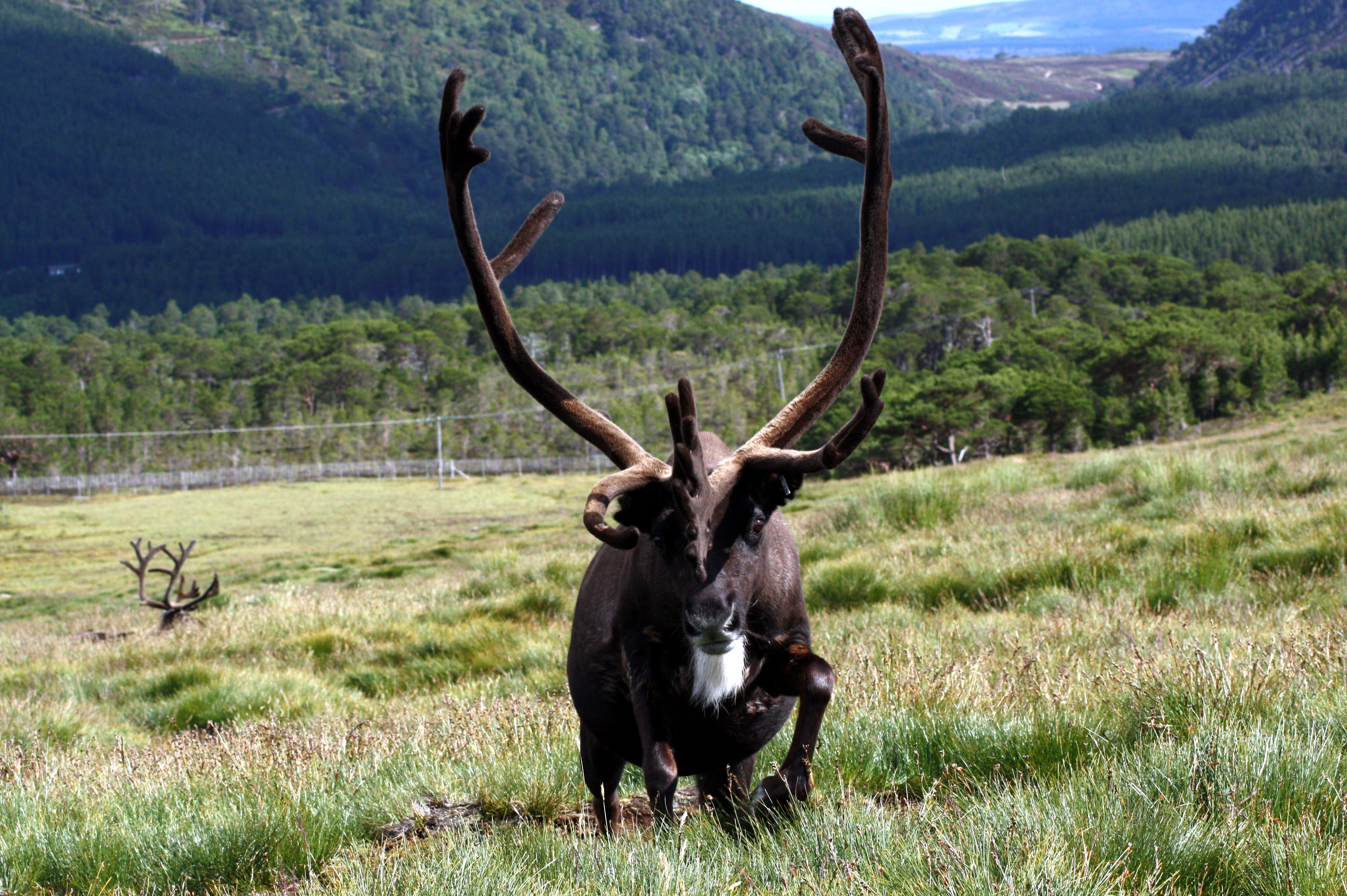
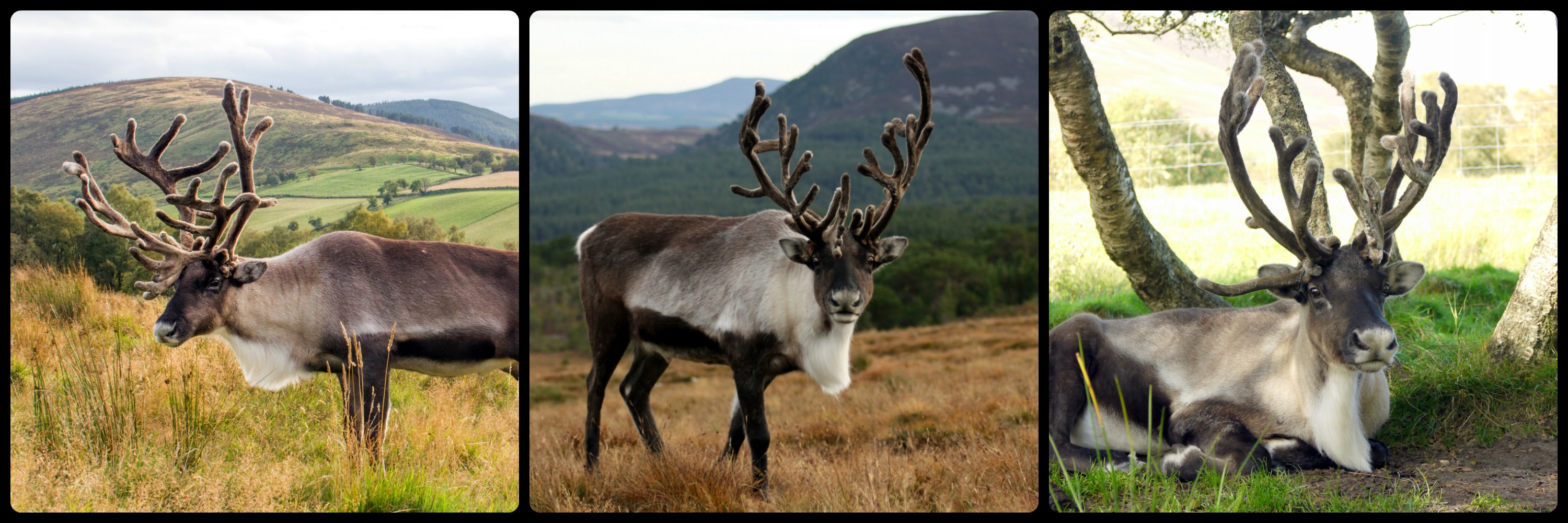
In the summer the reindeer’s antlers are nearly fully grown and most have distinctive shapes which grow back the same every year. The big breeding bulls usually have huge antlers that stand out amongst the crowd, for example Bovril, who has large dark antlers with two big blades at the front (the blade is the part of the antler witch grows downwards over their face to protect it). The Christmas reindeer (those who have been castrated to control the breeding) usually grow smaller but more ‘messy’ antlers that go off in all directions. This year Nutkins, a very friendly five year old, has small antlers that have parts growing in around seven directions!
Bovril has huge dark antlers when covered in velvet. He is also one of the biggest and darkest reindeer in the herd.Nutkins searching over my shoulder for some food.
Another main difference for the reindeer at this time is they have moulted their thick winter coats to reveal their much thinner and darker summer coats. There is a lot more variety in colours between these, some being very dark, such as Orkney, or much lighter like Origami. A few also have interesting facial markings such as Laptev who has a pink nose. These reindeer are all so distinctive that they can be identified from a distance.
Orkney can be easily identified by his dark coat and greedy personality!Origami
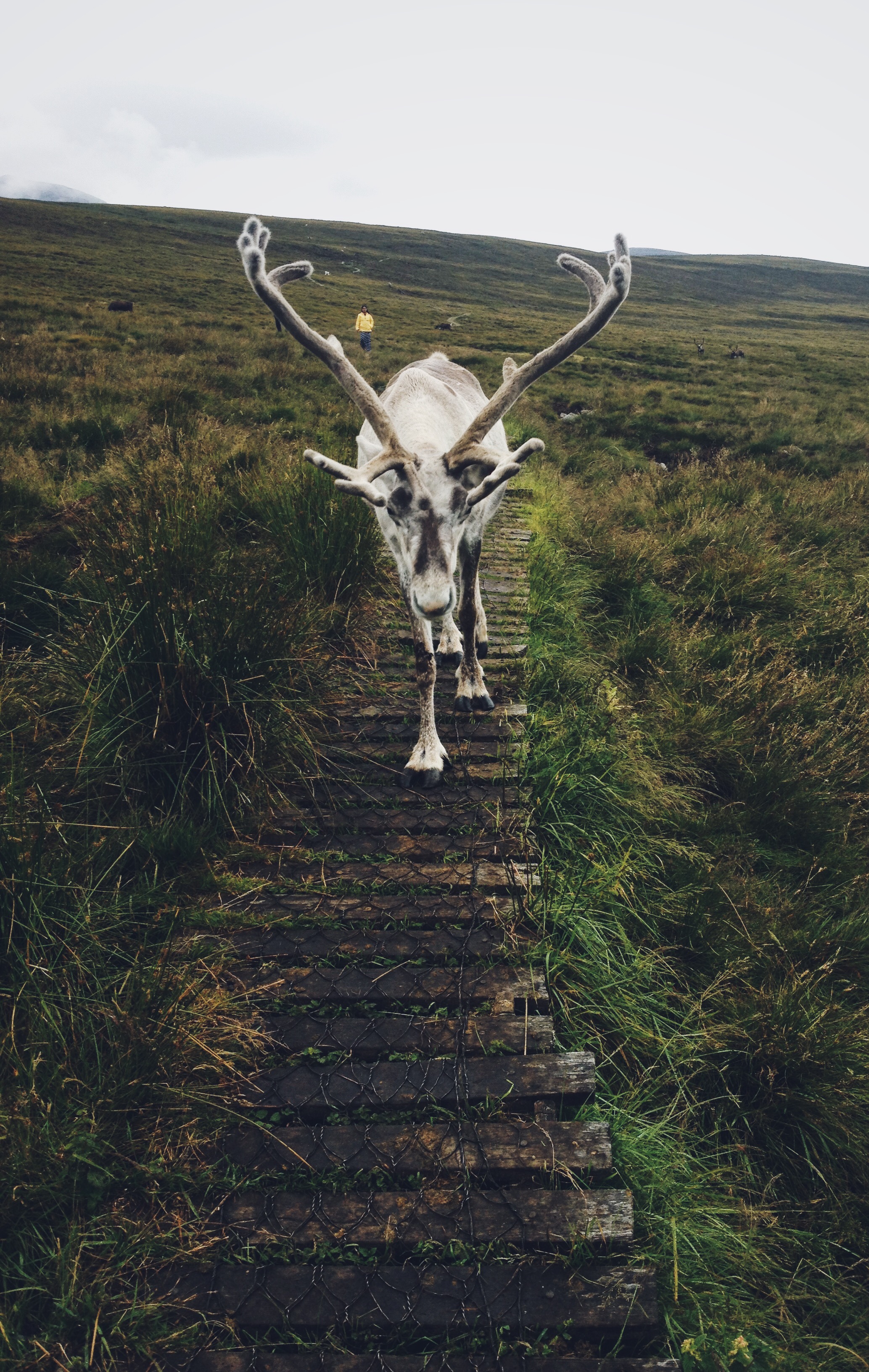
Origami saving some energy walking on the board walk. He has completely moulted his winter coat in this picture, which is almost pure white in places, unusual for a summer coat on a reindeer.
Laptev with his very distinct pink nose.
All the reindeer have different personalities. On hill trips it is usually the same group of four or five reindeer that come up for hand feeding and don’t leave until all the food is gone! This means that all us herders can easily identify the greediest reindeer in the herd (such as Orkney as mentioned before).
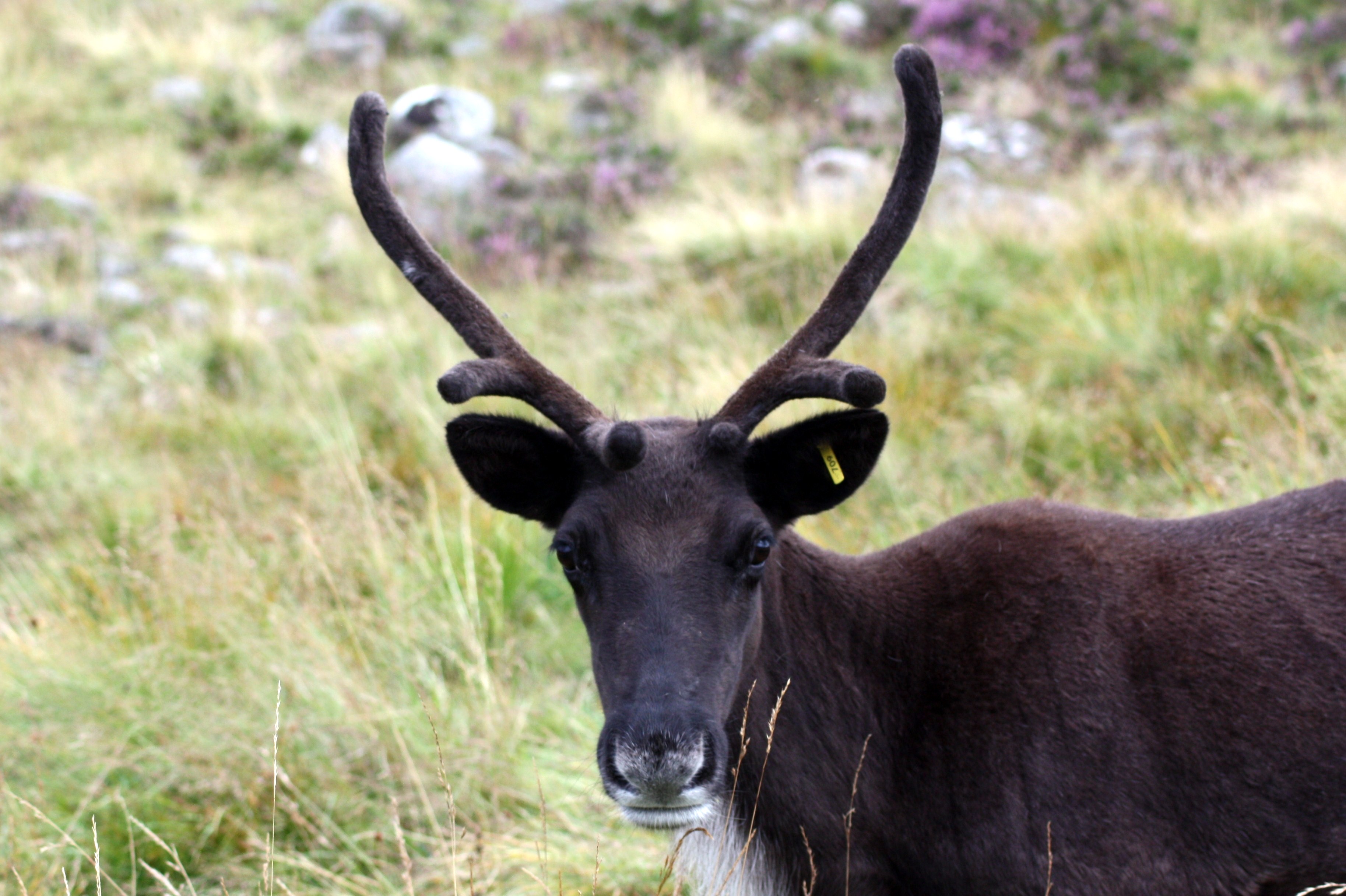
If the reindeer is normal coloured with ordinary antlers and a shy personality, identifying them can be harder. In this case we can get a bit closer to the reindeer and look at their left ear which will have a coloured ear tag. Every year has a different colour of tag and a different theme for naming (eg. 2013 was a yellow tag and the theme was cheeses). There is usually only three or four reindeer from each year so it is easier to narrow it down and work out the differences between them in each year.
If all else fails, we can cheat! Every ear tag has a different number and each herder has a herds list so we can easily look up who it is we are struggling to identify.
Most of the reindeer mentioned in this blog are currently up in our hill enclosure so if you’re planning a visit soon why not try and identify one for yourself!
Hello, my name is Olly; I’ve been working at the Reindeer Centre (on and off) for about 3 years now. I first came up volunteering for work experience when I was studying Countryside conservation and Wildlife management at Sparsholt College. I started once more this season in May and since being here there hasn’t been a dull moment.
I keep on being badgered to write a blog but I have never been sure what to say. I am also dyslexic and so unfortunately writing is not one of my favourite things to do, but… I do like to take pictures! So here are some photos of mine that I have taken since I have been back with my perspective on them. And as they say, “a picture paints a thousand words”..
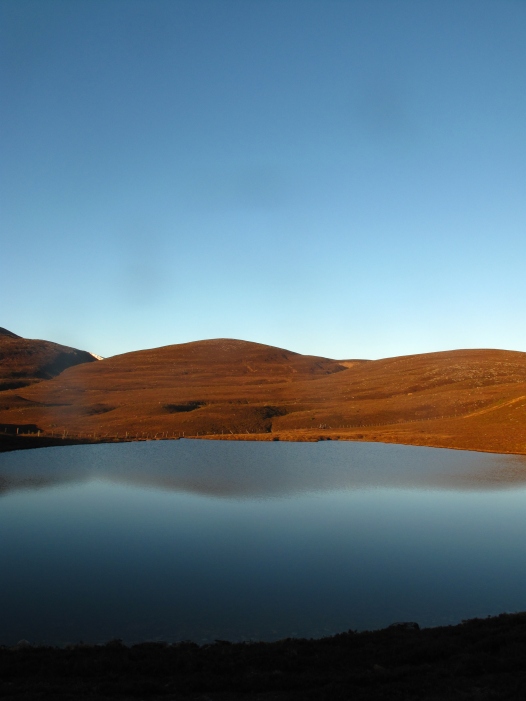
Picture 1: May time is calving time, which means its time for 5am starts, in our search for the newborns out on the hill. I often like an early start (as long as I have a strong coffee) as you’re seizing the day. What a day it was, not a cloud in sight and just a soft cooling breeze with the hill alight with the morning sun. I was also excited to see Black Grouse lekking in the enclosure. We eventually found the new mother Gazelle and her wee one, who was a strong healthy male.
Black Loch looking out to Creag Chalamein
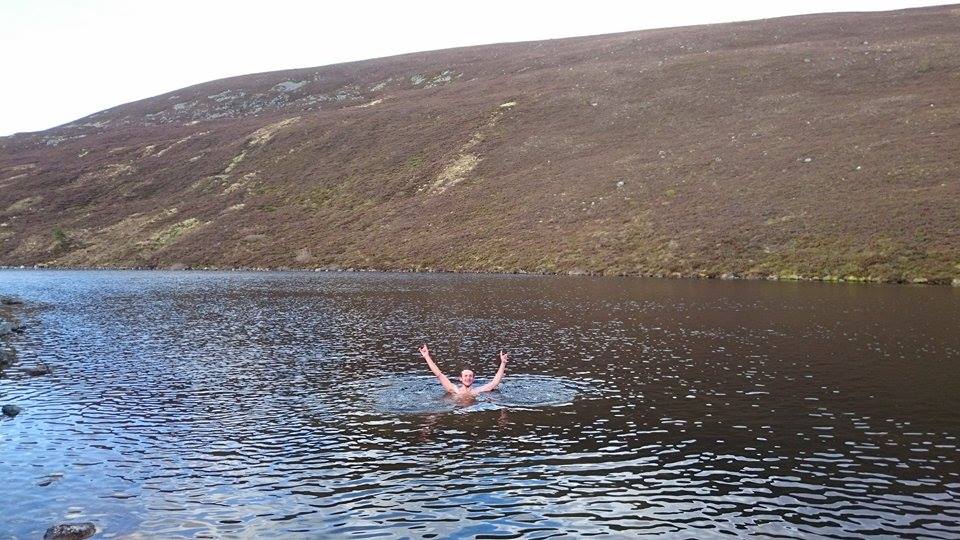
Picture 2: One thing I love about it here are all the lochs and rivers, as a few of us at the Reindeer Centre made a New Year’s resolution to jump in a fresh body of water once a month or week. Trying to do this down south was rather difficult and I had to go to the coast to achieve it. But now in Scotland there’s somewhere to swim around every corner. Since being back I have been in 5 different lochs and a couple of rivers. It may be cold at times but you’re surprisingly warm once you’re out, athough I’m usually on a run when I do jump in so the blood is pumping. But I highly recommend an occasional dip.
Nothing like a quick dip to warm (or cool) the cockles of your heart.
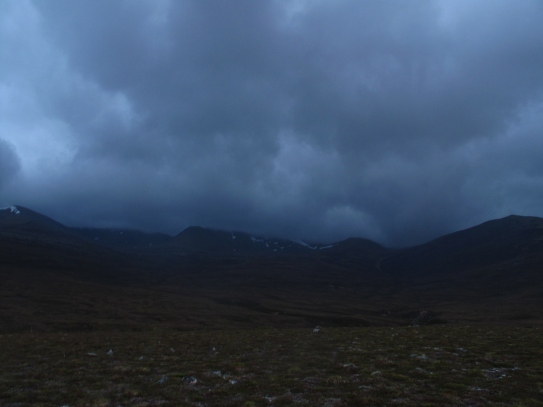
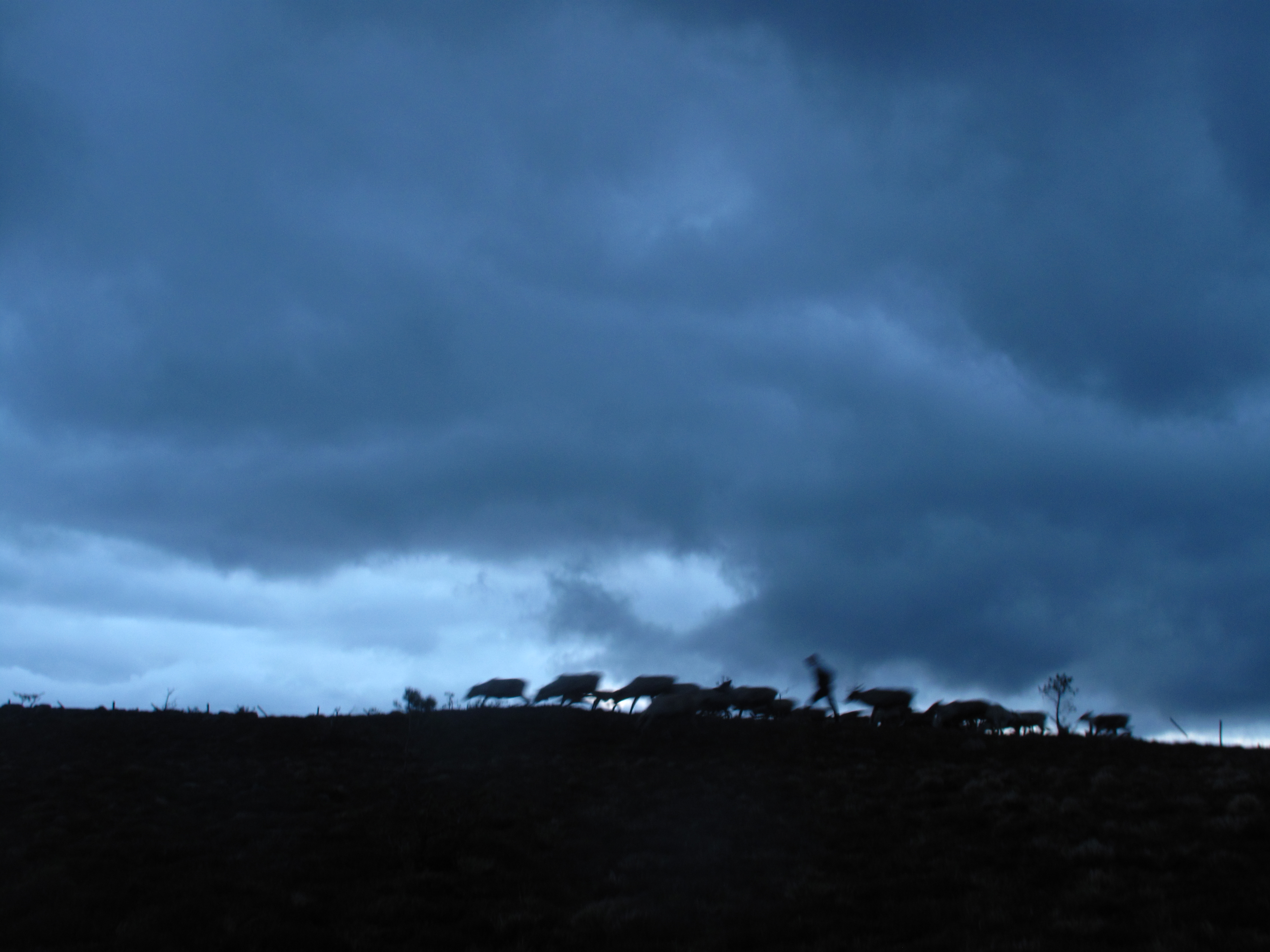
Picture 3 and 4: The long socks and trainers were on, my belly was full of stew and the calf was well rested…. It was time for the cows and calves to head out on the free range. We headed out late in the evening to lessen the chances of us bumping into dogs and as we came over the brow of the hill the hills were looking fierce, but the show must go on.
With Tilly leading one of the females (Fern) on a halter; myself, Fiona, Morna, and Ceris followed from the sides and the back in case the reindeer decide to go their own way. At one point they did, but we managed to get them on the right path in the end.
Pushing them out wasn’t so bad. All you had to do was keep the right distance – far enough not to scare them but close enough to keep them moving. Apart from almost falling off the edge of a scree at one point it was just a case of getting them far out in to the hills. As we let them run off, it was rewarding to see calves running up in to the hills alongside their mothers.
Now came the race against the light! We were lucky and just as it became pitch black we made it back to the van, although going through the trees past Utsi’s bridge was rather eerie. We eventually got back to Reindeer House and celebrated with a wee dram.
The clouds looming low over the hills as we set off.The cows and calves silhouetted against the low cloud.
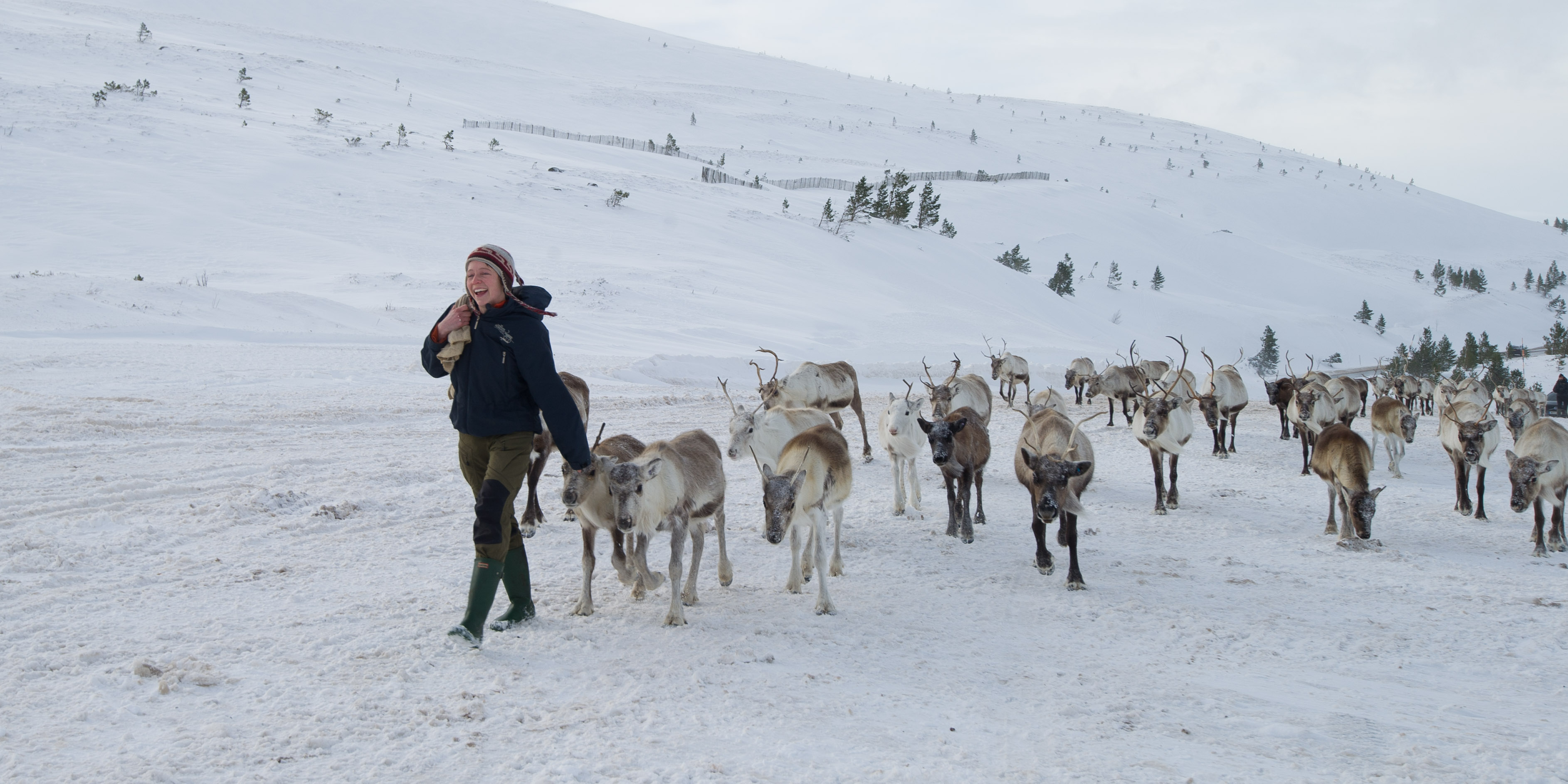
Picture 5: The woman in this photo herding the reindeer is called Sally. She often wears a shirt with a sunflower design on it which suits her personality to a T. She brings sunshine to Reindeer House as she is a true pleasure to work with, and has to be one of the jolliest people I have ever met.
Sally closely followed by the herd.
Picture 6: Though our days are busy and the hills and forestry tracks are a hive of activity, once the clock reaches 5:30pm Glenmore turns into a ghost town. With the sun setting late in the evening, we go to the hills. It is treat to have this on your doorstep and is a grand way to end the day, by gazing into the distance of this colossal landscape. It really makes you think how small we all are.
The hills shining and bright as the sun goes down. We feel like the only ones alive.
These are questions I have pondered while fixing the boardwalk, closely accompanied by Blue, our male leucistic reindeer. The subject of leucism is quite hotly debated and seems only those with a Doctorate in Pathology may comment, but here goes:
Blue inspecting my handiwork.
Leucism (pronounced loo-kiz-im) is a genetic peculiarity which gives a white colour. The condition is recessive. It is a defect in the skin, not the pigment cells. Leucistic animals are all perfectly white. It seems however that there are differing levels of the condition – partial and full.
One other characteristic of leucism is deafness, however is seems that this is not always the case. Leucism is developed during the early stages of embryonic development and can influence the central nervous system. It therefore most commonly affects sight and hearing.
Blondie, a leucistic (and deaf) female, sleeping peacefully and completly unaware that the rest of the herd has walked away and we are standing nearby.
If a condition is recessive it means that the offspring must receive the leucism gene from both parents to develop the condition. We have leucism in the herd. It doesn’t affect the carriers at all but if they breed with a carrier there is 25% chance that their offspring with have leucism. We currently have two leucistic Reindeer that are both deaf – Blue and Blondie.
Blondie’s(ll) father was Sirkas (Ll) and mother was Glacier(Ll) both carriers, therefore there was a 25% chance that Blondie was born with leucism. Glacier had nine calves of which only one was born with leucism but of course several carriers.
Blondie and her calf Lego, both pure white.Blondie nicely camoflauged against the snow. Leucism does have its advantages!
Blue’s(ll) father is Lego who had leucism (ll), Blue’s mother is Lulu who was a carrier (Ll). There was therefore 50% chance that Blue would be born with leucism.
A baby Blue, very obviously un-camoflauged against the heather (but very cute).
Albinism is a total deficiency of melanin producing cells in the skin. It is a skin mutation. There is a total lack of pigment. Albino animals have pink/red eyes. The pigment (colour) that would normally be seen in our eyes is missing so the blood vessels behind are seen in the eye, given the appearance that the eye is red in colour.
As I do not have a Doctorate in anything (except drinking tea) these are not comments but merely my interpretation of several articles written by Doctors of Science.
The Cairngorm Reindeer Herd was established in 1952 so over the past 65 years there have been many main breeding bulls so here is a little sum up. I can only tell you about the ones I remember but there were many bulls before my time as well. I’ll try to inspire Tilly (or Alan) to write a blog on the ones before my time.
The first bull I remember when I was very young was Gustav and he was born in 1985, the same year as my brother. You could not get a more gentle reindeer, if he was a human he would be the perfect gentleman! I suspect nowadays we have lots of reindeer in the herd like Gustav but back in the day he was certainly one of a kind! You may find this morbid but a few years after Gustav died we found his skull so we hung it up in our shed on the hill so we feel like he watches over us when we bring the herd in for handling. He was the main breeding bull in 1989, 1990 and 1991.
The next one to memory was Crackle who came to us from Whipsnade zoo in 1991 along with two others, Snap and Pop (Who remembers Snap, Crackle and Pop from Kellogg’s Rice Krispies?). Being new blood we obviously wanted to breed from him. He was also a very good looking reindeer, grew lovely antlers and had a great temperament so all good things to go back into our herd. He featured on the front cover of Tilly’s first book ‘Velvet Antlers Velvet Noses’ and lived to a grand age of 16. He was also photographed by wildlife photographer Laurie Campbell and recently we have acquired some posters from Laurie which were printed many years ago when Crackle was in his prime which we are selling in our shop.
After Crackle was Utsi who was born in 1998. He was hand reared by Alan, my dad. Utsi’s mum Pepper died when he was very young so we bottle fed him milk and he was Alan’s shadow around the hill and farm. I had a love/hate relationship with Utsi… and not because we fought over Alan’s attention, he well and truly had that 😉 When I was in my mid-teens on the hill one day with mum, we fed the herd and I was walking back counting them. At that point Utis was rutting and decided I was a few steps too close to his females and he completely flattened me. There were no injuries, infact I managed to get myself in-between his antlers while on the ground and held him into me as mum came over flapping an empty food sack to shoo him away. He headed off leaving me in a wee pile on the ground, but un-injured! The trouble when reindeer are hand-reared is they see us as part of their herd and being totally comfortable in our company he wasn’t scared to give me a telling off for getting too close so it’s a fair one really. I’ve learnt from my mistakes and how to act around rutting bulls so there have been no incidents since. The same year Utsi was a breeding bull we also had Cluster who was the same age. He was very different, kept himself to himself but grew lovely big antlers. We also had Red who was another gentleman, good looking with a super nature!
Utsi behaving himself on the Cromdale hillsCluster with his beautiful antlers in velvet
We then had a spell where we used bulls we brought in from Sweden in 2004. This was new blood in the herd which is very important but it meant there wasn’t necessarily one main breeding bull. Some of these bulls were Sarek, Sirkas, Jokkmokk, Ritsem, Västra, Ola, Moskki and Porjus.
Then there was Crann!!! If you haven’t heard of Crann I’d be very surprised. He has been the pin up boy of the Cairngorm Reindeer Herd for quite some time now and although a very old man at 14 years he is still with us… though not looking as quite as good as he once was. None of the past or future bulls have matched the size of Crann’s antlers, he still holds the record and I suspect will for a long time to come. He was truly magnificent in his prime and his photograph has been in many national newspapers as well as our own advertising and images on various items of shop stock. He is certainly enjoying full retirement now at our hill farm over at Glenlivet, and quite rightly too!
One of the many photos of Crann, a truly majestic bull
So in the more recent years we have had more reindeer joining us from Sweden. In 2008 we brought over Pelle, Jaska, Bajaan and Magnus who were the main breeding bulls around 2009, 2010 and 2011. Then there was Gandi, Bovril, Jara, Lalle, Boxer, Kota, Houdini, Pera, Bandy and Nutti who joined us in 2011. The most recent Scottish bulls are Balmoral and Ost. Both from very strong family lines and they have lovely natures and grow beautiful antlers… everything you want in a reindeer!
The reindeer all take turns throughout the year to do a two week spell in the paddocks and this time it was Fergus’s turn. We planned it so it was around Mel’s birthday, as being his adopted mother two years ago we thought she’d like a wee visit from him. We didn’t tell her he was here and when she got back from work we brought him round from the Paddocks to the back of the house where all the reindeer-related outside prep happens. He acted as though he had never left and bee-lined straight for the feed sack and lichen bucket!
Fergus outside the kitchen, with Fiona and Tiree making sure he behaves!Nothing like helping youself to some dinner!
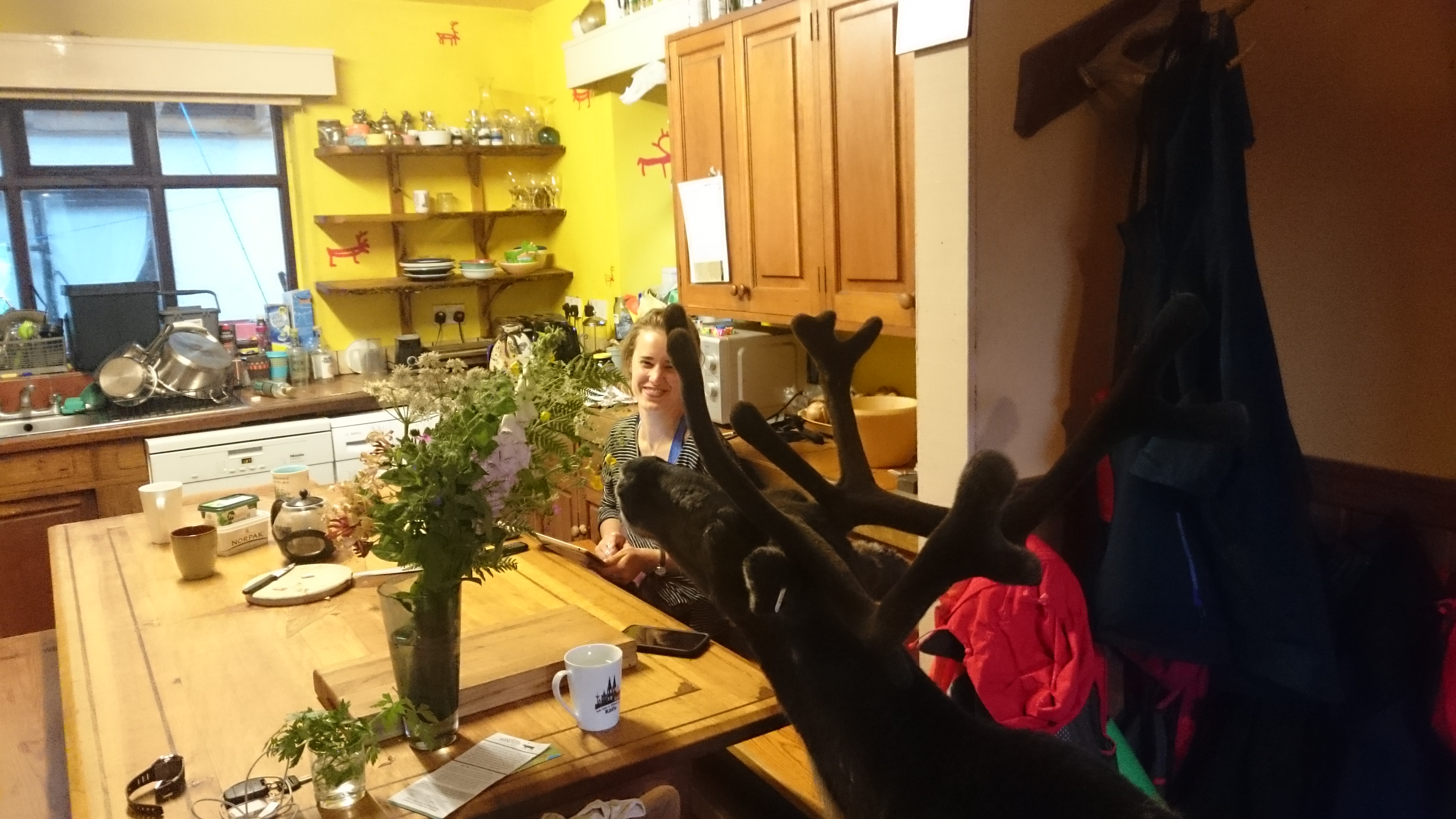
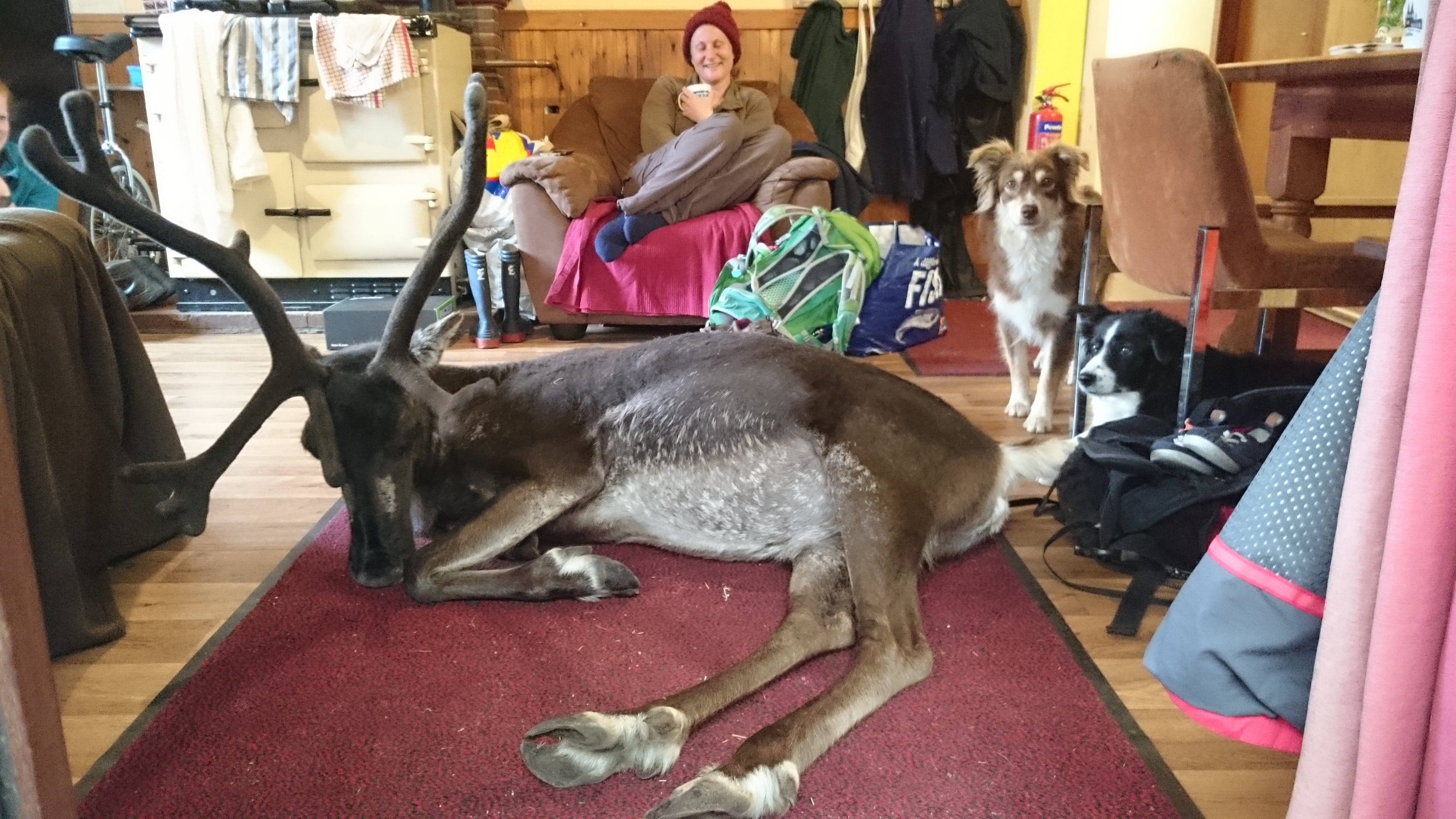
Mel was of course delighted but he did not stop there. He had a wee jolly into the garden and as cars passed they certainly took a double take. Then he cottoned on that the house door was open. As a calf (collie dog sized) Fergus would regularly come into the house but we weren’t sure if he had out grown that. Turns out he hadn’t! He was straight in, having a good look around. He drank out of the dog bowl, and he visited (what used to be) Mel’s bedroom as when he was a calf he used to fall asleep on her bedroom floor. Tiree and Sookie, our dogs took it all in their stride and totally accepted that their old friend was back to visit. Neither animal was bothered by one another.
Fergus in Mel’s old bedroom, much to the delight of the herder who now lives there…And wee snack in the kitchen! How thoughtful of us to provide food, eh?
He spent about 3-4 hours just helping himself to feed, going into the garden to graze the grass and coming into the house and falling asleep on the living room floor. Ruth, our newest recruit at the Reindeer Centre, was totally surprised after spending most of the day on the high tops checking our free ranging herd, when she came home to find a reindeer in the living room. Needless to say her face was a picture.
Sleeping on your snozzle. Not sure it’ll catch on, it sure doesn’t look too comfortable.
Night time came and Fergus had to go back into the paddocks with the other reindeer. I doubt this will be the last time Fergus will be in Reindeer House. It’s a good job we aren’t too house proud!
One of our visitors recently decided to adopt a reindeer they’d met at the Centre, but called us up when they received their pack to let us know that we’d sent a photo of the wrong reindeer. The reindeer they’d met had been a pale brown, with a thick shaggy coat and small antlers, whereas the photo on their certificate was of a sleek black coloured reindeer with large bony antlers. Thankfully, we hadn’t got it wrong, but could totally understand their confusion, as the reindeer change in appearance a lot throughout the year.
Bovril in his shaggy old winter coat in June, and looking smart in September
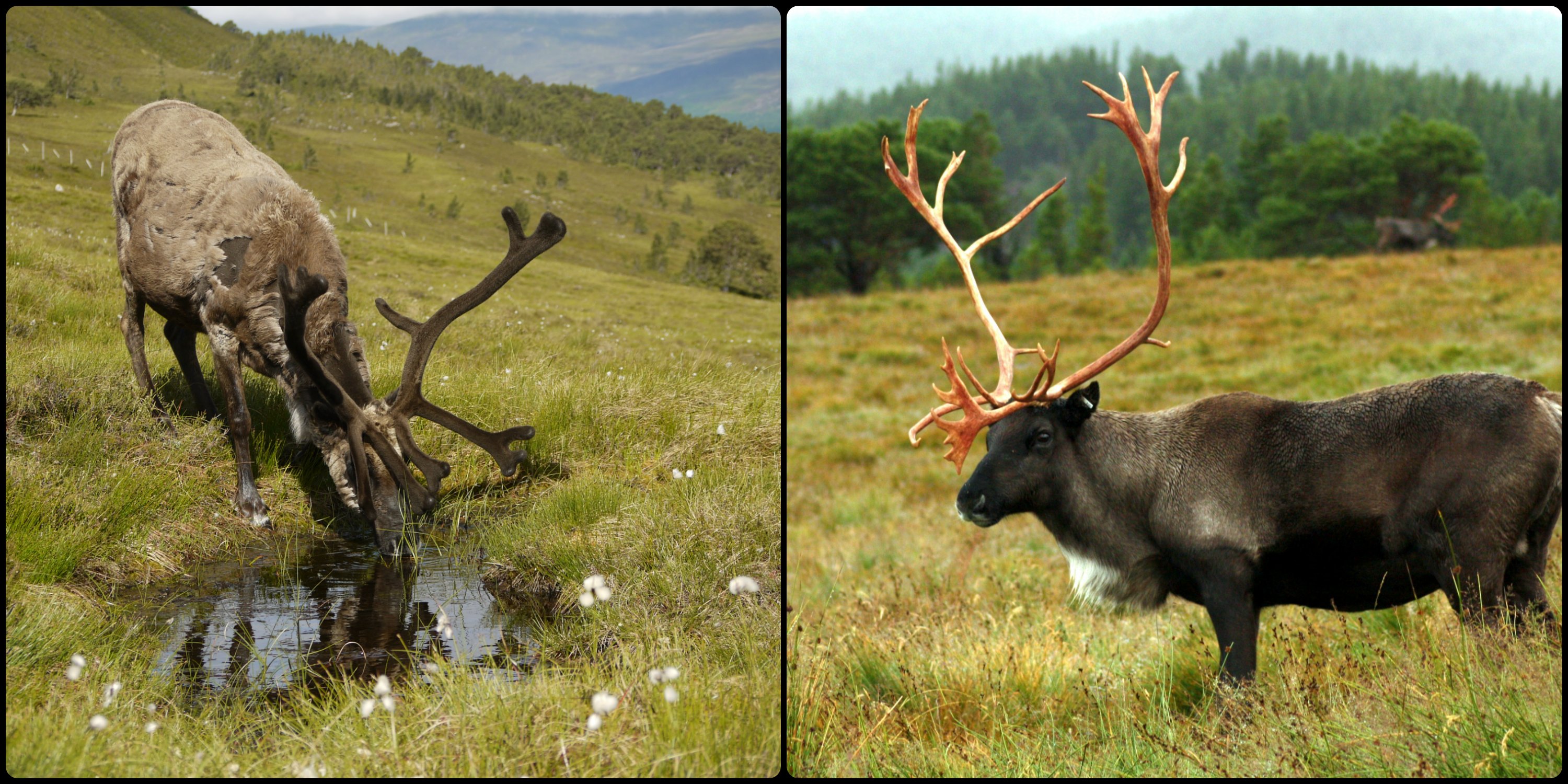
First, there is the coat appearance. From May, the reindeer start moulting out their long winter coat, which, with 2000 hairs per square inch, takes about six weeks. They look incredibly scruffy at this time, but by around mid-July the whole herd look glorious in their short summer coat. This summer coat is a richer colour than the winter coat, so the white reindeer are gleaming white, and the darker reindeer are virtually black. The short coat exposes all of their angles, so they can look a bit gaunt, with angular heads and shoulders.
Olympic’s varied coat throughout the same year (2014) – in February, July and September
Summer in the Highlands is short-lived, however, so by September their long winter coat is growing through, softening their appearance and turning them into cuddly teddy-bear lookalikes. This coat is slightly lighter in colour, so the darkest reindeer are now a rich brown. Over the winter months, the sun gradually bleaches out the colour, so by April the whole herd are a similar washed-out shade, with only the pure white reindeer looking different. It is the worst time of year to become a reindeer herder, as the reindeer look almost identical, and I’ve had sympathy with Ruth, and previously Dave and Imogen, starting in April and trying desperately to work out who is who!
Young Beastie throughout the same year (2011) – in full winter coat in January, darker summer coat in July, and new winter coat in SeptemberYoung Strudel throughout the same year (2010) – in old winter coat in May, dark sleek summer coat in August and with new winter coat growing through in September
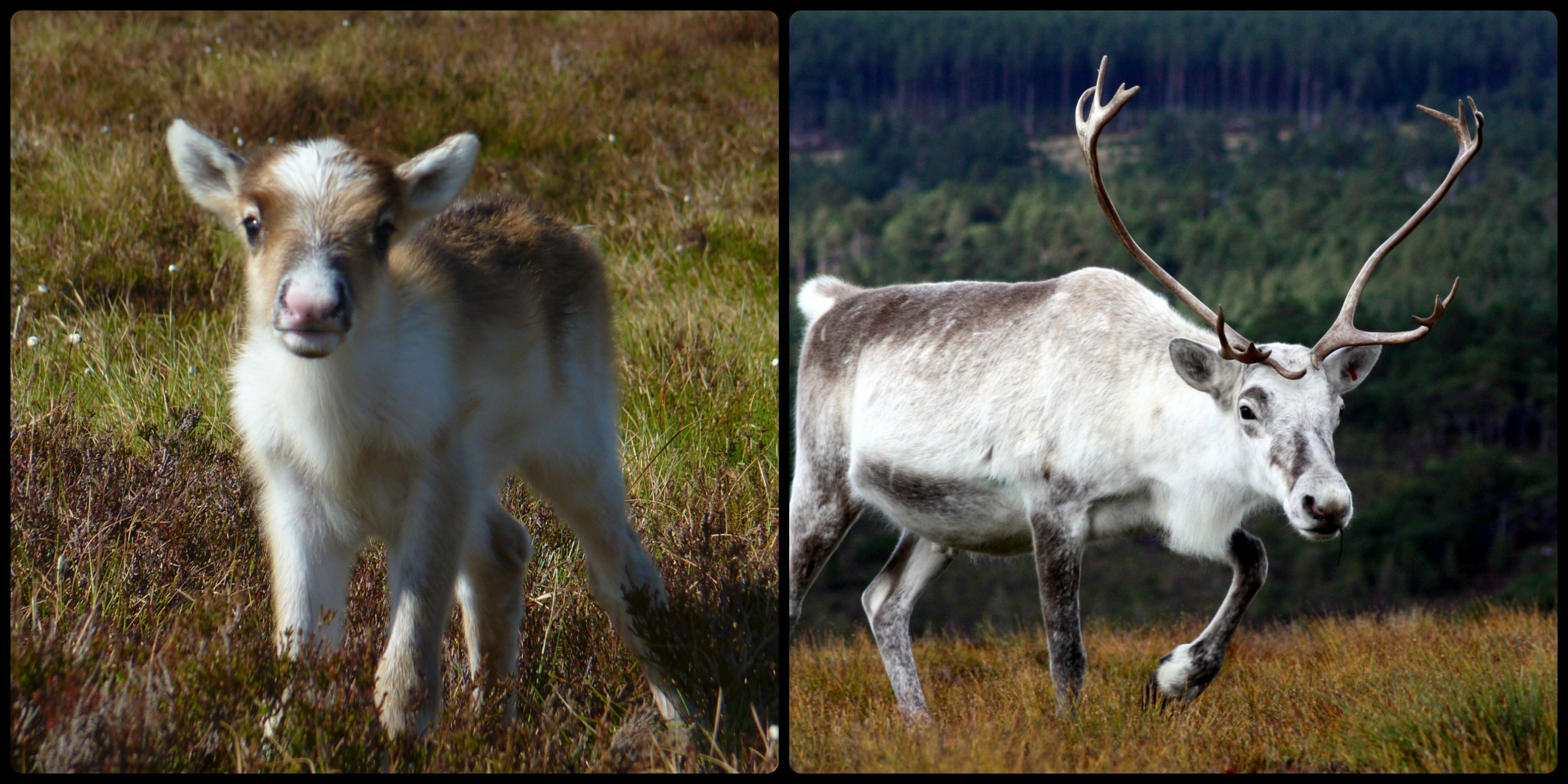
Whilst the colour of a reindeer varies depending on the time of year, a dark coloured reindeer will always be comparatively dark, and a light one will be light. There is one exception, in that some white calves are born a mousy brown or grey colour, with a white forehead. This white forehead suggests their future colour, and once they are a yearling they have changed into their adult silvery coat.
Diamond as a brown calf with a white forehead, turning silvery later that year, and even lighter as a yearlingOrigami as a calf with a white forehead, and as a silvery white adult
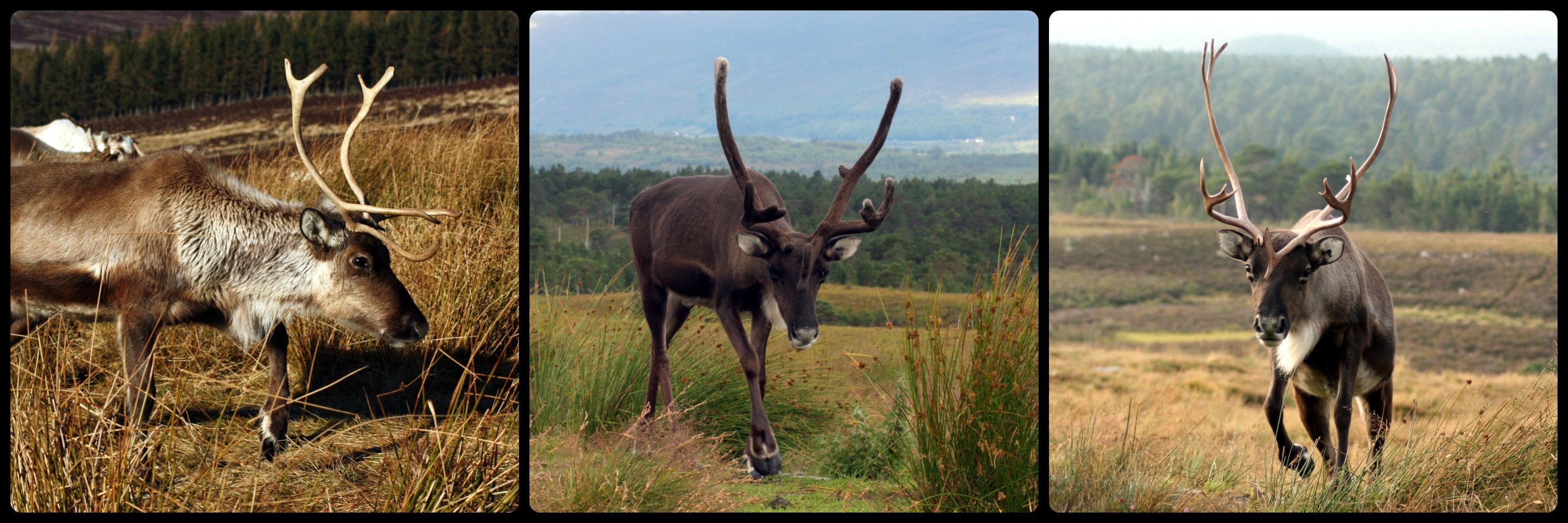
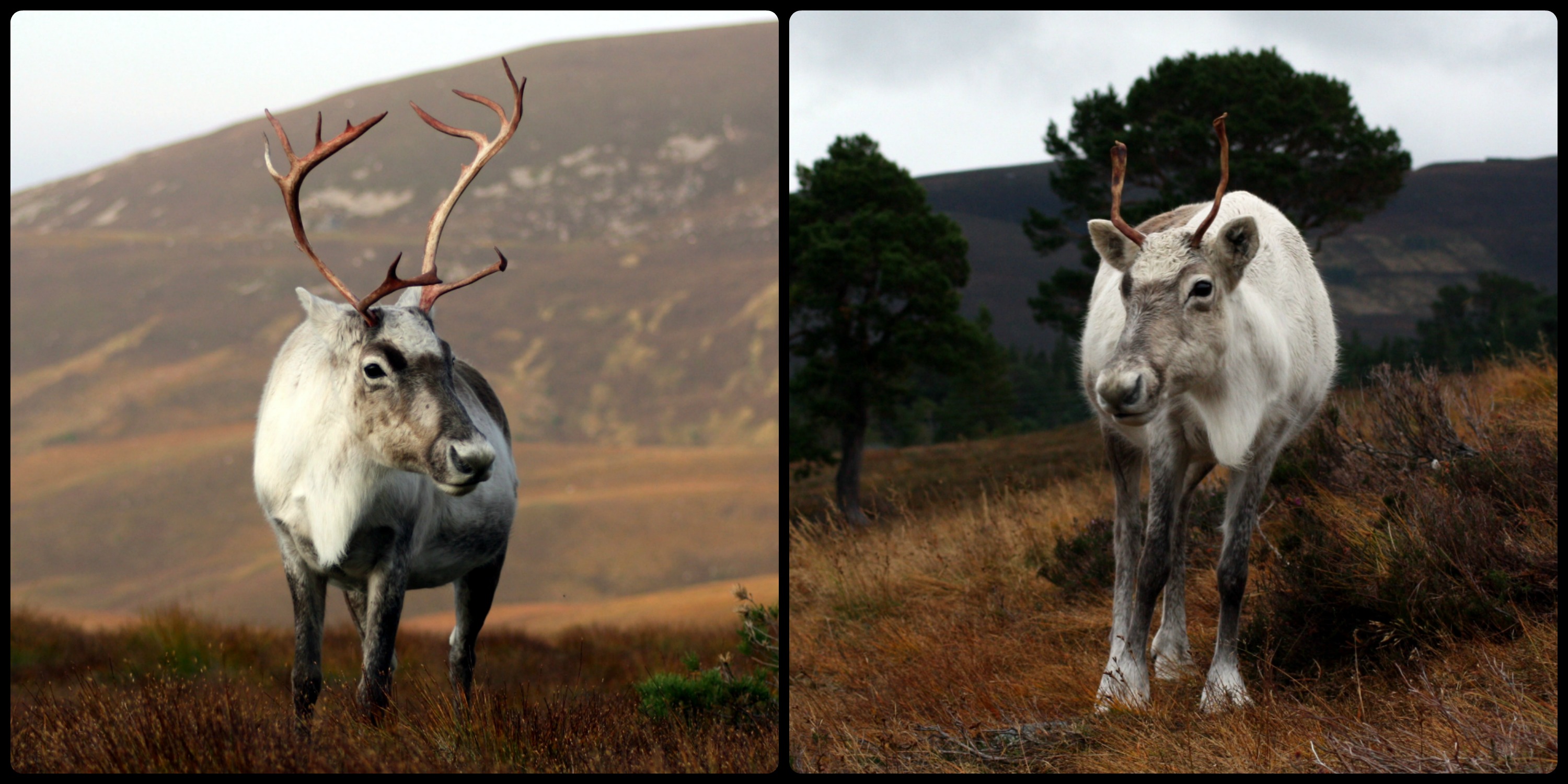
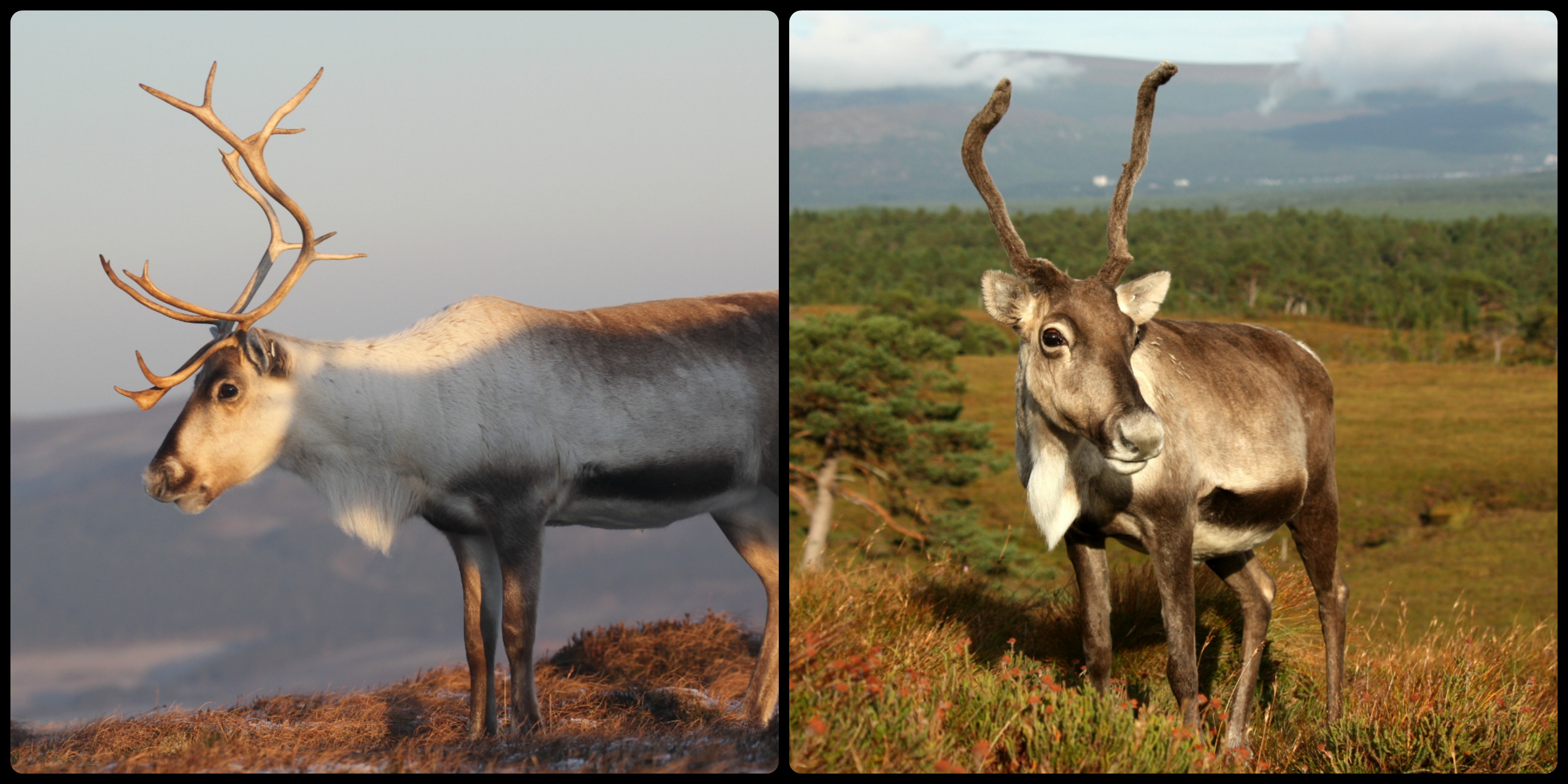
The other major change in appearance is relating to the antlers. Every year, each reindeer grows a full new set of antlers before casting them again at the end of the season ready to grow the next (hopefully better) set. From January to March, the male reindeer are antler-less, with the females usually losing theirs a little later, between March and May. Antlers are very distinctive, with each individual tending to grow a similar shape or pattern each year once they pass the age of about three. This is really useful for us herders, helping us to recognise the reindeer from year to year. Not much help in the period between casting the old set and the new set getting to a sensible size though! New herders are cautioned to try to “look beyond the antlers” and instead learn more permanent characteristics, such as the shape of their face.
Caterpillar with very similar antlers over three consecutive years – 2014, 2015, 2016.Puddock with his familiar crazy branching antlers over three consecutive years.
There is a slight spanner thrown in the works though, as adult reindeer don’t necessarily grow the same size of antler each year. Antler size is determined largely by condition, so if reindeer are short of energy, they will grow smaller, more basic antlers – it’s pointless to waste energy on an amazing set of antlers if you don’t save enough energy for your body to survive! The three main reasons for sub-standard antlers are illness, rearing a calf, and advancing years. If a reindeer becomes ill whilst growing their antlers, the growth will be checked, and sometimes the new bone is weakened to the point that it breaks off, leaving the reindeer with short, oddly shaped antlers. Antler growth also checks when a female is about to calve, and the extra effort of producing milk to feed the calf can mean the antlers are considerably smaller than usual. Finally, once a reindeer is in their old age, their antlers often become distinctly short and basic – they are focusing their efforts on being alive rather than growing antlers for dominance.
Lulu with impressive antlers in 2013, and a rather less impressive set the following year, due to rearing a calf.Beautiful Sequin in her prime with a large set of antlers, and with a simpler set in her old age.
It’s always entertaining for new herders watching the change in reindeer throughout the year, and sometimes peering in disbelief that the handsome reindeer in a photo is the same beastie as the scruffy fellow they know on the hill (as a side note, most of the photos for the adoption certificates are taken in September when they reindeer are at their smartest, with a fresh winter coat and recently stripped full-grown antlers). So if you do receive an adopt certificate with a reindeer looking a little different from when you met them, it is of course possible that we’ve got it wrong (we’re only human!) but if we check for you and confirm that it is them, hopefully this blog will help you to believe us!
Times are a-changing and we thought we’d keep all you lovely readers informed with who is working here at Reindeer House. People have left, people have arrived, but the reindeer herding goes on…
So here goes:
Imogen and Abby (aka The Fierce and The Fluff) who both worked here for a few years have left in the last couple of months, moving on to new places and new adventures. We miss them both greatly (and their banter!), and for all of you out there who knew them as herders, we know you’ll miss their characters too..
Abby on a beautiful day with Lace.A sunny winter’s day surrounded by reindeer is enough to make anyone, Imogen included, smile!
Ruth is our newest member of staff, who joined us during May. As a redhead she has gone through so much sun-cream since arriving that we’ve decided there should be a redhead grant from the government to cover the cost of this, so you can wish us luck on this venture. Ruth has a fantastic knowledge of the plants and animals of Scotland, and makes tours out to see the reindeer a whole new learning experience for both visitors and others herders!
Ruth with one of our calves from this year.
Olly is back! Olly has worked at the reindeer centre on and off seasonally over the last few years, but is finally here to stay (we just can’t keep him away). Known for his flamboyant shirts and braces and excellent (and probably early-morning-sleep-related) comments, Olly is just great. Full of enthusiasm, knowledge, practical skills and creativity, Olly keeps us amused and is an excellent man to have about.
Olly amongst a hungry herd of reindeer.
After having been here only four months Morna has proved she can handle the most difficult of situations. She wears many hats – equally skilled with hammer or pen, paint brush or calculator. Her calmness is appreciated by the reindeer who are at ease in her presence and us herders appreciate her love for life. Growing up on the Orkney Isles she is at home in wild places (but whatever you do don’t start a snow ball fight with her as she is likely to hurt herself).
Morna enjoying her first calving season.
Dave has been here now for just over a year, so is a well-known bearded face at Reindeer House. Our only resident New-Zealander, Dave has worked on his Scottish reindeer call to make sure the reindeer can understand him, which makes us all chuckle here at the Centre. Dave never seems to get fazed or frazzled, and is one of those genuinely lovely people who calms the rest of us down simply by being around, and visitors seem to come away from the hill trip in a much more relaxed mood than they began in. And although he has been here for over a year, the secret finally slipped out that Dave has never mixed a bag of hand feed…
Dave finds time for a moment of quiet contemplation on the hill.
Hen and Andi have both been here for a good number of years, and make sure everything runs smoothly here at the Centre. They are in charge of everything from our whole reindeer adoption database, to creating new road signs, to making sure the reindeer get the right amount of food, and to keeping us newbies in line. As Hen has been confined to crutches for the next few months, she is currently being our office-extraordinaire and we are all on orders to take photos of the reindeer down so she can keep up with how they are doing. Andi has taken up the slack of the missing Hen’s ID knowledge on the hill, and is providing a fountain of knowledge and tips for who is who. Andi is the herder to go to for all our stupid questions, and keeps us in line with her patience and loveliness.
Hen on Christmas tour, with a sleepy Topi on her shoulder.Andi leading the herd of calves and other females out onto the hill.
Catriona is the oracle: our accountant, organiser, keeper of records, and all other hosts of jobs that need an experienced hand. She has been keeping the reindeer centre in line for longer than a few of us have been alive, and I’m not sure how the centre would work without her.
Sheena is a friend of the Reindeer Centre and has been around for over 25 years. She works on and off, filling in days here and there. She is the master of badge-making and incredibly full of energy at all times.
Stella and Ann are our long-term regular volunteers. They have helped out in many a sticky situation, have known the Reindeer Centre and all the staff over the years, and never fail to cheer us up with an odd packet of jaffa-cakes or biscuits turning up on the table.
And last, but of course by no means least, come the rest of the Smith family. Tilly and Alan, the owners of the company, are kept busy both here at the Reindeer Centre and over on their farm, working with not only reindeer but a whole host of animals, including Soay sheep, Wild Boar and Belted Galloway Cows. Over on the farm there is also Derek and Colin (brothers of Alan), and Alex (son of Tilly and Alan). Emily is Alex’s wife and, showing the reindeer centre to be a true family business, also works here for the odd day here and there.
Fiona, as many of you will know, is the backbone of the Reindeer Centre. Along with her brother Alex, they make the first native Scottish reindeer herders and her knowledge of the reindeer and how to work with them is long-ingrained. Fiona ensures that the whole of the Cairngorm Reindeer Centre organisation runs smoothly and the reindeer are happy and healthy all year round. Fiona also takes on much of the behind-the-scenes work, along with the hectic job of organising the whole of the Christmas period…
An inquisitive girl!
We have too many volunteers and occasional staff to mention by name who turn up and massively help us out on a weekly basis, but who without, many jobs would go undone. So a big shout out to them all, for their fantastic help over the years. And of course, there are a whole host of others, family and friends of the Reindeer Centre, who work on and off or just help out, and are there to cheer us up if the occasion arises!
This is the title of a Scottish song about the Travellers (sometimes called Tinkers) who lived a nomadic life which often settled for a short while during the harder winter months. The lyrics show the Traveller anxious for Spring and a new start to traveling.
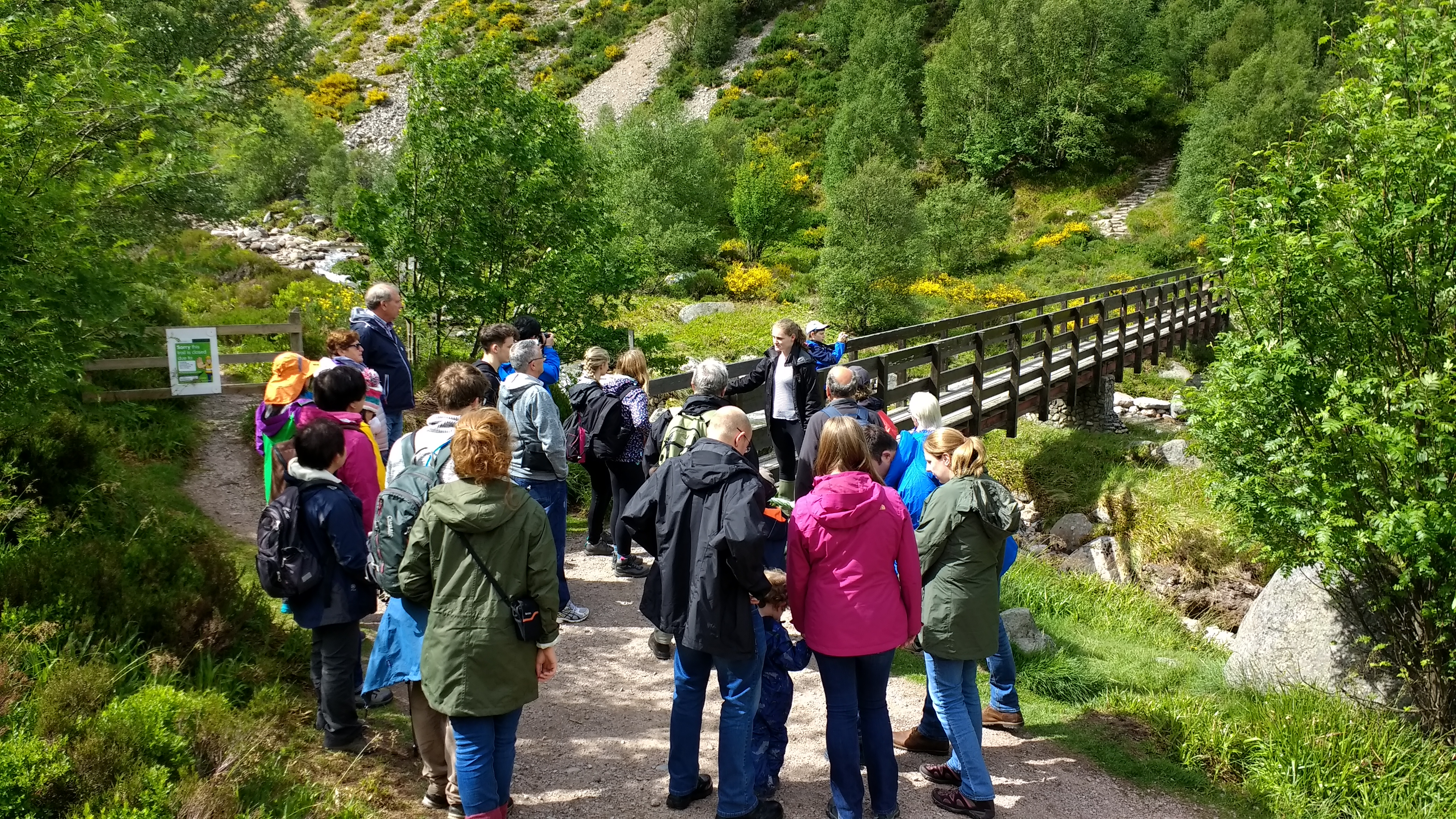
The guided walk out to the reindeer herd at this time of year is particularly colourful because the broom is in full flower with its multitude of bright yellow flowers. After the muted colours of winter, old heather and deciduous trees without leaves the flowering broom brings splashes of colour into the hills. I can understand why the yellow Broom would have lifted the hearts of many a traveller.
The Hill Trip group paused for a breather at Utsi’s Bridge, about to cross the Allt Mhor Burn. The yellow Broom flowers light up the valley at this time of year.
In fact the daily hill visit to the reindeer which takes us across the Allt Mhor Burn to the summer grazing of part of the herd is incredibly picturesque just now, perhaps making up for the reindeer themselves who can look quite scruffy at this time of year as they lose their winter coats to reveal their short dark summer coats underneath.
Picture of a really scruffy reindeer
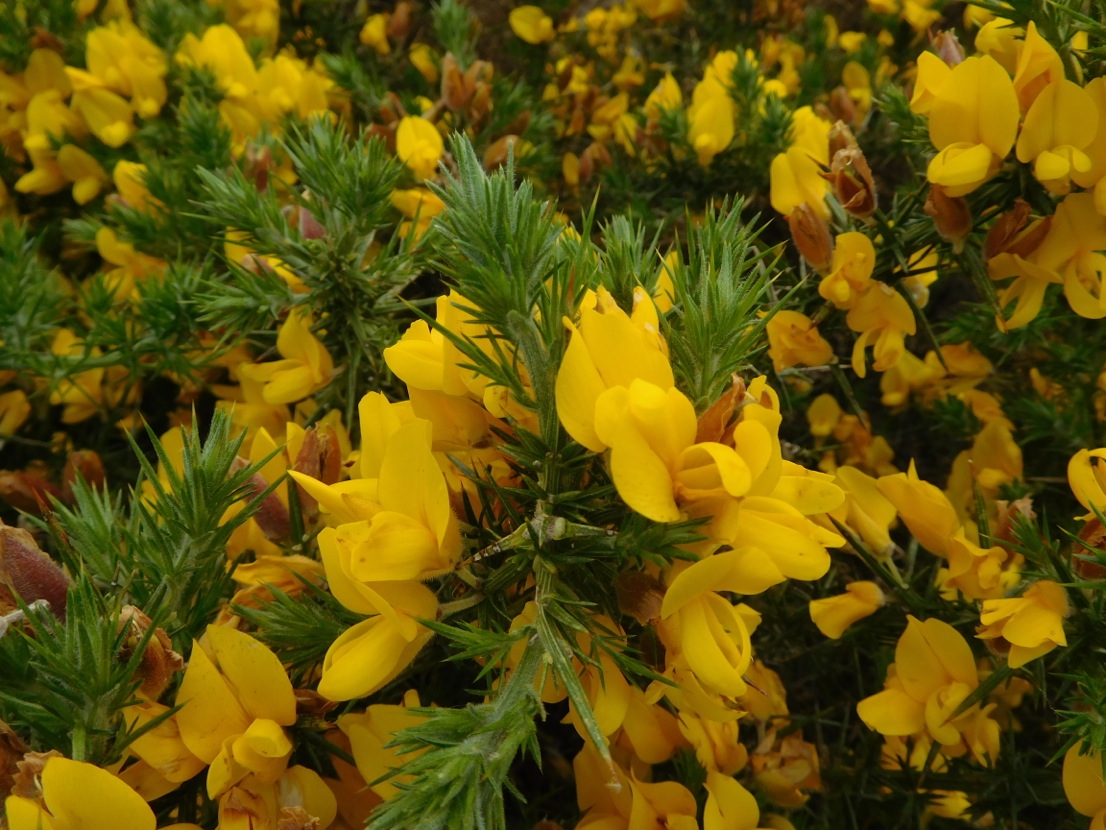
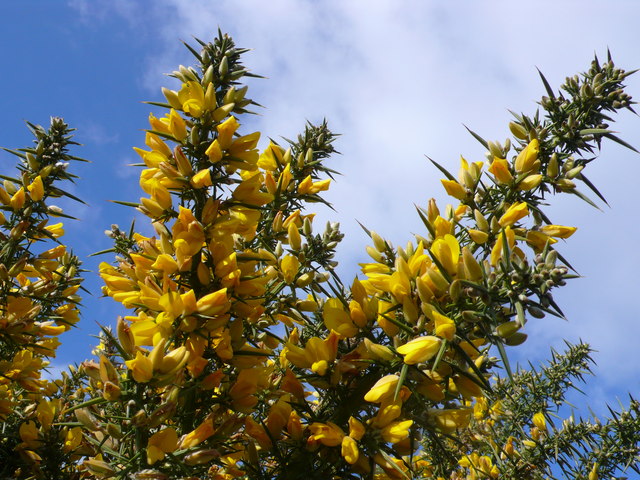
From a distance Broom can look really quite similar to Gorse, another shrub which has lurid yellow flowers. Both plants tend to grow in the same kinds of places; heathlands, uncultivated land, roadsides etc. In a dense clump where both are found, it can be hard to tell where the Gorse ends and the Broom begins.
However once you get up close you immediately see the difference, Broom is a large, deciduous shrub, like Gorse, but without the spines. You would never push your way through a gorse bush in shorts, that’s for sure.
The soft stems of broom give no barrier to the hill wanderer.In contrast, gorse is virtually impossible to pass through without a full coat of proection against those spines. Photo by Nigel Mykura.
For me, my personal preference is definitely Broom, with no sharp, jaggy spines and a slightly lighter coloured yellow flower, but it is a mystery to me why some areas are dominated by Gorse and others by Broom.
Perhaps a more learned person than me can come up with the answer..