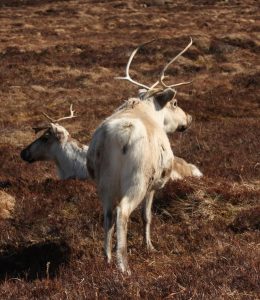
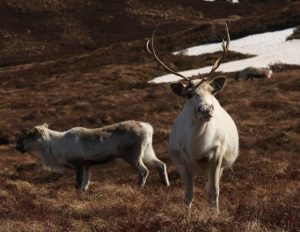
Adopting a reindeer? What’s that all about?

I imagine that there might be quite a few ‘newbies’ to the reindeer herd and to our social media pages just now, being as Christmas is the busiest time of year for our reindeer adoption scheme. Several hundred people will have had an A4 white envelope under their tree on Christmas morning last month, with a brand new, shiny reindeer adoption tucked inside. Hopefully some of those people have since tracked us down online to see what on earth they’ve just become part of… I thought I’d write a little bit of an introduction to us, and primarily to the adoption scheme, to shed some light on what we’re all about. So if you’re ‘new’, then welcome!
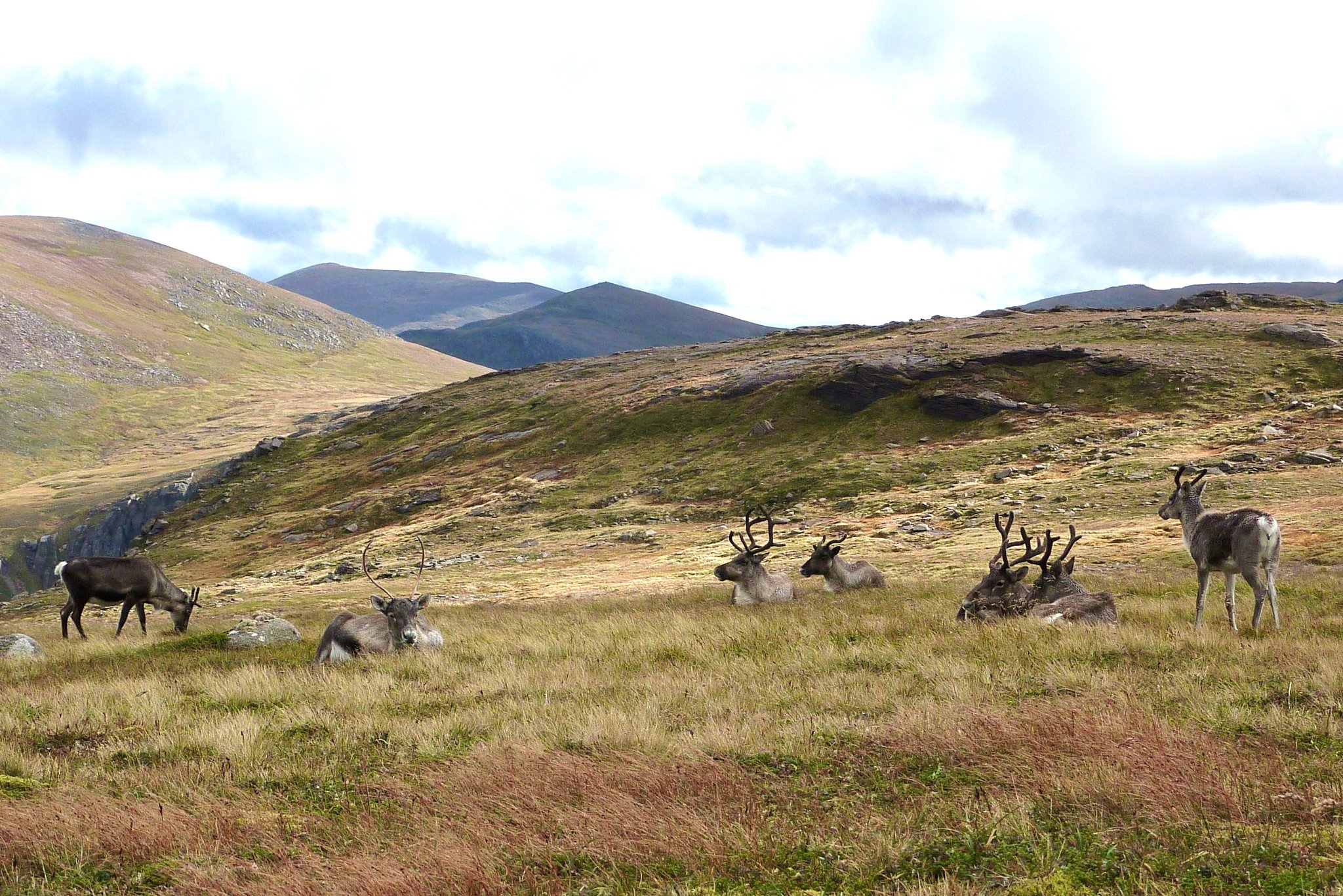
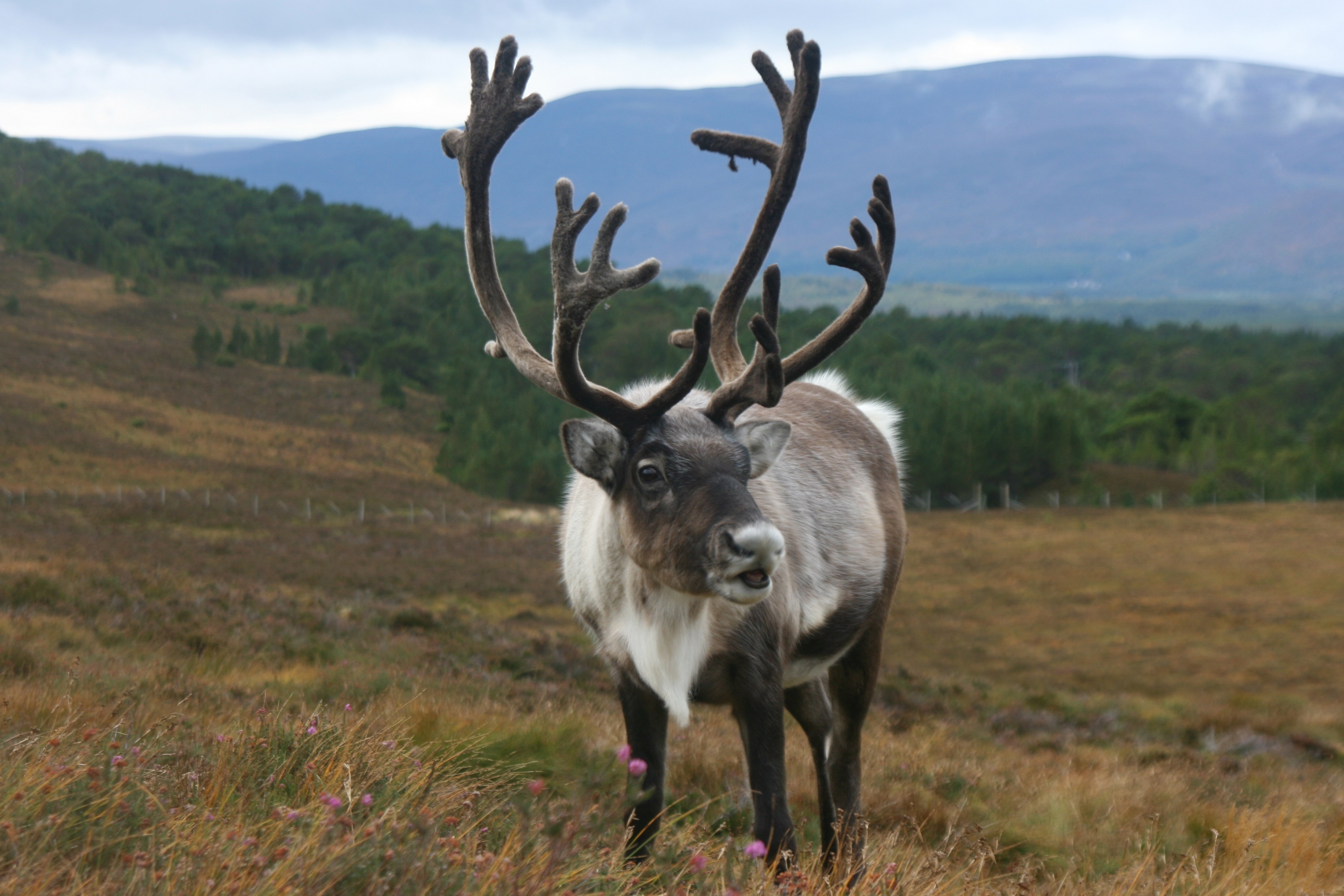
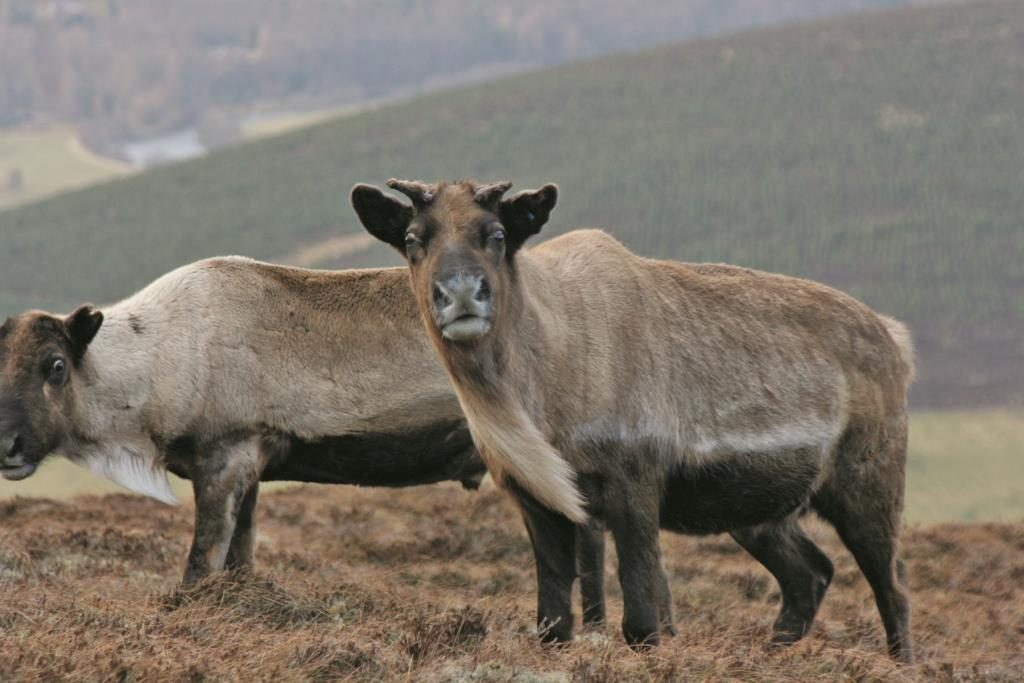
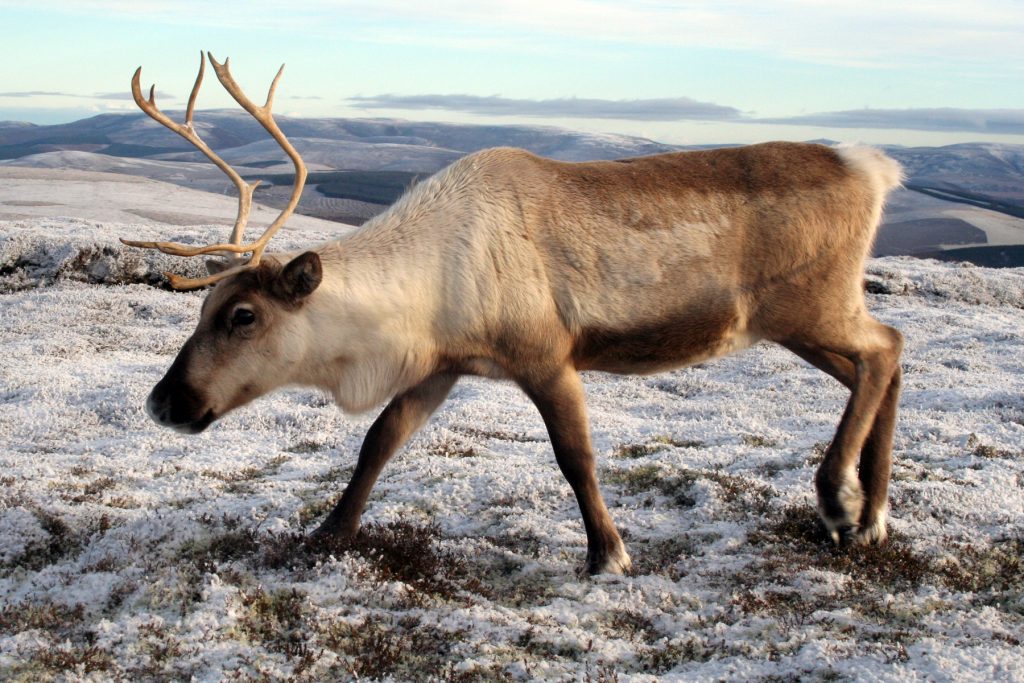
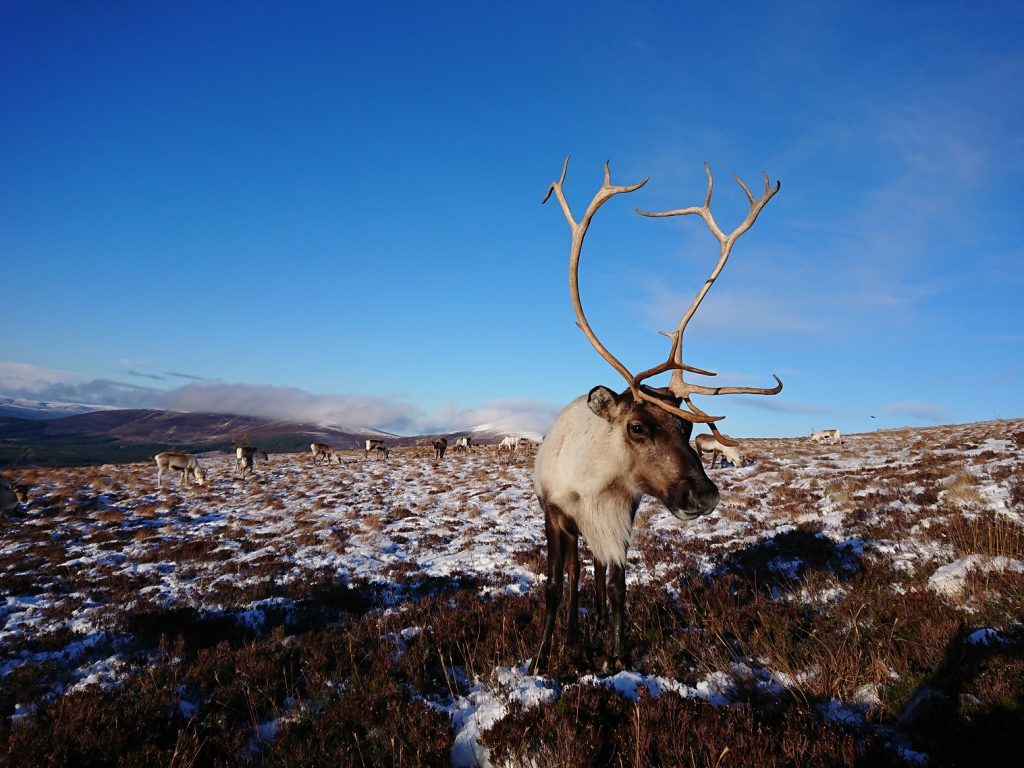
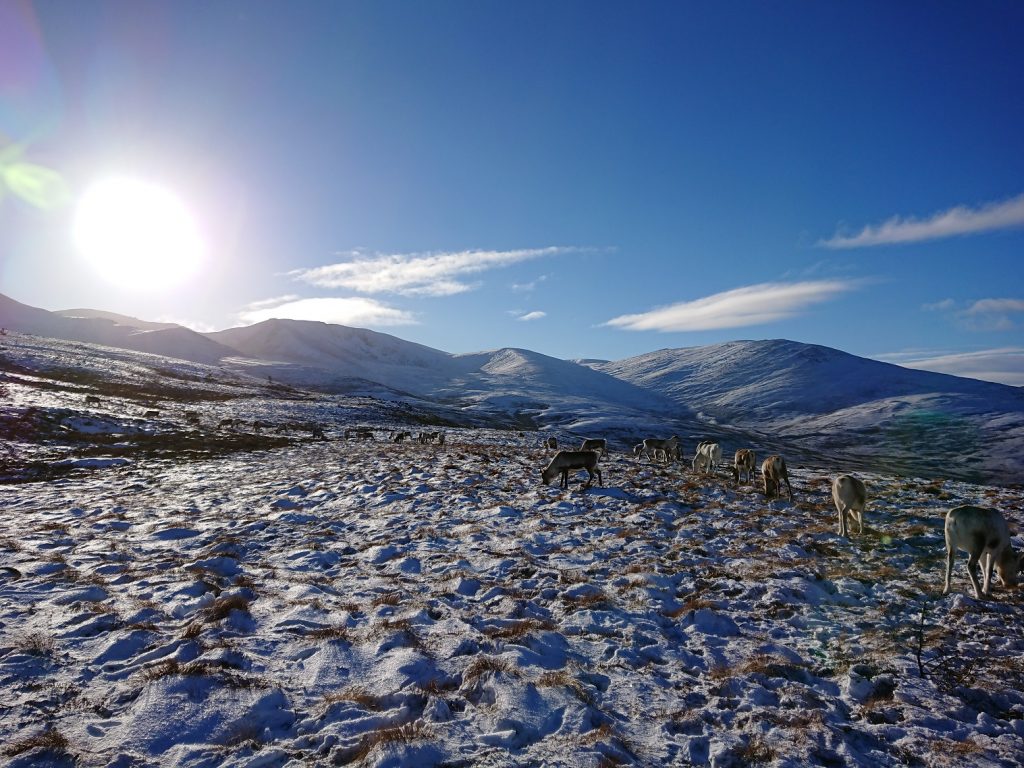
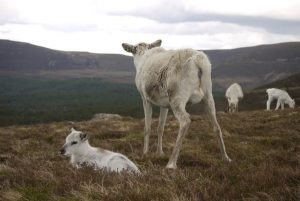
Reindeer roaming freely on the Cairngorms

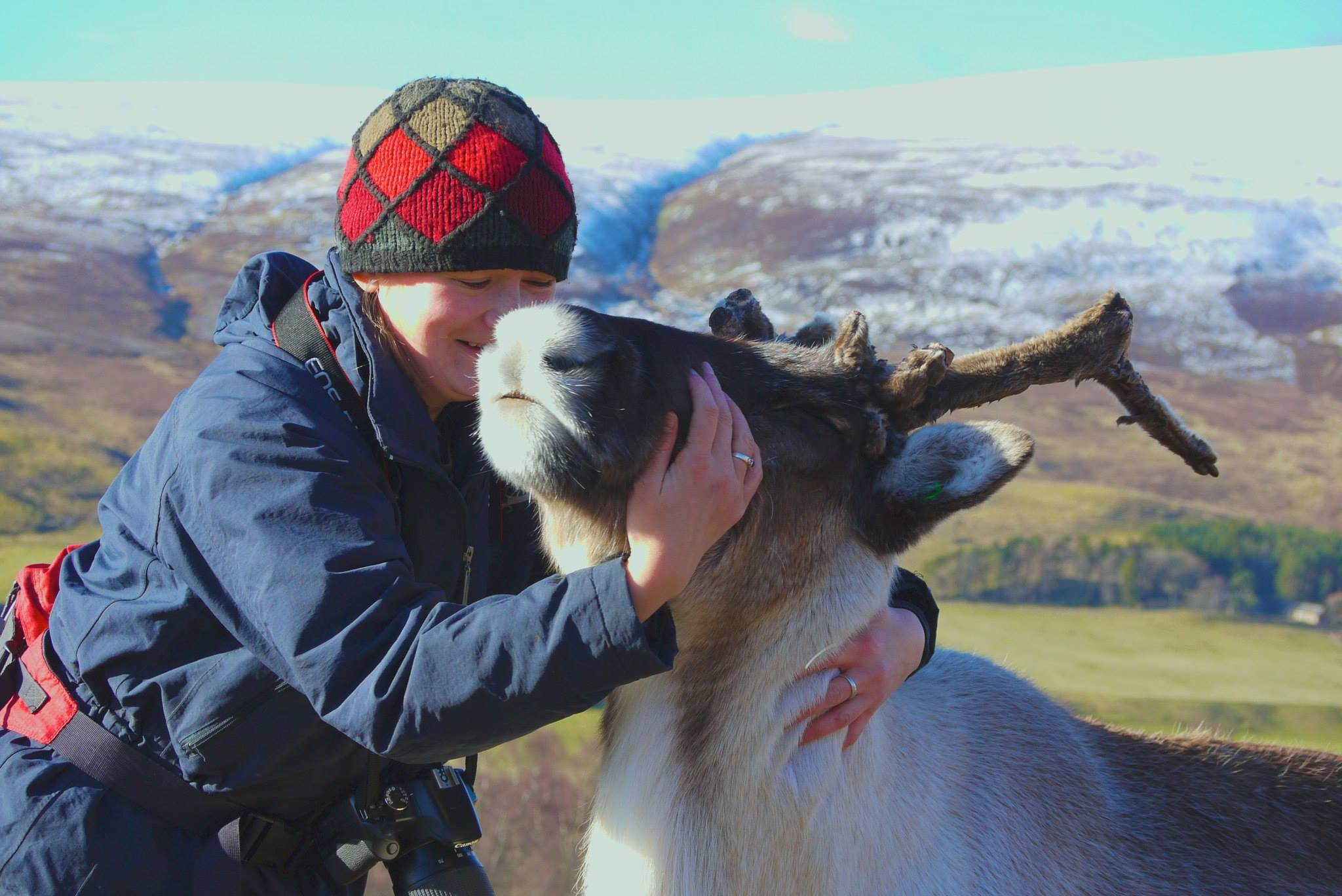
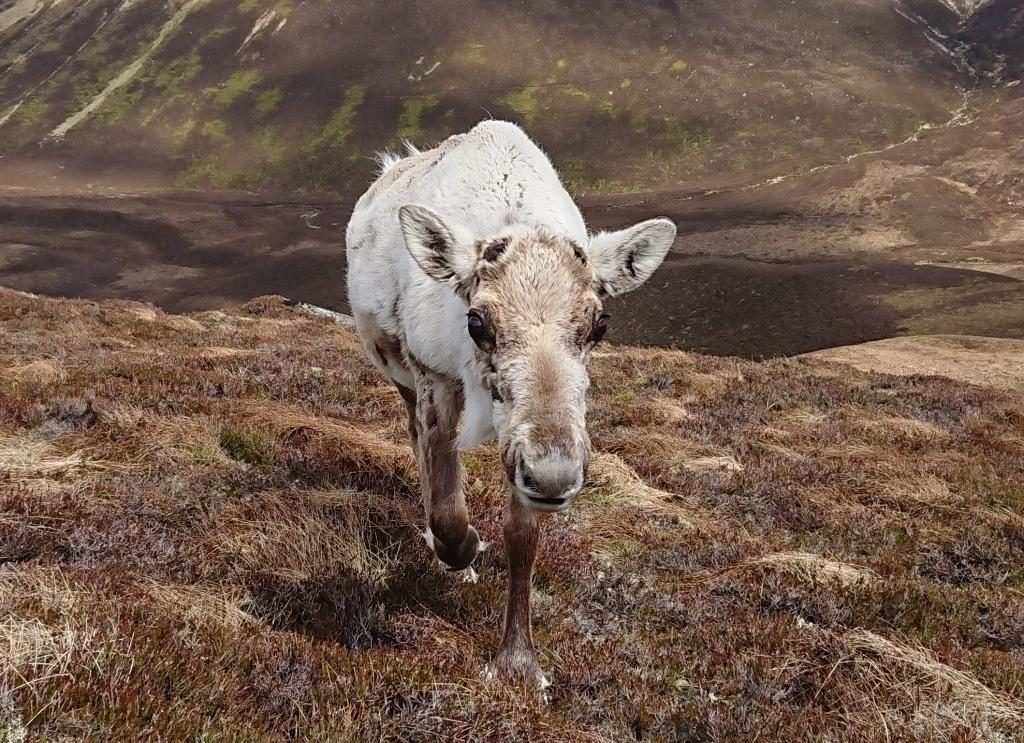
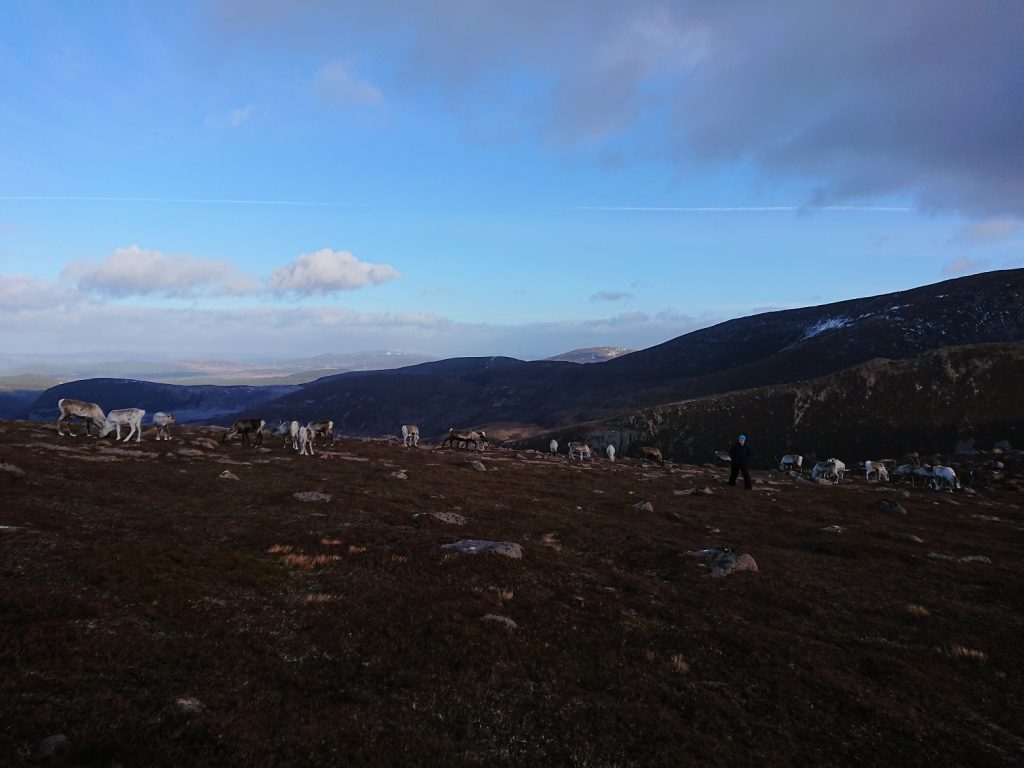
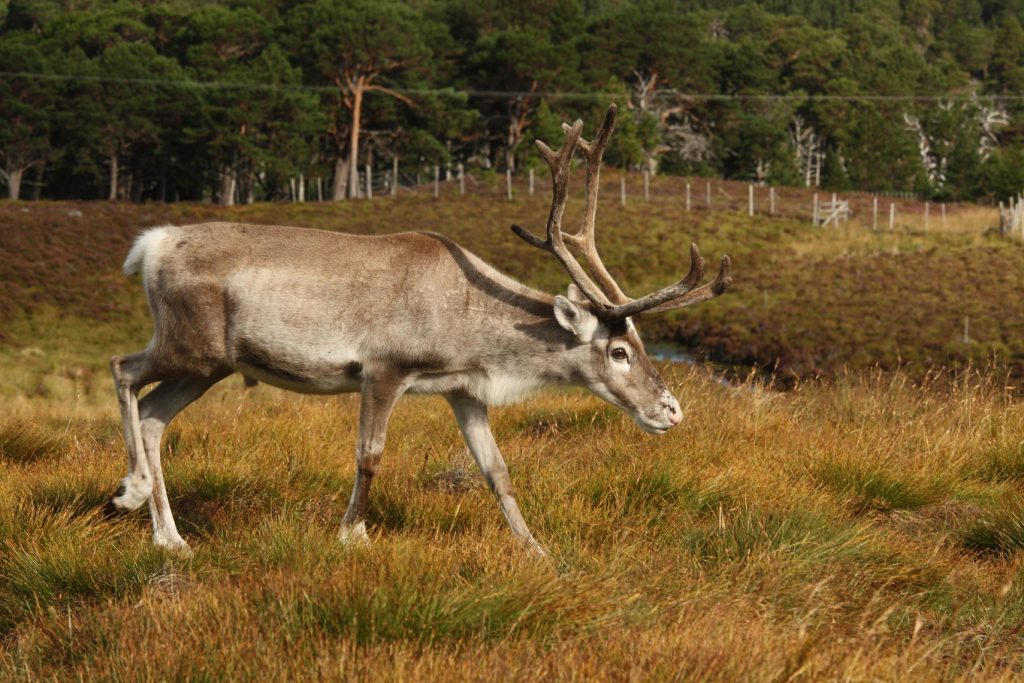
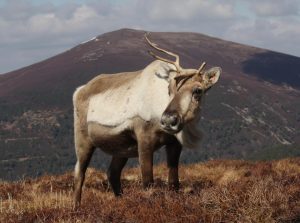
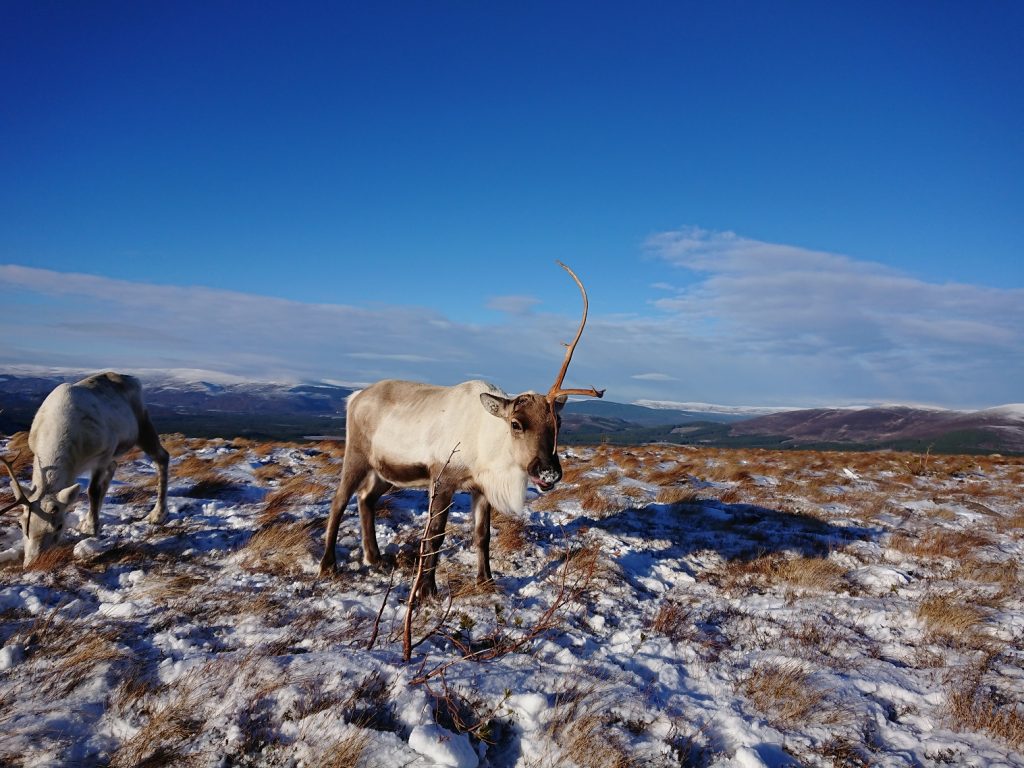
We have the only reindeer herd in the UK whose reindeer are in their natural habitat, and who spend at least some of each year living out on the mountains in complete freedom, with no fences to be seen. Reindeer are native to the UK but died out here thousands of years ago, and our herd was re-introduced from northern Sweden in 1952. We’ve been running guided walks out to see and feed them on the hill ever since.
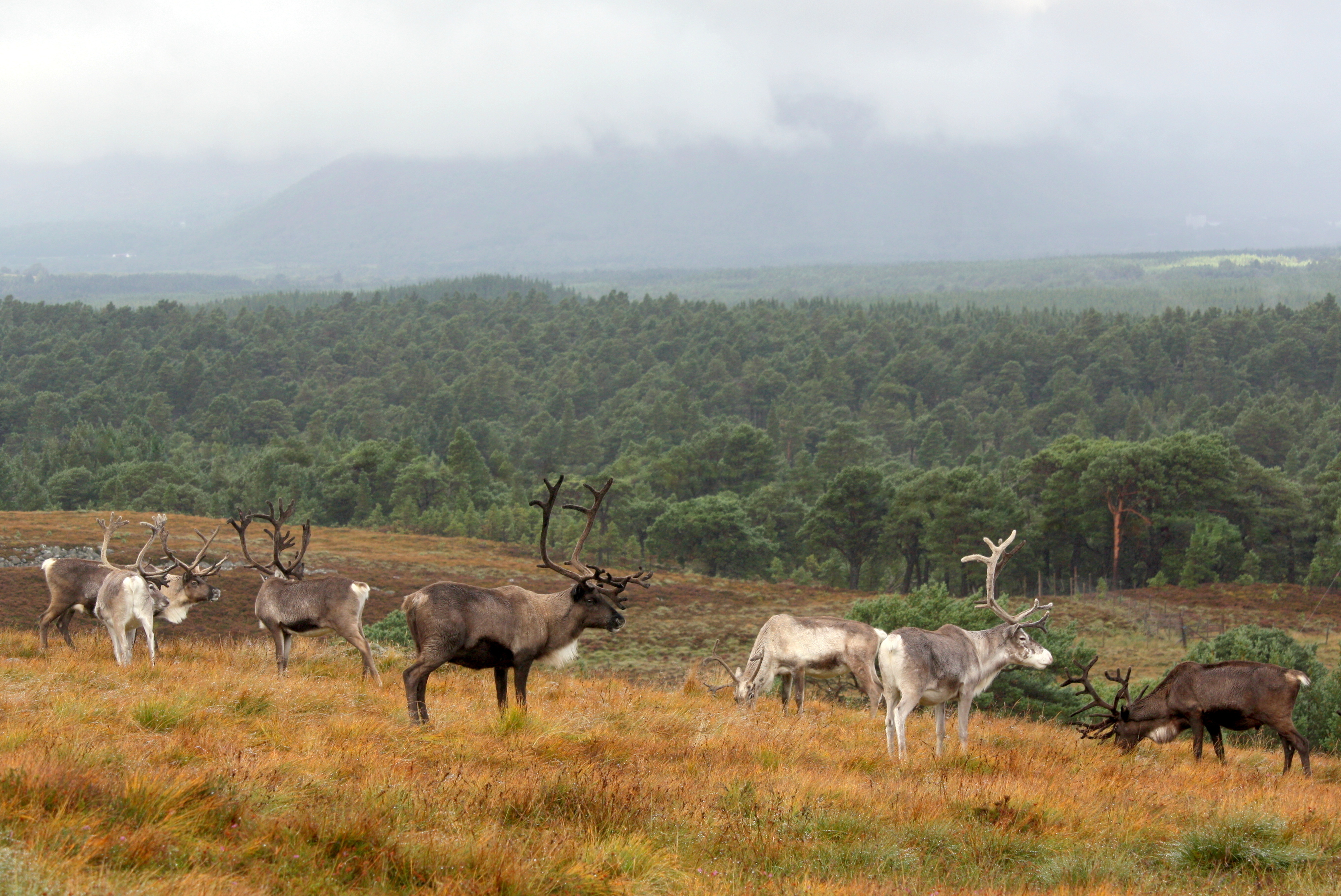
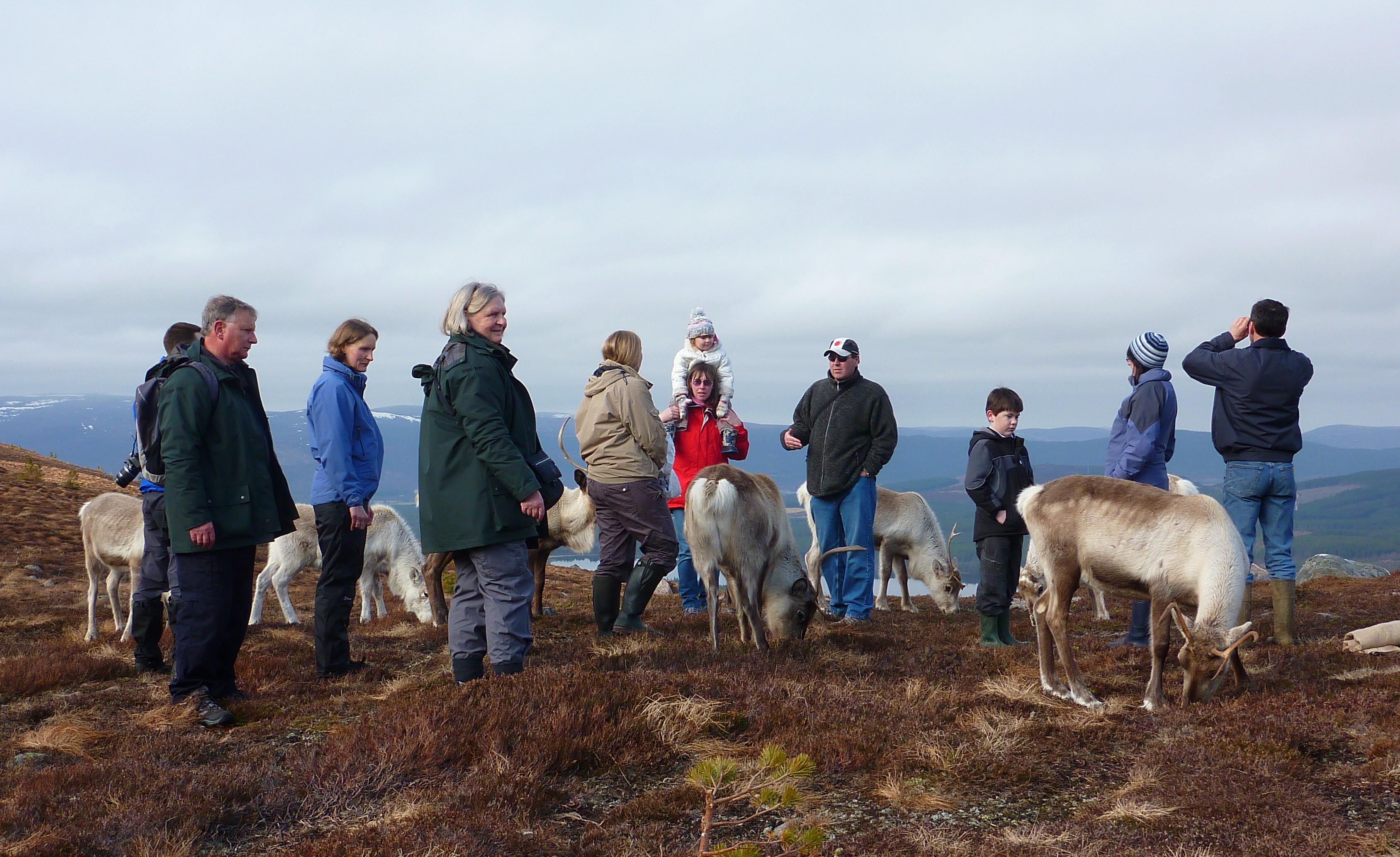
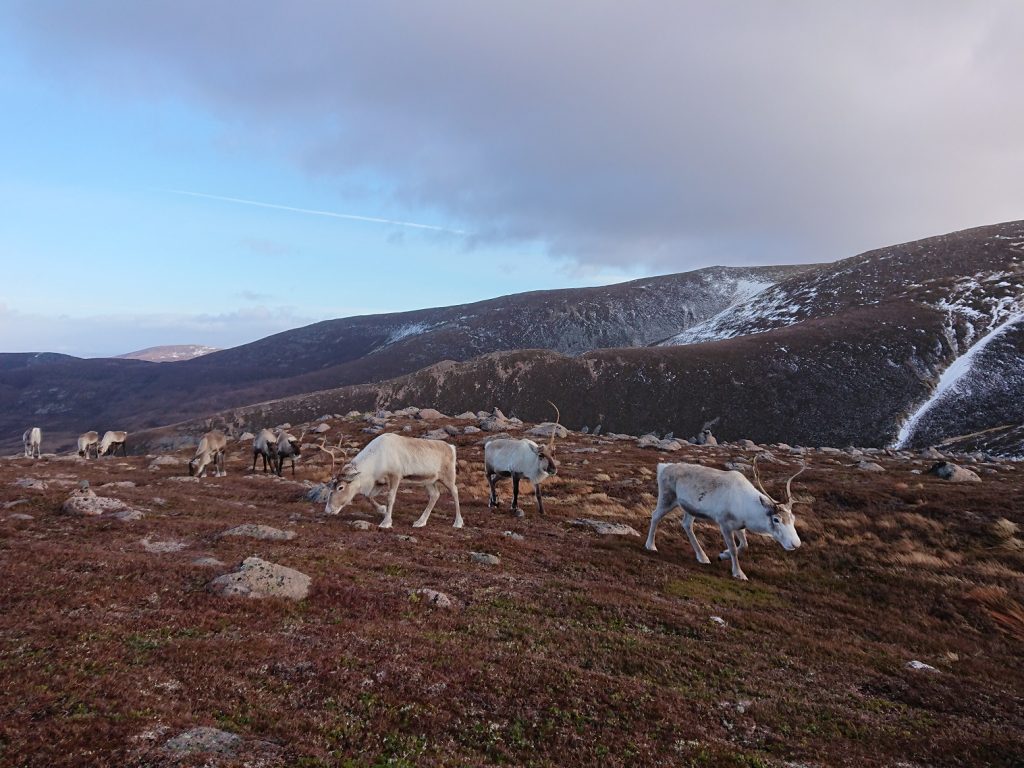
Reindeer in our hill enclosure, where we take the Hill Trips to (for most of the year at least)
Visitors mingling with reindeer on a Hill Trip in a different location

Guided walks form a large part of our income, directly supporting the management of the herd, but we have several other ways of earning money too – one of the main ones being the Support Scheme, the income from which is all ploughed back into the upkeep of the herd. This was started in 1990, and I see from our database records that we still have two adoptions that were originally set up in 1990 which are still going today, in their 30th years! We have about 1200 adopters in total just now, having had over 9000 adoptions in total over the years.
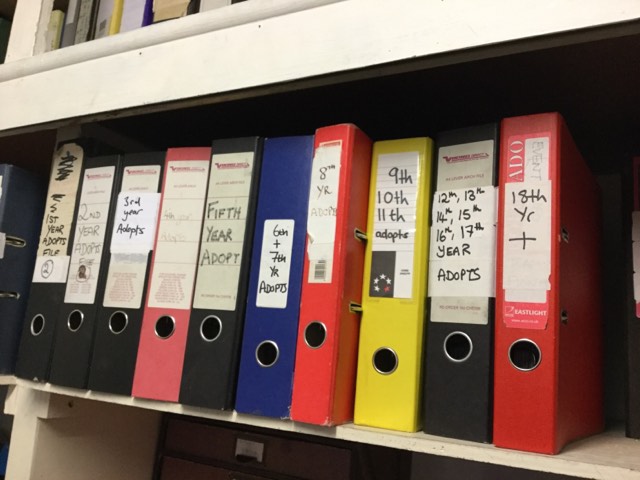
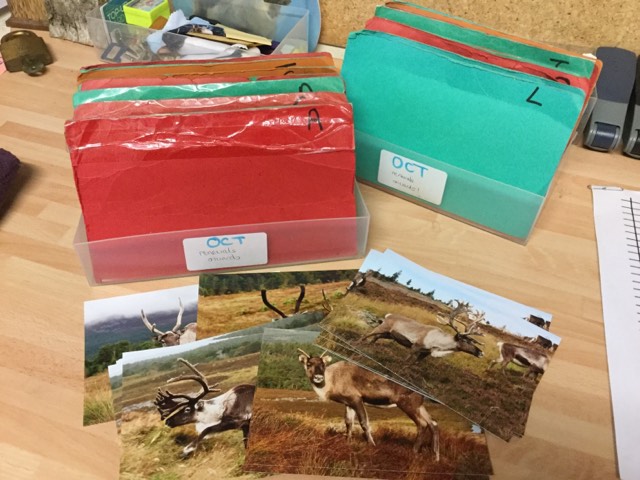
Highly technical filing system…

I think the biggest appeal of our adoption scheme, in comparison to those available for other animals, is that we still hand-write the majority of our correspondence to our adopters. No printed packs pulled off shelves and ready to go for us… Maybe it makes it a bit less ‘professional’ but I feel it’s so much more personal, and there can be very few animal adopters in the UK who receive a personal letter direct from the people who look after ‘their’ adoptee (complete with spelling mistakes and the likes!). A generic typed letter must be so much more the standard nowadays. Perhaps we’re just old-fashioned here at Reindeer House.
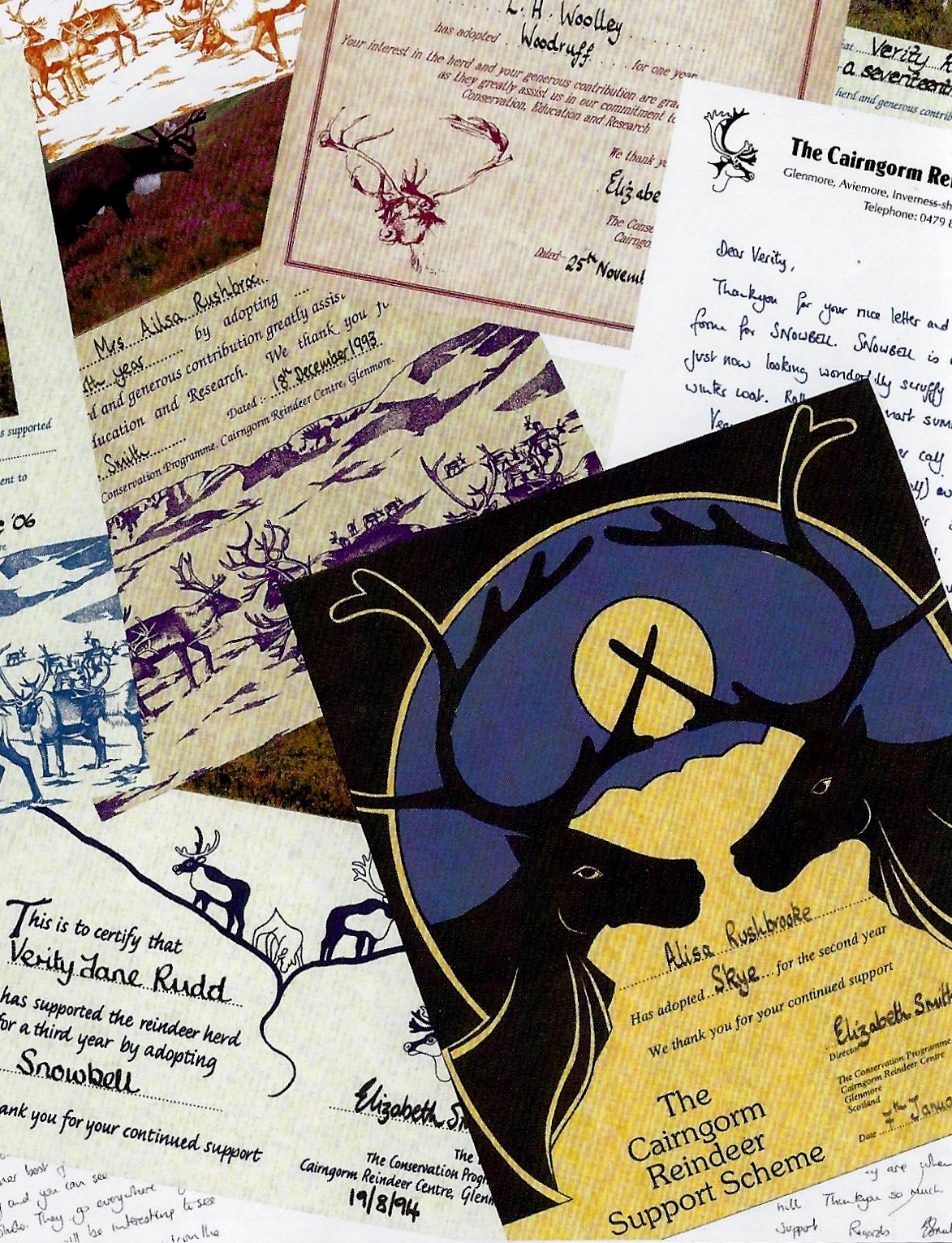
A range of certificates of former designs…
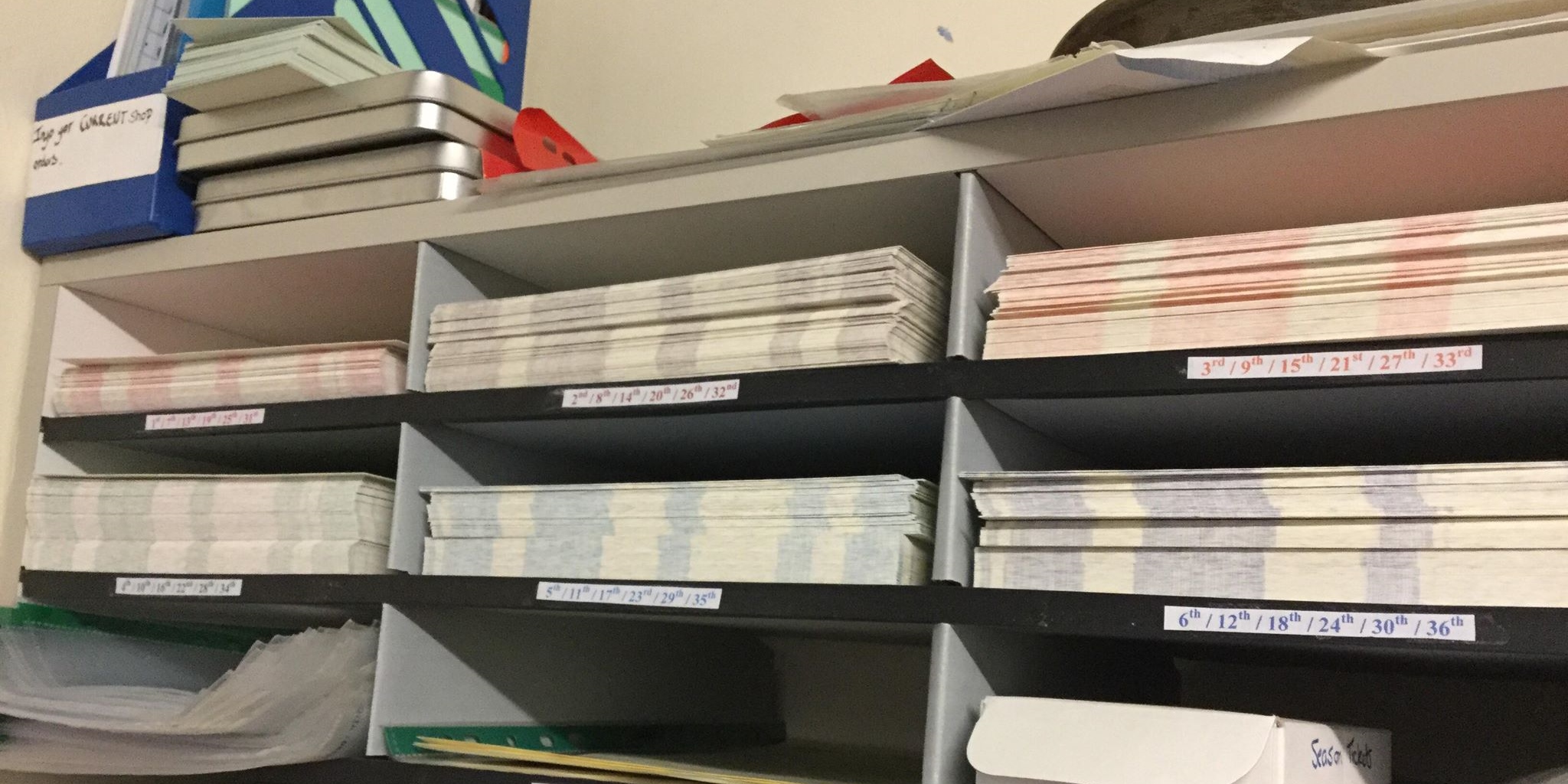
Now we’ve settled on a good certificate design, so we rotate the colours through the years. All very organised!
Photos of every single reindeer in the herd have to be taken, cropped, printed and filed ready for the right one to be glued to each certificate.

In the run up to Christmas, all hell breaks loose here in the office. Adoptions, both renewals and new ones, start pouring in and reindeer herding becomes a delicate balance of outdoor work, dealing with visitors, and frantically making up adoption packs. I liken them to a tide, at times threatening to overwhelm us and at times receding as we battle them under control. In November and December the tide never recedes for too long though, before returning with fury. There was a memorable Friday this Christmas just past when we started the day with 30 adoptions waiting to be made up, several of us then working at them pretty much all day, and finished the day with 45, as they came in faster than we completed them! Panic stations.
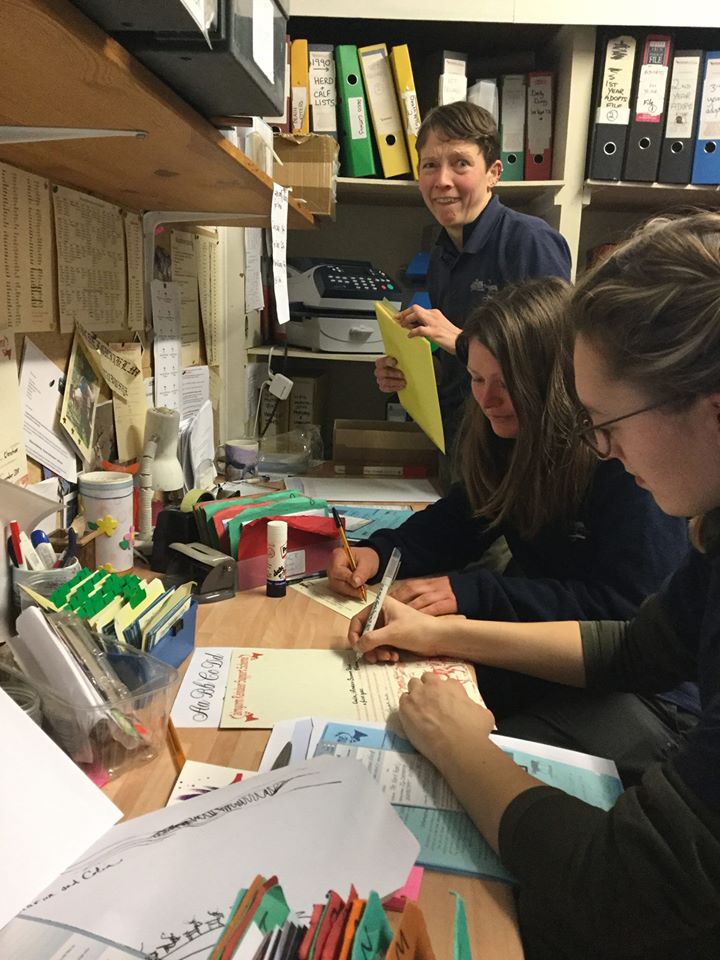
A typical, frantic, day in the office at Christmas time. This is Andi’s ‘panic’ face!

Along with the yearly adoption pack come the two newsletters, printed in June and October and posted out to everyone. By snail mail – we’ve not really got on board with the idea of emailing digital copies yet. Lots of our adopters are in the “mature” category too, many of whom don’t use email regularly. And to be honest, sometimes the old fashioned ways are much more straightforward – give me printed material over PDFs anyday. Don’t even get me started on whether direct debit is an option for renewing adoptions or not… (Our computers, and my brain, would melt.)
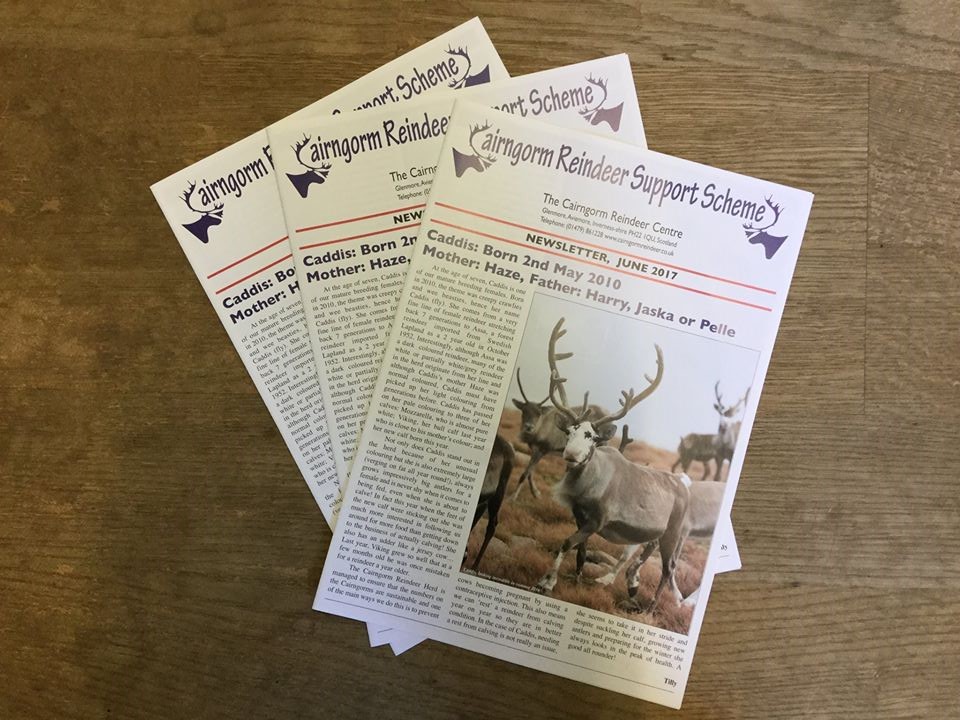
We highlight a different reindeer each newsletter, a female in June and a male in November.
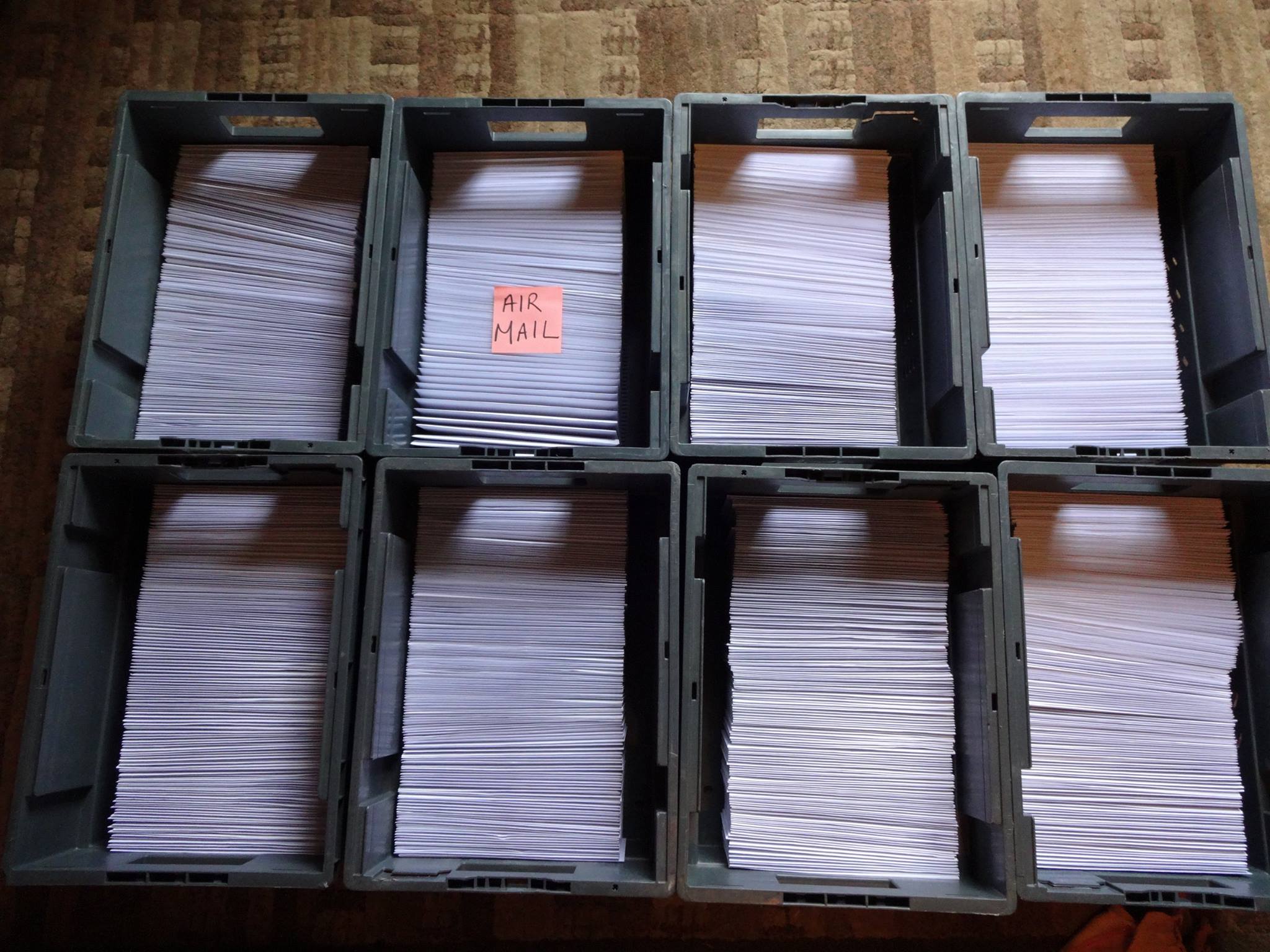
A busy day for the post office when the newsletters are all ready to go!

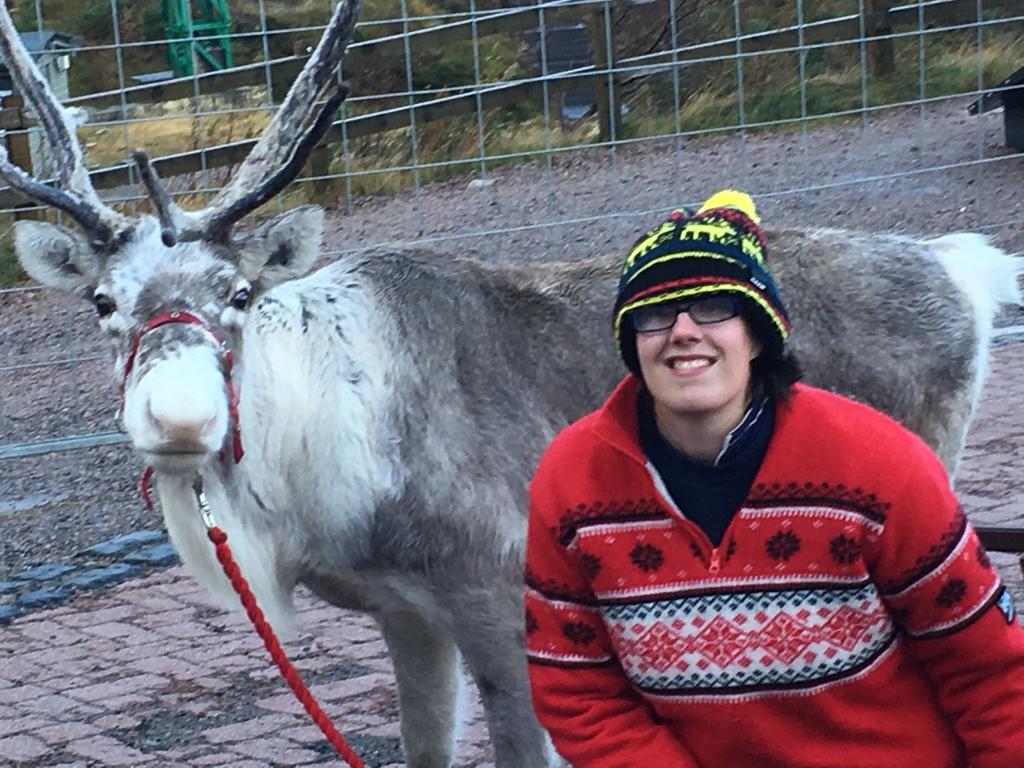
Along with the pack and the newsletters, adopters also get one free admission each time they visit. For some this is never, for some, multiple times a year. We also always do our best to ensure adopters get to meet their adoptee when they visit too if they give us advance warning of their visit, although this is not always possible depending on the time of year. Nothing beats the delight of hand-feeding your ‘own’ reindeer!
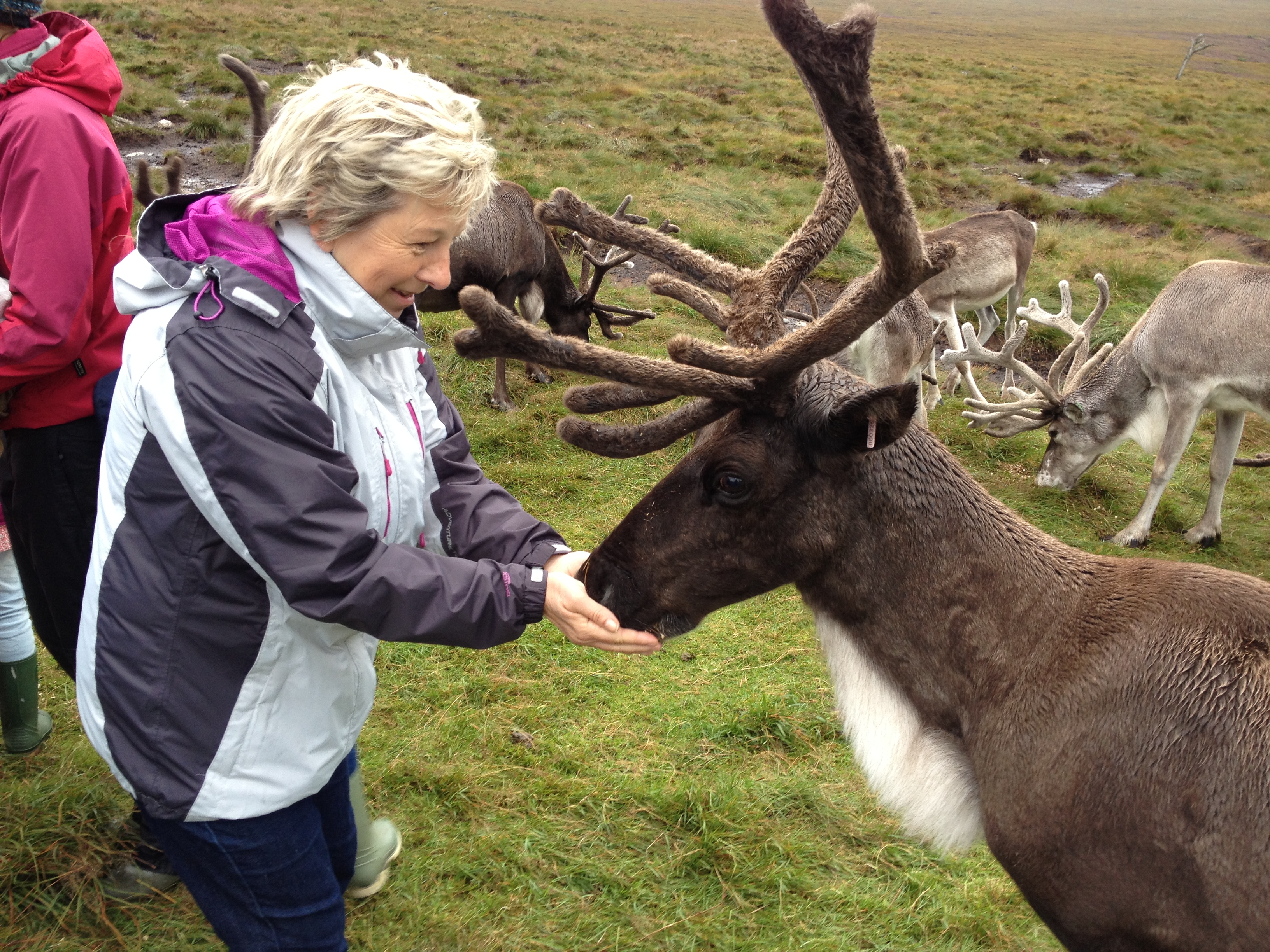
Hand-feeding on the Hill Trip. Photo by Carole Curtis

Many adopters have become very familiar faces to us now, and with the rise of social media, friendships have formed between adopters. On the subject of social media and the internet in general, gone are the days when adopters saw one sole photo of their reindeer per year. Now we do our best to be relatively active online, posting photos regularly and (no surprise here) blogs. A social media course told us a few years back that, as a business, we should be blogging regularly, so we started doing so every Friday, and have not missed a week yet. All hail the ability to ‘schedule’ blogs far in advance, meaning there’s not a last minute panic!
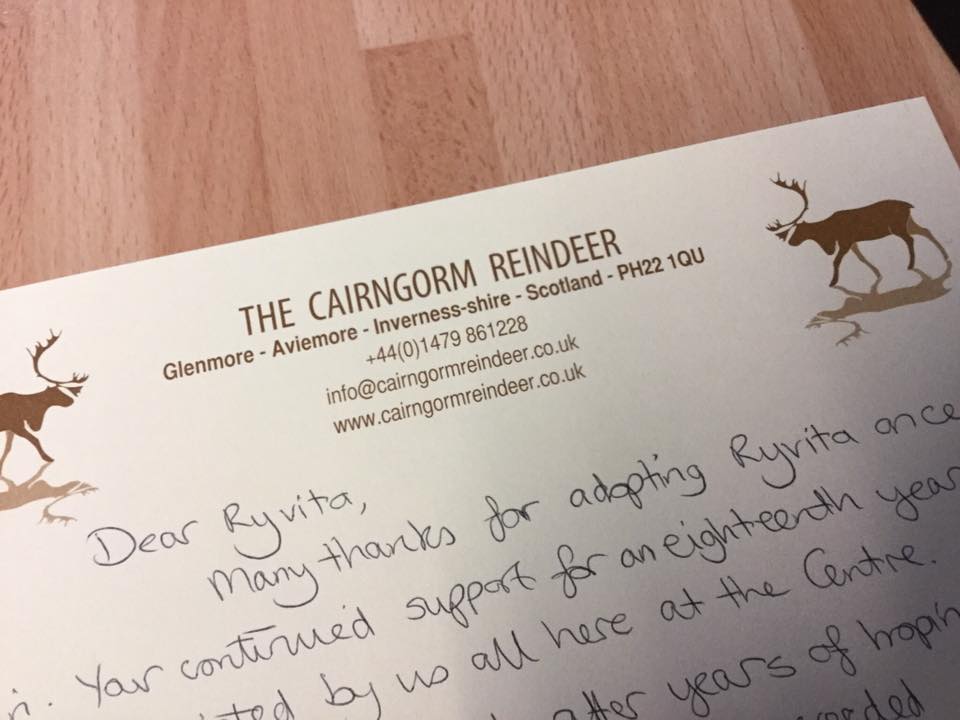
And sometimes, it all just goes wrong. Spot the mistake… Face palm moment.

So thank you, each and every one of all you adopters! You help fund every aspect of the herd and the company (including paying our wages 😉 ) and enable it to be so successful, and your generous support is NEVER forgotten. And if this has whetted your appetite and reindeer adoption sounds like the thing for you, more details can be found on our website.

Here’s to the next 30 years of reindeer adoptions!

Hen
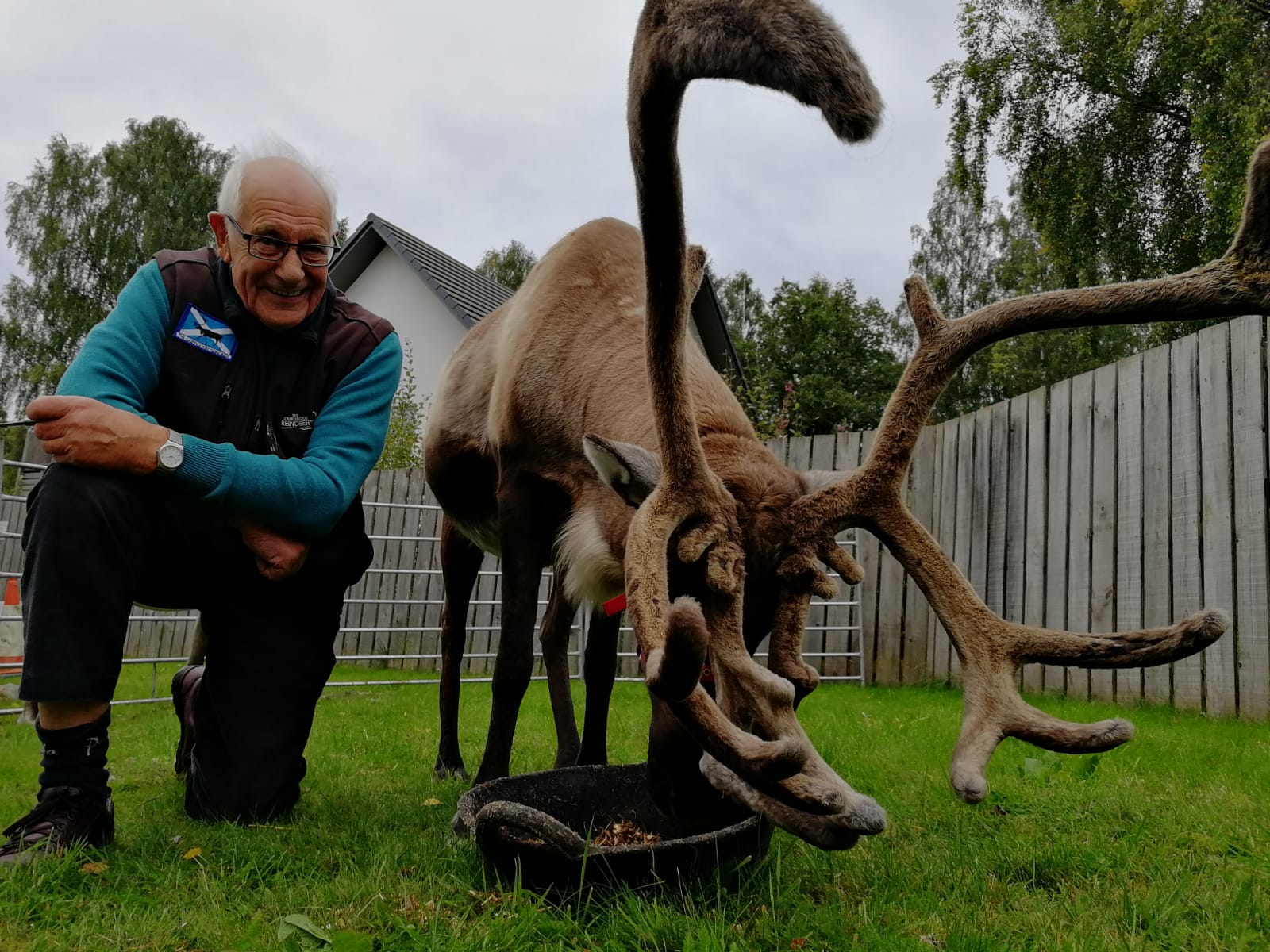
Our awesome 2019 volunteers!

We have a huge network (well, by our standards) of staff members who work at least part of the year for us, ranging from those full-time year round, through seasonal staff right down to the odd ex-herder roped in for literally just a day or two a year. Our job is made far easier however, by the epic efforts of a constant stream of volunteers, and 2019 has been no exception. So this is just a wee blog to say thank you to everyone!

We have, over the years, built up quite a collection of regular, long-standing volunteers, some of whom visit annually, and some just every now and then. The top dog of this crew has to be retired joiner Paul, who first came to help for a couple of weeks back in May 1999. Twenty years on and he’s still coming for a fortnight twice a year to ‘mend, bend, and fix’ and while he may be 80 now, age hasn’t slowed him down too much yet!

Paul with Olympic

Emm is another very regular volunteer, having settled into a regular pattern in the last couple of years of 4 separate weeks of volunteering throughout the year. She’s a great help to us with everything reindeer related, and the kitchen table is never short of cake while she’s around… You can read more about one of her stints in one of her blogs here. We also have Sharon and Colin who come once or twice a year too – always bringing a good supply of crafting materials for the Paddocks, and – socks! Their blog is here:

Emm with her adopted reindeer Mo, braving the weather at a very cold and wet local Christmas event.

Our other type of regular volunteer is the lovely Anna who’s been helping us out once a week throughout the summer and autumn, and we hope will continue to do so in the future. Stella fits into this category too but is a bit elusive of late – she’s always off volunteering for all sorts of different organisations or visiting far-flung parts of the world. Having far too much fun! Stella – if you’re reading this, will we ever see you again?!

Long-standing volunteers have the luxury of picking and choosing what season they want to come in, but otherwise we are helped out by a steady stream of helpers from the last week of May until the end of October. This year has been great, and I think I’ve remarked to everyone here at some point just how lucky we’ve been with the 2019 vols! Once upon a time we used to get mainly vet students wanting to volunteer in order to gain experience, but nowadays we seem to get a much wider range of people from all walks of life, which suits us nicely as it’s lovely to meet so many interesting people! This year they included a chocolatier, an Olympic physiotherapist, a costume designer and a goat milker, with all sorts in between! So HUGE thanks for all their willing and tireless help to Arianne, Cathy, Becks, Katy, Rowena, Katie F, Sally, Laura F, Amy, Ida, Mary, Hannah, Christine, Kathleen, Helen K, Laura W, Helen A, Heather, Katie D, Kimberley, Mhairi, Lou and Joanne. But no thanks whatsoever to the volunteer who booked in for a week and then never turned up, having not thought to mention to us that her plans had changed…

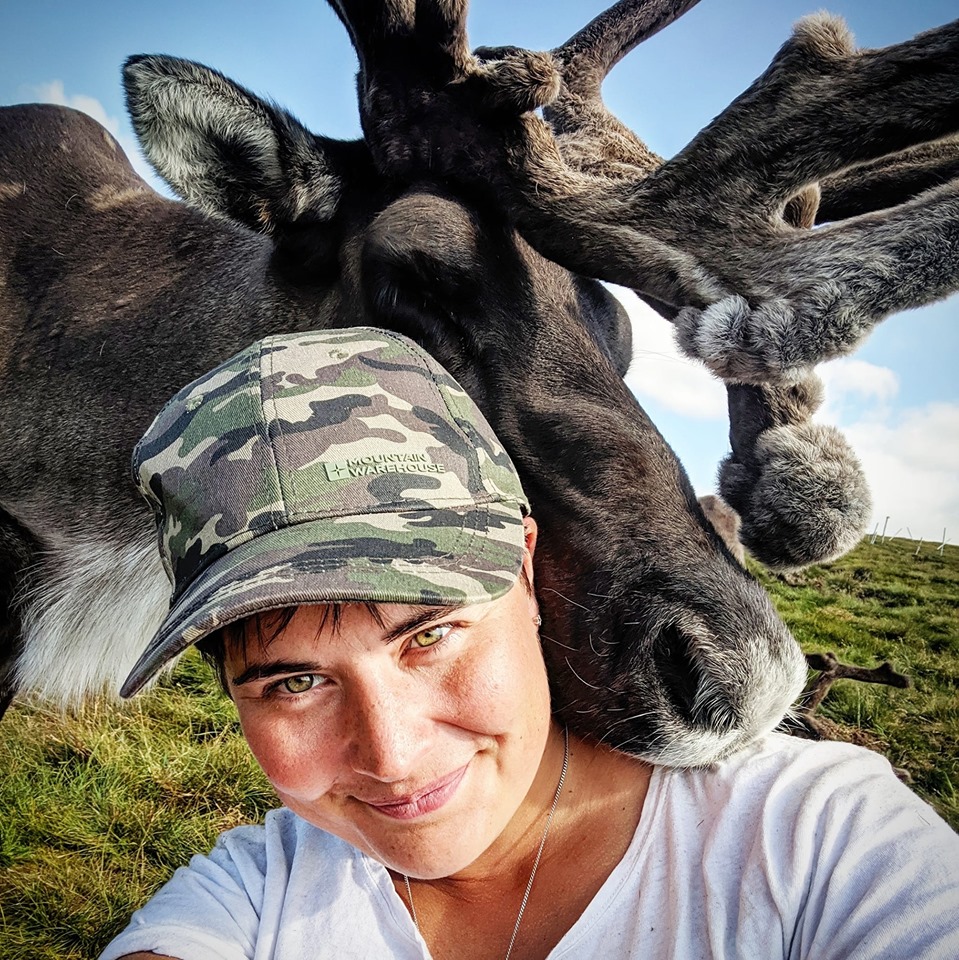
Volunteer Amy finding time for a selfie with Olympic. Or possibly just being a head-rest for him!

Special thanks and recognition go to Cathy, who downed tools with 3 days’ notice to drive to the opposite end of the country to help us out after another volunteer cancelled on us; and to Rowena, Sally, Mary and Katie D who all came in 2018 and had such a good time they gave up another spell of their precious time to come back this year. And another special mention (and possibly a round of applause!) has to go to Helen A, who managed to break her wrist on the third day of her week with us but still soldiered on for the next 4 days! And finally Nell, who managed to time her volunteering stint just at the point that we decided we needed an extra staff member for the summer, so she ended up with two months’ paid work afterwards.

Laura with Fly. Looking the part!

Thank you all SO much – we’ve loved having you all here and hope you all had a great time! And I expect we’ll see quite a few of you again in the future 😊

Hen

Reindeer as a Species

On our kids quiz in the Paddocks is the question ‘Name a sub-species of reindeer’, and I notice it’s often the one that people get stuck at (despite the fact that the answers are there on the display boards). I’ve realised over the years however, that this is often down to a basis lack of understanding of a percentage of the population of the concept of species and sub-species, rather than anything else. So therefore, allow me to explain.

As a zoology student (all too many years ago, so bear with me if my science is rusty), the classification of all organic species using a system of ‘taxonomic rank’ was drilled into us. The system still in use today was founded by Swedish botanist Carl Linnaeus in the 16th Century and brought order and clarity to the then chaotic and disorganised way of naming and categorizing all types of life. No wonder I loved learning about taxonomy – lists and organisation? My kinda thing.

Carl Linnaeus (1707 – 1778)

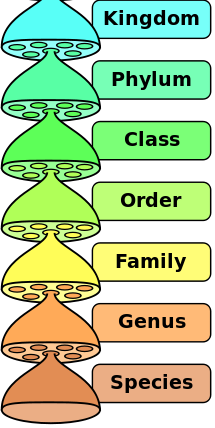
The Linnaean system breaks down all living things into 7 major kingdoms, animals being one and plants another, and then each kingdom is broken down further, into different phyla. Then phyla are broken down once more to the next level, which is class, and the system carries on through order; family, genus and finally species. So reindeer can be categorized as such:

Kingdom: Animalia (Common name: Animals)

Phylum: Chordata (Chordates  – meaning ‘possessing a nerve cord’)

Class: Mammalia (Mammals)

Order: Arteriodactyla (Even-toed hooved mammals)

Family: Cervidae (the Deer family)

Genus: Rangifer

Species: tarandus


Biological classification chart

The two part ‘binomial’ name Rangifer tarandus is perhaps more commonly known as a ‘Latin name’, and every species in the world has one. You will be familiar with ours as Homo sapiens, and like humans, reindeer are the only species within their genus, Rangifer. A regular question from visitors is ‘So….how are reindeer different from deer?’ Bizarrely, it can be quite hard explaining to people that reindeer are deer. My usual analogy is to get people to think about lions and tigers. Both obviously cats, so therefore members of the cat family (‘Felidae’), but at the same time both clearly different species from each other. So while reindeer are a member of the deer family, they are a different species from other types of deer. For example, moose, red deer and muntjac – all clearly distinguishable in looks from one another, but crucially also genetically different.

But then, as with most things, it all gets a little more complicated. Not content with 7 major divisions, scientists introduced sub-divisions in order to break down everything further. So now there are, among others, sub-classes, sub-families, sub-genera etc. Arghh! While Rangifer has no sub-genus, there are some subspecies to contend with, and this is the relevant info that we hope people will track down in our Paddocks. All seven subspecies of reindeer and caribou are all still Rangifer tarandus, so effectively all genetically the same animal, but a subspecies is shown by adding a third name after the binomial. Just to clarify too, reindeer and caribou are the same animal, but reindeer are the domesticated version of caribou. The differences are also geographical, in that reindeer are found in Europe and Asia, while caribou are found in North America and Greenland.

So back to our seven subspecies. We have:

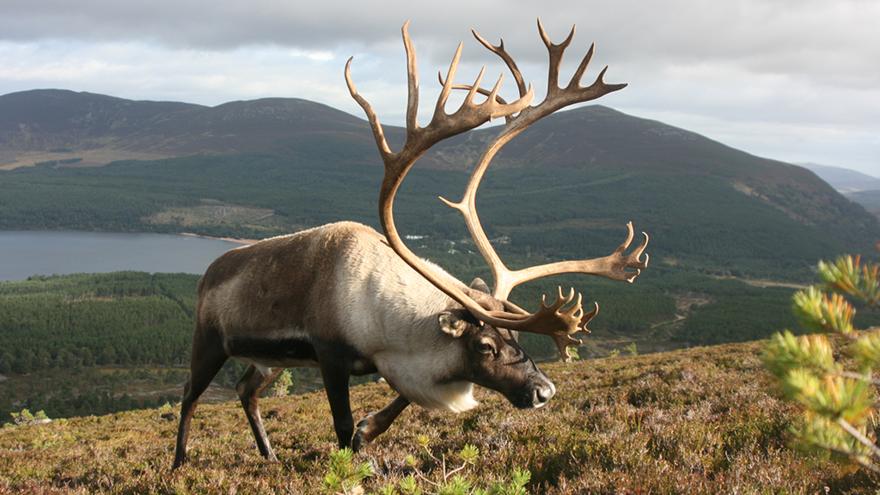
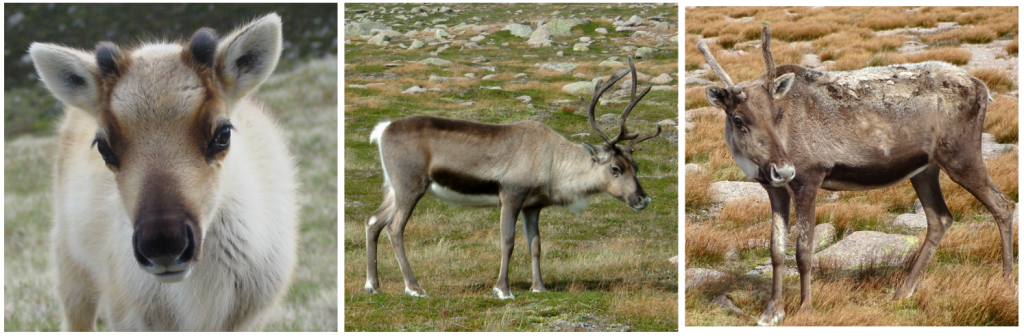
Eurasian Tundra reindeer (Rangifer tarandus tarandus): Open-ground dwelling subspecies, which the majority of all domesticated reindeer belong to, including ours.

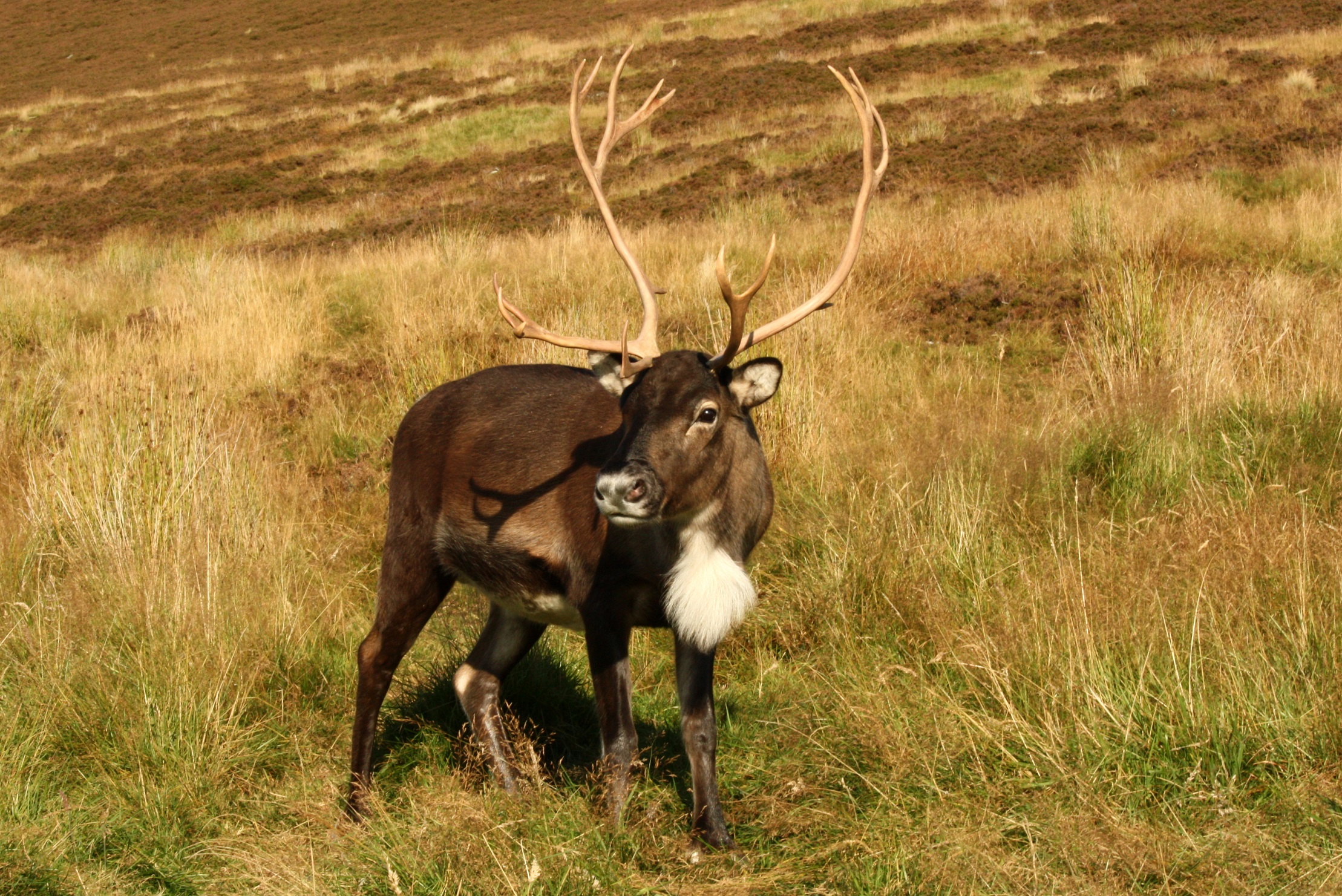
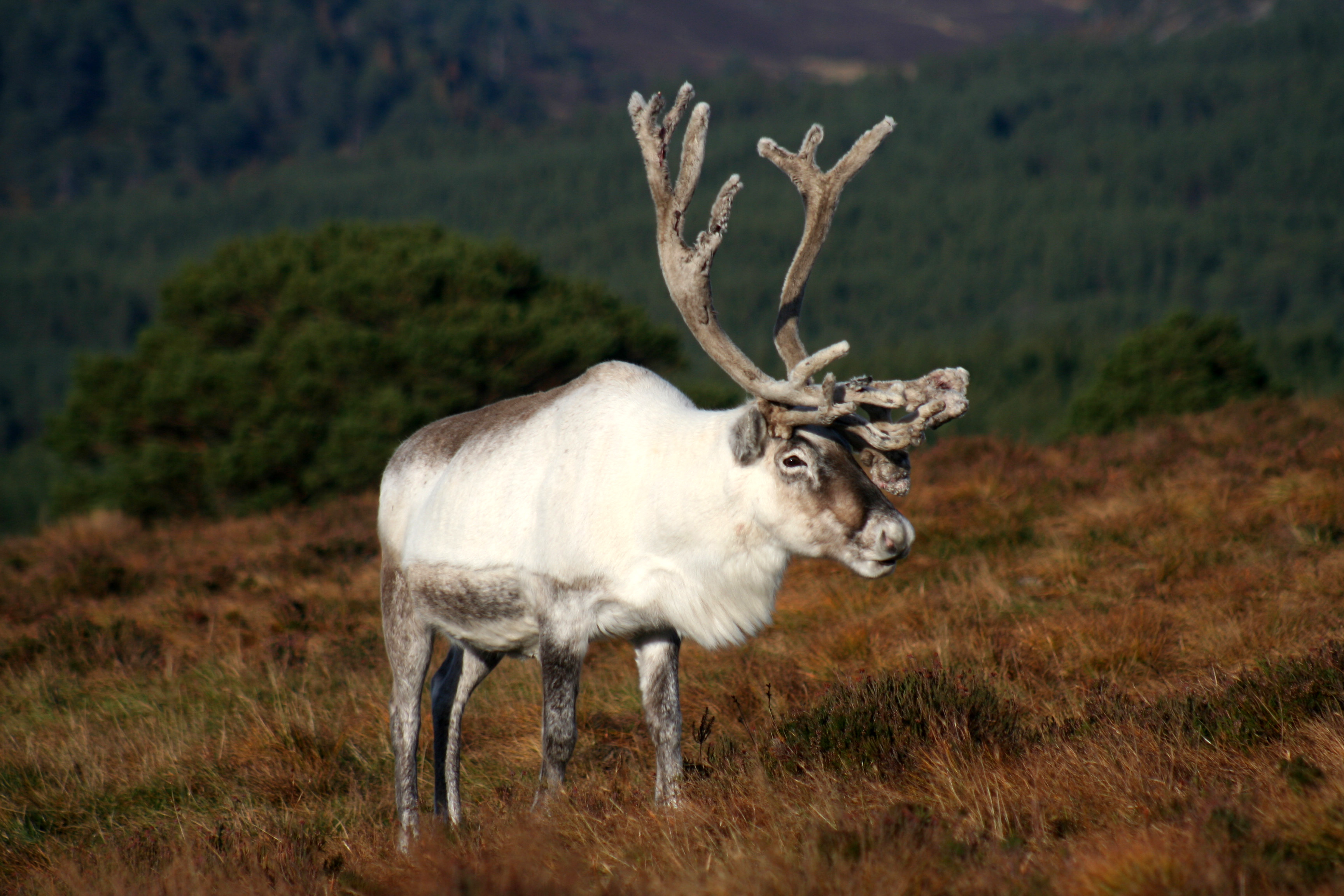
Our big bull Crann, a ‘tundra reindeer’

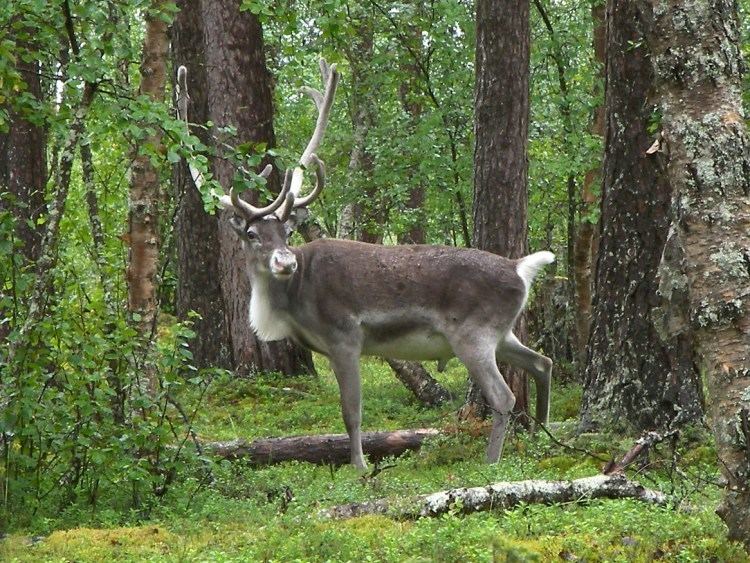
Eurasian Forest reindeer (Rangifer tarandus fennicus): Boreal forest dwelling subspecies, typically taller than tundra reindeer.

Forest reindeer

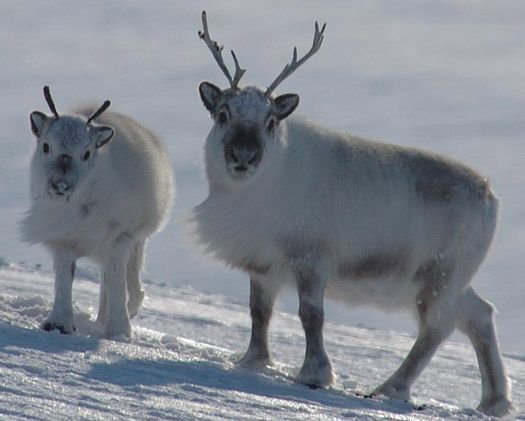
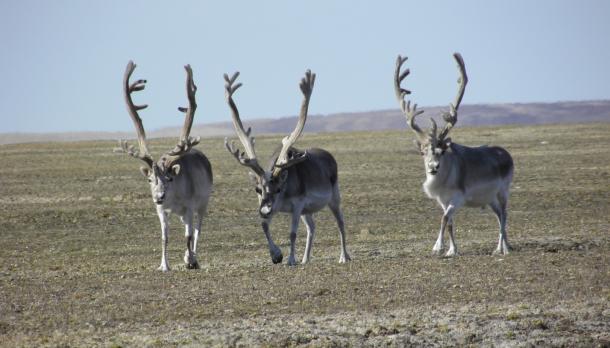
Svalbard reindeer (Rangifer tarandus platyrhynchus): Smallest subspecies, endemic to the arctic archipelago of the Svalbard islands. Short legged!

Svalbard reindeer

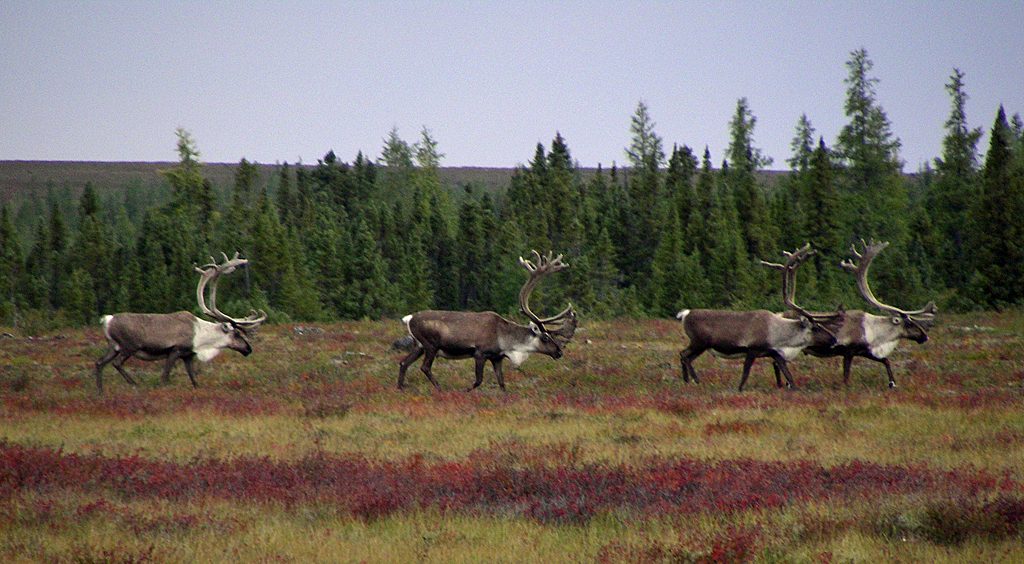
Barren-ground caribou (Rangifer tarandus groenlandicus): Migratory subspecies of open ground. The most similar of the caribous to our tundra reindeer.

Barren-ground caribou

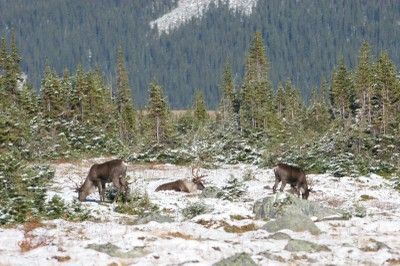
North American woodland caribou (Rangifer tarandus caribou): Largest caribou subspecies, often darker in colour. As the name suggests, they live in forests, and generally don’t migrate.

Woodland caribou Copyright Paul Sutherland

Peary caribou (Rangifer tarandus pearyi): Smallest of the caribou subspecies.

Peary Caribou Copyright Trent University 

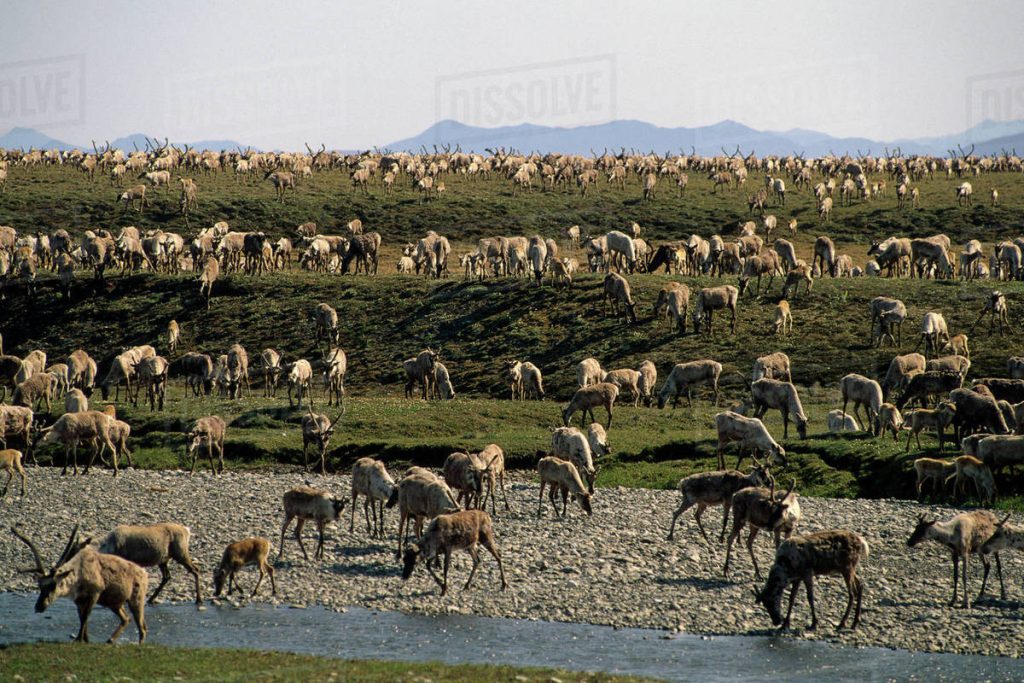
Alaskan or Porcupine caribou (Rangifer tarandus granti): Migratory subspecies most closely resembling the barren-ground caribou, and named after the Porcupine river, which runs through much of their range. The longest migrating land mammal on Earth.

Porcupine caribou

There have been two other subspecies in the past but these have now died out – the East Greenland Caribou and the Queen Charlotte Island Caribou.

So there you go, a brief taxonomy lesson, and congratulations to anyone who has stuck with me, as well as apologies for some slight over-simplifications for any scientists amongst you. Hopefully you’ll have all learnt something though – I’m a big believer of sneaking in educational blogs among the pretty pictures and funny stories we often post! And if it’s all too much and you’d just prefer something a bit more light-hearted, head off and google pictures of Svalbard reindeer. You’ll not be disappointed.

Hen

‘When you have livestock…’

All farmers and animal keepers know the saying. It’s a phrase often learnt the hard way but once learnt, it’s never forgotten. It’s only too easily remembered though when everything, it seems, is going tits up…

‘When you have livestock, you have dead stock’.

The subject of death might seem an odd choice for a blog but it’s part and parcel of working with animals and therefore not something to be hidden, or never mentioned. I feel that in this sort of job, it could be all too easy to brush over losses, but sometimes people do like a little frankness and want to know more (aren’t I brave?!).

Reindeer probably don’t live as long as many people expect, the average age being around 11-13, so naturally there is a turnover of quite a few animals per year. As to be expected, we have years with good survival rates and some with bad, so therefore we purposely vary our calving numbers from year to year in an effort to hold the herd at around 150 animals. This way we control our overall number without ever having to cull.

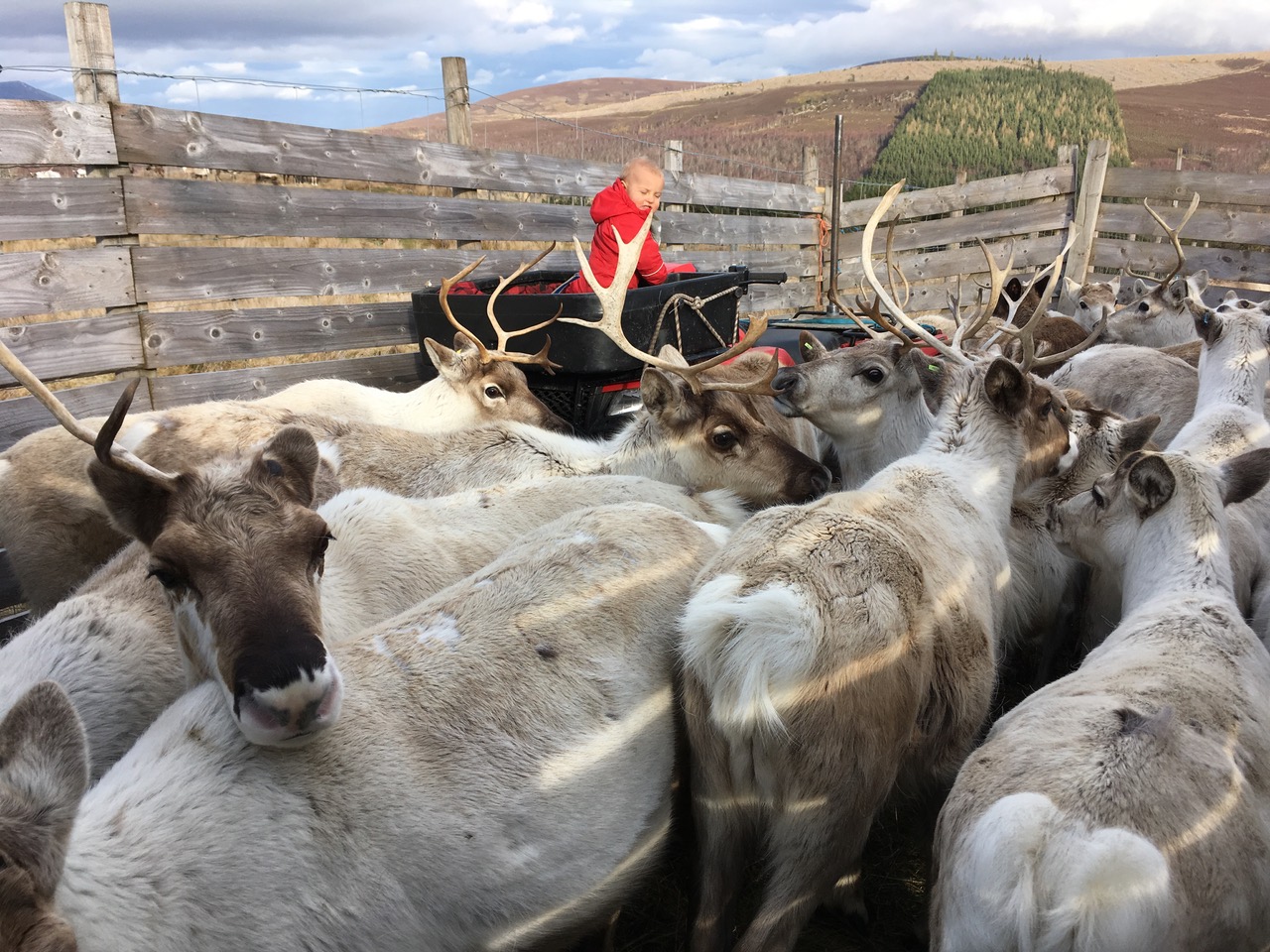
Reindeer in the corral at one of our winter grazing sites, having been brought down off the hills for annual vaccinations. Youngest reindeer herder Hamish is in attendance!

But animals being animals, they can find all sorts of ways to turn up their toes before their time, and sometimes we do find ourselves fighting a losing battle with a particular reindeer. Though I must say, in recent times there thankfully hasn’t been quite such a dramatic loss as one I unearthed in ancient diaries of Mr Utsi’s, detailing a bull in the 50s who was found drowned, having become accidentally tangled in wire and then blown into a loch – such is the wildness of the winter weather here at times. What a terrible way to go, and an incredibly hard loss for Mr Utsi, especially in the days when the herd was in its infancy. A striking example of the fact that sometimes, accidents do just happen, however much you try to ensure that they don’t.

In latter years, ticks have been the cause of many a loss in the herd. Twenty years or so ago, we lost reindeer after reindeer until we got to grips with a particular illness that reindeer can suffer which is transmitted by ticks, and though we are on top of it nowadays, having learnt which vaccinations do and don’t work and how often they should be used (no veterinary drugs come with detailed instructions specifically for reindeer!), it does still rear its ugly head every now and then. Most of the time we treat the affected reindeer successfully, but we still do lose reindeer to it on occasion, and one such loss hit us particularly hard last autumn. That was Fergus, our big, handsome three year old bull. If you’ve followed us via our blog and social media pages over the last few years, you’ll have heard all about Fergus, hand-reared in 2015 after his mum died. From the underdog in the herd as a calf he had turned into the biggest, most impressive reindeer of his year, so his death really, really hurt.

Fergus as a young bull, having grown into a very impressive lad!

Spring is often the most difficult time for reindeer, coinciding with the highest concentration of ticks. In spring, before the good grazing appears, the reindeer have just made it through the winter using up their fat reserves as they go, so their bodies are at a low ebb. This makes them more vulnerable to illness, with lowered immune systems, and it’s probably the most problematic time of year for them as a result. Into the summer and they put on weight, rolling in fat by around August, standing them in good stead for the winter months to come. That said, autumn can be hard too with another spike in the tick numbers coupled with a change in diet for many of the reindeer, females in particular, as they drop from the high tops of the mountains to the lower slopes.

You may remember that in 2018 we had live twins born for the first time in the history of the herd, but that in the early autumn we lost the smaller one, Hutch. We think his immune system just wasn’t strong enough to cope with illness after a difficult start in life, and very sadly his twin Starsky also died, about 6 weeks later. The curse of the autumn months, but in hindsight I think we can be pretty proud to have got them right through the summer when they were so much smaller than their compatriots – reindeer aren’t designed to have twins for a reason. We had great fun with them throughout the summer and will look back on their time with happy memories as, I think, will everyone who met them.

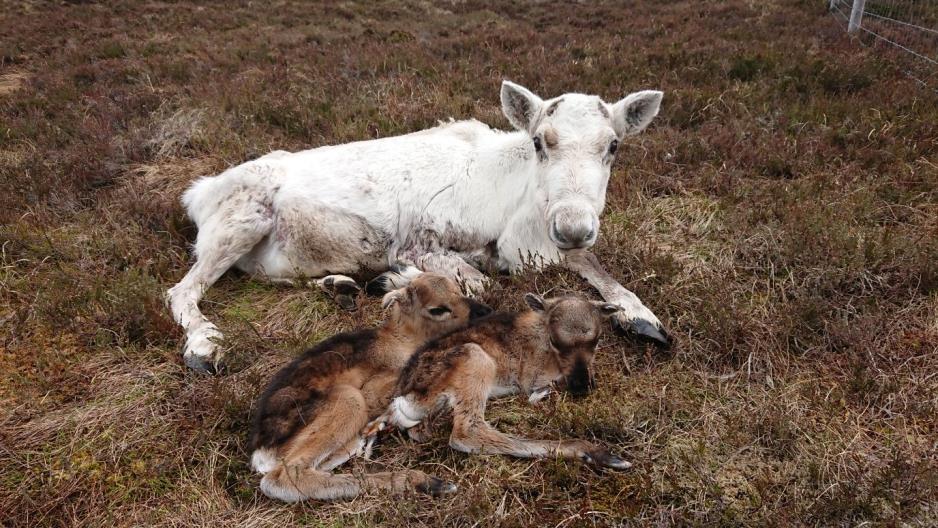
Lulu and her twins at a few hours old.

I can fully appreciate how upsetting it can be when people have enjoyed meeting a particular reindeer, and later find out that they’ve died. For us, working as closely as we do and investing a huge amount of love, time and effort into each individual, it can be utterly soul destroying when we lose them. In order to work with animals we have to learn to at least deal with death, but coping doesn’t mean we’re hardened to it – the atmosphere in the house when a reindeer has died is subdued and keeping a cheerful attitude with visitors is difficult. Ironically, it’s often on these days that a visitor will announce that we have the “best job in the world” …

One aspect that can make the loss of a reindeer even harder is then having to write to that reindeer’s adopters to let them know the sad news. In particular, my heart will sink when I realise that I have to let so-and-so know when it’s not too long after they have lost a previous adoptee, but this is the way that luck works, and sometimes it does happen. Conversely, when our ancient female Lilac passed away last year, there were a couple of adopters who had adopted her for almost her entire life of 19 years!

Lilac, our longest lived reindeer record holder.

We always do our best to address envelopes to the parents of an adopting child in case they want to break the news themselves, and over the years I’ve had a few visiting adopters here at the Centre, small child in tow, gesturing frantically to me over the child’s head, while saying how sad it is that their adopted reindeer has had to move back to Lapland to live with Santa! However, it is easy to make a small mistake on a computer, so if you find yourself one day receiving a letter addressed to your parents but you’re in your 40s, for the love of God let us know because we’ve ticked the wrong box on the database!

Hen

A moment in Hen’s memory

Earlier this year, on discovering how long I’d worked here, a visitor asked me what my favourite story or anecdote from over the years was. I was completely thrown – not only had nobody ever asked me that specific question before, but how on earth was I to pick just one thing?

But the question made me ponder, and reminisce a bit. Impossible to pick a single favourite moment, but there have been many, many stand out moments – and like for any job with animals, for both good and bad reasons. So I thought I’d tell you one of them, and will maybe write more blogs with further stories at a later date.

On tour with Mel at Christmas time

At the time when the question was actually asked of me, I went a bit blank, and despite a million different stories I could have told, suddenly the only one I could think of was a little moment from Christmas tour, several years back. I was on tour with Mel right down south and doing a ‘reindeer only’ event in Exeter. This differs from our normal events with the sleigh and parade etc, as it is just reindeer in a display pen for 2 or 3 hours, with us herders there to chat to people in the crowd. Much less work for both us and the reindeer compared to a parade!

I have no photos directly associated with this blog, so have only some general ones to add to it! Here’s Puddock, in his prime several years ago

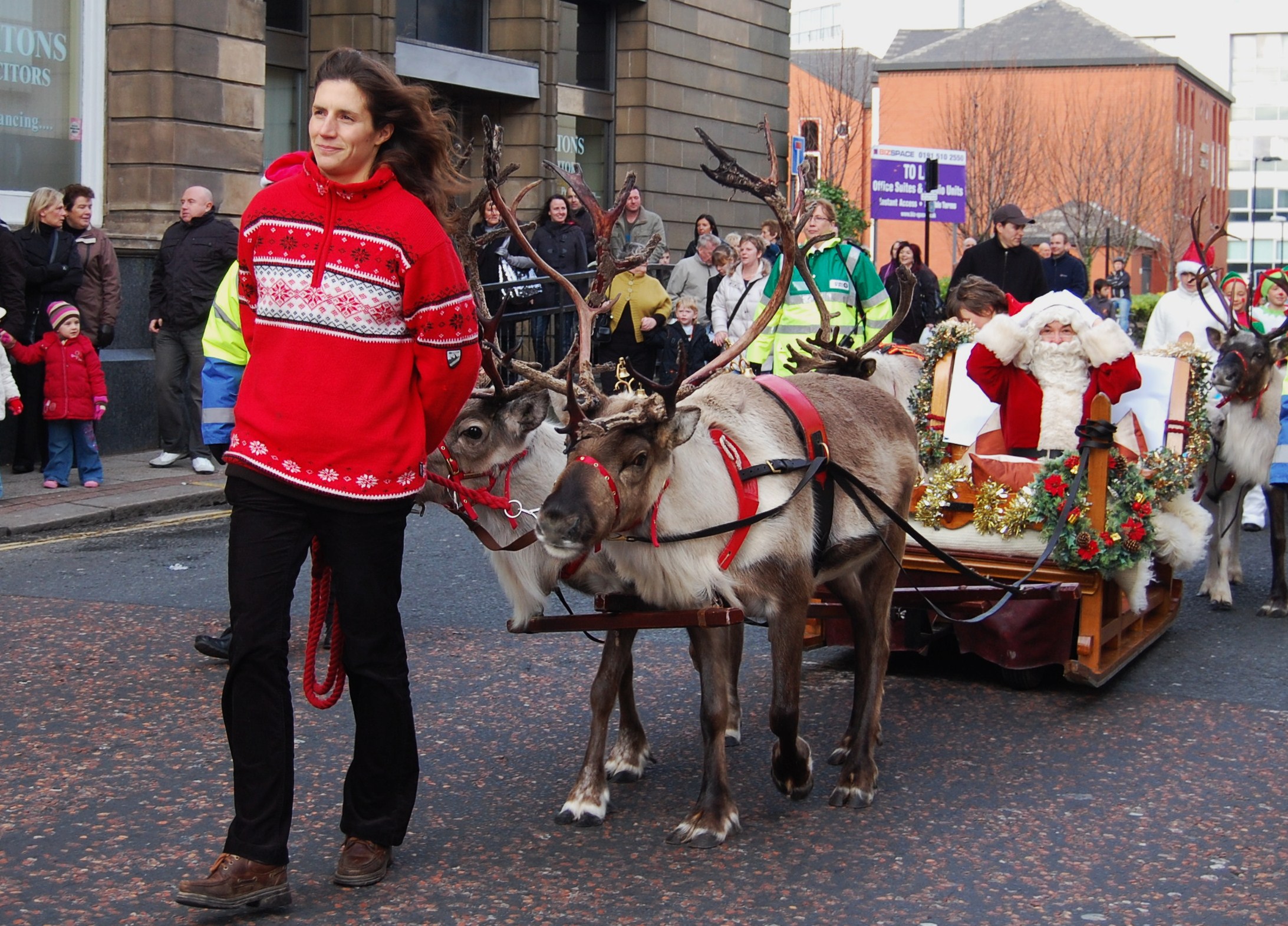
It was a horrible day, absolutely pouring, so I can’t say either Mel or I were particularly enamoured of the idea of standing getting utterly drenched for hours, the sort of day where you know you’re going to get soaked to your underwear and the prospect of dry pants was a long way away (Christmas tour ain’t as glamorous as it sometimes sounds) – at least the reindeer have built in waterproof coats far more effective than any human clothing. We got the pen ready; straw spread out, feed and water in bowls, signage up, and then returned to the lorry to fetch the reindeer. The route to the pen involved walking along the pavement and then through a covered shopping arcade to the pen itself – no problem at all and the reindeer are perfectly happy in such a situation as we make sure that all six stay close together in their mini herd. There’s safety in numbers if you’re a reindeer! Just at the entrance into the arcade we paused, in the pelting rain, for security to clear a route through for us and the reindeer stood gazing around in interest at their surroundings – or more realistically, in hindsight, wondering where their pen and their lunch was. We were right outside a Costa coffee shop which had window seating, full of warm cosy people inside sipping nice hot drinks and oblivious to the world outside, until suddenly 6 reindeer appeared on the pavement, literally just feet away from them. We had big male reindeer Puddock as our of our team members (I can’t remember the others), and he put his nose right to the glass and breathed out, leaving huge steamed up patches. I watched a lady inside slowly put her hand up to the glass and put it flat against it, Puddock’s nose a centimetre away the other side. A few seconds passed and then we moved on, the moment gone.

Reindeer exercising while at a ‘base’, away on tour. Good stretch of the legs required! This is Bourbon.

And that was it. In real time just a fleeting moment, but one I have always remembered, and I often wonder too about the lady the other side of the window, and whether she still tells the story of the time she was having a coffee in Exeter and somewhat miraculously a reindeer appeared outside the window and then vanished once again. Years later I remember nothing about the actual reindeer event other than that little moment en route to the pen (and the fact that the herders at every single event across the country that day got completely soaked too apart from, ironically, at Fort William – normally one of the wettest places in the country).

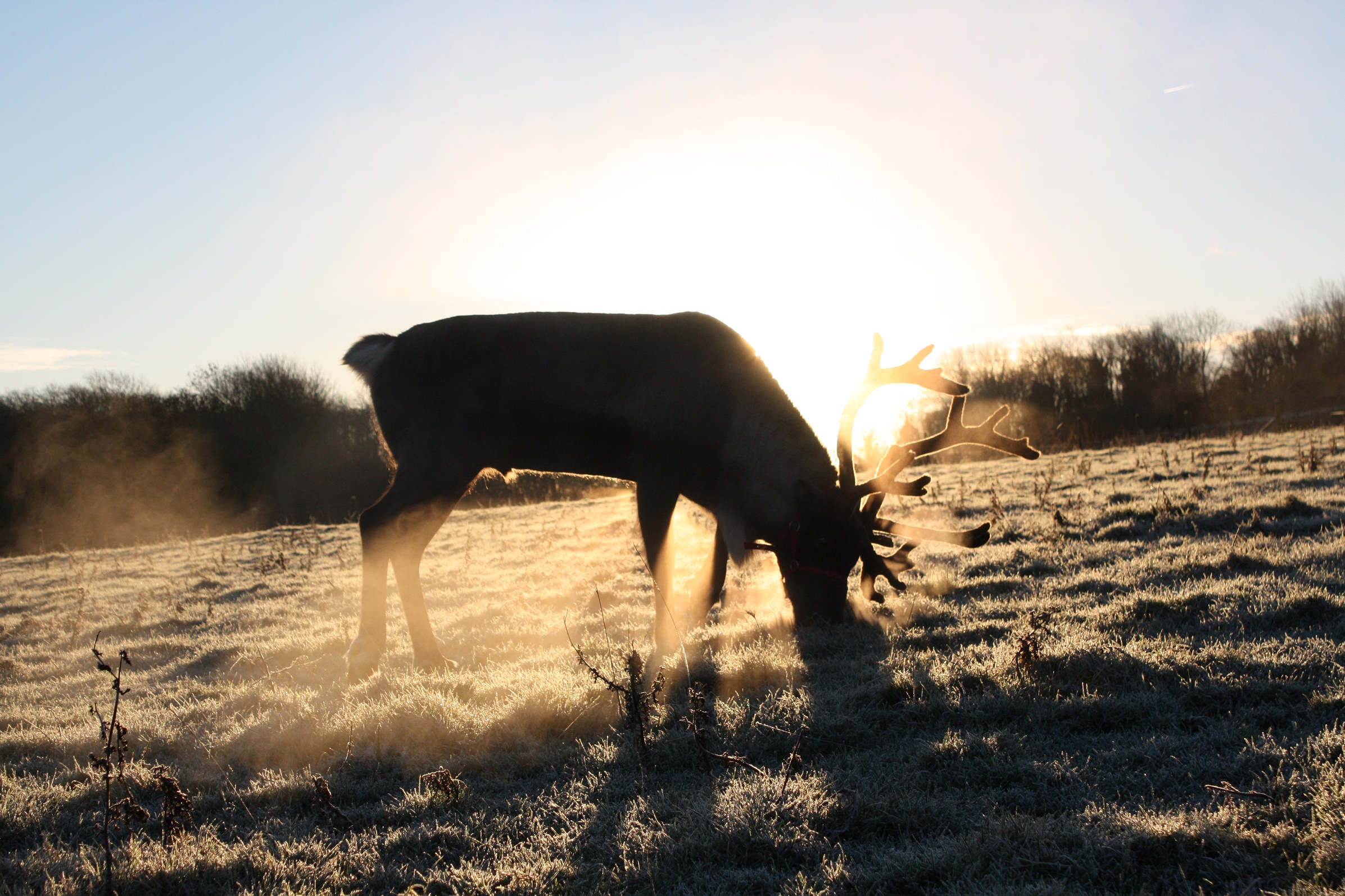
Frosty morning

In my head I debated telling the visitor on the Hill Trip about this memory, but standing outside a Costa on a wet day in Exeter, of all places, seemed so at odds with our current situation way out on the mountainside high up on the Cairngorms, on a beautiful winter’s day, surrounded by reindeer roaming freely in their natural habitat, that it didn’t seem worth the effort of explaining it all, and it wouldn’t have been the sort of the story the visitor was expecting anyway. But it’s a memory for me none the less and as Puddock has been one of my very favourite reindeer over the years but is now retired from Christmas tour, it’s a particularly poignant one.

I have had a love-hate relationship with Puddock over the years, although mostly love! He can be a bit of a pillock at times though…

Hen

The Blog of Blogs: Blog 200! A bloggy blog…

Hen noticed the other day that we were fast approaching our 200th blog milestone, so thought we’d better mark the occasion!

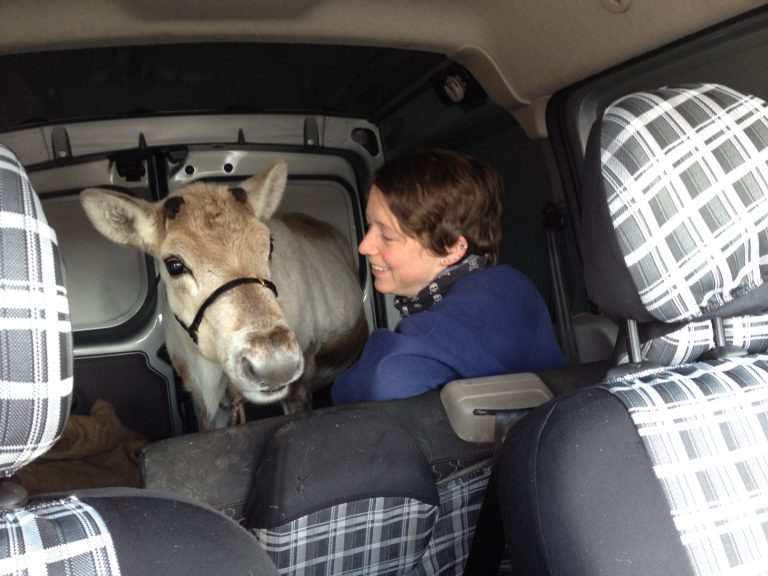
Esme and Andi in the van – find out why back in our very first blog…

We started blogging in April 2015 – we’d taken part in a Digital Marketing course for local businesses and one of the pieces of advice is that doing a regular blog can help build a connection with people who are interested in what you do. We thought we’d better give it a go, and somehow (sometimes by the skin of our teeth) we have managed to post a blog every Friday without fail since – the “schedule” function means that we’ve even covered Christmas Day and New Year’s day.

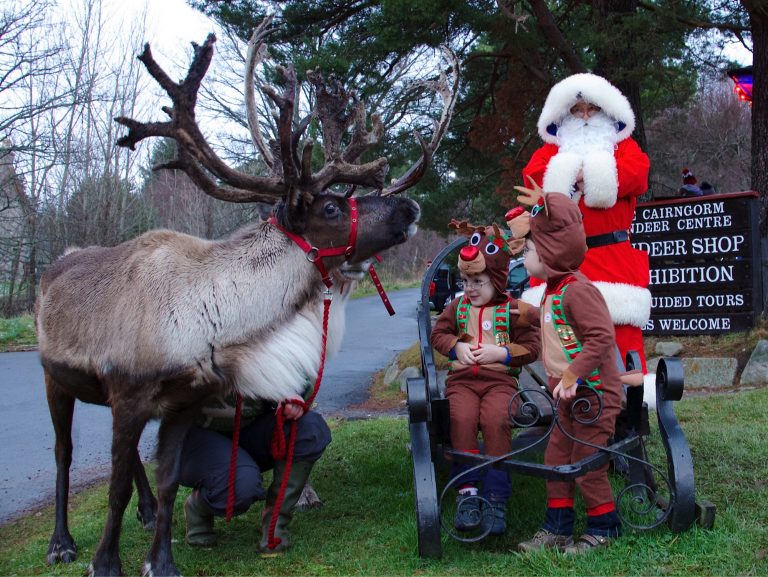
Santa and a variety of reindeer – looking back at Christmas in our New Year’s Day blog

Whilst everyone one here is asked to contribute blogs, we have one herder in charge of making sure one is posted at the correct time, complete with pretty pictures and hopefully with spelling mistakes removed! As it was my “idea” (as I’m reminded bitterly at times…) I took this role for the first year or so, before passing on to Imogen. Imogen certainly had the most luck getting blogs written – we’re all a bit scared of her and when she cornered you and said it was overdue, you’d drop whatever you were doing to get typing! When Imogen moved on, she passed over to Morna, who has now relinquished the title to Chris. Chris goes for public shaming in his efforts to get blogs produced – a list materializes on the office door with everyone’s name and promises of rewards for the first person to get their name crossed off, and punishment for the last one…

Morna preparing Chris to take over the job of Blog Monitor

We try to cover lots of aspects of reindeer, seasonal life here with the herd, funny stories, and general nice photos that give you a taste of what’s going on. Our first blog featured Esme’s impromptu journey in the back of the van, later that year we looked at the traumatic calving bet, and volunteer Emm wrote about her experiences with the herd and how they’ve helped her. We’ve covered some educational topics, looking at how reindeer change in appearance throughout the year, reindeer of the Southern Hemisphere, and antler stripping (steady!). We’ve focused on the local wildlife, our dogs, and the geology of the Cairngorms. We admit that sometimes when we run out of time, we plump for photo blogs: in the wild winter, free-ranging or the new calves.

Comet featured as one of our “Memorable reindeer” series, also looking at others such as Flake, Amber and Eco

So we hope this may inspire you to have a look through our “back catalogue” of blogs. We do have to apologise that some are missing their photos after we migrated our website to a new server last year, but hopefully it gives you some reading material. If there is just one blog you look back at, we can recommend this one for a laugh…

Find out what Okapi is best at…

Here’s to the next 200!

Andi

How long do reindeer live?

One of the most common questions I’ve been asked over the years is how long do reindeer live? I’ve always answered about 12-14 years on average, but a conversation with Dave earlier today in the office got me thinking about the topic.

The course of a life. Female Ring, from tiny calf in 2002, to mature adult, to an old girl in her last months 15 years later.

The askers of the question tend to be surprised by the answer, expecting the reindeer’s lifespan to be more in the region of a horse’s, say 25 to 30 years. But (very much as a generalisation) in the animal kingdom, the larger the animal the longer they tend to live, and reindeer are considerably smaller in body size than a horse, or indeed even a small pony, an adult weighing only between 100 – 150kg.

Female reindeer in our herd tend to live a little longer on average than males, and looking at the herd list on the office wall here, currently indeed 9 out of the oldest 11 reindeer in the herd are female. In a totally wild situation this may be due to the stress the rutting season puts on a bull’s body each year, during which they can lose a third of their body weight, subsequently going into the hard winter months in much poorer body condition than the cows. Year on year this annual loss of condition really takes its toll. But our males are mostly castrated as 3 year olds, meaning they take no part in the rutting season and remain fat right into – and in an easy winter – right through to the spring. So I don’t really know what their excuse is, but there is certainly a noticeable difference in the average age of our males and females!

After Dave and I’s conversation, we’ve come to the conclusion that it may be more realistic to state 12-14 as the average age for a female reindeer, but perhaps more like 10 -12 for a male. Maybe we’ll settle for 12 overall to cover all bases. It’s worth noting that some reindeer in permanent captivity may have longer lifespans as they have very little environmental stresses on their bodies, with food provided all year around and shelter from the elements. A reindeer named Valeska reached 21 at the Highland Wildlife Park, just 10 miles down the road from us. Valeska was actually owned by us, back in the day when we used to very occasionally send reindeer from our herd to live elsewhere. We’re talking 30+ years ago though, and don’t do this anymore.

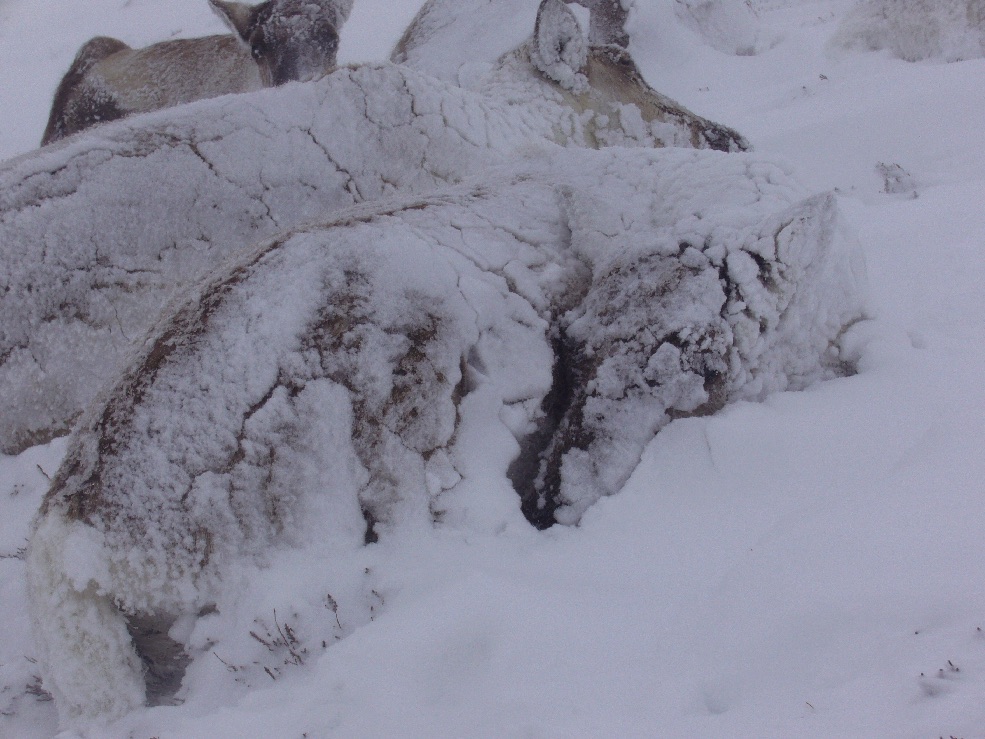
Hunkered down and riding out the storm – harsh conditions for any animal

The harsh fact is that the vast majority of captive reindeer, however, in fact have much, much shorter lifespans brought about by incorrect diet, climate and lifestyle, but that’s another matter entirely and beside the point for this blog. Our reindeer, while pampered to some extent, do live as natural a lifestyle as we can possibly provide for much of the year, and have to cope with the rigours of life in a sub-arctic habitat and climate – the Cairngorms in the grip of a winter storm is not a friendly environment to any animal. Staying alive in -30°C in howling winds when your grazing is concealed under hard-packed snow and ice, for days at a time, obviously uses a lot of precious energy and vital body reserves.

Tuna, one of the herd record holders until 2018! Picture by P. Harris.

Until last year, 18 was the record age in our herd here for any reindeer, achieved by females Trout and Tuna in 2002. The oldest male was Scapa, who got to 17. But Trout and Tuna’s record was finally beaten last year by Lilac, who certainly reached 19. We last saw her a week after her birthday, still looking great out free-ranging a couple of miles away, but we don’t know the exact date of her passing.  An early retirement from motherhood (Monopoly was her final calf, at age 12) no doubt added to her longevity, as did her sheer bloody-mindedness! Lilac lived her life exactly as she wanted, and quite often where she wanted too – which was not always in concurrence with us. Her backside, disappearing over the nearest horizon in the opposite direction from the rest of the herd, became a common sight over the years.

Lilac, aged 19 and one week. Free-ranging until the very end!

So, who are the geriatric members of the herd today? The oldest of all is actually a male, one of our 2004 import of Swedes, Addjá, who is nearly 17, and has always had a squint nose. Most of you will be more familiar with Boris, our squinty nosed 6 year old, but Addjá was the original ‘ugly’ reindeer in the herd. Hot on his heels are Cailin and Fonn: females who are approaching 16 (Fonn being the older by two days), and then there are females Malawi (13); Lulu, Santana, Joni, Blondie, Enya and Dixie (all 12), and male Elvis (12). Age isn’t everything though, and reindeer have such varying characters than some can go on for donkey’s years without ever seeming to really make themselves known (looking at you, Joni), while others make a huge impact even before they’ve reached a year old (stand up and take a bow, Dr Seuss…!). But perhaps that’s the beauty of working on a daily basis with a herd of 150 animals.

Our current oldest male, Addja
Fonn in her heyday
And Cailin too, with her distinctive ‘punk’ tuft of white hair between her antlers!

Hen
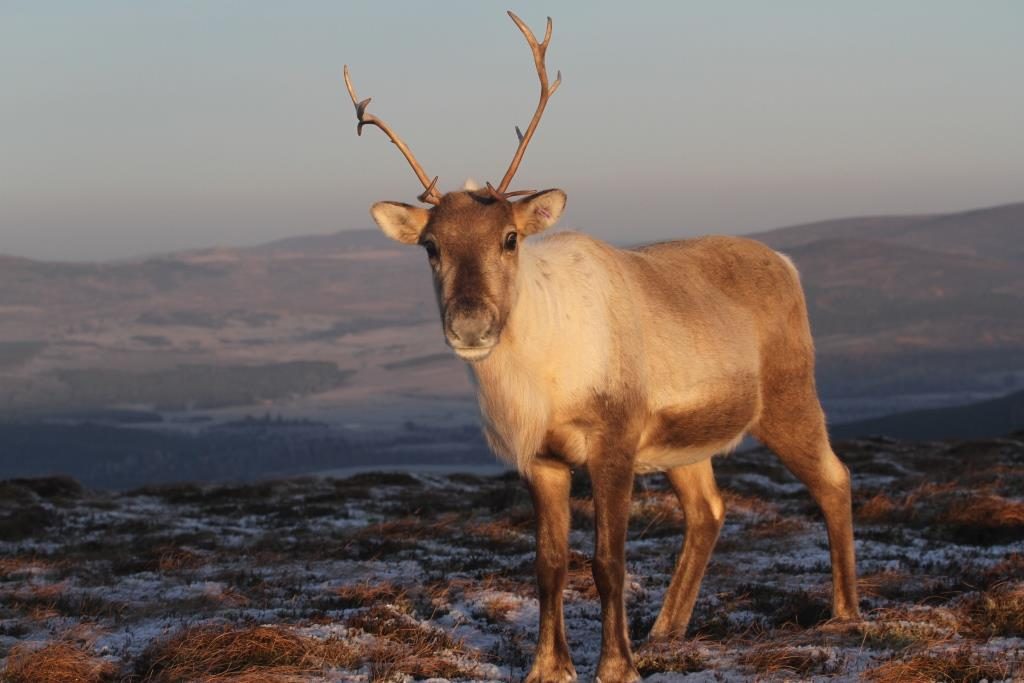
And then there was snow (well…)

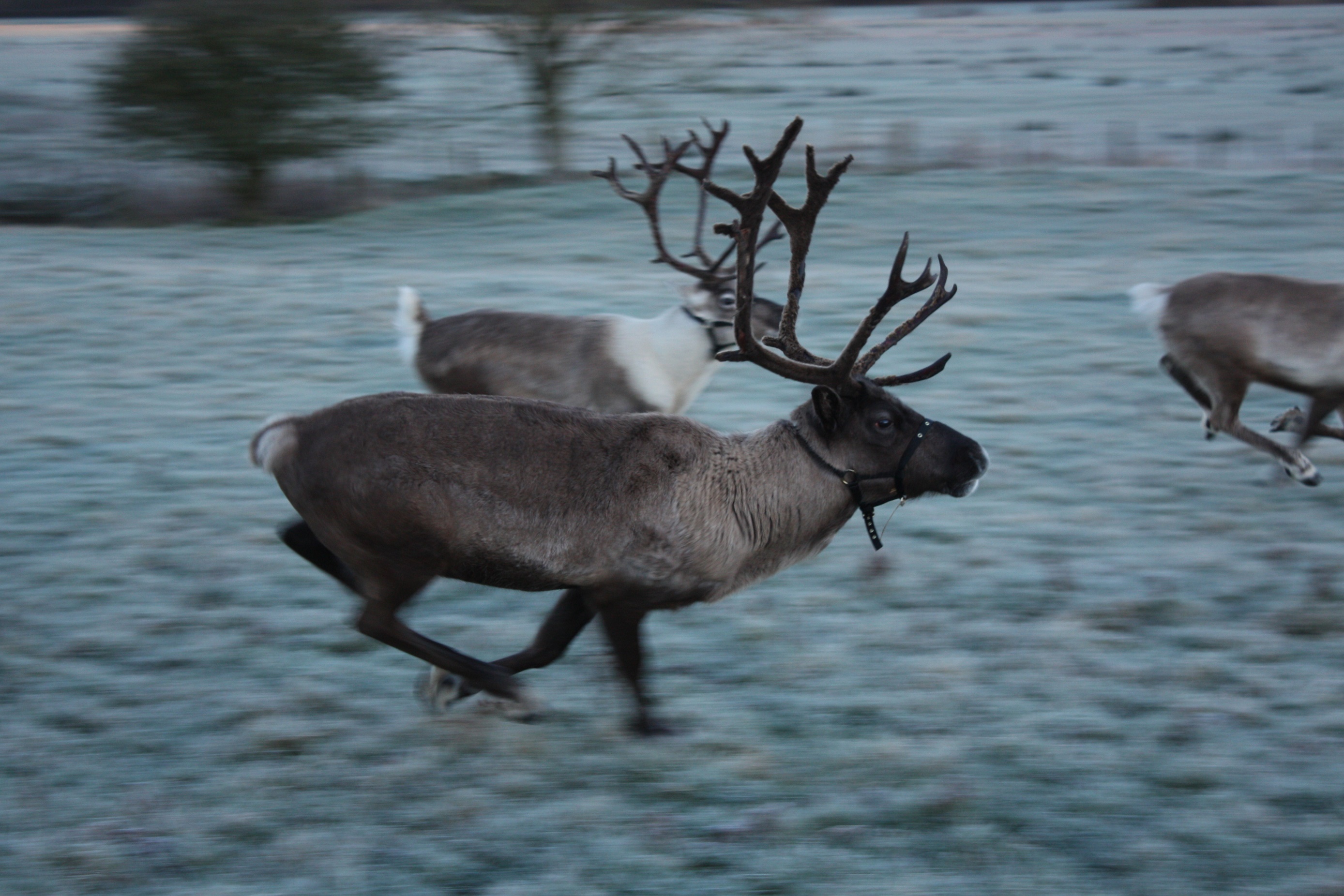
The weather here has been chilly but there really hasn’t been more than a sprinkling of the white stuff – maybe it’s all being saved up for February but it has to be the most snow-free January I’ve had up here. We had a few days with a dusting of snow on the ground on the hill, but with a mild day today much of it has melted. The reindeer don’t mind, and are enjoying the cool temperatures whilst having easy access to the grazing still.

There’s a forecast for more snow in the next week though, so we’ll wait and see!

Ochil posing!
Fly
Pony
Wapiti has the largest antlers out of all of our females

Today the snow has pretty much gone. Here’s Camembert, Fly and Cheer.
Morven
Dixie
Hen checking everyone is present and correct

Andi

Antler stripping: A blog not for the faint of heart!

I took photos with the purpose of writing this blog in September 2017, and then everything got too busy and I didn’t manage to actually write it. But here it is finally, so late that the subject matter has effectively come back into fashion once again! All the photos below are from last year (or earlier), rather than this year however.

Viking with his velvet antlers, pre-stripping

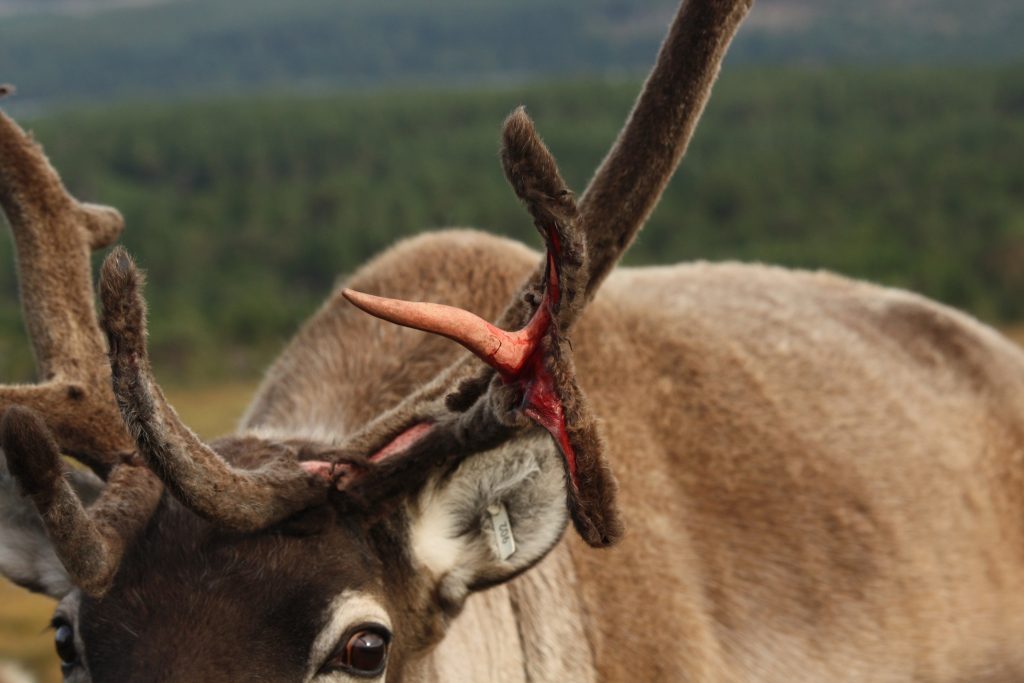
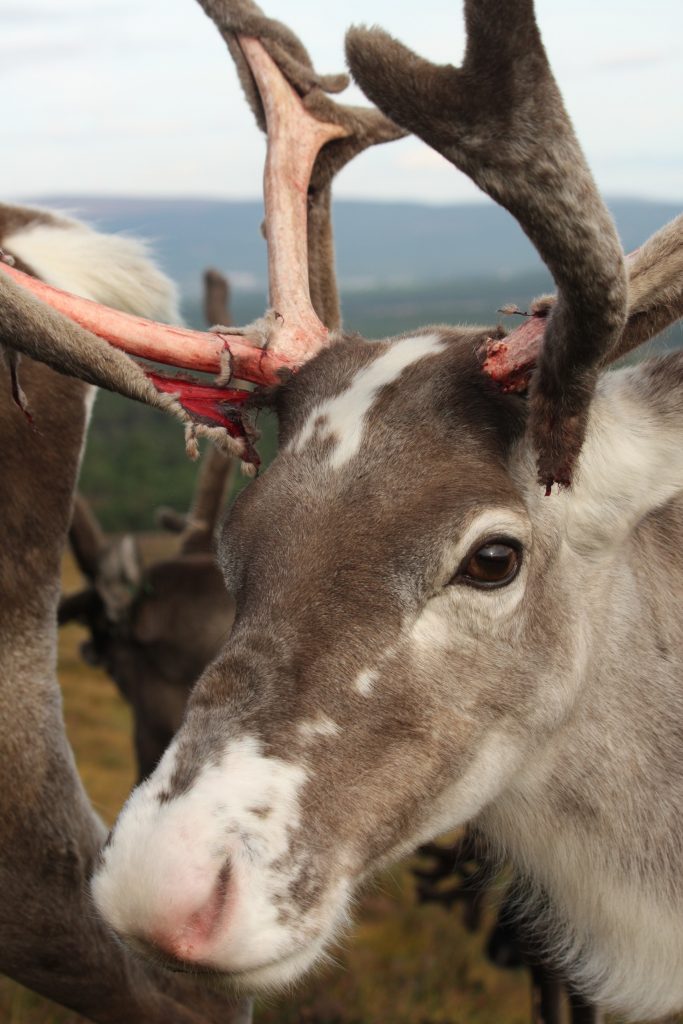
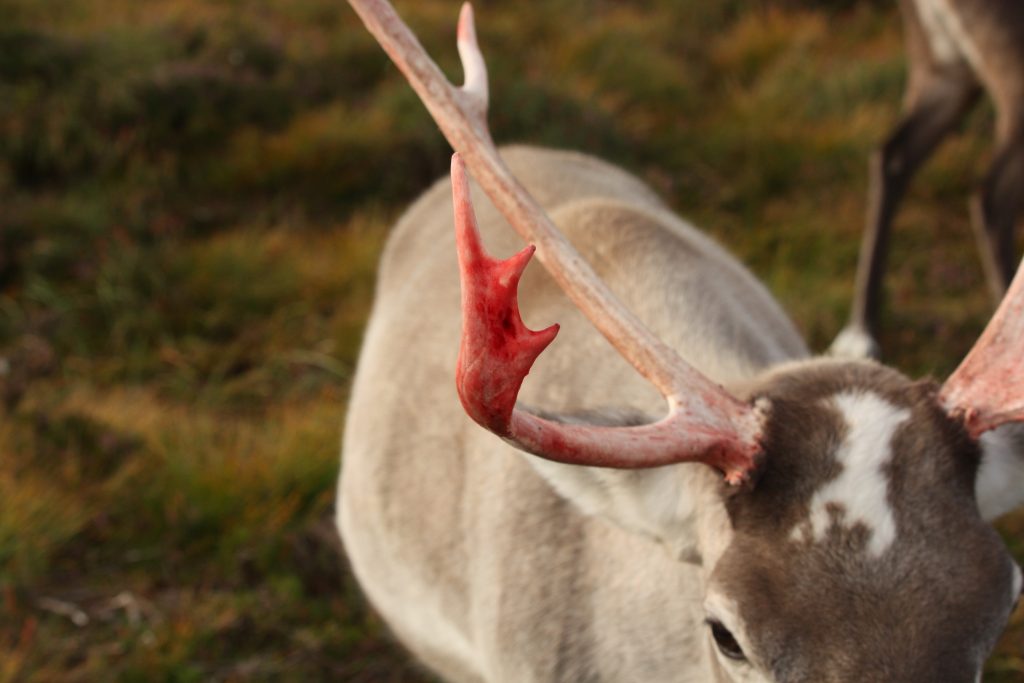
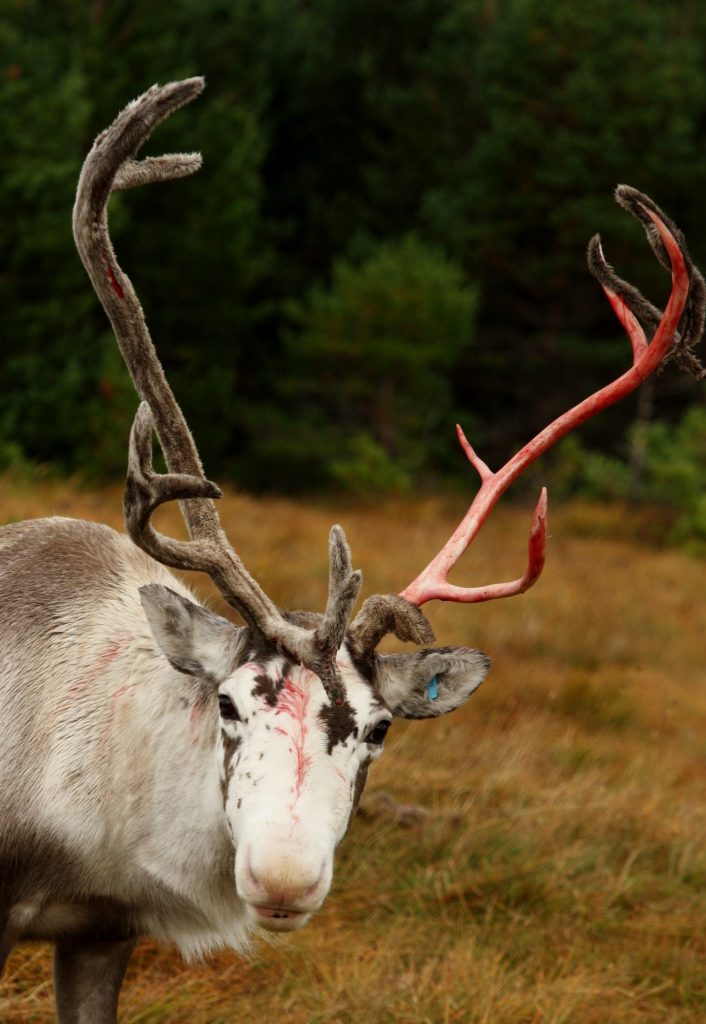
Reindeer antler is made of bone, and bone needs a blood supply for it to grow. Antlers start growing in the spring and at this point the soft, growing bone is covered with a layer of ‘velvet’ – a thin, hair-covered skin which is full of blood vessels and nerves. Late August and September are the months when reindeer finish growing their antlers each year, the bone hardens up, and then the ‘velvet’ skin strips away. Now, this can be a bit of a gory affair if you don’t know what to expect, so read on with caution if inclined to be a little squeamish. Although depending on what size of computer or phone screen you’re reading this on… it might be too late already. Sorry.

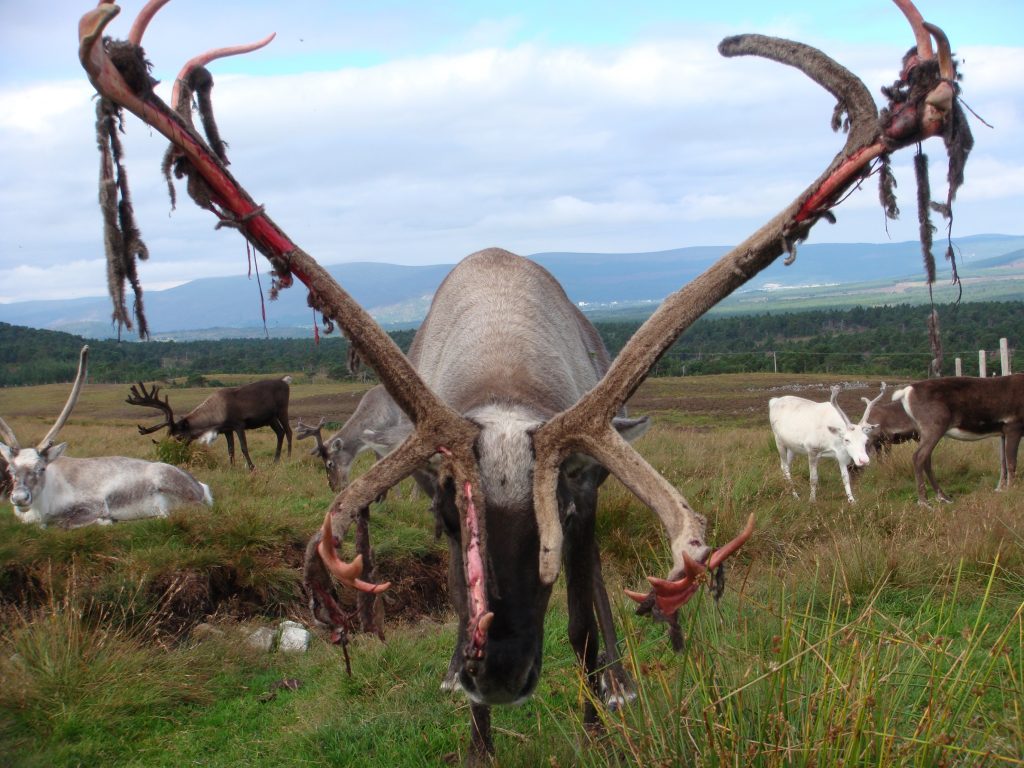
I could write all day about antlers, but to cut a long story short (for now at least), the antlers reach full grown at the end of the summer and then the bone hardens up, and finally the blood supply to them cuts off right at the base. This means that the velvet skin is effectively then just dead tissue, and that dead tissue needs to come away. You can’t be a big scary bull during the breeding season if you have cute fluffy antlers on your head…

The tell-tale sign of a stripping bull.
The velvet starts to peel away in earnest

The first reindeer to ‘strip’ their velvet each year are the mature bulls, starting at the end of August. They are followed but the younger bulls in early September, and then the cows will strips their throughout the rest of September and into October. The castrated males, or ‘Christmas reindeer’ as we call them, are slightly different as they no longer have a hormonal trigger to strip the velvet away as their hormone balance has changed. They do still strip their velvet, but slowly and over the course of months as opposed to the space of a couple of days.

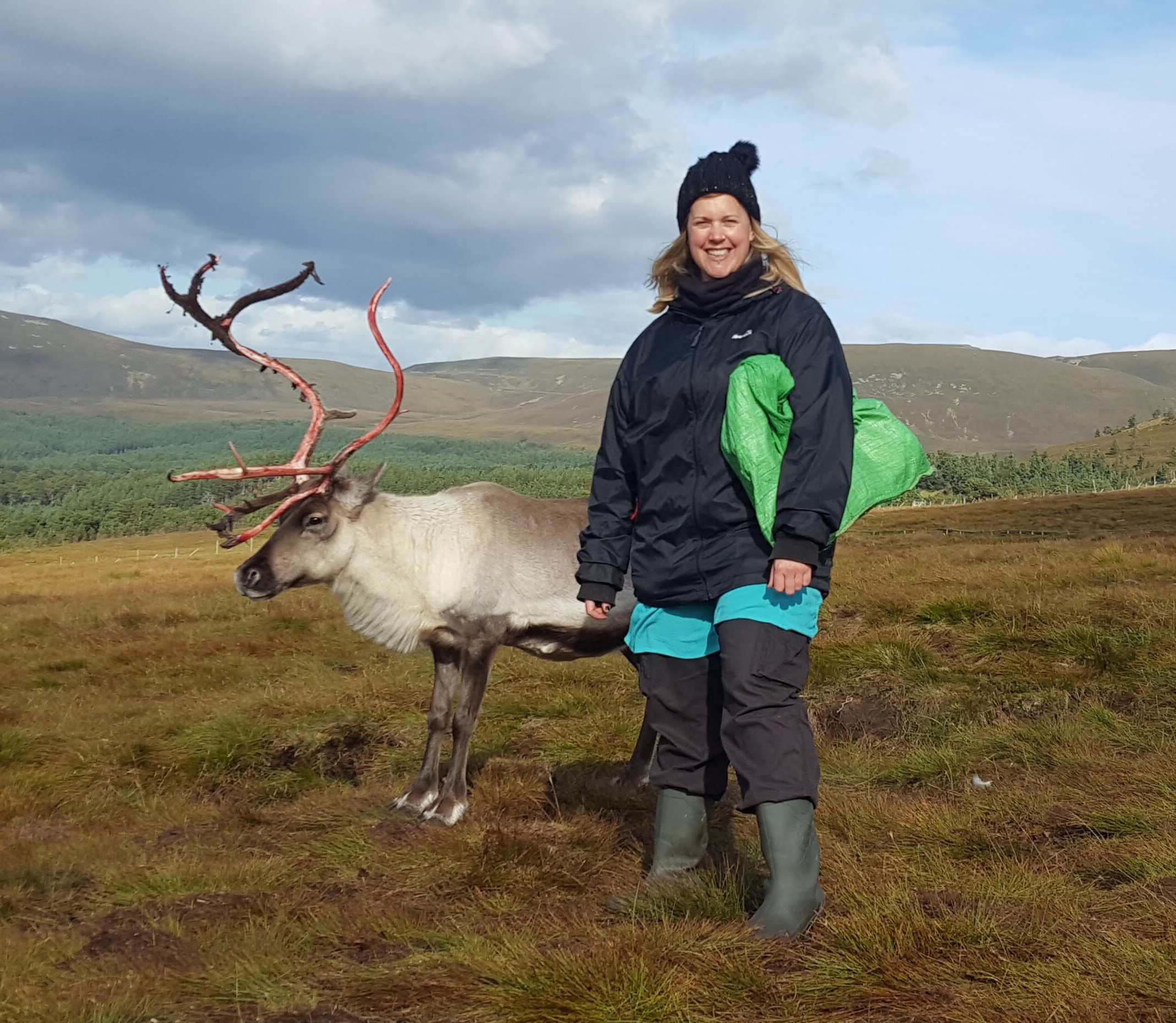
Clean but bloody antlers. Rain is needed!
The word ‘strippers’ has a whole different meaning here at Reindeer House to the more commonly known meaning…

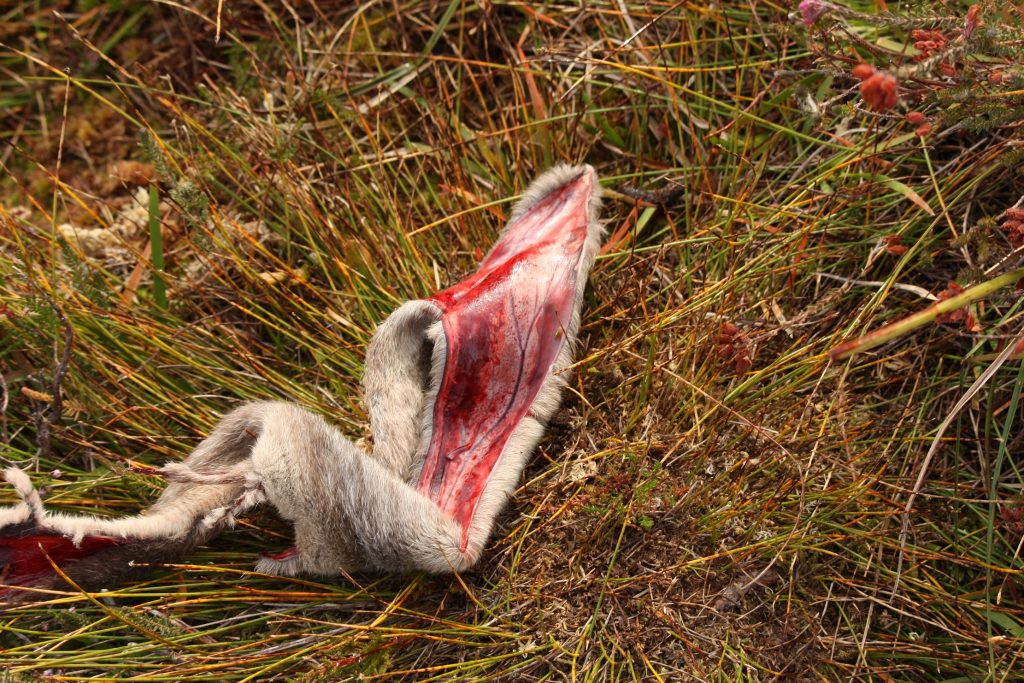
Although the blood supply to the velvet has cut off, there is still residual blood remaining in the blood vessels of the velvet, so stripping can be a gruesome affair at times. There is no feeling left in the antlers by this point however so it is completely painless, and this is a fact we have to drum into to all visitors before they come face to face with a reindeer whose skin appears to be falling off! It’s not a good look. But for those visitors who are feeling brave, I take great delight in showing them a section of freshly stripped velvet as the blood vessels are visible, making it easier to explain the process of the antler’s growth. I find kids are generally well impressed and want to poke at the bloody skin, whereas adults are often a little grossed-out and not keen to touch!

Blood vessels in the skin of the velvet

Once the antlers are clean of velvet, they tend to be a bit red-tinted from the blood until there’s been a rain shower, and then they are a more normal, ‘bone’ colour. And then it’s time for all hell to break loose, as the young bulls start squaring up to each other and the big bulls have to be separated from the herd for the safety of the visitors each day, until they can be split up and moved to closed off sections of the hill enclosure with a group of females apiece. The rut has arrived!

Hen
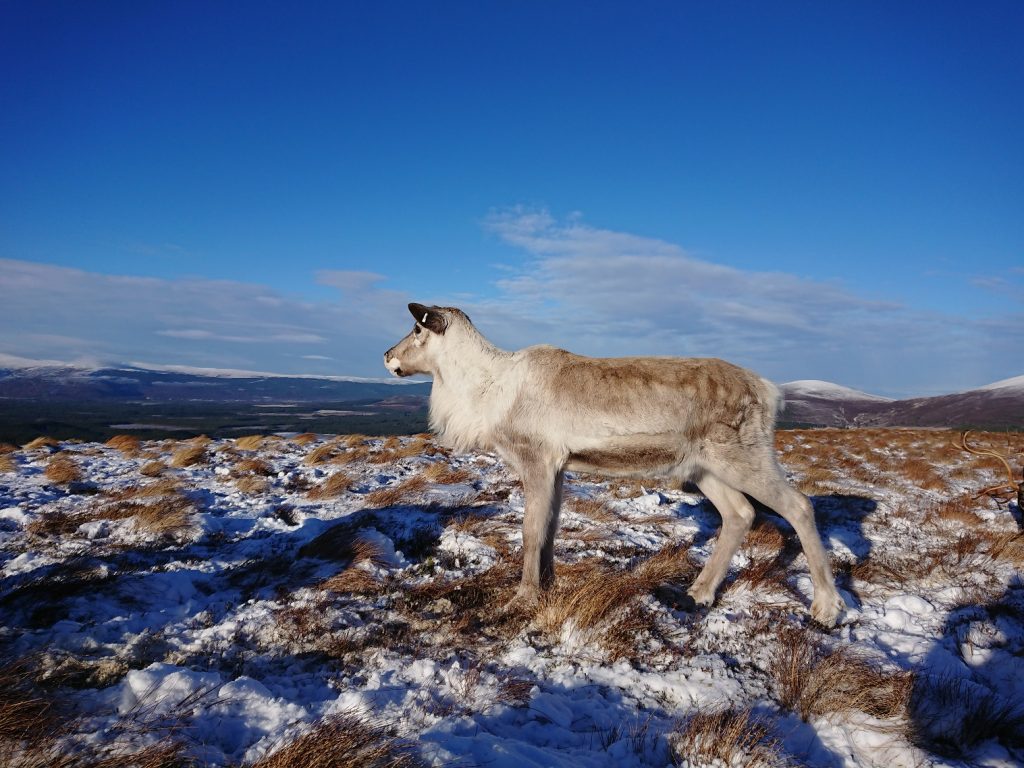
 

Reindeer bull Moskki stripping his velvet

Exciting times ahead!

Mid April here has a definite ‘calm before the storm’ feeling. The area has quietened down as the school holidays have finished and all is peaceful on the reindeer front…but it won’t be for long. At the start of May, all hell will break loose.

A growing belly!

Calving is nearly upon us. Although we know exactly which females ran with bulls during the rut last autumn and should therefore be pregnant now, it’s not easy to tell with a reindeer, and it’s really only into April that bellies start looking that little bit more than just well padded. Scanning them like farmers do with sheep is obviously completely impractical, so all we do is to keep an eye on the possible candidates and watch for rapidly expanding tummies. Literally within a couple of weeks reindeer can go from looking exactly the same as their non-pregnant chums, to looking absolutely enormous! As I write, in mid-April, we’re in the middle of that stage, and every day someone will remark on a particular reindeer’s sudden portliness. The weather has finally warmed up too, and with the reindeer still having their full thick winter coats as well as extra weight to lug about, they are looking like they are starting to find it all a bit of an effort, and there’s lots of huffing and puffing when the herd move from place to place.

A couple of hot and bothered pregnant female reindeer, Blondie and Oatcake.

By the time you read this, we’ll have moved the herd across to our hill enclosure, and will be doing a bit of sorting out. Non-pregnant females will go back out onto the free-range to spend their summer there looking after themselves, while male yearlings will be split from their mums and be moved across to join the other male reindeer at our farm, near Glenlivet. Pregnant females will stay in the hill enclosure until they’ve calved, and then will head out to the hills to join the other females, leaving us to bring male reindeer across to the enclosure from the farm, to duly entertain all the visitors through the busy summer months.

The biggest pregnant belly I’ve ever seen! This is old lass Chime, back in 2010
‘A small hairy udder! Seen here on Emmental, with her now two year old Olmec beside her’

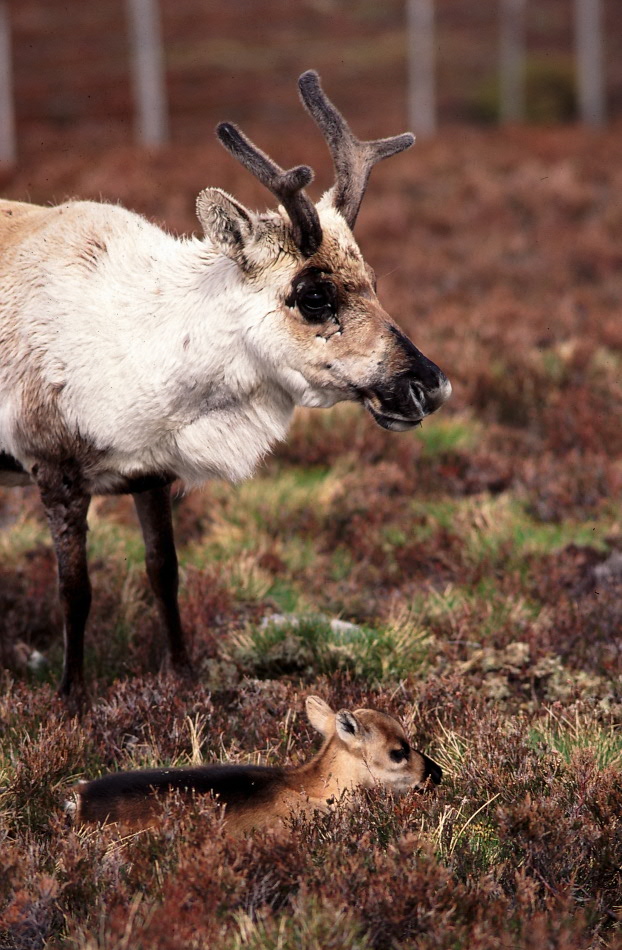
Once bellies give away obviously pregnant reindeer, then the next clue is an udder starting to form. Reindeer don’t have huge udders like cows do, as no arctic animal wants a frost-bitten udder, but instead have much smaller, fur-covered udders and produce smaller volumes of  milk, but much richer in fat than that from a cow.

Any sign of udders yet?

As many of you probably know, all the staff here take part in a calving bet to pick who they think will calve first. Winning doesn’t really matter; it’s not being last that is most important, as a cold swim in the loch awaits the unfortunate loser (as told by myself and Abby on a previous blog:  The Calving Bet. So from now on until the start of May, there will be a lot of inspecting bellies and peering between back legs to be done…

Hen
Book Now