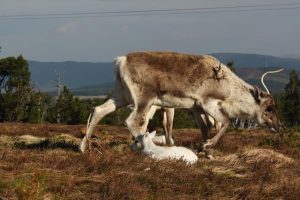
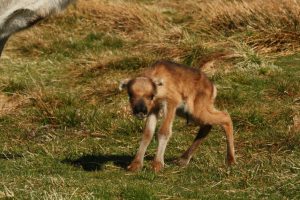
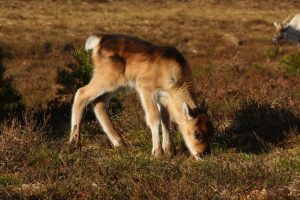
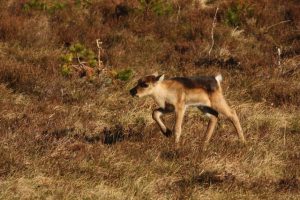
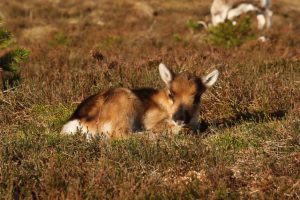
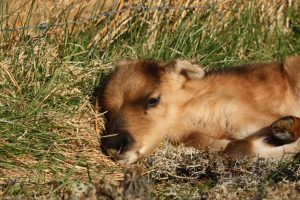
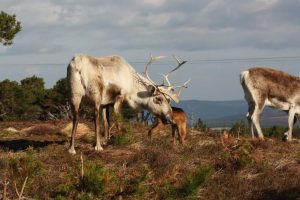
It has been a busy few weeks here at reindeer house with with plenty of new calves being born on the hillside. We thought we’d share a few photos of the lovely new members of our herd. Enjoy…
 Getting a trot on

Roaming freely since 1952
It has been a busy few weeks here at reindeer house with with plenty of new calves being born on the hillside. We thought we’d share a few photos of the lovely new members of our herd. Enjoy…
Getting a trot onBlondie
Mother: Glacier
Born 11th May 2006
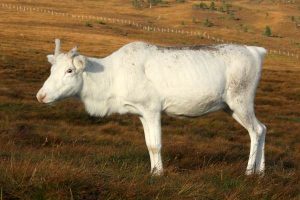
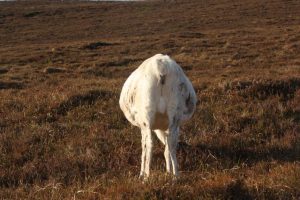
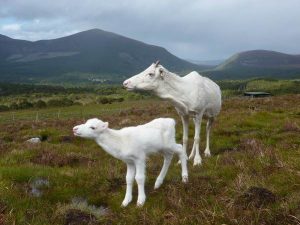
Blondie is different to the vast majority of the herd because not only is she pure white but she is also stone deaf. When she was born in May 2006 she was the first pure white reindeer calf for nearly 40 years, indeed since her great-great-great-grandmother Snowflake, who was born in 1968. We had no first-hand experience of a reindeer as white as the driven snow and for a while as a calf we thought she was just an incredibly lazy, ‘laid back’ reindeer. While the rest of the herd would eagerly run down the hill when we called them, Blondie would be sleeping! But it didn’t take us long to realise that actually she was deaf. Clapping our hands and shouting into her ear while she was fast asleep did nothing to rouse her; she was quite literally ‘in a world of her own.’
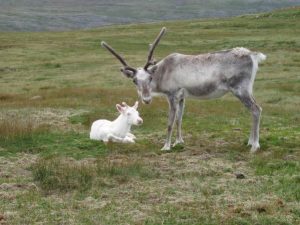
We worried over how she would cope out on the free range as she couldn’t hear her mother Glacier grunting to her, nor would she be able to hear the clicking of the reindeer’s tendons as they walk – a constant noise that encourages the herd to stay together. Equally she would not hear a dog barking or people talking and so be unaware of potential danger. Well, our worries were unfounded; she is now 12 years old, has successfully raised a number of calves and is very much alive and kicking. One advantage is she is really easy to spot on the hill, standing out like a sore thumb against the dark hillside, although admittedly in the winter, the white camouflage in deep snow helps to disguise her.
In 2010, Blondie had a male calf Lego who, like his mum, is pure white and also deaf. Not wanting to have too many deaf reindeer in the herd we decided not to breed from Lego, but at two years old Lego had other plans and managed to be sneaky and mate with Lulu, a seven year old, light coloured female. Lo and behold the next spring Lulu had a pure white male calf Blue, who, yes I am sure you can guess, is deaf too!
Interestingly when we have been out in Swedish Lapland we have often heard the Sámi describe white reindeer as lazy and easily predated on by wolves. I think we can safely give them the answer why!
Tilly
Balmoral: Born 16th May 2012
Mother: Fly
Father: Strudel.
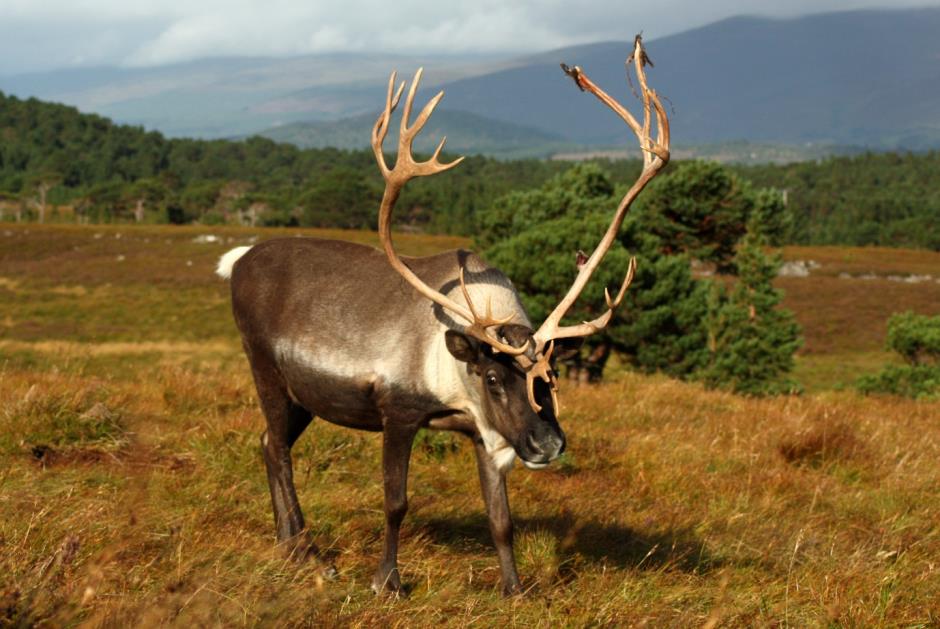
For the calves born in 2012 the theme was just ‘2012’ because so much happened that year. It was he Queen’s Jubilee year our 60th anniversary and also the London Olympics. So we had great fun coming up with diverse names to suit the theme and as one of the biggest calves of the year Balmoral was aptly named.
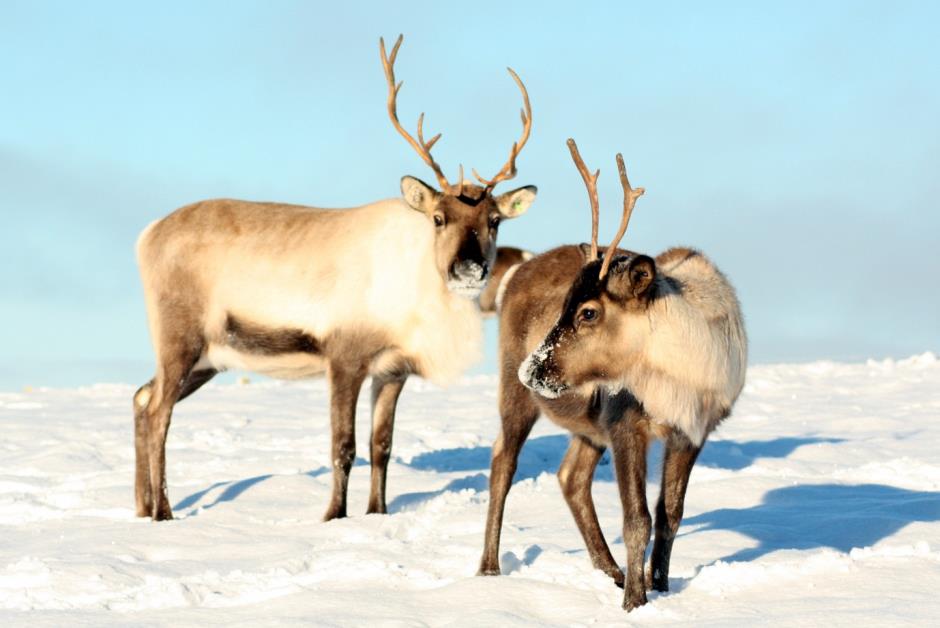
He was, however, a mistake! During the rut of 2011, when Balmoral was conceived, we attempted to restrict the number of cows breeding by leaving them out on the free-range without a bull. That all seemed fine until a young bull, Strudel, went missing in the hill enclosure and turned up a few weeks later on the free range having found ‘heaven’, i.e. lots of reindeer females – even more than your average breeding bull would manage in a season.
Fly was one of those cows left out but ended up in calf to Strudel. But we’re not complaining because there are now some great reindeer in the herd now as a result from that rutting season in 2011.

During the 35 plus years I have been with the reindeer there have been some iconic bull reindeer who have stood out amongst the rest of the herd. In the early 1980s it had been Troll: great name (from the children’s story Billy Goat’s Gruff – and yes there was a Trip and a Trap too) and an equally great reindeer. His son Gustav, a real gentleman among reindeer, took over from him in the late 80s and early 90s. Then we brought in a young bull from Whipsnade Zoo for new blood and that was Crackle, who featured in many photos, leaflets and articles about the herd. Indeed he was the reindeer on the front cover of the first book I wrote about reindeer, Velvet Antlers, Velvet Noses’.
In 2003, a bull calf named Crann was born and by two years old he showed all the signs of being something special. As a mature breeding bull he grew huge antlers year after year, probably the biggest antlers that have ever been seen in the Cairngorm herd and right up until his last year he continued to grow amazing antlers for his age.
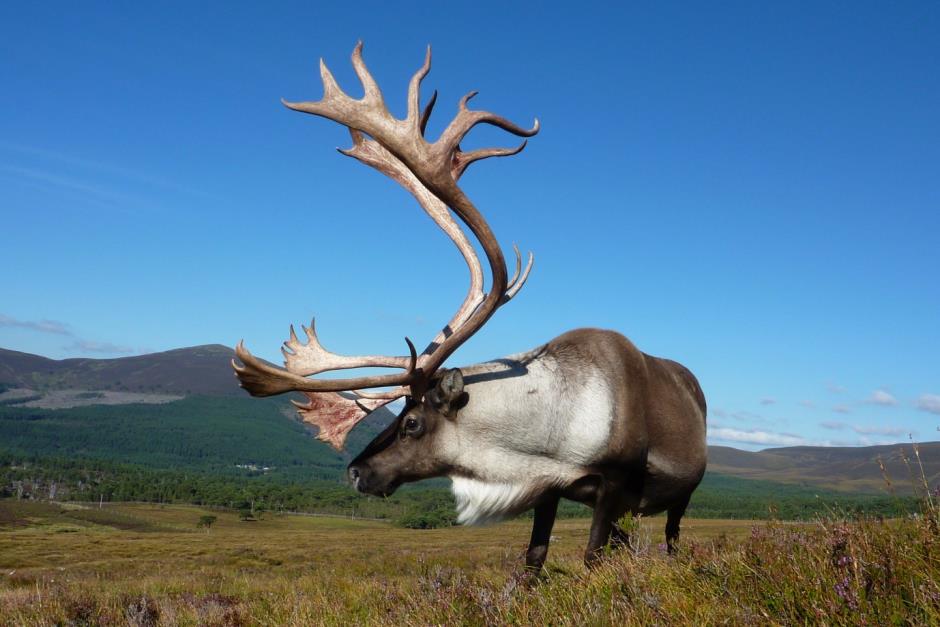
By 2015, Balmoral was the most promising young bull in the herd, growing huge antlers as a three year old. As a result, we decided to give him a shot as a breeding bull, allowing him to father some calves, rather than being castrated as most of the other three year old males are. In 2016 he looked incredible with even bigger antlers, and ended up being the main breeding bull that autumn, with many of the calves born last spring fathered by him. He’s well and truly spread his genes about! His son Burns, born May 2017, who is big, bold and boisterous may well follow in his footsteps and become a breeding bull in his own right in a couple of years.
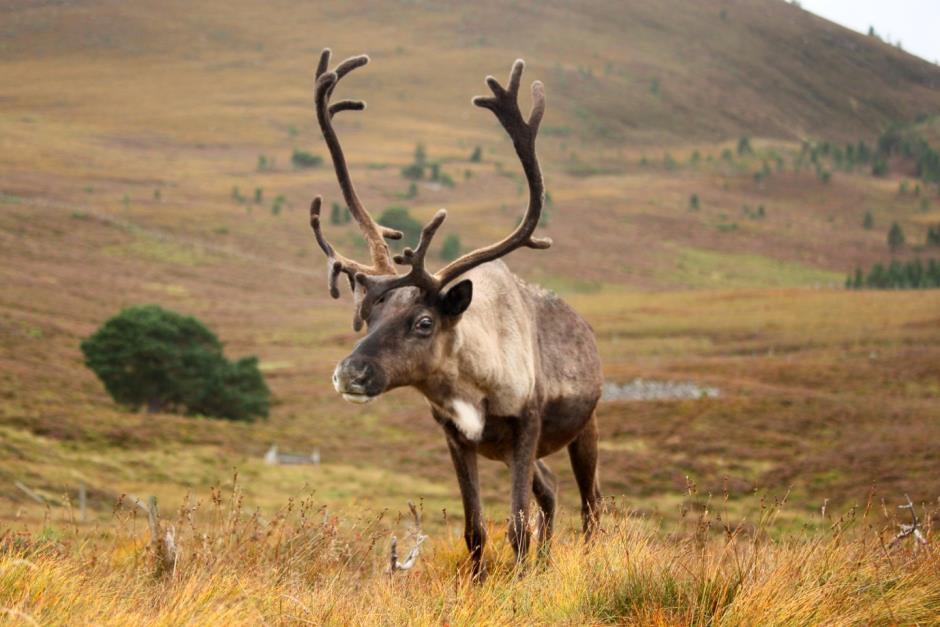
Tilly
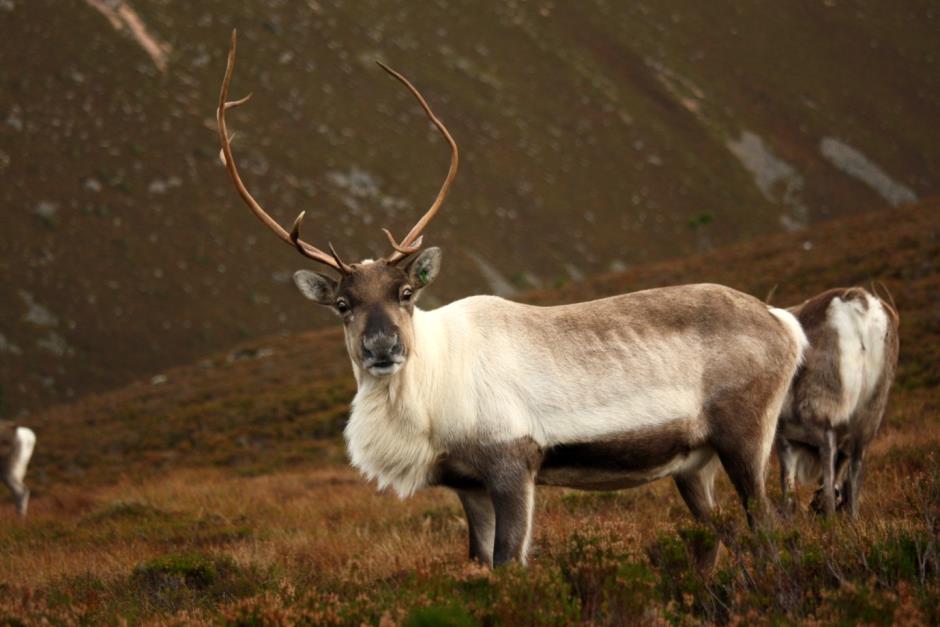
Fly: Born May 2007
Mother: Fiddle
Calves: Custard 2009, Dragonfly 2010, Domino 2011, Balmoral 2012, Anster 2013, Hudson 2014, Aonach 2015
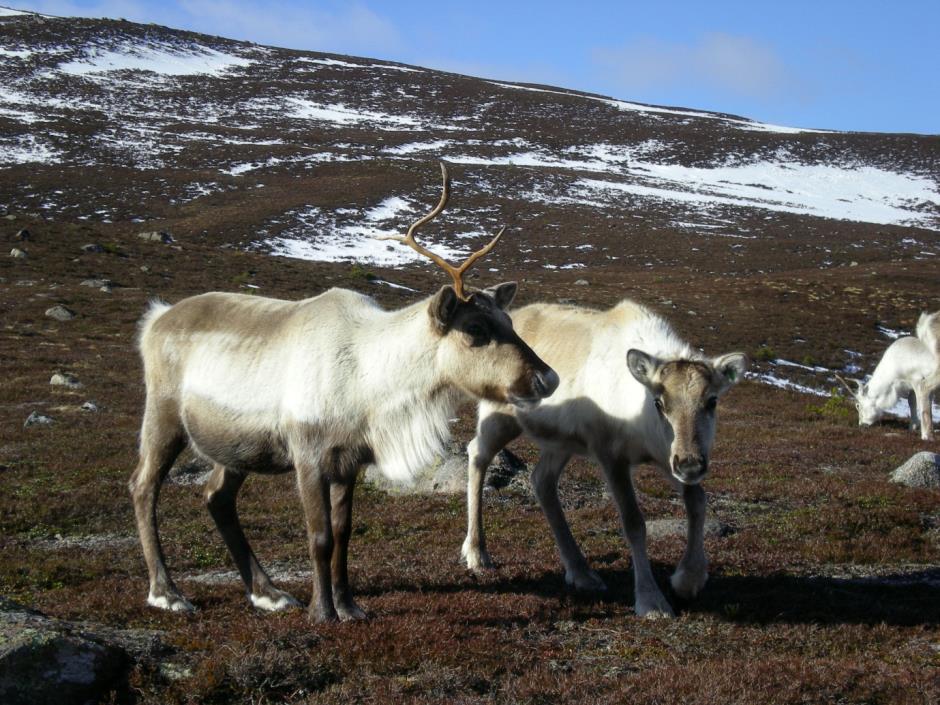
I was inspired to write about Fly as the featured reindeer for this blog as I followed her back from the far end of the hill enclosure with her new-born male calf back in May 2014. Fly’s name has a tenuous connection to the 2007 theme of the colour green: the gardener’s worst nightmare, greenfly. We shortened her name to Fly.
As I followed her through the wooded slopes of Silver Mount Fly led me a tortuous route up and down the hill through deep heather and thick woodland. I’m not sure who she was testing, me or her calf. Her calf was amazing, struggling through the jungle of rank heather, scaling rough boulders and trying to keep up with his mum as she strode up the hill. I had to keep my wits about me as on a couple of occasions she appeared to completely vanish. Fly by name, fly by nature.
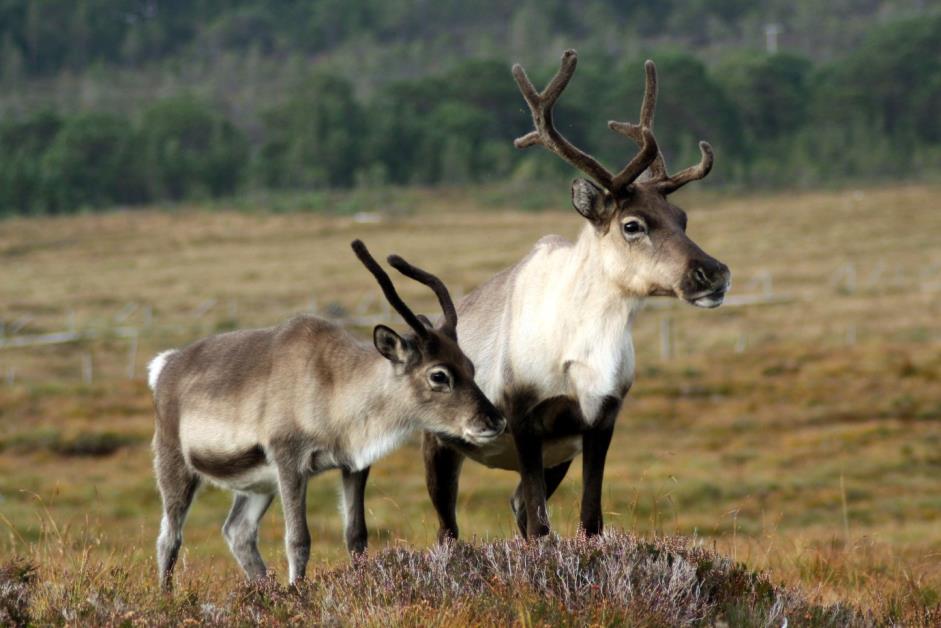
There are only a few breeding females in our herd that get the gold star for breeding success and Fly is up there with the best of them. She calved first as a two year old, a strapping female calf who we called Custard (can you guess the link?!). Custard calved for the first time in 2012 then in 2013 she had a beautiful female calf, Cream (clever with linking names eh), so Fly at the age of only five years old became a granny. In the world of reindeer grannies can go on to be mothers too for many years and since having custard Fly has gone on to produce six strapping males: Dragonfly, Domino, Balmoral, Anster, Hudson and Aonach.
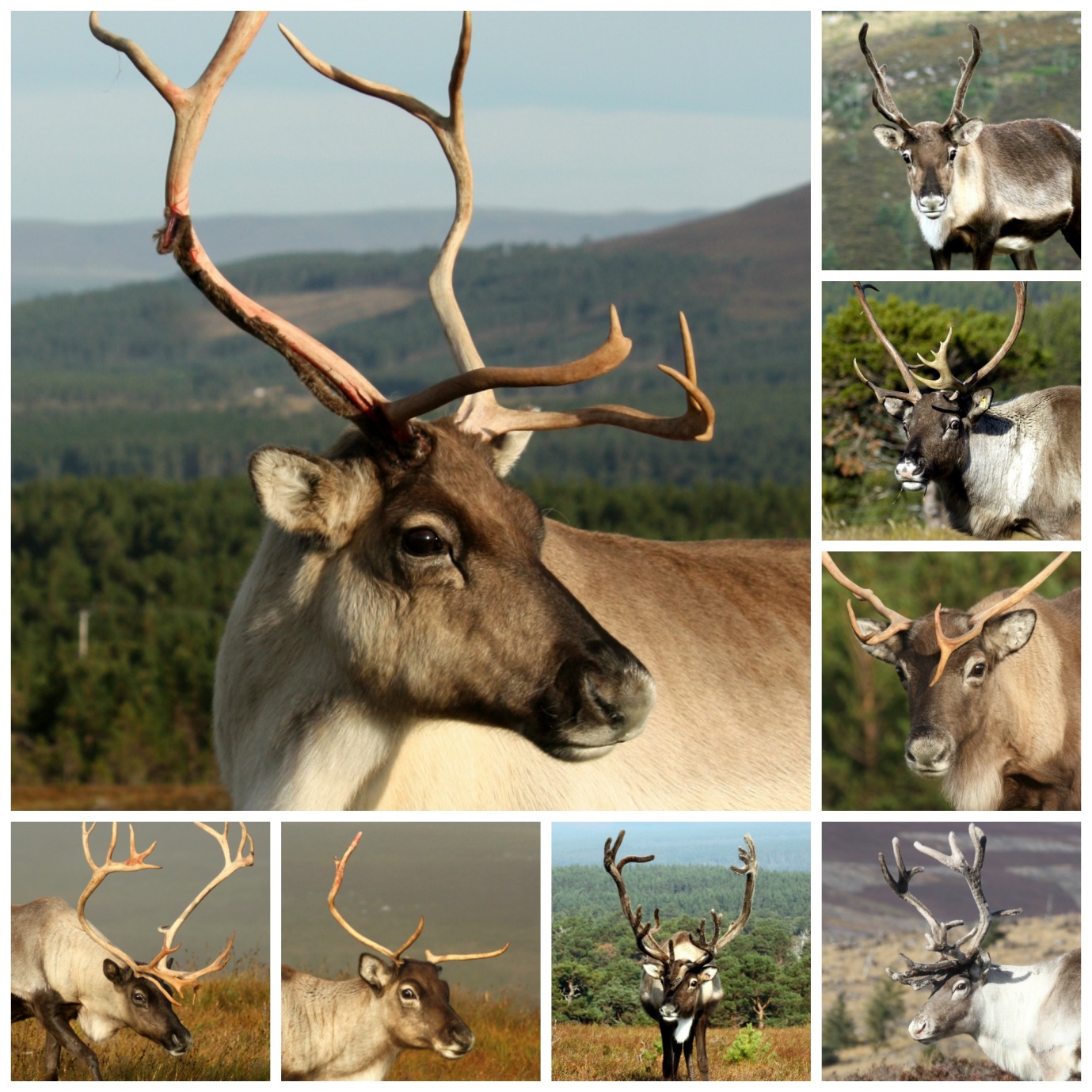
Fly is coming up 11 now and having missed out on the rut last year she shouldn’t be calving this year. However, as she’s still one of the biggest and strongest females in the herd it’s possible she may well run in the rut with a male again this autumn if she stays in good health. Fly has maintained a remarkable record of being the first female to come to call every time Fiona has been out to bring in the free-rangers these last couple of months. She is never far from the front of the group when the other herders call the reindeer down but she is always first when Fiona calls!
Tilly
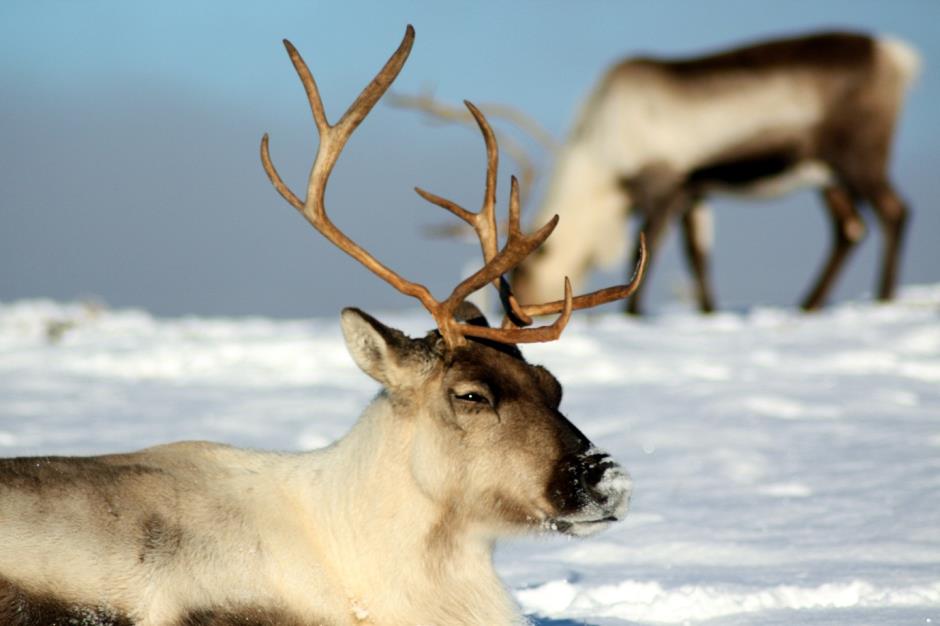
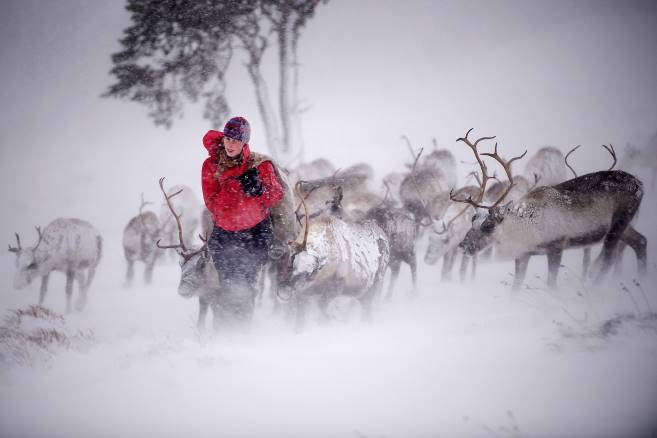
As I write, it’s currently our third day in a row stuck in the office as the mountains are stormbound yet again, for what seems like the umpteenth time this winter. This reindeer herder is very much ready for spring…
Visitors to the Cairngorms often have a hard time understanding just how unpredictable and harsh the weather can be here, particularly in the months of December to March, but often encompassing November and April too. The Cairngorms are the only area of the UK with a sub-arctic habitat, and our weather here is a whole different kettle of fish to the rest of the country. No problem for the reindeer who have evolved to live in such a hostile climate, but the reindeer herders certainly feel the effects of such long winter seasons.
Just now it’s mid-March, and while much of the country is thinking about spring, we are still held firmly in the grips of winter. It’s very cold outside and snowing lightly, but to be honest the weather down here in the glen is fairly benign compared to that which the reindeer are currently dealing with up on the hills. A glance at the Mountain Weather Information Service (http://www.mwis.org.uk) shows the current temperature at -8°C but with the windchill dropping that to -23°C. The highest windspeed on top of Cairngorm itself in the last 24 hours was 99mph, but it hit 127mph two days ago. You can find some good videos on our Facebook page each winter (click on ‘Videos’ on the left hand side of the page) of the wild weather, though videos still don’t capture quite how it actually feels.
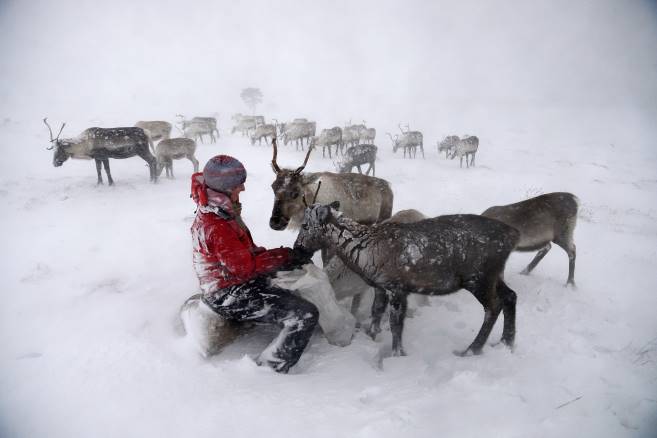
While we’re closed to the public in January, from February through till the end of April we run our 11am Hill Trip out to the free-ranging reindeer on the mountains daily, as long as we can locate the herd, but also only if the weather is ok. And it can be a big ‘if’. If you’ve visited us at this time of year before you might know the scenario first-hand – you’ve driven a couple of hours to get here, the weather seems ok, you’ve brought your warm clothes, the roads are fine… only to find an apologetic and slightly fraught reindeer herder here in the shop doing their best to explain to everyone that there will be no Hill Trip until tomorrow. Or possibly tomorrow. Maybe not. Ask us in the morning.
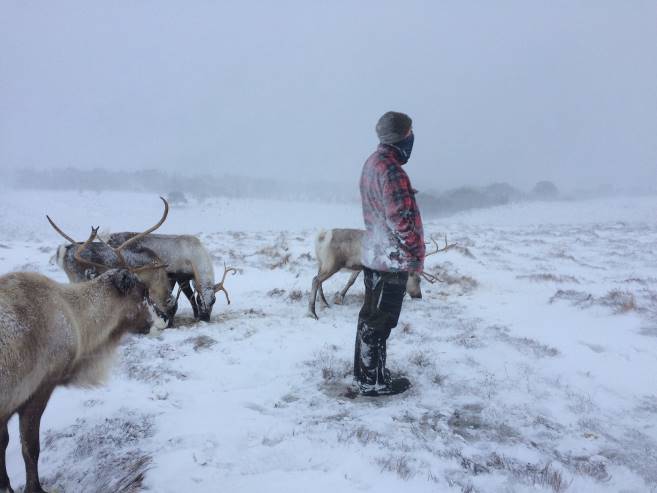
From our point of view it can be very difficult to describe to people just how different the conditions will be above the treeline, away from the shelter and safety of the glen – over the years I’ve had many an angry parent trying to convince me that their two year old would be fine, when I know full well that the parent themselves would barely be able to stand upright, let alone their toddler. It can be extremely hard to turn people away. Sometimes our last line of persuasion is to tell them to drive up to one of the ski carparks first where the weather will be more like it will on the Hill Trip, and then to come back if they’d still like to book on. Invariably, they never do.
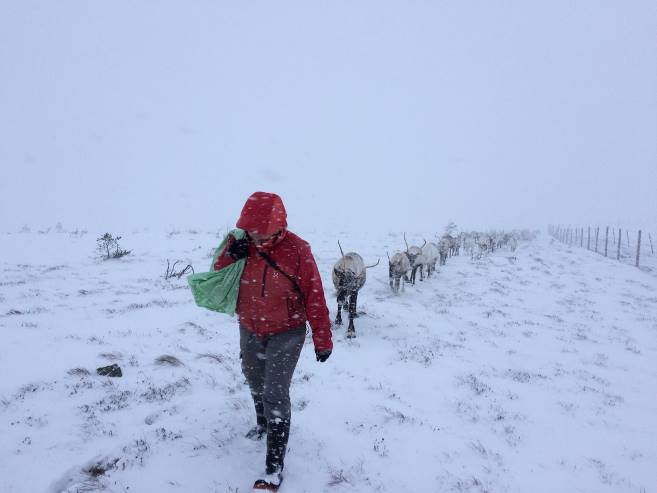
But if we can, we will always run the Hill Trip, although sometimes only with adults, or even only with adults if they are wearing ski gear – jeans don’t keep anyone warm and are useless in winter. We don’t want to turn people away if we can help it though, so over the years I’ve led trips in howling gales, sideways blizzards, zero visibility, and in extremely slippery conditions where the whole group has crept around like Bambi on ice. There was a memorable trip in -10°C one year. In general visitors can be very game when there is the prospect of a herd of reindeer to see, but I often wonder in years to come, whether it will be the reindeer they remember, or the weather conditions.
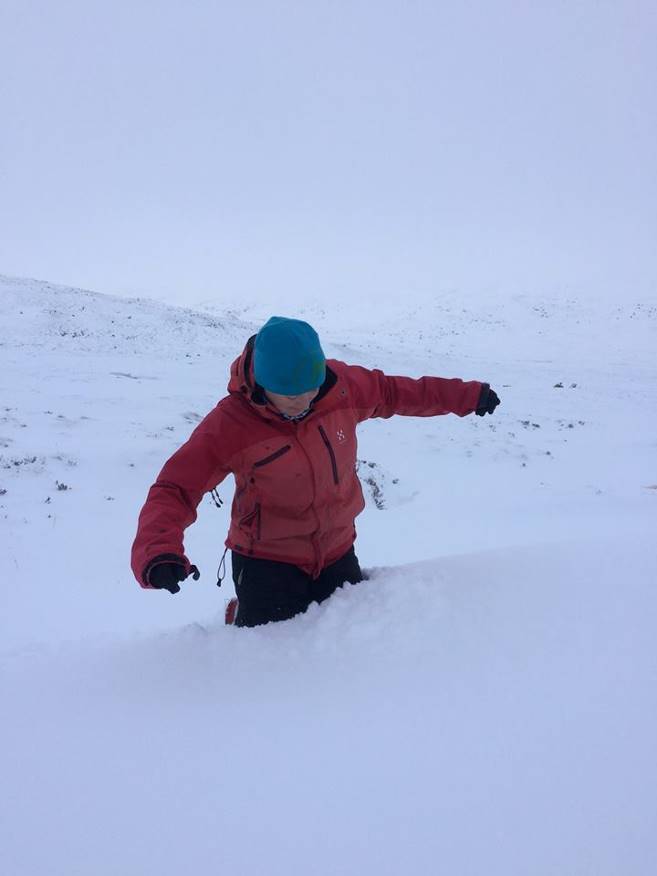
Sometimes the decision about whether or not the Hill Trip can run and whether it’s safe to take visitors on the hill is taken out of our hands, as the snow gates on the road just beyond the Reindeer Centre close. Depending on where the reindeer herd happen to be will depend on how far up the road we need to drive, and even if the gates are closed the Cairngorm Mountain staff will often let us herders up the hill as far as one of the lower carparks. This way at least we can still give the reindeer some feed and check them over, and keep them in the habit of being fed at the same time each day, making our lives easier in the long run. If the reindeer stayed in the area where we walk up to on the Hill Trips there wouldn’t be such a problem, but unhelpfully they are moving about two miles away each night just lately, making us head much further out into the mountains in order to retrieve them. Right now though, it’s so windy that we haven’t even bothered trying to get up the hill at all for the last three days, knowing we’ll not be able to stand up on the ridge due to the wind, let alone get right out to where the reindeer are likely to be. (Update: We’ve just tried. We had to turn back.). So after three days of being stuck in the house cabin fever has set in, but on the plus side the bathroom is now freshly painted…
Hen
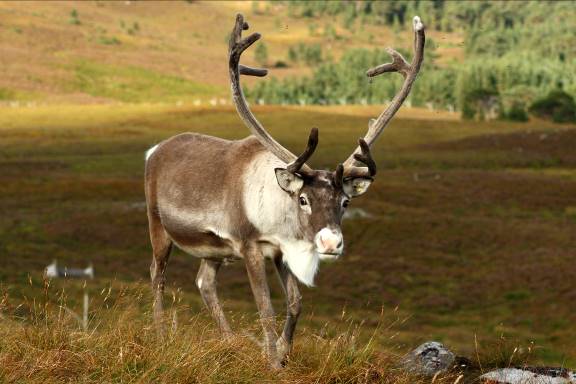
I prefer the less tame reindeer…
We have a lot of very sweet reindeer. They come right up to me and stick their noses right into the feed bag I have just carried up the hill…. Bumble, for instance…. I cuddle Dr Seuss and scruff up his nose hairs. Reindeer are wonderful creatures. So powerful and hardy, standing into the gales, looking into the snow that flies across the hill, this is where they live. The likes of Bumble and Dr Seuss have lots of adopters. Everyone loves Bumble. So cheeky, so adorable.
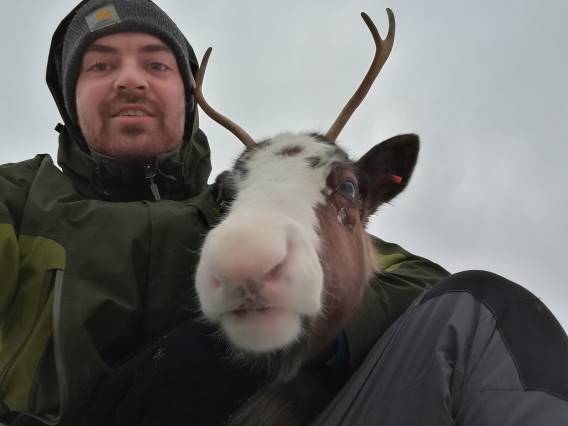
Occasionally someone comes into the shop and asks to adopt a real wild reindeer, a rebel, one who knows no boundaries. I breathe a sigh of relief and start rattling of my favourites, because I prefer the less tame reindeer. I prefer the ones at the back that no one ever sees or the ones that elude even us herders. Tambourine, Enya, Wapiti, Chelsea, I say, these are my favourites. These reindeer have a different beauty. These reindeer laugh at us mere humans. These reindeer have few adopters. Who wants to adopt a reindeer that will wallop you, or walk away, if you go near it?
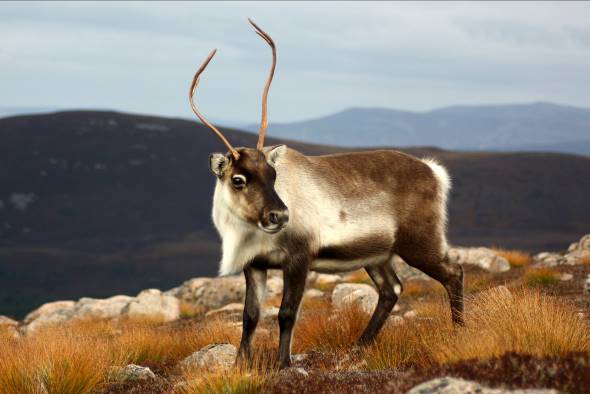
My favourite when I first arrived was Bega. A pale coloured male that was born on the free-range and a real struggle to train. My other favourite was Champagne, a flighty young female, with distinctive spear like antlers. Both Bega and Champagne died before their time.
I guess this is perhaps what makes the herd so wonderful and interesting – we have both tame and less tame reindeer!
Thanks for reading. Dave
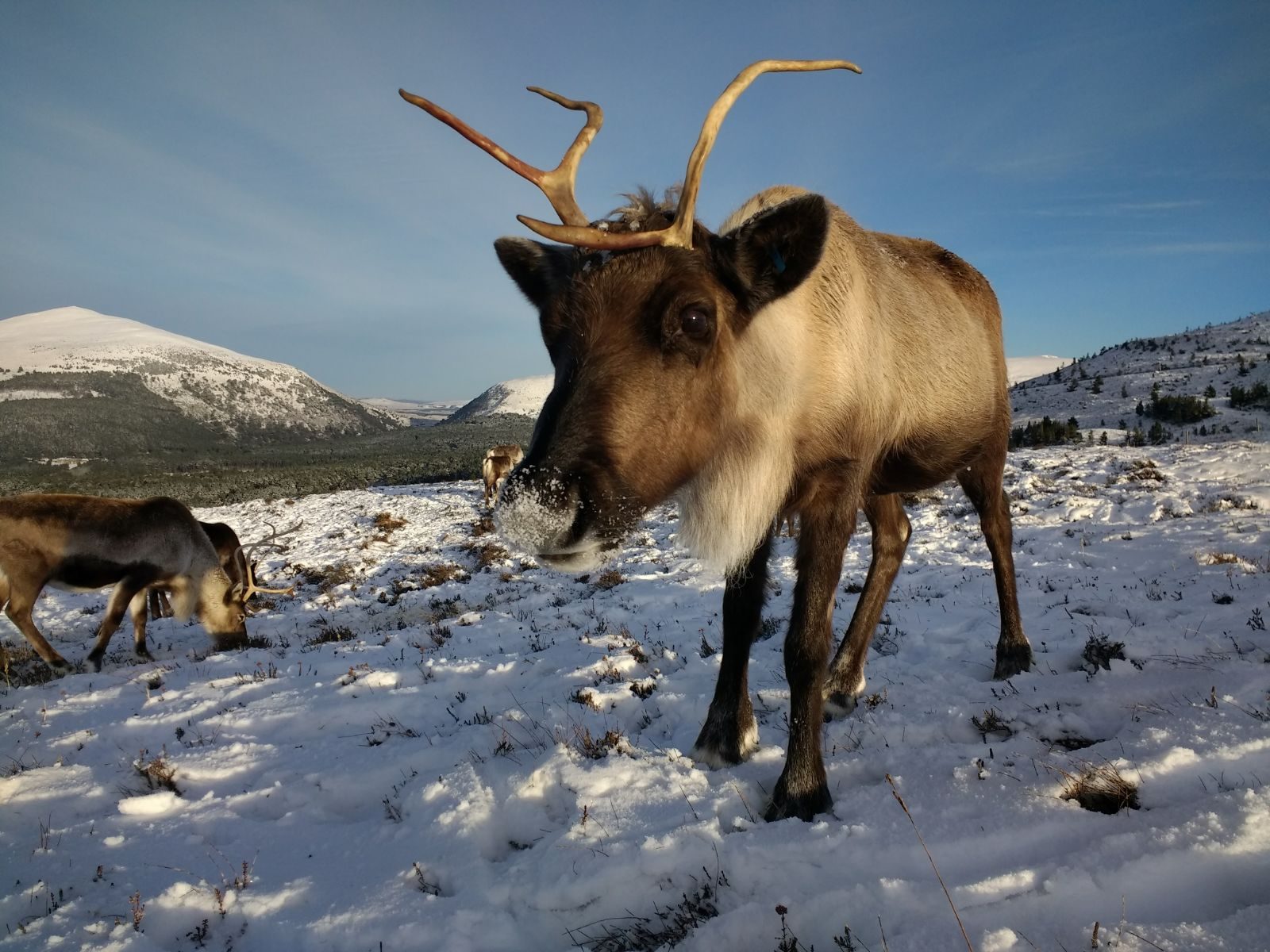
This winter we have prolonged periods of cold snowy weather, as I write this the weather forecast predicts it’s not going to be above zero during the next two weeks! It’s pretty chilly for us herders even under our many layers, but for the reindeer it’s ideal (if a little mild!) and we have a big happy free-ranging herd.
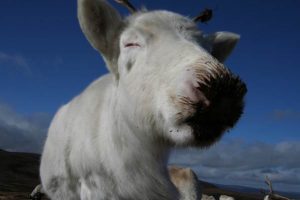
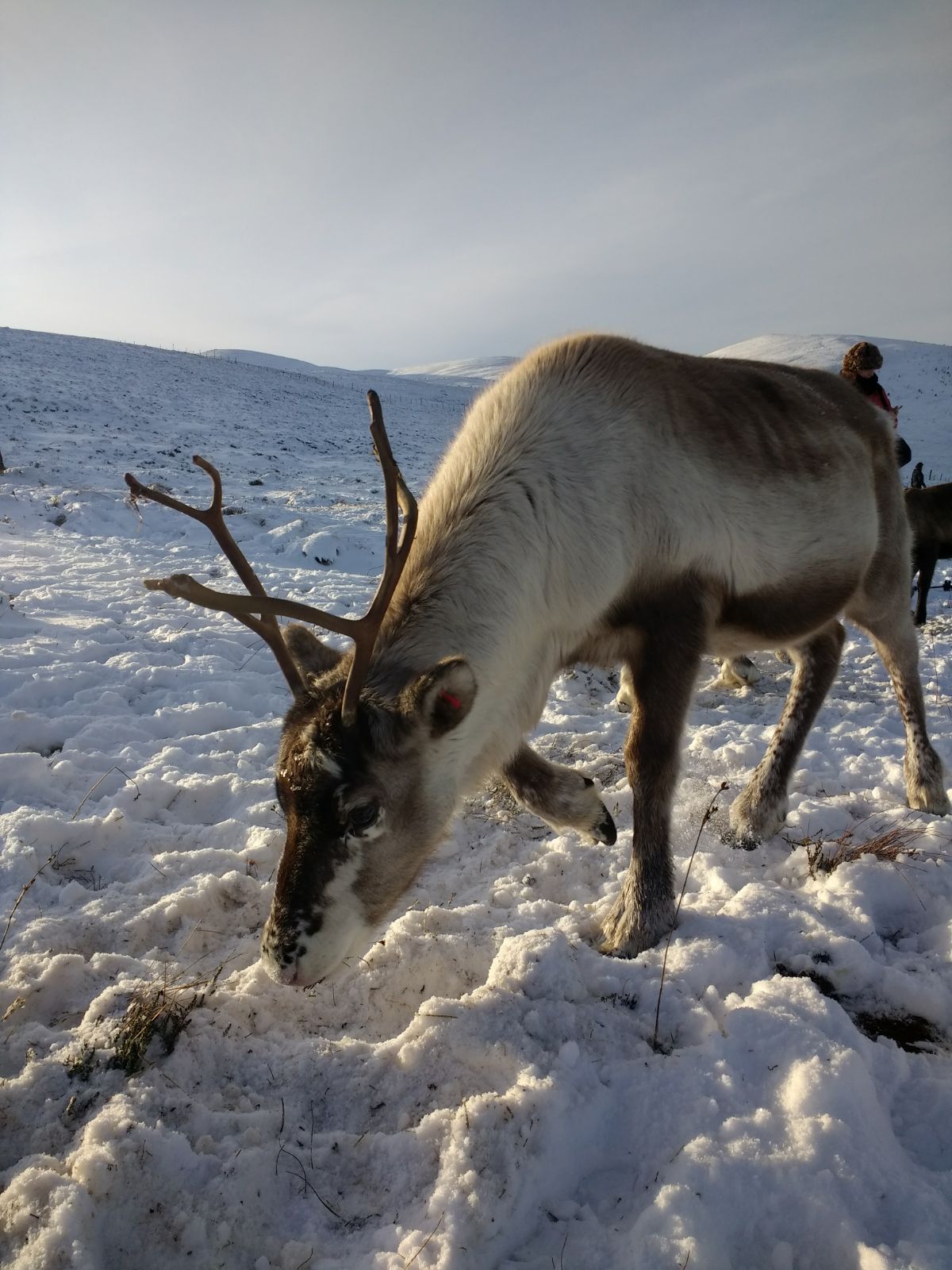
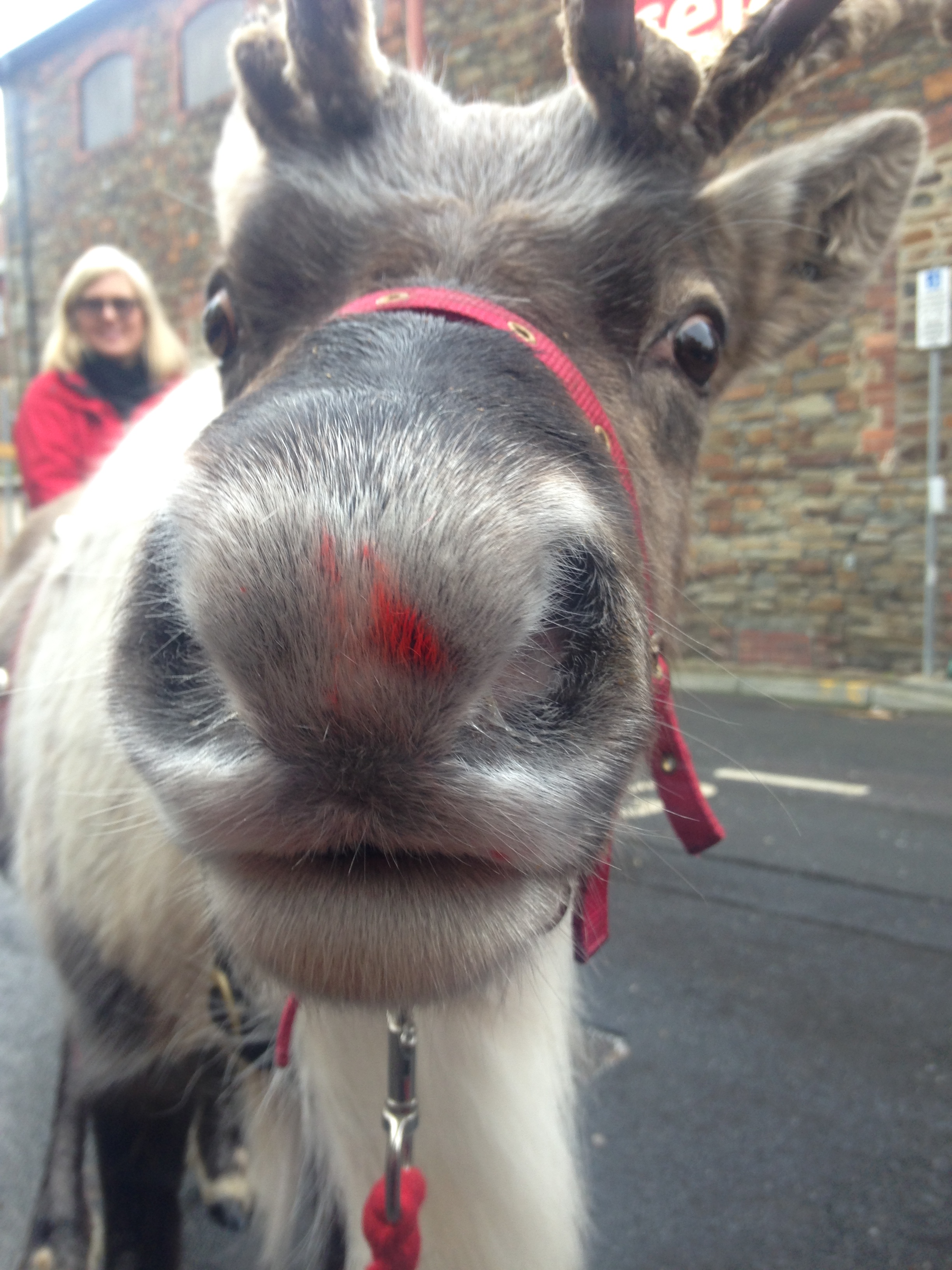
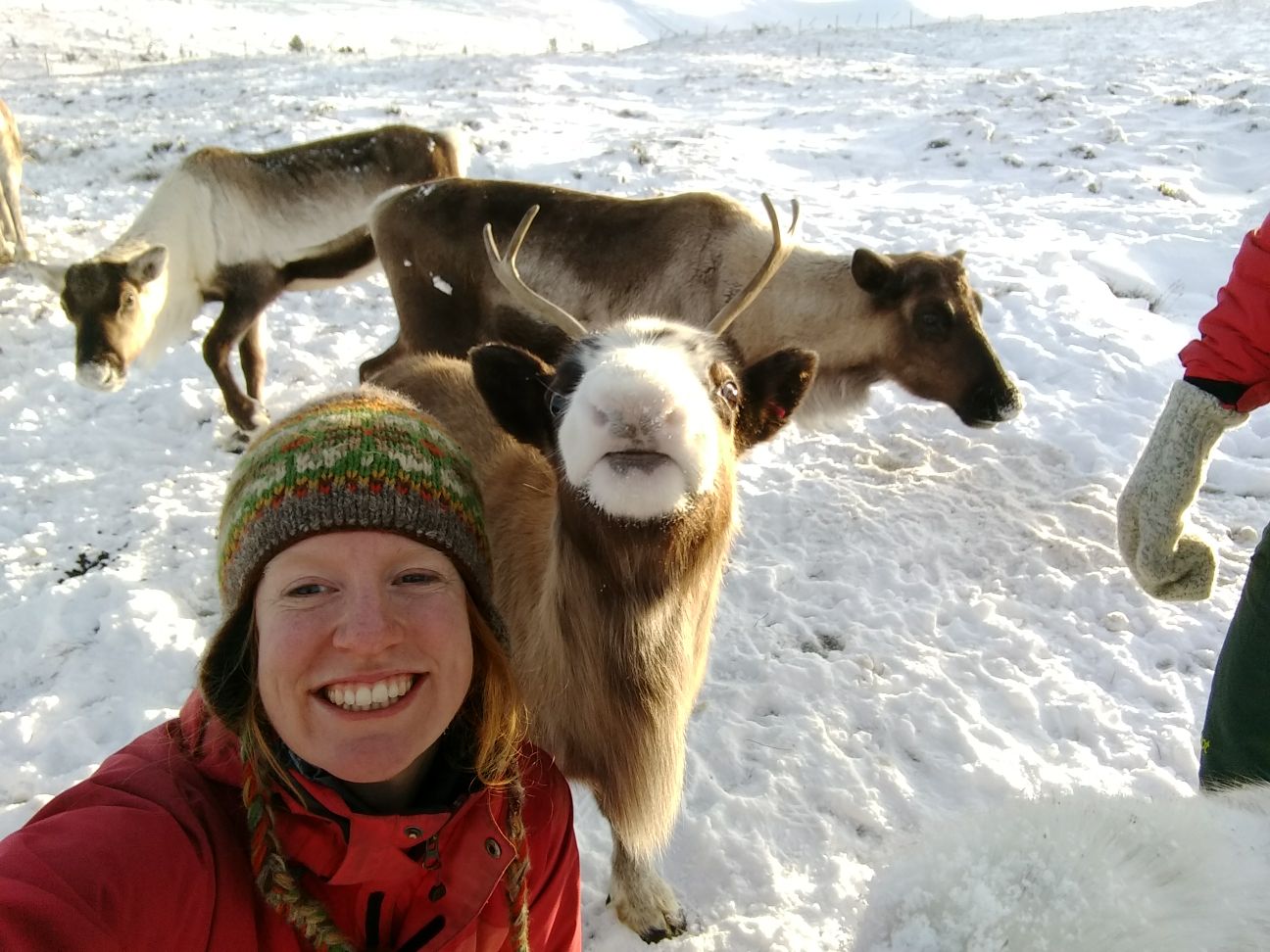
On Hill Trips we often talk about how reindeer are adapted to Arctic and subarctic life by describing their thick winter coat, large hooves, beards, and their amazing clicking back feet. However, in my opinion, one of the most wonderful and endearing adaptations of a reindeer is their beautifully soft velvet noses!
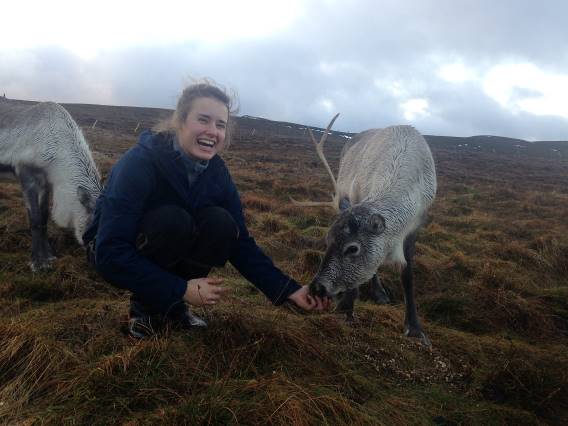
Out of the 40 odd species of deer in the world, reindeer (and Caribou) are the only deer which have hairy noses rather than shiny, moist ones. This prevents the build up of frost which would occur on a cold wet surface during exhalation; perhaps this is the reason why male polar explorers (and Scottish reindeer herders) often grow beards!
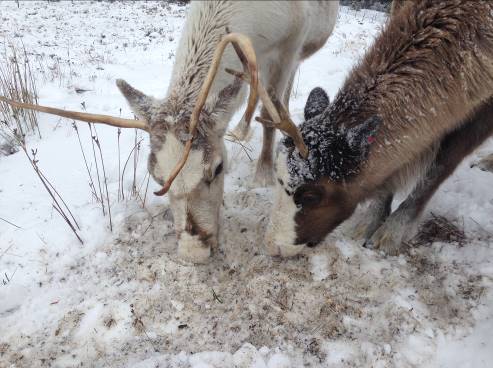
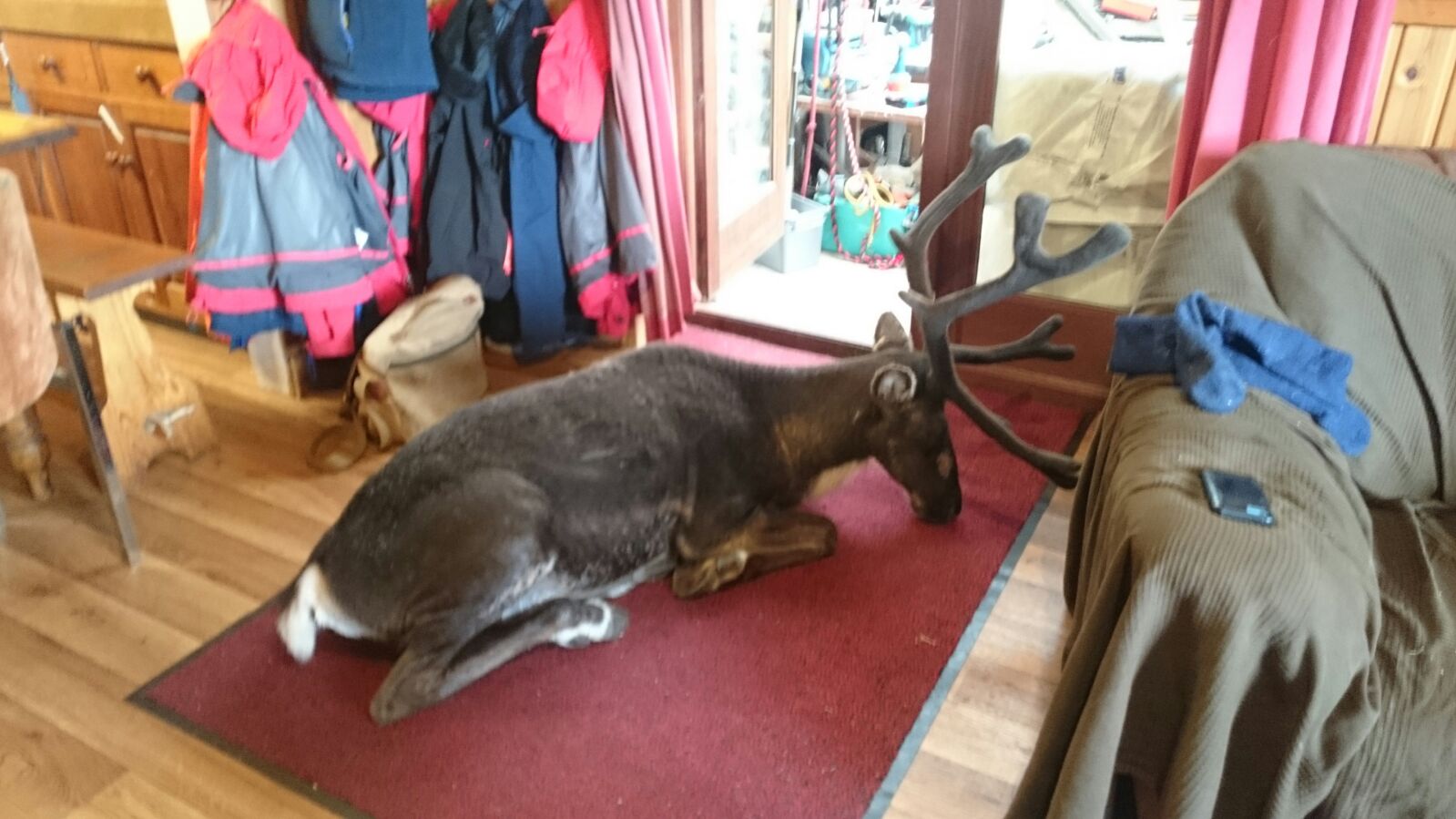
However, the most special part of a reindeer nose is actually on the inside. This blog will endeavour to delve under the cute furry exterior to hopefully show how truly remarkable a reindeer’s nose is…. as well as a good excuse to show lots of lovely fuzzy photos!
There is a complicated and highly specialised arrangement of cartilage, bone, fleshy bits, mucous membranes and blood vessels that make up their nasal passages. Together they form an extremely large surface area; the shape of which is often described as a ‘rolled scroll’ or sometimes a ‘seashell’. This specialised structure allows a reindeer’s nose to remain warm and retain moisture in freezing temperatures as well as allowing them to expel excess heat on warmer days.
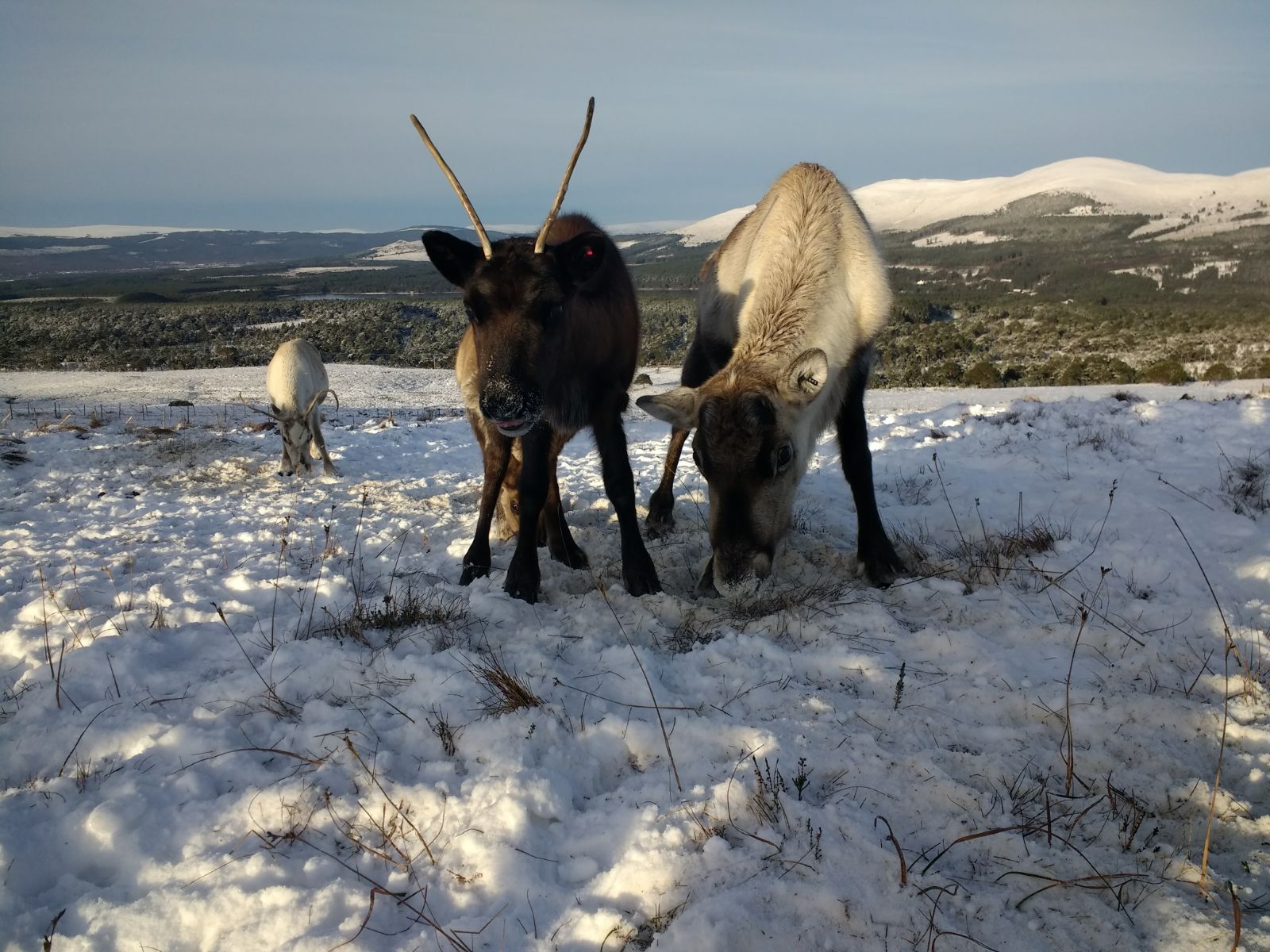
A reindeer would soon be chilled if freezing air was to reach their lungs on every breath. To overcome this they have the fascinating ability to change the temperature of the air they inhale before it reaches the lungs, and vice versa. This is all thanks to their ingenious nasal structure, which works as a counter-current heat-exchange system.
For example, if the outside air temperature is -40⁰C, the temperature when the air reaches the reindeer’s lungs is about +38⁰C. In other words, they can change the temperature of the air an incredible 70-80⁰C in less than one second! Additionally, winter air tends to be cold and dry, especially for reindeer that live in higher latitudes. In order for the heated air not to be over dry when it reaches the lungs, a bit of moisture is released from the internal mucous membranes into the air when the reindeer inhales. Move over Rudolph with your shiny red nose, I think that is pretty magic!
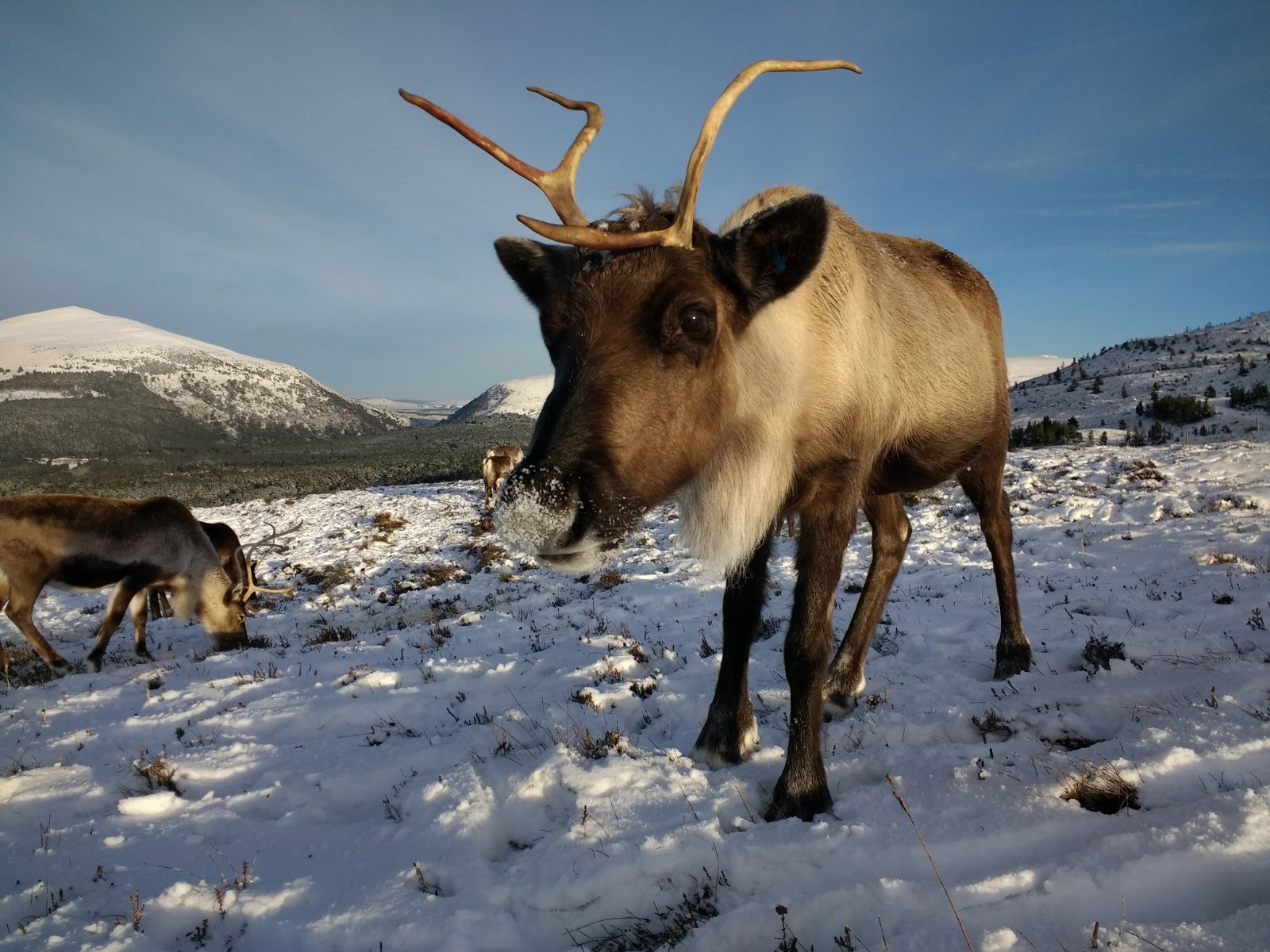
On exhalation the opposite happens so a reindeer is able to cool its warm breath, in order to conserve as much body heat as possible. When breathing out they also conserve as much water vapour as possible; especially important when snow may be the only form of water they are able to get!
So when it’s cold in winter, us meagre humans can see our breath as we exhale. However, a reindeer standing at rest in sub-zero temperatures will have no visible breath steaming from their nostrils! That’s because air leaving a human nose is about 32⁰C and the water it contains condenses into visible water droplets as our warm breath meets the cold air. In a reindeer’s nose, warm air is cooled down by about 21⁰C before it is exhaled, saving the majority of the heat. The mucous membranes in the snout recover the moisture, enabling the water in the air to condense inside the nose which then trickles into special folds which direct it to the back of the nose and into the throat, meaning the reindeer exhales drier and partially cooled air.
Ruth
References:
https://geminiresearchnews.com/2016/12/magical-reindeer-nose/
The Real Rudolph, Tilly Smith

I’ve been well aware over the last couple of weeks that it’s definitely my turn to write a blog, and my justifications of going away on holiday, then having to catch up on work, and reorder stock for the shop, and organise the new adopt gifts, and… have started sounding a little too like excuses. Hen started a lovely series about memorable reindeer, and I thought I’d jump on the bandwagon.

In my first calving season, 2012, Esme was one of the pregnant females who was in the enclosure so we could keep an eye on her when she calved. Being a novice to the world of reindeer midwifery, I would walk out with a more experienced herder and learn the correct way to approach a new mum, how to check over the calf, and how to bring them back in to the herd.
As we neared the end of May, only one female was left to calve – Esme. She was the sweetest of reindeer – calm, docile, and an experienced mum. She was also beautiful, with a silvery sheen to her coat. So when the day came that Esme had left the herd to calve, we spied her with binoculars up on Silver Mount, and Fiona asked if I wanted the honour of going to find her and her new calf. I was apprehensive – What if I didn’t get it right? Or if she wouldn’t let me approach? – but still jumped at the chance. Hiking up from Black Loch onto Silver Mount, the “baby bag” with the essentials on my back, I still remember feeling the nervous anticipation. I needn’t have worried – as I came over the ridge and saw Esme, she looked up calmly and took a couple of steps towards me (well, the bag of food). I scanned around – had she calved yet? – before spotting the tiny bundle of new life at her feet.
I can’t claim to have done everything in a smooth polished fashion, but Esme was the most patient lass ever, standing whilst I fumbled with the headcollar, not quite having the right technique for holding her calf whilst I sprayed his navel, and talking myself through what to do (out loud!). Finally, we were ready, and we proceeded down the hill and back to the “nursery” area of the enclosure. She must have been rolling her eyes at my inadequacy, and I’m fairly sure she did actually yawn a couple of times!
Over the following years, Esme remained one of my favourite females – she was always a friendly face in the herd, dependable and happy to follow a bag of feed to wherever you wanted her to go, and easy to catch if you needed to put a headcollar on her. As she aged, she struggled a little at times to maintain her condition, and we’d slip her extra bits of feed, allowing her to join in when we fed the calves out of the bag. Throughout, she was never pushy, always waiting to be invited, though once her head was in a feed bag it was almost impossible to remove it!

Reindeer, like people, age at different rates, and whilst some of our charges still look in their prime at 13 or 14 years old, by the time Esme was 11 she certainly looked like an old girl. She was also spending more time alone, away from the herd, which isn’t uncommon for the older females – they have the confidence to enjoy their own company, and can sometimes be pushed out by the younger, stronger reindeer. In the 2014/15 winter, Esme was often away from the herd for weeks at a time, off doing her own thing, and there was a memorable day when we spied for the reindeer and saw one lone female marching across the Ciste flats towards the car park. Aware that the rest of the herd were a good distance away in the next glen, we peered through the binoculars trying to work out who it was, finally realising it was Esme!
She seemed delighted to see us, and, wondering if she was looking for the herd, thought we should join her up with them. Whilst we could have hiked over the ridge with her on a headcollar to reunite her with the herd, we wondered if we could save both her energy and ours (of course we were thinking about the fact that she’s an OAP rather than our own tiredness level…) and hop her into the back of the van…
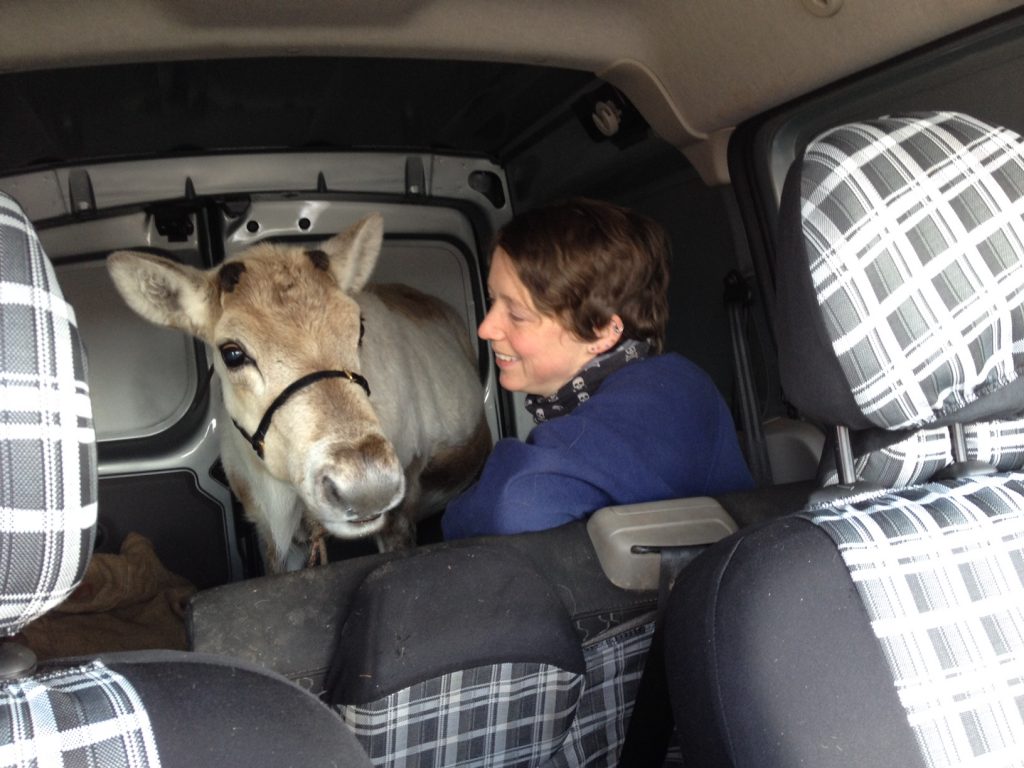
Once we’d popped the back seats down to give her some more room, she gave no objections to following us into the van. She must have thought it was a definite upgrade on the usual trailer, with a much better view, and being allowed to munch her way through a bag of feed en route was also an added bonus! A short 5-minute drive and it was time to emerge at the other car park nearer the herd. There was a car pulled up with a few people admiring the view, and the last thing they must have expected was for a reindeer to hop out of a van! Esme didn’t bat an eyelid at the whole experience, and was quickly reunited with the herd.

Esme had a good summer that year high on the Cairngorm free range, but when the females started coming down to lower ground in autumn, she was clearly feeling her years. We moved her over to our Glenlivet hill farm, where she could have access to the large straw-filled barn and ad-lib food in the day, with a gentle stroll onto the hill at night, and she settled right in – she was a funny sight – a little old lady amongst all of the big chunky castrates. She also completely won over the hearts of the men at the farm!
One evening, they went to move out the reindeer onto the open hill for the night, and for the first time, Esme didn’t want to go. With no wish to force her, they let her stay in the shed, and slipped her an extra bucket of lichen. In the morning, she had passed away in her sleep, peacefully tucked up in the straw.

It’s always galling when animals die, but I can’t think of a better end for one of the gentlest reindeer I’ve known. Esme’s family members are still in the herd – her daughter Okapi is a slightly less polite version of her, son Elvis is a dependable but enthusiastic fellow, and sister Sambar is a sweet lass who keeps to herself. All of them share the similar silvery coat colouring, and remind me each time I see them of lovely Esme.
Andi
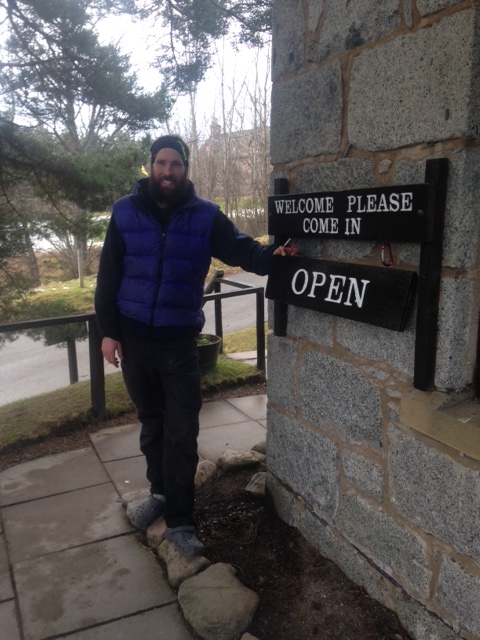
We are now once again open to the public, hooray! Each year the reindeer Centre shuts its doors for about 5 weeks from the end of the Christmas holidays to February half term.

This begs the question what do the reindeer and herders do for these weeks of the year! Well, some herders choose to head off on exotic travels to Australia, others choose to take time off to be with their families. Others remain hard at work clearing up after a busy Christmas season and preparing for a busy year ahead… albeit with some fantastic flexi-time, for example finishing work a wee bit early to make the most of some good weather by running up our local hill (thanks Fiona!).

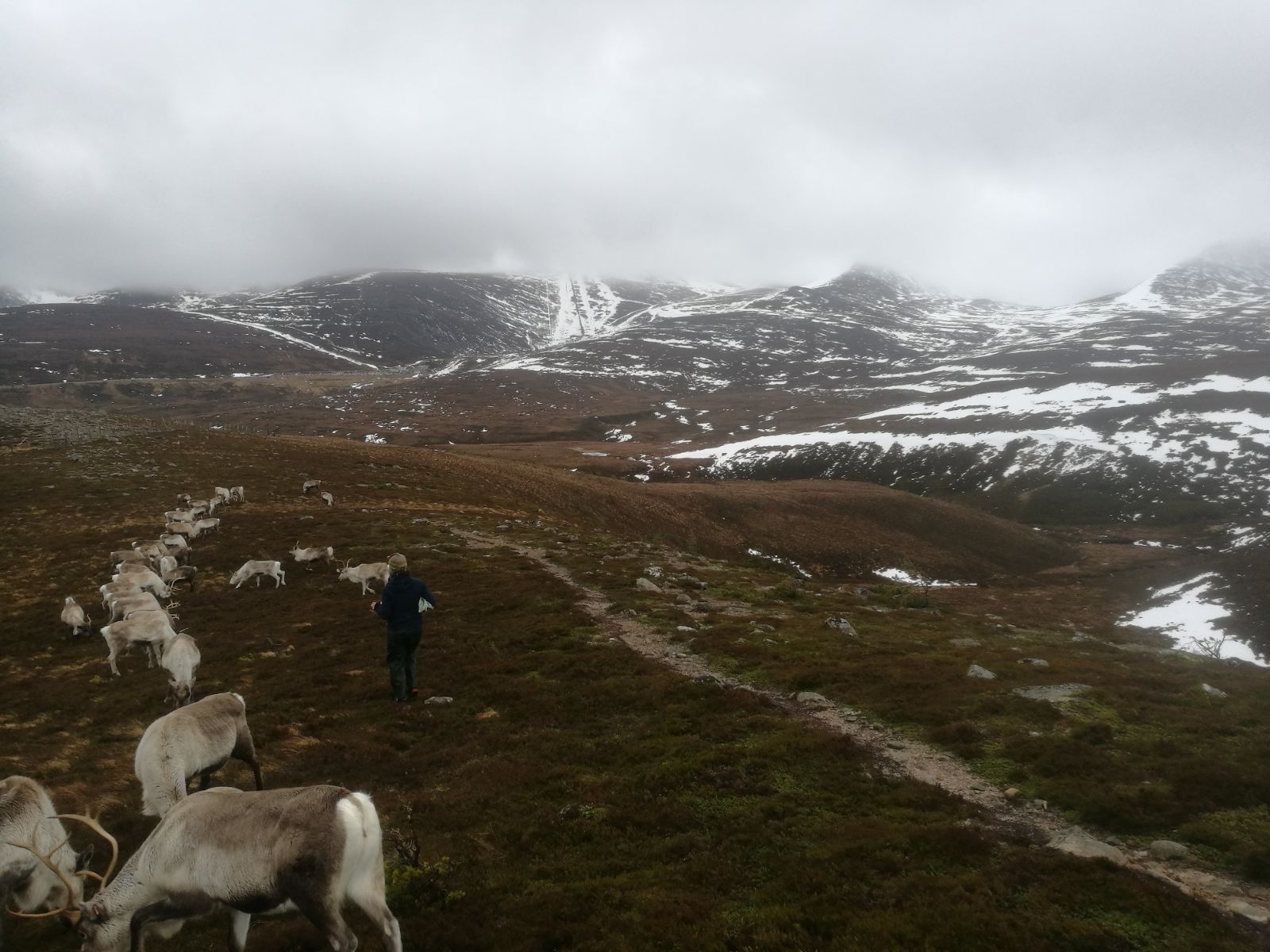
As for the reindeer it’s the time of year when the whole herd heads for the hills, free-ranging for the first few months of the year. Some we still see on an almost daily basis, others weekly, and others not for several months! This winter has been great for the herd; cold, snowy and the usual huge abundance of lichen to keep them going.
Each day, if the weather allows, we usually go up and check on some of the herd…


When we’re not out on the hill we have a big list (mostly left by the herders who went to Australia!) to try to complete, such as repairing boardwalk, repainting the floor of the Exhibition, checking first aid kits, oiling the Christmas harnesses, re-packing Christmas kit boxes etc etc…


Meanwhile there are always the adoption packs to make up, reindeer food to mix, Wild Farm Cottage bookings to take, plus emails and phone calls to deal with. On top of all this Captain Christmas herself, Fiona, has been incredibly busy organising Christmas 2018!


Now we’ve got the place ship-shape and all the herders and reindeer have had some time off, we are refreshed and delighted to be open again and hope to see you soon on a Hill Trip or in the Paddocks!


Ruth
Burns Suppers celebrate the life and work of the Scots poet Robert Burns. More commonly known as Burns Night the suppers take place on or around his birthday, 25th January and are effectively a second national day in Scotland. Here at Reindeer House we just love any excuse to get together and eat some fantastic food with some great company! For those of you that don’t know about the Burns Supper tradition here’s a brief overview of what we got up to last night at our Burns Supper, along with some tales of our reindeer named Burns, seeing as this is a reindeer blog after all!
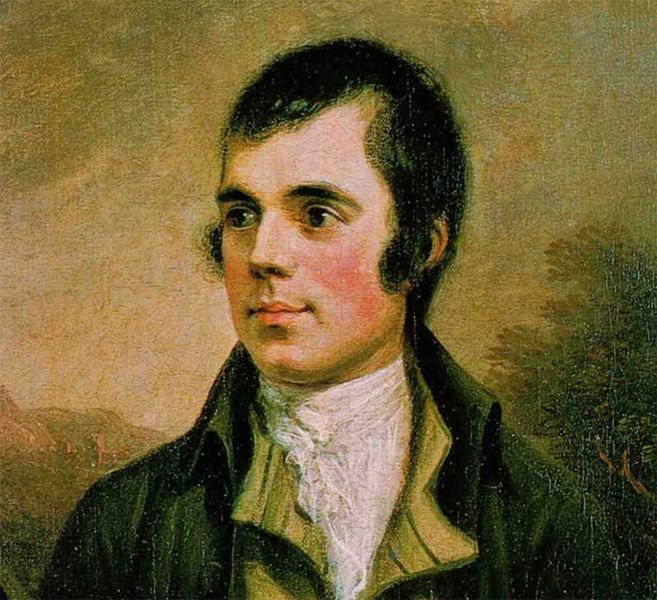
Robert Burns was born in 1759 in Alloway, Ayshire and lived until he was 37. He is known and celebrated worldwide for his poetry much of which was written in the Scots language or Scots dialect. Whilst many of his poems were of the Romanticism style he lived through a period of political repression. His work often reflected or commented upon this and some considered him to be a radical and revolutionary which perhaps helped give him such a huge following during and after his lifetime.
The poem and song “Auld Lang Syne” is sung all over the world on Hogmanay and is one of Rabbie Burns’ most famous works. Other well known work by him includes “Scots Wha Hae”, a patriotic song which became an unofficial national anthem for Scotland. It was written in the form of a speech from Robert the Bruce before the Battle of Bannockburn in 1314 where Scotland defeated England in Battle. Romantic work included (My Love is Like) “A Red, Red Rose” whilst “Tam o’ Shanter” and “To a Mouse” reflect on his upbringing as a tenant farmer. For us though at Reindeer House his “My Heart’s in the Highlands” seems most appropriate!
Farewell to the Highlands, farewell to the North,
The birth-place of Valour, the country of Worth;
Wherever I wander, wherever I rove,
The hills of the Highlands for ever I love.
My heart’s in the Highlands, my heart is not here,
My heart’s in the Highlands, a-chasing the deer;
Chasing the wild-deer, and following the roe,
My heart’s in the Highlands, wherever I go.
Farewell to the mountains, high-cover’d with snow,
Farewell to the straths and green vallies below;
Farewell to the forests and wild-hanging woods,
Farewell to the torrents and loud-pouring floods.
My heart’s in the Highlands.
If you needed further persuasion of Robert Burns’ stature then did you know he won a contest run by STV to be called “The Greatest Scot” of all time in 2009? It is a rather impressive feat to have beaten Mel Gibson (William Wallace) to the title don’t you think? Perhaps he was aided by some of his extremely impressive nicknames that make him sound more like a cross between a rap artist and a boxer:
– The Bard of Ayrshire
– The Ploughman Poet
– Or just plain Rabbie Burns

Burns Suppers have been taking place for over two centuries with the evenings format barely changing over the years. There is usually a general welcome followed by the “Selkirk Grace”
Some hae meat and canna eat,
And some wad eat that want it;
But we hae meat, and we can eat,
Sae let the Lord be thankit.
Supper usually then begins with a soup dish such as Scotch broth or Cullen skink before everyone stands for the “Piping” of the haggis (this is exactly how it sounds). We stand whilst the haggis is brought into the room by the cook whilst a piper plays a tune such as “A Man’s a Man for A’ That” written by Burns. Before you can eat the haggis though, you must first address it! “Address to a Haggis” is a poem written to a haggis with the opening line of Fair fa’ your honest, sonsie face” (translated as Nice seeing your honest, chubby face). At last we can eat the haggis! Served with neeps (swede) and tatties (potatoes) our meal last night was delicious! The evening concludes with an often amusing “Toast to the Lassies” and a reply for the laddies before a vote of thanks is given and everyone stands to sing “Auld Lang Syne”.


As you can see we had a fantastic evening, but back to the reindeer!
As well as giving us an excuse for a party at the end of January, Rabbie Burns is of particular importance to us because we have a reindeer named after him! This year our calves were named after authors, writers and poets so we obviously had to name one Burns. He has turned out to be one of the biggest, strongest and healthiest calves of the year. He is extremely tame and bold and quickly became quite a cheeky chappy. We have him marked down, along with Dr Seuss, as being one of the biggest characters of the next few year but hopefully neither of them will misbehave too much in the following years as young bulls like Fergus did.

When he came in off the free range in late summer with his mother Gazelle he had broken one of his antlers and it was growing over his face making it difficult for him to feed. We called out the vet who cut away the antler from his face and after a short while with a bandage in the shed he recovered well to become the strong healthy calf that he is. We are interested to see next year whether his antler will grow back in a more “normal” direction and shape or whether the pedicle from which the antler grows has been damaged and Burns will perhaps always grow one antler in a funny shape and direction.

Chris